EP0330483B1 - Process for producing chromium containing molten iron - Google Patents
Process for producing chromium containing molten iron Download PDFInfo
- Publication number
- EP0330483B1 EP0330483B1 EP19890301796 EP89301796A EP0330483B1 EP 0330483 B1 EP0330483 B1 EP 0330483B1 EP 19890301796 EP19890301796 EP 19890301796 EP 89301796 A EP89301796 A EP 89301796A EP 0330483 B1 EP0330483 B1 EP 0330483B1
- Authority
- EP
- European Patent Office
- Prior art keywords
- molten iron
- scrap
- chromium
- concentration
- temperature
- Prior art date
- Legal status (The legal status is an assumption and is not a legal conclusion. Google has not performed a legal analysis and makes no representation as to the accuracy of the status listed.)
- Expired - Lifetime
Links
- XEEYBQQBJWHFJM-UHFFFAOYSA-N Iron Chemical compound [Fe] XEEYBQQBJWHFJM-UHFFFAOYSA-N 0.000 title claims description 238
- 229910052742 iron Inorganic materials 0.000 title claims description 119
- 239000011651 chromium Substances 0.000 title claims description 106
- 229910052804 chromium Inorganic materials 0.000 title claims description 57
- 238000000034 method Methods 0.000 title claims description 57
- VYZAMTAEIAYCRO-UHFFFAOYSA-N Chromium Chemical compound [Cr] VYZAMTAEIAYCRO-UHFFFAOYSA-N 0.000 title claims description 51
- PXHVJJICTQNCMI-UHFFFAOYSA-N Nickel Chemical compound [Ni] PXHVJJICTQNCMI-UHFFFAOYSA-N 0.000 claims description 49
- 238000002844 melting Methods 0.000 claims description 48
- 230000008018 melting Effects 0.000 claims description 48
- QVGXLLKOCUKJST-UHFFFAOYSA-N atomic oxygen Chemical compound [O] QVGXLLKOCUKJST-UHFFFAOYSA-N 0.000 claims description 42
- 229910052760 oxygen Inorganic materials 0.000 claims description 41
- 239000001301 oxygen Substances 0.000 claims description 41
- 238000007664 blowing Methods 0.000 claims description 39
- 229910052799 carbon Inorganic materials 0.000 claims description 37
- OKTJSMMVPCPJKN-UHFFFAOYSA-N Carbon Chemical compound [C] OKTJSMMVPCPJKN-UHFFFAOYSA-N 0.000 claims description 31
- 238000010438 heat treatment Methods 0.000 claims description 29
- 239000000463 material Substances 0.000 claims description 22
- 229910000805 Pig iron Inorganic materials 0.000 claims description 20
- 238000012544 monitoring process Methods 0.000 claims description 18
- 229910052759 nickel Inorganic materials 0.000 claims description 16
- 239000002893 slag Substances 0.000 claims description 16
- 239000003795 chemical substances by application Substances 0.000 claims description 9
- WGLPBDUCMAPZCE-UHFFFAOYSA-N Trioxochromium Chemical compound O=[Cr](=O)=O WGLPBDUCMAPZCE-UHFFFAOYSA-N 0.000 claims description 7
- 229910000423 chromium oxide Inorganic materials 0.000 claims description 7
- 230000003750 conditioning effect Effects 0.000 claims description 7
- 239000011261 inert gas Substances 0.000 claims description 7
- 230000007704 transition Effects 0.000 claims description 7
- 238000003756 stirring Methods 0.000 claims description 5
- 238000002360 preparation method Methods 0.000 claims description 3
- 230000001737 promoting effect Effects 0.000 claims description 3
- 238000007562 laser obscuration time method Methods 0.000 claims 2
- 230000000630 rising effect Effects 0.000 description 25
- 239000000571 coke Substances 0.000 description 14
- 238000004519 manufacturing process Methods 0.000 description 12
- 238000011946 reduction process Methods 0.000 description 11
- 238000002474 experimental method Methods 0.000 description 9
- 238000006243 chemical reaction Methods 0.000 description 8
- 239000010935 stainless steel Substances 0.000 description 8
- 229910001220 stainless steel Inorganic materials 0.000 description 8
- 238000002485 combustion reaction Methods 0.000 description 7
- 235000008733 Citrus aurantifolia Nutrition 0.000 description 5
- 235000011941 Tilia x europaea Nutrition 0.000 description 5
- 239000004571 lime Substances 0.000 description 5
- 238000010309 melting process Methods 0.000 description 5
- 239000000203 mixture Substances 0.000 description 5
- 239000008188 pellet Substances 0.000 description 5
- 238000010079 rubber tapping Methods 0.000 description 5
- 238000002347 injection Methods 0.000 description 4
- 239000007924 injection Substances 0.000 description 4
- 229910000604 Ferrochrome Inorganic materials 0.000 description 3
- 238000010521 absorption reaction Methods 0.000 description 3
- 229910045601 alloy Inorganic materials 0.000 description 3
- 239000000956 alloy Substances 0.000 description 3
- 230000000052 comparative effect Effects 0.000 description 3
- SKZKKFZAGNVIMN-UHFFFAOYSA-N Salicilamide Chemical compound NC(=O)C1=CC=CC=C1O SKZKKFZAGNVIMN-UHFFFAOYSA-N 0.000 description 2
- VYPSYNLAJGMNEJ-UHFFFAOYSA-N Silicium dioxide Chemical compound O=[Si]=O VYPSYNLAJGMNEJ-UHFFFAOYSA-N 0.000 description 2
- 238000004458 analytical method Methods 0.000 description 2
- 238000000354 decomposition reaction Methods 0.000 description 2
- 238000005516 engineering process Methods 0.000 description 2
- 239000007789 gas Substances 0.000 description 2
- 229910052751 metal Inorganic materials 0.000 description 2
- 239000002184 metal Substances 0.000 description 2
- 230000005855 radiation Effects 0.000 description 2
- 230000001133 acceleration Effects 0.000 description 1
- PNEYBMLMFCGWSK-UHFFFAOYSA-N aluminium oxide Inorganic materials [O-2].[O-2].[O-2].[Al+3].[Al+3] PNEYBMLMFCGWSK-UHFFFAOYSA-N 0.000 description 1
- 229910052681 coesite Inorganic materials 0.000 description 1
- 229910052593 corundum Inorganic materials 0.000 description 1
- 229910052906 cristobalite Inorganic materials 0.000 description 1
- 230000004927 fusion Effects 0.000 description 1
- 238000005457 optimization Methods 0.000 description 1
- 229920006395 saturated elastomer Polymers 0.000 description 1
- 239000000377 silicon dioxide Substances 0.000 description 1
- 235000012239 silicon dioxide Nutrition 0.000 description 1
- -1 stainless scrap Substances 0.000 description 1
- 229910052682 stishovite Inorganic materials 0.000 description 1
- 229910052905 tridymite Inorganic materials 0.000 description 1
- 229910001845 yogo sapphire Inorganic materials 0.000 description 1
Images


Classifications
-
- C—CHEMISTRY; METALLURGY
- C21—METALLURGY OF IRON
- C21C—PROCESSING OF PIG-IRON, e.g. REFINING, MANUFACTURE OF WROUGHT-IRON OR STEEL; TREATMENT IN MOLTEN STATE OF FERROUS ALLOYS
- C21C5/00—Manufacture of carbon-steel, e.g. plain mild steel, medium carbon steel or cast steel or stainless steel
- C21C5/28—Manufacture of steel in the converter
-
- C—CHEMISTRY; METALLURGY
- C21—METALLURGY OF IRON
- C21C—PROCESSING OF PIG-IRON, e.g. REFINING, MANUFACTURE OF WROUGHT-IRON OR STEEL; TREATMENT IN MOLTEN STATE OF FERROUS ALLOYS
- C21C5/00—Manufacture of carbon-steel, e.g. plain mild steel, medium carbon steel or cast steel or stainless steel
- C21C5/005—Manufacture of stainless steel
-
- C—CHEMISTRY; METALLURGY
- C21—METALLURGY OF IRON
- C21C—PROCESSING OF PIG-IRON, e.g. REFINING, MANUFACTURE OF WROUGHT-IRON OR STEEL; TREATMENT IN MOLTEN STATE OF FERROUS ALLOYS
- C21C5/00—Manufacture of carbon-steel, e.g. plain mild steel, medium carbon steel or cast steel or stainless steel
- C21C5/28—Manufacture of steel in the converter
- C21C5/30—Regulating or controlling the blowing
- C21C5/35—Blowing from above and through the bath
-
- Y—GENERAL TAGGING OF NEW TECHNOLOGICAL DEVELOPMENTS; GENERAL TAGGING OF CROSS-SECTIONAL TECHNOLOGIES SPANNING OVER SEVERAL SECTIONS OF THE IPC; TECHNICAL SUBJECTS COVERED BY FORMER USPC CROSS-REFERENCE ART COLLECTIONS [XRACs] AND DIGESTS
- Y02—TECHNOLOGIES OR APPLICATIONS FOR MITIGATION OR ADAPTATION AGAINST CLIMATE CHANGE
- Y02P—CLIMATE CHANGE MITIGATION TECHNOLOGIES IN THE PRODUCTION OR PROCESSING OF GOODS
- Y02P10/00—Technologies related to metal processing
- Y02P10/20—Recycling
Definitions
- the present invention relates generally to a process for producing a chromium containing molten iron which is suitable for use in production of stainless steel. More specifically, the invention relates to a process for producing a chromium containing molten iron from inexpensive material, such as stainless scrap and chromium (Cr) ore or chromium containing oxide.
- inexpensive material such as stainless scrap and chromium (Cr) ore or chromium containing oxide.
- chromium containing molten iron for preparation for production of stainless steel, utilizing top-blown or top and bottom-blown converters for example.
- ferrochromium alloy such as HCFeCr
- HCFeCr ferrochromium alloy
- the ferrochromium alloys are relatively expensive material to cause high cost in production of the chromium containing molten iron.
- a process of production of chromium containing molten iron generally comprises two steps.
- top and bottom-blow injection is performed with charging carbon containing material and slag forming agent from the top of a converter for melting stainless scrap and for rising temperature of molten iron bath.
- top and bottom-blow injection with charging chromium oxide and carbon from the top of the converter for reduction of chromium.
- a process for producing chromium containing molten iron comprises the steps of: charging a chromium containing iron scrap and molten pig iron to a top and bottom-blown converter; performing a scrap melting and heating stage operation in which top blowing of oxygen and bottom blowing of an inert gas is carried out while charging carbon containing material and slag forming agent through the top of said converter, melting said chromium containing iron scrap and heating said molten iron bath to ⁇ 1500°C performing a reduction stage operation subsequent to said scrap melting and heating stage operation, in which said top blowing of oxygen and bottom blowing of inert gas is performed while charging carbon containing material and chromium oxide through the top of said converter, the temperature of the reduction stage operation being ⁇ 1500°C.
- the scrap melting and heating stage operation may be performed for heating the molten iron bath at a temperature higher than or equal to 1500°C and/or to establish a relationship between carbon concentration [C] and chromium concentration [Cr] satisfying the following formula: [C] ⁇ 4.03 + 0.084 x [Cr].
- the scrap melting and heating stage may be separated into two series steps, in which a first scrap melting step is performed in advance of a second heating step, for melting the scrap and the second heating step is performed subsequent to the first scrap melting step for rising the temperature of the molten iron bath to a temperature higher than or equal to 1500°C and adjusting the carbon concentration [C] versus chromium concentration [Cr] to satisfy the following formula: [C] ⁇ 4.03 + 0.084 x [Cr].
- the process may further comprises a step of monitoring a condition of molten iron bath and detecting a timing for transition between said first scrap melting step and the heating step on the basis of the monitored condition.
- the molten iron bath condition monitoring step may be performed by monitoring variation of molten iron temperature for detecting said transition timing when variation rate of the molten iron temperature becomes constant.
- the stainless steel scrap may selected to contain a known concentration of nickel and the molten iron bath condition monitoring step may performed by monitoring nickel concentration in the molten metal iron for detecting the transition timing when the monitored nickel concentration reaches a predetermined value which is arithmetically derived on the basis of the known concentration of nickel in the stainless steel scrap, initial concentration of nickel in the molten pig iron and amount of the stainless steel scrap charged in the converter.
- the reduction stage includes a step for finishing reduction for promoting reduction by stirring the molten iron bath.
- a process for reducing chromium containing molten iron comprising the steps of: charging a chromium containing iron scrap and molten pig iron to a top and bottom-blown converter for forming molten iron bath; and performing top and bottom blowing with charging carbon containing material and chromium oxide through the top of said converter for reducing chromium and thus forming chromium containing molten iron, wherein the top and bottom blowing process comprises top blowing of oxygen and bottom blowing in an inert gas, said top and bottom blowing process being separated into a first stage for melting said chromium containing iron scrap and conditioning said molten iron bath in preparation for a subsequent reduction stage, said conditioning including heating of said molten iron bath to a temperature equal to or above 1500°C and, a second, reduction stage for reducing chromium at a temperature equal to or above 1500°C, said second stage being performed only after said conditioning is carried out.
- the reduction process for reducing Cr is performed through two mutually different steps.
- top and bottom-blow injection is performed with charging carbon containing material and slag forming agent from the top of a converter for melting stainless scrap and for rising temperature of molten iron bath.
- top and bottom-blow injection with charging chromium oxide and carbon from the top of the converter for reduction of chromium.
- scrap melting step In a sub-step to be performed earlier than the other sub-step will be hereafter referred to as "scrap melting step” and the other and later sub-step will be hereafter referred to as “heating step”. Both of the scrap melting step and the heating step are performed to inject oxygen to the molten iron bath from the top of the converter and to inject inert gas, such as Ar gas, from the bottom of the converter.
- inert gas such as Ar gas
- Process of the first step is terminated after the stainless scrap is melted and C concentration in the molten iron becomes to satisfy the foregoing formula and temperature of the molten iron bath becomes higher than or equal to 1500 °C.
- the process in the second step is performed for reducing Cr oxide.
- top and bottom blowing is performed in order to maintain the condition of the molten iron bath established through the first step as long as possible.
- Cr oxide and carbon containing material are charged continuously through the top of the converter.
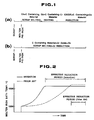
- Fig. 1(a) The preferred process according to the present invention as set out with respect to Fig. 1(a) may be compared with the conventional process as illustrated in Fig. 1(b).
- Fig. 1(b) in the conventionally proposed process, carbon containing material and Cr oxide are charged continuously from the beginning of the reduction process.
- chemical reaction between carbon and oxygen is caused according to the following formula.
- C + O2/2 ⁇ CO The heat created by the foregoing chemical reaction is consumed for melting the stainless scrap.
- the heat is consumed as sensible heat for decomposition of Cr oxide. Therefore, it requires longer period for melting the stainless scrap.
- speed of rising of the molten iron bath temperature is relatively low because the process has no heating period.
- end of the scrap melting step can be detected or assumed by monitoring temperature rising coefficient k and detecting the timing where the temperature rising coefficient becomes constant.
- a Ni containing stainless scrap with a known Ni concentration As the stainless scrap, a Ni containing stainless scrap with a known Ni concentration. In such case, end of the scrap melting step can be detected by monitoring variation of Ni concentration in the molten iron.
- the temperature rising coefficient of the molten iron bath can be derived from the following equation.
- T1 (°C) the temperature of the molten iron bath after blowing of oxygen in amount of x1 Nm3
- T2 (°C) the temperature of the molten iron bath after blowing of oxygen in amount of x2 Nm3
- W HM weight of molten pig iron (tons); W SC is weight of stainless scrap (tons); t is a temperature difference between T1 and T2; (T2 - T1).
- the temperature rising coefficient k is a ratio of rising of the temperature of the molten iron bath in relation to the oxygen blowing speed, it tends to fluctuate depending on charge charged from the top of the converter but can be regarded as substantially constant. Therefore, when the temperature rising coefficient fluctuate at significant level, it represents that heat created by reaction between carbon and oxygen is consumed for melting the stainless scrap.
- the carbon containing material other than that consumed for combustion with oxygen will serves to absorb heat by sensible heat and fusion heat.
- slag forming agent is charged.
- the slag forming agent consumes heat as sensible heat.
- lime and coke ash are used as slag forming agent.
- the heat consumed by the slag forming agent can be derived by:
- the heating step is provided between the scrap melting step and the second step in which Cr reduction is performed.
- charge amount of carbon containing material e.g. coke
- charge speed of coke was varied during scrap melting process.
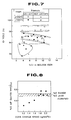
- Variation of C (%) in the molten iron in relation to the charge speed of coke is shown in Fig. 8.
- Fig. 8 shows the result of %C-analysis with respect to molten iron after scrap melting process performed by 85 ton top and bottom-blown converter containing 23 tons of stainless scrap and 41 tons of molten pig iron and after blowing of oxygen in amount of 100 Nm3/ton. As seen from Fig.
- sub lance was inserted into the molten iron bath for measuring the temperature thereof.
- the temperature was 1525 °C.
- 280 kg of lime was charged for compensating basicity for Si contained in the scrap.
- the molten iron temperature was again measured after blowing oxygen in amount of 6200 Nm3.
- a target temperature for performing Cr reducing process was set at 1575 °C. Therefore, in the heating step, temperature rising of 10 ° was required.
- the carbon containing material i.e. coke was charged in a ratio of 1.8 kg/Nm3 O2.
- the process time from the beginning of the process to the beginning of the Cr reduction process was 28.6 min.
- %C derived from the analysis of measured data by means of the sub lance was 4.60 which satisfies the formula of: [%C] ⁇ 4.03 + 0.084 x [%Cr]
- semi-reduced Cr pellet of 2.4 kg/Nm3 O2 and carbon containing material of 1.3 kg Nm3 O2 were charged.
- the composition of the semi-reduced Cr pellet is shown in the following table III.
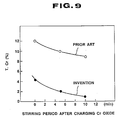
- process moves to a finishing reduction stage.
- oxygen blowing speed is reduced to perform top-blow in a ratio of 60 Nm3/min, ahd to perform bottom-blow in a ratio of 60 Nm3/min.
- the resultant molten iron was tapped. The overall process period was 69.95 min.
- the temperature of molten iron bath was measured by means of sub lance. The measured temperature was 1570 °C. The proves that the temperature of the molten iron bath was maintained substantially in constant.
- example 1 is the result obtained from the preferred process but without performing finishing reduction
- example 2 is the result obtained from the preferred process with the finishing reduction
- comp. 1 is comparative example performed according to the conventional process and without performing finishing reduction
- comp. 2 is comparative example performed according to the conventional process with finishing reduction.
- the present invention enables to perform production of the chromium containing molten iron with the converter with satisfactorily high yield. Furthermore, according to the present invention, damage on the refractory wall of the converter can be minimized.
Landscapes
- Engineering & Computer Science (AREA)
- Chemical & Material Sciences (AREA)
- Manufacturing & Machinery (AREA)
- Materials Engineering (AREA)
- Metallurgy (AREA)
- Organic Chemistry (AREA)
- Carbon Steel Or Casting Steel Manufacturing (AREA)
- Manufacture Of Iron (AREA)
Applications Claiming Priority (2)
| Application Number | Priority Date | Filing Date | Title |
|---|---|---|---|
| JP39719/88 | 1988-02-24 | ||
| JP63039719A JPH01215912A (ja) | 1988-02-24 | 1988-02-24 | 含クロム溶鉄の製造方法 |
Publications (3)
| Publication Number | Publication Date |
|---|---|
| EP0330483A2 EP0330483A2 (en) | 1989-08-30 |
| EP0330483A3 EP0330483A3 (en) | 1990-02-28 |
| EP0330483B1 true EP0330483B1 (en) | 1993-11-24 |
Family
ID=12560793
Family Applications (1)
| Application Number | Title | Priority Date | Filing Date |
|---|---|---|---|
| EP19890301796 Expired - Lifetime EP0330483B1 (en) | 1988-02-24 | 1989-02-23 | Process for producing chromium containing molten iron |
Country Status (7)
| Country | Link |
|---|---|
| US (1) | US4919713A (enExample) |
| EP (1) | EP0330483B1 (enExample) |
| JP (1) | JPH01215912A (enExample) |
| KR (1) | KR910009867B1 (enExample) |
| CA (1) | CA1336746C (enExample) |
| DE (1) | DE68910850T2 (enExample) |
| ZA (1) | ZA891411B (enExample) |
Families Citing this family (5)
| Publication number | Priority date | Publication date | Assignee | Title |
|---|---|---|---|---|
| US5702502A (en) | 1995-12-14 | 1997-12-30 | Armco Inc. | Method for direct use of chromite ore in the production of stainless steel |
| AU2011381317B2 (en) * | 2011-11-15 | 2015-07-09 | Outotec Oyj | Process for the manufacture of ferrochrome |
| CN106319130B (zh) * | 2015-06-16 | 2018-04-03 | 鞍钢股份有限公司 | 一种炼钢用冷却剂的使用方法 |
| CN111881407B (zh) * | 2020-07-30 | 2021-06-11 | 中国科学院地理科学与资源研究所 | 一种基于遥感信息的地表水、热和碳通量耦合估算方法 |
| CN114317866B (zh) * | 2022-01-19 | 2023-05-12 | 首钢京唐钢铁联合有限责任公司 | 一种转炉回用不锈钢废钢替代合金的方法 |
Family Cites Families (7)
| Publication number | Priority date | Publication date | Assignee | Title |
|---|---|---|---|---|
| US3198624A (en) * | 1961-08-24 | 1965-08-03 | Interlake Steel Corp | Process for the manufacture of stainless steel |
| GB1027115A (en) * | 1963-06-25 | 1966-04-20 | Allegheny Ludlum Steel | Improvements in or relating to a process for producing corrosion-resisting steel |
| US3854932A (en) * | 1973-06-18 | 1974-12-17 | Allegheny Ludlum Ind Inc | Process for production of stainless steel |
| DE2737832C3 (de) * | 1977-08-22 | 1980-05-22 | Fried. Krupp Huettenwerke Ag, 4630 Bochum | Verwendung von im Querschnitt veränderlichen Blasdüsen zur Herstellung von rostfreien Stählen |
| JPS57145917A (en) * | 1981-03-03 | 1982-09-09 | Sumitomo Metal Ind Ltd | Refining method for high chromium steel |
| US4410359A (en) * | 1982-09-03 | 1983-10-18 | Allegheny Ludlum Steel Corporation | Process for production of stainless steel |
| DE3601337A1 (de) * | 1986-01-16 | 1987-07-23 | Mannesmann Ag | Verfahren zur herstellung hochlegierter staehle im sauerstoffblaskonverter |
-
1988
- 1988-02-24 JP JP63039719A patent/JPH01215912A/ja active Granted
-
1989
- 1989-02-23 DE DE89301796T patent/DE68910850T2/de not_active Expired - Fee Related
- 1989-02-23 CA CA 591882 patent/CA1336746C/en not_active Expired - Fee Related
- 1989-02-23 US US07/315,407 patent/US4919713A/en not_active Expired - Lifetime
- 1989-02-23 EP EP19890301796 patent/EP0330483B1/en not_active Expired - Lifetime
- 1989-02-23 ZA ZA891411A patent/ZA891411B/xx unknown
- 1989-02-24 KR KR1019890002212A patent/KR910009867B1/ko not_active Expired
Also Published As
| Publication number | Publication date |
|---|---|
| US4919713A (en) | 1990-04-24 |
| DE68910850D1 (de) | 1994-01-05 |
| EP0330483A2 (en) | 1989-08-30 |
| KR890013197A (ko) | 1989-09-22 |
| JPH0438805B2 (enExample) | 1992-06-25 |
| EP0330483A3 (en) | 1990-02-28 |
| CA1336746C (en) | 1995-08-22 |
| ZA891411B (en) | 1989-11-29 |
| JPH01215912A (ja) | 1989-08-29 |
| KR910009867B1 (ko) | 1991-12-03 |
| DE68910850T2 (de) | 1994-03-17 |
Similar Documents
| Publication | Publication Date | Title |
|---|---|---|
| EP0384395B1 (en) | Method for smelting reduction of Ni ore | |
| EP0330483B1 (en) | Process for producing chromium containing molten iron | |
| US4474605A (en) | Process for refining high-chromium steels | |
| EP0330482B1 (en) | Method for producing chromium containing molten iron with low sulphur concentration | |
| US4512802A (en) | Process for the decarburization of molten metal | |
| EP0008463B1 (en) | Method for controlling the temperature of the melt during pneumatic refining of steel | |
| JP2958848B2 (ja) | 溶銑の脱りん方法 | |
| EP0033780B2 (en) | Method for preventing slopping during subsurface pneumatic refining of steel | |
| JPS6213405B2 (enExample) | ||
| EP0360954B1 (en) | Method of melting cold material including iron | |
| EP0319966B1 (en) | Method of smelting reduction of ores containing metal oxides | |
| JPH07310110A (ja) | ステンレス鋼の製造方法 | |
| US4525209A (en) | Process for producing low P chromium-containing steel | |
| US4386957A (en) | Process for making nonmagnetic steel | |
| JPS59222518A (ja) | 低燐含Cr鋼の製造法 | |
| JP2626771B2 (ja) | 予備処理溶銑を用いる転炉吹錬方法 | |
| KR100328028B1 (ko) | 전로정련시용강의승온방법 | |
| JPH0762413A (ja) | ステンレス鋼の製造方法 | |
| JP2896838B2 (ja) | 溶鋼製造法 | |
| JP2805815B2 (ja) | Ni鉱石の溶融還元法 | |
| KR940009670B1 (ko) | 전로취련말기의 용강냉각방법 | |
| JPH06104843B2 (ja) | 高合金鋼の溶製方法 | |
| JPS6342351A (ja) | 含クロム溶鉄の製造方法 | |
| KAMII et al. | Development of a New Stainless Steel Melting and Refining Process (LD-RHOB Process) | |
| JPH01188615A (ja) | 高Mn歩留りを得る固体鉄源溶解法 |
Legal Events
| Date | Code | Title | Description |
|---|---|---|---|
| PUAI | Public reference made under article 153(3) epc to a published international application that has entered the european phase |
Free format text: ORIGINAL CODE: 0009012 |
|
| AK | Designated contracting states |
Kind code of ref document: A2 Designated state(s): DE FR GB IT SE |
|
| PUAL | Search report despatched |
Free format text: ORIGINAL CODE: 0009013 |
|
| AK | Designated contracting states |
Kind code of ref document: A3 Designated state(s): DE FR GB IT SE |
|
| 17P | Request for examination filed |
Effective date: 19900817 |
|
| 17Q | First examination report despatched |
Effective date: 19920324 |
|
| GRAA | (expected) grant |
Free format text: ORIGINAL CODE: 0009210 |
|
| AK | Designated contracting states |
Kind code of ref document: B1 Designated state(s): DE FR GB IT SE |
|
| REF | Corresponds to: |
Ref document number: 68910850 Country of ref document: DE Date of ref document: 19940105 |
|
| ITF | It: translation for a ep patent filed | ||
| ET | Fr: translation filed | ||
| PLBE | No opposition filed within time limit |
Free format text: ORIGINAL CODE: 0009261 |
|
| STAA | Information on the status of an ep patent application or granted ep patent |
Free format text: STATUS: NO OPPOSITION FILED WITHIN TIME LIMIT |
|
| 26N | No opposition filed | ||
| EAL | Se: european patent in force in sweden |
Ref document number: 89301796.2 |
|
| REG | Reference to a national code |
Ref country code: GB Ref legal event code: IF02 |
|
| PGFP | Annual fee paid to national office [announced via postgrant information from national office to epo] |
Ref country code: SE Payment date: 20060207 Year of fee payment: 18 |
|
| PGFP | Annual fee paid to national office [announced via postgrant information from national office to epo] |
Ref country code: DE Payment date: 20060216 Year of fee payment: 18 |
|
| PGFP | Annual fee paid to national office [announced via postgrant information from national office to epo] |
Ref country code: FR Payment date: 20060220 Year of fee payment: 18 |
|
| PGFP | Annual fee paid to national office [announced via postgrant information from national office to epo] |
Ref country code: GB Payment date: 20060222 Year of fee payment: 18 |
|
| PGFP | Annual fee paid to national office [announced via postgrant information from national office to epo] |
Ref country code: IT Payment date: 20060228 Year of fee payment: 18 |
|
| PG25 | Lapsed in a contracting state [announced via postgrant information from national office to epo] |
Ref country code: SE Free format text: LAPSE BECAUSE OF NON-PAYMENT OF DUE FEES Effective date: 20070224 |
|
| EUG | Se: european patent has lapsed | ||
| GBPC | Gb: european patent ceased through non-payment of renewal fee |
Effective date: 20070223 |
|
| REG | Reference to a national code |
Ref country code: FR Ref legal event code: ST Effective date: 20071030 |
|
| PG25 | Lapsed in a contracting state [announced via postgrant information from national office to epo] |
Ref country code: DE Free format text: LAPSE BECAUSE OF NON-PAYMENT OF DUE FEES Effective date: 20070901 |
|
| PG25 | Lapsed in a contracting state [announced via postgrant information from national office to epo] |
Ref country code: GB Free format text: LAPSE BECAUSE OF NON-PAYMENT OF DUE FEES Effective date: 20070223 Ref country code: FR Free format text: LAPSE BECAUSE OF NON-PAYMENT OF DUE FEES Effective date: 20070228 |
|
| PG25 | Lapsed in a contracting state [announced via postgrant information from national office to epo] |
Ref country code: IT Free format text: LAPSE BECAUSE OF NON-PAYMENT OF DUE FEES Effective date: 20070223 |