EP0276121B1 - Zytotoxische Mittel mit spezifischer Wellenlänge - Google Patents
Zytotoxische Mittel mit spezifischer Wellenlänge Download PDFInfo
- Publication number
- EP0276121B1 EP0276121B1 EP88300409A EP88300409A EP0276121B1 EP 0276121 B1 EP0276121 B1 EP 0276121B1 EP 88300409 A EP88300409 A EP 88300409A EP 88300409 A EP88300409 A EP 88300409A EP 0276121 B1 EP0276121 B1 EP 0276121B1
- Authority
- EP
- European Patent Office
- Prior art keywords
- conjugate
- cells
- alkyl
- tissues
- conjugates
- Prior art date
- Legal status (The legal status is an assumption and is not a legal conclusion. Google has not performed a legal analysis and makes no representation as to the accuracy of the status listed.)
- Expired - Lifetime
Links
Images
Classifications
-
- C—CHEMISTRY; METALLURGY
- C07—ORGANIC CHEMISTRY
- C07D—HETEROCYCLIC COMPOUNDS
- C07D487/00—Heterocyclic compounds containing nitrogen atoms as the only ring hetero atoms in the condensed system, not provided for by groups C07D451/00 - C07D477/00
- C07D487/22—Heterocyclic compounds containing nitrogen atoms as the only ring hetero atoms in the condensed system, not provided for by groups C07D451/00 - C07D477/00 in which the condensed system contains four or more hetero rings
-
- A—HUMAN NECESSITIES
- A61—MEDICAL OR VETERINARY SCIENCE; HYGIENE
- A61K—PREPARATIONS FOR MEDICAL, DENTAL OR TOILETRY PURPOSES
- A61K41/00—Medicinal preparations obtained by treating materials with wave energy or particle radiation ; Therapies using these preparations
- A61K41/0057—Photodynamic therapy with a photosensitizer, i.e. agent able to produce reactive oxygen species upon exposure to light or radiation, e.g. UV or visible light; photocleavage of nucleic acids with an agent
- A61K41/0071—PDT with porphyrins having exactly 20 ring atoms, i.e. based on the non-expanded tetrapyrrolic ring system, e.g. bacteriochlorin, chlorin-e6, or phthalocyanines
-
- A—HUMAN NECESSITIES
- A61—MEDICAL OR VETERINARY SCIENCE; HYGIENE
- A61P—SPECIFIC THERAPEUTIC ACTIVITY OF CHEMICAL COMPOUNDS OR MEDICINAL PREPARATIONS
- A61P35/00—Antineoplastic agents
-
- A—HUMAN NECESSITIES
- A61—MEDICAL OR VETERINARY SCIENCE; HYGIENE
- A61K—PREPARATIONS FOR MEDICAL, DENTAL OR TOILETRY PURPOSES
- A61K2121/00—Preparations for use in therapy
Definitions
- the invention relates to the use of light absorbing compounds to mediate the destruction of unwanted cells or tissues by irradiation. Specifically, the invention relates to the use of hydro-monobenzo porphyrin derivatives having absorption maxima in the range 670-720 nanometers to mediate the irradiation of cells or tissues to be destroyed, and to the use of these compounds conjugated to receptor ligands or to immunoglobulins or their immunospecific fragments to focus the effects of the irradiation on particular target tissues.
- HPD hematoporphyrin and its acetylated derivative mixture hematoporphyrin derivative (HPD) systemically, combined with irradiation, for the detection and treatment of malignant cells has, by this time, some considerable history.
- HPD is a mixture of hematoporphyrins including hematoporphyrin itself, hydroxyethyl vinyl deuteroporphyrin, protoporphyrin, and dihematoporphyrin ether. (See. e.g., "Porphyrin Photosensitization", Kessee, D., et al, eds. (1983) Plenum Press.) HPD seems "naturally" capable of localizing in malignant cells.
- hematoporphyrin was conjugated to a monoclonal antibody specific to an antigen associated with a human leukemia (CAMAL) and the conjugates were shown to mediate the irradiation-induced killing of leukemic cells specifically, in vitro (Mew, D., et al, Cancer Research (1985) 45 :4380-4386).
- the invention provides light absorbing compounds capable of exhibiting light mediated cytotoxic effects. These compounds may be administered in relatively low dosage due to their capability to absorb radiation whose energy range is outside of that normally absorbed by the components present in high concentration in the blood or other tissues, in particular the porphyrin residues normally associated with hemoglobin and myoglobin. Therefore, by providing these modified porphyrins at lower concentration, the irradiation treatment can be conducted at a wavelength at which the native chromophores do not compete for photons with the active compounds. This results in greater depth of penetration of the light and reduces hypersensitivity of nontarget tissues.
- modified porphyrins referred to as "green porphyrin” or “Gp” herein
- Gp green porphyrin
- the modified porphyrins of the invention can be conjugated to receptor ligands or to immunoglobulins or immunospecific portions of immunoglobulins permitting them to be specifically concentrated in a desired target tissue such as tumour tissue. This conjugation permits further lowering of the required dose levels since the material is not wasted in distribution into tissues whose destruction, far from being desired, is needed to be maintained.
- the invention relates to conjugates of the formulas Re*-L-Gp and Ig-L-Gp wherein Re* represents a receptor ligand capable of binding a receptor at a cell surface, Ig represents an immunoglobulin or an immunologically reactive portion thereof.
- Gp represents a hydro-monobenzoporphyrin derivative having an absorption maximum in the range of 670-720 nanometers, and L represents either a covalent bond linking these components or a linking moiety covalently linked to each of the Re* or Ig and Gp.
- the Gp is selected from a group of porphyrin derivatives obtained using Diels-Alder reactions with porphyrin nuclei under conditions which effect a reaction at only one of the two available conjugated, nonaromatic diene structures present in the protoporphyrin-IX nucleus.
- the invention relates to the conjugates of the invention for use in a method of treating the human or animal body together with irradiation of the cells or contacted with said conjugate with light in the wavelength range 670-720 nm, for the destruction of targeted cells or tissues.
- the invention relates to pharmaceutical compositions containing these active ingredients.
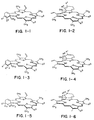
- FIG 1 shows the structures of the green porphyrin compounds used in the method and conjugates of the invention.
- compositions of the invention employ as the light absorbing compound, a derivative of a porphyrin nucleus which has a light absorption maximum in the range of 670-720 nanometers.
- this shift is achieved by effectively saturating one of the two ⁇ -bonds in one, but not two, of the four pyrrole rings which constitute the typical porphyrin nucleus.
- protoporphyrin-IX for example, two of the pyrroles contain vinyl substitutions such that the exocyclic ⁇ -bond is conjugated to one of the two ⁇ -bonds in the ring.
- a Diels-Alder reaction involving this conjugated system results in shifting the pyrrole ⁇ -bond outside the ring and results in the desired shift in absorption maximum.
- R1 and R2 are ordinarily carboxy or carbalkoxy groups but may also be derivatives of sulfonic acid such as the alkylsulfonic esters, or may be sulfone derivatives, optionally substituted phenyl groups, or other electron-withdrawing substituents.
- carboxy is conventionally defined as -COOH
- carbalkoxy is -COOR wherein alkyl is a saturated hydrocarbon of 1-6 carbon atoms such as methyl, n-hexyl, 2-methylpentyl, t-butyl, n-propyl, and so forth.
- Sulfonic esters have the formula SO3R wherein R is alkyl as above-defined, or is aryl, wherein aryl is phenyl optionally substituted with 1-3 substituents independently selected from halo (fluoro, chloro, bromo or iodo), lower alkyl (1-4C) or lower alkoxy (1-4C).
- R3 can itself be aryl--i.e., phenyl optionally substituted as above defined.
- R3 in protoporphyrin-IX is 2-carboxyethyl (-CH2CH2COOH).
- R3 can thus be, for example, lower alkyl (1-4C), or ⁇ -carboxyalkyl (2-6C).
- the carboxy groups may also be in the form of the esters (1-6C) or amides (1-10C).
- the R3 substituent may also be substituted with halogen as above-defined, or with other nonreactive substituents.
- hydro-monobenzoporphyrins which result from the Diels-Alder reaction described in the cited references can also be isomerized as therein described (see Pangka et al. ( supra ) to compounds of formulas shown as 3 and 4 of Figure 1 by treatment with suitable reagents such as triethylamine in methylene chloride or 1.5-diaza bicyclo[5.4.0] undec-5-ene (DBU).
- suitable reagents such as triethylamine in methylene chloride or 1.5-diaza bicyclo[5.4.0] undec-5-ene (DBU).
- DBU 1.5-diaza bicyclo[5.4.0] undec-5-ene
- the stereochemistry of the product is determined by the choice of reagent.
- the Diels-Alder products can be selectively reduced by treating with hydrogen in the presence of palladium on charcoal to give the saturated ring analogs, shown as formulas 5 and 6 in Figure 1, corresponding to the respective Diels-
- the conjugates and methods of the invention include compounds having both configurations of the chiral carbons, whether the compounds are supplied as isolates of a single stereoisomer or are mixtures of enantiomers and/or diasteriomers. Separation of mixtures of diasteriomers may be effected by any conventional means; mixtures of enantiomers may be separated by usual techniques of reacting them with optically active preparations and separating the resulting diasteriomers.
- dihydro-monobenzoporphyrin describes the Diels-Alder direct and rearrangement products; tetrahydro-monobenzoporphyrin describes the foregoing reduced products, and hexahydro-monobenzoporphyrin describes the analogs containing the exocyclic "benzo" ring completely reduced.
- Hydro-monobenzoporphyrin is used generically to include all three classes of oxidation state. The monobenzoporphyrins per se are outside the scope of the invention as their absorption maxima do not fall within the required range.
- the Target Cell-Specific Component is the Target Cell-Specific Component
- the target cell-specific component can be an immunoglobulin or portion thereof or a receptor ligand.
- the immunoglobulin component can be any of a variety of materials. It may be derived from polyclonal or monoclonal antibody preparations and may contain whole antibodies or immunologically reactive fragments of these antibodies such as F(ab ⁇ )2, Fab, or Fab ⁇ fragments. Use of such immunologically reactive fragments as substitutes for whole antibodies is well known in the art. See, for example, Spiegelberg, H.L., in "Immunoassays in the Clinical Laboratory” (1978) 3 :1-23.
- Polyclonal anti-sera are prepared in conventional ways by injecting a suitable mammal with antigen to which antibody is desired, assaying the antibody level in serum against the antigen, and preparing anti-sera when the titers are high.
- Monoclonal antibody preparations may also be prepared conventionally such as by the method of Koehler and Milstein using peripheral blood lymphocytes or spleen cells from immunized animals and immortalizing these cells either by viral infection, by fusion with myelomas, or by other conventional procedures, and screening for production of the desired antibodies by isolated colonies. Formation of the fragments from either monoclonal or polyclonal preparations is effected by conventional means as described by Spiegelberg, H.L, supra .
- antibodies exemplified herein include the monoclonal antibody preparation CAMAL-1 which can be prepared as described by Malcolm, A., et al, Ex Hematol (1984) 12 :539-547; polyclonal or monoclonal preparations of anti-M1 antibody as described by Mew, D., et al, J Immunol (1983) 130 :1473-1477 ( supra ) and antibody, such as B16G, which is prepared as described by Maier, T., et al, J Immunol (1983) 131 :1843; Steele, J.K., et al, Cell Immunol (1985) 90 :303.
- the receptor ligand refers to a moiety which finds a receptor at cell surfaces, and thus retains contours and charge patterns which are complementary to those of the receptor.
- the receptor ligand is symbolized in the formulas of the compounds of the invention as Re*, wherein the asterisk indicates that the moiety bound in the compound of the invention is not the receptor itself, but a substance complementary to it. It is well understood that a wide variety of cell types have specific receptors designed to bind hormones, growth factors, or neurotransmitters. However, while these specific embodiments of receptor ligands are known and understood, the term "receptor ligand", as used herein, refers to any substance, natural or synthetic, which binds specifically to the receptor.
- receptor ligands examples include the steroid hormones, such as progesterone, estrogens, androgens, and the adrenal cortical hormones; growth factors, such as epidermal growth factor, nerve growth factor, fibroblast growth factor, and so forth; other protein hormone, such as human growth hormone, parathyroid hormone, and so forth; and neurotransmitters, such as acetylcholine, serotonin, and dopamine. Any analog of these substances which succeeds in binding to the receptor is also included.
- steroid hormones such as progesterone, estrogens, androgens
- growth factors such as epidermal growth factor, nerve growth factor, fibroblast growth factor, and so forth
- other protein hormone such as human growth hormone, parathyroid hormone, and so forth
- neurotransmitters such as acetylcholine, serotonin, and dopamine. Any analog of these substances which succeeds in binding to the receptor is also included.
- the conjugation of the target-cell-specific component to the hydro-monobenzoporphyrin can be effected by any convenient means.
- a direct covalent bond between these moieties may be effected, for example, using a dehydrating agent such as a carbodiimide, in which case L represents a covalent bond.
- a particularly preferred method of covalently binding hydro-monobenzoporphyrins to the immunoglobulin moiety is treatment with 1-ethyl-3-(3-dimethylamino propyl) carbodiimide (EDCI) in the presence of a reaction medium consisting essentially of dimethyl sulfoxide (DMSO).
- DMSO dimethyl sulfoxide
- dehydrating agents such as dicyclohexylcarbodiimide or diethylcarbodiimide could also be used as well as conventional aqueous and partially aqueous media.
- Nonprotein receptor ligands can be conjugated to the Gp according to their relevant functional groups by means known in the art.
- the active moieties of the conjugate may also be conjugated through linker compounds which are bifunctional, and are capable of covalently binding each of the two active components.
- linker compounds which are bifunctional, and are capable of covalently binding each of the two active components.
- linkers are either homo- or heterobifunctional moieties and include functionalities capable of forming disulfides, amides, hydrazones, and a wide variety of other linkages.
- linkers include polymers such as polyamines, polyethers, polyamine alcohols, derivatized to the components by means of ketones, acids, aldehydes, isocyanates, or a variety of other groups.
- the techniques employed in conjugating the active moieties of the conjugate include any standard means and the method for conjugation does not form part of the invention. Therefore, any effective technique known in the art to produce such conjugates falls within the scope of the invention, and the linker moiety is accordingly broadly defined only as being either a covalent bond or any linker moiety available in the art or derivable therefrom using standard techniques.
- conjugates of the invention or the hydro-monobenzoporphyrins when employed alone are formulated into pharmaceutical compositions for administration to the subject using techniques known in the art generally.
- a summary of such pharmaceutical compositions may be found, for example, in Remington's Pharmaceutical Sciences , Mack publishing Co., Easton, Pennsylvania, latest edition.
- the conjugates and hydro-monobenzoporphyrins of the present invention would normally be administered systemically, in particular by injection.
- Injection may be intravenous, subcutaneous, intramuscular, or, even intraperitoneal.
- Injectables can be prepared in conventional forms, either as liquid solutions or suspensions, solid form suitable for solution or suspension in liquid prior to injection, or as emulsions.
- Suitable excipients are, for example, water, saline, dextrose, glycerol and the like.
- these compositions may also contain minor amounts of nontoxic, auxiliary substances such as wetting or emulsifying agents, pH buffering agents and so forth.
- Systemic administration can also be implemented through implantation of a slow release or sustained release system, by suppository, or, if properly formulated, orally.
- Formulations for these modes of administration are well known in the art, and a summary of such methods may be found, for example, in Remington's Pharmaceutical Sciences ( supra ).
- the active conjugates or hydro-monobenzoporphyrins may be topically administered using standard topical compositions involving lotions, suspensions, or pastes.
- the quantity of conjugate or green porphyrin derivative to be administered depends on the choice of active ingredient, the condition to be treated, the mode of administration, the individual subject, and the judgment of the practitioner. Depending on the specificity of the preparation, smaller or larger doses may be needed. For compositions which are highly specific to target tissue, such as those which comprise conjugates of the green porphyrin with a highly specific monoclonal immunoglobulin preparation or specific receptor ligand, dosages in the range of 0.05-1 mg/kg are suggested. For compositions which are less specific to the target tissue, larger doses, up to 1-10 mg/kg may be needed. The foregoing ranges are merely suggestive, as the number of variables in regard to an individual treatment regime is large and considerable excursions from these recommended values are expected.
- the effect of irradiation was estimated using methods appropriate to the target cells.
- the cells were labeled as above using concentrations of 10-50 ng/ml of Hp as control and the green porphyrin of formula 1 as the test substance.
- the resuspended cells were treated with 300-750 nm light for 30 minutes and the viability resulting was estimated by direct counting using eosin-Y exclusion, a standard procedure for differentiating living from dead cells.
- the cells recovered from light exposure were assayed for viability by incubating them for 18 hours in 3.7 x 10⁵ Bq/ml (10 ⁇ Ci/ml) tritium-labeled thymidine according to the standard procedure whereby thymidine incorporation is equated with viability.
- the cells were harvested and radioactivity uptake was measured by a scintillation counter.
- LD50 is the concentration of compound required to kill 50% of the cell population.
- P815 cells were incubated as described in Example 1 using 1-200 ng/ml Hp or green porphyrin of Formula 1. The cells were labeled in the dark for 30 minutes, washed free of unadsorbed porphyrins, resuspended, and then exposed to 300-750 nm light for another 30 minutes. Viability of the cells was established by tritiated thymidine incorporation after labeling with 7.4 x 10⁴ Bq/ml (20 ⁇ Ci/ml) tritiated thymidine and incubating at 37°C for 18 hours.
- This example describes methods of preparation for immunoconjugates of four different antibody preparations with either hematoporphyrin (Hp) or the green porphyrin (Gp), in this example, that of Formula 1.
- the antibodies employed were CAMAL-1, anti-M1 antibody, and B16G antibody, all prepared as described hereinabove, and affinity purified rabbit/anti-mouse Ig (R ⁇ MIg).
- R ⁇ MIg affinity purified rabbit/anti-mouse Ig
- C-MAb a purified irrelevant monoclonal preparation
- the conjugation is conducted in an entirely nonaqueous solvent.
- a dispersion containing 5 mg each of Hp or Gp, a linking agent, and a dehydrating agent is prepared and stirred for approximately 15 minutes at room temperature under nitrogen.
- a dispersion containing about 2 mg of the immunospecific protein in 2 ml of tetrahydrofuran is then worked up as described above.
- the levels of antibody labeling were as follows, expressed as ⁇ g Hp or green porphyrin (Gp) per mg immunoglobulin: R ⁇ MIg-Hp: 110 ⁇ g/mg; B16G-Hp, 156 ⁇ g/mg; CAMAL-1-Hp, 260 ⁇ g/mg; Anti-M1-Hp, 170 ⁇ g/mg; C-MAb-Hp, 95 ⁇ g/mg; R ⁇ MIg-Gp, 120 ⁇ g/mg; B16G-Gp, 165 ⁇ g/mg CAMAL-1-Gp, 75 ⁇ g/mg; C-MAb-Gp 90 ⁇ g/mg.
- R ⁇ MIg-Hp 110 ⁇ g/mg
- B16G-Hp 156 ⁇ g/mg
- CAMAL-1-Hp 260 ⁇ g/mg
- Anti-M1-Hp 170 ⁇ g/mg
- C-MAb-Hp 95
- the Ig-Hp and Ig-Gp conjugates are tested against cells in vitro by mixing the conjugates with the appropriate cell types, along with suitable controls, and then exposing the labeled cells to irradiation. Procedures for carrying out this assay were described in detail in Mew, D., et al, Cancer Research (1985) for CAMAL-1, and by Mew, D., et al, J Immunol (1983) for Anti-M1, both references cited hereinabove and incorporated herein by reference.
- CAMAL-1 three cell lines, WC4, WC6 and WC2 (WC4 and WC6 produces the CAMAL antigen, but WC2 does not), are labeled with the appropriate Ig-Hp or Ig-Gp preparation as described above in Example 1.
- the labeled cell preparations containing 106 cells each are introduced to Rose chambers and exposed to light activation with a laser at 630 nm. The results for various preparations are then compiled.
- M1 tumor cells are used as target cells and treated with the Ig-Hp, Ig-Gp conjugates or drug or antibody alone or the combination of antibody and drug, but uncoupled, by incubating them in 6% CO2 humidified incubator at 37° for two hours. The cells are washed three times in PBS and then plated and exposed to fluorescent light overnight. The cells are assessed for viability by tritiated thymidine uptake as above.
- A10, P815, and L1210 cells are used as target cells.
- A10 cells are a T-cell hybridoma which secretes a B16G-reactive T suppressor factor; P815 cells are also reactive with B16G.
- the in vitro study is done using a direct method employing the B16G-Hp or B16G-Gp conjugate or indirectly using unlabeled B16G antibodies and labeled R ⁇ MIg-Hp or R ⁇ MIg-Gp.
- 5 x 10⁵ cells are suspended in 1 ml DME/Hepes containing the appropriate Ig-drug conjugate as test or control at Hp or Gp concentrations of 320, 160, 80, 40 and 20 ng drug/ml.
- the cells are incubated in the dark at 37° for one hour, then washed three times in 5 ml DME/Hepes and then re-suspended in 1 ml of the same buffer.
- Three 100 ⁇ l test portions of the labeled preparations are dispensed into flat bottom microtiter wells and the remainder of the cell suspensions (700 ⁇ l) are exposed to incandescent light (22.5 mW/cm2) at a distance of 20 cm for one hour.
- the A10 suspended cells prepared as described above, are exposed to 50 ⁇ g/ml of either B16G or a control antibody C-MAb at 4°C for 30 minutes, washed in DME/Hepes, and then exposed for an additional 30 minutes at 4°C in the dark to varying concentrations of R ⁇ MIg-Hp or R ⁇ MIg-Gp between 2 ⁇ g/ml and 15 ng/ml of Hp or Gp.
- the cells are assessed for viability using labeled thymidine uptake as described above.
- the in vivo test relies on the indirect effect of a population of T-suppressor cells on tumors, which then serve as means to assess the effectiveness of the irradiation treatment, P815 mastocytoma cells grown in syngeneic DBA/2 mice stimulate T-suppressor cells specific for the tumor. These T-suppressor cells impede the development of specific T-killer cells which would otherwise aid in the regression of the tumor.
- the T-cell hybridoma designated A10 above secretes a T-suppressor factor which is associated with these T-suppressor cells.
- DBA/2 mice are injected in the right flank subcutaneously with 104 P815 cells to incorporate the tumor.
- the mice are randomly sorted into groups of eight and injected IV with 150 ⁇ l PBS containing nothing, Hp or Gp, B16G-Hp or B16G-Gp, B16G plus either drug, B16G alone or C-MAb-Hp or C-MAb-Gp.
- the levels of Hp are 50 ⁇ g per animal in all cases and B16G 310 ⁇ g in all cases (where appropriate).
- the animals are maintained in the dark for two hours and then exposed to strong light at 300-750 nm and 22.5 mW/cm2. The animals were then treated normally and monitored on a daily basis.
Landscapes
- Chemical & Material Sciences (AREA)
- Health & Medical Sciences (AREA)
- Organic Chemistry (AREA)
- Life Sciences & Earth Sciences (AREA)
- General Health & Medical Sciences (AREA)
- Veterinary Medicine (AREA)
- Medicinal Chemistry (AREA)
- Public Health (AREA)
- Pharmacology & Pharmacy (AREA)
- Animal Behavior & Ethology (AREA)
- Epidemiology (AREA)
- Biochemistry (AREA)
- Molecular Biology (AREA)
- Nuclear Medicine, Radiotherapy & Molecular Imaging (AREA)
- General Chemical & Material Sciences (AREA)
- Chemical Kinetics & Catalysis (AREA)
- Medicines Containing Antibodies Or Antigens For Use As Internal Diagnostic Agents (AREA)
- Medicines That Contain Protein Lipid Enzymes And Other Medicines (AREA)
- Peptides Or Proteins (AREA)
- Nitrogen Condensed Heterocyclic Rings (AREA)
- Pharmaceuticals Containing Other Organic And Inorganic Compounds (AREA)
Claims (9)
- Verfahren zur Herstellung eines Konjugats der Formel Ig-L-Gp oder Re*-L-Gp,
worin Ig ein Immunglobulin oder einen immunologisch reaktionsfãhigen Anteil davon verkõrpert,
worin Re* einen Rezeptorligand verkõrpert,
worin Gp ein Hydromonobenzoporphyrin mit einer maximalen Lichtabsorption im Bereich von 670-720 Nanometern verkõrpert, und
worin L eine kovalente Bindung oder eine durch kovalente Bindungen an das Ig und Gp gebundene Linkerkomponente verkõrpert,
welches Verfahren das Konjugieren des Immunglobulin oder eines immunologisch reaktionsfãhigen Anteils davon, Ig, oder des Rezeptorligand Re* an das Monobenzoporphyrin Gp durch eine kovalente Bindung oder eine Linkerkomponente L umfaßt. - Verfahren nach Anspruch 1, worin Ig oder Re* sich spezifisch an Tumorgewebe oder -zellen binden.
- Verfahren nach Anspruch 1 oder 2, worin das Ig aus einem Prãparat des monoklonalen Antikõrpers CAMAL-1 erhalten wird und Re* ein Hormon ist.
- Verfahren nach Anspruch 1, 2 oder 3, worin das Gp aus der Gruppe gewãhlt ist, bestehend aus

worin jedes R¹ und R² unabhãngig ein Elektronenabspaltender Substituent ist, der nicht Cyano ist. - Verfahren nach Anspruch 4, worin jedes R¹ und R² unabhãngig gewãhlt ist aus der Gruppe, bestehend aus Carboxy, Carbalkoxy(1-6C), Alkyl(1-6C)sulfonat, Alkyl(1-6C)sulfon und Aryl, und
worin jedes R¹ und R² wahlweise an eine Linkerkomponente konjugiert ist. - Verfahren nach einem der vorangegangenen Ansprüche, worin L eine kovalente Bindung verkõrpert.
Priority Applications (1)
| Application Number | Priority Date | Filing Date | Title |
|---|---|---|---|
| AT8888300409T ATE104859T1 (de) | 1987-01-20 | 1988-01-19 | Zytotoxische mittel mit spezifischer wellenlaenge. |
Applications Claiming Priority (4)
| Application Number | Priority Date | Filing Date | Title |
|---|---|---|---|
| US520487A | 1987-01-20 | 1987-01-20 | |
| US5204 | 1987-01-20 | ||
| US07/041,680 US4883790A (en) | 1987-01-20 | 1987-04-23 | Wavelength-specific cytotoxic agents |
| US41680 | 1987-04-23 |
Publications (3)
| Publication Number | Publication Date |
|---|---|
| EP0276121A2 EP0276121A2 (de) | 1988-07-27 |
| EP0276121A3 EP0276121A3 (en) | 1989-10-18 |
| EP0276121B1 true EP0276121B1 (de) | 1994-04-27 |
Family
ID=26674064
Family Applications (1)
| Application Number | Title | Priority Date | Filing Date |
|---|---|---|---|
| EP88300409A Expired - Lifetime EP0276121B1 (de) | 1987-01-20 | 1988-01-19 | Zytotoxische Mittel mit spezifischer Wellenlänge |
Country Status (7)
| Country | Link |
|---|---|
| US (1) | US4883790A (de) |
| EP (1) | EP0276121B1 (de) |
| JP (2) | JPH068319B2 (de) |
| AU (1) | AU618725B2 (de) |
| CA (1) | CA1333442C (de) |
| DE (1) | DE3889231T2 (de) |
| ES (1) | ES2055735T3 (de) |
Families Citing this family (86)
| Publication number | Priority date | Publication date | Assignee | Title |
|---|---|---|---|---|
| US5171749A (en) * | 1987-01-20 | 1992-12-15 | University Of British Columbia | Wavelength-specific cytotoxic agents |
| US5095030A (en) * | 1987-01-20 | 1992-03-10 | University Of British Columbia | Wavelength-specific cytotoxic agents |
| US5283255A (en) * | 1987-01-20 | 1994-02-01 | The University Of British Columbia | Wavelength-specific cytotoxic agents |
| US4920143A (en) * | 1987-04-23 | 1990-04-24 | University Of British Columbia | Hydro-monobenzoporphyrin wavelength-specific cytotoxic agents |
| CA1341460C (en) * | 1988-01-11 | 2004-10-19 | The Medical College Of Ohio | Production and use of porphyrin derivatives and of compositions containing such derivates |
| US5109129A (en) * | 1989-09-29 | 1992-04-28 | The University Of Toledo, Medical College Of Ohio | Porphyrin derivatives |
| US5002962A (en) * | 1988-07-20 | 1991-03-26 | Health Research, Inc. | Photosensitizing agents |
| US5198460A (en) * | 1988-07-20 | 1993-03-30 | Health Research Inc. | Pyropheophorbides and their use in photodynamic therapy |
| USRE39094E1 (en) * | 1988-07-20 | 2006-05-09 | Health Research, Inc. | Pyropheophorbides and their use in photodynamic therapy |
| USRE38994E1 (en) | 1988-07-20 | 2006-02-28 | Health Research, Inc. | Pyropheophorbides conjugates and their use in photodynamic therapy |
| US4979935A (en) * | 1989-02-21 | 1990-12-25 | Quantex Corporation | Method of photodynamic therapy employing electron trapping material |
| US5457183A (en) * | 1989-03-06 | 1995-10-10 | Board Of Regents, The University Of Texas System | Hydroxylated texaphyrins |
| US5272142A (en) * | 1989-03-06 | 1993-12-21 | Board Of Regents, The University Of Texas System | Expanded porphyrins: large porphyrin-like tripyrroledimethine-derived macrocycles and methods for treating tumors |
| US5041078A (en) * | 1989-03-06 | 1991-08-20 | Baylor Research Foundation, A Nonprofit Corporation Of The State Of Texas | Photodynamic viral deactivation with sapphyrins |
| US5567687A (en) * | 1989-03-06 | 1996-10-22 | University Of Texas | Texaphyrins and uses thereof |
| US4935498A (en) * | 1989-03-06 | 1990-06-19 | Board Of Regents, The University Of Texas System | Expanded porphyrins: large porphyrin-like tripyrroledimethine-derived macrocycles |
| US5599923A (en) * | 1989-03-06 | 1997-02-04 | Board Of Regents, University Of Tx | Texaphyrin metal complexes having improved functionalization |
| US5162509A (en) * | 1989-03-06 | 1992-11-10 | Board Of Regents, The University Of Texas System | Process for preparing expanded porphyrins: large porphyrin-like tripyrroledimethine-derived macrocycles |
| US5256399A (en) * | 1989-03-06 | 1993-10-26 | Board Of Regents, The University Of Texas System | Aromatic pentadentate expanded porphyrins in magnetic resonance imaging |
| US5252720A (en) * | 1989-03-06 | 1993-10-12 | Board Of Regents, The University Of Texas System | Metal complexes of water soluble texaphyrins |
| US5559207A (en) * | 1989-03-06 | 1996-09-24 | Board Of Regents, University Of Texas | Texaphyrin metal complex mediated ester hydrolysis |
| EP0476011A1 (de) * | 1989-06-07 | 1992-03-25 | The University Of British Columbia | Mittels diels-alder-reaktion hergestellte fotosensibilisatorische porphyrinderivate |
| US5308608A (en) * | 1989-06-07 | 1994-05-03 | University Of British Columbia | Photosensitizing Diels-Alder porphyrin derivatives |
| US5594136A (en) * | 1989-12-21 | 1997-01-14 | Pharmacyclics, Inc. | Texaphyrin solid supports and devices |
| US5457195A (en) * | 1989-12-21 | 1995-10-10 | Board Of Regents, The University Of Texas System | Sapphyrin derivatives and conjugates |
| US5120411A (en) * | 1989-12-21 | 1992-06-09 | Board Of Regents, The University Of Texas System | Photodynamic activity of sapphyrins |
| US5543514A (en) * | 1989-12-21 | 1996-08-06 | Board Of Regents, The University Of Texas System | Water-soluble sapphyrins |
| US5159065A (en) * | 1989-12-21 | 1992-10-27 | Board Of Regents, The University Of Texas System | Sapphyrins, derivatives and syntheses |
| US5087636A (en) * | 1990-02-20 | 1992-02-11 | University Of British Columbia | Method to destroy malignant cells in mononuclear cell populations |
| US5053423A (en) * | 1990-03-22 | 1991-10-01 | Quadra Logic Technologies Inc. | Compositions for photodynamic therapy |
| US5238940A (en) * | 1990-03-22 | 1993-08-24 | Quadra Logic Technologies Inc. | Compositions for photodynamic therapy |
| US5587394A (en) * | 1991-03-28 | 1996-12-24 | The University Of Toledo | Production and use of diels alder adducts of vinyl porphyrins, of metal complexes thereof, and of compositions containing such adducts and complexes |
| US5354858A (en) * | 1991-03-28 | 1994-10-11 | The University Of Toledo | Production and use of Diels Alder adducts of vinyl porphyrins and of compositions containing such adducts |
| US5563262A (en) * | 1991-03-28 | 1996-10-08 | University Of Toledo | Diels alder adducts of vinyl porphyrins |
| US5179120A (en) * | 1991-06-28 | 1993-01-12 | Cytopharm, Inc. | Porphycene compounds for photodynamic therapy |
| WO1993003035A1 (fr) * | 1991-08-02 | 1993-02-18 | Meiji Milk Products Co., Ltd. | Medicament anti-vih |
| US5595726A (en) * | 1992-01-21 | 1997-01-21 | Pharmacyclics, Inc. | Chromophore probe for detection of nucleic acid |
| US5565552A (en) * | 1992-01-21 | 1996-10-15 | Pharmacyclics, Inc. | Method of expanded porphyrin-oligonucleotide conjugate synthesis |
| US5763172A (en) * | 1992-01-21 | 1998-06-09 | Board Of Regents, The University Of Texas System | Method of phosphate ester hydrolysis |
| US5607924A (en) * | 1992-01-21 | 1997-03-04 | Pharmacyclics, Inc. | DNA photocleavage using texaphyrins |
| US5888997A (en) * | 1994-04-14 | 1999-03-30 | Pharmacyclics, Inc. | Radiation sensitization using texaphyrins |
| US5410045A (en) * | 1992-08-04 | 1995-04-25 | Board Of Regents, The University Of Texas System | Rubyrin and related expanded porphyrins |
| AU4695493A (en) * | 1992-08-17 | 1994-03-15 | Quadra Logic Technologies Inc. | Method for destroying or inhibiting growth of unwanted cells or tissues |
| US5798491A (en) * | 1993-06-09 | 1998-08-25 | Board Of Regents, The University Of Texas System | Multi-mechanistic chemical cleavage using certain metal complexes |
| US5798349A (en) | 1994-03-14 | 1998-08-25 | The General Hospital Corporation | Use of green porphyrins to treat neovasculature in the eye |
| US5969111A (en) * | 1994-04-14 | 1999-10-19 | Board Of Regents, The University Of Texas System | Texaphyrins substituted with imidazole are provided |
| US5837866A (en) * | 1994-09-21 | 1998-11-17 | Board Of Regents, The University Of Texas | Phosphoramidite derivatives of macrocycles |
| US5633354A (en) * | 1994-09-21 | 1997-05-27 | Pharmacyclics, Inc. | Phosphoramidite derivatives of texaphyrins |
| US5882328A (en) * | 1995-01-13 | 1999-03-16 | Qlt Phototherapeutics, Inc. | Method to prevent transplant rejection |
| US6107325A (en) * | 1995-01-17 | 2000-08-22 | Qlt Phototherapeutics, Inc. | Green porphyrins as immunomodulators |
| US5789433A (en) * | 1995-01-17 | 1998-08-04 | Quadra Logic Technologies, Inc. | Green porphyrins as immunomodulators |
| US6096776A (en) * | 1995-01-17 | 2000-08-01 | Qlt Phototherapeutics, Inc. | Green porphyrins as immunomodulators |
| US5756726A (en) * | 1995-06-02 | 1998-05-26 | Pharmacyclics, Inc. | Methods of producing singlet oxygen using compounds having improved functionalization |
| US5714328A (en) * | 1995-06-07 | 1998-02-03 | Board Of Regents, The University Of Texas System | RNA photocleavage using texaphyrins |
| US5707608A (en) * | 1995-08-02 | 1998-01-13 | Qlt Phototherapeutics, Inc. | Methods of making liposomes containing hydro-monobenzoporphyrin photosensitizer |
| WO1999013943A1 (en) | 1996-03-05 | 1999-03-25 | Ekos Corporation | Ultrasound assembly for use with light activated drugs |
| PT983272E (pt) * | 1997-05-07 | 2004-03-31 | Univ British Columbia | Nova classe de compostos fotoactivos derivados de benzoporfirina |
| US5880145A (en) * | 1997-05-07 | 1999-03-09 | The University Of British Columbia | Class of benzoporphyrin derivative photoactive compounds |
| PT983273E (pt) * | 1997-05-07 | 2002-06-28 | Quadra Logic Tech Inc | Esteres etilenoglicolicos de derivados de mono-hidrobenzoporfirina como agentes fotoactivos |
| US6756396B1 (en) * | 1997-05-07 | 2004-06-29 | Qlt Inc. | Ethylene glycol esters as photoactive agents |
| AU4278400A (en) * | 1999-04-14 | 2000-11-14 | University Of British Columbia, The | Improved beta,beta,-dihydroxy meso-substituted chlorins, isobacteriochlorins, and bacteriochlorins |
| US20020022032A1 (en) * | 1999-04-23 | 2002-02-21 | Curry Patrick Mark | Immuno-adjuvant PDT treatment of metastatic tumors |
| US7122568B1 (en) | 1999-11-17 | 2006-10-17 | Qlt, Inc. | Use of low-dose PDT to inhibit restenosis |
| CA2403612A1 (en) * | 2000-03-24 | 2001-10-11 | Romulus Kimbro Brazzell | Improved treatment of neovascularization |
| AU2001258117A1 (en) | 2000-05-08 | 2001-11-20 | The University Of British Columbia | Supports for photosensitizer formulations |
| US6624187B1 (en) | 2000-06-12 | 2003-09-23 | Health Research, Inc. | Long wave length absorbing bacteriochlorin alkyl ether analogs |
| US6984395B2 (en) * | 2001-04-11 | 2006-01-10 | Qlt, Inc. | Drug delivery system for hydrophobic drugs |
| WO2002100326A2 (en) * | 2001-05-01 | 2002-12-19 | The General Hospital Corporation | Photoimmunotherapies for cancer using photosensitizer immunoconjugates and combination therapies |
| DE60225844T2 (de) * | 2001-11-02 | 2009-04-09 | The Governors Of The University Of Alberta, Edmonton | Micelle-zusammensetzungen enthaltend pegylierten phospholipide und einen photosensibilisator |
| EP1441767A1 (de) * | 2001-11-09 | 2004-08-04 | QLT Inc. | Zusammensetzungen enthaltend photosensitizer und hautpenetrationsförderer, sowie deren verwendung zur photodynamischen behandlung von erkrankungen |
| US7455858B2 (en) | 2002-05-16 | 2008-11-25 | Qlt Inc. | Compositions and methods for delivery of photosensitive drugs |
| US7175611B2 (en) | 2002-06-05 | 2007-02-13 | Mark Alan Mitchnick | Antimicrobial release system |
| US20070020272A1 (en) * | 2003-04-30 | 2007-01-25 | Tayyaba Hasan | Indirectly linked photosensitizer immunoconjugates, processes for the production thereof and methods of use thereof |
| US20040220167A1 (en) * | 2003-05-02 | 2004-11-04 | Nasrollah Samiy | Methods of treating neuralgic pain |
| CA2437638A1 (en) * | 2003-08-20 | 2005-02-20 | John Robert North | Photodynamic therapy |
| CA2457214A1 (en) | 2004-02-06 | 2005-08-06 | Qlt Inc. | Photodynamic therapy for the treatment of acne |
| WO2006020979A2 (en) * | 2004-08-13 | 2006-02-23 | Yale University | Factor vii conjugates for selectively treating neovascularization disorders |
| MX2007004030A (es) * | 2004-10-04 | 2008-01-14 | Cellgate Inc | Analogos de poliamina como agentes terapeuticos para enfermedades oculares. |
| DE102005015286A1 (de) * | 2005-04-04 | 2006-10-05 | Tetrapdt Gmbh | Photosensibilisatoren als Arzneimittelträger für lokale Markierung und Therapie von neoplastischem Gewebe |
| WO2009137062A2 (en) | 2008-05-05 | 2009-11-12 | The General Hospital Corporation | Photoactivatable antimicrobial agents and therapeutic and diagnostic methods of using same |
| WO2011009020A2 (en) | 2009-07-16 | 2011-01-20 | Mallinckrodt Inc. | Compounds and compositions for use in phototherapy and in treatment of ocular neovascular disease and cancers |
| US20110118600A1 (en) | 2009-11-16 | 2011-05-19 | Michael Gertner | External Autonomic Modulation |
| KR20140089478A (ko) | 2011-01-13 | 2014-07-15 | 큐엘티 인코포레이티드 | 감광제의 국소 전달용 약학 조성물 및 그의 이용 |
| EP2521593B1 (de) | 2011-03-15 | 2015-12-09 | Kona Medical, Inc. | Energetische nervenmodulation |
| MX2015000429A (es) | 2012-07-11 | 2015-07-14 | Dermira Inc | Composiciones farmaceuticas para el suministro topico de fotosesibilizadores y usos de los mismos. |
| WO2018170134A1 (en) | 2017-03-14 | 2018-09-20 | Ohio State Innovation Foundation | Methods and compositions related to a tissue factor-targeting igg3 immunoconjugates |
Family Cites Families (4)
| Publication number | Priority date | Publication date | Assignee | Title |
|---|---|---|---|---|
| US2951800A (en) * | 1957-11-13 | 1960-09-06 | Monsanto Chemicals | Photoxidation processes utilizing improved catalysts |
| US4649151A (en) * | 1982-09-27 | 1987-03-10 | Health Research, Inc. | Drugs comprising porphyrins |
| US4675338A (en) * | 1984-07-18 | 1987-06-23 | Nippon Petrochemicals Co., Ltd. | Tetrapyrrole therapeutic agents |
| AU583854B2 (en) * | 1984-09-13 | 1989-05-11 | Cytogen Corporation | Antibody therapeutic agent conjugates |
-
1987
- 1987-04-23 US US07/041,680 patent/US4883790A/en not_active Expired - Lifetime
-
1988
- 1988-01-19 ES ES88300409T patent/ES2055735T3/es not_active Expired - Lifetime
- 1988-01-19 CA CA000556875A patent/CA1333442C/en not_active Expired - Lifetime
- 1988-01-19 EP EP88300409A patent/EP0276121B1/de not_active Expired - Lifetime
- 1988-01-19 DE DE3889231T patent/DE3889231T2/de not_active Expired - Lifetime
- 1988-01-19 AU AU10388/88A patent/AU618725B2/en not_active Expired
- 1988-01-20 JP JP63011837A patent/JPH068319B2/ja not_active Expired - Lifetime
-
1995
- 1995-03-13 JP JP7053075A patent/JP2835294B2/ja not_active Expired - Fee Related
Non-Patent Citations (2)
| Title |
|---|
| CELLULAR IMMUNOLOGY, vol. 90, 1985; pp. 303-313# * |
| JOURNAL OF IMMUNOLOGY, vol. 131, 1983; pp. 1843-1848# * |
Also Published As
| Publication number | Publication date |
|---|---|
| EP0276121A2 (de) | 1988-07-27 |
| JP2835294B2 (ja) | 1998-12-14 |
| ES2055735T3 (es) | 1994-09-01 |
| AU618725B2 (en) | 1992-01-09 |
| AU1038888A (en) | 1988-07-21 |
| EP0276121A3 (en) | 1989-10-18 |
| JPH07258262A (ja) | 1995-10-09 |
| US4883790A (en) | 1989-11-28 |
| JPH068319B2 (ja) | 1994-02-02 |
| JPS63277700A (ja) | 1988-11-15 |
| DE3889231D1 (de) | 1994-06-01 |
| DE3889231T2 (de) | 1994-08-11 |
| CA1333442C (en) | 1994-12-06 |
Similar Documents
| Publication | Publication Date | Title |
|---|---|---|
| EP0276121B1 (de) | Zytotoxische Mittel mit spezifischer Wellenlänge | |
| US4920143A (en) | Hydro-monobenzoporphyrin wavelength-specific cytotoxic agents | |
| US5095030A (en) | Wavelength-specific cytotoxic agents | |
| US5238940A (en) | Compositions for photodynamic therapy | |
| US5399583A (en) | Method of treating skin diseases | |
| US5171749A (en) | Wavelength-specific cytotoxic agents | |
| AU683856B2 (en) | Wavelength-specific photosensitive porphacyanine and expanded porphyrin-like compounds and methods for preparation and use thereof | |
| US5053423A (en) | Compositions for photodynamic therapy | |
| US5308608A (en) | Photosensitizing Diels-Alder porphyrin derivatives | |
| CA2075895C (en) | Compositions containing green porphyrins to destroy malignant cells in mononuclear cell populations | |
| US5149708A (en) | Photosensitizing Diels-Alder porphyrin derivatives | |
| CZ288186B6 (en) | Porphocyanines and CNC-expanded porphyrins | |
| AU641658B2 (en) | Photosensitizing diels-alder porphyrin derivatives | |
| JPH0780887B2 (ja) | 波長特異的細胞毒性試薬 | |
| NO179410B (no) | Analogifremgangsmåte for fremstilling av terapeutisk aktive monobenzofyriner og anvendelse av disse | |
| MXPA96004956A (en) | Porfocianin and porfirinas extended with |
Legal Events
| Date | Code | Title | Description |
|---|---|---|---|
| PUAI | Public reference made under article 153(3) epc to a published international application that has entered the european phase |
Free format text: ORIGINAL CODE: 0009012 |
|
| AK | Designated contracting states |
Kind code of ref document: A2 Designated state(s): AT BE CH DE ES FR GB GR IT LI LU NL SE |
|
| PUAL | Search report despatched |
Free format text: ORIGINAL CODE: 0009013 |
|
| AK | Designated contracting states |
Kind code of ref document: A3 Designated state(s): AT BE CH DE ES FR GB GR IT LI LU NL SE |
|
| 17P | Request for examination filed |
Effective date: 19900109 |
|
| 17Q | First examination report despatched |
Effective date: 19911119 |
|
| RIN1 | Information on inventor provided before grant (corrected) |
Inventor name: DOLPHIN, DAVID Inventor name: LEVY, JULIA G. Inventor name: CHOW, JACK K. Inventor name: STERNBERG, ETHAN |
|
| GRAA | (expected) grant |
Free format text: ORIGINAL CODE: 0009210 |
|
| AK | Designated contracting states |
Kind code of ref document: B1 Designated state(s): AT BE CH DE ES FR GB GR IT LI LU NL SE |
|
| REF | Corresponds to: |
Ref document number: 104859 Country of ref document: AT Date of ref document: 19940515 Kind code of ref document: T |
|
| ITF | It: translation for a ep patent filed | ||
| REF | Corresponds to: |
Ref document number: 3889231 Country of ref document: DE Date of ref document: 19940601 |
|
| ET | Fr: translation filed | ||
| REG | Reference to a national code |
Ref country code: ES Ref legal event code: FG2A Ref document number: 2055735 Country of ref document: ES Kind code of ref document: T3 |
|
| REG | Reference to a national code |
Ref country code: GR Ref legal event code: FG4A Free format text: 3012609 |
|
| RIN2 | Information on inventor provided after grant (corrected) |
Free format text: LEVY, JULIA G. * DOLPHIN, DAVID * CHOW, JACK K. * STERNBERG, ETHAN |
|
| EAL | Se: european patent in force in sweden |
Ref document number: 88300409.5 |
|
| PLBE | No opposition filed within time limit |
Free format text: ORIGINAL CODE: 0009261 |
|
| STAA | Information on the status of an ep patent application or granted ep patent |
Free format text: STATUS: NO OPPOSITION FILED WITHIN TIME LIMIT |
|
| 26N | No opposition filed | ||
| REG | Reference to a national code |
Ref country code: GB Ref legal event code: IF02 |
|
| PGFP | Annual fee paid to national office [announced via postgrant information from national office to epo] |
Ref country code: AT Payment date: 20061212 Year of fee payment: 20 |
|
| PGFP | Annual fee paid to national office [announced via postgrant information from national office to epo] |
Ref country code: GB Payment date: 20061213 Year of fee payment: 20 |
|
| PGFP | Annual fee paid to national office [announced via postgrant information from national office to epo] |
Ref country code: LU Payment date: 20061219 Year of fee payment: 20 |
|
| PGFP | Annual fee paid to national office [announced via postgrant information from national office to epo] |
Ref country code: NL Payment date: 20061222 Year of fee payment: 20 |
|
| PGFP | Annual fee paid to national office [announced via postgrant information from national office to epo] |
Ref country code: SE Payment date: 20070105 Year of fee payment: 20 |
|
| PGFP | Annual fee paid to national office [announced via postgrant information from national office to epo] |
Ref country code: CH Payment date: 20070110 Year of fee payment: 20 |
|
| PGFP | Annual fee paid to national office [announced via postgrant information from national office to epo] |
Ref country code: ES Payment date: 20070119 Year of fee payment: 20 |
|
| PGFP | Annual fee paid to national office [announced via postgrant information from national office to epo] |
Ref country code: DE Payment date: 20070131 Year of fee payment: 20 |
|
| PGFP | Annual fee paid to national office [announced via postgrant information from national office to epo] |
Ref country code: BE Payment date: 20070208 Year of fee payment: 20 |
|
| PGFP | Annual fee paid to national office [announced via postgrant information from national office to epo] |
Ref country code: IT Payment date: 20070522 Year of fee payment: 20 |
|
| BE20 | Be: patent expired |
Owner name: THE *UNIVERSITY OF BRITISH COLUMBIA Effective date: 20080119 |
|
| REG | Reference to a national code |
Ref country code: GB Ref legal event code: PE20 |
|
| REG | Reference to a national code |
Ref country code: CH Ref legal event code: PL |
|
| NLV7 | Nl: ceased due to reaching the maximum lifetime of a patent |
Effective date: 20080119 |
|
| EUG | Se: european patent has lapsed | ||
| PGFP | Annual fee paid to national office [announced via postgrant information from national office to epo] |
Ref country code: GR Payment date: 20070123 Year of fee payment: 20 |
|
| REG | Reference to a national code |
Ref country code: ES Ref legal event code: FD2A Effective date: 20080121 |
|
| PG25 | Lapsed in a contracting state [announced via postgrant information from national office to epo] |
Ref country code: NL Free format text: LAPSE BECAUSE OF EXPIRATION OF PROTECTION Effective date: 20080119 |
|
| PGFP | Annual fee paid to national office [announced via postgrant information from national office to epo] |
Ref country code: FR Payment date: 20070103 Year of fee payment: 20 |
|
| PG25 | Lapsed in a contracting state [announced via postgrant information from national office to epo] |
Ref country code: GB Free format text: LAPSE BECAUSE OF EXPIRATION OF PROTECTION Effective date: 20080118 |
|
| PG25 | Lapsed in a contracting state [announced via postgrant information from national office to epo] |
Ref country code: ES Free format text: LAPSE BECAUSE OF EXPIRATION OF PROTECTION Effective date: 20080121 |