EP0267601B1 - Anti-PCI-monoklonaler Antikörper - Google Patents
Anti-PCI-monoklonaler Antikörper Download PDFInfo
- Publication number
- EP0267601B1 EP0267601B1 EP87116671A EP87116671A EP0267601B1 EP 0267601 B1 EP0267601 B1 EP 0267601B1 EP 87116671 A EP87116671 A EP 87116671A EP 87116671 A EP87116671 A EP 87116671A EP 0267601 B1 EP0267601 B1 EP 0267601B1
- Authority
- EP
- European Patent Office
- Prior art keywords
- pci
- monoclonal antibody
- antibody
- cells
- secreting
- Prior art date
- Legal status (The legal status is an assumption and is not a legal conclusion. Google has not performed a legal analysis and makes no representation as to the accuracy of the status listed.)
- Expired - Lifetime
Links
Images
Classifications
-
- C—CHEMISTRY; METALLURGY
- C07—ORGANIC CHEMISTRY
- C07K—PEPTIDES
- C07K16/00—Immunoglobulins [IG], e.g. monoclonal or polyclonal antibodies
- C07K16/18—Immunoglobulins [IG], e.g. monoclonal or polyclonal antibodies against material from animals or humans
- C07K16/36—Immunoglobulins [IG], e.g. monoclonal or polyclonal antibodies against material from animals or humans against blood coagulation factors
-
- C—CHEMISTRY; METALLURGY
- C12—BIOCHEMISTRY; BEER; SPIRITS; WINE; VINEGAR; MICROBIOLOGY; ENZYMOLOGY; MUTATION OR GENETIC ENGINEERING
- C12N—MICROORGANISMS OR ENZYMES; COMPOSITIONS THEREOF; PROPAGATING, PRESERVING, OR MAINTAINING MICROORGANISMS; MUTATION OR GENETIC ENGINEERING; CULTURE MEDIA
- C12N5/00—Undifferentiated human, animal or plant cells, e.g. cell lines; Tissues; Cultivation or maintenance thereof; Culture media therefor
- C12N5/10—Cells modified by introduction of foreign genetic material
- C12N5/12—Fused cells, e.g. hybridomas
-
- C—CHEMISTRY; METALLURGY
- C12—BIOCHEMISTRY; BEER; SPIRITS; WINE; VINEGAR; MICROBIOLOGY; ENZYMOLOGY; MUTATION OR GENETIC ENGINEERING
- C12P—FERMENTATION OR ENZYME-USING PROCESSES TO SYNTHESISE A DESIRED CHEMICAL COMPOUND OR COMPOSITION OR TO SEPARATE OPTICAL ISOMERS FROM A RACEMIC MIXTURE
- C12P21/00—Preparation of peptides or proteins
-
- G—PHYSICS
- G01—MEASURING; TESTING
- G01N—INVESTIGATING OR ANALYSING MATERIALS BY DETERMINING THEIR CHEMICAL OR PHYSICAL PROPERTIES
- G01N33/00—Investigating or analysing materials by specific methods not covered by groups G01N1/00 - G01N31/00
- G01N33/48—Biological material, e.g. blood, urine; Haemocytometers
- G01N33/50—Chemical analysis of biological material, e.g. blood, urine; Testing involving biospecific ligand binding methods; Immunological testing
- G01N33/53—Immunoassay; Biospecific binding assay; Materials therefor
- G01N33/577—Immunoassay; Biospecific binding assay; Materials therefor involving monoclonal antibodies binding reaction mechanisms characterised by the use of monoclonal antibodies
-
- Y—GENERAL TAGGING OF NEW TECHNOLOGICAL DEVELOPMENTS; GENERAL TAGGING OF CROSS-SECTIONAL TECHNOLOGIES SPANNING OVER SEVERAL SECTIONS OF THE IPC; TECHNICAL SUBJECTS COVERED BY FORMER USPC CROSS-REFERENCE ART COLLECTIONS [XRACs] AND DIGESTS
- Y10—TECHNICAL SUBJECTS COVERED BY FORMER USPC
- Y10S—TECHNICAL SUBJECTS COVERED BY FORMER USPC CROSS-REFERENCE ART COLLECTIONS [XRACs] AND DIGESTS
- Y10S436/00—Chemistry: analytical and immunological testing
- Y10S436/807—Apparatus included in process claim, e.g. physical support structures
- Y10S436/808—Automated or kit
-
- Y—GENERAL TAGGING OF NEW TECHNOLOGICAL DEVELOPMENTS; GENERAL TAGGING OF CROSS-SECTIONAL TECHNOLOGIES SPANNING OVER SEVERAL SECTIONS OF THE IPC; TECHNICAL SUBJECTS COVERED BY FORMER USPC CROSS-REFERENCE ART COLLECTIONS [XRACs] AND DIGESTS
- Y10—TECHNICAL SUBJECTS COVERED BY FORMER USPC
- Y10S—TECHNICAL SUBJECTS COVERED BY FORMER USPC CROSS-REFERENCE ART COLLECTIONS [XRACs] AND DIGESTS
- Y10S530/00—Chemistry: natural resins or derivatives; peptides or proteins; lignins or reaction products thereof
- Y10S530/827—Proteins from mammals or birds
- Y10S530/85—Reproductive organs or embryos
- Y10S530/851—Placenta; amniotic fluid
Definitions
- This invention relates to a monoclonal antibody specific to a substance derived and purified from a human placenta and having anticoagulant activity (hereinafter abbreviated as "PCI"), a hybridoma secreting the monoclonal antibody, and utilization of the monoclonal antibody.
- PCI anticoagulant activity
- Inhibitors of platelet aggregation and blood coagulation isolated from the human placenta have been described by Maki, et al. in Europ. J. Obstet. Gynec. reprod. Biol., 17 (1984) 149-154.
- the inhibitors were purified by several steps of chromatography and gel filtration in single band on polyacrylamide gel electrophoresis, having molecular weights of 450 000 and 45 000.
- PCI anticoagulant activity
- Example 1 One example of preparation of PCI will be described subsequently in Example 1. It may be summarized as follows.
- a placenta homogenate is first prepared from the human placenta and then subjected to centrifugation.
- the homogenization is effected in the following manner. After cutting off the amnion and the like from the placenta, the placenta is washed thoroughly with a physiological saline, followed by homogenization by the use of a Waring blender and "Polytron" (trade mark; manufactured by Kinema SA). The thus-obtained homogenate was subjected to centrifugation, thereby obtaining a supernatant and sediment. The resulting placenta homogenate sediment is washed thoroughly with a buffer and is then subjected again to centrifugation to obtain a washed sediment, followed by extraction.
- the thus-obtained sediment of the placenta homogenate is immersed in a buffer, which contains a chelating agent such as EDTA, EGTA, oxalic acid, citric acid, sodium nitrilotriacetate or phosphoric acid, and/or another buffer containing a surfactant such as "Triton X-100", Lubrol (trade mark), SDS, deoxycholic acid or the like.
- a chelating agent such as EDTA, EGTA, oxalic acid, citric acid, sodium nitrilotriacetate or phosphoric acid
- a surfactant such as "Triton X-100", Lubrol (trade mark), SDS, deoxycholic acid or the like.
- the supernatant is subjected further to ultracentrifugation at 50,000 to 100,000 ⁇ g to obtain a microsome fraction as a sediment. After washing the microsome fraction, it was extracted with a chelating agent and/or a surfactant in the same manner as described above and the resultant extract was subjected to ultracentrifugation to collect a supernatant as an extract.
- the thus-obtained extract is subjected to ammonium sulfate fractionation.
- the ammonium sulfate fractionation is effected in the following manner. First, solid ammonium sulfate is added to 35% of its saturated concentration to the extract, followed by centrifugation to collect a supernatant. Ammonium sulfate is then added to the supernatant until its concentration reached 85% of its saturated concentration, followed by centrifugation to collect a sediment.
- the resulting ammonium sulfate fraction is then purified by known isolation and purification procedures including, for example, dialysis, ion exchange chromatography, gel filtration, adsorption chromatography,- hydrophobic chromatography, isoelectric point column electrophoresis, affinity chromatography using lectin or an antibody, and the like either singly or in combination, thereby obtaining PCI.
- isolation and purification procedures including, for example, dialysis, ion exchange chromatography, gel filtration, adsorption chromatography,- hydrophobic chromatography, isoelectric point column electrophoresis, affinity chromatography using lectin or an antibody, and the like either singly or in combination, thereby obtaining PCI.
- a fraction obtained by subjecting the chelating agent and/or surfactant extract to ammonium sulfate fractionation is dialyzed thoroughly.
- the resulting dialyzate is then eluted in accordance with the linear concentration gradient method in which "DEAE-To
- PCI is however contained only in a trace amount in the placenta, and no sufficient specific binding is established with PCI in various chromatographic techniques which are employed routinely. It is hence difficult to obtain PCI in a highly pure form. Moreover, such conventional procedures require many steps and are unable to achieve any satisfactory recovery rate.
- the present inventors have carried out an extensive investigation with a view toward solving these problems. As a result, it has been succeeded to obtain by a cell fusion technique a hybridoma secreting a monoclonal antibody specific to PCI. It has also been found that the monoclonal antibody specific to PCI can be obtained using the hybridoma and the use of the monoclonal antibody permits high-level purification and immunoassay of PCI, thereby leading to completion of this invention.
- the present invention therefore provides a monoclonal antibody specific to PCI as defined in claim 1, a hybridoma secreting the monoclonal antibody, a purification process of PCI featuring the use of the monoclonal antibody as an immunoadsorbent, as well as an immunoassay of PCI featuring the use of the monoclonal antibodies.
- the hybridoma of this invention secretes a monoclonal antibody specific to PCI.
- Use of the monoclonal antibody then makes it possible to simplify the isolation and purification process of PCI, so that PCI of extremely high purity can be obtained at a high recovery rate.
- the solid carrier with the monoclonal antibody coupled thereon is usable repeatedly provided that it is washed.
- the antibody-coupled carrier is extremely useful from the industrial viewpoint, since its use can simplify the purification step and moreover, is economical.
- the anti-PCI monoclonal antibody of this invention can also be used for the immunoassay of PCI in the treatment of abnormality or a disease in the coagulative fibrinolysis system of blood.
- the hybridoma secreting the monoclonal antibody specific to PCI can be formed, for example, in the following manner.
- Antibody-secreting cells are prepared from an animal which has been immunized using PCI as an antigen.
- Myeloma cells are prepared separately.
- These cells are caused to fuse together.
- the resulting hybridomas are allowed to grow selectively.
- Antibody-secreting hybridomas are screened out from the hybridomas.
- the intended hybridoma secreting the monoclonal antibody is obtained by cloning.
- the preparation of antibody-secreting cells may be conducted in accordance with a method known commonly in the art. This may be done by immunizing an animal with PCI as an antigen and then collecting antibody-secreting cells from the animal.
- a mouse, rat, rabbit, guinea pig, sheep or the like may be mentioned by way of example as the animal.
- As the antibody-secreting cells may be used those isolated from the spleen, lymph node, peripheral blood or the like.
- the immunization may be performed by a method in which the Freund's complete adjuvant is used in combination.
- myeloma cells to be used in the cell fusion.
- Cell strains of many mammals may be used. It is however preferable to use the cell strains of an animal which belongs to the same family as the animal used for the preparation of the antibody-secreting cells. It is preferable to use a cell strain having specific chemical resistance, so that unfused cells and fused cells can be separated from each other after the cell fusion by incubating both unfused and fused cells in a selective medium in which unfused myeloma cells cannot survive but hybridomas alone are allowed to grow. For example, 8-azaguanine resistant cells are favorably employed because they cannot grow in HAT medium.
- the cell fusion is effected usually by mixing myeloma cells and antibody-secreting cells (at a mixing ratio of 1:4 - 1:10, in general) in a medium such as MEM medium, PRMI1640 medium or IMDM medium.
- a fusion promoter may be used polyethylene glycol (PEG) the average molecular weight of which ranges from 1,000 to 6,000. PEG may be employed usually in an amount of 30 - 50%.
- Cells which have gone through the cell fusion are diluted suitably with IMDM medium containing 10% FCS or a like medium, followed by centrifugation.
- the resultant sediment is suspended in a selective medium (for example, HAT medium) and inoculated on a 96-well microtiter plate. It is then cultured in a 5% carbon dioxide culture apparatus. Cells which have grown in the selective medium are hybridomas.
- the screening of antibody-secreting hybridomas may be effected by a method known per se in the art. No particular limitation is imposed thereon.
- the screening may be conducted by collecting a culture with hybridomas grown therein, reacting the hybridomas with PCI and then reacting the resultant product further with with a second antibody labelled with an enzyme, fluorescent substance or light-emitting substance.
- Cells in a culture well which has been found to contain antibody-secreting hybridomas, are subjected to cloning in accordance with the limiting-dilution method or the like, whereby a hybridoma secreting the monoclonal antibody is obtained.
- hybridomas secreting a monoclonal antibody specific to PCI i.e., hybridomas PCI-H39, PCI-H46, PCI-H167, PCI-H169, PCI-H176 and PCI-H180.
- hybridomas are novel cells which can each secrete a monoclonal antibody specific to PCI.
- a procedure was therefore taken to deposit these cells with Fermentation Research Institute, Agency of Industrial Science and Technology, Government of Japan. Their deposit was however turned down by Notice of Refusal of Acceptance of Microorganism Deposit, Serial No. SHO 61-1415.
- IFO Institute for Fermentation Osaka
- the monoclonal antibody specific to PCI can be formed by using the antibody-secreting hybridoma obtained above.
- the monoclonal antibody of this invention can be obtained from a culture supernatant by culturing the antibody-secreting hybridoma in a suitable medium.
- a mineral oil such as pristane (2,6,10,14-tetramethylpentadecane) is peritoneally administered to an animal of the same family as an animal used to obtain the myeloma cells and the antibody-secreting hybridoma is then inoculated, whereby the antibody-secreting hybridoma is allowed to grow in vivo to a large volume.
- the monoclonal antibody is formed at a high concentration in both serum and ascitic fluid of the inoculated animal.
- the separation and purification of the monoclonal antibody may be practised in accordance with a method which is used routinely for the purification of an antibody from serum.
- the thus-obtained monoclonal antibody of this invention includes six types of monoclonal antibodies depending on the type of the antibody-secreting hybridoma employed, namely, PCI-A39, PCI-A46, PCI-A-167, PCI-A169, PCI-A176 and PCI-A180.
- These monoclonal antibodies have characteristics shown in Table 1, in which the molecular weights were measured by SDS-polyacrylamide gel electrophoresis, the isoelectric points by isoelectric point electrophoresis (an LKB-column isoelectric point electrophoretic apparatus), and the immunoglobulin subclasses by the Ouchterlony's double immunodiffusion test [a rabbit polyclonal antibody (product of Miles Laboratory) was used].
- PCI is purified by using the monoclonal antibody of this invention as an immunoadsorbent.
- This may be practises, for example, by coupling the monoclonal antibody of this invention with a solid carrier such as dextran gel, agarose gel or polyvinyl gel and then subjecting crude PCI to chromatography on a column of the monoclonal antibody coupled carrier as an immunoadsorbent.
- the coupling of the solid carrier and monoclonal antibody is effected in accordance with the cyanogen bromide method or via epoxy, amino, carboxyl or formyl groups.
- PCI polypeptide
- the immunoassay of PCI which makes use of the monoclonal antibodies of this invention, may be practised, for example, in the following manner.
- the monoclonal antibody of this invention is labelled with a labelling agent such as an enzyme, isotope or fluorescent substance.
- a PCI-containing sample is then added to the resultant conjugate.
- the degree of labelling of the immunoreaction product between the PCI and conjugate is thereafter measured.
- the ELISA method may also be used as a general method.
- PCI Purification of antigen
- PCI 50 ⁇ g/administration
- an adjuvant emulsion 50 ⁇ g/administration
- an adjuvant emulsion 50 ⁇ g/administration
- an adjuvant emulsion 50 ⁇ g/administration
- 50 ⁇ g of PCI was administered solely to complete the immunization.
- mice Three days later, the mouse was sacrificed. After taking out the spleen and chopping same, it was filtered through a 100-mesh nylon mesh to obtain isolated spleen cells.
- a hypotonic solution (155 mM ammonium chloride) was added to the thus-obtained immunized spleen cells to subject red blood cells to hemolysis. The cells were then washed three times with Iscove's modified Dulbecco's medium (IMDM). On the other hand, mouse myeloma cells PAI were also washed three times with IMDM. Both cells were counted. The spleen cells and PAI cells were combined together at a ratio of 5:1, followed by centrifugation.
- IMDM Iscove's modified Dulbecco's medium
- the supernatant was decanted out, and after loosening and separating the resultant cell sediment, 0.5 ml of a 45% solution obtained by diluting polyethylene glycol (PEG) 4,000 with a culture medium was added dropwise to effect fusion. After allowing the resultant mixture to stand at 37°C for 30 seconds, 1 ml of IMDM was added gently over 1 minute. Thereafter, 10 ml of IMDM was added over 5 minutes to a final volume of 40 ml in a centrifugal tube. The centrifugal tube was centrifuged at 1,000 rpm for 8 minutes.
- PEG polyethylene glycol
- the resulting sediment was suspended in IMDM which had been added with 10% of fetal calf serum (FCS). The suspension was centrifuged again and the resultant supernatant was decanted out.
- FCS fetal calf serum
- the thus-obtained sediment was suspended again in (HAT-)10% FCS-added IMDM in which 10 ⁇ 4 M of hypoxanthine, 4 ⁇ 10 ⁇ 7 M of aminopterin and 1.6 ⁇ 10 ⁇ 5 M of thymidine had been added in advance.
- the resultant suspension was poured in 100- ⁇ l portions into the individual wells of a 96-well microtiter plate. Each well was added with 50 ⁇ l of the medium every third - fourth day. Growth of cells was observed.
- hybridomas were only allowed to grow owing to the selective action of HAT.
- PCI was poured at a rate of 0.1 ⁇ g/100 ⁇ l/well into each well of a 96-well microtiter plate ("Immunoplate I", trade name; product of NUNC Company).
- the microtiter plate was left over at 25°C for 18 hours so as to adsorb PCI.
- a culture as a sample was poured at a rate of 100 ⁇ l/well to react at 25°C for 2 hours.
- Abdominal cells collected by injecting IMDM into the abdominal cavity of a mouse were used as feeder cells.
- the abdominal cells suspended at 1 ⁇ 105 cells/ml in 10% FCS-added IMDM were poured in 100- ⁇ l portions into the individual wells of a 96-well microtiter plate.
- antibody-secreting hybridomas were prepared at a concentration of 5 cells/ml and poured in 100- ⁇ l portions into the individual wells.
- the culture medium was replaced by a fresh supply of the same medium, and culture supernatants were successively sampled out from wells in which hybridomas had grown to an appropriate volume. Confirmation of the secretion of the antibody was conducted by the same method as that described above.
- the cultures of positive wells were cloned again to obtain hybridomas secreting an anti-PCI monoclonal antibody.
- mice Seven-weeks-old BALB/C mice were intraperitoneally administered with 0.5 ml of pristane (product of Aldrich Chemical Co., Inc.). About one week later, the mice were intraperitoneally inoculated with the above-obtained hybridomas at a rate of 1 ⁇ 106 cells/mouse. About 10 days later, ascitic fluid was collected from the abdominal cavities of the mice. The fluid was centrifuged at 3,000 rpm for 10 minutes to collect a supernatant. Ammonium sulfate was added to 5 ml of the supernatant until the final concentration of ammonium sulfate reached 50% saturation. The resultant mixture was allowed to stand overnight at 4°C.
- pristane product of Aldrich Chemical Co., Inc.
- the mixture was then centrifuged at 3,000 rpm for 15 minutes, and the resultant sediment was dissolved in a 0.1 M tris-hydrochloric acid buffer (pH 8) and thereafter dialyzed against the same buffer.
- the resulting dialyzate was subjected to chromatography on a column packed with "Protein A Sepharose CL-4B" (product of Pharmacia AB) which had been equilibrated with the same buffer.
- Cyanogen-bromide-activated Sepharose 4B (0.4 g) was washed successively with 1 mM hydrochloric acid and a 0.1 M sodium bicarbonate-0.5 M sodium chloride buffer (pH 8.3) to prepare 1.5 ml of a coupling buffer of cyanogen-bromide-activated Sepharose 4B.
- the thus-obtained antibody-conjugated Sepharose 4B was washed three times alternately with a 0.1 M tris-hydrochloric acid-0.5 M sodium chloride buffer (pH 8.3) and a 0.1 M acetic acid-0.5 M sodium chloride buffer (pH 4.0), followed by equilibration with a 0.1 M tris-hydrochloric acid buffer (pH 7.4) to obtain an antibody column 46.
- Example 1-(i)-(ii) The crude PCI solution obtained in Example 1-(i)-(ii) was charged into the antibody column 46 prepared in the above procedure. The column was washed thoroughly with the same buffer as that employed for its equilibration.
- PCI acetic acid-0.5 M sodium chloride buffer
- pH 7.4 a 0.1 M tris-hydrochloric acid-0.1 M calcium chloride
- PCI was not found in any through fractions. PCI was obtained in a pure form at a recovery rate of at least 70% from eluate fractions.
- HRP horse radish peroxidase
- each well was added with 100 ⁇ l of a substrate solution (a 0.1 M citrate-phosphate buffer containing 0.4 mg/ml of orthophenylenediamine and 0.01% of hydrogen peroxide; pH 5.0), followed by a further reaction at 25°C for 30 minutes. Fifty microliters of 4.5 M sulfuric acid were added to terminate the reaction and the absorbance at 492 nm was measured. Results are shown in Table 3.
- a substrate solution a 0.1 M citrate-phosphate buffer containing 0.4 mg/ml of orthophenylenediamine and 0.01% of hydrogen peroxide; pH 5.0
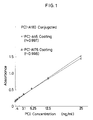
- Calibration curves obtained when PCI-A46 and 176 were used separately as coating monoclonal antibodies and PCI-A180 was used commonly as a monoclonal antibody to be conjugated had extremely high sensitivity and moreover exhibited good linearity as illustrated in FIGURE 1.
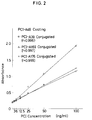
- calibration curves obtained when PCI-A46 was used commonly as a coating monoclonal antibody and PCI-A39, 169 and 176 were employed separately as monoclonal antibodies to be conjugated also showed good linearity as depicted in FIGURE 2.
- PCI in a concentration range of 5 - 100 ng/ml has been found detectable as shown in Table 3 when PCI-A46 is used as a coating monoclonal antibody and PCI-A39, 169, 176 or 180 is used as a monoclonal antibody to be conjugated or when PCI-A176 is used as a coating monoclonal antibody and PCI-A46 or 180 is used as a monoclonal antibody to be conjugated.
Landscapes
- Health & Medical Sciences (AREA)
- Chemical & Material Sciences (AREA)
- Life Sciences & Earth Sciences (AREA)
- Organic Chemistry (AREA)
- Engineering & Computer Science (AREA)
- Immunology (AREA)
- Genetics & Genomics (AREA)
- Biochemistry (AREA)
- General Health & Medical Sciences (AREA)
- Molecular Biology (AREA)
- Hematology (AREA)
- Biotechnology (AREA)
- Wood Science & Technology (AREA)
- Medicinal Chemistry (AREA)
- Biomedical Technology (AREA)
- Zoology (AREA)
- Bioinformatics & Cheminformatics (AREA)
- Biophysics (AREA)
- Proteomics, Peptides & Aminoacids (AREA)
- Microbiology (AREA)
- Cell Biology (AREA)
- Urology & Nephrology (AREA)
- Chemical Kinetics & Catalysis (AREA)
- General Engineering & Computer Science (AREA)
- Physics & Mathematics (AREA)
- Analytical Chemistry (AREA)
- General Physics & Mathematics (AREA)
- Pathology (AREA)
- General Chemical & Material Sciences (AREA)
- Food Science & Technology (AREA)
- Preparation Of Compounds By Using Micro-Organisms (AREA)
- Peptides Or Proteins (AREA)
- Micro-Organisms Or Cultivation Processes Thereof (AREA)
Claims (4)
- Ein monoklonaler Antikörper, der für einen aus der menschlichen Plazenta stammenden Koagulationsinhibitor spezifisch ist, mit folgenden Eigenschaften:(1) Molekulargewicht(SDS-Polyacrylamidgel-elektrophorese, reduzierter Zustand): 34.000 ± 2.000.(2) Isoelektrischer Punkt (isoelektrische Säulenelektrophorese unter Verwendung eines Ampholyten): 4,7 ± 0,1.(3) Stabilität:(a) Inaktivierung durch eine Hitzebehandlung bei 50°C für 30 Minuten.(b) Stabil in einem pH-Bereich von 4-10.(c) Stabil im Plasma bei 37°C für 30 Minuten.(4) Wirkungen:(a) Fähig zur Verlängerung der Recalcifikationszeit.(b) Fähig zur Verlängerung der Prothrombinzeit.(c) Fähig zur Verlängerung der aktivierten partiellen Thromboplastinzeit.(5) Analyse der Aminosäuren:
Das Vorhandensein von Asparaginsäure, Threonin, Serin, Glutaminsäure, Prolin, Glycin, Alanin, 1/2 Cystin, Valin, Methionin, Isoleucin, Leucin, Tyrosin, Phenylalanin, Histidin, Lysin und Arginin wurde durch Aminosäureanalyse nachgewiesen. - Ein Hybridom, das einen monoklonalen Antikörper, wie in Anspruch 1 definiert, absondert.
- Verfahren zur Reinigung eines aus der menschlichen Plazenta stammenden Koagulationsinhibitors, umfassend die Verwendung eines monoklonalen Antikörpers, wie in Anspruch 1 definiert, als Immunoadsorbens.
- Immunoassay für einen aus der menschlichen Plazenta stammenden Koagulationsinhibitor, umfassend die Verwendung von monoclonalen Antikörpern, wie sie in Anspruch 1 definiert sind.
Applications Claiming Priority (2)
| Application Number | Priority Date | Filing Date | Title |
|---|---|---|---|
| JP269588/86 | 1986-11-14 | ||
| JP61269588A JPH08840B2 (ja) | 1986-11-14 | 1986-11-14 | 抗pciモノクローナル抗体、これを用いた抗pciの精製法及び免疫学的測定法 |
Publications (3)
| Publication Number | Publication Date |
|---|---|
| EP0267601A2 EP0267601A2 (de) | 1988-05-18 |
| EP0267601A3 EP0267601A3 (en) | 1988-10-12 |
| EP0267601B1 true EP0267601B1 (de) | 1992-07-08 |
Family
ID=17474448
Family Applications (1)
| Application Number | Title | Priority Date | Filing Date |
|---|---|---|---|
| EP87116671A Expired - Lifetime EP0267601B1 (de) | 1986-11-14 | 1987-11-11 | Anti-PCI-monoklonaler Antikörper |
Country Status (7)
| Country | Link |
|---|---|
| US (2) | US5192694A (de) |
| EP (1) | EP0267601B1 (de) |
| JP (1) | JPH08840B2 (de) |
| KR (1) | KR960013460B1 (de) |
| CA (1) | CA1335354C (de) |
| DE (1) | DE3780256T2 (de) |
| ES (1) | ES2044893T3 (de) |
Families Citing this family (9)
| Publication number | Priority date | Publication date | Assignee | Title |
|---|---|---|---|---|
| DE4012341A1 (de) * | 1990-04-18 | 1991-10-24 | Behringwerke Ag | Monoklonale antikoerper gegen pp4, verfahren zu ihrer herstellung und ihre verwendung |
| US5607841A (en) * | 1994-06-20 | 1997-03-04 | Lipinski; Boguslaw | Preparation and proteolytic degradation of a macromolecular protein complex from fibrinogen |
| JP3673522B2 (ja) * | 1994-11-11 | 2005-07-20 | 昇 金子 | 抗アネキシンvモノクローナル抗体並びにその利用及びそれを産生するハイブリドーマ細胞系 |
| US7635676B2 (en) * | 2001-02-21 | 2009-12-22 | Alavita Pharmaccuticals, Inc. | Modified annexin proteins and methods for their use in organ transplantation |
| AU2002252035A1 (en) * | 2001-02-21 | 2002-09-12 | Surromed, Inc. | Modified annexin proteins and methods for preventing thrombosis |
| US7645739B2 (en) * | 2001-02-21 | 2010-01-12 | Alavita Pharmaceuticals, Inc. | Modified annexin compositions and methods of using same |
| US20090291086A1 (en) * | 2001-02-21 | 2009-11-26 | Alavita Pharmaceuticals, Inc. | Compositions and Methods for Treating Cerebral Thrombosis and Global Cerebral Ischemia |
| US7635680B2 (en) * | 2001-02-21 | 2009-12-22 | Alavita Pharmaceuticals, Inc. | Attenuation of reperfusion injury |
| US6982154B2 (en) * | 2002-02-21 | 2006-01-03 | Surromed, Inc. | Modified annexin proteins and methods for treating vaso-occlusive sickle-cell disease |
Family Cites Families (10)
| Publication number | Priority date | Publication date | Assignee | Title |
|---|---|---|---|---|
| DE2842467A1 (de) * | 1978-09-29 | 1980-04-10 | Behringwerke Ag | Neues ubiquitaeres gewebsprotein pp tief 8 |
| US4486530A (en) * | 1980-08-04 | 1984-12-04 | Hybritech Incorporated | Immunometric assays using monoclonal antibodies |
| JPS59196824A (ja) * | 1983-04-21 | 1984-11-08 | Kowa Co | 吸着防止剤 |
| DE3315000A1 (de) * | 1983-04-26 | 1984-10-31 | Behringwerke Ag, 3550 Marburg | Gewebeprotein pp(pfeil abwaerts)4(pfeil abwaerts), verfahren zu seiner gewinnung sowie seine verwendung |
| EP0156169B1 (de) * | 1984-02-29 | 1991-12-18 | Asahi Kasei Kogyo Kabushiki Kaisha | Wässrige Lösung eines darin in erhöhter Konzentration aufgelösten Gewebe-Plasminogen-Aktivators und Herstellungsverfahren |
| KR930007434B1 (ko) * | 1984-09-21 | 1993-08-10 | 베링거 잉겔하임 인터내셔날 게엠베하 | 혈액응고 억제 단백질 제조방법 |
| CA1265446A (en) * | 1985-09-30 | 1990-02-06 | Masahiro Maki | Anticoagulating substance, process for preparing same and anticoagulant comprising same as an effective component |
| US4751084A (en) * | 1986-02-26 | 1988-06-14 | Monsanto Company | Tissue plasminogen activator from normal human colon cells |
| US4937324A (en) * | 1987-02-06 | 1990-06-26 | Zymogenetics, Inc. | Chromatographic purification of human proteins having anticoagulant and anti-inflammatory activity |
| JPH01502667A (ja) * | 1987-02-06 | 1989-09-14 | ザイモジェネティクス,インコーポレイティド | 抗凝固活性及び抗炎症活性を有するヒト蛋白質 |
-
1986
- 1986-11-14 JP JP61269588A patent/JPH08840B2/ja not_active Expired - Lifetime
-
1987
- 1987-11-05 US US07/116,908 patent/US5192694A/en not_active Expired - Lifetime
- 1987-11-06 CA CA000551194A patent/CA1335354C/en not_active Expired - Fee Related
- 1987-11-11 ES ES87116671T patent/ES2044893T3/es not_active Expired - Lifetime
- 1987-11-11 DE DE8787116671T patent/DE3780256T2/de not_active Expired - Fee Related
- 1987-11-11 EP EP87116671A patent/EP0267601B1/de not_active Expired - Lifetime
- 1987-11-13 KR KR1019870012827A patent/KR960013460B1/ko not_active Expired - Fee Related
-
1992
- 1992-01-13 US US07/820,004 patent/US5290915A/en not_active Expired - Lifetime
Also Published As
| Publication number | Publication date |
|---|---|
| JPS63123395A (ja) | 1988-05-27 |
| US5192694A (en) | 1993-03-09 |
| ES2044893T3 (es) | 1994-01-16 |
| KR960013460B1 (ko) | 1996-10-05 |
| EP0267601A2 (de) | 1988-05-18 |
| DE3780256T2 (de) | 1993-01-28 |
| EP0267601A3 (en) | 1988-10-12 |
| US5290915A (en) | 1994-03-01 |
| KR890008313A (ko) | 1989-07-10 |
| JPH08840B2 (ja) | 1996-01-10 |
| CA1335354C (en) | 1995-04-25 |
| DE3780256D1 (de) | 1992-08-13 |
Similar Documents
| Publication | Publication Date | Title |
|---|---|---|
| US4446122A (en) | Purified human prostate antigen | |
| US5733549A (en) | Peptides including amino acid sequences selected from lipoprotein (a) and apolipoprotein (a), antibodies recognizing these amino acid sequences, and methods of determination using these antibodies | |
| USRE33405E (en) | Purified human prostate antigen | |
| JPH05184384A (ja) | hBNPのC端を認識するモノクロ−ナル抗体 | |
| US4533496A (en) | Method of isolating monoclonal antibodies from hybridoma cultures | |
| US5290915A (en) | Placenta-derived coagulation inhibitor | |
| Veltri et al. | Isolation and identification of human lung tumor-associated antigens | |
| JPH0770192A (ja) | ヒト−マクロファージ遊走阻止因子蛋白質 | |
| Poulik et al. | Post-gamma globulin. II. Radioimmunoassay determination of levels of post-gamma globulin and β2-microglobulin | |
| US5425942A (en) | Polyfunctinal protease | |
| US4950741A (en) | Antibody against rheumatoid arthritis specific protein | |
| EP0306680B1 (de) | Monoklonale Antikörper gegen Antithrombinbindende Substanz und seine Verwendungen | |
| Tarng et al. | Isolation of antihemorrhagic factors in opossum (Didelphis virginiana) serum using a monoclonal antibody immunoadsorbent | |
| EP0336441B1 (de) | Anti-CPBII-monoklonaler Antikörper | |
| EP0345811B1 (de) | Gegen menschliches Fibrinopepid A spezifische monoklonale Antikörper | |
| JP2613188B2 (ja) | 抗pciモノクローナル抗体を産生するハイブリドーマ | |
| US5576182A (en) | Anti-mucus glycoprotein monoclonal antibody | |
| JPS60253871A (ja) | 抗アポa−1抗体 | |
| EP0259773A2 (de) | Ein Antikörper spezifisch gegen ein Krebsantigen | |
| JPS63141595A (ja) | 抗ヒトフエリチンh型サブユニツト単クロ−ン性抗体及びこれを産生するハイブリド−マ並びにこれを利用するヒトフエリチンh型サブユニツト量の測定法 | |
| JPH05268989A (ja) | 抗ヒト精液γ−グルタミルトランスペプチダーゼモノクローナル抗体、ハイブリドーマおよび免疫学的検出方法 |
Legal Events
| Date | Code | Title | Description |
|---|---|---|---|
| PUAI | Public reference made under article 153(3) epc to a published international application that has entered the european phase |
Free format text: ORIGINAL CODE: 0009012 |
|
| AK | Designated contracting states |
Kind code of ref document: A2 Designated state(s): DE ES FR GB IT NL SE |
|
| PUAL | Search report despatched |
Free format text: ORIGINAL CODE: 0009013 |
|
| AK | Designated contracting states |
Kind code of ref document: A3 Designated state(s): DE ES FR GB IT NL SE |
|
| 17P | Request for examination filed |
Effective date: 19890210 |
|
| 17Q | First examination report despatched |
Effective date: 19900702 |
|
| GRAA | (expected) grant |
Free format text: ORIGINAL CODE: 0009210 |
|
| AK | Designated contracting states |
Kind code of ref document: B1 Designated state(s): DE ES FR GB IT NL SE |
|
| REF | Corresponds to: |
Ref document number: 3780256 Country of ref document: DE Date of ref document: 19920813 |
|
| ITF | It: translation for a ep patent filed | ||
| ET | Fr: translation filed | ||
| ITTA | It: last paid annual fee | ||
| PLBE | No opposition filed within time limit |
Free format text: ORIGINAL CODE: 0009261 |
|
| STAA | Information on the status of an ep patent application or granted ep patent |
Free format text: STATUS: NO OPPOSITION FILED WITHIN TIME LIMIT |
|
| 26N | No opposition filed | ||
| REG | Reference to a national code |
Ref country code: ES Ref legal event code: FG2A Ref document number: 2044893 Country of ref document: ES Kind code of ref document: T3 |
|
| EAL | Se: european patent in force in sweden |
Ref document number: 87116671.6 |
|
| REG | Reference to a national code |
Ref country code: GB Ref legal event code: IF02 |
|
| PGFP | Annual fee paid to national office [announced via postgrant information from national office to epo] |
Ref country code: GB Payment date: 20041029 Year of fee payment: 18 |
|
| PGFP | Annual fee paid to national office [announced via postgrant information from national office to epo] |
Ref country code: SE Payment date: 20041116 Year of fee payment: 18 Ref country code: ES Payment date: 20041116 Year of fee payment: 18 |
|
| PGFP | Annual fee paid to national office [announced via postgrant information from national office to epo] |
Ref country code: DE Payment date: 20041122 Year of fee payment: 18 |
|
| PGFP | Annual fee paid to national office [announced via postgrant information from national office to epo] |
Ref country code: FR Payment date: 20041124 Year of fee payment: 18 |
|
| PGFP | Annual fee paid to national office [announced via postgrant information from national office to epo] |
Ref country code: NL Payment date: 20041130 Year of fee payment: 18 |
|
| PG25 | Lapsed in a contracting state [announced via postgrant information from national office to epo] |
Ref country code: IT Free format text: LAPSE BECAUSE OF NON-PAYMENT OF DUE FEES Effective date: 20051111 Ref country code: GB Free format text: LAPSE BECAUSE OF NON-PAYMENT OF DUE FEES Effective date: 20051111 |
|
| PG25 | Lapsed in a contracting state [announced via postgrant information from national office to epo] |
Ref country code: SE Free format text: LAPSE BECAUSE OF NON-PAYMENT OF DUE FEES Effective date: 20051112 Ref country code: ES Free format text: LAPSE BECAUSE OF NON-PAYMENT OF DUE FEES Effective date: 20051112 |
|
| PG25 | Lapsed in a contracting state [announced via postgrant information from national office to epo] |
Ref country code: NL Free format text: LAPSE BECAUSE OF NON-PAYMENT OF DUE FEES Effective date: 20060601 Ref country code: DE Free format text: LAPSE BECAUSE OF NON-PAYMENT OF DUE FEES Effective date: 20060601 |
|
| EUG | Se: european patent has lapsed | ||
| GBPC | Gb: european patent ceased through non-payment of renewal fee |
Effective date: 20051111 |
|
| PG25 | Lapsed in a contracting state [announced via postgrant information from national office to epo] |
Ref country code: FR Free format text: LAPSE BECAUSE OF NON-PAYMENT OF DUE FEES Effective date: 20060731 |
|
| NLV4 | Nl: lapsed or anulled due to non-payment of the annual fee |
Effective date: 20060601 |
|
| REG | Reference to a national code |
Ref country code: FR Ref legal event code: ST Effective date: 20060731 |
|
| REG | Reference to a national code |
Ref country code: ES Ref legal event code: FD2A Effective date: 20051112 |