EP0246083A2 - Verfahren zum kontinuierlichen oder halbkontinuierlichen Farben von einer Poly-m-phenylenisophthalamidfaser - Google Patents
Verfahren zum kontinuierlichen oder halbkontinuierlichen Farben von einer Poly-m-phenylenisophthalamidfaser Download PDFInfo
- Publication number
- EP0246083A2 EP0246083A2 EP19870304248 EP87304248A EP0246083A2 EP 0246083 A2 EP0246083 A2 EP 0246083A2 EP 19870304248 EP19870304248 EP 19870304248 EP 87304248 A EP87304248 A EP 87304248A EP 0246083 A2 EP0246083 A2 EP 0246083A2
- Authority
- EP
- European Patent Office
- Prior art keywords
- fibre
- poly
- dye
- swelling agent
- dyeing
- Prior art date
- Legal status (The legal status is an assumption and is not a legal conclusion. Google has not performed a legal analysis and makes no representation as to the accuracy of the status listed.)
- Granted
Links
- 239000000835 fiber Substances 0.000 title claims abstract description 100
- 238000000034 method Methods 0.000 title claims abstract description 60
- 238000004043 dyeing Methods 0.000 title claims abstract description 35
- 229920000889 poly(m-phenylene isophthalamide) Polymers 0.000 title claims abstract description 28
- 230000008961 swelling Effects 0.000 claims abstract description 49
- 239000003795 chemical substances by application Substances 0.000 claims abstract description 47
- -1 poly(m-phenyleneisophthalamide) Polymers 0.000 claims abstract description 43
- 229960001760 dimethyl sulfoxide Drugs 0.000 claims abstract description 22
- IAZDPXIOMUYVGZ-UHFFFAOYSA-N Dimethylsulphoxide Chemical compound CS(C)=O IAZDPXIOMUYVGZ-UHFFFAOYSA-N 0.000 claims abstract description 21
- FXHOOIRPVKKKFG-UHFFFAOYSA-N N,N-Dimethylacetamide Chemical compound CN(C)C(C)=O FXHOOIRPVKKKFG-UHFFFAOYSA-N 0.000 claims abstract description 11
- SECXISVLQFMRJM-UHFFFAOYSA-N N-Methylpyrrolidone Chemical compound CN1CCCC1=O SECXISVLQFMRJM-UHFFFAOYSA-N 0.000 claims abstract description 8
- 238000010438 heat treatment Methods 0.000 claims abstract description 7
- 239000000975 dye Substances 0.000 claims description 58
- 239000004744 fabric Substances 0.000 claims description 54
- 239000003063 flame retardant Substances 0.000 claims description 21
- RNFJDJUURJAICM-UHFFFAOYSA-N 2,2,4,4,6,6-hexaphenoxy-1,3,5-triaza-2$l^{5},4$l^{5},6$l^{5}-triphosphacyclohexa-1,3,5-triene Chemical compound N=1P(OC=2C=CC=CC=2)(OC=2C=CC=CC=2)=NP(OC=2C=CC=CC=2)(OC=2C=CC=CC=2)=NP=1(OC=1C=CC=CC=1)OC1=CC=CC=C1 RNFJDJUURJAICM-UHFFFAOYSA-N 0.000 claims description 17
- XLYOFNOQVPJJNP-UHFFFAOYSA-N water Substances O XLYOFNOQVPJJNP-UHFFFAOYSA-N 0.000 claims description 15
- 238000001035 drying Methods 0.000 claims description 13
- 239000003085 diluting agent Substances 0.000 claims description 12
- QVGXLLKOCUKJST-UHFFFAOYSA-N atomic oxygen Chemical compound [O] QVGXLLKOCUKJST-UHFFFAOYSA-N 0.000 claims description 10
- 239000001301 oxygen Substances 0.000 claims description 10
- 229910052760 oxygen Inorganic materials 0.000 claims description 10
- 239000000203 mixture Substances 0.000 claims description 8
- 238000005406 washing Methods 0.000 claims description 8
- 239000003701 inert diluent Substances 0.000 claims description 7
- LYCAIKOWRPUZTN-UHFFFAOYSA-N Ethylene glycol Chemical compound OCCO LYCAIKOWRPUZTN-UHFFFAOYSA-N 0.000 claims description 6
- 230000000670 limiting effect Effects 0.000 claims description 5
- 239000002798 polar solvent Substances 0.000 claims description 4
- 230000001419 dependent effect Effects 0.000 claims description 3
- YEJRWHAVMIAJKC-UHFFFAOYSA-N 4-Butyrolactone Chemical compound O=C1CCCO1 YEJRWHAVMIAJKC-UHFFFAOYSA-N 0.000 claims description 2
- CTQNGGLPUBDAKN-UHFFFAOYSA-N O-Xylene Chemical compound CC1=CC=CC=C1C CTQNGGLPUBDAKN-UHFFFAOYSA-N 0.000 claims description 2
- SJEYSFABYSGQBG-UHFFFAOYSA-M Patent blue Chemical compound [Na+].C1=CC(N(CC)CC)=CC=C1C(C=1C(=CC(=CC=1)S([O-])(=O)=O)S([O-])(=O)=O)=C1C=CC(=[N+](CC)CC)C=C1 SJEYSFABYSGQBG-UHFFFAOYSA-M 0.000 claims description 2
- 239000000980 acid dye Substances 0.000 claims description 2
- 150000001298 alcohols Chemical class 0.000 claims description 2
- 239000000981 basic dye Substances 0.000 claims description 2
- 230000015556 catabolic process Effects 0.000 claims description 2
- 238000006731 degradation reaction Methods 0.000 claims description 2
- 239000000982 direct dye Substances 0.000 claims description 2
- 239000000986 disperse dye Substances 0.000 claims description 2
- 239000000983 mordant dye Substances 0.000 claims description 2
- 239000003960 organic solvent Substances 0.000 claims description 2
- 239000000985 reactive dye Substances 0.000 claims description 2
- 239000008096 xylene Substances 0.000 claims description 2
- IAZDPXIOMUYVGZ-WFGJKAKNSA-N Dimethyl sulfoxide Chemical group [2H]C([2H])([2H])S(=O)C([2H])([2H])[2H] IAZDPXIOMUYVGZ-WFGJKAKNSA-N 0.000 claims 1
- 229920003235 aromatic polyamide Polymers 0.000 description 29
- 229920000784 Nomex Polymers 0.000 description 17
- 239000004763 nomex Substances 0.000 description 17
- 239000000243 solution Substances 0.000 description 16
- 239000004760 aramid Substances 0.000 description 15
- 238000011282 treatment Methods 0.000 description 12
- 238000012360 testing method Methods 0.000 description 11
- KWOLFJPFCHCOCG-UHFFFAOYSA-N Acetophenone Chemical compound CC(=O)C1=CC=CC=C1 KWOLFJPFCHCOCG-UHFFFAOYSA-N 0.000 description 6
- OKKJLVBELUTLKV-UHFFFAOYSA-N Methanol Chemical compound OC OKKJLVBELUTLKV-UHFFFAOYSA-N 0.000 description 6
- 239000003495 polar organic solvent Substances 0.000 description 6
- 125000000217 alkyl group Chemical group 0.000 description 5
- 229940113088 dimethylacetamide Drugs 0.000 description 5
- 239000000126 substance Substances 0.000 description 5
- 239000012757 flame retardant agent Substances 0.000 description 4
- 230000014759 maintenance of location Effects 0.000 description 4
- 229920000642 polymer Polymers 0.000 description 4
- 239000002904 solvent Substances 0.000 description 4
- 238000010998 test method Methods 0.000 description 4
- 125000000094 2-phenylethyl group Chemical group [H]C1=C([H])C([H])=C(C([H])=C1[H])C([H])([H])C([H])([H])* 0.000 description 3
- CYTYCFOTNPOANT-UHFFFAOYSA-N Perchloroethylene Chemical group ClC(Cl)=C(Cl)Cl CYTYCFOTNPOANT-UHFFFAOYSA-N 0.000 description 3
- DNIAPMSPPWPWGF-UHFFFAOYSA-N Propylene glycol Chemical compound CC(O)CO DNIAPMSPPWPWGF-UHFFFAOYSA-N 0.000 description 3
- 125000000129 anionic group Chemical group 0.000 description 3
- 125000001797 benzyl group Chemical group [H]C1=C([H])C([H])=C(C([H])=C1[H])C([H])([H])* 0.000 description 3
- 238000010014 continuous dyeing Methods 0.000 description 3
- 239000007789 gas Substances 0.000 description 3
- 125000004464 hydroxyphenyl group Chemical group 0.000 description 3
- 125000001997 phenyl group Chemical group [H]C1=C([H])C([H])=C(*)C([H])=C1[H] 0.000 description 3
- 239000000049 pigment Substances 0.000 description 3
- 238000009991 scouring Methods 0.000 description 3
- 125000003944 tolyl group Chemical group 0.000 description 3
- 125000005023 xylyl group Chemical group 0.000 description 3
- YCGKJPVUGMBDDS-UHFFFAOYSA-N 3-(6-azabicyclo[3.1.1]hepta-1(7),2,4-triene-6-carbonyl)benzamide Chemical compound NC(=O)C1=CC=CC(C(=O)N2C=3C=C2C=CC=3)=C1 YCGKJPVUGMBDDS-UHFFFAOYSA-N 0.000 description 2
- IJGRMHOSHXDMSA-UHFFFAOYSA-N Atomic nitrogen Chemical compound N#N IJGRMHOSHXDMSA-UHFFFAOYSA-N 0.000 description 2
- GAWIXWVDTYZWAW-UHFFFAOYSA-N C[CH]O Chemical group C[CH]O GAWIXWVDTYZWAW-UHFFFAOYSA-N 0.000 description 2
- 229920000271 Kevlar® Polymers 0.000 description 2
- 239000004693 Polybenzimidazole Substances 0.000 description 2
- 239000006096 absorbing agent Substances 0.000 description 2
- 239000002253 acid Substances 0.000 description 2
- 239000007864 aqueous solution Substances 0.000 description 2
- 150000004985 diamines Chemical class 0.000 description 2
- 125000005059 halophenyl group Chemical group 0.000 description 2
- NAQMVNRVTILPCV-UHFFFAOYSA-N hexane-1,6-diamine Chemical compound NCCCCCCN NAQMVNRVTILPCV-UHFFFAOYSA-N 0.000 description 2
- 125000002768 hydroxyalkyl group Chemical group 0.000 description 2
- QQVIHTHCMHWDBS-UHFFFAOYSA-N isophthalic acid Chemical compound OC(=O)C1=CC=CC(C(O)=O)=C1 QQVIHTHCMHWDBS-UHFFFAOYSA-N 0.000 description 2
- 239000004761 kevlar Substances 0.000 description 2
- 238000004900 laundering Methods 0.000 description 2
- VNWKTOKETHGBQD-UHFFFAOYSA-N methane Chemical compound C VNWKTOKETHGBQD-UHFFFAOYSA-N 0.000 description 2
- 229920002480 polybenzimidazole Polymers 0.000 description 2
- 238000012545 processing Methods 0.000 description 2
- BDERNNFJNOPAEC-UHFFFAOYSA-N propan-1-ol Chemical compound CCCO BDERNNFJNOPAEC-UHFFFAOYSA-N 0.000 description 2
- 230000000717 retained effect Effects 0.000 description 2
- WZCQRUWWHSTZEM-UHFFFAOYSA-N 1,3-phenylenediamine Chemical compound NC1=CC=CC(N)=C1 WZCQRUWWHSTZEM-UHFFFAOYSA-N 0.000 description 1
- IVPQUZBLDWBQHR-UHFFFAOYSA-N 1-methylpyrrolidin-2-one;methylsulfinylmethane Chemical compound CS(C)=O.CN1CCCC1=O IVPQUZBLDWBQHR-UHFFFAOYSA-N 0.000 description 1
- ZTBCHFSLHNOUNE-UHFFFAOYSA-K 8-acetamido-1-[(2-oxido-5-sulfamoylphenyl)diazenyl]naphthalen-2-olate cobalt(3+) hydron Chemical compound [H+].[Co+3].CC(=O)NC1=CC=CC2=CC=C([O-])C(N=NC3=CC(=CC=C3[O-])S(N)(=O)=O)=C12.CC(=O)NC1=CC=CC2=CC=C([O-])C(N=NC3=CC(=CC=C3[O-])S(N)(=O)=O)=C12 ZTBCHFSLHNOUNE-UHFFFAOYSA-K 0.000 description 1
- UFHFLCQGNIYNRP-UHFFFAOYSA-N Hydrogen Chemical compound [H][H] UFHFLCQGNIYNRP-UHFFFAOYSA-N 0.000 description 1
- 240000007817 Olea europaea Species 0.000 description 1
- ABLZXFCXXLZCGV-UHFFFAOYSA-N Phosphorous acid Chemical compound OP(O)=O ABLZXFCXXLZCGV-UHFFFAOYSA-N 0.000 description 1
- 229920000561 Twaron Polymers 0.000 description 1
- RJKYUPXJBBSRML-UHFFFAOYSA-N [4-[(4-amino-3,5-dimethylphenyl)-(2,6-dichlorophenyl)methylidene]-2,6-dimethylcyclohexa-2,5-dien-1-ylidene]azanium;dihydrogen phosphate Chemical compound OP(O)(O)=O.C1=C(C)C(=N)C(C)=CC1=C(C=1C(=CC=CC=1Cl)Cl)C1=CC(C)=C(N)C(C)=C1 RJKYUPXJBBSRML-UHFFFAOYSA-N 0.000 description 1
- DGOBMKYRQHEFGQ-UHFFFAOYSA-L acid green 5 Chemical compound [Na+].[Na+].C=1C=C(C(=C2C=CC(C=C2)=[N+](CC)CC=2C=C(C=CC=2)S([O-])(=O)=O)C=2C=CC(=CC=2)S([O-])(=O)=O)C=CC=1N(CC)CC1=CC=CC(S([O-])(=O)=O)=C1 DGOBMKYRQHEFGQ-UHFFFAOYSA-L 0.000 description 1
- 239000000654 additive Substances 0.000 description 1
- 125000002947 alkylene group Chemical group 0.000 description 1
- 150000001412 amines Chemical class 0.000 description 1
- 239000002518 antifoaming agent Substances 0.000 description 1
- 239000002216 antistatic agent Substances 0.000 description 1
- 125000002619 bicyclic group Chemical group 0.000 description 1
- 230000015572 biosynthetic process Effects 0.000 description 1
- 238000009835 boiling Methods 0.000 description 1
- 125000004799 bromophenyl group Chemical group 0.000 description 1
- 239000001273 butane Substances 0.000 description 1
- 125000000068 chlorophenyl group Chemical group 0.000 description 1
- 239000003086 colorant Substances 0.000 description 1
- 238000004040 coloring Methods 0.000 description 1
- 238000012505 colouration Methods 0.000 description 1
- 238000002485 combustion reaction Methods 0.000 description 1
- 150000001875 compounds Chemical class 0.000 description 1
- 230000008878 coupling Effects 0.000 description 1
- 238000010168 coupling process Methods 0.000 description 1
- 238000005859 coupling reaction Methods 0.000 description 1
- 238000000354 decomposition reaction Methods 0.000 description 1
- 230000003247 decreasing effect Effects 0.000 description 1
- 230000000593 degrading effect Effects 0.000 description 1
- 150000005690 diesters Chemical class 0.000 description 1
- VAPILSUCBNPFBS-UHFFFAOYSA-L disodium 2-oxido-5-[[4-[(4-sulfophenyl)diazenyl]phenyl]diazenyl]benzoate Chemical compound [Na+].[Na+].Oc1ccc(cc1C([O-])=O)N=Nc1ccc(cc1)N=Nc1ccc(cc1)S([O-])(=O)=O VAPILSUCBNPFBS-UHFFFAOYSA-L 0.000 description 1
- FPVGTPBMTFTMRT-UHFFFAOYSA-L disodium;2-amino-5-[(4-sulfonatophenyl)diazenyl]benzenesulfonate Chemical compound [Na+].[Na+].C1=C(S([O-])(=O)=O)C(N)=CC=C1N=NC1=CC=C(S([O-])(=O)=O)C=C1 FPVGTPBMTFTMRT-UHFFFAOYSA-L 0.000 description 1
- FPAYXBWMYIMERV-UHFFFAOYSA-L disodium;5-methyl-2-[[4-(4-methyl-2-sulfonatoanilino)-9,10-dioxoanthracen-1-yl]amino]benzenesulfonate Chemical compound [Na+].[Na+].[O-]S(=O)(=O)C1=CC(C)=CC=C1NC(C=1C(=O)C2=CC=CC=C2C(=O)C=11)=CC=C1NC1=CC=C(C)C=C1S([O-])(=O)=O FPAYXBWMYIMERV-UHFFFAOYSA-L 0.000 description 1
- 230000007613 environmental effect Effects 0.000 description 1
- 150000002148 esters Chemical class 0.000 description 1
- 238000010016 exhaust dyeing Methods 0.000 description 1
- 230000001747 exhibiting effect Effects 0.000 description 1
- 238000001125 extrusion Methods 0.000 description 1
- 235000019233 fast yellow AB Nutrition 0.000 description 1
- 230000002349 favourable effect Effects 0.000 description 1
- 230000014509 gene expression Effects 0.000 description 1
- 239000011521 glass Substances 0.000 description 1
- 230000009477 glass transition Effects 0.000 description 1
- 229920006158 high molecular weight polymer Polymers 0.000 description 1
- 239000001257 hydrogen Substances 0.000 description 1
- 229910052739 hydrogen Inorganic materials 0.000 description 1
- 239000004951 kermel Substances 0.000 description 1
- 239000007788 liquid Substances 0.000 description 1
- 238000004519 manufacturing process Methods 0.000 description 1
- 238000004949 mass spectrometry Methods 0.000 description 1
- 239000000463 material Substances 0.000 description 1
- 238000005259 measurement Methods 0.000 description 1
- 239000000155 melt Substances 0.000 description 1
- IJDNQMDRQITEOD-UHFFFAOYSA-N n-butane Chemical compound CCCC IJDNQMDRQITEOD-UHFFFAOYSA-N 0.000 description 1
- OFBQJSOFQDEBGM-UHFFFAOYSA-N n-pentane Natural products CCCCC OFBQJSOFQDEBGM-UHFFFAOYSA-N 0.000 description 1
- 125000001624 naphthyl group Chemical group 0.000 description 1
- 229910052757 nitrogen Inorganic materials 0.000 description 1
- 230000035515 penetration Effects 0.000 description 1
- WVDDGKGOMKODPV-ZQBYOMGUSA-N phenyl(114C)methanol Chemical compound O[14CH2]C1=CC=CC=C1 WVDDGKGOMKODPV-ZQBYOMGUSA-N 0.000 description 1
- 238000013031 physical testing Methods 0.000 description 1
- 229920003366 poly(p-phenylene terephthalamide) Polymers 0.000 description 1
- 238000006068 polycondensation reaction Methods 0.000 description 1
- 238000002360 preparation method Methods 0.000 description 1
- 230000001681 protective effect Effects 0.000 description 1
- 239000011347 resin Substances 0.000 description 1
- 229920005989 resin Polymers 0.000 description 1
- 230000000979 retarding effect Effects 0.000 description 1
- 235000002020 sage Nutrition 0.000 description 1
- 239000000725 suspension Substances 0.000 description 1
- 238000012956 testing procedure Methods 0.000 description 1
- WNQPPENQFWLADQ-UHFFFAOYSA-J tetrasodium;4-hydroxy-5-[[4-[[4-[(8-hydroxy-3,6-disulfonatonaphthalen-1-yl)diazenyl]-2-methoxy-5-methylphenyl]carbamoylamino]-5-methoxy-2-methylphenyl]diazenyl]naphthalene-2,7-disulfonate Chemical compound [Na+].[Na+].[Na+].[Na+].[O-]S(=O)(=O)C1=CC(O)=C2C(N=NC3=C(C)C=C(C(=C3)OC)NC(=O)NC3=CC(C)=C(N=NC=4C5=C(O)C=C(C=C5C=C(C=4)S([O-])(=O)=O)S([O-])(=O)=O)C=C3OC)=CC(S([O-])(=O)=O)=CC2=C1 WNQPPENQFWLADQ-UHFFFAOYSA-J 0.000 description 1
- 239000004753 textile Substances 0.000 description 1
- 239000000984 vat dye Substances 0.000 description 1
- 230000000007 visual effect Effects 0.000 description 1
- 238000011179 visual inspection Methods 0.000 description 1
- 239000002699 waste material Substances 0.000 description 1
- 239000000080 wetting agent Substances 0.000 description 1
- 229910052724 xenon Inorganic materials 0.000 description 1
- FHNFHKCVQCLJFQ-UHFFFAOYSA-N xenon atom Chemical compound [Xe] FHNFHKCVQCLJFQ-UHFFFAOYSA-N 0.000 description 1
- 238000004383 yellowing Methods 0.000 description 1
Images

Classifications
-
- D—TEXTILES; PAPER
- D06—TREATMENT OF TEXTILES OR THE LIKE; LAUNDERING; FLEXIBLE MATERIALS NOT OTHERWISE PROVIDED FOR
- D06P—DYEING OR PRINTING TEXTILES; DYEING LEATHER, FURS OR SOLID MACROMOLECULAR SUBSTANCES IN ANY FORM
- D06P1/00—General processes of dyeing or printing textiles, or general processes of dyeing leather, furs, or solid macromolecular substances in any form, classified according to the dyes, pigments, or auxiliary substances employed
- D06P1/90—General processes of dyeing or printing textiles, or general processes of dyeing leather, furs, or solid macromolecular substances in any form, classified according to the dyes, pigments, or auxiliary substances employed using dyes dissolved in organic solvents or aqueous emulsions thereof
- D06P1/92—General processes of dyeing or printing textiles, or general processes of dyeing leather, furs, or solid macromolecular substances in any form, classified according to the dyes, pigments, or auxiliary substances employed using dyes dissolved in organic solvents or aqueous emulsions thereof in organic solvents
- D06P1/922—General processes of dyeing or printing textiles, or general processes of dyeing leather, furs, or solid macromolecular substances in any form, classified according to the dyes, pigments, or auxiliary substances employed using dyes dissolved in organic solvents or aqueous emulsions thereof in organic solvents hydrocarbons
- D06P1/926—Non-halogenated hydrocarbons
-
- D—TEXTILES; PAPER
- D06—TREATMENT OF TEXTILES OR THE LIKE; LAUNDERING; FLEXIBLE MATERIALS NOT OTHERWISE PROVIDED FOR
- D06P—DYEING OR PRINTING TEXTILES; DYEING LEATHER, FURS OR SOLID MACROMOLECULAR SUBSTANCES IN ANY FORM
- D06P1/00—General processes of dyeing or printing textiles, or general processes of dyeing leather, furs, or solid macromolecular substances in any form, classified according to the dyes, pigments, or auxiliary substances employed
- D06P1/90—General processes of dyeing or printing textiles, or general processes of dyeing leather, furs, or solid macromolecular substances in any form, classified according to the dyes, pigments, or auxiliary substances employed using dyes dissolved in organic solvents or aqueous emulsions thereof
- D06P1/92—General processes of dyeing or printing textiles, or general processes of dyeing leather, furs, or solid macromolecular substances in any form, classified according to the dyes, pigments, or auxiliary substances employed using dyes dissolved in organic solvents or aqueous emulsions thereof in organic solvents
- D06P1/928—Solvents other than hydrocarbons
-
- D—TEXTILES; PAPER
- D06—TREATMENT OF TEXTILES OR THE LIKE; LAUNDERING; FLEXIBLE MATERIALS NOT OTHERWISE PROVIDED FOR
- D06P—DYEING OR PRINTING TEXTILES; DYEING LEATHER, FURS OR SOLID MACROMOLECULAR SUBSTANCES IN ANY FORM
- D06P3/00—Special processes of dyeing or printing textiles, or dyeing leather, furs, or solid macromolecular substances in any form, classified according to the material treated
- D06P3/02—Material containing basic nitrogen
- D06P3/04—Material containing basic nitrogen containing amide groups
- D06P3/24—Polyamides; Polyurethanes
-
- Y—GENERAL TAGGING OF NEW TECHNOLOGICAL DEVELOPMENTS; GENERAL TAGGING OF CROSS-SECTIONAL TECHNOLOGIES SPANNING OVER SEVERAL SECTIONS OF THE IPC; TECHNICAL SUBJECTS COVERED BY FORMER USPC CROSS-REFERENCE ART COLLECTIONS [XRACs] AND DIGESTS
- Y10—TECHNICAL SUBJECTS COVERED BY FORMER USPC
- Y10S—TECHNICAL SUBJECTS COVERED BY FORMER USPC CROSS-REFERENCE ART COLLECTIONS [XRACs] AND DIGESTS
- Y10S8/00—Bleaching and dyeing; fluid treatment and chemical modification of textiles and fibers
- Y10S8/92—Synthetic fiber dyeing
- Y10S8/924—Polyamide fiber
- Y10S8/925—Aromatic polyamide
Definitions
- This invention relates to processes for continuously or semi-continuously dyeing poly(m-phenyleneisophthalamide) - aramid - fibres in which the dye is introduced into the fibre while the fibre is in a solvent-swollen state.
- a flame retardant may be introduced into the fibre simultaneously with the dye.
- Aramid fibres are highly resistant to heat decomposition, have inherent flame retardant properties and are frequently used in working wear for special environments where flame retardant properties are required. Fabrics made of these fibres are extremely strong and durable, and have been widely adopted for use in the protective clothing field, particularly for military applications where personnel have the potential to be exposed to fire and flame, such as aircraft pilots, tank crews and the like. Meta-linked aromatic polyamide fibres (aramid fibres) are made from high molecular weight polymers that are highly crystalline and have either a high or no glass transition temperature.
- aramid fibres also create difficulties for fibre processing in other areas; specifically, aramids are difficult to dye.
- Fibre suppliers currently recommend a complicated exhaust dyeing procedure with a high carrier (acetophenone) content; the process is conducted at high temperatures over long periods of time and often results in a product having an unpleasant odor.
- Such dyeing conditions require substantial amounts of energy both to maintain dyeing temperature and for the treatment of waste dye baths.
- Polar organic solvents have also been used to swell the fibre or create voids in the fibre structure to enhance dyeability. These procedures involve solvent exhaust treatments at elevated temperatures with subsequent dyeing.
- solution dyed aramid yarn available from the fibre producer, prepared by solution dyeing in which a quantity of dye or pigment is mixed with the molten polymer prior to extrusion of the polymer into fine fibres; the dye or pigment becomes part of the fibre structure.
- Solution dyed fibres are more costly than the undyed fibres due, in part, to the additional costs of manufacture, and must be used in the colour provided by the supplier leaving the weaver with only a limited choice of colours.
- Solution dyed fibres offer relatively good lightfastness whereas some undyed aramid fibres, particularly NOMEX (Trade Mark of E.I. duPont, Wilmington, Delaware, USA), yellow following exposure to UV light. Because of this potential for yellowing, although deep, rich colourations, particularly dark blue and navy blue, are achievable, they still lack acceptable lightfastness.
- the thus pretreated fabric is then dyed with an anionic dye.
- Aramid fibres described and purported to be successfully dyed in US-A-4,198,494 are sold under the trademarks NOMEX and KEVLAR by duPont, and under the trademark CONEX by Teijin Limited of Tokyo, Japan.
- the present invention seeks to provide a process for (a) continuously or semi-continuously dyeing a dyeable, compatible aramid fibre that will yield acceptable colourfastness without detracting from the inherent flame resistance and strength properties of the aramid fibres, (b) continuously dyeing large quantities of compatible aramid fabric on a commercial scale at less cost than prior procedures, and (c) improving the already significant flame resistance of aramid fibres by simultaneously dyeing and flame retarding an aramid fabric.
- a process for continuously or semi-continuously dyeing a poly(m-phenyleneisophthalamide) fibre characterised by comprising the steps of: (1) contacting a dyeable poly(m-phenyleneisophthalamide) fibre with a dyeing solution of an organic swelling agent selected from the group consisting of N-methylpyrrolidone, dimethylsulphoxide, and dimethylacetamide adapted to swell said fibre, and a solvent-compatible dye dissolved in said solution; and (2) heating the poly(m-phenyleneisophthalamide) fibre treated in step (1) to fix said dye to said fibre.
- an organic swelling agent selected from the group consisting of N-methylpyrrolidone, dimethylsulphoxide, and dimethylacetamide adapted to swell said fibre, and a solvent-compatible dye dissolved in said solution
- a process for continuously or semi-continuously dyeing a poly(m-phenyleneisophthalamide fibre characterised by comprising the sequential steps of: (a) contacting a dyeable poly(m-phenyleneisophthalamide) fibre with a dyebath solution containing (1) an organic polar solvent swelling agent selected from the group consisting of dimethylsulphoxide, N-methylpyrrolidone and dimethylacetamide, (2) a compatible inert diluent to dilute the swelling agent and protect the fibre from degradation, and (3) a dye for dyeing the fibre dissolved in the solution, provided that (I) the swelling agent is adapted to swell the fibre and allow the dye to enter into and become fixed in the fibre, (II) the swelling agent and inert diluent are present in proportions such that the mechanical strength of the dyed fibre is at least 80% of the strength of untreated fibre, and (III) the fibre is contacted with the dyebath, and (b) heating the
- a process for continuously or semi-continuously dyeing a poly(m-phenyleneisophthalamide) fibre characterised by comprising the steps of: (1) contacting a dyeable poly(m-phenyleneisophthalamide) fibre with a heated solution of a dye dissolved in an organic swelling agent adapted to swell said fibre and selected from the group consisting of N-methylpyrrolidone, dimethylsulphoxide and dimethylacetamide and a diluent, in which the weight ratio of swelling agent to diluent is from about 70:30 to 90:10, the solution maintained at a temperature in the range of about 60°C (140°F) to about 93°C (200°F); (2) holding the fibre treated in step (1) at ambient temperature for a time sufficient to fix said dye to said fibre; (3) washing the fibre to remove any residual dye and organic swelling agent; and (4) drying the fibre.
- a woven or knit fabric of dyed poly(m-phenyleneisophthalamide) fibres characterised by having Limiting Oxygen Index (ASTM D-2863-77) in the range of 28 to 45.
- a process according to the present invention for continuously or semi-continuously dyeing a poly(m-phenyleneisophthalamide) fibre includes the step of introducing the fibre into a fibre swelling agent solution also containing at least one dye and optionally at least one flame retardant, thereby swelling the fibre and introducing the dye and the flame retardant, if present, into the fibre while in the swollen state.
- LOI values may be as high as 44% for the simultaneously dyed and flame retarded T-455 NOMEX fabric produced by a process according to the present invention.
- undyed T-455 NOMEX fabric has an LOI of 26.6%.
- Fibre swelling is accomplished in an aqueous solution of one or more fibre swelling agents.
- the following polar organic solvents have been found to be preferred swelling agents for poly(m-phenyleneisophthalamide) fibre: N-methylpyrrolidone dimethylsulphoxide (DMSO) dimethylacetamide (DMAc)
- these swelling agents are mixed with a compatible diluent, usually water, in various amounts; the swelling agent is present in a major amount, that is, more than half of the total weight of the solution.
- DMSO dimethylsulphoxide
- water water in ratios of DMSO:water of 70:30 to 90:10 with best results at the 90:10 level.
- Fibres amenable to a process according to the present invention are generally known as aromatic polyamides or aramids and are made from a polymer known chemically as poly(m-phenyleneisophthalamide), i.e., the meta isomer which is the polycondensation product of metaphenylenediamine and isophthalic acid.
- a polymer known chemically as poly(m-phenyleneisophthalamide) i.e., the meta isomer which is the polycondensation product of metaphenylenediamine and isophthalic acid.
- the diluted polar organic solvent used in a process according to the present invention has the ability to swell the aromatic polyamide fibre to be dyed with minimum or no damage to the fibre itself.
- Many polar organic solvents will successfully swell aromatic polyamide fibres to introduce a dye into the fibre but damage the fibre itself and are thus unsuited for use in undiluted form. Fibre damage can be mitigated or avoided by including an otherwise inert and compatible diluent such as water in the swelling agent system.
- the swelling agent system selected when used at the appropriate temperatures and under the usual processing conditions, will result in a dyed aromatic polyamide fibre or fabric exhibiting at least 80%, preferably at least 90% if not identical to the strength of either the greige T-455 fibre or fabric as the case may be.
- the successfully dyed fibre or fabric exhibits no more than a 20% loss in strength, and preferably far less strength loss, and still will be acceptable for most applications.
- the swelling agent system is composed of at least two components: (1) an organic polar solvent, and (2) a compatible, miscible "inert” diluent (inert in the sense that it does not itself enter into the dyeing process or interfere with the dyeing process) to minimize any damage that the polar organic solvent may cause to the fibre.
- an organic polar solvent and (2) a compatible, miscible "inert” diluent (inert in the sense that it does not itself enter into the dyeing process or interfere with the dyeing process) to minimize any damage that the polar organic solvent may cause to the fibre.
- Suitable swelling agents are selected from dimethylsulphoxide (DMSO), dimethylacetamide (DMAc), and N-methylpyrrolidone; DMSO is preferred.
- Suitable inert diluents include water, xylene (ortho, meta or para-dimethylbenzene), lower alkene glycols such as ethylene glycol and propylene glycol, alcohols such as n-propanol, methanol, benzyl alcohol, 4-butyrolactone, all of which are compatible with DMSO as the swelling agent, or other relatively high boiling organic liquids otherwise suited to the dyeing process.
- DMSO dimethyl methoxysulfate
- the particular type of dyestuff used in the process is not critical and may be selected from acid, mordant, basic, direct, disperse and reactive,and probably pigment or vat dyes. Especially good results with high colour yields are obtained with the following classes of dyes, particular examples given parenthetically: acid dyes (Acid Green 25), mordant dyes (Mordant Orange 6), basic dyes (Basic Blue 77), direct dyes (Direct Red 79), disperse dyes (Disperse Blue 56) and reactive dyes (Reactive Violet 1). Mixtures of two or more dyes from the same class or two or more dyes of different classes are contemplated. The dye selected will be compatible with and function effectively in the swelling agent system.
- One or more flame-retardant agents in amounts sufficient to increase the already inherent flame resistant properties of the fabrics may be included in the dyebath to achieve simultaneous dyeing and flame-retardant treatment of a fabric.
- Conventional flame retardants may be used provided that they are compatible with other components of the system, notably the swelling agent, and impart the required degree of flame resistance to the treated aramid fibres.
- Flame retardant agent concentrations from 0.1% to about 20% are contemplated; however, the upper limit as a practical matter will be determined by the degree of performance required balanced against the cost of the FR chemical or system used. Concentrations in the range of about 1% to about 15% have been shown to be effective in increasing LOI values from 26.6% for greige NOMEX T-455 to 44% for NOMEX T-455 that has been simultaneously dyed and flame-retardant treated by a process according to the present invention. Amounts as little as 1% add-on flame-retardant agents results in an LOI value of 30+% for the dyed flame-retardanttreated fabric made by a process according to the present invention.
- Fixation of the flame retardant and the dye is by heating such as using a tenter frame, drying on steam cans or the like.
- Preferred flame-retardant agents used in a process according to the present invention are thermally stable cyclic phosphonate esters prepared by reacting alkyl-halogen-free esters with a bicyclic phosphite.
- these cyclic phosphonate esters are represented by one of the following formulae: where a is 0 or 1; b is 0, 1 or 2, c is 1, 2 or 3 and a+b+c is 3; R and R ⁇ are the same or different and are alkyl (C1-C8), phenyl, halophenyl, hydroxyphenyl, tolyl, xylyl, benzyl, phenethyl, hydroxyethyl, phenoxyethyl, or dibromophenoxymethyl; R2 is alkyl (C1-C4); and R3 is lower alkyl (C1-C4) or hydroxyalkyl (C1-C4) or where d is 0, 1 or 2; e is 1, 2
- n 0 or 1
- n 0 or 1
- the customary dye pad bath additives and auxiliaries may be included, such as softeners (to improve hand), UV absorbing agents, IR absorbing agents, antistatic agents, water repellants, anti-foaming agents, and the like.
- these and other treatments may be applied to the fabric as a post-treatment finish after dyeing, heating, washing and drying are completed.
- the dyed fabric is water washed to remove any residual swelling agent remaining on the fabric.
- the wash water remains clear (uncoloured) indicating good dye fixation.
- Greige fibres that are dyed by a process according to the present invention are virtually free of acetophenone and chlorinated solvents such as perchloroethylene. Residual DMSO amounts in fibres dyed by a process according to the present invention have been measured at less than 0.012 ppm. The dyed fibres have a strength retention of at least 80% of the undyed fibres.
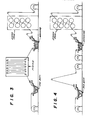
- the physical form of the fibre to be dyed is also open to wide variation at the convenience of the user. Most dyeing operations and equipment are suited to treatment of woven or knit fabrics in the open width as illustrated in Figures 1 - 4. It is also possible to slasher dye the fibres in yarn form and thereafter weave or knit the yarns into the item desired.
- Flame Retardant Federal Test Method 5903 (USA) is intended for use in determining the resistance of cloth to flame and glow propagation and tendency to char.
- a rectangular cloth test specimen (70mm x 120mm) with the long dimension parallel to the warp or fill direction is placed in a holder and suspended vertically in a cabinet with the lower end 1.9cm (0.75 inch) above the top of a Fisher gas burner.
- a synthetic gas mixture consisting primarily of hydrogen and methane is supplied to the burner. After the specimen is mounted in the cabinet and the door closed, the burner flame is applied vertically at the middle of the lower edge of the specimen for 12 seconds. The specimen continues to flame after the burner is extinguished.
- the time in seconds the specimen continues to glow after the specimen has ceased to flame is reported as afterglow time; if the specimen glows for more than 30 seconds, it is removed from the test cabinet, taking care not to fan the glow, and suspended in a draft-free area in the same vertical position as in the test cabinet.
- Char length the distance (in mm) from the end of the specimen, which was exposed to the flame, to the end of a lengthwise tear through the center of the charred area to the highest peak in the charred area, is also measured. Five specimens from each sample are usually measured and the results averaged.
- flame contact test a measurement of the resistance of textiles and other materials to flame propagation that exposes the specimen to the flame source for a longer period of time than test method 5903.
- a test specimen the same size as in the above method is exposed to a high temperature butane gas flame 7.6cm (3 inch) in height by vertical suspension in the flame for 12 seconds, the lowest part of the specimen always 3.8cm (1.5 inch) above the centre of the burner.
- the specimen is withdrawn from the flame slowly, and afterflaming is timed. Then the specimen is re-introduced into the flame and again slowly withdrawn after 12 seconds and any afterflame timed.
- the results are reported as: ignites, propagates flame; ignites but is self-extinguishing; is ignition resistant; melts; shrinks away from the flame; or drops flaming pieces.
- Limiting Oxygen Index is a method of measuring the minimum oxygen concentration needed to support candle-like combustion of a sample according to ASTM D-2863-77.
- a test specimen is placed vertically in a glass cylinder, ignited, and a mixture of oxygen and nitrogen is flowed upwardly through the column.
- An initial oxygen concentration is selected, the specimen ignited from the top and the length of burning and the time are noted.
- the oxygen concentration is adjusted, the specimen is re-ignited (or a new specimen inserted), and the test is repeated until the lowest concentration of oxygen needed to support burning is reached.
- Continuous dyeing of Type 455 woven NOMEX in open width was accomplished as follows: a pad bath was prepared containing 90 parts by weight DMSO and 10 parts by weight water to which was added 2.5% CI Acid Blue 171. The dyebath was padded onto style S/57344 NOMEX at 82°C (180°F from a heated bath at a speed of 18 yards per minute and maintained in contact with the fabric under ambient conditions for a dwell time of 30 minutes. The fabric was then rinsed in water at 49°C (120°F) and dried.
- Type 455 woven NOMEX was dyed in a pad bath containing 90 parts by weight DMSO and 10 parts by weight water.
- Safety Yellow was the shade; Olive Green was used in the second run.
- the pad bath was applied at 82°C (180°F) then the fabric was passed over a series of steam cans at 104°C (220°F) to fix the dye followed by washing in water and drying.
- Visual observations were favorable; test data including solution dyed NOMEX and greige (undyed) NOMEX for comparison are as follows:
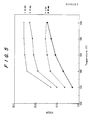
- the continuous dyeing process of this invention is time and temperature dependent -- higher temperatures and longer treatment times favor higher reflectance values, expressed in the graph of Figure 5 as KSSUM, a measure of colour.
- KSSUM a measure of colour.
- Highest KSSUM values are obtained where the treatment time is at least 30 minutes and the dyebath is at least 60°C (140°F); this value improves slightly as the temperature increases (see the line connecting the + data points).
- box line achieve only about half the KSSUM values even at treatment temperatures of 93°C (200°F)
- Continuous dyeing of Type 455 woven Nomex in open width was accomplished as follows: three pad baths were prepared each containing 90 parts by weight DMSO and 10 parts by weight water to which was added a mixture of 1.20% Irgalan Olive 3 BL 13 (Acid Green 70), 0.09% Intralan Orange P2, and 0.09% Nylanthrene Yellow SL 20 (Acid Yellow 198) to make sage green.
- the first pad bath contained no fire retardant
- the second 2.5% of Antiblaze 19 and the third bath contained 15.0% Antiblaze 19.
- the dyebath was padded onto T-455 Nomex at 93°C (200°F) from a heated bath at a speed of 20 yards per minute and a pad pressure of 14060kg/m2 (20 psi) resulting in a wet pick-up of approximately 90%.
- the padded fabric was then dried on steam cans maintained at 121°C (250°F) for about 24 seconds resulting in a fabric temperature of about 180-215°F. The fabric was then washed and dried in an oven.
Landscapes
- Engineering & Computer Science (AREA)
- Textile Engineering (AREA)
- Coloring (AREA)
- Treatments For Attaching Organic Compounds To Fibrous Goods (AREA)
Priority Applications (1)
| Application Number | Priority Date | Filing Date | Title |
|---|---|---|---|
| AT87304248T ATE93556T1 (de) | 1986-05-14 | 1987-05-13 | Verfahren zum kontinuierlichen oder halbkontinuierlichen farben von einer poly-mphenylenisophthalamidfaser. |
Applications Claiming Priority (4)
| Application Number | Priority Date | Filing Date | Title |
|---|---|---|---|
| US06/863,038 US4710200A (en) | 1986-05-14 | 1986-05-14 | Process for the continuous dyeing of poly(m-phenylene-isophthalamide) fibers |
| US863038 | 1986-05-14 | ||
| US870523 | 1986-06-04 | ||
| US06/870,523 US4759770A (en) | 1986-05-14 | 1986-06-04 | Process for simultaneously dyeing and improving the flame-resistant properties of aramid fibers |
Publications (3)
| Publication Number | Publication Date |
|---|---|
| EP0246083A2 true EP0246083A2 (de) | 1987-11-19 |
| EP0246083A3 EP0246083A3 (en) | 1988-11-09 |
| EP0246083B1 EP0246083B1 (de) | 1993-08-25 |
Family
ID=27127738
Family Applications (1)
| Application Number | Title | Priority Date | Filing Date |
|---|---|---|---|
| EP87304248A Expired - Lifetime EP0246083B1 (de) | 1986-05-14 | 1987-05-13 | Verfahren zum kontinuierlichen oder halbkontinuierlichen Farben von einer Poly-m-phenylenisophthalamidfaser |
Country Status (11)
| Country | Link |
|---|---|
| US (1) | US4759770A (de) |
| EP (1) | EP0246083B1 (de) |
| KR (1) | KR870011324A (de) |
| CN (1) | CN1021352C (de) |
| AU (1) | AU595027B2 (de) |
| BR (1) | BR8702459A (de) |
| CA (1) | CA1302016C (de) |
| DE (1) | DE3787114D1 (de) |
| FI (1) | FI872115L (de) |
| IL (1) | IL82368A0 (de) |
| NO (1) | NO871994L (de) |
Cited By (3)
| Publication number | Priority date | Publication date | Assignee | Title |
|---|---|---|---|---|
| EP0249375A3 (en) * | 1986-06-06 | 1988-11-09 | Burlington Industries, Inc. | A process of dyeing and flame retarding an aramid fibre or fabric |
| WO1989006292A1 (en) * | 1987-12-30 | 1989-07-13 | Burlington Industries, Inc. | Simultaneously dyeing and flame-retardant treating aramids |
| US5211720A (en) * | 1986-06-06 | 1993-05-18 | Burlington Industries, Inc. | Dyeing and flame-retardant treatment for synthetic textiles |
Families Citing this family (36)
| Publication number | Priority date | Publication date | Assignee | Title |
|---|---|---|---|---|
| US4705523A (en) * | 1986-05-14 | 1987-11-10 | Burlington Industries, Inc. | Process for improving the flame-retardant properties of printed shaped articles from aramid fibers |
| US4898596A (en) * | 1987-12-30 | 1990-02-06 | Burlington Industries, Inc. | Exhaust process for simultaneously dyeing and improving the flame resistance of aramid fibers |
| US5174790A (en) * | 1987-12-30 | 1992-12-29 | Burlington Industries | Exhaust process for dyeing and/or improving the flame resistance of aramid fibers |
| US5114652A (en) * | 1988-08-01 | 1992-05-19 | E. I. Du Pont De Nemours And Company | Process for making colored aramid fibers |
| US4994323A (en) * | 1988-08-01 | 1991-02-19 | E. I. Du Pont De Nemours And Company | Colored aramid fibers |
| US4981488A (en) * | 1989-08-16 | 1991-01-01 | Burlington Industries, Inc. | Nomex printing |
| US5275627A (en) * | 1989-08-16 | 1994-01-04 | Burlington Industries, Inc. | Process for dyeing or printing/flame retarding aramids |
| US5215545A (en) * | 1990-10-29 | 1993-06-01 | Burlington Industries, Inc. | Process for dyeing or printing/flame retarding aramids with N-octyl-pyrrolidone swelling agent |
| US5298028A (en) * | 1992-06-17 | 1994-03-29 | E. I. Du Pont De Nemours And Company | Method of making a yarn of particulate-impregnated aramid fibers |
| US6626964B1 (en) | 1998-04-20 | 2003-09-30 | Clyde C. Lunsford | Flame and shrinkage resistant fabric blends |
| US6867154B1 (en) | 1998-04-20 | 2005-03-15 | Southern Mills, Inc. | Patterned, flame resistant fabrics and method for making same |
| US6132476A (en) * | 1998-04-20 | 2000-10-17 | Southern Mills, Inc. | Flame and shrinkage resistant fabric blends and method for making same |
| US6699805B2 (en) | 2000-07-31 | 2004-03-02 | Southern Mills, Inc. | Dyed melamine fabrics and methods for dyeing melamine fabrics |
| PT1229162E (pt) * | 2001-02-01 | 2006-09-29 | Teijin Twaron Gmbh | Processo para a remocao de um acabamento hidroinsoluvel de fibras de aramida |
| US7854017B2 (en) | 2005-12-16 | 2010-12-21 | Southern Mills, Inc. | Protective garments that provide thermal protection |
| US7811952B2 (en) * | 2006-04-20 | 2010-10-12 | Southern Mills, Inc. | Ultraviolet-resistant fabrics and methods for making them |
| US20080153372A1 (en) * | 2006-04-20 | 2008-06-26 | Southern Mills | Insect-Repellant Fabrics and Methods for Making Them |
| US20080152888A1 (en) * | 2006-09-08 | 2008-06-26 | Southern Mills, Inc. | Methods and Systems for Providing Dyed, Stretchable Flame Resistant Fabrics and Garments |
| WO2008141060A2 (en) * | 2007-05-08 | 2008-11-20 | Southern Mills, Inc. | Systems and methods for dyeing inheretently flame resistant fibers without using accelerants or carriers |
| GB0802170D0 (en) * | 2008-02-06 | 2008-03-12 | Ten Cate Protect B V | Method of dyeing high performance fabrics |
| US10433593B1 (en) | 2009-08-21 | 2019-10-08 | Elevate Textiles, Inc. | Flame resistant fabric and garment |
| US8793814B1 (en) | 2010-02-09 | 2014-08-05 | International Textile Group, Inc. | Flame resistant fabric made from a fiber blend |
| US8209785B2 (en) | 2010-02-09 | 2012-07-03 | International Textile Group, Inc. | Flame resistant fabric made from a fiber blend |
| JP5938396B2 (ja) * | 2011-03-30 | 2016-06-22 | 東海染工株式会社 | アラミド繊維の染色方法 |
| US8819866B2 (en) * | 2012-03-30 | 2014-09-02 | International Textile Group, Inc. | Flame resistant fabric and garments made therefrom |
| CN103572579B (zh) * | 2012-08-07 | 2016-12-21 | 中国人民解放军总后勤部军需装备研究所 | 一种间位芳纶或间位芳纶/棉混纺印花织物及其制备方法 |
| CN103422195B (zh) * | 2013-08-08 | 2015-06-17 | 黑龙江金源仑特种纤维有限公司 | 一种有色超高分子量聚乙烯纤维的制备方法 |
| US20170130372A1 (en) | 2015-11-05 | 2017-05-11 | International Textile Group, Inc. | Woven fabric with intricate design |
| US10385481B2 (en) | 2015-12-18 | 2019-08-20 | International Textile Group, Inc. | Inner lining fabric with moisture management properties |
| USD934574S1 (en) | 2016-10-24 | 2021-11-02 | International Textile Group, Inc. | Flame resistant fabric |
| CN106835689B (zh) * | 2017-01-17 | 2019-03-08 | 中国科学院化学研究所 | 一种高模量聚酰亚胺纤维及其制备方法和应用 |
| KR102610650B1 (ko) | 2019-03-28 | 2023-12-05 | 써던 밀즈, 인코포레이티드 | 방염 직물 |
| CN110080014A (zh) * | 2019-04-12 | 2019-08-02 | 武汉纺织大学 | 一种间位芳纶织物粒子流染色的方法 |
| CN115210421A (zh) | 2019-12-05 | 2022-10-18 | 南磨房公司 | 由长切段纤维纱和长丝纱形成的阻燃织物 |
| USD1011768S1 (en) | 2020-04-27 | 2024-01-23 | Southern Mills, Inc. | Fabric |
| US11891731B2 (en) | 2021-08-10 | 2024-02-06 | Southern Mills, Inc. | Flame resistant fabrics |
Family Cites Families (20)
| Publication number | Priority date | Publication date | Assignee | Title |
|---|---|---|---|---|
| GB494008A (en) * | 1935-06-15 | 1938-10-17 | Axel Fritiof Bomgren | Improvements in and relating to a method of building houses of artificial stone blocks |
| US2290945A (en) * | 1940-06-29 | 1942-07-28 | Du Pont | Printing of textile fabrics |
| US2989360A (en) * | 1957-05-31 | 1961-06-20 | Gen Aniline & Film Corp | Continuous dyeing process |
| US3558267A (en) * | 1966-08-04 | 1971-01-26 | Du Pont | Method for dyeing high-temperature-resistant polyamides and polyimides |
| US3837802A (en) * | 1968-03-28 | 1974-09-24 | Ciba Geigy Ag | Process for dyeing |
| GB1275459A (en) * | 1968-08-20 | 1972-05-24 | Frederick Gruen | Process for dyeing synthetic fibres |
| GB1282113A (en) * | 1969-01-25 | 1972-07-19 | Yorkshire Chemicals Ltd | Improvements in the dyeing of printing of synthetic fibres |
| US3884626A (en) * | 1971-03-16 | 1975-05-20 | Ciba Geigy Ag | Process for the dyeing of textile material containing amino or amide groups |
| US3741719A (en) * | 1971-07-15 | 1973-06-26 | Ciba Geigy Ag | Acidic disperse dyestuff preparation |
| US3789091A (en) * | 1971-11-15 | 1974-01-29 | Mobil Oil Corp | Cyclic phosphonate esters and their preparation |
| US3849368A (en) * | 1971-11-15 | 1974-11-19 | Mobil Oil Corp | Fire retardant polymers containing thermally stable cyclic phosphonate esters |
| US3771949A (en) * | 1971-11-29 | 1973-11-13 | Martin Processing Co Inc | Pretreatment and dyeing of shaped articles derived from wholly aromatic polyamides |
| US3986827A (en) * | 1972-08-29 | 1976-10-19 | E. I. Du Pont De Nemours And Company | Storage-stable concentrated aqueous solution of disazo acid dye |
| JPS5031179A (de) * | 1973-07-24 | 1975-03-27 | ||
| DE2438544C3 (de) * | 1974-08-10 | 1979-08-02 | Bayer Ag, 5090 Leverkusen | Verfahren zur Herstellung gefärbter Fäden aus vollaromatischen Polyamiden |
| DE2438546C3 (de) * | 1974-08-10 | 1979-08-02 | Bayer Ag, 5090 Leverkusen | Verfahren zur Herstellung gefärbter Fäden aus vollaromatischen Polyamiden |
| US4525168A (en) * | 1984-01-27 | 1985-06-25 | Professional Chemical & Color, Inc. | Method of treating polyaramid fiber |
| US4710200A (en) * | 1986-05-14 | 1987-12-01 | Burlington Industries, Inc. | Process for the continuous dyeing of poly(m-phenylene-isophthalamide) fibers |
| US4705527A (en) * | 1986-05-14 | 1987-11-10 | Burlington Industries, Inc. | Process for the printing of shaped articles derived from aramid fibers |
| US4705523A (en) * | 1986-05-14 | 1987-11-10 | Burlington Industries, Inc. | Process for improving the flame-retardant properties of printed shaped articles from aramid fibers |
-
1986
- 1986-06-04 US US06/870,523 patent/US4759770A/en not_active Expired - Lifetime
-
1987
- 1987-04-28 IL IL82368A patent/IL82368A0/xx not_active IP Right Cessation
- 1987-04-30 AU AU72249/87A patent/AU595027B2/en not_active Ceased
- 1987-05-13 FI FI872115A patent/FI872115L/fi not_active Application Discontinuation
- 1987-05-13 DE DE87304248T patent/DE3787114D1/de not_active Expired - Lifetime
- 1987-05-13 EP EP87304248A patent/EP0246083B1/de not_active Expired - Lifetime
- 1987-05-13 BR BR8702459A patent/BR8702459A/pt active Search and Examination
- 1987-05-13 NO NO871994A patent/NO871994L/no unknown
- 1987-05-13 CA CA000537058A patent/CA1302016C/en not_active Expired - Lifetime
- 1987-05-13 KR KR870004773A patent/KR870011324A/ko not_active Ceased
- 1987-05-14 CN CN87103493A patent/CN1021352C/zh not_active Expired - Fee Related
Cited By (3)
| Publication number | Priority date | Publication date | Assignee | Title |
|---|---|---|---|---|
| EP0249375A3 (en) * | 1986-06-06 | 1988-11-09 | Burlington Industries, Inc. | A process of dyeing and flame retarding an aramid fibre or fabric |
| US5211720A (en) * | 1986-06-06 | 1993-05-18 | Burlington Industries, Inc. | Dyeing and flame-retardant treatment for synthetic textiles |
| WO1989006292A1 (en) * | 1987-12-30 | 1989-07-13 | Burlington Industries, Inc. | Simultaneously dyeing and flame-retardant treating aramids |
Also Published As
| Publication number | Publication date |
|---|---|
| US4759770A (en) | 1988-07-26 |
| KR870011324A (ko) | 1987-12-22 |
| NO871994L (no) | 1987-11-16 |
| CN1021352C (zh) | 1993-06-23 |
| FI872115A7 (fi) | 1987-11-15 |
| IL82368A0 (en) | 1987-10-30 |
| CN87103493A (zh) | 1988-01-20 |
| EP0246083B1 (de) | 1993-08-25 |
| CA1302016C (en) | 1992-06-02 |
| BR8702459A (pt) | 1988-02-23 |
| AU595027B2 (en) | 1990-03-22 |
| FI872115L (fi) | 1987-11-15 |
| NO871994D0 (no) | 1987-05-13 |
| AU7224987A (en) | 1987-11-19 |
| EP0246083A3 (en) | 1988-11-09 |
| FI872115A0 (fi) | 1987-05-13 |
| DE3787114D1 (de) | 1993-09-30 |
Similar Documents
| Publication | Publication Date | Title |
|---|---|---|
| EP0246083B1 (de) | Verfahren zum kontinuierlichen oder halbkontinuierlichen Farben von einer Poly-m-phenylenisophthalamidfaser | |
| US4814222A (en) | Aramid fibers with improved flame resistance | |
| EP0249375B1 (de) | Verfahren zum Färben und Flammfestmachen einer Aramidfaser oder eines Gewebes | |
| US4710200A (en) | Process for the continuous dyeing of poly(m-phenylene-isophthalamide) fibers | |
| US4741740A (en) | Flame-resistant properties of aramid fibers | |
| US4749378A (en) | Process for improving the flame-resistant properties of aramid fibers | |
| US4898596A (en) | Exhaust process for simultaneously dyeing and improving the flame resistance of aramid fibers | |
| EP0246084B1 (de) | Verfahren zum Bedrucken von vorherbestimmten Mustern auf textilem Flächengebilde aus Poly-m-phenylenisophthalamid und haltbare, homogene Druckpaste dafür | |
| US6626964B1 (en) | Flame and shrinkage resistant fabric blends | |
| US5215545A (en) | Process for dyeing or printing/flame retarding aramids with N-octyl-pyrrolidone swelling agent | |
| US4981488A (en) | Nomex printing | |
| US5174790A (en) | Exhaust process for dyeing and/or improving the flame resistance of aramid fibers | |
| US5306312A (en) | Dye diffusion promoting agents for aramids | |
| EP0478301B1 (de) | Verfahren zum Färben von Fasermaterial | |
| JPS62268876A (ja) | アラミド繊維の成型品の捺染法および捺染用ペ−スト組成物 | |
| EP0537396B1 (de) | Verfahren zum Färben von Fasermaterialien | |
| US4902300A (en) | Simultaneously dyed and flame-retarded fabric blends | |
| US3779705A (en) | Process for dyeing fibers or fabrics of aromatic polyamides | |
| US5211720A (en) | Dyeing and flame-retardant treatment for synthetic textiles | |
| EP0400018B1 (de) | Gleichzeitige färbe- und flammhemmende behandlung von aramiden | |
| AU604922B2 (en) | Simultaneously dyed and flame retarded fabrics | |
| Yoo et al. | Pretreatments for improving the dyeability of p-aramid fibers | |
| Schumm et al. | Dyeing and Finishing Nomex Nylon. | |
| WO1994011563A1 (en) | Exhaust process for dyeing and/or improving the flame resistance of aramid fibers |
Legal Events
| Date | Code | Title | Description |
|---|---|---|---|
| PUAI | Public reference made under article 153(3) epc to a published international application that has entered the european phase |
Free format text: ORIGINAL CODE: 0009012 |
|
| AK | Designated contracting states |
Kind code of ref document: A2 Designated state(s): AT BE CH DE ES FR GB GR IT LI LU NL SE |
|
| PUAL | Search report despatched |
Free format text: ORIGINAL CODE: 0009013 |
|
| AK | Designated contracting states |
Kind code of ref document: A3 Designated state(s): AT BE CH DE ES FR GB GR IT LI LU NL SE |
|
| 17P | Request for examination filed |
Effective date: 19890411 |
|
| 17Q | First examination report despatched |
Effective date: 19900809 |
|
| GRAA | (expected) grant |
Free format text: ORIGINAL CODE: 0009210 |
|
| AK | Designated contracting states |
Kind code of ref document: B1 Designated state(s): AT BE CH DE ES FR GB GR IT LI LU NL SE |
|
| PG25 | Lapsed in a contracting state [announced via postgrant information from national office to epo] |
Ref country code: IT Free format text: LAPSE BECAUSE OF FAILURE TO SUBMIT A TRANSLATION OF THE DESCRIPTION OR TO PAY THE FEE WITHIN THE PRESCRIBED TIME-LIMIT;WARNING: LAPSES OF ITALIAN PATENTS WITH EFFECTIVE DATE BEFORE 2007 MAY HAVE OCCURRED AT ANY TIME BEFORE 2007. THE CORRECT EFFECTIVE DATE MAY BE DIFFERENT FROM THE ONE RECORDED. Effective date: 19930825 Ref country code: FR Effective date: 19930825 Ref country code: LI Effective date: 19930825 Ref country code: GR Free format text: LAPSE BECAUSE OF FAILURE TO SUBMIT A TRANSLATION OF THE DESCRIPTION OR TO PAY THE FEE WITHIN THE PRESCRIBED TIME-LIMIT Effective date: 19930825 Ref country code: AT Effective date: 19930825 Ref country code: BE Effective date: 19930825 Ref country code: SE Effective date: 19930825 Ref country code: NL Effective date: 19930825 Ref country code: CH Effective date: 19930825 Ref country code: DE Effective date: 19930825 |
|
| REF | Corresponds to: |
Ref document number: 93556 Country of ref document: AT Date of ref document: 19930915 Kind code of ref document: T |
|
| RIN1 | Information on inventor provided before grant (corrected) |
Inventor name: FITZGERALD, TANYA E. Inventor name: CATES, BARBARA J. Inventor name: DAVIS, JAMES K. Inventor name: RUSSELL, ERNEST K. |
|
| REF | Corresponds to: |
Ref document number: 3787114 Country of ref document: DE Date of ref document: 19930930 |
|
| REG | Reference to a national code |
Ref country code: CH Ref legal event code: PL |
|
| PG25 | Lapsed in a contracting state [announced via postgrant information from national office to epo] |
Ref country code: ES Free format text: LAPSE BECAUSE OF FAILURE TO SUBMIT A TRANSLATION OF THE DESCRIPTION OR TO PAY THE FEE WITHIN THE PRESCRIBED TIME-LIMIT Effective date: 19931206 |
|
| EN | Fr: translation not filed | ||
| NLV1 | Nl: lapsed or annulled due to failure to fulfill the requirements of art. 29p and 29m of the patents act | ||
| PG25 | Lapsed in a contracting state [announced via postgrant information from national office to epo] |
Ref country code: GB Effective date: 19940513 |
|
| PG25 | Lapsed in a contracting state [announced via postgrant information from national office to epo] |
Ref country code: LU Free format text: LAPSE BECAUSE OF NON-PAYMENT OF DUE FEES Effective date: 19940531 |
|
| PLBE | No opposition filed within time limit |
Free format text: ORIGINAL CODE: 0009261 |
|
| STAA | Information on the status of an ep patent application or granted ep patent |
Free format text: STATUS: NO OPPOSITION FILED WITHIN TIME LIMIT |
|
| 26N | No opposition filed | ||
| GBPC | Gb: european patent ceased through non-payment of renewal fee |
Effective date: 19940513 |