EP0237480A2 - Verfahren zur Herstellung von 2-Alkoxybenzosulfonamiden - Google Patents
Verfahren zur Herstellung von 2-Alkoxybenzosulfonamiden Download PDFInfo
- Publication number
- EP0237480A2 EP0237480A2 EP87810111A EP87810111A EP0237480A2 EP 0237480 A2 EP0237480 A2 EP 0237480A2 EP 87810111 A EP87810111 A EP 87810111A EP 87810111 A EP87810111 A EP 87810111A EP 0237480 A2 EP0237480 A2 EP 0237480A2
- Authority
- EP
- European Patent Office
- Prior art keywords
- formula
- compound
- reaction
- temperature
- iii
- Prior art date
- Legal status (The legal status is an assumption and is not a legal conclusion. Google has not performed a legal analysis and makes no representation as to the accuracy of the status listed.)
- Granted
Links
Classifications
-
- C—CHEMISTRY; METALLURGY
- C07—ORGANIC CHEMISTRY
- C07C—ACYCLIC OR CARBOCYCLIC COMPOUNDS
- C07C311/00—Amides of sulfonic acids, i.e. compounds having singly-bound oxygen atoms of sulfo groups replaced by nitrogen atoms, not being part of nitro or nitroso groups
- C07C311/15—Sulfonamides having sulfur atoms of sulfonamide groups bound to carbon atoms of six-membered aromatic rings
- C07C311/16—Sulfonamides having sulfur atoms of sulfonamide groups bound to carbon atoms of six-membered aromatic rings having the nitrogen atom of at least one of the sulfonamide groups bound to hydrogen atoms or to an acyclic carbon atom
-
- C—CHEMISTRY; METALLURGY
- C07—ORGANIC CHEMISTRY
- C07C—ACYCLIC OR CARBOCYCLIC COMPOUNDS
- C07C309/00—Sulfonic acids; Halides, esters, or anhydrides thereof
Definitions
- the present invention relates to a new process for the preparation of 2-alkoxybenzosulfonamides.
- the 2-alkoxybenzosulfonamides that can be produced by the new process are valuable intermediates for the synthesis of herbicidal 2-alkoxybenzosulfonylureas.
- This class of potent herbicides has recently been described in a large number of patent applications and publications.
- European patent applications EP-A-23422, EP-A-44807 and EP-A-44808 describe the 2-alkoxybenzosulfonamides which can be prepared by the process according to the invention, their preparation and their use in the synthesis process for the herbicidal end products from the class of the sulfonylureas.
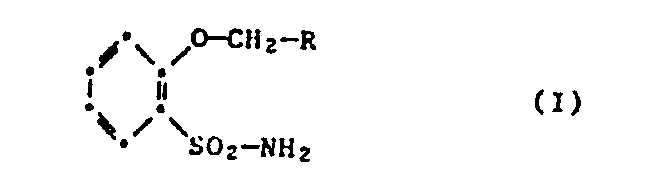
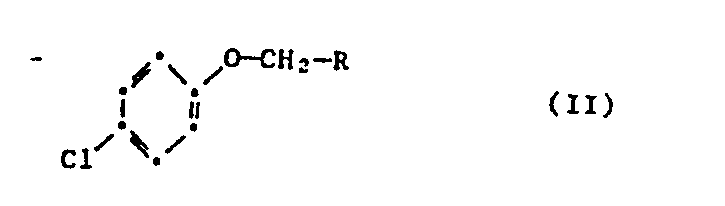
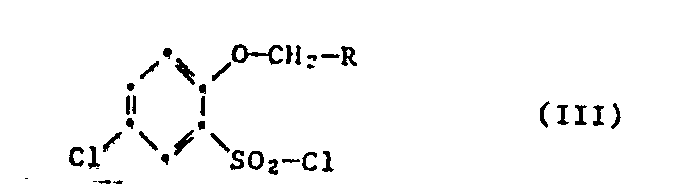
- the 2-alkoxy-benzosulfonamides of the formula I are proposed wherein R is chloromethyl, methoxymethyl, C 1 -C 4 alkyl or trifluoromethyl, in such a way that a 4-alkoxychlorobenzene of the formula II wherein R has the meaning given under formula I, with chlorosulfonic acid ClSO 3 H, the resulting sulfonyl chloride of the formula III wherein R has the meaning given under formula I, with ammonia in the sulfonamide of formula IV wherein R has the meaning given under formula I, transferred and hydrogenated with hydrogen in the presence of a noble metal catalyst.
- alkyl represents methyl, ethyl, n-propyl, isopropyl, n-butyl, s-butyl, isobutyl or tert-butyl.
- the reaction product of the formula I can be reacted directly in a manner known per se by reaction with a suitable pyrimidinyl or triazinyl carbamate or a corresponding isocyanate to give a plant active ingredient from the class of the sulfonylureas.
- a suitable pyrimidinyl or triazinyl carbamate or a corresponding isocyanate to give a plant active ingredient from the class of the sulfonylureas.
- the 2-alkoxybenzosulfonamides of the formula I are first converted into the corresponding isocyanates or carbamates and reacted with the suitable pyrimidinyl- or triazinylamines to give the sulfonylureas which are effective in plants.
- the starting compounds of formula II are known and can be produced from 4-chlorophenol by simple etherification reactions.
- chlorosulfonic acid is used to carry out the first step (II ⁇ III) of the process according to the invention.
- the reaction at least 3 moles of chlorosulfonic acid are used per mole of compound II. It is advantageous to use a larger excess, for example at least 5 moles of chlorosulfonic acid per mole of compound II.
- the chlorosulfonic acid can serve simultaneously as a reactant and as a solvent. In general, however, the reaction (II ⁇ III) is carried out in an inert solvent.
- Proven solvents for this are carbon disulfide, toluene, xylene, saturated hydrocarbons such as hexane, decane, cyclohexane and chlorinated hydrocarbons such as methylene chloride, chloroform, carbon tetrachloride, 1,2-dichloroethane, 1,2-dichloroethylene, tetrachlorethylene, chlorobenzene or dichlorobenzene.
- the preferred solvents are cyclohexane, n-decane, methylene chloride, 1,2-dichloroethane and chloroform.
- the reaction temperatures are usually between -10 ° C and + 100 ° C, preferably between -10 ° C and + 80 ° C.
- the compounds of the formula III are prepared by the corresponding compound of the formula II in an inert solution medium at a temperature between -10 ° C and + 100 ° C with at least 3 moles of chlorosulfonic acid per mole of the compound of formula II.
- the embodiment in which the reaction (II ⁇ III) is at a temperature between -10 ° C. and + 80 ° C. in methylene chloride, 1,2-dichloroethane or chloroform with at least 5 moles of chlorosulfonic acid per mole of the compound is very particularly preferred Formula II performs.
- the first reaction step (II ⁇ III) can also be carried out using an equimolar amount of chlorosulfonic acid if an additional reaction step is accepted.
- the economic and ecological advantage is that by using an equimolar amount of chlorosulfonic acid, an excess of chlorosulfonic acid used does not have to be worked up or neutralized.
- the compounds of the formula II are reacted at a temperature between 0 ° C. and + 150 ° C., preferably between + 80 ° C. and + 60 ° C., with an equimolar amount of chlorosulfonic acid or with a slight excess.
- the sulfonyl chloride of the formula III is not obtained directly in this case, but when the reaction mixture is neutralized with aqueous alkali metal hydroxide at a temperature between 0.degree. C. or + 100.degree. C., preferably between 50.degree. C. or 90.degree Alkaline sulfonic acid salt of formula V wherein R has the meaning given under formula I and M represents a sodium or potassium atom.
- This reaction is advantageously carried out in an inert solvent such as an alkane or chloroalkane.
- a solvent can be dispensed with and the reaction can be carried out with the pure reactants.
- Solvents of the type mentioned above are pentane,
- the compound of the formula V is converted into the sulfochloride of the formula III using customary chlorinating agents, such as phosphorus oxychloride, thionyl chloride or, preferably, phosgene.
- customary chlorinating agents such as phosphorus oxychloride, thionyl chloride or, preferably, phosgene.
- a catalyst such as dimethylformamide or dimethylacetamide is advantageous.
- the reaction conditions in the formation of the sulfochloride from the free acid or the alkali salt (V ⁇ III) correspond to the generally customary conditions for this type of reaction.
- An essential feature is the exclusion of moisture and the neutrality of the solvent. Such conditions are mentioned in the direct production of sulfonyl chloride (II ⁇ III).
- Preferred reaction temperatures are between 60 ° C and 120 ° C.
- the conversion of the sulfonyl chloride of formula III in the ent - speaking sulfonamide of the formula IV is carried out under the conditions customary for this known reaction step conditions, for example by treating the compound of formula III with an aqueous ammonia solution under atmospheric pressure and at a temperature between 0 ° C and + 100 ° C, preferably 0 ° C and + 30 ° C; or by treating a compound of formula III in an inert solvent, optionally in the presence of an acid-binding agent, with ammonia.
- Solvents and acid-binding agents are for example: carbonates such as sodium and potassium carbonate, hydrogen carbonates such as sodium and potassium hydrogen carbonate, oxides such as calcium and magnesium oxide or hydroxides such as sodium, potassium, calcium or magnesium hydroxide; Ethers such as diethyl ether, tetrahydrofuran, dioxane, ethylene glycol dimethyl ether or diethylene glycol dimethyl ether; Ketones such as acetone, 2-butanone, 3-pentanone or cyclohexanone; chlorinated hydrocarbons such as chlorobenzene, dichlorobenzene, methylene chloride, chloroform, carbon tetrachloride, trichloroethane or tetrachloroethane; secondary alcohols such as 2-butanol, isopropanol or Cyclohexanol; or hydrocarbons such as cyclohexane, benzene, toluene or xylene.
- the dechlorination of the compound of formula IV to the compound of formula I by catalytic hydrogenation is generally under mild conditions at temperatures between 20 ° C and 70 ° C at a pressure of 1 to 5 bar, preferably 1 to 1.5 bar, in one inert solvent in the presence of an acid-binding agent with hydrogen.
- the catalysts used are essentially noble metal catalysts, such as platinum in the form of platinum oxide or palladium, platinum bog or platinum on barium sulfate, palladium bog or palladium on carbon. The most widely used is palladium on carbon in a commercial form as 5% palladium / carbon.
- hydroxides such as sodium or potassium hydroxide
- metal salts of carboxylic acids such as e.g. Sodium acetate
- salts of phosphoric acid such as e.g. Disodium phosphate
- hydrogen carbonate oxides such as magnesium or calcium oxides and preferably tertiary organic amines such as trimethylamine, triethylamine, diazabicyclo [2.2.2] octane, 1,8-diazabicyclo [5.4.0] undec-7-ene, 1,5-diazabicyclo [ 4.3.0] non-5-ene, pyridine, quinoline or isoquinoline.
- ethers such as diethyl ether, tetrahydrofuran or dioxane
- Ketones such as acetone, 2-butanone or cyclohexanone
- Esters such as ethyl acetate
- Alcohols such as methanol, ethanol, n-propanol, i-propanol or butanol and hydrocarbons such as pentane, hexane, cyclohexane, benzene, toluene or xylene; or water.
- the compound of the formula IV is hydrogenated with hydrogen under atmospheric pressure at 50 ° C. to 55 ° C. in the presence of a 5% palladium / carbon catalyst in a 2-butanone / water-base mixture.
- a compound of the formula II is reacted with an equimolar amount of chlorosulfonic acid in the n-decane at a temperature between -20.degree. C. and + 60.degree.
- the reaction mixture is neutralized with alkali metal hydroxide at 50 ° C to 90 ° C, the resulting sulfonic acid alkali salt of formula V in xylene at a temperature between 60 ° C and 120 ° C with phosgene; treats the resulting sulfonyl chloride of the formula III in the presence of toluene or xylene with aqueous ammonia solution and dechlorinates the sulfonamide of the formula IV obtained by catalytic hydrogenation in a 2-butanone / water-base mixture with hydrogen under normal pressure at a temperature of 20 ° C to 70 ° C in the presence of 5% palladium / carbon catalyst.
- Example H2 is to be understood as an alternative to the first and second reaction steps of example Hl.
- Example H3 can optionally replace the last reaction step of example H1.
- a solution of 191 g (1.00 mol) of 4-chloro (2-chloroethoxy) benzene in 300 ml of n-decane is at a temperature between 35 ° C and 40 ° C with vigorous stirring within 2 hours with 122 g (1.05 mol) chlorosulfonic acid added. Hydrogen chloride gas develops and precipitation occurs.
- the reaction solution is heated to + 80 ° C., 50 ml of water are added and the mixture is neutralized to pH 7 by adding 160 g of 30% (1.20 mol) sodium hydroxide solution.
- the hot aqueous phase is separated off and 700 ml of xylene are added.
Landscapes
- Chemical & Material Sciences (AREA)
- Organic Chemistry (AREA)
- Organic Low-Molecular-Weight Compounds And Preparation Thereof (AREA)
- Low-Molecular Organic Synthesis Reactions Using Catalysts (AREA)
- Catalysts (AREA)
Abstract
Description
- Die vorliegende Erfindung betrifft ein neues Verfahren zur Herstellung von 2-Alkoxybenzosulfonamiden.
- Die nach dem neuen Verfahren herstellbaren 2-Alkoxybenzosulfonamide sind wertvolle Zwischenprodukte für die Synthese von herbiziden 2-Alkoxybenzosulfonyl-harnstoffen. Diese Klasse von hochwirksamen Herbiziden sind in der letzten Zeit in einer grossen Anzahl von Patentanmeldungen und Publikationen beschrieben worden. In den Europäischen Patentanmeldungen EP-A-23422, EP-A-44807 und EP-A-44808 sind die nach dem erfindungsgemässen Verfahren herstellbaren 2-Alkoxybenzosulfonamide, ihre Herstellung und ihre Verwendung im Syntheseverfahren für die herbiziden Endprodukte aus der Klasse der Sulfonylharnstoffe beschrieben.
- Die bisher beschriebenen Herstellungsverfahren für Alkoxybenzosulfonamide sind für grosstechnische Anwendung weniger geeignet, weil entweder instabile Diazoniumsalze als Zwischenprodukte erzeugt werden und die Austauschreaktion vom Sandmeyer-Typus mit Cu(I)-Verbindungen nur einen unzureichenden Grad an Selektivität besitzt, oder weil Produktgemische entstehen, die aufwendige Trennungsmethoden erfordern.
- Es besteht somit ein Bedürfnis nach einem kostengünstigen, im grosstechnischen Massstab durchführbaren Verfahren zur Herstellung von 2-Alkoxybenzosulfonamiden.
- Ueberraschenderweise befriedigt das erfindungsgemässe neue Verfahren dieses Bedürfnis weitgehend.
- Gemäss vorliegender Erfindung wird vorgeschlagen, die 2-Alkoxy-benzosulfonamide der Formel I


- In der obigen Definition steht Alkyl für Methyl, Aethyl, n-Propyl, Isopropyl, n-Butyl, s-Butyl, Isobutyl oder tert.-Butyl.
- Das Reaktionsprodukt der Formel I kann in an sich bekannter Weise direkt durch Reaktion mit einem geeigneten Pyrimidinyl- oder Triazinylcarbamat oder einem entsprechenden Isocyanat zu einem Pflanzenwirkstoff aus der Klasse der Sulfonylharnstoffe umgesetzt werden. Als Alternative zu diesem Verfahren überführt man die 2-Alkoxybenzosulfonamide der Formel I zunächst im entsprechende Isocyanate oder Carbamate und setzt diese mit den geeigneten Pyrimidinyl- oder Triazinylaminen zu den pflanzenwirksamen Sulfonylharnstoffen um.
- Die Ausgangsverbindungen der Formel II sind bekannt und können durch einfache Verätherungsreaktionen aus 4-Chlorphenol erzeugt werden.
- Zur Durchführung des ersten Schrittes (II → III) des erfindungsgemässen Verfahrens verwendet man handelsübliche Chlorsulfonsäure. Zur Umsetzung werden pro Mol an Verbindung II mindestens 3 Mol Chlorsulfonsäure eingesetzt. Vorteilhaft ist die Verwendung eines grösseren Ueberschusses, beispielsweise von mindestens 5 Mol Chlorsulfonsäure pro Mol der Verbindung II. In einzelnen Ausführungsformen kann die Chlorsulfonsäure gleichzeitig als Reaktionspartner und als Lösungsmittel dienen. Im allgemeinen wird die Umsetzung (II → III) jedoch in einem inerten Lösungsmittel durchgeführt. Bewährte Lösungsmittel sind dafür Schwefelkohlenstoff, Toluol, Xylol, gesättigte Kohlenwasserstoffe wie Hexan, Dekan, Cyclohexan und chlorierte Kohlenwasserstoffe wie Methylenchlorid, Chloroform, Tetrachlorkohlenstoff, 1,2-Dichloräthan 1,2-Dichloräthylen, Tetrachloräthylen, Chlorbenzol oder Dichlorbenzol. Die bevorzugten Lösungsmittel sind Cyclohexan, n-Dekan, Methylenchlorid, 1,2-Dichloräthan und Chloroform. Die Reaktionstemperaturen liegen meistens zwischen -10°C und +100°C, vorzugsweise zwischen -10°C und +80°C.
- In einer bevorzugten Ausführungsform der ersten Reaktionsstufe (II → III) stellt man die Verbindungen der Formel III her, indem man die entsprechende Verbindung der Formel II in einem inerten Lösungsmittel bei einer Temperatur zwischen -10°C und +100°C mit mindestens 3 Mol Chlorsulfonsäure pro Mol der Verbindung der Formel II umsetzt. Ganz besonders bevorzugt ist diejenige Ausführungsform, in welcher man die Reaktion (II → III) bei einer Temperatur zwischen -10°C und +80°C in Methylenchlorid, 1,2-Dichloräthan oder Chloroform mit mindestens 5 Mol Chlorsulfonsäure pro Mol der Verbindung der Formel II durchführt.
- Der erste Reaktionsschritt (II → III) kann auch unter Einsatz einer äquimolaren Menge an Chlorsulfonsäure durchgeführt werden, wenn man dabei einen zusätzlichen Reaktionsschritt in Kauf nimmt. Der wirtschaftliche und ökologische Vorteil besteht darin, dass man durch Verwendung einer äquimolaren Menge an Chlorsulfonsäure einen Ueberschuss an eingesetzter Chlorsulfonsäure weder aufarbeiten noch neutralisieren muss. Gemäss dieser Verfahrensvariante werden die Verbindungen der Formel II bei einer Temperatur zwischen 0°C und + 150°C, vorzugsweise zwischen +80°C und +60°C, mit einer äquimolaren Menge an Chlorsulfonsäure oder mit einem geringen Ueberschuss umgesetzt. Bei der Aufarbeitung erhält man in diesem Fall nicht direkt das Sulfonylchlorid der Formel III, sondern bei Neutralisation der Reaktionsmischung mit wässrigem Alkalihydroxid bei einer Temperatur zwischen 0°C oder +100°C, vorzugsweise zwischen 50°C oder 90°C, das ent sprechende Sulfonsäure-alkalisalz der Formel V

- Hexan, Heptan, Oktan, Dekan, Dodecan, aber auch Cyclopentan oder Cyclohexan, sowie Methylenchlorid, Chloroform,, Tetrachlorkohlenstoff, Dichloräthan, Trichloräthan oder Tetrachloräthan. Bevorzugt sind Cyclohexan und n-Dekan.
- Die Verbindung der Formel V wird mit üblichen Chlorierungsmitteln wie Phosphoroxychlorid, Thionylchlorid oder vorzugsweise Phosgen in das Sulfochlorid der Formel III umgewandelt. Vorteilhaft ist die Verwendung eines Katalysators wie Dimethylformamid oder Dimethylacetamid. Die Reaktionsbedingungen bei der Genese des Sulfochlorids aus der freien Säure, bzw. dem Alkalisalz (V → III) entsprechen den allgemein üblichen Bedingungen für diesen Reaktionstyp. Als wesentliches Merkmal seien Feuchtigkeitsausschluss sowie Reaktionsneutralität des Lösungsmittels genannt. Solche Bedingungen sind bei der direkten Sulfonylchloridherstellung (II→ III) genannt. Bevorzugte Reaktionstemperaturen liegen zwischen 60°C und 120°C.
- Die Ueberführung des Sulfonylchlorids der Formel III in das ent- sprechende Sulfonamid der Formel IV erfolgt unter den für diesen an sich bekannten Reaktionsschritt üblichen Bedingungen, beispielsweise durch Versetzen der Verbindung der Formel III mit einer wässrigen Ammoniak-Lösung unter Normaldruck und bei einer Temperatur zwischen 0°C und +100°C, vorzugsweise 0°C und +30°C; oder durch Behandlung einer Verbindung der Formel III in einem inerten Lösungsmittel, gegebenenfalls in Gegenwart eines säurebindenden Mittels, mit Ammoniak. Lösungsmittel und säurebindende Mittel sind beispielsweise: Carbonate wie Natrium- und Kaliumcarbonat, Hydrogencarbonate wie Natrium- und Kaliumhydrogencarbonat, Oxide wie Calcium- und Magnesiumoxid oder Hydroxide wie Natrium-, Kalium-, Calcium- oder Magnesiumhydroxid; Aether wie Diäthyläther, Tetrahydrofuran, Dioxan, Aethylenglykoldimethyläther oder Diäthylenglykoldimethyläther; Ketone wie Aceton, 2-Butanon, 3-Pentanon oder Cyclohexanon; chlorierte Kohlenwasserstoffe wie Chlorbenzol, Dichlorbenzol, Methylenchlorid, Chloroform, Tetrachlorkohlenstoff, Trichloräthan oder Tetrachloräthan; sekundäre Alkohole wie 2-Butanol, Isopropanol oder Cyclohexanol; oder Kohlenwasserstoffe wie Cyclohexan, Benzol, Toluol oder Xylol. Bevorzugt ist die Umsetzung mit wässriger Ammoniak-Lösung in Gegenwart von Toluol oder Xylol.
- Die Dechlorierung der Verbindung der Formel IV zur Verbindung der Formel I durch katalytische Hydrierung wird im allgemeinen unter milden Bedingungen bei Temperaturen zwischen 20°C und 70°C bei einem Druck von 1 bis 5 bar, vorzugsweise 1 bis 1,5 bar, in einem inerten Lösungsmittel in Gegenwart eines säurebindenden Mittels mit Wasserstoff durchgeführt. Als Katalysatoren werden im wesentlichen Edelmetallkatalysatoren verwendet wie Platin in Form von Platinoxid oder Palladium, Platinmoor oder Platin auf Bariumsulfat, Palladiummoor oder Palladium auf Kohle. Am breitesten einsetzbar ist Palladium auf Kohle in handelsüblicher Form als 5 % Palladium/Kohle. Als säurebindende Mittel werden üblicherweise verwendet: Hydroxide wie Natrium- oder Kaliumhydroxid, Metallsalze von Carbonsäuren wie z.B. Natriumacetat, Salze der Phosphorsäure wie z.B. Dinatriumphosphat, Hydrogencarbonat, Oxide wie Magnesium- oder Calciumoxide sowie vorzugsweise tertiäre organische Amine wie Trimethylamin, Triäthylamin, Diazabicyclo[2.2.2]octan, 1,8-Diazabicyclo[5.4.0]undec-7-en, 1,5-Diazabicyclo[4.3.0]non-5-en, Pyridin, Chinolin oder Isochinolin. Diese Basen werden entweder während der Reaktion kontinuierlich dem Reaktionsgemisch zugefügt, wobei der pH-Wert konstant gehalten wird, oder vorzugsweise in der benötigten Menge vorgelegt. Als Lösungsmittel kommen in Frage: Aether wie Diäthyläther, Tetrahydrofuran oder Dioxan; Ketone wie Aceton, 2-Butanon oder Cyclohexanon; Ester wie Aethylacetat; Alkohole wie Methanol, Aethanol, n-Propanol, i-Propanol oder Butanol und Kohlenwasserstoffe wie Pentan, Hexan, Cyclohexan, Benzol, Toluol oder Xylol; oder Wasser. In der bevorzugten Ausführungsform wird die Verbindung der Formel IV unter Normaldruck bei 50°C bis 55°C in Gegenwart eines 5 %igen Palladium/ Kohle-Katalysators in einem 2-Butanon/Wasser-Base-Gemisch mit Wasserstoff hydriert.
- In einer bevorzugten Ausführungsform des erfindungsgemässen Verfahrens zur Herstellung der Verbindungen der Formel I setzt man eine Verbindung der Formel II bei einer Temperatur zwischen -20°C und +60°C im n-Dekan mit einer äquimolaren Menge Chlorsulfonsäure um, neutralisiert die Reaktionsmischung mit Alkalihydroxid bei 50°C bis 90°C, versetzt das entstandene Sulfonsäure-alkalisalz der Formel V in Xylol bei einer Temperatur zwischen 60°C und 120°C mit Phosgen; behandelt das entstandene Sulfonylchlorid der Formel III in Gegenwart von Toluol oder Xylol mit wässriger Ammoniak-Lösung und dechloriert das erhaltene Sulfonamid der Formel IV durch katalytische Hydrierung in einem 2-Butanon/Wasser-Base-Gemisch mit Wasserstoff unter Normaldruck bei einer Temperatur von 20°C bis 70°C in Gegenwart von 5 %igem Palladium/Kohle-Katalysator.
- Die Zwischenprodukte der Formeln III, IV und V sind neu. Sie wurden speziell für die Durchführung des erfindungsgemässen Verfahrens entwickelt und bilden daher einen Bestandteil der vorliegenden Erfindung.
- Die folgenden Beispiele dienen der näheren Illustration der vorliegenden Erfindung. Das Beispiel H2 ist als Alternative zum ersten und zweiten Reaktionsschritt des Beispiels Hl zu verstehen. Das Beispiel H3 kann wahlweise den letzen Reaktionsschritt des Beispiels Hl ersetzen.
- Eine Lösung von 191 g (1,00 Mol) 4-Chlor-(2-chloräthoxy)-benzol in 300 ml n-Dekan wird bei einer Temperatur zwischen 35°C und 40°C unter kräftigem Rühren innerhalb von 2 Stunden mit 122 g (1,05 Mol) Chlorsulfonsäure versetzt. Es entwickelt sich Chlorwasserstoffgas und ein Niederschlag fällt aus. Man erwärmt die Reaktionlösung auf +80°C, setzt 50 ml Wasser zu und neutralisiert die Mischung auf pH 7 durch Zugabe von 160 g 30%iger (1,20 Mol) Natriumhydroxidlösung. Die heisse wässrige Phase wird abgetrennt und mit 700 ml Xylol versetzt. Aus dieser Mischung wird das Wasser durch Destillation am Wasserabscheider vertrieben, wobei das salzartige Produkt aus der Xylollösung ausfällt und eine Suspension bildet. Durch Filtration und Trocknung erhält man 302 g (100 % der Theorie) 2-(2-Chloräthoxy)-5-chlorbenzosulfonsäure-natriumsalz.
- In analoger Weise erhält man das entsprechende Kaliumsalz, beziehungsweise die Natrium- oder Kaliumsalze von 2-(2-Methoxyäthoxy)-5-chlorbenzosulfonsäure und 2-(2,2,2-Trifluoräthoxy)-5-chlorbenzo- sulfonsäure.
- Die unter a) erhaltene Suspension von 302 g 2-(2-Chloräthoxy)-5-chlorbenzosulfonsäure-natriumsalz in 700 ml Xylol wird bei einer Temperatur zwischen 85°C und 90°C mit 1,5 g (0,02 Mol) Dimethylformamid versetzt. Anschliessend werden in das Gemisch innerhalb von 2 Stunden 150 g (1,51 Mol) gasförmiges Phosgen eingeleitet. Ueberschüssiges Phosgen wird durch Einleiten von Stickstoffgas für 30 Minuten vertrieben. Die Mischung wird bei 50°C mit 200 ml Wasser versetzt. Die organische Phase wird abgetrennt und eingedampft. Man erhält 287 g (99,2 % der Theorie) 2-(2-chloräthoxy)-5-chlorbenzo- sulfonylchlorid mit einem Schmelzpunkt von 94,5-95°C.
- In analoger Weise erhält man 2-(2-Methoxyäthoxy)-5-chlorbenzosul- fonylchlorid als Oel und 2-(2,2,2-Trifluoräthoxy)-5-chlorbenzosul- fonylchlorid, Smp. 76°C.
- Die unter b) erhaltene Lösung vom 287 g 2-(2-Chloräthoxy)-5-chlor- benzosulfonylchlorid in 700 ml Xylol wird bei einer Temppratur zwischen 55°C und 60°C innerhalb von 2 Stunden mit 142 g 30%iger (2,5 Mol) Ammoniak-Lösung versetzt. Es bildet sich ein farbloser kristalliner Niederschlag. Die Temperatur wird für weitere zwei Stunden bei 55°C gehalten und anschliessend auf 0°C gesenkt. Das Kristallisat wird abgetrennt und dreimal mit Isopropanol gewaschen (einmal mit 150 ml, zweimal mit je 500 ml). Nach Trocknung des Produkts beträgt die Ausbeute an 2-(2-Chloräthoxy)-5-chlorbenzo- sulfonamid 250 g (92,6 % d. Th.), Smp. 145°C.
- In analoger Weise erhält man 2-(2-Methoxyäthoxy)-5-chlorbenzo- sulfonamid, Smp. 121-123°C, und 2-(2,2.2-Trifluorathoxy)-5-chlor- benzosulfonamid, Smp. 142,5°C.
- d) In einem Rührkolben wird ein Gemisch aus 67,5 g (0,25 Mol) 2-(2-Chloräthoxy)-5-chlorbenzosulfonamid, 165 g 2-Butanon, 36 g Wasser, 3,4 g 5 % Palladium/Kohle und 0,22 g Essigsäure bei einer Temperatur zwischen 50°C und 55°C unter Normaldruck mit Wasserstoff hydriert. Während der Hydrierungsreaktion wird der pH-Wert durch Zutropfen von 33,5 g (0,25 Mol) 30%iger Natriumhydroxidlösung konstant zwischen pH 10,5 und pH 11,0 gehalten. Die Reaktionszeit bis zur Sättigung mit Wasserstoff beträgt 45 Minuten. Das Produkt wird durch Filtration und Einengen des Filtrats gewonnen. Man erhält 58,2 g (99 % d. Th.) 2-(2-Chloräthoxy)-benzosulfonamid mit einem Schmelzpunkt von 119°C.
- In analoger Weise erhält man 2-(2-Methoxyäthoxy)-benzosulfonamid, Smp. 111°C, und 2-(2,2,2-Trifluoräthoxy)-benzosulfonamid, Smp. 123°C.
- Zu einer Lösung von 233 g (2 Mol) Chlorsulfonsäure in 105 ml 1,2-Dichloräthan lässt man bei einer Temperatur von +5°C unter Rühren innerhalb von 0,5 Stunden 64,0 g (0,33 Mol) 4-Chlor-(2-chlor- äthoxy)-benzol zutropfen. Die Reaktionsmischung wird für weitere 1,5 Stunden bei 20°C gerührt und dann in einem Gemisch aus 230 g Eis, 170 ml Wasser und 60 ml 1,2-Dichloräthan aufgenommen. Die organische Phase wird abgetrennt, mit Wasser gewaschen und eingedampft. Man erhält so 77 g (80 % d. Th.) 2-(2-Chloräthoxy)-5-chlor- benzosulfonylchlorid.
- In analoger Weise erhält man auch 2-n-Propoxy-5-chlorbenzolsul- fonylchlorid, 2-Aethoxy-5-chlorbenzolsulfonylchlorid, 2-(2-Methoxy- äthoxy)-5-chlorbenzosulfonylchlorid und 2-(2,2,2-Trifluoräthoxy)-5-chlorbenzosulfonylchlorid.
- In einem Rührkolben werden 68,2 g 2-(Chloräthoxy)-5-chlorbenzo- sulfonamid in 184 g 2-Butanon gelöst. Nach Zugabe von 34,3 g Wasser, 34,3 g 20 %iger Natriumhydroxidlösung und 3,4 g 5 % Palladium/Kohle wird bei 25-30°C unter Normaldruck mit Wasserstoff hydriert. Die Hydrierdauer beträgt 30 Minuten. Der Katalysator wird abfiltriert und das Filtrat eingeengt. Man erhält 58,7 g (98 % d.Th.) 2-(2-Chloräthoxy)-benzosulfonamid mit einem Schmelzpunkt von 119°C.
- In analoger Weise erhält man 2-(2-Methoxyäthoxy)-benzosulfonamid und 2-(2,2,2-Trifluoräthoxy)-benzosulfonamid.
Claims (14)


Priority Applications (1)
| Application Number | Priority Date | Filing Date | Title |
|---|---|---|---|
| AT87810111T ATE77080T1 (de) | 1986-03-05 | 1987-02-27 | Verfahren zur herstellung von 2alkoxybenzosulfonamiden. |
Applications Claiming Priority (2)
| Application Number | Priority Date | Filing Date | Title |
|---|---|---|---|
| US06/836,288 US4709092A (en) | 1986-03-05 | 1986-03-05 | Process for the preparation of 2-alkoxybenzosulfonamides |
| US836288 | 1986-03-05 |
Publications (3)
| Publication Number | Publication Date |
|---|---|
| EP0237480A2 true EP0237480A2 (de) | 1987-09-16 |
| EP0237480A3 EP0237480A3 (en) | 1989-03-01 |
| EP0237480B1 EP0237480B1 (de) | 1992-06-10 |
Family
ID=25271635
Family Applications (1)
| Application Number | Title | Priority Date | Filing Date |
|---|---|---|---|
| EP87810111A Expired - Lifetime EP0237480B1 (de) | 1986-03-05 | 1987-02-27 | Verfahren zur Herstellung von 2-Alkoxybenzosulfonamiden |
Country Status (8)
| Country | Link |
|---|---|
| US (1) | US4709092A (de) |
| EP (1) | EP0237480B1 (de) |
| JP (2) | JPH0623173B2 (de) |
| KR (1) | KR940011529B1 (de) |
| AT (1) | ATE77080T1 (de) |
| DE (1) | DE3779677D1 (de) |
| HK (1) | HK114594A (de) |
| IL (1) | IL81744A (de) |
Cited By (4)
| Publication number | Priority date | Publication date | Assignee | Title |
|---|---|---|---|---|
| EP0306453A3 (en) * | 1987-09-04 | 1990-04-18 | Ciba-Geigy Ag | Process for the preparation of 2-(2-chloroethoxy)-benzosulfon amide |
| EP0359160A3 (de) * | 1988-09-15 | 1990-11-22 | Hoechst Aktiengesellschaft | Verfahren zur Herstellung von 2-Alkoxy-benzolsulfonamid-Verbindungen |
| WO1998029386A1 (en) * | 1996-12-30 | 1998-07-09 | Fujisawa Pharmaceutical Co., Ltd. | Sulphonyl compounds for use as linkers in solid phase and combinatorial synthesis |
| EP2110019A1 (de) | 2008-04-19 | 2009-10-21 | Bayer CropScience AG | Herbizide Verbindungen auf Basis von N-Azinyl-N'-phenylsulfonylharnstoffen |
Families Citing this family (4)
| Publication number | Priority date | Publication date | Assignee | Title |
|---|---|---|---|---|
| US4806528A (en) * | 1987-09-04 | 1989-02-21 | Hanreich Reinhard G | Process for the preparation of 2-(2-chloroethoxy)-benzenesulfonamide |
| US20030120191A1 (en) * | 1998-04-21 | 2003-06-26 | Margarita Clement | Protective enclosure for body support |
| DE19946341B4 (de) * | 1999-09-28 | 2008-06-05 | Bayer Cropscience Ag | Verfahren zur Herstellung substituierter Phenylsulfonylharnstoffe aus Sulfohalogeniden |
| CN116640074B (zh) * | 2023-05-22 | 2025-09-23 | 河北允升精细化工有限公司 | 一种合成5-氯-2-(2-氯乙氧基)苯磺酰胺的方法 |
Family Cites Families (5)
| Publication number | Priority date | Publication date | Assignee | Title |
|---|---|---|---|---|
| US4452628A (en) * | 1979-07-26 | 1984-06-05 | E. I. Du Pont De Nemours And Company | Herbicidal sulfonamides |
| JPS5636467A (en) * | 1979-07-26 | 1981-04-09 | Du Pont | Herbicidal sulfonamides and their application |
| CA1330438C (en) * | 1980-07-17 | 1994-06-28 | Willy Meyer | N-phenylsulfonyl-n'-pyrimidinyl-and-triazinylureas |
| US4618363A (en) * | 1982-01-25 | 1986-10-21 | Ciba-Geigy Corporation | N-phenylsulfonyl-N'-triazinylureas |
| US4556733A (en) * | 1984-06-11 | 1985-12-03 | E. I. Du Pont De Nemours And Company | Process for the preparation of 2-hydroxybenzenesulfonamide |
-
1986
- 1986-03-05 US US06/836,288 patent/US4709092A/en not_active Expired - Lifetime
-
1987
- 1987-02-27 AT AT87810111T patent/ATE77080T1/de not_active IP Right Cessation
- 1987-02-27 EP EP87810111A patent/EP0237480B1/de not_active Expired - Lifetime
- 1987-02-27 DE DE8787810111T patent/DE3779677D1/de not_active Expired - Lifetime
- 1987-03-03 KR KR1019870001940A patent/KR940011529B1/ko not_active Expired - Lifetime
- 1987-03-03 IL IL8174487A patent/IL81744A/en not_active IP Right Cessation
- 1987-03-04 JP JP62049890A patent/JPH0623173B2/ja not_active Expired - Lifetime
-
1993
- 1993-09-16 JP JP5253844A patent/JPH07591B2/ja not_active Expired - Lifetime
-
1994
- 1994-10-20 HK HK114594A patent/HK114594A/xx not_active IP Right Cessation
Cited By (4)
| Publication number | Priority date | Publication date | Assignee | Title |
|---|---|---|---|---|
| EP0306453A3 (en) * | 1987-09-04 | 1990-04-18 | Ciba-Geigy Ag | Process for the preparation of 2-(2-chloroethoxy)-benzosulfon amide |
| EP0359160A3 (de) * | 1988-09-15 | 1990-11-22 | Hoechst Aktiengesellschaft | Verfahren zur Herstellung von 2-Alkoxy-benzolsulfonamid-Verbindungen |
| WO1998029386A1 (en) * | 1996-12-30 | 1998-07-09 | Fujisawa Pharmaceutical Co., Ltd. | Sulphonyl compounds for use as linkers in solid phase and combinatorial synthesis |
| EP2110019A1 (de) | 2008-04-19 | 2009-10-21 | Bayer CropScience AG | Herbizide Verbindungen auf Basis von N-Azinyl-N'-phenylsulfonylharnstoffen |
Also Published As
| Publication number | Publication date |
|---|---|
| US4709092A (en) | 1987-11-24 |
| DE3779677D1 (de) | 1992-07-16 |
| HK114594A (en) | 1994-10-27 |
| JPH07591B2 (ja) | 1995-01-11 |
| EP0237480A3 (en) | 1989-03-01 |
| EP0237480B1 (de) | 1992-06-10 |
| IL81744A (en) | 1994-07-31 |
| JPH06220006A (ja) | 1994-08-09 |
| JPS62228052A (ja) | 1987-10-06 |
| ATE77080T1 (de) | 1992-06-15 |
| JPH0623173B2 (ja) | 1994-03-30 |
| KR870008837A (ko) | 1987-10-21 |
| KR940011529B1 (ko) | 1994-12-20 |
| IL81744A0 (en) | 1987-10-20 |
Similar Documents
| Publication | Publication Date | Title |
|---|---|---|
| EP0237480B1 (de) | Verfahren zur Herstellung von 2-Alkoxybenzosulfonamiden | |
| EP0115328A1 (de) | Verfahren zur Herstellung von 4-Chlorphenylsulfonylverbindungen | |
| DE69826845T2 (de) | Verfahren zur herstellung von arylsulfonylchlorid | |
| DE2927714A1 (de) | Verfahren zur herstellung von 4,4'-alkyliden-diphenyl-diisocyanaten | |
| DE2944030C2 (de) | ||
| EP0518889B1 (de) | Verfahren zur herstellung von 3'-aminopropyl-2-sulfatoethylsulfon | |
| EP0177448B1 (de) | Verfahren zur Herstellung von 1,2-Benzoxathiin-Derivaten | |
| EP0306453B1 (de) | Verfahren zur Herstellung von 2-(2-Chloroäthoxy)-benzosulfonamid | |
| CH639058A5 (de) | Verfahren zur herstellung von substituierten dihydrozimtaldehyden. | |
| EP0048994A1 (de) | Verfahren zur Herstellung von optisch aktiven 2-Anilino-propionsäureestern | |
| EP0439745A2 (de) | Verfahren zur Herstellung von 2-Chlor-5-methyl-pyridin | |
| DE68924506T2 (de) | Aminocarbonyl-substituierte Pyridinsulfinsäure oder deren Salze. | |
| EP0293913B1 (de) | Verfahren zur Herstellung von gegebenenfalls substituierten Ethansulfonverbindungen | |
| EP1438286B1 (de) | Verfahren zur herstellung von arylsulfonsäureisocyanaten | |
| EP0053247A1 (de) | Verfahren zur Herstellung von 6-Fluor-anthranilsäurenitril oder 6-Fluor-anthranilsäure und 6-Fluor-anthranilsäurenitril | |
| US4798688A (en) | 2-alkoxy-5-chloro-benzenesulfonates useful for the preparation of 2-alkoxybenzosulfonamides | |
| DE2351556C2 (de) | Verfahren zur Herstellung von N-Halogenformyl-carbamidsäurehalogeniden | |
| DE1220861B (de) | Verfahren zur Herstellung von Derivaten des 2-Mercapto-4, 6-bis-amino-s-triazins | |
| EP0157225A1 (de) | Verfahren zur Herstellung von Benzimidazolyl,-Benzoxazolyl- und Benzthiazolyloxyphenoxypropionsäurederivaten | |
| DE19535083C1 (de) | N-(4-Brom-2-fluorbenzyl)carbamate sowie ein Verfahren zu ihrer Herstellung | |
| DE2651085A1 (de) | Neue hydroximsaeureester und verfahren zu ihrer herstellung | |
| DE69420757T2 (de) | Verfahren zu Herstellung von Pantothensäure Derivate und Ausgangsmaterialien zu ihrer Herstellung | |
| DE2901334A1 (de) | Neue harnstoffderivate | |
| EP0381623A1 (de) | Verfahren zur Herstellung substituierter Cyclopropancarbaldehyde | |
| DE2639700A1 (de) | Verfahren zur herstellung von p-nitrophenetol |
Legal Events
| Date | Code | Title | Description |
|---|---|---|---|
| PUAI | Public reference made under article 153(3) epc to a published international application that has entered the european phase |
Free format text: ORIGINAL CODE: 0009012 |
|
| 17P | Request for examination filed |
Effective date: 19870302 |
|
| AK | Designated contracting states |
Kind code of ref document: A2 Designated state(s): AT BE CH DE FR GB IT LI NL |
|
| PUAL | Search report despatched |
Free format text: ORIGINAL CODE: 0009013 |
|
| AK | Designated contracting states |
Kind code of ref document: A3 Designated state(s): AT BE CH DE FR GB IT LI NL |
|
| 17Q | First examination report despatched |
Effective date: 19910305 |
|
| GRAA | (expected) grant |
Free format text: ORIGINAL CODE: 0009210 |
|
| ITF | It: translation for a ep patent filed | ||
| AK | Designated contracting states |
Kind code of ref document: B1 Designated state(s): AT BE CH DE FR GB IT LI NL |
|
| REF | Corresponds to: |
Ref document number: 77080 Country of ref document: AT Date of ref document: 19920615 Kind code of ref document: T |
|
| REF | Corresponds to: |
Ref document number: 3779677 Country of ref document: DE Date of ref document: 19920716 |
|
| ET | Fr: translation filed | ||
| GBT | Gb: translation of ep patent filed (gb section 77(6)(a)/1977) | ||
| PLBE | No opposition filed within time limit |
Free format text: ORIGINAL CODE: 0009261 |
|
| STAA | Information on the status of an ep patent application or granted ep patent |
Free format text: STATUS: NO OPPOSITION FILED WITHIN TIME LIMIT |
|
| 26N | No opposition filed | ||
| REG | Reference to a national code |
Ref country code: GB Ref legal event code: 732E |
|
| NLS | Nl: assignments of ep-patents |
Owner name: NOVARTIS AG |
|
| REG | Reference to a national code |
Ref country code: FR Ref legal event code: TP |
|
| REG | Reference to a national code |
Ref country code: GB Ref legal event code: IF02 |
|
| REG | Reference to a national code |
Ref country code: CH Ref legal event code: PUE Owner name: SYNGENTA PARTICIPATIONS AG Free format text: CIBA-GEIGY AG#KLYBECKSTRASSE 141#4002 BASEL (CH) -TRANSFER TO- SYNGENTA PARTICIPATIONS AG#SCHWARZWALDALLEE 215#4058 BASEL (CH) |
|
| NLS | Nl: assignments of ep-patents |
Owner name: SYNGENTA PARTICIPATIONS AG |
|
| REG | Reference to a national code |
Ref country code: FR Ref legal event code: TP |
|
| PGFP | Annual fee paid to national office [announced via postgrant information from national office to epo] |
Ref country code: NL Payment date: 20060205 Year of fee payment: 20 |
|
| PGFP | Annual fee paid to national office [announced via postgrant information from national office to epo] |
Ref country code: AT Payment date: 20060213 Year of fee payment: 20 |
|
| PGFP | Annual fee paid to national office [announced via postgrant information from national office to epo] |
Ref country code: GB Payment date: 20060222 Year of fee payment: 20 |
|
| PGFP | Annual fee paid to national office [announced via postgrant information from national office to epo] |
Ref country code: DE Payment date: 20060223 Year of fee payment: 20 |
|
| PGFP | Annual fee paid to national office [announced via postgrant information from national office to epo] |
Ref country code: IT Payment date: 20060228 Year of fee payment: 20 |
|
| PGFP | Annual fee paid to national office [announced via postgrant information from national office to epo] |
Ref country code: CH Payment date: 20060301 Year of fee payment: 20 |
|
| PGFP | Annual fee paid to national office [announced via postgrant information from national office to epo] |
Ref country code: BE Payment date: 20060410 Year of fee payment: 20 |
|
| PG25 | Lapsed in a contracting state [announced via postgrant information from national office to epo] |
Ref country code: GB Free format text: LAPSE BECAUSE OF EXPIRATION OF PROTECTION Effective date: 20070226 |
|
| PG25 | Lapsed in a contracting state [announced via postgrant information from national office to epo] |
Ref country code: NL Free format text: LAPSE BECAUSE OF EXPIRATION OF PROTECTION Effective date: 20070227 |
|
| REG | Reference to a national code |
Ref country code: GB Ref legal event code: PE20 |
|
| REG | Reference to a national code |
Ref country code: CH Ref legal event code: PL |
|
| NLV7 | Nl: ceased due to reaching the maximum lifetime of a patent |
Effective date: 20070227 |
|
| BE20 | Be: patent expired |
Owner name: *SYNGENTA PARTICIPATIONS A.G. Effective date: 20070227 |
|
| PGFP | Annual fee paid to national office [announced via postgrant information from national office to epo] |
Ref country code: FR Payment date: 20060228 Year of fee payment: 20 |