EP0208418A2 - Modifiziertes Zein - Google Patents
Modifiziertes Zein Download PDFInfo
- Publication number
- EP0208418A2 EP0208418A2 EP86304370A EP86304370A EP0208418A2 EP 0208418 A2 EP0208418 A2 EP 0208418A2 EP 86304370 A EP86304370 A EP 86304370A EP 86304370 A EP86304370 A EP 86304370A EP 0208418 A2 EP0208418 A2 EP 0208418A2
- Authority
- EP
- European Patent Office
- Prior art keywords
- zein
- modified
- dna
- lysine
- protein
- Prior art date
- Legal status (The legal status is an assumption and is not a legal conclusion. Google has not performed a legal analysis and makes no representation as to the accuracy of the status listed.)
- Granted
Links
Images




Classifications
-
- C—CHEMISTRY; METALLURGY
- C12—BIOCHEMISTRY; BEER; SPIRITS; WINE; VINEGAR; MICROBIOLOGY; ENZYMOLOGY; MUTATION OR GENETIC ENGINEERING
- C12N—MICROORGANISMS OR ENZYMES; COMPOSITIONS THEREOF; PROPAGATING, PRESERVING, OR MAINTAINING MICROORGANISMS; MUTATION OR GENETIC ENGINEERING; CULTURE MEDIA
- C12N15/00—Mutation or genetic engineering; DNA or RNA concerning genetic engineering, vectors, e.g. plasmids, or their isolation, preparation or purification; Use of hosts therefor
- C12N15/09—Recombinant DNA-technology
- C12N15/63—Introduction of foreign genetic material using vectors; Vectors; Use of hosts therefor; Regulation of expression
- C12N15/79—Vectors or expression systems specially adapted for eukaryotic hosts
- C12N15/82—Vectors or expression systems specially adapted for eukaryotic hosts for plant cells, e.g. plant artificial chromosomes (PACs)
- C12N15/8241—Phenotypically and genetically modified plants via recombinant DNA technology
- C12N15/8242—Phenotypically and genetically modified plants via recombinant DNA technology with non-agronomic quality (output) traits, e.g. for industrial processing; Value added, non-agronomic traits
- C12N15/8243—Phenotypically and genetically modified plants via recombinant DNA technology with non-agronomic quality (output) traits, e.g. for industrial processing; Value added, non-agronomic traits involving biosynthetic or metabolic pathways, i.e. metabolic engineering, e.g. nicotine, caffeine
- C12N15/8251—Amino acid content, e.g. synthetic storage proteins, altering amino acid biosynthesis
-
- C—CHEMISTRY; METALLURGY
- C07—ORGANIC CHEMISTRY
- C07K—PEPTIDES
- C07K14/00—Peptides having more than 20 amino acids; Gastrins; Somatostatins; Melanotropins; Derivatives thereof
- C07K14/415—Peptides having more than 20 amino acids; Gastrins; Somatostatins; Melanotropins; Derivatives thereof from plants
- C07K14/425—Zeins
-
- C—CHEMISTRY; METALLURGY
- C12—BIOCHEMISTRY; BEER; SPIRITS; WINE; VINEGAR; MICROBIOLOGY; ENZYMOLOGY; MUTATION OR GENETIC ENGINEERING
- C12N—MICROORGANISMS OR ENZYMES; COMPOSITIONS THEREOF; PROPAGATING, PRESERVING, OR MAINTAINING MICROORGANISMS; MUTATION OR GENETIC ENGINEERING; CULTURE MEDIA
- C12N15/00—Mutation or genetic engineering; DNA or RNA concerning genetic engineering, vectors, e.g. plasmids, or their isolation, preparation or purification; Use of hosts therefor
- C12N15/09—Recombinant DNA-technology
- C12N15/63—Introduction of foreign genetic material using vectors; Vectors; Use of hosts therefor; Regulation of expression
- C12N15/79—Vectors or expression systems specially adapted for eukaryotic hosts
- C12N15/82—Vectors or expression systems specially adapted for eukaryotic hosts for plant cells, e.g. plant artificial chromosomes (PACs)
- C12N15/8241—Phenotypically and genetically modified plants via recombinant DNA technology
- C12N15/8242—Phenotypically and genetically modified plants via recombinant DNA technology with non-agronomic quality (output) traits, e.g. for industrial processing; Value added, non-agronomic traits
- C12N15/8243—Phenotypically and genetically modified plants via recombinant DNA technology with non-agronomic quality (output) traits, e.g. for industrial processing; Value added, non-agronomic traits involving biosynthetic or metabolic pathways, i.e. metabolic engineering, e.g. nicotine, caffeine
- C12N15/8251—Amino acid content, e.g. synthetic storage proteins, altering amino acid biosynthesis
- C12N15/8253—Methionine or cysteine
-
- C—CHEMISTRY; METALLURGY
- C12—BIOCHEMISTRY; BEER; SPIRITS; WINE; VINEGAR; MICROBIOLOGY; ENZYMOLOGY; MUTATION OR GENETIC ENGINEERING
- C12N—MICROORGANISMS OR ENZYMES; COMPOSITIONS THEREOF; PROPAGATING, PRESERVING, OR MAINTAINING MICROORGANISMS; MUTATION OR GENETIC ENGINEERING; CULTURE MEDIA
- C12N15/00—Mutation or genetic engineering; DNA or RNA concerning genetic engineering, vectors, e.g. plasmids, or their isolation, preparation or purification; Use of hosts therefor
- C12N15/09—Recombinant DNA-technology
- C12N15/63—Introduction of foreign genetic material using vectors; Vectors; Use of hosts therefor; Regulation of expression
- C12N15/79—Vectors or expression systems specially adapted for eukaryotic hosts
- C12N15/82—Vectors or expression systems specially adapted for eukaryotic hosts for plant cells, e.g. plant artificial chromosomes (PACs)
- C12N15/8241—Phenotypically and genetically modified plants via recombinant DNA technology
- C12N15/8242—Phenotypically and genetically modified plants via recombinant DNA technology with non-agronomic quality (output) traits, e.g. for industrial processing; Value added, non-agronomic traits
- C12N15/8243—Phenotypically and genetically modified plants via recombinant DNA technology with non-agronomic quality (output) traits, e.g. for industrial processing; Value added, non-agronomic traits involving biosynthetic or metabolic pathways, i.e. metabolic engineering, e.g. nicotine, caffeine
- C12N15/8251—Amino acid content, e.g. synthetic storage proteins, altering amino acid biosynthesis
- C12N15/8254—Tryptophan or lysine
Definitions
- Seed storage proteins are the major source of protein in a vegetarian diet. Most seed storage proteins are nutritionally incomplete in that they lack one or more of the essential aminu acids for proper nutrition of higher animals including man. Reliance on a single source of vegetable protein to meet dietary needs leads to deficiency conditions.
- the cereal seed storage proteins typically lack the essential amino acid lysine, and overdependence on a cereal, notably corn, for dietary protein is in part responsible for the condition of malnutrition known as kwashiorkor.
- the present invention provides a modified zein which contains lysine.
- the modified zein serves as a nutritionally balanced source of protein.
- the modified zein can be provided in any form acceptable to the intended consumer, e.g., as a single cell protein, or as the seed storage protein of a genetically modified plant, which may be maize, soybean, sunflower or other plant species carrying and expressing a gene encoding the modified zein, either in its seeds or other edible tissues.
- the storage proteins of maize seed consist of a group of prolamine proteins called zeins.
- zeins prolamine proteins
- the zeins are water-insoluble, but soluble in alcohol.
- Zein proteins are synthesized by membrane-bound polyribosomes in the developing endospenn and are deposited as aggregates called protein bodies within the rougn endoplasmic reticulum (RER). Because of this, one observes RER membranes surrounding protein bodies in electron micrographs of maize endosperm.
- a 2-dimensional gel analysis of the alcohol-soluble proteins containea within the protein bodies reveals a mixture of polypeptides. The most abundant of these have apparent molecular weights of 22,000 and 19,000, but there are also some smaller polypeptides of 15,000 and 10,000 daltons. There is significantly more charge heterogeneity among the Mr 22,000 and Mr 19,000 zeins than the smali moiecular weight zein proteins.
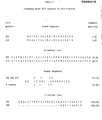
- Tnis analysis revealed that the zeins were significantly larger than expected based on their mobility on SDS polyacrylamide gels. Zein proteins that had been estimated to nave molecular weights of 22,000 and 19,000 were found to be closer to 27,000 and 23,000, respectively (Table I). This analysis also confinned the presence of signal peptides on the zein proteins (Fig. 1). These signal sequences were previously demonstrated to be removed when the protein is transported into the lumen of the RER (Larkins et al. (1979) Proc. Natl. Acad. Sci. USA 76:6448-6452).
- the amino acid composition predicted from the polypeptide sequence is similar to that previously found for mixtures of zein proteins (Lee et al. (1976) Biochem. Genet. 14:641-650).
- Glutamine, leucine, proline, alanine, and glycine account for the majority of the amino acids, and lysine and tryptophan absent from all of them (Table I).
- methionine which is deficient in most legume storage proteins, accounts for a significant percentage of the Mr 15,000 zein.
- cysteine and methionine account for 11% of the total amino acids in this polypeptide.
- a particularly interesting feature of the protein sequence is the occurrence of a conserved, tandemly repeated peptide in both of the Mr 22,000 ana Mr 19,000 zeins (Fig. 1).
- the first of these repeat sequences begins 35-36 amino acids after the NH 2 -terminus, and is repeated nine times in each polypeptide.
- the COOH-terminal sequence following the repeats is slightly longer in the Mr 22,000 zeins; this accounts for the size difference between the two polypeptides.
- Most of the amino acids in these repeats are nonpolar, while the repeated peptide is sequentially polar, nonpolar, polar, nonpolar, polar.
- Circular dichroism measurements of mixtures of zein proteins indicate from 45-55% a-helical structure (Argos et al. (1982) J. Biol. Chem. 257:9984-9990) and this percentage correlates well with the proportion of amino acids in these repeated peptides.
- To determine if the repeats have the potential to form a-helices we compared their amino acid sequences with those found in proteins having a-helical structure (Argos et al., supra) Although a comparison to soluble proteins shown little propensity for these repetitive sequences to be a-helicdl, they do have a-helical properties when compared with sequences found in some hydrophobic proteins. In view of the hydrophobic nature of zein proteins, it seems reasonable to predict an a-nelical structure for them.
- Fig. 7 provides a two-dimensional representation of the proposed model.
- the invention includes modified 19 kd and 22 kd zeins containing lysine, modified structural genes encoding protein precursors to said modified zeins and various genetic constructs and vectors comprising these modified genes.
- the modified zeins resemble normal unmodified zeins in their molecular weights, ability to form protein bodies within the rough endoplasmic reticulum of a host cell, and solubility in alcohol.
- modified zein is therefore reserved for zein proteins having an amino acid sequence which is not naturally occurring, wnich behaves similarly to authentic zein in a frog oocyte expression system and which is soluble in alcohol.
- pre-zein denotes the primary translation product of mRNA comprising a zein coding sequence, said primary translation product comprising an additional NH 2 - terminal sequence not found in mature zein isolated from protein bodies. The additional NH2-terminal sequence is believed to function as a signal peptide which aids in intracellular compartmentalization of the translation product.
- modified pre-zein and “modified pre-zein gene” as used herein have the same meanings with respect to the modified sequences as those used in connection with the unmodified sequences, the only difference being related to changes in the primary amino acid sequences described herein.
- An important feature of the present invention is based upon the unexpected finding that the substitution of a lysine within one of the repeated segments of the molecule yields a modified, lysine-containing zein product that meets the functional and physical criteria described, supra. Also contrary to expectation, the substitution of a lysine for an amino acid within the unrepeated NH 2 -terminal portion of the molecule yields a product which does not meet the above-described criteria.
- the invention has been exemplified by the modification of a DNA encoding a 19 kd pre-zein gene such that the coding sequence encodes a lysine in the place of an amino acid of the naturally-occurring sequence.
- results demonstrate that, contrary to expectation, substitution of a lysine for an amino acid in the repeated portion of the molecule is tolerated without detrimental effect to zein function and properties whereas, again contrary to expectation, a substitution outside the repeated region, at the NH 2 -terminal end of the molecule, results in a product that apparently lacks zein-like properties.
- the results speak for themselves and the invention does not depend on any hypothesis or theory of operation, the results are consistent with observations in other systems where complete translation had been shown to depend upon coupled, translocation to endoplasmic reticulum, which in turn depends on the integrity of the NH 2 -terminal sequences of pre- protein and of mature protein.
- lysine is protonated at intracellular pH levels, lysine replacement of a highly non-polar amino acid is likely to be more disruptive than replacement of a polar, or moderately non-polar amino acid.
- amino acid residues that are attractive candidates for replacement will be located in less conserved regions of the repeated sequences. Such less conserved (divergent) regions can be identified by comparisons of several 19 kd or 22 kd zein sequences.
- single amino acid insertions can be employed, as well as substitutions in the segments connecting the domains of repeated sequences.
- insertions and substitutions can be made in the COOH-end of the zein molecule.
- a lysine for a glutamine within the segment postulated to connect two repeated segments yields a structure having the required properties.
- An upper limit to the number of lysines which may be introduced into a modified 19 kd or 22 kd zein has not been determined. A determination of an upper limit is not critical, however, because as little as one lysine residue per modified zein molecule is sufficient to confer a valuable nutritional benefit. Regulation of the amount of lysine produced by cells or tissues expressing a modified zein coding sequence can be achieved in one of two ways: by increasing the number of lysine residues per molecule or by increasing the number of molecules synthesized per cell. The latter can be achieved according to well known principles in the art, using an appropriate promoter whose activity is sufficient to insure the desired level of gene expression in the desired host cell.
- Means for modifying a 19 kd or 22 kd zein structural gene are well known in the art and may be employed according to well known and understood principles in the art to achieve the desired modification.
- the method of site-specific mutagenesis, using M13-based single stranded DNA vectors and synthetic oligonucleotide primers is exemplified herein, but other means for effecting the desired coding sequence changes may be employed.
- the technique of site-specific mutagenesis employs the chemically synthesized oligonucleotide corresponding to the coding segment whose modification is desired, with a base substitution at the exact site where a change in the coding sequence is desired.
- the synthetic oligonucleotide is allowed to hybridize with single stranded DNA comprising its complement, then used to prime DNA synthesis of a new coding strand incorporating the desired base change.
- care must be taken to insure that the oligonucleotide binds to the template at the desired site.
- the oligonucleotide must be either sufficiently unique or sufficiently long to prevent mispairing.
- the DNA encoding native, or unmodified, zein may be cloned as cDNA or genanic DNA.
- maize contains a number of genes encoding both 19 kd and 22 kd zeins, none has been found to date which contain introns. Consequently, the modification of cDNA is an entirely feasible strategy even if the end result desired is to reincorporate the modified coding sequence into the maize genome to produce genetically modified maize containing nutritionally balanced zein.
- modified zein A variety of systems. for expressing modified zein can be used.
- a structural gene encoding modified pre-zein may be combined with a promoter known to provide adequate levels of expression in the chosen host cell.
- the host cells mav be any host cell in which expression of modified zein is or can be made compatible, including bacteria, fungi; yeasts, plant cells and animal cells.
- a modified pre-zein structural gene as exemplified herein can be combined with the phaseolin promoter, which is known to provide tissue- specific expression in plants (Sengupta-Gopalan et ai. Proc. Natl. Acad. Sci. USA, in press).
- the composite gene thus constructed can be introduced to plant cells of a desired species using any of a variety of vectors comprising the T-DNA of Agrobacterium tumefaciens Ti plasmid (See Caplan, A. et al. (1983) Science 222:815; Barton, K. A. and Chilton, M.-D. (1983) Meth. Enzymol. 101:527; and Leemans, J. et al. (1982) in Molecular Biology of Plant Tumors (G. Kahl and J. Schell, eds.) Academic Press, NY, p 537).
- the cells receiving the composite gene can be regenerated to form fertile adult plants according to known techniques. Seeds of the regenerated plant will express the modified zein thereby providing a nutritionally balanced diet with respect to amino acid composition for humans or animals using the seeds of the plant as food.
- Current techniques for gene transfer and regeneration are available for such agronomically significant crops as tomato, soybean, sunflower and a number of vegetable crops.
- the number of crops in which gene transfer and regeneration techniques are being developed is continuously increasing. Expression of a modified zein need not be confined to seed or endosperm tissue. In some instances it will be desirable to enhance the nutritional value of leaves, stems and other edible vegetative tissues of a plant, to enhance the nutritional value of the plant.
- zein In addition to plants, other organisms, especially single celled organisms, mav be genetically altered to produce a modified zein, for example as a convenient form of single cell protein.
- zein The properties of zein which make it useful for storage of protein in a highly concentrated and stable form in the maize endosperm are expected to be of value for the production of highly nutritious single cell protein.
- Modified pre-zein genes may also be expressed in animal cells.
- an animal cell system frog oocytes
- frog oocytes was employed as detailed in the examples, for the purpose of rapidly determining whether a given genetic modification yields a modified zein having the appropriate functional and physical characteristics.
- a modified pre-zein coding segment was cloned into the E. coli vector SP6.
- Recombinant SP6, carrying the inserted pre-zein coding segment was used as template in an in vitro RNA polymerase- catalyzed reaction to produce messenger RNA encoding modified pre-zein.
- RNA preparation was then injected into frog oocytes which, when incubated in an appropriate medium under known techniques and conditions, are capable of translating the injected mRNA.
- the synthesis of zein or modified zein was measured by the appearance of a protein band on an electrophoresis gel, after extracting alcohol soluble, aqueous insoluble protein from the oocytes. The appearance of a protein band at a position corresponding to 19 kd or 22 kd, as the case may be, indicated the synthesis of zein, or modified zein by the oocytes.
- the microscopic appearance of protein bodies in the rough endoplasmic reticulum of oocytes was observed in oocytes expressing native zein or zein modified according to the invention.
- a phr d se such as BclI/SmaI fragment
- the ends will have the characteristics of being either sticky (i.e., having a single strand of protrusion capable of base-pairing with a complementary single-stranded oligonucleotide) or blunt (i.e., having no single-stranded protrusion) and that the specificity of a sticky end will be determined by the sequence of nucleotides comprising the single-stranded protrusion which in turn is determined by the specificity of the enzyme which produces it.
- TBE 0.01 M Tris, pH 8.3, 0.01 M boric acid, 0.01 mM EDTA
- the ds-cDNA was recovered by ethanol precipitation in the presence of 0.3 M Na acetate. Homopolymer tails of oligo (dC) were added to the ds cDNA using terminal transferase as described by Roychoudhury et al. (1976) and the ds cDNA was annealed to the plasmid pUC8 that had been homopolymer tailed with oligo (dG). The recombinant plasmids were used to transform the bacterial strain JM83 that was made competent by the method of Morrison (1979).
- Bacteria containing recombinant plasmids were identified by the filter hybridization procedure of Grunstein and Hogness (1975) using 32p- labeled cDNA as a probe. By using then pUC 8-JM83 transformation system (Messing and Vierira, 1982), a 10-fold increase was obtained in cloning efficiency over the pBR 322-HB101 system that was previously used.
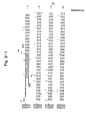
- Figure 2 shows the nucleotide sequence of clones for the 19 kd zeins.
- the nucleotide sequence of gZ19AB1 (previously named ZG99) was previously reported (Pederson et al., 1982).
- the complete sequences of gZ19AB1, cZl9Dl, and cZ19C2 are given.
- the sequences of the cZ19A2 and cZ19B1 follow the colons and only nucleotides in the sequences that vary from gZ19ABl are shown.
- the cZ19C1 sequence begins after the colon and only nucleotides in that sequence which vary from cZ19C2 are shown.
- "An" indicates a sequence terminating in a poly(A) tail.
- Asterisks indicate positions where gaps were introduced in the sequences to maximize homology.
- the putative polyadenylation signals are underlined. Positions corresponding to the initiating methionine (Met) and the NH 2 -terminus and -COOH terminus of the encoded polypeptide are indicated.
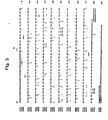
- Figure 3 shows the nucleotide sequence of clones for the 22 kd zeins. Nucleotides are numbered starting with the first base of the initiator codon and are indicated on the right-hand margin. The sequences of cZ22A1 and cZ22B1 (previously named pZ22.1 and pZ22.3, respectively) were previously reported (Marks and Larkins, 1982). The complete nucleotide sequence of cZ22A1 is given, but only variable nucleotides at corresponding positions are listed for the other clones. Asterisks indicate positions where gaps were introduced in the sequence to maximize homology. The positions of the first nucleotides for cZ22B-1 and cZ22C-2 follow the colons.
- “An” indicates the position at which a sequence terminates in a poly(A) tail. Positions corresponding to the initiating methionine (Met) and the NH 2 -terminus and -COOH terminus of the encoded polypeptide are indicated.
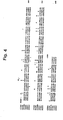
- Figure 4 shows amino acid sequences deduced from the DNA sequence of clones for the Mr 19,000 zeins (Fig. 2).
- the complete amino acid sequences deduced from gZ19AB1, cZ19Dl, and cZ19C1 are given. Only amino acid residues for cZ19A2 and cZ19Bl that differ from gZ19ABl are shown as are only amino acid residues for cZ19C2 that differ from the sequence of cZ19C1.
- Asterisks indicate gaps introduced in the amino acid sequence to demonstrate homologies.
- the positions of the NH 2 -terrui nus and -COOH terminus of the mature proteins are indicated.
- Figure 5 shows amino acid sequences deduced from DNA sequences of clones for the Mr 22,000 zeins (Fig. 3). The complete sequence of cZ22A1 is given in the standard single letter amino acid code, but only variable amino acid residues at corresponding positions are listed for the other sequences. The position corresponding to the NH2-terminus of the mature protein is indicated.
- the pUC8 vector containing the 19 pre-zein coding sequence was cut with EcoRI endonuclease.
- the EcoRI site of pUC8 lies within the same polylinker as the PstI site into which the pre-zein cDNA was originally cloned.
- Cleavage with EcoRI cuts the vector at the 5' end of the pre-zein gene.
- the EcoRI linearized plasmid was incubated with Ba131 exonuclease according to standard techniques for varying degrees of limited digestion.
- the digested linear plasmid was reisolated and cut with HindIII endonuclease.
- the HindIII site of the pUC8 polylinker lies on the 3' side of the pre-zein gene. The resulting HindIII cleavage releases the pre-zein DNA coding insert in the form of a population of molecules having varying numbers of nucleotides removed from the 5' end.
- the resulting population of 5-'deleted inserts was then cloned into M13mpll, previously cut with SmaI and HindIII to generate a unidirectional cloning.
- the sticky ends generated by HindIII cutting at the 3' end of the insert anneal with the HindIII cut end of the M13 vector while the blunt ends of the insert generated by Ba131 digestion can ligate by blunt end ligation to the SmaI cut end of the M13 vector.
- Clones of individual inserts in M13mpll were then sequenced at the 5' end of the insert to determine the amount of homopolymer tail removed by the Ba131 digestion.
- Three clones, representing three different degrees of digestion, were analyzed for ability to provide efficient translation, using the SP6 transcription system and frog oocyte translation system described infra in Example 4.
- the highest yield of zein was produced from transcripts derived from cDNA in which the entire 5' homopolymer tail had been removed as well as an additional two nucleotides of the 5' untranslated region of the pre-zein cDNA.
- Intermediate yields of zein were obtained using clones in which the homopolymer tails were partially removed. Therefore, removal of the homopolymer tail at the 5' end is of substantial importance for efficient translation.
- Example 3 Modification of pre-zein coding region by site-specific mutagenesis
- M13 bacteriophage and reagents are available as a kit from Amersham Corp., Arlington Heights, Illinois, together with a handbook of instructions for carrying out various manipulations and isolations of single stranded and RF (double stranded) forms of M13 DNA.
- the handbook of instructions is hereinafter referred to as the "Amersham handbook”.
- co1i GM119 (dcm-6, dam-3, metB-1 thil, lac Yl or lac 4Z, gal K2, gal T22, mtl-2, ton A2 or ton A31, tsx-1 or tsx-78, supE44, ma1R/F1KM) is a widely available E, coli strain used herein for the purpose of preparing non-methylated M13 DNA.
- the use of non-methylated DNA favors retention of the mutagenized strand during replication primed by a synthetic oligonucleotiae as described, infra.
- a culture of E. coli GM119 was grown from a single colony to an O.D. of 0.6 at 32°C in LB medium. Fifty ⁇ l of the O.D. 0.6 culture was added to 2 ml prewarmed LB medium and 5 ⁇ l of M13 phage suspension was added. The culture was grown overnight or for approximately 16 hours at 32°C. After the incubation, intact cells were removed by centrifugation. The supernatant contained phage from which single stranded M13 template DNA was prepared as described in the Amersham handbook.
- Gapped heteroduplex DNA comprising unmethylated (+) (viral) strand and a methylated (-) strand was prepared by an annealing procedure.
- Minus (-) strand DNA was prepared from M13 RF DNA digested with HindIII and EcoRI endonucleases. The reaction mixture was extracted once with a Tris-EDTA buffer saturated with a chloroform/phenol mixture (equal parts by volume). The aqueous phase was then extracted twice with a 5-fold volume of diethyl ether, 0.2 volumes of 5 mM ammonium acetate and 2.5 volumes of ethanol were added to precipitate DNA during a 10-15 minute incubation in a dry ice-ethanol bath.
- the precipitate was collected by centrifugation, the supernatant was decanted and the tube containing the precipitate was inverted and allowed to air dry.
- the dried pellet was redissolved in 20 pl of Tris-EDTA buffer.
- the annealing reaction was initiated by combining 0.5 ⁇ g of (+) strand viral DNA (unmethylated) and 0.2 ⁇ g linearized RF DNA in 20 ⁇ l of 1x SSC.
- the mixture was overlayed with 50 ⁇ l of mineral oil and placed in a boiling water bath for 2 minutes. Immediately thereafter, the tube was transferred to a 65° bath and incubated for 4 hours or more to allow annealing to occur between the (+) and (-) DNA strands.
- the aqueous laver was transferred to a new tube and traces of mineral oil removed by two successive extractions with 5 volumes of diethyl ether. Residual ether was removed by applying mild vacuum conditions for 2 minutes.
- the DNA was precipitated by adding 50 ⁇ l cold ethanol to the reaction mixture and incubating the mixture for 20 minutes in dry ice-ethanol, collecting the precipitated DNA by centrifugation and air drying as before. The above procedure yields from 0.1 ⁇ g to 0.3 ⁇ g gapped heteroduplex DNA.
- the mutagenic oligonucleotides were prepared according to standard techniques of DNA synthesis. Two mutagenic oligonucleotides were prepared, the first having the sequence GGTAGTTACTTTCGAAGT intended to provide an isoleucine to lysine change at amino acid position 44 of cZ19C1, and the second having the sequence GTAAATTTGTTAACCG, intended to encode the substitution of lysine for asparagine at amino acid position 167 in cZ19C1.
- the air dried heteroduplex mixture was dissolved in 1.5 ⁇ l of solution "A" [described by Zoller and Smith, Methods in Enzymology Vol. 100, p.
- E. coli JM103 The ligated heteroduplex mixture was used to transform E. coli JM103 cells, rendered competent for transformation according to the procedure described in the Amersham handbook.
- E. coli JM103 is widely available from a variety of sources. Two hundred ⁇ l of competent cells were mixed with 1 ⁇ l, 2 ⁇ l, 5 ⁇ l or 10 ⁇ l of heteroduplex mixture, incubated on ice for 40 minutes, then heat shocked by transfer to 42°C for 2 minutes, then returned to the ice bath.
- each tube was then added 10 ⁇ l 100 mM IPTG and 50 mM 2% (w/v) X-g al , 100 ⁇ l of JM103 cells to provide a bacterial lawn, and 3 ml of 0.7% (w/v) fresh top agar, the latter kept melted at 50°C.
- the components of each tube were then quickly mixed and poured onto fresh petri plates containing M9 agar. After overnight incubation plaques were formed which appeared white, or colorless, for those phage containing an inserted zein gene.
- the efficiency of the procedure yields from 4% to 10% of mutagenized sequences.
- Clones in which the mutated sequence have been incorporated were identified by the introduction of a new HindIII site in one case, or the loss of a pre-existing HindIII site in the other case, such that a rapid screening could be undertaken without the need for sequence determination of each clone.
- the restriction pattern of fragments produced by HindIII cleavage was compared after electrophoretic separation with the pattern of fragments produced by unmodified DNA.
- the resulting modified pre-zein coding sequences were removed from the M13 vector by an EcoRI-HindIII cut and cloned into the transcription vector SP6 (commercially available, e.g., from ProMega Biotech, Madison, Wisconsin) previously digested with EcoRI and HindIII endonucleases.
- the modified pre-zein coding segment, described in Example 3, was released from the M13 vector by digestion with EcoRI and HindIII endonucleases, and cloned into plasmid SP6, cut with EcoRI and HindIII.
- the transcription plasmid SP6 is commercially available from ProMega Biotec, Madison, Wisconsin. Other reagents and enzymes used for SP6 transcription are also available from ProMega Biotec.
- the modified pre-zein gene was transcribed from the SP6 promoter in a reaction containing the following: 40 ml Tris-HC1 pH 7.5, 6 mM MgCl2, 2 mM spermadine, 10 mM dithiothreitol, 1 unit/ml RNAsin (trademark ProMega Biotec, Madison, Wisconsin) 100 ug/ml bovine serum albumin, 0.5 mM ATP, 0.5 mM TTP, 0.5 mM CTP, 0.1 mM GTP, 0.5 mM 7mGpppG and 15 units SP6 RNA polymerase.
- RNAsin was added to the final concentration of 1 ⁇ g/ ⁇ l and then adding RNAse I to 20 ⁇ g/ml final concentration and incubating at 37° for 15 minutes. Under these conditions, approximately 0.2 ⁇ g of mRNA was transcribed per ⁇ g of plasmid DNA.
- oocytes were injected with a modified pre-zein mRNA in which an asparagine residue was replaced by a lysine at amino acid position 167.
- the result indicates normal translation, translocation and physical properties similar to unmodified zein by all the criteria measured by the experiment.
- Fig. 7 The sequence and postulated folded configuration of modified and unmodified Z19C1 zein are shown in Fig. 7.
- the amino acid abbreviations are shown in Table 2.
- Cross-bars show hydrogen bonds between residues on adjacent domains of a-helix, postulated to stabilize the highly compact central position having repeated segments of amino acid sequence.
- Asterisks show the positions where lysine was substituted, as described in the foregoing examples.
- the compactness of the tertiary structure can be mure fully appreciated by roiling the figure into a cylinder around the long axis of the page.
Landscapes
- Life Sciences & Earth Sciences (AREA)
- Health & Medical Sciences (AREA)
- Genetics & Genomics (AREA)
- Engineering & Computer Science (AREA)
- Biotechnology (AREA)
- Chemical & Material Sciences (AREA)
- Organic Chemistry (AREA)
- Molecular Biology (AREA)
- Bioinformatics & Cheminformatics (AREA)
- Zoology (AREA)
- Wood Science & Technology (AREA)
- General Engineering & Computer Science (AREA)
- Biomedical Technology (AREA)
- General Health & Medical Sciences (AREA)
- Biophysics (AREA)
- Proteomics, Peptides & Aminoacids (AREA)
- Biochemistry (AREA)
- Microbiology (AREA)
- Nutrition Science (AREA)
- Cell Biology (AREA)
- Physics & Mathematics (AREA)
- Plant Pathology (AREA)
- Botany (AREA)
- Gastroenterology & Hepatology (AREA)
- Medicinal Chemistry (AREA)
- Peptides Or Proteins (AREA)
- Micro-Organisms Or Cultivation Processes Thereof (AREA)
- Preparation Of Compounds By Using Micro-Organisms (AREA)
- Fodder In General (AREA)
Priority Applications (1)
| Application Number | Priority Date | Filing Date | Title |
|---|---|---|---|
| AT86304370T ATE69062T1 (de) | 1985-06-12 | 1986-06-09 | Modifiziertes zein. |
Applications Claiming Priority (2)
| Application Number | Priority Date | Filing Date | Title |
|---|---|---|---|
| US74491385A | 1985-06-12 | 1985-06-12 | |
| US744913 | 1985-06-12 |
Publications (3)
| Publication Number | Publication Date |
|---|---|
| EP0208418A2 true EP0208418A2 (de) | 1987-01-14 |
| EP0208418A3 EP0208418A3 (en) | 1988-12-21 |
| EP0208418B1 EP0208418B1 (de) | 1991-10-30 |
Family
ID=24994449
Family Applications (1)
| Application Number | Title | Priority Date | Filing Date |
|---|---|---|---|
| EP86304370A Expired - Lifetime EP0208418B1 (de) | 1985-06-12 | 1986-06-09 | Modifiziertes Zein |
Country Status (6)
| Country | Link |
|---|---|
| EP (1) | EP0208418B1 (de) |
| JP (1) | JPS6259300A (de) |
| AT (1) | ATE69062T1 (de) |
| AU (1) | AU592090B2 (de) |
| CA (1) | CA1304025C (de) |
| DE (1) | DE3682233D1 (de) |
Cited By (10)
| Publication number | Priority date | Publication date | Assignee | Title |
|---|---|---|---|---|
| WO1989003887A1 (en) * | 1987-10-20 | 1989-05-05 | Plant Genetic Systems N.V. | A process for the production of biologically active peptide via the expression of modified storage seed protein genes in transgenic plants |
| EP0318341A1 (de) * | 1987-10-20 | 1989-05-31 | Plant Genetic Systems, N.V. | Verfahren zur Herstellung transgenetischer Pflanzen mit erhöhtem Nährwert durch Expression von modifizierten 2S-Speicheralbuminen in diesen Pflanzen |
| EP0319353A1 (de) * | 1987-10-20 | 1989-06-07 | Plant Genetic Systems N.V. | Verfahren zur Herstellung eines biologisch-aktiven Peptides durch Expression von modifizierten Speicherproteingenen in transgenetischen Pflanzen |
| WO1993003160A1 (en) * | 1991-08-09 | 1993-02-18 | E.I. Du Pont De Nemours And Company | Synthetic storage proteins with defined structure containing programmable levels of essential amino acids for improvement of the nutritional value of plants |
| WO1994010315A3 (en) * | 1992-10-23 | 1994-09-15 | Pioneer Hi Bred Int | Process for enhancing the content of a selected amino acid in a seed storage protein |
| US5623067A (en) * | 1987-10-20 | 1997-04-22 | Plant Genetic Systems, N.V. | Seed-specific promoter region |
| FR2744134A1 (fr) * | 1996-01-29 | 1997-08-01 | Biocem | Proteines de reserve de plantes enrichies en acides amines, notamment alpha-zeine de mais enrichie en lysine plantes exprimant ces proteines |
| WO1999004024A3 (en) * | 1997-07-15 | 1999-04-22 | Dow Agrosciences Llc | Nucleotide sequences of genes encoding sink proteins and uses thereof for improving the nutritional quality of feeds |
| US8785130B2 (en) | 2005-07-07 | 2014-07-22 | Bio-Id Diagnostic Inc. | Use of markers including nucleotide sequence based codes to monitor methods of detection and identification of genetic material |
| US9150906B2 (en) | 2006-06-28 | 2015-10-06 | Bio-Id Diagnostic Inc. | Determination of variants produced upon replication or transcription of nucleic acid sequences |
Family Cites Families (4)
| Publication number | Priority date | Publication date | Assignee | Title |
|---|---|---|---|---|
| EP0090033A1 (de) * | 1981-10-01 | 1983-10-05 | International Plant Research Institute | Verfahren für die genetische modifizierung von getreiden mit tranformatorvektoren |
| DE3315000A1 (de) * | 1983-04-26 | 1984-10-31 | Behringwerke Ag, 3550 Marburg | Gewebeprotein pp(pfeil abwaerts)4(pfeil abwaerts), verfahren zu seiner gewinnung sowie seine verwendung |
| DK129385A (da) * | 1985-03-22 | 1986-09-23 | Novo Industri As | Peptider og fremstilling deraf |
| US5391485A (en) * | 1985-08-06 | 1995-02-21 | Immunex Corporation | DNAs encoding analog GM-CSF molecules displaying resistance to proteases which cleave at adjacent dibasic residues |
-
1986
- 1986-06-09 AT AT86304370T patent/ATE69062T1/de not_active IP Right Cessation
- 1986-06-09 DE DE8686304370T patent/DE3682233D1/de not_active Expired - Lifetime
- 1986-06-09 EP EP86304370A patent/EP0208418B1/de not_active Expired - Lifetime
- 1986-06-11 CA CA000511308A patent/CA1304025C/en not_active Expired - Lifetime
- 1986-06-11 AU AU58536/86A patent/AU592090B2/en not_active Ceased
- 1986-06-12 JP JP61137222A patent/JPS6259300A/ja active Pending
Non-Patent Citations (16)
| Title |
|---|
| "Meth. Enzymol", vol. 100, 1983, pages: 101 |
| "Meth. Enzymol.", 1979, pages: 68 |
| "Meth. Enzymol.", 1980, pages: 65 |
| "Meth. Enzymol.", vol. 100, 1983, pages: 101 |
| BUELL ET AL., J. BIOL. CHEM., vol. 253, 1978, pages 2471 - 2482 |
| CAPLAN, A. ET AL., SCIENCE, vol. 222, 1983, pages 815 |
| HURKMAN ET AL., J. CELL. BIOL., vol. 89, 1981, pages 292 - 299 |
| L. GROSSMAN; K. MOLDAVE: "Meth. Enzymol", vol. 65, 1980 |
| LARKINS, B.: "Genetic Engineering of Plants", 1983, PLENUM, pages: 93 - 118 |
| LEE ET AL., BIOCHEM. GENET, vol. 14, 1976, pages 641 - 650 |
| LEEMANS, J. ET AL.: "Molecular Biology of Plant Tumors", 1982, ACADEMIC PRESS, pages: 537 |
| R. DAVIS ET AL., ADVANCED BACTERIAL GENETICS, 1980 |
| R. F. SCHLEIF; P. C. WENSINK, PRACTICAL METHODS IN MOIECULAR BIOLOGY, 1982 |
| SENGUPTA-GOPALAN ET AL.: "Proc. Natl. Acad. Sci. USA" |
| T. MANNIATIS, MOLECULAR CLONING, 1982 |
| ZOLLER; SMITH, METHODS IN ENZYMOLOGY, vol. 100, 1983, pages 46B |
Cited By (15)
| Publication number | Priority date | Publication date | Assignee | Title |
|---|---|---|---|---|
| US5487991A (en) * | 1987-10-20 | 1996-01-30 | Plant Genetic Systems N.V. | Process for the production of biologically active peptide via the expression of modified storage seed protein genes in transgenic plants |
| EP0318341A1 (de) * | 1987-10-20 | 1989-05-31 | Plant Genetic Systems, N.V. | Verfahren zur Herstellung transgenetischer Pflanzen mit erhöhtem Nährwert durch Expression von modifizierten 2S-Speicheralbuminen in diesen Pflanzen |
| EP0319353A1 (de) * | 1987-10-20 | 1989-06-07 | Plant Genetic Systems N.V. | Verfahren zur Herstellung eines biologisch-aktiven Peptides durch Expression von modifizierten Speicherproteingenen in transgenetischen Pflanzen |
| US5623067A (en) * | 1987-10-20 | 1997-04-22 | Plant Genetic Systems, N.V. | Seed-specific promoter region |
| WO1989003887A1 (en) * | 1987-10-20 | 1989-05-05 | Plant Genetic Systems N.V. | A process for the production of biologically active peptide via the expression of modified storage seed protein genes in transgenic plants |
| US5559223A (en) * | 1991-08-09 | 1996-09-24 | E. I. Dupont De Nemours And Company | Synthetic storage proteins with defined structure containing programmable levels of essential amino acids for improvement of the nutritional value of plants |
| WO1993003160A1 (en) * | 1991-08-09 | 1993-02-18 | E.I. Du Pont De Nemours And Company | Synthetic storage proteins with defined structure containing programmable levels of essential amino acids for improvement of the nutritional value of plants |
| WO1994010315A3 (en) * | 1992-10-23 | 1994-09-15 | Pioneer Hi Bred Int | Process for enhancing the content of a selected amino acid in a seed storage protein |
| FR2744134A1 (fr) * | 1996-01-29 | 1997-08-01 | Biocem | Proteines de reserve de plantes enrichies en acides amines, notamment alpha-zeine de mais enrichie en lysine plantes exprimant ces proteines |
| WO1997028247A3 (fr) * | 1996-01-29 | 1997-10-09 | Biocem | PROTEINES DE RESERVE DE PLANTES ENRICHIES EN ACIDES AMINES, NOTAMMENT η-ZEINE DE MAIS ENRICHIE EN LYSINE, PLANTES EXPRIMANT CES PROTEINES |
| US7297847B1 (en) | 1996-01-29 | 2007-11-20 | Biogemma | Amino acid-enriched plant protein reserves, particularly lysine-enriched maize γ-zein, and plants expressing such proteins |
| WO1999004024A3 (en) * | 1997-07-15 | 1999-04-22 | Dow Agrosciences Llc | Nucleotide sequences of genes encoding sink proteins and uses thereof for improving the nutritional quality of feeds |
| US8785130B2 (en) | 2005-07-07 | 2014-07-22 | Bio-Id Diagnostic Inc. | Use of markers including nucleotide sequence based codes to monitor methods of detection and identification of genetic material |
| US9150906B2 (en) | 2006-06-28 | 2015-10-06 | Bio-Id Diagnostic Inc. | Determination of variants produced upon replication or transcription of nucleic acid sequences |
| US10036053B2 (en) | 2006-06-28 | 2018-07-31 | Bio-ID Diagnostics Inc. | Determination of variants produced upon replication or transcription of nucleic acid sequences |
Also Published As
| Publication number | Publication date |
|---|---|
| EP0208418A3 (en) | 1988-12-21 |
| ATE69062T1 (de) | 1991-11-15 |
| EP0208418B1 (de) | 1991-10-30 |
| AU592090B2 (en) | 1990-01-04 |
| JPS6259300A (ja) | 1987-03-14 |
| DE3682233D1 (de) | 1991-12-05 |
| CA1304025C (en) | 1992-06-23 |
| AU5853686A (en) | 1986-12-18 |
Similar Documents
| Publication | Publication Date | Title |
|---|---|---|
| US4886878A (en) | Modified zein genes containing lysine | |
| US4885357A (en) | Modified zein proteins containing lysine | |
| CA2114788C (en) | Synthetic storage proteins with defined structure containing programmable levels of essential amino acids for improvement of the nutritional value of plants | |
| Masumura et al. | cDNA cloning of an mRNA encoding a sulfur-rich 10 kDa prolamin polypeptide in rice seeds | |
| AU2021225142B2 (en) | Generation of haploid plants | |
| Kreis et al. | Primary structure and differential expression of β‐amylase in normal and mutant barleys | |
| CA2177351C (en) | Chimeric genes and methods for increasing the lysine content of the seeds of corn, soybean and rapeseed plants | |
| DE69424601T2 (de) | Modifizierter Ölgehalt in Samen | |
| US5487991A (en) | Process for the production of biologically active peptide via the expression of modified storage seed protein genes in transgenic plants | |
| US5003045A (en) | Modified 7S legume seed storage proteins | |
| US5589616A (en) | Monocot seed storage proteins in dicots | |
| US5589615A (en) | Process for the production of transgenic plants with increased nutritional value via the expression of modified 2S storage albumins | |
| DE69231439T2 (de) | Schwefelreiches proteingen aus samen und verfahren zur steigerung des schwefelhaltigen aminosaeurengehaltes in pflanzen | |
| US5623067A (en) | Seed-specific promoter region | |
| WO1998045458A1 (en) | An engineered seed protein having a higher percentage of essential amino acids | |
| JPH06506584A (ja) | 種子における脂質生合成の制御に関与する植物プロモーター | |
| EP0208418B1 (de) | Modifiziertes Zein | |
| CA1337048C (en) | Process for the production of biologically active peptide via the expression of modified storage seed protein genes in transgenic plants | |
| JPH01501038A (ja) | 発現生成物の細胞内指図された輸送 | |
| Altschuler et al. | The N-and C-terminal regions regulate the transport of wheat gamma-gliadin through the endoplasmic reticulum in Xenopus oocytes. | |
| EP0871356A1 (de) | Herstellung von transgenen Pflanzen, welche das Lysinreiche Protein aus Psophocarpus tetragonologus | |
| Galili et al. | Synthetic oligonucleotide tails inhibit in vitro and in vivo translation of SP6 transcripts of maize zein cDNA clones | |
| CN119899851A (zh) | 大豆GmSUC6基因及其编码蛋白在调控大豆种子蛋白质含量中的应用 | |
| EP0319353A1 (de) | Verfahren zur Herstellung eines biologisch-aktiven Peptides durch Expression von modifizierten Speicherproteingenen in transgenetischen Pflanzen | |
| OGAWA | Genetic analysis of rice storage proteins |
Legal Events
| Date | Code | Title | Description |
|---|---|---|---|
| PUAI | Public reference made under article 153(3) epc to a published international application that has entered the european phase |
Free format text: ORIGINAL CODE: 0009012 |
|
| AK | Designated contracting states |
Kind code of ref document: A2 Designated state(s): AT BE CH DE FR GB IT LI LU NL SE |
|
| PUAL | Search report despatched |
Free format text: ORIGINAL CODE: 0009013 |
|
| AK | Designated contracting states |
Kind code of ref document: A3 Designated state(s): AT BE CH DE FR GB IT LI LU NL SE |
|
| RAP1 | Party data changed (applicant data changed or rights of an application transferred) |
Owner name: PURDUE RESEARCH FOUNDATION, INC. Owner name: LUBRIZOL GENETICS INC. |
|
| 17P | Request for examination filed |
Effective date: 19890609 |
|
| 17Q | First examination report despatched |
Effective date: 19891009 |
|
| GRAA | (expected) grant |
Free format text: ORIGINAL CODE: 0009210 |
|
| RAP1 | Party data changed (applicant data changed or rights of an application transferred) |
Owner name: PURDUE RESEARCH FOUNDATION, INC. Owner name: LUBRIZOL GENETICS INC. |
|
| AK | Designated contracting states |
Kind code of ref document: B1 Designated state(s): AT BE CH DE FR GB IT LI LU NL SE |
|
| REF | Corresponds to: |
Ref document number: 69062 Country of ref document: AT Date of ref document: 19911115 Kind code of ref document: T |
|
| REF | Corresponds to: |
Ref document number: 3682233 Country of ref document: DE Date of ref document: 19911205 |
|
| ET | Fr: translation filed | ||
| REG | Reference to a national code |
Ref country code: CH Ref legal event code: PFA Free format text: LUBRIZOL GENETICS, INC. |
|
| BECA | Be: change of holder's address |
Free format text: 911030 *LUBRIZOL GENETICS INC.;*PURDUE RESEARCH FOUNDATION INC.:29400 LAKELAND BOULEVARD WICKLIFFE OHIO 44092;FREDERICK L. HOVDE HALL OF ADMINISTRATION WEST LAFAYETTE, INDIANA 47907(US); |
|
| RAP2 | Party data changed (patent owner data changed or rights of a patent transferred) |
Owner name: PURDUE RESEARCH FOUNDATION, INC. Owner name: LUBRIZOL GENETICS INC. |
|
| ITF | It: translation for a ep patent filed | ||
| NLT2 | Nl: modifications (of names), taken from the european patent patent bulletin |
Owner name: LUBRIZOL GENETICS INC. TE WICKLIFFE, OHIO EN PURDU |
|
| PGFP | Annual fee paid to national office [announced via postgrant information from national office to epo] |
Ref country code: SE Payment date: 19920518 Year of fee payment: 7 |
|
| PGFP | Annual fee paid to national office [announced via postgrant information from national office to epo] |
Ref country code: CH Payment date: 19920519 Year of fee payment: 7 |
|
| PGFP | Annual fee paid to national office [announced via postgrant information from national office to epo] |
Ref country code: LU Payment date: 19920520 Year of fee payment: 7 |
|
| PGFP | Annual fee paid to national office [announced via postgrant information from national office to epo] |
Ref country code: GB Payment date: 19920529 Year of fee payment: 7 |
|
| PGFP | Annual fee paid to national office [announced via postgrant information from national office to epo] |
Ref country code: NL Payment date: 19920630 Year of fee payment: 7 |
|
| ITPR | It: changes in ownership of a european patent |
Owner name: CAMBIO SEDE;LUBRIZOL GENETICS INC.; PURDUE RESEARC |
|
| PLBE | No opposition filed within time limit |
Free format text: ORIGINAL CODE: 0009261 |
|
| STAA | Information on the status of an ep patent application or granted ep patent |
Free format text: STATUS: NO OPPOSITION FILED WITHIN TIME LIMIT |
|
| 26N | No opposition filed | ||
| EPTA | Lu: last paid annual fee | ||
| PG25 | Lapsed in a contracting state [announced via postgrant information from national office to epo] |
Ref country code: LU Free format text: LAPSE BECAUSE OF NON-PAYMENT OF DUE FEES Effective date: 19930609 Ref country code: GB Effective date: 19930609 |
|
| PG25 | Lapsed in a contracting state [announced via postgrant information from national office to epo] |
Ref country code: SE Effective date: 19930610 |
|
| PG25 | Lapsed in a contracting state [announced via postgrant information from national office to epo] |
Ref country code: LI Effective date: 19930630 Ref country code: CH Effective date: 19930630 |
|
| PG25 | Lapsed in a contracting state [announced via postgrant information from national office to epo] |
Ref country code: NL Effective date: 19940101 |
|
| GBPC | Gb: european patent ceased through non-payment of renewal fee |
Effective date: 19930609 |
|
| NLV4 | Nl: lapsed or anulled due to non-payment of the annual fee | ||
| REG | Reference to a national code |
Ref country code: CH Ref legal event code: PL |
|
| EUG | Se: european patent has lapsed |
Ref document number: 86304370.9 Effective date: 19940110 |
|
| PGFP | Annual fee paid to national office [announced via postgrant information from national office to epo] |
Ref country code: FR Payment date: 20030610 Year of fee payment: 18 |
|
| PGFP | Annual fee paid to national office [announced via postgrant information from national office to epo] |
Ref country code: AT Payment date: 20030611 Year of fee payment: 18 |
|
| PGFP | Annual fee paid to national office [announced via postgrant information from national office to epo] |
Ref country code: DE Payment date: 20030618 Year of fee payment: 18 |
|
| PGFP | Annual fee paid to national office [announced via postgrant information from national office to epo] |
Ref country code: BE Payment date: 20030902 Year of fee payment: 18 |
|
| PG25 | Lapsed in a contracting state [announced via postgrant information from national office to epo] |
Ref country code: AT Free format text: LAPSE BECAUSE OF NON-PAYMENT OF DUE FEES Effective date: 20040609 |
|
| PG25 | Lapsed in a contracting state [announced via postgrant information from national office to epo] |
Ref country code: BE Free format text: LAPSE BECAUSE OF NON-PAYMENT OF DUE FEES Effective date: 20040630 |
|
| BERE | Be: lapsed |
Owner name: *PURDUE RESEARCH FOUNDATION INC. Effective date: 20040630 Owner name: *LUBRIZOL GENETICS INC. Effective date: 20040630 |
|
| PG25 | Lapsed in a contracting state [announced via postgrant information from national office to epo] |
Ref country code: DE Free format text: LAPSE BECAUSE OF NON-PAYMENT OF DUE FEES Effective date: 20050101 |
|
| PG25 | Lapsed in a contracting state [announced via postgrant information from national office to epo] |
Ref country code: FR Free format text: LAPSE BECAUSE OF NON-PAYMENT OF DUE FEES Effective date: 20050228 |
|
| REG | Reference to a national code |
Ref country code: FR Ref legal event code: ST |
|
| PG25 | Lapsed in a contracting state [announced via postgrant information from national office to epo] |
Ref country code: IT Free format text: LAPSE BECAUSE OF NON-PAYMENT OF DUE FEES;WARNING: LAPSES OF ITALIAN PATENTS WITH EFFECTIVE DATE BEFORE 2007 MAY HAVE OCCURRED AT ANY TIME BEFORE 2007. THE CORRECT EFFECTIVE DATE MAY BE DIFFERENT FROM THE ONE RECORDED. Effective date: 20050609 |