EP0202894B1 - A method for detecting amino acid derivatives - Google Patents
A method for detecting amino acid derivatives Download PDFInfo
- Publication number
- EP0202894B1 EP0202894B1 EP86303763A EP86303763A EP0202894B1 EP 0202894 B1 EP0202894 B1 EP 0202894B1 EP 86303763 A EP86303763 A EP 86303763A EP 86303763 A EP86303763 A EP 86303763A EP 0202894 B1 EP0202894 B1 EP 0202894B1
- Authority
- EP
- European Patent Office
- Prior art keywords
- amino acid
- general formula
- acid derivatives
- reaction
- phenylthiocarbamylamino
- Prior art date
- Legal status (The legal status is an assumption and is not a legal conclusion. Google has not performed a legal analysis and makes no representation as to the accuracy of the status listed.)
- Expired - Lifetime
Links
- 238000000034 method Methods 0.000 title claims description 37
- 150000003862 amino acid derivatives Chemical class 0.000 title claims description 7
- -1 5-thiazolinone amino acid derivatives Chemical class 0.000 claims description 37
- 239000002253 acid Substances 0.000 claims description 24
- QKFJKGMPGYROCL-UHFFFAOYSA-N phenyl isothiocyanate Chemical compound S=C=NC1=CC=CC=C1 QKFJKGMPGYROCL-UHFFFAOYSA-N 0.000 claims description 22
- 229940117953 phenylisothiocyanate Drugs 0.000 claims description 11
- 230000002285 radioactive effect Effects 0.000 claims description 11
- ZCYVEMRRCGMTRW-UHFFFAOYSA-N 7553-56-2 Chemical compound [I] ZCYVEMRRCGMTRW-UHFFFAOYSA-N 0.000 claims description 10
- 229910052740 iodine Inorganic materials 0.000 claims description 10
- 239000011630 iodine Substances 0.000 claims description 10
- XOZBOZIQLPEVRE-UHFFFAOYSA-N 2-(1h-imidazol-5-yl)-n-iodoethanamine Chemical compound INCCC1=CNC=N1 XOZBOZIQLPEVRE-UHFFFAOYSA-N 0.000 claims description 8
- 108090000623 proteins and genes Proteins 0.000 claims description 5
- 102000004169 proteins and genes Human genes 0.000 claims description 5
- CYSPWCARDHRYJX-UHFFFAOYSA-N 9h-fluoren-1-amine Chemical compound C12=CC=CC=C2CC2=C1C=CC=C2N CYSPWCARDHRYJX-UHFFFAOYSA-N 0.000 claims description 4
- 239000004215 Carbon black (E152) Substances 0.000 claims description 4
- UFHFLCQGNIYNRP-UHFFFAOYSA-N Hydrogen Chemical compound [H][H] UFHFLCQGNIYNRP-UHFFFAOYSA-N 0.000 claims description 4
- 229930195733 hydrocarbon Natural products 0.000 claims description 4
- 239000001257 hydrogen Substances 0.000 claims description 4
- 229910052739 hydrogen Inorganic materials 0.000 claims description 4
- 108090000765 processed proteins & peptides Proteins 0.000 claims description 4
- 238000010504 bond cleavage reaction Methods 0.000 claims description 3
- 230000000694 effects Effects 0.000 claims description 3
- 238000007363 ring formation reaction Methods 0.000 claims description 3
- 230000007017 scission Effects 0.000 claims description 3
- RMMXTBMQSGEXHJ-UHFFFAOYSA-N Aminophenazone Chemical compound O=C1C(N(C)C)=C(C)N(C)N1C1=CC=CC=C1 RMMXTBMQSGEXHJ-UHFFFAOYSA-N 0.000 claims description 2
- 239000007850 fluorescent dye Substances 0.000 claims description 2
- 230000005251 gamma ray Effects 0.000 claims description 2
- 125000003275 alpha amino acid group Chemical group 0.000 claims 3
- 238000001514 detection method Methods 0.000 description 25
- 238000006243 chemical reaction Methods 0.000 description 23
- UHOVQNZJYSORNB-UHFFFAOYSA-N Benzene Chemical compound C1=CC=CC=C1 UHOVQNZJYSORNB-UHFFFAOYSA-N 0.000 description 15
- 230000035945 sensitivity Effects 0.000 description 15
- 150000001413 amino acids Chemical class 0.000 description 12
- 238000004128 high performance liquid chromatography Methods 0.000 description 10
- HEMHJVSKTPXQMS-UHFFFAOYSA-M Sodium hydroxide Chemical compound [OH-].[Na+] HEMHJVSKTPXQMS-UHFFFAOYSA-M 0.000 description 9
- 235000001014 amino acid Nutrition 0.000 description 7
- 238000010438 heat treatment Methods 0.000 description 7
- 239000000243 solution Substances 0.000 description 7
- HEDRZPFGACZZDS-UHFFFAOYSA-N Chloroform Chemical compound ClC(Cl)Cl HEDRZPFGACZZDS-UHFFFAOYSA-N 0.000 description 6
- XEKOWRVHYACXOJ-UHFFFAOYSA-N Ethyl acetate Chemical compound CCOC(C)=O XEKOWRVHYACXOJ-UHFFFAOYSA-N 0.000 description 6
- VEXZGXHMUGYJMC-UHFFFAOYSA-N Hydrochloric acid Chemical compound Cl VEXZGXHMUGYJMC-UHFFFAOYSA-N 0.000 description 6
- 239000000047 product Substances 0.000 description 6
- DTQVDTLACAAQTR-UHFFFAOYSA-N trifluoroacetic acid Substances OC(=O)C(F)(F)F DTQVDTLACAAQTR-UHFFFAOYSA-N 0.000 description 6
- 239000007795 chemical reaction product Substances 0.000 description 5
- 239000011541 reaction mixture Substances 0.000 description 5
- JUJWROOIHBZHMG-UHFFFAOYSA-N Pyridine Chemical compound C1=CC=NC=C1 JUJWROOIHBZHMG-UHFFFAOYSA-N 0.000 description 4
- UIIMBOGNXHQVGW-UHFFFAOYSA-M Sodium bicarbonate Chemical compound [Na+].OC([O-])=O UIIMBOGNXHQVGW-UHFFFAOYSA-M 0.000 description 4
- 230000015572 biosynthetic process Effects 0.000 description 4
- OKKJLVBELUTLKV-UHFFFAOYSA-N methanol Substances OC OKKJLVBELUTLKV-UHFFFAOYSA-N 0.000 description 4
- 238000002156 mixing Methods 0.000 description 4
- 235000018102 proteins Nutrition 0.000 description 4
- 238000003786 synthesis reaction Methods 0.000 description 4
- OUGMRQJTULXVDC-UHFFFAOYSA-N 9h-fluoren-9-amine Chemical compound C1=CC=C2C(N)C3=CC=CC=C3C2=C1 OUGMRQJTULXVDC-UHFFFAOYSA-N 0.000 description 3
- 108010016626 Dipeptides Proteins 0.000 description 3
- JEFZIKRIDLHOIF-BYPYZUCNSA-N Gln-Gly Chemical compound NC(=O)CC[C@H](N)C(=O)NCC(O)=O JEFZIKRIDLHOIF-BYPYZUCNSA-N 0.000 description 3
- ROHFNLRQFUQHCH-YFKPBYRVSA-N L-leucine Chemical compound CC(C)C[C@H](N)C(O)=O ROHFNLRQFUQHCH-YFKPBYRVSA-N 0.000 description 3
- LESXFEZIFXFIQR-LURJTMIESA-N Leu-Gly Chemical compound CC(C)C[C@H](N)C(=O)NCC(O)=O LESXFEZIFXFIQR-LURJTMIESA-N 0.000 description 3
- ZMXDDKWLCZADIW-UHFFFAOYSA-N N,N-Dimethylformamide Chemical compound CN(C)C=O ZMXDDKWLCZADIW-UHFFFAOYSA-N 0.000 description 3
- MIDZLCFIAINOQN-WPRPVWTQSA-N Phe-Ala Chemical compound OC(=O)[C@H](C)NC(=O)[C@@H](N)CC1=CC=CC=C1 MIDZLCFIAINOQN-WPRPVWTQSA-N 0.000 description 3
- IWIANZLCJVYEFX-RYUDHWBXSA-N Pro-Phe Chemical compound C([C@@H](C(=O)O)NC(=O)[C@H]1NCCC1)C1=CC=CC=C1 IWIANZLCJVYEFX-RYUDHWBXSA-N 0.000 description 3
- DKGAVHZHDRPRBM-UHFFFAOYSA-N Tert-Butanol Chemical compound CC(C)(C)O DKGAVHZHDRPRBM-UHFFFAOYSA-N 0.000 description 3
- UPJONISHZRADBH-XPUUQOCRSA-N Val-Glu Chemical compound CC(C)[C@H](N)C(=O)N[C@H](C(O)=O)CCC(O)=O UPJONISHZRADBH-XPUUQOCRSA-N 0.000 description 3
- 238000005859 coupling reaction Methods 0.000 description 3
- 108010078144 glutaminyl-glycine Proteins 0.000 description 3
- 108010050848 glycylleucine Proteins 0.000 description 3
- 238000002372 labelling Methods 0.000 description 3
- 150000002614 leucines Chemical class 0.000 description 3
- 108010024607 phenylalanylalanine Proteins 0.000 description 3
- 239000000126 substance Substances 0.000 description 3
- PQMRRAQXKWFYQN-UHFFFAOYSA-N 1-phenyl-2-sulfanylideneimidazolidin-4-one Chemical compound S=C1NC(=O)CN1C1=CC=CC=C1 PQMRRAQXKWFYQN-UHFFFAOYSA-N 0.000 description 2
- QTBSBXVTEAMEQO-UHFFFAOYSA-N Acetic acid Chemical compound CC(O)=O QTBSBXVTEAMEQO-UHFFFAOYSA-N 0.000 description 2
- IEFJWDNGDZAYNZ-BYPYZUCNSA-N Gly-Glu Chemical compound NCC(=O)N[C@H](C(O)=O)CCC(O)=O IEFJWDNGDZAYNZ-BYPYZUCNSA-N 0.000 description 2
- NTYJJOPFIAHURM-UHFFFAOYSA-N Histamine Chemical compound NCCC1=CN=CN1 NTYJJOPFIAHURM-UHFFFAOYSA-N 0.000 description 2
- TWVKGYNQQAUNRN-ACZMJKKPSA-N Ile-Ser Chemical compound CC[C@H](C)[C@H]([NH3+])C(=O)N[C@@H](CO)C([O-])=O TWVKGYNQQAUNRN-ACZMJKKPSA-N 0.000 description 2
- HSQGMTRYSIHDAC-BQBZGAKWSA-N Leu-Ala Chemical compound CC(C)C[C@H](N)C(=O)N[C@@H](C)C(O)=O HSQGMTRYSIHDAC-BQBZGAKWSA-N 0.000 description 2
- URLZCHNOLZSCCA-VABKMULXSA-N Leu-enkephalin Chemical compound C([C@@H](C(=O)N[C@@H](CC(C)C)C(O)=O)NC(=O)CNC(=O)CNC(=O)[C@@H](N)CC=1C=CC(O)=CC=1)C1=CC=CC=C1 URLZCHNOLZSCCA-VABKMULXSA-N 0.000 description 2
- ROHFNLRQFUQHCH-UHFFFAOYSA-N Leucine Natural products CC(C)CC(N)C(O)=O ROHFNLRQFUQHCH-UHFFFAOYSA-N 0.000 description 2
- 108010022337 Leucine Enkephalin Proteins 0.000 description 2
- PBOUVYGPDSARIS-IUCAKERBSA-N Met-Leu Chemical compound CSCC[C@H](N)C(=O)N[C@H](C(O)=O)CC(C)C PBOUVYGPDSARIS-IUCAKERBSA-N 0.000 description 2
- 108010002311 N-glycylglutamic acid Proteins 0.000 description 2
- VRCQPYGEMIFMFR-UHFFFAOYSA-O O=C1[S+]=CCN1 Chemical class O=C1[S+]=CCN1 VRCQPYGEMIFMFR-UHFFFAOYSA-O 0.000 description 2
- PPQRSMGDOHLTBE-UWVGGRQHSA-N Ser-Phe Chemical compound OC[C@H](N)C(=O)N[C@H](C(O)=O)CC1=CC=CC=C1 PPQRSMGDOHLTBE-UWVGGRQHSA-N 0.000 description 2
- 230000002411 adverse Effects 0.000 description 2
- 238000004458 analytical method Methods 0.000 description 2
- 238000011109 contamination Methods 0.000 description 2
- 239000013078 crystal Substances 0.000 description 2
- 230000003247 decreasing effect Effects 0.000 description 2
- 238000002189 fluorescence spectrum Methods 0.000 description 2
- 108010071185 leucyl-alanine Proteins 0.000 description 2
- 238000002844 melting Methods 0.000 description 2
- 230000008018 melting Effects 0.000 description 2
- 239000000203 mixture Substances 0.000 description 2
- 238000000746 purification Methods 0.000 description 2
- UMJSCPRVCHMLSP-UHFFFAOYSA-N pyridine Natural products COC1=CC=CN=C1 UMJSCPRVCHMLSP-UHFFFAOYSA-N 0.000 description 2
- 239000000941 radioactive substance Substances 0.000 description 2
- 235000017557 sodium bicarbonate Nutrition 0.000 description 2
- 229910000030 sodium bicarbonate Inorganic materials 0.000 description 2
- 239000007787 solid Substances 0.000 description 2
- 239000002904 solvent Substances 0.000 description 2
- 238000004809 thin layer chromatography Methods 0.000 description 2
- VFWCMGCRMGJXDK-UHFFFAOYSA-N 1-chlorobutane Chemical compound CCCCCl VFWCMGCRMGJXDK-UHFFFAOYSA-N 0.000 description 1
- SYKJOJSYQSVNOM-UHFFFAOYSA-N 9h-fluoren-9-ylazanium;chloride Chemical compound Cl.C1=CC=C2C(N)C3=CC=CC=C3C2=C1 SYKJOJSYQSVNOM-UHFFFAOYSA-N 0.000 description 1
- IJGRMHOSHXDMSA-UHFFFAOYSA-N Atomic nitrogen Chemical compound N#N IJGRMHOSHXDMSA-UHFFFAOYSA-N 0.000 description 1
- IEFJWDNGDZAYNZ-UHFFFAOYSA-N Glycyl-Glutamate Chemical group NCC(=O)NC(C(O)=O)CCC(O)=O IEFJWDNGDZAYNZ-UHFFFAOYSA-N 0.000 description 1
- 101000610640 Homo sapiens U4/U6 small nuclear ribonucleoprotein Prp3 Proteins 0.000 description 1
- QNAYBMKLOCPYGJ-REOHCLBHSA-N L-alanine Chemical compound C[C@H](N)C(O)=O QNAYBMKLOCPYGJ-REOHCLBHSA-N 0.000 description 1
- DEFJQIDDEAULHB-IMJSIDKUSA-N L-alanyl-L-alanine Chemical compound C[C@H](N)C(=O)N[C@@H](C)C(O)=O DEFJQIDDEAULHB-IMJSIDKUSA-N 0.000 description 1
- 239000007832 Na2SO4 Substances 0.000 description 1
- 101001110823 Saccharomyces cerevisiae (strain ATCC 204508 / S288c) 60S ribosomal protein L6-A Proteins 0.000 description 1
- 101000712176 Saccharomyces cerevisiae (strain ATCC 204508 / S288c) 60S ribosomal protein L6-B Proteins 0.000 description 1
- PPQRSMGDOHLTBE-UHFFFAOYSA-N Serinyl-Phenylalanine Chemical group OCC(N)C(=O)NC(C(O)=O)CC1=CC=CC=C1 PPQRSMGDOHLTBE-UHFFFAOYSA-N 0.000 description 1
- PMZURENOXWZQFD-UHFFFAOYSA-L Sodium Sulfate Chemical compound [Na+].[Na+].[O-]S([O-])(=O)=O PMZURENOXWZQFD-UHFFFAOYSA-L 0.000 description 1
- VMHLLURERBWHNL-UHFFFAOYSA-M Sodium acetate Chemical compound [Na+].CC([O-])=O VMHLLURERBWHNL-UHFFFAOYSA-M 0.000 description 1
- 102100040374 U4/U6 small nuclear ribonucleoprotein Prp3 Human genes 0.000 description 1
- CIUQDSCDWFSTQR-UHFFFAOYSA-N [C]1=CC=CC=C1 Chemical compound [C]1=CC=CC=C1 CIUQDSCDWFSTQR-UHFFFAOYSA-N 0.000 description 1
- 238000013019 agitation Methods 0.000 description 1
- 235000004279 alanine Nutrition 0.000 description 1
- 108010056243 alanylalanine Proteins 0.000 description 1
- 125000003277 amino group Chemical group 0.000 description 1
- 239000007853 buffer solution Substances 0.000 description 1
- 125000002915 carbonyl group Chemical group [*:2]C([*:1])=O 0.000 description 1
- 230000015556 catabolic process Effects 0.000 description 1
- 229920002678 cellulose Polymers 0.000 description 1
- 239000001913 cellulose Substances 0.000 description 1
- 150000001875 compounds Chemical class 0.000 description 1
- 238000006731 degradation reaction Methods 0.000 description 1
- 238000001914 filtration Methods 0.000 description 1
- 239000007789 gas Substances 0.000 description 1
- 229960001340 histamine Drugs 0.000 description 1
- PPZMYIBUHIPZOS-UHFFFAOYSA-N histamine dihydrochloride Chemical compound Cl.Cl.NCCC1=CN=CN1 PPZMYIBUHIPZOS-UHFFFAOYSA-N 0.000 description 1
- TWVKGYNQQAUNRN-UHFFFAOYSA-N isoleucyl-serine Chemical group CCC(C)C(N)C(=O)NC(CO)C(O)=O TWVKGYNQQAUNRN-UHFFFAOYSA-N 0.000 description 1
- PBOUVYGPDSARIS-UHFFFAOYSA-N methionyl-leucine Chemical group CSCCC(N)C(=O)NC(C(O)=O)CC(C)C PBOUVYGPDSARIS-UHFFFAOYSA-N 0.000 description 1
- 238000006011 modification reaction Methods 0.000 description 1
- NWKYZYGOSPOKDY-UHFFFAOYSA-N n,n-dimethylformamide;pyridine Chemical compound CN(C)C=O.C1=CC=NC=C1 NWKYZYGOSPOKDY-UHFFFAOYSA-N 0.000 description 1
- 239000003960 organic solvent Substances 0.000 description 1
- 238000012856 packing Methods 0.000 description 1
- 239000002245 particle Substances 0.000 description 1
- 229920005862 polyol Polymers 0.000 description 1
- 150000003077 polyols Chemical class 0.000 description 1
- 239000002244 precipitate Substances 0.000 description 1
- 125000002924 primary amino group Chemical group [H]N([H])* 0.000 description 1
- 102000004196 processed proteins & peptides Human genes 0.000 description 1
- 229910052938 sodium sulfate Inorganic materials 0.000 description 1
- 235000011152 sodium sulphate Nutrition 0.000 description 1
- XLYOFNOQVPJJNP-UHFFFAOYSA-N water Substances O XLYOFNOQVPJJNP-UHFFFAOYSA-N 0.000 description 1
Images



Classifications
-
- C—CHEMISTRY; METALLURGY
- C07—ORGANIC CHEMISTRY
- C07K—PEPTIDES
- C07K1/00—General methods for the preparation of peptides, i.e. processes for the organic chemical preparation of peptides or proteins of any length
- C07K1/12—General methods for the preparation of peptides, i.e. processes for the organic chemical preparation of peptides or proteins of any length by hydrolysis, i.e. solvolysis in general
-
- G—PHYSICS
- G01—MEASURING; TESTING
- G01N—INVESTIGATING OR ANALYSING MATERIALS BY DETERMINING THEIR CHEMICAL OR PHYSICAL PROPERTIES
- G01N33/00—Investigating or analysing materials by specific methods not covered by groups G01N1/00 - G01N31/00
- G01N33/48—Biological material, e.g. blood, urine; Haemocytometers
- G01N33/50—Chemical analysis of biological material, e.g. blood, urine; Testing involving biospecific ligand binding methods; Immunological testing
- G01N33/53—Immunoassay; Biospecific binding assay; Materials therefor
- G01N33/531—Production of immunochemical test materials
- G01N33/532—Production of labelled immunochemicals
- G01N33/533—Production of labelled immunochemicals with fluorescent label
-
- G—PHYSICS
- G01—MEASURING; TESTING
- G01N—INVESTIGATING OR ANALYSING MATERIALS BY DETERMINING THEIR CHEMICAL OR PHYSICAL PROPERTIES
- G01N33/00—Investigating or analysing materials by specific methods not covered by groups G01N1/00 - G01N31/00
- G01N33/48—Biological material, e.g. blood, urine; Haemocytometers
- G01N33/50—Chemical analysis of biological material, e.g. blood, urine; Testing involving biospecific ligand binding methods; Immunological testing
- G01N33/53—Immunoassay; Biospecific binding assay; Materials therefor
- G01N33/531—Production of immunochemical test materials
- G01N33/532—Production of labelled immunochemicals
- G01N33/534—Production of labelled immunochemicals with radioactive label
-
- G—PHYSICS
- G01—MEASURING; TESTING
- G01N—INVESTIGATING OR ANALYSING MATERIALS BY DETERMINING THEIR CHEMICAL OR PHYSICAL PROPERTIES
- G01N33/00—Investigating or analysing materials by specific methods not covered by groups G01N1/00 - G01N31/00
- G01N33/48—Biological material, e.g. blood, urine; Haemocytometers
- G01N33/50—Chemical analysis of biological material, e.g. blood, urine; Testing involving biospecific ligand binding methods; Immunological testing
- G01N33/68—Chemical analysis of biological material, e.g. blood, urine; Testing involving biospecific ligand binding methods; Immunological testing involving proteins, peptides or amino acids
- G01N33/6803—General methods of protein analysis not limited to specific proteins or families of proteins
- G01N33/6806—Determination of free amino acids
- G01N33/6809—Determination of free amino acids involving fluorescent derivatizing reagents reacting non-specifically with all amino acids
-
- G—PHYSICS
- G01—MEASURING; TESTING
- G01N—INVESTIGATING OR ANALYSING MATERIALS BY DETERMINING THEIR CHEMICAL OR PHYSICAL PROPERTIES
- G01N33/00—Investigating or analysing materials by specific methods not covered by groups G01N1/00 - G01N31/00
- G01N33/48—Biological material, e.g. blood, urine; Haemocytometers
- G01N33/50—Chemical analysis of biological material, e.g. blood, urine; Testing involving biospecific ligand binding methods; Immunological testing
- G01N33/68—Chemical analysis of biological material, e.g. blood, urine; Testing involving biospecific ligand binding methods; Immunological testing involving proteins, peptides or amino acids
- G01N33/6803—General methods of protein analysis not limited to specific proteins or families of proteins
- G01N33/6818—Sequencing of polypeptides
- G01N33/6824—Sequencing of polypeptides involving N-terminal degradation, e.g. Edman degradation
-
- Y—GENERAL TAGGING OF NEW TECHNOLOGICAL DEVELOPMENTS; GENERAL TAGGING OF CROSS-SECTIONAL TECHNOLOGIES SPANNING OVER SEVERAL SECTIONS OF THE IPC; TECHNICAL SUBJECTS COVERED BY FORMER USPC CROSS-REFERENCE ART COLLECTIONS [XRACs] AND DIGESTS
- Y10—TECHNICAL SUBJECTS COVERED BY FORMER USPC
- Y10T—TECHNICAL SUBJECTS COVERED BY FORMER US CLASSIFICATION
- Y10T436/00—Chemistry: analytical and immunological testing
- Y10T436/14—Heterocyclic carbon compound [i.e., O, S, N, Se, Te, as only ring hetero atom]
- Y10T436/141111—Diverse hetero atoms in same or different rings [e.g., alkaloids, opiates, etc.]
Definitions
- This invention relates to a method for detecting amino acids, and it relates more especially to a method for detecting amino acid derivatives, for example for application to N-terminal group determination of a protein.
- this invention provides a method for detecting amino acid derivatives, which method is characterised by reacting 5-thiazolinone amino acid derivatives of the general formula (a) below, with an amino compound which is of the general formula (b) below and which is labelled with a radio-active iodine isotope or which is a fluorescent amino compound, to form phenylthiocarbamylamino acid derivatives of the general formula (c) below, and detecting the phenyl thiocarbamylamino acid derivatives wherein R1, R2 and R3 represent amino acid side chains and wherein X is a residue of a radio-active iodine isotope labelled or fluorescent compound.
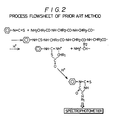
- the 5-thiazolinone amino acid derivatives are obtained by reacting phenyl isothiocyanate of the general formula (d) below with a protein or a peptide of the general formula (e) below to form phenylthiocarbamylprotein of the general formula (f) below, and reacting the phenylthiocarbamylprotein with an acid in an anhydrous condition according to the formula [III] below to effect cyclization and scission: wherein R1, R2 and R3 represent amino acid side chains.
- the method of the invention may enable the amino acid derivatives to be detected with a high degree of sensitivity. Also, smaller amounts of specimens may be used as compared with the amounts of specimens used in known methods. Thus, the method of the invention is of considerable industrial importance and value.
- the amino compound of the general formula (b) may be a radio-active iodine isotope labelled iodohistamine.
- the amino compound of the general formula (b) may be a fluorescent amino compound in the form of aminopyrene or aminofluorene.
- the phenylthiocarbamylamino acid derivatives are detected by using a gamma ray detector or a fluorescence spectrophotometer.
- amino acid side chains for R1, R2 and R3 are preferably hydrogen or hydrocarbon radicals.
- This Example demonstates a basic detection method wherein 5-thiazolinone derivatives of amino acids (herein after abbreviated to ATZ) were reacted with a radioactive iodine isotope labelled iodohistamine to form phenylthiocarbamylamino acid derivatives, and these phenylthiocarbamylamino acid derivatives were detected with a high level of sensitivity.
- ATZ 5-thiazolinone derivatives of amino acids
- a dipeptide (herein after abbreviated as Leu-Ala) consisting of leucine (herein after abbreviated as Leu) and alanine (herein after abbreviated as Ala) is used instead of a protein for simplicity.
- Leu-Ala dipeptide consisting of leucine (herein after abbreviated as Leu) and alanine (herein after abbreviated as Ala) is used instead of a protein for simplicity.
- Leu-Ala (202 mg) was dissolved in 50% aqueous pyridine, and the pH was adjusted to 8.6 by the addition of 2N sodium hydroxide (NaOH). Subsequently, phenylisothiocyanate was added thereto. The pH was kept at 8.6 by the addition of 2N sodium hydroxide because it was decreasing with the addition of the phenylisothiocyanate. After the variation in the pH had been decreased, the solution was heated at 40°C for one hour. After the reaction, the reaction solution was washed with benzene.
- 2N sodium hydroxide NaOH
- PITC-Leu-Ala 100 mg was dissolved in TFA (1 ml), and the solution was heated at 50°C for 5 minutes. After the reaction, the solution was completely evaporated to dryness. Butyl chloride was added to the residue to thoroughly dissolve the product in it, and the resulting solution was passed through a cellulose column (Ala was adsorbed on the column). The effluent was collected and evaporated to dryness. ATZ-Leu was obtained in the form of a white solid.
- the amino group of iodohistamine attacks the carbonyl group of ATZ amino acid to give a product.
- the reaction is the reverse of a reaction for cleaving the peptide bond between phenylisothiocyanate and the peptide.
- ⁇ and R are any known and suitable chemical parts, groups or radicals.
- R for example, may be amino acid side chains, e.g. hydrogen or hydrocarbon radicals, and ⁇ may be the phenyl radical.
- ATZ-Leu (70 mg) obtained from PITC-Leu-Ala was dissolved in 30% pyridine/dimethylformamide (20 ml), to which was then added I. histamine 2HCl (200 mg). The resulting mixture was heated with agitation at 50°C for one hour. The reaction solution was evaporated to dryness and the residue was dried to solid form and extracted with 1N sodium bicarbonate and ethyl acetate. The ethyl acetate phase was dried and evaporated to dryness. The residue was re-crystallised from benzene to obtain a product in the form of a white crystal.
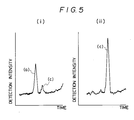
- FIG. 3 shows a high pressure liquid chromatography chart just after mixing.
- Figure 3 (ii) shows a high pressure liquid chromatography chart after heating at 50°C for thirty minutes.
- Figure 3 (iii) shows a high pressure liquid chromatography chart after heating at 50°C for one hour.
- the dipeptides and heptapeptide used were as follows: Leu-Gly, Pro-Phe, Phe-Ala, Met-Leu, Ser-Phe, Ile-Ser, Gly-Glu, Ala-Ala, Val-Glu, Gln-Gly and Tyr-Gly-Gly-Phe-Leu.
- Example 2 A similar method to that described in Example 1 was followed. Thus, each of the above peptides was reacted with phenylisothiocyanate to form a phenylthiopeptide, which was converted into a thiazolinone derivative by cyclization and scission by treatment with trifluoroacetic acid. The thiazolinone derivative was reacted with iodohistamine partially labelled with a radio-active isotope to form a phenylthiocarbamylamino acid derivative. A variety of the formed phenylthiocarbamylamino acid derivatives were passed through a thin layer chromatograpic column and then detected as clear exposed spots on an X-ray film after exposure for day and night. In the thin layer chromatography, a solvent system comprising benzene, methanol and tertbutyl alcohol in a volume ratio of 8:1:1 was used in development.
- a solvent system comprising benzene, methanol and
- radio-active substance is used in the main reaction. It is used only in the final step in the sequence determination method, so that the main reaction is quite the same as in the prior art.
- a radio-active substance is used in a special vessel in only the final modification reaction of a reaction product intermediate (ATZ) in each step and therefore the reaction itself does not differ at all from that in the prior art. Therefore, it is possible to perform the reaction without adversely affecting the reaction yield, while minimising radio-active contamination.
- This Example demonstrates how 5-thiazolinone derivatives of amino acids were reacted with a fluorescent amino compound (9-aminofluorene) to form phenylthiocarbamylamino acid derivatives, and the products were detected with high sensitivity.
- Example 2 A similar procedure to that described in Example 1 was followed until the step of obtaining thiazolinone derivatives.
- the thiazolinone derivative of leucine (herein after abbreviated as ATZ-Leu) was used.
- R is an amino acid side chain, e.g. a hydrogen or hydrocarbon radical.
- reaction was performed in the following way. To ATZ-Leu (70 mg, 0.21 mM) was added 9-aminofluorene (130 mg, 0.6 mM) dissolved in 30% pyridine-dimethylformamide, and the resulting mixture was reacted by heating at 50°C for one hour.
- this invention resides in reacting an iodine labelled or a fluorescent amino compound with a thiazolinone derivative of an amino acid to form a phenylthiocarbamyl derivative and detecting it with a high degree of sensitivity.
- a thiazolinone derivative of an amino acid to form a phenylthiocarbamyl derivative and detecting it with a high degree of sensitivity.
- iodohistamine or aminofluorene it is to be understood that other iodine labelled or fluorescent amino compounds can be used, and that this invention is not to be limited to the particular chemicals or compounds used in the Examples.
- PTC Phenylisothiocyanate
- TFA Trifluoroacetic acid
- LEU-GLY leucylglycine
- PRO-PHE prolylphenylalanine
- PHE-ALA phenylalanylalanine
- MET-LEU methionylleucine
- SER-PHE serylphenylalanine
- ILE-SER isoleucylserine
- GLY-GLU glycylglutamic acid
- VAL-GLU valylglutamic acid
- GLN-GLY glutaminylglycine
- TYR-GLY-GLY-PHE-LEU tyrosylglycylglycylphenylalanylleucine
Landscapes
- Health & Medical Sciences (AREA)
- Life Sciences & Earth Sciences (AREA)
- Engineering & Computer Science (AREA)
- Immunology (AREA)
- Chemical & Material Sciences (AREA)
- Molecular Biology (AREA)
- Hematology (AREA)
- Urology & Nephrology (AREA)
- Biomedical Technology (AREA)
- Physics & Mathematics (AREA)
- General Health & Medical Sciences (AREA)
- Medicinal Chemistry (AREA)
- Biochemistry (AREA)
- Analytical Chemistry (AREA)
- Pathology (AREA)
- General Physics & Mathematics (AREA)
- Cell Biology (AREA)
- Food Science & Technology (AREA)
- Microbiology (AREA)
- Biotechnology (AREA)
- Proteomics, Peptides & Aminoacids (AREA)
- Biophysics (AREA)
- Bioinformatics & Cheminformatics (AREA)
- Bioinformatics & Computational Biology (AREA)
- Organic Chemistry (AREA)
- Genetics & Genomics (AREA)
- Investigating Or Analysing Biological Materials (AREA)
- Peptides Or Proteins (AREA)
Applications Claiming Priority (2)
| Application Number | Priority Date | Filing Date | Title |
|---|---|---|---|
| JP105400/85 | 1985-05-17 | ||
| JP60105400A JPS61264264A (ja) | 1985-05-17 | 1985-05-17 | アミノ酸誘導体の高感度検出法 |
Publications (3)
| Publication Number | Publication Date |
|---|---|
| EP0202894A2 EP0202894A2 (en) | 1986-11-26 |
| EP0202894A3 EP0202894A3 (en) | 1988-09-14 |
| EP0202894B1 true EP0202894B1 (en) | 1992-02-19 |
Family
ID=14406579
Family Applications (1)
| Application Number | Title | Priority Date | Filing Date |
|---|---|---|---|
| EP86303763A Expired - Lifetime EP0202894B1 (en) | 1985-05-17 | 1986-05-16 | A method for detecting amino acid derivatives |
Country Status (4)
| Country | Link |
|---|---|
| US (1) | US4865994A (da) |
| EP (1) | EP0202894B1 (da) |
| JP (1) | JPS61264264A (da) |
| DE (1) | DE3683916D1 (da) |
Families Citing this family (7)
| Publication number | Priority date | Publication date | Assignee | Title |
|---|---|---|---|---|
| JPS61264264A (ja) * | 1985-05-17 | 1986-11-22 | Seiko Instr & Electronics Ltd | アミノ酸誘導体の高感度検出法 |
| JPS63196858A (ja) * | 1987-02-12 | 1988-08-15 | Seiko Instr & Electronics Ltd | アミノ酸誘導体の高感度検出法 |
| US5008205A (en) * | 1988-08-10 | 1991-04-16 | Hewlett-Packard Company | Method of facilitating detection of amino acid derivatives with enhanced sensitivity |
| JP2725731B2 (ja) * | 1991-02-28 | 1998-03-11 | 株式会社島津製作所 | 過剰蛍光試薬のクエンチング方法 |
| US5270213A (en) * | 1991-06-21 | 1993-12-14 | Porton Instruments, Inc. | Protein sequencing |
| EP0609450B1 (en) * | 1992-07-27 | 2000-03-15 | Seiko Instruments Inc. | Method for high-sensitivity detection of amino acid derivative |
| EP1060377A4 (en) * | 1998-03-02 | 2002-06-12 | Biotraces Inc | REAGENTS AND METHODS OF PROTEIN MICROSEQUEN AGE |
Family Cites Families (6)
| Publication number | Priority date | Publication date | Assignee | Title |
|---|---|---|---|---|
| US3645689A (en) * | 1970-04-09 | 1972-02-29 | Lkb Produkter Ab | Method and apparatus for analyzing proteins |
| US4065412A (en) * | 1976-05-07 | 1977-12-27 | Durrum Instrument Corporation | Peptide or protein sequencing method and apparatus |
| US4153416A (en) * | 1977-06-06 | 1979-05-08 | Bonner Alex G | Process and apparatus for pulse labelling protein material in the Edman degradation process |
| JPS55110955A (en) * | 1979-02-19 | 1980-08-27 | Yuki Gosei Yakuhin Kogyo Kk | Novel fluorescent estimation of phenylthiohydaniton amino acid |
| JPS57182145A (en) * | 1981-05-02 | 1982-11-09 | Asama Kasei Kk | Aminoacid fluorometry |
| JPS61264264A (ja) * | 1985-05-17 | 1986-11-22 | Seiko Instr & Electronics Ltd | アミノ酸誘導体の高感度検出法 |
-
1985
- 1985-05-17 JP JP60105400A patent/JPS61264264A/ja active Granted
-
1986
- 1986-05-16 EP EP86303763A patent/EP0202894B1/en not_active Expired - Lifetime
- 1986-05-16 DE DE8686303763T patent/DE3683916D1/de not_active Expired - Fee Related
-
1988
- 1988-04-19 US US07/185,324 patent/US4865994A/en not_active Expired - Lifetime
Also Published As
| Publication number | Publication date |
|---|---|
| US4865994A (en) | 1989-09-12 |
| EP0202894A2 (en) | 1986-11-26 |
| EP0202894A3 (en) | 1988-09-14 |
| DE3683916D1 (de) | 1992-03-26 |
| JPS61264264A (ja) | 1986-11-22 |
| JPH0575068B2 (da) | 1993-10-19 |
Similar Documents
| Publication | Publication Date | Title |
|---|---|---|
| Windridge et al. | 1-Hydroxybenzotriazole as a racemization-suppressing reagent for the incorporation of im-benzyl-L-histidine into peptides | |
| Meldal et al. | Direct visualization of enzyme inhibitors using a portion mixing inhibitor library containing a quenched fluorogenic peptide substrate. Part 1. Inhibitors for subtilisin Carlsberg | |
| Edman et al. | Sequence determination | |
| Swann et al. | Nonspecific protease‐catalyzed hydrolysis/synthesis of a mixture of peptides: Product diversity and ligand amplification by a molecular trap | |
| Diddens et al. | On the transport of tripeptide antibiotics in bacteria | |
| EP0573482B1 (en) | Compounds and methods for sequencing amino acids | |
| Valerio et al. | Synthesis of peptide analogues using the multipin peptide synthesis method | |
| EP0202894B1 (en) | A method for detecting amino acid derivatives | |
| Spare et al. | An optimised approach for continuous-flow solid-phase peptide synthesis utilising a rudimentary flow reactor | |
| US5534440A (en) | Compounds and methods for sequencing amino acids | |
| NOMOTO et al. | THE REVISED STRUCTUR&&&E OF CAPREOMYCIN | |
| DE69225764T2 (de) | Verfahren zur Spaltung von Acylthiohydantoinen und Anwendung davon zur C-terminalen Peptidsequenzierung | |
| EP0353361B1 (en) | A method for detecting amino acid derivatives | |
| KITADA et al. | New peptide models for studying racemization | |
| Bonora et al. | α‐Glutamyl oligopeptides: Preparation by the solid‐phase method | |
| Uma et al. | Conformations of dehydrophenylalanine containing peptides Nuclear Overhauser effect study of two acyclic tetrapeptides | |
| Miyano et al. | Micro‐scale sequence analysis from the N‐terminus of peptides using the fluorogenic edman reagent 4‐N, N‐dimethylamino‐1‐naphthyl isothiocyanate | |
| JPH07145148A (ja) | ポリメチン系化合物およびそれを用いる測定方法 | |
| Yu et al. | MALDI-MS determination of cyclic peptidomimetic sequences on single beads directed toward the generation of libraries | |
| US5783663A (en) | Peptide ligands for affinity purification of fibrinogen | |
| Sabatino et al. | Analytical methods for solid phase peptide synthesis | |
| EP0609450B1 (en) | Method for high-sensitivity detection of amino acid derivative | |
| Balse et al. | Evaluation of new base‐labile2‐(4‐nitrophenylsulfonyl) ethoxycarbonyl (Nsc)‐amino acids for solid‐phase peptide synthesis | |
| JP2879661B2 (ja) | タンパク質あるいはペプチドのアミノ酸配列を決定する方法 | |
| Tsugita et al. | Sensitization of amino acid derivatives obtained from Edman degradation with radioactively-labeled iodohistamine |
Legal Events
| Date | Code | Title | Description |
|---|---|---|---|
| PUAI | Public reference made under article 153(3) epc to a published international application that has entered the european phase |
Free format text: ORIGINAL CODE: 0009012 |
|
| AK | Designated contracting states |
Kind code of ref document: A2 Designated state(s): DE FR GB |
|
| RAP1 | Party data changed (applicant data changed or rights of an application transferred) |
Owner name: SEIKO INSTRUMENTS INC. |
|
| PUAL | Search report despatched |
Free format text: ORIGINAL CODE: 0009013 |
|
| AK | Designated contracting states |
Kind code of ref document: A3 Designated state(s): DE FR GB |
|
| 17P | Request for examination filed |
Effective date: 19890216 |
|
| 17Q | First examination report despatched |
Effective date: 19901001 |
|
| GRAA | (expected) grant |
Free format text: ORIGINAL CODE: 0009210 |
|
| AK | Designated contracting states |
Kind code of ref document: B1 Designated state(s): DE FR GB |
|
| REF | Corresponds to: |
Ref document number: 3683916 Country of ref document: DE Date of ref document: 19920326 |
|
| ET | Fr: translation filed | ||
| PGFP | Annual fee paid to national office [announced via postgrant information from national office to epo] |
Ref country code: GB Payment date: 19920518 Year of fee payment: 7 |
|
| PGFP | Annual fee paid to national office [announced via postgrant information from national office to epo] |
Ref country code: FR Payment date: 19920522 Year of fee payment: 7 |
|
| PGFP | Annual fee paid to national office [announced via postgrant information from national office to epo] |
Ref country code: DE Payment date: 19920610 Year of fee payment: 7 |
|
| PLBE | No opposition filed within time limit |
Free format text: ORIGINAL CODE: 0009261 |
|
| STAA | Information on the status of an ep patent application or granted ep patent |
Free format text: STATUS: NO OPPOSITION FILED WITHIN TIME LIMIT |
|
| 26N | No opposition filed | ||
| PG25 | Lapsed in a contracting state [announced via postgrant information from national office to epo] |
Ref country code: GB Effective date: 19930516 |
|
| GBPC | Gb: european patent ceased through non-payment of renewal fee |
Effective date: 19930516 |
|
| PG25 | Lapsed in a contracting state [announced via postgrant information from national office to epo] |
Ref country code: FR Effective date: 19940131 |
|
| PG25 | Lapsed in a contracting state [announced via postgrant information from national office to epo] |
Ref country code: DE Effective date: 19940201 |
|
| REG | Reference to a national code |
Ref country code: FR Ref legal event code: ST |