EP0194591A2 - Verfahren zur Herstellung von 2-Alkyl-cyclopentanonen - Google Patents
Verfahren zur Herstellung von 2-Alkyl-cyclopentanonen Download PDFInfo
- Publication number
- EP0194591A2 EP0194591A2 EP86102996A EP86102996A EP0194591A2 EP 0194591 A2 EP0194591 A2 EP 0194591A2 EP 86102996 A EP86102996 A EP 86102996A EP 86102996 A EP86102996 A EP 86102996A EP 0194591 A2 EP0194591 A2 EP 0194591A2
- Authority
- EP
- European Patent Office
- Prior art keywords
- hydrogen
- cyclopentanone
- catalyst
- general formula
- autoclave
- Prior art date
- Legal status (The legal status is an assumption and is not a legal conclusion. Google has not performed a legal analysis and makes no representation as to the accuracy of the status listed.)
- Granted
Links
- 0 C[C@](*)(*1*)C(*)(*)CC1=O Chemical compound C[C@](*)(*1*)C(*)(*)CC1=O 0.000 description 1
Classifications
-
- C—CHEMISTRY; METALLURGY
- C07—ORGANIC CHEMISTRY
- C07C—ACYCLIC OR CARBOCYCLIC COMPOUNDS
- C07C49/00—Ketones; Ketenes; Dimeric ketenes; Ketonic chelates
- C07C49/385—Saturated compounds containing a keto group being part of a ring
- C07C49/395—Saturated compounds containing a keto group being part of a ring of a five-membered ring
-
- C—CHEMISTRY; METALLURGY
- C07—ORGANIC CHEMISTRY
- C07C—ACYCLIC OR CARBOCYCLIC COMPOUNDS
- C07C45/00—Preparation of compounds having >C = O groups bound only to carbon or hydrogen atoms; Preparation of chelates of such compounds
- C07C45/61—Preparation of compounds having >C = O groups bound only to carbon or hydrogen atoms; Preparation of chelates of such compounds by reactions not involving the formation of >C = O groups
- C07C45/67—Preparation of compounds having >C = O groups bound only to carbon or hydrogen atoms; Preparation of chelates of such compounds by reactions not involving the formation of >C = O groups by isomerisation; by change of size of the carbon skeleton
- C07C45/68—Preparation of compounds having >C = O groups bound only to carbon or hydrogen atoms; Preparation of chelates of such compounds by reactions not involving the formation of >C = O groups by isomerisation; by change of size of the carbon skeleton by increase in the number of carbon atoms
- C07C45/72—Preparation of compounds having >C = O groups bound only to carbon or hydrogen atoms; Preparation of chelates of such compounds by reactions not involving the formation of >C = O groups by isomerisation; by change of size of the carbon skeleton by increase in the number of carbon atoms by reaction of compounds containing >C = O groups with the same or other compounds containing >C = O groups
- C07C45/73—Preparation of compounds having >C = O groups bound only to carbon or hydrogen atoms; Preparation of chelates of such compounds by reactions not involving the formation of >C = O groups by isomerisation; by change of size of the carbon skeleton by increase in the number of carbon atoms by reaction of compounds containing >C = O groups with the same or other compounds containing >C = O groups combined with hydrogenation
Definitions
- the present invention relates to a process for the preparation of cyclo-pentanones monoalkylated in the a-position which is significantly improved over the prior art.
- alkylation of cyclopentanone with alkyl halides in the presence of bases is also known.
- Gupta et. al cf. J. Indian Chem. Soc. 30 (1953), pages 23 to 25
- alkylation of cyclopentanone with alkyl bromides e.g. Heptyl bromide
- the 2-heptyl-cyclopentanone obtained could not be isolated as a result of numerous by-products.
- the enamine obtained was refluxed in a second stage with an aldehyde for 12 hours in benzene as solvent under reflux.
- the cooled solution was then acidified with dilute hydrochloric acid, stirred for 1 hour, extracted with benzene, the benzene extract washed with water, all of the benzene distilled off and the residue fractionated.
- the alkylidene cyclopentanones were thus obtained in a yield of 40 to 75%.
- akylidene compounds were then hydrogenated to the a-alkyl-cyclopentanones in the presence of a hydrogenation catalyst.
- the disadvantage of this process is that it consists of three sometimes very lengthy process steps and that it only gives medium yields.
- a production process with the use of amines is not very recommendable, since the alkylated cyclopentanones are largely used as fragrances and because the olfactory properties are therefore subject to the highest demands.
- Components on the one hand contain an oxide or a phosphate of magnesium, aluminum, titanium, zinc or one of the rare earth metals and on the other hand contain a noble metal from group VIII of the periodic table, preferably palladium.
- the process is particularly advantageous if the reaction is carried out under a hydrogen pressure of from 1 to about 300, preferably from 10 to about 100, in particular from 10 to 50, bar.
- the process is very advantageous if the reaction is carried out in the absence of substantial amounts of a solvent, since the space-time yields are thereby substantially improved and the workup is facilitated without loss of yield.
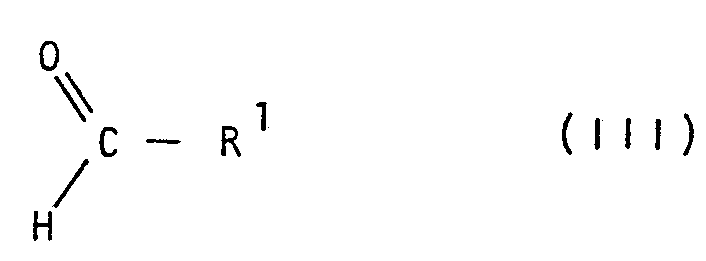
- the process according to the invention is generally carried out in an autoclave in such a way that all components, i.e. submit the cyclopentanone of the formula II or the corresponding cyclopentenone, the aldehyde of the formula III and the heterogeneous catalyst, close the autoclave and then flush first with nitrogen and then with hydrogen. The mixture is then heated to the reaction temperature while injecting hydrogen.
- the autoclave After the reaction is complete, the autoclave is cooled, let down and the discharge is sucked out through a filter and thus separated from the catalyst.
- the catalyst can be flushed back into the autoclave with new starting materials for the next batch using the same filters.
- the catalyst can also be left in the autoclave using an appropriately long riser pipe with a frit to discharge the liquid phase.
- the catalyst can be used several times.
- the liquid reactor discharge obtained only needs to be distilled off. If necessary, the water of reaction formed can be separated off as the lower phase before the distillation.
- the catalyst can also be used as a carrier catalyst, e.g. in the form of spheres or strands, install them firmly in a reactor column and continuously pass the mixture of cyclopentanone or pentenone and aldehyde over the catalyst under the conditions according to the invention.
- the catalyst according to the invention is, in principle, a catalyst system consisting of two components.
- the oxides or phosphates of magnesium, aluminum, titanium, zinc and one of the rare earths, such as praseodymium oxide (Pr 4 0 6 ), are suitable for this step.
- the oxides of aluminum have proven to be particularly suitable and advantageous.
- the catalyst contains a noble metal from group VIII of the periodic table, in particular palladium.
- the other precious metals - platinum, ruthenium, rhodium, iridium and osmium - are also suitable, but are generally less suitable for economic reasons.
- the catalyst can be present both in the form of a mixture of the condensation catalyst, such as A1 2 0 3 , and the hydrogenation catalyst, such as palladium on activated carbon, and in the form of a uniform catalyst, for example one containing palladium on A1 2 0 3 .
- the condensation catalyst such as A1 2 0 3
- the hydrogenation catalyst such as palladium on activated carbon
- a uniform catalyst for example one containing palladium on A1 2 0 3 .
- the only thing that is essential is the simultaneous presence of both catalyst components.
- the noble metal content is generally between 0.1 and 5% by weight. Preference is given to catalysts which contain palladium as noble metal with a content of 0.5 to 1 /, based on the amount of catalyst used.
- Suspension catalysts are used for discontinuous operation. If the reaction is carried out continuously in a reactor column, preference is given to using supported catalysts on which the noble metal, e.g. the palladium is applied. You can use the carrier material. which consists of the condensation component, impregnated with an aqueous solution containing a palladium salt such as palladium nitrate.
- the palladium metal then forms automatically under the hydrogenating conditions, but the catalyst can also be subjected to a separate hydrogenation for this purpose.
- the catalyst used in the continuous mode of operation can be used in the form of tablets, granules, spheres or extrudates; in the case of a batchwise mode of operation, the powder form is often used.
- the corresponding cyclopentenones such as 3-methyl-cyclopent-2-enone
- the double bond present also being hydrogenated under the reaction conditions, such as the double bond formed in the condensation.
- the double bond can be in any position; in this case R 2 or R 2 and R 4 or R 4 and R 6 represent the proportion of a double bond.
- the straight-chain unsubstituted aldehydes such as propanal, butanal, pentanal, hexanal, heptanal, octanal, nonanal, decanal, undecanal and dodecanal, as well as various branched and substituted ones, for example the 2-methyl-propanal, 2- Methyl-butanal, 2-methyl-pentanal, 2-methyl-hexanal, 2-methyl-heptanal, 2-methyl-octanal, 2-methyl-nonanal, 2-methyl decanal, 2-methyl-undecanal, 3-methyl- Use butanal and 3-methyl-pentanal.
- aldehydes such as propanal, butanal, pentanal, hexanal, heptanal, octanal, nonanal, decanal, undecanal and dodecanal, as well as various branched and substituted ones, for example the 2-methyl-propanal, 2- Methyl
- the molar ratio of cyclopentanone to aldehyde can be 1 to 1, but an excess of the cheaper reactant is preferably used, as a result of which the selectivity, based on the more expensive reactant, can be increased considerably.
- a solvent such as methanol, ethanol or propanol can also be used.
- the reaction temperature for the process according to the invention depends on the starting components and the type and amount of the catalyst used. It can fluctuate between 80 and 280 ° C; when using large amounts of catalyst, it can also be below 80 ° C.
- the preferred temperature range for an economical process is between 100 and 200 ° C.
- the amount of catalyst used varies depending on the reactivity of aldehyde and cyclopentanone derivative. Amounts of 3 to 8% by weight, based on the sum of the starting compounds, are preferably used.
- the hydrogen pressure can also be varied within wide limits and depends on the content of the noble metal used.
- a catalyst which is frequently used and which contains 0.5% by weight of palladium on aluminum oxide see Example 1
- hydrogen pressures between 40 and 50 bar are sufficient.
- a catalyst with a higher palladium content or when using larger amounts of the above 0.5 1 Pd / A1 2 0 3 catalyst lower hydrogen pressures are sufficient.
- unsubstituted cyclopentanones or the corresponding cyclopentenones with many aliphatic aldehydes in the ⁇ -position to the keto group can be converted in a simple one-step reaction with virtually complete conversion in high selectivity to the desired ⁇ -monoalkylated cyclopentanones.
- the process according to the invention is not only distinguished by better yields and better space / time yields, but also by its environmental friendliness, since no auxiliary bases or salts are used, but only in the presence of a heterogeneous catalyst, and therefore no saline waste water is obtained.
- a technically particularly important product of the new process according to the invention is 2-heptyl-cyclopentanone, which is an important jasmine fragrance.
- 2-heptyl-cyclopentanone which is an important jasmine fragrance.
- cyclopentanones are also suitable as fragrances (cf. Perfumer and Flavorist 8 (1983), April / May issue, pages 68 to 74).
- a mixture of 1000 ml (930 g; 11 mol) of cyclopentanone, 500 ml (425 g, 3.7 mol) of n-heptanal and 70 g of a powdery catalyst containing 0.5% by weight of palladium on aluminum oxide was placed in an autoclave. After flushing with nitrogen and hydrogen, a hydrogen pressure of 10 bar was applied at 25 ° C. and then heated to 110 ° C. for 3 hours (h) at a hydrogen pressure of 35 bar and finally at a pressure of 50 bar to 160 ° C., for which purpose about 10 hours were required. After the catalyst had been separated off, the reactor discharge was fractionated directly.
- Example 1 Analogously to Example 1, a mixture of 1008 g (12 mol) of cyclopentanone, 800 g (8 mol) of n-hexanal and 80 g of a 0.5 wt 70 bar hydrogen pressure hydrogenated to constant pressure (approx. 15 h). After the catalyst had been separated off, the reactor discharge was distilled directly. 294 g (3.5 mol) of cyclopentanone were recovered as fraction 1. The main fraction obtained 1103 g of pure 2-hexyl-cyclopentanone (bp. 84 ° C / 0.35 mbar), which corresponds to a selectivity of 82 Z based on n-hexanal. As in Example 1, the molar ratio of cyclopentanone to hexanal was increased to 3: 1. the selectivity rose to over 90% as in the case of 2-heptyl-cyclopentanone.
Landscapes
- Chemical & Material Sciences (AREA)
- Organic Chemistry (AREA)
- Chemical Kinetics & Catalysis (AREA)
- Organic Low-Molecular-Weight Compounds And Preparation Thereof (AREA)
- Catalysts (AREA)
- Low-Molecular Organic Synthesis Reactions Using Catalysts (AREA)
Abstract

- R' für eine verzweigte oder unverzweigte aliphatische Gruppe mit 2 bis 12 C-Atomen bedeutet und die
- Reste R2 bis R7 gleich oder verschieden sein können und für Wasserstoff oder einen Alkylrest mit 1 bis 5 C-Atomen stehen, das dadurch gekennzeichnet ist, daß man ein Cyclopentanon der allgemeinen Formel II

Description
- Die vorliegende Erfindung betrifft ein gegenüber dem Stand der Technik wesentlich verbessertes Verfahren zur Herstellung von in a-Stellung monoalkylierten Cyclopentanonen.
- Die Einführung von Alkylgruppen in α-stellung des Cyclopentanon-Grundgerüstes ist an sich bekannt.
- So wird beispielsweise von M. Hajak et. al. (vgl. Synthesis 1976, Seiten 315 bis 318) ein Syntheseweg beschritten, bei dem Cyclopentanon mit 1-Alkenen, wie 1-Octen, in Gegenwart von Blei(IV)oxid, Mangan-(IV)-oxid oder Kupferoxid und geringen Mengen an Essigsäure zu α-alkylierten Cyclopentanonen wie 2-Octyl-cyclopentanon umgesetzt wird. Die bei diesem Verfahren erzielten Ausbeuten schwankten laut Angaben der Autoren zwischen 64 und 77 %. 1
- Nach einem prinzipiell gleichen Verfahren erhielten S. D. Mekhtiev et. al. (vgl. Azerb. Neft. Khoz. 9 (1975), Seiten 69 bis 79) bei der Umsetzung von Cyclopentanon mit 1-Hepten, trotz Optimierung das 2-Heptyl-cyclopentanon nur in Ausbeuten von 53 % der Theorie.
- Weiterhin ist die Alkylierung von Cyclopentanon mit Alkylhalogeniden in Gegenwart von Basen bekannt. So beschreiben Gupta et. al (vgl. J. Indian Chem. Soc. 30 (1953), Seiten 23 bis 25) die Alkylierung von Cyclopentanon mit Alkylbromiden, z.B. Heptylbromid, in Gegenwart von Natriumamid. Hierbei konnte jedoch das erhaltene 2-Heptyl-cyclopentanon infolge von zahlreichen Nebenprodukten nicht rein isoliert werden.
- Das Problem einer Mehrfachalkylierung umging K. Takahashi (vgl. Chem. Pharm. Bull. 20 (1972), Seiten 197 bis 201) dadurch, daß er das Cylopentanon zunächst mit Morpholin in Gegenwart von p-Toluolsulfonsäure in Benzol als Lösungsmittel durch Entfernung des Reaktionswassers in das Enamin überführte, welches dann mit Alkenylbromiden in 46 bis 59 ligen Ausbeuten zu den entsprechenden Alkenylcyclopentanonen umgesetzt wurde. In einer dritten Stufe mußten dann die ungesättigten Verbindungen in Gegenwart eines Katalysators zu den Alkylcyclopentanonen hydriert werden. Nachteilig an diesem Verfahren ist, daß drei Verfahrensschritte benötigt werden und die Ausbeuten zu wünschen übrig lassen.
- Auch bei dem Verfahren von A. Jjima und K. Takahashi (vgl. Chem. Pharm. Bull. 21 (1973), S. 215 bis 219) ging man den Umweg über das aus Cyclopentanon und Morpholin erhältliche Enamin.
- Rr/P Hierbei mußten Cyclopentanon und Morpholin in Gegenwart von p-Toluolsulfonsäure in Benzol zunächst 12 Stunden zum Sieden erhitzt werden, um das Reaktionswasser abzutrennen. Danach wurde mit verdünnter Salzsäure eine Stunde gerührt, anschließend wurden die Phasen getrennt, die wäßrige Phase noch einmal mit Benzol extrahiert, dann die vereinigten Benzolphasen mit 5 Ziger NaHC03-Lösung und Wasser gewaschen, das Benzol abdestilliert und der Rückstand fraktioniert.
- Das erhaltene Enamin wurde in einer zweiten Stufe mit einem Aldehyd erneut 12 Stunden in Benzol als Lösungsmittel unter Rückfluß zum Sieden erhitzt. Die abgekühlte Lösung wurde dann mit verdünnter Salzsäure angesäuert, 1 Stunde lang gerührt, mit Benzol extrahiert, der benzolische Extrakt mit Wasser gewaschen, das gesamte Benzol abdestilliert und der Rückstand fraktioniert. Die Alkylidencyclopentanone wurden so in einer Ausbeute von 40 bis 75 % erhalten.
- In einer dritten Stufe wurden die Akylidenverbindungen dann in Gegenwart eines Hydrierkatalysators zu den a-Alkyl-cyclopentanonen hydriert. Nachteilig an diesem Verfahren ist, daß es aus drei zum Teil recht langwierigen Verfahrensschritten besteht sowie daß es nur mittlere Ausbeuten ergibt. Außerdem ist ein Herstellungsverfahren unter Mitverwendung von Aminen schon deshalb nicht sehr empfehlenswert, da die alkylierten Cyclopentanone zum großen Teil als Riechstoffe verwendet werden und da deshalb an ihre olfaktorischen Eigenschaften höchste Ansprüche gestellt werden.
- Weiterhin ist die direkte Umsetzung von Cyclopentanon mit Aldehyden in Gegenwart von basischen Katalyatoren bekannt (vgl. DRP 633 595 von 19331.
- Die nach diesem Verfahren erzielten Ausbeuten liegen zwischen 23,3 und 45,2 /. Als hauptsächliche Nebenprodukte traten - wie schon u.a. von Vorländer in Chem. Ber. 29 (1896), S. 1836 lange vorher beschrieben - die mit zwei Molekülen Aldehyd kondensierten Cyclopentanone auf. Bei der anschließenden katalytischen Hydrierung wurden dann zwar Ausbeuten von 90 bis 95 1 an a-Alkyl-cyclopentanonen erzielt, jedoch kann bei dem Gesamtverfahren nicht von einem wirtschaftlichen Verfahren die Rede sein.
- Es war daher die Aufgabe der Erfindung, ein wirtschaftlicheres Verfahren für die Herstellung der als Riechstoffe begehrten 2-Akyl-cyclopentanone zu finden, das die Nachteile der bekannten Verfahren nicht aufweist, d.h. mit dessen Hilfe man die 2-Alkyl-cyclopentanone in einem einfachen einstufigen Verfahren mit guten Ausbeuten herstellen kann.
- Es wurde nun überraschenderweise gefunden, daß sich in α-Stellung zur Ketogruppe unsubstituierte Cyclopentanone mit vielen aliphatischen Aldehyden unter praktisch vollständigem Umsatz in hoher Selektivität in einer Einstufenreaktion zu den gewünschten a-monoalkylierten Cyclopentanonen umsetzen lassen, wenn man die Reaktionspartner bei Temperaturen zwischen 80 und 280°C in Gegenwart von Wasserstoff in einem Autoklaven an einem Katalysator umsetzt, der eine Komponente zur katalytischen Kondensation und eine zweite Komponente zur katalytischen Hydrierung enthält.
- Gegenstand der Erfindung ist dementsprechend ein Verfahren zur Herstellung von in 2-Stellung monoalkylierten Cyclopentanonen der allgemeinen Formel I

- RI für eine verzweigte oder unverzweigte aliphatische Gruppen mit 2 bis 12, vorzugsweise 4 bis 8 C-Atomen, bedeutet
- und die Reste R2 bis R7 gleich oder verschieden sein können und für Wasserstoff oder einen Alkylrest mit 1 bis 5 C-Atomen, vorzugsweise für Wasserstoff oder eine Methylgruppe stehen, das dadurch gekennzeichnet ist, daß man ein Cyclopentanon der allgemeinen Formel II


- Bestandteile einerseits ein Oxid oder ein Phosphat des Magnesiums, Aluminiums, Titans, Zinks oder eines der Seltenen Erdmetalle und andererseits ein Edelmetall der Gruppe VIII des Periodensystems, vorzugsweise Palladium, enthält.
- Mit besonderem Vorteil gelingt das Verfahren wenn man die Umsetzung unter einem Wasserstoffdruck von 1 bis etwa 300, vorzugsweise 10 bis etwa 100 bar, insbesondere 10 bis 50 bar durchführt.
- Sehr vorteilhaft gestaltet sich das Verfahren, wenn man die Umsetzung in Abwesenheit wesentlicher Mengen eines Lösungsmittels durchführt, da hierdurch ohne Ausbeuteverlust die Raum-Zeit-Ausbeuten wesentlich verbessert und die Aufarbeitung erleichtert werden.
- Die hohen Selektivitäten des neuen Verfahrens werden selbst dann erzielt, wenn die Reste R6 und R7 gleich Wasserstoff sind, d.h. wenn α,α'-unsubstituierte Cyclopentanone eingesetzt werden.
- Die erzielten Selektivitäten sind insofern überraschend, als unter den angewandten Reaktionsbedingungen sowohl Eigenkondensation des Cyclopentanons, als auch Eigenkondensation der eingesetzten Aldehyde und Mehrfach-Heteroaldolkondensationen (1 Molekül 2-Alkyl-cyclopentanon mit einem weiteren Molekül Aldehyd zu 2,5-Dialkyl-cyclopentanonen) hätten eintreten können.
- Wie aus den folgenden Beispielen hervorgeht, finden bei der erfindungsgemäßen Umsetzung die oben erwähnten Nebenreaktionen praktisch nicht statt.
- Das erfindungsgemäße Verfahren wird in einem Autoklaven im allgemeinen derart durchgeführt, daß man alle Komponenten, d.h. das Cyclopentanon der Formel II oder das entsprechende Cyclopentenon, den Aldehyd der Formel III und den heterogenen Katalysator vorlegt, den Autoklaven verschließt und dann zunächst mit Stickstoff und danach mit Wasserstoff spült. Anschließend wird dann unter Aufpressen von Wasserstoff auf die Reaktionstemperatur erhitzt.
- Mit besonderem Vorteil arbeitet man so, daß man in den Autoklaven nach dem Spülen mit Wasserstoff einen Wasserstoffdruck von 2 bis 20 bar aufpreßt, anschließend die Temperatur erhöht und bei Erreichen der Umsetzungstemperatur den Wasserstoffdruck auf 40 bis 50 bar erhöht. Hierbei finden sowohl die Aldolkondensation als auch die anschließende Hydrierung in einem Schritt statt, wobei der verbrauchte Wasserstoff laufend nachgepreßt wird.
- Nach Abschluß der Reaktion wird der Autoklav abgekühlt, entspannt und der Austrag über Filter herausgesaugt und so vom Katalysator abgetrennt. Durch die gleichen Filter kann der Katalysator für den nächsten Ansatz mit neuen Ausgangsstoffen in den Autoklaven zurückgespült werden. Alternativ kann man den Katalysator auch gleich im Autoklaven belassen, indem man ein entsprechend langes Steigrohr mit Fritte zum Austragen der flüssigen Phase benutzt. Der Katalysator läßt sich mehrfach einsetzen. Der erhaltene flüssige Reaktoraustrag braucht nur aufdestilliert zu werden. Gegebenenfalls kann man das entstandene Reaktionswasser vor der Destillation als untere Phase abtrennen.
- Diese beschriebene sogenannte Batch-Fahrweise ist für Umsetzungen im _ kleineren technischen Maßstab geeignet. Für eine großtechnische Herstellung kann man den Katalysator jedoch auch als Tragerkatalysator, z.B. in Form von Kugeln oder Strängen, in eine Reaktorsäule fest einbauen und das Gemisch aus Cyclopentanon oder -pentenon und Aldehyd unter den erfindungsgemäßen Bedingungen kontinuierlich über den Katalysator führen.
- Der erfindungsgemäße Katalysator stellt - wie bereits oben erwähnt - ein Katalysatorsystem aus prinzipiell zwei Komponenten dar.
- Die eine Komponente dient dem Kondensationsschritt. Geeignet für diesen Schritt sind die Oxide oder Phosphate des Magnesiums, Aluminiums, Titans, Zinks sowie eines der seltenen Erden, wie Praseodymoxid (Pr406). Als besonders geeignet und vorteilhaft haben sich die Oxide des Aluminiums erwiesen.
- Als zweite Komponente enthält der Katalysator ein Edelmetall der VIII. Gruppe des Periodensystems, insbesondere Palladium.
- Die übrigen Edelmetalle - Platin, Ruthenium, Rhodium, Iridium und Osmium - sind ebenfalls geeignet, kommen aber aus wirtschaftlichen Gründen in der Regel weniger in Betracht.
- Der Katalysator kann sowohl in Form eines Gemisches aus dem Kondensationskatalysator, wie z.B. A1203, und dem Hydrierkatalysator, wie Palladium auf Aktivkohle, als auch in Form eines einheitlichen Katalysators, beispielsweise einem der Palladium auf A1203 enthält, vorliegen. Wesentlich ist nur die gleichzeitige Anwesenheit beider KatalysatorKomponenten.
- Der Gehalt an Edelmetall liegt im allgemeinen zwischen 0,1 und 5 Gew.7.. Bevorzugt werden Katalysatoren, die Palladium als Edelmetall mit einem Gehalt von 0,5 bis 1 /, bezogen auf die eingesetzte Katalysatormenge, enthalten.
- Bei diskontinuierlicher Fahrweise werden Suspensionskatalysatoren eingesetzt. Führt man die Reaktion kontinuierlich in einer Reaktorsäule durch, so verwendet man vorzugsweise Trägerkatalysatoren, auf welche das Edelmetall, z.B. das Palladium aufgebracht wird. Dabei kann man das Trägermaterial. das aus der Kondensationskomponente besteht, mit einer wäßrigen Lösung, die ein Palladiumsalz wie Palladiumnitrat enthält, imprägnieren.
- Der Palladium-Metall bildet sich dann unter den hydrierenden Bedingungen von selber, jedoch kann man auch den Katalysator zu diesem Zwecke einer gesonderten Hydrierung unterwerfen. Der bei kontinuierlicher Fahrweise eingesetzte Katalysator kann in Form von Tabletten, Granulaten, Kugeln oder Strängen eingesetzt werden, bei diskontinuierlicher Fahrweise verwendet man häufig die Pulverform.
- Als Cyclopentanone der allgemeinen Formel II kommen beispielsweise in Betracht:
- Cyclopentanon, 3-Methyl-cyclopentanon, 2-Methyl-cyclopentanon, 3,4-Dimethyl-cyclopentanon, 2,4-Dimethyl-cyclopentanon, 2,3-Dimethyl-cyclopentanon, 2,3,4-Trimethyl-cyclopentanon, 2,2,4-Trimethyl-cyclopentanon, 2,2,3-Trimethyl-cyclopentanon und 2.2,4-Trimethyl-cyclopentanon. Bevorzugt wird Cyclopentanon eingesetzt, da dessen erfindungsgemäß erhältliche Derivate besonders große Bedeutung haben.
- Es lassen sich aber auch die entsprechenden Cyclopentenone, wie das 3-Methyl-cyclopent-2-enon einsetzen, wobei auch die vorhandene Doppelbindung, unter den Reaktionsbedingungen, wie die bei der Kondensation entstehende Doppelbindung hydriert wird. Die Doppelbindung kann sich in beliebiger Stellung befinden; in diesem Fall bedeuten R2 bzw. R2 und R4 bzw. R4 und R6 den Anteil einer Doppelbindung.
- Als Aldehyde der Formel III lassen sich sowohl die geradkettigen unsubstituierten Aldehyde wie Propanal, Butanal, Pentanal, Hexanal, Heptanal, Octanal, Nonanal, Decanal, Undecanal und Dodecanal als auch verschiedene verzweigte und substituierte einsetzen, z.B. das 2-Methyl-propanal, 2-Methyl-butanal, 2-Methyl-pentanal, 2-Methyl-hexanal, 2-Methyl-heptanal, 2-Methyl-octanal, 2-Methyl-nonanal, 2-Methyl-decanal, 2-Methyl-undecanal, 3-Methyl-butanal und 3-Methyl-pentanal einsetzen.
- Das Mol-Verhältnis von Cyclopentanon zu Aldehyd kann bei 1 zu 1 liegen, bevorzugt wird jedoch ein Überschuß des billigeren Reaktionspartners verwendet, wodurch sich die Selektivität, bezogen auf den teureren Reaktionspartner noch erheblich erhöhen läßt.
- Vorteilhaft ist es, die Reaktion ohne Lösungsmittel durchzuführen. Man kann jedoch auch ein Lösungsmittel wie Methanol, Ethanol oder Propanol einsetzen.
- Die Reaktionstemperatur für das erfindungsgemäße Verfahren hängt von den Ausgangskomponenten sowie der Art und Menge des eingesetzten Katalysators ab. Sie kann zwischen 80 und 280°C schwanken; bei Verwendung von hoher Katalysatormengen kann sie auch unter 80°C liegen. Der bevorzugte Temperaturbereich für ein wirtschaftliches Verfahren liegt zwischen 100 und 200°C. Die dabei eingesetzte Menge an Katalysator variiert je nach Reaktivität von Aldehyd und Cyclopentanon-Derivat. Vorzugsweise werden Mengen von 3 bis 8 Gew.%, bezogen auf die Summe der Ausgangsverbindungen verwendet.
- Auch der Wasserstoffdruck kann in weiten Grenzen variiert werden und ist abhängig vom Gehalt des eingesetzten Edelmetalles. Bei Verwendung eines häufig eingesetzten Katalysators, der 0,5 Gew.X Palladium auf Aluminiumoxid enthält (siehe Beispiel 1) sind bei Einsatz von 5 Gew.X an Katalysator Wasserstoffdrücke zwischen 40 und 50 bar ausreichend. Bei Benutzung eines Katalysators mit einem höheren Palladiumgehalt bzw. bei Anwendung von größeren Mengen des obigen 0,5 1 Pd/A1203-Katalysators genügen geringere Wasserstoffdrücke.
- Mit Hilfe des erfindungsgemäßen Verfahrens gelingt es in α-Stellung zur Ketogruppe unsubstituierte Cyclopentanone oder die entsprechenden Cyclopentenone mit vielen aliphatischen Aldehyden in einer einfachen Einstufenreaktion unter praktisch vollständigem Umsatz in hoher Selektivität zu den begehrten α-monoalkylierten Cyclopentanonen umzusetzen. Das erfindungsgemäße Verfahren zeichnet sich aber nicht nur durch bessere Ausbeuten und bessere Raum/Zeit-Ausbeuten aus, sondern zusätzlich durch seine Umweltfreundlicheit, da ohne Hilfsbasen oder Salze nur in Gegenwart eines heterogenen Katalysators gearbeitet wird, und somit keine salzhaltigen Abwässer anfallen.
- Ein technisch besonders bedeutendes Produkt des neuen erfindungsgemäßen Verfahrens ist 2-Heptyl-cyclopentanon, das ein wichtiger Jasminriechstoff ist. Aber auch eine Vielzahl weiterer 2-substituierter Cyclopentanone ist als Riechstoff geeignet (vgl. Perfumer and Flavorist 8 (1983), Heft April/Mai, Seiten 68 bis 74).
- In einem Autoklaven wurde eine Mischung aus 1000 ml (930 g; 11 mol) Cyclopentanon, 500 ml (425 g, 3,7 mol) n-Heptanal und 70 g eines 0,5 Gew.Z Palladium auf Aluminiumoxid enthaltenden pulverförmigen Katalysators vorgelegt. Nach Spülen mit Stickstoff und Wasserstoff wurde bei 25°C 10 bar Wasserstoffdruck aufgepreßt und danach 3 Stunden (h) bei einem Wasserstoffdruck von 35 bar auf 110°C und schließlich bei einem Wasserstoffdruck von 50 bar bis zur Druckkonstanz auf 160°C erhitzt, wozu ca. 10 h erforderlich waren. Nach Abtrennen des Katalysators wurde der Reaktoraustrag direkt fraktioniert.
- Nach Abdestillieren des Vorlaufs (605 g Cyclopentanon bei Kp. 130°C und 5 g einer Zwischenfraktion) wurden 633 g (3,48 mol) an reinem 2-Heptyl-cyclopentanon erhalten (Kp. 930C/1 mbar), was einer Selektivität von 94 1, bezogen auf n-Heptanal, bedeutet. Die Selektivität bezüglich Cyclopentanon betrug 92 %.
- Analog Beispiel 1 wurde in einem Autoklaven eine Mischung aus 1008 g (12 mol) Cyclopentanon, 800 g (8 mol) n-Hexanal und 80 g eines 0,5 Gew.% Palladium auf δ-Aluminiumoxid enthaltenden pulverförmigen Katalysators bei 140°C und 70 bar Wasserstoffdruck bis zur Druckkonstanz hydriert (ca. 15 h). Nach Abtrennen des Katalysators wurde der Reaktoraustrag direkt aufdestilliert. 294 g (3,5 mol) Cyclopentanon wurde dabei als Fraktion 1 zurückgewonnen. Als Hauptfraktion erhielt man 1103 g an reinem 2-Hexyl-cyclopentanon (Kp. 84°C/0.35 mbar), was einer Selektivität, bezogen auf n-Hexanal, von 82 Z entspricht. Erhöhte man wie im Beispiel 1 das Mol-Verhältnis Cyclopentanon zu Hexanal auf 3:1. so stieg die Selektivität auf über 90 % wie im Falle des 2-Heptyl-cyclopentanons.
- In einem 300 ml-Autoklaven wurde eine Mischung aus 126 g (1,5 mol) Cyclopentanon, 50 g (0,5 mol) 2-Methyl-pentanal und 10 g eines 1 Gew.% Palladium, 94 Gew.% Aluminiumoxid und 5 Gew.% Praseodymoxid enthaltenden pulverförmigen Katalysators vorgelegt. Nach Spülen mit Stickstoff und Wasserstoff bei 20°C wurden 10 bar Hz-Druck aufgepreßt und danach das Reaktionsgemisch bei einem Wasserstoffdruck von 30 bar bis zur Druckkonstanz auf 150°C erhitzt. Nach Entfernen des Katalysators wurde der Autoklavenaustrag fraktioniert. Man erhielt 74,9 g an reinem 2-(2-Methylpentyl)-cyclopentanon (Kp. 125°C/20 mbar), was einer Selektivität von 89,2 %, bezogen auf 2-Methyl-pentanal, entspricht.
Claims (5)


Applications Claiming Priority (2)
| Application Number | Priority Date | Filing Date | Title |
|---|---|---|---|
| DE3508420 | 1985-03-09 | ||
| DE19853508420 DE3508420A1 (de) | 1985-03-09 | 1985-03-09 | Verfahren zur herstellung von 2-alkyl-cyclopentanonen |
Publications (3)
| Publication Number | Publication Date |
|---|---|
| EP0194591A2 true EP0194591A2 (de) | 1986-09-17 |
| EP0194591A3 EP0194591A3 (en) | 1986-12-30 |
| EP0194591B1 EP0194591B1 (de) | 1988-08-24 |
Family
ID=6264695
Family Applications (1)
| Application Number | Title | Priority Date | Filing Date |
|---|---|---|---|
| EP86102996A Expired EP0194591B1 (de) | 1985-03-09 | 1986-03-06 | Verfahren zur Herstellung von 2-Alkyl-cyclopentanonen |
Country Status (5)
| Country | Link |
|---|---|
| US (1) | US5081309A (de) |
| EP (1) | EP0194591B1 (de) |
| JP (1) | JPH0627091B2 (de) |
| DE (2) | DE3508420A1 (de) |
| ES (1) | ES8706104A1 (de) |
Cited By (1)
| Publication number | Priority date | Publication date | Assignee | Title |
|---|---|---|---|---|
| EP0654460A1 (de) * | 1993-11-22 | 1995-05-24 | Rhone-Poulenc Chimie | Verfahren zur C-Alkylierung einer ketonischen Verbindung |
Families Citing this family (4)
| Publication number | Priority date | Publication date | Assignee | Title |
|---|---|---|---|---|
| DE3707209A1 (de) * | 1987-03-06 | 1988-09-15 | Henkel Kgaa | 2-alkyliden-3,3,5(3,5,5)-trimethylcyclopentanone als riechstoffe |
| DE3837452A1 (de) * | 1988-11-04 | 1990-05-10 | Huels Chemische Werke Ag | Verfahren zur herstellung von 2-methyl-5-n-alkylcyclopentanonen |
| CN103044374B (zh) * | 2012-12-26 | 2014-10-29 | 淮安万邦香料工业有限公司 | 一种δ-十二内酯的合成方法 |
| CN114075101A (zh) * | 2020-08-20 | 2022-02-22 | 中国科学院大连化学物理研究所 | 一种2-烷基环己酮类化合物的制备方法 |
Family Cites Families (14)
| Publication number | Priority date | Publication date | Assignee | Title |
|---|---|---|---|---|
| DE633595C (de) * | 1933-10-17 | 1936-07-31 | Givaudan & Cie Sa | Verfahren zur Herstellung von Kondensationsprodukten der Cyclopentanone mit Aldehyden |
| US2288308A (en) * | 1941-04-07 | 1942-06-30 | Ivan A Williams | Punch and die |
| US3701798A (en) * | 1965-12-03 | 1972-10-31 | Eastman Kodak Co | Synthesis of unsaturated compounds |
| US3829495A (en) * | 1969-05-14 | 1974-08-13 | Tokuyama Soda Kk | Method of producing dimerized saturated ketones |
| DE2023512A1 (de) * | 1969-07-25 | 1971-02-04 | Vyskumny Ustav Pre Petrochemiu, Novaky (Tschechoslowakei) | Einstufiges Produktionsverfahren von Karbonyl und/oder Alkoholverbindungen |
| DE2525506C2 (de) * | 1975-06-07 | 1983-09-15 | Basf Ag, 6700 Ludwigshafen | Verfahren zur Herstellung eines Nickel und/oder Kobalt und Zinkoxid enthaltenden Katalysators |
| IT1085879B (it) * | 1976-04-08 | 1985-05-28 | Basf Ag | Processo per la preparazione di chetoni superiori |
| DE2625541A1 (de) * | 1976-06-05 | 1977-12-22 | Basf Ag | Verfahren zur herstellung einer zink und nickel oder kobalt enthaltenden kontaktmasse |
| DE2900692A1 (de) * | 1979-01-10 | 1980-07-24 | Basf Ag | Verfahren zur herstellung von aliphatischen carbonylverbindungen |
| JPS5925770B2 (ja) * | 1979-06-13 | 1984-06-21 | 三菱瓦斯化学株式会社 | メチルイソブチルケトンの製造法 |
| DE2941386A1 (de) * | 1979-10-12 | 1981-05-21 | Basf Ag, 6700 Ludwigshafen | Verfahren zur herstellung von a-methylsubstituierten carbonylverbindungen |
| US4270006A (en) * | 1979-12-27 | 1981-05-26 | Basf Aktiengesellschaft | Preparation of aliphatic carbonyl compounds |
| DE3227388A1 (de) * | 1982-07-22 | 1984-01-26 | Basf Ag, 6700 Ludwigshafen | Verfahren zur herstellung von (alpha)-substituierten ss-dicarbonyl-, ss-cyancarbonyl- und ss-dicyanverbindungen |
| DE3319430A1 (de) * | 1983-05-28 | 1984-11-29 | Basf Ag, 6700 Ludwigshafen | Verfahren zur herstellung von ketonen |
-
1985
- 1985-03-09 DE DE19853508420 patent/DE3508420A1/de not_active Withdrawn
-
1986
- 1986-03-04 JP JP61045513A patent/JPH0627091B2/ja not_active Expired - Lifetime
- 1986-03-06 EP EP86102996A patent/EP0194591B1/de not_active Expired
- 1986-03-06 DE DE8686102996T patent/DE3660590D1/de not_active Expired
- 1986-03-07 ES ES552759A patent/ES8706104A1/es not_active Expired
-
1987
- 1987-06-22 US US07/065,096 patent/US5081309A/en not_active Expired - Fee Related
Cited By (3)
| Publication number | Priority date | Publication date | Assignee | Title |
|---|---|---|---|---|
| EP0654460A1 (de) * | 1993-11-22 | 1995-05-24 | Rhone-Poulenc Chimie | Verfahren zur C-Alkylierung einer ketonischen Verbindung |
| FR2712885A1 (fr) * | 1993-11-22 | 1995-06-02 | Rhone Poulenc Chimie | Procédé de C-alkylation d'une cétone cyclique. |
| US5618982A (en) * | 1993-11-22 | 1997-04-08 | Rhone-Poulenc Chimie | Catalytic C-alkylation of ketones |
Also Published As
| Publication number | Publication date |
|---|---|
| DE3660590D1 (en) | 1988-09-29 |
| ES8706104A1 (es) | 1987-06-01 |
| DE3508420A1 (de) | 1986-09-11 |
| US5081309A (en) | 1992-01-14 |
| ES552759A0 (es) | 1987-06-01 |
| EP0194591B1 (de) | 1988-08-24 |
| JPH0627091B2 (ja) | 1994-04-13 |
| EP0194591A3 (en) | 1986-12-30 |
| JPS61218548A (ja) | 1986-09-29 |
Similar Documents
| Publication | Publication Date | Title |
|---|---|---|
| EP2625158B1 (de) | Verfahren zur herstellung von ketonen, insbesondere makrocyclischer ketone | |
| DE1793801B1 (de) | Verfahren zur herstellung von makrocyclischen verbindungen | |
| EP0400509B1 (de) | Verfahren zur Herstellung von Muscon, Zwischenprodukte für dieses Verfahren sowie deren Herstellung | |
| EP0037584B1 (de) | 2.4-Dialkyl-2.6-heptadienale und -heptadienole, Verfahren zu deren Herstellung und ihre Anwendung als Geruchs- und Geschmacksstoffe | |
| EP0194591B1 (de) | Verfahren zur Herstellung von 2-Alkyl-cyclopentanonen | |
| DE3034040C2 (de) | Verfahren zur Herstellung von Muscon, 16-Oxa-14-methyl-bicyclo[10.3.1]-hexadec-1-en als Zwischenprodukt für dieses Verfahren und ein Verfahren zu dessen Herstellung | |
| DE1237567B (de) | Verfahren zur Herstellung von delta 5-6-Methylsteroiden | |
| EP0100019B1 (de) | Verfahren zur Herstellung von alpha-substituierten beta-Dicarbonyl-, beta-Cyancarbonyl- und beta-Dicyanverbindungen | |
| EP0017893B1 (de) | Verfahren zur Herstellung von heterocyclischen tertiären Aralkylaminen | |
| DE3027269A1 (de) | 3,6-dimethyl-3-hydroxy-1-octine und -1-octene sowie derivate davon und ihre verwendung als riechstoffe und verfahren zur herstellung von 3,6-dimethyl-3-hydroxy-octan | |
| EP0038471B1 (de) | Neue beta-gamma-ungesättigte Ketone und isoprenoide 2,6-Dienone, Verfahren zu deren Herstellung und ihre Verwendung als Geruchs- und Geschmacksstoffe | |
| EP0509273B1 (de) | 2,5-Bis-(1',1'-dialkoxy-2'-propyl)-2,5-dihydrofurane, Verfahren zu deren Herstellung sowie deren Verwendung zur Herstellung von Carotinoiden | |
| DE2314697C3 (de) | 1 -Amino^-hydroxy-SJ-dimethyloctane und Verfahren zu deren Herstellung | |
| DE2640026C2 (de) | Verfahren zur Herstellung von 6,10,14-Trimethylpentadecan-2-on | |
| EP0358088B1 (de) | Verfahren zur Herstellung von 3-Aryl-isobutylalkoholen | |
| DE3319430A1 (de) | Verfahren zur herstellung von ketonen | |
| EP0097874B1 (de) | Verfahren zur Herstellung von 6-exo-Alkanoyl-1,3,3-trimethyl-bicyclo(2.2.2)octan-2-onen | |
| EP0436860A1 (de) | Verfahren zur Herstellung von 2-(4-Chlorphenyl)-3-methyl-buttersäure | |
| DE3112056A1 (de) | Verbessertes verfahren zur herstellung von cyclohexan-1,3-dionen sowie einige neue bicyclische cyclohexan-1,3-dione | |
| EP0251115B1 (de) | Verfahren zur Herstellung von beta-Halogenvinyl- und beta,beta-Dihalogenethylarylketonen | |
| EP0075866B1 (de) | Substituierte macrobicyclische Ether, deren Herstellung und Verwendung | |
| DE2935683B1 (de) | 2,2,3-Trimethylcyclopent-3-en-ylmethyl-substituierte alicyclische Ketone und Alkohole,Herstellungsverfahren und deren Verwendung als Riechstoffe | |
| EP0994096B1 (de) | Verfahren zur Herstellung von 2-Methyl-1,3-dicarbonsäureestern | |
| DE2150992C3 (de) | Verfahren zur Herstellung von a, ß-ungesättigten Ketonen | |
| EP0398099B1 (de) | Verfahren zur Herstellung von Cyclopentanonen |
Legal Events
| Date | Code | Title | Description |
|---|---|---|---|
| PUAI | Public reference made under article 153(3) epc to a published international application that has entered the european phase |
Free format text: ORIGINAL CODE: 0009012 |
|
| AK | Designated contracting states |
Kind code of ref document: A2 Designated state(s): BE CH DE FR GB IT LI NL |
|
| PUAL | Search report despatched |
Free format text: ORIGINAL CODE: 0009013 |
|
| AK | Designated contracting states |
Kind code of ref document: A3 Designated state(s): BE CH DE FR GB IT LI NL |
|
| 17P | Request for examination filed |
Effective date: 19870129 |
|
| 17Q | First examination report despatched |
Effective date: 19870721 |
|
| GRAA | (expected) grant |
Free format text: ORIGINAL CODE: 0009210 |
|
| AK | Designated contracting states |
Kind code of ref document: B1 Designated state(s): BE CH DE FR GB IT LI NL |
|
| ITF | It: translation for a ep patent filed | ||
| REF | Corresponds to: |
Ref document number: 3660590 Country of ref document: DE Date of ref document: 19880929 |
|
| GBT | Gb: translation of ep patent filed (gb section 77(6)(a)/1977) | ||
| ET | Fr: translation filed | ||
| PLBE | No opposition filed within time limit |
Free format text: ORIGINAL CODE: 0009261 |
|
| STAA | Information on the status of an ep patent application or granted ep patent |
Free format text: STATUS: NO OPPOSITION FILED WITHIN TIME LIMIT |
|
| 26N | No opposition filed | ||
| ITTA | It: last paid annual fee | ||
| PGFP | Annual fee paid to national office [announced via postgrant information from national office to epo] |
Ref country code: FR Payment date: 19980226 Year of fee payment: 13 |
|
| PGFP | Annual fee paid to national office [announced via postgrant information from national office to epo] |
Ref country code: GB Payment date: 19980303 Year of fee payment: 13 |
|
| PGFP | Annual fee paid to national office [announced via postgrant information from national office to epo] |
Ref country code: CH Payment date: 19980311 Year of fee payment: 13 |
|
| PGFP | Annual fee paid to national office [announced via postgrant information from national office to epo] |
Ref country code: NL Payment date: 19980312 Year of fee payment: 13 |
|
| PGFP | Annual fee paid to national office [announced via postgrant information from national office to epo] |
Ref country code: DE Payment date: 19980313 Year of fee payment: 13 |
|
| PGFP | Annual fee paid to national office [announced via postgrant information from national office to epo] |
Ref country code: BE Payment date: 19980320 Year of fee payment: 13 |
|
| PG25 | Lapsed in a contracting state [announced via postgrant information from national office to epo] |
Ref country code: GB Free format text: LAPSE BECAUSE OF NON-PAYMENT OF DUE FEES Effective date: 19990306 |
|
| PG25 | Lapsed in a contracting state [announced via postgrant information from national office to epo] |
Ref country code: DE Free format text: LAPSE BECAUSE OF THE APPLICANT RENOUNCES Effective date: 19990316 |
|
| PG25 | Lapsed in a contracting state [announced via postgrant information from national office to epo] |
Ref country code: LI Free format text: LAPSE BECAUSE OF NON-PAYMENT OF DUE FEES Effective date: 19990331 Ref country code: CH Free format text: LAPSE BECAUSE OF NON-PAYMENT OF DUE FEES Effective date: 19990331 Ref country code: BE Free format text: LAPSE BECAUSE OF NON-PAYMENT OF DUE FEES Effective date: 19990331 |
|
| BERE | Be: lapsed |
Owner name: BASF A.G. Effective date: 19990331 |
|
| PG25 | Lapsed in a contracting state [announced via postgrant information from national office to epo] |
Ref country code: NL Free format text: LAPSE BECAUSE OF NON-PAYMENT OF DUE FEES Effective date: 19991001 |
|
| GBPC | Gb: european patent ceased through non-payment of renewal fee |
Effective date: 19990306 |
|
| REG | Reference to a national code |
Ref country code: CH Ref legal event code: PL |
|
| PG25 | Lapsed in a contracting state [announced via postgrant information from national office to epo] |
Ref country code: FR Free format text: LAPSE BECAUSE OF NON-PAYMENT OF DUE FEES Effective date: 19991130 |
|
| NLV4 | Nl: lapsed or anulled due to non-payment of the annual fee |
Effective date: 19991001 |
|
| REG | Reference to a national code |
Ref country code: FR Ref legal event code: ST |
|
| PG25 | Lapsed in a contracting state [announced via postgrant information from national office to epo] |
Ref country code: IT Free format text: LAPSE BECAUSE OF NON-PAYMENT OF DUE FEES;WARNING: LAPSES OF ITALIAN PATENTS WITH EFFECTIVE DATE BEFORE 2007 MAY HAVE OCCURRED AT ANY TIME BEFORE 2007. THE CORRECT EFFECTIVE DATE MAY BE DIFFERENT FROM THE ONE RECORDED. Effective date: 20050306 |