EP0182102B1 - Verfahren zur Bestimmung des Inhalts an anionischem Material in einer Probe - Google Patents
Verfahren zur Bestimmung des Inhalts an anionischem Material in einer Probe Download PDFInfo
- Publication number
- EP0182102B1 EP0182102B1 EP85113176A EP85113176A EP0182102B1 EP 0182102 B1 EP0182102 B1 EP 0182102B1 EP 85113176 A EP85113176 A EP 85113176A EP 85113176 A EP85113176 A EP 85113176A EP 0182102 B1 EP0182102 B1 EP 0182102B1
- Authority
- EP
- European Patent Office
- Prior art keywords
- anionic material
- anionic
- sample
- amount
- extracted
- Prior art date
- Legal status (The legal status is an assumption and is not a legal conclusion. Google has not performed a legal analysis and makes no representation as to the accuracy of the status listed.)
- Expired - Lifetime
Links
- 239000000463 material Substances 0.000 title claims description 36
- 238000000034 method Methods 0.000 title claims description 24
- 125000000129 anionic group Chemical group 0.000 title claims description 20
- 239000004094 surface-active agent Substances 0.000 claims description 26
- 238000007747 plating Methods 0.000 claims description 15
- YMWUJEATGCHHMB-UHFFFAOYSA-N Dichloromethane Chemical compound ClCCl YMWUJEATGCHHMB-UHFFFAOYSA-N 0.000 claims description 12
- 238000002835 absorbance Methods 0.000 claims description 12
- 238000007772 electroless plating Methods 0.000 claims description 10
- KCXVZYZYPLLWCC-UHFFFAOYSA-N EDTA Chemical compound OC(=O)CN(CC(O)=O)CCN(CC(O)=O)CC(O)=O KCXVZYZYPLLWCC-UHFFFAOYSA-N 0.000 claims description 9
- RYGMFSIKBFXOCR-UHFFFAOYSA-N Copper Chemical compound [Cu] RYGMFSIKBFXOCR-UHFFFAOYSA-N 0.000 claims description 8
- 229910052802 copper Inorganic materials 0.000 claims description 8
- 239000010949 copper Substances 0.000 claims description 8
- 239000002904 solvent Substances 0.000 claims description 8
- 229910052751 metal Inorganic materials 0.000 claims description 6
- 239000002184 metal Substances 0.000 claims description 6
- 150000003839 salts Chemical class 0.000 claims description 4
- 125000004432 carbon atom Chemical group C* 0.000 claims description 3
- 238000010521 absorption reaction Methods 0.000 claims description 2
- 125000003118 aryl group Chemical group 0.000 claims description 2
- 150000007522 mineralic acids Chemical class 0.000 claims description 2
- 239000007788 liquid Substances 0.000 claims 2
- 125000000217 alkyl group Chemical group 0.000 claims 1
- 239000000203 mixture Substances 0.000 description 17
- QAOWNCQODCNURD-UHFFFAOYSA-N Sulfuric acid Chemical compound OS(O)(=O)=O QAOWNCQODCNURD-UHFFFAOYSA-N 0.000 description 8
- 239000000243 solution Substances 0.000 description 8
- 239000008139 complexing agent Substances 0.000 description 7
- WSFSSNUMVMOOMR-UHFFFAOYSA-N Formaldehyde Chemical compound O=C WSFSSNUMVMOOMR-UHFFFAOYSA-N 0.000 description 6
- ARUVKPQLZAKDPS-UHFFFAOYSA-L copper(II) sulfate Chemical compound [Cu+2].[O-][S+2]([O-])([O-])[O-] ARUVKPQLZAKDPS-UHFFFAOYSA-L 0.000 description 5
- 229910000366 copper(II) sulfate Inorganic materials 0.000 description 5
- DGAQECJNVWCQMB-PUAWFVPOSA-M Ilexoside XXIX Chemical compound C[C@@H]1CC[C@@]2(CC[C@@]3(C(=CC[C@H]4[C@]3(CC[C@@H]5[C@@]4(CC[C@@H](C5(C)C)OS(=O)(=O)[O-])C)C)[C@@H]2[C@]1(C)O)C)C(=O)O[C@H]6[C@@H]([C@H]([C@@H]([C@H](O6)CO)O)O)O.[Na+] DGAQECJNVWCQMB-PUAWFVPOSA-M 0.000 description 4
- 239000003638 chemical reducing agent Substances 0.000 description 4
- 238000000605 extraction Methods 0.000 description 4
- 229910052708 sodium Inorganic materials 0.000 description 4
- 239000011734 sodium Substances 0.000 description 4
- 238000002798 spectrophotometry method Methods 0.000 description 4
- JPVYNHNXODAKFH-UHFFFAOYSA-N Cu2+ Chemical compound [Cu+2] JPVYNHNXODAKFH-UHFFFAOYSA-N 0.000 description 3
- XFXPMWWXUTWYJX-UHFFFAOYSA-N Cyanide Chemical compound N#[C-] XFXPMWWXUTWYJX-UHFFFAOYSA-N 0.000 description 3
- IAYPIBMASNFSPL-UHFFFAOYSA-N Ethylene oxide Chemical compound C1CO1 IAYPIBMASNFSPL-UHFFFAOYSA-N 0.000 description 3
- KWYUFKZDYYNOTN-UHFFFAOYSA-M Potassium hydroxide Chemical compound [OH-].[K+] KWYUFKZDYYNOTN-UHFFFAOYSA-M 0.000 description 3
- HEMHJVSKTPXQMS-UHFFFAOYSA-M Sodium hydroxide Chemical compound [OH-].[Na+] HEMHJVSKTPXQMS-UHFFFAOYSA-M 0.000 description 3
- 238000000862 absorption spectrum Methods 0.000 description 3
- 229910052783 alkali metal Inorganic materials 0.000 description 3
- 150000001340 alkali metals Chemical class 0.000 description 3
- 238000004458 analytical method Methods 0.000 description 3
- 239000003945 anionic surfactant Substances 0.000 description 3
- UORVGPXVDQYIDP-UHFFFAOYSA-N borane Chemical class B UORVGPXVDQYIDP-UHFFFAOYSA-N 0.000 description 3
- -1 modified ethylene diamine acetates Chemical class 0.000 description 3
- 239000012071 phase Substances 0.000 description 3
- 239000000047 product Substances 0.000 description 3
- 230000035945 sensitivity Effects 0.000 description 3
- 239000000126 substance Substances 0.000 description 3
- SCYULBFZEHDVBN-UHFFFAOYSA-N 1,1-Dichloroethane Chemical compound CC(Cl)Cl SCYULBFZEHDVBN-UHFFFAOYSA-N 0.000 description 2
- IJGRMHOSHXDMSA-UHFFFAOYSA-N Atomic nitrogen Chemical compound N#N IJGRMHOSHXDMSA-UHFFFAOYSA-N 0.000 description 2
- RGHNJXZEOKUKBD-SQOUGZDYSA-N D-gluconic acid Chemical class OC[C@@H](O)[C@@H](O)[C@H](O)[C@@H](O)C(O)=O RGHNJXZEOKUKBD-SQOUGZDYSA-N 0.000 description 2
- VEXZGXHMUGYJMC-UHFFFAOYSA-N Hydrochloric acid Chemical compound Cl VEXZGXHMUGYJMC-UHFFFAOYSA-N 0.000 description 2
- 229910019142 PO4 Inorganic materials 0.000 description 2
- 150000001412 amines Chemical class 0.000 description 2
- 239000008346 aqueous phase Substances 0.000 description 2
- 229910000085 borane Inorganic materials 0.000 description 2
- 239000000470 constituent Substances 0.000 description 2
- 230000001419 dependent effect Effects 0.000 description 2
- 229940117927 ethylene oxide Drugs 0.000 description 2
- 239000000284 extract Substances 0.000 description 2
- LEQAOMBKQFMDFZ-UHFFFAOYSA-N glyoxal Chemical compound O=CC=O LEQAOMBKQFMDFZ-UHFFFAOYSA-N 0.000 description 2
- 230000005484 gravity Effects 0.000 description 2
- 238000005259 measurement Methods 0.000 description 2
- CXKWCBBOMKCUKX-UHFFFAOYSA-M methylene blue Chemical compound [Cl-].C1=CC(N(C)C)=CC2=[S+]C3=CC(N(C)C)=CC=C3N=C21 CXKWCBBOMKCUKX-UHFFFAOYSA-M 0.000 description 2
- 229960000907 methylthioninium chloride Drugs 0.000 description 2
- 235000021317 phosphate Nutrition 0.000 description 2
- 150000003014 phosphoric acid esters Chemical class 0.000 description 2
- BGJSXRVXTHVRSN-UHFFFAOYSA-N 1,3,5-trioxane Chemical compound C1OCOCO1 BGJSXRVXTHVRSN-UHFFFAOYSA-N 0.000 description 1
- YIROYDNZEPTFOL-UHFFFAOYSA-N 5,5-Dimethylhydantoin Chemical compound CC1(C)NC(=O)NC1=O YIROYDNZEPTFOL-UHFFFAOYSA-N 0.000 description 1
- XDTMQSROBMDMFD-UHFFFAOYSA-N C1CCCCC1 Chemical compound C1CCCCC1 XDTMQSROBMDMFD-UHFFFAOYSA-N 0.000 description 1
- GHDIHPNJQVDFBL-UHFFFAOYSA-N COC1CCCCC1 Chemical compound COC1CCCCC1 GHDIHPNJQVDFBL-UHFFFAOYSA-N 0.000 description 1
- OCUCCJIRFHNWBP-IYEMJOQQSA-L Copper gluconate Chemical class [Cu+2].OC[C@@H](O)[C@@H](O)[C@H](O)[C@@H](O)C([O-])=O.OC[C@@H](O)[C@@H](O)[C@H](O)[C@@H](O)C([O-])=O OCUCCJIRFHNWBP-IYEMJOQQSA-L 0.000 description 1
- RGHNJXZEOKUKBD-UHFFFAOYSA-N D-gluconic acid Chemical class OCC(O)C(O)C(O)C(O)C(O)=O RGHNJXZEOKUKBD-UHFFFAOYSA-N 0.000 description 1
- UFHFLCQGNIYNRP-UHFFFAOYSA-N Hydrogen Chemical compound [H][H] UFHFLCQGNIYNRP-UHFFFAOYSA-N 0.000 description 1
- 229930040373 Paraformaldehyde Natural products 0.000 description 1
- ZLMJMSJWJFRBEC-UHFFFAOYSA-N Potassium Chemical compound [K] ZLMJMSJWJFRBEC-UHFFFAOYSA-N 0.000 description 1
- 239000004809 Teflon Substances 0.000 description 1
- 229920006362 Teflon® Polymers 0.000 description 1
- GSEJCLTVZPLZKY-UHFFFAOYSA-N Triethanolamine Chemical class OCCN(CCO)CCO GSEJCLTVZPLZKY-UHFFFAOYSA-N 0.000 description 1
- 239000002253 acid Substances 0.000 description 1
- 230000002378 acidificating effect Effects 0.000 description 1
- 239000000654 additive Substances 0.000 description 1
- 150000001447 alkali salts Chemical class 0.000 description 1
- 229910052784 alkaline earth metal Inorganic materials 0.000 description 1
- 150000001342 alkaline earth metals Chemical class 0.000 description 1
- LHIJANUOQQMGNT-UHFFFAOYSA-N aminoethylethanolamine Chemical compound NCCNCCO LHIJANUOQQMGNT-UHFFFAOYSA-N 0.000 description 1
- ICAIHGOJRDCMHE-UHFFFAOYSA-O ammonium cyanide Chemical class [NH4+].N#[C-] ICAIHGOJRDCMHE-UHFFFAOYSA-O 0.000 description 1
- QVGXLLKOCUKJST-UHFFFAOYSA-N atomic oxygen Chemical compound [O] QVGXLLKOCUKJST-UHFFFAOYSA-N 0.000 description 1
- 150000007514 bases Chemical class 0.000 description 1
- YJROYUJAFGZMJA-UHFFFAOYSA-N boron;morpholine Chemical compound [B].C1COCCN1 YJROYUJAFGZMJA-UHFFFAOYSA-N 0.000 description 1
- ZTQYEZDTWTZXPF-UHFFFAOYSA-N boron;propan-2-amine Chemical compound [B].CC(C)N ZTQYEZDTWTZXPF-UHFFFAOYSA-N 0.000 description 1
- 125000000484 butyl group Chemical group [H]C([*])([H])C([H])([H])C([H])([H])C([H])([H])[H] 0.000 description 1
- UHOVQNZJYSORNB-UHFFFAOYSA-N c1ccccc1 Chemical compound c1ccccc1 UHOVQNZJYSORNB-UHFFFAOYSA-N 0.000 description 1
- 238000011088 calibration curve Methods 0.000 description 1
- 230000002301 combined effect Effects 0.000 description 1
- 230000000536 complexating effect Effects 0.000 description 1
- 239000008367 deionised water Substances 0.000 description 1
- 229910021641 deionized water Inorganic materials 0.000 description 1
- 239000003599 detergent Substances 0.000 description 1
- 230000029087 digestion Effects 0.000 description 1
- 238000010790 dilution Methods 0.000 description 1
- 239000012895 dilution Substances 0.000 description 1
- 238000009713 electroplating Methods 0.000 description 1
- 239000003995 emulsifying agent Substances 0.000 description 1
- 238000001704 evaporation Methods 0.000 description 1
- 230000008020 evaporation Effects 0.000 description 1
- 238000002474 experimental method Methods 0.000 description 1
- 125000000524 functional group Chemical group 0.000 description 1
- 239000007789 gas Substances 0.000 description 1
- 239000000174 gluconic acid Chemical class 0.000 description 1
- 235000012208 gluconic acid Nutrition 0.000 description 1
- 229940015043 glyoxal Drugs 0.000 description 1
- 239000001257 hydrogen Substances 0.000 description 1
- 229910052739 hydrogen Inorganic materials 0.000 description 1
- 239000011261 inert gas Substances 0.000 description 1
- 230000003993 interaction Effects 0.000 description 1
- 230000002452 interceptive effect Effects 0.000 description 1
- 150000002500 ions Chemical class 0.000 description 1
- 238000013208 measuring procedure Methods 0.000 description 1
- 238000012544 monitoring process Methods 0.000 description 1
- 150000002825 nitriles Chemical class 0.000 description 1
- MGFYIUFZLHCRTH-UHFFFAOYSA-N nitrilotriacetic acid Chemical class OC(=O)CN(CC(O)=O)CC(O)=O MGFYIUFZLHCRTH-UHFFFAOYSA-N 0.000 description 1
- 229910052757 nitrogen Inorganic materials 0.000 description 1
- 239000002736 nonionic surfactant Substances 0.000 description 1
- 239000001301 oxygen Substances 0.000 description 1
- 229910052760 oxygen Inorganic materials 0.000 description 1
- 238000010979 pH adjustment Methods 0.000 description 1
- 229920002866 paraformaldehyde Polymers 0.000 description 1
- 239000010452 phosphate Substances 0.000 description 1
- 150000003013 phosphoric acid derivatives Chemical class 0.000 description 1
- 230000000704 physical effect Effects 0.000 description 1
- 238000000053 physical method Methods 0.000 description 1
- 229910052700 potassium Inorganic materials 0.000 description 1
- 239000011591 potassium Substances 0.000 description 1
- LJCNRYVRMXRIQR-OLXYHTOASA-L potassium sodium L-tartrate Chemical class [Na+].[K+].[O-]C(=O)[C@H](O)[C@@H](O)C([O-])=O LJCNRYVRMXRIQR-OLXYHTOASA-L 0.000 description 1
- 239000002244 precipitate Substances 0.000 description 1
- 238000001556 precipitation Methods 0.000 description 1
- 239000002243 precursor Substances 0.000 description 1
- 238000004445 quantitative analysis Methods 0.000 description 1
- 239000010453 quartz Substances 0.000 description 1
- 239000002824 redox indicator Substances 0.000 description 1
- 238000000926 separation method Methods 0.000 description 1
- VYPSYNLAJGMNEJ-UHFFFAOYSA-N silicon dioxide Inorganic materials O=[Si]=O VYPSYNLAJGMNEJ-UHFFFAOYSA-N 0.000 description 1
- 235000011006 sodium potassium tartrate Nutrition 0.000 description 1
- 238000001179 sorption measurement Methods 0.000 description 1
- 239000012086 standard solution Substances 0.000 description 1
- 150000003467 sulfuric acid derivatives Chemical class 0.000 description 1
- 230000009885 systemic effect Effects 0.000 description 1
- 238000010998 test method Methods 0.000 description 1
- 238000012360 testing method Methods 0.000 description 1
- 229960004418 trolamine Drugs 0.000 description 1
- XLYOFNOQVPJJNP-UHFFFAOYSA-N water Chemical compound O XLYOFNOQVPJJNP-UHFFFAOYSA-N 0.000 description 1
- 238000009736 wetting Methods 0.000 description 1
- 239000000080 wetting agent Substances 0.000 description 1
Images

Classifications
-
- C—CHEMISTRY; METALLURGY
- C23—COATING METALLIC MATERIAL; COATING MATERIAL WITH METALLIC MATERIAL; CHEMICAL SURFACE TREATMENT; DIFFUSION TREATMENT OF METALLIC MATERIAL; COATING BY VACUUM EVAPORATION, BY SPUTTERING, BY ION IMPLANTATION OR BY CHEMICAL VAPOUR DEPOSITION, IN GENERAL; INHIBITING CORROSION OF METALLIC MATERIAL OR INCRUSTATION IN GENERAL
- C23C—COATING METALLIC MATERIAL; COATING MATERIAL WITH METALLIC MATERIAL; SURFACE TREATMENT OF METALLIC MATERIAL BY DIFFUSION INTO THE SURFACE, BY CHEMICAL CONVERSION OR SUBSTITUTION; COATING BY VACUUM EVAPORATION, BY SPUTTERING, BY ION IMPLANTATION OR BY CHEMICAL VAPOUR DEPOSITION, IN GENERAL
- C23C18/00—Chemical coating by decomposition of either liquid compounds or solutions of the coating forming compounds, without leaving reaction products of surface material in the coating; Contact plating
- C23C18/16—Chemical coating by decomposition of either liquid compounds or solutions of the coating forming compounds, without leaving reaction products of surface material in the coating; Contact plating by reduction or substitution, e.g. electroless plating
- C23C18/1601—Process or apparatus
- C23C18/1633—Process of electroless plating
- C23C18/1675—Process conditions
- C23C18/1683—Control of electrolyte composition, e.g. measurement, adjustment
-
- C—CHEMISTRY; METALLURGY
- C23—COATING METALLIC MATERIAL; COATING MATERIAL WITH METALLIC MATERIAL; CHEMICAL SURFACE TREATMENT; DIFFUSION TREATMENT OF METALLIC MATERIAL; COATING BY VACUUM EVAPORATION, BY SPUTTERING, BY ION IMPLANTATION OR BY CHEMICAL VAPOUR DEPOSITION, IN GENERAL; INHIBITING CORROSION OF METALLIC MATERIAL OR INCRUSTATION IN GENERAL
- C23C—COATING METALLIC MATERIAL; COATING MATERIAL WITH METALLIC MATERIAL; SURFACE TREATMENT OF METALLIC MATERIAL BY DIFFUSION INTO THE SURFACE, BY CHEMICAL CONVERSION OR SUBSTITUTION; COATING BY VACUUM EVAPORATION, BY SPUTTERING, BY ION IMPLANTATION OR BY CHEMICAL VAPOUR DEPOSITION, IN GENERAL
- C23C18/00—Chemical coating by decomposition of either liquid compounds or solutions of the coating forming compounds, without leaving reaction products of surface material in the coating; Contact plating
- C23C18/16—Chemical coating by decomposition of either liquid compounds or solutions of the coating forming compounds, without leaving reaction products of surface material in the coating; Contact plating by reduction or substitution, e.g. electroless plating
- C23C18/31—Coating with metals
- C23C18/38—Coating with copper
-
- Y—GENERAL TAGGING OF NEW TECHNOLOGICAL DEVELOPMENTS; GENERAL TAGGING OF CROSS-SECTIONAL TECHNOLOGIES SPANNING OVER SEVERAL SECTIONS OF THE IPC; TECHNICAL SUBJECTS COVERED BY FORMER USPC CROSS-REFERENCE ART COLLECTIONS [XRACs] AND DIGESTS
- Y10—TECHNICAL SUBJECTS COVERED BY FORMER USPC
- Y10T—TECHNICAL SUBJECTS COVERED BY FORMER US CLASSIFICATION
- Y10T436/00—Chemistry: analytical and immunological testing
- Y10T436/16—Phosphorus containing
- Y10T436/163333—Organic [e.g., chemical warfare agents, insecticides, etc.]
-
- Y—GENERAL TAGGING OF NEW TECHNOLOGICAL DEVELOPMENTS; GENERAL TAGGING OF CROSS-SECTIONAL TECHNOLOGIES SPANNING OVER SEVERAL SECTIONS OF THE IPC; TECHNICAL SUBJECTS COVERED BY FORMER USPC CROSS-REFERENCE ART COLLECTIONS [XRACs] AND DIGESTS
- Y10—TECHNICAL SUBJECTS COVERED BY FORMER USPC
- Y10T—TECHNICAL SUBJECTS COVERED BY FORMER US CLASSIFICATION
- Y10T436/00—Chemistry: analytical and immunological testing
- Y10T436/21—Hydrocarbon
- Y10T436/212—Aromatic
-
- Y—GENERAL TAGGING OF NEW TECHNOLOGICAL DEVELOPMENTS; GENERAL TAGGING OF CROSS-SECTIONAL TECHNOLOGIES SPANNING OVER SEVERAL SECTIONS OF THE IPC; TECHNICAL SUBJECTS COVERED BY FORMER USPC CROSS-REFERENCE ART COLLECTIONS [XRACs] AND DIGESTS
- Y10—TECHNICAL SUBJECTS COVERED BY FORMER USPC
- Y10T—TECHNICAL SUBJECTS COVERED BY FORMER US CLASSIFICATION
- Y10T436/00—Chemistry: analytical and immunological testing
- Y10T436/25—Chemistry: analytical and immunological testing including sample preparation
- Y10T436/25375—Liberation or purification of sample or separation of material from a sample [e.g., filtering, centrifuging, etc.]
- Y10T436/255—Liberation or purification of sample or separation of material from a sample [e.g., filtering, centrifuging, etc.] including use of a solid sorbent, semipermeable membrane, or liquid extraction
Definitions
- the present invention is concerned with a method for determining the quantity of anionic materials in a sample.
- Materials of this kind are important, e.g. as surfactants.
- Surfactants have application in a number of industrial products and processes. Surfactants fall into three basic categories which are detergents, wetting agents, and emulsifiers. Such materials, although typically employed in relatively low amounts, can significantly influence the behavior of a process or a product.
- surfactants depends, to a large extent, on the composition in which such is present.
- physical properties such as surface tension or polarographic adsorption can be used to determine the amount of surfactant present in a composition.
- these test procedures are relatively non-specific and can be influenced greatly by variables other than the concentration of the surfactant. For instance, solution temperature, ionic strength, and specific gravity are among the factors that are often difficult to control.
- Chemical methods of analysis are not free from interferences, but they do manage to avoid many of the problems of physical methods by monitoring characteristic functional groups, such as phosphates, sulfates, or amines. These methods usually depend upon a prior separation, digestion, or complexing step to isolate the materials of interest.
- Plating bath compositions are among the more difficult compositions for determining the amount of surfactants present in view of the types of material and physical characteristics of the compositions.
- concentration of each chemical component of a plating composition should, desirably, be measured regularly and tightly controlled within specified limits. This is due to the fact that the stability of plating baths, and especially electroless plating baths, and the quality of the plated metal, such as copper produced, is highly dependent upon the chemical composition of the baths. The behavior is such that even small variations in the concentrations of even minor constituents can have a significant impact upon the bath performance.
- the inventive method allows to determine anionic materials even in samples of complex composition, like an electroless plating bath.
- the process of the present invention is concerned with determining the quantity in a sample of anionic materials and especially the quantity of phosphate esters of non-ionic surfactants of ethylene oxide adduct type such as the phosphated polyoxyethylenated alkylphenols or metal salts thereof.
- the present invention is preferably concerned with determining the amount of such in an electroless plating bath, such as an electroless copper plating bath.
- the preferred aromatic materials, the quantity of which is determined contain anionic functionality.
- the phosphated polyoxyethylenated alkylphenols and metal salts thereof are well-known materials and have been used as surface-active agents in electroless copper plating baths.
- GAFAC gallate quaternary ammonium
- M a metal, such as an alkali metal such as sodium.
- Y is 1 or 2.
- X is the average number of molecules of ethyleneoxide reacted with one molecule of the hydrophobe, such as being from 1 to about 20 and usually from about 5 to about 15.
- GAFAC surfactants A Series of Complex Organic Phosphate Esters
- Rosen, et al. “Systemic Analysis of Surface-Active Agents", Second Edition, Wiley, Interscience Publishers, New York, New York, 1972, disclosures of which are incorporated herein by reference.
- GAFAC RE-610 One particular surfactant employed under the trade designation GAFAC RE-610 has been analyzed to indicate that the R group is predominantly a butyl group and the amount of ethylene oxide groups is predominately about 9 moles per mole of hydrophobe.
- compositions analyzed for the amount of anionic material according to the present invention are electroless plating baths.
- Examples of copper electroless plating baths are in U.S. Patents 3,844,799 and 4,152,467, disclosures of which are incorporated herein by reference.
- Copper electroless plating baths are generally aqueous compositions which contain a source of cupric ion, a reducing agent, a complexing agent for the cupric ion, and a pH adjustor.
- the plating baths also include a surface-active agent and, preferably, a cyanide ion source.
- cupric ion source generally used is cupric sulfate or a cupric salt of the complexing agent to be employed.
- cupric sulfate When employing cupric sulfate, it is preferred to use amounts from about 3 to about 15 gram/liter and most preferably, about 8 to about 12 gram/liter.
- the most common reducing agent employed is formaldehyde which is usually used in amounts from about 0.7 to about 7 gram/liter and more usually, from about 0.7 to about 2.2 gram/liter.
- reducing agents examples include formaldehyde precursors or derivatives such as paraformaldehyde, trioxane, dimethylhydantoin, and glyoxal; borohydrides such as alkali metal borohydrides (sodium and potassium borohydride) and substituted borohydrides such as sodium trimethoxy borohydrides; and boranes such as amine borane (isopropyl amine borane and morpholine borane).
- formaldehyde precursors or derivatives such as paraformaldehyde, trioxane, dimethylhydantoin, and glyoxal
- borohydrides such as alkali metal borohydrides (sodium and potassium borohydride) and substituted borohydrides such as sodium trimethoxy borohydrides
- boranes such as amine borane (isopropyl amine borane and morpholine borane).
- complexing agents examples include Rochelle salts, ethylenediaminetetraacetic acid, the sodium (mono-, di-, tri-, and tetra- sodium) salts of ethylenediaminetetraacetic acid, nitrilotriacetic acid and its alkali salts, gluconic acid, gluconates, triethanol amine, glucono (gamma)-lactone, modified ethylene diamine acetates such as N-hydroxyethyl ethylene diamine triacetate.
- cupric complexing agents are suggested in U.S. Patents 2,996,408; 3,075,856; 3,075,855; and 2.938,805.
- the amount of complexing agent is dependent upon the amount of cupric ions present in the solution and is generally from about 20 to about 50 gram/liter.
- the plating bath can include an anionic surfactant which assists in wetting the surface to be coated.
- a satisfactory surfactant is, for instance, an organic phosphate ester, available under the trade designation GAFAC RE-610.
- the surfactant is present in amounts from about 0.02 to about 0.3 gram/liter.
- the pH of the bath is generally controlled, for instance, by the addition of a basic compound such as sodium hydroxide or potassium hydroxide in the desired amount to achieve the desired pH.
- a basic compound such as sodium hydroxide or potassium hydroxide in the desired amount to achieve the desired pH.
- the preferred pH of the electroless plating bath is between 11.6 and 11.8.
- the plating bath contains a cyanide ion and most preferably, contains about 10 to about 25 milligrams/liter to provide a cyanide ion concentration in the bath within the range of 0.0002 to 0.0004 molar.
- cyanide ion contains about 10 to about 25 milligrams/liter to provide a cyanide ion concentration in the bath within the range of 0.0002 to 0.0004 molar.
- some cyanides which can be employed are the alkali metal, alkaline earth metal, and ammonium cyanides.
- the plating bath can include other minor additives as is known in the art.
- plating baths employed generally have a specific gravity within the range of 1.06 to 1.08.
- the O2 content of the bath can be maintained between 2 ppm and 4 ppm during plating, as discussed in U.S. Patent 4,152,467.
- the O2 content can be controlled by injecting oxygen and an inert gas such as nitrogen into the bath.
- the overall flow rate of the gases into the bath is generally from about 0,0283 to about 0,5664 SCMM (standard cubic meters per minute per 3785 liters of bath.
- the process of the present invention requires that the sample to be tested has its pH adjusted to a value to place the anionic material in extractable form.
- the pH adjustment should not cause precipitation of any of the other materials in the sample being tested.
- the pH is adjusted to a value of 4 or less prior to the extraction. This is in order to assure that the phosphated polyoxyethylenated alkylphenol is in the non-ionic form such that the M of the structure defined by Formula I is hydrogen.
- a complexing agent such as ethylenediaminetetraacetic acid (EDTA)
- the pH should not be below 3 since EDTA begins to precipitate out of the solution. This could cause interference with the measuring procedures.
- the pH is 3 to 4 in order to assure that in the preferred compositions treated (the electroless copper plating baths) the complexing agent, such as the ethylenediaminetetraacetic acid will not precipitate out of the solution, thereby causing problems with respect to accuracy of the test.
- the complexing agent such as the ethylenediaminetetraacetic acid
- the pH of the bath is preferably acidified to a pH of about 3 to 4 with an inorganic acid, such as sulfuric acid, and hydrochloric acid, with sulfuric acid being most preferred.
- an inorganic acid such as sulfuric acid, and hydrochloric acid, with sulfuric acid being most preferred.
- the volume concentration of the sulfuric acid employed is usually about 10% to about 25%. Only several drops of acid are usually required to adjust the pH of composition to 3 to 4.
- the composition is contacted with a solvent, such as in a separatory funnel, which solvent is capable of extracting out the neutralized anionic material (i.e., now in the non-ionic form) without also extracting out those materials of the composition which could interfere with the spectrophotometric analysis.
- a solvent such as in a separatory funnel
- Such materials which are not to be extracted out include cupric sulfate which, because of its absorbance characteristics, would interfere with the values measured for materials of the phosphated polyoxyethylenated alkylphenol type.
- a preferred organic extracting solvent is methylene chloride.
- the relative amount, by volume, of solvent, with respect to the amount of sample is usually about 1:1 to about 0.5:1.
- the materials After thorough contact of the extracting solvent and the composition, the materials are permitted to stand and then separate into two distinct phases.
- the more dense methylene chloride phase contains the surface-active agent and settles to the bottom of the separatory funnel.
- the potentially interfering species of the plating bath such as the cupric sulfate and ethylenediaminetetraacetic acid remain behind in the upper aqueous phase.
- the extracted phase containing the neutralized anionic material is separated from the aqueous phase and then the amount is determined by a spectrophotometric determination, particularly by the U.V. absorbance at about 255 to about 280 nm and at room temperature.
- a spectrophotometric determination particularly by the U.V. absorbance at about 255 to about 280 nm and at room temperature.
- the ultraviolet absorption can be measured with a Beckman model 26 spectrophotometer.
- the region from 240 to 320 nm was scanned at a rate of 20 nm/minute and the resulting absorbance spectra recorded with a wavelength resolution of 20 nm/inch.
- the determination can be made by taking a small amount of the extract, such as a few milliliters, and placing it directly in a quartz cuvette and measuring the ultraviolet absorbance at the suitable wavelength of, for instance, 276 nm. In order to minimize evaporation of solvent, it is suggested to fit the reference cell with a Teflon stopper.
- the value obtained is compared to a suitable calibration curve or standard and the concentration is then determined.
- Figure 2 represents a plot of absorbance versus concentration for a series of standards containing varying amounts of GAFAC RE-610 over the range of 1 to 210 ppm. Absorbance in Figure 2 is reported as millimeters of height of peak at 276 nm, but can be represented in any units desired as long as they are consistent for all of the samples.
- the standard solution employed to begin the extraction process contained a known amount of GAFAC RE-610 in deionized water mixed with ethylenediaminetetraacetic acid (about 0.14 molar) and cupric sulfate (about 0.04 molar). The samples were adjusted to a pH of 4 with dilute (25% by volume) aqueous sulfuric acid.
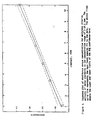
- Figure 3 is an enlarged plot of the absorbance versus concentration for the region below 15 ppm which is extremely linear and is believed to be the region of highest sensitivity. Absorbance is reported as millimeters of height of peak at 276 nm.
- the present invention is particularly applicable for those levels of surfactant which are believed to be in the range of 0.6 to 170 ppm. Around 200 ppm there is somewhat of a loss in sensitivity which is probably due to combined effects of additional factors, such as interactions between the surfactant and other materials in the solution or a marked change in the refractive index of the solution.
- the technique of the present invention is still applicable to amounts of 200 ppm and above and any loss in sensitivity can be compensated for by merely increasing the amount of dilution with the extracting solvent.
- the solid line represents the best least squares fit to the data.
- the dashed lines denote the upper and lower limits of the 95% confidence band.
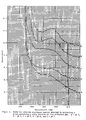
- Figure 1 is an absorbance spectrum wavelength for compositions containing GAFAC RE-610 being extracted at five different pH levels.
- the curve designated as "A” represents a pH of 3
- the curve designated as "B” represents a pH of 4
- the curve designated as "C” represents a pH of 5
- the curve designated as “D” represents a pH of 6
- the curve designated as "E” represents a pH of 7.
- the pH of the extraction is critical in determining the concentration of the desired surfactant.
- curves C, D, and E do not demonstrate sufficient peaks around the 276 nm wavelength to be able to detect the presence of the desired surfactant.
Landscapes
- Chemical & Material Sciences (AREA)
- General Chemical & Material Sciences (AREA)
- Chemical Kinetics & Catalysis (AREA)
- Engineering & Computer Science (AREA)
- Materials Engineering (AREA)
- Mechanical Engineering (AREA)
- Metallurgy (AREA)
- Organic Chemistry (AREA)
- Electrochemistry (AREA)
- Chemically Coating (AREA)
- Investigating Or Analyzing Non-Biological Materials By The Use Of Chemical Means (AREA)
- Investigating Or Analysing Materials By Optical Means (AREA)
Claims (10)
- Ein Verfahren zur Bestimmung des Mengenanteils einer anionischen Substanz in einer Flüssigkeitsprobe, welches umfaßt
das Einstellen des pH-Werts der Probe zur Überführung der anionischen Substanz in eine nicht-ionische, extraktionsfähige Form,
die Extraktion der Substanz in der auszugsfähigen Form aus der Flüssigkeitsprobe mit einem Lösungsmittel,
direkte spektroskopisch-photometrische Messung der Ultraviolett-Absorption der extrahierten Substanz, und
Vergleich des gemessenen Wertes mit einem Standard, um somit den Mengenanteil der anionischen Substanz zu bestimmen. - Verfahren nach Anspruch 1 worin die anionische Substanz aromatische Wirkung hat.
- Verfahren nach Anspruch 1 oder 2 worin die anionische Substanz ein phosphoriertes polyoxyethyleniertes Alkylphenol oder ein Metallsalz hiervon ist.
- Verfahren nach einem der Ansprüche 1 bis 3 worin die anionische Substanz durch die Strukturformel:

- Verfahren nach einem der Ansprüche 1 bis 4 worin die Probe ein Bad zur stromlosen Beschichtung ist, z. B. ein Bad zur stromlosen Beschichtung mit Kupfer, in dem die anionischen Substanz als Oberflächenaktivator enthalten ist.
- Verfahren nach einem der Ansprüche 1 bis 5 worin der pH-Wert auf den Wert 4 oder darunter eingestellt ist.
- Verfahren nach Anspruch 6 worin der pH-Wert auf einen Bereich von 3 bis 4 eingestellt ist, sofern Ethylendiamintetra-Essigsäure in der Probe enthalten ist.
- Verfahren nach einem der Ansprüche 1 bis 7 worin der pH-Wert durch Hinzufügen von anorganischer Säure eingestellt wird.
- Verfahren nach einem der Ansprüche 1 bis 8 worin die anionische Substanz durch Methylchlorid extrahiert wird.
- Verfahren nach einem der Ansprüche 1 bis 9 worin die Ultraviolett-Absorption der anionischen extrahierten Substanz in einem Bereich zwischen 255 und 280 nm gemessen wird.
Applications Claiming Priority (2)
| Application Number | Priority Date | Filing Date | Title |
|---|---|---|---|
| US663114 | 1984-10-22 | ||
| US06/663,114 US4666858A (en) | 1984-10-22 | 1984-10-22 | Determination of amount of anionic material in a liquid sample |
Publications (3)
| Publication Number | Publication Date |
|---|---|
| EP0182102A2 EP0182102A2 (de) | 1986-05-28 |
| EP0182102A3 EP0182102A3 (en) | 1988-09-21 |
| EP0182102B1 true EP0182102B1 (de) | 1991-09-25 |
Family
ID=24660535
Family Applications (1)
| Application Number | Title | Priority Date | Filing Date |
|---|---|---|---|
| EP85113176A Expired - Lifetime EP0182102B1 (de) | 1984-10-22 | 1985-10-17 | Verfahren zur Bestimmung des Inhalts an anionischem Material in einer Probe |
Country Status (4)
| Country | Link |
|---|---|
| US (1) | US4666858A (de) |
| EP (1) | EP0182102B1 (de) |
| JP (1) | JPS61100654A (de) |
| DE (1) | DE3584233D1 (de) |
Families Citing this family (4)
| Publication number | Priority date | Publication date | Assignee | Title |
|---|---|---|---|---|
| JP2555624B2 (ja) * | 1987-08-28 | 1996-11-20 | 株式会社島津製作所 | 流体のph調整法 |
| US5275954A (en) * | 1991-03-05 | 1994-01-04 | Lifenet | Process for demineralization of bone using column extraction |
| EP1674412B1 (de) | 2004-12-27 | 2011-06-22 | Diversey, Inc. | Verfahren zum Schmieren eines Fördersystems |
| JP4787345B2 (ja) * | 2009-05-12 | 2011-10-05 | 日本電信電話株式会社 | トルエン検知素子および測定方法 |
Family Cites Families (40)
| Publication number | Priority date | Publication date | Assignee | Title |
|---|---|---|---|---|
| US29039A (en) * | 1860-07-03 | Improvement in soldering-i rons | ||
| US31694A (en) * | 1861-03-12 | wtckoff and l | ||
| US3326700A (en) * | 1963-06-12 | 1967-06-20 | Rudolph J Zeblisky | Electroless copper plating |
| US3215622A (en) * | 1963-07-24 | 1965-11-02 | Gen Mills Inc | Ion exchange process |
| US3485643A (en) * | 1966-05-06 | 1969-12-23 | Photocircuits Corp | Electroless copper plating |
| US3532519A (en) * | 1967-11-28 | 1970-10-06 | Matsushita Electric Industrial Co Ltd | Electroless copper plating process |
| US3607317A (en) * | 1969-02-04 | 1971-09-21 | Photocircuits Corp | Ductility promoter and stabilizer for electroless copper plating baths |
| US3615737A (en) * | 1969-08-04 | 1971-10-26 | Photocircuits Corp | Electroless copper deposition |
| USRE29039E (en) | 1969-11-26 | 1976-11-16 | Imperial Chemical Industries Limited | Metal deposition process |
| JPS47866U (de) * | 1971-01-06 | 1972-08-08 | ||
| BE794048A (fr) * | 1972-01-17 | 1973-07-16 | Dynachem Corp | Procede et solution de revetement de cuivre sans traitement electrique |
| AT321830B (de) * | 1972-07-20 | 1975-04-25 | Phenolchemie Ges Mit Beschraen | Verfahren zur Entphenolung von Abwässern |
| US3966410A (en) * | 1972-07-24 | 1976-06-29 | California Institute Of Technology | Group extraction of organic compounds present in liquid samples |
| US3966594A (en) * | 1973-11-26 | 1976-06-29 | Sumitomo Chemical Company, Limited | Treatment of aqueous waste solution |
| US3844799A (en) * | 1973-12-17 | 1974-10-29 | Ibm | Electroless copper plating |
| US3951602A (en) * | 1974-06-25 | 1976-04-20 | E. I. Du Pont De Nemours And Company | Spectrophotometric formaldehyde-copper monitor |
| US3992149A (en) * | 1975-02-18 | 1976-11-16 | Calspan Corporation | Colorimetric method for the analysis of residual anionic or cationic surfactants |
| US4229971A (en) * | 1975-04-28 | 1980-10-28 | Phillips Petroleum Company | Liquid sampling system |
| NL164906C (nl) * | 1975-08-19 | 1981-02-16 | Philips Nv | Werkwijze voor de bereiding van een waterig alkalische verkoperbad. |
| US4096301A (en) * | 1976-02-19 | 1978-06-20 | Macdermid Incorporated | Apparatus and method for automatically maintaining an electroless copper plating bath |
| USRE31694E (en) | 1976-02-19 | 1984-10-02 | Macdermid Incorporated | Apparatus and method for automatically maintaining an electroless copper plating bath |
| DE2650572C2 (de) * | 1976-11-04 | 1978-09-14 | Siemens Ag, 1000 Berlin Und 8000 Muenchen | Verfahren zur Mengenüberwachung eines Netzmittels in einem Elektrolyt für die Oberflächenbehandlung von Metallen |
| US4125642A (en) * | 1977-08-25 | 1978-11-14 | The United States Of America As Represented By The United States Department Of Energy | Method for conducting electroless metal-plating processes |
| US4152467A (en) * | 1978-03-10 | 1979-05-01 | International Business Machines Corporation | Electroless copper plating process with dissolved oxygen maintained in bath |
| US4279948A (en) * | 1978-05-25 | 1981-07-21 | Macdermid Incorporated | Electroless copper deposition solution using a hypophosphite reducing agent |
| US4301196A (en) * | 1978-09-13 | 1981-11-17 | Kollmorgen Technologies Corp. | Electroless copper deposition process having faster plating rates |
| US4324589A (en) * | 1979-02-05 | 1982-04-13 | Shipley Company Inc. | Solute monitoring process |
| DE2911073C2 (de) * | 1979-03-21 | 1984-01-12 | Siemens AG, 1000 Berlin und 8000 München | Verfahren und Vorrichtung zum automatischen Messen und Regeln der Konzentration der Hauptkomponenten eines Bades zum stromlosen Abscheiden von Kupfer |
| US4221659A (en) * | 1979-03-28 | 1980-09-09 | E. I. Du Pont De Nemours And Company | Process for reducing dichlorobutene contamination in aqueous plant wastes |
| US4326940A (en) * | 1979-05-21 | 1982-04-27 | Rohco Incorporated | Automatic analyzer and control system for electroplating baths |
| US4353933A (en) * | 1979-11-14 | 1982-10-12 | C. Uyemura & Co., Ltd. | Method for controlling electroless plating bath |
| JPS6016517B2 (ja) * | 1979-12-29 | 1985-04-25 | 上村工業株式会社 | 無電解めつき制御方法 |
| JPS5689058A (en) * | 1979-12-21 | 1981-07-20 | Toyo Soda Mfg Co Ltd | Method for analyzing hydrocarbon compound |
| US4276323A (en) * | 1979-12-21 | 1981-06-30 | Hitachi, Ltd. | Process for controlling of chemical copper plating solution |
| JPS56120943A (en) * | 1980-02-29 | 1981-09-22 | Hitachi Ltd | Manufacture of ph-detecting electrode |
| US4391841A (en) * | 1980-03-28 | 1983-07-05 | Kollmorgen Technologies Corporation | Passivation of metallic equipment surfaces in electroless copper deposition processes |
| US4325990A (en) * | 1980-05-12 | 1982-04-20 | Macdermid Incorporated | Electroless copper deposition solutions with hypophosphite reducing agent |
| US4384471A (en) * | 1980-12-10 | 1983-05-24 | Engelhard Minerals & Chemicals Corporation | Chromatographic analysis of hydrocarbon mixtures |
| US4544639A (en) * | 1983-10-21 | 1985-10-01 | Calgon Corporation | Process for determining the amount of organic phosphonate present in an aqueous solution |
| JP2869398B2 (ja) * | 1996-04-30 | 1999-03-10 | 日本電信電話株式会社 | カット点検出方法及び装置 |
-
1984
- 1984-10-22 US US06/663,114 patent/US4666858A/en not_active Expired - Fee Related
-
1985
- 1985-07-16 JP JP60155300A patent/JPS61100654A/ja active Pending
- 1985-10-17 DE DE8585113176T patent/DE3584233D1/de not_active Expired - Lifetime
- 1985-10-17 EP EP85113176A patent/EP0182102B1/de not_active Expired - Lifetime
Also Published As
| Publication number | Publication date |
|---|---|
| EP0182102A3 (en) | 1988-09-21 |
| US4666858A (en) | 1987-05-19 |
| DE3584233D1 (de) | 1991-10-31 |
| JPS61100654A (ja) | 1986-05-19 |
| EP0182102A2 (de) | 1986-05-28 |
Similar Documents
| Publication | Publication Date | Title |
|---|---|---|
| Markus et al. | Automated analysis of nitrite, nitrate, and ammonium nitrogen in soils | |
| Smith et al. | New colorimetric reagent specific for cooper | |
| US4541902A (en) | Analytical method for determining formaldehyde in electroless copper plating bath | |
| Nakagawa et al. | Use of the copper (II)-selective electrode for the determination of the stability constants of copper (II) complexes | |
| EP0182102B1 (de) | Verfahren zur Bestimmung des Inhalts an anionischem Material in einer Probe | |
| CN111879888A (zh) | 一种检测盐酸中氟离子的方法 | |
| D'ulivo et al. | Simultaneous determination of arsenic, selenium, tin and mercury by non-dispersive atomic fluorescence spectrometry | |
| JaneáTsai | Reversed-phase high-performance liquid chromatographic separation of niobium (V) and tantalum (V) by pre-column chelation with 4-(2-pyridylazo) resorcinol | |
| CN102650592A (zh) | 添加钴和/或其它添加剂时钨基体中钴含量的测定方法 | |
| Tang et al. | Highly sensitive spectrofluorimetric determination of trace amounts of scandium with salicylaldehyde salicyloylhydrazone | |
| CN111812046A (zh) | 一种测定烟草中总黄酮含量的方法 | |
| LeBlanc | Polarographic Determination of N, N´-Ethylenediglycine and Nitrilotriacetic Acid in (Ethylenedinitrilo)-tetracetic Acid | |
| CN109827916B (zh) | 一种基于锌镉还原无盐效应的水质硝酸盐检测方法 | |
| Grabarić et al. | Simultaneous determination of zinc and nickel with 2-(2-pyridylmethyleneamino) phenol by first-derivative spectrophotometry | |
| Jodo et al. | Determination of nutrients in seawater by segmented–flow analysis with higher analysis rate and reduced interference on ammonia | |
| Hsu et al. | Spectrophotometric and first-derivative spectrophotometric determination of cadmium with o-hydroxybenzenediazoaminoazobenzene (HDAA) | |
| CN113155931A (zh) | 一种烟草及植烟土壤中氯离子的检测方法 | |
| CN119505868B (zh) | 一种离子液体修饰纳米金团簇材料的制备方法及其在重金属离子镉的检测中的应用 | |
| KR940004666B1 (ko) | 전기도금액중의 아민계 첨가제의 농도분석방법 | |
| Ishii et al. | Spectrophotometric studies on complexation reactions of some water-soluble 5-nitro-2-pyridylhydrazones with cobalt. Spectrophotometric and derivative spectrophotometric determination of trace cobalt with 2-benzimidazolyl-3-sulphophenylmethanone 5-nitro-2-pyridylhydrazone | |
| US12578302B2 (en) | Electrochemical analysis of metallic depolarizers in gold electrodeposition | |
| Luo et al. | Determination of trace iron (II) in the presence of iron (III) | |
| Gao et al. | Beta-correction spectrophotometric investigation of cadmium complexation with New Ligand, 2, 4-dibromo-6-caboxybenzenediazoaminoazobenzene and determination of trace amounts of cadmium in wastewater | |
| Nowak-Wydra et al. | 3-Substituted 1-methoxypyridinium ions: substituent effects on rates of hydrogen-deuterium exchange | |
| Stužka et al. | Determination of Some Nitrophenols by Atomic Absorption Spectrometry (AAS) After Extraction of Ionic Associates Involving the Bipyridylocopper (II) or Phenanthrolinocopper (II) Complex |
Legal Events
| Date | Code | Title | Description |
|---|---|---|---|
| PUAI | Public reference made under article 153(3) epc to a published international application that has entered the european phase |
Free format text: ORIGINAL CODE: 0009012 |
|
| AK | Designated contracting states |
Kind code of ref document: A2 Designated state(s): DE FR GB |
|
| 17P | Request for examination filed |
Effective date: 19860819 |
|
| PUAL | Search report despatched |
Free format text: ORIGINAL CODE: 0009013 |
|
| AK | Designated contracting states |
Kind code of ref document: A3 Designated state(s): DE FR GB |
|
| 17Q | First examination report despatched |
Effective date: 19900216 |
|
| GRAA | (expected) grant |
Free format text: ORIGINAL CODE: 0009210 |
|
| AK | Designated contracting states |
Kind code of ref document: B1 Designated state(s): DE FR GB |
|
| PGFP | Annual fee paid to national office [announced via postgrant information from national office to epo] |
Ref country code: GB Payment date: 19910925 Year of fee payment: 7 |
|
| PGFP | Annual fee paid to national office [announced via postgrant information from national office to epo] |
Ref country code: FR Payment date: 19911001 Year of fee payment: 7 |
|
| ET | Fr: translation filed | ||
| REF | Corresponds to: |
Ref document number: 3584233 Country of ref document: DE Date of ref document: 19911031 |
|
| PGFP | Annual fee paid to national office [announced via postgrant information from national office to epo] |
Ref country code: DE Payment date: 19911102 Year of fee payment: 7 |
|
| PLBE | No opposition filed within time limit |
Free format text: ORIGINAL CODE: 0009261 |
|
| STAA | Information on the status of an ep patent application or granted ep patent |
Free format text: STATUS: NO OPPOSITION FILED WITHIN TIME LIMIT |
|
| 26N | No opposition filed | ||
| PG25 | Lapsed in a contracting state [announced via postgrant information from national office to epo] |
Ref country code: GB Effective date: 19921017 |
|
| GBPC | Gb: european patent ceased through non-payment of renewal fee |
Effective date: 19921017 |
|
| PG25 | Lapsed in a contracting state [announced via postgrant information from national office to epo] |
Ref country code: FR Effective date: 19930630 |
|
| PG25 | Lapsed in a contracting state [announced via postgrant information from national office to epo] |
Ref country code: DE Effective date: 19930701 |
|
| REG | Reference to a national code |
Ref country code: FR Ref legal event code: ST |