EP0136792B1 - Derivate des Neocarzinostatins und Verfahren zu deren Herstellung - Google Patents
Derivate des Neocarzinostatins und Verfahren zu deren Herstellung Download PDFInfo
- Publication number
- EP0136792B1 EP0136792B1 EP84305414A EP84305414A EP0136792B1 EP 0136792 B1 EP0136792 B1 EP 0136792B1 EP 84305414 A EP84305414 A EP 84305414A EP 84305414 A EP84305414 A EP 84305414A EP 0136792 B1 EP0136792 B1 EP 0136792B1
- Authority
- EP
- European Patent Office
- Prior art keywords
- residue
- ncs
- neocarzinostatin
- sma
- styrene
- Prior art date
- Legal status (The legal status is an assumption and is not a legal conclusion. Google has not performed a legal analysis and makes no representation as to the accuracy of the status listed.)
- Expired
Links
- ODLMAHJVESYWTB-UHFFFAOYSA-N CCCc1ccccc1 Chemical compound CCCc1ccccc1 ODLMAHJVESYWTB-UHFFFAOYSA-N 0.000 description 1
- YNQLUTRBYVCPMQ-UHFFFAOYSA-N CCc1ccccc1 Chemical compound CCc1ccccc1 YNQLUTRBYVCPMQ-UHFFFAOYSA-N 0.000 description 1
Images


Classifications
-
- C—CHEMISTRY; METALLURGY
- C07—ORGANIC CHEMISTRY
- C07K—PEPTIDES
- C07K14/00—Peptides having more than 20 amino acids; Gastrins; Somatostatins; Melanotropins; Derivatives thereof
-
- A—HUMAN NECESSITIES
- A61—MEDICAL OR VETERINARY SCIENCE; HYGIENE
- A61P—SPECIFIC THERAPEUTIC ACTIVITY OF CHEMICAL COMPOUNDS OR MEDICINAL PREPARATIONS
- A61P35/00—Antineoplastic agents
Definitions
- the present invention relates to neocarzinostatin derivatives having excellent anticancer activity, which have the following formula wherein (NCS) represents divalent neocarzinostatin residue in which one hydrogen atom is removed from each of the primary amino group in alanine residue at the N-terminal of neocarzinostatin and that in lysine residue at 20th position from the N-terminal of neocarzinostatin and (SMA) represents monovalent sytrene- maleic acid copolymeric residue having a weight-average molecular weight of 800 to 2,500 and consisting of structural units of styrene residue maleic acid residue and a residue having the following formula in which a hydroxyl group of one carboxyl group in the maleic acid residue is removed and linked to neocarzinostatin residue wherein the linkage of carbon atom in carbonyl group bonds to the neocarzinostatin residue.
- NCS represents divalent neocarzino
- Neocarzinostatin (abbreviated to "NCS") is a proteinaceous anticancer agent produced in a medium in which Streptomyces carzinostaticus var. F-41 Kuroya is cultured (Japanese Patent Publication No. 42 (1967)-21,752 and US-A-3,334,022). With respect to the primary structure of this substance, the total number of amino acid residues and estimated molecular weight have been reported to be 109 and 10,700 respectively, by Hiroshi Maeda (Science, 178, 875-876 (1972) and Arch. Biochem. Biophys., 163, 379-385). M. A. Napier et al., Biochem. Biophys. Res. Comm.
- the metastasis of cancer cells is important and particularly the metastasis of said cells into lymphatic system is the most important problem.
- a wide variety of neocarzinostatin derivatives have been examined with the aim of lowering the toxicity, prolonging the biological activity of the drug in vivo, and directing its delivery more to the lymphatic system.
- (NCS) means the same NCS residue as in the above described formula (I)
- SMA' means styrene maleic acid copolymeric residue having an average molecular weight of 2,500 to 80,000.
- the above described NCS derivatives may contain various molecular species even after purification by the gel filtration method and the like. Concerning this point, the inventors have studied more rigorously and found that when NCS is reacted with H-SMA in an aqueous medium, the reaction solution after the completion of the reaction includes, other than the aimed NCS derivative, styrene-maleic acid copolymer produced by ring-opening hydrolysis of the maleic anhydride ring in H-SMA (referred to as "ring-opening hydrolyzed" product of H-SMA" hereinafter), unreacted NCS, an intermediate product to NCS derivative (I) having the following formula (III) wherein (NCS') represents monovalent NCS residue in which one hydrogen atom is removed from each of the primary amino group in alanine residue at the N-terminal of neocarzinostatin and that in lysine residue at 20th position from the N-terminal of neocarzinostatin, and (SMA”)
- the inventors have intensively studied so as to manufacture substantially pure NCS derivatives and found that by reacting NCS with H-SMA in an excessive amount of H-SMA resulted in a high rate of reaction, the unreacted NCS and the intermediate product (III) are essentially undetectable and by using H-SMA having an adequately smaller molecular weight and a narrow molecular weight distribution, the difference of molecular size between the aimed NCS derivative and the ring-opening hydrolyzed product of H-SMA can be enlarged so that the isolation of the aimed NCS derivatives can be easily achieved by gel filtration, and the present invention has been accomplished.
- the present invention lies in NCS derivatives shown by the above described formula (I) and a process for manufacturing NCS derivatives, which comprises reacting H-SMA satisfying the following formulae (VII) and (VIII) wherein Mw means a weight-average molecular weight of H-SMA and equation (VII) is allowed to have any Mw from 800 to 2,500, and Mn means a number-average molecular weight of H-SMA, with NCS in an aqueous medium by adding a large excess of powdery H-SMA based on the molar ratio of H-SMA to NCS, and then subjecting the reaction product to gel filtration to isolate the NCS derivative which conforms to the above described formula (I).
- Mw means a weight-average molecular weight of H-SMA and equation (VII) is allowed to have any Mw from 800 to 2,500
- Mn means a number-average molecular weight of H-SMA
- NCS derivatives of the present invention are different from the prior NCS derivatives shown by the formula (II) and do not substantially contain impurities, and since the molecular weight of styrene-maleic acid copolymeric residue is small, the biological activity based on NCS residue is not substantially diluted. Furthermore, in such NCS derivatives, the toxicity possessed by NCS is moderated and the specific accumulation to the lymphatic system and the retention of the activity in blood, which are deficient in NCS are improved, so that such NCS derivatives serve as a very excellent anticancer activity.
- NCS derivatives (I) are formed by bonding one NCS residue with two styrene-maleic acid copolymeric residues through acid amide linkages.
- the NCS residue is a protein having two primary amino groups, one at N-terminal alanine (at position 1) and lysine group at the position 20th from the N-terminal as disclosed in the above described literature [Science, 178,875 - 876 (1972)].
- NCS molecule contains a large number of functional groups, such as hydroxyl groups and secondary amino groups other than two primary amino groups but in the NCS derivatives of the present invention, the functional groups other than two primary amino groups do not substantially serve to form chemical bonds with the styrene-maleic acid copolymeric residue.
- the NCS residue which is one of the structural components of the NCS derivative (I) of the present invention, serves to form a bivalent residue in NCS derivative (I) in which one hydrogen atom is removed from each of the above described two primary amino groups in NCS, that is, in total, two hydrogen atoms are removed.
- the styrene-maleic acid copolymeric residue which is another structural component in NCS derivative of the present invention, consists of the structural units of
- Such a weight-average molecular weight can be determined by the manner disclosed in the examples mentioned hereinafter. The smaller the weight-average molecular weight of these copolymeric residues, the more easy the separation of NCS derivative from the reaction product is but NCS derivatives having the copolymeric residue wherein the weight-average molecular weight is less than 800 are difficulty used in practice.
- the residue (c) is formed by reacting maleic anhydride residue in H-SMA of the starting material with the primary amino group in NCS and opening the anhydride ring.
- residue (b) corresponds to maleic acid residue in H-SMA as such and another part is ones formed through hydrolysis of maleic anhydride residue in H-SMA not reacted with NCS in an aqueous medium.
- residue (a) corresponds to styrene residue in H-SMA as such.
- the ratio of these residues (a), (b) and (c) in the styrene-maleic acid copolymeric residue varies depending upon selection of the polymer composition of H-SMA, so that the composition ratio of each residue in the styrene-maleic acid copolymeric residue lies in the practical range for industrial purpose.
- H-SMA consists of styrene residue (a'), maleic acid residue (b') and maleic anhydride residue (c').
- the molar ratio of the residue (a') to the sum of the residue (b') and the residue (c') in H-SMA is preferred to be substantially about 1:1 to 1.3:1, more preferably about 1:1.
- Such ratio is mainly selected in view of the solubility of the H-SMA in an aqueous medium when H-SMA is reacted with NCS while being dissolved in the aqueous medium.
- the molar ratio of the residue (b') to the residue (c') is preferred to be 85:15 to 35:65, more preferably 80:20 to 40:60. If the content of the residue (c') in H-SMA is less than 15 mol%, the rate of reaction of the amino groups of NCS with the H-SMA is so low that the presence of considerable amount of unreacted NCS is unavoidable. On the other hand, if the content of the residue (c') exceeds 65 mol%, the rate of dissolution of the H-SMA in the reaction medium is so low that the reaction does not take place spontaneously.
- the H-SMA having the above mentioned constitution is preferable as the starting material of the present invention but the average molecular weight and the molecularweight distribution of H-SMA must be within the ranges shown by the above described formulae (VII) and (VIII).
- the formula (VII) corresponds to the average molecular weight of the styrene-maleic acid copolymeric residue in the already defined NCS derivatives.
- the H-SMA subjected to the modification reaction of the NCS has a narrow distribution and thus the species of H-SMA having higher molecular weights in such a distribution may be adequately high in the reactivity with NCS because the average content of maleic anhydride residue, at which the reaction takes place with NCS, is higher and the probability is high and the probability to form the styrene-maleic acid copolymeric residue in NCS derivative after reaction with NCS is also higher. Consequently, in a strict sense, the weight-average molecular weight of the H-SMA and the average molecular weight of the copolymeric residue in the NCS derivates thus formed are different in exactness and the value of the latter tends to be more or less higher than that of the former.
- H-SMA having the weight average molecular weight as shown by the formula (VII) and the specifically narrow molecular weight distribution (Mw/Mn) shown by the formula (VIII).
- Mw/Mn specifically narrow molecular weight distribution
- the reaction product of NCS with H-SMA is subjected to gel filtration, the aimed NCS derivatives of the present invention elute faster than the hydrolyzed and ring-opened product of H-SMA but both of these substances tend to elute simultaneously to a considerable extent and this is a great problem in the isolation of NCS derivatives.
- H-SMA styrene-maleic acid copolymeric residue of the NCS derivative formed
- SMA styrene-maleic anhydride copolymer
- the H-SMA obtained by partially hydrolyzing such SMA also maintains such a broad molecular weight distribution, so that even if NCS is reacted with H-SMA sufficiently, it is difficult to isolate the aimed NCS derivative (I) from the reaction mixture.
- fractionating process use may be made of solubility process or ultrafiltration process and the like, but the most preferable one comprises fractionating SMA through fractional solution process and partially hydrolyzing the obtained SMA having a narrow molecular weight distribution to convert SMA into H-SMA having the narrow molecular weight distribution.
- H-SMA is reached with NCS in an aqueous medium.
- the structural formula (I) of NCS derivatives it is merely necessary to react two molecules of the H-SMA per one molecule of NCS, so that the ideal amount of H-SMA required is 2 moles based on 1 mole of NCS.
- maleic anhydride residue portion in H-SMA reacts competitively with the primary amino group, hydroxyl group in NCS molecule and water molecule and some other functional residues in NCS molecule. Some of the reaction products thus formed are hydrolyzed to yield maleic acid residue.
- the weight-average molecular weight of H-SMA is 800 to 2,500 as shown by the formula (IV) and the molecular weight of NCS is 10,700, even though the amount of H-SMA used varies depending upon the average molecular weight, said amount must be more than 0.15 part by weight in the case of H-SMA having a weight average molecular weight of 800 and 0.47 part by weight in the case of H-SMA having a weight-average molecular weight of 2,500.
- H-SMA average molecular weight of H-SMA is small or the content of maleic anhydride residue is low
- the average number of maleic anhydride residue contained per one molecule is small and such H-SMA is high in the ratio of H-SMA molecule having no maleic anhydride residue (having no reactivity with NCS), so that it is important to use an at least two-fold molar excess of H-SMA in powder form.
- H-SMA In order to increase the extent of reaction of primary amino groups in NCS with H-SMA to a sufficiently high level, it is preferred to use 1.5-15 parts by weight and more preferably 2-12 parts by weight of H-SMA based on 1 part by weight of NCS, although the amount of H-SMA required to achieve the above condition depends upon the average molecular weight and structure of the H-SMA as described above.
- the amount of H-SMA used is more than 15 parts by weight based on 1 part by weight of NCS, the reaction product in a reaction mixture is diluted so much by the ring-opening hydrolyzed product of H-SMA that in the subsequent separation will be poor and thus such an amount of H-SMA is not feasible and the use of such a large amount is impractical.
- the total concentration of NCS and H-SMA in the reaction solution is preferred to be 10 to 35% by weight and more preferably 15 to 32% by weight.
- the rate of reaction of NCS with H-SMA is low and the chance where maleic anhydride residue in H-SMA is hydrolyzed is increased, causing a difficulty in obtaining desired derivative of NCS.
- the viscosity of the reaction solution is so high that the stirring of the reaction mixture becomes difficult and such a condition is not desirable.
- the reaction of NCS with H-SMA is generally effected by firstly dissolving NCS in an aqueous solution of sodium bicarbonate, sodium acetate, ammonium bicarbonate and the like and then adding stepwise powdery H-SMA to this solution.
- concentration of these aqueous salts is not specifically defined but it is preferable to maintain the pH of the aqueous solution at 7.5-9.5, preferably 8.0-8.7.
- pH of the solution is lower than 7.5, H-SMA is insoluble or difficulty soluble in the aqueous medium. In the former case, it is impossible to proceed the reaction with the primary group of NCS to any extent, while in the latter, a very long time is needed for the dissolution and such a pH is not practicable.
- the conversion of the primary amino group in NCS in the reaction of NCS with H-SMA can exceed as high more than 95 mol% and 100 mol% may be easily obtained.
- unreacted NCS is practically undetectable and an amount of the intermediate by-product shown by the formula (III) which is formed by reacting only one of the two primary amino groups of NCS with H-SMA is very low.
- the NCS derivatives of the present invention are isolated from the reaction mixture by the gel filtration method.
- the substrate to be used in the gel filtration is selected from ones having an exclusion limit as expressed in the molecular weight of 50,000 to 150,000, preferably 60,000 to 100,000 for globular protein and the most preferable substrate to obtain the NCS derivatives (1) of the present invention can be selected from the following commercially available gel particles; Sephadex ® G-50, G-75, G-100 (made by Pharmacia Fine Chemicals AB, Uppsala, Sweden) and Bio-Gel@ P-60, P-100 (made by Bio-Rad Laboratories, U.S.A.). Other desirable gel filtration conditions may be arbitrarily selected.
- the NCS derivatives of the present invention may be isolated by subjecting the reaction solution to a preliminarily purification through a gel filtration and then to an additional gel filtration.
- NCS derivatives (I) of the present invention are separated from the other reaction products during the above described gel filtration. Then, the eluate cut containing the NCS derivatives (I) is subjected to lyophilization to remove the solvent, whereby NCS derivatives (I) of the present invention are isolated. It has been identified by the various experiments shown in the following examples that the thus isolated substance has the structure of the formula (I).
- the NCS derivatives (I) of the present invention can be utilized as medicaments in human therapy by local administration, such as the primary site of cancer and the area of tumor removal or resection, or by intracutaneous, subcutaneous, intramuscular, intravenous, and oral administration, or by external application, such as applying or spraying to local site to be treated, suppository, intravesical instillation.
- the dose regimen depends on administration routes, malignancy stage and grade of tumor, types of tumor, and various conditions of patients. Further, the dosages depends on the purposes, such as the prevention of metastasis to lymphatic systems after operation, or therapeutic treatment or extent of tumor regression. For example, in the case of the intravenous administration is 1-3 mg per every half day, that is twice a day on consecutive days. For local application as ointments or for oral administration, the dosage may be further increased.
- the NCS derivative (I) of the present invention maintains the high biological activity due to NCS and noticeably the toxicity possessed by NCS noticeably decreased and the activity of NCS derivative of the present invention is retained for a far longer period of time than NCS in the whole blood.
- the NCS derivative (I) of the present invention is soluble in 1-9% of aqueous solution of sodium bicarbonate, so that this solution can be intravenously or intraarterially administered and such an administration can exert the above described properties of NCS derivatives of the present invention, namely, it will accumulate in the lymphatic system resulting into antimetastatic effect therein.
- the NCS derivatives (I) accumulate preferably at the tumor tissue.
- the NCS derivatives (I) directly separates NCS or is partially hydrolyzed to separate NCS to exert the antitumor activity, after which NCS portion and the styrene-maleic acid copolymeric portion are safely excreted out of the body in urine.
- NCS derivatives (I) of the present invention show very desirable activity as an anticancer agent.
- the yield of the thus obtained polymer was 7.3 kg.
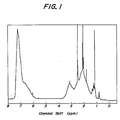
- the number-average molecular weight (Mn) of the polymer measured by vapor pressure osmometry (abbreviated as VPO hereinafter) was 1,680. It was confirmed according to the NMR spectrum measurement that the polymer thus obtained was a copolymer of styrene and maleic anhydride in a molar ratio of 1:1. (See Fig. 1)
- SMA styrene-maleic anhydride copolymer
- the SMA deposited glass beads and 1.41 of a mixed solvent of acetone and n-hexane (the volume ratio thereof being 8:92 at 25°C) were charged into a column having an inner diameter of 80 mm and a length of 80 cm, while keeping the temperature of the system at 25°C, then three kinds of mixed solvents of acetone and n-hexane [the mixed solvents at 25°C being (i) 0.6 I of the mixed ratio of 8:92, (ii) 3.0 I of the mixed ratio of 22:78, and (iii) 3.0 I of the mixed ratio of 38:62 in this order] were successively fed, and the liquid was eluted from the lower outlet of the column.
- the infrared absorption spectrum was measured by the KBr powder method, and it was confirmed through the optical densities at wave number of 1,780 cm- 1 and 700 cm- 1 that the powder thus obtained was partially hydrolyzed styrene-maleic anhydride copolymer (H-SMA) wherein the content of the remaining maleic anhydride ring was 47.5 mol% (the maleic anhydride ring contained in one molecule being 2.9).
- H-SMA styrene-maleic anhydride copolymer
- Mw was 1,560
- Mn was 1,350
- Mw/Mn was 1.16.
- NCS neocarzinostatin
- the conversion of such an unreacted primary amino group originating from NCS can be determined by a method (hereinafter referred to as "TNBS" method) in which a small amount of a sample taken out from the reaction mixture 24 hours after the addition was started was diluted, and was reacted with trinitrobenzene sulfonic acid to product a nitrobenzene derivative, which was determined based on the amount of the primary amino group spectrophotometrically by a visible absorption spectrometer at 420 nm. It was learned that the primary amino groups completely disappeared.
- TNBS a method in which a small amount of a sample taken out from the reaction mixture 24 hours after the addition was started was diluted, and was reacted with trinitrobenzene sulfonic acid to product a nitrobenzene derivative, which was determined based on the amount of the primary amino group spectrophotometrically by a visible absorption spectrometer at 420 nm. It was learned that the primary amino groups completely disappeared.
- reaction mixture was transferred to a dialysis tube (Union Carbide Co., Ltd., U.S.A.) having a cut-off molecular weight of 8,000, and dialyzed for three days against aqueous 5 mM ammonium bicarbonate under ice-cooling in the dark while the exterior liquid was exchanged sometimes.
- a dialysis tube Union Carbide Co., Ltd., U.S.A.
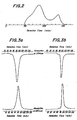
- a half amount of the dialyzed reaction liquid was poured into a column having an inner diameter of 50 mm and a length of 60 cm (K 50/60, Pharmacia Fine Chemicals AB, Uppsala, Sweden) packed with Sephadex G-75, and elution was carried out at a flow rate of 5.9 ml/min at 10°C in the dark by using 5 mM aqueous ammonium bicarbonate. Absorption of the eluate was continuously monitored at the wavelength of 254 nm (Fig. 2). The eluate cut from 55 to 100 minutes after the sample injection was then lyophilized. This operation was repeated under the same conditions. The purified NCS derivatives (I) thus obtained weighed 210 mg in total.
- the NCS derivative thus obtained showed a single spot.
- the GPC measured at pH 7.9 by using a G-3000 SW column manufactured by Toyo Soda Co., Ltd. with a mobile phase of 10 mM aqueous ammonium bicarbonate indicated a sharp peak.
- the average molecular weight of the NCS derivative based on the content of the nitrogen is 13,900.
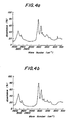
- Fig. 4a shows an infrared absorption spectrum in a KBr table method (hereinafter abbreviated as "IR spectrum”) and Fig. 5a shows ultraviolet visible absorption spectrum (hereinafter abbreviated as "UV spectrum”) in a 0.5 mM aqueous ammonium bicarbonate.
- IR spectrum infrared absorption spectrum
- UV spectrum ultraviolet visible absorption spectrum
- the biological activity defined above was measured for the NCS derivative obtained in Example 1. Twenty pl aliquots of the NCS derivative having various concentrations were added to a paper disc of 8 mm in diameter which had been placed on the agar plate with culture medium (Müller-Hinton) preinoculated with Sarcina lutea PCI 1001 strain. After allowing an adequate diffusion time (5 hours) at 4°C, the cultivation was resumed out at 37°C for 12 hours.
- culture medium Müller-Hinton
- the concentration of the diluted solution required to give an inhibition diameter of 13 mm was determined to be 1.34 when such an effective concentration in NCS was defined to be "1" and the concentrations of NCS derivatives thus determined were shown by the relative value based on the value 1 of NCS and the relative values obtained were taken as the index of the biological activity.
- the NCS derivative according to the present invention had the biological activity comparable to that of NCS.
- Fig. 6 shows an inactivation curve obtained by the measurement of the residual lutea biological activity of the NCS derivative while being incubated at the concentration of 100 utg/ml in the whole human blood and in the serum at 37°C. From this figure, the half-time as determined by biological activity in the whole blood and in the serum were 14 minutes and 11 minutes, respectively, with respect to NCS derivatives according to the present invention, which exhibit about 4 times that of NCS (4 minutes in the whole blood, and 2.5 minutes in the serum).
Landscapes
- Chemical & Material Sciences (AREA)
- Health & Medical Sciences (AREA)
- Organic Chemistry (AREA)
- General Health & Medical Sciences (AREA)
- Medicinal Chemistry (AREA)
- Life Sciences & Earth Sciences (AREA)
- Biophysics (AREA)
- Genetics & Genomics (AREA)
- Proteomics, Peptides & Aminoacids (AREA)
- Molecular Biology (AREA)
- Biochemistry (AREA)
- Gastroenterology & Hepatology (AREA)
- Veterinary Medicine (AREA)
- Public Health (AREA)
- General Chemical & Material Sciences (AREA)
- Chemical Kinetics & Catalysis (AREA)
- Pharmacology & Pharmacy (AREA)
- Animal Behavior & Ethology (AREA)
- Nuclear Medicine, Radiotherapy & Molecular Imaging (AREA)
- Addition Polymer Or Copolymer, Post-Treatments, Or Chemical Modifications (AREA)
- Peptides Or Proteins (AREA)
- Medicines That Contain Protein Lipid Enzymes And Other Medicines (AREA)
Claims (10)


Priority Applications (1)
| Application Number | Priority Date | Filing Date | Title |
|---|---|---|---|
| AT84305414T ATE44035T1 (de) | 1983-08-08 | 1984-08-08 | Derivate des neocarzinostatins und verfahren zu deren herstellung. |
Applications Claiming Priority (2)
| Application Number | Priority Date | Filing Date | Title |
|---|---|---|---|
| JP58145419A JPS6075499A (ja) | 1983-08-08 | 1983-08-08 | ネオカルチノスタチン誘導体及びその製造法 |
| JP145419/83 | 1983-08-08 |
Publications (3)
| Publication Number | Publication Date |
|---|---|
| EP0136792A2 EP0136792A2 (de) | 1985-04-10 |
| EP0136792A3 EP0136792A3 (en) | 1985-12-18 |
| EP0136792B1 true EP0136792B1 (de) | 1989-06-14 |
Family
ID=15384811
Family Applications (1)
| Application Number | Title | Priority Date | Filing Date |
|---|---|---|---|
| EP84305414A Expired EP0136792B1 (de) | 1983-08-08 | 1984-08-08 | Derivate des Neocarzinostatins und Verfahren zu deren Herstellung |
Country Status (6)
| Country | Link |
|---|---|
| US (1) | US4762885A (de) |
| EP (1) | EP0136792B1 (de) |
| JP (1) | JPS6075499A (de) |
| AT (1) | ATE44035T1 (de) |
| CA (1) | CA1241640A (de) |
| DE (1) | DE3478689D1 (de) |
Families Citing this family (6)
| Publication number | Priority date | Publication date | Assignee | Title |
|---|---|---|---|---|
| US5389366A (en) * | 1986-09-19 | 1995-02-14 | Yamanouchi Pharmaceutical Co., Ltd. | Neocarzinostatin derivative composition for oral administration |
| JP2556865B2 (ja) * | 1986-09-19 | 1996-11-27 | 山之内製薬株式会社 | ネオカルチノスタチン誘導体の非注射投与用組成物 |
| CA1327161C (en) * | 1987-09-01 | 1994-02-22 | Mitsugu Kobayashi | Lyophilized pharmaceutical composition of neocarzinostatin derivative |
| ES2642179T3 (es) * | 2003-05-26 | 2017-11-15 | Hiroshi Maeda | Agente antitumoral y proceso para producir el mismo |
| WO2006080171A1 (ja) | 2005-01-31 | 2006-08-03 | Effector Cell Institute, Inc. | 免疫増強剤 |
| WO2015076312A1 (ja) | 2013-11-19 | 2015-05-28 | 前田 浩 | スチレン-マレイン酸共重合体の誘導体 |
Family Cites Families (5)
| Publication number | Priority date | Publication date | Assignee | Title |
|---|---|---|---|---|
| US3085994A (en) * | 1959-10-30 | 1963-04-16 | Sinclair Research Inc | Chain terminated copolymer of styrene and maleic anhydride of low solution viscosity |
| US3121043A (en) * | 1960-05-11 | 1964-02-11 | Scient Associates Inc | Sustained release pharmaceutical preparation and methods for making same |
| US3245933A (en) * | 1960-05-19 | 1966-04-12 | Sinclair Research Inc | Styrene-maleic anhydride copolymers cross-linked with aliphatic polyhydroxy compounds |
| JPS6017206B2 (ja) * | 1977-03-24 | 1985-05-01 | 浩 前田 | ネオカルチノスタチン誘導体の製造法 |
| DE3367921D1 (en) * | 1982-02-27 | 1987-01-15 | Kuraray Co | Neocarzinostatin complexes, a method for producing the same, and an antitumor agent containing said complexes as an active component |
-
1983
- 1983-08-08 JP JP58145419A patent/JPS6075499A/ja active Granted
-
1984
- 1984-07-26 CA CA000459768A patent/CA1241640A/en not_active Expired
- 1984-08-08 DE DE8484305414T patent/DE3478689D1/de not_active Expired
- 1984-08-08 AT AT84305414T patent/ATE44035T1/de not_active IP Right Cessation
- 1984-08-08 EP EP84305414A patent/EP0136792B1/de not_active Expired
-
1986
- 1986-09-25 US US06/911,456 patent/US4762885A/en not_active Expired - Fee Related
Also Published As
| Publication number | Publication date |
|---|---|
| ATE44035T1 (de) | 1989-06-15 |
| DE3478689D1 (en) | 1989-07-20 |
| CA1241640A (en) | 1988-09-06 |
| EP0136792A2 (de) | 1985-04-10 |
| US4762885A (en) | 1988-08-09 |
| EP0136792A3 (en) | 1985-12-18 |
| JPS6075499A (ja) | 1985-04-27 |
| JPH0133120B2 (de) | 1989-07-11 |
Similar Documents
| Publication | Publication Date | Title |
|---|---|---|
| Maeda et al. | A lipophilic derivative of neocarzinostatin a polymer conjugation of an antitumor protein antibiotic | |
| EP0187547B1 (de) | Synthetische polymere Arzneistoffe | |
| CA1294088C (en) | Chemically modified protein | |
| EP0312127B1 (de) | Glycosylierte Insulin-Derivate | |
| HU189469B (en) | Process for preparing antitumour immunoglobulin-derivatives with antibody effect, comprising ricin a subordinate unit | |
| JPH06172201A (ja) | 生物学的活性タンパク質性組成物 | |
| EP0215662A2 (de) | Antitumor-Proteasepräparate | |
| EP0325270A2 (de) | Antikrebs-Konjugate | |
| EP0112720A2 (de) | Konjugat mit Zytotoxizität und Verfahren zu seiner Herstellung | |
| Hirano et al. | Synthesis of antitumor‐active conjugates of Adriamycin or daunomycin with the copolymer of divinyl ether and maleic anhydride | |
| US4313934A (en) | Physiologically active polysaccharides, production and uses thereof | |
| EP0136792B1 (de) | Derivate des Neocarzinostatins und Verfahren zu deren Herstellung | |
| US4732933A (en) | Neocarzinostatin complexes, a method for producing the same, and an antitumor agent containing said complexes as an active component | |
| SU1291027A3 (ru) | Способ получени гликопротеина,обладающего противоопухолевой и лектиноподобной активностью | |
| EP0136791B1 (de) | Derivate des Neocarzinostatins und Verfahren zu deren Herstellung | |
| EP0132125B1 (de) | Protein mit Antitumor-Wirkung | |
| EP0246569A2 (de) | Superoxide Dismutase-Derivate, Verfahren zu deren Herstellung und pharmazeutische Zusammensetzung | |
| EP0172559B1 (de) | Polysaccharid-RON-Substanz, ihre Herstellung und Verwendung | |
| CA1223202A (en) | Fibronectin-physiologically active substance complex and method of preparation thereof | |
| US6440691B1 (en) | Melanins with improved ability to inhibit HIV replication | |
| US4436656A (en) | Novel antitumor glycoprotein substance and its preparation | |
| EP0066379A2 (de) | Zusammensetzung zur Behandlung vom Herpes-Virus | |
| Lääne et al. | Preparation of polymer‐modified enzymes of prolonged circulation times. Poly [N‐(2‐hydroxypropyl) methacrylamide]‐bound acetylcholinesterase | |
| EP0160521A2 (de) | Komplex aus Fibronectin-Dextran und Medikament und Verfahren zu deren Herstellung | |
| Goldschmidt et al. | The Preparation and Determination of Structure of Benzylpenicilloyl Compounds Used in Skin-Testing for Penicillin Allergy |
Legal Events
| Date | Code | Title | Description |
|---|---|---|---|
| PUAI | Public reference made under article 153(3) epc to a published international application that has entered the european phase |
Free format text: ORIGINAL CODE: 0009012 |
|
| AK | Designated contracting states |
Designated state(s): AT BE CH DE FR GB IT LI NL SE |
|
| RAP1 | Party data changed (applicant data changed or rights of an application transferred) |
Owner name: MAEDA, HIROSHI Owner name: KABUSHIKI KAISHA KAYAKU (ALSO TRADING AS KAYAKU A Owner name: YAMANOUCHI PHARMACEUTICAL CO. LTD. Owner name: KURARAY CO., LTD. |
|
| PUAL | Search report despatched |
Free format text: ORIGINAL CODE: 0009013 |
|
| AK | Designated contracting states |
Designated state(s): AT BE CH DE FR GB IT LI NL SE |
|
| 17P | Request for examination filed |
Effective date: 19860530 |
|
| 17Q | First examination report despatched |
Effective date: 19870724 |
|
| GRAA | (expected) grant |
Free format text: ORIGINAL CODE: 0009210 |
|
| AK | Designated contracting states |
Kind code of ref document: B1 Designated state(s): AT BE CH DE FR GB IT LI NL SE |
|
| REF | Corresponds to: |
Ref document number: 44035 Country of ref document: AT Date of ref document: 19890615 Kind code of ref document: T |
|
| ITF | It: translation for a ep patent filed | ||
| REF | Corresponds to: |
Ref document number: 3478689 Country of ref document: DE Date of ref document: 19890720 |
|
| ET | Fr: translation filed | ||
| PLBE | No opposition filed within time limit |
Free format text: ORIGINAL CODE: 0009261 |
|
| STAA | Information on the status of an ep patent application or granted ep patent |
Free format text: STATUS: NO OPPOSITION FILED WITHIN TIME LIMIT |
|
| 26N | No opposition filed | ||
| ITTA | It: last paid annual fee | ||
| PGFP | Annual fee paid to national office [announced via postgrant information from national office to epo] |
Ref country code: GB Payment date: 19930728 Year of fee payment: 10 |
|
| PGFP | Annual fee paid to national office [announced via postgrant information from national office to epo] |
Ref country code: FR Payment date: 19930805 Year of fee payment: 10 Ref country code: AT Payment date: 19930805 Year of fee payment: 10 |
|
| PGFP | Annual fee paid to national office [announced via postgrant information from national office to epo] |
Ref country code: SE Payment date: 19930806 Year of fee payment: 10 Ref country code: DE Payment date: 19930806 Year of fee payment: 10 |
|
| PGFP | Annual fee paid to national office [announced via postgrant information from national office to epo] |
Ref country code: CH Payment date: 19930809 Year of fee payment: 10 |
|
| PGFP | Annual fee paid to national office [announced via postgrant information from national office to epo] |
Ref country code: NL Payment date: 19930831 Year of fee payment: 10 |
|
| PGFP | Annual fee paid to national office [announced via postgrant information from national office to epo] |
Ref country code: BE Payment date: 19931004 Year of fee payment: 10 |
|
| PG25 | Lapsed in a contracting state [announced via postgrant information from national office to epo] |
Ref country code: GB Effective date: 19940808 Ref country code: AT Effective date: 19940808 |
|
| PG25 | Lapsed in a contracting state [announced via postgrant information from national office to epo] |
Ref country code: SE Effective date: 19940810 |
|
| PG25 | Lapsed in a contracting state [announced via postgrant information from national office to epo] |
Ref country code: LI Effective date: 19940831 Ref country code: CH Effective date: 19940831 Ref country code: BE Effective date: 19940831 |
|
| EAL | Se: european patent in force in sweden |
Ref document number: 84305414.9 |
|
| BERE | Be: lapsed |
Owner name: MAEDA HIROSHI Effective date: 19940831 Owner name: KABUSHIKI K.K.(ALSO TRADING AS KAYAKU ANTIBIOTICS Effective date: 19940831 Owner name: YAMANOUCHI PHARMACEUTICAL CO. LTD Effective date: 19940831 Owner name: KURARAY CO. LTD Effective date: 19940831 |
|
| PG25 | Lapsed in a contracting state [announced via postgrant information from national office to epo] |
Ref country code: NL Effective date: 19950301 |
|
| GBPC | Gb: european patent ceased through non-payment of renewal fee |
Effective date: 19940808 |
|
| NLV4 | Nl: lapsed or anulled due to non-payment of the annual fee | ||
| PG25 | Lapsed in a contracting state [announced via postgrant information from national office to epo] |
Ref country code: FR Effective date: 19950428 |
|
| REG | Reference to a national code |
Ref country code: CH Ref legal event code: PL |
|
| PG25 | Lapsed in a contracting state [announced via postgrant information from national office to epo] |
Ref country code: DE Effective date: 19950503 |
|
| EUG | Se: european patent has lapsed |
Ref document number: 84305414.9 |
|
| REG | Reference to a national code |
Ref country code: FR Ref legal event code: ST |