EP0100519B1 - Neodymium enthaltendes durchsichtiges Harz und Verfahren zu seiner Herstellung - Google Patents
Neodymium enthaltendes durchsichtiges Harz und Verfahren zu seiner Herstellung Download PDFInfo
- Publication number
- EP0100519B1 EP0100519B1 EP83107358A EP83107358A EP0100519B1 EP 0100519 B1 EP0100519 B1 EP 0100519B1 EP 83107358 A EP83107358 A EP 83107358A EP 83107358 A EP83107358 A EP 83107358A EP 0100519 B1 EP0100519 B1 EP 0100519B1
- Authority
- EP
- European Patent Office
- Prior art keywords
- neodymium
- transparent resin
- containing transparent
- resin according
- carboxyl groups
- Prior art date
- Legal status (The legal status is an assumption and is not a legal conclusion. Google has not performed a legal analysis and makes no representation as to the accuracy of the status listed.)
- Expired
Links
- 229920005989 resin Polymers 0.000 title claims description 82
- 239000011347 resin Substances 0.000 title claims description 82
- 229910052779 Neodymium Inorganic materials 0.000 title claims description 65
- QEFYFXOXNSNQGX-UHFFFAOYSA-N neodymium atom Chemical compound [Nd] QEFYFXOXNSNQGX-UHFFFAOYSA-N 0.000 title claims description 63
- 238000000034 method Methods 0.000 title claims description 27
- 238000004519 manufacturing process Methods 0.000 title claims description 19
- 125000003178 carboxy group Chemical group [H]OC(*)=O 0.000 claims description 41
- 150000003839 salts Chemical class 0.000 claims description 38
- 150000001735 carboxylic acids Chemical group 0.000 claims description 26
- CERQOIWHTDAKMF-UHFFFAOYSA-N Methacrylic acid Chemical compound CC(=C)C(O)=O CERQOIWHTDAKMF-UHFFFAOYSA-N 0.000 claims description 25
- 239000003086 colorant Substances 0.000 claims description 25
- PPBRXRYQALVLMV-UHFFFAOYSA-N Styrene Chemical compound C=CC1=CC=CC=C1 PPBRXRYQALVLMV-UHFFFAOYSA-N 0.000 claims description 24
- 239000000178 monomer Substances 0.000 claims description 24
- 239000000203 mixture Substances 0.000 claims description 22
- -1 alkyl methacrylates Chemical class 0.000 claims description 21
- 150000001206 Neodymium Chemical class 0.000 claims description 18
- 125000004432 carbon atom Chemical group C* 0.000 claims description 17
- SMZOUWXMTYCWNB-UHFFFAOYSA-N 2-(2-methoxy-5-methylphenyl)ethanamine Chemical compound COC1=CC=C(C)C=C1CCN SMZOUWXMTYCWNB-UHFFFAOYSA-N 0.000 claims description 16
- NIXOWILDQLNWCW-UHFFFAOYSA-N 2-Propenoic acid Natural products OC(=O)C=C NIXOWILDQLNWCW-UHFFFAOYSA-N 0.000 claims description 16
- 238000006116 polymerization reaction Methods 0.000 claims description 15
- 150000001732 carboxylic acid derivatives Chemical class 0.000 claims description 14
- VVQNEPGJFQJSBK-UHFFFAOYSA-N Methyl methacrylate Chemical group COC(=O)C(C)=C VVQNEPGJFQJSBK-UHFFFAOYSA-N 0.000 claims description 13
- 229920006395 saturated elastomer Polymers 0.000 claims description 12
- 230000015572 biosynthetic process Effects 0.000 claims description 11
- 229920001577 copolymer Polymers 0.000 claims description 10
- 125000000217 alkyl group Chemical group 0.000 claims description 9
- 238000006386 neutralization reaction Methods 0.000 claims description 8
- 125000002887 hydroxy group Chemical group [H]O* 0.000 claims description 7
- 150000007933 aliphatic carboxylic acids Chemical class 0.000 claims description 6
- 150000001875 compounds Chemical class 0.000 claims description 6
- 239000007870 radical polymerization initiator Substances 0.000 claims description 5
- 230000000379 polymerizing effect Effects 0.000 claims description 3
- 238000002834 transmittance Methods 0.000 description 15
- 239000011521 glass Substances 0.000 description 14
- 238000010521 absorption reaction Methods 0.000 description 13
- 239000000126 substance Substances 0.000 description 12
- 239000011342 resin composition Substances 0.000 description 9
- 239000011369 resultant mixture Substances 0.000 description 9
- WWZKQHOCKIZLMA-UHFFFAOYSA-N octanoic acid Chemical compound CCCCCCCC(O)=O WWZKQHOCKIZLMA-UHFFFAOYSA-N 0.000 description 8
- 239000000463 material Substances 0.000 description 7
- MPZXOLLYZDBITA-UHFFFAOYSA-K 2-methylprop-2-enoate;neodymium(3+) Chemical compound [Nd+3].CC(=C)C([O-])=O.CC(=C)C([O-])=O.CC(=C)C([O-])=O MPZXOLLYZDBITA-UHFFFAOYSA-K 0.000 description 6
- CSCPPACGZOOCGX-UHFFFAOYSA-N Acetone Chemical compound CC(C)=O CSCPPACGZOOCGX-UHFFFAOYSA-N 0.000 description 6
- CGAKHBYHYWSKRF-UHFFFAOYSA-K neodymium(3+) octanoate hydrate Chemical compound O.C(CCCCCCC)(=O)[O-].[Nd+3].C(CCCCCCC)(=O)[O-].C(CCCCCCC)(=O)[O-] CGAKHBYHYWSKRF-UHFFFAOYSA-K 0.000 description 6
- PLDDOISOJJCEMH-UHFFFAOYSA-N neodymium(3+);oxygen(2-) Chemical compound [O-2].[O-2].[O-2].[Nd+3].[Nd+3] PLDDOISOJJCEMH-UHFFFAOYSA-N 0.000 description 6
- OBETXYAYXDNJHR-UHFFFAOYSA-N alpha-ethylcaproic acid Natural products CCCCC(CC)C(O)=O OBETXYAYXDNJHR-UHFFFAOYSA-N 0.000 description 5
- 150000002798 neodymium compounds Chemical class 0.000 description 5
- 239000000243 solution Substances 0.000 description 5
- OZAIFHULBGXAKX-UHFFFAOYSA-N 2-(2-cyanopropan-2-yldiazenyl)-2-methylpropanenitrile Chemical compound N#CC(C)(C)N=NC(C)(C)C#N OZAIFHULBGXAKX-UHFFFAOYSA-N 0.000 description 4
- 238000000295 emission spectrum Methods 0.000 description 4
- 239000011259 mixed solution Substances 0.000 description 4
- 229920003229 poly(methyl methacrylate) Polymers 0.000 description 4
- XLYOFNOQVPJJNP-UHFFFAOYSA-N water Substances O XLYOFNOQVPJJNP-UHFFFAOYSA-N 0.000 description 4
- JIGUQPWFLRLWPJ-UHFFFAOYSA-N Ethyl acrylate Chemical compound CCOC(=O)C=C JIGUQPWFLRLWPJ-UHFFFAOYSA-N 0.000 description 3
- BZHJMEDXRYGGRV-UHFFFAOYSA-N Vinyl chloride Chemical compound ClC=C BZHJMEDXRYGGRV-UHFFFAOYSA-N 0.000 description 3
- 239000002253 acid Substances 0.000 description 3
- 230000001771 impaired effect Effects 0.000 description 3
- 238000002156 mixing Methods 0.000 description 3
- 230000003287 optical effect Effects 0.000 description 3
- PNJWIWWMYCMZRO-UHFFFAOYSA-N pent‐4‐en‐2‐one Natural products CC(=O)CC=C PNJWIWWMYCMZRO-UHFFFAOYSA-N 0.000 description 3
- 239000011541 reaction mixture Substances 0.000 description 3
- 238000003786 synthesis reaction Methods 0.000 description 3
- 229920003002 synthetic resin Polymers 0.000 description 3
- 239000000057 synthetic resin Substances 0.000 description 3
- LEJBBGNFPAFPKQ-UHFFFAOYSA-N 2-(2-prop-2-enoyloxyethoxy)ethyl prop-2-enoate Chemical compound C=CC(=O)OCCOCCOC(=O)C=C LEJBBGNFPAFPKQ-UHFFFAOYSA-N 0.000 description 2
- XFCMNSHQOZQILR-UHFFFAOYSA-N 2-[2-(2-methylprop-2-enoyloxy)ethoxy]ethyl 2-methylprop-2-enoate Chemical compound CC(=C)C(=O)OCCOCCOC(=O)C(C)=C XFCMNSHQOZQILR-UHFFFAOYSA-N 0.000 description 2
- KUDUQBURMYMBIJ-UHFFFAOYSA-N 2-prop-2-enoyloxyethyl prop-2-enoate Chemical compound C=CC(=O)OCCOC(=O)C=C KUDUQBURMYMBIJ-UHFFFAOYSA-N 0.000 description 2
- BYDYILQCRDXHLB-UHFFFAOYSA-N 3,5-dimethylpyridine-2-carbaldehyde Chemical compound CC1=CN=C(C=O)C(C)=C1 BYDYILQCRDXHLB-UHFFFAOYSA-N 0.000 description 2
- UWSMKYBKUPAEJQ-UHFFFAOYSA-N 5-Chloro-2-(3,5-di-tert-butyl-2-hydroxyphenyl)-2H-benzotriazole Chemical compound CC(C)(C)C1=CC(C(C)(C)C)=CC(N2N=C3C=C(Cl)C=CC3=N2)=C1O UWSMKYBKUPAEJQ-UHFFFAOYSA-N 0.000 description 2
- PAYRUJLWNCNPSJ-UHFFFAOYSA-N Aniline Chemical compound NC1=CC=CC=C1 PAYRUJLWNCNPSJ-UHFFFAOYSA-N 0.000 description 2
- SOGAXMICEFXMKE-UHFFFAOYSA-N Butylmethacrylate Chemical compound CCCCOC(=O)C(C)=C SOGAXMICEFXMKE-UHFFFAOYSA-N 0.000 description 2
- BAPJBEWLBFYGME-UHFFFAOYSA-N Methyl acrylate Chemical compound COC(=O)C=C BAPJBEWLBFYGME-UHFFFAOYSA-N 0.000 description 2
- ZQPPMHVWECSIRJ-UHFFFAOYSA-N Oleic acid Natural products CCCCCCCCC=CCCCCCCCC(O)=O ZQPPMHVWECSIRJ-UHFFFAOYSA-N 0.000 description 2
- OAICVXFJPJFONN-UHFFFAOYSA-N Phosphorus Chemical compound [P] OAICVXFJPJFONN-UHFFFAOYSA-N 0.000 description 2
- 239000002202 Polyethylene glycol Substances 0.000 description 2
- KKEYFWRCBNTPAC-UHFFFAOYSA-N Terephthalic acid Chemical compound OC(=O)C1=CC=C(C(O)=O)C=C1 KKEYFWRCBNTPAC-UHFFFAOYSA-N 0.000 description 2
- 229910021627 Tin(IV) chloride Inorganic materials 0.000 description 2
- ULQMPOIOSDXIGC-UHFFFAOYSA-N [2,2-dimethyl-3-(2-methylprop-2-enoyloxy)propyl] 2-methylprop-2-enoate Chemical compound CC(=C)C(=O)OCC(C)(C)COC(=O)C(C)=C ULQMPOIOSDXIGC-UHFFFAOYSA-N 0.000 description 2
- 239000006096 absorbing agent Substances 0.000 description 2
- WNLRTRBMVRJNCN-UHFFFAOYSA-N adipic acid Chemical compound OC(=O)CCCCC(O)=O WNLRTRBMVRJNCN-UHFFFAOYSA-N 0.000 description 2
- 125000001931 aliphatic group Chemical group 0.000 description 2
- WPYMKLBDIGXBTP-UHFFFAOYSA-N benzoic acid Chemical compound OC(=O)C1=CC=CC=C1 WPYMKLBDIGXBTP-UHFFFAOYSA-N 0.000 description 2
- 238000004040 coloring Methods 0.000 description 2
- 239000013078 crystal Substances 0.000 description 2
- NZNMSOFKMUBTKW-UHFFFAOYSA-N cyclohexanecarboxylic acid Chemical compound OC(=O)C1CCCCC1 NZNMSOFKMUBTKW-UHFFFAOYSA-N 0.000 description 2
- GHVNFZFCNZKVNT-UHFFFAOYSA-N decanoic acid Chemical compound CCCCCCCCCC(O)=O GHVNFZFCNZKVNT-UHFFFAOYSA-N 0.000 description 2
- POULHZVOKOAJMA-UHFFFAOYSA-N dodecanoic acid Chemical compound CCCCCCCCCCCC(O)=O POULHZVOKOAJMA-UHFFFAOYSA-N 0.000 description 2
- MCPKSFINULVDNX-UHFFFAOYSA-N drometrizole Chemical compound CC1=CC=C(O)C(N2N=C3C=CC=CC3=N2)=C1 MCPKSFINULVDNX-UHFFFAOYSA-N 0.000 description 2
- 230000000694 effects Effects 0.000 description 2
- ZQPPMHVWECSIRJ-MDZDMXLPSA-N elaidic acid Chemical compound CCCCCCCC\C=C\CCCCCCCC(O)=O ZQPPMHVWECSIRJ-MDZDMXLPSA-N 0.000 description 2
- STVZJERGLQHEKB-UHFFFAOYSA-N ethylene glycol dimethacrylate Substances CC(=C)C(=O)OCCOC(=O)C(C)=C STVZJERGLQHEKB-UHFFFAOYSA-N 0.000 description 2
- IPCSVZSSVZVIGE-UHFFFAOYSA-N hexadecanoic acid Chemical compound CCCCCCCCCCCCCCCC(O)=O IPCSVZSSVZVIGE-UHFFFAOYSA-N 0.000 description 2
- FUZZWVXGSFPDMH-UHFFFAOYSA-N hexanoic acid Chemical compound CCCCCC(O)=O FUZZWVXGSFPDMH-UHFFFAOYSA-N 0.000 description 2
- 238000010348 incorporation Methods 0.000 description 2
- QXJSBBXBKPUZAA-UHFFFAOYSA-N isooleic acid Natural products CCCCCCCC=CCCCCCCCCC(O)=O QXJSBBXBKPUZAA-UHFFFAOYSA-N 0.000 description 2
- QQVIHTHCMHWDBS-UHFFFAOYSA-N isophthalic acid Chemical compound OC(=O)C1=CC=CC(C(O)=O)=C1 QQVIHTHCMHWDBS-UHFFFAOYSA-N 0.000 description 2
- 230000007935 neutral effect Effects 0.000 description 2
- QIQXTHQIDYTFRH-UHFFFAOYSA-N octadecanoic acid Chemical compound CCCCCCCCCCCCCCCCCC(O)=O QIQXTHQIDYTFRH-UHFFFAOYSA-N 0.000 description 2
- 229940049964 oleate Drugs 0.000 description 2
- ZQPPMHVWECSIRJ-KTKRTIGZSA-N oleic acid Chemical compound CCCCCCCC\C=C/CCCCCCCC(O)=O ZQPPMHVWECSIRJ-KTKRTIGZSA-N 0.000 description 2
- 239000012074 organic phase Substances 0.000 description 2
- ZQBAKBUEJOMQEX-UHFFFAOYSA-N phenyl salicylate Chemical compound OC1=CC=CC=C1C(=O)OC1=CC=CC=C1 ZQBAKBUEJOMQEX-UHFFFAOYSA-N 0.000 description 2
- XNGIFLGASWRNHJ-UHFFFAOYSA-N phthalic acid Chemical compound OC(=O)C1=CC=CC=C1C(O)=O XNGIFLGASWRNHJ-UHFFFAOYSA-N 0.000 description 2
- 229920001223 polyethylene glycol Polymers 0.000 description 2
- WBHHMMIMDMUBKC-XLNAKTSKSA-N ricinelaidic acid Chemical compound CCCCCC[C@@H](O)C\C=C\CCCCCCCC(O)=O WBHHMMIMDMUBKC-XLNAKTSKSA-N 0.000 description 2
- CXMXRPHRNRROMY-UHFFFAOYSA-N sebacic acid Chemical compound OC(=O)CCCCCCCCC(O)=O CXMXRPHRNRROMY-UHFFFAOYSA-N 0.000 description 2
- 239000007787 solid Substances 0.000 description 2
- 239000002904 solvent Substances 0.000 description 2
- 230000003595 spectral effect Effects 0.000 description 2
- 239000000725 suspension Substances 0.000 description 2
- PFBLRDXPNUJYJM-UHFFFAOYSA-N tert-butyl 2-methylpropaneperoxoate Chemical compound CC(C)C(=O)OOC(C)(C)C PFBLRDXPNUJYJM-UHFFFAOYSA-N 0.000 description 2
- HPGGPRDJHPYFRM-UHFFFAOYSA-J tin(iv) chloride Chemical compound Cl[Sn](Cl)(Cl)Cl HPGGPRDJHPYFRM-UHFFFAOYSA-J 0.000 description 2
- ARCGXLSVLAOJQL-UHFFFAOYSA-N trimellitic acid Chemical compound OC(=O)C1=CC=C(C(O)=O)C(C(O)=O)=C1 ARCGXLSVLAOJQL-UHFFFAOYSA-N 0.000 description 2
- XRCGPZWJUXJKJF-UHFFFAOYSA-N (2-hydroxy-4-octoxyphenyl)-(2-hydroxyphenyl)methanone Chemical compound OC1=CC(OCCCCCCCC)=CC=C1C(=O)C1=CC=CC=C1O XRCGPZWJUXJKJF-UHFFFAOYSA-N 0.000 description 1
- KDGNCLDCOVTOCS-UHFFFAOYSA-N (2-methylpropan-2-yl)oxy propan-2-yl carbonate Chemical compound CC(C)OC(=O)OOC(C)(C)C KDGNCLDCOVTOCS-UHFFFAOYSA-N 0.000 description 1
- OBETXYAYXDNJHR-SSDOTTSWSA-M (2r)-2-ethylhexanoate Chemical compound CCCC[C@@H](CC)C([O-])=O OBETXYAYXDNJHR-SSDOTTSWSA-M 0.000 description 1
- DDKMFQGAZVMXQV-UHFFFAOYSA-N (3-chloro-2-hydroxypropyl) 2-methylprop-2-enoate Chemical compound CC(=C)C(=O)OCC(O)CCl DDKMFQGAZVMXQV-UHFFFAOYSA-N 0.000 description 1
- POTYORUTRLSAGZ-UHFFFAOYSA-N (3-chloro-2-hydroxypropyl) prop-2-enoate Chemical compound ClCC(O)COC(=O)C=C POTYORUTRLSAGZ-UHFFFAOYSA-N 0.000 description 1
- CBKGNZGFDXQOEV-UHFFFAOYSA-N (4-chlorophenyl)-(2-hydroxy-4-methoxyphenyl)methanone Chemical compound OC1=CC(OC)=CC=C1C(=O)C1=CC=C(Cl)C=C1 CBKGNZGFDXQOEV-UHFFFAOYSA-N 0.000 description 1
- OYHQOLUKZRVURQ-NTGFUMLPSA-N (9Z,12Z)-9,10,12,13-tetratritiooctadeca-9,12-dienoic acid Chemical compound C(CCCCCCC\C(=C(/C\C(=C(/CCCCC)\[3H])\[3H])\[3H])\[3H])(=O)O OYHQOLUKZRVURQ-NTGFUMLPSA-N 0.000 description 1
- WRIDQFICGBMAFQ-UHFFFAOYSA-N (E)-8-Octadecenoic acid Natural products CCCCCCCCCC=CCCCCCCC(O)=O WRIDQFICGBMAFQ-UHFFFAOYSA-N 0.000 description 1
- HYQASEVIBPSPMK-UHFFFAOYSA-N 12-(2-methylprop-2-enoyloxy)dodecyl 2-methylprop-2-enoate Chemical compound CC(=C)C(=O)OCCCCCCCCCCCCOC(=O)C(C)=C HYQASEVIBPSPMK-UHFFFAOYSA-N 0.000 description 1
- WBELHNUIWMNAFH-UHFFFAOYSA-N 12-prop-2-enoyloxydodecyl prop-2-enoate Chemical compound C=CC(=O)OCCCCCCCCCCCCOC(=O)C=C WBELHNUIWMNAFH-UHFFFAOYSA-N 0.000 description 1
- PDQRQJVPEFGVRK-UHFFFAOYSA-N 2,1,3-benzothiadiazole Chemical compound C1=CC=CC2=NSN=C21 PDQRQJVPEFGVRK-UHFFFAOYSA-N 0.000 description 1
- XKNLMAXAQYNOQZ-UHFFFAOYSA-N 2,2-bis(hydroxymethyl)propane-1,3-diol;2-methylprop-2-enoic acid Chemical compound CC(=C)C(O)=O.CC(=C)C(O)=O.CC(=C)C(O)=O.CC(=C)C(O)=O.OCC(CO)(CO)CO XKNLMAXAQYNOQZ-UHFFFAOYSA-N 0.000 description 1
- GZBSIABKXVPBFY-UHFFFAOYSA-N 2,2-bis(hydroxymethyl)propane-1,3-diol;prop-2-enoic acid Chemical compound OC(=O)C=C.OC(=O)C=C.OC(=O)C=C.OC(=O)C=C.OCC(CO)(CO)CO GZBSIABKXVPBFY-UHFFFAOYSA-N 0.000 description 1
- JJBFVQSGPLGDNX-UHFFFAOYSA-N 2-(2-methylprop-2-enoyloxy)propyl 2-methylprop-2-enoate Chemical compound CC(=C)C(=O)OC(C)COC(=O)C(C)=C JJBFVQSGPLGDNX-UHFFFAOYSA-N 0.000 description 1
- XMNIXWIUMCBBBL-UHFFFAOYSA-N 2-(2-phenylpropan-2-ylperoxy)propan-2-ylbenzene Chemical compound C=1C=CC=CC=1C(C)(C)OOC(C)(C)C1=CC=CC=C1 XMNIXWIUMCBBBL-UHFFFAOYSA-N 0.000 description 1
- GOXQRTZXKQZDDN-UHFFFAOYSA-N 2-Ethylhexyl acrylate Chemical compound CCCCC(CC)COC(=O)C=C GOXQRTZXKQZDDN-UHFFFAOYSA-N 0.000 description 1
- QGSNBBYVXDXAOD-UHFFFAOYSA-K 2-[2-[bis(carboxylatomethyl)amino]ethyl-(carboxymethyl)amino]acetate;neodymium(3+) Chemical compound [Nd+3].OC(=O)CN(CC([O-])=O)CCN(CC([O-])=O)CC([O-])=O QGSNBBYVXDXAOD-UHFFFAOYSA-K 0.000 description 1
- OMIGHNLMNHATMP-UHFFFAOYSA-N 2-hydroxyethyl prop-2-enoate Chemical compound OCCOC(=O)C=C OMIGHNLMNHATMP-UHFFFAOYSA-N 0.000 description 1
- VHSHLMUCYSAUQU-UHFFFAOYSA-N 2-hydroxypropyl methacrylate Chemical compound CC(O)COC(=O)C(C)=C VHSHLMUCYSAUQU-UHFFFAOYSA-N 0.000 description 1
- GWZMWHWAWHPNHN-UHFFFAOYSA-N 2-hydroxypropyl prop-2-enoate Chemical compound CC(O)COC(=O)C=C GWZMWHWAWHPNHN-UHFFFAOYSA-N 0.000 description 1
- QXFADXLALKKHIZ-UHFFFAOYSA-N 2-octylbenzoic acid Chemical compound CCCCCCCCC1=CC=CC=C1C(O)=O QXFADXLALKKHIZ-UHFFFAOYSA-N 0.000 description 1
- VFZKVQVQOMDJEG-UHFFFAOYSA-N 2-prop-2-enoyloxypropyl prop-2-enoate Chemical compound C=CC(=O)OC(C)COC(=O)C=C VFZKVQVQOMDJEG-UHFFFAOYSA-N 0.000 description 1
- LQJBNNIYVWPHFW-UHFFFAOYSA-N 20:1omega9c fatty acid Natural products CCCCCCCCCCC=CCCCCCCCC(O)=O LQJBNNIYVWPHFW-UHFFFAOYSA-N 0.000 description 1
- HNNQYHFROJDYHQ-UHFFFAOYSA-N 3-(4-ethylcyclohexyl)propanoic acid 3-(3-ethylcyclopentyl)propanoic acid Chemical compound CCC1CCC(CCC(O)=O)C1.CCC1CCC(CCC(O)=O)CC1 HNNQYHFROJDYHQ-UHFFFAOYSA-N 0.000 description 1
- XYFRHHAYSXIKGH-UHFFFAOYSA-N 3-(5-methoxy-2-methoxycarbonyl-1h-indol-3-yl)prop-2-enoic acid Chemical compound C1=C(OC)C=C2C(C=CC(O)=O)=C(C(=O)OC)NC2=C1 XYFRHHAYSXIKGH-UHFFFAOYSA-N 0.000 description 1
- GNSFRPWPOGYVLO-UHFFFAOYSA-N 3-hydroxypropyl 2-methylprop-2-enoate Chemical compound CC(=C)C(=O)OCCCO GNSFRPWPOGYVLO-UHFFFAOYSA-N 0.000 description 1
- QZPSOSOOLFHYRR-UHFFFAOYSA-N 3-hydroxypropyl prop-2-enoate Chemical compound OCCCOC(=O)C=C QZPSOSOOLFHYRR-UHFFFAOYSA-N 0.000 description 1
- XOJWAAUYNWGQAU-UHFFFAOYSA-N 4-(2-methylprop-2-enoyloxy)butyl 2-methylprop-2-enoate Chemical compound CC(=C)C(=O)OCCCCOC(=O)C(C)=C XOJWAAUYNWGQAU-UHFFFAOYSA-N 0.000 description 1
- DBCAQXHNJOFNGC-UHFFFAOYSA-N 4-bromo-1,1,1-trifluorobutane Chemical compound FC(F)(F)CCCBr DBCAQXHNJOFNGC-UHFFFAOYSA-N 0.000 description 1
- YKXAYLPDMSGWEV-UHFFFAOYSA-N 4-hydroxybutyl 2-methylprop-2-enoate Chemical compound CC(=C)C(=O)OCCCCO YKXAYLPDMSGWEV-UHFFFAOYSA-N 0.000 description 1
- NDWUBGAGUCISDV-UHFFFAOYSA-N 4-hydroxybutyl prop-2-enoate Chemical compound OCCCCOC(=O)C=C NDWUBGAGUCISDV-UHFFFAOYSA-N 0.000 description 1
- DVIQCYKDAVBCKR-UHFFFAOYSA-N 4-octoxycarbonylbenzoic acid Chemical compound CCCCCCCCOC(=O)C1=CC=C(C(O)=O)C=C1 DVIQCYKDAVBCKR-UHFFFAOYSA-N 0.000 description 1
- JHWGFJBTMHEZME-UHFFFAOYSA-N 4-prop-2-enoyloxybutyl prop-2-enoate Chemical compound C=CC(=O)OCCCCOC(=O)C=C JHWGFJBTMHEZME-UHFFFAOYSA-N 0.000 description 1
- SAPGBCWOQLHKKZ-UHFFFAOYSA-N 6-(2-methylprop-2-enoyloxy)hexyl 2-methylprop-2-enoate Chemical compound CC(=C)C(=O)OCCCCCCOC(=O)C(C)=C SAPGBCWOQLHKKZ-UHFFFAOYSA-N 0.000 description 1
- UZNLHJCCGYKCIL-UHFFFAOYSA-N 6-ethoxy-6-oxohexanoic acid Chemical compound CCOC(=O)CCCCC(O)=O UZNLHJCCGYKCIL-UHFFFAOYSA-N 0.000 description 1
- FIHBHSQYSYVZQE-UHFFFAOYSA-N 6-prop-2-enoyloxyhexyl prop-2-enoate Chemical compound C=CC(=O)OCCCCCCOC(=O)C=C FIHBHSQYSYVZQE-UHFFFAOYSA-N 0.000 description 1
- QSBYPNXLFMSGKH-UHFFFAOYSA-N 9-Heptadecensaeure Natural products CCCCCCCC=CCCCCCCCC(O)=O QSBYPNXLFMSGKH-UHFFFAOYSA-N 0.000 description 1
- NLHHRLWOUZZQLW-UHFFFAOYSA-N Acrylonitrile Chemical compound C=CC#N NLHHRLWOUZZQLW-UHFFFAOYSA-N 0.000 description 1
- 239000005711 Benzoic acid Substances 0.000 description 1
- 239000004342 Benzoyl peroxide Substances 0.000 description 1
- OMPJBNCRMGITSC-UHFFFAOYSA-N Benzoylperoxide Chemical compound C=1C=CC=CC=1C(=O)OOC(=O)C1=CC=CC=C1 OMPJBNCRMGITSC-UHFFFAOYSA-N 0.000 description 1
- 239000005632 Capric acid (CAS 334-48-5) Substances 0.000 description 1
- RDFLLVCQYHQOBU-GPGGJFNDSA-O Cyanin Natural products O([C@H]1[C@H](O)[C@H](O)[C@H](O)[C@H](CO)O1)c1c(-c2cc(O)c(O)cc2)[o+]c2c(c(O[C@H]3[C@H](O)[C@@H](O)[C@H](O)[C@H](CO)O3)cc(O)c2)c1 RDFLLVCQYHQOBU-GPGGJFNDSA-O 0.000 description 1
- WOBHKFSMXKNTIM-UHFFFAOYSA-N Hydroxyethyl methacrylate Chemical compound CC(=C)C(=O)OCCO WOBHKFSMXKNTIM-UHFFFAOYSA-N 0.000 description 1
- 239000005639 Lauric acid Substances 0.000 description 1
- YIVJZNGAASQVEM-UHFFFAOYSA-N Lauroyl peroxide Chemical compound CCCCCCCCCCCC(=O)OOC(=O)CCCCCCCCCCC YIVJZNGAASQVEM-UHFFFAOYSA-N 0.000 description 1
- CERQOIWHTDAKMF-UHFFFAOYSA-M Methacrylate Chemical compound CC(=C)C([O-])=O CERQOIWHTDAKMF-UHFFFAOYSA-M 0.000 description 1
- GYCMBHHDWRMZGG-UHFFFAOYSA-N Methylacrylonitrile Chemical compound CC(=C)C#N GYCMBHHDWRMZGG-UHFFFAOYSA-N 0.000 description 1
- 239000005642 Oleic acid Substances 0.000 description 1
- 235000021314 Palmitic acid Nutrition 0.000 description 1
- OSYQOBUUFRGFNG-UHFFFAOYSA-N Sebacic acid monomethyl ester Chemical compound COC(=O)CCCCCCCCC(O)=O OSYQOBUUFRGFNG-UHFFFAOYSA-N 0.000 description 1
- 235000021355 Stearic acid Nutrition 0.000 description 1
- DAKWPKUUDNSNPN-UHFFFAOYSA-N Trimethylolpropane triacrylate Chemical compound C=CC(=O)OCC(CC)(COC(=O)C=C)COC(=O)C=C DAKWPKUUDNSNPN-UHFFFAOYSA-N 0.000 description 1
- OKKRPWIIYQTPQF-UHFFFAOYSA-N Trimethylolpropane trimethacrylate Chemical compound CC(=C)C(=O)OCC(CC)(COC(=O)C(C)=C)COC(=O)C(C)=C OKKRPWIIYQTPQF-UHFFFAOYSA-N 0.000 description 1
- XTXRWKRVRITETP-UHFFFAOYSA-N Vinyl acetate Chemical compound CC(=O)OC=C XTXRWKRVRITETP-UHFFFAOYSA-N 0.000 description 1
- 150000007513 acids Chemical class 0.000 description 1
- 235000011037 adipic acid Nutrition 0.000 description 1
- 239000001361 adipic acid Substances 0.000 description 1
- 125000005250 alkyl acrylate group Chemical group 0.000 description 1
- DTOSIQBPPRVQHS-PDBXOOCHSA-N alpha-linolenic acid Chemical compound CC\C=C/C\C=C/C\C=C/CCCCCCCC(O)=O DTOSIQBPPRVQHS-PDBXOOCHSA-N 0.000 description 1
- 235000020661 alpha-linolenic acid Nutrition 0.000 description 1
- 235000010233 benzoic acid Nutrition 0.000 description 1
- 239000012965 benzophenone Substances 0.000 description 1
- 150000008366 benzophenones Chemical class 0.000 description 1
- 150000001565 benzotriazoles Chemical class 0.000 description 1
- 235000019400 benzoyl peroxide Nutrition 0.000 description 1
- CQEYYJKEWSMYFG-UHFFFAOYSA-N butyl acrylate Chemical compound CCCCOC(=O)C=C CQEYYJKEWSMYFG-UHFFFAOYSA-N 0.000 description 1
- 238000006243 chemical reaction Methods 0.000 description 1
- 239000011248 coating agent Substances 0.000 description 1
- 238000000576 coating method Methods 0.000 description 1
- 238000007334 copolymerization reaction Methods 0.000 description 1
- VZFUCHSFHOYXIS-UHFFFAOYSA-N cycloheptane carboxylic acid Natural products OC(=O)C1CCCCCC1 VZFUCHSFHOYXIS-UHFFFAOYSA-N 0.000 description 1
- KBLWLMPSVYBVDK-UHFFFAOYSA-N cyclohexyl prop-2-enoate Chemical compound C=CC(=O)OC1CCCCC1 KBLWLMPSVYBVDK-UHFFFAOYSA-N 0.000 description 1
- 230000006735 deficit Effects 0.000 description 1
- LSXWFXONGKSEMY-UHFFFAOYSA-N di-tert-butyl peroxide Chemical compound CC(C)(C)OOC(C)(C)C LSXWFXONGKSEMY-UHFFFAOYSA-N 0.000 description 1
- 125000004386 diacrylate group Chemical group 0.000 description 1
- 238000010586 diagram Methods 0.000 description 1
- 239000006185 dispersion Substances 0.000 description 1
- 238000004821 distillation Methods 0.000 description 1
- 238000001035 drying Methods 0.000 description 1
- 238000010894 electron beam technology Methods 0.000 description 1
- 150000002148 esters Chemical class 0.000 description 1
- SUPCQIBBMFXVTL-UHFFFAOYSA-N ethyl 2-methylprop-2-enoate Chemical compound CCOC(=O)C(C)=C SUPCQIBBMFXVTL-UHFFFAOYSA-N 0.000 description 1
- FKIRSCKRJJUCNI-UHFFFAOYSA-N ethyl 7-bromo-1h-indole-2-carboxylate Chemical compound C1=CC(Br)=C2NC(C(=O)OCC)=CC2=C1 FKIRSCKRJJUCNI-UHFFFAOYSA-N 0.000 description 1
- 239000000706 filtrate Substances 0.000 description 1
- 239000010419 fine particle Substances 0.000 description 1
- 238000002189 fluorescence spectrum Methods 0.000 description 1
- 238000010438 heat treatment Methods 0.000 description 1
- 238000004898 kneading Methods 0.000 description 1
- 229960004488 linolenic acid Drugs 0.000 description 1
- KQQKGWQCNNTQJW-UHFFFAOYSA-N linolenic acid Natural products CC=CCCC=CCC=CCCCCCCCC(O)=O KQQKGWQCNNTQJW-UHFFFAOYSA-N 0.000 description 1
- 150000002734 metacrylic acid derivatives Chemical class 0.000 description 1
- YDKNBNOOCSNPNS-UHFFFAOYSA-N methyl 1,3-benzoxazole-2-carboxylate Chemical compound C1=CC=C2OC(C(=O)OC)=NC2=C1 YDKNBNOOCSNPNS-UHFFFAOYSA-N 0.000 description 1
- PKIYFBICNICNGJ-UHFFFAOYSA-N monooctyl phthalate Chemical compound CCCCCCCCOC(=O)C1=CC=CC=C1C(O)=O PKIYFBICNICNGJ-UHFFFAOYSA-N 0.000 description 1
- 238000000465 moulding Methods 0.000 description 1
- WQEPLUUGTLDZJY-UHFFFAOYSA-N n-Pentadecanoic acid Natural products CCCCCCCCCCCCCCC(O)=O WQEPLUUGTLDZJY-UHFFFAOYSA-N 0.000 description 1
- SIINVGJQWZKNSJ-UHFFFAOYSA-K neodymium(3+);octadecanoate Chemical compound [Nd+3].CCCCCCCCCCCCCCCCCC([O-])=O.CCCCCCCCCCCCCCCCCC([O-])=O.CCCCCCCCCCCCCCCCCC([O-])=O SIINVGJQWZKNSJ-UHFFFAOYSA-K 0.000 description 1
- DZNFWGVDYGAMJB-UHFFFAOYSA-K neodymium(3+);phosphate Chemical compound [Nd+3].[O-]P([O-])([O-])=O DZNFWGVDYGAMJB-UHFFFAOYSA-K 0.000 description 1
- MHJIJZIBANOIDE-UHFFFAOYSA-K neodymium(3+);prop-2-enoate Chemical compound [Nd+3].[O-]C(=O)C=C.[O-]C(=O)C=C.[O-]C(=O)C=C MHJIJZIBANOIDE-UHFFFAOYSA-K 0.000 description 1
- UTWHRPIUNFLOBE-UHFFFAOYSA-H neodymium(3+);tricarbonate Chemical compound [Nd+3].[Nd+3].[O-]C([O-])=O.[O-]C([O-])=O.[O-]C([O-])=O UTWHRPIUNFLOBE-UHFFFAOYSA-H 0.000 description 1
- CFYGEIAZMVFFDE-UHFFFAOYSA-N neodymium(3+);trinitrate Chemical compound [Nd+3].[O-][N+]([O-])=O.[O-][N+]([O-])=O.[O-][N+]([O-])=O CFYGEIAZMVFFDE-UHFFFAOYSA-N 0.000 description 1
- RHVPCSSKNPYQDU-UHFFFAOYSA-H neodymium(3+);trisulfate;hydrate Chemical compound O.[Nd+3].[Nd+3].[O-]S([O-])(=O)=O.[O-]S([O-])(=O)=O.[O-]S([O-])(=O)=O RHVPCSSKNPYQDU-UHFFFAOYSA-H 0.000 description 1
- OQCDKBAXFALNLD-UHFFFAOYSA-N octadecanoic acid Natural products CCCCCCCC(C)CCCCCCCCC(O)=O OQCDKBAXFALNLD-UHFFFAOYSA-N 0.000 description 1
- DXGLGDHPHMLXJC-UHFFFAOYSA-N oxybenzone Chemical compound OC1=CC(OC)=CC=C1C(=O)C1=CC=CC=C1 DXGLGDHPHMLXJC-UHFFFAOYSA-N 0.000 description 1
- 230000002085 persistent effect Effects 0.000 description 1
- 239000012071 phase Substances 0.000 description 1
- 229960000969 phenyl salicylate Drugs 0.000 description 1
- 239000000049 pigment Substances 0.000 description 1
- 239000003505 polymerization initiator Substances 0.000 description 1
- BOQSSGDQNWEFSX-UHFFFAOYSA-N propan-2-yl 2-methylprop-2-enoate Chemical compound CC(C)OC(=O)C(C)=C BOQSSGDQNWEFSX-UHFFFAOYSA-N 0.000 description 1
- LYBIZMNPXTXVMV-UHFFFAOYSA-N propan-2-yl prop-2-enoate Chemical compound CC(C)OC(=O)C=C LYBIZMNPXTXVMV-UHFFFAOYSA-N 0.000 description 1
- NHARPDSAXCBDDR-UHFFFAOYSA-N propyl 2-methylprop-2-enoate Chemical compound CCCOC(=O)C(C)=C NHARPDSAXCBDDR-UHFFFAOYSA-N 0.000 description 1
- PNXMTCDJUBJHQJ-UHFFFAOYSA-N propyl prop-2-enoate Chemical compound CCCOC(=O)C=C PNXMTCDJUBJHQJ-UHFFFAOYSA-N 0.000 description 1
- 229960003656 ricinoleic acid Drugs 0.000 description 1
- FEUQNCSVHBHROZ-UHFFFAOYSA-N ricinoleic acid Natural products CCCCCCC(O[Si](C)(C)C)CC=CCCCCCCCC(=O)OC FEUQNCSVHBHROZ-UHFFFAOYSA-N 0.000 description 1
- YGSDEFSMJLZEOE-UHFFFAOYSA-M salicylate Chemical compound OC1=CC=CC=C1C([O-])=O YGSDEFSMJLZEOE-UHFFFAOYSA-M 0.000 description 1
- 229960001860 salicylate Drugs 0.000 description 1
- 239000008117 stearic acid Substances 0.000 description 1
- 239000013589 supplement Substances 0.000 description 1
- SJMYWORNLPSJQO-UHFFFAOYSA-N tert-butyl 2-methylprop-2-enoate Chemical compound CC(=C)C(=O)OC(C)(C)C SJMYWORNLPSJQO-UHFFFAOYSA-N 0.000 description 1
- GJBRNHKUVLOCEB-UHFFFAOYSA-N tert-butyl benzenecarboperoxoate Chemical compound CC(C)(C)OOC(=O)C1=CC=CC=C1 GJBRNHKUVLOCEB-UHFFFAOYSA-N 0.000 description 1
- TUNFSRHWOTWDNC-HKGQFRNVSA-N tetradecanoic acid Chemical compound CCCCCCCCCCCCC[14C](O)=O TUNFSRHWOTWDNC-HKGQFRNVSA-N 0.000 description 1
- 238000005406 washing Methods 0.000 description 1
Images

Classifications
-
- C—CHEMISTRY; METALLURGY
- C08—ORGANIC MACROMOLECULAR COMPOUNDS; THEIR PREPARATION OR CHEMICAL WORKING-UP; COMPOSITIONS BASED THEREON
- C08K—Use of inorganic or non-macromolecular organic substances as compounding ingredients
- C08K5/00—Use of organic ingredients
- C08K5/04—Oxygen-containing compounds
- C08K5/09—Carboxylic acids; Metal salts thereof; Anhydrides thereof
-
- C—CHEMISTRY; METALLURGY
- C08—ORGANIC MACROMOLECULAR COMPOUNDS; THEIR PREPARATION OR CHEMICAL WORKING-UP; COMPOSITIONS BASED THEREON
- C08K—Use of inorganic or non-macromolecular organic substances as compounding ingredients
- C08K5/00—Use of organic ingredients
- C08K5/04—Oxygen-containing compounds
- C08K5/09—Carboxylic acids; Metal salts thereof; Anhydrides thereof
- C08K5/098—Metal salts of carboxylic acids
Definitions
- This invention relates to a neodymium-containing transparent resin and to a method for the manufacture of this resin. More particularly. this invention relates to a neodymium-containing transparent resin capable of selectively absorbing the light of wavelength ranges other than the wavelength ranges of the three primary colors and to a method for the manufacture of this resin.
- phosphors which emit the three primary colors of red, green and blue are deposited in a pattern of a multiplicity of dots or stripes to form a fluorescent screen.
- a color picture image is observed through the panel glass by shooting the electron beams projected from electron guns toward the fluorescent screen through a shadow mask or an aperture grill.
- the practice of incorporating minute amounts of NiO and CoO in the panel glass thereby imparting a neutral gray color to the glass and lowering the lightness of the glass since the glass of neutral gray color exhibits substantially uniform transmittance over the entire wavelength range of visible light including those of the emission spectra of red, green and blue, however, the attempt to lower the transmittance of this gray glass for the purpose of improving the contrast entails a disadvantage that the glass also absorbs the lights of red, green and blue emitted from the phosphors and degrades the luminance of the picture image.
- the emission spectra of a certain set of phosphors are as shown in Fig. 1. From this diagram, it can be expected that the picture image will be allowed to retain its high luminance and curb loss of contrast by conferring upon the panel glass an ability to pass fully the colors of wavelengths corresponding to the fluorescence spectra of red (curve A), green (curve B) and blue (curve C) and absorb fully the light excluding the colors of such wavelengths and readily perceived by human eyes such as, for example, the light of yellow color.
- neodymium-containing resins there have been proposed (1) a resin composition formed by incorporating an inorganic neodymium compound such as, for example, neodymium phosphate, neodymium carbonate, neodymium sulfate, neodymium oxide, or neodymium nitrate into a synthetic resin (Japanes Patent Kokai No.
- an organic neodymium compound such as, for example, neodymium ethylenediaminetetraacetate, neodymium acetate or neodymium stearate
- a synthetic resin such as methyl methacrylate resin or styrene resin
- the former resin.composition however, has a disadvantage that since the neodymium compound used therein is an inorganic substance and shows no sufficient compatibility to the organic synthetic resin such as methyl methacrylate resin or styrene resin, it is not easily dispersed uniformly in the resin when it is kneaded with the resin.
- the latter resin composition too, has had a disadvantage that although the neodymium compound used therein is an organic substance, it is not easily dispersed uniformly when it is kneaded with the methyl methacrylate resin which is solid and, therefore, has been melted by heating before the kneading, with the result that the produced resin composition lacks transparency and consequently exhibits insufficient total and parallel light transmittance and even produces haze. It has long been known to the art that the aforementioned organic neodymium compounds including neodymium acetate, for example, exhibit poor compatibility to methyl methacrylate resin.
- Another object of this invention is to provide a neodymium-containing transparent resin capable of selectively adsorbing the portion of light of wavelengths excluding the wavelengths of the three primary colors and, therefore, advantageously useful as optical resin material and a method for the manufacture of this resin.
- a neodymium-containing transparent resin comprising (A) a copolymer of (i) at least one monomer selected from the group consisting of alkyl methacrylates having alkyl groups of 1 to 4 carbon atoms and styrene with (ii) at least one copolymerizable unsaturated carboxylic acid or a salt thereof selected from the group consisting of acrylic acid, methacrylic acid and neodymium salts thereof and (B) at least one compound selected from the group consisting of saturated or unsaturated organic carboxylic acids substituted or unsubstituted with a hydroxyl group and having 6 to 21 carbon atoms, and neodymium salts thereof, which transparent resin is characterized by having a neodymium content in the range of 0.3 to 20% by weight, having the number of carboxyl groups possessed by the aforementioned organic carboxylic acids and salts thereof in a ratio of x to the total number of carb
- a method for the manufacture of a neodymium-containing transparent resin comprising polymerizing in the presence of a radical polymerization initiator, a mixture comprising (a) a monomer mixture of (i) at least one monomer selected from the group consisting of alkyl methacrylates having alkyl groups of 1 to 4 carbon atoms and styrene with (ii) at least one copolymerizable unsaturated carboxylic acid or a salt thereof selected from the group consisting of acrylic acid, methacrylate acid and neodymium salts thereof and (b) at least one compound selected from the group consisting of saturated or unsaturated organic carboxylic acids substituted or unsubstituted with a hydroxyl group and having 6 to 21 carbon atoms and neodymium salts thereof, which mixture has a neodymium content in the range of 0.3 to 20% by weight has the number of carboxyl groups possessed by the aforementioned organic radical polymerization initiator, a mixture compris
- Fig. 1 is a graph showing the emission spectra of a certain phosphor triad of a color cathode-ray tube
- Fig. 2 is a graph showing the optimum range' of the relation between the carboxylic group of the resin of the present invention and the neutralization with neodymium
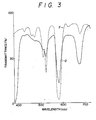
- Fig. 3 is a graph showing the light transmittance of the resin of this invention in the wavelength range of visible light.
- the monomer mixture which is used in this invention for the formation of a copolymer comprises (i) at least one monomer selected from the group consisting of alkyl methacrylates having alkyl groups of 1 to 4 carbon atoms and styrene and (ii) at least one copolymerizable unsaturated carboxylic acid or a salt thereof selected from the group consisting of acrylic acid; methacrylic acid and neodymium salts thereof.
- the monomer component (i) is an alkyl methacrylate and/or styrene, it is desired to be an alkyl methacrylate.
- alkyl methacrylate examples include methyl methacrylate, ethyl methacrylate, n-propyl methacrylate, isopropyl methacrylate, n-butyl methacrylate, sec -butyl methacrylate and tert -butyl methacrylate.
- methyl methacrylate proves particularly desirable.
- copolymerizable unsaturated carboxylic acid or salt thereof (ii) include acrylic acid, methacrylic acid, neodymium acrylate and neodymium methacrylate. Methacrylic acid and neodymium methacrylate are preferred to the other examples.
- an additional copolymerizable monomer may - be used in a proportion not so much as to impair the transparency of the produced resin.
- the copolymerizable monomer include hydroxyalkyl acrylates such as 2-hydroxyethyl acrylate, 2-hydroxypropyl acrylate, 3-hydroxypropyl acrylate, 4-hydroxybutyl acrylate and 2-hydroxy-3-chloropropyl acrylate; hydroxyalkyl methacrylates such as 2-hydroxyethyl methacrylate, 2-hydroxypropyl methacrylate, 3-hydroxypropyl methacrylate, 4-hydroxybutyl methacrylate and 2-hydroxy-3-chloropropyl methacrylate; alkyl acrylates such as methyl acrylate, ethyl acrylate, n-propyl acrylate, isopropyl acrylate, n-butyl acrylate and 2-ethylhexyl acrylate; cyclohexyl
- saturated or unsaturated organic carboxylic acid substituted or unsubstituted with a hydroxyl group and having 6 to 21 carbon atoms include aliphatic saturated carboxylic acids such as caproic acid, octanoic acid, 2-ethylhexanoic acid, perlargonic acid, capric acid, lauric acid, myristic acid, palmitic acid, stearic acid, adipic acid, sebacic acid, monoethyl adipate and monomethyl sebacate; aliphatic unsaturated carboxylic acids such as oleic acid, elaidic acid, linolenic acid, linoleic acid, ricinoleic acid and ricinelaidic acid; alicyclic carboxylic acids such as cyclohexane carboxylic acid and naphthenic acid; and benzoic acid, phthalic acid, isophthalic acid, terephthalic acid, toluilic acids, trimellitic acid,
- aliphatic carboxylic acids are desirable.
- saturated aliphatic carboxylic acids and particularly unsubstituted saturated aliphatic carboxylic acids are most desirable.
- those having 6 to 12 carbon atoms are preferred choices.
- the neodymium-containing transparent resin contemplated by the present invention is obtained by mixing the monomer mixture comprising the aforementioned components (a) and (b) with a radical polymerization initiator and subsequently allowing the resultant reaction mixture to undergo reaction at a temperature in the range of 5° to 140°C, preferably 50° to 120°C, for a period of 1 to 20 hours, preferably 2 to 10 hours.
- the radical polymerization initiator is used generally in the range of 0.0001 to 1% by weight, preferably 0.001 to 0.5% by weight, based on the combined amount of the monomers used.
- radical polymerization initiator examples include lauroyl peroxide, tertbutyl peroxyisopropyl carbonate, benzoyl peroxide, dicumyl peroxide, tert -butylperoxy acetate, tert -butylperoxy benzoate, tert -butylperoxy isobutyrate, di-tert -butyl peroxide and 2,2'-azobisisobutyronitrile.
- the carboxyl groups contained in the copolymer (A) of the monomer component of (i) with the monomer component of (ii) may exist as free carboxyl groups or neutralized carboxyl groups combined with neodymium.
- the other component (B), it is inferred, also contains its carboxyl groups in the form of free organic carboxylic acids or neodymium salts, and the resin may even contain neodymium having the valency of 3 in a neutralized state as combined with the carboxyl groups possessed by the aforementioned copolymer and the carboxyl groups possessed by the aforementioned organic carboxylic acids.
- x stand for the ratio of the number of carboxyl groups possessed by the aforementioned organic carboxylic acids and salts thereof to the total number of carboxyl groups possessed by the acrylic acid, methacrylic acid and salt units thereof .present in the aforementioned copolymer and carboxyl groups possessed by the aforementioned organic ' carboxylic acids and salts thereof and y for the ratio of the number of carboxyl groups participating in neutralization of neodymium and consequent formation of a salt thereof to the aforementioned total number of carboxyl groups, and the range in which x and y satisfy any of the aforementioned formulas I, II and III will be as shown in Fig. 2.
- the neodymium-containing resin composition is transparent only when x and y fall in this range (the hatched portion). When they deviate from this range, the produced resin composition cannot manifest the effect of this invention because the transparency thereof is seriously impaired or the neodymium content thereof is notably lowered.
- the aforementioned transparent resin of the present invention when used as an optical resin material such as, for example, a material for the front panel or coating material for a color cathode-ray tube, it may incorporate, when necessary, 0 to 0.5% by weight, more desirably 0.0001 to 0.5% by weight, -and most desirably 0.0003 to 0.1% by weight, based on the transparent resin, of coloring agents capable of absorbing the light in at least one of the four wavelength ranges of 380 to 420 nm, 480 to 530 nm, 560 to 610 nm and 640 to 780 nm and hardly capable or totally incapable of absorbing the visible light of the wavelength ranges excluding those mentioned above, so as to supplement the selective absorption by the aforementioned neodymium salts or enable the resin to provide selective absorption in the visible light wavelength ranges in which the aforementioned neodymium salts provide no absorption.
- Coloring agents which have the capability mentioned above are dystuffs, pigments and ultraviolet absorbers indicated herein below. These coloring agents can be incorporated in the monomer mixture so that it may be uniformly dispersed in the resin which is produced by the subsequent copolymerization of the monomer mixture.
- Examples of the coloring agents having a main absorption in the wavelength range of 380 to 420 nm are ultraviolet absorbers including salicylic esters such as phenyl salicylate and paratert- butylphenyi salicylate; benzotriazoles such as 2-(2'-hydroxy-5'-methylphenyl) benzo triazole and 2-(2'-hydroxy-3'-, 5'-di-tert-butylphenyl-5-chlorobenzotriazole; and benzophenones such as 2-hydroxy-4 methoxybenzophenone, 2-hydroxy-4-methoxy-4'-chlorobenzophenone and 2,2'-dihyd- roxy-4-octoxybenzophenone.
- salicylic esters such as phenyl salicylate and paratert- butylphenyi salicylate
- benzotriazoles such as 2-(2'-hydroxy-5'-methylphenyl) benzo triazole and 2-(2'-hydroxy-3'-, 5'-
- coloring agents having a main absorption in the wavelength range of 480 to 530 nm are red coloring materials including Hostasol Red GG @ (made by Hoechst), Paliogen Red 3730 @ (made by BASF) Diaresin Red HS @ (made by Mitsubishi Chemical Industry), Diaresin Red S @ (made by Mitsubishi Chemical Industry), Ama- plast Pink P4B @ (made by American Aniline) and Orange C-type O (made by Hercules).
- Examples of the coloring agents having a main absorption in the wavelength range of 640 to 780 nm are blue coloring materials including Euvinyl Blue 702 @ (made by BASF), Oil Blue 615 @ (made by Orient Chemical Industry), Macrolex Green 513 ® (made by Bayer), Seikagen-O-Blue GK-1200 ® (made by Dainichi-Seika Industry) and Sumiton- cyanin Blue HB-1 9 (made by Sumitomo Chemical Industry).
- the coloring agents having a main absorption in the wavelength range of 560 to 610 nm have no proper example.
- those which also have absorption in the wavelength range of 560 to 610 nm may constitute examples of the coloring agents under discussion.
- Euvinyl Blue 702 @ (made by BASF) is one such coloring agent.
- neodymium oxide Forty (40) g of neodymium oxide, 220 g of octanoic acid and 220 g of water were mixed. The resultant mixture in the form of suspension was stirred as refluxed at 85°C for three hours and cooled. The resultant reaction mixture was left standing at rest and separated into a water phase and an organic phase. The organic phase was poured into acetone of a volume about 20 times as large. The salt consequently precipitated therein was washed with acetone and was dried under a vacuum, to afford neodymium octanoate monohydrate. The yield was 92%.
- a uniform solution was obtained by mixing 12 g of neodymium methacrylate, 28 g of neodymium octanoate monohydrate, 35 g of styrene, 21 g of methacrylic acid and 4 g of neopentyl glycol dimethacrylate.
- This uniform solution with 0.2 g of tertbutylperoxy isobutyrate additionally dissolved therein, was poured into a cell formed by assembling glass sheets and a gasket made of vinyl chloride resin. The mixture was deaerated under a vacuum and then subjected to polymerization at 70°C for two hours, at 80°C for five hours and then at 120°C for one hour.
- the cell was disassembled to obtain a resin sheet 2 mm in thickness.
- This resin sheet was found to have a total light transmittance of 72%, a haze of 0.8%, and a neodymium content of 11.0% by weight.
- the spectral transmittance of visible light was as shown in Fig. 3 (curve E).
- Example 2 In a mixture consisting of 75.2 g of methyl methacrylate 12.0 g of ethyl acrylate and 2.5 g of methacrylic acid, there was dissolved 10.3 g of neodymium oleate. Then by following the procedure of Example 1, the resultant mixture was subjected to polymerization to afford a resin sheet 3 mm in thickness. The resin sheet was found to have a total light transmittance of 85%, a haze of 2.5%, and a neodymium content of 1.5% by weight.
- This resin sheet was found to have a total light transmittance of 68%, a haze of 2.3% and a -neodymium content of 2.0% by weight.
- the spectral transmittance of visible light was as shown in Fig. 3 (curve D).
- a uniform solution was obtained by mixing 4.9 g of neodymium octanoate monohydrate, 0.9 g of octanoic acid, 7.8 g of neodymium methacrylate, 1.3 g of methacrylic acid, 25.1 g of methyl methacrylate and 60.0 g of styrene. Then, by following the procedure of Example 3, the resultant solution was subjected to polymerization, to afford a resin sheet 3 mm in thickness. This resin sheet was found to have a total light transmittance of 82%, a haze of 0.4%, and a neodymium content of 4.0% by weight.
- the present invention is directed to a neodymium-containing transparent resin composition
- a neodymium-containing transparent resin composition which comprises (A) a copolymer of (i) at least one monomer selected from the group consisting of alkyl methacrylates having alkyl groups of 1 to 4 carbon atoms and styrene with (ii) at least one copolymerizable unsaturated carboxylic acid or a salt thereof selected from the group consisting of acrylic acid, methacrylic acid and neodymium salts thereof and (B) at least one compound selected from the group consisting of saturated or unsaturated organic carboxylic acids substituted or unsubstituted with a hydroxyl group and having 6 to 21 carbon atoms and neodymium salts thereof, which transparent resin is characterized by having a neodymium content in the range of 0.3 to 20% by weight, having the number of carboxyl groups possessed by the aforementioned organic carboxylic acids and salts thereof in
- this resin composition enjoys outstanding transparency and yet capable of providing selective absorption of the light of wavelength ranges other than the wavelengths of the three primary colors owing to neodymium contained therein.
- the resin obtained by this invention is an organic substance and, therefore, permits free incorporation therein of coloring agents capable of absorbing the light of the wavelength ranges other than those of the three primary colors and hardly capable or totally incapable of absorbing the visible light in wavelength ranges of the three primary colors.
- incorporation of such coloring agents adds further to the highly selective absorption offered by the resin of the invention.
- This invention further is directed to a method for the manufacture of a neodymium-containing transparent resin composition, which involves polymerizing a mixture comprising (a) a monomer mixture of (i) at least one monomer selected from the group consisting of alkyl methacrylates having alkyl groups of 1 to 4 carbon atoms and styrene with (ii) at least one copolymerizable unsaturated carboxylic acid or a salt thereof selected from the group consisting of acrylic acid, methacrylic acid and neodymium salts thereof and (b) at least one compound selected from the- group consisting of saturated or unsaturated organic carboxylic acids substituted or unsubstituted with a hydroxyl group and having 6 to 21 carbon atoms, and neodymium salts thereof, which mixture has a neodymium content in the range of 0.3 to 20% by weight, has the number of carboxyl groups possessed by the aforementioned organic carboxylic acids and salts thereof in a ratio of
Landscapes
- Chemical & Material Sciences (AREA)
- Health & Medical Sciences (AREA)
- Chemical Kinetics & Catalysis (AREA)
- Medicinal Chemistry (AREA)
- Polymers & Plastics (AREA)
- Organic Chemistry (AREA)
- Compositions Of Macromolecular Compounds (AREA)
- Addition Polymer Or Copolymer, Post-Treatments, Or Chemical Modifications (AREA)
Claims (19)





Applications Claiming Priority (5)
| Application Number | Priority Date | Filing Date | Title |
|---|---|---|---|
| JP132119/82 | 1982-07-30 | ||
| JP57132119A JPS5923306A (ja) | 1982-07-30 | 1982-07-30 | 光学樹脂材料 |
| JP90607/83 | 1983-05-25 | ||
| JP58090607A JPS59217705A (ja) | 1983-05-25 | 1983-05-25 | ネオジム含有透明樹脂およびその製造方法 |
| JP3004517A JPH069846A (ja) | 1983-05-25 | 1991-01-18 | ネオジム含有透明樹脂およびその製造方法 |
Publications (3)
| Publication Number | Publication Date |
|---|---|
| EP0100519A2 EP0100519A2 (de) | 1984-02-15 |
| EP0100519A3 EP0100519A3 (en) | 1985-05-02 |
| EP0100519B1 true EP0100519B1 (de) | 1988-01-07 |
Family
ID=27276315
Family Applications (1)
| Application Number | Title | Priority Date | Filing Date |
|---|---|---|---|
| EP83107358A Expired EP0100519B1 (de) | 1982-07-30 | 1983-07-27 | Neodymium enthaltendes durchsichtiges Harz und Verfahren zu seiner Herstellung |
Country Status (3)
| Country | Link |
|---|---|
| US (1) | US4504616A (de) |
| EP (1) | EP0100519B1 (de) |
| DE (1) | DE3375150D1 (de) |
Cited By (3)
| Publication number | Priority date | Publication date | Assignee | Title |
|---|---|---|---|---|
| WO1989008682A1 (fr) * | 1988-03-14 | 1989-09-21 | Tomsky Gosudarstvenny Universitet Imeni V.V.Kuibys | Composition polymerisee permettant d'obtenir des materiaux luminescents et a absorption de rayonnement selective |
| EP0491962A4 (en) * | 1990-07-11 | 1993-01-13 | Mitsubishi Rayon Co., Ltd. | Resin composition and optical article produced therefrom |
| US5611965A (en) * | 1994-09-07 | 1997-03-18 | Kureha Kagaku Kogyo Kabushiki Kaisha | Plastic optical filter |
Families Citing this family (7)
| Publication number | Priority date | Publication date | Assignee | Title |
|---|---|---|---|---|
| US5154764A (en) * | 1990-04-10 | 1992-10-13 | Mooney Chemicals, Inc. | Neodymium carboxylates as driers in high-solids coating compositions |
| US5672655A (en) * | 1994-09-13 | 1997-09-30 | Kureha Kagaku Kogyo Kabushiki Kaisha | Plastic optical material and production process thereof |
| US5759448A (en) * | 1995-11-08 | 1998-06-02 | Kureha Kagaku Kogyo Kabushiki Kaisha | Plastic optical material |
| WO1999001883A1 (en) * | 1997-07-01 | 1999-01-14 | Hna Holdings, Inc. | Video display substrates with built-in spectroscopically tuned multi-bandpass filters |
| JP2002279680A (ja) * | 2001-03-21 | 2002-09-27 | Konica Corp | 光ピックアップ装置、光ピックアップ装置の集光光学系及び光情報記録再生方法、 |
| US7551546B2 (en) * | 2002-06-27 | 2009-06-23 | Nortel Networks Limited | Dual-mode shared OFDM methods/transmitters, receivers and systems |
| US7790290B2 (en) * | 2005-01-18 | 2010-09-07 | Hopnic Laboratory Co., Ltd. | Intermediate film of laminated safety glass with antiglare function and novel neodymium compound |
Family Cites Families (3)
| Publication number | Priority date | Publication date | Assignee | Title |
|---|---|---|---|---|
| JPS55142045A (en) * | 1979-04-20 | 1980-11-06 | Mitsubishi Rayon Co Ltd | Methacrylic resin material having excellent solar radiation absorptivity, and its preparation |
| US4405881A (en) * | 1980-05-29 | 1983-09-20 | Mitsubishi Denki Kabushiki Kaisha | Color cathode ray tube including Nd2 O3 and Cr2 O3 in face glass |
| JPS58444A (ja) * | 1981-06-22 | 1983-01-05 | Nissan Motor Co Ltd | ワイパ−スイツチに連動するパワ−ウインド用作動装置 |
-
1983
- 1983-07-27 EP EP83107358A patent/EP0100519B1/de not_active Expired
- 1983-07-27 DE DE8383107358T patent/DE3375150D1/de not_active Expired
- 1983-07-28 US US06/518,078 patent/US4504616A/en not_active Expired - Fee Related
Cited By (4)
| Publication number | Priority date | Publication date | Assignee | Title |
|---|---|---|---|---|
| WO1989008682A1 (fr) * | 1988-03-14 | 1989-09-21 | Tomsky Gosudarstvenny Universitet Imeni V.V.Kuibys | Composition polymerisee permettant d'obtenir des materiaux luminescents et a absorption de rayonnement selective |
| EP0491962A4 (en) * | 1990-07-11 | 1993-01-13 | Mitsubishi Rayon Co., Ltd. | Resin composition and optical article produced therefrom |
| US5306746A (en) * | 1990-07-11 | 1994-04-26 | Mitsubishi Rayon Co., Ltd. | Resin compositions and optical products making use thereof |
| US5611965A (en) * | 1994-09-07 | 1997-03-18 | Kureha Kagaku Kogyo Kabushiki Kaisha | Plastic optical filter |
Also Published As
| Publication number | Publication date |
|---|---|
| US4504616A (en) | 1985-03-12 |
| EP0100519A3 (en) | 1985-05-02 |
| DE3375150D1 (en) | 1988-02-11 |
| EP0100519A2 (de) | 1984-02-15 |
Similar Documents
| Publication | Publication Date | Title |
|---|---|---|
| US4504616A (en) | Neodymium-containing transparent resin and method for manufacture thereof | |
| US4686791A (en) | Agricultural film structure | |
| DE69406258T2 (de) | Transparentes Harz und Kunststofflinse | |
| US5883163A (en) | Light conducting resin plate | |
| US4563494A (en) | Synthetic resin composition and process for producing the same | |
| JPH07234304A (ja) | 光拡散板 | |
| US5306746A (en) | Resin compositions and optical products making use thereof | |
| JPWO2002033447A1 (ja) | 光学材料用組成物、光学材料及びプラスチックレンズ | |
| EP1182467B1 (de) | Optisches Material | |
| JPH10221523A (ja) | 光学フィルターおよびこれを備えた装置、眼鏡レンズ、熱線吸収フィルター並びに光ファイバー | |
| JP2648224B2 (ja) | 光学フィルターなどの光学製品 | |
| US5476906A (en) | Impact resistant Fresnel lens | |
| JPH0579684B2 (de) | ||
| JPH0414707B2 (de) | ||
| JP3065152B2 (ja) | 光選択機能性樹脂組成物 | |
| JPS63291001A (ja) | 透過型スクリ−ン用光拡散板 | |
| JPS5923306A (ja) | 光学樹脂材料 | |
| JPH0552325B2 (de) | ||
| JPH11160529A (ja) | 光学フィルターおよびこれを備えた装置、熱線吸収フィルター、光ファイバー並びに眼鏡レンズ | |
| JP2558930B2 (ja) | 光選択機能性樹脂組成物 | |
| JP3366353B2 (ja) | ネオジム含有透明アクリル樹脂組成物 | |
| JP3843394B2 (ja) | 選択的光吸収性を有する透明光学材料とその製造方法 | |
| EP0097527B1 (de) | Verfahren zur Herstellung von Selektivlicht absorbierenden Methacrylatharzen | |
| EP0702249B1 (de) | Optisches Kunststoff-Material und Herstellungsverfahren dafür | |
| JPH02202504A (ja) | 耐熱乳半色メタクリル樹脂及びその製造方法 |
Legal Events
| Date | Code | Title | Description |
|---|---|---|---|
| PUAI | Public reference made under article 153(3) epc to a published international application that has entered the european phase |
Free format text: ORIGINAL CODE: 0009012 |
|
| AK | Designated contracting states |
Designated state(s): DE FR GB NL |
|
| PUAL | Search report despatched |
Free format text: ORIGINAL CODE: 0009013 |
|
| AK | Designated contracting states |
Designated state(s): DE FR GB NL |
|
| 17P | Request for examination filed |
Effective date: 19850601 |
|
| 17Q | First examination report despatched |
Effective date: 19860409 |
|
| GRAA | (expected) grant |
Free format text: ORIGINAL CODE: 0009210 |
|
| AK | Designated contracting states |
Kind code of ref document: B1 Designated state(s): DE FR GB NL |
|
| REF | Corresponds to: |
Ref document number: 3375150 Country of ref document: DE Date of ref document: 19880211 |
|
| ET | Fr: translation filed | ||
| PLBE | No opposition filed within time limit |
Free format text: ORIGINAL CODE: 0009261 |
|
| STAA | Information on the status of an ep patent application or granted ep patent |
Free format text: STATUS: NO OPPOSITION FILED WITHIN TIME LIMIT |
|
| 26N | No opposition filed | ||
| PGFP | Annual fee paid to national office [announced via postgrant information from national office to epo] |
Ref country code: GB Payment date: 19920505 Year of fee payment: 10 |
|
| PGFP | Annual fee paid to national office [announced via postgrant information from national office to epo] |
Ref country code: FR Payment date: 19920716 Year of fee payment: 10 |
|
| PGFP | Annual fee paid to national office [announced via postgrant information from national office to epo] |
Ref country code: NL Payment date: 19920731 Year of fee payment: 10 |
|
| PGFP | Annual fee paid to national office [announced via postgrant information from national office to epo] |
Ref country code: DE Payment date: 19920916 Year of fee payment: 10 |
|
| PG25 | Lapsed in a contracting state [announced via postgrant information from national office to epo] |
Ref country code: GB Effective date: 19930727 |
|
| PG25 | Lapsed in a contracting state [announced via postgrant information from national office to epo] |
Ref country code: NL Effective date: 19940201 |
|
| NLV4 | Nl: lapsed or anulled due to non-payment of the annual fee | ||
| GBPC | Gb: european patent ceased through non-payment of renewal fee |
Effective date: 19930727 |
|
| PG25 | Lapsed in a contracting state [announced via postgrant information from national office to epo] |
Ref country code: FR Effective date: 19940331 |
|
| PG25 | Lapsed in a contracting state [announced via postgrant information from national office to epo] |
Ref country code: DE Effective date: 19940401 |
|
| REG | Reference to a national code |
Ref country code: FR Ref legal event code: ST |