EP0099263A2 - Digitalrechner zum Ausführen von Mehrfachbefehlssätzen in einer simultan ineinandergreifenden Weise - Google Patents
Digitalrechner zum Ausführen von Mehrfachbefehlssätzen in einer simultan ineinandergreifenden Weise Download PDFInfo
- Publication number
- EP0099263A2 EP0099263A2 EP83304008A EP83304008A EP0099263A2 EP 0099263 A2 EP0099263 A2 EP 0099263A2 EP 83304008 A EP83304008 A EP 83304008A EP 83304008 A EP83304008 A EP 83304008A EP 0099263 A2 EP0099263 A2 EP 0099263A2
- Authority
- EP
- European Patent Office
- Prior art keywords
- instruction
- instructions
- address
- processor
- code
- Prior art date
- Legal status (The legal status is an assumption and is not a legal conclusion. Google has not performed a legal analysis and makes no representation as to the accuracy of the status listed.)
- Granted
Links
Images




Classifications
-
- G—PHYSICS
- G06—COMPUTING OR CALCULATING; COUNTING
- G06F—ELECTRIC DIGITAL DATA PROCESSING
- G06F8/00—Arrangements for software engineering
- G06F8/40—Transformation of program code
- G06F8/41—Compilation
- G06F8/44—Encoding
- G06F8/445—Exploiting fine grain parallelism, i.e. parallelism at instruction level
-
- G—PHYSICS
- G06—COMPUTING OR CALCULATING; COUNTING
- G06F—ELECTRIC DIGITAL DATA PROCESSING
- G06F9/00—Arrangements for program control, e.g. control units
- G06F9/06—Arrangements for program control, e.g. control units using stored programs, i.e. using an internal store of processing equipment to receive or retain programs
- G06F9/30—Arrangements for executing machine instructions, e.g. instruction decode
- G06F9/34—Addressing or accessing the instruction operand or the result ; Formation of operand address; Addressing modes
- G06F9/35—Indirect addressing
Definitions
- This invention relates to computer-implemented methods of transforming assignment statements of a relatively high level source language into relatively low level object language instructions; and it relates to digital computers for executing the low level object language instructions.
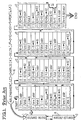
- FIG. 1 One prior art method of transforming a high level source language assignment statement into low level object language instructions is illustrated schematically in Figure 1.
- reference numeral 10 indicates the assignment statement that is to be transformed
- reference numeral 11 indicates the digital computer which receives and transforms statement 10
- reference numeral 12 indicates the set of low level object language instructions into which statement 10 is transformed
- reference numerals 11-147 indicate the individual instructions in set 12.
- Assignment statements are part of high level languages called FORTRAN, ALGOL, PASCAL, COBOL, C, PL1, and PL/M-80. They are written by an individual called a programmer, and they provide the means by which the programmer specifies the operations that he desires the computer to perform.
- a characteristic feature of assignment statements is that they assign a value to a variable; and the assigned value is expressed as a mathematical function of one or more other variables and/or constants.
- the variable ABLE is assigned a value that is expressed as: BAKER(J,I)+CHARLIE(K)-DELTA(J 2 +I+3)+EASY-5+FOX(I,J,K) where BAKER, CHARLIE, DELTA, EASY, and FOX also are variables.
- Digital computers generally do not execute assignment statements directly because their format is too complex. Instead, assignment statements are transformed prior to their execution into lower level object language instructions having a simpler format. This transformation is performed by a computer-implemented process under the direction of a program called a compiler.
- compiler program 13 is indicated by reference numeral 13.
- Compiler program 13 is stored in a memory 14; and it directs computer 11 to carry out all of the steps by which the high level language statements are transformed into the low level language instructions.
- One of the tasks of compiler 13 is to provide memory addresses for each of the variables in the assignment statement.
- instructions 11-19 compute the address of BAKEH(J,I); instructions I11-I14 compute the address of CHARLIE(K); instructions 117-123 compute the address of DELTA(J 2- I+3); and instructions 130-143 compute the address of FOX(I,J,K).
- Variables BAKER, CHARLIE, DELTA, and FOX are all indexed variables. As such, they each represent an N-dimensional matrix where N is the number of indices associated with the variable.
- BAKER has two indices, J and I, so it represents a two-dimensional matrix;
- CHARLIE and DELTA have one indice, so they each represent a one-dimensional matrix;
- FOX has three indices, I, J, K, so it represents a three-dimensional matrix.
- compiler 13 Another task of compiler 13 is to generate low level object language instructions which perform arithmetic operations as specified in statement 10 on the addressed variables.
- Figure 1 shows that after variable B is addressed, instruction I10 fetches variable BAKER; and after variable CHARLIE is addressed, instructions I15-I16 add variable CHARLIE to variable BAKER.
- address calculations for the variables DELTA, EASY, and FOX respectively are followed by instructions 124-125, 127-129, and 144-147 which arithmetically combine those variables as specified.in statement 10.
- compiler-generated instructions I1-I47 are executed one at a time in a serial fashion, which in turn adversely limits their minimal execution time.
- a primary object of the invention is to provide an improved digital computer system for executing relatively low level language instructions representing higher level language statements.
- Another object of the invention is to provide a digital computer system for executing multiple low level language instruction sets in an interleaved-simultaneous fashion to achieve an improved execution speed.
- a digital computer system for executing instructions of a first set in an interleaved fashion with- instructions of second and third sets, the latter two of which are executed at the same time.
- One embodiment of such computer system includes a means for fetching and decoding an instruction of the first set to determine if it references two encoded addresses having the same code indicating that the respective addresses are of instructions in the second and third sets; a means for temporarily suspending the execution of the instruction in the first set if the encoded addresses have said same code, and simultaneously executing the instructions of the second and third sets at the encoded addresses to compute the addresses of two variables; and a means for continuing the execution of the instruction in the first set after the instructions in the second and third sets have been simultaneously executed by performing a mathematical operation on the two variables as specified by the instruction of the first set.
- Another embodiment of such digital computer system includes a means for fetching and decoding an instruction of the first set to determine if it references one encoded address having a first code indicating the address is of a variable and another encoded address having a second code indicating the address is of instructions in the second set that compute the address of another variable; a means for temporarily suspending the execution of the instruction of the first set if the encoded addresses have the first and second code and executing the instructions of the second set to compute the address of the other variable; and a means for continuing the execution of the instruction in the first set after the instructions of the second set have been executed by performing a mathematical operation specified by the one instruction on the variables.
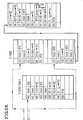
- Those steps which compiler program 21 direct computer 11 to perform include the generation of a NAME TABLE, and the generation of three different sets of low level object language instructions. These three sets of object language instructions are identified in Figure 2 as X-CODE, Y-CODE, and Z-CODE instructions; and they are generated such that the X-CODE instructions are executable in an interleaved fashion with Y-CODE and Z-CODE instructions, the latter two of which are executable at the same time.
- NTE NAME TABLE ENTRIES
- entry 22 corresponds to the variable CHARLIE(K).
- Entry 22 has a code of 11 and an address of Z10. This indicates that address Z10 is the beginning address of a set of instructions which compute the address of the variable CHARLIE(K).
- entry 26 corresponds to the variable EASY; and it has a code of 00 and an address of Y15. This indicates that address Y15 is the address of the variable EASY.
- a code of 11 is assigned to a NAME TABLE ENTRY if the variable corresponding to that entry is indexed.
- entries 22, 23, 24, and 25 all have codes of 11 since the corresponding variables of CHARLIE, BAKER, FOX, and DELTA are all indexed.
- the code of 00 preferably is assigned to an entry in the NAME TABLE if the corresponding variable is non-indexed.
- entries 26, 27, 28, and 29-all have codes of 00 since the corresponding variables of EASY, I, J, and K are all non-indexed.
- compiler 21 directs computer 11 to generate the Y-CODE and Z-CODE instructions.
- One set of these instructions is generated for each entry in the NAME TABLE having a code of 11.
- These instructions are stored in respective memories at the addresses given in the NAME TABLE and they compute the address of the corresponding variables.
- entry 22 in the NAME TABLE has a code of 11. Also, that entry corresponds to the variable CHARLIE(K) and it has an address of Z10. So compiler 21 directs computer 11 to generate object code instructions for storage in memory Z beginning at address 10 which instructions compute the address of the variable CHARLIE(K).
- entry 23 in the NAME TABLE has an 11 code, and corresponds to-the variable BAKER(J,I). Also, it has an address Y15, so compiler 21 directs computer 11 to generate instructions in memory Y beginning at address 10 which instructions compute the address of the variable BAKER(J,I). In like manner, compiler 21 directs computer 11 to generate instructions in memory Z beginning at address 30 which compute the address of the variable FOX(I,J,K); and it directs computer 11 to generate instructions beginning at address 40 in memory Y which compute the address of the variable DELTA(J 2 -I+3).
- the compiler As part of each X-CODE and Y-CODE instruction set, the compiler generates a pair of instructions which sends the computed address to a processor P X' and then returns control back to a predetermined state.
- This pair of instructions is located at the end of the instruction set. For example, in the instruction set beginning at address 10 in memory Y, this pair of instructions is identified as 119 and I20.
- compiler 21 directs computer 11 to generate the X-CODE instructions.
- instructions are generated which combine pairs-of variables that occur in the assignment statement that is being compiled and which store the result in a temporary location.
- other X-CODE instructions are generated which combine pairs of the intermediate results in the manner specified by the assignment statement.
- instruction Xl combines the variables BAKER and CHARLIE and stores the result in a temporary location Tl; instruction X2 combines the variables DELTA and FOX and stores the result in a temporary location T2; and instruction X3 combines the remaining variable EASY with the constant "5" and stores the result in a temporary location X3.
- instruction X4 and X5 are combined in pairs by instructions X4 and X5 to reach the end result; and it is stored at the address of the variable ABLE.
- Those X-CODE instructions which combine pairs of variables identify the variables that are being combined by referencing appropriate entries in the NAME TABLE.
- instruction Xl combines the variables BAKER and CHARLIE; and so it references NAME TABLE ENTRIES 22 and 23.
- instruction X2 combines the variables DELTA and F O X; so it references NAME TABLE ENTRIES 24 and 25.
- instruction X3 combines the variable EASY with a constant; and so it references NAME TABLE ENTRY 26.
- X-CODE instructions are generated such that, whenever it is possible, they combine pairs of variables that are indexed. For example, in assignment statement 10 - there are a total of four indexed variables, one pair of which is combined by instruction Xl and the other pair of which is combined by instruction X2. Also, the pair of indexed variables referenced in instruction X2 is combined even though they are separated in statement 10 by the non-indexed variable EASY and the constant "5".
- every X-CODE instruction has a very regular format in which two items are combined and stored as another item, and in which each item may be a reference to a NAME TABLE ENTRY or a TEMPORARY LOCATION or a CONSTANT.
- each item may be a reference to a NAME TABLE ENTRY or a TEMPORARY LOCATION or a CONSTANT.
- the nature of a particular item is indicated in the X-CODE instruction by concatinating identifier bits to the item.
- an item in an X -CODE instruction that references a NAME TABLE ENTRY does so by including the location of the desired entry as part of that item.
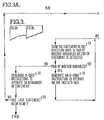
- compiler 13 directs computer 11 to read a statement from the source code. This step is indicated by reference numeral 41. Thereafter, the compiler directs computer 11 to scan the statement that was read until either a variable or the end of the statement is detected. This step is indicated by reference numeral 42.
- compiler 13 directs computer 11 to scan the NAME TABLE to determine if that same variable had previously been assigned an entry. If an entry already exists, compiler 13 directs computer 11 to continue scanning the statement for another variable. These steps are indicated by reference numerals 43 and 44.
- compiler 13 directs computer 11 to generate an entry. As part of this process, compiler 13 directs computer 11 to determine whether or not the variable is indexed. If the variable is not indexed, then compiler 13 directs computer 11 to generate a code-address pair in which the address is of the variable itself and the code has a value of 00. This step is indicated by reference numerals 45 and 46.
- compiler 13 directs computer 11 to generate Y-CODE or Z-CODE instructions which when executed compute the address of the indexed variable. Also, compiler 13 directs computer 11 to generate a code-address pair in which the address is of the beginning of the Y-CODE or Z-CODE instructions, and the code has a value of 11. This step is indicated by reference numerals 47 and 48.
- compiler 13 directs computer 11 to re-scan the statement and detect a pair of indexed variables. This step is indicated by reference numeral 49.
- compiler 13 directs computer 11 to generate an X-CODE instruction which combines those variables in the manner prescribed by the assignment statement and temporarily store the results. Thereafter, computer 11 continues to scan the statement until either another pair of indexed variables is detected (in which case another X-CODE instruction is generated which combines that pair of indexed variables), or until the end of the statement is detected. These steps are indicated by reference numerals 50 and 51.
- compiler 13 directs computer 11 to generate X-CODE instructions which combine any temporarily stored results with any non-indexed variables and constants in the statement. This combining is performed on two items at a time so that the format of each X-CODE instruction remains regular. Then the last X-CODE instruction stores the end result at the address of the variable that is being assigned a new value. This step is indicated by reference numeral 52.
- compiler 13 directs computer 11 to determine if there are any other statements remaining to be processed in the high level source language. If another statement remains, the entire sequence is repeated; otherwise, the compilation process ends. This step is indicated by reference numeral 53.
- a computer listing of a compiler for performing the above-described steps is included herein as Appendix 1.
- This compiler is written in a quasi-Algol language; and it would be stored in a machine-readable fashion in a memory 20, such as a magnetic disk, from which it would be read into computer 11 as needed. Suitable methods for recording the compiler in the memory 20 are described in U.S. Patents 3,108,261 and 4,007,335 and 4,234,897.
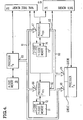
- bus 60 intercouples respective output ports 62 and 63 on processors Py Zl and Py Z2 to an input port 64 on processor P X '.
- bus 61 intercouples an output port 65 on processor P x to respective input ports 66, 67, and 68 on processors P YZ1 , P YZ2 , and P X '.
- input ports 64 and 68 each include a queue for buffering several messages from the buses 60 and 61.
- Memories 70-76 are also included in the digital computer of Figure 4.
- Memory 70 contains the X-CODE instructions and is coupled to processor P X .
- Memories 71 and 72 respectively contain the Y-CODE-and Z-CODE instructions and are coupled to processor Py Zl .
- memories 73 and 74 respectively contain the Y-CODE and Z-CODE instructions and are coupled to processor P YZ2 .
- Memory 75 contains the NAME TABLE and is coupled via respective buses to processors P X , P YZ1 and P YZ2 . And lastly, memory 76 contains data and is coupled via respective buses to processors P YZ1 , P YZ2 , and P X '. All of the above-mentioned buses between the memories 70-76 and the processors are illustrated in Figure 4 merely as arrowed lines.
- each of the processors P X , P YZ1 . P YZ2 , and P X is of the type described in U.S. Patent 4,327,355 entitled “Digital Device with Interconnect Matrix", or are of the type described in co-pending application Serial Number 087,666 entitled “Digital Computer Having Programmable Structure” filed October 24, 1979, both of which are assigned to the assignee of the present application.
- each of the memories 70-77 is of the type described in U.S. Patent 4,262,298 entitled "RAM Having a Stabilized Substrate Bias and Low Threshold Narrow-Width Transfer Gate” which again is assigned to the assignee of the present application.
- Processors P X and P X ' operate during respective spaced-apart time intervals to share in the execution of each X -CODE instruction.
- processors Py Zl and P YZ2 operate in parallel between the time intervals in which processors Px and P X ' operate, and they execute respective Y-CODE and Z-CODE instructions. This operation will now be described in greater detail in conjunction with Figures 5A and 5B.
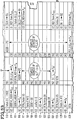
- Figures 5A and 5B are in the form of a chart having several rows and columns.
- the rows represent respective time intervals and are labeled tl, t2,...t40.
- four of the columns which are labeled IP X , IP YZ1 , IP YZ2 ' and IP X ', indicate the low level language instructions that are respectively executed by processors P X , P YZ1 , P YZ2 , and P X , during the various time intervals. Lying adjacent to those columns are four other columns which indicate how the low level language instructions are executed.
- Figures 5A and 5B the X-CODE, Y-CODE, and Z-CODE instructions that are listed are those which were generated during the compilation process of statement 10 in Figure 2. Inspection of Figures 5A and 5B shows that processor P X executes a portion of the compiled instruction Xl during time intervals tl-t6 while processor P X , executes the remaining portion of that same instruction during time intervals tll-t16.
- processors P YZ1 and P YZ2 are executing respective sets of Y-CODE and Z -CODE instructions. Specifically, processor Py Zl executes instructions Y10-Y20 during time intervals t5-tl5 while processor P YZ2 executes instructions Z10-Z15 during time intervals t7-t12.
- processor Px executes a portion of instruction X2 during time intervals t7-t16; while processor P X , executes the remaining portion of that instruction during time intervals t24-t30.
- processors P YZ1 and P YZ2 simultaneously execute separate Y-CODE and Z-CODE instructions.
- processor P YZ1 executes instructions Y40-Y48 during time intervals tl7 and t25; while processor P YZ2 executes instructions Z30-Z45 during time intervals t14-t29.
- processors P X , P YZ1 , P YZ2 , and P X execute the X-CODE, Y-CODE, and Z-CODE instructions.
- processor P X fetches instruction Xl.
- processor P X fetches the NAME TABLE ENTRY of the indexed variable B(J,I) that is referenced in instruction X1.
- processor P X determines that the NAME TABLE ENTRY for variable B(J,I) has a code of 11; and so processor P X sends the corresponding NAME TABLE ENTRY address over bus 60 to processor P YZ1 .
- _processor Py Zl receives the address sent by processor P X ; and during time interval t5, that address is loaded into a program counter. That address is of instruction Y10; and so, processor Py Zl executes instruction Y10 during the next time interval t5. Thereafter, processor Py Zl sequentially executes instructions Yll through Y18 during time intervals t6-tl3 to compute the address of the indexed variable B(J,I).
- processor P YZ1 sends the address of the variable B(J,I) to processor P X ,. Then, during time interval tl5, processor P YZ1 returns to a state where it is ready to receive another address from processor P X .
- processor Px continues to execute instruction Xl by fetching the NAME TABLE ENTRY of variable C(K). Then, during time interval t5, processor P X determines that the NAME TABLE ENTRY has the code of 11; and so it sends the corresponding NAME TABLE ENTRY address over bus 60 to processor P YZ2 .
- processor P YZ2 executes the addressed instruction, which is instruction Z10.
- processor P YZ2 sequentially executes instructions Z11-Z13 to compute the address of the indexed variable C(K). Then,.during time interval tll, processor P YZ2 sends the address of variable C(K) to processor P X ,; and during time interval t12 it returns to a state where it is ready to receive another address from processor P X .
- processor Px completed its operations on instruction Xl. So, during the next time interval t6, processor P x transfers instruction Xl via bus 60 to processor PX'. Thereafter, during time interval t7, processor P X returns to a state where it begins execution of the next X-CODE instruction.
- Processor P X receives instruction Xl from processor P X during time interval t6. But, processor P X , does not begin execution of instruction Xl until it receives an address from one of the processors Py Zl or P YZ2 . That occurs during time interval tll in which processor P X , receives the address of the variable C(K) from processor P YZ2 .
- processor P X fetches the variable C(K) from the data memory 77; and during time interval t13 it stores the result in a temporary register Rl. Then during time interval t14, processor P X , receives the address of the variable B(J,I) from processor P YZ1 .
- processor P X ' fetches the variable B(J,I). Then, in the next time interval t16, processor P X' receives the variable B(J,I), adds it to the variable C(K), and stores the result in register Rl. This addition operation is specified by the Xl instruction that was previously received by processor P X , from processor P x during time interval t6.
- processor P X completes the execution of instruction Xl. Consequently, during the next time interval of t17, processor P X' returns to a state where it is ready to receive another X-CODE instruction from processor P X .
- processor Px fetches the next X-CODE instruction which is instruction X2. Then, during time interval t8, processor P X fetches the NAME TABLE ENTRY of the variable FOX(I,J,K). Then in time interval t9, processor Px examines the NAME TABLE ENTRY that it fetched, determines that it has a 11 code, and attempts to send the address portion of the NAME TABLE ENTRY to one of the processors Py Zl or P YZ2 .
- processors P y Zl and PYZ2 are already busy computing respective addresses during time interval t9, they are not free to receive the address from processor P X .
- processor P x retries during the subsequent time intervals to send the address.
- processor P YZ2 completes its calculation of the address of variable C(K); and so it receives the NAME TABLE ENTRY address from processor P X .
- processor P YZ2 branches to the Z-CODE instructions that compute the address of the variable FOX(I,J,K).
- Processor P YZ2 executes these instructions during time intervals t14-t27.
- processor P YZ2 sends the computed address to processor P X ,; and during time interval t29, processor P YZ2 returns to a state where it is ready to begin execution of another Y-CODE or Z-CODE instruction set.
- processor P X continues the execution of instruction X2 by fetching the NAME TABLE ENTRY of the variable D(I 2- J+3). Thereafter, during time interval t14, processor P X determines that the fetched NAME TABLE ENTRY has an 11 code, and so it attempts to send the NAME TABLE ENTRY address to one of the processors P YZ1 or P YZ2 .
- processors P YZ1 or P YZ2 are free to accept the NAME TABLE ENTRY address from processor Px during time interval t14; so, processor P x retries the sending of the NAME TABLE ENTRY address during time interval tl5. Then during time intervals t16, processor P X sends instruction X2 to processor P X '; and during time interval tl7, processor P X returns to a state where it begins execution of another X-CODE instruction.
- processor P YZ1 branches to the Y-CODE instructions at the address that it received from processor P X . Thereafter, during time intervals t17-t23, processor Py Zl executes the Y-CODE instructions which compute the address of the variable D(J 2- I+3). Then, during the next two time intervals, processor Py Zl sends the computed address to processor P X ' and returns to a state where it is ready to receive another address from processor P x .
- processor P X ' is ready to begin execution of the X2 instruction that it previously received from processor P X . So, processor P X ' waits until it receives an address of a variable that is operated on in instruction X2. One of those addresses is sent by processor Py Zl during time interval t24; and the other address is sent by processor P YZ2 during time interval t28. These addresses are then utilized by processor P X ' during time intervals t25-t30 to fetch the addressed variables and perform an operation on them as indicated in the X2 instruction.
- processor P x begins execution of instruction X3 by fetching that instruction. Then, during time interval t18, processor P X ' fetches the NAME TABLE ENTRY for the variable EASY; and during the next time interval, processor P X determines that the variable EASY is not indexed since the code in the NAME TABLE ENTRY is 00.
- processor P X examines the second item in instruction X3 and determines that it is a constant. So, during the next time interval of t21, processor Px finishes its operations on instruction X3 by sending it along with the address of the variable EASY to processor P X '.
- processor P X begins execution of instruction X4.
- processor P x decodes instruction to determine that neither of the items Tl or T2 in that instruction require a fetch from the NAME TABLE. So, during time interval t24, processor P X sends instruction X4 to processor P X '.
- processor Px begins execution of instruction X5. This execution involves a fetch of the NAME TABLE ENTRY for the variable ABLE, which occurs during time interval t26. And during time interval t27, processor Px completes its execution of instruction X 5 by sending that instruction along with the NAME TABLE ENTRY of the variable ABLE to processor P X '.
- processor P X ' begins execution of instruction X5. This execution consists of the fetching of the variable EASY during time interval t32 and adding of that variable to the constant -5 during time interval t33.
- processor P X o begins execution of instruction X4. This execution involves the adding of two previously calculated intermediate results that were stored in registers Rl and R2.
- processor P x begins execution of instruction X5. This execution inv6lves combining the intermediate results in registers Rl and R3 and storing that final result in data memory 77 at the address corresponding to the variable ABLE.
- processor P x would transfer the address in the NAME TABLE ENTRY to one of the processors P YZ1 or P YZ2 which in turn would compute the address of the indexed variable as described above with respect to the other indexed variables.
Landscapes
- Engineering & Computer Science (AREA)
- Theoretical Computer Science (AREA)
- Software Systems (AREA)
- General Engineering & Computer Science (AREA)
- Physics & Mathematics (AREA)
- General Physics & Mathematics (AREA)
- Devices For Executing Special Programs (AREA)
- Advance Control (AREA)
- Executing Machine-Instructions (AREA)
- Multi Processors (AREA)
Applications Claiming Priority (2)
| Application Number | Priority Date | Filing Date | Title |
|---|---|---|---|
| US06/398,195 US4484272A (en) | 1982-07-14 | 1982-07-14 | Digital computer for executing multiple instruction sets in a simultaneous-interleaved fashion |
| US398195 | 1995-03-02 |
Publications (3)
| Publication Number | Publication Date |
|---|---|
| EP0099263A2 true EP0099263A2 (de) | 1984-01-25 |
| EP0099263A3 EP0099263A3 (en) | 1986-11-26 |
| EP0099263B1 EP0099263B1 (de) | 1989-02-01 |
Family
ID=23574376
Family Applications (1)
| Application Number | Title | Priority Date | Filing Date |
|---|---|---|---|
| EP83304008A Expired EP0099263B1 (de) | 1982-07-14 | 1983-07-11 | Digitalrechner zum Ausführen von Mehrfachbefehlssätzen in einer simultan ineinandergreifenden Weise |
Country Status (5)
| Country | Link |
|---|---|
| US (1) | US4484272A (de) |
| EP (1) | EP0099263B1 (de) |
| JP (1) | JPS5998255A (de) |
| CA (1) | CA1193740A (de) |
| DE (1) | DE3379122D1 (de) |
Families Citing this family (19)
| Publication number | Priority date | Publication date | Assignee | Title |
|---|---|---|---|---|
| US4862351A (en) * | 1983-09-01 | 1989-08-29 | Unisys Corporation | Method of executing called activities via depictor-linked low level language microcode, hardware logic, and high level language commands; and apparatus for same |
| US4811243A (en) * | 1984-04-06 | 1989-03-07 | Racine Marsh V | Computer aided coordinate digitizing system |
| US5142681A (en) * | 1986-07-07 | 1992-08-25 | International Business Machines Corporation | APL-to-Fortran translators |
| US4825360A (en) * | 1986-07-30 | 1989-04-25 | Symbolics, Inc. | System and method for parallel processing with mostly functional languages |
| JP3053092B2 (ja) * | 1987-06-05 | 2000-06-19 | 株式会社日立製作所 | 並列化コンパイル方法 |
| US5111389A (en) * | 1987-10-29 | 1992-05-05 | International Business Machines Corporation | Aperiodic mapping system using power-of-two stride access to interleaved devices |
| US5539911A (en) * | 1991-07-08 | 1996-07-23 | Seiko Epson Corporation | High-performance, superscalar-based computer system with out-of-order instruction execution |
| US5347639A (en) * | 1991-07-15 | 1994-09-13 | International Business Machines Corporation | Self-parallelizing computer system and method |
| US5408658A (en) * | 1991-07-15 | 1995-04-18 | International Business Machines Corporation | Self-scheduling parallel computer system and method |
| US5867727A (en) * | 1992-06-24 | 1999-02-02 | Fujitsu Limited | System for judging read out transfer word is correct by comparing flag of transfer word and lower bit portion of read destination selection address |
| US5699536A (en) * | 1995-04-13 | 1997-12-16 | International Business Machines Corporation | Computer processing system employing dynamic instruction formatting |
| US5930490A (en) * | 1996-01-02 | 1999-07-27 | Advanced Micro Devices, Inc. | Microprocessor configured to switch instruction sets upon detection of a plurality of consecutive instructions |
| US6842853B1 (en) * | 1999-01-13 | 2005-01-11 | Sun Microsystems, Inc. | Thread suspension system and method |
| US20070005942A1 (en) * | 2002-01-14 | 2007-01-04 | Gil Vinitzky | Converting a processor into a compatible virtual multithreaded processor (VMP) |
| WO2004049152A1 (en) * | 2002-11-26 | 2004-06-10 | Mplicity Ltd. | A processor capable of multi-threaded execution of a plurality of instruction-sets |
| US7500210B2 (en) * | 2006-11-15 | 2009-03-03 | Mplicity Ltd. | Chip area optimization for multithreaded designs |
| US20090044159A1 (en) * | 2007-08-08 | 2009-02-12 | Mplicity Ltd. | False path handling |
| US8370820B2 (en) * | 2009-10-20 | 2013-02-05 | Guenthner Cynthia S | Method and apparatus for enabling parallel processing during execution of a Cobol source program using two-stage compilation |
| US10318904B2 (en) | 2016-05-06 | 2019-06-11 | General Electric Company | Computing system to control the use of physical state attainment of assets to meet temporal performance criteria |
Family Cites Families (8)
| Publication number | Priority date | Publication date | Assignee | Title |
|---|---|---|---|---|
| US3623022A (en) * | 1969-12-29 | 1971-11-23 | Ibm | Multiplexing system for interleaving operations of a processing unit |
| CA991751A (en) * | 1971-07-30 | 1976-06-22 | Western Electric Company, Incorporated | Parallel element processing ensembles |
| US4228496A (en) * | 1976-09-07 | 1980-10-14 | Tandem Computers Incorporated | Multiprocessor system |
| JPS5390840A (en) * | 1977-01-21 | 1978-08-10 | Mitsubishi Electric Corp | Arithmetic processor of microprogram control |
| JPS55159264A (en) * | 1979-05-28 | 1980-12-11 | Mitsubishi Electric Corp | Computer processing system |
| US4346438A (en) * | 1979-10-24 | 1982-08-24 | Burroughs Corporation | Digital computer having programmable structure |
| JPS56168272A (en) * | 1980-05-29 | 1981-12-24 | Fujitsu Ltd | Parallel processing system for program of information processor |
| US4430708A (en) * | 1981-05-22 | 1984-02-07 | Burroughs Corporation | Digital computer for executing instructions in three time-multiplexed portions |
-
1982
- 1982-07-14 US US06/398,195 patent/US4484272A/en not_active Expired - Lifetime
-
1983
- 1983-07-11 DE DE8383304008T patent/DE3379122D1/de not_active Expired
- 1983-07-11 EP EP83304008A patent/EP0099263B1/de not_active Expired
- 1983-07-12 JP JP58127524A patent/JPS5998255A/ja active Granted
- 1983-07-13 CA CA000432303A patent/CA1193740A/en not_active Expired
Also Published As
| Publication number | Publication date |
|---|---|
| DE3379122D1 (en) | 1989-03-09 |
| JPH0441378B2 (de) | 1992-07-08 |
| US4484272A (en) | 1984-11-20 |
| EP0099263B1 (de) | 1989-02-01 |
| JPS5998255A (ja) | 1984-06-06 |
| CA1193740A (en) | 1985-09-17 |
| EP0099263A3 (en) | 1986-11-26 |
Similar Documents
| Publication | Publication Date | Title |
|---|---|---|
| US4463423A (en) | Method of transforming high level language statements into multiple lower level language instruction sets | |
| EP0099263A2 (de) | Digitalrechner zum Ausführen von Mehrfachbefehlssätzen in einer simultan ineinandergreifenden Weise | |
| US5197137A (en) | Computer architecture for the concurrent execution of sequential programs | |
| JP4640683B2 (ja) | プログラムコード変換方法 | |
| US6496922B1 (en) | Method and apparatus for multiplatform stateless instruction set architecture (ISA) using ISA tags on-the-fly instruction translation | |
| US6272596B1 (en) | Data processor | |
| JP4202244B2 (ja) | Vliw型dsp,及びその動作方法 | |
| JPH11154114A (ja) | 複数データ・フェッチのアーキテクチャを使ってテーブル・ルックアップを実行するためのシステムおよび方法 | |
| JPS619760A (ja) | ベクトル処理システム | |
| JPS63132338A (ja) | コード生成方法 | |
| JP2001290658A (ja) | マッピング回路及び方法 | |
| JPH10133884A (ja) | 推測的なコードを含むプログラミング・コードを実行する方法 | |
| US4430708A (en) | Digital computer for executing instructions in three time-multiplexed portions | |
| EP0180077A2 (de) | Datenverarbeitungsmaschine zur Kompilation von Computerprogrammen | |
| US11327758B2 (en) | Non-transitory computer-readable recording medium, assembly instruction conversion method and information processing apparatus | |
| JPH02176938A (ja) | 機械語命令最適化方式 | |
| WO2007029169A2 (en) | Processor array with separate serial module | |
| JPH03135630A (ja) | 命令スケジューリング方式 | |
| JP2764358B2 (ja) | データ駆動型情報処理装置 | |
| JPH07191845A (ja) | 即値データ転送装置 | |
| JPS5822452A (ja) | 命令先取り制御方式 | |
| CN120631833A (zh) | 存算一体芯片、指令调度方法及相关装置 | |
| JP2001034603A (ja) | 積和演算処理装置 | |
| Pyle | Implementation of FORTRAN on Atlas | |
| JPH0644270B2 (ja) | ベクトルプロセッサの制御処理方式 |
Legal Events
| Date | Code | Title | Description |
|---|---|---|---|
| PUAI | Public reference made under article 153(3) epc to a published international application that has entered the european phase |
Free format text: ORIGINAL CODE: 0009012 |
|
| 17P | Request for examination filed |
Effective date: 19830716 |
|
| AK | Designated contracting states |
Designated state(s): BE DE FR GB NL SE |
|
| PUAL | Search report despatched |
Free format text: ORIGINAL CODE: 0009013 |
|
| AK | Designated contracting states |
Kind code of ref document: A3 Designated state(s): BE DE FR GB NL SE |
|
| RAP1 | Party data changed (applicant data changed or rights of an application transferred) |
Owner name: BURROUGHS CORPORATION (A DELAWARE CORPORATION) |
|
| RAP1 | Party data changed (applicant data changed or rights of an application transferred) |
Owner name: UNISYS CORPORATION |
|
| 17Q | First examination report despatched |
Effective date: 19871002 |
|
| GRAA | (expected) grant |
Free format text: ORIGINAL CODE: 0009210 |
|
| AK | Designated contracting states |
Kind code of ref document: B1 Designated state(s): BE DE FR GB NL SE |
|
| REF | Corresponds to: |
Ref document number: 3379122 Country of ref document: DE Date of ref document: 19890309 |
|
| ET | Fr: translation filed | ||
| PLBE | No opposition filed within time limit |
Free format text: ORIGINAL CODE: 0009261 |
|
| STAA | Information on the status of an ep patent application or granted ep patent |
Free format text: STATUS: NO OPPOSITION FILED WITHIN TIME LIMIT |
|
| 26N | No opposition filed | ||
| REG | Reference to a national code |
Ref country code: FR Ref legal event code: TP |
|
| EAL | Se: european patent in force in sweden |
Ref document number: 83304008.2 |
|
| REG | Reference to a national code |
Ref country code: GB Ref legal event code: 732E |
|
| PGFP | Annual fee paid to national office [announced via postgrant information from national office to epo] |
Ref country code: SE Payment date: 20000705 Year of fee payment: 18 |
|
| PGFP | Annual fee paid to national office [announced via postgrant information from national office to epo] |
Ref country code: BE Payment date: 20000918 Year of fee payment: 18 |
|
| PGFP | Annual fee paid to national office [announced via postgrant information from national office to epo] |
Ref country code: DE Payment date: 20010702 Year of fee payment: 19 |
|
| PGFP | Annual fee paid to national office [announced via postgrant information from national office to epo] |
Ref country code: GB Payment date: 20010711 Year of fee payment: 19 |
|
| PG25 | Lapsed in a contracting state [announced via postgrant information from national office to epo] |
Ref country code: SE Free format text: LAPSE BECAUSE OF NON-PAYMENT OF DUE FEES Effective date: 20010712 |
|
| PGFP | Annual fee paid to national office [announced via postgrant information from national office to epo] |
Ref country code: FR Payment date: 20010712 Year of fee payment: 19 |
|
| PGFP | Annual fee paid to national office [announced via postgrant information from national office to epo] |
Ref country code: NL Payment date: 20010730 Year of fee payment: 19 |
|
| PG25 | Lapsed in a contracting state [announced via postgrant information from national office to epo] |
Ref country code: BE Free format text: LAPSE BECAUSE OF NON-PAYMENT OF DUE FEES Effective date: 20010731 |
|
| REG | Reference to a national code |
Ref country code: GB Ref legal event code: IF02 |
|
| BERE | Be: lapsed |
Owner name: HYUNDAI ELECTRONICS INDUSTRIES LTD Effective date: 20010731 |
|
| EUG | Se: european patent has lapsed |
Ref document number: 83304008.2 |
|
| PG25 | Lapsed in a contracting state [announced via postgrant information from national office to epo] |
Ref country code: GB Free format text: LAPSE BECAUSE OF NON-PAYMENT OF DUE FEES Effective date: 20020711 |
|
| PG25 | Lapsed in a contracting state [announced via postgrant information from national office to epo] |
Ref country code: NL Free format text: LAPSE BECAUSE OF NON-PAYMENT OF DUE FEES Effective date: 20030201 Ref country code: DE Free format text: LAPSE BECAUSE OF NON-PAYMENT OF DUE FEES Effective date: 20030201 |
|
| GBPC | Gb: european patent ceased through non-payment of renewal fee |
Effective date: 20020711 |
|
| PG25 | Lapsed in a contracting state [announced via postgrant information from national office to epo] |
Ref country code: FR Free format text: LAPSE BECAUSE OF NON-PAYMENT OF DUE FEES Effective date: 20030331 |
|
| NLV4 | Nl: lapsed or anulled due to non-payment of the annual fee |
Effective date: 20030201 |
|
| REG | Reference to a national code |
Ref country code: FR Ref legal event code: ST |