EP0092185A2 - Mefloquin-hydrochlorid und Verfahren zu seiner Reindarstellung - Google Patents
Mefloquin-hydrochlorid und Verfahren zu seiner Reindarstellung Download PDFInfo
- Publication number
- EP0092185A2 EP0092185A2 EP83103632A EP83103632A EP0092185A2 EP 0092185 A2 EP0092185 A2 EP 0092185A2 EP 83103632 A EP83103632 A EP 83103632A EP 83103632 A EP83103632 A EP 83103632A EP 0092185 A2 EP0092185 A2 EP 0092185A2
- Authority
- EP
- European Patent Office
- Prior art keywords
- hydrochloride
- mefloquine
- methanol
- mixture
- trifluoromethyl
- Prior art date
- Legal status (The legal status is an assumption and is not a legal conclusion. Google has not performed a legal analysis and makes no representation as to the accuracy of the status listed.)
- Granted
Links
Images


Classifications
-
- C—CHEMISTRY; METALLURGY
- C07—ORGANIC CHEMISTRY
- C07D—HETEROCYCLIC COMPOUNDS
- C07D401/00—Heterocyclic compounds containing two or more hetero rings, having nitrogen atoms as the only ring hetero atoms, at least one ring being a six-membered ring with only one nitrogen atom
- C07D401/02—Heterocyclic compounds containing two or more hetero rings, having nitrogen atoms as the only ring hetero atoms, at least one ring being a six-membered ring with only one nitrogen atom containing two hetero rings
- C07D401/06—Heterocyclic compounds containing two or more hetero rings, having nitrogen atoms as the only ring hetero atoms, at least one ring being a six-membered ring with only one nitrogen atom containing two hetero rings linked by a carbon chain containing only aliphatic carbon atoms
Definitions
- Mefloquine erythro-a-2-piperidyl-2,8-bis- (trifluoromethyl) -4-quinoline-methanol
- Mefloquine is a valuable active ingredient for the treatment of the chloroquine-resistant form of malaria (see, for example, Antimicrobial Agents Chemother. 9, 384 [1976] ), for the production of which several processes are known (cf. J. Med. Chem. 14, 926 [1971]; DOS 28 06 909; DOS 29 40 443).
- the present invention therefore relates to a process for the production of erythro-a-2-piperidyl-2,8-bis (trifluoromethyl) -4-quinoline-methanol hydrochloride from mixtures of erythro- and threo-a-2-piperidyl-2,8 bis (trifluoromethyl) -4-quinoline methanol hydrochloride, especially from those obtained in the hydrogenation of 2-pyridyl-2,8-bis (trifluoromethyl) -4-quinolyl ketone, by treating these mixtures with aqueous methanol or ethanol.
- the invention further relates to erythro-a-2-piperidyl-2,8-bis (trifluoromethyl) -4-quinoline methanol hydrochloride in the form of its most thermodynamically stable modification, crystallized from alcohol / water mixtures, characterized by its IR spectrum and its production by long-term treatment of mefloquine hydrochloride, at least partially in another modification, with an alcohol / water mixture.
- erythro / threo- ⁇ -2-piperidyl-2,8-bis (trifluoromethyl) -4-quinoline-methanol mixtures with aqueous methanol or ethanol, the threo form dissolves.
- the treatment can be carried out by stirring for 30 minutes to several hours at room temperature or by heating to about 80 ° C. and then cooling to about 5 ° C. (to increase the yield).
- the water content in the solvent mixture can be varied within wide limits and is expediently 60-95% by volume, preferably between 70 and 90% by volume.
- methanolic reaction solutions such as are obtained, for example, from the catalytic hydrogenation of 2-pyridyl-2,8-bis (trifluoromethyl) -4-quinolyl ketone in hydrochloric acid methanol
- a portion of the methanol is expediently first removed and then a corresponding amount Water added.
- the mefloquine hydrochloride (raw material) thus obtained is expediently still washed with cold water and is then practically free of the undesirable threo form.
- the raw material obtained in this way is chemically uniform, but is generally not in a uniform crystal form or in the most thermodynamically stable form.
- the raw material is at least about 6 hours up to about 12 hours with an alcohol, e.g. Methanol, ethanol, isopropanol, but preferably methanol, stirred in the presence of water (approx. 50-80% by volume).
- the treatment can be carried out at room temperature or with cooling to temperatures slightly above 0 ° C. to increase the yield.
- the reaction mixture was filtered, the methanolic solution was concentrated to a volume of 100-150 l under reduced pressure, 250-350 l of water were added and the mixture was then brought to a volume of 300-350 l again under reduced pressure.
- the mixture was stirred for 1 hour with slow heating to 80 ° C., then for a further 30 minutes at this temperature, cooled to 5 ° C. and stirred for a further hour.
- the suspension was centrifuged, the still moist vibrating material was introduced into 250 l of water at 5 ° C. and stirred for 15 minutes.
- a suspension of 150 kg of crude mefloquine hydrochloride in 75 l of absolute ethanol and 425 l of acetone was brought to the reflux temperature with stirring within one hour and kept at this temperature for 30 minutes. It was cooled to 20 ° C., 50 liters of an ethanol / acetone mixture (42.5: 7.5) were added, the mixture was cooled to about 0 ° C. with stirring and the mixture was subsequently stirred at this temperature for 4 hours. The suspension was centrifuged, the well-swung-out material was repeatedly brewed at 5 ° C. with 15 liters of acetone and dried at 70 ° C. in a vacuum dryer. 136-142 kg were obtained purified mefloquine hydrochloride.
- the reaction mixture was filtered, kettle and filter rinsed with 80 l of methanol, the methanolic solution was concentrated to a volume of 100-150 l under reduced pressure and 800-880 l of water were added.
- the mixture was stirred for 1 hour with slow heating to 80 ° C., then for a further 30 minutes at this temperature, cooled to 5 ° C. and stirred for a further hour.
- the suspension was centrifuged, the vibrating material was repeatedly sprayed with 30 l of water at 5 ° C., swung out well and dried for 12 hours at 80 ° C. under reduced pressure. This gave 110-115 kg of crude mefloquine hydrochloride, which was practically free of the undesirable threo form and - as described in Example 1 - was further purified.
- a sieved mixture of mefloquine hydrochloride (Mod. D), D-mannitol powder and microcrystalline cellulose (part) is moistened and kneaded with an aqueous solution of polyvinylpyrrolidone. It is then granulated, dried and sieved.
- a sieved mixture of microcrystalline cellulose (part), sodium carboxymethyl starch, talc and magnesium stearate is added to the granules. All powder components are mixed together and the homogeneous pressed material is pressed into cores with a weight of 500 mg and a hardness of at least 10 SCE.
Landscapes
- Chemical & Material Sciences (AREA)
- Organic Chemistry (AREA)
- Plural Heterocyclic Compounds (AREA)
- Pharmaceuticals Containing Other Organic And Inorganic Compounds (AREA)
- Organic Low-Molecular-Weight Compounds And Preparation Thereof (AREA)
Abstract
Description
- Mefloquin, erythro-a-2-Piperidyl-2,8-bis-(trifluormethyl)-4-chinolinmethanol, ist ein wertvoller Wirkstoff zur Behandlung auch der chloroquinresistenten Form der Malaria (vgl. z.B. Antimicrobial Agents Chemother. 9, 384 [1976]), für dessen Herstellung mehrere Verfahren bekannt sind (vgl. J. Med. Chem. 14, 926 [1971]; DOS 28 06 909; DOS 29 40 443). Bei denjenigen Verfahren zur Herstellung von Mefloquin, deren letzte Stufe in der katalytischen Hydrierung des 2-Pyridyl-2,8-bis-(trifluormethyl)-4-chinolylketons besteht, fällt neben der biologisch aktiven erythro-Form auch stets eine geringere Menge (ca. 5-15%) der inaktiven und daher unerwünschten threo-Form an. Die Trennung dieses Gemisches und die Reindarstellung der erythro-Form war bisher nur durch ein relativ aufwendiges Verfahren, das die mehrmalige Umkristallisation aus einem Aceton/Alkohol-Gemisch, Waschen mit Aceton und Kristallisation aus Acetonitril umfasste, möglich.
- Es wurde nun gefunden, dass die Abtrennung der threovon der erythro-Form und die Reindarstellung der letzteren sich in überraschend einfacher Weise dadurch erreichen lässt, dass man das bei der Hydrierung anfallende Gemisch von erythro- und threo-a-2-Piperidyl-2,8-bis-(trifluormethyl)-4-chinolinmethanol-hydrochlorid mit wässrigem Methanol oder Ethanol behandelt, wobei die threo-Form in Lösung geht und die erythro-Form zurückbleibt. Reste der threo-Verbindung sowie anderer Nebenprodukte lassen sich durch weitere Reinigung, beispielsweise durch Behandlung mit Aceton (d.h. via Aceton-Komplex), entfernen.
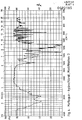
- Es wurde ferner gefunden, dass reines Mefloquin-hydrochlorid in verschiedenen Modifikationen vorkommt, die sich kristallographisch oder aufgrund ihrer IR-Spektren voneinander unterscheiden lassen. So erhält man bei der Reinigung mittels Acetonitril eine Modifikation A, Mefloquin·HCl, die durch das IR-Spektrum A (Figur 1) charakterisiert ist, während bei kurzzeitiger Behandlung mit Aceton die Modifikation B, Mefloquin-HCl-Aceton, und mit Wasser/ Alkohol-Gemischen die Modifikation C, Mefloquin.HClo.1/2H2O, erhalten wird (vgl. IR-Spektren B und C, Figuren 2 und 3). Bei längerer Behandlung von Mefloquin-hydrochlorid mit Alkohol/Wasser-Gemischen bildet sich die Modifikation D, Mefloquin-HCl-1/2H20, die die thermodynamisch stabilste ist (vgl. IR-Spektrum D, Figur 4). Ein Vergleich der IR-Spektren zeigt, dass die Unterschiede in den Wellenzahl-Bereichen 900-960 und 1100-1200 cm-1 liegen.
- Die vorliegende Erfindung betrifft daher ein Verfahren zur Gewinnung von erythro-a-2-Piperidyl-2,8-bis-(trifluormethyl)-4-chinolinmethanol-hydrochlorid aus Gemischen von erythro- und threo-a-2-Piperidyl-2,8-bis-(trifluormethyl)-4-chinolinmethanol-hydrochlorid, insbesondere aus solchen, wie sie bei der Hydrierung von 2-Pyridyl-2,8-bis-(trifluormethyl)-4-chinolyl-keton erhalten werden, durch Behandlung dieser Gemische mit wässrigem Methanol oder Ethanol.
- Die Erfindung betrifft ferner erythro-a-2-Piperidyl-2,8-bis-(trifluormethyl)-4-chinolinmethanol-hydrochlorid in Form seiner thermodynamisch stabilsten Modifikation, aus Alkohol/Wasser-Gemischen kristallisiert, charakterisiert durch sein IR-Spektrum, sowie dessen Herstellung durch langzeitige Behandlung von mindestens teilweise in anderer Modifikation vorliegendem Mefloquin-hydrochlorid mit einem Alkohol/Wasser-Gemisch. Bei der Behandlung von erythro-/ threo-α-2-Piperidyl-2,8-bis-(trifluormethyl)-4-chinolin- methanol-Gemischen mit wässrigem Methanol oder Ethanol geht die threo- Form in Lösung. Die Behandlung kann durch 30minütiges bis mehrstündiges Rühren bei Zimmertemperatur oder unter Erwärmen bis auf etwa 80°C und anschliessende Abkühlung auf ca. 5°C (zur Erhöhung der Ausbeute) erfolgen. Der Wasseranteil am Lösungsmittelgemisch kann in weiten Grenzen variiert werden und liegt zweckmässigerweise bei 60-95 Vol.-%, vorzugsweise zwischen 70 und 90 Vol.-%. Bei der Aufarbeitung methanolischer Reaktionslösungen, wie sie beispielsweise bei der katalytischen Hydrierung von 2-Pyridyl-2,8-bis-(trifluormethyl)-4-chinolylketon in salzsaurem Methanol erhalten werden, wird zweckmässigerweise zunächst ein Teil des Methanols abgezogen und dann eine entsprechende Menge Wasser zugesetzt. Das so erhaltene Mefloquin-hydrochlorid (Rohware) wird zweckmässigerweise noch mit kaltem Wasser gewaschen und ist dann praktisch frei von der unerwünschten threo Form.
- Durch Aufarbeitung der Mutterlaugen nach der vorstehend beschriebenen Methode in Kombination mit der Methode der Aceton-Komplex-Bildung kann prinzipiell eine vollständige Trennung von erythro- und threo-Form erreicht werden.
- Die so erhaltene Rohware ist chemisch zwar praktisch einheitlich, liegt im allgemeinen aber weder in einer einheitlichen Kristallform noch in der thermodynamisch stabilsten Form vor. Um dies zu erreichen, wird die Rohware längere Zeit, d.h. mindestens etwa 6 Stunden bis zu etwa 12 Stunden mit einem Alkohol, z.B. Methanol, Ethanol, Isopropanol, vorzugsweise aber Methanol, in Gegenwart von Wasser (ca. 50-80 Vol.-%) verrührt. Die Behandlung kann bei Zimmertemperatur oder unter Kühlung auf Temperaturen etwas über 0°C - zur Erhöhung der Ausbeute - erfolgen.
- 50 kg 2-Pyridyl-2,8-bis-(trifluormethyl)-4-chinolyl- keton wurden in 550 1 Methanol unter Erwärmen auf 56-58°C gelöst. Die Lösung wurde auf 25°C abgekühlt und mit einer vorhydrierten Suspension von 2,5 kg Platindioxid und 2,5 kg Hydrierkohle in 210 1 Methanol und 14,1 1 33%iger eisenfreier Salzsäure (d = 1,170) vereinigt. Es wurde 6-8 Stunden unter Normaldruck bei einer maximalen Innentemperatur von 30°C bis zur Beendigung der Wasserstoffaufnahme hydriert.
- Das Reaktionsgemisch wurde filtriert, die methanolische Lösung unter vermindertem Druck auf ein Volumen von 100-150 1 eingeengt, mit 250-350 1 Wasser versetzt und anschliessend wieder unter vermindertem Druck auf ein Volumen von 300-350 1 gebracht. Man rührte 1 Stunde unter langsamem Erwärmen auf 80°C, dann weitere 30 Minuten bei dieser Temperatur, kühlte auf 5°C ab und rührte eine weitere Stunde. Die Suspension wurde zentrifugiert, das noch feuchte Schwinggut in 250 1 Wasser von 5°C eingebracht und 15 Minuten gerührt. Dann wurde wieder zentrifugiert, das Schwinggut noch mehrmals mit je 20 1 Wasser von 5°C abgebraust, gut ausgeschwungen und 12 Stunden bei 70°C unter vermindertem Druck getrocknet.Man erhielt 46-48 kg (82,1-85,6% d.Th.) rohes Mefloquin-hydrochlorid, das praktisch frei von der unerwünschten threo-Form war und das wie folgt weitergereinigt wurde:
- Eine Suspension von 150 kg rohem Mefloquin-hydrochlorid in 75 1 absolutem Ethanol und 425 1 Aceton wurde unter Rühren innerhalb einer Stunde auf Rückflusstemperatur gebracht und 30 Minuten bei dieser Temperatur gehalten. Es wurde auf 20°C abgekühlt, mit 50 1 eines Ethanol/Aceton-Gemisches (42,5:7,5) versetzt, unter Rühren auf ca. 0°C abgekühlt und 4 Stunden bei dieser Temperatur nachgerührt. Die Suspension wurde zentrifugiert, das gut ausgeschwungene Gut mehrmals mit je 15 1 Aceton von 5°C abgebraust und im Vakuumtrockner bei 70°C getrocknet. Man erhielt 136-142 kg gereinigtes Mefloquin-hydrochlorid.
- 100 kg von so gereinigtem Mefloquin-hydrochlorid in 300 1 Methanol wurden zum Rückfluss erhitzt. Die heisse Lösung wurde in 1180 1 Wasser eingebracht und mindestens 4 Stunden gerührt. Unter Kühlung auf 2°C wurde dann noch mindestens 6 Stunden nachgerührt. Nach Zentrifugieren und zweimaligem Abbrausen des Schwinggutes mit je 15 1 Wasser von 5°C wurde im Vakuumtrockner bei 70°C getrocknet. Man erhielt 80-85 kg reines Mefloquin-hydrochlorid in seiner aus wässrigen Medien anfallenden thermodynamisch stabilsten Modifikation, Smp. 255-259°C (vgl. IR-Spektrum D, Figur 4). Durch Extraktion der Mutterlauge mit Methylenchlorid und Aufarbeitung der organischen Phase im Labor kann die Ausbeute an reinem Produkt noch erhöht werden.
- 120 kg 2-Pyridyl-2,8-bis-(trifluormethyl)-4-chinolyl- keton wurden in 196 1 Methanol und 17,4 kg 30%iger Salzsäure suspendiert und mit einer vorhydrierten Suspension von 9 kg Platindioxid und 9 kg Hydrierkohle in 300 1 Methanol vereinigt. Es wurde 10 Stunden unter 0,1-0,5 bar Ueberdruck bei einer maximalen Innentemperatur von 20°C bis zur Beendigung der Wasserstoffaufnahme hydriert.
- Das Reaktionsgemisch wurde filtriert, Kessel und Filter mit 80 1 Methanol nachgespült, die methanolische Lösung unter vermindertem Druck auf ein Volumen von 100-150 1 eingeengt und mit 800-880 1 Wasser versetzt. Man rührte 1 Stunde unter langsamem Erwärmen auf 80°C, dann weitere 30 Minuten bei dieser Temperatur, kühlte auf 5°C ab und rührte eine weitere Stunde. Die Suspension wurde zentrifugiert, das Schwinggut noch mehrmals mit je 30 1 Wasser von 5°C abgebraust, gut ausgeschwungen und 12 Stunden bei 80°C unter vermindertem Druck getrocknet. Man erhielt 110-115 kg rohes Mefloquin-hydrochlorid, das praktisch frei von der unerwünschten threo-Form war und - wie in Beispiel 1 beschrieben - weitergereinigt wurde.
-

- Eine gesiebte Mischung von Mefloquin-hydrochlorid (Mod. D), D-Mannit pulv. und mikrokristalliner Cellulose (Teil) wird mit einer wässrigen Lösung von Polyvinylpyrrolidon befeuchtet und geknetet. Sodann wird granuliert, getrocknet und gesiebt. Dem Granulat wird eine gesiebte Mischung von mikrokristalliner Cellulose (Teil), Natriumcarboxymethylstärke, Talk und Magnesiumstearat zugesetzt. Sämtliche Pulverbestandteile werden miteinander gemischt, und das homogene Pressgut wird zu Kernen mit einem Gewicht von 500 mg und einer Härte von mindestens 10 SCE gepresst.
Claims (8)
Priority Applications (1)
| Application Number | Priority Date | Filing Date | Title |
|---|---|---|---|
| AT83103632T ATE33647T1 (de) | 1982-04-14 | 1983-04-14 | Mefloquin-hydrochlorid und verfahren zu seiner reindarstellung. |
Applications Claiming Priority (2)
| Application Number | Priority Date | Filing Date | Title |
|---|---|---|---|
| CH225682 | 1982-04-14 | ||
| CH2256/82 | 1982-04-14 |
Publications (3)
| Publication Number | Publication Date |
|---|---|
| EP0092185A2 true EP0092185A2 (de) | 1983-10-26 |
| EP0092185A3 EP0092185A3 (en) | 1985-07-03 |
| EP0092185B1 EP0092185B1 (de) | 1988-04-20 |
Family
ID=4229522
Family Applications (1)
| Application Number | Title | Priority Date | Filing Date |
|---|---|---|---|
| EP83103632A Expired EP0092185B1 (de) | 1982-04-14 | 1983-04-14 | Mefloquin-hydrochlorid und Verfahren zu seiner Reindarstellung |
Country Status (5)
| Country | Link |
|---|---|
| US (1) | US4507482A (de) |
| EP (1) | EP0092185B1 (de) |
| JP (1) | JPS58188878A (de) |
| AT (1) | ATE33647T1 (de) |
| DE (1) | DE3376320D1 (de) |
Cited By (3)
| Publication number | Priority date | Publication date | Assignee | Title |
|---|---|---|---|---|
| US4579855A (en) * | 1983-10-07 | 1986-04-01 | Hoffmann-La Roche Inc. | Melfloquin hydrochloride |
| WO1991001314A1 (en) * | 1989-07-25 | 1991-02-07 | Alkaloida Vegyészeti Gyár | Process for the preparation of methyl-quinoline derivatives |
| EP2233481A1 (de) | 2009-03-27 | 2010-09-29 | Cilag Ltd. | Verfahren zur Herstellung von Mefloquin |
Families Citing this family (1)
| Publication number | Priority date | Publication date | Assignee | Title |
|---|---|---|---|---|
| US20030216426A1 (en) * | 2002-05-17 | 2003-11-20 | Regents Of The University Of California | Treatment of cancer with mefloquine, its purified enantiomers, and mefloquine analogs |
Family Cites Families (2)
| Publication number | Priority date | Publication date | Assignee | Title |
|---|---|---|---|---|
| FR2381044A1 (fr) * | 1977-02-17 | 1978-09-15 | Hoffmann La Roche | Procede pour la preparation de mefloquine |
| DE2940443A1 (de) * | 1979-10-05 | 1981-04-16 | Basf Ag, 6700 Ludwigshafen | Verfahren zur herstellung von erythro-(alpha)-2-piperidyl-2,8-bis-(trifluormethyl)-4-chinolin-methanol |
-
1983
- 1983-04-04 US US06/481,691 patent/US4507482A/en not_active Expired - Lifetime
- 1983-04-13 JP JP58063823A patent/JPS58188878A/ja active Granted
- 1983-04-14 EP EP83103632A patent/EP0092185B1/de not_active Expired
- 1983-04-14 AT AT83103632T patent/ATE33647T1/de not_active IP Right Cessation
- 1983-04-14 DE DE8383103632T patent/DE3376320D1/de not_active Expired
Cited By (5)
| Publication number | Priority date | Publication date | Assignee | Title |
|---|---|---|---|---|
| US4579855A (en) * | 1983-10-07 | 1986-04-01 | Hoffmann-La Roche Inc. | Melfloquin hydrochloride |
| EP0137375A3 (en) * | 1983-10-07 | 1988-02-03 | F. Hoffmann-La Roche & Co. Aktiengesellschaft | Mefloquinic hydrochloride |
| WO1991001314A1 (en) * | 1989-07-25 | 1991-02-07 | Alkaloida Vegyészeti Gyár | Process for the preparation of methyl-quinoline derivatives |
| WO1991001315A1 (en) * | 1989-07-25 | 1991-02-07 | Alkaloida Vegyészeti Gyár | New quinoline derivatives and process for the preparation thereof |
| EP2233481A1 (de) | 2009-03-27 | 2010-09-29 | Cilag Ltd. | Verfahren zur Herstellung von Mefloquin |
Also Published As
| Publication number | Publication date |
|---|---|
| EP0092185B1 (de) | 1988-04-20 |
| DE3376320D1 (en) | 1988-05-26 |
| EP0092185A3 (en) | 1985-07-03 |
| ATE33647T1 (de) | 1988-05-15 |
| JPH0127070B2 (de) | 1989-05-26 |
| JPS58188878A (ja) | 1983-11-04 |
| US4507482A (en) | 1985-03-26 |
Similar Documents
| Publication | Publication Date | Title |
|---|---|---|
| DE60030883T2 (de) | Verfahren zur herstellung von alfentanil, sufentanil und remifentanil | |
| DE1926045C3 (de) | 2-Brom-oc-ergokryptin | |
| EP0589874B1 (de) | Verwendung von (s)(+)-2-äthoxy-4-[n-[1-(2-piperidino-phenyl)-3-methyl-1-butyl]aminocarbonylmethyl]-benzoesäure zur herstellung eines langzeitantidiabetikums | |
| DE69229339T2 (de) | Kristallines tiagabinehydrochlorid-monohydrat, seine herstellung und verwendung | |
| DE60100321T2 (de) | Verfahren zur Herstellung von 11-Amino-3-chlor-6,11-dihydro-5,5-dioxo-6-methyl-dibenzo[c,f][1,2]-thiazepin und Anwendung zur Synthese von Thianeptin | |
| DE2305092C2 (de) | ||
| DE69907190T2 (de) | Desformoterol und verfahren zu seiner herstellung | |
| DE69817557T2 (de) | Piperidine derivate als inhibitoren der neurotransmitter-wiederaufbaunahme | |
| DE2640972A1 (de) | Aminoaethanolderivate, verfahren zu ihrer herstellung und sie enthaltende arzneimittel | |
| DE69011013T2 (de) | 1-(Pyridinylamino)-2-pyrrolidinone, Verfahren zu ihrer Herstellung und ihre Anwendung als Arzneimittel. | |
| EP0092185B1 (de) | Mefloquin-hydrochlorid und Verfahren zu seiner Reindarstellung | |
| DE69104083T2 (de) | Neue Antiulcus-Substanz. | |
| CH626047A5 (de) | ||
| DE3728244A1 (de) | Neue (-)-benzimidazole, deren herstellung und diese verbindungen enthaltende arzneimittel | |
| DE2632118C3 (de) | Apovincaminolester und Verfahren zu deren Herstellung und Arzneimittel | |
| DE68905171T2 (de) | Benzol-derivate, ihre herstellung und pharmazeutische zusammensetzungen, die diese enthalten. | |
| DE3320394A1 (de) | Optisch aktive n-arylierte oxazolidinon-(2)-derivate, deren verwendung als spezifische und reversible inhibitoren von monoaminooxydase des b-typs sowie verfahren zu deren herstellung | |
| DE2028880C3 (de) | N-Phenylcarbamoyl-3-(ßphenylisopropyl)sydnonunin, Verfahren zu dessen Herstellung und Arzneimittel | |
| DE60206376T2 (de) | Faktor xa inhibitor | |
| DE2458638A1 (de) | Propiophenonderivate und deren herstellung | |
| DE69424816T2 (de) | N-Benzylpiperazinverbindungen, Verfahren zu ihrer Herstellung und sie enthaltende Zusammensetzungen | |
| CH629189A5 (de) | Verfahren zur herstellung von 2-(2,2-dicyclohexylethyl)-piperidin. | |
| CH641162A5 (de) | Verfahren zur herstellung neuer phenylazacycloalkane. | |
| DE112020004177B4 (de) | Verfahren zur herstellung des natriumsalzes von 4-[[(1r)-2-[5-(2-fluor-3-methoxyphenyl)-3-[[2-fluor-6-(trifluormethyl)-phenyl]methyl]-3,6-dihydro-4-methyl-2,6-dioxo-1(2h)-pyrimidinyl]-1-phenylethyl]amino]butansäure (elagolix-natriumsalz) und zwischenstufen dieses verfahrens | |
| DE60100044T2 (de) | Verfahren zur Herstellung von Isoindolin |
Legal Events
| Date | Code | Title | Description |
|---|---|---|---|
| PUAI | Public reference made under article 153(3) epc to a published international application that has entered the european phase |
Free format text: ORIGINAL CODE: 0009012 |
|
| 17P | Request for examination filed |
Effective date: 19830414 |
|
| AK | Designated contracting states |
Designated state(s): AT BE CH DE FR GB IT LI NL |
|
| PUAL | Search report despatched |
Free format text: ORIGINAL CODE: 0009013 |
|
| AK | Designated contracting states |
Designated state(s): AT BE CH DE FR GB IT LI NL |
|
| 17Q | First examination report despatched |
Effective date: 19860926 |
|
| GRAA | (expected) grant |
Free format text: ORIGINAL CODE: 0009210 |
|
| AK | Designated contracting states |
Kind code of ref document: B1 Designated state(s): AT BE CH DE FR GB IT LI NL |
|
| REF | Corresponds to: |
Ref document number: 33647 Country of ref document: AT Date of ref document: 19880515 Kind code of ref document: T |
|
| ITF | It: translation for a ep patent filed | ||
| REF | Corresponds to: |
Ref document number: 3376320 Country of ref document: DE Date of ref document: 19880526 |
|
| GBT | Gb: translation of ep patent filed (gb section 77(6)(a)/1977) | ||
| ET | Fr: translation filed | ||
| PLBE | No opposition filed within time limit |
Free format text: ORIGINAL CODE: 0009261 |
|
| STAA | Information on the status of an ep patent application or granted ep patent |
Free format text: STATUS: NO OPPOSITION FILED WITHIN TIME LIMIT |
|
| 26N | No opposition filed | ||
| ITPR | It: changes in ownership of a european patent |
Owner name: CESSIONE;F. HOFFMANN - LA ROCHE AG |
|
| NLS | Nl: assignments of ep-patents |
Owner name: F. HOFFMANN-LA ROCHE AG TE BAZEL, ZWITSERLAND. |
|
| REG | Reference to a national code |
Ref country code: FR Ref legal event code: TP |
|
| REG | Reference to a national code |
Ref country code: CH Ref legal event code: PUE Owner name: F. HOFFMANN-LA ROCHE AG |
|
| REG | Reference to a national code |
Ref country code: GB Ref legal event code: 732 |
|
| ITTA | It: last paid annual fee | ||
| MEDD | It: supplementary protection certificate for pharmaceutical products: granted |
Free format text: CCP 154, 19920424; F. HOFFMANN-LA ROCHE AG. |
|
| REG | Reference to a national code |
Ref country code: GB Ref legal event code: IF02 |
|
| PGFP | Annual fee paid to national office [announced via postgrant information from national office to epo] |
Ref country code: GB Payment date: 20020410 Year of fee payment: 20 Ref country code: FR Payment date: 20020410 Year of fee payment: 20 |
|
| PGFP | Annual fee paid to national office [announced via postgrant information from national office to epo] |
Ref country code: AT Payment date: 20020411 Year of fee payment: 20 |
|
| PGFP | Annual fee paid to national office [announced via postgrant information from national office to epo] |
Ref country code: CH Payment date: 20020412 Year of fee payment: 20 |
|
| PGFP | Annual fee paid to national office [announced via postgrant information from national office to epo] |
Ref country code: DE Payment date: 20020417 Year of fee payment: 20 |
|
| PGFP | Annual fee paid to national office [announced via postgrant information from national office to epo] |
Ref country code: NL Payment date: 20020426 Year of fee payment: 20 |
|
| PGFP | Annual fee paid to national office [announced via postgrant information from national office to epo] |
Ref country code: BE Payment date: 20020619 Year of fee payment: 20 |
|
| PG25 | Lapsed in a contracting state [announced via postgrant information from national office to epo] |
Ref country code: LI Free format text: LAPSE BECAUSE OF EXPIRATION OF PROTECTION Effective date: 20030413 Ref country code: GB Free format text: LAPSE BECAUSE OF EXPIRATION OF PROTECTION Effective date: 20030413 Ref country code: CH Free format text: LAPSE BECAUSE OF EXPIRATION OF PROTECTION Effective date: 20030413 |
|
| PG25 | Lapsed in a contracting state [announced via postgrant information from national office to epo] |
Ref country code: NL Free format text: LAPSE BECAUSE OF EXPIRATION OF PROTECTION Effective date: 20030414 Ref country code: AT Free format text: LAPSE BECAUSE OF EXPIRATION OF PROTECTION Effective date: 20030414 |
|
| BE20 | Be: patent expired |
Owner name: F. *HOFFMANN-LA ROCHE A.G. Effective date: 20030414 |
|
| REG | Reference to a national code |
Ref country code: GB Ref legal event code: PE20 |
|
| REG | Reference to a national code |
Ref country code: CH Ref legal event code: PL |