EP0084756A1 - Trisubstituierte Oxazaverbindungen - Google Patents
Trisubstituierte Oxazaverbindungen Download PDFInfo
- Publication number
- EP0084756A1 EP0084756A1 EP19820810027 EP82810027A EP0084756A1 EP 0084756 A1 EP0084756 A1 EP 0084756A1 EP 19820810027 EP19820810027 EP 19820810027 EP 82810027 A EP82810027 A EP 82810027A EP 0084756 A1 EP0084756 A1 EP 0084756A1
- Authority
- EP
- European Patent Office
- Prior art keywords
- phenyl
- pyridyl
- lower alkoxy
- oxazol
- formula
- Prior art date
- Legal status (The legal status is an assumption and is not a legal conclusion. Google has not performed a legal analysis and makes no representation as to the accuracy of the status listed.)
- Withdrawn
Links
- 150000001875 compounds Chemical class 0.000 title claims abstract description 125
- 150000003839 salts Chemical class 0.000 claims abstract description 95
- 125000003178 carboxy group Chemical group [H]OC(*)=O 0.000 claims abstract description 66
- 238000000034 method Methods 0.000 claims abstract description 39
- 125000001072 heteroaryl group Chemical group 0.000 claims abstract description 9
- 229930195733 hydrocarbon Natural products 0.000 claims abstract description 8
- 239000004215 Carbon black (E152) Substances 0.000 claims abstract description 4
- -1 carboxy , Carbamoyl Chemical group 0.000 claims description 175
- 125000003545 alkoxy group Chemical group 0.000 claims description 79
- 239000000203 mixture Substances 0.000 claims description 53
- 125000002887 hydroxy group Chemical group [H]O* 0.000 claims description 46
- 125000004432 carbon atom Chemical group C* 0.000 claims description 42
- 125000001997 phenyl group Chemical group [H]C1=C([H])C([H])=C(*)C([H])=C1[H] 0.000 claims description 42
- 230000002829 reductive effect Effects 0.000 claims description 41
- 229910052736 halogen Inorganic materials 0.000 claims description 31
- 150000002367 halogens Chemical class 0.000 claims description 31
- QGZKDVFQNNGYKY-UHFFFAOYSA-N Ammonia Chemical compound N QGZKDVFQNNGYKY-UHFFFAOYSA-N 0.000 claims description 29
- 125000000217 alkyl group Chemical group 0.000 claims description 28
- 238000006243 chemical reaction Methods 0.000 claims description 24
- 125000001118 alkylidene group Chemical group 0.000 claims description 21
- 125000003349 3-pyridyl group Chemical group N1=C([H])C([*])=C([H])C([H])=C1[H] 0.000 claims description 18
- IJGRMHOSHXDMSA-UHFFFAOYSA-N Atomic nitrogen Chemical compound N#N IJGRMHOSHXDMSA-UHFFFAOYSA-N 0.000 claims description 18
- 125000004423 acyloxy group Chemical group 0.000 claims description 18
- 125000004453 alkoxycarbonyl group Chemical group 0.000 claims description 17
- ISWSIDIOOBJBQZ-UHFFFAOYSA-N Phenol Chemical compound OC1=CC=CC=C1 ISWSIDIOOBJBQZ-UHFFFAOYSA-N 0.000 claims description 16
- 229910052757 nitrogen Inorganic materials 0.000 claims description 16
- 239000003795 chemical substances by application Substances 0.000 claims description 15
- 125000001495 ethyl group Chemical group [H]C([H])([H])C([H])([H])* 0.000 claims description 15
- 125000002947 alkylene group Chemical group 0.000 claims description 12
- 229910021529 ammonia Inorganic materials 0.000 claims description 12
- ZAMOUSCENKQFHK-UHFFFAOYSA-N Chlorine atom Chemical compound [Cl] ZAMOUSCENKQFHK-UHFFFAOYSA-N 0.000 claims description 11
- 125000004414 alkyl thio group Chemical group 0.000 claims description 11
- 125000004076 pyridyl group Chemical group 0.000 claims description 11
- 239000007858 starting material Substances 0.000 claims description 11
- 239000000460 chlorine Substances 0.000 claims description 10
- 229910052801 chlorine Inorganic materials 0.000 claims description 10
- 125000003917 carbamoyl group Chemical group [H]N([H])C(*)=O 0.000 claims description 9
- LGNVUTMEOPULCN-UHFFFAOYSA-N ethyl 2-methyl-2-(4-phenyl-5-pyridin-3-yl-1,3-oxazol-2-yl)propanoate Chemical compound O1C(C(C)(C)C(=O)OCC)=NC(C=2C=CC=CC=2)=C1C1=CC=CN=C1 LGNVUTMEOPULCN-UHFFFAOYSA-N 0.000 claims description 9
- 125000002496 methyl group Chemical group [H]C([H])([H])* 0.000 claims description 9
- 125000002070 alkenylidene group Chemical group 0.000 claims description 8
- 150000001735 carboxylic acids Chemical class 0.000 claims description 8
- 238000002360 preparation method Methods 0.000 claims description 8
- SMWPIDOWXVKWCH-UHFFFAOYSA-N 2-methyl-2-(4-phenyl-5-pyridin-3-yl-1,3-oxazol-2-yl)propanoic acid Chemical compound O1C(C(C)(C(O)=O)C)=NC(C=2C=CC=CC=2)=C1C1=CC=CN=C1 SMWPIDOWXVKWCH-UHFFFAOYSA-N 0.000 claims description 7
- 125000003754 ethoxycarbonyl group Chemical group C(=O)(OCC)* 0.000 claims description 7
- IEPUIOBBUFJHHA-UHFFFAOYSA-N ethyl 2-methyl-2-[5-(1-oxidopyridin-1-ium-3-yl)-4-phenyl-1,3-oxazol-2-yl]propanoate Chemical compound O1C(C(C)(C)C(=O)OCC)=NC(C=2C=CC=CC=2)=C1C1=CC=C[N+]([O-])=C1 IEPUIOBBUFJHHA-UHFFFAOYSA-N 0.000 claims description 7
- 125000001841 imino group Chemical group [H]N=* 0.000 claims description 7
- 238000007254 oxidation reaction Methods 0.000 claims description 7
- UBQKCCHYAOITMY-UHFFFAOYSA-N pyridin-2-ol Chemical compound OC1=CC=CC=N1 UBQKCCHYAOITMY-UHFFFAOYSA-N 0.000 claims description 7
- 238000003797 solvolysis reaction Methods 0.000 claims description 7
- 238000009833 condensation Methods 0.000 claims description 6
- 230000005494 condensation Effects 0.000 claims description 6
- 125000002993 cycloalkylene group Chemical group 0.000 claims description 6
- 230000003647 oxidation Effects 0.000 claims description 6
- 239000000825 pharmaceutical preparation Substances 0.000 claims description 6
- 150000002989 phenols Chemical class 0.000 claims description 6
- 125000002023 trifluoromethyl group Chemical group FC(F)(F)* 0.000 claims description 6
- RQJFJCONXDUXEK-UHFFFAOYSA-N 2-methyl-2-[5-(1-oxidopyridin-1-ium-3-yl)-4-phenyl-1,3-oxazol-2-yl]propanoic acid Chemical compound O1C(C(C)(C(O)=O)C)=NC(C=2C=CC=CC=2)=C1C1=CC=C[N+]([O-])=C1 RQJFJCONXDUXEK-UHFFFAOYSA-N 0.000 claims description 5
- 125000003342 alkenyl group Chemical group 0.000 claims description 5
- 125000003705 anilinocarbonyl group Chemical class O=C([*])N([H])C1=C([H])C([H])=C([H])C([H])=C1[H] 0.000 claims description 5
- 125000005842 heteroatom Chemical group 0.000 claims description 5
- 125000002924 primary amino group Chemical group [H]N([H])* 0.000 claims description 5
- 125000000339 4-pyridyl group Chemical group N1=C([H])C([H])=C([*])C([H])=C1[H] 0.000 claims description 4
- 125000000753 cycloalkyl group Chemical group 0.000 claims description 4
- 239000000543 intermediate Substances 0.000 claims description 4
- 125000000956 methoxy group Chemical group [H]C([H])([H])O* 0.000 claims description 4
- 125000000325 methylidene group Chemical group [H]C([H])=* 0.000 claims description 4
- JKUCKWYSGKWMRL-UHFFFAOYSA-N 2-[5-(1-oxidopyridin-1-ium-3-yl)-4-phenyl-1,3-oxazol-2-yl]acetic acid Chemical compound O1C(CC(=O)O)=NC(C=2C=CC=CC=2)=C1C1=CC=C[N+]([O-])=C1 JKUCKWYSGKWMRL-UHFFFAOYSA-N 0.000 claims description 3
- AYHMVFYGLZXASC-UHFFFAOYSA-N 2-[5-(1-oxidopyridin-1-ium-3-yl)-4-phenyl-1,3-oxazol-2-yl]propanoic acid Chemical compound O1C(C(C(O)=O)C)=NC(C=2C=CC=CC=2)=C1C1=CC=C[N+]([O-])=C1 AYHMVFYGLZXASC-UHFFFAOYSA-N 0.000 claims description 3
- 125000001589 carboacyl group Chemical group 0.000 claims description 3
- 125000004980 cyclopropylene group Chemical group 0.000 claims description 3
- 229910052740 iodine Inorganic materials 0.000 claims description 3
- 238000004519 manufacturing process Methods 0.000 claims description 3
- 125000004433 nitrogen atom Chemical group N* 0.000 claims description 3
- 125000004287 oxazol-2-yl group Chemical group [H]C1=C([H])N=C(*)O1 0.000 claims description 3
- 241001465754 Metazoa Species 0.000 claims description 2
- XBDQKXXYIPTUBI-UHFFFAOYSA-M Propionate Chemical compound CCC([O-])=O XBDQKXXYIPTUBI-UHFFFAOYSA-M 0.000 claims description 2
- PWAPCRSSMCLZHG-UHFFFAOYSA-N cyclopentylidene Chemical group [C]1CCCC1 PWAPCRSSMCLZHG-UHFFFAOYSA-N 0.000 claims description 2
- IDEPFTHPLFAHGY-UHFFFAOYSA-N ethyl 2-[4-(1-oxidopyridin-1-ium-3-yl)-5-phenyl-1,3-oxazol-2-yl]acetate Chemical compound O1C(CC(=O)OCC)=NC(C=2C=[N+]([O-])C=CC=2)=C1C1=CC=CC=C1 IDEPFTHPLFAHGY-UHFFFAOYSA-N 0.000 claims description 2
- OCEBNIGJQWHYLA-UHFFFAOYSA-N ethyl 2-methyl-2-(5-phenyl-4-pyridin-3-yl-1,3-oxazol-2-yl)propanoate Chemical compound O1C(C(C)(C)C(=O)OCC)=NC(C=2C=NC=CC=2)=C1C1=CC=CC=C1 OCEBNIGJQWHYLA-UHFFFAOYSA-N 0.000 claims description 2
- 230000002757 inflammatory effect Effects 0.000 claims description 2
- 208000017520 skin disease Diseases 0.000 claims description 2
- 239000000969 carrier Substances 0.000 claims 2
- ICBLGQQUCGWKHR-UHFFFAOYSA-N CCC(C1=NC(=C(O1)C2=CC=CC=C2)C3=CN=CC=C3)C(=O)O Chemical compound CCC(C1=NC(=C(O1)C2=CC=CC=C2)C3=CN=CC=C3)C(=O)O ICBLGQQUCGWKHR-UHFFFAOYSA-N 0.000 claims 1
- YVDSNJQFQFHMSM-UHFFFAOYSA-N CCC(C1=NC(=C(O1)C2=C[N+](=CC=C2)[O-])C3=CC=CC=C3)C(=O)O Chemical compound CCC(C1=NC(=C(O1)C2=C[N+](=CC=C2)[O-])C3=CC=CC=C3)C(=O)O YVDSNJQFQFHMSM-UHFFFAOYSA-N 0.000 claims 1
- 229940000033 dermatological agent Drugs 0.000 claims 1
- 239000003241 dermatological agent Substances 0.000 claims 1
- 230000000694 effects Effects 0.000 claims 1
- MFKMAMWURBWIRP-UHFFFAOYSA-N ethyl 2-[4-(1-oxidopyridin-1-ium-3-yl)-5-phenyl-1,3-oxazol-2-yl]propanoate Chemical compound O1C(C(C)C(=O)OCC)=NC(C=2C=[N+]([O-])C=CC=2)=C1C1=CC=CC=C1 MFKMAMWURBWIRP-UHFFFAOYSA-N 0.000 claims 1
- RDFKMVVCCTUQMB-UHFFFAOYSA-N ethyl 2-methyl-2-[4-(1-oxidopyridin-1-ium-3-yl)-5-phenyl-1,3-oxazol-2-yl]propanoate Chemical compound O1C(C(C)(C)C(=O)OCC)=NC(C=2C=[N+]([O-])C=CC=2)=C1C1=CC=CC=C1 RDFKMVVCCTUQMB-UHFFFAOYSA-N 0.000 claims 1
- 125000002541 furyl group Chemical group 0.000 claims 1
- SYSQUGFVNFXIIT-UHFFFAOYSA-N n-[4-(1,3-benzoxazol-2-yl)phenyl]-4-nitrobenzenesulfonamide Chemical class C1=CC([N+](=O)[O-])=CC=C1S(=O)(=O)NC1=CC=C(C=2OC3=CC=CC=C3N=2)C=C1 SYSQUGFVNFXIIT-UHFFFAOYSA-N 0.000 claims 1
- BICWPSIIIMZQNY-UHFFFAOYSA-N tert-butyl 2-methyl-2-(5-phenyl-4-pyridin-3-yl-1,3-oxazol-2-yl)propanoate Chemical compound O1C(C(C)(C)C(=O)OC(C)(C)C)=NC(C=2C=NC=CC=2)=C1C1=CC=CC=C1 BICWPSIIIMZQNY-UHFFFAOYSA-N 0.000 claims 1
- RRLMITUKSCSSNV-UHFFFAOYSA-N tert-butyl 2-methyl-2-[5-(1-oxidopyridin-1-ium-3-yl)-4-phenyl-1,3-oxazol-2-yl]propanoate Chemical compound O1C(C(C)(C)C(=O)OC(C)(C)C)=NC(C=2C=CC=CC=2)=C1C1=CC=C[N+]([O-])=C1 RRLMITUKSCSSNV-UHFFFAOYSA-N 0.000 claims 1
- 230000001225 therapeutic effect Effects 0.000 claims 1
- 125000001544 thienyl group Chemical group 0.000 claims 1
- 239000002253 acid Substances 0.000 description 57
- HEDRZPFGACZZDS-UHFFFAOYSA-N Chloroform Chemical compound ClC(Cl)Cl HEDRZPFGACZZDS-UHFFFAOYSA-N 0.000 description 54
- XLYOFNOQVPJJNP-UHFFFAOYSA-N water Substances O XLYOFNOQVPJJNP-UHFFFAOYSA-N 0.000 description 51
- XEKOWRVHYACXOJ-UHFFFAOYSA-N Ethyl acetate Chemical compound CCOC(C)=O XEKOWRVHYACXOJ-UHFFFAOYSA-N 0.000 description 50
- 239000000243 solution Substances 0.000 description 43
- 239000003921 oil Substances 0.000 description 40
- 235000019198 oils Nutrition 0.000 description 39
- RTZKZFJDLAIYFH-UHFFFAOYSA-N Diethyl ether Chemical compound CCOCC RTZKZFJDLAIYFH-UHFFFAOYSA-N 0.000 description 38
- QTBSBXVTEAMEQO-UHFFFAOYSA-N Acetic acid Chemical compound CC(O)=O QTBSBXVTEAMEQO-UHFFFAOYSA-N 0.000 description 34
- LFQSCWFLJHTTHZ-UHFFFAOYSA-N Ethanol Chemical compound CCO LFQSCWFLJHTTHZ-UHFFFAOYSA-N 0.000 description 30
- CSNNHWWHGAXBCP-UHFFFAOYSA-L Magnesium sulfate Chemical compound [Mg+2].[O-][S+2]([O-])([O-])[O-] CSNNHWWHGAXBCP-UHFFFAOYSA-L 0.000 description 26
- 239000002585 base Substances 0.000 description 26
- QAOWNCQODCNURD-UHFFFAOYSA-N Sulfuric acid Chemical compound OS(O)(=O)=O QAOWNCQODCNURD-UHFFFAOYSA-N 0.000 description 22
- VEXZGXHMUGYJMC-UHFFFAOYSA-N Hydrochloric acid Chemical compound Cl VEXZGXHMUGYJMC-UHFFFAOYSA-N 0.000 description 21
- DNIAPMSPPWPWGF-UHFFFAOYSA-N Propylene glycol Chemical compound CC(O)CO DNIAPMSPPWPWGF-UHFFFAOYSA-N 0.000 description 20
- JUJWROOIHBZHMG-UHFFFAOYSA-N Pyridine Chemical compound C1=CC=NC=C1 JUJWROOIHBZHMG-UHFFFAOYSA-N 0.000 description 20
- 150000002148 esters Chemical class 0.000 description 20
- UHOVQNZJYSORNB-UHFFFAOYSA-N Benzene Chemical compound C1=CC=CC=C1 UHOVQNZJYSORNB-UHFFFAOYSA-N 0.000 description 18
- YMWUJEATGCHHMB-UHFFFAOYSA-N Dichloromethane Chemical compound ClCCl YMWUJEATGCHHMB-UHFFFAOYSA-N 0.000 description 18
- 150000007513 acids Chemical class 0.000 description 18
- 229910052500 inorganic mineral Inorganic materials 0.000 description 18
- KWYUFKZDYYNOTN-UHFFFAOYSA-M Potassium hydroxide Chemical compound [OH-].[K+] KWYUFKZDYYNOTN-UHFFFAOYSA-M 0.000 description 17
- 235000010755 mineral Nutrition 0.000 description 17
- 239000011707 mineral Substances 0.000 description 17
- 150000003254 radicals Chemical class 0.000 description 16
- HEMHJVSKTPXQMS-UHFFFAOYSA-M sodium hydroxide Inorganic materials [OH-].[Na+] HEMHJVSKTPXQMS-UHFFFAOYSA-M 0.000 description 16
- OKKJLVBELUTLKV-UHFFFAOYSA-N Methanol Chemical compound OC OKKJLVBELUTLKV-UHFFFAOYSA-N 0.000 description 15
- ZMANZCXQSJIPKH-UHFFFAOYSA-N Triethylamine Chemical compound CCN(CC)CC ZMANZCXQSJIPKH-UHFFFAOYSA-N 0.000 description 15
- 229960000583 acetic acid Drugs 0.000 description 14
- 239000004480 active ingredient Substances 0.000 description 14
- 238000003756 stirring Methods 0.000 description 14
- VYPSYNLAJGMNEJ-UHFFFAOYSA-N Silicium dioxide Chemical compound O=[Si]=O VYPSYNLAJGMNEJ-UHFFFAOYSA-N 0.000 description 13
- 229910052943 magnesium sulfate Inorganic materials 0.000 description 13
- 235000019341 magnesium sulphate Nutrition 0.000 description 13
- 239000000741 silica gel Substances 0.000 description 13
- 229910002027 silica gel Inorganic materials 0.000 description 13
- PEDCQBHIVMGVHV-UHFFFAOYSA-N Glycerine Chemical compound OCC(O)CO PEDCQBHIVMGVHV-UHFFFAOYSA-N 0.000 description 12
- BXWNKGSJHAJOGX-UHFFFAOYSA-N n-hexadecyl alcohol Natural products CCCCCCCCCCCCCCCCO BXWNKGSJHAJOGX-UHFFFAOYSA-N 0.000 description 11
- 239000003208 petroleum Substances 0.000 description 11
- WYURNTSHIVDZCO-UHFFFAOYSA-N Tetrahydrofuran Chemical compound C1CCOC1 WYURNTSHIVDZCO-UHFFFAOYSA-N 0.000 description 10
- 125000003118 aryl group Chemical group 0.000 description 10
- 235000014113 dietary fatty acids Nutrition 0.000 description 10
- 239000000194 fatty acid Substances 0.000 description 10
- 229930195729 fatty acid Natural products 0.000 description 10
- 125000002485 formyl group Chemical class [H]C(*)=O 0.000 description 10
- 239000012442 inert solvent Substances 0.000 description 10
- CSCPPACGZOOCGX-UHFFFAOYSA-N Acetone Chemical compound CC(C)=O CSCPPACGZOOCGX-UHFFFAOYSA-N 0.000 description 9
- DGAQECJNVWCQMB-PUAWFVPOSA-M Ilexoside XXIX Chemical compound C[C@@H]1CC[C@@]2(CC[C@@]3(C(=CC[C@H]4[C@]3(CC[C@@H]5[C@@]4(CC[C@@H](C5(C)C)OS(=O)(=O)[O-])C)C)[C@@H]2[C@]1(C)O)C)C(=O)O[C@H]6[C@@H]([C@H]([C@@H]([C@H](O6)CO)O)O)O.[Na+] DGAQECJNVWCQMB-PUAWFVPOSA-M 0.000 description 9
- YXFVVABEGXRONW-UHFFFAOYSA-N Toluene Chemical compound CC1=CC=CC=C1 YXFVVABEGXRONW-UHFFFAOYSA-N 0.000 description 9
- 239000006071 cream Substances 0.000 description 9
- 239000000155 melt Substances 0.000 description 9
- UMJSCPRVCHMLSP-UHFFFAOYSA-N pyridine Natural products COC1=CC=CN=C1 UMJSCPRVCHMLSP-UHFFFAOYSA-N 0.000 description 9
- JOXIMZWYDAKGHI-UHFFFAOYSA-N toluene-4-sulfonic acid Chemical class CC1=CC=C(S(O)(=O)=O)C=C1 JOXIMZWYDAKGHI-UHFFFAOYSA-N 0.000 description 9
- ZMXDDKWLCZADIW-UHFFFAOYSA-N N,N-Dimethylformamide Chemical compound CN(C)C=O ZMXDDKWLCZADIW-UHFFFAOYSA-N 0.000 description 8
- 238000007792 addition Methods 0.000 description 8
- 239000003054 catalyst Substances 0.000 description 8
- 239000012362 glacial acetic acid Substances 0.000 description 8
- 239000012074 organic phase Substances 0.000 description 8
- 239000012071 phase Substances 0.000 description 8
- 239000000126 substance Substances 0.000 description 8
- 239000013078 crystal Substances 0.000 description 7
- 239000003995 emulsifying agent Substances 0.000 description 7
- 238000010438 heat treatment Methods 0.000 description 7
- 239000002674 ointment Substances 0.000 description 7
- 239000011541 reaction mixture Substances 0.000 description 7
- 239000000725 suspension Substances 0.000 description 7
- NLXLAEXVIDQMFP-UHFFFAOYSA-N Ammonium chloride Substances [NH4+].[Cl-] NLXLAEXVIDQMFP-UHFFFAOYSA-N 0.000 description 6
- VHUUQVKOLVNVRT-UHFFFAOYSA-N Ammonium hydroxide Chemical compound [NH4+].[OH-] VHUUQVKOLVNVRT-UHFFFAOYSA-N 0.000 description 6
- KZMGYPLQYOPHEL-UHFFFAOYSA-N Boron trifluoride etherate Chemical compound FB(F)F.CCOCC KZMGYPLQYOPHEL-UHFFFAOYSA-N 0.000 description 6
- ZHNUHDYFZUAESO-UHFFFAOYSA-N Formamide Chemical compound NC=O ZHNUHDYFZUAESO-UHFFFAOYSA-N 0.000 description 6
- KFZMGEQAYNKOFK-UHFFFAOYSA-N Isopropanol Chemical compound CC(C)O KFZMGEQAYNKOFK-UHFFFAOYSA-N 0.000 description 6
- 239000002841 Lewis acid Substances 0.000 description 6
- DITKCNQWHVOPIM-UHFFFAOYSA-N NC(C1=CC=CC=C1)C1=NC=CC=C1C(=O)C=1C(=NC=CC=1)C(C1=CC=CC=C1)N Chemical compound NC(C1=CC=CC=C1)C1=NC=CC=C1C(=O)C=1C(=NC=CC=1)C(C1=CC=CC=C1)N DITKCNQWHVOPIM-UHFFFAOYSA-N 0.000 description 6
- NBIIXXVUZAFLBC-UHFFFAOYSA-N Phosphoric acid Chemical compound OP(O)(O)=O NBIIXXVUZAFLBC-UHFFFAOYSA-N 0.000 description 6
- CDBYLPFSWZWCQE-UHFFFAOYSA-L Sodium Carbonate Chemical compound [Na+].[Na+].[O-]C([O-])=O CDBYLPFSWZWCQE-UHFFFAOYSA-L 0.000 description 6
- FAPWRFPIFSIZLT-UHFFFAOYSA-M Sodium chloride Chemical class [Na+].[Cl-] FAPWRFPIFSIZLT-UHFFFAOYSA-M 0.000 description 6
- 125000002252 acyl group Chemical group 0.000 description 6
- 150000003973 alkyl amines Chemical class 0.000 description 6
- 235000011114 ammonium hydroxide Nutrition 0.000 description 6
- 125000001797 benzyl group Chemical group [H]C1=C([H])C([H])=C(C([H])=C1[H])C([H])([H])* 0.000 description 6
- 229960000541 cetyl alcohol Drugs 0.000 description 6
- 150000004820 halides Chemical class 0.000 description 6
- 150000002430 hydrocarbons Chemical group 0.000 description 6
- 150000007517 lewis acids Chemical class 0.000 description 6
- XHXFXVLFKHQFAL-UHFFFAOYSA-N phosphoryl trichloride Chemical compound ClP(Cl)(Cl)=O XHXFXVLFKHQFAL-UHFFFAOYSA-N 0.000 description 6
- WDWFSABLPAHCPF-UHFFFAOYSA-N 3-ethoxy-2,2-dimethyl-3-oxopropanoic acid Chemical compound CCOC(=O)C(C)(C)C(O)=O WDWFSABLPAHCPF-UHFFFAOYSA-N 0.000 description 5
- REGOCDRDNZNRMC-UHFFFAOYSA-N 3-ethoxy-2-methyl-3-oxopropanoic acid Chemical compound CCOC(=O)C(C)C(O)=O REGOCDRDNZNRMC-UHFFFAOYSA-N 0.000 description 5
- LSNNMFCWUKXFEE-UHFFFAOYSA-M Bisulfite Chemical compound OS([O-])=O LSNNMFCWUKXFEE-UHFFFAOYSA-M 0.000 description 5
- WKBOTKDWSSQWDR-UHFFFAOYSA-N Bromine atom Chemical compound [Br] WKBOTKDWSSQWDR-UHFFFAOYSA-N 0.000 description 5
- 150000008044 alkali metal hydroxides Chemical class 0.000 description 5
- 229910052799 carbon Inorganic materials 0.000 description 5
- 238000001816 cooling Methods 0.000 description 5
- 125000004093 cyano group Chemical group *C#N 0.000 description 5
- 150000002191 fatty alcohols Chemical class 0.000 description 5
- 235000011187 glycerol Nutrition 0.000 description 5
- 239000005457 ice water Substances 0.000 description 5
- 235000011007 phosphoric acid Nutrition 0.000 description 5
- YLQBMQCUIZJEEH-UHFFFAOYSA-N tetrahydrofuran Natural products C=1C=COC=1 YLQBMQCUIZJEEH-UHFFFAOYSA-N 0.000 description 5
- BMYNFMYTOJXKLE-UHFFFAOYSA-N 3-azaniumyl-2-hydroxypropanoate Chemical compound NCC(O)C(O)=O BMYNFMYTOJXKLE-UHFFFAOYSA-N 0.000 description 4
- ZHKFCGUCHAGTKP-UHFFFAOYSA-N 3-oxido-1,3-oxazol-3-ium Chemical compound [O-][N+]=1C=COC=1 ZHKFCGUCHAGTKP-UHFFFAOYSA-N 0.000 description 4
- USFZMSVCRYTOJT-UHFFFAOYSA-N Ammonium acetate Chemical compound N.CC(O)=O USFZMSVCRYTOJT-UHFFFAOYSA-N 0.000 description 4
- 239000005695 Ammonium acetate Substances 0.000 description 4
- 0 C*(C(C1)C(C)=C1C1)C1*(C(*1)*1*(C)=*)=C Chemical compound C*(C(C1)C(C)=C1C1)C1*(C(*1)*1*(C)=*)=C 0.000 description 4
- HGINADPHJQTSKN-UHFFFAOYSA-N Monoethyl malonic acid Chemical compound CCOC(=O)CC(O)=O HGINADPHJQTSKN-UHFFFAOYSA-N 0.000 description 4
- 239000005662 Paraffin oil Substances 0.000 description 4
- HEDRZPFGACZZDS-MICDWDOJSA-N Trichloro(2H)methane Chemical compound [2H]C(Cl)(Cl)Cl HEDRZPFGACZZDS-MICDWDOJSA-N 0.000 description 4
- XAKBSHICSHRJCL-UHFFFAOYSA-N [CH2]C(=O)C1=CC=CC=C1 Chemical group [CH2]C(=O)C1=CC=CC=C1 XAKBSHICSHRJCL-UHFFFAOYSA-N 0.000 description 4
- 230000002378 acidificating effect Effects 0.000 description 4
- 239000000654 additive Substances 0.000 description 4
- 150000001335 aliphatic alkanes Chemical class 0.000 description 4
- 125000001931 aliphatic group Chemical group 0.000 description 4
- 150000001412 amines Chemical class 0.000 description 4
- 235000019257 ammonium acetate Nutrition 0.000 description 4
- 229940043376 ammonium acetate Drugs 0.000 description 4
- 239000008346 aqueous phase Substances 0.000 description 4
- 229940092714 benzenesulfonic acid Drugs 0.000 description 4
- 150000008107 benzenesulfonic acids Chemical class 0.000 description 4
- GDTBXPJZTBHREO-UHFFFAOYSA-N bromine Substances BrBr GDTBXPJZTBHREO-UHFFFAOYSA-N 0.000 description 4
- 229910052794 bromium Inorganic materials 0.000 description 4
- 150000001732 carboxylic acid derivatives Chemical class 0.000 description 4
- MVPPADPHJFYWMZ-UHFFFAOYSA-N chlorobenzene Chemical compound ClC1=CC=CC=C1 MVPPADPHJFYWMZ-UHFFFAOYSA-N 0.000 description 4
- 239000003814 drug Substances 0.000 description 4
- 239000000839 emulsion Substances 0.000 description 4
- OAMZXMDZZWGPMH-UHFFFAOYSA-N ethyl acetate;toluene Chemical compound CCOC(C)=O.CC1=CC=CC=C1 OAMZXMDZZWGPMH-UHFFFAOYSA-N 0.000 description 4
- 239000000706 filtrate Substances 0.000 description 4
- 239000003205 fragrance Substances 0.000 description 4
- 150000008282 halocarbons Chemical class 0.000 description 4
- 125000004997 halocarbonyl group Chemical group 0.000 description 4
- 125000004029 hydroxymethyl group Chemical group [H]OC([H])([H])* 0.000 description 4
- 150000002466 imines Chemical class 0.000 description 4
- QZMBZBPLGIXNBT-UHFFFAOYSA-N n-(2-phenyl-1-pyridin-3-ylethylidene)hydroxylamine Chemical compound C=1C=CN=CC=1C(=NO)CC1=CC=CC=C1 QZMBZBPLGIXNBT-UHFFFAOYSA-N 0.000 description 4
- GLDOVTGHNKAZLK-UHFFFAOYSA-N octadecan-1-ol Chemical compound CCCCCCCCCCCCCCCCCCO GLDOVTGHNKAZLK-UHFFFAOYSA-N 0.000 description 4
- 239000007800 oxidant agent Substances 0.000 description 4
- 235000019271 petrolatum Nutrition 0.000 description 4
- 229920001223 polyethylene glycol Polymers 0.000 description 4
- 235000015497 potassium bicarbonate Nutrition 0.000 description 4
- 229910000028 potassium bicarbonate Inorganic materials 0.000 description 4
- 239000011736 potassium bicarbonate Substances 0.000 description 4
- TYJJADVDDVDEDZ-UHFFFAOYSA-M potassium hydrogencarbonate Chemical compound [K+].OC([O-])=O TYJJADVDDVDEDZ-UHFFFAOYSA-M 0.000 description 4
- 239000003755 preservative agent Substances 0.000 description 4
- 239000011734 sodium Substances 0.000 description 4
- 229910052708 sodium Inorganic materials 0.000 description 4
- 125000001424 substituent group Chemical group 0.000 description 4
- 150000005846 sugar alcohols Polymers 0.000 description 4
- FYSNRJHAOHDILO-UHFFFAOYSA-N thionyl chloride Chemical compound ClS(Cl)=O FYSNRJHAOHDILO-UHFFFAOYSA-N 0.000 description 4
- ZIBGPFATKBEMQZ-UHFFFAOYSA-N triethylene glycol Chemical compound OCCOCCOCCO ZIBGPFATKBEMQZ-UHFFFAOYSA-N 0.000 description 4
- DJJQDDNLJUQUFM-UHFFFAOYSA-N 2-methyl-2-(5-phenyl-4-pyridin-3-yl-1,3-oxazol-2-yl)propanoic acid Chemical compound O1C(C(C)(C(O)=O)C)=NC(C=2C=NC=CC=2)=C1C1=CC=CC=C1 DJJQDDNLJUQUFM-UHFFFAOYSA-N 0.000 description 3
- HIQIXEFWDLTDED-UHFFFAOYSA-N 4-hydroxy-1-piperidin-4-ylpyrrolidin-2-one Chemical compound O=C1CC(O)CN1C1CCNCC1 HIQIXEFWDLTDED-UHFFFAOYSA-N 0.000 description 3
- OKTJSMMVPCPJKN-UHFFFAOYSA-N Carbon Chemical compound [C] OKTJSMMVPCPJKN-UHFFFAOYSA-N 0.000 description 3
- BVKZGUZCCUSVTD-UHFFFAOYSA-L Carbonate Chemical compound [O-]C([O-])=O BVKZGUZCCUSVTD-UHFFFAOYSA-L 0.000 description 3
- 239000004166 Lanolin Substances 0.000 description 3
- ZLMJMSJWJFRBEC-UHFFFAOYSA-N Potassium Chemical compound [K] ZLMJMSJWJFRBEC-UHFFFAOYSA-N 0.000 description 3
- RWRDLPDLKQPQOW-UHFFFAOYSA-N Pyrrolidine Chemical compound C1CCNC1 RWRDLPDLKQPQOW-UHFFFAOYSA-N 0.000 description 3
- GSEJCLTVZPLZKY-UHFFFAOYSA-N Triethanolamine Chemical compound OCCN(CCO)CCO GSEJCLTVZPLZKY-UHFFFAOYSA-N 0.000 description 3
- HCHKCACWOHOZIP-UHFFFAOYSA-N Zinc Chemical compound [Zn] HCHKCACWOHOZIP-UHFFFAOYSA-N 0.000 description 3
- DHKHKXVYLBGOIT-UHFFFAOYSA-N acetaldehyde Diethyl Acetal Natural products CCOC(C)OCC DHKHKXVYLBGOIT-UHFFFAOYSA-N 0.000 description 3
- 150000001298 alcohols Chemical class 0.000 description 3
- 229910000147 aluminium phosphate Inorganic materials 0.000 description 3
- 150000008064 anhydrides Chemical class 0.000 description 3
- 239000007864 aqueous solution Substances 0.000 description 3
- 125000004429 atom Chemical group 0.000 description 3
- SRSXLGNVWSONIS-UHFFFAOYSA-N benzenesulfonic acid Chemical compound OS(=O)(=O)C1=CC=CC=C1 SRSXLGNVWSONIS-UHFFFAOYSA-N 0.000 description 3
- 125000003739 carbamimidoyl group Chemical group C(N)(=N)* 0.000 description 3
- UAOMVDZJSHZZME-UHFFFAOYSA-N diisopropylamine Chemical compound CC(C)NC(C)C UAOMVDZJSHZZME-UHFFFAOYSA-N 0.000 description 3
- 239000002024 ethyl acetate extract Substances 0.000 description 3
- 150000004665 fatty acids Chemical class 0.000 description 3
- 239000006260 foam Substances 0.000 description 3
- 229910052739 hydrogen Inorganic materials 0.000 description 3
- 238000011065 in-situ storage Methods 0.000 description 3
- 239000007788 liquid Substances 0.000 description 3
- 150000007522 mineralic acids Chemical class 0.000 description 3
- 125000002950 monocyclic group Chemical group 0.000 description 3
- VLKZOEOYAKHREP-UHFFFAOYSA-N n-Hexane Chemical compound CCCCCC VLKZOEOYAKHREP-UHFFFAOYSA-N 0.000 description 3
- 229910052698 phosphorus Inorganic materials 0.000 description 3
- 239000011574 phosphorus Substances 0.000 description 3
- 229920000136 polysorbate Polymers 0.000 description 3
- 229960003975 potassium Drugs 0.000 description 3
- 238000010992 reflux Methods 0.000 description 3
- 229910000029 sodium carbonate Inorganic materials 0.000 description 3
- 150000003460 sulfonic acids Chemical class 0.000 description 3
- 125000005300 thiocarboxy group Chemical group C(=S)(O)* 0.000 description 3
- RMVRSNDYEFQCLF-UHFFFAOYSA-N thiophenol Chemical compound SC1=CC=CC=C1 RMVRSNDYEFQCLF-UHFFFAOYSA-N 0.000 description 3
- 230000000699 topical effect Effects 0.000 description 3
- 125000006570 (C5-C6) heteroaryl group Chemical group 0.000 description 2
- BBMCTIGTTCKYKF-UHFFFAOYSA-N 1-heptanol Chemical compound CCCCCCCO BBMCTIGTTCKYKF-UHFFFAOYSA-N 0.000 description 2
- VBICKXHEKHSIBG-UHFFFAOYSA-N 1-monostearoylglycerol Chemical compound CCCCCCCCCCCCCCCCCC(=O)OCC(O)CO VBICKXHEKHSIBG-UHFFFAOYSA-N 0.000 description 2
- XSOGGPTVKLKMAW-UHFFFAOYSA-N 1-phenyl-2-pyridin-3-ylethane-1,2-dione Chemical compound C=1C=CC=CC=1C(=O)C(=O)C1=CC=CN=C1 XSOGGPTVKLKMAW-UHFFFAOYSA-N 0.000 description 2
- LECMBPWEOVZHKN-UHFFFAOYSA-N 2-(2-chloroethoxy)ethanol Chemical compound OCCOCCCl LECMBPWEOVZHKN-UHFFFAOYSA-N 0.000 description 2
- FLPJVCMIKUWSDR-UHFFFAOYSA-N 2-(4-formylphenoxy)acetamide Chemical compound NC(=O)COC1=CC=C(C=O)C=C1 FLPJVCMIKUWSDR-UHFFFAOYSA-N 0.000 description 2
- LBLYYCQCTBFVLH-UHFFFAOYSA-N 2-Methylbenzenesulfonic acid Chemical compound CC1=CC=CC=C1S(O)(=O)=O LBLYYCQCTBFVLH-UHFFFAOYSA-N 0.000 description 2
- SVTBMSDMJJWYQN-UHFFFAOYSA-N 2-methylpentane-2,4-diol Chemical compound CC(O)CC(C)(C)O SVTBMSDMJJWYQN-UHFFFAOYSA-N 0.000 description 2
- GVEQCFMNUYFHOE-UHFFFAOYSA-N 2-phenyl-1-pyridin-3-ylethanone Chemical compound C=1C=CN=CC=1C(=O)CC1=CC=CC=C1 GVEQCFMNUYFHOE-UHFFFAOYSA-N 0.000 description 2
- NHQDETIJWKXCTC-UHFFFAOYSA-N 3-chloroperbenzoic acid Chemical compound OOC(=O)C1=CC=CC(Cl)=C1 NHQDETIJWKXCTC-UHFFFAOYSA-N 0.000 description 2
- NBKNFNAHFNVUOW-UHFFFAOYSA-N 3-ethoxy-3-oxopropanoic acid;hydrochloride Chemical compound Cl.CCOC(=O)CC(O)=O NBKNFNAHFNVUOW-UHFFFAOYSA-N 0.000 description 2
- VHYFNPMBLIVWCW-UHFFFAOYSA-N 4-Dimethylaminopyridine Chemical compound CN(C)C1=CC=NC=C1 VHYFNPMBLIVWCW-UHFFFAOYSA-N 0.000 description 2
- ZCYVEMRRCGMTRW-UHFFFAOYSA-N 7553-56-2 Chemical compound [I] ZCYVEMRRCGMTRW-UHFFFAOYSA-N 0.000 description 2
- WVDDGKGOMKODPV-UHFFFAOYSA-N Benzyl alcohol Chemical compound OCC1=CC=CC=C1 WVDDGKGOMKODPV-UHFFFAOYSA-N 0.000 description 2
- SXVHVTNLFBGLKH-UHFFFAOYSA-N Cl.CCOC(=O)C(C)(C)C(O)=O Chemical compound Cl.CCOC(=O)C(C)(C)C(O)=O SXVHVTNLFBGLKH-UHFFFAOYSA-N 0.000 description 2
- FBPFZTCFMRRESA-FSIIMWSLSA-N D-Glucitol Natural products OC[C@H](O)[C@H](O)[C@@H](O)[C@H](O)CO FBPFZTCFMRRESA-FSIIMWSLSA-N 0.000 description 2
- FBPFZTCFMRRESA-JGWLITMVSA-N D-glucitol Chemical compound OC[C@H](O)[C@@H](O)[C@H](O)[C@H](O)CO FBPFZTCFMRRESA-JGWLITMVSA-N 0.000 description 2
- QOSSAOTZNIDXMA-UHFFFAOYSA-N Dicylcohexylcarbodiimide Chemical compound C1CCCCC1N=C=NC1CCCCC1 QOSSAOTZNIDXMA-UHFFFAOYSA-N 0.000 description 2
- PXGOKWXKJXAPGV-UHFFFAOYSA-N Fluorine Chemical compound FF PXGOKWXKJXAPGV-UHFFFAOYSA-N 0.000 description 2
- WTDHULULXKLSOZ-UHFFFAOYSA-N Hydroxylamine hydrochloride Chemical compound Cl.ON WTDHULULXKLSOZ-UHFFFAOYSA-N 0.000 description 2
- RLAHWVDQYNDAGG-UHFFFAOYSA-N Methanetriol Chemical class OC(O)O RLAHWVDQYNDAGG-UHFFFAOYSA-N 0.000 description 2
- BAVYZALUXZFZLV-UHFFFAOYSA-N Methylamine Chemical compound NC BAVYZALUXZFZLV-UHFFFAOYSA-N 0.000 description 2
- YNAVUWVOSKDBBP-UHFFFAOYSA-N Morpholine Chemical compound C1COCCN1 YNAVUWVOSKDBBP-UHFFFAOYSA-N 0.000 description 2
- JGFZNNIVVJXRND-UHFFFAOYSA-N N,N-Diisopropylethylamine (DIPEA) Chemical compound CCN(C(C)C)C(C)C JGFZNNIVVJXRND-UHFFFAOYSA-N 0.000 description 2
- LRHPLDYGYMQRHN-UHFFFAOYSA-N N-Butanol Chemical compound CCCCO LRHPLDYGYMQRHN-UHFFFAOYSA-N 0.000 description 2
- PCLIMKBDDGJMGD-UHFFFAOYSA-N N-bromosuccinimide Chemical compound BrN1C(=O)CCC1=O PCLIMKBDDGJMGD-UHFFFAOYSA-N 0.000 description 2
- KDLHZDBZIXYQEI-UHFFFAOYSA-N Palladium Chemical compound [Pd] KDLHZDBZIXYQEI-UHFFFAOYSA-N 0.000 description 2
- OAICVXFJPJFONN-UHFFFAOYSA-N Phosphorus Chemical compound [P] OAICVXFJPJFONN-UHFFFAOYSA-N 0.000 description 2
- NQRYJNQNLNOLGT-UHFFFAOYSA-N Piperidine Chemical compound C1CCNCC1 NQRYJNQNLNOLGT-UHFFFAOYSA-N 0.000 description 2
- 229920003171 Poly (ethylene oxide) Polymers 0.000 description 2
- 239000002202 Polyethylene glycol Substances 0.000 description 2
- OFOBLEOULBTSOW-UHFFFAOYSA-N Propanedioic acid Natural products OC(=O)CC(O)=O OFOBLEOULBTSOW-UHFFFAOYSA-N 0.000 description 2
- 229920002125 Sokalan® Polymers 0.000 description 2
- HVUMOYIDDBPOLL-XWVZOOPGSA-N Sorbitan monostearate Chemical compound CCCCCCCCCCCCCCCCCC(=O)OC[C@@H](O)[C@H]1OC[C@H](O)[C@H]1O HVUMOYIDDBPOLL-XWVZOOPGSA-N 0.000 description 2
- 235000021355 Stearic acid Nutrition 0.000 description 2
- LSNNMFCWUKXFEE-UHFFFAOYSA-N Sulfurous acid Chemical compound OS(O)=O LSNNMFCWUKXFEE-UHFFFAOYSA-N 0.000 description 2
- FEWJPZIEWOKRBE-UHFFFAOYSA-N Tartaric acid Natural products [H+].[H+].[O-]C(=O)C(O)C(O)C([O-])=O FEWJPZIEWOKRBE-UHFFFAOYSA-N 0.000 description 2
- DKGAVHZHDRPRBM-UHFFFAOYSA-N Tert-Butanol Chemical compound CC(C)(C)O DKGAVHZHDRPRBM-UHFFFAOYSA-N 0.000 description 2
- XLOMVQKBTHCTTD-UHFFFAOYSA-N Zinc monoxide Chemical compound [Zn]=O XLOMVQKBTHCTTD-UHFFFAOYSA-N 0.000 description 2
- NNXWRQKYCVBALE-UHFFFAOYSA-M [Na+].C1(=CC=CC=C1)C=1N=C(OC=1C=1C=NC=CC=1)C(C(=O)[O-])(C)C Chemical compound [Na+].C1(=CC=CC=C1)C=1N=C(OC=1C=1C=NC=CC=1)C(C(=O)[O-])(C)C NNXWRQKYCVBALE-UHFFFAOYSA-M 0.000 description 2
- 125000002777 acetyl group Chemical class [H]C([H])([H])C(*)=O 0.000 description 2
- 150000008065 acid anhydrides Chemical class 0.000 description 2
- 229910052784 alkaline earth metal Inorganic materials 0.000 description 2
- 150000001336 alkenes Chemical class 0.000 description 2
- 125000004849 alkoxymethyl group Chemical group 0.000 description 2
- 125000005115 alkyl carbamoyl group Chemical group 0.000 description 2
- 150000001350 alkyl halides Chemical class 0.000 description 2
- 229910052782 aluminium Inorganic materials 0.000 description 2
- VSCWAEJMTAWNJL-UHFFFAOYSA-K aluminium trichloride Chemical compound Cl[Al](Cl)Cl VSCWAEJMTAWNJL-UHFFFAOYSA-K 0.000 description 2
- 150000001408 amides Chemical class 0.000 description 2
- 238000007098 aminolysis reaction Methods 0.000 description 2
- 239000011230 binding agent Substances 0.000 description 2
- ILAHWRKJUDSMFH-UHFFFAOYSA-N boron tribromide Chemical compound BrB(Br)Br ILAHWRKJUDSMFH-UHFFFAOYSA-N 0.000 description 2
- WTEOIRVLGSZEPR-UHFFFAOYSA-N boron trifluoride Chemical compound FB(F)F WTEOIRVLGSZEPR-UHFFFAOYSA-N 0.000 description 2
- BTANRVKWQNVYAZ-UHFFFAOYSA-N butan-2-ol Chemical compound CCC(C)O BTANRVKWQNVYAZ-UHFFFAOYSA-N 0.000 description 2
- AXCZMVOFGPJBDE-UHFFFAOYSA-L calcium dihydroxide Chemical compound [OH-].[OH-].[Ca+2] AXCZMVOFGPJBDE-UHFFFAOYSA-L 0.000 description 2
- 239000000920 calcium hydroxide Substances 0.000 description 2
- 229910001861 calcium hydroxide Inorganic materials 0.000 description 2
- BVKZGUZCCUSVTD-UHFFFAOYSA-N carbonic acid Chemical compound OC(O)=O BVKZGUZCCUSVTD-UHFFFAOYSA-N 0.000 description 2
- 150000004651 carbonic acid esters Chemical class 0.000 description 2
- 229940074979 cetyl palmitate Drugs 0.000 description 2
- 239000012141 concentrate Substances 0.000 description 2
- 150000001991 dicarboxylic acids Chemical class 0.000 description 2
- YADSGOSSYOOKMP-UHFFFAOYSA-N dioxolead Chemical compound O=[Pb]=O YADSGOSSYOOKMP-UHFFFAOYSA-N 0.000 description 2
- 229940079593 drug Drugs 0.000 description 2
- 238000004945 emulsification Methods 0.000 description 2
- 150000002170 ethers Chemical class 0.000 description 2
- YWVBBQQXJQCEDX-UHFFFAOYSA-N ethyl 2-(4-phenyl-5-pyridin-3-yl-1,3-oxazol-2-yl)acetate Chemical compound O1C(CC(=O)OCC)=NC(C=2C=CC=CC=2)=C1C1=CC=CN=C1 YWVBBQQXJQCEDX-UHFFFAOYSA-N 0.000 description 2
- ZHCGMQGULHMXIM-UHFFFAOYSA-N ethyl 2-[5-(1-oxidopyridin-1-ium-3-yl)-4-phenyl-1,3-oxazol-2-yl]propanoate Chemical compound O1C(C(C)C(=O)OCC)=NC(C=2C=CC=CC=2)=C1C1=CC=C[N+]([O-])=C1 ZHCGMQGULHMXIM-UHFFFAOYSA-N 0.000 description 2
- FKRCODPIKNYEAC-UHFFFAOYSA-N ethyl propionate Chemical compound CCOC(=O)CC FKRCODPIKNYEAC-UHFFFAOYSA-N 0.000 description 2
- 229940093915 gynecological organic acid Drugs 0.000 description 2
- PXDJXZJSCPSGGI-UHFFFAOYSA-N hexadecanoic acid hexadecyl ester Natural products CCCCCCCCCCCCCCCCOC(=O)CCCCCCCCCCCCCCC PXDJXZJSCPSGGI-UHFFFAOYSA-N 0.000 description 2
- ZSIAUFGUXNUGDI-UHFFFAOYSA-N hexan-1-ol Chemical compound CCCCCCO ZSIAUFGUXNUGDI-UHFFFAOYSA-N 0.000 description 2
- 239000003906 humectant Substances 0.000 description 2
- BHEPBYXIRTUNPN-UHFFFAOYSA-N hydridophosphorus(.) (triplet) Chemical compound [PH] BHEPBYXIRTUNPN-UHFFFAOYSA-N 0.000 description 2
- 239000000017 hydrogel Substances 0.000 description 2
- 238000005984 hydrogenation reaction Methods 0.000 description 2
- 230000007062 hydrolysis Effects 0.000 description 2
- 238000006460 hydrolysis reaction Methods 0.000 description 2
- 239000011261 inert gas Substances 0.000 description 2
- 150000007529 inorganic bases Chemical class 0.000 description 2
- 239000011630 iodine Substances 0.000 description 2
- 125000000959 isobutyl group Chemical group [H]C([H])([H])C([H])(C([H])([H])[H])C([H])([H])* 0.000 description 2
- 238000002955 isolation Methods 0.000 description 2
- 125000001449 isopropyl group Chemical group [H]C([H])([H])C([H])(*)C([H])([H])[H] 0.000 description 2
- 235000019388 lanolin Nutrition 0.000 description 2
- 239000000463 material Substances 0.000 description 2
- VNWKTOKETHGBQD-UHFFFAOYSA-N methane Chemical compound C VNWKTOKETHGBQD-UHFFFAOYSA-N 0.000 description 2
- BDAGIHXWWSANSR-UHFFFAOYSA-N methanoic acid Natural products OC=O BDAGIHXWWSANSR-UHFFFAOYSA-N 0.000 description 2
- 210000003097 mucus Anatomy 0.000 description 2
- 125000004108 n-butyl group Chemical group [H]C([H])([H])C([H])([H])C([H])([H])C([H])([H])* 0.000 description 2
- GOQYKNQRPGWPLP-UHFFFAOYSA-N n-heptadecyl alcohol Natural products CCCCCCCCCCCCCCCCCO GOQYKNQRPGWPLP-UHFFFAOYSA-N 0.000 description 2
- IPCSVZSSVZVIGE-UHFFFAOYSA-N n-hexadecanoic acid Natural products CCCCCCCCCCCCCCCC(O)=O IPCSVZSSVZVIGE-UHFFFAOYSA-N 0.000 description 2
- 125000004123 n-propyl group Chemical group [H]C([H])([H])C([H])([H])C([H])([H])* 0.000 description 2
- QIQXTHQIDYTFRH-UHFFFAOYSA-N octadecanoic acid Chemical compound CCCCCCCCCCCCCCCCCC(O)=O QIQXTHQIDYTFRH-UHFFFAOYSA-N 0.000 description 2
- OQCDKBAXFALNLD-UHFFFAOYSA-N octadecanoic acid Natural products CCCCCCCC(C)CCCCCCCCC(O)=O OQCDKBAXFALNLD-UHFFFAOYSA-N 0.000 description 2
- JRZJOMJEPLMPRA-UHFFFAOYSA-N olefin Natural products CCCCCCCC=C JRZJOMJEPLMPRA-UHFFFAOYSA-N 0.000 description 2
- 230000003287 optical effect Effects 0.000 description 2
- 150000007524 organic acids Chemical class 0.000 description 2
- 235000005985 organic acids Nutrition 0.000 description 2
- 125000001477 organic nitrogen group Chemical group 0.000 description 2
- 230000036961 partial effect Effects 0.000 description 2
- 230000000144 pharmacologic effect Effects 0.000 description 2
- 150000003016 phosphoric acids Chemical class 0.000 description 2
- UHZYTMXLRWXGPK-UHFFFAOYSA-N phosphorus pentachloride Chemical compound ClP(Cl)(Cl)(Cl)Cl UHZYTMXLRWXGPK-UHFFFAOYSA-N 0.000 description 2
- FAIAAWCVCHQXDN-UHFFFAOYSA-N phosphorus trichloride Chemical compound ClP(Cl)Cl FAIAAWCVCHQXDN-UHFFFAOYSA-N 0.000 description 2
- BASFCYQUMIYNBI-UHFFFAOYSA-N platinum Chemical compound [Pt] BASFCYQUMIYNBI-UHFFFAOYSA-N 0.000 description 2
- XAEFZNCEHLXOMS-UHFFFAOYSA-M potassium benzoate Chemical compound [K+].[O-]C(=O)C1=CC=CC=C1 XAEFZNCEHLXOMS-UHFFFAOYSA-M 0.000 description 2
- BWHMMNNQKKPAPP-UHFFFAOYSA-L potassium carbonate Chemical compound [K+].[K+].[O-]C([O-])=O BWHMMNNQKKPAPP-UHFFFAOYSA-L 0.000 description 2
- KMUONIBRACKNSN-UHFFFAOYSA-N potassium dichromate Chemical compound [K+].[K+].[O-][Cr](=O)(=O)O[Cr]([O-])(=O)=O KMUONIBRACKNSN-UHFFFAOYSA-N 0.000 description 2
- 239000012286 potassium permanganate Substances 0.000 description 2
- QELSKZZBTMNZEB-UHFFFAOYSA-N propylparaben Chemical compound CCCOC(=O)C1=CC=C(O)C=C1 QELSKZZBTMNZEB-UHFFFAOYSA-N 0.000 description 2
- 238000007363 ring formation reaction Methods 0.000 description 2
- NDVLTYZPCACLMA-UHFFFAOYSA-N silver oxide Chemical class [O-2].[Ag+].[Ag+] NDVLTYZPCACLMA-UHFFFAOYSA-N 0.000 description 2
- SQGYOTSLMSWVJD-UHFFFAOYSA-N silver(1+) nitrate Chemical compound [Ag+].[O-]N(=O)=O SQGYOTSLMSWVJD-UHFFFAOYSA-N 0.000 description 2
- 239000012279 sodium borohydride Substances 0.000 description 2
- 229910000033 sodium borohydride Inorganic materials 0.000 description 2
- 239000002904 solvent Substances 0.000 description 2
- 239000000600 sorbitol Substances 0.000 description 2
- 239000008117 stearic acid Substances 0.000 description 2
- 150000003459 sulfonic acid esters Chemical class 0.000 description 2
- 229910052717 sulfur Inorganic materials 0.000 description 2
- 125000000999 tert-butyl group Chemical group [H]C([H])([H])C(*)(C([H])([H])[H])C([H])([H])[H] 0.000 description 2
- VZGDMQKNWNREIO-UHFFFAOYSA-N tetrachloromethane Chemical compound ClC(Cl)(Cl)Cl VZGDMQKNWNREIO-UHFFFAOYSA-N 0.000 description 2
- JLGLQAWTXXGVEM-UHFFFAOYSA-N triethylene glycol monomethyl ether Chemical compound COCCOCCOCCO JLGLQAWTXXGVEM-UHFFFAOYSA-N 0.000 description 2
- UFTFJSFQGQCHQW-UHFFFAOYSA-N triformin Chemical compound O=COCC(OC=O)COC=O UFTFJSFQGQCHQW-UHFFFAOYSA-N 0.000 description 2
- 239000001993 wax Substances 0.000 description 2
- 229910052725 zinc Inorganic materials 0.000 description 2
- 239000011701 zinc Substances 0.000 description 2
- MLIWQXBKMZNZNF-KUHOPJCQSA-N (2e)-2,6-bis[(4-azidophenyl)methylidene]-4-methylcyclohexan-1-one Chemical compound O=C1\C(=C\C=2C=CC(=CC=2)N=[N+]=[N-])CC(C)CC1=CC1=CC=C(N=[N+]=[N-])C=C1 MLIWQXBKMZNZNF-KUHOPJCQSA-N 0.000 description 1
- PQMFVUNERGGBPG-UHFFFAOYSA-N (6-bromopyridin-2-yl)hydrazine Chemical compound NNC1=CC=CC(Br)=N1 PQMFVUNERGGBPG-UHFFFAOYSA-N 0.000 description 1
- DNIAPMSPPWPWGF-GSVOUGTGSA-N (R)-(-)-Propylene glycol Chemical compound C[C@@H](O)CO DNIAPMSPPWPWGF-GSVOUGTGSA-N 0.000 description 1
- DDMOUSALMHHKOS-UHFFFAOYSA-N 1,2-dichloro-1,1,2,2-tetrafluoroethane Chemical compound FC(F)(Cl)C(F)(F)Cl DDMOUSALMHHKOS-UHFFFAOYSA-N 0.000 description 1
- LQPOOAJESJYDLS-UHFFFAOYSA-N 1,3-oxazinane Chemical compound C1CNCOC1 LQPOOAJESJYDLS-UHFFFAOYSA-N 0.000 description 1
- RYHBNJHYFVUHQT-UHFFFAOYSA-N 1,4-Dioxane Chemical compound C1COCCO1 RYHBNJHYFVUHQT-UHFFFAOYSA-N 0.000 description 1
- UUFQTNFCRMXOAE-UHFFFAOYSA-N 1-methylmethylene Chemical compound C[CH] UUFQTNFCRMXOAE-UHFFFAOYSA-N 0.000 description 1
- HGHURADAKHKBKS-UHFFFAOYSA-N 2-(2-hydroxyethoxy)ethyl 2-methyl-2-[5-(1-oxidopyridin-1-ium-3-yl)-4-phenyl-1,3-oxazol-2-yl]propanoate Chemical group O1C(C(C)(C(=O)OCCOCCO)C)=NC(C=2C=CC=CC=2)=C1C1=CC=C[N+]([O-])=C1 HGHURADAKHKBKS-UHFFFAOYSA-N 0.000 description 1
- 125000004105 2-pyridyl group Chemical group N1=C([*])C([H])=C([H])C([H])=C1[H] 0.000 description 1
- 125000000389 2-pyrrolyl group Chemical group [H]N1C([*])=C([H])C([H])=C1[H] 0.000 description 1
- NLXFKDHULKLENC-UHFFFAOYSA-N 3,4-dihydro-2h-1,3-oxazine Chemical class C1NCC=CO1 NLXFKDHULKLENC-UHFFFAOYSA-N 0.000 description 1
- NCRPBEZFYSLGGS-UHFFFAOYSA-N 3-ethoxy-2,2-dimethylpropanoic acid Chemical compound CCOCC(C)(C)C(O)=O NCRPBEZFYSLGGS-UHFFFAOYSA-N 0.000 description 1
- SLUPBOXSOHYAOG-UHFFFAOYSA-N 3-ethoxy-2,2-dimethylpropanoyl chloride Chemical compound CCOCC(C)(C)C(Cl)=O SLUPBOXSOHYAOG-UHFFFAOYSA-N 0.000 description 1
- GRFNBEZIAWKNCO-UHFFFAOYSA-N 3-pyridinol Chemical compound OC1=CC=CN=C1 GRFNBEZIAWKNCO-UHFFFAOYSA-N 0.000 description 1
- OSWFIVFLDKOXQC-UHFFFAOYSA-N 4-(3-methoxyphenyl)aniline Chemical compound COC1=CC=CC(C=2C=CC(N)=CC=2)=C1 OSWFIVFLDKOXQC-UHFFFAOYSA-N 0.000 description 1
- GCNTZFIIOFTKIY-UHFFFAOYSA-N 4-hydroxypyridine Chemical compound OC1=CC=NC=C1 GCNTZFIIOFTKIY-UHFFFAOYSA-N 0.000 description 1
- BTJIUGUIPKRLHP-UHFFFAOYSA-N 4-nitrophenol Chemical compound OC1=CC=C([N+]([O-])=O)C=C1 BTJIUGUIPKRLHP-UHFFFAOYSA-N 0.000 description 1
- YYROPELSRYBVMQ-UHFFFAOYSA-N 4-toluenesulfonyl chloride Chemical compound CC1=CC=C(S(Cl)(=O)=O)C=C1 YYROPELSRYBVMQ-UHFFFAOYSA-N 0.000 description 1
- UFTHEDBYLPFRDP-UHFFFAOYSA-N 5,6-dihydro-2h-oxazine Chemical compound C1CC=CNO1 UFTHEDBYLPFRDP-UHFFFAOYSA-N 0.000 description 1
- QGZKDVFQNNGYKY-UHFFFAOYSA-O Ammonium Chemical compound [NH4+] QGZKDVFQNNGYKY-UHFFFAOYSA-O 0.000 description 1
- 229910015900 BF3 Inorganic materials 0.000 description 1
- 239000005711 Benzoic acid Substances 0.000 description 1
- WPYMKLBDIGXBTP-UHFFFAOYSA-N Benzoic acid Natural products OC(=O)C1=CC=CC=C1 WPYMKLBDIGXBTP-UHFFFAOYSA-N 0.000 description 1
- 239000004604 Blowing Agent Substances 0.000 description 1
- CPELXLSAUQHCOX-UHFFFAOYSA-M Bromide Chemical compound [Br-] CPELXLSAUQHCOX-UHFFFAOYSA-M 0.000 description 1
- VYMNBCBSVCPKEV-UHFFFAOYSA-M CC(C(=O)OCC)C(=O)[O-].[Na+] Chemical compound CC(C(=O)OCC)C(=O)[O-].[Na+] VYMNBCBSVCPKEV-UHFFFAOYSA-M 0.000 description 1
- MTYFCRSNSKHSFW-UHFFFAOYSA-N CCOC(C(C)C(O)=O)=O.Cl Chemical compound CCOC(C(C)C(O)=O)=O.Cl MTYFCRSNSKHSFW-UHFFFAOYSA-N 0.000 description 1
- VEXZGXHMUGYJMC-UHFFFAOYSA-M Chloride anion Chemical compound [Cl-] VEXZGXHMUGYJMC-UHFFFAOYSA-M 0.000 description 1
- 235000013162 Cocos nucifera Nutrition 0.000 description 1
- 244000060011 Cocos nucifera Species 0.000 description 1
- 206010012442 Dermatitis contact Diseases 0.000 description 1
- 239000004338 Dichlorodifluoromethane Substances 0.000 description 1
- XTHFKEDIFFGKHM-UHFFFAOYSA-N Dimethoxyethane Chemical compound COCCOC XTHFKEDIFFGKHM-UHFFFAOYSA-N 0.000 description 1
- MYMOFIZGZYHOMD-UHFFFAOYSA-N Dioxygen Chemical compound O=O MYMOFIZGZYHOMD-UHFFFAOYSA-N 0.000 description 1
- IAYPIBMASNFSPL-UHFFFAOYSA-N Ethylene oxide Chemical class C1CO1 IAYPIBMASNFSPL-UHFFFAOYSA-N 0.000 description 1
- 208000010201 Exanthema Diseases 0.000 description 1
- UFHFLCQGNIYNRP-UHFFFAOYSA-N Hydrogen Chemical compound [H][H] UFHFLCQGNIYNRP-UHFFFAOYSA-N 0.000 description 1
- 229930194542 Keto Natural products 0.000 description 1
- 229920000168 Microcrystalline cellulose Polymers 0.000 description 1
- 206010028116 Mucosal inflammation Diseases 0.000 description 1
- HSHXDCVZWHOWCS-UHFFFAOYSA-N N'-hexadecylthiophene-2-carbohydrazide Chemical compound CCCCCCCCCCCCCCCCNNC(=O)c1cccs1 HSHXDCVZWHOWCS-UHFFFAOYSA-N 0.000 description 1
- JLTDJTHDQAWBAV-UHFFFAOYSA-N N,N-dimethylaniline Chemical compound CN(C)C1=CC=CC=C1 JLTDJTHDQAWBAV-UHFFFAOYSA-N 0.000 description 1
- PXHVJJICTQNCMI-UHFFFAOYSA-N Nickel Chemical compound [Ni] PXHVJJICTQNCMI-UHFFFAOYSA-N 0.000 description 1
- CTQNGGLPUBDAKN-UHFFFAOYSA-N O-Xylene Chemical compound CC1=CC=CC=C1C CTQNGGLPUBDAKN-UHFFFAOYSA-N 0.000 description 1
- 206010030113 Oedema Diseases 0.000 description 1
- 235000021314 Palmitic acid Nutrition 0.000 description 1
- 239000004264 Petrolatum Substances 0.000 description 1
- YGYAWVDWMABLBF-UHFFFAOYSA-N Phosgene Chemical compound ClC(Cl)=O YGYAWVDWMABLBF-UHFFFAOYSA-N 0.000 description 1
- 229920001214 Polysorbate 60 Polymers 0.000 description 1
- 239000007868 Raney catalyst Substances 0.000 description 1
- 229910000564 Raney nickel Inorganic materials 0.000 description 1
- PMZURENOXWZQFD-UHFFFAOYSA-L Sodium Sulfate Chemical compound [Na+].[Na+].[O-]S([O-])(=O)=O PMZURENOXWZQFD-UHFFFAOYSA-L 0.000 description 1
- DBMJMQXJHONAFJ-UHFFFAOYSA-M Sodium laurylsulphate Chemical compound [Na+].CCCCCCCCCCCCOS([O-])(=O)=O DBMJMQXJHONAFJ-UHFFFAOYSA-M 0.000 description 1
- NWGKJDSIEKMTRX-AAZCQSIUSA-N Sorbitan monooleate Chemical compound CCCCCCCC\C=C/CCCCCCCC(=O)OC[C@@H](O)[C@H]1OC[C@H](O)[C@H]1O NWGKJDSIEKMTRX-AAZCQSIUSA-N 0.000 description 1
- NINIDFKCEFEMDL-UHFFFAOYSA-N Sulfur Chemical compound [S] NINIDFKCEFEMDL-UHFFFAOYSA-N 0.000 description 1
- GWEVSGVZZGPLCZ-UHFFFAOYSA-N Titan oxide Chemical compound O=[Ti]=O GWEVSGVZZGPLCZ-UHFFFAOYSA-N 0.000 description 1
- FGUZFFWTBWJBIL-XWVZOOPGSA-N [(1r)-1-[(2s,3r,4s)-3,4-dihydroxyoxolan-2-yl]-2-hydroxyethyl] 16-methylheptadecanoate Chemical compound CC(C)CCCCCCCCCCCCCCC(=O)O[C@H](CO)[C@H]1OC[C@H](O)[C@H]1O FGUZFFWTBWJBIL-XWVZOOPGSA-N 0.000 description 1
- AQMHNCQZLQUNJI-UHFFFAOYSA-N [CH2]CCCCCC Chemical compound [CH2]CCCCCC AQMHNCQZLQUNJI-UHFFFAOYSA-N 0.000 description 1
- 238000010521 absorption reaction Methods 0.000 description 1
- 239000003377 acid catalyst Substances 0.000 description 1
- 239000012445 acidic reagent Substances 0.000 description 1
- 125000003647 acryloyl group Chemical group O=C([*])C([H])=C([H])[H] 0.000 description 1
- 239000008186 active pharmaceutical agent Substances 0.000 description 1
- 239000013543 active substance Substances 0.000 description 1
- 150000008063 acylals Chemical class 0.000 description 1
- 239000000443 aerosol Substances 0.000 description 1
- 238000006136 alcoholysis reaction Methods 0.000 description 1
- 239000003513 alkali Substances 0.000 description 1
- 229910052783 alkali metal Inorganic materials 0.000 description 1
- 229910000272 alkali metal oxide Inorganic materials 0.000 description 1
- 150000001340 alkali metals Chemical class 0.000 description 1
- 150000001341 alkaline earth metal compounds Chemical class 0.000 description 1
- 229910001860 alkaline earth metal hydroxide Inorganic materials 0.000 description 1
- 125000004450 alkenylene group Chemical group 0.000 description 1
- 125000004171 alkoxy aryl group Chemical group 0.000 description 1
- 150000008051 alkyl sulfates Chemical class 0.000 description 1
- 125000004691 alkyl thio carbonyl group Chemical group 0.000 description 1
- XAGFODPZIPBFFR-UHFFFAOYSA-N aluminium Chemical compound [Al] XAGFODPZIPBFFR-UHFFFAOYSA-N 0.000 description 1
- 150000003863 ammonium salts Chemical class 0.000 description 1
- 238000005915 ammonolysis reaction Methods 0.000 description 1
- HOPRXXXSABQWAV-UHFFFAOYSA-N anhydrous collidine Natural products CC1=CC=NC(C)=C1C HOPRXXXSABQWAV-UHFFFAOYSA-N 0.000 description 1
- 230000003110 anti-inflammatory effect Effects 0.000 description 1
- 239000007900 aqueous suspension Substances 0.000 description 1
- 125000006615 aromatic heterocyclic group Chemical group 0.000 description 1
- 150000004945 aromatic hydrocarbons Chemical class 0.000 description 1
- 150000001502 aryl halides Chemical class 0.000 description 1
- AYJRCSIUFZENHW-DEQYMQKBSA-L barium(2+);oxomethanediolate Chemical compound [Ba+2].[O-][14C]([O-])=O AYJRCSIUFZENHW-DEQYMQKBSA-L 0.000 description 1
- 238000005815 base catalysis Methods 0.000 description 1
- 239000010953 base metal Substances 0.000 description 1
- 235000013871 bee wax Nutrition 0.000 description 1
- 239000012166 beeswax Substances 0.000 description 1
- 235000010233 benzoic acid Nutrition 0.000 description 1
- 150000001558 benzoic acid derivatives Chemical class 0.000 description 1
- 150000004649 carbonic acid derivatives Chemical class 0.000 description 1
- ZFTFAPZRGNKQPU-UHFFFAOYSA-L carboxylato carbonate Chemical compound [O-]C(=O)OC([O-])=O ZFTFAPZRGNKQPU-UHFFFAOYSA-L 0.000 description 1
- 239000004359 castor oil Substances 0.000 description 1
- 235000019438 castor oil Nutrition 0.000 description 1
- 230000003197 catalytic effect Effects 0.000 description 1
- 239000001913 cellulose Substances 0.000 description 1
- 235000010980 cellulose Nutrition 0.000 description 1
- 229920002678 cellulose Polymers 0.000 description 1
- 239000007795 chemical reaction product Substances 0.000 description 1
- WORJEOGGNQDSOE-UHFFFAOYSA-N chloroform;methanol Chemical compound OC.ClC(Cl)Cl WORJEOGGNQDSOE-UHFFFAOYSA-N 0.000 description 1
- 238000004587 chromatography analysis Methods 0.000 description 1
- 150000001845 chromium compounds Chemical class 0.000 description 1
- WGLPBDUCMAPZCE-UHFFFAOYSA-N chromium trioxide Inorganic materials O=[Cr](=O)=O WGLPBDUCMAPZCE-UHFFFAOYSA-N 0.000 description 1
- 229940117975 chromium trioxide Drugs 0.000 description 1
- GAMDZJFZMJECOS-UHFFFAOYSA-N chromium(6+);oxygen(2-) Chemical compound [O-2].[O-2].[O-2].[Cr+6] GAMDZJFZMJECOS-UHFFFAOYSA-N 0.000 description 1
- 150000001860 citric acid derivatives Chemical class 0.000 description 1
- UTBIMNXEDGNJFE-UHFFFAOYSA-N collidine Natural products CC1=CC=C(C)C(C)=N1 UTBIMNXEDGNJFE-UHFFFAOYSA-N 0.000 description 1
- 239000000470 constituent Substances 0.000 description 1
- 208000010247 contact dermatitis Diseases 0.000 description 1
- 239000012050 conventional carrier Substances 0.000 description 1
- 150000001879 copper Chemical class 0.000 description 1
- 229940117173 croton oil Drugs 0.000 description 1
- 238000002425 crystallisation Methods 0.000 description 1
- 230000008025 crystallization Effects 0.000 description 1
- 125000001995 cyclobutyl group Chemical group [H]C1([H])C([H])([H])C([H])(*)C1([H])[H] 0.000 description 1
- 125000004956 cyclohexylene group Chemical group 0.000 description 1
- FNIATMYXUPOJRW-UHFFFAOYSA-N cyclohexylidene Chemical group [C]1CCCCC1 FNIATMYXUPOJRW-UHFFFAOYSA-N 0.000 description 1
- HCAJEUSONLESMK-UHFFFAOYSA-N cyclohexylsulfamic acid Chemical compound OS(=O)(=O)NC1CCCCC1 HCAJEUSONLESMK-UHFFFAOYSA-N 0.000 description 1
- XCIXKGXIYUWCLL-UHFFFAOYSA-N cyclopentanol Chemical compound OC1CCCC1 XCIXKGXIYUWCLL-UHFFFAOYSA-N 0.000 description 1
- 125000001511 cyclopentyl group Chemical group [H]C1([H])C([H])([H])C([H])([H])C([H])(*)C1([H])[H] 0.000 description 1
- 125000001559 cyclopropyl group Chemical group [H]C1([H])C([H])([H])C1([H])* 0.000 description 1
- 238000005661 deetherification reaction Methods 0.000 description 1
- 230000018044 dehydration Effects 0.000 description 1
- 238000006297 dehydration reaction Methods 0.000 description 1
- PXBRQCKWGAHEHS-UHFFFAOYSA-N dichlorodifluoromethane Chemical compound FC(F)(Cl)Cl PXBRQCKWGAHEHS-UHFFFAOYSA-N 0.000 description 1
- 235000019404 dichlorodifluoromethane Nutrition 0.000 description 1
- WBKFWQBXFREOFH-UHFFFAOYSA-N dichloromethane;ethyl acetate Chemical compound ClCCl.CCOC(C)=O WBKFWQBXFREOFH-UHFFFAOYSA-N 0.000 description 1
- 125000004772 dichloromethyl group Chemical group [H]C(Cl)(Cl)* 0.000 description 1
- 229940087091 dichlorotetrafluoroethane Drugs 0.000 description 1
- 125000004177 diethyl group Chemical group [H]C([H])([H])C([H])([H])* 0.000 description 1
- 125000006371 dihalo methyl group Chemical group 0.000 description 1
- 229940043279 diisopropylamine Drugs 0.000 description 1
- 125000001891 dimethoxy group Chemical group [H]C([H])([H])O* 0.000 description 1
- 229910001873 dinitrogen Inorganic materials 0.000 description 1
- YWEUIGNSBFLMFL-UHFFFAOYSA-N diphosphonate Chemical compound O=P(=O)OP(=O)=O YWEUIGNSBFLMFL-UHFFFAOYSA-N 0.000 description 1
- AQLPDLOXKZRZEV-UHFFFAOYSA-N dipyridin-3-ylmethanone Chemical compound C=1C=CN=CC=1C(=O)C1=CC=CN=C1 AQLPDLOXKZRZEV-UHFFFAOYSA-N 0.000 description 1
- 238000002845 discoloration Methods 0.000 description 1
- 238000004821 distillation Methods 0.000 description 1
- GRWZHXKQBITJKP-UHFFFAOYSA-L dithionite(2-) Chemical compound [O-]S(=O)S([O-])=O GRWZHXKQBITJKP-UHFFFAOYSA-L 0.000 description 1
- 125000003438 dodecyl group Chemical group [H]C([H])([H])C([H])([H])C([H])([H])C([H])([H])C([H])([H])C([H])([H])C([H])([H])C([H])([H])C([H])([H])C([H])([H])C([H])([H])C([H])([H])* 0.000 description 1
- 239000003937 drug carrier Substances 0.000 description 1
- 238000001035 drying Methods 0.000 description 1
- 125000001240 enamine group Chemical group 0.000 description 1
- 150000002085 enols Chemical class 0.000 description 1
- 125000005678 ethenylene group Chemical group [H]C([*:1])=C([H])[*:2] 0.000 description 1
- 125000002573 ethenylidene group Chemical group [*]=C=C([H])[H] 0.000 description 1
- MDKXBBPLEGPIRI-UHFFFAOYSA-N ethoxyethane;methanol Chemical compound OC.CCOCC MDKXBBPLEGPIRI-UHFFFAOYSA-N 0.000 description 1
- NWJFJJCGBDJCFT-UHFFFAOYSA-N ethyl 2-(4-phenyl-5-pyridin-3-yl-1,3-oxazol-2-yl)propanoate Chemical compound O1C(C(C)C(=O)OCC)=NC(C=2C=CC=CC=2)=C1C1=CC=CN=C1 NWJFJJCGBDJCFT-UHFFFAOYSA-N 0.000 description 1
- QZGPJRYEYBLDIH-UHFFFAOYSA-N ethyl 2-(5-phenyl-4-pyridin-3-yl-1,3-oxazol-2-yl)propanoate Chemical compound O1C(C(C)C(=O)OCC)=NC(C=2C=NC=CC=2)=C1C1=CC=CC=C1 QZGPJRYEYBLDIH-UHFFFAOYSA-N 0.000 description 1
- UTXUVRBHHUVLMB-UHFFFAOYSA-N ethyl 2-(5-phenyl-4-pyridin-3-yl-1H-imidazol-2-yl)acetate Chemical compound C(C)OC(CC=1NC(=C(N1)C1=CC=CC=C1)C=1C=NC=CC1)=O UTXUVRBHHUVLMB-UHFFFAOYSA-N 0.000 description 1
- YXTDWBQBFPXUBX-UHFFFAOYSA-N ethyl 2-[5-(1-oxidopyridin-1-ium-3-yl)-4-phenyl-1,3-oxazol-2-yl]acetate Chemical compound O1C(CC(=O)OCC)=NC(C=2C=CC=CC=2)=C1C1=CC=C[N+]([O-])=C1 YXTDWBQBFPXUBX-UHFFFAOYSA-N 0.000 description 1
- 125000000219 ethylidene group Chemical group [H]C(=[*])C([H])([H])[H] 0.000 description 1
- 238000001704 evaporation Methods 0.000 description 1
- 230000008020 evaporation Effects 0.000 description 1
- 201000005884 exanthem Diseases 0.000 description 1
- 230000001747 exhibiting effect Effects 0.000 description 1
- 239000011737 fluorine Substances 0.000 description 1
- 229910052731 fluorine Inorganic materials 0.000 description 1
- 235000019253 formic acid Nutrition 0.000 description 1
- 238000009472 formulation Methods 0.000 description 1
- 238000001640 fractional crystallisation Methods 0.000 description 1
- VZCYOOQTPOCHFL-OWOJBTEDSA-L fumarate(2-) Chemical class [O-]C(=O)\C=C\C([O-])=O VZCYOOQTPOCHFL-OWOJBTEDSA-L 0.000 description 1
- VZCYOOQTPOCHFL-OWOJBTEDSA-N fumaric acid group Chemical class C(\C=C\C(=O)O)(=O)O VZCYOOQTPOCHFL-OWOJBTEDSA-N 0.000 description 1
- 239000000499 gel Substances 0.000 description 1
- 210000004392 genitalia Anatomy 0.000 description 1
- ZEMPKEQAKRGZGQ-XOQCFJPHSA-N glycerol triricinoleate Natural products CCCCCC[C@@H](O)CC=CCCCCCCCC(=O)OC[C@@H](COC(=O)CCCCCCCC=CC[C@@H](O)CCCCCC)OC(=O)CCCCCCCC=CC[C@H](O)CCCCCC ZEMPKEQAKRGZGQ-XOQCFJPHSA-N 0.000 description 1
- 150000002334 glycols Chemical class 0.000 description 1
- 239000011874 heated mixture Substances 0.000 description 1
- 125000000623 heterocyclic group Chemical group 0.000 description 1
- GNOIPBMMFNIUFM-UHFFFAOYSA-N hexamethylphosphoric triamide Chemical compound CN(C)P(=O)(N(C)C)N(C)C GNOIPBMMFNIUFM-UHFFFAOYSA-N 0.000 description 1
- 125000004051 hexyl group Chemical group [H]C([H])([H])C([H])([H])C([H])([H])C([H])([H])C([H])([H])C([H])([H])* 0.000 description 1
- 150000004677 hydrates Chemical class 0.000 description 1
- 150000002429 hydrazines Chemical class 0.000 description 1
- 239000001257 hydrogen Substances 0.000 description 1
- 239000010512 hydrogenated peanut oil Substances 0.000 description 1
- 150000004679 hydroxides Chemical class 0.000 description 1
- 150000002440 hydroxy compounds Chemical class 0.000 description 1
- 150000002443 hydroxylamines Chemical class 0.000 description 1
- WCYJQVALWQMJGE-UHFFFAOYSA-M hydroxylammonium chloride Chemical compound [Cl-].O[NH3+] WCYJQVALWQMJGE-UHFFFAOYSA-M 0.000 description 1
- 239000001866 hydroxypropyl methyl cellulose Substances 0.000 description 1
- 235000010979 hydroxypropyl methyl cellulose Nutrition 0.000 description 1
- 229920003088 hydroxypropyl methyl cellulose Polymers 0.000 description 1
- JGJLWPGRMCADHB-UHFFFAOYSA-N hypobromite Inorganic materials Br[O-] JGJLWPGRMCADHB-UHFFFAOYSA-N 0.000 description 1
- 125000002883 imidazolyl group Chemical group 0.000 description 1
- 239000003701 inert diluent Substances 0.000 description 1
- 230000002401 inhibitory effect Effects 0.000 description 1
- PNDPGZBMCMUPRI-UHFFFAOYSA-N iodine Chemical compound II PNDPGZBMCMUPRI-UHFFFAOYSA-N 0.000 description 1
- XUGNVMKQXJXZCD-UHFFFAOYSA-N isopropyl palmitate Chemical compound CCCCCCCCCCCCCCCC(=O)OC(C)C XUGNVMKQXJXZCD-UHFFFAOYSA-N 0.000 description 1
- 150000004658 ketimines Chemical group 0.000 description 1
- 125000000468 ketone group Chemical group 0.000 description 1
- 150000002576 ketones Chemical class 0.000 description 1
- 159000000003 magnesium salts Chemical class 0.000 description 1
- VZCYOOQTPOCHFL-UPHRSURJSA-N maleic acid Chemical compound OC(=O)\C=C/C(O)=O VZCYOOQTPOCHFL-UPHRSURJSA-N 0.000 description 1
- 239000011976 maleic acid Substances 0.000 description 1
- 150000002690 malonic acid derivatives Chemical class 0.000 description 1
- 150000002697 manganese compounds Chemical class 0.000 description 1
- 229910052751 metal Inorganic materials 0.000 description 1
- 239000002184 metal Substances 0.000 description 1
- 229910044991 metal oxide Inorganic materials 0.000 description 1
- 150000004706 metal oxides Chemical class 0.000 description 1
- AFVFQIVMOAPDHO-UHFFFAOYSA-N methanesulfonic acid Substances CS(O)(=O)=O AFVFQIVMOAPDHO-UHFFFAOYSA-N 0.000 description 1
- 229940098779 methanesulfonic acid Drugs 0.000 description 1
- LSNSJCKGQREPDW-UHFFFAOYSA-N methyl 3-amino-3-oxopropanoate Chemical compound COC(=O)CC(N)=O LSNSJCKGQREPDW-UHFFFAOYSA-N 0.000 description 1
- 239000004292 methyl p-hydroxybenzoate Substances 0.000 description 1
- 235000010270 methyl p-hydroxybenzoate Nutrition 0.000 description 1
- ZIYVHBGGAOATLY-UHFFFAOYSA-N methylmalonic acid Chemical compound OC(=O)C(C)C(O)=O ZIYVHBGGAOATLY-UHFFFAOYSA-N 0.000 description 1
- 229960002216 methylparaben Drugs 0.000 description 1
- 244000005700 microbiome Species 0.000 description 1
- 229940016286 microcrystalline cellulose Drugs 0.000 description 1
- 235000019813 microcrystalline cellulose Nutrition 0.000 description 1
- 239000008108 microcrystalline cellulose Substances 0.000 description 1
- 231100001067 mild skin irritation Toxicity 0.000 description 1
- GOZCLARWIONBKR-UHFFFAOYSA-N n'-hydroxypyrimidine-5-carboximidamide Chemical compound O\N=C(/N)C1=CN=CN=C1 GOZCLARWIONBKR-UHFFFAOYSA-N 0.000 description 1
- NALMPLUMOWIVJC-UHFFFAOYSA-N n,n,4-trimethylbenzeneamine oxide Chemical compound CC1=CC=C([N+](C)(C)[O-])C=C1 NALMPLUMOWIVJC-UHFFFAOYSA-N 0.000 description 1
- WQEPLUUGTLDZJY-UHFFFAOYSA-N n-Pentadecanoic acid Natural products CCCCCCCCCCCCCCC(O)=O WQEPLUUGTLDZJY-UHFFFAOYSA-N 0.000 description 1
- 150000002825 nitriles Chemical class 0.000 description 1
- QJGQUHMNIGDVPM-UHFFFAOYSA-N nitrogen group Chemical group [N] QJGQUHMNIGDVPM-UHFFFAOYSA-N 0.000 description 1
- 150000003901 oxalic acid esters Chemical class 0.000 description 1
- 150000004893 oxazines Chemical class 0.000 description 1
- 230000001590 oxidative effect Effects 0.000 description 1
- 229910052760 oxygen Inorganic materials 0.000 description 1
- 239000001301 oxygen Substances 0.000 description 1
- LXCFILQKKLGQFO-UHFFFAOYSA-N p-hydroxybenzoic acid methyl ester Natural products COC(=O)C1=CC=C(O)C=C1 LXCFILQKKLGQFO-UHFFFAOYSA-N 0.000 description 1
- 229910052763 palladium Inorganic materials 0.000 description 1
- PIBWKRNGBLPSSY-UHFFFAOYSA-L palladium(II) chloride Chemical compound Cl[Pd]Cl PIBWKRNGBLPSSY-UHFFFAOYSA-L 0.000 description 1
- 125000000913 palmityl group Chemical group [H]C([*])([H])C([H])([H])C([H])([H])C([H])([H])C([H])([H])C([H])([H])C([H])([H])C([H])([H])C([H])([H])C([H])([H])C([H])([H])C([H])([H])C([H])([H])C([H])([H])C([H])([H])C([H])([H])[H] 0.000 description 1
- 239000012188 paraffin wax Substances 0.000 description 1
- 239000006072 paste Substances 0.000 description 1
- 125000001147 pentyl group Chemical group C(CCCC)* 0.000 description 1
- 229940066842 petrolatum Drugs 0.000 description 1
- 125000000286 phenylethyl group Chemical group [H]C1=C([H])C([H])=C(C([H])=C1[H])C([H])([H])C([H])([H])* 0.000 description 1
- DLYUQMMRRRQYAE-UHFFFAOYSA-N phosphorus pentoxide Inorganic materials O1P(O2)(=O)OP3(=O)OP1(=O)OP2(=O)O3 DLYUQMMRRRQYAE-UHFFFAOYSA-N 0.000 description 1
- SIOXPEMLGUPBBT-UHFFFAOYSA-M picolinate Chemical compound [O-]C(=O)C1=CC=CC=N1 SIOXPEMLGUPBBT-UHFFFAOYSA-M 0.000 description 1
- 229910052697 platinum Inorganic materials 0.000 description 1
- 239000002798 polar solvent Substances 0.000 description 1
- 229920000137 polyphosphoric acid Polymers 0.000 description 1
- 229950008882 polysorbate Drugs 0.000 description 1
- 239000011591 potassium Substances 0.000 description 1
- 229910052700 potassium Inorganic materials 0.000 description 1
- 229910000027 potassium carbonate Inorganic materials 0.000 description 1
- 235000011181 potassium carbonates Nutrition 0.000 description 1
- 229940086066 potassium hydrogencarbonate Drugs 0.000 description 1
- LPNYRYFBWFDTMA-UHFFFAOYSA-N potassium tert-butoxide Chemical compound [K+].CC(C)(C)[O-] LPNYRYFBWFDTMA-UHFFFAOYSA-N 0.000 description 1
- UMPKMCDVBZFQOK-UHFFFAOYSA-N potassium;iron(3+);oxygen(2-) Chemical compound [O-2].[O-2].[K+].[Fe+3] UMPKMCDVBZFQOK-UHFFFAOYSA-N 0.000 description 1
- 239000000843 powder Substances 0.000 description 1
- 230000002335 preservative effect Effects 0.000 description 1
- BDERNNFJNOPAEC-UHFFFAOYSA-N propan-1-ol Chemical compound CCCO BDERNNFJNOPAEC-UHFFFAOYSA-N 0.000 description 1
- 239000001294 propane Substances 0.000 description 1
- 239000003380 propellant Substances 0.000 description 1
- 239000004405 propyl p-hydroxybenzoate Substances 0.000 description 1
- 235000010232 propyl p-hydroxybenzoate Nutrition 0.000 description 1
- OSFBJERFMQCEQY-UHFFFAOYSA-N propylidene Chemical group [CH]CC OSFBJERFMQCEQY-UHFFFAOYSA-N 0.000 description 1
- 229960003415 propylparaben Drugs 0.000 description 1
- 238000000746 purification Methods 0.000 description 1
- 125000000714 pyrimidinyl group Chemical group 0.000 description 1
- 125000000168 pyrrolyl group Chemical group 0.000 description 1
- 150000004728 pyruvic acid derivatives Chemical class 0.000 description 1
- 206010037844 rash Diseases 0.000 description 1
- 238000001953 recrystallisation Methods 0.000 description 1
- 230000002441 reversible effect Effects 0.000 description 1
- 125000002914 sec-butyl group Chemical group [H]C([H])([H])C([H])([H])C([H])(*)C([H])([H])[H] 0.000 description 1
- 150000003335 secondary amines Chemical class 0.000 description 1
- 230000028327 secretion Effects 0.000 description 1
- FDNAPBUWERUEDA-UHFFFAOYSA-N silicon tetrachloride Chemical compound Cl[Si](Cl)(Cl)Cl FDNAPBUWERUEDA-UHFFFAOYSA-N 0.000 description 1
- 229920002545 silicone oil Polymers 0.000 description 1
- 229940100890 silver compound Drugs 0.000 description 1
- 150000003379 silver compounds Chemical class 0.000 description 1
- 229910001961 silver nitrate Inorganic materials 0.000 description 1
- 229910001923 silver oxide Inorganic materials 0.000 description 1
- IPCLZEZFNMGZHL-UHFFFAOYSA-M sodium 3-ethoxy-2,2-dimethyl-3-oxopropanoate Chemical compound [Na+].C(C)OC(C(C(=O)[O-])(C)C)=O IPCLZEZFNMGZHL-UHFFFAOYSA-M 0.000 description 1
- 229940080236 sodium cetyl sulfate Drugs 0.000 description 1
- JVBXVOWTABLYPX-UHFFFAOYSA-L sodium dithionite Chemical compound [Na+].[Na+].[O-]S(=O)S([O-])=O JVBXVOWTABLYPX-UHFFFAOYSA-L 0.000 description 1
- 239000011697 sodium iodate Substances 0.000 description 1
- 235000015281 sodium iodate Nutrition 0.000 description 1
- 229940032753 sodium iodate Drugs 0.000 description 1
- 235000019333 sodium laurylsulphate Nutrition 0.000 description 1
- 229910052938 sodium sulfate Inorganic materials 0.000 description 1
- 235000011152 sodium sulphate Nutrition 0.000 description 1
- VIANBEAUACIOKY-UHFFFAOYSA-M sodium;3-ethoxy-3-oxopropanoate Chemical compound [Na+].CCOC(=O)CC([O-])=O VIANBEAUACIOKY-UHFFFAOYSA-M 0.000 description 1
- GGHPAKFFUZUEKL-UHFFFAOYSA-M sodium;hexadecyl sulfate Chemical compound [Na+].CCCCCCCCCCCCCCCCOS([O-])(=O)=O GGHPAKFFUZUEKL-UHFFFAOYSA-M 0.000 description 1
- NWZBFJYXRGSRGD-UHFFFAOYSA-M sodium;octadecyl sulfate Chemical compound [Na+].CCCCCCCCCCCCCCCCCCOS([O-])(=O)=O NWZBFJYXRGSRGD-UHFFFAOYSA-M 0.000 description 1
- 239000007787 solid Substances 0.000 description 1
- 229940057429 sorbitan isostearate Drugs 0.000 description 1
- 239000001587 sorbitan monostearate Substances 0.000 description 1
- 235000011076 sorbitan monostearate Nutrition 0.000 description 1
- 229940035048 sorbitan monostearate Drugs 0.000 description 1
- 229950004959 sorbitan oleate Drugs 0.000 description 1
- 229950011392 sorbitan stearate Drugs 0.000 description 1
- 239000007921 spray Substances 0.000 description 1
- IIACRCGMVDHOTQ-UHFFFAOYSA-N sulfamic acid group Chemical class S(N)(O)(=O)=O IIACRCGMVDHOTQ-UHFFFAOYSA-N 0.000 description 1
- PXQLVRUNWNTZOS-UHFFFAOYSA-N sulfanyl Chemical group [SH] PXQLVRUNWNTZOS-UHFFFAOYSA-N 0.000 description 1
- 150000003871 sulfonates Chemical class 0.000 description 1
- 125000000472 sulfonyl group Chemical group *S(*)(=O)=O 0.000 description 1
- 239000011593 sulfur Substances 0.000 description 1
- 125000004434 sulfur atom Chemical group 0.000 description 1
- 150000003467 sulfuric acid derivatives Chemical class 0.000 description 1
- 230000000475 sunscreen effect Effects 0.000 description 1
- 239000000516 sunscreening agent Substances 0.000 description 1
- GFYHSKONPJXCDE-UHFFFAOYSA-N sym-collidine Natural products CC1=CN=C(C)C(C)=C1 GFYHSKONPJXCDE-UHFFFAOYSA-N 0.000 description 1
- 239000000454 talc Substances 0.000 description 1
- 229910052623 talc Inorganic materials 0.000 description 1
- 235000002906 tartaric acid Nutrition 0.000 description 1
- 239000011975 tartaric acid Substances 0.000 description 1
- 150000003899 tartaric acid esters Chemical class 0.000 description 1
- YBRBMKDOPFTVDT-UHFFFAOYSA-N tert-butylamine Chemical compound CC(C)(C)N YBRBMKDOPFTVDT-UHFFFAOYSA-N 0.000 description 1
- 150000003512 tertiary amines Chemical class 0.000 description 1
- DZLFLBLQUQXARW-UHFFFAOYSA-N tetrabutylammonium Chemical compound CCCC[N+](CCCC)(CCCC)CCCC DZLFLBLQUQXARW-UHFFFAOYSA-N 0.000 description 1
- BRNULMACUQOKMR-UHFFFAOYSA-N thiomorpholine Chemical compound C1CSCCN1 BRNULMACUQOKMR-UHFFFAOYSA-N 0.000 description 1
- OGIDPMRJRNCKJF-UHFFFAOYSA-N titanium oxide Inorganic materials [Ti]=O OGIDPMRJRNCKJF-UHFFFAOYSA-N 0.000 description 1
- VZCYOOQTPOCHFL-UHFFFAOYSA-N trans-butenedioic acid Natural products OC(=O)C=CC(O)=O VZCYOOQTPOCHFL-UHFFFAOYSA-N 0.000 description 1
- 238000005809 transesterification reaction Methods 0.000 description 1
- 229910052723 transition metal Inorganic materials 0.000 description 1
- 150000003623 transition metal compounds Chemical class 0.000 description 1
- IMFACGCPASFAPR-UHFFFAOYSA-N tributylamine Chemical compound CCCCN(CCCC)CCCC IMFACGCPASFAPR-UHFFFAOYSA-N 0.000 description 1
- 125000004953 trihalomethyl group Chemical group 0.000 description 1
- 238000011144 upstream manufacturing Methods 0.000 description 1
- 239000008096 xylene Substances 0.000 description 1
- 239000011787 zinc oxide Substances 0.000 description 1
Classifications
-
- C—CHEMISTRY; METALLURGY
- C07—ORGANIC CHEMISTRY
- C07D—HETEROCYCLIC COMPOUNDS
- C07D213/00—Heterocyclic compounds containing six-membered rings, not condensed with other rings, with one nitrogen atom as the only ring hetero atom and three or more double bonds between ring members or between ring members and non-ring members
- C07D213/02—Heterocyclic compounds containing six-membered rings, not condensed with other rings, with one nitrogen atom as the only ring hetero atom and three or more double bonds between ring members or between ring members and non-ring members having three double bonds between ring members or between ring members and non-ring members
- C07D213/04—Heterocyclic compounds containing six-membered rings, not condensed with other rings, with one nitrogen atom as the only ring hetero atom and three or more double bonds between ring members or between ring members and non-ring members having three double bonds between ring members or between ring members and non-ring members having no bond between the ring nitrogen atom and a non-ring member or having only hydrogen or carbon atoms directly attached to the ring nitrogen atom
- C07D213/24—Heterocyclic compounds containing six-membered rings, not condensed with other rings, with one nitrogen atom as the only ring hetero atom and three or more double bonds between ring members or between ring members and non-ring members having three double bonds between ring members or between ring members and non-ring members having no bond between the ring nitrogen atom and a non-ring member or having only hydrogen or carbon atoms directly attached to the ring nitrogen atom with substituted hydrocarbon radicals attached to ring carbon atoms
- C07D213/44—Radicals substituted by doubly-bound oxygen, sulfur, or nitrogen atoms, or by two such atoms singly-bound to the same carbon atom
- C07D213/53—Nitrogen atoms
-
- C—CHEMISTRY; METALLURGY
- C07—ORGANIC CHEMISTRY
- C07D—HETEROCYCLIC COMPOUNDS
- C07D213/00—Heterocyclic compounds containing six-membered rings, not condensed with other rings, with one nitrogen atom as the only ring hetero atom and three or more double bonds between ring members or between ring members and non-ring members
- C07D213/02—Heterocyclic compounds containing six-membered rings, not condensed with other rings, with one nitrogen atom as the only ring hetero atom and three or more double bonds between ring members or between ring members and non-ring members having three double bonds between ring members or between ring members and non-ring members
- C07D213/04—Heterocyclic compounds containing six-membered rings, not condensed with other rings, with one nitrogen atom as the only ring hetero atom and three or more double bonds between ring members or between ring members and non-ring members having three double bonds between ring members or between ring members and non-ring members having no bond between the ring nitrogen atom and a non-ring member or having only hydrogen or carbon atoms directly attached to the ring nitrogen atom
- C07D213/24—Heterocyclic compounds containing six-membered rings, not condensed with other rings, with one nitrogen atom as the only ring hetero atom and three or more double bonds between ring members or between ring members and non-ring members having three double bonds between ring members or between ring members and non-ring members having no bond between the ring nitrogen atom and a non-ring member or having only hydrogen or carbon atoms directly attached to the ring nitrogen atom with substituted hydrocarbon radicals attached to ring carbon atoms
- C07D213/44—Radicals substituted by doubly-bound oxygen, sulfur, or nitrogen atoms, or by two such atoms singly-bound to the same carbon atom
- C07D213/46—Oxygen atoms
- C07D213/50—Ketonic radicals
-
- C—CHEMISTRY; METALLURGY
- C07—ORGANIC CHEMISTRY
- C07D—HETEROCYCLIC COMPOUNDS
- C07D413/00—Heterocyclic compounds containing two or more hetero rings, at least one ring having nitrogen and oxygen atoms as the only ring hetero atoms
- C07D413/02—Heterocyclic compounds containing two or more hetero rings, at least one ring having nitrogen and oxygen atoms as the only ring hetero atoms containing two hetero rings
- C07D413/04—Heterocyclic compounds containing two or more hetero rings, at least one ring having nitrogen and oxygen atoms as the only ring hetero atoms containing two hetero rings directly linked by a ring-member-to-ring-member bond
Definitions
- the invention relates to new trisubstituted oxaza compounds, in particular compounds of the general formula wherein one of R 1 and R 2 represents heteroaryl and the other carbocyclic aryl or heteroaryl and A represents a divalent hydrocarbon radical and R 3 represents carboxy, esterified or amidated carboxy, their isomers and their salts, processes for their preparation, pharmaceuticals containing such compounds Preparations and the use of compounds of formula (I), their isomers and their salts as active pharmaceutical ingredients and / or for the production of pharmaceutical preparations.
- Carbocyclic aryl is, for example, monocyclic carbocyclic aryl, such as optionally substituted phenyl.
- Heteroaryl is, for example, monocyclic, preferably 5- or 6-membered heteroaryl, where at least one ring member represents a heteroatom, such as a nitrogen, oxygen or sulfur atom, it being possible for a nitrogen atom to also be present in oxidized form.
- a heteroatom such as a nitrogen, oxygen or sulfur atom
- Such 5-membered residues are e.g. Pyrrolyl, such as 2-pyrrolyl.
- 6-membered heteroaryl e.g. Pyridyl, such as 2-, 3- or 4-pyridyl, l-oxidopyridyl, such as 1-oxido-3-pyridyl or 1-oxido-4-pyridyl, and pyrimidyl, such as 2-pyrimidyl.
- Pyridyl such as 2-, 3- or 4-pyridyl
- l-oxidopyridyl such as 1-oxido-3-pyridyl or 1-oxido-4-pyridyl
- pyrimidyl such as 2-pyrimidyl.
- Suitable substituents for carbocyclic aryl such as phenyl, or heteroaryl, such as pyridyl or 1-oxidopyridyl, are halogen, lower alkyl, hydroxy, lower alkoxy and / or acyloxy.
- acyloxy is derived from an organic carboxylic acid and means e.g. Lower alkanoyloxy.
- a hydrocarbon residue A is, for example, a divalent aliphatic, cycloaliphatic or cycloaliphatic-aliphatic hydrocarbon residue.
- divalent aliphatic hydrocarbon radicals are lower alkylene, lower alkylidene, lower alkenyl or lower alkenylidene.
- Divalent cycloaliphatic hydrocarbons are, for example, monocyclic 3- to 8-membered cycloalkylenes or cycloalkylidenes.
- Cycloaliphatic-aliphatic hydrocarbon radicals are, for example, those which have a monocyclic 3- to 8-membered cycloaliphatic radical as the cycloaliphatic radical and lower alkylidene as the aliphatic radical, such as cycloalkyl-lower alkylidene.
- Esterified carboxy is, for example, carboxy esterified with an optionally substituted aliphatic, cycloaliphatic or aromatic alcohol.
- An aliphatic alcohol is, for example, a lower alkanol, such as methanol, ethanol, propanol, isopropanol, n-butanol,. sec- or tert-butanol, while for example a 3- to 8-membered cycloalkanol, such as cyclopentanol, hexanol or heptanol, is suitable as the cycloaliphatic alcohol.
- substituents such as lower alkanols or cycloalkanols, for example, hydroxy, mercapto, optionally substituted phenyl, lower alkoxy, optionally substituted in the phenyl phenyl-lower alkoxy, lower alkylthio, optionally substituted in the phenyl phenyl-lower alkylthio, Hydroxyniederalkoxy, Niederalkoxyniederalkoxy, optionally substituted in the phenyl moiety Phenylniederalkoxyniederalkoxy, hydroxy-hydroxyniederalkoxyniederalkoxy, Niederalkoxyniederalkoxyniederalkoxy optionally come in the phenyl part substituted phenyl-lower alkoxy-lower alkoxy-lower alkoxy.
- An aromatic alcohol is, for example, a phenol or heterocyclic alcohol, each of which may optionally be substituted by lower alkyl, lower alkoxy, halogen and / or trifluoromethyl, especially hydroxypyridine, e.g. 2-, 3- or 4-hydroxypyridine.
- Amidated carboxy is, for example, carbamoyl, monosubstituted by hydroxy, amino, or optionally substituted phenyl, mono- or disubstituted by lower alkyl or by 4- to 7-membered alkylene or 3-aza, 3-lower alkylza, 3-0xo or 3 -Thiaalkylene disubstituted carbamoyl.
- Examples are carbamoyl, N-mono- or N, N-di-lower alkylcarbamoyl, such as N-methyl-, N-ethyl-, N, N-dimethyl-, N, N-diethyl- or N, N-dipropylcarbamoyl, pyrrolidino- or Piperidinocarbonyl, morpholino-, piperazino- or 4-methylpiperazino- and thiomorpholinocarbonyl, anilinocarbonyl or anilinocarbonyl substituted by lower alkyl, lower alkoxy and / or halogen.
- lower organic radicals and compounds are preferably to be understood as meaning those which contain up to and with 7, especially up to and with 4 carbon atoms (carbon atoms).
- Lower alkyl is e.g. Methyl, ethyl, n-propyl, isopropyl, n-butyl, isobutyl, sec-butyl, tert-butyl, furthermore a pentyl, hexyl or heptyl radical.
- Lower alkoxy is e.g. Methoxy, ethoxy, n-propyloxy, isopropyloxy, n-butyloxy, isobutyloxy, sec-butyloxy or tert-butyloxy.
- Lower alkylthio is e.g. Methyl, ethyl, n-propyl, isopropyl, n-butyl, isobutyl, sec.-butyl or tert.-butylthio.
- Phenyl lower alkoxy is e.g. Phenylmethoxy, phenylethoxy or phenylpropyloxy.
- Phenyl-lower alkylthio is e.g. Benzyl, phenylethyl or phenylpropylthio.
- Hydroxy lower alkoxy is e.g. Hydroxyethoxy, hydroxypropyloxy or 1,2-dihydroxypropyloxy.
- Lower alkoxy lower alkoxy is e.g. Methoxyethoxy, ethoxyethoxy, methoxypropyloxy or methoxybutyloxy.
- Phenyl lower alkoxy lower alkoxy is e.g. 2-benzyloxyethoxy or 2- (2-phenylethoxy) ethoxy.
- Lower alkanoyloxy is e.g. Acetyl-, propionyl-, butyryl-, iso-, sec- or tert-butyryloxy.
- Lower alkylene is e.g. straight-chain, such as methylene, ethylene, 1,3-propylene or 1,4-butylene, or branched, such as 1,2-propylene, 1,2- or 1,3- (2-methyl) -propylene or 1,2- Butylene.
- Lower alkylidene has a tertiary or in particular a quaternary carbon atom and is e.g. Ethylidene or 1,1- or 2,2-propylidene, furthermore 1,1- or 2,2-butylidene or 1,1-, 2,2- or 3,3-pentylidene.
- Lower alkenylene is e.g. Ethenylene, 1,2- or 1,3-propenylene or 1,2-, 1,3- or 1,4-buten-2-ylene.
- Lower alkenylidene is e.g. Ethenylidene, 1,1-propen-1-ylidene, 1,1-propcn-2-ylidene, and also a butenylidene, such as 1,1-buten-3-ylidene.
- Cycloalkylene is e.g. Cyclopropylene, 1,2- or 1,3-cyclobutylene, 1,2-, 1,3- or 1,4-cyclopentylene, also a cyclohexylene.
- Cycloalkylidene is e.g. Cyclopropylidene, cyclobutylidene, cyclopentylidene or cyclohexylidene.
- Cycloalkyl-lower alkylidene is e.g. a cyclopropyl, cyclobutyl, cyclopentyl or cyclohexylmethylene, ethylidene or propylidene, and also a cyclohexylbutylidene.
- Carboxy lower alkoxy is e.g. Carboxymethoxy, 2-carboxyethoxy, 2-, 3-carboxypropyloxy, 1-carboxy-2-propyloxy, 2-, 3- or 4-carboxy-n-butyloxy, 1-carboxy-2-methyl-propyl-3-oxy or 1 -Carboxy-2-methyl-propyl-2-oxy.
- Lower alkoxycarbonyl-lower alkoxy each contains, independently of one another, the meanings listed above under lower alkoxy in the lower alkoxy part.
- Salts of compounds of the formula I according to the invention are preferably pharmaceutically usable salts, such as pharmaceutically usable acid addition salts, and / or, if R denotes carboxy, internal salts or salts with bases.
- Suitable acid addition salts are, for example, salts with inorganic acids, such as mineral acid, with sulfamic acids, such as cyclohexylsulfamic acid, with organic carboxylic acids, such as lower alkane carboxylic acids, optionally unsaturated dicarboxylic acids, with carboxylic acids substituted by hydroxy and / or 0xo, or with sulfonic acids, for example sulfates or hydrohalides or such as hydrobromides Hydrochlorides, oxalates, malonates, fumarates or maleinates, tartrates, pyruvates or citrates, sulfonates, such as methane, benzene or p-toluenesulfonates.
- Suitable salts with bases are, for example, alkali or alkaline earth metal salts, e.g. Sodium, potassium or magnesium salts, pharmaceutically acceptable transition metal salts such as zinc or copper salts, or salts with ammonia or substituted organic amines such as cyclic amines, e.g. Morpholine, thiomorpholine, piperidine, pyrrolidine such as mono-, di- or tri-lower alkylamines or mono-, di- or trihydroxy-lower alkylamines, e.g. Mono-, di- or triethanolamine.
- Mono-lower alkyl amines are, for example, ethyl or tert-butylamine.
- the lower alkyl amines are e.g. Diethyl or diisopropylamine
- the tri-lower alkylamine is e.g. Triethylamine.
- the new compounds of formula I and their pharmaceutically usable salts have valuable pharmacological properties. In particular, e.g. when used locally, a pronounced anti-inflammatory effect.
- This property can be detected, for example, according to the method developed by G. Tonelli, L. Thibault, Endocrinology 77, 625 (1965) by inhibiting the rat ear edema induced by croton oil in the normal rat in the dose range from about 1 to about 100 mg / ml.
- an ED 50 value of 17 mg / ml was determined for the compound 2- [4-phenyl-5- (3-pyridyl) imidazol-2-yl] acetic acid ethyl ester in the test described above.
- the compounds of the formula I according to the invention are therefore used as medicaments, in particular external (topical) skin-related drugs for the treatment of inflammatory dermatoses of any genesis, such as in the case of mild skin irritations, contact dermatitis, rashes, burns, and as mucosal-related drugs for the treatment of mucosal inflammation, e.g. of the eyes, nose, lips, genital, anal region.
- the compounds can also be used as sunscreens.
- the invention relates, for example, to compounds of the formula I in which one of the radicals R 1 and R 2 is a 5- or 6-membered heteroaryl which has nitrogen as the heteroatom (s) and which is unsubstituted or by Halogen, lower alkyl, hydroxy, lower alkoxy and / or lower alkanoyloxy may be substituted, and the other is unsubstituted or substituted by halogen, lower alkyl, hydroxy, lower alkoxy and / or lower alkanoyl or a 5- or 6-membered nitrogen as heteroatom (s)
- A represents lower alkylene, lower alkylidene, lower alkenyl, lower alkenylidene, cycloalkylene, cycloalkylidene or cycloalkyl lower alkylidene and R 3
- the invention relates, for example, to compounds of the formula I in which one of the radicals R 1 and R 2 is pyridyl or 1-oxidopyridyl, which may be unsubstituted and / or substituted in each case by halogen, hydroxyl, lower alkyl, lower alkoxy and / or lower alkanoyloxy, and the other phenyl, pyridyl or 1-oxidopyridyl, which can be unsubstituted and / or substituted in each case by halogen, hydroxy, lower alkyl, lower alkoxy and / or lower alkanoyloxy, means A lower alkylene with up to and with 4 carbon atoms, such as methylene, lower alkylidene to and with 7 carbon atoms, such as 2,2-propylidene, lower alkenyls with up to and with 4 carbon atoms, such as 1,3-propen-2-ylene, lower alkenylidene with up to and 7 carbon atom
- the invention relates, for example, to compounds of the formula I in which one of the radicals R 1 and R is unsubstituted or, in the second place, halogen with atom numbers up to and including 35, such as chlorine, hydroxyl, lower alkyl having up to and 4 carbon atoms, such as methyl, and / or lower alkoxy with up and phenyl substituted with 4 carbon atoms, such as methoxy, and the other being pyridyl, such as 3-pyridyl, or 1-oxido-pyridyl, such as 1-oxido-3-pyridyl, each of which is unsubstituted or secondarily by halogen with atomic numbers up to and including 35, such as chlorine, hydroxyl and / or lower alkoxy, can be substituted with up to and with 4 carbon atoms, such as methoxy,
- the invention relates primarily to compounds of the formula I in which one of the radicals R 1 and R 2 is unsubstituted or, in the second place, halogen with an atom number of up to and including 35, such as chlorine, hydroxy or lower alkoxy with up to 4 carbon atoms, such as Methoxy, substituted phenyl and the other pyridyl, such as 3- or 4-pyridyl, or 1-oxidopyridyl, such as 1-oxido-3-pyridyl or 1-oxido-4-pyridyl, A represents lower alkylidene with and with 4 C atoms, such as 2,2-propylidene, and R 3 represents lower alkoxycarbonyl with up to and with 5 C atoms, such as ethoxycarbonyl, their isomers and their salts.
- R 1 and R 2 is unsubstituted or, in the second place, halogen with an atom number of up to and including 35, such as chlorine, hydroxy or lower alk
- the invention relates primarily to compounds of the formula I in which one of the radicals R 1 and R 2 is unsubstituted or, in the second place, halogen with an atom number of up to and including 35, such as chlorine, hydroxy or lower alkoxy with up to 4 carbon atoms, such as Methoxy substituted phenyl and the other pyridyl, such as 3- or 4-pyridyl, or 1-oxidopyridyl, such as 1-oxido-3-pyridyl or l-oxido-4-pyridyl, A is a lower alkylidene having a quaternary carbon atom to and with 4 carbon atoms, such as 2,2-propylidene, the quaternary carbon atom being bonded directly to the imidazole ring, and R 3 being lower alkoxycarbonyl having up to and with 5 carbon atoms, such as ethoxycarbonyl, their isomers as well as their salts.
- R 1 and R 2 is unsub
- the invention relates primarily to compounds of the formula I in which R is phenyl, R 2 is 1-oxidopyridyl, such as 1-oxido-3-pyridyl, A is 2,2-propylidene and R 3 is lower alkoxycarbonyl with up to and with 5 C.
- -Atoms such as ethoxycarbonyl, represents their isomers and their salts.
- the invention relates in particular to the new compounds mentioned in the examples and their salts, in particular pharmaceutically usable salts of such compounds with salt-forming groups, and to the preparation processes listed in the examples.
- a procedure for the preparation of compounds of the formula (I) is characterized, for example, in that a compound of the formula cyclizes a tautomer and / or a salt thereof, in which one of the radicals X 1 and X 2 denotes optionally substituted imino and the other 0xy or optionally substituted imino, or wherein X 1 represents oxy and X 2 oxo, cyclizes with condensation and, if desired, one Process-obtainable compound of formula (I) converted into another compound, a process-available free compound in a salt or a process-available salt in another salt or converted into a free compound and, if desired, separates an isomer mixture obtainable according to the process into its components.
- Tautomers of compounds of the formula (II) are, for example, those in which there is a partial enol or enamine group in the form of the corresponding tautomeric keto or ketimine form and vice versa, the respective tautomers being in equilibrium with one another.
- cyclization of a compound of the formula II, a tautomer and / or salt thereof is carried out in the customary manner, in particular in the manner known from the literature for analogous reactions, if necessary with heating, such as in a temperature range from about 20 ° to about 250 ° C. under Pressure and / or in the presence of a catalytic agent, preferably an acid or an acid anhydride.
- Suitable acids are, for example, inorganic acids, such as mineral acids, e.g. Sulfuric acid, polyphosphoric acid or hydrohalic acid such as hydrochloric acid or organic acids such as lower alkane carboxylic acids e.g. Acetic acid.
- acid anhydrides are Mineral anhydrides such as sulfuryl or phosphorus (oxy) halides, e.g. Phosphorus oxychloride.
- an inert solvent is used, for example an optionally halogenated hydrocarbon, such as chloroform, chlorobenzene, hexane, pyridine or toluene, a lower alkanol, such as methanol, e.g. Dimethylformamide or formamide, or a lower alkane carboxylic acid, such as formic or acetic acid, and / or under an inert gas, such as nitrogen.
- the starting materials of the formula II, their tautomers and / or salts are predominantly formed in situ by processes known per se and are further converted under the reaction conditions to the compound of the formula I without isolation.
- the cyclization can take place after an upstream condensation.
- a corresponding compound of formula (II) or a tautomer thereof can be formed, which reacts further under the reaction conditions according to the invention.
- compounds of the formula are used, for example where Y 1 is optionally reactively esterified hydroxy, with carboxylic acids of the formula R 3- A-COOH (IIc), their salts or their functional derivatives and with ammonia, or compounds of the formula which can be obtained by condensation of compounds of the formula (IIa) with optionally functional derivatives of compounds of the formula (IIc) with ammonia.
- Salts of compounds of the formula (II) and (IIa) are, for example, acid addition salts, such as hydrohalides.
- Functionally modified hydroxy Y1 is, for example, amino or reactive esterified hydroxy, such as hydroxy esterified with an inorganic mineral acid, for example hydrohalic acid, or with an organic sulfonic acid, for example optionally substituted benzenesulfonic acid.
- Examples of reactive esterified hydroxy are primarily halogen, for example chlorine or bromine, or sulfonyloxy, for example p-toluenesulfonyloxy.
- Functionally modified carboxy Y 2 is, for example, anhydridized carboxy, such as halocarbonyl, lower alkanoyloxycarbonyl or lower alkoxycarbonyloxycarbonyl, carbamoyl or amidino.
- Reactive esterified hydroxy is for example one preferably with strong inorganic or organic acids such as mineral acids e.g. Hydrohalic acids, e.g. Hydrobromic or hydrochloric acid, or organic sulfonic acids such as optionally substituted benzenesulfonic acids, e.g. p-toluenesulfonic acid, esterified hydroxy.
- strong inorganic or organic acids such as mineral acids e.g. Hydrohalic acids, e.g. Hydrobromic or hydrochloric acid, or organic sulfonic acids such as optionally substituted benzenesulfonic acids, e.g. p-toluenesulfonic acid, esterified hydroxy.
- Functionally modified carboxy derivatives of the formula (IIc) are, for example, corresponding optionally esterified, amidated or anhydridized carboxy compounds, such as corresponding lower alkoxycarbonyl, optionally substituted carbamoyl or halocarbonyl, lower alkanoyloxycarbonyl or lower alkoxycarbonyloxycarbonyl derivatives.
- Suitable condensing agents include, for example, strong protonic acids, such as mineral acids, e.g. Sulfuric acid, hydrohalic acids, phosphoric acids, sulfonic acids, such as optionally substituted benzenesulfonic acids, or carboxylic acids, such as lower alkane carboxylic acids, or anhydrides of mineral acids, such as corresponding anhydrides of phosphoric acids, carbonic acid or sulfuric acid, e.g. Phosphorus pentachloride, phosphorus oxychloride, 'phosphorus pentoxide, thionyl chloride or phosgene.
- strong protonic acids such as mineral acids, e.g. Sulfuric acid, hydrohalic acids, phosphoric acids, sulfonic acids, such as optionally substituted benzenesulfonic acids, or carboxylic acids, such as lower alkane carboxylic acids, or anhydrides of mineral acids, such as corresponding anhydrides of phosphoric acids, carbonic
- reaction is carried out in a conventional manner, if necessary with heating and in an inert solvent such as a halogenated hydrocarbon.
- compounds of the formula (II) in which X 1 and X 2 each represent oxy are obtained by reacting compounds of the formula (IIa) in which Y is hydroxy with acid halides of the formula (IIc), in particular the corresponding acid halides , implements.
- the corresponding compounds of formula (IId) can be formed with ammonia in the presence of an acid such as glacial acetic acid, the corresponding compounds of formula (I).
- compounds of the formula (II) in which X 1 is oxy and X imino are obtained by preparing a compound of the formula (IIa) in which Y is reactive esterified hydroxy, primarily halogen, with a corresponding compound of the formula (IIb ), wherein Y 2 is carbamoyl, under the reaction conditions indicated above.
- compounds of the formula (II) in which X is imino and X 2 are oxo are obtained by reacting a compound of the formula (IIa) in which Y 1 is amino, a salt and / or tautomers thereof with a compound of the formula (IIb ), wherein Y 2 is anhydride carboxy, primarily halocarbonyl under the specified reaction conditions.
- the starting materials of the formula (IIa), (IIb) and (IIc) are known or can be prepared by methods known per se.
- compounds of the formula (IIa) can be obtained by ester condensation of esterified acids of the formulas RI-CHZ-COOH or R 2 -CH 2 -COOH with esterified acids of the formulas R I -COOH or R 2 -COOH, preferably in the presence received a base.
- the resulting a-methylene ketone of the formula is, for example, brominated and thus converted into a compound of the formula (IIa) or a salt thereof, for example hydrohalide, in which Y 1 is bromine.
- Compounds of the formula I or salts thereof can also be prepared by, for example, a compound of the formula or a salt thereof is reduced to a compound of formula 1 and, if desired, the process-available free compound of formula (I) is converted into another free compound, a process-available free compound into a salt or a process-available salt into the free compound or into a transferred another salt and, if desired, separates an isomer mixture obtainable according to the process into its components.
- the reduction takes place according to methods known per se.
- compounds of the formula (III) or their salts are treated with hydrogen in the presence of a hydrogenation catalyst or with a dithionite, for example sodium dithionite, or with a phosphorus halide, for example phosphorus trichloride.
- hydrogenation catalysts are elements of subgroup VIII and derivatives thereof, such as platinum, palladium or palladium chloride, which may be present a conventional carrier material, such as activated carbon or alkaline earth metal compounds, for example barium carbonate, or Raney nickel.
- the reduction can likewise be carried out using a system composed of a suitable base metal and a protonic acid, for example using zinc / glacial acetic acid.
- the reduction can be carried out, if necessary, with cooling or heating, for example in a temperature range from about 0 ° to about 150 ° C, in an inert solvent such as a halogenated hydrocarbon, e.g. Chloroform, carbon tetrachloride or chlorobenzene, or an ether such as dimethoxyethane, diethyl ether, dioxane or tetrahydrofuran, and / or under inert gas, e.g. Nitrogen, carry out:
- a halogenated hydrocarbon e.g. Chloroform, carbon tetrachloride or chlorobenzene
- an ether such as dimethoxyethane, diethyl ether, dioxane or tetrahydrofuran
- inert solvent such as a halogenated hydrocarbon, e.g. Chloroform, carbon tetrachloride or chlorobenzene
- an ether such as dim
- an acid such as mineral acid, for example hydrochloric acid, sulfonic acid, for example p-toluenesulfonic acid, or carboxylic acid , for example acetic acid.
- R3 denotes a radical which can be converted into R 3 , converts the radical R3 into a radical R 3 and, if desired, converts the free compound of the formula (I) obtainable according to the process into another free compound, a free compound obtainable according to the process into a salt or a process obtainable according to the process Salt is converted into the free compound or into another salt and, if desired, a isomer mixture obtainable according to the process is separated into its components.
- Such groups R 3 ' are, for example, groups which can be converted into esterified or amidated carboxy R 3 by solvolysis or oxidation.
- Functionally modified carboxy different from R 3 can be considered as solvolytically convertible groups into R 3 ; mention should primarily be made of cyano, anhydridized carboxy, such as halocarbonyl, lower alkanoyloxycarbonyl or lower alkoxycarbonyloxycarbonyl, optionally substituted amidino, such as lower alkylamidino, optionally esterified thiocarboxy, such as lower alkylthiocarbonyl, optionally esterified dithiocarboxy, optionally substituted thiocarbamoyl alkyl, such as mono- or dindi or anhydridized carboximidoyl, such as lower alkoxy or haloiminocarbonyl, or residues derived from orthoformic acid esters, such as tri-lower alkoxy or trihalomethyl.
- Solvolysis agents are, for example, water, alcohols corresponding to the desired esterified carboxy group, ammonia or amines corresponding to the desired amidated carboxy group.
- the treatment with an appropriate solvolysis agent is optionally carried out in the presence of an acid or base, if appropriate with cooling or heating or if necessary in an inert solvent or diluent.
- Suitable acids are, for example, inorganic or organic protonic acids, such as mineral acids, for example sulfuric acid or hydrohalic acid, such as sulfonic acid, for example lower alkane or optionally substituted benzenesulfonic acid, or such as carboxylic acids, such as lower alkane carboxylic acids.
- bases can for example hydroxides such as alkali metal hydroxides can be used.
- the cyano group, optionally esterified thiocarboxy, optionally esterified dithiocarboxy, optionally substituted thiocarbamoyl, optionally esterified or anhydrideized carboximidoyl, or radicals R3 derived from orthoformic acid, optionally in the presence of a protonic acid, are hydrolyzed to carboxy R 3 , for example cyano, optionally -esterified thiocarboxy or anhydridized carboxy R3 with a suitable alcohol, optionally in the presence of a protonic acid, can be alcoholysed to esterified carboxy R3.
- Amidated carboxy R 3 can also be obtained, for example, by aminolysis or by treatment with a suitable amine from cyano, for example in the presence of a Lewis acid, such as aluminum chloride, or anhydridized carboxy.
- Further groups which can be converted into carboxy or esterified carboxy R 3 are, for example, radicals which can be converted into these groups, such as hydrated or acetalized formyl, if appropriate.
- This can advantageously be formed in situ in the course of the oxidation reaction, for example from the acyl group of an a, ⁇ -unsaturated or a, ⁇ -dihydroxylated aliphatic or araliphatic carboxylic acid, a formyl group which may be esterified on the hydroxyl group, or from one of its functional derivatives, for example one of its Acetals, acylals or imines are set free.
- Acyl groups of a, ß-unsaturated or a, ß-dihydroxylated carboxylic acids are, for example, acyl groups of a, ß-unsaturated aliphatic mono- or dicarboxylic acids, eg acryloyl, crotonyl or the acyl group of the optionally functionally modified fumaric or maleic acid, acyl groups of a, ß Unsaturated araliphatic carboxylic acids, for example optionally substituted cinnamoyl, or acyl groups of aliphatic ⁇ , ⁇ -dihydroxydicarboxylic acids, such as tartaric acid, or monofunctional carboxy derivatives, such as esters or amides, of the same.
- Esterified hydroxymethyl groups are, for example, on the hydroxyl group with a mineral acid, such as a hydrohalic acid, for example with hydrochloric or hydrobromic acid, or with a carboxylic acid, for example with acetic acid or the optionally substituted benzoic acid, esterified groups.
- a mineral acid such as a hydrohalic acid, for example with hydrochloric or hydrobromic acid
- a carboxylic acid for example with acetic acid or the optionally substituted benzoic acid
- Esterified groups are, for example, acetylated acetyl groups with lower alkanols or a lower alkanediol, such as dimethoxy, diethoxy or ethylenedioximethyl.
- Acylalized formyl groups are, for example, diniederalkanoyloxymethyl or dihalomethyl groups, such as diacetoxymethyl or dichloromethyl.
- Imines of formyl groups are, for example, optionally substituted N-benzylimines or N- (2-benzothiazolyl) imines thereof or imines with 3,4-di-tert-butyl-o-quinone.
- Further radicals which can be converted into the carboxy group by way of example are optionally substituted 2-furoyl groups, such as those in the 5-position of an acetalized formyl group, such as diethoxymethyl.
- Groups which can be oxidized to esterified carboxy groups are etherified hydroxymethyl or dihydroxymethyl groups, such as lower alkoxymethyl or di-lower alkoxymethyl groups.
- the groups R ' 3 of this type are oxidized in a manner known per se, for example by reaction in a suitable oxidizing agent, for example in an inert solvent, such as a lower alkane carboxylic acid, for example acetic acid, a ketone, for example acetone, an ether, for example tetrahydrofuran, a heterocyclic aromatic, eg pyridine, or water or a mixture thereof, if necessary with cooling or heating, for example from about 0 ° to about 150 ° C.
- suitable oxidizing agents are oxidizing transition metal compounds, in particular those with elements from sub-groups I, VI, VII or VIII.
- Examples include: silver compounds such as silver nitrate, oxide or picolinate, chromium compounds such as chromium trioxide or potassium dichromate, manganese compounds such as potassium ferrate, tetrabutylammonium or benzyl (triethyl) ammonium permanganate.
- oxidizing agents are, for example, suitable compounds with elements of main group 4, such as lead dioxide, or halogen-oxygen compounds, such as sodium iodate or potassium periodate.
- the oxidation of hydroxymethyl or hydroxymethyl etherified with a lower alkanol leads to carboxy or to carboxy R 3 esterified with a lower alkanol.
- This reaction is advantageously carried out, for example, with potassium permanganate in acetone or aqueous pyridine at room temperature.
- the oxidation of optionally hydrated formyl to carboxy R takes place accordingly, for example with iodine in a methanolic potassium hydroxide solution.
- bromine or N-bromosuccinimide in particular is used as the oxidizing agent.
- the starting materials of the formula (IV) are prepared by processes known per se. For example, a hydroxyketone of the formula is used and sets this with a compound of the formula R ' 3 -A-Y' 2 (IVb) or a salt thereof, in which Y2 is optionally functionally modified carboxy, or R 3 -A-COOH, a functional derivative or salt thereof and ammonia an inert solvent and with heating in situ to the compound of formula (IV) without isolation of intermediates.
- ammonia which is predominantly added in excess, can also be used in the form of an ammonia-releasing agent, the release taking place at elevated temperature and, if appropriate, under pressure.
- ammonia donors come e.g. Ammonium salts of lower alkanecarboxylic acids, preferably ammonium acetate, and also a suitable lower alkanecarboxamide, in particular formamide.
- the compounds of the formula (IIIc) can be prepared, for example, by reacting 2-methyl-2,4-pentanediol with a nitrile of the formula R 3 -A-CN in the presence of sulfuric acid.
- the correspondingly substituted dihydro-1,3-oxazine thus formed is converted into the tetrahydro-1,3-oxazine of the formula () in a mixture of tetrahydrofuran and ethanol at -45 ° C. and a pH of about 7 under the action of sodium borohydride.
- a compound obtainable according to the invention can be converted in a conventional manner into another compound of the formula I.
- free and esterified carboxy groups R 3 can be converted into one another in compounds of the formula I obtainable according to the invention.
- a free carboxyl group R can be obtained, for example, in a customary manner, for example by treatment with a diazo-lower alkane, di-lower alkyl formamide acetal, alkyl halide or tri-lower alkyl oxonium, tri-lower alkyl carboxonium or di-lower alkyl carbonium salts, such as hexachloroantimonate or hexafluorophosphate, or above all by reaction with the corresponding alcohol or a reactive derivative.
- a diazo-lower alkane di-lower alkyl formamide acetal
- alkyl halide or tri-lower alkyl oxonium tri-lower alkyl carboxonium or di-lower alkyl carbonium salts, such as hexachloroantimonate or hexafluorophosphate, or above all by reaction with the corresponding alcohol or a reactive derivative.
- a carbonic, phosphorous, sulfurous or carbonic acid ester for example a lower alkane carboxylic acid ester, tri-lower alkyl phosphite, di-lower alkyl sulfite or the pyrocarbonate, or a mineral acid or sulfonic acid ester, for example the chlorine or bromine water
- the reaction with the corresponding alcohol itself can advantageously take place in the presence of an acidic catalyst such as a protonic acid, e.g. of hydrochloric or hydrobromic, sulfuric, phosphoric, boric, benzenesulfonic and / or toluenesulfonic acid, or a Lewis acid, e.g. boron trifluoride etherate, in an inert solvent, in particular an excess of the alcohol used and, if necessary, in the presence of a water-binding agent and / or under distillation, e.g. azeotropic, removal of water of reaction and / or at elevated temperature.
- an acidic catalyst such as a protonic acid, e.g. of hydrochloric or hydrobromic, sulfuric, phosphoric, boric, benzenesulfonic and / or toluenesulfonic acid, or a Lewis acid, e.g. boron trifluoride etherate, in an inert solvent,
- the reaction with a reactive derivative of the corresponding alcohol can be carried out in a customary manner, starting from a carbon, phosphorous, sulfurous or carbonic acid ester, for example in the presence of an acidic catalyst, such as one of the above, in an inert solvent, such as an aromatic Hydrocarbon, e.g. in benzene or toluene, or an excess of the alcohol derivative used or the corresponding alcohol.
- an acidic catalyst such as one of the above
- an inert solvent such as an aromatic Hydrocarbon, e.g. in benzene or toluene
- an excess of the alcohol derivative used or the corresponding alcohol e.g. in benzene or toluene
- the acid to be esterified is advantageously used in the form of a salt, e.g. the sodium or potassium salt, and if necessary works in the presence of a basic condensing agent such as an inorganic base, e.g.
- tertiary organic nitrogen base e.g. of triethylamine or pyridine
- inert solvent such as one of the above tertiary nitrogen bases or a polar solvent, e.g. in dimethylformamide and / or at elevated temperature.
- reaction with a di-lower alkyl formamide acetal such as dimethylformamide acetal
- a base such as an amine, e.g. Triethylamine.
- the reaction with an olefin can be carried out, for example, in the presence of an acid catalyst, e.g. a Lewis acid such as boron trifluoride, a sulfonic acid e.g. of p-toluenesulfonic acid, or especially a basic catalyst e.g. of sodium or potassium hydroxide, advantageously in an inert solvent such as an ether, e.g. Diethyl ether or tetrahydrofuran.
- an acid catalyst e.g. a Lewis acid such as boron trifluoride, a sulfonic acid e.g. of p-toluenesulfonic acid, or especially a basic catalyst e.g. of sodium or potassium hydroxide, advantageously in an inert solvent such as an ether, e.g. Diethyl ether or tetrahydrofuran.
- the above-described conversions of free to esterified carboxyl groups R can also be carried out in such a way that a compound of the formula I in which R 3 is carboxyl is first converted into a reactive derivative in the customary manner, for example by means of a halide of phosphorus or sulfur, for example by means of Phosphorus trichloride or bromide, phosphorus pentachloride or thionyl chloride, converted into an acid halide or by reaction with a corresponding alcohol in a reactive ester, ie esters with electron-attractive structures, such as the ester with phenol, thiophenol, p-nitrophenol or cyanomethyl alcohol, and the reactive derivative obtained then in the usual manner, for example as described below for the transesterification or mutual conversion of esterified carboxyl groups R, with an appropriate alcohol to give the desired group R.
- a compound of the formula I in which R 3 is carboxyl is first converted into a reactive derivative in the customary manner, for example by means
- An esterified carboxyl group R 3 can be released in the usual way, for example by hydrolysis in the presence of a catalyst, for example a basic or acidic agent, such as a strong base, for example sodium or potassium hydroxide, or a mineral acid, for example hydrochloric acid, sulfuric acid or phosphoric acid Carboxyl group R 3 are transferred.
- a catalyst for example a basic or acidic agent, such as a strong base, for example sodium or potassium hydroxide, or a mineral acid, for example hydrochloric acid, sulfuric acid or phosphoric acid Carboxyl group R 3 are transferred.
- An esterified carboxyl group R 3 can in a conventional manner, for example by reaction with a metal salt such as sodium or potassium salt, a corresponding alcohol or with this itself
- a catalyst for example a strong base, for example sodium or potassium hydroxide, or a strong acid, for example a mineral acid, for example hydrochloric acid, sulfuric acid or phosphoric acid, or an organic sulfonic acid, for example p-toluenesulfonic acid, or a Lewis acid, for example of Boron trifluoride etherate, to be transesterified to another esterified carboxyl group R 3 .
- a catalyst for example a strong base, for example sodium or potassium hydroxide, or a strong acid, for example a mineral acid, for example hydrochloric acid, sulfuric acid or phosphoric acid, or an organic sulfonic acid, for example p-toluenesulfonic acid, or a Lewis acid, for example of Boron trifluoride etherate, to be transesterified to another esterified carboxyl group R 3 .
- free carboxy or reactive functional carboxy derivatives can be converted into a desired amidated form by solvolysis with ammonia or a primary or secondary amine, it also being possible to use hydroxylamines or hydrazines, with dehydration, if appropriate in the presence of a condensing agent.
- Bases are preferably used as the condensing agent, for example inorganic bases such as alkali metal hydroxides, e.g. Sodium or potassium hydroxide, organic nitrogen bases such as tertiary amines, e.g. Pyridine, tributylamine or N-dimethylaniline, or tetrahalosilanes, such as tetrachlorosilane.
- the amide bond can be cleaved according to methods known per se and thus converting the carbamoyl into free carboxy. This is done in the presence of a catalyst, for example a base, such as an alkali metal or alkaline earth metal hydroxide or carbonate, e.g. Sodium, potassium or calcium hydroxide or carbonate, or an acid such as a mineral acid e.g. Hydrochloric acid, sulfuric acid or phosphoric acid.
- a catalyst for example a base, such as an alkali metal or alkaline earth metal hydroxide or carbonate, e.g. Sodium, potassium or calcium hydroxide or carbonate, or an acid such as a mineral acid e.g. Hydrochloric acid, sulfuric acid or phosphoric acid.
- substituents R 1 , R and R 3 contains hydroxy as additional substituent, this can be etherified in a manner known per se.
- the reaction with an alcohol component for example with a lower alkanol, such as ethanol, in the presence of acids, eg mineral acid, such as sulfuric acid, or dehydrating agents, such as dicyclohexylcarbodiimide, leads to lower alkoxy phenols.
- acids eg mineral acid, such as sulfuric acid
- dehydrating agents such as dicyclohexylcarbodiimide
- ethers can be split into alcohols.
- aromatic alcohols are formed from alkoxyaryl compounds by ether cleavage using acids, such as mineral acids, for example hydrohalic acid, such as hydrobromic acid, or Lewis acids, for example halides of elements of main group 3, such as boron tribromide, or using bases, for example lower alkylamines, such as methylamine.
- acids such as mineral acids, for example hydrohalic acid, such as hydrobromic acid, or Lewis acids, for example halides of elements of main group 3, such as boron tribromide, or using bases, for example lower alkylamines, such as methylamine.
- Hydroxy can also be converted to lower alkanoyloxy, for example by reaction with a desired lower alkane carboxylic acid, such as acetic acid or a reactive derivative thereof, for example in the presence of an acid, such as a protonic acid, e.g. Chloric, hydrobromic, sulfuric, phosphoric or a benzenesulfonic acid, in the presence of a Lewis acid, e.g. boron trifluoride etherate, or in the presence of a water-binding agent.
- esterified hydroxy e.g. by base catalysis to be solvolysed to hydroxy.
- Free compounds of the formula I obtained can be converted into salts in a manner known per se. Hydroxy-containing groups R 1 or R 2 and carboxy R 3 are converted with appropriate bases, such as alkali metal hydroxides, into the salts with bases mentioned at the outset, or by treatment with an acid forming acid addition salts as mentioned above to form acid addition salts.
- bases such as alkali metal hydroxides
- Salts obtained can be converted into the free compounds in a manner known per se, for example by treatment with an acidic reagent, such as a mineral acid, or a base, for example alkali metal hydroxide.
- an acidic reagent such as a mineral acid, or a base, for example alkali metal hydroxide.
- the compound can be in the form of one of the possible isomers or as mixtures thereof.
- the compound, including its salts, can also be obtained in the form of its hydrates or include other solvents used for crystallization.
- the compounds can be in the form of one of the possible isomers or as mixtures thereof, e.g. depending on the number of asymmetric carbon atoms as pure optical isomers, such as antipodes, or as isomer mixtures, such as racemates, diastereoisomer mixtures or racemate mixtures, are also present as tautomers.
- Obtained diastereomer mixtures and racemate mixtures can be separated into the pure isomers, diastereomers or racemates in a known manner, for example by chromatography and / or fractional crystallization, on account of the physico-chemical differences in the constituents. Racemates obtained can furthermore be broken down into the optical antipodes by known methods, for example by recrystallization from an optically active solvent, with the aid of microorganisms or by reacting an acidic end product with an optically active base which forms salts with the racemic acid and separating the in this way obtained salts, e.g. due to their different solubilities, broken down into the diastereomers from which the antipodes can be released by the action of suitable agents. The more effective of the two antipodes is advantageously isolated.
- the invention also relates to those embodiments of the process according to which one starts from a compound obtainable as an intermediate at any stage of the process and carries out the missing steps or uses a starting material in the form of a salt or in particular forms under the reaction conditions.
- the pharmaceutical preparations according to the invention which contain at least one active ingredient or a pharmaceutically usable salt thereof are preferably those for topical use on warm-blooded animals, the pharmacological active ingredient being contained alone or together with a pharmaceutically acceptable carrier material.
- the daily dosage of the active ingredient depends on the age and individual condition as well as on the mode of administration.
- Corresponding agents with a concentration range of about 1 to about 10% w / w, e.g. in the form of creams, ointments or solutions, for example, can be applied 2 to 3 times a day.
- topical pharmaceutical preparations that can be used are primarily creams, ointments, pastes, foams, tinctures and solutions which contain from about 0.1 to about 10% of the active ingredient.
- Creams are oil-in-water emulsions that contain more than 50% water.
- the main oils used are fatty alcohols, for example lauryl, cetyl or stearyl alcohol, fatty acids, for example palmitic or stearic acid, liquid to solid waxes, for example isopropyl myristate, wool wax or beeswax, and / or hydrocarbons, for example petroleum jelly (Petrolatum) or paraffin oil.
- Suitable emulsifiers are surface-active substances having predominantly hydrophilic properties, such as corresponding nonionic emulsifiers, for example fatty acid ester of polyalcohols or ethylene oxide adducts thereof, such as Polyglycerinfesklareester or polyoxyethylene (Tweens), and also polyoxyethylene fatty alcohol ethers or fatty acid esters, or corresponding ionic emulsifiers, such as alkali metal salts of fatty alcohol sulfates, for example, Sodium lauryl sulfate, sodium cetyl sulfate or sodium stearyl sulfate, which are usually used in the presence of fatty alcohols, for example cetyl alcohol or stearyl alcohol.
- corresponding nonionic emulsifiers for example fatty acid ester of polyalcohols or ethylene oxide adducts thereof, such as Polyglycerinfesklareester or polyoxyethylene (Tweens), and
- Additives to the water phase include agents which reduce the drying out of the cream, for example polyalcohols such as glycerol, sorbitol, propylene glycol and / or polyethylene glycols, also preservatives, fragrances, etc.
- polyalcohols such as glycerol, sorbitol, propylene glycol and / or polyethylene glycols, also preservatives, fragrances, etc.
- Ointments are water-in-oil emulsions that contain up to 70%, but preferably from about 20% to about 50%, water or aqueous phases.
- the fatty phase is primarily hydrocarbons, e.g. Petroleum jelly, paraffin oil and / or hard paraffins, which preferably contain suitable hydroxy compounds, such as fatty alcohols or esters thereof, e.g. Cetyl alcohol or wool wax alcohols or wool wax.
- Emulsifiers are corresponding lipophilic substances, such as sorbitan fatty acid esters (spans), e.g. Sorbitan oleate and / or sorbitan isostearate.
- Additions to the water phase include Humectants such as polyalcohols e.g. Glycerin, propylene glycol, sorbitol and / or polyethylene glycol, as well as preservatives, fragrances, etc.
- Fatty ointments are anhydrous and contain hydrocarbon, e.g. Paraffin, petroleum jelly and / or liquid paraffins, also natural or partially synthetic fat, e.g. Coconut fatty acid triglyceride, or preferably hydrogenated oils; e.g. hydrogenated peanut or castor oil, also fatty acid partial esters of glycerin, e.g. Glycerol mono- and distearate, as well as e.g. the fatty alcohols, emulsifiers and / or additives mentioned in connection with the ointments which increase the water absorption capacity.
- hydrocarbon e.g. Paraffin, petroleum jelly and / or liquid paraffins
- natural or partially synthetic fat e.g.
- coconut fatty acid triglyceride or preferably hydrogenated oils
- glycerin e.g. hydrogenated peanut or castor oil
- fatty acid partial esters of glycerin e.g. Glycerol mono- and distearate
- Pastes are creams and ointments with secretion-absorbing powder components such as metal oxides, e.g. Titanium oxide or zinc oxide, also talc and / or aluminum silicates, which have the task of binding moisture or secretions.
- metal oxides e.g. Titanium oxide or zinc oxide, also talc and / or aluminum silicates, which have the task of binding moisture or secretions.
- Foams are e.g. administered from pressure vessels and are liquid oil-in-water emulsions in aerosol form, with halogenated hydrocarbons such as chlorofluoro lower alkanes e.g. Dichlorodifluoromethane and dichlorotetrafluoroethane can be used as blowing agents.
- the oil phase used includes Hydrocarbons, e.g. Paraffin oil, fatty alcohols, e.g. Cetyl alcohol, fatty acid esters, e.g. Isopropyl myristate, and / or other waxes.
- the emulsifiers used include Mixtures of those with predominantly hydrophilic properties, such as polyoxyethylene sorbitan fatty acid esters (Tweens), and those with predominantly lipophilic properties, such as sorbitan fatty acid esters (Spans). In addition, there are the usual additives such as preservatives, etc.
- Tinctures and solutions usually have an aqueous-ethanolic base, which among other things Polyalcohols, e.g. Glycerin, glycols and / or polyethylene glycol, as humectants to reduce evaporation, and refatting substances, such as fatty acid esters with low polyethylene glycols, i.e. lipophilic substances soluble in the aqueous mixture as a substitute for the fatty substances extracted from the skin with the ethanol, and, if necessary, other auxiliary substances and additives are added.
- Polyalcohols e.g. Glycerin, glycols and / or polyethylene glycol, as humectants to reduce evaporation
- refatting substances such as fatty acid esters with low polyethylene glycols, i.e. lipophilic substances soluble in the aqueous mixture as a substitute for the fatty substances extracted from the skin with the ethanol, and, if necessary, other auxiliary substances and additives are added.
- topically usable pharmaceutical preparations are prepared in a manner known per se, for example by dissolving or suspending the active ingredient in the base or in a part thereof, if necessary.
- active ingredient When the active ingredient is processed as a solution, it is usually dissolved in one of the two phases before emulsification; at ver Working as a suspension, it is mixed with part of the base after the emulsification and then added to the rest of the formulation.
- Example 1 A solution of 39.0 g of 1-phenyl-2- (3-pyridyl) -glyoxal (freshly distilled) in 500 ml of methanol is mixed with 2.5 g of sodium borohydride in portions over 5 hours with stirring. After the addition has ended, the mixture is stirred for a further 2 hours at 0 °, left for 15 hours at 0 ° and then with 200 ml of 2-n. Hydrochloric acid added. The suspension is concentrated to dryness under reduced pressure, ice is added to the residue and the mixture is made up by adding 2-n. Alkaline sodium carbonate solution. The aqueous suspension is extracted three times with 200 ml of ethyl acetate.
- the a-hydroxy-benzyl- (3-pyridyl) ketone melts at 109 - 111 °.
- Fractions 5 and 6 eluted with 1000 ml each of toluene-ethyl acetate (1: 1), are discarded.
- Fractions 7-14 eluted with 1000 ml each of toluene-ethyl acetate (40:60), are combined and evaporated to dryness under reduced pressure. The residue is crystallized from ether-petroleum ether.
- the a-hydroxy-phenyl - [(3-pyridyl) methyl] ketone melts at 93 to 95 °.
- Example 2 A mixture of 6.0 g of a-hydroxyphenyl - [(3-pyridyl) methyl] ketone and 1 ml of triethylamine in 80 ml of anhydrous benzene is stirred at 10 ° with a solution of 6. 0 g of dimethyl malonic acid monoethyl ester chloride in 30 ml of anhydrous benzene, mixed for 20 minutes, stirred for three hours at room temperature, mixed with 30 ml of ethyl acetate and 90 ml of water and stirred for another hour at room temperature. The aqueous phase is separated off and washed twice with 20 ml of ethyl acetate.
- methyl malonic acid monoethyl ester [a-benzoyl- (3-pyridyl-methyl) ester (0e1), starting from a-hydroxyphenyl - [(3-pyridyl) methyl] ketone and Mono-ethyl ester chloride of methylmalonic acid.
- Malonic acid monoethyl ester [a-benzoyl- (3-pyridyl-methyl) ester (oil), starting from a-hydroxyphenyl - [(3-pyridyl) methyl] ketone and malonic acid monoethyl ester- chloride.
- Example 3 A mixture of 3.1 g of dimethylmalonic acid monoethyl ester- [a-benzoyl- (3-pyridylmethyl) ester, 2.4 g of ammonium acetate and 24 ml of glacial acetic acid is stirred for 2 hours at a bath temperature of 140 ° stirred. The mixture is cooled and the reaction mixture is poured to 100 ml of ice water and adjust to pH 8.0 with concentrated aqueous ammonia solution. It is extracted three times with 70 ml of ethyl acetate and the ethyl acetate extracts are washed twice with 20 ml of water. The combined organic phases are dried over magnesium sulfate and evaporated to dryness under reduced pressure.
- Example 4 A solution of 1.6 g of 2- [4-phenyl-5- (3-pyridyl) -oxazol-2-yl] -2-methyl-propionic acid ethyl ester in 20 ml of methylene chloride is added dropwise with stirring at 0 ° Solution of 1.0 g of m-chloroperbenzoic acid in 20 ml of methylene chloride. The mixture is stirred at 0 ° for two hours, another 0.1 g of m-chloroperbenzoic acid is added and the mixture is stirred at 0 ° for 30 minutes. The mixture is twice with 10 ml of 2-n.
- Washed potassium bicarbonate solution dried over magnesium sulfate and evaporated to dryness under reduced pressure.
- the residue an oil, is chromatographed on 40 g of silica gel. Fractions 1 to 3, eluted with 50 ml of chloroform each, are discarded. Fractions 4 to 11, eluted with 50 ml of chloroform each, are combined and evaporated to dryness under reduced pressure.
- the residue, the 2- [4-phenyl-5- (1-oxido-3-pyridyl) -oxazol-2-yl] -2-methyl-propionic acid ethyl ester is present as an oil.
- Example 5 A solution of 2.1 g of 2- [4-phenyl-5- (1-oxido-3-pyridyl) oxazol-2-yl] -2-methyl-propionic acid ethyl ester in 10 ml of methanol is stirred with 7 , 2 ml 1-n. Sodium hydroxide solution added. The solution is stirred for 5 hours at room temperature and evaporated to dryness under reduced pressure. The residue is dissolved in 50 ml of water and the aqueous solution is extracted with 20 ml of methylene chloride. Then the aqueous phase is separated off and treated with 2-n. Hydrochloric acid precisely adjusted to pH 4.0. The suspension is stirred at 0 ° for 5 minutes and filtered off. The 2- [4-phenyl-5- (1-oxido-3-pyridyl) -oxazol-2-yl] -2-methyl-propionic acid melts at 136-137 °.
- Example 6 In a suspension of 11.3 g of a-0ximobenzyl- (3-pyridyl) ketone and 12.2 g of 2- (2,2-dimethyl-carbethoxymethyl) -4,4,6-trimethyl-2,3 , 5,6-tetrahydro-1,3-oxime in 300 ml glacial acetic acid is introduced without cooling and with good stirring hydrochloric acid gas. The temperature rises to 45 ° and a clear solution is created. Hydrochloric acid gas is passed into the solution at 115 ° for 30 minutes, then the solution is heated at 115 ° for 15 hours, cooled and evaporated to dryness at 50 ° under reduced pressure. The residue is dissolved in 300 ml of water.
- the aqueous solution is made alkaline with concentrated aqueous ammonia solution and the crystals which have separated out are dissolved with 300 ml of ethyl acetate-methylene chloride (1: 1).
- the organic phase is washed with 50 ml of water, dried over magnesium sulfate and evaporated to dryness under reduced pressure.
- the residue is crystallized from methanol ether.
- the ethyl 2- [4-phenyl-5- (3-pyridyl) - (3-oxido-oxazol) -2-yl] -2-methyl-propionate melts at 195-210 °.
- Example 7 A solution of 1.2 g of 2- [4-phenyl-5- (3-pyrido) - (3-oxido-oxazol) -2-yl] -2-methyl-propionic acid ethyl ester in 10 ml of glacial acetic acid is added at 10 ° added 1.2 g of zinc dust in portions with stirring. When the addition is complete, 0.05 ml of concentrated hydrochloric acid are added. The mixture is heated at 90 ° for one hour and cooled , filtered and washed with 5 ml of glacial acetic acid. The filtrate is evaporated to dryness at 50 ° under reduced pressure. The residue is dissolved in 20 ml of water.
- the aqueous solution is made alkaline with aqueous concentrated ammonia solution.
- the suspension is extracted three times with 30 ml of ethyl acetate each.
- the combined organic phases are washed with 10 ml of water, dried over magnesium sulfate and concentrated to dryness under reduced pressure.
- the residue is chromatographed on 80 g of silica gel. Fractions 1-5, eluted with 50 ml of chloroform each, are discarded. Fractions 6-9, eluted with 50 ml of chloroform each, are combined and evaporated to dryness under reduced pressure.
- the residue crystallizes after rubbing with petroleum ether.
- the 2- [4-phenyl-5- (3-pyridyl) -oxazol-2-yl] -2-methyl-propionic acid ethyl ester melts at 70-71 °.
- Example 8 A mixture of 3.6 g of a-bromo-benzyl (3-pyridyl) ketone, 1.7 g of dimethylmalonic acid monoethyl ester monoamide and 1.3 g of collidine in 100 ml of xylene is used for 15 hours heated at 120-130 °, the water formed is separated off with a water separator. The reaction mixture is then evaporated to dryness under reduced pressure. The residue is mixed with 30 ml of water and concentrated aqueous ammonia solution and extracted three times with 40 ml of ethyl acetate. The combined ethyl acetate solutions are washed with 20 ml of water, dried over magnesium sulfate and evaporated to dryness under reduced pressure.
- Example 9 A mixture of 3.56 g of a-bromo-benzyl- (3-pyridyl) ketone hydrobromide and 3.66 g of dimethyl malonic acid monoethyl ester sodium salt in 100 ml of aqueous ethanol is heated to reflux with stirring . After adding 1 ml of concentrated sulfuric acid, the solution is stirred under reflux for one hour and at 50 ° for 15 hours. The mixture is cooled and concentrated to dryness under reduced pressure. The residue, an oil, is chromatographed on 250 g of silica gel. Fractions 1 to 5, eluted with 300 ml of chloroform each, are discarded.
- Example 10 A mixture of 6.5 g of dimethyl malonic acid monoethyl ester [a-nicotinoyl benzyl] ester, 4.8 g of ammonium acetate and 50 ml of glacial acetic acid is stirred for 2 hours at a bath temperature of 140 °. It is cooled, the reaction mixture is poured onto 400 ml of ice water and the pH is adjusted to 8.0 with concentrated aqueous ammonia solution. It is extracted three times with 100 ml of ethyl acetate and the ethyl acetate extracts are washed twice with 30 ml of saturated saline. The combined organic phases are dried over magnesium sulfate and evaporated to dryness under reduced pressure.
- Example 12 A solution of 6.2 g of a-aminobenzyl (3-pyridyl) ketone in 100 ml of anhydrous tetrahydrofuran is mixed with 8.8 g of dimethyl malonic acid monoethyl ester chloride and 7.2 ml while stirring and introducing nitrogen gas N, N-diisopropyl-ethylamine added. The mixture is stirred for 15 hours and evaporated to dryness under reduced pressure. The residue is chromatographed on 500 g of silica gel. Fractions 1-6; eluted with 400 ml of chloroform each, are discarded.
- Example 13 A solution of 2.1 g of N- [ ⁇ - (3-pyridyl) phenacyl] dimethyl malonic acid monoethyl ester mono amide in 40 ml of phosphorus oxychloride is heated under reflux for 4 hours. The mixture is cooled and the mixture is poured onto ice. The oil which has separated out is extracted with 100 ml of ethyl acetate. The ethyl acetate solution is twice with 20 ml of water, twice with 20 ml of 1-n. Sodium carbonate solution and extracted again with 20 ml of water, dried over magnesium sulfate and evaporated under reduced pressure. The residue is chromatographed on 70 g of silica gel.
- Fractions 1-5 eluted with 80 ml of chloroform each, are discarded.
- Fractions 6-8 eluted with 80 ml of chloroform each, are combined and evaporated to dryness under reduced pressure. The residue is triturated with petroleum ether, the ethyl 2- [4-phenyl] 5- (3-pyridyl) oxazol-2-yl] -2-methyl-propionate crystallizing. 70-71 °.
- a solution of 7.7 g of p-toluenesulfochloride in 15 ml of pyridine is added dropwise to a solution of 8.5 g of benzyl- (3-pyridyl) ketone-oxime in 20 ml of pyridine which is stirred at -10 ° within 5 minutes.
- the reaction mixture is kept in the refrigerator for 24 hours and then poured onto ice / water. After stirring and rubbing in a little, the precipitated oil solidifies to crystals. These are filtered off, washed with water and dried in a high vacuum.
- the benzyl- (3-pyridyl) -ketone-oxime-p-toluenesulfonic acid ester is obtained, which is used in the next step without further purification.
- Example 14 An ointment containing 5% ethyl 2- [4-phenyl-5- (1-oxido-3-pyridyl) oxazol-2-yl] -2-methyl-propionate can be prepared as follows:
- the fatty substances and emulsifiers are melted together.
- the preservative is dissolved in water and the solution is emulsified into the fat melt at elevated temperature. After cooling, a suspension of the active ingredient is incorporated into part of the fat melt in the emulsion.
- Example 15 A cream containing 10% ethyl 2- [4-phenyl-5- (3-pyridyl) oxazol-2-yl] -2-methyl-propionate can be prepared as follows:
- the acrylic acid polymer is suspended in a mixture of demineralized water and 1,2-propylene glycol. Triethanolamine is then added with stirring, giving a mucus.
- a mixture of isopropyl palmitate, cetyl palmitate, silicone oil, sorbitan monostearate and polysorbate is heated to approximately 75 ° and incorporated into the mucus, which is likewise heated to approximately 75 °, with stirring.
- the cream base cooled to room temperature is then used to produce a concentrate with the active ingredient.
- the concentrate is homogenized by means of a continuous homogenizer and then added to the base as a proton.
- Example 16 A cream containing 5% ethyl 2- [4-phenyl-5- (1-oxido-3-pyridyl) oxazol-2-yl] -2-methyl-propionate can be obtained as follows.
- composition Cetyl alcohol, cetyl palmitate, the triglyceride mixture, stearic acid and glycerol stearate are melted together.
- the microcrystalline cellulose is dispersed in part of the water.
- Cetomacrogol is dissolved in the remaining part of the water and the propylene glycol so like the slime mixed into it.
- the fat phase is then added to the water phase with stirring and stirred cold.
- the active ingredient is rubbed with part of the base and the rubbing is then incorporated into the rest of the cream.
- Example 17 A transparent hydrogel containing 5% ethyl 2- [4-phenyl-5- (1-oxido-3-pyridyl) oxazol-2-yl] -2-methyl-propionate is prepared as follows:
- the hydroxypropyl methyl cellulose is swollen in the water.
- the active ingredient is dissolved in a mixture of isopropanol and propylene glycol.
- the active ingredient solution is then mixed with a swollen cellulose derivative and, if desired, with fragrances (0.1%).
- Example 18 A transparent hydrogel containing 5% ethyl 2- [4-phenyl-5- (I-oxido-3-pyridyl) oxazol-2-yl] -2-methyl-propionate is prepared as follows:
- Acrylic acid polymer and water are dispersed and neutralized with triethanolamine.
- the active ingredient is dissolved in a mixture of isopropanol and propylene glycol.
- the active ingredient solution is then mixed with the gel, it being possible, if desired, to add fragrance (0.1%).
- Example 19 A foam spray containing 1% 2- [4-phenyl-5- (1-oxido-3-pyridyl) -oxazol-2-yl] -2-methyl-propionic acid can be prepared as follows:
- Cetyl alcohol, paraffin oil, isopropyl myristate, cetomacrogol and sorbitan stearate are melted together. Methyl and propyl paraben are dissolved in hot water. The melt and the solution are then mixed. The active ingredient, suspended in propylene glycol, is incorporated into the base. Chemoderm is then added and water is added to the final weight.
- Example 20 A mixture of 4.0 g of a-hydroxyphenyl - [(3-pyridyl) methyl] ketone and 0.6 ml of triethylamine in 70 ml of anhydrous benzene is stirred at 10 ° with a solution of 3.7 g of 2-ethoxymethyl-2-methyl-propionic acid chloride in 20 ml of anhydrous benzene were added over the course of 20 minutes. The mixture is then stirred for three hours at room temperature, mixed with 30 ml of ethyl acetate and 60 ml of water and stirred for another hour at room temperature. The aqueous phase is separated off and washed twice with 20 ml of ethyl acetate.
- Example 21 A solution of 2.0 g (2- [4-phenyl-5- (3-pyridyl) -oxazol-2-yll-2-methyl-1-ethoxypropane in 40 ml acetone and 12 ml water Potassium permanganate is added in portions at room temperature with vigorous stirring until no more discoloration can be observed. The mixture is then stirred at room temperature for 10 hours and then filtered off. The filtrate is concentrated to dryness under 11 torr at 50 °. The residue is mixed with 15 ml of ice water and extracted with ethyl acetate. The organic phase is washed with saturated sodium chloride solution, dried over sodium sulfate and evaporated to dryness under reduced pressure.
- Example 22 A mixture of 1.0 g of 2- [4-phenyl-5- (3-pyridyl) oxazol-2-yl] -2-methylpropionic acid, 0.6 g of triethylene glycol monomethyl ether and 40 mg of 4-dimethylaminopyridine in 30 ml of methylene chloride are mixed with 0.7 g of dicyclohexylcarbodiimide at room temperature while stirring well and introducing nitrogen. The mixture is stirred for 48 hours at room temperature, 40 ml of toluene are added and the mixture is filtered off. The filtrate is evaporated to dryness under reduced pressure. The residue is dissolved in 20 ml of methylene chloride.
- Example 23 A solution of 1.43 g of diethylene glycol monochlorohydrin in 6 ml of hexamethylphosphoric triamide is stirred at 50-60 ° with 3.46 g of 2- [4-phenyl-5- (3-pyridyl) -oxazol-2-yl] - 2-methylpropionic acid sodium salt added. The mixture is stirred at 100 ° for 4 hours, cooled and poured onto 50 ml of ice water. The oil which has separated out is extracted with 100 ml of ether. The ether phase is mixed with 20 ml water, 20 ml 2-n. Potassium hydrogen carbonate solution and again 20 ml of water, dried over magnesium sulfate and evaporated under reduced pressure.
Landscapes
- Chemical & Material Sciences (AREA)
- Organic Chemistry (AREA)
- Pharmaceuticals Containing Other Organic And Inorganic Compounds (AREA)
- Plural Heterocyclic Compounds (AREA)
Abstract
Die Verbindung betrifft neue trisubstituierte Oxazaverbindungen, insbesondere Verbindungen der allgemeinen Formel <IMAGE> worin einer der Reste R1 und R2 Heteroaryl und der andere carbocyclisches Aryl oder Heteroaryl bedeutet und A einen zweiwertigen Kohlenwasserstoffrest darstellt und R3 Carboxy, verestertes oder amidiertes Carboxy bedeutet, ihre Isomeren und ihre Salze. Die Verbindungen der Formel (I), welche als Hauptphlogistatika verwendet werden können, werden nach an sich bekannten Verfahren hergestellt.
Description
- Die Erfindung betrifft neue trisubstituierte Oxazaverbindungen, insbesondere Verbindungen der allgemeinen Formel
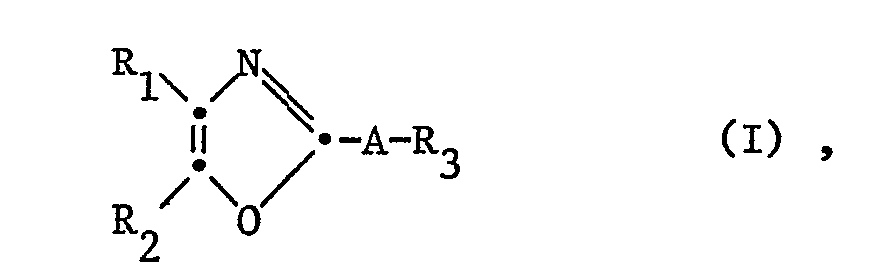
- Carbocyclisches Aryl ist beispielsweise monocyclisches carbocyclisches Aryl, wie gegebenenfalls substituiertes Phenyl.
- Heteroaryl ist beispielsweise monocyclisches, vorzugsweise 5- oder 6- gliedriges Heteroaryl, wobei mindestens ein Ringglied ein Heteroatom, wie ein Stickstoff-, Sauerstoff- oder Schwefelatom, darstellt, wobei ein Stickstoffatom auch gegebenenfalls in oxidierter Form vorliegen kann. Solche 5-gliedrigen Reste sind z.B. Pyrrolyl, wie 2-Pyrrolyl.
- Als 6-gliedriges Heteroaryl kommt z.B. Pyridyl, wie 2-, 3- oder 4-Pyridyl, l-Oxidopyridyl, wie 1-Oxido-3-pyridyl oder 1-Oxido-4-pyridyl, und Pyrimidyl, wie 2-Pyrimidyl, in Frage.
- Als Substituenten von carbocyclischem Aryl, wie Phenyl, bzw. Heteroaryl, wie Pyridyl oder 1-Oxido-pyridyl, kommen beispielsweise Halogen, Niederalkyl, Hydroxy, Niederalkoxy und/oder Acyloxy in Betracht. Acyloxy ist beispielsweise von einer organischen Carbonsäure abgeleitet und bedeutet z.B. Niederalkanoyloxy.
- Ein Kohlenwasserstoffrest A ist beispielsweise ein zweiwertiger aliphatischer, cycloaliphatischer oder cycloaliphatisch-aliphatischer Kohlenwasserstoffrest.
- Als zweiwertige aliphatische Kohlenwasserstoffreste kommen beispielsweise Niederalkylen, Niederalkyliden, Niederalkenylen oder Niederalkenyliden in Frage. Zweiwertige cycloaliphatische Kohlenwasserstoffe sind beispielsweise monocyclische 3- bis 8-gliedrige Cycloalkylene oder Cycloalkylidene. Cycloaliphatisch-aliphatische Kohlenwasserstoffreste sind beispielsweise solche, die als cycloaliphatischen Rest einen monocyclischen 3- bis 8-gliedrigen cycloaliphatischen Rest und als aliphatischen Rest Niederalkyliden aufweisen, wie Cycloalkyl-niederalkyliden.
- Verestertes Carboxy ist beispielsweise mit einem gegebenenfalls substituierten aliphatischen, cycloaliphatischen oder aromatischen Alkohol verestertes Carboxy. Ein aliphatischer Alkohol ist beispielsweise ein Niederalkanol, wie Methanol, Ethanol, Propanol, Isopropanol, n-Butanol, . sec- oder tert.-Butanol, während als cycloaliphatischer Alkohol beispielsweise ein 3- bis 8-gliedriges Cycloalkanol, wie Cyclopentanol,-hexanol oder -heptanol, in Frage kommt. Als Substituenten solcher Niederalkanole bzw. Cycloalkanole kommen beispielsweise Hydroxy, Mercapto, gegebenenfalls substituiertes Phenyl, Niederalkoxy, gegebenenfalls im Phenylteil substituiertes Phenylniederalkoxy, Niederalkylthio, gegebenenfalls im Phenylteil substituiertes Phenylniederalkylthio, Hydroxyniederalkoxy, Niederalkoxyniederalkoxy, gegebenenfalls im Phenylteil substituiertes Phenylniederalkoxyniederalkoxy, Hydroxy-hydroxyniederalkoxyniederalkoxy, Niederalkoxyniederalkoxyniederalkoxy, gegebenenfalls im Phenylteil substituiertes Phenylniederalkoxyniederalkoxyniederalkoxy.
- Carboxyniederalkoxy, Niederalkoxycarbonyl-niederalkoxy, gegebenenfalls substituiertes Phenyl aufweisendes Niederalkoxycarbonyl-niederalkoxy oder Niederalkanoyloxy in Betracht. Ein aromatischer Alkohol ist beispielsweise ein Phenol oder heterocyclischer Alkohol, welche jeweils gegebenenfalls durch Niederalkyl, Niederalkoxy, Halogen und/oder Trifluormethyl substituiert sein können, insbesondere Hydroxypyridin, z.B. 2-, 3- oder 4-Hydroxypyridin.
- Amidiertes Carboxy ist beispielsweise Carbamoyl, durch Hydroxy, Amino, oder gegebenenfalls substituiertes Phenyl monosubstituiertes, durch Niederalkyl mono- oder disubstituiertes oder durch 4- bis 7-gliedriges Alkylen bzw. 3-Aza-, 3-Niederalkylaza-, 3-0xo- oder 3-Thiaalkylen disubstituiertes Carbamoyl. Als Beispiele sind Carbamoyl, N-Mono- oder N,N-Diniederalkylcarbamoyl, wie N-Methyl-, N-Ethyl-, N,N-Dimethyl-, N,N-Diethyl- oder N,N-Dipropylcarbamoyl, Pyrrolidino- oder Piperidinocarbonyl, Morpholino-, Piperazino- bzw. 4-Methylpiperazino- sowie Thiomorpholinocarbonyl, Anilinocarbonyl oder durch Niederalkyl, Niederalkoxy und/oder Halogen substituiertes Anilinocarbonyl zu nennen.
- In der vorliegenden Beschreibung sind unter "niederen" organischen Resten und Verbindungen vorzugsweise solche zu verstehen, die bis und mit 7, vor allem bis und mit 4 Kohlenstoffatome (C-Atome) enthalten.
- Die vor- und nachstehend verwendeten Allgemeindefinitionen haben im Rahmen der vorliegenden Anmeldung in erster Linie die folgenden Bedeutungen:
- Halogen ist z.B. Halogen.bis und mit Atomnummer 35, wie Fluor, Chlor oder Brom ferner Iod.
- Niederalkyl ist z.B. Methyl, Ethyl, n-Propyl, Isopropyl, n-Butyl, Isobutyl, sec.-Butyl, tert.-Butyl, ferner ein Pentyl-, Hexyl-oder Heptylrest.
- Niederalkoxy ist z.B. Methoxy, Ethoxy, n-Propyloxy, Isopropyloxy, n-Butyloxy, Isobutyloxy, sec.-Butyloxy oder tert.-Butyloxy.
- Niederalkylthio ist z.B. Methyl-, Ethyl-, n-Propyl-, Isopropyl-, n-Butyl-, Isobutyl-, sec.-Butyl oder tert.-Butylthio.
- Phenylniederalkoxy ist z.B. Phenylmethoxy, Phenylethoxy oder Phenylpropyloxy.
- Phenylniederalkylthio ist z.B. Benzyl-, Phenylethyl- oder Phenylpropylthio.
- Hydroxyniederalkoxy ist z.B. Hydroxyethoxy, Hydroxypropyloxy oder 1,2-Dihydroxypropyloxy.
- Niederalkoxyniederalkoxy ist z.B. Methoxyethoxy, Ethoxyethoxy, Methoxypropyloxy oder Methoxybutyloxy.
- Phenylniederalkoxyniederalkoxy ist z.B. 2-Benzyloxyethoxy oder 2-(2-Phenylethoxy)-ethoxy.
- Niederalkanoyloxy ist z.B. Acetyl-, Propionyl-, Butyryl-, Iso-,sec-oder tert.-Butyryloxy.
- Niederalkylen ist z.B. geradkettig, wie Methylen, Ethylen, 1,3-Propylen oder 1,4-Butylen, oder verzweigt, wie 1,2-Propylen, 1,2- oder 1,3-(2-Methyl)-propylen oder 1,2-Butylen.
- Niederalkyliden weist ein tertiäres oder insbesondere ein quartäres C-Atom auf und ist z.B. Ethyliden oder 1,1- oder 2,2-Propyliden, ferner 1,1- oder 2,2-Butyliden oder 1,1-, 2,2- oder 3,3-Pentyliden.
- Niederalkenylen ist z.B. Ethenylen, 1,2- oder 1,3-Propenylen oder 1,2-, 1,3- oder l,4-Buten-2-ylen.
- Niederalkenyliden ist z.B. Ethenyliden, 1,1-Propen-1-yliden, 1,1-Propcn-2-yliden, ferner ein Butenyliden, wie 1,1-Buten-3-yliden.
- Cycloalkylen ist z.B. Cyclopropylen, 1,2- oder 1,3-Cyclobutylen, 1,2-, 1,3- oder 1,4-Cyclopentylen, ferner ein Cyclohexylen.
- Cycloalkyliden ist z.B. Cyclopropyliden, Cyclobutyliden, Cyclopentyliden oder Cyclohexyliden.
- Cycloalkyl-niederalkyliden ist z.B. einCyclopropyl-, Cyclobutyl-, Cyclopentyl- oder Cyclohexyl-methylen , -ethyliden oder -propyliden, ferner ein Cyclohexyl-butyliden.
- Carboxyniederalkoxy ist z.B. Carboxymethoxy, 2-Carboxyethoxy, 2-, 3-Carboxypropyloxy, 1-Carboxy-2-propyloxy, 2-, 3- oder 4-Carboxy-n-butyloxy, 1-Carboxy-2-methyl-propyl-3-oxy oder 1-Carboxy-2-methyl-propyl-2- oxy.
- Niederalkoxycarbonyl-niederalkoxy enthält jeweils im Niederalkoxyteil unabhängig voneinander die vorstehend unter Niederalkoxy aufgeführten Bedeutungen.
- Salze von erfindungsgemässen Verbindungen der Formel I sind vorzugsweise pharmazeutisch verwendbare Salze, wie pharmazeutisch verwendbare Säureadditionssalze, und/oder, wenn R Carboxy bedeutet, innere Salze oder Salze mit Basen. Geeignete Säureadditionssalze sind beispielsweise Salze mit anorganischen Säuren, wie Mineralsäure, mit Sulfaminsäuren, wie Cyclohexylsulfaminsäure, mit organischen Carbonsäuren, wie Niederalkancarbonsäuren, gegebenenfalls ungesättigte Dicarbonsäuren, mit durch Hydroxy und/oder 0xo substituierten Carbonsäuren oder mit Sulfonsäuren, beispielsweise Sulfate oder Hydrohalogenide, wie Hydrobromide oder Hydrochloride, Oxalate, Malonate, Fumarate oder Maleinate, Tartrate, Pyruvate oder Citrate, Sulfonate, wie Methan-, Benzol- oder p-Toluolsulfonate.
- Geeignete Salze mit Basen sind beispielsweise Alkali- oder Erdalkalimetallsalze, z.B. Natrium-, Kalium- oder Magnesiumsalze, pharmazeutisch verwendbare Uebergangsmetallsalze, wie Zink- oder Kupfersalze, oder Salze mit Ammoniak oder von substituierten organischen Aminen, wie cyclische Amine, z.B. Morpholin, Thiomorpholin, Piperidin, Pyrrolidin, wie Mono-, Di- bzw. Triniederalkylamine oder Mono-, Di- bzw. Trihydroxyniederalkylamine , z.B. Mono-, Di- bzw. Triethanolamin. Mononiederalkylamine sind beispielsweise Ethyl- oder tert.-Butylamin. Diniederalkylamine sind z.B. Diethyl- oder Diisopropylamin, und als Triniederalkylamin kommt z.B. Triethylamin in Betracht.
- Die neuen Verbindungen der Formel I und ihre pharmazeutisch verwendbaren Salze weisen wertvolle pharmakologische Eigenschaften auf. Insbesondere besitzen sie, z.B. bei lokaler Anwendung, eine ausgeprägte antiinflammatorische Wirkung.
- Diese Eigenschaft lässt sich beispielsweise nach der von G. Tonelli, L. Thibault, Endocrinology 77, 625 (1965) entwickelten Methode durch Hemmung des mit Crotonöl induzierten Rattenohroedems bei der Normalratte im Dosisbereich von etwa 1 bis etwa 100 mg/ml nachweisen. So wurde beispielsweise für die Verbindung 2-[4-Phenyl-5-(3-pyridyl)-imidazol-2-yl]-essigsäureethylester im vorstehend beschriebenen Test ein ED50-Wert von 17 mg/ml ermittelt.
- Die erfindungsgemässen Verbindungen der Formel I sind daher als Arzneimittel, insbesondere externe (topische) Hautphlogistika für die Behandlung entzündlicher Dermatosen jeglicher Genese, wie bei leichten Hautirridationen, Kontaktdermatitis, Exanthemen, Verbrennungen, sowie als Schleimhautphlogistika für die Behandlung von Mukosaentzündungen, z.B. der Augen, Nase, Lippen, Genital-, Analregion, geeignet. Ferner können die Verbindungen als Sonnenschutzmittel verwendet werden.
- Die Erfindung betrifft z.B. Verbindungen der Formel I, worin einer der Reste R1 und R2 einen 5- oder 6-gliedrigen, als Heteroatom(e) Stickstoff aufweisenden Heteroaryl bedeutet, welcher unsubstituiert oder durch Halogen, Niederalkyl, Hydroxy, Niederalkoxy und/oder Niederalkanoyloxy substituiert sein kann, und der andere unsubstituiertes oder durch Halogen, Niederalkyl, Hydroxy, Niederalkoxy und/oder Niederalkanoyl substituiertes Phenyl oder einen 5- oder 6-gliedrigen, als Heteroatom(e) Stickstoff aufweisenden Heteroarylrest darstellt, der unsubstituiert oder durch Halogen, Niederalkyl, Hydroxy, Niederalkoxy und/oder Niederalkanoyl substituiert sein kann, bedeutet, A Niederalkylen, Niederalkyliden, Niederalkenylen, Niederalkenyliden, Cycloalkylen, Cycloalkyliden oder Cycloalkyl-niederalkyliden darstellt und R3 Carboxy, mit einem Niederalkanol, 3- bis 8-gliedrigem Cycloalkanol, Phenol, einem Hydroxypyridin, einem substituierten Phenol bzw. Hydroxypyridin verestertes Carboxy, Carbamoyl oder durch Hydroxy, Amino, Phenyl oder substituiertes Phenyl mono-substituiertes, durch Niederalkyl mono- oder disubstituiertes oder durch 4- bis 7-gliedriges Alkylen bzw. 3-Aza-, 3-Niederalkylaza-, 3-0xa- oder 3-Thiaalkylen disubstituiertes Carbamoyl bedeutet, wobei ein Niederalkanol unsubstituiert oder durch Hydroxy, Mercapto, gegebenenfalls substituiertes Phenyl, Niederalkoxy, gegebenenfalls im Phenylteil substituiertes Phenylniederalkoxy, Niederalkylthio, gegebenenfalls im Phenylteil substituiertes Phenylniederalkylthio, Hydroxyniederalkoxy, Niederalkoxyniederalkoxy, gegebenenfalls im Phenylteil substituiertes Phenylniederalkoxyniederalkoxy, Hydroxyniederalkoxyniederalkoxy, Niederalkoxyniederalkoxyniederalkoxy, gegebenenfalls im Phenylteil substituiertes Phenylniederalkoxyniederalkoxyniederalkoxy, Carboxyniederalkoxy, Niederalkoxycarbonyl-niederalkoxy, gegebenenfalls substituiertes Phenyl aufweisendes Niederalkoxycarbonyl-niederalkoxy oder Niederalkanoyloxy substituiert sein kann und substituiertes Phenyl, Phenol bzw. Hydroxypyridin jeweils durch Niederalkyl, Niederalkoxy, Halogen und/oder Trifluormethyl substituiert sein kann, ihre Isomeren sowie ihre Salze, insbesondere pharmazeutisch verwendbare Salze.
- Die Erfindung betrifft beispielsweise Verbindungen der Formel I, worin einer der Reste R1 und R2 Pyridyl oder 1-Oxido-pyridyl, bedeutet, die unsubstituiert und/oder jeweils durch Halogen, Hydroxy, Niederalkyl, Niederalkoxy und/oder Niederalkanoyloxy substituiert sein können, und der andere Phenyl, Pyridyl oder 1-Oxidopyridyl, die unsubstituiert und/ oder jeweils durch Halogen, Hydroxy, Niederalkyl, Niederalkoxy und/oder Niederalkanoyloxy substituiert sein können, bedeutet, A Niederalkylen mit bis und mit 4 C-Atomen, wie Methylen, Niederalkyliden mit bis und mit 7 C-Atomen, wie 2,2-Propyliden, Niederalkenylen mit bis und mit 4 C-Atomen, wie l,3-Propen-2-ylen, Niederalkenyliden mit bis und mit 7 C-Atomen, wie l,l-Buten-3-yliden, 3- bis 8-gliedriges Cycloalkylen, wie Cyclopropylen, 3- bis 8-gliedriges Cyclalkyliden, wie Cyclopentyliden, oder Cycloalkyl-niederalkyliden mit bis und mit 7 C-Atomen im Alkylidenteil und mit einem 3- bis 8-gliedrigen Cycloalkylteil, wie 2-Cyclohexyl-1,1-ethyliden, bedeutet und R3 Carboxy, mit einem Niederalkanol, einem 3- bis 8-gliedrigen Cycloalkanol, Phenol oder einem substituierten Phenol verestertes Carboxy, Carbamoyl, N-Mono-, N,N-Di- niederalkylcarbamoyl, Pyrrolidino-, Piperidino-, Morpholino-, Piperazino-, 4-Niederalkyl-piperazino-, Thiomorpholino-, Anilino- oder durch Niederalkyl, Niederalkoxy und/oder Halogen substituiertes Anilinocarbonyl darstellt, wobei das Niederalkanol unsubstituiert oder durch Hydroxy, Mercapto, Phenyl, substituiertes Phenyl, Niederalkoxy, Phenylniederalkoxy, im Phenylteil substituiertes Phenylniederalkoxy, Niederalkylthio, Phenylniederalkylthio, im Phenylteil substituiertes Phenylniederalkylthio, Hydroxyniederalkoxy, Niederalkoxyniederalkoxy, Phenylniederalkoxyniederalkoxy, im Phenylteil substituiertes Phenylniederalkoxyniederalkoxy, Hydroxyniederalkoxyniederalkoxy, Niederalkoxyniederalkoxyniederalkoxy, gegebenenfalls im Phenylteil substituiertes Phenylniederalkoxyniederalkoxyniederalkoxy, Carboxyniederalkoxy, Niederalkoxycarbonyl-niederalkoxy, gegebenenfalls substituiertes Phenyl aufweisendes Niederalkoxycarbonyl-niederalkoxy oder Niederalkanoyloxy substituiert sein kann und substituiertes Phenol bzw. Phenyl jeweils durch Niederalkyl, Niederalkoxy, Halogen und/oder Trifluormethyl substituiert sein kann, ihre Isomeren sowie ihre Salze.
- Die Erfindung betrifft beispielsweise Verbindungen der Formel I, worin einer der Reste Rl und R unsubstituiertes oder in zweiter Linie durch Halogen mit Atomnummer bis und mit 35, wie Chlor, Hydroxy, Niederalkyl mit bis und mit 4 C-Atomen, wie Methyl, und/oder Niederalkoxy mit bis und mit 4 C-Atomen, wie Methoxy, substituiertes Phenyl bedeutet und der andere Pyridyl, wie 3-Pyridyl, oder 1-Oxido-pyridyl, wie 1-Oxido-3-pyridyl, bedeutet, die jeweils unsubstituiert oder in zweiter Linie durch Halogen mit Atomnummer bis und mit 35, wie Chlor, Hydroxy und/oder Niederalkoxy mit bis und mit 4 C-Atomen, wie Methoxy, substituiert sein können, A Niederalkylen mit bis und mit 4 C-Atomen, wie Methylen, Niederalkyliden mit bis und mit 7 C-Atomen, wie 2,2-Propyliden, Niederalkenyliden mit bis und mit 7 C-Atomen, wie 1,1-Buten-3-yliden, oder 3- bis 8-gliedriges Cycloniederalkyliden, wie 1,1-Cyclopentyliden, darstellen und R3 Carboxy, Niederalkoxycarbonyl mit bis und mit 5 C-Atomen, wie Ethoxycarbonyl, wobei das Niederalkoxycarbonyl durch Niederalkanoyloxy mit bis und mit 5 C-Atomen, wie Pivaloyloxy, substituiert sein kann, Hydroxyniederalkoxy-niederalkoxycarbonyl, wie 2-(2-Hydroxyethoxy)-ethoxycarbonyl, Niederalkoxyniederalkoxy-niederalkoxycarbonyl, wie 2-(2-Methoxyethoxy)-ethoxycarbonyl, Hydroxyniederalkoxyniederalkoxy-niederalkoxycarbonyl, wie 2-[2-(2-Hydroxyethoxy)-ethoxy]-ethoxycarbonyl, oder Niederalkoxyniederalkoxyniederalkoxy-niederalkoxycarbonyl, wie 2-[2-(2-Methoxyethoxy)-ethoxy]-ethoxycarbonyl, jeweils mit bis und mit 4 C-Atomen im Niederalkoxy-Teil, bedeuten, ihre Isomeren sowie ihre Salze.
- Die Erfindung betrifft in erster Linie Verbindungen der Formel I, worin einer der Reste R1 und R2 unsubstituiertes oder in zweiter Linie durch Halogen mit Atomnummer bis und mit 35, wie Chlor, Hydroxy oder Niederalkoxy mit bis und mit 4 C-Atomen, wie Methoxy, substituiertes Phenyl bedeutet und der andere Pyridyl, wie 3- oder 4-Pyridyl, oder 1-Oxido- pyridyl, wie 1-Oxido-3-pyridyl oder 1-Oxido-4-pyridyl, darstellt, A Niederalkyliden mit bis und mit 4 C-Atomen, wie 2,2-Propyliden, bedeutet, und R3 Niederalkoxycarbonyl mit bis und mit 5 C-Atomen, wie Ethoxycarbonyl, darstellt, ihre Isomeren sowie ihre Salze.
- Die Erfindung betrifft in erster Linie Verbindungen der Formel I, worin einer der Reste R1 und R2 unsubstituiertes oder in zweiter Linie durch Halogen mit Atomnummer bis und mit 35, wie Chlor, Hydroxy oder Niederalkoxy mit bis und mit 4 C-Atomen, wie Methoxy substituiertes Phenyl bedeutet und der andere Pyridyl, wie 3- oder 4-Pyridyl, oder 1-Oxido- pyridyl, wie 1-Oxido-3-pyridyl oder l-Oxido-4-pyridyl, darstellt, A ein ein quartäres C-Atom aufweisendes Niederalkyliden mit bis und mit 4 C-Atomen, wie 2,2-Propyliden, wobei das quartäre C-Atom direkt an den Imidazolring gebunden ist, bedeutet, und R3 Niederalkoxycarbonyl mit bis und mit 5 C-Atomen, wie Ethoxycarbonyl, darstellt, ihre Isomeren sowie ihre Salze.
- Die Erfindung betrifft in allererster Linie Verbindungen der Formel I, worin R Phenyl bedeutet, R2 1-Oxidopyridyl, wie 1-Oxido-3-pyridyl, darstellt, A 2,2-Propyliden bedeutet und R3 Niederalkoxycarbonyl mit bis und mit 5 C-Atomen, wie Ethoxycarbonyl, darstellt, ihre Isomeren sowie ihre Salze.
- Die Erfindung betrifft namentlich die in den Beispielen genannten neuen Verbindungen und ihre Salze, insbesondere pharmazeutisch verwendbare Salze von solchen Verbindungen mit salzbildenden Gruppen, sowie die in den Beispielen aufgeführten Herstellungsverfahren.
- Eine Verfahrensweise zur Herstellung von Verbindungen der Formel (I) ist beispielsweise dadurch gekennzeichnet, dass man eine Verbindung der Formel

- Tautomere von Verbindungen der Formel (II) sind beispielsweise solche, bei denen eine partielle Enol- bzw. Enamin-Gruppierung in Form der entsprechenden tautomeren Keto- bzw. Ketiminform vorliegt und umgekehrt, wobei die jeweiligen Tautomeren miteinander im Gleichgewicht stehen.
- Die Cyclisierung einer Verbindung der Formel II, einem Tautomeren und/oder Salz davon erfolgt in üblicher, insbesondere in der aus der Literatur für analoge Reaktionen bekannten Weise, erforderlichenfalls unter Erwärmen, wie in einem Temperaturbereich von etwa 20° bis etwa 250°C, unter Druck und/oder in Gegenwart eines katalytischen Mittels, vorzugsweise einer Säure oder einem Säureanhydrid. Als Säuren eignen sich beispielsweise anorganische Säuren, wie Mineralsäuren, z.B. Schwefelsäure, Polyphosphorsäure oder Halogenwasserstoffsäure, wie Chlorwasserstoffsäure oder organische Säuren, wie Niederalkancarbonsäuren, z.B. Essigsäure. Als Säureanhydride kommen z.B. Mineralsäureanhydride, wie Sulfuryl- oder Phosphor(oxy)halogenide, z.B. Phosphoroxychlorid, in Betracht. Dabei arbeitet man erforderlichenfalls in einem inerten Lösungsmittel, beispielsweise einem gegebenenfalls halogenierten Kohlenwasserstoff, wie Chloroform, Chlorbenzol, Hexan, Pyridin oder Toluol, einem Niederalkanol, wie Methanol, z.B. Dimethylformamid oder Formamid, oder einer Niederalkancarbonsäure, wie Ameisen- oder Essigsäure, und/ oder unter Inertgas, wie Stickstoff.
- Die Ausgangsstoffe der Formel II, ihre Tautomeren und/oder Salze werden nach an sich bekannten Verfahren zum überwiegenden Teil in situ gebildet und unter den Reaktionsbedingungen ohne Isolierung weiter zu der Verbindung der Formel I umgesetzt. Dabei kann die Cyclisierung im Anschluss an eine vorgelagerte Kondensation erfolgen.
- So kann man in einer bevorzugten Ausführungsform des vorstehenden Verfahrens beispielsweise eine Verbindung der Formel

- In einer besonders bevorzugten Ausführungsform des vorstehend beschriebenen Verfahrens setzt man beispielsweise Verbindungen der Formel
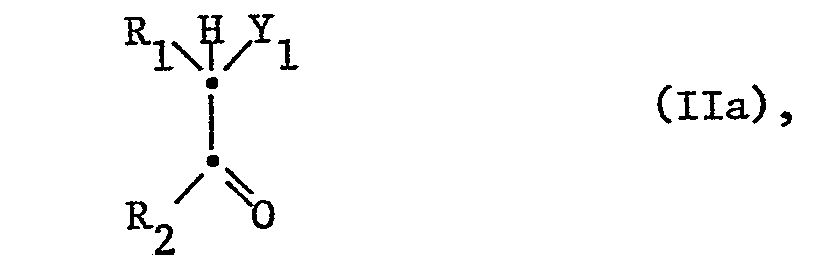

- Salze von Verbindungen der Formel (II) und (IIa) sind beispielsweise Säureadditionssalze, wie Hydrohalogenide. Funktionell abgewandeltes Hydroxy Y1ist beispielsweise Amino oder reaktionsfähiges verestertes Hydroxy, wie mit einer anorganischen Mineralsäure, z.B. Halogenwasserstoffsäure, oder mit einer organischen Sulfonsäure, z.B. gegebenenfalls substituierten Benzolsulfonsäure, verestertes Hydroxy. Als Beispiele für reaktionsfähiges verestertes Hydroxy seien in erster Linie Halogen, z.B. Chlor oder Brom, oder Sulfonyloxy, z.B. p-Toluolsulfonyloxy, genannt. Funktionell abgewandeltes Carboxy Y2 ist beispielsweise anhydridisiertes Carboxy, wie Halogencarbonyl, Niederalkanoyloxycarbonyl oder Niederalkoxycarbonyloxycarbonyl, Carbamoyl oder Amidino.
- Reaktionsfähiges verestertes Hydroxy ist beispielsweise eine vorzugsweise mit starken anorganischen oder organischen Säuren, wie Mineralsäuren, z.B. Halogenwasserstoffsäuren, z.B. Brom- oder Chlorwasserstoffsäure, oder organische Sulfonsäuren, wie gegebenenfalls substituierte Benzolsulfonsäuren, z.B. p-Toluolsulfonsäure, verestertes Hydroxy. Funktionell abgewandelte Carboxyderivate der Formel (IIc) sind beispielsweise entsprechende gegebenenfalls veresterte, amidierte oder anhydridisierte Carboxyverbindungen, wie entsprechende Niederalkoxycarbonyl-, gegebenenfalls substituierte Carbamoyl- oder Halogencarbonyl-, Niederalkanoyloxycarbonyl- oder Niederalkoxycarbonyloxycarbonyl-Derivate.
- Als geeignete Kondensationsmittel kommen beispielsweise starke Protonsäuren, wie Mineralsäuren, z.B. Schwefelsäure, Halogenwasserstoffsäuren, Phosphorsäuren, Sulfonsäuren, wie gegebenenfalls substituierte Benzolsulfonsäuren, oder Carbonsäuren, wie Niederalkancarbonsäuren, oder Anhydride von Mineralsäuren, wie entsprechende Anhydride von Phosphorsäuren, Kohlensäure oder Schwefelsäure, z.B. Phosphorpentachlorid, Phosphoroxychlorid,'Phosphorpentoxid, Thionylchlorid oder Phosgen, in Betracht.
- Die Umsetzung erfolgt in üblicher Weise, erforderlichenfalls unter Erwärmen und in einem inerten Lösungsmittel, wie einem halogenierten Kohlenwasserstoff.
- In einer bevorzugten Verfahrensweise gelangt man zu Verbindungen der Formel (II), worin X1 und X2 jeweils Oxy bedeuten, indem man Verbindungen der Formel (IIa), worin Y Hydroxy darstellt, mit Säurehalogeniden der Formel (IIc), insbesondere den entsprechenden Säurehalogeniden, umsetzt. Aus den so erhältlichen Verbindungen der Formel (IId) können mit Ammoniak in Gegenwart einer Säure, wie Eisessig, die entsprechenden Verbindungen der Formel (I) gebildet werden.
- Insbesondere gelangt man zu Verbindungen der Formel (II), worin X1 Oxy und X Imino darstellen, indem man eine Verbindung der Formel (IIa), worin Y reaktionsfähiges verestertes Hydroxy, in erster Linie Halogen darstellt, mit einer entsprechender Verbindung der Formel (IIb), worin Y2 Carbamoyl bedeutet, unter den vorstehend angegebenen Reaktionsbedingungen umsetzt.
- Insbesondere gelangt man zu Verbindungen der Formel (II), worin X Imino und X2 Oxo bedeuten, durch Umsetzung einer Verbindung der Formel (IIa), worin Y1 Amino darstellt, einem Salz und/oder Tautomeren davon mit einer Verbindung der Formel (IIb), worin Y2 anhydridisiertes Carboxy, in erster Linie Halogencarbonyl bedeutet unter den angegebenen Reaktionsbedingungen.
- Verbindungen der Formel (II), worin X1 und X2 Imino bedeuten, sind bevorzugt erhältlich, wenn man eine Verbindung der Formel (IIa), worin Y gegebenenfalls reaktionsfähiges verestertes Hydroxy, in erster Linie Hydroxy, bedeutet, ein Salz und/oder Tautomeres davon mit einer Verbindung der Formel (IIb), worin Y2 Amidino bedeutet umsetzt.
- Die Ausgangsstoffe der Formel (IIa), (IIb) und (IIc) sind bekannt oder können nach an sich bekannten Methoden hergestellt werden.
- So lassen sich beispielsweise Verbindungen der Formel (IIa) durch Esterkondensation von veresterten Säuren der Formeln RI-CHZ-COOH bzw. R2-CH2-COOH mit veresterten Säuren der Formeln RI-COOH bzw. R2-COOH, vorzugsweise in Gegenwart einer Base erhalten. Das resultierende a-Methylenketon der Formel

- Verbindungen der Formel I oder Salze davon kann man weiterhin herstellen, indem man beispielsweise eine Verbindung der Formel

- Die Reduktion erfolgt nach an sich bekannten Verfahren. So behandelt man Verbindungen der Formel (III) oder deren Salze mit Wasserstoff in Gegenwart eines Hydrierungskatalysators oder mit einem Dithionit, z.B. Natriumdithionit, oder mit einem Phosphorhalogenid, z.B. Phosphortrichlorid. Als Hydrierungskatalysatoren lassen sich beispielsweise Elemente der VIII. Nebengruppe sowie Derivate davon, wie Platin, Palladium oder Palladiumchlorid, die gegebenenfalls auf einem üblichen Trägermaterial, wie Aktivkohle oder Erdalkalimetallverbindungen, z.B. Bariumcarbonat, aufgezogen sind, oder Raney-Nickel, verwenden. Ebenso kann die Reduktion mit einem System aus einem geeigneten unedlen Metall und einer Protonsäure, beispielsweise mit Zink/Eisessig, durchgeführt werden.
- Die Reduktion lässt sich erforderlichenfalls unter Kühlen oder Erwärmen, beispielsweise in einem Temperaturbereich von etwa 0° bis etwa 150°C, in einem inerten Lösungsmittel, wie einem halogenierten Kohlenwasserstoff, z.B. Chloroform, Tetrachlorkohlenstoff oder Chlorbenzol, oder einem Ether, wie Dimethoxyethan, Diethylether, Dioxan oder Tetrahydrofuran, und/oder unter Inertgas, z.B. Stickstoff,durchführen:
- Die Ausgangsstoffe der Formel (III) oder deren Salze sind in an sich bekannter Weise erhältlich, beispielsweise in dem eine Verbindung der Formel

- Verbindungen der Formel I lassen sich ferner herstellen, indem man in einer Verbindung der Formel

- worin R3 einen in R3 überführbaren Rest bedeutet, den Rest R3 in einen Rest R3 überführt und gewünschtenfalls die verfahrensgemäss erhältliche freie Verbindung der Formel (I) in eine andere freie Verbindung überführt, eine verfahrensgemäss erhältliche freie Verbindung in ein Salz oder ein verfahrensgemäss erhältliches Salz in die freie Verbindung oder in ein anderes Salz überführt und gewünschtenfalls ein verfahrensgemäss erhältliches Isomerengemisch in seine Komponenten auftrennt.
- Derartige Gruppen R3' sind beispielsweise durch Solvolyse oder Oxidation in gegebenenfalls verestertes oder amidiertes Carboxy R3 überführbare Gruppen. Als solvolytisch in R3 überführbare Gruppen kommen von R3 verschiedenes funktionell abgewandeltes Carboxy in Frage; zu nennen sind in erster Linie Cyano, anhydridisiertes Carboxy, wie Halogencarbonyl, Niederalkanoyloxycarbonyl oder Niederalkoxycarbonyloxycarbonyl, gegebenenfalls substituiertes Amidino, wie Niederalkylamidino, gegebenenfalls verestertes Thiocarboxy, wie Niederalkylthiocarbonyl, gegebenenfalls verestertes Dithiocarboxy, gegebenenfalls substituiertes Thiocarbamoyl, wie Mono- oder Diniederalkyl-thiocarbamoyl, gegebenenfalls verestertes oder anhydridisiertes Carboximidoyl, wie Niederalkoxy- oder Halogeniminocarbonyl, oder sich von Orthoameisensäureester ableitende Reste, wie Triniederalkoxy- oder Trihalogenmethyl. Solche Gruppen können durch Solvolyse, z.B. Hydrolyse oder Alkoholyse, ferner Ammono- oder Aminolyse, in einen Rest R3 überführt werden.
- Solvolysemittel sind beispielsweise Wasser, der gewünschten veresterten Carboxygruppe entsprechende Alkohole, Ammoniak oder der gewünschten amidierten Carboxygruppe entsprechende Amine.
- Die Behandlung mit einem entsprechenden Solvolysemittel wird gegebenenfalls in Gegenwart einer Säure oder Base, gegebenenfalls unter Kühlen oder Erwärmen oder erforderlichenfalls in einem inerten Lösungs-oder Verdünnungsmittel durchgeführt. Als Säuren eignen sich beispielsweise anorganische oder organische Protonsäuren, wie Mineralsäuren, z.B. Schwefelsäure oder Halogenwasserstoffsäure, wie Sulfonsäure, z.B. Niederalkan- oder gegebenenfalls substituierte Benzolsulfonsäure, oder wie Carbonsäuren, wie Niederalkancarbonsäuren. Als Basen können beispielsweise Hydroxide, wie Alkalimetallhydroxide, verwendet werden.
- So können beispielsweise die Cyanogruppe, gegebenenfalls verestertes Thiocarboxy, gegebenenfalls verestertes Dithiocarboxy, gegebenenfalls substituiertes Thiocarbamoyl, gegebenenfalls verestertes oder anhydridisiertes Carboximidoyl, oder sich von Orthoameisensäure ableitende Reste R3, gegebenenfalls in Gegenwart einer Protonsäure zu Carboxy R3 hydrolysiert werden, während beispielsweise Cyano, gegebenenfalls S-verestertes Thiocarboxy oder anhydridisiertes Carboxy R3 mit einem geeigneten Alkohol, gegebenenfalls in Gegenwart einer Protonsäure, zu verestertem Carboxy R3 alkoholysiert werden können. Amidiertes Carboxy R3 kann z.B. auch durch Aminolyse bzw. durch Behandeln mit einem geeigneten Amin aus Cyano, wobei beispielsweise in Gegenwart einer Lewissäure, wie Aluminiumchlorid, gearbeitet wird, oder anhydridisiertem Carboxy erhalten werden.
- Weitere in Carboxy bzw. verestertes Carboxy R3 überführbare Gruppen sind beispielsweise oxidativ in diese überführbare Reste, wie gegebenenfalls hydratisiertes bzw. acetalisiertes Formyl. Diese kann vorteilhaft im Verlaufe der Oxidationsreaktion, z.B. aus der Acylgruppe einer a,ß-ungesättigten oder a,ß-dihydroxilierten aliphatischen oder araliphatischen Carbonsäure, einer gegebenenfalls an der Hydroxygruppe veresterten Formylgruppe, in situ gebildet oder aus einem ihrer funktionellen Derivate, z.B. einem ihrer Acetale, Acylale oder Imine in Freiheit gesetzt werden. Acylgruppen von a,ß-ungesättigten oder a,ß-dihydroxylierten Carbonsäuren sind beispielsweise Acylgruppen von a,ß-ungesättigten aliphatischen Mono- oder Dicarbonsäuren, z.B. Acryloyl, Crotonyl oder die Acylgruppe der gegebenenfalls funktionell abgewandelten Fumar- oder Maleinsäure, Acylgruppen von a,ß-ungesättigten araliphatischen Carbonsäuren, z.B. gegebenenfalls substituiertes Cinnamoyl, oder Acylgruppen von aliphatischen a,ß-Dihydroxydicarbonsäuren, wie der Weinsäure, oder monofunktioneller Carboxyderivate, wie Estern oder Amiden, derselben. Veresterte Hydroxymethylgruppen sind beispielsweise an der Hydroxygruppe mit einer Mineralsäure, wie einer Halogenwasserstoffsäure, z.B. mit Chlor- oder Bromwasserstoffsäure, oder mit einer Carbonsäure, z.B. mit Essigsäure oder der gegebenenfalls substituierten Benzoesäure, veresterte Gruppen. Acetalisierte Formylgruppen sind beispielsweise mit Niederalkanolen oder einem Niederalkandiol acetalisierte Formylgruppen, wie Dimethoxy-, Diethoxy- oder Ethylendioximethyl. Acylalisierte Formylgruppen sind z.B. Diniederalkanoyloxymethyl- ider Dihalogenmethylgruppen, wie Diacetoxymethyl oder Dichlormethyl. Imine von Formylgruppen sind beispielsweise gegebenenfalls substituierte N-Benzylimine oder N-(2-Benzothiazolyl)-imine derselben oder Imine mit 3,4-Di-tert.-butyl-o-chinon. Weitere oxidativ in die Carboxygruppe überführbare Reste sind z.B. gegebenenfalls substituierte, wie in 5-Stellung einer acetalisierten Formylgruppe, wie Diethoxymethyl, aufweisende 2-Furoylgruppen. Zu veresterten Carboxygruppen oxidierbare Gruppen sind veretherte Hydroxymethyl- oder Dihydroxymethylgruppen, wie Niederalkoxymethyl-oder Diniederalkoxymethylgruppen.
- Die Oxidation derartiger Gruppen R' 3 erfolgt in an sich bekannter Weise, beispielsweise durch Umsetzung in einem geeigneten Oxidationsmittel, beispielsweise in einem inerten Lösungsmittel, wie einer Niederalkancarbonsäure z.B. Essigsäure, einem Keton, z.B. Aceton, einem Ether,z.B. Tetrahydrofuran, einem heterocyclischen Aromaten, z.B. Pyridin, oder Wasser oder einem Gemisch davon, erforderlichenfalls unter Kühlen oder Erwärmen, z.B. von etwa 0° bis etwa 150°C. Als Oxidationsmittel kommen beispielsweise oxidierende Uebergangsmetallverbindungen, insbesondere solche mit Elementen der I., VI., VII., oder VIII. Nebengruppe, in Frage. Als Beispiele seien genannt: Silberverbindungen, wie Silbernitrat, -oxid oder -picolinat, Chromverbindungen, wie Chromtrioxid oder Kaliumdichromat, Manganverbindungen, wie Kaliumferrat, Tetrabutylammonium- oder Benzyl(triethyl)ammoniumpermanganat. Weitere Oxidationsmittel sind beispielsweise geeignete Verbindungen mit Elementen der 4. Hauptgruppe, wie Bleidioxid, oder Halogen-Sauerstoff-Verbindungen, wie Natriumiodat oder Kaliumperiodat.
- So führt beispielsweise die Oxidation von Hydroxymethyl bzw. von mit einem Niederalkanol verethertem Hydroxymethyl zu Carboxy bzw. zu mit einem Niederalkanol verestertem Carboxy R3. Diese Umsetzung wird z.B. vorteilhaft mit Kaliumpermanganat in Aceton oder wässrigem Pyridin bei Raumtemperatur durchgeführt. Entsprechend erfolgt die Oxidation von gegebenenfalls hydratisiertem Formyl zu Carboxy R z.B. mit Iod in einer methanolischen Kaliumhydroxidlösung. Für die Oxidation von acetalisiertem Formyl zu verestertem Carboxy R3 wird als Oxidationsmittel insbesondere Brom- oder N-Bromsuccinimid verwendet.
- Die Ausgangsstoffe der Formel (IV) werden nach an sich bekannten Verfahren hergestellt. Beispielsweise geht man von einem Hydroxyketon der Formel

- In dem vorstehend beschriebenen Verfahren zur Herstellung von z.B. Verbindungen der Formel IV, kann das Ammoniak, welches überwiegend im Ueberschuss zugegeben wird, auch in Form eines Ammoniak abgebenden Mittels eingesetzt werden, wobei die Freisetzung bei erhöhter Temperatur und gegebenenfalls unter Druck erfolgt. Als Ammoniak abgebende Mittel kommen z.B. Ammoniumsalze von Niederalkancarbonsäuren, vorzugsweise Ammoniumacetat, ferner ein geeignetes Niederalkancarbonsäureamid, insbesondere Formamid, in Frage.
- Der Aldehyd der Formel R3-A-C(=0)-H (IIIb) kann in dem vorstehend beschriebenen Herstellungsverfahren für Verbindungen der Formel III beispielsweise auch unter den Reaktionsbedingungen aus einem Oxazinderivat der Formel

- Eine erfindungsgemäss erhältliche Verbindung kann in üblicher Weise in eine andere Verbindung der Formel I überführt werden.
- So kann man in erfindungsgemäss erhältlichen Verbindungen der Formel I freie und veresterte Carboxygruppen R3 ineinander umwandeln.
- Eine freie Carboxylgruppe R lässt sich beispielsweise in üblicher Weise z.B. durch Behandeln mit einem Diazoniederalkan, Diniederalkyl-formamidacetal, Alkylhalogenid oder Triniederalkyloxonium-, Triniederalkylcarboxonium- oder Diniederalkylcarboniumsalze, wie Hexachloroantimonat oder Hexafluorophosphat, oder vor allem durch Umsetzung mit dem entsprechenden Alkohol oder einem reaktionsfähigen Derivat, wie einem Carbon-, Phosphorig-, Schweflig- oder Kohlensäureester, z.B. einem Niederalkancarbonsäureester, Triniederalkylphosphit, Diniederalkylsulfit oder dem Pyrocarbonat, oder einem Mineralsäure- oder Sulfonsäureester, z.B. dem Chlor- oder Bromwasserstoffsäure- oder Schwefelsäure-, Benzolsulfonsäure-, Toluolsulfonsäure- oder Methansulfosnäureester, des entsprechenden Alkohols oder einem davon abgeleiteten Olefin, zu einer veresterten Carboxylgruppe R3 verestern.
- Die Umsetzung mit dem entsprechenden Alkohol selbst kann vorteilhaft in Gegenwart eines sauren Katalysators erfolgen, wie einer Protonensäure, z.B. von Chlor- oder Bromwasserstoff-, Schwefel-, Phosphor-, Bor-, Benzolsulfon- und/oder Toluolsulfonsäure, oder eine Lewissäure, z.B. von Bortrifluorid-Etherat, in einem inerten Lösungsmittel, insbesondere einem Ueberschuss des eingesetzten Alkohols und erforderlichenfalls in Gegenwart eines wasserbindenden Mittels und/ oder unter destillativer, z.B. azeotroper, Entfernung des Reaktionswassers und/oder bei erhöhter Temperatur.
- Die Umsetzung mit einem reaktionsfähigen Derivat des entsprechenden Alkohols kann in üblicher Weise durchgeführt werden, ausgehend von einem Carbon-, Phosphorig-, Schweflig- oder Kohlensäureester beispielsweise in Gegenwart eines sauren Katalysators, wie eines der vorstehend genannten, in einem inerten Lösungsmittel, wie einem aromatischen Kohlenwasserstoff, z.B. in Benzol oder Toluol, oder einem Ueberschuss des eingesetzten Alkoholderivates oder des entsprechenden Alkohols. Ausgehend von einem Mineralsäure- oder Sulfonsäureester setzt man die zu veresternde Säure vorteilhaft in Form eines Salzes, z.B. des Natrium- oder Kaliumsalzes, und arbeitet' erforderlichenfalls in Gegenwart eines basischen Kondensationsmittels, wie einer anorganischen Base, z.B. von Natrium- oder Kalium- oder Calciumhydroxid oder -carbonat, oder einer tertiären organischen Stickstoffbase, z.B. von Triethylamin oder Pyridin, und/oder in einem inerten Lösungsmittel, wie einer der vorstehend tertiären Stickstoff--basen oder eines polaren Lösungsmittels, z.B. in Dimethylformamid und/oder bei erhöhter Temperatur.
- Die Reaktion mit einem Diniederalkyl-formamidacetal, wie Dimethylformamidacetal, erfolgt gegebenenfalls unter Erwärmen, während die Umsetzung mit einem Alkylhalogenid in Gegenwart einer Base, wie einem Amin, z.B. Triethylamin, durchgeführt wird.
- Die Umsetzung mit einem Olefin kann beispielsweise in Gegenwart eines sauren Katalysators, z.B. einer Lewissäure, wie Bortrifluorid, einer Sulfonsäure, z.B. von p-Toluolsulfonsäure, oder vor allem eines basischen Katalysators, z.B. von Natrium- oder Kaliumhydroxid, vorteilhaft in einem inerten Lösungsmittel, wie einem Ether, z.B. Diethylether oder Tetrahydrofuran, erfolgen.
- Die vorstehend beschriebenen Umwandlungen freier in veresterte Carboxylgruppen R können aber auch so durchgeführt werden, dass man eine Verbindung der Formel I, worin R3 Carboxyl ist, zunächst in üblicher Weise in ein reaktionsfähiges Derivat, beispielsweise mittels eines Halogenides des Phosphors oder Schwefels, z.B. mittels Phosportrichlorid oder -bromid, Phosphorpentachlorid oder Thionylchlorid, in ein Säurehalogenid oder durch Umsetzung mit einem entsprechenden Alkohol in einen reaktiven Ester, d.h. Ester mit elektronenanziehenden Strukturen, wie den Ester mit Phenol, Thiophenol, p-Nitrophenol oder Cyanmethylalkohol, überführt und das erhaltene reaktionsfähige Derivat dann in üblicher Weise z.B. wie nachstehend für die Umesterung bzw. gegenseitige Umwandlung veresterter Carboxylgruppen Rbeschrieben, mit einem entsprechenden Alkohol zu der gewünschten Gruppe R umsetzt.
- Eine veresterte Carboxylgruppe R3 kann in üblicher Weise z.B. durch Hydrolyse in Gegenwart eines Katalysators, beispielsweise eines basischen oder sauren Mittels, wie einer starken Base, z.B. von Natrium- oder Kaliumhydroxid, oder einer Mineralsäure, z.B. von Salzsäure, Schwefelsäure oder Phosphorsäure, zur freien Carboxylgruppe R3 überführt werden.
- Eine veresterte Carboxylgruppe R3 kann in üblicher Weise, z.B. durch Umsetzung mit einem Metallsalz, wie Natrium- oder Kaliumsalz, eines entsprechenden Alkohols oder mit diesem selbst in
- Gegenwart eines Katalysators, beispielsweise einer starken Base, z.B. von Natrium- oder Kaliumhydroxid, oder einer starken Säure, wie einer Mineralsäure, z.B. von Salzsäure, Schwefelsäure oder Phosphorsäure, oder einer organischen Sulfonsäure, z.B. von p-Toluolsulfonsäure, oder einer Lewissäure, z.B. von Bortrifluorid-Etherat, zu einer anderen veresterten Carboxylgruppe R3 umgeestert werden.
- Weiterhin kann man freies Carboxy bzw. reaktionsfähig funktionelle Carboxyderivate durch Solvolyse mit Ammoniak oder einem primären bzw. sekundären Amin, wobei auch Hydroxylamine bzw. Hydrazine eingesetzt werden können, in üblicher Weise unter Dehydratisierung, gegebenenfalls in Anwesenheit eines Kondensationsmittels, in eine gewünschteamidierte Form überführen. Als Kondensationsmittel werden vorzugsweise Basen verwendet, beispielsweise anorganische Basen, wie Alkalimetallhydroxide, z.B. Natrium- oder Kaliumhydroxid, organische Stickstoffbasen, wie tert.-Amine, z.B. Pyridin, Tributylamin oder N-Dimethylanilin,oder Tetrahalogensilane, wie Tetrachlorsilan.Ebenso kann man in erfindungsgemäss erhältlichen Verbindungen der Formel I, worin R amidiertes Carboxy bedeutet, nach an sich bekannten Methoden die Amidbindung spalten und so das Carbamoyl in freies Carboxy überführen. Hierzu arbeitet man in Gegenwart eines Katalysators, beispielsweise einer Base, wie eines Alkalimetall- oder Erdalkalimetallhydroxides oder -carbonates, z.B. Natrium-, Kalium- oder Calciumhydroxid oder -carbonat, oder einer Säure, wie einer Mineralsäure, z.B. Salzsäure, Schwefelsäure oder Phosphorsäure.
- Enthält mindestens einer der Substituenten R1, R und R3 als zusätzlichen Substituenten Hydroxy, so lässt sich dieser nach an sich bekannter Weise verethern. Die Umsetzung mit einer Alkoholkomponente, z.B. mit einem Niederalkanol, wie Ethanol, in Gegenwart von Säuren, z.B. Mineralsäure, wie Schwefelsäure, oder von Dehydratisierungsmitteln, wie Dicyclohexylcarbodiimid, führt zu Niederalkoxy.Phenole. bzw. deren Salze lassen sich z.B. in Gegenwart von Basen, wie Alkalimetallhydroxiden oder -carbonaten, z.B. Natriumhydroxid oder Kaliumcarbonat, mit Hilfe von Diniederalkylsulfaten, Diazoniederalkanen oder Alkyl- bzw. Arylhalogeniden in entsprechende Niederalkylphenylether bzw. Arylphenylether überführen. Umgekehrt kann man Ether in Alkohole spalten. So entstehen z.B. aus Alkoxyarylverbindungen aromatische Alkohole, indem man die Etherspaltung mittels Säuren, wie Mineralsäuren, z.B. Halogenwasserstoffsäure, wie Bromwasserstoffsäure, oder wie Lewissäuren, z.B. Halogeniden von Elementen der 3. Hauptgruppe, wie Bortribromid, oder mittels Basen, z.B. Niederalkylaminen, wie Methylamin, durchführt.
- Weiterhin lässt sich Hydroxy in Niederalkanoyloxy umwandeln, beispielsweise durch Umsetzung mit einer gewünschten Niederalkancarbonsäure, wie Essigsäure oder einem reaktionsfähigen Derivat davon, beispielsweise in Gegenwart einer Säure, wie eine Protonsäure, z.B. Chlor-, Bromwasserstoff-, Schwefel-, Phosphor- oder einer Benzolsulfonsäure, in Gegenwart einer Lewissäure, z.B. von Bortrifluorid-Etherat, oder in Gegenwart eines wasserbindenden Mittels. Umgekehrt kann verestertes Hydroxy, z.B. durch Basen-Katalyse, zu Hydroxy solvolysiert werden.
- Erhaltene freie Verbindungen der Formel I können in an sich bekannter Weise in Salze überführt werden. Hydroxy aufweisende Gruppen R1 bzw. R2 sowie Carboxy R3 werden mit entsprechenden Basen, wie Alkalimetallhydroxiden, in die eingangs aufgeführten Salze mit Basen, oder durch Behandeln mit einer wie vorstehend aufgeführten, Säureadditionssalze bildenden Säure in Säureadditionssalze umgewandelt werden.
- Erhaltene Salze können in an sich bekannter Weise in die freien Verbindungen umgewandelt werden, z.B. durch Behandeln mit einem sauren Reagenz, wie einer Mineralsäure, bzw. einer Base, z.B. Alkalihydroxid. Infolge der engen Beziehung zwischen der Verbindung in freier Form und in Form ihrer Salze sind im vorausgegangenen und nachfolgend unter der freien Verbindung oder ihren Salzen sinn- und zweckgemäss gegebenenfalls auch die entsprechenden Salze bzw. die freie Verbindung zu verstehen.
- Die Verbindung kann, je nach der Wahl.der Ausgangsstoffe und Arbeitsweisen, in Form eines der möglichen Isomeren oder als Gemische derselben vorliegen.
- Die Verbindung einschliesslich ihrer Salze kann auch in Form ihrer Hydrate erhalten werden oder andere zu Kristallisation verwendete Lösungsmittel einschliessen.
- Die Verbindungen können, je nach der Wahl der Ausgangsstoffe und Arbeitsweisen, in Form eines der möglichen Isomeren oder als Gemische derselben, z.B. je nach der Anzahl der asymmetrischen Kohlenstoffatome als reine optische Isomere, wie Antipoden, oder als Isomerengemische, wie racemate, Diastereoisomerengemische oder Racematgemische, ferner als Tautomere vorliegen.
- Erhaltene Diastereomerengemische und Racematgemische können auf Grund der physikalisch-chemischen Unterschiede der Bestandteile in bekannter Weise in die reinen Isomeren, Diastereomeren oder Racemate aufgetrennt werden, beispielsweise durch Chromatographie und/oder fraktionierte Kristallisation. Erhaltene Racemate lassen sich ferner nach bekannten Methoden in die optischen Antipoden zerlegen, beispielsweise durch Umkristallisation aus einem optisch aktiven Lösungsmittel, mit Hilfe von Mikroorganismen oder durch Umsetzung eines sauren Endstoffes mit einer mit der racemischen Säure Salze bildenden optisch aktiven Base und Trennung der auf diese Weise erhaltenen Salze, z.B. auf Grund ihrer verschiedenen Löslichkeiten, in die Diastereomeren, aus denen die Antipoden durch Einwirkung geeigneter Mittel freigesetzt werden können, zerlegt. Vorteilhaft isoliert man den wirksameren der beiden Antipoden.
- Die Erfindung betrifft auch diejenigen Ausführungsformen des Verfahrens, nach denen man von einer auf irgendeiner Stufe des Verfahrens als Zwischenprodukt erhältlichen Verbindungen ausgeht und die fehlenden Schritte durchführt oder einen Ausgangsstoff in Form eines Salzes verwendet oder insbesondere unter den Reaktionsbedingungen bildet.
- Die Ausgangsstoffe der Formeln II, III und IV, die speziell für die Herstellung der erfindungsgemässen Verbindungen entwickelt wurden, die Verfahren zu ihrer Herstellung sowie ihre Verwendung bilden ebenfalls einen Gegenstand der Erfindung.
- Bei den erfindungsgemässen pharmazeutischen Präparaten, welche mindestens einen Wirkstoff oder ein pharmazeutisch verwendbares Salz davon enthalten, handelt es sich vorzugsweise um solche zur topischen Anwendung an Warmblüter(n), wobei der pharmakologische Wirkstoff allein oder zusammen mit einem pharmazeutisch anwendbaren Trägermaterial enthalten ist. Die tägliche Dosierung des Wirkstoffs hängt von dem Alter und dem individuellen Zustand sowie von der Applikationsweise ab. Entsprechende Mittel mit einem Konzentrationsbereich von etwa 1 bis etwa 10 % G/G, z.B. in Form von Cremen, Salben oder Lösungen, können beispielsweise 2 bis 3 x täglich appliziert werden.
- Als topisch anwendbare pharmazeutische Präparate kommen in erster Linie Cremen, Salben, Pasten, Schäume, Tinkturen und Lösungen in Frage, die von etwa 0,1 bis etwa 10 % des Wirkstoffs enthalten.
- Cremen sind Oel-in-Wasser Emulsionen, die mehr als 50 % Wasser aufweisen. Als ölige Grundlage verwendet man in erster Linie Fettalkohole, z.B. Lauryl-, Cetyl- oder Stearylalkohol, Fettsäuren, z.B. Palmitin-oder Stearinsäure, flüssige bis feste Wachse, z.B. Isopropylmyristat, Wollwachs oder Bienenwachs, und/oder Kohlenwasserstoffe, z.B. Vaseline (Petrolatum) oder Paraffinöl. Als Emulgatoren kommen oberflächenaktive Substanzen mit vorwiegend hydrophilen Eigenschaften in Frage, wie entsprechende nichtionische Emulgatoren, z.B. Fettsäureester von Polyalkoholen oder Ethylenoxidaddukte davon, wie Polyglycerinfessäureester oder Polyoxyethylensorbitanfettsäureester (Tweens), ferner Polyoxyethylenfettalkoholether oder -fettsäureester, oder entsprechende ionische Emulgatoren, wie Alkalimetallsalze von Fettalkoholsulfaten, z.B. Natriumlaurylsulfat, Natriumcetylsulfat oder Natriumstearylsulfat, die man üblicherweise in Gegenwart von Fettalkoholen, z.B. Cetylalkohol oder Stearylalkohol, verwendet. Zusätze zur Wasserphase sind u.a. Mittel, welche die Austrocknung der Creme vermindern, z.B. Polyalkohole, wie Glycerin, Sorbit, Propylenglykol und/oder Polyethylenglykole, ferner Konservierungsmittel, Riechstoffe, etc.
- Salben sind Wasser-in-Oel-Emulsionen, die bis zu 70 %, vorzugsweise jedoch von etwa 20 % bis etwa 50 % Wasser oder wässrige Phasen enthalten. Als Fettphase kommen in erster Linie Kohlenwasserstoffe, z.B. Vaseline, Paraffinöl und/oder Hartparaffine in Frage, die zur Verbesserung des Wasserbindungsvermögens vorzugsweise geeignete Hydroxyverbindungen, wie Fettalkohole oder Ester davon, z.B. Cetylalkohol oder Wollwachsalkohole bzw. Wollwachs,enthalten. Emulgatoren sind entsprechende lipophile Substanzen, wie Sorbitanfettsäureester (Spans), z.B. Sorbitanoleat und/oder Sorbitanisostearat. Zusätze zur Wasserphase sind u.a. Feuchthaltungsmittel, wie Polyalkohole, z.B. Glycerin, Propylenglykol, Sorbit und/oder Polyethylenglykol, sowie Konservierungsmittel, Riechstoffe, etc.
- Fettsalben sind wasserfrei und enthalten als Grundlage insbesondere Kohlenwasserstoff, z.B. Paraffin, Vaseline und/oder flüssige Paraffine, ferner natürliches oder partialsynthetisches Fett, z.B. Kokosfettsäuretriglycerid, oder vorzugsweise gehärtete Oele; z.B. hydriertes Erdnuss- oder Rizinusöl, ferner Fettsäurepartialester des Glycerins, z.B. Glycerinmono- und -distearat, sowie z.B. die im Zusammenhang mit den Salben erwähnten, die Wasseraufnahmefähigkeit steigernden Fettalkohole, Emulgatoren und/oder Zusätze.
- Pasten sind Cremen und Salben mit sekretabsorbierenden Puderbestandteilen, wie Metalloxiden, z.B. Titanoxid oder Zinkoxid, ferner Talk und/oder Aluminiumsilikate, welche die Aufgabe haben, vorhandene Feuchtigkeit oder Sekrete zu binden.
- Schäume werden z.B. aus Druckbehältern verabreicht und sind in Aerosolform vorliegende flüssige Oel-in-Wasser-Emulsionen, wobei halogenierte Kohlenwasserstoffe, wie Chlorfluorniederalkane, z.B. Dichlordifluormethan und Dichlortetrafluorethan, als Treibmittel verwendet werden. Als Oelphase verwendet man u.a. Kohlenwasserstoffe, z.B. Paraffinöl, Fettalkohole, z.B. Cetylalkohol, Fettsäureester, z.B. Isopropylmyristat, und/oder andere Wachse. Als Emulgatoren verwendet man u.a. Gemische von solchen mit vorwiegend hydrophilen Eigenschaften, wie Polyoxyethylen-sorbitan-fettsäureester (Tweens), und solchen mit vorwiegend lipophilen Eigenschaften, wie Sorbitan- fettsäureester (Spans). Dazu kommen die üblichen Zusätze, wie Konservierungsmittel, etc.
- Tinkturen und Lösungen weisen meistens eine wässerig-äthanolische Grundlage auf, der u.a. Polyalkohole, z.B. Glycerin, Glykole und/oder Polyethylenglykol, als Feuchthaltemittel zur Herabsetzung der Verdunstung, und rückfettende Substanzen, wie Fettsäureester mit niedrigen Polyethylenglykolen, d.h. im wässrigen Gemisch lösliche, lipophile Substanzen als Ersatz für die der Haut mit dem Aethanol entzogenen Fettsubstanzen, und, falls notwendig, andere Hilft- und Zusatzmittel beigegeben sind.
- Die Herstellung der topisch verwendbaren pharmazeutischen Präparate erfolgt in an sich bekannter Weise, z.B. durch Lösen oder Suspendieren des Wirkstoffs in der Grundlage oder in einem Teil davon, falls notwendig. Bei Verarbeitung des Wirkstoffs als Lösung wird dieser in der Regel vor der Emulgierung in einer der beiden Phasen gelöst; bei Verarbeitung als Suspension wird er nach der Emulgierung mit einem Teil der Grundlage vermischt und dann dem Rest der Formulierung beigegeben.
- Die nachfolgenden Beispiele illustrieren die oben beschriebene Erfindung, sie sollen jedoch diese in ihrem Umfang in keiner Weise einschränken. Temperaturen sind in Celsiusgraden angegeben.
- Beispiel 1: Eine Lösung von 39,0 g 1-Phenyl-2-(3-pyridyl)-glyoxal (frisch destilliert) in 500 ml Methanol wird unter Rühren bei 0° portionenweise während 5 Stunden mit 2,5 g Natriumborhydrid versetzt. Nach beendeter Zugabe wird die Mischung noch 2 Stunden bei 0° gerührt, 15 Stunden bei 0° stehengelassen und anschliessend mit 200 ml 2-n. Salzsäure versetzt. Man engt die Suspension unter vermindertem Druck zur Trockne ein, versetzt den Rückstand mit Eis und stellt durch Zugabe von 2-n. Natriumcarbonatlösung alkalisch. Die wässrige Suspension wird dreimal mit je 200 ml Ethylacetat extrahiert. Die vereinigten Ethylacetatlösungen werden mit 50 ml Wasser gewaschen, über Magnesiumsulfat getrocknet und unter vermindertem Druck bei 40° eingedampft. Der Rückstand, ein braunes Oel, wird an 500 g Kieselgel chromatographiert. Die Fraktionen 1 und 2, eluiert mit je 1000 ml Toluol-Ethylacetat (1:1), enthalten den Ausgangsstoff (1-Phenyl-2-(3-pyridyl)-glyoxal). Die Fraktionen 3 und 4, eluiert mit je 1000 ml Toluol-Ethylacetat (1:1), werden vereinigt und unter vermindertem Druck zur Trockne eingedampft. Der Rückstand wird aus Ether-Petrolether kristallisiert. Das a-Hydroxy-benzyl-(3-pyridyl)-keton schmilzt bei 109 - 111°. Die Fraktionen 5 und 6, eluiert mit je 1000 ml Toluol-Ethylacetat (1:1), werden verworfen. Die Fraktionen 7 - 14, eluiert mit je 1000 ml Toluol-Ethylacetat (40:60), werden vereinigt und unter vermindertem Druck zur Trockne eingedampft. Den Rückstand kristallisiert man aus Ether-Petrolether. Das a-Hydroxy-phenyl-[(3-pyridyl)-methyl]-keton schmilzt bei 93 bis 95°.
- Beispiel 2: Eine Mischung von 6,0 g a-Hydroxyphenyl-[(3-pyridyl)-methyl]-keton und 1 ml Triethylamin in 80 ml wasserfreiem Benzol wird unter Rühren und Einleiten von Stickstoff bei 10° mit einer Lösung von 6,0 g Dimethyl-malonsäure-mono-ethylester-chlorid in 30 ml wasserfreiem Benzol während 20 Minuten versetzt drei Stunden bei Raumtemperatur gerührt, mit 30 ml Ethylacetat und 90 ml Wasser versetzt und nochmals eine Stunde bei Raumtemperatur gerührt. Man trennt die wässrige Phase ab und wäscht sie zweimal mit je 20 ml Ethylacetat. Die vereinigten organischen Phasen werden mit 30 ml gesättigter Kochsalzlösung, 30 ml 2-n. Kaliumbicarbonat und nochmals 30 ml gesättigter Kochsalzlösung gewaschen, über Magnesiumsulfat getrocknet und unter vermindertem Druck eingeengt. Den Rückstand, ein Oel, chromatographiert man an 200 g Kieselgel. Die Fraktionen 1 bis 2, eluiert mit je 200 ml Chloroform, werden verworfen. Die Fraktionen 3 bis 9, eluiert mit Chloroform-Methanol (99:1), werden vereinigt und unter vermindertem Druck zur Trockne eingedampft. Der Rückstand, der Dimethyl-malonsäure-monoethylester-[a-benzoyl-(3-pyridyl-methyl)-ester liegt als Oel vor.
- Analog wird erhalten: Methyl-malonsäure-mono-ethylester-[a-benzoyl-(3-pyridyl-methyl)-ester (0e1), ausgehend von a-Hydroxy-phenyl-[(3-pyridyl)-methyl]-keton und Methylmalonsäuremono-ethylester-chlorid. Malonsäure-mono-ethylester-[a-benzoyl-(3-pyridyl-methyl)-ester (Oel), ausgehend von a-Hydroxy-phenyl-[(3-pyridyl)-methyl]-keton und Malonsäure-mono- ethylester-chlorid.
- Beispiel 3: Eine Mischung von 3,1 g Dimethylmalonsäure-mono-ethylester-[a-benzoyl-(3-pyridyl-methyl)-ester, 2,4 g Ammoniumacetat und 24 ml Eisessig wird unter Rühren 2 Stunden bei einer Badtemperatur von 140° gerührt. Man kühlt ab, giesst das Reaktionsgemisch auf 100 ml Eiswasser und stellt mit konzentrierter wässriger Ammoniaklösung auf pH 8,0. Man extrahiert dreimal mit je 70 ml Ethylacetat und wäscht die Ethylacetatextrakte zweimal mit je 20 ml Wasser. Die vereinigten organischen Phasen werden über Magnesiumsulfat getrocknet und unter vermindertem Druck zur Trockne eingedampft. Den Rückstand chromatographiert man an 100 g Silikagel. Die Fraktionen 1 bis 7, eluiert mit je 100 ml Chloroform, werden verworfen. Die Fraktionen 8 und 9, eluiert mit je 100 ml Chloroform, werden vereinigt und unter vermindertem Druck zur Trockne eingedampft. Der Rückstand, ein Oel, wird mit Petrolether angerieben. Die ausgeschiedenen Kristalle werden abfiltriert und mit kaltem Petrolether nachgewaschen. Der 2-[4-Phenyl-5-(3-pyridyl)-oxazol-2-yl]-2-methyl-propionsäureethylester schmilzt bei 70 bis 71°.
- Analog wird erhalten:
- 2-[4-Phenyl-5-(3-pyridyl)-oxazol-2-yl]-propionsäureethylester (OeI),

H -CH3); 1,70 (d, CH3CH), ausgehend von Methyl-malonsäure-mono-ethylester-[a-benzoyl-(3-pyridyl-methyl)-ester. - 2-[4-Phenyl-5-(3-pyridyl)-oxazol-2-yl]-essigsäureethylester (Oel), NMR (CDCI3): 8,85 (s, br, H-2'); 8,56 (d, br, H-6'); 7,87 (dt, H-4'); 7,64 (m, H-2",6"); 7,35-7,45 (übrige aromatische H); 7,18 (dd, H-5'); 3,92 (s, CH CO),
- ausgehend von Malonsäure-mono-ethylester-[a-benzoyl-(3-pyridylmethyl)-ester.
- Beispiel 4: Eine Lösung von 1,6 g 2-[4-Phenyl-5-(3-pyridyl)-oxazol-2-yl]-2-methyl-propionsäureethylester in 20 ml Methylenchlorid wird unter Rühren bei 0° tropfenweise mit einer Lösung von 1,0 g m-Chlorperbenzoesäure in 20 ml Methylenchlorid versetzt. Die Mischung wird zwei Stunden bei 0° gerührt, nochmals mit 0,1 g m-Chlorperbenzoesäure versetzt und 30 Minuten bei 0° gerührt. Die Mischung wird zweimal mit je 10 ml 2-n. Kaliumbicarbonatlösung gewaschen, über Magnesiumsulfat getrocknet und unter vermindertem Druck zur Trockne eingedampft. Den Rückstand, ein Oel, chromatographiert man an 40 g Kieselgel. Die Fraktionen 1 bis 3, eluiert mit je 50 ml Chloroform, werden verworfen. Die Fraktionen 4 bis 11, eluiert mit je 50 ml Chloroform, werden vereinigt und unter vermindertem Druck zur Trockne eingedampft. Der Rückstand, der 2-[4-Phenyl-5-(1-oxido-3-pyridyl)-oxazol-2-yl]-2-methyl-propion- säureethylester liegt als Oel vor.
- NMR (CDC13): 8,39 (t, H-2'); 8,03 (dt, H-6'); 7.10 (dd, H-5); 7,2-7,6 (m, übrige atomatische H); 1,65 (s, gem. CH3).
- Analog wird erhalten:
- 2-[4-Phenyl-5-(1-oxido-3-pyridyl)-oxazol-2-yl]-propionsäureethyl- ester (Oel), ausgehend von 2-[4-Phenyl-5-(3-pyridyl)-oxazol-2-yl]-propionsäureethylester.
- 2-[4-Phenyl-5-(1-oxido-3-pyridyl)-oxazol-2-yl]-essigsäureethylester (Oel), ausgehend von
- 2-[4-Phenyl-5-(3-pyridyl)-oxazol-2-yl]-essigsäure-ethylester.
- Beispiel 5: Eine Lösung von 2,1 g 2-[4-Phenyl-5-(1-oxido-3-pyridyl)-oxazol-2-yl]-2-methyl-propionsäureethylester in 10 ml Methanol wird unter Rühren mit 7,2 ml 1-n. Natronlauge versetzt. Die Lösung wird 5 Stunden bei Raumtemperatur gerührt und unter vermindertem Druck zur Trockne eingedampft. Den Rückstand löst man in 50 ml Wasser und extrahiert die wässrige Lösung mit 20 ml Methylenchlorid. Dann wird die wässrige Phase abgetrennt und mit 2-n. Salzsäure genau auf pH 4,0 gestellt. Die Suspension wird 5 Minuten bei 0° gerührt und abfiltriert. Die 2-[4-Phenyl-5-(1-oxido-3-pyridyl)-oxazol-2-yl]-2-methyl-propionsäure schmilzt bei 136 - 137°.
- Analog wird erhalten:
- 2-[4-Phenyl-5-(1-oxido-3-pyridyl)-oxazol-2-yl]-propionsäure aus
- 2-[4-Phenyl-5-(1-oxido-3-pyridyl)-oxazol-2-yl]-propionsäureethyl- ester.
- 2-[4-Phenyl-5-(1-oxido-3-pyridyl)-oxazol-2-yl]-essigsäure ausgehend von
- 2-[4-Phenyl-5-(1-oxido-3-pyridyl)-oxazol-2-yll-essigsäureethylester.
- 2-[4-Phenyl-5-(3-pyridyl)-oxazol-2-yl]-2-methyl-propionsäure, Smp. 111-112° (aus Methanol), ausgehend von 2-[4-Phenyl-5-(3-pyridyl)-oxazol-2-yl]-2-methylpropionsäureethylester.
- Beispiel 6: In eine Suspension von 11,3 g a-0ximobenzyl-(3-pyridyl)-keton und 12,2 g 2-(2,2-Dimethyl-carbethoxymethyl)-4,4,6-trimethyl-2,3,5,6-tetrahydro-1,3-oxim in 300 ml Eisessig wird ohne Kühlung und unter gutem Rühren Salzsäuregas eingeleitet. Die Temperatur steigt dabei auf 45° und es entsteht eine klare Lösung. In die Lösung wird bei 115° während 30 Minuten Salzsäuregas eingeleitet, dann wird die Lösung 15 Stunden bei 115° erhitzt, abgekühlt und unter verminderten Druck bei 50° zur Trockene eingedampft. Den Rückstand löst man in 300 ml Wasser. Die wässrige Lösung wird mit konzentrierter wässriger Ammoniaklösung alkalisch gestellt und die ausgeschiedenen Kristalle mit 300 ml Ethylacetat-methylenchlorid (1:1) gelöst. Die organische Phase wird mit 50 ml Wasser gewaschen, über Magnesiumsulfat getrocknet und unter vermindertem Druck zur Trockene eingedampft. Den Rückstand kristallisiert man aus Methanol-Ether. Der 2-[4-Phenyl-5-(3-pyridyl)-(3-oxido-oxazol)-2-yl]-2-methyl-propionsäureethylester schmilzt bei 195-210°.
- Analog wird erhalten:
- 2-[4-Phenyl-5-(3-pyrido)-(3-oxido-oxazol)-2-yl]-propionsäureethylester, ausgehend von a-Oximo-benzyl-(3-pyridyl)-keton und 2-(2-Methyl-carb- ethoxymethyl)-4,4,6-trimethyl-2,3,5,6-tetrahydro-1,3-oxazin,
- 2-[4-Phenyl-5-(3-pyrido)-(3-oxido-oxazol)-2-yl]-essigsäureethylester, ausgehend von a-Oximo-benzyl-(3-pyridyl)-keton und 2-(carbethoxy- methyl)-4,4,6-trimethyl-2,3,5,6-tetrahydro-l,3-oxazin.
- Beispiel 7: Eine Lösung von 1,2 g 2-[4-Phenyl-5-(3-pyrido)-(3- oxido-oxazol)-2-yl]-2-methyl-propionsäureethylester in 10 ml Eisessig wird bei 10° unter Rühren portionenweise mit 1,2 g Zinkstaub versetzt. Nach beendeter Zugabe werden noch 0,05 ml konzentrierte Salzsäure zugesetzt. Man erhitzt die Mischung eine Stunde bei 90°, kühlt ab, filtriert und wäscht mit 5 ml Eisessig nach. Das Filtrat wird unter vermindertem Druck bei 50° zur Trockene eingedampft. Den Rückstand löst man in 20 ml Wasser. Die wässrige Lösung wird mit wässriger konzentrierter Ammoniaklösung alkalisch gestellt. Die Suspension wird dreimal mit je 30 ml Ethylacetat extrahiert. Man wäscht die vereinigten organischen Phasen mit 10 ml Wasser, trocknet sie über Magnesiumsulfat und engt sie unter vermindertem Druck zur Trockene ein. Den Rückstand chromatographiert man an 80 g Silicagel. Die Fraktionen 1-5, eluiert mit je 50 ml Chloroform, werden verworfen. Die Fraktionen 6-9, eluiert mit je 50 ml Chloroform, werden vereinigt und unter vermindertem Druck zur Trockene eingedampft. Der Rückstand kristallisiert nach Anreiben mit Petrolether. Der 2-[4-Phenyl-5-(3-pyridyl)-oxazol-2-yl]-2-methyl-propionsäureethylester schmilzt bei 70-71°.
- Beispiel 8: Eine Mischung von 3,6 g a-Brom-benzyl-(3-pyridyl)-keton, 1,7 g Dimethylmalonsäure-mono-ethylester-mono-amid und 1,3 g Collidin in 100 ml Xylol wird 15 Stunden bei 120-130° erhitzt, wobei das gebildete Wasser mit einem Wasserabscheider abgetrennt wird. Anschliessend wird das Reaktionsgemisch unter vermindertem Druck zur Trockene eingedampft. Den Rückstand versetzt man mit 30 ml Wasser und konzentrierter wässriger Ammoniaklösung und extrahiert dreimal mit je 40 ml Ethylacetat. Die vereinigten Ethylacetatlösungen werden mit 20 ml Wasser gewaschen, über Magnesiumsulfat getrocknet und unter vermindertem Druck zur Trockene eingedampft. Den Rückstand chromatographiert man an 80 g Silicagel. Die Fraktionen 1-3, euliert mit je 100 ml Chloroform, werden verworfen. Die Fraktionen 4-6, eluiert mit je 100 ml Chloroform, enthalten den 2-[4-Phenyl-5-(3-pyridyl)-oxazol-2-yl]-2-methyl-propionsäureethylester. Sie werden vereinigt und unter vermindertem Druck zur Trockene eingedampft. Den Rückstand verreibt man mit Petrolether und filtriert die ausgeschiedenen Kristalle ab. Smp. 70-71°.
- Beispiel 9: Eine Mischung von 3,56 g a-Brom-benzyl-(3-pyridyl)-keton-hydrobromid und 3,66 g Dimethyl-malonsäure-mono-ethylester-Natriumsalz in 100 ml wässerigem Ethanol wird unter Rühren zum Rückfluss erhitzt. Nach Zusatz von 1 ml konzentrierter Schwefelsäure wird die Lösung eine Stunde unter Rückfluss und 15 Stunden bei 50° gerührt. Man kühlt ab und engt unter vermindertem Druck zur Trockne ein. Den Rückstand, ein Oel, chromatographiert man an 250 g Silicagel. Die Fraktionen 1 bis 5, eluiert mit je 300 ml Chloroform, werden verworfen. Die Fraktionen 6 bis 8, eluiert mit je 300 ml Chloroform, werden vereinigt und unter vermindertem Druck zur Trockne eingedampft. Der Rückstand, der Dimethyl-malonsäure-mono-ethylester-[a-nicotinoyl-benzyl]-ester liegt als Oel vor.
- Analog wird erhalten:
- Methyl-malonsäure-mono-ethylester-[a-nicotinoyl-benzyl]-ester (Oel), ausgehend von o-Brom-benzyl-(3-pyridyl)-keton-hydrobromid und Methyl-malonsäure-mono-ethylester-Natriumsalz.
- Malonsäure-mono-ethylester-[a-nicotinoyl-benzyl]-ester (Oel), ausgehend von a-Brom-benzyl-(3-pyridyl)-ketonhydrobromid und Malonsäure-mono-ethylester-Natriumsalz.
- Beispiel 10: Eine Mischung von 6,5 g Dimethyl-malonsäure-mono- ethylester-[a-nicotinoyl-benzyl]-ester, 4,8 g Ammoniumacetat und 50 ml Eisessig wird unter Rühren 2 Stunden bei einer Badtemperatur von 140° gerührt. Man kühlt ab, giesst das Reaktionsgemisch auf 400 ml Eiswasser und stellt mit konzentrierter wässriger Ammoniaklösung auf pH 8,0. Man extrahiert dreimal mit je 100 ml Ethylacetat und wäscht die Ethylacetatextrakte zweimal mit je 30 ml gesättigter Kochsalzlösung. Die vereinigten organischen Phasen werden über Magnesiumsulfat getrocknet und unter vermindertem Druck zur Trockene eingedampft. Den Rückstand chromatographiert man an 300 g Silicagel. Fraktion 1, eluiert mit 300 ml Chloroform, wird verworfen. Die Fraktionen 2-4, eluiert mit je 300 ml Chloroform, werden vereinigt und unter vermindertem Druck zur Trockene eingedampft. Der Rückstand wird mit Petrolether angerieben. Die ausgeschiedenen Kristalle werden abfiltriert und mit kaltem Petrolether nachgewaschen. Der 2-[4-Phenyl-5-(3-pyridyl)-oxazol-2-yl]-2-methyl-propionsäureethylester schmilzt bei 70-71°.
- Die Fraktionen 5-10, eluiert mit je 300 ml Chloroform, werden verworfen. Die Fraktionen 11-15, eluiert mit je 300 ml Chloroform, werden vereinigt und unter vermindertem Druck zur Trockene eingedampft. Der Rückstand, der 2-[4-(3-Pyridyl)-5-phenyl-oxazol-2-yl]-2-methyl-propionsäureethylester, kristallisiert beim Anreiben mit kaltem Petrolester. Smp. 41-42°.
- Analog wird erhalten:
- 2-[4-Phenyl-5-(3-pyridyl)-oxazol-2-yl]-propionsäureethylester (Oel) und 2-[4-(3-Pyridyl)-5-phenyl-oxazol-2-yl]-propionsäureethylester (Oel), ausgehend von Methyl-malonsäure-mono-ethylester-[a-nicotinoyl- benzyl]-ester.
- 2-[4-Phenyl-5-(3-pyridyl)-oxazol-2-yl]-essigsäureethylester (Oel) und
- 2-[4-(3-Pyridyl-5-phenyl-oxazol-2-yl]-essigsäureethylester (Oel), ausgehend von Malonsäure-mono-ethylester-[a-nicotinoyl-benzyl)-ester.
- 2-[4-Phenyl-5-(3-pyridyl)-oxazol-2-yl]-2-methyl-propionsäure-tert.-butylester, Oel, NMR (CDCI3): 8,85 (s, br, H-2'); 8,56 (d, br, H-6'); 7,87 (dt, H-4'); 7,64 (m, H-2",6"); 7,35-7,45 (ürbige aromatische H); 7,18 (dd, H-5'); 1,75 (s,gem. GH3), und
- 2-[4-(3-Pyridyl)-5-phenyl-oxazol-2-yl]-2-methyl-propionsäure-tert.-butylester, Oel, NMR (CDCI3) 8,90 (s, br, H-2'); 8,57 (d, br, H-6'); 8,00 (dt, H-4'); 7,55 (m, H-2",6"); 7,35-7,45 (m, übrige aromatische H); 7,32 (dd, H-5'); 1,73 (s, gem. CH 3), ausgehend von Malonsäure-mono-tert.-butylester-[a-nicotinoyl-benzyl]-ester.
- Beispiel 11: Analog wie in Beispiel 4 beschrieben wird erhalten:
- 2-[4-(1-Oxido-3-pyridyl)-5-phenyl-oxazol-2-yl]-2-methyl-propionsäure- ethylester (Oel), ausgehend von 2-[4-(3-Pyridyl)-5-phenyl-oxazol-2-yl]-2-methyl-propionsäureethylester. Smp. 85-90° (Ether-Petrolether).
- 2-[4-(1-Oxido-3-pyridyl)-5-phenyl-oxazol-2-yI]-propionsäureethylester, ausgehend von 2-[4-(3-Pyridyl)-5-phenyl-oxazol-2-yl]-propionsäure- ethylester.
- 2-[4-(1-Oxido-3-pyridyl)-5-phenyl-oxazol-2-yl]-essigsäureethylester, ausgehend von 2-[4-(3-pyridyl)-5-phenyl-oxazol-2-yl]-essigsäureethylester.
- 2-[4-Phenyl-5-(1-oxido-3-pyridyl)-oxazol-2-yl]-2-methylpropionsäure- tert.-butylester, Oel, NMR (CDCI3): 8,39 (t, H-2'); 8,03 (dt, H-6'); 7,10 (dd, H-5'); 7,2-7,6 (m, übrige aromatische H); 1,65 (s, gem. CH3); ausgehend von
- 2-(4-Phenyl-5-(3-pyridyl)-oxazol-2-yl]-2-methyl-propionsäure-tert.-butylester,
- 2-[4-(1-0xido-3-pyridyl)-oxazol-2-yl]-2-methyl-propionsäure-tert.-butyl-ester, Oel, ausgehend von
- 2-[4-(3-Pyridyl)-5-phenyl-oxazol-2-yl]-2-methyl-propionsäure- tert.-butylester.
- Beispiel 12: Eine Lösung von 6,2 g a-Aminobenzyl-(3-pyridyl)-keton in 100 ml wasserfreiem Tetrahydrofuran wird unter Rühren und Einleiten von Stickstoffgas mit 8,8 g Dimethyl-malonsäure-monoethylester-chlorid und 7,2 ml N,N-Diisopropyl-ethylamin versetzt. Die Mischung wird 15 Stunden gerührt und unter vermindertem Druck zur Trockene eingedampft. Den Rückstand chromatographiert man an 500 g Silicagel. Die Fraktionen 1-6; eluiert mit je 400 ml Chloroform, werden verworfen. Die Fraktionen 7-10, eluiert mit je 400 ml Chloroform, werden vereinigt und unter vermindertem Druck zur Trockene eingedampft. Das N-[a-(3-Pyridyl)-phenacyl]-dimethyl-malonsäure-mono-ethylefiter-mono-amid,0el.
- Analog wird erhalten:
- N-[a-(3-Pyridyl)-phenacyl]-methylmalonsäure-mono-ethylester-mono-amid (Oel), ausgehend von α-Amino-benzyl-(3-pyridyl)-keton und Methyl-malonsäure-mono-ethylester-chlorid.
- N-[a-(3-Pyridyl)-phenacylj-malonsäure-mono-ethylester-mono-amid, ausgehend von α-Amino-benzyl-(3-pyridyl)-keton und Malonsäure-mono- ethylester-chlorid.
- Beispiel 13: Eine Lösung von 2,1 g N-[α-(3-Pyridyl)-phenacyl]-dimethyl-malonsäure-mono-ethylester-mono-amid in 40 ml Phosphoroxychlorid wird 4 Stunden unter Rückfluss erhitzt. Man kühlt ab und giesst die Mischung auf Eis. Das ausgeschiedene Oel wird mit 100 ml Ethylacetat extrahiert. Die Ethylacetatlösung wird zweimal mit je 20 ml Wasser, zweimal mit je 20 ml 1-n. Natriumkarbonatlösung und nochmals mit 20 ml Wasser extrahiert, über Magnesiumsulfat getrocknet und unter vermindertem Druck eingedampft. Den Rückstand chromatographiert man an 70 g Silicagel. Die Fraktionen 1-5, eluiert mit je 80 ml Chloroform, werden verworfen. Die Fraktionen 6-8, eluiert mit je 80 ml Chloroform, werden vereinigt und unter vermindertem Druck zur Trockene eingedampft. Den Rückstand verreibt man mit Petrolether, wobei der 2-[4-Phenyl]5-(3-pyridyl)-oxazol-2-yl]-2-methyl-propion- säureethylester kristallisiert. Smp. 70-71°.
- Analog wird hergestellt:
- 2-[4-Phenyl-5-(3-pyridyl)-oxazol-2-yl]-propionsäureethylester (Oel), ausgehend von N-[a-(3-Pyridyl)-phenacyl]-methyl-malonsäure-mono- ethylester-mono-amid.
- 2-[4-Phenyl-5-(3-pyridyl)-oxazol-2-yl]-essigsäureethylester (Oel), ausgehend von N-[a-(3-Pyridyl)-phenacyl]-malonsäure-mono-ethylester-mono-amid.
- α-Amino-benzyl-(3-pyridyl)-keton kann auf folgende Weise hergestellt werden:
- 10,8 g Benzyl-(3-pyridyl)-keton werden zusammen mit 40 ml Pyridin und einer Lösung von 8 g Hydroxylaminhydrochlorid in 15 ml Pyridin 6 Stunden bei 100° gerührt. Das Reaktionsgemisch wird auf Eis/Wasser gegossen und 15 Minuten nachgerührt. Die ausgefallenen Kristalle werden abgenutscht, mit Wasser gewaschen und im Hochvakuum getrocknet. Man erhält das Benzyl-(3-pyridyl)-keton-oxim vom Smp. 122-126°.
- Zu einer bei -10° gerührten Lösung von 8,5 g Benzyl-(3-pyridyl)-keton-oxim in 20 ml Pyridin wird innerhalb von 5 Minuten eine Lösung von 7,7 g p-Toluolsulfochlorid in 15 ml Pyridin zugetropft. Das Reaktionsgemisch wird 24 Stunden im Eisschrank aufbewahrt und dann auf Eis/Wasser gegossen. Nach einigem Rühren und Verreiben erstarrt das ausgefallene Oel zu Kristallen. Diese werden abgenutscht, mit Wasser gewaschen und im Hochvakuum getrocknet. Man erhält den Benzyl-(3-pyridyl)-keton-oxim-p-toluolsulfonsäureester, der ohne weitere Reinigung in der nächsten Stufe eingesetzt wird.
- 11,6 g roher Benzyl-(3-pyridyl)-keton-oxim-p-toluolsulfoester werden in 90 ml absolutem Ethanol suspendiert. Dann werden bei 0° unter Rühren die Lösung von 3,7 g Kalium-tert.-butylat in 30 ml absolutem Ethanol zugetropft. Das Reaktionsgemisch wird 2 Stunden bei 0° gerührt. Die Suspension wird abgenutscht und das Filtrat, welches das gewünschte a-Amino-benzyl-(3-pyridyl)-keton enthält, unter vermindertem Druck zur Trockene eingedampft.
- Beispiel 14: Eine Salbe, enthaltend 5 % 2-[4-Phenyl-5-(1-oxido-3-pyridyl)-oxazol-2-yl]-2-methyl-propionsäureethylester, kann wie folgt hergestellt werden:
-

- Beispiel 15: Eine Creme, enthaltend 10 % 2-[4-Phenyl-5-(3-pyridyl)-oxazol-2-yl]-2-methyl-propionsäureethylester, kann wie folgt hergestellt werden:
-

- Das Acrylsäurepolymerisat wird in einem Gemisch aus entmineralisiertem Wasser und 1,2-Propylenglykol suspendiert. Unter Rühren wird hierauf i Triethanolamin zugegeben, wodurch ein Schleim erhalten wird. Ein Gemisch aus Isopropylpalmitat, Cetylpalmitat, Siliconöl, Sorbitanmonostearat und Polysorbat wird auf ca. 75° erwärmt und unter Rühren in den gleichfalls auf ca. 75° erwärmten Schleim eingearbeitet. Die auf Raumtemperatur abgekühlten Creme-Grundlage wird hierauf zur Herstellung eines Konzentrates mit dem Wirkstoff verwendet. Das Konzentrat wird mittels eines Durchlaufhomogenisators homogenisiert und dann protionsweise der Grundlage hinzugefügt.
- Beispiel 16: Eine Creme, enthaltend 5 % 2-[4-Phenyl-5-(1-oxido-3-pyridyl)-oxazol-2-yl]-2-methyl-propionsäureethylester, kann wie folgt erhalten werden.
- Zusammensetzung:

- Beispiel 17: Ein transparentes Hydrogel enthaltend 5 % 2-[4-Phenyl-5-(1-oxido-3-pyridyl)-oxazol-2-yl]-2-methyl-propionsäureethylester wird wie folgt hergestellt:
-

- Die Hydroxypropyl-methylcellulose wird im Wasser gequollen. Der Wirkstoff wird in einem Gemisch aus Isopropanol und Propylenglykol gelöst. Anschliessend wird die Wirkstofflösung mit einem gequollenen CelluloseDerivat vermischt und, wenn erwünscht, mit Riechstoffen (0,1 %) versetzt.
- Beispiel 18: Ein transparentes Hydrogel, enthaltend 5 % 2-[4-Phenyl-5-(I-oxido-3-pyridyl)-oxazol-2-yl]-2-methyl-propionsäureethylester, wird wie folgt hergestellt:
-

- Beispiel 19: Ein Schaumspray, enthaltend 1 % 2-[4-Phenyl-5-(1-oxido-3-pyridyl)-oxazol-2-yl]-2-methyl-propionsäure, kann folgendermassen hergestellt werden:
-

- Cetylalkohol, Paraffinöl, Isopropylmyristat, Cetomacrogol und Sorbitanstearat werden zusammengeschmolzen. Methyl- und Propylparaben werden in heissem Wasser gelöst. Die Schmelze und die Lösung werden anschliessend vermischt. Der Wirkstoff, in Propylenglykol suspendiert, wird in die Grundlage eingearbeitet. Anschliessend wird Chemoderm zugeführt und mit Wasser auf das Endgewicht ergänzt.
- 20 ml des Gemisches wird in eine Aluminiumblockdose eingefüllt. Die Dose wird mit einem Ventil versehen, und das Treibgas wird unter Druck eingefüllt.
- Beispiel 20: Eine Mischung von 4,0 g a-Hydroxyphenyl-[(3-pyridyl)-methyl]-keton und 0,6 ml Triethylamin in 70 ml wasserfreiem Benzol wird unter Rühren und Einleiten von Stickstoff bei 10° mit einer Lösung von 3,7 g 2-Ethoxymethyl-2-methyl-propionsäurechlorid in 20 ml wasserfreiem Benzol während 20 Minuten versetzt. Anschliessend wird die Mischung während drei Stunden bei Raumtemperatur gerührt, mit 30 ml Ethylacetat und 60 ml Wasser versetzt und nochmals eine Stunde bei Raumtemperatur gerührt. Man trennt die wässrige Phase ab und wäscht sie zweimal mit je 20 ml Ethylacetat. Die vereinigten organischen Phasen werden mit 20 ml gesättigter Kochsalzlösung, 20 ml 2-n. Kaliumbicarbonatlösung und nochmals 20 ml gesättigter Kochsalzlösung gewaschen, über Magnesiumsulfat getrocknet und unter vermindertem Druck eingeengt. Den Rückstand (2-Ethoxymethyl-2-methyl-propionsäure-[a-benzoyl-(3-pyridyl-methyl)]-ester, (OeI), löst man in 40 ml Eisessig, setzt 4,1 g Ammoniumacetat zu und erhitzt die Mischung unter Rühren 2 Stunden bei einer Badtemperatur von 140°. Man kühlt ab, giesst das Reaktionsgemisch auf 150 ml Eiswasser und stellt mit konzentrierter wässriger Ammoniaklösung auf pH 8,0. Man extrahiert dreimal mit je 100 ml Ethylacetat und wäscht die Ethylacetatextrakte zweimal mit je 20 ml Wasser. Die vereinigten organischen Phasen werden über Magnesiumsulfat getrocknet und unter vermindertem Druck zur Trockne eingedampft. Den Rückstand chromatographiert man an 150 g Silicagel. Die Fraktionen 1-5, eluiert mit je 150 ml Chloroform, werden verworfen. Die Fraktionen 6-9, eluiert mit je 150 ml Chloroform, werden vereinigt und unter vermindertem Druck zur Trockne eingedampft. Der Rückstand, das 2-[4-(Phenyl-5-(3-pyridyl)-oxazol-2-yl]-2-methyl-1-ethoxy-propan, liegt als Oel vor.
- Beispiel 21: Eine Lösung von 2,0 g (2-[4-Phenyl-5-(3-pyridyl)-oxazol-2-yll-2-methyl-l-ethoxy-propan in 40 ml Aceton und 12 ml Wasser wird bei Raumtemperatur unter kräftigem Rühren portionenweise mit Kaliumpermanganat versetzt, bis keine Entfärbung mehr zu beobachten ist. Anschliessend wird die Mischung 10 Stunden bei Raumtemperatur gerührt und danach abfiltriert. Man engt das Filtrat unter 11 Torr bei 50° zur Trockne ein. Den Rückstand versetzt man mit 15 ml Eiswasser und extrahiert mit Ethylacetat. Die organische Phase wird mit gesättigter Natriumchlorid-Lösung gewaschen, über Natriumsulfat getrocknet und unter vermindertem Druck zur Trockne eingedampft. Den Rückstand chromatographiert man an 70 g Silicagel. Die Fraktionen 1-3, eluiert mit je 50 ml Chloroform, werden verworfen. Die Fraktionen 4-8, eluiert mit je 50 ml Chloroform, werden vereinigt und unter vermindertem Druck zur Trockne eingedampft. Den Rückstand verreibt man mit kaltem Petrolether. Nach Stehenlassen über Nacht werden die ausgeschiedenen Kristalle abfiltriert. Der 2-[4-Phenyl-5-(3-pyridyl)-oxazol-2-yl]-2-methyl-propionsäureethylester schmilzt bei 70-71°.
- Beispiel 22: Eine Mischung von 1,0 g 2-[4-Phenyl-5-(3-pyridyl)-oxazol-2-yl]-2-methylpropionsäure, 0,6 g Triethylenglykol-monomethylether und 40 mg 4-Dimethylaminopyridin in 30 m1 Methylenchlorid wird bei Raumtemperatur unter gutem Rühren und Einleiten von Stickstoff mit 0,7 g Dicyclohexylcarbodiimid versetzt. Man rührt 48 Stunden bei Raumtemperatur, setzt 40 ml Toluol zu und filtriert ab. Das Filtrat wird unter vermindertem Druck zur Trockne eingedampft. Den Rückstand löst man in 20 ml Methylenchlorid. Die Methylenchloridlösung wird mit 5 ml 0,1-n Natriumcarbonatlösung und 5 ml Wasser gewaschen, über Magnesiumsulfat getrocknet und unter vermindertem Druck zur Trockne eingedampft. Der Rückstand, der 2-[4-Phenyl-5-(3-pyridyl)-oxazol-2-yl]-2-methyl-propionsäure-2-[2-(2-methoxyethoxy)-ethoxy]-ethylester liegt als Oel vor, NMR (CDC13): 8,85 (s, br, H-2'); 8,56 (d, br, H-6'); 7,87 (dt, H-4'); 7,64 (m, H-2",6"); 7,35-7,45 (übrige aromatische H); 7,18 (dd, H-5'); 1,75 s, gem.CH 3).
- Analog wird erhalten:
- 2-[4-Phenyl-5-(1-oxido-3-pyridyl)-oxazol-2-yl]-2-methyl-propionsäure-2-[2-(2-methoxyethoxy)-ethoxy]-ethylester (Oel), NMR (CDCI3): 8,39 (t, H-2'); 8,03 (dt, H-6'); 7,10 (dd, H-5');, 7,2-7,6 (m, übrige aromatische H); 1,65 (s, gem. CH3), und
- 2-[4-Phenyl-5-(1-oxido-3-pyridyl)-oxazol-2-yl]-2-methyl-propionsäure-2-[2-(2-hydroxyethoxy)-ethoxy]-ethylester, (Oel), NMR (CDC13): 8,39 (t, H-2');'8,03 (dt, H-6'); 7,10 (dd, H-5');, 7,2-7,6 (m, übrige aromatische H); 1,65 (s, gem. CH3),
- ausgehend von 2-[4-Phenyl-5-(1-oxido-3-pyridyl]-2-methylpropionsäure und Triethylenglykol-monomethylether bzw. Triethylenglykol. 2-[4-Phenyl-5-(3-pyridyl)-oxazol-2-yl]-2-methyl-propionsäure-2[2-(2-hydroxyethoxy)-ethoxy]-ethylester (Oel),
- NMR (CDC13): 8,85 (s, br, H-2'); 8,56 (d, br, H-6'); 7,87 (dt, H-4'); 7,64 (m, H-2",6"); 7,35-7,45 (übrige aromatische H); 7,18 (dd, H-5'); 1,75 s, gem.CH 3).
- ausgehend von 2-[4-Phenyl-5-(3-pyridyl)-oxazol-2-yl]-2-methyl-propionsäure und Triethylenglykol.
- Beispiel 23: Eine Lösung von 1,43 g Diethylenglykolmonochlorhydrin in 6 ml Hexamethylphosphorsäuretriamid wird bei 50-60° unter Rühren mit 3,46 g 2-[4-Phenyl-5-(3-pyridyl)-oxazol-2-yl]-2-methylpropion- säure-Natriumsalz versetzt. Die Mischung wird 4 Stunden bei 100° gerührt, abgekühlt und auf 50 ml Eiswasser gegossen. Das ausgeschiedene Oel wird mit 100 ml Ether extrahiert. Die Etherphase wird mit 20 ml Wasser, 20 ml 2-n. Kaliumhydrogencarbonatlösung und nochmals 20 ml Wasser gewaschen, über Magnesiumsulfat getrocknet und unter vermindertem Druck eingedampft. Den Rückstand chromatographiert man an 100 g Silicagel. Die Fraktionen 1-3, eluiert mit je 80 ml Chloroform, werden verworfen. Die Fraktionen 4-6, eluiert mit je 80 ml Chloroform, werden vereinigt und unter vermindertem Druck zur Trockne eingedampft. Der Rückstand, der 2-[4-Phenyl-5-(1-oxido-3-pyridyl)-oxazol-2-yl]-2-methyl-propionsäure-[2-(2-hydroxyethoxy)-ethyl]-ester liegt als Oel vor. NMR (CDC13): 8,39 (t, H-2'); 8,03 (dt, H-6'); 7,10 (dd, H-5');, 7,2-7,6 (m, übrige aromatische H); 1,65 (s, gem. CH3).
- Analog erhält man:
- 2-[4-Phenyl-5-(3-pyridyl)-oxazol-2-yl]-2-methyl-propionsäure-2-(2-hydroxyethoxy)-ethylester, (Oel),
- NMR (CDC13): 8,85 (s, br, H-2'); 8,56 (d, br, H-6'); 7,87 (dt, H-4'); 7,64 (m, H-2",6"); 7,35-7,45 (m, übrige aromatische H); 7,18 (dd, H-5'); 1,75 (s, gem. CH 3),
- ausgehend von 2-[4-Phenyl-5-(3-pyridyl)-oxazol-2-yl]-2-methyl-propionsäure-Natriumsalz und Diethylenglykol-monochlorhydrin.
Claims (45)
1. Trisubstituierte Oxazaverbindungen der allgemeinen Formel

worin einer der Reste R1 und R2 Heteroaryl und der andere carbocyclisches Aryl oder Heteroaryl bedeutet und A einen zweiwertigen Kohlenwasserstoffrest darstellt und R3 Carboxy, verestertes oder amidiertes Carboxy bedeutet, ihre Isomeren und ihre Salze.
2. Verbindungen der Formel (I) gemäss Anspruch 1, mit der Massgabe, dass dass Rl bzw. R2 von unsubstituiertem Thienyl und von unsubstituiertem Furyl verschieden ist.
3. Verbindungen der Formel (I) gemäss Anspruch 1, worin einer der Reste R1 und R2 einen 5- oder 6-gliedrigen, als Heteroatom(e) Stickstoff aufweisenden Heteroarylrest bedeutet, welcher jeweils unsubstituiert oder durch Halogen, Niederalkyl, Hydroxy, Niederalkoxy und/oder Niederalkanoyloxy substituiert sein kann und der andere unsubstituiertes oder durch Halogen, Niederalkyl, Hydroxy, Niederalkoxy, und/oder Niederalkanoyl substituiertes Phenyl oder einen 5- oder 6-gliedrigen, als Heteroatom(e) Stickstoff aufweisenden Heteroarylrest darstellt, der unsubstituiert oder durch Halogen, Niederalkyl, Hydroxy, Niederalkoxy und/oder Niederalkanoyloxy substituiert sein kann, bedeutet, A Niederalkylen, Niederalkyliden, Niederalkenylen, Niederalkenyliden, Cycloalkylen, Cycloalkyliden oder Cycloalkyl-niederalkyliden darstellt, und R3 Carboxy, mit einem Niederalkanol, 3- bis 8-gliedrigem Cycloalkanol, Phenol, einem Hydroxypyridin, einem substituierten Phenol bzw. Hydroxypyridin verestertes Carboxy, Carbamoyl oder durch Hydroxy, Amino, Phenyl oder substituiertes Phenyl mono-substituiertes, durch Niederalkyl mono- oder disubstituiertes oder durch 4- bis 7-gliedriges Alkylen bzw. 3-Aza-, 3-Niederalkylaza-, 3-0xa- oder 3-Thiaalkylen disubstituiertes Carbamoyl bedeutet, wobei ein Niederalkanol unsubstituiert oder durch Hydroxy, Mercapto, gegebenenfalls substituiertes Phenyl, Niederalkoxy, gegebenenfalls im Phenylteil substituiertes Phenylniederalkoxy, Niederalkylthio, gegebenenfalls im Phenylteil substituiertes Phenylniederalkylthio, Hydroxyniederalkoxy, Niederalkoxyniederalkoxy, gegebenenfalls im Phenylteil substituiertes Phenylniederalkoxyniederalkoxy, Hydroxyniederalkoxyniederalkoxy, Niederalkoxyniederalkoxyniederalkoxy, gegebenenfalls im Phenylteil substituiertes Phenylniederalkoxyniederalkoxyniederalkoxy, Carboxyniederalkoxy, Niederalkoxycarbonyl-niederalkoxy, gegebenenfalls substituiertes Phenyl aufweisendes Niederalkoxycarbonyl-niederalkoxy oder Niederalkanoyloxy substituiert sein kann und substituiertes Phenyl, Phenol bzw. Hydroxypyridin jeweils durch Niederalkyl, Niederalkoxy, Halogen und/oder Trifluormethyl substituiert sein kann, ihre Isomeren sowie ihre Salze.
4. Verbindungen der Formel (I) gemäss Anspruch 1, worin einer der Reste R1 und R2 Pyridyl oder 1-Oxido-pyridyl, bedeutet, die unsubstituiert und/oder jeweils durch Halogen, Hydroxy, Niederalkyl, Niederalkoxy und/oder Niederalkanoyloxy substituiert sein können, und der andere Phenyl, Pyridyl oder 1-Oxidopyridyl, die unsubstituiert und/oder jeweils durch Halogen, Hydroxy, Niederalkyl, Niederalkoxy und/oder Niederalkanoyloxy substituiert sein können, bedeutet, A Niederalkylen mit bis und mit 4 C-Atomen, wie Methylen, Niederalkyliden mit bis und mit 7 C-Atomen, wie 2,2-Propyliden, Niederalkenylen mit bis und mit 4 C-Atomen, wie 1,3-Propen-2-ylen, Niederalkenyliden mit bis und mit 7 C-Atomen, wie 1,1-Buten-3-yliden, 3- bis 8-gliedriges Cycloalkylen, wie Cyclopropylen, 3- bis 8-gliedriges Cycloalkyliden, wie Cyclopentyliden, oder Cycloalkyl-niederalkyliden mit bis und mit 7 C-Atomen im Alkylidenteil und mit einem 3- bis 8-gliedrigem Cycloalkylteil, wie 2-Cyclohexyl-1,1-ethyliden, bedeutet und R Carboxy, mit einem Nie- deralkanol, einem 3- bis 8-gliedrigem Cycloalkanol, Phenol oder einem substituierten Phenol verestertes Carboxy, Carbamoyl, N-Mono-, N,N-Diniederalkylcarbamoyl, Pyrrolidino-, Piperidino-, Morpholino-, Piperazino-, 4-Niederalkyl-piperazino-, Thiomorpholino-, Anilino- oder durch Niederalkyl, Niederalkoxy und/oder Halogen substituiertes Anilinocarbonyl darstellt, wobei das Niederalkanol unsubstituiert oder durch Hydroxy, Mercapto, Phenyl, substituiertes Phenyl, Niederalkoxy, Phenylniederalkoxy, im Phenylteil substituiertes Phenylniederalkoxy, Niederalkylthio, Phenylniederalkylthio, im Phenylteil substituiertes Phenylniederalkylthio, Hydroxyniederalkoxy, Niederalkoxyniederalkoxy, Phenylniederalkoxyniederalkoxy, im Phenylteil substituiertes Phenylniederalkoxyniederalkoxy, Hydroxyniederalkoxyniederalkoxy, Niederalkoxyniederalkoxyniederalkoxy, gegebenenfalls im Phenylteil substituiertes Phenylniederalkoxyniederalkoxy, Carboxyniederalkoxy, Niederalkoxycarbonyl-niederalkoxy, gegebenenfalls substituiertes Phenyl aufweisendes Niederalkoxycarbonyl-niederalkoxy oder Niederalkanoyloxy substituiert sein kann und substituiertes Phenol bzw. Phenyl jeweils durch Niederalkyl, Niederalkoxy, Halogen und/oder Trifluormethyl substituiert sein kann, ihre Isomeren sowie ihre Salze.
5. Verbindungen der Formel (I) gemäss Anspruch 1, worin einer der Reste R1und R2 unsubstituiertes oder in zweiter Linie durch Halogen mit Atomnummer bis und mit 35, wie Chlor, Hydroxy, Niederalkyl mit bis und mit 4 C-Atomen, wie Methyl, und/oder Niederalkoxy mit bis und mit 4 C-Atomen, wie Methoxy, substituiertes Phenyl bedeutet und der andere Pyridyl, wie 3-Pyridyl, oder 1-Oxido-pyridyl, wie l-Oxido-3-pyridyl, bedeutet, die jeweils unsubstituiert oder in zweiter Linie durch Halogen mit Atomnummer bis und mit 35, wie Chlor, Hydroxy und/oder Niederalkoxy mit bis und mit 4 C-Atomen, wie Methoxy, substituiert sein können, A Niederalkylen mit bis und mit 4 C-Atomen, wie Methylen, Niederalkyliden mit bis und mit 7 C-Atomen, wie 2,2-Propyliden, Niederalkenyliden mit bis und mit 7 C-Atomen, wie l,l-Buten-3-yliden, oder 3- bis 8-gliedriges Cycloniederalkyliden, wie 1,1-Cyclopentyliden, darstellen und R3 Carboxy, Niederalkoxycarbonyl mit bis und mit 5 C-Atomen, wie Ethoxycarbonyl, wobei das Niederalkoxycarbonyl durch Niederalkanoyloxy mit bis und mit 5 C-Atomen, wie Pivaloyloxy, substituiert sein kann, Hydroxyniederalkoxy-niederalkoxycarbonyl, wie 2-(2-Hydroxyethoxy)-ethoxycarbonyl, Niederalkoxyniederalkoxy-niederalkoxycarbonyl, wie 2-(2-Methoxy-ethoxy)-ethoxycarbonyl, Hydroxyniederalkoxyniederalkoxy-niederalkoxycarbonyl, wie 2-[2-(2-Hydroxyethoxy)-ethoxy]-ethoxycarbonyl, oder Niederalkoxyniederalkoxyniederalkoxy-niederalkoxycarbonyl, wie 2-[2-(2-Methoxyethoxy)-ethoxy]-ethoxycarbonyl, jeweils mit bis und mit 4 C-Atomen im Niederalkoxy-Teil, bedeuten, ihre Isomeren sowie ihre Salze.
6. Verbindungen der Formel (I) gemäss Anspruch 1, worin einer der Reste R1und R2 unsubstituiertes oder in zweiter Linie durch Halogen mit Atomnummer bis und mit 35, wie Chlor, Hydroxy oder Niederalkoxy mit bis und mit 4 C-Atomen, wie Methoxy, substituiertes Phenyl bedeutet und der andere Pyridyl, wie 3- oder 4-Pyridyl, oder 1-Oxidopyridyl, wie 1-Oxido-3-pyridyl oder 1-Oxido-4-pyridyl, darstellt, A Niederalkyliden mit bis und mit 4 C-Atomen, wie 2,2-Propyliden, bedeutet, und R3 Niederalkoxycarbonyl mit bis und mit 5 C-Atomen, wie Ethoxycarbonyl, darstellt, ihre Isomeren sowie ihre Salze.
7. Verbindungen der Formel (I) gemäss Anspruch 1, worin R1 Phenyl bedeutet, R2 1-Oxidopyridyl, wie 1-Oxido-3-pyridyl, darstellt, A 2,2-Propyliden bedeutet und R3 Niederalkoxycarbonyl mit bis und mit 5 C-Atomen, wie Ethoxycarbonyl, darstellt, ihre Isomeren sowie ihre Salze.
8. 2-[4-Phenyl-5-(3-pyridyl)-oxazol-2-yl]-2-methyl-propionsäureethyl- ester oder ein Salz davon.
9. 2-[4-Phenyl-5-(3-pyridyl)-oxazol-2-yl]-propionsäureethylester oder ein Salz davon.
10. 2-[4-Phenyl-5-(3-pyridyl)-oxazol-2-yl]-essigsäureethylester oder ein Salz davon.
11. 2-[4-Phenyl-5-(1-oxido-3-pyridyl)-oxazol-2-yl]-2-methyl-propion- säureethylester.
12. 2-[4-(4-Phenyl-5-(1-oxido-3-pyridyl)-oxazol-2-yl]-propionsäure- ethylester.
13. 2-[4-Phenyl-5-(1-oxido-3-pyridyl)-oxazol-2-yl]-essigsäureethylester.
14. 2-[4-Phenyl-5-(1-oxido-3-pyridyl)-oxazol-2-yl]-2-methyl-propionsäure oder ein Salz davon.
15. 2-[4-Phenyl-5-(1-oxido-3-pyridyl)-oxazol-2-yl]-propionsäure oder ein Salz davon.
16. 2-[4-Phenyl-5-(1-oxido-3-pyridyl)-oxazol-2-yl]-essigsäure oder ein Salz davon.
17. 2-[4-Phenyl-5-(3-pyridyl)-oxazol-2-yl]-2-methyl-propionsäure.
18. 2-[4-(3-Pyridyl)-5-phenyl-oxazol-2-yl]-2-methyl-propionsäure- ethylester.
19. 2-[4-(3-Pyridyl)-5-phenyl-oxazol-2-yl]-propionsäureethylester.
20. 2-[4-(3-Pyridyl)-5-phenyl-oxazol-2-yl]-essigsäureethylester.
21. 2-[4-(l-Oxido-3-pyridyl)-5-phenyl-oxazol-2-yl]-2-methyl-propion- säureethylester.
22. 2-[4-(1-Oxido-3-pyridyl)-5-phenyl-oxazol-2-yl]-propionsäureethyl- ester.
23. 2-[4-(1-Oxido-3-pyridyl)-5-phenyl-oxazol-2-yl]-essigsäureethylester.
24. 2-[4-Phenyl-5(4)-(3-pyridyl)-oxazol-2-yl]-2-methyl-propionsäure- tert.-butylester oder ein Salz davon.
25. 2-[4-(3-Pyridyl)-5-phenyl-oxazol-2-yl]-2-methyl-propionsäure-tert.-butylester oder ein Salz davon.
26. 2-[4-Phenyl-5-(1-oxido-3-pyridyl)-oxazol-2-yl]-2-methyl-propionsäure-tert.-butylester.
27. 2-[4-(1-Oxido-3-pyridyl)-5-phenyl-oxazol-2-yl]-2-methyl-propionsäure-tert.-butylester.
28. 2-[4-Phenyl-5-(3-pyridyl)-oxazol-2-yl]-2-methyl-propionsäure-2-[2-(2-methoxyethoxy)-ethoxy]-ethylester oder ein Salz davon.
29. 2-[4-Phenyl-5-(1-oxido-3-pyridyl)-oxazol-2-yl]-2-methyl-propionsäure-2-[2-(2-methoxyethoxy)-ethoxy]-ethylester.
30. 2-[4-Phenyl-5-(3-pyridyl)-oxazol-2-yl]-2-methyl-propionsäure-2-(2-hydroxyethoxy)-ethylester oder ein Salz davon.
31. 2-[4-Phenyl-5-(1-oxido-3-pyridyl)-oxazol-2-yl)-2-methyl-propionsäure-2-(2-hydroxyethoxy)-ethylester.
32. 2-[4-Phenyl-5-(3-pyridyl)-oxazol-2-yl]-2-methyl-propionsäure-2-[2-(2-hydroxyethoxyl)-ethoxy]-ethylester oder ein Salz davon.
33. 2-[4-Phenyl-5-(1-oxido-3-pyridyl)-oxazol-2-yl]-2-methyl-propionsäure-2-[2-(2-hydroxyethoxy)-ethoxy]-ethylester.
34. Verbindung gemäss einem der Ansprüche 1 bis 33 mit Wirkung als externes Hautphlogistatikum.
35. Pharmazeutische Präparate, enthaltend mindestens eine Verbindung gemäss einem der Ansprüche 1 bis 34 neben üblichen Hilfs- und Trägerstoffen.
36. Verfahren zur Herstellung von Verbindungen der Formel (I) gemäss Anspruch 1, dadurch gekennzeichnet, dass man eine Verbindung der Formel

ein Tautomeres und/oder Salz davon, worin einer der Reste X1 und X2 gegebenenfalls substituiertes Imino und der andere Oxy oder gegebenenfalls substituiertes Imino bedeutet, cyclisiert oder, worin X Oxy und X2 Oxo darstellen, unter Kondensation cyclisiert oder eine Verbindung der Formel

oder ein Salz davon zu einer Verbindung der Formel I reduziert oder in einer Verbindung der Formel

worin R3' einen im R3 überführbaren Rest bedeutet, den Rest R3' in einen Rest R3 überführt und gewünschtenfalls eine verfahrensgemäss erhältliche freie Verbindung der Formel (I) in eine andere freie Verbindung überführt, eine verfahrensgemäss erhältliche freie Verbindung in ein Salz oder ein verfahrensgemäss erhältliches Salz in ein anderes Salz oder in eine freie Verbindung überführt und, wenn erwünscht, ein verfahrensgemäss erhältliches Isomerengemisch in seine Komponenten auftrennt.
37. Verfahren gemäss Anspruch 36, dadurch gekennzeichnet, dass man von einer auf irgendeiner Stufe des Verfahrens als Zwischenstufe erhältlichen Verbindung ausgeht und die fehlenden Schritte durchführt oder einen Ausgangsstoff in Form eines Salzes, Isomeren und/oder Racemates bzw. Antipoden verwendet oder unter den Reaktionsbedingungen bildet.
38. Verfahren nach einem der Ansprüche 36 und 37, dadurch gekennzeichnet, dass man eine Verbindung der Formel
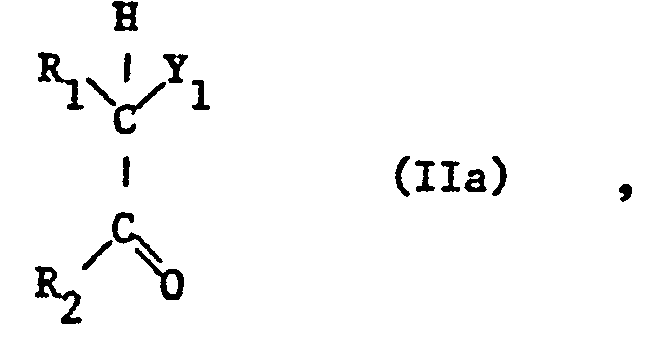
ein Tautomeres und/oder Salz davon, worin Y1 gegebenenfalls funktionell abgewandeltes Hydroxy bedeutet, mit einer Verbindung der Formel R3-A-Y2 (IIb), worin Y2 mindestens ein Stickstoffatom aufweisender funktionell abgewandeltes Carboxy darstellt, oder einem Salz davon oder eine Verbindung der Formel (IIa), ein Tautomeres und/ oder Salz davon, worin Yl Amino bedeutet, mit einer Verbindung der Formel (IIb), worin Y2 gegebenenfalls funktionell abgewandeltes Carboxy darstellt, oder einem Salz davon, gegebenenfalls in Gegenwart eines Kondensationsmittels, umsetzt oder Verbindungen der Formel

worin Y1 gegebenenfalls reaktionsfähig verestertes Hydroxy bedeutet, mit Carbonsäuren der Formel R3-A-COOH (IIc), deren Salze oder deren funktionelle Derivate und mit Ammoniak umsetzt, oder Verbindungen der Formel

welche durch Kondensation von Verbindungen der Formel (IIa) mit gegebenenfalls funktionellen Derivaten von Verbindungen der Formel (IIc) erhältlich sind, mit Ammoniak umsetzt.
39. Verfahren nach einem der Ansprüche 36 und 37, dadurch gekennzeichnet, dass man von Verbindungen der Formel (IV) oder deren Salzen ausgeht , worin R3' einen solvoltytisch in R3 überführbaren Rest bedeutet, R3' durch Solvolyse in R3 überführt, oder worin R3' einen oxidativ in R3 überführbaren Rest darstellt, R3' durch Oxidation in R überführt.
40. Verfahren zur Herstellung pharmazeutischer Präparate, dadurch gekennzeichnet, dass man mindestens eine Verbindung gemäss einem der Ansprüche 1 bis 34, gegebenenfalls unter Verwendung üblicher Hilfs-und Trägerstoffe, in eine geeignete Applikationsform überführt.
41. Verbindung gemäss einem der Ansprüche 1 bis 34 zur therapeutischen Behandlung des menschlichen oder tierischen Körpers.
42. Verwendung von Verbindungen gemäss einem der Ansprüche 1 bis 34 in einem Verfahren zur Behandlung entzündlicher Dermatosen.
43. Die in den Beispielen 1 bis 13 und 20 bis 27 genannten neuen Verbindungen.
44. Das Verfahren der Beispiele 1 bis 27 und die danach erhältlichen neuen Verbindungen.
45. Die im Verfahren gemäss einem der Ansprüche 36 bis 39 verwendeten neuen Ausgangsstoffe und/oder Zwischenprodukte.
Priority Applications (1)
| Application Number | Priority Date | Filing Date | Title |
|---|---|---|---|
| EP19820810027 EP0084756A1 (de) | 1982-01-22 | 1982-01-22 | Trisubstituierte Oxazaverbindungen |
Applications Claiming Priority (1)
| Application Number | Priority Date | Filing Date | Title |
|---|---|---|---|
| EP19820810027 EP0084756A1 (de) | 1982-01-22 | 1982-01-22 | Trisubstituierte Oxazaverbindungen |
Publications (1)
| Publication Number | Publication Date |
|---|---|
| EP0084756A1 true EP0084756A1 (de) | 1983-08-03 |
Family
ID=8190044
Family Applications (1)
| Application Number | Title | Priority Date | Filing Date |
|---|---|---|---|
| EP19820810027 Withdrawn EP0084756A1 (de) | 1982-01-22 | 1982-01-22 | Trisubstituierte Oxazaverbindungen |
Country Status (1)
| Country | Link |
|---|---|
| EP (1) | EP0084756A1 (de) |
Cited By (1)
| Publication number | Priority date | Publication date | Assignee | Title |
|---|---|---|---|---|
| EP1306377A3 (de) * | 1993-11-08 | 2003-05-07 | Smithkline Beecham Corporation | Pyridyl-Oxazole und ihre Verwendung als Cytokine-Inhibitoren |
Citations (4)
| Publication number | Priority date | Publication date | Assignee | Title |
|---|---|---|---|---|
| US3578671A (en) * | 1967-11-06 | 1971-05-11 | Wyeth John & Brother Ltd | Oxazoles |
| CH561718A5 (de) * | 1971-05-10 | 1975-05-15 | Ciba Geigy Ag | |
| GB1542315A (en) * | 1976-08-13 | 1979-03-14 | Wyeth John & Brother Ltd | Process for preparing oxazoles |
| EP0045081A2 (de) * | 1980-07-25 | 1982-02-03 | Ciba-Geigy Ag | Neue trisubstituierte Imidazolderivate, Verfahren zu ihrer Herstellung, diese enthaltende pharmazeutische Präparate und ihre Verwendung |
-
1982
- 1982-01-22 EP EP19820810027 patent/EP0084756A1/de not_active Withdrawn
Patent Citations (4)
| Publication number | Priority date | Publication date | Assignee | Title |
|---|---|---|---|---|
| US3578671A (en) * | 1967-11-06 | 1971-05-11 | Wyeth John & Brother Ltd | Oxazoles |
| CH561718A5 (de) * | 1971-05-10 | 1975-05-15 | Ciba Geigy Ag | |
| GB1542315A (en) * | 1976-08-13 | 1979-03-14 | Wyeth John & Brother Ltd | Process for preparing oxazoles |
| EP0045081A2 (de) * | 1980-07-25 | 1982-02-03 | Ciba-Geigy Ag | Neue trisubstituierte Imidazolderivate, Verfahren zu ihrer Herstellung, diese enthaltende pharmazeutische Präparate und ihre Verwendung |
Cited By (1)
| Publication number | Priority date | Publication date | Assignee | Title |
|---|---|---|---|---|
| EP1306377A3 (de) * | 1993-11-08 | 2003-05-07 | Smithkline Beecham Corporation | Pyridyl-Oxazole und ihre Verwendung als Cytokine-Inhibitoren |
Similar Documents
| Publication | Publication Date | Title |
|---|---|---|
| EP0045081B1 (de) | Neue trisubstituierte Imidazolderivate, Verfahren zu ihrer Herstellung, diese enthaltende pharmazeutische Präparate und ihre Verwendung | |
| DE69627042T2 (de) | Isocumarinderivate und deren verwendung in medikamenten | |
| DE2923815C2 (de) | ||
| WO1983002613A1 (fr) | Composes oxazoiques a triple substitution | |
| DE3434947A1 (de) | Isoxazolcarbonsaeure-derivate, ihre herstellung und verwendung | |
| EP0041215B1 (de) | Imidazoazolalkensäureamide, neue Zwischenprodukte zu ihrer Herstellung, ihre Herstellung und ihre Verwendung in Arzneimitteln | |
| DE2726796A1 (de) | Neue substituierte pyridine, verfahren zu ihrer herstellung und ihre pharmazeutische verwendung | |
| DD202291A5 (de) | Verfahren zur herstellung von als histamin-h tief 1-rezeptor-antagonisten wirkenden pyrimidon-derivaten | |
| DE1643279A1 (de) | Aromatische Sulfamoylverbindungen | |
| DE2306671A1 (de) | Neue pyridinverbindungen und verfahren zu ihrer herstellung | |
| DE1695133A1 (de) | Verfahren zur Herstellung von Imidazolderivaten | |
| DE69414716T2 (de) | Pyridazinonderivate oder deren salze, verfahren zu ihrer herstellung und diese enthaltende antischockmittel | |
| WO2006008316A2 (de) | Selektive hemmstoffe humaner corticoidsynthasen | |
| EP0084756A1 (de) | Trisubstituierte Oxazaverbindungen | |
| CS226020B2 (en) | Method of preparing pyridine and pyrimidine derivatives | |
| DE2427272C3 (de) | 1-(2-(β-Naphthyloxy)-äthyl)-3-methyl -pyrazolon-(5), Verfahren sowie Verwendung als Antithrombotikum | |
| DD201788A5 (de) | Verfahren zur herstellung neuer diaryl-imidazol-verbindungen | |
| EP0525686A1 (de) | Dimethylacetessigsäureamide, Verfahren zu ihrer Herstellung und Arzneimittel | |
| DE2818290A1 (de) | Neue naphthyridine | |
| EP0084757A1 (de) | Trisubstituierte Diaza-Derivate | |
| EP0008073A1 (de) | Thiosubstituierte Diazacycloalkene, Verfahren zu ihrer Herstellung und pharmazeutische Präparate | |
| EP0162217A1 (de) | 1,2,4-Triazacycloalkadienderivate | |
| EP0088323A2 (de) | Imidazothiadiazolalkencarbonsäureamide, neue Zwischenprodukte zu ihrer Herstellung, ihre Herstellung und ihre Verwendung in Arzneimitteln | |
| NO833350L (no) | Trisubstituerte oksazaforbindelser | |
| DE3215648A1 (de) | Arzneimittel mit neuen entzuendungshemmenden und immunregulatorischen pyridinen |
Legal Events
| Date | Code | Title | Description |
|---|---|---|---|
| PUAI | Public reference made under article 153(3) epc to a published international application that has entered the european phase |
Free format text: ORIGINAL CODE: 0009012 |
|
| 17P | Request for examination filed |
Effective date: 19820127 |
|
| AK | Designated contracting states |
Designated state(s): BE DE FR IT LU NL SE |
|
| R17P | Request for examination filed (corrected) |
Effective date: 19820127 |
|
| STAA | Information on the status of an ep patent application or granted ep patent |
Free format text: STATUS: THE APPLICATION IS DEEMED TO BE WITHDRAWN |
|
| 18D | Application deemed to be withdrawn |
Effective date: 19860614 |
|
| RIN1 | Information on inventor provided before grant (corrected) |
Inventor name: SALLMANN, ALFRED, DR. |