EP0076687B1 - Verfahren und Anordnung zum Verbessern der Sprachverständlichkeit - Google Patents
Verfahren und Anordnung zum Verbessern der Sprachverständlichkeit Download PDFInfo
- Publication number
- EP0076687B1 EP0076687B1 EP82305275A EP82305275A EP0076687B1 EP 0076687 B1 EP0076687 B1 EP 0076687B1 EP 82305275 A EP82305275 A EP 82305275A EP 82305275 A EP82305275 A EP 82305275A EP 0076687 B1 EP0076687 B1 EP 0076687B1
- Authority
- EP
- European Patent Office
- Prior art keywords
- speech signal
- accordance
- input speech
- frequency bands
- spectral content
- Prior art date
- Legal status (The legal status is an assumption and is not a legal conclusion. Google has not performed a legal analysis and makes no representation as to the accuracy of the status listed.)
- Expired
Links
Images



Classifications
-
- G—PHYSICS
- G10—MUSICAL INSTRUMENTS; ACOUSTICS
- G10L—SPEECH ANALYSIS TECHNIQUES OR SPEECH SYNTHESIS; SPEECH RECOGNITION; SPEECH OR VOICE PROCESSING TECHNIQUES; SPEECH OR AUDIO CODING OR DECODING
- G10L21/00—Speech or voice signal processing techniques to produce another audible or non-audible signal, e.g. visual or tactile, in order to modify its quality or its intelligibility
- G10L21/02—Speech enhancement, e.g. noise reduction or echo cancellation
- G10L21/0316—Speech enhancement, e.g. noise reduction or echo cancellation by changing the amplitude
- G10L21/0364—Speech enhancement, e.g. noise reduction or echo cancellation by changing the amplitude for improving intelligibility
-
- G—PHYSICS
- G10—MUSICAL INSTRUMENTS; ACOUSTICS
- G10L—SPEECH ANALYSIS TECHNIQUES OR SPEECH SYNTHESIS; SPEECH RECOGNITION; SPEECH OR VOICE PROCESSING TECHNIQUES; SPEECH OR AUDIO CODING OR DECODING
- G10L21/00—Speech or voice signal processing techniques to produce another audible or non-audible signal, e.g. visual or tactile, in order to modify its quality or its intelligibility
- G10L21/02—Speech enhancement, e.g. noise reduction or echo cancellation
- G10L21/0208—Noise filtering
- G10L21/0216—Noise filtering characterised by the method used for estimating noise
- G10L21/0232—Processing in the frequency domain
-
- H—ELECTRICITY
- H04—ELECTRIC COMMUNICATION TECHNIQUE
- H04R—LOUDSPEAKERS, MICROPHONES, GRAMOPHONE PICK-UPS OR LIKE ACOUSTIC ELECTROMECHANICAL TRANSDUCERS; ELECTRIC HEARING AIDS; PUBLIC ADDRESS SYSTEMS
- H04R2225/00—Details of deaf aids covered by H04R25/00, not provided for in any of its subgroups
- H04R2225/43—Signal processing in hearing aids to enhance the speech intelligibility
Definitions
- This invention relates to a system for processing an input speech signal comprising means responsive to said input speech signal for providing one or more control signals, and means responsive to said one or more control signals for modifying the spectral shape of said input speech signal to produce an output speech signal.
- the invention also relates to a method for processing an input speech signal comprising analysing the input speech signal and modifying the spectral shape of the input speech signal in accordance with the analysis to .produce an output speech signal.
- spectral shape means the spectral content of the input speech signal as a function of frequency relative to the spectral content at a specified frequency, or a specified frequency region, of the input speech signal.
- spectral content means, for example, the energy content of the signal as a function of frequency, the envelope of the signal at a plurality of frequencies or in a plurality of, frequency bands, the short-term Fourier transform coefficients of the signal, and the like.
- Another approach to speech intelligibility enhancement is one which preserves the bandwidth of the speech and, instead, modifies the level and dynamic range of the speech waveform.
- the goal of such a speech approach is to make full use of the listener's high frequency hearing abilities.
- the hearing abilities of the hearing impaired are described, for example, in the article, "Differences in Loudness Response in the Normal and Hard of Hearing Ear at Intensity Levels Slightly above Threshold", by S. Reger, Ann. Otol., Rhinol., and Laryngol, Vol. 45, 1936, pp. 1029-1036.
- soft sounds could not be perceived because of the loss in sensitivity, but that more intense sounds were perceived as having near-normal loudness.
- Villchar describes a multi-channel compression system in which the compression ratio can be different in various frequency channels. The compression ratio and gain assigned to each channel are fixed.
- DE-A-2844979 also describes splitting up the frequency range and modifying the individual spectral bands to produce more intelligible speech.
- U.S. Patent Specification No. 4,099,035 describes speech compression techniques applied to each separate band of a plurality of bands independently of all other bands. A fixed compression factor is used in each band to modify low levels in the input speech signal.
- a well known form of speech processing apparatus is the vocoder.
- speech signals are often shifted in frequency to lower frequency bands.
- vocoder processing speech signals are often shifted in frequency to lower frequency bands.
- an article entitled “Improving Naturalness and Intelligibility of Helium-Oxygen, Using Vocoder Techniques”, published at pages 621 to 624 in No. 3, Volume 40, 1966 of the Journal of the Acoustical Society of America, R. M. Golden describes a modified channel vocoder for restoring approximately the normal values of speech formant frequencies while preserving the fundamental speech pitch frequency.
- This modified channel vocoder separates the spectral energy of the helium speech into a number of narrow bands, which then amplitude-modulate lower-frequency pitch harmonics desired directly from the helium speech.
- the known use of vocoder techniques to improve speech intelligibility involves the determination of the spectral content of a particular frequency band in an absolute sense and utilizes this absolute value estimation to modify the input speech signal.
- the use of absolute spectral content estimations, independently within separate frequency bands, does not provide sufficient recognition of consonant sounds relative to vowel sounds in the input speech signal, and consequently consonant sound in the. output speech signal are not adequately enhanced relative to the vowel sounds.
- the present invention aims to overcome this problem and provides a system of the kind defined hereinbefore, characterised in that the means responsive to said input speech signal comprises means for estimating the short-time spectral content of said input speech signal as a function of frequency relative to the short-time spectral content at a specified frequency or frequency region of said input speech signal; and control means responsive to said spectral content estimate for determining when consonants are present in said input speech signal and for providing said one or more control signals; and in that the means responsive to said one or more control signals dynamically modifies the short-time spectral content of said input speech signal to produce the output speech signal with said consonants enhanced.
- the system of the invention provides an improved and effective enhancement of the reproduction of consonant sounds by emphasising the spectral content of consonants so as to intensify the consonant sound and, in effect, to equalise its intensity with that of vowel sounds, the latter sounds tending to achieve a normal intensity much greater than the normal consonant intensity.
- Such modification can be achieved, for example, by first estimating the short-time spectral shape of the overall frequency spectrum of the input speech signal.
- One way of providing such estimate is to determine the spectral contents of different selected frequency bands within the overall spectrum, (e.g. the energy in each band, the envelope in each band, the Fourier transform coefficients in each band, or the like) relative to the spectral content of one or more reference bands. This determination can be achieved by using Fourier transform techniques, filtering techniques, and the like.
- the estimated spectral shape of the overall input speech signal spectrum is then used to control, or modify, the spectral shape of the actual input signal, as for example, by modifying the spectral content of one or more frequency bands of the input signal (which may or may not coincide with -the previously mentioned 'selected frequency bands) to produce the output speech signal.
- the term "short-time" spectral shape means the spectral shape over a selected short time interval of between about 1 millisecond to about 30 milliseconds.
- the invention also provides a method as defined hereinbefore, characterised by the steps of estimating the short-term spectral content of said input speech signal as a function of frequency relative to the short-time spectral content at a specified frequency or frequency region of said input speech signal; determining when consonants are present in said input speech signal in accordance with said short-time speech spectral content estimate; and dynamically modifying the short-time spectral content of said input speech signal in accordance with said determination to produce an output speech signal in which said consonants are enhanced.
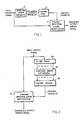
- an input speech signal is supplied to means 10 for estimating the spectral shape of the input speech signal.
- Such spectral shape estimation when determined, provides one or more estimation signals for supply to a suitable control logic means 11 which is responsive to such spectral shape estimate for suitably controlling the dynamic modification of the spectral shape of the actual input speech signal via appropriate spectral shape modification means 12 to produce an enhanced output speech signal, as desired.
- the output speech can then be appropriately used wherever desired.
- the output speech signal may be supplied to a suitable transmitter device or a system, e.g., a public address system or voice communication system, a radio broadcast transmitter, etc., or to a suitable receiver device, e.g., a hearing aid, a telephone receiver, an earphone, a radio, etc.
- a suitable transmitter device or a system e.g., a public address system or voice communication system, a radio broadcast transmitter, etc.
- a suitable receiver device e.g., a hearing aid, a telephone receiver, an earphone, a radio, etc.
- FIG. 2 A particular approach in accordance with the general approach shown in Figure 1 is depicted in Figure 2 wherein the speech signal is supplied to a bank of filters 20, i.e., a plurality of bandpass filters for providing a plurality of frequency bands within the overall speech frequency spectrum of the input speech signal.
- An estimate of the spectral content in each frequency band relative to the spectral content in one or more reference bands is made in spectral shape estimation means 21 for supplying a plurality of estimation signals to control means 22 which in turn supplies one or more control signals for dynamically modifying the overall spectral shape of the input speech signal.
- the control signal may select one of a plurality of different filters for modifying the spectral content of the input speech signal, the selection thereof depending on the particular estimate that was made.
- a plurality of control signals may be generated to control a plurality of separate filters each of which corresponds to a selected pass band of the frequency spectrum of the input speech signal.
- the pass bands of the filter bank used to modify the actual input speech signal may or may not correspond to the pass bands of the filter bank so used to form the spectral shape estimates.
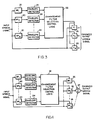
- Figure 3 depicts a more specific block diagram of the above approach wherein the input speech signal is supplied to a selected number N of bandpass filters 20, designated as BP I through BP N .
- the spectral shape of the input speech signal is determined by detecting the envelope characteristics of the outputs of each of the bandpass filters 20 using suitable envelope detectors 24.
- a control logic unit 22 is responsive to the outputs of envelope detectors 24 and provides a control signal which is used to select one suitable enhancement filter from a plurality of M such filters 25, identified as filters F 1 to F M , each having selected characteristics for dynamically modifying the shape of the overall spectrum of the input speech signal which is supplied thereto.
- the output from a selected one of such enhancement filters 25 thereby provides a desired consonant enhanced output speech signal.
- Figure 4 depicts a system similar to that of Figure 3 wherein the selection control logic 22 provides a plurality of control signals, each supplied to one of a plurality of N band-pass filters 26, identified as BP' 1 to BP' N , for modifying the spectral characteristics of the input speech signal in each pass-band.
- the modified outputs from each filter 26 are appropriately summed at a summation circuit 27 to provide the desired consonant enhanced output speech signal.
- FIG. 5 A specific embodiment of the speech enhancement of Figure 3 is depicted in Figure 5 wherein envelope detectors 24 produce a plurality of envelope detector signals X 1 ...X N which ⁇ are supplied to combination matrix logic 28 to produce weighted signals W 1 ...W N each of which represents the ratios 29 as depicted.
- One stage of the combination logic matrix 28 for producing the weight W is shown more specifically in Figure 6 wherein a plurality of preselected constant coefficients a 11 ...a NN and b 11 ...b NN are used to multiply the envelope detected signals X,...X N .
- the summation of the multiplier outputs corresponding to the "a" coefficients is divided by the summation of the multiplier outputs corresponding to the "b” coefficients to form the weight W i , as shown. Similar matrix steps are used to form weights W Z ...W N .
- the weights W 1 ...W N are supplied to selection circuitry for selecting an appropriate filter 25 in accordance therewith.
- the weights are determined by a comparison of the relative energies among the bands, e.g., the envelope detected signal from one of the filters (e.g., X 3 ) is used as a reference and the energies in the other bands (e.g., X, and X 2 ) are, in effect, compared with such reference to provide the desired weights.
- the weight W is greater than unity, when the energies are equal the weight is unity, and when the energy is less than the reference band energy the weight is less than unity.
- the coefficient matrices are as follows:-
- the enhancement filter selection circuit at the output was chosen to contain three filters, one being a high-pass filter emphasising the region above 2.5 kHz, one being a band-pass filter emphasising the region from 1 kHz to 2.5 kHz, and the third being an all-pass filter having unity gain at all frequencies.
- the weights were then used by the selection circuit to form a composite filter which had a gain of 1 below 0.5 kHz and which gave a 3:1 dynamic range expansion when the associated weight for a given frequency band was above a pre-selected threshold. This composite filter was updated every millisecond to give the dynamic spectral shape modification desired.
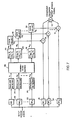
- Figure 7 shows a more specific embodiment of the approach depicted in Figure 4 wherein the input speech signal, as in the embodiment of Figure 5, is supplied to band-pass filters 20 and envelope detectors 24.
- Combination matrix logic 28 combines the envelope detected outputs X 1 , X 2 ...X N , in a selected manner, as discussed above, to produce a plurality of weighting signals W 1 ...W N in the same general manner as discussed above-with respect to Figures 5 and 6.
- the weighting factors W 1 ...W N are used to select suitable gain constants G,...G N at gain select logic 30 for multiplying the filtered outputs of bandpass filters 26, designated as BP',...BP' N , as in Figure 4, which filters separate the input speech signal into selected spectral bands.
- the filtered outputs from bandpass filters 26 are multiplied by the corresponding gains G,...G N at multipliers 31, the outputs of which are added at summation circuit 32 to produce the consonant enhanced output speech signal.
- the bandwidths of the input signals to multipliers 31 need not necessarily coincide with the bandwidths of the input signals to envelope detectors 24 and in the general case shown in Figure 7 different portions of the frequency spectrum may be used for each bank of filters 20 and 26.
- the pass bands may coincide in which case the outputs of bandpass filters 20 can be supplied directly to multipliers 31 (as well as to envelope detectors 24) and the filter bank 26 eliminated.
- the coefficients a 11 ...a aN and b 11 ...b NN are selected empirically and the weights are then used to provide gains which produce independent dynamic range expansions in the selected frequency bands.
- One effective approach is to select the gain by comparing the weight W ; with a preselected threshold and to provide for unity gain when the weight is below the threshold and to provide an increased gain at or above such threshold.
- the increased gain may be selected logarithmically, i.e., in accordance with a selected power of the weight involved.
- the gain can be selected in accordance with the second power, i.e., W i 2 when above the selected threshold, although effective expansion may also be achieved ranging from the first power (W,) to the third power (W i 3 ).
- pass bands of the filters used in the above described embodiments of Figures 2-7 may be selected to provide pass bands which are clearly separated one from another, the degree of separation does not appear to significantly affect the consonant enhancement, although excessive separation would appear to have disadvantages in some application. Further, some degree of overlapping of the pass bands does not appear to have an adverse effect on the overall enhancement operation.
- band pass filters 20 are used (filters 26 were eliminated) such that BP, covers 2-5 kHz, BP 2 covers 1-2 kHz, BP 3 covers 0.5 - 1 kHz and BP 4 covers 0-0.5 kHz.
- the envelope detected outputs of each band relative to the envelope detected output of a reference band determines the weight.
- the weights W 1 , W 2 and W 3 are determined by the envelope detected outputs X i , X 2 and X 3 relative to the envelope detected output X 3 , while W 4 is determined by the envelope detected output X 4 relative to X 4 . Accordingly, the coefficients are selected as follows:
- the gains are selected as follows:
- FIG. 8 A technique for such operation is depicted in Figure 8 wherein the outputs of each of the bandpass filters 20 are supplied both to peak detectors 35 and to valley detectors 36.
- the peak detectors follow the peaks of the signal by rising rapidly as the signal increases but falling slowly when the signal level decreases.
- the valley detectors follow the minima of the signal by falling rapidly as the signal decreases but rising slowly when the signal level increases.
- the time constant of the peak detector decay is in general much shorter than that of the valley detector rise.
- the output waveforms from such detectors tend to be of the exemplary forms shown in Figure 9 wherein the solid line 37 represents an input to the detectors 35 and 36 from a bandpass filter 20, the dotted line 38 represents the peak detector output waveform and the dashed line 39 represents the valley detector output waveform.
- the valley detected output signal tends to represent the background noise present in the input speech signal and if such signal is subtracted at subtractors 40 from the peak detected output (which, in effect, represents the desired signal plus background noise), the signals X 1 ...X N provide improved spectral shape estimates which can then be suitably combined as in the combination matrix means 28 for providing the weighted signals W 1 ...W N as before.
Landscapes
- Engineering & Computer Science (AREA)
- Computational Linguistics (AREA)
- Quality & Reliability (AREA)
- Signal Processing (AREA)
- Health & Medical Sciences (AREA)
- Audiology, Speech & Language Pathology (AREA)
- Human Computer Interaction (AREA)
- Physics & Mathematics (AREA)
- Acoustics & Sound (AREA)
- Multimedia (AREA)
- Tone Control, Compression And Expansion, Limiting Amplitude (AREA)
- Compression, Expansion, Code Conversion, And Decoders (AREA)
Claims (27)
Applications Claiming Priority (2)
| Application Number | Priority Date | Filing Date | Title |
|---|---|---|---|
| US06/308,273 US4454609A (en) | 1981-10-05 | 1981-10-05 | Speech intelligibility enhancement |
| US308273 | 1989-02-08 |
Publications (2)
| Publication Number | Publication Date |
|---|---|
| EP0076687A1 EP0076687A1 (de) | 1983-04-13 |
| EP0076687B1 true EP0076687B1 (de) | 1987-01-28 |
Family
ID=23193292
Family Applications (1)
| Application Number | Title | Priority Date | Filing Date |
|---|---|---|---|
| EP82305275A Expired EP0076687B1 (de) | 1981-10-05 | 1982-10-04 | Verfahren und Anordnung zum Verbessern der Sprachverständlichkeit |
Country Status (5)
| Country | Link |
|---|---|
| US (1) | US4454609A (de) |
| EP (1) | EP0076687B1 (de) |
| JP (1) | JPS58184200A (de) |
| CA (1) | CA1182221A (de) |
| DE (1) | DE3275330D1 (de) |
Families Citing this family (133)
| Publication number | Priority date | Publication date | Assignee | Title |
|---|---|---|---|---|
| DE3218755A1 (de) * | 1982-05-18 | 1983-11-24 | Siemens AG, 1000 Berlin und 8000 München | Schaltungsanordnung zur elektronischen sprachsynthese |
| CA1240028A (en) * | 1983-10-25 | 1988-08-02 | Harvey A. Dillon | Hearing aid amplification method and apparatus |
| US4701953A (en) * | 1984-07-24 | 1987-10-20 | The Regents Of The University Of California | Signal compression system |
| US4791672A (en) * | 1984-10-05 | 1988-12-13 | Audiotone, Inc. | Wearable digital hearing aid and method for improving hearing ability |
| US4630305A (en) * | 1985-07-01 | 1986-12-16 | Motorola, Inc. | Automatic gain selector for a noise suppression system |
| US4628529A (en) * | 1985-07-01 | 1986-12-09 | Motorola, Inc. | Noise suppression system |
| EP0219025B1 (de) * | 1985-10-16 | 1990-06-13 | Siemens Aktiengesellschaft | Hörgerät |
| US4790018A (en) * | 1987-02-11 | 1988-12-06 | Argosy Electronics | Frequency selection circuit for hearing aids |
| EP0311022B1 (de) * | 1987-10-06 | 1994-03-30 | Kabushiki Kaisha Toshiba | Verfahren und Einrichtung zur Spracherkennung |
| US4837832A (en) * | 1987-10-20 | 1989-06-06 | Sol Fanshel | Electronic hearing aid with gain control means for eliminating low frequency noise |
| US4887299A (en) * | 1987-11-12 | 1989-12-12 | Nicolet Instrument Corporation | Adaptive, programmable signal processing hearing aid |
| US4852175A (en) * | 1988-02-03 | 1989-07-25 | Siemens Hearing Instr Inc | Hearing aid signal-processing system |
| US4941179A (en) * | 1988-04-27 | 1990-07-10 | Gn Davavox A/S | Method for the regulation of a hearing aid, a hearing aid and the use thereof |
| US5027410A (en) * | 1988-11-10 | 1991-06-25 | Wisconsin Alumni Research Foundation | Adaptive, programmable signal processing and filtering for hearing aids |
| AU633673B2 (en) * | 1990-01-18 | 1993-02-04 | Matsushita Electric Industrial Co., Ltd. | Signal processing device |
| US5226084A (en) * | 1990-12-05 | 1993-07-06 | Digital Voice Systems, Inc. | Methods for speech quantization and error correction |
| US5450522A (en) * | 1991-08-19 | 1995-09-12 | U S West Advanced Technologies, Inc. | Auditory model for parametrization of speech |
| FR2683695B1 (fr) * | 1991-11-12 | 1995-10-13 | Carpentier Claude | Procede et dispositif d'egalisation dynamique. |
| DE69317802T2 (de) * | 1992-01-21 | 1998-10-22 | Koninkl Philips Electronics Nv | Verfahren und Vorrichtung für Tonverbesserung unter Verwendung von Hüllung von multibandpassfiltrierten Signalen in Kammfiltern |
| FR2695750B1 (fr) * | 1992-09-17 | 1994-11-10 | Frank Lefevre | Dispositif de traitement d'un signal sonore et appareil comportant un tel dispositif. |
| WO1995014297A1 (fr) * | 1992-09-17 | 1995-05-26 | Frank Lefevre | Dispositif de traitement d'un signal sonore et appareil comportant un tel dispositif |
| JPH07104788A (ja) * | 1993-10-06 | 1995-04-21 | Technol Res Assoc Of Medical & Welfare Apparatus | 音声強調処理装置 |
| NL9400888A (nl) * | 1994-05-31 | 1996-01-02 | Meijer Johannes Leonardus Jozef Drs | Werkwijze voor het vergroten van de verstaanbaarheid van het gesproken woord en inrichting daarvoor. |
| JP3360423B2 (ja) * | 1994-06-21 | 2002-12-24 | 三菱電機株式会社 | 音声強調装置 |
| US5737719A (en) * | 1995-12-19 | 1998-04-07 | U S West, Inc. | Method and apparatus for enhancement of telephonic speech signals |
| US5790671A (en) * | 1996-04-04 | 1998-08-04 | Ericsson Inc. | Method for automatically adjusting audio response for improved intelligibility |
| GB2344982A (en) * | 1997-09-26 | 2000-06-21 | Peter William Barnett | Method and apparatus for improving speech intelligibility |
| GB9720544D0 (en) * | 1997-09-26 | 1997-11-26 | Barnett Peter W | Method and apparatus for inputting speech intelligibility |
| JP3618208B2 (ja) * | 1997-11-12 | 2005-02-09 | パイオニア株式会社 | 雑音低減装置 |
| US7130429B1 (en) * | 1998-04-08 | 2006-10-31 | Bang & Olufsen Technology A/S | Method and an apparatus for processing auscultation signals |
| AU750605B2 (en) * | 1998-04-14 | 2002-07-25 | Hearing Enhancement Company, Llc | User adjustable volume control that accommodates hearing |
| US6311155B1 (en) | 2000-02-04 | 2001-10-30 | Hearing Enhancement Company Llc | Use of voice-to-remaining audio (VRA) in consumer applications |
| US7415120B1 (en) | 1998-04-14 | 2008-08-19 | Akiba Electronics Institute Llc | User adjustable volume control that accommodates hearing |
| EP1086607B2 (de) † | 1998-06-08 | 2012-04-11 | Cochlear Limited | Hörhilfevorrichtung |
| DK1141948T3 (da) * | 1999-01-07 | 2007-08-13 | Tellabs Operations Inc | Fremgangsmåde og apparat til adaptiv undertrykkelse af stöj |
| EP1748426A3 (de) | 1999-01-07 | 2007-02-21 | Tellabs Operations, Inc. | Verfahren und Vorrichtung zur adaptiven Rauschunterdrückung |
| CA2372017A1 (en) * | 1999-04-26 | 2000-11-02 | Dspfactory Ltd. | Loudness normalization control for a digital hearing aid |
| US6442278B1 (en) | 1999-06-15 | 2002-08-27 | Hearing Enhancement Company, Llc | Voice-to-remaining audio (VRA) interactive center channel downmix |
| US6985594B1 (en) | 1999-06-15 | 2006-01-10 | Hearing Enhancement Co., Llc. | Voice-to-remaining audio (VRA) interactive hearing aid and auxiliary equipment |
| JP2001069597A (ja) * | 1999-06-22 | 2001-03-16 | Yamaha Corp | 音声処理方法及び装置 |
| CN1185908C (zh) * | 1999-07-02 | 2005-01-19 | 皇家菲利浦电子有限公司 | 带有频带选择音频功率控制的扬声器保护系统 |
| US7117149B1 (en) | 1999-08-30 | 2006-10-03 | Harman Becker Automotive Systems-Wavemakers, Inc. | Sound source classification |
| US6732073B1 (en) | 1999-09-10 | 2004-05-04 | Wisconsin Alumni Research Foundation | Spectral enhancement of acoustic signals to provide improved recognition of speech |
| US7027601B1 (en) * | 1999-09-28 | 2006-04-11 | At&T Corp. | Perceptual speaker directivity |
| AUPQ366799A0 (en) | 1999-10-26 | 1999-11-18 | University Of Melbourne, The | Emphasis of short-duration transient speech features |
| AU777832B2 (en) * | 1999-10-26 | 2004-11-04 | Hearworks Pty Limited | Emphasis of short-duration transient speech features |
| US7266501B2 (en) | 2000-03-02 | 2007-09-04 | Akiba Electronics Institute Llc | Method and apparatus for accommodating primary content audio and secondary content remaining audio capability in the digital audio production process |
| US6351733B1 (en) | 2000-03-02 | 2002-02-26 | Hearing Enhancement Company, Llc | Method and apparatus for accommodating primary content audio and secondary content remaining audio capability in the digital audio production process |
| US20040096065A1 (en) * | 2000-05-26 | 2004-05-20 | Vaudrey Michael A. | Voice-to-remaining audio (VRA) interactive center channel downmix |
| US6889186B1 (en) | 2000-06-01 | 2005-05-03 | Avaya Technology Corp. | Method and apparatus for improving the intelligibility of digitally compressed speech |
| DE10124699C1 (de) * | 2001-05-18 | 2002-12-19 | Micronas Gmbh | Schaltungsanordnung zur Verbesserung der Verständlichkeit von Sprache enthaltenden Audiosignalen |
| WO2003003600A1 (en) * | 2001-06-28 | 2003-01-09 | Koninklijke Philips Electronics N.V. | Narrowband speech signal transmission system with perceptual low-frequency enhancement |
| CN1274184C (zh) * | 2001-09-21 | 2006-09-06 | 西门子公司 | 在电声变换器中控制音频信号的低音放音的方法和装置 |
| DE10150519B4 (de) * | 2001-10-12 | 2014-01-09 | Hewlett-Packard Development Co., L.P. | Verfahren und Anordnung zur Sprachverarbeitung |
| US7013011B1 (en) * | 2001-12-28 | 2006-03-14 | Plantronics, Inc. | Audio limiting circuit |
| US20030216907A1 (en) * | 2002-05-14 | 2003-11-20 | Acoustic Technologies, Inc. | Enhancing the aural perception of speech |
| US7725315B2 (en) | 2003-02-21 | 2010-05-25 | Qnx Software Systems (Wavemakers), Inc. | Minimization of transient noises in a voice signal |
| US8073689B2 (en) | 2003-02-21 | 2011-12-06 | Qnx Software Systems Co. | Repetitive transient noise removal |
| US7885420B2 (en) | 2003-02-21 | 2011-02-08 | Qnx Software Systems Co. | Wind noise suppression system |
| US7895036B2 (en) | 2003-02-21 | 2011-02-22 | Qnx Software Systems Co. | System for suppressing wind noise |
| US8326621B2 (en) | 2003-02-21 | 2012-12-04 | Qnx Software Systems Limited | Repetitive transient noise removal |
| US8271279B2 (en) | 2003-02-21 | 2012-09-18 | Qnx Software Systems Limited | Signature noise removal |
| US7949522B2 (en) | 2003-02-21 | 2011-05-24 | Qnx Software Systems Co. | System for suppressing rain noise |
| KR20060093722A (ko) * | 2003-10-24 | 2006-08-25 | 코닌클리케 필립스 일렉트로닉스 엔.브이. | 적응성 사운드 재생 |
| US7660715B1 (en) | 2004-01-12 | 2010-02-09 | Avaya Inc. | Transparent monitoring and intervention to improve automatic adaptation of speech models |
| US7711133B2 (en) * | 2004-06-28 | 2010-05-04 | Hearworks Pty Limited | Selective resolution speech processing |
| US7716046B2 (en) | 2004-10-26 | 2010-05-11 | Qnx Software Systems (Wavemakers), Inc. | Advanced periodic signal enhancement |
| US7680652B2 (en) | 2004-10-26 | 2010-03-16 | Qnx Software Systems (Wavemakers), Inc. | Periodic signal enhancement system |
| US8543390B2 (en) | 2004-10-26 | 2013-09-24 | Qnx Software Systems Limited | Multi-channel periodic signal enhancement system |
| US7610196B2 (en) | 2004-10-26 | 2009-10-27 | Qnx Software Systems (Wavemakers), Inc. | Periodic signal enhancement system |
| US8170879B2 (en) | 2004-10-26 | 2012-05-01 | Qnx Software Systems Limited | Periodic signal enhancement system |
| US8306821B2 (en) | 2004-10-26 | 2012-11-06 | Qnx Software Systems Limited | Sub-band periodic signal enhancement system |
| US7949520B2 (en) | 2004-10-26 | 2011-05-24 | QNX Software Sytems Co. | Adaptive filter pitch extraction |
| US8284947B2 (en) | 2004-12-01 | 2012-10-09 | Qnx Software Systems Limited | Reverberation estimation and suppression system |
| US20060206320A1 (en) * | 2005-03-14 | 2006-09-14 | Li Qi P | Apparatus and method for noise reduction and speech enhancement with microphones and loudspeakers |
| ATE435523T1 (de) * | 2005-04-08 | 2009-07-15 | Nxp Bv | Verfahren und vorrichtung zur verarbeitung von audiodaten, programmelement und computerlesbares medium |
| US8086451B2 (en) * | 2005-04-20 | 2011-12-27 | Qnx Software Systems Co. | System for improving speech intelligibility through high frequency compression |
| US8027833B2 (en) | 2005-05-09 | 2011-09-27 | Qnx Software Systems Co. | System for suppressing passing tire hiss |
| US7529670B1 (en) | 2005-05-16 | 2009-05-05 | Avaya Inc. | Automatic speech recognition system for people with speech-affecting disabilities |
| US8311819B2 (en) | 2005-06-15 | 2012-11-13 | Qnx Software Systems Limited | System for detecting speech with background voice estimates and noise estimates |
| JP2006352403A (ja) * | 2005-06-15 | 2006-12-28 | Matsushita Electric Ind Co Ltd | 音響再生装置 |
| US8170875B2 (en) | 2005-06-15 | 2012-05-01 | Qnx Software Systems Limited | Speech end-pointer |
| US8566086B2 (en) * | 2005-06-28 | 2013-10-22 | Qnx Software Systems Limited | System for adaptive enhancement of speech signals |
| US7590523B2 (en) * | 2006-03-20 | 2009-09-15 | Mindspeed Technologies, Inc. | Speech post-processing using MDCT coefficients |
| US7653543B1 (en) | 2006-03-24 | 2010-01-26 | Avaya Inc. | Automatic signal adjustment based on intelligibility |
| US7844453B2 (en) | 2006-05-12 | 2010-11-30 | Qnx Software Systems Co. | Robust noise estimation |
| US7962342B1 (en) | 2006-08-22 | 2011-06-14 | Avaya Inc. | Dynamic user interface for the temporarily impaired based on automatic analysis for speech patterns |
| US7925508B1 (en) | 2006-08-22 | 2011-04-12 | Avaya Inc. | Detection of extreme hypoglycemia or hyperglycemia based on automatic analysis of speech patterns |
| US8335685B2 (en) | 2006-12-22 | 2012-12-18 | Qnx Software Systems Limited | Ambient noise compensation system robust to high excitation noise |
| US8326620B2 (en) | 2008-04-30 | 2012-12-04 | Qnx Software Systems Limited | Robust downlink speech and noise detector |
| US7675411B1 (en) | 2007-02-20 | 2010-03-09 | Avaya Inc. | Enhancing presence information through the addition of one or more of biotelemetry data and environmental data |
| JP5075437B2 (ja) | 2007-03-19 | 2012-11-21 | オリンパス株式会社 | 内視鏡用冷却装置及び内視鏡装置 |
| US8041344B1 (en) | 2007-06-26 | 2011-10-18 | Avaya Inc. | Cooling off period prior to sending dependent on user's state |
| EP2188975A4 (de) * | 2007-09-05 | 2011-06-15 | Sensear Pty Ltd | Sprachkommunikationseinrichtung, signalverarbeitungseinrichtung und hörschutzeinrichtung damit |
| US8229145B2 (en) * | 2007-09-05 | 2012-07-24 | Avaya Inc. | Method and apparatus for configuring a handheld audio device using ear biometrics |
| US8850154B2 (en) | 2007-09-11 | 2014-09-30 | 2236008 Ontario Inc. | Processing system having memory partitioning |
| US8904400B2 (en) | 2007-09-11 | 2014-12-02 | 2236008 Ontario Inc. | Processing system having a partitioning component for resource partitioning |
| US20090074203A1 (en) * | 2007-09-13 | 2009-03-19 | Bionica Corporation | Method of enhancing sound for hearing impaired individuals |
| US20090074216A1 (en) * | 2007-09-13 | 2009-03-19 | Bionica Corporation | Assistive listening system with programmable hearing aid and wireless handheld programmable digital signal processing device |
| US20090074214A1 (en) * | 2007-09-13 | 2009-03-19 | Bionica Corporation | Assistive listening system with plug in enhancement platform and communication port to download user preferred processing algorithms |
| US20090076804A1 (en) * | 2007-09-13 | 2009-03-19 | Bionica Corporation | Assistive listening system with memory buffer for instant replay and speech to text conversion |
| US20090076636A1 (en) * | 2007-09-13 | 2009-03-19 | Bionica Corporation | Method of enhancing sound for hearing impaired individuals |
| US20090074206A1 (en) * | 2007-09-13 | 2009-03-19 | Bionica Corporation | Method of enhancing sound for hearing impaired individuals |
| US20090076816A1 (en) * | 2007-09-13 | 2009-03-19 | Bionica Corporation | Assistive listening system with display and selective visual indicators for sound sources |
| US20090076825A1 (en) * | 2007-09-13 | 2009-03-19 | Bionica Corporation | Method of enhancing sound for hearing impaired individuals |
| US8694310B2 (en) | 2007-09-17 | 2014-04-08 | Qnx Software Systems Limited | Remote control server protocol system |
| US8209514B2 (en) | 2008-02-04 | 2012-06-26 | Qnx Software Systems Limited | Media processing system having resource partitioning |
| EP2211564B1 (de) * | 2009-01-23 | 2014-09-10 | Harman Becker Automotive Systems GmbH | Insassenkommunikationssystem |
| KR101577342B1 (ko) * | 2009-05-07 | 2015-12-15 | 삼성전자주식회사 | 혈압 측정 장치 및 방법 |
| US8204742B2 (en) * | 2009-09-14 | 2012-06-19 | Srs Labs, Inc. | System for processing an audio signal to enhance speech intelligibility |
| US8542849B2 (en) | 2010-08-02 | 2013-09-24 | Rane Corporation | Apparatus, method, and manufacture for connectable gain-sharing automixers |
| DE102010041435A1 (de) * | 2010-09-27 | 2012-03-29 | Siemens Medical Instruments Pte. Ltd. | Verfahren zum Rekonstruieren eines Sprachsignals und Hörvorrichtung |
| US9706314B2 (en) | 2010-11-29 | 2017-07-11 | Wisconsin Alumni Research Foundation | System and method for selective enhancement of speech signals |
| US20120197643A1 (en) * | 2011-01-27 | 2012-08-02 | General Motors Llc | Mapping obstruent speech energy to lower frequencies |
| US8767978B2 (en) | 2011-03-25 | 2014-07-01 | The Intellisis Corporation | System and method for processing sound signals implementing a spectral motion transform |
| US9117455B2 (en) * | 2011-07-29 | 2015-08-25 | Dts Llc | Adaptive voice intelligibility processor |
| US9183850B2 (en) | 2011-08-08 | 2015-11-10 | The Intellisis Corporation | System and method for tracking sound pitch across an audio signal |
| US8548803B2 (en) * | 2011-08-08 | 2013-10-01 | The Intellisis Corporation | System and method of processing a sound signal including transforming the sound signal into a frequency-chirp domain |
| US8620646B2 (en) | 2011-08-08 | 2013-12-31 | The Intellisis Corporation | System and method for tracking sound pitch across an audio signal using harmonic envelope |
| TWI576824B (zh) * | 2013-05-30 | 2017-04-01 | 元鼎音訊股份有限公司 | 處理聲音段之方法及其電腦程式產品及助聽器 |
| US9418671B2 (en) * | 2013-08-15 | 2016-08-16 | Huawei Technologies Co., Ltd. | Adaptive high-pass post-filter |
| US9713728B2 (en) | 2013-10-29 | 2017-07-25 | Physio-Control, Inc. | Variable sound system for medical devices |
| US10176824B2 (en) | 2014-03-04 | 2019-01-08 | Indian Institute Of Technology Bombay | Method and system for consonant-vowel ratio modification for improving speech perception |
| DE102014204557A1 (de) * | 2014-03-12 | 2015-09-17 | Siemens Medical Instruments Pte. Ltd. | Übertragung eines windreduzierten Signals mit verminderter Latenzzeit |
| US9870785B2 (en) | 2015-02-06 | 2018-01-16 | Knuedge Incorporated | Determining features of harmonic signals |
| US9842611B2 (en) | 2015-02-06 | 2017-12-12 | Knuedge Incorporated | Estimating pitch using peak-to-peak distances |
| US9922668B2 (en) | 2015-02-06 | 2018-03-20 | Knuedge Incorporated | Estimating fractional chirp rate with multiple frequency representations |
| US10477314B2 (en) * | 2017-03-20 | 2019-11-12 | Bambu Tech, Inc. | Dynamic audio enhancement using an all-pass filter |
| US11036462B2 (en) * | 2017-04-24 | 2021-06-15 | Maxim Integrated Products, Inc. | System and method for reducing power consumption in an audio system by disabling filter elements based on signal level |
| TWI662544B (zh) * | 2018-05-28 | 2019-06-11 | 塞席爾商元鼎音訊股份有限公司 | 偵測環境噪音以改變播放語音頻率之方法及其聲音播放裝置 |
| TWI662545B (zh) * | 2018-06-22 | 2019-06-11 | 塞席爾商元鼎音訊股份有限公司 | 調整語音頻率之方法及其聲音播放裝置 |
| JP6807491B1 (ja) * | 2020-02-07 | 2021-01-06 | 株式会社テクノリンク | 補聴器用合成音声セットの修正方法 |
| CN116129928B (zh) * | 2023-02-01 | 2025-07-11 | 中国科学院声学研究所 | 一种广播通信场景的近端语音可懂度增强方法和系统 |
Family Cites Families (13)
| Publication number | Priority date | Publication date | Assignee | Title |
|---|---|---|---|---|
| US2183248A (en) * | 1939-12-12 | Wave translation | ||
| US3292116A (en) * | 1964-03-20 | 1966-12-13 | Hazeltine Research Inc | Dynamic speech equalizing system having a control circuit that separates and compares the high and low frequency energy |
| GB1384233A (en) * | 1971-01-06 | 1975-02-19 | British Broadcasting Corp | Quality of electrical speech signals |
| FR2226092A5 (en) * | 1973-04-10 | 1974-11-08 | Brunot Michel | Musical synthesiser with vocal control - analyses incoming sounds to control frequency synthesising ccts. |
| JPS5031405A (de) * | 1973-07-20 | 1975-03-27 | ||
| US3992584A (en) * | 1975-05-09 | 1976-11-16 | Dugan Daniel W | Automatic microphone mixer |
| US4185168A (en) * | 1976-05-04 | 1980-01-22 | Causey G Donald | Method and means for adaptively filtering near-stationary noise from an information bearing signal |
| US4101840A (en) * | 1976-06-01 | 1978-07-18 | Cmb Colonia Management Und Beratungsgesellschaft Mbh & Co. Kg | Volume control arrangement for an electro-acoustic system |
| US4061874A (en) * | 1976-06-03 | 1977-12-06 | Fricke J P | System for reproducing sound information |
| US4099035A (en) * | 1976-07-20 | 1978-07-04 | Paul Yanick | Hearing aid with recruitment compensation |
| DK382877A (da) * | 1976-09-03 | 1978-03-04 | L Joncheray | Fremgangsmaade og apparat til uddannelse og genoptraening af dybt tunghoere |
| FR2394865A1 (fr) * | 1977-02-23 | 1979-01-12 | Barbe Alain | Filtre a action vocale |
| DE2844979C2 (de) * | 1978-10-16 | 1989-08-31 | Juval Dr.-Ing. 8000 München Mantel | Hörgerät |
-
1981
- 1981-10-05 US US06/308,273 patent/US4454609A/en not_active Expired - Fee Related
-
1982
- 1982-10-04 CA CA000412812A patent/CA1182221A/en not_active Expired
- 1982-10-04 EP EP82305275A patent/EP0076687B1/de not_active Expired
- 1982-10-04 DE DE8282305275T patent/DE3275330D1/de not_active Expired
- 1982-10-05 JP JP57175250A patent/JPS58184200A/ja active Pending
Non-Patent Citations (1)
| Title |
|---|
| THE JOURNAL OF THE ACOUSTICAL SOCIETY OF AMERICA, vol.40, no.3, September 1966, New York (US) R.M. GOLDEN: "Improving naturalness and intelligibility of helium-oxygen speech, using vocoder techniques", pages 621-624 * |
Also Published As
| Publication number | Publication date |
|---|---|
| EP0076687A1 (de) | 1983-04-13 |
| JPS58184200A (ja) | 1983-10-27 |
| CA1182221A (en) | 1985-02-05 |
| US4454609A (en) | 1984-06-12 |
| DE3275330D1 (en) | 1987-03-05 |
Similar Documents
| Publication | Publication Date | Title |
|---|---|---|
| EP0076687B1 (de) | Verfahren und Anordnung zum Verbessern der Sprachverständlichkeit | |
| Kates et al. | Speech intelligibility enhancement | |
| DE69507452T2 (de) | Dynamic-intensity-strahlformungssystem zur geräuschverminderung in einem binauralen hörhilfegerät | |
| US20030216907A1 (en) | Enhancing the aural perception of speech | |
| US8948428B2 (en) | Hearing aid with histogram based sound environment classification | |
| DE69922940T3 (de) | Vorrichtung und Verfahren zur Kombinierung von Audiokompression und Rückkopplungsunterdrückung in einem Hörgerät | |
| van Buuren et al. | Compression and expansion of the temporal envelope: Evaluation of speech intelligibility and sound quality | |
| DE69428119T2 (de) | Verringerung des hintergrundrauschens zur sprachverbesserung | |
| US5832444A (en) | Apparatus for dynamic range compression of an audio signal | |
| DE69816610T2 (de) | Verfahren und vorrichtung zur rauschverminderung, insbesondere bei hörhilfegeräten | |
| DE69409121T2 (de) | Störreduktionssystem für ein binaurales hörgerät | |
| DK2064918T3 (en) | A hearing-aid with histogram based lydmiljøklassifikation | |
| Stone et al. | Quantifying the effects of fast-acting compression on the envelope of speech | |
| JP2801197B2 (ja) | デジタルオーディオ信号の伝送方法 | |
| US5844992A (en) | Fuzzy logic device for automatic sound control | |
| KR101989062B1 (ko) | 오디오 신호를 향상시키기 위한 장치 및 방법 및 음향 향상 시스템 | |
| EP0453282A2 (de) | Digitale Teilbandkodierungsvorrichtung | |
| US6735317B2 (en) | Hearing aid, and a method and a signal processor for processing a hearing aid input signal | |
| EP3739908A1 (de) | Binaurale filter für monophone kompatibilität und lautsprecherkompatibilität | |
| CA2648237A1 (en) | Audio gain control using specific-loudness-based auditory event detection | |
| Franck et al. | Evaluation of spectral enhancement in hearing aids, combined with phonemic compression | |
| JP2003274492A (ja) | ステレオ音響信号処理方法、ステレオ音響信号処理装置、ステレオ音響信号処理プログラム | |
| EP3335218B1 (de) | Tonsignalverarbeitungsvorrichtung und verfahren zur verarbeitung eines eingangstonsignals | |
| JP2563719B2 (ja) | 音声加工装置と補聴器 | |
| JPH06208395A (ja) | ホルマント検出装置及び音声加工装置 |
Legal Events
| Date | Code | Title | Description |
|---|---|---|---|
| PUAI | Public reference made under article 153(3) epc to a published international application that has entered the european phase |
Free format text: ORIGINAL CODE: 0009012 |
|
| AK | Designated contracting states |
Designated state(s): DE FR GB IT NL SE |
|
| ITCL | It: translation for ep claims filed |
Representative=s name: SOCIETA' ITALIANA BREVETTI S.P.A. |
|
| 17P | Request for examination filed |
Effective date: 19831003 |
|
| ITF | It: translation for a ep patent filed | ||
| RAP1 | Party data changed (applicant data changed or rights of an application transferred) |
Owner name: SIGNATRON, INC. |
|
| GRAA | (expected) grant |
Free format text: ORIGINAL CODE: 0009210 |
|
| AK | Designated contracting states |
Kind code of ref document: B1 Designated state(s): DE FR GB IT NL SE |
|
| REF | Corresponds to: |
Ref document number: 3275330 Country of ref document: DE Date of ref document: 19870305 |
|
| ET | Fr: translation filed | ||
| PGFP | Annual fee paid to national office [announced via postgrant information from national office to epo] |
Ref country code: NL Payment date: 19871031 Year of fee payment: 6 |
|
| PLBE | No opposition filed within time limit |
Free format text: ORIGINAL CODE: 0009261 |
|
| STAA | Information on the status of an ep patent application or granted ep patent |
Free format text: STATUS: NO OPPOSITION FILED WITHIN TIME LIMIT |
|
| 26N | No opposition filed | ||
| PGFP | Annual fee paid to national office [announced via postgrant information from national office to epo] |
Ref country code: DE Payment date: 19881018 Year of fee payment: 7 |
|
| ITTA | It: last paid annual fee | ||
| PG25 | Lapsed in a contracting state [announced via postgrant information from national office to epo] |
Ref country code: GB Effective date: 19891004 |
|
| PG25 | Lapsed in a contracting state [announced via postgrant information from national office to epo] |
Ref country code: SE Effective date: 19891005 |
|
| PG25 | Lapsed in a contracting state [announced via postgrant information from national office to epo] |
Ref country code: NL Effective date: 19900501 |
|
| GBPC | Gb: european patent ceased through non-payment of renewal fee | ||
| NLV4 | Nl: lapsed or anulled due to non-payment of the annual fee | ||
| PG25 | Lapsed in a contracting state [announced via postgrant information from national office to epo] |
Ref country code: FR Effective date: 19900629 |
|
| PG25 | Lapsed in a contracting state [announced via postgrant information from national office to epo] |
Ref country code: DE Effective date: 19900703 |
|
| REG | Reference to a national code |
Ref country code: FR Ref legal event code: ST |
|
| EUG | Se: european patent has lapsed |
Ref document number: 82305275.8 Effective date: 19900705 |