EP0072012B1 - Behandlung von Industrieabwasser - Google Patents
Behandlung von Industrieabwasser Download PDFInfo
- Publication number
- EP0072012B1 EP0072012B1 EP82107168A EP82107168A EP0072012B1 EP 0072012 B1 EP0072012 B1 EP 0072012B1 EP 82107168 A EP82107168 A EP 82107168A EP 82107168 A EP82107168 A EP 82107168A EP 0072012 B1 EP0072012 B1 EP 0072012B1
- Authority
- EP
- European Patent Office
- Prior art keywords
- reactor
- solids
- heavy metals
- wastewater
- sludge
- Prior art date
- Legal status (The legal status is an assumption and is not a legal conclusion. Google has not performed a legal analysis and makes no representation as to the accuracy of the status listed.)
- Expired
Links
- 239000010842 industrial wastewater Substances 0.000 title abstract description 19
- 229910001385 heavy metal Inorganic materials 0.000 claims abstract description 63
- 239000007787 solid Substances 0.000 claims abstract description 56
- 239000003795 chemical substances by application Substances 0.000 claims abstract description 46
- 239000010802 sludge Substances 0.000 claims abstract description 44
- 239000002002 slurry Substances 0.000 claims abstract description 40
- 230000003472 neutralizing effect Effects 0.000 claims abstract description 39
- XLYOFNOQVPJJNP-UHFFFAOYSA-N water Substances O XLYOFNOQVPJJNP-UHFFFAOYSA-N 0.000 claims abstract description 25
- 239000002245 particle Substances 0.000 claims abstract description 16
- 159000000007 calcium salts Chemical class 0.000 claims abstract description 15
- 238000004065 wastewater treatment Methods 0.000 claims abstract description 14
- 239000000203 mixture Substances 0.000 claims abstract description 11
- 239000007900 aqueous suspension Substances 0.000 claims abstract description 8
- 238000000926 separation method Methods 0.000 claims abstract description 8
- 239000008213 purified water Substances 0.000 claims abstract description 5
- 239000002351 wastewater Substances 0.000 claims description 63
- VYPSYNLAJGMNEJ-UHFFFAOYSA-N Silicium dioxide Chemical compound O=[Si]=O VYPSYNLAJGMNEJ-UHFFFAOYSA-N 0.000 claims description 13
- HEMHJVSKTPXQMS-UHFFFAOYSA-M Sodium hydroxide Chemical compound [OH-].[Na+] HEMHJVSKTPXQMS-UHFFFAOYSA-M 0.000 claims description 9
- 239000004576 sand Substances 0.000 claims description 7
- VTYYLEPIZMXCLO-UHFFFAOYSA-L Calcium carbonate Chemical compound [Ca+2].[O-]C([O-])=O VTYYLEPIZMXCLO-UHFFFAOYSA-L 0.000 claims description 6
- KWYUFKZDYYNOTN-UHFFFAOYSA-M Potassium hydroxide Chemical compound [OH-].[K+] KWYUFKZDYYNOTN-UHFFFAOYSA-M 0.000 claims description 6
- AXCZMVOFGPJBDE-UHFFFAOYSA-L calcium dihydroxide Chemical compound [OH-].[OH-].[Ca+2] AXCZMVOFGPJBDE-UHFFFAOYSA-L 0.000 claims description 5
- 239000000920 calcium hydroxide Substances 0.000 claims description 5
- 229910001861 calcium hydroxide Inorganic materials 0.000 claims description 5
- 230000007613 environmental effect Effects 0.000 claims description 4
- 235000019738 Limestone Nutrition 0.000 claims description 3
- 229910000019 calcium carbonate Inorganic materials 0.000 claims description 3
- 229910003439 heavy metal oxide Inorganic materials 0.000 claims description 3
- 239000006028 limestone Substances 0.000 claims description 3
- 239000000377 silicon dioxide Substances 0.000 claims description 3
- PNEYBMLMFCGWSK-UHFFFAOYSA-N aluminium oxide Inorganic materials [O-2].[O-2].[O-2].[Al+3].[Al+3] PNEYBMLMFCGWSK-UHFFFAOYSA-N 0.000 claims description 2
- 239000003643 water by type Substances 0.000 claims description 2
- BRPQOXSCLDDYGP-UHFFFAOYSA-N calcium oxide Chemical compound [O-2].[Ca+2] BRPQOXSCLDDYGP-UHFFFAOYSA-N 0.000 claims 1
- 239000000292 calcium oxide Substances 0.000 claims 1
- ODINCKMPIJJUCX-UHFFFAOYSA-N calcium oxide Inorganic materials [Ca]=O ODINCKMPIJJUCX-UHFFFAOYSA-N 0.000 claims 1
- 239000010459 dolomite Substances 0.000 claims 1
- 229910000514 dolomite Inorganic materials 0.000 claims 1
- ZLNQQNXFFQJAID-UHFFFAOYSA-L magnesium carbonate Chemical compound [Mg+2].[O-]C([O-])=O ZLNQQNXFFQJAID-UHFFFAOYSA-L 0.000 claims 1
- 239000001095 magnesium carbonate Substances 0.000 claims 1
- 229910000021 magnesium carbonate Inorganic materials 0.000 claims 1
- 238000004064 recycling Methods 0.000 claims 1
- 238000000034 method Methods 0.000 abstract description 51
- 239000000725 suspension Substances 0.000 abstract description 13
- 150000003839 salts Chemical class 0.000 abstract description 7
- 239000007864 aqueous solution Substances 0.000 abstract description 3
- 239000002699 waste material Substances 0.000 abstract description 2
- XEEYBQQBJWHFJM-UHFFFAOYSA-N Iron Chemical compound [Fe] XEEYBQQBJWHFJM-UHFFFAOYSA-N 0.000 description 24
- PXHVJJICTQNCMI-UHFFFAOYSA-N Nickel Chemical compound [Ni] PXHVJJICTQNCMI-UHFFFAOYSA-N 0.000 description 22
- 239000011133 lead Substances 0.000 description 16
- 229910052793 cadmium Inorganic materials 0.000 description 15
- 239000011701 zinc Substances 0.000 description 15
- BDOSMKKIYDKNTQ-UHFFFAOYSA-N cadmium atom Chemical compound [Cd] BDOSMKKIYDKNTQ-UHFFFAOYSA-N 0.000 description 14
- HCHKCACWOHOZIP-UHFFFAOYSA-N Zinc Chemical compound [Zn] HCHKCACWOHOZIP-UHFFFAOYSA-N 0.000 description 13
- 229910052725 zinc Inorganic materials 0.000 description 13
- 229910052742 iron Inorganic materials 0.000 description 12
- 238000006386 neutralization reaction Methods 0.000 description 12
- 239000000243 solution Substances 0.000 description 12
- 239000002562 thickening agent Substances 0.000 description 12
- PWHULOQIROXLJO-UHFFFAOYSA-N Manganese Chemical compound [Mn] PWHULOQIROXLJO-UHFFFAOYSA-N 0.000 description 10
- 229910052748 manganese Inorganic materials 0.000 description 10
- 239000011572 manganese Substances 0.000 description 10
- 229910052759 nickel Inorganic materials 0.000 description 10
- 239000010949 copper Substances 0.000 description 9
- RYGMFSIKBFXOCR-UHFFFAOYSA-N Copper Chemical compound [Cu] RYGMFSIKBFXOCR-UHFFFAOYSA-N 0.000 description 8
- 229910052802 copper Inorganic materials 0.000 description 8
- 239000004571 lime Substances 0.000 description 8
- 235000008733 Citrus aurantifolia Nutrition 0.000 description 7
- 235000011941 Tilia x europaea Nutrition 0.000 description 7
- 238000003914 acid mine drainage Methods 0.000 description 7
- VTLYFUHAOXGGBS-UHFFFAOYSA-N Fe3+ Chemical compound [Fe+3] VTLYFUHAOXGGBS-UHFFFAOYSA-N 0.000 description 6
- 238000001556 precipitation Methods 0.000 description 6
- 239000002352 surface water Substances 0.000 description 6
- CWYNVVGOOAEACU-UHFFFAOYSA-N Fe2+ Chemical compound [Fe+2] CWYNVVGOOAEACU-UHFFFAOYSA-N 0.000 description 5
- WPBNNNQJVZRUHP-UHFFFAOYSA-L manganese(2+);methyl n-[[2-(methoxycarbonylcarbamothioylamino)phenyl]carbamothioyl]carbamate;n-[2-(sulfidocarbothioylamino)ethyl]carbamodithioate Chemical compound [Mn+2].[S-]C(=S)NCCNC([S-])=S.COC(=O)NC(=S)NC1=CC=CC=C1NC(=S)NC(=O)OC WPBNNNQJVZRUHP-UHFFFAOYSA-L 0.000 description 5
- 238000004519 manufacturing process Methods 0.000 description 5
- 239000002244 precipitate Substances 0.000 description 5
- 230000002378 acidificating effect Effects 0.000 description 4
- BVKZGUZCCUSVTD-UHFFFAOYSA-L Carbonate Chemical compound [O-]C([O-])=O BVKZGUZCCUSVTD-UHFFFAOYSA-L 0.000 description 3
- 229910001447 ferric ion Inorganic materials 0.000 description 3
- 229910001448 ferrous ion Inorganic materials 0.000 description 3
- JEIPFZHSYJVQDO-UHFFFAOYSA-N iron(III) oxide Inorganic materials O=[Fe]O[Fe]=O JEIPFZHSYJVQDO-UHFFFAOYSA-N 0.000 description 3
- 239000000463 material Substances 0.000 description 3
- CDBYLPFSWZWCQE-UHFFFAOYSA-L Sodium Carbonate Chemical compound [Na+].[Na+].[O-]C([O-])=O CDBYLPFSWZWCQE-UHFFFAOYSA-L 0.000 description 2
- ATJFFYVFTNAWJD-UHFFFAOYSA-N Tin Chemical compound [Sn] ATJFFYVFTNAWJD-UHFFFAOYSA-N 0.000 description 2
- 229910052783 alkali metal Inorganic materials 0.000 description 2
- 150000001340 alkali metals Chemical class 0.000 description 2
- 229910052784 alkaline earth metal Inorganic materials 0.000 description 2
- 229910052785 arsenic Inorganic materials 0.000 description 2
- RQNWIZPPADIBDY-UHFFFAOYSA-N arsenic atom Chemical compound [As] RQNWIZPPADIBDY-UHFFFAOYSA-N 0.000 description 2
- -1 for example Inorganic materials 0.000 description 2
- QSHDDOUJBYECFT-UHFFFAOYSA-N mercury Chemical compound [Hg] QSHDDOUJBYECFT-UHFFFAOYSA-N 0.000 description 2
- 229910052753 mercury Inorganic materials 0.000 description 2
- 231100000614 poison Toxicity 0.000 description 2
- 150000003467 sulfuric acid derivatives Chemical class 0.000 description 2
- 229910052718 tin Inorganic materials 0.000 description 2
- 239000011135 tin Substances 0.000 description 2
- 231100000331 toxic Toxicity 0.000 description 2
- 230000002588 toxic effect Effects 0.000 description 2
- OYPRJOBELJOOCE-UHFFFAOYSA-N Calcium Chemical compound [Ca] OYPRJOBELJOOCE-UHFFFAOYSA-N 0.000 description 1
- KRHYYFGTRYWZRS-UHFFFAOYSA-M Fluoride anion Chemical compound [F-] KRHYYFGTRYWZRS-UHFFFAOYSA-M 0.000 description 1
- BUGBHKTXTAQXES-UHFFFAOYSA-N Selenium Chemical compound [Se] BUGBHKTXTAQXES-UHFFFAOYSA-N 0.000 description 1
- QAOWNCQODCNURD-UHFFFAOYSA-L Sulfate Chemical compound [O-]S([O-])(=O)=O QAOWNCQODCNURD-UHFFFAOYSA-L 0.000 description 1
- 239000002253 acid Substances 0.000 description 1
- 239000000159 acid neutralizing agent Substances 0.000 description 1
- 239000003513 alkali Substances 0.000 description 1
- 150000001341 alkaline earth metal compounds Chemical class 0.000 description 1
- 229910001860 alkaline earth metal hydroxide Inorganic materials 0.000 description 1
- 150000001450 anions Chemical class 0.000 description 1
- 230000015572 biosynthetic process Effects 0.000 description 1
- 239000000872 buffer Substances 0.000 description 1
- 239000006172 buffering agent Substances 0.000 description 1
- 239000011575 calcium Substances 0.000 description 1
- 229910052791 calcium Inorganic materials 0.000 description 1
- 235000010216 calcium carbonate Nutrition 0.000 description 1
- 229940043430 calcium compound Drugs 0.000 description 1
- 150000001674 calcium compounds Chemical class 0.000 description 1
- YLUIKWVQCKSMCF-UHFFFAOYSA-N calcium;magnesium;oxygen(2-) Chemical compound [O-2].[O-2].[Mg+2].[Ca+2] YLUIKWVQCKSMCF-UHFFFAOYSA-N 0.000 description 1
- 150000004649 carbonic acid derivatives Chemical class 0.000 description 1
- 150000001768 cations Chemical class 0.000 description 1
- 238000006243 chemical reaction Methods 0.000 description 1
- 150000001875 compounds Chemical class 0.000 description 1
- 239000013078 crystal Substances 0.000 description 1
- 238000007599 discharging Methods 0.000 description 1
- 230000000694 effects Effects 0.000 description 1
- 238000001914 filtration Methods 0.000 description 1
- 150000004673 fluoride salts Chemical class 0.000 description 1
- 150000004679 hydroxides Chemical class 0.000 description 1
- 230000014759 maintenance of location Effects 0.000 description 1
- 229910052751 metal Inorganic materials 0.000 description 1
- 239000002184 metal Substances 0.000 description 1
- 150000002739 metals Chemical class 0.000 description 1
- 230000007935 neutral effect Effects 0.000 description 1
- 231100000252 nontoxic Toxicity 0.000 description 1
- 230000003000 nontoxic effect Effects 0.000 description 1
- 230000003647 oxidation Effects 0.000 description 1
- 238000007254 oxidation reaction Methods 0.000 description 1
- 238000010979 pH adjustment Methods 0.000 description 1
- 235000021110 pickles Nutrition 0.000 description 1
- 239000002574 poison Substances 0.000 description 1
- 230000007096 poisonous effect Effects 0.000 description 1
- 230000001376 precipitating effect Effects 0.000 description 1
- 230000001105 regulatory effect Effects 0.000 description 1
- 229910052711 selenium Inorganic materials 0.000 description 1
- 239000011669 selenium Substances 0.000 description 1
- 229910000029 sodium carbonate Inorganic materials 0.000 description 1
- 238000001179 sorption measurement Methods 0.000 description 1
- 229910000859 α-Fe Inorganic materials 0.000 description 1
Images
Classifications
-
- C—CHEMISTRY; METALLURGY
- C02—TREATMENT OF WATER, WASTE WATER, SEWAGE, OR SLUDGE
- C02F—TREATMENT OF WATER, WASTE WATER, SEWAGE, OR SLUDGE
- C02F9/00—Multistage treatment of water, waste water or sewage
-
- C—CHEMISTRY; METALLURGY
- C02—TREATMENT OF WATER, WASTE WATER, SEWAGE, OR SLUDGE
- C02F—TREATMENT OF WATER, WASTE WATER, SEWAGE, OR SLUDGE
- C02F1/00—Treatment of water, waste water, or sewage
- C02F1/52—Treatment of water, waste water, or sewage by flocculation or precipitation of suspended impurities
- C02F1/5281—Installations for water purification using chemical agents
-
- C—CHEMISTRY; METALLURGY
- C02—TREATMENT OF WATER, WASTE WATER, SEWAGE, OR SLUDGE
- C02F—TREATMENT OF WATER, WASTE WATER, SEWAGE, OR SLUDGE
- C02F1/00—Treatment of water, waste water, or sewage
- C02F1/66—Treatment of water, waste water, or sewage by neutralisation; pH adjustment
-
- C—CHEMISTRY; METALLURGY
- C02—TREATMENT OF WATER, WASTE WATER, SEWAGE, OR SLUDGE
- C02F—TREATMENT OF WATER, WASTE WATER, SEWAGE, OR SLUDGE
- C02F2101/00—Nature of the contaminant
- C02F2101/10—Inorganic compounds
- C02F2101/20—Heavy metals or heavy metal compounds
-
- Y—GENERAL TAGGING OF NEW TECHNOLOGICAL DEVELOPMENTS; GENERAL TAGGING OF CROSS-SECTIONAL TECHNOLOGIES SPANNING OVER SEVERAL SECTIONS OF THE IPC; TECHNICAL SUBJECTS COVERED BY FORMER USPC CROSS-REFERENCE ART COLLECTIONS [XRACs] AND DIGESTS
- Y10—TECHNICAL SUBJECTS COVERED BY FORMER USPC
- Y10S—TECHNICAL SUBJECTS COVERED BY FORMER USPC CROSS-REFERENCE ART COLLECTIONS [XRACs] AND DIGESTS
- Y10S210/00—Liquid purification or separation
- Y10S210/902—Materials removed
- Y10S210/911—Cumulative poison
- Y10S210/912—Heavy metal
Definitions
- This invention is directed to an industrial waste- water treatment method wherein a neutralizing agent is adsorbed on the surfaces of a carrier and the carrier-neutralizing agent combination is added to the wastewater to adjust the pH of the wastewater to a desired range whereby a substantial portion of heavy metals dissolved in the wastewater is precipitated to form a slurry which if allowed to settle will form a sludge containing a relatively high percentage of solids.
- the sludge is easily separated from the water.
- insoluble calcium salts are also precipitated, such salts are precipitated on the surfaces of the particles of solids in the slurry.
- Wastewater so treated is purified sufficiently to allow its reuse in industrial processes or discharge to the environment, for example into surface waters.
- a portion of the precipitated calcium salts are not removed with the precipitated heavy metals, but are deposited on the surfaces of the equipment and piping used to treat or transport the wastewater. Layers of the salts accumulate and eventually clog the equipment. It is therefore necessary to periodically shut down the equipment and remove the deposited salts thereby adding to the costs of the process.
- None of the prior art processes mentioned above solve the problem of removing heavy metals from wastewaters by mixing a neutralizing agent adsorbed on a carrier with industrial waste- water containing dissolved heavy metals to effectively adjust the pH of the wastewater to a desired range whereby a substantial portion of the heavy metals dissolved in the wastewater will be reduced to acceptably low levels by precipitating them in the form of a slurry which when allowed to settle will form a high solids sludge.
- an industrial wastewater treatment method wherein a substantial portion, if not all, of the heavy metals dissolved in the wastewater is precipitated and separated from the water as a slurry which, if allowed to settle, will form a sludge characterized by a solids content of at least 10 weight percent.
- the quantity of heavy metals remaining dissolved in the wastewater is reduced to a level which satisfies environmental discharge criteria. If any insoluble calcium salts are precipitated, they are precipitated on the surfaces of the solids in the slurry and are removed from the water with the settled slurry solids.
- an aqueous suspension or solution of a neutralizing agent for example alkali metal or alkaline earth metal compounds, for example sodium hydroxide or lime
- a neutralizing agent for example alkali metal or alkaline earth metal compounds, for example sodium hydroxide or lime
- the agent is substantially instantaneously adsorbed on the surfaces of particles of the carrier, which may be silica, sand, oxides of the heavy metals or the like.
- the carrier agent suspension and the wastewater are simultaneously charged into a second reactor.
- the neutralizing agent adjusts the pH of the wastewater from between about 2.5 and 5 to a range between 8.4 and 10.6.
- a substantial portion, if not all, of the heavy metals dissolved in the wastewater are precipitated in the form of a slurry which, if allowed to settle, will form a sludge which contains at least 10 weight percent solids.
- the mixture of carrier-agent precipitated metals and water formed in the second reactor is introduced to a solids separation device, such as a thickener.
- the slurry is allowed to settle to the bottom and is removed from the thickener.
- a portion of sludge formed by settling the slurry is recycled from the thickener to the first reactor and can be used as the carrier to adsorb the neutralizing agent.
- the recycled sludge, which contains heavy metal oxides may contain some unused neutralizing agent, therefore it also acts like a buffer in the second reactor.
- Purified water which may contain acceptably low levels of dissolved heavy metals, is removed as the overflow from the separation device. Any insoluble calcium salts, which may form, are precipitated on the surfaces of the solids in the slurry and form a part of those solids which are separated from the water as sludge.
- a flocculant may be added to the slurry in a third vessel or flocculator or in the thickener to aid in settling the solids in the slurry.
- an industrial wastewater treatment method whereby heavy metals dissolved in the industrial wastewater will be precipitated as an aqueous slurry which, if allowed to settle, will form a sludge containing a relatively high percentage of solids which can be easily separated from the water.
- the purified wastewater may contain limited amounts of dissolved heavy metals, but such amounts are sufficiently low to be considered non-toxic to aquatic life, not dangerous to human life nor poisonous to industrial processes.
- the water may be recycled in the industrial process or may be discharged to surface waters without the danger of polluting such waters.
- the wastewater is mixed for a time with a neutralizing agent adsorbed on the surfaces of a carrier whereby the pH of the waste- water is adjusted to a desired range at which a substantial portion, if not all, of the heavy metals will be precipitated in the form of an aqueous slurry of solid particles which, if allowed to settle, will form a sludge which is characterized by a solids content of at least 10 weight percent. Resolvation of the heavy metals in the waste- water, if not completely eliminated, is reduced to a minimum.
- a slurry is defined as a thin watery mixture containing precipitated solids.
- a sludge is defined as thickened solid matter containing at least 10 weight percent solids and is formed by storing a slurry for a period of time to allow the precipitated solids to settle out of the slurry.
- Industrial wastewater which may contain one or more heavy metal cations in solution, for example iron, manganese, copper, nickel, tin, zinc, lead, cadmium, mercury, selenium and balancing anions, for example sulfates, carbonates and fluorides, can be treated by the method of the invention. If the wastewater contains arsenic, the arsenic can be precipitated in the presence of soluble iron or lead.
- heavy metal cations in solution for example iron, manganese, copper, nickel, tin, zinc, lead, cadmium, mercury, selenium and balancing anions, for example sulfates, carbonates and fluorides
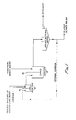
- a suspension consisting of particles of a carrier and water and a suspension or aqueous solution of a neutralizing agent are charged into a first reactor (reactor "A").
- a stirrer M is provided in the reactor to mix the suspensions.
- a substantial portion, if not all, of the neutralizing agent is substantially instantaneously adsorbed on the surfaces of the particles of the carrier. Since the adsorption is substantially instantaneous, the retention time in the first reactor can be very short, for example one or two minutes.
- the neutralizing agent may be an alkali or alkaline earth metals compound, for example sodium hydroxide, potassium hydroxide, sodium carbonate, limestone, dolomitic lime, lime, calcium carbonate, and the like.
- the carrier can be particles of sand, silica, alumina, heavy metal oxides, recycled sludge formed in the method and the like.
- the carrier and absorbed neutralizing agent and the wastewater are charged substantially simultaneously into a second reactor (reactor "B").
- Sufficient neutralizing agent from the first reactor is added to the second reactor to adjust the pH of the wastewater in the second reactor from between about 2.5 and 5.0 to within a range between about 8.4 and 10.6.
- the neutralizing agent can have a particle size small enough, for example less than about 3.2 mm (1/8 inch), so that it will be dispersed and partially or wholly dissolved.
- the carrier can have a particle size within the range, for example 100 percent below 590 urn (minus 28 mesh) down to 100 percent below 44 pm (minus 325 mesh).
- the carrier should have a surface area sufficiently large to adsorb a substantial portion, if not all, of the neutralizing agent required to adjust the pH of the wastewater to the desired level. Within the pH range noted above, a substantial portion, if not all, of the heavy metals will be precipitated as oxides/hydroxides. Additionally, if any soluble salts dissolved in the wastewater are precipitated as insoluble calcium compounds when a calcium containing compound is used as the neutralizing agent, they will be precipitated as part of the sludge, i.e. they will be precipitated on the surfaces of the particles contained in the slurry or sludge.
- the time of residence of the wastewater and neutralizing agent in the second reactor must be of sufficient duration to precipitate substantially all of the heavy metals and any insoluble salts. As little as one minute residence time may be used; however, it is preferred to use a residence time of about three minutes, and more preferred ten minutes, in the second reactor. As seen in FIGURE 1, means M' are provided in the second reactor to mix the wastewater solution and neutralizing agent carrier suspension.
- the slurry in the second reactor flows to a solids separating device, for example a thickener.
- the slurry remains in the device for a time, for example about 4.0 hours, to allow the solids to settle to the bottom of the thickener and form sludge which contains at least 10 weight percent solids and may contain as much as 50 weight percent solids.
- the sludge, part of which is removed from the thickener through ports in the bottom, is recycled to the first reactor.
- the substantially solids-free, purified water is removed as overflow from the top of the thickener.
- the purified water may contain inconsequential amounts of dissolved heavy metals and may be recycled to the plant or may be discharged to the environment.
- the reactions whereby the heavy metals and calcium salts are precipitated in the second reactor, occur on or very close to the surfaces of the carrier-neutralizing agent, for example within 0.01 mm or less distance from the surfaces.
- the pH of the solution may be within a range of 9.0 to 12.0.
- the pH of the solution becomes less basic but remains basic and may be between 8.4 to 10.6.
- ferric iron is present in the industrial waste- water it will be precipitated within a pH range of about 3.5 to 5.0. Therefore, if a dense sludge is to be obtained, acidic wastewater which contains ferric iron must be treated by adjusting the pH to between 3.5 and 5.0 to precipitate a major portion of the ferric iron. Substantially all ferrous iron is oxidized and precipitated at a pH range of 7 to 8.4. Substantially all of the ferrous iron can be removed at a pH of 9.0 without oxidation. The slurry formed during neutralization of industrial waste- water containing high levels of dissolved iron is high in solids content and can be recycled in the process because the solids will act as a carrier for the neutralizing agent.
- Iron in the wastewater encourages the precipitation of the other heavy metals. Generally, a portion of dissolved heavy metals begins to precipitate at a pH of 9. In the presence of iron the precipitation is initiated at a pH of 8 to 8.4. Since the pH of the treated wastewater is about 8.4 to 10.6, less and sometimes no acidic materials must be added to the treated wastewater to bring the pH level back to acceptable discharge levels, generally pH 6.0 to 8.5, prior to discharging the water into surface waters to meet the requirements of federal and state standards regulating the condition of water discharged into surface waters.
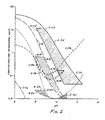
- FIGURE 2 is a graph showing the comparison of a commercially practiced prior art neutralization process and the neutralization method of the invention.
- the graph shows the effects of pH levels on the precipitation of heavy metals in both processes.
- the curves representing the use of a commercially used neutralization process are identified by a "C” and those curves representative of the method of the invention are identified with an "N".
- the alkaline mixture was used to adjust the pH of the wastewater successively to 9, 9.5, 10, and 10.5. Between each adjustment samples of the water and the sludge formed by allowing the slurry to stand for about thirty minutes were taken and analyzed. At a pH of 9, the wastewater was found to have a copper content essentially 0, i.e. below detectable limits, a cadmium content (N-Cd) of about 12 ppm, a nickel content (N-Ni) of about 0.7 ppm, a zinc content (N-Zn) of about 0.022 ppm and a lead content (N-Pb) of about 0.4 ppm. At a pH of 9.5, the heavy metals content dropped as shown in the graph.
- N-Cd cadmium content
- Ni nickel content
- N-Zn zinc content
- N-Pb lead content
- the prior art neutralization process used a calcium hydroxide slurry as the neutralization agent to adjust the pH of the same solution without the use of a carrier.
- the pH of the solution was adjusted to the same levels as cited in the above process.
- the copper content (C-Cu) was reduced to about .043 ppm, the cadmium content (C-Cd) to 46 ppm, the nickel content (C-Ni) to 33 ppm, the lead content (C-Pb) to 2.2 ppm, and the zinc content (C-Zn) to 13 ppm.
- the copper content was reduced to less than 0.01 ppm, the cadmium content to 9 ppm, the nickel content to 0.43 ppm, the lead content to 0.14 ppm and the zinc content to 0.018 ppm.
- the cadmium content was reduced to 1.7 ppm, the nickel content to 0.044 ppm, a portion of the lead resolved in the solution increasing the content to 0.20 ppm and the zinc content was less than 0.01 ppm.
- Adjusting the pH of the solution to 10.4 resulted in an additional resolution of lead increasing the content to 0.53 ppm, a resolution of a portion of the zinc increasing the content to .015 ppm and a decrease of cadmium content to 0.45 ppm.
- the cadmium content was reduced to 0.05 ppm, which content was higher than the cadmium content of the solution at a pH of 10.4 treated by the method of the invention.
- the lead content increased to 3.5 ppm and the zinc content to 0.095 ppm.
- Ferric and ferrous ions which may be present are reduced to contents below the required limits at a pH within the range of 4.0 and 8.2. As noted previously, the ferrous and/or ferric ions act as a co-precipitate to allow the removal of heavy metals at a lower pH than normally used.
- the calcium salts are removed from the wastewater by being precipitated on the surfaces of the solids in the slurry.
- the calcium salts also settle and are removed from the wastewaters with the sludge.
- such calcium salts typically are deposited in layers on the surfaces of the equipment, for example, thickener, pumps and pipes used to hold and transport the solutions which contain the salts. Such layered deposits are extremely difficult to remove and necessitate the closedown of the system for their removal.
- the method of the invention is more effective than a standard neutralizing process in removing manganese from wastewater.
- An acid mine drainage (AMD) wastewater which contains 30 ppm iron, 13 ppm manganese and 150 ppm carbonate and having a pH of 6.4 was treated by the method of the invention and by a standard neutralization method.
- the flowrate of the AMD wastewater was 300 cc per min.
- Sludge containing about 25 weight percent solids generated by the process was recycled in the system to act as a carrier for the neutralizing agent.
- a 0.3 weight percent aqueous lime slurry was mixed with the recycled sludge in the first reactor. The mixture was added to the AMD in the second reactor.
- the effluent contained about 7.5 ppm manganese.
- the manganese content of the AMD dropped to 2.5 ppm and at a pH of 9 the effluent contained less than 0.1 ppm iron, less than 1.0 ppm manganese and less than 20 ppm carbonate.
- Dissolved manganese is readily precipitated from wastewater in the absence of iron by the method of the invention wherein sludge formed in the process is recycled and used as the carrier for the neutralizing agent.
- a 0.5 weight percent aqueous suspension of lime was mixed with recycled sludge in the first reactor.
- the sludge-lime suspension and wastewater, which was devoid of iron but did contain 50 ppm of dissolved manganese, were charged into a second reactor.
- Sufficient neutralizing agent was added to the first reactor to adjust the pH of the suspension in the second reactor to 8.8. The mixture was stirred and after a period of eight minutes, samples of the discharge from the second reactor were tested and found to have a soluble manganese content of less than 0.1 ppm.
- an acid wastewater having a pH of 2.4 and containing 50 each ppm of manganese, copper, cadmium, nickel, zinc and 2200 ppm of sulfate, and 17 ppm of fluoride was treated by the method of the invention.
- Ca(OH) 2 having a maximum particle size of 0.15 mm (100 mesh) was added to water to form a 0.5 percent weight per volume lime suspension.
- Sand having a maximum particle size of 0.15 mm (100 mesh) was added to water to form a 20 weight percent suspension.
- the two suspensions were pumped simultaneously into the first reactor, resulting in feed rates of .04 grams per minute of Ca(OH) 2 and 5.0 grams per minute of sand.
- the aqueous lime/sand suspension formed in the first reactor and the acidic wastewater were charged into the second reactor.
- the mixture in the second reactor had a pH of 10.2 and was allowed to remain in the second reactor for eight minutes.
- the solids in the slurry settled to the bottom of the thickener forming a sludge containing 68 weight percent solids.
- Samples of the sludge were analyzed and found to be sand coated with a thin layer of sludge which contained 10 weight percent manganese, 10 weight percent copper, 10 weight percent cadmium, 10 weight percent nickel and 10 weight percent zinc.
Landscapes
- Chemical & Material Sciences (AREA)
- Organic Chemistry (AREA)
- Engineering & Computer Science (AREA)
- Environmental & Geological Engineering (AREA)
- Water Supply & Treatment (AREA)
- Hydrology & Water Resources (AREA)
- Life Sciences & Earth Sciences (AREA)
- Chemical Kinetics & Catalysis (AREA)
- General Chemical & Material Sciences (AREA)
- Removal Of Specific Substances (AREA)
- Water Treatment By Sorption (AREA)
- Separation Using Semi-Permeable Membranes (AREA)
- Separation Of Suspended Particles By Flocculating Agents (AREA)
Claims (6)
Priority Applications (1)
| Application Number | Priority Date | Filing Date | Title |
|---|---|---|---|
| AT82107168T ATE25659T1 (de) | 1981-08-10 | 1982-08-08 | Behandlung von industrieabwasser. |
Applications Claiming Priority (2)
| Application Number | Priority Date | Filing Date | Title |
|---|---|---|---|
| US06291439 US4465597B2 (en) | 1981-08-10 | 1981-08-10 | Treatment of industrial wastewaters |
| US291439 | 1981-08-10 |
Publications (3)
| Publication Number | Publication Date |
|---|---|
| EP0072012A2 EP0072012A2 (de) | 1983-02-16 |
| EP0072012A3 EP0072012A3 (en) | 1984-11-14 |
| EP0072012B1 true EP0072012B1 (de) | 1987-03-04 |
Family
ID=23120289
Family Applications (1)
| Application Number | Title | Priority Date | Filing Date |
|---|---|---|---|
| EP82107168A Expired EP0072012B1 (de) | 1981-08-10 | 1982-08-08 | Behandlung von Industrieabwasser |
Country Status (8)
| Country | Link |
|---|---|
| US (1) | US4465597B2 (de) |
| EP (1) | EP0072012B1 (de) |
| JP (1) | JPS5840192A (de) |
| AT (1) | ATE25659T1 (de) |
| AU (1) | AU546971B2 (de) |
| CA (1) | CA1183974A (de) |
| DE (1) | DE3275537D1 (de) |
| ZA (1) | ZA825411B (de) |
Cited By (1)
| Publication number | Priority date | Publication date | Assignee | Title |
|---|---|---|---|---|
| WO2006024093A1 (en) * | 2004-08-31 | 2006-03-09 | Bucam Pty Ltd | Apparatus for the treatment of water |
Families Citing this family (57)
| Publication number | Priority date | Publication date | Assignee | Title |
|---|---|---|---|---|
| NL8303557A (nl) * | 1983-10-17 | 1985-05-17 | Dhv Raadgevend Ing | Werkwijze voor de verwijdering van zware metalen uit afvalwater. |
| US4606829A (en) * | 1984-06-13 | 1986-08-19 | Bethlehem Steel Corporation | Removal of complexed zinc-cyanide from wastewater with improved sludge stability |
| US4543189A (en) * | 1984-06-13 | 1985-09-24 | Bethlehem Steel Corp. | Removal of complexed zinc-cyanide from wastewater |
| AU600289B2 (en) * | 1986-07-22 | 1990-08-09 | Commonwealth Scientific And Industrial Research Organisation | Coating photoactive metal oxides onto substrates |
| US5259697A (en) * | 1987-06-18 | 1993-11-09 | Bethlehem Steel Corporation | Composition and process for forming low permeability barriers for waste disposal sites |
| EP0298253A3 (de) * | 1987-07-09 | 1989-09-20 | Degussa Aktiengesellschaft | Verfahren zur Abtrennung von Schwermetallionen aus Industrieabwässern |
| DE3808088A1 (de) * | 1987-07-09 | 1989-01-19 | Degussa | Verfahren zur abtrennung von schwermetallionen aus industrieabwaessern |
| CA1336020C (en) * | 1987-08-17 | 1995-06-20 | Geoffrey Robert. Browne | Clarification process |
| GB2216114A (en) * | 1988-03-30 | 1989-10-04 | Stig Arvid Henrikson | A continuous chemical precipitation process for water using lime |
| AU617166B2 (en) * | 1988-03-31 | 1991-11-21 | Commonwealth Scientific And Industrial Research Organisation | Hydrometallurgical effluent treatment |
| WO1989009192A1 (en) * | 1988-03-31 | 1989-10-05 | Commonwealth Scientific And Industrial Research Or | Hydrometallurgical effluent treatment |
| CH676334A5 (de) * | 1988-09-28 | 1991-01-15 | Sulzer Ag | |
| CA1333106C (en) * | 1989-05-24 | 1994-11-15 | Serena Jane Domvile | Process for removal of inorganic and cyanide contaminants from wastewater |
| US5120447A (en) * | 1991-03-06 | 1992-06-09 | Gte Products Corporation | Method for removing heavy metals from wastewater |
| JP3161734B2 (ja) | 1991-12-02 | 2001-04-25 | テクノロジカル リソーシィズ プロプライエタリー リミテッド | 反応装置 |
| US5403495A (en) * | 1992-03-13 | 1995-04-04 | Tetra Technologies, Inc. | Fluoride removal system |
| US5266210A (en) * | 1992-04-15 | 1993-11-30 | Mclaughlin Water Engineers, Ltd. | Process for removing heavy metals from water |
| WO1994001210A1 (en) * | 1992-07-09 | 1994-01-20 | Technological Resources Pty. Limited | A reactor |
| DK0660804T3 (da) | 1992-09-18 | 1997-09-01 | Krueger As I | Fremgangsmåde til rensning af metalholdige vandige medier og fremgangsmåde til fremstilling af en adsorbent. |
| CA2084327A1 (en) * | 1992-12-02 | 1994-06-03 | Nural Kuyucak | Lime neutralization process for treating acidic waters |
| SE508836C2 (sv) * | 1993-04-20 | 1998-11-09 | Boliden Contech Ab | Förfarande för rening av industriellt avloppsvatten genom utfällning i två steg |
| US5378374A (en) * | 1993-10-15 | 1995-01-03 | Andersen; John N. | Lime addition system for water treatment |
| US5616168A (en) * | 1994-02-28 | 1997-04-01 | Kennecott Utah Copper Corporation | Hydrometallurgical processing of impurity streams generated during the pyrometallurgy of copper |
| US5443622A (en) * | 1994-02-28 | 1995-08-22 | Kennecott Corporation | Hydrometallurgical processing of impurity streams generated during the pyrometallurgy of copper |
| US5549820A (en) * | 1994-03-04 | 1996-08-27 | Eastman Kodak Company | Apparatus for removing a component from solution |
| FR2719234B1 (fr) * | 1994-05-02 | 1999-08-13 | Omnium Traitement Valorisa | Procédé et installation de traitement d'un écoulement brut par décantation simple après lestage au sable fin. |
| US5840195A (en) * | 1995-05-01 | 1998-11-24 | Omnium De Traitement Et De Valorisation | Method and installation for treating an untreated flow by simple sedimentation after ballasting with fine sand |
| US5540836A (en) * | 1994-06-16 | 1996-07-30 | Coyne; Thomas J. | Wastewater treatment system and method |
| US5518633A (en) * | 1994-10-21 | 1996-05-21 | E. I. Du Pont De Nemours And Company | Process for treating aqueous media containing metal ions |
| US5719099A (en) * | 1996-10-22 | 1998-02-17 | Bhat Industries, Inc. | Method and compositions for stabilization of heavy metals, acid gas removal and ph control in contaminated matrices |
| US6348154B1 (en) * | 1997-01-03 | 2002-02-19 | David R. Stewart | Methods to remove metals from water |
| US5792364A (en) * | 1997-04-29 | 1998-08-11 | Bethlehem Steel Corporation | Wastewater treatment process for vacuum degasser effluent |
| EP1012120B1 (de) * | 1997-07-02 | 2003-01-29 | Csir | Behandlung von säuren wasser die gelösten eisen-kationen enthalt |
| DE19754173A1 (de) * | 1997-12-06 | 1998-07-30 | Bilfinger & Berger Umweltverfa | Verfahren zur Wasserreinigung |
| US5820966A (en) * | 1997-12-09 | 1998-10-13 | Inco Limited | Removal of arsenic from iron arsenic and sulfur dioxide containing solutions |
| JP3169899B2 (ja) * | 1998-07-15 | 2001-05-28 | 日本電気環境エンジニアリング株式会社 | フッ素含有排水の処理方法とその装置 |
| US6984328B2 (en) * | 2000-02-02 | 2006-01-10 | University Of Akron | Method for removing metals from aqueous solutions using mixed lithic materials |
| US6383370B1 (en) | 2000-09-14 | 2002-05-07 | Infilco Degremont Inc. | Apparatus for treating wastewater |
| US20030150817A1 (en) * | 2002-02-11 | 2003-08-14 | Keever Christopher S. | Method and apparatus for treating wastewater |
| US6932909B2 (en) * | 2002-01-15 | 2005-08-23 | Kroff Chemical Company, Inc. | Method of treating mine drainage |
| NL1021495C2 (nl) * | 2002-09-19 | 2004-03-22 | Hoek Loos Bv | Koelsysteem en werkwijze voor gebruik daarvan. |
| CN100345772C (zh) * | 2004-09-08 | 2007-10-31 | 中山大学 | 一种重金属沉淀剂 |
| US20100213123A1 (en) | 2007-01-09 | 2010-08-26 | Marston Peter G | Ballasted sequencing batch reactor system and method for treating wastewater |
| CN101568388B (zh) * | 2007-01-09 | 2013-09-18 | 西门子工业公司 | 用于去除工业废水中溶解的污染物、颗粒污染物和油类污染物的系统 |
| US8470172B2 (en) * | 2007-01-09 | 2013-06-25 | Siemens Industry, Inc. | System for enhancing a wastewater treatment process |
| US20110036771A1 (en) | 2007-01-09 | 2011-02-17 | Steven Woodard | Ballasted anaerobic system and method for treating wastewater |
| CN101610850B (zh) * | 2007-01-09 | 2012-07-04 | 剑桥水技术公司 | 用于湿式鼓磁选机的改进的收集系统 |
| US7695623B2 (en) * | 2007-01-09 | 2010-04-13 | Cambridge Water Technology, Inc. | System and method for enhancing an activated sludge process |
| US7641801B2 (en) * | 2007-02-28 | 2010-01-05 | Vale Inco Limited | Method for removing manganese from nickel laterite waste liquors |
| US7520993B1 (en) | 2007-12-06 | 2009-04-21 | Water & Power Technologies, Inc. | Water treatment process for oilfield produced water |
| CN101947381B (zh) * | 2009-07-08 | 2015-01-28 | 东曹株式会社 | 重金属处理剂及重金属污染物质的处理方法 |
| CN104395246A (zh) | 2012-06-11 | 2015-03-04 | 伊沃夸水处理技术有限责任公司 | 使用固定膜工艺和压载沉降的处理 |
| EP2900352A1 (de) | 2012-09-26 | 2015-08-05 | Evoqua Water Technologies LLC | Systems zur messung der konzentration einer magnetischen vorschaltvorrichtung in einer suspension |
| US12595194B2 (en) | 2019-11-08 | 2026-04-07 | Evoqua Water Technologies Llc | Accelerated settlement of flocs after electrocoagulation/electrochemical process using ballasted flocculation |
| CN112390376A (zh) * | 2020-10-20 | 2021-02-23 | 衡阳师范学院 | 废水处理组合物和应用 |
| CN113149245B (zh) * | 2021-04-14 | 2022-04-08 | 四川大学 | 基于水动力因素提高酸性矿山废水处理效率的方法 |
| CN115520983B (zh) * | 2021-06-25 | 2025-12-12 | 中蓝连海设计研究院有限公司 | 一种磷矿选矿酸性废水沉淀剂及其用途 |
Family Cites Families (14)
| Publication number | Priority date | Publication date | Assignee | Title |
|---|---|---|---|---|
| US2340326A (en) * | 1942-05-18 | 1944-02-01 | Lewis Perrault | Apparatus for covering pipe |
| DE1196137B (de) * | 1961-09-11 | 1965-07-01 | Brueckenbau | Verfahren zum Reinigen von Abwaessern und/oder zum Eindicken von Klaerschlamm |
| US3259571A (en) * | 1963-01-07 | 1966-07-05 | Johns Manville | Method for removing iron from water |
| US3235492A (en) * | 1963-03-25 | 1966-02-15 | Johns Manville | Composition for and method of removing impurities from water |
| US3575854A (en) * | 1969-04-14 | 1971-04-20 | M & T Chemicals Inc | Rapid setiling of gelatinous precipitates |
| US3680698A (en) * | 1970-02-25 | 1972-08-01 | Occidental Petroleum Corp | Process for the treatment of slimes and waste solids |
| US3617559A (en) * | 1970-04-30 | 1971-11-02 | Us Interior | Neutralization of ferrous iron-containing acid wastes |
| FR2120550A5 (en) * | 1971-01-08 | 1972-08-18 | Trefilunion | Neutralisn of acid waste water - using lime |
| US3738932A (en) * | 1971-04-19 | 1973-06-12 | Bethlehem Steel Corp | Method for treating acid water containing metallic values |
| US3931007A (en) * | 1972-12-19 | 1976-01-06 | Nippon Electric Company Limited | Method of extracting heavy metals from industrial waste waters |
| US4169053A (en) * | 1975-08-08 | 1979-09-25 | Nippon Electric Co., Ltd. | Method of treating waste waters containing solid-phase difficultly-soluble compounds |
| US4025430A (en) * | 1976-01-12 | 1977-05-24 | Amax Inc. | Removal of metal ions from waste water |
| US4093543A (en) * | 1976-09-22 | 1978-06-06 | Mobil Oil Corporation | Decomposition of formic acid in very low concentration |
| US4186088A (en) * | 1978-02-13 | 1980-01-29 | Scm Corporation | Aqueous ferrous waste conversion process |
-
1981
- 1981-08-10 US US06291439 patent/US4465597B2/en not_active Expired - Fee Related
-
1982
- 1982-07-28 ZA ZA825411A patent/ZA825411B/xx unknown
- 1982-08-03 CA CA000408614A patent/CA1183974A/en not_active Expired
- 1982-08-08 EP EP82107168A patent/EP0072012B1/de not_active Expired
- 1982-08-08 AT AT82107168T patent/ATE25659T1/de not_active IP Right Cessation
- 1982-08-08 DE DE8282107168T patent/DE3275537D1/de not_active Expired
- 1982-08-09 AU AU86975/82A patent/AU546971B2/en not_active Expired
- 1982-08-10 JP JP57139080A patent/JPS5840192A/ja active Granted
Cited By (1)
| Publication number | Priority date | Publication date | Assignee | Title |
|---|---|---|---|---|
| WO2006024093A1 (en) * | 2004-08-31 | 2006-03-09 | Bucam Pty Ltd | Apparatus for the treatment of water |
Also Published As
| Publication number | Publication date |
|---|---|
| AU8697582A (en) | 1983-02-17 |
| US4465597B2 (en) | 1997-07-01 |
| EP0072012A2 (de) | 1983-02-16 |
| US4465597A (en) | 1984-08-14 |
| JPS61156B2 (de) | 1986-01-06 |
| ZA825411B (en) | 1983-06-29 |
| EP0072012A3 (en) | 1984-11-14 |
| ATE25659T1 (de) | 1987-03-15 |
| DE3275537D1 (en) | 1987-04-09 |
| JPS5840192A (ja) | 1983-03-09 |
| US4465597B1 (en) | 1994-04-25 |
| AU546971B2 (en) | 1985-09-26 |
| CA1183974A (en) | 1985-03-12 |
Similar Documents
| Publication | Publication Date | Title |
|---|---|---|
| US4465597A (en) | Treatment of industrial wastewaters | |
| US5427691A (en) | Lime neutralization process for treating acidic waters | |
| US4814091A (en) | Process for removing metals from water | |
| KR100525360B1 (ko) | 물 처리용 방법과 조성물 | |
| EP0377603B1 (de) | Klärverfahren | |
| US5266210A (en) | Process for removing heavy metals from water | |
| US4422943A (en) | Method for precipitation of heavy metal sulfides | |
| US4025430A (en) | Removal of metal ions from waste water | |
| US3575854A (en) | Rapid setiling of gelatinous precipitates | |
| US4698163A (en) | Treatment of phosphate-containing wastewater | |
| JPH07973A (ja) | 重金属及び放射性汚染要因物の除去方法 | |
| US6110379A (en) | Method for treating water containing sulfate | |
| US5370800A (en) | Method for removing metal compounds from waste water | |
| US5108620A (en) | Process for recovery of spent etchant | |
| US5120447A (en) | Method for removing heavy metals from wastewater | |
| US4543189A (en) | Removal of complexed zinc-cyanide from wastewater | |
| US5273661A (en) | Method for processing aqueous wastes | |
| US5720886A (en) | Process for removing metal values from mine waste water | |
| KR100259563B1 (ko) | 칼슘, 마그네슘 함유물질을 이용한 중금속 함유 폐수 처리 방법 | |
| CA2643909C (en) | Method for treating acidic waters using recycled acidic and basic sludges | |
| US6251283B1 (en) | Methods for removing selenium from a waste stream | |
| US11066313B1 (en) | Methods for removing anions from water | |
| US5211843A (en) | Mobile apparatus for environmentally treating spent etchant safely | |
| JP2718221B2 (ja) | 砒素含有硫酸系排水の処理方法 | |
| JPH07100155B2 (ja) | 有機性汚水の処理方法 |
Legal Events
| Date | Code | Title | Description |
|---|---|---|---|
| PUAI | Public reference made under article 153(3) epc to a published international application that has entered the european phase |
Free format text: ORIGINAL CODE: 0009012 |
|
| AK | Designated contracting states |
Designated state(s): AT BE DE FR GB IT LU NL SE |
|
| PUAL | Search report despatched |
Free format text: ORIGINAL CODE: 0009013 |
|
| AK | Designated contracting states |
Designated state(s): AT BE DE FR GB IT LU NL SE |
|
| 17P | Request for examination filed |
Effective date: 19850410 |
|
| GRAA | (expected) grant |
Free format text: ORIGINAL CODE: 0009210 |
|
| AK | Designated contracting states |
Kind code of ref document: B1 Designated state(s): AT BE DE FR GB IT LU NL SE |
|
| REF | Corresponds to: |
Ref document number: 25659 Country of ref document: AT Date of ref document: 19870315 Kind code of ref document: T |
|
| REF | Corresponds to: |
Ref document number: 3275537 Country of ref document: DE Date of ref document: 19870409 |
|
| ITF | It: translation for a ep patent filed | ||
| ET | Fr: translation filed | ||
| PLBE | No opposition filed within time limit |
Free format text: ORIGINAL CODE: 0009261 |
|
| STAA | Information on the status of an ep patent application or granted ep patent |
Free format text: STATUS: NO OPPOSITION FILED WITHIN TIME LIMIT |
|
| 26N | No opposition filed | ||
| REG | Reference to a national code |
Ref country code: FR Ref legal event code: TP |
|
| ITTA | It: last paid annual fee | ||
| EPTA | Lu: last paid annual fee | ||
| EAL | Se: european patent in force in sweden |
Ref document number: 82107168.5 |
|
| PGFP | Annual fee paid to national office [announced via postgrant information from national office to epo] |
Ref country code: DE Payment date: 20010730 Year of fee payment: 20 |
|
| PGFP | Annual fee paid to national office [announced via postgrant information from national office to epo] |
Ref country code: SE Payment date: 20010807 Year of fee payment: 20 |
|
| PGFP | Annual fee paid to national office [announced via postgrant information from national office to epo] |
Ref country code: LU Payment date: 20010808 Year of fee payment: 20 Ref country code: GB Payment date: 20010808 Year of fee payment: 20 |
|
| PGFP | Annual fee paid to national office [announced via postgrant information from national office to epo] |
Ref country code: FR Payment date: 20010810 Year of fee payment: 20 |
|
| PGFP | Annual fee paid to national office [announced via postgrant information from national office to epo] |
Ref country code: AT Payment date: 20010813 Year of fee payment: 20 |
|
| PGFP | Annual fee paid to national office [announced via postgrant information from national office to epo] |
Ref country code: NL Payment date: 20010830 Year of fee payment: 20 |
|
| PGFP | Annual fee paid to national office [announced via postgrant information from national office to epo] |
Ref country code: BE Payment date: 20010927 Year of fee payment: 20 |
|
| BE20 | Be: patent expired |
Free format text: 20020808 *BETHLEHEM STEEL CORP. |
|
| REG | Reference to a national code |
Ref country code: GB Ref legal event code: IF02 |
|
| PG25 | Lapsed in a contracting state [announced via postgrant information from national office to epo] |
Ref country code: GB Free format text: LAPSE BECAUSE OF EXPIRATION OF PROTECTION Effective date: 20020807 |
|
| PG25 | Lapsed in a contracting state [announced via postgrant information from national office to epo] |
Ref country code: NL Free format text: LAPSE BECAUSE OF EXPIRATION OF PROTECTION Effective date: 20020808 Ref country code: LU Free format text: LAPSE BECAUSE OF EXPIRATION OF PROTECTION Effective date: 20020808 Ref country code: AT Free format text: LAPSE BECAUSE OF EXPIRATION OF PROTECTION Effective date: 20020808 |
|
| REG | Reference to a national code |
Ref country code: GB Ref legal event code: PE20 Effective date: 20020807 |
|
| EUG | Se: european patent has lapsed |
Ref document number: 82107168.5 |
|
| NLV7 | Nl: ceased due to reaching the maximum lifetime of a patent |
Effective date: 20020808 |