EP0066232B1 - Verfahren zur Herstellung von Silylisocyanaten - Google Patents
Verfahren zur Herstellung von Silylisocyanaten Download PDFInfo
- Publication number
- EP0066232B1 EP0066232B1 EP82104540A EP82104540A EP0066232B1 EP 0066232 B1 EP0066232 B1 EP 0066232B1 EP 82104540 A EP82104540 A EP 82104540A EP 82104540 A EP82104540 A EP 82104540A EP 0066232 B1 EP0066232 B1 EP 0066232B1
- Authority
- EP
- European Patent Office
- Prior art keywords
- carbon atoms
- reaction
- total
- urea
- silyl
- Prior art date
- Legal status (The legal status is an assumption and is not a legal conclusion. Google has not performed a legal analysis and makes no representation as to the accuracy of the status listed.)
- Expired
Links
- 238000000034 method Methods 0.000 title claims description 23
- 238000002360 preparation method Methods 0.000 title claims description 6
- BUZRAOJSFRKWPD-UHFFFAOYSA-N isocyanatosilane Chemical class [SiH3]N=C=O BUZRAOJSFRKWPD-UHFFFAOYSA-N 0.000 title description 14
- XSQUKJJJFZCRTK-UHFFFAOYSA-N Urea Chemical compound NC(N)=O XSQUKJJJFZCRTK-UHFFFAOYSA-N 0.000 claims description 47
- 238000006243 chemical reaction Methods 0.000 claims description 26
- 239000004202 carbamide Substances 0.000 claims description 23
- -1 halogen silanes Chemical class 0.000 claims description 15
- 239000002904 solvent Substances 0.000 claims description 14
- 125000004432 carbon atom Chemical group C* 0.000 claims description 13
- ZMXDDKWLCZADIW-UHFFFAOYSA-N N,N-Dimethylformamide Chemical compound CN(C)C=O ZMXDDKWLCZADIW-UHFFFAOYSA-N 0.000 claims description 12
- HXJUTPCZVOIRIF-UHFFFAOYSA-N sulfolane Chemical compound O=S1(=O)CCCC1 HXJUTPCZVOIRIF-UHFFFAOYSA-N 0.000 claims description 11
- 125000001424 substituent group Chemical group 0.000 claims description 9
- ZAMOUSCENKQFHK-UHFFFAOYSA-N Chlorine atom Chemical compound [Cl] ZAMOUSCENKQFHK-UHFFFAOYSA-N 0.000 claims description 6
- SECXISVLQFMRJM-UHFFFAOYSA-N N-Methylpyrrolidone Chemical compound CN1CCCC1=O SECXISVLQFMRJM-UHFFFAOYSA-N 0.000 claims description 6
- 229910052736 halogen Inorganic materials 0.000 claims description 6
- 239000002798 polar solvent Substances 0.000 claims description 6
- 229910052801 chlorine Inorganic materials 0.000 claims description 4
- 239000000460 chlorine Substances 0.000 claims description 4
- 239000007788 liquid Substances 0.000 claims description 4
- WKBOTKDWSSQWDR-UHFFFAOYSA-N Bromine atom Chemical compound [Br] WKBOTKDWSSQWDR-UHFFFAOYSA-N 0.000 claims description 3
- 125000002496 methyl group Chemical group [H]C([H])([H])* 0.000 claims description 3
- UWHSPZZUAYSGTB-UHFFFAOYSA-N 1,1,3,3-tetraethylurea Chemical compound CCN(CC)C(=O)N(CC)CC UWHSPZZUAYSGTB-UHFFFAOYSA-N 0.000 claims description 2
- AVQQQNCBBIEMEU-UHFFFAOYSA-N 1,1,3,3-tetramethylurea Chemical compound CN(C)C(=O)N(C)C AVQQQNCBBIEMEU-UHFFFAOYSA-N 0.000 claims description 2
- GDTBXPJZTBHREO-UHFFFAOYSA-N bromine Substances BrBr GDTBXPJZTBHREO-UHFFFAOYSA-N 0.000 claims description 2
- 229910052794 bromium Inorganic materials 0.000 claims description 2
- 150000007524 organic acids Chemical class 0.000 claims description 2
- 125000001183 hydrocarbyl group Chemical group 0.000 claims 2
- 125000001931 aliphatic group Chemical group 0.000 claims 1
- 125000003545 alkoxy group Chemical group 0.000 claims 1
- 125000002029 aromatic hydrocarbon group Chemical group 0.000 claims 1
- 210000001217 buttock Anatomy 0.000 claims 1
- IJOOHPMOJXWVHK-UHFFFAOYSA-N chlorotrimethylsilane Chemical compound C[Si](C)(C)Cl IJOOHPMOJXWVHK-UHFFFAOYSA-N 0.000 description 14
- NIZHERJWXFHGGU-UHFFFAOYSA-N isocyanato(trimethyl)silane Chemical compound C[Si](C)(C)N=C=O NIZHERJWXFHGGU-UHFFFAOYSA-N 0.000 description 10
- YXFVVABEGXRONW-UHFFFAOYSA-N Toluene Chemical compound CC1=CC=CC=C1 YXFVVABEGXRONW-UHFFFAOYSA-N 0.000 description 9
- 239000000047 product Substances 0.000 description 9
- LIKFHECYJZWXFJ-UHFFFAOYSA-N dimethyldichlorosilane Chemical compound C[Si](C)(Cl)Cl LIKFHECYJZWXFJ-UHFFFAOYSA-N 0.000 description 8
- 238000004519 manufacturing process Methods 0.000 description 6
- 238000009835 boiling Methods 0.000 description 5
- ICFCQEJDICSLOV-UHFFFAOYSA-N diisocyanato(dimethyl)silane Chemical compound O=C=N[Si](C)(C)N=C=O ICFCQEJDICSLOV-UHFFFAOYSA-N 0.000 description 5
- 238000010992 reflux Methods 0.000 description 5
- 230000015572 biosynthetic process Effects 0.000 description 4
- UZWXQQYCLCLEOY-UHFFFAOYSA-N chloro-isocyanato-dimethylsilane Chemical compound C[Si](C)(Cl)N=C=O UZWXQQYCLCLEOY-UHFFFAOYSA-N 0.000 description 4
- KOPOQZFJUQMUML-UHFFFAOYSA-N chlorosilane Chemical class Cl[SiH3] KOPOQZFJUQMUML-UHFFFAOYSA-N 0.000 description 4
- 238000004587 chromatography analysis Methods 0.000 description 4
- 238000004821 distillation Methods 0.000 description 4
- 150000002367 halogens Chemical group 0.000 description 4
- 239000007858 starting material Substances 0.000 description 4
- 239000006227 byproduct Substances 0.000 description 3
- 239000007795 chemical reaction product Substances 0.000 description 3
- XLJMAIOERFSOGZ-UHFFFAOYSA-N cyanic acid Chemical class OC#N XLJMAIOERFSOGZ-UHFFFAOYSA-N 0.000 description 3
- 125000005843 halogen group Chemical group 0.000 description 3
- 239000012948 isocyanate Substances 0.000 description 3
- IQPQWNKOIGAROB-UHFFFAOYSA-N isocyanate group Chemical group [N-]=C=O IQPQWNKOIGAROB-UHFFFAOYSA-N 0.000 description 3
- 239000011541 reaction mixture Substances 0.000 description 3
- 239000011877 solvent mixture Substances 0.000 description 3
- NLXLAEXVIDQMFP-UHFFFAOYSA-N Ammonia chloride Chemical compound [NH4+].[Cl-] NLXLAEXVIDQMFP-UHFFFAOYSA-N 0.000 description 2
- DZZHPOHEEQVBJQ-UHFFFAOYSA-N C[Si](C)([N+]#[C-])Cl Chemical compound C[Si](C)([N+]#[C-])Cl DZZHPOHEEQVBJQ-UHFFFAOYSA-N 0.000 description 2
- 239000000654 additive Substances 0.000 description 2
- YGZSVWMBUCGDCV-UHFFFAOYSA-N chloro(methyl)silane Chemical compound C[SiH2]Cl YGZSVWMBUCGDCV-UHFFFAOYSA-N 0.000 description 2
- AVDUEHWPPXIAEB-UHFFFAOYSA-N chloro-ethyl-dimethylsilane Chemical compound CC[Si](C)(C)Cl AVDUEHWPPXIAEB-UHFFFAOYSA-N 0.000 description 2
- MVPPADPHJFYWMZ-UHFFFAOYSA-N chlorobenzene Chemical compound ClC1=CC=CC=C1 MVPPADPHJFYWMZ-UHFFFAOYSA-N 0.000 description 2
- 230000008878 coupling Effects 0.000 description 2
- 238000010168 coupling process Methods 0.000 description 2
- 238000005859 coupling reaction Methods 0.000 description 2
- ZFSLODLOARCGLH-UHFFFAOYSA-N isocyanuric acid Chemical compound OC1=NC(O)=NC(O)=N1 ZFSLODLOARCGLH-UHFFFAOYSA-N 0.000 description 2
- JLUFWMXJHAVVNN-UHFFFAOYSA-N methyltrichlorosilane Chemical compound C[Si](Cl)(Cl)Cl JLUFWMXJHAVVNN-UHFFFAOYSA-N 0.000 description 2
- 239000000203 mixture Substances 0.000 description 2
- 125000001181 organosilyl group Chemical group [SiH3]* 0.000 description 2
- 239000000376 reactant Substances 0.000 description 2
- 238000000926 separation method Methods 0.000 description 2
- 238000003786 synthesis reaction Methods 0.000 description 2
- DFJSZWHUOKADCX-UHFFFAOYSA-N triisocyanato(methyl)silane Chemical compound O=C=N[Si](C)(N=C=O)N=C=O DFJSZWHUOKADCX-UHFFFAOYSA-N 0.000 description 2
- UHOVQNZJYSORNB-UHFFFAOYSA-N Benzene Chemical compound C1=CC=CC=C1 UHOVQNZJYSORNB-UHFFFAOYSA-N 0.000 description 1
- 239000004215 Carbon black (E152) Substances 0.000 description 1
- OWIKHYCFFJSOEH-UHFFFAOYSA-N Isocyanic acid Chemical compound N=C=O OWIKHYCFFJSOEH-UHFFFAOYSA-N 0.000 description 1
- CTQNGGLPUBDAKN-UHFFFAOYSA-N O-Xylene Chemical compound CC1=CC=CC=C1C CTQNGGLPUBDAKN-UHFFFAOYSA-N 0.000 description 1
- 150000001338 aliphatic hydrocarbons Chemical group 0.000 description 1
- 235000019270 ammonium chloride Nutrition 0.000 description 1
- 238000004458 analytical method Methods 0.000 description 1
- 150000004945 aromatic hydrocarbons Chemical group 0.000 description 1
- QYTOONVFPBUIJG-UHFFFAOYSA-N azane;cyanic acid Chemical compound [NH4+].[O-]C#N QYTOONVFPBUIJG-UHFFFAOYSA-N 0.000 description 1
- OHJMTUPIZMNBFR-UHFFFAOYSA-N biuret Chemical compound NC(=O)NC(N)=O OHJMTUPIZMNBFR-UHFFFAOYSA-N 0.000 description 1
- KGFZGNPJZIUEKS-UHFFFAOYSA-N chloro(diethoxymethyl)silane Chemical compound CCOC([SiH2]Cl)OCC KGFZGNPJZIUEKS-UHFFFAOYSA-N 0.000 description 1
- NHZFNHUMBGJNRW-UHFFFAOYSA-N chloro-diisocyanato-methylsilane Chemical compound O=C=N[Si](Cl)(C)N=C=O NHZFNHUMBGJNRW-UHFFFAOYSA-N 0.000 description 1
- 150000001875 compounds Chemical class 0.000 description 1
- 239000000470 constituent Substances 0.000 description 1
- 150000001913 cyanates Chemical class 0.000 description 1
- 239000002274 desiccant Substances 0.000 description 1
- 239000003989 dielectric material Substances 0.000 description 1
- GHIXNKJAVGJJPG-UHFFFAOYSA-N diethoxymethyl(isocyanato)silane Chemical compound C(C)OC(OCC)[SiH2]N=C=O GHIXNKJAVGJJPG-UHFFFAOYSA-N 0.000 description 1
- JBKVHLHDHHXQEQ-UHFFFAOYSA-N epsilon-caprolactam Chemical compound O=C1CCCCCN1 JBKVHLHDHHXQEQ-UHFFFAOYSA-N 0.000 description 1
- 239000000706 filtrate Substances 0.000 description 1
- 238000001914 filtration Methods 0.000 description 1
- 239000012530 fluid Substances 0.000 description 1
- 238000004508 fractional distillation Methods 0.000 description 1
- 238000004817 gas chromatography Methods 0.000 description 1
- 229930195733 hydrocarbon Natural products 0.000 description 1
- 150000002430 hydrocarbons Chemical group 0.000 description 1
- 239000000543 intermediate Substances 0.000 description 1
- 150000002513 isocyanates Chemical class 0.000 description 1
- 239000005055 methyl trichlorosilane Substances 0.000 description 1
- 238000002156 mixing Methods 0.000 description 1
- 239000012454 non-polar solvent Substances 0.000 description 1
- 238000012856 packing Methods 0.000 description 1
- 239000003973 paint Substances 0.000 description 1
- 239000000049 pigment Substances 0.000 description 1
- 229920000642 polymer Polymers 0.000 description 1
- 239000002244 precipitate Substances 0.000 description 1
- 150000003839 salts Chemical class 0.000 description 1
- 229920006395 saturated elastomer Polymers 0.000 description 1
- 238000007086 side reaction Methods 0.000 description 1
- 150000004756 silanes Chemical class 0.000 description 1
- 238000006467 substitution reaction Methods 0.000 description 1
- XLYOFNOQVPJJNP-UHFFFAOYSA-N water Substances O XLYOFNOQVPJJNP-UHFFFAOYSA-N 0.000 description 1
- 239000008096 xylene Substances 0.000 description 1
Classifications
-
- C—CHEMISTRY; METALLURGY
- C07—ORGANIC CHEMISTRY
- C07F—ACYCLIC, CARBOCYCLIC OR HETEROCYCLIC COMPOUNDS CONTAINING ELEMENTS OTHER THAN CARBON, HYDROGEN, HALOGEN, OXYGEN, NITROGEN, SULFUR, SELENIUM OR TELLURIUM
- C07F7/00—Compounds containing elements of Groups 4 or 14 of the Periodic Table
- C07F7/02—Silicon compounds
- C07F7/08—Compounds having one or more C—Si linkages
- C07F7/18—Compounds having one or more C—Si linkages as well as one or more C—O—Si linkages
- C07F7/1804—Compounds having Si-O-C linkages
- C07F7/1872—Preparation; Treatments not provided for in C07F7/20
- C07F7/1888—Preparation; Treatments not provided for in C07F7/20 by reactions involving the formation of other Si-linkages, e.g. Si-N
-
- C—CHEMISTRY; METALLURGY
- C07—ORGANIC CHEMISTRY
- C07F—ACYCLIC, CARBOCYCLIC OR HETEROCYCLIC COMPOUNDS CONTAINING ELEMENTS OTHER THAN CARBON, HYDROGEN, HALOGEN, OXYGEN, NITROGEN, SULFUR, SELENIUM OR TELLURIUM
- C07F7/00—Compounds containing elements of Groups 4 or 14 of the Periodic Table
- C07F7/02—Silicon compounds
- C07F7/08—Compounds having one or more C—Si linkages
- C07F7/10—Compounds having one or more C—Si linkages containing nitrogen having a Si-N linkage
Definitions
- the present invention relates to a process for the preparation of silyl isocyanates by pressureless reaction of silyl halides with urea in polar solvents.
- silyl isocyanates see Houben-Weyl, 13/5, p. 126 ff. [1980]). According to DE-OS 1 965 741, these compounds can be prepared by reacting silyl halides with salts of cyanic acid. Attempts have also been made to use urea instead of the cyanate salts. For example, in their work on the synthesis of silyl isocyanates, J. Goubeau and D. Paulin (Ber. 93, 1111 [1960]) examined the reaction of silyl chlorides with urea.
- silyl isocyanates can be prepared in high yields in an unpressurized reaction by the process according to the invention described below.
- a particular advantage of the process according to the invention can also be seen in the fact that when using at least two halogen silanes containing halogen atoms as the starting material, a gradual substitution of the halogen atoms by isocyanate groups is possible, so that the process according to the invention also permits the production of halogen-substituted silyl isocyanates.
- Reaction partner for the halosilanes mentioned by way of example is urea.
- the reaction between the reactants is carried out in the presence of polar solvents or solvent mixtures consisting essentially of polar solvents.
- the solvents or the solvent mixtures should have a boiling point of at least 110 ° C., preferably at least 140 ° C. and in particular at least 190 ° C.
- Suitable solvents are sulfolane and / or organic acid amides which are liquid under the reaction conditions, such as, in particular, dimethylformamide, N-methylpyrrolidone, tetramethylurea, tetraethylurea and / or e-caprolactam.
- the solvent or solvent mixture in particular must have a good solubility for urea in order to rule out undesirable side reactions, in particular the formation of cyanuric acid.
- the reactants are used in amounts such that 0.8 to 2, preferably 1 to 1.5, moles of urea are available for each mole of halogen bonded in the halosilane if the halogen substituents have been completely replaced by Isocyanato substituents is sought. If from two halogen silanes containing halogen atoms both isocyanate groups and halogen substituents having silanes are to be prepared, 0.8 to 1.2, preferably 1 mol, urea is preferably used for each mole of halogen to be substituted by an isocyanate group.
- the reaction according to the invention is carried out in the temperature range from 100 ° C. to 200 ° C., preferably at 130 to 160 ° C.
- the procedure is generally such that the urea is initially introduced into the solvent, the solution is preheated to about 100-120 ° C. and the halosilanes are then metered in with thorough mixing, whereupon the reaction temperature is further increased.
- the silyl isocyanate formed is preferably continuously distilled off from the reaction vessel and then fractionated. Any unreacted halosilanes are returned to the beginning of the process.
- the bottom temperature significantly (e.g. 180 ° C.) in order to drive off the silyl isocyanates as completely as possible.
- the end product In the production of methyltriisocyanatosilane, the end product must be separated from the reaction mixture by applying a vacuum after the reaction has ended.
- the best method of separating the products by distillation therefore depends on their boiling points and the solvent and can be determined by a preliminary test.
- Comparatively low-boiling solvents such as dimethylformamide or N-methylpyrrolidone are preferably used in the production of low-volatility process products.
- the reaction mixture is worked up, for example, by adding a non-polar solvent such as toluene, xylene, benzine or chlorobenzene to the reaction mixture in order to precipitate the by-products, in particular the ammonium halides formed.
- the filtrate freed from the precipitates is then worked up by stripping off the solvent, so that the process products are obtained as a distillation residue.
- halogen-substituted isocyanato-silanes for example in the production of dimethylchloroisocyanosilane from dimethyldichlorosilane, it is possible, for example, to pump about 1 mol of dichlorodimethylsilane at about 140 ° C. rapidly into a solution of 1 mol of urea in sulfolane and The resulting dimethylchloroisocyanatosilane as the main product along with unreacted dimethyldichlorosilane and dimethyldiisocyanatosilane are continuously distilled off. If the formation of dimethyldiisocyanatosilane is to be largely suppressed, it is advisable to use excess dichlorodimethylsilane, based on urea.
- the reaction is generally carried out using 4-10 molar, preferably 6-8 molar, urea solutions in the solvents mentioned.
- the solvents can be recovered by distillation after the reaction batches have been worked up. Before this working up of the solvents by distillation, the ammonium halides formed can be removed by filtration and, for example, with an apolar solvent, such as. B. toluene, washed out.
- the halogen-free isocyanatosilanes obtained as process products according to the invention are valuable intermediates for organic syntheses.
- they are suitable for the preparation of acyl isocyanates by reaction with organic acid chlorides, as described, for example, in SU-PS 498 290.
- Such acyl isocyanates are valuable drying agents for pigments in moisture-sensitive paints.
- the halogen-substituted isocyanatosilanes obtained as process products according to the invention are suitable, for example, as polymer additives, as additives in hydraulic fluids or in dielectric materials.
- reaction product 320 g of reaction product could be isolated, which contained 288 g of trimethylsilyl isocyanate and 28 g of trimethylsilyl chloride according to gas chromatographic analysis.
Landscapes
- Chemical & Material Sciences (AREA)
- Organic Chemistry (AREA)
Description
- Die vorliegende Erfindung betrifft ein Verfahren zur Herstellung von Silylisocyanaten durch drucklose Umsetzung von Silylhalogeniden mit Harnstoff in polaren Lösungsmitteln.
- Zur Herstellung von Silylisocyanaten sind mehrere Wege bekannt (siehe Houben-Weyl, 13/5, S. 126 ff. [1980]). Gemäß DE-OS 1 965 741 gelingt die Herstellung dieser Verbindungen durch Umsetzung von Silylhalogeniden mit Salzen der Cyansäure. Auch der Versuch, anstelle der Cyansäuresalze Harnstoff einzuzsetzen, wurde bereits gemacht. So haben J. Goubeau und D. Paulin (Ber. 93,1111 [1960]) in ihrer Arbeit über die Synthese von Silylisocyanaten die Umsetzung von Silylchloriden mit Harnstoff untersucht. Da Harnstoff erst ab ca. 130"C Isocyansäure abspaltet und bei dieser Temperatur die einzusetzenden Silylchloride bei Normaldruck bereits gasförmig vorliegen, mußten die Autoren die Umsetzung unter Druck vornehmen. Sie kamen zu dem Ergebnis, daß die Reaktion des Trimethylsilylchlorids mit Harnstoff bei 240° C einsetzt und bei 300±20°C innerhalb 4-5 Stunden eine maximale Ausbeute von 65-75% der Theorie an Trimethylsilylisocyanat erhalten wird. Die Umsetzung von Dimethylsilyldichlorid mit Harnstoff lieferte höchstens 5-10% Dimethylsilyldiisocyanat. Als Nebenprodukte der Reaktion fanden die Autoren größere Mengen an [(CH3)2SiO]s und [(CH3)2SiO]4 sowie Biuret, Ammoniumcyanat, Cyanursäure und Tricyanharnstoff. Dies bedeutet, daß ein beträchtlicher Teil der Ausgangsverbindungen zu nicht mehr recyclisierbaren Nebenprodukten reagiert.
- Es muß daher als ausgesprochen überraschend angesehen werden, daß nach dem nachstehend näher beschriebenen erfindungsgemäßen Verfahren Silylisocyanate in druckloser Reaktion in hohen Ausbeuten herstellbar sind. Ein besonderer Vorteil des erfindungsgemäßen Verfahrens ist auch darin zu sehen, daß bei Verwendung von mindestens zwei Halogenatomen aufweisenden Halogensilanen als Ausgangsmaterial eine stufenweise Substitution der Halogenatome durch Isocyanatgruppen möglich ist, so daß das erfindungsgemäße Verfahren auch die Herstellung von Halogen-substituierten Silylisocyanaten gestattet.
- Gegenstand der vorliegenden Erfindung ist ein Verfahren zur Herstellung von Silylisocyanaten der allgemeinen Formel

- R für einen gegebenenfalls inerte Substituenten aufweisenden, gegebenenfalls olefinisch ungesättigten aliphatischen Kohlenwasserstoffrest mit insgesamt 1 bis 18 Kohlenstoffatomen, einen gegebenenfalls inerte Substituenten aufweisenden aromatischen Kohlenwasserstoffrest mit insgesamt 6 bis 18 Kohlenstoffatomen, einen gegebenenfalls inerte Substituenten aufweisenden araliphatischen Kohlenwasserstoffrest mit insgesamt 7 bis 18 Kohlenstoffatomen, einen gegebenenfalls inerte Substituenten aufweisenden cycloaliphatischen Kohlenwasserstoffrest mit insgesamt 5 bis 18 Kohlenstoffatomen, einen Alkoxyrest mit 1 bis 18 Kohlenstoffatomen oder einen Aroxyrest mit 6 bis 18 Kohlenstoffatomen steht,
- Hal für Chlor oder Brom steht,
- a für eine ganze Zahl von 1 bis 3 steht,
- b für eine ganze Zahl von 1 bis 3 steht und
- c für eine ganze Zahl von 0 bis 2 steht, wobei
- Beim erfindungsgemäßen Verfahren werden als Ausgangsmaterialien Halogensilane der zuletzt genannten allgemeinen Formel eingesetzt. Vorzugsweise werden beim erfindungsgemäßen Verfahren solche Halogensilane der genannten allgemeinen Formel verwendet, für welche
- R für einen gesättigten aliphatischen Kohlenwasserstoffrest mit 1 bis 4 Kohlenstoffatomen und insbesondere für eine Methylgruppe steht,
- Hal für Chlor steht und
- a,b,c die bereits genannte Bedeutung haben.
- Beispiele geeigneter Halogensilane der genannten allgemeinen Formel sind
- Methylsilyltrichlorid, Dimethylsilyldichlorid,
- Trimethylsilylchlorid, Dimethylsilyldibromid,
- Di-n-butyl-silyldichlorid,
- Distearyl-silyldichlorid,
- Di-cyclohexyl-silyldichlorid,
- Phenyl-silyltrichlorid, Benzyl-silyl-trichlorid
- oder Dimethyl-ethyl-silylchlorid.
- Reaktionspartner für die beispielhaft genannten Halogensilane ist Harnstoff.
- Die Umsetzung zwischen den Reaktionspartnern wird in Gegenwart von polaren Lösungsmitteln oder von im wesentlichen aus polaren Lösungsmitteln bestehenden Lösungsmittelgemischen durchgeführt. Die Lösungsmittel bzw. die Lösungsmittelgemische sollen bei Normaldruck einen Siedepunkt von mindestens 110°C, vorzugsweise von mindestens 140°C und insbesondere von mindestens 190°C aufweisen. Gut geeignete Lösungsmittel sind Sulfolan und/oder unter den Reaktionsbedingungen flüssige organische Säureamide wie insbesondere Dimethylformamid, N-Methylpyrrolidon, Tetramethylharnstoff, Tetraethylharnstoff und/oder e-Caprolactam. Das Lösungsmittel bzw. Lösungsmittelgemisch muß insbesondere ein gutes Lösevermögen für Harnstoff aufweisen, um unerwünschte Nebenreaktionen, insbesondere die Bildung von Cyanursäure, auszuschließen.
- Bei der Durchführung des erfindungsgemäßen Verfahrens kommen die Reaktionspartner in solchen Mengen zum Einsatz, daß für jedes Mol an im Halogensilan gebundenem Halogen 0,8 bis 2, vorzugsweise 1 bis 1,5 Mol, Harnstoff zur Verfügung stehen, falls ein vollständiger Ersatz der Halogensubstituenten durch Isocyanato-Substituenten angestrebt wird. Falls aus mehrere Halogenatome aufweisenden Halogensilanen sowohl Isocyanatgruppen als auch Halogensubstituenten aufweisende Silane hergestellt werden sollen, wird vorzugsweise für jedes Mol an durch eine Isocyanatgruppe zu substituierendem Halogen 0,8 bis 1,2, vorzugsweise 1 Mol Harnstoff, eingesetzt.
- Die erfindungsgemäße Umsetzung wird im Temperaturbereich von 100°C bis 200°C, vorzugsweise bei 130 bis 160°C, durchgeführt.
- Zur Durchführung des erfindungsgemäßen Verfahrens wird im allgemeinen so verfahren, daß man den Harnstoff im Lösungsmittel vorlegt, die Lösung auf ca. 100-120°C vorerhitzt und dann die Halogensilane unter innigem Durchmischen zudosiert, worauf die Reaktionstemperatur weiter gesteigert wird. Das gebildete Silylisocyanat wird vorzugsweise kontinuierlich aus dem Reaktionsgefäß abdestilliert und anschließend fraktioniert. Hierbei anfallende, nicht umgesetzte Halogensilane werden zum Prozeßanfang zurückgeführt. Gegen Ende der Reaktion ist es sinnvoll, die Sumpftemperatur deutlich zu erhöhen (z. B. 180°C), um die Silylisocyanate möglichst vollständig auszutreiben.
- Bei der Verwendung von Sulfolan kann es z. B. bei der Herstellung von Trimethylsilylisocyanat gegen Ende der Reaktion angebracht sein mit einem tiefer siedenden Hilfslösungsmittel - z. B. Toluol - bei 170°C Sumpftemperatur das Isocyanat quantitativ auszutreiben.
- Bei der Herstellung von Methyltriisocyanatosilan muß nach beendeter Umsetzung das Endprodukt durch Anlegen von Vakuum aus dem Reaktionsgemisch abgetrennt werden.
- Die beste Methode der destillativen Abtrennung der Produkte hängt also von deren Siedepunkte und der Lösungsmittel ab und kann durch einen Vorversuch ermittelt werden. Bei der Herstellung von schwerflüchtigen Verfahrensprodukten werden vorzugsweise vergleichsweise niedrig siedende Lösungsmittel wie Dimethylformamid oder N-Methylpyrrolidon eingesetzt. Die Aufarbeitung des Reaktionsansatzes erfolgt in diesen Fällen beispielsweise dergestalt, daß man dem Reaktionsgemisch ein unpolares Lösungsmittel wie beispielsweise Toluol, Xylol, Waschbenzin oder Chlorbenzol hinzufügt, um die Nebenprodukte, insbesondere die gebildeten Ammoniumhalogenide auszufällen. Das von den Ausfällungen befreite Filtrat wird dann durch Abziehen des Lösungsmittels aufgearbeitet, so daß die Verfahrensprodukte als Destillationsrückstand anfallen.
- Bei der Herstellung von Halogensubstituenten aufweisenden Isocyanato-silanen, beispielsweise bei der Herstellung von Dimethylchlorisocyanatosilan aus Dimethyldichlorsilan, kann beispielsweise dergestalt verfahren werden, daß man ca. 1 Mol Dichlordimethylsilan bei ca. 140°C zügig in eine Lösung von 1 Mol Harnstoff in Sulfolan eingepumpt und dabei entstehendes Dimethylchlorisocyanatosilan als Hauptprodukt neben unumgesetztem Dimethyldichlorsilan und Dimethyldiisocyanatosilan kontinuierlich abdestilliert. Falls die Bildung von Dimethyldiisocyanatosilan weitgehend unterdrückt werden soll, empfiehlt es sich, das Dichlordimethylsilan, bezogen auf Harnstoff, im Überschuß einzusetzen.
- Die Umsetzung erfolgt im allgemeinen unter Verwendung von 4-10molaren, vorzugsweise 6-8molaren Harnstofflösungen in den genannten Lösungsmitteln. Die Lösungsmittel können nach der destillativen Aufarbeitung der Reaktionsansätze destillativ wiedergewonnen werden. Vor dieser destillativen Aufarbeitung der Lösungsmittel können die gebildeten Ammoniumhalogenide durch Filtration entfernt und beispielsweise mit einem apolaren Lösungsmittel, wie z. B. Toluol, ausgewaschen werden.
- Die Halogen-freien, als erfindungsgemäße Verfahrensprodukte anfallenden Isocyanatosilane stellen wertvolle Zwischenprodukte für organische Synthesen dar. Beispielsweise eignen sie sich zur Herstellung von Acylisocyanaten durch Umsetzung mit organischen Säurechloriden, wie dies beispielsweise in der SU-PS 498 290 beschrieben ist. Derartige Acylisocyanate stellen wertvolle Trocknungsmittel für Pigmente in feuchtigkeitsempfindlichen Lacken dar. Die als erfindungsgemäße Verfahrensprodukte anfallenden, Halogen-substituierten Isocyanatosilane eignen sich beispielsweise als Polymeradditive, als Additive in Hydraulikflüssigkeiten bzw. in dielektrischen Materialien.
- Die in den nachfolgenden Beispielen gemachten Prozentangaben beziehen sich auf Gewichtsprozente.
- In 400 ml Sulfolan wurden 210 g (3,5 Mol) Harnstoff erhitzt und ab ca. 110°C Sumpftemperatur während 3 Stunden 759 g (7 Mol) Trimethylsilylchlorid in die Sumpfphase zudosiert. Gleichzeitig wird die Temperatur der Lösung allmählich auf ca. 145° C gebracht. Über einen aufgesetzten, auf 100°C beheizten Rückflußkühler wurde Trimethylsilylisocyanat und nicht umgesetztes Trimethylsilylchlorid abgenommen. Nachdem alles Trimethylsilylchlorid zugegeben war, wurde kurz auf 180°C erhitzt. Es wurden 733 g Destillat erhalten, welches laut gaschromatographischer Untersuchung zu 48,6% Trimethylsilylchlorid und 51,4% Trimethylsilylisocyanat bestand.
- Durch Absaugen des ausgefallenen Ammonchlorids konnten 370 ml Sulfolan aus dem Sumpf zurückgewonnen werden.
- 500 ml N-Methylpyrrolidon wurden mit 120 g (2 Mol) Harnstoff versetzt und erhitzt. Ab 100"C wurde langsam 271 g (2,5 Mol) Trimethylsilylchlorid in die Sumpfphase gepumpt; die Temperatur wurde auf 140-150° C gehalten. Über einen auf 100°C beheizten Rückflußkühler wurde Trimethylsilylisocyanat und nicht umgesetztes Trimethylsilylchlorid in eine Vorlage überdestilliert, aus der über eine Kolonne (60 cm, Füllkörper) Trimethylsilylchlorid abdestilliert wurde.
- Das so zurückgewonnene Trimethylsilylchlorid wurde wieder zurückgeführt. Der Kreislauf wurde abgebrochen, als keine Bildung von Trimethylsilylisocyanat mehr festgestellt wurde. Der Endpunkt der Reaktion ist leicht an dem sich einstellenden stationären Gleichgewicht in der Silylchlorid/Silylisocyanatabtrennung zu ersehen. Nach fraktionierter Destillation wurden 172 g Trimethylsilylisocyanat (Kp. 91° C) isoliert.
- Es wurde wie in Beispiel 2 verfahren, jedoch wurde als Lösungsmittel 450 ml Dimethylformamid verwendet. In der Sumpfphase der Silylchlorid/Silylisocyanattrennung befanden sich nach gaschromatographischer Untersuchung 200 g Trimethylsilylisocyanat.
- 189 g (3,15 Mol) Harnstoff wurde in 600 ml N-Methylpyrrolidon erhitzt und ab 100°C langsam 325 g (3 Mol) Trimethylsilylchlorid zugepumpt. Nach dem im Beispiel 2 beschriebenen Verfahren wurde nicht umgesetztes Trimethylsilylchlorid zurückgeführt. Gegen Ende der Umsetzung enthielt das zurückgeführte Trimethylsilylchlorid bereits etwas Trimethylsilylisocyanat. Nach Ende der Reaktion wurde die Sumpfphase bis zum Rückfluß des N-Methylpyrrolidons erhitzt, um die Silylverbindungen quantitativ auszutreiben.
- Es konnten 320 g Reaktionsprodukt isoliert werden, in welchem sich nach gaschromatographischer Untersuchung 288 g Trimethylsilylisocyanat und 28 g Trimethylsilylchlorid befanden.
- 420 g (7 Mol) Harnstoff und 1200 ml Sulfolan wurden auf 100°C erhitzt und die Temperatur unter Einleiten von 677 g (5,25 Mol) Dimethyldichlorsilan langsam auf 180°C gesteigert. Über einen auf 180°C beheizten Rückflußkühler werden nicht umgesetztes Ausgangsmaterial und die gebildeten Umsetzungsprodukte abgenommen. In der Vorlage befanden sich nach beendeter Reaktion 530,4 g Flüssigkeit, welche nach gaschromatographischer Untersuchung zu 21% aus Dimethyldichlorsilan, zu 30,3% aus Dimethylchlorisocyanatosilan und zu 46% aus Dimethyldiisocyanatosilan bestand. Die beiden letzten Produkte wurden mittels GC/MS Kopplung identifiziert. Beim Rektifizieren ergaben sich folgende Siede punkte:
- Dimethylchlorisocyanatosilan 103-105° C
- Dimethyldiisocyanatosilan 135-137°C
- 120 g (2 Mol) Harnstoff wurden in 500 ml Sulfolan erhitzt und ab 120°C 258 g (2 Mol) Dichlordimethylsilan in 1,5 h zugepumpt. Die Sumpftemperatur wurde auf 140°C gesteigert und über einen auf 145°C beheizten Rückflußkühler nicht umgesetztes Ausgangsprodukt und Produkte abgenommen. Gegen Ende der Reaktion wurde die Sumpftemperatur kurz auf 180°C erhöht. Die aufgefangenen 221 g Destillat bestanden laut gaschromatographischer Untersuchung zu 21,7% aus Dimethyldichlorsilan, zu 44,4% aus Dimethylchlorisocyanatosilan und zu 29,2% aus Dimethyldiisocyantosilan.
- In eine Lösung aus 180 g (3 Mol) Harnstoff und 500 ml Sulfolan wurde ab 110°C 150 g (1 Mol) Methyltrichlorsilan eingeleitet. Die Reaktion war exotherm und die Innentemperatur stieg bis auf 150°C an. Im Wasserstrahlvakuum wurden 60 g einer farblosen Flüssigkeit bei 58-67° C abdestilliert. Eine GC/MS-Kopplung ergab, daß eine Mischung aus ca. 30% Methylchlordiisocyanatosilan und ca. 70% Methyltriisocyanatosilan vorlag.
- 60 g (1 Mol) Harnstoff wurden in 400 ml Sulfolan auf 130°C erhitzt und innerhalb von 30 Minuten 168,5 g (1 Mol) Diethoxymethylsilylchlorid zugepumpt. Die Sumpftemperatur wurde dabei auf 145° C gesteigert.
- Anschließend wurden im Vakuum (18,66mbar) die flüchtigen Bestandteile bis 130° C Sumpftemperatur abdestilliert und das Destillat anschließend rektifiziert. Es wurden 100 g Diethoxymethylsilylisocyanat (Kp. 149"C) erhalten.
die Summe a + b + c 4 beträgt, dadurch gekennzeichnet, daß man Halogensilane der allgemeinen Formel
R.,SiHa)b+c
in der die Substituenten und Indices die oben angegebene Bedeutung besitzen mit Harnstoff drucklos in polaren Lösungsmitteln bei mindestens 100° C umsetzt.
Besonders bevorzugt werden die der genannten allgemeinen Formel entsprechenden Methylchlorsilane eingesetzt.
Claims (4)

die Summe a + b + c 4 beträgt, dadurch gekennzeichnet, daß man Halogensilane der allgemeinen Formel
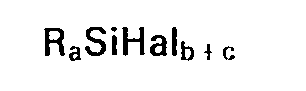
Applications Claiming Priority (2)
| Application Number | Priority Date | Filing Date | Title |
|---|---|---|---|
| DE3122014 | 1981-06-03 | ||
| DE19813122014 DE3122014A1 (de) | 1981-06-03 | 1981-06-03 | Verfahren zur herstellung von silylisocyanaten |
Publications (3)
| Publication Number | Publication Date |
|---|---|
| EP0066232A2 EP0066232A2 (de) | 1982-12-08 |
| EP0066232A3 EP0066232A3 (en) | 1983-02-23 |
| EP0066232B1 true EP0066232B1 (de) | 1985-07-31 |
Family
ID=6133811
Family Applications (1)
| Application Number | Title | Priority Date | Filing Date |
|---|---|---|---|
| EP82104540A Expired EP0066232B1 (de) | 1981-06-03 | 1982-05-25 | Verfahren zur Herstellung von Silylisocyanaten |
Country Status (4)
| Country | Link |
|---|---|
| US (1) | US4405803A (de) |
| EP (1) | EP0066232B1 (de) |
| JP (1) | JPS57209294A (de) |
| DE (2) | DE3122014A1 (de) |
Families Citing this family (5)
| Publication number | Priority date | Publication date | Assignee | Title |
|---|---|---|---|---|
| US4539406A (en) * | 1982-06-25 | 1985-09-03 | John Wyeth & Brother Limited | Preparation of fused carbocyclic ring derivatives of pyridine |
| GB2142036B (en) * | 1982-06-25 | 1986-03-19 | Wyeth John & Brother Ltd | Novel silyl compounds |
| JP3384506B2 (ja) * | 1993-03-30 | 2003-03-10 | ソニー株式会社 | 半導体基板の製造方法 |
| JP4970803B2 (ja) * | 2006-02-10 | 2012-07-11 | 東京応化工業株式会社 | 膜形成用材料の製造方法 |
| CN109232638A (zh) * | 2018-11-16 | 2019-01-18 | 大连鼎燕医药化工有限公司 | 一种制备3-异氰酸酯基丙基三甲氧基硅烷的方法 |
Family Cites Families (6)
| Publication number | Priority date | Publication date | Assignee | Title |
|---|---|---|---|---|
| US2559340A (en) * | 1947-06-21 | 1951-07-03 | Gen Electric | Trimethylisothiocyanatosilane |
| US3053871A (en) * | 1957-11-25 | 1962-09-11 | Robert S Aries | Organic reduction method |
| DE1162367B (de) * | 1961-01-26 | 1964-02-06 | Olin Mathieson | Verfahren zur Herstellung von Isocyansilanen |
| DE1965741A1 (de) * | 1969-12-31 | 1971-07-08 | Bayer Ag | Verfahren zur Herstellung von Silanderivaten |
| US4176131A (en) * | 1978-12-04 | 1979-11-27 | Bristol-Myers Company | Chemical process |
| JPS55102589A (en) * | 1980-01-26 | 1980-08-05 | Toyama Chem Co Ltd | Preparation of organo-silicon isocyanates |
-
1981
- 1981-06-03 DE DE19813122014 patent/DE3122014A1/de not_active Withdrawn
-
1982
- 1982-05-21 US US06/380,581 patent/US4405803A/en not_active Expired - Fee Related
- 1982-05-25 EP EP82104540A patent/EP0066232B1/de not_active Expired
- 1982-05-25 DE DE8282104540T patent/DE3265061D1/de not_active Expired
- 1982-06-01 JP JP57092263A patent/JPS57209294A/ja active Pending
Also Published As
| Publication number | Publication date |
|---|---|
| DE3122014A1 (de) | 1982-12-23 |
| EP0066232A2 (de) | 1982-12-08 |
| DE3265061D1 (en) | 1985-09-05 |
| EP0066232A3 (en) | 1983-02-23 |
| JPS57209294A (en) | 1982-12-22 |
| US4405803A (en) | 1983-09-20 |
Similar Documents
| Publication | Publication Date | Title |
|---|---|---|
| EP0212058B1 (de) | N-Silylpropyl-N'Acyl-Harnstoffe und Verfahren zur Herstellung | |
| EP0463464B1 (de) | Verfahren zur Herstellung von 2-Chlor-5-methyl-pyridin | |
| EP0066232B1 (de) | Verfahren zur Herstellung von Silylisocyanaten | |
| EP1853613B1 (de) | Verfahren zur herstellung von alkoxysilylmethylisocyanuraten | |
| EP0054668B1 (de) | Verfahren zur Herstellung von (Jodorganyl)alkoxisilanen | |
| EP0560109B1 (de) | Verfahren zur Herstellung von 1-Fluorcyclopropyl-methyl-keton | |
| EP0735016B1 (de) | Verfahren zur Herstellung von Alpha-Chloralkylarylketonen | |
| EP0124002A1 (de) | Verfahren zur Herstellung von aromatischen Verbindungen, die über ein Heteroatom gebundene perfluorierte Seitenketten enthalten | |
| EP0845469A2 (de) | Verfahren zur Herstellung von Organocarbonoyloxysilanen | |
| DE69221586T2 (de) | Verfahren zur Herstellung von Oximinosilanverbindung | |
| EP0157270B1 (de) | Verfahren zur Herstellung von tetrachlorierten Benzo-1,4-dioxenen | |
| DE3600502C2 (de) | ||
| EP0050768B1 (de) | Verfahren zur Herstellung von Azidogruppen aufweisenden Organosiliciumverbindungen | |
| US4730073A (en) | Novel organosilicon compound and method for the preparation thereof | |
| EP0084802A1 (de) | Neue Diisocyanate und ein Verfahren zu ihrer Herstellung | |
| DE2915072A1 (de) | Phenoxyalkyl-, thiophenoxyalkyl- und pyridyloxyalkylsilane und verfahren zu ihrer herstellung | |
| EP0693466A1 (de) | Verfahren zur Herstellung von aromatischen fluorierten Verbindungen und neue Diamide | |
| EP0377905B1 (de) | Verfahren zur Herstellung von 4,5,6-Trichlorpyrimidin | |
| EP0144806B1 (de) | Verfahren zur Herstellung von Dimethylsilyldicyanid | |
| US4888430A (en) | Flourine-containing 5-trihalogenomethyl-isoxazoles and a process for their preparation | |
| WO2023143749A1 (de) | Verfahren zur herstellung von isocyanatoorganosilanen | |
| DE2319043C3 (de) | Verfahren zur Herstellung von Bishydroxymethyl-methyl-phosphinoxid | |
| DE10211311A1 (de) | Verfahren zur Herstellung von N-[Triorganylsilylmethyl]-substituierten 1,2-Diaminoethanen | |
| DE1153756B (de) | Verfahren zur Herstellung von N-Alkyl-N-halogenmethylacylamino-verbindungen | |
| JPH09255694A (ja) | アクリル基を有するホスホニウム塩化合物の製造方法 |
Legal Events
| Date | Code | Title | Description |
|---|---|---|---|
| PUAI | Public reference made under article 153(3) epc to a published international application that has entered the european phase |
Free format text: ORIGINAL CODE: 0009012 |
|
| 17P | Request for examination filed |
Effective date: 19820525 |
|
| AK | Designated contracting states |
Designated state(s): BE DE FR GB IT |
|
| PUAL | Search report despatched |
Free format text: ORIGINAL CODE: 0009013 |
|
| AK | Designated contracting states |
Designated state(s): BE DE FR GB IT |
|
| RHK1 | Main classification (correction) |
Ipc: C07F 7/00 |
|
| ITF | It: translation for a ep patent filed | ||
| GRAA | (expected) grant |
Free format text: ORIGINAL CODE: 0009210 |
|
| AK | Designated contracting states |
Designated state(s): BE DE FR GB IT |
|
| REF | Corresponds to: |
Ref document number: 3265061 Country of ref document: DE Date of ref document: 19850905 |
|
| ET | Fr: translation filed | ||
| PLBE | No opposition filed within time limit |
Free format text: ORIGINAL CODE: 0009261 |
|
| STAA | Information on the status of an ep patent application or granted ep patent |
Free format text: STATUS: NO OPPOSITION FILED WITHIN TIME LIMIT |
|
| 26N | No opposition filed | ||
| BERE | Be: lapsed |
Owner name: BAYER A.G. Effective date: 19870531 |
|
| PG25 | Lapsed in a contracting state [announced via postgrant information from national office to epo] |
Ref country code: GB Effective date: 19890525 |
|
| PG25 | Lapsed in a contracting state [announced via postgrant information from national office to epo] |
Ref country code: BE Effective date: 19890531 |
|
| GBPC | Gb: european patent ceased through non-payment of renewal fee | ||
| PG25 | Lapsed in a contracting state [announced via postgrant information from national office to epo] |
Ref country code: FR Free format text: LAPSE BECAUSE OF NON-PAYMENT OF DUE FEES Effective date: 19900131 |
|
| PG25 | Lapsed in a contracting state [announced via postgrant information from national office to epo] |
Ref country code: DE Effective date: 19900201 |
|
| REG | Reference to a national code |
Ref country code: FR Ref legal event code: ST |