EP0065715B2 - Verfahren und System zum Sortieren von Postsendungen - Google Patents
Verfahren und System zum Sortieren von Postsendungen Download PDFInfo
- Publication number
- EP0065715B2 EP0065715B2 EP82104198A EP82104198A EP0065715B2 EP 0065715 B2 EP0065715 B2 EP 0065715B2 EP 82104198 A EP82104198 A EP 82104198A EP 82104198 A EP82104198 A EP 82104198A EP 0065715 B2 EP0065715 B2 EP 0065715B2
- Authority
- EP
- European Patent Office
- Prior art keywords
- sorting
- postal matter
- postal
- schedule table
- computer
- Prior art date
- Legal status (The legal status is an assumption and is not a legal conclusion. Google has not performed a legal analysis and makes no representation as to the accuracy of the status listed.)
- Expired
Links
- 238000000034 method Methods 0.000 title claims description 23
- 230000007246 mechanism Effects 0.000 claims description 31
- 238000012015 optical character recognition Methods 0.000 description 6
- 230000000994 depressogenic effect Effects 0.000 description 2
- 238000010586 diagram Methods 0.000 description 2
- 238000004519 manufacturing process Methods 0.000 description 2
- 238000005516 engineering process Methods 0.000 description 1
- 238000009434 installation Methods 0.000 description 1
- 238000012544 monitoring process Methods 0.000 description 1
- 230000003442 weekly effect Effects 0.000 description 1
Images


Classifications
-
- B—PERFORMING OPERATIONS; TRANSPORTING
- B07—SEPARATING SOLIDS FROM SOLIDS; SORTING
- B07C—POSTAL SORTING; SORTING INDIVIDUAL ARTICLES, OR BULK MATERIAL FIT TO BE SORTED PIECE-MEAL, e.g. BY PICKING
- B07C3/00—Sorting according to destination
- B07C3/02—Apparatus characterised by the means used for distribution
-
- Y—GENERAL TAGGING OF NEW TECHNOLOGICAL DEVELOPMENTS; GENERAL TAGGING OF CROSS-SECTIONAL TECHNOLOGIES SPANNING OVER SEVERAL SECTIONS OF THE IPC; TECHNICAL SUBJECTS COVERED BY FORMER USPC CROSS-REFERENCE ART COLLECTIONS [XRACs] AND DIGESTS
- Y10—TECHNICAL SUBJECTS COVERED BY FORMER USPC
- Y10S—TECHNICAL SUBJECTS COVERED BY FORMER USPC CROSS-REFERENCE ART COLLECTIONS [XRACs] AND DIGESTS
- Y10S209/00—Classifying, separating, and assorting solids
- Y10S209/90—Sorting flat-type mail
Definitions
- the present invention relates to a postal matter sorting method and system for sorting postal matter with a postal code (corresponding to a zip code).
- LSM letter sorting machine
- the postal code is expressed by upper three digits and lower two supplementary digits separated by a hyphen therefrom.
- the postal matter are classified for about 1000 destination areas according to the upper three digits. Therefore, in order to classify or sort postal matter, a great number of bins corresponding to the destination areas must be prepared on the shelf part of the LSM. However, the bins can hardly be mounted in the LSM due to the size of the LSM and the installation space.
- a sorting shelf having about 70 boxes thereon has been used and manual sortation has been performed.
- Each postal matter is primarily sorted into the bins of the shelf corresponding to some areas of the upper three digits of the postal code, and corresponding to 13 groups of adjacent areas.
- Document DE-A-1,574,143 discloses a letter sorting machine system comprising a plurality of letter sorting machines for automatic sorting of postal matter.
- this letter sorting machine system some of the machines are set up for a primary sortation and some are working in a secondary sortation mode.
- the letter sorting machine system itself could be connected to and controlled by a data processing unit.
- Document DE-A-1 574 564 discloses a postal matter sorting machine wherein at least one of several sorting apparatuses may operate alternately in a primary or secondary sorting mode.
- the present invention provides a postal matter sorting method as specified in claim 1.
- the present invention provides also a postal matter sorting system for carrying out the method of claim 1, as specified in claim 6.
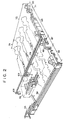
- a group of postal matter A such as post cards and letters are set upright in a feeder 1.
- the postal matter A are sequentially picked up by a pickup 2 from the frontmost mail.
- the postal matter A are then read by s reader 4 which is arranged on a convey path 3.
- s reader 4 which is arranged on a convey path 3.
- the postal matter A are then selectively supplied to sortation convey paths 6a, 6b, 6c and 6d which are vertically arranged in a gate mechanism, 5 in accordance with the results obtained by the reader 4.
- the postal matterAare then supplied to horizontal convey paths 8a, 8b and 8c of a sorter 7 with an automatic pickup function or a discharge bin 9.
- a plurality of bins 10 are disposed on the side of the rear surfaces of the horizontal convey paths 8a, 8b and 8c of the sorter 7.
- Each of the postal matter A fed to the horizontal convey path 8a, 8b or 8c is stacked in a predetermined one of the bins 10 in accordance with the results obtained by the reader 4.
- a pickup mechanism for example, a push-out mechanism (not shown) of the stacker 10 is operated and pushes out the postal matter A within the bin 10 against the rear surface of the sorter 7.
- a tray circulating unit 14 with horizontal convey paths 13a, 13b and 13c for trays arranged vertically in three stages in correspondance with the bins 10 is disposed on the rear surface of the sorter 7.
- the postal matter A pushed out from the respective bins 10 are placed on trays 15 which are sequentially intermittently transferred on the horizontal convey paths 13a, 13b and 13c.
- An elevator mechanism 17 is arranged at the terminal end side of the paths 13a, 13b and 13c.
- the elevator mechanism 17 intermittently circulates tray tables 16 to sequentially vertically oppose them to horizontal convey paths 13a, 13b and 13c.
- the elevator mechanism 17 receives the trays 15 with the postal matter A stacked thereon (may be empty) delivered from the horizontal convey paths 13a, 13b and 13c.
- the elevator mechanism 17 then carries the trays 15 to the separator of the separating mechanism 18 for separating the postal matter A from the trays.
- Push-out plates 19 for pushing out the postal matter A and pull-in plate 20 for pulling in the trays 15 reciprocate at the separating mechanism 18.
- the push-out plates 19 push out the postal matter A on the trays 15 towards the front to place them on facers 23 of a facer unit 22 at the initial end of a convey line 21.
- the pull-in plates 20 pull the empty trays 15 backward to place them at the initial end of a tray return path 24 of the tray circulating unit 14.
- the postal matter Asupplied to the convey line 21 are transferred by a facer convey unit 25 constituting the convey line 21.
- a facer convey unit 25 constituting the convey line 21.
- the faced postal matter A are then transferred on another convey line 27 by a transfer mechanism 26 extending perpendicularly to the convey line 21.
- a destination label 29 is attached on the uppermost one of the postal matter A by a destination label printer 28 facing the convey line 27.
- the postal matter A with the destination card attached thereon are then supplied for bundling to a bundling machine 30 arranged at the terminal end of the convey line 27.
- the trays 15 placed on the tray return path 24 by the separating mechanism 18 are transferred to the side of an elevator mechanism 31 at the initial ends of the horizontal convey paths 8a, 8b and 8c.
- the trays 15 are then placed on tray tables 32 of the elevator mechanism 31 by a tray transfer mechanism (not shown) facing the terminal end of the tray return path 24.
- the elevator mechanism 31 intermittently circulates the tray tables 32 so that the tray tables 32 may sequentially face the initial ends of the horizontal convey paths 13a, 13b and 13c in the order named.
- the trays 15 facing the initial ends of the horizontal convey paths 13a, 13b and 13c are pushed by a push mechanism (not shown) and the trays 15 on the horizontal convey paths 13a, 13b and 13c are conveyed by one pitch.
- the tray 15 at the temrinal end is placed on the tray table 16 of the elevator mechanism 17.
- the overall system is controlled by a control section 33.
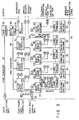
- the LSM system incorporates a plurality (5 in the embodiment shown in Fig. 2) of LSMs
- the postal matter collected from mailboxes are placed in cases (not shown) which arethen aligned on a case conveyor 51.
- the cases are conveyed to a case dumper 53.
- the postal matter are dumped out of the cases by the case dumper 53 and are automatically conveyed to a rough culling table 55 shown in Fig. 1.
- the operator removes the postal matter which are not suitable for automatic sortation, such as oversized postal matter and rolls.
- the removed items are conveyed to a manual cancelling table (not shown) by a belt conveyor 57.
- the remaining postal matter are conveyed to one of hoppers of cull- er/facer/cancellers (CFCs) 61 by a pan conveyor 59.
- CFCs cull- er/facer/cancellers
- Each CFC 61 automatically rejects items which are not suitable for automatic sortation such as too thin or too thick items, tors items, or items containing hard objects.
- the rejected items are transferred to the manual cancelling table mentioned above.
- the postal matter which may be subjected to automatic sortation are faced and stamped and regular postal matter thereof are directly transferred to letter sorting machines (LSMs) 63, while special postal matter are stacked on local stackers of the CFCs 61.
- LSMs letter sorting machines
- the regular postal matter which are faced and stamped are automatically supplied one by one to the LSM 63 through an arch transport 66 and a coupler 67.
- the optical character reader OCR
- the postal matter are stacked on stackers 10 having automatic push-out mechanisms. Those which require secondary sortation are stacked on one of six terminal stackers 69.
- the postal matter which need not be processed by the CFC are placed in cases on another case conveyor 52 which is different from the case conveyor 51 for the postal matter collected from other post offices.
- These postal matter include those which have been accepted at the post offices and are faced or those which have been bundled at the other post offices and have been transported. In operation, these cases are lowered to positions near the LSM feeder, and the postal matter are fed to the LSM feeder.
- the OCR detects the postal codes on the postal matter which are handwritten or printed. Then, the postal matter are stacked on the bins 10 with automatic push-out mechanisms which are one of the sortation terminals or are stacked on one of the six terminal stackers 69 for secondary sortation.
- the postal matter which have been completely sorted by primary sortation are transferred to the bins 10 with the automatic push-out mechanisms.
- the postal matter When substantial amounts of the postal matter are stacked on the bins 10, the postal matter are horizontally pushed to the back and are placed on the trays 15 which are sequentially circulated on the horizontal convey paths 13a, 13b and 13c.
- the postal matter are then transferred to a label printer 71 through the horizontal convey paths 13a, 13b and 13c, the elevator mechanism 17, and the separating mechanism 18.
- the postal matter with labels printed thereon from the label printer 71 are supplied to bundling machines 30 and are bundled crosswise with plastic tape.
- the bundles of postal matter are output to a bundle conveyor 75.
- this embodiment has five sorter lines.
- the first through third sorter lines have CFCs and are capable of sorting the postal matter which have been collected from the mailboxes as well as those which have been accepted at the post offices and those which have been transported from other post offices.
- the fourth sorter line does not have a CFC and is capable of sorting only the postal matter which have been accepted at the postal offices and which have been transported from other post offices.
- the fifth sorter line does not have a CFC and is not connected to the secondary sortation terminal stacker. Therefore, the fifth sorter line is capable of only sorting the postal matter which have been transported from other post offices (the destination specifying areas of these postal matter have been used in the primary sortation so as not to subject them to the secondary sortation).
- the fifth sorter line is mainly used for the secondary sortation. This is because the fifth sorter line is close to the terminal stackers 69 as shown in Fig. 3 and it is capable of only sorting the postal matters which have been subjected to the primary sortation at other post offices.
- the postal matter which must be subjected to the secondary sortation are roughly classified according to six destination areas based on the readout results of the OCR and are transferred to the terminal stackers 69 near the LSMs 63 through overhead transport means 79 so as to be subjected to the secondary sortation.
- the operator selects one of the six destination modes (A to F) and feeds the postal matter to the LSM.
- the OCR of the LSM reads the postal codes one by one.
- the postal matter are sorted into the bins according to the readout results of the OCR and the code-bin assignment table of the selected destination mode.
- the sorted postal matter are automatically pushed onto the horizontal convey paths 13a, 13b and 13c which convey them to the bundling machine 30 through the label printer 71.
- the overall system is monitored and controlled by a centralized system controller 77.
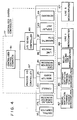
- Fig. 4 is a block diagram of a centralized system controller of the sorting system.
- a centralized control computer 91 is connected through a process I/O controller 167 to a central computer 93, a bundling conveyor microcomputer 179, a console 101 for instructing the operation of the system, a monitor board 95 for monitoring the ON/OFF state of the system or the operation status of each unit, and a case conveyor microcomputer 181.
- the centralized control computer 91 is also connected through an I/O device controller 165 to a line printer 99 for printing daily, weekly and monthly reports, a magnetic disk 97 for storing schedule tables, code-bin assignment tables, statistics, control program and so on, a display unit 103 for displaying the amounts of the sorted and rejected postal matters, and a keyboard 105 for inputting data for changing the code-bin assignment tables or schedule tables.
- the centralized control computer 91 is connected to the central computer 93 through the process I/O controller 167.
- the centralized control computer 91 acknowledges the central computer 93 the amount of sorted postal matter and the operation status.
- the centralized control computer 91 is further connected through the I/O device controller 165 to line 1 to line 5 microcomputers 169, 171, 173, 175 and 177; a rough culling table microcomputer 183; a secondary sortation terminal stacker microcomputer 185; and a manual sortation terminal stacker microcomputer 187.
- the centralized control computer 91 supplies through the I/O device controller 165 to the line 1 to line 5 microcomputers 169, 171, 173, 175 and 177 the operation guide data such as operation start or operation stop signals or code-bin assignment table data.
- the line 1 to line 5 microcomputers 169, 171, 173, 175 and 177 supply through the I/O device controller 165 to the centralized control computer 91 the amounts of the sorted postal matter in each box, the number of bundles, the amount of postal matter for each postal Code, and the operation status.
- the rough culling table microcomputer 185 supplies the operation status data to the centralized control computer 91 through the I/O device controller 165.
- the centralized control computer 91 supplies the operation guide data to the rough culling table microcomputer 183 through the I/O device controller 165.
- the secondary sortation terminal stacker microcomputer 185 supplies the operation status data and the secondary sortation data to the centralized control computer 91 through the I/O device controller 165.
- the centralized control computer 91 supplies the operation guide data to the secondary sortation terminal stacker microcomputer 185 through the I/O device controller 165.
- the manual sortation terminal stacker microcomputer 187 supplies the operation status data to the centralized control computer 91 through the I/O device 165, while the latter supplies the operation guide data to the former through the I/O device controller 165.
- the case conveyor microcomputer 181 supplies the operation status data to the centralized control computer 91 through the process I/O controller 167.
- the case conveyor microcomputer 181 supplies the operation status data to the centralized control computer 91 through the process I/O controller 167.
- Fig. 5 shows an example of a schedule table 121 stored in the magnetic disk 97.
- the sorter line 1 (line 1 of the five lines) is started in the primary sortation mode for sorting the postal matter from the other post station at 10:05.
- the sorter 2 is started in the mode A of the secondary sortation.
- Fig. 6 shows an example of a code-bin assignment table 123 stored in the magnetic disk 97.
- the postal matter with the postal code "000” are stacked on the bin 10 of the stage A (bin number A-10).
- the postal matter of the postal code "001” are stacked on the bin 10 of the stage A (bin number A-11).
- the postal matter with the postal code "003” are stacked on the bin 10 of the stage B (bin number B-10).
- the postal matter with the postal code "999” are stacked on the stacker 10 of the stage C (bin number C-5). In this manner, the postal matter are stacked on the predetermined stackers.
- code-bin assignment tables as that described above are prepared for the primary sortation mode, and the secondary sortation modes A to F. Although these schedule tables and code-bin assignment tables are set before the operation of the system, they may be modified by inputting updated data from the keyboard 105.
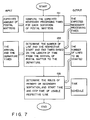
- Fig. 7 is a flowchart for explaining the operation of the sorting method.
- step 131 the amounts of the postal matter are statistically estimated for those in the primary sortation mode which are collected from the mailboxes, those which have been accepted at the post offices, and those which have been transferred from the other post offices, and those which are sorted in the secondary sortation modes Ato F. From the estimated amounts of the postal matter, a prospective time for processing these postal matter is computed.
- step 133 the number of lines and the starting time of each line are determined through the computation of the arrival times of the postal matter and the departure times thereof.
- step 135 modes of the respective lines (primary sortation, secondary sortation, stop modes) and the start and stop times are determined.
- the operations in steps 131 to 135 are preparatory steps and may be performed before the initialization of the system.
- steps 131 and thereafter are repeated for readjustment.
- the centralized control computer 91 reads out the schedule table from the magnetic disk 97 and displays it at the display unit 103. If the current times reaches an execution time (start or stop time) according to the schedule table, this is notified to the operator by lighting the lamp on the console 101 and the buzzing sound.
- the operation statuses of the CFCs 61, the LSMs 63, the manual sortation terminal stackers, and the secondary sortation terminal stackers are supplied to the centralized control computer 91 through the respective microcomputers controlling these units and through the I/O device controller 165.
- the centralized control computer 91 displays the received data at the monitor board 95 through the process I/O controller 167.
- the operator can determined the instructions to be supplied to each unit while observing the schedule table displayed at the display unit 103 and the operation status displayed at the monitor board 95.
- the instruction is supplied to the centralized control computer 91 through the process I/O controller which reads out the instruction and supplies the corresponding instruction signal to the corresponding unit through the I/O device controller.
Landscapes
- Sorting Of Articles (AREA)
Claims (6)
wobei jedes Sortiergerät einen Leser (4) zum Auslesen von auf ein schriftliches Poststück aufgebrachten Bestimmungsdaten eine Anzahl von senkrecht in einer Anzahl von Stufen angeordneten Fächern (10) zum Sortieren der Poststücke und mit jeweils einem Abnahmemechanismus, einen Tor- oder Weichenmechanismus (5) zum Stapeln der Poststücke in den mehreren Fächern (10) auf der Grundlage der vom Leser (4) erhaltenen Bestimmungsdaten sowie Sortierförderer (6a, 6b, 6c, und 6d) aufweist,
dadurch gekennzeichnet, daß der zentrale Systemsteuerteil umfaßt:
Applications Claiming Priority (2)
| Application Number | Priority Date | Filing Date | Title |
|---|---|---|---|
| JP56075162A JPS57190685A (en) | 1981-05-19 | 1981-05-19 | Sorter for letter mail |
| JP75162/81 | 1981-05-19 |
Publications (3)
| Publication Number | Publication Date |
|---|---|
| EP0065715A1 EP0065715A1 (de) | 1982-12-01 |
| EP0065715B1 EP0065715B1 (de) | 1988-04-20 |
| EP0065715B2 true EP0065715B2 (de) | 1992-11-04 |
Family
ID=13568226
Family Applications (1)
| Application Number | Title | Priority Date | Filing Date |
|---|---|---|---|
| EP82104198A Expired EP0065715B2 (de) | 1981-05-19 | 1982-05-13 | Verfahren und System zum Sortieren von Postsendungen |
Country Status (5)
| Country | Link |
|---|---|
| US (1) | US4507739A (de) |
| EP (1) | EP0065715B2 (de) |
| JP (1) | JPS57190685A (de) |
| CA (1) | CA1190179A (de) |
| DE (1) | DE3278346D1 (de) |
Families Citing this family (44)
| Publication number | Priority date | Publication date | Assignee | Title |
|---|---|---|---|---|
| US4627540A (en) * | 1982-05-29 | 1986-12-09 | Tokyo Shibaura Denki Kabushiki Kaisha | Automatic mail processing apparatus |
| JPS60147887A (ja) * | 1984-01-12 | 1985-08-03 | Toshiba Corp | 郵便物区分装置 |
| US4947333A (en) * | 1985-12-26 | 1990-08-07 | Pitney Bowes Inc. | Batch mailing system |
| US4769110A (en) * | 1987-01-28 | 1988-09-06 | Tokyo Kikai Seisakusho, Ltd. | Address label preparation processing system for printed matter dispatching operation |
| US4853869A (en) * | 1987-03-13 | 1989-08-01 | Pitney Bowes, Inc. | System and method for processing a letter for bulk mailing |
| US4852013A (en) * | 1987-03-13 | 1989-07-25 | Pitney Bowes, Inc. | Stationery item processing apparatus |
| USD311179S (en) | 1987-05-11 | 1990-10-09 | Bell & Howell Company | Mail sorter |
| US4908768A (en) * | 1987-08-07 | 1990-03-13 | Pitney Bowes Inc. | Inserter based mail manifesting system |
| US5292008A (en) * | 1992-10-28 | 1994-03-08 | Pitney Bowes Inc. | Postal tray label apparatus and method |
| JP3590998B2 (ja) * | 1994-08-19 | 2004-11-17 | 株式会社日立製作所 | 区分機システム |
| FR2735995B1 (fr) * | 1995-06-29 | 1997-09-12 | Poste | Machine de tri d'objets du genre enveloppes de courrier |
| NL1001862C2 (nl) | 1995-12-08 | 1997-06-10 | Nederland Ptt | Werkwijze voor het verzamelend en distributief verwerken van poststuk- ken. |
| JPH10249285A (ja) * | 1997-03-12 | 1998-09-22 | Hitachi Ltd | 紙葉類区分装置 |
| US6579053B1 (en) * | 1999-03-15 | 2003-06-17 | Abb Flexible Automation, Inc. | Robotic containerization and palletizing system |
| US6953906B2 (en) | 1999-08-02 | 2005-10-11 | Rapistan Systems Advertising Corp. | Delivery point sequencing mail sorting system with flat mail capability |
| EP1204492B1 (de) | 1999-08-02 | 2006-04-05 | Siemens Aktiengesellschaft | Gangfolgesortierung von flachen sendungen |
| CA2414511C (en) * | 2000-06-26 | 2009-08-04 | United States Postal Service | Method and system for single pass letter and flat processing |
| US6671577B2 (en) * | 2000-12-01 | 2003-12-30 | United States Postal Service | System and method for directly connecting an advanced facer canceler system to a delivery bar code sorter |
| US6892890B2 (en) * | 2001-01-16 | 2005-05-17 | Abb Automation, Inc. | Dynamic sortation of items in a containerization system |
| US6555776B2 (en) * | 2001-04-02 | 2003-04-29 | Lockheed Martin Corporation | Single feed one pass mixed mail sequencer |
| US20030155282A1 (en) * | 2002-02-15 | 2003-08-21 | Kechel Ottmar K. | Method and apparatus for sorting and bundling mail |
| AU2003239355A1 (en) * | 2002-05-07 | 2003-11-11 | Siemens Aktiengesellschaft | Single pass sequencing assembly and method |
| US7250582B2 (en) * | 2002-10-08 | 2007-07-31 | Lockheed Martin Corporation | Method and system for sequentially ordering objects using a single pass delivery point process |
| US6924451B2 (en) * | 2002-10-08 | 2005-08-02 | Lockheed Martin Corporation | Method for sequentially ordering objects using a single pass delivery point process |
| US20040251179A1 (en) * | 2002-10-08 | 2004-12-16 | Hanson Bruce H. | Method and system for sequentially ordering objects using a single pass delivery point process |
| CN101128268B (zh) * | 2003-06-12 | 2012-08-22 | 美国邮政服务公司 | 邮件分拣中对储存箱的动态调整 |
| US7528339B2 (en) * | 2003-07-31 | 2009-05-05 | Lockheed Martin Corporation | Sequencing system and method of use |
| US7723633B2 (en) * | 2003-07-31 | 2010-05-25 | Lockheed Martin Corporation | Sequencing system and method of use |
| WO2006012430A2 (en) * | 2004-07-21 | 2006-02-02 | Pitney Bowes Inc. | Carrier delivery sequence system and process adapted for upstream insertion of exceptional mail pieces |
| US8022329B2 (en) * | 2004-12-07 | 2011-09-20 | Lockheed Martin Corporation | System and method for full escort mixed mail sorter using mail clamps |
| WO2006110486A2 (en) | 2005-04-07 | 2006-10-19 | Pitney Bowes Inc. | Macro sorting system and method |
| ATE425817T1 (de) * | 2005-12-05 | 2009-04-15 | Deutsche Post Ag | Verfahren zum sortieren von postsendungen und vorrichtung mit einer datenstruktur fur einen sortierplan |
| US8556260B2 (en) | 2006-05-26 | 2013-10-15 | Lockheed Martin Corporation | Method for optimally loading objects into storage/transport containers |
| US7527261B2 (en) * | 2006-07-13 | 2009-05-05 | Lockheed Martin Corporation | Mailpiece container for stacking mixed mail and method for stacking mail therein |
| US7778728B2 (en) * | 2006-07-13 | 2010-08-17 | Lockheed Martin Corporation | Apparatus and method for positioning objects/mailpieces |
| US7820932B2 (en) | 2006-07-13 | 2010-10-26 | Lockheed Martin Corporation | Mail sorter, method, and software product for a two-step and one-pass sorting algorithm |
| US7769765B2 (en) | 2006-07-25 | 2010-08-03 | Lockheed Martin Corporation | Method and system for sorting mail |
| US7937184B2 (en) | 2006-10-06 | 2011-05-03 | Lockheed Martin Corporation | Mail sorter system and method for productivity optimization through precision scheduling |
| US7947916B2 (en) | 2006-10-06 | 2011-05-24 | Lockheed Martin Corporation | Mail sorter system and method for moving trays of mail to dispatch in delivery order |
| US8816236B2 (en) * | 2008-12-15 | 2014-08-26 | Siemens Industry, Inc. | Mail holder for use in a mail sorting system |
| FR2940151B1 (fr) * | 2008-12-23 | 2010-12-17 | Solystic | Machine pour trier des objets postaux grand format et des lettres |
| US20110073534A1 (en) * | 2009-09-28 | 2011-03-31 | Niels Linge | Sorting Installation and Method for Sorting Articles |
| FR2959680B1 (fr) * | 2010-05-10 | 2012-04-20 | Solystic | Methode pour optimiser un processus de traitement et de transport du courrier en bacs utilisant un tri stratifie |
| CN112221991B (zh) * | 2020-09-17 | 2022-06-24 | 靖州苗族侗族自治县启凡科技电子商务有限公司 | 一种互联网电子商务用智能分选包装机台及其使用方法 |
Family Cites Families (13)
| Publication number | Priority date | Publication date | Assignee | Title |
|---|---|---|---|---|
| DE1574143A1 (de) * | 1967-11-20 | 1971-07-29 | Siemens Ag | Verfahren zur Verkehrsmessung in vollautomatischen Briefverteileranlagen |
| US3573748A (en) * | 1969-02-24 | 1971-04-06 | Ibm | Postal system |
| US4201339A (en) * | 1970-11-23 | 1980-05-06 | Gunn Damon M | Article sorting apparatus and method |
| US3757939A (en) * | 1971-05-12 | 1973-09-11 | Thompson & Co J | Method and apparatus for sorting articles such as letters |
| US4117975A (en) * | 1971-06-30 | 1978-10-03 | Gunn Damon M | Mail preparation, sorting apparatus and method |
| GB1374093A (en) * | 1971-12-15 | 1974-11-13 | Masson Scott Thrissell Eng Ltd | Apparatus for sorting and handling mail |
| DE2253384C2 (de) * | 1972-10-31 | 1974-12-05 | Licentia Patent-Verwaltungs-Gmbh, 6000 Frankfurt | Verteilanlage für Briefsendungen |
| US3983366A (en) * | 1973-06-27 | 1976-09-28 | Gunn Damon M | Article sorting apparatus and method |
| US4167476A (en) * | 1977-05-06 | 1979-09-11 | Harris Corporation | Bulk article sorting system |
| DE2742802A1 (de) * | 1977-09-23 | 1979-04-05 | Standard Elektrik Lorenz Ag | Verteilanlage |
| US4264808A (en) * | 1978-10-06 | 1981-04-28 | Ncr Corporation | Method and apparatus for electronic image processing of documents for accounting purposes |
| US4358016A (en) * | 1979-02-21 | 1982-11-09 | Burroughs Corporation | Document sorter apparatus |
| JPS5670886A (en) * | 1979-11-14 | 1981-06-13 | Nippon Electric Co | Sorter |
-
1981
- 1981-05-19 JP JP56075162A patent/JPS57190685A/ja active Pending
-
1982
- 1982-05-13 DE DE8282104198T patent/DE3278346D1/de not_active Expired
- 1982-05-13 EP EP82104198A patent/EP0065715B2/de not_active Expired
- 1982-05-14 US US06/378,412 patent/US4507739A/en not_active Expired - Lifetime
- 1982-05-17 CA CA000403058A patent/CA1190179A/en not_active Expired
Also Published As
| Publication number | Publication date |
|---|---|
| DE3278346D1 (en) | 1988-05-26 |
| CA1190179A (en) | 1985-07-09 |
| EP0065715A1 (de) | 1982-12-01 |
| US4507739A (en) | 1985-03-26 |
| EP0065715B1 (de) | 1988-04-20 |
| JPS57190685A (en) | 1982-11-24 |
Similar Documents
| Publication | Publication Date | Title |
|---|---|---|
| EP0065715B2 (de) | Verfahren und System zum Sortieren von Postsendungen | |
| EP0812629A1 (de) | Verfahren zum Sortieren von Postgut in Abgabereihenfolge | |
| EP0066186B1 (de) | Verfahren zum Sortieren von Postsendungen | |
| JPS5836810A (ja) | 紙葉類群の搬送装置 | |
| US4494655A (en) | Sorter with automatic removal mechanism | |
| US8863961B2 (en) | Method and system of sorting items for delivery to a recipient | |
| JP4230836B2 (ja) | 仕分けシステム | |
| EP1066886A2 (de) | Postsortiersystem | |
| JPS60137475A (ja) | 郵便物区分装置 | |
| JP2645195B2 (ja) | 郵便物区分装置 | |
| JPS641033Y2 (de) | ||
| JP2768323B2 (ja) | 紙葉類区分方法および装置 | |
| JP2000262982A (ja) | 郵便物処理装置 | |
| JP3259548B2 (ja) | 紙葉類整列装置 | |
| JPH06232B2 (ja) | 紙葉類の区分装置 | |
| JPH0428435B2 (de) | ||
| JP3565136B2 (ja) | 紙葉類の区分装置 | |
| JPS5895067A (ja) | 紙葉類群収容用トレイの昇降装置 | |
| JPH10216646A (ja) | 紙葉類の区分装置 | |
| JPH0824796A (ja) | 郵便物区分装置 | |
| JPS631914B2 (de) | ||
| JP2001031217A (ja) | 折り込みチラシの製品倉庫システム | |
| JPS60257887A (ja) | 搬送装置 | |
| JPS61131081A (ja) | 張票分類装置 | |
| JPH0712465B2 (ja) | 郵便物処理装置 |
Legal Events
| Date | Code | Title | Description |
|---|---|---|---|
| PUAI | Public reference made under article 153(3) epc to a published international application that has entered the european phase |
Free format text: ORIGINAL CODE: 0009012 |
|
| AK | Designated contracting states |
Designated state(s): DE FR GB IT NL |
|
| 17P | Request for examination filed |
Effective date: 19830519 |
|
| RAP1 | Party data changed (applicant data changed or rights of an application transferred) |
Owner name: KABUSHIKI KAISHA TOSHIBA |
|
| GRAA | (expected) grant |
Free format text: ORIGINAL CODE: 0009210 |
|
| AK | Designated contracting states |
Kind code of ref document: B1 Designated state(s): DE FR GB |
|
| REF | Corresponds to: |
Ref document number: 3278346 Country of ref document: DE Date of ref document: 19880526 |
|
| ET | Fr: translation filed | ||
| PLBI | Opposition filed |
Free format text: ORIGINAL CODE: 0009260 |
|
| 26 | Opposition filed |
Opponent name: AEG AKTIENGESELLSCHAFT, BERLIN UND FRANKFURT Effective date: 19890120 |
|
| PUAH | Patent maintained in amended form |
Free format text: ORIGINAL CODE: 0009272 |
|
| STAA | Information on the status of an ep patent application or granted ep patent |
Free format text: STATUS: PATENT MAINTAINED AS AMENDED |
|
| 27A | Patent maintained in amended form |
Effective date: 19921104 |
|
| AK | Designated contracting states |
Kind code of ref document: B2 Designated state(s): DE FR GB |
|
| ET3 | Fr: translation filed ** decision concerning opposition | ||
| PGFP | Annual fee paid to national office [announced via postgrant information from national office to epo] |
Ref country code: GB Payment date: 19960507 Year of fee payment: 15 |
|
| PGFP | Annual fee paid to national office [announced via postgrant information from national office to epo] |
Ref country code: FR Payment date: 19960510 Year of fee payment: 15 |
|
| PGFP | Annual fee paid to national office [announced via postgrant information from national office to epo] |
Ref country code: DE Payment date: 19960513 Year of fee payment: 15 |
|
| PG25 | Lapsed in a contracting state [announced via postgrant information from national office to epo] |
Ref country code: GB Effective date: 19970513 |
|
| GBPC | Gb: european patent ceased through non-payment of renewal fee |
Effective date: 19970513 |
|
| PG25 | Lapsed in a contracting state [announced via postgrant information from national office to epo] |
Ref country code: FR Free format text: LAPSE BECAUSE OF NON-PAYMENT OF DUE FEES Effective date: 19980130 |
|
| PG25 | Lapsed in a contracting state [announced via postgrant information from national office to epo] |
Ref country code: DE Free format text: LAPSE BECAUSE OF NON-PAYMENT OF DUE FEES Effective date: 19980203 |
|
| REG | Reference to a national code |
Ref country code: FR Ref legal event code: ST |
|
| APAH | Appeal reference modified |
Free format text: ORIGINAL CODE: EPIDOSCREFNO |