EP0046932A2 - Neue Mischkristalle, Verfahren zu ihrer Herstellung und ihre Verwendung - Google Patents
Neue Mischkristalle, Verfahren zu ihrer Herstellung und ihre Verwendung Download PDFInfo
- Publication number
- EP0046932A2 EP0046932A2 EP81106469A EP81106469A EP0046932A2 EP 0046932 A2 EP0046932 A2 EP 0046932A2 EP 81106469 A EP81106469 A EP 81106469A EP 81106469 A EP81106469 A EP 81106469A EP 0046932 A2 EP0046932 A2 EP 0046932A2
- Authority
- EP
- European Patent Office
- Prior art keywords
- mixed crystal
- mixed
- crystal according
- und
- sodium
- Prior art date
- Legal status (The legal status is an assumption and is not a legal conclusion. Google has not performed a legal analysis and makes no representation as to the accuracy of the status listed.)
- Granted
Links
Images


Classifications
-
- C—CHEMISTRY; METALLURGY
- C04—CEMENTS; CONCRETE; ARTIFICIAL STONE; CERAMICS; REFRACTORIES
- C04B—LIME, MAGNESIA; SLAG; CEMENTS; COMPOSITIONS THEREOF, e.g. MORTARS, CONCRETE OR LIKE BUILDING MATERIALS; ARTIFICIAL STONE; CERAMICS; REFRACTORIES; TREATMENT OF NATURAL STONE
- C04B35/00—Shaped ceramic products characterised by their composition; Ceramics compositions; Processing powders of inorganic compounds preparatory to the manufacturing of ceramic products
- C04B35/01—Shaped ceramic products characterised by their composition; Ceramics compositions; Processing powders of inorganic compounds preparatory to the manufacturing of ceramic products based on oxide ceramics
- C04B35/447—Shaped ceramic products characterised by their composition; Ceramics compositions; Processing powders of inorganic compounds preparatory to the manufacturing of ceramic products based on oxide ceramics based on phosphates, e.g. hydroxyapatite
-
- C—CHEMISTRY; METALLURGY
- C01—INORGANIC CHEMISTRY
- C01B—NON-METALLIC ELEMENTS; COMPOUNDS THEREOF; METALLOIDS OR COMPOUNDS THEREOF NOT COVERED BY SUBCLASS C01C
- C01B33/00—Silicon; Compounds thereof
- C01B33/20—Silicates
-
- C—CHEMISTRY; METALLURGY
- C04—CEMENTS; CONCRETE; ARTIFICIAL STONE; CERAMICS; REFRACTORIES
- C04B—LIME, MAGNESIA; SLAG; CEMENTS; COMPOSITIONS THEREOF, e.g. MORTARS, CONCRETE OR LIKE BUILDING MATERIALS; ARTIFICIAL STONE; CERAMICS; REFRACTORIES; TREATMENT OF NATURAL STONE
- C04B35/00—Shaped ceramic products characterised by their composition; Ceramics compositions; Processing powders of inorganic compounds preparatory to the manufacturing of ceramic products
- C04B35/01—Shaped ceramic products characterised by their composition; Ceramics compositions; Processing powders of inorganic compounds preparatory to the manufacturing of ceramic products based on oxide ceramics
-
- C—CHEMISTRY; METALLURGY
- C04—CEMENTS; CONCRETE; ARTIFICIAL STONE; CERAMICS; REFRACTORIES
- C04B—LIME, MAGNESIA; SLAG; CEMENTS; COMPOSITIONS THEREOF, e.g. MORTARS, CONCRETE OR LIKE BUILDING MATERIALS; ARTIFICIAL STONE; CERAMICS; REFRACTORIES; TREATMENT OF NATURAL STONE
- C04B35/00—Shaped ceramic products characterised by their composition; Ceramics compositions; Processing powders of inorganic compounds preparatory to the manufacturing of ceramic products
- C04B35/01—Shaped ceramic products characterised by their composition; Ceramics compositions; Processing powders of inorganic compounds preparatory to the manufacturing of ceramic products based on oxide ceramics
- C04B35/16—Shaped ceramic products characterised by their composition; Ceramics compositions; Processing powders of inorganic compounds preparatory to the manufacturing of ceramic products based on oxide ceramics based on silicates other than clay
-
- C—CHEMISTRY; METALLURGY
- C04—CEMENTS; CONCRETE; ARTIFICIAL STONE; CERAMICS; REFRACTORIES
- C04B—LIME, MAGNESIA; SLAG; CEMENTS; COMPOSITIONS THEREOF, e.g. MORTARS, CONCRETE OR LIKE BUILDING MATERIALS; ARTIFICIAL STONE; CERAMICS; REFRACTORIES; TREATMENT OF NATURAL STONE
- C04B35/00—Shaped ceramic products characterised by their composition; Ceramics compositions; Processing powders of inorganic compounds preparatory to the manufacturing of ceramic products
- C04B35/01—Shaped ceramic products characterised by their composition; Ceramics compositions; Processing powders of inorganic compounds preparatory to the manufacturing of ceramic products based on oxide ceramics
- C04B35/48—Shaped ceramic products characterised by their composition; Ceramics compositions; Processing powders of inorganic compounds preparatory to the manufacturing of ceramic products based on oxide ceramics based on zirconium or hafnium oxides, zirconates, zircon or hafnates
- C04B35/481—Shaped ceramic products characterised by their composition; Ceramics compositions; Processing powders of inorganic compounds preparatory to the manufacturing of ceramic products based on oxide ceramics based on zirconium or hafnium oxides, zirconates, zircon or hafnates containing silicon, e.g. zircon
-
- C—CHEMISTRY; METALLURGY
- C04—CEMENTS; CONCRETE; ARTIFICIAL STONE; CERAMICS; REFRACTORIES
- C04B—LIME, MAGNESIA; SLAG; CEMENTS; COMPOSITIONS THEREOF, e.g. MORTARS, CONCRETE OR LIKE BUILDING MATERIALS; ARTIFICIAL STONE; CERAMICS; REFRACTORIES; TREATMENT OF NATURAL STONE
- C04B35/00—Shaped ceramic products characterised by their composition; Ceramics compositions; Processing powders of inorganic compounds preparatory to the manufacturing of ceramic products
- C04B35/622—Forming processes; Processing powders of inorganic compounds preparatory to the manufacturing of ceramic products
- C04B35/626—Preparing or treating the powders individually or as batches ; preparing or treating macroscopic reinforcing agents for ceramic products, e.g. fibres; mechanical aspects section B
- C04B35/62605—Treating the starting powders individually or as mixtures
- C04B35/6261—Milling
-
- H—ELECTRICITY
- H01—ELECTRIC ELEMENTS
- H01M—PROCESSES OR MEANS, e.g. BATTERIES, FOR THE DIRECT CONVERSION OF CHEMICAL ENERGY INTO ELECTRICAL ENERGY
- H01M10/00—Secondary cells; Manufacture thereof
- H01M10/36—Accumulators not provided for in groups H01M10/05-H01M10/34
- H01M10/39—Accumulators not provided for in groups H01M10/05-H01M10/34 working at high temperature
- H01M10/3909—Sodium-sulfur cells
- H01M10/3918—Sodium-sulfur cells characterised by the electrolyte
-
- H—ELECTRICITY
- H01—ELECTRIC ELEMENTS
- H01M—PROCESSES OR MEANS, e.g. BATTERIES, FOR THE DIRECT CONVERSION OF CHEMICAL ENERGY INTO ELECTRICAL ENERGY
- H01M6/00—Primary cells; Manufacture thereof
- H01M6/14—Cells with non-aqueous electrolyte
- H01M6/18—Cells with non-aqueous electrolyte with solid electrolyte
- H01M6/185—Cells with non-aqueous electrolyte with solid electrolyte with oxides, hydroxides or oxysalts as solid electrolytes
-
- C—CHEMISTRY; METALLURGY
- C04—CEMENTS; CONCRETE; ARTIFICIAL STONE; CERAMICS; REFRACTORIES
- C04B—LIME, MAGNESIA; SLAG; CEMENTS; COMPOSITIONS THEREOF, e.g. MORTARS, CONCRETE OR LIKE BUILDING MATERIALS; ARTIFICIAL STONE; CERAMICS; REFRACTORIES; TREATMENT OF NATURAL STONE
- C04B2235/00—Aspects relating to ceramic starting mixtures or sintered ceramic products
- C04B2235/02—Composition of constituents of the starting material or of secondary phases of the final product
- C04B2235/30—Constituents and secondary phases not being of a fibrous nature
- C04B2235/32—Metal oxides, mixed metal oxides, or oxide-forming salts thereof, e.g. carbonates, nitrates, (oxy)hydroxides, chlorides
- C04B2235/3201—Alkali metal oxides or oxide-forming salts thereof
-
- C—CHEMISTRY; METALLURGY
- C04—CEMENTS; CONCRETE; ARTIFICIAL STONE; CERAMICS; REFRACTORIES
- C04B—LIME, MAGNESIA; SLAG; CEMENTS; COMPOSITIONS THEREOF, e.g. MORTARS, CONCRETE OR LIKE BUILDING MATERIALS; ARTIFICIAL STONE; CERAMICS; REFRACTORIES; TREATMENT OF NATURAL STONE
- C04B2235/00—Aspects relating to ceramic starting mixtures or sintered ceramic products
- C04B2235/02—Composition of constituents of the starting material or of secondary phases of the final product
- C04B2235/30—Constituents and secondary phases not being of a fibrous nature
- C04B2235/32—Metal oxides, mixed metal oxides, or oxide-forming salts thereof, e.g. carbonates, nitrates, (oxy)hydroxides, chlorides
- C04B2235/3231—Refractory metal oxides, their mixed metal oxides, or oxide-forming salts thereof
- C04B2235/3244—Zirconium oxides, zirconates, hafnium oxides, hafnates, or oxide-forming salts thereof
-
- C—CHEMISTRY; METALLURGY
- C04—CEMENTS; CONCRETE; ARTIFICIAL STONE; CERAMICS; REFRACTORIES
- C04B—LIME, MAGNESIA; SLAG; CEMENTS; COMPOSITIONS THEREOF, e.g. MORTARS, CONCRETE OR LIKE BUILDING MATERIALS; ARTIFICIAL STONE; CERAMICS; REFRACTORIES; TREATMENT OF NATURAL STONE
- C04B2235/00—Aspects relating to ceramic starting mixtures or sintered ceramic products
- C04B2235/02—Composition of constituents of the starting material or of secondary phases of the final product
- C04B2235/30—Constituents and secondary phases not being of a fibrous nature
- C04B2235/44—Metal salt constituents or additives chosen for the nature of the anions, e.g. hydrides or acetylacetonate
- C04B2235/441—Alkoxides, e.g. methoxide, tert-butoxide
-
- C—CHEMISTRY; METALLURGY
- C04—CEMENTS; CONCRETE; ARTIFICIAL STONE; CERAMICS; REFRACTORIES
- C04B—LIME, MAGNESIA; SLAG; CEMENTS; COMPOSITIONS THEREOF, e.g. MORTARS, CONCRETE OR LIKE BUILDING MATERIALS; ARTIFICIAL STONE; CERAMICS; REFRACTORIES; TREATMENT OF NATURAL STONE
- C04B2235/00—Aspects relating to ceramic starting mixtures or sintered ceramic products
- C04B2235/02—Composition of constituents of the starting material or of secondary phases of the final product
- C04B2235/30—Constituents and secondary phases not being of a fibrous nature
- C04B2235/44—Metal salt constituents or additives chosen for the nature of the anions, e.g. hydrides or acetylacetonate
- C04B2235/447—Phosphates or phosphites, e.g. orthophosphate or hypophosphite
-
- C—CHEMISTRY; METALLURGY
- C04—CEMENTS; CONCRETE; ARTIFICIAL STONE; CERAMICS; REFRACTORIES
- C04B—LIME, MAGNESIA; SLAG; CEMENTS; COMPOSITIONS THEREOF, e.g. MORTARS, CONCRETE OR LIKE BUILDING MATERIALS; ARTIFICIAL STONE; CERAMICS; REFRACTORIES; TREATMENT OF NATURAL STONE
- C04B2235/00—Aspects relating to ceramic starting mixtures or sintered ceramic products
- C04B2235/02—Composition of constituents of the starting material or of secondary phases of the final product
- C04B2235/50—Constituents or additives of the starting mixture chosen for their shape or used because of their shape or their physical appearance
- C04B2235/54—Particle size related information
- C04B2235/5418—Particle size related information expressed by the size of the particles or aggregates thereof
- C04B2235/5436—Particle size related information expressed by the size of the particles or aggregates thereof micrometer sized, i.e. from 1 to 100 micron
-
- C—CHEMISTRY; METALLURGY
- C04—CEMENTS; CONCRETE; ARTIFICIAL STONE; CERAMICS; REFRACTORIES
- C04B—LIME, MAGNESIA; SLAG; CEMENTS; COMPOSITIONS THEREOF, e.g. MORTARS, CONCRETE OR LIKE BUILDING MATERIALS; ARTIFICIAL STONE; CERAMICS; REFRACTORIES; TREATMENT OF NATURAL STONE
- C04B2235/00—Aspects relating to ceramic starting mixtures or sintered ceramic products
- C04B2235/70—Aspects relating to sintered or melt-casted ceramic products
- C04B2235/74—Physical characteristics
- C04B2235/77—Density
-
- Y—GENERAL TAGGING OF NEW TECHNOLOGICAL DEVELOPMENTS; GENERAL TAGGING OF CROSS-SECTIONAL TECHNOLOGIES SPANNING OVER SEVERAL SECTIONS OF THE IPC; TECHNICAL SUBJECTS COVERED BY FORMER USPC CROSS-REFERENCE ART COLLECTIONS [XRACs] AND DIGESTS
- Y02—TECHNOLOGIES OR APPLICATIONS FOR MITIGATION OR ADAPTATION AGAINST CLIMATE CHANGE
- Y02E—REDUCTION OF GREENHOUSE GAS [GHG] EMISSIONS, RELATED TO ENERGY GENERATION, TRANSMISSION OR DISTRIBUTION
- Y02E60/00—Enabling technologies; Technologies with a potential or indirect contribution to GHG emissions mitigation
- Y02E60/10—Energy storage using batteries
Definitions
- the invention relates to new mixed crystals, a process for their production and their use as solid ion-conducting electrolytes in an electrochemical cell.
- Solid electrolytes based on lithium compounds such as lithium nitride, or sodium compounds, such as Na- ⁇ -alumina (Na20.11A1203) and the mixed crystal series Na 1 + x Si x Zr 2 P 3-x O 12 'in the x has a value greater than o to 3, and which is known under the name Nasicon.
- lithium compounds such as lithium nitride, or sodium compounds, such as Na- ⁇ -alumina (Na20.11A1203) and the mixed crystal series Na 1 + x Si x Zr 2 P 3-x O 12 'in the x has a value greater than o to 3, and which is known under the name Nasicon.
- a new series of mixed crystals has now been found, which is superior in durability and conductivity to the Nasicon. Compared to Na-ß-alumina, the new series of substances is much easier to synthesize and has a high stability against moisture with comparable conductivity.
- the invention therefore relates to mixed crystals of the general formula in the M one of the transition elements of the IV group of the periodic system, Zr, Ti, Hf or mixtures thereof, Z one of the elements of the V. group of the periodic system, P, Sb, Bi, V, Nb, Ta or mixtures thereof, x is a number from 0.01 to 3 and y is a number from 0 to 0.5.
- the mixed crystals of the invention are also ierstoffsystem in V with the end members Zr0 2, P 2 0 5, Si0 2 and Na 2 0 represented.
- the compounds according to the invention are present in the mixed crystal field given by x 1.5 and O y 0.5 as a monoclinic phase, including the peripheral phases Na 4 Zr O.5 Si 3 O 9 , Na 4 ZrSi 3 0 10 and Na 4 Zr 1.5 Si 3 O 11 , with an increased conductivity compared to the rhombohedral phase.
- These monoclinic mixed crystals can also be represented in pure phase.
- the Na 4 ZrSi 3 0 10 boundary phase shows a considerable conductivity 6 at high temperatures, which is, for example, 1.6 ⁇ 10 -3 ⁇ -1 cm -1 at 300 ° C.
- the activation energy for the ion conduction is increased from 29 kJ / mol to 42 kJ / mol.
- the activation energy corresponds to the rise of the straight line obtained. This indicates that the activation energy should be as high as possible at high cell operating temperatures.
- the conductivity of the new mixed crystals according to the invention is increased by a factor of 5 compared to the best conductivity data from Nasicon. It thus corresponds approximately to the conductivity of Na-ß-alumina, but without the disadvantage of insufficient resistance in a humid atmosphere, as is known for Na-ß-alumina.
- mixed crystals according to the invention which have a monoclinic structure and a value for x> 1.6 are preferred. These preferred crystals are also single-phase and have a high degree of crystallization, which also shows the high density of tablets produced therefrom (more than 98% of the theoretical density).
- the new mixed crystals according to the invention are particularly resistant, in particular to the sodium which is suitable as an electrode when the crystals are used as a solid electrolyte in a battery.
- they are considerably superior to the Nasicon.
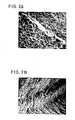
- 2a and 2b of the drawing show the resistance of the mixed crystals according to the invention in comparison to Nasicon against sodium at 350 ° C.
- the crystals to be compared were stored in the form of a sintered tablet for 18 or 20 days at 350 ° C. in liquid sodium.
- 2a shows an electron micrograph of the surface of the Nasicon tablet. Clear etching pits can be seen, which are caused by a surface reaction between Nasicon and liquid sodium.
- the mixed crystal according to the invention e.g. is stable at the working temperature of the Na / S cell with liquid sodium and achieves the conduction properties of Na-ß-alumina, which Nasicon far exceeds.
- M is preferably zirconium (r) or a mixture of Zr and Hf (commercial Zr normally contains Hf).
- r zirconium
- Hf commercial Zr normally contains Hf
- M consists of Ti or Hf alone or in a mixture with one another or with Zr.
- Z is preferably made of phosphorus, although the other elements of group V of the Periodic Table listed above can at least partially replace the phosphorus therein.
- the process according to the invention for producing the new mixed crystals is characterized in that the components of the mixed crystal are in the molar proportions required for a particular desired composition in fine powder form (grain size less than 100 H and as high a temperature as possible, but avoiding the occurrence of a liquid phase calcined until no more Z0 2 peak can be seen in the X-ray diagram, the calcination being interrupted one or more times if necessary in order to finely grind the material again.
- the elements M are preferably used in the form of their dioxides, for example as ZrO 2 .
- they can also be used in the form of organometallic compounds which decompose on calcination, it being assumed that a particularly fine-grained and reactive dioxide is formed in situ.
- suitable organometallic compounds are alkylates, aralkylates, acetylacetonates (for example Zr (C 5 H 7 O 2 ) 4 ) or other organic radicals, as are also used, for example, in the production of Nasicon.
- Sodium is expediently used in the form of its oxide, carbonate or bicarbonate or a precursor which converts to one of these compounds when heated.
- Si is expediently used in the form of the dioxide, but silicates are also suitable, which may also already contain the elements M and Na.
- the element of the 5th group of the periodic table is preferably used as ammonia, for example as NH 4 H 2 PO 4 or corresponding antimonate, bismuthate, vanadate, niobate or tantalate.
- the mixed crystals according to the invention are ion-conducting solids. According to the invention, they are therefore used as solid ion-conducting electrolytes in an electrochemical cell, in particular in high-performance temperature cells or room temperature cells as well as electrochromic displays. Since they are particularly characterized by stability to metallic sodium, they are preferably used in electrochemical cells with an anode based on sodium or a sodium alloy.
- electrochemical cells are generally also understood to mean other arrangements in which the ion-conducting properties of an electrolyte are exploited technically.
- the anode always contains sodium, but does not have to consist of it.
- sodium alloys or other electron-conducting substances, such as sodium in a graphite matrix, are also suitable.
- the same substances can be used for the cathode which are known in connection with electrochemical cells which contain an electrolyte from Nasicon or Na- ⁇ -alumina.
- the 10.84 g are mixed and ground in a micro mill (ball ⁇ 70 mm) for one hour.
- the mixture is then processed into a compact in a press mold (1 P 0) and introduced into a tube furnace in a Pt crucible. Since the optimal sintering conditions depend on the composition of the mixed crystal, the compact is heated using a heating program specific to its composition.
- the heating program used in the present case is based on DME data, which were determined in preliminary tests, and comprises the following steps:
- the end product is milled for 1 hour in a micro mill (0 70 mm ball).
- the average grain size is less than 100 ⁇ .
- the X-ray diagram shows a high degree of crystallization of the synthesis product. Furthermore, it can be seen from the X-ray diagram that the solid-state reaction took place completely during the calcination process, because no further phases occur in addition to the desired end compound.
- the product in powder form can now be pressed into disk-shaped or tubular ceramics. This is followed by a sintering process at 1240 ° C for 16 hours.
- the shaped end product has 98% of the theoretical density and looks porcelain-like.
- the individual heating levels change in temperature and length of stay.
- the optimal values can be determined using preliminary DME examinations.
- the calcination process has to be interrupted several times in order to remix the sample in the micromill. The calcination process is complete when phase purity and a high degree of crystallization are found in the X-ray diagram.
- Example 2 The suitability of the tablet-shaped mixed crystal obtained according to Example 1 as an electrolyte in a sodium-sulfur cell was investigated.
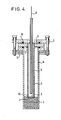
- the tablet was inserted into the battery shown in FIG. 4 of the drawing.
- These represent: 1 the electrolyte tablet, 2 a carbon layer, 3 sulfur in graphite fleece, 4 a corundum tube filled with sodium 5, 6 a tube made of V4A steel as a positive conductor, 7 a plate made of V4A steel as a negative conductor , 8 a corundum disk as an insulator, 9 a temperature sensor, 1o an O-ring made of aluminum, 11 a ring made of Klingerit and 12 glass solder.
- the cell shown has a capacity of 5.77 Ah.
Landscapes
- Chemical & Material Sciences (AREA)
- Engineering & Computer Science (AREA)
- Ceramic Engineering (AREA)
- Manufacturing & Machinery (AREA)
- Organic Chemistry (AREA)
- Materials Engineering (AREA)
- Structural Engineering (AREA)
- General Chemical & Material Sciences (AREA)
- Inorganic Chemistry (AREA)
- Chemical Kinetics & Catalysis (AREA)
- Electrochemistry (AREA)
- Composite Materials (AREA)
- Secondary Cells (AREA)
- Conductive Materials (AREA)
- Compounds Of Alkaline-Earth Elements, Aluminum Or Rare-Earth Metals (AREA)
- Silicates, Zeolites, And Molecular Sieves (AREA)
- Inorganic Compounds Of Heavy Metals (AREA)
- Battery Electrode And Active Subsutance (AREA)
Abstract

- Z = P, Sb, Bi, V, Nb, Ta oder Mischungen,
- x = 0,01 bis 3 und y = 0 bis 0,5
läßt sich leicht synthetisieren und eignet sich aufgrund hoher Stabilität gegenüber Feuchtigkeit und guter Na+- lonenfeitfähigkeit als Festkörperelektrofyt für galvanische Festkörperzellen. Bei x-Werten bis zu 1,5 besitzen die Mischkristalle rhomboedrische Struktur; bei x-Werten größer als 1,5 liegen einphasigmonokline Mischkristalle vor, die wegen ihres hohen Kristallisationsgrads beim Tablettieren extrem hohe Dichten erreichen und hinsichtlich Stabilität gegenüber Na sowie ihrer Leistungseigenschaften dem Na-ß-Alumina (Na2O - 11 Al2O3) ebenbürtig sind.
Description
- Die Erfindung betrifft neue Mischkristalle, ein Verfahren zu ihrer Herstellung und ihre Verwendung als feste ionenleitende Elektrolyten in einer elektrochemischen Zelle.
- Die Verwendung fester, gut ionenleitender Elektrolyte in Batterien, d. h. Primärzellen oder Sekundärzellen, ist von erheblicher technischer Bedeutung, da feste Elektrolyte
- 1) bei verschwindender Elektronenteilleitfähigkeit die Selbstentladung der Batterie nahezu verhindern und damit eine lange Lagerfähigkeit ermöglichen,
- 2) als feste Körper bei der Verwendung in Feststoffbatterien das Dichtungsproblem herkömmlicher Zellen mit flüssigen Elektrolyten umgehen und
- 3) den Bau von Hochtemperatur-Hochenergiezellen mit flüssigen Elektroden und einem festen Separator ermöglichen.
- Die bisher bekannten, für den genannten Zweck verwendbaren Festelektrolyte lassen jedoch noch zu wünschen übrig. Zum Teil ist ihre Beständigkeit unbefriedigend, insbesondere bei höheren Temperaturen, zum Teil genügt die Leitfähigkeit den zu stellenden Anforderungen nur unbefriedigend.
- Technische Bedeutung haben vor allem Festelektrolyten auf Basis von Lithiumverbindungen, wie Lithiumnitrid, oder von Natriumverbindungen, wie Na-ß-Alumina (Na20.11A1203) und die Mischkristallreihe Na1+xSixZr2P3-xO12' in der x einen Wert von größer als o bis 3 aufweist, und die unter der Bezeichnung Nasicon bekannt ist, erlangt.
- Nunmehr wurde eine neue Mischkristallreihe aufgefunden, welche in ihrer Beständigkeit und Leitfähigkeit dem Nasicon überlegen ist. Gegenüber Na-ß-Alumina ist die neue Substanzserie wesentlich einfacher zu synthetisieren und weist eine hohe Stabilität gegenüber Feuchtigkeit auf bei vergleichbarer Leitfähigkeit.
- Gegenstand der Erfindung sind daher Mischkristalle der allgemeinen Formel

- Die erfindungsgemäßen neuen Verbindungen liegen als Mischkristalle im Kristallfeld, definiert durch die quasibinären Schnitte NaZr2P3O12 Na4ZrO.5Si3O9 und NaZr2P3O12 ---Na4Zr1.5Si3O11:
- Die ebenfalls neuen Randphasen Na4ZrO.SSi3O9, Na4ZrSi3O10 und Na4Zr1.5Si3O11 liegen auf dem quasibinären Schnitt zwischeh Zr02 und der formalen Verbindung Na4Si3O8. In der beigefügten Zeichnung zeigt Fig. 1 die Phasenbeziehung für NASICON und das erfindungsgemäße neue Mischkristallfeld im Existenzbereich der drei Endglieder NaZr2P3O12 ZrO2 und dem formalen Na4 Si 3 0 8.
- Die erfindungsgemäßen Mischkristalle sind aber auch im Vierstoffsystem mit den Endgliedern Zr02, P205, Si02 und Na20 darstellbar. Die erfindungsgemäßen neuen Mischkristalle existieren im Bereich x = 0.01 bis etwa 1.6 als phasenrein erhältliche rhomboedrische Verbindung, ähnlich wie der bekannten NASICON-Mischkristallreihe, die jedoch als nicht phasenrein bekannt ist. Im Unterschied zum NASICON-System liegen jedoch die erfindungsgemäßen Verbindungen im Mischkristallfeld gegeben durch x 1.5 und O y 0.5 als monokline Phase vor, einschließlich der Randphasen Na4ZrO.5Si3O9, Na 4 ZrSi 3 0 10 und Na4Zr1.5Si3O11, mit einer gegenüber der rhomboedrischen Phase erhöhten Leitfähigkeit. Auch diese monoklinen Mischkristalle lassen sich phasenrein darstellen. So zeigt die Randphase Na4ZrSi3010 bei hohen Temperaturen eine beträchtliche Leitfähigkeit 6 , die bei 300°C beispielsweise 1,6 x 10⁻³ Ω -1 cm-1 beträgt. Gegenüber der Randphase x = 3 im Nasicon-Mischkristallsystem ist die Aktivierungsenergie für die Ionenleitung von 29 kJ/Mol auf 42 kJ/Mol .vergrößert. Bei einer graphischen Darstellung der Abhängigkeit der Leitfähigkeit von der Temperatur im logarithmischen System entspricht die Aktivierungsenergie dem Anstieg der erhaltenen Geraden. Dies läßt erkennen, daß die Aktivierungsenergie bei hohen Betriebstemperaturen der Zelle möglichst hoch sein sollte.
- Bei Raumtemperatur ist die Leitfähigkeit bei den erfindungsgemäßen neuen Mischkristallen um den Faktor 5 gegenüber den besten Leitfähigkeitsdaten von Nasicon erhöht. Sie entspricht damit etwa der Leitfähigkeit von Na-ß-Alumina, ohne jedoch den Nachteil einer ungenügenden Beständigkeit in feuchter Atmosphäre aufzuweisen, wie sie für Na-ß-Alumina bekannt ist.
- Aufgrund ihrer besonders guten Leitfähigkeitseigenschaften werden erfindungsgemäße Mischkristalle, welche eine monokline Struktur und einen Wert für x> 1,6 aufweisen, bevorzugt. Diese bevorzugten Kristalle sind ebenfalls einphasig und weisen einen hohen Kristallisationsgrad auf, was auch die hohe Dichte von daraus hergestellten Tabletten (mehr als 98 % der theoretischen Dichte) zeigt.
- Die erfindungsgemäßen neuen Mischkristalle sind, wie bereits erwähnt, besonders beständig, insbesondere gegenüber dem als Elektrode bei Verwendung der Kristalle als Festkörperelektrolyt in einer Batterie in Betracht kommenden Natrium. Auch hierin sind sie dem Nasicon erheblich überlegen. So zeigen die Fig. 2a und 2b der Zeichnung die Beständigkeit der erfindungsgemäßen Mischkristalle im Vergleich zu Nasicon gegenüber Natrium bei 350°C. Hierbei wurden die zu-vergleichenden Kristalle in Form einer gesinterten Tablette 18 bzw. 20 Tage bei 350°C in flüssigem Natrium gelagert. Fig. 2a zeigt eine Elektronenmikroskopaufnahme der Oberfläche der Nasicon-Tablette. Es sind deutliche Ätzgruben zu erkennen, die durch eine Oberflächenreaktion zwischen Nasicon und flüssigem Natrium entstanden sind.
- Fig. 2b zeigt die entsprechende Aufnahme bei dem erfindungsgemäßen Mischkristall. Im Rahmen der Auflösung des Elektronenmikroskops sind keinerlei Angriffsspuren erkennbar, sondern nur eine leichte Verfärbung. Verwendet wurde hierbei der erfindungsgemäße Mischkristall -Na3.23Zr1.48Si2.23P0.77O10.96 mit x = 2.23 und y = 0.23.
- Dies zeigt, daß der erfindungsgemäße Mischkristall z.B. bei der Arbeitstemperatur der Na/S-Zelle mit flüssigem Natrium stabil ist und die Leitungseigenschaften von Na-ß-Alumina erreicht, die von Nasicon weit übertrifft.
- Die Leitfähigkeit des erfindungsgemäßen Mischkristalls mit x = 2,1 in Abhängigkeit von der Temperatur zeigt Fig. 3 der Zeichnung dargestellt, im logarithmischen System.
- Im erfindungsgemäßen Mischkristall ist M vorzugsweise Zirkonium ( r) oder ein Gemisch von Zr und Hf (handelsübliches Zr enthält normalerweise Hf). Die gleichen Eigenschaften können aber auch erhalten werden, wenn M aus Ti oder Hf alleine oder im Gemisch miteinander bzw. mit Zr besteht.
- Z besteht vorzugsweise aus Phosphor, obwohl auch die anderen oben aufgeführten Elemente der V. Gruppe des Periodischen Systems den Phosphor darin zumindest teilweise ersetzen können.
- Das erfindungsgemäße Verfahren zur Herstellung der neuen Mischkristalle ist dadurch gekennzeichnet, daß man die Komponenten des Mischkristalls in den jeweils für eine bestimmte gewünschte Zusammensetzung erforderlichen molaren Anteilen in feinpulveriger Form (Korngröße kleiner 100 H einer möglichst hohen Temperatur, jedoch unter Vermeidung des Auftretens einer flüssigen Phase, so lange calciniert, bis im Röntgendiagramm kein Z02-Peak mehr erkennbar ist, wobei gegebenenfalls das Calcinieren ein- oder mehrfach unterbrochen wird, um das Material erneut fein zu vermahlen.
- Wesentlich beim erfindungsgemäßen Verfahren ist die stöchiometrische Zusammensetzung der Ausgangssubstanzen entsprechend der allgemeinen Formel der erfindungsgemäßen Mischkristalle und die Durchführung einer Calcinierung bis eine Z02-Phase, insbesondere Zr02, völlig verschwunden ist, was sich im Röntgendiagramm verfolgen läßt. Dabei muß das Auftreten einer flüssigen Phase vermieden werden. Andererseits sollte die Calcinierung jedoch bei möglichst hoher Temperatur erfolgen, da bei steigender Temperatur nicht nur die Geschwindigkeit der Bildung der Mischkristalle zunimmt, sondern auch die Phasenreinheit des erhaltenen Produkts verbessert wird.
- Die Elemente M werden bei der Herstellung vorzugsweise in Form ihrer Dioxide, beispielsweise also als ZrO2, eingesetzt. Alternativ können sie auch in Form von metallorganischen Verbindungen verwendet werden, die sich beim Calcinieren zersetzen, wobei angenommen wird, daß sich ein besonders feinteiliges und reaktionsfähiges Dioxid in situ bildet. Beispiele für geeignete metallorganische Verbindungen sind Alkylate, Aralkylate, Acetylacetonate (z. B. Zr(C5H7O2)4) oder andere organische Reste, wie sie auch beispielsweise im Rahmen der Nasicon-Herstellung verwendet werden.
- Natrium wird zweckmäßig in Form seines Oxids, Carbonats oder Bicarbonats oder eines Vorläufers, der sich beim Erhitzen in eine dieser Verbindungen umwandelt, eingesetzt. Si wird zweckmäßig in Form des'Dioxids verwendet, jedoch kommen auch Silikate in Betracht, welche auch das Element M und Na bereits enthalten können. Das Element der V. Gruppe des Periodischen-Systems wird vorzugsweise als Ammoniakat eingesetzt, beispielsweise als NH4H2PO4 bzw, entsprechendes Antimonat, Wismutat, Vanadat, Niobat oder Tantalat.
- ._Wie bereits erwähnt, sind die erfindungsgemäßen Mischkristalle ionenleitende Festkörper. Erfindungsgemäß werden sie daher als feste ionenleitende Elektrolyten in einer elektrochemischen Zelle, insbesondere in Hochleistungs- -temperaturzellen oder Raumtemperaturzellen sowie elektrochromen Anzeigen verwendet. Da sie sich besonders durch Stabilität gegenüber metallischem Natrium auszeichnen, werden sie vorzugsweise in elektrochemischen Zellen mit einer Anode auf Basis Natrium oder einer Natriumlegierung verwendet.
- Unter elektrochemischer Zelle werden hierbei generell neben Batterien auch andere Anordnungen, bei denen die ionenleitenden Eigenschaften eines Elektrolyten technisch ausgenutzt werden, verstanden. Die Anode enthält dabei immer Natrium, muß aber nicht daraus bestehen. Außer Natrium selbst kommen in Betracht Natriumlegierungen oder andere elektronenleitende Substanden, wie Natrium in einer Graphitmatrix.
- Für die Kathode können die gleichen Substanzen verwendet werden, die im Zusammenhang mit elektrochemischen Zellen, welche einen Elektrolyten aus Nasicon oder Na-ß-Alumina enthalten, bekannt sind.
- Die folgende Tabelle zeigt die Leitfähigkeiten erfindungsgemäßer Mischkristalle mit M = Zr und Ti und Z = P für verschiedene Werte von x. Die Verbindung x =-o dient. als Vergleich und zeigt die sprunghafte Änderung beim Übergang von dieser bekannten Verbindung in die erfindungsgemäße Mischkristallreihe hinsichtlich der Leitfähigkeitseigenschaften.

- Die folgenden Beispiele erläutern die Erfindung weiter.
- Herstellung des erfindungsgemäßen Mischkristalls x = 2.2,y = 0.183
- Na3.2Zr1.45S12.2P0.78O10.89
- Einwaage: 1.7g Na2CO3 7,07g ZrC20H28O8 Gesamteinwaage 10,84g 1.32g Si0 2 0,90g NH4H2PO4
- Die 10,84g werden in einer Mikromühle (Kugel Ø 70 mm) eine Stunde gemischt und gemahlen. Dann wird die Mischung in einer Pressform (1P 0) zu einem Pressling verarbeitet und in einem Pt-Tiegel in einen Rohrofen eingebracht. Da die optimalen Sinterbedingungen von der Zusammensetzung des Mischkristalls abhängen, wird der Pressling mit einem für seine Zusammensetzung spezifischen Heizprogramm aufgeheizt. Das im vorliegenden Fall verwendete Heizprogramm basiert auf DTA-Daten, die in Vorversuchen ermittelt wurden, und umfaßt folgende Schritte:
-

- Das Endprodukt wird 1 Stunde in der Mikromühle (Kugel 0 70 mm) gemahlen. Die mittlere Korngröße ist kleiner 100 µ . Das Röntgendiagramm zeigt einen hohen Kristallisationsgrad des Syntheseproduktes. Weiter kann man dem Röntgendiagramm entnehmen, daß die Festkörperreaktion während des Kalzinierungsprozesses vollständig abgelaufen ist, weil neben der gewünschten Endverbindung keine weiteren Phasen auftreten. Das pulverförmig vorliegende Produkt kann nun zu scheiben- oder rohrförmigen Keramiken verpresst werden. Anschließend erfolgt ein Sinterprozess bei 1240°C für 16 Stunden. Das geformte Endprodukt hat 98 % der theoretischen Dichte und wirkt porzellanartig.
- Verwendet man anstelle von ZrC20H2808Zr02 als Zirkonspender, ändern sich die einzelnen Heizstufen in Temperatur und Verweildauer. Auch hier lassen sich die optimalen Werte mittels DTA-Voruntersuchungen ermitteln. Gegebenenfalls muß der Kalzinierungsprozeß mehrfach unterbrochen werden, um die Probe in der Mikromühle neu zu vermischen. Der Kalzinierungsprozeß ist dann abgeschlossen, wenn im Röntgendiagramm Phasenreinheit und hoher Kristallisationsgrad gefunden werden.
- Die Eignung des nach Beispiel 1 erhaltenen tablettenförmigen Mischkristalls als Elektrolyt in einer Natrium-Schwefel-Zelle wurde untersucht. Hierzu wurde die Tablette in die in Fig. 4 der Zeichnung dargestellte Batterie eingesetzt. In dieser stellen dar: 1 die Elektrolyttablette, 2 eine Kohlenstoffschicht, 3 Schwefel in Graphitvlies, 4 ein Korundrohr, das mit Natrium 5 gefüllt ist, 6 ein Rohr aus V4A-Stahl als positiver Ableiter, 7 eine Platte aus V4A-Stahl als negativer Ableiter, 8 eine Korundscheibe als Isolator, 9 einen Temperaturmeßfühler, 1o einen O-Ring aus Aluminium, 11 einen Ring aus Klingerit und 12 Glaslot. Die dargestellte Zelle hat eine Kapazität von 5,77 Ah.
Claims (9)

Priority Applications (1)
| Application Number | Priority Date | Filing Date | Title |
|---|---|---|---|
| AT81106469T ATE11467T1 (de) | 1980-09-01 | 1981-08-20 | Neue mischkristalle, verfahren zu ihrer herstellung und ihre verwendung. |
Applications Claiming Priority (2)
| Application Number | Priority Date | Filing Date | Title |
|---|---|---|---|
| DE3032894 | 1980-09-01 | ||
| DE19803032894 DE3032894A1 (de) | 1980-09-01 | 1980-09-01 | Neue mischkristalle, verfahren zu ihrer herstellung und ihre verwendung |
Publications (3)
| Publication Number | Publication Date |
|---|---|
| EP0046932A2 true EP0046932A2 (de) | 1982-03-10 |
| EP0046932A3 EP0046932A3 (en) | 1982-03-17 |
| EP0046932B1 EP0046932B1 (de) | 1985-01-23 |
Family
ID=6110860
Family Applications (1)
| Application Number | Title | Priority Date | Filing Date |
|---|---|---|---|
| EP81106469A Expired EP0046932B1 (de) | 1980-09-01 | 1981-08-20 | Neue Mischkristalle, Verfahren zu ihrer Herstellung und ihre Verwendung |
Country Status (6)
| Country | Link |
|---|---|
| US (1) | US4582621A (de) |
| EP (1) | EP0046932B1 (de) |
| JP (1) | JPS57135714A (de) |
| AT (1) | ATE11467T1 (de) |
| CA (1) | CA1164196A (de) |
| DE (1) | DE3032894A1 (de) |
Cited By (6)
| Publication number | Priority date | Publication date | Assignee | Title |
|---|---|---|---|---|
| EP0067274A1 (de) * | 1981-06-11 | 1982-12-22 | VARTA Batterie Aktiengesellschaft | Ionenleitender Mischkristall |
| EP0105128A1 (de) * | 1982-08-04 | 1984-04-11 | Daiichi Kigenso Kagaku Kogyo Co. Ltd. | Amorphes Zirkonium-Phosphosilikat und Verfahren zu seiner Herstellung |
| WO1984001829A1 (en) * | 1982-10-29 | 1984-05-10 | Radiometer As | Ion-sensitive measuring electrode device |
| FR2536740A1 (fr) * | 1982-11-30 | 1984-06-01 | Us Energy | Verre conducteur superionique |
| WO1991015426A1 (fr) * | 1990-04-06 | 1991-10-17 | Centre National De La Recherche Scientifique | NOUVEAU COMPOSE DU SYSTEME K-Nb-Si-O ET SES DERIVES, LEUR PROCEDE DE SYNTHESE ET LEURS APPLICATIONS NOTAMMENT EN OPTIQUE |
| US10869689B2 (en) | 2017-05-03 | 2020-12-22 | Medtronic Vascular, Inc. | Tissue-removing catheter |
Families Citing this family (6)
| Publication number | Priority date | Publication date | Assignee | Title |
|---|---|---|---|---|
| DE3207131A1 (de) * | 1982-02-27 | 1983-09-08 | Rosenthal Technik Ag, 8672 Selb | Keramiksubstrat als traeger fuer elektronische bauelemente und integrierte elektronische schaltkreise |
| JPH0238307A (ja) * | 1988-07-28 | 1990-02-07 | Agency Of Ind Science & Technol | イオン導電体 |
| EP2900594B1 (de) * | 2012-09-25 | 2018-01-10 | University of Maryland, College Park | Hochleitfähiger nasiconelektrolyt für natriumionenbatterien im festkörperzustand bei raumtemperatur |
| US11888149B2 (en) | 2013-03-21 | 2024-01-30 | University Of Maryland | Solid state battery system usable at high temperatures and methods of use and manufacture thereof |
| EP3752308A4 (de) | 2018-02-15 | 2021-11-17 | University of Maryland, College Park | Geordnete, poröse feste elektrolytstrukturen, elektrochemische vorrichtungen damit, verfahren zur herstellung davon |
| US11569527B2 (en) | 2019-03-26 | 2023-01-31 | University Of Maryland, College Park | Lithium battery |
Family Cites Families (7)
| Publication number | Priority date | Publication date | Assignee | Title |
|---|---|---|---|---|
| US3687735A (en) * | 1969-02-13 | 1972-08-29 | Nichicon Capacitor Ltd | Method of manufacturing a solid ion conductive composition |
| US4049891A (en) * | 1976-06-21 | 1977-09-20 | Massachusetts Institute Of Technology | Compositions for fast alkali-metal-ion transport |
| US4097345A (en) * | 1976-10-15 | 1978-06-27 | E. I. Du Pont De Nemours And Company | Na5 GdSi4 O 12 and related rare earth sodium ion conductors and electrolytic cells therefrom |
| DE2754454C2 (de) * | 1977-12-07 | 1982-03-25 | Brown, Boveri & Cie Ag, 6800 Mannheim | Elektrochemische Speicherzelle |
| US4166159A (en) * | 1978-08-02 | 1979-08-28 | Massachusetts Institute Of Technology | Process for forming fast sodium-ion transport compositions |
| US4322485A (en) * | 1979-06-13 | 1982-03-30 | United Kingdom Atomic Energy Authority | Preparation of materials |
| DE3123099A1 (de) * | 1981-06-11 | 1983-01-05 | Varta Batterie Ag, 3000 Hannover | Ionenleitender mischkristall |
-
1980
- 1980-09-01 DE DE19803032894 patent/DE3032894A1/de not_active Withdrawn
-
1981
- 1981-08-20 AT AT81106469T patent/ATE11467T1/de not_active IP Right Cessation
- 1981-08-20 EP EP81106469A patent/EP0046932B1/de not_active Expired
- 1981-08-28 CA CA000384821A patent/CA1164196A/en not_active Expired
- 1981-08-28 US US06/297,465 patent/US4582621A/en not_active Expired - Fee Related
- 1981-08-28 JP JP56134398A patent/JPS57135714A/ja active Pending
Cited By (7)
| Publication number | Priority date | Publication date | Assignee | Title |
|---|---|---|---|---|
| EP0067274A1 (de) * | 1981-06-11 | 1982-12-22 | VARTA Batterie Aktiengesellschaft | Ionenleitender Mischkristall |
| EP0105128A1 (de) * | 1982-08-04 | 1984-04-11 | Daiichi Kigenso Kagaku Kogyo Co. Ltd. | Amorphes Zirkonium-Phosphosilikat und Verfahren zu seiner Herstellung |
| WO1984001829A1 (en) * | 1982-10-29 | 1984-05-10 | Radiometer As | Ion-sensitive measuring electrode device |
| WO1984001769A1 (en) * | 1982-10-29 | 1984-05-10 | Kongelige Porcelainsfab | Ceramic material |
| FR2536740A1 (fr) * | 1982-11-30 | 1984-06-01 | Us Energy | Verre conducteur superionique |
| WO1991015426A1 (fr) * | 1990-04-06 | 1991-10-17 | Centre National De La Recherche Scientifique | NOUVEAU COMPOSE DU SYSTEME K-Nb-Si-O ET SES DERIVES, LEUR PROCEDE DE SYNTHESE ET LEURS APPLICATIONS NOTAMMENT EN OPTIQUE |
| US10869689B2 (en) | 2017-05-03 | 2020-12-22 | Medtronic Vascular, Inc. | Tissue-removing catheter |
Also Published As
| Publication number | Publication date |
|---|---|
| JPS57135714A (en) | 1982-08-21 |
| US4582621A (en) | 1986-04-15 |
| ATE11467T1 (de) | 1985-02-15 |
| DE3032894A1 (de) | 1982-12-02 |
| EP0046932A3 (en) | 1982-03-17 |
| EP0046932B1 (de) | 1985-01-23 |
| CA1164196A (en) | 1984-03-27 |
Similar Documents
| Publication | Publication Date | Title |
|---|---|---|
| EP2734473B1 (de) | Lithiumionen leitende, granatartige verbindungen | |
| EP2197795B1 (de) | Lithium-argyrodite | |
| DE112007001382B4 (de) | Alkalimetalltitanate und Verfahren zu deren Synthese | |
| EP2649437B1 (de) | Galvanische Natrium-Chalkogen-Zelle mit Natriumionenleiter | |
| DE3343159A1 (de) | Ionisch leitendes glas | |
| DE102015013155A1 (de) | Elektrolytmaterial mit NASICON-Struktur für Feststoff-Natriumionenbatterien sowie Verfahren zu deren Herstellung | |
| EP0046932B1 (de) | Neue Mischkristalle, Verfahren zu ihrer Herstellung und ihre Verwendung | |
| CH628184A5 (de) | Elektrolytloesung, verfahren zu deren herstellung und verwendung derselben. | |
| EP0067274A1 (de) | Ionenleitender Mischkristall | |
| DE2634289B2 (de) | Kristalline Verbindung für schnellen AlkalimetaUionentransport und deren Verwendung | |
| WO2013164116A1 (de) | Lithiumionenleitende glaskeramik, verfahren zur herstellung einer lithiumionenleitenden glaskeramik, ionenleiter und verwendung des ionenleiters | |
| DE69600855T2 (de) | Lithium-Mangan-Oxid vom Spinelltyp als aktives Kathodenmaterial in einer nichtwässrigen Lithiumbatterie | |
| EP2649661B1 (de) | Natrium-chalkogen-zelle | |
| DE4436392C2 (de) | Metallniobate und/oder Tantalate, Verfahren zu ihrer Herstellung sowie deren Weiterverarbeitung zu Perowskiten | |
| EP0114234B1 (de) | Festelektrolyt | |
| DE4305170C1 (de) | Magnesium und Aluminium enthaltender Spinell, sowie Verfahren zu dessen Synthese und Verwendung des Spinells | |
| DE2918940A1 (de) | Verfahren zur herstellung fester thermodynamisch stabiler ionenleitermaterialien und neue feste ionenleiter und deren verwendung | |
| DE60202264T2 (de) | Material für eine dimensionsstabile anode für die elektrolytische gewinnung von aluminium | |
| DE3319987C2 (de) | ||
| DE3026141C2 (de) | ||
| DE69203734T2 (de) | Sinterkörper aus Beta-Aluminiumoxid und Verfahren zu seiner Herstellung. | |
| DE3316909A1 (de) | Neue mischkristalle, verfahren zu ihrer herstellung und ihre verwendung | |
| EP0810189B1 (de) | Flüssigkeitsphasensinterprozess für Aluminat-Keramiken | |
| DE69115166T2 (de) | Beta-Aluminiumoxid Sinterkörper und Verfahren zu seiner Herstellung. | |
| DE1671704B2 (de) | Festelektrolyt fuer brennstoffelemente |
Legal Events
| Date | Code | Title | Description |
|---|---|---|---|
| PUAI | Public reference made under article 153(3) epc to a published international application that has entered the european phase |
Free format text: ORIGINAL CODE: 0009012 |
|
| PUAL | Search report despatched |
Free format text: ORIGINAL CODE: 0009013 |
|
| AK | Designated contracting states |
Designated state(s): AT FR GB NL SE |
|
| AK | Designated contracting states |
Designated state(s): AT FR GB NL SE |
|
| 17P | Request for examination filed |
Effective date: 19820217 |
|
| ITF | It: translation for a ep patent filed | ||
| GRAA | (expected) grant |
Free format text: ORIGINAL CODE: 0009210 |
|
| AK | Designated contracting states |
Designated state(s): AT FR GB NL SE |
|
| REF | Corresponds to: |
Ref document number: 11467 Country of ref document: AT Date of ref document: 19850215 Kind code of ref document: T |
|
| ET | Fr: translation filed | ||
| PLBE | No opposition filed within time limit |
Free format text: ORIGINAL CODE: 0009261 |
|
| STAA | Information on the status of an ep patent application or granted ep patent |
Free format text: STATUS: NO OPPOSITION FILED WITHIN TIME LIMIT |
|
| 26N | No opposition filed | ||
| PGFP | Annual fee paid to national office [announced via postgrant information from national office to epo] |
Ref country code: AT Payment date: 19860723 Year of fee payment: 6 |
|
| PGFP | Annual fee paid to national office [announced via postgrant information from national office to epo] |
Ref country code: NL Payment date: 19860831 Year of fee payment: 6 |
|
| PG25 | Lapsed in a contracting state [announced via postgrant information from national office to epo] |
Ref country code: AT Effective date: 19870820 |
|
| PG25 | Lapsed in a contracting state [announced via postgrant information from national office to epo] |
Ref country code: SE Effective date: 19870821 |
|
| PG25 | Lapsed in a contracting state [announced via postgrant information from national office to epo] |
Ref country code: NL Effective date: 19880301 |
|
| NLV4 | Nl: lapsed or anulled due to non-payment of the annual fee | ||
| PG25 | Lapsed in a contracting state [announced via postgrant information from national office to epo] |
Ref country code: FR Free format text: LAPSE BECAUSE OF NON-PAYMENT OF DUE FEES Effective date: 19880429 |
|
| GBPC | Gb: european patent ceased through non-payment of renewal fee | ||
| REG | Reference to a national code |
Ref country code: FR Ref legal event code: ST |
|
| PG25 | Lapsed in a contracting state [announced via postgrant information from national office to epo] |
Ref country code: GB Free format text: LAPSE BECAUSE OF NON-PAYMENT OF DUE FEES Effective date: 19881118 |
|
| EUG | Se: european patent has lapsed |
Ref document number: 81106469.0 Effective date: 19880711 |