EP0032744B1 - Chemisch widerstandsfähiges Fasermaterial aus aromatischen Polyamiden - Google Patents
Chemisch widerstandsfähiges Fasermaterial aus aromatischen Polyamiden Download PDFInfo
- Publication number
- EP0032744B1 EP0032744B1 EP81100344A EP81100344A EP0032744B1 EP 0032744 B1 EP0032744 B1 EP 0032744B1 EP 81100344 A EP81100344 A EP 81100344A EP 81100344 A EP81100344 A EP 81100344A EP 0032744 B1 EP0032744 B1 EP 0032744B1
- Authority
- EP
- European Patent Office
- Prior art keywords
- aromatic polyamide
- fiber material
- wholly aromatic
- chemical
- radical
- Prior art date
- Legal status (The legal status is an assumption and is not a legal conclusion. Google has not performed a legal analysis and makes no representation as to the accuracy of the status listed.)
- Expired
Links
- 229920003235 aromatic polyamide Polymers 0.000 title claims description 46
- 239000004760 aramid Substances 0.000 title claims description 45
- 239000000126 substance Substances 0.000 title claims description 40
- 239000002657 fibrous material Substances 0.000 title claims description 39
- 239000000835 fiber Substances 0.000 claims description 49
- 239000002952 polymeric resin Substances 0.000 claims description 28
- 229920003002 synthetic resin Polymers 0.000 claims description 28
- YCKRFDGAMUMZLT-UHFFFAOYSA-N Fluorine atom Chemical compound [F] YCKRFDGAMUMZLT-UHFFFAOYSA-N 0.000 claims description 21
- 238000000576 coating method Methods 0.000 claims description 21
- 229920001577 copolymer Polymers 0.000 claims description 21
- 229910052731 fluorine Inorganic materials 0.000 claims description 21
- 239000011737 fluorine Substances 0.000 claims description 21
- 238000001914 filtration Methods 0.000 claims description 20
- 239000011248 coating agent Substances 0.000 claims description 17
- 239000000839 emulsion Substances 0.000 claims description 17
- 125000004432 carbon atom Chemical group C* 0.000 claims description 10
- 125000004435 hydrogen atom Chemical group [H]* 0.000 claims description 6
- 125000003118 aryl group Chemical group 0.000 claims description 5
- 239000000463 material Substances 0.000 claims description 4
- 229920000642 polymer Polymers 0.000 claims description 4
- 229920006172 Tetrafluoroethylene propylene Polymers 0.000 claims description 3
- 239000004745 nonwoven fabric Substances 0.000 claims description 3
- BQCIDUSAKPWEOX-UHFFFAOYSA-N 1,1-Difluoroethene Chemical compound FC(F)=C BQCIDUSAKPWEOX-UHFFFAOYSA-N 0.000 claims description 2
- 125000004429 atom Chemical group 0.000 claims description 2
- UUAGAQFQZIEFAH-UHFFFAOYSA-N chlorotrifluoroethylene Chemical group FC(F)=C(F)Cl UUAGAQFQZIEFAH-UHFFFAOYSA-N 0.000 claims description 2
- 238000010556 emulsion polymerization method Methods 0.000 claims description 2
- RTZKZFJDLAIYFH-UHFFFAOYSA-N ether Substances CCOCC RTZKZFJDLAIYFH-UHFFFAOYSA-N 0.000 claims description 2
- 125000005843 halogen group Chemical group 0.000 claims description 2
- BLNWTAHYTCHDJH-UHFFFAOYSA-O hydroxy(oxo)azanium Chemical compound O[NH+]=O BLNWTAHYTCHDJH-UHFFFAOYSA-O 0.000 claims description 2
- 125000000542 sulfonic acid group Chemical group 0.000 claims description 2
- 125000001989 1,3-phenylene group Chemical group [H]C1=C([H])C([*:1])=C([H])C([*:2])=C1[H] 0.000 claims 1
- 229920005989 resin Polymers 0.000 description 22
- 239000011347 resin Substances 0.000 description 22
- 239000004744 fabric Substances 0.000 description 20
- 239000002253 acid Substances 0.000 description 15
- 238000000034 method Methods 0.000 description 14
- -1 for example Substances 0.000 description 12
- 230000000052 comparative effect Effects 0.000 description 11
- 239000000243 solution Substances 0.000 description 9
- QAOWNCQODCNURD-UHFFFAOYSA-N Sulfuric acid Chemical compound OS(O)(=O)=O QAOWNCQODCNURD-UHFFFAOYSA-N 0.000 description 7
- 0 Cc1c*(N)c(C)cc1 Chemical compound Cc1c*(N)c(C)cc1 0.000 description 6
- KWYUFKZDYYNOTN-UHFFFAOYSA-M Potassium hydroxide Chemical compound [OH-].[K+] KWYUFKZDYYNOTN-UHFFFAOYSA-M 0.000 description 6
- HEMHJVSKTPXQMS-UHFFFAOYSA-M Sodium hydroxide Chemical compound [OH-].[Na+] HEMHJVSKTPXQMS-UHFFFAOYSA-M 0.000 description 6
- SECXISVLQFMRJM-UHFFFAOYSA-N N-Methylpyrrolidone Chemical compound CN1CCCC1=O SECXISVLQFMRJM-UHFFFAOYSA-N 0.000 description 4
- RAHZWNYVWXNFOC-UHFFFAOYSA-N Sulphur dioxide Chemical compound O=S=O RAHZWNYVWXNFOC-UHFFFAOYSA-N 0.000 description 4
- 239000003365 glass fiber Substances 0.000 description 4
- 238000010438 heat treatment Methods 0.000 description 4
- 238000002844 melting Methods 0.000 description 4
- 230000008018 melting Effects 0.000 description 4
- XLYOFNOQVPJJNP-UHFFFAOYSA-N water Substances O XLYOFNOQVPJJNP-UHFFFAOYSA-N 0.000 description 4
- ZWEHNKRNPOVVGH-UHFFFAOYSA-N 2-Butanone Chemical compound CCC(C)=O ZWEHNKRNPOVVGH-UHFFFAOYSA-N 0.000 description 3
- 230000003247 decreasing effect Effects 0.000 description 3
- 239000012530 fluid Substances 0.000 description 3
- 239000007789 gas Substances 0.000 description 3
- 239000002245 particle Substances 0.000 description 3
- 230000035699 permeability Effects 0.000 description 3
- 239000007787 solid Substances 0.000 description 3
- 238000009987 spinning Methods 0.000 description 3
- 239000000758 substrate Substances 0.000 description 3
- AKEJUJNQAAGONA-UHFFFAOYSA-N sulfur trioxide Chemical compound O=S(=O)=O AKEJUJNQAAGONA-UHFFFAOYSA-N 0.000 description 3
- 238000011282 treatment Methods 0.000 description 3
- 238000011144 upstream manufacturing Methods 0.000 description 3
- 125000001140 1,4-phenylene group Chemical group [H]C1=C([H])C([*:2])=C([H])C([H])=C1[*:1] 0.000 description 2
- CSCPPACGZOOCGX-UHFFFAOYSA-N Acetone Chemical compound CC(C)=O CSCPPACGZOOCGX-UHFFFAOYSA-N 0.000 description 2
- GLUUGHFHXGJENI-UHFFFAOYSA-N Piperazine Chemical compound C1CNCCN1 GLUUGHFHXGJENI-UHFFFAOYSA-N 0.000 description 2
- 239000004952 Polyamide Substances 0.000 description 2
- WNLRTRBMVRJNCN-UHFFFAOYSA-N adipic acid Chemical compound OC(=O)CCCCC(O)=O WNLRTRBMVRJNCN-UHFFFAOYSA-N 0.000 description 2
- 239000003513 alkali Substances 0.000 description 2
- 239000007864 aqueous solution Substances 0.000 description 2
- 239000010425 asbestos Substances 0.000 description 2
- 239000000428 dust Substances 0.000 description 2
- 239000000945 filler Substances 0.000 description 2
- NAQMVNRVTILPCV-UHFFFAOYSA-N hexane-1,6-diamine Chemical compound NCCCCCCN NAQMVNRVTILPCV-UHFFFAOYSA-N 0.000 description 2
- 239000007788 liquid Substances 0.000 description 2
- 239000008041 oiling agent Substances 0.000 description 2
- 229920002647 polyamide Polymers 0.000 description 2
- 229920000139 polyethylene terephthalate Polymers 0.000 description 2
- 239000005020 polyethylene terephthalate Substances 0.000 description 2
- 229920001343 polytetrafluoroethylene Polymers 0.000 description 2
- 239000004810 polytetrafluoroethylene Substances 0.000 description 2
- 229910052895 riebeckite Inorganic materials 0.000 description 2
- 238000012360 testing method Methods 0.000 description 2
- CBCKQZAAMUWICA-UHFFFAOYSA-N 1,4-phenylenediamine Chemical compound NC1=CC=C(N)C=C1 CBCKQZAAMUWICA-UHFFFAOYSA-N 0.000 description 1
- ZBMISJGHVWNWTE-UHFFFAOYSA-N 3-(4-aminophenoxy)aniline Chemical compound C1=CC(N)=CC=C1OC1=CC=CC(N)=C1 ZBMISJGHVWNWTE-UHFFFAOYSA-N 0.000 description 1
- WRDNCFQZLUCIRH-UHFFFAOYSA-N 4-(7-azabicyclo[2.2.1]hepta-1,3,5-triene-7-carbonyl)benzamide Chemical compound C1=CC(C(=O)N)=CC=C1C(=O)N1C2=CC=C1C=C2 WRDNCFQZLUCIRH-UHFFFAOYSA-N 0.000 description 1
- 239000004953 Aliphatic polyamide Substances 0.000 description 1
- UXVMQQNJUSDDNG-UHFFFAOYSA-L Calcium chloride Chemical compound [Cl-].[Cl-].[Ca+2] UXVMQQNJUSDDNG-UHFFFAOYSA-L 0.000 description 1
- RZXMPPFPUUCRFN-UHFFFAOYSA-N Cc(cc1)ccc1N Chemical compound Cc(cc1)ccc1N RZXMPPFPUUCRFN-UHFFFAOYSA-N 0.000 description 1
- OFOBLEOULBTSOW-UHFFFAOYSA-N Malonic acid Chemical compound OC(=O)CC(O)=O OFOBLEOULBTSOW-UHFFFAOYSA-N 0.000 description 1
- 239000004698 Polyethylene Substances 0.000 description 1
- 238000010306 acid treatment Methods 0.000 description 1
- 150000007513 acids Chemical class 0.000 description 1
- 239000001361 adipic acid Substances 0.000 description 1
- 235000011037 adipic acid Nutrition 0.000 description 1
- 125000001931 aliphatic group Chemical group 0.000 description 1
- 229920003231 aliphatic polyamide Polymers 0.000 description 1
- 150000001412 amines Chemical class 0.000 description 1
- 238000009835 boiling Methods 0.000 description 1
- 239000001110 calcium chloride Substances 0.000 description 1
- 229910001628 calcium chloride Inorganic materials 0.000 description 1
- 229910052799 carbon Inorganic materials 0.000 description 1
- 230000001112 coagulating effect Effects 0.000 description 1
- 238000002788 crimping Methods 0.000 description 1
- 230000000593 degrading effect Effects 0.000 description 1
- 239000006185 dispersion Substances 0.000 description 1
- 238000012674 dispersion polymerization Methods 0.000 description 1
- VFNGKCDDZUSWLR-UHFFFAOYSA-N disulfuric acid Chemical compound OS(=O)(=O)OS(O)(=O)=O VFNGKCDDZUSWLR-UHFFFAOYSA-N 0.000 description 1
- 230000001804 emulsifying effect Effects 0.000 description 1
- XUCNUKMRBVNAPB-UHFFFAOYSA-N fluoroethene Chemical compound FC=C XUCNUKMRBVNAPB-UHFFFAOYSA-N 0.000 description 1
- IXCSERBJSXMMFS-UHFFFAOYSA-N hcl hcl Chemical compound Cl.Cl IXCSERBJSXMMFS-UHFFFAOYSA-N 0.000 description 1
- HCDGVLDPFQMKDK-UHFFFAOYSA-N hexafluoropropylene Chemical group FC(F)=C(F)C(F)(F)F HCDGVLDPFQMKDK-UHFFFAOYSA-N 0.000 description 1
- 230000007062 hydrolysis Effects 0.000 description 1
- 238000006460 hydrolysis reaction Methods 0.000 description 1
- 238000011065 in-situ storage Methods 0.000 description 1
- 239000012784 inorganic fiber Substances 0.000 description 1
- 239000003960 organic solvent Substances 0.000 description 1
- 229920000889 poly(m-phenylene isophthalamide) Polymers 0.000 description 1
- 229920000573 polyethylene Polymers 0.000 description 1
- 238000004080 punching Methods 0.000 description 1
- 238000005245 sintering Methods 0.000 description 1
- 238000005507 spraying Methods 0.000 description 1
- LXEJRKJRKIFVNY-UHFFFAOYSA-N terephthaloyl chloride Chemical compound ClC(=O)C1=CC=C(C(Cl)=O)C=C1 LXEJRKJRKIFVNY-UHFFFAOYSA-N 0.000 description 1
- 239000004753 textile Substances 0.000 description 1
- 238000005979 thermal decomposition reaction Methods 0.000 description 1
- 239000002699 waste material Substances 0.000 description 1
Classifications
-
- B—PERFORMING OPERATIONS; TRANSPORTING
- B01—PHYSICAL OR CHEMICAL PROCESSES OR APPARATUS IN GENERAL
- B01D—SEPARATION
- B01D39/00—Filtering material for liquid or gaseous fluids
- B01D39/08—Filter cloth, i.e. woven, knitted or interlaced material
- B01D39/083—Filter cloth, i.e. woven, knitted or interlaced material of organic material
-
- B—PERFORMING OPERATIONS; TRANSPORTING
- B01—PHYSICAL OR CHEMICAL PROCESSES OR APPARATUS IN GENERAL
- B01D—SEPARATION
- B01D39/00—Filtering material for liquid or gaseous fluids
- B01D39/02—Loose filtering material, e.g. loose fibres
- B01D39/04—Organic material, e.g. cellulose, cotton
-
- B—PERFORMING OPERATIONS; TRANSPORTING
- B01—PHYSICAL OR CHEMICAL PROCESSES OR APPARATUS IN GENERAL
- B01D—SEPARATION
- B01D39/00—Filtering material for liquid or gaseous fluids
- B01D39/14—Other self-supporting filtering material ; Other filtering material
- B01D39/16—Other self-supporting filtering material ; Other filtering material of organic material, e.g. synthetic fibres
- B01D39/1607—Other self-supporting filtering material ; Other filtering material of organic material, e.g. synthetic fibres the material being fibrous
- B01D39/1623—Other self-supporting filtering material ; Other filtering material of organic material, e.g. synthetic fibres the material being fibrous of synthetic origin
-
- C—CHEMISTRY; METALLURGY
- C08—ORGANIC MACROMOLECULAR COMPOUNDS; THEIR PREPARATION OR CHEMICAL WORKING-UP; COMPOSITIONS BASED THEREON
- C08G—MACROMOLECULAR COMPOUNDS OBTAINED OTHERWISE THAN BY REACTIONS ONLY INVOLVING UNSATURATED CARBON-TO-CARBON BONDS
- C08G69/00—Macromolecular compounds obtained by reactions forming a carboxylic amide link in the main chain of the macromolecule
- C08G69/02—Polyamides derived from amino-carboxylic acids or from polyamines and polycarboxylic acids
- C08G69/26—Polyamides derived from amino-carboxylic acids or from polyamines and polycarboxylic acids derived from polyamines and polycarboxylic acids
- C08G69/32—Polyamides derived from amino-carboxylic acids or from polyamines and polycarboxylic acids derived from polyamines and polycarboxylic acids from aromatic diamines and aromatic dicarboxylic acids with both amino and carboxylic groups aromatically bound
-
- D—TEXTILES; PAPER
- D06—TREATMENT OF TEXTILES OR THE LIKE; LAUNDERING; FLEXIBLE MATERIALS NOT OTHERWISE PROVIDED FOR
- D06M—TREATMENT, NOT PROVIDED FOR ELSEWHERE IN CLASS D06, OF FIBRES, THREADS, YARNS, FABRICS, FEATHERS OR FIBROUS GOODS MADE FROM SUCH MATERIALS
- D06M15/00—Treating fibres, threads, yarns, fabrics, or fibrous goods made from such materials, with macromolecular compounds; Such treatment combined with mechanical treatment
- D06M15/19—Treating fibres, threads, yarns, fabrics, or fibrous goods made from such materials, with macromolecular compounds; Such treatment combined with mechanical treatment with synthetic macromolecular compounds
- D06M15/21—Macromolecular compounds obtained by reactions only involving carbon-to-carbon unsaturated bonds
- D06M15/244—Macromolecular compounds obtained by reactions only involving carbon-to-carbon unsaturated bonds of halogenated hydrocarbons
- D06M15/256—Macromolecular compounds obtained by reactions only involving carbon-to-carbon unsaturated bonds of halogenated hydrocarbons containing fluorine
-
- D—TEXTILES; PAPER
- D06—TREATMENT OF TEXTILES OR THE LIKE; LAUNDERING; FLEXIBLE MATERIALS NOT OTHERWISE PROVIDED FOR
- D06N—WALL, FLOOR, OR LIKE COVERING MATERIALS, e.g. LINOLEUM, OILCLOTH, ARTIFICIAL LEATHER, ROOFING FELT, CONSISTING OF A FIBROUS WEB COATED WITH A LAYER OF MACROMOLECULAR MATERIAL; FLEXIBLE SHEET MATERIAL NOT OTHERWISE PROVIDED FOR
- D06N3/00—Artificial leather, oilcloth or other material obtained by covering fibrous webs with macromolecular material, e.g. resins, rubber or derivatives thereof
- D06N3/04—Artificial leather, oilcloth or other material obtained by covering fibrous webs with macromolecular material, e.g. resins, rubber or derivatives thereof with macromolecular compounds obtained by reactions only involving carbon-to-carbon unsaturated bonds
- D06N3/047—Artificial leather, oilcloth or other material obtained by covering fibrous webs with macromolecular material, e.g. resins, rubber or derivatives thereof with macromolecular compounds obtained by reactions only involving carbon-to-carbon unsaturated bonds with fluoropolymers
-
- B—PERFORMING OPERATIONS; TRANSPORTING
- B01—PHYSICAL OR CHEMICAL PROCESSES OR APPARATUS IN GENERAL
- B01D—SEPARATION
- B01D2239/00—Aspects relating to filtering material for liquid or gaseous fluids
- B01D2239/04—Additives and treatments of the filtering material
- B01D2239/0464—Impregnants
-
- B—PERFORMING OPERATIONS; TRANSPORTING
- B01—PHYSICAL OR CHEMICAL PROCESSES OR APPARATUS IN GENERAL
- B01D—SEPARATION
- B01D2239/00—Aspects relating to filtering material for liquid or gaseous fluids
- B01D2239/04—Additives and treatments of the filtering material
- B01D2239/0471—Surface coating material
- B01D2239/0492—Surface coating material on fibres
-
- B—PERFORMING OPERATIONS; TRANSPORTING
- B01—PHYSICAL OR CHEMICAL PROCESSES OR APPARATUS IN GENERAL
- B01D—SEPARATION
- B01D2239/00—Aspects relating to filtering material for liquid or gaseous fluids
- B01D2239/12—Special parameters characterising the filtering material
- B01D2239/1233—Fibre diameter
-
- B—PERFORMING OPERATIONS; TRANSPORTING
- B01—PHYSICAL OR CHEMICAL PROCESSES OR APPARATUS IN GENERAL
- B01D—SEPARATION
- B01D2239/00—Aspects relating to filtering material for liquid or gaseous fluids
- B01D2239/12—Special parameters characterising the filtering material
- B01D2239/1241—Particle diameter
-
- Y—GENERAL TAGGING OF NEW TECHNOLOGICAL DEVELOPMENTS; GENERAL TAGGING OF CROSS-SECTIONAL TECHNOLOGIES SPANNING OVER SEVERAL SECTIONS OF THE IPC; TECHNICAL SUBJECTS COVERED BY FORMER USPC CROSS-REFERENCE ART COLLECTIONS [XRACs] AND DIGESTS
- Y10—TECHNICAL SUBJECTS COVERED BY FORMER USPC
- Y10T—TECHNICAL SUBJECTS COVERED BY FORMER US CLASSIFICATION
- Y10T428/00—Stock material or miscellaneous articles
- Y10T428/29—Coated or structually defined flake, particle, cell, strand, strand portion, rod, filament, macroscopic fiber or mass thereof
- Y10T428/2904—Staple length fiber
- Y10T428/2907—Staple length fiber with coating or impregnation
-
- Y—GENERAL TAGGING OF NEW TECHNOLOGICAL DEVELOPMENTS; GENERAL TAGGING OF CROSS-SECTIONAL TECHNOLOGIES SPANNING OVER SEVERAL SECTIONS OF THE IPC; TECHNICAL SUBJECTS COVERED BY FORMER USPC CROSS-REFERENCE ART COLLECTIONS [XRACs] AND DIGESTS
- Y10—TECHNICAL SUBJECTS COVERED BY FORMER USPC
- Y10T—TECHNICAL SUBJECTS COVERED BY FORMER US CLASSIFICATION
- Y10T428/00—Stock material or miscellaneous articles
- Y10T428/29—Coated or structually defined flake, particle, cell, strand, strand portion, rod, filament, macroscopic fiber or mass thereof
- Y10T428/2913—Rod, strand, filament or fiber
- Y10T428/2933—Coated or with bond, impregnation or core
- Y10T428/2964—Artificial fiber or filament
- Y10T428/2967—Synthetic resin or polymer
- Y10T428/2969—Polyamide, polyimide or polyester
-
- Y—GENERAL TAGGING OF NEW TECHNOLOGICAL DEVELOPMENTS; GENERAL TAGGING OF CROSS-SECTIONAL TECHNOLOGIES SPANNING OVER SEVERAL SECTIONS OF THE IPC; TECHNICAL SUBJECTS COVERED BY FORMER USPC CROSS-REFERENCE ART COLLECTIONS [XRACs] AND DIGESTS
- Y10—TECHNICAL SUBJECTS COVERED BY FORMER USPC
- Y10T—TECHNICAL SUBJECTS COVERED BY FORMER US CLASSIFICATION
- Y10T442/00—Fabric [woven, knitted, or nonwoven textile or cloth, etc.]
- Y10T442/10—Scrim [e.g., open net or mesh, gauze, loose or open weave or knit, etc.]
- Y10T442/102—Woven scrim
- Y10T442/103—Including a multifilament fiber precoated with other than free metal or alloy prior to weaving
-
- Y—GENERAL TAGGING OF NEW TECHNOLOGICAL DEVELOPMENTS; GENERAL TAGGING OF CROSS-SECTIONAL TECHNOLOGIES SPANNING OVER SEVERAL SECTIONS OF THE IPC; TECHNICAL SUBJECTS COVERED BY FORMER USPC CROSS-REFERENCE ART COLLECTIONS [XRACs] AND DIGESTS
- Y10—TECHNICAL SUBJECTS COVERED BY FORMER USPC
- Y10T—TECHNICAL SUBJECTS COVERED BY FORMER US CLASSIFICATION
- Y10T442/00—Fabric [woven, knitted, or nonwoven textile or cloth, etc.]
- Y10T442/30—Woven fabric [i.e., woven strand or strip material]
- Y10T442/3049—Including strand precoated with other than free metal or alloy
-
- Y—GENERAL TAGGING OF NEW TECHNOLOGICAL DEVELOPMENTS; GENERAL TAGGING OF CROSS-SECTIONAL TECHNOLOGIES SPANNING OVER SEVERAL SECTIONS OF THE IPC; TECHNICAL SUBJECTS COVERED BY FORMER USPC CROSS-REFERENCE ART COLLECTIONS [XRACs] AND DIGESTS
- Y10—TECHNICAL SUBJECTS COVERED BY FORMER USPC
- Y10T—TECHNICAL SUBJECTS COVERED BY FORMER US CLASSIFICATION
- Y10T442/00—Fabric [woven, knitted, or nonwoven textile or cloth, etc.]
- Y10T442/30—Woven fabric [i.e., woven strand or strip material]
- Y10T442/3976—Including strand which is stated to have specific attributes [e.g., heat or fire resistance, chemical or solvent resistance, high absorption for aqueous composition, water solubility, heat shrinkability, etc.]
-
- Y—GENERAL TAGGING OF NEW TECHNOLOGICAL DEVELOPMENTS; GENERAL TAGGING OF CROSS-SECTIONAL TECHNOLOGIES SPANNING OVER SEVERAL SECTIONS OF THE IPC; TECHNICAL SUBJECTS COVERED BY FORMER USPC CROSS-REFERENCE ART COLLECTIONS [XRACs] AND DIGESTS
- Y10—TECHNICAL SUBJECTS COVERED BY FORMER USPC
- Y10T—TECHNICAL SUBJECTS COVERED BY FORMER US CLASSIFICATION
- Y10T442/00—Fabric [woven, knitted, or nonwoven textile or cloth, etc.]
- Y10T442/40—Knit fabric [i.e., knit strand or strip material]
- Y10T442/419—Including strand precoated with other than free metal or alloy
-
- Y—GENERAL TAGGING OF NEW TECHNOLOGICAL DEVELOPMENTS; GENERAL TAGGING OF CROSS-SECTIONAL TECHNOLOGIES SPANNING OVER SEVERAL SECTIONS OF THE IPC; TECHNICAL SUBJECTS COVERED BY FORMER USPC CROSS-REFERENCE ART COLLECTIONS [XRACs] AND DIGESTS
- Y10—TECHNICAL SUBJECTS COVERED BY FORMER USPC
- Y10T—TECHNICAL SUBJECTS COVERED BY FORMER US CLASSIFICATION
- Y10T442/00—Fabric [woven, knitted, or nonwoven textile or cloth, etc.]
- Y10T442/60—Nonwoven fabric [i.e., nonwoven strand or fiber material]
- Y10T442/603—Including strand or fiber material precoated with other than free metal or alloy
- Y10T442/607—Strand or fiber material is synthetic polymer
Definitions
- the present invention relates to a chemical-resistant wholly aromatic polyamide fiber material, comprising wholly aromatic polyamide fibers each comprising at least one aromatic polyamide containing repeating units selected from those of the formulae (I) and (II) which may contain: wherein Ar" Ar 2 , and Ar 3 respectively represent, independently from each other, an unsubstituted or substituted divalent aromatic radical which comprises a single aromatic ring, or two or more aromatic rings that are condensed together, or are linked together, by a single bond, or by a bridging atom or radical, and which is oriented either meta or para, and R" R 2 and R 3 each represent independently from each other, a hydrogen atom or an alkyl radical having 1 to 3 carbon atoms, and which may contain 30 molar % or less of one or more comonomers, each of which fibers is coated with a coating of a polymeric resin having been derived from an aqueous emulsion of said polymeric resin, the individual fibers not being bonded to each other
- the so-called wholly aromatic polyamide resins have higher softening and melting points than those of aliphatic polyamide resins, and exhibit desirable physical and chemical properties, such as: excellent heat-resisting properties, for example, a high ratio of mechanical strength at an elevated temperature compared to that of at room temperature, superior stabilities in dimension and shape at an elevated temperature, and a high resistance to thermal decomposition; high resistances to various chemicals, and, superior mechanical properties, for example, a high tensile strength and high Young's moduls. Also, it is known that the wholly aromatic polyamide resins have high orienting and crystallizing properties. Accordingly, the wholly aromatic polyamide resins are suitable as a material for producing filaments, fibers and films having a high heat resistance, a superior flame-retarding property, and high tensile strength and Young's modulus.
- the filter cloth should exhibit satisfactory resistance not only to elevated temperatures, but also, to various chemicals, in addition to having a satisfactory filtering property.
- the wholly aromatic polyamide fibers are useful for producing a filter cloth suitable for filtering various fluids having an elevated temperature and containing various chemicals.
- the filter cloth resistant to heat and chemicals were produced from inorganic fibers, for example, glass fibers or asbestos fibers, or synthetic organic fibers, for example, polyethylene terephthalate fibers or poly-m-phenylene isophthalate fibers.
- the glass fibers and asbestos fibers are highly resistant to heat and acid substances.
- the glass fibers exhibit an unsatisfactory resistance to alkaline substances, a poor filtering property to dust and a large flexural fatigue.
- the polyethylene terephthalate fiber cloth exhibits and excellent filtering property and resistance to flexural fatigue.
- the polyethylene terphthalate fiber cloth is unsatisfactory in its resistance to acid and alkaline substances and heat.
- the wholly aromatic polyamide fiber cloth has an excellent filtering property and excellent resistances to heat, flexural fatigue and alkaline substances.
- the filtering cloth consisting of wholly aromatic polyamide fibers such as poly-m-phenylene isophthalate fibers exhibits an unsatisfactory resistance to acid substances.
- US-A-3 709 721 discloses a fabric structure composed of a high melting point textile substrate, for example, a glass fiber substrate, and an antistatic coating consisting of polytetrafluoroethylene and a hard, water-insoluble particle filler.
- the antistatic coating is formed in such a manner that an aqueous emulsion containing PTFE and the filler is applied onto the surface of the substrate, the resultant emulsion layer is dried, the dried layer is cured at a temperature of from 340°C to 400°C for about 5 minutes to 40 minutes. These curing conditions cannot be applied to the aromatic polyamide fibers, because the curing temperature is excessively high for the aromatic polyamide fibers.
- filtering means especially filtering tubes from aromatic polyamid fibers and armaid fibers, resp., which are protected against hydrolysis by suitable coatings which reduce chemical attacks to the fibers to a degree which reasonably increases the life time of the filtering means.
- the wholly polyamide fiber material to chemicals without degrading another properties thereof, for example, the filtering property, resistance to heat or the mechanical strength thereof.
- said polymeric resin coating comprises at least one member selected from tetrafluoroethylene-propylene copolymers, vinylidene fluoride-hexafluoropropylene copolymers, tetrafluoroethylene-hexafluoropropylene copolymers, tetrafluoroethylene-trifluorochloroethylene copolymers, tetrafluoroethylene-vinylidene fluoride copolymers, tetrafluoroethyleneperfluorovinyl ether copolymers, tetrafluoroethylene-carboxylic acid or sulfonic acid group-containing perfluorovinyl ether copolymers, trifluorochloroethylene polymers, vinylidene fluoride, polymers, vinyl fluoride-hexafluoropropylene copolymers, and vinyl chloride-trifluorochloroethylene copolymers, and is in an amount of from 0.5% to 40%
- the coating of a fluorine-containing polymeric resin is formed from an aqueous emulsion of the resin.
- the wholly aromatic polyamide fibers are preferably made from at least one aromatic polyamide containing at least 75 molar % of repeating units selected from the group consisting of those of the formulae (I) and (II).
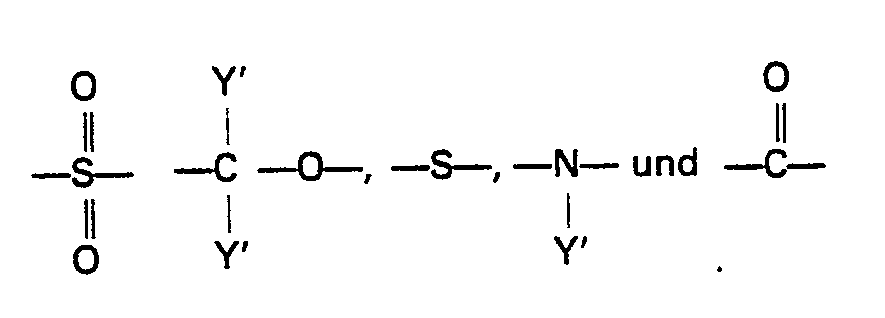
- Ar,, Ar 2 and Ar 3 be respectively selected, independently from each other, from the group consisting of the radicals of the formulae: wherein R represents a member selected from the group consisting of lower alkyl radicals having 1 to 6 carbon atoms, lower alkoxy radicals having 1 to 6 carbon atoms, halogen atoms and a nitro radical, n represents zero or an integer of from 1 to 4 and X' represents a member selected from the group consisting of wherein Y' represents a member selected from the group consisting of a hydrogen atom and lower alkyl radicals having 1 to 6 carbon atoms.
- Ar" Ar 2 and Ar 3 respectively represent, independently from each other, a member selected from p-phenylene radical, m-phenylene radical, biphenylene radical and radicals of the formulae: wherein X 2 represents a member selected from in which y2 represents a hydrogen atom or an alkyl radical having 1 to 3 carbon atoms.
- Ar" Ar 2 and Ar 3 be respectively a p-phenylene or m-phyenylene radical.
- the aromatic polyamide contain the repeating unis of the formula (II) in which Ar 2 and Ar 3 are respectively a p-phenylene or m-phenylene radical, most preferably, a m-phenylene radical.
- the aromatic polyamide may contain 30 molar % or less of one or more comonomers, for example, aliphatic diamines, such as hexamethylene diamine and piperazine, and aliphatic dicarboxylic acid, such as adipic acid, based on the entire molar amount of the comonomers contained in the polyamide.
- comonomers for example, aliphatic diamines, such as hexamethylene diamine and piperazine, and aliphatic dicarboxylic acid, such as adipic acid
- the wholly aromatic polyamide fibers usable for the present invention may be in the form of a mass of loose staple fibers, loose filaments, a woven, knitted or non-woven fabric or a net.
- the most important wholly aromatic polyamide fiber material is in the form of a woven, knitted or non-woven fabric.
- the fluorine-containing polymeric resin contains at least 30% by weight of fluorine.
- the coating of the fluorine-containing polymeric resin is formed by applying an aqueous emulsion of the fluorine-containing polymeric resin onto the wholly aromatic polyamide fiber material and by solidifying the emulsion in situ.
- the aqueous emulsion of the fluorine-containing polymeric resin forms a continuous rigid coating film firmly adhered to the surface of each fiber without adhering the fibers to each other.
- the continuous coating film of the fluorine-containing polymeric resin can protect the wholly aromatic polyamide fiber from chemicals such as acids or alkalies even at an elevated temperature.
- the coated fibers are separate from each other and, therefore, do not cause the fluid-permeability of the fiber material to be decreased. Accordingly, the coating of the fibers does not result in a decrease in the filtering property of the fiber material.
- the coated wholly aromatic plyamide fiber material exhibits a decreased degree of fluid-permeability, because the fibers are adhered to each other by the resin.
- the resultant coating films on the fiber surfaces are discontinuous and, sometimes adhere the fibers to each other. Therefore, the resultant fiber material exhibits a poor resistance to chemicals and an unsatisfactory filtering property.
- a preferable aqueous emulsion of the fluorine-containing polymeric resin in one prepared by an aqueous emulsion polymerization method may be prepared by emulsifying, in water, a fluorine-containing polymeric resin which has been prepared by a dispersion polymerization method.
- the fluorine-containing polymeric resins most preferable for the present invention are vinyl fluoride-hexafluoropropylene copolymers, tetrafluoroethylene-propylene copolymers, vinylidene fluoride-hexafluoropropylene copolymers, and tetrafluoroethylene-vinylidene fluoride copolymers.
- Aqueous emulsions of the above-mentioned fluorine-containing polymeric resins can form a continuous rigid film on each fiber at a lower temperature (for example, from 20 to 200°C). Therefore, the application of the above-mentioned resins onto the wholly aromatic polyamide fiber material is easy and the resultant products can exhibit excellent chemical-resistance and an excellent filtering property.
- the application of the aqueous emulsion of the fluorine-containing polymeric resin onto the wholly aromatic polyamide fiber material can be carried out by any conventional coating method, for example, impregnating method or spraying method, and the resultant films of the aqueous emulsion formed on the fiber surfaces are dried to convert them to solid flexible films of the fluorine-containing polymeric resin.
- the amount of the fluorine-containing polymeric resin coatings to be formed on the fiber surfaces is variable depending on the device of the individual fibers in the fiber material, the weight and surface area of the fiber material in the range of from 0.5 to 40% based on the weight of the fiber material.
- the amount of the fluorine-containing polymeric resin is less than 0.5%, the rsultant product exhibits an unsatisfactory resistance to chemicals.
- more than 40% of the fluorine-containing polymeric resin coated on the fiber material results in a decreased softness and an unsatisfactory fluid-permeability (filtering property) of the fiber material.
- the chemical-resistant wholly aromatic polyamide fiber material of the present invention exhibits an excellent resistance to chemicals and heat and a satisfactory fluid-permeability. Therefore, the fiber material of the present invention is highly useful for various uses in which the fiber material is employed at an elevated temperature in the presence of various acid and/or alkali substances.
- the chemical-resistant wholly aromatic polyamide fiber material of the present invention is useful as a filtering material, for instance, filter cloth and filtering fiber mass (web), for filtering exhaust gases from waste material-burning furnaces, boilers, blast furnaces, open-hearth furnaces, convertors, sintering furnaces and cupolas, exhaust gases of which have an elevated temperature and contain acid substances, for instance, S0 2 and S0 3 , together with dust.
- the fiber material of the present invention is useful as a filter cloth for various aqueous liquids containing alkaline substances, for instance, KOH or NaOH, together with solid particles, at an elevated temperature.
- the air-permeability of a fiber material was determined in the following manner.
- a fiber material to be tested is placed and fixed in the middle portion in the inside space of a cylinder having an inside diameter of 9 cm and a length of 60 cm, so as to separate the inside space into an upstream portion and a downstream portion thereof.
- Pressurized air was flowed into the upstream portion of the cylinder under a predetermined pressure at a speed of 2 m/sec.
- the pressure and speed of the air stream created in the downstream portion of the cylinder were measured by using a manometer. Differences in pressure and speed between the air streams in the upstream and, downstream portions of the cylinder were determined.
- a pressure loss due to the fiber material was expressed by the pressure difference per speed difference (m/sec) of the air stream.
- the resistance of the fiber material to acid substance were evaluated in the following manner.
- a film fabric to be tested was immersed in an aqueous solution of 5% by weight of sulfuric acid for one minute at room temperature, removed from the solution and squeezed so that the amount of the solution remaining in the fabric corresponds to 100% of the weight of the fabric.
- the fabric impregnated with the sulfuric acid aqueous solution was heated at a temperature of 150°C for one hour.
- the fiber material to be tested is a multifilament yarn
- the above-mentioned procedures were carried out, except that both ends of the filament yarns having a length of 20 cm were fixed on a testing flame and after the immersing operation, the filament yarn was directly subjected to the heating operation without applying the squeezing operation to the filament yarn.
- the oiled filaments were drawn at a draw ratio of 3 in a boiling water bath, and then, additionally drawn and heat-treated at a draw ratio of 1.3 on a heating plate having a temperature of 320°C.
- the heat-treated filaments wre crimped by using a stuffing box type crimping machine, and, then, cut to provide staple fibers having a length of 51 mm and a titer of 1.65 dtex.
- the staple fibers were converted into a felt having a weight of 150 g/m 2 by using a needle-punching machine.
- the felt was washed with acetone to remove the oiling agent from the felt and, then, dried.
- the dried felt exhibited a tensile strength of 138 N/cm and an ultimate elongation of 28.9%.
- the dried felt was immersed in an aqueous emulsion of a copolymer (F 16) of 80 molar % of vinyl fluoride with 20 molar % of hexafluoropropylene in a concentration as indicted in Table 1 and squeezed so that an amount of the copolymer as indicated in Table 1 was held by the felt.
- the squeezed felt was dried at a temperature of 90-C for two hours, washed with water and, finally, dried.
- the air permeability of the dried felt was determined. Also, the dried felt was subjected to one operation of the acid immersion-heat treatment test at a temperature of 150°C for one hour. The tensile strength and ultimate elongation of the tested felt were determined.
- Table 1 clearly shows that the air-permeability of the F-16 resin-treated felts in Examples 1 to 4 are similar to that of the non-treated felt. However, the acid resistance of the F-16 resin-treated felts is significantly superior to that of the non-treated felt.
- Example 5 the same procedures as those described in Example 1 were carried out, except that the amount of the resin F-16 coating on the felt was as indicated in Table 2, and the resin F-16-treated felt was repeatedly acid-treated five times. The results are indicated in Table 2.
- Example 7 the same procedures as those described in Example 1 were carried out, except that the amount of the resin F-16 coating was as indicted in Table 3 and the heating procedure for the acid-impregnated felt was carried out at a temperature of 200°C for three hours. The results are indicated in Table 3.
- Example 11 a multifilament yarn consisting of a poly-p-phenylene terephthalamide and having a yarn count of 220 dtex /100 filaments was coated with 4%, based on the weight of the yarn, of the resin F-16.
- the coated multifilament yarn was subjected to the same acid treatment as that described in Example 1.
- the acid-resistance in tensile strength was 97% and the acid-resistance in ultimate elongation was 92%.
- Comparative Example 4 the same procedures as those mentioned above were carried out, except that no resin F-16 was applied to the multifilament yarn.
- the acid-resistance in tensile strength was 52% and the acid-resistance in ultimate elongation was 40%.
- Example 11 The same procedures as those described in Example 11 were applied to a multifilament yarn consisting of a wholly aromatic polyamide made of an amine component consisting of 50 molar % of 3,4- oxydianiline and 50 molar % of p-phenylene diamine and an acid component consisting of terephthalic acid chloride.
- the multifilament yarn had a yarn count of 220 dtex /100 filaments.
- Example 2 The same procedures as those described in Example 1 were carried out, except that a solution of 5% by weight of the resin F-16 in methylethyl ketone was used in place of the aqueous emulsion of therein F-16.
- Air permeability 65 mbar/m/s
Landscapes
- Chemical & Material Sciences (AREA)
- Chemical Kinetics & Catalysis (AREA)
- Engineering & Computer Science (AREA)
- Textile Engineering (AREA)
- Health & Medical Sciences (AREA)
- Medicinal Chemistry (AREA)
- Polymers & Plastics (AREA)
- Organic Chemistry (AREA)
- Treatments For Attaching Organic Compounds To Fibrous Goods (AREA)
- Filtering Materials (AREA)
Claims (9)





Applications Claiming Priority (2)
| Application Number | Priority Date | Filing Date | Title |
|---|---|---|---|
| JP521980A JPS56107073A (en) | 1980-01-22 | 1980-01-22 | Improved all aromatic polyamide fiber and cloth |
| JP5219/80 | 1980-01-22 |
Publications (3)
| Publication Number | Publication Date |
|---|---|
| EP0032744A2 EP0032744A2 (de) | 1981-07-29 |
| EP0032744A3 EP0032744A3 (en) | 1982-03-31 |
| EP0032744B1 true EP0032744B1 (de) | 1986-05-28 |
Family
ID=11605078
Family Applications (1)
| Application Number | Title | Priority Date | Filing Date |
|---|---|---|---|
| EP81100344A Expired EP0032744B1 (de) | 1980-01-22 | 1981-01-17 | Chemisch widerstandsfähiges Fasermaterial aus aromatischen Polyamiden |
Country Status (4)
| Country | Link |
|---|---|
| US (1) | US4337155A (de) |
| EP (1) | EP0032744B1 (de) |
| JP (1) | JPS56107073A (de) |
| DE (1) | DE3174682D1 (de) |
Families Citing this family (31)
| Publication number | Priority date | Publication date | Assignee | Title |
|---|---|---|---|---|
| JPS56169846A (en) * | 1980-05-26 | 1981-12-26 | Teijin Ltd | Paper like article and method |
| US4507324A (en) * | 1982-07-06 | 1985-03-26 | Monsanto Company | Antisoiling nylon carpet yarns |
| EP0136727B2 (de) * | 1983-07-04 | 1992-10-07 | Akzo N.V. | Mit schmierenden Partikeln imprägniertes aromatisches Polyamidgarn, Verfahren zur Herstellung dieses Garnes und dasselbe enthaltendes Dichtungsmaterial oder Seil |
| JPS60231873A (ja) * | 1984-04-26 | 1985-11-18 | 帝人株式会社 | 全芳香族ポリアミド繊維 |
| US4609465A (en) * | 1984-05-21 | 1986-09-02 | Pall Corporation | Filter cartridge with a connector seal |
| JPS61149217A (ja) * | 1984-12-25 | 1986-07-07 | Teijin Ltd | 耐薬品性濾材 |
| JPS61174914A (ja) * | 1985-01-28 | 1986-08-06 | Toray Ind Inc | 固液分離用濾布 |
| US4767017A (en) * | 1985-05-31 | 1988-08-30 | E. I. Du Pont De Nemours And Company | Filament-wound pressure vessel |
| US4678821A (en) * | 1985-05-31 | 1987-07-07 | E. I. Du Pont De Nemours And Company | Composites |
| DE3680640D1 (de) * | 1985-11-07 | 1991-09-05 | Akzo Nv | Bewehrungselement aus kunststoff, verwendbar in armiertem beton, insbesondere in vorgespanntem beton, armierter beton versehen mit solchen bewehrungselementen und verfahren zur herstellung von bewehrungselementen und armiertem und vorgespanntem beton. |
| JPH0121998Y2 (de) * | 1986-08-09 | 1989-06-29 | ||
| USRE36396E (en) * | 1987-02-17 | 1999-11-16 | Rogers Corporation | Electrical substrate material comprising amorphous fused silica powder |
| US5384181B1 (en) * | 1987-02-17 | 2000-06-13 | World Properties Inc | Low volume fraction ceramic filled fluoropolymeric composite material |
| US4868042A (en) * | 1987-12-09 | 1989-09-19 | Pall Corporation | Antiwicking compositions and fabrics treated therewith |
| US4895752A (en) * | 1987-12-18 | 1990-01-23 | E. I. Du Pont De Nemours And Company | Low dielectric constant laminate of fluoropolymer and polyaramid |
| GB8813250D0 (en) * | 1988-06-04 | 1988-07-06 | Scapa Group Plc | Coated textile materials |
| JPH02210071A (ja) * | 1989-02-10 | 1990-08-21 | Teijin Ltd | 繊維構造物 |
| WO1992001108A1 (en) * | 1990-07-11 | 1992-01-23 | E.I. Du Pont De Nemours And Company | A method for improving the hydrolytic resistance of aramid fiber |
| WO1997006204A1 (en) * | 1995-08-03 | 1997-02-20 | Akzo Nobel N.V. | Fluororesin sheet, process for producing the same, and the use of same |
| US6036735A (en) * | 1998-03-17 | 2000-03-14 | Jps Converter And Industrial Fabrics Corporation | Finish for glass fiber fabric |
| WO2000071229A1 (en) * | 1999-05-26 | 2000-11-30 | Pall Corporation | Filtration process and filter |
| US6287689B1 (en) | 1999-12-28 | 2001-09-11 | Solutia Inc. | Low surface energy fibers |
| JP4317347B2 (ja) * | 2001-04-27 | 2009-08-19 | 日本バイリーン株式会社 | 自動変速機用オイルフィルタの濾過材 |
| US6630087B1 (en) | 2001-11-16 | 2003-10-07 | Solutia Inc. | Process of making low surface energy fibers |
| US20050098277A1 (en) * | 2002-02-06 | 2005-05-12 | Alex Bredemus | Reduced visibility insect screen |
| US6763875B2 (en) * | 2002-02-06 | 2004-07-20 | Andersen Corporation | Reduced visibility insect screen |
| US7294391B2 (en) * | 2003-01-09 | 2007-11-13 | Kabushiki Kaisha Suzutora | Contamination resistant fiber sheet |
| US20110184332A1 (en) * | 2010-01-27 | 2011-07-28 | Ryo Minoguchi | Tampon having a withdrawal string comprising a fluorocarbon compound |
| US20120248034A1 (en) * | 2011-04-01 | 2012-10-04 | Lydall, Inc. | Methods of making and using liquid filter media |
| CN106087243B (zh) * | 2016-06-12 | 2018-07-27 | 中材装备集团有限公司 | 一种聚酰亚胺和聚砜酰胺共混的过滤毡及其制备方法 |
| CN113144751B (zh) * | 2021-05-31 | 2023-04-18 | 山东聚芳新材料股份有限公司 | 一种复合过滤材料及其制备方法 |
Citations (5)
| Publication number | Priority date | Publication date | Assignee | Title |
|---|---|---|---|---|
| US3709721A (en) * | 1970-09-14 | 1973-01-09 | Pennwalt Corp | Heat and abrasion resistant textiles |
| FR2174277A1 (de) * | 1972-03-02 | 1973-10-12 | Johns Manville | |
| FR2391069A1 (fr) * | 1977-05-20 | 1978-12-15 | Dollfus & Noack | Bande pour calandre de thermo-impression et son procede de fabrication |
| DE2737343A1 (de) * | 1977-08-18 | 1979-03-01 | Verseidag | Flexibler, gasundurchlaessiger schlauch |
| EP0018523A1 (de) * | 1979-04-24 | 1980-11-12 | Teijin Limited | Kern-Mantel-Fasern aus aromatischen Polyamiden und Verfahren zu deren Herstellung |
Family Cites Families (11)
| Publication number | Priority date | Publication date | Assignee | Title |
|---|---|---|---|---|
| US3097990A (en) * | 1961-01-16 | 1963-07-16 | Armstrong Cork Co | Polytetrafluoroethylene saturated crocidolite fiber product |
| CS171779B1 (de) * | 1973-12-17 | 1976-11-29 | ||
| US3920428A (en) * | 1974-03-25 | 1975-11-18 | Ethyl Corp | Filter element |
| DE2556883C2 (de) * | 1974-12-27 | 1981-11-26 | Teijin Ltd., Osaka | Aromatische Copolyamide und deren Verwendung zur Herstellung von Fasern, Fäden, Filmen und Folien |
| US4029585A (en) * | 1975-07-26 | 1977-06-14 | E. I. Du Pont De Nemours And Company | Aqueous dispersions of perfluoroalkyl esters for treating textiles |
| US4165404A (en) * | 1975-09-26 | 1979-08-21 | E. I. Du Pont De Nemours And Company | Process for producing laminates of fabric and fluorocarbon copolymer |
| US4217227A (en) * | 1975-12-06 | 1980-08-12 | Bayer Aktiengesellschaft | Semipermeable membranes of copolyamides |
| JPS6011153B2 (ja) * | 1976-02-05 | 1985-03-23 | 古河電気工業株式会社 | フイルタ−用繊維糸の製造方法 |
| US4225642A (en) * | 1976-12-08 | 1980-09-30 | Teijin Limited | Raised and fused fabric filter and process for producing the same |
| JPS53119478A (en) * | 1977-03-29 | 1978-10-18 | Mitsubishi Heavy Ind Ltd | Method of treating a filtering material for guard masks |
| AU527442B2 (en) * | 1977-11-08 | 1983-03-03 | Duff King And Noel Trevor Bowman Christopher | Battery charger |
-
1980
- 1980-01-22 JP JP521980A patent/JPS56107073A/ja active Pending
-
1981
- 1981-01-14 US US06/225,036 patent/US4337155A/en not_active Expired - Fee Related
- 1981-01-17 DE DE8181100344T patent/DE3174682D1/de not_active Expired
- 1981-01-17 EP EP81100344A patent/EP0032744B1/de not_active Expired
Patent Citations (5)
| Publication number | Priority date | Publication date | Assignee | Title |
|---|---|---|---|---|
| US3709721A (en) * | 1970-09-14 | 1973-01-09 | Pennwalt Corp | Heat and abrasion resistant textiles |
| FR2174277A1 (de) * | 1972-03-02 | 1973-10-12 | Johns Manville | |
| FR2391069A1 (fr) * | 1977-05-20 | 1978-12-15 | Dollfus & Noack | Bande pour calandre de thermo-impression et son procede de fabrication |
| DE2737343A1 (de) * | 1977-08-18 | 1979-03-01 | Verseidag | Flexibler, gasundurchlaessiger schlauch |
| EP0018523A1 (de) * | 1979-04-24 | 1980-11-12 | Teijin Limited | Kern-Mantel-Fasern aus aromatischen Polyamiden und Verfahren zu deren Herstellung |
Also Published As
| Publication number | Publication date |
|---|---|
| US4337155A (en) | 1982-06-29 |
| DE3174682D1 (en) | 1986-07-03 |
| EP0032744A3 (en) | 1982-03-31 |
| EP0032744A2 (de) | 1981-07-29 |
| JPS56107073A (en) | 1981-08-25 |
Similar Documents
| Publication | Publication Date | Title |
|---|---|---|
| EP0032744B1 (de) | Chemisch widerstandsfähiges Fasermaterial aus aromatischen Polyamiden | |
| EP0186876B1 (de) | Chemisch widerstandfähiges Filtermaterial | |
| US6008146A (en) | Filter material and cartridge filters made therefrom | |
| JP4757200B2 (ja) | アラミドフィブリル | |
| JPH0716409A (ja) | 布にラミネートした濾過材 | |
| CN1389604A (zh) | 芳香族聚砜酰胺纤维的制造方法 | |
| CA2145252C (en) | Filter having chemical resistance, antistatic property and water vapor resistance, and process for producing the same | |
| AU4049093A (en) | Composite fiber of commingled fiberglass and polytetrafluoroethylene and method of producing same | |
| US5194322A (en) | Coated textile materials | |
| WO1998041397A1 (en) | An antiwetting composition for fabrics and fibrous substrates | |
| US3560137A (en) | Wholly aromatic polyamides of increased hydrolytic durability and solvent resistance | |
| EP0332919B1 (de) | Oberflächenmodifizierte, vollaromatische Polyamidfaser und Verfahren zu ihrer Herstellung | |
| JP3595059B2 (ja) | 耐酸性フィルター | |
| KR101130061B1 (ko) | 가공성 및 접착성이 우수한 전체 방향족 폴리아미드 섬유 | |
| JP3554594B2 (ja) | 耐酸性フィルター | |
| JPH01229870A (ja) | 高強度耐熱布帛及びその製法 | |
| JPH0952007A (ja) | 耐酸性フィルター | |
| JPH08299719A (ja) | 耐酸性フィルターの製造方法 | |
| CA1266262A (en) | Activated carbon fibers and yarns | |
| JPH06327919A (ja) | 耐薬品性濾過材及びその製造方法 | |
| JPS6356804B2 (de) | ||
| JPS6322849B2 (de) | ||
| JP2581827B2 (ja) | 耐薬品性アラミド組成物 | |
| JPH0257332A (ja) | フェルト積層体 | |
| Horrocks et al. | Chemically resistant fibres |
Legal Events
| Date | Code | Title | Description |
|---|---|---|---|
| PUAI | Public reference made under article 153(3) epc to a published international application that has entered the european phase |
Free format text: ORIGINAL CODE: 0009012 |
|
| AK | Designated contracting states |
Designated state(s): DE FR GB NL |
|
| PUAL | Search report despatched |
Free format text: ORIGINAL CODE: 0009013 |
|
| AK | Designated contracting states |
Designated state(s): DE FR GB NL |
|
| 17P | Request for examination filed |
Effective date: 19820123 |
|
| RBV | Designated contracting states (corrected) |
Designated state(s): DE GB NL |
|
| GRAA | (expected) grant |
Free format text: ORIGINAL CODE: 0009210 |
|
| AK | Designated contracting states |
Kind code of ref document: B1 Designated state(s): DE GB NL |
|
| REF | Corresponds to: |
Ref document number: 3174682 Country of ref document: DE Date of ref document: 19860703 |
|
| PLBE | No opposition filed within time limit |
Free format text: ORIGINAL CODE: 0009261 |
|
| STAA | Information on the status of an ep patent application or granted ep patent |
Free format text: STATUS: NO OPPOSITION FILED WITHIN TIME LIMIT |
|
| 26N | No opposition filed | ||
| PGFP | Annual fee paid to national office [announced via postgrant information from national office to epo] |
Ref country code: GB Payment date: 19891231 Year of fee payment: 10 |
|
| PGFP | Annual fee paid to national office [announced via postgrant information from national office to epo] |
Ref country code: NL Payment date: 19900131 Year of fee payment: 10 |
|
| PGFP | Annual fee paid to national office [announced via postgrant information from national office to epo] |
Ref country code: DE Payment date: 19900330 Year of fee payment: 10 |
|
| PG25 | Lapsed in a contracting state [announced via postgrant information from national office to epo] |
Ref country code: GB Effective date: 19910117 |
|
| PG25 | Lapsed in a contracting state [announced via postgrant information from national office to epo] |
Ref country code: NL Effective date: 19910801 |
|
| GBPC | Gb: european patent ceased through non-payment of renewal fee | ||
| NLV4 | Nl: lapsed or anulled due to non-payment of the annual fee | ||
| PG25 | Lapsed in a contracting state [announced via postgrant information from national office to epo] |
Ref country code: DE Effective date: 19911001 |