EP0031237A1 - Chinazolinderivate, Verfahren zu ihrer Herstellung, sie enthaltende Zusammensetzungen und ihre Verwendung als Anti-Krebs-Mittel - Google Patents
Chinazolinderivate, Verfahren zu ihrer Herstellung, sie enthaltende Zusammensetzungen und ihre Verwendung als Anti-Krebs-Mittel Download PDFInfo
- Publication number
- EP0031237A1 EP0031237A1 EP80304539A EP80304539A EP0031237A1 EP 0031237 A1 EP0031237 A1 EP 0031237A1 EP 80304539 A EP80304539 A EP 80304539A EP 80304539 A EP80304539 A EP 80304539A EP 0031237 A1 EP0031237 A1 EP 0031237A1
- Authority
- EP
- European Patent Office
- Prior art keywords
- compound
- group
- formula
- amino
- heteroatom
- Prior art date
- Legal status (The legal status is an assumption and is not a legal conclusion. Google has not performed a legal analysis and makes no representation as to the accuracy of the status listed.)
- Granted
Links
- 0 C*(C)CC(C(C)C1C2)=CC11C2=CC11CCC1 Chemical compound C*(C)CC(C(C)C1C2)=CC11C2=CC11CCC1 0.000 description 3
Images


Classifications
-
- C—CHEMISTRY; METALLURGY
- C07—ORGANIC CHEMISTRY
- C07D—HETEROCYCLIC COMPOUNDS
- C07D239/00—Heterocyclic compounds containing 1,3-diazine or hydrogenated 1,3-diazine rings
- C07D239/70—Heterocyclic compounds containing 1,3-diazine or hydrogenated 1,3-diazine rings condensed with carbocyclic rings or ring systems
- C07D239/72—Quinazolines; Hydrogenated quinazolines
- C07D239/95—Quinazolines; Hydrogenated quinazolines with hetero atoms directly attached in positions 2 and 4
-
- C—CHEMISTRY; METALLURGY
- C07—ORGANIC CHEMISTRY
- C07D—HETEROCYCLIC COMPOUNDS
- C07D205/00—Heterocyclic compounds containing four-membered rings with one nitrogen atom as the only ring hetero atom
- C07D205/02—Heterocyclic compounds containing four-membered rings with one nitrogen atom as the only ring hetero atom not condensed with other rings
- C07D205/04—Heterocyclic compounds containing four-membered rings with one nitrogen atom as the only ring hetero atom not condensed with other rings having no double bonds between ring members or between ring members and non-ring members
Definitions
- THIS INVENTION relates to quinazoline derivatives which are potent anti-tumour (anti-cancer) agents.
- antimetabolites are designed to kill the tumour by depleting its essential growth elements in competing with and displacing the substrates of specific enzymes involved in DNA synthesis.
- Antimetabolites can be classified according to their specific inhibitory action and examples include analogues of purines and pyrimidines and folic acid antagonists such as aminopterin and amethopterin (methotrexate).
- methotrexate is used widely in the treatment of human malignant disease, particularly in the treatment of choriocarcinoma and osteosarcoma and in the maintenance therapy of acute lymphatic leukaemia. Its inhibition of the enzyme dihydrofolate reductase (DHFR, EC 1.5.1.4) causes a depletion of the one carbon-
- methotrexate does not contribute to the cytotoxic effect of methotrexate against some cultured tumour cell lines and may antagonise it in others. Methotrexate does not require metabolic activation, and does not undergo significant metabolic degradation in the majority of cell types. Known causes of methotrexate resistance include reduced membrane transport and increased cellular DHFR.
- TS thymidylate synthetase
- the enzyme catalysing the terminal step in the de novo synthesis of thymidylate required exclusively for DNA synthesis.
- Direct inhibition of TS may be achieved by an active metabolite of 5-fluorouracil, 5-fluorodeoxyuridine monophosphate.
- 5-fluorouracil resistance is frequently accompanied by a reduction in the appropriate activating enzymes and the drug may also have toxic effects which are attributable to its incorporation into RNA.
- the compounds of the present invention are useful as anti-cancer agents which are either active as such or are suitable as pro-drugs which can be converted in vivo to provide active compounds.
- Preferred substituents R as defined under 1) are those containing 2-6 e.g. 4 and particularly 3, carbon atoms and especially those having unsaturation at least in the 2- or in the ⁇ -position.
- Examples of such groups are alkenyl, alkadienyl, alkynyl and alkadiynyl groups and particular examples are allyl, propargyl, but-2-ynyl, but-3-ynyl and I-methylprop-2-ynyl.
- the groups R as defined under 2) preferably contain up to 6 carbon atoms in the hydrocarbon chain, and particularly up to a total of 4 carbon atoms in the group R as a whole.
- the saturated hydrocarbon chain preferably contains 1-3 carbon atoms-while the unsaturated hydrocarbon chain preferably contains 3 or 4 carbon atoms.
- R groups are 2-oxopropyl, formylmethyl, 2,2,2-trifluoroethyl, and 2-chloro; 2-bromo-or 2-fluoroethyl.
- Preferred carbocyclic substituent groups contain 3-6 ring carbon atoms, particularly 3-5.
- An example of such a group R is cyclopropylmethyl.
- the carbocyclic ring may itself have at least one C 1 -C 4 alkyl substituent, preferably methyl, of which there are preferably 1-3, particularly 1..
- the substituent groups containing at least one heteroatom referred to in definition 2) of R preferably contain 1-6, particularly 1-4, heteroatoms for example halogeno, O, N or S. Particular examples of such groups are OH, NH 2 , CONH 2 , COOH and salts and esters thereof, CN, N0 2 , SH, methylsulphonyloxy, alkoxy and amino acid radicals.
- the group R as defined under 2) may be, for example, 2-hydroxyethyl, 3-hydroxypropyl, carbamoylmethyl, 2-aminoethyl, 2-mercaptoethyl, cyanomethyl, carboxymethyl, ethoxycarbonylmethyl, methylsulphonyloxyethyl, dimethylaminoethyl or methoxymethyl.
- the heteroatom-containing substituent groups may also contain rings which are either carbocyclic or heterocyclic rings.
- a particular example of a group including a carbocyclic ring and a heteroatom is phenacyl.
- the carbocyclic ring may itself be substituted by heteroatom-containing groups, preferably 1-3, e.g. which contain 1-3 heteroatoms which are O, N or S.
- Particular examples are C I -C 4 alkoxy (e.g. methoxy), OH, NH 2 , COOH, SH, keto, formyl and methylsulphonyloxy.
- Heterocyclic substituent groups preferably contain 3 to 6 ring atoms, particularly 3, 5 or 6, and the ring heteroatoms, of which there are preferably 1-3, can be N, S or O.
- An example of such an R group is oxiranylmethyl. These rings may be substituted by at least one C 1 -C 4 alkyl group, preferably methyl, or heteroatom-containing group and preferably by 1 or 2 of these groups. The substitution may be either at a ring carbon atom or heteroatom.
- a particular example of an R group in this category is 5-uracilylmethyl, i.e. a thyminyl group.
- the group X as a group containing at least one heteroatom preferably contains 1-3 heteroatoms which may for example be N or 0. Particular examples of such groups are C 1 -C 4 alkoxy and N0 2 . Other preferred groups X are halogeno e.g. chloro, and methyl.
- the alkyl groups in aralkyl X substituents will usually be 1-4 carbon atoms.
- the present invention covers the quinazoline derivatives in the form of their free acids and also in the form of pharmaceutically acceptable salts or esters of these acids,which can be partial salts and esters.
- the compounds containing glutamic acid and aspartic acid radicals the mono ester mono acid and diester derivatives and corresponding salt forms are also covered.
- R groups containing COOH groups for example can be in salt or ester form e.g. the ethyl ester.
- the salts of the present invention may be salts formed with physiologically acceptable inorganic or organic acids or bases, and are preferably sodium salts, e.g. disodium salts.
- esters are preferably lipophilic esters in which form the compound as a pro-drug may be transported to the enzyme site before being degraded to the corresponding acid form.
- preferred esters are those with C I -C 20 aliphatic groups, e.g. alkyl esters, preferably of 1 to 4 carbon atoms, especially the diethyl esters.
- the compounds of the present invention may be prepared by a partial or complete deprotection process carried out on a compound of formula: wherein X and n are as defined above, R2 is equivalent to R or is a group R in protected form, R1is hydrogen or an amino-protecting group and Y' represents a group of formula a), b) or c) as defined above for Y or a salt of said groups or said groups in partially or completely protected form, the protecting group in Y' being an ester group or other protecting group, the compound of formula Ia containing at least one protecting group. If deprotection is carried out to remove more than one protecting group, the deprotections may be carried out simultaneously or in any order.
- the acids and salts of the present invention can be prepared by complete deprotection of a compound of formula Ia
- the partial esters can be prepared by deprotection of the 2-amino group and the R 2 group as necessary, with Y' either already being in partial ester form or being in completely esterified form which is then partially deprotected and the full esters can be prepared by deprotection of the 2-amino and the R 2 group as necessary, with the Y' group in completely esterified form.
- Deprotection of the group Y' in ester form to form an acid can, for example, be carried out by mild saponification using a base such as NaOH.
- the resultant acid may, if desired,subsequently be subjected to reaction with an acid or base to form a pharmaceutically acceptable salt.
- the acid is allowed to react with NaOH to form the corresponding disodium salt.
- an acid product can be esterified, a salt product can be converted to an acid or ester or an ester product can be transesterified.
- the disodium salt of the compound of formula I may be formed by saponifying the diester with 3 moles NaOH aq per mole of diester and, when this reaction is complete, adding 1 mole HC1 aq per mole of diester and preferably freeze- drying the product salt. Salts can also be formed, e.g. at the 2-amino group, with an acid, such as HC1 or HBr.
- the particular protecting group R will usually be chosen having regard to the nature of the R and Y' groups and the desired product, i.e. such that the conditions required to remove the R 1 group will not affect the unprotected R group and will not remove protecting ester groups in Y' where these are required in the final product.
- An example of an R group is the pivaloyl group which can be removed in a saponification step using say NaOH to remove ester groups from Y'.
- R 2 is, as indicated, either equivalent to R or is a desired group R in protected form.
- R 2 in the latter instance may for example contain the group
- R 2 COOH in ester form, or the group OH protected by an acid group.
- R 2 are ethoxycarbonylmethyl and 3-acetoxypropyl which are deprotected to carboxymethyl and 3-hydroxypropyl, respectively. These R 2 groups may, however, themselves be examples of R.
- Another example of a protected form of R is where the substituent R2 does not merely contain an extra group, but where it is in a different form from the R group and undergoes conversion as the deprotection step. An example of this is given later where an R 2 group 2-hydroxy-3-bromopropyl undergoes a cyclisation reaction under the saponification conditions for removing ester groups from Y' and forms an oxiranylmethyl group R.
- the protected compound of formula Ia can itself be prepared by a coupling reaction as follows:- wherein R 1 , R 2 , X, n and Y' are as defined for the compound of formula Ia and X" is a leaving group, preferably halogeno, e.g. chloro or bromo, p-toluenesulphonate, methylsulphonate or trifluoromethylsulphonate.
- This conjugation is generally carried out in the presence of an acid acceptor e.g. calcium carbonate, potassium carbonate, 2,6-dimethylpyridine or triethylamine and in a solvent, e.g. N,N-dimethylacetamide or cellosolve.
- the amines of formula II above may be prepared by the direct reaction of a compound of formula R 2 x l (where R 2 is as defined above and X' is a leaving group, preferably halogeno, e.g. chloro or bromo, p-toluenesulphonate, methylsulphonate or trifluoromethylsulphonate) with N-(4-aminobenzoyl)-L-glutamate,-L-aspartate or -poly-L-glutamate in protected form.
- R 2 x l where R 2 is as defined above and X' is a leaving group, preferably halogeno, e.g. chloro or bromo, p-toluenesulphonate, methylsulphonate or trifluoromethylsulphonate
- An alternative method for forming the amine of formula II is that of Santi (see J. Heterocyclic. Chem. 4 475) using as starting material a 4-(((4-methylphenyl)-sulphonyl)amino)benzoate ester, e.g. the ethyl ester, which is allowed to react with a compound R 2 X' (where R 2 and X' are as defined above) to introduce the R 2 group onto the amino nitrogen.
- the ester is then saponified to the free acid, converted to the acid chloride and then coupled with a Y' group in protected, e.g. diester, form.
- the product is the amine of formula II bearing the protecting group CH 3 - ⁇ -SO 2 on the amino group which can then be removed.
- N-Bromosuccinimide may be used to effect bromination of the 6-methyl-2-trimethylacetamido-quinazoline.
- An alternative method for forming the protected compounds of formula Ia involves reacting the N 10 - unsubstituted conjugated compound in 2-amino protected form and Y' in protected form, with R 2 X' (where R 2 and X' are as defined above) in accordance with the following scheme:
- the compound of formula Ib can itself be prepared by the following reaction:- wherein X" is as defined above.
- X is as defined above.
- this reaction instead of the 6-CH 2 -X" compound of formula III, it is possible to use the corresponding 6-formyl or 6-cyano compounds since the compound of formula IIa bears no R group on the amino group at this stage of the reaction.
- the present invention also provides a pharmaceutical composition which comprises a therapeutically effective amount of an anti-cancer agent as defined for the present invention and a pharmaceutically acceptable carrier or diluent.
- a pharmaceutical composition which comprises a therapeutically effective amount of an anti-cancer agent as defined for the present invention and a pharmaceutically acceptable carrier or diluent.
- composition of the invention can, for example, be in a form suitable for parenteral (e.g. intravenous, intramuscular or intracavitary), oral, topical or rectal administration.
- Particular forms of the composition may be, for example, solutions, suspensions, emulsions, creams, tablets, capsules, liposomes or micro- reservoirs, especially compositions in sterile injectable form.
- a further aspect of the present invention thus resides in a method of treating cancer in the human or animal body by administering an anti-cancer agent of the present invention.
- Therapeutically effective doses in man are considered to be in the range of 50-500 mg/kg body weight.
- the compounds of the present invention are anticipated to show a wide range of antitumour activity against leukaemias, lymphoid malignancies and a spectrum of solid tumours, in particular carcinomas and sarcomas.
- the compounds of the invention could be co-administered with, or contained in a mixed formulation
- mitotic inhibitors e.g. vincristine, vinblastine
- alkylating agents e.g. cyclophosphamide, melphalan, myleran, chlorambucil, mustine
- antimetabolites e.g. 5-fluorouracil, 6-mercaptopurine, thioguanine, cytosine arabinoside, hydroxyurea
- intercalating antibiotics e.g. adriamycin, bleomycin
- enzymes e.g. asparaginase
- the compounds of the present invention may also be used as a component of a combined modality treatment, for example including radiotherapy and/or surgery.
- Diethyl N-(4-(prop-2-enylamino)benzoyl)-L-glutamate and diethyl N-(4-(prop-2-ynylamino) benzoyl)-L-glutamate were each alkylated with 2-amino-6-chloromethyl-4-hydroxyquinazoline.
- the products were diethyl N-(4-(N-((2-amino-4-hydroxy-6-quinazolinyl)methyl)prop-2- e nylamino)benzoyl)-L-glutamate (ester of CB 3716)and diethyl N-(4-(N-((2-amino-4-hydroxy-6-quinazolinyl)methyl) prop-2-ynylamino)benzoyl)-L-glutamate (CB 3721)in the form of non-crystalline gummy solids whose structure was confirmed by elemental analysis and NMR (soln. in DMSO-D 6 ), and the yields and melting points were: ester of CB 3716 :- 21.5%, 107-112°C; CB 3721:- 27.5%, 143-147°C.
- the starting materials for use in Examples 1 and 2 above may be prepared as follows:
- Diethyl N-(4-(prop-2-enylamino)benzoyl)-L-glutamate was prepared by treating diethyl N-(4-amino benzoyl)-L-glutamate (5.OOg) in ethanolic solution (100 ml) for 8 hrs. at 60°C with allyl bromide (5.4 m1) in the presence of potassium carbonate (2.14 g). Following removal of the solvent in vacuo the residue was dissolved in chloroform and the solution washed with water. The extract was dried (MgS0 4 ) and concentrated to give the crude product. This was purified by HPLC using 50:50 chloroform:petroleum ether as eluant.
- CB 3716 N-(4-(N-((2-amino-4-hydroxy-6-quinazolinyl)-methyl)prop-2-enylamino)benzoyl)-L-glutamic acid (CB 3716) and N-(4-(N-((2-amino-4-hydroxy-6-quinazolinyl)-methyl)prop-2-ynylamino)benzoyl)-L-glutamic acid (CB 3717) were obtained from the corresponding diethyl esters, which may be prepared as described in Example 1 or 2, by being suspended in 25% EtOH aq. (20 ml per mmol) and treated with 1N NaOH aq. (4 mol eq.). Vigorous shaking gave a solution within 5 min.
- Example 5 above may be prepared as follows
- the amine starting material for use in Example 7 above may be prepared as follows:
- the amine starting material used in Example 9 above may be prepared as follows:
- the amine starting material used in Example 11 above may be prepared as follows:
- N -(4-(N-((2-amino-4-hydroxy-6-quinazolinyl)methyl) 2-fluoroethylamino)benzoyl)-L-glutamate (0.206 g) was suspended in a mixture of water (4.5 ml) and ethanol (1 ml) and treated with 1N NaOH aq. (5 mol eq.). Vigorous shaking gave a solution within 5 min. After 2 hr. the solution was clarified by filtration and the pH brought to 4.0 using 1N HCl aq. A gelatinous precipitate of the product resulted. It was freed from inorganic ions by three cycles of suspension-centrifugation-decantation.
- the amorphous white solid was dried at 70°C in vacuo,(m.p. > 350°C with some darkening and slow decomposition from 245°C) giving N-(4-(N-((2-amino-4-hydroxy-6-quinazolinyl)methyl)2-fluoroethylamino)benzoyl)-L-glutamic acid (CB 3731), Yield 60.1%.
- the structure was confirmed by elemental analysis (C,H,N and F) and by uv spectroscopy (spectrum determined in 0.1N NaOH aq.). uv ⁇ (nm) ( ⁇ ) maxima: 307 (29,200), 275 (19,500), 227.5 (49,700); minima:279 (19,200), 250 (9,100).
- the compound of the invention may be mixed with the "Avicel” and polyvinyl pyrrolidone added, dissolved in sufficient industrial methylated spirits 74° OP to produce a mass suitable for granulating.
- the mass may be granulated through a 20 mesh sieve (British mesh standard) and the resultant granules dried at a temperature not exceeding 50°C.
- the dried granules may be passed through a 20 mesh sieve and the alginic acid and magnesium stearate then added and mixed with the granules.
- the product may be compressed into tablets.
- These tablets may be prepared by mixing a compound of the invention with lactose and half the total quantity of maize starch required, and adding to the mass a 5% w/v solution of gelatine in water.
- the product may be granulated through a
- the dried granules may be passed through a 20 mesh sieve and mixed with magnesium stearate and the remainder of the maize starch.
- the product may be compressed into tablets.
- An injectable solution may be prepared as follows: Where the compound of the invention is in acid form, it (2 mmol) may be dissolved in 100 ml of 0.9% NaCl aq. containing sufficient NaOH or other suitable base for its neutralisation.
- Example 2 The compounds of Example 2 were evaluated in vitro as inhibitors of TS and cell growth and in vivo against the L1210 tumour. Since methotrexate (MTX) resistance is an important problem in cancer therapy, the compounds of the present invention were also investigated with this in mind.
- the compounds CB 3716 and CB 3717 were each dissolved in N/10 NaOH and neutralised before use.
- the cytosol of log phase L1210 cells harvested from animals was partially purified for TS I 50 and Ki determinations to remove from the preparation a phosphatase which degrades dUMP to deoxyuridine.
- the I 50 was defined as the inhibitor concentration necessary to reduce the reaction rate of TS by 50%).
- DHFR was purified by affinity chromatography and Ki determinations performed.
- TS inhibition values which are enhanced approximately 3- and 30- fold respectively, while the inhibition of DHFR remains of the same order.
- the inhibition of TS by compound CB3717 was characterised and found to be competitive with N 5 ,N 10- methylenetetrahydrofolate with a Ki of approximately l.lnM.
- L1210 and L1210:R71 cells were grown in continuous suspension culture in RPMI 1640 medium containing 10% horse serum (Flow Laboratories, Irvine, Scotland, UK). Cells were diluted to 10 5 /ml and additions (diluted in medium and sterilised by Millipore filtration) made prior to starting each incubation. Cell counts were performed after 24 and 48 hours using an improved Neubauer haemocytometer. The ID 50 was defined as that concentration of drug necessary to reduce the 48 hour count to 50% of control.
- the ID 50 concentrations in cell culture for L1210 and L1210:R71 are shown in Table 2 below. Not only did the toxicity of the drugs to both cell lines increase with progressive unsaturation of the 10-substituent but also the degree of cross-resistance of the L1210 : R71 became less marked.
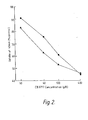
- the L1210:R71 is about 600 fold resistant to MTX. Reversal of the toxicity of compound CB 3717 could be achieved by co-incubation with thymidine (10 ⁇ M) but only partial reversal was achieved with folinic acid at any concentration up to 100 pM. These results are illustrated in Fig 1 of the accompanying drawings which shows protection of L1210 cells in culture from 20 ⁇ M CB 3717.
- Transport studies were conducted on compound CB 3717 as representative of the invention compounds by incubating cells in the presence of a labelled substance, removing aliquots, separating and washing the cells by centrifugation and counting the pellet.
- CB 3717 apparently avoids the problems of using methotrexate to which resistance can be built up by an increased cellular DHFR content and a reduction in that cell membrane transport mechanism responsible for carrying both the methotrexate and the tetrahydrofolate derivatives.
- the cytotoxic locus of CB 3717 is TS and not DHFR and the transport studies show that this compound can apparently be transported by the pathway used for methotrexate and also by that for folic acid since CB 3717 caused a dose-dependent reduction in the transport of both these materials.
- the L1210 tumour was carried routinely in DBA2 mice.
- 5 x 10 4 cells were implanted i.p. into female C57Bl x DBA2 Fl hybrid mice 3 days prior to treatment, giving an established tumour of about 2 x 10 6 cells at the time of treatment.
- the compound'CB 3717 was dissolved in N/10 NaOH, diluted to the appropriate volume and the pH adjusted to 8.5 before i.p. injection.
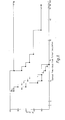
- Figure 3 illustrates the survival of L1210 bearing mice injected with CB 3717.
Landscapes
- Chemical & Material Sciences (AREA)
- Organic Chemistry (AREA)
- Pharmaceuticals Containing Other Organic And Inorganic Compounds (AREA)
- Plural Heterocyclic Compounds (AREA)
- Nitrogen And Oxygen Or Sulfur-Condensed Heterocyclic Ring Systems (AREA)
Priority Applications (1)
| Application Number | Priority Date | Filing Date | Title |
|---|---|---|---|
| AT80304539T ATE9900T1 (de) | 1979-12-19 | 1980-12-16 | Chinazolinderivate, verfahren zu ihrer herstellung, sie enthaltende zusammensetzungen und ihre verwendung als anti-krebs-mittel. |
Applications Claiming Priority (4)
| Application Number | Priority Date | Filing Date | Title |
|---|---|---|---|
| GB7943715 | 1979-12-19 | ||
| GB7943715 | 1979-12-19 | ||
| GB8006813 | 1980-02-28 | ||
| GB8006813 | 1980-02-28 |
Publications (2)
| Publication Number | Publication Date |
|---|---|
| EP0031237A1 true EP0031237A1 (de) | 1981-07-01 |
| EP0031237B1 EP0031237B1 (de) | 1984-10-17 |
Family
ID=26273917
Family Applications (1)
| Application Number | Title | Priority Date | Filing Date |
|---|---|---|---|
| EP80304539A Expired EP0031237B1 (de) | 1979-12-19 | 1980-12-16 | Chinazolinderivate, Verfahren zu ihrer Herstellung, sie enthaltende Zusammensetzungen und ihre Verwendung als Anti-Krebs-Mittel |
Country Status (17)
| Country | Link |
|---|---|
| US (2) | US4447608A (de) |
| EP (1) | EP0031237B1 (de) |
| AU (1) | AU543237B2 (de) |
| CA (1) | CA1184900A (de) |
| DE (1) | DE3069468D1 (de) |
| DK (1) | DK157019C (de) |
| ES (3) | ES497884A0 (de) |
| FI (1) | FI76791C (de) |
| GB (1) | GB2065653B (de) |
| GR (1) | GR72847B (de) |
| HU (1) | HU193505B (de) |
| IE (1) | IE51188B1 (de) |
| IL (1) | IL61756A (de) |
| NO (1) | NO154919C (de) |
| NZ (1) | NZ195876A (de) |
| PT (1) | PT72232B (de) |
| YU (1) | YU321180A (de) |
Cited By (11)
| Publication number | Priority date | Publication date | Assignee | Title |
|---|---|---|---|---|
| EP0204529A3 (en) * | 1985-05-31 | 1987-11-19 | National Research Development Corporation | Anti-cancer quinazoline derivatives |
| EP0239362A3 (en) * | 1986-03-27 | 1989-07-05 | Imperial Chemical Industries Plc | Anti-tumor agents |
| EP0340905A1 (de) * | 1988-04-01 | 1989-11-08 | Takeda Chemical Industries, Ltd. | Kondensierte Pyrimidine, ihre Herstellung und Verwendung |
| EP0365763A1 (de) * | 1988-09-30 | 1990-05-02 | Agouron Pharmaceuticals, Inc. | Zyklische Verbindungen als Antiproleferahne |
| EP0318225A3 (en) * | 1987-11-26 | 1990-12-05 | Imperial Chemical Industries Plc | 6-aryl aminomethyl quinoline derivatives and their use as anti-tumour agents |
| WO1992016512A1 (en) * | 1991-03-19 | 1992-10-01 | British Technology Group Plc | Anti-cancer compounds |
| US5223620A (en) * | 1988-04-01 | 1993-06-29 | Takeda Chemical Industries, Ltd. | Pyrido[2,3-d]pyrimidine compounds useful as intermediates |
| EP0562734A1 (de) * | 1992-03-11 | 1993-09-29 | Zeneca Limited | Verbindungen, die Quinazoline und Tetrazolring enthalten, als Antitumorverbindungen |
| WO1993019051A1 (en) * | 1992-03-18 | 1993-09-30 | British Technology Group Ltd | Dipeptidylquinazolones as anti-cancer agents |
| EP0284338B1 (de) * | 1987-03-25 | 1993-12-22 | Imperial Chemical Industries Plc | Anti-Tumor-Mittel |
| US9315506B2 (en) | 2007-04-11 | 2016-04-19 | Merck & Cie | 18F-labelled folates |
Families Citing this family (62)
| Publication number | Priority date | Publication date | Assignee | Title |
|---|---|---|---|---|
| US4927828A (en) * | 1985-03-08 | 1990-05-22 | The Trustees Of Princeton University | Diastereoisomeric tetrahydropyrido-(2,3,d) pyrimidine derivatives |
| US4684653A (en) * | 1985-03-08 | 1987-08-04 | The Trustees Of Princeton University | Pyrido(2,3-d)pyrimidine derivatives |
| US5026851A (en) * | 1985-03-08 | 1991-06-25 | The Trustees Of Princeton University | Pyrido[2,3-]pyrimidine derivatives |
| US5187167A (en) * | 1986-03-27 | 1993-02-16 | Imperial Chemical Industries Plc | Pharmaceutical compositions comprising quinazolin-4-one derivatives |
| US4833145A (en) * | 1986-06-30 | 1989-05-23 | The Trustees Of Princeton University | 4(3H)-oxo-5,6,7,8-tetrahydropyrido[2,3-d]pyrimidine derivatives |
| US4902796A (en) * | 1986-10-20 | 1990-02-20 | The Trustees Of Princeton University | 6-alkenyl and ethynyl derivatives of 2-amino-4-hydroxypyrido[2,3-d]pyrimidines |
| US4818819A (en) * | 1986-10-20 | 1989-04-04 | The Trustees Of Princeton University | Process for the preparation of fused pyridine compounds |
| US4857530A (en) * | 1987-11-03 | 1989-08-15 | Warner-Lambert Company | Substituted quinazolinones as anticancer agents |
| GB8809978D0 (en) * | 1988-04-27 | 1988-06-02 | Ici Plc | Anti-tumour agents |
| US5252573A (en) * | 1988-12-15 | 1993-10-12 | Imperial Chemical Industries Plc | Anti-tumor agents |
| GB8829296D0 (en) * | 1988-12-15 | 1989-01-25 | Ici Plc | Anti-tumour compounds |
| US5028608A (en) * | 1989-12-11 | 1991-07-02 | The Trustees Of Princeton University | N-(6-Amino-(pyrrolo(2,3-d)pyrimidin-3-ylacyl) )-glutamic acid derivatives |
| US5160727A (en) * | 1990-02-13 | 1992-11-03 | Warner-Lambert Company | Tumor cell sensitization method using quinazolinedione derivatives |
| US5286726A (en) * | 1990-04-12 | 1994-02-15 | The Regents Of The University Of Michigan | Difluoroglutamic acid conjugates with folates and anti-folates for the treatment of neoplastic diseases |
| AU640016B2 (en) * | 1990-05-30 | 1993-08-12 | Imperial Chemical Industries Plc | Hydroquinazoline derivatives |
| US6762188B1 (en) | 1990-06-19 | 2004-07-13 | Smithkline Beecham Corporation | Pharmaceutically active benzoquinazoline compounds |
| GB9013615D0 (en) * | 1990-06-19 | 1990-08-08 | Wellcome Found | Pharmaceutical compounds |
| US5145854A (en) * | 1991-11-27 | 1992-09-08 | Nair Madhavan G | 1-formyl-5,8,10-trideazafolates |
| US5430148A (en) * | 1992-03-31 | 1995-07-04 | Agouron Pharmaceuticals, Inc. | Antiproliferative quinazolines |
| CH684644A5 (de) * | 1992-07-13 | 1994-11-15 | Eprova Ag | 5,10-Methylentetrahydrofolsäure-Cyclodextrin-Einschlussverbindungen. |
| GB9223352D0 (en) * | 1992-11-06 | 1992-12-23 | Ici Plc | Tricyclic compounds |
| NZ277206A (en) * | 1993-12-06 | 1997-11-24 | Cytel Corp | Peptide inhibiting binding of vlh-4 receptor expressed in inflammatory leukocytes and fibronectin cs-1 peptide expressed on endothelial cells involved in inflammatory disease states |
| AU693143B2 (en) * | 1993-12-06 | 1998-06-25 | Cytel Corporation | CS-1 peptidomimetics, compositions and methods of using the same |
| US5821231A (en) * | 1993-12-06 | 1998-10-13 | Cytel Corporation | CS-1 peptidomimetics, compositions and methods of using same |
| US5770573A (en) * | 1993-12-06 | 1998-06-23 | Cytel Corporation | CS-1 peptidomimetics, compositions and methods of using the same |
| US5804396A (en) * | 1994-10-12 | 1998-09-08 | Sugen, Inc. | Assay for agents active in proliferative disorders |
| US5837524A (en) * | 1994-12-15 | 1998-11-17 | Sugen, Inc. | PYK2 related polynucleotide products |
| US5837815A (en) * | 1994-12-15 | 1998-11-17 | Sugen, Inc. | PYK2 related polypeptide products |
| JPH11507052A (ja) * | 1995-06-07 | 1999-06-22 | スージェン・インコーポレーテッド | キナゾリンおよび医薬組成物 |
| US5593999A (en) * | 1995-06-07 | 1997-01-14 | Nair; Madhavan G. | Non-classical folate analogue inhibitors of glycinamide ribonucleotide formyltransferase (GARFT) |
| US6716575B2 (en) | 1995-12-18 | 2004-04-06 | Sugen, Inc. | Diagnosis and treatment of AUR1 and/or AUR2 related disorders |
| US7119174B2 (en) * | 1995-12-18 | 2006-10-10 | Sugen, Inc. | Diagnosis and treatment of AUR1 and/or AUR2 related disorders |
| JP2001505779A (ja) * | 1996-12-11 | 2001-05-08 | スージェン・インコーポレーテッド | Pyk2関連産物および方法 |
| US6818440B2 (en) * | 1997-04-28 | 2004-11-16 | Sugen, Inc. | Diagnosis and treatment of alk-7 related disorders |
| US6228641B1 (en) | 1997-05-20 | 2001-05-08 | Sugen, Inc. | Diagnosis and treatment of PTP04 related disorders |
| US6342593B1 (en) | 1997-06-11 | 2002-01-29 | Sugen, Inc. | Diagnosis and treatment of ALP related disorders |
| US7115710B2 (en) * | 1997-06-11 | 2006-10-03 | Sugen, Inc. | Diagnosis and treatment of PTP related disorders |
| US6388063B1 (en) | 1997-06-18 | 2002-05-14 | Sugen, Inc. | Diagnosis and treatment of SAD related disorders |
| US6495353B1 (en) * | 1998-01-21 | 2002-12-17 | Sugen, Inc. | Human orthologues of wart |
| AU3642499A (en) * | 1998-04-14 | 1999-11-01 | Sugen, Inc. | Ste20-related protein kinases |
| US6861442B1 (en) | 1998-12-30 | 2005-03-01 | Sugen, Inc. | PYK2 and inflammation |
| GB9904275D0 (en) | 1999-02-24 | 1999-04-21 | Cancer Res Campaign Tech | Anti-cancer compounds |
| US6544974B2 (en) | 1999-09-23 | 2003-04-08 | G.D. Searle & Co. | (R)-chiral halogenated substituted fused heterocyclic amino compounds useful for inhibiting cholesteryl ester transfer protein activity |
| US6451830B1 (en) | 1999-09-23 | 2002-09-17 | G.D. Searle & Co. | Use of substituted N,N-disubstituted non-fused heterocyclo amino compounds for inhibiting cholesteryl ester transfer protein activity |
| US6677382B1 (en) | 1999-09-23 | 2004-01-13 | Pharmacia Corporation | Substituted N,N-bis-phenyl aminoalcohol compounds useful for inhibiting cholesteryl ester transfer protein activity |
| US7364866B2 (en) * | 1999-10-22 | 2008-04-29 | Pharmacia & Upjohn Company | Drosophila G protein coupled receptors, nucleic acids, and methods related to the same |
| EP1222273A2 (de) * | 1999-10-22 | 2002-07-17 | PHARMACIA & UPJOHN COMPANY | G-protein gekoppelten rezeptoren aus drosophila, nukleinsäuren und zugehörigen verfahren |
| US20030162223A1 (en) * | 1999-10-22 | 2003-08-28 | Lowery David E. | Drosophila G protein coupled receptors, nucleic acids, and methods related to the same |
| US20030082534A1 (en) * | 1999-11-16 | 2003-05-01 | Peter Lind | Novel G protein-coupled receptors |
| CA2388865A1 (en) * | 1999-11-16 | 2001-05-25 | Pharmacia & Upjohn Company | Novel g protein-coupled receptors |
| US6143776A (en) * | 2000-02-02 | 2000-11-07 | Sunesis Pharmaceuticals, Inc. | Tosylproline analogs as thymidylate synthase inhibitors |
| EP1265925A2 (de) * | 2000-02-23 | 2002-12-18 | PHARMACIA & UPJOHN COMPANY | G protein-gekoppelte rezeptoren |
| US20030027308A1 (en) * | 2000-05-30 | 2003-02-06 | Sugen Incorporated | Novel human protein phosphatases identified from genomic sequencing |
| CA2321345A1 (fr) * | 2000-10-02 | 2002-04-02 | Abdelbast Guerfi | Utilisation du graphite dans un composite pour reduire l'accumulation de glace |
| US20040157306A1 (en) * | 2000-11-13 | 2004-08-12 | Sugen Incorporated | Mammalian protein phosphatases |
| US20050069976A1 (en) * | 2001-02-14 | 2005-03-31 | Peter Lind | Protein-coupled receptor |
| KR100983962B1 (ko) | 2001-08-31 | 2010-09-27 | 비티지 인터내셔널 리미티드 | 항암제로서 사용되는 시클로펜타[g]퀴나졸린 화합물 |
| ES2373644T3 (es) | 2001-08-31 | 2012-02-07 | Btg International Limited | Uso de derivados de ciclopenta[g]quinazolina para el tratamiento del c�?ncer. |
| EP1446487A1 (de) * | 2001-11-13 | 2004-08-18 | Sugen, Inc. | Säuger-protein phosphatasen |
| US7537774B2 (en) * | 2005-12-23 | 2009-05-26 | Orion Therapeautics, Llc | Therapeutic formulation |
| US20110008347A1 (en) * | 2006-12-01 | 2011-01-13 | Agency For Science ,Technology And Research | Cancer-related protein kinases |
| US8273617B2 (en) | 2009-09-30 | 2012-09-25 | Suvolta, Inc. | Electronic devices and systems, and methods for making and using the same |
Citations (2)
| Publication number | Priority date | Publication date | Assignee | Title |
|---|---|---|---|---|
| US3471498A (en) * | 1967-08-11 | 1969-10-07 | Parke Davis & Co | Certain n-p-((2,4-diamino-6-quinazolinyl)-methyl)benzoylamino acids |
| US3472851A (en) * | 1964-02-20 | 1969-10-14 | Parke Davis & Co | Novel quinazolinyl methylamino-benzoylamino acid compounds |
-
1980
- 1980-12-16 EP EP80304539A patent/EP0031237B1/de not_active Expired
- 1980-12-16 GB GB8040202A patent/GB2065653B/en not_active Expired
- 1980-12-16 DE DE8080304539T patent/DE3069468D1/de not_active Expired
- 1980-12-17 HU HU803031A patent/HU193505B/hu unknown
- 1980-12-18 CA CA000367126A patent/CA1184900A/en not_active Expired
- 1980-12-18 FI FI803957A patent/FI76791C/fi not_active IP Right Cessation
- 1980-12-18 NO NO803868A patent/NO154919C/no unknown
- 1980-12-18 GR GR63713A patent/GR72847B/el unknown
- 1980-12-18 IE IE2672/80A patent/IE51188B1/en unknown
- 1980-12-18 IL IL61756A patent/IL61756A/xx unknown
- 1980-12-18 PT PT72232A patent/PT72232B/pt unknown
- 1980-12-18 NZ NZ195876A patent/NZ195876A/xx unknown
- 1980-12-18 YU YU03211/80A patent/YU321180A/xx unknown
- 1980-12-18 AU AU65495/80A patent/AU543237B2/en not_active Ceased
- 1980-12-18 ES ES497884A patent/ES497884A0/es active Granted
- 1980-12-18 DK DK540080A patent/DK157019C/da not_active IP Right Cessation
-
1981
- 1981-12-30 ES ES508454A patent/ES508454A0/es active Granted
- 1981-12-30 ES ES508453A patent/ES508453A0/es active Granted
-
1982
- 1982-10-19 US US06/435,215 patent/US4447608A/en not_active Expired - Lifetime
-
1984
- 1984-03-20 US US06/591,566 patent/US4564616A/en not_active Expired - Lifetime
Patent Citations (2)
| Publication number | Priority date | Publication date | Assignee | Title |
|---|---|---|---|---|
| US3472851A (en) * | 1964-02-20 | 1969-10-14 | Parke Davis & Co | Novel quinazolinyl methylamino-benzoylamino acid compounds |
| US3471498A (en) * | 1967-08-11 | 1969-10-07 | Parke Davis & Co | Certain n-p-((2,4-diamino-6-quinazolinyl)-methyl)benzoylamino acids |
Cited By (17)
| Publication number | Priority date | Publication date | Assignee | Title |
|---|---|---|---|---|
| US5236927A (en) * | 1985-05-30 | 1993-08-17 | National Research Development Corporation | Anti-cancer quinazoline derivatives |
| EP0204529A3 (en) * | 1985-05-31 | 1987-11-19 | National Research Development Corporation | Anti-cancer quinazoline derivatives |
| EP0239362A3 (en) * | 1986-03-27 | 1989-07-05 | Imperial Chemical Industries Plc | Anti-tumor agents |
| EP0284338B1 (de) * | 1987-03-25 | 1993-12-22 | Imperial Chemical Industries Plc | Anti-Tumor-Mittel |
| EP0318225A3 (en) * | 1987-11-26 | 1990-12-05 | Imperial Chemical Industries Plc | 6-aryl aminomethyl quinoline derivatives and their use as anti-tumour agents |
| US4946846A (en) * | 1988-04-01 | 1990-08-07 | Takeda Chemical Industries, Ltd. | Fused pyrimidines, their production and use |
| US5223620A (en) * | 1988-04-01 | 1993-06-29 | Takeda Chemical Industries, Ltd. | Pyrido[2,3-d]pyrimidine compounds useful as intermediates |
| EP0340905A1 (de) * | 1988-04-01 | 1989-11-08 | Takeda Chemical Industries, Ltd. | Kondensierte Pyrimidine, ihre Herstellung und Verwendung |
| EP0365763A1 (de) * | 1988-09-30 | 1990-05-02 | Agouron Pharmaceuticals, Inc. | Zyklische Verbindungen als Antiproleferahne |
| WO1992016512A1 (en) * | 1991-03-19 | 1992-10-01 | British Technology Group Plc | Anti-cancer compounds |
| EP0509643A1 (de) * | 1991-03-19 | 1992-10-21 | Btg International Limited | Anti-Tumor-Verbindungen |
| US5444061A (en) * | 1991-03-19 | 1995-08-22 | British Technology Group Limited | Anti-cancer compounds |
| EP0562734A1 (de) * | 1992-03-11 | 1993-09-29 | Zeneca Limited | Verbindungen, die Quinazoline und Tetrazolring enthalten, als Antitumorverbindungen |
| WO1993019051A1 (en) * | 1992-03-18 | 1993-09-30 | British Technology Group Ltd | Dipeptidylquinazolones as anti-cancer agents |
| US5561133A (en) * | 1992-03-18 | 1996-10-01 | British Technology Group Limited | Thymidylate synthase inhibiting quinazolinones |
| US9315506B2 (en) | 2007-04-11 | 2016-04-19 | Merck & Cie | 18F-labelled folates |
| US9771368B2 (en) | 2007-04-11 | 2017-09-26 | Merck & Cie | 18F-labelled folates |
Also Published As
| Publication number | Publication date |
|---|---|
| CA1184900A (en) | 1985-04-02 |
| NO154919C (no) | 1987-01-14 |
| AU6549580A (en) | 1981-06-25 |
| FI76791C (fi) | 1988-12-12 |
| ES8300716A1 (es) | 1982-11-01 |
| DK540080A (da) | 1981-06-20 |
| GR72847B (de) | 1983-12-07 |
| GB2065653B (en) | 1983-03-09 |
| IL61756A0 (en) | 1981-01-30 |
| ES8308314A1 (es) | 1983-09-01 |
| NZ195876A (en) | 1983-11-18 |
| FI803957L (fi) | 1981-06-20 |
| DK157019B (da) | 1989-10-30 |
| ES497884A0 (es) | 1982-11-01 |
| ES508453A0 (es) | 1983-09-01 |
| ES8307762A1 (es) | 1983-08-01 |
| IE802672L (en) | 1981-06-19 |
| GB2065653A (en) | 1981-07-01 |
| EP0031237B1 (de) | 1984-10-17 |
| US4447608A (en) | 1984-05-08 |
| DK157019C (da) | 1990-03-26 |
| US4564616A (en) | 1986-01-14 |
| PT72232A (en) | 1981-01-01 |
| IL61756A (en) | 1987-02-27 |
| DE3069468D1 (en) | 1984-11-22 |
| PT72232B (en) | 1981-11-02 |
| AU543237B2 (en) | 1985-04-04 |
| NO154919B (no) | 1986-10-06 |
| NO803868L (no) | 1981-06-22 |
| FI76791B (fi) | 1988-08-31 |
| YU321180A (en) | 1983-06-30 |
| HU193505B (en) | 1987-10-28 |
| ES508454A0 (es) | 1983-08-01 |
| IE51188B1 (en) | 1986-10-29 |
Similar Documents
| Publication | Publication Date | Title |
|---|---|---|
| US4447608A (en) | Anti-cancer quinazoline derivatives | |
| US5236927A (en) | Anti-cancer quinazoline derivatives | |
| Marsham et al. | Quinazoline antifolate thymidylate synthase inhibitors: heterocyclic benzoyl ring modifications | |
| KR100221011B1 (ko) | 항-종양 화합물, 이의 제조 방법 및 이를 함유하는 약학 조성물 | |
| GB2188319A (en) | Anti-tumour quinazolines | |
| NZ251804A (en) | Aromatic quinazoline derivatives and medicaments | |
| US4996207A (en) | Three new non-polyglutamatable deazaaminopterins | |
| EP1062209A1 (de) | Metabolisch inerte antifolate mit entzündungshemmender und anti-tumor wirkung | |
| RU2266280C2 (ru) | Замещенные производные n-бензилиндол-3-ил-глиоксиловой кислоты, обладающие противоопухолевым действием (варианты), их кислотно-аддитивные соли (варианты), фармацевтический препарат, фармацевтическая форма | |
| US5073554A (en) | Two non-polyglutamatable antifolates | |
| AU8545091A (en) | Antiproliferative substituted naphthalene compounds | |
| JPH01313469A (ja) | キナゾリン、その製法及びこれを含有する抗腫瘍作用を有する製薬学的組成物 | |
| EP0365763A1 (de) | Zyklische Verbindungen als Antiproleferahne | |
| US20080207652A1 (en) | Novel inhibitors of folic acid-dependent enzymes | |
| EP0638079A1 (de) | Deazaaminopterine für behandlung von entzündungen | |
| WO1992005173A1 (en) | Substituted tricyclic compounds | |
| US5145854A (en) | 1-formyl-5,8,10-trideazafolates | |
| Rosowsky et al. | Synthesis and biological activity of the 2-desamino and 2-desamino-2-methyl analogs of aminopterin and methotrexate | |
| JPH0512347B2 (de) |
Legal Events
| Date | Code | Title | Description |
|---|---|---|---|
| PUAI | Public reference made under article 153(3) epc to a published international application that has entered the european phase |
Free format text: ORIGINAL CODE: 0009012 |
|
| AK | Designated contracting states |
Designated state(s): AT BE CH DE FR GB IT LU NL SE |
|
| 17P | Request for examination filed |
Effective date: 19811221 |
|
| ITF | It: translation for a ep patent filed | ||
| GRAA | (expected) grant |
Free format text: ORIGINAL CODE: 0009210 |
|
| AK | Designated contracting states |
Designated state(s): AT BE CH DE FR GB IT LI LU NL SE |
|
| REF | Corresponds to: |
Ref document number: 9900 Country of ref document: AT Date of ref document: 19841115 Kind code of ref document: T |
|
| REF | Corresponds to: |
Ref document number: 3069468 Country of ref document: DE Date of ref document: 19841122 |
|
| ET | Fr: translation filed | ||
| PG25 | Lapsed in a contracting state [announced via postgrant information from national office to epo] |
Ref country code: LU Free format text: LAPSE BECAUSE OF NON-PAYMENT OF DUE FEES Effective date: 19841231 |
|
| PLBE | No opposition filed within time limit |
Free format text: ORIGINAL CODE: 0009261 |
|
| STAA | Information on the status of an ep patent application or granted ep patent |
Free format text: STATUS: NO OPPOSITION FILED WITHIN TIME LIMIT |
|
| 26N | No opposition filed | ||
| PGFP | Annual fee paid to national office [announced via postgrant information from national office to epo] |
Ref country code: LU Payment date: 19901107 Year of fee payment: 11 |
|
| PGFP | Annual fee paid to national office [announced via postgrant information from national office to epo] |
Ref country code: SE Payment date: 19901127 Year of fee payment: 11 |
|
| PGFP | Annual fee paid to national office [announced via postgrant information from national office to epo] |
Ref country code: AT Payment date: 19901129 Year of fee payment: 11 |
|
| PGFP | Annual fee paid to national office [announced via postgrant information from national office to epo] |
Ref country code: NL Payment date: 19901231 Year of fee payment: 11 |
|
| PGFP | Annual fee paid to national office [announced via postgrant information from national office to epo] |
Ref country code: BE Payment date: 19910214 Year of fee payment: 11 |
|
| EPTA | Lu: last paid annual fee | ||
| PG25 | Lapsed in a contracting state [announced via postgrant information from national office to epo] |
Ref country code: AT Effective date: 19911216 |
|
| PG25 | Lapsed in a contracting state [announced via postgrant information from national office to epo] |
Ref country code: SE Effective date: 19911217 |
|
| PG25 | Lapsed in a contracting state [announced via postgrant information from national office to epo] |
Ref country code: BE Effective date: 19911231 |
|
| REG | Reference to a national code |
Ref country code: GB Ref legal event code: 732 |
|
| BERE | Be: lapsed |
Owner name: NATIONAL RESEARCH DEVELOPMENT CORP. Effective date: 19911231 |
|
| PG25 | Lapsed in a contracting state [announced via postgrant information from national office to epo] |
Ref country code: NL Effective date: 19920701 |
|
| ITPR | It: changes in ownership of a european patent |
Owner name: CESSIONE;BRITISH TECHNOLOGY GROUP LIMITED |
|
| NLV4 | Nl: lapsed or anulled due to non-payment of the annual fee | ||
| REG | Reference to a national code |
Ref country code: FR Ref legal event code: TP |
|
| REG | Reference to a national code |
Ref country code: CH Ref legal event code: PUE Owner name: BRITISH TECHNOLOGY GROUP LTD |
|
| ITTA | It: last paid annual fee | ||
| EUG | Se: european patent has lapsed |
Ref document number: 80304539.2 Effective date: 19920704 |
|
| PGFP | Annual fee paid to national office [announced via postgrant information from national office to epo] |
Ref country code: FR Payment date: 19990918 Year of fee payment: 20 |
|
| PGFP | Annual fee paid to national office [announced via postgrant information from national office to epo] |
Ref country code: GB Payment date: 19991019 Year of fee payment: 20 Ref country code: DE Payment date: 19991019 Year of fee payment: 20 Ref country code: CH Payment date: 19991019 Year of fee payment: 20 |
|
| PG25 | Lapsed in a contracting state [announced via postgrant information from national office to epo] |
Ref country code: LI Free format text: LAPSE BECAUSE OF EXPIRATION OF PROTECTION Effective date: 20001215 Ref country code: GB Free format text: LAPSE BECAUSE OF EXPIRATION OF PROTECTION Effective date: 20001215 Ref country code: CH Free format text: LAPSE BECAUSE OF EXPIRATION OF PROTECTION Effective date: 20001215 |
|
| REG | Reference to a national code |
Ref country code: GB Ref legal event code: PE20 Effective date: 20001215 |
|
| REG | Reference to a national code |
Ref country code: CH Ref legal event code: PL |