EP0011693A1 - Neue N-(trifluormethansulfonylaminophenyl)-substituierte N-Heterocyclen, ihre Herstellung, sie enthaltende Mittel und ihre Verwendung zur Beeinflussung des Pflanzenwachstums - Google Patents
Neue N-(trifluormethansulfonylaminophenyl)-substituierte N-Heterocyclen, ihre Herstellung, sie enthaltende Mittel und ihre Verwendung zur Beeinflussung des Pflanzenwachstums Download PDFInfo
- Publication number
- EP0011693A1 EP0011693A1 EP79103734A EP79103734A EP0011693A1 EP 0011693 A1 EP0011693 A1 EP 0011693A1 EP 79103734 A EP79103734 A EP 79103734A EP 79103734 A EP79103734 A EP 79103734A EP 0011693 A1 EP0011693 A1 EP 0011693A1
- Authority
- EP
- European Patent Office
- Prior art keywords
- formula
- aryl
- alkyl
- phenyl
- optionally substituted
- Prior art date
- Legal status (The legal status is an assumption and is not a legal conclusion. Google has not performed a legal analysis and makes no representation as to the accuracy of the status listed.)
- Withdrawn
Links
- 238000002360 preparation method Methods 0.000 title claims abstract description 11
- 230000008635 plant growth Effects 0.000 title claims abstract description 10
- 239000000203 mixture Substances 0.000 title abstract description 21
- 230000001105 regulatory effect Effects 0.000 title 1
- 241000196324 Embryophyta Species 0.000 claims abstract description 41
- 150000001875 compounds Chemical class 0.000 claims abstract description 39
- 229910052736 halogen Inorganic materials 0.000 claims abstract description 31
- 150000002367 halogens Chemical class 0.000 claims abstract description 29
- 239000003795 chemical substances by application Substances 0.000 claims abstract description 19
- 229910052739 hydrogen Inorganic materials 0.000 claims abstract description 19
- 239000001257 hydrogen Substances 0.000 claims abstract description 19
- UFHFLCQGNIYNRP-UHFFFAOYSA-N Hydrogen Chemical compound [H][H] UFHFLCQGNIYNRP-UHFFFAOYSA-N 0.000 claims abstract description 16
- 125000001797 benzyl group Chemical group [H]C1=C([H])C([H])=C(C([H])=C1[H])C([H])([H])* 0.000 claims abstract description 16
- 125000000623 heterocyclic group Chemical group 0.000 claims abstract description 16
- OKTJSMMVPCPJKN-UHFFFAOYSA-N Carbon Chemical group [C] OKTJSMMVPCPJKN-UHFFFAOYSA-N 0.000 claims abstract description 13
- 230000002363 herbicidal effect Effects 0.000 claims abstract description 11
- 125000005842 heteroatom Chemical group 0.000 claims abstract description 11
- 150000002431 hydrogen Chemical class 0.000 claims abstract description 11
- 238000000034 method Methods 0.000 claims abstract description 11
- 229910052757 nitrogen Inorganic materials 0.000 claims abstract description 10
- 229910052717 sulfur Inorganic materials 0.000 claims abstract description 9
- 125000004093 cyano group Chemical group *C#N 0.000 claims abstract description 7
- 230000008569 process Effects 0.000 claims abstract description 6
- 125000000449 nitro group Chemical group [O-][N+](*)=O 0.000 claims abstract description 5
- 125000001188 haloalkyl group Chemical group 0.000 claims abstract description 4
- 229910052698 phosphorus Inorganic materials 0.000 claims abstract description 4
- -1 R b C 1 -C 5 alkyl Chemical class 0.000 claims description 53
- 125000000217 alkyl group Chemical group 0.000 claims description 30
- 125000001997 phenyl group Chemical class [H]C1=C([H])C([H])=C(*)C([H])=C1[H] 0.000 claims description 24
- 230000012010 growth Effects 0.000 claims description 13
- 125000003545 alkoxy group Chemical group 0.000 claims description 12
- 235000013339 cereals Nutrition 0.000 claims description 10
- 241000209504 Poaceae Species 0.000 claims description 8
- 239000000969 carrier Substances 0.000 claims description 8
- 125000006552 (C3-C8) cycloalkyl group Chemical group 0.000 claims description 7
- 230000002401 inhibitory effect Effects 0.000 claims description 7
- 239000000654 additive Substances 0.000 claims description 6
- 125000003342 alkenyl group Chemical group 0.000 claims description 6
- 150000003839 salts Chemical class 0.000 claims description 6
- SNOOUWRIMMFWNE-UHFFFAOYSA-M sodium;6-[(3,4,5-trimethoxybenzoyl)amino]hexanoate Chemical compound [Na+].COC1=CC(C(=O)NCCCCCC([O-])=O)=CC(OC)=C1OC SNOOUWRIMMFWNE-UHFFFAOYSA-M 0.000 claims description 6
- NINIDFKCEFEMDL-UHFFFAOYSA-N Sulfur Chemical group [S] NINIDFKCEFEMDL-UHFFFAOYSA-N 0.000 claims description 5
- CIUQDSCDWFSTQR-UHFFFAOYSA-N [C]1=CC=CC=C1 Chemical class [C]1=CC=CC=C1 CIUQDSCDWFSTQR-UHFFFAOYSA-N 0.000 claims description 5
- 235000010469 Glycine max Nutrition 0.000 claims description 4
- 244000068988 Glycine max Species 0.000 claims description 4
- 235000002637 Nicotiana tabacum Nutrition 0.000 claims description 4
- 244000061176 Nicotiana tabacum Species 0.000 claims description 4
- 125000004450 alkenylene group Chemical group 0.000 claims description 4
- 125000000304 alkynyl group Chemical group 0.000 claims description 4
- 150000001412 amines Chemical class 0.000 claims description 4
- 229920006395 saturated elastomer Polymers 0.000 claims description 4
- 239000011593 sulfur Substances 0.000 claims description 4
- 125000004183 alkoxy alkyl group Chemical class 0.000 claims description 3
- 125000005081 alkoxyalkoxyalkyl group Chemical class 0.000 claims description 3
- 125000000262 haloalkenyl group Chemical group 0.000 claims description 3
- 125000004433 nitrogen atom Chemical group N* 0.000 claims description 3
- ITMCEJHCFYSIIV-UHFFFAOYSA-N triflic acid Chemical compound OS(=O)(=O)C(F)(F)F ITMCEJHCFYSIIV-UHFFFAOYSA-N 0.000 claims description 3
- 125000006569 (C5-C6) heterocyclic group Chemical group 0.000 claims description 2
- 125000002947 alkylene group Chemical group 0.000 claims description 2
- 150000008064 anhydrides Chemical class 0.000 claims description 2
- 150000001555 benzenes Chemical class 0.000 claims description 2
- 125000004430 oxygen atom Chemical group O* 0.000 claims description 2
- 125000000286 phenylethyl group Chemical group [H]C1=C([H])C([H])=C(C([H])=C1[H])C([H])([H])C([H])([H])* 0.000 claims description 2
- KAKQVSNHTBLJCH-UHFFFAOYSA-N trifluoromethanesulfonimidic acid Chemical compound NS(=O)(=O)C(F)(F)F KAKQVSNHTBLJCH-UHFFFAOYSA-N 0.000 claims description 2
- 239000000543 intermediate Substances 0.000 abstract description 8
- WJKHJLXJJJATHN-UHFFFAOYSA-N triflic anhydride Chemical compound FC(F)(F)S(=O)(=O)OS(=O)(=O)C(F)(F)F WJKHJLXJJJATHN-UHFFFAOYSA-N 0.000 abstract description 8
- 229910052760 oxygen Inorganic materials 0.000 abstract description 7
- 125000004178 (C1-C4) alkyl group Chemical group 0.000 abstract description 6
- 125000003277 amino group Chemical group 0.000 abstract description 3
- XXIJULGGGYXMAT-UHFFFAOYSA-N 1-(5-amino-2,4-dimethylphenyl)imidazolidin-2-one Chemical compound C1=C(N)C(C)=CC(C)=C1N1C(=O)NCC1 XXIJULGGGYXMAT-UHFFFAOYSA-N 0.000 abstract description 2
- 239000004215 Carbon black (E152) Substances 0.000 abstract 1
- 230000033228 biological regulation Effects 0.000 abstract 1
- 229930195733 hydrocarbon Natural products 0.000 abstract 1
- HEMHJVSKTPXQMS-UHFFFAOYSA-M Sodium hydroxide Chemical compound [OH-].[Na+] HEMHJVSKTPXQMS-UHFFFAOYSA-M 0.000 description 51
- 239000004480 active ingredient Substances 0.000 description 42
- 239000000243 solution Substances 0.000 description 42
- XLYOFNOQVPJJNP-UHFFFAOYSA-N water Substances O XLYOFNOQVPJJNP-UHFFFAOYSA-N 0.000 description 27
- 238000004519 manufacturing process Methods 0.000 description 25
- VEXZGXHMUGYJMC-UHFFFAOYSA-N Hydrochloric acid Chemical compound Cl VEXZGXHMUGYJMC-UHFFFAOYSA-N 0.000 description 21
- JLTDJTHDQAWBAV-UHFFFAOYSA-N N,N-dimethylaniline Chemical compound CN(C)C1=CC=CC=C1 JLTDJTHDQAWBAV-UHFFFAOYSA-N 0.000 description 21
- 239000000047 product Substances 0.000 description 19
- HEDRZPFGACZZDS-UHFFFAOYSA-N Chloroform Chemical compound ClC(Cl)Cl HEDRZPFGACZZDS-UHFFFAOYSA-N 0.000 description 18
- XEKOWRVHYACXOJ-UHFFFAOYSA-N Ethyl acetate Chemical compound CCOC(C)=O XEKOWRVHYACXOJ-UHFFFAOYSA-N 0.000 description 18
- YXFVVABEGXRONW-UHFFFAOYSA-N Toluene Chemical compound CC1=CC=CC=C1 YXFVVABEGXRONW-UHFFFAOYSA-N 0.000 description 16
- 0 *C1C(C2)C2CCC1 Chemical compound *C1C(C2)C2CCC1 0.000 description 15
- YMWUJEATGCHHMB-UHFFFAOYSA-N Dichloromethane Chemical compound ClCCl YMWUJEATGCHHMB-UHFFFAOYSA-N 0.000 description 15
- OKKJLVBELUTLKV-UHFFFAOYSA-N Methanol Chemical compound OC OKKJLVBELUTLKV-UHFFFAOYSA-N 0.000 description 15
- 239000005995 Aluminium silicate Substances 0.000 description 11
- 235000012211 aluminium silicate Nutrition 0.000 description 11
- NLYAJNPCOHFWQQ-UHFFFAOYSA-N kaolin Chemical compound O.O.O=[Al]O[Si](=O)O[Si](=O)O[Al]=O NLYAJNPCOHFWQQ-UHFFFAOYSA-N 0.000 description 11
- 239000002904 solvent Substances 0.000 description 11
- PXHVJJICTQNCMI-UHFFFAOYSA-N Nickel Chemical compound [Ni] PXHVJJICTQNCMI-UHFFFAOYSA-N 0.000 description 10
- WEVYAHXRMPXWCK-UHFFFAOYSA-N Acetonitrile Chemical compound CC#N WEVYAHXRMPXWCK-UHFFFAOYSA-N 0.000 description 9
- 239000007868 Raney catalyst Substances 0.000 description 9
- 229910000564 Raney nickel Inorganic materials 0.000 description 9
- 239000012141 concentrate Substances 0.000 description 9
- 239000008187 granular material Substances 0.000 description 8
- 239000004009 herbicide Substances 0.000 description 8
- VLKZOEOYAKHREP-UHFFFAOYSA-N n-Hexane Chemical compound CCCCCC VLKZOEOYAKHREP-UHFFFAOYSA-N 0.000 description 8
- 239000007787 solid Substances 0.000 description 8
- 238000003756 stirring Methods 0.000 description 8
- 125000000229 (C1-C4)alkoxy group Chemical group 0.000 description 7
- 239000013543 active substance Substances 0.000 description 7
- 230000000694 effects Effects 0.000 description 7
- 239000006072 paste Substances 0.000 description 7
- 125000004209 (C1-C8) alkyl group Chemical group 0.000 description 6
- KHKBILRECCMUQM-UHFFFAOYSA-N 1-isocyanato-2,4-dimethyl-5-nitrobenzene Chemical compound CC1=CC(C)=C([N+]([O-])=O)C=C1N=C=O KHKBILRECCMUQM-UHFFFAOYSA-N 0.000 description 6
- UHOVQNZJYSORNB-UHFFFAOYSA-N Benzene Chemical compound C1=CC=CC=C1 UHOVQNZJYSORNB-UHFFFAOYSA-N 0.000 description 6
- WYURNTSHIVDZCO-UHFFFAOYSA-N Tetrahydrofuran Chemical compound C1CCOC1 WYURNTSHIVDZCO-UHFFFAOYSA-N 0.000 description 6
- ZMANZCXQSJIPKH-UHFFFAOYSA-N Triethylamine Chemical compound CCN(CC)CC ZMANZCXQSJIPKH-UHFFFAOYSA-N 0.000 description 6
- 229910052784 alkaline earth metal Inorganic materials 0.000 description 6
- 239000000839 emulsion Substances 0.000 description 6
- 239000000126 substance Substances 0.000 description 6
- 239000000725 suspension Substances 0.000 description 6
- 238000012360 testing method Methods 0.000 description 6
- IAYPIBMASNFSPL-UHFFFAOYSA-N Ethylene oxide Chemical group C1CO1 IAYPIBMASNFSPL-UHFFFAOYSA-N 0.000 description 5
- 239000002202 Polyethylene glycol Substances 0.000 description 5
- VYPSYNLAJGMNEJ-UHFFFAOYSA-N Silicium dioxide Chemical compound O=[Si]=O VYPSYNLAJGMNEJ-UHFFFAOYSA-N 0.000 description 5
- 239000008346 aqueous phase Substances 0.000 description 5
- 239000002585 base Substances 0.000 description 5
- 238000006243 chemical reaction Methods 0.000 description 5
- 238000001816 cooling Methods 0.000 description 5
- 239000002270 dispersing agent Substances 0.000 description 5
- RTZKZFJDLAIYFH-UHFFFAOYSA-N ether Substances CCOCC RTZKZFJDLAIYFH-UHFFFAOYSA-N 0.000 description 5
- 239000001301 oxygen Substances 0.000 description 5
- 229920001223 polyethylene glycol Polymers 0.000 description 5
- 150000003254 radicals Chemical class 0.000 description 5
- 239000004563 wettable powder Substances 0.000 description 5
- HIXDQWDOVZUNNA-UHFFFAOYSA-N 2-(3,4-dimethoxyphenyl)-5-hydroxy-7-methoxychromen-4-one Chemical compound C=1C(OC)=CC(O)=C(C(C=2)=O)C=1OC=2C1=CC=C(OC)C(OC)=C1 HIXDQWDOVZUNNA-UHFFFAOYSA-N 0.000 description 4
- IAZDPXIOMUYVGZ-UHFFFAOYSA-N Dimethylsulphoxide Chemical compound CS(C)=O IAZDPXIOMUYVGZ-UHFFFAOYSA-N 0.000 description 4
- XEEYBQQBJWHFJM-UHFFFAOYSA-N Iron Chemical compound [Fe] XEEYBQQBJWHFJM-UHFFFAOYSA-N 0.000 description 4
- 241000534944 Thia Species 0.000 description 4
- XSQUKJJJFZCRTK-UHFFFAOYSA-N Urea Chemical compound NC(N)=O XSQUKJJJFZCRTK-UHFFFAOYSA-N 0.000 description 4
- 239000002253 acid Substances 0.000 description 4
- 239000000853 adhesive Substances 0.000 description 4
- 230000001070 adhesive effect Effects 0.000 description 4
- 125000003710 aryl alkyl group Chemical group 0.000 description 4
- 150000001768 cations Chemical class 0.000 description 4
- 239000000460 chlorine Substances 0.000 description 4
- MTHSVFCYNBDYFN-UHFFFAOYSA-N diethylene glycol Chemical compound OCCOCCO MTHSVFCYNBDYFN-UHFFFAOYSA-N 0.000 description 4
- 238000001035 drying Methods 0.000 description 4
- 235000013312 flour Nutrition 0.000 description 4
- 239000003966 growth inhibitor Substances 0.000 description 4
- 239000003960 organic solvent Substances 0.000 description 4
- 239000012071 phase Substances 0.000 description 4
- 229920000642 polymer Polymers 0.000 description 4
- 239000000843 powder Substances 0.000 description 4
- FSYKKLYZXJSNPZ-UHFFFAOYSA-N sarcosine Chemical compound C[NH2+]CC([O-])=O FSYKKLYZXJSNPZ-UHFFFAOYSA-N 0.000 description 4
- 125000004961 1-arylpyrazolyl group Chemical group 0.000 description 3
- SSDAKJLEKSSAMH-UHFFFAOYSA-N 2,4-dihydro-1h-pyridazin-3-one Chemical class O=C1CC=CNN1 SSDAKJLEKSSAMH-UHFFFAOYSA-N 0.000 description 3
- CSCPPACGZOOCGX-UHFFFAOYSA-N Acetone Chemical compound CC(C)=O CSCPPACGZOOCGX-UHFFFAOYSA-N 0.000 description 3
- 244000025254 Cannabis sativa Species 0.000 description 3
- 229920002134 Carboxymethyl cellulose Polymers 0.000 description 3
- BRLQWZUYTZBJKN-UHFFFAOYSA-N Epichlorohydrin Chemical compound ClCC1CO1 BRLQWZUYTZBJKN-UHFFFAOYSA-N 0.000 description 3
- LFQSCWFLJHTTHZ-UHFFFAOYSA-N Ethanol Chemical compound CCO LFQSCWFLJHTTHZ-UHFFFAOYSA-N 0.000 description 3
- WSFSSNUMVMOOMR-UHFFFAOYSA-N Formaldehyde Chemical compound O=C WSFSSNUMVMOOMR-UHFFFAOYSA-N 0.000 description 3
- ZMXDDKWLCZADIW-UHFFFAOYSA-N N,N-Dimethylformamide Chemical compound CN(C)C=O ZMXDDKWLCZADIW-UHFFFAOYSA-N 0.000 description 3
- 230000002378 acidificating effect Effects 0.000 description 3
- 229910052783 alkali metal Inorganic materials 0.000 description 3
- 150000001340 alkali metals Chemical class 0.000 description 3
- 125000004414 alkyl thio group Chemical group 0.000 description 3
- QVGXLLKOCUKJST-UHFFFAOYSA-N atomic oxygen Chemical compound [O] QVGXLLKOCUKJST-UHFFFAOYSA-N 0.000 description 3
- 239000001768 carboxy methyl cellulose Substances 0.000 description 3
- 235000010948 carboxy methyl cellulose Nutrition 0.000 description 3
- 239000008112 carboxymethyl-cellulose Substances 0.000 description 3
- 239000007859 condensation product Substances 0.000 description 3
- 238000005520 cutting process Methods 0.000 description 3
- 239000012895 dilution Substances 0.000 description 3
- 238000010790 dilution Methods 0.000 description 3
- 239000000284 extract Substances 0.000 description 3
- 150000002191 fatty alcohols Chemical class 0.000 description 3
- 230000035784 germination Effects 0.000 description 3
- 150000002391 heterocyclic compounds Chemical class 0.000 description 3
- 230000005764 inhibitory process Effects 0.000 description 3
- 230000017066 negative regulation of growth Effects 0.000 description 3
- 239000004033 plastic Substances 0.000 description 3
- 229920003023 plastic Polymers 0.000 description 3
- 238000012545 processing Methods 0.000 description 3
- 230000009467 reduction Effects 0.000 description 3
- 238000010992 reflux Methods 0.000 description 3
- 239000011734 sodium Substances 0.000 description 3
- 159000000000 sodium salts Chemical class 0.000 description 3
- 238000009331 sowing Methods 0.000 description 3
- 239000007921 spray Substances 0.000 description 3
- 239000000454 talc Substances 0.000 description 3
- 229910052623 talc Inorganic materials 0.000 description 3
- YLQBMQCUIZJEEH-UHFFFAOYSA-N tetrahydrofuran Natural products C=1C=COC=1 YLQBMQCUIZJEEH-UHFFFAOYSA-N 0.000 description 3
- 125000002023 trifluoromethyl group Chemical group FC(F)(F)* 0.000 description 3
- 125000006527 (C1-C5) alkyl group Chemical group 0.000 description 2
- QTBSBXVTEAMEQO-UHFFFAOYSA-N Acetic acid Chemical compound CC(O)=O QTBSBXVTEAMEQO-UHFFFAOYSA-N 0.000 description 2
- 244000291564 Allium cepa Species 0.000 description 2
- 235000002732 Allium cepa var. cepa Nutrition 0.000 description 2
- NLXLAEXVIDQMFP-UHFFFAOYSA-N Ammonia chloride Chemical compound [NH4+].[Cl-] NLXLAEXVIDQMFP-UHFFFAOYSA-N 0.000 description 2
- QGZKDVFQNNGYKY-UHFFFAOYSA-O Ammonium Chemical compound [NH4+] QGZKDVFQNNGYKY-UHFFFAOYSA-O 0.000 description 2
- PAYRUJLWNCNPSJ-UHFFFAOYSA-N Aniline Chemical compound NC1=CC=CC=C1 PAYRUJLWNCNPSJ-UHFFFAOYSA-N 0.000 description 2
- MYMOFIZGZYHOMD-UHFFFAOYSA-N Dioxygen Chemical compound O=O MYMOFIZGZYHOMD-UHFFFAOYSA-N 0.000 description 2
- 206010013786 Dry skin Diseases 0.000 description 2
- DHMQDGOQFOQNFH-UHFFFAOYSA-N Glycine Chemical compound NCC(O)=O DHMQDGOQFOQNFH-UHFFFAOYSA-N 0.000 description 2
- 240000005979 Hordeum vulgare Species 0.000 description 2
- 235000007340 Hordeum vulgare Nutrition 0.000 description 2
- DGAQECJNVWCQMB-PUAWFVPOSA-M Ilexoside XXIX Chemical compound C[C@@H]1CC[C@@]2(CC[C@@]3(C(=CC[C@H]4[C@]3(CC[C@@H]5[C@@]4(CC[C@@H](C5(C)C)OS(=O)(=O)[O-])C)C)[C@@H]2[C@]1(C)O)C)C(=O)O[C@H]6[C@@H]([C@H]([C@@H]([C@H](O6)CO)O)O)O.[Na+] DGAQECJNVWCQMB-PUAWFVPOSA-M 0.000 description 2
- 241000209510 Liliopsida Species 0.000 description 2
- RHYBFKMFHLPQPH-UHFFFAOYSA-N N-methylhydantoin Natural products CN1CC(=O)NC1=O RHYBFKMFHLPQPH-UHFFFAOYSA-N 0.000 description 2
- UFWIBTONFRDIAS-UHFFFAOYSA-N Naphthalene Chemical compound C1=CC=CC2=CC=CC=C21 UFWIBTONFRDIAS-UHFFFAOYSA-N 0.000 description 2
- ISWSIDIOOBJBQZ-UHFFFAOYSA-N Phenol Chemical compound OC1=CC=CC=C1 ISWSIDIOOBJBQZ-UHFFFAOYSA-N 0.000 description 2
- 235000007201 Saccharum officinarum Nutrition 0.000 description 2
- 240000000111 Saccharum officinarum Species 0.000 description 2
- 241000209056 Secale Species 0.000 description 2
- 235000002595 Solanum tuberosum Nutrition 0.000 description 2
- 244000061456 Solanum tuberosum Species 0.000 description 2
- 244000098338 Triticum aestivum Species 0.000 description 2
- 239000000370 acceptor Substances 0.000 description 2
- 230000009471 action Effects 0.000 description 2
- 150000001298 alcohols Chemical class 0.000 description 2
- 239000003513 alkali Substances 0.000 description 2
- 125000006193 alkinyl group Chemical group 0.000 description 2
- 125000004448 alkyl carbonyl group Chemical group 0.000 description 2
- 239000002518 antifoaming agent Substances 0.000 description 2
- 244000052616 bacterial pathogen Species 0.000 description 2
- 238000009835 boiling Methods 0.000 description 2
- 244000309464 bull Species 0.000 description 2
- 239000004202 carbamide Substances 0.000 description 2
- 229910052799 carbon Inorganic materials 0.000 description 2
- 235000013399 edible fruits Nutrition 0.000 description 2
- 241001233957 eudicotyledons Species 0.000 description 2
- 230000002349 favourable effect Effects 0.000 description 2
- 239000003337 fertilizer Substances 0.000 description 2
- 238000001914 filtration Methods 0.000 description 2
- NVVZQXQBYZPMLJ-UHFFFAOYSA-N formaldehyde;naphthalene-1-sulfonic acid Chemical compound O=C.C1=CC=C2C(S(=O)(=O)O)=CC=CC2=C1 NVVZQXQBYZPMLJ-UHFFFAOYSA-N 0.000 description 2
- 238000000227 grinding Methods 0.000 description 2
- 230000009036 growth inhibition Effects 0.000 description 2
- 125000004435 hydrogen atom Chemical group [H]* 0.000 description 2
- 239000005457 ice water Substances 0.000 description 2
- 235000021374 legumes Nutrition 0.000 description 2
- 239000004571 lime Substances 0.000 description 2
- WSFSSNUMVMOOMR-NJFSPNSNSA-N methanone Chemical compound O=[14CH2] WSFSSNUMVMOOMR-NJFSPNSNSA-N 0.000 description 2
- 238000002156 mixing Methods 0.000 description 2
- 150000002790 naphthalenes Chemical class 0.000 description 2
- 230000007935 neutral effect Effects 0.000 description 2
- 125000003884 phenylalkyl group Chemical group 0.000 description 2
- 239000011541 reaction mixture Substances 0.000 description 2
- 239000000377 silicon dioxide Substances 0.000 description 2
- 229910052708 sodium Inorganic materials 0.000 description 2
- 239000002689 soil Substances 0.000 description 2
- 239000007858 starting material Substances 0.000 description 2
- NAWXUBYGYWOOIX-SFHVURJKSA-N (2s)-2-[[4-[2-(2,4-diaminoquinazolin-6-yl)ethyl]benzoyl]amino]-4-methylidenepentanedioic acid Chemical compound C1=CC2=NC(N)=NC(N)=C2C=C1CCC1=CC=C(C(=O)N[C@@H](CC(=C)C(O)=O)C(O)=O)C=C1 NAWXUBYGYWOOIX-SFHVURJKSA-N 0.000 description 1
- 125000004169 (C1-C6) alkyl group Chemical group 0.000 description 1
- BCMYXYHEMGPZJN-UHFFFAOYSA-N 1-chloro-2-isocyanatoethane Chemical compound ClCCN=C=O BCMYXYHEMGPZJN-UHFFFAOYSA-N 0.000 description 1
- DUIOVGPUAJSYCD-UHFFFAOYSA-N 2,4-dimethyl-5-nitroaniline Chemical compound CC1=CC(C)=C([N+]([O-])=O)C=C1N DUIOVGPUAJSYCD-UHFFFAOYSA-N 0.000 description 1
- PAWQVTBBRAZDMG-UHFFFAOYSA-N 2-(3-bromo-2-fluorophenyl)acetic acid Chemical compound OC(=O)CC1=CC=CC(Br)=C1F PAWQVTBBRAZDMG-UHFFFAOYSA-N 0.000 description 1
- XNWFRZJHXBZDAG-UHFFFAOYSA-N 2-METHOXYETHANOL Chemical compound COCCO XNWFRZJHXBZDAG-UHFFFAOYSA-N 0.000 description 1
- SZIFAVKTNFCBPC-UHFFFAOYSA-N 2-chloroethanol Chemical compound OCCCl SZIFAVKTNFCBPC-UHFFFAOYSA-N 0.000 description 1
- LIJLYNWYKULUHA-UHFFFAOYSA-N 2-chloroethyl carbamate Chemical compound NC(=O)OCCCl LIJLYNWYKULUHA-UHFFFAOYSA-N 0.000 description 1
- GICOGUWEZLOPDB-UHFFFAOYSA-N 2-methyl-n-[4-[(2,2,2-trifluoroacetyl)amino]phenyl]sulfonylpropanamide Chemical compound CC(C)C(=O)NS(=O)(=O)C1=CC=C(NC(=O)C(F)(F)F)C=C1 GICOGUWEZLOPDB-UHFFFAOYSA-N 0.000 description 1
- HPSJOVFALAMKIE-UHFFFAOYSA-N 2-nitro-2-phenyl-1,3-oxazolidine Chemical compound C=1C=CC=CC=1C1([N+](=O)[O-])NCCO1 HPSJOVFALAMKIE-UHFFFAOYSA-N 0.000 description 1
- ALGNRZIOFMIVGU-UHFFFAOYSA-N 2-phenyl-1,3-oxazolidin-2-amine Chemical compound C=1C=CC=CC=1C1(N)NCCO1 ALGNRZIOFMIVGU-UHFFFAOYSA-N 0.000 description 1
- FOGYNLXERPKEGN-UHFFFAOYSA-N 3-(2-hydroxy-3-methoxyphenyl)-2-[2-methoxy-4-(3-sulfopropyl)phenoxy]propane-1-sulfonic acid Chemical compound COC1=CC=CC(CC(CS(O)(=O)=O)OC=2C(=CC(CCCS(O)(=O)=O)=CC=2)OC)=C1O FOGYNLXERPKEGN-UHFFFAOYSA-N 0.000 description 1
- 125000003341 7 membered heterocyclic group Chemical group 0.000 description 1
- 239000004254 Ammonium phosphate Substances 0.000 description 1
- 241000219310 Beta vulgaris subsp. vulgaris Species 0.000 description 1
- OYPRJOBELJOOCE-UHFFFAOYSA-N Calcium Chemical compound [Ca] OYPRJOBELJOOCE-UHFFFAOYSA-N 0.000 description 1
- ZAMOUSCENKQFHK-UHFFFAOYSA-N Chlorine atom Chemical compound [Cl] ZAMOUSCENKQFHK-UHFFFAOYSA-N 0.000 description 1
- 235000008733 Citrus aurantifolia Nutrition 0.000 description 1
- RYGMFSIKBFXOCR-UHFFFAOYSA-N Copper Chemical compound [Cu] RYGMFSIKBFXOCR-UHFFFAOYSA-N 0.000 description 1
- 240000004585 Dactylis glomerata Species 0.000 description 1
- 241000854350 Enicospilus group Species 0.000 description 1
- 241000410074 Festuca ovina Species 0.000 description 1
- PXGOKWXKJXAPGV-UHFFFAOYSA-N Fluorine Chemical compound FF PXGOKWXKJXAPGV-UHFFFAOYSA-N 0.000 description 1
- 239000004471 Glycine Substances 0.000 description 1
- 102100037644 Kelch-like protein 41 Human genes 0.000 description 1
- 108050003242 Kelch-like protein 41 Proteins 0.000 description 1
- 239000005909 Kieselgur Substances 0.000 description 1
- 235000019738 Limestone Nutrition 0.000 description 1
- 240000004296 Lolium perenne Species 0.000 description 1
- CSNNHWWHGAXBCP-UHFFFAOYSA-L Magnesium sulfate Chemical class [Mg+2].[O-][S+2]([O-])([O-])[O-] CSNNHWWHGAXBCP-UHFFFAOYSA-L 0.000 description 1
- 239000007832 Na2SO4 Substances 0.000 description 1
- 241000209049 Poa pratensis Species 0.000 description 1
- ZLMJMSJWJFRBEC-UHFFFAOYSA-N Potassium Chemical compound [K] ZLMJMSJWJFRBEC-UHFFFAOYSA-N 0.000 description 1
- GOOHAUXETOMSMM-UHFFFAOYSA-N Propylene oxide Chemical compound CC1CO1 GOOHAUXETOMSMM-UHFFFAOYSA-N 0.000 description 1
- 108010077895 Sarcosine Proteins 0.000 description 1
- 229910004298 SiO 2 Inorganic materials 0.000 description 1
- PMZURENOXWZQFD-UHFFFAOYSA-L Sodium Sulfate Chemical compound [Na+].[Na+].[O-]S([O-])(=O)=O PMZURENOXWZQFD-UHFFFAOYSA-L 0.000 description 1
- 235000021536 Sugar beet Nutrition 0.000 description 1
- 235000011941 Tilia x europaea Nutrition 0.000 description 1
- 235000021307 Triticum Nutrition 0.000 description 1
- 229920001807 Urea-formaldehyde Polymers 0.000 description 1
- 241001464837 Viridiplantae Species 0.000 description 1
- HCHKCACWOHOZIP-UHFFFAOYSA-N Zinc Chemical compound [Zn] HCHKCACWOHOZIP-UHFFFAOYSA-N 0.000 description 1
- 238000010521 absorption reaction Methods 0.000 description 1
- 229960000583 acetic acid Drugs 0.000 description 1
- 230000010933 acylation Effects 0.000 description 1
- 238000005917 acylation reaction Methods 0.000 description 1
- 150000001338 aliphatic hydrocarbons Chemical class 0.000 description 1
- 229910001854 alkali hydroxide Inorganic materials 0.000 description 1
- 229910001860 alkaline earth metal hydroxide Inorganic materials 0.000 description 1
- 229910052915 alkaline earth metal silicate Inorganic materials 0.000 description 1
- 150000001342 alkaline earth metals Chemical class 0.000 description 1
- 125000005193 alkenylcarbonyloxy group Chemical group 0.000 description 1
- 125000005083 alkoxyalkoxy group Chemical group 0.000 description 1
- 125000004453 alkoxycarbonyl group Chemical group 0.000 description 1
- 150000008055 alkyl aryl sulfonates Chemical class 0.000 description 1
- HSFWRNGVRCDJHI-UHFFFAOYSA-N alpha-acetylene Natural products C#C HSFWRNGVRCDJHI-UHFFFAOYSA-N 0.000 description 1
- SXQXMCWCWVCFPC-UHFFFAOYSA-N aluminum;potassium;dioxido(oxo)silane Chemical compound [Al+3].[K+].[O-][Si]([O-])=O.[O-][Si]([O-])=O SXQXMCWCWVCFPC-UHFFFAOYSA-N 0.000 description 1
- 150000001408 amides Chemical class 0.000 description 1
- 235000019270 ammonium chloride Nutrition 0.000 description 1
- 229910000148 ammonium phosphate Inorganic materials 0.000 description 1
- 235000019289 ammonium phosphates Nutrition 0.000 description 1
- BFNBIHQBYMNNAN-UHFFFAOYSA-N ammonium sulfate Chemical compound N.N.OS(O)(=O)=O BFNBIHQBYMNNAN-UHFFFAOYSA-N 0.000 description 1
- 229910052921 ammonium sulfate Inorganic materials 0.000 description 1
- 235000011130 ammonium sulphate Nutrition 0.000 description 1
- 230000003698 anagen phase Effects 0.000 description 1
- 125000000129 anionic group Chemical group 0.000 description 1
- 150000001450 anions Chemical class 0.000 description 1
- 239000006286 aqueous extract Substances 0.000 description 1
- 239000007900 aqueous suspension Substances 0.000 description 1
- 150000004945 aromatic hydrocarbons Chemical class 0.000 description 1
- 125000003118 aryl group Chemical group 0.000 description 1
- 150000001502 aryl halides Chemical class 0.000 description 1
- 238000000889 atomisation Methods 0.000 description 1
- MNFORVFSTILPAW-UHFFFAOYSA-N azetidin-2-one Chemical class O=C1CCN1 MNFORVFSTILPAW-UHFFFAOYSA-N 0.000 description 1
- 239000000440 bentonite Substances 0.000 description 1
- 229910000278 bentonite Inorganic materials 0.000 description 1
- SVPXDRXYRYOSEX-UHFFFAOYSA-N bentoquatam Chemical compound O.O=[Si]=O.O=[Al]O[Al]=O SVPXDRXYRYOSEX-UHFFFAOYSA-N 0.000 description 1
- 230000015572 biosynthetic process Effects 0.000 description 1
- 239000011575 calcium Substances 0.000 description 1
- 229910052791 calcium Inorganic materials 0.000 description 1
- 235000011132 calcium sulphate Nutrition 0.000 description 1
- 125000004432 carbon atom Chemical group C* 0.000 description 1
- BVKZGUZCCUSVTD-UHFFFAOYSA-N carbonic acid Chemical class OC(O)=O BVKZGUZCCUSVTD-UHFFFAOYSA-N 0.000 description 1
- 150000004649 carbonic acid derivatives Chemical class 0.000 description 1
- 125000003178 carboxy group Chemical group [H]OC(*)=O 0.000 description 1
- 125000002091 cationic group Chemical group 0.000 description 1
- 235000019993 champagne Nutrition 0.000 description 1
- 230000008859 change Effects 0.000 description 1
- 239000007795 chemical reaction product Substances 0.000 description 1
- 229910052801 chlorine Inorganic materials 0.000 description 1
- 238000007596 consolidation process Methods 0.000 description 1
- 229920001577 copolymer Chemical class 0.000 description 1
- 239000010949 copper Substances 0.000 description 1
- 229910052802 copper Inorganic materials 0.000 description 1
- 244000038559 crop plants Species 0.000 description 1
- 125000000753 cycloalkyl group Chemical group 0.000 description 1
- 238000003795 desorption Methods 0.000 description 1
- 238000011161 development Methods 0.000 description 1
- 230000018109 developmental process Effects 0.000 description 1
- MNNHAPBLZZVQHP-UHFFFAOYSA-N diammonium hydrogen phosphate Chemical compound [NH4+].[NH4+].OP([O-])([O-])=O MNNHAPBLZZVQHP-UHFFFAOYSA-N 0.000 description 1
- 235000014113 dietary fatty acids Nutrition 0.000 description 1
- ZBCBWPMODOFKDW-UHFFFAOYSA-N diethanolamine Chemical compound OCCNCCO ZBCBWPMODOFKDW-UHFFFAOYSA-N 0.000 description 1
- 239000003085 diluting agent Substances 0.000 description 1
- VAYGXNSJCAHWJZ-UHFFFAOYSA-N dimethyl sulfate Chemical compound COS(=O)(=O)OC VAYGXNSJCAHWJZ-UHFFFAOYSA-N 0.000 description 1
- 239000010459 dolomite Substances 0.000 description 1
- 229910000514 dolomite Inorganic materials 0.000 description 1
- 239000000428 dust Substances 0.000 description 1
- 230000003628 erosive effect Effects 0.000 description 1
- VIBDJEWPNNCFQO-UHFFFAOYSA-N ethane-1,1,2-triol Chemical compound OCC(O)O VIBDJEWPNNCFQO-UHFFFAOYSA-N 0.000 description 1
- LZCLXQDLBQLTDK-BYPYZUCNSA-N ethyl (2S)-lactate Chemical compound CCOC(=O)[C@H](C)O LZCLXQDLBQLTDK-BYPYZUCNSA-N 0.000 description 1
- 238000011156 evaluation Methods 0.000 description 1
- 238000001704 evaporation Methods 0.000 description 1
- 238000002474 experimental method Methods 0.000 description 1
- 239000000194 fatty acid Substances 0.000 description 1
- 229930195729 fatty acid Natural products 0.000 description 1
- 150000004665 fatty acids Chemical class 0.000 description 1
- 239000010433 feldspar Substances 0.000 description 1
- 230000035558 fertility Effects 0.000 description 1
- 239000011737 fluorine Substances 0.000 description 1
- 229910052731 fluorine Inorganic materials 0.000 description 1
- 238000009472 formulation Methods 0.000 description 1
- 229940083124 ganglion-blocking antiadrenergic secondary and tertiary amines Drugs 0.000 description 1
- 239000012362 glacial acetic acid Substances 0.000 description 1
- 150000004820 halides Chemical class 0.000 description 1
- 238000003306 harvesting Methods 0.000 description 1
- GOQYKNQRPGWPLP-UHFFFAOYSA-N heptadecan-1-ol Chemical class CCCCCCCCCCCCCCCCCO GOQYKNQRPGWPLP-UHFFFAOYSA-N 0.000 description 1
- BXWNKGSJHAJOGX-UHFFFAOYSA-N hexadecan-1-ol Chemical class CCCCCCCCCCCCCCCCO BXWNKGSJHAJOGX-UHFFFAOYSA-N 0.000 description 1
- 238000005984 hydrogenation reaction Methods 0.000 description 1
- RAXXELZNTBOGNW-UHFFFAOYSA-N imidazole Substances C1=CNC=N1 RAXXELZNTBOGNW-UHFFFAOYSA-N 0.000 description 1
- 150000002460 imidazoles Chemical class 0.000 description 1
- 239000003112 inhibitor Substances 0.000 description 1
- 229910052500 inorganic mineral Inorganic materials 0.000 description 1
- 239000013067 intermediate product Substances 0.000 description 1
- 229910052742 iron Inorganic materials 0.000 description 1
- 150000002576 ketones Chemical class 0.000 description 1
- 239000004816 latex Substances 0.000 description 1
- 229920000126 latex Polymers 0.000 description 1
- 239000006028 limestone Substances 0.000 description 1
- 239000000395 magnesium oxide Substances 0.000 description 1
- CPLXHLVBOLITMK-UHFFFAOYSA-N magnesium oxide Inorganic materials [Mg]=O CPLXHLVBOLITMK-UHFFFAOYSA-N 0.000 description 1
- 235000012245 magnesium oxide Nutrition 0.000 description 1
- 235000019341 magnesium sulphate Nutrition 0.000 description 1
- AXZKOIWUVFPNLO-UHFFFAOYSA-N magnesium;oxygen(2-) Chemical compound [O-2].[Mg+2] AXZKOIWUVFPNLO-UHFFFAOYSA-N 0.000 description 1
- 229910052751 metal Inorganic materials 0.000 description 1
- 239000002184 metal Substances 0.000 description 1
- ZOXYLXQHVJITPM-UHFFFAOYSA-N methyl 2-acetamido-3,3,3-trifluoro-2-(4,5,6,7-tetrahydro-1,3-benzothiazol-2-ylamino)propanoate Chemical compound C1CCCC2=C1N=C(NC(NC(C)=O)(C(=O)OC)C(F)(F)F)S2 ZOXYLXQHVJITPM-UHFFFAOYSA-N 0.000 description 1
- 229920000609 methyl cellulose Polymers 0.000 description 1
- 239000001923 methylcellulose Substances 0.000 description 1
- 235000010981 methylcellulose Nutrition 0.000 description 1
- 239000010445 mica Substances 0.000 description 1
- 229910052618 mica group Inorganic materials 0.000 description 1
- 239000011707 mineral Substances 0.000 description 1
- 235000010755 mineral Nutrition 0.000 description 1
- VBEGHXKAFSLLGE-UHFFFAOYSA-N n-phenylnitramide Chemical compound [O-][N+](=O)NC1=CC=CC=C1 VBEGHXKAFSLLGE-UHFFFAOYSA-N 0.000 description 1
- PSZYNBSKGUBXEH-UHFFFAOYSA-N naphthalene-1-sulfonic acid Chemical class C1=CC=C2C(S(=O)(=O)O)=CC=CC2=C1 PSZYNBSKGUBXEH-UHFFFAOYSA-N 0.000 description 1
- 125000006501 nitrophenyl group Chemical group 0.000 description 1
- 230000009965 odorless effect Effects 0.000 description 1
- 239000003921 oil Substances 0.000 description 1
- 210000000056 organ Anatomy 0.000 description 1
- 239000012074 organic phase Substances 0.000 description 1
- NPKKRSHVJIQBKU-UHFFFAOYSA-N ornogenin Natural products CC(OC(=O)C=Cc1ccccc1)C2(O)CCC3(O)C4(O)CC=C5CC(O)CCC5(C)C4CC(OC(=O)C=Cc6ccccc6)C23C NPKKRSHVJIQBKU-UHFFFAOYSA-N 0.000 description 1
- 125000000913 palmityl group Chemical group [H]C([*])([H])C([H])([H])C([H])([H])C([H])([H])C([H])([H])C([H])([H])C([H])([H])C([H])([H])C([H])([H])C([H])([H])C([H])([H])C([H])([H])C([H])([H])C([H])([H])C([H])([H])C([H])([H])[H] 0.000 description 1
- 230000000737 periodic effect Effects 0.000 description 1
- 231100000208 phytotoxic Toxicity 0.000 description 1
- 230000000885 phytotoxic effect Effects 0.000 description 1
- XUWHAWMETYGRKB-UHFFFAOYSA-N piperidin-2-one Chemical class O=C1CCCCN1 XUWHAWMETYGRKB-UHFFFAOYSA-N 0.000 description 1
- 239000000419 plant extract Substances 0.000 description 1
- 239000003495 polar organic solvent Substances 0.000 description 1
- 229920002239 polyacrylonitrile Polymers 0.000 description 1
- 229920000728 polyester Polymers 0.000 description 1
- 229920000151 polyglycol Polymers 0.000 description 1
- 239000010695 polyglycol Substances 0.000 description 1
- ODGAOXROABLFNM-UHFFFAOYSA-N polynoxylin Chemical compound O=C.NC(N)=O ODGAOXROABLFNM-UHFFFAOYSA-N 0.000 description 1
- 229920001296 polysiloxane Polymers 0.000 description 1
- 229920002451 polyvinyl alcohol Polymers 0.000 description 1
- 235000019422 polyvinyl alcohol Nutrition 0.000 description 1
- 229920000036 polyvinylpyrrolidone Polymers 0.000 description 1
- 235000013855 polyvinylpyrrolidone Nutrition 0.000 description 1
- 239000011591 potassium Substances 0.000 description 1
- 229910052700 potassium Inorganic materials 0.000 description 1
- 235000012015 potatoes Nutrition 0.000 description 1
- 244000144977 poultry Species 0.000 description 1
- 239000002244 precipitate Substances 0.000 description 1
- 150000003141 primary amines Chemical class 0.000 description 1
- 239000000376 reactant Substances 0.000 description 1
- 230000035484 reaction time Effects 0.000 description 1
- 238000001953 recrystallisation Methods 0.000 description 1
- 230000000630 rising effect Effects 0.000 description 1
- 239000004576 sand Substances 0.000 description 1
- 229940043230 sarcosine Drugs 0.000 description 1
- 238000004904 shortening Methods 0.000 description 1
- 239000012279 sodium borohydride Substances 0.000 description 1
- 229910000033 sodium borohydride Inorganic materials 0.000 description 1
- 229910052938 sodium sulfate Inorganic materials 0.000 description 1
- SRAWNDFHGTVUNZ-UHFFFAOYSA-M sodium;3,6-dibutylnaphthalene-1-sulfonate Chemical compound [Na+].[O-]S(=O)(=O)C1=CC(CCCC)=CC2=CC(CCCC)=CC=C21 SRAWNDFHGTVUNZ-UHFFFAOYSA-M 0.000 description 1
- 239000011877 solvent mixture Substances 0.000 description 1
- 230000000087 stabilizing effect Effects 0.000 description 1
- 238000003860 storage Methods 0.000 description 1
- 125000001424 substituent group Chemical group 0.000 description 1
- 125000004434 sulfur atom Chemical group 0.000 description 1
- 208000024891 symptom Diseases 0.000 description 1
- 238000010998 test method Methods 0.000 description 1
- JRMUNVKIHCOMHV-UHFFFAOYSA-M tetrabutylammonium bromide Chemical compound [Br-].CCCC[N+](CCCC)(CCCC)CCCC JRMUNVKIHCOMHV-UHFFFAOYSA-M 0.000 description 1
- JOXIMZWYDAKGHI-UHFFFAOYSA-N toluene-4-sulfonic acid Chemical compound CC1=CC=C(S(O)(=O)=O)C=C1 JOXIMZWYDAKGHI-UHFFFAOYSA-N 0.000 description 1
- 230000007704 transition Effects 0.000 description 1
- 125000005270 trialkylamine group Chemical group 0.000 description 1
- 238000001665 trituration Methods 0.000 description 1
- 235000013311 vegetables Nutrition 0.000 description 1
- 230000003442 weekly effect Effects 0.000 description 1
- 239000000080 wetting agent Substances 0.000 description 1
- 239000002023 wood Substances 0.000 description 1
- 239000008096 xylene Substances 0.000 description 1
- 150000003738 xylenes Chemical class 0.000 description 1
- 229910052725 zinc Inorganic materials 0.000 description 1
- 239000011701 zinc Substances 0.000 description 1
Classifications
-
- C—CHEMISTRY; METALLURGY
- C07—ORGANIC CHEMISTRY
- C07D—HETEROCYCLIC COMPOUNDS
- C07D235/00—Heterocyclic compounds containing 1,3-diazole or hydrogenated 1,3-diazole rings, condensed with other rings
- C07D235/02—Heterocyclic compounds containing 1,3-diazole or hydrogenated 1,3-diazole rings, condensed with other rings condensed with carbocyclic rings or ring systems
-
- C—CHEMISTRY; METALLURGY
- C07—ORGANIC CHEMISTRY
- C07D—HETEROCYCLIC COMPOUNDS
- C07D229/00—Heterocyclic compounds containing rings of less than five members having two nitrogen atoms as the only ring hetero atoms
-
- C—CHEMISTRY; METALLURGY
- C07—ORGANIC CHEMISTRY
- C07D—HETEROCYCLIC COMPOUNDS
- C07D231/00—Heterocyclic compounds containing 1,2-diazole or hydrogenated 1,2-diazole rings
- C07D231/02—Heterocyclic compounds containing 1,2-diazole or hydrogenated 1,2-diazole rings not condensed with other rings
- C07D231/10—Heterocyclic compounds containing 1,2-diazole or hydrogenated 1,2-diazole rings not condensed with other rings having two or three double bonds between ring members or between ring members and non-ring members
- C07D231/12—Heterocyclic compounds containing 1,2-diazole or hydrogenated 1,2-diazole rings not condensed with other rings having two or three double bonds between ring members or between ring members and non-ring members with only hydrogen atoms, hydrocarbon or substituted hydrocarbon radicals, directly attached to ring carbon atoms
-
- C—CHEMISTRY; METALLURGY
- C07—ORGANIC CHEMISTRY
- C07D—HETEROCYCLIC COMPOUNDS
- C07D233/00—Heterocyclic compounds containing 1,3-diazole or hydrogenated 1,3-diazole rings, not condensed with other rings
- C07D233/04—Heterocyclic compounds containing 1,3-diazole or hydrogenated 1,3-diazole rings, not condensed with other rings having one double bond between ring members or between a ring member and a non-ring member
- C07D233/28—Heterocyclic compounds containing 1,3-diazole or hydrogenated 1,3-diazole rings, not condensed with other rings having one double bond between ring members or between a ring member and a non-ring member with hetero atoms or with carbon atoms having three bonds to hetero atoms with at the most one bond to halogen, e.g. ester or nitrile radicals, directly attached to ring carbon atoms
- C07D233/30—Oxygen or sulfur atoms
- C07D233/32—One oxygen atom
-
- C—CHEMISTRY; METALLURGY
- C07—ORGANIC CHEMISTRY
- C07D—HETEROCYCLIC COMPOUNDS
- C07D233/00—Heterocyclic compounds containing 1,3-diazole or hydrogenated 1,3-diazole rings, not condensed with other rings
- C07D233/04—Heterocyclic compounds containing 1,3-diazole or hydrogenated 1,3-diazole rings, not condensed with other rings having one double bond between ring members or between a ring member and a non-ring member
- C07D233/28—Heterocyclic compounds containing 1,3-diazole or hydrogenated 1,3-diazole rings, not condensed with other rings having one double bond between ring members or between a ring member and a non-ring member with hetero atoms or with carbon atoms having three bonds to hetero atoms with at the most one bond to halogen, e.g. ester or nitrile radicals, directly attached to ring carbon atoms
- C07D233/30—Oxygen or sulfur atoms
- C07D233/40—Two or more oxygen atoms
-
- C—CHEMISTRY; METALLURGY
- C07—ORGANIC CHEMISTRY
- C07D—HETEROCYCLIC COMPOUNDS
- C07D233/00—Heterocyclic compounds containing 1,3-diazole or hydrogenated 1,3-diazole rings, not condensed with other rings
- C07D233/54—Heterocyclic compounds containing 1,3-diazole or hydrogenated 1,3-diazole rings, not condensed with other rings having two double bonds between ring members or between ring members and non-ring members
- C07D233/56—Heterocyclic compounds containing 1,3-diazole or hydrogenated 1,3-diazole rings, not condensed with other rings having two double bonds between ring members or between ring members and non-ring members with only hydrogen atoms or radicals containing only hydrogen and carbon atoms, attached to ring carbon atoms
-
- C—CHEMISTRY; METALLURGY
- C07—ORGANIC CHEMISTRY
- C07D—HETEROCYCLIC COMPOUNDS
- C07D233/00—Heterocyclic compounds containing 1,3-diazole or hydrogenated 1,3-diazole rings, not condensed with other rings
- C07D233/54—Heterocyclic compounds containing 1,3-diazole or hydrogenated 1,3-diazole rings, not condensed with other rings having two double bonds between ring members or between ring members and non-ring members
- C07D233/66—Heterocyclic compounds containing 1,3-diazole or hydrogenated 1,3-diazole rings, not condensed with other rings having two double bonds between ring members or between ring members and non-ring members with hetero atoms or with carbon atoms having three bonds to hetero atoms with at the most one bond to halogen, e.g. ester or nitrile radicals, directly attached to ring carbon atoms
- C07D233/70—One oxygen atom
-
- C—CHEMISTRY; METALLURGY
- C07—ORGANIC CHEMISTRY
- C07D—HETEROCYCLIC COMPOUNDS
- C07D233/00—Heterocyclic compounds containing 1,3-diazole or hydrogenated 1,3-diazole rings, not condensed with other rings
- C07D233/54—Heterocyclic compounds containing 1,3-diazole or hydrogenated 1,3-diazole rings, not condensed with other rings having two double bonds between ring members or between ring members and non-ring members
- C07D233/66—Heterocyclic compounds containing 1,3-diazole or hydrogenated 1,3-diazole rings, not condensed with other rings having two double bonds between ring members or between ring members and non-ring members with hetero atoms or with carbon atoms having three bonds to hetero atoms with at the most one bond to halogen, e.g. ester or nitrile radicals, directly attached to ring carbon atoms
- C07D233/72—Two oxygen atoms, e.g. hydantoin
-
- C—CHEMISTRY; METALLURGY
- C07—ORGANIC CHEMISTRY
- C07D—HETEROCYCLIC COMPOUNDS
- C07D233/00—Heterocyclic compounds containing 1,3-diazole or hydrogenated 1,3-diazole rings, not condensed with other rings
- C07D233/54—Heterocyclic compounds containing 1,3-diazole or hydrogenated 1,3-diazole rings, not condensed with other rings having two double bonds between ring members or between ring members and non-ring members
- C07D233/66—Heterocyclic compounds containing 1,3-diazole or hydrogenated 1,3-diazole rings, not condensed with other rings having two double bonds between ring members or between ring members and non-ring members with hetero atoms or with carbon atoms having three bonds to hetero atoms with at the most one bond to halogen, e.g. ester or nitrile radicals, directly attached to ring carbon atoms
- C07D233/72—Two oxygen atoms, e.g. hydantoin
- C07D233/80—Two oxygen atoms, e.g. hydantoin with hetero atoms or acyl radicals directly attached to ring nitrogen atoms
-
- C—CHEMISTRY; METALLURGY
- C07—ORGANIC CHEMISTRY
- C07D—HETEROCYCLIC COMPOUNDS
- C07D237/00—Heterocyclic compounds containing 1,2-diazine or hydrogenated 1,2-diazine rings
- C07D237/02—Heterocyclic compounds containing 1,2-diazine or hydrogenated 1,2-diazine rings not condensed with other rings
- C07D237/04—Heterocyclic compounds containing 1,2-diazine or hydrogenated 1,2-diazine rings not condensed with other rings having less than three double bonds between ring members or between ring members and non-ring members
-
- C—CHEMISTRY; METALLURGY
- C07—ORGANIC CHEMISTRY
- C07D—HETEROCYCLIC COMPOUNDS
- C07D237/00—Heterocyclic compounds containing 1,2-diazine or hydrogenated 1,2-diazine rings
- C07D237/02—Heterocyclic compounds containing 1,2-diazine or hydrogenated 1,2-diazine rings not condensed with other rings
- C07D237/06—Heterocyclic compounds containing 1,2-diazine or hydrogenated 1,2-diazine rings not condensed with other rings having three double bonds between ring members or between ring members and non-ring members
- C07D237/10—Heterocyclic compounds containing 1,2-diazine or hydrogenated 1,2-diazine rings not condensed with other rings having three double bonds between ring members or between ring members and non-ring members with hetero atoms or with carbon atoms having three bonds to hetero atoms with at the most one bond to halogen, e.g. ester or nitrile radicals, directly attached to ring carbon atoms
- C07D237/14—Oxygen atoms
-
- C—CHEMISTRY; METALLURGY
- C07—ORGANIC CHEMISTRY
- C07D—HETEROCYCLIC COMPOUNDS
- C07D237/00—Heterocyclic compounds containing 1,2-diazine or hydrogenated 1,2-diazine rings
- C07D237/02—Heterocyclic compounds containing 1,2-diazine or hydrogenated 1,2-diazine rings not condensed with other rings
- C07D237/06—Heterocyclic compounds containing 1,2-diazine or hydrogenated 1,2-diazine rings not condensed with other rings having three double bonds between ring members or between ring members and non-ring members
- C07D237/10—Heterocyclic compounds containing 1,2-diazine or hydrogenated 1,2-diazine rings not condensed with other rings having three double bonds between ring members or between ring members and non-ring members with hetero atoms or with carbon atoms having three bonds to hetero atoms with at the most one bond to halogen, e.g. ester or nitrile radicals, directly attached to ring carbon atoms
- C07D237/14—Oxygen atoms
- C07D237/16—Two oxygen atoms
-
- C—CHEMISTRY; METALLURGY
- C07—ORGANIC CHEMISTRY
- C07D—HETEROCYCLIC COMPOUNDS
- C07D249/00—Heterocyclic compounds containing five-membered rings having three nitrogen atoms as the only ring hetero atoms
- C07D249/02—Heterocyclic compounds containing five-membered rings having three nitrogen atoms as the only ring hetero atoms not condensed with other rings
- C07D249/08—1,2,4-Triazoles; Hydrogenated 1,2,4-triazoles
-
- C—CHEMISTRY; METALLURGY
- C07—ORGANIC CHEMISTRY
- C07D—HETEROCYCLIC COMPOUNDS
- C07D251/00—Heterocyclic compounds containing 1,3,5-triazine rings
- C07D251/02—Heterocyclic compounds containing 1,3,5-triazine rings not condensed with other rings
- C07D251/08—Heterocyclic compounds containing 1,3,5-triazine rings not condensed with other rings having one double bond between ring members or between a ring member and a non-ring member
-
- C—CHEMISTRY; METALLURGY
- C07—ORGANIC CHEMISTRY
- C07D—HETEROCYCLIC COMPOUNDS
- C07D251/00—Heterocyclic compounds containing 1,3,5-triazine rings
- C07D251/02—Heterocyclic compounds containing 1,3,5-triazine rings not condensed with other rings
- C07D251/12—Heterocyclic compounds containing 1,3,5-triazine rings not condensed with other rings having three double bonds between ring members or between ring members and non-ring members
- C07D251/14—Heterocyclic compounds containing 1,3,5-triazine rings not condensed with other rings having three double bonds between ring members or between ring members and non-ring members with hydrogen or carbon atoms directly attached to at least one ring carbon atom
- C07D251/16—Heterocyclic compounds containing 1,3,5-triazine rings not condensed with other rings having three double bonds between ring members or between ring members and non-ring members with hydrogen or carbon atoms directly attached to at least one ring carbon atom to only one ring carbon atom
- C07D251/20—Heterocyclic compounds containing 1,3,5-triazine rings not condensed with other rings having three double bonds between ring members or between ring members and non-ring members with hydrogen or carbon atoms directly attached to at least one ring carbon atom to only one ring carbon atom with no nitrogen atoms directly attached to a ring carbon atom
-
- C—CHEMISTRY; METALLURGY
- C07—ORGANIC CHEMISTRY
- C07D—HETEROCYCLIC COMPOUNDS
- C07D251/00—Heterocyclic compounds containing 1,3,5-triazine rings
- C07D251/02—Heterocyclic compounds containing 1,3,5-triazine rings not condensed with other rings
- C07D251/12—Heterocyclic compounds containing 1,3,5-triazine rings not condensed with other rings having three double bonds between ring members or between ring members and non-ring members
- C07D251/26—Heterocyclic compounds containing 1,3,5-triazine rings not condensed with other rings having three double bonds between ring members or between ring members and non-ring members with only hetero atoms directly attached to ring carbon atoms
-
- C—CHEMISTRY; METALLURGY
- C07—ORGANIC CHEMISTRY
- C07D—HETEROCYCLIC COMPOUNDS
- C07D251/00—Heterocyclic compounds containing 1,3,5-triazine rings
- C07D251/02—Heterocyclic compounds containing 1,3,5-triazine rings not condensed with other rings
- C07D251/12—Heterocyclic compounds containing 1,3,5-triazine rings not condensed with other rings having three double bonds between ring members or between ring members and non-ring members
- C07D251/26—Heterocyclic compounds containing 1,3,5-triazine rings not condensed with other rings having three double bonds between ring members or between ring members and non-ring members with only hetero atoms directly attached to ring carbon atoms
- C07D251/30—Only oxygen atoms
- C07D251/34—Cyanuric or isocyanuric esters
-
- C—CHEMISTRY; METALLURGY
- C07—ORGANIC CHEMISTRY
- C07D—HETEROCYCLIC COMPOUNDS
- C07D251/00—Heterocyclic compounds containing 1,3,5-triazine rings
- C07D251/02—Heterocyclic compounds containing 1,3,5-triazine rings not condensed with other rings
- C07D251/12—Heterocyclic compounds containing 1,3,5-triazine rings not condensed with other rings having three double bonds between ring members or between ring members and non-ring members
- C07D251/26—Heterocyclic compounds containing 1,3,5-triazine rings not condensed with other rings having three double bonds between ring members or between ring members and non-ring members with only hetero atoms directly attached to ring carbon atoms
- C07D251/38—Sulfur atoms
-
- C—CHEMISTRY; METALLURGY
- C07—ORGANIC CHEMISTRY
- C07D—HETEROCYCLIC COMPOUNDS
- C07D251/00—Heterocyclic compounds containing 1,3,5-triazine rings
- C07D251/02—Heterocyclic compounds containing 1,3,5-triazine rings not condensed with other rings
- C07D251/12—Heterocyclic compounds containing 1,3,5-triazine rings not condensed with other rings having three double bonds between ring members or between ring members and non-ring members
- C07D251/26—Heterocyclic compounds containing 1,3,5-triazine rings not condensed with other rings having three double bonds between ring members or between ring members and non-ring members with only hetero atoms directly attached to ring carbon atoms
- C07D251/40—Nitrogen atoms
- C07D251/42—One nitrogen atom
- C07D251/46—One nitrogen atom with oxygen or sulfur atoms attached to the two other ring carbon atoms
-
- C—CHEMISTRY; METALLURGY
- C07—ORGANIC CHEMISTRY
- C07D—HETEROCYCLIC COMPOUNDS
- C07D253/00—Heterocyclic compounds containing six-membered rings having three nitrogen atoms as the only ring hetero atoms, not provided for by group C07D251/00
- C07D253/02—Heterocyclic compounds containing six-membered rings having three nitrogen atoms as the only ring hetero atoms, not provided for by group C07D251/00 not condensed with other rings
- C07D253/06—1,2,4-Triazines
- C07D253/065—1,2,4-Triazines having three double bonds between ring members or between ring members and non-ring members
- C07D253/07—1,2,4-Triazines having three double bonds between ring members or between ring members and non-ring members with hetero atoms, or with carbon atoms having three bonds to hetero atoms with at the most one bond to halogen, e.g. ester or nitrile radicals, directly attached to ring carbon atoms
- C07D253/075—Two hetero atoms, in positions 3 and 5
-
- C—CHEMISTRY; METALLURGY
- C07—ORGANIC CHEMISTRY
- C07D—HETEROCYCLIC COMPOUNDS
- C07D263/00—Heterocyclic compounds containing 1,3-oxazole or hydrogenated 1,3-oxazole rings
- C07D263/02—Heterocyclic compounds containing 1,3-oxazole or hydrogenated 1,3-oxazole rings not condensed with other rings
- C07D263/04—Heterocyclic compounds containing 1,3-oxazole or hydrogenated 1,3-oxazole rings not condensed with other rings having no double bonds between ring members or between ring members and non-ring members
-
- C—CHEMISTRY; METALLURGY
- C07—ORGANIC CHEMISTRY
- C07D—HETEROCYCLIC COMPOUNDS
- C07D263/00—Heterocyclic compounds containing 1,3-oxazole or hydrogenated 1,3-oxazole rings
- C07D263/02—Heterocyclic compounds containing 1,3-oxazole or hydrogenated 1,3-oxazole rings not condensed with other rings
- C07D263/08—Heterocyclic compounds containing 1,3-oxazole or hydrogenated 1,3-oxazole rings not condensed with other rings having one double bond between ring members or between a ring member and a non-ring member
- C07D263/16—Heterocyclic compounds containing 1,3-oxazole or hydrogenated 1,3-oxazole rings not condensed with other rings having one double bond between ring members or between a ring member and a non-ring member with hetero atoms or with carbon atoms having three bonds to hetero atoms with at the most one bond to halogen, e.g. ester or nitrile radicals, directly attached to ring carbon atoms
- C07D263/18—Oxygen atoms
- C07D263/20—Oxygen atoms attached in position 2
- C07D263/22—Oxygen atoms attached in position 2 with only hydrogen atoms or radicals containing only hydrogen and carbon atoms, directly attached to other ring carbon atoms
-
- C—CHEMISTRY; METALLURGY
- C07—ORGANIC CHEMISTRY
- C07D—HETEROCYCLIC COMPOUNDS
- C07D263/00—Heterocyclic compounds containing 1,3-oxazole or hydrogenated 1,3-oxazole rings
- C07D263/02—Heterocyclic compounds containing 1,3-oxazole or hydrogenated 1,3-oxazole rings not condensed with other rings
- C07D263/30—Heterocyclic compounds containing 1,3-oxazole or hydrogenated 1,3-oxazole rings not condensed with other rings having two or three double bonds between ring members or between ring members and non-ring members
- C07D263/34—Heterocyclic compounds containing 1,3-oxazole or hydrogenated 1,3-oxazole rings not condensed with other rings having two or three double bonds between ring members or between ring members and non-ring members with hetero atoms or with carbon atoms having three bonds to hetero atoms with at the most one bond to halogen, e.g. ester or nitrile radicals, directly attached to ring carbon atoms
- C07D263/44—Two oxygen atoms
-
- C—CHEMISTRY; METALLURGY
- C07—ORGANIC CHEMISTRY
- C07D—HETEROCYCLIC COMPOUNDS
- C07D263/00—Heterocyclic compounds containing 1,3-oxazole or hydrogenated 1,3-oxazole rings
- C07D263/52—Heterocyclic compounds containing 1,3-oxazole or hydrogenated 1,3-oxazole rings condensed with carbocyclic rings or ring systems
-
- C—CHEMISTRY; METALLURGY
- C07—ORGANIC CHEMISTRY
- C07D—HETEROCYCLIC COMPOUNDS
- C07D271/00—Heterocyclic compounds containing five-membered rings having two nitrogen atoms and one oxygen atom as the only ring hetero atoms
- C07D271/02—Heterocyclic compounds containing five-membered rings having two nitrogen atoms and one oxygen atom as the only ring hetero atoms not condensed with other rings
- C07D271/10—1,3,4-Oxadiazoles; Hydrogenated 1,3,4-oxadiazoles
- C07D271/113—1,3,4-Oxadiazoles; Hydrogenated 1,3,4-oxadiazoles with oxygen, sulfur or nitrogen atoms, directly attached to ring carbon atoms, the nitrogen atoms not forming part of a nitro radical
-
- C—CHEMISTRY; METALLURGY
- C07—ORGANIC CHEMISTRY
- C07D—HETEROCYCLIC COMPOUNDS
- C07D273/00—Heterocyclic compounds containing rings having nitrogen and oxygen atoms as the only ring hetero atoms, not provided for by groups C07D261/00 - C07D271/00
- C07D273/02—Heterocyclic compounds containing rings having nitrogen and oxygen atoms as the only ring hetero atoms, not provided for by groups C07D261/00 - C07D271/00 having two nitrogen atoms and only one oxygen atom
- C07D273/04—Six-membered rings
-
- C—CHEMISTRY; METALLURGY
- C07—ORGANIC CHEMISTRY
- C07D—HETEROCYCLIC COMPOUNDS
- C07D275/00—Heterocyclic compounds containing 1,2-thiazole or hydrogenated 1,2-thiazole rings
- C07D275/02—Heterocyclic compounds containing 1,2-thiazole or hydrogenated 1,2-thiazole rings not condensed with other rings
-
- C—CHEMISTRY; METALLURGY
- C07—ORGANIC CHEMISTRY
- C07D—HETEROCYCLIC COMPOUNDS
- C07D275/00—Heterocyclic compounds containing 1,2-thiazole or hydrogenated 1,2-thiazole rings
- C07D275/04—Heterocyclic compounds containing 1,2-thiazole or hydrogenated 1,2-thiazole rings condensed with carbocyclic rings or ring systems
- C07D275/06—Heterocyclic compounds containing 1,2-thiazole or hydrogenated 1,2-thiazole rings condensed with carbocyclic rings or ring systems with hetero atoms directly attached to the ring sulfur atom
-
- C—CHEMISTRY; METALLURGY
- C07—ORGANIC CHEMISTRY
- C07D—HETEROCYCLIC COMPOUNDS
- C07D285/00—Heterocyclic compounds containing rings having nitrogen and sulfur atoms as the only ring hetero atoms, not provided for by groups C07D275/00 - C07D283/00
- C07D285/01—Five-membered rings
- C07D285/02—Thiadiazoles; Hydrogenated thiadiazoles
- C07D285/04—Thiadiazoles; Hydrogenated thiadiazoles not condensed with other rings
- C07D285/06—1,2,3-Thiadiazoles; Hydrogenated 1,2,3-thiadiazoles
-
- C—CHEMISTRY; METALLURGY
- C07—ORGANIC CHEMISTRY
- C07D—HETEROCYCLIC COMPOUNDS
- C07D285/00—Heterocyclic compounds containing rings having nitrogen and sulfur atoms as the only ring hetero atoms, not provided for by groups C07D275/00 - C07D283/00
- C07D285/01—Five-membered rings
- C07D285/02—Thiadiazoles; Hydrogenated thiadiazoles
- C07D285/04—Thiadiazoles; Hydrogenated thiadiazoles not condensed with other rings
- C07D285/12—1,3,4-Thiadiazoles; Hydrogenated 1,3,4-thiadiazoles
- C07D285/125—1,3,4-Thiadiazoles; Hydrogenated 1,3,4-thiadiazoles with oxygen, sulfur or nitrogen atoms, directly attached to ring carbon atoms, the nitrogen atoms not forming part of a nitro radical
- C07D285/13—Oxygen atoms
-
- C—CHEMISTRY; METALLURGY
- C07—ORGANIC CHEMISTRY
- C07D—HETEROCYCLIC COMPOUNDS
- C07D285/00—Heterocyclic compounds containing rings having nitrogen and sulfur atoms as the only ring hetero atoms, not provided for by groups C07D275/00 - C07D283/00
- C07D285/15—Six-membered rings
- C07D285/16—Thiadiazines; Hydrogenated thiadiazines
Definitions
- the present invention relates to new N-phenyl-substituted 4-to 7-ring N-heterocycles, processes for their preparation, furthermore agents for influencing plant growth, in particular herbicidal and plant growth-inhibiting agents which contain these new active compounds as active component, and processes for influencing the Plant growth, in particular for pre- and post-emergent weed control and for inhibiting plant growth, using the new active compounds and the compositions containing them.
- the just defined residue on the obligatory nitrogen atom of the heterocycle is referred to as Ar in the following description for simplicity.
- the -NHSO 2 CF 3 group is preferably in the meta position, but can also be in the para position.
- the additional heteroatoms of the 4- to 7-membered heterocyclic ring If they are 3- to 6-valent heteroatoms (N, S, P), they can still be substituted, i.e. groups such as or represent, where R 1 is a later defined substituent, n is a number from zero to 2, Z is oxygen or sulfur and L is a group -OR 4 or is, the radicals R 4 , R 6 and R 7 are defined in more detail later.
- Two adjacent ring members can form an additional condensed ring with a C 3 -C 4 alkylene, C 3 -C 4 alkenylene or C 4 alkadienyl chain.
- the radical Ar occurring in the formulas above, which is the substituted phenyl radical is preferably one of the following 9 residues: which are referred to in the description and the tables with Ar 1 to Ar 9 .
- the -NHS0 2 CF 3 group of the new active compounds of the general formulas I, IIa and IIb above and the various subgroups of the formulas (3) to (61) is capable of forming salts in which the hydrogen atom is replaced by a cation, preferably by sodium or potassium or an organic amine cation.
- Diethanolamine has proven particularly useful among organic amines.
- Metal cations also include those of alkaline earth metals, zinc, copper, iron, etc. If the cation present is 2 or 3 valent, it is of course bound with the number of anions of the base body I corresponding to its valence. The base body I then has 1 cation of valency m.
- novel heterocyclic active compounds of the formula I according to the invention are clearly superior to the active compounds known from the above literature references, both in relation to herbicidal activity and in relation to suitability as plants growth inhibitor.
- the process for the preparation of the new heterocycles of the formula I is characterized in that a heterocyclic amino-aniline derivative of the formula III wherein A, Q, T and U are as defined under formula I, treated in a manner known per se with a trifluoromethanesulfonylating agent in the presence of an acid acceptor and, if desired, converting the trifluoromethanesulfonamide thus obtained into the salt of a base or an amine.
- the anhydride of trifluoromethanesulfonic acid (CF 3 S0 2 ) 2 0 or a halide of this acid of the formula CF 3 -SO 2 -Hal, where Hal is preferably fluorine or chlorine, can serve as means for introducing the trifluoromethanesulfonic acid group.
- the acid acceptors used are the ammonium bases, alkali and alkaline earth metal hydroxides, carbonates and hydrogen carbonates customary for such acylations, and primary, secondary and tertiary amines, e.g. Triethylamine or N, N-dimethylaniline.
- the intermediates of the formula III are prepared by cultivating the known heterocycle onto a starting aniline of the formula IV If a nitroaniline is used as the starting material of the formula IV, which is often preferable in order to avoid the formation of positional isomers, after the heterocycle has been added to the 1-position amino group, the nitro group must be converted into the amino group by hydrogenation or reduction using well-known methods .
- this halogen can be replaced by the cyano group or an alkoxy group by reaction with KCN or an alkanolate.
- Polar organic solvents such as alcohols, ketones, dimethylformamide, tetrahydrofuran, dimethyl sulfoxide, etc. are preferred.
- This compound can also be referred to as 1- (4 ', 6'-dimethyl-3'-trifluoromethanesulfonamidophenyl) -3-methylhydantoin.
- the compound is of the 1-aryl-imidazolin-4-ones of the formula (10) 1- (3'-Trifluoromethanesulfonamido-4'-methylphenyl) imidazolin-4-one. mentioned as a representative.
- Agents according to the invention are prepared in a manner known per se by intimately mixing and grinding active ingredients of the formula I with suitable carriers, optionally with the addition of dispersing agents or solvents which are inert to the active ingredients.
- suitable carriers optionally with the addition of dispersing agents or solvents which are inert to the active ingredients.
- the active ingredients can be present and used in the following processing forms:
- the active ingredients are mixed with solid carriers to produce solid processing forms (dusts, scattering agents, granules).
- Carriers include, for example, kaolin, talc, bolus, loess, chalk, limestone, lime grits, ataclay, dolomite, diatomaceous earth, precipitated silica, alkaline earth metal silicates, sodium and potassium aluminum silicates (feldspar and mica), calcium and magnesium sulfates, magnesium oxide, ground plastics, Fertilizers, such as ammonium sulfate, ammonium phosphate, ammonium nitrate, urea, ground vegetable products, such as cereal flour, tree bark flour, wood flour, nutshell flour, cellulose powder, residues from plant extracts, activated carbon etc., each individually or as a mixture with one another in question.
- Granules can be produced by dissolving the active ingredients in an organic solvent and applying the solution thus obtained to a granular mineral, for example Attapul SiO 2 , granicalcium or bentonite, and then evaporating the organic solvent again.
- a granular mineral for example Attapul SiO 2 , granicalcium or bentonite
- Polymer granules can be made by For example, a finished, porous polymer granulate, such as urea / formaldehyde polymers, polyacrylonitrile and polyester, with a certain surface and a favorable predetermined absorption / desorption ratio with the active ingredients, for example in the form of their solutions (in a low-boiling solvent), impregnated and the solvent removed.
- Polymer granules of this type can also be applied in the form of microgranules with bulk densities of preferably 300 g / liter to 600 g / liter with the aid of atomizers. The atomization can be carried out over extensive treatment areas with the help of airplanes
- Granules are also by compacting the with the active ingredients and additives and subsequent available.
- additives and / or nonionic, anionic and cationic substances are added, for example, the adhesive strength of the active ingredients on plants and improve (adhesives and adhesives) and / or ensure better wettability (wetting agents) and dispersibility (dispersants).
- olein-lime mixture (Methyl cellulose, carboxymethyl cellulose), hydroxyethylene glycol ether of mono- and dialkylphenols with 5 to 15 ethylene oxide residues per molecule and 8 to 9 in the alkyl radical, lignosulfonic acid, their alkali metal and Alkaline earth metal salts, polyethylene glycol ether (Carbowaxe), fatty alcohol polyglycol ether with 5 to 20 ethylene oxide residues per molecule and 8 to 18 carbon atoms in the fatty alcohol part, condensation products of ethylene oxide, propylene oxide, polyvinylpyrrolidones, polyvinyl alcohols, condensation products of urea-formaldehyde and latex products.
- olein-lime mixture (Methyl cellulose, carboxymethyl cellulose), hydroxyethylene glycol ether of mono- and dialkylphenols with 5 to 15 ethylene oxide residues per molecule and 8 to 9 in the alkyl radical, lignosulfonic acid, their alkali metal
- Active ingredient concentrates dispersible in water i.e. Wettable powder, pastes and emulsion concentrates are agents that can be diluted with water to any desired concentration. They consist of active ingredient, carrier, optionally the additives stabilizing the active ingredient, surface-active substances and anti-foaming agents and optionally solvents.
- wettable powders wettable powder
- pastes are obtained by mixing and grinding the active ingredients with dispersants and powdered carriers in suitable devices until homogeneous.
- Suitable carriers are, for example, those mentioned above for the solid processing forms. In some cases it is advantageous to use mixtures of different carriers.
- the dispersants can be used, for example: condensation products of sulfonated naphthalene and sulfonated naphthalene derivatives with formaldehyde, condensates of naphthalene or of naphthalenesulfonic acids with phenol and formaldehyde, and alkali metal, ammonium and alkaline earth metal salts of Ligningsulfonklare further alkylarylsulfonates, alkali metal and alkaline earth metal salts of dibutylnaphthalenesulfonic acid, fatty alcohol sulfates such as salts of sulfated hexadecanols, heptadecanols and salts of sulfated fatty alcohol polyethylene glycol ether, the Sodium salt of oleyl methyl tauride, di-tertiary acetylene glycols, dialkyldilauryl ammonium chloride and fatty acid alkali and
- Silicones for example, can be used as anti-foaming agents.
- the active ingredients are mixed, ground, sieved and passed with the additives listed above in such a way that the solid fraction in the wettable powders does not exceed a grain size of 0.02 to 0.04 and in the pastes of 0.03 mm.
- dispersants such as those listed in the previous sections, organic solvents and water are used.
- suitable solvents are as follows: alcohols, benzene, xylenes, toluene, dimethyl sulfoxide, N, N-dialkylated amides and trialkylamines.
- the solvents must be practically odorless, not phytotoxic, inert to the active substances and not easily flammable.
- the agents according to the invention can be used in the form of vc solutions.
- organ solvents can be used aliphatic and aromatic hydrocarbons, their chlorinated derivatives, alkylnaphthalenes, alone or as a mixture with one another.
- the content of active ingredient in the agents described above is between 0.1 to 95%, preferably between 1 bi; 80%.
- Application forms can be diluted down to 0.001% will.
- the application rates are generally 0.1 to 10 kg ai / ha, preferably 0.25 to 5 kg ai / ha.
- the active compounds of the formula I can be formulated, for example, as follows (parts mean parts by weight):
- the active ingredients are mixed and ground with the carriers.
- the active substance is mixed with epichlorohydrin and dissolved in 6 parts of acetone, whereupon polyethylene glycol and cetylpolyethylene glycol ether are added.
- the solution thus obtained is sprayed onto kaolin and then evaporated in vacuo.
- the specified active ingredient is drawn onto the corresponding carrier substances (kaolin and chalk) and then mixed and ground. Spray powder of excellent wettability and suspension is obtained. Suspensions of any desired active ingredient concentration can be obtained from such wettable powders by dilution with water. Such suspensions are used to control weeds and grasses in crops in pre-emergence and to treat lawns.
- the active ingredient is intimately mixed and ground with the additives in suitable devices.
- a paste is obtained from which suspensions of any desired concentration can be prepared by dilution with water.
- the suspensions are suitable for the treatment of lawns.
- This concentrate can be diluted with water to emulsions to suitable concentrations.
- This concentrate can be diluted with water to a suitable concentration.
- the active substances contained in the agents according to the invention influence plant growth in various ways. In the first place, they inhibit, delay or prevent growth and germination. It is therefore both a pre- and post-emergent herbicide effect as well as growth inhibition.
- Agents according to the invention which contain at least one compound of the formula I as active component are particularly suitable for inhibiting and controlling the plant growth of monocotyledonous and dicoeylene plants, such as grasses, shrubs, trees, crops of cereals and legumes, sugar cane, tobacco, soybeans, onions and potato tubers, ornamental plants, fruit trees and vines.
- monocotyledonous and dicoeylene plants such as grasses, shrubs, trees, crops of cereals and legumes, sugar cane, tobacco, soybeans, onions and potato tubers, ornamental plants, fruit trees and vines.
- the effect achieved primarily by the new active compounds of the formula I consists in the desired reduction in the plant size, in particular the stature height. In general, this involves a certain change in the shape of the plant. In direct connection with the reduction in growth height, the plant is strengthened; leaves and stems are more strongly developed. The kink resistance is increased by shortening the internode spacing on monocotyledonous plants. In this way, crop failures due to thunderstorms, constant rain, etc., which normally lead to the storage of crops of cereals and legumes, can be largely prevented, and harvesting work can thus be made easier. As a side effect, the reduced height of crops leads to savings in fertilizers. This also applies to ornamental plants, ornamental turf, sports turf or other green plants.
- the labor-intensive cutting work can be reduced by treating trees, bushes and hedges, especially in residential and industrial areas, with compounds of the formula I according to the invention.
- active compounds of the formula I according to the invention can also advantageously influence the growth of shoots and / or the fertility of fruit trees and vines.
- Ornamental plants with strong growth in length can be grown as compact potted plants by treatment with active substances according to the invention.
- the active compounds of the formula I are also used to inhibit the growth of undesired poultry drives, e.g. in tobacco and ornamental plants, which avoids the labor-intensive breakout of these shoots by hand, also to prevent shoots in stored bulbs, for example in ornamental plant bulbs, in onions and potatoes, and finally to increase the yield in crops which grow strongly vegetatively, such as soybeans and sugar cane, by application active substances according to the invention the transition from the vegetative to the generative growth phase is accelerated.
- the active compounds of the formula I according to the invention are preferably used to inhibit the growth of grasses, cereal crops, tobacco, soybeans and ornamental plants.
- the application rates are different and depend on the time of application. They are generally between 0.1 and 5 kg of active ingredient per hectare, preferably up to 4 kg per hectare when applied before emergence of the plants and for the treatment of existing crops.
- This inhibition of growth occurs in some plant species at a dosage of 0.5 kg / ha and below.
- active compounds according to the invention are also highly active herbicides in pre-emergent use against many weeds even at relatively low concentrations, both against monocotyledons and dicotyledons. At medium concentrations, they are also highly herbicidally active in post-emergent use. Many active ingredients tend to have total herbicidal activity, others are suitable as good selective herbicides, especially in sugar beet crops.
- the active compounds according to the invention can be used as growth inhibitors in a wide variety of crops.
- the weed cover is not removed, but only so strongly inhibited that the crop plants no longer compete.
- the new active ingredients of Formula I are also characterized by a very strong pre-emergent herbicide effect, so they are also pronounced germination inhibitors.
- the tested compounds according to the present invention showed pronounced contact herbicidal activity on some plants and growth arrest on many plants as a symptom of the growth-inhibiting properties.
- Seeds of the grasses Lolium perenne, Poa pratensis, Festuca ovina and Dactylis glomerata were sown in plastic trays with a soil-peat-sand mixture (6: 3: 1) and watered normally.
- the accumulated grasses were cut back to a height of 4 cm weekly and sprayed with aqueous spray liquors of an active ingredient of the formula I 40 days after sowing and 1 day after the last cut.
- the amount of active ingredient was equivalent to 0.5 to 5 kg of active ingredient per hectare.
- the growth of the grasses was assessed 10 and 21 days after application.
- the active substances according to the invention cause a noticeable growth inhibition both in the grasses and in the cereals.
Landscapes
- Chemical & Material Sciences (AREA)
- Organic Chemistry (AREA)
- Plural Heterocyclic Compounds (AREA)
Abstract
Vorleigende Erfindung betrifft neue N-phenylsubstituierte N-Heterocyclen, ein Verfahren zu deren Herstellung sowie herbizide und pflanzenwachstumsregulierende Mittel, welche diese neuen Wirkstoffe als aktive komponente enthalten. Ferner betrifft die Erfindung die Verwendung dieser Wirkstoffe und Mittel zur Unkrautbekämpfung und pflanzenwachstumsregulierung. Die neuen Wirkstoffe haben die Formel <IMAGE> woring A drei bis sechs Glieder eines heterocyclischen Ringes darstelt, wobei mindestens eines und höchstens drei dieser Glieder gegebenenfalls substituierte Heteroatome der Gruppe O, S, N und P sind und die restlichen gegebenenfalls substituierte Kohlenstoff-Kettenglieder darstellen, an die ein weiterer Ring ankondensiert sein kann, mit der Maßgabe, daß höchstens zwei vorhandene O- bzw S-Heteroatome benachbart stehen. Q, T und U bedeuten unabhängig voneinander Wasserstoff, Halogen, C1-4-Alkyl, Halogenalkyl, Cyan, Nitro-, -CSNH2, gegebenenfalls substituiertes Benzyl oder eine Gruppe -S(0)n, -R, -OR, -COOR, -SO2-N(R)2 oder-N(R)2, wobei n eine Zahl von Null bis 2 ist und die Reste R jeweils gegebenenfalls substituierte Kohlenwasserstoffreste und zum Teil auch Wasserstoff bedeuten. Hergestellt werden die Verbindungen aus Zwischenprodukten, die anstelle der -NHSO2 CF3 Gruppe eine Aminogruppe tragen, z.B. 3-(4', 6'-Dimethyl-3' -aminophenyl)-imidazolidin -2-on, durch Behandlung mit einem Trifluormethansulfonylierungsmittel wie (CF3SO2)20.
Description
- Die vorliegende Erfindung betrifft neue N-phenylsubstituierte 4-bis 7-Ring N-Heterocyclen, Verfahren zu ihrer Herstellung, ferner Mittel zur Beeinflussung des Pflanzenwachstums, insbesondere herbizide und pflanzenwachstumshemmende Mittel, welche diese neuen Wirkstoffe als aktive Komponente enthalten, sowie Verfahren zur Beeinflussung des Pflanzenwachstums, insbesondere zur pre- und post-emergenten Unkrautbekämpfung und zur Hemmung des Pflanzenwachstums, unter Verwendung der neuen Wirkstoffe und der sie enthaltender Mittel.
- Die neuen N-Heterocyclen vorliegender Anmeldung entsprechen der allgemeinen Formel I

- A drei bis sechs Glieder eines gesättigten oder einbis dreifach ungesättigten neterocyclischen Ringes, wobei mindestens eines und höchstens drei dieser Glieder gegebenenfalls substituierte Heteroatome aus den Gruppen 0,S,N und P sind und die restlichen gegebenenfalls substituierte Kohlenstoff-Kettenglieder darstellen, wobei noch mindestens ein weiterer Ring ankondensiert vorhanden sein kann, mit der Massgabe, dass höchstens zwei vorhandene 0- bezw. S-Atome benachbart stehen;
- Q,T und U bedeuten unabhängig voneinander je Wasserstoff, Halogen, C1-C4 Alkyl oder Halogenalkyl, Cyano, Nitro, -CS-NH2, gegebenenfalls substituiertes Benzyl oder eine Gruppe -S(0)n-R , -ORb, -COORc, -SO2-N(Rd)2 oder -N(Re)2, wobei
- n eine Zahl von Null bis 2,
- Ra C1-C5 Alkyl oder gegebenenfalls kernsubstituiertes Phenyl oder Phenylalkyl
- Rb C1-C5 Alkyl, Alkoxyalkyl, Alkoxyalkoxyalkyl, Alk(en)ylcarbonyl, oder gegebenenfalls durch niederesAlkyl, Halogen, CN, CF3 oder N02 substituiertes Phenyl oder Benzyl,
- R c Wasserstoff oder nieder Alkyl,
- Rd nieder (C1-C4) Alkyl, und
- Re Wasserstoff oder C1-C4 Alkyl.
- Der am obligatorischen Stickstoffatom des Heterocyclus befindliche, eben definierte Rest

- Die zusätzlichen Heteroatome des 4-bis 7-gliedrigen heterocyclischen Ringes


- Zwei benachbarte Ringglieder (C oder N) können mit einer C3-C4-Alkylen-, C3-C4-Alkenylen- oder C4-Alka- dienylkette einen zusätzlichen ankondensierten Ring bilden. Die verbleibenden Kohlenstoffglieder des heterocyclischen Ringes können noch eine oder mehrere der folgenden Gruppen tragen: Alkyl, Cycloalkyl, Aralkyl, Aryl, Alkoxy, Alkoxyalkoxy, Alkyl- und Alkenyl-carbonyloxy, Alkylthio, Carboxyl, Alkoxycarbonyl, Benzoyloxy, Benzylthio, Phenylthio, Halogen, Cyano, =0, =S, =NR4 oder

- Die wichtigsten Untergruppen stellen Heterocyclen der allgemeinen Formel IIa oder IIb

- Ar steht für den substituierten Phenylrest der Formel I A' ist eine Gruppe C=O, eine gegebenenfalls durch R2 oder R3 substituierte Cl-C3 Alkylen- oder Alkenylen-Gruppe oder ein Rest -CO-D, worin D gegebenenfalls durch R2 und/oder R3 substituiertes C1-C2 Alkylen oder C2-Alkenylen darstellt, R2 und R3 neben Wasserstoff einen gegebenenfalls durch C1-C4 Alkoxy oder durch CN substituierten C1-C8 Alkyl, C1-C4 Alkoxy-, einen Cyano- oder -S(O)n-Alkylrest bedeuten, n eine Zahl von Null bis 2 ist, R2 und R3 zusammen auch einen C2-C6 Alkylen, C2-C6 Alkenylen oder C4-Alkadienylenrest zwecks Bildung eines weiteren Ringes bedeuten können, der selbst wiederum durch R2 bezw. R3 substituiert sein kann,

- B hat entweder die gleiche Bedeutung wie A' oder ist eine Gruppe -CO-CO-oder C=X, worin X Schwefel oder =NR4 bedeutet;
- E ist gegebenenfalls durch R2 und/oder R3 substituiertes C2-Alkenylen, die Gruppe C=O oder

- R1 ist C1-C8 Alkyl (auch R5 genannt), Wasserstoff, C3-C8 Cycloalkyl, wobei Alkyl- und Cycloalkylreste gegebenenfalls substituiert sein können durch Halogen, C1-C4Alkoxy, durch


- R4 ist C1-C8 Alkyl, Benzyl oder Phenyl,
- R6 und R7 bedeuten unabhängig voneinander je Wasserstoff, gegebenenfalls durch C1-C4 Alkoxy substituiertes C1-C8 Alkyl,C3-C8 Alkenyl oder Alkinyl, C1-C4 Alkoxy, Phenyl oder Benzyl, wobei der Benzolkern dieser Reste durch Halogen, C1-C4 Alkyl, C1-C4 Alkoxy oder durch CN substituiert sein kann,
- R6 und R7 können zusammen mit dem benachbarten Stickstoffatom auch einen 5-6-gliedrigen heterocyclischen Ring bilden, der noch ein weiteres Sauerstoffatom als Heteroatom enthalten kann,
- R ist Wasserstoff C1-C8 Alkyl, C3-C8 Cycloalkyl, gegebenenfalls durch C1-C4 Alkoxy oder Halogen substituiertes Aralkyl (insbesondere Benzyl oder Phenyläthyl), ferner gegebenenfalls durch Halogen, Alkyl, Alkoxy, CF3 oder CN substituiertes Phenyl.
- Unter den Heterocyclen der allgemeinen Formel II sind folgende Typen besonders hervorzuheben:
- 1-Aryl-uretidin-2,4-dione der Formel

- 1-Aryl-imidazolidin-2-one der Formel

- 3-Aryl-imidazolidin-2,4-dione der Formel

- worin R9 und R10 je Wasserstoff, C1-C8 Alkyl, C3-C8 Cycloalkyl, gegebenenfalls durch Alkoxy oder Halogen substituiertes Aralkyl oder gegebenenfalls durch Alkyl, Halogen, C1-C4 Alkoxy, CF3 oder CN substituiertes Phenyl bedeuten,
- R9 und R10 zusammen aber auch einen 5- oder 6- gliedrigen gesättigten oder ungesättigten Ring bilden können, der noch durch C1-C8 Alkyl substituiert sein kann.
- 1-Aryl-imidazolidin-2,4-dione der Formel

- 1-Aryl-imidazolidin-2,4,5-trione der Formel

- 1-Aryl-imidazolin-2-one der Formel

- 1-Aryl-imidazole der Formel

- 1-Aryl-imidazolin-4-one der Formel

- 1-Aryl-1,4,5,6-tetrahydro-pyrimidin-2-one der Formel

- 1-Aryl-hexahydro-pyrimidine der Formel

- 1-Aryl-pyrimidin-2-one der Formel

- 1-Aryl-1,4-dihydro-pyrimidin-4-one der Formel

- Aryl-uracile der Formeln

- 1-Aryl-5,6-dihydrouracile der Formel
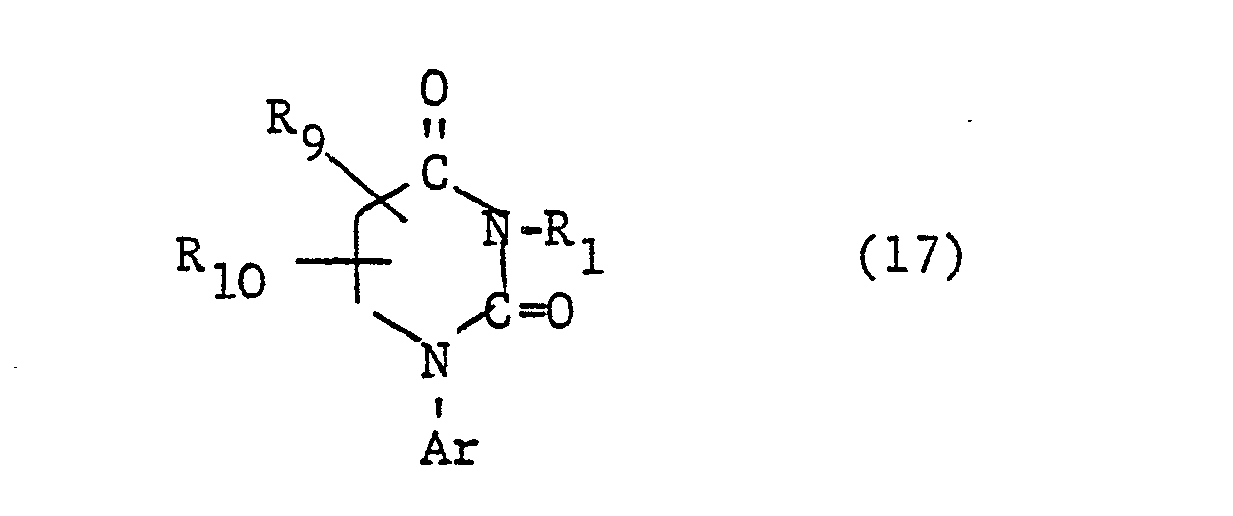
- 1-Aryl-4,5-dihydro-uracile der Formel

- 1-Aryl-piperazin-2,6-dione der Formel

- 1-Aryl-piperazin-2,5-dione der Formel

- 1-Ary1-piperazin-2,3-dione der Formel

- 1-Aryl-dehydro-piperazin-2-one der Formel

- 1-Aryl-piperazin-2,3,5-trione der Formel

- 1-Aryl-piperazin-2,3,6-trione der Formel

- 1-Aryl-piperazin-2,3,5,6-tetrone der Formel

- Verbindungen der allgemeinen Formel
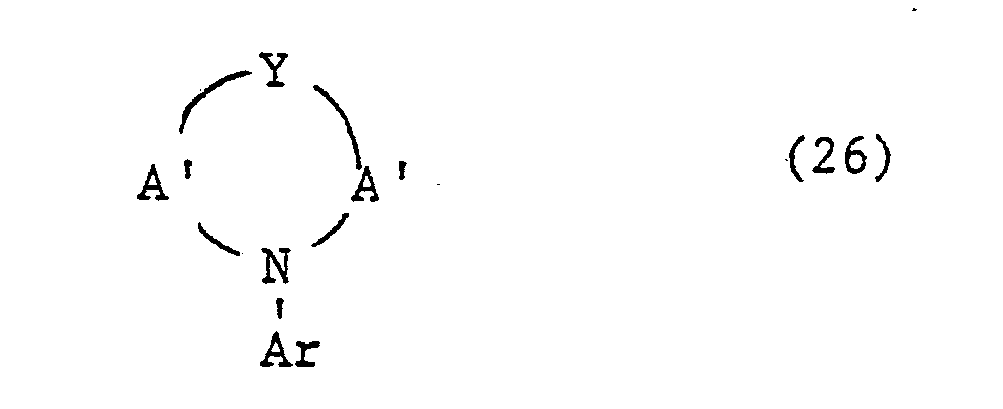
- worin Y Sauerstoff, Schwefel, -SO- oder -SO2- darstellt,
- 3-Aryl-oxazolidin-2-one der Formel

- 3-Aryl-oxazolidine der Formel

- 3-Aryl-oxazolidin-2,4-dione der Formel

- 3-Aryl-thiazolidin-2-one der Formel

- 3-Aryl-thiazolidin-2,4-dione der Formel

- 3-Aryl-thiazolin-2-one der Formel

- Verbindungen des Typs

- worin G entweder die Bedeutung von A' hat oder die Gruppe C=X darstellt (X ist = S oder =N-R4)
- 1-Aryl-6(1H)-pyridazinone der Formeln
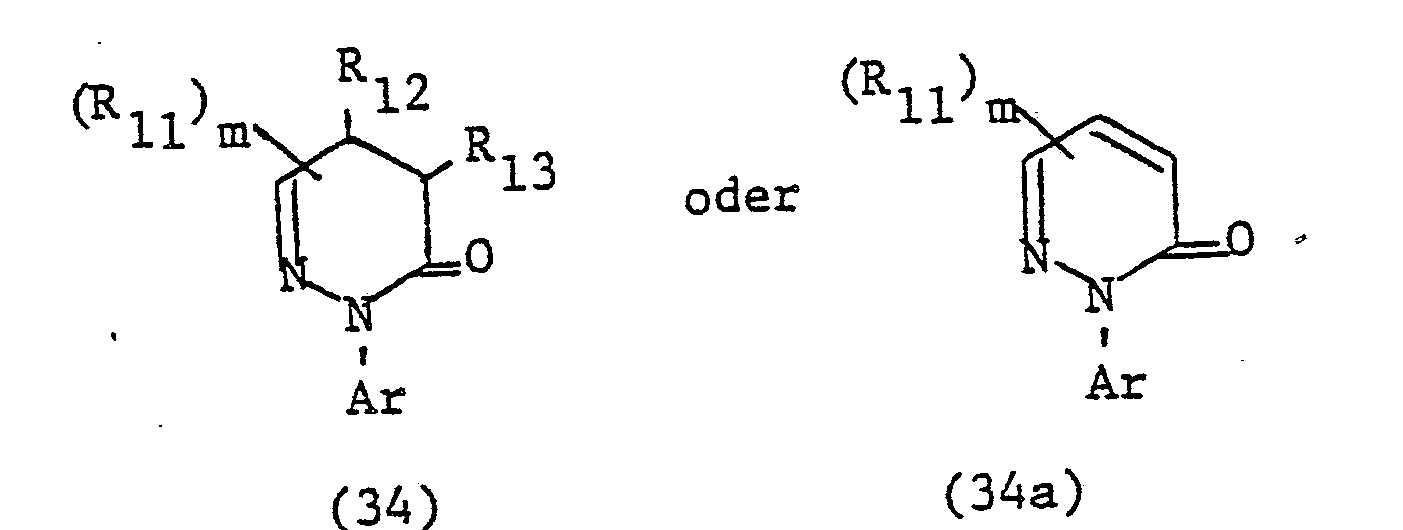
- worin R11 die Bedeutungen von R1 hat oder eine Gruppe

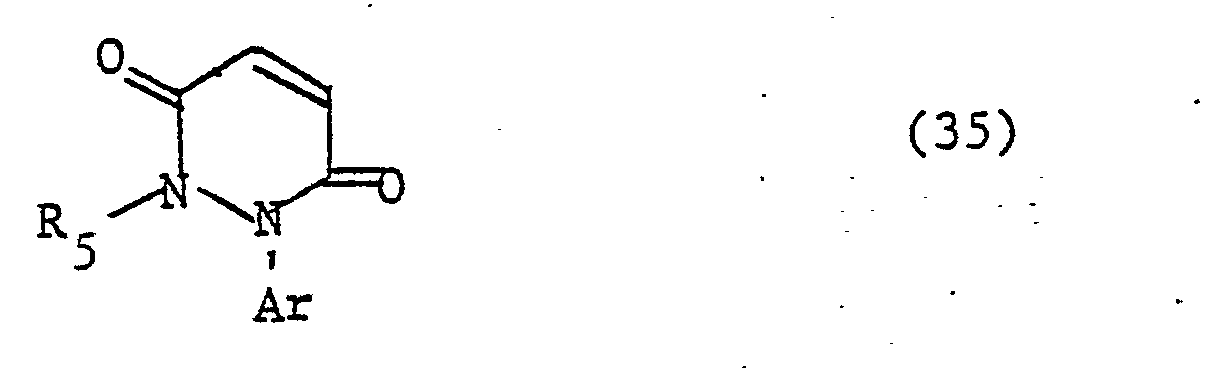
- 1-Aryl-4,5-dihydro-pyridazin-3,6-dione der Formel

- 1-Aryl-pyridazin-4-one der Formel

- 1-Aryl-pyridazin-4,6-dione der Formel

- 1-Aryl-pyrazole der Formel

- worin R14 dasselbe wie R11 oder Halogen, -0-Acyl und -NH-Acyl bedeutet und die Summe x+y+z höchstens 3 ist.
- 1-Aryl-pyrazolidine der Formel

- mit denselben Definitionen wie unter (39)
- 1-Aryl-2-pyrazolin-5-one der Formel

- 1-Aryl-3-pyrazolin-5-one der Formel

- worin R15 Wasserstoff, C1-C6 Alkyl oder C1-C8 Alkylcarbonyl bedeutet.
- 1-Aryl-pyrazolidin-3-one der Formel

- 1-Aryl-pyrazolidin-5-one der Formel

- 1-Aryl-pyrazolin-3-one der Formel

- 1-Aryl-pyrazolin-4-one der Formel

- 1-Aryl-pyrazolidin-3,5-dione der Formel

- Sultame der Formeln

- worin Q entweder -CH2- oder C=0 bedeutet und

- 5- und 6-gliedrige Heterocyclen mit 3 Heteroatomen:
- 4-Aryl-urazole der Formel

- 4-Aryl-1,2,4-triazolidin-3-one der Formel

- 4-Aryl-1,2,4-triazole der Formel

- worin R16 dieselbe Bedeutung wie R15 hat oder Alkoxy bzw. Alkylthio bedeutet.
- 4-Aryl-1,2,4-triazolin-3-one der Formel

- 1-Aryl-1,2,4-triazole der Formel

- 1-Aryl-1,2,3-triazole der Formel

- 3-Aryl-1,3,4-oxa-(und thia)-diazolin-2-one der Formel

- 2-Aryl-1,2,3-thiadiazolin-S-dioxide der Formel

- 2-Aryl-tetrahydro-1,2,4-triazin-3,5-dione der Formel
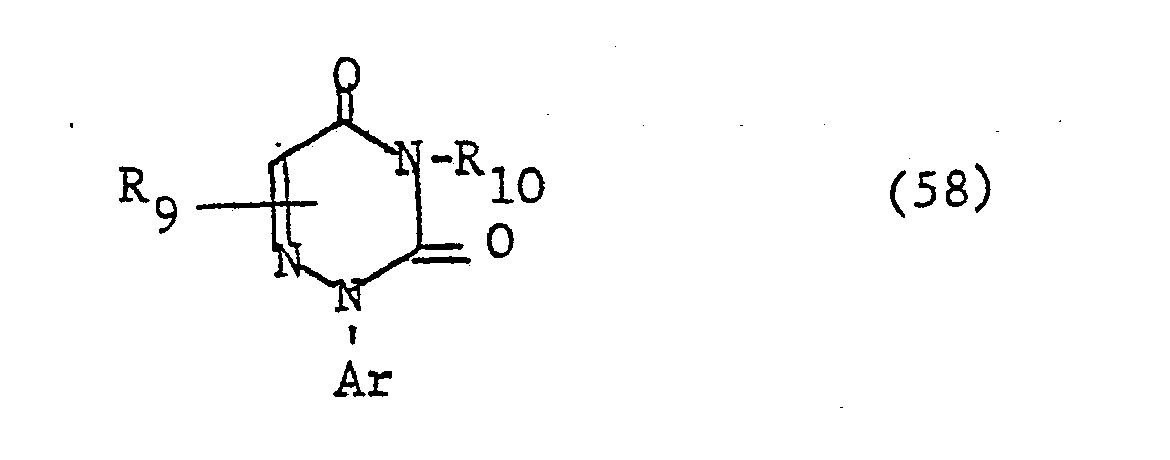
- 1-Aryl-tetrahydro-1,3,5-triazin-2,6-dione der Formel

- worin R17 die gleiche Bedeutung wie Ro hat oder eine Gruppe

- 1-Aryl-hexahydro-1,3,5-triazin-2-one der Formel

- 4-Aryl-dihydro-1,3,4-oxa-(und thia)-diazin-5-one der Formel
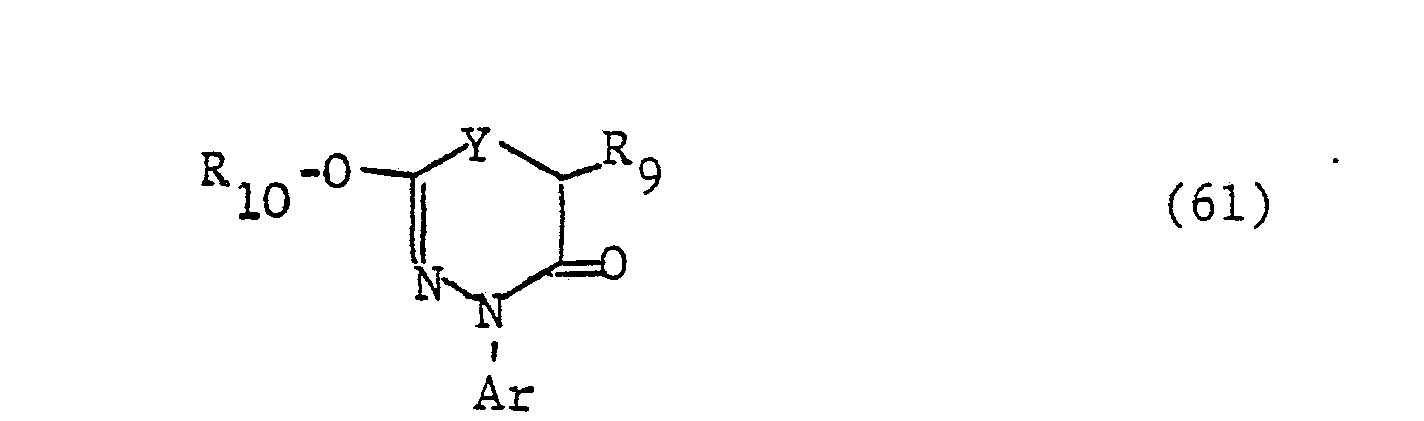
- worin Y Sauerstoff oder S(O)n bedeutet, und n eine Zahl von Null bis 2 ist.
- Der in den vorstehenden Formeln vorkommende Rest Ar, welcher dem substituierten Phenylrest


- Die -NHS02CF3-Gruppe der neuen Wirkstoffe der vorstehenden allgemeinen Formeln I, IIa und IIb und der verschiedenen Untergruppen der Formeln (3)bis(61) ist befähigt, Salze zu bilden, in denen das Wasserstoffatom durch ein Kation ersetzt ist, vorzugsweise durch Natrium oder Kalium oder ein organisches Amin-Kation. Unter organischen Aminen hat sich Diäthanolamin besonders bewährt.
- Als Metallkationen kommen auch die von Erdalkalimetallen, von Zink, Kupfer, Eisen etc. in Betracht. Ist das vorhandene Kation 2- oder 3-wertig, so ist es selbstverständlich mit der seiner Wertigkeit entsprechenden Anzahl Anionen des Basiskörpers I liiert. Auf den Grundkörper I entfällt dann 1 Kation der Wertigkeit m.
- Aus den USA-Patentschriften 3 238 222 und 3 958 974 sind bereits herbizid wirksame N-phenylsubstituierte Pyrrolidin-2-one, Piperidin-2-one und Azetidin-2-one bekannt geworden, die aber im Phenylring anders substituiert sind.
- Andererseits sind in der USA-Patentschrift 3 920 444 und in der DOS 2 364 144 herbizid wirksame Perfluoralkansulfonanilid-Derivate beschrieben worden, welche aber keine heterocyclische Gruppierung aufweisen.
- Es wurde überraschenderweise gefunden, dass die erfindungsgemässen neuen heterocyclischen Wirkstoffe der Formel I den aus obigen Literaturstellen bekannten Wirkstoffen klar überlegen sind, sowohl inbezug auf herbizide Wirkung als inbezug auf Eignung als Pflanzenwuchshemmer.
- Das Verfahren zur Herstellung der neuen Heterocyclen der Formel I ist dadurch gekennzeichnet, dass man ein heterocyclisches Amino-anilinderivat der Formel III

- Als Mittel zur Einführung der Trifluormethansulfonsäuregruppe kann das Anhydrid der Trifluormethan- sulfonsäure (CF3S02)2 0 oder ein Halogenid dieser Säure der Formel CF3-SO2-Hal dienen, wo Hal vorzugsweise Fluor oder Chlor bedeutet.
- Als Säureakzeptoren dienen die für solche Acylierungen üblichen Ammoniumbasen, Alkali- und Erdalkali-hydroxide, -Carbonate, -Hydrogencarbonte, sowie primäre, sekundäre und tertiäre Amine, wie z.B. Triäthylamin oder N,N-Dimethylanilin.
- Die Ausgangsamine der Formel III sind zum Teil ebenfalls neue, in der Literatur noch nicht beschriebene Stoffe.
- Alle heterocyclischen Ringtypen, die in den Formeln (3) bis (61) vorkommen, sind hingegen bekannt und ihre Herstellung nach bekannten Methoden ist in vielen Literaturstellen beschrieben.
- Im Prinzip erfolgt die Herstellung der Zwischenprodukte der Formel III durch Anbau des bekannten Heterocyclus an ein Ausgangsanilin der Formel IV

- Falls in den Zwischenprodukten der Formel III der Heterocyclus durch Halogen substituiert ist, so kann dieses Halogen durch Umsetzung mit KCN oder einem Alkanolat durch die Cyanogruppe oder eine Alkoxygruppe ersetzt werden.
- Alle Umsetzungen werden vorzugsweise in gegenüber den Reaktionsteilnehmern inerten Lösungs- und Verdünnungsmitteln durchgeführt.
- Bevorzugt sind polare organische Lösungsmittel, wie Alkohole, Ketone, Dimethylformamid, Tetrahydrofuran, Dimethylsulfoxyd etc.
- In den nachfolgenden Beispielen wird die Herstellung einiger erfindungsgemässer Wirkstoffe der allgemeinen Formel I und ihrer dazu benötigten Zwischenprodukte beschrieben. Weitere hergestellte Endstoffe sind, teilweise unter Angabe der Literatur zur Herstellung der Zwischenprodukte, in den anschliessenden Tabellen aufgeführt. Alle Temperaturangaben beziehen sich auf Celsius-Grade.
-
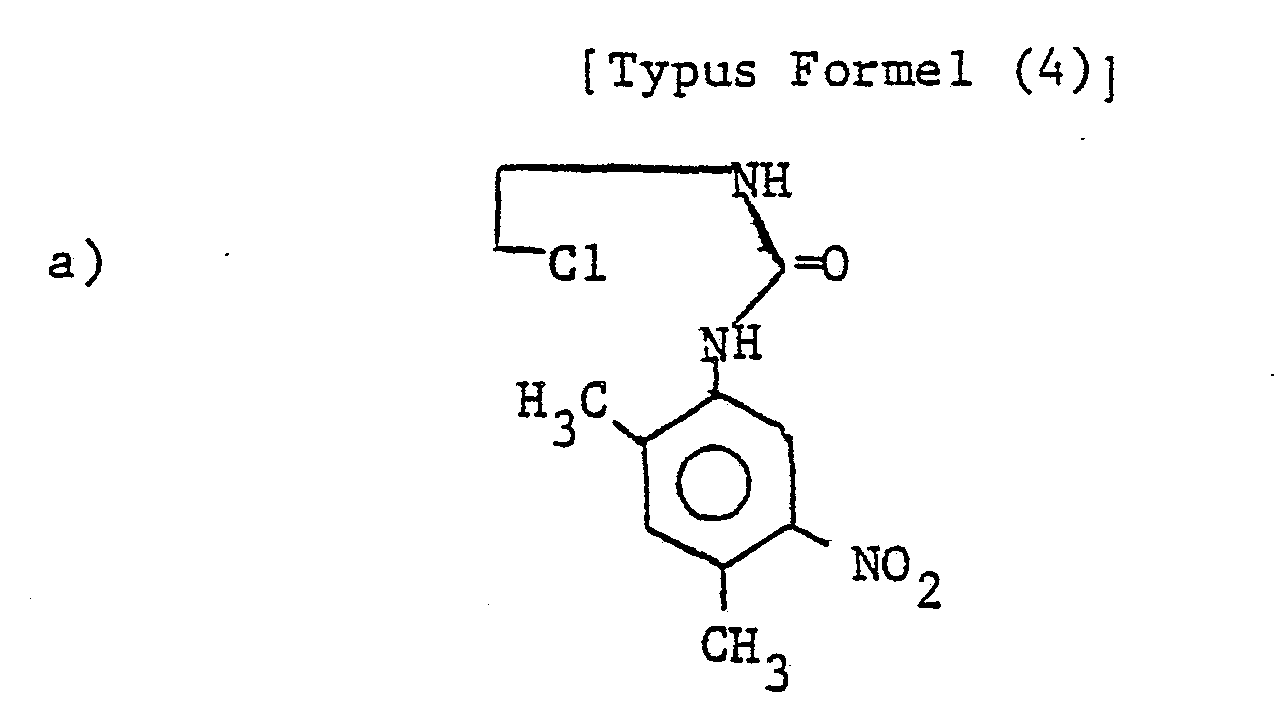
- Zu einer Lösung von 166 g (1,0 Mol) 2,4-Dimethyl-5-nitroanilin in siedendem Acetonitril (1 Liter) tropft man 116,1 g 2-Chlor-äthylisocyanat (1,1 Mol) hinzu. Nach 15 Minuten kühlt man ab und filtriert das auskristallisierte Produkt. Man wäscht das Produkt mit kaltem Acetonitril. Nach dem Trocknen (70°) erhält man 200 g (73,7%)N=Chloräthyl-N'-(4,6-dimethyl-3-nitrophenyl)-harnstoff, Smp. 186-187°C.

- Obiges Produkt (200 g, 0,737 Mol) wird in 400 ml 15 prozentiger Natronlauge und 40 ml Tetrahydrofuran während 4 Std. am Rückfluss gekocht. Man kühlt auf 10°C und stellt die Mischung sauer (pHl). Filtration und Umkristallisation liefert 98,9 g (57,1%) 3-(4',6'-Dimethyl-3'-nitrophenyl)-imidazolidin-2-on, Smp. 140°C. C11H13H3O3 [235,24] Ber. C 56,17 H 5,57 N 17,87 % Gef. C 55,9 H 5,6 N 18,0 %

- Obiges Produkt (50 g, 0,213 Mol) wird in 500 ml abs. Methanol mit 5 g RaNi bei 35°C hydriert. Die heiss filtrierte Lösung wird auf 200 ml eingeengt und abkühlen gelassen. Das Produkt kristallisiert aus. Man erhält 32,3 g (74,1%) 3(4',6'-Dimethyl-3'-aminophenyl)-imidazolidin-2-on, Smp. 222°C. C11H15N3O [205,26] Ber. C 64,37 H 7,37 N 20,47 % Gef. C 64,4 H 7,5 N 20,3 %

- Obiges Produkt (15,0 g, 0,073 Mol) und 9,3 g N,N-Dimethylanilin (1,05 Aequ.) in 300 ml Chloroform abs. werden bei -5°C innert 35 Minuten mit 22,6 g (CF3SO2)2O (1,05 Aequ) topfenweise versetzt. Man lässt die Temperatur auf Raumtemperatur ansteigen und extrahiert die Suspension 3 mal mit je 150 ml 1N NaOH. Der basische Auszug wurde filtriert und sauer gestellt (pH 1) mit conc. HCl. Das so gefällte Produkt wurde abfiltriert, gewaschen (H20) und getrocknet (70°). Ausbeute 21,0 g (85,4%), Smp. 288°C. C12H14F3 N3 O3 S [337,32] Ber. C 42,73 H 4,18 N 12,46 S 9,51 F 16,90%. Gef. C 42,0 H 4,2 N 12,3 S 9,9 F 16,9 %
- [Typus Formel (4)

- 45 g (0,2 Mol) 3-(4',6'-Dimethyl-3'-nitrophenyl)-imidazolidin-2-on (Beispiel 1b) und 6,5 g (0,02 Mol) Tetrabutylammoniumbromid werden in 500 ml Benzol vorgelegt. Man fügt dann 40 g festes NaOH in 40 ml H2O zu. Nach 15 Min. Rühren fügt man tropfenweise 32 g Dimethylsulfat, (0,24 Mol) hinzu. Die Temperatur steigt dabei auf 40°C. Nach 2 Std. Rühren versetzt man die Reaktionsmischung mit H2O und trennt die wässerige Phase ab. Die organische Phase wurde sukzessive mit 2N HCl, gesätt. NaHCO3-Lösung, H20 und gesätt. NaCI-Lösung gewaschen, mit MgS04 getrocknet und eingedampft. Der ölige Rückstand wurde mit Aether verrieben und aus Essigester umkristallisiert. 38 g (80%) 1-(4',6'-Dimethyl-3'-nitrophenyl)-3-methyl-imidazolidin-2-on vom Smp. 107-109°C werden so erhalten. C 12 H 15 N 2 O3 [249,27] Ber. C 57,82 H 6,07 N 16,86 % Gef. C 57,7 H 6,1 N 16,7 %

- 36,1 g (0,145 Mol) obigen Produktes werden in 360 ml Methanol mit 4 g Raney-Nickel bei 35°C hydriert. Nach Filtration des Gemisches und Einengen der Lösung kristallisieren 26,2 g (82%) 1-(4',6'-Dimethyl-3'-aminophenyl)-3-methyl-imidazolidin-2-on, Smp. 119-120°C. C12 H17 N3 O [219,29] Ber. C 65,73 H 7,82 N 19,16 % Gef. C 65,7 H 7,9 N 19,4 %

- 10 g (0,047 g Mol) obigen Zwischenproduktes und 6,2 g N,N-Dimethylanilin (1,05 Aequ.) in 100 ml abs. Chloroform werden bei -5° tropfenweise mit 14,5 g (CF3S02)20 (1,07 Aequ.) mit 9 ml Chloroform versetzt. Nach Beendigung der Zugabe wurde ohne Kühlung während 2 Std. weitergerührt. Man extrahiert die Reaktionslösung 2 mal mit je 500 ml 1N NaOH. Die vereinigten basischen Auszüge wurden mit Chloroform gewaschen, filtriert und mit Salzsäure sauer gestellt (pH 1). Das auf diese Weise ausgefällte Produkt wurde abfiltriert, mit Wasser gewaschen und bei 20° im Exsikkator getrocknet: man erhält 15,5 g (96,5%) 1-(4',6'-Dimethyl-3'-trifluormethansulfon-amido-phenyl)-3-methyl- imidazolidin-2-on vom Smp. 226-230°. C13H16 F 3 N 3 O3 S [351,34] Ber. C 44,44 H 4,59 N 11,96 S 9,13 F 16,22% Gef. C 44,3 H 4,6 N 11,9 S 9,2 F 16,1%
- [Typus Formel (5)]

- 11,2 g (0,15 Mol) Glycin in 100 ml H20 wurden mit 6 g fester Natronlauge neutralisiert. Unter Rühren fügt man tropfenweise bei Raumtemperatur 28,8 g (0,15 Mol) 4,6-Dimethyl-3-nitro-phenylisocyanat zu. Es resultierte eine hellgelbe Lösung. Nach 4 Std. Reaktionszeit fiel ein Festkörper aus, welcher abfiltriert, mit Essigester gewaschen, und hernach in conc. Salzsäure am Rückfluss gekocht wurde. Nach 3 Std. goss man auf Eiswasser, filtrierte das Produkt ab und kristallisierte es am Aethanol aus. Man erhielt 17,3 g (46%) 3-(4',6'-Dimethyl-3'-nitrophenyl)-imidazolidin-2,4-dion, Smp. 174-175°C. C11 H11 N3 O4 [249,33] Ber. C 53,01 H 4,45 N 16,86 % Gef. C 53,2 H 4,5 N 16,7 %

- Obiges Zwischenprodukt (17,3 g, 0,0694 Mol) wurde in 170 ml Methylcellosolve mit 2 g Raney-Nickel hydriert. Aus der filtrierten und eingeengten Lösung kristallisierten 12,5 g (82,2%) 3-(4',6'-Dimethyl-3'-aminophenyl)-imidazolidin-2,4-dion, Smp. 187-188°C. C11 H 13 N 3 O2 [219,24] Ber. C 60,26 H 5,98 N 19,17 % Gef. C 60,2 H 6,1 N 19,0 %

- 6,3 g (0,02876 Mol) des oben erhaltenen Zwischenprodukts und 3,65 g N,N-Dimethylanilin in 100 ml Chloroform (abs.) wurden mit 8,5 g (CF3SO2)2O (1,05 Aequ.) bei -5°C zur Reaktion gebracht (tropfenweises Addieren). Nach 3-stündigem Rühren bei Raumtemperatur wurde die Mischung mit 1N NaOH extrahiert. Letztere wurde filtriert, sauer gestellt (conc. HCl) und vom gefällten Produkt befreit. Dieses wurde gewaschen (H2O) und getrocknet (70°C). Es verblieben. 2,4 g (24%) 3-(4',6'-Dimethyl-3'-trifluormethansulfonamido- phenyl)-imidazolidin-2,4-dion, Smp. 184-187°C. C 12 H 12 F 3 N 3 O11 S [351930], Ber. C 41,03 H 3,44 N 11,96 S 9,13 F 16,22% Gef. C 38,6 H 3,8 N 11,2 S 8, 9 F 14,5%
- [Typus Formel (5)]
- a) 22 g NaOH und 52,5 g Sarcosin wurden in 300 ml Wasser gelöst: 101 g 4 ,6 -Dimethyl-3 -nitro-phenylisocyanat gelöst in 100 ml Essigester wurden bei 0-5°C unter Rühren zugetropft; der Ansatz wurde 2 Std. bei Raumtemperatur nachgerührt und dann die wässerige Phase abgetrennt und mit Salzsäure sauer gestellt: dabei fällt 1-Carboxymethyl-1-methyl-3-(4',6-dimethyl-3'-nitro-phenyl)-harnstoff aus: Fp. 141-143° (Zers.)
- b) Das nutschenfeuchte Produkt wurde mit 150 ml Eisessig und 150 ml Salzsäure 3 Std. bei 100° gerührt, nach Erkalten wurde in Eiswasser eingerührt und der Niederschlag von 1-(4,6'-Dimethyl-3-nitro-phenyl)-3-methyl- hydantoin abgenutscht. Fp. 133-135°
- c) Das Produkt wurde in der üblichen Weise mit Raney-Nickel in äthanolischer Lösung hydriert und 1-(3-amino-4,6',-dimethyl-phenyl)-3-methyl-hydantoin vom Fp. 182-184° erhalten.
- d) 23 g dieser Verbindung wurden mit 12 g N,N-Dimethylanilin in 100 ml Methylenchlorid vorgelegt und bei -30°, 28 g Trifluormethansulfonsäure-anhydrid zugetropft, die dunkle Lösung wurde 24 Std. bei Raumtemperatur stehengelassen, 1 Std. bei 50° gerührt und dann zu einer Lösung von 8 g NaOH in 300 ml H20 gegeben, die wässrige Phase wurde abgetrennt, mit A-Kohle geklärt und mit HC1 sauer gestellt, dabei scheidet sich die Titelverbindung in kristalliner Form ab. Nach dem Trocknen Fp. 217-220°, Formel:

- Diese Verbindung kann auch mit 1-(4',6'-Dimethyl-3'-trifluormethansulfonamidophenyl)-3-methyl- hydantoin bezeichnet werden.
- [Typus Formel (8)
- a) 52 g 1-(4',6'-Dimethyl-3'-nitro-phenyl)-3-methyl- hydantoin (Beispiel 4b) wurden in 200 ml Methanol suspendiert und portionenweise bei 0° 7,5 g NaBH4 eingetragen, der Ansatz wurde 2 Std. bei Raumtemperatur gerührt und dann mit Wasser verdünnt, das ausgefallene 1-(4',6'-Dimethyl-3'-nitro-phenyl)'-3-methyl-5-hydroxy-imidazolidin-2-on wurde abgenutscht. Fp. 151-153°.
- b) 53 g dieser Verbindung wurden in 250 ml Toluol unter Zusatz von 0,5 g Toluol-4-sulfonsäure 2 Std. unter Rückfluss erhitzt, das so entstehende Wasser wurde ausgekreist, nach Erkalten wurde die Lösung klarfiltriert, mit Wasser gewaschen und das Lösungsmittel abdestilliert, der Rückstand besteht aus 1-(4',6'-dimethyl-3'-nitro-phenyl)-3-methyl-imidazolin-2-on. Fp. 104-109°
- c) Diese Verbindung wurde in üblicher Weise mit Raney-Nickel in methanolischer Lösung hydriert und 1-(3-Amino-4,6-dimethyl-phenyl-)3-methyl-imidazolin-2-on erhalten. Fp. 149-151°
- d) 21 g dieser Verbindung wurden mit 12 g N,N-Dimethylanilin in 100 ml Methylenchlorid vorgelegt und bei -30° 23 g Trifluormethan-sulfonsäure-anhydrid zugetropft; der Ansatz wurde 24 Std. bei Raumremperatur stehengelassen, 1 Std. bei 50° gerührt und dann zu einer Lösung von 8 g NaOH in 300 ml Wasser gegeben, die wässerige Phase wurde abgetrennt, mit A-Kohle geklärt und mit HC1 sauer gestellt, die Titelverbindung scheidet sich kristallin ab nach dem Trocknen. Fp. 213-216° Formel:

- [Typus Formel (27)


- 13,9 g (0,051 Mol) Chloräthyl-carbamat in 100 ml 15 proz. Natronlauge und 10 ml Tetrahydrofuran werden während 2 Std. bei 30-35° gerührt. Unter Eiskühlung stellt man mit konz. Salzsäure sauer, filtriert das Produkt ab, wäscht mit Wasser und Aether und trocknet bei 40° im Exsikkator: 10,4 g (86%) 3-(4',6'-Dimethyl-3'-nitrophenyl)-oxazolidin-2-on, Smp. 124-125°C C11 H12 N2 O4 [236,23] Ber. C 55,93 H 5,12 N 11,86% Gef. C 54,7 H 5,1 N 11,5%

- 12,6 g (0,0534 Mol) Nitrophenyloxazolidin werden in 130 ml abs. Methanol mit 2,6 g Raney-Nickel bei 35°C hydriert. Die filtrierte Lösung wurde eingeengt, worauf Kristallisation des Produktes eintrat: 10,7 g (97%) 3-(4',6'-Dimethyl-3'-amino-phenyl)-oxazolidin-2-on, Smp. 162-163° C11 H14 N2 02 [206,25] Ber. C 64,06 H 6,84 N 13,58% Gef. C 63,8 H 6,9 N 13,4%

- 10,5 g Aminophenyloxazolidin (0,051 Mol) und 6,5 g N,N-Dimethylanilin (1,05 Aequ.) in 120 ml abs. Chloroform werden bei -5°C mit 15 g (CF3SO2)2O in 7 ml Chloroform (1,05 Aequ.) innert 20 Minuten versetzt. Man lässt 1 Std. ausrühren, wobei die Temperatur auf Raumtemperatur stieg. Die Reaktionslösung extrahiert man 2 mal mit je 250 ml 1N NaOH. Der basische Extrakt wurde filtriert und sauer gestellt (conc. HCl) und das gefällte Produkt abfiltriert. Nach dem Trocknen (70°C) sammelt man 16,3 g (94,6%) 3-(4',6'-Dimethyl-3'-trifluormethansulfonamidophenyl)-oxazolidin-2-on, Smp. 207-209°. C12H13 F 3 N 2 O4 S [338,30] Ber. C 42,61 H 3,88 N 8,28 S 9,48 F 16,85% Gef. C 42,1 H 3,9 N 7,9 S 9,4 F 16,8%
- [Typus Formel (29)]
- a) 59 g L-(-)-Milchsäureäthylester und 96 g 4,6-Dimethyl-3-nitro-phenyl-isocyanat wurden in 200 ml Toluol gelöst, nach Zugabe von 0,5 ml Triäthylamin erwärmte sich die Lösung langsam und wurde 3 Std. bei 80° nachgerührt. Nach Einengen der Lösung und Verdünnen mit Hexan wurde 0-(1-Carbäthoxy-äthyl)-N-(4,6-dimethyl-3-nitro-phenyl)-urethan vom Fp. 128-130° erhalten.
- b) Diese Verbindung wurde durch 2 stündiges Rühren mit 150 ml konz. Salzsäure bei 90° zum 3-(4,6-Dimethyl-3-nitro-phenyl)-5-methyl-oxazolidin-2,4-dion cyclisiert. Fp. 123-125°
- c) Diese Verbindung wurde in üblicher Weise mit Raney-Nickel in methanolischer Lösung hydriert und 3-(3-Amino-4,5-dimethyl-phenyl)-5-methyl-oxazolidin-2,4-dion vom Fp. 105-107° erhalten.
- d) 13 g dieser Verbindung und 7 g N,N-Dimethyl-anilin wurden in 100 ml Methylenchlorid gelöst und 16 g Trifluormethansulfonsäure-anhydrid bei -30° zugetropft, die Lösung wurde 24 Std. bei Raumtemperatur stehengelassen, 1 Std. bei 50° gerührt und nach Erkalten mit einer Lösung von 5 g NaOH in 300 ml Wasser versetzt. Die wässerige Phase wurde abgetrennt, mit Aktivkohle geklärt und mit HC1 sauer gestellt. Das abgeschiedene Oel wurde in Essigester aufgenommen, über Na2SO4 getrocknet und das Lösungsmittel abdestilliert, der Rückstand kristallisierte bei Verreiben mit Hexan und wenig Essigester. Die so erhaltene Titelverbindung zeigte einen Fp. 155-157° (Zers.)
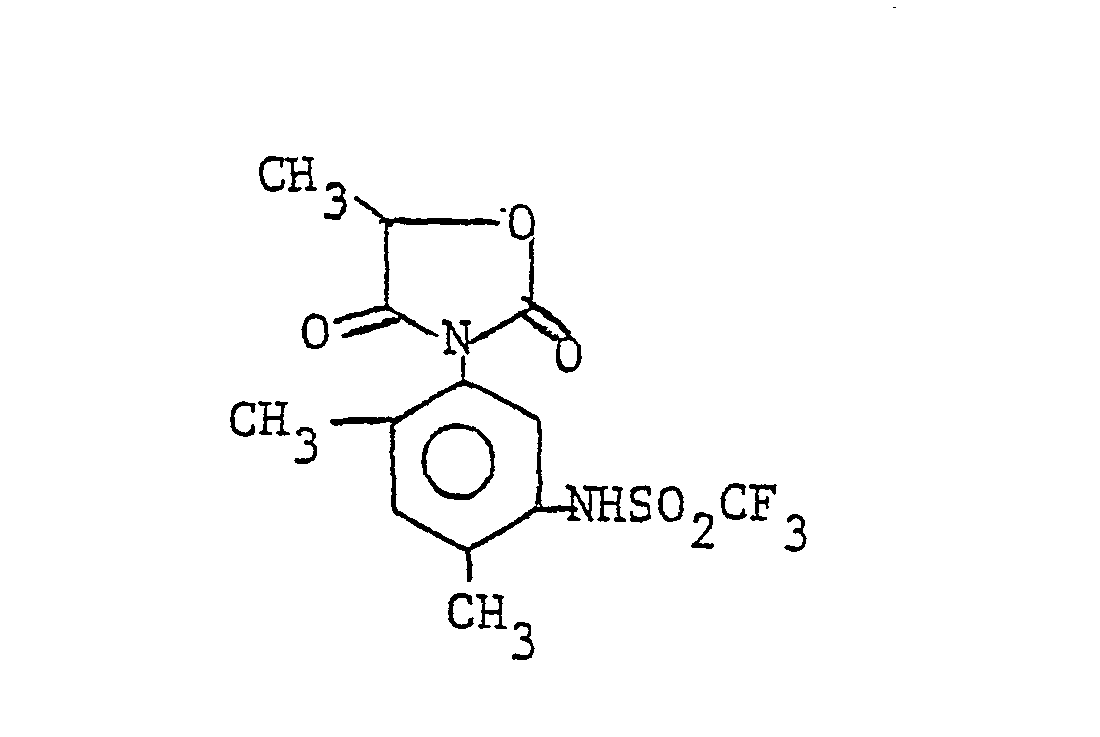
- [Typus Formel (48)]
- Zu einer Lösung von 13 g (0,05 Mol) 1-(3'-Amino-4'-chlor-6'-methyl-phenyl)-1,3-sultam und 8,5 g (0,07 Mol) N,N-Dimethylanilin in 200 ml Chloroform werden bei 0°C 16,9 g (0,06 Mol) Trifluormethansulfonsäureanhydrid in 50 ml Chloroform innert 30 Min. zugetropft.Dann lässt man die Temperatur auf Raumtemperatur ansteigen. Die Lösung wird unter Eiszugabe dreimal mit 2N NaOH-Lösung extrahiert. Der wässerige Extrakt wird filtriert und mit konz. Salzsäure sauer gestellt. Das so gefällte Produkt wird abfiltriert, mit Wasser gewaschen, getrocknet und umkristallisiert. (Toluol)
- Ausbaute: 14,6 g (75%); Smp. 150-151°C.

- In den folgenden Tabellen ist der substituierte Phenylrest Ar in den Formeln mit Ar1, Ar2... etc. bis Ar9 bezeichnet für welche Phenylreste die genaue Konstitution auf Seite 25 angegeben ist.
-
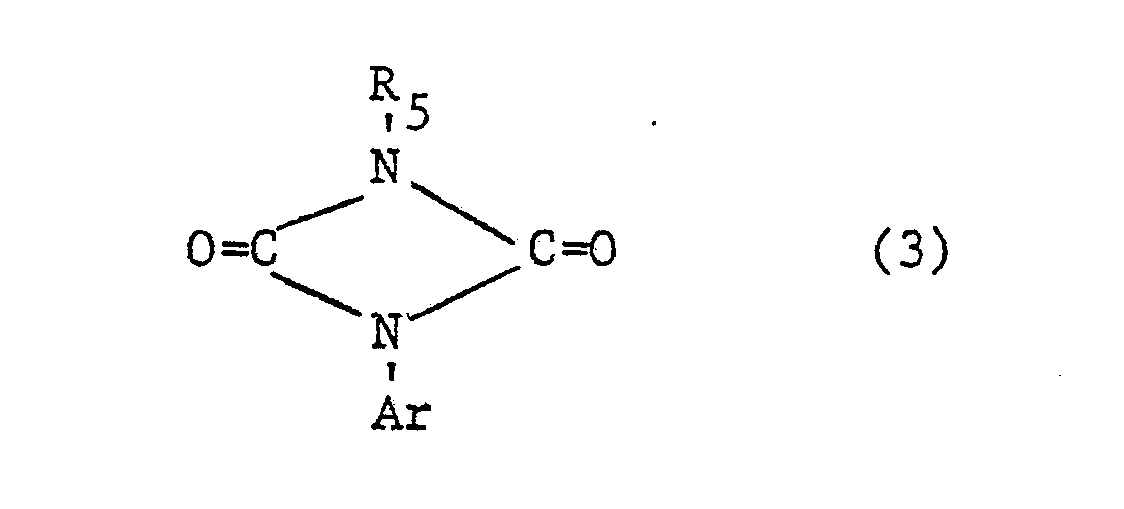
- Herstellung in Analogie zu USP 3 579 500

-


-

- Herstellung in Analogie zu DAS 1 039 302 und USP 3 134 663.

-
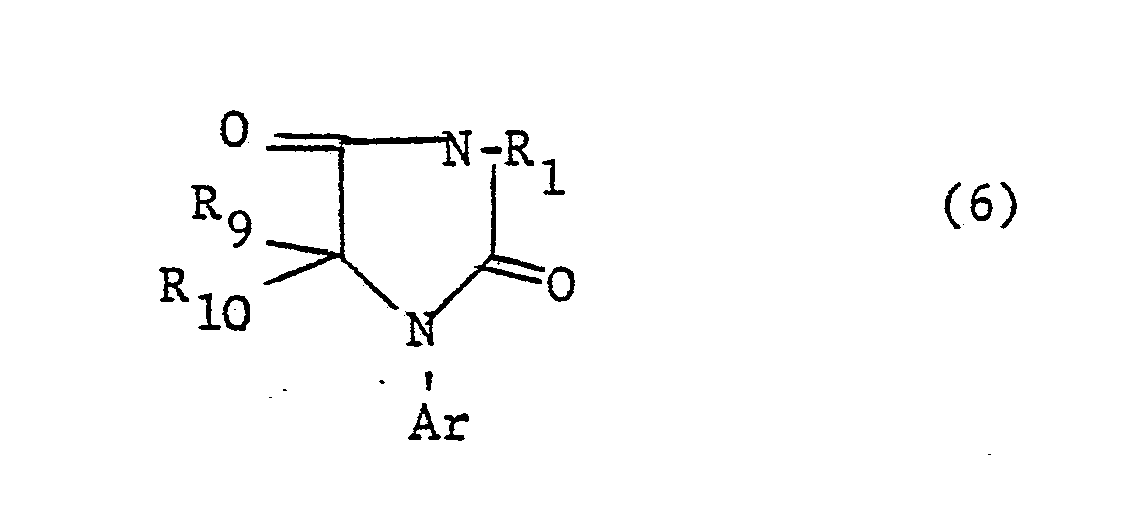

-

- Die Herstellung der zu reduzierenden und dann mit (CF3SO2)2O zu behandelnden Nitrophenyl-Ausgangsverbindung geschieht in Analogie zu USP 3 481 334 und DOS 2 214 448 nach folgendem Reaktionsschema:
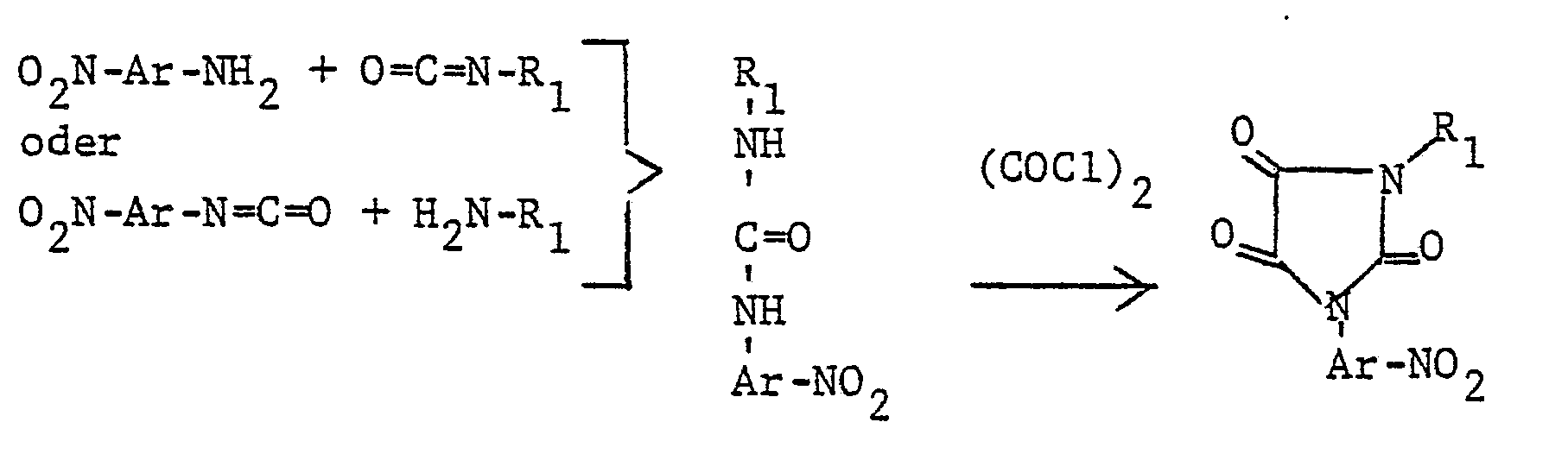

-

- Herstellung entsprechend Ber. 31, 2129 (1898), J.Chem.Soc. 101, 2352 (1912) Ber. 40, 4666 (1907);J.Chem.Soc. 103,56 (1913) Ber. 43, 2796 (1910)

-

- Die Herstellung erfolgt gemäss L.A. Paquette, "Principles of Modern Heterocyclic Chemistry", Seite 194 bezw. J.A.C.S. 71, 383 (1949) nach folgendem Formelschema:


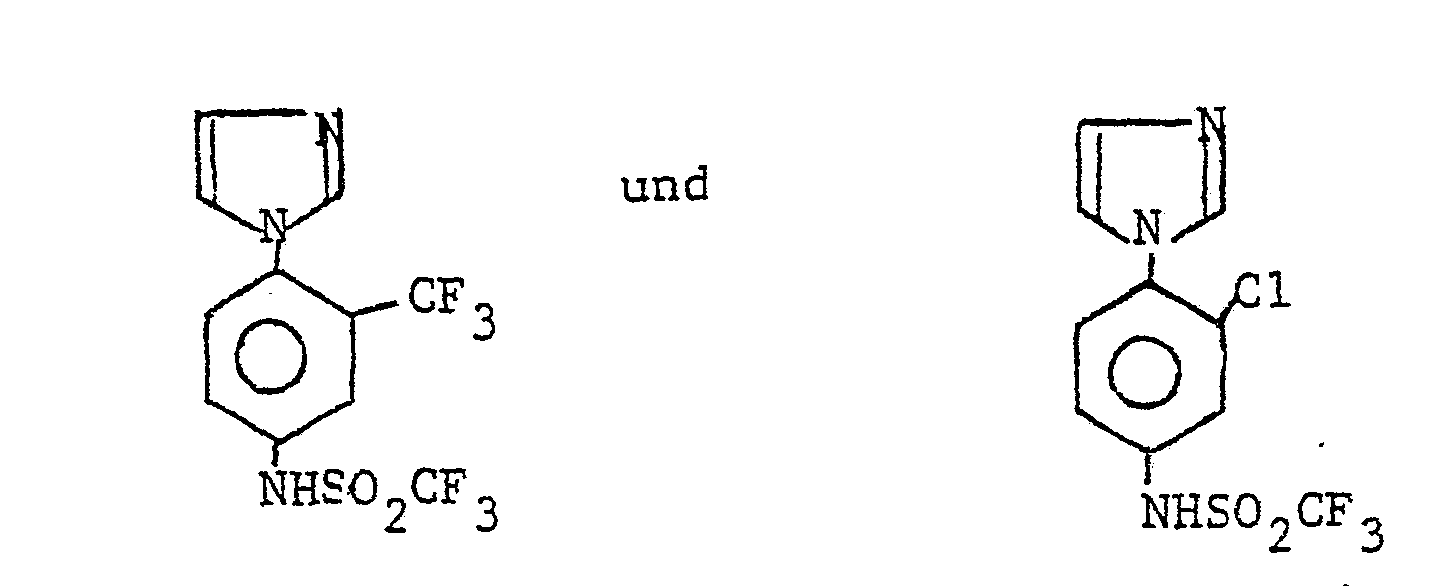
- Von den 1-Aryl-imidazolin-4-onen der Formel (10) sei die Verbindung

-


-


- Herstellung analog zu A. Weissberger, The Chemistry of Heterocyclic Compounds" Vol. 16, S. 453 (J.Wiley, 1962).
-

- Herstellung nach A. Weissberger (loc.cit.) Vol. 16, S. 357.

-


- Herstellung nach A. Weissberger (loc.cit.) Vol. 16, S. 359.
-

- Herstellung analog zu DOS 2 126 148

-
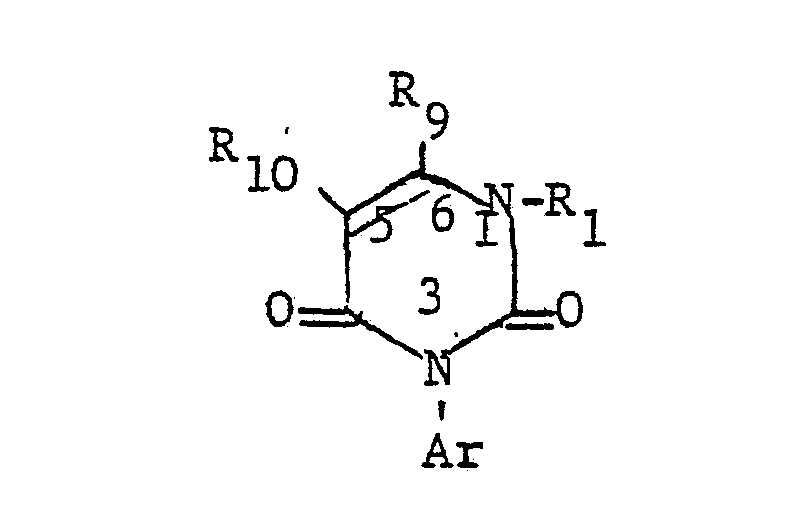
- Herstellung analog USP 3 254 082

-

- Herstellung analog zu Weissberger (loc.cit.), Bd. 16, S. 437

-

- Herstellung analog Ber. 34, 3751 (1901) J.A.C.S. 52, 4993 (1930) J.A.C.S. 58, 299 (1936) J.A.C.S. 69, 1382 (1947)
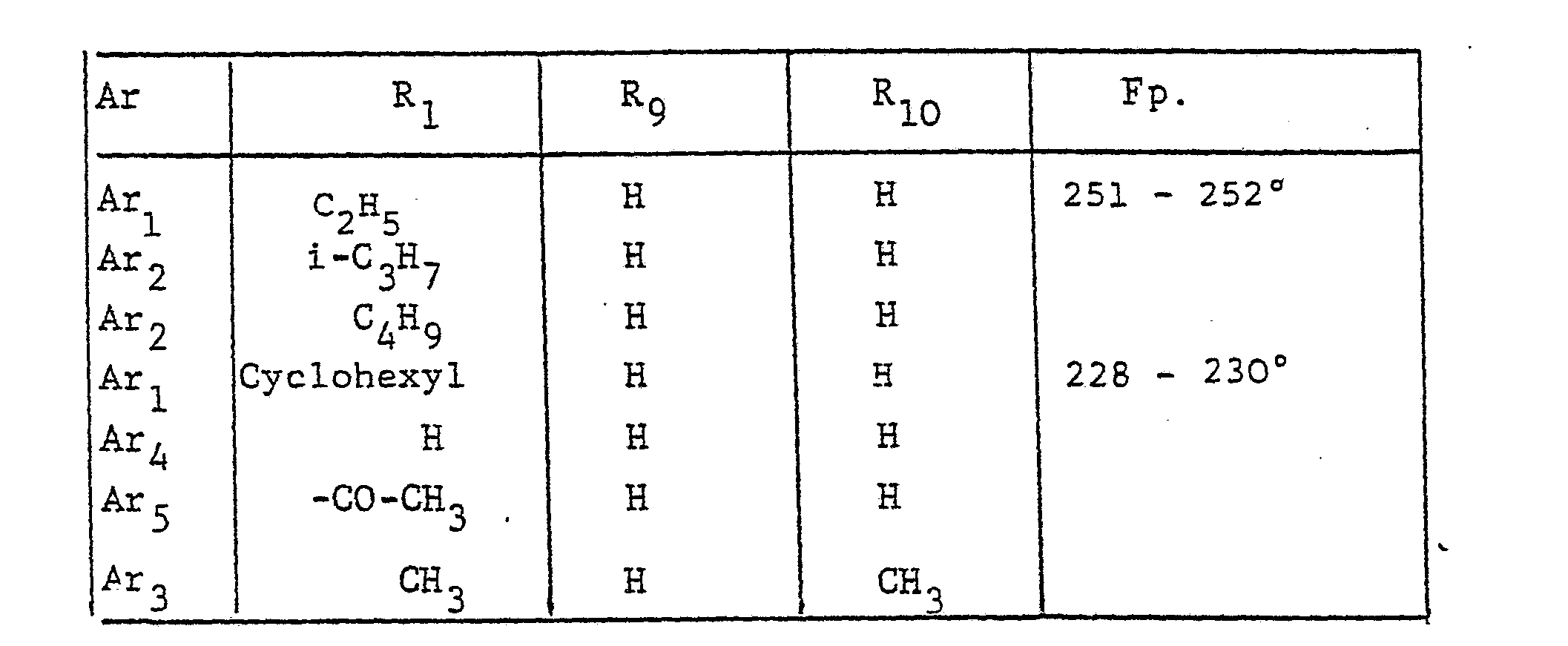
-

- Herstellung analog zu: Ber. 52, 225 (1919) Ber. 22, 1795 (1889) Ber. 23, 1987 (1890)
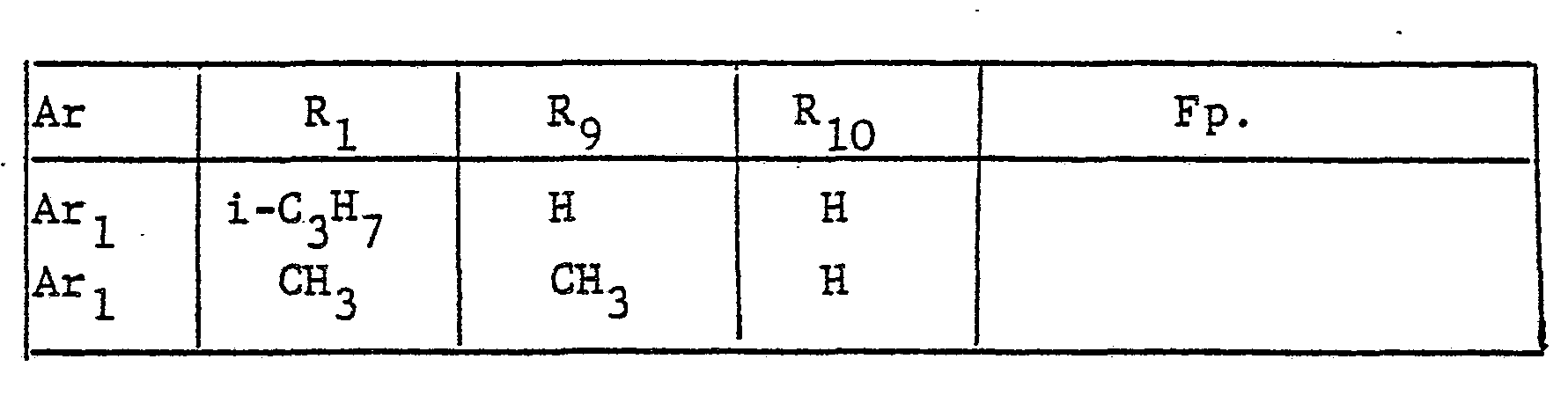
-

- Herstellung analog zu Ber. 36, 2113 (1903) Ber. 42, 4471 (1909)

-


-

- Darstellung nach "Elderfield" (loc.cit.) Vol. 6


-

- Herstellt nach Elderfield, Vol. 6 nach dem Schema:


-

- Herstellung gemäss Elderfield, Vol. 6 nach dem Schema:


-

- Herstellung nach Elderfield, Vol.6.

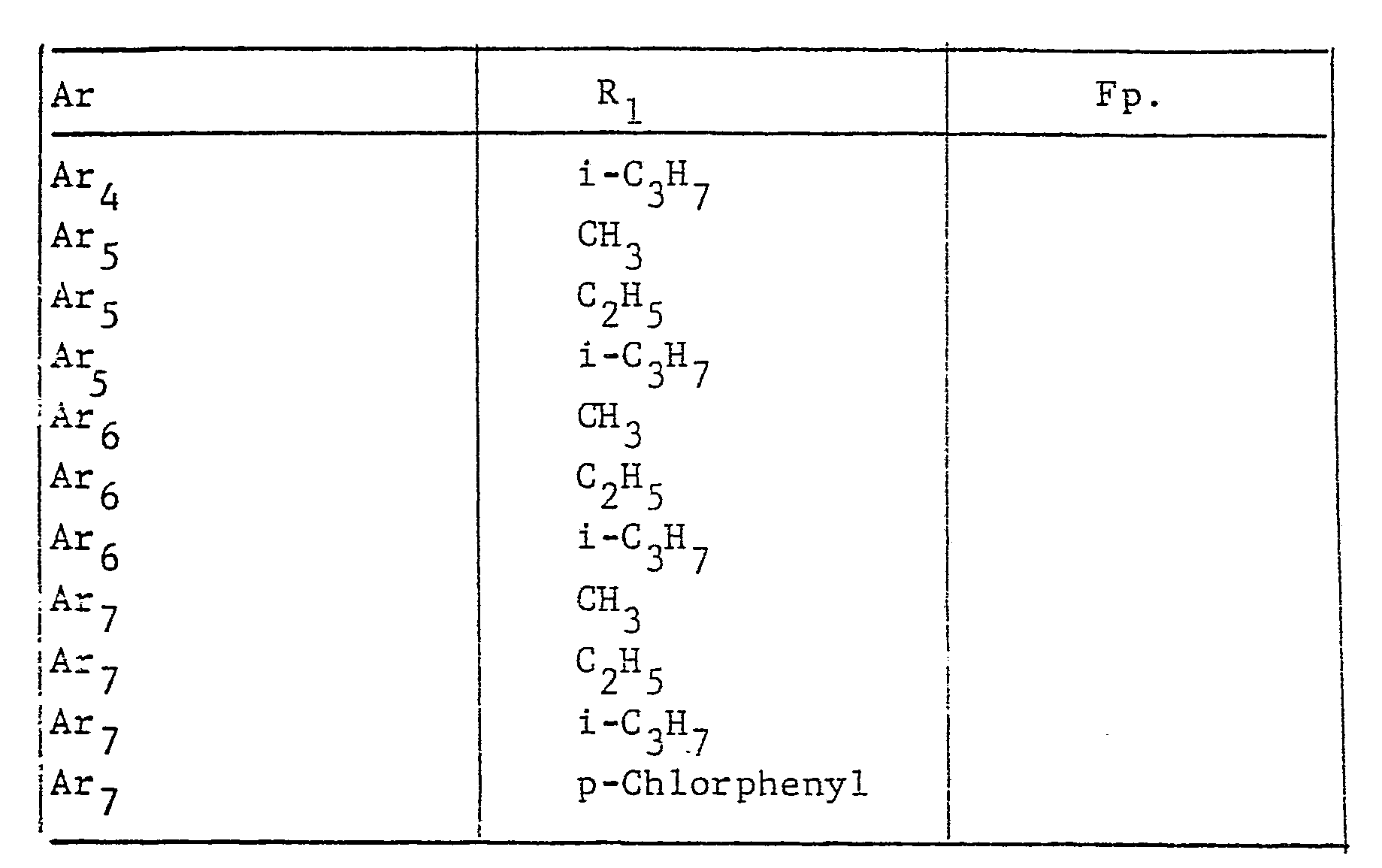
-
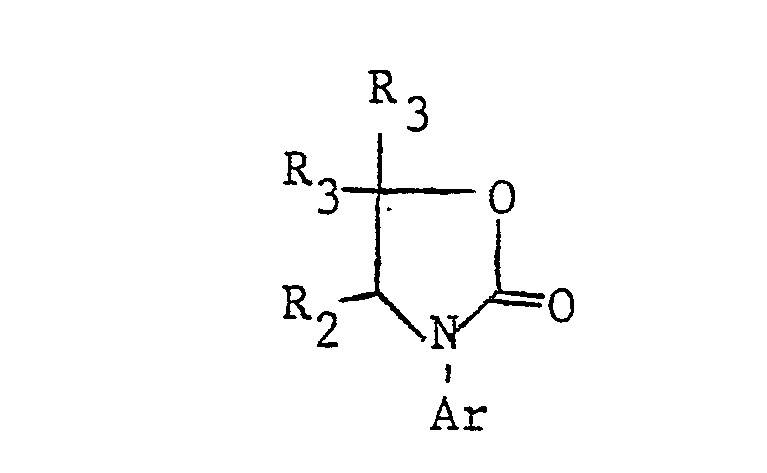
- Herstellung analog zu R.C. Elderfield, "Heterocyclic compounds", Vol. 5, S.396.

-


-

- Herstellung gemäss Bull.Soc.chim.France [3] 29, 122 (1903) 27, 444 (1902) 19, 780 (1898)

-

- Herstellung nach R.C. Elderfield, Vol. 5, S. 484

-

- Herstellung nach R.C. 0 Elderfield, Vol. 5, S. 711
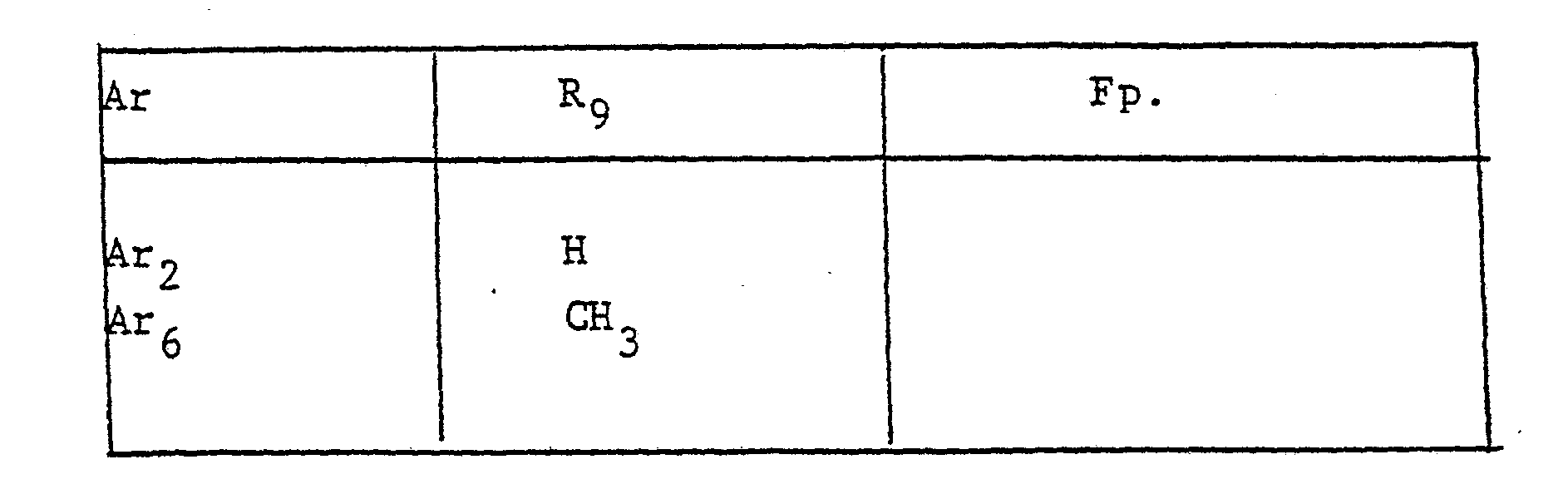
-

- Herstellung nach R.C. Elderfield, Vol. 5, S. 484

-
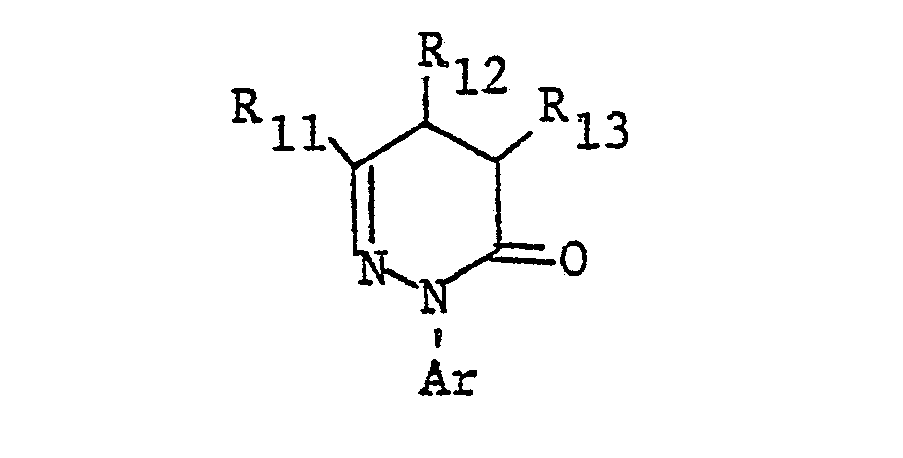
- Herstellung A. Weissberger u.E. Taylor, "The Chemistry of Heterocyclic Compounds, 28, S. 26.
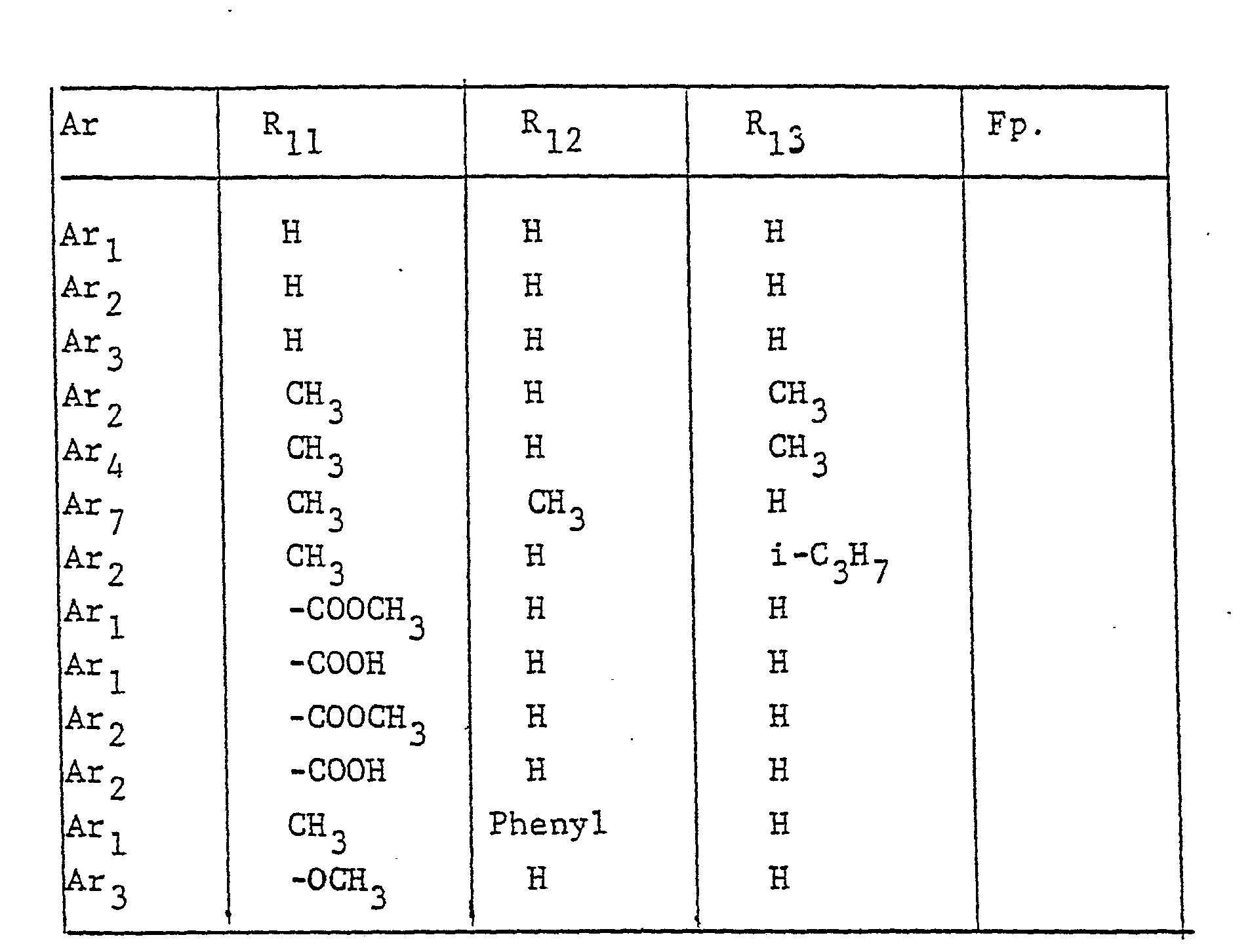
-

- Herstellung nach Weissberger u. Taylor(siehe oben)
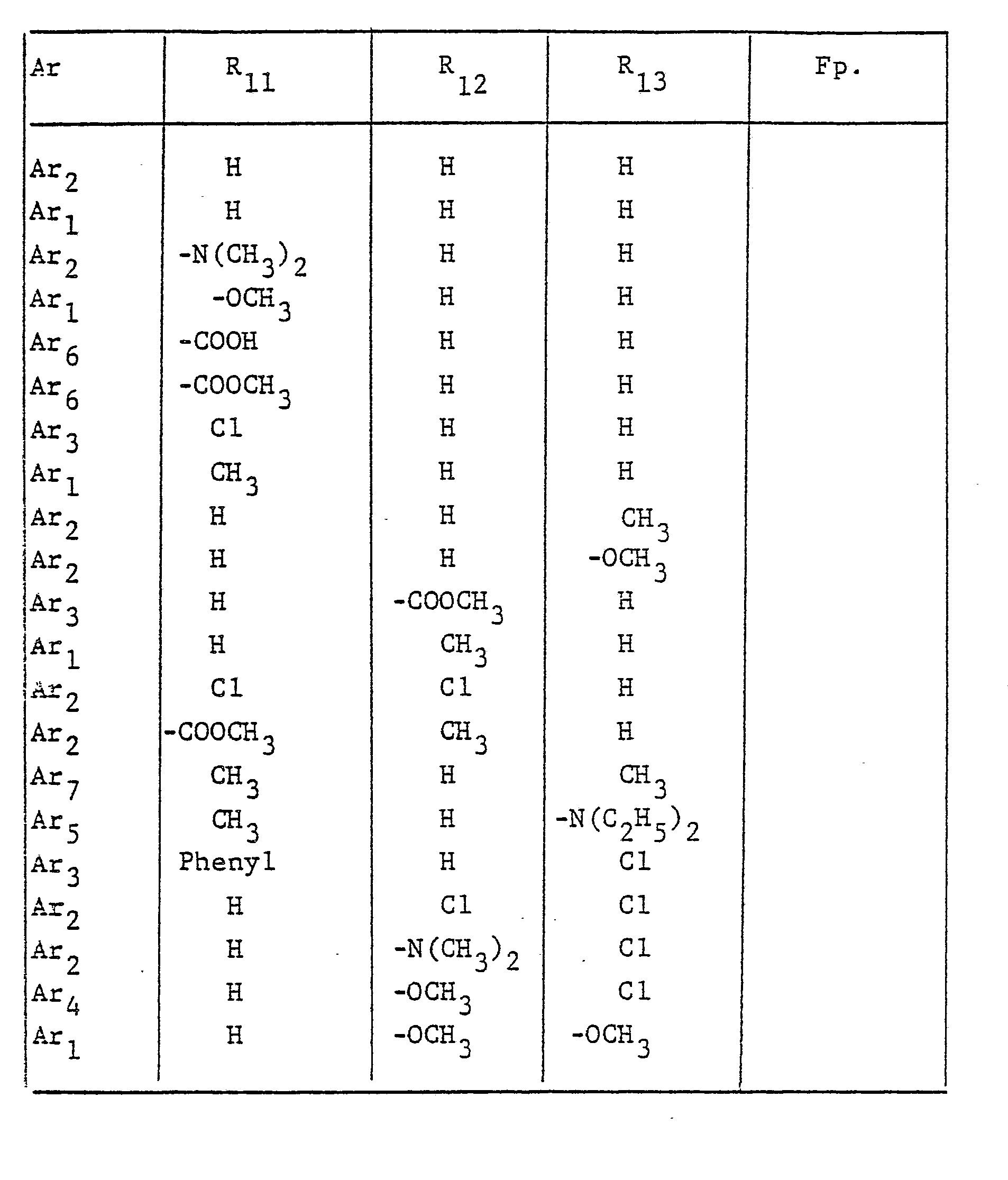
-

- Herstellung analog zu Weissberger u. Taylor, 28, S. 28

-

- Herstellung nach Weissberger u. Taylor, 28, S. 50

-

- Herstellung nach Weissberger 28, S. 33.
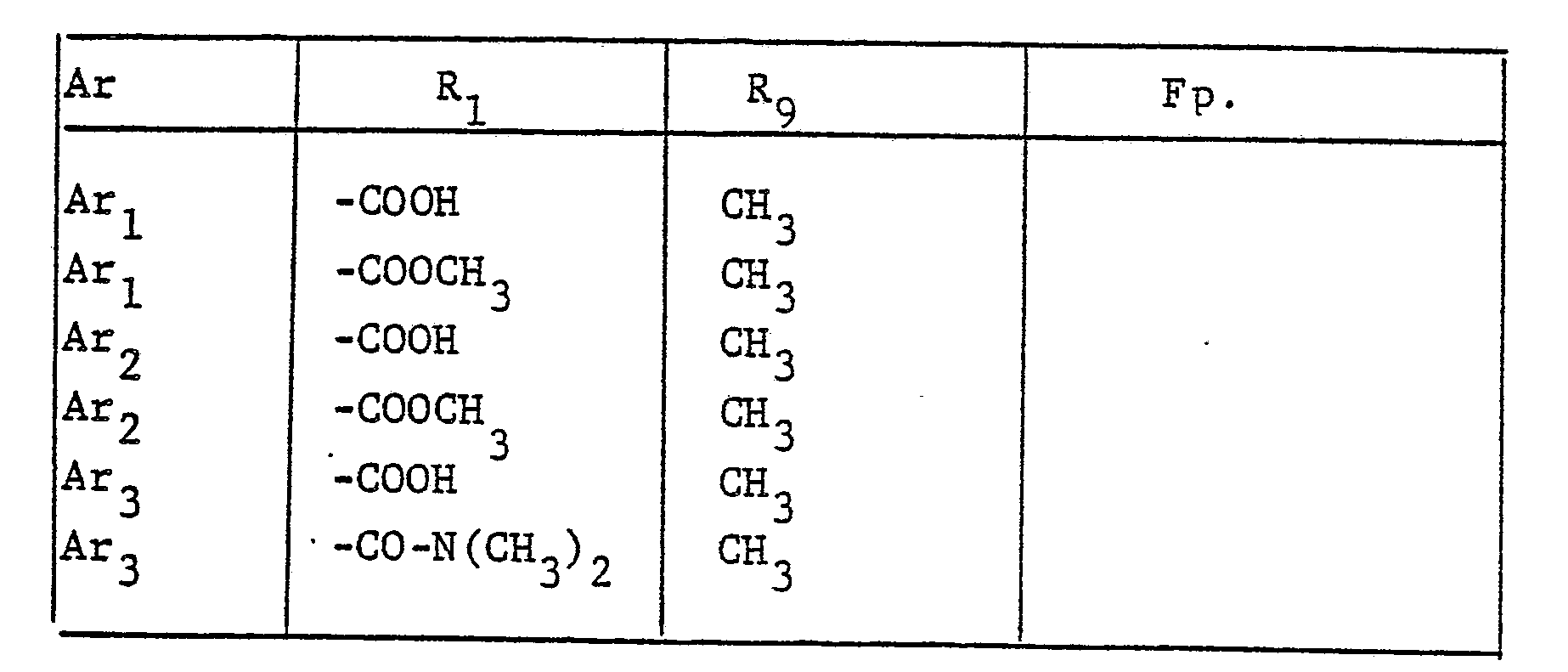
-

- Herstellung nach Weissberger u. Taylor 28, S. 170 Beispiel: Ar = Ar1
-

- Herstellung nach Weissberger oder Houben-Weyl 10/2.


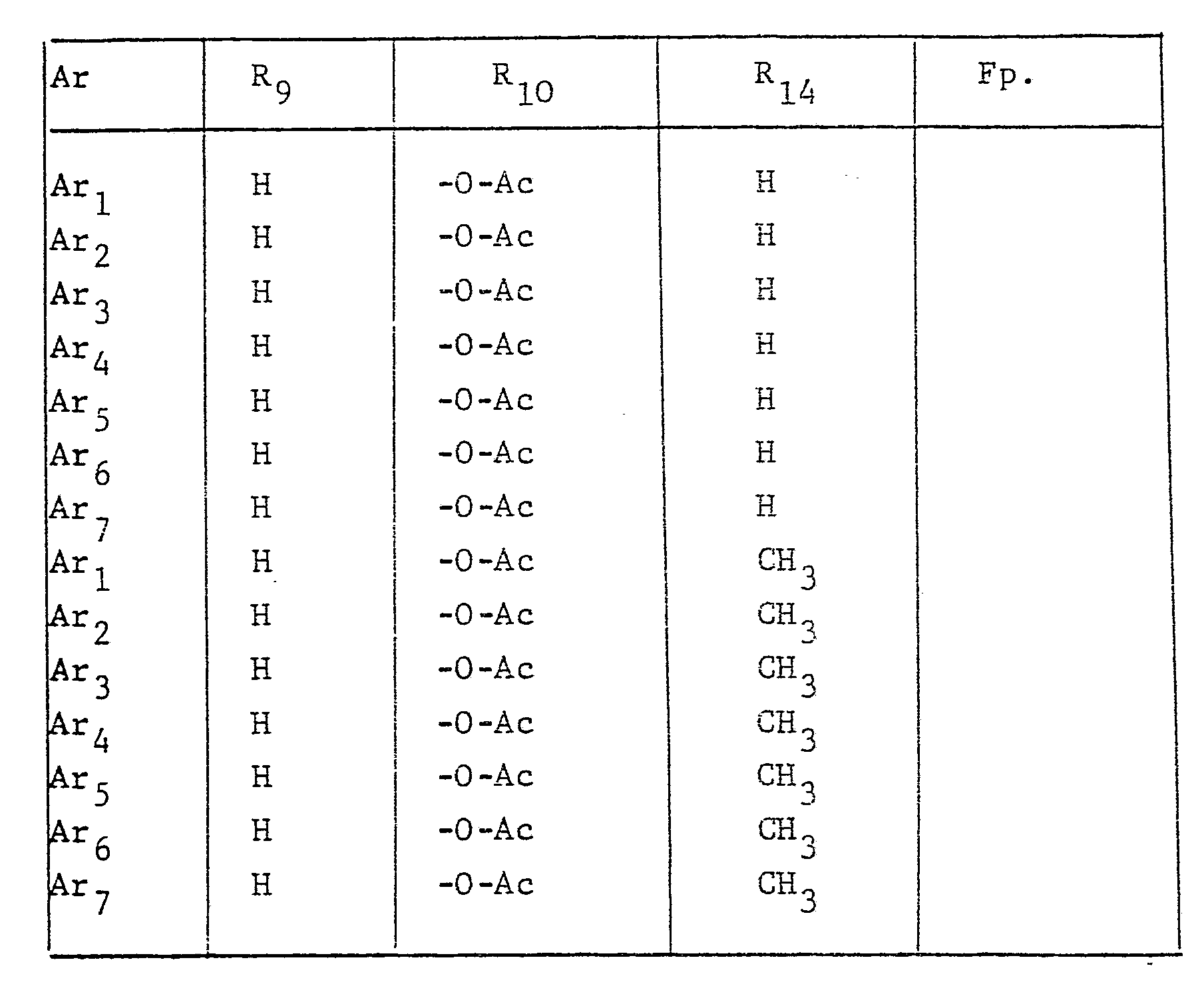
-

- Herstellung nach Weissberger und Houben-Weyl 10/2.


-

- Herstellung gemäss Weissberger und Houben-Weyl 10/2.


-

- Herstellung nach Weissberger und Houben-Weyl 10/2

-

- Herstellung gemäss Weissberger

-

- Herstellung analog zu Weissberger

-

- Herstellung nach Weissberger

-

- Herstellung gemäss Weissberger

-
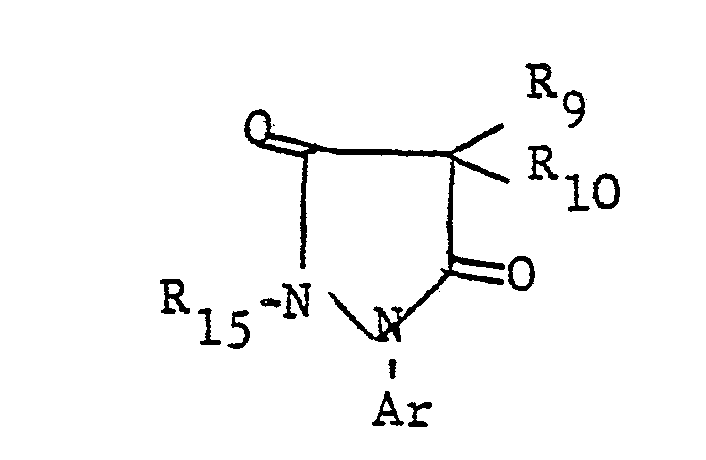
- Herstellung nach Weissberger


- Herstellung in Analogie zu: Org.Prep.Proced.Int. 9 (1), 27-33 (1978) Annalen der Chemie: 1974, S. 667 Annalen der Chemie: 761, 115 (1972) Annalen der Chemie 647, 37 (1961)
-

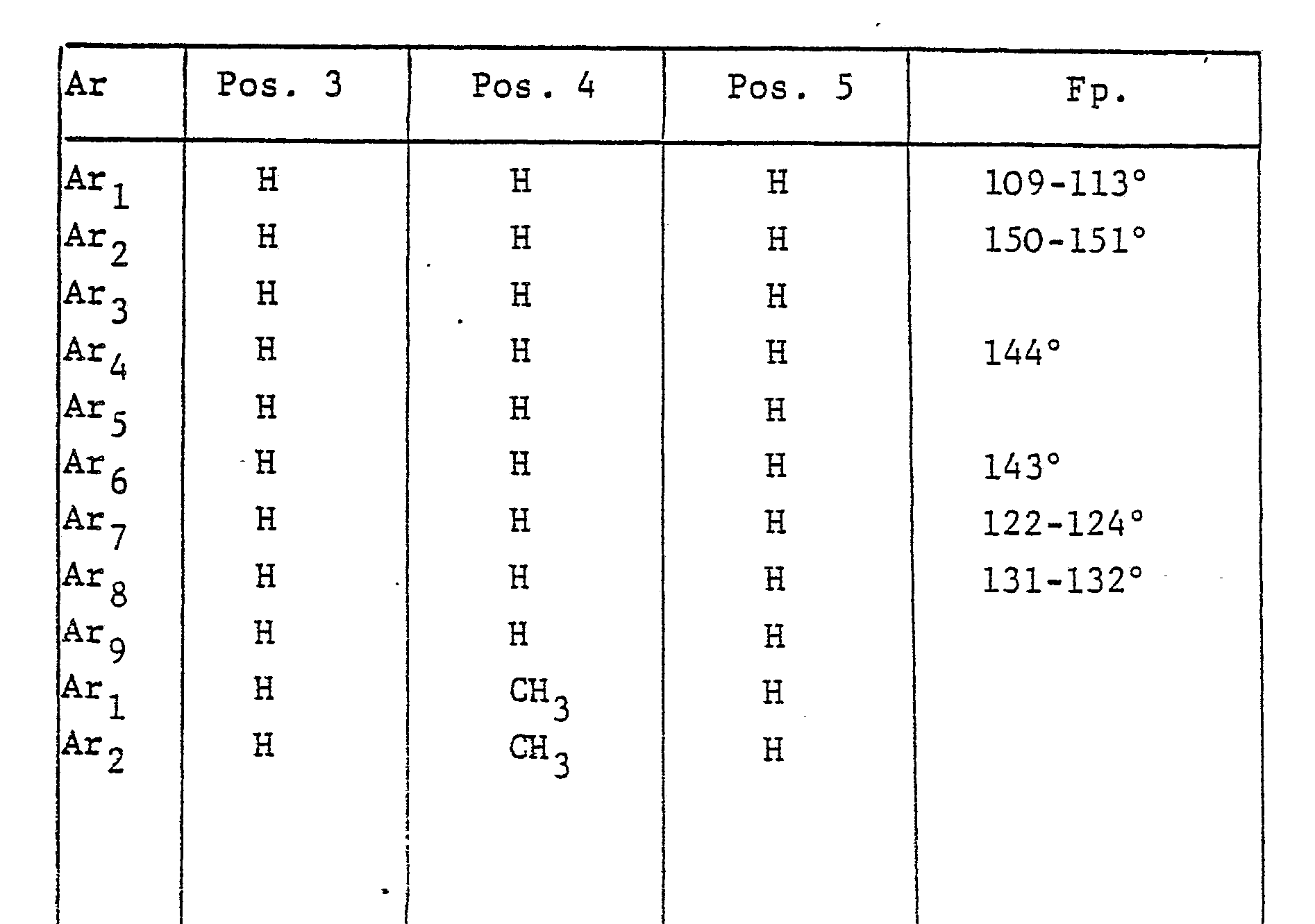
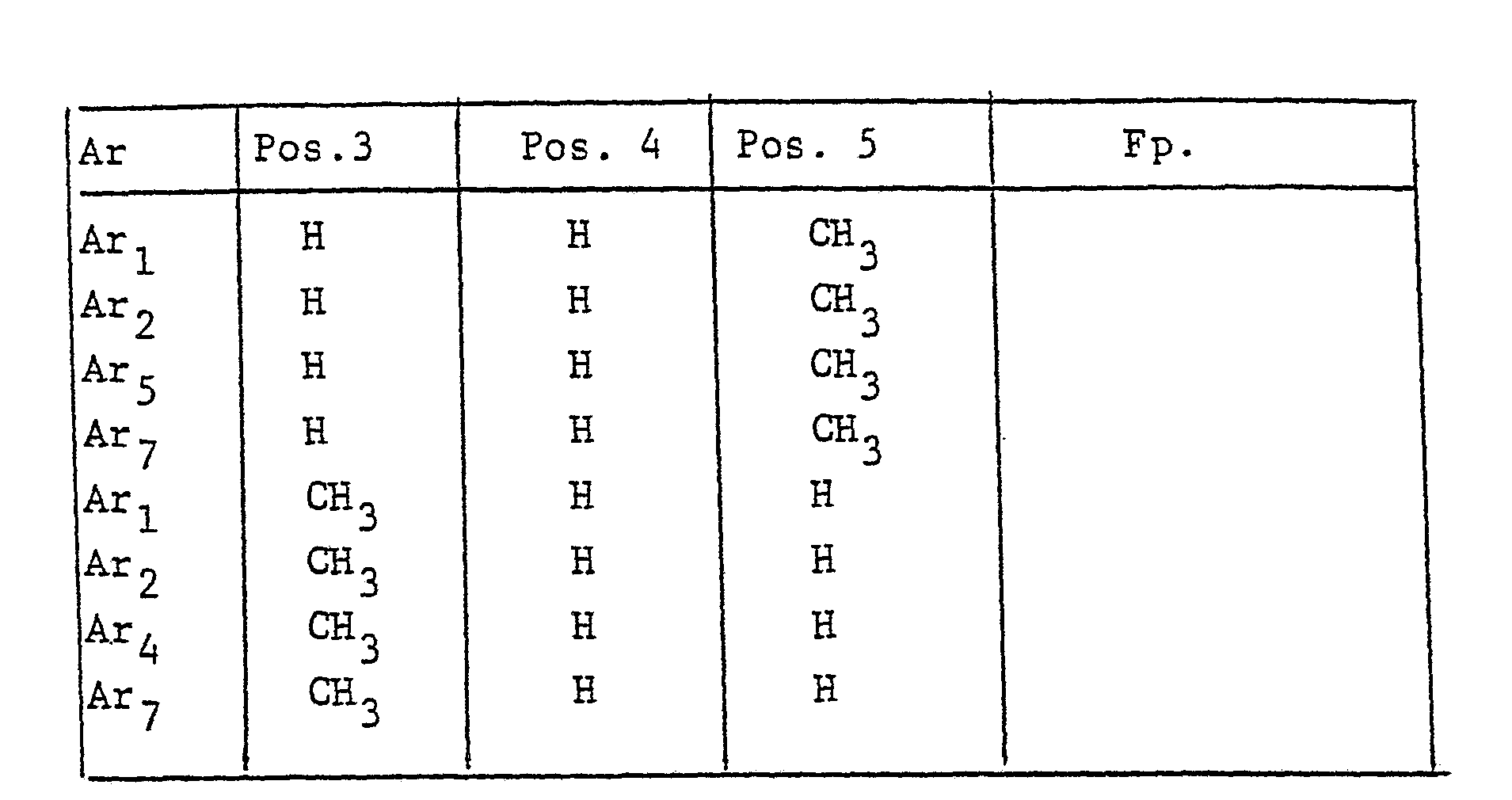
-


-


- Sultame der Formel

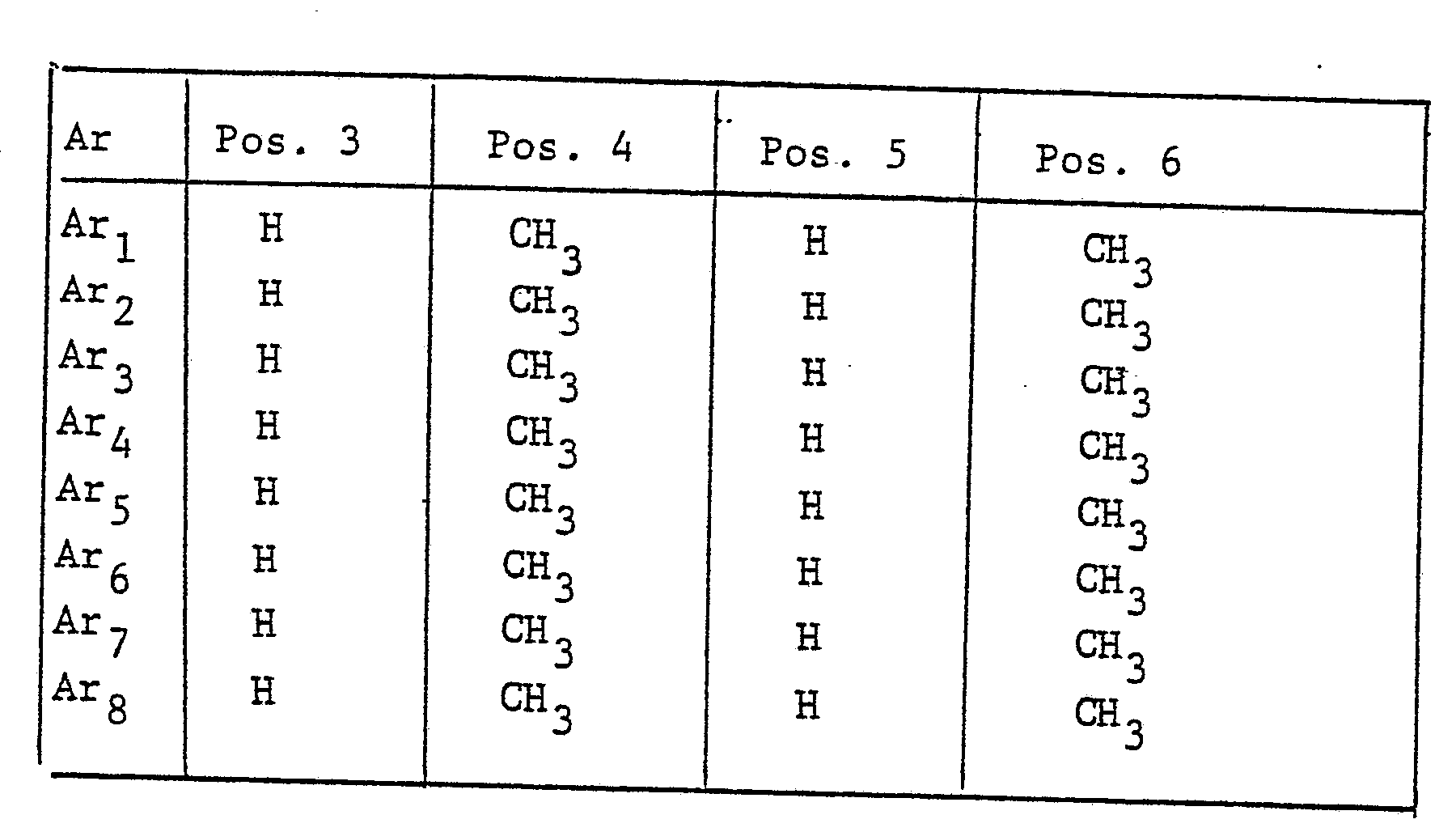
-

- Herstellung in Analogie zu USP 3579500

-
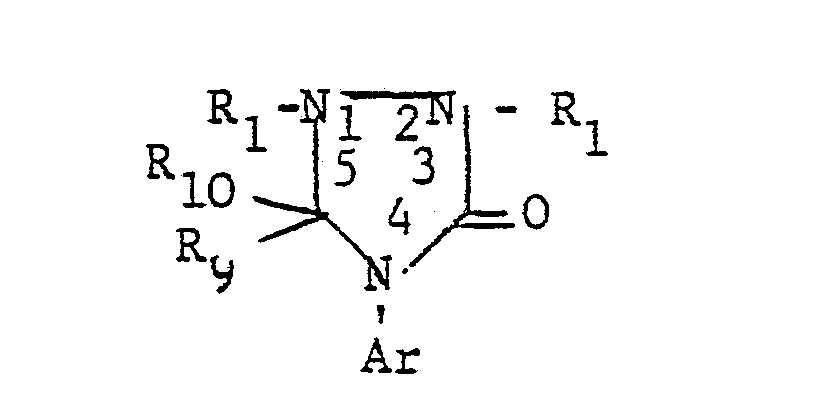
- Herstellung analog zu USP 3 922 162

-

- Herstellung analog Weissberger

-
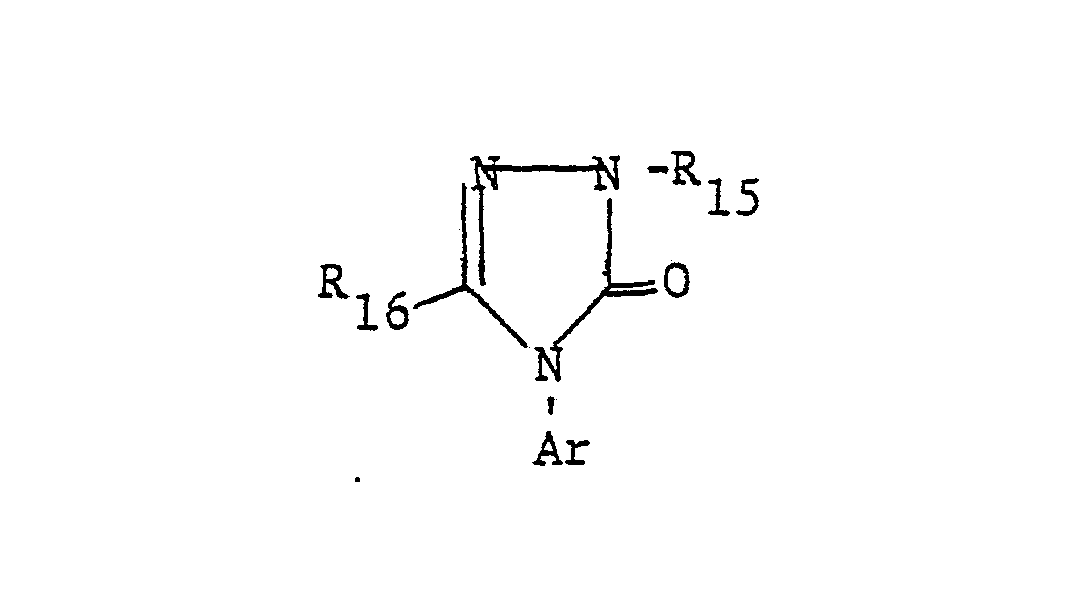

-

- Herstellung nach Houben-Weyl und USP 3 489 761 und 4 096 035

-

- Herstellung analog französischer Patentschrift 2 268 018

-


-

- Herstellung gemäss Weissberger

-

- Herstellung nach bekannten Methoden gemäss dem Schema:


-
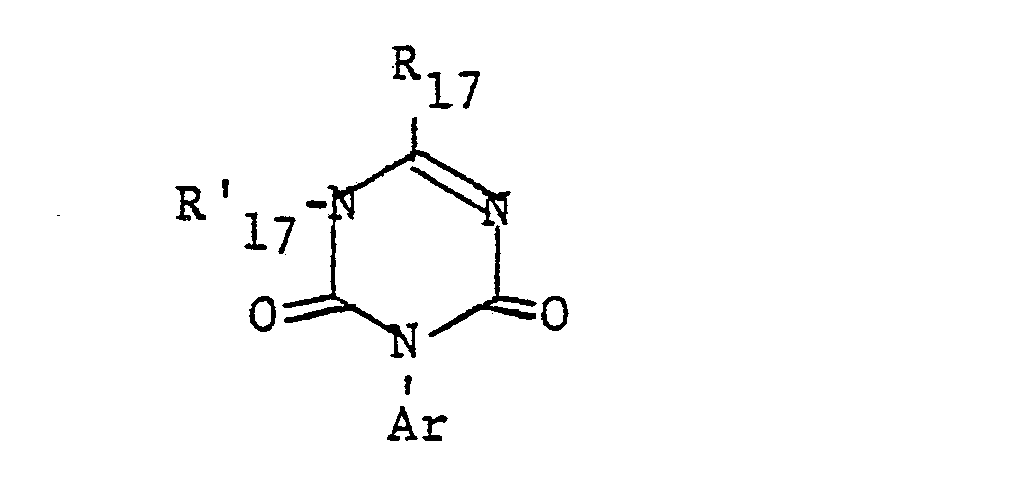
- Herstellung in Analogie zu DOS 2 254 200 und 2 236 312

-
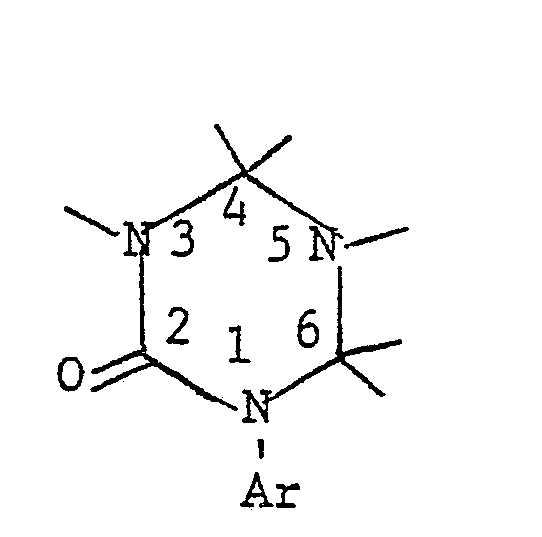

-

- Herstellung nach dem Schema:


- Die Herstellung erfindungsgemässer Mittel erfolgt in an sich bekannter Weise durch inniges Vermischen und Vermahlen von Wirkstoffen der Formel I mit geeigneten Trägerstoffen, gegebenenfalls unter Zusatz von gegenüber den Wirkstoffen inerten Dispersions- oder Lösungsmitteln. Die Wirkstoffe können in den folgenden Aufarbeitungsformen vorliegen und angewendet werden:
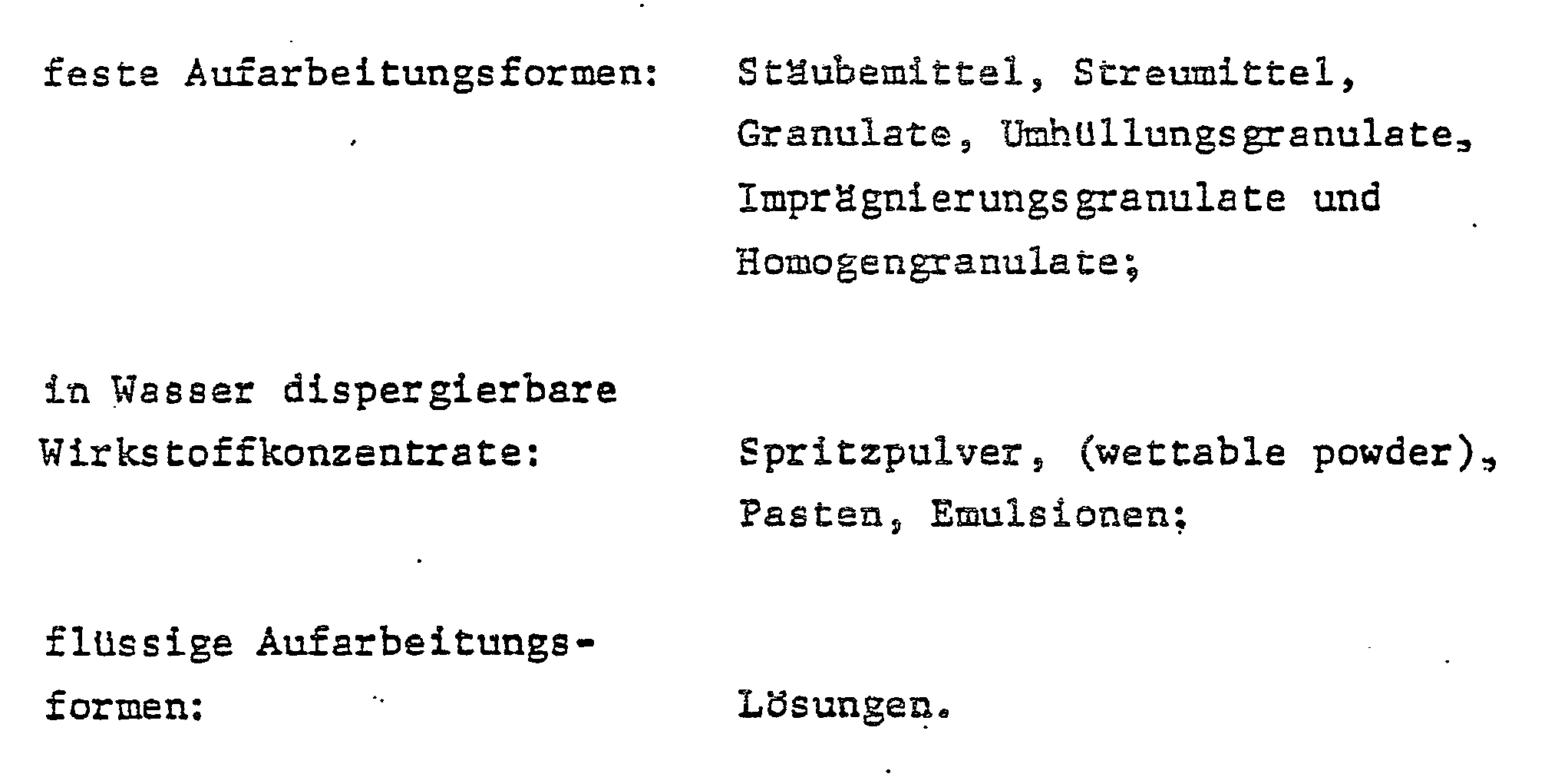
- Zur Herstellung fester Aufarbeitungsformen (Stäubemittel, Streumittel, Granulate) werden die Wirkstoffe mit festen Trägerstoffen vermischt. Als Trägerstoffe kommen zum Beispiel Kaolin, Talkum, Bolus, Löss, Kreide, Kalkstein, Kalkgrits, Ataclay, Dolomit, Diatomeenerde, gefällte Kieselsäure, Erdalkalisilikate, Natrium- und Kaliumaluminiumsilikate (Feldspäte und Glimmer), Calcium- und Magnesiumsulfate, Magnesiumoxid, gemahlene Kunststoffe, Düngemittel, wie Ammoniumsulfat, Ammoniumphosphat, Ammoniumnitrat, Harnstoff, gemahlene pflanzliche Produkte, wie Getreidemehl, Baumrindemehl, Holzmehl, Nussschalenmehl, Cellulosepulver, Rückstände von Pflanzenextraktionen, Aktivkohle etc., je für sich oder als Mischungen untereinander in Frage.
- Granulate lassen sich herstellen, indem man die Wirkstoffe in einem organischen Lösungsmittei löst und die so erhaltene Lösung auf ein granulierces Mineral, z.B. Attapul SiO2, Granicalcium oder Bentonit, aufbringt und dann das organische Lösungsmittel wieder verdampft.
- Polymerengranulate können hergestellt werden, indemz.B. ein fertiges, poröses Polymerengranulat, wie Harnstoff/Formaldehyd-Polymerisate, Polyacrylnitril und Polyester, mit bestimmter Oberfläche und günstigem vorausbestimmtem Absorptions/Desorptionsverhältnis mit den Wirkstoffen, z.B. in Form ihrer Lösungen (in einem niedrig siedenden Lösungsmittel), imprägniert und das Lösungsmittel entfernt. Derartige Polymerengranulate können in Form von Mikrogranulaten mit Schüttgewichten von vorzugsweise 300 g/Liter bis 600 g/Liter auch mit Hilfe von Zerstäubern aufgebracht werden. Das Zerstäuben kann über ausgedehnte Behandlungsflächen mit Hilfe von Flugzeugen durchgeführt


- Granulate sind auch.durch Kompaktieren desmit den Wirk- und Zusatzstoffen und anschliessendes
 erhältlich.
- Diesen Mitteln können ferner den WirkstoffZusätze und/oder nichtionische, anionaktive und kationenaktive Stoffe zugegeben werden, die beispielsweise die Haftfestigkeit der Wirkstoffe auf Pflanzen und
 verbessern (Haft- und Klebemittel) und/oder eine bessere Benetzbarkeit (Netzmittel) sowie Dispergierbarkeit (Dispergatoren) gewährleisten. Als Klebemittel kommen beispielsweise die folgenden in Frage: Olein-Kalk-Mischung,
 (Methylcellulose, Carboxymethylcellulose), Hydroxyäthylenglykoläther von Mono- und Dialkylphenolen mit 5 bis 15 Aethylenoxidresten pro Molekül und 8 bis 9
 im Alkylrest, Ligninsulfonsäure, deren Alkalimetall- und Erdalkalimetallsalze, Polyäthylenglykoläther (Carbowaxe), Fettalkoholpolyglykoläther mit 5 bis 20 Aethylenoxidresten pro Molekül und 8 bis 18 Kohlenstoffatomen im Fettalkoholteil, Kondensationsprodukte von Aethylenoxid, Propylenoxid, Polyvinylpyrrolidone, Polyvinylalkohole, Kondensationsprodukte von Harnstoff-Formaldehyd sowie Latex-Produkte.
- In Wasser dispergierbare Wirkstoffkonzentrate,. d.h. Spritzpulver (wettable powder), Pasten und Emulsionskonzentrate stellen Mittel dar, die mit Wasser auf jede gewünschte Konzentration verdünnt werden können. Sie bestehen aus Wirkstoff, Trägerstoff, gegebenenfalls den' Wirkstoff stabilisierenden Zusätzen, oberflächenaktiven Substanzen und Antischaummitteln und gegebenenfalls Lösungsmitteln.
- Die Spritzpulver (wettable powder) und Pasten werden erhalten, indem man die Wirkstoffe mit Dispergiermitteln und pulverförmigen Trägerstoffen in geeigneten Vorrichtungen bis zur Homogenität vermischt und vermahlt. Als Trägerstoffe kommen beispielsweise die vorstehend für die festen Aufarbeitungsformen erwähnten in Frage. In manchen Fällen ist es vorteilhaft, Mischungen verschiedener Trägerstoffe zu verwenden. Als Dispergatoren können beispielsweise verwendet werden: Kondensationsprodukte von sulfoniertem Naphthalin und sulfonierten Naphthalinderivaten mit Formaldehyd, Kondensationsprodukte des Naphthalins bzw. von Naphthalinsulfonsäuren mit Phenol und Formaldehyd sowie Alkalimetall-, Ammonium- und Erdalkalimetallsalze von Ligningsulfonsäure, weiter Alkylarylsulfonate, Alkali- und Erdalkalimetallsalze der Dibutylnaphthalinsulfonsäure, Fettalkoholsulfate, wie Salze sulfatierter Hexadecanole, Heptadecanole und Salze von sulfatiertem Fettalkoholpolyäthylenglykoläther, das Natriumsalz von Oleylmethyltaurid, ditertiäre Acetylenglykole, Dialkyldilaurylammoniumchlorid und fettsaure Alkali und Erdalkalimetallsalze.
- Als Antischaummittel kommen zum Beispiel Silicone in Frage.
- Die Wirkstoffe werden mit den oben aufgeführten Zusätz so vermischt, vermahlen, gesiebt und passiert, dass bei den Spritzpulvern der feste Anteil eine Korngrösse von 0,02 bis 0,04 und bei den Pasten von 0,03 mm nicht überschreitet. Zur Herstellung von Emulsionskonzentraten und Pasten werden Dispergiermittel, wie sie in den vorangehenden Abschnitten aufgeführt wurden, organische Lösungsmittel und Wasser verwendet. Als Lösungsmittel kommen beispielsweise die folgenden in Frage: Alkohole, Benzol, Xylole, Toluol, Dimethylsulfoxid, N,N-dialkylierte Amide und Trialkylamine. Die Lösungsmittel müssen praktisch geruchlos, nicht phytotoxisch, den Wirkstoffen gegenüber inert und dürfen nicht leicht brennbar sein.
- Ferner können die erfinfungsgemässen Mittel in Form vc Lösungen angewendet werden. Hierzu wird der Wirkstoff bzw. werden mehrere Wirkstoffe der Formel I in geeigneten organi; Lösungsmitteln, Lösungsmittelgemischen, Wasser oder Gemische von organischen Lösungsmitteln mit Wasser gelöst. Als organ: Lösungsmittel können aliphatische und aromatische Kohlenwasserstoffe, deren chlorierte Derivate, Alkylnaphthaline, allein oder als Mischung untereinander verwendet werden.
- Der Gehalt an Wirkstoff in den oben beschriebenen Mitteln liegt zwischen 0,1 bis 95%, bevorzugt zwischen 1 bi; 80%. Anwendungsformen können bis hinab zu 0,001% verdünnt werden. Die Aufwandmengen betragen in der Regel 0,1 bis 10 kg AS/ha, vorzugsweise 0,25 bis 5 kg AS/ha. Die Wirkstoffe der Formel I können beispielsweise wie folgt formuliert werden (Teile bedeuten Gewichtsteile):
- Zur Herstellung eines a) 5%igen und b) 2%igen Stäubemittels werden die folgenden Stoffe verwendet:
- a) 5 Teile Wirkstoff des Beispiels 1 95 Teile Talkum,
- b) 2 Teile Wirkstoff des Beispiels 2 1 Teil hochdisperse Kieselsäure, 97 Teile, Talkum;
- Die Wirkstoffe werden mit den Trägerstoffen vermischt und vermahlen.
- Zur Herstellung eines 5%igen Granulates werden die folgenden Stoffe verwendet:
- 5 Teile eines Wirkstoffe der allgemeinen Formel I
- 0,25 Teile Epichlorhydrin
- 0,25 Teile Cetylpolyäthylenglykoläther mit 8 Mol Aethylenoxid,
- 3,50 Teile Polyäthylenglykol,
- 91 Teile Kaolin (Korngrösse 0,3 bis 0,8 mm)
- Die Aktivsubstanz wird mit Epichlorhydrin vermischt und in 6 Teilen Aceton gelöst, hierauf werden Polyäthylenglykol und Cetylpolyäthylenglykoläther zugesetzt. Die so erhaltene Lösung wird auf Kaolin aufgesprüht und anschliessend im Vakuum verdampft.
- Zur Herstellung eines a) 50%igen, b) 25%igen und c) 10%igen Spritzpulvers werden folgende Bestandteile verwendet:
- a) 50 Teile Wirkstoff des Beispiels 4, 5 Teile Natriumdibutylnaphthylsulfonat, 3 Teile Naphthalinsulfonsäuren-Phenolsulfonsäuren-Formaldehyd-Kondensat 3:2:1, 20 Teile Kaolin, 22 Teile Champagne-Kreide; des obengenannten oder eines andern
- b) 25 Teile Wirkstoffs der Formel I, 5 Teile Oleylmethyltaurid-Natrium-Salz; 2,5 Teile Naphthalinsulfonsäuren-Formaldehyd-Kondensat, 0,5 Teile Carboxymethylcellulose, 5 Teile neutrales Kalium-Aluminium-Silikat, 62 Teile Kaolin;
- c) 10 Teile des Wirkstoffs gemäss Beispiel 3, 3 Teile Gemisch der Natriumsalze von gesättigten Fettalkoholsulfaten, 5 Teile Naphthalinsulfonsäuren-Formaldehyd-Kondensat, 82 Teile Kaolin.
- Der angegebene Wirkstoff wird auf die entsprechenden Trägerstoffe (Kaolin und Kreide) aufgezogen und anschliessend vermischt und vermahlen. Man erhält Spritzpulver von vorzuglicher Benetzbarkeit und Schwebefähigkeit. Aus solchen Spritzpulvern können durch Verdünnen mit Wasser Suspensionen jeder gewünschten Wirkstoffkonzentration erhalten werden. Derartige Suspensionen werden zur Bekämpfung von Unkräutern und Ungräsern in Kulturpflanzungen im Vorauflaufverfahren und zur Behandlung von Rasenanlagen verwendet.
- Zur Herstellung einer 45%igen Paste werden folgende Stoffe verwendet:

- Der Wirkstoff wird mit den Zuschlagstoffen in dazu geeigneten Geräten innig vermischt und vermahlen. Man erhalt eine Paste, aus der sich durch Verdünnen mit Wasser Suspensionen jeder gewünschten Konzentration herstellen lassen. Die Suspensionen eignen sich zur Behandlung von Rasenanlagen.
- Zur Herstellung eines 25%igen Emulsionskonzentrates werden

- Anstatt des jeweiligen in den vorhergehenden Formulierungsbeispielen angegebenen Wirkstoffs kann auch eine andere der von der Formel I umfassten Verbindungen verwendet werden.
- Zur Herstellung eines 25%igen wässerigen Konzentrats werden

- Die in den erfindungsgemässen Mitteln enthaltenen Wirkstoffe beeinflussen das Pflanzenwachstum in verschiedener Weise. So hemmen, verzögern oder unterbinden sie in erster Linie das Wachstum und die Keimung. Es handelt sich dabei also sowohl um pre- und post-emergente Herbizidwirkung als auch um Wuchshemmung.
- Erfindungsgemässe Mittel, die als aktive Komponente mindestens eine Verbindung der Formel I enthalten, eignen sich besonders zur Hemmung und Kontrolle des Pflanzenwachstums von monocotylen und dicoeylen Pflanzen, wie Gräsern, Sträuchern, Bäumen, Getreide- und Leguminosenkulturen, Zuckerrohr, Tabak, Soja, Zwiebel- und Kartoffelknollen, Zierpflanzen, Obstbäumen und Reben.
- Die von den neuen Wirkstoffen der Formel I in erster Linie erzielte Wirkung besteht in der gewünschten Reduktion der Pflanzengrösse, insbesondere der Wuchshöhe. Im allgemeinen ist damit eine gewisse Aenderung der Pflanzenform verbunden. In unmittelbarem Zusammenhang zur Verminderung der Wuchshöhe erfährt die Pflanze eine Festigung.Blätter und Stengel sind kräftiger ausgebildet. Durch Verkürzung der Internodienabstände an monocotylen Pflanzen wird die Knickfestigkeit erhöht. Auf diese Weise können Ernteausfälle durch Gewittersturm, Dauerregen, usw., die normalerweise zu einem Lagern von Getreide- und Leguminosenkulturen fuhren, weitgehend verhindert und damit die Erntearbeit erleichtert werden. Als Nebeneffekt führt verminderte Wuchshöhe bei Nutzpflanzen zu einer Einsparung an Düngemitteln. In gleichem Masse gilt dies auch für Zierpflanzen, Zierrasen, Sportrasen oder sonstige Grünanpflanzungen.
- Eines der wichtigsten Probleme an reinen Grasbepflanzungen ist jedoch der Grasschnitt selbst, sei es an Grünanlagen in Wohngegenden, auf Industriegeländen, auf Sportplätzen, an Autostrassen, Flugpisten, Eisenbahndämmen oder Uferböschungen von Gewässern. In all diesen Fällen ist ein periodisches Schneiden des Rasens bzw. des Graswuchses notwendig. Dies ist nicht nur im Hinblick auf Arbeitskräfte und Maschinen sehr aufwendig, sondern bringt im Verkehrsbereich auch erhebliche Gefahren für das betroffene Personal und die Verkehrsteilnehmer mit sich.
- Es besteht daher gerade in Gebieten mit grossen Verkehrsnetzen ein dringendes. Bedürfnis, die im Hinblick auf die Verfestigung von Seitenstreifen und Böschungen an Verkehrswegen notwendige Grasnarbe einerseits zu erhalten und zu pflegen, andererseits aber mit einfachen Massnahmen während der gesamten Vegetationsperiode auf einer mittleren Wuchshöhe zu halten. Dies wird durch Applikation erfindungsgemässer Wirkstoffe der Formel I auf sehr günstige Weise erreicht.
- In analoger Weise kann durch Behandlung von Bäumen, Sträuchern und Hecken, vor allem in Wohn- und Industriegebieten, mit erfindungsgemässen Verbindungen der Formel I die arbeitsaufwendige Schnittarbeit reduziert werden.
- Durch den Einsatz erfindungsgemässer Wirkstoffe der Formel I können auch das Triebwachstum und/oder die Fruchtbarkeit von Obstbäumen und Reben vorteilhaft beeinflusst werden.
- Zierpflanzen mit starkem Längenwachstum können durch Behandlung mit erfindungsgemässen Wirkstoffen als kompakte Topfpflanzen gezogen werden.
- Die Wirkstoffe der Formel I finden auch Anwendung zur Hemmung des Wachstums unerwünschter Geiztriebe, z.B. bei Tabak und Zierpflanzen, wodurch das arbeitsintensive Ausbrechen dieser Triebe von Hand vermieden wird, ferner zur Austriebhemmung bei lagernden Knollen, beispielsweise bei Zierpflanzenknollen, bei Zwiebeln und Kartoffeln, und schliesslich zur Ertragssteigerung bei stark vegetativ wachsenden Kulturpflanzen, wie Soja und Zuckerrohr, indem durch Applikation erfindungsgemässer Wirkstoffe der Uebergang von der vegetativen zur generativen Wachstumsphase beschleunigt wird.
- Bevorzugt setzt man die erfindungsgemässen Wirkstoffe der Formel I zur Wachstumshemmung an Gräsern, Getreidekulturen, Tabak, Soja und Zierpflanzen ein.
- Die Aufwandmengen sind verschieden und vom Applikationszeitpunkt abhängig. Sie liegen im allgemeinen zwischen 0,1 und 5 kg Wirkstoff pro Hektar, bei Applikation vor dem Auflaufen der Pflanzen und für die Behandlung von bestehenden Kulturen vorzugsweise bis zu 4 kg pro Hektar.
- Die Entfaltung der Wirkung der erfindungsgemässen Wirkstoffe erfolgt sowohl über die oberirdischen Pflanzenteile (Kontaktwirkung), insbesondere die Blätter, als auch .über den Boden, als pre-emergentes Herbizid (Keimhemmung).
- Die Wirkung als starke Wachstumshemmer zeigt sich darin, dass die meisten post-emergent behandelten Pflanzenarten nach dreiwöchiger Versuchsdauer einen Wachstumsstillstand zeigen, wobei die behandelten Pflanzenteile eine dunkelgrüne Färbung annehmen. Die Blätter fallen aber nicht ab.
- . Diese Wuchshemmung tritt bei einigen Pflanzenarten schon bei einer Dosierung von 0,5 kg/ha und darunter auf.
- Da nicht alle Pflanzenarten gleich stark gehemmt werden, ist bei Wahl einer bestimmten niederen Dosierung ein selektiver Einsatz möglich.
- Viele der erfindungsgemässen Wirkstoffe sind in pre-emergenter Anwendung gegen viele Unkräuter schon bei relativ niederen Konzentrationen auch hochaktive Herbizide, sowohl gegen Monocotyledonen wie Dicotyledonen. Bei mittleren Konzentrationen sind sie auch herbizid stark wirksam in post-emergenter Anwendung. Viele Wirkstoffe neigen zu totalherbizider Wirkung, andere eignen sich als gute Selektivherbizide, insbesondere in Zuckerrübenkulturen.
- In Gebieten mit erhöhter Erosionsgefahr können die erfindungsgemässen Wirkstoffe als Wuchshemmer in den verschiedensten Kulturen eingesetzt werden.
- Dabei wird die Unkrautdecke nicht beseitigt, sondern nur so stark gehemmt, dass keine Konkurrenzierung der Kulturpflanzen mehr auftritt.
- Die neuen Wirkstoffe der Formel I zeichnen sich überdies durch eine sehr starke pre-emergente Herbizidwirkung aus, sind also auch ausgeprägte Keimungshemmer.
- Zum Nachweis der Brauchbarkeit als Herbizide (pre- und post-emergent) und als Wuchshemmer dienten folgende Testmethoden:
- Im Gewächshaus wird unmittelbar nach der Einsaat der Versuchspflanzen in Saatschalen die Erdoberfläche mit einer wässerigen Suspension der Wirkstoffe, erhalten aus einem 25%-igen Spritzpulver behandelt. Es wurden verschiedene Konzentrationsreihen angewendete von 0,05 bis 4kg Wirk substanz pro Hektar. Die Saatschalen werden im Gewächshaus bei 22-25°C und 50-70% rel. Luftfeuchtigkeit gehalten und der Versuch nach 3 Wochen ausgewertet und die Resultate nach folgender Notenskala bonitiert:
- 1 - Pflanzen nicht gekeimt oder total abgestorben
- 2-8 - Zwischenstufen der Schädigung
- 9 = Pflanzen ungeschädigt (wie unbehandelte Kontrolle).
- Viele Wirkstoffe ergaben sogar bei einer Dosierung von 0,1 kg/ha eine praktisch vollständige Keimhemmung bei sehr vielen Versuchspflanzen und sind den Wirkstoffen des USP 3 920 444 und der DOS 2 364 144 klar überlegen.
- Eine grössere Anzahl (mindestens 7) Unkräuter und Kulturpflanzen, sowohl monocotyle wie dicotyle, wurden nach dem Auflaufen (im 4-bis-6-Blattstadium) mit einer wässerigen Wirkstoffemulsion in Dosierungen von 0,05 bis, 4 kg Wirksubstanz pro Hektar auf die Pflanzen gespritzt und diese bei 24°-26°C und 45-60% rel. Luftfeuchtigkeit gehalten. 5 Tage und 15 Tage nach Behandlung wird der Versuch ausgewertet und das Ergebnis wie im pre-emergent-Versuch nach derselben Notenskala bonitiert.
- Die geprüften Verbindungen gemäss vorliegender Erfindung zeigten auf einigen Pflanzen ausgeprägte kontaktherbizide Wirkung und auf vielen Pflanzen Wachstumsstillstand als Symptom der wachstumshemmenden Eigenschaften.
- In Kunststoffschalen mit Erde-Torf-Sand-Gemisch (6:3:1) wurden Samen der Gräser Lolium perenne, Poa pratensis, Festuca ovina und Dactylis glomerata ausgesät und normal bewässert. Die aufgelaufenen Gräser wurden wöchentlich bis auf 4 cm Höhe zurückgeschnitten und 40 Tage nach der Aussaat und 1 Tag nach dem letzten Schnitt mit wässerigen Spritzbrühen eines Wirkstoffs der Formel I bespritzt. Die Wirkstoffmenge betrug umgerechnet 0,5 bis 5 kg Aktivsubstanz pro Hektar. 10 und 21 Tage nach Applikation wurde das Wachstum der Gräser beurteilt.
- In Kunststoffbechern wurde Sommerweizen (Triticum aestivum), Sommergerste (Hordeum vulgare) und Roggen (Secale) in sterilisierter Erde angesät und im Gewächshaus gezogen. Die Getreidesprösslinge werden 5' Tage nach Aussaat mit einer Spritzbrühe des Wirkstoffs behandelt. Die Blattapplikation entsprach 0,1 bis 5 kg Wirkstoff pro Häktar. Die Auswertung erfolgt. nach 21 Tage.
- Die erfindungsgemässen Wirkstoffe bewirken eine merkliche Wuchshemmung sowohl bei den Gräsern wie beim Getreide.
als Versuchspflanzen dienen:


Claims (8)
1. Neue N-phenylsubstituierte N-Heterocyclen der Formel I

und ihre Salze, worin
A drei bis sechs Glieder eines gesättigten oder ein- bis dreifach ungesättigten heterocyclischen Ringes darstellt, und mindestens eines und höchstens drei dieser Glieder gegebenenfalls substituierte Heteroatome aus der Gruppe 0, S, N und P sind und die restlichen Glieder gegebenenfalls substituierte Kohlenstoff-Kettenglieder darstellen, wobei noch ein weiterer Ring ankondensiert vorhanden sein kann, mit der Massgabe, dass bei Vorhandensein von,0 bezw. S als Heteroatome höchstens zwei derselben benachbart stehen,
Q, T und U unabhängig voneinander je Wasserstoff, Halogen, C1-C4 Alkyl oder Halogenalkyl, Cyano, Nitro, -CSNH2, gegebenenfalls substituiertesBenzyl oder eine Gruppe -S(O)n-Ra, -ORb, -COORc, -SO2-N(Rd)2 oder -N(Re)2 bedeuten, wobei
n eire Zahl von Null bis 2 ist,
Ra einen C1-C5 Alkylrest oder einen gegebenenfalls kernsubstituierten Phenyl- oder Phenylalkylrest,
Rb C1-C5 Alkyl, Alkoxyalkyl, Alkoxyalkoxyalkyl, Alk(en)ylcarbonyl oder gegebenenfalls durch niederes Alkyl, Halogen, CN, CF3 oder N02 substituiertes Phenyl oder Benzyl,
Rc Wasserstoff oder nieder Alkyl,
Rd nieder Alkyl, und
Re Wasserstoff oder nieder Alkyl darstellen.
2. Neue substituierte N-Heterocyclen der Formel I des Patentanspruchs 1, dadurch gekennzeichnet, dass sie den engeren Formeln IIa oder IIb entsprechen:

worin die neuen und schon in Formel I verwendeten Symbole folgende Bedeutungen haben:
Ar steht für den substituierten Phenylrest der Formel 1 A' ist eine Gruppe C=O, eine gegebenenfalls durch R2 oder R3 substituierte C1-C3 Alkylen- oder Alkenylen-Gruppe oder ein Rest -CO-D, worin D gegebenenfalls durch R2 und/oder R3 substituiertes C1-C2 Alkylen oder C2-Alkenylen darstellt, R2 und R3 neben Wasserstoff einen gegebenenfalls durch C1-C4 Alkoxy oder durch CN substituierten C1-C8 Alkyl, C1-C4 Alkoxy-, einen Cyano- oder -S(O)n-Alkylrest bedeuten, n eine Zahl von Null bis 2 ist, R2 und R3 zusammen auch einen C2-C6 Alkylen, C2-C6 Alkenylen oder C4-Alkadienylenrest zwecks Bildung eines weiteren Ringes bedeuten können, der selbst wiederum durch R2 bezw. R3 substituiert sein kann,
B hat entweder die gleiche Bedeutung wie A' oder ist eine Gruppe -CO-CO-oder C=X, worin X Schwefel oder =NR4 bedeutet;
E ist gegebenenfalls durch R2 und/oder R3 substituiertes C2-Alkenylen, die Gruppe C=O oder

und n ist eine Zahl von Null bis 2,
R1 ist C1-C8 Alkyl (auch R5 genannt), Wasserstoff, C3-C8 Cycloalkyl, wobei Alkyl- und Cycloalkylreste gegebenenfalls substituiert sein können durch Halogen, C1-C4 Alkoxy, durch

CN, -COOR8, oder gegebenenfalls substituiertes Phenyl, C3-C8 Alkenyl oder Halogenalkenyl, C3-C8 Alkinyl, gegebenenfalls durch Alkyl, Alkoxy, Halogen, CF3 oder CN substituiertes Phenyl, ferner eine der Gruppen

-COOR8 oder COR1, wobei R1 wieder die obige Bedeutung hat;
R4 ist C1-C8 Alkyl, Benzyl oder Phenyl,
R6 und R7 bedeuten unabhängig voneinander je Wasserstoff, gegebenenfalls durch C1-C4 Alkoxy substituiertes C1-C8 Alkyl, C3-C8 Alkenyl oder Alkinyl, C1-C4 Alkoxy, Phenyl oder Benzyl, wobei der Benzolkern dieser Reste durch Halogen, C1-C4 Alkyl, C1-C4 Alkoxy oder durch CN substituiert sein kann,
R6 und R7 können zusammen mit dem benachbarten Stickstoffatom auch einen 5-6-gliedrigen heterocyclischen Ring bilden, der nochein weiteres Sauerstoffatom als Heteroatom enthalten kann,
.R8 ist Wasserstoff, C1-C8 Alkyl C3-C8 Cycloalkyl, gegebenenfalls durch C1-C4 Alkoxy oder Halogen substituiertes Aralkyl (insbesondere Benzyl oder Phenyläthyl), ferner gegebenenfalls durch Halogen, Alkyl, Alkoxy, CF3 oder CN substituiertes Phenyl.
3. Neue substituierte N-Heterocyclen gemäss Patentanansprüchen 1 und 2, in denen die Gruppe -NHSO2CF3 sich in der meta-Scellung des Phenylrestes befindet.
4. Verfahren zur Herstellung der neuen phenylsubstituierten N-Heterocyclen der Formel I des Patentanspruch 1, dadurch gekennzeichnet, dass man ein heterocyclisches Aminoanilinderivat der Formel III

worin A, Q, T und U wie unter Formel I definiert sind, in an sich bekannter Weise mit einem Trifluormethansulfonylierungsmittel behandelt und das so erhaltene Trifluormethansulfonamid gewünschtenfalls in das Salz einer Base oder eines Amins überführt.
5. Verfahren gemäss Patentanspruch 4, dadurch gekennzeichnet, dass man als Trifluormethansulfonylierungsmittel das Anhydrid der Trifluormethansulfonsäure von der Formel (CF3S02)20 verwendet.
6. Mittel zur Beeinflussung des Pflanzenwachstums, insbesondere herbizides und pflanzenwuchshemmendes Mittel, dadurch gekennzeichnet, dass es neben Träger- und/oder anderen Zuschlagstoffen als aktive Komponente mindestens eine trifluormethansulfonamidophenyl-substituierte heterocyclische Verbindung der Formel I, gemäss der Definition des Anspruchs-1 oder 2 enthält.
7. Verfahren zur Hemmung und Unterdrückung des Pflanzenwuchses von monocotylen und dicotylen Pflanzen, gekennzeichnet durch pre- oder post-emergente Behandlung der besäten Flächen oder der Pflanzen mit einem Wirkstoff der Formel I, II oder IIa gemäss Ansprüchen 1 und 2, oder mit einem diesen Wirkstoff enthaltenden Mittel gemäss Anspruch 6.
8. Verfahren zur Wuchshemmung an Gräsern, Getreidekulturen, Tabak, Soja und Zierpflanzen, gekennzeichnet durch die post-emergente Behandlung dieser Pflanzen mit einem Wirkstoff der Formel I, IIa oder IIb gemäss Ansprüchen 1 und 2 oder mit einem Mittel gemäss Anspruch 6.
Applications Claiming Priority (2)
| Application Number | Priority Date | Filing Date | Title |
|---|---|---|---|
| CH1025178 | 1978-10-03 | ||
| CH10251/78 | 1978-10-03 |
Publications (1)
| Publication Number | Publication Date |
|---|---|
| EP0011693A1 true EP0011693A1 (de) | 1980-06-11 |
Family
ID=4361129
Family Applications (1)
| Application Number | Title | Priority Date | Filing Date |
|---|---|---|---|
| EP79103734A Withdrawn EP0011693A1 (de) | 1978-10-03 | 1979-10-01 | Neue N-(trifluormethansulfonylaminophenyl)-substituierte N-Heterocyclen, ihre Herstellung, sie enthaltende Mittel und ihre Verwendung zur Beeinflussung des Pflanzenwachstums |
Country Status (1)
| Country | Link |
|---|---|
| EP (1) | EP0011693A1 (de) |
Cited By (19)
| Publication number | Priority date | Publication date | Assignee | Title |
|---|---|---|---|---|
| EP0294375A4 (de) * | 1985-12-20 | 1988-10-20 | Fmc Corp | Aryltriazolinon-unkrautvertilgungsmittel. |
| US4868321A (en) * | 1983-11-04 | 1989-09-19 | Fmc Corporation | Isothiocyanate intermediates |
| US4906281A (en) * | 1988-07-01 | 1990-03-06 | Fmc Corporation | Herbicidal 9-arylimino-8-thia-1,6-diazabicyclo [4.3.0]nonane-7-ones (and thiones) |
| US4906287A (en) * | 1984-06-12 | 1990-03-06 | Fmc Corporation | Herbicidal compounds |
| US5035740A (en) * | 1989-05-16 | 1991-07-30 | Fmc Corporation | Herbicidal compounds |
| US5041155A (en) * | 1989-04-03 | 1991-08-20 | Fmc Corporation | Herbicidal aryl triazolinones |
| US5136868A (en) * | 1983-11-04 | 1992-08-11 | Fmc Corporation | Herbicidal 1-aryl-4-substituted-1,4-dihydro-5h-tetrazol-5-ones and sulfur analogs thereof |
| WO1992016510A1 (en) * | 1991-03-19 | 1992-10-01 | Ciba-Geigy Ag | Novel herbicidally, acaricidally and insecticidally active compounds |
| EP0609734A1 (de) * | 1993-02-05 | 1994-08-10 | Bayer Ag | Substituierte Triazolinone sowie ihre Verwendung als Herbizide |
| US5405826A (en) * | 1992-01-14 | 1995-04-11 | Rhone Poulenc Agriculture Limited | Herbicidal pyridopyridazinones and pyridopyridazinethiones |
| WO1996016043A1 (de) * | 1994-11-17 | 1996-05-30 | Bayer Aktiengesellschaft | Substituierte diazacyclohexandi(thi)one mit herbizider wirkung |
| WO1996018618A1 (de) * | 1994-12-15 | 1996-06-20 | Bayer Aktiengesellschaft | 3-aryl-1,2,4-triazolderivate mit herbiziden eigenschaften |
| WO1997030980A1 (de) * | 1996-02-22 | 1997-08-28 | Bayer Aktiengesellschaft | Substituierte 2-aryl-1,2,4-triazin-3,5-di(thi)one als herbizide |
| WO1998039304A1 (de) * | 1997-03-05 | 1998-09-11 | Bayer Aktiengesellschaft | Heterozyklisch substituierte aromatische aminoverbindungen mit herbizider wirkung |
| WO1999059977A1 (de) * | 1998-05-20 | 1999-11-25 | Bayer Aktiengesellschaft | Substituierte 1,3-diaza-2-(thi)oxo-cycloalkane |
| US6096895A (en) * | 1995-05-17 | 2000-08-01 | E. I. Du Pont De Nemours And Company | Heterocyclic dihydrazole compounds and their use for controlling fungal plant diseases |
| WO2001025216A1 (de) * | 1999-10-01 | 2001-04-12 | Basf Aktiengesellschaft | 1-aryl-1,3-dihydro-imidazol-2-(thi)on derivate, deren herstellung und deren verwendung als herbizide oder zur desikkation/defoliation von pflanzen |
| US6608004B2 (en) | 1999-06-04 | 2003-08-19 | Bayer Aktiengesellschaft | Substituted 2-aryl-1,2,4-triazine-3,5-di(thi)ones |
| US8778944B2 (en) | 2009-02-05 | 2014-07-15 | Takeda Pharmaceutical Company Limited | Pyridazinone compounds |
Citations (5)
| Publication number | Priority date | Publication date | Assignee | Title |
|---|---|---|---|---|
| DE2212558A1 (de) * | 1971-03-16 | 1972-10-05 | Ciba Geigy Ag | Herbizide Mittel und ein Verfahren zur Herstellung neuer herbizider Wirkstoffe |
| US3923811A (en) * | 1971-05-11 | 1975-12-02 | Minnesota Mining & Mfg | Perfluoroalkanesulfonamides N-substituted by heterocyclic groups |
| DE2542453A1 (de) * | 1975-09-24 | 1977-04-14 | Basf Ag | Verfahren zur herstellung von 2-oxo-oxazolidinen |
| DE2650604A1 (de) * | 1975-11-07 | 1977-05-12 | Ciba Geigy Ag | Mittel und verfahren zur beeinflussung des pflanzenwachstums und neue 1-phenyl-2-oxo-pyrrolidin-4- carbonsaeurederivate |
| US4076519A (en) * | 1973-04-19 | 1978-02-28 | Minnesota Mining And Manufacturing Company | N-substituted perfluoroalkanesulfonamides as herbicides |
-
1979
- 1979-10-01 EP EP79103734A patent/EP0011693A1/de not_active Withdrawn
Patent Citations (5)
| Publication number | Priority date | Publication date | Assignee | Title |
|---|---|---|---|---|
| DE2212558A1 (de) * | 1971-03-16 | 1972-10-05 | Ciba Geigy Ag | Herbizide Mittel und ein Verfahren zur Herstellung neuer herbizider Wirkstoffe |
| US3923811A (en) * | 1971-05-11 | 1975-12-02 | Minnesota Mining & Mfg | Perfluoroalkanesulfonamides N-substituted by heterocyclic groups |
| US4076519A (en) * | 1973-04-19 | 1978-02-28 | Minnesota Mining And Manufacturing Company | N-substituted perfluoroalkanesulfonamides as herbicides |
| DE2542453A1 (de) * | 1975-09-24 | 1977-04-14 | Basf Ag | Verfahren zur herstellung von 2-oxo-oxazolidinen |
| DE2650604A1 (de) * | 1975-11-07 | 1977-05-12 | Ciba Geigy Ag | Mittel und verfahren zur beeinflussung des pflanzenwachstums und neue 1-phenyl-2-oxo-pyrrolidin-4- carbonsaeurederivate |
Non-Patent Citations (2)
| Title |
|---|
| CHEMICAL ABSTRACTS, Vol. 81 (1974) * |
| CHEMICAL ABSTRACTS, Vol. 84 (1976) * |
Cited By (32)
| Publication number | Priority date | Publication date | Assignee | Title |
|---|---|---|---|---|
| US5136868A (en) * | 1983-11-04 | 1992-08-11 | Fmc Corporation | Herbicidal 1-aryl-4-substituted-1,4-dihydro-5h-tetrazol-5-ones and sulfur analogs thereof |
| US4868321A (en) * | 1983-11-04 | 1989-09-19 | Fmc Corporation | Isothiocyanate intermediates |
| US4906287A (en) * | 1984-06-12 | 1990-03-06 | Fmc Corporation | Herbicidal compounds |
| US4906286A (en) * | 1984-06-12 | 1990-03-06 | Fmc Corporation | Herbicidal 2-aryl-1,2,4-triazine-3,5(2H,4H)-diones and sulfur analogs thereof |
| EP0294375A4 (de) * | 1985-12-20 | 1988-10-20 | Fmc Corp | Aryltriazolinon-unkrautvertilgungsmittel. |
| US4906281A (en) * | 1988-07-01 | 1990-03-06 | Fmc Corporation | Herbicidal 9-arylimino-8-thia-1,6-diazabicyclo [4.3.0]nonane-7-ones (and thiones) |
| US5041155A (en) * | 1989-04-03 | 1991-08-20 | Fmc Corporation | Herbicidal aryl triazolinones |
| US5035740A (en) * | 1989-05-16 | 1991-07-30 | Fmc Corporation | Herbicidal compounds |
| US5506193A (en) * | 1991-03-19 | 1996-04-09 | Ciba-Geigy Corporation | Herbicidally, acaricidally and insecticidally active pyrazolidine compounds |
| WO1992016510A1 (en) * | 1991-03-19 | 1992-10-01 | Ciba-Geigy Ag | Novel herbicidally, acaricidally and insecticidally active compounds |
| TR25475A (tr) * | 1991-03-19 | 1993-05-01 | Ciba Geigy Ag | Yeni herbisid, akarisid ve insektisid olarak etkili bilesikler |
| US5494890A (en) * | 1991-03-19 | 1996-02-27 | Ciba-Geigy Corporation | Herbicidally, acaricidally and insecticidally active pyrazolidine compounds |
| US5405826A (en) * | 1992-01-14 | 1995-04-11 | Rhone Poulenc Agriculture Limited | Herbicidal pyridopyridazinones and pyridopyridazinethiones |
| EP0609734A1 (de) * | 1993-02-05 | 1994-08-10 | Bayer Ag | Substituierte Triazolinone sowie ihre Verwendung als Herbizide |
| WO1996016043A1 (de) * | 1994-11-17 | 1996-05-30 | Bayer Aktiengesellschaft | Substituierte diazacyclohexandi(thi)one mit herbizider wirkung |
| WO1996018618A1 (de) * | 1994-12-15 | 1996-06-20 | Bayer Aktiengesellschaft | 3-aryl-1,2,4-triazolderivate mit herbiziden eigenschaften |
| US6162765A (en) * | 1994-12-15 | 2000-12-19 | Bayer Aktiengesellschaft | Substituted N-aryl nitrogen-containing heterocyclic compounds |
| US6743755B2 (en) | 1994-12-15 | 2004-06-01 | Bayer Aktiengesellschaft | Substituted N-aryl nitrogen-containing heterocyclic compounds |
| US6426318B1 (en) | 1994-12-15 | 2002-07-30 | Bayer Aktiengesellschaft | 3-aryl-1,2,4-triazone derivatives with herbicidal properties |
| EP1120411A3 (de) * | 1994-12-15 | 2001-08-08 | Bayer Ag | 4-Aryl-1,2,4-Triazolidindionderivate und ihre Verwendung als Herbizide |
| US6096895A (en) * | 1995-05-17 | 2000-08-01 | E. I. Du Pont De Nemours And Company | Heterocyclic dihydrazole compounds and their use for controlling fungal plant diseases |
| WO1997030980A1 (de) * | 1996-02-22 | 1997-08-28 | Bayer Aktiengesellschaft | Substituierte 2-aryl-1,2,4-triazin-3,5-di(thi)one als herbizide |
| US6159903A (en) * | 1996-02-22 | 2000-12-12 | Bayer Aktiengesellschaft | Substituted 2-aryl-1,2,4-triazine-3,5-di(thi)ones as herbicides |
| CN1086697C (zh) * | 1996-02-22 | 2002-06-26 | 拜尔公司 | 作为除草剂的取代的2-芳基-1,2,4-三嗪-3,5-二(硫)酮类 |
| WO1998039304A1 (de) * | 1997-03-05 | 1998-09-11 | Bayer Aktiengesellschaft | Heterozyklisch substituierte aromatische aminoverbindungen mit herbizider wirkung |
| WO1999059977A1 (de) * | 1998-05-20 | 1999-11-25 | Bayer Aktiengesellschaft | Substituierte 1,3-diaza-2-(thi)oxo-cycloalkane |
| US6608004B2 (en) | 1999-06-04 | 2003-08-19 | Bayer Aktiengesellschaft | Substituted 2-aryl-1,2,4-triazine-3,5-di(thi)ones |
| WO2001025216A1 (de) * | 1999-10-01 | 2001-04-12 | Basf Aktiengesellschaft | 1-aryl-1,3-dihydro-imidazol-2-(thi)on derivate, deren herstellung und deren verwendung als herbizide oder zur desikkation/defoliation von pflanzen |
| US8778944B2 (en) | 2009-02-05 | 2014-07-15 | Takeda Pharmaceutical Company Limited | Pyridazinone compounds |
| TWI457333B (zh) * | 2009-02-05 | 2014-10-21 | Takeda Pharmaceutical | 嗒酮化合物 |
| US8916566B2 (en) | 2009-02-05 | 2014-12-23 | Takeda Pharmaceutical Company Limited | Pyridazinone compounds as phosphodiesterase inhibitors and methods of treating disorders |
| US9550756B2 (en) | 2009-02-05 | 2017-01-24 | Takeda Pharmaceutical Company Limited | Pyridazinone compounds as phosphodiesterase inhibitors and methods of treating disorders |
Similar Documents
| Publication | Publication Date | Title |
|---|---|---|
| EP0126713B1 (de) | Cyclohexandion-carbonsäurederivate mit herbizider und das Pflanzenwachstum regulierender Wirkung | |
| EP0007990B1 (de) | Pyrazolätherderivate, Verfahren zu ihrer Herstellung und Herbizide, die diese Verbindungen enthalten | |
| DE2648008C3 (de) | Acetanilide | |
| EP0011693A1 (de) | Neue N-(trifluormethansulfonylaminophenyl)-substituierte N-Heterocyclen, ihre Herstellung, sie enthaltende Mittel und ihre Verwendung zur Beeinflussung des Pflanzenwachstums | |
| EP0096657B1 (de) | 2-Phenyl-, 2-Naphthyl- und 2-Heterocyclylpyrimidine als Gegenmittel zum Schützen von Kulturpflanzen vor durch Herbizide verursachte phytotoxische Schäden | |
| EP0003805A1 (de) | Pyridazonverbindungen und diese enthaltende herbizide Zusammensetzungen | |
| DD154954A5 (de) | Herbizide mittel | |
| DE2520381A1 (de) | Neue 5-nitropyrimidinderivate und ihre verwendung in mitteln zur beeinflussung des pflanzenwachstums | |
| EP0103537B1 (de) | N-Arylsulfonyl-N'-triazolylharnstoffe | |
| EP0177450A1 (de) | Verfahren zur Herstellung von Cyclohexandion-carbonsäurederivaten mit herbizider und das Pflanzenwachstum regulierender Wirkung | |
| EP0561845B1 (de) | Pyrido-anellierte 4-oxo-4h-benzopyrane, verfahren zu ihrer herstellung und ihre verwendung als antidots | |
| EP0368212A2 (de) | Herbizide Mittel, die 2-(4-Heteroaryloxy)- oder 2-(4-Aryloxy)-phenoxy-essig- oder -propionsäurederivate und/oder Cyclohexenonderivate als herbizide Wirkstoffe und Naphthalinderivate als Antidots enthalten, sowie ihre Verwendung zur Bekämpfung unerwünschten Pflanzenwuchses | |
| DE2637886A1 (de) | 3-pyridyl-oxy-alkancarbonsaeureamide | |
| DE3120859A1 (de) | Dihalogenacetamide, verfahren zu ihrer herstellung und herbizide mittel, die acetanilide als herbizide wirkstoffe und diese dihalogenacetamide als antagonistische mittel enthalten | |
| EP0232724B1 (de) | Cyclohexenonderivate, ein Verfahren zu ihrer Herstellung sowie ihre Verwendung als herbizide und das Pflanzenwachstum regulierende Mittel | |
| EP0013873B1 (de) | N-Azolylessigsäureanilide, Verfahren zu ihrer Herstellung und ihre Anwendung als Herbizide | |
| EP0210137A2 (de) | Anellierte Triazol-Verbindungen | |
| EP0095677B1 (de) | Triazolyl-ketonoxime und -dioxime, Verfahren zu ihrer Herstellung und ihre Verwendung als Pflanzenwachstumsregulatoren | |
| EP0032879A1 (de) | Neue Benzthiazolyl-harnstoffderivate, deren Herstellung, sie enthaltende Mittel und deren Verwendung als Herbizide | |
| EP0007588B1 (de) | Tetrahydro-1,3-oxazine, herbizide Mittel, die Acetanilide als herbizide Wirkstoffe und diese Tetrahydro-1,3-oxazine als antagonistische Mittel enthalten, sowie ihre Verwendung zur Bekämpfung unerwünschten Pflanzenwuchses | |
| EP0062254A1 (de) | Substituierte Acetanilide, Verfahren zu ihrer Herstellung und ihre Verwendung als Herbizide | |
| EP0065189B1 (de) | Heterocyclische Dihalogenacetamide, Verfahren zu ihrer Herstellung und herbizide Mittel, die Acetanilide als herbizide Wirkstoffe und diese Dihalogenacetamide als antagonistische Mittel enthalten | |
| DD220217A5 (de) | Herbizide und wachstumregulierende mittel | |
| DE3330602A1 (de) | Neue pyrazolyl- und isoxazolylsulfonylharnstoffe | |
| EP0268295B1 (de) | N-Arylsulfonyl-N'-pyrimidyl-(triazinyl)-harnstoffe |
Legal Events
| Date | Code | Title | Description |
|---|---|---|---|
| PUAI | Public reference made under article 153(3) epc to a published international application that has entered the european phase |
Free format text: ORIGINAL CODE: 0009012 |
|
| 17P | Request for examination filed | ||
| AK | Designated contracting states |
Designated state(s): AT BE CH DE FR GB IT NL |
|
| STAA | Information on the status of an ep patent application or granted ep patent |
Free format text: STATUS: THE APPLICATION IS DEEMED TO BE WITHDRAWN |
|
| 18D | Application deemed to be withdrawn |
Effective date: 19811203 |
|
| RIN1 | Information on inventor provided before grant (corrected) |
Inventor name: FOERY, WERNER, DR. Inventor name: TOBLER, HANS, DR. Inventor name: TOEPFL, WERNER, DR. Inventor name: SCHURTER, ROLF, DR. |