EP0368212A2 - Herbizide Mittel, die 2-(4-Heteroaryloxy)- oder 2-(4-Aryloxy)-phenoxy-essig- oder -propionsäurederivate und/oder Cyclohexenonderivate als herbizide Wirkstoffe und Naphthalinderivate als Antidots enthalten, sowie ihre Verwendung zur Bekämpfung unerwünschten Pflanzenwuchses - Google Patents
Herbizide Mittel, die 2-(4-Heteroaryloxy)- oder 2-(4-Aryloxy)-phenoxy-essig- oder -propionsäurederivate und/oder Cyclohexenonderivate als herbizide Wirkstoffe und Naphthalinderivate als Antidots enthalten, sowie ihre Verwendung zur Bekämpfung unerwünschten Pflanzenwuchses Download PDFInfo
- Publication number
- EP0368212A2 EP0368212A2 EP89120520A EP89120520A EP0368212A2 EP 0368212 A2 EP0368212 A2 EP 0368212A2 EP 89120520 A EP89120520 A EP 89120520A EP 89120520 A EP89120520 A EP 89120520A EP 0368212 A2 EP0368212 A2 EP 0368212A2
- Authority
- EP
- European Patent Office
- Prior art keywords
- alkyl
- halogen
- phenyl
- alkoxy
- alkylthio
- Prior art date
- Legal status (The legal status is an assumption and is not a legal conclusion. Google has not performed a legal analysis and makes no representation as to the accuracy of the status listed.)
- Granted
Links
- 0 Cc1n[o]c(*)n1 Chemical compound Cc1n[o]c(*)n1 0.000 description 6
Classifications
-
- A—HUMAN NECESSITIES
- A01—AGRICULTURE; FORESTRY; ANIMAL HUSBANDRY; HUNTING; TRAPPING; FISHING
- A01N—PRESERVATION OF BODIES OF HUMANS OR ANIMALS OR PLANTS OR PARTS THEREOF; BIOCIDES, e.g. AS DISINFECTANTS, AS PESTICIDES OR AS HERBICIDES; PEST REPELLANTS OR ATTRACTANTS; PLANT GROWTH REGULATORS
- A01N35/00—Biocides, pest repellants or attractants, or plant growth regulators containing organic compounds containing a carbon atom having two bonds to hetero atoms with at the most one bond to halogen, e.g. aldehyde radical
- A01N35/04—Biocides, pest repellants or attractants, or plant growth regulators containing organic compounds containing a carbon atom having two bonds to hetero atoms with at the most one bond to halogen, e.g. aldehyde radical containing aldehyde or keto groups, or thio analogues thereof, directly attached to an aromatic ring system, e.g. acetophenone; Derivatives thereof, e.g. acetals
-
- C—CHEMISTRY; METALLURGY
- C07—ORGANIC CHEMISTRY
- C07D—HETEROCYCLIC COMPOUNDS
- C07D207/00—Heterocyclic compounds containing five-membered rings not condensed with other rings, with one nitrogen atom as the only ring hetero atom
- C07D207/02—Heterocyclic compounds containing five-membered rings not condensed with other rings, with one nitrogen atom as the only ring hetero atom with only hydrogen or carbon atoms directly attached to the ring nitrogen atom
- C07D207/44—Heterocyclic compounds containing five-membered rings not condensed with other rings, with one nitrogen atom as the only ring hetero atom with only hydrogen or carbon atoms directly attached to the ring nitrogen atom having three double bonds between ring members or between ring members and non-ring members
- C07D207/444—Heterocyclic compounds containing five-membered rings not condensed with other rings, with one nitrogen atom as the only ring hetero atom with only hydrogen or carbon atoms directly attached to the ring nitrogen atom having three double bonds between ring members or between ring members and non-ring members having two doubly-bound oxygen atoms directly attached in positions 2 and 5
- C07D207/448—Heterocyclic compounds containing five-membered rings not condensed with other rings, with one nitrogen atom as the only ring hetero atom with only hydrogen or carbon atoms directly attached to the ring nitrogen atom having three double bonds between ring members or between ring members and non-ring members having two doubly-bound oxygen atoms directly attached in positions 2 and 5 with only hydrogen atoms or radicals containing only hydrogen and carbon atoms directly attached to other ring carbon atoms, e.g. maleimide
- C07D207/452—Heterocyclic compounds containing five-membered rings not condensed with other rings, with one nitrogen atom as the only ring hetero atom with only hydrogen or carbon atoms directly attached to the ring nitrogen atom having three double bonds between ring members or between ring members and non-ring members having two doubly-bound oxygen atoms directly attached in positions 2 and 5 with only hydrogen atoms or radicals containing only hydrogen and carbon atoms directly attached to other ring carbon atoms, e.g. maleimide with hydrocarbon radicals, substituted by hetero atoms, directly attached to the ring nitrogen atom
-
- A—HUMAN NECESSITIES
- A01—AGRICULTURE; FORESTRY; ANIMAL HUSBANDRY; HUNTING; TRAPPING; FISHING
- A01N—PRESERVATION OF BODIES OF HUMANS OR ANIMALS OR PLANTS OR PARTS THEREOF; BIOCIDES, e.g. AS DISINFECTANTS, AS PESTICIDES OR AS HERBICIDES; PEST REPELLANTS OR ATTRACTANTS; PLANT GROWTH REGULATORS
- A01N25/00—Biocides, pest repellants or attractants, or plant growth regulators, characterised by their forms, or by their non-active ingredients or by their methods of application, e.g. seed treatment or sequential application; Substances for reducing the noxious effect of the active ingredients to organisms other than pests
- A01N25/32—Ingredients for reducing the noxious effect of the active substances to organisms other than pests, e.g. toxicity reducing compositions, self-destructing compositions
-
- C—CHEMISTRY; METALLURGY
- C07—ORGANIC CHEMISTRY
- C07D—HETEROCYCLIC COMPOUNDS
- C07D207/00—Heterocyclic compounds containing five-membered rings not condensed with other rings, with one nitrogen atom as the only ring hetero atom
- C07D207/02—Heterocyclic compounds containing five-membered rings not condensed with other rings, with one nitrogen atom as the only ring hetero atom with only hydrogen or carbon atoms directly attached to the ring nitrogen atom
- C07D207/44—Heterocyclic compounds containing five-membered rings not condensed with other rings, with one nitrogen atom as the only ring hetero atom with only hydrogen or carbon atoms directly attached to the ring nitrogen atom having three double bonds between ring members or between ring members and non-ring members
- C07D207/444—Heterocyclic compounds containing five-membered rings not condensed with other rings, with one nitrogen atom as the only ring hetero atom with only hydrogen or carbon atoms directly attached to the ring nitrogen atom having three double bonds between ring members or between ring members and non-ring members having two doubly-bound oxygen atoms directly attached in positions 2 and 5
- C07D207/456—Heterocyclic compounds containing five-membered rings not condensed with other rings, with one nitrogen atom as the only ring hetero atom with only hydrogen or carbon atoms directly attached to the ring nitrogen atom having three double bonds between ring members or between ring members and non-ring members having two doubly-bound oxygen atoms directly attached in positions 2 and 5 with hetero atoms or with carbon atoms having three bonds to hetero atoms with at the most one bond to halogen, e.g. ester or nitrile radicals, directly attached to other ring carbon atoms
-
- C—CHEMISTRY; METALLURGY
- C07—ORGANIC CHEMISTRY
- C07D—HETEROCYCLIC COMPOUNDS
- C07D209/00—Heterocyclic compounds containing five-membered rings, condensed with other rings, with one nitrogen atom as the only ring hetero atom
- C07D209/02—Heterocyclic compounds containing five-membered rings, condensed with other rings, with one nitrogen atom as the only ring hetero atom condensed with one carbocyclic ring
- C07D209/44—Iso-indoles; Hydrogenated iso-indoles
- C07D209/48—Iso-indoles; Hydrogenated iso-indoles with oxygen atoms in positions 1 and 3, e.g. phthalimide
-
- C—CHEMISTRY; METALLURGY
- C07—ORGANIC CHEMISTRY
- C07D—HETEROCYCLIC COMPOUNDS
- C07D231/00—Heterocyclic compounds containing 1,2-diazole or hydrogenated 1,2-diazole rings
- C07D231/02—Heterocyclic compounds containing 1,2-diazole or hydrogenated 1,2-diazole rings not condensed with other rings
- C07D231/10—Heterocyclic compounds containing 1,2-diazole or hydrogenated 1,2-diazole rings not condensed with other rings having two or three double bonds between ring members or between ring members and non-ring members
- C07D231/12—Heterocyclic compounds containing 1,2-diazole or hydrogenated 1,2-diazole rings not condensed with other rings having two or three double bonds between ring members or between ring members and non-ring members with only hydrogen atoms, hydrocarbon or substituted hydrocarbon radicals, directly attached to ring carbon atoms
-
- C—CHEMISTRY; METALLURGY
- C07—ORGANIC CHEMISTRY
- C07D—HETEROCYCLIC COMPOUNDS
- C07D233/00—Heterocyclic compounds containing 1,3-diazole or hydrogenated 1,3-diazole rings, not condensed with other rings
- C07D233/54—Heterocyclic compounds containing 1,3-diazole or hydrogenated 1,3-diazole rings, not condensed with other rings having two double bonds between ring members or between ring members and non-ring members
- C07D233/56—Heterocyclic compounds containing 1,3-diazole or hydrogenated 1,3-diazole rings, not condensed with other rings having two double bonds between ring members or between ring members and non-ring members with only hydrogen atoms or radicals containing only hydrogen and carbon atoms, attached to ring carbon atoms
-
- C—CHEMISTRY; METALLURGY
- C07—ORGANIC CHEMISTRY
- C07D—HETEROCYCLIC COMPOUNDS
- C07D249/00—Heterocyclic compounds containing five-membered rings having three nitrogen atoms as the only ring hetero atoms
- C07D249/02—Heterocyclic compounds containing five-membered rings having three nitrogen atoms as the only ring hetero atoms not condensed with other rings
- C07D249/08—1,2,4-Triazoles; Hydrogenated 1,2,4-triazoles
-
- C—CHEMISTRY; METALLURGY
- C07—ORGANIC CHEMISTRY
- C07D—HETEROCYCLIC COMPOUNDS
- C07D271/00—Heterocyclic compounds containing five-membered rings having two nitrogen atoms and one oxygen atom as the only ring hetero atoms
- C07D271/02—Heterocyclic compounds containing five-membered rings having two nitrogen atoms and one oxygen atom as the only ring hetero atoms not condensed with other rings
- C07D271/06—1,2,4-Oxadiazoles; Hydrogenated 1,2,4-oxadiazoles
Definitions
- the present invention relates to herbicidal compositions which contain 2- (4-heteroaryloxy) - or 2- (4-aryloxy) phenoxyacetic or propionic acid derivatives and / or cyclohexenone derivatives as herbicidal active ingredients and naphthalene derivatives as antidots, and to processes for the selective control of undesirable Plant growth with these herbicidal agents.
- Cyclohexenone derivatives are also described in the literature (for example EP-A 228 598, EP-A 230 235, EP-A 238 021, US-A 4 432 786, DE-A 24 39 104) as herbicides. They are used primarily to control unwanted grasses in dicotyledon crops and in grasses that do not belong to the Gramineae family. Each Depending on the structure of the substituents and the dose of the application, compounds from this group can also be used for the selective control of unwanted grasses in Gramineae crops such as wheat and rice.
- the compounds I are prepared by methods generally customary in the literature.
- This reaction sequence for the synthesis of 2-aminonaphthalene-1-carbonitrile derivatives is shown in the following scheme:
- the corresponding compounds I can be obtained from the derivatives la with the aid of those customary in literature Synthesize derivatization methods (derivatives of the cyano group: Methods of Organ. Chem. (Houben-Weyl) Volume E5, p. 263 ff, p. 710 ff, p. 790 ff, p. 941 ff, p. 1242 ff, p. 1313; Volume X / 4 (1968), p. 209 ff; derivatives of the amino group: Methods of Organ. Chem. (Houben-Weyl) Volume XI (2), p. 3 ff, Volume V (2) p. 846).
- naphthalene derivatives I in which R 1 and R 2 occupy non-adjacent ring positions, is possible in a variety of ways and is described in the literature.
- the literature citations with the corresponding compounds are listed in Tables 1 and 2 following the synthesis examples.
- R I is an acid or an acid amide function
- this radical can additionally be substituted by one of the abovementioned alkyl groups, by a phenyl radical or by a benzyl radical.
- R 2 can have the meaning halogen atom as mentioned under R, fluorine, chlorine and bromine being preferred.
- Suitable derivatives of hydroxyl groups are salts such as alkali metal salts or esters with inorganic or organic acids such as alkylsulfonic acids, phosphoric acids or carboxylic acids.
- herbicidal (heteroaryloxy) or aryloxyphenoxyacetic acid derivatives of the formula II the crop compatibility of which can be improved by naphthalene derivatives of the formula I, are listed in Table A below:
- Plastic flower pots with around 300 cm 3 content and loamy sand with around 3.0% humus serve as culture vessels.
- the seeds of the test plants are separated according to species, sown flat and moistened. Then cover the containers with transparent plastic covers until the seeds have germinated evenly and the plants have grown.
- test plants For post-emergence treatment, the test plants are first grown to a height of 3 to 20 cm, depending on the growth habit, and then treated.
- the herbicidal compositions are suspended or emulsified in water as distribution agents and sprayed by means of finely distributing nozzles.
- Cyclohexenone derivatives 111 listed in the biological examples are:
- Herbicidal active ingredients and antidote compounds can be applied together or separately after emergence onto the leaves and shoots of the crop plants and the unwanted grasses.
- the antidote agent is preferably applied simultaneously with the herbicidal active ingredient. Separate application is also possible, with the antidote being brought into the field first and then the herbicidal active ingredient.
- Herbicidal active ingredient and antidote can be formulated here as a spraying agent in suspendable, emulsifiable or soluble form together or separately.
- Treating the crop seeds with the antidote before sowing is also conceivable.
- the herbicidal active ingredient is then applied alone in the customary manner.
- antidote compound For herbicidal (heteroaryloxy) phenoxy acid derivatives II, different amounts of an antidote compound are required if the herbicide is used in different crops.
- the proportions are variable in a wide range. They are also dependent on the structure of the (heteroaryloxy) phenoxy acid derivatives II and the respective target culture. Suitable proportions of herbicidal active ingredients: antidote compound are between 1:40 to 1: 0.01; preferably also between 1: 4 to 1: 0.1 part by weight.
- Suitable proportions of herbicidal active ingredient: antidote compound are between 1:40 to 1: 0.01; preferably 1: 4 to 1: 0.25 parts by weight.
- the new herbicidal compositions can contain further herbicidal or growth-regulating active ingredients of a different chemical structure, the antagonistic effect being retained.
- the herbicidal active ingredients or the antidote are, for example, in the form of directly sprayable solutions, powders, suspensions, including high-strength aqueous, oily or other suspensions, or dispersions, emulsions, oil dispersions, pastes, dusts, scattering agents or granules applied by spraying, atomizing, dusting, scattering or pouring.
- directly sprayable solutions powders, suspensions, including high-strength aqueous, oily or other suspensions, or dispersions, emulsions, oil dispersions, pastes, dusts, scattering agents or granules applied by spraying, atomizing, dusting, scattering or pouring.
- the application forms depend entirely on the purposes.
- mineral oil fractions of medium to high boiling point such as kerosene or diesel oil, furthermore coal tar oils, as well as oils of vegetable or animal origin, aliphatic, cyclic or aromatic hydrocarbons, e.g. Benzene, toluene, xylene, paraffin, tetrahydronaphthalene, alkylated naphthalenes or their derivatives, e.g.
- Aqueous application forms can be prepared from emulsion concentrates, pastes or wettable powders (wettable powders), oil dispersions by adding water.
- herbicidal active ingredient and / or antidote as such or dissolved in an oil or solvent can be homogenized in water by means of wetting agents, adhesives, dispersants or emulsifiers.
- concentrates consisting of herbicidal active ingredient and / or antidote wetting agent, tackifier, dispersant or emulsifier and, if appropriate, solvent or oil, which are suitable for dilution with water.
- Powders, materials for broadcasting and dusts can be prepared by mixing or grinding the herbicidal active ingredient and / or antidote together with a solid carrier.
- Granules e.g. Coating, impregnation and homogeneous granules can be produced by binding the active ingredients to solid carriers.
- Solid carriers are e.g. Mineral soils such as silica gel, silicas, silica gels, silicates, talc, kaolin, Attaclay, limestone, chalk, talc, bolus, loess, clay, dolomite, diatomaceous earth, calcium and magnesium sulfate, magnesium oxide, ground plastics, fertilizers such as e.g. Ammonium sulfate, ammonium phosphate, ammonium nitrate, ureas and vegetable products, such as flour, bark, wood and nutshell flour, cellulose powder and other solid carriers.
- Mineral soils such as silica gel, silicas, silica gels, silicates, talc, kaolin, Attaclay, limestone, chalk, talc, bolus, loess, clay,
- the formulations contain between 0.1 and 95% by weight of herbicidal active ingredient and antidote, preferably between 0.5 and 90% by weight.
- the application rates of herbicidal active ingredient are 0.2 to 5 kg / ha.
- the herbicidal active ingredient 111.2 is used as a commercially formulated product (184 g / l emulsion concentrate (EC)) in the spray liquor alone, with the addition of that amount of solvent system with which the antidote compound in the application rates given in the tables are applied.
- EC emulsion concentrate
- All antidote compounds are prepared in a mixture consisting of 80% solvent and 20% surfactant with 10% by weight of active ingredient.
- test vessels are set up in the greenhouse, 18 to 35 ° being preferred for heat-loving species and 10 to 25 ° being preferred for more moderate climates.
- the trial period lasted 3 to 5 weeks. During this time, the plants were cared for and their response to the individual treatments was recorded. The damage caused by the chemical agents was assessed on a scale from 0% to 100% compared to the untreated control plants. 0 means no damage and 100 means complete destruction of the plants.
Landscapes
- Organic Chemistry (AREA)
- Chemical & Material Sciences (AREA)
- Life Sciences & Earth Sciences (AREA)
- General Health & Medical Sciences (AREA)
- Health & Medical Sciences (AREA)
- Zoology (AREA)
- Plant Pathology (AREA)
- Engineering & Computer Science (AREA)
- Dentistry (AREA)
- Wood Science & Technology (AREA)
- Agronomy & Crop Science (AREA)
- Environmental Sciences (AREA)
- Pest Control & Pesticides (AREA)
- Toxicology (AREA)
- Agricultural Chemicals And Associated Chemicals (AREA)
- Organic Low-Molecular-Weight Compounds And Preparation Thereof (AREA)
- Heterocyclic Carbon Compounds Containing A Hetero Ring Having Nitrogen And Oxygen As The Only Ring Hetero Atoms (AREA)
Abstract

- R C1-C4-Alkyl, C1-C4-Alkylthio, C1-C4-Halogenalkyl, C1-C4-Alkoxy, Halogen, Hydroxy, Nitro und/oder Benzyl,
- m 0, 1, 2 oder 3
- R1 -CN; -C(NH2)NOH; -C(X)YR3;

- R2 Halogen; -NR5R6; -N=CH-R5; -NR5-SO2R7; COOH; OH
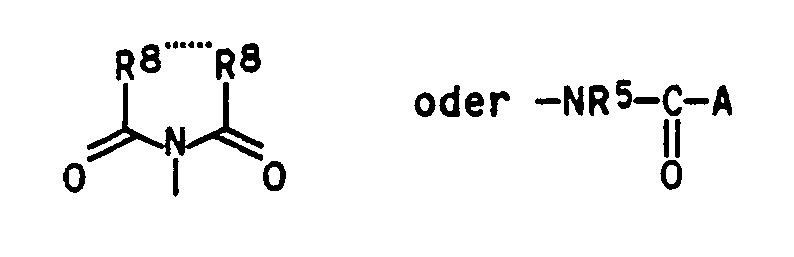
- X Sauerstoff- oder Schwefelatom
- Y Sauerstoff oder -NR3,
- R3 Wasserstoff,
- gegebenenfalls substituiertes C1-C6-Alkyl, gegebenenfalls substituiertes Phenyl oder Benzyl;
- R4 gegebenenfalls substituiertes Phenyl,
- R5 Wasserstoff, gegebenenfalls substituiertes C1-C6-Alkyl, gegebenenfalls substituiertes Phenyl,
- R6 Wasserstoff, gegebenenfalls substituiertes C1-C6-Alkyl,
- R7 gegebenenfalls substituiertes Ci-Cs-Alkyl, gegebenenfalls substituiertes Phenyl oder ein gegebenenfalls substituierter Heteroaromat,
- R8 gegebenenfalls substituiertes Ci-C6-Alkyl, gegebenenfalls substituiertes Phenyl,
- oder gemeinsam eine C2-C4-Alkylen- oder C2-C4-Alkenylenkette, die gegebenenfalls substituiert sind oder ein anellierter Benzolring, welcher gegebenenfalls substituiert ist und
- A Wasserstoff, gegebenenfalls substituiertes C1-C6-Alkyl, gegebenenfalls substituiertes C1-C4-Alkoxycarbonyl, eine Aminogruppe -NR5R6- oder gegebenenfalls substituiertes Phenyl
- als antagonistischem Mittel sowie mindestens einem herbiziden Wirkstoff aus der Gruppe der
- a) der 2-(4-Heteroaryloxy)- oder 2-(4-Aryloxy)-phenoxyessigsäurederivate oder
- b) Cyclohexenonderivate.
Description
- Die vorliegende Erfindung betrifft herbizide Mittel, die 2-(4-Heteroaryloxy)- oder 2-(4-Aryloxy)-phenoxyessig- oder -propionsäurederivate und/oder Cyclohexenonderivate als herbizide Wirkstoffe und Naphthalinderivate als Antidots enthalten, sowie Verfahren zur selektiven Bekämpfung von unerwünschtem Pflanzenwuchs mit diesen herbiziden Mitteln.
- Herbizide Wirkstoffe aus der Gruppe der 2-(4-Heteroaryloxy)- oder 2-(4-Aryloxy)-phenoxyessigsäurederivate der Formel II

- Ra ein Phenylring, ein Pyridylring, ein Benzoxazylrest, ein Benzthiazylrest oder ein Benzpyrazinylrest, wobei diese aromatischen Ringsysteme bis zu zwei der folgenden Reste tragen können: Halogen, C,- bis C4-Alkyl, C1- bis C4-Halogenalkyl und/oder Nitro;
- R b Wasserstoff,
- eine C1- C4-Alkylgruppe oder das Äquivalent eines pflanzenverträglichen Kations und
- R° Wasserstoff oder eine Methylgruppe
- oder aus der Gruppe der Cyclohexenonderivate der Formel III

- Rd eine C1-C4-Alkylgruppe;
- Re eine C1-C4-Alkylgruppe, eine C3-C4-Alkenylgruppe, eine C3-C4-Alkinylgruppe, eine C3-C4-Halogenalky- lengruppe oder eine Thenylgruppe, welche durch ein Halogenatom substituiert sein kann;
- R' eine CI-C4-Alkylgruppe, welche einfach durch Ci-C4-Alkylthio oder C1-C4-Alkoxy substituiert sein kann; ein 5- oder 6-gliedriges gesättigtes oder einfach ungesättigtes Ringsystem, welches neben Kohlenstoffgliedem ein Sauerstoff- oder Schwefelatom enthalten kann, wobei das Schwefelatom bis zu zwei Sauerstoffatome tragen kann, und dieser Ring bis zu drei der folgenden Reste tragen kann: Hydroxy, Halogen, C1-C4-Alkyl, C1-C4-Halogenalkyl, C1-C4-Alkoxy und/oder C1-C4-Alkylthio;
- ein 10-gliedriger gesättigter oder einfach ungesättigter Heterocyclus, welcher zwei Sauerstoff- oder Schwefelatome enthält und durch bis zu drei C1-C4-Alkylgruppen und/oder Methoxygruppen substituiert sein kann; ein Phenylrest, ein Pyridylrest oder ein Isoxazolylrest, wobei dieser Ring bis zu drei der folgenden Gruppen tragen können:
- C1-C4-Alkyl, Cl-C4-Halogenalkyl, Cl-C4-Alkoxy, C1-C4-Alkylthio, C3-C6-Alkanyloxy, C3-C6-Alkinyloxy, Ci-C4-Alkoxy-C1-C3-alkyl, C1-C4-Dialkoxy-C1-C3-alkyl, Formyl, Halogen und/oder Benzoylamino
- R9 Wasserstoff oder eine C1-C6-Alkylgruppe;
- Rh Wasserstoff, eine Cyanogruppe, ein Halogenatom oder eine C1-C4-Alkoxycarbonylgruppe und
- Ri Wasserstoff oder das Aquivalent eines umweltverträglichen Kations
- sind aus der Literatur bekannt.
- 2-(4-Heteroaryloxy)- oder 2-(4-Aryloxy)-phenoxyessigsäurederivate (z.B. DE-A 22 23 894, DE-A 24 33 067, DE-A 30 04 770, BE-A 868 875 und BE-A 858 618) dienen der Bekämpfung von unerwünschten Pflanzen aus der Familie der Gramineen. Die Verträglichkeit dieser Substanzen für Kultur pflanzen variiert jedoch zwischen kommerziell acceptabel und unverträglich, je nach Substituenten und Aufwandmenge.
- Cyclohexenonderivate sind in der Literatur (z.B. EP-A 228 598, EP-A 230 235, EP-A 238 021, US-A 4 432 786, DE-A 24 39 104) ebenfalls als Herbizide beschrieben. Sie dienen vorwiegend zur Bekämpfung unerwünschter Gräser in dicotylen Kulturen und in Gräsern, die nicht zur Familie der Gramineen zählen. Je nach Struktur der Substituenten und Dosis der Anwendung können Verbindungen aus dieser Gruppe auch zur selektiven Bekämpfung von unerwünschten Gräsern in Gramineen Kulturen wie Weizen und Reis eingesetzt werden.
- Naphthalinderivate sind in der Literatur sowohl als Herbizide als auch als Antidot der Formel I' beschrieben,

- R Wasserstoff, Halogen, Nitro, C1-C5-Alkyl oder Phenyl und
- R Hydroxy, Alkoxy, Alkylthio, Amino oder substituiertes Amino
- (HU-A 21 318, HU-A 21 319, HU-A 21 320, HU-A 21 321, HU-A 21 322, HU-A 21 323 und BE 884 634). Diese Antidots werden für die Verminderung von Schäden empfohlen, die durch Herbizide der folgenden Klassen hervorgerufen werden: Harnstoffe, Thiocarbamate, Triazine, Chloracetanilid- und Urazilderivate.
- Aufgabe der vorliegenden Erfindung war es, Verbindungen zu finden, welche in der Lage sind, die Schäden an Kulturpflanzen zu kompensieren, welche durch Herbizide des (Heteroaryloxy)- bzw. (Aryloxy)-phenoxyessigsäure- bzw. Cyclohexenontyps hervorgerufen werden. Entsprechend der Aufgabe wurde gefunden, daß sich Naphthalinderivate der Formel I

- R C1-C4-Alkyl, C1-C4-Alkylthio, C1-C4-Halogenalkyl, C1-C4-Alkoxyl, Halogen, Hydroxy, Nitro oder Benzyl; m 0, 1, 2 oder 3, wobei die Reste R verschieden sein können, wenn m 2 oder 3 bedeutet;
- R1 -CN; -C(NH2)NOH; -C(X)YR3;

- R2 Halogen; -NR5R6; -N=CH-R5; -NR5-SO2R7; COOR3; OH

- X Sauerstoff oder Schwefel;
- Y Sauerstoff oder -NR3;
- R3 Wasserstoff,
- C1-C6-Alkyl, welches ein bis drei der folgenden Substituenten tragen kann: Halogen, CI-C4-Alkylamino, Di-(C1-C4-Alkyl)amino, C1-C4-Alkoxy und C1-C4-Alkylthio;
- Phenyl oder Benzyl, welche ein bis drei der folgenden Gruppen tragen können: C1-C4-Alkyl, CI-C4-Alkoxy, C1-C4-Alkylthio, C1-C4-Halogenalkyl, Cyano, Nitro und/oder Halogen;
- R4 Phenyl, welches ein oder zwei der folgenden Gruppen tragen kann: Halogen, C1-C4-Alkyl, C1-C4-Alkoxy, CI-C4-Alkylthio, C1-C4-Halogenalkyl, Cyano und/oder Nitro;
- R 5 Wasserstoff;
- C1-C6-Alkyl, welches ein bis drei der folgenden Substituenten tragen kann: Halogen, C1-C4-Alkylamino, Di-(C1-C4-Alkyl)amino, Ci-C4-Aikoxy, C1-C4-Alkylthio, Phenyl und/oder (C1-C4-Alkyl)oxycarbonyl;
- Phenyl, welches ein bis drei der folgenden Substituenten tragen kann: Halogen, CI-C4-Alkyl, C1-C4-Alkoxy, C1-C4-Alkylthio, C1-C4-Halogenalkyt, Cyano und/oder Nitro;
- R6 Wasserstoff;
- C1-C6-Alkyl, welches ein bis drei der folgenden Substituenten tragen kann: Halogen, C1-C4-Alkylamino, Di-(C1-C4-Alkyl)amino, C1-C6-Alkoxy, C1-C4-Alkylthio und/oder Phenyl;
- R7 C1-C6-Alkyl, welches ein bis drei der folgenden Substituenten tragen kann: C1- C4-Alkoxy, C1- C4-Alkylthio, C1-C4-Alkylamino, Di-(C1-C4-Alkyl)amino, Phenyl und/oder ein bis fünf Halogenatome;
- Phenyl oder 5- bis 6-gliedriges Heteroaryl, wobei diese Ringe ein bis drei der folgenden Gruppen tragen können: C1-C4-Alkyl, CI-C4-Alkoxy, CI-C4-Alkylthio, C1-C4-Halogenalkyl, Nitro, Cyano und/oder Halogen; R8 C1-C6-Alkyl oder C2-C6-Alkenyl, wobei diese Gruppen ein bis drei der folgenden Substituenten tragen können: Halogen, C1-C4-Alkoxy, C1-C4-Alkylthio und/oder Phenyl;
- Phenyl, welches ein bis drei der folgenden Substituenten tragen kann: C1-C4-Alkyl, C1-C4-Alkoxy, C1-C4-Alkylthio, C1C4-Halogenalkyl, Nitro, Cyano und/oder Halogen;
- oder R8...R8 gemeinsam
- eine C2-C4-Alkylen- oder C2-C4-Alkenylenkette bilden, wobei diese Brücken bis zu drei der folgenden Substituenten tragen können: CI-C4-Alkyl, C1-C4-Alkoxyl, CI-C4-Alkylthio, Halogen und/oder Phenyl, oder einen anellierten Benzolring bilden, welcher ein bis vier Halogenatome und/oder ein bis drei der folgenden Reste tragen kann: C1-C4-Alkyl, C1-C4-Alkoxy, C1-C4-Alkylthio, C1-C4-Halogenalkyl, Cyano, Nitro und/oder Phenyl;
- R9, R10 C1-C4-Alkyl oder gemeinsam mit dem C-Atom, an das sie gebunden sind C3-C6-Cycloalkyl;
- A Wasserstoff,
- C1-C6-Alkyl, welches ein bis drei der folgenden Substituenten tragen kann: Halogen, C1-C4-Alkoxy, C1-C4-Alkylthio, C1-C4-Alkylamino, Di-(C1-C4-Alkyl)amino, Phenyl und/oder C1-C4-Alkoxycarbonyl; C1-C4-Alkoxycarbonyl;
- -NR5R6- oder
- Phenyl, welches ein bis fünf Halogenatome und/oder ein bis drei der folgenden Substituenten tragen kann: C1-C4-Alkyl, C1-C4-Alkoxy, C1-C4-Halogenalkyl, Cyano und/oder Nitro;
- ausgezeichnet zum Schutz von Kulturpflanzen aus der Familie der Gramineen eignen und speziell in Kulturen wie Getreide, Reis, Mais und Sorghum die Verträglichkeit der Herbizide des (Heteroaryloxy)- oder Aryloxyphenoxyessigsäure- bzw. Cyclohexenon-Typs verbessern. Die Schädigungen an den Nutzpflanzen werden abgeschwächt oder ganz unterbunden. Unerwünschte Grasarten werden bekämpft, wobei es für die Wirkung gleichgültig ist, ob diese herbiziden Mittel, bestehend aus herbizidem Wirkstoff und antidotischer Verbindung gemeinsam oder getrennt formuliert und ausgebracht werden bzw. bei getrennter Ausbringung, in welcher Reihenfolge herbizider Wirkstoff und Antidot appliziert werden.
- Die Herstellung der Verbindungen I erfolgt nach in der Literatur allgemein üblichen Methoden.
- Derivate I, in denen die Reste R1 und R2 benachbarte Ringpositionen einnehmen, erhält man beispielsweise, indem man ein entsprechendes Nitronaphthylderivat IV analog zu den von Y. Tomioka (Chem. Pharm. Bull. 33 (4), 1360-1366 (1985)) beschriebenen Bedingungen zum Cyanonaphthylamin la (R1 = CN, R2 = NH2) umsetzt. Diese Reaktionsfolge ist für die Synthese von 2-Aminonaphthalin-1-carbonitrilderivaten im folgenden Schema dargestellt:

- Aus den Derivaten la lassen sich die entsprechenden Verbindungen I mit Hilfe der literaturüblichen Derivatisierungsmethoden synthetisieren (Derivate der Cyanogruppe: Methoden der organ. Chem. (Houben-Weyl) Band E5, S. 263 ff, S. 710 ff, S. 790 ff, S. 941 ff, S. 1242 ff, S. 1313; Band X/4 (1968), S. 209 ff; Derivate der Aminogruppe: Methoden der organ. Chem. (Houben-Weyl) Band XI (2), S. 3 ff, Band V (2) S. 846).
- Die Synthese der Naphthalinderivate I, in denen Rl und R2 nicht benachbarte Ringpositionen einnehmen, ist auf vielfältige Weise möglich und in der Literatur beschrieben. Die Literatur-Zitate sind mit den entsprechenden Verbindungen in Tabelle 1 bzw. 2 im Anschluß an die Synthesebeispiele aufgeführt.
- Im Hinblick auf die biologische Wirksamkeit sind Naphthalinderivate bevorzugt, in denen die Substituenten folgende Bedeutung haben:
- R Alkyl wie Methyl, Ethyl, Propyl, 1-Methylethyl, Butyl, 1-Methylpropyl, 2-Methylpropyl und 1,1-Dimethylethyl, insbesondere Methyl und Ethyl;
- Halogenalkyl wie Fluormethyl, Difluormethyl, Trifluormethyl, 2,2-Difluorethyl, 2,2,2-Trifluorethyl und 1,2,2-Trifluorethyl, insbesondere Trifluormethyl und 2,2,2-Trifluorethyl;
- Alkoxy wie Methoxy, Ethoxy, Propyloxy, iso-Propyloxy und ter.-Butyloxy, insbesondere Methoxy und Ethoxy;
- Alkylthio wie Methylthio, Ethylthio, iso-Propylthio und tert.-Butylthio, insbesondere Methylthio;
- Halogen wie Fluor, Chlor, Brom und Jod, insbesondere Fluor, Chlor und Brom; Hydroxyl; Nitro oder Benzyl; m 0, 1, 2 oder 3, wobei die Reste R verschieden sein können, wenn m 2 oder 3 bedeutet;
- RI Cyano; ein Carboxaminoxim, eine Carbonsäure, eine Thiocarbonsäure, ein Carbonsäureamid, ein Thiocarbonsäureamid, Oxadiazol, eine Iminoestergruppe, worin R9 und R10 für Methyl, Ethyl, Propyl, Butyl, Cyclopentyl oder Cyclohexyl stehen oder ein Rest -C(O)-Azol, worin Azol einen 1-Imidazolyl-, 1-Pyrazolyl-und insbesondere 1-Triazolylrest bedeutet.
- Sofern RI eine Säure- oder eine Säureamidfunktion bedeutet, kann dieser Rest zusätzlich durch eine der obengenannten Alkylgruppen, durch einen Phenylrest oder einen Benzylrest substituiert sein.
- Besonders bevorzugt sind:
- - Cyano,
- - Carboxamid- und Thiocarboxamidreste, welche unsubstituiert oder durch Methyl, Ethyl, Phenyl und/oder Benzyl substituiert sind und
- - 3-Oxadiazolylreste, welche in 5-Position durch einen Phenylring substituiert sind, wobei dieser Phenylrest wiederum bis zu drei Substituenten tragen kann. Als Substituenten kommen hier die bereits unter R genannten Halogenatome, Alkyl-, Alkoxy-, Alkylthio-, Halogenalkyl- und/oder Cyano- bzw. Nitrogruppen in Betracht.
- R2 kann die Bedeutung Halogenatom wie unter R genannt besitzen, wobei Fluor, Chlor und Brom bevorzugt sind.
- Daneben kann R2 auch eine Carbonsäuregruppe, eine Hydroxylgruppe, eine Aminogruppe oder ein Derivat einer Hydroxygruppe oder einer Aminogruppe bedeuten. Besonders bevorzugt sind hierbei
- - Dialkylaminogruppen wie Dimethylamino und Diethylamino
- - Diacylaminogruppen wie Diacetylamino, Maleinimino, Dichlormaleinimino, Methylmaleinimino, Phthalimino, Tetrabromophthalimino und 3,4,5,6-Tetrahydrophthalimino,
- - Acylaminogruppen wie Acetylamino, Glutarylamino, Benzoylamino und Ethyloxaloylamino
- - Sulfonylamingruppen wie Phenylsulfonylamino und N-(Phenylsulfonyl)-N-(1-carboxylyl)methylamino
- - Iminogruppen wie Benzalimino.
- Als Derivate von Hydroxygruppen kommen Salze wie Alkalimetallsalze oder Ester mit anorganischen oder organischen Säuren wie Alkylsulfonsäuren, Phosphorsäuren oder Carbonsäuren in Betracht.
- Von den Verbindungen I sind solche ganz besonders bevorzugt, in denen die Reste Rl und R2 benachbarte Ringpositionen einnehmen.
- Spezielle Beispiele für herbizide (Heteroaryloxy)- bzw. Aryloxy-phenoxyessigsäurederivate der Formel II, deren Kulturpflanzenverträglichkeit durch Naphthalinderivate der Formel I verbessert werden kann, sind in der folgenden Tabelle A aufgeführt:

- Spezielle Beispiele für Cyclohexenone der Formel III, deren Kulturpflanzenverträglichkeit durch Naphthalinderviate der Formel I verbessert werden kann, sind in der folgenden Tabelle B aufgeführt.


-

-

-

-

- b) 6,0 g (30 mmol) der unter a) erhaltenen Verbindung, 6,9 ml (50 mmol) 3-Chlorbenzoesäuremethylester und 3,2 g (60 mmol) Natriummethylat wurden in 70 ml Methanol 15 Stunden zum Sieden erhitzt. Nach beendeter Umsetzung wurde in 500 ml Wasser eingerührt, das ausgefallene Produkt abfiltriert und getrocknet. Man erhielt so 5,4 g (56 % d. Th.) der Titelverbindung vom Fp. = 160°C (Wirkstoffbeispiel 2.069).
-


- Der Einfluß verschiedener Vertreter der erfindungsgemäßen herbiziden Mittel bzw. Mittelkombinationen, bestehend aus Herbizid und antidotisch wirkender Verbindung, auf das Wachstum von erwünschten und unerwünschten Pflanzen im Vergleich zum herbiziden Wirkstoff allein wird durch die folgenden biologischen Beispiele aus Gewächshausversuchen belegt:
- Als Kulturgefäße dienen Plastikblumentöpfe mit rund 300 cm3 Inhalt und lehmiger Sand mit etwa 3,0 % Humus als Substrat. Die Samen der Testpflanzen werden nach Arten getrennt, flach eingesät und befeuchtet. Danach deckt man die Gefäße mit durchsichtigen Plastikhauben ab, bis die Samen gleichmäßig gekeimt und die Pflanzen angewachsen sind.
- Für die Nachauflaufbehandlung zieht man die Testpflanzen je nach Wuchsform erst bis zu einer Wuchshöhe von 3 bis 20 cm an und behandelt sie dann. Die herbiziden Mittel werden hierbei in Wasser als Verteilungsmittel suspendiert oder emulgiert und mittels fein verteilender Düsen gespritzt.
- Als Beispiel für 2-(4-Heteroaryloxy)phenoxysäurederivate der Formel dient 11.3:

- In den biologischen Beispielen aufgeführte Cyclohexenonderivate 111 sind:


- Herbizide Wirkstoffe und antidotisch wirkende Verbindungen können gemeinsam oder getrennt nach dem Auflaufen auf die Blätter und Sprosse der Kulturpflanzen und der unerwünschten Gräser ausgebracht werden. Bevorzugt wird das antidotisch wirkende Mittel gleichzeitig mit dem herbiziden Wirkstoff ausgebracht. Auch eine getrennte Ausbringung, wobei das Antidot zuerst und anschließend der herbizide Wirkstoff auf das Feld gebracht werden, ist möglich. Herbizider Wirkstoff und Antidot können hierbei als Spritzmittel in suspendierbarer, emulgierbarer oder löslicher Form gemeinsam oder getrennt formuliert vorliegen.
- Denkbar ist auch eine Behandlung der Kulturpflanzensamen mit dem Antidot vor der Aussaat. Der herbizide Wirkstoff wird dann allein in der üblichen Weise appliziert.
- Für herbizide (Heteroaryloxy)phenoxysäurederivate II werden unterschiedliche Mengen einer antidotisch wirkenden Verbindung benötigt, wenn das Herbizid in verschiedenen Kulturen eingesetzt wird. Die Mengenverhältnisse sind in breiten Bereichen variabel. Sie sind ebenfalls abhängig von der Struktur der (Heteroaryloxy)phenoxysäurederivate II und der jeweiligen Zielkultur. Ge-eignete Anteilverhältnisse herbizider Wirkstoffe: antidotisch wirkender Verbindung liegen zwischen 1 : 40 bis 1 : 0,01; vorzugsweise ebenfalls zwischen 1 : 4 bis 1 : 0,1 Gew.-Teile.
- Für das gleiche Cyclohexenonderivat III werden unterschiedliche Mengen einer antidotisch wirkenden Verbindung benötigt, wenn das Cyclohexenonderivat in verschiedenen Kulturen eingesetzt wird. Die Mengenverhältnisse, in denen ein Cyclohexenonderivat 111 und ein Naphthalinderivat eingesetzt werden, sind in breiten Bereichen variabel. Sie sind abhängig von der Struktur des Cyclohexenonderivats, des Naphthalinderivats und der jeweiligen Kultur. Geeignete Anteilverhältnisse herbizider Wirkstoff: antidotisch wirkender Verbindung liegen zwischen 1 : 40 bis 1 : 0,01; vorzugsweise 1 : 4 bis 1 : 0,25 Gew.-Teile.
- Die neuen herbiziden Mittel können neben dem Naphthalinderivat I als Antidot und dem Herbizid aus der Gruppe der (Heteroaryloxy)phenoxyessigsäuren 11 bzw. der Cyclohexenone III weitere herbizide oder wachstumsregulierende Wirkstoffe anderer chemischer Struktur enthalten, wobei der antagonistische Effekt erhalten bleibt.
- Die erfindungsgemäßen Mittel bzw. bei getrennter Ausbringung die herbiziden Wirkstoffe oder das Antidot werden beispielsweise in Form von direkt versprühbaren Lösungen, Pulvern, Suspensionen, auch hochprozentige wäßrige, ölige oder sonstige Suspensionen, oder Dispersionen, Emulsionen, Öldispersionen, Pasten, Stäubemitteln, Streumitteln oder Granulaten durch Versprühen, Vernebeln, Verstäuben, Verstreuen oder Gießen angewendet. Die Anwendungsformen richten sich ganz nach den Verwendungszwecken.
- Zur Herstellung von direkt versprühbaren Lösungen, Emulsionen, Pasten und Ölsdispersionen kommen Mineralölfraktionen von mittlerem bis hohem Siedepunkt, wie Kerosin oder Dieselöl, ferner Kohlenteeröle, sowie Öle pflanzlichen oder tierischen Ursprungs, aliphatische, cyclische oder aromatische Kohlenwasserstoffe, z.B. Benzol, Toluol, Xylol, Paraffin, Tetrahydronaphthalin, alkylierte Naphthaline oder deren Derivate, z.B. Methanol, Ethanol, Propanol, Butanol, Chloroform, Tetrachlorkohlenstoff, Cyclohexanol, Cyclohexanon, Chlorbenzol, Isophoron, stark polare Lösungsmittel, wie z.B. Dimethylformamid, Dimethylsulfoxid, N-Methylpyrrolidon und Wasser, in Betracht.
- Wäßrige Anwendungsformen können aus Emulsionskonzentraten, Pasten oder netzbaren Pulvern (Spritzpulvern), Öldispersionen durch Zusatz von Wasser bereitet werden. Zur Herstellung von Emulsionen, Pasten oder Öldispersionen können herbizider Wirkstoff und/oder Antidot als solche oder in einem Öl oder Lösungsmittel gelöst, mittels Netz-, Haft-, Dispergier- oder Emulgiermittel in Wasser homogenisiert werden. Es können aber auch aus herbizidem Wirkstoff und/oder Antidot Netz-, Haft-, Dispergier- oder Emulgiermittel und eventuell Lösungsmittel oder Öl bestehende Konzentrate hergestellt werden, die zur Verdünnung mit Wasser geeignet sind.
- Als oberflächenaktive Stoffe kommen Alkali-, Erdalkali-, Ammoniumsalze von Ligninsulfonsäure, Naphthalinsulfonsäure, Phenolsulfonsäure, Alkylarylsulfonate, Alkylsulfate, Alkylsulfonate, Alkali- und Erdalkalisalze der Dibutylnaphthalinsulfonsäure, Laurylethersulfat, Fettalkoholsulfate, fettsaure Alkali- und Erdalkalisalze, Salze sulfatierter Hexadecanole, Heptadecanole, Octadecanole, Salze von sulfatierten Fettalkoholglykolethern, Kondensationsprodukte von sulfoniertem Naphthalin und Naphthalinderivaten mit Formaldehyd, Kondensationsprodukte des Naphthalins bzw. der Naphthalinsulfonsäuren mit Phenol und Formaldehyd, Polyoxyethylenoctylphenolether, ethoxyliertes Isooctylphenol-, Octylphenol, Nonylphenol, Alkylphenolpolyglykolether, Tributylphenylpolyglykolether, Alkylarylpolyetheralkohole, Isotridecylalkohol, Fettalkoholethylenoxid-Kondensate, ethoxyliertes Rizinusöl, Polyoxyethylenalkylether, ethoxyliertes Polyoxypropylen, Laurylalkoholpolylglykoletheracetal, Sorbitester, Lignin-Sulfitablaugen und Methylcellulose in Betracht.
- Pulver, Streu- und Stäubmittel können durch Mischen oder gemeinsames Vermahlen von herbizidem Wirkstoff und/oder Antidot mit einem festen Trägerstoff hergestellt werden.
- Granulate, z.B. Umhüllungs-, Imprägnierungs- und Homogengranulate, können durch Bindung der Wirkstoffe an feste Trägerstoffe hergestellt werden. Feste Trägerstoffe sind z.B. Mineralerden wie Silicagel, Kieselsäuren, Kieselgele, Silikate, Talkum, Kaolin, Attaclay, Kalkstein, Kreide, Talkum, Bolus, Löß, Ton, Dolomit, Diatomeenerde, Calcium- und Magnesiumsulfat, Magnesiumoxid, gemahlene Kunststoffe, Düngemittel, wie z.B. Ammoniumsulfat, Ammoniumphosphat, Ammoniumnitrat, Harnstoffe und pflanzliche Produkte, wie Getreidemehle, Baumrinden-, Holz- und Nußschalenmehl, Cellulosepulver und andere feste Trägerstoffe.
- Die Formulierungen enthalten zwischen 0,1 und 95 Gew.-% an herbizidem Wirkstoff und Antidot, vorzugsweise zwischen 0,5 und 90 Gew.-%. Die Aufwandmengen an herbizidem Wirkstoff betragen 0,2 bis 5 kg/ha.
- Der herbizide Wirkstoff 111.2 wird als kommerziell formuliertes Produkt (184 g/I Emulsionskonzentrat (EC)) auch allein jeweils unter Zugabe von derjenigen Menge an Lösungsmittelsystem in die Spritzbrühe eingesetzt, mit welcher die antidotisch wirkende Verbindung in den Tabellen angegebenen Aufwandmengen ausgebracht werden.
- Bei den anderen herbiziden Wirkstoffen unterließ man diesen Zusatz, wenn das Herbizid nicht mit einer antidotisch wirkenden Verbindung kombiniert wurde.
- Sie waren wie folgt aufbereitet:
- 111.12, 111.16 und 111.13 als 100 g/I EC; 11.3 als 120 g/I EC und 111.5 als 200 g/I EC.
- Sämtliche antidotisch wirkende Verbindungen werden in einem Gemisch, bestehend aus 80 % Lösungsmittel und 20 % Tensid, mit 10 Gew.-% Wirkstoff aufbereitet.
- Die Versuchsgefäße werden im Gewächshaus aufgestellt, wobei für wärmeliebende Arten 18 bis 35° und für solche gemäßigtere Klimate 10 bis 25° bevorzugt werden.
- Die Versuchsperiode erstreckte sich über 3 bis 5 Wochen. Während dieser Zeit wurden die Pflanzen gepflegt, und ihre Reaktion auf die einzelnen Behandlungen wurde erfaßt. Bewertet wurde die Schädigung durch die chemischen Mittel anhand einer Skala von 0 % bis 100 % im Vergleich zu den unbehandelten Kontrollpflanzen. Dabei bedeutet 0 keine Schädigung und 100 eine völlige Zerstörung der Pflanzen.

- Die anschließenden Tabellen dokumentieren die antidotische Wirkung, wobei die Beispielsverbindungen Nr. 1.001, 1.002, 1.003, 1.041, 1.076, 1.077, 1.078, 1.079 und 2.004, die Kulturpflanzenverträglichkeit der Cyclohexenonderivate 111.2, 111.12, 111.16, 111.13 und 111.5 und des (Heteroaryloxy)phenoxysäurederivats 11.3


Claims (10)


Applications Claiming Priority (2)
| Application Number | Priority Date | Filing Date | Title |
|---|---|---|---|
| DE3837926 | 1988-11-09 | ||
| DE3837926A DE3837926A1 (de) | 1988-11-09 | 1988-11-09 | Herbizide mittel, die 2-(4-heteroaryloxy)- oder 2-(4-aryloxy)-phenoxyessig- oder -propionsaeurederivate und/oder cyclohexenonderivate als herbizide wirkstoffe und naphthalinderivate als antidots enthalten, sowie ihre verwendung zur bekaempfung unerwuenschten pflanzenwuchses |
Publications (3)
| Publication Number | Publication Date |
|---|---|
| EP0368212A2 true EP0368212A2 (de) | 1990-05-16 |
| EP0368212A3 EP0368212A3 (de) | 1992-07-01 |
| EP0368212B1 EP0368212B1 (de) | 1995-09-20 |
Family
ID=6366758
Family Applications (1)
| Application Number | Title | Priority Date | Filing Date |
|---|---|---|---|
| EP89120520A Expired - Lifetime EP0368212B1 (de) | 1988-11-09 | 1989-11-06 | Herbizide Mittel, die 2-(4-Heteroaryloxy)- oder 2-(4-Aryloxy)-phenoxy-essig- oder -propionsäurederivate und/oder Cyclohexenonderivate als herbizide Wirkstoffe und Naphthalinderivate als Antidots enthalten, sowie ihre Verwendung zur Bekämpfung unerwünschten Pflanzenwuchses |
Country Status (6)
| Country | Link |
|---|---|
| US (1) | US5035736A (de) |
| EP (1) | EP0368212B1 (de) |
| JP (1) | JPH02237904A (de) |
| KR (1) | KR900007323A (de) |
| CA (1) | CA2001843A1 (de) |
| DE (2) | DE3837926A1 (de) |
Cited By (4)
| Publication number | Priority date | Publication date | Assignee | Title |
|---|---|---|---|---|
| WO1992008719A1 (de) * | 1990-11-08 | 1992-05-29 | Basf Aktiengesellschaft | SUBSTITUIERTE PYRIDO[2,3-d]PYRIMIDIN-2,4(1H,3H)-DIONE |
| EP0456090A3 (en) * | 1990-05-09 | 1992-07-08 | Basf Aktiengesellschaft | Herbicidal agents containing cyclohexenone derivatives as active ingredients and naphthalene derivatives as antidotes |
| US5167696A (en) * | 1990-02-16 | 1992-12-01 | Imperial Chemical Industries Plc | Herbicidal aryloxy- and arylamino-indanes |
| EP0459140B1 (de) * | 1990-05-03 | 1996-09-11 | BASF Aktiengesellschaft | Cyanochinoline als Herbizide |
Families Citing this family (7)
| Publication number | Priority date | Publication date | Assignee | Title |
|---|---|---|---|---|
| DE4039734A1 (de) * | 1990-12-13 | 1992-06-17 | Basf Ag | Substituierte 2-aminothiophene enthaltende herbizide mittel |
| US5194658A (en) * | 1992-03-02 | 1993-03-16 | The Dow Chemical Company | Process for making 2-amino-3-methyl-1-naphthalenecarbonitrile |
| AU5686794A (en) * | 1992-12-15 | 1994-07-04 | Du Pont Merck Pharmaceutical Company, The | (2-quinoxalinyloxy)phenoxypropanoic acids and related derivatives as anticancer agents |
| JP4801271B2 (ja) * | 2001-03-26 | 2011-10-26 | 関東電化工業株式会社 | 新規な含フッ素ナフタレン化合物及びそれらの製造方法 |
| DE102008019838A1 (de) * | 2008-04-19 | 2009-12-10 | Boehringer Ingelheim International Gmbh | Neue Arylsulfonylglycin-Derivate, deren Herstellung und deren Verwendung als Arzneimittel |
| CN115340483A (zh) * | 2022-08-31 | 2022-11-15 | 南京吉星生物技术开发有限公司 | 一种萘基吡咯啉二酮化合物及其制备方法与它的用途 |
| EP4353870B1 (de) * | 2022-10-13 | 2025-04-30 | Tata Consultancy Services Limited | Korrosionsinhibitor für eisen und eisenlegierungen |
Family Cites Families (9)
| Publication number | Priority date | Publication date | Assignee | Title |
|---|---|---|---|---|
| US2512044A (en) * | 1947-08-02 | 1950-06-20 | Standard Oil Dev Co | Method of selectively eradicating weeds from carrot plots |
| US3475480A (en) * | 1966-05-17 | 1969-10-28 | Thompson Chem Co Hayward | Synthesis of aromatic nitriles by nitrilizing halogenated intermediates |
| US3564768A (en) * | 1968-10-25 | 1971-02-23 | Gulf Research Development Co | Coated corn seed |
| US3749566A (en) * | 1968-10-25 | 1973-07-31 | Gulf Research Development Co | Improving resistance of rice seed to preemergence herbicides |
| US4249937A (en) * | 1977-05-23 | 1981-02-10 | Nippon Soda Company, Ltd. | Cyclohexane derivatives |
| US4309210A (en) * | 1978-12-01 | 1982-01-05 | Ciba-Geigy Corporation | Preemergence method of selectively controlling weeds in crops of cereals and composition therefor |
| AT368678B (de) * | 1980-08-05 | 1982-10-25 | Nitrokemia Ipartelepek | Antidotum zum schutz von kulturpflanzen gegen die schaedigende wirkung von herbiziden |
| CA1202498A (en) * | 1983-10-28 | 1986-04-01 | Karl H. Heier | Safener compositions |
| DE3808355A1 (de) * | 1987-03-21 | 1988-09-29 | Basf Ag | 1-naphthoesaeure und deren funktionelle verbindungen, verfahren zu ihrer herstellung und ihre verwendung als pflanzenschutzmittel |
-
1988
- 1988-11-09 DE DE3837926A patent/DE3837926A1/de not_active Withdrawn
-
1989
- 1989-10-31 US US07/429,763 patent/US5035736A/en not_active Expired - Fee Related
- 1989-10-31 CA CA002001843A patent/CA2001843A1/en not_active Abandoned
- 1989-11-02 JP JP1285079A patent/JPH02237904A/ja active Pending
- 1989-11-06 EP EP89120520A patent/EP0368212B1/de not_active Expired - Lifetime
- 1989-11-06 DE DE58909446T patent/DE58909446D1/de not_active Expired - Lifetime
- 1989-11-09 KR KR1019890016184A patent/KR900007323A/ko not_active Withdrawn
Cited By (4)
| Publication number | Priority date | Publication date | Assignee | Title |
|---|---|---|---|---|
| US5167696A (en) * | 1990-02-16 | 1992-12-01 | Imperial Chemical Industries Plc | Herbicidal aryloxy- and arylamino-indanes |
| EP0459140B1 (de) * | 1990-05-03 | 1996-09-11 | BASF Aktiengesellschaft | Cyanochinoline als Herbizide |
| EP0456090A3 (en) * | 1990-05-09 | 1992-07-08 | Basf Aktiengesellschaft | Herbicidal agents containing cyclohexenone derivatives as active ingredients and naphthalene derivatives as antidotes |
| WO1992008719A1 (de) * | 1990-11-08 | 1992-05-29 | Basf Aktiengesellschaft | SUBSTITUIERTE PYRIDO[2,3-d]PYRIMIDIN-2,4(1H,3H)-DIONE |
Also Published As
| Publication number | Publication date |
|---|---|
| EP0368212B1 (de) | 1995-09-20 |
| US5035736A (en) | 1991-07-30 |
| EP0368212A3 (de) | 1992-07-01 |
| JPH02237904A (ja) | 1990-09-20 |
| KR900007323A (ko) | 1990-06-01 |
| CA2001843A1 (en) | 1990-05-09 |
| DE58909446D1 (de) | 1995-10-26 |
| DE3837926A1 (de) | 1990-05-17 |
Similar Documents
| Publication | Publication Date | Title |
|---|---|---|
| EP0007990B1 (de) | Pyrazolätherderivate, Verfahren zu ihrer Herstellung und Herbizide, die diese Verbindungen enthalten | |
| EP0071792B1 (de) | 7-Amino-azolo(1,5-a)pyrimidine, Verfahren zu ihrer Herstellung und diese enthaltende Fungizide | |
| EP0329012A2 (de) | Naphthyridin- und Pyridopyrimidinsulfonamide | |
| EP0561836A1 (de) | Substituierte 5-aminopyrazole | |
| EP0031042B1 (de) | N-Dichloracetyldiazabicycloderivate,Verfahren zu ihrer Herstellung,herbizide Mittel,die Acetanilide als herbizide Wirkstoffe und diese N-Dichloroacetyldiazaantagonistische Mittel enthalten, sowie ihre Verwendung zur Bekämpfung unerwünschten Pflanzenwuchses | |
| EP0368212A2 (de) | Herbizide Mittel, die 2-(4-Heteroaryloxy)- oder 2-(4-Aryloxy)-phenoxy-essig- oder -propionsäurederivate und/oder Cyclohexenonderivate als herbizide Wirkstoffe und Naphthalinderivate als Antidots enthalten, sowie ihre Verwendung zur Bekämpfung unerwünschten Pflanzenwuchses | |
| EP0561845B1 (de) | Pyrido-anellierte 4-oxo-4h-benzopyrane, verfahren zu ihrer herstellung und ihre verwendung als antidots | |
| EP0065724B1 (de) | Dihalogenacetamide, Verfahren zu ihrer Herstellung und herbizide Mittel, die Acetanilide als herbizide Wirkstoffe und diese Dihalogenacetamide als antagonistische Mittel enthalten | |
| EP0001751B1 (de) | N-(Imidazolylmethyl)-acetanilide, ihre Verwendung als Herbizide und Verfahren zur Bekämpfung unerwünschten Pflanzenwuchses | |
| EP0387568B1 (de) | Substituierte 1,8-Naphthyridine, Verfahren zu ihrer Herstellung und ihre Verwendung als Antidots | |
| DD271447A5 (de) | Verfahren zur regulierung des wachstums von pflanzen | |
| EP0387582A1 (de) | 2,3-substituierte 1,8-Naphthyridine, Verfahren zu ihrer Herstellung und ihre Verwendung als Antidots | |
| EP0151744B1 (de) | 1-Acylimidazolinone, Verfahren zu ihrer Herstellung und ihre Verwendung in der Landwirtschaft | |
| EP0410265B1 (de) | Zimtsäureester | |
| EP0013873B1 (de) | N-Azolylessigsäureanilide, Verfahren zu ihrer Herstellung und ihre Anwendung als Herbizide | |
| EP0065189B1 (de) | Heterocyclische Dihalogenacetamide, Verfahren zu ihrer Herstellung und herbizide Mittel, die Acetanilide als herbizide Wirkstoffe und diese Dihalogenacetamide als antagonistische Mittel enthalten | |
| EP0007588B1 (de) | Tetrahydro-1,3-oxazine, herbizide Mittel, die Acetanilide als herbizide Wirkstoffe und diese Tetrahydro-1,3-oxazine als antagonistische Mittel enthalten, sowie ihre Verwendung zur Bekämpfung unerwünschten Pflanzenwuchses | |
| EP0385084A2 (de) | Pflanzenschützende Mittel auf Basis von 1-Aryl- bzw. 1-Hetarylimidazolcarbonsäureestern | |
| EP0001271A1 (de) | Heterocyclische Norbornanderivate, Mittel zur Beeinflussung des Pflanzenwachstums die diese Verbindungen enthalten, und Verfahren zur Herstellung dieser Mittel | |
| EP0144052A2 (de) | Chinolinoxyphenylharnstoffe, Verfahren zu ihrer Herstellung und ihre Verwendung zur Bekämpfung unerwünschten Pflanzenwuchhses | |
| EP0407888A1 (de) | Pyrimido(5,4-e)-as-triazin-5,7(6H,8H)-dione zur Bekämpfung unerwünschten Pflanzenwuchses | |
| EP0561830B1 (de) | 2-amino-4-oxo-4h-benzopyrane, verfahren zu ihrer herstellung und ihre verwendung als antidots | |
| EP0013759B1 (de) | N-sulfenylierte Diurethane, ein Verfahren zu ihrer Herstellung sowie Herbizide, die diese Diurethane als Wirkstoffe enthalten | |
| EP0018585A1 (de) | Parabansäurederivate, Herbizide, die diese Verbindungen enthalten, und Verfahren zur Herstellung der Herbizide | |
| EP0009555A1 (de) | Herbizide Mittel auf der Basis eines Thiolcarbamats, die Halogenacylamide als Antagonisten enthalten, und ihre Verwendung in einem Verfahren zur selektiven Bekämpfung von unerwünschtem Pflanzenwuchs |
Legal Events
| Date | Code | Title | Description |
|---|---|---|---|
| PUAI | Public reference made under article 153(3) epc to a published international application that has entered the european phase |
Free format text: ORIGINAL CODE: 0009012 |
|
| AK | Designated contracting states |
Kind code of ref document: A2 Designated state(s): CH DE FR GB IT LI NL |
|
| 17P | Request for examination filed |
Effective date: 19901227 |
|
| PUAL | Search report despatched |
Free format text: ORIGINAL CODE: 0009013 |
|
| AK | Designated contracting states |
Kind code of ref document: A3 Designated state(s): CH DE FR GB IT LI NL |
|
| 17Q | First examination report despatched |
Effective date: 19930827 |
|
| GRAA | (expected) grant |
Free format text: ORIGINAL CODE: 0009210 |
|
| AK | Designated contracting states |
Kind code of ref document: B1 Designated state(s): CH DE FR GB IT LI NL |
|
| REF | Corresponds to: |
Ref document number: 58909446 Country of ref document: DE Date of ref document: 19951026 |
|
| GBT | Gb: translation of ep patent filed (gb section 77(6)(a)/1977) |
Effective date: 19951016 |
|
| ITF | It: translation for a ep patent filed | ||
| ET | Fr: translation filed | ||
| PLBE | No opposition filed within time limit |
Free format text: ORIGINAL CODE: 0009261 |
|
| STAA | Information on the status of an ep patent application or granted ep patent |
Free format text: STATUS: NO OPPOSITION FILED WITHIN TIME LIMIT |
|
| 26N | No opposition filed | ||
| PGFP | Annual fee paid to national office [announced via postgrant information from national office to epo] |
Ref country code: FR Payment date: 20001013 Year of fee payment: 12 |
|
| PGFP | Annual fee paid to national office [announced via postgrant information from national office to epo] |
Ref country code: NL Payment date: 20001020 Year of fee payment: 12 |
|
| PGFP | Annual fee paid to national office [announced via postgrant information from national office to epo] |
Ref country code: CH Payment date: 20001024 Year of fee payment: 12 |
|
| PGFP | Annual fee paid to national office [announced via postgrant information from national office to epo] |
Ref country code: GB Payment date: 20001101 Year of fee payment: 12 |
|
| PGFP | Annual fee paid to national office [announced via postgrant information from national office to epo] |
Ref country code: DE Payment date: 20001118 Year of fee payment: 12 |
|
| PG25 | Lapsed in a contracting state [announced via postgrant information from national office to epo] |
Ref country code: GB Free format text: LAPSE BECAUSE OF NON-PAYMENT OF DUE FEES Effective date: 20011106 |
|
| PG25 | Lapsed in a contracting state [announced via postgrant information from national office to epo] |
Ref country code: DE Free format text: LAPSE BECAUSE OF THE APPLICANT RENOUNCES Effective date: 20011121 |
|
| PG25 | Lapsed in a contracting state [announced via postgrant information from national office to epo] |
Ref country code: LI Free format text: LAPSE BECAUSE OF NON-PAYMENT OF DUE FEES Effective date: 20011130 Ref country code: CH Free format text: LAPSE BECAUSE OF NON-PAYMENT OF DUE FEES Effective date: 20011130 |
|
| REG | Reference to a national code |
Ref country code: GB Ref legal event code: IF02 |
|
| PG25 | Lapsed in a contracting state [announced via postgrant information from national office to epo] |
Ref country code: NL Free format text: LAPSE BECAUSE OF NON-PAYMENT OF DUE FEES Effective date: 20020601 |
|
| GBPC | Gb: european patent ceased through non-payment of renewal fee |
Effective date: 20011106 |
|
| REG | Reference to a national code |
Ref country code: CH Ref legal event code: PL |
|
| PG25 | Lapsed in a contracting state [announced via postgrant information from national office to epo] |
Ref country code: FR Free format text: LAPSE BECAUSE OF NON-PAYMENT OF DUE FEES Effective date: 20020730 |
|
| NLV4 | Nl: lapsed or anulled due to non-payment of the annual fee |
Effective date: 20020601 |
|
| REG | Reference to a national code |
Ref country code: FR Ref legal event code: ST |
|
| REG | Reference to a national code |
Ref country code: FR Ref legal event code: ST |
|
| PG25 | Lapsed in a contracting state [announced via postgrant information from national office to epo] |
Ref country code: IT Free format text: LAPSE BECAUSE OF NON-PAYMENT OF DUE FEES;WARNING: LAPSES OF ITALIAN PATENTS WITH EFFECTIVE DATE BEFORE 2007 MAY HAVE OCCURRED AT ANY TIME BEFORE 2007. THE CORRECT EFFECTIVE DATE MAY BE DIFFERENT FROM THE ONE RECORDED. Effective date: 20051106 |