EP0010299A1 - Für die Behandlung von Hypercholesterinämie verwendbare pharmazeutische Zusammensetzung - Google Patents
Für die Behandlung von Hypercholesterinämie verwendbare pharmazeutische Zusammensetzung Download PDFInfo
- Publication number
- EP0010299A1 EP0010299A1 EP79104025A EP79104025A EP0010299A1 EP 0010299 A1 EP0010299 A1 EP 0010299A1 EP 79104025 A EP79104025 A EP 79104025A EP 79104025 A EP79104025 A EP 79104025A EP 0010299 A1 EP0010299 A1 EP 0010299A1
- Authority
- EP
- European Patent Office
- Prior art keywords
- alkyl
- phenyl
- synthesis inhibitor
- exchange resin
- cholesterol
- Prior art date
- Legal status (The legal status is an assumption and is not a legal conclusion. Google has not performed a legal analysis and makes no representation as to the accuracy of the status listed.)
- Granted
Links
- 0 CNIC(*)C=C Chemical compound CNIC(*)C=C 0.000 description 5
Images
Classifications
-
- C—CHEMISTRY; METALLURGY
- C12—BIOCHEMISTRY; BEER; SPIRITS; WINE; VINEGAR; MICROBIOLOGY; ENZYMOLOGY; MUTATION OR GENETIC ENGINEERING
- C12P—FERMENTATION OR ENZYME-USING PROCESSES TO SYNTHESISE A DESIRED CHEMICAL COMPOUND OR COMPOSITION OR TO SEPARATE OPTICAL ISOMERS FROM A RACEMIC MIXTURE
- C12P17/00—Preparation of heterocyclic carbon compounds with only O, N, S, Se or Te as ring hetero atoms
- C12P17/02—Oxygen as only ring hetero atoms
- C12P17/06—Oxygen as only ring hetero atoms containing a six-membered hetero ring, e.g. fluorescein
-
- A—HUMAN NECESSITIES
- A61—MEDICAL OR VETERINARY SCIENCE; HYGIENE
- A61K—PREPARATIONS FOR MEDICAL, DENTAL OR TOILETRY PURPOSES
- A61K31/00—Medicinal preparations containing organic active ingredients
- A61K31/185—Acids; Anhydrides, halides or salts thereof, e.g. sulfur acids, imidic, hydrazonic or hydroximic acids
- A61K31/19—Carboxylic acids, e.g. valproic acid
-
- A—HUMAN NECESSITIES
- A61—MEDICAL OR VETERINARY SCIENCE; HYGIENE
- A61K—PREPARATIONS FOR MEDICAL, DENTAL OR TOILETRY PURPOSES
- A61K31/00—Medicinal preparations containing organic active ingredients
- A61K31/21—Esters, e.g. nitroglycerine, selenocyanates
- A61K31/215—Esters, e.g. nitroglycerine, selenocyanates of carboxylic acids
- A61K31/22—Esters, e.g. nitroglycerine, selenocyanates of carboxylic acids of acyclic acids, e.g. pravastatin
-
- A—HUMAN NECESSITIES
- A61—MEDICAL OR VETERINARY SCIENCE; HYGIENE
- A61K—PREPARATIONS FOR MEDICAL, DENTAL OR TOILETRY PURPOSES
- A61K31/00—Medicinal preparations containing organic active ingredients
- A61K31/21—Esters, e.g. nitroglycerine, selenocyanates
- A61K31/215—Esters, e.g. nitroglycerine, selenocyanates of carboxylic acids
- A61K31/235—Esters, e.g. nitroglycerine, selenocyanates of carboxylic acids having an aromatic ring attached to a carboxyl group
-
- A—HUMAN NECESSITIES
- A61—MEDICAL OR VETERINARY SCIENCE; HYGIENE
- A61K—PREPARATIONS FOR MEDICAL, DENTAL OR TOILETRY PURPOSES
- A61K31/00—Medicinal preparations containing organic active ingredients
- A61K31/33—Heterocyclic compounds
- A61K31/335—Heterocyclic compounds having oxygen as the only ring hetero atom, e.g. fungichromin
- A61K31/365—Lactones
-
- A—HUMAN NECESSITIES
- A61—MEDICAL OR VETERINARY SCIENCE; HYGIENE
- A61K—PREPARATIONS FOR MEDICAL, DENTAL OR TOILETRY PURPOSES
- A61K31/00—Medicinal preparations containing organic active ingredients
- A61K31/74—Synthetic polymeric materials
- A61K31/785—Polymers containing nitrogen
-
- C—CHEMISTRY; METALLURGY
- C07—ORGANIC CHEMISTRY
- C07C—ACYCLIC OR CARBOCYCLIC COMPOUNDS
- C07C45/00—Preparation of compounds having >C = O groups bound only to carbon or hydrogen atoms; Preparation of chelates of such compounds
- C07C45/51—Preparation of compounds having >C = O groups bound only to carbon or hydrogen atoms; Preparation of chelates of such compounds by pyrolysis, rearrangement or decomposition
- C07C45/516—Preparation of compounds having >C = O groups bound only to carbon or hydrogen atoms; Preparation of chelates of such compounds by pyrolysis, rearrangement or decomposition involving transformation of nitrogen-containing compounds to >C = O groups
-
- C—CHEMISTRY; METALLURGY
- C07—ORGANIC CHEMISTRY
- C07C—ACYCLIC OR CARBOCYCLIC COMPOUNDS
- C07C45/00—Preparation of compounds having >C = O groups bound only to carbon or hydrogen atoms; Preparation of chelates of such compounds
- C07C45/61—Preparation of compounds having >C = O groups bound only to carbon or hydrogen atoms; Preparation of chelates of such compounds by reactions not involving the formation of >C = O groups
- C07C45/67—Preparation of compounds having >C = O groups bound only to carbon or hydrogen atoms; Preparation of chelates of such compounds by reactions not involving the formation of >C = O groups by isomerisation; by change of size of the carbon skeleton
- C07C45/68—Preparation of compounds having >C = O groups bound only to carbon or hydrogen atoms; Preparation of chelates of such compounds by reactions not involving the formation of >C = O groups by isomerisation; by change of size of the carbon skeleton by increase in the number of carbon atoms
- C07C45/70—Preparation of compounds having >C = O groups bound only to carbon or hydrogen atoms; Preparation of chelates of such compounds by reactions not involving the formation of >C = O groups by isomerisation; by change of size of the carbon skeleton by increase in the number of carbon atoms by reaction with functional groups containing oxygen only in singly bound form
- C07C45/71—Preparation of compounds having >C = O groups bound only to carbon or hydrogen atoms; Preparation of chelates of such compounds by reactions not involving the formation of >C = O groups by isomerisation; by change of size of the carbon skeleton by increase in the number of carbon atoms by reaction with functional groups containing oxygen only in singly bound form being hydroxy groups
-
- C—CHEMISTRY; METALLURGY
- C07—ORGANIC CHEMISTRY
- C07C—ACYCLIC OR CARBOCYCLIC COMPOUNDS
- C07C45/00—Preparation of compounds having >C = O groups bound only to carbon or hydrogen atoms; Preparation of chelates of such compounds
- C07C45/61—Preparation of compounds having >C = O groups bound only to carbon or hydrogen atoms; Preparation of chelates of such compounds by reactions not involving the formation of >C = O groups
- C07C45/67—Preparation of compounds having >C = O groups bound only to carbon or hydrogen atoms; Preparation of chelates of such compounds by reactions not involving the formation of >C = O groups by isomerisation; by change of size of the carbon skeleton
- C07C45/68—Preparation of compounds having >C = O groups bound only to carbon or hydrogen atoms; Preparation of chelates of such compounds by reactions not involving the formation of >C = O groups by isomerisation; by change of size of the carbon skeleton by increase in the number of carbon atoms
- C07C45/72—Preparation of compounds having >C = O groups bound only to carbon or hydrogen atoms; Preparation of chelates of such compounds by reactions not involving the formation of >C = O groups by isomerisation; by change of size of the carbon skeleton by increase in the number of carbon atoms by reaction of compounds containing >C = O groups with the same or other compounds containing >C = O groups
- C07C45/74—Preparation of compounds having >C = O groups bound only to carbon or hydrogen atoms; Preparation of chelates of such compounds by reactions not involving the formation of >C = O groups by isomerisation; by change of size of the carbon skeleton by increase in the number of carbon atoms by reaction of compounds containing >C = O groups with the same or other compounds containing >C = O groups combined with dehydration
-
- C—CHEMISTRY; METALLURGY
- C07—ORGANIC CHEMISTRY
- C07C—ACYCLIC OR CARBOCYCLIC COMPOUNDS
- C07C47/00—Compounds having —CHO groups
- C07C47/20—Unsaturated compounds having —CHO groups bound to acyclic carbon atoms
- C07C47/277—Unsaturated compounds having —CHO groups bound to acyclic carbon atoms containing ether groups, groups, groups, or groups
-
- C—CHEMISTRY; METALLURGY
- C07—ORGANIC CHEMISTRY
- C07D—HETEROCYCLIC COMPOUNDS
- C07D309/00—Heterocyclic compounds containing six-membered rings having one oxygen atom as the only ring hetero atom, not condensed with other rings
- C07D309/16—Heterocyclic compounds containing six-membered rings having one oxygen atom as the only ring hetero atom, not condensed with other rings having one double bond between ring members or between a ring member and a non-ring member
- C07D309/28—Heterocyclic compounds containing six-membered rings having one oxygen atom as the only ring hetero atom, not condensed with other rings having one double bond between ring members or between a ring member and a non-ring member with hetero atoms or with carbon atoms having three bonds to hetero atoms with at the most one bond to halogen, e.g. ester or nitrile radicals, directly attached to ring carbon atoms
- C07D309/30—Oxygen atoms, e.g. delta-lactones
-
- C—CHEMISTRY; METALLURGY
- C12—BIOCHEMISTRY; BEER; SPIRITS; WINE; VINEGAR; MICROBIOLOGY; ENZYMOLOGY; MUTATION OR GENETIC ENGINEERING
- C12N—MICROORGANISMS OR ENZYMES; COMPOSITIONS THEREOF; PROPAGATING, PRESERVING, OR MAINTAINING MICROORGANISMS; MUTATION OR GENETIC ENGINEERING; CULTURE MEDIA
- C12N1/00—Microorganisms; Compositions thereof; Processes of propagating, maintaining or preserving microorganisms or compositions thereof; Processes of preparing or isolating a composition containing a microorganism; Culture media therefor
- C12N1/14—Fungi; Culture media therefor
- C12N1/145—Fungi isolates
-
- C—CHEMISTRY; METALLURGY
- C12—BIOCHEMISTRY; BEER; SPIRITS; WINE; VINEGAR; MICROBIOLOGY; ENZYMOLOGY; MUTATION OR GENETIC ENGINEERING
- C12P—FERMENTATION OR ENZYME-USING PROCESSES TO SYNTHESISE A DESIRED CHEMICAL COMPOUND OR COMPOSITION OR TO SEPARATE OPTICAL ISOMERS FROM A RACEMIC MIXTURE
- C12P7/00—Preparation of oxygen-containing organic compounds
- C12P7/62—Carboxylic acid esters
-
- C—CHEMISTRY; METALLURGY
- C12—BIOCHEMISTRY; BEER; SPIRITS; WINE; VINEGAR; MICROBIOLOGY; ENZYMOLOGY; MUTATION OR GENETIC ENGINEERING
- C12R—INDEXING SCHEME ASSOCIATED WITH SUBCLASSES C12C - C12Q, RELATING TO MICROORGANISMS
- C12R2001/00—Microorganisms ; Processes using microorganisms
- C12R2001/645—Fungi ; Processes using fungi
- C12R2001/66—Aspergillus
Definitions
- phenoxyalkanoic acids e.g. chlorphenoxy-isobutyric acid (CPIB) and its esters, or halofenate- reduce the high density lipoproteins in which cholesterol is bound in rats and thus reduce blood cholesterol in that. species, but are not particularly effective in humans who have the cholesterol associated with low density lipoproteins.
- CPIB chlorphenoxy-isobutyric acid
- HMG-CoA reductase 3-hydroxy-3-methylglutaryl-CoA reductase
- the ED 50 in the inhibition test has been found to be of the order of 10 -8 . This was the first inhibitor of such potency to be reported.
- Bensch et al. Biochemical and Biophysical Research Communications, 247-254, 82 (1978) report that they had found no effect on serum sterol levels compared with fed or fasted controls.
- Bensch et al. observed no change in either liver or liver microsomal cholesterol concentration.
- Bensch et al. demonstrated a marked increase in HMG-CoA reductase, as observed in fed rats three hours following the administratio of ML-236B.
- HMG-CoA reductase activity found in rats and fibroblasts treated with 1,2,3,7,8,8a-hexahydro-7-methyl-8-[2-(3,4,5,6-tetrahydro-4-hydroxy-6-oxo-2H-pyran-2- yllethyl)-1-naphthyl 2-methyl butanoate suggests that the production of HMG-CoA reductase may b 6 induced and, therefore, produces an increase in enzyme protein synthesis.
- the induction of this enzyme indicates.that as the number of active molecules of HMG-CoA reductase was reduced by the competitive inhibitor, 1,2,3,7,8,8a-hexahydro-7-methyl-8-[2-(3,4,5,6-tetrahydro-4-hydroxy-6-oxo-2H-pyran-2-yl]ethyl)-1-naphthyl 2-methyl butanoate, the cell responds by increased synthesis of the enzyme protein in order to maintain a basic rate of sterol biosynthesis.
- Still another pharmacological method which has bee: tried for the lowering of blood cholesterol is oral ingestio of bile acid sequestrants-compounds, usually cationic polymers, which will bind the bile acids into a non-reabsorable form in the gastronintestinal tract, thus forcing the liver to extract cholesterol from the blood for oxidation to bile acids. This often results in increased synthesis of cholesterol to compensate.
- the synthesis inhibitors are those which operate at the HMG-CoA reductase level with an ED 50 in one or both of the standard tests less than 10 -6 .
- the inhibitory activity of these compounds and the biosynthesis of cholesterol has been measured by two methods.
- the experimental method A has been realized in vitro by the method of H.J. Knauss et al., J. Biol. Chem., 234; 2835, (1959) and the activity was expressed as the molar concentration I 50 (M) necessary for the inhibition of 50% of the enzymatic activity.
- the experimental method B was the method of A.A. Kandutsch, et al., J. Biol.
- the activity is expressed.as the molar concentration I 50 (M) necessary for inhibition of 50% of the biosynthesis of cholesterol.
- the synthesis inhibitors which meet the criterion of ED 50 less than 10 -6 comprise those described respectively by Endo et al., those described by Monaghan et al., and those described by Willard et al., cited above, of which the preferred species is one of those described by M onaghan.
- the bile acid se q uestrants used in the compositions of this invention are those pharmaceutically acceptable cation polymers, described below, which bind bile acids in the gastro intestinal tract so that they cannot be reabsorbed by the in testines and are excreted in the faeces.
- the greatly preferred species is cholestyramine, a quarternize polystyrene polyvinyl benzene coplymer.
- compositions of the present invention have been found to act synergistically in producing a marked reduction in the cholesterol level in plasma.
- the compositions comprise two components and the treatment involves the co-administration of these components.
- Component A is a cholesterol synthesis inhibitor acting at the HMG-CoA reductase level with an ED 50 in the inhibition test using the method described by Beg, Stonik, Brewer and Bryan (1977 FEBS Letters 80 123 to 129) using enzymes prepared as described by Kleinsek, Rangatham and Porter (1977 Proc. Nat. Acad. Sci. 74 1431 to 1435), of no more than 10- 6 .
- Component B is a polymeric anion exchange resin.
- the compounds are prepared by cultivating a microorganism belonging to the genus Aspergillus and then recoverin said compounds of this invention from the cultured broth. Based upon taxonomic studies, this Aspergillus, isolated and identified as a hitherto undescribed microorganism, has ben designated MF-4833 in the culture collection of Merck and C o., Inc. Rahway, NJ and a culture thereof has been placed on permanent deposit with the American Type Culture Collectior 12301 Parklawn Drive, Rockville, Maryland 20852, and has been assigned accession No. ATCC No.
- the morphological characteristics of the microorganisms MF-4833 and MF-4845 have been found to be those of the genus Aspergillus. Using the criteria specified in the standard authority "Manual of the Aspergilli", Charles Thorn and Kenneth B. Rasper, published by the Williams and Wilkins Company, Baltimore, Md., 1945, and by comparison with know species, it has been determined that both strains are Aspergillus terreus.
- the culture of these organisms to produce MSD803 is carried out in aqueous media such as those employed for the production of other fermentation products.
- aqueous media such as those employed for the production of other fermentation products.
- Such media contain sources of carbon, nitrogen and inorganic salts assimilable by the microorganism.
- carbohydrates such as sugars, for ce example, glucose, fructose, maltose, sucrose, xylose, mannitol and the like and starches such as grains, for example, t oats, ryes, cornstarch, corn meal and the like can be used ,either alone or in combination as sources of assimilable carbon in the nutrient medium.
- the exact quantity of the. carbohydrate source of sources utilized in the medium depend in part upon the other ingredients of the medium but, in general, the amount of carbohydrate usually varies between about 1% and 6% by weight of the medium.
- These carbon sources can be used individually, or several such carbon sources may be combined in the medium.
- many proteinaceous materials may be used as nitrogen sources in the fermentation process.
- Suitable nitrogen sources include for example, yeast hydrolysates, primary yeast, soybean meal, cottonseed flour, hydrolysates of casein, corn steep liquor, distiller's solubles or tomato paste and the like.
- the sources of nitrogen either alone or in combination, are used in amounts ranging from about 0.2% to 6% by weight of the aqueous medium.
- nutrient inorganic salts which can be incorporated in the culture media are the customary salts capable of yielding sodium, potassium, ammonium, calcium, phosphate, sulfate, chloride, carbonate, and like ions. Also included are trace metal such as cobalt, manganese, iron and magnesium.
- the media described in the detailed procedure below are merely illustrative of the wide variety of media which may be employed, and are not intended to be limitative.
- the carbon sources used in the culture media to produce MSD803 included dextrose, dextrin, oat flour, oatmeal, molasses, citrate, soybean oil, glycerol, malt extract, cod liver oil, starch, ethanol, figs, sodium ascorbate and lard oil.
- nitrogen sources included as nitrogen sources were peptonized milk, autolyzed yeast, yeast RNA, tomato paste, casein, primary yeast, peanut meal, distillers solubles, corn steep liquor, soybean mean, corn meal, NZ amine, beef extract, aspargine, cottonseed meal and ammonium sulfate.
- the major ionic components were GaCO 3 , KH 2 PO 4 , MgS0 4 . 7 H 2 0 and NaCl and small amounts of CoCl 2 . 6H 2 O and traces of Fe, Mn, Mo, B and Cu were also present.
- the fermentation is carried out at temperatures ranging from about 20° to 37°c.; however, for optimum results it is preferable to conduct the fermentation at temperatures of from about 22° to 30°C.
- the pH of the nutrient media suitable for growing the Aspergillus culture and producing MSD803 can vary from about 6.0 to 8.0.
- the compound is produced by both surface and submerged culture, it is preferred to carry out the fermentation in the submerged state.
- a small scale fermentation is conveniently carried out by inoculating a suitable nutrient medium with the Aspergillus culture and, after transfer to a production medium, permitting the fermentation to proceed at a con- stand temperature of about 28°C. on a shaker for several days.
- the fermentation is initiated in a sterilized flask of medium via one or more stages of.seed development.
- the nutrient medium for the seed stage may be any suitable combination of carbon and nitrogen sources.
- the seed flask is shaken in a constant temperature chamber at about 28°C. for 2 days, or until growth-is satisfactory, and some of the resulting growth is used to inoculate either a second stage seed or the production medium.
- Intermediate stage seed flasks, when used, are developed in essentially the same manner, that is, part of the contents of the flask from the last seed stage are used to inoculate the production medium.
- the inoculated flasks are shaken at a constant temperature for several days, and at the end of the incubation period the cantents of the flasks are centrifuged or filtered.
- the fermentation in suitable tanks provided with an agitator and a means of aerating the fermentation medium.
- the nutrient medium is made up in the tank and sterilized by heating at temperatures of up to about 120°C.
- the sterilized medium is inoculated with a previously grown seed of the producing culture, and the fermentation is permitted to proceed for a period of time as, for example, from 3 to 5 days while agitating and/or aerating the nutrient medium and maintaining the temperature at about 28°C.
- This method of producing MSD803 is particularly suited for the preparation of large . quantities.
- the compound is conveniently isolated from the fermentation broth as the lactone.
- MSD803 is present in the fermentation broth largely as the hydroxycarboxylate (open lactone) form. It is possible to isolate this form and its salts.
- the lactone form can be hydrolyzed with bases such as NaOH to yield the corresponding salts such as the sodium salts.
- bases with the pharmaceutically acceptable-cations affords salts of these cations.
- Careful acidification of the salts affords the hydroxy acid form.
- the hydroxy acid can be converted to the lactone form at acidic pH.
- MSD 803 The preparation of MSD 803 and its salts and esters can be illustrated by the following:
- the medium used in each step of the fermentation comprised:
- ethyl acetate concentrate from the preceding extraction was further concentrated in a rotary evaporator (ca 10 mm, 40°C bath) to a syrup and was then concentrated twice more, after adddition of about one liter of methylene chloride in two portions, to free the syrup of polar solvent.
- potassium salt is prepared using one equivalent of potassium hydroxide and the calcium salt using one-half equivalent of CaO.
- Other pharmaceutically acceptable salts are likewise prepared using equivalent guantities of the appropriate base.
- the sodium salt prepared above is redissolved in 2 ml of ethanol-water (1:1) and added to 10 ml of 1N hydrochloric acid from which the liberated hydroxy acid is extracted with ethyl.acetate.
- the latter solvent is washed once with water, dried and removed in vacuo with a bath temperature not exceeding 30°.
- the hydroxy acid derived slowly reverts to the lactone on standing.
- esters are obtained.
- a third group of compounds having the same cholesterol synthesis inhibiting activity comprises the (+)-trans-6-phenyl-E-4-hydroxytetrahydro-pyran-2-ones described by Willard et al.
- R 2 , R 3 and R 4 are defined in specifications.
- R 1 , R 2 and R 3 are defined in the specifications given for Formula I.
- the solution was stirred 15 minutes at ) ⁇ C, cooled to -78° C and treated with a solution of 2,4-dichloro-6-phenyl-methoxybenzaldehyde (8.4 g, 30 mmole) in an anhydrous tetrahydrofuran (50 ml).
- the resulting red solution was stirred at -78PC for 15 minutes and at 25°C for 60 minutes.
- the reaction solution was treated with water (200 ml) and extracted with ether (3 x 200 ml). The organic extracts were combined, washed with brine (3 x 100 ml), dried over magnesium.sulfate, and filtered.
- Methyl acetoacetate (9.56 g, 82.3 mmole) was added dropwise to a stirred suspension of sodium hydride (50% oil suspension) (3.95 g, 82.3 mmole) in anhydrous tetrahydrofuran at 0°C under a nitrogen atmosphere.
- the resulting solution was stirred 15 minutes at 0°C and then treated with a 1.6M solution (51.5 ml, 82.3 mmole) of n-butyllithium in hexane over 5 minutes.
- Step F Preparation of (E)-6-[2-(2,4-Dichloro-6-phenylmethoxyphenyl)ethenyl]-3,4,5,6-tetrahydro-4-hydroxy-2H-pyran-2-one
- the diastereomeric amides were separated by chromatography on a Waters Prep LC500. The separation was accomplished by using two prep PAK-500 silica cartridges in series and eluting with acetone-methylene chloride (1:4, V:V). By using the shave-recycle technique isomer A (1.36 g) and isomer B (1.20 g) were obtained.
- the basis non-toxic anion exchange resins which are the bile acid sequestrants used in this invention, may be water-soluble or water-insoluble or may swell in the presence of water. It is preferred to use these resins in salt form, for example, as a salt with a non-toxic inorganic acid such as hydrochloric acid, phosphorous acid or phosphoric acid.
- the resinous materials are used in fine particulate form and are preferably sieved so as to exclude oversize particles.
- a particularly preferred type of basic non- toxic anion exchange resin is that in which basic groups have been introduced into a copolymer of styrene with a small proportion of divinylbenzene.
- the copolymer is subject to chlormethylation and the product then treated with a tertiary amine, preferably a trialkylamine containing not more than 10 carbon atoms, so as to introduce basic quaternary ammonium groups.
- the styrene-divinylbenzene copolymer preferably contains not more than 5 percent, preferably 1-4 percent of divinylbenzene.
- the extent of chlormethylation and hence the proportion of quaternary groups can be varied over quite wide limits.
- Such products have a high molecular weight and an equivalent weight based upon the ammonium groups, of less than 500, usually of about 175-200.
- the most preferred synthetic, strongly basic anion exchange resin of this type is designated cholestyramine and contains quaternary ammonium functional groups which are attached to a styrene-divinyl-benzene copolymer.
- the main constituent is polystyrene trimethylbenzylammonium with Cl - anion, but it also contains divinylbenzene ( 2%) and water (0-75%).
- Cross-linkage % 1-10.
- Particle size 50-100 mesh having the typified structure of main polymeric groups:
- compositions and methods for binding bile acids with cholestyramine are described in U.S. Patent NO. 3,383,821 and 3,308,020, which are herein incorporated by reference.
- a second type of basic non-toxic anion exchange resin which may be used in the compositions and treatment of the invention are the water-insoluble high molecular weight copolymers obtained from polyalkylene polyamines and epichlorohydrin, glycerol-1,3-dichlorohydrin or an aliphatic bis- epoxy compound such as 1,2: 3,4-bis-epoxybutane, bis-epoxypropyl ether or an alpha, omega-alkylene glycol.
- a preferred type of polyalkylene polyamine is a polyethylene polyamine and amongst the latter, diethylenetriamine is the preferred material. Such compounds contain at least as many secondary amino groups as primary amino groups in the molecule.
- the preferred polymer of this type designated colestipol is a copolymer of diethylenetriamine and l-chloro-2,3-epoxypropane and may be regarded as a cross-linked polymer of these two substances which is brought to a pH of approximately 4 with hydrochloric acid-, then dialyzed and the dialyzed product dried. In the reaction products a proportion of the amino groups are quaternized and form chloride salts.
- a third type of resin consists of the omega-dialkylaminoalkyl, the omega-di(hydroxyalkyl)-aminoalkyl and the omega-morpholino alkyl ethers of cross-linked polysaccharides, for example, of dextran, starch and sucrose cross-linked with epichlorohydrin together with the non-toxic salts of such ethers with acids.
- the dextrans are anhydroglucose polymers produced by the action of Leuconostoc mesenteroides upon aqueous solutions of sucrose.
- the copolymer of dextran and epichlorohydrin has from 10 to 35% of its weight of hydroxyl groups, based upon-the dry substance, from 6 to 50'percent of said hydroxyl groups are replaced by groups of the formula RYO- in which Y is an alkylene group having at least one but less than three carbon atoms and R is a dialkylamino group having at least two but less than five carbon atoms, said copolymer having an ion exchange capacity of 2 to 6 milliequivalents per gram of dry compound.
- Preferred compounds of this type are those containing 2-diethylaminoethyl, 2-dimethylaminoethyl, 2-diethyl- aminomethyl, di(hydroxyethyl)-aminoethyl, di(hydroxyethyl)aminoethyl, ⁇ -morpholinoethyl- and a-morpholinomethyl groups.
- Such compounds are, for example, described in U.S. Patent No. 3,277,025, together with their methods of production.
- the preferred salts of these compounds are the hydrochlorides.
- a preferred polymer of this type is dextran cross-linked with epichlorohydrin which is subjected to after treatment with diethylaminoethyl halide in the presence of an aqueous alkali such as causti soda the product may be characterized as poly[2-(diethylamino)-ethyl] polyglycerylene dextran.
- a fourth type of basic non-toxic anion exchange resin is the bile acid binding quaternary ammonium anion exchange resin having a linear backbone which is free from both branching and cross-linking, comprising quaternized nitrogen atoms linked to each other through trimethylene groups.
- linear backbone is meant that the polymer has only acyclic groups, i.e. trimethylene, linking the nitrogen atoms in a single continuous chain; the polymer is free from "branching" when it has no repeating monomer units extending from the polymer backbone; and it is free from "cross-linking" when there is no joining of two linear backbones.
- the polymers are obtained by the polymerization of dihydro-oxazine, reductive alkylation of the resulting polymer, followed by quaternization.
- a preferred such polymer is designated poly-[ methyl-(3-trimethylammoniopropyDiminio - trimethylene dihalide] and has the structural formula:
- This type of bile acid sequestrant includes water soluble quaternary ammonium linear show 2 polymers of monomes having the structural formulae:
- the symbols Y and Z independently represent an alkyl, hydroxyalkyl, or phenyl radical which may contain as substituents such groupings as amido, carboloweralkoxy, loweralkoxy, mono- and dicyclic aryloxy, cyano, thioloweralkoxy, thiophenoxy, or lower alkoyl (forming a ketonic group) radicals, 5- and 6-membered cycloalkyl groupings, and, on the alkyl groupings only, a nitro group, and on the phenyl radical only, a halogen atom (chlorine, bromine, fluorine, and iodine).
- substituents such groupings as amido, carboloweralkoxy, loweralkoxy, mono- and dicyclic aryloxy, cyano, thioloweralkoxy, thiophenoxy, or lower alkoyl (forming a ketonic group) radicals, 5- and 6-membered cycloalky
- R 6 and R 6 ' independently represent a hydrogen, chloro, bromo, or lower alkyl or phenyl radical, having substituents as stated under the definition for Y and Z above.
- the small letter n represents one of the numbers 0 to 1; the small -letter m represents one of the numbers 1 and 2; and the small letter p represents one of the numbers 2 and 3.
- the preferred water-soluble polymers of this type are the linear homopolymers of diallyldimethylammonium chloride hereinafter also referred to as Cat-Floc R .
- compositions containing the cholesterol snythesis inhibitors and water-soluble polymers which successfully bind bile acids.
- the water-soluble polymers have certain very definite characteristics which serve to delineate those which are operative. They must have a molecular weight greater than 1500, although polymers having a molecular weight above 3000 are preferred as cholesterol blood level reducing agents. Such materials are not absorbed in the alimentary tract.
- the polymers must have a plurality of ionizable amines (i.e., either quaternary amino groups, which are already ions, or amino groups sufficiently basic to form acid addition salts) in contrast to pseudoamino groups such as amide nitrogen.
- these amino groups must be sufficiently numerous in the polymer chain to make the equivalent weight based on titration of the amino groups less than 500.
- the polymer skeleton i.e., the fundamental atom chain of the polymer
- the polymer skeleton must be inert to degradation by digestive enzymes. Since the latter act principally by hydrolysis, this means that the polymer must be free of easily hydrolyzed amide, ester and the like, linkages. Above all, they must meet the in vitro test of binding at least 40% of glycocholic acid.
- Various polymeric substances of this type are useful according to the present invention.
- One such polymer variously known as "Acryloid CQ” and “Acrysol CQ,” a linear acrylic type quaternary ammonium salt polymer having a molecular weight on the order of about 2,000,000, made by Rohm and Haas Company, Philadelphia, Pa., is quite useful in reducing cholesterol blood levels.
- This polymer structurally a straight carbon skeleton with ester side chains, the esters being from quaternary ammonium substituted alcohols, is soluble in water, and the water solution has a viscosity of 2500 to 5000 centipoises in 5% aqueous solution at room temperature and available from the manufacturer in an aqueous solution containing about 12 to 14 percent by weight of polymer. It has an equivalent weight, based on the ammonium groups, of about 350 to 360.
- Another polymer which is effective according to the present invention is Acrysol CA," a soluble tertiary amine salt available from Rohm and Haas Company. Aside from the fact that this polymer is a tertiary amine salt rather than a quaternary ammonium salt, its properties in general are the same as those of Acrysol CQ. Its equivalent weight is of the order of 325.
- a further water-soluble polymer of this type which is useful in cholesterol therapy according to this invention is polyethyleneimine, which has the structure and an average molecular weight of about 30,000. This polymer is available from the Borden Company, New York, N.Y. It has a very low equivalent weight, .of the order of about 43, since each imine group is an active ionizable amine.
- Still another water-soluble polymer useful in cholesterol blood level reduction according to the present invention is "Separan CR70," made by the Dow Chemical Co.,-Midland, Michigan. This material is a copolymer of acrylamide and vinylbenzyltrimethylammonium chloride in a weight ratio of about 30:70, having an equivalent weight of about 302 and an average molecular weight of above 100,000. Still further examples of the above water-soluble polymers are described in U.S. Patent No. 3,308,020, which is herein incorporated by reference.
- composition of this invention comprise (1) one or more cholesterol synthesis inhibitors acting at the HMG-CoA reductase level with an ED 50 less than 10 -6 M and (2) one or more polymeric anion exchange bile acid sequestrants, each especially of the types'described above.
- the two components can also be coadministered in the method of this invention.
- compositions of cholestyramine with compounds II and/or II' or I V and/or IV' are also important aspects of this invention.
- compositions in which colestipol are used with preferrably compound III and/or III', but also II and/or II' and IV and/or IV' are also important aspects of this invention.
- the admixture of the cholesterol synthesis inhibiting compounds with the above non-toxic anion exchange resins has a synergistic effect in the reduction of cholesterol values in plasma.
- mixtures of compound (I) or (I') to resin in the proportion of from 1:1 to 1:1500 by weight.
- Resins of the above kinds are known to be capable of sequestering bile acids in the intestine and are then excreted in the feces.
- the resins are; in any event, only moderate: effective because the liver compensates to some degree by synthesizing more cholesterol.
- compositions of this invention are administered orally in the form of capsules, tablets and the like. It is usually desirable to use the oral route. Doses may be varied, depending on the age, severity, body weight and other conditions of human patients but daily dosage for adults is within a range of from about 2 mg to 2000 mg (preferably 10 to 100 mg) given in three or four divided doses. Higher doses may be favorably applied as required.
- the active ingredients of the composition of the present invention be co-administered as separate dosages or, preferably, as a unitary combination dosage.
- the dosage of the compounds of formula I or I' may be from .1 to 25 mg/kg/day. That of the more potent compounds of formula III or III" may be from 0.02 to 10 mg/kg/day.
- a dosage of 0.2 to 50 mg/kg/day is used. In terms of a 70 kg average weight human, the daily dosage ranges are 7 to 1750 mg of the compounds of Eormula I or I', 1.4 to 700 mg of the compounds of formula III or III' and 14 to 3500 mg of the compounds of formula IV.
- the preferred usages are 1-2 mg/kg/ day or 0.07 - 0.14 g/day for I or I', 0.2 - 0.5 mg/kg/day or 0.02 - 0.04 g/day for III or III' and 2 - 4 mg/kg/day or 0.14 - 0.3 g/day for IV.
- the usage of the bile acid sequestrant resins is 3.5 to 21 g/day, preferrably 12 - 15 g/day-
- the weight must be taken into account, with a preferred dosage of 0.3 - 1'.1 g/kg./ day.
- any of the dose ranges of the cholesterol synthesis inhibitors recited above can be combined with any of the dose ranges recited above for bile acid sequestrants.
- the ratios of the ingredients by weight thus vary from 1:0.08 to 1:15,000, for example from 1:0.08 to 1:266 or from 1:1 to 1:15,000.
- the doses of the composition can be administered in one to three equal daily doses.
- Preferred dosage compositions of this invention for one daily dose thus are 12 - 15 g of sequestrant resin and 0.7 to 0.14 g of compactin 0.02 - 0.04 g of methyl- compactin or 0.14 - 0.3 g of the compounds of formula IV.
- Unit dosages of one half or one third this size are used for multiple daily doses.
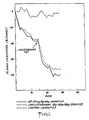
- mice Male beagles, ranging in weight from 7 to 14 kg. (average 11 kg.), were fed a semi-synthetic diet six weeks prior to the start of the experiment and serum cholesterol levels determined colorimetrically each week in order to obtain base-line values for each dog.
- animals were divided into three treatment groups. Group A (4 dogs) received 25 mg./kg./day of compound (II) mixed in the diet. Group B (4 dogs) received 12 g./dog/day of cholestyramine mixed' in the diet. Group C (5 dogs) was the untreated control. Treatment was for four weeks, and plasma cholesterol was determined two times per week.
- Fig. 1 The results are shown in Fig. 1.
- the lower curve, indicated by the solid line shows the results obtained with Group A receiving 25 mg./kg./ day of compound (II). There is a rapid reduction in plasma cholesterol level plateauing by four weeks at 36% of control. With Group B receiving 12 g./kg./day of cholestyramine shown by the dashed line, there is a reduction of 35% in plasma cholesterol_after four weeks.
- the control dogs, Group C shown in the. upper curve with the dash and dot line have the same cholesterol levels after four weeks as at the start.
- Fig. 1 The results shown graphically in Fig. 1 are also shown in tabular form in Table I.
- Table I treating dogs for four weeks with compound (II) at 25 mg./kg./dog mixed in the diet (Group A) results in a decrease of plasma cholesterol ranging from 34 to 40% (average of 35.6%).
- the flavoring and gum arabic are first admixed and the other ingredients, in powder form, gradually admixed therewith.
- the mixture for oral use is given three times daily in doses of 14.6 grams each, mixed with water before taking.
- the mixture of Examples 1 and 2 are each made into capsules containing 14 grams of the mixture. These are administered to a hypercholesteremic patient either 3 at a time daily or three a day spaced through the day.
- the mixtures of Examples 1 and 2 are each made into capsules containing 21 g. of the mixture.
- the capsules are administered to a hypercholesteremic patient, two a day, either in one dose or in separate doses.
- An aqueous dispersion of 42 grams of the mixture of Example 1B is administered daily to a patient suffering from hypercholesteremia.
Landscapes
- Chemical & Material Sciences (AREA)
- Organic Chemistry (AREA)
- Health & Medical Sciences (AREA)
- Life Sciences & Earth Sciences (AREA)
- Engineering & Computer Science (AREA)
- General Health & Medical Sciences (AREA)
- Wood Science & Technology (AREA)
- Zoology (AREA)
- Chemical Kinetics & Catalysis (AREA)
- Medicinal Chemistry (AREA)
- Biotechnology (AREA)
- Genetics & Genomics (AREA)
- Bioinformatics & Cheminformatics (AREA)
- Veterinary Medicine (AREA)
- Public Health (AREA)
- Animal Behavior & Ethology (AREA)
- Epidemiology (AREA)
- Pharmacology & Pharmacy (AREA)
- Microbiology (AREA)
- Biochemistry (AREA)
- General Engineering & Computer Science (AREA)
- General Chemical & Material Sciences (AREA)
- Emergency Medicine (AREA)
- Botany (AREA)
- Mycology (AREA)
- Tropical Medicine & Parasitology (AREA)
- Virology (AREA)
- Biomedical Technology (AREA)
- Pharmaceuticals Containing Other Organic And Inorganic Compounds (AREA)
Priority Applications (1)
| Application Number | Priority Date | Filing Date | Title |
|---|---|---|---|
| AT79104025T ATE6202T1 (de) | 1978-10-19 | 1979-10-18 | Fuer die behandlung von hypercholesterinaemie verwendbare pharmazeutische zusammensetzung. |
Applications Claiming Priority (4)
| Application Number | Priority Date | Filing Date | Title |
|---|---|---|---|
| US95286478A | 1978-10-19 | 1978-10-19 | |
| US6675279A | 1979-08-21 | 1979-08-21 | |
| US66752 | 1987-07-06 | ||
| US952864 | 2007-12-07 |
Publications (2)
| Publication Number | Publication Date |
|---|---|
| EP0010299A1 true EP0010299A1 (de) | 1980-04-30 |
| EP0010299B1 EP0010299B1 (de) | 1984-02-15 |
Family
ID=26747123
Family Applications (1)
| Application Number | Title | Priority Date | Filing Date |
|---|---|---|---|
| EP79104025A Expired EP0010299B1 (de) | 1978-10-19 | 1979-10-18 | Für die Behandlung von Hypercholesterinämie verwendbare pharmazeutische Zusammensetzung |
Country Status (9)
| Country | Link |
|---|---|
| EP (1) | EP0010299B1 (de) |
| AU (1) | AU520086B2 (de) |
| CA (1) | CA1139666A (de) |
| DE (1) | DE2966673D1 (de) |
| DK (1) | DK439379A (de) |
| ES (2) | ES8104408A1 (de) |
| IE (1) | IE48967B1 (de) |
| NZ (1) | NZ191762A (de) |
| PT (1) | PT70283A (de) |
Cited By (6)
| Publication number | Priority date | Publication date | Assignee | Title |
|---|---|---|---|---|
| EP0068038A1 (de) * | 1981-06-29 | 1983-01-05 | Merck & Co. Inc. | (+)-(4R.6S)-(E)-6-(2-(4'-Fluor-3,3',5-trimethyl-(1,1'-biphenyl)-2-yl)ethenyl)-3,4,5,6-tetrahydro-4-hydroxy-2H-pyran-2-on, Verfahren zu seiner Herstellung und eine diese Verbindung enthaltende pharmazeutische Zusammensetzung |
| EP0183132A3 (en) * | 1984-11-19 | 1987-06-16 | Merck Frosst Canada Inc. | A process for the preparation of hmg-coa reductase inhibitors and intermediate compounds employed therein |
| WO1988005296A3 (en) * | 1987-01-27 | 1988-09-22 | Warner Lambert Co | Lpid regulating compositions |
| EP0319645A1 (de) * | 1987-11-20 | 1989-06-14 | Etablissement TEXCONTOR | Kationische Polysaccharidderivate mit hypocholesterolämischer Aktivität |
| US4859703A (en) * | 1987-06-15 | 1989-08-22 | Warner-Lambert Company | Lipid regulating compositions |
| WO1995020394A1 (de) * | 1994-01-27 | 1995-08-03 | Lts Lohmann Therapie-Systeme Gmbh & Co. Kg | Orale arzneiform enthaltend colestipol als träger mit sauren wirkstoffen und verfahren zu ihrer herstellung |
Families Citing this family (12)
| Publication number | Priority date | Publication date | Assignee | Title |
|---|---|---|---|---|
| US6982251B2 (en) | 2000-12-20 | 2006-01-03 | Schering Corporation | Substituted 2-azetidinones useful as hypocholesterolemic agents |
| US7071181B2 (en) | 2001-01-26 | 2006-07-04 | Schering Corporation | Methods and therapeutic combinations for the treatment of diabetes using sterol absorption inhibitors |
| PT1355644E (pt) | 2001-01-26 | 2006-11-30 | Schering Corp | Utilização de compostos azetidinona substituídos para o tratamento de sitosterolemia |
| ES2274013T3 (es) | 2001-01-26 | 2007-05-16 | Schering Corporation | Combinaciones de activador(es) del receptor activado por el proliferador de los peroxisomas (ppar) e inhibidor(es)m de la absorcion de estelores y tratamientos para trastornos vasculares. |
| JP2005504091A (ja) | 2001-09-21 | 2005-02-10 | シェーリング コーポレイション | ステロール吸収阻害剤としてアゼチジノンを用いる黄色腫の処置 |
| US7056906B2 (en) | 2001-09-21 | 2006-06-06 | Schering Corporation | Combinations of hormone replacement therapy composition(s) and sterol absorption inhibitor(s) and treatments for vascular conditions in post-menopausal women |
| US7053080B2 (en) | 2001-09-21 | 2006-05-30 | Schering Corporation | Methods and therapeutic combinations for the treatment of obesity using sterol absorption inhibitors |
| US7560449B2 (en) | 2002-11-06 | 2009-07-14 | Schering Corporation | Methods and therapeutic combinations for the treatment of demyelination |
| EP1606287B1 (de) | 2003-03-07 | 2013-10-02 | Merck Sharp & Dohme Corp. | Substituierte azetidinon-derivate, deren pharmazeutische formulierungen und deren verwendung zur behandlung von hypercholesterolemia |
| US7459442B2 (en) | 2003-03-07 | 2008-12-02 | Schering Corporation | Substituted azetidinone compounds, processes for preparing the same, formulations and uses thereof |
| ES2311806T3 (es) | 2003-03-07 | 2009-02-16 | Schering Corporation | Compuesto de azetidinona sustituidos, fornulaciones y usos de los mismos para el tratamiento de hipercolesterolemia. |
| WO2004081003A1 (en) | 2003-03-07 | 2004-09-23 | Schering Corporation | Substituted azetidinone compounds, formulations and uses thereof for the treatment of hypercholeterolemia |
Citations (5)
| Publication number | Priority date | Publication date | Assignee | Title |
|---|---|---|---|---|
| GB1286949A (en) * | 1969-12-27 | 1972-08-31 | Merck Patent Ges Mit Beschnran | Polymer-containing bile acid-fixing and triglyceride-fixing compositions for oral administration |
| US3692895A (en) * | 1970-09-08 | 1972-09-19 | Norman A Nelson | Method of reducing hypercholesteremia in humans employing a copolymer of polyethylenepolyamine and a bifunctional substance, such as epichlorohydria |
| AU439164B2 (en) * | 1969-08-20 | 1973-08-10 | The Upjohn Company | Oral compositions for treatment of hypercholes teremia |
| US3983140A (en) * | 1974-06-07 | 1976-09-28 | Sankyo Company Limited | Physiologically active substances |
| US4098726A (en) * | 1975-04-23 | 1978-07-04 | Merck & Co., Inc. | Poly[{alkyl-(3-ammoniopropyl)iminio}trimethylene dihalides] and process |
-
1979
- 1979-10-05 NZ NZ191762A patent/NZ191762A/xx unknown
- 1979-10-08 AU AU51551/79A patent/AU520086B2/en not_active Expired
- 1979-10-08 PT PT70283A patent/PT70283A/pt not_active IP Right Cessation
- 1979-10-12 CA CA000337493A patent/CA1139666A/en not_active Expired
- 1979-10-16 IE IE1961/79A patent/IE48967B1/en not_active IP Right Cessation
- 1979-10-18 DE DE7979104025T patent/DE2966673D1/de not_active Expired
- 1979-10-18 DK DK439379A patent/DK439379A/da not_active Application Discontinuation
- 1979-10-18 EP EP79104025A patent/EP0010299B1/de not_active Expired
- 1979-10-18 ES ES485168A patent/ES8104408A1/es not_active Expired
-
1980
- 1980-08-05 ES ES494012A patent/ES8200401A1/es not_active Expired
Patent Citations (5)
| Publication number | Priority date | Publication date | Assignee | Title |
|---|---|---|---|---|
| AU439164B2 (en) * | 1969-08-20 | 1973-08-10 | The Upjohn Company | Oral compositions for treatment of hypercholes teremia |
| GB1286949A (en) * | 1969-12-27 | 1972-08-31 | Merck Patent Ges Mit Beschnran | Polymer-containing bile acid-fixing and triglyceride-fixing compositions for oral administration |
| US3692895A (en) * | 1970-09-08 | 1972-09-19 | Norman A Nelson | Method of reducing hypercholesteremia in humans employing a copolymer of polyethylenepolyamine and a bifunctional substance, such as epichlorohydria |
| US3983140A (en) * | 1974-06-07 | 1976-09-28 | Sankyo Company Limited | Physiologically active substances |
| US4098726A (en) * | 1975-04-23 | 1978-07-04 | Merck & Co., Inc. | Poly[{alkyl-(3-ammoniopropyl)iminio}trimethylene dihalides] and process |
Cited By (9)
| Publication number | Priority date | Publication date | Assignee | Title |
|---|---|---|---|---|
| EP0068038A1 (de) * | 1981-06-29 | 1983-01-05 | Merck & Co. Inc. | (+)-(4R.6S)-(E)-6-(2-(4'-Fluor-3,3',5-trimethyl-(1,1'-biphenyl)-2-yl)ethenyl)-3,4,5,6-tetrahydro-4-hydroxy-2H-pyran-2-on, Verfahren zu seiner Herstellung und eine diese Verbindung enthaltende pharmazeutische Zusammensetzung |
| EP0183132A3 (en) * | 1984-11-19 | 1987-06-16 | Merck Frosst Canada Inc. | A process for the preparation of hmg-coa reductase inhibitors and intermediate compounds employed therein |
| WO1988005296A3 (en) * | 1987-01-27 | 1988-09-22 | Warner Lambert Co | Lpid regulating compositions |
| EP0276807A3 (de) * | 1987-01-27 | 1988-10-12 | Warner-Lambert Company | Lipide regulierende Zusammensetzungen |
| US4859703A (en) * | 1987-06-15 | 1989-08-22 | Warner-Lambert Company | Lipid regulating compositions |
| EP0319645A1 (de) * | 1987-11-20 | 1989-06-14 | Etablissement TEXCONTOR | Kationische Polysaccharidderivate mit hypocholesterolämischer Aktivität |
| US5059685A (en) * | 1987-11-20 | 1991-10-22 | Etablissement Texcontor | Cationized polysaccharide derivatives with hypocholesterolemic activity |
| WO1995020394A1 (de) * | 1994-01-27 | 1995-08-03 | Lts Lohmann Therapie-Systeme Gmbh & Co. Kg | Orale arzneiform enthaltend colestipol als träger mit sauren wirkstoffen und verfahren zu ihrer herstellung |
| AU697353B2 (en) * | 1994-01-27 | 1998-10-01 | Lts Lohmann Therapie-Systeme Gmbh | Oral administration form having acid active substances and_a process for its production |
Also Published As
| Publication number | Publication date |
|---|---|
| ES494012A0 (es) | 1981-11-01 |
| AU5155179A (en) | 1980-04-24 |
| ES8200401A1 (es) | 1981-11-01 |
| IE791961L (en) | 1980-04-19 |
| DE2966673D1 (en) | 1984-03-22 |
| ES485168A0 (es) | 1981-04-01 |
| IE48967B1 (en) | 1985-06-26 |
| AU520086B2 (en) | 1982-01-14 |
| EP0010299B1 (de) | 1984-02-15 |
| CA1139666A (en) | 1983-01-18 |
| ES8104408A1 (es) | 1981-04-01 |
| NZ191762A (en) | 1982-09-14 |
| PT70283A (en) | 1979-11-01 |
| DK439379A (da) | 1980-04-20 |
Similar Documents
| Publication | Publication Date | Title |
|---|---|---|
| EP0010299B1 (de) | Für die Behandlung von Hypercholesterinämie verwendbare pharmazeutische Zusammensetzung | |
| US4231938A (en) | Hypocholesteremic fermentation products and process of preparation | |
| US4319039A (en) | Preparation of ammonium salt of hypocholesteremic fermentation product | |
| US4342767A (en) | Hypocholesteremic fermentation products | |
| CA1161380A (en) | Hypocholesteremic fermentation products and process of preparation | |
| US5021453A (en) | 3-keto HMG-CoA reductase inhibitors | |
| US4968693A (en) | 3-keto HMG-COA reductase inhibitors | |
| JPS5889191A (ja) | 3−ヒドロキシ−ml−236b誘導体の製造法 | |
| US4376863A (en) | Hypocholesterolemic fermentation products | |
| CA1153966A (en) | Physiologically active substance, ebelactone and production thereof | |
| EP0033537B1 (de) | Hydrierungsprodukte von Mevinolin und Dihydromevinolin, Verfahren zu ihrer Herstellung und sie enthaltende pharmazeutische, antihypercholesterinämische Zusammensetzung | |
| US4387242A (en) | Hypocholesterolemic fermentation products and process of preparation | |
| KR880001354B1 (ko) | Ml-236b 유도체의 제조방법 | |
| JP2594167B2 (ja) | 新規抗生物質sf2698物質およびその製造法 | |
| JPH07278041A (ja) | 抗腫瘍性物質be−24811及びその製造法 | |
| EP0420470B1 (de) | Naphthopyranverbindungen | |
| AU618106B2 (en) | 3-keto-naphtylethyl substituted pyran-2-ones and equilavent hydroxy acids | |
| WO1993017557A1 (en) | Cholesterol lowering compounds produced by directed biosynthesis | |
| DE69025817T2 (de) | 3-Keto-HMG-CoA Reduktase-Inhibitoren | |
| EP0408806A1 (de) | Antihypercholesterolemische Mittel | |
| US5041562A (en) | 3-keto HMG-CoA reductase inhibitors | |
| US20050003499A1 (en) | Ion-exchange filtration of fermentation broth | |
| GB2135668A (en) | Of4949, a physiologically active substance and derivatives thereof | |
| JP2004196680A (ja) | 新規fki−0929物質およびその製造法 | |
| JPH06239869A (ja) | Ngf作用増強物質 |
Legal Events
| Date | Code | Title | Description |
|---|---|---|---|
| PUAI | Public reference made under article 153(3) epc to a published international application that has entered the european phase |
Free format text: ORIGINAL CODE: 0009012 |
|
| PUAB | Information related to the publication of an a document modified or deleted |
Free format text: ORIGINAL CODE: 0009199EPPU |
|
| AK | Designated contracting states |
Designated state(s): AT BE CH DE FR GB IT LU NL SE |
|
| PUAB | Information related to the publication of an a document modified or deleted |
Free format text: ORIGINAL CODE: 0009199EPPU |
|
| 17P | Request for examination filed |
Effective date: 19801029 |
|
| ITF | It: translation for a ep patent filed | ||
| GRAA | (expected) grant |
Free format text: ORIGINAL CODE: 0009210 |
|
| AK | Designated contracting states |
Designated state(s): AT BE CH DE FR GB IT LU NL SE |
|
| REF | Corresponds to: |
Ref document number: 6202 Country of ref document: AT Date of ref document: 19840315 Kind code of ref document: T |
|
| REF | Corresponds to: |
Ref document number: 2966673 Country of ref document: DE Date of ref document: 19840322 |
|
| ET | Fr: translation filed | ||
| PLBE | No opposition filed within time limit |
Free format text: ORIGINAL CODE: 0009261 |
|
| STAA | Information on the status of an ep patent application or granted ep patent |
Free format text: STATUS: NO OPPOSITION FILED WITHIN TIME LIMIT |
|
| 26N | No opposition filed | ||
| ITTA | It: last paid annual fee | ||
| EPTA | Lu: last paid annual fee | ||
| EAL | Se: european patent in force in sweden |
Ref document number: 79104025.6 |
|
| PGFP | Annual fee paid to national office [announced via postgrant information from national office to epo] |
Ref country code: FR Payment date: 19980827 Year of fee payment: 20 |
|
| PGFP | Annual fee paid to national office [announced via postgrant information from national office to epo] |
Ref country code: SE Payment date: 19980903 Year of fee payment: 20 |
|
| PGFP | Annual fee paid to national office [announced via postgrant information from national office to epo] |
Ref country code: BE Payment date: 19980908 Year of fee payment: 20 |
|
| PGFP | Annual fee paid to national office [announced via postgrant information from national office to epo] |
Ref country code: GB Payment date: 19981002 Year of fee payment: 20 |
|
| PGFP | Annual fee paid to national office [announced via postgrant information from national office to epo] |
Ref country code: AT Payment date: 19981012 Year of fee payment: 20 |
|
| PGFP | Annual fee paid to national office [announced via postgrant information from national office to epo] |
Ref country code: LU Payment date: 19981013 Year of fee payment: 20 |
|
| PGFP | Annual fee paid to national office [announced via postgrant information from national office to epo] |
Ref country code: CH Payment date: 19981020 Year of fee payment: 20 |
|
| PGFP | Annual fee paid to national office [announced via postgrant information from national office to epo] |
Ref country code: NL Payment date: 19981030 Year of fee payment: 20 |
|
| PGFP | Annual fee paid to national office [announced via postgrant information from national office to epo] |
Ref country code: DE Payment date: 19981124 Year of fee payment: 20 |
|
| BE20 | Be: patent expired |
Free format text: 19991018 *MERCK & CO. INC. |
|
| PG25 | Lapsed in a contracting state [announced via postgrant information from national office to epo] |
Ref country code: GB Free format text: LAPSE BECAUSE OF EXPIRATION OF PROTECTION Effective date: 19991017 Ref country code: CH Free format text: LAPSE BECAUSE OF EXPIRATION OF PROTECTION Effective date: 19991017 |
|
| PG25 | Lapsed in a contracting state [announced via postgrant information from national office to epo] |
Ref country code: NL Free format text: LAPSE BECAUSE OF EXPIRATION OF PROTECTION Effective date: 19991018 Ref country code: LU Free format text: LAPSE BECAUSE OF NON-PAYMENT OF DUE FEES Effective date: 19991018 Ref country code: AT Free format text: LAPSE BECAUSE OF EXPIRATION OF PROTECTION Effective date: 19991018 |
|
| PG25 | Lapsed in a contracting state [announced via postgrant information from national office to epo] |
Ref country code: SE Free format text: LAPSE BECAUSE OF NON-PAYMENT OF DUE FEES Effective date: 19991019 |
|
| REG | Reference to a national code |
Ref country code: GB Ref legal event code: PE20 Effective date: 19991017 |
|
| REG | Reference to a national code |
Ref country code: CH Ref legal event code: PL |
|
| NLV7 | Nl: ceased due to reaching the maximum lifetime of a patent |
Effective date: 19991018 |
|
| EUG | Se: european patent has lapsed |
Ref document number: 79104025.6 |