WO2025142181A1 - 液晶ポリエステル、液晶ポリエステル組成物及び成形品 - Google Patents
液晶ポリエステル、液晶ポリエステル組成物及び成形品 Download PDFInfo
- Publication number
- WO2025142181A1 WO2025142181A1 PCT/JP2024/040516 JP2024040516W WO2025142181A1 WO 2025142181 A1 WO2025142181 A1 WO 2025142181A1 JP 2024040516 W JP2024040516 W JP 2024040516W WO 2025142181 A1 WO2025142181 A1 WO 2025142181A1
- Authority
- WO
- WIPO (PCT)
- Prior art keywords
- mol
- liquid crystal
- crystal polyester
- monomer unit
- group
- Prior art date
- Legal status (The legal status is an assumption and is not a legal conclusion. Google has not performed a legal analysis and makes no representation as to the accuracy of the status listed.)
- Pending
Links
Classifications
-
- C—CHEMISTRY; METALLURGY
- C08—ORGANIC MACROMOLECULAR COMPOUNDS; THEIR PREPARATION OR CHEMICAL WORKING-UP; COMPOSITIONS BASED THEREON
- C08G—MACROMOLECULAR COMPOUNDS OBTAINED OTHERWISE THAN BY REACTIONS ONLY INVOLVING UNSATURATED CARBON-TO-CARBON BONDS
- C08G63/00—Macromolecular compounds obtained by reactions forming a carboxylic ester link in the main chain of the macromolecule
- C08G63/02—Polyesters derived from hydroxycarboxylic acids or from polycarboxylic acids and polyhydroxy compounds
- C08G63/12—Polyesters derived from hydroxycarboxylic acids or from polycarboxylic acids and polyhydroxy compounds derived from polycarboxylic acids and polyhydroxy compounds
- C08G63/123—Polyesters derived from hydroxycarboxylic acids or from polycarboxylic acids and polyhydroxy compounds derived from polycarboxylic acids and polyhydroxy compounds the acids or hydroxy compounds containing carbocyclic rings
- C08G63/127—Acids containing aromatic rings
Definitions
- the monomer unit (A) is A monomer unit (A-1) in which X 1 is —CO— and X 2 is —O—; A monomer unit (A-2) in which the X1 and X2 are —CO—; The liquid crystal polyester according to any one of [1] to [7], [9] The liquid crystal polyester according to any one of [1] to [8], wherein the content of the monomer unit (A) is 60 mol % or more and 85 mol % or less based on the total of all monomer units.
- a liquid crystal polyester composition comprising the liquid crystal polyester according to any one of [1] to [11].
- a molded article comprising the liquid crystal polyester according to any one of [1] to [11], The molded article is a connector, a socket, a relay part, a coil bobbin, an optical pickup, an oscillator, a semiconductor package, an IC tray, a wafer carrier, a home electrical appliance part, a lighting fixture part, an audio product part, a ferrule for an optical cable, a telephone part, a facsimile part, a modem part, a separation claw, a heater holder, an impeller, a fan gear, a gear, a bearing, a motor part, a motor case, an engine part, an engine room part, an electrical component part, an automobile interior part, a microwave cooking pot, a heat-resistant tableware, a flooring material, a wall material, a beam, a pillar, a roofing material, an aircraft part, a spacecraft part, a
- liquid crystal polyester has a monomer unit (A) represented by formula (A) and a monomer unit (B) represented by formula (B).
- A monomer unit represented by formula (A)
- B monomer unit represented by formula (B).
- X 1 and X 2 each independently represent —CO— or —O—.
- Ar2 and Ar3 each independently represent a phenylene group, a biphenylene group, or a naphthylene group.
- a part or all of the hydrogen atoms of Ar2 and Ar3 may be substituted with a substituent. That is, Ar2 and Ar3 each independently may be a phenylene group which may have a substituent, a biphenylene group which may have a substituent, or a naphthylene group which may have a substituent.
- the substituent may be a halogen atom, an alkyl group, or an aryl group.
- X 3 and X 4 each independently represent —CO— or —O—, and Y represents —O—, —CO—, —SO 2 — or —NH—.
- the content of monomer unit (A) is 50 mol% or more relative to the total of all monomer units, and the content of monomer unit (B) is 0.5 mol% or more and less than 10 mol% relative to the total of all monomer units.
- the liquid crystal polyester of this embodiment can be used to form molded products with a high tensile modulus. For this reason, the liquid crystal polyester of this embodiment can be suitably used as a material for fine electronic components, etc.
- Patent Document 2 discloses that the introduction of an ether-based monomer unit (repeating unit C) significantly reduces the tensile modulus.
- the liquid crystal polyester of this embodiment contains 50 mol % or more of a monomer unit (A) having a condensed polycyclic aromatic hydrocarbon group, so that the stacking between molecular chains is relatively strong.
- the liquid crystal polyester may be any polyester that exhibits liquid crystallinity in a molten state.
- the liquid crystal polyester may be one type of polymer or a mixture of two or more types of polymers.
- Liquid crystal polyester has constituent units (monomer units) derived from raw material monomers.
- the main monomer units e.g., 90 mol% or more, 95 mol% or more, or 99 mol% or more of the monomer units relative to the total of all monomer units, preferably all monomer units
- Liquid crystal polyester in which all monomer units are monomer units derived from aromatic compounds is also called fully aromatic liquid crystal polyester.
- derived from means that in the monomer units of the liquid crystal polyester formed by polymerization of the raw material monomers, the chemical structure of the functional groups that contribute to polymerization of the raw material monomers has changed, but no other structural changes have occurred.
- the concept of "derived from” here also includes cases where the monomers are derived from polymerizable derivatives of the raw material monomers (for example, compounds obtained by converting the functional groups that contribute to polymerization of the raw material monomers into other polymerizable groups).
- the liquid crystal polyester has a monomer unit (A) represented by the formula (A). -X 1 -Ar 1 -X 2 -...(A)
- Ar 1 represents a condensed polycyclic aromatic hydrocarbon group.
- a part or all of the hydrogen atoms of Ar 1 may be substituted with a substituent. That is, Ar 1 may be a condensed polycyclic aromatic hydrocarbon group which may have a substituent.
- the substituent may be a halogen atom, an alkyl group, or an aryl group.
- the condensed polycyclic aromatic hydrocarbon group is a group in which two hydrogen atoms have been removed from a condensed polycyclic aromatic hydrocarbon.
- the condensed polycyclic aromatic hydrocarbon may be, for example, naphthalene, anthracene, phenanthrene, tetracene, pyrene, triphenylene, perylene, or fluorene, with naphthalene being preferred from the standpoint of availability and cost.
- the condensed polycyclic aromatic hydrocarbon group may be a naphthylene group, and the naphthylene group may be, for example, a 1,3-naphthylene group, a 1,4-naphthylene group, a 1,5-naphthylene group, a 1,6-naphthylene group, a 1,7-naphthylene group, a 1,8-naphthylene group, a 2,4-naphthylene group, a 2,5-naphthylene group, a 2,6-naphthylene group, or a 2,7-naphthylene group, preferably a 2,6-naphthylene group or a 2,7-naphthylene group, and more preferably a 2,6-naphthylene group.
- X 1 and X 2 each independently represent —CO— or —O—.
- X1 is preferably -CO-.
- X2 may be -CO- or -O-.
- Examples of the monomer unit (A) include a monomer unit (A-1) in which X1 is -CO- and X2 is -O-, a monomer unit (A-2) in which X1 and X2 are -CO-, and a monomer unit (A-3) in which X1 and X2 are -O-.
- the monomer unit (A) preferably contains the monomer unit (A-1), and more preferably contains the monomer unit (A-1) and the monomer unit (A-2).
- the proportion of the monomer unit (A-1) in the monomer unit (A) may be, for example, 50 mol % or more, 60 mol % or more, 65 mol % or more, or 70 mol % or more.
- the proportion of the monomer unit (A-1) in the monomer unit (A) may be, for example, 95 mol % or less, 90 mol % or less, or 85 mol % or less.
- the proportion of the monomer unit (A-1) shown in the monomer unit (A) may be, for example, 50 mol% or more and 95 mol% or less, 50 mol% or more and 90 mol% or less, 50 mol% or more and 85 mol% or less, 60 mol% or more and 95 mol% or less, 60 mol% or more and 90 mol% or less, 60 mol% or more and 85 mol% or less, 65 mol% or more and 95 mol% or less, 65 mol% or more and 90 mol% or less, 65 mol% or more and 85 mol% or less, 70 mol% or more and 95 mol% or less, 70 mol% or more and 90 mol% or less, or 70 mol% or more and 85 mol% or less.
- the proportion of the monomer unit (A-2) in the monomer unit (A) may be, for example, 5 mol % or more, 10 mol % or more, or 15 mol % or more.
- the proportion of the monomer unit (A-2) in the monomer unit (A) may be, for example, 50 mol % or less, 40 mol % or less, 35 mol % or less, or 30 mol % or less.
- the proportion of the monomer unit (A-2) in the monomer unit (A) may be, for example, 5 mol% or more and 50 mol% or less, 5 mol% or more and 40 mol% or less, 5 mol% or more and 35 mol% or less, 5 mol% or more and 30 mol% or less, 10 mol% or more and 50 mol% or less, 10 mol% or more and 40 mol% or less, 10 mol% or more and 35 mol% or less, 10 mol% or more and 30 mol% or less, 15 mol% or more and 50 mol% or less, 15 mol% or more and 40 mol% or less, 15 mol% or more and 35 mol% or less, or 15 mol% or more and 30 mol% or less.
- the proportion of monomer unit (B-1) in monomer unit (B) may be, for example, 50 mol% or more, 70 mol% or more, 90 mol% or more, 95 mol% or more, or 99 mol% or more, or may be 100 mol%.
- the content of the monomer unit (B) is 0.5 mol% or more relative to the total of all monomer units constituting the liquid crystal polyester, and from the viewpoint of obtaining the above-mentioned effect more significantly, it may be 1 mol% or more, 1.5 mol% or more, 2 mol% or more, or 3 mol% or more.
- the content of the monomer unit (B) is less than 10 mol% relative to the total of all monomer units constituting the liquid crystal polyester, and from the viewpoint of obtaining the above-mentioned effect more significantly, it may be 9 mol% or less, 8 mol% or less, or 7.5 mol% or less.
- the content of the monomer unit (B) may be, for example, 0.5 mol% or more and less than 10 mol%, 0.5 mol% or more and less than 9 mol%, 0.5 mol% or more and less than 8 mol%, 0.5 mol% or more and less than 7.5 mol%, 1 mol% or more and less than 10 mol%, 1 mol% or more and less than 9 mol%, 1 mol% or more and less than 8 mol%, 1 mol% or more and less than 7.5 mol%, 1.5 mol% or more and less than 10 mol%, 1.5 mol% or more and less than 9 mol%, 1.5 mol% or more and less than 8 mol%, 1.5 mol% or more and less than 7.5 mol%, 2 mol% or more and less than 10 mol%, 2 mol% or more and less than 9 mol%, 2 mol% or more and less than 8 mol%, 2 mol% or more and less than 7.5 mol%, 3 mol%
- the liquid crystal polyester may further have a monomer unit (C) represented by formula (C). -X 5 -Ar 4 -X 6 -...(C)
- Ar 4 represents a phenylene group or a biphenylene group. A part or all of the hydrogen atoms of Ar 4 may be substituted with a substituent. That is, Ar 4 may be a phenylene group which may have a substituent or a biphenylene group which may have a substituent. The substituent may be a halogen atom, an alkyl group, or an aryl group.
- Ar4 is preferably a phenylene group.
- the phenylene group may be, for example, a 1,4-phenylene group or a 1,3-phenylene group, and is preferably a 1,4-phenylene group.
- the biphenylene group may be, for example, a 4,4'-biphenylene group.
- Halogen atoms as substituents include fluorine atoms, chlorine atoms, bromine atoms, and iodine atoms.
- Halogen atoms as substituents may be fluorine atoms, chlorine atoms, or bromine atoms, or may be fluorine atoms or chlorine atoms.
- the alkyl group as a substituent may be linear, branched or cyclic.
- the alkyl group may be, for example, an alkyl group having 1 to 10 carbon atoms.
- Examples of the alkyl group include a methyl group, an ethyl group, an n-propyl group, an isopropyl group, an n-butyl group, an isobutyl group, a s-butyl group, a t-butyl group, an n-hexyl group, a 2-ethylhexyl group, an n-octyl group, an n-decyl group, etc.
- the aryl group as a substituent may be a single ring or a condensed ring.
- the aryl group may be, for example, an aryl group having 6 to 20 carbon atoms.
- Examples of the aryl group include a phenyl group, an o-tolyl group, an m-tolyl group, a p-tolyl group, a 1-naphthyl group, and a 2-naphthyl group.
- the aryl group may be a group in which a hydrogen atom of an aromatic ring is substituted with an alkyl group, such as a tolyl group.
- the number of substituents that Ar 4 has may be, for example, 0 to 3, 0 to 2, 0 or 1, or 0.
- X5 and X6 each independently represent --CO-- or --O--.
- Examples of the monomer unit (C) include a monomer unit (C-1) in which X5 and X6 are -O-, a monomer unit (C-2) in which X5 and X6 are -CO-, and a monomer unit (C- 3 ) in which X5 is -O- and X6 is -CO-.
- the monomer unit (C) preferably contains the monomer unit (C-1), and may contain the monomer unit (C-1) and the monomer unit (C-2).
- the proportion of monomer units (C-1) in monomer units (C) may be, for example, 50 mol% or more, 60 mol% or more, 70 mol% or more, or 80 mol% or more, or may be 100 mol%.
- the proportion of the monomer unit (C-1) in the monomer unit (C) may be, for example, 97 mol % or less, 95 mol % or less, 93 mol % or less, or 90 mol % or less.
- the ratio of the monomer unit (C-1) in the monomer unit (C) may be, for example, 50 mol% or more and 97 mol% or less, 50 mol% or more and 95 mol% or less, 50 mol% or more and 93 mol% or less, 50 mol% or more and 90 mol% or less, 60 mol% or more and 97 mol% or less, 60 mol% or more and 95 mol% or less, 60 mol% or more and 93 mol% or less, 60 mol% or more and 90 mol% or less, 70 mol% or more and 97 mol% or less, 70 mol% or more and 95 mol% or less, 70 mol% or more and 93 mol% or less, 70 mol% or more and 90 mol% or less, 80 mol% or more and 97 mol% or less, 80 mol% or more and 95 mol% or less, 80 mol% or more and 95 mol% or less, 80 mol% or more and 95 mol% or
- the proportion of monomer unit (C-2) in monomer unit (C) may be, for example, 50 mol% or less, 40 mol% or less, 30 mol% or less, or 20 mol% or less, or may be 0 mol%.
- the proportion of the monomer unit (C-2) in the monomer unit (C) may be, for example, 3 mol % or more, 5 mol % or more, 7 mol % or more, or 10 mol % or more.
- the ratio of the monomer unit (C-2) in the monomer unit (C) may be, for example, 3 mol% or more and 50 mol% or less, 3 mol% or more and 40 mol% or less, 3 mol% or more and 30 mol% or less, 3 mol% or more and 20 mol% or less, 5 mol% or more and 50 mol% or less, 5 mol% or more and 40 mol% or less, 5 mol% or more and 30 mol% or less, 5 mol% or more and 20 mol% or less, 7 mol% or more and 50 mol% or less, 7 mol% or more and 40 mol% or less, 7 mol% or more and 30 mol% or less, 7 mol% or more and 20 mol% or less, 10 mol% or more and 50 mol% or less, 10 mol% or more and 40 mol% or less, 10 mol% or or or less or less, 10 mol% or more and 40 mol% or less, 10 mol% or or less,
- the content of the monomer unit (C) may be, for example, 10 mol% or more, 15 mol% or more, or 20 mol% or more, based on the total of all monomer units constituting the liquid crystal polyester.
- the content of the monomer unit (C) may be, for example, 45 mol% or less, 40 mol% or less, 35 mol% or less, or 30 mol% or less, based on the total of all monomer units constituting the liquid crystal polyester.
- the content of the monomer unit (C) may be, for example, 10 mol% or more and 45 mol% or less, 10 mol% or more and 40 mol% or less, 10 mol% or more and 35 mol% or less, 10 mol% or more and 30 mol% or less, 15 mol% or more and 45 mol% or less, 15 mol% or more and 40 mol% or less, 15 mol% or more and 35 mol% or less, 15 mol% or more and 30 mol% or less, 20 mol% or more and 45 mol% or less, 20 mol% or more and 40 mol% or less, 20 mol% or more and 35 mol% or less, or 20 mol% or more and 30 mol% or less, relative to the sum of all monomer units constituting the liquid crystal polyester.
- the number of each monomer unit contained in the liquid crystal polyester is determined by the analysis method described in JP 2000-19168 A. Specifically, the liquid crystal polyester is depolymerized by reacting it with a lower alcohol in a supercritical state, and the depolymerization product (monomers that derive each monomer unit) is quantified by liquid chromatography, allowing the number of each monomer unit relative to the total monomer units to be calculated.
- Liquid crystal polyester can be produced by polymerizing raw material monomers that correspond to the monomer units that make up the polyester. For example, it can be produced according to the method described in Japanese Patent No. 6439027.
- the dielectric dissipation factor of the liquid crystal polyester at 20 GHz may be, for example, 0.002 or less, preferably 0.0015 or less, and more preferably 0.0012 or less.
- the weight average molecular weight (Mw) of the liquid crystal polyester may be, for example, 40,000 or more, and from the viewpoint of mechanical strength, may be 60,000 or more, 80,000 or more, or 100,000 or more.
- the weight average molecular weight (Mw) of the liquid crystal polyester may be, for example, 500,000 or less, and from the viewpoint of moldability, may be 400,000 or less, 300,000 or less, or 200,000 or less.
- the liquid crystal polyester of this embodiment can be suitably used as a molding material for obtaining molded products.
- the liquid crystal polyester may be used, for example, as pellets.
- the liquid crystal polyester may be used as a composition (liquid crystal polyester composition) mixed with other components.
- the liquid crystal polyester composition may contain, for example, one or more resins other than liquid crystal polyester.
- resins include polyolefins, cyclic polyolefins, polyvinyl chloride, polysulfones, (meth)acrylic resins, polyphenylene ether resins, polyacetal resins, polyamide resins, imide resins, cellulose resins, polyether ether ketone resins, fluororesins, polycarbonate resins, styrene-based resins, and thermosetting resins.
- the liquid crystal polyester composition may further contain inorganic fillers, colorants, dispersants, plasticizers, antioxidants, curing agents, flame retardants, heat stabilizers, UV absorbers, antistatic agents, surfactants, lubricants, release agents, etc.
- the liquid crystal polyester composition can be suitably used as a molding material.
- the liquid crystal polyester composition may be used, for example, as pellets.
- the molded article of this embodiment may be a molded article containing the liquid crystal polyester described above, or may be a molded article containing the liquid crystal polyester composition described above.
- the molded article of this embodiment can be obtained, for example, by molding the liquid crystal polyester or liquid crystal polyester composition described above into a desired shape and subjecting it to processing as necessary.
- melt molding The preferred method for forming molded products is melt molding.
- melt molding methods include injection molding, extrusion molding, compression molding, blow molding, vacuum molding, foam molding, and press molding.
- the molded products of this embodiment may be, for example, connectors, sockets, relay parts, coil bobbins, optical pickups, oscillators, semiconductor packages, IC trays, wafer carriers, household electrical appliance parts, lighting fixture parts, audio product parts, ferrules for optical cables, telephone parts, facsimile parts, modem parts, separation claws, heater holders, impellers, fan gears, gears, bearings, motor parts, motor cases, engine parts, engine room parts, electrical parts, automotive interior parts, microwave cooking pots, heat-resistant tableware, flooring materials, wall materials, beams, pillars, roofing materials, aircraft parts, spacecraft parts, space equipment parts, nuclear reactors, marine facility components, cleaning tools, optical equipment parts, valves, pipes, nozzles, filters, medical equipment parts, medical materials, sensor parts, sanitary equipment, sporting goods, leisure goods, etc.
- the temperature was raised to 145°C over 30 minutes under a nitrogen gas flow, and the temperature was maintained and refluxed for 1 hour. Thereafter, the temperature was raised to 310°C over 3 hours and 30 minutes while distilling off the by-product acetic acid and unreacted acetic anhydride, and the contents in the reactor were removed after keeping at the same temperature for 2 hours and 10 minutes.
- the obtained solid content was cooled to room temperature and pulverized to obtain a powder.
- the temperature was raised to 140°C over 30 minutes under a nitrogen gas stream, and the temperature was maintained and refluxed for 1 hour.
- 0.92g of 1-methylimidazole was added.
- the temperature was raised to 300°C over 4 hours and 20 minutes while distilling off the by-product acetic acid, and the time when the torque increase was observed was considered to be the end of the reaction, and the contents were taken out.
- the flow temperature of the obtained solid content was 245°C.
- the obtained solid content was cooled to room temperature and crushed in a coarse crusher.
- B1 indicates the proportion (mol%) of monomer units derived from 4,4'-dicarboxydiphenyl ether
- C3 indicates the proportion (mol%) of monomer units derived from 4-hydroxybenzoic acid
- C4 indicates the proportion (mol%) of monomer units derived from 4,4'-dihydroxybiphenyl
- C5 indicates the proportion (mol%) of monomer units derived from terephthalic acid
- C6 indicates the proportion (mol%) of monomer units derived from isophthalic acid.
Landscapes
- Chemical & Material Sciences (AREA)
- Health & Medical Sciences (AREA)
- Chemical Kinetics & Catalysis (AREA)
- Medicinal Chemistry (AREA)
- Polymers & Plastics (AREA)
- Organic Chemistry (AREA)
- Polyesters Or Polycarbonates (AREA)
Abstract
式(A)で表される単量体単位(A)と、式(B)で表される単量体単位(B)と、を有し、前記単量体単位(A)の含有量が全単量体単位の合計に対して50モル%以上であり、前記単量体単位(B)の含有量が全単量体単位の合計に対して0.5モル%以上10モル%未満である、液晶ポリエステル。 -X1-Ar1-X2- …(A) -X3-Ar2-Y-Ar3-X4- …(B)
[式中、Ar1はナフチレン基を示し、Ar2及びAr3はそれぞれ独立してフェニレン基、ビフェニレン基又はナフチレン基を示し、X1、X2、X3及びX4はそれぞれ独立して-CO-又は-O-を示し、Yは、-O-、-CO-、-SO2-又は-NH-を示す。]
Description
本開示は、液晶ポリエステル、液晶ポリエステル組成物及び成形品に関する。
液晶ポリエステルは、流動性及び耐熱性が高く、得られる成形体の寸法精度も高いことから、各種用途に使用されている。
例えば特許文献1には、特定の扁平ガラス繊維を15質量%以上、及び特定の板状充填剤を20質量%以上配合した液晶ポリマー組成物が記載されている。
近年、より多様な用途への展開、より精細な部品への適用等の観点から、液晶ポリエステル自体の特性向上が求められている。
本開示の目的は、高い引張弾性率を有する成形品を形成可能な、液晶ポリエステルを提供することにある。また、本開示の他の目的は、上記液晶ポリエステルを含む液晶ポリエステル組成物及び成形品を提供することにある。
本開示は、例えば以下を提供する。
[1]
式(A)で表される単量体単位(A)と、
式(B)で表される単量体単位(B)と、
を有し、
前記単量体単位(A)の含有量が全単量体単位の合計に対して50モル%以上であり、
前記単量体単位(B)の含有量が全単量体単位の合計に対して0.5モル%以上10モル%未満である、
液晶ポリエステル。
-X1-Ar1-X2- …(A)
-X3-Ar2-Y-Ar3-X4- …(B)
[式中、Ar1は縮合多環芳香族炭化水素基を示し、Ar2及びAr3はそれぞれ独立してフェニレン基、ビフェニレン基又はナフチレン基を示し、X1、X2、X3及びX4はそれぞれ独立して-CO-又は-O-を示し、Yは、-O-、-CO-、-SO2-又は-NH-を示す。Ar1、Ar2及びAr3が有する水素原子の一部又は全部は、ハロゲン原子、アルキル基又はアリール基で置換されていてもよい。]
[2]
前記Ar2及び前記Ar3がフェニレン基である、[1]に記載の液晶ポリエステル。
[3]
前記Yが-O-である、[1]又は[2]に記載の液晶ポリエステル。
[4]
前記Ar1がナフチレン基である、[1]~[3]のいずれか一つに記載の液晶ポリエステル。
[5]
前記X1が-CO-であり、
前記X2が-CO-又は-O-である、[1]~[4]のいずれか一つに記載の液晶ポリエステル。
[6]
前記単量体単位(B)の含有量が、全単量体単位の合計に対して1モル%以上8モル%以下である、[1]~[5]のいずれか一つに記載の液晶ポリエステル。
[7]
前記X3及び前記X4が-CO-である、[1]~[6]のいずれか一つに記載の液晶ポリエステル。
[8]
前記単量体単位(A)が、
前記X1が-CO-であり、前記X2が-O-である単量体単位(A-1)と、
前記X1及び前記X2が-CO-である単量体単位(A-2)と、
を含む、[1]~[7]のいずれか一つに記載の液晶ポリエステル。
[9]
前記単量体単位(A)の含有量が全単量体単位の合計に対して60モル%以上85モル%以下である、[1]~[8]のいずれか一つに記載の液晶ポリエステル。
[10]
式(C)で表される単量体単位(C)を更に有する、[1]~[9]のいずれか一つに記載の液晶ポリエステル。
-X5-Ar4-X6- …(C)
[式中、Ar4はフェニレン基又はビフェニレン基を示し、X5及X6はそれぞれ独立して-CO-又は-O-を示す。Ar4が有する水素原子の一部又は全部は、ハロゲン原子、アルキル基又はアリール基で置換されていてもよい。]
[11]
前記単量体単位(C)の含有量が全単量体単位の合計に対して10モル%以上40モル%以下である、[10]に記載の液晶ポリエステル。
[12]
[1]~[11]のいずれか一つに記載の液晶ポリエステルを含む、液晶ポリエステル組成物。
[13]
[1]~[11]のいずれか一つに記載の液晶ポリエステルを含む成形品であって、
該成形品が、コネクター、ソケット、リレー部品、コイルボビン、光ピックアップ、発振子、半導体パッケージ、ICトレー、ウエハーキャリヤー、家庭電気製品部品、照明器具部品、音響製品部品、光ケーブル用フェルール、電話機部品、ファクシミリ部品、モデム部品、分離爪、ヒータホルダー、インペラー、ファン歯車、ギヤ、軸受け、モーター部品、モーターケース、エンジン部品、エンジンルーム内部品、電装部品、自動車内装部品、マイクロ波調理用鍋、耐熱食器、床材、壁材、梁、柱、屋根材、航空機用部品、宇宙機用部品、宇宙機器用部品、原子炉、海洋施設部材、洗浄用治具、光学機器部品、バルブ類、パイプ類、ノズル類、フィルター類、医療用機器部品、医療用材料、センサー類部品、サニタリー備品、スポーツ用品、又はレジャー用品である、成形品。
本開示によれば、高い引張弾性率を有する成形品を形成可能な、液晶ポリエステルが提供される。また、本開示によれば、上記液晶ポリエステルを含む液晶ポリエステル組成物及び成形品が提供される。
以下、本開示の好適な実施形態について詳細に説明する。
本実施形態の液晶ポリエステル(以下、単に「液晶ポリエステル」ともいう。)は、式(A)で表される単量体単位(A)と、式(B)で表される単量体単位(B)と、を有する。
-X1-Ar1-X2- …(A)
-X3-Ar2-Y-Ar3-X4- …(B)
-X1-Ar1-X2- …(A)
-X3-Ar2-Y-Ar3-X4- …(B)
式(A)中、Ar1は縮合多環芳香族炭化水素基を示す。Ar1が有する水素原子の一部又は全部は置換基で置換されていてもよい。すなわち、Ar1は置換基を有していてもよい縮合多環芳香族炭化水素基であってよい。置換基は、ハロゲン原子、アルキル基又はアリール基であってよい。
式(A)中、X1及びX2はそれぞれ独立して-CO-又は-O-を示す。
式(B)中、Ar2及びAr3はそれぞれ独立してフェニレン基、ビフェニレン基又はナフチレン基を示す。Ar2及びAr3が有する水素原子の一部又は全部は置換基で置換されていてもよい。すなわち、Ar2及びAr3はそれぞれ独立して、置換基を有していてもよいフェニレン基、置換基を有していてもよいビフェニレン基又は置換基を有していてもよいナフチレン基であってよい。置換基は、ハロゲン原子、アルキル基又はアリール基であってよい。
式(B)中、X3及びX4はそれぞれ独立して-CO-又は-O-を示し、Yは、-O-、-CO-、-SO2-又は-NH-を示す。
本実施形態の液晶ポリエステルにおいて、単量体単位(A)の含有量は、全単量体単位の合計に対して50モル%以上であり、単量体単位(B)の含有量は、全単量体単位の合計に対して0.5モル%以上10モル%未満である。
本実施形態の液晶ポリエステルは、高い引張弾性率を有する成形品を形成できる。このため、本実施形態の液晶ポリエステルは、微細な電子部品用の材料等として好適に用いることができる。
上記効果が奏される理由は必ずしも明らかではないが、以下のように考えられる。通常、液晶ポリエステルにエーテル系単量体単位を導入すると、エーテル系単量体単位の折れ曲がり構造によって、分子鎖間のスタッキングが阻害されて、液晶ポリエステルの剛直性が低下し、引張弾性率が低下する。例えば、国際公開第2023/045821号(特許文献2)には、エーテル系単量体単位(繰返し単位C)の導入によって引張弾性率が大きく低下することが開示されている。これに対して、本実施形態の液晶ポリエステルは、縮合多環芳香族炭化水素基を有する単量体単位(A)を50モル%以上含むため、分子鎖間のスタッキングが比較的強い。このため、本実施形態では、分子鎖間のスタッキングを十分に維持しつつ、単量体単位(B)による折れ曲がり構造を導入できる。本実施形態では、このスタッキングと折れ曲がり構造による分子鎖の絡み合いとの相乗効果によって、高い引張弾性率が実現されていると考えられる。
液晶ポリエステルは、溶融状態で液晶性を示すポリエステルであればよい。液晶ポリエステルは、1種類のポリマーであってよく、2種類以上のポリマーの混合物であってもよい。
液晶ポリエステルは、原料モノマーに由来する構成単位(単量体単位)を有する。液晶ポリエステルは、主な単量体単位(例えば、全単量体単位の合計に対して90モル%以上、95モル%以上又は99モル%以上の単量体単位、好ましくは全ての単量体単位)が、芳香族化合物に由来する単量体単位であってもよい。全ての単量体単位が芳香族化合物に由来する単量体単位である液晶ポリエステルは、全芳香族液晶ポリエステルともいう。
なお、本明細書において「由来」とは、原料モノマーの重合によって形成される液晶ポリエステルの単量体単位において、原料モノマーが有する重合に寄与する官能基の化学構造が変化している一方、その他の構造変化を生じていないことを意味する。ここでの「由来」は、原料モノマーの重合可能な誘導体(例えば、原料モノマーが有する重合に寄与する官能基を、重合可能な他の基に変換してなる化合物)を由来とする場合も包含する概念である。
液晶ポリエステルは、式(A)で表される単量体単位(A)を有する。
-X1-Ar1-X2- …(A)
-X1-Ar1-X2- …(A)
式(A)中、Ar1は縮合多環芳香族炭化水素基を示す。Ar1が有する水素原子の一部又は全部は置換基で置換されていてもよい。すなわち、Ar1は置換基を有していてもよい縮合多環芳香族炭化水素基であってよい。置換基は、ハロゲン原子、アルキル基又はアリール基であってよい。
縮合多環芳香族炭化水素基は、縮合多環芳香族炭化水素から2つの水素原子を除いた基である。縮合多環芳香族炭化水素は、例えばナフタレン、アントラセン、フェナントレン、テトラセン、ピレン、トリフェニレン、ペリレン又はフルオレンであってよく、入手性及び価格の観点からナフタレンが好ましい。
縮合多環芳香族炭化水素基は、ナフチレン基であってよく、ナフチレン基は、例えば1,3-ナフチレン基、1,4-ナフチレン基、1,5-ナフチレン基、1,6-ナフチレン基、1,7-ナフチレン基、1,8-ナフチレン基、2,4-ナフチレン基、2,5-ナフチレン基、2,6-ナフチレン基又は2,7-ナフチレン基であってよく、好ましくは2,6-ナフチレン基又は2,7-ナフチレン基であり、より好ましくは2,6-ナフチレン基である。
置換基としてのハロゲン原子としては、フッ素原子、塩素原子、臭素原子及びヨウ素原子が挙げられる。置換基としてのハロゲン原子は、フッ素原子、塩素原子又は臭素原子であってもよく、フッ素原子又は塩素原子であってもよく、フッ素原子であってもよい。
置換基としてのアルキル基は、直鎖状、分岐状又は環状であってよい。アルキル基は、例えば炭素数1~10のアルキル基であってよい。アルキル基としては、例えば、メチル基、エチル基、n-プロピル基、イソプロピル基、n-ブチル基、イソブチル基、s-ブチル基、t-ブチル基、n-ヘキシル基、2-エチルヘキシル基、n-オクチル基、n-デシル基等が挙げられる。
置換基としてのアリール基は、単環であってもよく、縮環であってもよい。アリール基は、例えば炭素数6~20のアリール基であってよい。アリール基としては、例えば、フェニル基、o-トリル基、m-トリル基、p-トリル基、1-ナフチル基、2-ナフチル基等が挙げられる。アリール基は、トリル基のように、芳香環の水素原子がアルキル基で置換された基でもよい。
Ar1が有する置換基の数は、例えば0~2であってよく、0又は1であってもよく、0であってもよい。
式(A)中、X1及びX2はそれぞれ独立して-CO-又は-O-を示す。
X1は好ましくは-CO-である。X2は-CO-又は-O-であってよい。
単量体単位(A)としては、X1が-CO-であり、X2が-O-である単量体単位(A-1)、X1及びX2が-CO-である単量体単位(A-2)、X1及びX2が-O-である単量体単位(A-3)が挙げられる。
単量体単位(A)は、単量体単位(A-1)を含むことが好ましく、単量体単位(A-1)及び単量体単位(A-2)を含むことがより好ましい。
単量体単位(A)に占める単量体単位(A-1)の割合は、例えば50モル%以上であってよく、60モル%以上、65モル%以上、又は70モル%以上であってもよい。また、単量体単位(A)に占める単量体単位(A-1)の割合は、例えば95モル%以下であってよく、90モル%以下、又は85モル%以下であってもよい。
すなわち、単量体単位(A)に示す単量体単位(A-1)の割合は、例えば50モル%以上95モル%以下、50モル%以上90モル%以下、50モル%以上85モル%以下、60モル%以上95モル%以下、60モル%以上90モル%以下、60モル%以上85モル%以下、65モル%以上95モル%以下、65モル%以上90モル%以下、65モル%以上85モル%以下、70モル%以上95モル%以下、70モル%以上90モル%以下、又は70モル%以上85モル%以下であってもよい。
すなわち、単量体単位(A)に示す単量体単位(A-1)の割合は、例えば50モル%以上95モル%以下、50モル%以上90モル%以下、50モル%以上85モル%以下、60モル%以上95モル%以下、60モル%以上90モル%以下、60モル%以上85モル%以下、65モル%以上95モル%以下、65モル%以上90モル%以下、65モル%以上85モル%以下、70モル%以上95モル%以下、70モル%以上90モル%以下、又は70モル%以上85モル%以下であってもよい。
単量体単位(A)に占める単量体単位(A-2)の割合は、例えば5モル%以上であってよく、10モル%以上、又は15モル%以上であってもよい。単量体単位(A)に占める単量体単位(A-2)の割合は、例えば50モル%以下であってよく、40モル%以下、35モル%以下、又は30モル%以下であってもよい。
すなわち、単量体単位(A)に占める単量体単位(A-2)の割合は、例えば5モル%以上50モル%以下、5モル%以上40モル%以下、5モル%以上35モル%以下、5モル%以上30モル%以下、10モル%以上50モル%以下、10モル%以上40モル%以下、10モル%以上35モル%以下、10モル%以上30モル%以下、15モル%以上50モル%以下、15モル%以上40モル%以下、15モル%以上35モル%以下、又は15モル%以上30モル%以下であってもよい。
すなわち、単量体単位(A)に占める単量体単位(A-2)の割合は、例えば5モル%以上50モル%以下、5モル%以上40モル%以下、5モル%以上35モル%以下、5モル%以上30モル%以下、10モル%以上50モル%以下、10モル%以上40モル%以下、10モル%以上35モル%以下、10モル%以上30モル%以下、15モル%以上50モル%以下、15モル%以上40モル%以下、15モル%以上35モル%以下、又は15モル%以上30モル%以下であってもよい。
液晶ポリエステルにおいて、単量体単位(A)の含有量は、液晶ポリエステルを構成する全単量体単位の合計に対して、50モル%以上であり、60モル%以上、65モル%以上、又は70モル%以上であってもよい。これにより、誘電特性がより向上し、また、上述の効果がより顕著に得られる傾向がある。また、単量体単位(A)の含有量は、液晶ポリエステルを構成する全単量体単位の合計に対して、例えば90モル%以下であってよく、85モル%以下であってもよく、80モル%以下であってもよく、75モル%以下であってもよい。これにより、低温での成形性、加工性が良好となる傾向がある。
すなわち、単量体単位(A)の含有量は、液晶ポリエステルを構成する全単量体単位の合計に対して、例えば50モル%以上90モル%以下、50モル%以上85モル%以下、50モル%以上80モル%以下、50モル%以上75モル%以下、60モル%以上90モル%以下、60モル%以上85モル%以下、60モル%以上80モル%以下、60モル%以上75モル%以下、65モル%以上90モル%以下、65モル%以上85モル%以下、65モル%以上80モル%以下、65モル%以上75モル%以下、70モル%以上90モル%以下、70モル%以上85モル%以下、70モル%以上80モル%以下、又は70モル%以上75モル%以下であってもよい。
すなわち、単量体単位(A)の含有量は、液晶ポリエステルを構成する全単量体単位の合計に対して、例えば50モル%以上90モル%以下、50モル%以上85モル%以下、50モル%以上80モル%以下、50モル%以上75モル%以下、60モル%以上90モル%以下、60モル%以上85モル%以下、60モル%以上80モル%以下、60モル%以上75モル%以下、65モル%以上90モル%以下、65モル%以上85モル%以下、65モル%以上80モル%以下、65モル%以上75モル%以下、70モル%以上90モル%以下、70モル%以上85モル%以下、70モル%以上80モル%以下、又は70モル%以上75モル%以下であってもよい。
液晶ポリエステルは、式(B)で表される単量体単位(B)を有する。
-X3-Ar2-Y-Ar3-X4- …(B)
-X3-Ar2-Y-Ar3-X4- …(B)
式(B)中、Ar2及びAr3はそれぞれ独立してフェニレン基、ビフェニレン基又はナフチレン基を示す。Ar2及びAr3が有する水素原子の一部又は全部は置換基で置換されていてもよい。すなわち、Ar2及びAr3はそれぞれ独立して、置換基を有していてもよいフェニレン基、置換基を有していてもよいビフェニレン基又は置換基を有していてもよいナフチレン基であってよい。置換基は、ハロゲン原子、アルキル基又はアリール基であってよい。
Ar2及びAr3は、好ましくはフェニレン基又はビフェニレン基であり、より好ましくはフェニレン基である。
フェニレン基は、例えば1,4-フェニレン基又は1,3-フェニレン基であってよく、好ましくは1,4-フェニレン基である。
ビフェニレン基は、例えば4,4’-ビフェニレン基であってよい。
ナフチレン基は、例えば2,6-ナフチレン基又は2,7-ナフチレン基であってよく、好ましくは2,6-ナフチレン基である。
置換基としてのハロゲン原子としては、フッ素原子、塩素原子、臭素原子及びヨウ素原子が挙げられる。置換基としてのハロゲン原子は、フッ素原子、塩素原子又は臭素原子であってもよく、フッ素原子又は塩素原子であってもよく、フッ素原子であってもよい。
置換基としてのアルキル基は、直鎖状、分岐状又は環状であってよい。アルキル基は、例えば炭素数1~10のアルキル基であってよい。アルキル基としては、例えば、メチル基、エチル基、n-プロピル基、イソプロピル基、n-ブチル基、イソブチル基、s-ブチル基、t-ブチル基、n-ヘキシル基、2-エチルヘキシル基、n-オクチル基、n-デシル基等が挙げられる。
置換基としてのアリール基は、単環であってもよく、縮環であってもよい。アリール基は、例えば炭素数6~20のアリール基であってよい。アリール基としては、例えば、フェニル基、o-トリル基、m-トリル基、p-トリル基、1-ナフチル基、2-ナフチル基等が挙げられる。アリール基は、トリル基のように、芳香環の水素原子がアルキル基で置換された基でもよい。
Ar2及びAr3が有する置換基の数はそれぞれ、例えば0~3であってもよく、0~2であってもよく、0又は1であってもよく、0であってもよい。
式(B)中、X3及びX4はそれぞれ独立して-CO-又は-O-を示し、Yは、-O-、-CO-、-SO2-又は-NH-を示す。
Yは、誘電特性の観点から、好ましくは-O-である。
単量体単位(B)としては、X3及びX4が-CO-である単量体単位(B-1)、X3及びX4が-O-である単量体単位(B-2)、X3が-O-であり、X4が-CO-である単量体単位(B-3)が挙げられる。
単量体単位(B)は、単量体単位(B-1)及び単量体単位(B-2)からなる群より選択される少なくとも一種を含むことが好ましく、単量体単位(B-1)を含むことがより好ましい。
単量体単位(B)に占める単量体単位(B-1)の割合は、例えば50モル%以上であってよく、70モル%以上、90モル%以上、95モル%以上又は99モル%以上であってもよく、100モル%であってもよい。
液晶ポリエステルにおいて、単量体単位(B)の含有量は、液晶ポリエステルを構成する全単量体単位の合計に対して、0.5モル%以上であり、上述の効果がより顕著に得られる観点からは、1モル%以上、1.5モル%以上、2モル%以上、又は3モル%以上であってもよい。また、単量体単位(B)の含有量は、液晶ポリエステルを構成する全単量体単位の合計に対して、10モル%未満であり、上述の効果がより顕著に得られる観点からは、9モル%以下、8モル%以下又は7.5モル%以下であってもよい。
すなわち、単量体単位(B)の含有量は、液晶ポリエステルを構成する全単量体単位の合計に対して、例えば0.5モル%以上10モル%未満、0.5モル%以上9モル%以下、0.5モル%以上8モル%以下、0.5モル%以上7.5モル%以下、1モル%以上10モル%未満、1モル%以上9モル%以下、1モル%以上8モル%以下、1モル%以上7.5モル%以下、1.5モル%以上10モル%未満、1.5モル%以上9モル%以下、1.5モル%以上8モル%以下、1.5モル%以上7.5モル%以下、2モル%以上10モル%未満、2モル%以上9モル%以下、2モル%以上8モル%以下、2モル%以上7.5モル%以下、3モル%以上10モル%未満、3モル%以上9モル%以下、3モル%以上8モル%以下、又は3モル%以上7.5モル%以下であってもよい。
すなわち、単量体単位(B)の含有量は、液晶ポリエステルを構成する全単量体単位の合計に対して、例えば0.5モル%以上10モル%未満、0.5モル%以上9モル%以下、0.5モル%以上8モル%以下、0.5モル%以上7.5モル%以下、1モル%以上10モル%未満、1モル%以上9モル%以下、1モル%以上8モル%以下、1モル%以上7.5モル%以下、1.5モル%以上10モル%未満、1.5モル%以上9モル%以下、1.5モル%以上8モル%以下、1.5モル%以上7.5モル%以下、2モル%以上10モル%未満、2モル%以上9モル%以下、2モル%以上8モル%以下、2モル%以上7.5モル%以下、3モル%以上10モル%未満、3モル%以上9モル%以下、3モル%以上8モル%以下、又は3モル%以上7.5モル%以下であってもよい。
液晶ポリエステルは、式(C)で表される単量体単位(C)を更に有していてよい。
-X5-Ar4-X6- …(C)
-X5-Ar4-X6- …(C)
式(C)中、Ar4はフェニレン基又はビフェニレン基を示す。Ar4が有する水素原子の一部又は全部は、置換基で置換されていてもよい。すなわち、Ar4は、置換基を有していてもよいフェニレン基又は置換基を有していてもよいビフェニレン基であってよい。置換基は、ハロゲン原子、アルキル基又はアリール基であってよい。
Ar4は好ましくはフェニレン基である。
フェニレン基は、例えば1,4-フェニレン基又は1,3-フェニレン基であってよく、好ましくは1,4-フェニレン基である。
ビフェニレン基は、例えば4,4’-ビフェニレン基であってよい。
置換基としてのハロゲン原子としては、フッ素原子、塩素原子、臭素原子及びヨウ素原子が挙げられる。置換基としてのハロゲン原子は、フッ素原子、塩素原子又は臭素原子であってもよく、フッ素原子又は塩素原子であってもよく、フッ素原子であってもよい。
置換基としてのアルキル基は、直鎖状、分岐状又は環状であってよい。アルキル基は、例えば炭素数1~10のアルキル基であってよい。アルキル基としては、例えば、メチル基、エチル基、n-プロピル基、イソプロピル基、n-ブチル基、イソブチル基、s-ブチル基、t-ブチル基、n-ヘキシル基、2-エチルヘキシル基、n-オクチル基、n-デシル基等が挙げられる。
置換基としてのアリール基は、単環であってもよく、縮環であってもよい。アリール基は、例えば炭素数6~20のアリール基であってよい。アリール基としては、例えば、フェニル基、o-トリル基、m-トリル基、p-トリル基、1-ナフチル基、2-ナフチル基等が挙げられる。アリール基は、トリル基のように、芳香環の水素原子がアルキル基で置換された基でもよい。
Ar4が有する置換基の数は、例えば0~3であってもよく、0~2であってもよく、0又は1であってもよく、0であってもよい。
式(C)中、X5及X6はそれぞれ独立して-CO-又は-O-を示す。
単量体単位(C)としては、X5及X6が-O-である単量体単位(C-1)、X5及X6が-CO-である単量体単位(C-2)、X5が-O-であり、X6が-CO-である単量体単位(C-3)が挙げられる。
単量体単位(C)は、単量体単位(C-1)を含むことが好ましく、単量体単位(C-1)及び単量体単位(C-2)を含んでいてもよい。
単量体単位(C)に占める単量体単位(C-1)の割合は、例えば50モル%以上であってよく、60モル%以上、70モル%以上、又は80モル%以上であってもよく、100モル%であってもよい。
単量体単位(C)が単量体単位(C-1)及び単量体単位(C-2)を含むとき、単量体単位(C)に占める単量体単位(C-1)の割合は、例えば97モル%以下であってよく、95モル%以下、93モル%以下、又は90モル%以下であってもよい。
すなわち、単量体単位(C)が単量体単位(C-1)及び単量体単位(C-2)を含むとき、単量体単位(C)に占める単量体単位(C-1)の割合は、例えば50モル%以上97モル%以下、50モル%以上95モル%以下、50モル%以上93モル%以下、50モル%以上90モル%以下、60モル%以上97モル%以下、60モル%以上95モル%以下、60モル%以上93モル%以下、60モル%以上90モル%以下、70モル%以上97モル%以下、70モル%以上95モル%以下、70モル%以上93モル%以下、70モル%以上90モル%以下、80モル%以上97モル%以下、80モル%以上95モル%以下、80モル%以上93モル%以下、又は80モル%以上90モル%以下であってもよい。
すなわち、単量体単位(C)が単量体単位(C-1)及び単量体単位(C-2)を含むとき、単量体単位(C)に占める単量体単位(C-1)の割合は、例えば50モル%以上97モル%以下、50モル%以上95モル%以下、50モル%以上93モル%以下、50モル%以上90モル%以下、60モル%以上97モル%以下、60モル%以上95モル%以下、60モル%以上93モル%以下、60モル%以上90モル%以下、70モル%以上97モル%以下、70モル%以上95モル%以下、70モル%以上93モル%以下、70モル%以上90モル%以下、80モル%以上97モル%以下、80モル%以上95モル%以下、80モル%以上93モル%以下、又は80モル%以上90モル%以下であってもよい。
単量体単位(C)に占める単量体単位(C-2)の割合は、例えば50モル%以下であってよく、40モル%以下、30モル%以下、又は20モル%以下であってもよく、0モル%であってもよい。
単量体単位(C)が単量体単位(C-1)及び単量体単位(C-2)を含むとき、単量体単位(C)に占める単量体単位(C-2)の割合は、例えば3モル%以上であってよく、5モル%以上、7モル%以上、又は10モル%以上であってもよい。
すなわち、単量体単位(C)が単量体単位(C-1)及び単量体単位(C-2)を含むとき、単量体単位(C)に占める単量体単位(C-2)の割合は、例えば3モル%以上50モル%以下、3モル%以上40モル%以下、3モル%以上30モル%以下、3モル%以上20モル%以下、5モル%以上50モル%以下、5モル%以上40モル%以下、5モル%以上30モル%以下、5モル%以上20モル%以下、7モル%以上50モル%以下、7モル%以上40モル%以下、7モル%以上30モル%以下、7モル%以上20モル%以下、10モル%以上50モル%以下、10モル%以上40モル%以下、10モル%以上30モル%以下、又は10モル%以上20モル%以下であってもよい。
すなわち、単量体単位(C)が単量体単位(C-1)及び単量体単位(C-2)を含むとき、単量体単位(C)に占める単量体単位(C-2)の割合は、例えば3モル%以上50モル%以下、3モル%以上40モル%以下、3モル%以上30モル%以下、3モル%以上20モル%以下、5モル%以上50モル%以下、5モル%以上40モル%以下、5モル%以上30モル%以下、5モル%以上20モル%以下、7モル%以上50モル%以下、7モル%以上40モル%以下、7モル%以上30モル%以下、7モル%以上20モル%以下、10モル%以上50モル%以下、10モル%以上40モル%以下、10モル%以上30モル%以下、又は10モル%以上20モル%以下であってもよい。
液晶ポリエステルにおいて、単量体単位(C)の含有量は、液晶ポリエステルを構成する全単量体単位の合計に対して、例えば10モル%以上であってよく、15モル%以上であってもよく、20モル%以上であってもよい。また、単量体単位(C)の含有量は、液晶ポリエステルを構成する全単量体単位の合計に対して、例えば45モル%以下であってよく、40モル%以下であってもよく、35モル%以下であってもよく、30モル%以下であってもよい。
すなわち、単量体単位(C)の含有量は、液晶ポリエステルを構成する全単量体単位の合計に対して、例えば10モル%以上45モル%以下、10モル%以上40モル%以下、10モル%以上35モル%以下、10モル%以上30モル%以下、15モル%以上45モル%以下、15モル%以上40モル%以下、15モル%以上35モル%以下、15モル%以上30モル%以下、20モル%以上45モル%以下、20モル%以上40モル%以下、20モル%以上35モル%以下、又は20モル%以上30モル%以下であってもよい。
すなわち、単量体単位(C)の含有量は、液晶ポリエステルを構成する全単量体単位の合計に対して、例えば10モル%以上45モル%以下、10モル%以上40モル%以下、10モル%以上35モル%以下、10モル%以上30モル%以下、15モル%以上45モル%以下、15モル%以上40モル%以下、15モル%以上35モル%以下、15モル%以上30モル%以下、20モル%以上45モル%以下、20モル%以上40モル%以下、20モル%以上35モル%以下、又は20モル%以上30モル%以下であってもよい。
液晶ポリエステルは、例えば、単量体単位(A-1)、単量体単位(A-2)、単量体単位(B-1)、単量体単位(C-1)及び単量体単位(C-2)を有するものであってよい。
本明細書において、液晶ポリエステルが有する各単量体単位の数は、特開2000-19168号公報に記載の分析方法によって求められる。具体的には、液晶ポリエステルを超臨界状態の低級アルコールと反応させて解重合し、解重合生成物(各単量体単位を誘導するモノマー)を液体クロマトグラフィーによって定量することで、全単量体単位に対する各単量体単位の数を算出することができる。
液晶ポリエステルは、それを構成する単量体単位に対応する原料モノマーを重合させることによって製造することができる。例えば、特許第6439027号に記載の方法に従って製造することができる。
液晶ポリエステルの20GHzにおける誘電正接は、例えば0.002以下であってよく、好ましくは0.0015以下、より好ましくは0.0012以下である。
本明細書において、液晶ポリエステルの20GHzにおける誘電正接は、以下の方法で測定される。液晶ポリエステルを、ホットコールドプレス機(例えば、北川精機株式会社製、KVHC II)によりプレスし、幅35mm、長さ35mm、厚さ0.5mmの試験片を得る。得られた試験片について、ベクトルネットワークアナライザー(例えば、キーサイトテクノロジー株式会社製、N5290A)及びスプリットシリンダ共振器(例えば、EMラボ株式会社製、CR710)を用いて、23℃、50%RHでの20GHzにおける誘電正接を測定する。
液晶ポリエステルの重量平均分子量(Mw)は、例えば40,000以上であってよく、機械強度の観点からは、60,000以上、80,000以上又は100,000以上であってもよい。また、液晶ポリエステルの重量平均分子量(Mw)は、例えば500,000以下であってよく、成形性の観点からは、400,000以下、300,000以下又は200,000以下であってもよい。
本明細書において、液晶ポリエステルの重量平均分子量(Mw)は、以下の方法で測定される。5mgの液晶ポリエステル及び2mLのペンタフルオロフェノールをサンプル瓶に入れ、内温120℃に加熱して溶液を得る。得られた溶液を50℃まで冷却した後、4mLのクロロホルムを加え、撹拌後、孔径0.45μmのフィルターを用いて濾過し、測定試料を得る。得られた測定試料をGPC法により分析し、標準ポリスチレン換算の重量平均分子量を算出する。
本実施形態の液晶ポリエステルは、成形品を得るための成形材料として好適に用いることができる。液晶ポリエステルは、例えばペレットとして使用してもよい。
液晶ポリエステルは、他の成分と混合した組成物(液晶ポリエステル組成物)として使用してもよい。
液晶ポリエステル組成物は、例えば、液晶ポリエステル以外の樹脂を1種又は2種以上含んでいてもよい。該樹脂としては、例えば、ポリオレフィン、環状ポリオレフィン、ポリ塩化ビニル、ポリスルホン、(メタ)アクリル樹脂、ポリフェニレンエーテル樹脂、ポリアセタール樹脂、ポリアミド樹脂、イミド樹脂、セルロース樹脂、ポリエーテルエーテルケトン樹脂、フッ素樹脂、ポリカーボネート樹脂、スチレン系樹脂、熱硬化性樹脂等が挙げられる。
また、液晶ポリエステル組成物は、無機充填材、着色剤、分散剤、可塑剤、酸化防止剤、硬化剤、難燃剤、熱安定剤、紫外線吸収剤、帯電防止剤、界面活性剤、滑剤、離型剤等を更に含んでいてもよい。
液晶ポリエステル組成物は、成形材料として好適に使用することができる。液晶ポリエステル組成物は、例えば、ペレットとして使用してよい。
本実施形態の成形品は、上述の液晶ポリエステルを含む成形品であってよく、上述の液晶ポリエステル組成物を含む成形品であってもよい。
本実施形態の成形品は、例えば、上述の液晶ポリエステル又は液晶ポリエステル組成物を所望の形状に成形し、必要に応じて加工処理を施すことにより得ることができる。
成形品の成形方法としては、溶融成形が好ましい。溶融成形法としては、射出成形法、押出成形法、圧縮成形法、ブロー成形法、真空成形法、発泡成形、プレス成形が挙げられる。
本実施形態の成形品は、例えば、コネクター、ソケット、リレー部品、コイルボビン、光ピックアップ、発振子、半導体パッケージ、ICトレー、ウエハーキャリヤー、家庭電気製品部品、照明器具部品、音響製品部品、光ケーブル用フェルール、電話機部品、ファクシミリ部品、モデム部品、分離爪、ヒータホルダー、インペラー、ファン歯車、ギヤ、軸受け、モーター部品、モーターケース、エンジン部品、エンジンルーム内部品、電装部品、自動車内装部品、マイクロ波調理用鍋、耐熱食器、床材、壁材、梁、柱、屋根材、航空機用部品、宇宙機用部品、宇宙機器用部品、原子炉、海洋施設部材、洗浄用治具、光学機器部品、バルブ類、パイプ類、ノズル類、フィルター類、医療用機器部品、医療用材料、センサー類部品、サニタリー備品、スポーツ用品、レジャー用品等であってよい。
以上、本開示の好適な実施形態について説明したが、本開示は上記実施形態に限定されるものではない。
以下、実施例によって本開示に係る発明を更に詳細に説明するが、本開示に係る発明はこれらの実施例に限定されるものではない。
(実施例1)
(1)液晶ポリエステル(A-1)の製造
攪拌装置、トルクメータ、窒素ガス導入管、温度計及び還流冷却器を備えた反応器に、2-ヒドロキシ-6-ナフトエ酸1035.0g(5.5モル)、ハイドロキノン255.2g(2.32モル:0.07モル過剰に使用)、テレフタル酸49.8g(0.30モル)、4,4’-ジカルボキシジフェニルエーテル51.6g(0.20モル)、2,6-ナフタレンジカルボン酸378.3g(1.75モル)及び無水酢酸1189.9g(11.7モル)を仕込み、触媒として1-メチルイミダゾール0.052gを添加した。反応器内を十分に窒素ガスで置換した後、窒素ガス気流下で30分かけて145℃まで昇温し、温度を保持して1時間還流させた。
その後、留出する副生酢酸、未反応の無水酢酸を留去しながら3時間30分かけて310℃まで昇温し、同温度で2時間10分保温した後、反応器中の内容物を取り出した。得られた固形分は室温まで冷却し、粉砕して、粉末を得た。得られた粉末を、窒素雰囲気下、室温から260℃まで1時間かけて昇温し、260℃から280℃まで1時間かけて昇温し、280℃で5時間保持し、固相で重合反応を進め、液晶性ポリエステル(A-1)を得た。得られた液晶性ポリエステル(A-1)の重量平均分子量(Mw)は180,000であった。なお、重量平均分子量(Mw)は、以下の方法で測定した。
<重量平均分子量(Mw)の測定>
5mgの液晶ポリエステル及び2mLのペンタフルオロフェノールをサンプル瓶に入れ、内温120℃に加熱して溶液を得た。得られた溶液を50℃まで冷却した後、4mLのクロロホルムを加え、撹拌後、孔径0.45μmのフィルターを用いて濾過し、測定試料を得た。得られた測定試料をGPC法により分析し、標準ポリスチレン換算の重量平均分子量を算出した。
5mgの液晶ポリエステル及び2mLのペンタフルオロフェノールをサンプル瓶に入れ、内温120℃に加熱して溶液を得た。得られた溶液を50℃まで冷却した後、4mLのクロロホルムを加え、撹拌後、孔径0.45μmのフィルターを用いて濾過し、測定試料を得た。得られた測定試料をGPC法により分析し、標準ポリスチレン換算の重量平均分子量を算出した。
(2)ペレットの作製
得られた液晶ポリエステル(A-1)を、二軸押出機(池貝鉄工株式会社製、PCM-30)を用いてシリンダー温度330~350℃で造粒し、ペレットを得た。
得られた液晶ポリエステル(A-1)を、二軸押出機(池貝鉄工株式会社製、PCM-30)を用いてシリンダー温度330~350℃で造粒し、ペレットを得た。
(3)引張弾性率の測定
得られたペレットを原料とし、射出成型機(日精樹脂工業株式会社製、NEX50IV-5EG)を用いて、厚さ2.5mmのASTM4号試験片を射出成型した。得られた試験片について、ASTM D638に準拠し、引張試験機(エー・アンド・デイ社製、テンシロンRTG-1250)を用いて引張弾性率を測定した。結果を表1に示す。
得られたペレットを原料とし、射出成型機(日精樹脂工業株式会社製、NEX50IV-5EG)を用いて、厚さ2.5mmのASTM4号試験片を射出成型した。得られた試験片について、ASTM D638に準拠し、引張試験機(エー・アンド・デイ社製、テンシロンRTG-1250)を用いて引張弾性率を測定した。結果を表1に示す。
(4)誘電正接の測定
上記で得た液晶ポリエステルを、ホットコールドプレス機(例えば、北川精機株式会社製、KVHC II)によりプレスし、幅35mm、長さ35mm、厚さ0.5mmの試験片を得た。得られた試験片について、ベクトルネットワークアナライザー(例えば、キーサイトテクノロジー株式会社製、N5290A)及びスプリットシリンダ共振器(例えば、EMラボ株式会社製、CR710)を用いて、23℃、50%RHでの20GHzにおける誘電正接を測定した。結果を表1に示す。
上記で得た液晶ポリエステルを、ホットコールドプレス機(例えば、北川精機株式会社製、KVHC II)によりプレスし、幅35mm、長さ35mm、厚さ0.5mmの試験片を得た。得られた試験片について、ベクトルネットワークアナライザー(例えば、キーサイトテクノロジー株式会社製、N5290A)及びスプリットシリンダ共振器(例えば、EMラボ株式会社製、CR710)を用いて、23℃、50%RHでの20GHzにおける誘電正接を測定した。結果を表1に示す。
(実施例2)
テレフタル酸を使用せず、4,4’-ジカルボキシジフェニルエーテルの使用量を129.1g(0.50モル)に変更したこと以外は、実施例1と同様にして液晶ポリエステルを製造し、評価した。
テレフタル酸を使用せず、4,4’-ジカルボキシジフェニルエーテルの使用量を129.1g(0.50モル)に変更したこと以外は、実施例1と同様にして液晶ポリエステルを製造し、評価した。
(実施例3)
4,4’-ジカルボキシジフェニルエーテルの使用量を193.7g(0.75モル)、テレフタル酸の使用量を83.1g(0.50モル)及び2,6-ナフタレンジカルボン酸の使用量を216.2g(1.0モル)に変更したこと以外は、実施例1と同様にして液晶ポリエステルを製造し、評価した。
4,4’-ジカルボキシジフェニルエーテルの使用量を193.7g(0.75モル)、テレフタル酸の使用量を83.1g(0.50モル)及び2,6-ナフタレンジカルボン酸の使用量を216.2g(1.0モル)に変更したこと以外は、実施例1と同様にして液晶ポリエステルを製造し、評価した。
(比較例1)
4,4’-ジカルボキシジフェニルエーテルを使用せず、テレフタル酸の使用量を83.1g(0.5モル)に変更したこと以外は、実施例1と同様にして液晶ポリエステルを製造し、評価した。
4,4’-ジカルボキシジフェニルエーテルを使用せず、テレフタル酸の使用量を83.1g(0.5モル)に変更したこと以外は、実施例1と同様にして液晶ポリエステルを製造し、評価した。
(比較例2)
テレフタル酸を使用せず、4,4’-ジカルボキシジフェニルエーテルの使用量を322.8g(1.25モル)及び2,6-ナフタレンジカルボン酸の使用量を216.2g(1.0モル)に変更したこと以外は、実施例1と同様にして液晶ポリエステルを製造し、評価した。
テレフタル酸を使用せず、4,4’-ジカルボキシジフェニルエーテルの使用量を322.8g(1.25モル)及び2,6-ナフタレンジカルボン酸の使用量を216.2g(1.0モル)に変更したこと以外は、実施例1と同様にして液晶ポリエステルを製造し、評価した。

なお、表1中、A1は、2-ヒドロキシ-6-ナフトエ酸由来の単量体単位の割合(モル%)を示し、A2は、2,6-ナフタレンジカルボン酸由来の単量体単位の割合(モル%)を示し、B1は、4,4’-ジカルボキシジフェニルエーテル由来の単量体単位の割合(モル%)を示し、C1は、ハイドロキノン由来の単量体単位の割合(モル%)を示し、C2は、テレフタル酸由来の単量体単位の割合(モル%)を示す。
表1に示すとおり、実施例1~3では、比較例1と同等の誘電正接を維持しつつ、比較例1~2より高い引張弾性率が得られており、本開示の液晶ポリエステルによって、良好な誘電特性と高い引張弾性率とが両立できることが確認された。
(参考例1)
攪拌装置、トルクメータ、窒素ガス導入管、温度計および還流冷却器を備えた反応機に、4-ヒドロキシ安息香酸994.5g(7.2モル)、4,4’-ジヒドロキシビフェニル446.9g(2.4モル)、テレフタル酸299.0g(1.8モル)、イソフタル酸99.7g(0.6モル)及び無水酢酸1347.6g(13.2モル)を仕込み、触媒として1-メチルイミダゾール0.19gを添加した。反応器内を十分に窒素ガスで置換した後、窒素ガス気流下で30分かけて140℃まで昇温し、温度を保持して1時間還流させた。次いで、1-メチルイミダゾール0.92gを加えた。その後、留出する副生酢酸を留去しながら4時間20分かけて300℃まで昇温し、トルクの上昇が認められる時点を反応終了とみなし、内容物を取り出した。得られた固形分のフロー温度は245℃であった。得られた固形分は室温まで冷却し、粗粉砕機で粉砕後、窒素雰囲気下、室温から240℃まで1時間かけて昇温し、240℃から284℃まで5時間40分かけて昇温し、284℃で5時間保持し、固層で重合反応を進め、液晶ポリエステルを得た。
攪拌装置、トルクメータ、窒素ガス導入管、温度計および還流冷却器を備えた反応機に、4-ヒドロキシ安息香酸994.5g(7.2モル)、4,4’-ジヒドロキシビフェニル446.9g(2.4モル)、テレフタル酸299.0g(1.8モル)、イソフタル酸99.7g(0.6モル)及び無水酢酸1347.6g(13.2モル)を仕込み、触媒として1-メチルイミダゾール0.19gを添加した。反応器内を十分に窒素ガスで置換した後、窒素ガス気流下で30分かけて140℃まで昇温し、温度を保持して1時間還流させた。次いで、1-メチルイミダゾール0.92gを加えた。その後、留出する副生酢酸を留去しながら4時間20分かけて300℃まで昇温し、トルクの上昇が認められる時点を反応終了とみなし、内容物を取り出した。得られた固形分のフロー温度は245℃であった。得られた固形分は室温まで冷却し、粗粉砕機で粉砕後、窒素雰囲気下、室温から240℃まで1時間かけて昇温し、240℃から284℃まで5時間40分かけて昇温し、284℃で5時間保持し、固層で重合反応を進め、液晶ポリエステルを得た。
得られた液晶ポリエステルについて、実施例1と同様の方法で引張弾性率を測定した。
(参考例2)
イソフタル酸の使用量を0.36モルに変更し、4,4’-ジカルボキシジフェニルエーテル0.24モルを加えたこと以外は、参考例1と同様にして液晶ポリエステルを製造した。得られた液晶ポリエステルについて、実施例1と同様にして引張弾性率を測定し、参考例1の液晶ポリエステルの引張弾性率を1とした時の引張弾性率を算出した。
イソフタル酸の使用量を0.36モルに変更し、4,4’-ジカルボキシジフェニルエーテル0.24モルを加えたこと以外は、参考例1と同様にして液晶ポリエステルを製造した。得られた液晶ポリエステルについて、実施例1と同様にして引張弾性率を測定し、参考例1の液晶ポリエステルの引張弾性率を1とした時の引張弾性率を算出した。
(参考例3)
イソフタル酸を使用せず、4,4’-ジカルボキシジフェニルエーテル0.6モルを加えたこと以外は、参考例1と同様にして液晶ポリエステルを製造した。得られた液晶ポリエステルについて、実施例1と同様にして引張弾性率を測定し、参考例1の液晶ポリエステルの引張弾性率を1とした時の引張弾性率を算出した。
イソフタル酸を使用せず、4,4’-ジカルボキシジフェニルエーテル0.6モルを加えたこと以外は、参考例1と同様にして液晶ポリエステルを製造した。得られた液晶ポリエステルについて、実施例1と同様にして引張弾性率を測定し、参考例1の液晶ポリエステルの引張弾性率を1とした時の引張弾性率を算出した。
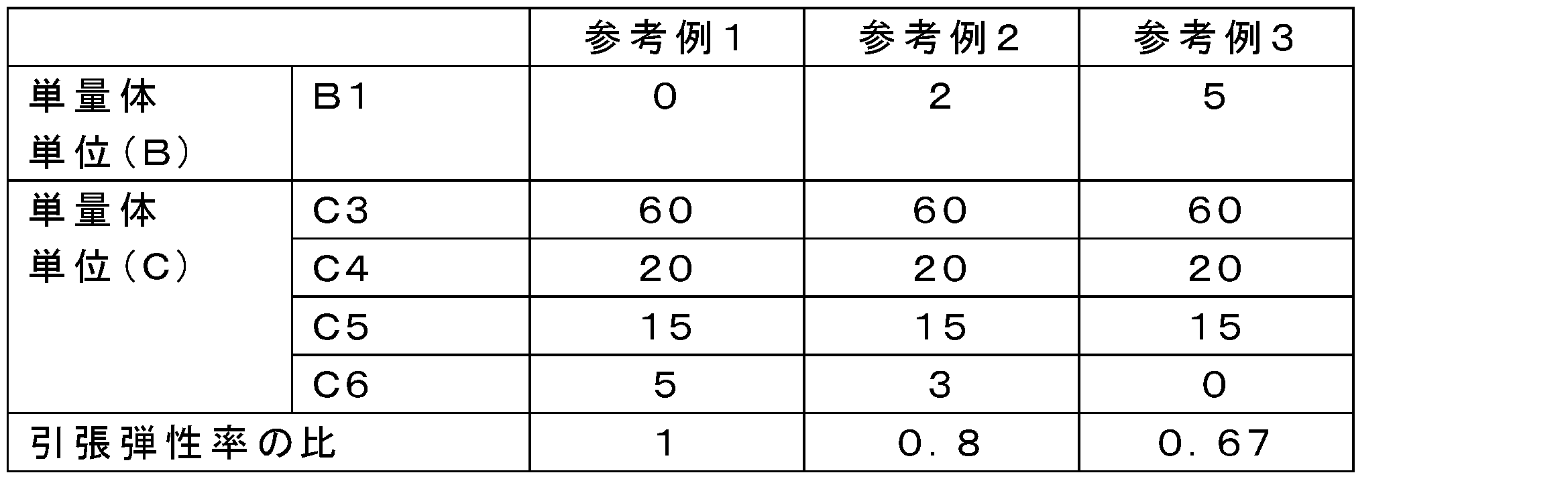
なお、表2中、B1は、4,4’-ジカルボキシジフェニルエーテル由来の単量体単位の割合(モル%)を示し、C3は、4-ヒドロキシ安息香酸由来の単量体単位の割合(モル%)を示し、C4は、4,4’-ジヒドロキシビフェニル由来の単量体単位の割合(モル%)を示し、C5は、テレフタル酸由来の単量体単位の割合(モル%)を示し、C6は、イソフタル酸由来の単量体単位の割合(モル%)を示す。
表2に示すとおり、縮合多環芳香族炭化水素基を有する単量体単位を含まない液晶ポリエステルにおいては、単量体単位(B)の導入によって引張弾性率が顕著に低下することが確認された。
Claims (13)
- 式(A)で表される単量体単位(A)と、
式(B)で表される単量体単位(B)と、
を有し、
前記単量体単位(A)の含有量が全単量体単位の合計に対して50モル%以上であり、
前記単量体単位(B)の含有量が全単量体単位の合計に対して0.5モル%以上10モル%未満である、
液晶ポリエステル。
-X1-Ar1-X2- …(A)
-X3-Ar2-Y-Ar3-X4- …(B)
[式中、Ar1は縮合多環芳香族炭化水素基を示し、Ar2及びAr3はそれぞれ独立してフェニレン基、ビフェニレン基又はナフチレン基を示し、X1、X2、X3及びX4はそれぞれ独立して-CO-又は-O-を示し、Yは、-O-、-CO-、-SO2-又は-NH-を示す。Ar1、Ar2及びAr3が有する水素原子の一部又は全部は、ハロゲン原子、アルキル基又はアリール基で置換されていてもよい。] - 前記Ar2及び前記Ar3がフェニレン基である、請求項1に記載の液晶ポリエステル。
- 前記Yが-O-である、請求項1に記載の液晶ポリエステル。
- 前記Ar1がナフチレン基である、請求項1に記載の液晶ポリエステル。
- 前記X1が-CO-であり、
前記X2が-CO-又は-O-である、請求項1に記載の液晶ポリエステル。 - 前記単量体単位(B)の含有量が、全単量体単位の合計に対して1モル%以上8モル%以下である、請求項1に記載の液晶ポリエステル。
- 前記X3及び前記X4が-CO-である、請求項1に記載の液晶ポリエステル。
- 前記単量体単位(A)が、
前記X1が-CO-であり、前記X2が-O-である単量体単位(A-1)と、
前記X1及び前記X2が-CO-である単量体単位(A-2)と、
を含む、請求項1に記載の液晶ポリエステル。 - 前記単量体単位(A)の含有量が全単量体単位の合計に対して60モル%以上85モル%以下である、請求項1に記載の液晶ポリエステル。
- 式(C)で表される単量体単位(C)を更に有する、請求項1に記載の液晶ポリエステル。
-X5-Ar4-X6- …(C)
[式中、Ar4はフェニレン基又はビフェニレン基を示し、X5及X6はそれぞれ独立して-CO-又は-O-を示す。Ar4が有する水素原子の一部又は全部は、ハロゲン原子、アルキル基又はアリール基で置換されていてもよい。] - 前記単量体単位(C)の含有量が全単量体単位の合計に対して10モル%以上40モル%以下である、請求項10に記載の液晶ポリエステル。
- 請求項1~11のいずれか一項に記載の液晶ポリエステルを含む、液晶ポリエステル組成物。
- 請求項1~11のいずれか一項に記載の液晶ポリエステルを含む成形品であって、
該成形品が、コネクター、ソケット、リレー部品、コイルボビン、光ピックアップ、発振子、半導体パッケージ、ICトレー、ウエハーキャリヤー、家庭電気製品部品、照明器具部品、音響製品部品、光ケーブル用フェルール、電話機部品、ファクシミリ部品、モデム部品、分離爪、ヒータホルダー、インペラー、ファン歯車、ギヤ、軸受け、モーター部品、モーターケース、エンジン部品、エンジンルーム内部品、電装部品、自動車内装部品、マイクロ波調理用鍋、耐熱食器、床材、壁材、梁、柱、屋根材、航空機用部品、宇宙機用部品、宇宙機器用部品、原子炉、海洋施設部材、洗浄用治具、光学機器部品、バルブ類、パイプ類、ノズル類、フィルター類、医療用機器部品、医療用材料、センサー類部品、サニタリー備品、スポーツ用品、又はレジャー用品である、成形品。
Priority Applications (1)
| Application Number | Priority Date | Filing Date | Title |
|---|---|---|---|
| CN202480081788.5A CN122438886A (zh) | 2023-12-26 | 2024-11-14 | 液晶聚酯、液晶聚酯组合物和成型品 |
Applications Claiming Priority (2)
| Application Number | Priority Date | Filing Date | Title |
|---|---|---|---|
| JP2023219918A JP2025102462A (ja) | 2023-12-26 | 2023-12-26 | 液晶ポリエステル、液晶ポリエステル組成物及び成形品 |
| JP2023-219918 | 2023-12-26 |
Publications (1)
| Publication Number | Publication Date |
|---|---|
| WO2025142181A1 true WO2025142181A1 (ja) | 2025-07-03 |
Family
ID=96218814
Family Applications (1)
| Application Number | Title | Priority Date | Filing Date |
|---|---|---|---|
| PCT/JP2024/040516 Pending WO2025142181A1 (ja) | 2023-12-26 | 2024-11-14 | 液晶ポリエステル、液晶ポリエステル組成物及び成形品 |
Country Status (4)
| Country | Link |
|---|---|
| JP (1) | JP2025102462A (ja) |
| CN (1) | CN122438886A (ja) |
| TW (1) | TW202544119A (ja) |
| WO (1) | WO2025142181A1 (ja) |
Citations (5)
| Publication number | Priority date | Publication date | Assignee | Title |
|---|---|---|---|---|
| JPH0649189A (ja) * | 1992-07-31 | 1994-02-22 | Polyplastics Co | 芳香族ポリエステル及びポリエステル樹脂組成物 |
| WO2011115043A1 (ja) * | 2010-03-16 | 2011-09-22 | Jx日鉱日石エネルギー株式会社 | 全芳香族サーモトロピック液晶ポリエステル樹脂組成物、成形体及びledリフレクター |
| JP2012077259A (ja) * | 2010-10-06 | 2012-04-19 | Fujifilm Corp | ポリエステルおよびその製造方法、並びに、これを用いた樹脂組成物、フィルム、電子材料、光学材料およびガスバリアフィルム |
| WO2018181222A1 (ja) * | 2017-03-31 | 2018-10-04 | 株式会社クラレ | 熱可塑性液晶ポリマーおよびそのフィルム |
| JP2022156738A (ja) * | 2021-03-31 | 2022-10-14 | Eneos株式会社 | 積層体 |
-
2023
- 2023-12-26 JP JP2023219918A patent/JP2025102462A/ja active Pending
-
2024
- 2024-11-14 CN CN202480081788.5A patent/CN122438886A/zh active Pending
- 2024-11-14 WO PCT/JP2024/040516 patent/WO2025142181A1/ja active Pending
- 2024-12-12 TW TW113148358A patent/TW202544119A/zh unknown
Patent Citations (5)
| Publication number | Priority date | Publication date | Assignee | Title |
|---|---|---|---|---|
| JPH0649189A (ja) * | 1992-07-31 | 1994-02-22 | Polyplastics Co | 芳香族ポリエステル及びポリエステル樹脂組成物 |
| WO2011115043A1 (ja) * | 2010-03-16 | 2011-09-22 | Jx日鉱日石エネルギー株式会社 | 全芳香族サーモトロピック液晶ポリエステル樹脂組成物、成形体及びledリフレクター |
| JP2012077259A (ja) * | 2010-10-06 | 2012-04-19 | Fujifilm Corp | ポリエステルおよびその製造方法、並びに、これを用いた樹脂組成物、フィルム、電子材料、光学材料およびガスバリアフィルム |
| WO2018181222A1 (ja) * | 2017-03-31 | 2018-10-04 | 株式会社クラレ | 熱可塑性液晶ポリマーおよびそのフィルム |
| JP2022156738A (ja) * | 2021-03-31 | 2022-10-14 | Eneos株式会社 | 積層体 |
Also Published As
| Publication number | Publication date |
|---|---|
| JP2025102462A (ja) | 2025-07-08 |
| TW202544119A (zh) | 2025-11-16 |
| CN122438886A (zh) | 2026-07-21 |
Similar Documents
| Publication | Publication Date | Title |
|---|---|---|
| CN102822232B (zh) | 全芳香族液晶聚酯及其制造方法 | |
| CN105593266B (zh) | 液晶聚酯的制造方法和液晶聚酯 | |
| CN111417680A (zh) | 液晶聚酯组合物和树脂成型体 | |
| TWI521001B (zh) | 高熱傳導性熱塑性樹脂、樹脂組合物及成形體 | |
| JP2025102462A (ja) | 液晶ポリエステル、液晶ポリエステル組成物及び成形品 | |
| WO2025018269A1 (ja) | 樹脂組成物、ペレット及び成形品 | |
| JP5115172B2 (ja) | 樹脂組成物 | |
| WO2025089203A1 (ja) | 液晶ポリエステル、液晶ポリエステル組成物及び成形品 | |
| JP2025015094A (ja) | 液晶ポリエステル、液晶ポリエステルの製造方法、ペレット及び成形品 | |
| CN119768470A (zh) | 液晶聚酯组合物、液晶聚酯组合物的制造方法及成型体 | |
| JP2025015124A (ja) | 液晶ポリエステル組成物、ペレット及び成形品 | |
| WO2025142915A1 (ja) | 液晶ポリエステル組成物、ペレット及び成形品 | |
| KR20100080085A (ko) | 점도 안정성이 향상된 전방향족 액정 폴리에스테르 수지, 및 이의 제조방법과 상기 수지를 포함하는 수지 컴파운드 | |
| WO2025142952A1 (ja) | 液晶ポリエステル組成物、ペレット及び成形品 | |
| JP2026057969A (ja) | 液晶ポリエステル、液晶ポリエステルの製造方法、及び成形品 | |
| JPH09255877A (ja) | 難燃性樹脂組成物 | |
| JP2026064955A (ja) | 液晶ポリエステル組成物、ペレット及び成形品 | |
| TW202530296A (zh) | 液晶聚酯組合物、成形品及成形品之製造方法 | |
| CN121241101A (zh) | 液晶聚酯组合物及其制造方法 | |
| TW202409201A (zh) | 芳香族聚碸組合物、成形體、及成形體之製造方法 | |
| JP2024111551A (ja) | 樹脂組成物、成形品及びフィルム | |
| KR101767688B1 (ko) | 전방향족 액정 폴리에스테르 수지의 제조 방법 및 전방향족 액정 폴리에스테르 수지의 컴파운드의 제조방법 | |
| WO2024062963A1 (ja) | 樹脂組成物、及び成形体 | |
| CN117580910A (zh) | 树脂组合物及成形体 | |
| JP2004182748A (ja) | 液晶ポリエステル樹脂混合物およびそれを用いた成形方法 |
Legal Events
| Date | Code | Title | Description |
|---|---|---|---|
| 121 | Ep: the epo has been informed by wipo that ep was designated in this application |
Ref document number: 24912074 Country of ref document: EP Kind code of ref document: A1 |
|
| WWE | Wipo information: entry into national phase |
Ref document number: 1020267023779 Country of ref document: KR |