WO2025121382A1 - 金属を含む固体、金属を含む固体の製造方法、金属の溶解方法、及び金属鋳物の製造方法 - Google Patents
金属を含む固体、金属を含む固体の製造方法、金属の溶解方法、及び金属鋳物の製造方法 Download PDFInfo
- Publication number
- WO2025121382A1 WO2025121382A1 PCT/JP2024/043088 JP2024043088W WO2025121382A1 WO 2025121382 A1 WO2025121382 A1 WO 2025121382A1 JP 2024043088 W JP2024043088 W JP 2024043088W WO 2025121382 A1 WO2025121382 A1 WO 2025121382A1
- Authority
- WO
- WIPO (PCT)
- Prior art keywords
- metal
- solid
- materials
- microwaves
- fusion
- Prior art date
- Legal status (The legal status is an assumption and is not a legal conclusion. Google has not performed a legal analysis and makes no representation as to the accuracy of the status listed.)
- Pending
Links
Images









Classifications
-
- B—PERFORMING OPERATIONS; TRANSPORTING
- B22—CASTING; POWDER METALLURGY
- B22F—WORKING METALLIC POWDER; MANUFACTURE OF ARTICLES FROM METALLIC POWDER; MAKING METALLIC POWDER; APPARATUS OR DEVICES SPECIALLY ADAPTED FOR METALLIC POWDER
- B22F3/00—Manufacture of workpieces or articles from metallic powder characterised by the manner of compacting or sintering; Apparatus specially adapted therefor ; Presses and furnaces
- B22F3/12—Both compacting and sintering
- B22F3/14—Both compacting and sintering simultaneously
-
- C—CHEMISTRY; METALLURGY
- C22—METALLURGY; FERROUS OR NON-FERROUS ALLOYS; TREATMENT OF ALLOYS OR NON-FERROUS METALS
- C22C—ALLOYS
- C22C1/00—Making non-ferrous alloys
- C22C1/08—Alloys with open or closed pores
Definitions
- the present invention relates to a metal-containing solid, a method for producing a metal-containing solid, a method for melting a metal, and a method for producing a metal casting.
- One of the objectives of the present invention is to provide a metal solid with a new structure.
- a solid containing metal which has a fused metal joint and a diffusion metal joint in cross section.
- [4] A solid according to any one of [1] to [3], in which the area surrounded by at least one of the fusion bond and the diffusion bond contains columnar crystals of metal.
- [5] A solid according to any one of [1] to [4], in which the area surrounded by at least one of the fusion bond and the diffusion bond contains equiaxed crystals of metal.
- [10] A solid according to any one of [1] to [9], in which the interface at the fusion joint is not connected to other interfaces.
- [12] A solid according to any one of [1] to [11], having voids in the diffusion junction.
- [16] A solid according to any one of [1] to [15], in which at least one of the fusion bond and the diffusion bond is free of oil.
- [17] A solid according to any one of [1] to [15], in which oil is present in at least one of the fusion bond and the diffusion bond.
- [18] A solid according to any one of [1] to [17], in which at least one of the fusion bonded portion and the diffusion bonded portion is free of a release agent.
- [20] A solid according to any one of [1] to [19], further having a tightly bonded portion in cross section that is different from the fusion bond and the diffusion bond.
- a solid containing a metal the solid having a high-density layer with few voids on the surface side in a cross section, and a low-density layer with many voids surrounded by the high-density layer in a cross section.
- the metal may be aluminum.
- a method for producing a metal-containing solid comprising irradiating a plurality of metal materials with microwaves to form a metal-containing solid, the metal-containing solid having a fused metal joint and a diffusion metal joint in a cross section.
- the metal-containing solid may be any of the solids described in [1] to [31].
- [34] A method for producing a metal-containing solid according to [32] or [33], in which oxides contained in multiple metal materials are reduced by irradiating the multiple metal materials with microwaves.
- [35] A method for producing a metal-containing solid according to any one of [32] to [34], in which non-metals mixed with multiple metal materials are reduced by irradiating multiple metal materials with microwaves.
- a method for melting a metal comprising: preparing a metal-containing solid having a metal fusion bond and a metal diffusion bond in a cross section; and dissolving the metal-containing solid in a molten metal.
- the metal-containing solid may be any of the solids described in [1] to [31].
- [40] A method for dissolving metals according to any one of [37] to [39], in which non-metallic matter mixed with multiple metal materials is reduced by irradiating the multiple metal materials with microwaves.
- a method for melting a metal comprising: preparing a metal-containing solid having a high-density layer with few voids on the surface side in a cross section, and a low-density layer with many voids surrounded by the high-density layer in a cross section; and dissolving the metal-containing solid in a molten metal.
- the metal-containing solid may be any of the solids described in [1] to [31].
- [45] A method for dissolving metals according to [43] or [44], in which oxides contained in multiple metal materials are reduced by irradiating the multiple metal materials with microwaves.
- [46] A method for dissolving metals according to any one of [43] to [45], in which non-metallic matter mixed with multiple metal materials is reduced by irradiating the multiple metal materials with microwaves.
- a method for manufacturing a metal casting comprising: preparing a metal-containing solid having a metal fusion bond and a metal diffusion bond in a cross section; dissolving the metal-containing solid in a molten metal; pouring the molten metal containing the metal-containing solid into a mold; and solidifying the molten metal in the mold.
- [51] A method for producing a metal casting according to [49] or [50], in which oxides contained in multiple metal materials are reduced by irradiating the multiple metal materials with microwaves.
- [52] A method for manufacturing a metal casting according to any one of [49] to [51], in which non-metallic matter mixed with multiple metal materials is reduced by irradiating the multiple metal materials with microwaves.
- a method for manufacturing a metal casting comprising: preparing a metal-containing solid having a high-density layer with few voids on the surface side in a cross section, and a low-density layer with many voids surrounded by the high-density layer in a cross section; dissolving the metal-containing solid in molten metal; pouring the molten metal containing the molten metal into a mold; and solidifying the molten metal in the mold.
- [55] A method for producing a metal casting as described in [54], in which a metal-containing solid is formed by irradiating multiple metal materials with microwaves.
- [57] A method for producing a metal casting according to [55] or [56], in which oxides contained in multiple metal materials are reduced by irradiating the multiple metal materials with microwaves.
- [58] A method for manufacturing a metal casting according to any one of [55] to [57], in which non-metallic matter mixed with multiple metal materials is reduced by irradiating the multiple metal materials with microwaves.
- the present invention makes it possible to provide a metal solid with a novel structure.
- FIG. 1 is a cross-sectional micrograph of the A6061 metal solid according to Example 1.
- FIG. 2 is a cross-sectional micrograph of the ADC12 metal solid according to Example 2.
- FIG. 3 is a cross-sectional micrograph of the oxygen-free copper metal solid according to Example 3.
- FIG. 4 is a cross-sectional microscope photograph of an ADC12 ingot according to Comparative Example 1.
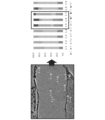
- FIG. 5 is a cross-sectional photograph of the metal solids according to Example 4 and Comparative Example 2.
- FIG. 6 is a SEM photograph of the cross section of the metal solids according to Example 4 and Comparative Example 2.
- FIG. 7 is a graph showing the results of SEM-EDX analysis of the metal solids according to Example 4 and Comparative Example 2.
- FIG. 1 is a cross-sectional micrograph of the A6061 metal solid according to Example 1.
- FIG. 2 is a cross-sectional micrograph of the ADC12 metal solid according to Example 2.
- FIG. 3 is a cross-sectional micrograph
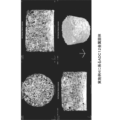
- FIG. 8 is a CT scan image of the metal solids according to Example 4 and Comparative Example 2.
- FIG. 9 is a set of photographs showing the compression tests of the metal solids according to Example 5 and Comparative Examples 3 and 4.
- FIG. 10 is a graph showing the results of compression tests of the metal solids according to Example 5 and Comparative Examples 3 and 4.
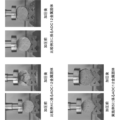
- FIG. 11 is a set of photographs showing the load tests of the metal solids according to Example 5 and Comparative Example 3.
- FIG. 12 is a set of photographs showing the load tests of the metal solids according to Example 5 and Comparative Example 3.
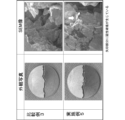
- FIG. 13 is a photograph showing the state where the metal solids according to Example 5 and Comparative Example 3 were poured into the molten metal.
- FIG. 9 is a set of photographs showing the compression tests of the metal solids according to Example 5 and Comparative Examples 3 and 4.
- FIG. 10 is a graph showing the results of compression tests of the metal solids according to Example 5 and Comparative Examples 3 and 4.
- FIG. 11 is a set of photographs showing the
- FIG. 14 is a photograph of the metallic solid according to Comparative Example 5 when it was poured into the molten metal.
- FIG. 15 is a photograph of the metal solid according to Example 7.
- FIG. 16 is a cross-sectional photograph of the metal solid according to Example 7.
- FIG. 17 is a cross-sectional photograph of the metal solid according to Example 8.
- FIG. 18 is a conceptual diagram of another embodiment.
- the metal-containing solid according to the embodiment has a metal fusion bond and a metal diffusion bond in cross section.
- the metal-containing solid according to the embodiment also has a high-density layer with few voids on the surface side in cross section, and a low-density layer with many voids surrounded by the high-density layer in cross section.
- the metal-containing solid according to the embodiment also has a metal fusion bond and a metal diffusion bond in cross section, and also has a high-density layer with few voids on the surface side in cross section, and a low-density layer with many voids surrounded by the high-density layer in cross section.
- the metal-containing solid according to the embodiment is manufactured, for example, by irradiating microwaves to a plurality of metal materials to heat the plurality of metal materials and sintering or melting and solidifying the plurality of metal materials.
- the microwaves are, for example, electromagnetic waves with a frequency of 300 MHz or more and 30 GHz or less.
- the temperature of the entire metal heated by the microwaves is, but is not limited to, for example, below the melting point of the metal. However, the surface of the metal material may be locally heated to a temperature above the melting point.
- the shape and size of the metal material are not limited.
- the metal material is, for example, a metal piece.
- the metal piece may be, for example, a metal slice, a metal fragment, a metal chip, a metal cutting powder, or a metal powder.
- the multiple metal materials may be a mixture of multiple large metal materials and multiple small metal materials. If the metal material is large, the voids in the solid produced tend to be large. If the metal material is small, the voids in the solid produced tend to be small. Therefore, by adjusting the size of the metal material, it is possible to adjust the size of the voids in the solid produced.
- the metal materials irradiated with microwaves may be in the form of a molded body.
- a molded body made of the metal materials may be produced by filling a mold with the metal materials and applying pressure to the metal materials.
- the molded body may be a briquette.
- the molded body may be disk-shaped, but is not limited to this.
- the molded body may be coil-shaped.
- the pressure applied to the metal materials is not limited to, but is, for example, 1 MPa or more, 100 MPa or more, or 200 MPa or more, and 2000 MPa or less, 1900 MPa or less, or 1800 MPa or less. By applying pressure, the produced metal solid tends to become dense. Examples of pressurizing methods include uniaxial molding, cold isostatic pressing (CIP) molding, hot isostatic pressing (HIP) molding, and roller pressing.
- the metal material may include an elemental metal or a metal compound such as an alloy.
- the metal may be a conductive metal, a magnetic metal, or a metal that absorbs microwaves.
- metals include iron (Fe), nickel (Ni), copper (Cu), gold (Au), silver (Ag), aluminum (Al), cobalt (Co), tungsten (W), titanium (Ti), chromium (Cr), molybdenum (Mo), beryllium (Be), magnesium (Mg), tin (Sn), cerium (Ce), lead (Pb), mercury (Hg), sodium (Na), bismuth (Bi), gallium (Ga), lithium (Li), zinc (Zn), silicon (Si), niobium (Nb), and scandium (Sc).
- the sintering temperature of iron (Fe) is, for example, 1200°C.
- the melting point of iron (Fe) is 1538°C.
- the sintering temperature of nickel (Ni) is, for example, 1200°C.
- the melting point of nickel (Ni) is 1495°C.
- the sintering temperature of copper (Cu) is, for example, 800°C.
- the melting point of copper (Cu) is 1085°C.
- the sintering temperature of gold (Au) is, for example, 800°C.
- the melting point of gold (Au) is 1064°C.
- the sintering temperature of silver (Ag) is, for example, 750°C.
- the melting point of silver (Ag) is 962°C.
- the sintering temperature of aluminum (Al) is, for example, 500°C.
- the melting point of aluminum (Al) is 660°C.
- the sintering temperature of cobalt (Co) is, for example, 1100°C.
- the melting point of cobalt (Co) is 1455°C.
- the metallic material may contain one type of metal or multiple types of metals.
- metallic compounds include, but are not limited to, alloys of multiple metallic elements, alloys of metallic elements and non-metallic elements, metal oxides, metal hydroxides, metal chlorides, metal carbides, metal borides, and metal sulfides.
- the metallic material may contain, as alloy components, for example, silicon (Si), manganese (Mn), chromium (Cr), nickel (Ni), carbon (C), boron (B), copper (Cu), aluminum (Al), titanium (Ti), niobium (Nb), vanadium (V), zinc (Zn), antimony (Sb), palladium (Pd), lanthanum (La), gold (Au), potassium (K), cadmium (Cd), indium (In), molybdenum (Mo), and sulfur (S).
- alloy components for example, silicon (Si), manganese (Mn), chromium (Cr), nickel (Ni), carbon (C), boron (B), copper (Cu), aluminum (Al), titanium (Ti), niobium (Nb), vanadium (V), zinc (Zn), antimony (Sb), palladium (Pd), lanthanum (La), gold (Au), potassium (K), cadmium (Cd), indium (
- Each of the multiple metal materials may have one of two or more different crystal structures.
- the multiple metal materials may be a mixture of metal materials having different crystal structures.
- the metal material may be obtained by cutting a die-cast casting.
- the die-cast casting has a chill layer made of fine crystal grains, a columnar crystal zone made of columnar crystals that are elongated crystal grains, and an equiaxed crystal zone made of equiaxed crystals whose crystal grains are isotropic in orientation.
- the equiaxed crystals may have at least one of a dendritic structure and a eutectic structure.
- the metal material may be a metal material having fine crystal grains derived from the chill layer as a crystal structure, a metal material having columnar crystals derived from the columnar crystal zone as a crystal structure, and a metal material having equiaxed crystals derived from the equiaxed crystal zone as a crystal structure.
- a metal material When a metal material is irradiated with microwaves, the surface vicinity is heated preferentially over the inside. Therefore, even if a metal material is irradiated with microwaves, the crystal structure inside the metal material tends to be maintained. However, when a metal material is irradiated with strong microwaves, the metal material may be recrystallized.
- the metal material may be mixed with non-metals such as release agents, coolant liquids, oils, and water.
- mixing includes adhesion due to mixing and adjacent without adhesion due to mixing.
- mixing includes a state in which a different material is contained within a certain material.
- Non-metals may be silicon, oxygen, and fluorine.
- Non-metals are vaporized and removed by irradiating microwaves. However, if it is desired to leave non-metals, it is possible to leave them by adjusting the microwave energy. If the microwave energy is high, non-metals tend not to remain. If the microwave energy is low, non-metals tend to remain.
- Metal materials may have oxides such as an oxide film formed on them. When metal materials are cut, the surface becomes hot and an oxide film tends to form on the surface. The oxides are vaporized and removed by irradiating microwaves. However, if you want to leave the oxide behind, you can adjust the microwave energy to leave it behind. If the microwave energy is high, the oxide tends not to remain. If the microwave energy is low, the oxide tends to remain.
- Hydrogen may be mixed into the metal material. Hydrogen is vaporized and removed by irradiating microwaves. However, if you wish to leave hydrogen behind, it is possible to do so by adjusting the microwave energy. If the microwave energy is high, hydrogen tends not to remain. If the microwave energy is low, hydrogen tends to remain.
- the metal material When the metal material is heated by microwaves, the metal material may be placed in a mold. Heating the metal material by microwaves may be performed under an inert gas atmosphere. Examples of the inert gas include argon (Ar) and helium (He). Heating the metal material by microwaves may also be performed under a neutral gas atmosphere. Examples of the neutral gas include nitrogen (N 2 ), dry hydrogen (H 2 ), and ammonia (NH 3 ).
- the metal contained in the metal raw material may be reacted with the gas. For example, when the metal raw material includes aluminum (Al), aluminum may react with nitrogen (N 2 ) to form aluminum nitride (AlN).
- Heating the metal material with microwaves may be performed in a reducing atmosphere.
- reducing gases that provide the reducing atmosphere include hydrogen ( H2 ), carbon monoxide (CO), and hydrocarbon gases ( CH4 , C3H8 , C4H10 , etc.).
- Heating the metal material with microwaves may be performed in a vacuum.
- the metal material may be heated with microwaves in an oxygen gas atmosphere.
- the metal raw material contains aluminum (Al)
- Al aluminum
- the gas generated when heating the metal material with microwaves may be sucked and removed from the surroundings of the metal material.
- the metal may be alloyed by heating a metal material mixed with alloying components with microwaves.
- an additive such as carbon (C) may be added to the metal to combine with the additive.
- Light elements mixed into the metal may be removed by heating the metal material with microwaves.
- the produced metal-containing solid may or may not have an oxide film on the surface of the solid.
- the energy of microwaves irradiated to the metal material is high, the produced metal-containing solid tends not to have an oxide film on the surface.
- the microwave energy is low, the produced metal-containing solid tends to have an oxide film on the surface.
- the surface does not have an oxide film.
- Pressure may be applied to the solid containing the multiple metal materials or the produced metal at least either before, during, or after microwave irradiation.
- the pressure is not limited, but may be, for example, 1 MPa or more, 100 MPa or more, or 200 MPa or more, and 2000 MPa or less, 1900 MPa or less, or 1800 MPa or less.
- pressurizing methods include uniaxial molding, cold isostatic pressing (CIP) molding, hot isostatic pressing (HIP) molding, and roller pressing.
- the fusion bonded portion in the cross section of the metal-containing solid according to the embodiment is a portion where the metals are fused and bonded together.
- the diffusion bonded portion in the cross section of the metal-containing solid according to the embodiment is a portion where the metals are bonded together by diffusion bonding.
- each of the multiple metal materials may originate from at least one of a chill layer, a columnar crystal zone, and an equiaxed crystal zone. Therefore, the region surrounded by at least one of the fusion bonded portion and the diffusion bonded portion of the metal-containing solid may contain metal crystal grains. Furthermore, the region surrounded by at least one of the fusion bonded portion and the diffusion bonded portion of the metal-containing solid may contain metal columnar crystals.
- the region surrounded by at least one of the fusion bonded portion and the diffusion bonded portion of the metal-containing solid may contain metal equiaxed crystals.
- the region surrounded by at least one of the fusion bonded portion and the diffusion bonded portion of the metal-containing solid may contain at least two selected from a region containing metal crystal grains, a region containing metal columnar crystals, and a region containing metal equiaxed crystals.
- the solid containing metal may have a eutectic structure of the metal at the fusion joint.
- the interface may be interrupted midway and may not be connected to other interfaces.
- there may be no interface. Even if there is no interface, when regions made of crystals of different structures are adjacent, there is a fusion joint between the adjacent regions. For example, even if there is no interface, there is a fusion joint between a region containing metal crystal grains and a region containing metal columnar crystals, between a region containing metal crystal grains and a region containing metal equiaxed crystals, and between a region containing metal columnar crystals and a region containing metal equiaxed crystals.
- the fusion joint may be free of oxides, for example, or may contain oxides. Also, the fusion joint may be free of nonmetals, for example, or may contain nonmetals. For example, when the solid containing metal is used to be introduced into the molten metal, it is preferable that the fusion joint is free of oxides and nonmetals. For example, when the solid containing metal is used as an elastic material, it is preferable that the fusion joint is free of nonmetals such as resins.
- the metal-containing solid may have an interface at the diffusion bonded portion.
- the metal-containing solid may have a void at the diffusion bonded portion.
- the diffusion bonded portion may be, for example, oxide-free or oxide-containing.
- the diffusion bonded portion may be, for example, non-metal-free or non-metal-containing.
- the metal-containing solid is used to be introduced into a molten metal, it is preferable that the diffusion bonded portion be free of oxides and non-metals.
- the metal-containing solid is used as an elastic material, it is preferable that the diffusion bonded portion be free of oxides and non-metals.
- the metal-containing solid may have a portion where different crystal structures are separated at at least one of the fusion joint and the diffusion joint.
- the fusion joint and the diffusion joint formed by the interface between the metal materials may be in a mesh-like shape.
- each of the multiple regions separated by the mesh-like fusion joint and the diffusion joint may have any of two or more different crystal structures.
- each of the multiple regions may have any of two or more different crystal structures.
- a metal-containing solid manufactured by joining metal materials together by microwave irradiation has mechanical strength and is therefore less likely to break during transportation.
- a solid containing metal may further have a tight joint in its cross section that is different from the fusion joint and the diffusion joint.
- a tight joint for example, metals are in tight contact with each other due to pressure from the surroundings.
- the interfaces between the molded bodies may form a tight joint.
- the interfaces between the molded bodies form a fusion joint and a diffusion joint.
- the joint formed by the interfaces between the molded bodies may be linear.
- the metal-containing solid according to the embodiment may be porous, containing voids inside.
- a metal-containing solid manufactured by irradiating multiple metal materials with microwaves tends to have a high-density layer with few voids on the surface side in cross section.
- a metal-containing solid tends to have a low-density layer with many voids surrounded by a high-density layer in cross section.
- the density of the voids tends to be uniform.
- the volume ratio of the voids in the metal-containing solid according to the embodiment is, for example, 0% to 50%, 15% to 45%, or 30% to 40%.
- the metal-containing solid according to the embodiment may be flexible. As described above, the size of the voids can be adjusted by the size of the metal slice irradiated with microwaves. Therefore, the volume ratio of the voids in the metal-containing solid is adjustable. If the volume ratio of the voids in the metal-containing solid is large, the flexibility of the metal-containing solid tends to be high. If the volume ratio of the voids in the metal-containing solid is small, the flexibility of the metal-containing solid tends to be low.
- a flexible metal-containing solid can be used as a material that is resistant to pressure and vibration.
- the metal-containing solid according to the embodiment may not have an oxide film on the surface of the solid that is in contact with the voids, or may have an oxide film on the surface of the solid that is in contact with the voids. If the energy of the microwave irradiated to the metal material is high, there is a tendency for there to be no oxide film on the surface of the solid that is in contact with the voids inside the metal-containing solid produced. When the microwave energy is low, there is a tendency for an oxide film to form on the surface that comes into contact with the voids inside the solid containing the metal being produced. For example, when a solid containing a metal is used to be added to a molten metal, it is preferable that there is no oxide film on the surface that comes into contact with the voids inside the solid.
- the solid containing the metal according to the embodiment may be used to melt in a molten metal.
- the molten metal contains a metal. At least a part of the metal contained in the molten metal is preferably the same as at least a part of the metal contained in the solid containing the metal according to the embodiment. For example, the specific gravity of the solid containing the metal according to the embodiment is heavier than that of the molten metal.
- a metal casting may be manufactured by pouring the molten metal containing the solid containing the metal according to the embodiment into a mold and solidifying the molten metal in the mold.
- a solid containing a metal that has no oxides and nonmetals on the surface and inside, or has few oxides and nonmetals can suppress the generation of gas, steam explosions, fires, slag, and blisters even when poured into the molten metal.
- a solid containing a metal that has no oxides on the surface and inside, or has few oxides is highly wettable by the molten metal and therefore easily sinks in the molten metal. Therefore, compared with a solid that does not easily sink in the molten metal, a solid that easily sinks in the molten metal has a high melting rate because heat is easily transferred inside.
- the metal-containing solid according to the embodiment can lower the heating temperature before being added to the molten metal, shorten the melting time with the high-temperature molten metal, reduce the energy required for heating, and reduce the generation of carbon dioxide (CO 2 ) associated with heating.
- recycled products can be used as the metal material for the metal-containing solid according to the embodiment, so it is possible to reduce the production of new ingots.
- the use of the metal-containing solid according to the embodiment is not limited to recycling by dissolving it in a molten metal.
- the metal-containing solid according to the embodiment can be used for various applications.
- the metal-containing solid according to the embodiment can be used as a fertilizer, a tool, an additive for material mixing, a bactericide, and a sterilant.
- the metal-containing solid according to the embodiment may contain carbon or resin by leaving the carbon or resin when it is manufactured by irradiating microwaves.
- the metal may be compounded with a nonmetal such as carbon or resin.
- the metal-containing solid containing carbon or resin can be used as a sound absorbing member, a sound absorbing tool, a vibration damping member, and a vibration damping tool.
- the metal-containing solid according to the embodiment may contain a catalyst by adding a catalyst to a metal material and leaving the catalyst when it is manufactured by irradiating microwaves.
- the metal-containing solid containing a catalyst can be used as a functional member.
- Example 1 A cylindrical mold with a diameter of 80 mm and a depth of 100 mm was prepared.
- a metal powder made of aluminum alloy A6061 (hereinafter referred to as "A6061 metal powder") was prepared.
- the metal powder had a long side of 15 mm, a short side of 0.5 mm, and a thickness of 0.1 mm.
- the A6061 metal powder was obtained by cutting a die-cast casting.
- the die-cast casting has a chill layer made of fine crystal grains, a columnar crystal zone made of columnar crystals that are elongated crystal grains, and an equiaxed crystal zone made of equiaxed crystals whose crystal grains are isotropic in orientation.
- the A6061 metal powder included metal powder made of fine crystal grains derived from the chill layer, metal powder made of columnar crystals derived from the columnar crystal zone, and metal powder made of equiaxed crystals derived from the equiaxed crystal zone. Coolant liquid, oil, and water were attached to the metal powder. A6061 metal powder was placed in a die and a pressure of 80 MPa was applied to produce a briquette made of aluminum alloy A6061 (hereinafter referred to as "A6061 briquette"). The same method was repeated to produce multiple A6061 briquettes.
- A6061 metal solid made of aluminum alloy A6061 with the stacked A6061 briquettes integrated together
- Figure 1 shows a photograph of the A6061 solid metal cut with a band saw and polished exposed cross section taken with an optical microscope.
- the cross section of the A6061 solid metal tightly bonded joints where A6061 briquettes were tightly bonded together were observed.
- the tightly bonded joints were straight lines, and were observed at equal intervals corresponding to the thickness of the A6061 briquettes.
- diffusion bonded joints and fusion bonded joints where A6061 metal powder particles were bonded together were observed.
- Interfaces were observed at the diffusion bonded areas. Voids were also observed at the interface of the diffusion bonded areas. There were also diffusion bonded areas where no voids were observed.
- the opposing regions on either side of the diffusion bonded area included either a region where both were made of fine crystal grains, a region where both were made of columnar crystals, a region where both were made of equiaxed crystals, a region where one was made of fine crystal grains and the other was made of columnar crystals, a region where one was made of fine crystal grains and the other was made of equiaxed crystals, or a region where one was made of fine columnar crystals and the other was made of equiaxed crystals.
- the fusion joint had some areas with interfaces and some without. Some of the interfaces in the fusion joint were not connected to other interfaces and were disconnected. No voids were observed in the fusion joint.
- the opposing regions across the fusion joint included either a region where both were made of fine crystal grains, a region where both were made of columnar crystals, a region where both were made of equiaxed crystals, a region where one was made of fine crystal grains and the other was made of columnar crystals, a region where one was made of fine crystal grains and the other was made of equiaxed crystals, or a region where one was made of fine columnar crystals and the other was made of equiaxed crystals.
- Example 2 A cylindrical die having a diameter of 50 mm and a depth of 5 mm was prepared.
- a metal powder made of aluminum alloy ADC12 (hereinafter referred to as "ADC12 metal powder") was prepared.
- the metal powder had a long side of 10 mm, a short side of 3 mm, and a thickness of 0.3 mm.
- the ADC12 metal powder was obtained by cutting a die-cast casting.
- the ADC12 metal powder included metal powder made of fine crystal grains derived from the chill layer, metal powder made of columnar crystals derived from the columnar crystal zone, and metal powder made of equiaxed crystals derived from the equiaxed crystal zone. Coolant liquid, oil, and water were attached to the metal powder.
- ADC12 metal powder was placed in the die, and a pressure of 80 MPa was applied to produce a briquette made of aluminum alloy ADC12 (hereinafter referred to as "ADC12 briquette"). The same method was repeated to produce multiple ADC12 briquettes.
- ADC12 metal solid made of aluminum alloy ADC12 with the stacked ADC12 briquettes integrated together
- a DC12 solid metal was cut with a band saw, the exposed cross section was polished, and a photograph taken with an optical microscope is shown in Figure 2.
- adhesive joints where ADC12 briquettes were adhesively joined together, and diffusion joints and fusion joints where ADC12 metal powders were joined together were observed, similar to the cross section of the A6061 solid metal.
- the characteristics of the adhesive joints, diffusion joints, and fusion joints in the cross section of the ADC12 solid metal were similar to those of the adhesive joints, diffusion joints, and fusion joints in the cross section of the A6061 solid metal.
- Example 3 A cylindrical die having a diameter of 30 mm and a depth of 30 mm was prepared.
- metal scraps made of oxygen-free copper (hereinafter referred to as "oxygen-free copper scraps") were prepared.
- the diameter of the metal scraps was 2 mm and the length was 5 mm.
- the oxygen-free copper powder was obtained by cutting a die-cast casting.
- the oxygen-free copper scraps included metal scraps made of fine crystal grains derived from the chill layer, metal scraps made of columnar crystals derived from the columnar crystal zone, and metal scraps made of equiaxed crystals derived from the equiaxed crystal zone. Coolant liquid, oil, and water were attached to the metal powder.
- oxygen-free copper scraps were placed in the die, and a pressure of 347 MPa was applied to produce a briquette made of oxygen-free copper (hereinafter referred to as "oxygen-free copper briquette"). The same method was repeated to produce multiple oxygen-free copper briquettes.
- oxygen-free copper briquettes were stacked, and the stacked oxygen-free copper briquettes were irradiated with 1.5 kW microwaves for 3000 seconds while applying a pressure of 10 MPa to heat the stacked oxygen-free copper briquettes to 700°C. This resulted in a metal solid made of oxygen-free copper in which the stacked oxygen-free copper briquettes were integrated (hereinafter referred to as "oxygen-free copper metal solid").
- Figure 3 shows a photograph of an optical microscope taken after cutting an oxygen-free copper solid metal with a band saw and polishing the exposed cross section.
- adhesive joints where oxygen-free copper briquettes are adhesively bonded to each other, and diffusion joints and fusion joints where oxygen-free copper metal powders are bonded to each other were observed, similar to the cross section of the A6061 solid metal.
- the characteristics of the adhesive joints, diffusion joints, and fusion joints in the cross section of the oxygen-free copper solid metal were similar to those of the adhesive joints, diffusion joints, and fusion joints in the cross section of the A6061 solid metal.
- ADC12 ingot A cross section of an ingot made of aluminum alloy ADC12 produced by casting (hereinafter referred to as "ADC12 ingot") was cut and exposed, and the cross section was photographed using an optical microscope, as shown in Fig. 4. In the cross section of the ADC12 ingot, the entire ingot was melted and then solidified, and no joint showing an interface was observed, and only an acicular crystal structure was observed.
- Example 4 Comparative Example 2
- Example 4 the ADC12 metal solid according to Example 4 was prepared.
- the ADC12 metal solid according to Comparative Example 2 was prepared by heating the ADC12 briquette at 500°C for 1000 seconds on a hot plate without irradiating microwaves to the ADC12 briquette.
- the briquette of the material of the ADC12 metal solid according to Example 4 and the briquette of the material of the ADC12 metal solid according to Comparative Example 2 were the same in composition, weight, etc. As shown in FIG.
- the ADC12 metal solid according to Example 4 and the ADC12 metal solid according to Comparative Example 2 were cut, and the ADC12 metal solid according to Example 4 and the ADC12 metal solid according to Comparative Example 2 were embedded in epoxy resin so that the cut surface was exposed, and the cut surface was polished using waterproof abrasive paper containing silicon carbide (SiC) abrasive grains, and further the cut surface was lap-polished using diamond abrasive grains and a lubricant containing alcohol and ethylene glycol.
- SiC silicon carbide
- the ADC12 metal solid according to Comparative Example 2 was brittle to polishing, and chipping occurred, especially near the outer periphery.
- the ADC12 metal solid according to Example 4 was resistant to polishing and did not chip. It was also observed that the ADC12 metal solid according to Example 4 had a smaller cross-sectional area of voids and a higher metal density than the ADC12 metal solid according to Comparative Example 2.
- the ADC12 metal solid of Example 4 and the ADC12 metal solid of Comparative Example 2 were each analyzed using a computed tomography (CT) scanning device.
- CT computed tomography
- the ADC12 metal solid of Example 4 had a high-density layer with few voids on the surface side in the cross section, and a low-density layer with many voids surrounded by the high-density layer in the cross section.
- Example 5 A cylindrical die with a diameter of 80 mm and a depth of 100 mm was prepared.
- ADC12 metal powder was also prepared. The metal powder had a long side of 10 mm, a short side of 3 mm, and a thickness of 0.3 mm.
- the ADC12 metal powder was obtained by cutting a die-cast casting.
- the ADC12 metal powder included metal powder made of fine crystal grains derived from the chill layer, metal powder made of columnar crystals derived from the columnar crystal zone, and metal powder made of equiaxed crystals derived from the equiaxed crystal zone. Coolant liquid, oil, and water were attached to the metal powder.
- the ADC12 metal powder was placed in a die and a pressure of 80 MPa was applied to produce an ADC12 briquette. The same method was repeated to produce multiple ADC12 briquettes.
- ADC12 metal solid according to Example 5 a metal solid made of aluminum alloy ADC12 with the stacked ADC12 briquettes integrated together.
- the stacked ADC12 briquettes were not irradiated with microwaves and were heated in an electric furnace for 80 minutes at 500°C to obtain an ADC12 metal solid according to Comparative Example 3. Furthermore, the stacked ADC12 briquettes were not heated at all and only a pressure of 80 MPa was applied to obtain an ADC12 metal solid according to Comparative Example 4.
- the ADC12 metal solid of Example 5 and the ADC12 metal solid of Comparative Example 3 were each held at two points on the back surface and force was applied to one point in the center of the front surface to fracture the ADC12 metal solid of Example 5 and the ADC12 metal solid of Comparative Example 3.
- Figure 12 when the fracture surfaces of the ADC12 metal solid of Example 5 and the ADC12 metal solid of Comparative Example 3 were observed, only brittle fracture had occurred on the fracture surface of the ADC12 metal solid of Comparative Example 3. In contrast, ductile fracture had occurred on the fracture surface of the ADC12 metal solid of Example 5.
- the ADC12 metal solid of Example 5 and the ADC12 metal solid of Comparative Example 3 were each heated to 400°C and placed on the surface of molten aluminum at 750°C, and the state after 1 minute was observed.
- the ADC12 metal solid of Comparative Example 3 did not sink into the molten aluminum. This indicated that there was an oxide film on the surface of the ADC12 metal solid of Comparative Example 3, and that it had poor wettability.
- the surface of the ADC12 metal solid of Comparative Example 3 was swollen. This indicated that release agent, processing oil, etc. remained inside the ADC12 metal solid of Comparative Example 3, and that these had vaporized and expanded.
- the ADC12 metal solid of Example 5 sank into the molten metal after 1 minute. This indicated that there was no oxide film on the surface of the ADC12 metal solid of Example 5, and that it had good wettability. In addition, the surface of the ADC12 metal solid of Example 5 was concave before sinking. This indicated that no release agent or processing oil remained inside the ADC12 metal solid of Example 5, and that dissolution was progressing from the back side.
- Example 6 Comparative Example 5
- a cylindrical die with a diameter of 30 mm and a depth of 30 mm was prepared.
- ADC12 metal powder was also prepared.
- the metal powder had a long side of 10 mm, a short side of 3 mm, and a thickness of 0.3 mm.
- the ADC12 metal powder was obtained by cutting a die-cast casting.
- the ADC12 metal powder included metal powder made of fine crystal grains derived from the chill layer, metal powder made of columnar crystals derived from the columnar crystal zone, and metal powder made of equiaxed crystals derived from the equiaxed crystal zone. Coolant liquid, oil, and water were attached to the metal powder.
- the ADC12 metal powder was placed in a die and a pressure of 80 MPa was applied to produce an ADC12 briquette. The same method was repeated to produce multiple ADC12 briquettes.
- ADC12 metal solid of Example 6 a metal solid made of aluminum alloy ADC12 with the stacked ADC12 briquettes integrated together.
- the ADC12 metal solid according to Example 6 and the ADC12 metal solid according to Comparative Example 5 were each heated to 500°C and poured into molten aluminum at 680°C.
- gas was generated for about 45 seconds after pouring, as shown in FIG. 14, and flames were generated for about 35 seconds after that. This indicated that release agents, processing oils, etc. remained inside the ADC12 metal solid according to Comparative Example 5, and these vaporized and ignited.
- no gas or flames were generated. This indicated that no release agents, processing oils, etc. remained inside the ADC12 metal solid according to Example 6.
- Example 7 A cylindrical mold with a diameter of 30 mm and a depth of 10 mm was prepared.
- copper (Cu) powder with a diameter of 2 mm and a length of 5 mm (hereinafter referred to as "large size copper powder”) derived from copper scrap material and copper (Cu) powder with a diameter of 0.1 mm and a length of 7 mm (hereinafter referred to as "small size copper powder”) derived from copper scrap material were prepared.
- mixed powders were prepared by mixing the large size copper powder and the small size copper powder at 10:0, 9:1, and 5:5. The mixed powder was placed in a mold and heated to 800 ° C. with microwaves while applying a pressure of 10 MPa to prepare a copper briquette.
- Example 8 A cylindrical mold having a diameter of 30 mm and a depth of 30 mm was prepared. The same large-sized copper powder as in Example 7 was also prepared. The large-sized copper powder was placed in the mold, and a pressure of 346 MPa was applied to produce a copper briquette. The size of the copper briquette was 30 mm in diameter and 10.8 mm in thickness. The density was 87.48%. Next, the copper briquette was irradiated with 1.3 kW microwaves for 5400 seconds while applying a pressure of 10 MPa to the copper briquette, and the copper briquette was heated to 800 ° C. over 90 minutes. After reaching 800 ° C., the copper briquette was cooled in a microwave irradiation device.
- the temperature was measured with a thermocouple. Then, the copper briquette was cut with a band saw, the exposed cross section was polished, and a photograph taken with an optical microscope is shown in FIG. 17. In the cross section of the copper briquette, a diffusion bonded portion where the copper powder particles were bonded to each other and a molten bonded portion (dendrites) were observed.
- microwaves may be irradiated to a metal material containing a plurality of different metal species, and molten metal refined for each metal species may be recovered using the difference in melting point for each metal species.
- the metal species with the lowest melting point melts first, and the molten metal species with the lowest melting point may be pushed out from the filter and recovered.
- n is a natural number, and the metal species with the nth lowest melting point melts, and the molten metal species with the nth lowest melting point may be pushed out from the filter and recovered. It should be understood that the present invention encompasses various embodiments and the like not described here.
Landscapes
- Chemical & Material Sciences (AREA)
- Engineering & Computer Science (AREA)
- Mechanical Engineering (AREA)
- Materials Engineering (AREA)
- Metallurgy (AREA)
- Organic Chemistry (AREA)
- Manufacturing & Machinery (AREA)
- Manufacture And Refinement Of Metals (AREA)
Priority Applications (1)
| Application Number | Priority Date | Filing Date | Title |
|---|---|---|---|
| JP2025561930A JPWO2025121382A1 (https=) | 2023-12-08 | 2024-12-05 |
Applications Claiming Priority (2)
| Application Number | Priority Date | Filing Date | Title |
|---|---|---|---|
| JP2023207664 | 2023-12-08 | ||
| JP2023-207664 | 2023-12-08 |
Publications (1)
| Publication Number | Publication Date |
|---|---|
| WO2025121382A1 true WO2025121382A1 (ja) | 2025-06-12 |
Family
ID=95980988
Family Applications (1)
| Application Number | Title | Priority Date | Filing Date |
|---|---|---|---|
| PCT/JP2024/043088 Pending WO2025121382A1 (ja) | 2023-12-08 | 2024-12-05 | 金属を含む固体、金属を含む固体の製造方法、金属の溶解方法、及び金属鋳物の製造方法 |
Country Status (2)
| Country | Link |
|---|---|
| JP (1) | JPWO2025121382A1 (https=) |
| WO (1) | WO2025121382A1 (https=) |
Citations (8)
| Publication number | Priority date | Publication date | Assignee | Title |
|---|---|---|---|---|
| JP2001158902A (ja) * | 1999-11-30 | 2001-06-12 | Denso Corp | 金属複合焼結品の製造方法 |
| JP2005048234A (ja) * | 2003-07-28 | 2005-02-24 | Matsushita Electric Works Ltd | 金属光造形用金属粉末 |
| JP2006161070A (ja) * | 2004-12-02 | 2006-06-22 | Toyota Industries Corp | 圧粉体の製造方法 |
| JP2006312782A (ja) * | 2005-05-05 | 2006-11-16 | General Electric Co <Ge> | 翼形部先端のマイクロ波による製造方法 |
| JP2011101894A (ja) * | 2009-11-11 | 2011-05-26 | Toyota Motor Corp | 接合構造及び接合方法 |
| JP2020521875A (ja) * | 2017-06-01 | 2020-07-27 | サフラン | 二重微細組織部品の改良型の製造のための方法 |
| WO2022196681A1 (ja) * | 2021-03-15 | 2022-09-22 | 株式会社Sun Metalon | 金属固体の製造方法 |
| JP2023037698A (ja) * | 2021-09-06 | 2023-03-16 | Ntn株式会社 | ころ軸受用溶接保持器、保持器付きころ、溶融接合部の判別方法、およびころ軸受用溶接保持器の品質確認方法 |
-
2024
- 2024-12-05 JP JP2025561930A patent/JPWO2025121382A1/ja active Pending
- 2024-12-05 WO PCT/JP2024/043088 patent/WO2025121382A1/ja active Pending
Patent Citations (8)
| Publication number | Priority date | Publication date | Assignee | Title |
|---|---|---|---|---|
| JP2001158902A (ja) * | 1999-11-30 | 2001-06-12 | Denso Corp | 金属複合焼結品の製造方法 |
| JP2005048234A (ja) * | 2003-07-28 | 2005-02-24 | Matsushita Electric Works Ltd | 金属光造形用金属粉末 |
| JP2006161070A (ja) * | 2004-12-02 | 2006-06-22 | Toyota Industries Corp | 圧粉体の製造方法 |
| JP2006312782A (ja) * | 2005-05-05 | 2006-11-16 | General Electric Co <Ge> | 翼形部先端のマイクロ波による製造方法 |
| JP2011101894A (ja) * | 2009-11-11 | 2011-05-26 | Toyota Motor Corp | 接合構造及び接合方法 |
| JP2020521875A (ja) * | 2017-06-01 | 2020-07-27 | サフラン | 二重微細組織部品の改良型の製造のための方法 |
| WO2022196681A1 (ja) * | 2021-03-15 | 2022-09-22 | 株式会社Sun Metalon | 金属固体の製造方法 |
| JP2023037698A (ja) * | 2021-09-06 | 2023-03-16 | Ntn株式会社 | ころ軸受用溶接保持器、保持器付きころ、溶融接合部の判別方法、およびころ軸受用溶接保持器の品質確認方法 |
Also Published As
| Publication number | Publication date |
|---|---|
| JPWO2025121382A1 (https=) | 2025-06-12 |
Similar Documents
| Publication | Publication Date | Title |
|---|---|---|
| JP4989636B2 (ja) | 高強度極微細ナノ構造のアルミニウム及び窒化アルミニウム又はアルミニウム合金及び窒化アルミニウム複合材料の製造方法 | |
| US6723278B1 (en) | Method of laser casting copper-based composites | |
| JP2018512507A (ja) | アルミニウム合金製品、及びその作製方法 | |
| WO2021039912A1 (ja) | Wc系超硬合金粉末、wc系超硬合金部材、wc系超硬合金部材の製造方法 | |
| CN103501939B (zh) | 散热基板用复合材料及其制造方法 | |
| KR20170103978A (ko) | 브레이징 합금 | |
| Cai et al. | Microstructure and properties of Al/Sip composites for thermal management applications | |
| KR940008937B1 (ko) | 복합화 재료의 제조방법 및 수열재료(受熱材料)와 수열재료의 제조방법 | |
| JP2010106362A (ja) | 複合部材及びその製造方法 | |
| Bashir et al. | Microwave-assisted in-situ fabrication of copper reinforced with molybdenum and tungsten particles | |
| JP2023018507A (ja) | アルミニウム基複合材及びその製造方法 | |
| WO2025121382A1 (ja) | 金属を含む固体、金属を含む固体の製造方法、金属の溶解方法、及び金属鋳物の製造方法 | |
| JP5663807B2 (ja) | 立方晶窒化硼素焼結体工具 | |
| Wang et al. | Vacuum brazing of electroless Ni–P alloy-coated SiCp/Al composites using aluminum-based filler metal foil | |
| US20160303827A1 (en) | High content pcbn compact including w-re binder | |
| JP5275292B2 (ja) | 高密度固化成形体の製造方法 | |
| JP4177467B2 (ja) | 高靱性硬質合金とその製造方法 | |
| Wu et al. | A review of novel die attach materials for high-temperature WBG power electronic applications | |
| Miyajima et al. | Transient liquid-phase infiltration bonding of copper using porous copper interlayer | |
| JP3774286B2 (ja) | 銅合金と合金鋼のクラッド材の製造方法 | |
| JP4968636B2 (ja) | 連続相と分散相が制御された高密度固化成形体の製造方法 | |
| WO2004096469A1 (en) | A metal powder composition | |
| JPH0243579B2 (https=) | ||
| Huang et al. | Reactive diffusion bonding of SiCp/Al composites by insert layers of mixed powders | |
| JP2016087641A (ja) | Pbを含まないAl−Cu系はんだ合金 |
Legal Events
| Date | Code | Title | Description |
|---|---|---|---|
| 121 | Ep: the epo has been informed by wipo that ep was designated in this application |
Ref document number: 24900675 Country of ref document: EP Kind code of ref document: A1 |
|
| ENP | Entry into the national phase |
Ref document number: 2025561930 Country of ref document: JP Kind code of ref document: A |
|
| WWE | Wipo information: entry into national phase |
Ref document number: 2025561930 Country of ref document: JP |