WO2025109993A1 - グループ提示システムおよびグループ提示方法 - Google Patents
グループ提示システムおよびグループ提示方法 Download PDFInfo
- Publication number
- WO2025109993A1 WO2025109993A1 PCT/JP2024/039291 JP2024039291W WO2025109993A1 WO 2025109993 A1 WO2025109993 A1 WO 2025109993A1 JP 2024039291 W JP2024039291 W JP 2024039291W WO 2025109993 A1 WO2025109993 A1 WO 2025109993A1
- Authority
- WO
- WIPO (PCT)
- Prior art keywords
- group
- participant
- race
- goal
- user
- Prior art date
- Legal status (The legal status is an assumption and is not a legal conclusion. Google has not performed a legal analysis and makes no representation as to the accuracy of the status listed.)
- Pending
Links
Images




Classifications
-
- G—PHYSICS
- G06—COMPUTING OR CALCULATING; COUNTING
- G06Q—INFORMATION AND COMMUNICATION TECHNOLOGY [ICT] SPECIALLY ADAPTED FOR ADMINISTRATIVE, COMMERCIAL, FINANCIAL, MANAGERIAL OR SUPERVISORY PURPOSES; SYSTEMS OR METHODS SPECIALLY ADAPTED FOR ADMINISTRATIVE, COMMERCIAL, FINANCIAL, MANAGERIAL OR SUPERVISORY PURPOSES, NOT OTHERWISE PROVIDED FOR
- G06Q50/00—Information and communication technology [ICT] specially adapted for implementation of business processes of specific business sectors, e.g. utilities or tourism
- G06Q50/10—Services
Definitions
- This disclosure relates to a group presentation system and a group presentation method.
- a technology is known that stores a user's practice performance data, extracts practice sections that are similar to the attributes of the competition course (e.g., elevation difference, section distance, weather), calculates the performance difference between the practice section and the competition running speed, and displays the performance difference on a screen together with a map of the practice section (see, for example, Patent Document 1).
- practice sections that are similar to the attributes of the competition course (e.g., elevation difference, section distance, weather)
- calculates the performance difference between the practice section and the competition running speed calculates the performance difference between the practice section and the competition running speed, and displays the performance difference on a screen together with a map of the practice section (see, for example, Patent Document 1).
- This disclosure has been made in light of these circumstances, and its purpose is to provide a technique for presenting participant groups that are useful to participants in a race.
- a group presentation system includes an input acquisition unit that acquires a participant's registration to participate in a race and an input of a goal for the race, a registration memory unit that stores the participation registration information indicating the registration to participate in the race entered by the participant and the participant information identifying the participant acquired by the input acquisition unit, a goal memory unit that stores information regarding the goal and goal setting type for the race entered by the participant acquired by the input acquisition unit, a group memory unit that stores information regarding a plurality of participant groups divided by the goal and goal setting type for each race, a recommendation determination unit that determines at least one participant group corresponding to the race for which the participant is registered and the type of goal setting for the participant who has entered the participation registration and goal acquired by the input acquisition unit as a recommended group, and a recommendation presentation unit that presents the determined recommended group to the participant.
- Another aspect of the present disclosure is a group presentation method.
- This method is executed by a computer that can access a registration storage unit, a goal storage unit, and a group storage unit, in which the registration storage unit stores participation registration information indicating the registration to participate in the race input by the participant and participant information identifying the participant, the goal storage unit stores information regarding the type of goal and goal setting for the race input by the participant, and the group storage unit stores information regarding a plurality of participant groups divided by the type of goal and goal setting for each race, and the computer executes a process of acquiring the participant's registration to participate in the race and the input of the goal for the race via a network, a process of determining at least one participant group corresponding to the race and the type of goal setting for the participant who has input the participation registration and goal as a recommended group, and a process of presenting the determined recommended group to the participant via the network.
- the present disclosure makes it possible to present participant groups that are useful to participants in a race.
- FIG. 1 is a diagram illustrating a configuration of a group presentation system according to a first embodiment.
- 3 is a block diagram showing functional blocks of a group presentation server according to the first embodiment.
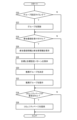
- FIG. 6 is a flowchart showing an operation of the group presentation server according to the first embodiment.
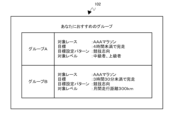
- FIG. 4 is a diagram illustrating an example of recommended group information according to the first embodiment.
- FIG. 11 is a diagram illustrating a configuration of a group presentation system according to a second embodiment.
- FIG. 11 is a block diagram showing functional blocks of a group presentation server according to a second embodiment.
- FIG. 11 is a diagram illustrating an example of recommended group information according to the second embodiment.
- FIG. 13 is a block diagram showing functional blocks of a group presentation server according to a third embodiment. 13 is a flowchart illustrating an operation of a group presentation server according to the third embodiment.
- Goals in a race include finishing within a target time, finishing without a time limit, running a target distance, achieving a certain rank or higher, etc.
- Races may include events such as running, walking, mountain climbing, swimming, cycling, triathlons, orienteering, rogaining, and outdoor sports in addition to marathons and trail running.
- Factors that determine the content of preparation and practice for a race include not only the goal for the race set by the user, but also the type of goal setting for the race set by the user (hereinafter also referred to as the "goal setting pattern").
- the goal setting pattern may be a type of the user's awareness regarding the race or goal setting, or a type of the user's seriousness about achieving the goal.
- the goal setting patterns in the first embodiment include competitive orientation, maintaining the status quo, and fun run.
- Competitive orientation is a type that seriously aims to improve time in a race.
- Maintaining the status quo is a type that aims to maintain the current time.
- Fun run is a type that aims to have fun without worrying about time. Time means the time it takes to travel a certain distance.
- participant groups are provided that correspond to goals and goal setting patterns in a race.
- the group presentation system of the first embodiment determines a participant group that corresponds to the race in which the user registers to participate or the goal setting pattern set by the user as a recommended group, and presents the determined recommended group to the user. This makes it possible to present a participant group that is useful for the user in achieving their goals, and helps maintain and improve the user's motivation.
- the group presentation system may also determine a participant group that corresponds to the race in which the user registers to participate and the goal setting pattern set by the user as a recommended group.
- a participant is a general term for people who register to participate in a specific race, and a user refers to a specific person among the participants. For example, a beginner racer or an inexperienced participant who has participated in five or fewer races.
- the user sets a goal based on the race that the user is to register to participate in.
- the user may set a goal for independent training such as running.
- the group presentation system may present the user with races and events that correspond to the goals for independent training that the user has set.
- FIG. 1 shows the configuration of a group presentation system 100 of the first embodiment.
- the group presentation system 100 of the first embodiment includes a user terminal 10, a group presentation server 12, and a driving history management server 14.
- Each device in FIG. 1 is connected via a network 18, which may include a LAN (Local Area Network), a WAN (Wide Area Network), the Internet, etc.
- LAN Local Area Network
- WAN Wide Area Network
- the user terminal 10 is a terminal operated by a user, and may be an information terminal such as a smartphone or tablet terminal owned by the user, or may be a personal computer.
- the user terminal 10 is configured with a combination of hardware such as a microprocessor, a touch panel, a memory, and a communication module.
- the group presentation server 12 is a server computer that has the functions of processing the registration procedures for participating in a race, managing participant groups, and recommending participant groups to participants who register to participate in a race.
- the function of processing the registration procedures for participating in a race may be constructed as a server separate from the group presentation server 12, and this separate server may be configured to be included in the group presentation system 100.
- the function of managing participant groups may be constructed as a server separate from the group presentation server 12, and this separate server may be configured to be included in the group presentation system 100.
- the running history management server 14 is a server computer that stores and manages the running history of multiple participants.
- the running history is information about running in a race or running in practice, and includes information about the date and time of the run, distance, time, weather, and region.
- Information about the weather may include information indicating the season, climate, temperature, humidity, etc.
- Information about the region may include information indicating the location on a map.
- a running history management application is installed on the information terminal (including the user terminal 10) of each participant.
- the running history management application transmits the running history of the participant to the running history management server 14.
- the running history management server 14 stores the running history transmitted from the information terminal of each participant.
- the running history transmitted from the information terminal of each participant and/or the running history stored in the running history management server 14 may include the practice history of participants participating in the group's practice event. The level of the group to which the participant belongs can be determined based on this practice history.
- the group presentation server 12 and the driving history management server 14 may each be configured as a single server computer, or may be configured as a combination of multiple server computers.
- the group presentation server 12 and the driving history management server 14 may also be configured as a single server computer. The same applies to the event management server 16 described below.
- group presentation system in the claims may refer to the entire group presentation system 100, or to only the group presentation server 12. Alternatively, it may refer to a combination of at least one of the user terminal 10 and the driving history management server 14 and the group presentation server 12. Alternatively, it may be realized by distributing characteristic functions between the group presentation server 12 and the user terminal 10.
- the "participant group” referred to in the claims includes both real groups that are actually organized and managed, and virtual groups that are generated by classifying multiple participants through information processing.
- the group presentation server 12 in the first embodiment manages real participant groups.
- the group presentation server 12 in the third embodiment described below manages virtual participant groups.
- FIG. 2 is a block diagram showing the functional blocks of the group presentation server 12 of the first embodiment.
- FIG. 2 illustrates the functional blocks of the group presentation server 12 that are realized by cooperation between various hardware configurations and software configurations. It will be understood by those skilled in the art that each functional block can be realized in various ways using only hardware, only software, or a combination of both.
- the group presentation server 12 is configured with a combination of hardware such as a CPU (Central Processing Unit), GPU (Graphics Processing Unit), memory, large-capacity storage such as an SSD (Solid State Drive) or hard disk, and a communication module.
- a general-purpose hardware configuration may be used as a server computer, and is not limited to these configurations. It may also be realized in the form of a cloud server, which is a virtual server built on the Internet. Similarly, general-purpose hardware configurations and cloud servers may be used as these server computers for the other servers described in this specification.
- the group presentation server 12 includes a processing unit 20, a memory unit 22, and a communication unit 24.
- the processing unit 20 executes various information processing.
- the processing unit 20 may be realized by a processor (CPU, etc.) of the group presentation server 12.
- the memory unit 22 stores data referenced or updated by the processing unit 20.
- the memory unit 22 may be realized by memory or storage of the group presentation server 12.
- the communication unit 24 communicates with external devices according to a predetermined communication protocol.
- the processing unit 20 transmits and receives data to and from the user terminal 10 and the driving history management server 14 via the communication unit 24.
- the memory unit 22 includes a registration memory unit 30, a goal memory unit 32, and a group memory unit 34.
- the registration memory unit 30 stores the participation registration information entered by the participants and the participant information acquired by the input acquisition unit 40 described below.
- the participation registration information is information indicating the registration to participate in a race, and includes information on people who have registered to participate in each race.
- the participation registration information also includes information on users who have completed the registration procedure as participants before the race is held, or information on participants in races that have been held in the past.
- Participant information is information that can identify a participant who has registered to participate in a race. Participant information includes the participant's account information, personal information, information about race experience, and information indicating the participant's competitive level. Participant account information includes the participant's ID, password, and other information required to log in to the group presentation server 12. Participant account information is generated based on the information entered during the account registration procedure when the participant first uses the group presentation server 12. Participant personal information includes information such as name, address, and contact information, attribute information such as age and gender, and information about the team or organization to which the participant belongs.
- the information on racing experience includes information on races participated in the past and record information such as the finishing time of each race.
- the participant may be required to register running log data measured by the user using a watch with a positioning function or a running history management application on the user terminal 10.
- the competitive level of the participant such as the running ability, may be determined and recorded through analysis based on the running log data.
- the goal memory unit 32 stores information about the goals and goal setting patterns for the race entered by the participant, acquired by the input acquisition unit 40 described below.
- the goal is the target time for the race in which the participant is registered to participate.
- the goal setting patterns in the first embodiment include competitive orientation and fun run.
- the group memory unit 34 stores information about multiple participant groups divided by goals and goal setting patterns for each race (hereinafter also referred to as "group attribute information").
- Group attribute information is typically information registered by the organizer of the group.
- Group attribute information includes the group name, target race, goal, goal setting pattern, and target level.
- the target race is a race that the group targets or aims for, i.e., a race that members of the group register to participate in.
- the goal is a guideline for the target completion time. For example, it may be set to under 5 hours (so-called sub-5), under 4 hours (so-called sub-4), or under 3.5 hours (so-called sub-3.5).
- the goal setting pattern may be set to be competitive or fun run.
- the target level is information that indicates an estimate of the running ability of group members.
- the target level may be set to categories such as beginner, novices, intermediate, and advanced.
- the running distance may be set as an estimate of running ability.
- the monthly running distance which indicates the running distance for one month, is used as an index value indicating the running distance as an estimate of running ability.
- the target level may include at least one of best marathon time, best 10 km run time, running frequency, and average running distance per run.
- the processing unit 20 includes an input acquisition unit 40, a history acquisition unit 42, a recommendation determination unit 46, and a recommendation presentation unit 48.
- the functions of these multiple functional blocks may be implemented in a computer program.
- This computer program may be installed in the storage of the group presentation server 12.
- the processor of the group presentation server 12 may load this computer program into main memory and execute it to fulfill the functions of the multiple functional blocks.
- the input acquisition unit 40 acquires the registration of participants (which can also be said to be people who wish to participate) to participate in the race and the input of their goals for that race.
- the input acquisition unit 40 acquires the participation registration information and participant information transmitted from the participant's terminal (including the user terminal 10), and stores the acquired participation registration information and participant information in the registration memory unit 30.
- the input acquisition unit 40 also acquires the goals and goal setting patterns transmitted from the participant's terminal (including the user terminal 10), and stores the acquired goals and goal setting patterns in the goal memory unit 32.
- the history acquisition unit 42 acquires the driving history of participants in the race stored in the driving history management server 14.
- the driving history of participants includes logs measured by a driving history management application on the participant's terminal (including the user terminal 10).
- the recommendation determination unit 46 determines, as a recommended group, at least one participant group that corresponds to the race and goal setting pattern for a participant who has registered to participate in the race and input their goal for that race, as acquired by the input acquisition unit 40.
- the recommendation presentation unit 48 presents the recommendation group determined by the recommendation determination unit 46 to a participant who has registered to participate in the race or input a goal for that race.
- the recommendation presentation unit 48 may present the recommendation group determined by the recommendation determination unit 46 to a participant who has registered to participate in the race or input a goal for that race.
- FIG. 3 is a flowchart showing the operation of the group presentation server 12 of the first embodiment.
- the registration storage unit 30 stores the participation registration information and participant information input by each of the multiple participants for each race.
- the goal storage unit 32 stores the goals and goal setting patterns for the race input by each of the multiple participants for each race.
- the group storage unit 34 stores predetermined group attribute information for each of the multiple participant groups for each race. The group attribute information may be registered in the group presentation server 12 from the terminal of the organizer of the group.
- the first participant group may be a group in which no goal (target completion time) is set and a fun run is set as the goal setting pattern.
- the second participant group may be a group in which a goal of less than five hours is set and a fun run is set as the goal setting pattern.
- the third participant group may be a group in which a target completion time of less than four hours is set and a competitive orientation is set as the goal setting pattern.
- the fourth participant group may be a group in which a target completion time of less than three hours and 30 minutes is set and a competitive orientation is set as the goal setting pattern.
- the user terminal 10 transmits the participation registration information for the race selected by the user to the group presentation server 12 in response to the user's operation. Specifically, the user terminal 10 transmits the participation registration information and participant information for the race selected by the user to the group presentation server 12. Furthermore, the user terminal 10 transmits the goal and goal setting pattern for the race input by the user to the group presentation server 12.
- the input acquisition unit 40 of the group presentation server 12 accepts the participation registration information, participant information, goal, and goal setting pattern transmitted from the user terminal 10 (Y of S10).
- the input acquisition unit 40 stores the participation registration information and participant information in the registration storage unit 30 in association with the user (S12).
- the input acquisition unit 40 stores the goal and goal setting pattern in the goal storage unit 32 in association with the user (S14).
- the recommendation determination unit 46 determines at least one participant group that corresponds to the race in which the user has registered to participate and the user's goal setting pattern as a recommended group for the user (S16).
- the recommendation presentation unit 48 transmits information about the recommended group determined by the recommendation determination unit 46 (hereinafter also referred to as "recommended group information") to the user terminal 10 (S18).
- the user terminal 10 displays the recommended group information on the display.
- FIG. 4 shows an example of recommended group information 102 in the first embodiment.
- the recommended group information 102 in FIG. 4 is recommended group information presented to a user who has registered to participate in the AAA marathon and has input competitive orientation as the goal setting pattern. Furthermore, the recommended group information 102 in FIG. 4 presents two participant groups (groups A and B) for which the AAA marathon has been set as the target race and competitive orientation has been set as the goal setting pattern, as recommended groups.
- the recommendation determination unit 46 may determine the recommendation group to be presented to the user based on the user's running history and the target level of the participant group. For example, as described below, the recommendation determination unit 46 may estimate the user's running ability based on the user's running history. Specifically, the recommendation determination unit 46 may check the pace, endurance, and distance based on multiple time records of multiple past races indicated by the user's running history, and judge the user's running ability. The recommendation determination unit 46 may also estimate the progress of the user's running ability by comparing time records of races of the same distance.
- the recommendation determination unit 46 may also estimate the user's running ability based on training data of the contents of the daily training menu (pace running, interval running, hill training, etc.) and the user's physical response (heart rate, stride, pace, etc.) indicated by data obtained from a wearable device or a running app.
- the recommendation determination unit 46 may also estimate the user's physical condition from a questionnaire evaluation of the user's own running comfort, fatigue, etc.
- the recommendation determination unit 46 may also analyze the user's movements based on the motion analysis of video recording or motion capture, and estimate the running ability from the efficiency.
- the recommendation determination unit 46 may measure exercise physiological indicators such as maximum oxygen uptake (VO2Max), lactate level, and muscle strength value, which are physiological data, and estimate the user's running ability.
- VO2Max maximum oxygen uptake
- lactate level lactate level
- muscle strength value which are physiological data
- the recommendation determination unit 46 may collect training data of the participants in the practice event, derive the average pace, distance, time, etc. as the main indicators of the group, and determine the level of the participant group based on the value of the main indicator.
- the recommendation determination unit 46 may exclude from the recommended groups any participant group in which the deviation between the target level and the user's running ability exceeds a predetermined tolerance range, i.e., any participant group in which a target level is set that significantly exceeds the user's running ability. This can reduce the risk of injury to the user. For example, the recommendation determination unit 46 may be set to determine that if the user is a beginner, ⁇ 10% is an acceptable range, and to exclude recommended groups that exceed this range.
- the recommendation determination unit 46 may determine the recommendation group for the user using a statistical correlation, as shown in step 1-8 below.
- Step 1 A plurality of pieces of driving history data of the user are acquired from the input acquisition unit 40.
- Step 2. Among multiple participant groups, participant groups that include at least one participant who has registered to participate in the same race as the user and has the same goal setting pattern as the user are listed as candidate groups.
- Step 3. Collect driving history or practice event history data for participants in the listed candidate group.
- Step 4. Set pace, distance, time, etc. as your main indicators.
- Step 5. Calculate the correlation coefficient for the main indicators of the user's running history data and the running history data of the participants in the candidate group. The stronger the positive correlation, the more similar the running ability of the user and the group is determined to be.
- Step 7 The recommendation groups are presented to the user through the recommendation presentation unit 48 in descending order of correlation coefficient.
- Step 8. The user determines the group that best suits him/herself based on the practice frequency, age group of participants, group characteristics, etc., of each group shown in the profile of each group.
- the recommended group information 102 includes the target races that group members will register to participate in, goals, goal setting patterns, and target levels, which are set in the group attribute information.
- the target level is information that indicates an estimate of the running ability of group members.
- the target level may be set to a category such as intermediate or advanced, or a monthly running distance.
- the user terminal 10 may transmit a member registration request to the group selected by the user to the group presentation server 12.
- the group presentation server 12 may execute a process of newly registering the user to the specified group.
- a participant group corresponding to that race and goal setting pattern is presented to the user as a recommended group.
- a user who inputs fun run as the goal setting pattern is presented with information on participant groups that are targeting the same race as the user and for which fun run is set as the goal setting pattern.
- a user who inputs competitive orientation as the goal setting pattern is presented with information on participant groups that are targeting the same race as the user and for which competitive orientation is set as the goal setting pattern. This can help maintain and improve the user's motivation for the race they have registered to participate in.
- the goal setting patterns here include upgrading and maintaining the status quo.
- the goal setting pattern "upgrade” is a type in which the aim is to achieve a goal by belonging to a participant group whose running ability exceeds the participant's own.
- the goal setting pattern "maintain the status quo” is a type in which the aim is to achieve a goal by belonging to a participant group whose running ability is similar to the participant's own.
- the history acquisition unit 42 acquires the user's driving history from the driving history management server 14.
- the recommendation determination unit 46 estimates the user's running ability based on the user's driving history. Specifically, the recommendation determination unit 46 calculates the user's monthly driving distance as the user's running ability based on the date and time of each drive and the driving distance indicated in the user's driving history. In addition, the recommendation determination unit 46 classifies the user into one of the following categories as the user's running ability: beginner, novice, intermediate, or advanced based on the user's monthly driving distance.
- the recommendation determination unit 46 determines the participant group to which participants with running ability exceeding that of the user belong as the recommended group. Specifically, the recommendation determination unit 46 compares the estimated running ability of the user with the target level of each participant group stored in the group memory unit 34, and determines the participant group to which a target level exceeding the running ability of the user is set as the recommended group. Because the running ability of the user may change over time, the recommendation determination unit 46 may periodically reevaluate the recommended group and review the recommended group as necessary.
- the acceptable range recommended for beginners and novices, in order to ensure safety and maintain motivation is thought to be a group whose running ability exceeds their own by about 5-10%.
- the acceptable range recommended for intermediates, in order to ensure safety and maintain motivation is thought to be a group whose running ability exceeds their own by about 10-15%.
- Intermediate runners have a certain degree of physical strength, so they can challenge themselves to goals that are slightly higher than beginners.
- the acceptable range recommended for advanced runners is thought to be a group whose running ability exceeds their own by about 15-20%, in order to maintain motivation toward high goals. This is because advanced runners have considerable running ability. However, participants who exceed their own running ability by more than 20% are excluded from the recommended group due to the increased risk of injury.
- the tolerance range may be set to a difference in monthly running distance of up to 20 km. In this case, if the user's monthly running distance is 100 km, a participant group whose target level monthly running distance is set to a value greater than 100 km and equal to or less than 120 km may be determined as the recommended group.
- a participant group with a target level set to intermediate or higher may be determined as the recommended group.
- the recommendation determination unit 46 may determine as the recommended group a participant group with a target level set to intermediate or higher, even if the user is classified as a beginner based on the monthly running distance.
- the above-mentioned predetermined condition may be, for example, completing a full marathon in less than a predetermined time (for example, less than 4 hours and 30 minutes).
- the recommendation determination unit 46 determines the participant group to which participants with running ability similar to that of the user belong as the recommended group.
- the participant group to which participants with running ability similar to that of the user belong may be a participant group to which participants (participants different from the user) whose running ability differs from the user's running ability based on the user's running history within a predetermined allowable range belong.
- the allowable range of running ability similar to that of the user is preferably about ⁇ 10 seconds/km for pace. For example, if the user's average pace is 5 minutes/km, a group of participants with an average pace of 4 minutes 50 seconds to 5 minutes 10 seconds is appropriate.
- the approximate range of running distance is considered to be about ⁇ 20% of the total weekly running distance. For example, if the user runs 60 km per week, a group of participants who run 48 km to 72 km per week is appropriate. This is because a difference of more than 20% may cause overtraining or undertraining.
- the approximation range for race target times may be set to about ⁇ 5% if the target race category is the same.
- the approximation range for age groups may be set to ⁇ 10 years. Taking into account changes in physical strength that occur with age, it is desirable to keep the approximation range for younger age groups within a narrower range (for example, ⁇ 5 years).
- the recommendation determination unit 46 compares the estimated running ability of the user with the target level of each participant group stored in the group storage unit 34, and determines the participant group whose target level is set to be close to the user's running ability as the recommended group. For example, if the user's monthly running distance is 100 km, the participant group whose target level is set to a value around 100 km for the monthly running distance (for example, a value in the range of 80 km to 120 km) is determined as the recommended group. Also, if the user is classified as a beginner, the participant group whose target level includes beginners is determined as the recommended group.
- the group presentation server 12 of the first embodiment can present a user with recommended groups that correspond to the goal setting pattern input by the user. For example, a user who has set the goal setting pattern to upgrade can be presented with information about participant groups that include participants with better running ability than the user, thereby helping to maintain and improve the motivation of the user. In addition, a user who has set the goal setting pattern to maintain the status quo can be presented with information about participant groups that include participants with the same running ability as the user, thereby helping to maintain and improve the motivation of the user.
- the recommendation determination unit 46 of the group presentation server 12 may determine, as the recommended group, a participant group that corresponds to the goal setting pattern input by the user from among multiple participant groups corresponding to the race in which the user registers to participate.
- the participant group that corresponds to the goal setting pattern input by the user can also be said to be a participant group to which participants who have input the same goal setting pattern as the goal setting pattern input by the user belong. Even in this modified example, by presenting to the user information on the participant group that corresponds to the goal setting pattern input by the user, it is possible to help maintain and improve the user's motivation.
- the group attribute information stored in the group storage unit 34 of the group presentation server 12 may include the time (season, etc.) when the practice is carried out and the time zone.
- the recommendation determination unit 46 of the group presentation server 12 may estimate the environment during the practice (which can also be called weather information, such as temperature and humidity) based on the time and the time zone when the practice is carried out.
- the recommendation determination unit 46 may detect a participant group from among multiple participant groups stored in the group storage unit 34, in which an environment that matches or is similar to the weather information included in the user's driving history is set as an attribute, and determine that participant group as the recommended group.
- the user's driving ability may change depending on the climate, weather, etc., but according to this embodiment, it is possible to recommend a participant group in which the user can easily participate in practice and demonstrate their own abilities.
- the group presentation server 12 may also store information regarding the time of year (season, etc.) and time of day when each race is held.
- the recommendation determination unit 46 of the group presentation server 12 may estimate the environment (which can also be considered weather-related information, such as temperature and humidity) of the target race based on the time of day and time of day when the target race of the participant group is held.
- the recommendation determination unit 46 may detect, from among the multiple participant groups stored in the group storage unit 34, a participant group for which a target race is set with an environment that matches or is similar to the weather-related information included in the user's driving history, and determine that participant group as the recommended group.
- a user's driving ability may change depending on the climate, weather, etc., but according to this embodiment, it is possible to recommend a participant group that aims for races in which the user can easily demonstrate their abilities.
- the second embodiment of the present disclosure will be described, focusing on the differences from the first embodiment.
- 5 shows the configuration of a group presentation system 100 according to the second embodiment.
- the group presentation system 100 according to the second embodiment further includes an event management server 16 in addition to the configuration according to the first embodiment.
- the event management server 16 is a server computer that stores and manages information on multiple events related to races.
- the event management server 16 may provide a website through which event organizers can recruit participants.
- the group presentation server 12 may be configured to have the functions of the event management server 16.
- Event information includes the event name, the date and time when the event is held, the location, and target level information.
- Target level information is information that indicates the approximate running ability of the target participants of the event. Similar to the target levels of the participant group in the first embodiment, target level information includes categories such as beginner, novice, intermediate, advanced, etc., and monthly running distance.
- FIG. 6 is a block diagram showing the functional blocks of the group presentation server 12 of the second embodiment.
- the group presentation server 12 of the second embodiment further includes an event acquisition unit 43.
- the basic operation of the group presentation server 12 of the second embodiment is as shown in the flowchart of FIG. 3.
- the group presentation server 12 of the second embodiment like the group presentation server 12 of the first embodiment, presents to the user participant groups according to the user's goal setting pattern as recommended groups.
- the group presentation server 12 of the second embodiment performs the following operations.
- the race in which the user has registered to participate will also be referred to as the "target race.”
- the event acquisition unit 43 acquires information on multiple events related to the target race stored in the event management server 16 from the event management server 16.
- the history acquisition unit 42 acquires the user's driving history from the driving history management server 14.
- the user's driving history includes information about the areas in which the user drives.
- the recommendation determination unit 46 may estimate the area in which the user will perform a practice drive based on the frequency of driving in the areas indicated in the user's driving history.
- the recommendation determination unit 46 identifies, from among the multiple events acquired by the event acquisition unit 43, an event that will be held in a location corresponding to the area indicated in the user's driving history, and determines that group of events (hereinafter also referred to as the "event-related group”) as the recommended group.
- the recommendation determination unit 46 may determine, as recommended groups, an event-related group of events held at ABC Park in Tama City, Tokyo, and an event-related group of events held at XYZ Athletics Stadium, also in Tama City, Tokyo.
- the recommendation determination unit 46 also identifies events held for runners whose running ability is similar to that of the user from among the multiple events acquired by the event acquisition unit 43, and determines the event-related group as the recommended group.
- the recommendation determination unit 46 estimates the user's running ability based on the user's running history. Specifically, the recommendation determination unit 46 calculates the user's monthly running distance as the user's running ability based on the date and time of each run and the running distance indicated in the user's running history.
- the recommendation determination unit 46 also classifies the user into one of the following categories: beginner, novice, intermediate, or advanced, based on the user's monthly running distance as the user's running ability.
- the recommendation determination unit 46 compares the estimated running ability of the user with the target level of each event indicated by the information of each event, and determines, as the recommended group, the event-related group of events whose target level is set to be close to the user's running ability. For example, if the user's monthly running distance is 100 km, the event-related group of events whose target level is set to a value around 100 km (for example, a value in the range of 80 km to 120 km) is determined to be the recommended group. Also, if the user is classified as a beginner, the event-related group of events whose target level includes beginners is determined to be the recommended group.
- a time for running a specified distance may be defined as the target level of an event. If the best time or average time for a full marathon indicated in the user's running history is included in the time range of the target level of a certain event, the recommendation determination unit 46 may determine the event-related group of that event as the recommended group.
- the recommendation determination unit 46 may determine, as the recommended group, an event-related group of events in which a target level that exceeds the user's running ability is set. Also, when the goal setting pattern input by the user is to maintain the status quo, the recommendation determination unit 46 may determine, as the recommended group, an event-related group of events in which a target level that is close to the user's running ability is set. When determining, as the recommended group, an event-related group of events in which a target level that exceeds the user's running ability is set, tolerance ranges and conditions similar to those in the first embodiment may be set to suppress the deviation between the user's running ability and the target level of the recommended group.
- the recommendation presentation unit 48 transmits the recommended group information to the user terminal 10.
- the recommended group information includes information on the participant group determined as the recommended group and information on the event-related group determined as the recommended group.
- FIG. 7 shows an example of recommended group information 102 in the second embodiment.
- the recommended group information 102 in the second embodiment includes information on recommended groups (groups A and B in FIG. 7) determined from the participant group.
- the recommended group information in the second embodiment further includes information on recommended groups (groups C and D in FIG. 7) determined from the event-related group.
- the information on the recommended group determined from the event-related group includes the event name, event description, event date and time, event location, and target level.
- the group presentation server 12 of the second embodiment can also help maintain and improve the motivation of users who register to participate in races by presenting useful groups to the users. Specifically, the group presentation server 12 of the second embodiment can present to the user a group of events that are easy for the user to participate in from a regional perspective. Also, the group presentation server 12 of the second embodiment can present to the user a group of events that are easy for the user to participate in from a running ability perspective.
- the group presentation server 12 presented to the user both a recommended group determined from among a plurality of participant groups and a recommended group determined from among a plurality of event-related groups.
- the group presentation server 12 may determine a recommended group from among a plurality of event-related groups, while skipping the process of determining a recommended group from among a plurality of participant groups.
- the group presentation server 12 may present to the user only the recommended group determined from among a plurality of event-related groups.
- the third embodiment of the present disclosure will be described focusing on the differences from the first embodiment.
- the configuration of the group presentation system 100 of the third embodiment is the same as the configuration of the group presentation system 100 of the first embodiment shown in FIG. 1.
- the group presentation server 12 of the third embodiment differs from the group presentation server 12 of the first embodiment in that it manages a virtual participant group.
- the group presentation server 12 of the third embodiment differs from the group presentation server 12 of the first embodiment in that it has a community function within the group.
- FIG. 8 is a block diagram showing the functional blocks of the group presentation server 12 of the third embodiment.
- the group presentation server 12 of the third embodiment further includes a group setting unit 44, a community setting unit 50, a community providing unit 52, and a community storage unit 36.
- the participant group in the third embodiment is a virtual group of multiple participants who have similar goals and the same goal setting pattern.
- the information about the participant group stored in the group memory unit 34 includes information about the target race and the participants who belong to the group.
- the information about the participant group includes the goals and goal setting patterns for the race entered by the participants who belong to the group.
- the information about the participant group also includes the driving history of each participant who belongs to the group, which is acquired by the history acquisition unit 42.
- multiple participant groups for the AAA marathon target race may include the following first to fourth participant groups.
- the first participant group is a group of participants who have not set a target completion time and have input a fun run as the goal setting pattern.
- the second participant group is a group of participants who have input a target completion time of less than five hours (so-called sub-5) and have input a fun run as the goal setting pattern.
- the third participant group is made up of participants who entered a target completion time of less than four hours (known as sub-4) and a competitive mindset as their goal setting pattern.
- the fourth participant group is made up of participants who entered a target completion time of less than three hours and 30 minutes (known as sub-3.5) and a competitive mindset as their goal setting pattern.
- the history acquisition unit 42 acquires the driving history of multiple participants who have registered to participate in the race, which is stored in the driving history management server 14.
- the history acquisition unit 42 stores the driving history of each participant in the group storage unit 34, corresponding to each of the multiple participants grouped together and stored in the group storage unit 34.
- the group setting unit 44 classifies, for each race, the multiple participants stored in the registration storage unit 30 into multiple participant groups based on the goals and goal setting patterns of each participant stored in the goal storage unit 32. In other words, the group setting unit 44 sets multiple virtual participant groups (for example, the first to fourth participant groups described above) for a race by classifying each participant into one of multiple participant groups corresponding to that race based on the goals and goal setting patterns of each participant for that race.
- the group setting unit 44 stores information regarding the multiple participant groups in the group storage unit 34.
- the community memory unit 36 stores, for each participant group, information about the community area, which is an area where participants talk to each other, interact, and exchange information on a computer network.
- the community area can be called an electronic information exchange area or a chat area.
- the community setting unit 50 stores information about the community area corresponding to that participant group in the community memory unit 36.
- the community area corresponding to a certain participant group is a community area in which only members of that participant group can post information. Viewing of the community area corresponding to a certain participant group is not restricted to members of that participant group, and members of other participant groups are also permitted.
- the community area corresponding to a certain participant group may be realized as a web page (hereinafter also referred to as a "community page").
- the community providing unit 52 provides a community page according to the participant group to which the participant belongs using a known access control method.
- Information about the community area stored in the community storage unit 36 may include data on the community page, information about accessible participants, text and images exchanged in chats between participants, and information about the electronic bulletin board on which the text and images are displayed.
- FIG. 9 is a flowchart showing the operation of the group presentation server 12 of the third embodiment.
- the group setting unit 44 detects that a predetermined group setting timing has been reached (Y in S20).
- the group setting unit 44 sets multiple participant groups for each race by referencing the participation registration information and participant information of each participant stored in the registration storage unit 30, and the goals and goal setting patterns of each participant stored in the goal storage unit 32.
- the group setting unit 44 also updates the participants belonging to each participant group (S22). If it has not been detected that the group setting timing has been reached (N in S20), the processing of S22 is skipped.
- the group setting unit 44 classifies participants who have input the same or similar goals and the same or similar goal setting pattern into the same group. For example, the group setting unit 44 may classify multiple participants who have not set a target completion time for the AAA marathon and have input a fun run as the goal setting pattern into a first participant group. The group setting unit 44 may also classify multiple participants who have input a target completion time of less than five hours for the AAA marathon and have input a fun run as the goal setting pattern into a second participant group.
- the group setting unit 44 may also classify multiple participants who have input a target completion time of less than four hours for the AAA marathon and have input a competitive orientation as the goal setting pattern into a third participant group.
- the group setting unit 44 may also classify multiple participants who have input a target completion time of less than three hours and 30 minutes for the AAA marathon and have input a competitive orientation as the goal setting pattern into a fourth participant group.
- the group setting unit 44 may also classify multiple participants who have similar goals and the same goal setting pattern and who usually drive in similar areas into a fifth participant group.
- the group setting unit 44 may refer to the driving history of each participant acquired by the history acquisition unit 42, and identify multiple participants whose driving history indicates that the most frequent driving area is the same prefecture or the same city, ward, town, or village as multiple participants who usually drive in similar areas.
- the group setting unit 44 may also classify multiple participants who have similar goals and the same goal setting pattern, and who have similar monthly running distances, into a sixth participant group.
- the group setting unit 44 may refer to the running history of each participant acquired by the history acquisition unit 42, and identify multiple participants whose monthly running distances indicated by their running history belong to the same category as multiple participants whose monthly running distances are similar.
- the group setting unit 44 may calculate the monthly running distance based on the running distance for each time indicated by the running history.
- the categories are predetermined categories of monthly running distances. For example, the first category may be less than 10 km, the second category may be 10 km or more and less than 20 km, and the third category may be 20 km or more and less than 40 km.
- the group setting unit 44 stores information about multiple participant groups in the group storage unit 34.
- the information about the participant groups includes target levels, as in the first embodiment.
- the group setting unit 44 calculates the monthly running distances of multiple participants belonging to a certain participant group based on the running history of the multiple participants acquired by the history acquisition unit 42.
- the group setting unit 44 determines the target level of the participant group as a guideline for running ability based on the monthly running distances of the multiple participants.
- the target level of the participant group may be the monthly running distance of the participant group (for example, a monthly running distance of 100 km, etc.).
- the target level of the participant group may also be classified as beginner, novice, intermediate, or advanced based on the monthly running distance of the participant group.
- the processing of S24 to S32 in FIG. 9 is the same as the processing of S10 to S18 in FIG. 3 described in the first embodiment, and therefore a description thereof will be omitted.
- the recommendation determination unit 46 determines, from among a plurality of virtual participant groups set by the group setting unit 44, at least one participant group that corresponds to the race in which the user has registered to participate and the user's goal setting pattern, as a recommended group for the user.
- the recommendation presentation unit 48 provides the recommended group information 102 as shown in FIG. 4 to the user terminal 10.
- the recommendation determination unit 46 determines the participant group to be recommended as a participant group that includes participants with running ability superior to that of the user. Also, if the goal setting pattern input by the user is to maintain the status quo, the recommendation determination unit 46 determines the participant group to be recommended as a participant group that includes participants with running ability similar to that of the user.
- the participant group in the third embodiment is a virtual group. Therefore, it can be said that there is little problem even if the user participates in a participant group that is significantly higher than the user's running ability. Therefore, for example, if the goal setting pattern input by the user is an upgrade and the user's monthly running distance is 100 km, a participant group whose target level is set to a monthly running distance greater than 100 km may be determined as the recommended group. Even if a tolerance range is set for the deviation between the user's running ability and the target level of the recommended group, the tolerance range may be set larger than the tolerance range in the first embodiment. Also, if the goal setting pattern input by the user is an upgrade and the user is classified as a beginner, a participant group whose target level is set to intermediate or higher may be determined as the recommended group without setting any particular conditions.
- a user who is presented with one or more recommended groups in the recommended group information 102 selects a participant group to join from the one or more recommended groups.
- the user terminal 10 transmits information about the participant group in which the user will participate to the group presentation server 12.
- the group setting unit 44 of the group presentation server 12 executes a process of adding the user to the members of the participant group selected by the user, for example, a process of updating the member information of the participant group stored in the group storage unit 34.
- the community providing unit 52 provides a community area for each participant group.
- a community page corresponding to each participant group is transmitted to the terminals of the participants in each participant group.
- the user terminal 10 transmits data requesting a community page to the group presentation server 12 in response to a user operation.
- the community providing unit 52 receives the request for a community page (Y in S34), it refers to the group storage unit 34 to identify the participant group to which the user belongs.
- the community providing unit 52 transmits to the user terminal 10 a community page stored in the community storage unit 36 and corresponding to the participant group to which the user belongs (S36).
- the user terminal 10 displays the community page transmitted from the group presentation server 12 on the display. If a request for a community page is not received from the user terminal 10 (N in S34), the processing of S36 is skipped.
- users can also view community pages of participant groups other than the one to which they belong.
- users can refer to the target levels of multiple participant groups, view the community page of a participant group that includes people with better running ability than themselves, and use it as a reference for practice.
- the history acquisition unit 42 acquires the driving history of each participant in each participant group from the driving history management server 14.
- the community providing unit 52 presents a ranking based on a predetermined criterion on the community page of each participant group, based on the driving history of multiple participants belonging to each participant group. For example, the community providing unit 52 may place an image on the community page of a certain participant group that ranks the participants belonging to that participant group in order of the longest driving distance (e.g. monthly driving distance).
- the community page of each participant group is configured so that participants belonging to each participant group can disclose their driving history to each other.
- disclosing the driving history of a participant belonging to a certain participant group on the community page of another participant group is restricted, or in other words, prohibited.
- the user terminal 10 transmits to the group presentation server 12 a consent to disclosing the driving history on the community page.
- the community providing unit 52 sets text and images indicating the user's driving history acquired by the history acquisition unit 42 on the community page of participant group A.
- the group presentation server 12 of the third embodiment can promote communication within a participant group, and can also heighten the competitive spirit among participants belonging to the participant group, helping to maintain and improve the motivation of the participants. Furthermore, the disclosure of a participant's driving history is restricted to the participant group to which the participant belongs. This makes it easier to find useful information by using the target level of each participant group as a clue.
- the running attributes of the participants that are published on the community page may include running logs for each of the past races and practice sessions.
- the running log may include the running date and time, the running location, the running pace, and the running speed.
- the running location may be, for example, an image showing the trajectory of the running position on a map.
- the running pace may be, for example, the progress of the running time per 1 km.
- the content of the community page may also include a virtual challenge.
- Each member of the participant group may record their own driving record in a timely manner within the virtual challenge.
- the driving record of each member registered in the driving history management server 14 may be automatically reflected within the virtual challenge. This can help members of the participant group compete with each other in speed, distance traveled, frequency of driving, etc., and can help maintain and improve the motivation of each member.
- the group presentation server 12 presents recommended group information 102 to a user when the user registers to participate in a race. If the user is aiming for a sub-3:30 time in the race, the user may join a group presented in the recommended group information 102 that includes people who have already achieved a sub-3:30 time or participants who are also aiming for a sub-3:30 time.
- the group presentation server 12 presents to the user a community page that is the community page of the group the user has joined and that includes the driving logs of the members of that group. This can help the user improve their own training by referring to the driving logs of others. It can also provide inspiration to the user and help maintain and improve their motivation.
- the group presentation system of the first aspect comprises an input acquisition unit that acquires a participant's registration to participate in a race and input of a goal for the race, a registration memory unit that stores participation registration information indicating the registration to participate in the race entered by the participant and participant information that identifies the participant acquired by the input acquisition unit, a goal memory unit that stores information regarding the goal and goal setting type for the race entered by the participant acquired by the input acquisition unit, a group memory unit that stores information regarding a plurality of participant groups divided by the goal and goal setting type for each race, a recommendation determination unit that determines at least one participant group corresponding to the race for which the participant is registered and the type of goal setting as a recommended group for the participant who has entered the participation registration and goals acquired by the input acquisition unit, and a recommendation presentation unit that presents the determined recommended group to the participant.
- a participant group that corresponds to the type of race and goal setting in which the participant will participate is presented to the participant as a recommended group. This can help maintain and improve the participant's motivation.
- the group presentation system may further include a history acquisition unit that acquires the running history of the participant in the group presentation system according to the first aspect. If the goal setting type of the participant who registered to participate and input the goal is a type that aims to achieve the goal by belonging to a participant group with a running ability superior to the participant's own, the recommendation determination unit may determine, based on the acquired running history, as the recommended group, a participant group to which a participant with a running ability superior to the participant belongs.
- This embodiment can help participants to find others who have better running ability than themselves and use them as references.
- the group presentation system may further include a history acquisition unit that acquires the running history of the participant in the group presentation system according to the first or second aspect. If the goal setting type of the participant who registered to participate and inputted the goal is a type that aims to achieve the goal by belonging to a participant group that has a running ability similar to the participant's own, the recommendation determination unit may determine, based on the acquired running history, as the recommended group, a participant group whose running ability differs from the participant's running ability within a predetermined range.
- This aspect helps participants to find others with similar running ability and use them as reference.
- the group presentation system may further include a history acquisition unit that acquires a driving history of a participant in the group presentation system according to any one of the first to third aspects.
- the recommendation determination unit may determine, based on the acquired driving history, as a recommended group, a group of events to be held in a location corresponding to an area indicated by the driving history of the participant who has registered for participation and input a goal.
- participants can be presented with a group of events that are easy for them to participate in from a regional perspective.
- the group presentation system may further include a history acquisition unit that acquires the running history of the participant in the group presentation system according to any one of the first to fourth aspects.
- the recommendation determination unit may determine, based on the acquired running history, as the recommended group, a group of events held for runners whose running ability is similar to that of the participant who has registered for participation and input his/her goal.
- the group presentation system may further include a community providing unit that provides a community area for each participant group, which is an area where participants can communicate with each other, in the group presentation system according to any one of the first to fifth aspects.
- the community providing unit may present a ranking based on a predetermined criterion in the community area of a certain participant group, based on the driving history of multiple participants belonging to the participant group.
- This embodiment can promote communication within a participant group, and can also increase the sense of competition among participants belonging to the participant group, helping to maintain and improve the motivation of participants.
- the group presentation system may further include a community providing unit that provides a community area for each participant group, which is an area where participants in the group can communicate with each other, in the group presentation system according to any one of the first to sixth aspects.
- a community providing unit that provides a community area for each participant group, which is an area where participants in the group can communicate with each other, in the group presentation system according to any one of the first to sixth aspects.
- participants belonging to the participant group may be able to share their driving history with each other.
- This embodiment can promote communication within a participant group, and can also increase the sense of competition among participants belonging to the participant group, helping to maintain and improve the motivation of participants.
- the group presentation method includes the steps of: acquiring, via a network, a participant's entry of their registration to participate in the race and their goal for the race; reading information from an area storing the participant registration information indicating the participant's entry to participate in the race and the participant information identifying the participant; reading information from an area storing information regarding the goal and goal setting type for the race entered by the participant; reading information from an area storing information regarding a plurality of participant groups divided by goal and goal setting type for each race; determining at least one participant group as a recommended group for the participant who has entered their registration to participate and their goal, which corresponds to the race and goal setting type for which the participant is registered; and presenting the determined recommended group to the participant via the network.
- a participant group that corresponds to the type of race and goal setting in which the participant will participate is presented to the participant as a recommended group. This can help maintain and improve the participant's motivation.
- the group presentation system includes a processor configured to receive participation registration information including information identifying participants who wish to participate in a race and information regarding goals in the race, a registration memory configured to store the participation registration information received by the processor, a goal memory configured to store information regarding goals and goal setting types in the race, and a group memory configured to store information on a plurality of participant groups divided by goals and goal setting types for each race.
- the processor determines at least one participant group corresponding to the race and goal setting type identified by the participation registration information as a recommended group for participants who wish to participate, and presents the determined recommended group to the participants who wish to participate.
- a participant group that corresponds to the type of race and goal setting in which the participant will participate is presented to the participant as a recommended group. This can help maintain and improve the participant's motivation.
- the technology disclosed herein can be applied to information processing devices and information processing systems.
Landscapes
- Business, Economics & Management (AREA)
- Tourism & Hospitality (AREA)
- Health & Medical Sciences (AREA)
- Economics (AREA)
- General Health & Medical Sciences (AREA)
- Human Resources & Organizations (AREA)
- Marketing (AREA)
- Primary Health Care (AREA)
- Strategic Management (AREA)
- Physics & Mathematics (AREA)
- General Business, Economics & Management (AREA)
- General Physics & Mathematics (AREA)
- Engineering & Computer Science (AREA)
- Theoretical Computer Science (AREA)
- Management, Administration, Business Operations System, And Electronic Commerce (AREA)
Priority Applications (1)
| Application Number | Priority Date | Filing Date | Title |
|---|---|---|---|
| JP2025559135A JPWO2025109993A1 (https=) | 2023-11-22 | 2024-11-05 |
Applications Claiming Priority (2)
| Application Number | Priority Date | Filing Date | Title |
|---|---|---|---|
| JP2023198544 | 2023-11-22 | ||
| JP2023-198544 | 2023-11-22 |
Publications (1)
| Publication Number | Publication Date |
|---|---|
| WO2025109993A1 true WO2025109993A1 (ja) | 2025-05-30 |
Family
ID=95826444
Family Applications (1)
| Application Number | Title | Priority Date | Filing Date |
|---|---|---|---|
| PCT/JP2024/039291 Pending WO2025109993A1 (ja) | 2023-11-22 | 2024-11-05 | グループ提示システムおよびグループ提示方法 |
Country Status (2)
| Country | Link |
|---|---|
| JP (1) | JPWO2025109993A1 (https=) |
| WO (1) | WO2025109993A1 (https=) |
Citations (3)
| Publication number | Priority date | Publication date | Assignee | Title |
|---|---|---|---|---|
| JP2014010627A (ja) * | 2012-06-29 | 2014-01-20 | Konami Digital Entertainment Co Ltd | 管理装置、サービス提供システム、管理装置の制御方法及び管理装置のプログラム |
| JP2015213549A (ja) * | 2014-05-08 | 2015-12-03 | セイコーエプソン株式会社 | 出力方法、競技管理システムおよび情報処理装置 |
| JP2019082960A (ja) * | 2017-10-31 | 2019-05-30 | 株式会社Teamo | 情報処理装置、競技イベントの開催支援方法、及びプログラム |
-
2024
- 2024-11-05 JP JP2025559135A patent/JPWO2025109993A1/ja active Pending
- 2024-11-05 WO PCT/JP2024/039291 patent/WO2025109993A1/ja active Pending
Patent Citations (3)
| Publication number | Priority date | Publication date | Assignee | Title |
|---|---|---|---|---|
| JP2014010627A (ja) * | 2012-06-29 | 2014-01-20 | Konami Digital Entertainment Co Ltd | 管理装置、サービス提供システム、管理装置の制御方法及び管理装置のプログラム |
| JP2015213549A (ja) * | 2014-05-08 | 2015-12-03 | セイコーエプソン株式会社 | 出力方法、競技管理システムおよび情報処理装置 |
| JP2019082960A (ja) * | 2017-10-31 | 2019-05-30 | 株式会社Teamo | 情報処理装置、競技イベントの開催支援方法、及びプログラム |
Also Published As
| Publication number | Publication date |
|---|---|
| JPWO2025109993A1 (https=) | 2025-05-30 |
Similar Documents
| Publication | Publication Date | Title |
|---|---|---|
| US11417420B2 (en) | Optical data capture of exercise data in furtherance of a health score computation | |
| JP6902650B2 (ja) | 多種目スポーツ活動に対する仮想リーグを与える方法とシステム | |
| Roca et al. | Developmental activities and the acquisition of superior anticipation and decision making in soccer players | |
| US20060189389A1 (en) | System and method for allowing multiple participants to compete in an individual sport in real-time and non real-time | |
| JP2021514749A (ja) | オンライントーナメントの統合 | |
| Loffing et al. | Pushing through evolution? Incidence and fight records of left-oriented fighters in professional boxing history | |
| Waldron et al. | A three-season comparison of match performances among selected and unselected elite youth rugby league players | |
| Mangan et al. | The positional technical and running performance of sub-elite Gaelic football | |
| Shrout et al. | Associations between sport participation, goal and sportspersonship orientations, and moral reasoning | |
| DeCouto et al. | Nationality and sociocultural factors influence athlete development and sport outcomes: perspectives from United States and Austrian youth alpine ski racing | |
| Tee et al. | Pacing characteristics of whole and part-game players in professional rugby union | |
| US20140100007A1 (en) | System And Method For Measuring The Performance Of A Player In A Game | |
| Aygün et al. | Alternative model for physical activity: Active video games lead to high physiological responses | |
| Brown et al. | Performance trajectories of bowlers and batters from youth level to senior professional status in cricket | |
| Globan et al. | A new index to rank nations at the Summer Olympics | |
| WO2025109993A1 (ja) | グループ提示システムおよびグループ提示方法 | |
| Stern | Statistics and the college football championship | |
| US8337310B1 (en) | Margin-based online game | |
| KR102176751B1 (ko) | 손실공력을 기반으로 계산되는 포인트를 활용하는 스포츠 동호회 관리 서버 및 이의 동작 방법 | |
| JP5142106B2 (ja) | 競技者能力評価システム | |
| Dong et al. | Fluctuating phenomenon in competitive performance: a mediating effect analysis based on mental state of Chinese women’s singles tennis player | |
| Clarke | Rating non-elite tennis players using team doubles competition results | |
| Hoyne | The Accuracy and Validity of Self-Reported Throwing Loads and the Characteristics of Throws by Elite Cricket Players in Australia | |
| Sabet | Influence of Delay on Gaming QoE | |
| Ryan et al. | Evaluation guidance for interventions-Move Northamptonshire Framework 2023 to 2028 |
Legal Events
| Date | Code | Title | Description |
|---|---|---|---|
| 121 | Ep: the epo has been informed by wipo that ep was designated in this application |
Ref document number: 24893985 Country of ref document: EP Kind code of ref document: A1 |
|
| ENP | Entry into the national phase |
Ref document number: 2025559135 Country of ref document: JP Kind code of ref document: A |
|
| WWE | Wipo information: entry into national phase |
Ref document number: 2025559135 Country of ref document: JP |