WO2025079600A1 - 液晶ポリエステルチップ状物、リサイクル液晶ポリエステル成形体、およびそれらの製造方法 - Google Patents
液晶ポリエステルチップ状物、リサイクル液晶ポリエステル成形体、およびそれらの製造方法 Download PDFInfo
- Publication number
- WO2025079600A1 WO2025079600A1 PCT/JP2024/036077 JP2024036077W WO2025079600A1 WO 2025079600 A1 WO2025079600 A1 WO 2025079600A1 JP 2024036077 W JP2024036077 W JP 2024036077W WO 2025079600 A1 WO2025079600 A1 WO 2025079600A1
- Authority
- WO
- WIPO (PCT)
- Prior art keywords
- liquid crystal
- crystal polyester
- chip
- recycled
- raw material
- Prior art date
- Legal status (The legal status is an assumption and is not a legal conclusion. Google has not performed a legal analysis and makes no representation as to the accuracy of the status listed.)
- Pending
Links
Images
Classifications
-
- B—PERFORMING OPERATIONS; TRANSPORTING
- B29—WORKING OF PLASTICS; WORKING OF SUBSTANCES IN A PLASTIC STATE IN GENERAL
- B29B—PREPARATION OR PRETREATMENT OF THE MATERIAL TO BE SHAPED; MAKING GRANULES OR PREFORMS; RECOVERY OF PLASTICS OR OTHER CONSTITUENTS OF WASTE MATERIAL CONTAINING PLASTICS
- B29B17/00—Recovery of plastics or other constituents of waste material containing plastics
-
- B—PERFORMING OPERATIONS; TRANSPORTING
- B29—WORKING OF PLASTICS; WORKING OF SUBSTANCES IN A PLASTIC STATE IN GENERAL
- B29B—PREPARATION OR PRETREATMENT OF THE MATERIAL TO BE SHAPED; MAKING GRANULES OR PREFORMS; RECOVERY OF PLASTICS OR OTHER CONSTITUENTS OF WASTE MATERIAL CONTAINING PLASTICS
- B29B17/00—Recovery of plastics or other constituents of waste material containing plastics
- B29B17/04—Disintegrating plastics, e.g. by milling
-
- B—PERFORMING OPERATIONS; TRANSPORTING
- B29—WORKING OF PLASTICS; WORKING OF SUBSTANCES IN A PLASTIC STATE IN GENERAL
- B29B—PREPARATION OR PRETREATMENT OF THE MATERIAL TO BE SHAPED; MAKING GRANULES OR PREFORMS; RECOVERY OF PLASTICS OR OTHER CONSTITUENTS OF WASTE MATERIAL CONTAINING PLASTICS
- B29B9/00—Making granules
- B29B9/02—Making granules by dividing preformed material
-
- C—CHEMISTRY; METALLURGY
- C08—ORGANIC MACROMOLECULAR COMPOUNDS; THEIR PREPARATION OR CHEMICAL WORKING-UP; COMPOSITIONS BASED THEREON
- C08G—MACROMOLECULAR COMPOUNDS OBTAINED OTHERWISE THAN BY REACTIONS ONLY INVOLVING UNSATURATED CARBON-TO-CARBON BONDS
- C08G63/00—Macromolecular compounds obtained by reactions forming a carboxylic ester link in the main chain of the macromolecule
-
- D—TEXTILES; PAPER
- D01—NATURAL OR MAN-MADE THREADS OR FIBRES; SPINNING
- D01F—CHEMICAL FEATURES IN THE MANUFACTURE OF ARTIFICIAL FILAMENTS, THREADS, FIBRES, BRISTLES OR RIBBONS; APPARATUS SPECIALLY ADAPTED FOR THE MANUFACTURE OF CARBON FILAMENTS
- D01F6/00—Monocomponent artificial filaments or the like of synthetic polymers; Manufacture thereof
- D01F6/78—Monocomponent artificial filaments or the like of synthetic polymers; Manufacture thereof from copolycondensation products
- D01F6/84—Monocomponent artificial filaments or the like of synthetic polymers; Manufacture thereof from copolycondensation products from copolyesters
-
- Y—GENERAL TAGGING OF NEW TECHNOLOGICAL DEVELOPMENTS; GENERAL TAGGING OF CROSS-SECTIONAL TECHNOLOGIES SPANNING OVER SEVERAL SECTIONS OF THE IPC; TECHNICAL SUBJECTS COVERED BY FORMER USPC CROSS-REFERENCE ART COLLECTIONS [XRACs] AND DIGESTS
- Y02—TECHNOLOGIES OR APPLICATIONS FOR MITIGATION OR ADAPTATION AGAINST CLIMATE CHANGE
- Y02W—CLIMATE CHANGE MITIGATION TECHNOLOGIES RELATED TO WASTEWATER TREATMENT OR WASTE MANAGEMENT
- Y02W30/00—Technologies for solid waste management
- Y02W30/50—Reuse, recycling or recovery technologies
- Y02W30/62—Plastics recycling; Rubber recycling
Definitions
- the present invention relates to a liquid crystal polyester chip-like material formed using recovered liquid crystal polyester moldings as at least a part of the raw material and a method for producing the same, and further relates to a recycled liquid crystal polyester molding formed from the liquid crystal polyester chip-like material and a method for producing the same.
- Patent Document 1 JP Patent Publication No. 2004-100066 discloses a method for reusing used heat-resistant, high-performance yarn products, in which used heat-resistant, high-performance yarn products are washed and crushed, and nonwoven fabric is formed from the resulting cotton-like material.
- Patent Document 2 JP Patent Publication 2005-105491 A discloses recycled spun yarn made using 5 to 95% by mass of short fibers obtained by recycling used high-performance textile products.
- the inventors of the present invention have conducted extensive research to solve the problems of the conventional technology described above, and as a result have found a new problem that when recycled as a raw material using a recovered liquid crystal polyester molding, the feeding properties when feeding into the extruder, the bite properties into the extruder screw, the melt kneading properties in the extruder, etc., are affected depending on the form of the molding when melt-molded in an extruder, and recycling may be difficult simply by using the recovered liquid crystal polyester molding as a raw material.
- a chip-like material containing a recovered liquid crystal polyester molded body as a raw material having a bulk density of 0.15 to 1.20 g/mL (preferably 0.30 to 1.15 g/mL, more preferably 0.55 to 1.10 g/mL, even more preferably 0.65 to 1.08 g/mL, and most preferably 0.85 to 1.05 g/mL) and an average maximum length of the chip-like material of 3 to 30 mm (preferably 3.5 to 20 mm, and more preferably 5 to 15 mm).
- a liquid crystal polyester chip material according to any one of aspects 1 to 3, wherein the total amount of one end of the liquid crystal polyester is 2 to 100 meq/kg (preferably 3 to 100 meq/kg, more preferably 5 to 100, even more preferably 10 to 100 meq/kg, still more preferably 20 to 100 meq/kg, particularly preferably 50 to 100 meq/kg, more particularly preferably 55 to 99 meq/kg, and more particularly preferably 60 to 85 meq/kg).
- a method for producing a liquid crystalline polyester chip material comprising the steps of: A step of preparing the recovered liquid crystal polyester molded body as a raw material molded body; an integration step of integrating the raw material compact or, if necessary, a pre-molded body obtained by cutting or pulverizing the raw material compact to form an integrated body; a cutting step of cutting the integrated body to produce chip-like products having a bulk density of 0.15 to 1.20 g/mL (preferably 0.30 to 1.15 g/mL, more preferably 0.55 to 1.10 g/mL, even more preferably 0.65 to 1.08 g/mL, and most preferably 0.85 to 1.05 g/mL) and an average maximum length of the chip-like products of 3 to 30 mm (preferably 3.5 to 20 mm, and more preferably 5 to 15 mm);
- the manufacturing method includes at least the steps of: [Aspect 6] A method for producing the liquid crystal polyester chip material according to aspect 5, wherein the integration step is carried out by thermoforming.
- a recycled liquid crystal polyester molding comprising at least the liquid crystal polyester chip material according to any one of aspects 1 to 4 as a raw material.
- the chip-like material even if recovered liquid crystal polyester moldings are used as raw materials, by forming the chip-like material into a chip-like material having a specific bulk density and dimensions, it is possible to efficiently melt-knead the chip-like material in an extruder, and it is possible to obtain various regenerated moldings (e.g., recycled liquid crystal polyester fibers).
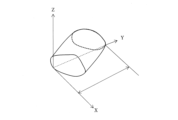
- FIG. 2 is a schematic perspective view illustrating a method for measuring the maximum length of a chip-like object according to one embodiment.
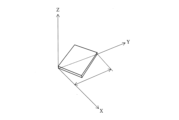
- FIG. 2 is a schematic perspective view illustrating a method for measuring the maximum length of a chip-like object according to one embodiment.
- 1 is a photograph of the chip-like material obtained in Example 1.
- the liquid crystal polyester constituting the liquid crystal polyester chip-like material is a polyester that exhibits optical anisotropy (liquid crystallinity) in the molten phase, and can be identified, for example, by placing a sample on a hot stage, heating it under a nitrogen atmosphere, and observing the transmitted light of the sample with a polarizing microscope.
- the liquid crystal polyester may be a polyester that is mainly composed of structural units containing aromatic groups in the main chain, and the bonds between each structural unit are mainly composed of ester bonds, but it is preferable that all structural units are fully aromatic liquid crystal polyesters that contain aromatic groups in the main chain.
- the liquid crystal polyester is, for example, composed of structural units derived from aromatic diols, aromatic dicarboxylic acids, aromatic hydroxycarboxylic acids, etc., and the structural units derived from aromatic diols, aromatic dicarboxylic acids, and aromatic hydroxycarboxylic acids are not particularly limited in terms of their chemical structure, as long as they do not impair the effects of the present invention.
- the liquid crystal polyester may be a liquid crystal polyester amide containing structural units derived from aromatic diamines, aromatic hydroxyamines, or aromatic aminocarboxylic acids, as long as they do not impair the effects of the present invention.
- examples of preferred structural units are shown in Table 1.
- m is an integer from 0 to 2
- Y in the formula, in the range of 1 to the maximum number that can be substituted on the aromatic ring or cyclo ring each independently includes a hydrogen atom, a halogen atom (e.g., a fluorine atom, a chlorine atom, a bromine atom, an iodine atom, etc.), an alkyl group (e.g., an alkyl group having 1 to 4 carbon atoms such as a methyl group, an ethyl group, an isopropyl group, a t-butyl group, etc.), an alkoxy group (e.g., a methoxy group, an ethoxy group, a isopropoxy group, a n-butoxy group, etc.), an aryl group (e.g., a phenyl group, a naphthyl group, etc.), an aralkyl group (e.g.,
- More preferred structural units include the structural units described in examples (1) to (20) in Tables 2, 3, and 4 below.
- a structural unit in the formula is a structural unit that can exhibit multiple structures, two or more of such structural units may be combined and used as structural units that constitute the polymer.
- n is an integer of 1 or 2
- Y 1 and Y 2 may each independently be a hydrogen atom, a halogen atom (e.g., a fluorine atom, a chlorine atom, a bromine atom, an iodine atom, etc.), an alkyl group (e.g., an alkyl group having 1 to 4 carbon atoms such as a methyl group, an ethyl group, an isopropyl group, a t-butyl group, etc.), an alkoxy group (e.g., a methoxy group, an ethoxy group, an isopropoxy group, an n-butoxy group, etc.), an aryl group (e.g., a phenyl group, a naphthyl group, etc.), an aralkyl group (e.g., a benzyl group, a benzyl group, etc.,
- the liquid crystal polyester may contain a structural unit derived from a hydroxycarboxylic acid as a main component.
- the liquid crystal polyester may preferably contain a structural unit (A) derived from hydroxybenzoic acid and a structural unit (B) derived from hydroxynaphthoic acid.
- the structural unit (A) may be a structural unit derived from 4-hydroxybenzoic acid (formula (A) below), and the structural unit (B) may be a structural unit derived from 6-hydroxy-2-naphthoic acid (formula (B) below).
- the ratio of the structural unit (A) to the structural unit (B) may be preferably in the range of 9/1 to 1/1, more preferably 7/1 to 1/1, and even more preferably 5/1 to 1/1.
- the liquid crystal polyester may contain a structural unit derived from 4-hydroxybenzoic acid (structural unit (A)) and/or a structural unit derived from 6-hydroxy-2-naphthoic acid (structural unit (B)), and the total content of structural unit (A) and structural unit (B) may be 40 mol% or more, preferably 50 mol% or more, more preferably 70 mol% or more, and even more preferably 80 mol% or more, based on the total amount of all structural units.
- structural unit (A) structural unit derived from 4-hydroxybenzoic acid
- structural unit (B) structural unit derived from 6-hydroxy-2-naphthoic acid
- the total content of structural unit (A) and structural unit (B) may be 40 mol% or more, preferably 50 mol% or more, more preferably 70 mol% or more, and even more preferably 80 mol% or more, based on the total amount of all structural units.
- the melting point of the liquid crystal polyester may be 250°C or higher, preferably 260°C or higher, and more preferably 280°C or higher.
- the melting point of the liquid crystal polyester may be 380°C or lower, preferably 360°C or lower, and more preferably 340°C or lower.
- the melting point is the main absorption peak temperature observed when measured with a differential scanning calorimeter (DSC) in accordance with the JIS K 7121:2012 test method. Specifically, 4 to 6 mg of a sample is placed in an aluminum pan in a DSC device, and nitrogen is passed as a carrier gas at a flow rate of 200 mL/min. The endothermic peak is measured when the temperature is raised from room temperature (e.g., 25°C) at a rate of 10°C/min.
- room temperature e.g., 25°C
- the liquid crystal polyester chip material may contain thermoplastic resins such as polyethylene terephthalate, modified polyethylene terephthalate, polyolefin, polycarbonate, polyamide, polyphenylene sulfide, polyether ether ketone, and fluororesin, as long as the effect of the present invention is not impaired. It may also contain various additives such as inorganic substances such as titanium oxide, kaolin, silica, and barium oxide, colorants such as carbon black, dyes, and pigments, antioxidants, ultraviolet absorbers, and light stabilizers.
- thermoplastic resins such as polyethylene terephthalate, modified polyethylene terephthalate, polyolefin, polycarbonate, polyamide, polyphenylene sulfide, polyether ether ketone, and fluororesin, as long as the effect of the present invention is not impaired. It may also contain various additives such as inorganic substances such as titanium oxide, kaolin, silica, and barium oxide, colorants such as carbon black, dyes
- the liquid crystal polyester chip-like material may contain 50% or more by weight of liquid crystal polyester, preferably 80% or more by weight, and more preferably 90% or more by weight. From the viewpoint of improving the recycling rate, liquid crystal polyester chip-like material having a high purity of liquid crystal polyester is preferred, and it is even more preferred that it contains 95% or more by weight of liquid crystal polyester, and even more preferred that it contains 98% or more by weight.
- the liquid crystal polyester chip material of the present invention can be a raw material molded product obtained by recovering used liquid crystal polyester molded products, or defective products and plastic waste (e.g., scraps, residues, burrs, etc.) generated during the manufacturing process of liquid crystal polyester molded products.
- the molded products include fibers, films, and various molded products.
- a sorting process such as classification may be performed to obtain chip-like products having a bulk density of 0.15 to 1.20 g/mL and an average maximum length of 3 to 30 mm.
- liquid crystal polyester fiber when liquid crystal polyester fiber is used as the raw material, used liquid crystal polyester fiber products (e.g., untreated yarn, heat-treated yarn in which the untreated yarn is heat-treated to promote solid-phase polymerization of liquid crystal polyester and improve mechanical properties such as tensile strength, or fiber structures processed from these), residual yarns and waste yarns of liquid crystal polyester fiber generated during the manufacturing process (e.g., residual yarns of liquid crystal polyester fiber left in paper tubes or bobbins), etc. can be collected and used as raw materials.
- used liquid crystal polyester fiber products e.g., untreated yarn, heat-treated yarn in which the untreated yarn is heat-treated to promote solid-phase polymerization of liquid crystal polyester and improve mechanical properties such as tensile strength, or fiber structures processed from these
- residual yarns and waste yarns of liquid crystal polyester fiber generated during the manufacturing process e.g., residual yarns of liquid crystal polyester fiber left in paper tubes or bobbins
- liquid crystal polyester fibers include Vectran UM (trademark) made by Kuraray Co., Ltd., Vectran HT (trademark) made by Kuraray Co., Ltd., Scivelas (trademark) made by Toray Industries, Inc., and Zexion (trademark) made by KB Seiren Co., Ltd., etc.
- the residual yarn or waste yarn of liquid crystal polyester fiber generated during the manufacturing process may be any of the discharged yarn obtained immediately after spinning, the untreated yarn before solid-phase polymerization treatment, and the heat-treated yarn after solid-phase polymerization, but it is preferable to use the untreated yarn before processing into the fiber structure because it is less susceptible to adhesion or contamination by dirt or foreign matter.
- Untreated yarn can be obtained by recovering the residual yarn from the processing plant, where fibers may remain on the bobbin when untreated yarn is processed into the fiber structure, or by recovering the untreated yarn (raw spun yarn) remaining when transferred to the heat treatment process during the process of manufacturing liquid crystal polyester fiber.
- liquid crystal polyester film When liquid crystal polyester film is used as the raw material, it is often used as an insulating material for circuit boards because it has low moisture absorption, heat resistance, chemical resistance, and excellent electrical properties, and metal-clad laminates in which metal foil is laminated to liquid crystal polyester film are also used as materials for manufacturing circuit boards. Therefore, scraps generated in the film manufacturing process, metal-clad laminate manufacturing process, and circuit board manufacturing process can be collected as the raw material for liquid crystal polyester film.
- film may remain on the film roll core, and the remaining film can be collected from the processing plant, or the pre-heat-treated film (original film) left over when the film is transferred to the heat treatment process during the film manufacturing process can be collected, etc.
- the molding process for the chip-like material can be appropriately determined depending on the shape of the liquid crystal polyester molding material (hereinafter sometimes abbreviated as raw material molding).
- the raw material compact is subjected to a crushing process, a cutting process, or a combination of these processes.
- the bulk density of the granular material obtained by the crushing and/or cutting process is 0.15 to 1.20 g/mL and the maximum length is 3 to 30 mm
- the granular material may be used as a chip-like material as it is, but the granular material obtained by the crushing and/or cutting process may be further subjected to an integration process as a preliminary compact.
- the crushing and/or cutting process can be carried out using a tool selected from scissors, a push cutter, a slitter, a crusher, etc., depending on the shape of the raw material compact.
- the raw material molded body or the preform may be washed to increase the purity of the liquid crystal polyester.
- the washing treatment for example, additives (e.g., oils and pastes) attached to the raw material molded body or the preform, and other members (e.g., metal foils) attached to the raw material molded body or the preform can be removed.
- the type of washing solution, the contact time between the washing solution and the raw material molded body or the preform, etc. can be adjusted within a range that suppresses deterioration of the liquid crystal polyester.
- the cleaning solution can be selected according to the material to be removed, and may be any of acidic solvents, alkaline solvents, organic solvents, and aqueous solvents. These cleaning solutions may be used alone or in combination of two or more. Furthermore, the various solvents may contain a cleaning agent such as a surfactant, if necessary.
- etching solutions may be used to remove metal components.
- organic solvents or aqueous solvents containing surfactants and/or solvents may be used to efficiently remove dirt and oils.
- the cleaning treatment may be performed by immersing the raw material compact or preform in the cleaning liquid, or by spraying the cleaning liquid onto the raw material compact or preform.
- the bath may be a stationary bath (e.g., a stretching bath) or a rotating bath (e.g., an industrial washing machine).
- the crushing and/or cutting process may be performed in combination with the washing process.
- the order of the two processes is not particularly limited, but it is preferable to perform the washing process after the crushing and/or cutting process.
- the raw material compact or preform may be subjected to an integration process.
- a compact (hereinafter sometimes referred to as an integrated body) can be obtained by thermoforming and/or adhesion molding the raw material compact or preform.
- the integrated body may be a one-dimensional compact such as a string-like compact, or a two-dimensional compact such as a sheet-like compact.
- the raw material compact or preform can be integrated by heat treating it.
- the heating temperature can be set appropriately according to the melting point of the raw material compact or preform used. If the melting point of the raw material compact or preform is Tm, the heating temperature may be, for example, Tm-5 to Tm+40°C, preferably Tm to Tm+30°C, and more preferably Tm+5 to Tm+25°C.
- a melting point determination process may be carried out in advance to determine the melting point of the object to be heated, and a sorting process may be carried out in which the object is sorted according to the determined melting point and those having similar melting points are selected as the object to be heated.
- the melting point of the raw material molded body or preformed body to be heated is a value measured by the method described in the examples below.
- a raw material compact or preform may be used whose moisture content has already been reduced; for example, the moisture content of the raw material compact or preform may be 500 ppm or less, preferably 400 ppm or less, more preferably 300 ppm or less, more preferably 200 ppm or less, more preferably 100 ppm or less, and more preferably 50 ppm or less.
- a heat press treatment may be performed as necessary.
- the liquid crystal polyester resin may be fused and integrated by the heat press treatment.
- the heat press treatment may be a sheet-type or a roll-to-roll type. Specific examples include a method of pressing into a sheet shape with a hot plate, a method of pressing into a sheet shape with a hot roll, and a method of sandwiching between wire mesh or a metal belt and heat pressing into a sheet shape.
- the pressing pressure in the heat pressing process may be, for example, 0.5 to 20 MPa, preferably 1 to 15 MPa, and more preferably 1.5 to 10 MPa, in terms of surface pressure.
- the pressing time may be, for example, 1 to 10 minutes, preferably 1.5 to 8 minutes, and more preferably 2 to 7 minutes. In the case of a roll-to-roll method, a value obtained by converting the linear pressure into surface pressure may be used.
- the heat pressing treatment may be carried out in a single treatment, but may also be carried out after a degassing treatment, if necessary.
- a degassing press treatment may be performed as the degassing treatment.
- the degassing press treatment may be performed, for example, 3 to 20 times, preferably 5 to 15 times, at the above-mentioned surface pressure.
- the pressing time for each press may be, for example, 1 to 30 seconds, preferably 2 to 25 seconds, more preferably 3 to 20 seconds.
- thermoforming in order to prevent the molten liquid crystal polyester resin from adhering to the device used, it is preferable to bring the raw material molded body or the preform into contact with a release-treated device.
- a release treatment such as fluorine coating or silicone coating.
- the press treatment may be performed via a release material such as a fluorine sheet, a silicone sheet, or a polyimide film.
- the degassing and thermoforming are preferably carried out in an inert gas atmosphere or in vacuum.
- the resulting chip-like material may have at least a part of the shape derived from the liquid crystal polyester fiber.
- the integrated body after the heat press treatment and the chip-like material obtained from the integrated body may have a part (e.g., the outer edge, etc.) of the shape derived from the liquid crystal polyester fiber.
- the fibrous material to be thermoformed may be thermoformed in a pre-aligned state.
- aligned fibers may be twisted together, and the twisted fiber bundle may be thermoformed into a rod shape in a hot air oven.
- aligned fibers may be twisted together as necessary to form a fiber bundle, which may be covered on the outside with a thermoplastic resin sheet (e.g., a liquid crystal polyester sheet, the above-mentioned thermoplastic resin that is miscible with liquid crystal polyester, etc.), and the whole may be integrated by heating the covering to melt the thermoplastic resin.
- the thermoplastic resin sheet may have the same melting point as the raw material molded product, but it is preferable that it has a melting point lower than the melting point of the raw material molded product.
- the raw material molded body when it is in the form of a long fiber or film, it may be twisted to form a twisted string, and then the twisted string may be compressed to form a crimped twisted string as an integrated body. It may also be heated before and/or after twisting (e.g., during compression), and softening by heating may facilitate the formation of the twist and/or the crimping.
- a raw material molded body in the form of a continuous fiber may be twisted to form a continuous twisted yarn, which may then be molded by hot pressing to form an integrated body, and a chip-like object of a predetermined size may be formed by a cutting process described below.
- the formation of the twisted yarn and the formation of the integrated body and the cutting process may be performed by the same device or by separate devices.
- a twisted string manufacturing device may be used that includes a supply section that serves as the starting point for twisting the long raw material molded body, and a rotary compression section that rotates the raw material molded body sent from the supply section to impart twist and point-pressure to impart concave indentations to form a crimped twisted string with concave indentations.
- the rotary compression section may include a rotating section and a compression section installed within the rotating section. In the supply section, the raw material molded body is clamped to become the starting point for twisting the raw material molded body, and the raw material molded body is twisted by rotation in the rotating section.
- the raw material molded body is clamped with a predetermined pressure between a pair of compression rollers to form a crimped twisted string by point-pressure bonding.
- a heating section and an intermediate feed section may be provided between the supply section and the rotary compression section (in this case, the intermediate roller of the intermediate feed section serves as the starting point for twisting the raw material molded body).
- the cutting process described below can be performed by a chip-like material manufacturing device that further includes a cutting section that cuts the crimped twisted string sent from the rotary compression section to a predetermined length.
- the adhesive may be applied to the raw material compact or preform by immersing, coating or spraying.
- the bundling agent may be applied to the aligned fibers by immersing, coating or spraying to integrate them.
- the adhesive is not particularly limited as long as it is capable of integrating the raw material molded body or the preformed body, but examples include known or commonly used adhesives such as polyurethane adhesives, polysiloxane adhesives, polyamide adhesives, polyolefin adhesives, and epoxy adhesives.
- the integrated body after integral molding may be subjected to cutting treatment as necessary.
- the cutting treatment is not particularly limited as long as it does not impair the effects of the present invention, and can be performed, for example, with scissors, a push cutter, a fan cutter, a slitter, etc. By cutting, chip-like products formed to a predetermined size can be obtained.
- the liquid crystal polyester chips of the present invention are formed from recovered liquid crystal polyester molded products and have specific bulk density and dimensions.
- the bulk density of the liquid crystal polyester chip material in one embodiment is 0.15 to 1.20 g/mL, preferably 0.30 to 1.15 g/mL, more preferably 0.55 to 1.10 g/mL, even more preferably 0.65 to 1.08 g/mL, and most preferably 0.85 to 1.05 g/mL.
- the chip material When the bulk density of the liquid crystal polyester chip material is 0.15 g/mL or more, the chip material has excellent feedability when fed into an extruder and excellent bite into the extruder screw, and can be melt-kneaded well in the extruder. When the bulk density is 1.20 g/mL or less, there is little inclusion of foreign matter in the chip material, and the physical properties of the molded product obtained from the chip material tend to be improved.
- the bulk density of the liquid crystal polyester chip material is calculated with reference to JIS Z 2504 by pouring the liquid crystal polyester chip material into a measuring container without using a funnel, and then measuring the weight of the chip material in the measuring container with an electronic balance without compressing the chip material in the measuring container by tapping or the like, and calculating the bulk density per internal volume of the measuring container.
- the dimensions of the liquid crystal polyester chip material in one embodiment may be such that the average maximum length is 3 to 30 mm, preferably 3.5 to 20 mm, and more preferably 5 to 15 mm.
- the chip material has excellent feedability when fed into a melt extruder and excellent biteability into the extruder screw. Even when the average maximum length is 30 mm or less, the chip material has excellent feedability when fed into a melt extruder and excellent biteability into the extruder screw.
- the maximum length of one embodiment of the liquid crystal polyester chip-like material can be measured by measuring the longest length from one end to the other end of the projected area when the chip-like material is placed on a flat surface.
- a simple method for measuring the length is to use an electronic caliper, a scaled stereo microscope, an automatic shape measuring device, or the like.
- the chip-like material shown in Figure 1 the chip-like material is placed so that the longest point is parallel to the Y direction in the vertical direction (X direction), horizontal direction (Y direction), and height direction (Z direction), and the length in the Y direction is measured as the length of the longest side.
- the longest side is the length of the diagonal of the square.
- the dimensions of the liquid crystal polyester chip-like object of one embodiment may be such that the average value of the minimum length is 0.1 to 10 mm, preferably 0.1 to 8 mm, and more preferably 0.3 to 5 mm.
- the minimum length of the liquid crystal polyester chip-like object can be measured by measuring the shortest length from one end to the other end in the projected area when the chip-like object is placed on a flat surface, and can be measured at the same time as the measurement of the maximum length.
- the chip-like object shown in FIG. 1 is placed so that the length in the Y direction is the maximum length of the chip-like object, and in this case, the length in the Z direction is measured as the minimum length of the chip-like object.
- the shortest side is the height of the rectangular parallelepiped (length in the Z direction).
- the minimum length is not necessarily the length parallel to the X direction or the Z direction, and the shortest point is determined separately.
- the amount of ketone bonds in the liquid crystal polyester of one embodiment of the liquid crystal polyester chip material may be preferably 0.050 mol% or less, more preferably 0.045 mol% or less, and even more preferably 0.040 mol% or less.
- the amount of ketone bonds means the ratio of the molar amount of ketone bonds to the total molar amount of ester bonds and ketone bonds (molar amount of ketone bonds/(molar amount of ester bonds+molar amount of ketone bonds)), and is a value measured by the method described in the Examples below.
- the lower limit of the amount of ketone bonds is not particularly limited, but may be about 0.001 mol%.
- Ketone bonds are heterogeneous bonds that are generated by a side reaction from ester bonds during the production of liquid crystal polyester molded bodies, and the amount of ketone bonds also increases with the thermal degradation of liquid crystal polyester, so it can be an indicator of the thermal degradation of chip-like materials.
- chip-like materials are obtained by thermoforming
- chip-like materials with suppressed thermal degradation can be obtained by lowering the molding temperature during thermoforming.
- the obtained chip-like materials can be treated as equivalent to virgin liquid crystal polyester chips, and high-quality molded bodies can be produced.
- the total amount of carboxy terminals of the liquid crystal polyester (hereinafter referred to as the total CEG amount) may be, for example, 20 meq/kg or less, preferably 15 meq/kg or less, and more preferably 10 meq/kg or less.
- the lower limit of the total CEG amount is not particularly limited, but may be 1 meq/kg or more.
- the total CEG amount is a value measured by the method described in the Examples below, and is the amount of carboxy groups present at the molecular terminals of the molecules constituting the liquid crystal polyester chip material, mainly in 1 kg of chip material.
- the carboxy groups present at the polymer terminals in liquid crystal polyester are formed by structural units derived from monomers having carboxy groups, such as aromatic hydroxycarboxylic acids and aromatic dicarboxylic acids, and may be carboxy groups that remain unreacted in structural units present at such polymer terminals.
- the total amount of one end of the liquid crystal polyester may be, for example, 2 to 100 meq/kg, preferably 3 to 100 meq/kg, more preferably 5 to 100, even more preferably 10 to 100 meq/kg, and even more preferably 20 to 100 meq/kg.
- the total amount of one end of the liquid crystal polyester chip material may be 50 to 100 meq/kg, preferably 55 to 99 meq/kg, and more preferably 60 to 85 meq/kg.
- the total amount of one end indicates the number of polymer chains and is used as an index for evaluating molecular weight.
- the total amount of terminals is defined as the value obtained by dividing the total amount (meq/kg) of carboxyl group terminals derived from hydroxycarboxylic acid and terminals from which carbon dioxide has been eliminated by a decarboxylation reaction that may occur as a side reaction in the carboxyl group derived from hydroxycarboxylic acid per 1 kg of liquid crystal polyester chip material by the molar ratio of the structural units derived from hydroxycarboxylic acid in the liquid crystal polyester, and is a value measured by the method described in the examples below.
- the recycled liquid crystal polyester molding of one embodiment can be produced by using the liquid crystal polyester chip of the present invention as a material.
- the recycled liquid crystal polyester molding include pellets, fibers, films, and various injection molded products, which can be obtained by known or conventional manufacturing methods.
- the method for producing a recycled liquid crystal polyester molding includes a step of preparing at least a chip-like material as a raw material, and a step of melt-extruding the chip-like material.
- the process of melt-extruding the chip-like material can be carried out by known or conventional methods depending on the desired recycled liquid crystal polyester molding. For example, when forming pellets, a pelletizing process is carried out.
- the pelletizing process of the chip-like material in order to suppress thermal degradation of the liquid crystal polyester resin molten in the extruder, it is preferable to melt-knead the material by setting the melt-kneading temperature to a temperature equal to or lower than the melting point Tm of the liquid crystal polyester resin + 30°C.
- the melt-kneading temperature means the temperature at which the resin is melt-kneaded by the screw of the extruder, and specifically, the set temperature of the extruder.
- chip-like material whose moisture content has been reduced in advance may be used.
- the moisture content of the chip-like material may be 500 ppm or less, preferably 400 ppm or less, more preferably 300 ppm or less, more preferably 200 ppm or less, more preferably 100 ppm or less, and more preferably 50 ppm or less.
- the recycled liquid crystal polyester molding of one embodiment may contain virgin liquid crystal polyester resin, and the proportion of virgin liquid crystal polyester resin in the recycled liquid crystal polyester molding may be 5 to 97% by weight, preferably 10 to 96% by weight, and more preferably 20 to 95% by weight.
- the ketone bond amount of one embodiment of the recycled liquid crystal polyester molding is preferably 0.050 mol% or less, more preferably 0.045 mol% or less, and even more preferably 0.040 mol% or less, from the viewpoint of the physical properties of the molding.
- the lower limit of the ketone bond amount is not particularly limited, but may be, for example, 0.0001 mol% or more.
- At least one type of atom selected from the group consisting of phosphorus atoms and sulfur atoms may be uniformly distributed on the cut surface of the recycled liquid crystal polyester molding in one embodiment. These atoms may be included as a component to be attached to the surface of an oil agent or the like. For example, phosphorus atoms are applied to the surface of the raw material molding as a component of a general antistatic agent, so that in the raw material molding, the phosphorus atoms are distributed locally on the surface rather than inside the molding.
- the recycled liquid crystal polyester molding when these atoms derived from the recovered raw material molding are mixed into the chip-like material, the recycled liquid crystal polyester molding formed from the chip-like material has these atoms uniformly distributed not only on the surface but also inside the molding, so that the distribution state of these atoms on the cut surface can be used as traceability for the recycled liquid crystal polyester molding.
- the distribution state of these atoms on the fiber cross section can be examined by time-of-flight secondary ion mass spectrometry (TOF-SIMS).
- the recycled liquid crystal polyester molded article of one embodiment may be a recycled liquid crystal polyester fiber.
- the recycled liquid crystal polyester fiber may be a single fiber consisting of one component of a liquid crystal polyester chip material, as long as the effect of the present invention is not impaired.
- the recycled liquid crystal polyester fiber may be a mixed spun fiber obtained by mixing a liquid crystal polyester chip material with a virgin liquid crystal polyester resin, various thermoplastic resins, and various additives and spinning the mixture.
- the recycled liquid crystal polyester fiber of one embodiment may be a non-composite spun fiber or a composite spun fiber.
- the composite spun fiber may be a composite spun fiber obtained by simultaneously spinning liquid crystal polyester chip-like material, various thermoplastic resins, and various additives from a separated spinneret.
- Such composite spun fibers may be various composite spun fibers such as an island-in-sea type, a core-sheath type, or a side-by-side type.
- each component in the core-sheath type or side-by-side type may further form an island-in-sea structure as necessary.
- the method for producing recycled liquid crystal polyester filament may include at least a step of melt spinning liquid crystal polyester chip material to obtain raw spun yarn.
- the liquid crystal polyester chips are fed into an extruder and melt-kneaded in the extruder.
- the liquid crystal polyester melt-kneaded material is then transported to the spinning head and extruded from the nozzle.
- the resulting thread is wound up to obtain the spun raw yarn.
- an oil may be applied to prevent static electricity.
- the chip-like material may be fed into the extruder through a hopper, or any other known feeding method may be used, such as a volumetric feeder, a gravimetric feeder, or an air-fed method. From the standpoint of measurement, it is preferable to use a gravimetric feeder.
- Melt spinning can be carried out by known or conventional methods, and the molten mixture is discharged from the nozzle of the spinning head and wound up on a godet roller or the like to obtain the spun raw yarn.
- the amount of ketone bonds in the liquid crystal polyester of the recycled liquid crystal polyester filament fiber used as the raw spinning yarn is preferably 0.050 mol% or less, more preferably 0.045 mol% or less, and even more preferably 0.040 mol% or less.
- the recycled liquid crystal polyester filament as the raw spinning yarn may have a total CEG amount of liquid crystal polyester of, for example, 20 meq/kg or less, preferably 15 meq/kg or less, and more preferably 10 meq/kg or less.
- the lower limit of the total CEG amount is not particularly limited, but may be 1 meq/kg or more.
- the recycled liquid crystal polyester filament as the raw spinning yarn may have a total amount of liquid crystal polyester on one end of, for example, 50 to 100 meq/kg, preferably 55 to 99 meq/kg, and more preferably 60 to 85 meq/kg.
- a total amount of liquid crystal polyester on one end of, for example, 50 to 100 meq/kg, preferably 55 to 99 meq/kg, and more preferably 60 to 85 meq/kg.
- the method for producing recycled liquid crystal polyester filament may further include a step of heat-treating the obtained raw spun yarn.
- a step of heat-treating the obtained raw spun yarn By subjecting the raw spun yarn to heat treatment, solid-phase polymerization of the liquid crystal polyester progresses, and the mechanical properties (e.g., tensile strength) can be improved.
- the heat treatment method is not particularly limited, and may be, for example, a batch-type heat treatment or a continuous heat treatment by conveying.
- the material in a batch-type heat treatment, may be wound around a bobbin in a packaged state, or in a skein or tow state, and it is preferable to perform the heat treatment in a packaged state, as this simplifies the equipment and improves productivity.
- the bobbin must be able to withstand the temperature of solid-state polymerization, and is preferably made of a metal such as aluminum, brass, iron, or stainless steel.
- the conveyance method may be either contact conveyance (for example, conveyor method, support roll method, heat treatment method using heated rollers) or non-contact conveyance (roll-to-roll method).
- the treatment path does not have to be a straight line, and turning rollers or guides may be placed within the device to appropriately change the length, angle, curvature, etc. of the treatment path during heat treatment.
- the recycled liquid crystal polyester long fiber of one embodiment may be a monofilament or a multifilament.
- the number of filaments can be appropriately selected depending on the application, etc.
- the number of filaments may be 2 to 1,000, preferably 3 to 600, more preferably 4 to 300, and even more preferably 5 to 100.
- the single fiber fineness of the recycled liquid crystal polyester long fiber of one embodiment can be appropriately selected depending on the application, etc., and for example, the single fiber fineness may be 50 dtex or less, preferably 15 dtex or less, and more preferably 10 dtex or less, but in order to obtain a fiber structure with flexibility, a fine fineness is preferable, and for example, it may be 7 dtex or less.
- the lower limit of the single fiber fineness is not particularly limited, but may be, for example, 0.01 dtex.
- the single fiber fineness is a value measured by the method described in the examples below.
- the total fineness of one embodiment of the recycled liquid crystal polyester long fiber can be appropriately selected depending on the application, etc., and may be, for example, 2000 dtex or less, preferably 1000 dtex or less, more preferably 600 dtex or less, and even more preferably 300 dtex or less.
- the lower limit of the total fineness is not particularly limited, but may be, for example, about 1 dtex.
- the tensile strength of one embodiment of the recycled liquid crystal polyester filament may be 6 cN/dtex or more in the case of untreated yarn. It may be preferably 7 cN/dtex or more, and more preferably 8 cN/dtex or more. In the case of heat-treated yarn, it may be 16 cN/dtex or more, preferably 17 cN/dtex or more, and more preferably 18 cN/dtex or more.
- the recycled liquid crystal polyester fiber structure of one embodiment may be a combination of recycled liquid crystal polyester fiber and other fiber.
- it may be a composite fiber using recycled liquid crystal polyester fiber and other fiber (e.g., a mixed yarn in which recycled liquid crystal polyester fiber is mixed with other fiber, etc.), or a composite cloth using recycled liquid crystal polyester fiber and other fiber (e.g., a mixed cloth in which recycled liquid crystal polyester fiber is mixed with other fiber, or a laminate of cloth made of recycled liquid crystal polyester fiber and cloth made of other fiber, etc.).
- recycled liquid crystal polyester fibers may be used as reinforcing fibers or as a matrix component in a composite material containing reinforcing fibers and a matrix component.
- the recycled liquid crystal polyester fibers are melted by heat treatment after forming a composite fabric with the reinforcing fibers, and when the fiber structure is used to manufacture a composite material, the fiber structure may be a composite fiber or composite fabric containing fused fibers that form the matrix of the composite material as other fibers.
- the recycled liquid crystal polyester fiber structure of the present invention can be used for various applications such as electrical and electronic parts materials, general industrial materials, various reinforcing materials, and protective clothing.
- the chip-like material was once put into a 500mL beaker, the beaker was tilted, and the chip-like material was poured into a 500mL measuring vessel with an inner diameter of 85mm by free fall.
- the chip-like material filled the measuring vessel and began to overflow, the inflow of the measuring sample was immediately stopped.
- the chip-like material protruding along the upper end of the measuring vessel was scraped off flat in one operation, taking care not to compress the chip-like material or to shake or vibrate the measuring vessel.
- the weight of the liquid crystal polyester chip-like material in the measuring vessel was measured with an electronic balance, and the bulk density (g/mL) per 500mL was calculated.
- Total fineness, single fiber fineness Based on JIS L 1013:2010 8.3.1 A method, the liquid crystal polyester fiber was wound into a skein of 1m per turn x 100 turns (total 100m) using a measuring device "Wrap Reel by Motor Drive” manufactured by Daiei Scientific Instruments Co., Ltd., and the weight (g) was multiplied by 100 to perform measurements twice per level, and the average value was taken as the total fineness (dtex) of the obtained liquid crystal polyester fiber. The quotient obtained by dividing this value by the number of filaments was taken as the single fiber fineness (dtex).
- ketone binding amount The amount of ketone bond was calculated by pyrolysis gas chromatography described in Polymer Degradation and Stability, 76, 85-94 (2002). Specifically, a liquid crystal polyester chip-like material or a liquid crystal polyester fiber sample was heated in the presence of tetramethylammonium hydroxide (TMAH) using a pyrolysis apparatus (manufactured by Frontier Labs, Inc., "PY2020iD”) to generate gas by pyrolysis/methylation.
- TMAH tetramethylammonium hydroxide
- This gas was analyzed using gas chromatography (manufactured by Agilent Technologies, Inc., "GC-6890N”), and the amount of ketone bond (mol%) was calculated from the peak area derived from the ketone bond and the peak area derived from the ester bond.
- the ester bond present inside the polymer chain was decomposed into carboxylic acid n-propylamide and a hydroxy group, and the carboxy group (CEG) and hydroxy group present at the end of the polymer chain did not change from the carboxy group and hydroxy group, so the decomposition product was separated by HPLC, and the peak area of the decomposition product having a carboxy group was compared with a calibration curve prepared by HPLC analysis of each sample to quantify the amount of carboxy terminal (meq/kg) derived from each monomer.
- the measurement device and measurement conditions for the HPLC method are as follows.
- the amount of CEG derived from a monovalent carboxylic acid such as 4-hydroxybenzoic acid or 6-hydroxy-2-naphthoic acid can be determined by directly quantifying 4-hydroxybenzoic acid or 6-hydroxy-2-naphthoic acid, while the amount of CEG derived from a divalent carboxylic acid such as terephthalic acid, isophthalic acid or 2,6-naphthalenedicarboxylic acid can be determined by quantifying a substance in which one of the carboxy groups is amidated, such as terephthalic acid mono-n-propylamide, isophthalic acid mono-n-propylamide or 2,6-naphthalenedicarboxylic acid mono-n-propylamide. The sum of all the amounts of carboxy termini contained in each sample was taken as the total amount of carboxy termini (total CEG amount) of that sample.
- Total end amount In the same manner as in the measurement of the total CEG amount, the liquid crystal polyester chip-like material or liquid crystal polyester fiber sample was decomposed using n-propylamine, and the total amount (meq/kg) of the carboxyl end amount derived from hydroxycarboxylic acid and the end amount generated by the decarboxylation reaction of the carboxyl group at the end derived from hydroxycarboxylic acid was quantified.
- the end amount derived from 4-hydroxybenzoic acid was obtained by quantifying 4-hydroxybenzoic acid and phenol
- the end amount derived from 6-hydroxy-2-naphthoic acid was obtained by quantifying 6-hydroxy-2-naphthoic acid and 2-naphthol.
- the total end amount derived from hydroxycarboxylic acid was divided by the molar ratio of the structural unit derived from hydroxycarboxylic acid in the liquid crystal polyester of the sample, and the value was taken as the total one end amount of the sample.
- Example 1 Virgin chips of liquid crystal polyester (melting point: 278 ° C.) composed of 73/27 (mol%) of structural units derived from 4-hydroxybenzoic acid and structural units derived from 6-hydroxy-2-naphthoic acid were dried with hot air at 120 ° C. for 4 hours or more. Thereafter, the chips were put into a ⁇ 15 mm twin-screw extruder (manufactured by Technovel Co., Ltd.) and melt-kneaded, and the molten mixture was supplied to the spinning head.
- ⁇ 15 mm twin-screw extruder manufactured by Technovel Co., Ltd.
- the spinning head was equipped with a nozzle having a hole diameter of 0.10 mm ⁇ and 50 holes, and the spinning head temperature was set to 320 ° C., and the molten mixture was discharged at a discharge rate of 28 g / min, and wound on a bobbin at a winding speed of 1000 m / min, and 10 liquid crystal polyester fiber spinning raw yarns (untreated yarns) of 5 kg were obtained.
- the obtained spinning yarn was subjected to heat treatment at 270°C for 16 hours under a nitrogen atmosphere, and 4 kg of spinning yarn was unwound from each bobbin, obtaining 10 bobbins each with 1 kg of residual yarn.
- the residual yarn was cut on the bobbin using a cutter knife, and liquid crystal polyester fibers with a length of approximately 10 cm were collected and used as the recovered raw material molding.
- a polyimide film was placed on the metal plate as a heat-resistant release material, and a metal frame (12 cm long, 12 cm wide, 1.5 mm thick) was placed on the polyimide film.
- Liquid crystal polyester fibers were aligned as a raw material molded body and placed in a metal frame, and a polyimide film was placed on top of it.
- the recovered liquid crystal polyester fibers were heat-pressed for 10 seconds at 300°C and 2.2 MPa with metal hot plates arranged above and below, and the fibers were degassed 10 times and then heat-pressed for 3 minutes. Following the heat press, the liquid crystal polyester was transferred together with the metal frame to a cooling press machine and cooled to obtain a sheet-like material made from the recovered liquid crystal polyester fibers.
- the obtained sheet-like material was cut using a cutter to obtain a square column-shaped chip-like material with a thickness of about 1.5 mm, a long side of about 10 mm, and a short side of about 3 mm.
- the average maximum length of the chip-like material was 10.4 mm, and the bulk density was 0.80 g/mL.
- a photograph of the obtained chip-like material is shown in Figure 3.
- the chip-like object has a shape on its outer edge that is derived from the fibers.
- the obtained chip-like material was dried with hot air at 120°C for more than 4 hours, and then fed into a ⁇ 15mm twin-screw extruder (manufactured by Technobel Co., Ltd.).
- the extruder was able to melt-knead the fed chip-like material at 300°C without the screw spinning freely, and the molten kneaded material could be supplied to the spinning head.
- the spinning head was equipped with a nozzle with a hole diameter of 0.10 mm ⁇ and 50 holes, and the spinning head temperature was set to 330°C.
- the molten kneaded material was discharged at a discharge rate of 28 g/min and wound onto a bobbin at a winding speed of 1000 m/min to obtain a spun raw yarn of recycled liquid crystal polyester long fiber.
- Examples 2 and 3 The chip-like material obtained in Example 1 and the virgin chips obtained in Reference Example were mixed in the ratio shown in Table 5, dried with hot air at 120° C. for 4 hours or more, and then fed into a ⁇ 15 mm twin-screw extruder, and other than that, the same procedure as in Example 1 was repeated to obtain a spun raw yarn and a heat-treated yarn of a recycled liquid crystal polyester long fiber.
- the physical properties of the obtained recycled liquid crystal polyester fiber and the chip-like material used are shown in Table 5.
- Example 4 Ten bobbins each having 1 kg of the residual yarn of the spinning raw yarn obtained in Example 1 were placed on a winding creel and unwound, and the ten were bundled into one, passed through a bath containing a polyurethane-based sizing agent (Superflex 126, manufactured by Daiichi Kogyo Seiyaku Co., Ltd.), and then dried through a hot air oven set at 190 ° C. to obtain a liquid crystal polyester fiber bundle to which a sizing agent of 1 wt % as a solid content was applied.
- a polyurethane-based sizing agent Superflex 126, manufactured by Daiichi Kogyo Seiyaku Co., Ltd.
- the obtained liquid crystal polyester fiber bundle was cut with a push cutter to obtain a chip-like material having a thickness of about 2 mm, a width of about 5 mm, and a length of about 5 mm (average maximum length: 7.0 mm). Except for using the obtained chip-like material, the same procedure as in Example 1 was performed to obtain a spinning raw yarn and a heat-treated yarn of recycled liquid crystal polyester long fiber.
- the physical properties of the obtained recycled liquid crystal polyester fiber and the chip-like material used are shown in Table 5.
- Example 5 In Example 1, when the liquid crystal polyester fiber recovered by cutting the remaining yarn with a cutter knife was sandwiched between metal hot plates and hot-press molded, the fiber was hot-pressed 10 times at 300°C and 2.2 MPa for 10 seconds for degassing, but the hot-pressing time was changed to 30 seconds. The same procedure as in Example 1 was repeated to obtain a spun raw yarn and a heat-treated yarn of a recycled liquid crystal polyester long fiber. The physical properties of the obtained recycled liquid crystal polyester fiber and the chip-like material used are shown in Table 5.
- Example 6 The liquid crystal polyester fiber spinning raw yarn (untreated yarn) of 5 kg winding obtained in Example 1 was heat-treated at 220°C for 4 hours under a nitrogen atmosphere, cut using a cutter knife on a bobbin, and the liquid crystal polyester fiber of about 10 cm in length was collected as a collected raw material molding. Then, the chip-like material was produced in the same manner as in Example 1.
- the obtained chip-like material was dried with hot air at 120°C for more than 4 hours, and then fed into a ⁇ 15mm twin-screw extruder (manufactured by Technobel Co., Ltd.).
- the extruder was able to melt-knead the fed chip-like material at 300°C without the screw spinning freely, and the molten kneaded material was able to be supplied to the spinning head.
- the spinning head was equipped with a nozzle with a hole diameter of 0.10 mm ⁇ and 50 holes, and the spinning head temperature was set to 330°C.
- the molten kneaded material was discharged at a discharge rate of 28 g/min and wound around a bobbin at a winding speed of 1000 m/min to obtain a spun raw yarn of recycled liquid crystal polyester long fiber. Thereafter, heat treatment was performed in the same manner as in Example 1 to obtain a heat-treated yarn of recycled liquid crystal polyester long fiber.
- the physical properties of the obtained recycled liquid crystal polyester fiber and the chip-like material used are shown in Table 5.
- Example 1 the length of the fiber when the residual yarn was cut on the bobbin with a cutter knife was changed to 20 mm, and the fiber shortened to a length of 20 mm was used as a chip-like material for melt spinning in the same manner as in Example 1, but it did not get caught in the extruder, and it was not possible to obtain a raw spun yarn.
- the physical properties of the chip-like material used in spinning are shown in Table 5.
- the obtained liquid crystal polyester fiber bundle was cut with a push cutter to obtain a chip-like material (maximum average length: 7.0 mm) having a thickness of about 2 mm, a width of about 5 mm, and a length of about 5 mm.
- the obtained chip-like material was melt-spun in the same manner as in Example 1, but the bulk density was too large due to the presence of the bundling agent, and melt kneading could not be performed well, so single yarn breakage occurred frequently and the spinning raw yarn could not be collected.
- the physical properties of the chip-like material used for spinning are shown in Table 5.
- Example 3 In Example 1, the remaining yarn cut on the bobbin using a cutter knife was pulverized in a pulverizer (mesh 8 mm) and the pulverized material was used as chips for melt spinning in the same manner as in Example 1. However, because the bulk density and average maximum length were small, the chips did not fit into the extruder and it was not possible to obtain raw yarn for spinning. The physical properties of the chips used for spinning are shown in Table 5.
- Example 4 The sheet-like material made of the recovered liquid crystal polyester fiber obtained in the same manner as in Example 1 was cut using a cutter to obtain a chip-like material (maximum average length: 42.3 mm) having a thickness of about 1.5 mm, a long side of about 30 mm, and a short side of about 30 mm in a rectangular shape. The obtained chip-like material was melt-spun in the same manner as in Example 1, but it was not caught in the extruder and spinning raw yarn could not be obtained. The physical properties of the chip-like material used for spinning are shown in Table 5.
- the recycled liquid crystal polyester filaments obtained from the chip-like materials of Examples 1 to 4 and 6 have fiber properties equivalent to those of the liquid crystal polyester filaments obtained from 100% by mass of virgin liquid crystal polyester in the Reference Example.
- the recycled liquid crystal polyester molded product of the present invention can be used for various applications such as general industrial materials, civil engineering and construction materials, various reinforcing materials, and electrical and electronic component materials.
- the molded product when it is a fiber structure, it can be used as various fiber products such as tension members (electric wires, optical fibers, etc.), heater wire core threads, cords for various electrical products such as earphone cords, ropes, sling belts, ropes, lifelines, fishing lines, fishing nets, longlines, land nets (safety nets, golf driving range nets, etc.), catheters, reinforcing materials for plastics, concrete, and rubber, base fabrics for printed circuit boards, sail cloth, protective clothing, and protective gloves.
- tension members electrical wires, optical fibers, etc.
- heater wire core threads cords for various electrical products
- cords for various electrical products such as earphone cords, ropes, sling belts, ropes, lifelines, fishing lines, fishing nets, longlines, land nets (safet
Landscapes
- Engineering & Computer Science (AREA)
- Mechanical Engineering (AREA)
- Chemical & Material Sciences (AREA)
- Environmental & Geological Engineering (AREA)
- Chemical Kinetics & Catalysis (AREA)
- Textile Engineering (AREA)
- Health & Medical Sciences (AREA)
- Medicinal Chemistry (AREA)
- Polymers & Plastics (AREA)
- Organic Chemistry (AREA)
- General Chemical & Material Sciences (AREA)
- Processing And Handling Of Plastics And Other Materials For Molding In General (AREA)
- Separation, Recovery Or Treatment Of Waste Materials Containing Plastics (AREA)
- Liquid Crystal Substances (AREA)
Priority Applications (1)
| Application Number | Priority Date | Filing Date | Title |
|---|---|---|---|
| JP2025551632A JP7851501B2 (ja) | 2023-10-12 | 2024-10-09 | 液晶ポリエステルチップ状物、リサイクル液晶ポリエステル成形体、およびそれらの製造方法 |
Applications Claiming Priority (2)
| Application Number | Priority Date | Filing Date | Title |
|---|---|---|---|
| JP2023177123 | 2023-10-12 | ||
| JP2023-177123 | 2023-10-12 |
Publications (1)
| Publication Number | Publication Date |
|---|---|
| WO2025079600A1 true WO2025079600A1 (ja) | 2025-04-17 |
Family
ID=95395639
Family Applications (1)
| Application Number | Title | Priority Date | Filing Date |
|---|---|---|---|
| PCT/JP2024/036077 Pending WO2025079600A1 (ja) | 2023-10-12 | 2024-10-09 | 液晶ポリエステルチップ状物、リサイクル液晶ポリエステル成形体、およびそれらの製造方法 |
Country Status (3)
| Country | Link |
|---|---|
| JP (1) | JP7851501B2 (https=) |
| TW (1) | TW202533933A (https=) |
| WO (1) | WO2025079600A1 (https=) |
Citations (6)
| Publication number | Priority date | Publication date | Assignee | Title |
|---|---|---|---|---|
| JPH10323833A (ja) * | 1997-05-26 | 1998-12-08 | Diafoil Co Ltd | ポリエステル組成物の製造方法 |
| JP2005206966A (ja) * | 2004-01-22 | 2005-08-04 | Nippon Ester Co Ltd | 再生ポリエステル繊維 |
| WO2021074753A1 (en) * | 2019-10-18 | 2021-04-22 | Surendra Bhagirathmal Jiwrajka | A method of manufacturing polyester yarn from polyester waste |
| JP2022092279A (ja) * | 2020-12-10 | 2022-06-22 | ユニチカ株式会社 | 再生ポリエステル樹脂及び再生ポリエステル樹脂の製造方法 |
| WO2023058563A1 (ja) * | 2021-10-08 | 2023-04-13 | 株式会社クラレ | 液晶ポリエステル繊維およびその製造方法 |
| JP2023081479A (ja) * | 2021-12-01 | 2023-06-13 | 東レ株式会社 | ポリエステル支持体から成る離型フィルムの回収方法およびフィルムの製造方法。 |
Family Cites Families (2)
| Publication number | Priority date | Publication date | Assignee | Title |
|---|---|---|---|---|
| JP2004300115A (ja) | 2003-04-01 | 2004-10-28 | Teijin Fibers Ltd | ポリエステル廃棄物からの有効成分回収方法 |
| AT513443B1 (de) | 2012-09-12 | 2016-08-15 | Next Generation Recyclingmaschinen Gmbh | Verfahren und Vorrichtung zum Erhöhen der Grenzviskosität einer Polykondensatschmelze |
-
2024
- 2024-10-09 WO PCT/JP2024/036077 patent/WO2025079600A1/ja active Pending
- 2024-10-09 JP JP2025551632A patent/JP7851501B2/ja active Active
- 2024-10-11 TW TW113138773A patent/TW202533933A/zh unknown
Patent Citations (6)
| Publication number | Priority date | Publication date | Assignee | Title |
|---|---|---|---|---|
| JPH10323833A (ja) * | 1997-05-26 | 1998-12-08 | Diafoil Co Ltd | ポリエステル組成物の製造方法 |
| JP2005206966A (ja) * | 2004-01-22 | 2005-08-04 | Nippon Ester Co Ltd | 再生ポリエステル繊維 |
| WO2021074753A1 (en) * | 2019-10-18 | 2021-04-22 | Surendra Bhagirathmal Jiwrajka | A method of manufacturing polyester yarn from polyester waste |
| JP2022092279A (ja) * | 2020-12-10 | 2022-06-22 | ユニチカ株式会社 | 再生ポリエステル樹脂及び再生ポリエステル樹脂の製造方法 |
| WO2023058563A1 (ja) * | 2021-10-08 | 2023-04-13 | 株式会社クラレ | 液晶ポリエステル繊維およびその製造方法 |
| JP2023081479A (ja) * | 2021-12-01 | 2023-06-13 | 東レ株式会社 | ポリエステル支持体から成る離型フィルムの回収方法およびフィルムの製造方法。 |
Also Published As
| Publication number | Publication date |
|---|---|
| JPWO2025079600A1 (https=) | 2025-04-17 |
| JP7851501B2 (ja) | 2026-04-24 |
| TW202533933A (zh) | 2025-09-01 |
Similar Documents
| Publication | Publication Date | Title |
|---|---|---|
| CN1211200C (zh) | 聚合物涂覆纸复合材料 | |
| JP2569380B2 (ja) | 繊維強化成形品 | |
| Chollakup et al. | Pineapple leaf fiber reinforced thermoplastic composites: Effects of fiber length and fiber content on their characteristics | |
| JP5843048B1 (ja) | スタンパブルシート | |
| JPS6337694B2 (https=) | ||
| EP3543282B1 (en) | Method for manufacturing molded article | |
| EP3744768B1 (en) | Reinforcing fiber mat, and fiber-reinforced resin molding material and method for producing same | |
| JP2025143512A (ja) | 液晶ポリエステル繊維およびその製造方法 | |
| CN115398048B (zh) | 液晶聚酯纤维及其制造方法 | |
| JP2015140353A (ja) | 繊維強化熱可塑性樹脂組成物およびその製造方法ならびに繊維強化熱可塑性樹脂成形体の製造方法 | |
| JP7851501B2 (ja) | 液晶ポリエステルチップ状物、リサイクル液晶ポリエステル成形体、およびそれらの製造方法 | |
| JPH0737066B2 (ja) | 低粘度ポリエステルシートの製造法 | |
| CN105073847B (zh) | 可冲压片材 | |
| EP0303173B1 (en) | Sheet-form molded article composed of organic fiber and process for producing same | |
| CN110804303B (zh) | 一种再生碳纤维增强pa6材料及其制备方法 | |
| KR20190121815A (ko) | 재료, 재료의 제조방법, 부분용착재료, 복합재료 및 성형품의 제조방법 | |
| EP3617359B1 (en) | Fiber aggregation, film and method of manufacturing a short fiber | |
| WO2026070389A1 (ja) | 液晶ポリエステル製品のリサイクル方法、およびリサイクル方法の選択方法 | |
| JP2715455B2 (ja) | 有機繊維からなるシート状成形品及びその製造方法 | |
| JP7138015B2 (ja) | 繊維強化樹脂材料の製造方法 | |
| EP2913170A1 (en) | Stampable sheet | |
| JP7745782B2 (ja) | 溶融異方性芳香族ポリエステル繊維およびその製造方法 | |
| JP7742952B2 (ja) | 液晶ポリエステル繊維およびその製造方法 | |
| WO2024210040A1 (ja) | 液晶ポリエステル繊維 | |
| JP2026063938A (ja) | 再生ポリオレフィンフィルムの製造方法 |
Legal Events
| Date | Code | Title | Description |
|---|---|---|---|
| 121 | Ep: the epo has been informed by wipo that ep was designated in this application |
Ref document number: 24877195 Country of ref document: EP Kind code of ref document: A1 |
|
| ENP | Entry into the national phase |
Ref document number: 2025551632 Country of ref document: JP Kind code of ref document: A |
|
| WWE | Wipo information: entry into national phase |
Ref document number: 2025551632 Country of ref document: JP |
|
| WWE | Wipo information: entry into national phase |
Ref document number: 2601002454 Country of ref document: TH |
|
| REG | Reference to national code |
Ref country code: BR Ref legal event code: B01A Ref document number: 112026008276 Country of ref document: BR |