WO2025075138A1 - プログラム、マッチングシステム、マッチング装置、マッチング方法、発送拠点決定システム、発送拠点決定装置、発送拠点決定方法、データ利用システム、データ利用装置、及び、データ利用方法 - Google Patents
プログラム、マッチングシステム、マッチング装置、マッチング方法、発送拠点決定システム、発送拠点決定装置、発送拠点決定方法、データ利用システム、データ利用装置、及び、データ利用方法 Download PDFInfo
- Publication number
- WO2025075138A1 WO2025075138A1 PCT/JP2024/035595 JP2024035595W WO2025075138A1 WO 2025075138 A1 WO2025075138 A1 WO 2025075138A1 JP 2024035595 W JP2024035595 W JP 2024035595W WO 2025075138 A1 WO2025075138 A1 WO 2025075138A1
- Authority
- WO
- WIPO (PCT)
- Prior art keywords
- printing
- organization
- ink
- data
- printing device
- Prior art date
- Legal status (The legal status is an assumption and is not a legal conclusion. Google has not performed a legal analysis and makes no representation as to the accuracy of the status listed.)
- Pending
Links
Images




Classifications
-
- G—PHYSICS
- G06—COMPUTING OR CALCULATING; COUNTING
- G06Q—INFORMATION AND COMMUNICATION TECHNOLOGY [ICT] SPECIALLY ADAPTED FOR ADMINISTRATIVE, COMMERCIAL, FINANCIAL, MANAGERIAL OR SUPERVISORY PURPOSES; SYSTEMS OR METHODS SPECIALLY ADAPTED FOR ADMINISTRATIVE, COMMERCIAL, FINANCIAL, MANAGERIAL OR SUPERVISORY PURPOSES, NOT OTHERWISE PROVIDED FOR
- G06Q10/00—Administration; Management
- G06Q10/08—Logistics, e.g. warehousing, loading or distribution; Inventory or stock management
- G06Q10/083—Shipping
-
- G—PHYSICS
- G06—COMPUTING OR CALCULATING; COUNTING
- G06Q—INFORMATION AND COMMUNICATION TECHNOLOGY [ICT] SPECIALLY ADAPTED FOR ADMINISTRATIVE, COMMERCIAL, FINANCIAL, MANAGERIAL OR SUPERVISORY PURPOSES; SYSTEMS OR METHODS SPECIALLY ADAPTED FOR ADMINISTRATIVE, COMMERCIAL, FINANCIAL, MANAGERIAL OR SUPERVISORY PURPOSES, NOT OTHERWISE PROVIDED FOR
- G06Q30/00—Commerce
- G06Q30/06—Buying, selling or leasing transactions
- G06Q30/0601—Electronic shopping [e-shopping]
-
- G—PHYSICS
- G06—COMPUTING OR CALCULATING; COUNTING
- G06Q—INFORMATION AND COMMUNICATION TECHNOLOGY [ICT] SPECIALLY ADAPTED FOR ADMINISTRATIVE, COMMERCIAL, FINANCIAL, MANAGERIAL OR SUPERVISORY PURPOSES; SYSTEMS OR METHODS SPECIALLY ADAPTED FOR ADMINISTRATIVE, COMMERCIAL, FINANCIAL, MANAGERIAL OR SUPERVISORY PURPOSES, NOT OTHERWISE PROVIDED FOR
- G06Q50/00—Information and communication technology [ICT] specially adapted for implementation of business processes of specific business sectors, e.g. utilities or tourism
- G06Q50/10—Services
Definitions
- the present invention relates to a program, a matching system, a matching device, a matching method, a shipping base determination system, a shipping base determination device, a shipping base determination method, a data utilization system, a data utilization device, and a data utilization method.
- a known configuration for a management system for the printing industry is to connect a server to a client terminal, a printing company terminal, and an outsourcing terminal, each equipped with a browser, via a communication network, and to extract outsourcing companies based on outsourcing company selection information from the terminals (see, for example, Patent Document 1).
- Patent Document 2 discloses a configuration in which, when a value related to the consumption of ink in an ink bottle reaches a predetermined threshold, information about the consumption of ink is sent to a server to order ink bottles.
- Patent Document 1 for selecting an outsourcer uses the quality of the printed matter (product quality), which is the product produced by printing.
- product quality the quality of the printed matter
- the present invention aims to provide a program, matching system, matching device, and matching method that can solve the above problems.
- the present invention aims to provide a program, a shipping base determination system, a shipping base determination device, and a shipping base determination method that can solve the above problems.
- the user decides on the model of the printing device to be introduced based on the experience of past printing.
- the user refers to the results of comparing the features, performance, and cost of the candidate printing devices and mainly decides on the printing device to be introduced based on past experience. It is also considered that the purpose of using the printing device is decided based on experience.
- the present invention aims to provide a data utilization system, a data utilization device, a data utilization method, and a program that can solve the above problems.
- the inventor of the present application has conducted extensive research into a method for matching printing organizations with those who wish to print.
- the inventor has noted that in the field of printing, it is necessary to physically deliver the printed matter, which is a commodity, and that it is important to further consider the overall status of the commercial flow, including the operating status of the printing device (printer operating status) at the printing organization that will be the order recipient and the delivery of the printed matter after printing.
- the operating status of the printing device printer operating status
- the production location of the printed matter at the printing organization and the desired delivery location specified by the printing requester may be geographically separated. In this case, the possibility of delivery delays increases due to the delivery method, traffic congestion, accidents, bad weather, disasters, etc.
- the present invention is a program that causes a computer to match a printing organization, which is an organization that performs printing using a printing device, with a print requester who wishes to perform printing, and causes the computer to perform a required specification acquisition process that acquires from the print requester required specification data indicating the required specifications of the printing requested by the print requester and delivery location data indicating the location where the printed output will be delivered, and a matching process that matches the print requester with the printing organization, and is characterized in that in the matching process, the print requester is matched with the printing organization based on installation location data indicating the location where the printing device of the printing organization is installed, the required specification data, and the delivery location data.
- the matching process by having a computer perform matching based on the required specification data, installation location data, and delivery location data, it is possible to match the printing organization with the printing requester, taking into consideration the required specifications for the printed matter that is the output of the printing, and matters related to the delivery of the printed matter.
- the printing requester By performing matching based on the required specification data, it is possible to appropriately assign the printing requester to the printing organization that can print at the desired quality.
- the installation location data and the delivery location data it is possible to appropriately assign the printing requester to the printing organization, taking into consideration the entire business flow including the delivery of the printed matter. Therefore, with this configuration, it is possible to appropriately match the printing requester with the printing organization.
- operation data indicating the operation record of the printing device may be obtained from the printing device.
- the operational data is data related to the operation of the printing device at present or for a specific recent period.
- data indicating at least one of the remaining ink amount, print length, print time, print data, print mode, ink purchase history, ink ejection amount, and print area can be used.
- the computer performs a process for acquiring further data other than the above.
- the computer performs a process for acquiring print history data indicating the history of printing performed in the past by the printing device.
- Print history data is data relating to the past operation of the printing device.
- the print history data it is conceivable to use data indicating at least any of the remaining ink amount, print length, print time, print data, print mode, ink purchase history, ink ejection amount, and print area.
- the matching process further matches the person wanting to print with the printing organization based on the print history data. This makes it possible to more appropriately match the person wanting to print with the printing organization.
- the computer may further acquire performance data indicating the performance of the printing device.
- the performance data is data corresponding to the specifications of the printing device model. Based on the performance data, the content of printing that can be performed at the printing organization can be more appropriately understood. This also makes it possible to more appropriately determine whether the printing organization can perform printing that meets the required specifications indicated by the required specification data. Therefore, with this configuration, it is possible to more appropriately match the print requester and the printing organization by reflecting the performance of the printing device used by the printing organization.
- the computer may further acquire schedule data indicating the future plans for the use of the printing device owned by the printing organization.
- the matching process it is also possible to determine the timing of regular maintenance, which is maintenance that is performed periodically on the printing device, based on the printing history data, and to match the person wanting to print with the printing organization taking into account the timing of the regular maintenance. If configured in this way, it is possible to properly grasp the timing when the printing organization will not be able to operate the printing device due to regular maintenance. Therefore, if configured in this way, it is possible to more appropriately determine the time when the printing organization will be able to deliver the printed matter (delivery time) taking into account the period when the printing device cannot be operated. This also makes it possible to more appropriately match the person wanting to print with the printing organization.
- regular maintenance which is maintenance that is performed periodically on the printing device, based on the printing history data
- the printing organization may further execute pre- and post-processes of the printing process executed by the printing device.
- the pre- and post-processes are examples of pre- and post-processes executed before or after the printing process executed by the printing device.
- the computer may further execute a pre- and post-process data acquisition process that acquires pre- and post-process data indicating the presence or absence of pre- and post-processes.
- the matching process matches the person who wants to print with the printing organization based on the pre- and post-process data.
- this configuration it is possible to more appropriately grasp the contents of printing that can be executed by the printing organization, including matters related to the pre- and post-processes. Furthermore, by taking matters related to the pre- and post-processes into account, it is also possible to more accurately predict the delivery date of the printed matter. Therefore, with this configuration, it is possible to more appropriately match the person who wants to print with the printing organization.
- the required specification data can be data indicating at least one of the desired print data, number of prints, print media, size of the print, color tone, delivery date and time, type of ink, combination of ink and print media, resolution, and print mode.
- the required specification acquisition process in this configuration is a process of acquiring required specification data and delivery location data via a management organization that manages multiple printing organizations.
- the printing organization and the printing applicant are notified of the matching result via the management organization.
- the management organization is a franchisor in a franchise organization that provides print output services.
- the printing organization is a franchisee in the franchise organization.
- the required specification acquisition process may be a process of acquiring required specification data and delivery location data via a franchisor in the franchise organization.
- the franchise organization it is possible for the franchise organization to appropriately assign the printing applicant to the printing organization that is the franchisee.
- a matching system, a matching device, a matching method, and the like having the same characteristics as above can also be considered. In these cases, the same effects as above can be obtained.
- the inventor considered determining the shipping base by taking into consideration the transportation time from the ink holding base and the remaining time.
- This configuration makes it possible to increase the possibility of obtaining ink in a shorter time even when the remaining time of ink in the printing organization is short. This makes it possible to more appropriately prevent ink shortages in the printing organization. Therefore, this configuration makes it possible to more appropriately manage the inventory of ink used in the printing device of the printing organization. In this case, for example, multiple printing organizations could share ink with each other by treating printing organizations other than the printing organization to which the ink is delivered as ink-holding locations.
- the ink holding base identification process it is also possible to identify a printing organization other than the printing organization to which the ink is delivered as at least a part of the ink holding bases. With this configuration, it is possible to determine the ink shipping base from a wider variety of ink holding bases. This also makes it possible to select a shipping base with a shorter transport time than when the printing organization is not treated as an ink holding base.
- the operational data may be data indicating at least one of the remaining ink amount, print length, print time, print data, print mode, ink purchase history, ink ejection amount, and print area.
- the operational data is data on the operational results regarding the operation of the printing device in the present or a specific recent period.
- the operational data can also be considered as data necessary for calculating the ink consumption in the printing device.
- the shipping base determination process it is preferable to determine a shipping base by considering at least one of the shipping time when the ink-holding base can ship the ink and the receiving time when the printing organization can receive the ink.
- the shipping time is considered to be the business hours and holidays of the ink-holding base that is a candidate for the shipping base.
- the receiving time is considered to be the business hours and holidays of the printing organization of the delivery destination that receives the ink.
- the time required for the ink to arrive at the printing organization can be predicted more accurately. This makes it possible to more reliably prevent downtime in which the printing organization of the delivery destination cannot use the printing device due to a shortage of ink.
- the transportation time calculation process it is preferable to calculate the transportation time according to the transportation means.
- the transportation means such as car, train, airplane, ship, and walking.
- the characteristics of the business operator requesting transportation as the capacity of each transportation means. For example, by considering the difference in collection and delivery time for postal mail and various delivery companies, and the difference in the time required for sorting work, it is possible to more appropriately estimate the transportation time that differs depending on the business operator.
- the shipping base determination process it is preferable to determine the shipping base taking into consideration the traffic conditions of the route for delivering the ink from the ink holding base to the installation location of the printing device.
- the shipping base can be determined taking into consideration the possibility of delays due to traffic conditions. Possible traffic conditions to take into consideration the weather, the time of delivery, etc. With this configuration, it is possible to take into consideration the possibility of delays due to the weather and the time of transportation.
- the shipping base may be determined taking into consideration the expiration date of the ink. With this configuration, it is possible to determine as the shipping base an ink holding base that holds ink with an expiration date that is suitable for the use of the ink at the printing organization to which the ink is to be delivered.
- the expiration date of the ink is the expiration date of the ink held by the ink holding base from which the ink is procured. It is also more preferable to further take into consideration the expiration date of the ink held by the printing organization to which the ink is to be delivered as the expiration date of the ink.
- the shipping base determination process may receive an instruction from a user to select a priority condition from among multiple conditions prepared in advance, and determine a shipping base based on the selected condition.
- the multiple conditions may be multiple of transportation cost, transportation method, transportation time, transportation distance, and greenhouse gas emissions.
- a shipping base that matches the user's desired priorities can be selected.
- a shipping base may be determined by determining multiple candidates for the shipping base and having the user select one from the multiple candidates.
- multiple candidates may be determined for each of the multiple conditions.
- multiple shipping base candidates may be determined for each of the multiple conditions, including transportation cost, transportation method, transportation time, transportation distance, and greenhouse gas emissions.
- the multiple shipping bases for each condition may be listed in order of priority.
- the ink holding location identification process it is conceivable to identify a printing organization other than the printing organization to which the ink is to be delivered as at least a portion of the ink holding locations. This other printing organization also consumes ink by using printing devices. Therefore, in the shipping location determination process, it is preferable to determine the shipping location by taking into consideration at least one of the time until the ink runs out, the amount of ink consumed, and the amount of ink in stock at this other printing organization. By configuring in this way, it is possible to select a shipping location by taking into consideration the circumstances of both the printing organization that will be the ink shipping location and the printing organization to which the ink is to be delivered, so that neither party experiences downtime.
- ink holding location identification process it is possible to identify multiple locations as ink holding locations, including ink sellers who sell ink and printing organizations other than the printing organization to which the ink is delivered. In this configuration, it is possible to select an ink shipping location from a wider variety of ink holding locations. In this case, the user may be allowed to decide between purchasing ink from an ink seller (direct purchase) and shipping ink from another printing organization (ink lending).
- ink when shared between printing organizations, it is also possible to provide some sort of incentive to the printing organization that serves as the shipping base.
- the computer perform an incentive providing process that executes a process to provide an incentive to the printing organization that serves as the shipping base.
- incentives it is possible to provide ink, media, etc. to the printing organization that serves as the shipping base.
- the printing organization is a franchisee in a franchise organization (franchise group) that provides print output services.
- a location of a franchisee other than the franchisee to which the ink is delivered is identified as at least a part of the ink-holding location.
- the franchisor may also manage the ink inventory and ink consumption of each franchisee.
- a franchisor is a management organization that manages multiple printing organizations. With regard to the sharing of ink, the franchisor may collectively manage multiple franchisees and issue instructions to each franchisee to send and receive ink. With this configuration, ink can be shared between franchisees in a franchise organization under the management of the franchisor. This makes it possible to optimize ink inventory management in the franchisee and reduce costs in the franchise organization.
- the shipping base of the ink may be determined taking into consideration the wishes of the franchisee. In this case, it is preferable to set priority in the decision of the franchisor, who is responsible for managing the franchise organization, so that the franchisor can make the final decision.
- the user of the franchisee to whom the ink is to be delivered is made to select a shipping base.
- the computer is further made to perform a shipping base designation process in which an instruction to designate a shipping base is received from the franchisor.
- the shipping base is determined in the shipping base designation process by giving priority to the designation by the franchisor, regardless of the result of the selection of the shipping base by the user.
- the ink sharing between franchisees is not limited to being under the management of the franchisor, and may be decided between the franchisees.
- a shipping base determination system, a shipping base determination device, a shipping base determination method, etc. having the same characteristics as those described above can be considered. In these cases, the same effects as those described above can also be obtained.
- the inventors of the present application have also conducted extensive research into methods for deciding which printing devices to introduce into a printing organization, which is an organization that performs printing using printing devices. They have come up with the idea of deciding which printing devices to introduce by referring to the history of printing performed on printing devices already in use by the printing organization. Furthermore, rather than simply referring to the printing history, they have come up with the idea of creating an operational forecast that shows the printing capacity of the candidate printing device when it is actually introduced, and deciding which printing device to introduce based on that operational forecast. With this configuration, it is possible to more appropriately decide which printing devices to introduce into a printing organization.
- the printing organization may further execute a pre-process or post-process of the printing process executed by the printing device.
- the pre-process and post-process are examples of pre- or post-processes executed before or after the printing process executed by the printing device.
- it is preferable to determine the printing device to be introduced in the introduction printing device determination process by further considering at least one of the capabilities of the pre- or post-process device, which is the device used in the pre- or post-process, and the connectivity between the pre- or post-process device and the printing device. If configured in this way, the introduction printing device can be more appropriately determined in the introduction printing device determination process.
- the printing organization uses the printing device in connection with the business.
- the history data acquisition process may be a process in which a management organization that manages the printing organization acquires the printing history data.
- the printing history data can be appropriately used and managed. This also allows the printing capacity to be appropriately derived using the printing history data.
- the printing organization is a franchisee in a franchise organization that provides print output services.
- the management organization is a franchisor in the franchise organization. The franchisor, which is the management organization, acquires the printing history data from the franchisee, which is the printing organization. With this configuration, the printing capacity of the franchisee can be appropriately derived using the printing history data.
- the history data acquisition process may be a process in which a person other than the management organization for the printing organization acquires the printing history data.
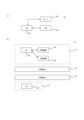
- FIG. 1 is a diagram showing an example of the configuration of a printing system 10 according to an embodiment of the present invention.
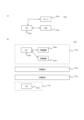
- 2A and 2B are diagrams showing an example of the configuration of the management organization 12 and the printing organization 14.
- Fig. 2A shows an example of the configuration of the management organization 12.
- Fig. 2B shows an example of the configuration of the printing organization 14.
- 3A is a flowchart illustrating an example of a matching operation executed in the printing system 10.
- FIG. 3B shows a modified example of the configuration of the printing base 112.
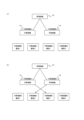
- 4A and 4B are diagrams illustrating the matching operation executed by the server 106.
- Fig. 4A shows examples of candidates for combinations of customers and printing organizations 14.
- Fig. 4B shows examples of matching results.
- FIG. 4A shows examples of candidates for combinations of customers and printing organizations 14.
- FIG. 1 shows an example of the configuration of a printing system 10 according to the first embodiment of the present invention.
- the printing system 10 is a system that performs printing using a printing device (printer), and includes a management organization 12 and a plurality of printing organizations 14.
- the management organization 12 is an organization that manages the printing organizations 14.
- the printing organizations 14 are organizations that perform printing using the printing devices. Except for the points described below, the printing system 10 may have the same or similar features as known printing systems.
- the printing system 10 of this example is a franchise organization in which the management organization 12 is the franchisor (headquarters) and the printing organizations 14 are the franchisees (affiliated stores), and the printing organizations 14 provide print output services.
- the printing system 10 is an example of a matching system that matches a customer who wishes to perform printing with the printing organizations 14.
- the customer is an example of a person who wishes to perform printing.
- the matching operation performed in the printing system 10 will be described in more detail later.
- the printing system 10 may also be considered as an example of a data utilization system that utilizes data obtained from printing devices in the printing organization 14 .
- FIG. 2 shows an example of the configuration of the management organization 12 and the printing organization 14.
- FIG. 2(a) shows an example of the configuration of the management organization 12.
- FIG. 2(b) shows an example of the configuration of the printing organization 14.
- FIGS. 2(a) and (b) show the main parts of the configuration of the management organization 12 and the printing organization 14 that are related to the matching operation described later.
- the management organization 12 and the printing organization 14 may further have various components necessary for providing print output services in a franchise organization.
- the management organization 12 and the printing organization 14 are staffed by employees, managers, and other personnel necessary for running the organization.
- the management organization 12 in this example has a PC 102, a DB 104, and a server 106.
- the PC 102 is a computer used by a user belonging to the management organization 12.
- the PC 102 is an example of an input/output computer into which the user inputs information and outputs information to the user.
- the PC 102 in this example controls, for example, the DB 104 and the server 106 in response to the user's operation.
- the PC 102 displays information stored in the DB 104 to the user in response to the user's operation, and also causes the server 106 to perform information processing using the information stored in the DB 104 in response to the user's operation.
- the DB 104 is a database that stores data related to the operations of the franchise organization, and stores various data obtained from multiple printing organizations 14 via the server 106.
- the DB 104 stores, for example, printer information, which is information indicating the status of printing devices in the printing organization 14.
- printer information such as print history data showing the history of printing performed in the past by the printing devices in the printing organization 14, and operation data showing the operating results of the printing devices.
- the server 106 is a server that executes information processing related to the business of the franchise organization.
- the server 106 in this example is an example of a computer that uses data acquired from a printing device, and acquires printer information, etc. from the printing device of the printing organization 14 by communicating with the printing organization 14 via a wide area network such as the Internet, and stores the printer information, etc. in the DB 104 as necessary.
- the server 106 causes the PC 102, etc. to display based on the information stored in the DB 104 in response to an instruction from a user operating a computer other than the server 106, such as the PC 102.
- the server 106 in this example acquires printing history data, operation data, etc. from the printing device of the printing organization 14 as necessary.
- the printing history data, operation data, etc. are examples of data included in the printer information.
- the server 106 may acquire printing history data, etc. via another computer, such as the computer of the printing organization 14, rather than acquiring printing history data, etc. directly from the printing device.
- the printing history data, etc. can also be considered as data, etc. acquired from the printing device of the printing organization 14.
- the server 106 may perform a predetermined process on data acquired from a printing device or computer of the printing organization 14, and store the generated data in the DB 104. In such a case, the server 106 can be considered to acquire printing history data, etc. from the printing device of the printing organization 14.
- FIG. 2(a) illustrates one PC 102, one DB 104, and one server 106 as the configuration of the management organization 12.
- the management organization 12 may have multiple PCs 102, multiple DBs 104, and multiple servers 106.
- a configuration of multiple DBs 104 can be considered as a single virtual database, and a configuration of multiple servers 106 can be considered as a single virtual server.
- the printing organization 14 has multiple printing bases 112 and a management unit 114.
- the printing base 112 is a base where printing is performed in the printing organization 14.
- the printing base 112 in this example also has a PC 122 and multiple printing devices 124.
- the PC 122 is a computer used by a user belonging to the printing organization 14.
- the PC 122 is an example of an input/output computer into which the user inputs information and outputs information to the user.
- the PC 122 in this example also controls the printing device 124 arranged in the same printing base 112 as the PC 122 in response to the user's operation.
- the PC 122 controls the operation of the printing device 124, for example, by supplying print data indicating an image to be printed to the printing device 124.
- the PC 122 may also send information to the management organization 12 or obtain information from the management organization 12 by communicating with the server 106, DB 104, etc. of the management organization 12. For example, the PC 122 may display information based on the printer information stored in the DB 104.
- the printing organization 14 and the management organization 12 can work together to manage the printing device 124.
- the printing device 124 is a printer that performs printing in the printing organization 14. As the printing device 124, an inkjet printer for color printing that prints using ink of multiple colors can be suitably used.
- the printing base 112 in this example is a base where a printing device 124 is installed, from which the server 106 of the management organization 12 obtains printer information.
- the printing device 124 of the printing base 112 transmits printer information, etc. to the server 106 in response to a request from the server 106.
- Information may also be transmitted from the printing base 112 to the server 106 via a computer such as a PC 122.
- the PC 122, etc. obtains information from the printing device 124 in response to a request from the server 106 and provides it to the server 106.
- the specific configuration of the printing base 112 is not limited to the configuration shown in the figure, and may vary in various ways.
- the number of printing devices 124 controlled by the PC 122 may be one, or three or more.
- the number of PCs 122 in one printing base 112 may be multiple.
- the number of PCs 122 and printing devices 124, and the number of printing devices 124 controlled by one PC 122 may differ for each printing base 112. It is also possible for the printing device 124 to also perform the functions of the PC 122. In this case, the PC 122 and the printing device 124 can be considered to be integrated.
- the number of printing bases 112 is not limited to the number shown in the figure and can be changed as appropriate.
- the printing organization 14 of this example further includes a management unit 114 in addition to the multiple printing locations 112.
- the management unit 114 is configured to manage the multiple printing locations 112, and includes a PC 126.
- the PC 126 is also a computer used by a user belonging to the printing organization 14.
- the PC 126 can also be considered as a computer for an administrator who manages the entire printing organization 14.
- the PC 126 can be considered to send information to the management organization 12 or obtain information from the management organization 12 by communicating with the server 106 or DB 104 of the management organization 12.
- the PC 126 can be considered to perform display based on printer information stored in the DB 104.
- the specific configuration of the printing organization 14 is not limited to the configuration shown in the figure, and can be variously different.
- the printing system 10 of this example includes multiple printing organizations 14.
- the specific configuration of the printing organization 14 may differ for each printing organization 14.
- the number of printing locations 112 in the printing organization 14 may differ for each printing organization 14.
- the management organization 12 manages the printer information of the printing devices 124, and thus it is possible to appropriately execute print output services using the printing devices 124 of multiple printing organizations 14.
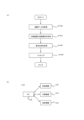
- FIG. 3 is an example of a matching operation performed in the printing system 10.
- FIG. 3(a) is a flowchart showing an example of a matching operation.
- the operation shown in FIG. 3(a) is the operation of the server 106 of the management organization 12.
- the server 106 executes the operation shown in FIG. 3(a) according to a predetermined program.
- the server 106 and the like can be considered as an example of a matching device.
- the matching device can also be considered as a matching engine or the like that performs matching processing.
- the operation of the server 106 and the like can be considered as an example of the operation of a matching method.
- the operation shown in FIG. 3(a) may be an operation executed in response to a request for execution of printing from a customer to a franchise organization that provides a print output service.
- This matching operation can also be considered as an operation for determining the printing organization 14 that will carry out the printing order received from the customer.
- the printing system 10 in this example is a franchise organization that provides print output services. And the customer is not a customer of a specific printing organization 14, but a customer of the services provided by the franchise organization.
- the server 106 first acquires operation data of the printing device 124 from the printing device 124 of the printing organization 14 (S102).
- the operation of step S102 in this example is an example of the operation of the operation data acquisition process.
- the server 106 in step S102 may acquire the operation data from the DB 104 instead of directly from the printing device 124.
- the operation data stored in the DB 104 is data acquired in advance from the printing device 124. Therefore, acquiring this operation data from the DB 104 can be considered as acquiring operation data from the printing device 124.
- the specific contents of the operation data will be explained in more detail later.
- the server 106 in this example acquires operation data of the printing device 124 from multiple printing organizations 14 for each printing organization 14. With this configuration, the operation status of the printing device 124 can be grasped for each printing organization 14. Also, this makes it possible to grasp, for example, how busy the printing organization 14 is for each printing organization 14.
- step S104 the server 106 acquires installation location data indicating the location where the printing device 124 is installed in each printing organization 14 (S104).
- the operation of step S104 in this example is an example of the operation of the installation location data acquisition process.
- the server 106 acquires the installation location data prepared in advance from the DB 104.
- the server 106 may also acquire the installation location data directly from the printing device 124.
- the installation location data is also data included in the printer information.
- the server 106 in this example acquires the installation location data of the printing device 124 for each printing organization 14 from multiple printing organizations 14. The specific contents of the installation location data will be explained in more detail later.
- the server 106 acquires the customer's wishes, such as the required printing specifications, from the customer (S106).
- the operation of step S106 in this example is an example of the operation of the required specification acquisition process.
- the server 106 communicates with another computer and receives input from this computer to acquire the customer's wishes from the customer.
- the other computer here is, for example, a computer operated by the customer.
- the other computer may also be a computer operated by a person belonging to the management organization 12 or the printing organization 14 according to the customer's wishes.
- the server 106 acquires the customer's functions via the person who operates this computer.
- step S108 the server 106 matches the customer with the printing organization 14 (S108).
- the operation of step S108 in this example is an example of the operation of the matching process.
- the server 106 matches the customer with the printing organization 14 based on the operation data, installation location data, required specification data, and delivery location data acquired in steps S102 to S106.
- the server 106 matches the customer with the printing organization 14 taking into consideration the operation status of the printing device 124 in each printing organization 14, the required specifications for the printed matter, and matters related to the delivery (transportation) of the printed matter.
- By performing matching based on operation data it is possible to appropriately assign customers to printing organizations 14 that have spare capacity and wish to receive orders.
- the pre-processing and post-processing are examples of pre- and post-processing performed before or after the printing process performed by the printing device 124.
- the pre-processing machine 132 and the post-processing machine 134 are also examples of pre- and post-processing devices, which are devices used in the pre- and post-processing. In this case, it is conceivable that not only the printing device 124 but also matters related to the pre- and post-processing devices may be related to the required specifications and delivery date (delivery time) for the printing organization 14. Therefore, in this case, it is preferable that the server 106 further acquires pre- and post-process data indicating the presence or absence of pre- and post-processes.
- the pre- and post-process data may further indicate information other than the presence or absence of pre- and post-processes.
- the pre- and post-process data is not limited to data directly indicating the presence or absence of a process, but may indicate the presence or absence of a pre- and post-process by indicating matters related to the pre- and post-processes.
- the pre- and post-process data may include data indicating at least one of the performance (specs) of the pre- and post-process device, the presence or absence of a breakdown, and the timing of maintenance as matters related to the pre- and post-processes.
- the operation of acquiring the pre- and post-process data is an example of the operation of the pre- and post-process data acquisition process.
- the server 106 matches the customer with the printing organization 14 based on the pre- and post-process data. With this configuration, it is possible to more accurately predict the delivery date of the printed matter.
- the operational data in this example may be data indicating at least one of the remaining ink amount, print length, print time, print data, print mode, ink purchase history, ink ejection amount, and print area.
- the operational data here is data related to the operation of the printing device 124 in the current or specific most recent period.
- the remaining ink amount is the remaining ink amount in the current or specific most recent period.
- the print length and print time are the length of the area printed in the current or specific most recent period and the time required for printing.
- the print data and print mode are the print data and print mode settings used in the current or specific most recent period.
- the ink purchase history is the purchase history of ink purchased by the printing organization 14 in the current or specific most recent period.
- the ink ejection amount and print area are the amount of ink ejected during printing in the current or specific most recent period and the area of the area printed.
- the operational data can also be considered as data for determining how busy the printing organization 14 is. This operational data allows for more appropriate matching of customers with printing organizations 14, taking into account the operational status of the printing devices 124 in each printing organization 14.
- the required specification data in this example is data indicating the content of the print desired by the customer.
- the desired print data is print data indicating the image to be printed.
- the number of prints is the number of prints to be delivered.
- the print media is the type of media to be used for printing.
- the size of the prints is the size of the prints to be delivered.
- the color tone is the color tone to be expressed in the prints.
- the delivery date and time is the date and time of delivery.
- the ink type is the type of ink to be used for printing.
- the combination of ink and print media is the combination of ink and media used when printing.
- the resolution and print mode are the resolution and print mode used as printing conditions. By using such required specification data, the content and quality of the print desired by the customer can be properly understood.
- the performance of the printing device 124 owned by a franchise organization or the like that provides a print output service may differ for each printing organization 14.
- the media and ink that can be used may differ for each printing organization 14. For example, if a customer requests printing on a three-dimensional medium, it is considered that only some of the printing organizations 14 can print. Also, the realizable delivery date may differ for each printing organization 14.
- each printing organization 14 it is possible to determine whether each printing organization 14 has experience with the quality of printing desired by the customer and whether it can be realized. In addition, by using such required specification data, it is possible to determine whether each printing organization 14 is good or bad at the quality of printing desired by the customer. Also, based on the quality of printing desired by the customer and the delivery date and time desired by the customer, it is possible to more appropriately determine which printing organization 14 can perform the desired printing by the delivery date desired by the customer.
- the server 106 may further acquire customer data indicating matters related to the customer's past actions.
- the server 106 performs matching between the customer and the printing organization 14 based on the customer data.
- matching tailored to the customer can be performed more appropriately.
- the customer data is an example of print requester data.
- the customer data can also be considered as data related to the actions of customers who have received orders in the past.
- data indicating the contents of comments received from customers when receiving orders in the past can be used. More specifically, for example, data indicating at least one of requests, complaints, and compliments by the customer can be used.
- the installation location data data indicating the address or location information of the place where the printing device 124 is installed can be used.
- data indicating the address, etc. registered in DB 104 in association with the printing device 124 can be used as the installation location data.
- the printing system 10 it is possible to manage account information for each printing organization 14. In this case, it is possible to register the address of the printing organization 14 and the address of the printing base 112 in DB 104 in association with the name of the business operating the printing organization 14. It is possible to use these addresses, etc. as the installation location data.
- data indicating location information other than an address can be used as the installation location data. For example, it is possible to use data that utilizes map data provided by an Internet service.
- the installation location data is not limited to address-formatted data, and for example, data indicating latitude and longitude can be used.
- the installation location data is not necessarily limited to data that can identify an exact address, and data that can grasp approximate geographical information can be used.
- the printing history data data indicating at least one of the remaining ink amount, printing length, printing time, printing data, printing mode, ink purchase history, ink ejection amount, and printing area can be used.
- Printing history data is information that is easy to obtain and can be used to make accurate estimates.
- the remaining ink amount is a history of the remaining ink amount during past printing.
- the printing length and printing time are a history of the length of the area printed during past printing and the time required for printing.
- the printing data and printing mode are a history of the printing data and printing mode settings used during past printing.
- the ink purchase history is a history of ink purchases at the printing organization 14.
- the ink ejection amount and printing area are the ink ejection amount and the area of the area printed during past printing.
- the server 106 matches the customer with the printing organization 14 based on the printing history data and taking these factors into consideration. It is also possible to use, for example, data showing the history of past maintenance performed on the printing device 124 as the printing history data. In this case, the server 106 determines the timing of regular maintenance, which is maintenance performed periodically on the printing device 124, based on the printing history data. The server 106 then matches the customer with the printing organization 14 taking into consideration the timing of regular maintenance.
- step S108 the server 106 matches the customer with the printing organization 14 further based on the performance data.
- the performance data is data corresponding to the specifications of the model of the printing device 124.
- FIG. 4 is a diagram for explaining the matching operation performed by the server 106, and shows a simplified example of the matching operation when the number of printing organizations 14 and customers is set to 2.
- FIG. 4(a) shows an example of a candidate combination of customers and printing organizations 14.
- FIG. 4(b) shows an example of a matching result.
- FIG. 4 when there are multiple printing organizations 14, which are distinguished as printing organizations A and B in the figure, matching is performed between multiple customers, which are distinguished as customers 1 and 2, and the printing organizations 14.
- candidates for combinations of customers and printing organizations 14 for example, as shown in FIG.
- the server 106 matches customers and printing organizations 14 based on operation data, required specification data, installation location data, delivery location data, etc., as described above. This also allows the server 106 to determine (select) for each customer the printing organization 14 that will print the content desired by the customer. Also, FIG. 4(b) shows an example of a matching result in which printing organization B is selected for customer 1 and printing organization A is selected for customer 2.
- the printing organization 14 is selected based only on the order amount, for example, without performing the above-mentioned matching, it is usually difficult to perform optimal matching that takes into account the entire flow of business, including the delivery of the printed matter to be delivered.
- matching is performed based on operation data and required specification data, etc., so that a printing organization 14 that can perform the printing desired by the customer can be more appropriately selected.
- matching is performed based on installation location data and delivery location data, so that appropriate matching can be performed that takes into account the time and cost required to deliver the printed matter. This makes it possible to appropriately assign a printing organization 14 to a customer, taking into account the entire flow of business, including the delivery of the printed matter.
- the time and cost required for delivery may be affected by factors other than the distance between the installation location of the printing organization 14 and the delivery location. Therefore, in the matching process, it is preferable to further consider factors other than the delivery distance based on the installation location data and the delivery location data.
- the server 106 it is possible for the server 106 to further consider the traffic conditions of the route for delivering the printed matter to the location indicated by the delivery location data, and perform matching between the customer and the printing organization 14.
- the weather for example, it is possible to consider the weather forecast.
- factors related to heavy snow and typhoons in particular regarding the weather.
- the server 106 matches the customer with the printing organization 14 based on instructions received via another computer, such as a computer operated by the customer.
- the server 106 displays the results of the matching on the screen (monitor) of the other computer, thereby presenting the results to the user of that computer (e.g., the customer).
- the server 106 may perform matching under multiple conditions, with different conditions being considered when delivering printed materials, based on the installation location data and the delivery location data, and present the results to the user.
- the multiple conditions may be at least multiple conditions from among delivery distance, delivery time, delivery cost, delivery method, and greenhouse gas emissions. In this configuration, it is possible to more appropriately match the customer with the printing organization 14 according to the desired conditions.
- the server 106 may perform matching to assign multiple printing organizations 14 to one customer. In this case, for example, matching may be performed to distribute the delivery quantity desired by the customer among the multiple printing organizations 14. With this configuration, customers and printing organizations 14 can be appropriately matched even when it is difficult for one printing organization 14 alone to print the entire number of deliveries.
- a customer wishes to print 1000 units, but all printing organizations 14 are busy and unable to deliver 1000 units, it is conceivable to match the customer with the printing organizations 14 in such a way that a first printing organization 14 prints a portion (e.g., 500 units), a second printing organization 14 different from the first printing organization 14 prints a portion (e.g., 300 units) of the remaining units, and a third printing organization 14 different from the first and second printing organizations 14 prints the remaining units (e.g., 200 units).
- a first printing organization 14 prints a portion (e.g., 500 units)
- a second printing organization 14 different from the first printing organization 14 prints a portion (e.g., 300 units) of the remaining units
- a third printing organization 14 different from the first and second printing organizations 14 prints the remaining units (e.g., 200 units).
- the server 106 assigns multiple printing organizations 14 to one customer so that, of the multiple processes to be carried out when executing the printing desired by the customer, the first printing organization 14 carries out a first process, and the second printing organization 14, which is different from the first process, carries out a second process, which is different from the first printing organization 14.
- first and second printing organizations 14 are located geographically close to the customer's base, which is the delivery location, it is possible to assign one of processes A and B to the first printing organization 14 and the other to the second printing organization 14, depending on the characteristics of the first and second printing organizations 14, etc. For example, for a combination of a first printing organization 14 that is not good at process A but is good at process B, and a second printing organization 14 that is good at process A but is not good at process B, it is possible to match the customer with the printing organization 14 so that the second printing organization 14 performs process A and the first printing organization 14 performs process B.
- the server 106 in this example is a computer managed by the management organization 12. Therefore, the operation of the server 106 is an operation carried out by the management organization 12, which is the manager of the franchise organization, by collecting various data.
- the matching between the customer and the printing organization 14 carried out by the server 106 is an operation carried out under the management of the manager of the franchise organization.
- the server 106 in this example communicates with a computer operated by a customer, etc., and acquires the required specification data and the delivery location data by accepting input from the computer.
- the computer operated by the customer, etc. accepts the customer's wishes by various known input methods.
- the operation of the server 106 to acquire the required specification data and the delivery location data can also be considered as the operation of a process of acquiring the required specification data and the delivery location data via the management organization 12.
- the server 106 in this example displays the matching results on the screen of the other computer described above, thereby presenting them to the customer, etc., who is the user of this computer.
- the server 106 also notifies the printing organization 14 assigned to the customer of the matching result.
- Such operation of the server 106 can be considered as an operation of notifying the printing organization 14 and the customer of the matching result via the management organization 12.
- the management organization 12 in this example acquires printer information and the like from the multiple printing organizations 14.
- the management organization 12 may acquire other data as printer information than the data described above.
- the server 106 of the management organization 12 may acquire printing device related information, which is various information related to the printing devices 124, from the printing devices 124 owned by the multiple printing organizations 14 and store it in the DB 104.
- the server 106 may transmit the printing device related information stored in the DB 104 to the information display devices such as computers and tablet terminals of the management organization 12 and the printing organizations 14 in response to requests from these information display devices.
- the server 106 causes the information display device to display information based on the printing device related information.
- Such a configuration is an example of a dashboard system that visualizes information related to the printing device 124.
- the various data used by the server 106 can also be considered to be data based on information acquired by the dashboard system.
- the dashboard system can also be considered to be a system that visualizes various data acquired from the printing devices 124 by displaying them.
- management organization 12 can view the dashboard of printing organization 14.
- the dashboard of printing organization 14 is a display screen for information based on printing device related information regarding printing devices 124 used in each printing organization 14.
- the dashboard system is realized by executing a data collection program (software, app) provided by a seller of printing devices 124, on a computer such as server 106.
- the seller of printing devices 124 does not refer to a retailer that sells various home appliances, but rather to a manufacturer that manufactures and sells printing devices 124, or a seller that is closely related to the manufacturer of printing devices 124, such as a sales store directly operated by the manufacturer.
- the management organization 12 realizes at least a part of the functions of the DB 104 and the server 106 using a server or the like provided by a cloud server operator.
- the dashboard system may be a system realized by a server and a database or the like outside the franchise organization managed by the management organization 12.
- the server 106 of the management organization 12 acquires printer information such as print history data and operation data regarding the printing device 124 used in the printing organization 14 by communicating with the server and database of the dashboard system as necessary.
- Such an operation of the server 106 acquiring print history data and operation data, etc. via the dashboard system is also an example of an operation of the server 106 acquiring print history data and operation data, etc. from the printing device 124.
- the dashboard system may be a system provided by a business operator different from the franchise organization managed by the management organization 12.
- the management organization 12 may store data used for managing the franchise organization other than data that can be obtained by the dashboard system in the DB 104 using a server or the like provided by a cloud server business operator different from the franchise organization.
- the management organization 12 may use a management system for franchise organizations provided by a business operator different from the franchise organization.
- the server 106 of the management organization 12 acquires at least a portion of the data used for matching from the printing device 124 of the printing organization 14 via the dashboard system or the management system for the franchise organization.
- the relationship between the management system for the franchise organization and the dashboard system is as shown in FIG. 5.
- the management system 20 is a system that manages franchise organizations by linking with the dashboard system 30, and has DB 104a, which is a database that stores data other than data available through the dashboard system 30.
- the management system 20 is a system used by multiple franchise organizations, and is used by users of multiple different franchise organizations, for example, as shown in the figure as headquarters accounts 1 and 2.
- Headquarters account 1 is an account of the management organization 12 (see FIG. 1) in the first franchise organization.
- Headquarters account 2 is an account of the management organization 12 in the second franchise organization different from the first franchise organization.
- DB 104a inputs and outputs data between the servers 106 (see FIG. 2) in the management organizations 12 of headquarters accounts 1 and 2.
- the dashboard system 30 is a system that visualizes information related to the printing device 124 (see FIG. 2) of the printing organization 14, and includes a DB 104b that stores various data acquired from the printing device 124.
- the dashboard system 30 is used by users of multiple different printing organizations 14, which are distinguished in the figure as franchisee accounts 1 to 4.
- the franchisee accounts 1 to 4 are accounts of franchisees of franchise organizations managed by either the headquarters accounts 1 or 2.
- the franchisee accounts 1 to 4 can also be considered as accounts that are held by affiliated organizations (affiliated companies) of the headquarters accounts 1 and 2, which are prepared by the headquarters for the franchise organization management system 20, in order to use the dashboard system 30.
- the franchisee accounts 1 and 2 are accounts of the printing organizations 14 that belong to the franchise organization managed by the headquarters account 1.
- the franchisee accounts 3 and 4 are accounts of the printing organizations 14 that belong to the franchise organization managed by the headquarters account 2.
- the combination of one headquarters account (either headquarters account 1 or 2) and its affiliated store account in FIG. 5 corresponds to the printing system 10 shown in FIG. 1.
- the management organization 12 corresponding to the headquarters account has a PC 102 (see FIG. 2) and a server 106.
- the server 106 acquires data necessary for the matching operation from DBs 104a and 104b outside the management organization 12.
- the management organization 12 may have a DB 104 other than DBs 104a and 104b.
- the DB 104 of the management organization 12 is used for data that is not stored in the external DBs 104a and 104b. It is also possible that the server 106 is not a part of the management organization 12 of a specific franchise organization, but is used by multiple franchise organizations.
- the server 106 can also be considered to be a part of the management organization 12 outside the management organization 12.
- the overall configuration including the management system 20 and dashboard system 30 shown in FIG. 5 can also be considered to be a matching system that performs the above-mentioned matching operation.
- the management organization 12 be able to view the data of the dashboard system 30 accounts of the printing organizations 14 under its umbrella.
- the management organization 12 can properly manage the status of the printing devices 124 of each printing organization 14.
- a user who accesses DB 104a with headquarters accounts 1 and 2 can access DB 104b via DB 104a to use various data (e.g., printing history data, operation data, etc.) stored in DB 104b.
- the management system 20 can use the dashboard system 30 to properly manage the printing organizations 14 that are users of the dashboard system 30.
- the accounts of the management organization 12, such as headquarters accounts 1 and 2 may be able to directly access the dashboard system 30.
- the DB 104b of the dashboard system 30 stores and manages information related to the printing device 124 owned by the printing organization 14, which is the user. It is also considered that various information related to the printing organization 14 is further stored in the DB 104b. For example, it is considered that the printing organization 14, which is the user of the dashboard system 30, registers its own account information in the system when creating an account. In this case, the printing organization 14 registers its own business name (company name) and address information, etc. as the account information.
- the DB 104a of the management system 20 stores and manages data generated using the information stored in the DB 104b of the dashboard system 30 and various information related to the franchise organization (for example, customer information).
- the DB 104a stores customer information, which is collected as data related to the printing device 124 and is linked to the printing history data stored in the DB 104b.
- the customer information can be information on the customer's name (name) and delivery destination (delivery destination address, etc.).
- DB 104a may store customer information in a format that is not linked to print history data or specific print jobs.
- DB 104a may also store information about printing devices 124 of printing organization 14 that is not handled by dashboard system 30.
- the print history data, installation location data, and performance data are data managed by the dashboard system 30.
- the server 106 acquires these data from the DB 104b of the dashboard system 30.
- the server 106 may communicate with the DB 104b of the dashboard system 30 via the DB 104a of the management system 20.
- the required specification data and delivery location data are data managed by the management system 20.
- the server 106 acquires these data from the DB 104a of the management system 20.
- copies of the data used in the matching operation may be stored in the DB 104a of the management system 20, and used as is or after processing a part of it.
- the management system 20 can be considered as a system higher than the dashboard system 30 that uses the data of the dashboard system 30.
- the management organization 12 of the management system 20 can view the data of the accounts of the printing organizations 14 under its umbrella for the dashboard system 30.
- the management organization 12 calculates the distance between each printing organization 14 linked to the same franchise headquarters and the customer based on the address information registered in the dashboard system 30 as the account information of the printing organizations 14 and the customer's address, etc. input by the customer.
- the address, etc. registered in the management system 20 may be used as the customer's address.
- the server 106 of the management organization 12 matches the customer with the printing organizations 14 based on the data stored in the DBs 104a and 104b so as to satisfy the customer's requirements and to provide a combination that is geographically closer.
- the server 106 then presents the matching result to the customer, etc. by displaying the matching result on the screen of one of the computers.
- the distance between the location of the printing organization 14 and the delivery location becomes closer, allowing the printing organization 14 to do business with customers in closer proximity.
- This also brings about benefits such as reduced transportation costs.
- delivery times can be shortened and the risk of delivery delays due to unforeseen problems can be reduced.
- the server 106 that performs the matching process receives input from a computer operated by the customer, etc., to obtain the customer's wishes and matches the customer with the printing organization 14.
- Printing organizations 14 under the umbrella of the same franchise organization often use printing devices 124 of the same model or equivalent performance.
- customers of the printing organizations 14 often have similar needs regarding the specifications of printed materials to be ordered from the printing organization 14.
- the server 106 of the management organization 12 which is the headquarters of the franchise organization, and a customer of one printing organization 14 is changed to a customer of another printing organization 14, the printing organization 14 will suffer a loss due to a decrease in customers. Therefore, it is preferable to match customers with printing organizations 14 for multiple customers so that customers can be replaced between multiple printing organizations 14.
- the management organization 12 can propose replacing customers to multiple printing organizations 14. The customer can receive the same print output service from a nearby printing organization 14 as before the customer was replaced.
- the server 106 displays, on the screen of a computer accessing the management system 20 for franchise organizations, candidates for combinations that can reduce costs by switching customers between multiple printing organizations 14, based on the results of matching performed while taking into account factors such as the distance between the customer and the printing organization 14.
- the management organization 12 of the franchise organizations can provide sales advice such as switching customers to the printing organizations 14 under its umbrella by proposing such candidates.
- Such operations of the management organization 12 can also be considered as operations that visualize mismatches between customers and printing organizations 14 and provide advice to the printing organizations 14 to improve the mismatches.
- the management system 20 for franchise organizations is mainly used to match customers with printing organizations 14.
- the management system 20 can be used for various purposes related to the operation of franchise organizations other than matching.
- the management system 20 can be used to recruit new businesses to join the franchise organization and make proposals for developing customers by mapping and visualizing the address information of the customers and the printing organizations 14 on a map.
- various data stored in the DB 104b may be shared among multiple printing organizations 14 by further permitting the printing organizations 14 to access the DB 104b of the dashboard system 30 via the DB 104a of the management system 20.
- This allows, for example, multiple printing organizations 14 to check the availability of the printing devices 124 of each printing organization 14 based on the operation data of the printing devices 124.
- This also makes it possible to create a sharing economy for the printing devices 124 between multiple printing organizations 14 in the same franchise organization, for example.
- a management organization 12 that manages the multiple printing organizations 14 may also be further provided.
- the relationship between the management organization 12 and the printing organizations 14 other than franchise organizations can be, for example, the relationship between a parent company and a subsidiary, or the relationship between a head office and a factory in a company organization.
- the management organization 12 may not be an organization that manages the printing organizations 14, but may simply be an organization that manages data such as operational data and printing history data.
- the multiple printing organizations 14 can be, for example, organizations such as various associations and alliances.
- the customer is an example of a person who wishes to print.
- a person who wishes to print can also be considered to be someone other than a customer.
- the print requester can also be considered as an orderer who requests printing from the printing organization 14.
- the printing organization 14 can also be considered as an orderee who receives a printing order from the print requester.
- an inkjet printer was used as the printing device 124 of the printing system 10.
- a printer other than an inkjet printer could also be used as the printing device 124 of the printing system 10.
- a 3D printer could be used.
- FIG. 6 shows an example of the configuration of a printing system 10b according to the second embodiment of the present invention.
- the printing system 10b is a system that performs printing using a printing device (printer), and includes a management organization 12b and a plurality of printing organizations 14b.
- the management organization 12b is an organization that manages the printing organizations 14b.
- the printing organizations 14b are organizations that perform printing using the printing devices. Except for the points described below, the printing system 10b may have the same or similar features as known printing systems.
- the printing system 10b of this example is a franchise organization (franchise group) that provides print output services by the printing organizations 14b, with the management organization 12b as the franchisor (headquarters) and the printing organizations 14b as the franchisees (affiliated stores).
- the printing system 10b is an example of a shipping base determination system that determines a shipping base for shipping ink to the printing organizations 14b. The operation of determining the shipping base for ink will be described in more detail later.
- Printing system 10b can also be considered an example of a data utilization system that utilizes data obtained from a printing device of printing organization 14b.
- FIG. 7 shows an example of the configuration of the management organization 12b and the printing organization 14b.
- FIG. 7(a) shows an example of the configuration of the management organization 12b.
- FIG. 7(b) shows an example of the configuration of the printing organization 14b.
- FIGS. 7(a) and (b) show the main parts of the configuration of the management organization 12b and the printing organization 14b that are related to the operation of determining the ink shipping base, which will be explained later.
- the management organization 12b and the printing organization 14b may further have various components necessary for providing print output services in a franchise organization.
- the management organization 12b and the printing organization 14b are staffed by employees, managers, and other personnel necessary for running the organization.
- the management organization 12b has a PC 102b, a DB 105b, and a server 106b.
- the PC 102b is a computer used by a user belonging to the management organization 12b.
- the PC 102b is an example of an input/output computer into which the user inputs information and outputs information to the user.
- the PC 102b controls the DB 105b and the server 106b in response to the user's operation.
- the PC 102b displays information stored in the DB 105b to the user in response to the user's operation, and also causes the server 106b to perform information processing using the information stored in the DB 105b in response to the user's operation.
- the DB 105b is a database that stores data related to the operations of the franchise organization, and stores various data acquired from multiple printing organizations 14b via the server 106b.
- the DB 105b stores, for example, printer information, which is information indicating the status of printing devices in the printing organization 14b.
- printer information such as print history data showing the history of printing performed in the past by the printing device in printing organization 14b, and operation data showing the operation record of the printing device.
- the server 106b is a server that executes information processing related to the business of the franchise organization.
- the server 106b in this example is an example of a computer that uses data acquired from a printing device, and for example, by communicating with the printing organization 14b via a wide area network such as the Internet, acquires printer information, etc. from the printing device of the printing organization 14b, and stores the printer information, etc. in the DB 105b as necessary.
- the server 106b causes the PC 102b, etc. to display based on the information stored in the DB 105b in response to an instruction from a user who operates a computer other than the server 106b, such as the PC 102b.
- the server 106b in this example acquires printing history data, operation data, etc.
- the printing history data, operation data, etc. are examples of data included in the printer information.
- the server 106b may acquire the printing history data, etc. via another computer, such as the computer of the printing organization 14b, rather than acquiring the printing history data, etc. directly from the printing device. In this case, the printing history data, etc. can also be considered as data, etc. acquired from the printing device of the printing organization 14b.
- server 106b may perform a predetermined process on data acquired from a printing device or computer of printing organization 14b, and store the generated data in DB 105b. In such a case, server 106b can be considered to acquire printing history data, etc. from a printing device of printing organization 14b.
- the printing organization 14b also has multiple printing bases 112b and a management unit 114b.
- the printing base 112b is the base where printing is carried out in the printing organization 14b.
- the printing base 112b in this example also has a PC 122b and multiple printing devices 124b.
- the PC 122b is a computer used by a user belonging to the printing organization 14b.
- the PC 122b is an example of an input/output computer into which the user inputs information and which outputs information to the user.
- the PC 122b in this example also controls the printing device 124b, which is disposed in the same printing base 112b as the PC 122b, in response to the user's operation.
- the PC 122b controls the operation of the printing device 124b, for example, by supplying the printing device 124b with print data indicating an image to be printed. Furthermore, the PC 122b may transmit information to the management organization 12b or obtain information from the management organization 12b by communicating with the server 106b, DB 105b, etc. of the management organization 12b. For example, the PC 122b may display information based on printer information stored in the DB 105b. With this configuration, the printing organization 14b and the management organization 12b can cooperate to manage the printing device 124b.
- the printing device 124b is a printer that performs printing in the printing organization 14b. As the printing device 124b, an inkjet printer for color printing that prints using multiple colors of ink can be suitably used.
- the printing base 112b is a base where the printing device 124b is installed, from which the server 106b of the management organization 12b obtains printer information.
- the printing device 124b of the printing base 112b transmits printer information, etc. to the server 106b in response to a request from the server 106b.
- Information may also be transmitted from the printing base 112b to the server 106b via a computer such as PC 122b.
- the PC 122b, etc. obtains information from the printing device 124b in response to a request from the server 106b and provides it to the server 106b.
- the specific configuration of the printing base 112b is not limited to the configuration shown in the figure, and may be variously different.
- the number of printing devices 124b controlled by the PC 122b may be one or three or more.
- the number of PCs 122b in one printing base 112b may be multiple.
- the number of PCs 122b and printing devices 124b, and the number of printing devices 124b controlled by one PC 122b may differ for each printing base 112b.
- the printing device 124b may also perform the functions of the PC 122b. In this case, the PC 122b and the printing device 124b can be considered to be integrated.
- the number of printing bases 112b is also not limited to the number shown in the figure and can be changed as appropriate.
- the printing organization 14b in this example further includes a management unit 114b in addition to the multiple printing locations 112b.
- the management unit 114b is configured to manage the multiple printing locations 112b, and includes a PC 126b.
- the PC 126b is also a computer used by users belonging to the printing organization 14b.
- the PC 126b can also be considered as a computer for an administrator who manages the entire printing organization 14b.
- the PC 126b can also send information to the management organization 12b or obtain information from the management organization 12b by communicating with the server 106b or DB 105b of the management organization 12b.
- the PC 126b can perform display based on printer information stored in the DB 105b.
- the specific configuration of the printing organization 14b is not limited to the configuration shown in the figure, and can be variously different.
- the printing system 10b (see FIG. 6) of this example includes multiple printing organizations 14b.
- the specific configuration of the printing organizations 14b may differ for each printing organization 14b.
- the number of printing bases 112b in the printing organization 14b may differ for each printing organization 14b.
- the management organization 12b manages the printer information of the printing device 124b, and thus the print output service using the printing device 124b of the multiple printing organizations 14b can be appropriately performed.
- the ink is the ink used in the printing device 124b of each printing organization 14b.
- Ink is an example of a consumable that is consumed by printing in the printing organization 14b.
- the accommodation of ink means moving ink between multiple printing organizations 14b by sending ink from another printing organization 14b to the printing organization 14b that places an order for ink (the ordering printing organization 14b).
- the other printing organization 14b that sends the ink is a printing organization 14b different from the ordering printing organization 14b to which the ink is to be delivered.
- FIG. 8 is a flowchart showing an example of the operation of ink lending in the printing system 10b.
- one of the multiple printing organizations 14b that are franchisees in the franchise organization becomes the ink ordering source and orders ink from the management organization 12b that is the franchisor in the franchise organization (S102).
- the printing organization 14b manages the ink inventory so that there is no ink shortage, and orders ink from the management organization 12b when the ink held as inventory falls below a certain amount.
- the management organization 12b determines a shipping base from which to ship the ink to the printing organization 14b (S104).
- the management organization 12b determines the ink shipping base from among multiple bases including the printing organization 14b other than the ink ordering source. The operation of the management organization 12b to determine the shipping base will be explained in more detail later. Also, FIG. 8 shows an example in which one of the printing organizations 14b other than the ink ordering source is determined as the shipping base. In this case, in step S104, the management organization 12b makes a facilitation request to the printing organization 14b that has been determined to be the shipping base, which is a request to ship ink to the ordering printing organization 14b.
- the printing organization 14b serving as the shipping base receives a request for ink from the management organization 12b (S106) and ships ink to the ordering printing organization 14b in accordance with the request for ink (S108).
- the ordering printing organization 14b then receives the ink shipped from the shipping base printing organization 14b (S110).
- This configuration allows ink to be appropriately lent between multiple printing organizations 14b.
- the management organization 12b receives an order for ink from the ordering printing organization 14b and issues a request for ink to the printing organization 14b serving as the shipping base, allowing the management organization 12b to manage the ink supply.
- the operation of the management organization 12b to determine the shipping base in step S104 can be performed, for example, as shown in FIG. 9.
- FIG. 9 is a flow chart showing an example of the operation of the management organization 12b to determine a shipping base for ink, and shows an example of the operation performed by the management organization 12b in step S104 of FIG. 8.
- the operation shown in FIG. 9 is an operation executed in response to an order for ink from the printing organization 14b, which is the ink ordering source.
- the operation shown in FIG. 9 in this example is the operation of the server 106b owned by the management organization 12b.
- the server 106b executes the operation shown in FIG. 9 according to a predetermined program.
- This program is a program that causes a computer to execute a process to determine a shipping base.
- the server 106b is an example of a shipping base determination device.
- the operation of the server 106b is an example of the operation of a shipping base determination method.
- a modified example of the operation of the printing system 10b it is considered that at least a part of the operation shown in FIG. 9 is executed by another computer.
- one of the computers in the printing system 10b executes the operation shown in FIG. 9 according to a predetermined program.
- This program is installed in the computer that executes the program.
- a mobile information device mobile device
- the server 106b first accepts an order for ink from the printing organization 14b (S202).
- the operation of step S202 in this example is an example of the operation of an order reception process.
- the server 106b acquires data to be used in subsequent processes from the printing organization 14b (S204).
- the operation of step S204 in this example is an example of the operation of a data acquisition process.
- the server 106b acquires ink volume data indicating the amount of ink held by the printing organization 14b and operation data indicating the operation history of the printing device 124b from the printing organization 14b that has ordered the ink.
- the server 106b acquires the ink volume data from a computer or the like that manages inventory at the printing organization 14b.
- a computer or the like of the management unit 114b manages the inventory quantity of ink at the printing organization 14b.
- the server 106b then acquires the ink volume data by communicating with this computer or the like.
- the server 106b may obtain ink volume data from the printing device 124b of the printing organization 14b.
- the server 106b may also obtain operational data from the printing device 124b of the printing organization 14b.
- the server 106b may obtain operational data from the printing device 124b via a computer such as the PC 122b of the printing base 112b of the printing organization 14b.
- the server 106b may also obtain operational data from the DB 105b instead of directly from the printing device 124b.
- the operational data stored in the DB 105b is data that has been obtained in advance from the printing device 124b. Therefore, even when obtaining operational data from the DB 105b, the server 106b can be considered to be obtaining operational data from the printing device 124b.
- the operational data in this example is data necessary to calculate the ink consumption in the printing device 124b.
- data indicating at least one of the remaining ink amount, printing length, printing time, printing data, printing mode, ink purchase history, ink ejection amount, and printing area can be used.
- the ink consumption in the printing device 124b can be appropriately estimated using data that is easily available from the printing device 124b of the printing organization 14b.
- the operational data here is data related to the operation of the printing device 124b in the current or specific most recent period.
- the remaining ink amount is the remaining ink amount in the current or specific most recent period.
- the printing length and printing time are the length of the range printed in the current or specific most recent period and the time required for printing.
- the printing data and printing mode are the settings of the printing data and printing mode used in the current or specific most recent period.
- the ink purchase history is the purchase history of the ink purchased by the printing organization 14b in the current or specific most recent period.
- the ink ejection amount and printing area are the amount of ink ejected during printing and the area of the printed area currently or in a specific recent period.
- Data indicating matters other than ink volume data may be used as the operational data.
- Data indicating matters other than ink volume data is data indicating matters that cannot be understood from ink volume data alone.
- the server 106b calculates the remaining time, which is the time until the ink runs out in the printing organization, based on the ink volume data and operation data acquired in step S204 (S206).
- the operation of step S206 in this example is an example of the operation of the remaining time calculation process. By calculating the remaining time based on the ink volume data and operation data as described above, the timing when ink shortage will occur in the printing organization 14b can be appropriately predicted.
- the server 106b calculates the average ink consumption amount in the printing organization 14b based on the operation data. Then, the remaining time is calculated based on the amount of ink indicated by the ink volume data and the average ink consumption amount.
- the operation of calculating the average ink consumption amount in the printing organization 14b based on the operation data is an example of the operation of predicting future ink usage based on data indicating the operation performance of the printing organization 14b.
- the operation of the server 106b calculating the remaining time is also an example of the operation of calculating the time until the ink runs out based on the current amount of ink and the predicted future ink consumption amount.
- the server 106b may calculate the remaining time based on the ink volume data and the operation data, for example, by a method using artificial intelligence (AI) such as machine learning. With this configuration, the remaining time can be calculated with higher accuracy.
- AI artificial intelligence
- the server 106b may also calculate the remaining time based further on the contents of the order (order contents) accepted in step S204. With this configuration, the remaining time can be calculated more appropriately while considering the contents of the order from the printing organization 14b in real time. The server 106b may also calculate the remaining time based further on the past history (purchase history) of the ink purchases by the printing organization 14b. With this configuration, the remaining time can be calculated more appropriately by considering the past actions of the printing organization 14b.
- the server 106b identifies an ink-holding location that is a location that has stock of the ink specified in the order received in step S202 (S208).
- the ink specified in the order received in step S202 is the ink used in the printing device 124b of the ordering printing organization 14b.
- the operation of step S208 in this example is also an example of the operation of the ink-holding location identification process.
- the server 106b identifies a printing organization 14b other than the ordering printing organization 14b as at least a part of the ink-holding locations. This makes it possible to select a shipping location that has a shorter transportation time than when the printing organization 14b is not treated as an ink-holding location.
- the printing organization 14b in this example is a franchisee of a franchise organization. Treating the printing organization 14b as an ink-holding location means identifying a location of a franchisee other than the ordering franchisee as part of the ink-holding location.
- the server 106b selects ink distributors that sell ink, in addition to printing organizations 14b other than the ordering printing organization 14b, as ink-holding locations. The server 106b identifies the printing organization 14b that holds the ink specified in the order received in step S102, based on the printer information and the like stored in the DB 105b.
- the server 106b calculates the transport time from the ink-holding base identified in step S208 to the ordering printing organization 14b (S210).
- the operation of step S210 in this example is an example of the operation of the transport time calculation process.
- the transport time from the ink-holding base to the ordering printing organization 14b is the transport time of the ink from the ink-holding base to the location (installation location) where the printing device 124b of the ordering printing organization 14b is installed.
- the server 106b calculates the transport time based on the ink-holding base and the address of the ordering printing organization 14b.
- the server 106b in this example determines the transport means that can be used for transport from the ink-holding base to the delivery destination, and calculates the transport time according to the transport means.
- the transport means for example, vehicles, railways, airplanes, ships, walking, etc. can be considered. By configuring in this way, the transport time that varies depending on the transport means can be more accurately estimated.
- the characteristics of the business operator requesting the transport as the capacity of each transport means. For example, by taking into account differences in collection and delivery times for postal services and various delivery companies, as well as the time required for sorting, it is possible to more accurately estimate transportation times that vary depending on the company.
- the server 106b determines a shipping base from among the ink-holding bases identified in step S208 to ship the ink to the printing organization 14b that placed the order, based on the remaining time and transportation time calculated in steps S206 and S210 (S212).
- the operation of step S212 in this example is an example of the operation of the shipping base determination process. With this configuration, the ink shipping base can be appropriately determined according to the time until the ink runs out at the printing organization 14b that placed the order. The operation of the server 106b to determine the shipping base in step S212 will be explained in more detail later.
- the server 106b requests the ink shipping base determined in step S212 to ship the ink to the printing organization 14b that placed the order (S214).
- the operation of step S214 in this example is an example of the operation of the shipping request process.
- the printing organization 14b may be the shipping base.
- the request for shipment to the printing organization 14b is an example of an ink exchange request for the exchange of ink between multiple printing organizations 14b.
- the server 106b ends the operation of requesting shipment by receiving a response of acceptance of the shipment request from the shipping base.
- step S216 the server 106b grants an incentive to the shipping base (S216).
- the operation of step S216 in this example is an example of the operation of the incentive granting process.
- the granting of the incentive to the shipping base is an operation performed when the printing organization 14b becomes a shipping base.
- the operation executed by the server 106b in step S216 is an operation of executing a process of granting an incentive to the printing organization 14b that becomes a shipping base.
- an incentive to the printing organization 14b that becomes a shipping base can be given ink, media, etc.
- granting of the incentive can be considered as granting the right to receive ink, media, etc.
- the server 106b may determine that an ink-holding base other than the printing organization 14b, such as an ink seller, is the shipping base. In this case, the server 106b does not grant an incentive to the shipping base.
- the server 106b in this example determines the ink shipping base and requests the shipping base to ship the ink.
- the ink shipping base for the ordering printing organization 14b can be determined from a variety of ink-holding bases, including the printing organization 14b. This more appropriately prevents ink shortages at the ordering printing organization 14b.
- the supply of ink between the multiple printing organizations 14b that are franchisees of the franchise organization is appropriately managed by the management organization 12b, which is the franchisor.
- the inventory of ink used at the franchisee printing organization 14b is also appropriately managed by the franchisor.
- the server 106b in this example determines a shipping base from among the ink holding bases to ship ink to the printing organization 14b of the orderer based on the remaining time calculated based on the ink volume data and the operation data, and the transport time from the ink holding base to the printing organization 14b of the orderer. It can also be considered that the server 106b determines the shipping base based on the ink volume data, operation data, and transport time. In addition, the above parameters used to determine the shipping base can also be considered as parameters for preparing the ink to be used by the printing organization 14b of the orderer at an appropriate time.
- the server 106b determines the ink holding base that has a base in the most suitable location for shipping ink to the printing organization 14b of the orderer based on preset conditions, etc.
- the server 106b may determine the shipping base by further considering factors other than the remaining time and the transport time.
- the server 106b may determine the shipping base by considering the transport cost, etc. In this case, the transport time can be considered as one of the factors for determining the transport cost.
- the server 106b determines the ink-holding base that minimizes the transportation cost as the shipping base.
- the server 106b may determine the shipping base by considering at least one of the shipping time when the ink-holding base can send the ink and the receiving time when the printing organization 14b that is the orderer can receive the ink.
- the shipping time the business hours and holidays of the ink-holding base that is a candidate for the shipping base are considered.
- the receiving time the business hours and holidays of the printing organization 14b that is the delivery destination that receives the ink are considered.
- the server 106b may determine the shipping base by taking into consideration the traffic conditions of the route for delivering the ink from the ink storage base to the installation position of the printing device 124b.
- the shipping base can be determined while taking into consideration the possibility of delays caused by traffic conditions.
- the weather and the time of delivery can be considered for the traffic conditions. For example, when heavy snowfall or a typhoon occurs, it is considered that delivery is likely to be delayed due to the influence of the weather. In addition, it is considered that delivery is likely to be delayed during consecutive holidays such as the New Year holidays and Golden Week, Obon, vacation season, summer time, etc. For this reason, the server 106b may determine the shipping base by taking into consideration at least one of the weather and the time of the transportation period.
- the server 106b may consider the expiration date of the ink at the ink-holding base from which the ink is procured as the expiration date of the ink. Furthermore, the expiration date of the ink held by the ordering printing organization 14b may also be considered as the expiration date of the ink.
- the server 106b in this example executes a process of determining a shipping base based on an instruction received via another computer, such as a computer operated by a user belonging to the management organization 12b.
- the server 106b presents the result of determining the shipping base to the user of the other computer by displaying it on the screen (monitor) of the other computer.
- the server 106b may receive an instruction from the user to select a priority condition from multiple conditions prepared in advance, and determine the shipping base based on the selected condition.
- multiple conditions multiple conditions such as transportation cost, transportation method, transportation time, transportation distance, and greenhouse gas emissions can be used. In this configuration, a shipping base that matches the user's desired priorities can be more appropriately determined.
- the server 106b may also determine a shipping base by determining multiple candidates for the shipping base and having the user select one of the multiple candidates.
- multiple candidates may be determined for each of the multiple conditions.
- the server 106b may order the multiple shipping bases for each condition by displaying a ranking or a score.
- the server 106b may also display the multiple shipping bases in a manner that allows them to be rearranged according to the priority of the conditions. This function can also be considered a sorting function according to the priority of the conditions.
- the server 106b identifies a printing organization 14b other than the ordering printing organization 14b as at least a part of the ink-holding bases that are candidates for the shipping base.
- the printing organization 14b identified as the ink-holding base also consumes ink by using the printing device 124b. Therefore, it is preferable that the server 106b determines the shipping base for the printing organization 14b identified as the ink-holding base, taking into consideration at least one of the time until the ink runs out, the amount of ink consumed, and the amount of ink in stock at the printing organization 14b.
- the server 106b in this example presents the results of the shipping base determination to the user by displaying them on the screen of another computer.
- the server 106b may present the determined shipping base, etc., on a map.
- the server 106b displays the location of the ordering printing organization 14b and the location of the shipping base on the map. In this case, it is also preferable for the server 106b to display the transportation time along with these locations. With this configuration, the results of the shipping base determination can be presented in a format that is easy for the user to understand.
- the server 106b in this example selects ink sellers that sell ink as ink holding locations in addition to printing organizations 14b other than the ordering printing organization 14b. Depending on the remaining time of ink at the ordering printing organization 14b, it is possible that there is enough time to purchase ink from the ink seller and that it is not necessary to ship ink from the other printing organization 14b. In such a case, it is preferable for the server 106b to determine the ink seller as the shipping location. In this configuration, ink can be delivered to the ordering printing organization 14b without causing trouble to the other printing organization 14b.
- the person ordering the ink may be allowed to decide whether to purchase ink from the ink seller (direct purchase) or ship ink from the other printing organization 14b (lend ink).
- direct purchase or ship ink from the other printing organization 14b
- This configuration allows a shipping base to be more appropriately determined based on the user's desired priorities.
- the server 106b may recommend direct purchase rather than ink lending in the process of determining the shipping base.
- the server 106b in this example is a computer managed by the management organization 12b. Therefore, the operation of the server 106b can be considered as an operation carried out by the management organization 12b, which is the manager of the franchise organization, by collecting various data.
- the operation of determining the shipping base of the ink using the server 106b is an operation carried out under the management of the manager of the franchise organization.
- the printing organization 14b in this example places an order for ink with the management organization 12b when the ink held as inventory falls below a certain amount.
- the printing organization 14b places an order for ink with the management organization 12b via a computer operated by a user belonging to the printing organization 14b.
- the server 106b communicates with the computer of the printing organization 14b and accepts input from this computer to accept the order for ink.
- the server 106b notifies the printing organization 14b of the determined shipping base by displaying it on the screen of the computer of the printing organization 14b or the like.
- the management organization 12b of the printing system 10b in this example acquires printer information, etc. from the multiple printing organizations 14b.
- the management organization 12b may acquire data other than the data described above as printer information.
- the server 106b of the management organization 12b may acquire printing device related information, which is various information related to the printing devices 124b, from the printing devices 124b owned by the multiple printing organizations 14b and store it in the DB 105b.
- the server 106b transmits the printing device related information stored in the DB 105b to the information display devices such as computers and tablet terminals of the management organization 12b and the printing organizations 14b in response to requests from these information display devices.
- the server 106b displays information based on the printing device related information on the information display device.
- a dashboard system that visualizes information related to the printing device 124b.
- the various data used by the server 106b can also be considered as data based on information acquired by the dashboard system.
- the dashboard system can be considered as a system that visualizes various data acquired from the printing device 124b by displaying them.
- the management organization 12b is configured to be able to view the dashboard of the printing organization 14b with respect to the use of the data stored in the DB 105b. With this configuration, the management organization 12b can appropriately manage the status of the printing device 124b of the printing organization 14b.
- the dashboard of the printing organization 14b can be considered as a display screen for information based on printing device-related information regarding the printing device 124b used in the printing organization 14b.
- the server 106b of the management organization 12b acquires operation data and ink amount data by using the dashboard system.
- the server 106b may acquire data indicating the amount of ink that has been delivered to the printing organization 14b.
- the server 106b uses the dashboard system to predict the amount of ink used in the printing organization 14b. With this configuration, it is possible to more appropriately identify the ink-holding base that can provide ink to the ordering printing organization 14b.
- the dashboard system is realized by executing a data collection program (software, app) provided by the seller of the printing device 124b on a computer such as the server 106b.
- the seller of the printing device 124b does not mean a retailer that sells various home appliances, but rather a seller that is closely related to the manufacturer of the printing device 124b, such as a manufacturer that manufactures and sells the printing device 124b or a sales store directly managed by the manufacturer.
- the management organization 12b may have multiple DBs 105b and multiple servers 106b.
- the configuration of the multiple DBs 105b combined can be considered as one virtual database.
- the configuration of the multiple servers 106b combined can be considered as one virtual server.
- the dashboard system may be a system realized by a server and a database outside the franchise organization managed by the management organization 12b.
- the server 106b of the management organization 12b communicates with the server and database of the dashboard system as necessary to obtain printer information such as print history data and operation data regarding the printing device 124b used in the printing organization 14b.
- the operation of the server 106b to obtain print history data and operation data via the dashboard system is also an example of the operation of the server 106b to obtain print history data and operation data from the printing device 124b.
- the dashboard system may also be a system provided by a business operator other than the franchise organization managed by the management organization 12b.
- the management organization 12b which is the franchisor, manages the ink inventory and consumption at the multiple printing organizations 14b, which are each franchisee of the franchise organization.
- the management organization 12b also collectively manages the supply of ink, and issues instructions to each printing organization 14b to send and receive ink. This makes it possible to optimize ink inventory management at the franchisees and reduce costs at the franchise organization.
- server 106b may determine the shipping base of ink taking into consideration the wishes of printing organization 14b. In this case, it is preferable to give priority to management organization 12b in determining the shipping base, so that management organization 12b can make the final decision. In this case, server 106b first has the user of printing organization 14b, which is the ordering source, select a shipping base in the process of determining the shipping base. Server 106b also accepts an instruction to specify a shipping base from management organization 12b. The operation of accepting an instruction to specify a shipping base from management organization 12b is an example of the operation of shipping base designation processing.
- server 106b determines the shipping base by prioritizing the designation by management organization 12b, regardless of the result of the selection of the shipping base by the user. For example, server 106b may stop the ink sharing between printing organizations 14b and determine the ink seller as the shipping base based on the instruction of management organization 12b. When ink is sent from the ink seller to the ordering printing organization 14b, the ink may be sent to the printing organization 14b via the management organization 12b based on instructions from the management organization 12b. In addition, the sharing of ink between printing organizations 14b may be decided between the printing organizations 14b. Even when deciding on the sharing of ink between printing organizations 14b, it is preferable that the management organization 12b, which has management responsibility for the franchise organizations, appropriately manages the necessary information.
- the printing organization 14b which is a franchisee of the franchise organization, as the ink shipping base, it becomes possible to more appropriately ship ink to the printing organization 14b that is the ordering source.
- the franchise organization is developed only in an area with a well-developed distribution network, such as Japan, it may seem sufficient to ship ink directly from the ink seller to the printing organization 14b that is the ordering source without accommodating ink between the printing organizations 14b.
- franchise organizations may be developed over a wide area including multiple countries, and it may be difficult to prepare an ink seller for each country. As a result, it may be necessary to ship ink across borders, which may take a long time to ship the ink.
- a franchise organization is developed within a single country, depending on the size of the area to be developed and the status of the distribution network, it may take a long time to ship the ink if the ink seller is the only one to ship the ink.
- ink can be shared between neighboring printing organizations 14b, making it possible to deliver ink to the printing organization 14b that needs it in a shorter time.
- the printing organization 14b that operates in an area where there is no base of the ink seller or management organization 12b, or in an area far from these bases, hold a larger amount of ink.
- the printing organization 14b functions as an ink warehouse that cooperates with the management organization 12b.
- the history of ink lending can also be used as a reference for proposing, for example, replacement of the printing device 124b used in the printing organization 14b or the introduction of optional items.
- the management organization 12b it is possible for the management organization 12b to propose a more productive model of printing device 124b or the purchase of an option for external ink supply to a printing organization 14b that lends ink frequently. In this way, the capacity of the printing organization 14b can be appropriately improved.
- the proposal for replacement of the printing device 124b or the introduction of optional items is made by a sales company such as the manufacturer of the printing device 124b, rather than by the management organization 12b.
- the sales company cooperates with the management organization 12b to propose to the printing organization 14b the replacement of the printing device 124b or the introduction of optional items.
- This configuration can increase the success rate of sales of the printing device 124b by the sales company.
- ink lending and the like in a franchise organization has been described, but ink lending and the like can also be performed in organizations other than franchise organizations as long as the organization has multiple printing organizations 14b.
- a management organization 12b that manages the multiple printing organizations 14b may also be provided.
- management organizations 12b and printing organizations 14b other than franchise organizations include, for example, the relationship between a parent company and a subsidiary, or the relationship between a head office and a factory in a company organization.
- ink lending and the like can be performed between multiple subsidiaries or multiple factories.
- the management organization 12b may not be an organization that manages the printing organizations 14b, but may simply be an organization that manages data such as operational data and printing history data.
- the multiple printing organizations 14b in this case may be, for example, organizations such as various associations and alliances. Furthermore, the lending of ink between companies may be the lending of ink between group companies.
- an inkjet printer is used as an example of the printing device 124b used in the printing system 10b, but the printing organization 14b may further include a printing device other than an inkjet printer as the printing device 124b. For example, it is also possible to use a 3D printer as the printing device 124b.
- FIG. 10 shows the configuration of a printing system 10c according to the third embodiment of the present invention.
- the printing system 10c is a system that performs printing using a printing device (printer), and includes a management organization 12c and multiple printing organizations 14c.
- the management organization 12c is an organization that manages the printing organizations 14c.
- the printing organizations 14c are organizations that perform printing using the printing devices. Except for the points described below, the printing system 10c may have the same or similar features as known printing systems.
- the printing system 10c of this example is a franchise organization that provides print output services by the printing organizations 14c, with the management organization 12c as the franchisor (headquarters) and the printing organizations 14c as the franchisees (affiliated stores).
- the printing system 10c is an example of a data utilization system that utilizes data acquired from the printing devices of the printing organizations 14c.
- FIG. 11 shows an example of the configuration of the management organization 12c and the printing organization 14c.
- FIG. 11(a) shows an example of the configuration of the management organization 12c.
- FIG. 11(b) shows an example of the configuration of the printing organization 14c.
- FIGS. 11(a) and (b) show the parts of the configuration of the management organization 12c and the printing organization 14c that relate to the use of data, which will be explained below.
- the management organization 12c and the printing organization 14c may further have various configurations and the like necessary for providing print output services in the franchise organization.
- the management organization 12c and the printing organization 14c are staffed by employees, managers, and other personnel necessary for running the organization.
- the management organization 12c has a PC 102c, a DB 104c, and a server 106c.
- the PC 102c is a computer used by users belonging to the management organization 12c.
- the PC 102c is a computer for inputting and outputting information to and from the user.
- the PC 102c in this example controls the DB 104c and the server 106c in response to the user's operation.
- the PC 102c displays information stored in the DB 104c to the user in response to the user's operation.
- the PC 102c causes the server 106c to perform information processing using the information stored in the DB 104c in response to the user's operation.
- the DB 104c is a database that stores data related to the franchise organization's business, and various data obtained from multiple printing organizations 14c via the server 106c is stored in the DB 104c.
- printer information which is information indicating the status of the printing devices of the printing organization 14c, is stored in the DB 104c.
- DB 104c stores print history data that indicates the history of printing performed in the past by the printing devices of printing organization 14c.
- the server 106c is a server that executes information processing related to the business of the franchise organization.
- the server 106c in this example is an example of a computer that uses data acquired from a printing device, and for example, by communicating with the printing organization 14c via a wide area network such as the Internet, acquires printer information, etc. from the printing device of the printing organization 14c and stores it in the DB 104c as necessary.
- the server 106c displays information based on the data stored in the DB 104c on the PC 102c, etc., in response to instructions from a user operating a computer other than the server 106c, such as the PC 102c.
- the server 106c in this example acquires printing history data from the printing device of the printing organization 14c.
- the printing history data may be considered to be included in the printer information.
- the server 106c may acquire the printing history data via a computer of the printing organization 14c, etc., rather than acquiring the printing history data directly from the printing device.
- the printing history data may also be considered to have been acquired from the printing device of the printing organization 14c.
- the server 106c may perform a predetermined process on the data acquired from the printing device or computer of the printing organization 14c, and store the generated data in the DB 104c. In such a case, the server 106c can be considered to acquire the printing history data from the printing device of the printing organization 14c.
- FIG. 11(a) shows one PC 102c, one DB 104c, and one server 106c as the configuration of the management organization 12c.
- the management organization 12c may have multiple PCs 102c, multiple DBs 104c, and multiple servers 106c.
- a configuration of multiple DBs 104c can also be considered as one virtual database, and a configuration of multiple servers 106c can also be considered as one virtual server.
- the management organization 12c may realize at least a part of the functions of the DB 104c and the server 106c using a server provided by a cloud server provider.
- the configuration directly provided by the management organization 12c, such as the PC 102c, and the operation realized by cooperation with the cloud server can also be considered as the operation of the management organization 12c.
- the management organization 12c may also use one computer that serves both the DB 104c and the server 106c.
- the printing organization 14c has multiple printing bases 112c and a management unit 114c.
- the printing base 112c is a base where printing is performed in the printing organization 14c.
- the printing base 112c in this example has a PC 122c and multiple printing devices 124c.
- the PC 122c is a computer used by a user belonging to the printing organization 14c.
- the PC 122c is a computer for inputting and outputting information to and from the user.
- the PC 122c in this example controls the printing device 124c installed in the same printing base 112c as the PC 122c in response to the user's operation.
- the PC 122c controls the operation of the printing device 124c by supplying the printing data including the image to be printed by the printing device 124c to the printing device 124c.
- the PC 122c sends information to the management organization 12c or obtains information from the management organization 12c by communicating with the server 106c, DB 104c, etc. of the management organization 12c.
- the PC 122c may display information based on the printer information stored in the DB 104c.
- the printing organization 14c can manage the printing device 124c in cooperation with the management organization 12c.
- the printing device 124c is a printer that performs printing in the printing organization 14c.
- an inkjet printer for color printing that prints using ink of multiple colors can be suitably used.
- the printing base 112c is a base where a printing device 124c is installed, from which the server 106c of the management organization 12c obtains printer information and print history data.
- the printing device 124c of the printing base 112c transmits printer information, etc. to the server 106c in response to a request from the server 106c.
- Information may be transmitted from the printing base 112c to the server 106c via a computer such as PC 122c.
- the PC 122c, etc. obtains information from the printing device 124c in response to a request from the server 106c and transmits it to the server 106c.
- the specific configuration of the printing base 112c is not limited to the configuration shown in the figure, and may be variously different.
- the number of printing devices 124c controlled by the PC 122c may be one or three or more.
- the number of PCs 122c in one printing base 112c may be multiple.
- the number of PCs 122c and printers 124c, and the number of printers 124c controlled by one PC 122c may differ for each printing base 112c.
- the printer 124c may also perform the functions of the PC 122c. In this case, the PC 122c and the printer 124c can be considered to be integrated.
- the number of printing bases 112c is also not limited to the number shown in the figure and can be changed as appropriate.
- the printing organization 14c of this example further includes a management unit 114c in addition to the multiple printing bases 112c.
- the management unit 114c is configured to manage the multiple printing bases 112c and includes a PC 126c.
- the PC 126c is also a computer used by users belonging to the printing organization 14c.
- the PC 126c is also a computer for the administrator of the entire printing organization 14c.
- the PC 126c also communicates with the server 106c and DB 104c of the management organization 12c to transmit information to the management organization 12c or obtain information from the management organization 12c.
- the PC 126c may perform display based on printer information stored in the DB 104c.
- the specific configuration of the printing organization 14c is not limited to the configuration shown in the figure, and may be variously different.
- the printing system 10c (see FIG. 10) of this example includes multiple printing organizations 14c.
- the specific configuration of the printing organizations 14c may differ for each printing organization 14c.
- the number of printing bases 112c in the printing organization 14c may differ for each printing organization 14c.
- one of the printing bases 112c of the printing organizations 14c also serves as the management unit 114c.
- the management organization 12c manages the printer information of the printing devices 124c, and thus it is possible to appropriately provide a print output service using the printing devices 124c of the multiple printing organizations 14c.
- FIG. 12 is a diagram for explaining an example of the operation of using the data acquired from the printing device 124c.
- FIG. 12(a) is a flowchart showing an example of the operation of using the data acquired from the printing device 124c.
- the flowchart shown in FIG. 12(a) shows an operation of determining the printing device 124c to be introduced into the printing organization 14c using the print history data as an example of the use of the data acquired from the printing device 124c.
- the printing device 124c to be introduced into the printing organization 14c is the printing device 124c purchased to replace or add the printing device 124c.
- FIG. 12(a) in this example is an operation performed by the server 106c of the management organization 12c.
- the server 106c executes the operation shown in FIG. 12(a) according to a predetermined program.
- at least a part of the operation shown in FIG. 12(a) may be executed by another computer of the management organization 12c or the printing organization 14c.
- one of the computers in the printing system 10c executes the operation shown in FIG. 12(a) in accordance with a specific program.
- the server 106c, etc. is an example of a data utilization device that utilizes specific data in the printing system 10c.
- the operation of the server 106c, etc. is an example of the operation of a data utilization method.
- the operation shown in FIG. 12(a) is an example of an operation for determining an introduced printing device that is a printing device 124c suitable for introduction to one of the printing organizations 14c of the printing system 10c.
- the server 106c selects one of the printing organizations 14c according to the user's instructions and performs the operation shown in FIG. 12(a).
- the operation described below is an operation for determining an introduced printing device to be introduced to one of the printing organizations 14c of the printing system 10c.
- the server 106c first acquires printing history data from the printing device 124c of the printing organization 14c (S102).
- the operation of step S102 in this example is an example of the operation of the history data acquisition process.
- step S102 in this example the server 106c acquires printing history data previously stored in the DB 104c.
- the printing history data stored in the DB 104c is data acquired from the printing device 124c of the printing organization 14c. Therefore, the operation of the server 106c to acquire the print history data from the DB 104c can be considered to be the acquisition of the print history data from the printing device 124c via the DB 104c. That is, the operation of step S102 can be considered to be the operation of the server 106c to acquire the print history data from the printing device 124c. Also, the operation of the server 106c to acquire the print history data is an example of a process in which the management organization 12c acquires the print history data.
- the print history data in this example is the history of printing performed in the past by the printing device in use, which is the printing device 124c used in the printing organization 14c. Also, the print history data can be considered to be data related to the past operation of the printing device 124c.
- the server 106c may acquire the print history data directly from the printing device 124c of the printing organization 14c, or may acquire the print history via the PC 122c of the printing base 112c of the printing organization 14c.
- the server 106c performs a process of deriving (calculating) the printing capacity that can be operated by the printing organization 14c (S104).
- the operation of step S104 in this example is an example of a printing capacity derivation process.
- the server 106c derives the printing capacity based on the printing history data acquired in step S102.
- As the printing capacity it is possible to derive the printing speed per unit time (e.g., per hour) and the printing area, etc.
- the printing capacity of the printing organization 14c is data that quantifies the printing performance of the printing organization 14c.
- the server 106c may derive the printing capacity by using a method that uses a data table prepared in advance, a method that uses artificial intelligence (AI) such as machine learning, etc.
- AI artificial intelligence
- the server 106c further derives an operation prediction, which is the printing capacity that can be realized when the candidate printing device is introduced, assuming a candidate printing device for the printing device 124c to be introduced to the printing organization 14c (S106).
- the operation of step S106 in this example is an example of an operation prediction derivation process.
- the candidate printing device is a printing device 124c of a different model from the printing device in use.
- the server 106c derives an operation prediction based on the printing capacity derived in step S104. In this case, the server 106c derives an operation prediction with reference to the current printing capacity.
- the server 106c also derives an operation prediction based on the current printing capacity realized by using the printing device in use and the difference in performance between the printing device in use and the candidate printing device.
- step S106 in this example the server 106c derives an operation prediction for multiple different models of candidate printing devices.
- the server 106c derives the operation prediction using the same printing conditions used to derive the printing capacity in step S104. Making the printing conditions the same means using conditions for printing the same content. Printing the same content means printing something that can be considered as the same print product in terms of the required print quality, etc.
- a plurality of printing devices 124c including a successor model of the printing device in use are selected as the candidate printing device for introduction.
- the operation prediction derived in step S106 is a prediction of the printing capacity when the printing device in use is changed to a candidate printing device such as a successor model.
- the printing capacity derived in step S104 prior to the operation of step S106 corresponds to the printing capacity obtained when the same model (conventional model) as the printing device in use is introduced.
- the server 106c derives the operation prediction under the same printing conditions based on performance data indicating the performance of each model of the printing device in use and the candidate printing device for introduction. Additionally, server 106c may derive operation forecasts using a method that uses a pre-prepared data table or a method that uses artificial intelligence (AI) such as machine learning.
- AI artificial intelligence
- the server 106c determines the printing device to be introduced from among multiple models of printing devices 124c, including the candidate printing device, based on the operation prediction derived in step S106 (S108).
- the operation of step S108 in this example is an example of the process of determining the printing device to be introduced.
- the determination of the printing device to be introduced in step S108 does not determine the printing device 124c that will ultimately be actually introduced, but merely selects the printing device 124c that is suitable for the printing organization 14c.
- the determination of the printing device to be introduced in step S108 can also be considered as determining the model of the printing device 124c to be proposed for introduction to the printing organization 14c.
- the server 106c may also determine the printing device to be introduced by using a method that uses a data table prepared in advance, a method that uses artificial intelligence (AI) such as machine learning, or the like.
- AI artificial intelligence
- the server 106c proposes the printing device to be introduced determined in step S108 to the printing organization 14c.
- the introduction of the printing device 124c by notifying the person in charge of the printing organization 14c of the result of the decision on the printing device to be introduced.
- the operations of the server 106c described so far may be performed in response to instructions from the printing organization 14c.
- the server 106c proposes the printing device to be introduced determined in step S108 to the printing organization 14c by displaying it on the screen of a computer in the printing organization 14c.
- the server 106c may perform each of the above operations in response to instructions from the person in charge of the management organization 12c.
- a proposal for introducing a printing device would be made to the printing organization 14c via a person in charge within the management organization 12c.
- the printing history data in this example it is possible to use data indicating at least one of the remaining ink amount, printing length, printing time, printing data, printing mode, ink purchase history, media purchase history, ink ejection amount, printing area, resolution, printing media, error content, maintenance count, and printing cost.
- the printing capacity can be appropriately derived in step S104.
- the printing history data is information that is easy to obtain and can be used to make accurate estimates.
- the remaining ink amount is a history of the remaining ink amount during past printing.
- the printing length and printing time are a history of the length of the area printed during past printing and the time required for printing.
- the printing data and printing mode are a history of the settings of the printing data and printing mode used during past printing.
- the ink purchase history and media purchase history are purchase histories of the ink and media purchased by the printing organization 14c.
- the ink ejection amount, print area, resolution, print media, and error details are histories of the ink ejection amount during past printing, the area of the printed area, the resolution during printing, the media used, and the details of errors that occurred during printing.
- the number of maintenance times is a history of past maintenance performed on the printing device 124c.
- the printing cost is a history of the costs incurred during printing. It is considered that the printing cost should take into account at least the costs according to the amounts of media and ink consumed during printing. Furthermore, the printing cost may further take into account the cost of electricity consumed by the printing device 124c, etc.
- the server 106c derives printing capabilities indicating at least one of the printing area per unit time, the printing length per unit time, the time required for a specific print, the printing speed, the ink ejection amount used for the specific print, the printing media, the productivity, the image quality, and the color.
- the capabilities of the printing organization 14c can be evaluated using easy-to-understand indicators.
- These printing capabilities can also be considered as capabilities that can be appropriately derived based on the printing history data.
- the printing area and printing length per unit time are the printing area and printing length that can be performed per unit time in the printing organization 14c.
- the time required for a specific print is the time required to perform a predetermined specific print in the printing organization 14c.
- the printing speed is the maximum printing speed that can be performed in the printing organization 14c.
- the ink ejection amount used for the specific print is the amount of ink ejected when a predetermined specific print is performed in the printing organization 14c.
- the printing media is the type of media that can be used in the printing organization 14c.
- the productivity is the efficiency of printing in the printing organization 14c.
- the image quality and color tone are those that can be expressed by printing performed by the printing organization 14c.
- server 106c performs a simulation using the reference print data to derive an operation prediction.
- server 106c can be considered to function as a simulator that derives an operation prediction.
- Server 106c simulates what type of printing can be performed using the reference print data. Through the simulation, server 106c predicts at least one of the following as an operation prediction: print area per unit time, print length per unit time, time required for a specific print, print speed, and ink ejection amount used for a specific print.
- the server 106c determines the printing device to be introduced based on the operation prediction. Also, in step S108, the server 106c may determine the printing device to be introduced based on conditions other than the operation prediction. For example, the server 106c may determine the printing device to be introduced by further considering the planned printing content, which is the content of the printing planned to be performed by the printing organization 14c. As the planned printing content, at least one of the desired delivery date, the number of prints, and other requests may be considered. As the other requests, at least one of the color tone, various comments, and special circumstances or requests may be considered. Also, as described above, the printing organization 14c in this example is a franchisee of a franchise organization that provides print output services.
- the printing organization 14c uses the printing device 124c to perform printing in response to orders from customers, etc.
- the planned printing content is the content of the printing service ordered by the printing organization 14c.
- the content indicated by the order data can also be considered as the amount of work ordered.
- the planned printing contents the number of prints and other requirements are examples of items that indicate the printing contents. It is preferable that the planned printing contents are not limited to the contents of printing that have already been ordered, but also take into consideration the results of predicting future order volumes. In this case, the server 106c predicts future order volumes based on past order volumes. With this configuration, it is possible to determine an introduction printing device that is more suitable for the printing organization 14c.
- the introduction printing device taking the order volume into consideration it is possible to more appropriately select an introduction printing device that is suitable for the required production volume, which is the amount of printing that can be performed per unit time in the printing organization 14c.
- the production volume in the printing organization 14c may also be affected by factors other than the capacity of the printing device 124c.
- factors other than the capacity of the printing device 124c there are models of printing devices 124c that can be operated automatically even when the user is absent, and models that cannot.
- the printing device 124c may not be able to operate without a user (worker, operator).
- the model is capable of automatic operation, a user may have to prepare print data, etc., in order to operate the printing device 124c continuously.
- step S108 it is preferable that the server 106c decides on the introduced printing device by further considering either the number of employees belonging to the printing organization 14c or the working hours of the employees.
- the number of employees and the working hours are the number and working hours of the employees belonging to the printing organization 14c who operate the printing device 124c to provide the print output service. In this manner, it is possible to select an introduced printing device that is more suited to the situation at the site.
- the printing organization 14c even if the operating status of the printing organization 14c has a margin, it is possible to select an introduced printing device with higher performance than the printing device currently in use. For example, by selecting a model that can be automatically operated at night or on holidays as the introduced printing device, the printing capacity of the printing organization 14c can be increased. In addition, by changing the printing device 124c used in the printing organization 14c, the productivity of the printing organization 14c can be increased without increasing the number of employees.
- the printing devices 124c that can be used may be limited due to the installation location of the printing device 124c at the printing base 112c. Therefore, in step S108, it is desirable for the server 106c to further consider the installation location of the printing device 124c.
- the server 106c may determine the printing device to be introduced by further considering the width (narrowness) and area of the installation location of the candidate printing device and the size of the candidate printing device. Furthermore, the strength and levelness of the floor at the installation location, and the transportation route of the printing device 124c to the installation location at the printing base 112c may be considered.
- the printing organization 14c may further perform pre-processing and post-processing of the printing process performed by the printing device 124c.
- the server 106c may determine the printing device to be introduced by further considering the pre-processing and post-processing.
- the printing base 112c of the printing organization 14c further has a pre-processing machine 132c and a post-processing machine 134c, for example, as shown in FIG. 12(b).
- FIG. 12(b) shows a modified example of the configuration of the printing base 112c.
- the pre-processing machine 132c is a device that performs a pre-processing.
- the pre-processing machine 132c performs, for example, pre-processing of media as a pre-processing.
- the post-processing machine 134c is a device that performs a post-processing.
- the post-processing machine 134c performs processing of media as a post-processing.
- the pre-processing and post-processing are examples of pre- and post-processing that are performed before or after the printing process performed by the printing device 124c.
- the pre-processing machine 132c and the post-processing machine 134c are examples of pre- and post-processing devices that are devices used in the pre- and post-processing.
- the server 106c determines the printer to be introduced by further considering at least one of the capabilities of the pre- and post-processing devices in the pre- and post-processing and the connectivity of the pre- and post-processing devices and the printer 124c.
- the capabilities of the pre- and post-processing devices are the capabilities of the pre-processing machine 132c to perform the pre-processing process and the post-processing machine 134c to perform the post-processing process.
- the capabilities of the pre- and post-processing processes are the processing capabilities per unit time.
- the connectivity between the pre- and post-processing devices and the printer 124c is the connectivity between the pre- and post-processing processes and the connectivity between the printing process and the post-processing processes.
- the connectivity between the pre- and post-processing devices and the printer 124c can also be considered as the balance of the capabilities of the pre- and post-processing machine 132c and the post-processing machine 134c with respect to the processing capabilities of the printer 124c.
- the server 106c in this example executes a process of determining an introduced printing device based on instructions received from a person in charge of the printing organization 14c via a computer in the printing organization 14c.
- the server 106c displays the determined introduced printing device on the screen of the computer in the printing organization 14c.
- the server 106c may determine multiple models of introduced printing devices. It is preferable that the server 106c ranks the multiple models of introduced printing devices on the result display screen and displays them to the user. The ranking may be performed by displaying a ranking or a score, etc.
- the server 106c may also display the determined introduced printing devices in a format that shows options for each condition.
- the conditions here may be multiple conditions such as the size of the printed matter, printing speed, quality of the print result (resolution), printable media, color, ink type, and greenhouse gas emissions.
- the server 106c displays multiple models of introduced printing devices in a manner that allows the user to rearrange them according to the priority order specified by the user from among the multiple conditions. In this case, the server 106c displays the introduced printing devices as described above based on a data table or the like that associates these multiple conditions with the performance of each model of the printing device 124c.
- the DB 104c may store a data table that shows the seller, device size, printable size, printing speed, resolution, printable media, color, ink type, greenhouse gas emissions, connection to other devices, options, power consumption, etc. for each model of the printing device 124c.
- the candidate printing device for introduction in this example is a printing device 124c of a different model from the printing device currently in use in the printing organization 14c.
- the server 106c may determine the printing device 124c of the same model as the printing device currently in use as the printing device to be introduced.
- the server 106c determines the printing device to be introduced from multiple models of candidate printing devices for introduction and the printing device 124c of the same model as the printing device currently in use.
- the server 106c in this example determines an introduction printing device suitable for introduction to the printing organization 14c.
- the introduction printing device can be selected from the viewpoint of increasing the printing speed in the printing process of the printing organization 14c, reducing the idling time of the printing device 124c, etc.
- the printing organization 14c can increase the amount of orders received and perform more work.
- the workload can be optimized.
- nozzle clogging can be prevented by ensuring a certain level of operation.
- the printing system 10c in this example is a franchise organization that provides print output services.
- the management organization 12c which is the franchisor
- the management organization 12c were to determine the operating status of the printing device 124c of the printing organization 14c, it would be difficult to determine whether the performance of the printing device 124c is being utilized to the fullest.
- the printing organization 14c is using a model of the printing device 124c that is over-specified.
- the management organization 12c when the management organization 12c proposes a printing device 124c to be introduced to the printing organization 14c, the management organization 12c compares the features, performance, cost, etc. of various models of printing devices 124c and proposes a printing device 124c that is suitable for the business purposes of the printing organization 14c based on experience. In this case, the management organization 12c selects the printing device 124c to propose to the printing organization 14c based on product information obtained from the official website of the seller of the printing device 124c, information on product comparisons, information obtained from showrooms and exhibitions, etc.
- the server 106c in this example can appropriately derive the printing capacity of the printing organization 14c by using the printing history data acquired from the printing organization 14c.
- the server 106c determines the printing device to be introduced based on the derived operation forecast, etc., and can select the printing device to be introduced that is suitable for the printing organization 14c.
- the printing organization 14c can appropriately increase productivity (efficiency) by introducing the printing device 124c proposed by the management organization 12c.
- the management organization 12c proposing the printing device 124c to be introduced to the printing organization 14c can be considered to be the management organization 12c recommending an appropriate printing device 124c to the franchise member store. It can also be considered that by recommending an appropriate printing device 124c, the management organization 12c can easily manage and supervise the franchise organization.
- the management organization 12c in this example acquires printing history data from multiple printing organizations 14c.
- the server 106c can also use printing history data acquired from other printing organizations 14c.
- the operation of this server 106c can be considered as an operation that uses printing history data acquired from multiple printing organizations 14c in the process of determining an introduced printing device for one printing organization 14c.
- such a process can also be considered as a process of determining an introduced printing device by referring to the operating records of the other printing organizations 14c.
- the management organization 12c acquires printer information from multiple printing organizations 14c.
- the management organization 12c may acquire data other than printing history data as printer information.
- the server 106c of the management organization 12c may acquire printing device related information, which is various information related to the printing devices 124c, from the printing devices 124c of the multiple printing organizations 14c and store it in the DB 104c.
- the server 106c transmits the printing device related information stored in the DB 104c to these information display devices.
- the server 106c thereby causes the information display device to display information based on the printing device related information.
- the configuration in which information based on the printing device related information is displayed in this manner is an example of a dashboard system that visualizes information related to the printing device 124c.
- the printing history data used by the server 106c can be considered to be data based on the printing data and operation results acquired by the dashboard system.
- such a dashboard system can be considered as a system that visualizes various operational data and history data acquired from the printing device 124c.
- the printing system 10c of this example can be considered as an example of a management system for franchise organizations that uses such a dashboard system.
- the management organization 12c can view the dashboard of the printing organization 14c.
- the dashboard of the printing organization 14c is a display screen of information based on printing device related information regarding the printing device 124c used in the printing organization 14c.
- the server 106c of this example uses the function of such a dashboard system to display the determined introduced printing device on the information display device of the printing organization 14c.
- the server 106c may display the operation forecast of the introduced printing device and the operation record of the printing device in use on the information display device in association with the determination result of the introduced printing device. With this configuration, the user can easily and appropriately understand the results obtained by introducing the introduced printing device.
- the server 106c displays the comparison content and the comparison result between the operation forecast and the operation record on the information display device using a graph or the like. In this case, in terms of efficiency, etc., it may be possible to use, for example, a graph showing the operation schedule of the printing device 124c.
- the dashboard system of this example is realized by having a computer such as server 106c execute a data collection program (software, app) provided by the seller of printing device 124c.
- the seller of printing device 124c here is not a retailer that sells various home appliances, but a seller that is closely related to the manufacturer of printing device 124c, such as a manufacturer that produces and sells printing device 124c or a sales outlet directly operated by the manufacturer. It is also possible to use an in-house program created by management organization 12c as the data collection program. Doing so can reduce the possibility of information leaks.
- the decision on the printing device to be introduced in this example can be considered as matching the printer who performs printing with the printing device 124c to be introduced in the printing system 10c of the franchise organization.
- the management organization 12c collecting the printing history data of the printing organization 14c can be considered as the manager of the franchise organization collecting the printing history data of the person who manages it.
- Matching between the printer and the printing device 124c can also be performed in a printing system 10c of a form other than a franchise organization.
- the printing system 10c is configured to include a management organization 12c that manages the printing organization 14c and a printing organization 14c that performs printing in a form other than a franchise organization.
- management organizations 12c and printing organizations 14c include, for example, the relationship between a parent company and a subsidiary, or the relationship between the head office and a factory in a company organization.
- the management organization 12c may not be an organization that manages the printing organization 14c, but may simply be an organization that manages data such as the printing history data.
- the printing organization 14c can be an organization such as various unions or alliances.
- the printing system 10c may also use the dashboard system functions to collect data such as print history data.
- the server 106c of the management organization 12c mainly performs the process of acquiring data such as print history data from the printing device 124c.
- the process of acquiring data such as print history data is performed by the management organization 12c in the printing system 10c.
- the process of acquiring data such as print history data may be performed by someone other than the management organization 12c. For example, it is possible for a seller who sells the printing device 124c to the printing organization 14c to acquire the print history data, etc. Even in this configuration, the person who acquires the data manages the print history data, etc.
- the seller of the printing device 124c may utilize the collected data in sales activities for the printing device 124c. More specifically, the manufacturer or retailer who sells the printing device 124c may use the data collected from the customer printing organization 14c to perform a process to determine the printing device to be introduced in the same or similar manner as the operation of the server 106c described in the above embodiment. In this case, the result of determining the printing device to be introduced may be used when the printing device 124c is newly introduced or replaced in the printing organization 14c, and the printing device 124c may be proposed. In this case, the sales department of the seller of the printing device 124c may use the dashboard system. With this configuration, the result of comparing the actual operating status of the printing device 124c at the present time with the operating forecast when a new printing device 124c such as a successor model is introduced may be used in sales activities for the printing device 124c.
- an inkjet printer is used as the printing device 124c of the printing system 10c.
- a printer other than an inkjet printer can also be used as the printing device 124c of the printing system 10c.
- a 3D printer can be used.
- the present invention can be suitably used, for example, in a program that causes a computer to match printing organizations with people wanting to print.
- the present invention can also be suitably used, for example, in a program that causes a computer to perform a process to determine a shipping base from which to ship ink to a printing organization.
- the present invention can also be suitably used, for example, in a data utilization system.
Landscapes
- Business, Economics & Management (AREA)
- Economics (AREA)
- Engineering & Computer Science (AREA)
- Tourism & Hospitality (AREA)
- Theoretical Computer Science (AREA)
- General Physics & Mathematics (AREA)
- Marketing (AREA)
- General Business, Economics & Management (AREA)
- Physics & Mathematics (AREA)
- Strategic Management (AREA)
- Human Resources & Organizations (AREA)
- Development Economics (AREA)
- Accounting & Taxation (AREA)
- Finance (AREA)
- Quality & Reliability (AREA)
- Operations Research (AREA)
- Entrepreneurship & Innovation (AREA)
- Health & Medical Sciences (AREA)
- General Health & Medical Sciences (AREA)
- Primary Health Care (AREA)
- Accessory Devices And Overall Control Thereof (AREA)
Abstract
印刷希望者と印刷組織とのマッチングを適切に行う。 印刷組織14と印刷希望者である顧客とのマッチングをコンピュータに行わせるプログラムであって、印刷の要求仕様を示す要求仕様データと、印刷の成果物の納品場所を示す納品場所データとを顧客から取得する要求仕様取得処理と、顧客と印刷組織14とのマッチングを行うマッチング処理とをサーバ106に行わせ、マッチング処理において、印刷組織14の印刷装置が設置されている場所を示す設置場所データ、要求仕様データ、及び納品場所データに基づき、顧客と印刷組織14とのマッチングを行う。
Description
本発明は、プログラム、マッチングシステム、マッチング装置、マッチング方法、発送拠点決定システム、発送拠点決定装置、発送拠点決定方法、データ利用システム、データ利用装置、及び、データ利用方法に関する。
近年、インクジェットプリンタ等の印刷装置が広く用いられている。また、従来、印刷業の管理システムに関し、ブラウザの組み込まれた客先端末、印刷会社端末及び外注業者端末に通信回線網を介してサーバを結合し、端末からの外注業者選択情報に基づいて外注業者を抽出する構成が知られている(例えば、特許文献1参照)。
また、近年、インクジェットプリンタ等の印刷装置が広く用いられている。印刷装置を用いて印刷を行う印刷組織においては、インク等の消耗品の在庫が不足しないように、在庫の管理を行うことが望ましい。これに対し、従来、インクジェットプリンタが備えるインクボトルのインク消費量に基づいて新しいインクボトルの発注処理を行う構成が知られている(例えば、特許文献2参照)。特許文献2には、インクボトル内のインクの消費に関連する値が所定の閾値に達した時に、その情報をサーバに送信することでインクボトルの発注を行う構成が開示されている。
また、近年、様々な性能の印刷装置が広く用いられている。ユーザが印刷装置を導入しようとする場合、通常、様々な性能の印刷装置の中から、その使用目的にあった印刷装置を選択する必要がある。従来、インターネットを使った製品販売では、ユーザが容易に製品を選択することができるよう、製品の使用目的をユーザに選択させ、選択された使用目的に適した製品の情報を検索・表示する方法が知られている(例えば、特許文献3参照)。
特許文献1に開示されている外注業者選択情報としては、印刷によって製造される製品である印刷物の品質(製品クオリティ)等を用いる。しかし、印刷の分野においては、印刷を実行する印刷組織に印刷の実行を依頼し、かつ、複数の印刷組織の中から依頼先を決定する場合、より適切な方法で依頼先を決定することが望ましい。例えば、印刷組織と、印刷の実行を希望する印刷希望者とのマッチングをより適切に行うことが望ましい。そこで、本発明は、上記の課題を解決できるプログラム、マッチングシステム、マッチング装置、及びマッチング方法を提供することを目的とする。
また、従来の方法でインクの在庫の管理を行う場合、例えば想定を超えてユーザがインクを使用すると、インクを発注するタイミングが遅れる場合がある。そして、インクの発注がされた後にも、ユーザがインクを受け取る受取場所と、インクの発送場所との間の距離が大きい場合や、インクの輸送手段等によっては、インクの受け取りまでの時間が長時間になる場合がある。この場合、インクの到着が間に合わずに、インクの在庫が尽きる場合がある。その結果、インクが不足することで、印刷装置を使用できないダウンタイムが発生することになる。そのため、従来、印刷組織における印刷装置で使用するインクに関し、在庫管理等の管理をより適切に行うことが望まれていた。そこで、本発明は、上記の課題を解決できるプログラム、発送拠点決定システム、発送拠点決定装置、及び発送拠点決定方法を提供することを目的とする。
また、新規の購入や買い替え等により印刷装置を導入する場合、ユーザは、過去に行った印刷の経験に基づき、導入する印刷装置の機種を決定する。業務用印刷装置の導入時には、ユーザは、候補の印刷装置の特徴、性能、及びコスト等を比較した結果を参考にして、主に過去の経験に基づき、導入する印刷装置を決定する。印刷装置の使用目的についても、経験に基づいて決定をすることが考えられる。しかし、導入する印刷装置をこのような方法で決定する場合、その印刷装置が、想定される印刷内容や活用状況に適しているか判断することは難しい。例えば、印刷装置の稼働状況を単に参考にしたとしても、印刷装置を最大限に活用できているかどうかを知ることは難しい。また、オーバースペックな印刷装置を導入した場合、それがオーバースペックであることは通常気づきにくい。また、実際に導入した印刷装置とは異なる機種(他機種)の印刷装置で同じ印刷を行った結果を比較することができるデータを入手することは難しい。また、例えば他の導入例を参考にしたとしても、通常、他の導入例では印刷内容が異なるため、自社に適した決定ができるとは限らない。そのため、従来、自社にとって最適な印刷装置を選択することができる方法が求められていた。そこで、本発明は、上記の課題を解決できるデータ利用システム、データ利用装置、データ利用方法、及びプログラムを提供することを目的とする。
本願の発明者は、印刷組織と印刷希望者とのマッチングを行う方法に関し、鋭意研究を行った。そして、印刷の分野では、商品となる物品である印刷物の物理的な納品が必要になることや、印刷の依頼を受ける受注者になる印刷組織での印刷装置の稼働状況(プリンタ稼働状況)、印刷後の印刷物の配送等も含めた商流全体の状況を更に考慮することが重要であることに着目した。例えば、受注者となる印刷組織と、発注者である印刷希望者との組み合わせによっては、印刷組織における印刷物の生産場所と、印刷希望者が指定する納品の希望場所とが地理的に離れていることがある。この場合、納品方法、渋滞、事故、天候不良、災害等の影響により、納品遅延の可能性が高くなる。また、大量の印刷物が発注された場合には、印刷組織における稼働効率が高くなって生産量が増加し、これに比例して配送のコストが増加する。また、印刷組織が多忙な場合や、多くの工数が必要になる印刷物の発注の場合には、納品までの時間が長くなることが考えられる。そのため、印刷組織と印刷希望者とのマッチングを行う場合には、印刷物の品質以外の事項についても考慮することが好ましい。
また、本願の発明者は、更なる鋭意研究により、このような効果を得るために必要な特徴を見出し、本発明に至った。上記の課題を解決するために、本発明は、印刷装置を用いて印刷を実行する組織である印刷組織と、印刷の実行を希望する印刷希望者とのマッチングをコンピュータに行わせるプログラムであって、前記印刷希望者が要求する印刷の要求仕様を示す要求仕様データと、印刷の成果物を納品する場所を示す納品場所データとを前記印刷希望者から取得する要求仕様取得処理と、前記印刷希望者と、前記印刷組織とのマッチングを行うマッチング処理とを前記コンピュータに行わせ、前記マッチング処理において、前記印刷組織の前記印刷装置が設置されている場所を示す設置場所データと、前記要求仕様データと、前記納品場所データとに基づき、前記印刷希望者と、前記印刷組織とのマッチングを行うことを特徴とする。
マッチング処理において、要求仕様データ、設置場所データ、及び納品場所データに基づくマッチングをコンピュータに行わせることで、印刷の成果物となる印刷物に対する要求仕様、及び印刷物の配送に関連する事項等を考慮して、印刷組織と印刷希望者とのマッチングを行うことができる。要求仕様データに基づいてマッチングを行うことで、所望の品質での印刷を行える印刷組織に対して印刷希望者を適切に割り当てることができる。また、設置場所データ及び納品場所データに基づいてマッチングを行うことで、印刷物の配送等も含めた商流全体を考慮して、印刷組織に対して印刷希望者を適切に割り当てることができる。そのため、このように構成すれば、印刷希望者と印刷組織とのマッチングを適切に行うことができる。さらに、印刷装置の稼働実績を示す稼働データを印刷装置から取得してもよい。稼働データに基づいてマッチングを行うことで、稼働に余裕があって受注を希望する印刷組織に対し、印刷希望者を適切に割り当てることができる。また、これにより、各印刷組織の待機時間を削減して稼働率を向上させ、印刷組織の稼働時間を改善できる。
この構成における稼働データは、現在又は特定の直近期間における印刷装置の動作に関するデータである。稼働データとしては、インク残量、印刷長、印刷時間、印刷データ、印刷モード、インク購入履歴、インク吐出量、及び印刷面積のうちの少なくともいずれかを示すデータを用いることが考えられる。
また、この構成において、上記以外のデータを更に取得する処理をコンピュータに行わせることも考えられる。例えば、印刷装置が過去に実行した印刷の履歴を示す印刷履歴データを取得する履歴データ取得処理を更にコンピュータに行わせることが考えられる。印刷履歴データとは、印刷装置の過去の動作に関するデータである。印刷履歴データとしては、インク残量、印刷長、印刷時間、印刷データ、印刷モード、インク購入履歴、インク吐出量、及び印刷面積のうちの少なくともいずれかを示すデータを用いることが考えられる。この場合、マッチング処理では、印刷履歴データに更に基づき、印刷希望者と印刷組織とのマッチングを行う。これにより、印刷希望者と印刷組織とのマッチングをより適切に行うことができる。
または、印刷装置の性能を示す性能データを更にコンピュータに取得させてもよい。この場合、マッチング処理において、性能データに更に基づき、印刷希望者と印刷組織とのマッチングを行う。性能データとは、印刷装置の機種のスペックに対応するデータである。性能データに基づくことで、印刷組織において実行可能な印刷の内容をより適切に把握できる。また、これにより、要求仕様データが示す要求仕様を満たす印刷を印刷組織において実行可能であるか否かをより適切に判断できる。そのため、このように構成すれば、印刷組織が用いる印刷装置の性能を反映させて、印刷希望者と印刷組織とのマッチングをより適切に行うことができる。または、印刷組織が所有する印刷装置の現在以降の使用予定を示すスケジュールデータを更にコンピュータに取得させてもよい。この場合、スケジュールデータに更に基づき、印刷希望者と前記印刷組織とのマッチングを行う。各印刷組織の設備の予約状況、つまり、各印刷組織における現在以降に受入可能な作業の種類と量をより正確に把握することで、マッチングの合理性と信頼性を高めることができる。
また、マッチング処理において、印刷履歴データに基づき、印刷装置に対して定期的に行われるメンテナンスである定期メンテナンスのタイミングを判断し、定期メンテナンスのタイミングを考慮して、印刷希望者と印刷組織とのマッチングを行うことも考えられる。このように構成した場合、定期メンテナンスのために印刷組織が印刷装置を稼働できないタイミングを適切に把握できる。そのため、このように構成すれば、印刷装置を稼働できない期間を考慮して、印刷組織が印刷物を納品できる時期(納品時期)の判定をより適切に行うことができる。また、これにより、印刷希望者と印刷組織とのマッチングをより適切に行うことができる。
また、印刷組織においては、印刷装置で実行する印刷工程の前工程や後工程を更に実行することも考えられる。前工程及び後工程とは、印刷装置で実行する印刷工程の前又は後に実行する前後工程の一例である。そして、この場合、印刷装置のみではなく、前後工程に関わる装置の性能(スペック)、故障の有無、メンテナンスの時期等も、要求仕様や納期に関係してくることが考えられる。そのため、この場合、前後工程の有無を示す前後工程データを取得する前後工程データ取得処理を更にコンピュータに行わせてもよい。この場合、マッチング処理において、前後工程データに更に基づき、印刷希望者と印刷組織とのマッチングを行う。このように構成すれば、前後工程に関する事項等も含めて、印刷組織において実行可能な印刷の内容をより適切に把握できる。また、前後工程に関する事項を考慮することで、印刷物の納期の予測等をより高い精度で行うこともできる。そのため、このように構成すれば、印刷希望者と印刷組織とのマッチングをより適切に行うことができる。
また、この構成において、要求仕様データとしては、印刷希望データ、印刷個数、印刷メディア、印刷物の大きさ、色合い、納品日時、インクの種類、インクと印刷メディアとの組合せ、解像度、及び印刷モードのうちの少なくともいずれかを示すデータを用いることが考えられる。このように構成すれば、印刷希望者が希望する印刷の内容及び品質等をより適切に把握できる。また、このような要求仕様データを用いることで、印刷希望者が希望する印刷の品質に対する各印刷組織の経験の有無や実現の可否等をより適切に判断できる。また、印刷希望者が希望する印刷の品質に関し、印刷組織が得意であるか苦手であるか等を判断することも可能である。そのため、このように構成すれば、印刷希望者と印刷組織とのマッチングをより適切に行うことができる。
また、要求仕様取得処理では、印刷希望者の過去の行動に関する事項を示す印刷希望者データを更にコンピュータに取得させてもよい。この場合、マッチング処理では、印刷希望者データに更に基づき、印刷希望者と印刷組織とのマッチングを行う。印刷希望者データは、過去に受注を受けたことがある印刷希望者が起こした行動に対応付けられるデータと考えることもできる。また、このような印刷希望者データとしては、過去の受注時に印刷希望者から受けたコメントの内容を示すデータを用いることが考えられる。例えば、印刷希望者データとして、印刷希望者による要望、クレーム、及びほめ言葉のうちの少なくともいずれかを示すデータを用いることが考えられる。また、印刷希望者から受けたコメントを示す印刷希望者データには、要求仕様データが示す印刷の内容と類似する印刷を過去に行った際に印刷希望者から受けたコメントを示すデータを用いることがより好ましい。また、印刷希望者データとして、印刷希望者の特性や、印刷希望者に関連付けられた流行を示すデータ等を用いることも考えられる。このように構成すれば、マッチングにより選択された印刷組織が、印刷希望者の意図に合わせた印刷物をより適切に提供できる。
また、マッチング処理では、設置場所データ及び納品場所データに基づき、印刷物の配送時に考慮する条件を互いに異ならせた複数の条件でのマッチングを行った結果を提示してもよい。この場合、複数の条件としては、少なくとも、配送距離、配送時間、配送コスト、配送方法、地球温暖化ガス排出量のうちの複数の条件を用いることが考えられる。この場合、これらの条件毎にマッチングを行い、マッチングの結果を条件毎に提示することが考えられる。このように構成すれば、印刷希望者等が希望する優先順位に応じたマッチングの提案を行うことができる。
また、マッチング処理では、納品場所データが示す場所へ印刷物を配送する経路の交通状況を更に考慮して、印刷希望者と印刷組織とのマッチングを行ってもよい。この場合、交通状況に関し、天候、配送の時期、及び渋滞状況のうちの少なくともいずれかを考慮することが考えられる。天候については、例えば、天気予報を考慮することが考えられる。渋滞状況については、現時点での渋滞の状況や、渋滞の予測等を考慮することが好ましい。また、印刷物の納品を行うためには、印刷物の発送及び受け取りが必要になる。そのため、マッチング処理では、印刷組織が印刷物を発送することができる発送可能時間と、印刷希望者が印刷物を受け取ることができる受取可能時間との少なくともいずれかを更に考慮して、印刷希望者と印刷組織とのマッチングを行ってもよい。このように構成すれば、納期内での納品の可否をより正確に予測することができる。発送可能時間及び受取可能時間としては、印刷組織及び印刷希望者の営業時間、休業日、及び祝日等を考慮することが考えられる。
また、マッチング処理では、一の印刷希望者に対して複数の印刷組織を割り当てるマッチングを行ってもよい。このように構成すれば、印刷希望者及び印刷組織に対し、より多様なマッチングを行うことができる。この場合、印刷希望者が希望する納品数を複数の印刷組織に振り分けるようにマッチングを行うことが考えられる。このように構成すれば、一の印刷組織のみでは全ての納品数分の印刷を行うことが難しい場合にも、印刷希望者と印刷組織とのマッチングを適切に行うことができる。また、印刷希望者が希望する印刷物の内容によっては、印刷物を完成させるために、複数の工程を行うことが必要になる場合もある。この場合、複数の印刷組織に工程を割り振ることで、一の印刷希望者に対して複数の印刷組織を割り当てることも考えられる。この場合、マッチング処理では、印刷希望者が希望する印刷の実行時に行う複数の工程のうち、第1の工程を第1の印刷組織に行わせ、第1の工程とは異なる第2の工程を第1の印刷組織とは異なる第2の印刷組織に行わせるように、一の印刷希望者に対して複数の印刷組織を割り当てることが考えられる。このように構成した場合も、一の印刷希望者に対して複数の印刷組織を適切に割り当てることができる。
また、この構成における要求仕様取得処理は、複数の印刷組織を管理する管理組織を介して要求仕様データ及び納品場所データを取得する処理である。この場合、マッチング処理では、管理組織を介して、印刷組織及び印刷希望者へマッチングの結果を通知する。このように構成すれば、複数の印刷組織を対象にして、印刷希望者と印刷組織とのマッチングを適切に行うことができる。また、この構成において、管理組織は、印刷出力のサービスを提供するフランチャイズ組織におけるフランチャイザーである。また、印刷組織は、フランチャイズ組織におけるフランチャイジーである。この場合、要求仕様取得処理は、フランチャイズ組織におけるフランチャイザーを介して要求仕様データ及び納品場所データを取得する処理であってよい。このように構成すれば、フランチャイズ組織において、フランチャイジーである印刷組織への印刷希望者の割り当てを適切に行うことができる。また、本発明の構成として、上記と同様の特徴を有するマッチングシステム、マッチング装置、及びマッチング方法等の構成を考えることもできる。これらの場合も、上記と同様の効果を得ることができる。
また、本願の発明者は、印刷組織で用いるインクの管理の仕方について、鋭意研究を行った。そして、印刷組織におけるインクの消費量に加えて、印刷装置の稼働実績等を考慮することを考えた。より具体的には、印刷組織が保有しているインクの量を示すインク量データと、印刷装置の稼働実績を示す稼働データとに基づき、印刷組織においてインクが無くなるまでの時間である残時間を算出することを考えた。このように構成すれば、印刷組織においてインクの不足が生じるタイミングを適切に予測できる。また、本願の発明者は、更に、インクの配送先となる印刷組織へインクを発送可能な複数のインク保有拠点を特定し、その中から、印刷組織へインクを発送する発送拠点を決定することを考えた。より具体的には、インク保有拠点からの輸送時間と、残時間とを考慮して、発送拠点を決定することを考えた。このように構成すれば、印刷組織におけるインクの残時間が少ない場合でも、より短時間でインクを入手できる可能性を高めることができる。これにより、印刷組織においてインクの不足が生じることをより適切に防止できる。そのため、このように構成すれば、印刷組織の印刷装置で使用されるインクの在庫管理をより適切に行うことができる。また、この場合、例えば、インクの配送先となる印刷組織以外の印刷組織もインク保有拠点として扱うことで、複数の印刷組織が互いにインクを融通することも考えられる。
また、本願の発明者は、更なる鋭意研究により、このような効果を得るために必要な特徴を見出し、本発明に至った。上記の課題を解決するために、本発明は印刷装置を用いて印刷を実行する組織である印刷組織へインクを発送する発送拠点を決定する処理をコンピュータに行わせるプログラムであって、前記印刷組織が保有しているインクの量を示すインク量データと、前記印刷装置の稼働実績を示す稼働データとを前記印刷組織から取得するデータ取得処理と、前記印刷組織においてインクが無くなるまでの時間である残時間を前記インク量データ及び前記稼働データに基づいて算出する残時間算出処理と、前記印刷装置で使用するインクの在庫を有している拠点であるインク保有拠点を特定するインク保有拠点特定処理と、前記インク保有拠点から、前記印刷組織の前記印刷装置が設置されている位置である設置位置までのインクの輸送時間を算出する輸送時間算出処理と、前記残時間及び前記輸送時間に基づいて前記発送拠点を決定する発送拠点決定処理とを前記コンピュータに行わせることを特徴とする。
インク量データ及び稼働データに基づいて残時間の算出を行うことで、印刷組織においてインクの不足が生じるタイミングを適切に予測できる。また、特定したインク保有拠点から印刷装置の設置場所までのインクの輸送時間を算出し、インク保有拠点の中から、残時間及び輸送時間に基づいてインクの発送拠点を決定することで、より適切な発送拠点を選択できる。そのため、このように構成すれば、印刷組織においてインクの不足が生じることをより確実に防止できる。また、これにより、印刷組織の印刷装置が使用するインクの在庫をより緻密に管理することができる。また、インク保有拠点特定処理では、インク保有拠点の少なくとも一部として、インクの配送先の印刷組織とは別の印刷組織を特定することも考えられる。このように構成すれば、より多様なインク保有拠点からインクの発送拠点を決定できる。また、これにより、印刷組織をインク保有拠点として扱わない場合に比べ、より輸送時間が短くなる発送拠点を選択できるようになる。
この構成の稼働データとしては、インク残量、印刷長、印刷時間、印刷データ、印刷モード、インク購入履歴、インク吐出量、及び印刷面積のうちの少なくともいずれかを示すデータを用いることが考えられる。このような稼働データを用いることで、印刷装置から入手しやすいデータを利用して、印刷装置におけるインクの消費量を見積もることができる。また、これにより、残時間算出処理において、残時間をより正確に算出できる。稼働データは、現在又は特定の直近期間における印刷装置の動作に関する稼働実績のデータである。また、稼働データは、印刷装置におけるインクの消費量を算出するために必要なデータと考えることもできる。
また、発送拠点決定処理では、インク保有拠点がインクを発送することができる発送可能時間と、印刷組織がインクを受け取ることができる受取可能時間との少なくともいずれかを考慮して、発送拠点を決定することが好ましい。発送可能時間としては、例えば、発送拠点の候補となるインク保有拠点の営業時間や休業日を考慮する。また、受取可能時間としては、例えば、インクを受け取る配送先の印刷組織の営業時間や休業日を考慮する。このように構成すれば、印刷組織にインクが届くまでに要する時間をより正確に予測できる。これにより、インクの配送先の印刷組織がインクの不足によって印刷装置を使用できなくなるダウンタイムが生じることをより確実に防止することができる。また、輸送時間算出処理では、輸送手段に応じて輸送時間を算出することが好ましい。このように構成すれば、例えば、車両、鉄道、飛行機、船、徒歩等の輸送手段によって差が生じる輸送時間を考慮して、より正確に見積もりを行うことができる。また、各輸送手段の能力として、輸送を依頼する事業者の性質を考慮すること等もえられる。例えば、郵便や様々な配達業者等ごとの集配時間の違いや仕分作業にかかる時間の違い等を考慮することで、事業者によって差が生じる輸送時間をより適切に見積ることができる。
また、発送拠点決定処理では、インク保有拠点から印刷装置の設置位置へインクを配送する経路の交通状況を考慮して、発送拠点を決定することが好ましい。このように構成すれば、交通状況による遅延の可能性を考慮して発送拠点を決定できる。交通状況としては、天候や配送の時期等を考慮することが考えられる。このように構成すれば、天候や輸送を行う時期による遅延の可能性を考慮できる。また、発送拠点決定処理では、インクの消費期限を考慮して、発送拠点を決定してもよい。このように構成すれば、インクの配送先の印刷組織におけるインクの使い方に適した消費期限のインクを保有しているインク保有拠点を発送拠点に決定することができる。インクの消費期限は、インクの調達先となるインク保有拠点が有するインクの消費期限である。また、インクの消費期限として、インクの配送先の印刷組織が所有しているインクの消費期限を更に考慮することがより好ましい。
また、発送拠点決定処理では、予め用意された複数の条件の中から優先する条件を選択する指示をユーザから受け付け、選択された条件に基づき、発送拠点を決定してもよい。複数の条件としては、輸送のコスト、輸送方法、輸送時間、輸送距離、及び地球温暖化ガス排出量等のうちの複数を用いることが考えられる。このように構成すれば、ユーザの希望する優先事項に合わせた発送拠点を選択できる。また、発送拠点決定処理では、発送拠点の候補を複数決定し、複数の候補の中からいずれかをユーザに選択させることで、発送拠点を決定してもよい。また、複数の条件に対し、条件毎に複数の候補を決定してもよい。例えば、輸送のコスト、輸送方法、輸送時間、輸送距離、及び地球温暖化ガス排出量等のうちの複数の条件に対し、条件毎に、複数の発送拠点の候補を決定することが考えられる。この場合、条件毎の複数の発送拠点について、順位を付けて列挙することが考えられる。
また、上述のように、インク保有拠点特定処理では、インク保有拠点の少なくとも一部として、インクの配送先の印刷組織とは別の印刷組織を特定することが考えられる。この別の印刷組織も、印刷装置を使用することでインクを消費する。そのため、発送拠点決定処理では、この別の印刷組織における、インクが無くなるまでの時間、インクの消費量、及びインクの在庫量のうちの少なくともいずれかを考慮して、発送拠点を決定することが好ましい。このように構成すれば、インクの発送拠点となる印刷組織、及びインクの配送先の印刷組織の双方の事情を勘案して、双方にダウンタイムが発生しないように発送拠点を選択できる。
また、印刷組織におけるインクの残時間等によっては、インクのメーカ等のインクの販売者からインクを購入する時間的余裕があり、他の印刷組織からインクを発送する必要がないこともありえる。そのため、インク保有拠点特定処理では、インク保有拠点として、インクを販売するインク販売者と、インクの配送先の印刷組織とは別の印刷組織とを含む複数の拠点を特定することが考えられる。このように構成すれば、より多様なインク保有拠点からインクの発送拠点を選択できる。また、この場合、インクの販売者からのインクの購入(直接購入)と、別の印刷組織からのインクの発送(インクの融通)とのいずれかをユーザに決定させてもよい。また、輸送のコスト、輸送方法、輸送時間、輸送距離、及び地球温暖化ガス排出量等のうちの複数の条件について、条件毎に、インクの直接購入と融通とをユーザに比較させることが考えられる。このように構成すれば、ユーザの希望する優先事項により合致した発送拠点を選択することができる。
また、印刷組織間でインクを融通する場合には、発送拠点となる印刷組織に対し、何らかのインセンティブを付与することも考えられる。そして、例えば、発送拠点となる印刷組織に対してインセンティブを付与する処理を実行するインセンティブ付与処理を更にコンピュータに行わせることが考えられる。インセンティブとしては、発送拠点となる印刷組織等に対し、インクやメディア等を与えることが考えられる。
また、この構成において、印刷組織は、印刷出力のサービスを提供するフランチャイズ組織(フランチャイズグループ)におけるフランチャイジーである。そして、インク保有拠点特定処理では、インク保有拠点の少なくとも一部として、インクの配送先となるフランチャイジーとは別のフランチャイジーの拠点を特定する。このように構成すれば、フランチャイズ組織のフランチャイジー間でインクを融通することができる。また、各フランチャイジーのインク在庫量やインクの消費量を、フランチャイザーが管理してもよい。フランチャイザーとは、複数の印刷組織を管理する管理組織である。インクの融通に関しては、フランチャイザーが複数のフランチャイジーを一括管理し、各フランチャイジーに指示を出してインクの発送や受け取り等を行わせてもよい。このように構成すれば、フランチャイズ組織におけるフランチャイジー間でのインクの融通を、フランチャイザーの管理の下で行うことができる。これにより、フランチャイジーにおけるインクの在庫管理の最適化や、フランチャイズ組織におけるコストの削減等を実現すること等も可能になる。
フランチャイズ組織でインクの融通を行う場合、フランチャイジーの希望を考慮してインクの発送拠点を決定してもよい。この場合、フランチャイズ組織の管理の責任を有するフランチャイザーの決定に優越権を設定して、フランチャイザーが最終的な判断を下せるようにすることが好ましい。この場合、まず、発送拠点決定処理において、インクの配送先となるフランチャイジーのユーザに発送拠点を選択させる。また、発送拠点を指定する指示をフランチャイザーから受け付ける発送拠点指定処理を更にコンピュータに行わせる。そして、フランチャイザーによって発送拠点が指定された場合、発送拠点指定処理において、ユーザによる発送拠点の選択結果によらず、フランチャイザーによる指定を優先して発送拠点を決定する。フランチャイジー間でのインクの融通は、フランチャイザーの管理下に限らず、フランチャイジー間で実施を決めてもよい。また、本発明の構成として、上記と同様の特徴を有する発送拠点決定システム、発送拠点決定装置、及び発送拠点決定方法等の構成を考えることもできる。これらの場合も、上記と同様の効果を得ることができる。
また、本願の発明者は、印刷装置を用いて印刷を実行する組織である印刷組織に導入する印刷装置を決定する方法について、鋭意研究を行った。そして、印刷組織で既に使用している印刷装置で実行した印刷の履歴を参考にして、導入する印刷装置を決定することを考えた。また、単に印刷の履歴を参考にするのではなく、導入候補の印刷装置を実際に導入したときの印刷能力を示す稼働予測を作成し、導入する印刷装置をその稼働予測に基づいて決定することを考えた。このように構成すれば、印刷組織に導入する印刷装置をより適切に決定できる。
また、本願の発明者は、更なる鋭意研究により、このような効果を得るために必要な特徴を見出し、本発明に至った。上記の課題を解決するために、本発明は、印刷装置を用いて印刷を実行する組織である印刷組織における前記印刷装置から取得するデータを利用するデータ利用システムであって、前記印刷装置から取得するデータを利用するコンピュータを備え、前記コンピュータにおいて、前記印刷組織で使用している前記印刷装置である使用中印刷装置が過去に実行した印刷の履歴を示す印刷履歴データを取得する履歴データ取得処理と、前記印刷組織の印刷能力を導出する処理であり、前記履歴データ取得処理で取得した前記印刷履歴データに基づいて前記印刷能力を導出する印刷能力導出処理と、前記使用中印刷装置とは異なる機種の前記印刷装置である導入候補印刷装置を前記印刷組織に導入した場合の前記印刷組織の前記印刷能力である稼働予測を導出する稼働予測導出処理と、前記印刷組織に導入するのに適した前記印刷装置である導入印刷装置を決定する導入印刷装置決定処理とを行い、前記稼働予測導出処理において、複数機種の前記導入候補印刷装置に対し、前記稼働予測を導出し、前記導入印刷装置決定処理において、前記稼働予測に基づき、前記導入候補印刷装置を含む複数機種の前記印刷装置の中から、前記導入印刷装置を決定することを特徴とする。
印刷能力導出処理において印刷履歴データを用いることで、印刷組織の印刷能力を適切に導出できる。そして、稼働予測導出処理において、使用中印刷装置とは異なる機種の導入候補印刷装置を導入した場合の印刷能力に対応する稼働予測を導出し、導入印刷装置決定処理において、稼働予測に基づき、複数機種の導入候補印刷装置の中から導入印刷装置を決定することで、印刷組織に導入する印刷装置をより適切に決定できる。稼働予測導出処理では、印刷能力導出処理で導出した印刷能力に基づき、稼働予測を導出する。この場合、稼働予測導出処理において、印刷能力導出処理において印刷能力の導出に用いた印刷の条件と同じ条件を用いて稼働予測を導出する。このように構成すれば、稼働予測をより適切に導出できる。
この構成において、印刷履歴データは、印刷装置の過去の動作に関するデータである。印刷履歴データとしては、インク残量、印刷長、印刷時間、印刷データ、印刷モード、インク購入履歴、メディア購入履歴、インク吐出量、印刷面積、解像度、印刷メディア、エラー内容、メンテナンス回数、及び印刷コストのうちの少なくともいずれかを示すデータを用いることが考えられる。このような印刷履歴データを用いることで、印刷能力導出処理において印刷能力をより適切に導出できる。また、印刷能力は、単位時間あたりの印刷面積、単位時間あたりの印刷長、特定の印刷にかかる時間、印刷速度、特定の印刷に用いるインク吐出量、印刷メディア、生産性、画質、及び色合いのうちの少なくともいずれかを示す。このような印刷能力を考慮することで、導入印刷装置決定処理においてより適切な導入印刷装置を選択できる。
また、導入印刷装置決定処理では、印刷組織において実行する予定の印刷の内容である予定印刷内容を更に考慮して導入印刷装置を決定することが考えられる。このように構成すれば、導入印刷装置決定処理において、導入印刷装置をより適切に決定できる。予定印刷内容としては、希望納期、印刷個数、及び、その他の要求のうちの少なくともいずれかを考慮することが考えられる。その他の要求としては、色合い、各種コメント、及び、特殊な事情や要求等のうちの少なくともいずれかを考慮することが考えられる。また、稼働予測導出処理では、基準となる印刷データを用いてシミュレーションを行うことが考えられる。この場合、稼働予測導出処理において、このシミュレーションにより、稼働予測として、単位時間あたりの印刷面積、単位時間あたりの印刷長、特定の印刷にかかる時間、印刷速度、及び特定の印刷に用いるインク吐出量のうちの少なくともいずれかについての予測を行うことが考えられる。このように構成すれば、導入印刷装置決定処理において有用となる稼働予測を適切に導出できる。
また、印刷組織では、印刷装置で実行する印刷工程の前工程や後工程を更に実行することも考えられる。前工程及び後工程は、印刷装置で実行する印刷工程の前又は後に実行する前後工程一例である。この場合、導入印刷装置決定処理において、前後工程で用いる装置である前後工程装置の能力と、前後工程装置と印刷装置との接続性と、のうちの少なくともいずれかを更に考慮して、導入印刷装置を決定することが好ましい。このように構成すれば、導入印刷装置決定処理において、導入印刷装置をより適切に決定できる。また、印刷組織は、業務に関連して印刷装置を使用する。そのため、導入印刷装置決定処理では、印刷組織に所属する従業員の人数と、従業員の就業時間と、のうちの少なくともいずれかを更に考慮して、導入印刷装置を決定することが考えられる。このように構成すれば、導入印刷装置決定処理において、より適切な導入印刷装置を選択できる。また、導入印刷装置決定処理では、導入候補印刷装置を設置する設置場所と、導入候補印刷装置の大きさとを更に考慮して、導入印刷装置を決定することも考えられる。このように構成すれば、導入印刷装置決定処理において、導入印刷装置をより適切に決定できる。
ここで、履歴データ取得処理は、印刷組織を管理する管理組織が印刷履歴データを取得する処理であってもよい。このように構成すれば、印刷履歴データの利用及び管理を適切に行うことができる。また、これにより、印刷履歴データを利用して、印刷能力の導出を適切に行うことができる。この構成において、印刷組織は、印刷出力のサービスを提供するフランチャイズ組織におけるフランチャイジーである。また、管理組織は、フランチャイズ組織におけるフランチャイザーである。管理組織であるフランチャイザーが、印刷組織であるフランチャイジーから印刷履歴データを取得する。このように構成すれば、印刷履歴データを利用して、フランチャイジーの印刷能力の導出等を適切に行うことができる。また、履歴データ取得処理は、印刷組織に対する管理組織以外の者が印刷履歴データを取得する処理であってもよい。例えば、履歴データ取得処理は、印刷組織に印刷装置を販売する販売者が印刷履歴データを取得する処理であってもよい。このように構成した場合も、導入印刷装置決定処理において、導入印刷装置をより適切に決定できる。また、この場合、印刷装置の販売者により、印刷組織に対し、導入候補印刷装置の提案等を行うことも考えられる。このように構成すれば、印刷組織が印刷装置の新規導入や買い替え等を行う場合に、導入印刷装置決定処理での決定の結果を有効に活用できる。
また、稼働予測導出処理で導出する稼働予測の結果によっては、使用中印刷装置と同じ機種の印刷装置を再度又は追加で導入することが最適になることも考えられる。そして、このような場合、導入印刷装置決定処理において、使用中印刷装置と同じ機種の印刷装置を導入印刷装置として決定してもよい。この場合、導入印刷装置決定処理において複数機種の導入候補印刷装置と、使用中印刷装置と同一機種の印刷装置との中から、導入印刷装置を決定する。このように構成すれば、導入印刷装置決定処理において、導入印刷装置をより適切に決定できる。また、本発明の構成として、上記と同様の特徴を有するデータ利用装置、データ利用方法、及びプログラム等の構成を考えることもできる。これらの場合も、上記と同様の効果を得ることができる。
本発明によれば、印刷希望者と印刷組織とのマッチングをより適切に行うことができる。また、本発明によれば、印刷組織の印刷装置で使用されるインクをより適切に管理することができる。また、本発明によれば、印刷組織に導入する印刷装置をより適切に決定できる。
<第1実施形態>
以下、本発明に係る第1実施形態を、図面を参照しながら説明する。図1は、本発明の第1実施形態に係る印刷システム10の構成の一例を示す。印刷システム10は、印刷装置(プリンタ)を用いて印刷を行うシステムであり、管理組織12及び複数の印刷組織14を備える。管理組織12は、印刷組織14を管理する組織である。印刷組織14は、印刷装置を用いて印刷を実行する組織である。以下に説明をする点を除き、印刷システム10は、公知の印刷システムと同一又は同様の特徴を有してよい。また、本例の印刷システム10は、管理組織12をフランチャイザー(本部)とし、印刷組織14をフランチャイジー(加盟店)として、印刷組織14によって印刷出力のサービスを提供するフランチャイズ組織である。また、印刷システム10は、印刷の実行を希望する顧客と印刷組織14とのマッチングを行うマッチングシステムの一例である。顧客は、印刷の実行を希望する印刷希望者の一例である。印刷システム10において実行するマッチングの動作については後に更に詳しく説明をする。また、印刷システム10は、印刷組織14における印刷装置から取得するデータを利用するデータ利用システムの一例等と考えることもできる。
以下、本発明に係る第1実施形態を、図面を参照しながら説明する。図1は、本発明の第1実施形態に係る印刷システム10の構成の一例を示す。印刷システム10は、印刷装置(プリンタ)を用いて印刷を行うシステムであり、管理組織12及び複数の印刷組織14を備える。管理組織12は、印刷組織14を管理する組織である。印刷組織14は、印刷装置を用いて印刷を実行する組織である。以下に説明をする点を除き、印刷システム10は、公知の印刷システムと同一又は同様の特徴を有してよい。また、本例の印刷システム10は、管理組織12をフランチャイザー(本部)とし、印刷組織14をフランチャイジー(加盟店)として、印刷組織14によって印刷出力のサービスを提供するフランチャイズ組織である。また、印刷システム10は、印刷の実行を希望する顧客と印刷組織14とのマッチングを行うマッチングシステムの一例である。顧客は、印刷の実行を希望する印刷希望者の一例である。印刷システム10において実行するマッチングの動作については後に更に詳しく説明をする。また、印刷システム10は、印刷組織14における印刷装置から取得するデータを利用するデータ利用システムの一例等と考えることもできる。
図2は、管理組織12及び印刷組織14の構成の一例を示す。図2(a)は、管理組織12の構成の一例を示す。図2(b)は、印刷組織14の構成の一例を示す。図2(a)、(b)は、管理組織12及び印刷組織14の構成に関し、後に説明をするマッチングの動作に関連する要部を示している。管理組織12及び印刷組織14は、フランチャイズ組織において印刷出力のサービスを提供するために必要な各種の構成等を更に有してよい。また、管理組織12及び印刷組織14には、組織の運営に必要な従業員や経営者等の人員が所属している。
本例の管理組織12は、PC102、DB104、及びサーバ106を有する。PC102は、管理組織12に所属しているユーザによって使用されるコンピュータである。PC102は、ユーザが情報を入力し、又ユーザに情報を出力する入出力用のコンピュータの一例である。本例のPC102は、ユーザの操作に応じて、例えば、DB104及びサーバ106に対する制御を行う。PC102は、ユーザの操作に応じて、DB104に格納されている情報をユーザに表示し、また、ユーザの操作に応じて、DB104に格納されている情報を利用した情報処理をサーバ106に行わせる。DB104は、フランチャイズ組織での業務に関連するデータ等を格納するデータベースであり、サーバ106を介して複数の印刷組織14から取得する様々なデータを格納する。DB104は、例えば、印刷組織14における印刷装置の状態を示す情報であるプリンタ情報等を格納する。また、本例のDB104は、プリンタ情報として、例えば、印刷組織14における印刷装置において過去に実行した印刷の履歴を示す印刷履歴データや、印刷装置の稼働実績を示す稼働データ等を格納する。
サーバ106は、フランチャイズ組織の業務に関連する情報処理を実行するサーバである。本例のサーバ106は、印刷装置から取得するデータを利用するコンピュータの一例であり、例えばインターネット等の広域ネットワークを介して印刷組織14と通信を行うことで、印刷組織14の印刷装置からプリンタ情報等を取得し、必要に応じて、DB104に格納する。また、サーバ106は、PC102等のサーバ106以外のコンピュータを操作するユーザの指示に応じて、DB104に格納されている情報に基づく表示をPC102等に行わせる。本例のサーバ106は、必要に応じて、印刷組織14の印刷装置から、印刷履歴データや稼働データ等を取得する。印刷履歴データや稼働データ等は、プリンタ情報に含まれるデータの一例である。サーバ106は、印刷装置から直接印刷履歴データ等を取得するのではなく、印刷組織14のコンピュータ等の他のコンピュータを介して、印刷履歴データ等を取得してもよい。この場合も、印刷履歴データ等は、印刷組織14の印刷装置から取得するデータ等と考えることができる。また、印刷履歴データ等に関し、サーバ106は、印刷組織14の印刷装置又はコンピュータ等から取得するデータに対して所定の処理を行って生成したデータをDB104に格納してもよい。このような場合も、サーバ106は、印刷組織14の印刷装置から印刷履歴データ等を取得していると考えることができる。
尚、図示及び説明の便宜上、図2(a)においては、管理組織12の構成として、一つのPC102と、一つのDB104と、一つのサーバ106とを図示している。しかし、管理組織12は、複数のPC102や、複数のDB104、複数のサーバ106を有してもよい。また、複数のDB104を合わせた構成を、仮想的な一つのデータベースと考えることもでき、複数のサーバ106を合わせた構成を、仮想的な一つのサーバと考えることもできる。また、管理組織12のDB104及びサーバ106の機能の少なくとも一部を、クラウドサーバ事業者が提供するサーバ等を用いて実現することも考えられる。この場合も、例えばPC102のような、管理組織12が直接的に備えている構成と、クラウドサーバとの連携によって実現する動作を、管理組織12の動作と考えることができる。また、管理組織12のDB104とサーバ106とを兼ねた一つのコンピュータを用いること等も考えられる。
印刷組織14は、複数の印刷拠点112及び管理部114を有する。印刷拠点112は、印刷組織14において印刷を実行する拠点である。また、本例の印刷拠点112は、PC122及び複数の印刷装置124を有する。PC122は、印刷組織14に所属しているユーザによって使用されるコンピュータである。PC122は、ユーザが情報を入力し、又ユーザに情報を出力する入出力用のコンピュータの一例である。また、本例のPC122は、ユーザの操作に応じて、PC122と同じ印刷拠点112に配設されている印刷装置124に対する制御を行う。PC122は、例えば、印刷すべき画像を示す印刷データを印刷装置124に供給することで、印刷装置124の動作を制御する。また、PC122は、管理組織12のサーバ106やDB104等と通信することで、管理組織12に対して情報を送信したり、あるいは、管理組織12から情報を取得したりしてもよい。例えば、PC122は、DB104に格納されているプリンタ情報等に基づく表示を行うことが考えられる。このように構成すれば、印刷組織14と管理組織12とが連携して印刷装置124の管理を行うことができる。印刷装置124は、印刷組織14において印刷を実行するプリンタである。印刷装置124としては、複数色のインクを用いて印刷を行うカラー印刷用のインクジェットプリンタ等を好適に用いることができる。
本例の印刷拠点112は、管理組織12のサーバ106がプリンタ情報を取得する対象となる印刷装置124が設置される拠点である。印刷拠点112の印刷装置124は、サーバ106からの要求に応じて、プリンタ情報等をサーバ106へ送信する。また、印刷拠点112からサーバ106への情報の送信は、PC122等のコンピュータを介して行ってもよい。この場合、PC122等は、サーバ106からの要求に応じて、印刷装置124から情報を取得して、サーバ106へ提供する。印刷拠点112の具体的な構成は、図示した構成に限らず、様々に異ならせてもよい。例えば、PC122が制御する印刷装置124の台数は、1台又は3台以上であってもよい。また、一つの印刷拠点112におけるPC122の台数は、複数であってもよい。また、PC122及び印刷装置124の台数や、一つのPC122で制御する印刷装置124の台数等は、印刷拠点112毎に異なっていてもよい。また、印刷装置124がPC122の機能を兼ねること等も考えられる。この場合、PC122と印刷装置124とが一体になっていると考えることもできる。また、印刷拠点112の数についても、図示した数に限らず、適宜変更することができる。
また、上記のように、本例の印刷組織14は、複数の印刷拠点112の他に、管理部114を更に備える。管理部114は、複数の印刷拠点112の管理を行うための構成であり、PC126を有する。PC126も、印刷組織14に所属しているユーザによって使用されるコンピュータである。また、PC126は、一つの印刷組織14の全体を管理する管理者用のコンピュータと考えることもできる。PC126もPC122と同様に、管理組織12のサーバ106やDB104等と通信することで、管理組織12に対して情報を送信したり、あるいは、管理組織12から情報を取得したりすることが考えられる。また、同様に、PC126は、DB104に格納されているプリンタ情報等に基づく表示を行うこと等が考えられる。印刷組織14の具体的な構成も図示した構成には限らず、様々に異ならせることが可能である。上記のように、本例の印刷システム10(図1参照)は、複数の印刷組織14を備える。そして、印刷組織14の具体的な構成は、印刷組織14毎に異なっていてもよい。例えば、印刷組織14における印刷拠点112の数は、印刷組織14毎に異なっていてもよい。例えば、印刷拠点112の数が一つだけの印刷組織14もあり得る。また、少なくとも一部の印刷組織14において、管理部114を省略することも考えられる。この場合、印刷組織14のいずれかの印刷拠点112が管理部114を兼ねていると考えることもできる。本例によれば、管理組織12が印刷装置124のプリンタ情報等を管理することで、複数の印刷組織14の印刷装置124を用いた印刷出力のサービスを適切に実行することができる。
続いて、本例の印刷システム10において実行する顧客と印刷組織14とのマッチングの動作について説明をする。図3は、印刷システム10において実行されるマッチングの動作の一例である。図3(a)は、マッチングの動作の一例を示すフローチャートである。本例において、図3(a)に示す動作は、管理組織12のサーバ106の動作である。サーバ106は、所定のプログラムに従って、図3(a)に示す動作を実行する。印刷システム10の各部の動作の変形例として、図3(a)に示す動作の少なくとも一部を他のコンピュータで実行することも考えられる。この場合も、印刷システム10におけるいずれかのコンピュータが、所定のプログラムに従って図3(a)に示す動作を実行する。また、この場合、サーバ106等はマッチング装置の一例と考えることができる。マッチング装置は、マッチングの処理を行うマッチングエンジン等と考えることもできる。また、サーバ106等の動作は、マッチング方法の動作の一例と考えることができる。図3(a)に示す動作は、印刷出力のサービスを提供するフランチャイズ組織に対する顧客からの印刷の実行の依頼に応じて実行する動作であってよい。また、このようなマッチングの動作は、顧客から受注した印刷を実行する印刷組織14を決定する動作と考えることもできる。上述のように、本例の印刷システム10は、印刷出力のサービスを提供するフランチャイズ組織である。そして、顧客とは、特定の印刷組織14に対する顧客等ではなく、フランチャイズ組織で提供するサービスに対する顧客である。
図3(a)に示す動作において、サーバ106は、先ず、印刷組織14の印刷装置124から、印刷装置124の稼働データを取得する(S102)。本例のステップS102の動作は、稼働データ取得処理の動作の一例である。また、ステップS102のサーバ106は、稼働データを印刷装置124から直接取得するのではなく、DB104から取得してもよい。この場合、DB104に格納されている稼働データは、予め印刷装置124から取得したデータである。そのため、この稼働データをDB104から取得することは、印刷装置124から稼働データを取得したものと考えることができる。稼働データの具体的な内容は後に更に詳しく説明をする。また、本例のサーバ106は、複数の印刷組織14から印刷組織14毎に、印刷装置124の稼働データを取得する。このように構成すれば、印刷装置124の稼働状況を印刷組織14毎に把握できる。また、これにより、例えば、印刷組織14の忙しさ等を印刷組織14毎に把握できる。
ステップS104の動作に続いて、サーバ106は、各印刷組織14において印刷装置124が設置されている場所を示す設置場所データを取得する(S104)。本例のステップS104の動作は、設置場所データ取得処理の動作の一例である。ステップS104において、サーバ106は、予め用意されている設置場所データをDB104から取得する。サーバ106は、印刷装置124から直接設置場所データを取得してもよい。設置場所データもプリンタ情報に含まれるデータである。本例のサーバ106は、複数の印刷組織14から、印刷組織14毎に、印刷装置124の設置場所データを取得する。設置場所データの具体的な内容についても、後に更に詳しく説明をする。
ステップS104の動作に続いて、サーバ106は、印刷の要求仕様等の顧客の希望を顧客から取得する(S106)。本例のステップS106の動作は、要求仕様取得処理の動作の一例である。ステップS106において、サーバ106は、他のコンピュータと通信し、このコンピュータからの入力を受け付けることで、顧客の希望を顧客から取得する。ここでいう他のコンピュータとは、例えば、顧客が操作するコンピュータである。また、他のコンピュータは、管理組織12又は印刷組織14に所属する者が顧客の希望に従って操作するコンピュータであってもよい。この場合、サーバ106は、このコンピュータを操作する者を介して顧客の機能を取得する。また、本例のサーバ106は、顧客の希望として、顧客が要求する印刷の要求仕様を示す要求仕様データと、印刷の成果物となる印刷物を納品する場所を示す納品場所データとを顧客から取得する。要求仕様データ等の具体的な内容についても後に更に詳しく説明をする。
ステップS106の動作に続いて、サーバ106は、顧客と印刷組織14とのマッチングを行う(S108)。本例のステップS108の動作は、マッチング処理の動作の一例である。ステップS108において、サーバ106は、ステップS102~S106で取得した稼働データ、設置場所データ、要求仕様データ、及び納品場所データに基づき、顧客と印刷組織14とのマッチングを行う。このように構成すれば、各印刷組織14における印刷装置124の稼働状況、印刷物に対する要求仕様、及び印刷物の配送(運送)に関連する事項等を考慮して、顧客と印刷組織14とのマッチングを行うことができる。稼働データに基づいてマッチングを行うことで、稼働に余裕があり受注を希望している印刷組織14に対し、顧客を適切に割り当てることができる。また、これにより、各印刷組織14の待機時間を削減して稼働率を向上させ、各印刷組織14の稼働時間を改善できる。また、要求仕様データに基づいてマッチングを行うことで、所望の品質での印刷を行える印刷組織14を顧客に対して適切に割り当てることができる。また、設置場所データ及び納品場所データに基づいてマッチングを行うことで、印刷物の配送等も含めた商流全体等を考慮して、顧客に対して適切な印刷組織14を割り当てることができる。そのため、本例によれば、顧客と印刷組織14とのマッチングを適切に行うことができる。また、上記のように顧客と印刷組織14とのマッチングを行うことで、フランチャイズ組織の全体での業務を最適化することができる。また、このマッチングを行うことで、管理組織12がフランチャイズ組織を管理監督しやすくなることも考えられる。また、本例のサーバ106は、予め用意されたデータベースを利用して判別を行う方法や、機械学習等の人工知能(AI)を用いる方法等によりマッチングの処理を行う。
また、サーバ106は、上記以外の事項を更に考慮して、顧客と印刷組織14とのマッチングを行ってもよい。例えば、プリンタ情報に含まれる印刷履歴データの利用が考えられる。印刷履歴データは、印刷装置124が過去に実行した印刷の履歴を示すデータである。印刷履歴データは、印刷装置124の過去の動作に関するデータと考えることもできる。印刷履歴データを取得する動作は、履歴データ取得処理の動作の一例である。印刷履歴データを用いることで、サーバ106は、印刷組織14で過去に実行された印刷に関連する事項を更に考慮して、顧客と印刷組織14とのマッチングを行うことができる。印刷履歴データの具体的な内容についても後に更に詳しく説明をする。また、上記稼働データとは別に、各印刷組織14が所有する印刷装置124等のこの先の使用予定が入力されたスケジュールデータがあれば、サーバ106は、稼働データに代えて、又は稼働データと併せてこのデータを取得することが望ましい。各印刷組織14の設備の予約状況、つまり、各印刷組織14における現在以降に受入可能な作業の種類と量をより正確に把握することで、マッチングの合理性と信頼性を高めることができる。
また、印刷組織14では、印刷装置124で実行する印刷工程の前工程や後工程を更に実行することも考えられる。この場合、サーバ106は、前工程や後工程に関連する情報を更に取得してもよい。例えば、図3(b)に示す印刷拠点112の構成の変形例では、印刷拠点112は、前工程を実行する装置である前処理機132と、後工程を実行する装置である後処理機134とを更に有している。前処理機132は、前工程として、メディアに対する前処理等を行う。後処理機134は、後工程として、メディアに対する加工等を行う。前工程及び後工程は、印刷装置124で実行する印刷工程の前又は後に実行される前後工程の一例である。また、前処理機132及び後処理機134は、前後工程で用いる装置である前後工程装置の一例である。この場合、印刷組織14に関し、印刷装置124のみではなく、前後工程装置に関連する事項も、要求仕様や納期(納品時期)等に関係してくることが考えられる。そのため、この場合、サーバ106は、前後工程の有無を示す前後工程データを更に取得することが好ましい。前後工程データには、前後工程の有無以外の情報を更に示すデータを用いてもよい。また、前後工程データとして、直接的に工程の有無を示すデータに限らず、前後工程に関連する事項を示すことで前後工程の有無を示すデータを用いてもよい。この場合、前後工程データには、前後工程に関連する事項として、前後工程装置の性能(スペック)、故障の有無、及びメンテナンスの時期のうちの少なくともいずれかを示すデータを用いることが考えられる。前後工程データを取得する動作は、前後工程データ取得処理の動作の一例である。この場合、サーバ106は、前後工程データに更に基づき、顧客と印刷組織14とのマッチングを行う。このように構成すれば、印刷物の納期の予測等をより高い精度で行うことができる。
続いて、本例において用いる各種のデータについて、更に詳しく説明をする。本例の稼働データには、インク残量、印刷長、印刷時間、印刷データ、印刷モード、インク購入履歴、インク吐出量、及び印刷面積のうちの少なくともいずれかを示すデータを用いることが考えられる。ここでいう稼働データは、現在又は特定の直近期間における印刷装置124の動作に関するデータである。また、インク残量は、現在又は特定の直近期間におけるインク残量である。印刷長及び印刷時間は、現在又は特定の直近期間において印刷を行った範囲の長さ及び印刷に要した時間である。印刷データ及び印刷モードは、現在又は特定の直近期間に用いた印刷データ及び印刷モードの設定である。インク購入履歴は、現在又は特定の直近期間において印刷組織14が購入したインクの購入履歴である。インク吐出量及び印刷面積は、現在又は特定の直近期間において印刷時に吐出したインクの量及び印刷を行った範囲の面積である。また、稼働データは、印刷組織14の忙しさを判定するためのデータと考えることもできる。この稼働データにより、各印刷組織14における印刷装置124の稼働状況を考慮して、より適切に顧客と印刷組織14とをマッチングすることができる。
また、本例の要求仕様データは、顧客が希望する印刷の内容を示すデータである。要求仕様データとしては、印刷希望データ、印刷個数、印刷メディア、印刷物の大きさ、色合い、納品日時、インクの種類、インクと印刷メディアとの組合せ、解像度、及び印刷モードのうちの少なくともいずれかを示すデータを用いることが考えられる。これらの項目のうち、印刷希望データは、印刷すべき画像を示す印刷データである。印刷個数は、納品すべき印刷物の個数である。印刷メディアは、印刷に用いるメディアの種類である。印刷物の大きさは、納品すべき印刷物のサイズである。色合いは、印刷物で表現すべき色合いである。納品日時は、納品の納期となる日付及び時間である。インクの種類は、印刷に用いるインクの種類である。インクと印刷メディアとの組合せは、印刷時に用いるインクとメディアとの組み合わせである。解像度及び印刷モードは、印刷の条件として用いる解像度及び印刷モードである。このような要求仕様データを用いることで、顧客が希望する印刷の内容及び品質等を適切に把握できる。また、この点に関し、印刷出力のサービスを提供するフランチャイズ組織等では、所有している印刷装置124の性能が印刷組織14毎に異なる場合がある。また、使用可能なメディアやインク等についても、印刷組織14毎に異なることが考えられる。例えば、立体的なメディアへの印刷を顧客が希望した場合、一部の印刷組織14のみで印刷が可能になることが考えられる。また、実現可能な納期についても、印刷組織14毎に異なることが考えられる。これに対し、本例によれば、顧客が希望する印刷の品質等に対する各印刷組織14の経験の有無や実現の可否等を判断できる。また、このような要求仕様データを用いることで、顧客が希望する印刷の品質に関し、各印刷組織14が得意であるか苦手であるか等を判断することも可能になる。また、顧客が希望する印刷の品質と、顧客の希望する納品日時とに基づき、どの印刷組織14が、顧客が希望する納期までに所望の印刷を実行可能であるか等についてもより適切に判断できる。
顧客に関連するデータとして、要求仕様データ以外のデータを更に用いることも考えられる。例えば、ステップS106において、サーバ106が、顧客の過去の行動に関する事項を示す顧客データを更に取得することが考えられる。この場合、ステップS108において、サーバ106は、顧客データに更に基づき、顧客と印刷組織14とのマッチングを行う。このように構成すれば、顧客に合わせたマッチングをより適切に行うことができる。顧客データは、印刷希望者データの一例である。顧客データは、過去に受注を受けたことがある顧客が起こした行動に関するデータと考えることもできる。顧客データとしては、例えば、過去の受注時に顧客から受けたコメントの内容を示すデータを用いることが考えられる。より具体的には、例えば、顧客による要望、クレーム、及びほめ言葉等のうちの少なくともいずれかを示すデータを用いることが考えられる。顧客から受けたコメントを示す顧客データには、要求仕様データが示す印刷の内容と類似する印刷を過去に行った際に顧客から受けたコメント(要望、クレーム、ほめ言葉等)を示すデータを用いることがより好ましい。また、顧客データとして、顧客の特性や、顧客に関連付けられた流行を示すデータ等を用いることも考えられる。このように構成することで、マッチングにより選択された印刷組織14は、より顧客の意向に合わせた印刷物を提供できるようになる。
また、設置場所データとしては、印刷装置124が設置されている場所の住所や位置情報を示すデータを用いることが考えられる。例えば、DB104に印刷装置124と対応付けて登録されている住所等を示すデータを設置場所データとして用いることが考えられる。印刷システム10では、印刷組織14毎のアカウント情報を管理することが考えられる。この場合、印刷組織14を運営する事業者名等と対応付けて、印刷組織14の住所や印刷拠点112の住所等をDB104に登録しておくことが考えられる。この住所等を設置場所データとして用いることが考えられる。また、設置場所データとして、住所以外の位置情報を示すデータを用いることも考えられる。例えば、インターネットサービスで提供される地図データを活用したデータを用いること等が考えられる。設置場所データとしては、住所形式のデータに限らず、例えば、緯度及び経度を示すデータを用いてもよい。また、設置場所データには、必ずしも正確な住所が特定できるデータに限らず、おおよその地理情報が把握できるデータを用いてもよい。
印刷履歴データとしては、インク残量、印刷長、印刷時間、印刷データ、印刷モード、インク購入履歴、インク吐出量、及び印刷面積のうちの少なくともいずれかを示すデータを用いることが考えられる。印刷履歴データは、入手が容易であり、かつ、正確に見積もりを行うことができる情報になる。上記の項目のうち、インク残量は、過去の印刷時におけるインク残量の履歴である。印刷長及び印刷時間は、過去の印刷時に印刷を行った範囲の長さ及び印刷に要した時間の履歴である。印刷データ及び印刷モードは、過去の印刷時に用いた印刷データ及び印刷モードの設定の履歴である。インク購入履歴は、印刷組織14におけるインクの購入の履歴である。インク吐出量及び印刷面積は、過去の印刷時におけるインクの吐出量及び印刷を行った範囲の面積である。このような印刷履歴データを用いることで、要求仕様データが示す印刷の内容に対して、印刷組織14毎に、経験の有無や実現の可否等をより適切に判断できる。また、要求仕様データが示す印刷の内容に対して、印刷組織14毎に、得意又は苦手のいずれであるかや、納品までに要する時間の予測についても、より適切に判断できる。サーバ106は、印刷履歴データに基づき、これらの事項を考慮して、顧客と印刷組織14とのマッチングを行う。また、印刷履歴データとして、例えば、印刷装置124に対して過去に行ったメンテナンスの履歴を示すデータを用いることも考えられる。この場合、サーバ106は、印刷履歴データに基づき、印刷装置124に対して定期的に行われるメンテナンスである定期メンテナンスのタイミングを判断する。そして、サーバ106は、定期メンテナンスのタイミングを考慮して、顧客と印刷組織14とのマッチングを行う。このように構成した場合、定期メンテナンスのために印刷装置124を稼働させられないタイミングを適切に把握できる。そのため、このように構成すれば、印刷装置124が稼働できない期間を考慮して、印刷組織14において実現可能な納期の判定をより適切に行うことができる。
また、要求仕様データが示す印刷の内容の実現の可否を判断するためのデータとして、上記以外のデータを更に用いることも考えられる。例えば、サーバ106が、印刷履歴データの取得時等に、各印刷組織14が有する印刷装置124の性能を示す性能データを更に取得することが考えられる。この場合、ステップS108において、サーバ106は、性能データに更に基づき、顧客と印刷組織14とのマッチングを行う。性能データは、印刷装置124の機種のスペックに対応するデータである。印刷履歴データ及び性能データを参照することで、その印刷組織14において実行可能な印刷サービスの範囲をより適切に把握できる。また、これにより、要求仕様データが示す要求仕様を満たす印刷をその印刷組織14において実行可能であるか否かをより適切に判断できる。
続いて、ステップS108においてサーバ106が実行するマッチングの動作について、更に詳しく説明をする。図4は、サーバ106が実行するマッチングの動作について説明をする図であり、印刷組織14及び顧客の数を2にした場合について、マッチングの動作の一例を簡略化して示している。図4(a)は、顧客と印刷組織14との組み合わせの候補の例を示している。図4(b)は、マッチングの結果の例を示している。図4では、図中で印刷組織A、Bとして区別して示す複数の印刷組織14がある場合について、顧客1、2として区別して示す複数の顧客と印刷組織14とのマッチングを行っている。顧客と印刷組織14との組み合わせの候補としては、例えば図4(a)に示すように、印刷組織Aと顧客1との組み合わせ、印刷組織Aと顧客2との組み合わせ、印刷組織Bと顧客1との組み合わせ、及び印刷組織Bと顧客2との組み合わせの4種類の組み合わせを考えることができる。これに対し、サーバ106は、上述のように、稼働データ、要求仕様データ、設置場所データ、及び納品場所データ等に基づき、顧客と印刷組織14とのマッチングを行う。また、これにより、サーバ106は、顧客毎に、顧客が希望する内容の印刷を実行する印刷組織14を決定(選択)する。また、図4(b)においては、マッチングの結果の例として、顧客1に対して印刷組織Bを選び、顧客2に対して印刷組織Aを選んだ場合のマッチングの結果を示している。
ここで、上記のようなマッチングを行わずに、例えば発注金額のみを考えて印刷組織14の選択を行う場合、納品される印刷物の配送等も含めた商流全体を見た最適なマッチングを行うことは、通常、難しい。これに対し、本例においては、稼働データ及び要求仕様データ等に基づいてマッチングを行うことで、顧客が希望する印刷を実行できる印刷組織14をより適切に選択できる。更に、設置場所データ及び納品場所データに基づいてマッチングを行うことで、印刷物の配送に要する時間やコスト等を考慮したマッチングを適切に行うことができる。これにより、印刷物の配送等も含めた商流全体等を考慮して、顧客に対して印刷組織14を適切に割り当てることができる。
また、配送に要する時間やコストは、印刷組織14の設置場所と納品場所との距離以外の影響を受けることも考えられる。そのため、マッチングの処理においては、設置場所データ及び納品場所データに基づき、配送距離以外の事項についても更に考慮することが好ましい。例えば、サーバ106が、納品場所データが示す場所へ印刷物を配送する経路の交通状況を更に考慮して、顧客と印刷組織14とのマッチングを行うことが考えられる。この場合、交通状況に関し、天候、配送の時期、及び渋滞状況のうちの少なくともいずれかを考慮することが考えられる。天候については、例えば天気予報を考慮することが考えられる。また、天候については、特に、大雪や台風に関する事項を考慮することが好ましい。渋滞状況については、現時点での渋滞の状況や、渋滞の予測等を考慮することが好ましい。交通状況を考慮することについては、例えば、電車や飛行機等の交通機関に関する運行状況の乱れの影響や、渋滞によって車両での運送に生じる影響等を考慮することと考えることもできる。また、印刷物の納品を行うためには、印刷物の発送及び受け取り等も必要になる。そのため、マッチングの処理においては、印刷組織14において印刷物の発送が可能な発送可能時間と、顧客において印刷物の受け取りが可能な受取可能時間との少なくともいずれかを更に考慮して、顧客と印刷組織14とのマッチングを行ってもよい。このように構成すれば、納期内での納品の可否等について、より正確に予測を行うことができる。発送可能時間及び受取可能時間としては、印刷組織14及び顧客の営業時間、休業日、及び祝日等を考慮することが考えられる。
本例のサーバ106は、顧客が操作するコンピュータ等の他のコンピュータを介して受け取る指示に基づき、顧客と印刷組織14とのマッチングを行う。サーバ106は、マッチングの結果を他のコンピュータの画面(モニタ)に表示することで、そのコンピュータのユーザ(例えば、顧客)に提示する。サーバ106は、設置場所データ及び納品場所データに基づき、印刷物の配送時に考慮する条件を互いに異ならせた複数の条件でマッチングを行い、その結果をユーザに提示してもよい。この場合、複数の条件としては、少なくとも、配送距離、配送時間、配送コスト、配送方法、地球温暖化ガス排出量のうちの複数の条件を用いることが考えられる。このように構成すれば、所望の条件に合わせて、顧客と印刷組織14とのマッチングをより適切に行うことができる。また、これらの条件毎にマッチングを行い、マッチングの結果を条件毎に提示することも考えられる。このように構成すれば、顧客等が希望する優先順位に応じたマッチングの提案を行うことができる。また、サーバ106は、マッチングの結果について、ランキング表示や点数表示等によって、マッチング度に順序を付けてもよい。例えば、上記の複数の条件に対応する複数の項目を用い、項目毎にマッチング度の高い印刷組織14を表示すること等が考えられる。また、サーバ106は、マッチングの結果について、項目の優先順位に応じて並べ替え可能にマッチングの結果を提示してもよい。このように構成すれば、見やすく、かつ、理解しやすい形式でマッチングの結果を提示できる。また、これにより、マッチングを指示する者の要望に合わせたマッチングをより適切に行うことができる。また、サーバ106は、例えば、選ばれた印刷組織14を地図上に表示することで、マッチングの結果を提示してもよい。
また、顧客が希望する印刷の内容等によっては、複数の印刷組織14で分担して印刷を行うことが好ましい場合もある。そのため、サーバ106は、一の顧客に対して複数の印刷組織14を割り当てるマッチングを行ってもよい。この場合、例えば、顧客が希望する納品数を複数の印刷組織14に振り分けるようにマッチングを行うことが考えられる。このように構成すれば、一の印刷組織14のみでは全ての納品数分の印刷を行うことが難しい場合にも、顧客と印刷組織14とのマッチングを適切に行うことができる。例えば、顧客が1000個の納品数の印刷を希望しているときに、いずれの印刷組織14も多忙であり、1000個の納品をできる状況にない場合、第1の印刷組織14に一部(例えば500個分)の印刷を行わせ、第1の印刷組織14とは異なる第2の印刷組織14に残りのうちの一部(例えば、300個分)の印刷を行わせ、第1及び第2の印刷組織14とは異なる第3の印刷組織14に残りの分(例えば、200個分)の印刷を行わせるように、顧客と印刷組織14とのマッチングを行うことが考えられる。これにより、フランチャイズ組織として顧客からの受注を逃すことをより適切に防止できる。
また、顧客が希望する印刷物の内容によっては、印刷物を完成させるために、複数の工程を行うことが必要になる場合もある。そして、このような場合、一の顧客に対して、印刷物を完成させるための行う工程毎に、複数の印刷組織14を割り当てることも考えられる。この場合、マッチングの処理において、サーバ106は、顧客が希望する印刷の実行時に行う複数の工程のうち、第1の工程を第1の印刷組織14に行わせ、第1の工程とは異なる第2の工程を、第1の印刷組織14とは異なる第2の印刷組織14に行わせるように、一の顧客に対して複数の印刷組織14を割り当てる。例えば、ある印刷物を完成させるまでに、まずA工程を行い、次にB工程を行う必要があり、かつ、納品場所となる顧客の拠点と地理的に近い位置に少なくとも第1及び第2の印刷組織14が存在する場合、第1及び第2の印刷組織14の特性等に応じて、A、B工程の一方を第1の印刷組織14へ割り当て、他方を第2の印刷組織14へ割り当てることが考えられる。例えば、A工程が苦手だが、B工程が得意な第1の印刷組織14と、A工程は得意だが、B工程が苦手な第2の印刷組織14との組み合わせに対し、A工程を第2の印刷組織14に行わせ、B工程を第1の印刷組織14に行わせるように、顧客と印刷組織14とのマッチングを行うことが考えられる。また、他の例として、例えば、A工程に必要な設備を所有していない第1の印刷組織14と、B工程に必要な設備を所有していない第2の印刷組織14との組み合わせに対し、同様のマッチングを行うことも考えられる。また、更なる他の例として、例えば、現時点では多忙であるが、しばらくすると余裕が生じる第1の印刷組織14と、今後のある時期から多忙になる予定であり、A工程までであれば実行可能であるが、B工程まで実行していると顧客の希望納期に間に合わなくなる第2の印刷組織14との組み合わせに対し、同様のマッチングを行うことも考えられる。これらの場合においても、複数の印刷組織14により、顧客からの受注を適切に行うことができる。また、これにより、フランチャイズ組織として顧客からの受注を逃すことをより適切に防止できる。
続いて、上述の各構成に関する補足説明を行う。これまでの説明から理解できるように、本例のサーバ106は、管理組織12によって管理されるコンピュータである。そのため、サーバ106の動作は、フランチャイズ組織における管理者である管理組織12が、各種データを収集して実施する動作である。サーバ106において行う顧客と印刷組織14とのマッチングは、フランチャイズ組織における管理者の管理下で行う動作である。また、上述のように、本例のサーバ106は、顧客等が操作するコンピュータと通信し、そのコンピュータからの入力を受け付けることで、要求仕様データ及び納品場所データを取得する。顧客等が操作するコンピュータは、公知の様々な入力方法によって、顧客の希望を受け付ける。サーバ106が要求仕様データ及び納品場所データを取得する動作は、管理組織12を介して要求仕様データ及び納品場所データを取得する処理の動作と考えることもできる。また、上述のように、本例のサーバ106は、マッチングの結果を上記の他のコンピュータの画面に表示することで、このコンピュータのユーザである顧客等に提示する。また、サーバ106は、マッチングの結果を顧客に割り当てられた印刷組織14に対しても通知する。このようなサーバ106の動作は、印刷組織14及び顧客に対して管理組織12を介してマッチングの結果を通知する動作と考えることができる。このように構成すれば、フランチャイズ組織におけるフランチャイジーである複数の印刷組織14を対象にして、印刷出力のサービスの発注者となる顧客、及び受注者となるフランチャイズ組織の双方のニーズに合わせて、顧客と印刷組織14とのマッチングを行うことができる。
また、上述のように、本例の管理組織12は、複数の印刷組織14からプリンタ情報等を取得する。管理組織12は、プリンタ情報として、これまでに説明をしたデータ以外のデータを更に取得してもよい。例えば、管理組織12のサーバ106は、複数の印刷組織14が有する印刷装置124から、印刷装置124に関する様々な情報である印刷装置関連情報を取得し、DB104に格納してもよい。また、サーバ106は、管理組織12及び印刷組織14のコンピュータやタブレット端末等の情報表示装置からの要求に応じて、これらの情報表示装置へ、DB104に格納されている印刷装置関連情報を送信してもよい。これにより、サーバ106は、印刷装置関連情報に基づく情報の情報表示装置に表示させる。このような構成は、印刷装置124に関連する情報を可視化するダッシュボードシステムの一例である。また、サーバ106が使用する各種のデータは、ダッシュボードシステムによって取得される情報に基づくデータと考えることもできる。ダッシュボードシステムは、印刷装置124から取得した様々なデータを表示することで可視化するシステムと考えることもできる。この場合、DB104に格納されたデータの利用に関し、管理組織12は、印刷組織14のダッシュボードを閲覧できることが好ましい。印刷組織14のダッシュボードは、各印刷組織14において利用されている印刷装置124に関する印刷装置関連情報に基づく情報の表示画面である。ダッシュボードシステムは、印刷装置124の販売者等が提供するデータ収集用のプログラム(ソフトウェア、アプリ)をサーバ106等のコンピュータで実行することで実現される。ここでいう印刷装置124の販売者は、様々な家電商品等を販売する小売業者等ではなく、印刷装置124の製造及び販売を行う製造者や、製造者の直営の販売店のような、印刷装置124の製造者と密接に関連する販売者等を指している。
また、上述のように、管理組織12は、DB104及びサーバ106の機能の少なくとも一部を、クラウドサーバ事業者が提供するサーバ等を用いて実現することが考えられる。例えば、ダッシュボードシステムは、管理組織12が管理するフランチャイズ組織の外にあるサーバ及びデータベース等で実現されるシステムであってもよい。この場合、管理組織12のサーバ106は、必要に応じてダッシュボードシステムのサーバやデータベースと通信することで、印刷組織14で使用されている印刷装置124に関する印刷履歴データや稼働データ等のプリンタ情報を取得する。このような、ダッシュボードシステムを介してサーバ106が印刷履歴データや稼働データ等を取得する動作も、サーバ106が印刷装置124から印刷履歴データや稼働データ等を取得する動作の一例である。また、ダッシュボードシステムは、管理組織12が管理するフランチャイズ組織とは異なる事業者によって提供されるシステムであってもよい。また、管理組織12は、フランチャイズ組織の管理に用いるデータのうち、ダッシュボードシステムによって入手できるデータ以外のデータも、フランチャイズ組織とは別のクラウドサーバ事業者が提供するサーバ等を用いてDB104に格納してもよい。例えば、管理組織12は、フランチャイズ組織とは別の事業者によって提供されるフランチャイズ組織向けの管理システムを利用してもよい。この場合、管理組織12のサーバ106は、マッチングに用いるデータの少なくとも一部を、ダッシュボードシステム又はフランチャイズ組織向けの管理システムを介して、印刷組織14の印刷装置124から取得する。この場合、フランチャイズ組織向けの管理システムとダッシュボードシステムとの関係は、図5に示す関係になる。
図5は、フランチャイズ組織が利用するフランチャイズ組織向けの管理システム20とダッシュボードシステム30との関係の一例を示す図であり、フランチャイズ組織の管理に用いるデータのうち、ダッシュボードシステム30によって入手できるデータと、それ以外のデータとを別々のデータベースに格納する構成を示している。管理システム20は、ダッシュボードシステム30と連携することでフランチャイズ組織を管理するシステムであり、ダッシュボードシステム30によって入手できるデータ以外のデータを格納するデータベースであるDB104aを有している。管理システム20は、複数のフランチャイズ組織によって利用されるシステムであり、例えば図中で本部アカウント1、2として区別して示すような、互いに異なる複数のフランチャイズ組織のユーザによって利用される。本部アカウント1は、第1のフランチャイズ組織における管理組織12(図1参照)のアカウントである。本部アカウント2は、第1のフランチャイズ組織とは異なる第2のフランチャイズ組織における管理組織12のアカウントである。また、DB104aは、本部アカウント1、2の管理組織12におけるサーバ106(図2参照)との間で、データの入出力を行う。
ダッシュボードシステム30は、上記のように、印刷組織14の印刷装置124(図2参照)に関連する情報を可視化するシステムであり、印刷装置124から取得する様々なデータを格納するDB104bを備えている。また、図示した構成において、ダッシュボードシステム30は、図中で加盟店アカウント1~4として区別して示すような、互いに異なる複数の印刷組織14のユーザによって利用される。加盟店アカウント1~4は、本部アカウント1、2のいずれかが管理するフランチャイズ組織のフランチャイジーのアカウントである。また、加盟店アカウント1~4は、フランチャイズ組織の管理システム20用に本部が用意している本部アカウント1、2の傘下組織(傘下企業)がダッシュボードシステム30を利用するために有するアカウントと考えることもできる。図示した構成の場合、加盟店アカウント1~4のうち、加盟店アカウント1、2は、本部アカウント1が管理するフランチャイズ組織に属する印刷組織14のアカウントである。加盟店アカウント3、4は、本部アカウント2が管理するフランチャイズ組織に属する印刷組織14のアカウントである。
また、図5における一つの本部アカウント(本部アカウント1又は2のいずれか)と、その傘下の加盟店アカウントとの組み合わせは、図1に示す印刷システム10に対応している。例えば、本部アカウントに対応する管理組織12は、PC102(図2参照)及びサーバ106等を有している。そして、サーバ106は、管理組織12の外部にあるDB104a、bから、マッチングの動作に必要なデータ等を取得する。管理組織12は、DB104a、bとは別のDB104を有してもよい。管理組織12のDB104は、例えば、外部のDB104a、bに格納されないデータのために用いられる。また、サーバ106を、特定のフランチャイズ組織の管理組織12の構成とするのではなく、複数のフランチャイズ組織で用いることも考えられる。この場合、サーバ106も、管理組織12の外部にある構成と考えることができる。また、図5に示す管理システム20及びダッシュボードシステム30等を含む全体の構成を、上述のマッチングの動作を行うマッチングシステムと考えることもできる。
また、管理システム20においては、管理組織12が、その傘下の印刷組織14のダッシュボードシステム30用のアカウントのデータを閲覧可能であることが望ましい。このように構成すれば、管理組織12が各印刷組織14の印刷装置124の状態を適切に管理できる。この場合、本部アカウント1、2によってDB104aにアクセスするユーザは、DB104aを介してDB104bにアクセスすることで、DB104bに格納されている各種のデータ(例えば、印刷履歴データや稼働データ等)を利用する。このように構成すれば、管理システム20からダッシュボードシステム30を利用して、ダッシュボードシステム30のユーザである印刷組織14を適切に管理することができる。また、本部アカウント1、2等の管理組織12のアカウントは、ダッシュボードシステム30に直接アクセス可能であってもよい。
また、これまでの説明から理解できるように、ダッシュボードシステム30のDB104bは、ユーザである印刷組織14が有する印刷装置124に関する情報の格納及び管理を行う。また、DB104bには、印刷組織14に関する各種の情報が更に格納されることが考えられる。例えば、ダッシュボードシステム30のユーザとなる印刷組織14が、アカウント作成時に、自身に関するアカウント情報をシステムに登録することが考えられる。この場合、印刷組織14は、アカウント情報として、自身の事業者名(企業名)や住所情報等を登録する。また、管理システム20のDB104aは、ダッシュボードシステム30のDB104bに格納されている情報と、フランチャイズ組織に関連する各種の情報(例えば、顧客の情報)とを用いて生成されるデータを格納及び管理する。この場合、DB104aは、印刷装置124に関するデータとして収集され、DB104bに格納された印刷履歴データに紐付けて、顧客の情報を格納する。顧客の情報としては、顧客の名称(名前)や納品先(納品先の住所等)に関する情報等が考えられる。DB104aは、顧客の情報を、印刷履歴データや特定の印刷のジョブには紐付けない形式で格納してもよい。また、DB104aには、印刷組織14の印刷装置124に関する情報のうち、ダッシュボードシステム30では取り扱わない情報を更に格納してもよい。
また、図5に示すように、管理システム20とダッシュボードシステム30とを分けて考える場合、上述のマッチングの動作で使用するデータのうち、印刷履歴データ、設置場所データ、及び性能データは、ダッシュボードシステム30で管理されるデータである。マッチングの動作の実行時において、サーバ106は、これらのデータを、ダッシュボードシステム30のDB104bから取得する。サーバ106は、管理システム20のDB104aを介して、ダッシュボードシステム30のDB104bと通信してもよい。また、マッチングの動作で使用するデータのうち、要求仕様データ及び納品場所データは、管理システム20で管理されるデータである。マッチングの動作の実行時において、サーバ106は、これらのデータを管理システム20のDB104aから取得する。または、ダッシュボードシステム30のDB104bに格納されているデータのうち、マッチングの動作に用いるデータ(印刷履歴データ、設置場所データ、及び性能データ等)のコピーを管理システム20のDB104aに格納しておき、これをそのまま、又はその一部を加工して使用してもよい。
また、図5に示す構成において、管理システム20は、ダッシュボードシステム30のデータを利用するダッシュボードシステム30の上位のシステムと考えることができる。そして、上述のように、管理システム20の管理組織12は、その傘下の印刷組織14のダッシュボードシステム30用のアカウントのデータを閲覧することができる。管理組織12は、印刷組織14のアカウント情報としてダッシュボードシステム30に登録されている住所情報と、顧客によって入力される顧客の住所等に基づき、同一のフランチャイズ本部に紐づく各印刷組織14と顧客との間の距離を算出する。顧客の住所には、管理システム20に登録されている住所等を用いてもよい。管理組織12のサーバ106は、DB104a、bに格納されているデータに基づき、顧客の要求を満たし、かつ、地理的により近い組み合わせになるように、顧客と印刷組織14とのマッチングを行う。そして、サーバ106は、いずれかのコンピュータの画面にマッチングの結果を表示することで、マッチングの結果を顧客等に提示する。印刷装置124の設置場所(例えば、印刷組織14の住所等)と、納品場所(例えば、顧客の住所等)が離れているほど、納品物となる印刷物の輸送コスト(例えば、距離、時間、事故のリスク等)は増大する。これに対し、上記のように顧客と印刷組織14とのマッチングを行えば、印刷組織14の設置場所と納品場所との間の距離がより近くなることで、印刷組織14は、より近隣の顧客と取引することが可能になる。また、これにより、輸送コストの低減等のメリットが生じることになる。また、顧客も、より近隣の印刷組織14に対して発注を掛けられるようになることで、納期の短縮や、不慮のトラブルによる納品遅れのリスクを下げることができる。
また、上述のように、マッチングの処理を行うサーバ106は、顧客等が操作するコンピュータからの入力を受け付けることで、顧客の希望を取得し、顧客と印刷組織14とのマッチングを行う。これに対し、マッチングの動作の変形例では、顧客からの指示等によらず、フランチャイズ組織に所属している者の指示等に応じて、マッチングを行うことも考えられる。同一のフランチャイズ組織の傘下にある印刷組織14では、同機種又は同等の性能の印刷装置124が用いられることが多い。また、印刷組織14の顧客も、印刷組織14に発注する印刷物の仕様等に関し、同様のニーズを有していることが多い。この状況下でフランチャイズ組織の本部である管理組織12のサーバ106により顧客と印刷組織14とのマッチングが行われ、ある印刷組織14の顧客が他の印刷組織14の顧客に変更されたときには、その印刷組織14は顧客が減って不利益を被る。そのため、複数の印刷組織14の間で顧客の入れ替えができるよう、複数の顧客に対して、顧客と印刷組織14とのマッチングを行うことが好ましい。このように構成すれば、管理組織12により、複数の印刷組織14に対して、顧客の入れ替えの提案を行うことができる。顧客の側では、より近隣の印刷組織14から、顧客の入れ替え前と同様の印刷出力のサービスを受けることができる。この場合、サーバ106は、顧客と印刷組織14との間の距離等を考慮して行ったマッチングの結果に基づき、フランチャイズ組織向けの管理システム20にアクセスするコンピュータの画面に、複数の印刷組織14の間で顧客を入れ替えることでコストダウンが図れる組み合わせの候補を表示する。フランチャイズ組織の管理組織12は、このような候補の提案により、傘下の印刷組織14に対して、顧客の入れ替え等の営業上の助言を行うことができる。このような管理組織12の動作は、顧客と印刷組織14とのミスマッチを可視化し、そのミスマッチを改善するための助言を印刷組織14に対して行う動作と考えることもできる。
また、上記実施形態では、フランチャイズ組織向けの管理システム20を、主に、顧客と印刷組織14とのマッチングに用いる例について説明をした。しかし、管理システム20は、マッチング以外にも、フランチャイズ組織の運営に関連する様々な用途に用いることができる。例えば、管理システム20が、顧客及び印刷組織14の住所情報からこれらを地図上にマッピングして可視化することで、フランチャイズ組織に加入する新規の事業者の募集や、顧客の開拓のための提案等を行うことが考えられる。また、管理システム20のDB104aに格納されたデータを、本部アカウント1、2等に対応する管理組織12だけに限らず、印刷組織14に対しても公開することが考えられる。同じフランチャイズ組織における複数の印刷組織14の間でデータを共有することで、印刷組織14の間で顧客の情報を共有することができる。また、印刷組織14に対して、管理システム20のDB104aを介してダッシュボードシステム30のDB104bにアクセスすることを更に許可することで、DB104bに格納されている各種のデータを複数の印刷組織14の間で共有してもよい。これにより、例えば、複数の印刷組織14の間で、印刷装置124の稼働データ等に基づき、各印刷組織14の印刷装置124の空き状況を確認することができるようになる。そして、例えば、同じフランチャイズ組織における複数の印刷組織14の間で、印刷装置124のシェアリングエコノミーを図ること等が可能になる。
また、上記実施形態では、主に、フランチャイズ組織に関し、顧客と印刷組織14とのマッチングを行う例について説明をした。これに対し、上記と同様のマッチングは、フランチャイズ組織以外の複数の印刷組織14を備える構成で行うことも考えられる。この場合も、複数の印刷組織14に対する管理を行う管理組織12を更に備えてもよい。フランチャイズ組織以外の管理組織12及び印刷組織14の関係としては、例えば親会社と子会社の関係や、会社組織における本社と工場の関係等が考えられる。また、管理組織12は、印刷組織14に対する管理を行う組織ではなく、単に、稼働データや印刷履歴データ等のデータを管理する組織であってもよい。この場合、複数の印刷組織14としては、例えば、各種の組合や連合のような組織が考えられる。また、上述のように、顧客と印刷組織14とのマッチングを行う場合において、顧客は、印刷希望者の一例である。これに対し、フランチャイズ組織以外の構成の場合、印刷希望者として、顧客以外の者を考えることもできる。例えば、会社組織等の組織内で印刷組織14に対応する部門に印刷の実行を依頼する者等が考えられる。また、印刷希望者は、印刷組織14へ印刷を依頼する発注者と考えることもできる。印刷組織14は、印刷希望者からの印刷の発注を受注する受注者と考えることもできる。
また、上記実施形態では、印刷システム10の印刷装置124にインクジェットプリンタを用いる例について説明をした。しかし、印刷システム10の印刷装置124にはインクジェットプリンタ以外のプリンタも用いることができる。例えば、3Dプリンタを用いること等が考えられる。
<第2実施形態>
以下、本発明に係る第2実施形態を、図面を参照しながら説明する。図6は、本発明の第2実施形態に係る印刷システム10bの構成の一例を示す。印刷システム10bは、印刷装置(プリンタ)を用いて印刷を行うシステムであり、管理組織12b及び複数の印刷組織14bを備える。管理組織12bは、印刷組織14bを管理する組織である。印刷組織14bは、印刷装置を用いて印刷を実行する組織である。以下に説明をする点を除き、印刷システム10bは、公知の印刷システムと同一又は同様の特徴を有してよい。また、本例の印刷システム10bは、管理組織12bをフランチャイザー(本部)とし、印刷組織14bをフランチャイジー(加盟店)として、印刷組織14bによって印刷出力のサービスを提供するフランチャイズ組織(フランチャイズグループ)である。また、印刷システム10bは、印刷組織14bにインクを発送する発送拠点を決定する発送拠点決定システムの一例である。インクの発送拠点を決定する動作は後に更に詳しく説明をする。また、印刷システム10bは、印刷組織14bの印刷装置から取得するデータを利用するデータ利用システムの一例と考えることもできる。
以下、本発明に係る第2実施形態を、図面を参照しながら説明する。図6は、本発明の第2実施形態に係る印刷システム10bの構成の一例を示す。印刷システム10bは、印刷装置(プリンタ)を用いて印刷を行うシステムであり、管理組織12b及び複数の印刷組織14bを備える。管理組織12bは、印刷組織14bを管理する組織である。印刷組織14bは、印刷装置を用いて印刷を実行する組織である。以下に説明をする点を除き、印刷システム10bは、公知の印刷システムと同一又は同様の特徴を有してよい。また、本例の印刷システム10bは、管理組織12bをフランチャイザー(本部)とし、印刷組織14bをフランチャイジー(加盟店)として、印刷組織14bによって印刷出力のサービスを提供するフランチャイズ組織(フランチャイズグループ)である。また、印刷システム10bは、印刷組織14bにインクを発送する発送拠点を決定する発送拠点決定システムの一例である。インクの発送拠点を決定する動作は後に更に詳しく説明をする。また、印刷システム10bは、印刷組織14bの印刷装置から取得するデータを利用するデータ利用システムの一例と考えることもできる。
図7は、管理組織12b及び印刷組織14bの構成の一例を示す。図7(a)は、管理組織12bの構成の一例を示す。図7(b)は、印刷組織14bの構成の一例を示す。図7(a)、(b)は、管理組織12b及び印刷組織14bの構成に関し、後に説明をするインクの発送拠点を決定する動作に関連する要部を示している。管理組織12b及び印刷組織14bは、フランチャイズ組織において印刷出力のサービスを提供するために必要な各種の構成等を更に有してよい。また、管理組織12b及び印刷組織14bには、組織の運営に必要な従業員や経営者等の人員が所属している。
本例の管理組織12bは、PC102b、DB105b、及びサーバ106bを有する。PC102bは、管理組織12bに所属しているユーザによって使用されるコンピュータである。PC102bは、ユーザが情報を入力し、又ユーザに情報を出力する入出力用のコンピュータの一例である。本例のPC102bは、ユーザの操作に応じて、DB105b及びサーバ106bに対する制御を行う。PC102bは、ユーザの操作に応じて、DB105bに格納されている情報をユーザに表示し、また、ユーザの操作に応じて、DB105bに格納されている情報を利用した情報処理をサーバ106bに行わせる。DB105bは、フランチャイズ組織での業務に関連するデータ等を格納するデータベースであり、サーバ106bを介して複数の印刷組織14bから取得する様々なデータを格納する。DB105bは、例えば、印刷組織14bにおける印刷装置の状態を示す情報であるプリンタ情報等を格納する。また、本例のDB105bは、プリンタ情報として、例えば、印刷組織14bにおける印刷装置において過去に実行した印刷の履歴を示す印刷履歴データや、印刷装置の稼働実績を示す稼働データ等を格納する。
サーバ106bは、フランチャイズ組織の業務に関連する情報処理を実行するサーバである。本例のサーバ106bは、印刷装置から取得するデータを利用するコンピュータの一例であり、例えばインターネット等の広域ネットワークを介して印刷組織14bと通信を行うことで、印刷組織14bの印刷装置からプリンタ情報等を取得し、必要に応じて、DB105bに格納する。また、サーバ106bは、PC102b等のサーバ106b以外のコンピュータを操作するユーザの指示に応じて、DB105bに格納されている情報に基づく表示をPC102b等に行わせる。本例のサーバ106bは、必要に応じて、印刷組織14bの印刷装置から、印刷履歴データや稼働データ等を取得する。印刷履歴データや稼働データ等は、プリンタ情報に含まれるデータの一例である。サーバ106bは、印刷装置から直接印刷履歴データ等を取得するのではなく、印刷組織14bのコンピュータ等の他のコンピュータを介して、印刷履歴データ等を取得してもよい。この場合も、印刷履歴データ等は、印刷組織14bの印刷装置から取得するデータ等と考えることができる。また、印刷履歴データ等に関し、サーバ106bは、印刷組織14bの印刷装置又はコンピュータ等から取得するデータに対して所定の処理を行って生成したデータをDB105bに格納してもよい。このような場合も、サーバ106bは、印刷組織14bの印刷装置から印刷履歴データ等を取得していると考えることができる。
尚、図示及び説明の便宜上、図7(a)においては、管理組織12bの構成として、一つのPC102bと、一つのDB105bと、一つのサーバ106bとを図示している。しかし、管理組織12bは、複数のPC102bや、複数のDB105b、複数のサーバ106bを有してもよい。また、複数のDB105bを合わせた構成を、仮想的な一つのデータベースと考えることもでき、複数のサーバ106bを合わせた構成を、仮想的な一つのサーバと考えることもできる。また、管理組織12bのDB105b及びサーバ106bの機能の少なくとも一部を、クラウドサーバ事業者が提供するサーバ等を用いて実現することも考えられる。この場合も、例えばPC102bのような、管理組織12bが直接的に備えている構成と、クラウドサーバとの連携によって実現する動作を、管理組織12bの動作。また、管理組織12bのDB105bとサーバ106bとを兼ねた一つのコンピュータを用いること等も考えられる。
また、印刷組織14bは、複数の印刷拠点112b及び管理部114bを有する。印刷拠点112bは、印刷組織14bにおいて印刷を実行する拠点である。また、本例の印刷拠点112bは、PC122b及び複数の印刷装置124bを有する。PC122bは、印刷組織14bに所属しているユーザによって使用されるコンピュータである。PC122bは、ユーザが情報を入力し、又ユーザに情報を出力する入出力用のコンピュータ一例である。また、本例のPC122bは、ユーザの操作に応じて、PC122bと同じ印刷拠点112bに配設されている印刷装置124bに対する制御を行う。PC122bは、例えば、印刷すべき画像を示す印刷データを印刷装置124bに供給することで、印刷装置124bの動作を制御する。また、PC122bは、管理組織12bのサーバ106bやDB105b等と通信することで、管理組織12bに対して情報を送信したり、あるいは、管理組織12bから情報を取得したりしてもよい。例えば、PC122bは、DB105bに格納されているプリンタ情報等に基づく表示を行うことが考えられる。このように構成すれば、印刷組織14bと管理組織12bとが連携して印刷装置124bの管理を行うことができる。印刷装置124bは、印刷組織14bにおいて印刷を実行するプリンタである。印刷装置124bとしては、複数色のインクを用いて印刷を行うカラー印刷用のインクジェットプリンタ等を好適に用いることができる。
本例の印刷拠点112bは、管理組織12bのサーバ106bがプリンタ情報を取得する対象となる印刷装置124bが設置される拠点である。印刷拠点112bの印刷装置124bは、サーバ106bからの要求に応じて、プリンタ情報等をサーバ106bへ送信する。また、印刷拠点112bからサーバ106bへの情報の送信は、PC122b等のコンピュータを介して行ってもよい。この場合、PC122b等は、サーバ106bからの要求に応じて、印刷装置124bから情報を取得して、サーバ106bへ提供する。印刷拠点112bの具体的な構成は、図示した構成に限らず、様々に異ならせてもよい。例えば、PC122bが制御する印刷装置124bの台数は、1台又は3台以上であってもよい。また、一つの印刷拠点112bにおけるPC122bの台数は、複数であってもよい。また、PC122b及び印刷装置124bの台数や、一つのPC122bで制御する印刷装置124bの台数等は、印刷拠点112b毎に異なっていてもよい。また、印刷装置124bがPC122bの機能を兼ねること等も考えられる。この場合、PC122bと印刷装置124bとが一体になっていると考えることもできる。また、印刷拠点112bの数についても、図示した数に限らず、適宜変更することができる。
また、上記のように、本例の印刷組織14bは、複数の印刷拠点112bの他に、管理部114bを更に備える。管理部114bは、複数の印刷拠点112bの管理を行うための構成であり、PC126bを有する。PC126bも、印刷組織14bに所属しているユーザによって使用されるコンピュータである。また、PC126bは、一つの印刷組織14bの全体を管理する管理者用のコンピュータと考えることもできる。PC126bも、PC122bと同様に、管理組織12bのサーバ106bやDB105b等と通信することで、管理組織12bに対して情報を送信したり、あるいは、管理組織12bから情報を取得したりすることが考えられる。また、同様に、PC126bは、DB105bに格納されているプリンタ情報等に基づく表示を行うこと等が考えられる。印刷組織14bの具体的な構成も図示した構成には限らず、様々に異ならせることが可能である。上記のように、本例の印刷システム10b(図6参照)は、複数の印刷組織14bを備える。そして、印刷組織14bの具体的な構成は、印刷組織14b毎に異なっていてもよい。例えば、印刷組織14bにおける印刷拠点112bの数は、印刷組織14b毎に異なっていてもよい。例えば、印刷拠点112bの数が一つだけの印刷組織14bもあり得る。また、少なくとも一部の印刷組織14bにおいて、管理部114bを省略することも考えられる。この場合、印刷組織14bのいずれかの印刷拠点112bが管理部114bを兼ねていると考えることもできる。本例によれば、管理組織12bが印刷装置124bのプリンタ情報等を管理することで、複数の印刷組織14bの印刷装置124bを用いた印刷出力のサービスを適切に実行することができる。
続いて、本例の印刷システム10bにおける、印刷組織14bへインクを発送する発送拠点を決定する動作について説明をする。また、以下においては、インクの発送拠点を決定する動作に関連して、先ず、印刷組織14bの間で行うインクの融通について説明をする。この場合、インクは、各印刷組織14bの印刷装置124bで使用されるインクである。インクは、印刷組織14bにおいて印刷を行うことで消耗する消耗品の一例である。インクの融通とは、インクの発注を行う印刷組織14b(発注元の印刷組織14b)に対して他の印刷組織14bからインクを発送することで、複数の印刷組織14bの間でインクを移動させることである。インクを発送する他の印刷組織14bは、インクの配送先となる発注元の印刷組織14bとは別の印刷組織14bである。
図8は、印刷システム10bにおいてインクの融通を行う動作の一例を示すフローチャートである。図示した動作では、先ず、フランチャイズ組織におけるフランチャイジーである複数の印刷組織14bのうち、いずれかの印刷組織14bがインクの発注元になり、フランチャイズ組織におけるフランチャイザーである管理組織12bに対し、インクを発注する(S102)。印刷組織14bは、インクの不足が生じないようにインクの在庫を管理し、在庫として所有しているインクが所定の一定数以下になった場合等に、管理組織12bへインクを発注する。また、管理組織12bは、印刷組織14bからのインクの発注に対し、印刷組織14bへインクを発送する発送拠点を決定する(S104)。本例の管理組織12bは、インクの発注元以外の印刷組織14bを含む複数の拠点の中から、インクの発送拠点を決定する。管理組織12bが発送拠点を決定する動作については後に更に詳しく説明をする。また、図8は、インクの発注元以外のいずれかの印刷組織14bを発送拠点に決定する場合の例を示している。この場合、ステップS104において、管理組織12bは、発送拠点に決定した印刷組織14bに対し、発注元の印刷組織14bへのインクの発送を求める要求である融通要求を行う。
発送拠点となる印刷組織14bは、管理組織12bからの融通要求を受け付け(S106)、融通要求に従って、発注元の印刷組織14bにインクを発送する(S108)。そして、発注元の印刷組織14bは、発送拠点の印刷組織14bから発送されたインクを受け取る(S110)。このように構成すれば、複数の印刷組織14bの間で適切にインクを融通することができる。また、この場合、発注元の印刷組織14bからのインクの発注を管理組織12bが受け、発送拠点となる印刷組織14bへの融通要求を管理組織12bが行うことで、インクの融通を管理組織12bが管理することができる。そして、ステップS104で管理組織12bが発送拠点を決定する動作は、例えば図9に示すように行うことが考えられる。
図9は、管理組織12bにおいてインクの発送拠点を決定する動作の一例を示すフローチャートであり、図8のステップS104において管理組織12bが行う動作の一例を示す。図9に示す動作は、インクの発注元となる印刷組織14bからのインクの発注に応じて実行する動作である。また、本例の図9に示す動作は、管理組織12bが有するサーバ106bの動作である。サーバ106bは、所定のプログラムに従って、図9に示す動作を実行する。このプログラムは、発送拠点を決定する処理をコンピュータに行わせるプログラムである。サーバ106bは、発送拠点決定装置の一例である。サーバ106bの動作は、発送拠点決定方法の動作の一例である。印刷システム10bの動作の変形例では、図9に示す動作の少なくとも一部を他のコンピュータで実行することが考えられる。この場合も、印刷システム10bにおけるいずれかのコンピュータが所定のプログラムに従って図9に示す動作を実行する。このプログラムは、プログラムを実行するコンピュータにインストールされる。このプログラムを実行するコンピュータの少なくとも一部として、モバイル型の情報機器(モバイル機器)を用いることも考えられる。
図9に示す動作において、サーバ106bは、先ず、印刷組織14bからのインクの発注を受け付ける(S202)。本例のステップS202の動作は、注文受付処理の動作の一例である。ステップS202の動作に続いて、サーバ106bは、以降の処理において用いるデータを印刷組織14bから取得する(S204)。本例のステップS204の動作は、データ取得処理の動作の一例である。また、本例のステップS204において、サーバ106bは、インクの発注元の印刷組織14bから、その印刷組織14bが保有しているインクの量を示すインク量データと、印刷装置124bの稼働実績を示す稼働データとを取得する。サーバ106bは、インク量データを、印刷組織14bにおいて在庫の管理を行っているコンピュータ等から取得する。印刷組織14bでは、管理部114bのコンピュータ等がその印刷組織14bにおけるインクの在庫数を管理する。そして、サーバ106bは、このコンピュータ等と通信することでインク量データを取得する。サーバ106bは、印刷組織14bの印刷装置124bからインク量データを取得してもよい。また、サーバ106bは、印刷組織14bの印刷装置124bから稼働データを取得する。サーバ106bは、例えば印刷組織14bにおける印刷拠点112bのPC122b等のコンピュータを介して、印刷装置124bから稼働データを取得してもよい。また、サーバ106bは、稼働データ等を、印刷装置124bから直接取得するのではなく、DB105bから取得してもよい。この場合、DB105bに格納されている稼働データ等は、予め印刷装置124bから取得したデータである。そのため、稼働データ等をDB105bから取得する場合も、サーバ106bは、印刷装置124bから稼働データ等を取得していると考えることができる。
本例の稼働データは、印刷装置124bにおけるインクの消費量を算出するために必要なデータである。また、稼働データとしては、インク残量、印刷長、印刷時間、印刷データ、印刷モード、インク購入履歴、インク吐出量、及び印刷面積のうちの少なくともいずれかを示すデータを用いることが考えられる。このような稼働データを用いることで、印刷組織14bの印刷装置124bから入手しやすいデータを利用して、印刷装置124bにおけるインクの消費量を適切に見積もることができる。ここでいう稼働データは、現在又は特定の直近期間における印刷装置124bの動作に関するデータである。また、上記の項目のうち、インク残量は、現在又は特定の直近期間におけるインク残量である。印刷長及び印刷時間は、現在又は特定の直近期間において印刷を行った範囲の長さ及び印刷に要した時間である。印刷データ及び印刷モードは、現在又は特定の直近期間に用いた印刷データ及び印刷モードの設定である。インク購入履歴は、現在又は特定の直近期間で印刷組織14bが購入したインクの購入履歴である。インク吐出量及び印刷面積は、現在又は特定の直近期間において印刷時に吐出したインクの量及び印刷を行った範囲の面積である。稼働データには、インク量データとは異なる事項を示すデータを用いることが考えられる。インク量データとは異なる事項を示すデータとは、インク量データのみからでは把握できない事項を示すデータである。
ステップS204の動作に続いて、サーバ106bは、ステップS204で取得したインク量データ及び稼働データに基づき、印刷組織においてインクが無くなるまでの時間である残時間を算出する(S206)。本例におけるステップS206の動作は、残時間算出処理の動作の一例である。上記のようなインク量データ及び稼働データに基づいて残時間の算出を行うことで、印刷組織14bにおいてインクの不足が生じるタイミングを適切に予測できる。ステップS206において、サーバ106bは、稼働データに基づき、印刷組織14bにおけるインクの消費量の平均値を算出する。そして、インク量データが示すインクの量と、インクの消費量の平均値とに基づき、残時間を算出する。印刷組織14bにおけるインクの消費量の平均値を稼働データに基づいて算出する動作は、印刷組織14bにおける稼働実績を示すデータに基づいて今後のインク使用量の予測を行う動作の一例である。また、サーバ106bが残時間を算出する動作は、現在のインクの量と、予測される今後のインク消費量とに基づいて、インクが無くなるまでの時間を算出する動作の一例である。サーバ106bは、例えば、機械学習等の人工知能(AI)を用いる方法により、インク量データ及び稼働データに基づき、残時間を算出してもよい。このように構成すれば、より高い精度で残時間を算出できる。この場合、インクの発注を受けた時期、季節、印刷データ、及び顧客の属性の少なくともいずれかを更に考慮して作成されたAIモデルを用いることが考えられる。顧客の属性とは、インクの発注において顧客となる印刷組織14bの属性である。また、サーバ106bは、ステップS204で受け付けた注文の内容(受注内容)に更に基づき、残時間を算出してもよい。このように構成すれば、印刷組織14bからの注文の内容をリアルタイムに考慮しつつ、残時間をより適切に算出できる。また、サーバ106bは、印刷組織14bによるインクの購入に関する過去の履歴(購入履歴)に更に基づき、残時間を算出してもよい。このように構成すれば、印刷組織14bの過去の行動を考慮して、残時間をより適切に算出できる。
ステップS206の動作に続いて、サーバ106bは、ステップS202で受け付けた注文で指定されているインクの在庫を有している拠点であるインク保有拠点を特定する(S208)。ステップS202で受け付けた注文で指定されているインクは、発注元の印刷組織14bにおける印刷装置124bで使用するインクである。また、本例のステップS208の動作は、インク保有拠点特定処理の動作の一例である。サーバ106bは、インク保有拠点の少なくとも一部として、発注元の印刷組織14bとは別の印刷組織14bを特定する。これにより、印刷組織14bをインク保有拠点として扱わない場合に比べ、より輸送時間が短くなる発送拠点を選択できるようになる。また、上述のように、本例の印刷組織14bは、フランチャイズ組織におけるフランチャイジーである。そして、印刷組織14bをインク保有拠点として扱うことは、発注元のフランチャイジーとは別のフランチャイジーの拠点をインク保有拠点の一部として特定することである。また、本例のステップS208において、サーバ106bは、インク保有拠点として、発注元の印刷組織14bとは別の印刷組織14bに加え、インクを販売するインク販売者も選択対象とする。サーバ106bは、DB105bに格納されているプリンタ情報等に基づき、ステップS102で受け付けた注文で指定されているインクを保有している印刷組織14bを特定する。
ステップS208の動作に続いて、サーバ106bは、ステップS208で特定したインク保有拠点に対し、発注元の印刷組織14bまでの輸送時間を算出する(S210)。本例のステップS210の動作は、輸送時間算出処理の動作の一例である。インク保有拠点から発注元の印刷組織14bまでの輸送時間は、インク保有拠点から、発注元の印刷組織14bの印刷装置124bが設置されている位置(設置場所)までのインクの輸送時間である。ステップS210において、サーバ106bは、インク保有拠点及び発注元の印刷組織14bの住所等に基づき、輸送時間を算出する。また、本例のサーバ106bは、インク保有拠点から配送先までの輸送に使用できる輸送手段を判断し、輸送手段に応じて輸送時間を算出する。輸送手段としては、例えば、車両、鉄道、飛行機、船、徒歩等の手段を考慮することが考えられる。このように構成すれば、輸送手段によって差が生じる輸送時間を、より正確に見積もることができる。また、各輸送手段の能力として、輸送を依頼する事業者の性質を考慮することも考えられる。例えば、郵便や様々な配達業者等ごとの集配時間の違いや仕分作業にかかる時間の違い等を考慮することで、事業者によって差が生じる輸送時間をより適切に見積もることができる。
ステップS210の動作に続いて、サーバ106bは、ステップS206及びステップS210において算出した残時間及び輸送時間等に基づき、ステップS208で特定したインク保有拠点の中から、発注元の印刷組織14bへインクを発送する発送拠点を決定する(S212)。本例におけるステップS212の動作は、発送拠点決定処理の動作の一例である。このように構成すれば、発注元の印刷組織14bにおいてインクが無くなるまでの時間に合わせて、インクの発送拠点を適切に決定できる。ステップS212においてサーバ106bが発送拠点を決定する動作については後に更に詳しく説明をする。ステップS212の動作に続いて、サーバ106bは、ステップS212で決定したインクの発送拠点に対し、発注元の印刷組織14bへのインクの発送を要求する(S214)。本例におけるステップS214の動作は、発送要求処理の動作の一例である。また、これまでの説明から理解できるように、本例においては、印刷組織14bが発送拠点になる場合もある。この場合、印刷組織14bへの発送の要求は、複数の印刷組織14bの間でのインクの融通を依頼する融通要求の一例である。ステップS214において、サーバ106bは、発送の要求に対する承諾の返答を発送拠点から受け取ることで、発送を要求する動作を終了する。
ステップS214の動作に続いて、サーバ106bは、発送拠点に対し、インセンティブの付与を行う(S216)。本例におけるステップS216の動作は、インセンティブ付与処理の動作の一例である。本例において発送拠点に対して行うインセンティブの付与は、印刷組織14bが発送拠点になった場合に行う動作である。ステップS216においてサーバ106bが実行する動作は、発送拠点となる印刷組織14bに対してインセンティブを付与する処理を実行する動作である。発送拠点となった印刷組織14bに対するインセンティブとしては、例えば、インクやメディア等を与えることが考えられる。この場合、インセンティブの付与は、インクやメディア等を受け取る権利を付与することと考えることもできる。また、発送拠点となった印刷組織14bに対するインクやメディア等の提供は、インクの発注元の印刷組織14bにインクが届いた後に行ってもよい。ステップS212において、サーバ106bは、インク販売者等の、印刷組織14b以外のインク保有拠点を発送拠点に決定することもある。この場合、サーバ106bは、発送拠点に対してインセンティブを付与しない。
以上の動作により、本例のサーバ106bは、インクの発送拠点を決定し、発送拠点に対してインクの発送を要求する。本例によれば、印刷組織14bを含む多様なインク保有拠点の中から、発注元の印刷組織14bへのインクの発送拠点を決定できる。これにより、発注元の印刷組織14bにおいてインクの不足が生じることがより適切に防止される。また、本例では、フランチャイズ組織のフランチャイジーである複数の印刷組織14b間におけるインクの融通が、フランチャザーである管理組織12bによって適切に管理されている。また、フランチャイジーである印刷組織14bにおいて使用されるインクの在庫も、フランチャイザーによって適切に管理される。
ここで、サーバ106bが発送拠点を決定する動作について、更に詳しく説明をする。上述のように、本例のサーバ106bは、インク量データ及び稼働データに基づいて算出される残時間と、インク保有拠点から発注元の印刷組織14bまでの輸送時間とに基づき、インク保有拠点の中から、発注元の印刷組織14bへインクを発送する発送拠点を決定する。サーバ106bは、インク量データ、稼働データ、及び輸送時間に基づいて発送拠点を決定していると考えることもできる。また、発送拠点を決定するために用いる上記のパラメータは、発注元の印刷組織14bで用いるインクを適切なタイミングで準備するためのパラメータと考えることもできる。また、サーバ106bは、予め設定された条件等に基づき、発注元の印刷組織14bへインクを発送するために最も適した場所に拠点を有するインク保有拠点を発送拠点に決定していると考えることもできる。ここで、サーバ106bは、残時間及び輸送時間以外の事項を更に考慮して、発送拠点を決定してもよい。例えば、サーバ106bは、輸送コスト等を考慮して、発送拠点を決定してもよい。この場合、輸送時間を、輸送コストを決定する要素の一つと考えることができる。そして、サーバ106bは、輸送コストが最小になるインク保有拠点を発送拠点に決定する。また、インクの配送時には、インクの輸送以外に、インクの発送及び受け取り等も必要になる。そのため、サーバ106bは、インク保有拠点がインクを発送することができる発送可能時間と、発注元の印刷組織14bがインクを受け取ることができる受取可能時間との少なくともいずれかを考慮して、発送拠点を決定してもよい。発送可能時間としては、発送拠点の候補となるインク保有拠点の営業時間や休業日を考慮する。受取可能時間としては、インクを受け取る配送先の印刷組織14bの営業時間や休業日を考慮する。このように構成すれば、印刷組織14bにインクが届くまでに要する時間をより適切に予測できる。より好ましいタイミングでインクを発送できる発送拠点を決定することで、インク不足によって印刷装置124bが使用できなくなるダウンタイムをより適切に防止できる。
また、サーバ106bは、インク保有拠点から印刷装置124bの設置位置へインクを配送する経路の交通状況を考慮して、発送拠点を決定してもよい。このように構成すれば、交通状況の影響で生じる遅延発生の可能性等を考慮しつつ、発送拠点を決定できる。この場合、交通状況については天候や配送の時期等を考慮することが考えられる。例えば、大雪や台風等が発生している場合、天候の影響で配送に遅延が生じやすくなることが考えられる。また、年末年始、ゴールデンウィーク等の連休期間、お盆、バカンスシーズン、サマータイム期間等には、配送に遅延が生じやすくなることが考えられる。そのため、サーバ106bは、天候及び輸送期間の時期の少なくともいずれかを考慮して、発送拠点を決定してもよい。また、この場合、天候については、天気予報を考慮することが考えられる。特に、大雪や台風に関する事項を考慮することが好ましい。渋滞状況については、現時点での渋滞の状況や、渋滞の予測等を考慮することが好ましい。交通状況を考慮することは、電車や飛行機等の交通機関に関する運行状況の乱れの影響や、渋滞によって車両での運送に生じる影響を考慮することと考えることもできる。また、サーバ106bは、インクの消費期限を考慮して、発送拠点を決定してもよい。このように構成すれば、発注元の印刷組織14bの使い方に対して適切な消費期限のインクを保有しているインク保有拠点を発送拠点とすることができる。この場合、サーバ106bは、インクの消費期限として、インクの調達先となるインク保有拠点におけるインクの消費期限を考慮することが考えられる。また、インクの消費期限として、発注元の印刷組織14bが所有しているインクの消費期限を更に考慮してもよい。
また、本例のサーバ106bは、管理組織12bに所属するユーザが操作するコンピュータ等の他のコンピュータを介して受け取る指示に基づき、発送拠点を決定する処理を実行する。サーバ106bは、発送拠点を決定した結果を他のコンピュータの画面(モニタ)に表示することで、そのコンピュータのユーザに提示する。この場合、サーバ106bは、予め用意された複数の条件の中から優先する条件を選択する指示をユーザから受け付け、選択された条件に基づき、発送拠点を決定してもよい。複数の条件としては、輸送のコスト、輸送方法、輸送時間、輸送距離、及び地球温暖化ガス排出量等のうちの複数を用いることが考えられる。このように構成すれば、ユーザの希望する優先事項に合わせた発送拠点をより適切に決定できる。また、サーバ106bは、発送拠点の候補を複数決定し、複数の候補の中からいずれかをユーザに選択させることで、発送拠点を決定してもよい。また、この場合、複数の条件に対し、条件毎に複数の候補を決定してもよい。例えば、輸送のコスト、輸送方法、輸送時間、輸送距離、及び地球温暖化ガス排出量等のうちの複数の条件に対し、条件毎に、複数の発送拠点の候補を決定することが考えられる。この場合、条件毎の複数の発送拠点を、これらに順位を付けて列挙することが考えられる。サーバ106bは、条件毎の複数の発送拠点について、ランキング表示や点数表示等によって順序を付けてもよい。また、サーバ106bは、複数の発送拠点を、条件の優先順位に応じて並べ替え可能に表示してもよい。このような機能は、条件の優先度に応じたソート機能と考えることもできる。
また、上述のように、サーバ106bは、発送拠点の候補となるインク保有拠点の少なくとも一部として、発注元の印刷組織14bとは別の印刷組織14bを特定する。インク保有拠点として特定される印刷組織14bも、印刷装置124bを使用することでインクを消費している。そのため、サーバ106bは、インク保有拠点として特定される印刷組織14bに関し、この印刷組織14bにおいてインクが無くなるまでの時間、インクの消費量、及びインクの在庫量のうちの少なくともいずれかを考慮して、発送拠点を決定することが好ましい。このように構成すれば、インクの発送拠点となる印刷組織14b、及びインクの配送先となる発注元の印刷組織14bの双方の事情を勘案して、双方にダウンタイムが発生しないように、発送拠点をより適切に決定することができる。例えば、発送拠点の第1の候補となる印刷組織14bが多忙等でインクの消費量が多い場合に、第1の候補とは異なる第2の候補となる印刷組織14bを発送拠点に決定することが考えられる。また、上述のように、本例のサーバ106bは、発送拠点の決定結果を、他のコンピュータの画面に表示することでユーザに提示する。サーバ106bは、決定した発送拠点等を地図上に表示することで提示してもよい。この場合、サーバ106bは、発注元の印刷組織14bの位置と発送拠点の位置とを地図上に表示する。また、この場合、サーバ106bは、これらの位置と共に輸送時間を表示することが好ましい。このように構成すれば、ユーザが理解しやすい形式で、発送拠点の決定結果を提示できる。
また、上述のように、本例のサーバ106bは、インク保有拠点として、発注元の印刷組織14bとは別の印刷組織14bに加え、インクを販売するインク販売者も選択対象としている。発注元の印刷組織14bにおけるインクの残時間によっては、インク販売者からインクを購入する時間的余裕があり、他の印刷組織14bからインクを発送する必要がないことも考えられる。このような場合は、サーバ106bは、インク販売者を発送拠点として決定することが好ましい。このように構成すれば、他の印刷組織14bに手間をかけさせることなく、発注元の印刷組織14bへインクを届けることができる。また、インク保有拠点にインク販売者が含まれる場合、インクの販売者からのインクの購入(直接購入)と、他の印刷組織14bからのインクの発送(インクの融通)とのいずれかを、インクの発注を行う担当者等に決定させてもよい。この場合、輸送のコスト、輸送方法、輸送時間、輸送距離、及び地球温暖化ガス排出量等のうちの複数の条件について、条件毎に、インクの直接購入と融通とを比較表示することが考えられる。このように構成すれば、ユーザの希望する優先事項に合わせた発送拠点をより適切に決定できる。また、例えばコストや納期等の点で、直接購入の方がメリットが大きい場合には、サーバ106bは、発送拠点を決定する処理において、インクの融通を勧めずに、直接購入を推奨してもよい。
続いて、これまでに説明をした各構成に関する補足説明を行う。これまでの説明から理解できるように、本例のサーバ106bは、管理組織12bによって管理されるコンピュータである。そのため、サーバ106bの動作は、フランチャイズ組織における管理者である管理組織12bが各種データを収集して実施する動作と考えることができる。サーバ106bを用いてインクの発送拠点を決定する動作は、フランチャイズ組織における管理者の管理下で行う動作である。また、上述のように、本例の印刷組織14bは、在庫として所有しているインクが所定の一定数以下になった時に、管理組織12bに対してインクの発注を行う。印刷組織14bは、印刷組織14bに所属するユーザが操作するコンピュータを介して、管理組織12bにインクの発注を行う。サーバ106bは、印刷組織14bのコンピュータと通信し、このコンピュータからの入力を受け付けることで、インクの発注を受け付ける。サーバ106bは、決定した発送拠点を、印刷組織14bのコンピュータ等の画面に表示することで、印刷組織14bに通知する。
また、上述のように、本例の印刷システム10bの管理組織12bは、複数の印刷組織14bからプリンタ情報等を取得する。管理組織12bは、プリンタ情報として、これまでに説明をしたデータ以外のデータを更に取得してもよい。例えば、管理組織12bのサーバ106bは、複数の印刷組織14bが有する印刷装置124bから、印刷装置124bに関する様々な情報である印刷装置関連情報を取得し、DB105bに格納してもよい。また、サーバ106bは、管理組織12b及び印刷組織14bのコンピュータやタブレット端末等の情報表示装置からの要求に応じて、これらの情報表示装置へ、DB105bに格納されている印刷装置関連情報を送信する。これによりサーバ106bは、印刷装置関連情報に基づく情報の情報表示装置に表示させる。このような構成は、印刷装置124bに関連する情報を可視化するダッシュボードシステムの一例である。この場合、サーバ106bが使用する各種のデータは、ダッシュボードシステムによって取得される情報に基づくデータと考えることもできる。ダッシュボードシステムは、印刷装置124bから取得した様々なデータを表示することで可視化するシステムと考えることもできる。この場合、DB105bに格納されたデータの利用に関し、印刷組織14bのダッシュボードを管理組織12bが閲覧できる構成にすることが好ましい。このように構成すれば、印刷組織14bの印刷装置124bの状態等を管理組織12bが適切に管理することができる。印刷組織14bのダッシュボードは、印刷組織14bにおいて利用されている印刷装置124bに関する印刷装置関連情報に基づく情報の表示画面と考えることができる。また、管理組織12bのサーバ106bは、ダッシュボードシステムを利用することで、稼働データ及びインク量データを取得する。この場合、サーバ106bは、印刷組織14bへ納品済みのインクの量を示すデータ等を取得してもよい。サーバ106bは、ダッシュボードシステムを利用することで、印刷組織14bにおけるインクの使用量の予測を行う。このように構成すれば、発注元の印刷組織14bに対してインクの提供が可能なインク保有拠点をより適切に特定することができる。ダッシュボードシステムは、印刷装置124bの販売者等が提供するデータ収集用のプログラム(ソフトウェア、アプリ)をサーバ106b等のコンピュータで実行することで実現される。ここでいう印刷装置124bの販売者は、様々な家電商品等を販売する小売業者等ではなく、印刷装置124bの製造及び販売を行う製造者や、製造者の直営の販売店のような、印刷装置124bの製造者と密接に関連する販売者を指している。
また、上述のように、管理組織12bは、複数のDB105bや複数のサーバ106bを有してもよい。そして、複数のDB105bを合わせた構成を仮想的な一つのデータベースと考えることもできる。また、複数のサーバ106bを合わせた構成を仮想的な一つのサーバと考えることもできる。更に、管理組織12bのDB105b及びサーバ106bの機能の少なくとも一部を、クラウドサーバ事業者が提供するサーバ等を用いて実現することも考えられる。この場合、ダッシュボードシステムは、管理組織12bが管理するフランチャイズ組織の外にあるサーバ及びデータベース等で実現されるシステムであってもよい。この場合、管理組織12bのサーバ106bは、必要に応じてダッシュボードシステムのサーバやデータベースと通信することで、印刷組織14bにおいて使用されている印刷装置124bに関する印刷履歴データや稼働データ等のプリンタ情報等を取得する。ダッシュボードシステムを介してサーバ106bが印刷履歴データや稼働データ等を取得する動作も、サーバ106bが印刷装置124bから印刷履歴データや稼働データ等を取得する動作の一例である。また、ダッシュボードシステムは、管理組織12bが管理するフランチャイズ組織とは異なる事業者等から提供されるシステムであってもよい。また、これまでの説明から理解できるように、本例においては、フランチャイズ組織の各フランチャイジーである複数の印刷組織14bにおけるインクの在庫量や消費量を、フランチャイザーである管理組織12bが管理している。また、インクの融通等に関しても管理組織12bが一括管理しており、管理組織12bが個々の印刷組織14bに対して指示を出すことでインクの発送や受け取り等を行わせている。これにより、フランチャイジーにおけるインクの在庫管理の最適化や、フランチャイズ組織におけるコストの削減等を実現することができる。
また、上述のように、印刷組織14bの間でインクの融通を行う場合、サーバ106bは、印刷組織14bの希望を考慮してインクの発送拠点を決定してもよい。この場合、発送拠点の決定について、管理組織12bに優越権を設定し、管理組織12bが最終的な判断を下せるようにすることが好ましい。この場合、まず、サーバ106bは、発送拠点を決定する処理の中で、発注元の印刷組織14bのユーザに発送拠点を選択させる。サーバ106bは、更に、発送拠点を指定する指示を管理組織12bからも受け付ける。発送拠点を指定する指示を管理組織12bから受け付ける動作は、発送拠点指定処理の動作の一例である。そして、管理組織12bによって発送拠点が指定された場合、サーバ106bは、ユーザによる発送拠点の選択結果によらず、管理組織12bによる指定を優先して、発送拠点を決定する。例えば、サーバ106bは、管理組織12bの指示に基づき、印刷組織14b間でのインクの融通をやめて、インクの販売者を発送拠点に決定してもよい。インクの販売者から発注元の印刷組織14bへインクを送る際には、管理組織12bの指示に基づいて管理組織12b経由で印刷組織14bへインクを送ってもよい。また、印刷組織14bの間でのインクの融通は、印刷組織14bの間で実施を決めてもよい。印刷組織14bの間でインクの融通を決定する場合も、フランチャイズ組織の管理責任を有する管理組織12bが必要な管理を適宜行うことが好ましい。
また、上述のように、本例においては、フランチャイズ組織におけるフランチャイジーである印刷組織14bをインクの発送拠点に決定することで、発注元の印刷組織14bへのインクの発送をより適切に行うことが可能になる。この点に関し、例えば日本のように配送網が発達している地域のみでフランチャイズ組織の展開を行うのであれば、印刷組織14b間でのインクの融通は行わずにインクの販売者から発注元の印刷組織14bへ直接インクを発送すれば足りるようにも思われる。しかし、このような場合も、発注元の印刷組織14bの所在地等によっては、印刷組織14b間でインクの融通を行うことが好ましい場合もある。また、フランチャイズ組織は、複数の国を含む広い範囲で展開されることがあり、国毎にインクの販売者を用意することが難しい場合もある。その結果、国境を越えたインクの配送が必要になり、インクの配送に時間がかかってしまうおそれがある。また、一国内でフランチャイズ組織を展開する場合も、展開する範囲の広さや、配送網の状況等によっては、インクの販売者のみからインクを発送すると、インクの配送に時間がかかる場合がある。これに対し、本例によれば、近隣の印刷組織14bの間でインクを融通することで、インクが必要な印刷組織14bにより短時間でインクを届けることが可能になる。
また、この場合、例えば、インクの販売者や管理組織12bの拠点がない地域や、これらの拠点から遠い地域で営業を行っている印刷組織14bには、より多くの量のインクを保有してもらうことが考えられる。この場合、この印刷組織14bは、管理組織12bに協力するインク倉庫として機能する。また、インクの融通を行った履歴は、例えば、印刷組織14bにおいて使用する印刷装置124bの買い替えやオプション品の導入等を提案するための参考として用いることもできる。例えば、インクを融通してもらう回数の多い印刷組織14bに対して、管理組織12bから、生産性のより高い機種の印刷装置124bや、インクの外部供給用のオプションの購入を提案することが考えられる。このように構成すれば、印刷組織14bの能力を適切に高めることができる。また、印刷装置124bの買い替えやオプション品の導入等の提案は、管理組織12bではなく、印刷装置124bのメーカ等の販売事業者が行うことも考えられる。この場合、販売事業者は、管理組織12bと協力して、印刷装置124bの買い替えやオプション品の導入を印刷組織14bに提案する。このように構成すれば、販売事業者による印刷装置124b等の販売営業の成約率を高めることができる。
また、上記実施形態では、フランチャイズ組織においてインクの融通等を行う動作について説明をしたが、インクの融通等は、複数の印刷組織14bを備える組織であれば、フランチャイズ組織以外でも行うことができる。この場合も、複数の印刷組織14bを管理する管理組織12bを更に備えてもよい。フランチャイズ組織以外の管理組織12b及び印刷組織14bの例としては、例えば、親会社及び子会社の関係や、会社組織における本社及び工場の関係等を考えることができる。この場合、複数の子会社同士や、複数の工場同士でインクの融通等を行うことが考えられる。また、管理組織12bは、印刷組織14bの管理を行う組織ではなく、単に稼働データや印刷履歴データ等のデータを管理する組織であってもよい。この場合の複数の印刷組織14bとしては、例えば、各種の組合や連合等の組織が考えられる。また、会社間でのインクの融通は、グループ会社間でのインクの融通であってもよい。また、上記実施形態では、印刷システム10bにおいて用いる印刷装置124bとしてインクジェットプリンタを例に挙げたが、印刷組織14bは、印刷装置124bとしてインクジェットプリンタ以外の印刷装置を更に有してもよい。例えば印刷装置124bが3Dプリンタを用いることも考えられる。
<第3実施形態>
以下、本発明に係る第3実施形態を、図面を参照しながら説明する。図10は、本発明の第3実施形態に係る印刷システム10cの構成を示す。印刷システム10cは、印刷装置(プリンタ)を用いて印刷を行うシステムであり、管理組織12c及び複数の印刷組織14cを備える。管理組織12cは、印刷組織14cを管理する組織である。印刷組織14cは、印刷装置を用いて印刷を実行する組織である。以下に説明をする点を除き、印刷システム10cは、公知の印刷システムと同一又は同様の特徴を有してよい。また、本例の印刷システム10cは、管理組織12cをフランチャイザー(本部)とし、印刷組織14cをフランチャイジー(加盟店)として、印刷組織14cによって印刷出力のサービスを提供するフランチャイズ組織である。また、印刷システム10cは、印刷組織14cの印刷装置から取得するデータを利用するデータ利用システムの一例である。
以下、本発明に係る第3実施形態を、図面を参照しながら説明する。図10は、本発明の第3実施形態に係る印刷システム10cの構成を示す。印刷システム10cは、印刷装置(プリンタ)を用いて印刷を行うシステムであり、管理組織12c及び複数の印刷組織14cを備える。管理組織12cは、印刷組織14cを管理する組織である。印刷組織14cは、印刷装置を用いて印刷を実行する組織である。以下に説明をする点を除き、印刷システム10cは、公知の印刷システムと同一又は同様の特徴を有してよい。また、本例の印刷システム10cは、管理組織12cをフランチャイザー(本部)とし、印刷組織14cをフランチャイジー(加盟店)として、印刷組織14cによって印刷出力のサービスを提供するフランチャイズ組織である。また、印刷システム10cは、印刷組織14cの印刷装置から取得するデータを利用するデータ利用システムの一例である。
図11は、管理組織12c及び印刷組織14cの構成の一例を示す。図11(a)は、管理組織12cの構成の一例を示す。図11(b)は、印刷組織14cの構成の一例を示す。図11(a)、(b)は、管理組織12c及び印刷組織14cの構成のうち、以下において説明をするデータの利用に関係する部分を示している。管理組織12c及び印刷組織14cは、フランチャイズ組織において印刷出力のサービスを提供するために必要な各種の構成等を更に有してよい。また、管理組織12c及び印刷組織14cには、組織の運営に必要な従業員や経営者等の人員が所属している。
本例の管理組織12cは、PC102c、DB104c、及びサーバ106cを有する。PC102cは、管理組織12cに所属しているユーザによって使用されるコンピュータである。PC102cは、ユーザに対する情報の入出力用のコンピュータである。また、本例のPC102cは、ユーザの操作に応じて、DB104c及びサーバ106cに対する制御を行う。PC102cは、ユーザの操作に応じて、DB104cに格納されている情報をユーザに表示する。また、PC102cは、ユーザの操作に応じて、DB104cに格納されている情報を利用した情報処理をサーバ106cに行わせる。DB104cは、フランチャイズ組織の業務に関するデータを格納するデータベースであり、サーバ106cを介して複数の印刷組織14cから取得する様々なデータが格納される。例えば、DB104cには、印刷組織14cの印刷装置の状態を示す情報であるプリンタ情報が格納される。また、本例のDB104cには、印刷組織14cの印刷装置が過去に実行した印刷の履歴を示す印刷履歴データが格納される。
サーバ106cは、フランチャイズ組織の業務に関する情報処理を実行するサーバである。本例のサーバ106cは、印刷装置から取得するデータを利用するコンピュータの一例であり、例えばインターネット等の広域ネットワークを介して印刷組織14cと通信を行うことで、印刷組織14cの印刷装置からプリンタ情報等を取得し、必要に応じて、DB104cに格納する。また、サーバ106cは、PC102c等のサーバ106c以外のコンピュータを操作するユーザの指示に応じて、DB104cに格納されているデータに基づく情報をPC102c等に表示する。また、本例のサーバ106cは、印刷組織14cの印刷装置から印刷履歴データを取得する。印刷履歴データは、プリンタ情報に含まれると考えてもよい。また、サーバ106cは、印刷装置から直接印刷履歴データを取得するのではなく、印刷組織14cのコンピュータ等を介して印刷履歴データを取得してもよい。この場合も、印刷履歴データは、印刷組織14cの印刷装置から取得したものと考えることもできる。また、印刷履歴データに関し、サーバ106cは、印刷組織14cの印刷装置又はコンピュータ等から取得したデータに所定の処理を行って生成したデータをDB104cに格納してもよい。このような場合も、サーバ106cは印刷組織14cの印刷装置から印刷履歴データを取得していると考えることができる。
尚、図示及び説明の便宜上、図11(a)には、管理組織12cの構成として、一つのPC102cと、一つのDB104cと、一つのサーバ106cとを示している。しかし、管理組織12cは、複数のPC102cや、複数のDB104c、複数のサーバ106cを有していてもよい。また、複数のDB104cを合わせた構成を仮想的な一つのデータベースと考えることもでき、複数のサーバ106cを合わせた構成を仮想的な一つのサーバと考えることもできる。また、管理組織12cは、DB104c及びサーバ106cの機能の少なくとも一部を、クラウドサーバ事業者が提供するサーバ等を用いて実現してもよい。この場合も、例えばPC102cのような、管理組織12cが直接的に備えている構成と、クラウドサーバとの連携によって実現される動作も、管理組織12cの動作と考えることができる。また、管理組織12cは、DB104cとサーバ106cとを兼ねた一つのコンピュータを用いてもよい。
印刷組織14cは、複数の印刷拠点112c及び管理部114cを有する。印刷拠点112cは、印刷組織14cにおいて印刷を実行する拠点である。また、本例の印刷拠点112cは、PC122c及び複数の印刷装置124cを有する。PC122cは、印刷組織14cに所属しているユーザによって使用されるコンピュータである。PC122cは、ユーザに対する情報の入出力用のコンピュータである。また、本例のPC122cは、ユーザの操作に応じて、PC122cと同じ印刷拠点112cに設置されている印刷装置124cに対する制御を行う。PC122cは、印刷装置124cが印刷する画像を含む印刷データを印刷装置124cに供給することで、印刷装置124cの動作を制御する。また、PC122cは、管理組織12cのサーバ106cやDB104c等と通信することで、管理組織12cに対して情報を送信したり、あるいは、管理組織12cから情報を取得したりする。この場合、PC122cは、DB104cに格納されているプリンタ情報等に基づく表示を行うこと等が考えられる。このように構成すれば、印刷組織14cは、管理組織12cと連携して印刷装置124cの管理を行うことができる。また、印刷装置124cは、印刷組織14cにおいて印刷を実行するプリンタである。印刷装置124cとしては、複数色のインクを用いて印刷を行うカラー印刷用のインクジェットプリンタ等を好適に用いることができる。
本例の印刷拠点112cは、管理組織12cのサーバ106cがプリンタ情報及び印刷履歴データを取得する対象となる印刷装置124cが設置されている拠点である。印刷拠点112cの印刷装置124cは、サーバ106cからの要求に応じて、プリンタ情報等をサーバ106cへ送信する。印刷拠点112cからサーバ106cへの情報の送信は、PC122c等のコンピュータを介して行ってもよい。この場合、PC122c等は、サーバ106cからの要求に応じて印刷装置124cから情報を取得し、サーバ106cへ送信する。印刷拠点112cの具体的な構成は図示した構成には限られず、様々に異なっていてもよい。例えば、PC122cが制御する印刷装置124cの台数は、1台又は3台以上であってもよい。また、一つの印刷拠点112cにおけるPC122cの台数は複数であってもよい。また、PC122c及び印刷装置124cの台数や、一つのPC122cで制御する印刷装置124cの台数等は、印刷拠点112c毎に異なっていてもよい。また、印刷装置124cがPC122cの機能を兼ねることも考えられる。この場合、PC122cと印刷装置124cとが一体になっていると考えることもできる。また、印刷拠点112cの数についても、図示した数に限らず、適宜変更することができる。
また、上記のように、本例の印刷組織14cは、複数の印刷拠点112cの他に、管理部114cを更に備える。管理部114cは、複数の印刷拠点112cの管理を行うための構成であり、PC126cを有する。PC126cも、印刷組織14cに所属しているユーザによって使用されるコンピュータである。また、PC126cは、一つの印刷組織14cの全体に対する管理者用のコンピュータである。PC126cも、印刷拠点112cのPC122cと同様に、管理組織12cのサーバ106cやDB104c等と通信することで、管理組織12cに対して情報を送信したり、あるいは、管理組織12cから情報を取得したりする。また、同様に、PC126cは、DB104cに格納されているプリンタ情報等に基づく表示を行うこと等が考えられる。印刷組織14cの具体的な構成も図示した構成に限らず、様々に異ならせることが可能である。上記のように、本例の印刷システム10c(図10参照)は、複数の印刷組織14cを備える。そして、印刷組織14cの具体的な構成は、印刷組織14c毎に異なっていてもよい。例えば、印刷組織14cにおける印刷拠点112cの数は、印刷組織14c毎に異なっていてもよい。例えば、印刷拠点112cの数が一つだけの印刷組織14cもあり得る。
また、少なくとも一部の印刷組織14cにおいて、管理部114cを省略することも考えられる。印刷組織14cのいずれかの印刷拠点112cが管理部114cを兼ねていると考えることもできる。本例によれば、管理組織12cが印刷装置124cのプリンタ情報等を管理することで、複数の印刷組織14cの印刷装置124cを用いた印刷出力のサービスを適切に実行することができる。
また、少なくとも一部の印刷組織14cにおいて、管理部114cを省略することも考えられる。印刷組織14cのいずれかの印刷拠点112cが管理部114cを兼ねていると考えることもできる。本例によれば、管理組織12cが印刷装置124cのプリンタ情報等を管理することで、複数の印刷組織14cの印刷装置124cを用いた印刷出力のサービスを適切に実行することができる。
続いて、印刷装置124cから取得するデータの利用方法について、更に詳しく説明をする。図12は、印刷装置124cから取得するデータを利用する動作の一例について説明をする図である。図12(a)は、印刷装置124cから取得するデータを利用する動作の一例を示すフローチャートである。図12(a)に示すフローチャートでは、印刷装置124cから取得したデータの利用例として、印刷組織14cに導入する印刷装置124cを、印刷履歴データを用いて決定する動作を示している。印刷組織14cに導入する印刷装置124cとは、印刷装置124cの買い替えや追加のために購入する印刷装置124cのことである。また、本例の図12(a)に示す動作は、管理組織12cのサーバ106cが行う動作である。サーバ106cは、所定のプログラムに従って、図12(a)に示す動作を実行する。印刷システム10cの動作の変形例では、図12(a)に示す動作の少なくとも一部を、管理組織12c又は印刷組織14cの他のコンピュータで実行することも考えられる。この場合も、印刷システム10cにおけるいずれかのコンピュータが所定のプログラムに従って図12(a)に示す動作を実行する。また、サーバ106c等は、印刷システム10cにおいて所定のデータを利用するデータ利用装置の一例である。そして、サーバ106c等の動作は、データ利用方法の動作の一例である。
また、図12(a)に示す動作は、印刷システム10cのいずれかの印刷組織14cに導入するのに適した印刷装置124cである導入印刷装置を決定する動作の一例である。サーバ106cは、ユーザの指示に従っていずれかの印刷組織14cを選択し、図12(a)に示す動作を行う。以下に説明する動作は、印刷システム10cのいずれか一つの印刷組織14cに導入する導入印刷装置を決定する動作である。また、この動作において、サーバ106cは、先ず、印刷組織14cの印刷装置124cから印刷履歴データを取得する(S102)。本例のステップS102の動作は、履歴データ取得処理の動作の一例である。本例のステップS102において、サーバ106cは、DB104cに予め格納されている印刷履歴データを取得する。DB104cに格納されている印刷履歴データは、印刷組織14cの印刷装置124cから取得したデータである。そのため、サーバ106cがDB104cから印刷履歴データを取得する動作は、DB104cを介して印刷装置124cから印刷履歴データを取得していると考えることができる。すなわち、ステップS102の動作は、サーバ106cが印刷装置124cから印刷履歴データを取得する動作と考えることができる。また、サーバ106cが印刷履歴データを取得する動作は、管理組織12cが印刷履歴データを取得する処理の一例である。本例の印刷履歴データは、印刷組織14cで使用されている印刷装置124cである使用中印刷装置が過去に実行した印刷の履歴である。また、印刷履歴データは、印刷装置124cの過去の動作に関するデータと考えることもできる。ステップS102において、サーバ106cは、印刷組織14cの印刷装置124cから直接印刷履歴データを取得してもよく、印刷組織14cの印刷拠点112cのPC122c等を介して印刷履歴を取得してもよい。
ステップS102の動作に続いて、サーバ106cは、印刷組織14cで稼働できる印刷能力を導出(算出)する処理を行う(S104)。本例のステップS104の動作は、印刷能力導出処理の一例である。ステップS104において、サーバ106cは、ステップS102で取得した印刷履歴データに基づき、印刷能力の導出を行う。印刷能力としては、単位時間あたり(例えば1時間あたり)の印刷速度(スピード)や印刷面積等を導出することが考えられる。印刷組織14cの印刷能力は、印刷組織14cにおける印刷性能を数値化したデータである。サーバ106cは、予め用意したデータテーブルを用いる方法や、機械学習等の人工知能(AI)を用いる方法等により印刷能力を導出してもよい。
ステップS104の動作に続いて、サーバ106cは、印刷組織14cに導入する印刷装置124cの候補である導入候補印刷装置を想定して、導入候補印刷装置を導入した場合に実現できる印刷能力である稼働予測の導出を更に行う(S106)。本例のステップS106の動作は、稼働予測導出処理の一例である。導入候補印刷装置は、使用中印刷装置とは異なる機種の印刷装置124cである。ステップS106において、サーバ106cは、ステップS104で導出した印刷能力に基づき、稼働予測を導出する。この場合、サーバ106cは、現在の印刷能力を参考にして稼働予測を導出する。また、サーバ106cは、使用中印刷装置を用いることで実現している現在の印刷能力と、使用中印刷装置と導入候補印刷装置との性能の違いとに基づき、稼働予測を導出する。本例のステップS106において、サーバ106cは、互いに異なる複数機種の導入候補印刷装置について稼働予測を導出する。また、サーバ106cは、ステップS104で印刷能力の導出に用いた印刷の条件と同じ条件を用いて、稼働予測を導出する。印刷の条件を同じにするとは、同じ内容の印刷を行うための条件を用いることを意味している。同じ内容の印刷を行うとは、求められる印刷の品質等に関して、印刷の成果物として同じとみなせるものを印刷することである。また、本例における導入候補印刷装置には、使用中印刷装置の後継機種等を含む複数の印刷装置124cを選択する。すなわち、ステップS106で導出する稼働予測は、使用中印刷装置を後継機種等の導入候補印刷装置へ変更した場合の印刷能力の予測である。ステップS106の動作に先立ってステップS104で導出する印刷能力は、使用中印刷装置と同一機種(従来機種)を導入した場合に得られる印刷能力に対応する。サーバ106cは、使用中印刷装置及び導入候補印刷装置の各機種の性能を示す性能データに基づき、同じ印刷の条件での稼働予測を導出する。また、サーバ106cは、予め用意されたデータテーブルを用いる方法や、機械学習等の人工知能(AI)を用いる方法等により稼働予測を導出してもよい。
ステップS106の動作に続いて、サーバ106cは、ステップS106で導出した稼働予測に基づき、導入候補印刷装置を含む複数機種の印刷装置124cの中から、導入印刷装置を決定する(S108)。本例のステップS108の動作は、導入印刷装置決定処理の一例である。ステップS108における導入印刷装置の決定は、最終的に実際に導入する印刷装置124cを決定しているのではなく、印刷組織14cに適した印刷装置124cを選択しているにすぎない。ステップS108における導入印刷装置の決定は、印刷組織14cに対して導入を提案する印刷装置124cの機種を決定していると考えることもできる。また、サーバ106cは、予め用意されたデータテーブルを用いる方法や、機械学習等の人工知能(AI)を用いる方法等により導入印刷装置を決定してもよい。
本例のサーバ106cは、ステップS108で決定した導入印刷装置を印刷組織14cに対して提案する。例えば、印刷組織14cの担当者に導入印刷装置の決定結果を通知することで、印刷装置124cの導入の提案をすることが考えられる。また、これまでに説明をしたサーバ106cの動作は、印刷組織14cからの指示に応じて実行されてもよい。例えば、印刷拠点112cのPC122cや管理部114cのPC126c等の印刷組織14c内のコンピュータのウェブブラウザや専用アプリケーションプログラムにサーバ106cと通信する画面を表示し、印刷組織14cの担当者等からの指示を受け付けることで、サーバ106cが上記各動作を実行することが考えられる。この場合、サーバ106cは、ステップS108で決定した導入印刷装置を印刷組織14c内のコンピュータの画面に表示することで、印刷組織14cに対して提案を行う。また、サーバ106cは、上記の各動作を、管理組織12c内の担当者等からの指示に応じて実行してもよい。この場合、管理組織12c内の担当者等を介して、印刷組織14cに対する導入印刷装置の提案を行うことが考えられる。
続いて、これまでに説明をした動作について更に詳しく説明する。本例の印刷履歴データとしては、インク残量、印刷長、印刷時間、印刷データ、印刷モード、インク購入履歴、メディア購入履歴、インク吐出量、印刷面積、解像度、印刷メディア、エラー内容、メンテナンス回数、及び印刷コストのうちの少なくともいずれかを示すデータを用いることが考えられる。このような印刷履歴データを用いることで、ステップS104において印刷能力を適切に導出できる。また、印刷履歴データは、入手が容易であり、かつ、正確に見積もりを行うことができる情報になる。上記の項目のうち、インク残量は、過去の印刷時におけるインク残量の履歴である。印刷長及び印刷時間は、過去の印刷時に印刷を行った範囲の長さ及び印刷に要した時間の履歴である。印刷データ及び印刷モードは、過去の印刷時に用いた印刷データ及び印刷モードの設定の履歴である。インク購入履歴、及びメディア購入履歴は、印刷組織14cが購入したインク及びメディア(媒体)の購入履歴である。インク吐出量、印刷面積、解像度、印刷メディア、及びエラー内容は、過去の印刷時におけるインクの吐出量、印刷を行った範囲の面積、印刷時の解像度、使用したメディア、及び印刷時に生じたエラーの内容の履歴である。メンテナンス回数は、印刷装置124cに対して過去に行ったメンテナンスの履歴である。印刷コストは、印刷時に生じたコストの履歴である。印刷コストとしては、少なくとも、印刷によって消費されるメディア及びインクの量に応じたコストを考慮することが考えられる。また、印刷コストとして、印刷装置124cが消費した電力のコスト等を更に考慮してもよい。
ステップS104において、サーバ106cは、単位時間あたりの印刷面積、単位時間あたりの印刷長、特定の印刷にかかる時間、印刷速度、特定の印刷に用いるインク吐出量、印刷メディア、生産性、画質、及び色合いのうちの少なくともいずれかを示す印刷能力を導出する。このような印刷能力を導出することで、解りやすい指標によって印刷組織14cの能力を評価できる。これらの印刷能力は、印刷履歴データに基づいて適切に導出可能な能力等と考えることもできる。上記の項目のうち、単位時間あたりの印刷面積及び印刷長は、印刷組織14cにおいて単位時間あたりに実行できる印刷面積及び印刷長である。特定の印刷にかかる時間は、予め設定された所定の印刷を印刷組織14cにおいて実行する場合に要する時間である。印刷速度は、印刷組織14cにおいて実行可能な最大の印刷速度である。特定の印刷に用いるインク吐出量は、予め設定された所定の印刷を印刷組織14cにおいて実行する場合に吐出するインクの量である。印刷メディアは、印刷組織14cにおいて使用可能なメディアの種類である。生産性は、印刷組織14cにおける印刷の効率である。画質及び色合いは、印刷組織14cで実行する印刷によって表現可能な画質及び色合いである。
ステップS106において、サーバ106cは、基準となる印刷データを用いてシミュレーションを行うことで、稼働予測を導出する。この場合、サーバ106cは、稼働予測を導出するシミュレータとして機能していると考えることができる。サーバ106cは、基準の印刷データを用いてどのような印刷を行うことが可能かシミュレーションする。サーバ106cは、シミュレーションにより、稼働予測として、単位時間あたりの印刷面積、単位時間あたりの印刷長、特定の印刷にかかる時間、印刷速度、及び特定の印刷に用いるインク吐出量のうちの少なくともいずれかについて予測を行う。
上述のように、本例のステップS108において、サーバ106cは、稼働予測に基づき、導入印刷装置を決定する。また、ステップS108において、サーバ106cは、稼働予測以外の条件に更に基づいて導入印刷装置を決定してもよい。例えば、サーバ106cは、印刷組織14cにおいて実行する予定の印刷の内容である予定印刷内容を更に考慮して導入印刷装置を決定してもよい。予定印刷内容としては、希望納期、印刷個数、及び、その他の要求のうちの少なくともいずれかを考慮することが考えられる。その他の要求としては、色合い、各種コメント、及び、特殊な事情や要求等のうちの少なくともいずれかを考慮することが考えられる。また、上述のように、本例の印刷組織14cは、印刷出力のサービスを提供するフランチャイズ組織におけるフランチャイジーである。印刷組織14cは、印刷装置124cを使用し、顧客等からの受注に応じて印刷を実行する。予定印刷内容は、印刷組織14cが受注した印刷サービスの内容である。受注データが示す内容は、受注した仕事の量と考えることもできる。予定印刷内容のうち、印刷個数、及びその他の要求は、印刷の内容を示す事項の一例である。予定印刷内容には、既に受注済の印刷の内容に限らず、将来の受注量を予測した結果も考慮することが好ましい。この場合、サーバ106cは、将来の受注量を過去の受注量に基づいて予測する。このように構成すれば、印刷組織14cにより適した導入印刷装置を決定できる。例えば、印刷組織14cにおける現時点での受注量や今後予測される受注量が少ない場合、その印刷組織14cにおける印刷速度への要求は小さいものと考えることができる。そのため、受注量を考慮して導入印刷装置を決定することで、印刷組織14cにおいて単位時間あたりに実行可能な印刷の量である生産量に関し、必要な生産量にあった導入印刷装置をより適切に選択できる。
また、印刷組織14cにおける生産量は、印刷装置124cの能力以外の影響を受けることもある。例えば、印刷装置124cには、ユーザが不在のときでも自動運転ができる機種と、できない機種とがある。つまり印刷装置124cの機種によっては、ユーザ(作業者、オペレータ)がいなければ印刷装置124cを動かせない場合がある。その結果、印刷組織14cの印刷装置124cの稼働状況に余力があっても、人員不足により生産量が増やせないこともある。また、自動運転が可能な機種であっても、連続的に稼働させるためには、ユーザが印刷データの準備等を行わなければならない場合がある。この場合、連続的に印刷装置124cを稼働させるためには、印刷組織14cの従業員が就業時間内に次の印刷の準備をしなければならない。また、例えば、印刷組織14cの休業日等に印刷装置124cが停止することで、見かけ上、印刷装置124cの稼働状況に余力が生じることも考えられる。そのため、ステップS108において、サーバ106cは、印刷組織14cに所属する従業員の人数か従業員の就業時間のいずれかを更に考慮して導入印刷装置を決定することが好ましい。従業員の人数や就業時間は、印刷組織14cに所属している従業員のうち、印刷出力のサービスを提供するために印刷装置124cを操作する者の人数や就業時間である。このように構成すれば、より現場の状況に即した導入印刷装置を選択することができる。また、印刷組織14cの稼働状況に余力がある場合でも、使用中印刷装置よりも高性能な導入印刷装置を選択することもあり得る。例えば、導入印刷装置として、夜間や休日等に自動運転ができる機種を選択することで、印刷組織14cの印刷能力を高めることができる。また、印刷組織14cにおいて使用する印刷装置124cを変更することで、従業員の人数を増やすことなく、印刷組織14cの生産力を高めることもできる。
また、印刷組織14cでは、印刷拠点112cにおける印刷装置124cの設置場所の都合により、使用可能な印刷装置124cが制限される場合もある。そのため、ステップS108において、サーバ106cは、印刷装置124cの設置場所を更に考慮することが望ましい。例えば、サーバ106cは、導入候補印刷装置の設置場所の広さ(狭さ)や面積と、導入候補印刷装置の大きさとを更に考慮して、導入印刷装置を決定してもよい。更に、設置場所の床の強度や水平度、印刷拠点112cにおいて設置場所へ至る印刷装置124cの搬入経路を考慮してもよい。
また、印刷組織14cでは、印刷装置124cで実行する印刷工程の前工程や後工程を更に実行することも考えられる。この場合、ステップS108において、サーバ106cは、前工程や後工程を更に考慮して、導入印刷装置を決定してもよい。印刷組織14cの印刷拠点112cは、例えば図12(b)に示すように、前処理機132c及び後処理機134cを更に有する。図12(b)は、印刷拠点112cの構成の変形例を示している。前処理機132cは、前工程を実行する装置である。前処理機132cは、前工程として、例えばメディアに対する前処理等を行う。後処理機134cは、後工程を実行する装置である。後処理機134cは、後工程としてメディアに対する加工等を行う。前工程及び後工程は、印刷装置124cで実行する印刷工程の前又は後に実行する前後工程の一例である。前処理機132c及び後処理機134cは、前後工程で用いる装置である前後工程装置の一例である。この場合、ステップS108において、サーバ106cは、前後工程における前後工程装置の能力か、前後工程装置および印刷装置124cの接続性の少なくともいずれかを更に考慮して導入印刷装置を決定する。このように構成すれば、印刷の最終成果物を完成させるために前後工程を行うことが必要な場合において、最終成果物の生産性(効率性)をより正確に見積もることができる。前後工程装置の能力とは、前処理機132cが前工程の処理を行う能力や、後処理機134cが後工程の処理を行う能力である。また、前工程や後工程の処理を行う能力とは、単位時間あたりの処理能力である。また、前後工程装置と印刷装置124cとの接続性とは、前工程と印刷工程との間の接続性や、印刷工程と後工程との間の接続性である。前後工程装置と印刷装置124cとの接続性は、印刷装置124cの処理能力に対する前処理機132cや後処理機134cの能力のバランスと考えることもできる。
上述のように、本例のサーバ106cは、印刷組織14c内のコンピュータを介して印刷組織14cの担当者から受け付けた指示に基づき、導入印刷装置を決定する処理を実行する。そして、サーバ106cは、決定した導入印刷装置を印刷組織14c内のコンピュータの画面に表示させる。また、ステップS108において、サーバ106cは、複数機種の導入印刷装置を決定してもよい。サーバ106cは、結果の表示画面において、複数機種の導入印刷装置に順序を付けてユーザに表示することが好ましい。また、順序付けは、ランキング表示や点数表示等によって行うことが考えられる。
また、サーバ106cは、決定した導入印刷装置を条件毎に選択肢を示す形式で表示してもよい。ここでいう条件には、印刷物の大きさ、印刷速度、印刷結果の綺麗さ(解像度)、印刷可能なメディア、色合い、インク種類、及び地球温暖化ガス排出量から複数の条件を用いることが考えられる。サーバ106cは、複数の条件の中からユーザが指定する優先順位に応じて並べ替え可能に複数機種の導入印刷装置を表示する。この場合、サーバ106cは、これら複数の条件と印刷装置124cの機種毎の性能とを対応付けたデータテーブル等に基づき、上記のような導入印刷装置の表示を行う。この場合、DB104cには、印刷装置124cの機種毎に、販売者、装置のサイズ、印刷可能サイズ、印刷速度、解像度、印刷可能なメディア、色合い、インク種類、地球温暖化ガス排出量、他装置との接続、オプション、消費電力等を示すデータテーブルを格納することが考えられる。
また、上記のように、本例の導入候補印刷装置は、印刷組織14cにおける使用中印刷装置とは異なる機種の印刷装置124cである。しかし、印刷組織14cにとって最適な印刷装置124cを導入することを考える場合、ステップS106で導出する稼働予測の結果等によっては、使用中印刷装置と同じ機種の印刷装置124cを再度又は追加で導入することが最適になることもあり得る。このような場合、ステップS108において、サーバ106cは、使用中印刷装置と同じ機種の印刷装置124cを導入印刷装置として決定してもよい。また、サーバ106cは、複数機種の導入候補印刷装置と、使用中印刷装置と同一機種の印刷装置124cとの中から、導入印刷装置を決定する。
続いて、これまでに説明をした各構成に関する補足説明を行う。上述のように、本例のサーバ106cは、印刷組織14cに導入するのに適した導入印刷装置を決定する。導入印刷装置は、印刷組織14cの印刷工程における印刷速度を高める観点や、印刷装置124cのアイドリング時間を減らす観点等で選択することができる。印刷速度を高めることで印刷組織14cの受注量を増加させ、より多くの仕事を実行することが可能になる。また、印刷装置124cのアイドリング時間を減らすことで、業務負荷の適正化を図ることができる。また、印刷装置124cとしてインクジェットプリンタを用いる場合、ある程度以上の稼働を確保することで、ノズルの目詰まりを防止できる。導入印刷装置の選択は、受注量(売上)、就業時間、印刷装置124cの負荷、メンテナンスのコスト等のバランス、及び印刷組織14cの利益の最大化や生産性の最大化等を考慮して決定することが望ましく、印刷組織14cの顧客のニーズを満たせる可能性が高い事項にも着目することが望ましい。
また、上述のように、本例の印刷システム10cは、印刷出力のサービスを提供するフランチャイズ組織である。そして、このようなフランチャイズ組織では、フランチャイジーである印刷組織14cが導入している印刷装置124cがフランチャイズ組織で提供する印刷サービスに適した機種であるかをフランチャイザーである管理組織12cが把握することは難しい。また、例えば印刷組織14cの印刷装置124cの稼働状況を管理組織12cが把握したとしても、印刷装置124cの性能を最大限に活用できているか判断することは難しい。また、印刷組織14cがオーバースペックな機種の印刷装置124cを使用しているおそれもある。また、比較のために同じ内容の印刷を他機種の印刷装置124cで行ったデータを入手することは困難である。そのため、従来のフランチャイズ組織では、印刷組織14cに導入する印刷装置124cを管理組織12cが提案しようとする場合、管理組織12cは、様々な機種の印刷装置124cの特徴、性能、及びコスト等を比較し、経験則に基づき、印刷組織14cの業務用途にあった印刷装置124cを提案することになる。この場合、管理組織12cは、印刷装置124cの販売者の公式ウェブサイト等から得られる製品情報や、製品比較に関する情報、ショールームや展示会で得られる情報等に基づき、印刷組織14cに提案する印刷装置124cを選定する。
これに対し、本例のサーバ106cは、印刷組織14cから取得する印刷履歴データを利用することで、印刷組織14cの印刷能力を適切に導出することができる。そして、導出した稼働予測等に基づいてサーバ106cが導入印刷装置を決定することで、印刷組織14cに適した導入印刷装置を選択することができる。印刷組織14cは、管理組織12cから提案された印刷装置124cを導入することで、生産性(効率性)を適切に高めることができる。導入すべき印刷装置124cを管理組織12cから印刷組織14cに提案することは、管理組織12cがフランチャイズ加盟店に対して妥当な印刷装置124cを推奨している考えることができる。妥当な印刷装置124cを推奨することで、管理組織12cは、フランチャイズ組織における管理監督が行いやすくなることも考えられる。また、これまでの説明から理解できるように、本例の管理組織12cは、複数の印刷組織14cから印刷履歴データを取得する。サーバ106cは、ある印刷組織14cに提案する導入印刷装置を決定する処理において、他の印刷組織14cから取得した印刷履歴データを更に用いることもできる。このサーバ106cの動作は、一つの印刷組織14cに対する導入印刷装置を決定する処理において、複数の印刷組織14cから取得した印刷履歴データを使用する動作と考えることができる。また、このような処理は、他の印刷組織14cの稼働実績も参考にして導入印刷装置を決定する処理と考えることもできる。
上述のように、本例の印刷システム10cにおいて、管理組織12cは、複数の印刷組織14cから、プリンタ情報を取得する。管理組織12cは、プリンタ情報として、印刷履歴データ以外のデータを更に取得してもよい。例えば、管理組織12cのサーバ106cは、複数の印刷組織14cの印刷装置124cから、印刷装置124cに関する様々な情報である印刷装置関連情報を取得し、DB104cに格納してもよい。サーバ106cは、管理組織12c及び印刷組織14cのコンピュータやタブレット端末等の情報表示装置からの要求に応じて、これらの情報表示装置へ、DB104cに格納されている印刷装置関連情報を送信する。また、これにより、サーバ106cは、印刷装置関連情報に基づく情報を情報表示装置に表示させる。このようにして印刷装置関連情報に基づく情報を表示させる構成は、印刷装置124cに関連する情報を可視化するダッシュボードシステムの一例である。この場合、サーバ106cが使用する印刷履歴データは、ダッシュボードシステムが取得した印刷データや稼働実績に基づくデータと考えることができる。また、このようなダッシュボードシステムは、印刷装置124cから取得した様々な稼働データや履歴データを可視化するシステムと考えることもできる。本例の印刷システム10cは、このようなダッシュボードシステムを利用したフランチャイズ組織向けの管理システムの一例と考えることもできる。また、DB104cに格納されたデータの利用に関し、管理組織12cは、印刷組織14cのダッシュボードを閲覧できることが好ましい。印刷組織14cのダッシュボードは、印刷組織14cにおいて利用されている印刷装置124cに関する印刷装置関連情報に基づく情報の表示画面である。また、本例のサーバ106cは、このようなダッシュボードシステムの機能により、決定した導入印刷装置を印刷組織14cの情報表示装置に表示させる。サーバ106cは、導入印刷装置の決定結果と関連付けて、導入印刷装置の稼働予測と、使用中印刷装置の稼働実績とを情報表示装置に表示させてもよい。このように構成すれば、導入印刷装置を導入することで得られる結果をユーザに容易かつ適切に理解させることができる。また、サーバ106cは、稼働予測と稼働実績との比較内容や比較結果等を、グラフ等を用いて情報表示装置に表示することが好ましい。この場合、効率性等に関しては、例えば、印刷装置124cの稼働スケジュールを示すグラフを用いることが考えられる。
本例のダッシュボードシステムは、印刷装置124cの販売者等が提供するデータ収集用のプログラム(ソフトウェア、アプリ)をサーバ106c等のコンピュータが実行することで実現される。ここでいう印刷装置124cの販売者は、様々な家電商品等を販売する小売業者等ではなく、印刷装置124cの製造及び販売を行う製造者や、製造者の直営の販売店のような、印刷装置124cの製造者と密接に関連する販売者である。また、データ収集用のプログラムとして、管理組織12cが作成したインハウスのプログラムを用いることも考えられる。そうすることで情報漏洩の可能性を低減できる。
また、これまでの説明から理解できるように、本例における導入印刷装置の決定は、フランチャイズ組織の印刷システム10cにおいて、印刷を実行する印刷者と、導入する印刷装置124cとをマッチングしていると考えることもできる。また、印刷組織14cの印刷履歴データを管理組織12cが収集することは、フランチャイズ組織の管理者が、管理する者の印刷履歴データを収集していると考えることができる。印刷者と印刷装置124cとのマッチングは、フランチャイズ組織以外の形態の印刷システム10cで行うことも考えられる。この場合、印刷システム10cは、フランチャイズ組織以外の形態において、印刷組織14cを管理する管理組織12cと、印刷を実行する印刷組織14cとを備える構成になる。このような管理組織12c及び印刷組織14cの例としては、例えば、親会社と子会社の関係や、会社組織における本社と工場の関係が考えられる。また、管理組織12cは、印刷組織14cに対する管理を行う組織ではなく、単に、印刷履歴データ等のデータを管理する組織であってもよい。この場合、印刷組織14cとしては、各種の組合や連合のような組織が考えられる。これらの場合も、印刷システム10cは、ダッシュボードシステムの機能を利用して、印刷履歴データ等のデータの収集を行うことが考えられる。
また、上記実施形態においては、印刷履歴データ等のデータを印刷装置124cから取得する処理を、主に、管理組織12cのサーバ106cが行う例について説明をした。この場合、印刷履歴データ等のデータを取得する処理は、印刷システム10cにおける管理組織12cが行う。これに対し、印刷システム10cの動作の変形例では、印刷履歴データ等のデータを取得する処理を、管理組織12c以外の者が行うことも考えられる。例えば、印刷組織14cへ印刷装置124cを販売する販売者が、印刷履歴データ等を取得することが考えられる。このように構成した場合も、データを取得した者が管理組織12c及び印刷組織14c等からアクセス可能に印刷履歴データ等を管理することで、管理組織12c及び印刷組織14c等の印刷履歴データ等を適切に利用できる。また、これにより、上記実施形態において説明した動作と同様に、導入印刷装置を適切に決定できる。
また、この場合、印刷装置124cの販売者は、収集したデータを印刷装置124cの営業活動に活用することも考えられる。より具体的には、印刷装置124cの販売者である製造者や販売店が、顧客である印刷組織14cから収集したデータを用い、上記実施形態において説明したサーバ106cの動作と同一又は同様にして、導入印刷装置を決定する処理を行うことが考えられる。この場合、導入印刷装置を決定した結果を、印刷組織14cにおける印刷装置124cの新規導入時や買い替え時に利用して、印刷装置124cの提案を行うことが考えられる。また、この場合、印刷装置124cの販売者の営業部等がダッシュボードシステムを利用することが考えられる。このように構成すれば、印刷装置124cの販売活動等において、現時点での実際の印刷装置124cの稼働状況と、後継機種等の新たな印刷装置124cを導入した場合の稼働予測とを比較した結果を利用できる。
また、上記実施形態においては、印刷システム10cの印刷装置124cにインクジェットプリンタを用いる例について説明をした。しかし、印刷システム10cの印刷装置124cにはインクジェットプリンタ以外のプリンタも用いることができる。例えば、3Dプリンタを用いること等が考えられる。
本発明は、例えば印刷組織と印刷希望者とのマッチングをコンピュータに行わせるプログラムに好適に利用できる。また、本発明は、例えば印刷組織へインクを発送する発送拠点を決定する処理をコンピュータに行わせるプログラムに好適に利用できる。また、本発明は、例えばデータ利用システムに好適に利用できる。
10・・・印刷システム、102・・・PC、104・・・DB、106・・・サーバ、112・・・印刷拠点、114・・・管理部、12・・・管理組織、122・・・PC、124・・・印刷装置、126・・・PC、132・・・前処理機、134・・・後処理機、14・・・印刷組織、20・・・管理システム、30・・・ダッシュボードシステム
10b・・・印刷システム、102b・・・PC、104b・・・DB、106b・・・サーバ、112b・・・印刷拠点、114b・・・管理部、12b・・・管理組織、122b・・・PC、124b・・・印刷装置、126b・・・PC、14b・・・印刷組織
10c・・・印刷システム、102c・・・PC、104c・・・DB、106c・・・サーバ、112c・・・印刷拠点、114c・・・管理部、12c・・・管理組織、122c・・・PC、124c・・・印刷装置、126c・・・PC、132c・・・前処理機、134c・・・後処理機、14c・・・印刷組織
10b・・・印刷システム、102b・・・PC、104b・・・DB、106b・・・サーバ、112b・・・印刷拠点、114b・・・管理部、12b・・・管理組織、122b・・・PC、124b・・・印刷装置、126b・・・PC、14b・・・印刷組織
10c・・・印刷システム、102c・・・PC、104c・・・DB、106c・・・サーバ、112c・・・印刷拠点、114c・・・管理部、12c・・・管理組織、122c・・・PC、124c・・・印刷装置、126c・・・PC、132c・・・前処理機、134c・・・後処理機、14c・・・印刷組織
Claims (50)
- 印刷装置を用いて印刷を実行する組織である印刷組織と、印刷の実行を希望する印刷希望者とのマッチングをコンピュータに行わせるプログラムであって、
前記印刷希望者が要求する印刷の要求仕様を示す要求仕様データと、印刷の成果物を納品する場所を示す納品場所データとを前記印刷希望者から取得する要求仕様取得処理と、
前記印刷希望者と、前記印刷組織とのマッチングを行うマッチング処理と
を前記コンピュータに行わせ、
前記マッチング処理において、前記印刷組織の前記印刷装置が設置されている場所を示す設置場所データと、前記要求仕様データと、前記納品場所データとに基づき、前記印刷希望者と、前記印刷組織とのマッチングを行うことを特徴とするプログラム。 - 前記印刷装置の稼働実績を示す稼働データを前記印刷装置から取得する稼働データ取得処理を更に前記コンピュータに行わせ、
前記マッチング処理において、前記稼働データに更に基づき、前記印刷希望者と、前記印刷組織とのマッチングを行い、
前記稼働データは、現在又は特定の直近期間における前記印刷装置の動作に関するデータであり、インク残量、印刷長、印刷時間、印刷データ、印刷モード、インク購入履歴、インク吐出量、及び印刷面積のうちの少なくともいずれかを含む、
ことを特徴とする請求項1に記載のプログラム。 - 前記印刷装置が過去に実行した印刷の履歴を示す印刷履歴データを取得する履歴データ取得処理を更に前記コンピュータに行わせ、
前記マッチング処理において、前記印刷履歴データに更に基づき、前記印刷希望者と、前記印刷組織とのマッチングを行い、
前記印刷履歴データは、前記印刷装置の過去の動作に関するデータであり、インク残量、印刷長、印刷時間、印刷データ、印刷モード、インク購入履歴、インク吐出量、及び印刷面積のうちの少なくともいずれかを含むことを特徴とする請求項1に記載のプログラム。 - 前記印刷装置の性能を示す性能データを前記印刷装置から取得する処理を更に前記コンピュータに行わせ、
前記マッチング処理において、前記性能データに更に基づき、前記印刷希望者と、前記印刷組織とのマッチングを行うことを特徴とする請求項1に記載のプログラム。 - 前記印刷組織が所有する前記印刷装置の現在以降の使用予定を示すスケジュールデータを前記印刷組織から取得する処理を更に前記コンピュータに行わせ、
前記マッチング処理において、前記スケジュールデータに更に基づき、前記印刷希望者と、前記印刷組織とのマッチングを行うことを特徴とする請求項1に記載のプログラム。 - 前記マッチング処理において、前記印刷履歴データに基づき、前記印刷装置に対して定期的に行われるメンテナンスである定期メンテナンスのタイミングを判断し、前記定期メンテナンスのタイミングを考慮して、前記印刷希望者と、前記印刷組織とのマッチングを行うことを特徴とする請求項3に記載のプログラム。
- 前記印刷装置で実行する印刷工程の前又は後に実行する工程の有無を示す前後工程データを取得する前後工程データ取得処理を更に前記コンピュータに行わせ、
前記マッチング処理において、前記前後工程データに更に基づき、前記印刷希望者と、前記印刷組織とのマッチングを行うことを特徴とする請求項1に記載のプログラム。 - 前記要求仕様データは、印刷希望データ、印刷個数、印刷メディア、印刷物の大きさ、色合い、納品日時、インクの種類、インクと印刷メディアとの組合せ、解像度、及び印刷モードのうちの少なくともいずれかを含むデータであることを特徴とする請求項1に記載のプログラム。
- 前記要求仕様取得処理において、前記印刷希望者の過去の行動に関する事項を示す印刷希望者データを更に取得し、
前記マッチング処理において、前記印刷希望者データに更に基づき、前記印刷希望者と、前記印刷組織とのマッチングを行うことを特徴とする請求項8に記載のプログラム。 - 前記マッチング処理において、前記設置場所データ及び前記納品場所データに基づき、前記印刷の成果物の配送時に考慮する条件を互いに異ならせた複数の条件でのマッチングを行った結果を提示し、
前記複数の条件として、少なくとも、配送距離、配送時間、配送コスト、配送方法、地球温暖化ガス排出量のうちの複数の条件を用いることを特徴とする請求項1に記載のプログラム。 - 前記マッチング処理において、前記納品場所データが示す場所へ前記印刷の成果物を配送する経路の交通状況を更に考慮して、前記印刷希望者と、前記印刷組織とのマッチングを行うことを特徴とする請求項1に記載のプログラム。
- 前記マッチング処理において、前記印刷組織が前記印刷の成果物を発送することができる発送可能時間と、前記印刷希望者が前記印刷の成果物を受け取ることができる受取可能時間との少なくともいずれかを更に考慮して、前記印刷希望者と、前記印刷組織とのマッチングを行うことを特徴とする請求項1に記載のプログラム。
- 前記マッチング処理において、一の前記印刷希望者に対して複数の前記印刷組織を割り当てるマッチングを行うことを特徴とする請求項1に記載のプログラム。
- 前記マッチング処理において、前記印刷希望者が希望する印刷の実行時に行う複数の工程のうち、第1の工程を第1の前記印刷組織に行わせ、第1の工程とは異なる第2の工程を前記第1の印刷組織とは異なる第2の前記印刷組織に行わせるように、一の前記印刷希望者に対して複数の前記印刷組織を割り当てることを特徴とする請求項13に記載のプログラム。
- 前記要求仕様取得処理は、複数の前記印刷組織を管理する管理組織を介して前記要求仕様データ及び前記納品場所データを取得する処理であり、
前記マッチング処理において、前記管理組織を介して、前記印刷組織及び前記印刷希望者へマッチングの結果を通知することを特徴とする請求項1に記載のプログラム。 - 前記印刷組織は、印刷出力のサービスを提供するフランチャイズ組織におけるフランチャイジーであり、
前記要求仕様取得処理は、前記フランチャイズ組織におけるフランチャイザーを介して前記要求仕様データ及び前記納品場所データを取得する処理であることを特徴とする請求項1に記載のプログラム。 - 印刷装置を用いて印刷を実行する組織である印刷組織と、印刷の実行を希望する印刷希望者とのマッチングを行うマッチングシステムであって、
マッチングの処理を実行するコンピュータを備え、
前記コンピュータは、
前記印刷希望者が要求する印刷の要求仕様を示す要求仕様データと、印刷の成果物を納品する場所を示す納品場所データとを前記印刷希望者から取得する要求仕様取得処理と、
前記印刷希望者と、前記印刷組織とのマッチングを行うマッチング処理と
を行い、
前記マッチング処理において、前記印刷組織において前記印刷装置が設置されている場所を示す設置場所データと、前記要求仕様データと、前記納品場所データとに基づき、前記印刷希望者と、前記印刷組織とのマッチングを行うことを特徴とするマッチングシステム。 - 印刷装置を用いて印刷を実行する組織である印刷組織と、印刷の実行を希望する印刷希望者とのマッチングを行うマッチング装置であって、
前記印刷希望者が要求する印刷の要求仕様を示す要求仕様データと、印刷の成果物を納品する場所を示す納品場所データとを前記印刷希望者から取得する要求仕様取得処理と、
前記印刷希望者と、前記印刷組織とのマッチングを行うマッチング処理と
を行い、
前記マッチング処理において、前記印刷組織の前記印刷装置が設置されている場所を示す設置場所データと、前記要求仕様データと、前記納品場所データとに基づき、前記印刷希望者と、前記印刷組織とのマッチングを行うことを特徴とするマッチング装置。 - 印刷装置を用いて印刷を実行する組織である印刷組織と、印刷の実行を希望する印刷希望者とのマッチングを行うマッチング方法であって、
前記印刷希望者が要求する印刷の要求仕様を示す要求仕様データと、印刷の成果物を納品する場所を示す納品場所データとを前記印刷希望者から取得する要求仕様取得処理と、
前記印刷希望者と、前記印刷組織とのマッチングを行うマッチング処理と
を行い、
前記マッチング処理において、前記印刷組織の前記印刷装置が設置されている場所を示す設置場所データと、前記要求仕様データと、前記納品場所データとに基づき、前記印刷希望者と、前記印刷組織とのマッチングを行うことを特徴とするマッチング方法。 - 印刷装置を用いて印刷を実行する組織である印刷組織へインクを発送する発送拠点を決定する処理をコンピュータに行わせるプログラムであって、
前記印刷組織が保有しているインクの量を示すインク量データと、前記印刷装置の稼働実績を示す稼働データとを前記印刷組織から取得するデータ取得処理と、
前記印刷組織においてインクが無くなるまでの時間である残時間を前記インク量データ及び前記稼働データに基づいて算出する残時間算出処理と、
前記印刷装置で使用するインクの在庫を有している拠点であるインク保有拠点を特定するインク保有拠点特定処理と、
前記インク保有拠点から、前記印刷組織の前記印刷装置が設置されている位置である設置位置までのインクの輸送時間を算出する輸送時間算出処理と、
前記残時間及び前記輸送時間に基づいて前記発送拠点を決定する発送拠点決定処理と
を前記コンピュータに行わせることを特徴とするプログラム。 - 前記インク保有拠点特定処理において、前記インク保有拠点の少なくとも一部として、インクの配送先となる前記印刷組織とは別の前記印刷組織を特定することを特徴とする請求項20に記載のプログラム。
- 前記稼働データは、インク残量、印刷長、印刷時間、印刷データ、印刷モード、インク購入履歴、インク吐出量、及び印刷面積のうちの少なくともいずれかを含むことを特徴とする請求項20に記載のプログラム。
- 前記発送拠点決定処理において、前記インク保有拠点がインクを発送することができる発送可能時間と、前記印刷組織がインクを受け取ることができる受取可能時間との少なくともいずれかを考慮して、前記発送拠点を決定することを特徴とする請求項20に記載のプログラム。
- 前記発送拠点決定処理において、前記インク保有拠点から前記設置位置へインクを配送する経路の交通状況を考慮して、前記発送拠点を決定することを特徴とする請求項20に記載のプログラム。
- 前記発送拠点決定処理において、インクの消費期限を考慮して、前記発送拠点を決定することを特徴とする請求項20に記載のプログラム。
- 前記発送拠点決定処理において、予め用意された複数の条件の中から優先する条件を選択する指示をユーザから受け付け、選択された条件に基づき、前記発送拠点を決定することを特徴とする請求項20に記載のプログラム。
- 前記インク保有拠点特定処理において、前記インク保有拠点の少なくとも一部として、インクの配送先となる前記印刷組織とは別の前記印刷組織を特定し、
前記発送拠点決定処理において、前記別の印刷組織における、インクが無くなるまでの時間、インクの消費量、及びインクの在庫量のうちの少なくともいずれかを考慮して、前記発送拠点を決定することを特徴とする請求項20に記載のプログラム。 - 前記発送拠点決定処理において、前記発送拠点の候補を複数決定し、複数の前記候補の中からいずれかをユーザに選択させることで、前記発送拠点を決定することを特徴とする請求項20に記載のプログラム。
- 前記インク保有拠点特定処理において、前記インク保有拠点として、インクを販売するインク販売者と、インクの配送先となる前記印刷組織とは別の前記印刷組織とを含む複数の拠点を特定することを特徴とする請求項20に記載のプログラム。
- 前記印刷組織は、印刷出力のサービスを提供するフランチャイズ組織におけるフランチャイジーであり、
前記インク保有拠点特定処理において、前記インク保有拠点の少なくとも一部として、インクの配送先となる前記フランチャイジーとは別の前記フランチャイジーの拠点を特定することを特徴とする請求項20に記載のプログラム。 - 前記発送拠点を指定する指示を前記フランチャイズ組織におけるフランチャイザーから受け付ける発送拠点指定処理を更に前記コンピュータに行わせ、
前記発送拠点決定処理において、インクの配送先となる前記フランチャイジーのユーザに前記発送拠点を選択させ、
かつ、前記発送拠点指定処理において前記フランチャイザーによって前記発送拠点が指定された場合、前記ユーザによる前記発送拠点の選択結果によらず、前記フランチャイザーによる指定を優先して、前記発送拠点を決定することを特徴とする請求項30に記載のプログラム。 - 前記発送拠点となる前記印刷組織に対してインセンティブを付与する処理を実行するインセンティブ付与処理を更に前記コンピュータに行わせることを特徴とする請求項20に記載のプログラム。
- 印刷装置を用いて印刷を実行する組織である印刷組織へインクを発送する発送拠点を決定する発送拠点決定システムであって、
前記発送拠点を決定する処理を実行するコンピュータを備え、
前記コンピュータにおいて、
前記印刷組織が保有しているインクの量を示すインク量データと、前記印刷装置の稼働実績を示す稼働データとを前記印刷組織から取得するデータ取得処理と、
前記印刷組織においてインクが無くなるまでの時間である残時間を前記インク量データ及び前記稼働データに基づいて算出する残時間算出処理と、
前記印刷装置で使用するインクの在庫を有している拠点であるインク保有拠点を特定するインク保有拠点特定処理と、
前記インク保有拠点から、前記印刷組織において前記印刷装置が設置されている設置位置までのインクの輸送時間を算出する輸送時間算出処理と、
前記残時間及び前記輸送時間に基づいて前記発送拠点を決定する発送拠点決定処理と
を行うことを特徴とする発送拠点決定システム。 - 印刷装置を用いて印刷を実行する組織である印刷組織へインクを発送する発送拠点を決定する発送拠点決定装置であって、
前記印刷組織が保有しているインクの量を示すインク量データと、前記印刷装置の稼働実績を示す稼働データとを前記印刷組織から取得するデータ取得処理と、
前記印刷組織においてインクが無くなるまでの時間である残時間を前記インク量データ及び前記稼働データに基づいて算出する残時間算出処理と、
前記印刷装置で使用するインクの在庫を有している拠点であるインク保有拠点を特定するインク保有拠点特定処理と、
前記インク保有拠点から、前記印刷組織の前記印刷装置が設置されている位置までのインクの輸送時間を算出する輸送時間算出処理と、
前記残時間及び前記輸送時間に基づいて前記発送拠点を決定する発送拠点決定処理と
を行うことを特徴とする発送拠点決定装置。 - 印刷装置を用いて印刷を実行する組織である印刷組織へインクを発送する発送拠点を決定する発送拠点決定方法であって、
前記印刷組織が保有しているインクの量を示すインク量データと、前記印刷装置の稼働実績を示す稼働データとを前記印刷組織から取得するデータ取得工程と、
前記印刷組織においてインクが無くなるまでの時間である残時間を前記インク量データ及び前記稼働データに基づいて算出する残時間算出工程と、
前記印刷装置で使用するインクの在庫を有している拠点であるインク保有拠点を特定するインク保有拠点特定工程と、
前記インク保有拠点から、前記印刷組織の前記印刷装置が設置されている位置までのインクの輸送時間を算出する輸送時間算出工程と、
前記残時間及び前記輸送時間に基づいて前記発送拠点を決定する発送拠点決定工程と
を含むことを特徴とする発送拠点決定方法。 - 印刷装置を用いて印刷を実行する組織である印刷組織の前記印刷装置から取得するデータを利用するデータ利用システムであって、
前記印刷装置から取得するデータを利用するコンピュータを備え、
前記コンピュータにおいて、
前記印刷組織で使用している前記印刷装置である使用中印刷装置が過去に実行した印刷の履歴を示す印刷履歴データを取得する履歴データ取得処理と、
前記印刷組織の印刷能力を導出する処理であり、前記履歴データ取得処理で取得した前記印刷履歴データに基づいて前記印刷能力を導出する印刷能力導出処理と、
前記使用中印刷装置とは異なる機種の前記印刷装置である導入候補印刷装置を前記印刷組織に導入した場合の前記印刷組織の前記印刷能力である稼働予測を導出する稼働予測導出処理と、
前記印刷組織に導入するのに適した前記印刷装置である導入印刷装置を決定する導入印刷装置決定処理と
を行い、
前記稼働予測導出処理において、複数機種の前記導入候補印刷装置に対し、前記稼働予測を導出し、
前記導入印刷装置決定処理において、前記稼働予測に基づき、前記導入候補印刷装置を含む複数機種の前記印刷装置の中から、前記導入印刷装置を決定することを特徴とするデータ利用システム。 - 前記印刷履歴データは、前記使用中印刷装置の過去の動作に関するデータであり、インク残量、印刷長、印刷時間、印刷データ、印刷モード、インク購入履歴、メディア購入履歴、インク吐出量、印刷面積、解像度、印刷メディア、エラー内容、メンテナンス回数、及び印刷コストのうちの少なくともいずれかを含むことを特徴とする請求項36に記載のデータ利用システム。
- 前記印刷能力は、単位時間あたりの印刷面積、単位時間あたりの印刷長、特定の印刷にかかる時間、印刷速度、特定の印刷に用いるインク吐出量、印刷メディア、生産性、画質、及び色合いのうちの少なくともいずれかを示すことを特徴とする請求項36に記載のデータ利用システム。
- 前記導入印刷装置決定処理において、前記印刷組織において実行する予定の印刷の内容である予定印刷内容を更に考慮して、前記導入印刷装置を決定することを特徴とする請求項36に記載のデータ利用システム。
- 前記稼働予測導出処理において、基準となる印刷データを用いてシミュレーションを行うことで、前記稼働予測として、単位時間あたりの印刷面積、単位時間あたりの印刷長、特定の印刷にかかる時間、印刷速度、及び特定の印刷に用いるインク吐出量のうちの少なくともいずれかについての予測を行うことを特徴とする請求項36に記載のデータ利用システム。
- 前記導入印刷装置決定処理において、前記印刷装置で実行する印刷工程の前又は後に実行する工程である前後工程に関し、前記前後工程で用いる装置である前後工程装置の能力と、前記前後工程装置と前記印刷装置との接続性と、のうちの少なくともいずれかを更に考慮して、前記導入印刷装置を決定することを特徴とする請求項36に記載のデータ利用システム。
- 前記導入印刷装置決定処理において、前記印刷組織に所属する従業員の人数と、前記従業員の就業時間と、のうちの少なくともいずれかを更に考慮して、前記導入印刷装置を決定することを特徴とする請求項36に記載のデータ利用システム。
- 前記導入印刷装置決定処理において、前記導入候補印刷装置を設置する設置場所と、前記導入候補印刷装置の大きさとを更に考慮して、前記導入印刷装置を決定することを特徴とする請求項36に記載のデータ利用システム。
- 前記履歴データ取得処理は、前記印刷組織を管理する管理組織が前記印刷履歴データを取得する処理であることを特徴とする請求項36に記載のデータ利用システム。
- 前記印刷組織は、印刷出力のサービスを提供するフランチャイズ組織におけるフランチャイジーであり、
前記管理組織は、前記フランチャイズ組織におけるフランチャイザーであることを特徴とする請求項44に記載のデータ利用システム。 - 前記履歴データ取得処理は、前記印刷組織に前記印刷装置を販売する販売者が前記印刷履歴データを取得する処理であることを特徴とする請求項36に記載のデータ利用システム。
- 前記導入印刷装置決定処理において、前記複数機種の導入候補印刷装置と、前記使用中印刷装置と同一機種の前記印刷装置との中から前記導入印刷装置を決定することを特徴とする請求項36に記載のデータ利用システム。
- 印刷装置を用いて印刷を実行する組織である印刷組織の前記印刷装置から取得するデータを利用するデータ利用装置であって、
前記印刷組織で使用している前記印刷装置である使用中印刷装置が過去に実行した印刷の履歴を示す印刷履歴データを取得する履歴データ取得処理と、
前記印刷組織の印刷能力を導出する処理であり、前記履歴データ取得処理で取得した前記印刷履歴データに基づいて前記印刷能力を導出する印刷能力導出処理と、
前記使用中印刷装置とは異なる機種の前記印刷装置である導入候補印刷装置を前記印刷組織に導入した場合の前記印刷組織の前記印刷能力である稼働予測を導出する稼働予測導出処理と、
前記印刷組織に導入するのに適した前記印刷装置である導入印刷装置を決定する導入印刷装置決定処理と
を行い、
前記稼働予測導出処理において、複数機種の前記導入候補印刷装置に対し、前記稼働予測を導出し、
前記導入印刷装置決定処理において、前記稼働予測に基づき、前記導入候補印刷装置を含む複数機種の前記印刷装置の中から、前記導入印刷装置を決定することを特徴とするデータ利用装置。 - 印刷装置を用いて印刷を実行する組織である印刷組織の前記印刷装置から取得するデータを利用するデータ利用方法であって、
コンピュータを用いて、
前記印刷組織で使用している前記印刷装置である使用中印刷装置が過去に実行した印刷の履歴を示す印刷履歴データを取得する履歴データ取得工程と、
前記印刷組織の印刷能力を導出する工程であり、前記履歴データ取得工程で取得した前記印刷履歴データに基づいて前記印刷能力を導出する印刷能力導出工程と、
前記使用中印刷装置とは異なる機種の前記印刷装置である導入候補印刷装置を前記印刷組織に導入した場合の前記印刷組織の前記印刷能力である稼働予測を導出する稼働予測導出工程と、
前記印刷組織に導入するのに適した前記印刷装置である導入印刷装置を決定する導入印刷装置決定工程と
を含み、
前記稼働予測導出工程において、複数機種の前記導入候補印刷装置に対し、前記稼働予測を導出し、
前記導入印刷装置決定工程において、前記稼働予測に基づき、前記導入候補印刷装置を含む複数機種の前記印刷装置の中から、前記導入印刷装置を決定することを特徴とするデータ利用方法。 - 印刷装置を用いて印刷を実行する組織である印刷組織の前記印刷装置から取得するデータを利用するプログラムであって、
コンピュータに、
前記印刷組織で使用している前記印刷装置である使用中印刷装置が過去に実行した印刷の履歴を示す印刷履歴データを取得する履歴データ取得処理と、
前記印刷組織の印刷能力を導出する処理であり、前記履歴データ取得処理で取得した前記印刷履歴データに基づいて前記印刷能力を導出する印刷能力導出処理と、
前記使用中印刷装置とは異なる機種の前記印刷装置である導入候補印刷装置を前記印刷組織に導入した場合の前記印刷組織の前記印刷能力である稼働予測を導出する稼働予測導出処理と、
前記印刷組織に導入するのに適した前記印刷装置である導入印刷装置を決定する導入印刷装置決定処理と
を行わせ、
前記稼働予測導出処理において、複数機種の前記導入候補印刷装置に対し、前記稼働予測を導出させ、
前記導入印刷装置決定処理において、前記稼働予測に基づき、前記導入候補印刷装置を含む複数機種の前記印刷装置の中から、前記導入印刷装置を決定させることを特徴とするプログラム。
Applications Claiming Priority (6)
| Application Number | Priority Date | Filing Date | Title |
|---|---|---|---|
| JP2023173850A JP2025064247A (ja) | 2023-10-05 | 2023-10-05 | データ利用システム、データ利用装置、データ利用方法、及びプログラム |
| JP2023-173850 | 2023-10-05 | ||
| JP2023-173854 | 2023-10-05 | ||
| JP2023173854A JP2025064250A (ja) | 2023-10-05 | 2023-10-05 | プログラム、発送拠点決定システム、発送拠点決定装置、及び発送拠点決定方法 |
| JP2023-173851 | 2023-10-05 | ||
| JP2023173851A JP2025064248A (ja) | 2023-10-05 | 2023-10-05 | プログラム、マッチングシステム、マッチング装置、及びマッチング方法 |
Publications (1)
| Publication Number | Publication Date |
|---|---|
| WO2025075138A1 true WO2025075138A1 (ja) | 2025-04-10 |
Family
ID=95283344
Family Applications (1)
| Application Number | Title | Priority Date | Filing Date |
|---|---|---|---|
| PCT/JP2024/035595 Pending WO2025075138A1 (ja) | 2023-10-05 | 2024-10-04 | プログラム、マッチングシステム、マッチング装置、マッチング方法、発送拠点決定システム、発送拠点決定装置、発送拠点決定方法、データ利用システム、データ利用装置、及び、データ利用方法 |
Country Status (1)
| Country | Link |
|---|---|
| WO (1) | WO2025075138A1 (ja) |
Citations (6)
| Publication number | Priority date | Publication date | Assignee | Title |
|---|---|---|---|---|
| JP2002297935A (ja) * | 2001-03-29 | 2002-10-11 | Nobuyuki Kimura | 印刷物の受注発注のための試算、見積り及び受発注処理システム |
| JP2006133977A (ja) * | 2004-11-04 | 2006-05-25 | Canon Inc | 分散出力集配システム |
| WO2018155716A1 (ja) * | 2017-02-27 | 2018-08-30 | 丸市倉庫株式会社 | 情報処理装置 |
| JP2020004181A (ja) * | 2018-06-29 | 2020-01-09 | 株式会社日立製作所 | 配送計画装置、配送計画システムおよび配送計画方法 |
| JP2021096796A (ja) * | 2019-12-19 | 2021-06-24 | ヤフー株式会社 | 情報処理装置、情報処理方法および情報処理プログラム |
| JP2022144259A (ja) * | 2021-03-18 | 2022-10-03 | 株式会社リコー | 情報処理システム、情報処理方法、プログラムおよび情報処理装置 |
-
2024
- 2024-10-04 WO PCT/JP2024/035595 patent/WO2025075138A1/ja active Pending
Patent Citations (6)
| Publication number | Priority date | Publication date | Assignee | Title |
|---|---|---|---|---|
| JP2002297935A (ja) * | 2001-03-29 | 2002-10-11 | Nobuyuki Kimura | 印刷物の受注発注のための試算、見積り及び受発注処理システム |
| JP2006133977A (ja) * | 2004-11-04 | 2006-05-25 | Canon Inc | 分散出力集配システム |
| WO2018155716A1 (ja) * | 2017-02-27 | 2018-08-30 | 丸市倉庫株式会社 | 情報処理装置 |
| JP2020004181A (ja) * | 2018-06-29 | 2020-01-09 | 株式会社日立製作所 | 配送計画装置、配送計画システムおよび配送計画方法 |
| JP2021096796A (ja) * | 2019-12-19 | 2021-06-24 | ヤフー株式会社 | 情報処理装置、情報処理方法および情報処理プログラム |
| JP2022144259A (ja) * | 2021-03-18 | 2022-10-03 | 株式会社リコー | 情報処理システム、情報処理方法、プログラムおよび情報処理装置 |
Similar Documents
| Publication | Publication Date | Title |
|---|---|---|
| KR102508928B1 (ko) | 컴퓨터화된 균형을 맞춘 배송 루트 할당 및 인센티브 구조를 위한 시스템 및 방법 | |
| Veinott Jr | Optimal policy in a dynamic, single product, nonstationary inventory model with several demand classes | |
| JP6211759B2 (ja) | ライナ配送サービスの注文管理 | |
| US20030061086A1 (en) | System and means for supporting transportations and distributions | |
| JP7320537B2 (ja) | 配送作業員の自動スケジューリングのためのシステムおよび方法 | |
| US20140108663A1 (en) | Control system for real-time complex resource allocation | |
| JP7219289B2 (ja) | 運転在庫および安全在庫決定システム | |
| US20050209934A1 (en) | System, apparatus and process to provide, replenish, monitor, and invoice consignment inventory with retail customers | |
| JP4532042B2 (ja) | 生産管理方法及び生産管理プログラム | |
| Hübner | Retail category management: decision support systems for assortment, shelf space, inventory and price planning | |
| JP2023533621A (ja) | 製品割当て検証を使用したインバウンド製品のインテリジェントな分配による製品在庫の最適化のためのコンピュータ実装システム及び方法 | |
| KR20090003488A (ko) | 물류정보 시스템 | |
| US20070124223A1 (en) | Integrated materials management for commercial aircraft fleets | |
| Dadouchi et al. | Recommender systems as an agility enabler in supply chain management | |
| US20200226506A1 (en) | Methods and systems for automated salesbeat optimization | |
| Dai et al. | Information matters: an empirical study of the efficiency of on-demand services | |
| US20130311215A1 (en) | Sustainability based distribution evaluation | |
| US11455594B2 (en) | Load tracking computing platform and user interface | |
| WO2019118498A1 (en) | Interactive system for optimizing logistics in moving items from a first location to second location | |
| US20090299794A1 (en) | Goods Distribution Management System | |
| JP2003099507A (ja) | 在庫引当管理方法と在庫引当管理システム | |
| WO2025075138A1 (ja) | プログラム、マッチングシステム、マッチング装置、マッチング方法、発送拠点決定システム、発送拠点決定装置、発送拠点決定方法、データ利用システム、データ利用装置、及び、データ利用方法 | |
| CN118469669B (zh) | 一种建材供应链管理系统 | |
| JP2018018368A (ja) | 旅行業務管理装置、旅行業務管理方法、及び旅行業務管理プログラム | |
| Vallée et al. | Extended logistical factors for success in international trade |
Legal Events
| Date | Code | Title | Description |
|---|---|---|---|
| 121 | Ep: the epo has been informed by wipo that ep was designated in this application |
Ref document number: 24874738 Country of ref document: EP Kind code of ref document: A1 |