WO2025052609A1 - 移動体制御装置及び移動体制御方法 - Google Patents
移動体制御装置及び移動体制御方法 Download PDFInfo
- Publication number
- WO2025052609A1 WO2025052609A1 PCT/JP2023/032594 JP2023032594W WO2025052609A1 WO 2025052609 A1 WO2025052609 A1 WO 2025052609A1 JP 2023032594 W JP2023032594 W JP 2023032594W WO 2025052609 A1 WO2025052609 A1 WO 2025052609A1
- Authority
- WO
- WIPO (PCT)
- Prior art keywords
- unit
- imaging
- control signal
- mobile body
- imaging information
- Prior art date
- Legal status (The legal status is an assumption and is not a legal conclusion. Google has not performed a legal analysis and makes no representation as to the accuracy of the status listed.)
- Pending
Links
Images




Classifications
-
- H—ELECTRICITY
- H04—ELECTRIC COMMUNICATION TECHNIQUE
- H04N—PICTORIAL COMMUNICATION, e.g. TELEVISION
- H04N23/00—Cameras or camera modules comprising electronic image sensors; Control thereof
- H04N23/60—Control of cameras or camera modules
- H04N23/61—Control of cameras or camera modules based on recognised objects
-
- H—ELECTRICITY
- H04—ELECTRIC COMMUNICATION TECHNIQUE
- H04N—PICTORIAL COMMUNICATION, e.g. TELEVISION
- H04N5/00—Details of television systems
- H04N5/222—Studio circuitry; Studio devices; Studio equipment
Definitions
- This disclosure relates to a mobile object control device and a mobile object control method.
- an inspection system that inspects an object by photographing the object using a multicopter equipped with a camera and transmitting the captured image to a ground station (see Patent Document 1).
- the inspection system described in Patent Document 1 requires the flight path of the multicopter to be set in advance before flying the multicopter to photograph the inspection target. For example, when the flight path of the multicopter is set manually after determining the exact position of the target, the inspection system described in Patent Document 1 has an issue in that the workload of the worker involved in setting the flight path is heavy.
- the present disclosure aims to solve the above problem by providing a mobile object control device and a mobile object control method that can reduce the workload of workers when capturing images of an object using a mobile object.
- the mobile body control device is characterized by including an imaging information acquisition unit that acquires imaging information of an object captured by an imaging unit from a mobile body having an imaging unit that captures an image of the object, an object detection unit that detects an object contained in the imaging information based on the imaging information acquired by the imaging information acquisition unit, a distance calculation unit that calculates the distance between the mobile body and the object based on the difference between the size of the object detected by the object detection unit and the actual size of the object, and a control signal generation unit that generates a control signal for controlling the mobile body based on the calculation result by the distance calculation unit.
- the position of a moving body is controlled based on image information of an object captured by the moving body, thereby reducing the workload of workers.
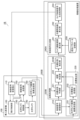
- FIG. 1 is a block diagram showing a configuration of a target imaging system according to a first embodiment
- FIG. 2 is a block diagram showing an example of a hardware configuration of the information processing device according to the first embodiment.
- FIG. 2 is a block diagram showing an example of a hardware configuration of the information processing device according to the first embodiment.
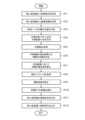
- 4 is a flowchart showing processing performed by each component of the information processing device according to the first embodiment.
- 5 is a schematic diagram showing a result of capturing an image of a white line as a target by the optical camera according to the first embodiment;
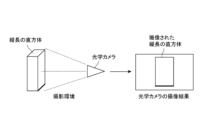
- FIG. 5 is a schematic diagram showing a result of capturing an image of a rectangular parallelepiped as a target by the optical camera according to the first embodiment.
- FIG. FIG. 11 is a block diagram showing a configuration of a target imaging system according to a second embodiment.
- FIG. 11 is a block diagram showing a configuration of a target imaging system according to a third embodiment.
- Fig. 1 is a block diagram showing the configuration of the target imaging system according to the first embodiment.
- the target imaging system 1 includes an unmanned aerial vehicle 100 as a mobile body, and an information processing device 200 as a mobile body control device for controlling the unmanned aerial vehicle 100.
- the unmanned aerial vehicle 100 is connected to the information processing device 200 wirelessly or via a wire so as to be able to communicate with each other bidirectionally.
- the unmanned aerial vehicle 100 includes a control signal receiver 110, a flight controller 120, an optical camera controller 130, an optical camera 140, a control signal transmitter 150, an optical camera image capture result transmitter 160, a propulsion mechanism (not shown) that generates thrust for the unmanned aerial vehicle 100, and various sensors (not shown).
- the control signal receiving unit 110 receives control signals for controlling the unmanned aerial vehicle 100 from the information processing device 200, including a control signal for controlling the propulsion mechanism and a control signal for controlling the optical camera 140. Specifically, the control signal receiving unit 110 receives a control signal from the information processing device 200 that corresponds to the velocity vector of the unmanned aerial vehicle 100. Details of the signals that the control signal receiving unit 110 receives from the information processing device 200 will be described later.
- the flight control unit 120 outputs a control signal for controlling the propulsion mechanism to the propulsion mechanism and control signal transmission unit 150 based on the control signal for controlling the propulsion mechanism received by the control signal receiving unit 110.
- the optical camera control unit 130 generates a control signal for controlling the operation of the optical camera 140 based on a signal from the control signal receiving unit 110.
- the optical camera control unit 130 also outputs a control signal for controlling the operation of the optical camera 140 to the optical camera 140 and the control signal transmitting unit 150.
- the optical camera control unit 130 outputs a control signal indicating the attitude angle of the camera, the focal length of the camera, etc., when controlling the operation of the optical camera 140 to the optical camera 140 and the control signal transmitting unit 150.
- the optical camera control unit 130 may be configured to be controlled independently of the flight control unit 120, or may be configured to be controlled in conjunction with the flight control unit 120.
- the control signal transmission unit 150 outputs a signal related to the control of the propulsion mechanism by the flight control unit 120 to the information processing device 200.
- the control signal transmission unit 150 outputs a signal indicating the movement speed (speed, direction) of the unmanned aerial vehicle 100 when the flight control unit 120 controls the propulsion mechanism to the information processing device 200.
- the control signal transmission unit 150 also outputs a signal related to the control of the optical camera 140 by the optical camera control unit 130 to the information processing device 200.
- the control signal transmission unit 150 outputs a signal indicating the attitude angle of the optical camera 140 and a signal indicating the focal length of the optical camera 140 to the information processing device 200 when the optical camera control unit 130 controls the optical camera 140.
- the optical camera imaging result transmission unit 160 outputs the imaging information acquired by imaging with the optical camera 140 to the information processing device 200 as the imaging result.
- the propulsion mechanism moves the unmanned aerial vehicle 100 by generating thrust in the unmanned aerial vehicle 100 in response to control signals from the flight control unit 120.
- the propulsion mechanism has one or more rotors and a drive source that drives the rotors, and generates thrust in the unmanned aerial vehicle 100 as the rotors rotate due to the drive force from the drive source.
- the propulsion mechanism also causes the unmanned aerial vehicle 100 to navigate in three dimensions in the air by changing the direction of thrust based on control signals from the flight control unit 120 and signals from various sensors.
- the various sensors equipped in the unmanned aerial vehicle 100 acquire various information from the unmanned aerial vehicle 100.
- the various sensors equipped in the unmanned aerial vehicle 100 include a sensor that detects the rotation speed of the rotor blades, a sensor that detects the inclination of the unmanned aerial vehicle 100 relative to the horizontal direction, a sensor that detects the acceleration experienced by the unmanned aerial vehicle 100, and the like.
- the information processing device 200 includes a control signal receiving unit 210, a tracking processing unit 220, a target detection unit 230, a control signal generating unit 240, and a known parameter storage unit 250.
- the tracking processing unit 220 which serves as an imaging prediction unit, includes a target state prediction unit 221, a correlation determination unit 222, and a target state estimation unit 223.
- the target detection unit 230 includes an optical camera imaging result receiving unit 231 and a target detection processing unit 232.
- the control signal generating unit 240 includes a camera imaging range calculation unit 241, a target distance calculation unit 242, and an unmanned aerial vehicle control signal generating processing unit 243.
- the information processing device 200 thus configured outputs a control signal for controlling the unmanned aerial vehicle 100 to the unmanned aerial vehicle 100 based on the signal and imaging information acquired from the unmanned aerial vehicle 100. Details of the information processing device 200 will be described later.
- Fig. 2 is a block diagram showing an example of the hardware configuration of the information processing device 200 according to the first embodiment
- Fig. 3 is a block diagram showing an example of a hardware configuration of the information processing device 200 according to the first embodiment, which is different from that shown in Fig. 2.
- the information processing device 200 has a processor 200a, a memory 200b, and an I/O port 200c, and is configured so that the processor 200a reads and executes a program stored in the memory 200b.
- the memory 200b may be, for example, a non-volatile or volatile semiconductor memory such as a RAM, a ROM, a flash memory, an EPROM, or an EEPROM.
- the memory 200b may also be a magnetic disk, a flexible disk, an optical disk, a compact disk, a mini disk, a DVD, or the like.
- the memory 200b may also be an HDD or SSD.
- the information processing device 200 has a processing circuit 200d and an I/O port 200c, which are dedicated hardware.
- the processing circuit 200d is configured, for example, by a single circuit, a composite circuit, a programmed processor, a parallel programmed processor, a system LSI (Large-Scale Integration), an ASIC (Application Specific Integrated Circuit), an FPGA (Field Programmable Gate Array), or a combination of these.
- Each function of the information processing device 200 is realized by the processor 200a or the processing circuit 200d, which is dedicated hardware, executing a program that is software, firmware, or a combination of software and firmware.
- FIG. 4 is a flowchart showing the processing performed by each component of the information processing device 200 according to embodiment 1.
- the control signal receiving unit 210 acquires a control signal for the unmanned aerial vehicle 100 from the control signal transmitting unit 150 of the unmanned aerial vehicle 100 (step ST1).
- the control signal receiving unit 210 receives from the control signal transmitting unit 150 a signal indicating the movement speed of the unmanned aerial vehicle 100, a signal indicating the attitude angle of the optical camera 140, and a signal indicating the focal length of the optical camera 140.
- the control signal receiving unit 210 outputs the signal received from the unmanned aerial vehicle 100 to the tracking processing unit 220.
- the optical camera image capturing result receiving unit 231 acquires the image information acquired by the optical camera 140 from the optical camera image capturing result transmitting unit 160 of the unmanned aerial vehicle 100 (step ST2).
- the target state prediction unit 221 predicts the state of the target as an imaging subject to be imaged by the optical camera 140 at the next time t+1, which is a predetermined time after the current time t, based on the signal acquired by the control signal receiving unit 210 (step ST3), and generates a predicted state vector and a prediction error matrix (step ST4).
- the state of the target represents the position of the center of gravity of the target, the size of the target (apparent size of the target in the image), and the inclination of the target in the image as imaging information acquired by imaging with the optical camera 140.
- the target state prediction unit 221 constitutes an imaging prediction unit that predicts changes in the imaging information at times after the predetermined time.
- FIG. 5 is a schematic diagram showing the result of capturing an image of a white line as a target by the optical camera 140 according to the first embodiment.
- the target state prediction unit 221 predicts, as the state of the target, the size of the target, which is the length of the short side and the length of the long side of the white line, the target's center coordinates (center of gravity position) which are the center coordinates of the white line area in a specific coordinate system, and the target's inclination, which is the angle of the short side with respect to the horizontal plane of the image.
- the target state prediction unit 221 predicts, as the state of the target, the size of the target, which is the length of the short side and the length of the long side of the white line included in the imaging information, the center of gravity position of the white line included in the imaging information, and the target's inclination, which is the inclination of the white line with respect to the optical camera 140 included in the imaging information.
- the state of the target predicted by the target state prediction unit is not limited to the above, and may be set appropriately according to the shape of the target.
- f in formulas (1) and (3) is a prediction function vector.
- f is composed of a polynomial whose elements are the flight speed of the unmanned aerial vehicle 100 and the attitude angle of the optical camera 140, and a polynomial whose elements are the flight speed of the unmanned aerial vehicle 100, the focal length of the optical camera 140, and the parameters stored in the known parameter storage unit 250.
- the target detection processing unit 232 performs a target detection process based on the imaging information (imaging result) acquired by the optical camera imaging result receiving unit 231 (step ST5).
- This detection process may be a process that obtains the center of gravity position of the target in the image, the size of the target, and the inclination of the target, and various processing contents are possible.
- the detection process may be a process that detects the average of the vertex coordinates (corresponding to the center of gravity position), the length of the short side (corresponding to the size), and the inclination of the long side when the horizontal plane of the image is set to 0 degrees.
- the correlation determination unit 222 determines whether there is a correlation between the result of the prediction by the target state prediction unit 221 and the result of the detection by the target detection processing unit 232, based on the result of the prediction by the target state prediction unit 221 and the result of the detection by the target detection processing unit 232 (step ST6). For example, the correlation determination unit 222 generates a predicted observation vector from the predicted state vector, and determines whether there is a correlation with the result of the detection process. Specifically, the correlation determination unit 222 sets an area where the result of the detection process is likely to be obtained, based on the predicted observation vector and the residual covariance matrix.
- the correlation determination unit 222 determines that there is a correlation between them, and if not, determines that there is no correlation between them.
- the above area is, for example, represented by the following formula (4).
- H is an observation matrix, for example, a unit matrix
- Rt is the observation error covariance matrix.
- the target state estimation unit 223 calculates an estimated value of the target based on the determination result by the correlation determination unit 222 (step ST7). If the correlation determination unit 222 determines that there is a correlation, the target state estimation unit 223 calculates an estimated value by the following formulas (6), (7), and (8). Note that I in formula (8) represents a unit matrix.
- the target state estimating unit 223 calculates an estimated value by the following equations (9) and (10).
- the camera shooting range calculation unit 241 acquires the size of the sensor of the optical camera 140 and the size of the target from the known parameter storage unit 250 (step ST8).
- the size of the target acquired by the camera shooting range calculation unit 241 here refers to the actual size of the target in the area detected by the target detection unit 230.
- the camera shooting range calculation unit 241 sets either the vertical or horizontal size (length) of the rectangular parallelepiped as the size of the target.
- FIG. 6 is a schematic diagram showing the result of capturing an image of a rectangular parallelepiped as a target by the optical camera 140 according to the first embodiment.
- the control signal generation process can be applied by using the size of the short side (the bold line area in the capture result of the optical camera 140 in FIG. 6) in the image of the area detected by the target detection unit 230.
- the camera shooting range calculation unit 241 calculates the imaging range captured by the optical camera 140 based on the estimation result by the target state estimation unit 223 and information on the size of the sensor of the optical camera 140.
- the following formula (11) is an example of a method for calculating the imaging range.
- the target distance calculation unit 242 calculates the actual distance from the optical camera 140 to the target (step ST10).
- the following formula (12) is an example of a method for calculating the actual distance from the optical camera 140 to the target.
- f t indicates the current focal length of the optical camera 140
- S sensor indicates the size of the sensor of the optical camera 140 in the direction in which the size of the target is set.
- the target distance calculation unit 242 calculates the distance between the optical camera 140 (unmanned aerial vehicle 100) and the target based on the size of the target detected by the target detection processing unit 232, i.e., the difference between the apparent size in the image captured by the optical camera 140, and the actual size of the target.
- the unmanned aerial vehicle control signal generation processing unit 243 When the target distance calculation unit 242 performs the process of step ST10, the unmanned aerial vehicle control signal generation processing unit 243 generates a three-dimensional velocity vector of the unmanned aerial vehicle 100 for controlling the unmanned aerial vehicle 100 (step ST11).
- the imaging range is calculated based on the calculated distance from the optical camera 140 to the target. For example, the imaging range in the vertical and horizontal directions of the image is calculated by the following formulas (13) and (14).
- H represents the vertical direction
- W represents the horizontal direction.
- the horizontal imaging range is obtained in equation (11), so this may be replaced with the result of equation (14).
- the unmanned aerial vehicle control signal generation processing unit 243 calculates the distance from an arbitrary position of the target in the image of the optical camera 140 based on the obtained imaging range and the distance from the optical camera 140 to the target. For example, the unmanned aerial vehicle control signal generation processing unit 243 calculates the distance using the following formulas (15), (16), and (17).
- the D D , D H , and D W obtained as above are velocity vectors in the line of sight direction of the optical camera 140. Therefore, the unmanned aerial vehicle control signal generation processing unit 243 can generate a control velocity vector of the unmanned aerial vehicle 100 by converting these D D , D H , and D W into the coordinate system of the unmanned aerial vehicle 100 based on the attitude angle of the optical camera 140 that has already been obtained.
- the unmanned aerial vehicle control signal generation processing unit 243 outputs a control signal corresponding to the generated control velocity vector of the unmanned aerial vehicle 100 to the unmanned aerial vehicle 100 (step ST12).
- the information processing device 200 controls the position of the unmanned aerial vehicle 100 based on the imaging information of the target captured by the unmanned aerial vehicle 100, thereby reducing the workload of the worker who inspects the target using the unmanned aerial vehicle 100. Furthermore, the information processing device 200 according to the first embodiment is capable of controlling the unmanned aerial vehicle 100 including in the depth direction by the unmanned aerial vehicle control signal generation processing unit 243 controlling the unmanned aerial vehicle using a velocity vector. Note that if the velocity vector calculated by the unmanned aerial vehicle control signal generation processing unit 243 is used as the control value for the unmanned aerial vehicle 100 as is, overshooting may occur due to errors or control accuracy problems. For this reason, the information processing device may be configured to stabilize the control of the unmanned aerial vehicle by combining the velocity vector information with a commonly known control method such as PID control.
- PID control a commonly known control method
- the information processing device 200 is configured to generate a control signal for controlling the unmanned aerial vehicle 100, the present invention is not limited to this.
- the information processing device only needs to be configured to generate a control signal for controlling a moving object having an imaging unit that images an object, and such a moving object may be something other than an aircraft, such as a vehicle or ship, or may be a manned vehicle.
- the information processing device is not limited to one that controls the position of the unmanned aerial vehicle relative to the target using a control signal.
- the information processing device may be configured to be able to control the position and tilt of the optical camera relative to the body of the unmanned aerial vehicle using a control signal, or may be configured to be able to control both the position of the unmanned aerial vehicle relative to the target and the position and tilt of the optical camera relative to the body of the unmanned aerial vehicle.
- the optical camera that captures the target is not limited to a camera that captures images using visible light, but may be an optical camera such as an IR camera or an event camera (Event Based Camera).
- the information processing device 200 according to the first embodiment is capable of controlling the moving body so as to maintain a state in which the target is being captured based on the prediction result by the target state prediction unit 221 and the imaging information captured at a time after a specified time, but there are various methods that can be considered for changing from a state in which the target is not being captured by the optical camera 140 to a state in which the target is first being captured by the optical camera 140.
- the unmanned aerial vehicle 100 may be manually operated by an operator or the like to change from a state in which an image of the target object is not being captured to a state in which an image is being captured, or when flying the unmanned aerial vehicle 100 outdoors, the unmanned aerial vehicle 100 may be flown to a specified coordinate by automatic piloting using flight based on a GNSS reception signal received by a receiving device of the unmanned aerial vehicle 100 (not shown) (waypoint flight), and then the optical camera 140 may be automatically or manually adjusted to capture an image of the target object.
- Embodiment 2 Next, a target imaging system 1A according to a second embodiment will be described with reference to Fig. 7.
- the target imaging system 1A according to the second embodiment is different from the target imaging system 1 according to the first embodiment in the configuration of the control signal generating unit of the information processing device, but the other configurations are the same, and the same reference numerals are used to designate the same configurations as those according to the first embodiment, and the description thereof will be omitted.
- FIG. 7 is a block diagram showing the configuration of a target imaging system 1A according to embodiment 2.
- the target imaging system 1A includes an unmanned aerial vehicle 100 and an information processing device 200A for controlling the unmanned aerial vehicle 100.
- the information processing device 200A includes a control signal receiving unit 210, a tracking processing unit 220, a target detection unit 230, a control signal generating unit 240A, and a known parameter storage unit 250.
- the control signal generating unit 240A includes a camera shooting range calculation unit 241, a target distance calculation unit 242, and a camera control signal generation processing unit 244.
- the information processing device 200A captures an image of the target by controlling the optical camera 140.
- the information processing device 200A calculates the control amount of the attitude angle of the optical camera 140 and the focal length f t+1 in the camera control signal generation processing unit 244.
- the following formulas (18), (19), and (20) are examples of methods for calculating the focal length f t+1 .
- xthick represents the ideal size of the target to be imaged in the image.
- the information processing device 200A can control the optical camera 140 by setting C pitch as the control amount in the pitch direction of the optical camera 140, C yaw as the control amount in the yaw direction of the optical camera 140, f t+1 as the focal length, and D as the focus distance.
- the information processing device may be configured to control the optical camera 140 by combining PID control (Proportional-Integral-Differential Controller) or the like.
- the control signal for controlling the optical camera 140 may be set to always capture the target at a constant angle by controlling the attitude angle in the roll direction using the tilt element of the estimated result.
- the hardware configuration of the information processing device 200A according to embodiment 2 is similar to the hardware configuration of the information processing device 200 according to embodiment 1, so a description thereof will be omitted.
- Embodiment 3 Next, a target imaging system 1B according to a third embodiment will be described with reference to Fig. 8.
- the target imaging system 1B according to the third embodiment is different from the target imaging system 1 according to the first embodiment in the configuration of the control signal generating unit of the information processing device, but the other configurations are the same, and the same reference numerals are used for the configurations similar to those of the first embodiment, and the description thereof will be omitted.
- FIG. 8 is a block diagram showing the configuration of a target imaging system 1B according to the third embodiment.
- the target imaging system 1B includes an unmanned aerial vehicle 100 and an information processing device 200B for controlling the unmanned aerial vehicle 100.
- the information processing device 200B includes a control signal receiving unit 210, a tracking processing unit 220, a target detection unit 230, a control signal generating unit 240A, and a known parameter storage unit 250.
- the control signal generating unit 240A includes a camera imaging range calculating unit 241, a target distance calculating unit 242, and a camera control signal generating processing unit 244.
- the camera imaging range calculating unit 241 acquires a prediction result from the target state predicting unit 221, and generates a control signal for controlling the optical camera 140 based on the acquired prediction result.
- the information processing device 200B controls the optical camera 140 to capture an image of the target.
- the hardware configuration of the information processing device 200B according to embodiment 3 is similar to the hardware configuration of the information processing device 200 according to embodiment 1, so a description thereof will be omitted.
- the imaging device disclosed herein can be used, for example, in a system that inspects the appearance of a target based on imaging information obtained by imaging the target.
- an imaging information acquisition unit that acquires imaging information of an object captured by an imaging unit from a moving body that has the imaging unit capturing an image of the object
- an object detection unit that detects the object included in the imaging information based on the imaging information acquired by the imaging information acquisition unit
- a distance calculation unit that calculates a distance between the moving body and the object based on a difference between a size of the object detected by the object detection unit and an actual size of the object
- a control signal generating unit that generates a control signal for controlling the moving object based on a result of the calculation by the distance calculating unit.
- (Appendix 2) an imaging prediction unit that predicts the imaging information at a time after a predetermined time; the control signal generation unit generates a control signal for controlling the moving body so as to maintain a state in which the target object is being imaged, based on a prediction result by the imaging prediction unit and the imaging information imaged at a time after the predetermined time.
- (Appendix 3) The imaging prediction unit predicts a center of gravity position of the object included in the imaging information at a time after a predetermined time, 3.
- control signal generation unit generates a control signal for controlling the mobile body so as to maintain a state in which the imaging unit is imaging the object, based on a prediction result of a center of gravity position of the object by the imaging prediction unit and a center of gravity position of the object included in the imaging information imaged at a time after the specified time.
- control signal generation unit generates a control signal for controlling a position of the moving body relative to the object so as to maintain a state in which the imaging unit is imaging the object, based on a prediction result of the center of gravity position of the object by the imaging prediction unit and a center of gravity position of the object included in the imaging information imaged at a time after the specified time.
- control signal generation unit generates a control signal for controlling the imaging unit to maintain a state in which the imaging unit is imaging the object, based on a prediction result of a center of gravity position of the object by the imaging prediction unit and a center of gravity position of the object included in the imaging information imaged at a time after the specified time.
- the imaging prediction unit predicts a size of the object included in the imaging information at a time after a predetermined time
- the mobile body control device according to any one of appendix 1 to 5, characterized in that the control signal generation unit generates a control signal for controlling the mobile body so as to suppress a change in the size of the object included in the imaging information, based on a prediction result of the size of the object by the imaging prediction unit and the size of the object included in the imaging information captured at a time after the specified time.
- control signal generation unit generates a control signal for controlling a position of the mobile body relative to the object so as to suppress a change in the size of the object included in the imaging information, based on a prediction result of the size of the object by the imaging prediction unit and the size of the object included in the imaging information captured at a time after the specified time.
- the control signal generation unit generates a control signal for controlling the imaging unit so as to suppress a change in the size of the object included in the imaging information, based on a prediction result of the size of the object by the imaging prediction unit and the size of the object included in the imaging information captured at a time after the specified time.
- the imaging prediction unit predicts a tilt of the object with respect to the imaging unit at a time after a predetermined time
- the mobile body control device according to any one of appendix 1 to 8, characterized in that the control signal generation unit generates a control signal for controlling the mobile body so as to suppress a change in the inclination of the object included in the imaging information, based on a prediction result of the inclination of the object by the imaging prediction unit and an inclination of the object included in the imaging information captured at a time after the specified time.
- control signal generation unit generates a control signal for controlling a position of the mobile body relative to the object so as to suppress a change in the inclination of the object included in the imaging information, based on a prediction result of the inclination of the object by the imaging prediction unit and an inclination of the object included in the imaging information captured at a time after the specified time.
- the control signal generation unit generates a control signal for controlling the imaging unit so as to suppress a change in the inclination of the object included in the imaging information, based on a prediction result of the inclination of the object by the imaging prediction unit and the inclination of the object included in the imaging information captured at a time after the specified time.
- a moving object control method performed by an apparatus including an image capture information acquisition unit, an object detection unit, a distance calculation unit, and a control signal generation unit comprising: The imaging information acquisition unit acquires imaging information of an object captured by an imaging unit from a moving body having the imaging unit for capturing an image of the object; a step of detecting the object included in the imaging information based on the imaging information acquired by the imaging information acquisition unit by the object detection unit; a step of the distance calculation unit calculating a distance between the moving body and the object based on a difference between a size of the object detected by the object detection unit and an actual size of the object; a step of generating a control signal for controlling the moving object based on a result of the calculation by the distance calculation unit, by the control signal generation unit.
Landscapes
- Engineering & Computer Science (AREA)
- Multimedia (AREA)
- Signal Processing (AREA)
- Control Of Position, Course, Altitude, Or Attitude Of Moving Bodies (AREA)
Priority Applications (2)
| Application Number | Priority Date | Filing Date | Title |
|---|---|---|---|
| PCT/JP2023/032594 WO2025052609A1 (ja) | 2023-09-07 | 2023-09-07 | 移動体制御装置及び移動体制御方法 |
| JP2023575506A JPWO2025052609A1 (https=) | 2023-09-07 | 2023-09-07 |
Applications Claiming Priority (1)
| Application Number | Priority Date | Filing Date | Title |
|---|---|---|---|
| PCT/JP2023/032594 WO2025052609A1 (ja) | 2023-09-07 | 2023-09-07 | 移動体制御装置及び移動体制御方法 |
Publications (1)
| Publication Number | Publication Date |
|---|---|
| WO2025052609A1 true WO2025052609A1 (ja) | 2025-03-13 |
Family
ID=94923865
Family Applications (1)
| Application Number | Title | Priority Date | Filing Date |
|---|---|---|---|
| PCT/JP2023/032594 Pending WO2025052609A1 (ja) | 2023-09-07 | 2023-09-07 | 移動体制御装置及び移動体制御方法 |
Country Status (2)
| Country | Link |
|---|---|
| JP (1) | JPWO2025052609A1 (https=) |
| WO (1) | WO2025052609A1 (https=) |
Citations (6)
| Publication number | Priority date | Publication date | Assignee | Title |
|---|---|---|---|---|
| JP2018005914A (ja) * | 2016-06-30 | 2018-01-11 | シャープ株式会社 | 自律移動制御システム、走行装置、無人航空機及び自律移動制御方法 |
| JP2019073182A (ja) * | 2017-10-17 | 2019-05-16 | 株式会社トプコン | 無人航空機の制御装置、無人航空機、測量装置、無人航空機の制御方法および無人航空機の制御用プログラム |
| WO2019186713A1 (ja) * | 2018-03-27 | 2019-10-03 | 株式会社自律制御システム研究所 | 無人航空機 |
| JP2021113005A (ja) * | 2020-01-21 | 2021-08-05 | アルパイン株式会社 | 無人航空機システムおよび飛行制御方法 |
| JP2022157761A (ja) * | 2021-03-31 | 2022-10-14 | 綜合警備保障株式会社 | 飛行体ユニットおよび点検システム |
| JP2023052342A (ja) * | 2018-07-11 | 2023-04-11 | メトロウェザー株式会社 | 飛行経路算出システム、飛行経路算出プログラム、および無人航空機経路制御方法 |
Family Cites Families (2)
| Publication number | Priority date | Publication date | Assignee | Title |
|---|---|---|---|---|
| JPS63213005A (ja) * | 1987-03-02 | 1988-09-05 | Hitachi Ltd | 移動体誘導方法 |
| EP3081902B1 (en) * | 2014-03-24 | 2019-04-17 | SZ DJI Technology Co., Ltd. | Method and apparatus for correcting aircraft state in real time |
-
2023
- 2023-09-07 WO PCT/JP2023/032594 patent/WO2025052609A1/ja active Pending
- 2023-09-07 JP JP2023575506A patent/JPWO2025052609A1/ja active Pending
Patent Citations (6)
| Publication number | Priority date | Publication date | Assignee | Title |
|---|---|---|---|---|
| JP2018005914A (ja) * | 2016-06-30 | 2018-01-11 | シャープ株式会社 | 自律移動制御システム、走行装置、無人航空機及び自律移動制御方法 |
| JP2019073182A (ja) * | 2017-10-17 | 2019-05-16 | 株式会社トプコン | 無人航空機の制御装置、無人航空機、測量装置、無人航空機の制御方法および無人航空機の制御用プログラム |
| WO2019186713A1 (ja) * | 2018-03-27 | 2019-10-03 | 株式会社自律制御システム研究所 | 無人航空機 |
| JP2023052342A (ja) * | 2018-07-11 | 2023-04-11 | メトロウェザー株式会社 | 飛行経路算出システム、飛行経路算出プログラム、および無人航空機経路制御方法 |
| JP2021113005A (ja) * | 2020-01-21 | 2021-08-05 | アルパイン株式会社 | 無人航空機システムおよび飛行制御方法 |
| JP2022157761A (ja) * | 2021-03-31 | 2022-10-14 | 綜合警備保障株式会社 | 飛行体ユニットおよび点検システム |
Also Published As
| Publication number | Publication date |
|---|---|
| JPWO2025052609A1 (https=) | 2025-03-13 |
Similar Documents
| Publication | Publication Date | Title |
|---|---|---|
| US10860039B2 (en) | Obstacle avoidance method and apparatus and unmanned aerial vehicle | |
| EP1898230B1 (en) | Tracking a moving object from a camera on a moving platform | |
| CN111226154B (zh) | 自动对焦相机和系统 | |
| JP5618840B2 (ja) | 飛行体の飛行制御システム | |
| JP5775632B2 (ja) | 飛行体の飛行制御システム | |
| JP2019511044A (ja) | 飛行デバイスの動き制御のための方法およびシステム | |
| EP3972235B1 (en) | Focusing method and apparatus, aerial photography camera, and unmanned aerial vehicle | |
| JP6957304B2 (ja) | 架線撮影システム及び架線撮影方法 | |
| CN111356954B (zh) | 控制装置、移动体、控制方法以及程序 | |
| US20210229810A1 (en) | Information processing device, flight control method, and flight control system | |
| US20200092455A1 (en) | Control device, photographing device, photographing system, and movable object | |
| US20210014427A1 (en) | Control device, imaging device, mobile object, control method and program | |
| WO2020042159A1 (zh) | 一种云台的转动控制方法、装置及控制设备、移动平台 | |
| JP2021096865A (ja) | 情報処理装置、飛行制御指示方法、プログラム、及び記録媒体 | |
| WO2019238044A1 (zh) | 确定装置、移动体、确定方法以及程序 | |
| JP2019219874A (ja) | 自律移動撮影制御システムおよび自律移動体 | |
| WO2021217372A1 (zh) | 可移动平台的控制方法和设备 | |
| CN110800023A (zh) | 图像处理方法和设备、摄像装置以及无人机 | |
| JP4999647B2 (ja) | 航空写真撮影システムおよび航空写真の画像補正方法 | |
| CN109844634B (zh) | 控制装置、摄像装置、飞行体、控制方法以及程序 | |
| JP6515423B2 (ja) | 制御装置、移動体、制御方法、及びプログラム | |
| US20200410219A1 (en) | Moving object detection device, control device, movable body, moving object detection method and program | |
| JP6974290B2 (ja) | 位置推定装置、位置推定方法、プログラム、及び記録媒体 | |
| JP7468523B2 (ja) | 移動体、位置推定方法、およびプログラム | |
| WO2025052609A1 (ja) | 移動体制御装置及び移動体制御方法 |
Legal Events
| Date | Code | Title | Description |
|---|---|---|---|
| ENP | Entry into the national phase |
Ref document number: 2023575506 Country of ref document: JP Kind code of ref document: A |
|
| WWE | Wipo information: entry into national phase |
Ref document number: 2023575506 Country of ref document: JP |