WO2025041275A1 - Dispositif et procédé de traitement d'informations - Google Patents
Dispositif et procédé de traitement d'informations Download PDFInfo
- Publication number
- WO2025041275A1 WO2025041275A1 PCT/JP2023/030189 JP2023030189W WO2025041275A1 WO 2025041275 A1 WO2025041275 A1 WO 2025041275A1 JP 2023030189 W JP2023030189 W JP 2023030189W WO 2025041275 A1 WO2025041275 A1 WO 2025041275A1
- Authority
- WO
- WIPO (PCT)
- Prior art keywords
- behavior
- information
- message
- action
- members
- Prior art date
- Legal status (The legal status is an assumption and is not a legal conclusion. Google has not performed a legal analysis and makes no representation as to the accuracy of the status listed.)
- Ceased
Links
Images





Classifications
-
- G—PHYSICS
- G06—COMPUTING OR CALCULATING; COUNTING
- G06Q—INFORMATION AND COMMUNICATION TECHNOLOGY [ICT] SPECIALLY ADAPTED FOR ADMINISTRATIVE, COMMERCIAL, FINANCIAL, MANAGERIAL OR SUPERVISORY PURPOSES; SYSTEMS OR METHODS SPECIALLY ADAPTED FOR ADMINISTRATIVE, COMMERCIAL, FINANCIAL, MANAGERIAL OR SUPERVISORY PURPOSES, NOT OTHERWISE PROVIDED FOR
- G06Q10/00—Administration; Management
- G06Q10/06—Resources, workflows, human or project management; Enterprise or organisation planning; Enterprise or organisation modelling
- G06Q10/063—Operations research, analysis or management
- G06Q10/0639—Performance analysis of employees; Performance analysis of enterprise or organisation operations
Definitions
- An embodiment of the present invention relates to an information processing device and method.
- a company's operations are made up of elements such as employees, facilities, and business processes. Operations are designed to suit the industry, business sector, and business model, and are improved daily. In particular, employees are an organic function that is important in operations, and they flexibly support uncertain and complex operations through an organizational structure.
- a “team” refers to a group of two or more people who work together or cooperate to achieve a shared goal or obtain value while dividing up roles, and the people who belong to an organization are called “members.”
- An organization functions as a collection of multiple teams, and it is important to properly understand the formation status of these teams in accordance with the business situation, and to design and improve their operation.
- Non-Patent Document 1 reports the results of a quantitative analysis of the strength of connections between employees based on the hypothesis that "employees with strong relationships respond quickly after a comment" using communication logs obtained from a business chat application.
- Non-patent literature 2 reports on the results of an analysis of the relationship between productivity and the structural characteristics of the directed graph of the communication log (history) of a task management application for software development, based on which the shape of the connections between statements is expressed as a directed graph.
- the method disclosed in the above-mentioned non-patent document 1 estimates the strength of the connection between two people based on the speed of response, but it cannot extract contribution value information about the action relationship regarding the actions of members.
- Patent Document 2 creates a graph structure of the spread and convergence of comments based on information about quotes and mentions regarding the content of comments made in group chats and information about the context between comments. Since it does not handle member information, it is not possible to extract contribution value information about the action relationships regarding the actions of members.
- known methods cannot extract action relationships related to the actions of members, i.e., behavioral information that causes action relationships between members, from communication logs.
- This invention was made in light of the above circumstances, and its purpose is to provide an information processing device and method that can appropriately analyze the interaction relationships regarding the actions of members.
- An information processing device includes an acquisition unit that acquires behavioral information that identifies the type of behavior performed by each of a plurality of personnel and the personnel involved in the behavior, based on information in which the action relationships related to the behavior performed by each of the plurality of personnel are structured.
- An information processing method is a method performed by an information processing device, and includes acquiring, by an acquisition unit of the information processing device, behavioral information that identifies the type of behavior performed by each of a plurality of personnel and the personnel involved in the behavior, based on information in which the action relationships related to the behavior performed by each of the plurality of personnel are structured.
- the present invention makes it possible to properly analyze the interaction between members' actions.
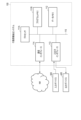
- FIG. 1 is a diagram showing an application example of a behavior information extraction system according to an embodiment of the present invention.
- FIG. 2 is a diagram showing an example of input information to the behavior information extraction system.
- FIG. 3 is a diagram for explaining an example of action relationships regarding actions between members.
- FIG. 4 is a diagram showing an example of the action relationships regarding sending actions between members.
- FIG. 5 is a diagram showing an example of action relationships regarding reaction behaviors between members.
- FIG. 6 is a diagram showing an example of action relationships regarding participation actions between members.
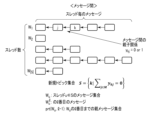
- FIG. 7 is a diagram showing an example of various types of information in a message.
- FIG. 8 is a diagram showing an example of various types of information between messages.
- FIG. 9 is a flowchart showing an example of a processing procedure related to extraction of calling behavior data between members.
- FIG. 9 is a flowchart showing an example of a processing procedure related to extraction of calling behavior data between members.
- FIG. 10 is a flowchart showing an example of a processing procedure related to extraction of reaction behavior data between members.
- FIG. 11 is a flowchart illustrating an example of a processing procedure related to extraction of engagement behavior data between members.
- FIG. 12 is a diagram illustrating an example of contribution value information based on a result of extraction by the behavior information extraction unit.
- FIG. 13 is a diagram showing an example of action relationships related to actions visualized as a directed graph network.
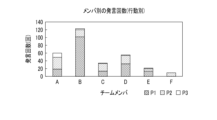
- FIG. 14 is a diagram showing an example of a result of tallying up various behavioral patterns performed by each member.
- Figure 15 is a block diagram showing an example of the hardware configuration of a behavioral information extraction system according to one embodiment of the present invention.
- information is extracted from the communication log that indicates the action relationships regarding three types of outreach actions between members: outgoing actions, response actions, and participation actions.
- FIG. 1 is a diagram showing an application example of a behavior information extraction system according to an embodiment of the present invention.
- a behavioral information extraction system (behavioral information extraction device) 100 according to one embodiment of the present invention has an outgoing behavior acquisition unit 10, a reaction behavior acquisition unit 20, an engagement behavior acquisition unit 30, a behavioral information DB (database) 40, and a contribution value determination unit 50.
- the behavioral information extraction system 100 inputs structured information on (1) the destinations of members between and within messages, (2) reactions to messages, and (3) relationships between messages. This information is structured information on the action relationships regarding the actions performed by each of multiple members.
- Fig. 2 is a diagram showing an example of input information to the behavior information extraction system
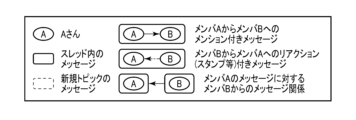
- Fig. 3 is a diagram for explaining an example of action relationships regarding the behaviors of members.
- the input information by the behavioral information extraction system 100 includes (1) a message of a new topic, which is the first message, and (2) messages of each thread, which are messages below the message of the new topic.
- This input information includes (1) a message with a mention from one member to another member, (2) a reaction from one member to another member, e.g., a message with a stamp-like mark, and (3) the relationship of messages from other members to messages sent by one member.
- the above-mentioned messages with mentions and reactions are structured information about the relationships within messages between members, and the above-mentioned message relationships are structured information about the parent-child relationships between messages.
- the outgoing behavior acquisition unit 10 acquires outgoing behavior data indicating the interaction relationship between members regarding outgoing behavior, which is a type of outreach behavior between members, from the input information, i.e., the structured information, and stores (adds) this acquired data in the behavior information DB 40.
- the reaction behavior acquisition unit 20 acquires reaction behavior data indicating the action relationship regarding the reaction behavior between each member, which is a type of encouraging behavior between each member, from the above input information, and stores this acquired data in the behavior information DB 40.
- the participation behavior acquisition unit 30 acquires participation behavior data indicating action relationships regarding participation behaviors between members, which is a type of encouraging behavior between members, from the input information, and stores this acquired data in the behavior information DB 40.
- the behavior information extraction system 100 outputs the acquired and stored data.
- the acquired data is behavior information that identifies the type of behavior performed by each of the multiple members and the personnel involved in the behavior.
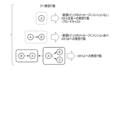
- Fig. 4 is a diagram showing an example of an action relationship regarding a sending action between members.
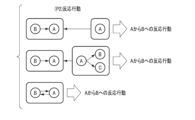
- Fig. 5 is a diagram showing an example of an action relationship regarding a reaction action between members.
- Fig. 6 is a diagram showing an example of an action relationship regarding a participation action between members.
- the action relationships regarding outgoing messages include (1) an outgoing message from member A to all other members, known as a broadcast, when the message in the new topic does not mention any other specific members, (2) an outgoing message from member A to member B when the message in the new topic includes a mention of any other specific members, and (3) an outgoing message from member A to member A.
- the action relationships regarding the reaction behavior include three action relationships regarding reaction behavior from member A to member A.
- the action relationships regarding the engagement actions include (1) an engagement action from member A to member B and (2) an engagement action from member A to member C with respect to the above broadcast.
- ⁇ j ⁇ Mykj 0 ⁇ ), and (8) a set Wu of messages in thread u ⁇ S.
- the above parent-child relationship is the relationship when the parent message is message j and the child message is message k.
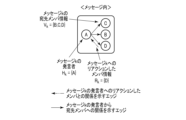
- FIG. 7 is a diagram showing an example of various types of information in a message.
- the sender of message k is "member A”
- the destination members of message k are “member B,””memberC,” and “member D”
- the member who reacted to message k is "member D.”
- FIG. 8 is a diagram showing an example of various types of information between messages. 8 shows multiple threads, each of which is a set of messages starting from a message in a new topic, as well as messages j and k in the first thread that have a parent-child relationship.
- the set of parent messages from 1 to l of message set W u in the u-th thread can be expressed as prt(W u , l-1).
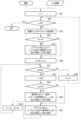
- FIG. 9 is a flowchart showing an example of a processing procedure related to extraction of calling behavior data between members.
- the outgoing behavior acquisition unit 10 uses the above-mentioned structured information as input information and assigns 1 to the variable u of the thread to be processed (S11). If the process has not yet ended up to the final thread (No in S12), the outgoing behavior acquisition unit 10 acquires a message k of a new topic (S13).
- the outgoing message action acquisition unit 10 determines that an action relationship exists between the sender H k and all other members regarding the outgoing message action, and stores information indicating the action relationship regarding this outgoing message action in the action information DB 40 (S15).
- the outgoing behavior acquisition unit 10 determines that an action relationship related to an outgoing behavior from the message sender H k to the destination member V k exists, and stores information indicating this action relationship in the behavior information DB 40 (S16).
- the extraction in S15 and S16 corresponds to the above explanation of (1) of the extraction process of outgoing behavior data.
- the outgoing message behavior acquisition unit 10 adds element k to element Q and assigns 2 to variable 1 (S17).
- the outgoing message behavior acquisition unit 10 updates the variable u by incrementing it by 1 (S19), and returns to S12.
- the sending behavior acquisition unit 10 adds the element of the l-th message in the message set W u of the u-th thread to element k (S20).
- This extraction in S22 corresponds to the above explanation of (2) of the outgoing behavior data extraction process.
- the outgoing message behavior acquisition unit 10 updates the variable l by incrementing it by 1, adds element k to element Q (S23), and returns to S18.
- the series of processing by the outgoing call behavior acquisition unit 10 ends.
- FIG. 10 is a flowchart showing an example of a processing procedure related to extraction of reaction behavior data between members.
- the reaction behavior acquisition unit 20 receives the above-mentioned structured information as input information and assigns 1 to the variable u of the thread to be processed (S31). If the processing up to the final thread has not yet ended (No in S32), the reaction behavior acquisition unit 20 acquires a message k of a topic u (S33).
- the reaction behavior acquisition unit 20 determines that an action relationship regarding reaction behavior from the member R k ( ⁇ i
- the extraction in S35 corresponds to the above explanation of (2) of the extraction process of reaction behavior data.
- the reaction behavior acquisition unit 20 After S35, or if the answer is "Yes” in S34, the reaction behavior acquisition unit 20 adds element k to element Q, and assigns 2 to variable 1 (S36). When the condition "l>
- the extraction in S43 corresponds to the above explanation of (1) of the reaction behavior data extraction process.
- the reaction behavior acquisition unit 20 determines, as in S35, that an action relationship has occurred regarding reaction behavior from the member R k ( ⁇ i
- reaction behavior acquisition unit 20 updates the variable l by incrementing it by 1, adds element k to element Q (S45), and returns to S37.
- the series of processing by the reaction behavior acquisition unit 20 ends.
- FIG. 11 is a flowchart illustrating an example of a processing procedure related to extraction of engagement behavior data between members.
- the involvement behavior acquisition unit 30 uses the above-mentioned structured information as input information and assigns 1 to the variable u of the thread to be processed (S51). If the processing up to the final thread has not yet ended (No in S52), the involvement behavior acquisition unit 30 acquires a message k of the new topic (S53).
- the participation behavior acquisition unit 30 determines that an action relationship related to the participation behavior exists from the sender H l of message l, a child of message k, to the sender H k of message k, and stores information indicating this action relationship related to the participation behavior in the behavior information DB 40 (S56).
- This extraction in S56 corresponds to the above explanation of (2) of the extraction process of the participation behavior data.
- the involvement behavior acquisition section 30 After S56, or if the answer is "No" in S54 or S55, the involvement behavior acquisition section 30 adds element k to element Q, and assigns 2 to variable 1 (S57). When the condition "l >
- the involvement behavior acquisition section 30 updates the variable l by incrementing it by 1, adds element k to element Q (S64), and returns to S58.
- the series of processing by the involvement behavior acquisition unit 30 ends.
- FIG. 12 is a diagram illustrating an example of contribution value information based on a result of extraction by the behavior information extraction unit.
- the contribution value determination unit 50 of the behavioral information extraction system 100 calculates the count values of the occurrences of various behaviors indicated by the various information stored in the behavioral information DB 40 as described above, in this case the outgoing behavior P1, the reaction behavior P2, and the participation behavior P3 between each member, and generates the information substituted into a matrix of influence between members as shown in Figure 12 as a matrix of contribution values of each of the multiple members involved in the execution of the various behaviors described above, and outputs this.
- the generated results can be used by the user to evaluate and analyze the behavioral patterns among the members.
- the rows of the matrix are assigned to the members who make the appeal, and the columns of the matrix are assigned to the members who are appealed to.
- the situation showing "who is influencing what behavior on whom" among members of a team can be objectively analyzed using information showing the interaction between three types of initiation behaviors, namely outgoing behavior, response behavior, and engagement behavior, from the communication log between members.
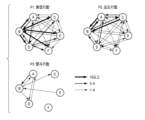
- FIG. 13 is a diagram showing an example of action relationships related to actions visualized as a directed graph network.
- the behavioral information extraction system 100 may generate and output information that visualizes the action relationships and the strength of the relationships between members in each behavioral pattern as a directed graph network, as shown in Fig. 13, as an analysis by visualizing a network expression. By generating such information, the user can grasp the interrelationships between members in a team according to their behavioral patterns.
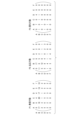
- FIG. 14 is a diagram showing an example of a result of tallying up various behavioral patterns performed by each member.
- the behavioral information extraction system 100 may generate and output information that tally up the number of utterances by each member in various behavioral patterns executed by each member, as shown in Fig. 14, and visualize the tally up results as a bar graph. By generating such information, the behavioral tendencies of each member in a team can be visualized, making it easier for the user to understand.
- FIG. 15 is a block diagram showing an example of a hardware configuration of a behavioral information extraction system 100 according to an embodiment of the present invention.
- the behavior information extraction system 100 is configured, for example, by a server computer or a personal computer, and has a hardware processor 111A such as a CPU.
- a program memory 111B, a data memory 112, an input/output interface 113, and a communication interface 114 are connected to the hardware processor 111A via a bus 115.
- the communication interface 114 includes, for example, one or more wireless communication interface units, and enables the transmission and reception of information to and from a communication network NW.
- a wireless interface for example, an interface that adopts a low-power wireless data communication standard such as a wireless LAN (Local Area Network) is used.
- An input device 300 and an output device 400 that are attached to the behavioral information extraction system 100 and are used by a user or the like are connected to the input/output interface 113 .
- the input/output interface 113 takes in operation data input by a user or the like through an input device 300 such as a keyboard, a touch panel, a touchpad, a mouse, etc., and outputs output data to an output device 400 including a display device using liquid crystal or organic EL (Electro Luminescence), etc., for display.
- the input device 300 and the output device 400 may be devices built into the behavioral information extraction system 100, or may be input devices and output devices of other information terminals that can communicate with the behavioral information extraction system 100 via the network NW.
- the program memory 111B is a non-transient tangible storage medium that combines a non-volatile memory such as a HDD (Hard Disk Drive) or SSD (Solid State Drive) that can be written to and read from at any time, with a non-volatile memory such as a ROM (Read Only Memory), and stores the programs necessary to execute various control processes, etc. according to one embodiment.
- a non-volatile memory such as a HDD (Hard Disk Drive) or SSD (Solid State Drive) that can be written to and read from at any time
- a non-volatile memory such as a ROM (Read Only Memory)
- ROM Read Only Memory
- the data memory 112 is a tangible storage medium that combines, for example, the above-mentioned non-volatile memory with a volatile memory such as RAM (Random Access Memory), and is used to store various data acquired and created during various processing steps.
- RAM Random Access Memory
- the behavioral information extraction system 100 can be configured as a data processing system or information processing device having a processing function unit implemented by software.
- the storage system used as a work memory or the like by the behavioral information extraction system 100 can be configured by using the data memory 112 shown in Fig. 15.
- these configured storage areas are not essential components in the behavioral information extraction system 100, and may be areas provided in a storage system such as an external storage medium such as a Universal Serial Bus (USB) memory, or a database server located in the cloud.
- USB Universal Serial Bus
- the above processing function unit can be realized by having the above hardware processor 111A read and execute a program stored in the program memory 111B. Note that this processing function unit may also be realized in a variety of other forms, including integrated circuits such as an application specific integrated circuit (ASIC (Application Specific Integrated Circuit)) or an FPGA (Field-Programmable Gate Array).
- ASIC Application Specific Integrated Circuit
- FPGA Field-Programmable Gate Array
- the techniques described in each embodiment can be stored as a program (software means) that can be executed by a computer on a recording medium such as a magnetic disk (Floppy disk, hard disk, etc.), optical disc (CD-ROM, DVD, MO, etc.), semiconductor memory (Read Only Memory (ROM), Random Access Memory (RAM), Flash memory, etc.), and can be distributed by transmission via a communication medium.
- the programs stored on the medium also include a setting program that configures within the computer the software means (including not only execution programs but also tables and data structures) that the computer executes.
- the computer that realizes this device reads the program recorded on the recording medium, and in some cases constructs the software means using the setting program, and the operation of the software means is controlled to execute the above-mentioned processing.
- the term "recording medium” is not limited to those for distribution, but also includes storage media such as magnetic disks and semiconductor memories installed inside a computer or in a device connected via a network.
- the present invention is not limited to the above-described embodiments, and can be modified in various ways during implementation without departing from the gist of the invention.
- the embodiments may also be implemented in appropriate combination, in which case the combined effects can be obtained.
- the above-described embodiments include various inventions, and various inventions can be extracted by combinations selected from the multiple constituent elements disclosed. For example, if the problem can be solved and an effect can be obtained even if some constituent elements are deleted from all the constituent elements shown in the embodiments, the configuration from which these constituent elements are deleted can be extracted as an invention.
- Behavioral information extraction system 10 Outgoing behavior acquisition unit 20: Reaction behavior acquisition unit 30: Participation behavior acquisition unit 40: Behavioral information DB (database) 50...Contribution value determination unit
Landscapes
- Business, Economics & Management (AREA)
- Human Resources & Organizations (AREA)
- Engineering & Computer Science (AREA)
- Strategic Management (AREA)
- Development Economics (AREA)
- Economics (AREA)
- Entrepreneurship & Innovation (AREA)
- Educational Administration (AREA)
- Operations Research (AREA)
- Marketing (AREA)
- Game Theory and Decision Science (AREA)
- Quality & Reliability (AREA)
- Tourism & Hospitality (AREA)
- Physics & Mathematics (AREA)
- General Business, Economics & Management (AREA)
- General Physics & Mathematics (AREA)
- Theoretical Computer Science (AREA)
- Management, Administration, Business Operations System, And Electronic Commerce (AREA)
Abstract
Un dispositif de traitement d'informations selon un mode de réalisation de la présente invention comprend une unité d'acquisition qui acquiert, sur la base d'informations dans lesquelles une relation d'action relative au comportement exécuté par une pluralité de personnes est structurée, un type de comportement exécuté par chacune de la pluralité de personnes et des informations de comportement pour identifier une personne impliquée dans le comportement.
Priority Applications (1)
| Application Number | Priority Date | Filing Date | Title |
|---|---|---|---|
| PCT/JP2023/030189 WO2025041275A1 (fr) | 2023-08-22 | 2023-08-22 | Dispositif et procédé de traitement d'informations |
Applications Claiming Priority (1)
| Application Number | Priority Date | Filing Date | Title |
|---|---|---|---|
| PCT/JP2023/030189 WO2025041275A1 (fr) | 2023-08-22 | 2023-08-22 | Dispositif et procédé de traitement d'informations |
Publications (1)
| Publication Number | Publication Date |
|---|---|
| WO2025041275A1 true WO2025041275A1 (fr) | 2025-02-27 |
Family
ID=94731520
Family Applications (1)
| Application Number | Title | Priority Date | Filing Date |
|---|---|---|---|
| PCT/JP2023/030189 Ceased WO2025041275A1 (fr) | 2023-08-22 | 2023-08-22 | Dispositif et procédé de traitement d'informations |
Country Status (1)
| Country | Link |
|---|---|
| WO (1) | WO2025041275A1 (fr) |
Citations (4)
| Publication number | Priority date | Publication date | Assignee | Title |
|---|---|---|---|---|
| JP2012510667A (ja) * | 2008-12-01 | 2012-05-10 | トプシー ラブズ インコーポレイテッド | 計算された評判又は影響度スコアに基づくランキング及び選択エンティティ |
| JP2014527651A (ja) * | 2011-07-07 | 2014-10-16 | インターナショナル・ビジネス・マシーンズ・コーポレーションInternational Business Machines Corporation | 対人的対話からのテキストコンテンツを用いて、対人関係影響情報を判定するためのシステム及び方法 |
| JP2015164008A (ja) * | 2014-02-28 | 2015-09-10 | 株式会社日立製作所 | 解析装置及び解析方法 |
| JP2016048540A (ja) * | 2014-08-25 | 2016-04-07 | 富士通株式会社 | 生成方法、装置、及びプログラム |
-
2023
- 2023-08-22 WO PCT/JP2023/030189 patent/WO2025041275A1/fr not_active Ceased
Patent Citations (4)
| Publication number | Priority date | Publication date | Assignee | Title |
|---|---|---|---|---|
| JP2012510667A (ja) * | 2008-12-01 | 2012-05-10 | トプシー ラブズ インコーポレイテッド | 計算された評判又は影響度スコアに基づくランキング及び選択エンティティ |
| JP2014527651A (ja) * | 2011-07-07 | 2014-10-16 | インターナショナル・ビジネス・マシーンズ・コーポレーションInternational Business Machines Corporation | 対人的対話からのテキストコンテンツを用いて、対人関係影響情報を判定するためのシステム及び方法 |
| JP2015164008A (ja) * | 2014-02-28 | 2015-09-10 | 株式会社日立製作所 | 解析装置及び解析方法 |
| JP2016048540A (ja) * | 2014-08-25 | 2016-04-07 | 富士通株式会社 | 生成方法、装置、及びプログラム |
Similar Documents
| Publication | Publication Date | Title |
|---|---|---|
| US11695721B2 (en) | Method, apparatus, and computer program product for categorizing multiple group-based communication messages | |
| US11663247B2 (en) | System, method and architecture for a document as a node on a social graph | |
| US10748194B2 (en) | Collaboration group recommendations derived from request-action correlations | |
| US10541828B2 (en) | Message management | |
| JP2009282574A (ja) | 情報処理装置、情報処理方法、およびプログラム | |
| JP2020057067A (ja) | チャット分析装置、チャット分析方法、及びプログラム | |
| WO2020005769A1 (fr) | Visualisation d'intention d'utilisateur dans une interaction d'agent virtuel | |
| DE112013000449T5 (de) | Identitätsprüfung für mindestens einen Teilnehmer an einer textgestützten Kommunikation | |
| Krishna et al. | Transnational entrepreneurship and Indian high-tech start-up survival: An empirical investigation. | |
| US20250371498A1 (en) | Multi-agent collaboration | |
| Panpanich et al. | Analysis of handover of work in call center using social network process mining technique | |
| US10992488B2 (en) | System and method for an enhanced focus group platform for a plurality of user devices in an online communication environment | |
| Wodarz et al. | On the laws of virus spread through cell populations | |
| López et al. | What makes hyper-local online discussion forums sustainable? | |
| Saito | Identifying and understanding stakeholders using process mining: Case study on discovering business processes that involve organizational entities | |
| Dorn et al. | Analyzing design tradeoffs in large-scale socio-technical systems through simulation of dynamic collaboration patterns | |
| CN117093407B (zh) | 基于改进s-学习器的流程异常级联根因分析方法与系统 | |
| Sundaramurthy | An anthropological study of security operations centers to improve operational efficiency | |
| WO2025041277A1 (fr) | Dispositif et procédé de traitement d'informations | |
| KR102723561B1 (ko) | 비지니스 매너 교육을 위한 직장생활 관련 교구 및 이를 활용한 교육 서비스 제공 방법, 장치 및 시스템 | |
| JP7553005B2 (ja) | メンションタイプ別使用者行為条件に基づくグループメンション管理装置及び方法 | |
| US20230289703A1 (en) | System and method for operating an effective gamification application pursuit | |
| JP2024104518A (ja) | 会議管理プログラム、情報処理装置、製造方法、情報処理方法 | |
| JP7334227B2 (ja) | 情報処理装置、情報処理方法、及び情報処理プログラム | |
| Foote et al. | Communication networks do not explain the growth or survival of early-stage peer production projects |
Legal Events
| Date | Code | Title | Description |
|---|---|---|---|
| 121 | Ep: the epo has been informed by wipo that ep was designated in this application |
Ref document number: 23949736 Country of ref document: EP Kind code of ref document: A1 |
|
| NENP | Non-entry into the national phase |
Ref country code: DE |