WO2025028625A1 - ゴム組成物、サイドゴム、及びタイヤ - Google Patents
ゴム組成物、サイドゴム、及びタイヤ Download PDFInfo
- Publication number
- WO2025028625A1 WO2025028625A1 PCT/JP2024/027619 JP2024027619W WO2025028625A1 WO 2025028625 A1 WO2025028625 A1 WO 2025028625A1 JP 2024027619 W JP2024027619 W JP 2024027619W WO 2025028625 A1 WO2025028625 A1 WO 2025028625A1
- Authority
- WO
- WIPO (PCT)
- Prior art keywords
- rubber
- carbon black
- mass
- rubber composition
- derived
- Prior art date
- Legal status (The legal status is an assumption and is not a legal conclusion. Google has not performed a legal analysis and makes no representation as to the accuracy of the status listed.)
- Pending
Links
Images
Classifications
-
- C—CHEMISTRY; METALLURGY
- C08—ORGANIC MACROMOLECULAR COMPOUNDS; THEIR PREPARATION OR CHEMICAL WORKING-UP; COMPOSITIONS BASED THEREON
- C08K—Use of inorganic or non-macromolecular organic substances as compounding ingredients
- C08K3/00—Use of inorganic substances as compounding ingredients
- C08K3/02—Elements
- C08K3/04—Carbon
-
- C—CHEMISTRY; METALLURGY
- C08—ORGANIC MACROMOLECULAR COMPOUNDS; THEIR PREPARATION OR CHEMICAL WORKING-UP; COMPOSITIONS BASED THEREON
- C08K—Use of inorganic or non-macromolecular organic substances as compounding ingredients
- C08K3/00—Use of inorganic substances as compounding ingredients
- C08K3/18—Oxygen-containing compounds, e.g. metal carbonyls
- C08K3/20—Oxides; Hydroxides
- C08K3/22—Oxides; Hydroxides of metals
-
- C—CHEMISTRY; METALLURGY
- C08—ORGANIC MACROMOLECULAR COMPOUNDS; THEIR PREPARATION OR CHEMICAL WORKING-UP; COMPOSITIONS BASED THEREON
- C08K—Use of inorganic or non-macromolecular organic substances as compounding ingredients
- C08K5/00—Use of organic ingredients
- C08K5/16—Nitrogen-containing compounds
- C08K5/17—Amines; Quaternary ammonium compounds
- C08K5/18—Amines; Quaternary ammonium compounds with aromatically bound amino groups
-
- C—CHEMISTRY; METALLURGY
- C08—ORGANIC MACROMOLECULAR COMPOUNDS; THEIR PREPARATION OR CHEMICAL WORKING-UP; COMPOSITIONS BASED THEREON
- C08K—Use of inorganic or non-macromolecular organic substances as compounding ingredients
- C08K5/00—Use of organic ingredients
- C08K5/16—Nitrogen-containing compounds
- C08K5/34—Heterocyclic compounds having nitrogen in the ring
- C08K5/3412—Heterocyclic compounds having nitrogen in the ring having one nitrogen atom in the ring
- C08K5/3432—Six-membered rings
- C08K5/3437—Six-membered rings condensed with carbocyclic rings
-
- C—CHEMISTRY; METALLURGY
- C08—ORGANIC MACROMOLECULAR COMPOUNDS; THEIR PREPARATION OR CHEMICAL WORKING-UP; COMPOSITIONS BASED THEREON
- C08L—COMPOSITIONS OF MACROMOLECULAR COMPOUNDS
- C08L21/00—Compositions of unspecified rubbers
-
- C—CHEMISTRY; METALLURGY
- C08—ORGANIC MACROMOLECULAR COMPOUNDS; THEIR PREPARATION OR CHEMICAL WORKING-UP; COMPOSITIONS BASED THEREON
- C08L—COMPOSITIONS OF MACROMOLECULAR COMPOUNDS
- C08L7/00—Compositions of natural rubber
-
- C—CHEMISTRY; METALLURGY
- C08—ORGANIC MACROMOLECULAR COMPOUNDS; THEIR PREPARATION OR CHEMICAL WORKING-UP; COMPOSITIONS BASED THEREON
- C08L—COMPOSITIONS OF MACROMOLECULAR COMPOUNDS
- C08L9/00—Compositions of homopolymers or copolymers of conjugated diene hydrocarbons
Definitions
- the present invention relates to a rubber composition, a side rubber, and a tire.
- the raw material for the rubber compositions typically contains carbon black as a reinforcing filler.
- an object of the present invention is to provide a rubber composition that can solve the above-mentioned problems of the conventional technology, increase the ratio of sustainable materials in rubber products, and improve the elongation at break (EB) after thermal degradation.
- Another object of the present invention is to provide a side rubber and a tire that have an improved ratio of sustainable materials and improved durability after heat degradation.
- the rubber composition, side rubber, and tire of the present invention which solve the above problems, have the following key configurations:
- a rubber composition comprising a rubber component (A), recycled carbon black (B), at least two kinds of antioxidants (C), and zinc oxide (D), A rubber composition, characterized in that the mass ratio of the recycled carbon black (B) to the zinc oxide (D) [recycled carbon black (B)/zinc oxide (D)] is greater than 0 and less than or equal to 5.0.
- a side rubber comprising the rubber composition described in any one of [1] to [12].
- the present invention it is possible to increase the ratio of sustainable materials in rubber products and to provide a rubber composition having improved elongation at break (EB) after thermal degradation. Furthermore, according to the present invention, it is possible to provide a side rubber and a tire that have an improved ratio of sustainable materials and improved durability after thermal degradation.
- EB elongation at break
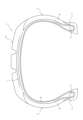
- FIG. 1 is a cross-sectional view of one embodiment of a tire of the present invention.
- the compounds described herein may be derived in whole or in part from fossil sources, from biological sources such as plant sources, from recycled sources such as used tires, or from a mixture of two or more of fossil, biological and/or renewable sources.
- the "proportion of sustainable materials” refers to the total mass ratio of materials derived from biological resources (biomass resources) and materials derived from renewable resources (recycled resources) in the rubber composition, side rubber, and tire in question.
- the biological resources refer to carbon-neutral organic resources derived from living organisms, and include, for example, those stored in the form of starch or cellulose, the bodies of animals that grow by eating plants, and products obtained by processing plants or animals, and are resources other than fossil resources (petroleum, coal, natural gas, etc.).
- the biological resources may be edible or non-edible, but from the standpoint of not competing with food and of effective resource utilization, it is preferable that they are non-edible.
- biological resources include cellulosic crops (pulp, kenaf, wheat straw, rice straw, waste paper, papermaking residues, etc.), wood, charcoal, compost, food waste, vegetable oil residues, fishery residues, livestock waste, food waste, wastewater sludge, natural rubber, cotton, oils and fats (palm oil, castor oil, cottonseed oil, soybean oil, linseed oil, rapeseed oil, coconut oil, peanut oil, tall oil, corn oil, rice oil, safflower oil, sesame oil, oats, etc.).
- cellulosic crops pulp, kenaf, wheat straw, rice straw, waste paper, papermaking residues, etc.
- wood, charcoal, compost food waste, vegetable oil residues, fishery residues, livestock waste, food waste, wastewater sludge, natural rubber, cotton, oils and fats (palm oil, castor oil, cottonseed oil, soybean oil, linseed oil, rapeseed oil, coconut oil, peanut oil, tall oil
- biological resources examples include: leaf oil, sunflower oil, palm kernel oil, camellia oil, jojoba oil, macadamia nut oil, tung oil, coconut oil, etc.), carbohydrate crops (corn, wheat, rice, rice husks, rice bran, old rice, potatoes, buckwheat, cassava, sago palm, sugarcane, etc.), bagasse (i.e., the residue after squeezing juice from sugarcane), soybeans, soybean pulp, essential oils (pine oil, orange oil, eucalyptus oil, etc.), pulp black liquor, algae, etc.
- biological resources include those that have been processed (i.e., biological resource-derived substances).
- Examples of the processing methods include biological processing methods that utilize the functions of microorganisms, plants, animals, and tissue cultures thereof; chemical processing methods that utilize acids, alkalis, catalysts, thermal energy, light energy, etc.; physical processing methods such as micronization, compression, microwave processing, and electromagnetic wave processing; and the like.
- Examples of the biological resources include those that have been extracted and purified from the biological resources or the biological resources that have been processed (i.e., biological resource-derived substances). For example, sugars, proteins, amino acids, fatty acids, fatty acid esters, etc., purified from the biological resources can be used.
- sugars examples include sucrose, glucose, trehalose, fructose, lactose, galactose, xylose, allose, talose, gulose, altrose, mannose, idose, arabinose, apiose, maltose, cellulose, starch, chitin, etc., derived from biological resources.
- proteins include compounds derived from biological resources and formed by linking amino acids (preferably L-amino acids), including oligopeptides such as dipeptides.
- amino acids examples include valine, leucine, isoleucine, arginine, lysine, asparagine, glutamine, phenylalanine, etc., derived from biological resources, and among these, valine, leucine, isoleucine, arginine, and phenylalanine are preferred.
- the amino acids may be L-amino acids or D-amino acids, but L-amino acids are preferred from the viewpoints of abundance in nature and ease of availability.
- the fatty acids include butyric acid, palmitic acid, stearic acid, oleic acid, linoleic acid, linolenic acid, etc., which are derived from biological resources.
- fatty acid esters include modified products of vegetable oils, animal oils, and fats and oils derived from biological resources. These biological resources may contain various materials and impurities.
- recycled resources refers to resources obtained by regenerating (recycling) products that have been used once, or that have been collected without being used, or that have been discarded.
- recycled resources include resources obtained by regenerating (recycling) used rubber products such as used tires.
- the rubber composition of the present embodiment includes a rubber component (A), recycled carbon black (B), at least two types of antioxidants (C), and zinc oxide (D).
- the rubber composition of the present embodiment is characterized in that the mass ratio of the recycled carbon black (B) to the zinc oxide (D) [recycled carbon black (B)/zinc oxide (D)] is greater than 0 and equal to or less than 5.0.
- the recycled carbon black (B) is a material derived from a renewable resource (recycled resource). Therefore, by blending the recycled carbon black (B) into the rubber composition, it is possible to increase the proportion of sustainable materials in a rubber product to which the rubber composition is applied.
- the rubber composition of the present embodiment contains at least two kinds of antioxidants (C) and zinc oxide (D), and further specifies the mass ratio of recycled carbon black (B) to zinc oxide (D).
- zinc oxide (D) has the effect of facilitating vulcanization of the rubber composition, and if the amount is too small, it becomes difficult to sufficiently vulcanize the rubber composition.
- the mass ratio of recycled carbon black (B) to zinc oxide (D) [recycled carbon black (B)/zinc oxide (D)] is set to 5.0 or less, that is, by blending zinc oxide (D) in an amount of 20 mass% or more of the content of recycled carbon black (B), the deterioration of physical properties caused by recycled carbon black (B) is compensated for by the improvement of vulcanization by zinc oxide (D), and the deterioration of elongation at break (EB) after thermal degradation is suppressed.
- the antioxidant (C) has the effect of improving the heat degradation resistance of the rubber composition.
- the rubber composition contains two or more types of antioxidants, the anti-aging effects of the respective antioxidants complement each other, and the elongation at break (EB) after heat degradation is improved compared to when only one type of antioxidant is contained. Therefore, the rubber composition of the present embodiment can increase the ratio of sustainable materials in rubber products, and also has improved elongation at break (EB) after thermal degradation.
- the rubber component (A) the rubber derived from biological resources and the rubber derived from recycled resources are preferable.
- the proportion of the monomer components derived from biological resources in 100 mol% of the monomer components constituting the rubber derived from biological resources is preferably 50 mol% or more, more preferably 70 mol% or more, even more preferably 80 mol% or more, still more preferably 90 mol% or more, particularly preferably 95 mol% or more, and may be 100 mol%.
- the proportion of the monomer components derived from recycled resources in 100 mol% of the monomer components constituting the rubber derived from recycled resources is preferably 50 mol% or more, more preferably 70 mol% or more, even more preferably 80 mol% or more, still more preferably 90 mol% or more, particularly preferably 95 mol% or more, and may be 100 mol%.
- the rubber component (A) is a component that contributes to crosslinking, and usually has a weight average molecular weight (Mw) of 10,000 or more, preferably 50,000 or more, more preferably 150,000 or more, and even more preferably 200,000 or more, and preferably 5,000,000 or less, more preferably 2,000,000 or less, more preferably 1,500,000 or less, and even more preferably 1,300,000 or less.
- Mw weight average molecular weight
- the rubber component (A) is preferably a diene-based rubber, and the diene-based rubber is preferably an isoprene-based rubber or a butadiene-based rubber.
- the isoprene-based rubber refers to a rubber that contains units derived from isoprene as monomer units
- the butadiene-based rubber refers to a rubber that contains units derived from butadiene as monomer units.
- the isoprene-based rubber may be natural rubber (NR), synthetic isoprene rubber (IR), modified natural rubber (modified NR), modified natural rubber (modified NR), modified synthetic isoprene rubber (modified IR), etc.
- Natural rubber (NR) may be, for example, RSS#3, TSR20 (for example, SIR20 or STR20), etc., which are common in the tire industry.
- the origin of natural rubber (NR) is not particularly limited, and examples include rubber derived from Hevea brasiliensis, guayule, and Russian dandelion.
- Synthetic isoprene rubber (IR) is not particularly limited, and examples include rubber derived from IR2200, etc., which are common in the tire industry.
- Modified NR may be, for example, deproteinized natural rubber (DPNR), high-purity natural rubber (UPNR), etc.
- Modified NR may be, for example, epoxidized natural rubber (ENR), hydrogenated natural rubber (HNR), grafted natural rubber, etc.
- modified IR include epoxidized synthetic isoprene rubber, hydrogenated synthetic isoprene rubber, and grafted synthetic isoprene rubber. These isoprene-based rubbers may be used alone or in combination of two or more. Among these, NR is preferred as the isoprene-based rubber.
- the isoprene-based rubber preferably has a sustainability rate of 30% by mass or more, more preferably 40% by mass or more, more preferably 50% by mass or more, still more preferably 60% by mass or more, still more preferably 70% by mass or more, even more preferably 80% by mass or more, still more preferably 90% by mass or more, and particularly preferably 100% by mass.
- NR natural rubber
- a polymer synthesized using isoprene derived from biological resources or isoprene derived from renewable resources as a monomer component.
- the synthesized polymer may be a homopolymer of a monomer derived from biological resources, a homopolymer of a monomer derived from renewable resources, a copolymer of a monomer derived from biological resources and a monomer derived from renewable resources, or a copolymer of a monomer derived from biological resources and/or a monomer derived from renewable resources and a monomer derived from a fossil resource (petroleum, etc.).
- the rubber component (A) preferably contains natural rubber (NR).
- natural rubber By including natural rubber in the rubber component (A), it is possible to further increase the ratio of sustainable materials and increase the breaking strength of the rubber composition. As a result, it is possible to further improve the ratio of sustainable materials and the durability of rubber products using the rubber composition.
- the butadiene-based rubber may be butadiene rubber (BR), aromatic vinyl compound-butadiene copolymer rubber (e.g., styrene-butadiene rubber (SBR)), etc.
- BR butadiene rubber
- SBR styrene-butadiene rubber
- the butadiene that is the raw material for butadiene-based rubber is preferably derived from biological resources or recycled resources.
- the butadiene rubber (BR) may, for example, be a high cis content butadiene rubber, a low cis content butadiene rubber, or a butadiene rubber containing syndiotactic polybutadiene crystals.
- Commercially available products may be used as the butadiene rubber (BR), and examples of commercially available butadiene rubber include products from UBE Elastomers Co., Ltd., ENEOS Materials Corporation, Asahi Kasei Corporation, and Zeon Corporation. These butadiene rubbers may be used alone or in combination of two or more types.
- the aromatic vinyl compound-butadiene copolymer rubber may be, for example, emulsion-polymerized aromatic vinyl compound-butadiene copolymer rubber (e.g., emulsion-polymerized styrene-butadiene rubber (E-SBR)), solution-polymerized aromatic vinyl compound-butadiene copolymer rubber (e.g., solution-polymerized styrene-butadiene rubber (S-SBR)), etc.
- E-SBR emulsion-polymerized styrene-butadiene rubber
- S-SBR solution-polymerized aromatic vinyl compound-butadiene copolymer rubber
- the aromatic vinyl compound (aromatic vinyl monomer) may be, for example, styrene, vinylnaphthalene, divinylnaphthalene, etc. These aromatic vinyl compounds may be used alone or in combination of two or more. Among these, styrene is preferred, and styrene derived from biological resources and styrene derived from recycled resources are particularly preferred. That is, SBR is preferred as the aromatic vinyl compound-butadiene copolymer rubber. The styrene may have a substituent.
- the aromatic vinyl compound-butadiene copolymer rubber may be a commercially available product, such as those from Asahi Kasei Corporation, ENEOS Materials Corporation, Zeon Corporation, and Sumitomo Chemical Co., Ltd. These aromatic vinyl compound-butadiene copolymer rubbers may be used alone or in combination of two or more.
- the butadiene-based rubber has a sustainability rate of preferably 30% by mass or more, more preferably 40% by mass or more, still more preferably 50% by mass or more, still more preferably 60% by mass or more, still more preferably 70% by mass or more, even more preferably 80% by mass or more, still more preferably 90% by mass or more, and particularly preferably 100% by mass.
- a polymer synthesized using butadiene derived from biological resources, butadiene derived from renewable resources, aromatic vinyl compounds derived from biological resources (e.g., styrene derived from biological resources), and aromatic vinyl compounds derived from renewable resources (e.g., styrene derived from renewable resources) as monomer components may be used.
- the synthesized polymer may be a homopolymer of a monomer derived from biological resources, a homopolymer of a monomer derived from renewable resources, a copolymer of a monomer derived from biological resources and a monomer derived from renewable resources, or a copolymer of a monomer derived from biological resources and/or a monomer derived from renewable resources and a monomer derived from a fossil resource (petroleum, etc.).
- butadiene rubber (B-BR) derived from biological resources biological resources
- aromatic vinyl compound-butadiene copolymer rubber derived from biological resources e.g., styrene-butadiene rubber (B-SBR) derived from biological resources (biomass resources)
- B-SBR styrene-butadiene rubber
- the rubber component (A) preferably contains a butadiene rubber (BR), which can improve physical properties such as elongation at break (EB) of the rubber composition.
- BR butadiene rubber
- the rubber component (A) further contains a butadiene rubber (BR) in addition to the natural rubber (NR).
- NR natural rubber
- the materials for rubber compositions for tires require large-scale manufacturing equipment to be produced, so they are usually produced in large factories in specific regions, and a lot of energy is required to store and transport the raw materials and products.
- materials derived from biological resources are derived from local agricultural products, forests, etc., and can be produced on a small scale through microbial fermentation and catalytic reactions.
- materials derived from renewable resources can be obtained, for example, by dismantling and pyrolyzing used tires to extract the materials that make up the tires, such as rubber, fillers, and steel cords.
- sulfur can be obtained from biological resources or processed products of biological resources by a method including a desulfurization step of desulfurizing biological resources or processed products of biological resources to remove sulfur-containing substances from the biological resources or processed products of biological resources, a recovery step of recovering sulfur from the desulfurization residue generated in the desulfurization step, and a processing step of processing the recovered sulfur into sulfur for vulcanization (for example, the method described in Japanese Patent Application No.
- materials for rubber compositions for tires can be obtained from various wastes and used items.
- sustainable materials materials derived from biological resources or materials derived from recycled resources
- LCE energy consumption
- LCC reducing costs
- the ratio of monomer components derived from biological resources, monomer components derived from renewable resources, and monomer components derived from fossil resources can be appropriately selected according to the supply situation of biological resources, renewable resources, and fossil resources (e.g., monomer components derived from fossil resources) and/or market demand (e.g., demand for biological resources as food), and the monomer components derived from biological resources, monomer components derived from renewable resources, and monomer components derived from fossil resources can be polymerized to obtain rubber derived from sustainable materials (materials derived from biological resources or materials derived from renewable resources) that has the same performance as conventional synthetic rubber.
- monomer components derived from renewable resources it may be difficult to separate them from monomer components derived from fossil resources due to the manufacturing process of the monomer. In such cases, the impact on the environment can be evaluated by adopting the concept of mass balance.
- the ratio of each monomer unit (e.g., unit derived from isoprene, unit derived from butadiene, unit derived from aromatic vinyl compound) in the entire rubber component (A) can be adjusted appropriately depending on the member to which the rubber component (A) is applied.
- the ratio of each monomer unit in the entire rubber component (A) can be adjusted, for example, by appropriately combining the above-mentioned isoprene-based rubber and butadiene-based rubber.
- the ratio of cis-bond units in the butadiene-based units can also be adjusted appropriately depending on the member to which the rubber component (A) is applied.
- the term "monomer unit” refers to a structural unit of a polymer
- the term “unit derived from isoprene” refers to a structural unit in a polymer constituted based on the monomer isoprene (including the isoprene unit in natural rubber)
- the term “unit derived from butadiene” refers to a structural unit in a polymer constituted based on the monomer butadiene
- the term “unit derived from an aromatic vinyl compound” refers to a structural unit in a polymer constituted based on the monomer aromatic vinyl compound.
- the ratio of each monomer unit is measured by NMR.
- the rubber component (A) may contain diene rubbers such as acrylonitrile-butadiene rubber (NBR), chloroprene rubber (CR), butyl rubber (IIR), and styrene-isoprene-butadiene copolymer rubber (SIBR) in addition to the above-mentioned isoprene rubber, butadiene rubber (BR), and aromatic vinyl compound-butadiene copolymer rubber (e.g., SBR). These rubber components may be used alone or in combination of two or more. However, in the rubber composition of this embodiment, the total styrene content in the rubber component (A) is preferably 5% by mass or less, more preferably 3% by mass or less, and may be 0% by mass. If the total styrene content in the rubber component (A) exceeds 5% by mass, the physical properties of the rubber composition are reduced, and the elongation at break (EB) after thermal aging cannot be sufficiently improved.
- NBR acrylonit
- the rubber component (A) may be modified to introduce functional groups that interact with fillers such as carbon black and silica.
- functional groups include amino groups, amide groups, isocyanate groups, imino groups, imidazole groups, urea groups, ammonium groups, imide groups, hydrazo groups, azo groups, diazo groups, carboxyl groups, nitrile groups, pyridyl groups, alkoxy groups, hydroxyl groups, oxy groups, epoxy groups, ether groups, carbonyl groups, oxycarbonyl groups, silyl groups, alkoxysilyl groups, mercapto groups, sulfide groups, disulfide groups, sulfonyl groups, sulfinyl groups, and thiocarbonyl groups.
- These functional groups may have a substituent. These functional groups may be introduced into the rubber component alone or in combination of two or more. Among these, amino groups, alkoxy groups, and alkoxysilyl groups are preferred, and substituted amino groups in which the hydrogen atom of an amino group is substituted with an alkyl group having 1 to 6 carbon atoms, alkoxy groups having 1 to 6 carbon atoms, and alkoxysilyl groups having 1 to 6 carbon atoms are even more preferred.
- the functional group can be introduced, for example, by reacting a compound (modifier) having the functional group with the rubber component (A).
- the functional group is a modified functional group that has an interactive property with fillers such as silica and carbon black, and examples thereof include a nitrogen-containing functional group, a silicon-containing functional group, and an oxygen-containing functional group.
- examples of compounds (modifiers) having a nitrogen-containing functional group include amino group-containing compounds
- examples of compounds (modifiers) having a silicon-containing functional group include silicon halides and hydrocarbyloxysilane compounds.
- Examples of compounds (modifiers) having an oxygen-containing functional group include alkoxy group-containing compounds, alkylene oxide group-containing compounds, and trialkylsilyloxy group-containing compounds. More specifically, examples of the compounds include those described in WO 2016/194316 and WO 2019/117256. These modifiers may be used alone or in combination of two or more.
- the rubber derived from sustainable materials can be produced in the same manner as conventional synthetic rubber derived from fossil resources, for example, by using monomer components derived from biological resources or monomer components derived from renewable resources, and, if necessary, monomer components derived from fossil resources.
- the rubber derived from sustainable materials can also be obtained by reactions with microorganisms or enzyme reactions.
- the method described in JP 2022-179158 A can be used as a method for preparing rubber derived from biological resources from the above-mentioned biological resources.
- the method described in JP 2022-179158 A can be used.
- B-BR butadiene rubber
- B-SBR styrene-butadiene rubber
- methods for obtaining B-BR and B-SBR from biological resources include artificial polymerization methods, polymerization methods in vivo, and polymerization methods using biological enzymes.
- the molecular weight, branching, microstructure, etc. of the obtained B-BR and B-SBR can be appropriately adjusted by changing the polymerization conditions according to the target tire performance according to known methods.
- butadiene obtained from the biological resources butadiene derived from alkyl alcohols (preferably ethanol and butanol, more preferably butanol), butadiene derived from alkenes (preferably ethylene), and butadiene derived from unsaturated carboxylic acids (preferably tiglic acid) can be suitably used. Two or more of these butadienes may be used in combination.
- styrene obtained from the biological resource styrene obtained from a plant (preferably a plant belonging to the family Hamamelidaceae, Styracaceae, or Apocynaceae, more preferably a plant belonging to the genera Liquidamus, Styrax, or Catharanthus, and even more preferably Sweetgum, Styrax rosa, or Catharanthus roseus) or a microorganism (preferably a microorganism belonging to the genera Penicillium or Escherichia, more preferably P. citrinum or transformed E. coli) can be suitably used. Two or more of these styrenes may be used in combination.
- bioethanol and bioethylene are mainly produced using sugars and/or cellulose as biological resources, and other biological resources such as proteins, lipids, and amino acids cannot be effectively utilized. Furthermore, sugars compete with food, and excessive use of cellulose leads to deforestation. Therefore, it is preferable to use multiple types of monomer components derived from biological resources as the monomer components derived from the biological resources, or to use monomer components derived from biological resources, monomer components derived from renewable resources, and monomer components derived from fossil resources in combination, and further to appropriately adjust the ratio of these monomer components.
- butadiene derived from multiple types of biological resources with different origins as the butadiene derived from biological resources
- styrene derived from multiple types of biological resources with different origins as the styrene derived from biological resources. This allows multiple types of biological resources to be effectively utilized.
- the rubber composition of the present embodiment contains recycled carbon black (B).
- the recycled carbon black (B) is a material derived from a renewable resource (recycled resource), and therefore, by blending the recycled carbon black (B) in the rubber composition, the ratio of sustainable materials in a rubber product to which the rubber composition is applied can be increased.
- waste carbon black refers to carbon black obtained by recovering raw materials that are waste materials provided for recycling.
- waste materials include waste rubber, used tires, waste oil, and the like.
- Waste rubber refers to all discarded rubber, including unnecessary scraps generated from the production or repair of rubber products, and is not limited to that generated from rubber products.
- the scraps include buffing powder, peeled rubber, and the like. Buffing powder is fine rubber generated in a buffing process in which the tread portion remaining on the base tire is scraped off, for example, in tire retreading. Peeling rubber is a long piece of rubber, for example, 1 to 2 cm wide, peeled off from the surface of a rubber product such as a tire.
- Peeling rubber is generated by scraping the surface of a rubber product such as a tire using a knife with a U-shaped or V-shaped tip like a peeler.
- waste rubber is not limited to crosslinked rubber, but also includes unvulcanized rubber.
- Rubber products include, for example, final products such as tires and rubber hoses, and rubber parts or components in the manufacturing stage of the final products.
- the used tires may be tires to be retreaded, or may be tires discarded for some reason, such as waste tires generated from tire replacement, scrapping, etc., and ELT (End-of-Life Tire) that has completed its life as a tire.
- the waste oil is not limited to oil generated when decomposing plastics and rubber, and examples thereof include used oil discharged from industry, such as animal and vegetable oils, lubricating oil, insulating oil, cutting oil, etc.
- the waste oil is preferably one that does not have a composition other than organic matter, such as one derived from silicone rubber or polyvinyl chloride.
- the waste oil is preferably one that is mixed with carbon black or rubber containing carbon black.
- “Recycled carbon black” is different from carbon black that is directly manufactured using hydrocarbons such as petroleum, natural gas, and coal as raw materials, i.e., carbon black that is not recycled. Note that "used” here does not only include carbon black that has been actually used and then discarded, but also carbon black that has been manufactured but not actually used and then discarded.
- the recycled carbon black (B) is preferably obtained by pyrolysis of a vulcanized rubber product containing carbon black.
- the recycled carbon black obtained by pyrolysis of a vulcanized rubber product containing carbon black is easily available because there are a large number of vulcanized rubber products containing carbon black and it is easily obtained by pyrolysis.
- the recycled carbon black (B) is preferably obtained from a solid residue generated by pyrolysis of the vulcanized rubber product containing carbon black. When a rubber product containing carbon black is pyrolyzed, a solid residue and a volatile component (oil) are obtained, and the recycled carbon black can be recovered from either of them.
- the grade of the carbon black is not particularly limited, and examples thereof include N134, N110, N220, N234, N219, N339, N330, N326, N351, N550, and N762.
- the solid residue obtained by pyrolysis of waste materials such as used rubber and used tires contains ash in addition to carbon black.
- the ash comes from the non-volatile components contained in rubber and tires.
- the recycled carbon black obtained from the solid residue has a relatively low carbon black content.
- the carbon content in the recycled carbon black is preferably 80% by mass or more, more preferably 85% by mass or more, more preferably 87% by mass or more, and even more preferably 89% by mass or more.
- the carbon content in the recycled carbon black (B) is preferably 97% by mass or less.
- the carbon content does not include adsorbed moisture.
- the ash content includes zinc oxide, zinc sulfide, silica, iron compounds (iron oxide), calcium oxide, aluminum oxide, magnesium oxide, and the like.
- the recycled carbon black (B) is allowed to contain ash.
- the lower limit of the ash content of the recycled carbon black (B) may be 0.5% by mass.
- the ash content of the recycled carbon black (B) is preferably 20% by mass or less, more preferably 15% by mass or less, and even more preferably 5.0% by mass or less.
- the ash content of the recycled carbon black (B) is 20% by mass or less, the various physical properties of the rubber product to which the rubber composition is applied can be improved.
- the ash content of carbon black is determined in accordance with ASTM D8474 and D1506.
- the recycled carbon black (B) can also be obtained from a pyrolysis process of used pneumatic tires.
- European Patent Application Publication No. 3427975 referring to "Rubber Chemistry and Technology", Vol. 85, No. 3, pp. 408-449 (2012), in particular pp. 438, 440, and 442, describes that the recycled carbon black (B) can be obtained by pyrolysis of organic materials at 550-800°C in the absence of oxygen, or by vacuum pyrolysis at relatively low temperatures ([0027]).
- Carbon black obtained from such pyrolysis processes usually lacks functional groups on its surface, as mentioned in [0004] of Japanese Patent No. 6856781 (Comparison of Surface Morphology and Chemistry of Pyrolytic Carbon Black and Commercial Carbon Black, Powder Technology 160 (2005) pp. 190-193).
- the recycled carbon black (B) may lack functional groups on its surface, or may have been treated to include functional groups on its surface.
- the treatment to include functional groups on the surface of the recycled carbon black can be carried out by a conventional method.
- carbon black obtained from a pyrolysis process is treated with potassium permanganate under acidic conditions to obtain carbon black having hydroxyl and/or carboxyl groups on its surface.
- Japanese Patent No. 6856781 carbon black obtained from a pyrolysis process is treated with an amino acid compound containing at least one thiol group or disulfide group to obtain carbon black with an activated surface.
- the recycled carbon black according to this embodiment also includes carbon black that has been treated to include functional groups on its surface.
- pyrolysis of crosslinked rubber products such as used tires can be carried out at temperatures of 650°C or higher, for example.
- the crosslinked rubber products used for the decomposition may be grouped according to the type of rubber component that has been compounded in advance, and then the decomposition process may be carried out for each group.
- the crosslinked rubber products may be grouped according to the type of filler that has been compounded in advance (e.g., type of carbon black, type of silica, mixing ratio of carbon black and silica, etc.), and then the decomposition process may be carried out for each group.
- the crosslinked rubber products may be grouped according to both the type of rubber component and the type of filler, and then the decomposition process may be carried out for each group.
- the tires when the crosslinked rubber product used for the decomposition is derived from tires, the tires may be grouped in advance by type (e.g., for passenger cars, trucks and buses, large vehicles such as off-road vehicles, aircraft, agricultural vehicles, etc.), and the decomposition process may be carried out for each group.
- the tires may be grouped in advance by tire components (e.g., tread rubber, sidewall rubber, bead rubber, steel cord coated rubber, organic fiber coated rubber, pad rubber, cushion rubber, etc.), and the decomposition process may be carried out for each group.
- the tires may be grouped both by type and by tire components, and the decomposition process may be carried out for each group. When the decomposition process is carried out for each group in this way, recycled carbon black with more uniform physical properties is obtained, and when it is blended again into the rubber component, a rubber composition with better performance is obtained.
- the recycled carbon black (B) used in this embodiment preferably has a nitrogen adsorption specific surface area (N 2 SA) by the BET method of 40 to 100 m 2 /g, more preferably 50 to 90 m 2 /g, and particularly preferably 55 to 75 m 2 /g.
- N 2 SA nitrogen adsorption specific surface area
- the DBP oil absorption is preferably 70 to 120 mL/100g, more preferably 75 to 110 mL/100g, and particularly preferably 80 to 100 mL/100g.
- a commercially available product can be used, and an example of such a commercially available product is the product name "PB365" manufactured by Enrestec.
- PB365 is a recycled carbon black produced through the thermal decomposition of used tires, and has an N 2 SA by the BET method of 73.6 m 2 /g. In addition, PB365 contains about 17% by mass of ash.
- N2SA nitrogen adsorption specific surface area
- STSA statistical thickness specific surface area
- ASTM D6556 the DBP oil absorption of carbon black is determined in accordance with ASTM D2414.
- the pH of the recycled carbon black (B) is preferably 4 to 12, more preferably 5 to 11, and particularly preferably 6 to 10. As used herein, the pH of the recycled carbon black is determined in accordance with ASTM D1512.
- the recycled carbon black (B) preferably has a toluene coloring transmittance of 60% or more, more preferably 70% or more, and particularly preferably 80% or more.
- the toluene color transmission of the recycled carbon black is determined in accordance with ASTM D1618.
- the recycled carbon black (B) preferably has a heat loss at 125° C. of 3% by mass or less, more preferably 2.5% by mass or less, and particularly preferably 2% by mass or less.
- the heat loss of recycled carbon black at 125° C. is determined in accordance with ASTM D1509.
- the recycled carbon black (B) preferably has a sulfur content of 5% by mass or less, more preferably 3.5% by mass or less, and particularly preferably 3% by mass or less.
- the recycled carbon black (B) preferably has a 35 mesh sieve residue of 20 ppm by mass or less, more preferably 15 ppm by mass or less, and particularly preferably 10 ppm by mass or less.
- the 35 mesh screen residue of recycled carbon black is determined in accordance with ASTM D1514.
- the recycled carbon black (B) preferably has a 325 mesh (44 ⁇ m) sieve residue of 1000 ppm by mass or less, more preferably 700 ppm by mass or less, and particularly preferably 300 ppm by mass or less.
- the 325 mesh (44 ⁇ m) sieve residue of recycled carbon black is determined in accordance with ASTM D1514.
- the recycled carbon black (B) preferably has a pellet hardness of 100 cN or less, more preferably 90 cN or less, and particularly preferably 80 cN or less.
- the pellet hardness of recycled carbon black is determined in accordance with ASTM D5230.
- the recycled carbon black (B) preferably has a pellet fine powder content of 10% by mass or less, more preferably 7% by mass or less, and particularly preferably 5% by mass or less.
- the pellet fines content of recycled carbon black is determined in accordance with ASTM D1508.
- the particle size (D97) of the recycled carbon black (B) is preferably 25 ⁇ m or less, more preferably 15 ⁇ m or less, and particularly preferably 10 ⁇ m or less.
- the particle size (D97) of the recycled carbon black is determined using a laser diffraction particle size distribution analyzer, assuming that the refractive index of water is 1.33 and the refractive index of the filler is 1.75.
- the recycled carbon black (B) preferably has a ratio of particles of 5 ⁇ m or less of 50 vol. % or more, more preferably 70 vol. % or more, and particularly preferably 80 vol. % or more.
- the recycled carbon black (B) preferably has a compressed dibutyl phthalate (24M4DBP) absorption capacity of 50 to 110 mL/100 g, more preferably 60 to 100 mL/100 g, and particularly preferably 70 to 90 mL/100 g.
- 24M4DBP absorption of recycled carbon black is determined in accordance with ASTM D3493.
- the content of the recycled carbon black (B) is preferably 1 to 100 parts by mass, more preferably 5 to 80 parts by mass, more preferably 5 to 50 parts by mass, even more preferably 5 to 30 parts by mass, and even more preferably 5 to 20 parts by mass, per 100 parts by mass of the rubber component (A).
- the content of the recycled carbon black (B) is 5 parts by mass or more per 100 parts by mass of the rubber component (A)
- the effect of improving the ratio of sustainable materials in the rubber product to which the rubber composition is applied is large, and when the content is 50 parts by mass or less, the fracture resistance of the rubber composition can be more reliably maintained.
- the rubber composition of the present embodiment preferably further contains carbon black (E) other than the recycled carbon black (B).
- the carbon black (E) other than the recycled carbon black By combining the carbon black (E) other than the recycled carbon black with the recycled carbon black (B), the elongation at break (EB) of the rubber composition after thermal degradation can be further improved.
- carbon black (E) other than the recycled carbon black carbon black derived from plants is particularly preferable. Examples of carbon black derived from plants include those derived from castor oil and pine oil.
- the grade of the carbon black is not particularly limited, and examples thereof include N134, N110, N220, N234, N219, N339, N330, N326, N351, N550, and N762.
- the carbon black (E) other than the recycled carbon black a commercially available product can be used, and examples of the commercially available carbon black (E) other than the recycled carbon black include products from Asahi Carbon Co., Ltd., Cabot Japan Co., Ltd., Tokai Carbon Co., Ltd., Mitsubishi Chemical Corporation, Lion Corporation, Nippon Steel Carbon Co., Ltd., Birla Carbon Co., Ltd., etc. These carbon blacks may be used alone or in combination of two or more.
- the nitrogen adsorption specific surface area (N 2 SA) of the carbon black (E) other than the recycled carbon black is not particularly limited and can be appropriately adjusted depending on, for example, the tire category to which it is applied, the tire components, the target performance, etc.
- the nitrogen adsorption specific surface area (N 2 SA) of the carbon black (E) other than the recycled carbon black is preferably 20 m 2 /g or more, more preferably 50 m 2 /g or more, more preferably 70 m 2 /g or more, even more preferably 90 m 2 /g or more, and preferably 200 m 2 /g or less, more preferably 150 m 2 /g or less, and even more preferably 130 m 2 /g or less.
- the carbon black (E) other than the recycled carbon black preferably has a dibutyl phthalate (DBP) oil absorption of 50 to 150 mL/100 g.
- the carbon black (E) other than the recycled carbon black more preferably has a dibutyl phthalate (DBP) oil absorption of 50 to 150 mL/100 g and a nitrogen adsorption specific surface area (N 2 SA) of 20 to 130 m 2 /g, and even more preferably has a dibutyl phthalate (DBP) oil absorption of 80 to 130 mL/100 g and a nitrogen adsorption specific surface area (N 2 SA) of 20 to 60 m 2 /g.
- DBP dibutyl phthalate
- the elongation at break ( EB ) of the rubber composition after heat aging can be further improved by combining carbon black (E) having a dibutyl phthalate (DBP) oil absorption of 50 to 150 mL/100 g and a nitrogen adsorption specific surface area (N 2 SA) of 20 to 130 m 2 /g with the recycled carbon black (B).
- the elongation at break (EB) of the rubber composition after heat aging can be further improved by combining carbon black (E) having a dibutyl phthalate (DBP) oil absorption of 80 to 130 mL/100 g and a nitrogen adsorption specific surface area ( N 2 SA) of 20 to 60 m 2 /g with the recycled carbon black (B).
- the content of the carbon black (E) other than the recycled carbon black is not particularly limited, and can be adjusted as appropriate depending on, for example, the tire category to which it is applied, the tire components, the target performance, etc.
- the content of the carbon black (E) other than the recycled carbon black is preferably 1 part by mass or more, more preferably 3 parts by mass or more, even more preferably 5 parts by mass or more, and preferably 100 parts by mass or less, per 100 parts by mass of the rubber component (A).
- the proportion of the recycled carbon black (B) in the total amount of the recycled carbon black (B) and the carbon black other than the recycled carbon black (E) is preferably 5 to 21% by mass.
- the proportion of recycled carbon black (B) in the total amount of carbon black is 5% by mass or more, the effect of improving the proportion of sustainable materials in the rubber composition and rubber products using the same is large, and when the proportion of recycled carbon black (B) in the total amount of carbon black is 21% by mass or less, the elongation at break (EB) of the rubber composition after thermal aging can be further improved.
- the rubber composition of this embodiment contains at least two kinds of antioxidants (C).
- each antioxidant has a different molecular structure.
- the antioxidants (C) include quinoline-based antioxidants, phenylenediamine-based antioxidants, diphenylamine-based antioxidants, phenol-based antioxidants, quinone-based antioxidants, carbamate-based antioxidants, and imidazole-based antioxidants.
- antioxidant (C) a commercially available product can be used, and as the commercially available product of the antioxidant (C), products of Ouchi Shinko Chemical Co., Ltd., Sumitomo Chemical Co., Ltd., Seiko Chemical Co., Ltd., Flexis Co., Ltd., etc. can be used.
- the total content of the anti-aging agent (C) is not particularly limited, and can be adjusted as appropriate depending on, for example, the tire category to which it is applied, the tire components, the target performance, etc.
- the total content of the anti-aging agent (C) is preferably 1 part by mass or more, more preferably 1.5 parts by mass or more, even more preferably 2 parts by mass or more, and preferably 12 parts by mass or less, more preferably 10 parts by mass or less, and even more preferably 8 parts by mass or less, relative to 100 parts by mass of the rubber component (A).
- At least one of the antioxidants (C) is preferably a quinoline-based antioxidant (C1).
- the quinoline-based antioxidant (C1) is an antioxidant having a quinoline moiety or a derivative thereof (such as a dihydroquinoline moiety).
- the quinoline-based antioxidant (C1) has the effect of improving the heat deterioration resistance of the rubber composition over a long period of time and improving the elongation at break (EB) after heat deterioration. Therefore, the rubber composition in which at least one of the antioxidants (C) is a quinoline-based antioxidant (C1) has a further improved elongation at break (EB) after heat deterioration.
- the quinoline-based antioxidant (C1) preferably has a dihydroquinoline moiety, more preferably a 1,2-dihydroquinoline moiety.
- Specific examples of the quinoline-based antioxidant (C1) include a polymer of 2,2,4-trimethyl-1,2-dihydroquinoline (antiaging agent TMDQ), 6-ethoxy-2,2,4-trimethyl-1,2-dihydroquinoline (AW), and 6-anilino-2,2,4-trimethyl-1,2-dihydroquinoline.
- quinoline-based antioxidant (C1) a commercially available product can be used, and examples of the commercially available product include products from Ouchi Shinko Chemical Co., Ltd., Sumitomo Chemical Co., Ltd., Seiko Chemical Co., Ltd., Flexis Co., Ltd., and the like. These quinoline-based antioxidants (C1) may be used alone or in combination of two or more.
- the quinoline-based antioxidant (C1) preferably contains a polymer of 2,2,4-trimethyl-1,2-dihydroquinoline (antiaging agent TMDQ).
- the quinoline-based antioxidant (C1) containing a polymer of 2,2,4-trimethyl-1,2-dihydroquinoline is highly effective in improving the heat deterioration resistance of the rubber composition, and also has the advantage of being less likely to discolor the rubber composition.
- Examples of the polymer of 2,2,4-trimethyl-1,2-dihydroquinoline include a dimer, trimer, and tetramer of 2,2,4-trimethyl-1,2-dihydroquinoline.
- the content of the quinoline-based anti-aging agent (C1) is preferably in the range of 0.1 to 5 parts by mass per 100 parts by mass of the rubber component (A).
- the content of the quinoline-based anti-aging agent (C1) is 0.1 part by mass or more per 100 parts by mass of the rubber component (A)
- the heat degradation resistance of the rubber composition can be sufficiently ensured, and the elongation at break (EB) after heat degradation can be sufficiently improved.
- the content of the quinoline-based anti-aging agent (C1) is 5 parts by mass or less per 100 parts by mass of the rubber component (A)
- the effect on other rubber physical properties such as heat generation is small, making it suitable for tire applications.
- the content of the quinoline-based antiaging agent (C1) is preferably 0.3 parts by mass or more, more preferably 0.5 parts by mass or more, per 100 parts by mass of the rubber component (A) from the viewpoint of heat deterioration resistance, and is preferably 4 parts by mass or less, more preferably 3 parts by mass or less, per 100 parts by mass of the rubber component (A) from the viewpoint of influence on other rubber physical properties.
- Phenylenediamine-based antioxidant (C2) In the rubber composition of this embodiment, at least one of the antioxidants (C) is preferably a phenylenediamine-based antioxidant (C2).
- the phenylenediamine-based antioxidant (C2) is an antioxidant having a phenylenediamine moiety (-NH-C 6 H 4 -NH-) or a derivative thereof.
- the phenylenediamine-based antioxidant (C2) has an action of comprehensively preventing aging of the rubber composition (deterioration due to heat, light, ozone, etc.).
- the rubber composition in which at least one of the antioxidants (C) is a phenylenediamine-based antioxidant (C2) has further improved elongation at break (EB) after thermal aging.
- the rubber composition containing the phenylenediamine-based antioxidant (C2) together with the quinoline-based antioxidant (C1) the antiaging action of each antioxidant is supplemented, and the elongation at break (EB) after thermal aging is further improved.
- phenylenediamine-based antiaging agent (C2) include N-(1,3-dimethylbutyl)-N'-phenyl-p-phenylenediamine (6PPD), N,N'-bis(1,4-dimethylpentyl)-p-phenylenediamine (77PD), N,N'-diphenyl-p-phenylenediamine (DPPD), and N,N'-bis(1-ethyl-3-methylpentyl)-p-phenylenediamine.
- 6PPD N-(1,3-dimethylbutyl)-N'-phenyl-p-phenylenediamine
- 77PD N,N'-bis(1,4-dimethylpentyl)-p-phenylenediamine
- DPPD N,N'-diphenyl-p-phenylenediamine
- phenylenediamine-based antiaging agent (C2) Commercially available products can be used as the phenylenediamine-based antiaging agent (C2), and examples of such commercially available products include products from Ouchi Shinko Chemical Co., Ltd., Sumitomo Chemical Co., Ltd., Seiko Chemical Co., Ltd., Flexis Co., Ltd., and the like. These phenylenediamine-based antiaging agents (C2) may be used alone or in combination of two or more.
- the content of the phenylenediamine-based antiaging agent (C2) is preferably in the range of 0.1 to 11 parts by mass per 100 parts by mass of the rubber component (A).
- the content of the phenylenediamine-based antiaging agent (C2) is 0.1 part by mass or more per 100 parts by mass of the rubber component (A)
- the heat degradation resistance of the rubber composition can be sufficiently ensured, and the elongation at break (EB) after heat degradation can be sufficiently improved.
- the content of the phenylenediamine-based antiaging agent (C2) is 11 parts by mass or less per 100 parts by mass of the rubber component (A), the effect on other rubber physical properties such as heat generation is small, making it suitable for tire applications.
- the content of the phenylenediamine-based antiaging agent (C2) is preferably 1 part by mass or more, more preferably 2 parts by mass or more, per 100 parts by mass of the rubber component (A) from the viewpoint of heat deterioration resistance, and is preferably 8 parts by mass or less, more preferably 5 parts by mass or less, per 100 parts by mass of the rubber component (A) from the viewpoint of influence on other rubber physical properties.
- the rubber composition of the present embodiment contains zinc oxide (zinc white) (D).
- zinc oxide (D) not only zinc metal but also zinc oxide obtained from regenerated zinc or zinc dross (i.e., obtained by recycling) is preferable.
- the zinc oxide (D) a commercially available product can be used, and examples of the commercially available zinc oxide include products from Hakusuitec Co., Ltd., Seido Chemical Industry Co., Ltd., Sakai Chemical Industry Co., Ltd., Mitsui Mining & Smelting Co., Ltd., Toho Zinc Co., Ltd., and the like. These commercially available zinc oxide (D) products may be used alone or in combination of two or more.
- the content of the zinc oxide (D) is not particularly limited, and can be adjusted as appropriate depending on, for example, the tire category to which it is applied, the tire components, the target performance, etc.
- the content of zinc oxide (D) is preferably 1 part by mass or more, more preferably 1.5 parts by mass or more, even more preferably 1.8 parts by mass or more, and preferably 10 parts by mass or less, more preferably 6 parts by mass or less, even more preferably 4 parts by mass or less, and particularly preferably 2.2 parts by mass or less, per 100 parts by mass of the rubber component (A).
- the elongation at break (EB) after thermal aging of the rubber composition is further improved. Furthermore, when the content of zinc oxide (D) is in the range of 1.5 to 4 parts by mass per 100 parts by mass of the rubber component (A), the vulcanizability of the rubber composition is improved while the elongation at break (EB) after thermal aging is further improved, and when the content is in the range of 1.8 to 2.2 parts by mass, the vulcanizability of the rubber composition is further improved while the elongation at break (EB) after thermal aging can be further improved.
- the mass ratio of the recycled carbon black (B) to the zinc oxide (D) is greater than 0 and less than or equal to 5.0, and is preferably greater than or equal to 3.0 and less than or equal to 5.0. If the mass ratio of recycled carbon black (B)/zinc oxide (D) exceeds 5.0, the elongation at break (EB) after thermal degradation cannot be sufficiently improved. Furthermore, if the mass ratio of recycled carbon black (B)/zinc oxide (D) is in the range of greater than or equal to 3.0 and less than or equal to 5.0, the elongation at break (EB) after thermal degradation can be further improved.
- the mass ratio of the zinc oxide (D) to the total amount of the antioxidant (C) is preferably greater than 0 and less than 0.55, and more preferably greater than 0.3 and less than 0.55.
- the mass ratio of the zinc oxide (D)/total amount of antioxidant (C) is 0.55 or less, the elongation at break (EB) after thermal aging can be further improved.
- the mass ratio of the zinc oxide (D)/total amount of antioxidant (C) is 0.3 or more, the vulcanizability of the rubber composition is improved, and when it is 0.55 or less, the elongation at break (EB) after thermal aging can be further improved.
- the rubber composition of the present embodiment may contain a resin.
- the resin include terpene resins, rosin resins, C5 resins, C5 - C9 resins, C9 resins, cyclopentadiene resins, aromatic resins, coumarone resins, indene resins, coumarone-indene resins, olefin resins, polyurethane resins, and acrylic resins. These resins may be used alone or in combination of two or more.
- Terpene resins, rosin resins, C5 resins, C5 - C9 resins, C9 resins, cyclopentadiene resins, and aromatic resins are preferred, and terpene resins and rosin resins are particularly preferred.
- Terpene resins and rosin resins are naturally derived sustainable resins, and therefore can further reduce the environmental load and can further improve tire performance, such as grip performance on various road surface conditions such as dry road surfaces, wet road surfaces, snow-covered road surfaces, and frozen road surfaces.
- C5 resin, C9 resin, C5 - C9 resin, and cyclopentadiene resin can improve wear resistance and fuel economy in a well-balanced manner, while aromatic resin can improve grip performance, wear resistance, and rubber strength in a well-balanced manner.
- the resin may be hydrogenated, i.e., may be a hydrogenated resin (hydrogenated resin).
- functional groups that interact with fillers such as carbon black and silica may be introduced into the resin by modification. Examples of such functional groups include amino groups, amide groups, isocyanate groups, imino groups, imidazole groups, urea groups, ammonium groups, imide groups, hydrazo groups, azo groups, diazo groups, carboxyl groups, nitrile groups, pyridyl groups, alkoxy groups, hydroxyl groups, oxy groups, epoxy groups, ether groups, carbonyl groups, oxycarbonyl groups, silyl groups, alkoxysilyl groups, mercapto groups, sulfide groups, disulfide groups, sulfonyl groups, sulfinyl groups, and thiocarbonyl groups.
- the terpene resin is a solid resin obtained by blending turpentine, which is obtained at the same time when rosin is obtained from pine trees, or a polymerization component separated from the turpentine, and polymerizing it using a Friedel-Crafts catalyst, and examples of the terpene resin include ⁇ -pinene resin and ⁇ -pinene resin.
- Terpene resins also include terpene-aromatic compound resins, and representative examples of the terpene-aromatic compound resins include terpene-phenol resin and styrene-terpene resin.
- the terpene-phenol resin can be obtained by reacting terpenes with various phenols using a Friedel-Crafts catalyst, or by further condensing with formalin.
- the styrene-terpene resin can be obtained by reacting styrene with terpenes using a Friedel-Crafts catalyst.
- monoterpene hydrocarbons such as ⁇ -pinene and limonene are preferred, those containing ⁇ -pinene are more preferred, and ⁇ -pinene is particularly preferred.
- the rosin-based resins include natural resin rosins such as gum rosin, tall oil rosin, and wood rosin contained in raw pine resin and tall oil, and modified rosins, rosin derivatives, and modified rosin derivatives such as polymerized rosin and its partially hydrogenated rosin; glycerin ester rosin and its partially hydrogenated rosin and fully hydrogenated rosin; pentaerythritol ester rosin and its partially hydrogenated rosin and polymerized rosin.
- natural resin rosins such as gum rosin, tall oil rosin, and wood rosin contained in raw pine resin and tall oil
- modified rosins, rosin derivatives, and modified rosin derivatives such as polymerized rosin and its partially hydrogenated rosin; glycerin ester rosin and its partially hydrogenated rosin and fully hydrogenated rosin; pentaerythritol ester rosin and its partially hydrogenated ros
- the C5 resin includes aliphatic petroleum resins obtained by (co)polymerizing C5 fractions obtained by thermal cracking of naphtha in the petrochemical industry.
- the C5 fractions usually include olefinic hydrocarbons such as 1-pentene, 2-pentene, 2-methyl-1-butene, 2-methyl-2-butene, and 3-methyl-1-butene, and diolefinic hydrocarbons such as 2-methyl-1,3-butadiene, 1,2-pentadiene, 1,3-pentadiene, and 3-methyl-1,2-butadiene.
- the C5 - C9 resin refers to a C5 - C9 synthetic petroleum resin
- examples of the C5 -C9 resin include solid polymers obtained by polymerizing petroleum-derived C5 - C11 fractions using Friedel-Crafts catalysts such as AlCl3 and BF3 , and more specifically, copolymers mainly composed of styrene, vinyltoluene, ⁇ -methylstyrene, indene, etc.
- a resin with a small amount of C9 or more components is preferred from the viewpoint of compatibility with the rubber component.
- "a small amount of C9 or more components” means that the amount of C9 or more components in the total amount of the resin is less than 50 mass%, preferably 40 mass% or less.
- the C9 resin refers to a C9 synthetic petroleum resin, for example, a solid polymer obtained by polymerizing a C9 fraction using a Friedel-Crafts type catalyst such as AlCl3 or BF3 .
- Examples of the C9 resin include copolymers mainly composed of indene, ⁇ -methylstyrene, vinyltoluene, etc.
- the cyclopentadiene resin refers to a resin containing a unit derived from a cyclopentadiene monomer as a monomer unit.
- examples of the cyclopentadiene resin include a homopolymer of a cyclopentadiene monomer, a copolymer of two or more cyclopentadiene monomers, and a copolymer of a cyclopentadiene monomer and another monomer.
- examples of the cyclopentadiene monomer include cyclopentadiene, dicyclopentadiene, and tricyclopentadiene, and among these, dicyclopentadiene is preferred, that is, the cyclopentadiene resin is preferably a dicyclopentadiene resin.
- the dicyclopentadiene resin refers to a resin obtained by polymerizing dicyclopentadiene using a Friedel-Crafts catalyst such as AlCl3 or BF3 .
- dicyclopentadiene resins include homopolymers of dicyclopentadiene, copolymers of dicyclopentadiene and aromatic monomers, and copolymers of dicyclopentadiene and C9 fractions (vinyl toluene, indene, etc.).
- the aromatic resin refers to a resin that contains units derived from aromatic monomers as monomer units.
- Examples of the aromatic resin include homopolymers of aromatic monomers, copolymers of two or more aromatic monomers, and copolymers of aromatic monomers and other monomers.
- aromatic monomers examples include styrene, o-methylstyrene, m-methylstyrene, p-methylstyrene, ⁇ -methylstyrene, p-methoxystyrene, p-tert-butylstyrene, o-chlorostyrene, m-chlorostyrene, p-chlorostyrene, and p-phenylstyrene; phenolic monomers such as phenol, alkylphenol, and alkoxyphenol; and naphthol monomers such as naphthol, alkylnaphthol, and alkoxynaphthol.
- the resin preferably has a softening point of 30° C. or higher, more preferably 60° C. or higher, more preferably 80° C. or higher, more preferably higher than 110° C., more preferably 116° C. or higher, more preferably 120° C. or higher, more preferably 123° C. or higher, and even more preferably 127° C. or higher.
- the resin preferably has a softening point of 160° C. or lower, more preferably 150° C. or lower, more preferably 145° C. or lower, more preferably 141° C. or lower, and even more preferably 136° C. or lower.
- the softening point of the resin is the temperature at which the ball drops when the softening point defined in JIS K 6220-1:2015 (ISO 28641:2010) is measured using a ring and ball softening point tester.
- the resin may be a commercially available product, such as products from ENEOS Corporation, Arakawa Chemical Industries, Ltd., ExxonMobil Corporation, Clayton, Yasuhara Chemical Co., Ltd., Maruzen Petrochemical Co., Ltd., Sumitomo Bakelite Co., Ltd., Tosoh Corporation, Rutgers Chemicals, BASF, Clayton Polymers, Nippon Paint Chemical Co., Ltd., Nippon Shokubai Co., Ltd., and Taoka Chemical Co., Ltd.
- ENEOS Corporation Arakawa Chemical Industries, Ltd., ExxonMobil Corporation, Clayton, Yasuhara Chemical Co., Ltd., Maruzen Petrochemical Co., Ltd., Sumitomo Bakelite Co., Ltd., Tosoh Corporation, Rutgers Chemicals, BASF, Clayton Polymers, Nippon Paint Chemical Co., Ltd., Nippon Shokubai Co., Ltd., and Taoka Chemical Co., Ltd.
- the amount of the resin is not particularly limited and can be adjusted as appropriate depending on, for example, the tire category to which the rubber is applied, the tire components, the target performance, etc.
- the amount of the resin is preferably in the range of 5 to 100 parts by mass, and more preferably in the range of 10 to 60 parts by mass, per 100 parts by mass of the rubber component (A).
- the rubber composition of the present embodiment may contain silica.
- the silica include wet silica (hydrated silicic acid), dry silica (anhydrous silicic acid), calcium silicate, and aluminum silicate. Among these, wet silica is preferred because it has a large number of silanol groups. These silicas may be used alone or in combination of two or more.
- a commercially available product may be used, and examples of the commercially available silica include products from Tosoh Silica Corporation, Evonik Corporation, Solvay Corporation, Solvay Japan Co., Ltd., Tokuyama Corporation, and the like.
- silica silica derived from silicic acid plants is preferred from the viewpoint of reducing environmental load.
- the silicic acid plants are present, for example, in mosses, ferns, horsetails, Cucurbitaceae, Urticaceae, and Gramineae plants.
- Gramineae plants are preferred.
- the Gramineae plants include rice, bamboo grass, sugarcane, and the like, among which rice is preferred. Since rice is widely cultivated for food, it can be procured locally in a wide area, and since rice husks are generated in large quantities as industrial waste, it is easy to secure the amount.
- silica derived from rice husks (hereinafter also referred to as "rice husk silica”) is particularly preferred as silica.
- rice husk silica By using the rice husk silica, rice husks that become industrial waste can be effectively utilized, and since the raw material can be procured locally near the tire manufacturing plant, the energy and cost of transportation and storage can be reduced, which is environmentally preferable from various viewpoints.
- the rice husk silica may be a powder of rice husk charcoal obtained by carbonizing rice husks by heating, or may be precipitated silica produced by a wet method using an aqueous alkali silicate solution, which is prepared by extracting rice husk ash generated when rice husks are burned in a biomass boiler using rice husks as fuel with an alkali.
- the method for producing the rice husk charcoal is not particularly limited, and various known methods can be used.
- rice husks can be pyrolyzed by steaming them in a kiln to obtain rice husk charcoal.
- the rice husk charcoal thus obtained is pulverized using a known pulverizer (e.g., a ball mill), and then sorted and classified into a predetermined particle size range to obtain a powder of rice husk charcoal.
- the precipitated silica derived from rice husks can be produced by the method described in JP 2019-38728 A. From the viewpoint of reducing the environmental load, it is also preferable to use, as the silica, silica obtained by extracting silicic acid components from scraps of silicon wafers, which are the raw material for semiconductors, glass bottles, etc., and recycling the extracted silica for use in the production.
- the silica preferably has a nitrogen adsorption specific surface area (N 2 SA) of 50 m 2 /g or more, more preferably 100 m 2 /g or more, and even more preferably 150 m 2 /g or more, and preferably 350 m 2 /g or less, more preferably 250 m 2 /g or less, even more preferably 230 m 2 /g or less, and even more preferably 200 m 2 /g or less.
- N 2 SA nitrogen adsorption specific surface area
- the silica content can be adjusted as appropriate depending on, for example, the tire category to which the rubber is applied, the tire components, the target performance, and the like.
- the silica content is preferably 1 part by mass or more, more preferably 3 parts by mass or more, and more preferably 5 parts by mass or more, per 100 parts by mass of the rubber component (A).
- the silica content is preferably 100 parts by mass or less, and more preferably 50 parts by mass or less.
- the proportion of silica in the total content of the silica and carbon black is not particularly limited, and can be adjusted as appropriate depending on, for example, the tire category to which it is applied, the tire components, the target performance, etc.
- the proportion of silica in the total content of the silica and carbon black can be any proportion between 0% by mass and 100% by mass, but in order to produce a black color for the tire, it is preferable that the proportion be 5% by mass or more.
- the rubber composition of the present embodiment contains silica
- the rubber composition preferably contains a silane coupling agent.
- the silane coupling agent include bis(3-triethoxysilylpropyl)tetrasulfide, bis(3-triethoxysilylpropyl)trisulfide, bis(3-triethoxysilylpropyl)disulfide, bis(2-triethoxysilylethyl)tetrasulfide, bis(3-trimethoxysilylpropyl)tetrasulfide, bis(2-trimethoxysilylethyl)tetrasulfide, 3-mercaptopropyltrimethoxysilane, 3-mercaptopropyltriethoxysilane, 2-mercaptoethyltrimethoxysilane, 2-mercaptoethyltriethoxysilane, 3-trimethoxy
- silane coupling agent a commercially available product can be used, and examples of the commercially available silane coupling agent include products from Evonik, Momentive, Shin-Etsu Silicone Co., Ltd., Dow Corning Toray Co., Ltd., Tokyo Chemical Industry Co., Ltd., and Azumax Co., Ltd. These silane coupling agents may be used alone or in combination of two or more.
- bioethanol can also be used as a raw material for the silane coupling agent.
- Bioethanol is produced mainly using sugars and/or cellulose as biological resources, and other biological resources such as proteins, lipids, and amino acids cannot be effectively utilized.
- sugars compete with food, and excessive use of cellulose leads to deforestation. Therefore, it is preferable to use multiple types of ethanol derived from biological resources (bioethanol) as the raw material for the silane coupling agent, or to use a combination of ethanol derived from biological resources (bioethanol), ethanol derived from renewable resources, and ethanol derived from fossil resources, depending on the supply situation of various biological resources, the supply situation of renewable resources, the supply situation of fossil resources, and market demands (for example, demand for biomass resources as food).
- bioethanol biological resources
- bioethanol ethanol derived from renewable resources
- ethanol derived from fossil resources depending on the supply situation of various biological resources, the supply situation of renewable resources, the supply situation of fossil resources, and market demands (for example, demand for biomass resources as food).
- the content of the silane coupling agent can be adjusted as appropriate depending on, for example, the tire category to which it is applied, the tire components, the target performance, etc.
- the content of the silane coupling agent is preferably 1 part by mass or more, more preferably 6 parts by mass or more, and even more preferably 8 parts by mass or more, and is preferably 20 parts by mass or less, more preferably 15 parts by mass or less, even more preferably 12 parts by mass or less, and even more preferably 10 parts by mass or less, relative to 100 parts by mass of the silica.
- the rubber composition of the present embodiment may contain rubber powder.
- the rubber powder may be obtained by crushing used rubber products such as used tires, and removing reinforcing materials such as steel materials and fibers, dust, glass, sand, stones, etc., as desired, or by preparing a new vulcanized rubber composition to produce rubber powder and crushing it.
- rubber powder can be obtained from vulcanized rubber by the method described in "Rubber Chemistry and Technology".
- mechanical treatment or low-temperature treatment may be used.
- various crushing devices such as a cracker mill and a granulator can be used to mechanically crush the vulcanized rubber into fine particles.
- the finely chopped vulcanized rubber is frozen at a very low temperature and then crushed into fine particles.
- a magnetic separator or the like can be used to remove steel materials
- an air separator or the like can be used to remove fibers.
- the rubber powder may be a commercially available product, and examples of the commercially available rubber powder include products from Global Corporation or Nanton Huili Rubber Corporation. From the viewpoint of reducing the environmental load, it is preferable to use rubber powder obtained by crushing used rubber products such as used tires. The rubber powder may be used alone or in combination of two or more kinds.
- the composition of the rubber powder is not particularly limited, and depends on the composition of the vulcanized rubber of the raw material, such as used rubber products (used tires).
- the rubber powder contains a rubber component, carbon black, silica, etc.
- the rubber component, carbon black, silica, etc. contained in the rubber powder may be the same as or different from the rubber component, carbon black, silica, etc. that may be contained in the rubber composition of this embodiment described above.
- the rubber powder has a volume average particle size of preferably 1000 ⁇ m or less, more preferably 500 ⁇ m or less, even more preferably 200 ⁇ m or less, and even more preferably 100 ⁇ m or less.
- the volume average particle size is measured by a laser diffraction particle size distribution measuring device, for example, "CAPA500” manufactured by Horiba, Ltd.
- the rubber powder has an acetone extractable content of preferably 12% by mass or less, more preferably 11% by mass or less, and even more preferably 10% by mass or less, and preferably 1% by mass or more, more preferably 2% by mass or more, and even more preferably 3% by mass or more.
- the acetone extractables in the rubber crumb means the acetone extractables (%) determined by the acetone extraction method in accordance with JIS K6350.
- the amount of the rubber powder is not particularly limited, and can be adjusted as appropriate depending on, for example, the tire category to which the tire is applied, the tire components, the target performance, etc.
- the amount of the rubber powder is preferably 1 part by mass or more, more preferably 2 parts by mass or more, and even more preferably 3 parts by mass or more, and is preferably 200 parts by mass or less, more preferably 150 parts by mass or less, more preferably 100 parts by mass or less, more preferably 50 parts by mass or less, more preferably 30 parts by mass or less, even more preferably 15 parts by mass or less, even more preferably 10 parts by mass or less, and particularly preferably 5 parts by mass or less, relative to 100 parts by mass of the rubber component (A).
- the rubber composition of the present embodiment may contain a liquid softener.
- the "liquid softener” is a compounding agent that is liquid at 25°C (room temperature) and has the effect of softening the rubber composition.
- the liquid softener is not particularly limited, and examples thereof include oil and liquid polymer, among which oil is preferred. These liquid softeners may be used alone or in combination of two or more.
- the oil is a general term for extender oil contained in the rubber component and liquid oil added as a compounding agent to the rubber composition, and examples thereof include vegetable oil, process oil, oil obtained by recycling vegetable oil or process oil, or a mixture thereof. From the viewpoint of reducing the environmental load, vegetable oil and oil obtained by recycling are preferred.
- examples of the vegetable oil include palm oil, castor oil, cottonseed oil, soybean oil, linseed oil, rapeseed oil, coconut oil, peanut oil, pine oil, pine tar, tall oil, corn oil, rice oil, safflower oil, sesame oil, olive oil, sunflower oil, palm kernel oil, camellia oil, jojoba oil, macadamia nut oil, tung oil, coconut oil, etc.
- Examples of the process oil include paraffin-based process oil, aromatic process oil, naphthene-based process oil, etc.
- the oil can be a commercially available product, and examples of the commercially available oil include products from Idemitsu Kosan Co., Ltd., Sankyo Yuka Kogyo Co., Ltd., ENEOS Corporation, Orisoi Co., Ltd., H&R Corporation, Toyokuni Oil Mills Co., Ltd., and Nisshin Oillio Group Co., Ltd. These oils can be used alone or in combination of two or more types.
- the liquid polymer is preferably a liquid diene polymer.
- the liquid diene polymer include liquid styrene-butadiene copolymer (liquid SBR), liquid polybutadiene (liquid BR), liquid polyisoprene (liquid IR), liquid styrene-isoprene copolymer (liquid SIR), liquid styrene-butadiene-styrene block copolymer (liquid SBS block polymer), liquid styrene-isoprene-styrene block copolymer (liquid SIS block polymer), liquid polyfarnesene, and liquid farnesene-butadiene copolymer.
- These liquid polymers may be hydrogenated, or the ends or main chains may be modified with functional groups (polar groups). These liquid polymers may be used alone or in combination of two or more.
- the content of the liquid softener is not particularly limited, and can be adjusted as appropriate depending on, for example, the tire category to which it is applied, the tire components, the target performance, etc.
- the content of the liquid softener is preferably 5 parts by mass or more, more preferably 10 parts by mass or more, and preferably 100 parts by mass or less, more preferably 70 parts by mass or less, even more preferably 50 parts by mass or less, and even more preferably 30 parts by mass or less, relative to 100 parts by mass of the rubber component (A).
- the rubber composition of the present embodiment may contain a wax.
- the wax include natural waxes such as vegetable wax and animal wax; petroleum waxes such as paraffin wax and microcrystalline wax; and synthetic waxes such as ethylene polymers and propylene polymers.
- Commercially available waxes can be used, and examples of the commercially available waxes include products from Seiko Chemical Co., Ltd., Nippon Seiro Co., Ltd., Ouchi Shinko Chemical Co., Ltd., and the like. These waxes may be used alone or in combination of two or more.
- the wax content is not particularly limited and can be adjusted as appropriate depending on, for example, the tire category to which it is applied, the tire components, the target performance, etc.
- the wax content is preferably 0.5 parts by mass or more, more preferably 1 part by mass or more, and is preferably 10 parts by mass or less, more preferably 6 parts by mass or less, per 100 parts by mass of the rubber component (A).
- the rubber composition of the present embodiment may contain stearic acid.
- stearic acids Commercially available stearic acids may be used, and examples of the commercially available stearic acids include products from NOF Corp., Kao Corp., FUJIFILM Wako Pure Chemical Industries, Ltd., Chiba Fatty Acid Co., Ltd., etc. These commercially available stearic acids may be used alone or in combination of two or more.
- the content of the stearic acid is not particularly limited, and can be adjusted as appropriate depending on, for example, the tire category to which the rubber component (A) is applied, the tire components, the target performance, and the like.
- the content of the stearic acid is preferably 1 part by mass or more, more preferably 2 parts by mass or more, and is preferably 10 parts by mass or less, more preferably 6 parts by mass or less, per 100 parts by mass of the rubber component (A).
- the rubber composition of the present embodiment preferably contains sulfur.
- the sulfur may be derived from fossil resources, recycled resources, or materials derived from biological resources. From the viewpoint of reducing the environmental load, it is particularly preferable to use sulfur obtained from waste derived from biological resources. Examples of methods for obtaining sulfur from waste derived from biological resources include the methods described in the above-mentioned Japanese Patent Application No. 2022-140390.
- the sulfur may be powdered sulfur, precipitated sulfur, colloidal sulfur, insoluble sulfur, highly dispersible sulfur, soluble sulfur, or the like, which are generally used as crosslinking agents in the rubber industry.
- sulfur commercially available products can be used, and examples of commercially available sulfur products include products from Tsurumi Chemical Industry Co., Ltd., Hosoi Chemical Industry Co., Ltd., Karuizawa Sulfur Co., Ltd., Shikoku Chemical Industry Co., Ltd., and Flexis Co., Ltd. These sulfurs may be used alone or in combination of two or more types.
- the sulfur content is not particularly limited, and can be adjusted as appropriate depending on, for example, the tire category to which the rubber is applied, the tire components, the target performance, etc.
- the sulfur content is preferably 0.3 parts by mass or more, more preferably 0.5 parts by mass or more, and even more preferably 0.8 parts by mass or more, and is preferably 8 parts by mass or less, and more preferably 5 parts by mass or less, per 100 parts by mass of the rubber component (A).
- the rubber composition of the present embodiment preferably contains a vulcanization accelerator.
- the vulcanization accelerator may be derived from fossil resources, recycled resources, or biological resources, but is preferably derived from biological resources from the viewpoint of reducing environmental load.
- the vulcanization accelerator derived from biological resources can be obtained, for example, by the method disclosed in JP-A-2005-139239.
- vulcanization accelerator examples include sulfenamide-based vulcanization accelerators such as N-cyclohexyl-2-benzothiazolylsulfenamide (CBS), N,N-dicyclohexyl-2-benzothiazolylsulfenamide, N-tert-butyl-2-benzothiazolylsulfenamide (TBBS), N-oxyethylene-2-benzothiazolesulfenamide, and N,N'-diisopropyl-2-benzothiazolesulfenamide; 1,3-diphenylguanidine (DPG), 1,3-diphenylguanidine (DPG), and 1,3-diphenylguanidine (DPG).
- CBS N-cyclohexyl-2-benzothiazolylsulfenamide
- TBBS N-tert-butyl-2-benzothiazolylsulfenamide
- DPG 1,3-diphenylguanidine
- DPG 1,3-
- vulcanization accelerator examples include guanidine-based vulcanization accelerators such as o-tolylguanidine and o-tolylbiguanidine; thiazole-based vulcanization accelerators such as 2-mercaptobenzothiazole (M) and di-2-benzothiazolyl disulfide (MBTS, DM); and thiuram-based vulcanization accelerators such as tetramethylthiuram disulfide (TMTD), tetrastearylthiuram disulfide, tetrabenzylthiuram disulfide (TBzTD), and tetrakis(2-ethylhexyl)thiuram disulfide (TOT-N).
- TMTD tetramethylthiuram disulfide
- TzTD tetrastearylthiuram disulfide
- TBzTD tetrabenzylthiuram disulfide
- TOT-N tetrakis(
- vulcanization accelerators Commercially available products can be used as the vulcanization accelerator, and examples of the commercially available vulcanization accelerators include products from Ouchi Shinko Chemical Industry Co., Ltd., Sumitomo Chemical Co., Ltd., and the like. These vulcanization accelerators may be used alone or in combination of two or more.
- the content of the vulcanization accelerator is not particularly limited, and can be adjusted as appropriate depending on, for example, the tire category to which it is applied, the tire components, the target performance, etc.
- the content of the vulcanization accelerator is preferably 1 part by mass or more, more preferably 2 parts by mass or more, and even more preferably 3 parts by mass or more, and is preferably 8 parts by mass or less, more preferably 6 parts by mass or less, and even more preferably 5.5 parts by mass or less, relative to 100 parts by mass of the rubber component (A).
- the rubber composition of the present embodiment may contain cellulose nanofibers (CNF).
- the cellulose nanofibers can be blended into the rubber composition to reinforce the rubber composition.
- the cellulose nanofiber is preferably a modified cellulose nanofiber, and the modified cellulose nanofiber is a fine fiber made from modified cellulose.
- the fiber diameter of the cellulose nanofiber is not particularly limited, but is about 3 to 500 nm.
- the average fiber diameter and average fiber length of the cellulose nanofiber can be obtained by averaging the fiber diameter and fiber length obtained from the results of observing each fiber using a scanning electron microscope (SEM), an atomic force microscope (AFM), or a transmission electron microscope (TEM).
- SEM scanning electron microscope
- AFM atomic force microscope
- TEM transmission electron microscope
- the cellulose nanofiber can be obtained by defibrating cellulose.
- the average fiber length and average fiber diameter of the fine fibers can be adjusted by oxidation treatment and defibration treatment.
- the raw material for the cellulose nanofibers is not particularly limited as long as it contains cellulose, and examples thereof include plants (e.g., wood, bamboo, hemp, jute, kenaf, agricultural waste, cloth, pulp (softwood unbleached kraft pulp (NUKP), softwood bleached kraft pulp (NBKP), hardwood unbleached kraft pulp (LUKP), hardwood bleached kraft pulp (LBKP), bleached kraft pulp (BKP), softwood unbleached sulfite pulp (NUSP), softwood bleached sulfite pulp (NBSP), thermomechanical pulp (TMP), recycled pulp, waste paper, etc.), animals (e.g., ascidians), algae, microorganisms (e.g., acetic acid bacteria (Acetobacter)), microbial products, etc. These cellulose raw materials may be used alone or in combination of two or more types.
- plants e.g., wood, bamboo, hemp, jute, kenaf, agricultural waste, cloth
- the amount of the cellulose nanofiber is not particularly limited, and can be adjusted as appropriate depending on, for example, the tire category to which it is applied, the tire components, the target performance, etc.
- the amount of the cellulose nanofiber is preferably in the range of 1 to 100 parts by mass, more preferably in the range of 5 to 70 parts by weight, and even more preferably in the range of 10 to 40 parts by mass, per 100 parts by mass of the rubber component (A).
- the rubber composition of the present embodiment may further contain various additives commonly used in the tire industry, such as fillers such as calcium carbonate, talc, alumina, clay, aluminum hydroxide, mica, organic peroxides, etc.
- the content of these additives is not particularly limited and can be appropriately adjusted depending on, for example, the tire category to which the tire is applied, the tire components, the target performance, etc., and is preferably in the range of 0.1 to 200 parts by mass per 100 parts by mass of the rubber component (A).
- the method for producing the rubber composition of the present embodiment is not particularly limited, but for example, the rubber composition can be produced by blending the rubber component (A) with recycled carbon black (B), at least two types of antioxidants (C), zinc oxide (D), and various other components appropriately selected as necessary, and kneading, heating, extruding, etc.
- the obtained rubber composition can be vulcanized to produce a vulcanized rubber.
- kneading there are no particular limitations on the conditions for the kneading, and the input volume of the kneading device, the rotation speed of the rotor, the ram pressure, etc., as well as the conditions for the kneading temperature, kneading time, type of kneading device, etc., can be appropriately selected according to the purpose.
- kneading devices include Banbury mixers, intermixes, kneaders, rolls, etc., which are typically used for kneading rubber compositions.
- heat-in process temperature heat-in process time
- heat-in process equipment heat-in process equipment
- other conditions can be appropriately selected depending on the purpose.
- the heat-in process equipment include a heat-in process roll machine that is typically used for heat-in process of rubber compositions.
- extrusion conditions there are no particular limitations on the extrusion conditions, and various conditions such as extrusion time, extrusion speed, extrusion equipment, and extrusion temperature can be appropriately selected depending on the purpose.
- extrusion equipment include extruders that are typically used for extruding rubber compositions.
- the extrusion temperature can be appropriately determined.
- vulcanization equipment There are no particular limitations on the vulcanization equipment, method, conditions, etc., and they can be selected appropriately depending on the purpose.
- vulcanization equipment include a mold vulcanizer that uses a mold to vulcanize rubber compositions.
- the vulcanization temperature is, for example, about 100 to 190°C.
- the rubber composition of the present embodiment can be applied to various components of tires, for example, treads (cap treads, base treads, under treads), cushion rubbers, shoulders, side rubbers, clinches, bead fillers, carcass coating rubbers, insulation, chafers, inner liners, etc., and can also be used for side reinforcing layers of run-flat tires, etc.
- the rubber composition of the present embodiment can also be applied to rubber crawlers, seismic isolation rubbers, hoses, etc.
- the rubber composition of the present embodiment has improved elongation at break (EB) after thermal degradation, and is therefore suitable for side rubbers that become hot during driving and require high durability even after thermal degradation.
- EB elongation at break
- the side rubber of the present embodiment is characterized by being made of the above-mentioned rubber composition. Since the side rubber of this embodiment is made of the above-mentioned rubber composition, the ratio of sustainable materials is increased and durability after thermal degradation is improved.
- the tire of this embodiment is characterized by including the above-mentioned side rubber. Since the tire of the present embodiment includes the above-mentioned side rubber, the ratio of sustainable materials is increased and durability after thermal degradation is improved.
- Fig. 1 is a cross-sectional view of one embodiment of a tire of the present invention.
- the tire 1 of this embodiment shown in Fig. 1 has a pair of bead portions 2, a pair of sidewall portions 3, and a tread portion 4 continuing to both sidewall portions 3, and further includes a carcass 6 extending in a toroidal shape between bead cores 5 embedded in each of the pair of bead portions 2, and a belt 7 disposed on the outer side of a crown portion of the carcass 6 in the tire radial direction.
- the carcass 6 of the tire 1 shown in FIG. 1 is composed of one carcass ply made of multiple parallel-arranged cords covered with a coating rubber, and the carcass 6 is composed of a main body portion that extends in a toroidal shape between the pair of bead cores 5, and a folded-up portion that is wound up radially outward from the inside to the outside in the tire width direction around each bead core 5, but the number and structure of the carcass plies in the tire of the present invention are not limited to this.
- a belt 7 consisting of two belt layers is disposed on the radially outer side of the crown portion of the carcass 6, and the belt layer is usually made of a rubberized layer of cords (preferably steel cords) that extend at an angle to the tire equatorial plane, and the two belt layers are laminated so that the cords that make up the belt layers cross each other with the tire equatorial plane in between to form the belt 7.
- the belt 7 in the figure consists of two belt layers, the number of belt layers that make up the belt in the tire of the present invention may be three or more.
- the tire 1 of this embodiment has side rubber 8 on the pair of sidewall portions 3, and the side rubber 8 uses the rubber composition of this embodiment described above. Therefore, the tire 1 of this embodiment has an improved ratio of sustainable materials and also has improved durability after thermal degradation.
- the tire of this embodiment can be manufactured by a normal method using the above-mentioned rubber composition as the side rubber.
- the tire of this embodiment can be obtained by molding and vulcanizing an unvulcanized rubber composition according to the type of tire to be applied, or by molding a semi-vulcanized rubber that has been subjected to a pre-vulcanization process or the like, and then further vulcanizing the rubber.
- the tire of this embodiment is preferably a pneumatic tire, and the gas to be filled in the pneumatic tire can be normal air or air with an adjusted oxygen partial pressure, or an inert gas such as nitrogen, argon, or helium.
- Rubber compositions of the examples and comparative examples were prepared according to the compounding recipes shown in Table 1. For each of the obtained rubber compositions, the total mass ratio of materials derived from biological resources (biomass resources) and materials derived from recycled resources (recycled resources) was calculated to calculate the sustainable material ratio. Furthermore, the obtained rubber compositions were evaluated for elongation at break (EB) after thermal degradation by the following method. The results are shown in Table 1.
- the rubber composition of the embodiment according to the present invention has an improved ratio of sustainable materials and also has improved elongation at break (EB) after thermal degradation.
- the rubber composition of the present invention can be used in rubber products such as tires, rubber crawlers, seismic isolation rubber, and hoses, and is particularly suitable as tire side rubber.
- Tire 2 Bead section 3: Sidewall section 4: Tread section 5: Bead core 6: Carcass 7: Belt 8: Side rubber
Landscapes
- Chemical & Material Sciences (AREA)
- Health & Medical Sciences (AREA)
- Chemical Kinetics & Catalysis (AREA)
- Medicinal Chemistry (AREA)
- Polymers & Plastics (AREA)
- Organic Chemistry (AREA)
- Compositions Of Macromolecular Compounds (AREA)
Priority Applications (1)
| Application Number | Priority Date | Filing Date | Title |
|---|---|---|---|
| JP2025537517A JPWO2025028625A1 (https=) | 2023-08-02 | 2024-08-01 |
Applications Claiming Priority (2)
| Application Number | Priority Date | Filing Date | Title |
|---|---|---|---|
| JP2023126596 | 2023-08-02 | ||
| JP2023-126596 | 2023-08-02 |
Publications (1)
| Publication Number | Publication Date |
|---|---|
| WO2025028625A1 true WO2025028625A1 (ja) | 2025-02-06 |
Family
ID=94395334
Family Applications (1)
| Application Number | Title | Priority Date | Filing Date |
|---|---|---|---|
| PCT/JP2024/027619 Pending WO2025028625A1 (ja) | 2023-08-02 | 2024-08-01 | ゴム組成物、サイドゴム、及びタイヤ |
Country Status (2)
| Country | Link |
|---|---|
| JP (1) | JPWO2025028625A1 (https=) |
| WO (1) | WO2025028625A1 (https=) |
Cited By (2)
| Publication number | Priority date | Publication date | Assignee | Title |
|---|---|---|---|---|
| WO2025216271A1 (ja) * | 2024-04-11 | 2025-10-16 | 株式会社ブリヂストン | ゴム組成物、タイヤ内部部材及びタイヤ |
| WO2025216270A1 (ja) * | 2024-04-11 | 2025-10-16 | 株式会社ブリヂストン | ゴム組成物、タイヤ内部部材、及びタイヤ |
Citations (19)
| Publication number | Priority date | Publication date | Assignee | Title |
|---|---|---|---|---|
| JPH1087886A (ja) * | 1996-09-11 | 1998-04-07 | Yokohama Rubber Co Ltd:The | タイヤのサイドトレッド用ゴム組成物 |
| JP2005139239A (ja) | 2003-11-04 | 2005-06-02 | Sanshin Chem Ind Co Ltd | 天然油脂由来のアミンを使用した加硫促進剤およびゴム組成物 |
| JP2008180291A (ja) * | 2007-01-25 | 2008-08-07 | Nsk Ltd | 転がり軸受 |
| JP2013151584A (ja) * | 2012-01-24 | 2013-08-08 | Toyo Tire & Rubber Co Ltd | 防振ゴム用ゴム組成物 |
| JP2015520259A (ja) | 2012-05-17 | 2015-07-16 | ウォン ウィン−ヤン | カーボンブラック製造のための熱分解油 |
| WO2016194316A1 (ja) | 2015-06-01 | 2016-12-08 | 株式会社ブリヂストン | ゴム組成物及びタイヤ |
| EP3173251A1 (en) | 2015-11-27 | 2017-05-31 | Bridgestone Corporation | Rubber compound for tyres comprising recycled carbon black |
| WO2018198775A1 (ja) * | 2017-04-25 | 2018-11-01 | 住友ゴム工業株式会社 | ゴム組成物 |
| EP3427975A1 (de) | 2017-07-12 | 2019-01-16 | Continental Reifen Deutschland GmbH | Kautschukmischung für die innenschicht oder den schlauch von fahrzeugluftreifen und fahrzeugluftreifen |
| JP2019038728A (ja) | 2017-08-28 | 2019-03-14 | 味の素株式会社 | 沈降シリカの製造法 |
| WO2019117256A1 (ja) | 2017-12-13 | 2019-06-20 | 株式会社ブリヂストン | タイヤ用ゴム組成物 |
| JP2020116847A (ja) * | 2019-01-24 | 2020-08-06 | 横浜ゴム株式会社 | タイヤ用積層体および空気入りタイヤ |
| JP6856781B2 (ja) | 2017-06-29 | 2021-04-14 | 株式会社ブリヂストン | リサイクルカーボンブラックを含む空気入りタイヤ用ゴム配合物 |
| JP2022052896A (ja) * | 2020-09-24 | 2022-04-05 | Toyo Tire株式会社 | ゴム組成物およびゴム組成物を加硫成形してなる防振ゴム |
| JP2022140390A (ja) | 2021-03-12 | 2022-09-26 | アバイア マネジメント エル.ピー. | デバイスハンドオフ |
| JP2022146475A (ja) * | 2021-03-22 | 2022-10-05 | 横浜ゴム株式会社 | タイヤ用ゴム組成物およびタイヤ |
| JP2022179158A (ja) | 2021-05-21 | 2022-12-02 | 住友ゴム工業株式会社 | 乗用車タイヤ用ゴム組成物及び乗用車タイヤ |
| JP2023071583A (ja) * | 2021-11-11 | 2023-05-23 | 住友ゴム工業株式会社 | タイヤ |
| JP2023087439A (ja) * | 2021-12-13 | 2023-06-23 | 住友ゴム工業株式会社 | ゴム組成物の製造方法 |
-
2024
- 2024-08-01 JP JP2025537517A patent/JPWO2025028625A1/ja active Pending
- 2024-08-01 WO PCT/JP2024/027619 patent/WO2025028625A1/ja active Pending
Patent Citations (19)
| Publication number | Priority date | Publication date | Assignee | Title |
|---|---|---|---|---|
| JPH1087886A (ja) * | 1996-09-11 | 1998-04-07 | Yokohama Rubber Co Ltd:The | タイヤのサイドトレッド用ゴム組成物 |
| JP2005139239A (ja) | 2003-11-04 | 2005-06-02 | Sanshin Chem Ind Co Ltd | 天然油脂由来のアミンを使用した加硫促進剤およびゴム組成物 |
| JP2008180291A (ja) * | 2007-01-25 | 2008-08-07 | Nsk Ltd | 転がり軸受 |
| JP2013151584A (ja) * | 2012-01-24 | 2013-08-08 | Toyo Tire & Rubber Co Ltd | 防振ゴム用ゴム組成物 |
| JP2015520259A (ja) | 2012-05-17 | 2015-07-16 | ウォン ウィン−ヤン | カーボンブラック製造のための熱分解油 |
| WO2016194316A1 (ja) | 2015-06-01 | 2016-12-08 | 株式会社ブリヂストン | ゴム組成物及びタイヤ |
| EP3173251A1 (en) | 2015-11-27 | 2017-05-31 | Bridgestone Corporation | Rubber compound for tyres comprising recycled carbon black |
| WO2018198775A1 (ja) * | 2017-04-25 | 2018-11-01 | 住友ゴム工業株式会社 | ゴム組成物 |
| JP6856781B2 (ja) | 2017-06-29 | 2021-04-14 | 株式会社ブリヂストン | リサイクルカーボンブラックを含む空気入りタイヤ用ゴム配合物 |
| EP3427975A1 (de) | 2017-07-12 | 2019-01-16 | Continental Reifen Deutschland GmbH | Kautschukmischung für die innenschicht oder den schlauch von fahrzeugluftreifen und fahrzeugluftreifen |
| JP2019038728A (ja) | 2017-08-28 | 2019-03-14 | 味の素株式会社 | 沈降シリカの製造法 |
| WO2019117256A1 (ja) | 2017-12-13 | 2019-06-20 | 株式会社ブリヂストン | タイヤ用ゴム組成物 |
| JP2020116847A (ja) * | 2019-01-24 | 2020-08-06 | 横浜ゴム株式会社 | タイヤ用積層体および空気入りタイヤ |
| JP2022052896A (ja) * | 2020-09-24 | 2022-04-05 | Toyo Tire株式会社 | ゴム組成物およびゴム組成物を加硫成形してなる防振ゴム |
| JP2022140390A (ja) | 2021-03-12 | 2022-09-26 | アバイア マネジメント エル.ピー. | デバイスハンドオフ |
| JP2022146475A (ja) * | 2021-03-22 | 2022-10-05 | 横浜ゴム株式会社 | タイヤ用ゴム組成物およびタイヤ |
| JP2022179158A (ja) | 2021-05-21 | 2022-12-02 | 住友ゴム工業株式会社 | 乗用車タイヤ用ゴム組成物及び乗用車タイヤ |
| JP2023071583A (ja) * | 2021-11-11 | 2023-05-23 | 住友ゴム工業株式会社 | タイヤ |
| JP2023087439A (ja) * | 2021-12-13 | 2023-06-23 | 住友ゴム工業株式会社 | ゴム組成物の製造方法 |
Non-Patent Citations (2)
| Title |
|---|
| "Comparison of surface morphology and chemistry of pyrolytic carbon black and commercial carbon black", POWDER TECHNOLOGY, vol. 160, 2005, pages 190 - 193 |
| RUBBER CHEMISTRY AND TECHNOLOGY, vol. 85, no. 3, 2012, pages 408 - 449 |
Cited By (2)
| Publication number | Priority date | Publication date | Assignee | Title |
|---|---|---|---|---|
| WO2025216271A1 (ja) * | 2024-04-11 | 2025-10-16 | 株式会社ブリヂストン | ゴム組成物、タイヤ内部部材及びタイヤ |
| WO2025216270A1 (ja) * | 2024-04-11 | 2025-10-16 | 株式会社ブリヂストン | ゴム組成物、タイヤ内部部材、及びタイヤ |
Also Published As
| Publication number | Publication date |
|---|---|
| JPWO2025028625A1 (https=) | 2025-02-06 |
Similar Documents
| Publication | Publication Date | Title |
|---|---|---|
| WO2025028625A1 (ja) | ゴム組成物、サイドゴム、及びタイヤ | |
| WO2025028624A1 (ja) | ゴム組成物、サイドゴム、及びタイヤ | |
| WO2025028623A1 (ja) | ゴム組成物、サイドゴム、及びタイヤ | |
| WO2025033390A1 (ja) | ランフラットタイヤ用サイド補強ゴム、及びランフラットタイヤ | |
| WO2025033389A1 (ja) | ウェットマスターバッチの製造方法、ゴム組成物、及びタイヤ | |
| JP2025086859A (ja) | ゴム組成物及びタイヤ | |
| JP2025027385A (ja) | ビードフィラー、及びタイヤ | |
| WO2025216271A1 (ja) | ゴム組成物、タイヤ内部部材及びタイヤ | |
| WO2025216270A1 (ja) | ゴム組成物、タイヤ内部部材、及びタイヤ | |
| WO2025047323A1 (ja) | ゴム組成物、及びタイヤ | |
| WO2025028622A1 (ja) | ゴム組成物、及びタイヤ | |
| JP2025039368A (ja) | スタッドレスタイヤのトレッド用ゴム組成物、トレッドゴム、及びスタッドレスタイヤ | |
| JP2025094818A (ja) | タイヤのケース部材用ゴム組成物、タイヤのケース部材、及びタイヤ | |
| WO2025220451A1 (ja) | ゴム組成物、タイヤ内部部材、及びタイヤ | |
| JP2025033393A (ja) | インナーライナー用ゴム組成物、インナーライナー、及び空気入りタイヤ | |
| WO2025028574A1 (ja) | ゴム組成物及びタイヤ | |
| JP2025033394A (ja) | ビードフィラー用ゴム組成物、ビードフィラー、及びタイヤ | |
| JP2025026273A (ja) | ゴム組成物及びタイヤ | |
| JP2025043273A (ja) | ゴム組成物 | |
| JP2025021245A (ja) | Rfidタグ用コーティングゴム組成物、及びタイヤ | |
| WO2025028543A1 (ja) | タイヤ用ゴム組成物、タイヤ用加硫ゴム、トレッドゴム、及びタイヤ | |
| JP2025036184A (ja) | ゴム組成物、及びタイヤ | |
| WO2026029018A1 (ja) | タイヤ | |
| WO2026029021A1 (ja) | タイヤ | |
| JP2025035477A (ja) | ベーストレッド用ゴム組成物及びタイヤ |
Legal Events
| Date | Code | Title | Description |
|---|---|---|---|
| 121 | Ep: the epo has been informed by wipo that ep was designated in this application |
Ref document number: 24849270 Country of ref document: EP Kind code of ref document: A1 |
|
| ENP | Entry into the national phase |
Ref document number: 2025537517 Country of ref document: JP Kind code of ref document: A |
|
| WWE | Wipo information: entry into national phase |
Ref document number: 2025537517 Country of ref document: JP |
|
| WWE | Wipo information: entry into national phase |
Ref document number: 2024849270 Country of ref document: EP |
|
| NENP | Non-entry into the national phase |
Ref country code: DE |