WO2025023040A1 - 研磨剤及びその製造方法、研磨剤用添加液の製造方法、研磨方法、並びに、半導体部品の製造方法 - Google Patents
研磨剤及びその製造方法、研磨剤用添加液の製造方法、研磨方法、並びに、半導体部品の製造方法 Download PDFInfo
- Publication number
- WO2025023040A1 WO2025023040A1 PCT/JP2024/025077 JP2024025077W WO2025023040A1 WO 2025023040 A1 WO2025023040 A1 WO 2025023040A1 JP 2024025077 W JP2024025077 W JP 2024025077W WO 2025023040 A1 WO2025023040 A1 WO 2025023040A1
- Authority
- WO
- WIPO (PCT)
- Prior art keywords
- abrasive
- polishing
- particles
- mass
- anionic polymer
- Prior art date
- Legal status (The legal status is an assumption and is not a legal conclusion. Google has not performed a legal analysis and makes no representation as to the accuracy of the status listed.)
- Pending
Links
Images


Classifications
-
- B—PERFORMING OPERATIONS; TRANSPORTING
- B24—GRINDING; POLISHING
- B24B—MACHINES, DEVICES, OR PROCESSES FOR GRINDING OR POLISHING; DRESSING OR CONDITIONING OF ABRADING SURFACES; FEEDING OF GRINDING, POLISHING, OR LAPPING AGENTS
- B24B37/00—Lapping machines or devices; Accessories
-
- C—CHEMISTRY; METALLURGY
- C09—DYES; PAINTS; POLISHES; NATURAL RESINS; ADHESIVES; COMPOSITIONS NOT OTHERWISE PROVIDED FOR; APPLICATIONS OF MATERIALS NOT OTHERWISE PROVIDED FOR
- C09G—POLISHING COMPOSITIONS; SKI WAXES
- C09G1/00—Polishing compositions
- C09G1/02—Polishing compositions containing abrasives or grinding agents
-
- C—CHEMISTRY; METALLURGY
- C09—DYES; PAINTS; POLISHES; NATURAL RESINS; ADHESIVES; COMPOSITIONS NOT OTHERWISE PROVIDED FOR; APPLICATIONS OF MATERIALS NOT OTHERWISE PROVIDED FOR
- C09K—MATERIALS FOR MISCELLANEOUS APPLICATIONS, NOT PROVIDED FOR ELSEWHERE
- C09K3/00—Materials not provided for elsewhere
- C09K3/14—Anti-slip materials; Abrasives
-
- H—ELECTRICITY
- H10—SEMICONDUCTOR DEVICES; ELECTRIC SOLID-STATE DEVICES NOT OTHERWISE PROVIDED FOR
- H10P—GENERIC PROCESSES OR APPARATUS FOR THE MANUFACTURE OR TREATMENT OF DEVICES COVERED BY CLASS H10
- H10P52/00—Grinding, lapping or polishing of wafers, substrates or parts of devices
Definitions
- the present invention relates to an abrasive and its manufacturing method, a manufacturing method of an additive liquid for an abrasive, a polishing method, and a manufacturing method of semiconductor parts.
- CMP chemical mechanical planarization
- STI shallow trench isolation method
- STI is a technique for forming an electrically insulated element region by forming a trench (groove) in a silicon substrate and filling the trench with an insulating film.
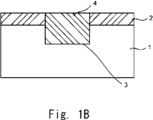
- An example of STI will be described with reference to Figures 1A and 1B.
- Figure 1A first, an element region of a silicon substrate 1 is masked with a stopper film 2, and then a trench 3 is formed in the silicon substrate 1, and an insulating film such as a silicon oxide film 4 is deposited so as to fill the trench 3.
- the silicon oxide film 4 on the stopper film 2, which is a protruding portion, is polished and removed by CMP while leaving the silicon oxide film 4 in the trench 3, which is a recessed portion, to obtain an element isolation structure in which the silicon oxide film 4 is filled in the trench 3, as shown in Figure 1B.
- polishing In CMP for STI, by increasing the selectivity (polishing rate ratio) between the silicon oxide film and the stopper film, the polishing can be stopped when the stopper film is exposed.
- stopper films include nitride films and polysilicon. Polishing methods that use a stopper film can produce a smoother surface than regular polishing methods. Furthermore, a high selectivity ratio is required in recent CMP technology.
- Patent Document 1 discloses an abrasive containing a specific anionic polymer, cerium oxide particles, and water, and having a pH of 4 to 9, as a method for increasing the selectivity between silicon dioxide and silicon nitride films.
- the present disclosure aims to provide an abrasive that can suppress the occurrence of polishing scratches while improving the selectivity by using an anionic polymer with a low acid value.
- it aims to provide a method for producing an additive liquid for an abrasive that can suitably adjust the abrasive, a polishing method using the abrasive, and a method for producing semiconductor parts using the polishing method.
- the present disclosure provides an abrasive and a manufacturing method thereof, a manufacturing method of an additive liquid for an abrasive, a polishing method, and a manufacturing method of a semiconductor component, each having the following configuration.
- Abrasive grains, an anionic polymer, and water The anionic polymer has an acid value of 400 mg KOH/g or less;
- An abrasive, wherein X1 calculated from the following formula (1) is 1.5 or less.
- N11 is the number of particles having a particle size of 0.56 ⁇ m or more contained per unit mass of abrasive grains in the polishing agent
- N12 is the number of particles having a particle size of 0.56 ⁇ m or more contained per unit mass of abrasive in an abrasive dispersion containing the abrasive, a dispersant, and water.
- Abrasive grains, an anionic polymer, and water The anionic polymer has an acid value of 400 mg KOH/g or less; A polishing agent, wherein X2 calculated from the following formula (2) is 7.0 or less.
- N21 is the number of particles having a particle size of 0.79 ⁇ m or more contained per unit mass of abrasive grains in the polishing agent
- N22 is the number of particles having a particle diameter of 0.79 ⁇ m or more contained per unit mass of abrasive in an abrasive dispersion containing the abrasive, a dispersant, and water.
- Abrasive grains, an anionic polymer, and water The anionic polymer has an acid value of 400 mg KOH/g or less; An abrasive, wherein X3 calculated from the following formula (3) is 10 or less.
- N31 is the number of particles having a particle size of 0.98 ⁇ m or more contained per unit mass of abrasive grains in the polishing agent
- N32 is the number of particles having a particle size of 0.98 ⁇ m or more contained per unit mass of abrasive in an abrasive dispersion containing the abrasive, a dispersant, and water.
- abrasive according to any one of [1] to [3], wherein the abrasive grains include at least one selected from the group consisting of silica particles, alumina particles, zirconia particles, cerium compound particles, titania particles, germania particles, composite particles thereof, and core-shell type particles.
- the abrasive grains include cerium compound particles.
- the abrasive grains include ceria particles.
- a method for producing a semiconductor component comprising: obtaining a semiconductor component by dicing a semiconductor substrate having a surface to be polished by the polishing method according to [13] into individual pieces.
- a method for producing an additive liquid for an abrasive containing a salt of an anionic polymer having an acid value of 400 mgKOH/g or less comprising the steps of: (1) a step of dissolving an alkali metal salt of the anionic polymer in water; and (2) a step of dissolving the anionic polymer in an aqueous alkali metal hydroxide solution containing an alkali metal in an amount 1.0 times or more the number of moles of anionic groups calculated from the acid value of the anionic polymer.
- the method for producing an additive liquid for an abrasive according to [15] wherein the alkali metal is at least one selected from the group consisting of lithium, sodium, potassium, rubidium, and cesium.
- an anionic polymer with a low acid value it is possible to provide an abrasive that can improve the selectivity while suppressing the occurrence of polishing scratches.
- it also provides a method for producing an additive liquid for the abrasive that can suitably adjust the abrasive, a polishing method using the abrasive, and a method for producing semiconductor parts using the polishing method.
- FIG. 1 is a cross-sectional view showing an example of a polishing method, illustrating a state of an object to be polished before being polished.
- FIG. 1 is a cross-sectional view showing an example of a polishing method, illustrating a state of an object to be polished after being polished.
- FIG. 2 is a schematic diagram showing an example of a polishing apparatus.
- the term "surface to be polished” refers to the surface to be polished of an object to be polished, for example, the surface.
- the term “surface to be polished” also includes intermediate surfaces that appear on a semiconductor substrate during the process of manufacturing a semiconductor device.
- Silicon oxide is primarily silicon dioxide, but is not limited thereto, and may include silicon oxides other than silicon dioxide.
- the "selectivity” refers to the ratio ( RA /RB ) of the polishing rate ( RA ) of an object to be polished A (eg, a silicon oxide film) to the polishing rate ( RB ) of a stopper film B (eg, a silicon nitride film).
- (Meth)acrylic is a general term for "methacrylic” and “acrylic”, and equivalent terms include (meth)acryloyl and (meth)acrylate. Furthermore, unless otherwise specified, the numerical range indicated by “to” includes the numerical ranges before and after it as the lower and upper limits.
- the abrasive of the present disclosure (hereinafter also referred to as the present abrasive) contains abrasive grains, an anionic polymer (hereinafter also referred to as the "specific anionic polymer") having an acid value of 400 mg KOH/g or less, and water, and is characterized in that it satisfies at least one of the following (I), (II), and (III): (I) X1 calculated from the following formula (1) is 1.5 or less.
- N11 is the number of particles having a particle size of 0.56 ⁇ m or more contained per unit mass of abrasive grains in the polishing agent
- N12 is the number of particles having a particle size of 0.56 ⁇ m or more contained per unit mass of abrasive in an abrasive dispersion containing the abrasive, a dispersant, and water.
- (II) X2 calculated from the following formula (2) is 7.0 or less.
- N21 is the number of particles having a particle size of 0.79 ⁇ m or more contained per unit mass of abrasive grains in the polishing agent
- N22 is the number of particles having a particle diameter of 0.79 ⁇ m or more contained per unit mass of abrasive in an abrasive dispersion containing the abrasive, a dispersant, and water.
- X3 calculated from the following formula (3) is 10 or less.
- N31 is the number of particles having a particle size of 0.98 ⁇ m or more contained per unit mass of abrasive grains in the polishing agent
- N32 is the number of particles having a particle size of 0.98 ⁇ m or more contained per unit mass of abrasive in an abrasive dispersion containing the abrasive, a dispersant, and water.
- the polishing agent that satisfies at least one of the above (I) to (III) suppresses the generation of coarse particles, thereby suppressing polishing scratches on the polished surface.
- the polishing agent can select an anionic polymer with a relatively low acid value, thereby improving the selectivity. It is sufficient for the present abrasive to satisfy at least one of the above (I) to (III). Among these, it is preferable for the abrasive to satisfy the above (I), it is more preferable for the abrasive to satisfy the above (I) and (II), and it is even more preferable for the abrasive to satisfy all of the above (I) to (III).
- N11 and N12 are measured by the following method.
- the abrasive to be measured is prepared as a test liquid.
- the abrasive may be appropriately diluted to prepare a test liquid, taking into consideration the measurable range of the measuring instrument.
- the dilution liquid may be water or a buffer solution, and water is preferred.
- the measurement is performed with a liquid particle counter in a state where the abrasive particles are sufficiently dispersed in the test liquid.
- a method for confirming that the abrasive particles are sufficiently dispersed includes a method of agitating the test liquid at high speed for 24 hours or more using a mixing tumbler, and then confirming that no precipitate is present at the bottom of the container.
- a liquid particle counter an AccuSizer SIS series manufactured by Entegris, etc. can be used.
- the measurement temperature is in the range of 28 ⁇ 1°C.
- the abrasive concentration C 11 in the test liquid is adjusted to be in the range of 1/100 to 1 times the recommended concentration of the liquid particle counter.
- the lower limit of the abrasive concentration C 11 is 1/100000 mass%, preferably 1/50000 mass%, more preferably 1/20000 mass%, and even more preferably 1/15000 mass%.
- the upper limit of the abrasive concentration C 11 is 1/10 mass%, preferably 1/100 mass%, more preferably 1/500 mass%, more preferably 1/1000 mass%, even more preferably 1/2500 mass%, and particularly preferably 1/5000 mass%.
- the abrasive is ceria particles, it is preferable to adjust the abrasive concentration C 11 to about 1/12000 mass%.
- N12 is the number of particles having a particle size of 0.56 ⁇ m or more contained per unit mass of abrasive in the standard abrasive dispersion liquid.
- an abrasive dispersion is prepared.
- the abrasive is the same as the polishing agent to be measured.
- the abrasive is dispersed by a method known to be difficult for the abrasive to aggregate.
- Examples of the abrasive dispersion method include (I) a method of dispersing the abrasive by coating the surface of the abrasive with a polymer and dispersing the abrasive by steric repulsion; (II) a method of dispersing the abrasive by electrostatic repulsion between the abrasive particles by adjusting the pH of the abrasive dispersion and/or by surface treating the abrasive particles to bring the zeta potential of the abrasive particles to about ⁇ 40 mV;
- the polymer is preferably an anionic polymer having an acid value of more than 400 mgKOH/g, and more preferably polyacrylic acid which is a homopolymer of acrylic acid.
- the zeta potential of the abrasive grains can be adjusted by adding an anionic polymer, an acidic compound, an additive, etc., and it is preferable to use nitric acid or phosphoric acid.
- the zeta potential of the abrasive grains can be measured, for example, using a dynamic light scattering zeta potential measuring device (for example, DelsaNano C, product name, manufactured by Beckman Coulter, Inc.). The measurement is performed in the same manner as the measurement method of N11 above, using a liquid-borne particle counter, with the abrasive particles in the test liquid being sufficiently dispersed.
- the method of confirming that the abrasive particles are sufficiently dispersed is the same as that of N11 above.
- the measurement temperature is in the range of 28 ⁇ 1°C.
- the abrasive particle concentration C12 in the test liquid may be adjusted within the range described in C11 above, and when the abrasive particles are ceria particles, it is more preferable to adjust the abrasive particle concentration in the abrasive particle dispersion liquid to about 1/12000 mass%.
- the measurement is performed in the same manner as the test liquid, using a liquid-borne particle counter, to obtain the number A12 of particles with a particle size of 0.56 ⁇ m or more.
- X1 is calculated from N11 and N12 measured by the above method using formula (1).
- N21 and N31 can be determined by counting the number A21 of particles having a particle size of 0.79 ⁇ m or more and the number A31 of particles having a particle size of 0.98 ⁇ m or more, respectively, in the same manner as in the measurement of N11 .
- A11 , A21 and A31 may be determined simultaneously in a single measurement.
- N22 and N32 can be determined by counting the number A22 of particles having a particle size of 0.79 ⁇ m or more and the number A32 of particles having a particle size of 0.98 ⁇ m or more, respectively, in the same manner as in the measurement of N12 .
- A12 , A22 and A32 may be determined simultaneously in a single measurement.
- X2 is 7.0 or less, it is judged that the abrasive contains few coarse particles, and the abrasive can suppress polishing scratches.
- X2 is preferably 5.0 or less, more preferably 2.0 or less, even more preferably 1.8 or less, and particularly preferably 1.5 or less.
- X3 is 10 or less, it is determined that the abrasive contains few coarse particles, and the abrasive can suppress polishing scratches.
- X3 is preferably 8.0 or less, more preferably 5.0 or less, even more preferably 4.5 or less, and particularly preferably 4.0 or less.
- the abrasive grains can be appropriately selected from those used as abrasive grains for CMP.
- the abrasive grains can be selected from at least one of the group consisting of silica grains, alumina grains, zirconia grains, cerium compound grains (e.g., ceria grains, cerium hydroxide grains), titania grains, germania grains, and core-shell grains having these grains as core grains.
- the silica grains can be colloidal silica, fumed silica, etc.
- the alumina grains can also be colloidal alumina.
- the core-shell type particles are composed of a core particle (for example, a silica particle, an alumina particle, a zirconia particle, a cerium compound particle, a titania particle, or a germania particle) and a thin film covering the surface of the core particle.
- a core particle for example, a silica particle, an alumina particle, a zirconia particle, a cerium compound particle, a titania particle, or a germania particle
- the material of the thin film include at least one selected from oxides such as silica, alumina, zirconia, ceria, titania, germania, iron oxide, manganese oxide, zinc oxide, yttrium oxide, calcium oxide, magnesium oxide, lanthanum oxide, strontium oxide, etc.
- the thin film may be formed from a plurality of nanoparticles made of these oxides.
- the particle diameter of the core particle is preferably 0.01 ⁇ m to 0.5 ⁇ m, and more preferably 0.03 ⁇ m to 0.3 ⁇ m.
- the particle size of the nanoparticles need only be smaller than the particle size of the core particle, and is preferably 1 nm to 100 nm, and more preferably 5 nm to 80 nm.
- silica particles, alumina particles, or cerium compound particles are preferred because of their excellent polishing speed for insulating films, cerium compound particles are more preferred, and ceria particles are even more preferred because they provide a high polishing speed when the surface to be polished contains an insulating film (particularly a silicon oxide film).
- the thin film preferably contains silica, alumina, or a cerium compound, and more preferably contains ceria.
- One type of abrasive can be used alone, or two or more types can be used in combination.
- the ceria content relative to the total mass of the abrasive grains is preferably 70% by mass or more, more preferably 80% by mass or more, even more preferably 90% by mass or more, particularly preferably 95% by mass or more, and most preferably 100% by mass. If the ceria content relative to the total mass of the abrasive grains is 70% by mass or more, it is particularly easy to improve the polishing speed of insulating films.
- the ceria particles can be appropriately selected from known ones and can be used, for example, ceria particles manufactured by the methods described in JP-A-11-12561, JP-A-2001-35818, and JP-T-2010-505735. Specific examples include ceria particles obtained by adding an alkali to an aqueous ammonia solution of cerium (IV) nitrate to produce a cerium hydroxide gel, which is then filtered, washed, and fired; ceria particles obtained by crushing high-purity cerium carbonate, firing it, and further crushing and classifying it; and ceria particles obtained by chemically oxidizing cerium (III) salt in a liquid.
- the ceria particles may contain impurities other than ceria, but the ceria content in one ceria particle is preferably 80% by mass or more, more preferably 90% by mass or more, even more preferably 95% by mass or more, and most preferably 100% by mass (no impurities included). If the ceria content in the ceria particles is 80% by mass or more, it is easy to improve the polishing speed of the insulating film.
- the average particle size of the abrasive grains is preferably 0.01 ⁇ m to 0.5 ⁇ m, and more preferably 0.03 ⁇ m to 0.3 ⁇ m. If the average particle size is 0.5 ⁇ m or less, the mechanical effect on the surface being polished is small, and the occurrence of polishing damage such as scratches on the surface being polished is suppressed. Furthermore, if the average particle size is 0.01 ⁇ m or more, the aggregation of the abrasive grains is suppressed, resulting in excellent storage stability of the abrasive and excellent polishing speed.
- the above particle size is the particle size of the primary particles if the abrasive grains are dispersed in the liquid without agglomeration.
- the above particle size is the particle size of the agglomerated particles (secondary particles) if the abrasive grains are agglomerated in the liquid.
- the average particle size is measured using a dispersion liquid in which the abrasive grains are dispersed in a dispersing medium such as pure water, and a particle size distribution analyzer such as a laser diffraction/scattering type.
- the lower limit of the abrasive grain content is preferably 0.01 mass%, more preferably 0.05 mass%, even more preferably 0.1 mass%, even more preferably 0.2 mass%, and particularly preferably 0.3 mass%, based on the total mass of the abrasive. If the abrasive grain content is equal to or greater than the above lower limit, an excellent polishing rate for the polished surface can be obtained.
- the upper limit of the abrasive grain content is preferably 10.0 mass%, more preferably 8.0 mass%, even more preferably 5.0 mass%, particularly preferably 2.0 mass%, particularly more preferably 1.0 mass%, extremely preferably 0.8 mass%, and most preferably 0.5 mass% based on the total mass of the abrasive.
- abrasive grain content is equal to or less than the above upper limit, agglomeration of the abrasive grains can be suppressed, and an increase in the viscosity of the abrasive is suppressed, resulting in excellent handling properties.
- the anionic polymer can be appropriately selected from those having an acid value of 400 mgKOH/g or less.
- polishing of the stopper film can be suppressed while maintaining a high polishing rate for the silicon oxide film, and a high selectivity between the silicon oxide film and the stopper film can be obtained, thereby realizing polishing with high flatness.
- the stopper film may be, for example, a compound containing one or more selected from silicon, carbon, hafnium, zirconium, cobalt, ruthenium, molybdenum, titanium, tantalum, and copper, or a nitride or oxide containing one or more of these.
- examples of the stopper film include simple metals such as copper, cobalt, ruthenium, molybdenum, titanium, and tantalum; nitrides such as titanium nitride, tantalum nitride, and silicon nitride; oxides such as zirconia and hafnium oxide; polysilicon, amorphous silicon, hafnium silicate, zirconium silicate, and silicon carbide.
- silicon nitride or polysilicon is preferable because a higher selectivity can be obtained.
- the specific anionic polymer is preferably a copolymer containing a hydrophobic monomer and an anionic monomer in order to obtain a higher selectivity.
- the composition of the anionic polymer, which is the copolymer, is described below.
- a hydrophobic monomer refers to a monomer that dissolves in 100 g of water at 20° C. (hereinafter, also referred to as "solubility") of 10 g or less.
- solubility is preferably 7 g or less, more preferably 5 g or less, even more preferably 3 g or less, and particularly preferably 2 g or less.
- hydrophobic monomer a monomer having no ionic group or hydrophilic group is preferable, and a compound represented by the following formula (4) is more preferable.
- R 1 is a hydrogen atom or a methyl group
- R 11 is a hydrocarbon group which may have O or Si between carbon atoms and in which a hydrogen atom may be substituted with a halogen atom
- L 1 is a single bond or a divalent linking group.
- R 11 is a hydrophobic substituent, which may have O or Si between carbon atoms, and is a hydrocarbon group in which a hydrogen atom may be substituted with a halogen atom.
- the hydrocarbon group in R 11 include an alkyl group, an aryl group, and an aralkyl group.
- the alkyl group may be linear, branched, or cyclic.
- the number of carbon atoms in the alkyl group is preferably 1 to 18, and more preferably 1 to 12.
- alkyl group examples include a methyl group, an ethyl group, an n-propyl group, an isopropyl group, an n-butyl group, an isobutyl group, a sec-butyl group, a tert-butyl group, various pentyl groups, various hexyl groups, various octyl groups, various decyl groups, a cyclopentyl group, a cyclohexyl group, a cyclooctyl group, a cyclododecyl group, a bornyl group, and an adamantyl group.
- Examples of the aryl group include a phenyl group, a biphenyl group, a naphthyl group, a tolyl group, a xylyl group, etc.
- the number of carbon atoms in the aryl group is preferably 6 to 24, and more preferably 6 to 12.
- Examples of the aralkyl group include a benzyl group, a phenethyl group, a naphthylmethyl group, a biphenylmethyl group, etc.
- the aralkyl group preferably has 7 to 20 carbon atoms, more preferably 7 to 14 carbon atoms.
- a hydrogen atom of the aromatic ring may have a substituent such as a linear or branched alkyl group having 1 to 4 carbon atoms.
- the hydrocarbon group for R 11 may further have O or Si between carbon atoms, and a hydrogen atom may be substituted with a halogen atom.
- Examples of the hydrocarbon group having O or Si between carbon atoms include alkylene oxides such as -(CH 2 CH 2 O) x - and -(CH 2 O) x -, and -CH 2 Si(R 12 ) 2 -CH 2 -, where x represents the number of repeating units and is preferably an integer of 1 to 18.
- each of the two R 12 's is independently a hydrogen atom or a methyl group.
- the hydrogen atom of the hydrocarbon group of the above structure may be substituted with a halogen atom.
- the halogen atom include F, Cl, Br, and I.
- R 11 is preferably a hydrocarbon group that does not contain O, Si or halogen atoms, from the viewpoint of hydrophobicity and availability.
- L 1 is a single bond or a divalent linking group connecting the unsaturated double bond and R 11.
- L 1 include alkylene groups having 1 to 8 carbon atoms, -(CH 2 CH 2 O) x -, -(CH 2 O) x -, -CONH-, -COO-, -C( ⁇ O)-, etc.
- alkylene group having 1 to 8 carbon atoms include a methylene group, an ethylene group, a propylene group, a butylene group, a pentylene group, a hexylene group, etc.
- L 1 is preferably a single bond, —CONH—, or COO—.
- the hydrophobic monomers can be used alone or in combination of two or more types. From the standpoint of dispersibility in the abrasive, the hydrophobic monomers may be a combination of a monomer having a ring structure and a monomer not having a ring structure.
- hydrophobic monomers include alkyl (meth)acrylates such as methyl (meth)acrylate, ethyl (meth)acrylate, n-propyl (meth)acrylate, isopropyl (meth)acrylate, n-butyl (meth)acrylate, isobutyl (meth)acrylate, sec-butyl (meth)acrylate, tert-butyl (meth)acrylate, n-pentyl (meth)acrylate, isopentyl (meth)acrylate, n-hexyl (meth)acrylate, 2-ethylhexyl (meth)acrylate, isooctyl (meth)acrylate, n-dodecyl (meth)acrylate, and stearyl (meth)acrylate; (Meth)acrylates having a ring structure, such as 1-methylcyclopentyl acrylate, cyclohexyl (meth)acrylate, cycl
- alkyl (meth)acrylate or styrene it is preferable to contain an alkyl (meth)acrylate or styrene, and as the alkyl (meth)acrylate, an alkyl (meth)acrylate having an alkyl group having 1 to 6 carbon atoms is more preferable.
- the anionic monomer is a monomer having an anionic group or a salt thereof.
- the anionic group is strongly adsorbed to the stopper film and acts as a protective film for the stopper film.
- the anionic monomer may be a compound having an unsaturated bond and an anionic group.
- the anionic group and its salt may be collectively referred to as "anionic group, etc.”
- the anionic monomer preferably contains a compound represented by the following formula (5).
- R 2 , R 3 , R 4 and R 5 are each independently a hydrogen atom, a hydrocarbon group, or a group having an anionic group or a salt thereof, at least one of R 2 to R 5 is a group having an anionic group or a salt thereof, and when the molecule has two or more carboxy groups, the carboxy groups may form anhydrides.
- Examples of the hydrocarbon group in R 2 to R 5 include an alkyl group, an aryl group, and an aralkyl group. Specific examples of the alkyl group, the aryl group, and the aralkyl group are the same as those for R 11.
- the hydrocarbon group in R 2 to R 5 is preferably an alkyl group having 1 to 6 carbon atoms, and among these, a methyl group or an ethyl group is preferable, and a methyl group is more preferable.
- the group having an anionic group or the like in R 2 to R 5 preferably has a structure of -L 2 -R 21 .
- L 2 is a single bond or a divalent linking group connecting the unsaturated double bond and R 21.
- Examples of L 2 include an alkylene group having 1 to 8 carbon atoms, a phenylene group, -(CH 2 CH 2 O) x -R 22 -, -(CH 2 O) x -R 22 -, -CONH-R 22 -, and -COO-R 22 -, where x is an integer of 1 to 18, and R 22 is preferably a single bond or an alkylene group having 1 to 8 carbon atoms.
- Examples of the alkylene group in L2 and R22 include a methylene group, an ethylene group, a propylene group, a butylene group, a pentylene group, and a hexylene group, and may have a halogen atom as a substituent.
- L 2 is preferably a single bond, —CONH—R 22 —, or —COO—R 22 —.
- R 21 is a carboxy group, a sulfo group, a phosphate ester, a phosphonic acid, a hydroxyphenyl group, and salts thereof.
- the anionic group is a salt
- examples of the counter cation include an alkali metal ion, an alkaline earth metal ion, and an ammonium ion.
- an alkali metal ion or an ammonium ion is preferable, a sodium ion, a potassium ion, or an ammonium ion is more preferable, and a sodium ion or a potassium ion is even more preferable.
- the anionic group for R 21 is preferably a carboxy group, a sulfo group or a salt thereof, and more preferably a carboxy group or a salt thereof.
- the number of anionic groups in one molecule of the anionic monomer may be one or more, and from the viewpoint of the polymerizability of the polymer, one to two is preferable.
- the carboxy groups may be in the form of anhydrides.
- Suitable combinations of R 2 to R 5 in formula (5) include (I) a combination in which R 2 is a group having an anionic group or the like, and R 3 to R 5 are each independently a hydrogen atom or a hydrocarbon group; (II) a combination in which R 2 and R 3 are a group having an anionic group or the like, and R 4 and R 5 are each independently a hydrogen atom or a hydrocarbon group; and (III) a combination in which R 2 and R 5 are a group having an anionic group or the like, and R 3 and R 4 are each independently a hydrogen atom or a hydrocarbon group.
- the hydrocarbon group is preferably a methyl group.
- the anionic group is preferably a carboxy group.
- anionic monomer examples include (meth)acrylic acid, vinyl benzoic acid, 2-carboxyethyl (meth)acrylate, allylsulfonic acid, methallylsulfonic acid, 2-(meth)acryloyloxyethyl acid phosphate, maleic acid (maleic anhydride), fumaric acid, itaconic acid, citraconic acid, mesaconic acid, and salts thereof.
- (meth)acrylic acid, maleic acid, itaconic acid, fumaric acid, and salts thereof are preferred, and (meth)acrylic acid, maleic acid, and salts thereof are more preferred.
- the anionic monomers can be used alone or in combination of two or more.
- the anionic polymer has an acid value of 400 mgKOH/g or less.
- the selectivity between the silicon oxide film and the stopper film is improved.
- the upper limit of the acid value of the specific anionic polymer is preferably 350 mgKOH/g, more preferably 300 mgKOH/g, and even more preferably 280 mgKOH/g.
- the lower limit of the acid value of the specific anionic polymer is preferably 20 mgKOH/g or more, more preferably 50 mgKOH/g, further preferably 100 mgKOH/g, and particularly preferably 150 mgKOH/g, from the viewpoint of suppressing aggregation of the abrasive grains.
- the acid value represents the mass (mg) of potassium hydroxide required to neutralize the acidic components contained in 1 g of the solid content of the polymer, and is a value measured by the method described in JIS K 0070:1992.
- the ratio of the hydrophobic monomer to the anionic monomer may be appropriately adjusted so that the acid value falls within the above range.
- the ratio of the hydrophobic monomer is preferably 10 mol% or more, more preferably 20 mol% or more, even more preferably 30 mol% or more, and particularly preferably 40 mol% or more, based on the total of all monomers constituting the specific anionic polymer.
- the ratio of the hydrophobic monomer is preferably 95 mol% or less, more preferably 90 mol% or less, even more preferably 85 mol% or less, and particularly preferably 80 mol% or less, based on the total of all monomers.
- the specific anionic polymer may be a random polymer in which the hydrophobic monomers and the anionic monomers are randomly arranged, or a block polymer having a block of anionic monomers and a block of anionic monomers.
- the solubility of the specific anionic polymer in water at 25° C. is preferably 5 mg/100 g-H 2 O or more, and more preferably 10 mg/100 g-H 2 O or more, from the viewpoint of storage stability and the like.
- the weight average molecular weight Mw of the specific anionic polymer is preferably 1,000 to 100,000 from the viewpoint of dispersion stability of the specific anionic polymer.
- the lower limit of the weight average molecular weight Mw of the specific anionic polymer is preferably 2,000, more preferably 4,000, and even more preferably 6,000.
- the upper limit of the weight average molecular weight Mw of the specific anionic polymer is preferably 50,000, more preferably 40,000, even more preferably 30,000, even more preferably 25,000, particularly preferably 20,000, and extremely preferably 17,500.
- the weight average molecular weight (Mw) is determined by gel permeation chromatography (GPC) in terms of standard polystyrene.
- the specific anionic polymer may be a commercially available product or may be synthesized.
- a hydrophobic monomer and an anionic monomer are mixed, and an initiator is added to polymerize the mixture by a known polymerization method such as solution polymerization, bulk polymerization, or various radical polymerizations.
- solution polymerization is preferred because it is easy to adjust the weight-average molecular weight of the copolymer.
- a block polymer for example, an anionic block may be synthesized first, and a hydrophobic monomer may be polymerized to the anionic block, or the order of polymerization of the anionic block and the hydrophobic block may be reversed in the manufacturing method. Alternatively, the anionic block and the hydrophobic block may be synthesized separately, and then the anionic block and the hydrophobic block may be coupled.
- the content of the specific anionic polymer is preferably 0.02% by mass to 0.5% by mass, more preferably 0.05% by mass to 0.45% by mass, even more preferably 0.08% by mass to 0.4% by mass, and particularly preferably 0.1% by mass to 0.35% by mass, based on the total mass of the abrasive, in terms of the polishing suppression effect of the stopper film.
- the polishing agent contains water as a medium for dispersing the abrasive grains.
- the type of water is not particularly limited, but it is preferable to use pure water, ultrapure water, ion-exchanged water, etc., taking into consideration the effect on other components, the prevention of impurities from being mixed in, and the effect on pH, etc.
- the polishing agent may further contain various additives, such as a pH adjuster, a dispersant, a nonionic polymer, an anti-agglomerating agent, a lubricant, a viscosity imparting agent, a viscosity modifier, and a preservative, and may contain two or more kinds of additives.
- various additives such as a pH adjuster, a dispersant, a nonionic polymer, an anti-agglomerating agent, a lubricant, a viscosity imparting agent, a viscosity modifier, and a preservative, and may contain two or more kinds of additives.
- pH adjuster In order to adjust the pH to a predetermined value, a pH adjuster may be contained.
- the pH adjuster may be appropriately selected from acidic compounds, basic compounds, amphoteric compounds such as amino acids, and salts thereof.
- the acidic compound may be an inorganic acid, an organic acid, or a salt thereof.
- the inorganic acid include nitric acid, sulfuric acid, hydrochloric acid, phosphoric acid, etc., and the ammonium salt, sodium salt, potassium salt, etc. of these may also be used.
- the organic acid include compounds having a carboxy group, a sulfo group, or a phospho group as an anionic group, and ammonium salts, sodium salts, potassium salts, and the like of these.
- organic acids having a carboxy group examples include alkyl monocarboxylic acids such as formic acid, acetic acid, and propionic acid; Carboxylic acids having a heterocycle, such as 2-pyridinecarboxylic acid, 3-pyridinecarboxylic acid, 4-pyridinecarboxylic acid, 2,3-pyridinedicarboxylic acid, 2,4-pyridinedicarboxylic acid, 2,5-pyridinedicarboxylic acid, 2,6-pyridinedicarboxylic acid, 3,4-pyridinedicarboxylic acid, 3,5-pyridinedicarboxylic acid, pyrazine carboxylic acid, 2,3-pyrazinedicarboxylic acid, 2-quinoline carboxylic acid, pyroglutamic acid, picolinic acid, DL-pipecolic acid, 2-furan carboxylic acid, 3-furan carboxylic acid, tetrahydrofuran-2-carboxylic acid, and tetrahydrofuran-2,3,4,5-tetracarboxylic acid
- Examples of basic compounds include ammonia, sodium hydroxide, potassium hydroxide, ammonium hydroxide, potassium carbonate, sodium carbonate, ammonium carbonate; quaternary ammonium hydroxides such as tetramethylammonium hydroxide and tetraethylammonium hydroxide; and amino alcohols such as monoethanolamine, diethanolamine, and triethanolamine.
- Examples of amphoteric compounds include glycine, alanine, and phenylalanine.
- the pH adjuster may be used alone or in combination of two or more.
- the pH of this polishing agent is preferably 4 to 8 in order to suppress aggregation of the abrasive grains and to further improve the selectivity.
- the pH adjuster may be appropriately adjusted to the above pH.
- the pH adjuster may be 0.005% to 2.0% by mass of the entire polishing agent, preferably 0.01% to 1.5% by mass, and more preferably 0.01% to 0.3% by mass.
- the polishing agent may contain a dispersant to improve the dispersibility of the abrasive grains.
- the dispersant include anionic surfactants, cationic surfactants, nonionic surfactants, and amphoteric surfactants, and one or more of these may be used.
- anionic surfactant a polymer having a carboxy group or an ammonium carboxylate or the like is preferred, and polyacrylic acid or a polyacrylate is preferred.
- cationic surfactant examples include diallyldimethylammonium chloride polymer, diallyldimethylammonium chloride-sulfur dioxide copolymer, diallyldimethylammonium chloride-acrylamide copolymer, diallyldimethylammonium chloride-maleic acid copolymer, and maleic acid-diallyldimethylammonium ethyl sulfate-sulfur dioxide copolymer.
- the weight average molecular weight of the surfactant is preferably 10,000 to 100,000 from the viewpoint of polishing the surface to be polished at a higher speed.
- a dispersant When a dispersant is used, its content is preferably 0.0001% by mass to 0.3% by mass, more preferably 0.001% by mass to 0.2% by mass, and even more preferably 0.01% by mass to 0.15% by mass, based on the total mass of the abrasive, from the viewpoint of polishing the surface to be polished at a higher speed.
- the polishing agent may also contain a nonionic polymer.
- the nonionic polymer is preferably a nonionic polymer having an ether bond, more preferably a nonionic polymer having an ether bond in the main chain.
- Specific examples of the nonionic polymer include polyethylene glycol, polyglycerin, and water-soluble nylon.
- a nonionic polymer When a nonionic polymer is used, its content can be 0.005% by mass to 2.0% by mass, preferably 0.01% by mass to 1.5% by mass, and more preferably 0.01% by mass to 0.3% by mass, based on the total mass of the polishing agent. If the content of the nonionic polymer is within the above range, the wettability of the polishing agent to the polished surface is improved, and the contact frequency of the abrasive grains is increased, thereby improving the polishing speed of the silicon oxide film.
- the total content of the additives is preferably 0.01% by mass to 10.0% by mass, and more preferably 0.01% by mass to 5.0% by mass, based on the total mass of the polishing agent, in order to obtain a polishing agent with a high selectivity between the silicon oxide film and the stopper film.
- This polishing agent is prepared by using the specific anionic polymer so that the above X 1 to X 3 are lower than a predetermined value.
- the method for lowering X 1 to X 3 is not particularly limited, but for example, when dissolving the specific anionic polymer, at least a part of the anionic group of the specific anionic polymer is converted into an alkali metal salt.
- the mechanism by which the alkali metal salt of the specific anionic polymer suppresses the generation of coarse particles is partially unclear, but is presumed to be as follows. Compared with the ammonium salt of the specific anionic polymer, the alkali metal salt of the specific anionic polymer suppresses intramolecular aggregation.
- ammonium ions and the like are adsorbed to a plurality of anionic groups in the polymer and aggregate.
- alkali metal salts it is presumed that they strongly adsorb to one anionic group and suppress the aggregation of the anionic group. Therefore, even when an anionic polymer with a low acid value is used, it is presumed that the anionic group interacts with the abrasive grains efficiently, and the aggregation (coarsening) of the abrasive grains is suppressed. As shown in the examples below, it was confirmed that this effect is maintained even when the specific anionic polymer is dissolved and then cation-exchanged to ammonium salt. From the above, it is presumed that the coarsening of the abrasive grains can be suppressed by making at least a part of the anionic group into an alkali metal salt when the specific anionic polymer is dissolved.
- Specific examples of the method for dissolving the specific anionic polymer include those including the following steps (1) or (2).
- the aqueous solution may be heated as necessary in order to facilitate dissolution of the specific anionic polymer.
- the aqueous solution of the anionic polymer alkali metal salt obtained by the above steps (1) or (2) may be subjected to ion exchange with ammonium ions or amine ions after removing alkali metal ions using an ion exchange membrane.
- This method is preferable because it can suppress metal contamination when manufacturing semiconductor parts using the polishing agent.
- the alkali metal includes lithium, sodium, potassium, rubidium, and cesium, and sodium or potassium is preferred from the viewpoint of suppressing coarsening of the abrasive grains.
- the method for producing the abrasive taking into consideration the above-mentioned method for dissolving the specific anionic polymer, is specifically as follows: (A) a method of preparing a dispersion of abrasive grains and an aqueous solution of the specific anionic polymer (hereinafter also referred to as an "additive liquid for abrasive") and mixing them; It is preferable to use a method in which (B) the abrasive grains, the specific anionic polymer, water or an aqueous alkali metal hydroxide solution, and additives used as necessary are each prepared and then mixed together.
- A a method of preparing a dispersion of abrasive grains and an aqueous solution of the specific anionic polymer (hereinafter also referred to as an "additive liquid for abrasive") and mixing them; It is preferable to use a method in which (B) the abrasive grains, the specific anionic polymer, water or an aqueous
- the additive liquid for an abrasive in (A) above can be prepared by the above-mentioned step (1) or (2) in the method for dissolving the specific anionic polymer.
- the amount of the alkali metal is the same as that in the above step (2) in the above method for dissolving the specific anionic polymer.
- the above method (A) is preferred in terms of the storage stability and ease of transportation of the abrasive dispersion and additive liquid for the abrasive.
- the above method (A) can also be applied inside the polishing device when the abrasive is used.
- the concentration of the abrasive grains in the dispersion liquid and the concentration of the anionic polymer and the acidic compound in the additive liquid for the abrasive may be concentrated 2 to 100 times higher than when the abrasive is used, and then diluted to a predetermined concentration when the abrasive is used.
- the concentration of the abrasive grains in the dispersion liquid and the concentration of the anionic polymer and the acidic compound in the additive liquid are both concentrated 10 times, 10 parts by mass of the dispersion liquid, 10 parts by mass of the additive liquid, and 80 parts by mass of water are mixed and stirred to prepare the abrasive.
- 10 parts by mass of the dispersion liquid, 10 parts by mass of the additive liquid, and 80 parts by mass of water are mixed and stirred to prepare the abrasive.
- the content (concentration) of the anionic polymer is preferably 0.001 to 30 mass % of the entire polishing-agent additive liquid, more preferably 0.01 to 20 mass %, and even more preferably 0.1 to 10 mass %.
- the content of the abrasive grains is preferably 0.2 to 40 mass %, more preferably 1 to 20 mass %, and even more preferably 5 to 10 mass %.
- the polishing method of the present invention is a polishing method in which a surface to be polished is brought into contact with a polishing pad while an abrasive is supplied, and polishing is performed by relative movement of the two, and the polishing method uses the abrasive of the present invention as the abrasive, and polishes a surface to be polished containing silicon oxide of a semiconductor substrate.
- the surface to be polished here may be, for example, a surface of a semiconductor substrate that includes a surface made of silicon dioxide, a blanket wafer in which a stopper film and a silicon oxide film are laminated on the surface of a semiconductor substrate, or a pattern wafer in which these film types are arranged in a pattern.
- a preferred example of a semiconductor substrate is a substrate for STI.
- the abrasive of the present invention is also effective in polishing to flatten an interlayer insulating film between multiple wiring layers in the manufacture of semiconductor devices.
- the silicon oxide film in the STI substrate is a so-called PE-TEOS film formed by plasma CVD using tetraethoxysilane (TEOS) as a raw material.
- TEOS tetraethoxysilane
- Another silicon oxide film is a so-called HDP film formed by high-density plasma CVD.
- Other CVD methods such as HARP and FCVD films, and SOD films formed by spin coating can also be used.
- Silicon nitride films include those formed by low-pressure CVD or plasma CVD using silane or dichlorosilane and ammonia as raw materials, or those formed by ALD.
- Polysilicon films are formed by using silane as a raw material, using low-pressure CVD or plasma CVD, and then heat-treated to form polycrystalline granules.
- FIG. 2 is a schematic diagram showing an example of a polishing apparatus.
- the polishing apparatus 20 shown in the example of FIG. 2 includes a polishing head 22 that holds a semiconductor substrate 21 such as an STI substrate, a polishing platen 23, a polishing pad 24 attached to the surface of the polishing platen 23, and an abrasive supply pipe 26 that supplies an abrasive 25 to the polishing pad 24.
- the polishing surface of the semiconductor substrate 21 held by the polishing head 22 is brought into contact with the polishing pad 24 while the abrasive 25 is supplied from the abrasive supply pipe 26, and polishing is performed by rotating the polishing head 22 and the polishing platen 23 relative to one another.
- the polishing head 22 may perform linear motion as well as rotational motion. Furthermore, the polishing platen 23 and polishing pad 24 may be of a size similar to or smaller than that of the semiconductor substrate 21. In that case, it is preferable to move the polishing head 22 and polishing platen 23 relative to each other so that the entire surface to be polished of the semiconductor substrate 21 can be polished. Furthermore, the polishing platen 23 and polishing pad 24 do not have to perform rotational motion, and may be, for example, a belt type that moves in one direction.
- polishing conditions of such a polishing device 20 there are no particular restrictions on the polishing conditions of such a polishing device 20, but by applying a load to the polishing head 22 and pressing it against the polishing pad 24, the polishing pressure can be increased and the polishing speed can be improved.
- the polishing pressure is preferably about 0.5 to 50 kPa, and from the viewpoint of uniformity of the polished surface of the semiconductor substrate 21 at the polishing speed, flatness, and prevention of polishing defects such as scratches, about 3 to 40 kPa is more preferable.
- the rotation speed of the polishing platen 23 and the polishing head 22 is preferably about 50 to 500 rpm.
- the supply amount of the abrasive 25 is appropriately adjusted depending on the composition of the abrasive and the above-mentioned polishing conditions, etc.
- the polishing pad 24 may be made of nonwoven fabric, polyurethane foam, porous resin, non-porous resin, or the like.
- the surface of the polishing pad 24 may be grooved in a grid, concentric circle, spiral, or other shape. If necessary, a pad conditioner may be brought into contact with the surface of the polishing pad 24 to condition the surface of the polishing pad 24 while polishing.
- This polishing method makes it possible to obtain a high selectivity between the silicon oxide film and the stopper film while suppressing polishing scratches, thereby achieving highly flat polishing.
- the method for producing a semiconductor component according to this embodiment obtains semiconductor components by dicing a semiconductor substrate having a surface to be polished that has been polished by the polishing method according to the present invention.
- the method for manufacturing a semiconductor component according to the present disclosure includes a singulation step of singulating a semiconductor substrate having a surface polished by the polishing method, for example, a step of dicing the semiconductor substrate (e.g., a semiconductor wafer) by a known method such as blade dicing, laser dicing, or plasma dicing to obtain semiconductor components that are semiconductor chips.
- the method for manufacturing a semiconductor component may further include a bonding step of bonding another member onto the polished surface of the semiconductor chip, thereby obtaining a semiconductor component as a bonded body. Examples of the other member include a second semiconductor chip and a rewiring layer.
- the second semiconductor chip may be a semiconductor chip obtained by the manufacturing method of the present disclosure, or may be a semiconductor chip obtained by another method.
- the bonding step may be, for example, a step of placing another member directly on the polished surface and directly bonding the other member by fusion bonding, surface activation bonding, or the like, or a step of bonding the polished surface and the other member via an adhesive layer.
- the adhesive layer include a metal layer such as solder or copper, a glass layer, and a resin layer such as polyimide or epoxy.
- the present disclosure can further provide an electronic device including at least one semiconductor component having a surface polished by the polishing method of the present disclosure.
- Examples 1 to 4 are examples, and Examples 5 to 9 are comparative examples.
- ⁇ Average particle size> The average particle size was measured using a laser scattering/diffraction type particle size distribution measuring device (manufactured by Horiba, Ltd., device name: LA-950).
- Each abrasive was diluted with water to an abrasive concentration of approximately 1/12,000 mass% to prepare a test solution, and the number of particles with a particle size of 0.56 ⁇ m or more, the number of particles with a particle size of 0.79 ⁇ m or more, and the number of particles with a particle size of 0.98 ⁇ m or more were measured using the method described above.
- the standard abrasive dispersion liquid was prepared by using polyacrylic acid as a dispersant and adjusting the abrasive concentration to approximately 1/12,000 mass %, and the number of particles with a particle size of 0.56 ⁇ m or more, the number of particles with a particle size of 0.79 ⁇ m or more, and the number of particles with a particle size of 0.98 ⁇ m or more were measured using the same method as described above.
- the measurement was performed using a particle counter (AccuSizer series manufactured by Entegris) at a temperature range of 28 ⁇ 1°C.
- Abrasive grain dispersion Ceria particles having an average particle size of 100 nm and a ceria content of 95 mass % or more were used as the abrasive grains.
- the ceria particles were dispersed in water to prepare an abrasive grain dispersion containing 0.33 mass % of ceria grains.
- Example 1 A styrene/maleic acid copolymer (weight average molecular weight 8,000, acid value 350 mgKOH/g, molar ratio of styrene to maleic acid 2:1) was dissolved in an aqueous potassium hydroxide solution containing potassium hydroxide in an amount 1.1 times or more the number of moles of anionic groups calculated from the acid value, while heating to 60° C. Next, the styrene-maleic acid copolymer potassium salt was subjected to cation exchange using an ion exchange membrane to obtain an aqueous styrene/maleic acid copolymer ammonium salt solution. Water and a pH adjuster were then added to adjust the pH to 5.5, to obtain an additive liquid for abrasives containing 0.2 mass % of a styrene/maleic acid copolymer ammonium salt.
- Example 2 Styrene/maleic acid copolymer (weight average molecular weight 10,000, acid value 275 mg KOH/g, molar ratio of styrene to maleic acid 3:1) was dissolved in an aqueous potassium hydroxide solution containing potassium hydroxide in an amount 1.1 times or more the number of moles of anionic groups calculated from the acid value, while heating to 60° C. Then, water and a pH adjuster were added to adjust the pH to 5.5, to obtain an additive liquid for an abrasive containing 0.2 mass % of styrene/maleic acid copolymer potassium salt.
- Example 3 A styrene/maleic acid half ester copolymer (weight average molecular weight 5,000 to 10,000, acid value 220 mgKOH/g) was dissolved in an aqueous potassium hydroxide solution containing potassium hydroxide in an amount 1.1 times or more the number of moles of anionic groups calculated from the acid value, while heating to 60° C. Then, water and a pH adjuster were added to adjust the pH to 5.5, to obtain an additive liquid for abrasives containing 0.2 mass % of a styrene/maleic acid half ester copolymer potassium salt.
- Example 4 A methyl acrylate/butyl acrylate/methacrylic acid copolymer (weight average molecular weight 16,000, acid value 150 mgKOH/g) was dissolved in an aqueous KOH solution containing at least 1.1 times the molar amount of anionic groups calculated from the acid value, while heating to 60° C. Then, water and a pH adjuster were added to adjust the pH to 6, to obtain an additive liquid for an abrasive containing 0.6 mass % of a methyl acrylate/butyl acrylate/methacrylic acid copolymer potassium salt.
- Example 5 The same styrene/maleic acid copolymer as in Example 1 was dissolved in an aqueous ammonia solution containing at least 1.1 times the molar amount of ammonia calculated from the acid value of the copolymer relative to the anionic group, while heating the solution to 60° C. Then, water and a pH adjuster were added to adjust the pH to 5.5, to obtain an additive liquid for abrasives containing 0.2% by mass of styrene/maleic acid copolymer ammonium salt.
- Example 6 The same styrene/maleic acid copolymer as in Example 2 was dissolved in an aqueous ammonia solution containing at least 1.1 times the molar amount of ammonia calculated from the acid value of the copolymer relative to the anionic group, while heating the solution to 60° C. Then, water and a pH adjuster were added to adjust the pH to 5.5, to obtain an additive liquid for abrasives containing 0.2% by mass of styrene/maleic acid copolymer ammonium salt.
- Example 7 The same styrene/maleic acid half ester copolymer as in Example 3 was dissolved in an aqueous ammonia solution containing at least 1.1 times the molar amount of ammonia calculated from the acid value of the copolymer relative to the anionic groups, while heating to 60° C. Then, water and a pH adjuster were added to adjust the pH to 5.5, to obtain an additive liquid for abrasives containing 0.2% by mass of styrene/maleic acid half ester copolymer ammonium salt.
- Example 8> The same methyl acrylate/butyl acrylate/methacrylic acid copolymer as in Example 4 was dissolved in an aqueous ammonia solution containing at least 1.1 times the molar amount of ammonia calculated from the acid value of the copolymer relative to the anionic groups, while heating to 60° C. Then, water and a pH adjuster were added to adjust the pH to 6, to obtain an additive liquid for an abrasive containing 0.6 mass % of methyl acrylate/butyl acrylate/methacrylic acid copolymer ammonium salt.
- Example 9 A styrene/methacrylic acid copolymer (weight average molecular weight 50,000, acid value 500 mgKOH/g) was dissolved in an aqueous ammonia solution containing at least 1.1 times the molar amount of ammonia calculated from the acid value of the copolymer, while heating to 60° C. Then, water and a pH adjuster were added to adjust the pH to 5, to obtain an additive liquid for an abrasive containing 0.6 mass % of styrene/methacrylic acid copolymer ammonium salt.
- anionic polymers with a high acid value have excellent interactions with abrasive grains, even when dissolved in an aqueous ammonia solution, and coarsening of the abrasive grains is suppressed.
- Examples 5 to 8 which used anionic polymers with low acid values, coarsening of the abrasive grains was observed, and it is clear that it was difficult to suppress agglomeration of the abrasive grains with an anionic polymer with an acid value of 400 mg KOH/g or less.
- Examples 1 to 4 which used an alkali metal salt of the anionic polymer when dissolved, suppression of coarsening of the abrasive grains was observed. It is presumed that in the abrasives of Examples 1 to 4, the anionic polymer is dispersed without agglomeration, and has excellent interactions with the abrasive grains.
- ⁇ Filter test> A polypropylene filter (pore size 1 ⁇ m) was prepared as the filter. The abrasive was passed through the filter at a flow rate of 1 L/min, and the differential pressure was measured after 1.5 minutes. Note that no differential pressure was observed at the start of the filter test.
- the polishing agent of Example 6 showed an increase in the differential pressure, with a differential pressure of 0.05 MP occurring after 2 minutes, and coarse particles that could not pass through the filter were observed. It is presumed that the coarse particles are likely to cause polishing scratches on the polished surface.
- the polishing agent of Example 2 in which X 1 to X 3 were lower than the predetermined values no increase in the differential pressure was observed in the above filter test, and it was confirmed that no coarse particles that could not pass through the filter were generated.
- Polishing was carried out using the polishing agents of Examples 1, 2, 5 and 7 under the following conditions.
- ⁇ Polishing equipment Fully automatic CMP equipment (Ebara Corporation, FREX300X) Polishing pad: Two-layer pad (Nitta DuPont, IC-1570) ⁇ Polishing pad conditioner Diamond pad conditioner (3M, A165) ⁇ Polishing pressure 21kPa ⁇ Polishing plate rotation speed: 100 rpm ⁇ Polishing head rotation speed: 102 rpm Abrasive supply rate: 250 mL/min.
- Polishing object 12-inch silicon substrate with silicon dioxide film formed by plasma CVD using tetraethoxysilane or monosilane as raw material.
- a laser was applied to the wafer surface using a wafer surface inspection device (WM-10, manufactured by Takano Corporation), and the reflected light was used to count the number of polishing scratches with a size of 0.1 ⁇ m or more.
- the area measured was the area excluding a 10 mm wide area from the outer edge of the wafer.
- Example 7 As a result of the polishing scratch evaluation, when the number of polishing scratches per unit area in Example 5 was set to 1, the number was 0.71 in Example 1, 0.79 in Example 2, and 1.93 in Example 7. In this way, it was demonstrated that the abrasive of the present disclosure can significantly suppress the occurrence of polishing scratches.
- the polishing method of the present invention is suitable for polishing insulating films for STI in semiconductor device manufacturing.
Landscapes
- Chemical & Material Sciences (AREA)
- Organic Chemistry (AREA)
- Engineering & Computer Science (AREA)
- Materials Engineering (AREA)
- Mechanical Engineering (AREA)
- Mechanical Treatment Of Semiconductor (AREA)
- Finish Polishing, Edge Sharpening, And Grinding By Specific Grinding Devices (AREA)
Priority Applications (2)
| Application Number | Priority Date | Filing Date | Title |
|---|---|---|---|
| DE112024003049.1T DE112024003049T5 (de) | 2023-07-21 | 2024-07-11 | Poliermittel und verfahren zur herstellung dessen, verfahren zur herstellung von poliermittel-zusatzflüssigkeit, polierverfahren und verfahren zur fertigung einer halbleiterkomponente |
| JP2025535721A JPWO2025023040A1 (https=) | 2023-07-21 | 2024-07-11 |
Applications Claiming Priority (2)
| Application Number | Priority Date | Filing Date | Title |
|---|---|---|---|
| JP2023-119429 | 2023-07-21 | ||
| JP2023119429 | 2023-07-21 |
Publications (1)
| Publication Number | Publication Date |
|---|---|
| WO2025023040A1 true WO2025023040A1 (ja) | 2025-01-30 |
Family
ID=94374975
Family Applications (1)
| Application Number | Title | Priority Date | Filing Date |
|---|---|---|---|
| PCT/JP2024/025077 Pending WO2025023040A1 (ja) | 2023-07-21 | 2024-07-11 | 研磨剤及びその製造方法、研磨剤用添加液の製造方法、研磨方法、並びに、半導体部品の製造方法 |
Country Status (4)
| Country | Link |
|---|---|
| JP (1) | JPWO2025023040A1 (https=) |
| DE (1) | DE112024003049T5 (https=) |
| TW (1) | TW202504994A (https=) |
| WO (1) | WO2025023040A1 (https=) |
Citations (5)
| Publication number | Priority date | Publication date | Assignee | Title |
|---|---|---|---|---|
| WO2013137220A1 (ja) * | 2012-03-14 | 2013-09-19 | 日立化成株式会社 | 研磨方法 |
| WO2016104611A1 (ja) * | 2014-12-26 | 2016-06-30 | 花王株式会社 | 酸化珪素膜研磨用研磨液組成物 |
| JP2019087660A (ja) * | 2017-11-08 | 2019-06-06 | Agc株式会社 | 研磨剤と研磨方法、および研磨用添加液 |
| JP2023098704A (ja) * | 2021-12-28 | 2023-07-10 | 花王株式会社 | 酸化珪素膜用研磨液組成物 |
| WO2024142722A1 (ja) * | 2022-12-27 | 2024-07-04 | Agc株式会社 | 研磨剤、研磨方法、半導体部品の製造方法、及び研磨用添加液 |
Family Cites Families (3)
| Publication number | Priority date | Publication date | Assignee | Title |
|---|---|---|---|---|
| JP2001035818A (ja) | 1999-07-16 | 2001-02-09 | Seimi Chem Co Ltd | 半導体用研磨剤 |
| FR2906800B1 (fr) | 2006-10-09 | 2008-11-28 | Rhodia Recherches & Tech | Suspension liquide et poudre de particules d'oxyde de cerium, procedes de preparation de celles-ci et utilisation dans le polissage |
| JP7433593B2 (ja) | 2022-02-16 | 2024-02-20 | 株式会社ミヤコシ | インクジェット印字装置 |
-
2024
- 2024-07-11 JP JP2025535721A patent/JPWO2025023040A1/ja active Pending
- 2024-07-11 WO PCT/JP2024/025077 patent/WO2025023040A1/ja active Pending
- 2024-07-11 DE DE112024003049.1T patent/DE112024003049T5/de active Pending
- 2024-07-15 TW TW113126391A patent/TW202504994A/zh unknown
Patent Citations (5)
| Publication number | Priority date | Publication date | Assignee | Title |
|---|---|---|---|---|
| WO2013137220A1 (ja) * | 2012-03-14 | 2013-09-19 | 日立化成株式会社 | 研磨方法 |
| WO2016104611A1 (ja) * | 2014-12-26 | 2016-06-30 | 花王株式会社 | 酸化珪素膜研磨用研磨液組成物 |
| JP2019087660A (ja) * | 2017-11-08 | 2019-06-06 | Agc株式会社 | 研磨剤と研磨方法、および研磨用添加液 |
| JP2023098704A (ja) * | 2021-12-28 | 2023-07-10 | 花王株式会社 | 酸化珪素膜用研磨液組成物 |
| WO2024142722A1 (ja) * | 2022-12-27 | 2024-07-04 | Agc株式会社 | 研磨剤、研磨方法、半導体部品の製造方法、及び研磨用添加液 |
Also Published As
| Publication number | Publication date |
|---|---|
| DE112024003049T5 (de) | 2026-05-07 |
| JPWO2025023040A1 (https=) | 2025-01-30 |
| TW202504994A (zh) | 2025-02-01 |
Similar Documents
| Publication | Publication Date | Title |
|---|---|---|
| JP7567893B2 (ja) | 研磨剤と研磨方法、および研磨用添加液 | |
| JP6720791B2 (ja) | 研磨剤と研磨方法、および研磨用添加液 | |
| TWI441907B (zh) | Chemical machinery grinding water dispersions and chemical mechanical grinding methods | |
| US8906252B1 (en) | CMP compositions selective for oxide and nitride with high removal rate and low defectivity | |
| JP2016154208A (ja) | 研磨剤、研磨方法および半導体集積回路装置の製造方法 | |
| EP3230395B1 (en) | Cmp compositons exhibiting reduced dishing in sti wafer polishing | |
| JP2016029123A (ja) | 研磨剤と研磨方法、および研磨用添加液 | |
| JP4637464B2 (ja) | 化学機械研磨用水系分散体 | |
| EP3400266B1 (en) | Method of polishing a low-k substrate | |
| US20250368860A1 (en) | Polishing agent, polishing method, method for manufacturing semiconductor component, and additive solution for polishing agent | |
| TWI662096B (zh) | 具有改善之凹陷及圖案選擇性之對氧化物及氮化物有選擇性之cmp組成物 | |
| US9165489B2 (en) | CMP compositions selective for oxide over polysilicon and nitride with high removal rate and low defectivity | |
| WO2008032680A1 (en) | Polishing agent for semiconductor integrated circuit device, polishing method, and method for manufacturing semiconductor integrated circuit device | |
| WO2006103858A1 (ja) | 半導体集積回路装置用研磨剤、研磨方法および半導体集積回路装置の製造方法 | |
| WO2025023040A1 (ja) | 研磨剤及びその製造方法、研磨剤用添加液の製造方法、研磨方法、並びに、半導体部品の製造方法 | |
| TW202342664A (zh) | 研磨劑、研磨劑用添加液及研磨方法 | |
| WO2024225014A1 (ja) | 研磨剤、研磨方法、半導体部品の製造方法、及び研磨剤用添加液 | |
| WO2025254017A1 (ja) | 研磨剤、研磨剤用添加液、研磨方法、及び、半導体部品の製造方法 | |
| JP2016146466A (ja) | 研磨剤と研磨方法、および研磨用添加液 |
Legal Events
| Date | Code | Title | Description |
|---|---|---|---|
| 121 | Ep: the epo has been informed by wipo that ep was designated in this application |
Ref document number: 24845421 Country of ref document: EP Kind code of ref document: A1 |
|
| ENP | Entry into the national phase |
Ref document number: 2025535721 Country of ref document: JP Kind code of ref document: A |
|
| WWE | Wipo information: entry into national phase |
Ref document number: 2025535721 Country of ref document: JP |
|
| WWE | Wipo information: entry into national phase |
Ref document number: 112024003049 Country of ref document: DE |