WO2025005260A1 - ワクチンアジュバント組成物およびその使用 - Google Patents
ワクチンアジュバント組成物およびその使用 Download PDFInfo
- Publication number
- WO2025005260A1 WO2025005260A1 PCT/JP2024/023566 JP2024023566W WO2025005260A1 WO 2025005260 A1 WO2025005260 A1 WO 2025005260A1 JP 2024023566 W JP2024023566 W JP 2024023566W WO 2025005260 A1 WO2025005260 A1 WO 2025005260A1
- Authority
- WO
- WIPO (PCT)
- Prior art keywords
- vaccine
- composition according
- polymer
- antigen
- adjuvant composition
- Prior art date
- Legal status (The legal status is an assumption and is not a legal conclusion. Google has not performed a legal analysis and makes no representation as to the accuracy of the status listed.)
- Ceased
Links
Images



Classifications
-
- A—HUMAN NECESSITIES
- A61—MEDICAL OR VETERINARY SCIENCE; HYGIENE
- A61K—PREPARATIONS FOR MEDICAL, DENTAL OR TOILETRY PURPOSES
- A61K39/00—Medicinal preparations containing antigens or antibodies
-
- A—HUMAN NECESSITIES
- A61—MEDICAL OR VETERINARY SCIENCE; HYGIENE
- A61K—PREPARATIONS FOR MEDICAL, DENTAL OR TOILETRY PURPOSES
- A61K39/00—Medicinal preparations containing antigens or antibodies
- A61K39/12—Viral antigens
- A61K39/145—Orthomyxoviridae, e.g. influenza virus
-
- A—HUMAN NECESSITIES
- A61—MEDICAL OR VETERINARY SCIENCE; HYGIENE
- A61K—PREPARATIONS FOR MEDICAL, DENTAL OR TOILETRY PURPOSES
- A61K39/00—Medicinal preparations containing antigens or antibodies
- A61K39/12—Viral antigens
- A61K39/215—Coronaviridae, e.g. avian infectious bronchitis virus
-
- A—HUMAN NECESSITIES
- A61—MEDICAL OR VETERINARY SCIENCE; HYGIENE
- A61K—PREPARATIONS FOR MEDICAL, DENTAL OR TOILETRY PURPOSES
- A61K39/00—Medicinal preparations containing antigens or antibodies
- A61K39/39—Medicinal preparations containing antigens or antibodies characterised by the immunostimulating additives, e.g. chemical adjuvants
-
- A—HUMAN NECESSITIES
- A61—MEDICAL OR VETERINARY SCIENCE; HYGIENE
- A61P—SPECIFIC THERAPEUTIC ACTIVITY OF CHEMICAL COMPOUNDS OR MEDICINAL PREPARATIONS
- A61P11/00—Drugs for disorders of the respiratory system
-
- A—HUMAN NECESSITIES
- A61—MEDICAL OR VETERINARY SCIENCE; HYGIENE
- A61P—SPECIFIC THERAPEUTIC ACTIVITY OF CHEMICAL COMPOUNDS OR MEDICINAL PREPARATIONS
- A61P31/00—Antiinfectives, i.e. antibiotics, antiseptics, chemotherapeutics
- A61P31/12—Antivirals
-
- A—HUMAN NECESSITIES
- A61—MEDICAL OR VETERINARY SCIENCE; HYGIENE
- A61P—SPECIFIC THERAPEUTIC ACTIVITY OF CHEMICAL COMPOUNDS OR MEDICINAL PREPARATIONS
- A61P37/00—Drugs for immunological or allergic disorders
- A61P37/02—Immunomodulators
- A61P37/04—Immunostimulants
Definitions
- the present invention relates to a vaccine adjuvant composition and its use.
- Non-Patent Document 1 Non-Patent Document 2, Patent Document 1
- SARS-CoV-2 COVID-19
- the object of the present invention is to provide a vaccine adjuvant composition.
- a vaccine adjuvant composition comprising a polymer having acrylic acid as a constituent unit and a cationic surfactant.
- Item 2 Item 2. The vaccine adjuvant composition according to Item 1, wherein the cationic surfactant is at least one selected from the group consisting of cetylpyridinium chloride, benzalkonium chloride, and benzethonium chloride.
- Item 3 Item 3. The vaccine adjuvant composition according to Item 1 or 2, wherein the cationic surfactant is cetylpyridinium chloride.
- Item 4 Item 4.
- (Item 5) Item 5.
- (Item 6) Item 6.
- Item 8 The vaccine adjuvant composition according to any one of Items 1 to 7, wherein the high molecular weight polymer is crosslinked polyacrylic acid and/or a salt thereof, and the high molecular weight polymer has a number-based mode diameter of 0.05 to 50 ⁇ m.
- Item 9 Item 9.
- Item 10 Item 10.
- the vaccine adjuvant composition according to Item 8 or 9 wherein the number-based mode diameter of the polymer particles is adjusted by applying a mechanical shear force.
- the vaccine adjuvant composition optionally contains at least one additive selected from the group consisting of sodium chloride, sodium hydroxide, and L-arginine, the mixture may contain the at least one additive.
- Item 14 Item 14.
- Item 16 Item 16.
- the vaccine adjuvant composition according to any one of Items 1 to 14, wherein the cationic surfactant is administered in an amount of 1 ⁇ g to 10.0 mg per administration.
- Item 22 Item 17.
- Item 23 Item 23.
- Item 24 To enhance the immune response to an antigen, for inducing an immune response to an antigen, or for preventing or treating a disease caused by a pathogen; Used in combination with an antigen, Item 24.
- Item 25 To enhance immune responses to pathogen antigens, For use in combination with a pathogen antigen to induce an immune response against said pathogen antigen, or for preventing or treating a disease caused by said pathogen.
- Item 25 To enhance immune responses to pathogen antigens, For use in combination with a pathogen antigen to induce an immune response against said pathogen antigen, or for preventing or treating a disease caused by said pathogen.
- Item 25 The vaccine adjuvant composition according to any one of Items 1 to 24.
- the vaccine adjuvant composition according to Item 25 wherein the disease caused by the pathogen is a respiratory disease or an infectious disease caused by the pathogen.
- (Item 30) Methods for enhancing immune responses to antigens; A method for inducing an immune response to an antigen, or a method for preventing or treating a disease caused by a pathogen, comprising: Item 29. A method comprising administering to a subject in need thereof an effective amount as a vaccine adjuvant of the vaccine adjuvant composition according to any one of Items 1 to 28. (Item 31) To enhance the immune response to an antigen, Item 30. Use of the vaccine adjuvant composition according to any one of Items 1 to 28 for inducing an immune response to an antigen, or for preventing or treating a disease caused by a pathogen. (Item 32) A pharmaceutical for enhancing an immune response to an antigen; Item 30.
- a vaccine composition comprising: (i) the vaccine adjuvant composition according to any one of items 1 to 28; and (ii) an antigen.
- a vaccine composition comprising: (i) the vaccine adjuvant composition according to any one of items 1 to 28; and (ii) an antigen.
- Item 34 (i)-1 A polymer having acrylic acid as a structural unit, A vaccine composition comprising: (i)-2 a cationic surfactant; and (ii) an antigen.
- Item 35 Item 35.
- the cationic surfactant is at least one selected from the group consisting of cetylpyridinium chloride, benzalkonium chloride, and benzethonium chloride.
- Item 37 Item 37.
- Item 38 38.
- Item 41 Item 41.
- Item 44 Item 44.
- the vaccine composition according to Item 44 wherein a number-based mode diameter of the polymer particles is adjusted to 0.05 to 10 ⁇ m by applying a mechanical shear force to a mixture of the polymer and water (provided that, when the vaccine composition optionally contains at least one additive selected from the group consisting of sodium chloride, sodium hydroxide, and L-arginine, the mixture may contain the at least one additive).
- the vaccine composition optionally contains at least one additive selected from the group consisting of sodium chloride, sodium hydroxide, and L-arginine, the mixture may contain the at least one additive.
- the vaccine composition according to any one of Items 33 to 45 wherein the high molecular weight polymer is a crosslinked polyacrylic acid and/or a salt thereof, the carboxyl group content as the polyacrylic acid is 60.0 to 61.0% by mass, and the number-based mode diameter of the high molecular weight polymer particles is adjusted to 0.1 to 2.0 ⁇ m by applying a mechanical shear force.
- Item 47 Item 47.
- (Item 48) 48 The vaccine composition of any one of clauses 33 to 47, which has a pH of 6 to 8.
- Item 49 Item 49.
- (Item 51) Item 51.
- Item 52 Item 52.
- the vaccine composition of any one of clauses 33 to 57, wherein the antigen is a pathogen-derived antigen.
- Item 60 To enhance immune responses to pathogen antigens, for inducing an immune response against a pathogen antigen, or for preventing or treating a disease caused by a pathogen, Item 60.
- the vaccine composition according to any one of Items 33 to 59. Item 61) Item 61.
- the vaccine composition according to Item 60, wherein the disease caused by the pathogen is a respiratory disease or an infection caused by the pathogen.
- Item 62 62.
- the vaccine composition of any one of clauses 58 to 61, wherein the pathogen is an enveloped virus.
- the enveloped virus is at least one enveloped virus selected from the group consisting of a coronavirus and an influenza virus.
- a method comprising administering to a subject in need thereof an effective amount of the vaccine composition according to any one of paragraphs 33 to 63 as a vaccine adjuvant.
- the vaccine composition of any one of Items 33 to 63 for inducing an immune response against an antigen, or for preventing or treating a disease caused by a pathogen.
- the immune response to an antigen can be improved, and an effective immune response can be induced with a smaller amount of antigen.
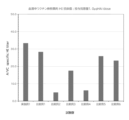
- FIG. 1 is a graph showing the vaccine strain-specific HI antibody titer in serum when an antigen amount of 0.1 ⁇ g HA/dose was administered in Test Example 8.
- FIG. 2 is a graph showing vaccine strain-specific IgA antibody titers in nasal washes when an antigen amount of 0.1 ⁇ g HA/dose was administered in Test Example 8.
- FIG. 3 is a graph showing the vaccine strain-specific HI antibody titer in serum when an antigen amount of 1.0 ⁇ g HA/dose was administered in Test Example 8.
- FIG. 4 is a graph showing vaccine strain-specific IgA antibody titers in nasal washes when an antigen dose of 1.0 ⁇ g HA/dose was administered in Test Example 8.
- the present invention provides a composition (hereinafter, sometimes referred to as the "adjuvant composition of the present invention") containing a polymer homopolymer having acrylic acid as a constituent unit, which is useful as a vaccine adjuvant, and a cationic surfactant.
- a composition hereinafter, sometimes referred to as the "adjuvant composition of the present invention
- a polymer homopolymer having acrylic acid as a constituent unit which is useful as a vaccine adjuvant
- a cationic surfactant is e.g., listed in the Pharmaceutical Excipients Standards 2018.
- the polymer of the present invention is a high molecular weight homopolymer that has acrylic acid as a constituent unit and has a carboxyl group content of 60.0 to 62.5% by mass.
- a vaccine adjuvant refers to a substance/composition that can enhance the immune response to an antigen when used in combination with the antigen.
- the cationic surfactant is selected from the group consisting of cetylpyridinium chloride, benzalkonium chloride, benzethonium chloride, and any combination thereof.
- the cetylpyridinium chloride, benzalkonium chloride, and benzethonium chloride that may be used in the adjuvant composition of the present invention may each be in the form of a hydrate (e.g., cetylpyridinium chloride hydrate).
- the cationic surfactant is cetylpyridinium chloride.
- the dose of the cationic surfactant per administration may vary depending on the formulation, administration route, method of use, antigen used in combination, subject to administration, etc., but is, for example, 1 ⁇ g to 10.0 mg, preferably 1.0 ⁇ g to 1.0 mg, and more preferably 10 ⁇ g to 0.5 mg.
- the dosage of the cationic surfactant per administration in the case of injection (eg, intradermally, subcutaneously, intraperitoneally), is 1 ⁇ g to 10 mg, preferably 10 ⁇ g to 0.5 mg.
- the dosage of the cationic surfactant per administration is 1 ⁇ g to 2 mg, preferably 1 ⁇ g to 0.5 mg.
- the amount of the cationic surfactant contained in the adjuvant composition of the present invention may vary depending on the formulation, administration route, method of use, antigen used in combination, subject of administration, etc., but is, for example, 0.0001 to 1.0 mass%, preferably 0.001 to 0.50 mass%, more preferably 0.01 to 0.10 mass%, relative to the total mass of the adjuvant composition of the present invention. In one embodiment, the amount of the cationic surfactant contained in the adjuvant composition of the present invention is 0.01 to 0.05 mass%, relative to the total mass of the adjuvant composition of the present invention.
- the adjuvant composition of the present invention may contain one or more cationic surfactants. When the adjuvant composition of the present invention contains two or more cationic surfactants, the amount of the cationic surfactant contained in the adjuvant composition of the present invention means the total content of the two or more cationic surfactants.
- the polymer of the present invention is polyacrylic acid, which is a homopolymer whose main constituent unit is acrylic acid.
- Polyacrylic acid may be in the form of a salt, for example, a salt with sodium, potassium, or ammonium ion, L-arginine, or the like, and all or part of the carboxyl groups in the acrylic acid may form a salt.
- the term "polyacrylic acid” includes salt forms.
- the carboxyl group content refers to the proportion (mass%) of carboxyl groups contained in the polymer relative to the total amount of the polymer.
- the carboxyl group content means the carboxyl group content determined by regarding the polymer of the present invention as a free form. It may be described as "the carboxyl group content as polyacrylic acid", but this also means the carboxyl group content determined by regarding the polyacrylic acid in the form of a salt as a free form.
- the method for quantifying the carboxyl group content is not particularly limited, but for example, the method for quantifying carboxyvinyl polymers listed in the Pharmaceutical Excipients Standards (2016) may be used.
- the polymer of the present invention may be a crosslinked polymer having a higher molecular weight due to a crosslinking agent, or a non-crosslinked polymer having no crosslinked structure.
- a crosslinked polymer having a higher molecular weight due to a crosslinking agent or a non-crosslinked polymer having no crosslinked structure.
- the polymer when no distinction is made between crosslinked and non-crosslinked, the polymer includes both crosslinked and non-crosslinked types, unless the context indicates the contrary.
- the polymer of the present invention is a non-crosslinked polyacrylic acid having no crosslinked structures.
- the carboxyl group content is theoretically at a maximum of 62.5% by mass. As the branched structure portion increases, the carboxyl group content decreases.
- the carboxyl group content of the non-crosslinked polyacrylic acid is 62.0 to 62.5% by weight. In one embodiment, the carboxyl group content of the non-crosslinked polyacrylic acid is 62.5% by weight.
- the polymer of the present invention is a crosslinked polyacrylic acid.
- crosslinking agents for forming crosslinked polymers include, but are not limited to, polyalkenyl ethers such as allyl pentaerythritol, allyl sucrose, and allyl propylene, and divinyl compounds such as divinyl glycol.
- the cross-linking agent for forming a cross-linked polymer is at least one selected from the group consisting of allylpentaerythritol and allylsucrose.
- the crosslinking agent for the crosslinked polymer is allylpentaerythritol.
- crosslinked polyacrylic acid the carboxyl group content decreases as a three-dimensional structure is formed by, for example, a crosslinking agent.
- the carboxyl group content of the crosslinked polyacrylic acid is 60.0 to 62.0% by mass.
- the polymer of the present invention is a crosslinked polyacrylic acid having a carboxyl group content of 60.0 to 61.0% by mass.
- crosslinked polyacrylic acid having a carboxyl group content of 60.0 to 61.0% by mass may be referred to as highly crosslinked polyacrylic acid.
- the polymer of the present invention is a crosslinked polyacrylic acid having a carboxyl group content of more than 61.0% by mass and not more than 62.0% by mass.
- a crosslinked polyacrylic acid having a carboxyl group content of more than 61.0% by mass and not more than 62.0% by mass may be referred to as a low crosslinked polyacrylic acid.
- the polymer of the present invention is a polyacrylic acid having a range of molecular sizes.
- the molecular size of the non-crosslinked polyacrylic acid is specified by the weight average molecular weight (Mw).
- Mw weight average molecular weight
- the weight average molecular weight of the non-crosslinked polymer can be measured by commonly used methods. For example, it can be determined by suitable physical measurements of very dilute solutions. Commonly used methods include gel permeation chromatography (GPC) and intrinsic viscosity. Light scattering, ultracentrifugation, and osmometry can also be used. When the value of the weight average molecular weight differs depending on the measurement method, it is preferable to use the value measured by gel permeation chromatography (GPC).
- the mass average molecular weight is preferably 50,000 to 300,000, and more preferably 100,000 to 200,000.
- the polymer of the present invention is a non-crosslinked polyacrylic acid and/or a salt thereof, from the viewpoint of a more excellent immune induction improving ability, the carboxyl group content is 62.5% by mass and the mass average molecular weight is 100,000 to 200,000.
- the above methods for measuring weight average molecular weight generally require solubility of the polymer and therefore cannot generally be used to determine the molecular weight of insoluble crosslinked polyacrylic acid.
- the molecular size of the crosslinked polyacrylic acid is defined by its polymer particle diameter.
- the measurement result of the polymer particle diameter is defined by the mode diameter based on the number standard measured by a laser diffraction type particle size distribution measuring device. Unless otherwise specified, the "mode diameter" in this disclosure means the "mode diameter based on the number standard measured by a laser diffraction type particle size distribution measuring device".
- the polymer particle size is measured using a number-based particle size distribution that can be measured using a laser diffraction particle size distribution analyzer, and it is preferable that the result is not significantly different from the volume-based particle size distribution. If the mode diameter of the polymer particles is within a predetermined range using at least one device, the mode diameter of the polymer particles can be considered to be within the predetermined range. In addition, when it is confirmed that a value equivalent to the mode diameter based on the number standard measured by the laser diffraction particle size distribution measurement device is measured, the measurement value of the dynamic light scattering particle size distribution measurement device may be the mode diameter based on the number standard measured by the laser diffraction particle size distribution measurement device.
- the mode diameter may be determined by checking the state of the polymer particles with a phase contrast microscope, Opt-SEM (Optical Shadow Effect Mode Microscope), etc.
- the polymer particle size may be measured using a laser diffraction particle size analyzer (eg, Shimadzu SALD-2300 or Shimadzu SALD-7000, or equivalent) according to the method described in the Test Examples of the present application.
- the particle size (mode diameter) of the polymer particles may be adjusted by applying an external mechanical shear force to the polymer of the present invention (or a mixture containing the same).
- the mode diameter of the polymer particles can be appropriately adjusted by applying an external shear force (mechanical shear force) to a commercially available acrylic acid-based polymer.
- the operation of applying the shear force is performed by a method known to those skilled in the art.
- the device that applies the mechanical shear force can be a high-speed rotating emulsifier, a colloid mill type emulsifier, a high-pressure emulsifier, a roll mill type emulsifier, an ultrasonic emulsifier, or a membrane type emulsifier.
- high-speed rotating emulsifiers of the homomixer type, comb type, and intermittent jet flow generating type are preferred.
- a high-speed rotating emulsifier of the intermittent jet flow generating type is particularly preferred.
- the number-based mode diameter of the polymer particles is adjusted to a predetermined range (e.g., 0.05 to 10 ⁇ m, preferably 0.1 to 2.0 ⁇ m, 0.2 to 2.0 ⁇ m, 0.2 to 1.0 ⁇ m, 0.5 to 1.0 ⁇ m, 0.7 to 1.0 ⁇ m) by applying a mechanical shear force” means that the number-based mode diameter of the polymer particles is adjusted to be within a predetermined range by applying a mechanical shear force to a mixture containing the polymer.
- a predetermined range e.g., 0.05 to 10 ⁇ m, preferably 0.1 to 2.0 ⁇ m, 0.2 to 2.0 ⁇ m, 0.2 to 1.0 ⁇ m, 0.5 to 1.0 ⁇ m, 0.7 to 1.0 ⁇ m
- the particle size of the polymer particles can be adjusted by mixing the polymer with water (e.g., 50% by mass or more, 70% by mass or more, 90% by mass or more of the water contained in the adjuvant composition of the present invention) and applying mechanical shear force to the resulting mixture.
- the mixture may contain optional components such as a neutralizing agent, but preferably does not contain any substance that may significantly affect the measured particle size (e.g., surfactant, polyhydric alcohol, insoluble/slightly soluble substance).
- the adjuvant composition of the present invention can be prepared by mixing the mixture containing the polymer particles with the remaining components such as a cationic surfactant after adjusting the particle size of the polymer particles.
- the present invention provides a method for producing an adjuvant composition, comprising the step of applying an external mechanical shear force to a polymer of the present invention (or a mixture containing the polymer). Further, there is also provided a method for producing a vaccine composition of the present invention, described below, using this production method.
- the particle size of the polymer particles can be measured by appropriately mixing the polymer with other components (neutralizing agent, water, etc.) that can be contained in the adjuvant composition of the present invention described below. It is preferable that the other components do not contain substances that can significantly affect the measured particle size (e.g., surfactants, polyhydric alcohols, insoluble/slightly soluble substances), and it is preferable that the other components become a homogeneous solution state when mixed. For example, it may be measured in the following manner. In cases where the measured particle size may vary depending on the polymer concentration, it is desirable that the polymer concentration in the sample for which the particle size is measured is close to the polymer concentration in the adjuvant composition of the present invention.
- other components e.g., surfactants, polyhydric alcohols, insoluble/slightly soluble substances
- the adjuvant composition of the present invention contains water, it is preferable to add at least the water (e.g., 50% by mass or more, 70% by mass or more, 90% by mass or more, or the entire amount of the water contained in the adjuvant composition of the present invention) to obtain the particle size (mode diameter) of the polymer particles measured.
- a pH adjuster neutralizing agent
- these pH adjusters e.g., to a predetermined final pH of the adjuvant composition, e.g., pH 6 to 8 to measure the particle size (mode diameter) of the polymer particles.
- sodium chloride it is preferable to add sodium chloride (e.g., the entire amount) to measure the particle size (mode diameter) of the polymer particles.
- the modal diameter of the crosslinked polyacrylic acid particles is 0.05 to 50 ⁇ m (preferably 0.05 to 10 ⁇ m, 0.1 to 2.0 ⁇ m, 0.2 to 2.0 ⁇ m, 0.2 to 1.0 ⁇ m, 0.5 to 1.0 ⁇ m, or 0.7 to 1.0 ⁇ m).
- the polymer of the present invention is a crosslinked polyacrylic acid that is not subjected to mechanical shear force.
- the polymer of the present invention is a cross-linked polyacrylic acid to which no mechanical shear force has been applied, and the mode diameter of the polymer particles is 0.1 to 50 ⁇ m.
- the polymer of the present invention is a cross-linked polyacrylic acid to which no mechanical shear force has been applied, and the mode diameter of the polymer particles is 1 to 15 ⁇ m.
- the polymer of the present invention is a cross-linked polyacrylic acid to which mechanical shear force has been applied.
- the polymer of the present invention is a cross-linked polyacrylic acid to which a mechanical shear force is applied, and the mode diameter of the polymer particles is 0.05 to 10 ⁇ m (e.g., 0.1 to 2.0 ⁇ m, 0.2 to 2.0 ⁇ m, 0.2 to 1.0 ⁇ m, 0.5 to 1.0 ⁇ m, 0.7 to 1.0 ⁇ m).
- the polymer of the present invention is a crosslinked polymer, and is treated in a mixture containing other components (e.g., water, etc.) by applying an external shear force (mechanical shear force) so that the mode diameter of the polymer particles in the mixture falls within the range of 0.05 to 10 ⁇ m (e.g., 0.1 to 2 ⁇ m, 0.2 to 2.0 ⁇ m, 0.2 to 1.0 ⁇ m, 0.5 to 1.0 ⁇ m, 0.7 to 1.0 ⁇ m).
- an external shear force mechanical shear force
- the polymer of the present invention is a highly crosslinked polyacrylic acid having a carboxyl group content of 60.0 to 61.0% by mass, and is treated by applying mechanical shear force in a mixture containing other components (preferably water or an aqueous sodium chloride solution) so that the mode diameter of the polymer particles in the mixture falls within the range of 0.05 to 10 ⁇ m (e.g., 0.1 to 2.0 ⁇ m, 0.2 to 2.0 ⁇ m, 0.2 to 1.0 ⁇ m, 0.5 to 1.0 ⁇ m, 0.7 to 1.0 ⁇ m).
- a mixture containing other components preferably water or an aqueous sodium chloride solution
- the polymer of the present invention is a low-crosslinked polyacrylic acid having a carboxyl group content of more than 61.0% by mass and not more than 62.0% by mass, and is treated in a mixture containing other components (e.g., water) by applying an external shear force (mechanical shear force) so that the mode diameter of the polymer particles in the mixture falls within the range of 0.05 to 10 ⁇ m (e.g., 0.05 to 1 ⁇ m, 0.05 to 0.1 ⁇ m).
- an external shear force mechanical shear force
- the dosage of the polymer of the present invention is not particularly limited as long as it is an amount that improves the immune response to the antigen when used in combination with the cationic surfactant, and may vary depending on the antigen, the formulation of the composition containing the polymer of the present invention, the administration route, the recipient, etc.
- the dosage of the polymer of the present invention per administration is 1 ⁇ g to 1000 mg, preferably 10 ⁇ g to 100 mg per administration, and more preferably 100 ⁇ g to 10 mg per administration.
- the dosage of the polymer is 1 ⁇ g to 100 mg per administration.
- the polymer of the present invention is administered by injection (e.g., intradermally, subcutaneously, or intraperitoneally) at a dose of 1 ⁇ g to 10 mg, preferably 1 ⁇ g to 1 mg per injection.
- the polymer of the present invention is administered mucosally (e.g., intranasally) at a dose of 1 ⁇ g to 100 mg, preferably 10 ⁇ g to 100 mg, and more preferably 100 ⁇ g to 10 mg per administration.
- the adjuvant composition of the present invention may further contain other components such as water.
- the adjuvant composition of the present invention is used as an additive/base for a pharmaceutical composition containing other components (e.g., an antigen, etc.).
- the adjuvant composition of the present invention is a vaccine adjuvant formulation that does not contain an antigen.
- the administration route of the adjuvant composition of the present invention is not particularly limited as long as it exerts the effect of enhancing the immune response to the antigen.
- oral administration parenteral administration (injection, transmucosal (e.g., nasal), etc.) are included.
- the adjuvant composition of the present invention can be administered separately, for example, without being mixed with the antigen.
- the administration route of the adjuvant composition of the present invention may be the same as or different from that of the antigen.
- the adjuvant composition of the present invention can be, for example, mixed with the antigen when used and administered.
- the adjuvant composition of the present invention is mixed with the antigen and administered.
- the adjuvant composition of the present invention is usually administered simultaneously with the antigen, but may be administered before or after antigen administration.
- the adjuvant composition of the present invention is administered simultaneously with the antigen, it is sufficient to administer it substantially simultaneously with the antigen.
- the adjuvant composition of the present invention and the antigen may be administered completely simultaneously to the subject, or may be administered continuously within a certain time (preferably within a few minutes).
- the use/administration of the adjuvant composition of the present invention "in combination with” an antigen includes the use/administration of the adjuvant composition of the present invention mixed with an antigen, and further includes the use/administration of the adjuvant composition of the present invention without being mixed with an antigen.
- the amount of the polymer of the present invention contained in the adjuvant composition of the present invention may vary depending on the formulation, method of use, administration route, antigen used in combination, administration subject, etc., but is, for example, 0.01 to 50 mass%, preferably 0.01 to 10 mass%, and more preferably 0.1 to 5 mass%, relative to the total mass of the adjuvant composition of the present invention. In one embodiment, the amount of the polymer of the present invention contained in the adjuvant composition of the present invention is 0.5 to 2% by weight, based on the total weight of the adjuvant composition of the present invention.
- the adjuvant composition of the present invention may contain one or more kinds of the polymer of the present invention.
- the amount of the polymer of the present invention contained in the adjuvant composition of the present invention means the total content of the two or more kinds of the polymer of the present invention.
- the adjuvant composition of the present invention can be produced by mixing the polymer of the present invention, the cationic surfactant, and other appropriate components, and by a method generally used for producing pharmaceutical compositions or additives for pharmaceutical compositions.
- the mode diameter of the polymer particles may be appropriately adjusted to a preferred range by applying an external shear force (mechanical shear force) during the production process of the adjuvant composition of the present invention.
- the invention provides a method for producing the adjuvant composition of the invention, comprising the step of subjecting the polymer of the invention (or a mixture containing same) to an external mechanical shear force.
- the mode diameter of the polymer particles is measured at a concentration equivalent to that of the polymer mixed with at least 50% by weight (e.g., at least 70% by weight, at least 80% by weight, at least 90% by weight, or the total amount) of water that may be contained in the adjuvant composition of the present invention.
- the sample may also contain a buffer solution such as phosphate buffered saline, provided that the buffer solution does not affect the mode diameter of the polymer particles.
- the mode diameter of the polymer particles is measured at a concentration equivalent to that when the polymer is mixed with at least 50% by weight (e.g., at least 70% by weight, at least 80% by weight, at least 90% by weight, or the total amount) of the water contained in the adjuvant composition of the present invention, and after the pH of the adjuvant composition of the present invention has been adjusted as necessary (with a pH adjuster (neutralizer) as necessary).
- the sample may also contain a mixture further containing a buffer solution such as phosphate buffered saline, provided that it does not affect the mode diameter of the polymer particles.
- the pH of the adjuvant composition of the present invention is not particularly limited, and can be adjusted as appropriate depending on, for example, the formulation, the method of use, the administration route, the antigen used in combination, etc.
- an appropriate acidic substance [phosphoric acid, citric acid, hydrochloric acid, etc.] or a basic substance [sodium hydroxide, potassium hydroxide, basic amino acids such as lysine and arginine, etc.] can be used.
- Various buffer solutions adjusted to be acidic or basic may also be used.
- the pH of the adjuvant composition of the present invention is 6 to 8 (preferably 6.5 to 7.5).
- the adjuvant composition of the invention comprises water. In one embodiment, the adjuvant composition of the invention comprises at least 50% by weight (eg at least 70% by weight, at least 80% by weight, at least 90% by weight) of water, based on the total weight of the adjuvant composition of the invention.
- the adjuvant composition of the present invention includes sodium hydroxide and/or L-arginine. In one embodiment, the adjuvant composition of the present invention is adjusted to pH 6-8 (preferably 6.5-7.5) with sodium hydroxide and/or L-arginine. In one embodiment, the adjuvant composition of the present invention is neutralized with sodium hydroxide and/or L-arginine. In one embodiment, the adjuvant composition of the present invention includes L-arginine.
- the order of adjusting the pH and applying the mechanical shearing force is not particularly limited. In one embodiment, the mechanical shearing force is applied after adjusting the pH to pH 6-8 (preferably 6.5-7.5). At this time, the pH may be adjusted again after adding the remaining components. In one embodiment, the mechanical shearing force is applied before adjusting the pH to pH 6-8 (preferably 6.5-7.5). In one embodiment, the mode diameter of the polymer particles is measured after adjusting the pH.
- the adjuvant composition of the invention comprises sodium chloride. In one embodiment, the adjuvant composition of the present invention comprises 0.1 to 1.5% by weight (eg 0.2 to 1.0%) of sodium chloride relative to the total weight of the adjuvant composition of the present invention.
- the adjuvant composition of the present invention contains the polymer of the present invention (preferably a crosslinked polyacrylic acid and/or a salt thereof having a carboxyl group content of 60.0 to 62.0% by mass, preferably 60.0 to 61.0% by mass, as polyacrylic acid), a cationic surfactant, and water, and optionally contains at least one additive selected from the group consisting of sodium chloride, sodium hydroxide, and L-arginine, and the polymer and the water (e.g., the adjuvant composition of the present invention) are The number-based (mode diameter) of the polymer particles is adjusted to 0.1 to 2.0 ⁇ m, preferably 0.2 to 2.0 ⁇ m, more preferably 0.2 to 1.0 ⁇ m, even more preferably 0.5 to 1.0 ⁇ m, and also preferably 0.7 to 1.0 ⁇ m, by applying a mechanical shear force to a mixture of the polymer particles (50% by mass or more, 70% by mass or more, 90% by mass or more of water contained in the vaccine
- the number-based mode diameter of the polymer particles means the number-based mode diameter of the polymer particles when the mixture or the mixture diluted with a diluent (e.g., water, buffer solution) that does not significantly affect the measured particle diameter is measured as a specimen.
- a diluent e.g., water, buffer solution
- sodium hydroxide and L-arginine may be added as pH adjusters (neutralizers) before the measurement of the mode diameter in order to adjust the pH of the mixture to 6 to 8 (preferably 6.5 to 7.5).
- the mixture contains the entire amount of the polymer.
- the mixture preferably contains the entire amount of the water contained in the adjuvant composition of the present invention, but when the water is used as a solvent for other components such as a surfactant, the water contained in the mixture does not have to be the entire amount of water in the adjuvant composition of the present invention.
- the adjuvant composition of the present invention can be prepared by mixing the mixture to which mechanical shear force has been applied in order to adjust the mode diameter based on the number of particles of the polymer with the remaining components, and adjusting the pH as necessary.
- the adjuvant composition of the present invention contains at least 50% by mass (e.g., at least 70% by mass, at least 80% by mass, at least 90% by mass) of water based on the total mass of the adjuvant composition of the present invention.
- the adjuvant composition of the present invention may further contain at least one additive selected from the group consisting of nonionic surfactants and polyhydric alcohols.
- the adjuvant composition of the invention comprises a polymer of the invention, a cationic surfactant, and water, Optionally containing at least one additive selected from the group consisting of sodium chloride, sodium hydroxide, and L-arginine; Optionally, it contains at least one additive selected from the group consisting of nonionic surfactants and polyhydric alcohols.
- the viscosity of the adjuvant composition of the present invention is not particularly limited, and can be adjusted as appropriate depending on, for example, the formulation, the method of use, the route of administration, etc.
- the method of adjusting the viscosity is not particularly limited, and can be a commonly used method such as adding a viscosity regulator or applying external shear.
- the viscosity of the adjuvant composition of the present invention is, for example, 5 to 5000 mPa ⁇ s, preferably 5 to 1000 mPa ⁇ s, and more preferably 5 to 500 mPa ⁇ s.
- the present invention provides a vaccine composition (hereinafter, sometimes referred to as the "vaccine composition of the present invention") comprising (i) the adjuvant composition of the present invention and (ii) an antigen.
- the present invention provides a vaccine composition (hereinafter, sometimes referred to as the "vaccine composition of the present invention") that contains (i)-1 the polymer of the present invention, (i)-2 a cationic surfactant, and (ii) an antigen.
- a vaccine composition hereinafter, sometimes referred to as the "vaccine composition of the present invention” that contains (i)-1 the polymer of the present invention, (i)-2 a cationic surfactant, and (ii) an antigen.
- the amount of the adjuvant composition of the present invention contained in the vaccine composition of the present invention is not particularly limited as long as it is an effective amount as a vaccine adjuvant, and can be appropriately selected depending on the formulation, antigen, administration subject, etc. For example, it is 10 to 90% by mass, preferably 20 to 70% by mass, and more preferably 30 to 60% by mass, based on the total mass of the vaccine composition of the present invention.
- an effective amount as a vaccine adjuvant means an amount that enhances the immune response to an antigen, for example, an amount of the adjuvant composition of the present invention that is found to improve the immune response to an antigen compared to a vaccine composition that does not contain the adjuvant composition of the present invention (or does not contain both the polymer of the present invention and the cationic surfactant).
- the amount of the cationic surfactant contained in the vaccine composition of the present invention is, for example, 0.0001 to 1.0 mass%, preferably 0.001 to 0.5 mass%, and more preferably 0.01 to 0.1 mass%, relative to the total mass of the vaccine composition of the present invention. In one embodiment, the amount of the cationic surfactant contained in the vaccine composition of the present invention is 0.005 to 0.025% by mass, based on the total mass of the vaccine composition of the present invention.
- the vaccine composition of the present invention may contain one or more cationic surfactants. When the vaccine composition of the present invention contains two or more cationic surfactants, the amount of the cationic surfactant contained in the vaccine composition of the present invention means the total content of the two or more cationic surfactants.
- the amount of the polymer of the present invention contained in the vaccine composition of the present invention is, for example, 0.01 to 50 mass%, 0.001 to 10 mass%, and more preferably 0.01 to 2.5 mass%, relative to the total mass of the vaccine composition of the present invention.
- the amount of the polymer of the present invention contained in the vaccine composition of the present invention may be 0.05 to 5 mass%, and more preferably 0.1% to 2.5 mass%, relative to the total mass of the vaccine composition of the present invention.
- the amount of the polymer of the present invention contained in the vaccine composition of the present invention is 0.25 to 1% by weight, based on the total weight of the vaccine composition of the present invention.
- the amount of antigen contained in the vaccine composition of the present invention is not particularly limited and can be appropriately selected depending on the formulation, administration route, method of use, type of antigen, administration subject, etc. For example, it is 0.0001 to 10.0 mass%, 0.01 to 10.0 mass%, and more preferably 0.05 to 5.0 mass% relative to the total mass of the vaccine composition of the present invention.
- the amount of antigen administered is not particularly limited as long as it is an amount sufficient to induce an immune response (e.g., produce antigen-specific antibodies [IgA, IgG, etc.]) by combined use of the polymer of the present invention and the cationic surfactant, and may vary depending on the type of antigen, the target disease, the administration route, the recipient, etc.
- the amount of antigen administered per administration is 0.1 ⁇ g to 10 mg, preferably 1 ⁇ g to 5 mg per administration, and more preferably 1 ⁇ g to 1 mg per administration.
- the vaccine composition of the present invention may contain one or more types of the polymer of the present invention.
- the amount of the polymer of the present invention contained in the vaccine composition of the present invention means the total content of the two or more types of the polymer of the present invention.
- the vaccine composition of the present invention may contain one or more antigens.
- the amount of antigen contained in the vaccine composition of the present invention means the total content of the two or more antigens.
- the method for producing the vaccine composition of the present invention is not particularly limited, and the composition may be produced by a method commonly used for producing vaccine compositions.
- the vaccine composition of the present invention may be prepared by dissolving or suspending an antigen in an appropriate buffer solution such as physiological saline or phosphate-buffered saline, and gently mixing the resulting mixture with the polymer of the present invention and the cationic surfactant/adjuvant composition of the present invention, and any optional components until homogeneous.
- the pH of the vaccine composition of the present invention is not particularly limited and can be adjusted appropriately depending on, for example, the formulation, the method of use, the administration route, the antigen, etc.
- an appropriate acidic substance phosphoric acid, citric acid, hydrochloric acid, etc.
- a basic substance sodium hydroxide, potassium hydroxide, basic amino acids such as lysine and arginine, etc.
- Various buffer solutions adjusted to be acidic or basic may also be used.
- the pH of the vaccine composition of the present invention is 6 to 8 (preferably 6.5 to 7.5).
- the vaccine composition of the present invention comprises sodium hydroxide and/or L-arginine. In one embodiment, the vaccine composition of the present invention is neutralized with sodium hydroxide and/or L-arginine.
- the vaccine composition of the invention comprises sodium chloride. In one embodiment, the vaccine composition of the invention comprises 0.05 to 1.5% by weight (eg 0.1 to 1.0% by weight) of sodium chloride relative to the total weight of the vaccine composition of the invention.
- the viscosity of the vaccine composition of the present invention is not particularly limited, and can be adjusted as appropriate depending on, for example, the formulation, the method of use, the route of administration, etc.
- the method of adjusting the viscosity is not particularly limited, and can be a commonly used method such as adding a viscosity regulator or applying external shear.
- the viscosity of the vaccine composition of the present invention is, for example, 5 to 5000 mPa ⁇ s, preferably 5 to 1000 mPa ⁇ s, and more preferably 5 to 500 mPa ⁇ s.
- viscosity can be measured by a commonly used method.
- a preferred method is to use a rotational viscometer.
- the administration route of the vaccine composition of the present invention is not particularly limited, and may be oral or parenteral (e.g., injection or mucosal administration).
- mucosa include the mucosa of the nasal cavity, oral cavity, pharynx, trachea, lungs, and intestinal tract.
- the vaccine composition of the present invention may be administered, for example, by intradermal, subcutaneous, intramuscular, intraperitoneal, etc. injection; oral application, dripping, or spray spray; nasal dripping or spray spray; aerosol or dry powder inhalation to the lungs.
- the vaccine composition of the present invention is, for example, a nasal administration formulation, and the target site is, for example, the nasal mucosa or nasopharynx.
- the vaccine composition of the present invention may be a formulation that is administered without dilution, or a formulation that is appropriately diluted before use.
- the adjuvant composition of the present invention/vaccine composition of the present invention may contain active agents, diluents, bactericides, preservatives, surfactants, stabilizers, etc. that can be used in combination.
- the adjuvant composition of the present invention/the vaccine composition of the present invention may contain at least one additive selected from the group consisting of nonionic surfactants and polyhydric alcohols, from the viewpoint of achieving a more excellent ability to improve immunity induction.
- the additive when the number-based mode diameter of the polymer particles is adjusted by applying a mechanical shear force, the additive is preferably added after the application of the mechanical shear force, since the additive may affect the mode diameter.
- nonionic surfactants include ether-type nonionic surfactants and ester-ether-type nonionic surfactants, and more specific examples include polysorbates and polyoxyethylene hydrogenated castor oils, and a preferred example is polysorbate 80 (also known as polyoxyethylene sorbitan oleate).
- examples of the content of the nonionic surfactant include 0.01 to 1 mass %, and 0.1 to 0.7 mass %, based on the total mass of the adjuvant composition of the present invention/vaccine composition of the present invention.
- An example of the dosage of the nonionic surfactant per administration is 10 ⁇ g to 100 mg, preferably 100 ⁇ g to 10 mg.
- polyhydric alcohols examples include polyethylene glycols (eg, Macrogol 400, Macrogol 4000, Macrogol 20000), glycerin, propylene glycol, and 1,3-butylene glycol.
- examples of the content of the polyhydric alcohol include 0.001 to 20 mass%, 0.001 to 10 mass%, 0.1 to 10 mass%, 0.1 to 5 mass%, and 1 to 3 mass%, relative to the total mass of the adjuvant composition of the present invention/vaccine composition of the present invention.
- the dosage of the polyhydric alcohol per administration is, for example, 10 ⁇ g to 100 mg, preferably 100 ⁇ g to 10 mg.
- the adjuvant composition of the present invention contains a polymer that is a crosslinked polyacrylic acid and/or a salt thereof, the carboxyl group content of which is 60.0-61.0% by mass, and the number-based mode diameter of the particles of the polymer is adjusted to 0.05-10 ⁇ m (e.g., 0.1-2.0 ⁇ m, 0.2-2.0 ⁇ m, 0.2-1.0 ⁇ m, 0.5-1.0 ⁇ m, 0.7-1.0 ⁇ m) by applying a mechanical shear force. A nonionic surfactant may then be added as desired.
- a polymer that is a crosslinked polyacrylic acid and/or a salt thereof the carboxyl group content of which is 60.0-61.0% by mass
- the number-based mode diameter of the particles of the polymer is adjusted to 0.05-10 ⁇ m (e.g., 0.1-2.0 ⁇ m, 0.2-2.0 ⁇ m, 0.2-1.0 ⁇ m, 0.5-1.0 ⁇ m, 0.7-1.0 ⁇ m) by applying
- the adjuvant composition of the present invention comprises a polymer that is a crosslinked polyacrylic acid and/or a salt thereof, the polymer having a carboxyl group content of 60.0 to 61.0% by mass as polyacrylic acid; a cationic surfactant; and water,
- the number-based mode diameter of the polymer particles in the presence of the entire amount of water is adjusted to 0.1 to 2.0 ⁇ m, 0.2 to 2.0 ⁇ m, 0.2 to 1.0 ⁇ m, 0.5 to 1.0 ⁇ m, or 0.7 to 1.0 ⁇ m.
- the adjuvant composition of the present invention can be prepared by adding a component that can affect the particle size of the polymer, such as a cationic surfactant and, optionally, a nonionic surfactant, to the mixture to which a mechanical shearing force has been applied.
- a component that can affect the particle size of the polymer such as a cationic surfactant and, optionally, a nonionic surfactant
- the adjuvant composition of the present invention comprises a polymer which is a crosslinked polyacrylic acid and/or a salt thereof, the polymer having a carboxyl group content of 60.0 to 61.0% by mass as polyacrylic acid; a cationic surfactant; water; and a pH adjuster (e.g., sodium hydroxide, L-arginine);
- the high molecular weight polymer and water (for example, 50% by mass or more, 70% by mass or more, 90% by mass or more, or the total amount of water contained in the adjuvant composition of the present invention) are mixed, the pH is adjusted to 6 to 8 (preferably 6.5 to 7.5) with a pH adjuster, and then mechanical shearing force is applied to adjust the number-based mode diameter of the high molecular weight polymer particles to 0.1 to 2.0 ⁇ m, 0.2 to 2.0 ⁇ m, 0.2 to 1.0 ⁇ m, 0.5 to 1.0 ⁇ m, or 0.7 to 1.0 ⁇ m.
- a pH adjuster e.g
- the adjuvant composition of the present invention can be prepared by adding a component that can affect the particle size of the polymer, such as a cationic surfactant and, optionally, a nonionic surfactant, to the mixture to which mechanical shearing force has been applied.
- a component that can affect the particle size of the polymer such as a cationic surfactant and, optionally, a nonionic surfactant
- the present invention provides a method for enhancing an immune response to an antigen, the method comprising administering to a subject in need thereof an effective amount of an adjuvant composition of the present invention.
- the present invention provides a use of the adjuvant composition of the present invention to enhance an immune response to an antigen.
- the present invention provides a method for inducing an immune response to an antigen, the method comprising administering to a subject in need thereof an effective amount of the adjuvant composition of the present invention in combination with the antigen.
- the present invention provides the use of the adjuvant composition of the present invention in inducing an immune response to an antigen.
- the present invention provides a method for preventing a disease caused by a pathogen, comprising administering to a subject in need thereof an effective amount of the adjuvant composition of the present invention in combination with a pathogen antigen.
- the present invention provides the use of the adjuvant composition of the present invention in the prevention of disease caused by a pathogen.
- the present invention provides the use of the adjuvant composition of the present invention in the manufacture of a vaccine composition of the present invention.
- inducing an immune response to an antigen includes, for example, the production of at least one type of antigen-specific antibody (IgA, IgG, etc.).
- IgA antigen-specific antibody
- enhancing the immune response to an antigen means, for example, increasing the production of at least one type of antigen-specific antibody (IgA, IgG, etc.), which can be evaluated, for example, by comparison with a vaccine composition that does not contain the polymer of the present invention and a cationic surfactant.
- IgA antigen-specific antibody
- IgG antigen-specific antibody
- the adjuvant composition of the present invention is effective in enhancing the production of antigen-specific IgG2a. Because antigen-specific IgG and IgA have distinct functions, it is preferable to enhance the production of both. In one embodiment, the adjuvant composition of the invention may be used to enhance the production of both antigen-specific IgG and IgA.
- Preventing or treating a disease caused by a pathogen may include not only preventing infection/onset of the disease, but also inhibiting onset of the disease, alleviating symptoms of the disease, and preventing recurrence of the disease.
- an "effective amount" of a vaccine composition of the present invention may refer to the amount of the vaccine composition of the present invention required to provide a benefit to a subject in inducing an immune response to an antigen/preventing disease caused by a pathogen.
- the subject is not particularly limited, and may be a human or a non-human animal, such as poultry (e.g., chickens, ducks, etc.), livestock (e.g., cows, pigs, etc.), or pets (e.g., dogs, cats).
- poultry e.g., chickens, ducks, etc.
- livestock e.g., cows, pigs, etc.
- pets e.g., dogs, cats.
- the subject is a human.
- a pathogen refers to bacteria, viruses, mycoplasma, etc. that can cause disease in a subject.
- pathogens include coronaviruses (e.g., pathogens of severe acute respiratory syndrome (SARS), such as SARS-CoV-2), influenza viruses, hepatitis B viruses, hepatitis C viruses, human immunodeficiency viruses (HIV), chickenpox viruses, measles viruses, mumps viruses, polioviruses, rotaviruses, adenoviruses, herpes viruses, human papillomaviruses, rubella viruses, Streptococcus pneumoniae, Mycobacterium tuberculosis, Bordetella pertussis, Neisseria meningitidis, Haemophilus influenzae type b, Vibrio cholerae, Corynebacterium diphtheriae, and mycoplasma.
- coronaviruses e.g., pathogens of severe acute respiratory syndrome
- the antigen is not particularly limited, and examples include pathogen-derived antigens and tumor-associated antigens.
- pathogen-derived antigens include antigens derived from the pathogens listed above.
- the pathogen-derived antigen is an enveloped virus-derived antigen.
- the pathogen-derived antigen is at least one pathogen-derived antigen selected from the group consisting of coronavirus and influenza virus.
- the pathogen-derived antigen is an antigen derived from SARS-CoV-2.
- the pathogen-derived antigen may be any pathogen-derived antigen used in conventional vaccine preparations. These include natural products purified from pathogens, and proteins, glycoproteins, peptides, polysaccharides, lipopolysaccharides, polynucleotides, or DNAs encoding antigens artificially produced by techniques such as genetic recombination.
- pathogen-derived antigens include complete virus particles (virions), incomplete virus particles, virion constituent particles, viral nonstructural proteins, proteins or glycoproteins derived from pathogens, protective antigens, and epitopes for neutralization reactions, including those that have infectious capacity (live antigens) and those that have lost infectious capacity (inactivated antigens).
- pathogen-derived antigens also include component vaccines, subunit vaccines, vector vaccines, and genetic vaccines.
- polyacrylic acid refers to free polyacrylic acid.
- Mode diameter is a result based on the number of particles.
- (2)-1 Preparation of polymer-containing compositions used in sample numbers A#03 to A#10 Polymers were placed in purified water or sodium chloride aqueous solution, neutralized with sodium hydroxide or L-arginine, and mixed until homogeneous to obtain compositions. For the polymer-containing compositions "with mechanical shearing treatment", mechanical shearing force was applied to the obtained composition using an intermittent jet flow generating high-speed stirring device to adjust the particle size of the polymer contained in the polymer-containing composition.
- (2)-2 Preparation of polymer-containing compositions used in sample numbers A#11 to A#19 A polymer was mixed with purified water until homogeneous to obtain a composition. For A#12, 0.375% by mass of L-arginine was added to the polymer composition.
- compositions containing known vaccine adjuvants used in sample numbers A#20 to A#23 A known vaccine adjuvant (Poly I:C, CpG K3, R848, or aluminum hydroxide gel) was mixed with physiological saline until homogeneous to obtain a composition.
- a known vaccine adjuvant Poly I:C, CpG K3, R848, or aluminum hydroxide gel
- the table below shows the details of the high molecular weight polymer used in the preparation of the vaccine formulation, the measurement results of the mode diameter of the polymer particles, the neutralizing agent used in the preparation of the high molecular weight polymer-containing composition, the sodium chloride concentration relative to the total amount of the high molecular weight polymer-containing composition, and whether or not mechanical shearing treatment was performed.
- (3)-1 Vaccine formulation not containing high molecular weight polymer (sample number A#01)
- the antigen stock solution and physiological saline were mixed at a 1:1 (volume ratio) to obtain a polymer-free vaccine preparation with an antigen concentration of 0.0033 HA w/v %.
- (3)-2 Vaccine preparations containing high molecular weight polymers (sample numbers A#03 to A#19)
- the antigen stock solution and the polymer-containing composition were mixed at a 1:1 (volume ratio) to obtain a polymer-containing vaccine preparation with an antigen concentration of 0.0033 w/v %.
- Vaccine formulations containing known vaccine adjuvants (sample numbers A#20 to A#23)
- the antigen stock solution and a known vaccine adjuvant-containing composition were mixed at a 1:1 (volume ratio) to obtain a high molecular weight polymer-containing vaccine preparation with an antigen concentration of 0.0033 HA w/v %.
- Antibody production induction test in mice intranasal mucosal inoculation (method) Vaccine formulations (A#01, A#03-A#23) were administered once to both nostrils of BALB/c mice (female, 6 weeks old) at 15 ⁇ L each (total 30 ⁇ L: antigen amount 1 ⁇ g HA) (3 mice per group), and alveolar lavage fluid was collected 3 weeks after inoculation, and the antibody titer of influenza HA antigen-specific IgA in the alveolar lavage fluid was measured to analyze the antibody production induction ability.
- the dosage of the polymer/known adjuvant is shown in the table below.
- the results are shown in the table below.
- the vaccine preparations A#03 to A#10 which contain a polyacrylic acid homopolymer with a carboxyl group content of 60.5% by mass, were shown to induce antibody production.
- the high molecular weight polymer-free vaccine preparation (sample number A#01) (which does not contain any known vaccine adjuvant) and the other high molecular weight polymer-containing vaccine preparations (A#11 to A#19) did not induce antibody production.
- A#05, A#06, A#09, and A#10 which are made of influenza split antigen and polyacrylic acid, an acidic polymer with a carboxyl group content of 60.5% by mass, and in which the crosslinked polymer particles have a mode diameter of 8.3 to 9.0 ⁇ m without shear stress, showed high influenza HA antigen-specific IgA production.
- A#03, A#07, and A#08 which are made of polyacrylic acid, an acidic polymer with a carboxyl group content of 60.5% by mass, and in which the crosslinked polymer particles have a mode diameter of 0.64 to 1.3 ⁇ m with shear stress, also showed high influenza HA antigen-specific IgA production.
- the table below shows the details of the polymer used in the preparation of the vaccine formulation and the measurement results of the mode diameter of the polymer particles; the neutralizing agent used in the preparation of the polymer-containing composition, the sodium chloride concentration relative to the total amount of the polymer-containing composition, and whether or not mechanical shearing treatment was performed.
- Antibody production induction test in mice intranasal mucosal inoculation (method) The vaccine formulation was administered once to both nostrils of BALB/c mice (female, 6 weeks old) at 15 ⁇ L each (total 30 ⁇ L: 3 ⁇ g antigen, 105 ⁇ g or 165 ⁇ g polymer) (3 mice per group). Three weeks after administration, serum, nasal wash, and alveolar lavage fluid were collected, and the antibody production induction ability was analyzed by measuring the antibody titers of SARS-CoV-2 S1 protein-specific IgA in nasal wash, SARS-CoV-2 S1 protein-specific IgA in alveolar lavage fluid, and SARS-CoV-2 S1 protein-specific IgG in serum.
- B#02 is a non-crosslinked type with a mass average molecular weight of 150,000; B#05 to B#11, which are cross-linked and have no mechanical shear applied, with a mode diameter of polymer particle size of 2.2 to 11.2 ⁇ m; and B#00, which is cross-linked and has a mode diameter of polymer particle size of 0.71 ⁇ m and B#12, which has a mode diameter of 0.45 ⁇ m, which are cross-linked and have mechanical shear applied, showed particularly high improvement in antibody production induction compared to administration of the antigen alone.
- Ovalbumin Ovalbumin
- PBS phosphate buffered saline
- the table below shows the details of the high molecular weight polymer used in the preparation of the vaccine formulation, the measurement results of the mode diameter of the polymer particles, the neutralizing agent used in the preparation of the high molecular weight polymer-containing composition, the sodium chloride concentration relative to the total amount of the high molecular weight polymer-containing composition, and whether or not mechanical shearing treatment was performed.
- (3)-1 Vaccine formulation not containing high molecular weight polymer (sample number C#00)
- the antigen stock solution and PBS (phosphate buffered saline) were mixed at a volume ratio of 1:1 to obtain a polymer-free vaccine preparation with an antigen concentration of 0.1 w/v %.
- (3)-2 Preparation of High Molecular Weight Polymer-Containing Vaccine Preparation The antigen stock solution and the high molecular weight polymer-containing composition were mixed at a 1:1 (volume ratio) to obtain a vaccine preparation with an antigen concentration of 0.1 w/v %.
- mice intranasal mucosal inoculation
- the vaccine formulation was administered twice at a 2-week interval to BALB/c mice (female, 7 weeks old) at 5 ⁇ L each (total 10 ⁇ L: antigen amount 10 ⁇ g) into both nostrils (10 mice per group).
- total 10 ⁇ L antigen amount 10 ⁇ g
- blood and nasal washes were collected and absorbance was measured using a microplate reader (450 nm), and the amounts of OVA-specific IgA in the nasal washes and OVA-specific IgG in the blood were calculated.
- C#00 which does not contain a polymer
- C#03 which contain an ovalbumin antigen and a cross-linked acrylic acid-based homopolymer with a carboxyl group content of 60.5% by mass, which has been subjected to mechanical shear and has a polymer particle diameter of 1.3 ⁇ m.
- Vaccine formulation not containing high molecular weight polymer (sample number IA#00)
- SARS-CoV-2 S1 protein and saline (NaCl concentration 0.9 w/v%) were mixed until homogeneous to obtain the vaccine formulation, which contained 3 ⁇ g of SARS-CoV-2 S1 protein in 200 ⁇ L of vaccine formulation.
- Vaccine preparation containing high molecular weight polymer (sample number IA#01) SARS-CoV-2 S1 protein and cross-linked polyacrylic acid homopolymer (carboxyl group content 61.5% by mass, polymer particle mode diameter 2.2 ⁇ m) were added to saline (NaCl concentration 0.9 w/v%), neutralized with sodium hydroxide, and mixed until homogeneous to obtain a vaccine formulation.
- 200 ⁇ L of the vaccine formulation contained 3 ⁇ g of SARS-CoV-2 S1 protein and 600 ⁇ g of cross-linked polyacrylic acid homopolymer.
- mice subcutaneous inoculation
- the vaccine formulation 200 ⁇ L was subcutaneously inoculated twice at two-week intervals into BALB/c mice (female, 6 weeks old) (4 mice per group). Serum was collected two weeks after the final inoculation, and the antibody production induction ability was analyzed by measuring the antibody titer of SARS-CoV-2 S1 protein-specific IgG in the serum.
- Vaccine formulation not containing high molecular weight polymer (sample number IB#00)
- the influenza split antigen [H1N1] and physiological saline (NaCl concentration 0.9 w/v%) were mixed until homogeneous to obtain a vaccine formulation.
- 200 ⁇ L of the vaccine formulation contained 1 ⁇ g of influenza split antigen HA.
- Vaccine preparations containing high molecular weight polymers (sample numbers IB#01 and IB#02)
- a crosslinked polyacrylic acid homopolymer (carboxyl group content 60.7% by mass) was added to physiological saline (NaCl concentration 0.9 w/v%), neutralized with sodium hydroxide, and mixed until homogeneous.
- the resulting mixture was subjected to mechanical shearing force using an intermittent jet flow generating high speed stirrer to adjust the particle size of the polymer contained in the polymer-containing composition.
- the mode diameter of the polymer particles contained in the polymer-containing composition after mechanical shearing treatment was 0.71 ⁇ m.
- the obtained polymer-containing composition after mechanical shearing treatment and influenza split antigen were mixed until homogeneous to obtain a vaccine formulation.
- the vaccine preparation of sample number IB#01 (200 ⁇ L) contained 1 ⁇ g of influenza split antigen HA and 60 ⁇ g of cross-linked polyacrylic acid homopolymer.
- the vaccine preparation of sample number IB#02 (200 ⁇ L) contained 1 ⁇ g of influenza split antigen HA and 600 ⁇ g of cross-linked polyacrylic acid homopolymer.
- mice subcutaneous inoculation
- the vaccine formulation 200 ⁇ L was subcutaneously inoculated twice at 2-week intervals into BALB/c mice (female, 6 weeks old) (4 mice per group). Serum was collected 2 weeks after the final inoculation, and the amount of influenza split antigen-specific antibody in the serum was measured to analyze the antibody production induction ability.
- the obtained composition was subjected to mechanical shear force using an intermittent jet flow generating high-speed mixer to adjust the particle size (mode diameter) of the polymer contained in the composition to about 0.7 to 0.9 ⁇ m.
- other additives polysorbate 80; glycerin; macrogol 4000; macrogol 4000 and polysorbate 80
- mode diameter of polymer particles The mode diameter of each polymer before mixing with the antigen (and other additives) was measured using a laser diffraction particle size analyzer (Shimadzu SALD-7000) and a dynamic light scattering particle size analyzer (UPT-UT 151).
- the non-crosslinked polyacrylic acid homopolymer As it was impossible to measure the non-crosslinked polyacrylic acid homopolymer using the laser diffraction particle size analyzer, it was measured using the dynamic light scattering particle size analyzer (UPT-UT 151).
- the polymer-containing composition to which mechanical shear force had been applied the polymer-containing composition after the mechanical shear force had been applied (for the polymer-containing composition containing other additives, before the addition of the other additives) was used as a sample to measure the mode diameter of the polymer particles using a laser diffraction particle size distribution measuring device.
- the table below shows details of the high molecular weight polymer used in the preparation of the vaccine formulation and the measurement results of the mode diameter of the polymer particles; as well as the neutralizing agent used in the preparation of the high molecular weight polymer-containing composition made using the high molecular weight polymer, the sodium chloride concentration relative to the total amount of the high molecular weight polymer-containing composition, the types and concentrations of other additives relative to the total amount of the high molecular weight polymer-containing composition, and whether or not mechanical shearing treatment was performed.
- Example numbers D#01 to D#08 The antigen stock solution and the polymer-containing composition were mixed at a 1:1 (volume ratio) to obtain a polymer-containing vaccine preparation with an antigen concentration of 0.01 HA w/v %.
- Antibody production induction test in mice intranasal mucosal inoculation (method)
- the vaccine formulations (D#01-D#08) were administered once to both nostrils of BALB/c mice (female, 6 weeks old) at 5 ⁇ L each (total 10 ⁇ L: antigen amount 1 ⁇ g) (4 mice per group), and nasal and alveolar washes were collected two weeks after administration.
- the antibody titers of influenza HA antigen-specific IgA in the nasal and alveolar washes were measured to analyze the antibody production induction ability.
- the dosage of the polymer is shown in the table below. (result)
- influenza HA antigen-specific IgA was observed to be produced in both nasal lavage fluid and alveolar lavage fluid, and it was found that the antibody production-inducing ability was dramatically increased.
- the table below shows details of the high molecular weight polymer used in the preparation of the vaccine formulation and the measurement results of the mode diameter of the polymer particles; as well as the neutralizing agent used in the preparation of the high molecular weight polymer-containing composition made using the high molecular weight polymer, the sodium chloride concentration relative to the total amount of the high molecular weight polymer-containing composition, the types and concentrations of other additives relative to the total amount of the high molecular weight polymer-containing composition, and whether or not mechanical shearing treatment was performed.
- Antibody production induction test in mice intranasal mucosal inoculation (method)
- the vaccine formulations (E#01-E#13) were administered once to both nostrils of BALB/c mice (female, 6 weeks old) at 15 ⁇ L each (total 30 ⁇ L: antigen amount 3 ⁇ g) (4 mice per group), and nasal washes and alveolar washes were collected 3 weeks after inoculation.
- the antibody titers of SARS-CoV-2 S1 protein-specific IgA in the nasal washes and SARS-CoV-2 S1 protein-specific IgA in the alveolar washes were measured to analyze the antibody production induction ability.
- the dosage of the polymer is shown in the table below. (result)
- Antibody production induction test in mice intranasal mucosal inoculation/subcutaneous inoculation (method) Each vaccine formulation was subcutaneously inoculated twice at 3-week intervals into both nostrils of BALB/c mice (female, 6 weeks old, 6 mice/group) at 7 ⁇ L (total 14 ⁇ L: antigen amount 0.1 ⁇ gHA or 1.0 ⁇ gHA) and 0.1mL (antigen amount 0.1 ⁇ gHA or 1.0 ⁇ gHA). Blood and nasal washes were collected after 3 weeks, and the antibody production induction ability was analyzed by measuring the vaccine strain-specific HI antibody titer in serum and the vaccine strain-specific IgA antibody in nasal washes. The results are shown in Figures 1 and 2.
- Example 1 (a combination of highly cross-linked polyacrylic acid homopolymer and cetylpyridinium chloride hydrate) showed a higher vaccine strain-specific HI antibody titer in serum than the subcutaneously administered vaccine of Comparative Example 1, and showed the highest increase in vaccine strain-specific IgA antibody in nasal washes compared to all comparative examples.
- Comparative Example 1 corresponds to a currently available subcutaneously administered vaccine, and although the vaccine strain-specific HI antibody titer in serum increases, there is no increase at all in the vaccine strain-specific IgA antibody in the nasal wash.
- Comparative Example 2 is a formulation containing only the antigen and not containing highly cross-linked polyacrylic acid (carboxyvinyl polymer), and the antigen alone causes almost no change in either the vaccine strain-specific HI antibody titer in serum or the vaccine strain-specific IgA in nasal washes.
- Comparative Example 3 is a formulation containing ODN2006 used as a mucosal adjuvant, but compared with Example 1, the degree of increase in the vaccine strain-specific HI antibody titer in serum and the vaccine strain-specific IgA in nasal washes was only slight.
- Comparative Examples 4, 5, and 6 are compositions to which mechanical shearing force was added (Comparative Example 6 further contains added polysorbate 80), and when compared with Comparative Examples 2 and 3, the degree of increase in vaccine strain-specific HI antibody titer in serum and vaccine strain-specific IgA in nasal washes was significantly greater; however, it was confirmed that the increase in Example 1 of the present invention was even greater.
- Comparative Example 9-3 Using Comparative Example 9-3 as a specimen, the particle size (mode diameter (number basis)) of the polymer was measured using a laser diffraction particle size distribution analyzer [Shimadzu SALD-7000].
- Other ingredients cetylpyridinium chloride hydrate; benzalkonium chloride; benzethonium chloride; polysorbate 80
- the ingredients and amounts of each polymer-containing composition are shown in the table below.
- the amounts of each component in the vaccine formulation administered (14 ⁇ L or 0.1 mL) are shown in the table below.
- the adjuvant composition of the present invention can be used in combination with an antigen to prevent or treat diseases caused by pathogens.
Landscapes
- Health & Medical Sciences (AREA)
- Life Sciences & Earth Sciences (AREA)
- Chemical & Material Sciences (AREA)
- Animal Behavior & Ethology (AREA)
- General Health & Medical Sciences (AREA)
- Veterinary Medicine (AREA)
- Immunology (AREA)
- Medicinal Chemistry (AREA)
- Public Health (AREA)
- Pharmacology & Pharmacy (AREA)
- Virology (AREA)
- Mycology (AREA)
- Chemical Kinetics & Catalysis (AREA)
- Epidemiology (AREA)
- Microbiology (AREA)
- General Chemical & Material Sciences (AREA)
- Organic Chemistry (AREA)
- Pulmonology (AREA)
- Nuclear Medicine, Radiotherapy & Molecular Imaging (AREA)
- Engineering & Computer Science (AREA)
- Bioinformatics & Cheminformatics (AREA)
- Communicable Diseases (AREA)
- Oncology (AREA)
- Medicines Containing Antibodies Or Antigens For Use As Internal Diagnostic Agents (AREA)
- Medicinal Preparation (AREA)
Priority Applications (1)
| Application Number | Priority Date | Filing Date | Title |
|---|---|---|---|
| JP2025530240A JPWO2025005260A1 (https=) | 2023-06-28 | 2024-06-28 |
Applications Claiming Priority (2)
| Application Number | Priority Date | Filing Date | Title |
|---|---|---|---|
| JP2023-105990 | 2023-06-28 | ||
| JP2023105990 | 2023-06-28 |
Publications (1)
| Publication Number | Publication Date |
|---|---|
| WO2025005260A1 true WO2025005260A1 (ja) | 2025-01-02 |
Family
ID=93939172
Family Applications (1)
| Application Number | Title | Priority Date | Filing Date |
|---|---|---|---|
| PCT/JP2024/023566 Ceased WO2025005260A1 (ja) | 2023-06-28 | 2024-06-28 | ワクチンアジュバント組成物およびその使用 |
Country Status (3)
| Country | Link |
|---|---|
| JP (1) | JPWO2025005260A1 (https=) |
| TW (1) | TW202510910A (https=) |
| WO (1) | WO2025005260A1 (https=) |
Citations (8)
| Publication number | Priority date | Publication date | Assignee | Title |
|---|---|---|---|---|
| JPH0372431A (ja) * | 1989-08-09 | 1991-03-27 | Lion Corp | 点鼻用う蝕予防ワクチン組成物 |
| JPH05132428A (ja) * | 1991-11-11 | 1993-05-28 | Lion Corp | 点鼻用歯周病予防ワクチン |
| JP2006515304A (ja) * | 2002-05-17 | 2006-05-25 | ワイス | 改良されたマイコプラズマ・ハイオニューモニエバクテリンワクチン |
| WO2012115222A1 (ja) * | 2011-02-25 | 2012-08-30 | 久光製薬株式会社 | 経皮または経粘膜投与のためのアジュバントおよびこれを含む医薬製剤 |
| JP2015028070A (ja) * | 2009-03-31 | 2015-02-12 | 国立感染症研究所長 | 経鼻投与用ワクチンを用いるインフルエンザの予防方法 |
| JP2018020962A (ja) * | 2014-12-08 | 2018-02-08 | エヌエーアイ株式会社 | 新規アジュバント |
| JP2019524873A (ja) * | 2016-06-17 | 2019-09-05 | メリアル インコーポレイテッド | 直鎖または分枝ポリアクリル酸ポリマーアジュバントを含む新規な免疫原性処方物 |
| WO2023120535A1 (ja) * | 2021-12-20 | 2023-06-29 | 東興薬品工業株式会社 | ポリアクリル酸系ポリマーを含有するワクチンアジュバント剤およびその使用 |
-
2024
- 2024-06-28 JP JP2025530240A patent/JPWO2025005260A1/ja active Pending
- 2024-06-28 TW TW113124406A patent/TW202510910A/zh unknown
- 2024-06-28 WO PCT/JP2024/023566 patent/WO2025005260A1/ja not_active Ceased
Patent Citations (8)
| Publication number | Priority date | Publication date | Assignee | Title |
|---|---|---|---|---|
| JPH0372431A (ja) * | 1989-08-09 | 1991-03-27 | Lion Corp | 点鼻用う蝕予防ワクチン組成物 |
| JPH05132428A (ja) * | 1991-11-11 | 1993-05-28 | Lion Corp | 点鼻用歯周病予防ワクチン |
| JP2006515304A (ja) * | 2002-05-17 | 2006-05-25 | ワイス | 改良されたマイコプラズマ・ハイオニューモニエバクテリンワクチン |
| JP2015028070A (ja) * | 2009-03-31 | 2015-02-12 | 国立感染症研究所長 | 経鼻投与用ワクチンを用いるインフルエンザの予防方法 |
| WO2012115222A1 (ja) * | 2011-02-25 | 2012-08-30 | 久光製薬株式会社 | 経皮または経粘膜投与のためのアジュバントおよびこれを含む医薬製剤 |
| JP2018020962A (ja) * | 2014-12-08 | 2018-02-08 | エヌエーアイ株式会社 | 新規アジュバント |
| JP2019524873A (ja) * | 2016-06-17 | 2019-09-05 | メリアル インコーポレイテッド | 直鎖または分枝ポリアクリル酸ポリマーアジュバントを含む新規な免疫原性処方物 |
| WO2023120535A1 (ja) * | 2021-12-20 | 2023-06-29 | 東興薬品工業株式会社 | ポリアクリル酸系ポリマーを含有するワクチンアジュバント剤およびその使用 |
Also Published As
| Publication number | Publication date |
|---|---|
| TW202510910A (zh) | 2025-03-16 |
| JPWO2025005260A1 (https=) | 2025-01-02 |
Similar Documents
| Publication | Publication Date | Title |
|---|---|---|
| JP2025107179A (ja) | 治療に好適なrna製剤 | |
| Westerink et al. | ProJuvant™(Pluronic F127®/chitosan) enhances the immune response to intranasally administered tetanus toxoid | |
| JP4240237B2 (ja) | ワクチン組成物 | |
| JP2003522802A (ja) | プロテオソーム・インフルエンザ・ワクチン | |
| Simón-Vázquez et al. | Polymeric nanostructure vaccines: applications and challenges | |
| US20110223198A1 (en) | dsRNAs as influenza virus vaccine adjuvants or immuno-stimulants | |
| Eng et al. | The potential of polyphosphazenes for delivery of vaccine antigens and immunotherapeutic agents | |
| WO2001017556A1 (fr) | Préparations vaccinales administrables par les muqueuses | |
| Mangal et al. | Pharmaceutical and immunological evaluation of mucoadhesive nanoparticles based delivery system (s) administered intranasally | |
| RU2570394C2 (ru) | Мукозальная вакцина | |
| US20020025326A1 (en) | Delivery vehicle composition and methods for delivering antigens and other drugs | |
| KR20240122803A (ko) | 폴리아크릴산 폴리머를 함유하는 백신 보조제 및 그의 사용 | |
| WO2025005260A1 (ja) | ワクチンアジュバント組成物およびその使用 | |
| Tian et al. | A SARS-CoV-2 mucosal nanovaccine based on assembly of maltodextrin, STING agonist and polyethyleneimine | |
| WO2020109485A1 (en) | Oral dispersible vaccine comprising virosomes | |
| CN101123982B (zh) | 脂质和一氧化二氮组合作为用于增强疫苗功效的佐剂 | |
| HK40110537A (zh) | 含有聚丙烯酸系聚合物的疫苗佐剂及其用途 | |
| JP7644514B2 (ja) | 皮下投与型ワクチン | |
| Sparks et al. | Sustained release of inactivated H1N1 virus from degradable microparticles for extended vaccination | |
| WO2025084106A1 (ja) | 経鼻投与による細胞性免疫の誘導方法 | |
| WO2022006259A1 (en) | Immunostimulatory compositions and methods | |
| AU2013206335B2 (en) | dsRNAs as influenza virus vaccine adjuvants or immuno-stimulants | |
| JPWO2001017556A1 (ja) | 粘膜適用型ワクチン製剤 | |
| WO2020115171A1 (en) | Immunogenic compositions | |
| Hagenaars et al. | Colloidal stability of N, N, N-trimethyl chitosan-whole inactivated influenza virus formulations |
Legal Events
| Date | Code | Title | Description |
|---|---|---|---|
| 121 | Ep: the epo has been informed by wipo that ep was designated in this application |
Ref document number: 24832117 Country of ref document: EP Kind code of ref document: A1 |
|
| ENP | Entry into the national phase |
Ref document number: 2025530240 Country of ref document: JP Kind code of ref document: A |
|
| WWE | Wipo information: entry into national phase |
Ref document number: 2025530240 Country of ref document: JP |
|
| NENP | Non-entry into the national phase |
Ref country code: DE |