WO2025005182A1 - 硬化性組成物、その硬化物、及び物品 - Google Patents
硬化性組成物、その硬化物、及び物品 Download PDFInfo
- Publication number
- WO2025005182A1 WO2025005182A1 PCT/JP2024/023339 JP2024023339W WO2025005182A1 WO 2025005182 A1 WO2025005182 A1 WO 2025005182A1 JP 2024023339 W JP2024023339 W JP 2024023339W WO 2025005182 A1 WO2025005182 A1 WO 2025005182A1
- Authority
- WO
- WIPO (PCT)
- Prior art keywords
- compound
- meth
- curable composition
- group
- acrylate
- Prior art date
- Legal status (The legal status is an assumption and is not a legal conclusion. Google has not performed a legal analysis and makes no representation as to the accuracy of the status listed.)
- Ceased
Links
Classifications
-
- C—CHEMISTRY; METALLURGY
- C08—ORGANIC MACROMOLECULAR COMPOUNDS; THEIR PREPARATION OR CHEMICAL WORKING-UP; COMPOSITIONS BASED THEREON
- C08F—MACROMOLECULAR COMPOUNDS OBTAINED BY REACTIONS ONLY INVOLVING CARBON-TO-CARBON UNSATURATED BONDS
- C08F290/00—Macromolecular compounds obtained by polymerising monomers on to polymers modified by introduction of aliphatic unsaturated end or side groups
- C08F290/02—Macromolecular compounds obtained by polymerising monomers on to polymers modified by introduction of aliphatic unsaturated end or side groups on to polymers modified by introduction of unsaturated end groups
- C08F290/06—Polymers provided for in subclass C08G
-
- C—CHEMISTRY; METALLURGY
- C08—ORGANIC MACROMOLECULAR COMPOUNDS; THEIR PREPARATION OR CHEMICAL WORKING-UP; COMPOSITIONS BASED THEREON
- C08G—MACROMOLECULAR COMPOUNDS OBTAINED OTHERWISE THAN BY REACTIONS ONLY INVOLVING UNSATURATED CARBON-TO-CARBON BONDS
- C08G59/00—Polycondensates containing more than one epoxy group per molecule; Macromolecules obtained by polymerising compounds containing more than one epoxy group per molecule using curing agents or catalysts which react with the epoxy groups
- C08G59/18—Macromolecules obtained by polymerising compounds containing more than one epoxy group per molecule using curing agents or catalysts which react with the epoxy groups ; e.g. general methods of curing
- C08G59/40—Macromolecules obtained by polymerising compounds containing more than one epoxy group per molecule using curing agents or catalysts which react with the epoxy groups ; e.g. general methods of curing characterised by the curing agents used
Definitions
- the present invention relates to a curable composition, a cured product thereof, and an article.
- hydrophilic layer with a certain level of water and moisture resistance on the surface of an article can provide functions such as anti-fogging, anti-fouling, anti-static, and antibacterial properties.
- the formation of such hydrophilic layers is used in a variety of fields, ranging from everyday items such as glasses, helmets, bathroom mirrors, automobile lamps, heat exchangers for air conditioners, camera lenses, and endoscopes, to building materials, transportation equipment, home appliances, precision electronic equipment, and even medical equipment.
- Known methods for forming the above-mentioned hydrophilic layer on the surface of an article include a method of thermoplastically molding a thermoplastic resin kneaded with a hydrophilizing agent, a method of subjecting the resin surface to a chemical treatment such as an alkali treatment to make it hydrophilic, a method of applying a curable composition that produces a hydrophilic cured product to the surface and curing it, and a method of forming a fine three-dimensional structure or unevenness on the surface using a method such as nanoimprinting.
- the method of applying a curable composition that produces a hydrophilic cured product to the surface and curing it is a widely used method because it allows the formation of a hydrophilic layer on the surface of various articles using relatively simple equipment.
- curable compositions that produce hydrophilic cured products are almost always designed to contain reactive compounds that form covalent crosslinks, or the reactive compounds themselves have a hydrophilic structure, or contain hydrophilic non-reactive substances or surfactants.
- hydrophilic inorganic substances inorganic oxide particles such as silica and alumina are often used.
- hydrophilic structures possessed by hydrophilic organic substances, such as sulfonate structures (e.g., Patent Document 1), polyhydric alcohol structures (e.g., Patent Document 2), betaine structures (e.g., Patent Document 3), polyethylene glycol structures (e.g., Patent Document 4), and polyacrylamide structures (e.g., Patent Document 5), and various organic low-molecular, oligomeric, and polymeric compounds having such hydrophilic structures are used.
- sulfonate structures e.g., Patent Document 1
- polyhydric alcohol structures e.g., Patent Document 2
- betaine structures e.g., Patent Document 3
- polyethylene glycol structures e.g., Patent Document 4
- polyacrylamide structures e.g., Patent Document 5
- Carboxylate structures have also been proposed and used as hydrophilic structures, and many forms have been proposed in which polymeric compounds having carboxylate structures are used as components of curable compositions, such as a form in which a carboxylate polymer is crosslinked with a crosslinking agent (e.g., Patent Document 6) or a form in which a carboxylate polymer is added as a water-absorbing substance (e.g., Patent Document 7).
- a crosslinking agent e.g., Patent Document 6
- Patent Document 7 a form in which a carboxylate polymer is added as a water-absorbing substance
- salts of (meth)acrylic acid are widely used as highly polymerizable carboxylates for various applications, but they are water-soluble and dissolve only in highly polar organic substances, and are powdery and not film-forming in a solvent-free state, making them difficult to use as a curing component of a curable composition that is applied to and cured on the surface of an article.
- Salts of 2-(meth)allyloxymethylacrylic acid have been proposed as highly polymerizable carboxylates that can solve this problem. These salts are compatible with various organic substances and have film-forming properties even in a solvent-free state, and have been shown to be applicable to a variety of applications (e.g., Patent Documents 8 to 10).
- an object of the present invention is to provide a new composition capable of giving a cured product having excellent hydrophilicity and water resistance.
- a curable composition that can provide a cured product having both good water resistance and hydrophilicity can be obtained by containing at least a specific radical polymerizable carboxylic acid amine salt compound, which is a neutralization product of a radical polymerizable carboxylic acid compound and an amine compound, and at least one of an epoxy compound or a silane coupling compound, which is a compound that undergoes a thermal addition reaction or a thermal condensation reaction with an active hydroxyl group.
- the present inventors have found that a curable composition that can provide a cured product having both good water resistance and hydrophilicity can be obtained by containing at least a polymer having a structural unit derived from a radical polymerizable carboxylic acid compound, a neutralized polymer of an amine compound, and at least one of an epoxy compound or a silane coupling compound, and have completed the present invention.
- a curable composition comprising a radically polymerizable carboxylic acid amine salt compound (A) which is a neutralization product of a radically polymerizable carboxylic acid compound (a1) and an amine compound (a2), and an epoxy compound (B) and/or a silane coupling compound (C), wherein at least one of the radically polymerizable carboxylic acid compound (a1) and the amine compound (a2) has 5 or more carbon atoms.
- a curable composition comprising a radically polymerizable carboxylic acid amine salt compound (A) which is a neutralization product of a radically polymerizable carboxylic acid compound (a1) and an amine compound (a2), and an epoxy compound (B) and/or a silane coupling compound (C), wherein at least one of the radically polymerizable carboxylic acid compound (a1) and the amine compound (a2) has 5 or more carbon atoms.
- a curable composition comprising a polymer (x1) having a structural unit derived from a radically polymerizable carboxylic acid compound (a1), a neutralized polymer (X) of an amine compound (x2), and an epoxy compound (B) and/or a silane coupling compound (C).
- a water-resistant hydrophilic layer can be easily formed on the surface of various articles.
- the curable composition of the present invention can be easily designed to be suitable for a variety of fields, from daily necessities, building materials, transportation equipment, home appliances, precision electronic equipment, to medical equipment.
- (meth)acrylic means acrylic or methacrylic.
- (meth)acrylate means acrylate or methacrylate.
- (meth)acryloyl means acryloyl or methacryloyl.
- (meth)allyl means allyl or methallyl.
- the curable composition of the first aspect of the present invention comprises a radically polymerizable carboxylic acid amine salt compound (A) which is a neutralization product of a radically polymerizable carboxylic acid compound (a1) and an amine compound (a2), and an epoxy compound (B and/or a silane coupling compound (C), wherein at least one of the radical polymerizable carboxylic acid compound (a1) or the amine compound (a2) has 5 or more carbon atoms.
- the curable composition of the first aspect of the present invention is hereinafter also referred to as "curable composition (1)".
- the curable composition (1) of the present invention can provide a cured product with excellent water resistance and hydrophilicity.
- the reason is presumed to be as follows.
- the curable composition of the present invention is triggered by the carboxy group and amino group generated from the carboxylic acid amine salt structure by thermal dissociation, and the reaction of the epoxy group of the epoxy compound and the alkoxysilyl group of the silane coupling compound to form a covalent bond with the active hydrogen group proceeds.
- the radical polymerization reaction and the reaction to form a covalent bond with the active hydrogen group overlap to form a strong crosslinked body, resulting in a cured product with excellent water resistance.
- the curable composition of the present invention can provide a cured product with excellent water resistance and hydrophilicity.
- Each component contained in the curable composition of the present invention will be described below.
- the radically polymerizable carboxylic acid amine salt compound (A) in the present invention is a neutralization product of a radically polymerizable carboxylic acid compound (a1) and an amine compound (a2).
- the radical polymerizable carboxylic acid amine salt compound (A) can be obtained by neutralizing one or more protonic acids including at least the radical polymerizable carboxylic acid compound (a1) with one or more bases including at least the amine compound (a2).
- the protonic acid may be completely neutralized or may be partially neutralized. When the protonic acid is partially neutralized, a mixture of the salt compound and the protonic acid is generated.
- the above protonic acids and bases will be specifically described below in the order of the radical polymerizable carboxylic acid compound (a1), the other protonic acid (a1'), the amine compound (a2), and the other base (a2').
- the radical polymerizable carboxylic acid compound (a1) is a compound having one or more carboxy groups and one or more radical polymerizable groups in the same molecule.
- the radical polymerizable groups may be one type or two or more types.
- the radically polymerizable group may be any unsaturated bond capable of radical polymerization, is preferably a carbon-carbon double bond, and is more preferably a carbon-carbon double bond activated by bonding with a functional group.
- Examples of carbon-carbon double bonds activated by functional groups include carbon-carbon double bonds with carbonyl groups, carbon-carbon double bonds with cyano groups, carbon-carbon double bonds with nitrogen atoms, carbon-carbon double bonds with aromatic rings, carbon-carbon double bonds with oxygen atoms, carbon-carbon double bonds with conjugated carbon-carbon double bonds, and carbon-carbon double bonds with halogen atoms, but the present invention is not limited to these examples.
- carbon-carbon double bonds with carbonyl groups, carbon-carbon double bonds with nitrogen atoms, and carbon-carbon double bonds with aromatic rings are preferred, carbon-carbon double bonds with carbonyl groups and carbon-carbon double bonds with aromatic rings are more preferred, and carbon-carbon double bonds with carbonyl groups are even more preferred.
- Examples of carbon-carbon double bonds with carbonyl groups include (meth)acryloyl and 2-(meth)allyloxymethylacryloyl groups.
- Examples of compounds having one carboxy group and one or more radical polymerizable groups in the same molecule include (Meth)acrylic acid; 2-(meth)allyloxymethylacrylic acid; Aromatic vinyl compounds such as 4-vinylbenzoic acid; 2-alkoxymethylacrylic acids such as 2-methoxymethylacrylic acid and 2-ethoxymethylacrylic acid; Monoesters of ⁇ - ⁇ unsaturated dicarboxylic acids, such as monomethyl maleate, monomethyl fumarate, and monomethyl itaconic acid; (meth)acrylic acid esters having carboxyl groups at their terminals, such as 2-carboxyethyl acrylate, 2-(meth)acryloyloxyethyl succinate, 2-(meth)acryloyloxyethyl phthalate, 2-(meth)acryloyloxyethyl hexahydrophthalate, and 3-carboxypropyl (meth)acrylate; polybasic acid adducts of polyhydric acrylates having one hydroxy
- Examples of compounds having two or more carboxy groups and one or more radical polymerizable groups in the same molecule include ⁇ - ⁇ unsaturated dicarboxylic acids such as 2,2'-(oxydimethylene)diacrylic acid, maleic acid, fumaric acid, and itaconic acid; Adducts of hydroxyl group-containing (meth)acrylic esters with trimellitic anhydride, such as an adduct of 2-hydroxyethyl (meth)acrylate with trimellitic anhydride and an adduct of 4-hydroxybutyl (meth)acrylate with trimellitic anhydride; polybasic acid adducts of polyhydric acrylates having two or more hydroxyl groups, such as a succinic anhydride adduct of dipentaerythritol tetraacrylate and a phthalic anhydride adduct of dipentaerythritol tetraacrylate; A polycarboxylic acid polymer having a radical polymerizable
- the radically polymerizable carboxylic acid compound (a1) is preferably a compound having one carboxy group and one or more radically polymerizable groups in the same molecule, from the viewpoint of improving the solubility and viscosity of the radically polymerizable carboxylic acid amine salt compound (A).
- Examples of the other protonic acids include any organic or inorganic protonic acids. From the viewpoint of compatibility with various organic substances and film-forming properties, organic acids are preferred.
- Examples of the other protonic acids include non-radically polymerizable carboxylic acids such as acetic acid, propionic acid, pivalic acid, 2-ethylhexanoic acid, and benzoic acid; organic phosphoric acids such as 2-ethylhexyl acid phosphate and 2-methacryloyloxyethyl acid phosphate; and organic sulfonic acids such as dodecylbenzenesulfonic acid, p-toluenesulfonic acid, 2-acrylamido-2-methylpropanesulfonic acid, and p-styrenesulfonic acid.
- organic acids having a radical polymerizable group such as 2-methacryloyloxyethyl acid phosphate, 2-acrylamido-2-methylpropanesulfonic acid, and p-styrenesulfonic acid, are preferred.
- the amine compound (a2) is a compound having one or more amino groups in the same molecule, and when it contains two or more amino groups, the amino groups may be of one type or two or more types.
- the amino group may be any of primary, secondary and tertiary amino groups, respectively, from the viewpoint of enhancing hydrophilicity, and tertiary amino groups are preferred from the viewpoint of improving compatibility with compounds of low polarity.
- amine compound (a2) include, for example, methylamine, dimethylamine, trimethylamine, ethylamine, diethylamine, triethylamine, ethanolamine, diethanolamine, triethanolamine, tris(2-aminoethyl)amine, hexamethylenediamine, iminobispropylamine, methyliminobispropylamine, 3,6,9,12-tetraoxa-tetradecane-1,14diamine, trishydroxymethylaminomethane, 2-amino-2-methyl-1,3-propanediol, N,N'-bis(2-hydroxyethyl)ethylenediamine, 1,3-bisaminomethylcyclohexane, 1,4-bisaminomethylcyclohexane, 3-aminomethyl-3,5,6-trimethylcyclohexylamine, isophoronediamine, 2,5 (or 2,6)-bis(aminomethyl)bicyclo[2,2,1]h
- amines having at least an active hydrogen group other than an amino group, a radical polymerizable group, or a functional group that undergoes a thermal addition or thermal condensation reaction with an active hydrogen group such as trishydroxymethylaminomethane, 2-amino-2-methyl-1,3-propanediol, N,N'-bis(2-hydroxyethyl)ethylenediamine, diallylamine, 3-aminopropyltrimethoxysilane, and 3-aminopropyltriethoxysilane, are preferred.
- amines having an amidine structure such as 2-methylimidazole, 2-ethyl-4-methylimidazole, diazabicycloundecene, diazabicyclononene, and diazabicyclooctane, and amines having a bicyclocyclic tertiary amine structure are also preferred.
- any organic or inorganic base can be used.
- the inorganic base include oxides or hydroxides of metals, such as oxides or hydroxides of Group 1 elements of the periodic table, such as lithium, sodium, potassium, etc.; Group 2 elements of the periodic table, such as magnesium, calcium, barium, etc.; transition metal elements of Groups 3 to 11 of the periodic table, such as lanthanum, zirconium, iron, cobalt, nickel, copper, etc.; and typical metal elements of Groups 12 to 15 of the periodic table, such as zinc, aluminum, tin, lead, bismuth, etc.
- oxides or hydroxides of the above-mentioned typical metal elements and metals belonging to Groups 3 and 4 of the periodic table are preferred, and from the viewpoints of availability and toxicity, oxides or hydroxides of lithium, sodium, potassium, magnesium, calcium, zinc, and aluminum are more preferred.
- organic bases include ammonia and quaternary ammonium hydroxides such as tetramethylammonium hydroxide, tetraethylammonium hydroxide, tetrabutylammonium hydroxide, benzyltrimethylammonium hydroxide, and hexadecyltrimethylammonium hydroxide.
- At least one of the radical polymerizable carboxylic acid compound (a1) or the amine compound (a2) has a carbon number of 5 or more.
- the carbon number is preferably 5 to 30, more preferably 5 to 25, and even more preferably 5 to 20.
- the statement that at least one of the radical polymerizable carboxylic acid compounds (a1) or the amine compounds (a2) has a carbon number of 5 or more means that at least one of the one or more radical polymerizable carboxylic acid compounds (a1) and the amine compounds (a2) contained in the curable composition of the present invention has a carbon number of 5 or more.
- the number of carbon atoms in the radically polymerizable carboxylic acid compound (a1) is preferably 3 to 30, more preferably 3 to 20, even more preferably 3 to 15, preferably 5 to 30, more preferably 5 to 25, even more preferably 5 to 20, even more preferably 5 to 15, and particularly preferably 5 to 10.
- the number of carbon atoms in the amine compound (a2) is preferably 4 to 30, more preferably 5 to 25, and even more preferably 6 to 20.
- the content of the structure derived from the radically polymerizable carboxylic acid compound (a1) contained in the curable composition (1) of the present invention is preferably 3 to 90 mass%, more preferably 5 to 85 mass%, and even more preferably 10 to 80 mass%, based on 100 mass% of the curable composition.
- the amount of the structure derived from the amine compound (a2) contained in the curable composition (1) of the present invention is preferably 3 to 90 mass%, more preferably 5 to 85 mass%, and even more preferably 10 to 80 mass%, based on 100 mass% of the curable composition.
- the method and device for measuring the content of the structure derived from the radical polymerizable carboxylic acid compound (a1) and the content of the structure derived from the amine compound (a2) are preferably selected appropriately depending on the structure and properties of the compound, and for example, when the molecular weight is 1000 or more, measurement by SEC (size exclusion chromatography) is preferred, and when the molecular weight is a low molecular weight compound less than 1000, ion chromatography, capillary electrophoresis, gas chromatography, and 1 H-NMR are preferred.
- capillary electrophoresis is preferred from the viewpoint of ease of preparation of a measurement sample and measurement sensitivity
- the method and device for measuring the content of the structure derived from the amine compound (a2) having a molecular weight of less than 1000 it is preferred to use capillary electrophoresis and gas chromatography depending on the presence or absence of a functional group that reacts with a component contained in the electrophoretic solution used in capillary electrophoresis.
- the content of the radical polymerizable carboxylic acid amine salt compound (A) in the curable composition (1) is preferably 5 to 90% by mass, more preferably 10 to 85% by mass, and even more preferably 15 to 80% by mass.
- the curable composition (1) of the present invention further contains an epoxy compound (B) and/or a silane coupling compound (C). These compounds undergo a thermal addition reaction or thermal condensation reaction with an active hydrogen group.
- the curable composition (1) of the present invention is more preferably in the form containing one or more of each of the epoxy compound (B) and the silane coupling compound (C), and in the form containing one or more of compounds belonging to both the epoxy compound (B) and the silane coupling compound (C) (i.e., a compound having one or more epoxy groups and one or more alkoxysilyl groups in the same molecule).
- epoxy compound (B) In the curable composition (1) of the present invention, a carboxy group and an amino group are generated from the carboxylic acid amine salt structure by thermal dissociation, but by containing the epoxy compound (B), the generated carboxy group and amino group act as a trigger to cause a reaction in which the epoxy group of the epoxy compound forms a covalent bond with an active hydrogen group. This reaction overlaps with the radical polymerization reaction of the radically polymerizable carboxylic acid amine salt compound (A), forming a stronger crosslinked body and resulting in a cured product with excellent water resistance.
- the curable composition of the present invention can provide a cured product with excellent water resistance and hydrophilicity.
- Epoxy compound (B) is a compound having one or more epoxy groups in the same molecule, and the type of the epoxy groups may be one type or two or more types.
- epoxy compound (B) may be a low molecular weight compound, an oligomer, or a high molecular weight compound.
- the number of carbon atoms in the epoxy compound (B) is preferably 5 to 90, more preferably 7 to 80, and even more preferably 10 to 70, from the viewpoint of being able to reduce the viscosity of the curable composition even if the amount of the volatile solvent is reduced.
- epoxy compound (B) examples include glycidyl (meth)acrylate, 2-ethylhexyl glycidyl ether, p-tert-butylphenyl glycidyl ether, N-glycidyl phthalimide, methoxypolyethylene glycol monoglycidyl ether, lauryloxypolyethylene glycol monoglycidyl ether, ethylene glycol diglycidyl ether, diethylene glycol diglycidyl ether, 1,4-butanediol diglycidyl ether, 1,6-hexanediol diglycidyl ether, resorcinol diglycidyl ether, neopentyl glycol diglycidyl ether, polyethylene glycol diglycidyl ether, polypropylene glycol diglycidyl ether, lauryloxypolyethylene glycol glycidyl ether, bisphenol A diglycidyl ether
- compounds having a glycidyl group such as 3,4-epoxy, diglycerol polyglycidyl ether, polyglycerol polyglycidyl ether, phenol novolac type polyglycidyl ether, o-cresol novolac type polyglycidyl ether, triglycidyl isocyanurate, 4,4'-methylenebis(N,N-diglycidylaniline), 3-glycidyloxypropyltrimethoxysilane, radical (co)polymers of compounds having a radical polymerizable group and a glycidyl group (glycidyl (meth)acrylate, etc.);
- the compounds include compounds having an alicyclic epoxy group, such as bis(3,4-epoxycyclohexyl)methyl(meth)acrylate, (3,4-epoxycyclohexylmethyl)3,4-epoxycyclohexanecarboxylate, 1,2-epoxy-4-
- the curable composition (1) of the present invention may contain one or more epoxy compounds (B).
- the content of the epoxy compound (B) in the curable composition is preferably 1 mass% or more and 90 mass% or less, more preferably 2 mass% or more and 85 mass% or less, and even more preferably 3 mass% or more and 80 mass% or less, based on 100 mass% of the curable composition.
- Silane coupling compound (C) In the curable composition (1) of the present invention, a carboxy group and an amino group are generated from the carboxylic acid amine salt structure by thermal dissociation, and by containing the silane coupling compound (C), the generated carboxy group and amino group act as a trigger to cause a reaction in which the alkoxysilyl group forms a covalent bond with an active hydrogen group. This reaction overlaps with the radical polymerization reaction of the radical polymerizable carboxylic acid amine salt compound (A), so a stronger crosslinked body is formed, resulting in a cured product with excellent water resistance.
- the silane coupling compound (C) is a compound having one or more alkoxysilyl groups in the same molecule, and the type of the alkoxysilyl group may be only one type or two or more types.
- the silane coupling compound (C) may be a low molecular weight compound, an oligomer, or a polymer compound.
- Examples of compounds having an alkoxysilyl group include tetramethoxysilane, tetraethoxysilane, hydrolysis/polycondensation oligomer of tetramethoxysilane, hydrolysis/polycondensation oligomer of tetraethoxysilane, 3-(trimethoxysilyl)propyl (meth)acrylate, 3-[dimethoxy(methyl)silyl]propyl (meth)acrylate, 3-(triethoxysilyl)propyl (meth)acrylate, 3-[diethoxy(methyl)silyl]propyl (meth)acrylate, 3-glycidyloxypropylmethyldimethoxysilane, 3-glycidyloxypropyltrimethoxysilane, 3-glycidyloxypropylmethyldiethoxysilane, 3-glycidyloxypropyltriethoxysilane, 2-(3,4-epoxycyclohe
- Low molecular weight compounds such as silane, N-2-(aminoethyl)-3-aminopropylmethyldimethoxysilane, N-2-(aminoethyl)-3-aminopropyltrimethoxysilane, 3-mercaptopropyltrimethoxysilane, 3-isocyanatopropyltriethoxysilane, 3-trimethoxysilylpropylsuccinic anhydride, vinyltrimethoxysilane, vinyltriethoxysilane, tris[3-(trimethoxysilyl)propyl]isocyanurate, bis[3-(trimethoxysilyl)propyl]amine, 1,6-bis(trimethoxysilyl)hexane; high molecular weight compounds such as terminal alkoxysilyl type polydimethylsiloxane, radical (co)polymers of compounds having radical polymerizable groups and alkoxysilyl groups such as 3-(trime
- compounds having two or more alkoxysilyl groups in the same molecule such as hydrolysis/polycondensation oligomers of tetramethoxysilane, hydrolysis/polycondensation oligomers of tetraethoxysilane, tris[3-(trimethoxysilyl)propyl]isocyanurate, bis[3-(trimethoxysilyl)propyl]amine, 1,6-bis(trimethoxysilyl)hexane, terminal alkoxysilyl-type polydimethylsiloxane, radical (co)polymers of compounds having a radical polymerizable group and an alkoxysilyl group, such as 3-(trimethoxysilyl)propyl(meth)acrylate and 3-(triethoxysilyl)propyl(meth)acrylate; Compounds having one or more alkoxysilyl groups and one or more radically poly
- the content of the silane coupling compound (C) in the curable composition (1) is preferably 1% by mass or more and 90% by mass or less, more preferably 2% by mass or more and 85% by mass or less, and even more preferably 3% by mass or more and 80% by mass or less, based on 100% by mass of the curable composition.
- the curable composition (1) of the present invention may contain other components other than the above-mentioned radical polymerizable carboxylic acid amine salt compound (A), epoxy compound (B), and silane coupling compound (C).
- the above-mentioned other components are not particularly limited as long as they do not adversely affect the effects of the present invention, and may be appropriately selected from known components depending on the application and purpose, but preferably include radical polymerizable compounds having hydrophilic functional groups or structures, polyfunctional radical polymerizable compounds, low-viscosity radical polymerizable compounds, compounds that undergo thermal addition reaction or thermal condensation reaction with active hydrogen groups (excluding the above-mentioned epoxy compounds (B) and silane coupling agents (C)), resins having hydrophilic functional groups or structures, surfactants, inorganic fine particles, radical polymerization initiators, radical polymerization inhibitors, solvents, etc.
- radical polymerizable compound having hydrophilic functional group or structure By including a radical polymerizable compound having a hydrophilic functional group or structure in the curable composition (1), it is possible to further improve the water resistance and hydrophilicity of the cured product by intermolecular interaction with the cations contained in the curable composition, or by promoting the reaction when a compound that undergoes a thermal addition reaction or thermal condensation reaction with an active hydrogen group is used.
- the radically polymerizable compound having a hydrophilic functional group or structure has a hydrophilic functional group or structure, and also has a radically polymerizable group.
- the radical polymerizable compound may have only one type of hydrophilic functional group or structure in the same molecule, or may have two or more types. Also, it may have only one type in the same molecule, or may have two or more types. Similarly, it may have only one type of radical polymerizable group in the same molecule, or may have two or more types. Also, it may have only one type in the same molecule, or may have two or more types.
- hydrophilic functional groups or structures include hydroxyl groups, polyoxyethylene structures, amino groups, amide groups, carboxy groups, sulfonic acid groups, phosphate groups, quaternary ammonium salt structures, betaine structures, cyano groups, imide groups, silanol groups, lactone structures, and cyclic ether structures, with hydroxyl groups, polyoxyethylene structures, amino groups, amide groups, carboxy groups, sulfonic acid groups, phosphate groups, quaternary ammonium salt structures, and betaine structures being preferred.
- the radical polymerizable group is preferably a carbon-carbon double bond adjacent to a functional group that activates the carbon-carbon double bond
- preferred examples of the functional group that activates the carbon-carbon double bond include a carbonyl group, an amide group, a cyano group, an aromatic ring, an alkoxy group, an acyloxy group, a carbon-carbon double bond, and a halogen. Only one group may be adjacent to the carbon-carbon double bond, or two or more groups may be adjacent to the carbon-carbon double bond.
- Preferred examples of compounds having such radical polymerizable groups include compounds having a (meth)acryloyl group, N-vinyl amides, aromatic vinyls, vinyl ethers, and vinyl esters.
- radically polymerizable compounds having a hydroxyl group include monofunctional (meth)acrylates having only one radically polymerizable group in the same molecule, such as 2-hydroxyethyl (meth)acrylate, 2-hydroxypropyl (meth)acrylate, 4-hydroxybutyl (meth)acrylate, and glycerol mono(meth)acrylate; polyfunctional (meth)acrylates of polyhydric alcohols, such as glycerol di(meth)acrylate and pentaerythritol tri(meth)acrylate; and epoxy (meth)acrylates obtained by adding (meth)acrylic acid to an epoxy resin.
- monofunctional (meth)acrylates having only one radically polymerizable group in the same molecule such as 2-hydroxyethyl (meth)acrylate, 2-hydroxypropyl (meth)acrylate, 4-hydroxybutyl (meth)acrylate, and glycerol mono(meth)acrylate
- radical polymerizable compounds having a polyoxyethylene structure include mono- or di(meth)acrylates of polyalkylene glycols having an oxyethylene structure as a repeating unit, such as polyethylene glycol mono(meth)acrylate, polyethylene glycol di(meth)acrylate, (methoxy)polyethylene glycol (meth)acrylate, and poly(ethylene glycol-propylene glycol) mono(meth)acrylate; ethylene oxide-modified polyfunctional (meth)acrylates obtained by adding (meth)acrylic acid to a compound obtained by adding ethylene oxide to a polyhydric alcohol such as trimethylolpropane, dipentaerythritol, polyglycerin, or bisphenol A; and the like.
- a polyhydric alcohol such as trimethylolpropane, dipentaerythritol, polyglycerin, or bisphenol A
- radically polymerizable compounds having an amino group include dimethylaminoethyl (meth)acrylate, diethylaminoethyl (meth)acrylate, 2-aminoethyl (meth)acrylate hydrochloride, diallylamine, diallylamine hydrochloride, and N-[3-(dimethylamino)propyl]acrylamide.
- the amino group may form an amine salt structure with an inorganic or organic acid, as exemplified above.
- radically polymerizable compounds having an amide group include (meth)acrylamide, N,N-dimethylacrylamide, N-(2-hydroxyethyl)acrylamide, acryloylmorpholine, N-vinylcaprolactam, N-vinylpyrrolidone, N-vinylformamide, N-vinylacetamide, and 1,3,5-tri(meth)acryloylhexahydro-1,3,5-triazine.
- radically polymerizable compounds having a carboxy group include (meth)acrylic acid, (meth)acrylic acid esters with carboxylated terminals (e.g., 2-carboxyethyl acrylate, 2-(meth)acryloyloxyethyl succinate, etc.), 2-(meth)allyloxymethyl acrylic acid, itaconic acid, maleic acid, fumaric acid, etc.
- the carboxy group may be in the form of a carboxylate structure with an inorganic or organic base other than an amine, such as sodium acrylate or zinc 2-(meth)allyloxymethyl acrylate (excluding the radically polymerizable carboxylic acid amine salt compound (A)), or in the form of a carboxylic acid anhydride structure, such as maleic anhydride.
- an amine such as sodium acrylate or zinc 2-(meth)allyloxymethyl acrylate (excluding the radically polymerizable carboxylic acid amine salt compound (A)
- carboxylic acid anhydride structure such as maleic anhydride.
- radically polymerizable compounds having a sulfonic acid group include 2-acrylamido-2-methylpropanesulfonic acid, vinylsulfonic acid, 2-sulfoethyl (meth)acrylate, sodium p-styrenesulfonate, and potassium 3-sulfopropyl (meth)acrylate.
- the sulfonic acid group may form a sulfonate salt structure with an inorganic or organic base.
- radical polymerizable compounds having a phosphoric acid group include 2-(meth)acryloyloxyethyl acid phosphate, vinylphosphonic acid, etc.
- the phosphoric acid group may form a phosphate structure with an inorganic or organic base.
- radical polymerizable compounds having a quaternary ammonium salt structure include, for example, [2-((meth)acryloyloxy)ethyl]trimethylammonium chloride, [2-((meth)acryloyloxy)ethyl]dimethylbenzylammonium chloride, and (3-acrylamidopropyl)trimethylammonium chloride.
- radical polymerizable compounds having a betaine structure include 2-[[2-((meth)acryloyloxy)ethyl]dimethylammonio]acetic acid, 2-(meth)acryloyloxyethyl phosphorylcholine, 3-[[2-((meth)acryloyloxy)ethyl]dimethylammonio]propane-1-sulfonic acid, 3-[(3-(meth)acrylamidopropyl)dimethylammonio]propane-1-sulfonic acid, bis[2-(methacryloyloxy)ethyl](methyl)ammoniopropane-1-sulfonic acid, etc.
- the curable composition (1) may contain one or more of the above radically polymerizable compounds having a hydrophilic functional group or structure.
- the curable composition (1) may not contain the radical polymerizable compound having the hydrophilic functional group or structure.
- the content of the compound is preferably 1 to 50 mass%, more preferably 3 to 45 mass%, and further preferably 5 to 40 mass%, based on 100 mass% of the curable composition.
- the curable composition (1) further contains a polyfunctional radically polymerizable compound, whereby covalent crosslinking can be introduced into the cured product, and the water resistance of the cured product can be further improved and mechanical properties such as hardness can be improved.
- the polyfunctional radically polymerizable compound may have two or more radically polymerizable groups in one molecule, and may have only one type or two or more types in one molecule.
- the structure of the radically polymerizable group is preferably a carbon-carbon double bond adjacent to a functional group that activates the carbon-carbon double bond.
- Preferred examples of functional groups that activate the carbon-carbon double bond include carbonyl groups, amide groups, cyano groups, aromatic rings, alkoxy groups, acyloxy groups, carbon-carbon double bonds, halogens, etc., and only one of these groups may be adjacent to the carbon-carbon double bond, or two or more of these groups may be adjacent to the carbon-carbon double bond.
- Preferred examples of the compound having the above radical polymerizable group include compounds having a (meth)acryloyl group, N-vinyl amides, aromatic vinyls, vinyl ethers, and vinyl esters.
- polyfunctional radically polymerizable compounds include polyfunctional (meth)acrylic compounds such as polyfunctional (meth)acrylic esters, vinyl ether group-containing (meth)acrylic esters, allyl group-containing (meth)acrylic esters, polyfunctional (meth)acryloyl group-containing isocyanurates, and polyfunctional urethane (meth)acrylates; polyfunctional 2-(meth)allyloxymethyl acrylic esters; polyfunctional maleimide compounds; polyfunctional vinyl ethers; polyfunctional allyl compounds; and polyfunctional aromatic vinyls.
- polyfunctional (meth)acrylic compounds such as polyfunctional (meth)acrylic esters, vinyl ether group-containing (meth)acrylic esters, allyl group-containing (meth)acrylic esters, polyfunctional (meth)acryloyl group-containing isocyanurates, and polyfunctional urethane (meth)acrylates
- polyfunctional 2-(meth)allyloxymethyl acrylic esters polyfunctional maleimide compounds
- polyfunctional vinyl ethers
- polyfunctional (meth)acrylic acid esters examples include ethylene glycol di(meth)acrylate, diethylene glycol di(meth)acrylate, polyethylene glycol di(meth)acrylate, propylene glycol di(meth)acrylate, butylene glycol di(meth)acrylate, hexanediol di(meth)acrylate, cyclohexanedimethanol di(meth)acrylate, tetraethylene glycol di(meth)acrylate, bisphenol A alkylene oxide di(meth)acrylate, and bisphenol F.
- polyfunctional (meth)acrylic acid esters include those described in JP 2014-40585 A, such as alkylene oxide di(meth)acrylate, trimethylolpropane tri(meth)acrylate, ditrimethylolpropane tetra(meth)acrylate, glycerin tri(meth)acrylate, pentaerythritol tetra(meth)acrylate, dipentaerythritol penta(meth)acrylate, dipentaerythritol hexa(meth)acrylate, and ethylene oxide-added trimethylolpropane tri(meth)acrylate.
- vinyl ether group-containing (meth)acrylic acid esters include the vinyl ether group-containing (meth)acrylic acid esters described in JP 2014-40585 A, such as 2-vinyloxyethyl (meth)acrylate, 3-vinyloxypropyl (meth)acrylate, 1-methyl-2-vinyloxyethyl (meth)acrylate, 2-vinyloxypropyl (meth)acrylate, 4-vinyloxybutyl (meth)acrylate, and 4-vinyloxycyclohexyl (meth)acrylate.
- 2-vinyloxyethyl (meth)acrylate 3-vinyloxypropyl (meth)acrylate
- 1-methyl-2-vinyloxyethyl (meth)acrylate 2-vinyloxypropyl (meth)acrylate
- 4-vinyloxybutyl (meth)acrylate 4-vinyloxycyclohexyl (meth)acrylate.
- An example of an allyl group-containing (meth)acrylic acid ester is allyl (meth)acrylate.
- polyfunctional (meth)acryloyl group-containing isocyanurates include tri(acryloyloxyethyl)isocyanurate, tri(methacryloyloxyethyl)isocyanurate, alkylene oxide-added tri(acryloyloxyethyl)isocyanurate, and alkylene oxide-added tri(methacryloyloxyethyl)isocyanurate.
- polyfunctional urethane (meth)acrylates examples include polyfunctional urethane (meth)acrylates obtained by reacting polyfunctional isocyanates such as tolylene diisocyanate, isophorone diisocyanate, and xylylene diisocyanate with hydroxyl group-containing (meth)acrylic acid esters such as 2-hydroxyethyl (meth)acrylate and 2-hydroxypropyl (meth)acrylate.
- polyfunctional urethane (meth)acrylates obtained by reacting polyfunctional isocyanates such as tolylene diisocyanate, isophorone diisocyanate, and xylylene diisocyanate with hydroxyl group-containing (meth)acrylic acid esters such as 2-hydroxyethyl (meth)acrylate and 2-hydroxypropyl (meth)acrylate.
- polyfunctional 2-(meth)allyloxymethyl acrylic acid esters examples include the polyfunctional 2-(meth)allyloxymethyl acrylic acid esters described in Japanese Patent No. 5689628.
- polyfunctional maleimide compounds include 4,4'-diphenylmethane bismaleimide, m-phenylene bismaleimide, bisphenol A diphenyl ether bismaleimide, 3,3'-dimethyl-5,5'-diethyl-4,4'-diphenylmethane bismaleimide, 4-methyl-1,3-phenylene bismaleimide, 1,6-bismaleimide-(2,2,4-trimethyl)hexane, and phenylmethane maleimide oligomers.
- polyfunctional vinyl ethers include the polyfunctional vinyl ethers described in JP 2014-40585 A, such as ethylene glycol divinyl ether, diethylene glycol divinyl ether, polyethylene glycol divinyl ether, propylene glycol divinyl ether, butylene glycol divinyl ether, hexanediol divinyl ether, bisphenol A alkylene oxide divinyl ether, bisphenol F alkylene oxide divinyl ether, and trimethylolpropane trivinyl ether.
- polyfunctional vinyl ethers described in JP 2014-40585 A such as ethylene glycol divinyl ether, diethylene glycol divinyl ether, polyethylene glycol divinyl ether, propylene glycol divinyl ether, butylene glycol divinyl ether, hexanediol divinyl ether, bisphenol A alkylene oxide divinyl ether, bisphenol F alkylene oxide divinyl ether, and trimethylolpropane
- polyfunctional allyl compounds include the polyfunctional allyl compounds described in JP 2014-40585 A, such as ethylene glycol diallyl ether, diethylene glycol diallyl ether, polyethylene glycol diallyl ether, propylene glycol diallyl ether, butylene glycol diallyl ether, hexanediol diallyl ether, bisphenol A alkylene oxide diallyl ether, bisphenol F alkylene oxide diallyl ether, and trimethylolpropane triallyl ether.
- polyfunctional allyl compounds described in JP 2014-40585 A such as ethylene glycol diallyl ether, diethylene glycol diallyl ether, polyethylene glycol diallyl ether, propylene glycol diallyl ether, butylene glycol diallyl ether, hexanediol diallyl ether, bisphenol A alkylene oxide diallyl ether, bisphenol F alkylene oxide diallyl ether, and trimethylolpropane trial
- polyfunctional aromatic vinyls examples include divinylbenzene.
- the polyfunctional radical polymerizable compound may be an oligomer or polymer in which the backbone portion other than the radical polymerizable group has a repeating unit based on a monomer.
- a polyfunctional radical polymerizable compound is classified as an oligomer when its molecular weight is less than 1000, and as a polymer when its molecular weight is 1000 or more.
- Examples of the skeleton of the oligomer or polymer of the polyfunctional radical polymerizable compound include a polyester skeleton, a polyether skeleton, a polyurethane skeleton, a conjugated diene polymer skeleton such as polybutadiene or polyisoprene, a poly(meth)acrylate skeleton, a phenolic resin skeleton, an aniline resin skeleton, a polyolefin skeleton, a polyamide skeleton, a cycloolefin polymer skeleton, and a polysiloxane skeleton.
- the polyester skeleton, the polyether skeleton, the polyurethane skeleton, the conjugated diene polymer skeleton, the poly(meth)acrylate skeleton, the phenolic resin skeleton, and the aniline resin skeleton are preferred.
- the skeleton portion and the radical polymerizable group may be bonded by a covalent bond, but it is preferred that they are bonded via an ester bond and/or a urethane bond.
- oligomers or polymers of polyfunctional radical polymerizable compounds include urethane (meth)acrylate-based polymerizable oligomers in which a (meth)acryloyl group is bonded to the backbone portion via a urethane bond, urethane (meth)acrylate-based polymers in which a (meth)acryloyl group is bonded to the backbone portion via a urethane bond, epoxy (meth)acrylate-based polymerizable oligomers having a structure in which (meth)acrylic acid is added to an epoxy resin (oligomer or polymer having an epoxy group), and epoxy (meth)acrylate-based polymers having a structure in which (meth)acrylic acid is added to an epoxy resin (oligomer or polymer having an epoxy group).
- polyester (meth)acrylate polymerizable oligomers in which a (meth)acryloyl group is bonded to a polyester skeleton via an ester bond
- phenylmethane (meth)acrylate polymerizable oligomers in which a (meth)acryloyl group is bonded to a phenolic resin skeleton via an ester bond
- phenylmethane maleimide polymerizable oligomers in which a maleimide group is bonded directly to an aniline resin skeleton
- phenylmethane maleimide polymers in which a maleimide group is bonded directly to an aniline resin skeleton.
- the curable composition (1) may contain one or more of the polyfunctional radically polymerizable compounds.
- the curable composition (1) may not contain the polyfunctional radically polymerizable compound.
- the content of the polyfunctional radically polymerizable compound is preferably 3 to 50 mass%, more preferably 5 to 45 mass%, and further preferably 7 to 40 mass%, based on 100 mass% of the curable composition.
- the curable composition (1) contains a low-viscosity radically polymerizable compound, which can reduce the viscosity of the curable composition and improve the reaction efficiency, or can adjust the content of a high-viscosity substance to improve water resistance.
- the low-viscosity radically polymerizable compound preferably has a viscosity at 23°C of 180 mPa ⁇ s or less, more preferably 140 mPa ⁇ s or less, and even more preferably 100 mPa ⁇ s or less.
- the low-viscosity radically polymerizable compound may have only one type of radically polymerizable group in the same molecule, or may have two or more types of radically polymerizable groups in the same molecule. Also, the compound may have only one type of radically polymerizable group in the same molecule, or may have two or more types of radically polymerizable groups in the same molecule.
- the radical polymerizable group may be the same as the radical polymerizable group in the radical polymerizable compound having the above-mentioned hydrophilic functional group or structure.
- the low-viscosity radically polymerizable compound from the viewpoints of availability, radical polymerizability, dilutability, etc., monofunctional (meth)acrylic acid esters and monofunctional 2-(meth)allyloxymethyl acrylic acid esters are particularly preferred.
- Examples of monofunctional (meth)acrylic acid esters include methyl (meth)acrylate, ethyl (meth)acrylate, n-propyl (meth)acrylate, isopropyl (meth)acrylate, n-butyl (meth)acrylate, sec-butyl (meth)acrylate, tert-butyl (meth)acrylate, n-amyl (meth)acrylate, sec-amyl (meth)acrylate, tert-amyl (meth)acrylate, n-hexyl (meth)acrylate, 2-ethylhexyl (meth)acrylate, and cyclohexyl (meth)acrylate.
- Examples include cyclohexyl, cyclohexylmethyl (meth)acrylate, octyl (meth)acrylate, lauryl (meth)acrylate, benzyl (meth)acrylate, isobornyl (meth)acrylate, tricyclodecanyl (meth)acrylate, 2-methoxyethyl (meth)acrylate, 2-ethoxyethyl (meth)acrylate, phenoxyethyl (meth)acrylate, tetrahydrofurfuryl (meth)acrylate, and (2-methyl-2-ethyl-1,3-dioxolan-4-yl)methyl (meth)acrylate.
- Examples of monofunctional 2-(meth)allyloxymethyl acrylic acid esters include methyl 2-(meth)allyloxymethyl acrylate, ethyl 2-(meth)allyloxymethyl acrylate, n-propyl 2-(meth)allyloxymethyl acrylate, isopropyl 2-(meth)allyloxymethyl acrylate, n-butyl 2-(meth)allyloxymethyl acrylate, sec-butyl 2-(meth)allyloxymethyl acrylate, tert-butyl 2-(meth)allyloxymethyl acrylate, n-amyl 2-(meth)allyloxymethyl acrylate, sec-amyl 2-(meth)allyloxymethyl acrylate, tert-amyl 2-(meth)allyloxymethyl acrylate, n-hexyl 2-(meth)allyloxymethyl acrylate, 2-ethylhexyl 2-(meth)allyloxymethyl acrylate, 2-(meth)allyloxymethyl
- the curable composition (1) may contain one or more of the low-viscosity radically polymerizable compounds.
- the curable composition (1) may not contain the low-viscosity radically polymerizable compound.
- the content of the compound is preferably 3 to 40 mass%, more preferably 5 to 35 mass%, and further preferably 7 to 30 mass%, relative to 100 mass% of the curable composition.
- the curable composition (1) further contains a compound, other than the epoxy compound (B) and the silane coupling compound (C), which undergoes a thermal addition reaction or a thermal condensation reaction with an active hydrogen group, thereby introducing covalent crosslinking into the cured product, thereby improving the water resistance, hardness, and other mechanical properties of the cured product.
- the functional group possessed by the compound that undergoes a thermal addition reaction or thermal condensation reaction with the above-mentioned active hydrogen group may be any functional group that undergoes a thermal addition reaction or thermal condensation reaction with the active hydrogen group, and may have only one type or two or more types in the same molecule. Also, it may have only one type or two or more types in the same molecule.
- Examples of functional groups that undergo a thermal addition reaction or thermal condensation reaction with an active hydrogen group include an oxetanyl group, a carbodiimide group, an oxazoline group, an isocyanate group, and a hydroxymethyl group or alkoxymethyl group bonded to a nitrogen atom.
- the compound having a functional group which undergoes a thermal addition reaction or thermal condensation reaction with an active hydrogen group may be a low molecular weight compound, an oligomer, or a high molecular weight compound.
- Examples of compounds having an oxetanyl group include low molecular weight compounds such as (3-ethyl-3-oxetanyl)methyl (meth)acrylate, 3-allyloxymethyl-3-ethyloxetane, 2-ethylhexylmethyl-3-ethyloxetane, bis(3-ethyl-3-oxetanylmethyl)ether, bis[(3-ethyl-3-oxetanyl)methyl]isophthalate, and 4,4'-bis[(3-ethyl-3-oxetanyl)methoxymethyl]biphenyl; radical (co)polymers of compounds having a radical polymerizable group and an oxetanyl group, such as (3-ethyl-3-oxetanyl)methyl (meth)acrylate; and the like.
- low molecular weight compounds such as (3-ethyl-3-oxetanyl)methyl (meth)acrylate, 3-ally
- Examples of compounds having a carbodiimide group include N,N'-diisopropylcarbodiimide, N,N'-di-tert-butylcarbodiimide, N,N'-dicyclohexylcarbodiimide, bis(2,6-diisopropylphenyl)carbodiimide, 1-ethyl-3-(3-dimethylaminopropyl)carbodiimide, 1-ethyl-3-(3-dimethylaminopropyl)carbodiimide hydrochloride, and Carbodista (product name, Teijin Limited).
- Examples of compounds having an oxazoline group include Epocross WS-300 (product name, Nippon Shokubai Co., Ltd.), Epocross WS-500 (product name, Nippon Shokubai Co., Ltd.), Epocross WS-700 (product name, Nippon Shokubai Co., Ltd.), and Epocross RPS-1005 (product name, Nippon Shokubai Co., Ltd.).
- Examples of compounds having an isocyanate group include low molecular weight compounds such as 2-isocyanatoethyl (meth)acrylate, tolylene diisocyanate, xylylene diisocyanate, bis(isocyanatomethyl)cyclohexane, hexamethylene diisocyanate, isophorone diisocyanate, and diphenylmethane diisocyanate (monomeric MDI); polymeric MDI, radical (co)polymers of compounds having a radical polymerizable group and an isocyanate group such as 2-isocyanatoethyl (meth)acrylate, and polymeric compounds such as isocyanate-terminated prepolymers obtained by reacting a polyol with an excess of polyisocyanate; and the like.
- low molecular weight compounds such as 2-isocyanatoethyl (meth)acrylate, tolylene diisocyanate, xylylene diisocyanate, bis(isocyan
- the isocyanate group may be an isocyanate group masked with a blocking agent such as phenol, ⁇ -caprolactam, methyl ethyl ketone oxime, diethyl malonate, ethyl acetoacetate, or dimethylpyrazole.
- a blocking agent such as phenol, ⁇ -caprolactam, methyl ethyl ketone oxime, diethyl malonate, ethyl acetoacetate, or dimethylpyrazole.
- Examples of compounds having a hydroxymethyl group or alkoxymethyl group bonded to a nitrogen atom include hydroxymethylated (meth)acrylamide compounds such as N-(hydroxymethyl)(meth)acrylamide, N-(methoxymethyl)(meth)acrylamide, radical (co)polymers of N-(hydroxymethyl)(meth)acrylamide, and N-(methoxymethyl)(meth)acrylamide; melamine resins such as hexamethylol melamine, partial or complete methyl etherification products of hexamethylol melamine, partially methylolated melamine, and methyl etherification products of partially methylolated melamine; benzoguanamine resins such as tetramethylol benzoguanamine and methyl etherification products of tetramethylol benzoguanamine; urea resins such as 1,3,4,6-tetrakis(methoxymethyl)glycoluril, dimethylol dihydroxyethylene urea, and
- the curable composition (1) may contain one or more compounds that undergo a thermal addition reaction or a thermal condensation reaction with the active hydrogen group.
- the curable composition (1) may not contain a compound having a functional group that undergoes a thermal addition reaction or a thermal condensation reaction with the active hydrogen group.
- the content of the compound is preferably 3 to 40 mass%, more preferably 5 to 35 mass%, and further preferably 7 to 30 mass%, based on 100 mass% of the curable composition.
- the curable composition (1) further contains a resin having a hydrophilic functional group or structure, and thereby can further improve the water resistance of the cured product by intermolecular interaction with ions contained in the curable composition or by reacting with a compound that undergoes a thermal addition reaction or a thermal condensation reaction with an active hydrogen group, when such a compound is used.
- hydrophilic functional groups or structures include hydroxyl groups, polyoxyethylene structures, amino groups (which may form an amine salt structure with an inorganic or organic acid), amide groups, carboxy groups (which may form a carboxylate structure with an inorganic or organic base), sulfonic acid groups (which may form a sulfonate structure with an inorganic or organic base), phosphoric acid groups (which may form a phosphate structure with an inorganic or organic base), quaternary ammonium salt structures, and betaine structures.
- these functional groups and structures include the same ones as those described for the radical polymerizable compounds having hydrophilic functional groups or structures described above.
- resins having the above-mentioned hydrophilic functional groups or structures include polyvinyl alcohol, 2-hydroxyethyl acrylate (co)polymer, polyethylene glycol, poly(ethylene glycol-propylene glycol) copolymer, polyethylene ion, poly(diallyldimethylammonium chloride), polyvinylpyrrolidone, sodium polyacrylate, etc.
- the curable composition (1) may contain one or more of the above resins having hydrophilic functional groups or structures.
- the content thereof is preferably 3 to 30 mass%, more preferably 4 to 25 mass%, and further preferably 5 to 20 mass%, in 100 mass% of the curable composition.
- the curable composition contains one or more surfactants, which can improve the hydrophilicity of the cured product and the leveling property of the curable composition.
- the surfactant is not particularly limited as long as it is a compound having a hydrophilic portion and a lipophilic portion in the same molecule and is a commonly known compound as a surfactant, and examples of the surfactant include known anionic surfactants, cationic surfactants, nonionic surfactants, and amphoteric surfactants.
- anionic surfactants include fatty acid salts such as fatty acid alkali metal salts, such as sodium oleate and potassium oleate; higher alcohol sulfates, such as sodium lauryl sulfate and ammonium lauryl sulfate; alkylbenzene sulfonates and alkylnaphthalene sulfonates, such as sodium dodecylbenzene sulfonate and sodium alkylnaphthalene sulfonate; polyoxyethylene sulfate salts, such as naphthalene sulfonate-formaldehyde condensates, dialkyl sulfosuccinates, dialkyl phosphate salts, and sodium polyoxyethylene alkyl phenyl ether sulfate; and fluorine-containing anionic surfactants, such as perfluoroalkyl carboxylates, perfluoroalkyl sulfonates, and perfluor
- cationic surfactants include amine salts such as laurylamine acetate, triethanolamine monoformate, and stearamidoethyl diethylamine acetate; alkyltrimethylammonium salts such as lauryltrimethylammonium chloride and stearyltrimethylammonium chloride; dialkyldimethylammonium salts such as dilauryldimethylammonium chloride, distearyldimethylammonium chloride, lauryldimethylbenzylammonium chloride, and stearyldimethylbenzylammonium chloride; and fluorine-containing cationic surfactants such as perfluoroalkyltrimethylammonium salts and perfluoroalkenyltrimethylammonium salts.
- amine salts such as laurylamine acetate, triethanolamine monoformate, and stearamidoethyl diethylamine acetate
- alkyltrimethylammonium salts such as
- nonionic surfactants include polyoxyethylene higher alcohol ethers such as polyoxyethylene lauryl ether and polyoxyethylene oleyl ether; polyoxyethylene alkylaryl ethers such as polyoxyethylene octylphenol and polyoxyethylene nonylphenol; polyoxyethylene sorbitan fatty acid esters such as polypropylene glycol ethylene oxide adduct, polyoxyethylene sorbitan monolaurate and polyoxyethylene sorbitan monostearate; phosphate esters such as alkyl phosphate esters and polyoxyethylene alkyl ether phosphate esters; sugar esters, cellulose ethers; perfluoroalkylamine oxyesters, etc.
- polyoxyethylene higher alcohol ethers such as polyoxyethylene lauryl ether and polyoxyethylene oleyl ether
- polyoxyethylene alkylaryl ethers such as polyoxyethylene octylphenol and polyoxyethylene nonylphenol
- polyoxyethylene sorbitan fatty acid esters such as polyprop
- fluorine-containing nonionic surfactants such as perfluoroalkenylamine oxide, perfluoroalkylethylene oxide adducts, perfluoroalkenylethylene oxide adducts, oligomers having a perfluoroalkyl group and a hydrophilic group, oligomers having a perfluoroalkenyl group and a hydrophilic group, oligomers having a perfluoroalkyl group and a lipophilic group, oligomers having a perfluoroalkenyl group and a lipophilic group, oligomers having a perfluoroalkyl group, a hydrophilic group and a lipophilic group, oligomers having a perfluoroalkenyl group, a hydrophilic group and a lipophilic group, oligomers having a perfluoroalkenyl group, a hydrophilic group and a lipophilic group, oligomers having a perfluoroalken
- amphoteric surfactants include fatty acid amphoteric surfactants such as dimethyl alkyl lauryl betaine, dimethyl alkyl stearyl betaine, lauryl dimethyl amino acetate betaine, and lauric acid amidopropyl dimethyl amino acetate betaine; sulfonic acid amphoteric surfactants such as dimethyl alkyl sulfobetaine; and alkyl glycine.
- the surfactant may have a radical polymerizable group, or a functional group that undergoes a thermal addition reaction or thermal condensation reaction with an active hydrogen group.
- a radical polymerizable group from the viewpoint of polymerization, a carbon-carbon double bond adjacent to the functional group that activates the carbon-carbon double bond is preferable, but considering availability as a surfactant, a surfactant having a (meth)acryloyl group, a surfactant having an allyloxy structure, or a surfactant having an aromatic vinyl structure is preferable.
- the above-mentioned epoxy group, oxetanyl group, carbodiimide group, aziridine group, isocyanate group, alkoxysilyl group, hydroxymethyl group or alkoxymethyl group bonded to a nitrogen atom, etc. are mentioned, but considering availability as a surfactant, a surfactant having an epoxy group or a surfactant having an alkoxysilyl group is preferable.
- the curable composition (1) contains one or more types of inorganic fine particles, which can improve the hydrophilicity and hardness of the cured product.
- inorganic fine particles include fine particles of silica, alumina, zinc oxide, tin oxide, iron oxide, titanium oxide, indium oxide, zirconium oxide, vanadium oxide, cerium oxide, antimony oxide, indium-doped tin oxide, etc.
- silica, alumina, zinc oxide, titanium oxide, and zirconium oxide are more preferred from the viewpoint of maintaining high transparency.
- the inorganic fine particles may be surface-modified, for example, may have lipophilic alkyl groups or radically polymerizable groups on the surface.
- the particle diameter of the inorganic microparticles is preferably 1 to 100 nm, more preferably 1 to 50 nm, and even more preferably 1 to 30 nm.
- the content of inorganic fine particles can be adjusted according to the application or purpose, and does not have to be included. However, if inorganic fine particles are used, the content is preferably 0.1 to 90 mass %, more preferably 0.5 to 70 mass %, and even more preferably 1 to 60 mass %, based on 100 mass % of the curable composition.
- the curable composition (1) can have improved radical polymerizability by containing one or more radical polymerization initiators.
- Radical polymerization initiators can be classified into photoradical initiators that generate radicals upon irradiation with active energy rays and thermal radical initiators that generate radicals upon heating. They can be selected according to the application or purpose, and photoradical initiators and thermal radical initiators may be used in combination.
- photoradical initiators examples include alkylphenone compounds, benzophenone compounds, benzoin compounds, ketal compounds, anthraquinone compounds, phosphine oxide compounds, thioxanthone compounds, halomethylated triazine compounds, halomethylated oxadiazole compounds, biimidazole compounds, oxime ester compounds, titanocene compounds, benzoic acid ester compounds, and acridine compounds, but the present disclosure is not limited to these examples. These photoradical initiators may be used alone or in combination of two or more types.
- acetophenone 1,1-dichloroacetophenone, 2,2-diethoxyacetophenone, 2,2-dimethoxy-2-phenylacetophenone, 2,2-diethoxy-2-phenylacetophenone, 1-hydroxycyclohexyl phenyl ketone, 2-hydroxy-2-methyl-1-phenylpropan-1-one, 1-[4-(2-hydroxyethoxy)phenyl]-2-hydroxy-2-methyl-1-propan-1-one, 2-hydroxy-1- ⁇ 4-[4-(2-hydroxy-2-methyl alkylphenone compounds such as ⁇ 4-methyl-1-(4-methylthiophenyl)-2-morpholinopropan-1-one, 2-methyl-1-(4-methylthiophenyl)-2-morpholinopropan-1-one, 2-benzyl-2-dimethylamino-1-(4-morpholinophenyl)-1-butanone, 2-(dimethylamino)-2-[(4-methylphenyl)methyl]-1-[4-
- organic peroxide initiators and azo initiators are suitable, for example, organic peroxide initiators such as methyl ethyl ketone peroxide, cyclohexanone peroxide, methylcyclohexanone peroxide, methyl acetoacetate peroxide, and acetyl acetate peroxide, and azo initiators such as 2-phenylazo-4-methoxy-2,4-dimethylvaleronitrile, 1-[(1-cyano-1-methylethyl)azo]formamide, 1,1'-azobis(cyclohexane-1-carbonitrile), 2,2'-azobis(2-methylbutyronitrile), and 2,2'-azobisisobutyronitrile, and the organic peroxide initiators and azo initiators described in JP 2020-122053 A can be mentioned.
- organic peroxide initiators such as methyl ethyl ketone peroxide, cyclohexanone peroxide, methylcyclohexanone
- the content of the radical polymerization initiator may be adjusted according to the application or purpose, and may not be included. However, if used, it is preferably 0.01 to 10 mass %, more preferably 0.05 to 8 mass %, and even more preferably 0.01 to 7 mass %, based on 100 mass % of the curable composition of the present invention.
- the curable composition (1) contains one or more radical polymerization inhibitors, which makes it possible to inhibit undesired radical polymerization during storage, transportation, and various operations in the preparation and processing of the composition.
- radical polymerization inhibitors primary antioxidants having radical chain inhibition properties and/or secondary antioxidants having peroxide decomposition properties can be used.
- phenols include monoetherified hydroquinones, hindered phenols and their polymers (including dimers) or derivatives of the polymers, and semi-hindered phenols and their polymers (including dimers) or derivatives of the polymers.
- Examples of the hindered phenols include 2,6-bis(tert-butyl)-4-methylphenol, octadecyl-3-(3,5-di-tert-butyl-4-hydroxyphenyl)propionate, and isooctyl-3-(3,5-di-tert-butyl-4-hydroxyphenyl)propionate, and the like.
- Examples of the hindered phenols include those described in JP-A-2014-40585.
- Examples of the oligomers or oligomer derivatives of hindered phenols include the compounds described in JP-A-2014-40585.
- Examples of the semi-hindered phenols include those described in JP-A-2014-40585, such as 6-tert-butyl-o-cresol and 6-tert-butyl-2,4-xylenol.
- Examples of the polymerized products or derivatives of the polymerized products of semi-hindered phenols include the compounds described in JP-A-2014-40585.
- phosphines include triethylphosphine, tributylphosphine, tris(2-ethylhexyl)phosphine, triphenylphosphine, and the phosphines described in JP 2014-40585 A.
- phosphites examples include diethyl hydrogen phosphite, bis(2-ethylhexyl) hydrogen phosphite, dilauryl hydrogen phosphite, diphenyl hydrogen phosphite, triethyl phosphite, tributyl phosphite, tris(2-ethylhexyl) phosphite, and the phosphites described in JP 2014-40585 A.
- thioethers examples include 2,2'-thiodiglycolic acid, (ethylenedithio)diacetic acid, 2,2'-(ethylenedithio)diethanol, 3,3'-thiodipropionic acid, 3,3'-dimethyl thiodipropionate, 3-laurylthiopropionic acid, and the thioethers described in JP 2014-40585 A.
- the content of the radical polymerization inhibitor can be adjusted according to the application or purpose, and it does not have to be included. However, if used, it is preferably 0.0005 to 10 mass %, more preferably 0.001 to 5 mass %, and even more preferably 0.002 to 3 mass %, based on 100 mass % of the curable composition of the present invention.
- the curable composition (1) contains one or more solvents, which makes it easy to adjust the viscosity and the thickness of the coating film.
- a polar organic solvent containing at least one structure selected from the group consisting of a hydroxyl group, an ether structure, an ester structure, a ketone structure, and an amide structure is preferred.
- the polar organic solvent include monoalcohols such as methanol, ethanol, and isopropanol; glycols such as ethylene glycol and propylene glycol; cyclic ethers such as tetrahydrofuran and dioxane; glycol monoethers such as ethylene glycol monomethyl ether, ethylene glycol monoethyl ether, ethylene glycol monobutyl ether, and diethylene glycol monomethyl ether; glycol ethers such as ethylene glycol dimethyl ether, ethylene glycol diethyl ether, ethylene glycol ethyl methyl ether, diethylene glycol dimethyl ether, propylene glycol dimethyl ether, and propylene glycol diethyl ether; ethylene glycol monomethyl ether acetate, ethylene glycol monoethyl ether acetate, ethylene glycol monobutyl ether acetate, diethylene glycol Examples of the esters include glycol monoethers such as ethylene glycol monol mono
- the content of the solvent can be adjusted according to the application or purpose, and it does not have to be included. However, when used, the content is preferably 1 to 500 parts by mass, more preferably 2 to 400 parts by mass, and even more preferably 3 to 300 parts by mass, per 100 parts by mass of the total non-volatile content of the curable composition of the present invention. Note that “total non-volatile content” refers to the total amount of components that form a cured product in the curable composition (excluding solvents and the like that volatilize when the cured product is formed).
- the curable composition (1) may further contain components other than those described above depending on the intended use, application, etc., and examples of such components include light stabilizers, UV absorbers, antistatic agents, antibacterial agents, antifungal agents, deodorants, thixotropic agents, organic fine particles, dyes, pigments, dispersants, matting agents, anti-settling agents, antifoaming agents, flame retardants, and release agents. These may be appropriately selected from known compounds. The content of these compounds may also be appropriately selected from known methods.
- the curable composition of the second aspect of the present invention comprises a polymer (x1) having a structural unit derived from a radically polymerizable carboxylic acid compound (a1), a neutralized polymer (X) of an amine compound (x2), and an epoxy compound
- the curable composition of the second aspect of the present invention is characterized in that it contains a silane coupling compound (B) and/or a silane coupling compound (C). It is preferable that the curable composition further contains a polar organic solvent.
- the curable composition (2) can also give a cured product having excellent hydrophilicity and water resistance.
- the neutralized polymer (X) in the present invention is a neutralization product of a polymer (x1) having a structural unit derived from a radical polymerizable carboxylic acid compound (a1) and an amine compound (x2).
- the base used for neutralization includes at least the amine compound (x2), but may include two or more kinds of bases, or may include other bases. It may include.
- the neutralized polymer (X) There are two methods for obtaining the neutralized polymer (X): a method in which a monomer component containing a radically polymerizable carboxylic acid compound (a1) is polymerized and then neutralized with a base containing an amine compound (x2) (post-neutralization method), and a method in which a monomer component containing a monomer in which a radically polymerizable carboxylic acid compound (a1) has been neutralized in advance with a base containing an amine compound (x2) (pre-neutralization method). Either method or both may be used, but it is preferable to use at least the post-neutralization method.
- the polymer (x1) having a structural unit derived from the radical polymerizable carboxylic acid compound (a1) can be obtained, for example, by polymerizing a monomer component containing the radical polymerizable carboxylic acid compound (a1).
- the radical polymerizable carboxylic acid compound (a1) used in the curable composition (2) can be the same compound as the radical polymerizable carboxylic acid compound (a1) used in the curable composition (A) described above.
- the radical polymerizable carboxylic acid compound (a1) preferably contains a compound having a (meth)acryloyl group and/or a 2-(meth)allyloxymethylacryloyl group, and from the viewpoint of improving the solvent solubility of the polymer and the compatibility with the epoxy compound (B) and/or the silane coupling compound (C), it is more preferable that the radical polymerizable carboxylic acid compound (a1) contains a compound having a 2-(meth)allyloxymethylacryloyl group.
- the above polymer (x1) has, in addition to the structural unit derived from the above radically polymerizable carboxylic acid compound (a1), one or more structural units derived from other radically polymerizable monomers.
- radical polymerizable monomers the radical polymerizable compounds having the above-mentioned hydrophilic functional groups or structures, and low-viscosity radical polymerizable compounds are preferred.
- Surfactants having radical polymerizable groups are also preferred.
- these are preferably monofunctional radical polymerizable monomers.
- the content of the structural unit derived from the radically polymerizable carboxylic acid compound (a1) is preferably 20 to 80% by mass, more preferably 25 to 75% by mass, and even more preferably 30 to 70% by mass, relative to 100% by mass of all structural units of the polymer (x1).
- the weight average molecular weight of the polymer (x1) is preferably from 5,000 to 300,000, more preferably from 7,000 to 200,000, and even more preferably from 9,000 to 150,000, from the viewpoint of balancing the viscosity that allows easy application of the curable composition and the water resistance of the cured product.
- the weight average molecular weight is determined by measurement using a size exclusion chromatography (SEC) method.
- the polymer (x1) can be obtained by polymerizing the radically polymerizable carboxylic acid compound (a1) and a monomer component containing a compound capable of introducing a structural unit derived from the other radically polymerizable monomer.
- the polymerization method will be described later in the method for producing the curable composition (2).
- the amine compound (x2) examples include the same compounds as the amine compound (a2) in the curable composition (A) described above.
- the amine compound (x2) preferably contains an amine compound having a hydroxyl group, such as trishydroxymethylaminomethane, 2-amino-2-methyl-1,3-propanediol, triethanolamine, or diethanolamine, from the viewpoint of improving the hydrophilicity and water resistance of the cured product.
- the amine compound (x2) further contains an amine having an amidine structure, such as 2-methylimidazole, 2-ethyl-4-methylimidazole, diazabicycloundecene, diazabicyclononene, or diazabicyclooctane, or an amine having a bicyclocyclic tertiary amine structure.
- an amine having an amidine structure such as 2-methylimidazole, 2-ethyl-4-methylimidazole, diazabicycloundecene, diazabicyclononene, or diazabicyclooctane, or an amine having a bicyclocyclic tertiary amine structure.
- the content of the amine compound (x2) in the neutralized polymer (X) is preferably 5 to 60% by mass, more preferably 10 to 50% by mass, and even more preferably 15 to 45% by mass, based on 100% by mass of the neutralized polymer (X).
- the content of the neutralized polymer (X) in the curable composition (2) is preferably 4 to 40% by mass, more preferably 5 to 35% by mass, and even more preferably 6 to 30% by mass, based on 100% by mass of the curable composition.
- the epoxy compound (B) in the curable composition (2) may be the same as the epoxy compound (B) in the curable composition (1).
- the content of the epoxy compound (B) in the curable composition (2) is preferably 4 to 40 mass%, more preferably 5 to 35 mass%, and even more preferably 6 to 30 mass%, based on 100 mass% of the curable composition.
- the silane coupling compound (C) in the curable composition (2) may be the same as the silane coupling compound (C) in the curable composition (1).
- the content of the silane coupling compound (C) in the curable composition (2) is preferably 4 to 40 mass%, more preferably 5 to 35 mass%, and even more preferably 6 to 30 mass% in 100 mass% of the curable composition.
- the curable composition (2) preferably contains a polar organic solvent.
- the polar organic solvent include polar organic solvents containing at least one of the above-mentioned hydroxyl group, ether structure, ester structure, ketone structure, and amide structure.
- polar organic solvents having a hydroxyl group such as monoalcohols such as methanol, ethanol, and isopropanol; glycols such as ethylene glycol, diethylene glycol, propylene glycol, and dipropylene glycol; and glycol monoethers such as ethylene glycol monomethyl ether, ethylene glycol monoethyl ether, ethylene glycol monobutyl ether, diethylene glycol monomethyl ether, propylene glycol monomethyl ether, propylene glycol monoethyl ether, propylene glycol monobutyl ether, and dipropylene glycol monomethyl ether.
- monoalcohols such as methanol, ethanol, and isopropanol
- glycols such as ethylene glycol, diethylene glycol, propylene glycol, and dipropylene glycol
- glycol monoethers such as ethylene glycol monomethyl ether, ethylene glycol monoethyl ether, ethylene glycol monobutyl ether
- the content of the polar organic solvent in the curable composition (2) is preferably 40 to 95 mass %, more preferably 50 to 90 mass %, and even more preferably 55 to 85 mass %, based on 100 mass % of the curable composition.
- the curable composition (2) may contain other components in addition to the neutralized polymer (X), the epoxy compound (B), the silane coupling compound (C), and the polar organic solvent.
- the other components include the same components as those described in the curable composition (1).
- the method for producing the curable composition (2) is not particularly limited, but from the viewpoint of reducing the viscosity of the reaction liquid during polymerization and facilitating temperature control, it is preferable to include the following steps (1) and (2), and from the viewpoint of stabilizing the performance of the cured product, it is preferable to include the following steps (3) and (4).
- (1) A step of polymerizing a monomer component containing the radically polymerizable carboxylic acid compound (a1) to obtain a solution containing a polymer (x).
- the step (1) is a step of polymerizing a monomer component containing the radically polymerizable carboxylic acid compound (a1) to obtain a solution containing a polymer (x) which is a base polymer.
- the monomer component preferably contains, in addition to the radical polymerizable carboxylic acid compound (a1), a compound capable of introducing a structural unit derived from the other radical polymerizable monomer, such as a radical polymerizable compound having the above-mentioned hydrophilic functional group or structure, a low-viscosity radical polymerizable compound, or a surfactant having a radical polymerizable group.
- It may also contain a monomer obtained by neutralizing the radical polymerizable carboxylic acid compound (a1) with the above-mentioned amine compound (x2).
- the amount of each monomer may be appropriately adjusted so that the polymer (x) has the desired structural unit content.
- the method for polymerizing the monomer components is not particularly limited, but a method of thermally polymerizing the monomer components in a solvent is preferred, and the solvent is preferably a polar organic solvent containing at least one of the above-mentioned hydroxyl group, ether structure, ester structure, ketone structure, and amide structure.
- the polymerization initiator is preferably a thermal radical initiator such as the above-mentioned organic peroxide initiator or azo initiator. It is also preferable to use a chain transfer agent in combination as described in JP-A-2010-168539.
- step (2) the amine compound (x2) is added to the solution containing the polymer (x1) obtained in step (1) above, and neutralized to obtain a solution containing the neutralized polymer (X).
- the neutralization reaction may be carried out by mixing and stirring the polymer (x1) and the amine compound (x2) in the presence of the above-mentioned polar organic solvent, preferably a polar organic solvent having a hydroxyl group.
- the reaction temperature is not particularly limited and is, for example, 10 to 90°C, preferably 20 to 80°C.
- the amount of amine compound (x2) added to the polymer (x1) may be appropriately adjusted so that the desired content of amine compound (x2) is obtained in the neutralized polymer (X).
- a solution containing an epoxy compound (B) and/or a silane coupling compound (C) is prepared.
- the solution can be prepared by mixing the epoxy compound (B) and/or the silane coupling compound (C) in a solvent.
- the solvent used is not particularly limited, but preferably contains the polar organic solvent described above.
- step (4) the solution containing the neutralized polymer (X) is mixed with the solution containing the epoxy compound (B) and/or the silane coupling compound (C).
- the components may be mixed appropriately so that the desired content ratio of each component in the curable composition is obtained.
- the mixing may be performed by a known mixing or dispersing means.
- the cured product of the present invention is obtained by curing the above-mentioned curable composition (the above curable compositions (1) and (2)).
- the cured product of the present invention is a cured product of the above-mentioned curable composition, and has excellent hydrophilicity and water resistance. Even if the cured product is hydrophilic, if it is water-soluble, it will be easily removed by contact with water or moisture, making it of no practical use, so it is necessary for the cured product to be water-insoluble.
- the water-insoluble nature of the cured product is judged by whether or not the cured product retains its original shape without dissolving or dispersing in water when immersed in pure water at 23°C for 1 hour. The judgment of whether or not the cured product retains its original shape is made by visual inspection.
- indices for judging hydrophilicity such as breath antifogging property, warm water or hot steam antifogging property, water contact angle, surface tension, surface free energy, etc., but breath antifogging property and water contact angle are preferred from the viewpoint of simplicity and reproducibility. It is preferable that the water-insoluble cured product of the present invention satisfies at least one of the following indices of hydrophilicity.
- Index (I) Shows anti-fogging properties against exhaled breath.
- the judgment of whether or not anti-fogging properties are exhibited against breath is carried out by the following method: In an environment of 23°C temperature and 50% humidity, breath is blown onto the surface of the cured product from a position 5 cm away in the vertical direction for 3 seconds, and the surface of the cured product is visually observed, and if no fogging occurs, it is judged to have anti-fogging properties, and if fogging occurs, it is judged not to have anti-fogging properties. Whether or not fogging occurs is judged by visual observation.
- the water contact angle of the cured product is measured by determining whether or not the contact angle becomes 50° or less within 3 minutes after a water droplet (2 ⁇ L) is dropped on the surface of the cured product.
- the water contact angle is preferably 40° or less, more preferably 30° or less, and even more preferably 20° or less, particularly for applications classified as superhydrophilic.
- the water contact angle is measured using a contact angle meter capable of measuring by the droplet method, and 2 ⁇ L of water is dropped in an environment at a temperature of 23° C. and a humidity of 50%, and the static contact angle is calculated by the ⁇ /2 method based on the droplet image after the drop is dropped.
- index (I) When it is easy to visually determine whether or not cloudiness occurs, it is preferable to judge using index (I), and when it is difficult to visually determine cloudiness, such as when the cured product is colored or matte, it is preferable to judge using index (II).
- the above cured product may satisfy either index (I) or index (II) or both, depending on the application.
- the method for curing the curable composition (1) includes a step of radically polymerizing the radically polymerizable carboxylic acid amine salt compound (A) (hereinafter, sometimes referred to as the "radical polymerization step"), and a step of reacting the epoxy compound (B) and/or the silane coupling compound (C) with the active hydrogen group in the curable composition by heating (hereinafter, sometimes referred to as the "thermal addition/condensation step”).
- the order of the radical polymerization step and the thermal addition/condensation step does not matter, and either one may be carried out first, or they may be carried out simultaneously. They may also be carried out repeatedly.
- the method for curing the curable composition (2) includes the thermal addition-condensation step.
- the method of radically polymerizing the curable composition (1) includes a method of heating the curable composition (1), a method of irradiating the curable composition (1) with active energy rays, or a combination of these. Heating or irradiation with active energy rays may be performed in one step, or may be performed in two separate steps. When both heating and irradiation with active energy rays are performed, they may be performed simultaneously or separately. In the case where heating or irradiation with active energy rays is performed, the curable composition (1) preferably contains a radical polymerization initiator.
- the heating temperature in the above radical polymerization process may be appropriately selected depending on the presence or absence, type, content, and application of a radical polymerization initiator, but when a thermal radical initiator is used, it is preferably 40 to 160°C, more preferably 50 to 150°C, and even more preferably 60 to 140°C.
- the above-mentioned active energy rays can be those that are commonly used, including electromagnetic waves such as gamma rays, X-rays, ultraviolet rays, visible light, and infrared rays, and particle rays such as electron beams, neutron beams, and proton beams.
- electromagnetic waves such as gamma rays, X-rays, ultraviolet rays, visible light, and infrared rays
- particle rays such as electron beams, neutron beams, and proton beams.
- gamma rays, X-rays, ultraviolet rays, visible light, and electron beams are preferred, ultraviolet rays, visible light, and electron beams are more preferred, and ultraviolet rays are the most preferred.
- active energy rays with high energy such as gamma rays, X-rays, and electron beams
- active energy rays such as ultraviolet rays and visible light, which have relatively low energy but are easy to generate and economical, can be preferably used.
- the radical polymerization of the curable composition (1) is preferably carried out under a low oxygen concentration in order to suppress inhibition of radical polymerization by oxygen.
- a low oxygen concentration methods such as blowing an inert gas such as nitrogen or argon over the surface of the curable composition, placing the curable composition in a sealed container filled with an inert gas, placing the curable composition in a sealed container capable of reducing the pressure and reducing the pressure, and adhering a cover film that can be released after curing to the surface of the curable composition can be used.
- the heating temperature in the thermal addition/condensation step of the curable composition (1) may be appropriately selected depending on the type, content, and application of the radically polymerizable carboxylic acid amine salt compound (A), the epoxy compound (B), and the silane coupling compound (C), but is 40 to 170°C, more preferably 70 to 160°C, and even more preferably 90 to 150°C.
- the heating time may be selected depending on the heating temperature, but is not particularly limited, and is preferably 30 seconds to 120 minutes, more preferably 1 minute to 90 minutes, and even more preferably 3 minutes to 60 minutes.
- the heating temperature in the thermal addition/condensation step of the curable composition (2) may be appropriately selected depending on the type and content of the neutralized polymer (X), epoxy compound (B), silane coupling compound (C), and polar organic solvent, and is 40 to 170°C, more preferably 70 to 160°C, and even more preferably 90 to 150°C.
- the heating time may be selected depending on the heating temperature, and is not particularly limited, but is preferably 30 seconds to 120 minutes, more preferably 1 minute to 90 minutes, and even more preferably 3 minutes to 60 minutes.
- the present invention also relates to an article having the above-mentioned cured product on its surface.
- an article having a cured film with excellent hydrophilicity and water resistance can be obtained.
- the type and shape of the substrate are not particularly limited and may be appropriately selected depending on the application and purpose.
- Specific examples of substrate types include inorganic substrates such as glass, iron, stainless steel, and aluminum; and organic substrates such as silicone resin, acrylic resin, methacrylic resin, fluororesin, alkyd resin, aminoalkyd resin, vinyl resin, polyester resin, styrene-butadiene resin, polyolefin resin, polystyrene resin, polyketone resin, polyamide resin, polycarbonate resin, polyacetal resin, polyether ether ketone resin, polyphenylene oxide resin, polysulfone resin, polyphenylene sulfone resin, polyether resin, polyvinyl chloride resin, polyvinylidene chloride resin, urea resin, phenol resin, melamine resin, epoxy resin, urethane resin, silicone-acrylic resin, cellulose-based resin, isoprene-based resin such as natural rubber, and protein-based resin such as casein.
- the surface of the substrate to which the curable composition is applied may be provided with a functional layer such as an adhesion improving primer, a colored coating, an anti-reflection layer, a gas barrier layer, or a transparent conductive layer, or may be subjected to a surface treatment such as a corona discharge treatment, a frame treatment, or a plasma treatment.
- a functional layer such as an adhesion improving primer, a colored coating, an anti-reflection layer, a gas barrier layer, or a transparent conductive layer
- a surface treatment such as a corona discharge treatment, a frame treatment, or a plasma treatment.
- the method for applying the curable composition is not particularly limited and may be appropriately selected depending on the type and shape of the substrate, but specific examples include spraying, flow coating, roll coating, brush coating, dip coating, spin coating, screen printing, casting, gravure printing, and flexographic printing.
- the film thickness of the cured product in the above article is not particularly limited and may be selected appropriately depending on the purpose or application, but in order to form a smooth and uniform coating film using general-purpose equipment, it is preferably 0.5 to 30 ⁇ m, more preferably 1 to 20 ⁇ m, and even more preferably 2 to 15 ⁇ m.
- the curable composition, cured product, and article of the present invention can be used in various fields, such as glasses, helmets, bathroom mirrors, automobile lamps, heat exchangers for air conditioners, camera lenses, endoscopes, and other daily necessities, building materials, transport equipment, home appliances, precision electronic devices, and medical equipment.
- the composition can be applied to various applications, such as various coatings other than hydrophilic coatings (such as anti-crack coatings for brittle films, protective coatings for decorative films, and phase difference adjustment coatings), primers, sealants, adhesives, sealing materials, pressure sensitive adhesives, various types of three-dimensional modeling (inkjet, SLA, DLP), thermoplastic molding, thermosetting molding, hot melt adhesion, optical films, lenses, electronic components, prepregs, dental materials, paints, printing inks, fiber treatment agents, and resist materials for microfabrication.
- various coatings other than hydrophilic coatings such as anti-crack coatings for brittle films, protective coatings for decorative films, and phase difference adjustment coatings
- primers such as anti-crack coatings for brittle films, protective coatings for decorative films, and phase difference adjustment coatings
- sealants such as anti-crack coatings for brittle films, protective coatings for decorative films, and phase difference adjustment coatings
- adhesives such as anti-crack coatings for brittle films,
- the measurement and evaluation methods were as follows. ⁇ Quantitative Analysis of 2-Allyloxymethylacrylic Acid> 2-allyloxymethylacrylic acid with a purity of 96.5% was prepared, containing 0.04% (based on the total amount of the liquid) of hydroquinone monomethyl ether and 0.06% (based on the total amount of the liquid) of 2,2'-(ethylenedithio)diethanol as radical polymerization inhibitors. The purity was measured using the capillary electrophoresis system described below. - Measuring equipment - Capillary electrophoresis system Agilent 7100 (Agilent Technologies, Inc.) - Measurement conditions - The measurement was performed by the indirect absorption method using a background absorbent.
- Capillary Bubble self-fused silica capillary (inner diameter 75 ⁇ m ⁇ total length 80.5 cm)
- Preparation of standard sample Sodium propionate and the substance to be quantified (sodium salt of carboxylate ion) were dissolved in heavy water, and the molar ratio was quantified by 1H -NMR. The solution was then further diluted with ultrapure water to prepare a standard sample for preparing a calibration curve.
- Preparation of measurement samples The sodium propionate aqueous solution and the test sample were weighed and diluted with 0.1 N sodium hydroxide aqueous solution and ultrapure water to prepare measurement samples.
- the curable composition was applied onto a 100 ⁇ m-thick PET film (Lumirror Film T60, Toray Industries, Inc.) using a bar coater No. 4 to obtain an uncured coating film with a dry thickness of 8 to 9 ⁇ m.
- the coating surface was irradiated with UV light using a belt conveyor type UV irradiation device (high pressure mercury lamp, illuminance 150 mW/cm 2 , under nitrogen atmosphere) so that the accumulated light amount was 1000 mJ/cm 2 .
- the film was fixed onto a glass plate with clips and heated in an oven at 130° C.
- Examples 10 and 11 laminates were obtained in the same manner as in Examples 1 to 9, except that the curable composition was applied using a bar coater No. 3 to give an uncured coating film having a dry thickness of 5 to 6 ⁇ m.
- the curable composition was applied onto a 100 ⁇ m-thick PET film (Lumirror Film T60, Toray Industries, Inc.) using a bar coater No. 4, and dried for 1 minute on a hot plate heated to 70° C. to obtain an uncured coating film with a dry thickness of about 5 ⁇ m.
- the coating surface was irradiated with UV light using a belt conveyor-type UV irradiation device (high-pressure mercury lamp, illuminance 150 mW/cm 2 , under nitrogen atmosphere) so that the accumulated light amount was 1000 mJ/cm 2 , and a laminate in which a cured layer was formed on the PET film was obtained.
- a belt conveyor-type UV irradiation device high-pressure mercury lamp, illuminance 150 mW/cm 2 , under nitrogen atmosphere
- the laminate obtained above was used as a test article.
- the test article was immersed in ion-exchanged water at 23°C for 24 hours, and then the test article was removed. Pure water was poured onto the surface using a wash bottle containing ion-exchanged water, and the surface was then air-dried at room temperature. The surface after air-drying was visually observed, and those that showed no change in the appearance of the surface (cured product) were marked with " ⁇ ", those that were dissolved and disappeared, those that were partially swollen or peeled off, and those that did not maintain their original shape, or those that maintained their original shape but were whitened, were marked with " ⁇ ".
- Example 1 Into a screw tube containing a stirrer, 0.009 g of a fluorochemical surfactant (Ftergent 215M, Neos Co., Ltd.), 0.2 g of methanol, 1.04 g of 2-allyloxymethylacrylic acid, and 0.52 g of N,N'-bis(2-hydroxyethyl)ethylenediamine were weighed and stirred until transparent while heating to 50°C, and then 1.38 g of methoxypolyethylene glycol acrylate (NK Ester AM-230G, Shin-Nakamura Chemical Co., Ltd.) was added and stirred until homogenous.
- a fluorochemical surfactant Ftergent 215M, Neos Co., Ltd.
- methanol 1.04 g of 2-allyloxymethylacrylic acid
- 0.52 g of N,N'-bis(2-hydroxyethyl)ethylenediamine were weighed and stirred until transparent while heating to 50°C, and then 1.38 g of methoxypoly
- Example 2 Into a screw tube containing a stirrer, 0.007 g of a fluorosurfactant (Ftergent 215M, Neos Co., Ltd.), 0.2 g of methanol, 1.04 g of 2-allyloxymethylacrylic acid, and 0.10 g of zinc oxide were weighed out and stirred until the mixture became transparent while heating to 50°C, and then 0.34 g of N,N'-bis(2-hydroxyethyl)ethylenediamine was added and stirred until the mixture became uniform.
- a fluorosurfactant Ftergent 215M, Neos Co., Ltd.
- Example 3 Into a screw tube containing a stirrer, 0.007 g of a fluorosurfactant (Ftergent 215M, Neos Co., Ltd.), 0.2 g of methanol, 1.04 g of 2-allyloxymethylacrylic acid, and 0.10 g of zinc oxide were weighed, and the mixture was stirred until transparent while heating to 50°C, and then 0.34 g of N,N'-bis(2-hydroxyethyl)ethylenediamine was added and stirred until homogenous.
- a fluorosurfactant Ftergent 215M, Neos Co., Ltd.
- Example 4 Into a screw tube containing a stirrer, 0.007 g of a fluorosurfactant (Ftergent 215M, Neos Co., Ltd.), 0.2 g of methanol, 1.04 g of 2-allyloxymethylacrylic acid, and 0.11 g of zinc oxide were weighed out and heated to 50° C. while stirring until the mixture became transparent, and then 0.31 g of N,N′-bis(2-hydroxyethyl)ethylenediamine was added and stirred until the mixture became uniform.
- a fluorosurfactant Ftergent 215M, Neos Co., Ltd.
- Example 5 Into a screw tube containing a stirrer, 0.007 g of a fluorosurfactant (Ftergent 215M, Neos Co., Ltd.), 0.2 g of methanol, 1.04 g of 2-allyloxymethylacrylic acid, and 0.11 g of zinc oxide were weighed out and heated to 50° C. while stirring until the mixture became transparent, and then 0.31 g of N,N′-bis(2-hydroxyethyl)ethylenediamine was added and stirred until the mixture became uniform.
- a fluorosurfactant Ftergent 215M, Neos Co., Ltd.
- Example 6 Into a screw tube containing a stirrer, 0.004 g of a fluorosurfactant (Ftergent 215M, Neos Co., Ltd.), 0.2 g of methanol, 0.85 g of 2-allyloxymethylacrylic acid, 0.18 g of acrylic acid, and 0.13 g of zinc oxide were weighed and stirred until the mixture became transparent while heating to 50° C., and then 0.48 g of diallylamine was added while cooling in an ice bath and stirred.
- a fluorosurfactant Ftergent 215M, Neos Co., Ltd.
- Example 7 Into a screw tube containing a stirrer, 0.004 g of a fluorosurfactant (Ftergent 215M, Neos Co., Ltd.), 0.2 g of methanol, 0.85 g of 2-allyloxymethylacrylic acid, 0.18 g of acrylic acid, and 0.13 g of zinc oxide were weighed and stirred until the mixture became transparent while heating to 50° C., and then 0.48 g of diallylamine was added while cooling in an ice bath and stirred.
- a fluorosurfactant Ftergent 215M, Neos Co., Ltd.
- Example 8 Into a screw tube containing a stirrer, 0.004 g of a fluorosurfactant (Ftergent 215M, Neos Co., Ltd.), 0.2 g of methanol, 0.69 g of 2-allyloxymethylacrylic acid, 0.34 g of acrylic acid, and 0.19 g of zinc oxide were weighed out and heated to 50° C. while stirring until the mixture became transparent, and then 0.46 g of diallylamine was added while cooling in an ice bath and stirred.
- a fluorosurfactant Ftergent 215M, Neos Co., Ltd.
- Example 9 Into a screw tube containing a stirrer, 0.004 g of a fluorosurfactant (Ftergent 215M, Neos Co., Ltd.), 0.2 g of methanol, 0.69 g of 2-allyloxymethylacrylic acid, 0.34 g of acrylic acid, and 0.19 g of zinc oxide were weighed out and heated to 50° C. while stirring until the mixture became transparent, and then 0.46 g of diallylamine was added while cooling in an ice bath and stirred.
- a fluorosurfactant Ftergent 215M, Neos Co., Ltd.
- Example 10 Into a screw tube containing a stirrer, 0.003 g of a fluorosurfactant (Ftergent 215M, Neos Co., Ltd.), 0.20 g of trishydroxymethylaminomethane, 0.49 g of 2-allyloxymethylacrylic acid, and 0.6 g of methanol were weighed out and heated to 50° C. while stirring until the solid was completely dissolved. After that, the temperature was returned to room temperature, and 0.30 g of 3-aminopropyltrimethoxysilane was added and stirred.
- a fluorosurfactant Ftergent 215M, Neos Co., Ltd.
- Example 11 Into a screw tube containing a stirrer, 0.003 g of a fluorosurfactant (Ftergent 215M, Neos Co., Ltd.), 0.37 g of trishydroxymethylaminomethane, 0.45 g of 2-allyloxymethylacrylic acid, and 0.6 g of methanol were weighed out and heated to 50° C. while stirring until the solid was completely dissolved, and then the temperature was returned to room temperature.
- a fluorosurfactant Ftergent 215M, Neos Co., Ltd.
- the coating liquid (composition) of the example can form a cured film with excellent water resistance and hydrophilicity.
- the cured film obtained using the coating liquid of the example also had excellent hardness.
- Example 12 (Production process 1) Synthesis of base polymer 6.21 g of 2-allyloxymethylacrylic acid, 3.20 g of 4-hydroxybutyl acrylate, 2.56 g of acryloylmorpholine, 7.30 g of propylene glycol monomethyl ether, and 3.92 g of methanol were charged into a 100 mL reaction vessel equipped with a stirring blade, a cooling tube, a thermometer, and a nitrogen inlet tube, and stirred at room temperature for 30 minutes while flowing nitrogen at 0.5 mL/min.
- the reaction vessel was heated in an oil bath, and after confirming that the internal temperature had reached 87°C under reflux, 0.43 g of a 30% solution of pentaerythritol tetrakis (3-mercaptobutyrate) (solvent: propylene glycol monomethyl ether) and 0.26 g of a 10% solution of t-butylperoxy-2-ethylhexanoate (solvent: propylene glycol monomethyl ether) were added to the reaction vessel in this order to initiate polymerization. While adjusting the heating so that the internal temperature was 90°C ⁇ 3°C, 6.0 g of propylene glycol monomethyl ether was added dropwise over 60 minutes.
- the weight of the reaction vessel containing the contents was measured, and a base polymer solution with an active ingredient concentration (proportion of the total amount of 2-allyloxymethylacrylic acid, 4-hydroxybutyl acrylate, acryloylmorpholine, and pentaerythritol tetrakis(3-mercaptobutyrate) charged in the total weight of the contents) of 30.2% was obtained.
- the curable composition obtained above (a mixture of liquids A and B) was applied to a 125 ⁇ m-thick PET film (Lumirror Film T60, Toray Industries, Inc.) using a bar coater No. 8, and then placed on a hot plate at 120°C and heated for 30 minutes to obtain a laminate (test article) in which a cured layer with a thickness of approximately 3 ⁇ m was formed on the PET film.
- a cured layer with a thickness of approximately 3 ⁇ m was formed on the PET film.
- Antifouling property A mark (x) was made on the cured layer of the test article with a black ink marker. Pure water was placed on the mark, and after 3 minutes, the mark was wiped with a paper wiper. If the mark could be erased, it was marked as ⁇ , and if not, it was marked as ⁇ .
- Example 2 Evaluation after submersion
- Example 1 the change in appearance after immersion in water for one day (water resistance), breath anti-fogging properties, water contact angle, and pencil hardness were evaluated.
- the results of each of the above evaluations are shown together with the mass ratios of the components of the curable composition in Table 3.
- Table 3 The structures or substances represented by the abbreviations shown in Table 3 are as shown in Table 4.
- Example 13 to 16 Test articles were prepared and evaluated in the same manner as in Example 12, except that the type and weight of each component in (production process 2-2) and the weights of Liquid A and Liquid B in (production process 3) were changed so that the mass ratio of the components and the active ingredient concentration of the curable composition were as shown in Table 3, and the curable composition had a concentration of 18.2%. The results are shown in Table 3.
- Tables 3 and 4 confirm that the cured films formed from the curable compositions of Examples 12 to 16 also have excellent water resistance and hydrophilicity, as well as excellent stain resistance.
Landscapes
- Chemical & Material Sciences (AREA)
- Health & Medical Sciences (AREA)
- Chemical Kinetics & Catalysis (AREA)
- Medicinal Chemistry (AREA)
- Polymers & Plastics (AREA)
- Organic Chemistry (AREA)
- Epoxy Resins (AREA)
Abstract
本発明は、親水性及び耐水性に優れた硬化物を与えることができる新たな組成物を提供することを目的とする。本発明は、ラジカル重合性カルボン酸化合物(a1)とアミン化合物(a2)の中和物であるラジカル重合性カルボン酸アミン塩化合物(A)と、エポキシ化合物(B)及び/又はシランカップリング化合物(C)とを含み、該ラジカル重合性カルボン酸化合物(a1)又は該アミン化合物(a2)のうち少なくとも一種類の炭素数が5以上であることを特徴とする硬化性組成物、あるいはラジカル重合性カルボン酸化合物(a1)由来の構成単位を有する重合体(x1)とアミン化合物(x2)の中和重合体(X)と、エポキシ化合物(B)及び/又はシランカップリング化合物(C)とを含むことを特徴とする硬化性組成物である。
Description
本発明は、硬化性組成物、その硬化物、及び物品に関する。
物品の表面に一定以上の耐水・耐湿性を有する親水層を形成することによって、防曇、防汚、帯電防止、抗菌等の機能が発揮されることが知られている。そのような親水層の形成は、眼鏡、ヘルメット、浴室用鏡、自動車用ランプ、エアコンディショナー用熱交換器、カメラレンズ、内視鏡等日用品、建材、輸送機器、家電、精密電子機器から医療用機器に至る様々な分野で利用されている。
上記親水層を物品の表面に形成する方法としては、親水化剤を練り込んだ熱可塑性樹脂を熱可塑成型する方法、アルカリ処理等の化学処理を樹脂表面に施し親水化する方法、親水性の硬化物を生成する硬化性組成物を表面に塗布・硬化する方法、ナノインプリント等の方法で表面に微細な立体構造や凹凸を形成する方法等が知られている。なかでも、親水性の硬化物を生成する硬化性組成物を表面に塗布・硬化する方法は、比較的簡易な装置で種々の物品の表面に親水層を形成できることから汎用されている方法である。
親水性の硬化物を生成する硬化性組成物は、一定以上の耐水・耐湿性を発現させるために、ほとんどの場合、共有結合性の架橋体を形成するような反応性化合物を含んだり、さらに反応性化合物自体が親水構造を有したり、親水性の非反応性物質を含んだり、界面活性剤を含んだりする等の組成設計となっている。親水性の無機物質としては、シリカやアルミナ等の無機酸化物微粒子がよく用いられている。
また、親水性の有機物質が有する親水構造として、例えば、スルホン酸塩構造(例えば特許文献1)、多価アルコール構造(例えば特許文献2)、ベタイン構造(例えば特許文献3)、ポリエチレングリコール構造(例えば特許文献4)、ポリアクリルアミド構造(例えば特許文献5)等の種々の構造が提案されており、そのような親水構造を有する様々な有機の低分子、オリゴマー、高分子化合物が用いられている。カルボン酸塩構造も親水構造として提案・利用されており、カルボン酸塩ポリマーを架橋剤で架橋する形態(例えば特許文献6)、カルボン酸塩ポリマーを吸水性物質として添加する(例えば特許文献7)等、カルボン酸塩構造を有する高分子化合物を硬化性組成物の成分として利用する形態が多く提案されている。
一方、高重合性のカルボン酸塩として、(メタ)アクリル酸の塩が種々の用途で汎用されているが、水溶性で高極性の有機物にしか溶解せず、また無溶媒状態では粉末状で製膜性がない物質であり、物品表面に塗布・硬化する硬化性組成物の硬化成分としては適用しにくい。その点を解消できる高重合性のカルボン酸塩として、2-(メタ)アリルオキシメチルアクリル酸の塩が提案されている。この塩は、種々の有機物と相溶し、無溶媒状態でも製膜性があることから、多様な用途への適用可能性が示されている(例えば特許文献8~10)。
上述のように、親水性と耐水性とを有する硬化物は様々な用途に用いられ、各種用途に求められる特性に優れた硬化物を形成できる新たな材料が求められている。
本発明は、上記現状に鑑みて、親水性及び耐水性に優れた硬化物を与えることができる新たな組成物を提供することを目的とする。
本発明は、上記現状に鑑みて、親水性及び耐水性に優れた硬化物を与えることができる新たな組成物を提供することを目的とする。
本発明者は、上記目的を達成するために種々検討を行ったところ、ラジカル重合性カルボン酸化合物とアミン化合物の中和物である特定のラジカル重合性カルボン酸アミン塩化合物と、活性水酸基と熱付加反応又は熱縮合反応を起こす化合物である、エポキシ化合物又はシランカップリング化合物のいずれかを少なくとも含むことにより、良好な耐水性と親水性とが両立した硬化物を与えることができる硬化性組成物となることを見出した。また、ラジカル重合性カルボン酸化合物由来の構成単位を有する重合体とアミン化合物の中和重合体と、エポキシ化合物又はシランカップリング化合物のいずれかを少なくとも含むことによっても、良好な耐水性と親水性とが両立した硬化物を与えることができる硬化性組成物となることを見出し、本発明を完成させるに至った。
すなわち本発明は、下記[1]~[7]に記載のものである。
[1]ラジカル重合性カルボン酸化合物(a1)とアミン化合物(a2)の中和物であるラジカル重合性カルボン酸アミン塩化合物(A)と、エポキシ化合物(B)及び/又はシランカップリング化合物(C)とを含み、該ラジカル重合性カルボン酸化合物(a1)又は該アミン化合物(a2)のうち少なくとも一種類の炭素数が5以上であることを特徴とする硬化性組成物。
[2]上記ラジカル重合性カルボン酸アミン塩化合物(A)のラジカル重合性基が、(メタ)アクリロイル基、及び/又は、2-(メタ)アリルオキシメチルアクリロイル基であることを特徴とする上記[1]に記載の硬化性組成物。
[3]ラジカル重合性カルボン酸化合物(a1)由来の構成単位を有する重合体(x1)とアミン化合物(x2)の中和重合体(X)と、エポキシ化合物(B)及び/又はシランカップリング化合物(C)とを含むことを特徴とする硬化性組成物。
[4]上記ラジカル重合性カルボン酸化合物(a1)が、(メタ)アクリロイル基、及び/又は、2-(メタ)アリルオキシメチルアクリロイル基を有する化合物であることを特徴とする上記[3]に記載の硬化性組成物。
[5]上記アミン化合物(x2)は、水酸基を有するアミン化合物を含むことを特徴とする上記[3]又は[4]に記載の硬化性組成物。
[6]上記[1]~[5]のいずれかに記載の硬化性組成物の硬化物。
[7]上記[6]に記載の硬化物を表面に有することを特徴とする物品。
本発明の硬化性組成物を用いることにより、種々の物品の表面に耐水性のある親水層を容易に形成することができる。また、本発明の硬化性組成物は、日用品、建材、輸送機器、家電、精密電子機器から医療用機器に至る様々な分野に適合するよう設計することが容易である。
以下に本発明の好ましい形態について具体的に説明するが、本発明は以下の記載のみに限定されるものではなく、本発明の要旨を変更しない範囲において適宜変更して適用することができる。なお、以下に記載される本発明の個々の好ましい形態を2又は3以上組み合わせた形態も、本発明の好ましい形態に該当する。また、(メタ)アクリルは、アクリル又はメタクリルを意味する。(メタ)アクリレートは、アクリレート又はメタクリレートを意味する。(メタ)アクリロイルは、アクリロイル又はメタクリロイルを意味する。(メタ)アリルは、アリル又はメタリルを意味する。
<硬化性組成物(1)>
第1の本発明の硬化性組成物は、ラジカル重合性カルボン酸化合物(a1)とアミン化合物(a2)の中和物であるラジカル重合性カルボン酸アミン塩化合物(A)と、エポキシ化合物(B)及び/又はシランカップリング化合物(C)とを含み、上記ラジカル重合性カルボン酸化合物(a1)又は該アミン化合物(a2)のうち少なくとも一種類の炭素数が5以上であることを特徴とする。第1の本発明の硬化性組成物は、以下、「硬化性組成物(1)」とも称する。
第1の本発明の硬化性組成物は、ラジカル重合性カルボン酸化合物(a1)とアミン化合物(a2)の中和物であるラジカル重合性カルボン酸アミン塩化合物(A)と、エポキシ化合物(B)及び/又はシランカップリング化合物(C)とを含み、上記ラジカル重合性カルボン酸化合物(a1)又は該アミン化合物(a2)のうち少なくとも一種類の炭素数が5以上であることを特徴とする。第1の本発明の硬化性組成物は、以下、「硬化性組成物(1)」とも称する。
本発明の硬化性組成物(1)は、耐水性及び親水性に優れる硬化物を与えることができる。その理由は以下のとおりと推測している。本発明の硬化性組成物は、ラジカル重合性カルボン酸アミン塩化合物のラジカル重合反応に加え、熱解離によりカルボン酸アミン塩構造から生じるカルボキシ基及びアミノ基が引き金となり、エポキシ化合物が有するエポキシ基やシランカップリング化合物が有するアルコキシシリル基が、活性水素基と共有結合を形成する反応が進行する。ラジカル重合反応と活性水素基と共有結合を形成する反応とが重なることにより、強固な架橋体を形成し、耐水性に優れた硬化物となる。一方で、カルボン酸アミン塩構造や、活性水素基と共有結合を形成する反応で新たに形成されるアミノ基や水酸基により優れた親水性を発揮する。ラジカル重合性カルボン酸化合物又はアミン化合物のうち少なくとも一種類の炭素数が5以上であることにより、ラジカル重合性カルボン酸アミン塩化合物とエポキシ化合物やシランカップリング化合物との相溶性が良好となるため、良好な外観の耐水性及び親水性に優れた硬化物となる。そのため、本発明の硬化性組成物は、耐水性及び親水性に優れる硬化物を与えることができる。
以下に本発明の硬化性組成物に含まれる各成分について、説明する。
以下に本発明の硬化性組成物に含まれる各成分について、説明する。
[ラジカル重合性カルボン酸アミン塩化合物(A)]
本発明におけるラジカル重合性カルボン酸アミン塩化合物(A)は、ラジカル重合性カルボン酸化合物(a1)とアミン化合物(a2)の中和物である。
ラジカル重合性カルボン酸アミン塩化合物(A)は、ラジカル重合性カルボン酸化合物(a1)を少なくとも含む1種又は2種以上のプロトン酸と、アミン化合物(a2)を少なくとも含む1種又は2種以上の塩基とを中和することにより得られる。プロトン酸は全てが中和されてもよく、部分的に中和されてもよい。部分的に中和される場合、塩化合物とプロトン酸の混合物が生成する。
上記プロトン酸及び塩基について、ラジカル重合性カルボン酸化合物(a1)、他のプロトン酸(a1’)、アミン化合物(a2)、他の塩基(a2’)の順に以下に具体的に説明する。
(ラジカル重合性カルボン酸化合物(a1))
上記ラジカル重合性カルボン酸化合物(a1)は、同一分子内に1個以上のカルボキシ基と1個以上のラジカル重合性基を有する化合物である。2個以上のラジカル重合性基を有する場合、ラジカル重合性基は1種でも2種以上でもよい。
上記ラジカル重合性基は、ラジカル重合可能な不飽和結合であればよく、好ましくは炭素-炭素二重結合であり、より好ましくは官能基が結合して活性化された炭素-炭素二重結合である。
上記ラジカル重合性カルボン酸化合物(a1)は、同一分子内に1個以上のカルボキシ基と1個以上のラジカル重合性基を有する化合物である。2個以上のラジカル重合性基を有する場合、ラジカル重合性基は1種でも2種以上でもよい。
上記ラジカル重合性基は、ラジカル重合可能な不飽和結合であればよく、好ましくは炭素-炭素二重結合であり、より好ましくは官能基が結合して活性化された炭素-炭素二重結合である。
官能基が結合して活性化された炭素-炭素二重結合としては、例えば、カルボニル基が結合している炭素-炭素二重結合、シアノ基が結合している炭素-炭素二重結合、窒素原子が結合している炭素-炭素二重結合、芳香環が結合している炭素-炭素二重結合、酸素原子が結合している炭素-炭素二重結合、炭素-炭素二重結合が結合し共役化している炭素-炭素二重結合、ハロゲン原子が結合している炭素-炭素二重結合等が挙げられるが、本発明は、かかる例示のみに限定されるものではない。なかでも、カルボニル基が結合している炭素-炭素二重結合、窒素原子が結合している炭素-炭素二重結合、芳香環が結合している炭素-炭素二重結合が好ましく、カルボニル基が結合している炭素-炭素二重結合、芳香環が結合している炭素-炭素二重結合がより好ましく、カルボニル基が結合している炭素-炭素二重結合が更に好ましい。カルボニル基が結合している炭素-炭素二重結合としては、好ましくは(メタ)アクリロイル基、2-(メタ)アリルオキシメチルアクリロイル基が挙げられる。
同一分子内に1個のカルボキシ基と1個以上のラジカル重合性基を有する化合物としては、例えば、
(メタ)アクリル酸;
2-(メタ)アリルオキシメチルアクリル酸;
4-ビニル安息香酸等の芳香族ビニル類;
2-メトキシメチルアクリル酸、2-エトキシメチルアクリル酸のような2-アルコキシメチルアクリル酸;
マレイン酸モノメチルエステル、フマル酸モノメチルエステル、イタコン酸モノメチルエステル等のα-β不飽和ジカルボン酸のモノエステル;
アクリル酸2-カルボキシエチル、2-(メタ)アクリロイルオキシエチルコハク酸、2-(メタ)アクリロイルオキシエチルフタル酸、2-(メタ)アクリロイルオキシエチルヘキサヒドロフタル酸、(メタ)アクリル酸3-カルボキシプロピル等の末端がカルボキシ化された(メタ)アクリル酸エステル;
ペンタエリスリトールトリアクリレートの無水コハク酸付加物、ペンタエリスリトールトリアクリレートの無水フタル酸付加物等の水酸基を1個有する多価アクリレートの多塩基酸付加物;
等が挙げられる。
同一分子内に2個以上のカルボキシ基と1個以上のラジカル重合性基を有する化合物としては、例えば、
2,2’-(オキシジメチレン)ジアクリル酸、マレイン酸、フマル酸、イタコン酸等のα-β不飽和ジカルボン酸;
(メタ)アクリル酸2-ヒドロキシエチルの無水トリメリット酸付加物、(メタ)アクリル酸4-ヒドロキシブチルの無水トリメリット酸付加物等の水酸基含有(メタ)アクリル酸エステルの無水トリメリット酸付加物;
ジペンタエリスリトールテトラアクリレートの無水コハク酸付加物、ジペンタエリスリトールテトラアクリレートの無水フタル酸付加物等の水酸基を2個以上有する多価アクリレートの多塩基酸付加物;
特開2019-019199号公報に記載されている、(メタ)アクリル酸共重合体のカルボキシ基の一部にメタクリル酸グリシジルを付加した重合体のような、側鎖にラジカル重合性基を導入したポリカルボン酸系ポリマー;
等が挙げられる。
なかでも、上記ラジカル重合性カルボン酸化合物(a1)は、ラジカル重合性カルボン酸アミン塩化合物(A)の溶解性や粘度が良好になる観点から、同一分子内に1個のカルボキシ基と1個以上のラジカル重合性基を有する化合物が好ましい。
(他のプロトン酸(a1’))
上記他のプロトン酸としては、例えば、有機又は無機の任意のプロトン酸が挙げられるが、種々の有機物との相溶性や製膜性の観点から有機酸が好ましく、例えば酢酸、プロピオン酸、ピバル酸、2-エチルヘキサン酸、安息香酸のような非ラジカル重合性のカルボン酸;2-エチルヘキシルアシッドホスフェート、2-メタクリロイルオキシエチルアシッドホスフェートのような有機リン酸;ドデシルベンゼンスルホン酸、p-トルエンスルホン酸、2-アクリルアミド-2-メチルプロパンスルホン酸、p-スチレンスルホン酸のような有機スルホン酸等が挙げられる。
上記他のプロトン酸としては、例えば、有機又は無機の任意のプロトン酸が挙げられるが、種々の有機物との相溶性や製膜性の観点から有機酸が好ましく、例えば酢酸、プロピオン酸、ピバル酸、2-エチルヘキサン酸、安息香酸のような非ラジカル重合性のカルボン酸;2-エチルヘキシルアシッドホスフェート、2-メタクリロイルオキシエチルアシッドホスフェートのような有機リン酸;ドデシルベンゼンスルホン酸、p-トルエンスルホン酸、2-アクリルアミド-2-メチルプロパンスルホン酸、p-スチレンスルホン酸のような有機スルホン酸等が挙げられる。
硬化性組成物のラジカル重合性や硬化物の耐水性を良好とする観点からは、2-メタクリロイルオキシエチルアシッドホスフェート、2-アクリルアミド-2-メチルプロパンスルホン酸、p-スチレンスルホン酸のような、ラジカル重合性基を有する有機酸が好ましい。
(アミン化合物(a2))
上記アミン化合物(a2)は、同一分子内に1個以上のアミノ基を有する化合物であり、2個以上のアミノ基を含む場合、アミノ基は1種でも2種以上でもよい。
上記アミノ基は1~3級のいずれのアミノ基であってもよく、親水性を強くする観点からは1級又は2級が好ましく、低極性の化合物との相溶性を向上する観点からは3級が好ましい。
上記アミン化合物(a2)は、同一分子内に1個以上のアミノ基を有する化合物であり、2個以上のアミノ基を含む場合、アミノ基は1種でも2種以上でもよい。
上記アミノ基は1~3級のいずれのアミノ基であってもよく、親水性を強くする観点からは1級又は2級が好ましく、低極性の化合物との相溶性を向上する観点からは3級が好ましい。
上記アミン化合物(a2)の具体例としては、例えば、メチルアミン、ジメチルアミン、トリメチルアミン、エチルアミン、ジエチルアミン、トリエチルアミン、エタノールアミン、ジエタノールアミン、トリエタノールアミン、トリス(2-アミノエチル)アミン、ヘキサメチレンジアミン、イミノビスプロピルアミン、メチルイミノビスプロピルアミン、3,6,9,12-テトラオキサ-テトラデカン-1,14ジアミン、トリスヒドロキシメチルアミノメタン、2-アミノ-2-メチル-1,3-プロパンジオール、N,N’-ビス(2-ヒドロキシエチル)エチレンジアミン、1,3-ビスアミノメチルシクロヘキサン、1,4-ビスアミノメチルシクロヘキサン、3-アミノメチル-3,5,6-トリメチルシクロヘキシルアミン、イソホロンジアミン、2,5(又は2,6)-ビス(アミノメチル)ビシクロ[2,2,1]ヘプタン、2,6(又は2,7)-ビス(アミノメチル)ビシクロ[3,2,1]オクタン、2,5(又は2,6)-ビス(アミノメチル)-7-ジメチルビシクロ[2,2,1]ヘプタン、2,6-ビス(アミノメチル)アダマンタン、m-キシリレンジアミン、p-フェニレンジアミン、ビス(4-アミノフェニル)メタン、1,4(又は2,6又は2,7)-ビス(アミノメチル)ナフタレン、ジアリルアミン、ピペラジン、アミノエチルピペラジン、ビスアミノプロピルピペラジン、2,4,6-トリアミノ-1,3,5-トリアジン、2-メチルイミダゾール、2-エチル-4-メチルイミダゾール、ジアザビシクロウンデセン、ジアザビシクロノネン、ジアザビシクロオクタン、3-アミノプロピルトリメトキシシラン、3-アミノプロピルトリエトキシシラン、N-2-(アミノエチル)-3-アミノプロピルメチルジメトキシシラン、N-2-(アミノエチル)-3-アミノプロピルトリメトキシシラン、ポリエチレンイミン、ジアリルアミン重合体等が挙げられる。上記アミン化合物(a2)は、目的や用途に応じて、1種又は2種以上を適宜選択すればよい。
なかでも、得られる硬化物の耐水性が向上する観点からは、トリスヒドロキシメチルアミノメタン、2-アミノ-2-メチル-1,3-プロパンジオール、N,N’-ビス(2-ヒドロキシエチル)エチレンジアミン、ジアリルアミン、3-アミノプロピルトリメトキシシラン、3-アミノプロピルトリエトキシシラン等の、アミノ基以外の活性水素基、ラジカル重合性基、又は、活性水素基と熱付加あるいは熱縮合反応する官能基を少なくとも有するアミンが好ましい。また、エポキシ基やアルコキシシリル基が活性水素基と共有結合を形成する反応を促進する観点から、2-メチルイミダゾール、2-エチル-4-メチルイミダゾール、ジアザビシクロウンデセン、ジアザビシクロノネン、ジアザビシクロオクタン等のアミジン構造を有するアミンやビシクロ環状3級アミン構造を有するアミンも好ましい。
(他の塩基(a2’))
上記他の塩基としては、有機又は無機の任意の塩基を用いることができる。
無機の塩基としては、金属の酸化物又は水酸化物が挙げられ、例えばリチウム、ナトリウム、カリウム等の周期表第1族元素;マグネシウム、カルシウム、バリウム等の周期表第2族元素;ランタン、ジルコニウム、鉄、コバルト、ニッケル、銅等の周期表第3~11族の遷移金属元素;亜鉛、アルミニウム、錫、鉛、ビスマス等の周期表第12~15族の典型金属元素;の酸化物又は水酸化物等が挙げられる。無色にできる観点から、上記典型金属元素、周期表第3族及び周期表第4族に属する金属の酸化物又は水酸化物が好ましく、入手性、毒性の観点も加味すると、リチウム、ナトリウム、カリウム、マグネシウム、カルシウム、亜鉛、アルミニウムの酸化物又は水酸化物がより好ましい。
有機の塩基としては、アンモニアや、テトラメチルアンモニウムヒドロキシド、テトラエチルアンモニウムヒドロキシド、テトラブチルアンモニウムヒドロキシド、ベンジルトリメチルアンモニウムヒドロキシド、ヘキサデシルトリメチルアンモニウムヒドロキシド等の4級アンモニウムヒドロキシドが好ましく挙げられる。
本発明では、上記ラジカル重合性カルボン酸化合物(a1)又は該アミン化合物(a2)のうち少なくとも一種類の炭素数が5以上である。このような炭素数とすることによりラジカル重合性カルボン酸アミン塩化合物(A)の一般有機物への相溶性が向上し、均一液状の硬化性組成物とすることができる。揮発性溶媒の量を少なくしても硬化性組成物の粘度を低粘度とできる観点からは、上記炭素数は5~30であることが好ましく、5~25であることがより好ましく、5~20であることがさらに好ましい。
なお、上記ラジカル重合性カルボン酸化合物(a1)又は該アミン化合物(a2)のうち少なくとも一種類の炭素数が5以上であるとは、本発明の硬化性組成物に含まれる1種又は2種以上のラジカル重合性カルボン酸化合物(a1)及び該アミン化合物(a2)のうち、少なくとも1種の化合物の炭素数が5以上であればよいことを意味する。
なお、上記ラジカル重合性カルボン酸化合物(a1)又は該アミン化合物(a2)のうち少なくとも一種類の炭素数が5以上であるとは、本発明の硬化性組成物に含まれる1種又は2種以上のラジカル重合性カルボン酸化合物(a1)及び該アミン化合物(a2)のうち、少なくとも1種の化合物の炭素数が5以上であればよいことを意味する。
上記ラジカル重合性カルボン酸化合物(a1)の炭素数は、重合活性、及び親水性と耐水性のバランスをとる観点から、3~30であることが好ましく、3~20であることがより好ましく、3~15であることが更に好ましく、また、5~30であることが好ましく、5~25であることがより好ましく、5~20であることが更に好ましく、5~15であることがより更に好ましく、5~10であることが特に好ましい。
上記アミン化合物(a2)の炭素数は、親水性と相溶性のバランスをとる観点から、4~30であることが好ましく、5~25であることがより好ましく、6~20であることが更に好ましい。
本発明の硬化性組成物(1)に含まれるラジカル重合性カルボン酸化合物(a1)由来の構造の含有量は、硬化性組成物100質量%中、3~90質量%であることが好ましく、5~85質量%であることがより好ましく、10~80質量%であることが更に好ましい。
本発明の硬化性組成物(1)に含まれるアミン化合物(a2)由来の構造の量は、硬化性組成物100質量%中、3~90質量%であることが好ましく、5~85質量%であることがより好ましく、10~80質量%であることが更に好ましい。
上記ラジカル重合性カルボン酸化合物(a1)由来の構造の含有量、及び、アミン化合物(a2)由来の構造の含有量を測定する方法及び装置としては、化合物の構造や性質に応じて適宜選択することが好ましく、例えば分子量が1000以上である場合はSEC(サイズ排除クロマトグラフィー)法で測定することが好ましく挙げられ、分子量1000未満の低分子化合物である場合は、イオンクロマトグラフィー、キャピラリー電気泳動、ガスクロマトグラフィ、1H-NMRが好ましく挙げられる。特に分子量1000未満のラジカル重合性カルボン酸化合物(a1)由来の構造の含有量を測定する方法及び装置としては、測定用試料の調製の簡便さや測定感度の観点からキャピラリー電気泳動が好ましく、分子量1000未満のアミン化合物(a2)由来の構造の含有量を測定する方法及び装置としては、キャピラリー電気泳動で用いる泳動液に含まれる成分と反応する官能基の有無に応じてキャピラリー電気泳動とガスクロマトグラフィを使い分けることが好ましい。
上記硬化性組成物(1)におけるラジカル重合性カルボン酸アミン塩化合物(A)の含有量は5~90質量%であることが好ましく、10~85質量%であることがより好ましく、15~80質量%であることが更に好ましい。
[エポキシ化合物(B)、シランカップリング化合物(C)]
本発明の硬化性組成物(1)は、更に、エポキシ化合物(B)、及び/又は、シランカップリング化合物(C)を含む。これらの化合物は、活性水素基と熱付加反応あるいは熱縮合反応を起こす。
本発明の硬化性組成物(1)が、エポキシ化合物(B)、及び、シランカップリング化合物(C)のそれぞれ1種以上を含む形態、並びに、エポキシ化合物(B)とシランカップリング化合物(C)の両方に属する化合物(すなわち同一分子内に1つ以上のエポキシ基と1つ以上のアルコキシシリル基を有する化合物)の1種以上を含む形態は、より好ましい形態である。
本発明の硬化性組成物(1)は、更に、エポキシ化合物(B)、及び/又は、シランカップリング化合物(C)を含む。これらの化合物は、活性水素基と熱付加反応あるいは熱縮合反応を起こす。
本発明の硬化性組成物(1)が、エポキシ化合物(B)、及び、シランカップリング化合物(C)のそれぞれ1種以上を含む形態、並びに、エポキシ化合物(B)とシランカップリング化合物(C)の両方に属する化合物(すなわち同一分子内に1つ以上のエポキシ基と1つ以上のアルコキシシリル基を有する化合物)の1種以上を含む形態は、より好ましい形態である。
(エポキシ化合物(B))
本発明の硬化性組成物(1)は、熱解離によりカルボン酸アミン塩構造からカルボキシ基及びアミノ基が生じるが、エポキシ化合物(B)を含むことにより、生じたカルボキシ基及びアミノ基が引き金となって、エポキシ化合物が有するエポキシ基が活性水素基と共有結合を形成する反応が進行する。この反応は、ラジカル重合性カルボン酸アミン塩化合物(A)のラジカル重合反応と重なることになるため、より強固な架橋体を形成し、耐水性に優れた硬化物となる。一方で、カルボン酸アミン塩構造や、活性水素基と共有結合を形成する反応で、新たに形成されるアミノ基や水酸基は優れた親水性を発揮する。そのため、本発明の硬化性組成物は、耐水性及び親水性に優れる硬化物を与えることができる。
本発明の硬化性組成物(1)は、熱解離によりカルボン酸アミン塩構造からカルボキシ基及びアミノ基が生じるが、エポキシ化合物(B)を含むことにより、生じたカルボキシ基及びアミノ基が引き金となって、エポキシ化合物が有するエポキシ基が活性水素基と共有結合を形成する反応が進行する。この反応は、ラジカル重合性カルボン酸アミン塩化合物(A)のラジカル重合反応と重なることになるため、より強固な架橋体を形成し、耐水性に優れた硬化物となる。一方で、カルボン酸アミン塩構造や、活性水素基と共有結合を形成する反応で、新たに形成されるアミノ基や水酸基は優れた親水性を発揮する。そのため、本発明の硬化性組成物は、耐水性及び親水性に優れる硬化物を与えることができる。
エポキシ化合物(B)は、同一分子内に1つ以上のエポキシ基を有する化合物であり、上記エポキシ基の種類としては1種だけであっても、2種以上であってもよい。またエポキシ化合物(B)は、低分子化合物でもよく、オリゴマーでもよく、高分子化合物でもよい。
エポキシ化合物(B)の炭素数は、揮発性溶媒の量を少なくしても硬化性組成物の粘度を低粘度とできる観点からは、5~90であることが好ましく、7~80であることがより好ましく、10~70であることが更に好ましい。
エポキシ化合物(B)としては、具体的には例えば、グリシジル(メタ)アクリレート、2-エチルヘキシルグリシジルエーテル、p-tert-ブチルフェニルグリシジルエーテル、N-グリシジルフタルイミド、メトキシポリエチレングリコールモノグリシジルエーテル、ラウリルオキシポリエチレングリコールモノグリシジルエーテル、エチレングリコールジグリシジルエーテル、ジエチレングリコールジグリシジルエーテル、1,4-ブタンジオールジグリシジルエーテル、1,6-ヘキサンジオールジグリシジルエーテル、レゾルシノールジグリシジルエーテル、ネオペンチルグリコールジグリシジルエーテル、ポリエチレングリコールジグリシジルエーテル、ポリプロピレングリコールジグリシジルエーテル、ラウリロキシポリエチレングリコールグリシジルエーテル、ビスフェノールAジグリシジルエーテル、水添ビスフェノールAジグリシジルエーテル、ビスフェノールFジグリシジルエーテル、グリセロールポリグリシジルエーテル、トリメチロールプロパンポリグリシジルエーテル、ソルビトールポリグリシジルエーテル、ジグリセロールポリグリシジルエーテル、ポリグリセロールポリグリシジルエーテル、フェノールノボラック型ポリグリシジルエーテル、o-クレゾールノボラック型ポリグリシジルエーテル、トリグリシジルイソシアヌレート、4,4’-メチレンビス(N,N-ジグリシジルアニリン)、3-グリシジルオキシプロピルトリメトキシシラン、ラジカル重合性基とグリシジル基とを有する化合物(グリシジル(メタ)アクリレート等)のラジカル(共)重合体等の、グリシジル基を有する化合物;(3,4-エポキシシクロヘキシル)メチル(メタ)アクリレート、(3,4-エポキシシクロヘキシルメチル)3,4-エポキシシクロヘキサンカルボキシレート、1,2-エポキシ-4-ビニル-1-シクロヘキセン、ビス(3,4-エポキシシクロヘキシルメチル)アジペート、4-ビニルシクロヘキセンジオキサイド、ラジカル重合性基と脂環式エポキシ基とを有する化合物((3,4-エポキシシクロヘキシル)メチル(メタ)アクリレート等)のラジカル(共)重合体等の、脂環式エポキシ基を有する化合物;等が挙げられる。なかでも、反応性の観点から、グリシジル基を有する化合物が好ましい。
本発明の硬化性組成物(1)は、1種又は2種以上のエポキシ化合物(B)を含んでいてもよい。
上記硬化性組成物におけるエポキシ化合物(B)の含有量は、硬化性組成物100質量%中、1質量%以上、90質量%以下であることが好ましく、2質量%以上、85質量%以下であることがより好ましく、3質量%以上、80質量%以下であることがさらに好ましい。
上記硬化性組成物におけるエポキシ化合物(B)の含有量は、硬化性組成物100質量%中、1質量%以上、90質量%以下であることが好ましく、2質量%以上、85質量%以下であることがより好ましく、3質量%以上、80質量%以下であることがさらに好ましい。
(シランカップリング化合物(C))
本発明の硬化性組成物(1)は、熱解離によりカルボン酸アミン塩構造からカルボキシ基及びアミノ基が生じるが、シランカップリング化合物(C)を含むことにより、生じたカルボキシ基及びアミノ基が引き金となって、アルコキシシリル基が活性水素基と共有結合を形成する反応が進行する。この反応は、ラジカル重合性カルボン酸アミン塩化合物(A)のラジカル重合反応と重なることになるため、より強固な架橋体を形成し、耐水性に優れた硬化物となる。
本発明の硬化性組成物(1)は、熱解離によりカルボン酸アミン塩構造からカルボキシ基及びアミノ基が生じるが、シランカップリング化合物(C)を含むことにより、生じたカルボキシ基及びアミノ基が引き金となって、アルコキシシリル基が活性水素基と共有結合を形成する反応が進行する。この反応は、ラジカル重合性カルボン酸アミン塩化合物(A)のラジカル重合反応と重なることになるため、より強固な架橋体を形成し、耐水性に優れた硬化物となる。
シランカップリング化合物(C)は、同一分子内に1つ以上のアルコキシシリル基を有する化合物であり、上記アルコキシシリル基の種類としては1種だけであっても、2種以上であってもよい。またシランカップリング化合物(C)は、低分子化合物でもよく、オリゴマーでもよく、高分子化合物でもよい。
アルコキシシリル基を有する化合物としては、例えば、テトラメトキシシラン、テトラエトキシシラン、テトラメトキシシランの加水分解・重縮合オリゴマー、テトラエトキシシランの加水分解・重縮合オリゴマー、3-(トリメトキシシリル)プロピル(メタ)アクリレート、3-[ジメトキシ(メチル)シリル]プロピル(メタ)アクリレート、3-(トリエトキシシリル)プロピル(メタ)アクリレート、3-[ジエトキシ(メチル)シリル]プロピル(メタ)アクリレート、3-グリシジルオキシプロピルメチルジメトキシシラン、3-グリシジルオキシプロピルトリメトキシシラン、3-グリシジルオキシプロピルメチルジエトキシシラン、3-グリシジルオキシプロピルトリエトキシシラン、2-(3,4-エポキシシクロヘキシル)エチルトリメトキシシラン、3-アミノプロピルトリメトキシシラン、3-アミノプロピルトリエトキシシラン、N-2-(アミノエチル)-3-アミノプロピルメチルジメトキシシラン、N-2-(アミノエチル)-3-アミノプロピルトリメトキシシラン、3-メルカプトプロピルトリメトキシシラン、3-イソシアネートプロピルトリエトキシシラン、3-トリメトキシシリルプロピルコハク酸無水物、ビニルトリメトキシシラン、ビニルトリエトキシシラン、イソシアヌル酸トリス[3-(トリメトキシシリル)プロピル]、ビス[3-(トリメトキシシリル)プロピル]アミン、1,6-ビス(トリメトキシシリル)ヘキサン等の低分子化合物;末端アルコキシシリル型ポリジメチルシロキサン、3-(トリメトキシシリル)プロピル(メタ)アクリレートや3-(トリエトキシシリル)プロピル(メタ)アクリレート等のラジカル重合性基とアルコキシシリル基とを有する化合物のラジカル(共)重合体等の高分子化合物;が挙げられる。
なかでも、架橋効率を向上する観点から、テトラメトキシシランの加水分解・重縮合オリゴマー、テトラエトキシシランの加水分解・重縮合オリゴマー、イソシアヌル酸トリス[3-(トリメトキシシリル)プロピル]、ビス[3-(トリメトキシシリル)プロピル]アミン、1,6-ビス(トリメトキシシリル)ヘキサン、末端アルコキシシリル型ポリジメチルシロキサン、3-(トリメトキシシリル)プロピル(メタ)アクリレートや3-(トリエトキシシリル)プロピル(メタ)アクリレート等のラジカル重合性基とアルコキシシリル基とを有する化合物のラジカル(共)重合体等の同一分子内にアルコキシシリル基を2個以上有する化合物;
3-(トリメトキシシリル)プロピル(メタ)アクリレート、3-[ジメトキシ(メチル)シリル]プロピル(メタ)アクリレート、3-(トリエトキシシリル)プロピル(メタ)アクリレート、3-[ジエトキシ(メチル)シリル]プロピル(メタ)アクリレート等の同一分子内にアルコキシシリル基を1個以上及びラジカル重合性基を1個以上有する化合物;
3-アミノプロピルトリメトキシシラン、3-アミノプロピルトリエトキシシラン、N-2-(アミノエチル)-3-アミノプロピルメチルジメトキシシラン、N-2-(アミノエチル)-3-アミノプロピルトリメトキシシラン、3-メルカプトプロピルトリメトキシシラン等の同一分子内にアルコキシシリル基を1個以上及び活性水素基を1個以上有する化合物;
3-グリシジルオキシプロピルメチルジメトキシシラン、3-グリシジルオキシプロピルトリメトキシシラン、3-グリシジルオキシプロピルメチルジエトキシシラン、3-グリシジルオキシプロピルトリエトキシシラン、2-(3,4-エポキシシクロヘキシル)エチルトリメトキシシラン、3-イソシアネートプロピルトリエトキシシラン、3-トリメトキシシリルプロピルコハク酸無水物等の同一分子内にアルコキシシリル基を1個以上及び活性水素基と熱付加反応を起こす官能基を1個以上有する化合物;
が好ましい。
上記硬化性組成物(1)におけるシランカップリング化合物(C)の含有量は、硬化性組成物100質量%中、1質量%以上、90質量%以下であることが好ましく、2質量%以上、85質量%以下であることがより好ましく、3質量%以上、80質量%以下であることがさらに好ましい。
[他の成分]
本発明の硬化性組成物(1)は、上述したラジカル重合性カルボン酸アミン塩化合物(A)、エポキシ化合物(B)、シランカップリング化合物(C)以外の他の成分を含んでいてもよい。上記他の成分としては、本発明の効果に悪影響がない限り特に限定されず、用途や目的に応じて公知の成分から適宜選択すればよいが、好ましくは、親水性の官能基あるいは構造を有するラジカル重合性化合物、多官能性のラジカル重合性化合物、低粘度のラジカル重合性化合物、活性水素基と熱付加反応あるいは熱縮合反応を起こす化合物(上記エポキシ化合物(B)及びシランカップリング剤(C)を除く。)、親水性の官能基あるいは構造を有する樹脂、界面活性剤、無機微粒子、ラジカル重合開始剤、ラジカル重合抑制剤、溶媒等が挙げられる。
本発明の硬化性組成物(1)は、上述したラジカル重合性カルボン酸アミン塩化合物(A)、エポキシ化合物(B)、シランカップリング化合物(C)以外の他の成分を含んでいてもよい。上記他の成分としては、本発明の効果に悪影響がない限り特に限定されず、用途や目的に応じて公知の成分から適宜選択すればよいが、好ましくは、親水性の官能基あるいは構造を有するラジカル重合性化合物、多官能性のラジカル重合性化合物、低粘度のラジカル重合性化合物、活性水素基と熱付加反応あるいは熱縮合反応を起こす化合物(上記エポキシ化合物(B)及びシランカップリング剤(C)を除く。)、親水性の官能基あるいは構造を有する樹脂、界面活性剤、無機微粒子、ラジカル重合開始剤、ラジカル重合抑制剤、溶媒等が挙げられる。
(親水性の官能基あるいは構造を有するラジカル重合性化合物)
上記硬化性組成物(1)が親水性の官能基あるいは構造を有するラジカル重合性化合物を含むことにより、硬化性組成物中に含まれる陽イオンと分子間相互作用したり、活性水素基と熱付加反応あるいは熱縮合反応を起こす化合物を用いる場合にその反応を促進したりして、硬化物の耐水性や親水性を更に向上させることができる。
上記硬化性組成物(1)が親水性の官能基あるいは構造を有するラジカル重合性化合物を含むことにより、硬化性組成物中に含まれる陽イオンと分子間相互作用したり、活性水素基と熱付加反応あるいは熱縮合反応を起こす化合物を用いる場合にその反応を促進したりして、硬化物の耐水性や親水性を更に向上させることができる。
上記親水性の官能基あるいは構造を有するラジカル重合性化合物は、親水性の官能基あるいは構造を有し、かつ、ラジカル重合性基を有する。
上記ラジカル重合性化合物は、親水性の官能基あるいは構造を同一分子内に1種だけ有していてもよく、2種以上有していてもよい。また同一分子内に1つだけ有していてもよく、2つ以上有していてもよい。ラジカル重合性基に関しても同様に、同一分子内に1種だけ有していてもよく、2種以上有していてもよい。また同一分子内に1つだけ有していてもよく、2つ以上有していてもよい。
上記ラジカル重合性化合物は、親水性の官能基あるいは構造を同一分子内に1種だけ有していてもよく、2種以上有していてもよい。また同一分子内に1つだけ有していてもよく、2つ以上有していてもよい。ラジカル重合性基に関しても同様に、同一分子内に1種だけ有していてもよく、2種以上有していてもよい。また同一分子内に1つだけ有していてもよく、2つ以上有していてもよい。
親水性の官能基あるいは構造としては、例えば、水酸基、ポリオキシエチレン構造、アミノ基、アミド基、カルボキシ基、スルホン酸基、リン酸基、4級アンモニウム塩構造、ベタイン構造、シアノ基、イミド基、シラノール基、ラクトン構造、環状エーテル構造等が挙げられ、水酸基、ポリオキシエチレン構造、アミノ基、アミド基、カルボキシ基、スルホン酸基、リン酸基、4級アンモニウム塩構造、ベタイン構造が好ましく挙げられる。
ラジカル重合性基としては、炭素-炭素二重結合を活性化する官能基が隣接している炭素-炭素二重結合が好ましく、炭素-炭素二重結合を活性化する官能基としては、カルボニル基、アミド基、シアノ基、芳香環、アルコキシ基、アシルオキシ基、炭素-炭素二重結合、ハロゲン等が好ましく挙げられ、炭素-炭素二重結合に対して1つだけ隣接していてもよく、2種以上が2個以上隣接していてもよい。そのようなラジカル重合性基を有する化合物としては、(メタ)アクリロイル基を有する化合物、N-ビニルアミド類、芳香族ビニル類、ビニルエーテル類、ビニルエステル類が好ましく挙げられる。
水酸基を有するラジカル重合性化合物の具体例としては、例えば、(メタ)アクリル酸2-ヒドロキシエチル、(メタ)アクリル酸2-ヒドロキシプロピル、(メタ)アクリル酸4-ヒドロキシブチル、グリセロールモノ(メタ)アクリレート等のラジカル重合性基を同一分子内に1つだけ有する単官能型(メタ)アクリレート;グリセロールジ(メタ)アクリレート、ペンタエリスリトールトリ(メタ)アクリレート等の多価アルコールの多官能型(メタ)アクリレート;エポキシ樹脂に(メタ)アクリル酸を付加して得られるエポキシ(メタ)アクリレート類;等が挙げられる。
ポリオキシエチレン構造を有するラジカル重合性化合物の具体例としては、例えば、ポリエチレングリコールモノ(メタ)アクリレート、ポリエチレングリコールジ(メタ)アクリレート、(メトキシ)ポリエチレングリコール(メタ)アクリレート、ポリ(エチレングリコール-プロピレングリコール)モノ(メタ)アクリレート等の、繰返し単位としてオキシエチレン構造を有するポリアルキレングリコールのモノあるいはジ(メタ)アクリレート;トリメチロールプロパン、ジペンタエリスリトール、ポリグリセリンやビスフェノールA等の多価アルコールにエチレンオキサイドを付加した化合物に(メタ)アクリル酸を付加した、エチレンオキサイド変性多官能(メタ)アクリレート;等が挙げられる。
アミノ基を有するラジカル重合性化合物の具体例としては、例えば、ジメチルアミノエチル(メタ)アクリレート、ジエチルアミノエチル(メタ)アクリレート、(メタ)アクリル酸2-アミノエチル塩酸塩、ジアリルアミン、ジアリルアミン塩酸塩、N-[3-(ジメチルアミノ)プロピル]アクリルアミド等が挙げられる。なおアミノ基は上記の例示のように無機あるいは有機の酸とのアミン塩構造となっていてもよい。
アミド基を有するラジカル重合性化合物の具体例としては、例えば、(メタ)アクリルアミド、N,N-ジメチルアクリルアミド、N-(2-ヒドロキシエチル)アクリルアミド、アクリロイルモルフォリン、N-ビニルカプロラクタム、N-ビニルピロリドン、N-ビニルホルムアミド、N-ビニルアセトアミド、1,3,5-トリ(メタ)アクリロイルヘキサヒドロ-1,3,5-トリアジン等が挙げられる。
カルボキシ基を有するラジカル重合性化合物の具体例としては、例えば、(メタ)アクリル酸、末端がカルボキシ化された(メタ)アクリル酸エステル(アクリル酸2-カルボキシエチル、2-(メタ)アクリロイルオキシエチルコハク酸等)、2-(メタ)アリルオキシメチルアクリル酸、イタコン酸、マレイン酸、フマル酸等が挙げられる。なお、カルボキシ基は、アクリル酸ナトリウムや2-(メタ)アリルオキシメチルアクリル酸亜鉛のように無機あるいはアミン以外の有機の塩基とのカルボン酸塩構造になっていてもよく(ただしラジカル重合性カルボン酸アミン塩化合物(A)を除く)、無水マレイン酸のようにカルボン酸無水物構造となっていてもよい。
スルホン酸基を有するラジカル重合性化合物の具体例としては、例えば、2-アクリルアミド-2-メチルプロパンスルホン酸、ビニルスルホン酸、2-スルホエチル(メタ)アクリレート、p-スチレンスルホン酸ナトリウム、(メタ)アクリル酸3-スルホプロピルカリウム等が挙げられる。なお、スルホン酸基は無機あるいは有機の塩基とのスルホン酸塩構造となっていてもよい。
リン酸基を有するラジカル重合性化合物の具体例としては、例えば、2-(メタ)アクリロイルオキシエチルアシッドホスフェート、ビニルホスホン酸等が挙げられる。なお、リン酸基は無機あるいは有機の塩基とのリン酸塩構造となっていてもよい。
4級アンモニウム塩構造を有するラジカル重合性化合物の具体例としては、例えば、[2-((メタ)アクリロイルオキシ)エチル]トリメチルアンモニウムクロリド、[2-((メタ)アクリロイルオキシ)エチル]ジメチルベンジルアンモニウムクロリド、(3-アクリルアミドプロピル)トリメチルアンモニウムクロリド等が挙げられる。
ベタイン構造を有するラジカル重合性化合物の具体例としては、例えば、2-[[2-((メタ)アクリロイルオキシ)エチル]ジメチルアンモニオ]酢酸、2-(メタ)アクリロイルオキシエチルホスホリルコリン、3-[[2-((メタ)アクリロイルオキシ)エチル]ジメチルアンモニオ]プロパン-1-スルホン酸、3-[(3-(メタ)アクリルアミドプロピル)ジメチルアンモニオ]プロパン-1-スルホン酸、ビス[2-(メタクリロイルオキシ)エチル](メチル)アンモニオプロパン-1-スルホン酸等が挙げられる。
上記硬化性組成物(1)は、1種又は2種以上の上記親水性の官能基あるいは構造を有するラジカル重合性化合物を含んでいてもよい。
上記硬化性組成物(1)は、上記親水性の官能基あるいは構造を有するラジカル重合性化合物を含まなくともよいが、含む場合、その含有量は、硬化性組成物100質量%中、1~50質量%であることが好ましく、3~45質量%であることがより好ましく、5~40質量%であることがさらに好ましい。
上記硬化性組成物(1)は、上記親水性の官能基あるいは構造を有するラジカル重合性化合物を含まなくともよいが、含む場合、その含有量は、硬化性組成物100質量%中、1~50質量%であることが好ましく、3~45質量%であることがより好ましく、5~40質量%であることがさらに好ましい。
(多官能性のラジカル重合性化合物)
上記硬化性組成物(1)は、多官能性のラジカル重合性化合物を更に含むことにより、共有結合性の架橋を硬化物に導入することができ、硬化物の耐水性をより一層向上させたり、硬度等の機械特性を向上させたりすることができる。
上記硬化性組成物(1)は、多官能性のラジカル重合性化合物を更に含むことにより、共有結合性の架橋を硬化物に導入することができ、硬化物の耐水性をより一層向上させたり、硬度等の機械特性を向上させたりすることができる。
上記多官能性のラジカル重合性化合物は、ラジカル重合性基を同一分子内に2つ以上有していればよく、同一分子内に1種だけ有していてもよく、2種以上有していてもよい。
上記ラジカル重合性基の構造としては炭素-炭素二重結合を活性化する官能基が隣接している炭素-炭素二重結合が好ましい。
上記ラジカル重合性基の構造としては炭素-炭素二重結合を活性化する官能基が隣接している炭素-炭素二重結合が好ましい。
上記炭素-炭素二重結合を活性化する官能基としては、カルボニル基、アミド基、シアノ基、芳香環、アルコキシ基、アシルオキシ基、炭素-炭素二重結合、ハロゲン等が好ましく挙げられ、炭素-炭素二重結合に対して1つだけ隣接していてもよく、2種以上が2個以上隣接していてもよい。
上記ラジカル重合性基を有する化合物としては、(メタ)アクリロイル基を有する化合物、N-ビニルアミド類、芳香族ビニル類、ビニルエーテル類、ビニルエステル類が好ましく挙げられる。
多官能性ラジカル重合性化合物としては、例えば、多官能(メタ)アクリル酸エステル、ビニルエーテル基含有(メタ)アクリル酸エステル、アリル基含有(メタ)アクリル酸エステル、多官能(メタ)アクリロイル基含有イソシアヌレート、多官能ウレタン(メタ)アクリレート等の多官能(メタ)アクリル系化合物;多官能2-(メタ)アリルオキシメチルアクリル酸エステル;多官能マレイミド系化合物;多官能ビニルエーテル;多官能アリル系化合物;多官能芳香族ビニル等が挙げられる。
多官能(メタ)アクリル酸エステルとしては、例えば、エチレングリコールジ(メタ)アクリレート、ジエチレングリコールジ(メタ)アクリレート、ポリエチレングリコールジ(メタ)アクリレート、プロピレングリコールジ(メタ)アクリレート、ブチレングリコールジ(メタ)アクリレート、ヘキサンジオールジ(メタ)アクリレート、シクロヘキサンジメタノールジ(メタ)アクリレート、テトラエチレングリコールジ(メタ)アクリレート、ビスフェノールAアルキレンオキシドジ(メタ)アクリレート、ビスフェノールFアルキレンオキシドジ(メタ)アクリレート、トリメチロールプロパントリ(メタ)アクリレート、ジトリメチロールプロパンテトラ(メタ)アクリレート、グリセリントリ(メタ)アクリレート、ペンタエリスリトールテトラ(メタ)アクリレート、ジペンタエリスリトールペンタ(メタ)アクリレート、ジペンタエリスリトールヘキサ(メタ)アクリレート、エチレンオキシド付加トリメチロールプロパントリ(メタ)アクリレート等の特開2014-40585号公報に記載の多官能(メタ)アクリル酸エステルが挙げられる。
ビニルエーテル基含有(メタ)アクリル酸エステルとしては、例えば、(メタ)アクリル酸2-ビニロキシエチル、(メタ)アクリル酸3-ビニロキシプロピル、(メタ)アクリル酸1-メチル-2-ビニロキシエチル、(メタ)アクリル酸2-ビニロキシプロピル、(メタ)アクリル酸4-ビニロキシブチル、(メタ)アクリル酸4-ビニロキシシクロヘキシル等の特開2014-40585号公報に記載のビニルエーテル基含有(メタ)アクリル酸エステルが挙げられる。
アリル基含有(メタ)アクリル酸エステルとしては、例えば、(メタ)アクリル酸アリル等が挙げられる。
多官能(メタ)アクリロイル基含有イソシアヌレートとしては、例えば、トリ(アクリロイルオキシエチル)イソシアヌレート、トリ(メタクリロイルオキシエチル)イソシアヌレート、アルキレンオキシド付加トリ(アクリロイルオキシエチル)イソシアヌレート、アルキレンオキシド付加トリ(メタクリロイルオキシエチル)イソシアヌレート等が挙げられる。
多官能ウレタン(メタ)アクリレートとしては、例えば、トリレンジイソシアネート、イソホロンジイソシアネート、キシリレンジイソシアネート等の多官能イソシアネートと(メタ)アクリル酸2-ヒドロキシエチル、(メタ)アクリル酸2-ヒドロキシプロピル等の水酸基含有(メタ)アクリル酸エステルとの反応で得られる多官能ウレタン(メタ)アクリレート等が挙げられる。
多官能2-(メタ)アリルオキシメチルアクリル酸エステルとしては、例えば、特許第5689628号公報に記載の多官能2-(メタ)アリルオキシメチルアクリル酸エステル等が挙げられる。
多官能マレイミド系化合物としては、例えば、4,4’-ジフェニルメタンビスマレイミド、m-フェニレンビスマレイミド、ビスフェノールAジフェニルエーテルビスマレイミド、3,3’-ジメチル-5,5’-ジエチル-4,4’-ジフェニルメタンビスマレイミド、4-メチル-1,3-フェニレンビスマレイミド、1,6-ビスマレイミド-(2,2,4-トリメチル)ヘキサン、フェニルメタンマレイミドオリゴマー等が挙げられる。
多官能ビニルエーテルとしては、例えば、エチレングリコールジビニルエーテル、ジエチレングリコールジビニルエーテル、ポリエチレングリコールジビニルエーテル、プロピレングリコールジビニルエーテル、ブチレングリコールジビニルエーテル、ヘキサンジオールジビニルエーテル、ビスフェノールAアルキレンオキシドジビニルエーテル、ビスフェノールFアルキレンオキシドジビニルエーテル、トリメチロールプロパントリビニルエーテル等の特開2014-40585号公報に記載の多官能ビニルエーテルが挙げられる。
多官能アリル系化合物としては、例えば、エチレングリコールジアリルエーテル、ジエチレングリコールジアリルエーテル、ポリエチレングリコールジアリルエーテル、プロピレングリコールジアリルエーテル、ブチレングリコールジアリルエーテル、ヘキサンジオールジアリルエーテル、ビスフェノールAアルキレンオキシドジアリルエーテル、ビスフェノールFアルキレンオキシドジアリルエーテル、トリメチロールプロパントリアリルエーテル等の特開2014-40585号公報に記載の多官能アリル系化合物が挙げられる。
多官能芳香族ビニルとしては、例えば、ジビニルベンゼン等が挙げられる。
多官能性ラジカル重合性化合物は、ラジカル重合性基以外の骨格部分が単量体に基づく繰り返し単位を有するオリゴマーまたはポリマーであってもよい。一般的に、多官能性ラジカル重合性化合物の分子量が1000未満である場合にはオリゴマーに分類し、分子量が1000以上である場合にはポリマーに分類することができる。
多官能性ラジカル重合性化合物のオリゴマー又はポリマーの骨格としては、例えば、ポリエステル系骨格、ポリエーテル系骨格、ポリウレタン系骨格、ポリブタジエンやポリイソプレン等の共役ジエン系ポリマー骨格、ポリ(メタ)アクリレート系骨格、フェノール樹脂骨格、アニリン樹脂骨格、ポリオレフィン系骨格、ポリアミド系骨格、シクロオレフィン系ポリマー骨格、ポリシロキサン系骨格等が挙げられる。これらの骨格のなかでは、ポリエステル系骨格、ポリエーテル系骨格、ポリウレタン系骨格、共役ジエン系ポリマー骨格、ポリ(メタ)アクリレート系骨格、フェノール樹脂骨格及びアニリン樹脂骨格が好ましい。骨格部分とラジカル重合性基とは、共有結合で結合していればよいが、エステル結合及び/又はウレタン結合を介して結合していることが好ましい。
多官能性ラジカル重合性化合物のオリゴマー又はポリマーとしては、例えば、(メタ)アクリロイル基が骨格部分とウレタン結合を介して結合しているウレタン(メタ)アクリレート系重合性オリゴマー、(メタ)アクリロイル基が骨格部分とウレタン結合を介して結合しているウレタン(メタ)アクリレート系ポリマー、エポキシ樹脂(エポキシ基を有するオリゴマーまたはポリマー)に(メタ)アクリル酸を付加させた構造を有するエポキシ(メタ)アクリレート系重合性オリゴマー、エポキシ樹脂(エポキシ基を有するオリゴマーまたはポリマー)に(メタ)アクリル酸を付加させた構造を有するエポキシ(メタ)アクリレート系ポリマー、(メタ)アクリロイル基がポリエステル系骨格とエステル結合を介して結合しているポリエステル(メタ)アクリレート系重合性オリゴマー、(メタ)アクリロイル基がフェノール樹脂骨格とエステル結合を介して結合しているフェニルメタン(メタ)アクリレート系重合性オリゴマー、(メタ)アクリロイル基がフェノール樹脂骨格とエステル結合を介して結合しているフェニルメタン(メタ)アクリレート系ポリマー、アニリン樹脂骨格にマレイミド基が直接結合しているフェニルメタンマレイミド系重合性オリゴマー、アニリン樹脂骨格にマレイミド基が直接結合しているフェニルメタンマレイミド系ポリマー等が挙げられる。
上記硬化性組成物(1)は、1種又は2種以上の上記多官能性ラジカル重合性化合物を含んでいてもよい。
上記硬化性組成物(1)は上記多官能性ラジカル重合性化合物を含まなくともよいが、含む場合、その含有量は、硬化性組成物100質量%中、3~50質量%であることが好ましく、5~45質量%であることがより好ましく、7~40質量%であることが更に好ましい。
上記硬化性組成物(1)は上記多官能性ラジカル重合性化合物を含まなくともよいが、含む場合、その含有量は、硬化性組成物100質量%中、3~50質量%であることが好ましく、5~45質量%であることがより好ましく、7~40質量%であることが更に好ましい。
(低粘度のラジカル重合性化合物)
上記硬化性組成物(1)は、低粘度のラジカル重合性化合物を含むことにより、硬化性組成物の粘度を下げて反応効率を向上させたり、高粘度物質の含有量を調整して耐水性を向上させたりすることができる。
上記硬化性組成物(1)は、低粘度のラジカル重合性化合物を含むことにより、硬化性組成物の粘度を下げて反応効率を向上させたり、高粘度物質の含有量を調整して耐水性を向上させたりすることができる。
上記低粘度のラジカル重合性化合物は、23℃における粘度が180mPa・s以下であることが好ましく、より好ましくは140mPa・s以下、さらに好ましくは100mPa・s以下である。
上記低粘度のラジカル重合性化合物は、ラジカル重合性基を同一分子内に1種だけ有していてもよく、2種以上有していてもよい。また同一分子内に1つだけ有していてもよく、2つ以上有していてもよい。
ラジカル重合性基としては、上述した親水性の官能基あるいは構造を有するラジカル重合性化合物におけるラジカル重合性基と同様のものが挙げられる。
ラジカル重合性基としては、上述した親水性の官能基あるいは構造を有するラジカル重合性化合物におけるラジカル重合性基と同様のものが挙げられる。
上記低粘度のラジカル重合性化合物としては、入手性、ラジカル重合性、希釈性等の観点から、単官能型の(メタ)アクリル酸エステル類、単官能型の2-(メタ)アリルオキシメチルアクリル酸エステルが特に好ましく挙げられる。
単官能型の(メタ)アクリル酸エステルとしては、例えば、(メタ)アクリル酸メチル、(メタ)アクリル酸エチル、(メタ)アクリル酸n-プロピル、(メタ)アクリル酸イソプロピル、(メタ)アクリル酸n-ブチル、(メタ)アクリル酸sec-ブチル、(メタ)アクリル酸tert-ブチル、(メタ)アクリル酸n-アミル、(メタ)アクリル酸sec-アミル、(メタ)アクリル酸tert-アミル、(メタ)アクリル酸n-ヘキシル、(メタ)アクリル酸2-エチルヘキシル、(メタ)アクリル酸シクロヘキシル、(メタ)アクリル酸シクロヘキシルメチル、(メタ)アクリル酸オクチル、(メタ)アクリル酸ラウリル、(メタ)アクリル酸ベンジル、(メタ)アクリル酸イソボルニル、(メタ)アクリル酸トリシクロデカニル、(メタ)アクリル酸2-メトキシエチル、(メタ)アクリル酸2-エトキシエチル、(メタ)アクリル酸フェノキシエチル、(メタ)アクリル酸テトラヒドロフルフリル、(メタ)アクリル酸(2-メチル-2-エチル-1,3-ジオキソラン-4-イル)メチル等が挙げられる。
単官能型の2-(メタ)アリルオキシメチルアクリル酸エステルとしては、例えば、2-(メタ)アリルオキシメチルアクリル酸メチル、2-(メタ)アリルオキシメチルアクリル酸エチル、2-(メタ)アリルオキシメチルアクリル酸n-プロピル、2-(メタ)アリルオキシメチルアクリル酸イソプロピル、2-(メタ)アリルオキシメチルアクリル酸n-ブチル、2-(メタ)アリルオキシメチルアクリル酸sec-ブチル、2-(メタ)アリルオキシメチルアクリル酸tert-ブチル、2-(メタ)アリルオキシメチルアクリル酸n-アミル、2-(メタ)アリルオキシメチルアクリル酸sec-アミル、2-(メタ)アリルオキシメチルアクリル酸tert-アミル、2-(メタ)アリルオキシメチルアクリル酸n-ヘキシル、2-(メタ)アリルオキシメチルアクリル酸2-エチルヘキシル、2-(メタ)アリルオキシメチルアクリル酸シクロヘキシル、2-(メタ)アリルオキシメチルアクリル酸シクロヘキシルメチル、2-(メタ)アリルオキシメチルアクリル酸オクチル、2-(メタ)アリルオキシメチルアクリル酸ラウリル、2-(メタ)アリルオキシメチルアクリル酸ベンジル、2-(メタ)アリルオキシメチルアクリル酸イソボルニル、2-(メタ)アリルオキシメチルアクリル酸トリシクロデカニル、2-(メタ)アリルオキシメチルアクリル酸2-メトキシエチル、2-(メタ)アリルオキシメチルアクリル酸2-エトキシエチル、2-(メタ)アリルオキシメチルアクリル酸フェノキシエチル、2-(メタ)アリルオキシメチルアクリル酸テトラヒドロフルフリル、2-(メタ)アリルオキシメチルアクリル酸(2ーメチル-2-エチル-1,3-ジオキソラン-4-イル)メチル等が挙げられる。
上記硬化性組成物(1)は、1種又は2種以上の上記低粘度のラジカル重合性化合物を含んでいてもよい。
上記硬化性組成物(1)は上記低粘度のラジカル重合性化合物を含まなくともよいが、含む場合、その含有量は、硬化性組成物100質量%中、3~40質量%であることが好ましく、5~35質量%であることがより好ましく、7~30質量%であることが更に好ましい。
上記硬化性組成物(1)は上記低粘度のラジカル重合性化合物を含まなくともよいが、含む場合、その含有量は、硬化性組成物100質量%中、3~40質量%であることが好ましく、5~35質量%であることがより好ましく、7~30質量%であることが更に好ましい。
(活性水素基と熱付加反応あるいは熱縮合反応を起こす化合物)
上記硬化性組成物(1)は、エポキシ化合物(B)、シランカップリング化合物(C)以外の、活性水素基と熱付加反応あるいは熱縮合反応を起こす化合物を更に含むことにより、共有結合性の架橋を硬化物に導入して、硬化物の耐水性や硬度等の機械特性を向上させることができる。
上記硬化性組成物(1)は、エポキシ化合物(B)、シランカップリング化合物(C)以外の、活性水素基と熱付加反応あるいは熱縮合反応を起こす化合物を更に含むことにより、共有結合性の架橋を硬化物に導入して、硬化物の耐水性や硬度等の機械特性を向上させることができる。
上記活性水素基と熱付加反応あるいは熱縮合反応を起こす化合物が有する官能基は、活性水素基と熱付加反応あるいは熱縮合反応を起こす官能基であればよく、同一分子内に1種だけ有していてもよく、2種以上有していてもよい。また同一分子内に1つだけ有していてもよく、2つ以上有していてもよい。
活性水素基と熱付加反応あるいは熱縮合反応を起こす官能基としては、例えば、オキセタニル基、カルボジイミド基、オキサゾリン基、イソシアネート基、窒素原子に結合しているヒドロキシメチル基又はアルコキシメチル基等が挙げられる。
また活性水素基と熱付加反応あるいは熱縮合反応を起こす官能基を有する化合物は、低分子化合物でもよく、オリゴマーでもよく、高分子化合物でもよい。
また活性水素基と熱付加反応あるいは熱縮合反応を起こす官能基を有する化合物は、低分子化合物でもよく、オリゴマーでもよく、高分子化合物でもよい。
オキセタニル基を有する化合物としては、例えば、(3-エチル-3-オキセタニル)メチル(メタ)アクリレート、3-アリルオキシメチル-3-エチルオキセタン、2-エチルヘキシルメチル-3-エチルオキセタン、ビス(3-エチル-3-オキセタニルメチル)エーテル、ビス[(3-エチル-3-オキセタニル)メチル]イソフタレート、4,4’-ビス[(3-エチル-3-オキセタニル)メトキシメチル]ビフェニル等の低分子化合物;(3-エチル-3-オキセタニル)メチル(メタ)アクリレート等のラジカル重合性基とオキセタニル基とを有する化合物のラジカル(共)重合体;等が挙げられる。
カルボジイミド基を有する化合物としては、例えば、N,N’-ジイソプロピルカルボジイミド、N,N’-ジ-tert-ブチルカルボジイミド、N,N’-ジシクロヘキシルカルボジイミド、ビス(2,6-ジイソプロピルフェニル)カルボジイミド、1-エチル-3-(3-ジメチルアミノプロピル)カルボジイミド、1-エチル-3-(3-ジメチルアミノプロピル)カルボジイミド塩酸塩、カルボジスタ(製品名、帝人(株))等が挙げられる。
オキサゾリン基を有する化合物としては、例えば、エポクロスWS-300(製品名、(株)日本触媒)、エポクロスWS-500(製品名、(株)日本触媒)、エポクロスWS-700(製品名、(株)日本触媒)、エポクロスRPS-1005(製品名、(株)日本触媒)等が挙げられる。
イソシアネート基を有する化合物としては、例えば、2-イソシアナトエチル(メタ)アクリレート、トリレンジイソシアネート、キシリレンジイソシアネート、ビス(イソシアネートメチル)シクロヘキサン、ヘキサメチレンジイソシアネート、イソホロンジイソシアネート、ジフェニルメタンジイソシアネート(モノメリックMDI)等の低分子化合物;ポリメリックMDI、2-イソシアナトエチル(メタ)アクリレート等のラジカル重合性基とイソシアネート基とを有する化合物のラジカル(共)重合体、ポリオールと過剰のポリイソシアネートを反応させて得られるイソシアネート基末端プレポリマー等の高分子化合物;が挙げられる。なお、イソシアネート基は、フェノール、ε-カプロラクタム、メチルエチルケトンオキシム、マロン酸ジエチル、アセト酢酸エチル、ジメチルピラゾール等のブロック剤でマスクされたイソシアネート基であってもよい。
窒素原子に結合しているヒドロキシメチル基又はアルコキシメチル基を有する化合物としては、例えば、N-(ヒドロキシメチル)(メタ)アクリルアミド、N-(メトキシメチル)(メタ)アクリルアミド、N-(ヒドロキシメチル)(メタ)アクリルアミドやN-(メトキシメチル)(メタ)アクリルアミドのラジカル(共)重合体等のヒドロキシメチル化(メタ)アクリルアミド系化合物;ヘキサメチロールメラミン、ヘキサメチロールメラミンの部分あるいは完全メチルエーテル化物、部分メチロール化メラミン、部分メチロール化メラミンのメチルエーテル化物等のメラミン樹脂類;テトラメチロールベンゾグアナミン、テトラメチロールベンゾグアナミンのメチルエーテル化物等のベンゾグアナミン樹脂類;1,3,4,6-テトラキス(メトキシメチル)グリコールウリル、ジメチロールジヒドロキシエチレン尿素、ジメチロールジヒドロキシエチレン尿素のメチルエーテル化物等の尿素樹脂類;等が挙げられる。
上記硬化性組成物(1)は、1種又は2種以上の上記活性水素基と熱付加反応あるいは熱縮合反応を起こす化合物を含んでいてもよい。
上記硬化性組成物(1)は、上記活性水素基と熱付加反応あるいは熱縮合反応を起こす官能基を有する化合物を含まなくともよいが、含む場合、その含有量は、硬化性組成物100質量%中、3~40質量%であることが好ましく、5~35質量%であることがより好ましく、7~30質量%であることが更に好ましい。
上記硬化性組成物(1)は、上記活性水素基と熱付加反応あるいは熱縮合反応を起こす官能基を有する化合物を含まなくともよいが、含む場合、その含有量は、硬化性組成物100質量%中、3~40質量%であることが好ましく、5~35質量%であることがより好ましく、7~30質量%であることが更に好ましい。
(親水性の官能基あるいは構造を有する樹脂)
上記硬化性組成物(1)は、親水性の官能基あるいは構造を有する樹脂を更に含むことにより、硬化性組成物中に含まれるイオンと分子間相互作用したり、活性水素基と熱付加反応あるいは熱縮合反応を起こす化合物を用いる場合にそのような化合物と反応したりすることで、硬化物の耐水性をより一層向上させることができる。
上記硬化性組成物(1)は、親水性の官能基あるいは構造を有する樹脂を更に含むことにより、硬化性組成物中に含まれるイオンと分子間相互作用したり、活性水素基と熱付加反応あるいは熱縮合反応を起こす化合物を用いる場合にそのような化合物と反応したりすることで、硬化物の耐水性をより一層向上させることができる。
親水性の官能基あるいは構造としては例えば、水酸基、ポリオキシエチレン構造、アミノ基(無機あるいは有機の酸とのアミン塩構造となっていてもよい)、アミド基、カルボキシ基(無機あるいは有機の塩基とのカルボン酸塩構造になっていてもよい)、スルホン酸基(無機あるいは有機の塩基とのスルホン酸塩構造となっていてもよい)、リン酸基(無機あるいは有機の塩基とのリン酸塩構造となっていてもよい)、4級アンモニウム塩構造、ベタイン構造が好ましく挙げられる。これらの官能基及び構造としては、上述した親水性の官能基あるいは構造を有するラジカル重合性化合物に記載のものと同様のものが挙げられる。
上記親水性の官能基あるいは構造を有する樹脂の具体例としては、ポリビニルアルコール、2-ヒドロキシエチルアクリレート(共)重合体、ポリエチレングリコール、ポリ(エチレングリコール-プロピレングリコール)共重合体、ポリエチレンイオン、ポリ(ジアリルジメチルアンモニウムクロライド)、ポリビニルピロリドン、ポリアクリル酸ナトリウム等が挙げられる。
上記硬化性組成物(1)は、1種又は2種以上の上記親水性の官能基あるいは構造を有する樹脂を含んでいてもよい。
上記硬化性組成物(1)が上記親水性の官能基あるいは構造を有する樹脂を含む場合、その含有量は、硬化性組成物100質量%中、3~30質量%であることが好ましく、4~25質量%であることがより好ましく、5~20質量%であることが更に好ましい。
上記硬化性組成物(1)が上記親水性の官能基あるいは構造を有する樹脂を含む場合、その含有量は、硬化性組成物100質量%中、3~30質量%であることが好ましく、4~25質量%であることがより好ましく、5~20質量%であることが更に好ましい。
(界面活性剤)
上記硬化性組成物は、1種又は2種以上の界面活性剤を含むことにより、硬化物の親水性や硬化性組成物のレベリング性を向上させることができる。
界面活性剤としては、同一分子内に親水部と親油部とを有する化合物であって、界面活性剤として一般的の公知の化合物であれば特に限定されず、公知のアニオン性界面活性剤、カチオン性界面活性剤、非イオン性界面活性剤、両性界面活性剤が挙げられる。
上記硬化性組成物は、1種又は2種以上の界面活性剤を含むことにより、硬化物の親水性や硬化性組成物のレベリング性を向上させることができる。
界面活性剤としては、同一分子内に親水部と親油部とを有する化合物であって、界面活性剤として一般的の公知の化合物であれば特に限定されず、公知のアニオン性界面活性剤、カチオン性界面活性剤、非イオン性界面活性剤、両性界面活性剤が挙げられる。
アニオン性界面活性剤の具体例としては、オレイン酸ナトリウム、オレイン酸カリウム等の脂肪酸アルカリ金属塩等の脂肪酸塩;ラウリル硫酸ナトリウム、ラウリル硫酸アンモニウム等の高級アルコール硫酸エステル類;ドデシルベンゼンスルホン酸ナトリウム、アルキルナフタレンスルホン酸ナトリウム等のアルキルベンゼンスルホン酸塩及びアルキルナフタレンスルホン酸塩;ナフタレンスルホン酸ホルマリン縮合物、ジアルキルスルホコハク酸塩、ジアルキルホスフェート塩、ポリオキシエチレンアルキルフェニルエーテル硫酸ナトリウム等のポリオキシエチレンサルフェート塩;パーフルオロアルキルカルボン酸塩、パーフルオロアルキルスルホン酸塩、パーフルオロアルキルリン酸エステル等のフッ素含有アニオン系界面活性剤等が挙げられる。
カチオン性界面活性剤の具体例としては、ラウリルアミンアセテート、トリエタノールアミンモノ蟻酸塩、ステアラミドエチルジエチルアミン酢酸塩等のアミン塩;ラウリルトリメチルアンモニウムクロライド、ステアリルトリメチルアンモニウムクロライド等のアルキルトリメチルアンモニウム塩; ジラウリルジメチルアンモニウムクロライド、ジステアリルジメチルアンモニウムクロライド、ラウリルジメチルベンジルアンモニウムクロライド、ステアリルジメチルベンジルアンモニウムクロライド等のジアルキルジメチルアンモニウム塩;パーフルオロアルキルトリメチルアンモニウム塩、パーフルオロアルケニルトリメチルアンモニウム塩等のフッ素含有カチオン系界面活性剤等が挙げられる。
非イオン性界面活性剤の具体例としては、ポリオキシエチレンラウリルエーテル、ポリオキシエチレンオレイルエーテル等のポリオキシエチレン高級アルコールエーテル類;ポリオキシエチレンオクチルフェノール、ポリオキシエチレンノニルフェノール等のポリオキシエチレンアルキルアリールエーテル類;ポリプロピレングリコールエチレンオキサイド付加物、ポリオキシエチレンソルビタンモノラウレート、ポリオキシエチレンソルビタンモノステアレート等のポリオキシエチレンソルビタン脂肪酸エステル類;アルキルリン酸エステル、ポリオキシエチレンアルキルエーテルリン酸エステル等のリン酸エステル類;シュガーエステル類、セルロースエーテル類;パーフルオロアルキルアミンオキサイド、パーフルオロアルケニルアミンオキサイド、パーフルオロアルキルエチレンオキシド付加物、パーフルオロアルケニルエチレンオキシド付加物、パーフルオロアルキル基及び親水性基を有するオリゴマー、パーフルオロアルケニル基及び親水性基を有するオリゴマー、パーフルオロアルキル基及び親油性基を有するオリゴマー、パーフルオロアルケニル基及び親油性基を有するオリゴマー、パーフルオロアルキル基と親水性基及び親油性基を有するオリゴマー、パーフルオロアルケニル基と親水性基及び親油性基を有するオリゴマー等のフッ素含有非イオン性界面活性剤;ポリエステル変性シリコーンやポリエーテル変性シリコーン等の変性シリコーン系非イオン性界面活性剤等が挙げられる。
両性界面活性剤の具体例としては、ジメチルアルキルラウリルベタイン、ジメチルアルキルステアリルベタイン、ラウリルジメチルアミノ酢酸ベタイン、ラウリン酸アミドプロピルジメチルアミノ酢酸ベタイン等の脂肪酸型両性イオン系界面活性剤;ジメチルアルキルスルホベタインのようなスルホン酸型両性イオン系界面活性剤;アルキルグリシン等が挙げられる。
また上記界面活性剤は、ラジカル重合性基を有していてもよく、活性水素基と熱付加反応あるいは熱縮合反応を起こす官能基を有していてもよい。ラジカル重合性基の種類としては重合性の観点からは前述の炭素-炭素二重結合を活性化する官能基が隣接している炭素-炭素二重結合が好ましいが、界面活性剤としての入手性を考慮すると、(メタ)アクリロイル基を有する界面活性剤、アリルオキシ構造を有する界面活性剤、芳香族ビニル構造を有する界面活性剤が好ましい。活性水素基と熱付加反応あるいは熱縮合反応を起こす官能基の種類としては上述したエポキシ基、オキセタニル基、カルボジイミド基、アジリジン基、イソシアネート基、アルコキシシリル基、窒素原子に結合しているヒドロキシメチル基あるいはアルコキシメチル基等が挙げられるが、界面活性剤としての入手性を考慮すると、エポキシ基を有する界面活性剤、アルコキシシリル基を有する界面活性剤が好ましい。
界面活性剤の含有量は、用途や目的に応じて調整すればよく、含まなくともよいが、使用する場合には、硬化性組成物100質量%中、0.001~20質量%であることが好ましく、0.003~15質量%であることがより好ましく、0.005~10質量%であることが更に好ましい。
(無機微粒子)
上記硬化性組成物(1)は、1種又は2種以上の無機微粒子を含むことにより、硬化物の親水性や硬度を向上させることができる。
上記硬化性組成物(1)は、1種又は2種以上の無機微粒子を含むことにより、硬化物の親水性や硬度を向上させることができる。
無機微粒子としては、例えば、シリカ、アルミナ、酸化亜鉛、酸化錫、酸化鉄、酸化チタン、酸化インジウム、酸化ジルコニウム、酸化バナジウム、酸化セリウム、酸化アンチモン、インジウムドープ酸化錫等の微粒子が挙げられる。これらの無機微粒子の中でも、透明性を高く保つ観点から、シリカ、アルミナ、酸化亜鉛、酸化チタン、酸化ジルコニウムがより好ましい。
無機微粒子は、表面修飾されていてもよく、例えば、表面に親油性のアルキル基や、ラジカル重合性基を有していても良い。
無機微粒子の粒子径は、透明性の観点から、1~100nmが好ましく、1~50nmがより好ましく、1~30nmが更に好ましい。
無機微粒子の含有量は、用途や目的に応じて調整すればよく、含まなくともよいが、使用する場合には、硬化性組成物100質量%中、0.1~90質量%であることが好ましく、0.5~70質量%であることがより好ましく、1~60質量%であることが更に好ましい。
(ラジカル重合開始剤)
上記硬化性組成物(1)は、1種又は2種以上のラジカル重合開始剤を含むことにより、ラジカル重合性を向上させることができる。
ラジカル重合開始剤は、活性エネルギー線の照射によりラジカルを発生する光ラジカル開始剤と、加熱によりラジカルを発生する熱ラジカル開始剤とに分類でき、用途や目的に応じて選択すればよく、光ラジカル開始剤と熱ラジカル開始剤を併用してもよい。
上記硬化性組成物(1)は、1種又は2種以上のラジカル重合開始剤を含むことにより、ラジカル重合性を向上させることができる。
ラジカル重合開始剤は、活性エネルギー線の照射によりラジカルを発生する光ラジカル開始剤と、加熱によりラジカルを発生する熱ラジカル開始剤とに分類でき、用途や目的に応じて選択すればよく、光ラジカル開始剤と熱ラジカル開始剤を併用してもよい。
光ラジカル開始剤としては、例えば、アルキルフェノン系化合物、ベンゾフェノン系化合物、ベンゾイン系化合物、ケタール系化合物、アントラキノン系化合物、ホスフィンオキシド系化合物、チオキサントン系化合物、ハロメチル化トリアジン系化合物、ハロメチル化オキサジアゾール系化合物、ビイミダゾール系化合物、オキシムエステル系化合物、チタノセン系化合物、安息香酸エステル系化合物、アクリジン系化合物等が挙げられるが、本開示は、かかる例示のみに限定されるものではない。これらの光ラジカル開始剤は、それぞれ単独で用いてもよく、2種類以上を併用してもよい。
具体的には例えば、アセトフェノン、1,1-ジクロロアセトフェノン、2,2-ジエトキシアセトフェノン、2,2-ジメトキシ-2-フェニルアセトフェノン、2,2-ジエトキシ-2-フェニルアセトフェノン、1-ヒドロキシシクロヘキシルフェニルケトン、2-ヒドロキシ-2-メチル-1-フェニルプロパン-1-オン、1-〔4-(2-ヒドロキシエトキシ)フェニル〕-2-ヒドロキシ-2-メチル-1-プロパン-1-オン、2-ヒドロキシ-1-{4-〔4-(2-ヒドロキシ-2-メチルプロピオニル)ベンジル〕フェニル}-2-メチルプロパン-1-オン、2-メチル-1-(4-メチルチオフェニル)-2-モルフォリノプロパン-1-オン、2-ベンジル-2-ジメチルアミノ-1-(4-モルフォリノフェニル)-1-ブタノン、2-(ジメチルアミノ)-2-〔(4-メチルフェニル)メチル〕-1-〔4-(4-モルホリニル)フェニル〕-1-ブタノン等のアルキルフェノン系化合物;ベンゾフェノン、4,4’-ビス(ジメチルアミノ)ベンゾフェノン、2-カルボキシベンゾフェノン、4-ベンゾイル-4’-メチルジフェニルサルファイド等のベンゾフェノン系化合物;ベンゾインメチルエーテル、ベンゾインエチルエーテル、ベンゾインイソプロピルエーテル、ベンゾインイソブチルエーテル等のベンゾイン系化合物;アセトフェノンジメチルケタール、ベンジルジメチルケタール等のケタール系化合物;2-エチルアントラキノン、2-t-ブチルアントラキノン、2-クロロアントラキノン、2-アミルアントラキノン等のアントラキノン系化合物;2,4,6-トリメチルベンゾイルジフェニルホスフィンオキシド、ビス-(2,6-ジメトキシベンゾイル)-2,4,4-トリメチルペンチルホスフィンオキシド、ビス(2,4,6-トリメチルベンゾイル)-フェニルホスフィンオキシド等のホスフィンオキシド系化合物;チオキサントン、2-エチルチオキサントン、2-イソプロピルチオキサントン、2-クロロチオキサントン、2,4-ジメチルチオキサントン、2,4-ジエチルチオキサントン、[3-(3,4-ジメチル-9-オキソチオキサンテン-2-イル)オキシ-2-ヒドロキシプロピル]-トリメチルアザニウムクロリド等のチオキサントン系化合物;2-(4-メトキシフェニル)-4,6-ビス(トリクロロメチル)-sec-トリアジン、2-(4-メトキシナフチル)-4,6-ビス(トリクロロメチル)-sec-トリアジン、2-(4-エトキシナフチル)-4,6-ビス(トリクロロメチル)-sec-トリアジン、2-(4-エトキシカルボキニルナフチル)-4,6-ビス(トリクロロメチル)-sec-トリアジン等のハロメチル化トリアジン系化合物;2-トリクロロメチル-5-〔β-(2’-ベンゾフリル)ビニル〕-1,3,4-オキサジアゾール、2-トリクロロメチル-5-〔β-(2’-(6’’-ベンゾフリル)ビニル)〕-1,3,4-オキサジアゾール、2-トリクロロメチル-5-フリル-1,3,4-オキサジアゾール等のハロメチル化オキサジアゾール系化合物;2,2’-ビス(2-クロロフェニル)-4,4’,5,5’-テトラフェニル-1,2’-ビイミダゾール、2,2’-ビス(2,4-ジクロロフェニル)-4,4’,5,5’-テトラフェニル-1,2’-ビイミダゾール、2,2’-ビス(2,4,6-トリクロロフェニル)-4,4’,5,5’-テトラフェニル-1,2’-ビイミダゾール等のビイミダゾール系化合物;1-〔4-(フェニルチオ)-,2-(O-ベンゾイルオキシム)〕-1,2-オクタンジオン、1-〔9-エチル-6-(2-メチルベンゾイル)-9H-カルバゾール-3-イル〕-,1-(O-アセチルオキシム)エタノン等のオキシムエステル系化合物;ビス(η5-2,4-シクロペンタジエン-1-イル)-ビス(2,6-ジフルオロ-3-(1H-ピロール-1-イル)-フェニル)チタニウム等のチタノセン系化合物;ビス(2,4,6-トリメチルベンゾイル)-フェニルフォスフィンオキサイド、2,4,6-トリメチルベンゾイル-ジフェニルフォスフィンオキサイド等のアシルホスフィンオキシド系化合物;p-ジメチルアミノ安息香酸、p-ジエチルアミノ安息香酸等の安息香酸エステル系化合物;9-フェニルアクリジン等のアクリジン系化合物;等が挙げられる。
熱ラジカル開始剤としては、有機過酸化物系開始剤やアゾ系開始剤が好適であり、例えば、メチルエチルケトンパーオキサイド、シクロヘキサノンパーオキサイド、メチルシクロヘキサノンパーオキサイド、メチルアセトアセテートパーオキサイド、アセチルアセテートパーオキサイド等の有機過酸化物系開始剤や、2-フェニルアゾ-4-メトキシ-2,4-ジメチルバレロニトリル、1-[(1-シアノ-1-メチルエチル)アゾ]ホルムアミド、1,1’-アゾビス(シクロヘキサン-1-カルボニトリル)、2,2’-アゾビス(2-メチルブチロニトリル)、2,2’-アゾビスイソブチロニトリル等のアゾ系開始剤等、特開2020-122053号公報に記載の有機過酸化物系開始剤やアゾ系開始剤が挙げられる。
ラジカル重合開始剤の含有量は、用途や目的に応じて調整すればよく、含まなくともよいが、使用する場合には、本発明の硬化性組成物100質量%中、好ましくは0.01~10質量%であり、より好ましくは0.05~8質量%であり、更に好ましくは0.01~7質量%である。
(ラジカル重合抑制剤)
上記硬化性組成物(1)は、1種又は2種以上のラジカル重合抑制剤を含むことにより、貯蔵、運搬、組成物調製や処理における種々の操作等における望まないラジカル重合を抑制することができる。
上記硬化性組成物(1)は、1種又は2種以上のラジカル重合抑制剤を含むことにより、貯蔵、運搬、組成物調製や処理における種々の操作等における望まないラジカル重合を抑制することができる。
ラジカル重合抑制剤としては、ラジカル連鎖防止性を有する1次酸化防止剤及び/又は過酸化物分解性を有する2次酸化防止剤を用いることができる。
1次酸化防止剤としては、例えば、ヒドロキノン類、ベンゾキノン類、フェノール類、芳香族アミン類、フェノチアジン類、ジチオカルバミン酸金属塩類、ニトロソ化合物等が挙げられる。
2次酸化防止剤としては、例えば、ホスフィン、ホスファイト等のリン系化合物、チオエーテルやメルカプトベンズイミダゾール、チオウレア等のイオウ系化合物等が挙げられる。
1次酸化防止剤、2次酸化防止剤は、それぞれ単独で用いてもよいが、併用することがより好ましい。
1次酸化防止剤のなかでは着色抑制の観点からフェノール類が好ましく、2次酸化防止剤のなかでは耐酸・耐加水分解性の観点からチオエーテルが好ましい。
2次酸化防止剤としては、例えば、ホスフィン、ホスファイト等のリン系化合物、チオエーテルやメルカプトベンズイミダゾール、チオウレア等のイオウ系化合物等が挙げられる。
1次酸化防止剤、2次酸化防止剤は、それぞれ単独で用いてもよいが、併用することがより好ましい。
1次酸化防止剤のなかでは着色抑制の観点からフェノール類が好ましく、2次酸化防止剤のなかでは耐酸・耐加水分解性の観点からチオエーテルが好ましい。
フェノール類としては、例えば、モノエーテル化ヒドロキノン類、ヒンダードフェノール類及びその多量化物(二量化物を含む)又は多量化物の誘導体、セミヒンダードフェノール類及びその多量化物(二量化物を含む)又は多量化物の誘導体等が挙げられる。
モノエーテル化ヒドロキノン類としては、例えば、ヒドロキノンモノメチルエーテル、ヒドロキノンモノn-ブチルエーテル等、特開2014-40585号公報に記載のモノエーテル化ヒドロキノン類が挙げられる。
ヒンダードフェノール類としては、例えば、2,6-ビス(tert-ブチル)-4-メチルフェノール、オクタデシル-3-(3,5-ジtert-ブチル-4-ヒドロキシフェニル)プロピオネート、イソオクチル-3-(3,5-ジtert-ブチル-4-ヒドロキシフェニル)プロピオネート等、特開2014-40585号公報に記載のヒンダードフェノール類が挙げられる。
ヒンダードフェノール類の多量化物または多量化物の誘導体としては、特開2014-40585号公報に記載の化合物が挙げられる。
ヒンダードフェノール類の多量化物または多量化物の誘導体としては、特開2014-40585号公報に記載の化合物が挙げられる。
セミヒンダードフェノール類としては、例えば、6-tert-ブチル-o-クレゾール、6-tert-ブチル-2,4-キシレノール等、特開2014-40585号公報に記載のセミヒンダードフェノール類が挙げられる。
セミヒンダードフェノール類の多量化物または多量化物の誘導体としては、特開2014-40585号公報に記載の化合物が挙げられる。
セミヒンダードフェノール類の多量化物または多量化物の誘導体としては、特開2014-40585号公報に記載の化合物が挙げられる。
また、ホスフィンとしては、例えば、トリエチルホスフィン、トリブチルホスフィン、トリス(2-エチルヘキシル)ホスフィン、トリフェニルホスフィン等、特開2014-40585号公報に記載のホスフィンが挙げられる。
ホスファイトとしては、例えば、ジエチルハイドロゲンホスファイト、ビス(2-エチルヘキシル)ハイドロゲンホスファイト、ジラウリルハイドロゲンホスファイト、ジフェニルハイドロゲンホスファイト、トリエチルホスファイト、トリブチルホスファイト、トリス(2-エチルヘキシル)ホスファイト等、特開2014-40585号公報に記載のホスファイトが挙げられる。
チオエーテルとしては、例えば、2,2’-チオジグリコール酸、(エチレンジチオ)二酢酸、2,2’-(エチレンジチオ)ジエタノール、3,3’-チオジプロピオン酸、3,3’-チオジプロピオン酸ジメチル、3-ラウリルチオプロピオン酸等、特開2014-40585号公報に記載のチオエーテルが挙げられる。
ラジカル重合抑制剤の含有量は、用途や目的に応じて調整すればよく、含まなくともよいが、使用する場合には、本発明の硬化性組成物100質量%中、0.0005~10質量%であることが好ましく、0.001~5質量%であることがより好ましく、0.002~3質量%であることが更に好ましい。
(溶媒)
上記硬化性組成物(1)は、1種又は2種以上の溶媒を含むことにより、粘度調整、塗膜の厚さの調整が容易になる。
上記硬化性組成物(1)は、1種又は2種以上の溶媒を含むことにより、粘度調整、塗膜の厚さの調整が容易になる。
溶媒としては、ラジカル重合性カルボン酸アミン塩化合物(A)、エポキシ化合物(B)、シランカップリング化合物(C)との相溶性の観点から、水酸基、エーテル構造、エステル構造、ケトン構造、アミド構造の少なくとも1つの構造を含む極性有機溶媒が好ましい。
上記極性有機溶媒の具体例としては、メタノール、エタノール、イソプロパノール等のモノアルコール;エチレングリコール、プロピレングリコール等のグリコール;テトラヒドロフラン,ジオキサン等の環状エーテル;エチレングリコールモノメチルエーテル、エチレングリコールモノエチルエーテル、エチレングリコールモノブチルエーテル、ジエチレングリコールモノメチルエーテル等のグリコールモノエーテル;エチレングリコールジメチルエーテル、エチレングリコールジエチルエーテル、エチレングリコールエチルメチルエーテル、ジエチレングリコールジメチルエーテル、プロピレングリコールジメチルエーテル、プロピレングリコールジエチルエーテル等のグリコールエーテル;エチレングリコールモノメチルエーテルアセテート、エチレングリコールモノエチルエーテルアセテート、エチレングリコールモノブチルエーテルアセテート、ジエチレングリコールモノメチルエーテルアセテート、ジエチレングリコールモノエチルエーテルアセテート、プロピレングリコールモノメチルエーテルアセテート、プロピレングリコールモノエチルエーテルアセテート、ジプロピレングリコールモノメチルエーテルアセテート、3-メトキシブチルアセテート等のグリコールモノエーテルのエステル;酢酸メチル、酢酸エチル、酢酸プロピル、酢酸イソプロピル、酢酸ブチル、プロピオン酸メチル、プロピオン酸エチル、プロピオン酸ブチル、乳酸メチル、乳酸エチル、乳酸ブチル、3-メトキシプロピオン酸メチル、3-メトキシプロピオン酸エチル、3-エトキシプロピオン酸メチル、アセト酢酸メチル、アセト酢酸エチル等のアルキルエステル;アセトン、メチルエチルケトン、メチルイソブチルケトン等のケトン;ジメチルホルムアミド、ジメチルアセトアミド、N-メチルピロリドン等のアミド等が挙げられる。
溶媒の含有量は、用途や目的に応じて調整すればよく、含まなくともよいが、使用する場合には本発明の硬化性組成物の不揮発分総量100質量部に対して、1~500質量部であることが好ましく、2~400質量部であることがより好ましく、3~300質量部であることがさらにましい。なお、「不揮発分総量」とは、上記硬化性組成物において、硬化物を形成する成分(硬化物の形成時に揮発する溶媒等を除く)の総量を意味する。
上記硬化性組成物(1)は、その使用目的、用途等に応じて、更に上記した以外の成分を含んでいてもよく、そのような成分としては例えば、光安定剤、紫外線吸収剤、帯電防止剤、抗菌剤、防カビ剤、消臭剤、チクソ剤、有機微粒子、染料、顔料、分散剤、艶消し剤、沈降防止剤、泡消剤、難燃剤、離型剤等が挙げられる。これらは公知のものから適宜選択して用いればよい。これらの含有量も公知の方法から適宜選択すればよい。
<硬化性組成物(2)>
第2の本発明の硬化性組成物は、ラジカル重合性カルボン酸化合物(a1)由来の構成単位を有する重合体(x1)とアミン化合物(x2)の中和重合体(X)と、エポキシ化合物(B)及び/又はシランカップリング化合物(C)とを含むことを特徴とする。さらに極性有機溶媒を含むことが好ましい。このような第2の本発明の硬化性組成物を、以下、「硬化性組成物(2)」とも称する。硬化性組成物(2)もまた、優れた親水性と耐水性を有する硬化物を与えることができる。硬化性組成物(2)に含まれる各成分について説明する。
第2の本発明の硬化性組成物は、ラジカル重合性カルボン酸化合物(a1)由来の構成単位を有する重合体(x1)とアミン化合物(x2)の中和重合体(X)と、エポキシ化合物(B)及び/又はシランカップリング化合物(C)とを含むことを特徴とする。さらに極性有機溶媒を含むことが好ましい。このような第2の本発明の硬化性組成物を、以下、「硬化性組成物(2)」とも称する。硬化性組成物(2)もまた、優れた親水性と耐水性を有する硬化物を与えることができる。硬化性組成物(2)に含まれる各成分について説明する。
[中和重合体(X)]
本発明における中和重合体(X)は、ラジカル重合性カルボン酸化合物(a1)由来の構成単位を有する重合体(x1)とアミン化合物(x2)の中和物である。すべてのカルボン酸基が中和されてもよいし、一部の基が中和されてもよい。また中和に用いる塩基としてはアミン化合物(x2)を少なくとも含むが、2種以上でもよいし、他の塩基を含んでいてもよい。
本発明における中和重合体(X)は、ラジカル重合性カルボン酸化合物(a1)由来の構成単位を有する重合体(x1)とアミン化合物(x2)の中和物である。すべてのカルボン酸基が中和されてもよいし、一部の基が中和されてもよい。また中和に用いる塩基としてはアミン化合物(x2)を少なくとも含むが、2種以上でもよいし、他の塩基を含んでいてもよい。
中和重合体(X)を得る方法としては、ラジカル重合性カルボン酸化合物(a1)を含む単量体成分を重合してからアミン化合物(x2)を含む塩基と中和する方法(後中和法)、ラジカル重合性カルボン酸化合物(a1)を予めアミン化合物(x2)を含む塩基と中和した単量体を含む単量体成分を重合する方法(先中和法)、の2種類が上げられ、いずれを用いてもよく、両方を用いてもよいが、少なくとも後中和法を含むことが好ましい。
(重合体(x1))
ラジカル重合性カルボン酸化合物(a1)由来の構成単位を有する重合体(x1)は、例えば、ラジカル重合性カルボン酸化合物(a1)を含む単量体成分を重合することにより得ることができる。硬化性組成物(2)において使用するラジカル重合性カルボン酸化合物(a1)としては、上述した硬化性組成物(A)において使用するラジカル重合性カルボン酸化合物(a1)と同様の化合物が挙げられる。
上記ラジカル重合性カルボン酸化合物(a1)は、重合活性の観点から、(メタ)アクリロイル基及び/又は2-(メタ)アリルオキシメチルアクリロイル基を有する化合物を含むことが好ましく、重合体の溶媒溶解性やエポキシ化合物(B)及び/又はシランカップリング化合物(C)との相溶性が向上する観点から、2-(メタ)アリルオキシメチルアクリロイル基を有する化合物を含むことがより好ましい。
上記重合体(x1)は、重合体の溶媒溶解性やエポキシ化合物(B)及び/又はシランカップリング化合物(C)との相溶性の向上、硬化物の親水性と耐水性のバランス調整の観点から、上記ラジカル重合性カルボン酸化合物(a1)由来の構成単位以外に、他のラジカル重合性単量体由来の構成単位を1種又は2種以上有することが好ましい。
上記他のラジカル重合性単量体としては、上述の親水性の官能基あるいは構造を有するラジカル重合性化合物、低粘度のラジカル重合性化合物が好ましい。また、ラジカル重合性基を有する界面活性剤も好ましい。さらにこれらは単官能性のラジカル重合性単量体であることが好ましい。
上記重合体(x1)において、上記ラジカル重合性カルボン酸化合物(a1)由来の構成単位の含有割合は、重合体(x1)の全構成単位100質量%に対して、20~80質量%であることが好ましく、25~75質量%であることがより好ましく、30~70質量%であることが更に好ましい。
上記重合体(x1)の重量平均分子量は、硬化性組成物とした際の塗工しやすい粘度と、硬化物の耐水性とのバランスを取る観点から、0.5万~30万であることが好ましく、0.7万~20万であることがより好ましく、0.9万~15万であることが更に好ましい。
上記重量平均分子量は、SEC(サイズ排除クロマトグラフィー)法で測定して求められる。
上記重量平均分子量は、SEC(サイズ排除クロマトグラフィー)法で測定して求められる。
上記重合体(x1)は、上記ラジカル重合性カルボン酸化合物(a1)と、上記他のラジカル重合性単量体由来の構成単位を導入しうる化合物を含む単量体成分を重合することにより得ることができる。重合方法については、後述する硬化性組成物(2)の製造方法において説明する。
(アミン化合物(x2))
上記アミン化合物(x2)としては、上述した硬化性組成物(A)におけるアミン化合物(a2)と同様の化合物が挙げられる。なかでも、アミン化合物(x2)は、硬化物の親水性および耐水性を向上する観点から、トリスヒドロキシメチルアミノメタン、2-アミノ-2-メチル-1,3-プロパンジオール、トリエタノールアミン、ジエタノールアミン等の水酸基を有するアミン化合物を含むことが好ましい。またエポキシ基やアルコキシシリル基が活性水素基と共有結合を形成する反応を促進する観点から、2-メチルイミダゾール、2-エチル-4-メチルイミダゾール、ジアザビシクロウンデセン、ジアザビシクロノネン、ジアザビシクロオクタン等のアミジン構造を有するアミンやビシクロ環状3級アミン構造を有するアミンをさらに含むことが好ましい。
上記アミン化合物(x2)としては、上述した硬化性組成物(A)におけるアミン化合物(a2)と同様の化合物が挙げられる。なかでも、アミン化合物(x2)は、硬化物の親水性および耐水性を向上する観点から、トリスヒドロキシメチルアミノメタン、2-アミノ-2-メチル-1,3-プロパンジオール、トリエタノールアミン、ジエタノールアミン等の水酸基を有するアミン化合物を含むことが好ましい。またエポキシ基やアルコキシシリル基が活性水素基と共有結合を形成する反応を促進する観点から、2-メチルイミダゾール、2-エチル-4-メチルイミダゾール、ジアザビシクロウンデセン、ジアザビシクロノネン、ジアザビシクロオクタン等のアミジン構造を有するアミンやビシクロ環状3級アミン構造を有するアミンをさらに含むことが好ましい。
中和重合体(X)中のアミン化合物(x2)の含有量としては、中和重合体(X)100質量%中5~60質量%であることが好ましく、10~50質量%であることがより好ましく、15~45質量%であることが更に好ましい。
上記硬化性組成物(2)における上記中和重合体(X)の含有量は、硬化性組成物100質量%中4~40質量%であることが好ましく、5~35質量%であることがより好ましく、6~30質量%であることが更に好ましい。
[エポキシ化合物(B)]
上記硬化性組成物(2)におけるエポキシ化合物(B)としては、上述した硬化性組成物(1)におけるエポキシ化合物(B)と同様の化合物が挙げられる。上記硬化性組成物(2)におけるエポキシ化合物(B)の含有量としては、硬化性組成物100質量%中4~40質量%であることが好ましく、5~35質量%であることがより好ましく、6~30質量%であることが更に好ましい。
上記硬化性組成物(2)におけるエポキシ化合物(B)としては、上述した硬化性組成物(1)におけるエポキシ化合物(B)と同様の化合物が挙げられる。上記硬化性組成物(2)におけるエポキシ化合物(B)の含有量としては、硬化性組成物100質量%中4~40質量%であることが好ましく、5~35質量%であることがより好ましく、6~30質量%であることが更に好ましい。
[シランカップリング化合物(C)]
上記硬化性組成物(2)におけるシランカップリング化合物(C)としては、上述した硬化性組成物(1)におけるシランカップリング化合物(C)と同様の化合物が挙げられる。上記硬化性組成物(2)におけるシランカップリング化合物(C)の含有量としては、硬化性組成物100質量%中4~40質量%であることが好ましく、5~35質量%であることがより好ましく、6~30質量%であることが更に好ましい。
上記硬化性組成物(2)におけるシランカップリング化合物(C)としては、上述した硬化性組成物(1)におけるシランカップリング化合物(C)と同様の化合物が挙げられる。上記硬化性組成物(2)におけるシランカップリング化合物(C)の含有量としては、硬化性組成物100質量%中4~40質量%であることが好ましく、5~35質量%であることがより好ましく、6~30質量%であることが更に好ましい。
[極性有機溶媒]
中和重合体(X)を液状化し、且つエポキシ化合物(B)及び/又はシランカップリング化合物(C)と相溶化させるために、上記硬化性組成物(2)は、極性有機溶媒を含むことが好ましい。極性有機溶媒としては上述の水酸基、エーテル構造、エステル構造、ケトン構造、アミド構造の少なくとも1つの構造を含む極性有機溶媒が挙げられる。
中でも、メタノール、エタノール、イソプロパノール等のモノアルコール;エチレングリコール、ジエチレングリコール、プロピレングリコール、ジプロピレングリコール等のグリコール;エチレングリコールモノメチルエーテル、エチレングリコールモノエチルエーテル、エチレングリコールモノブチルエーテル、ジエチレングリコールモノメチルエーテル、プロピレングリコールモノメチルエーテル、プロピレングリコールモノエチルエーテル、プロピレングリコールモノブチルエーテル、ジプロピレングリコールモノメチルエーテル等のグリコールモノエーテルのような、水酸基を有する極性有機溶媒が好ましい。
上記硬化性組成物(2)における極性有機溶媒の含有量は、硬化性組成物100質量%中40~95質量%であることが好ましく、50~90質量%であることがより好ましく、55~85質量%であることが更に好ましい。
上記硬化性組成物(2)は、上述した中和重合体(X)、エポキシ化合物(B)、シランカップリング化合物(C)、極性有機溶媒以外に他の成分を含んでいてもよい。上記他の成分としては、上述した硬化性組成物(1)において記載される他の成分と同様のものが挙げられる。
上記硬化性組成物(2)を製造する方法としては、特に限定されないが、重合中の反応液粘度を下げ温度制御を容易にする観点から下記の工程(1)及び(2)を含むことが好ましく、硬化物の性能を安定させる観点から下記の工程(3)及び(4)を含むことが好ましい。
(1)上記ラジカル重合性カルボン酸化合物(a1)を含む単量体成分を重合して重合体(x)を含む溶液を得る工程。
(2)上記重合体(x)に上記アミン化合物(x2)を添加し、中和して、上記中和重合体(X)を含む溶液を得る工程。
(3)エポキシ化合物(B)及び/又はシランカップリング化合物(C)を含む溶液を調製する工程。
(4)上記中和重合体(X)を含む溶液と上記エポキシ化合物(B)及び/又はシランカップリング化合物(C)を含む溶液とを混合する工程。
(1)上記ラジカル重合性カルボン酸化合物(a1)を含む単量体成分を重合して重合体(x)を含む溶液を得る工程。
(2)上記重合体(x)に上記アミン化合物(x2)を添加し、中和して、上記中和重合体(X)を含む溶液を得る工程。
(3)エポキシ化合物(B)及び/又はシランカップリング化合物(C)を含む溶液を調製する工程。
(4)上記中和重合体(X)を含む溶液と上記エポキシ化合物(B)及び/又はシランカップリング化合物(C)を含む溶液とを混合する工程。
工程(1)は、上記ラジカル重合性カルボン酸化合物(a1)を含む単量体成分を重合して、ベースポリマーである重合体(x)を含む溶液を得る工程である。
上記単量体成分は、上記ラジカル重合性カルボン酸化合物(a1)以外に、上述の親水性の官能基あるいは構造を有するラジカル重合性化合物、低粘度のラジカル重合性化合物、ラジカル重合性基を有する界面活性剤等の、上記他のラジカル重合性単量体由来の構成単位を導入しうる化合物を含むことが好ましい。また、ラジカル重合性カルボン酸化合物(a1)を上記アミン化合物(x2)で中和した単量体を含んでいてもよい。各種単量体の量は、重合体(x)において所望の構成単位の含有割合となるように適宜調整するとよい。
上記単量体成分は、上記ラジカル重合性カルボン酸化合物(a1)以外に、上述の親水性の官能基あるいは構造を有するラジカル重合性化合物、低粘度のラジカル重合性化合物、ラジカル重合性基を有する界面活性剤等の、上記他のラジカル重合性単量体由来の構成単位を導入しうる化合物を含むことが好ましい。また、ラジカル重合性カルボン酸化合物(a1)を上記アミン化合物(x2)で中和した単量体を含んでいてもよい。各種単量体の量は、重合体(x)において所望の構成単位の含有割合となるように適宜調整するとよい。
上記工程(1)において、上記単量体成分を重合する方法としては、特に限定されないが、上記単量体成分を溶媒中で熱重合する方法が好ましく、溶媒としては、上述の水酸基、エーテル構造、エステル構造、ケトン構造、アミド構造の少なくとも1つの構造を含む極性有機溶媒が好ましく挙げられる。重合開始剤としては、上述の有機過酸化物系開始剤やアゾ系開始剤などの熱ラジカル開始剤が好ましく挙げられる。また、特開2010-168539号公報に記載のように連鎖移動剤を併用することも好ましい。
工程(2)では、上記工程(1)で得られた重合体(x1)を含む溶液に上記アミン化合物(x2)を添加し、中和して、上記中和重合体(X)を含む溶液を得る。中和反応は、上述の極性有機溶媒、好ましくは水酸基を有する極性有機溶媒の存在下で、上記重合体(x1)と上記アミン化合物(x2)を混合、撹拌することにより行うとよい。反応温度は、特に限定されず、例えば、10~90℃、好ましくは20~80℃である。
上記重合体(x1)に添加するアミン化合物(x2)の量は、中和重合体(X)中において所望のアミン化合物(x2)の含有量となるように適宜調整するとよい。
工程(3)では、エポキシ化合物(B)及び/又はシランカップリング化合物(C)を含む溶液を調製する。上記溶液の調製は、エポキシ化合物(B)及び/又はシランカップリング化合物(C)を溶媒中で混合する方法等が挙げられる。使用する溶媒としては、特に限定されないが、上述した極性有機溶媒を含むことが好ましい。
工程(4)では、上記中和重合体(X)を含む溶液と上記エポキシ化合物(B)及び/又はシランカップリング化合物(C)を含む溶液とを混合する。硬化性組成物においてそれぞれの成分が所望の含有割合となるように適宜混合するとよい。上記混合は、公知の混合、分散の手段によって行うとよい。
<硬化物>
本発明の硬化物は、上述した硬化性組成物(上記硬化性組成物(1)及び(2))を硬化させてなる。本発明の硬化物は、上記硬化性組成物の硬化物であり、親水性と耐水性に優れる。
硬化物が親水性であっても水溶性であると水や湿気との接触で容易に除去されてしまい実用性がないため、硬化物は非水溶性であることが必要である。ここで非水溶性に関しては、硬化物を23℃の純水に1時間浸漬した時に、硬化物が水に溶解あるいは分散することなく原形を保っているか否かで判定する。原形を保っているか否かの判定は、目視で行う。
本発明の硬化物は、上述した硬化性組成物(上記硬化性組成物(1)及び(2))を硬化させてなる。本発明の硬化物は、上記硬化性組成物の硬化物であり、親水性と耐水性に優れる。
硬化物が親水性であっても水溶性であると水や湿気との接触で容易に除去されてしまい実用性がないため、硬化物は非水溶性であることが必要である。ここで非水溶性に関しては、硬化物を23℃の純水に1時間浸漬した時に、硬化物が水に溶解あるいは分散することなく原形を保っているか否かで判定する。原形を保っているか否かの判定は、目視で行う。
親水性を判断する指標は種々あり、例えば呼気防曇性、温水あるいは熱水蒸気防曇性、水接触角、表面張力、表面自由エネルギー等が挙げられるが、簡便さと再現性の観点から呼気防曇性、水接触角が好ましい。本発明の非水溶性硬化物は、親水性の指標として少なくとも次のいずれかを満たすことが好ましい。
指標(I)呼気に対して防曇性を示す。
指標(II)水接触角が50°以下である。
指標(I)呼気に対して防曇性を示す。
指標(II)水接触角が50°以下である。
指標(I)
呼気に対して防曇性を示すか否かの判定は、次の方法により行う。すなわち、温度23℃、湿度50%の環境下において、硬化物の表面に対して垂直方向に5cm離れた位置から、3秒間息を吹きかけた際の硬化物の表面を目視にて観察し、曇りが生じなかった合に防曇性を示すとし、曇りが生じた場合は防曇性を示さないと判断する。曇りが生じたか否かは、目視により判断する。
呼気に対して防曇性を示すか否かの判定は、次の方法により行う。すなわち、温度23℃、湿度50%の環境下において、硬化物の表面に対して垂直方向に5cm離れた位置から、3秒間息を吹きかけた際の硬化物の表面を目視にて観察し、曇りが生じなかった合に防曇性を示すとし、曇りが生じた場合は防曇性を示さないと判断する。曇りが生じたか否かは、目視により判断する。
指標(II)
硬化物の水接触角の測定方法は、水滴(2μL)を硬化物表面に着滴させてから3分以内に接触角が50°以下になるか否かで判定する。防汚性等が必要な用途では、水接触角は40°以下であることが好ましく、30°以下であることがより好ましく、特に超親水に分類される用途では、20°以下であることが更に好ましい。水接触角は、液滴法で測定できる接触角計を用い、温度23℃、湿度50%の環境下、2μLの水を滴下し、着滴後の液滴画像を元にθ/2法により静的接触角を算出する。
硬化物の水接触角の測定方法は、水滴(2μL)を硬化物表面に着滴させてから3分以内に接触角が50°以下になるか否かで判定する。防汚性等が必要な用途では、水接触角は40°以下であることが好ましく、30°以下であることがより好ましく、特に超親水に分類される用途では、20°以下であることが更に好ましい。水接触角は、液滴法で測定できる接触角計を用い、温度23℃、湿度50%の環境下、2μLの水を滴下し、着滴後の液滴画像を元にθ/2法により静的接触角を算出する。
曇りが生じるか否かを容易に視認できる場合は指標(I)で判定するのが好ましく、着色や艶消しを施した硬化物とした場合等、曇りを視認しにくい場合は指標(II)で判定するのが好ましい。上記硬化物は、用途に応じて指標(I)又は指標(II)のどちらかのみを満たすようにしてもよく、いずれをも満たすようにしてもよい。
上記硬化性組成物(1)を硬化させる方法は、上記ラジカル重合性カルボン酸アミン塩化合物(A)をラジカル重合させる工程(以下、「ラジカル重合工程」と称する場合がある)、及び、加熱してエポキシ化合物(B)及び/又はシランカップリング化合物(C)を硬化性組成物中の活性水素基と反応させる工程(以下、「熱付加・縮合工程」と称する場合がある)を含む。上記ラジカル重合工程と熱付加・縮合工程の順序は問わず、どちらを先に行ってもよく、同時に行ってもよい。また、繰返し行ってもよい。
上記硬化性組成物(2)を硬化させる方法は、上記熱付加・縮合工程を含む。
上記硬化性組成物(2)を硬化させる方法は、上記熱付加・縮合工程を含む。
上記硬化性組成物(1)をラジカル重合させる方法としては、上記硬化性組成物(1)を加熱する方法、上記硬化性組成物(1)に活性エネルギー線を照射する方法、又は、これらを組み合わせが挙げられる。加熱又は活性エネルギー線の照射は、1段階で行ってもよく、2段階に分けて行っていてもよい。加熱と活性エネルギー線の照射の両方を行う場合、これらは同時に行ってもよいし、別々に行ってもよい。
加熱又は活性エネルギー線の照射を行う場合、上記硬化性組成物(1)は、ラジカル重合開始剤を含むことが好ましい。
加熱又は活性エネルギー線の照射を行う場合、上記硬化性組成物(1)は、ラジカル重合開始剤を含むことが好ましい。
上記ラジカル重合工程における加熱温度は、ラジカル重合開始剤の有無や種類、含有量、用途に応じて適宜選択すればよいが、熱ラジカル開始剤を用いる場合は、好ましくは40~160℃であり、より好ましくは50~150℃であり、更に好ましくは60~140℃である。
上記活性エネルギー線としては、通常用いられるものを使用することができ、ガンマ線、X線、紫外線、可視光線、赤外線等の電磁波や、電子線、中性子線、陽子線等の粒子線等が挙げられる。これらの中では、エネルギーの強さ、エネルギー線の発生装置等の点から、ガンマ線、X線、紫外線、可視光線、電子線が好ましく、紫外線、可視光線、電子線がより好ましく、紫外線が最も好ましい。光ラジカル開始剤を用いない場合は、ガンマ線、X線、電子線等のエネルギーの強い活性エネルギー線を用いるのが好ましく、光ラジカル開始剤を用いる場合には、紫外線、可視光線等の、エネルギーは比較的弱いが発生が容易で経済的な活性エネルギー線を好ましく用いることができる。
上記硬化性組成物(1)のラジカル重合は、酸素によるラジカル重合阻害を抑制する観点から、低酸素濃度下で行うことが好ましい。低酸素濃度下とするには、硬化性組成物表面に窒素やアルゴン等の不活性ガスを吹き流す、不活性ガスを充填した密閉容器中に硬化性組成物を設置する、硬化性組成物を減圧可能な密閉容器中に設置して減圧する、硬化性組成物表面に硬化後に離型可能なカバーフィルムを密着させる等の方法が挙げられる。
上記硬化性組成物(1)の熱付加・縮合工程における加熱温度は、ラジカル重合性カルボン酸アミン塩化合物(A)、エポキシ化合物(B)、シランカップリング化合物(C)の種類、含有量、用途に応じて適宜選択すればよいが、40~170℃、より好ましくは70~160℃、更に好ましくは90~150℃である。加熱時間としては加熱温度に応じて選択すればよく特に限定されないが、30秒以上120分以下が好ましく、より好ましくは1分以上90分以下、さらに好ましくは3分以上60分以下である。
上記硬化性組成物(2)の熱付加・縮合工程における加熱温度は、中和重合体(X)、エポキシ化合物(B)、シランカップリング化合物(C)、極性有機溶媒の種類、含有量、用途に応じて適宜選択すればよいが、40~170℃、より好ましくは70~160℃、更に好ましくは90~150℃である。加熱時間としては加熱温度に応じて選択すればよく特に限定されないが、30秒以上120分以下が好ましく、より好ましくは1分以上90分以下、さらに好ましくは3分以上60分以下である。
<硬化物を有する物品>
本発明はまた、上述した硬化物を表面に有する物品でもある。上述した硬化物を得るための硬化性組成物を、基材の表面に塗布して、上述した方法で硬化物を得ることにより、親水性と耐水性に優れた硬化膜を有する物品が得られる。
本発明はまた、上述した硬化物を表面に有する物品でもある。上述した硬化物を得るための硬化性組成物を、基材の表面に塗布して、上述した方法で硬化物を得ることにより、親水性と耐水性に優れた硬化膜を有する物品が得られる。
上記基材の種類や形状としては特に制限されず、用途や目的に応じて適宜選択すればよい。基材の種類としては具体的には例えば、ガラス、鉄、ステンレス、アルミニウム等の無機基材;シリコーン樹脂、アクリル樹脂、メタクリル樹脂、フッ素樹脂、アルキド樹脂、アミノアルキド樹脂、ビニル樹脂、ポリエステル樹脂、スチレン-ブタジエン樹脂、ポリオレフィン樹脂、ポリスチレン樹脂、ポリケトン樹脂、ポリアミド樹脂、ポリカーボネート樹脂、ポリアセタール樹脂、ポリエーテルエーテルケトン樹脂、ポリフェニレンオキシド樹脂、ポリスルフォン樹脂、ポリフェニレンスルホン樹脂、ポリエーテル樹脂、ポリ塩化ビニル樹脂、ポリ塩化ビニリデン樹脂、尿素樹脂、フェノール樹脂、メラミン樹脂、エポキシ樹脂、ウレタン樹脂、シリコーン-アクリル樹脂、セルロース系樹脂、天然ゴム等のイソプレン系樹脂、カゼイン等のタンパク質系樹脂等の有機基材;が挙げられる。
なお上記硬化性組成物を塗布する基材の表面上には、密着性向上プライマー、着色塗料、反射防止層、ガスバリア層、透明導電層等の機能層が設けられていたり、コロナ放電処理やフレーム処理、プラズマ処理等の表面処理が施されたりしていてもよい。
上記硬化性組成物を塗布する方法としては基材の種類や形状に応じて適宜選択すればよく特に制限はないが、具体的には例えば、スプレー吹き付け法、フローコーティング法、ロールコート法、刷毛塗り法、ディップコーティング法、スピンコーティング法、スクリーン印刷法、キャスティング法、グラビア印刷法、及びフレキソ印刷法等が挙げられる。
上記硬化性組成物を塗布した後、必要に応じて、乾燥等を行い、上述した硬化方法を行うことにより、基材上に親水性の硬化膜を良好に形成することができる。
上記物品における硬化物の膜厚は、特に限定されず、目的又は用途に応じて適宜選択すればよいが、汎用装置を用い平滑で均一な塗膜を形成するためには、好ましくは0.5~30μmであり、より好ましくは1~20μmであり、更に好ましくは2~15μmである。
<用途>
本発明の硬化性組成物、硬化物、及び物品は、眼鏡、ヘルメット、浴室用鏡、自動車用ランプ、エアコンディショナー用熱交換器、カメラレンズ、内視鏡等の日用品、建材、輸送機器、家電、精密電子機器から医療用機器に至る様々な分野で利用できる。また、エポキシ化合物及び/又はシランカップリング化合物と活性水素基との反応による各種の耐久性向上を活かし、親水コーティング以外の各種のコーティング(脆いフィルムの割れ防止コーティング、加飾フィルムの保護コーティング、位相差調整コーティング等)、プライマー、シーリング、接着剤、封止材、粘着剤、各種方式の立体造形(インクジェット、SLA、DLP)、熱可塑成形、熱硬化成形、ホットメルト接着、光学フィルム、レンズ、電子部品、プリプレグ、歯科材料、塗料、印刷インク、繊維処理剤、微細加工用レジスト材料等、様々な用途に適用することができる。
本発明の硬化性組成物、硬化物、及び物品は、眼鏡、ヘルメット、浴室用鏡、自動車用ランプ、エアコンディショナー用熱交換器、カメラレンズ、内視鏡等の日用品、建材、輸送機器、家電、精密電子機器から医療用機器に至る様々な分野で利用できる。また、エポキシ化合物及び/又はシランカップリング化合物と活性水素基との反応による各種の耐久性向上を活かし、親水コーティング以外の各種のコーティング(脆いフィルムの割れ防止コーティング、加飾フィルムの保護コーティング、位相差調整コーティング等)、プライマー、シーリング、接着剤、封止材、粘着剤、各種方式の立体造形(インクジェット、SLA、DLP)、熱可塑成形、熱硬化成形、ホットメルト接着、光学フィルム、レンズ、電子部品、プリプレグ、歯科材料、塗料、印刷インク、繊維処理剤、微細加工用レジスト材料等、様々な用途に適用することができる。
以下に実施例を掲げて本発明を更に詳細に説明するが、本発明はこれらの実施例のみに限定されるものではない。なお、特に断りのない限り、「部」は「質量部」を、「%」は「質量%」を意味するものとする。
本実施例において、行った測定方法及び評価方法は、以下のとおりである。
<2-アリルオキシメチルアクリル酸の定量>
ラジカル重合抑制剤としてヒドロキノンモノメチルエーテルを0.04%(液全量に対して)及び2,2’-(エチレンジチオ)ジエタノールを0.06%(液全量に対して)含む、純度が96.5%の2-アリルオキシメチルアクリル酸を用意した。なお、純度は下記キャピラリー電気泳動システムで測定した。
-測定装置-
キャピラリー電気泳動システム Agilent 7100 (アジレント・テクノロジー(株))
-測定条件-
バックグランド吸収剤によるインダイレクト吸収法で測定した。
キャピラリー:バブルセルフューズドシリカキャピラリー(内径75μm×全長80.5cm)
泳動液:陰イオン分析用泳動液(pH=8.2)
印加電圧:-20kV
-定量方法-
面積比を元にした内部標準法(内部標準物質:プロピオン酸ナトリウム)で定量した。
標準試料の作成:プロピオン酸ナトリウム及び定量対象物質(カルボン酸イオンのナトリウム塩)を重水に溶解して1H-NMRでモル比を定量した後、更に超純水で希釈したものを検量線作成用の標準試料とした。
測定用試料の作成:プロピオン酸ナトリウム水溶液及び被験試料を秤量し、0.1規定の水酸化ナトリウム水溶液および超純水で希釈したものを、測定用試料とした。
<耐水性>
(積層体の作製)
実施例1~9については、硬化性組成物をバーコーターNo.4を用いて100μm厚のPETフィルム(ルミラーフィルムT60、東レ(株))上に塗布し、乾燥膜厚が8~9μmの未硬化塗膜を得た。ベルトコンベア式UV照射装置(高圧水銀ランプ、照度150mW/cm2、窒素雰囲気下)を用いて、塗布面に積算光量1000mJ/cm2となるようUV照射した。フィルムをガラス板上にクリップで固定し、130℃のオーブンに入れ30分間加熱した後、オーブンから取り出してクリップをはずし、PETフィルム上に硬化層が形成された積層体を得た。
実施例10、11については、バーコーターNo.3を用いて硬化性組成物を塗布し、乾燥膜厚が5~6μmの未硬化塗膜としたこと以外は、実施例1~9と同様にして積層体を得た。
比較例1~5については、バーコーターNo.4を用いて、硬化性組成物を100μm厚のPETフィルム(ルミラーフィルムT60、東レ(株))上に塗布し、70℃に加熱したホットプレート上で1分間乾燥して、乾燥膜厚が約5μmの未硬化塗膜を得た。次いで、ベルトコンベア式UV照射装置(高圧水銀ランプ、照度150mW/cm2、窒素雰囲気下)を用いて、塗布面に積算光量1000mJ/cm2となるようUV照射し、PETフィルム上に硬化層が形成された積層体を得た。
(耐水性評価)
上記で得られた積層体を被験物品として用いた。上記被験物品を23℃のイオン交換水に24時間浸漬した後、被験物品を引上げた。イオン交換水を入れた洗瓶を用いて表面に純水をかけ流した後、室温で風乾した。風乾した後の表面を目視で観察し、表面(硬化物)の外観において、全く変化がないものを「○」、溶解して消失している、部分的に膨潤や剥がれが見られる等、原形を維持できていないものや、原形を保ってはいるが白化しているものを「×」とした。
上記で得られた積層体を被験物品として用いた。上記被験物品を23℃のイオン交換水に24時間浸漬した後、被験物品を引上げた。イオン交換水を入れた洗瓶を用いて表面に純水をかけ流した後、室温で風乾した。風乾した後の表面を目視で観察し、表面(硬化物)の外観において、全く変化がないものを「○」、溶解して消失している、部分的に膨潤や剥がれが見られる等、原形を維持できていないものや、原形を保ってはいるが白化しているものを「×」とした。
<耐水試験後の呼気防曇性>
上記耐水性試験を行った被験物品について、温度23℃、湿度50%の環境下で、被験物品の表面から5cm離れた位置から、呼気を被験物品の表面に3秒吹きかけ、曇りが生じなかったものを「○」、生じたものを「×」とした。
上記耐水性試験を行った被験物品について、温度23℃、湿度50%の環境下で、被験物品の表面から5cm離れた位置から、呼気を被験物品の表面に3秒吹きかけ、曇りが生じなかったものを「○」、生じたものを「×」とした。
<耐水試験後の水接触角>
耐水試験を行った被験物品について、接触角計としてMSA Flex(KRUESS製)を用い、被験物品の表面に水滴が着滴してから30秒後及び3分後の接触角を下記条件で測定した。
測定温度:23℃、湿度50%
純水の滴下量:2μL
測定値の算出:被験物品表面の任意の3か所について、θ/2法で静的接触角を測定し、その平均値を水接触角とした。
耐水試験を行った被験物品について、接触角計としてMSA Flex(KRUESS製)を用い、被験物品の表面に水滴が着滴してから30秒後及び3分後の接触角を下記条件で測定した。
測定温度:23℃、湿度50%
純水の滴下量:2μL
測定値の算出:被験物品表面の任意の3か所について、θ/2法で静的接触角を測定し、その平均値を水接触角とした。
<耐水試験後の鉛筆硬度>
耐水試験を行った被験物品について、電動式鉛筆硬度試験機を用い、荷重750gで鉛筆硬度を測定した。
耐水試験を行った被験物品について、電動式鉛筆硬度試験機を用い、荷重750gで鉛筆硬度を測定した。
(実施例1)
攪拌子を入れたスクリュー管に、フッ素系界面活性剤(フタージェント215M、(株)ネオス)0.009g、メタノール0.2g、2-アリルオキシメチルアクリル酸1.04g、N,N’-ビス(2-ヒドロキシエチル)エチレンジアミン0.52gを秤量し、50℃に加温しながら透明になるまで攪拌した後、メトキシポリエチレングリコールアクリレート(NKエステル AM-230G、新中村化学(株))1.38gを加え均一になるまで攪拌した。室温に戻してから、3-(トリメトキシシリル)プロピルアクリレート0.85g、ポリエチレングリコール鎖の平均繰返数が2のポリエチレングリコールジグリシジルエーテル(デナコール EX-850、ナガセケムテックス(株))0.85gを加え攪拌し均一化した。最後に1-ヒドロキシシクロヘキシルフェニルケトン(Omnirad 184、IGM Resins社)0.15gを加え、粉末が溶解するまで攪拌した後、孔径0.45μmのメンブレンフィルターで濾過し、有効成分が表1に示したような重量比で、有効成分の含有量が90質量%超の塗布液(硬化性組成物)を得た。なお表1に示した略号が表す物質は、表2のとおりである。
調製した硬化性組成物を用いて前述のように被験物品を作製し、耐水性、呼気防曇性、水接触角、鉛筆硬度を評価した。結果を表1に示した。
(実施例2)
攪拌子を入れたスクリュー管に、フッ素系界面活性剤(フタージェント215M、(株)ネオス)0.007g、メタノール0.2g、2-アリルオキシメチルアクリル酸1.04g、酸化亜鉛0.10gを秤量し、50℃に加温しながら透明になるまで攪拌した後、N,N’-ビス(2-ヒドロキシエチル)エチレンジアミン0.34gを加え均一になるまで攪拌した。室温に戻してから、3-(トリメトキシシリル)プロピルアクリレート0.82g、ポリエチレングリコール鎖の平均繰返数が9のポリエチレングリコールジグリシジルエーテル(デナコール EX-830、ナガセケムテックス(株))1.32gを加え攪拌し均一化した。最後に1-ヒドロキシシクロヘキシルフェニルケトン(Omnirad 184、IGM Resins社)0.09gを加え、粉末が溶解するまで攪拌した後、孔径0.45μmのメンブレンフィルターで濾過し、有効成分が表1に示したような重量比で、有効成分の含有量が90質量%超の硬化性組成物を得た。
実施例1と同様にして被験物品を作製し、耐水性、呼気防曇性、水接触角、鉛筆硬度を評価した。結果を表1に示した。
(実施例3)
攪拌子を入れたスクリュー管に、フッ素系界面活性剤(フタージェント215M、(株)ネオス)0.007g、メタノール0.2g、2-アリルオキシメチルアクリル酸1.04g、酸化亜鉛0.10gを秤量し、50℃に加温しながら透明になるまで攪拌した後、N,N’-ビス(2-ヒドロキシエチル)エチレンジアミン0.34gを加え均一になるまで攪拌した。室温に戻してから、3-(トリメトキシシリル)プロピルアクリレート0.82g、ポリエチレングリコール鎖の平均繰返数が2のポリエチレングリコールジグリシジルエーテル(デナコール EX-850、ナガセケムテックス(株))0.60g、ポリエチレングリコール鎖の平均繰返数が13のポリエチレングリコールジグリシジルエーテル(デナコール EX-841、ナガセケムテックス(株))0.71gを加え攪拌し均一化した。最後に1-ヒドロキシシクロヘキシルフェニルケトン(Omnirad 184、IGM Resins社)0.09gを加え、粉末が溶解するまで攪拌した後、孔径0.45μmのメンブレンフィルターで濾過し、有効成分が表1に示したような重量比で、有効成分の含有量が90質量%超の硬化性組成物を得た。
実施例1と同様にして被験物品を作製し、耐水性、呼気防曇性、水接触角、鉛筆硬度を評価した。結果を表1に示した。
(実施例4)
攪拌子を入れたスクリュー管に、フッ素系界面活性剤(フタージェント215M、(株)ネオス)0.007g、メタノール0.2g、2-アリルオキシメチルアクリル酸1.04g、酸化亜鉛0.11gを秤量し、50℃に加温しながら透明になるまで攪拌した後、N,N’-ビス(2-ヒドロキシエチル)エチレンジアミン0.31gを加え均一になるまで攪拌した。室温に戻してから、3-(トリメトキシシリル)プロピルアクリレート0.82g、3-グリシジルオキシプロピルトリメトキシシラン0.33g、トリメチロールプロパンポリグリシジルエーテル0.26g(デナコール EX-321、ナガセケムテックス(株))、ポリエチレングリコール鎖の平均繰返数が9のポリエチレングリコールジグリシジルエーテル(デナコール EX-830、ナガセケムテックス(株))0.33g、ラウリロキシポリエチレングリコールグリシジルエーテル(デナコール EX-171、ナガセケムテックス(株))0.13gを加え攪拌し均一化した。最後に1-ヒドロキシシクロヘキシルフェニルケトン(Omnirad 184、IGM Resins社)0.09gを加え、粉末が溶解するまで攪拌した後、孔径0.45μmのメンブレンフィルターで濾過し、有効成分が表1に示したような重量比で、有効成分の含有量が90質量%超の硬化性組成物を得た。
実施例1と同様にして被験物品を作製し、耐水性、呼気防曇性、水接触角、鉛筆硬度を評価した。結果を表1に示した。
(実施例5)
攪拌子を入れたスクリュー管に、フッ素系界面活性剤(フタージェント215M、(株)ネオス)0.007g、メタノール0.2g、2-アリルオキシメチルアクリル酸1.04g、酸化亜鉛0.11gを秤量し、50℃に加温しながら透明になるまで攪拌した後、N,N’-ビス(2-ヒドロキシエチル)エチレンジアミン0.31gを加え均一になるまで攪拌した。室温に戻してから、2-エチルヘキシルアクリレート0.14g、3-(トリメトキシシリル)プロピルアクリレート0.77g、3-グリシジルオキシプロピルトリメトキシシラン0.35g、グリセロールポリグリシジルエーテル0.18g(デナコール EX-313、ナガセケムテックス(株))、水添ビスフェノールA型エポキシ樹脂(jER YX8000、三菱ケミカル(株))0.18g、ポリエチレングリコール鎖の平均繰返数が9のポリエチレングリコールジグリシジルエーテル(デナコール EX-830、ナガセケムテックス(株))0.35g、ラウリロキシポリエチレングリコールグリシジルエーテル(デナコール EX-171、ナガセケムテックス(株))0.14gを加え攪拌し均一化した。最後に1-ヒドロキシシクロヘキシルフェニルケトン(Omnirad 184、IGM Resins社)0.09gを加え、粉末が溶解するまで攪拌した後、孔径0.45μmのメンブレンフィルターで濾過し、有効成分が表1に示したような重量比で、有効成分の含有量が90質量%超の硬化性組成物を得た。
実施例1と同様にして被験物品を作製し、耐水性、呼気防曇性、水接触角、鉛筆硬度を評価した。結果を表1に示した。
(実施例6)
攪拌子を入れたスクリュー管に、フッ素系界面活性剤(フタージェント215M、(株)ネオス)0.004g、メタノール0.2g、2-アリルオキシメチルアクリル酸0.85g、アクリル酸0.18g、酸化亜鉛0.13gを秤量し、50℃に加温しながら透明になるまで攪拌した後、氷浴で冷却しながらジアリルアミン0.48gを添加し攪拌した。室温に戻してから、4-ヒドロキシブチルアクリレート0.40g、3-(トリメトキシシリル)プロピルアクリレート0.79g、3-グリシジルオキシプロピルトリメトキシシラン0.32g、水添ビスフェノールA型エポキシ樹脂(jER YX8000、三菱ケミカル(株))0.32g、ポリエチレングリコール鎖の平均繰返数が9のポリエチレングリコールジグリシジルエーテル(デナコール EX-830、ナガセケムテックス(株))0.40g、ラウリロキシポリエチレングリコールグリシジルエーテル(デナコール EX-171、ナガセケムテックス(株))0.16gを加え攪拌し均一化した。最後に1-ヒドロキシシクロヘキシルフェニルケトン(Omnirad 184、IGM Resins社)0.11gを加え、粉末が溶解するまで攪拌した後、孔径0.45μmのメンブレンフィルターで濾過し、有効成分が表1に示したような重量比で、有効成分の含有量が90質量%超の硬化性組成物を得た。
実施例1と同様にして被験物品を作製し、耐水性、呼気防曇性、水接触角、鉛筆硬度を評価した。結果を表1に示した。
(実施例7)
攪拌子を入れたスクリュー管に、フッ素系界面活性剤(フタージェント215M、(株)ネオス)0.004g、メタノール0.2g、2-アリルオキシメチルアクリル酸0.85g、アクリル酸0.18g、酸化亜鉛0.13gを秤量し、50℃に加温しながら透明になるまで攪拌した後、氷浴で冷却しながらジアリルアミン0.48gを添加し攪拌した。室温に戻してから、4-ヒドロキシブチルアクリレート0.40g、3-(トリメトキシシリル)プロピルメタクリレート0.79g、3-グリシジルオキシプロピルトリメトキシシラン0.32g、水添ビスフェノールA型エポキシ樹脂(jER YX8000、三菱ケミカル(株))0.32g、ポリエチレングリコール鎖の平均繰返数が9のポリエチレングリコールジグリシジルエーテル(デナコール EX-830、ナガセケムテックス(株))0.40g、ラウリロキシポリエチレングリコールグリシジルエーテル(デナコール EX-171、ナガセケムテックス(株))0.16gを加え攪拌し均一化した。最後に1-ヒドロキシシクロヘキシルフェニルケトン(Omnirad 184、IGM Resins社)0.11gを加え、粉末が溶解するまで攪拌した後、孔径0.45μmのメンブレンフィルターで濾過し、有効成分が表1に示したような重量比で、有効成分の含有量が90質量%超の硬化性組成物を得た。
実施例1と同様にして被験物品を作製し、耐水性、呼気防曇性、水接触角、鉛筆硬度を評価した。結果を表1に示した。
(実施例8)
攪拌子を入れたスクリュー管に、フッ素系界面活性剤(フタージェント215M、(株)ネオス)0.004g、メタノール0.2g、2-アリルオキシメチルアクリル酸0.69g、アクリル酸0.34g、酸化亜鉛0.19gを秤量し、50℃に加温しながら透明になるまで攪拌した後、氷浴で冷却しながらジアリルアミン0.46gを添加し攪拌した。室温に戻してから、4-ヒドロキシブチルアクリレート0.37g、3-(トリメトキシシリル)プロピルアクリレート0.64g、3-グリシジルオキシプロピルトリメトキシシラン0.30g、水添ビスフェノールA型エポキシ樹脂(jER YX8000、三菱ケミカル(株))0.30g、ポリエチレングリコール鎖の平均繰返数が9のポリエチレングリコールジグリシジルエーテル(デナコール EX-830、ナガセケムテックス(株))0.37g、ラウリロキシポリエチレングリコールグリシジルエーテル(デナコール EX-171、ナガセケムテックス(株))0.15gを加え攪拌し均一化した。最後に1-ヒドロキシシクロヘキシルフェニルケトン(Omnirad 184、IGM Resins社)0.10gを加え、粉末が溶解するまで攪拌した後、孔径0.45μmのメンブレンフィルターで濾過し、有効成分が表1に示したような重量比で、有効成分の含有量が90質量%超の硬化性組成物を得た。
実施例1と同様にして被験物品を作製し、耐水性、呼気防曇性、水接触角、鉛筆硬度を評価した。結果を表1に示した。
(実施例9)
攪拌子を入れたスクリュー管に、フッ素系界面活性剤(フタージェント215M、(株)ネオス)0.004g、メタノール0.2g、2-アリルオキシメチルアクリル酸0.69g、アクリル酸0.34g、酸化亜鉛0.19gを秤量し、50℃に加温しながら透明になるまで攪拌した後、氷浴で冷却しながらジアリルアミン0.46gを添加し攪拌した。室温に戻してから、4-ヒドロキシブチルアクリレート0.37g、3-(トリメトキシシリル)プロピルメタクリレート0.64g、3-グリシジルオキシプロピルトリメトキシシラン0.30g、水添ビスフェノールA型エポキシ樹脂(jER YX8000、三菱ケミカル(株))0.30g、ポリエチレングリコール鎖の平均繰返数が9のポリエチレングリコールジグリシジルエーテル(デナコール EX-830、ナガセケムテックス(株))0.37g、ラウリロキシポリエチレングリコールグリシジルエーテル(デナコール EX-171、ナガセケムテックス(株))0.15gを加え攪拌し均一化した。最後に1-ヒドロキシシクロヘキシルフェニルケトン(Omnirad 184、IGM Resins社)0.10gを加え、粉末が溶解するまで攪拌した後、孔径0.45μmのメンブレンフィルターで濾過し、有効成分が表1に示したような重量比で、有効成分の含有量が90質量%超の硬化性組成物を得た。
実施例1と同様にして被験物品を作製し、耐水性、呼気防曇性、水接触角、鉛筆硬度を評価した。結果を表1に示した。
(実施例10)
攪拌子を入れたスクリュー管に、フッ素系界面活性剤(フタージェント215M、(株)ネオス)0.003g、トリスヒドロキシメチルアミノメタン0.20g、2-アリルオキシメチルアクリル酸0.49g、メタノール0.6gを秤量し、50℃に加温しながら固体が完全に溶解するまで攪拌した後、室温に戻してから、3-アミノプロピルトリメトキシシラン0.30gを加え攪拌した。次に、4-ヒドロキシブチルアクリレート0.81g、3-グリシジルオキシプロピルトリメトキシシラン0.65g、テトラメトキシシランの加水分解・重縮合オリゴマー0.65g(MKCシリケート MS51、三菱ケミカル(株))、ラウリロキシポリエチレングリコールグリシジルエーテル(デナコール EX-171、ナガセケムテックス(株))0.16g、1-ヒドロキシシクロヘキシルフェニルケトン(Omnirad 184、IGM Resins社)0.06gを加え、攪拌し均一化した。別途、2-アリルオキシメチルアクリル酸0.20g、ジアザビシクロウンデセン0.21g、酢酸エチル0.40gをスクリュー管に秤量し、振り混ぜて均一化した後、0.38gを採取し、先に調製した硬化性組成物が入っているスクリュー管に添加し、攪拌した。孔径0.45μmのメンブレンフィルターで濾過し、有効成分が表1に示したような重量比で、有効成分の含有量が約80質量%の硬化性組成物を得た。
調製した硬化性組成物を用いて上述のように被験物品を作製し、耐水試験後の呼気防曇性、耐水試験後の水接触角、耐水試験後の鉛筆硬度を評価した。結果を表1に示した。
(実施例11)
攪拌子を入れたスクリュー管に、フッ素系界面活性剤(フタージェント215M、(株)ネオス)0.003g、トリスヒドロキシメチルアミノメタン0.37g、2-アリルオキシメチルアクリル酸0.45g、メタノール0.6gを秤量し、50℃に加温しながら固体が完全に溶解するまで攪拌した後、室温に戻した。次に、4-ヒドロキシブチルアクリレート0.48g、グリセロールモノメタクリレート0.32g、3-グリシジルオキシプロピルトリメトキシシラン0.58g、テトラメトキシシランの加水分解・重縮合オリゴマー0.77g(MKCシリケート MS51、三菱ケミカル(株))、ポリエチレングリコール鎖の平均繰返数が13のポリエチレングリコールジグリシジルエーテル(デナコール EX-841、ナガセケムテックス(株))0.13g、ラウリロキシポリエチレングリコールグリシジルエーテル(デナコール EX-171、ナガセケムテックス(株))0.13g、1-ヒドロキシシクロヘキシルフェニルケトン(Omnirad 184、IGM Resins社)0.06gを加え、攪拌し均一化した。別途、2-アリルオキシメチルアクリル酸0.20g、ジアザビシクロウンデセン0.21g、酢酸エチル0.40gをスクリュー管に秤量し、振り混ぜて均一化した後、0.38gを採取し、先に調製した硬化性組成物が入っているスクリュー管に添加し、攪拌した。孔径0.45μmのメンブレンフィルターで濾過し、有効成分が表1に示したような重量比で、有効成分の含有量が約80質量%の硬化性組成物を得た。
実施例10と同様にして被験物品を作製し、耐水試験後の呼気防曇性、耐水試験後の水接触角、耐水試験後の鉛筆硬度を評価した。結果を表1に示した。
(比較例1)
攪拌子を入れたスクリュー管に、フッ素系界面活性剤(フタージェント215M、(株)ネオス)0.004g、超純水1.5g、2-アリルオキシメチルアクリル酸1.03g、アクリル酸0.50g、酸化亜鉛0.57gを秤量し、50℃に加温しながら透明になるまで攪拌した。室温に戻した後、2-ヒドロキシ-1-[4-(2-ヒドロキシエトキシ)フェニル]-2-メチル-1-プロパノン(Omnirad 2959、IGM Resins社)0.064gを加え、粉末が溶解するまで攪拌してから孔径0.45μmのメンブレンフィルターで濾過し、有効成分が表1に示したような重量比で、溶媒(水)の含有量が約45質量%の硬化性組成物を得た。
調製した硬化性組成物を用いて上述のように被験物品を作製し、耐水試験後の呼気防曇性、耐水試験後の水接触角、耐水試験後の鉛筆硬度を評価した。結果を表1に示した。
(比較例2)
攪拌子を入れたスクリュー管に、フッ素系界面活性剤(フタージェント215M、(株)ネオス)0.004g、超純水1.55g、2-アリルオキシメチルアクリル酸0.62g、アクリル酸0.91g、酸化亜鉛0.69gを秤量し、50℃に加温しながら透明になるまで攪拌した。室温に戻した後、2-ヒドロキシ-1-[4-(2-ヒドロキシエトキシ)フェニル]-2-メチル-1-プロパノン(Omnirad 2959、IGM Resins社)0.061gを加え、粉末が溶解するまで攪拌してから孔径0.45μmのメンブレンフィルターで濾過し、有効成分が表1に示したような重量比で、溶媒(水)の含有量が約45質量%の硬化性組成物を得た。
比較例1と同様にして被験物品を作製し、耐水性、呼気防曇性、水接触角、鉛筆硬度を評価した。結果を表1に示した。
(比較例3)
攪拌子を入れたスクリュー管に、フッ素系界面活性剤(フタージェント215M、(株)ネオス)0.003g、超純水1.1g、2-アリルオキシメチルアクリル酸0.62g、アクリル酸0.91g、水酸化マグネシウム0.49gを秤量し、50℃に加温しながら透明になるまで攪拌した。室温に戻した後、2-ヒドロキシ-1-[4-(2-ヒドロキシエトキシ)フェニル]-2-メチル-1-プロパノン(Omnirad 2959、IGM Resins社)0.051gを加え、粉末が溶解するまで攪拌してから孔径0.45μmのメンブレンフィルターで濾過し、有効成分が表1に示したような重量比で、溶媒(水)の含有量が約45質量%の硬化性組成物を得た。
比較例1と同様にして被験物品を作製し、耐水性評価を行ったところ、耐水性が良好ではなかったため、他の評価を行えなかった。
(比較例4)
攪拌子を入れたスクリュー管に、フッ素系界面活性剤(フタージェント215M、(株)ネオス)0.005g、超純水1.9g、2-アリルオキシメチルアクリル酸0.62g、アクリル酸0.91g、ポリエチレンイミン(K-85、(株)日本触媒)を秤量し、室温で透明になるまで攪拌した。その後、2-ヒドロキシ-1-[4-(2-ヒドロキシエトキシ)フェニル]-2-メチル-1-プロパノン(Omnirad 2959、IGM Resins社)0.058gを加え、粉末が溶解するまで攪拌した後、孔径0.45μmのメンブレンフィルターで濾過し、有効成分が表1に示したような重量比で、溶媒(水)の含有量が約45質量%の硬化性組成物を得た。
比較例1と同様にして被験物品を作製し、耐水性評価を行ったところ、耐水性が良好ではなかったため、他の評価を行えなかった。
(比較例5)
攪拌子を入れたスクリュー管に、フッ素系界面活性剤(フタージェント215M、(株)ネオス)0.005g、超純水2.0g、2-アリルオキシメチルアクリル酸0.44g、アクリル酸1.08g、酸化亜鉛0.73gを秤量し、50℃に加温しながら透明になるまで攪拌した。室温に戻した後、グリセロールモノメタクリレート0.52g、2-ヒドロキシ-1-[4-(2-ヒドロキシエトキシ)フェニル]-2-メチル-1-プロパノン(Omnirad 2959、IGM Resins社)0.078gを加え、粉末が溶解するまで攪拌した後、孔径0.45μmのメンブレンフィルターで濾過し、有効成分が表1に示したような重量比で、溶媒(水)の含有量が約45質量%の硬化性組成物を得た。
比較例1と同様にして被験物品を作製し、耐水性評価を行ったところ、耐水性が良好ではなかったため、他の評価を行えなかった。

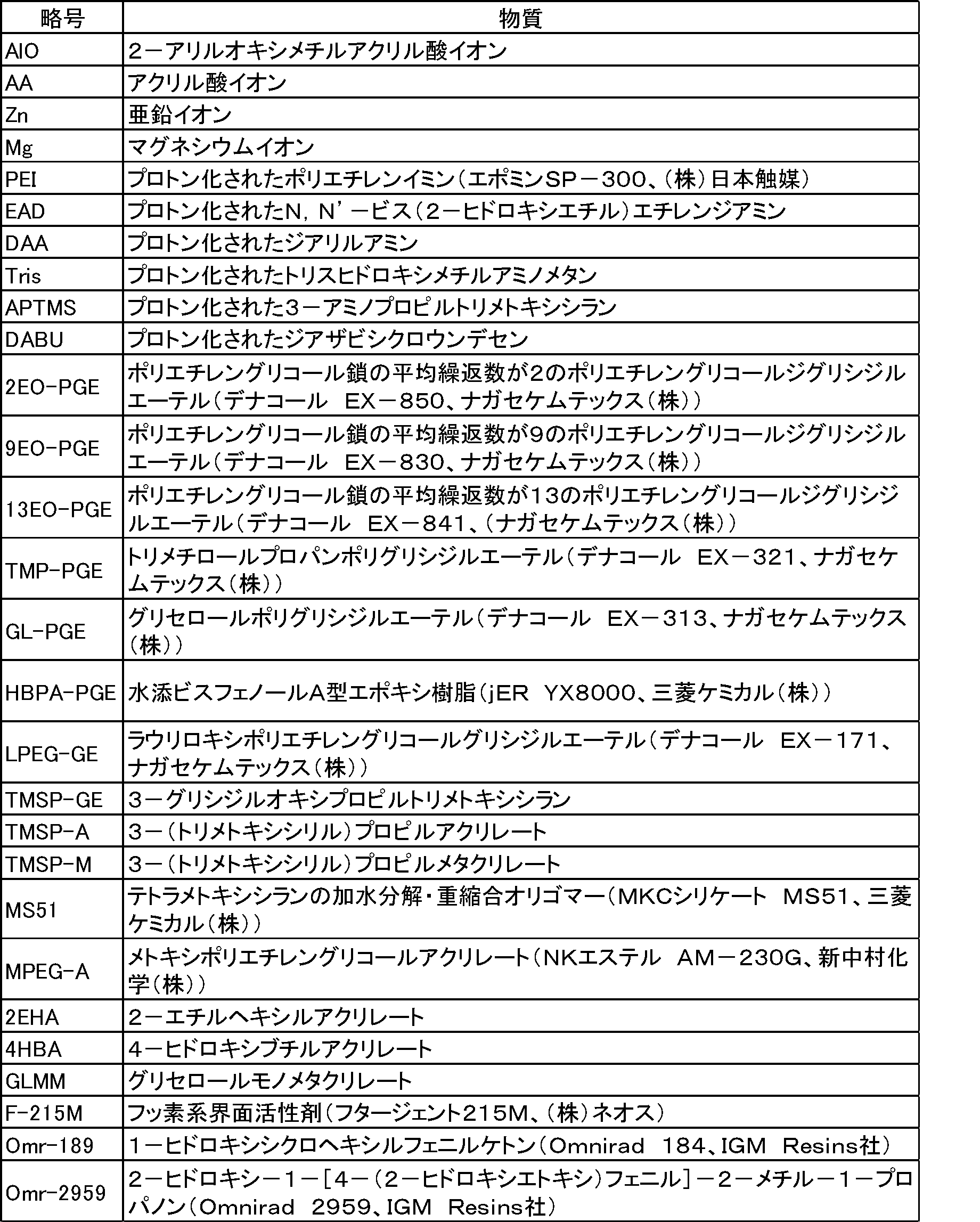
表1及び2より、実施例の塗布液(組成物)は、耐水性と親水性に優れた硬化膜を形成することができることが確認された。また、実施例の塗布液を用いて得られた硬化膜は、硬度にも優れていた。
(実施例12)
(製造工程1)ベースポリマーの合成
攪拌翼、冷却管、温度計、窒素導入管を付した100mL反応容器に、2-アリルオキシメチルアクリル酸6.21g、4-ヒドロキシブチルアクリレート3.20g、アクリロイルモルフォリン2.56g、プロピレングリコールモノメチルエーテル7.30g、メタノール3.92gを仕込み、0.5mL/分で窒素を流しながら、室温で30分間攪拌した。オイルバスで反応容器を加熱し、還流がかかり内温が87℃に達したことを確認してから、ペンタエリスリトール テトラキス(3-メルカプトブチレート)の30%溶液(溶媒:プロピレングリコールモノメチルエーテル)0.43g、及びt-ブチルパーオキシ-2-エチルヘキサノエートの10%溶液(溶媒:プロピレングリコールモノメチルエーテル)0.26gを、この順に反応容器に添加し重合を開始した。内温が90℃±3℃となるように加熱を調整しながら、プロピレングリコールモノメチルエーテル6.0gを60分かけて滴下した。重合開始60分後に、2-アリルオキシメチルアクリル酸1.09g、プロピレングリコールモノメチルエーテル12.0gを添加した。内温が87℃に戻ってからt-ブチルパーオキシ-2-エチルヘキサノエートの10%溶液(溶媒:プロピレングリコールモノメチルエーテル)0.51gを添加し、90分間加熱を続けた後、室温まで冷却した。内容物を含む反応容器の重量を測定し、有効成分濃度(内容物総重量中の、2-アリルオキシメチルアクリル酸、4-ヒドロキシブチルアクリレート、アクリロイルモルフォリン、ペンタエリスリトール テトラキス(3-メルカプトブチレート)の仕込み合計量の割合)が30.2%のベースポリマー溶液を得た。
(製造工程2-1)A液の調製
攪拌子を入れたスクリュー管に、ベースポリマー溶液1.50g、プロピレングリコールモノメチルエーテル1.14g、プロピレングリコール1.34g、ジアザビシクロウンデセン0.084g、トリスヒドロキシメチルアミノメタン0.134gを秤量し、均一になるまで60℃で攪拌した後、室温に戻しA液を得た。
攪拌子を入れたスクリュー管に、ベースポリマー溶液1.50g、プロピレングリコールモノメチルエーテル1.14g、プロピレングリコール1.34g、ジアザビシクロウンデセン0.084g、トリスヒドロキシメチルアミノメタン0.134gを秤量し、均一になるまで60℃で攪拌した後、室温に戻しA液を得た。
(製造工程2-2)B液の調製
攪拌子を入れたスクリュー管に、3-グリシジルオキシプロピルトリメトキシシラン0.11g、テトラメトキシシランの加水分解・重縮合オリゴマー0.11g(MKCシリケート MS56、三菱ケミカル(株))、ポリエチレングリコール鎖の平均繰返数が4のポリエチレングリコールジグリシジルエーテル(デナコール EX-821、ナガセケムテックス(株))0.022g、ラウリロキシポリエチレングリコールグリシジルエーテル(デナコール EX-171、ナガセケムテックス(株))0.022g、プロピレングリコールモノメチルエーテル/プロピレングリコール=2/1(重量比)混合液0.48gを秤量し、均一になるまで室温で攪拌しB液を得た。
攪拌子を入れたスクリュー管に、3-グリシジルオキシプロピルトリメトキシシラン0.11g、テトラメトキシシランの加水分解・重縮合オリゴマー0.11g(MKCシリケート MS56、三菱ケミカル(株))、ポリエチレングリコール鎖の平均繰返数が4のポリエチレングリコールジグリシジルエーテル(デナコール EX-821、ナガセケムテックス(株))0.022g、ラウリロキシポリエチレングリコールグリシジルエーテル(デナコール EX-171、ナガセケムテックス(株))0.022g、プロピレングリコールモノメチルエーテル/プロピレングリコール=2/1(重量比)混合液0.48gを秤量し、均一になるまで室温で攪拌しB液を得た。
(製造工程3)
攪拌子を入れたスクリュー管にA液0.88g及びB液0.61gを秤量し、3分間攪拌して、有効成分濃度が18.2%の硬化性組成物を得た。
攪拌子を入れたスクリュー管にA液0.88g及びB液0.61gを秤量し、3分間攪拌して、有効成分濃度が18.2%の硬化性組成物を得た。
攪拌開始30分後に、上記で得られた硬化性組成物(A液とB液の混合物)をバーコーターNo.8を用いて125μm厚のPETフィルム(ルミラーフィルムT60、東レ(株))上に塗布後、120℃のホットプレート上に置いて30分間加熱し、PETフィルム上に膜厚約3μmの硬化層が形成された積層体(被験物品)を得た。
(没水前の評価)
防汚性:被験物品の硬化層に黒色インキのマジックで印(×)をつけた。印上に純水を載せ、3分後に紙ワイパーで拭いて印を消去できれば○、できなければ×とした。
防汚性:被験物品の硬化層に黒色インキのマジックで印(×)をつけた。印上に純水を載せ、3分後に紙ワイパーで拭いて印を消去できれば○、できなければ×とした。
(没水後の評価)
実施例1と同様に、没水1日後の外観変化(耐水性)、呼気防曇性、水接触角、鉛筆硬度を評価した。
上記の各評価結果を硬化性組成物の構成成分の質量比とともに表3に示した。なお表3に示した略号が表す構造あるいは物質は、表4のとおりである。
実施例1と同様に、没水1日後の外観変化(耐水性)、呼気防曇性、水接触角、鉛筆硬度を評価した。
上記の各評価結果を硬化性組成物の構成成分の質量比とともに表3に示した。なお表3に示した略号が表す構造あるいは物質は、表4のとおりである。
(実施例13~16)
表3に示したような構成成分の質量比で、且つ有効成分濃度が18.2%の硬化性組成物となるように、(製造工程2-2)における各成分の種類と秤量、及び(製造工程3)におけるA液とB液の秤量を変更したこと以外は、実施例12と同様にして被験物品を作製し各評価を行った。結果を表3に示した。
表3に示したような構成成分の質量比で、且つ有効成分濃度が18.2%の硬化性組成物となるように、(製造工程2-2)における各成分の種類と秤量、及び(製造工程3)におけるA液とB液の秤量を変更したこと以外は、実施例12と同様にして被験物品を作製し各評価を行った。結果を表3に示した。
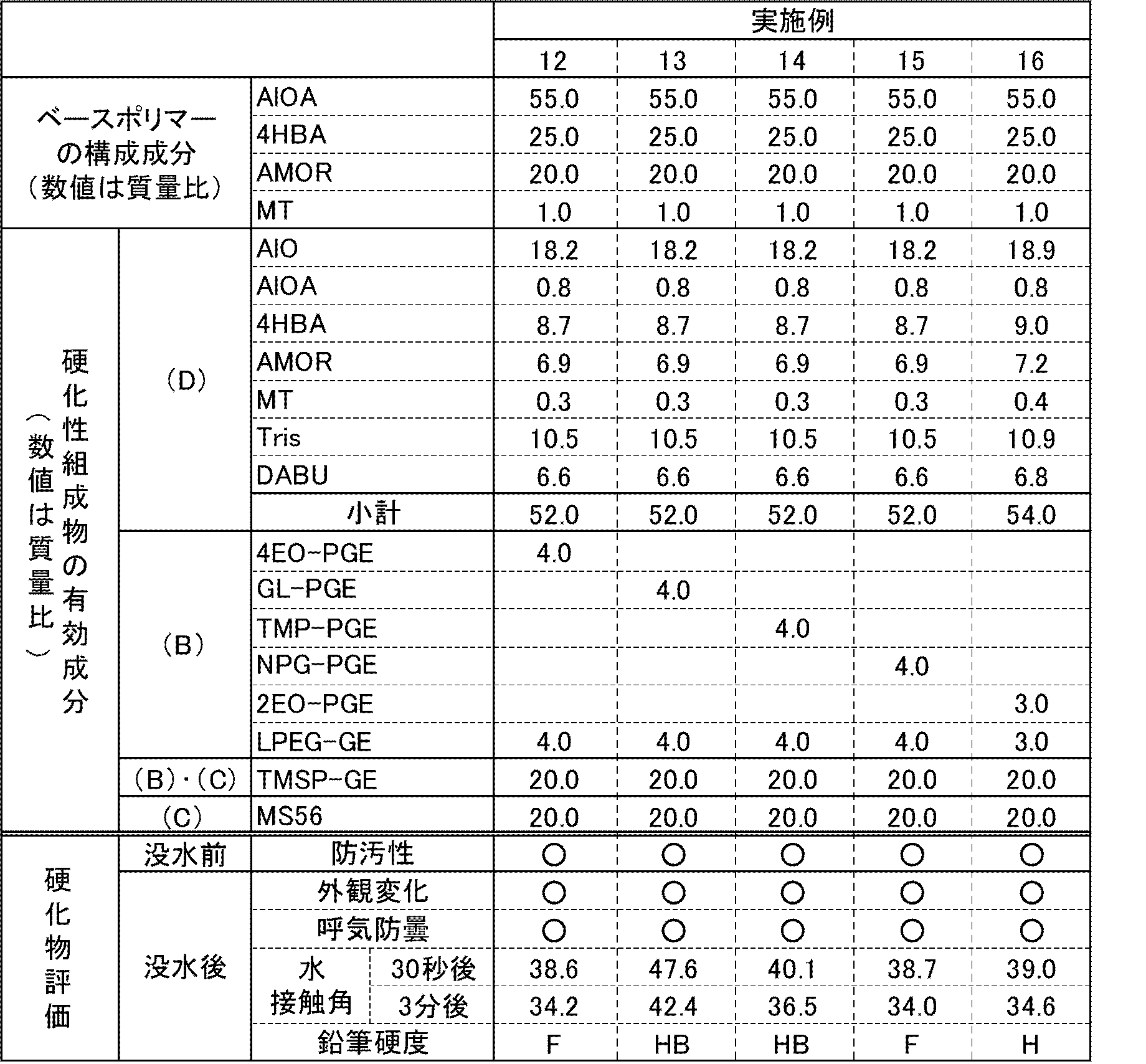
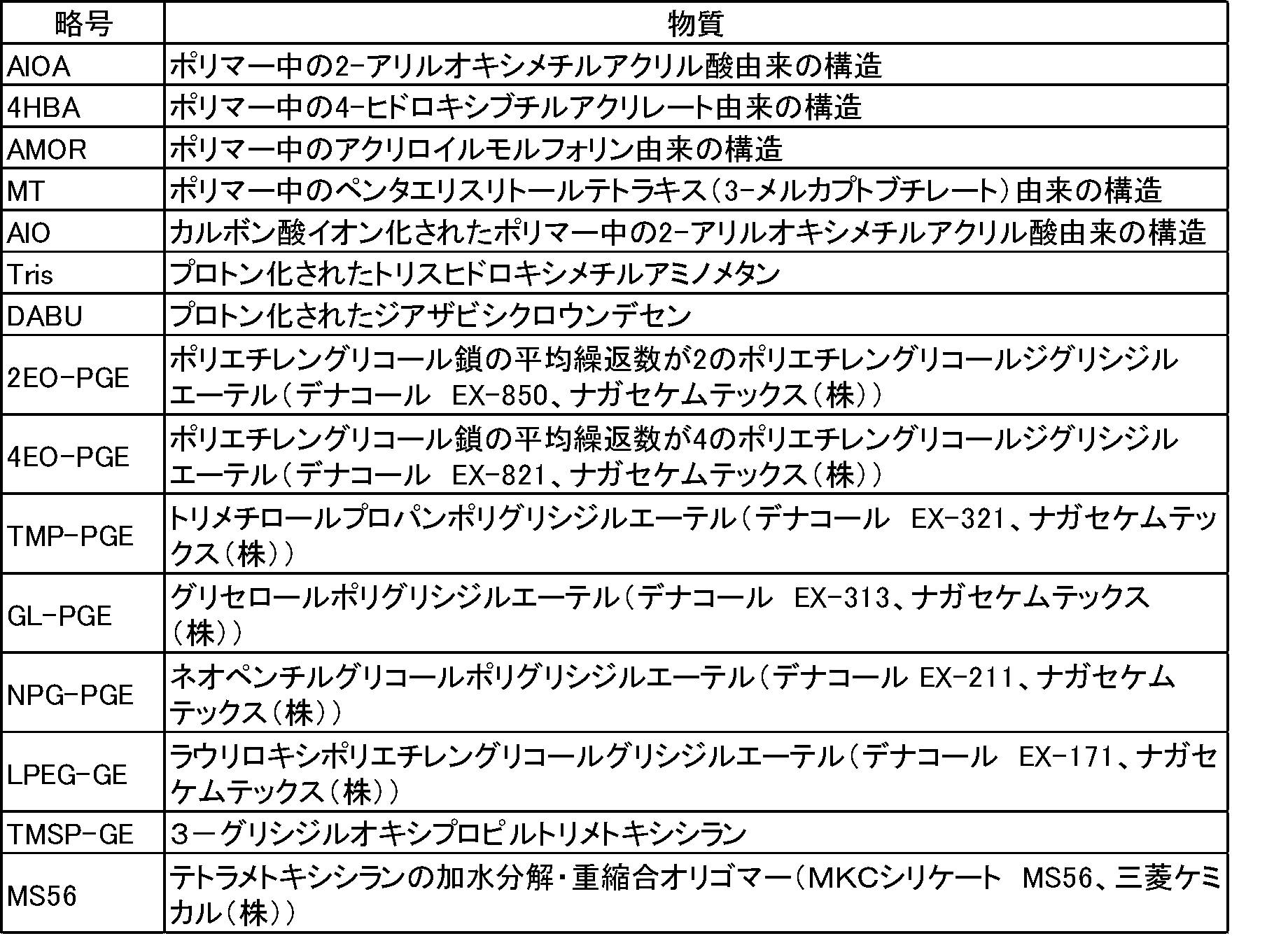
表3及び4より、実施例12~16の硬化性組成物から形成された硬化膜も耐水性と親水性に優れ、また防汚性にも優れていることが確認された。
Claims (7)
- ラジカル重合性カルボン酸化合物(a1)とアミン化合物(a2)の中和物であるラジカル重合性カルボン酸アミン塩化合物(A)と、エポキシ化合物(B)及び/又はシランカップリング化合物(C)とを含み、
該ラジカル重合性カルボン酸化合物(a1)又は該アミン化合物(a2)のうち少なくとも一種類の炭素数が5以上である
ことを特徴とする硬化性組成物。 - 前記ラジカル重合性カルボン酸アミン塩化合物(A)のラジカル重合性基が、(メタ)アクリロイル基、及び/又は、2-(メタ)アリルオキシメチルアクリロイル基であることを特徴とする請求項1に記載の硬化性組成物。
- ラジカル重合性カルボン酸化合物(a1)由来の構成単位を有する重合体(x1)とアミン化合物(x2)の中和重合体(X)と、エポキシ化合物(B)及び/又はシランカップリング化合物(C)とを含む
ことを特徴とする硬化性組成物。 - 前記ラジカル重合性カルボン酸化合物(a1)が、(メタ)アクリロイル基、及び/又は、2-(メタ)アリルオキシメチルアクリロイル基を有する化合物であることを特徴とする請求項3に記載の硬化性組成物。
- 前記アミン化合物(x2)は、水酸基を有するアミン化合物を含むことを特徴とする請求項3に記載の硬化性組成物。
- 請求項1~5のいずれかに記載の硬化性組成物の硬化物。
- 請求項6に記載の硬化物を表面に有することを特徴とする物品。
Applications Claiming Priority (2)
| Application Number | Priority Date | Filing Date | Title |
|---|---|---|---|
| JP2023108575 | 2023-06-30 | ||
| JP2023-108575 | 2023-06-30 |
Publications (1)
| Publication Number | Publication Date |
|---|---|
| WO2025005182A1 true WO2025005182A1 (ja) | 2025-01-02 |
Family
ID=93939182
Family Applications (1)
| Application Number | Title | Priority Date | Filing Date |
|---|---|---|---|
| PCT/JP2024/023339 Ceased WO2025005182A1 (ja) | 2023-06-30 | 2024-06-27 | 硬化性組成物、その硬化物、及び物品 |
Country Status (2)
| Country | Link |
|---|---|
| TW (1) | TW202511303A (ja) |
| WO (1) | WO2025005182A1 (ja) |
Citations (6)
| Publication number | Priority date | Publication date | Assignee | Title |
|---|---|---|---|---|
| JPS5879006A (ja) * | 1981-11-05 | 1983-05-12 | Toagosei Chem Ind Co Ltd | 含水ゲルの製造法 |
| JPS61293266A (ja) * | 1985-06-03 | 1986-12-24 | ザ・バルスパー・コーポレイション | 缶塗装用水性エポキシ樹脂分散液 |
| JPH0465421A (ja) * | 1990-07-04 | 1992-03-02 | Chuo Rika Kogyo Kk | 水性架橋型樹脂組成物 |
| JPH1028928A (ja) * | 1996-07-15 | 1998-02-03 | Nkk Corp | ポリオレフィン被覆鋼材 |
| JP2012107208A (ja) * | 2010-10-06 | 2012-06-07 | Nippon Shokubai Co Ltd | ジエン系カルボン酸陰イオンとその塩、およびその重合または硬化性組成物 |
| JP2016094605A (ja) * | 2011-03-15 | 2016-05-26 | エア プロダクツ アンド ケミカルズ インコーポレイテッドAir Products And Chemicals Incorporated | 選択的に変性されたアミンから得られるポリアミド及びアミドアミン |
-
2024
- 2024-06-27 WO PCT/JP2024/023339 patent/WO2025005182A1/ja not_active Ceased
- 2024-06-28 TW TW113124286A patent/TW202511303A/zh unknown
Patent Citations (6)
| Publication number | Priority date | Publication date | Assignee | Title |
|---|---|---|---|---|
| JPS5879006A (ja) * | 1981-11-05 | 1983-05-12 | Toagosei Chem Ind Co Ltd | 含水ゲルの製造法 |
| JPS61293266A (ja) * | 1985-06-03 | 1986-12-24 | ザ・バルスパー・コーポレイション | 缶塗装用水性エポキシ樹脂分散液 |
| JPH0465421A (ja) * | 1990-07-04 | 1992-03-02 | Chuo Rika Kogyo Kk | 水性架橋型樹脂組成物 |
| JPH1028928A (ja) * | 1996-07-15 | 1998-02-03 | Nkk Corp | ポリオレフィン被覆鋼材 |
| JP2012107208A (ja) * | 2010-10-06 | 2012-06-07 | Nippon Shokubai Co Ltd | ジエン系カルボン酸陰イオンとその塩、およびその重合または硬化性組成物 |
| JP2016094605A (ja) * | 2011-03-15 | 2016-05-26 | エア プロダクツ アンド ケミカルズ インコーポレイテッドAir Products And Chemicals Incorporated | 選択的に変性されたアミンから得られるポリアミド及びアミドアミン |
Also Published As
| Publication number | Publication date |
|---|---|
| TW202511303A (zh) | 2025-03-16 |
Similar Documents
| Publication | Publication Date | Title |
|---|---|---|
| CN111684030B (zh) | 高耐久防雾涂膜和涂布组合物 | |
| TWI522413B (zh) | Hardened resin composition | |
| CN102405264B (zh) | 光固化型亲水性被覆剂、亲水性覆膜、及亲水性被涂物 | |
| JP2019077194A (ja) | 樹脂フィルム、積層フィルム、光学部材、表示部材、前面板、及び積層フィルムの製造方法 | |
| CN102245662B (zh) | 包含用马来酰亚胺基进行了表面修饰的无机氧化物微粒的固化型组合物 | |
| KR102154158B1 (ko) | 무용제형 광경화성 수지 조성물 | |
| WO2008072766A1 (ja) | フッ素系重合体および樹脂組成物 | |
| JP5169236B2 (ja) | 硬化性樹脂組成物及び反射防止膜 | |
| CN112457514A (zh) | 聚酰亚胺基复合膜及其显示装置 | |
| KR102128799B1 (ko) | 경화막 형성용 수지 조성물 | |
| JP7669805B2 (ja) | 光硬化性樹脂組成物およびその用途 | |
| CN112390974A (zh) | 聚酰亚胺基复合膜及其显示装置 | |
| JP2014084360A (ja) | 活性エネルギー線硬化型アンダーコート用組成物及び積層体 | |
| WO2022065225A1 (ja) | ポリマー、ポリマー溶液および感光性樹脂組成物 | |
| JP2025007342A (ja) | 硬化性組成物、硬化物、及び物品 | |
| WO2018212263A1 (ja) | フッ素系重合体含有光硬化性組成物 | |
| KR102341781B1 (ko) | 경화막 형성용 수지 조성물, 경화막, 도전성 부재 및 마이그레이션의 억제 방법 | |
| JP5336925B2 (ja) | 活性エネルギー線硬化性被覆材組成物及び積層体 | |
| JP2025150917A (ja) | 水性塗料組成物、水性塗料組成物の製造方法、接着層付き基材、及びハードコート積層体 | |
| CN119177096A (zh) | 粘合剂膜及包括其的光学显示设备 | |
| TW202511303A (zh) | 硬化性組成物、其硬化物、及物品 | |
| JP2023039944A (ja) | 塗料組成物、接着層付き基材及び積層体 | |
| TW201912708A (zh) | 熱硬化性組成物、硬化膜及彩色濾光片 | |
| CN112218896B (zh) | 活性能量射线固化性树脂组合物、阻气性薄膜及层叠体 | |
| JP2025156208A (ja) | 水性コーティング組成物、接着層付き基材、及びハードコート積層体 |
Legal Events
| Date | Code | Title | Description |
|---|---|---|---|
| 121 | Ep: the epo has been informed by wipo that ep was designated in this application |
Ref document number: 24832041 Country of ref document: EP Kind code of ref document: A1 |
|
| NENP | Non-entry into the national phase |
Ref country code: DE |
|
| 122 | Ep: pct application non-entry in european phase |
Ref document number: 24832041 Country of ref document: EP Kind code of ref document: A1 |