WO2025004805A1 - レンズ用樹脂組成物、レンズ用硬化物及びレンズ - Google Patents
レンズ用樹脂組成物、レンズ用硬化物及びレンズ Download PDFInfo
- Publication number
- WO2025004805A1 WO2025004805A1 PCT/JP2024/021323 JP2024021323W WO2025004805A1 WO 2025004805 A1 WO2025004805 A1 WO 2025004805A1 JP 2024021323 W JP2024021323 W JP 2024021323W WO 2025004805 A1 WO2025004805 A1 WO 2025004805A1
- Authority
- WO
- WIPO (PCT)
- Prior art keywords
- resin composition
- lens
- general formula
- group
- groups
- Prior art date
- Legal status (The legal status is an assumption and is not a legal conclusion. Google has not performed a legal analysis and makes no representation as to the accuracy of the status listed.)
- Ceased
Links
Images

Classifications
-
- C—CHEMISTRY; METALLURGY
- C08—ORGANIC MACROMOLECULAR COMPOUNDS; THEIR PREPARATION OR CHEMICAL WORKING-UP; COMPOSITIONS BASED THEREON
- C08G—MACROMOLECULAR COMPOUNDS OBTAINED OTHERWISE THAN BY REACTIONS ONLY INVOLVING UNSATURATED CARBON-TO-CARBON BONDS
- C08G59/00—Polycondensates containing more than one epoxy group per molecule; Macromolecules obtained by polymerising compounds containing more than one epoxy group per molecule using curing agents or catalysts which react with the epoxy groups
- C08G59/18—Macromolecules obtained by polymerising compounds containing more than one epoxy group per molecule using curing agents or catalysts which react with the epoxy groups ; e.g. general methods of curing
- C08G59/68—Macromolecules obtained by polymerising compounds containing more than one epoxy group per molecule using curing agents or catalysts which react with the epoxy groups ; e.g. general methods of curing characterised by the catalysts used
-
- C—CHEMISTRY; METALLURGY
- C08—ORGANIC MACROMOLECULAR COMPOUNDS; THEIR PREPARATION OR CHEMICAL WORKING-UP; COMPOSITIONS BASED THEREON
- C08L—COMPOSITIONS OF MACROMOLECULAR COMPOUNDS
- C08L63/00—Compositions of epoxy resins; Compositions of derivatives of epoxy resins
-
- G—PHYSICS
- G02—OPTICS
- G02B—OPTICAL ELEMENTS, SYSTEMS OR APPARATUS
- G02B1/00—Optical elements characterised by the material of which they are made; Optical coatings for optical elements
- G02B1/04—Optical elements characterised by the material of which they are made; Optical coatings for optical elements made of organic materials, e.g. plastics
-
- G—PHYSICS
- G02—OPTICS
- G02B—OPTICAL ELEMENTS, SYSTEMS OR APPARATUS
- G02B3/00—Simple or compound lenses
Definitions
- the present invention relates to a resin composition for lenses, a cured product for lenses, and lenses.
- silicone resin or acrylic resin is used as a material for the lenses of the cameras mounted on these electronic devices. It is also known that epoxy resin is used as a material for the lenses. Examples of such techniques include those described in Patent Documents 1 to 3.
- Patent Document 1 describes a molding process and a silicone encapsulant composition suitable for use therein, which comprises: 1) heating a mold having a mold cavity at a temperature range of 100°C to 200°C; 2) supplying an amount of a silicone composition including a mold release agent to an assembly, the composition having a viscosity range of 50 cps to 3,000 cps at the operating temperature of the process, to prevent the silicone encapsulant composition from flowing back out of the assembly; and 3) injecting the silicone composition from the assembly into the mold cavity through a gate, where
- the process includes: the mold cavity has a top and a bottom, a vent is located at the top of the mold cavity, the vent comprises a channel 0.1 mm to 1 mm wide by 0.0001 mm to 0.001 mm deep, the gate is located at the bottom of the mold cavity, and injection is performed at a pressure range of 1,000 psi to 10,000 psi for up to 5 seconds; 4) holding the silicone composition at 1,000 psi to 10,000 p
- Patent Document 2 discloses an active energy ray-curable resin composition for Fresnel lenses that has excellent adhesion to plastic substrates, is resistant to chipping or cracking due to external forces while maintaining a high elastic modulus, and exhibits excellent shape retention over a wide temperature range, and a Fresnel lens sheet using the active energy ray-curable resin composition for Fresnel lenses.
- the active energy ray-curable resin composition for Fresnel lenses contains, as essential components, an epoxy (meth)acrylate (a) having two or more (meth)acryloyl groups obtained by reacting an epoxy resin having a cyclic structure and an epoxy equivalent of 450 g/eq or more with (meth)acrylic acid, a trifunctional (meth)acrylate (b) having a specific structure, a (meth)acrylate (c) that is an aliphatic polyhydric alcohol (meth)acrylate having a propylene oxide structure and two or more hydroxyl groups and has a molecular weight of 700 or less, and a monofunctional (meth)acrylate (d) having a cyclic structure.
- an epoxy (meth)acrylate (a) having two or more (meth)acryloyl groups obtained by reacting an epoxy resin having a cyclic structure and an epoxy equivalent of 450 g/eq or more with (meth)acrylic acid
- Patent Document 3 discloses a curable composition for lenses that contains at least an alicyclic epoxy compound (A) having a specific structure, a cationic polymerization initiator (B), and a polysiloxane (C) having a specific structure, with the aim of providing a curable composition that can form lenses that have excellent mold transfer accuracy and excellent heat resistance and optical properties, and contains 0.01 to 5% by weight of the polysiloxane (C) relative to the total amount (100% by weight) of the curable composition.
- A alicyclic epoxy compound
- B a cationic polymerization initiator
- C polysiloxane
- the present invention provides a resin composition for lenses that can form a cured product for lenses having an improved balance of performance such as high refractive index, high light transmittance, high heat resistance and bleed-out resistance.
- Another object of the present invention is to provide a lens cured product and a lens having an improved balance of performance including high refractive index, high light transmittance, high heat resistance and bleed-out resistance.
- the inventors conducted extensive research to solve the above problems. As a result, they discovered that the above problems could be solved by using a specific cationic photopolymerization initiator, an epoxy compound, and a specific stabilizer in combination, which led to the completion of the present invention.
- the present invention provides the following resin composition for lenses, the cured product for lenses, and the lenses.
- a resin composition for a lens comprising the above compound.
- the pKb value is calculated by a graphical method using the obtained pH titration curve.
- the resin composition for lenses according to the above [1], The resin composition for a lens contains the stabilizer having one or more partial structures selected from the group consisting of a partial structure represented by the following general formula (6) and a partial structure represented by the following general formula (7):
- R 1 to R 4 each independently represent an alkyl group having 1 to 18 carbon atoms or an aryl group having 6 to 14 carbon atoms.
- R a represents an alkyl group having 1 to 18 carbon atoms or an aryl group having 6 to 14 carbon atoms.
- O represents an oxyl group.
- a resin composition for a lens comprising the above compound.
- R 1 to R 4 each independently represent an alkyl group having 1 to 18 carbon atoms or an aryl group having 6 to 14 carbon atoms.
- R a represents an alkyl group having 1 to 18 carbon atoms or an aryl group having 6 to 14 carbon atoms.
- O represents an oxyl group.
- the resin composition for a lens further comprises a monofunctional epoxy compound (Z) represented by the following general formula (5):
- A is selected from a single bond, an oxygen atom, and a sulfur atom
- R 10 is an alkylene having 1 to 8 carbon atoms, and any methylene group may be substituted with an oxygen atom.
- the resin composition for lenses according to the above [9] The lens resin composition, wherein the monofunctional epoxy compound (Z) contains o-phenylphenol glycidyl ether.
- the resin composition for lenses according to any one of the above [1] to [10], The lens resin composition further comprises an oxetane compound (W).
- the resin composition for lenses according to any one of the above [1] to [12], The resin composition for a lens has a viscosity of 100 mPa ⁇ s or more and 5000 mPa ⁇ s or less when measured with an E-type viscometer at a temperature of 25° C. and a rotation speed of 2.5 rpm.
- the resin composition for lenses according to any one of the above [1] to [13] The above resin composition for lenses is applied to a glass substrate in a thickness of 250 ⁇ m, exposed to UV light under conditions of a wavelength of 365 nm, an irradiation intensity of 500 mW/cm, and an accumulated irradiation amount of 6000 mJ/ cm2 , and then heated under conditions of a nitrogen atmosphere at 120° C. for 30 minutes, to obtain a cured product having a refractive index of 1.55 or more.
- the cured product obtained has a light transmittance in the thickness direction of 70% or more as measured under the following measurement conditions using an ultraviolet-visible-near-infrared spectrophotometer.
- Measurement method Transmission method Measurement wavelength: 400nm Reference: Atmospheric Detector: Integrating sphere/photomultiplier tube (200 nm to 850 nm) Integrating sphere: PbS (850nm to 2600nm) [16]
- the cured product obtained has a light transmittance in the thickness direction of 70% or more after the heat resistance test described below, as measured using an ultraviolet-visible-near-infrared spectrophotometer under the measurement conditions described below.
- Measurement conditions Measurement conditions: Transmission method Measurement wavelength: 400nm Reference: Atmospheric Detector: Integrating sphere/photomultiplier tube (200 nm to 850 nm) Integrating sphere: PbS (850nm to 2600nm) (Heat resistance test)
- the cured product is heated in an oven set at 125° C. in an air atmosphere for 168 hours.
- the lens resin composition of the present invention having the above-mentioned configuration, can form a cured product having an improved balance of performance such as high refractive index, high light transmittance, high heat resistance and bleed-out resistance. Furthermore, since the cured product for a lens of the present invention is obtained by curing the above-mentioned resin composition for a lens, it has an improved balance of performance such as high refractive index, high light transmittance, high heat resistance and bleed-out resistance. Furthermore, since the lens of the present invention comprises the above-mentioned lens cured product, the lens has an improved balance of performance including high refractive index, high light transmittance, high heat resistance and bleed-out resistance.
- FIG. 1 is a plan view showing an example of the configuration of a wafer-level lens array having a plurality of wafer-level lenses.
- a to B indicating a numerical range means A or more and B or less, unless otherwise specified.
- a group such as an alkyl group "has a substituent” means that a hydrogen atom present in the structure is substituted with a substituent.
- the position of the substituent and the number of the substituent are not particularly limited.
- the number of carbon atoms of the substituent is not included in the number of carbon atoms of the substituent.
- an ethyl group having a phenyl group as a substituent is considered to be an alkyl group having two carbon atoms.
- the non-volatile components refer to the components of the resin composition for lenses excluding volatile components such as solvents.
- the lens resin composition of the first embodiment of the present invention contains a cationic photopolymerization initiator (X) containing a salt formed from an anion represented by the following general formula (1) and a cation, an epoxy compound (Y) containing two or more epoxy groups in the molecule, and a stabilizer having a base dissociation constant pKb of 6.0 or more, as measured by the ⁇ Method of Measuring Base Dissociation Exponent pKb> below.
- the pKb value is calculated by a graphical method using the obtained pH titration curve.
- R 1 to R 4 each independently represent an alkyl group having 1 to 18 carbon atoms or an aryl group having 6 to 14 carbon atoms.
- the lens resin composition of the first embodiment of the present invention can form a cured product with an improved balance of performance such as high refractive index, high light transmittance, high heat resistance, and bleed-out resistance. If the occurrence of bleed-out during UV curing and heating is suppressed, the occurrence of foreign matter can be suppressed. Although the detailed mechanism is not clear, it is presumed that the photocationic polymerization initiator containing anionic gallium generates almost no strong acid components even when heated, so that deterioration due to heating such as coloring and the generation of foreign matter is suppressed.
- the photocationic polymerization initiator containing anionic gallium can suppress the adverse effects on various performances such as high refractive index, high light transmittance, and high heat resistance while exhibiting polymerization performance at the conventional technology level. Furthermore, it is considered that a stabilizer having a base dissociation constant pKb of 6.0 or more according to the above ⁇ Method of measuring base dissociation index pKb> can prevent binding with strong acid components by using it in combination with a photocationic polymerization initiator containing anionic gallium that generates almost no strong acid components even when heated, and can suppress bleed-out due to changes in compatibility.
- the base dissociation constant pKb of the stabilizer in the lens resin composition of the first embodiment of the present invention is 6.0 or more, more preferably 7.0 or more, even more preferably 8.0 or more, even more preferably 9.0 or more, and even more preferably 10.0 or more, and is preferably 15.0 or less, more preferably 14.0 or less, even more preferably 13.0 or less, even more preferably 12.0 or less, and even more preferably 11.5 or less.
- the base dissociation constant pKb of the stabilizer in the lens resin composition of the first embodiment of the present invention is 6.0 or more, preferably from 6.0 to 15.0, more preferably from 7.0 to 14.0, even more preferably from 8.0 to 13.0, even more preferably from 9.0 to 12.0, and even more preferably from 10.0 to 11.5.
- the stabilizer in the lens resin composition of the first embodiment of the present invention preferably includes a stabilizer containing one or more partial structures selected from the group consisting of a partial structure represented by the following general formula (6) and a partial structure represented by the following general formula (7), and more preferably includes a stabilizer containing a partial structure represented by the following general formula (6).
- R a represents an alkyl group having 1 to 18 carbon atoms or an aryl group having 6 to 14 carbon atoms.
- O. represents an oxyl group.
- the lens resin composition of the second embodiment of the present invention includes a photocationic polymerization initiator (X) containing a salt formed from an anion represented by the following general formula (1) and a cation, an epoxy compound (Y) containing two or more epoxy groups in the molecule, and a stabilizer containing one or more partial structures selected from the group consisting of a partial structure represented by the following general formula (6) and a partial structure represented by the following general formula (7), and preferably includes a photocationic polymerization initiator (X) containing a salt formed from an anion represented by the following general formula (1) and a cation, an epoxy compound (Y) containing two or more epoxy groups in the molecule, and a stabilizer containing a partial structure represented by the following general formula (6).
- R 1 to R 4 each independently represent an alkyl group having 1 to 18 carbon atoms or an aryl group having 6 to 14 carbon atoms.
- R a represents an alkyl group having 1 to 18 carbon atoms or an aryl group having 6 to 14 carbon atoms.
- O. represents an oxyl group.
- the lens resin composition of the second embodiment of the present invention can form a cured product with an improved balance of performance such as high refractive index, high light transmittance, high heat resistance, and bleed-out resistance. If the occurrence of bleed-out during UV curing and heating is suppressed, the occurrence of foreign matter can be suppressed. Although the detailed mechanism is not clear, it is presumed that the photocationic polymerization initiator containing anionic gallium generates almost no strong acid components even when heated, so that deterioration due to heating such as coloring and the generation of foreign matter is suppressed.
- the photocationic polymerization initiator containing anionic gallium can suppress adverse effects on various performances such as high refractive index, high light transmittance, and high heat resistance while exhibiting polymerization performance at the conventional technology level.
- a stabilizer containing one or more partial structures selected from the group consisting of the partial structure represented by general formula (6) and the partial structure represented by general formula (7) can prevent binding with strong acid components by using it in combination with a photocationic polymerization initiator containing anionic gallium that generates almost no strong acid components even when heated, and can suppress bleed-out due to changes in compatibility.
- the present embodiment The components contained in the lens resin composition of the first embodiment of the present invention and the second embodiment of the present invention (hereinafter collectively referred to as the present embodiment) will be described in detail below.
- the lens resin composition of the present embodiment contains a photocationic polymerization initiator (X) containing a salt formed from an anion represented by the following general formula (1) and a cation.
- R 1 to R 4 each independently represent an alkyl group having 1 to 18 carbon atoms or an aryl group having 6 to 14 carbon atoms.
- the alkyl group having 1 to 18 carbon atoms represented by R 1 to R 4 in the general formula (1) is not limited to any of linear, branched, and cyclic. Specific examples thereof include alkyl groups such as a methyl group, an ethyl group, a propyl group, an isopropyl group, an n-butyl group, a t-butyl group, a hexyl group, an octyl group, a 2-ethylhexyl group, and a decyl group; and cycloalkyl groups such as a cyclopentyl group, a cyclohexyl group, a cyclooctyl group, a norbornyl group, a bicyclononyl group, and a tricyclodecane group.
- alkyl groups such as a methyl group, an ethyl group, a propyl group, an isopropyl group, an n-but
- aryl group having 6 to 14 carbon atoms represented by R 1 to R 4 in general formula (1) include a phenyl group, a tolyl group, a naphthyl group, a biphenyl group, a terphenyl group, a phenanthryl group, and an anthracenyl group.
- the alkyl group having 1 to 18 carbon atoms or the aryl group having 6 to 14 carbon atoms represented by R 1 to R 4 in the general formula (1) may have a substituent.
- the substituent that the alkyl group having 1 to 18 carbon atoms or the aryl group having 6 to 14 carbon atoms represented by R 1 to R 4 in general formula (1) may have is not particularly limited, and examples thereof include a halogen atom, a hydrocarbon group, a halogen-containing group, an oxygen-containing group, a sulfur-containing group, and a nitrogen-containing group.
- halogen atoms include fluorine atoms, chlorine atoms, and bromine atoms.
- hydrocarbon group examples include alkyl groups such as methyl, ethyl, propyl, isopropyl, n-butyl, t-butyl, hexyl, octyl, 2-ethylhexyl, and decyl; cycloalkyl groups such as cyclopentyl, cyclohexyl, cyclooctyl, norbornyl, bicyclononyl, and tricyclodecane; aryl groups such as phenyl, tolyl, naphthyl, biphenyl, terphenyl, phenanthryl, and anthracenyl; aralkyl groups such as benzyl and phenylethyl; and divalent diene derivative groups such as 1,3-butadienyl, isoprenyl (2-methyl-1,3-butadienyl), piperylenyl (1,3-pentadienyl), 2,4-
- halogen-containing group examples include halogen-containing hydrocarbon groups such as trifluoromethyl, pentafluoroethyl, 1,1,1,3,3,3-hexafluoro-2-propyl, and nonafluoro-t-butyl; halogen-containing aryl groups such as pentafluorophenyl and pentachlorophenyl; and the like.
- oxygen-containing groups include alkoxy groups such as methoxy, ethoxy, n-propoxy, isopropoxy, n-butoxy, isobutoxy, and t-butoxy; aryloxy groups such as phenoxy, 2,6-dimethylphenoxy, and 2,4,6-trimethylphenoxy; ester groups such as acetyloxy, benzoyloxy, methoxycarbonyl, phenoxycarbonyl, and p-chlorophenoxycarbonyl; ether groups; acyl groups such as formyl, acetyl, benzoyl, p-chlorobenzoyl, and p-methoxybenzoyl; carboxyl groups; carbonate groups; hydroxy groups; peroxy groups; carboxylic anhydride groups; furyl groups; and the like.
- sulfur-containing groups include mercapto groups; thioester groups such as acetylthio, benzoylthio, methylthiocarbonyl, and phenylthiocarbonyl groups; dithioester groups; alkylthio groups such as methylthio and ethylthio groups; arylthio groups such as phenylthio, methylphenylthio, and naphthylthio groups; thioacyl groups; thioether groups; thiocyanate ester groups; isothiocyanate ester groups; sulfonate ester groups such as methyl sulfonate, ethyl sulfonate, and phenyl sulfonate groups; sulfonamide groups such as phenylsulfonamide, N-methylsulfonamide, and N-methyl-p-toluenesulfonamide groups; thiocarboxyl groups; dithiocarbox
- nitrogen-containing groups include amino groups; alkylamino groups such as dimethylamino groups or ethylmethylamino groups; arylamino groups such as diphenylamino groups; imino groups; alkylimino groups such as methylimino groups, ethylimino groups, propylimino groups, or butylimino groups; arylimino groups such as phenylimino groups; amido groups; alkylamido groups such as acetamido groups or N-methylacetamido groups; arylamido groups such as N-methylbenzamido groups; imido groups; alkylimido groups such as acetimido groups; arylimido groups such as benzimido groups; pyrrolidino groups; hydrazino groups; hydrazono groups; nitro groups; nitroso groups; cyano groups; isocyano groups; cyanate ester groups; amidino groups; diazo groups;
- R 1 to R 4 are aryl groups having 6 to 14 carbon atoms, it is more preferable that all of R 1 to R 4 are aryl groups having 6 to 14 carbon atoms, it is even more preferable that all of R 1 to R 4 are aryl groups having 6 to 8 carbon atoms, and it is even more preferable that all of R 1 to R 4 are aryl groups having 6 carbon atoms.
- R 1 to R 4 preferably have a halogen atom as a substituent, and more preferably have a fluorine atom as a substituent.
- the photocationic polymerization initiator (X) preferably contains at least one anion selected from the anion represented by the following formula (3) and the anion represented by the following formula (4). This makes it possible to further improve the heat resistance of the lens cured body formed from the lens resin composition.
- the photocationic polymerization initiator (X) contains a cation that forms a salt with the anion represented by general formula (1).
- the cation that forms a salt with the anion represented by general formula (1) is not particularly limited as long as it is a monovalent cation.
- Examples include an oxonium ion, an ammonium ion, a phosphonium ion, a sulfonium ion, and an iodonium ion.
- oxonium ions include oxoniums such as trimethyloxonium, diethylmethyloxonium, triethyloxonium, and tetramethylenemethyloxonium; pyriliniums such as 4-methylpyrilinium, 2,4,6-trimethylpyrilinium, 2,6-di-tert-butylpyrilinium, and 2,6-diphenylpyrilinium; chromeniums such as 2,4-dimethylchromenium and 1,3-dimethylisochromenium; isochromenium; and the like.
- oxoniums such as trimethyloxonium, diethylmethyloxonium, triethyloxonium, and tetramethylenemethyloxonium
- pyriliniums such as 4-methylpyrilinium, 2,4,6-trimethylpyrilinium, 2,6-di-tert-butylpyrilinium, and 2,6-diphenylpyrilinium
- Ammonium ions include pyrrolidinium ions such as N,N-dimethylpyrrolidinium, N-ethyl-N-methylpyrrolidinium, and N,N-diethylpyrrolidinium; imidazolinium ions such as N,N'-dimethylimidazolinium, N,N'-diethylimidazolinium, N-ethyl-N'-methylimidazolinium, 1,3,4-trimethylimidazolinium, and 1,2,3,4-tetramethylimidazolinium; tetrahydropyrimidinium ions such as N,N'-dimethyltetrahydropyrimidinium; morpholinium ions such as N,N'-dimethylmorpholinium; Examples include piperidiniums such as N,N'-diethylpiperidinium; pyridiniums such as N-methylpyridinium, N-benzylpyridinium, and N-phenacylpyridium;
- phosphonium ions include tetraarylphosphonium ions such as tetraphenylphosphonium, tetra-p-tolylphosphonium, tetrakis(2-methoxyphenyl)phosphonium, tetrakis(3-methoxyphenyl)phosphonium, and tetrakis(4-methoxyphenyl)phosphonium; triarylphosphonium ions such as triphenylbenzylphosphonium, triphenylphenacylphosphonium, triphenylmethylphosphonium, and triphenylbutylphosphonium; tetraalkylphosphonium ions such as triethylbenzylphosphonium, tributylbenzylphosphonium, tetraethylphosphonium, tetrabutylphosphonium, tetrahexylphosphonium, triethylphenacylphosphonium, and tributylphenacylphosphon
- Sulfonium ions include triphenylsulfonium, tri-p-tolylsulfonium, tri-o-tolylsulfonium, tris(4-methoxyphenyl)sulfonium, 1-naphthyldiphenylsulfonium, 2-naphthyldiphenylsulfonium, tris(4-fluorophenyl)sulfonium, tri-1-naphthylsulfonium, tri-2-naphthylsulfonium, tris(4-hydroxyphenyl)sulfonium, 4-(phenylthio)phenyldiphenylsulfonium, 4-(p-tolylthio)phenyl di-p-tolylsulfonium, 4-(4-methoxyphenylthio)phenylbis(4-methoxyphenyl)sulfonium, 4-(phenylthio)pheny
- iodonium ions include diphenyliodonium, di-p-tolyliodonium, bis(4-dodecylphenyl)iodonium, bis(4-methoxyphenyl)iodonium, (4-octyloxyphenyl)phenyliodonium, bis(4-decyloxy)phenyliodonium, 4-(2-hydroxytetradecyloxy)phenylphenyliodonium, 4-isopropylphenyl(p-tolyl)iodonium, and 4-isobutylphenyl(p-tolyl)iodonium.
- the photocationic polymerization initiator (X) preferably contains at least one cation selected from ammonium ion, phosphonium ion, sulfonium ion, and iodonium ion, more preferably contains at least one cation selected from sulfonium ion and iodonium ion, even more preferably contains a sulfonium ion, and even more preferably contains a triarylsulfonium ion.
- the photocationic polymerization initiator (X) preferably contains a salt composed of at least one anion selected from the anion represented by the following formula (3) and the anion represented by the following formula (4), and a sulfonium ion. This can further improve the heat resistance of the lens cured body formed from the lens resin composition.
- anions contained in the photocationic polymerization initiator (X) are shown below, but the anions contained in the photocationic polymerization initiator (X) in this embodiment are not limited to these.
- the photocationic polymerization initiator (X) can be synthesized, for example, according to a known method described in International Publication No. 2018/020974. Alternatively, commercially available CPI-310FG (product name, photocationic polymerization initiator, manufactured by San-Apro Co., Ltd.) or the like may be obtained and used.
- the lower limit of the content of the photocationic polymerization initiator (X) in the lens resin composition of this embodiment is preferably 0.05 parts by mass or more, more preferably 0.07 parts by mass or more, even more preferably 0.1 parts by mass or more, even more preferably 0.5 parts by mass or more, even more preferably 1.0 parts by mass or more, and even more preferably 1.5 parts by mass or more, relative to 100 parts by mass of the epoxy compound (Y). This makes it possible to improve the performance balance between a high refractive index and high heat resistance.
- the upper limit of the content of the photocationic polymerization initiator (X) in the lens resin composition of this embodiment is preferably 15 parts by mass or less, more preferably 10 parts by mass or less, still more preferably 8 parts by mass or less, and still more preferably 6 parts by mass or less, relative to 100 parts by mass of the epoxy compound (Y). This makes it possible to improve the performance balance between high light transmittance and bleed-out resistance.
- the cationic photopolymerization initiator (X) may be used alone or in combination of two or more. When two or more types are used in combination, the total content of each cationic photopolymerization initiator (X) is defined as the content of the cationic photopolymerization initiator (X).
- the content may be adjusted appropriately depending on the volume and thickness of the lens resin composition when it is used.
- the lens resin composition of the present embodiment contains an epoxy compound (Y) containing two or more epoxy groups in the molecule.
- epoxy compounds (Y) containing two or more epoxy groups in the molecule include diethylene glycol diglycidyl ether, hexanediol diglycidyl ether, dimethylolpropane diglycidyl ether, polypropylene glycol diglycidyl ether, trimethylolpropane triglycidyl ether, trimethylolpropane triglycidyl ether, and pentaerythritol tetraglycidyl ether.
- examples of epoxy compounds (Y) containing two or more epoxy groups in the molecule include alicyclic epoxy resins such as 3',4'-epoxycyclohexylmethyl-3,4-epoxycyclohexanecarboxylate and ⁇ -caprolactone-modified 3',4'-epoxycyclohexylmethyl-3,4-epoxycyclohexanecarboxylate.
- epoxy compounds (Y) containing two or more epoxy groups in the molecule include bisphenol A type epoxy compounds, bisphenol F type epoxy compounds, biphenyl-phenol novolac type epoxy compounds, and epoxy resins having aromatic rings, such as epoxy compounds in which some or all of the alcoholic hydroxyl groups in the structure of these epoxy compounds have been epoxidized.
- Y Commercially available epoxy compounds
- EPICLON series bisphenol A epoxy resin, manufactured by DIC Corporation
- jER series manufactured by Mitsubishi Chemical Corporation
- jER828 the YD series
- YD-127 the TECHMORE VG3101L (trifunctional epoxy resin, manufactured by Printec Co., Ltd.).
- the epoxy compound (Y) is preferably an epoxy compound having an aromatic ring. This makes it possible to increase the refractive index of the cured product obtained by curing the lens resin composition, thereby improving the optical properties of the lens.
- the epoxy compound (Y) is preferably represented by the following general formula (2):
- R 5 , R 6 , R 8 and R 9 each independently represent a hydrogen atom, an alkyl group having 1 to 4 carbon atoms or a trifluoromethyl group
- R 7 represents a hydrogen atom or a glycidyl group
- n represents the average number of repetitions and is a real number in the range of 0 to 30.
- Examples of the alkyl group having 1 to 4 carbon atoms represented by R 5 , R 6 , R 8 and R 9 include those having 1 to 4 carbon atoms among those exemplified as the alkyl groups having 1 to 18 carbon atoms represented by R 1 to R 4 .
- R 5 , R 6 , R 8 and R 9 are preferably an alkyl group having 1 to 4 carbon atoms or a trifluoromethyl group, more preferably a methyl group or a trifluoromethyl group, and even more preferably a methyl group.
- n is preferably 1 to 20, and more preferably 5 to 15. n is calculated from the weight average molecular weight calculated in polystyrene equivalent based on the measurement results of GPC (gel permeation chromatography).
- the epoxy equivalent of the epoxy compound (Y) is not particularly limited, but is preferably 100 g/eq or more and 200 g/eq or less, and more preferably 120 g/eq or more and 180 g/eq or less. Note that the epoxy equivalent in this specification is a value measured by a method conforming to JIS K7236.
- the lower limit of the content of the epoxy compound (Y) is preferably 40 mass% or more, more preferably 45 mass% or more, and even more preferably 50 mass% or more, thereby making it possible to improve the performance balance between high light transmittance and bleed-out resistance.
- the upper limit of the content of the epoxy compound (Y) is preferably 99 mass% or less, more preferably 90 mass% or less, even more preferably 80 mass% or less, even more preferably 70 mass% or less, and even more preferably 60 mass% or less, thereby improving the performance balance between a high refractive index and high heat resistance.
- the epoxy compound (Y) may be used alone or in combination of two or more kinds. When a mixture of two or more kinds is used, the total content of each epoxy compound (Y) is defined as the content of the epoxy compound (Y).
- the lens resin composition of the present embodiment contains a stabilizer containing one or more partial structures selected from the group consisting of a partial structure represented by the following general formula (6) and a partial structure represented by the following general formula (7):
- R a represents an alkyl group having 1 to 18 carbon atoms or an aryl group having 6 to 14 carbon atoms.
- O. represents an oxyl group.
- the alkyl group having 1 to 18 carbon atoms represented by R a in the general formula (6) is not limited to any of linear, branched, and cyclic. Specific examples thereof include alkyl groups such as a methyl group, an ethyl group, a propyl group, an isopropyl group, an n-butyl group, a t-butyl group, a hexyl group, an octyl group, a 2-ethylhexyl group, and a decyl group; and cycloalkyl groups such as a cyclopentyl group, a cyclohexyl group, a cyclooctyl group, a norbornyl group, a bicyclononyl group, and a tricyclodecane group.
- alkyl groups such as a methyl group, an ethyl group, a propyl group, an isopropyl group, an n-buty
- aryl group having 6 to 14 carbon atoms represented by R a in formula (6) include a phenyl group, a tolyl group, a naphthyl group, a biphenyl group, a terphenyl group, a phenanthryl group, and an anthracenyl group.
- the alkyl group having 1 to 18 carbon atoms or the aryl group having 6 to 14 carbon atoms represented by R a in the general formula (6) may have a substituent.
- the substituent that the alkyl group having 1 to 18 carbon atoms or the aryl group having 6 to 14 carbon atoms represented by R a in general formula (6) may have is not particularly limited, and examples thereof include a halogen atom, a hydrocarbon group, a halogen-containing group, an oxygen-containing group, a sulfur-containing group, and a nitrogen-containing group.
- halogen atoms include fluorine atoms, chlorine atoms, and bromine atoms.
- hydrocarbon group examples include alkyl groups such as methyl, ethyl, propyl, isopropyl, n-butyl, t-butyl, hexyl, octyl, 2-ethylhexyl, and decyl; cycloalkyl groups such as cyclopentyl, cyclohexyl, cyclooctyl, norbornyl, bicyclononyl, and tricyclodecane; aryl groups such as phenyl, tolyl, naphthyl, biphenyl, terphenyl, phenanthryl, and anthracenyl; aralkyl groups such as benzyl and phenylethyl; and divalent diene derivative groups such as 1,3-butadienyl, isoprenyl (2-methyl-1,3-butadienyl), piperylenyl (1,3-pentadienyl), 2,4-
- halogen-containing group examples include halogen-containing hydrocarbon groups such as trifluoromethyl, pentafluoroethyl, 1,1,1,3,3,3-hexafluoro-2-propyl, and nonafluoro-t-butyl; halogen-containing aryl groups such as pentafluorophenyl and pentachlorophenyl; and the like.
- oxygen-containing groups include alkoxy groups such as methoxy, ethoxy, n-propoxy, isopropoxy, n-butoxy, isobutoxy, and t-butoxy; aryloxy groups such as phenoxy, 2,6-dimethylphenoxy, and 2,4,6-trimethylphenoxy; ester groups such as acetyloxy, benzoyloxy, methoxycarbonyl, phenoxycarbonyl, and p-chlorophenoxycarbonyl; ether groups; acyl groups such as formyl, acetyl, benzoyl, p-chlorobenzoyl, and p-methoxybenzoyl; carboxyl groups; carbonate groups; hydroxy groups; peroxy groups; carboxylic anhydride groups; furyl groups; and the like.
- sulfur-containing groups include mercapto groups; thioester groups such as acetylthio, benzoylthio, methylthiocarbonyl, and phenylthiocarbonyl groups; dithioester groups; alkylthio groups such as methylthio and ethylthio groups; arylthio groups such as phenylthio, methylphenylthio, and naphthylthio groups; thioacyl groups; thioether groups; thiocyanate ester groups; isothiocyanate ester groups; sulfonate ester groups such as methyl sulfonate, ethyl sulfonate, and phenyl sulfonate groups; sulfonamide groups such as phenylsulfonamide, N-methylsulfonamide, and N-methyl-p-toluenesulfonamide groups; thiocarboxyl groups; dithiocarbox
- nitrogen-containing groups include amino groups; alkylamino groups such as dimethylamino groups or ethylmethylamino groups; arylamino groups such as diphenylamino groups; imino groups; alkylimino groups such as methylimino groups, ethylimino groups, propylimino groups, or butylimino groups; arylimino groups such as phenylimino groups; amido groups; alkylamido groups such as acetamido groups or N-methylacetamido groups; arylamido groups such as N-methylbenzamido groups; imido groups; alkylimido groups such as acetimido groups; arylimido groups such as benzimido groups; pyrrolidino groups; hydrazino groups; hydrazono groups; nitro groups; nitroso groups; cyano groups; isocyano groups; cyanate ester groups; amidino groups; diazo groups;
- the stabilizer containing the partial structure represented by general formula (6) preferably contains a compound in which R a preferably has 1 to 15 carbon atoms, more preferably 6 to 12 carbon atoms, even more preferably 8 to 12 carbon atoms, and still more preferably 11 carbon atoms. This makes it possible to further improve the balance of performance such as high refractive index, high light transmittance, high heat resistance, and bleed-out resistance of a cured product for a lens using the resin composition of this embodiment.
- stabilizers containing one or more partial structures selected from the group consisting of the partial structure represented by general formula (6) and the partial structure represented by general formula (7) include hindered amine antioxidants such as bis[2,2,6,6-tetramethyl-1-(undecyloxy)piperidin-4-yl] carbonate, bis[1-(octyloxy)-2,2,6,6-tetramethyl-4-piperidinyl] sebacate, 2-[[4,6-bis[butyl[1-(cyclohexyloxy)-2,2,6,6-tetramethylpiperidin-4-yl]amino]-1,3,5-triazin-2-yl]amino]ethanol, and bis(2,2,6,6-tetramethyl-4-piperidyl-1-oxyl) sebacate.
- Commercially available stabilizers of this type include, for example, LA-81 from the Adeka STAB series manufactured by ADEKA CORPORATION, Tinuvin 123 and Tinuvin 152 manufactured by BA
- the lower limit of the content of the stabilizer of this embodiment i.e., the lower limit of the content of the stabilizer containing one or more partial structures selected from the group consisting of the partial structure represented by general formula (6) and the partial structure represented by general formula (7), is preferably 0.01 parts by mass or more, more preferably 0.05 parts by mass or more, even more preferably 0.10 parts by mass or more, and still more preferably 0.15 parts by mass or more, relative to 100 parts by mass of the epoxy compound (Y). This makes it possible to further improve the performance balance between high light transmittance and bleed-out resistance of the cured product for lenses using the resin composition of this embodiment.
- the upper limit of the content of the stabilizer of this embodiment i.e., the upper limit of the content of the stabilizer containing one or more partial structures selected from the group consisting of the partial structure represented by general formula (6) and the partial structure represented by general formula (7), is preferably 5.0 parts by mass or less, more preferably 3.0 parts by mass or less, still more preferably 1.0 parts by mass or less, still more preferably 0.5 parts by mass or less, still more preferably 0.3 parts by mass or less, and still more preferably 0.2 parts by mass or less, relative to 100 parts by mass of the epoxy compound (Y). This makes it possible to further improve the performance balance between the high refractive index and high heat resistance of the lens cured product using the resin composition of this embodiment.
- the content of the stabilizer of this embodiment is preferably from 0.01 to 5.0 parts by mass, more preferably from 0.01 to 3.0 parts by mass, even more preferably from 0.01 to 1.0 parts by mass, even more preferably from 0.05 to 0.5 parts by mass, even more preferably from 0.10 to 0.3 parts by mass, and even more preferably from 0.15 to 0.2 parts by mass, relative to 100 parts by mass of the epoxy compound (Y).
- the lens resin composition of this embodiment may further contain, in addition to the stabilizer, an antioxidant different from the stabilizer.
- antioxidants other than the above stabilizers include phenol-based antioxidants, phosphorus-based antioxidants, thioether-based antioxidants, and hindered amine-based antioxidants.
- the antioxidant different from the stabilizer preferably includes a phenol-based antioxidant, and more preferably includes a hindered phenol-based antioxidant.
- hindered phenol-based antioxidant examples include 2,6-di-t-butylhydroxytoluene and pentaerythritol tetrakis[3-(3,5-di-tert-butyl-4-hydroxyphenyl)propionate].
- examples of commercially available hindered phenol antioxidants include AO-20, AO-30, AO-40, AO-50, AO-60, and AO-80 of the Adeka STAB series manufactured by ADEKA Corporation.
- phosphorus-based antioxidants examples include phosphines such as trialkylphosphine and triarylphosphine, trialkyl phosphites, and triaryl phosphites.
- examples of commercially available phosphorus-based antioxidants include PEP-4C, PEP-8, PEP-24G, PEP-36, HP-10, 260, 522A, 329K, 1178, 1500, 135A, and 3010 of the Adeka STAB series manufactured by ADEKA Corporation.
- thioether antioxidants include AO-26, AO-412S, and AO-503A from the Adeka STAB series manufactured by ADEKA Corporation.
- hindered amine antioxidant examples include 2,4-bis[N-butyl-N-(1-cyclohexyloxy-2,2,6,6-tetramethylpiperidin-4-yl)amino]-6-(2-hydroxyethylamine)-1,3,5-triazine and decanedioic acid bis(2,2,6,6-tetramethyl-1-(octyloxy)-4-piperidinyl)ester.
- Examples of commercially available hindered amine antioxidants include 111FDL, 123, 144, 152, 292, and 5100 of the TINUVIN series manufactured by BASF Corporation.
- the content thereof may be appropriately set according to the purpose.
- the lower limit of the content of the antioxidant different from the stabilizer in the lens resin composition of this embodiment is preferably 0.01 parts by mass or more, more preferably 0.1 parts by mass or more, even more preferably 0.3 parts by mass or more, even more preferably 0.5 parts by mass or more, and even more preferably 0.8 parts by mass or more, relative to 100 parts by mass of the epoxy compound (Y), from the viewpoint of obtaining a cured product with little coloration.
- the upper limit of the content of the antioxidant different from the stabilizer is preferably 5.0 parts by mass or less, more preferably 3.0 parts by mass or less, and even more preferably 1.0 parts by mass or less, from the viewpoint of obtaining a resin composition with excellent curability.
- the lens resin composition of the present embodiment may contain, as necessary, a monofunctional epoxy compound (Z), an oxetane compound (W), a solvent, an adhesion imparting agent, a polyol compound, a polyhydric phenol compound, a sensitizer, an ion catcher, a photocationic polymerization initiator other than the photocationic polymerization initiator (X) (other photocationic polymerization initiators), and the like.
- the lens resin composition of the present embodiment preferably further contains a monofunctional epoxy compound (Z) represented by general formula (5). This can further improve the heat resistance of a cured product for a lens formed from the resin composition for a lens, and also improve the glass adhesion of the resin composition for a lens.
- A is selected from a single bond, an oxygen atom, and a sulfur atom
- R 10 is an alkylene group having 1 to 8 carbon atoms, and any methylene group may be substituted with an oxygen atom.
- A is preferably a single bond.
- R 10 is preferably an alkylene group having 1 to 4 carbon atoms, and more preferably an alkylene group having 1 to 2 carbon atoms.
- any methylene group in R 10 is substituted with an oxygen atom.
- the monofunctional epoxy compound (Z) preferably contains o-phenylphenol glycidyl ether.
- Z Commercially available monofunctional epoxy compounds (Z) include OPP-EP (o-phenylphenol glycidyl ether, manufactured by Yokkaichi Chemical Co., Ltd.) and OPP-G (o-phenylphenol glycidyl ether, manufactured by Sanko Co., Ltd.).
- OPP-EP o-phenylphenol glycidyl ether, manufactured by Yokkaichi Chemical Co., Ltd.
- OPP-G o-phenylphenol glycidyl ether, manufactured by Sanko Co., Ltd.
- the lower limit of the content of the monofunctional epoxy compound (Z) in the lens resin composition of this embodiment is preferably 1 mass % or more, more preferably 5 mass % or more, even more preferably 10 mass % or more, even more preferably 20 mass % or more, even more preferably 30 mass % or more, and even more preferably 35 mass % or more in the non-volatile components of the lens resin composition of this embodiment. This makes it possible to further improve the heat resistance of the lens cured body formed from the lens resin composition.
- the upper limit of its content in the non-volatile components of the lens resin composition of this embodiment is preferably 70 mass % or less, more preferably 60 mass % or less, even more preferably 50 mass % or less, and still more preferably 40 mass % or less, thereby making it possible to further improve the glass adhesion of the lens resin composition.
- the lower limit of the content of the monofunctional epoxy compound (Z) in the lens resin composition of this embodiment is preferably 1 part by mass or more, more preferably 5 parts by mass or more, even more preferably 10 parts by mass or more, even more preferably 20 parts by mass or more, even more preferably 30 parts by mass or more, even more preferably 40 parts by mass or more, even more preferably 50 parts by mass or more, even more preferably 60 parts by mass or more, and even more preferably 65 parts by mass or more, relative to 100 parts by mass of the epoxy compound (Y). This makes it possible to further improve the heat resistance of the lens cured body formed from the lens resin composition.
- the upper limit of the content thereof is preferably 200 parts by mass or less, more preferably 150 parts by mass or less, even more preferably 100 parts by mass or less, even more preferably 80 parts by mass or less, and even more preferably 75 parts by mass or less, relative to 100 parts by mass of the epoxy compound (Y). This makes it possible to further improve the glass adhesion of the lens resin composition.
- a single type of monofunctional epoxy compound (Z) may be used, or multiple types may be mixed together. When multiple types are mixed together, the total content of each monofunctional epoxy compound (Z) is the total content of the monofunctional epoxy compound (Z).
- the lens resin composition of this embodiment preferably further contains an oxetane compound (W). This can further improve the heat resistance of a cured product for a lens formed from the resin composition for a lens. This can also improve the glass adhesion of the resin composition for a lens. This can also improve the curability of the resin composition.
- the oxetane compound (W) is not particularly limited, and generally known compounds can be used. Specific examples of the oxetane compound (W) include oxetane, 2-methyloxetane, 3-methyloxetane, 2,2-dimethyloxetane, 3,3-dimethyloxetane, 3-ethyl-3-hydroxymethyloxetane, and biphenyl-type oxetane.
- Oxetane compound (W) may be used alone or in combination. When multiple types are used in combination, the total content of each oxetane compound (W) is defined as the total content of the oxetane compound (W).
- the oxetane compound (W) preferably contains a biphenyl-type oxetane compound.
- biphenyl-type oxetane include xylylene bisoxetane, etc.
- oxetane compounds include ARON OXETANE OXT-101 (3-ethyl-3-hydroxymethyl oxetane, manufactured by Toagosei Co., Ltd.) and ARON OXETANE OXT-121 (xylylene bisoxetane, manufactured by Toagosei Co., Ltd.).
- the lower limit of the content of the oxetane compound (W) in the lens resin composition of this embodiment is preferably 0.01 mass % or more, more preferably 0.1 mass % or more, even more preferably 1 mass % or more, even more preferably 2 mass % or more, even more preferably 3 mass % or more, and even more preferably 4 mass % or more in the non-volatile components of the lens resin composition of this embodiment. This makes it possible to further improve the heat resistance of the lens cured product formed from the lens resin composition and the curability of the lens resin composition.
- the upper limit of the content of the oxetane compound (W) in the lens resin composition of this embodiment is preferably 50 mass % or less, more preferably 40 mass % or less, even more preferably 30 mass % or less, even more preferably 20 mass % or less, even more preferably 10 mass % or less, and even more preferably 5 mass % or less. This makes it possible to further improve the glass adhesion of the lens resin composition.
- the lower limit of the content of the oxetane compound (W) in the lens resin composition of this embodiment is preferably 1 part by mass or more, more preferably 5 parts by mass or more, and even more preferably 9 parts by mass or more, relative to 100 parts by mass of the epoxy compound (Y). This makes it possible to further improve the heat resistance of a lens cured product formed from the lens resin composition and the curability of the lens resin composition.
- the upper limit of the content of the oxetane compound (W) in the lens resin composition of this embodiment is preferably 200 parts by mass or less, more preferably 150 parts by mass or less, even more preferably 100 parts by mass or less, even more preferably 80 parts by mass or less, even more preferably 60 parts by mass or less, even more preferably 40 parts by mass or less, even more preferably 25 parts by mass or less, even more preferably 15 parts by mass or less, and even more preferably 10 parts by mass or less. This makes it possible to further improve the glass adhesion of the lens resin composition.
- the solvent contained in the lens resin composition of the present embodiment is not particularly limited, but a solvent capable of dissolving each component of the lens resin composition is preferably used.
- organic solvents include ketones such as acetone, ethyl methyl ketone, methyl isobutyl ketone, cyclohexanone, and cyclopentanone; aromatic hydrocarbons such as toluene, xylene, methoxybenzene, and tetramethylbenzene; glycol ethers such as diglyme, dipropylene glycol dimethyl ether, and dipropylene glycol diethyl ether; ethyl lactate, butyl lactate, propyl lactate, ethyl acetate, methyl acetoacetate, ethyl acetoacetate, methyl propionate, ethyl propionate, propyl propionate, isopropyl propionate, methyl 2-hydroxypropionate, eth
- organic solvent examples include esters such as ethyl-3-methoxypropionate, ethyl-3-methoxypropionate, ethyl-3-ethoxypropionate, propyl-3-methoxypropionate, butyl acetate, butyl cellosolve acetate, carbitol acetate, and propylene glycol monomethyl ether acetate; lactones such as ⁇ -acetolactone, ⁇ -propiolactone, ⁇ -butyrolactone, and ⁇ -valerolactone; alcohols such as methanol, ethanol, cellosolve, and methyl cellosolve; aliphatic hydrocarbons such as octane and decane; and petroleum solvents such as petroleum ether, petroleum naphtha, hydrogenated petroleum naphtha, and solvent naphtha.
- esters such as ethyl-3-methoxypropionate, ethyl-3-methoxypropionate, eth
- the content thereof is not particularly limited as long as it is within a range that does not impair the effects of the present invention, and is, for example, 95% by mass or less, and preferably 10 to 90% by mass, when the total of all components of the lens resin composition of the present embodiment is taken as 100% by mass.
- the solvent may be used alone or in combination of two or more kinds. When a mixture of two or more kinds is used, the total content of each solvent is defined as the total content of the solvent.
- the adhesion promoter contained in the resin composition for lenses of the present embodiment is not particularly limited, and a known silane coupling agent, titanium coupling agent, etc. can be used. From the viewpoint of improving glass adhesion, it is preferable to use a silane coupling agent.
- silane coupling agents include 3-chloropropyltrimethoxysilane, vinyltrichlorosilane, vinyltriethoxysilane, vinyltrimethoxysilane, vinyltris(2-methoxyethoxy)silane, 3-methacryloxypropyltrimethoxysilane, 2-(3,4-epoxycyclohexyl)ethyltrimethoxysilane, 3-glycidoxypropyltrimethoxysilane, 3-glycidoxypropyltriethoxysilane, 3-glycidoxypropylmethyldimethoxysilane, 3-glycidoxypropylmethyldiethoxysilane, 3-mercaptopropyltrimethoxysilane, and 8-glycidyloctyltrimethoxysilane.
- the content of the adhesion imparting agent in the lens resin composition of this embodiment is not particularly limited as long as it is within a range that does not impair the effects of the present invention, and is preferably 15 mass % or less, more preferably 10 mass % or less, even more preferably 5 mass % or less, even more preferably 2 mass % or less, and even more preferably 1 mass % or less, of the non-volatile components of the lens resin composition of this embodiment.
- the content of the adhesion imparting agent in the lens resin composition of this embodiment is not particularly limited as long as it is within a range that does not impair the effects of the present invention, and is preferably 0.1 mass % or more, more preferably 0.5 mass % or more, and even more preferably 0.8 mass % or more of the non-volatile components of the lens resin composition of this embodiment.
- the adhesion promoter may be used alone or in combination of two or more kinds. When a mixture of two or more kinds is used, the total content of the adhesion promoter is defined as the total content of the adhesion promoter.
- the polyol compound is not particularly limited, but is typically a polyester polyol-based compound containing a hydroxyl group that reacts with an epoxy group under the influence of a strong acid catalyst.
- the polyol compounds listed in Japanese Patent Publication No. 5901070 can be used.
- the content of the polyol compound in the lens resin composition of the present embodiment is not particularly limited as long as it is within a range that does not impair the effects of the present invention, and is, for example, 1 to 30 parts by mass, and preferably 2 to 25 parts by mass, relative to 100 parts by mass of the epoxy compound (Y).
- the polyol compound may be used alone or in combination of two or more kinds. When a mixture of two or more kinds is used, the total content of each polyol compound is defined as the content of the polyol compound.
- the polyol compound contained in the lens resin composition of this embodiment is a compound that can cure the epoxy compound to a high crosslink density by heating.
- the polyhydric phenol compounds listed in Japanese Patent Publication No. 5967824 can be used.
- the content of the polyhydric phenol compound in the lens resin composition of the present embodiment is not particularly limited as long as it is within a range that does not impair the effects of the present invention, and is, for example, 3 to 40 parts by mass, preferably 4 to 30 parts by mass, and more preferably 5 to 25 parts by mass relative to 100 parts by mass of the epoxy compound (Y).
- the polyhydric phenol compound may be used alone or in combination of two or more kinds. When a mixture of two or more kinds is used, the total content of each polyhydric phenol compound is defined as the content of the polyhydric phenol compound.
- the sensitizer contained in the lens resin composition of this embodiment plays a role of donating absorbed light energy to the photocationic polymerization initiator.
- the sensitizer include thioxanthones, anthracene compounds having alkoxy groups at the 9- and 10-positions (9,10-dialkoxyanthracene derivatives), and the like.
- the content of the sensitizer in the lens resin composition of the present embodiment is not particularly limited as long as it is within a range that does not impair the effects of the present invention, and is preferably 30 parts by mass or less, and more preferably 20 parts by mass or less, relative to 100 parts by mass of the cationic photopolymerization initiator (X).
- the content of the sensitizer in the lens resin composition of the present embodiment is not particularly limited as long as it is within a range that does not impair the effects of the present invention, and is, for example, 0.1 parts by mass or more relative to 100 parts by mass of the photocationic polymerization initiator (X).
- the sensitizer may be used alone or in combination of two or more kinds. When a mixture of two or more kinds is used, the total content of the sensitizer is the sum of the contents of the respective sensitizers.
- the ion catcher contained in the lens resin composition of the present embodiment can reduce the adverse effects of ions derived from the photocationic polymerization initiator (X).
- ions derived from the photocationic polymerization initiator (X) for example, organoaluminum compounds and onium weak acid salt compounds that generate a weak acid when irradiated with ultraviolet light can be used as the ion catcher.
- the content of the ion catcher in the lens resin composition of the present embodiment is not particularly limited as long as it is within a range that does not impair the effects of the present invention.
- the content is preferably 0.1 to 10 parts by mass relative to 100 parts by mass of the photocationic polymerization initiator (X).
- the content is preferably 0.001 to 2 parts by mass relative to 100 parts by mass of the photocationic polymerization initiator (X).
- the ion catcher may be used alone or in combination of two or more kinds. When a mixture of two or more kinds is used, the total content of the ion catchers is defined as the total content of the ion catchers.
- the lens resin composition of the present embodiment may contain a cationic photopolymerization initiator other than the cationic photopolymerization initiator (X) (another cationic photopolymerization initiator).
- X cationic photopolymerization initiator
- the other cationic photopolymerization initiator contained in the lens resin composition of the present embodiment is not particularly limited, and any known photopolymerization initiator can be used.
- photocationic polymerization initiators include agents having, as an anion, [(R 20 ) s B(Phf) 4-s ] ⁇ (wherein R 20 represents a phenyl group or a biphenylyl group. Phf represents a phenyl group in which at least one hydrogen atom is substituted with at least one selected from a perfluoroalkyl group, a perfluoroalkoxy group, and a halogen atom.
- s is an integer of 0 to 3
- BF 4 ⁇ [(Rf) n PF 6-n ] ⁇
- Rf an alkyl group in which 80% or more of the hydrogen atoms are substituted with fluorine atoms
- n an integer of 0 to 5
- AsF 6 ⁇ SbF 6 ⁇ , pentafluorohydroxyantimonate, or the like.
- the content of the other photocationic polymerization initiator in the lens resin composition of this embodiment is not particularly limited as long as the effect of the present invention is not impaired, but is preferably 50 parts by mass or less, more preferably 20 parts by mass or less, and even more preferably 10 parts by mass or less, per 100 parts by mass of the photocationic polymerization initiator (X).
- the other cationic photopolymerization initiators may be used singly or in combination. When multiple types are used in combination, the total content of each of the other cationic photopolymerization initiators shall be regarded as the content of the other cationic photopolymerization initiators.
- the lens resin composition of the present embodiment may contain various additives, such as a thermoplastic resin, a colorant, a thickener, an antifoaming agent, and a leveling agent, as necessary.
- the lens resin composition of the present embodiment can be obtained by stirring and mixing the above-mentioned components by a normal method.
- the components may be dispersed and mixed using a dispersing machine such as a dissolver, homogenizer, or triple roll mill, as necessary. After mixing, the components may be filtered using a mesh, membrane filter, or the like.
- the viscosity of the lens resin composition of this embodiment can be measured, for example, by an E-type viscometer.
- the lower limit of the viscosity of the lens resin composition of this embodiment measured using an E-type viscometer at a temperature of 25° C. and a rotation speed of 2.5 rpm, is preferably 100 mPa ⁇ s or more, more preferably 200 mPa ⁇ s or more, even more preferably 500 mPa ⁇ s or more, and still more preferably 700 mPa ⁇ s or more. This improves the curability of the lens resin composition.
- the upper limit of the viscosity is preferably 5000 mPa ⁇ s or less, more preferably 3000 mPa ⁇ s or less, even more preferably 2000 mPa ⁇ s or less, and still more preferably 1500 mPa ⁇ s or less, thereby improving the moldability of the lens resin composition.
- the lens resin composition of the present embodiment is applied to a glass plate to a thickness of 250 ⁇ m, exposed to UV light under conditions of a wavelength of 365 nm, an irradiation intensity of 500 mW/cm, and an accumulated irradiation amount of 6000 mJ/ cm2 , and then heated under conditions of 120° C. for 30 minutes in a nitrogen atmosphere, to obtain a lens cured product, which preferably has a refractive index of 1.55 or more, more preferably 1.56 or more, even more preferably 1.57 or more, even more preferably 1.58 or more, and even more preferably 1.59 or more.
- the refractive index of the cured product for a lens is equal to or greater than the above lower limit, the optical properties of the lens can be improved.
- the upper limit of the refractive index of the lens cured material is not particularly limited, but is, for example, 1.90 or less, 1.80 or less, 1.75 or less, or 1.70 or less.
- the refractive index of the lens cured material can be measured using an Abbe refractometer.
- the lens resin composition of this embodiment is prepared by applying the lens resin composition to a thickness of 250 ⁇ m on a glass plate, exposing the composition to UV light at a wavelength of 365 nm, an irradiation intensity of 500 mW/cm, and an accumulated irradiation dose of 6000 mJ/ cm2 , and heating the resulting lens cured product at 120° C. for 30 minutes in a nitrogen atmosphere.
- the lower limit of the light transmittance in the thickness direction measured under the following measurement conditions using an ultraviolet-visible-near infrared spectrophotometer is preferably 70% or more, more preferably 75% or more, even more preferably 80% or more, and even more preferably 82% or more. This enables the production of lenses with higher transparency.
- the upper limit of the light transmittance is not particularly limited, but is, for example, 100% or less.
- Measurement method Transmission method Measurement wavelength: 400nm Reference: Atmospheric Detector: Integrating sphere/photomultiplier tube (200 nm to 850 nm) Integrating sphere: PbS (850nm to 2600nm)
- the lens resin composition of this embodiment is prepared by applying the lens resin composition to a thickness of 250 ⁇ m on a glass plate, exposing the composition to UV light under conditions of a wavelength of 365 nm, an irradiation intensity of 500 mW/cm, and an accumulated irradiation dose of 6000 mJ/ cm2 , and heating the composition under conditions of a nitrogen atmosphere at 120° C. for 30 minutes to obtain a lens cured product, which is then heated in an air atmosphere in an oven set at 125° C.
- the lower limit of the light transmittance in the thickness direction (after heat resistance test) measured under the following (measurement conditions) using an ultraviolet-visible-near infrared spectrophotometer is preferably 70% or more, more preferably 72% or more, even more preferably 74% or more, even more preferably 76% or more, even more preferably 78% or more, and even more preferably 79% or more. This makes it possible to produce lenses with higher transparency.
- the upper limit of the light transmittance (after heat resistance test) is not particularly limited, but is, for example, 100% or less.
- Measurement method Transmission method Measurement wavelength: 400nm Reference: Atmospheric Detector: Integrating sphere/photomultiplier tube (200 nm to 850 nm) Integrating sphere: PbS (850nm to 2600nm)
- the lens resin composition of the present embodiment is suitably used for wafer-level lenses.
- a wafer-level lens is a lens manufactured by simultaneously creating multiple lenses on a wafer of resin (wafer-level lens array) and then cutting it into pieces.
- Fig. 1 is a plan view showing an example of the configuration of a wafer-level lens array having a plurality of wafer-level lenses.
- the wafer-level lens array 1 includes a substrate 2 and a plurality of lenses 10 arranged on the substrate 2.
- the plurality of lenses 10 are formed so as to be arranged one-dimensionally or two-dimensionally with respect to the substrate 2.
- the lenses 10 formed on the wafer-level lens array 1 are then cut into individual lenses.
- wafer-level lenses have the advantage of being able to produce hundreds of lenses at once, resulting in excellent production efficiency.
- wafer-level lenses have the advantage that they can be used to create thin, compact lenses, something that injection molding has limitations in terms of.
- Wafer-level lenses have a diameter of, for example, about 1 to 10 mm and a thickness of about 100 to 2000 ⁇ m, and taking advantage of this size, wafer-level lenses are ideal for use in cameras on electronic devices such as smartphones, tablet devices, and laptops.
- the lens resin composition of this embodiment is capable of forming a lens cured product with an improved balance of performance such as high refractive index, high light transmittance, high heat resistance, and bleed-out resistance, and is therefore suitable for use in wafer-level lenses, which require thinness and small size.
- the cured product for a lens of this embodiment can be obtained by curing the above-mentioned resin composition for a lens. Furthermore, the lens cured product of this embodiment may be subjected to a reflow treatment in a temperature environment of 30° C. or higher and 300° C. or lower in order to mount a component such as a wafer-level lens comprising the lens cured product of this embodiment on a circuit board.
- the glass transition temperature (Tg) of the lens cured product of this embodiment is preferably 70°C or higher and 200°C or lower, more preferably 70°C or higher and 180°C or lower, even more preferably 80°C or higher and 160°C or lower, even more preferably 90°C or higher and 140°C or lower, and even more preferably 100°C or higher and 120°C or lower.
- a lens resin composition is dropped onto a PDMS substrate (120 x 80 x 1 mmt), sandwiched between the same PDMS substrates as above via a 250 ⁇ m thick silicone spacer, and fixed with clips. This is then exposed to UV light using a metal halide lamp so that the UVA irradiation intensity is 500 mW/cm and the cumulative irradiation amount is 6000 mJ/ cm2 , and the lens resin composition is cured. Next, the cured lens resin composition is released from the PDMS substrate and heated at 120° C. for 30 minutes in a nitrogen atmosphere to obtain a lens cured product before reflow treatment.
- the above-mentioned pre-reflow-treated cured product for a lens is subjected to a reflow heat treatment under the conditions shown in Table 1 below, to obtain a post-reflow-treated cured product for a lens.
- the solid viscoelasticity of the lens cured product after the reflow treatment is measured under the following conditions.
- the refractive index of the cured product for a lens of this embodiment is preferably 1.55 or more, more preferably 1.56 or more, even more preferably 1.57 or more, even more preferably 1.58 or more, and even more preferably 1.59 or more.
- the refractive index can be determined by the procedure described above as the procedure for measuring the refractive index of a cured product for a lens.
- the upper limit of the refractive index of the lens cured material is not particularly limited, but is, for example, 1.90 or less, 1.80 or less, 1.75 or less, or 1.70 or less.
- the lower limit of the light transmittance in the thickness direction of the cured product for a lens of this embodiment is preferably 70% or more, more preferably 75% or more, even more preferably 80% or more, and still more preferably 82% or more.
- the light transmittance can be determined by the procedure described above as the procedure for measuring the light transmittance of a cured product for a lens.
- the upper limit of the light transmittance is not particularly limited, but is, for example, 100% or less.
- the lens cured product of this embodiment has an improved balance of performance, including high refractive index, high light transmittance, high heat resistance, and bleed-out resistance, making it suitable for use in wafer-level lenses, which require thinness and small size.
- the lens of the present embodiment comprises the above-mentioned cured product for lenses.
- the lens of this embodiment can be manufactured, for example, by imprint molding.
- Imprint molding is a processing technique in which a lens resin composition is sandwiched between lens molding dies and a pattern is transferred.
- the lens resin composition sandwiched between the lens molding dies is cured by heating or light irradiation.
- the light irradiation can be carried out using, for example, a mercury lamp, a xenon lamp, a carbon arc lamp, a metal halide lamp, sunlight, an electron beam source, a laser light source, an LED light source, or the like, so that the integrated irradiation amount is, for example, in the range of 500 to 5000 mJ/ cm2 .
- the lens resin composition (lens cured product) that has been sandwiched between lens molding dies and cured may be used as a lens as is, but the lens cured product may also be laminated with other materials.
- An example of another material to be laminated with the lens cured product is glass. Glass is available in a wide variety of types, and since a glass having a high refractive index can be selected, it is suitable as a lens material that requires high optical properties. Glass also has the advantage of being excellent in heat resistance. Alternatively, a resin may be used, which has excellent processability and is suitable for forming the lens easily and inexpensively.
- Wafer-level lens arrays are as described above.
- the lens of this embodiment has an improved balance of performance, including high refractive index, high light transmittance, high heat resistance, and bleed-out resistance, making it ideal for use as a wafer-level lens that is thin and compact.
- the diameter of the wafer-level lens is, for example, 1 to 10 mm, and preferably 1 to 5 mm.
- the thickness of the wafer-level lens is, for example, 100 to 2000 ⁇ m, and preferably 100 to 1000 ⁇ m.
- Wafer-level lenses are ideal for use in cameras on electronic devices such as smartphones, tablet computers, and laptops.
- Epoxy compound (Y) Bisphenol A type epoxy resin, manufactured by DIC Corporation, product name: EXA-850CRP, epoxy equivalent: 158-168g/eq
- Adhesion promoter Silane coupling agent (3-glycidoxypropyltrimethoxysilane), manufactured by Shin-Etsu Chemical Co., Ltd., product name: KBM-403
- Phenol-based antioxidant penentaerythritol tetrakis [3-(3,5-di-tert-butyl-4-hydroxyphenyl)propionate]
- ADEKA Corporation product name: Adeka STAB AO-60
- Light stabilizer 1 hindered amine light stabilizer (bis[2,2,6,6-tetramethyl-1-(undecyloxy)piperidin-4-yl] carbonate), manufactured by ADEKA Corporation, product name: Adekastab LA-81, base dissociation constant pKb: 11.3
- Light stabilizer 2 hindered amine light stabilizer (bis(1,2,2,6,6-pentamethyl-4-piperidyl)sebacate), manufactured by ADEKA Corporation, product name: Adekastab LA-72, base dissociation constant pKb: 5.8
- Light stabilizer 3 hindered amine light stabilizer (bis[1-(octyloxy)-2,2,6,6-tetramethyl-4-piperidinyl] sebacate), manufactured by BASF Corporation, product name: Tinuvin 123, base dissociation constant pKb: 11.5
- Light stabilizer 4 hindered amine light stabilizer (2-[[4,6-bis[butyl[1-(cyclohex
- ⁇ Base dissociation constant pKb> The base dissociation constant pKb of each light stabilizer was measured by the following method. 0.1 g of each light stabilizer is dissolved in 100 g of an 80% by mass methanol-containing aqueous solution, and the solution is titrated with a 3N-HCl aqueous solution while measuring the pH with a pH meter (manufactured by Horiba, Ltd.) to obtain a pH titration curve. The pKb value is calculated by a graphical method using the obtained pH titration curve.
- the lens resin composition was dropped onto a PDMS substrate (120 x 80 x 1 mmt, manufactured by DuPont Toray Specialty Materials Co., Ltd.), and the substrate was sandwiched between the same PDMS substrates as above via a 250 ⁇ m thick silicone spacer and fixed with clips. This was exposed to UV light using a metal halide lamp so that the UVA irradiation intensity was 500 mW/cm and the cumulative irradiation amount was 6000 mJ/ cm2 , and the lens resin composition was cured. Next, the cured lens resin composition was released from the PDMS substrate and heated at 120° C. for 30 minutes in a nitrogen atmosphere to obtain a lens cured material 1 before reflow treatment.
- the refractive index of the lens cured material 1 after reflow treatment in each of the Examples and Comparative Examples was measured using an Abbe refractometer (DR-M2, manufactured by Atago Co., Ltd.). The measurement was performed using RE-3520 (589 nm, D line, manufactured by Atago Co., Ltd.) as an interference filter and RE-1196 (monobromonaphthalene, manufactured by Atago Co., Ltd.) as an intermediate liquid, and the sample temperature was set to 25° C. The results are shown in Table 3.
- the lens resin composition was dropped onto a PDMS substrate (120 x 80 x 1 mmt, manufactured by DuPont Toray Specialty Materials Co., Ltd.), which was then sandwiched between borosilicate glass substrates (D263t eco, 120 x 80 x 0.2 mmt, manufactured by SCHOTT Co., Ltd.) via a 250 ⁇ m thick silicone spacer and fixed with clips. This was exposed to UV light using a metal halide lamp such that the UVA irradiation intensity was 500 mW/cm and the cumulative irradiation amount was 6000 mJ/ cm2 , thereby curing the lens resin composition. Next, the cured lens resin composition was released from the PDMS substrate and heated at 120° C. for 30 minutes in a nitrogen atmosphere to obtain a lens cured material 2 before reflow treatment.
- Measurement device UH4150 (ultraviolet-visible-near infrared spectrophotometer manufactured by Hitachi High-Tech Science Corporation) Measurement method: Transmission method Measurement wavelength: 400nm Reference: Atmospheric Detector: Integrating sphere/photomultiplier tube (200 nm to 850 nm) Integrating sphere: PbS (850nm to 2600nm)
- Comparative Example 1 While no foreign matter was found in any of the Examples, the generation of foreign matter was found in Comparative Example 1. This means that the resin compositions of each Example suppressed the occurrence of bleed-out during UV curing and heating. In addition, the refractive index and light transmittance of each Example were at a high level similar to that of Comparative Example 1. On the other hand, Comparative Examples 2 and 3, which do not contain the specific photocationic polymerization initiator (X), showed a decrease in light transmittance after the heat resistance test, indicating that they had inferior heat resistance. From these findings, it can be seen that the lens resin compositions of the Examples have an improved performance balance of high refractive index, high light transmittance, high heat resistance, and bleed-out resistance compared to the lens resin compositions of each Comparative Example.
- a resin composition for a lens comprising the above compound.
- R 1 to R 4 each independently represent an alkyl group having 1 to 18 carbon atoms or an aryl group having 6 to 14 carbon atoms.
- R a represents an alkyl group having 1 to 18 carbon atoms or an aryl group having 6 to 14 carbon atoms.
- the lens resin composition according to 1. The resin composition for lenses, wherein the epoxy compound (Y) is represented by the following general formula (2): (In the general formula (2), R 5 , R 6 , R 8 and R 9 each independently represent a hydrogen atom, an alkyl group having 1 to 4 carbon atoms or a trifluoromethyl group, R 7 each independently represent a hydrogen atom or a glycidyl group, and n is the average repeat number and is a real number ranging from 0 to 30.) 3. The resin composition for lenses according to 1.
- the lens resin composition according to any one of 1. to 3. The lens resin composition, wherein the photocationic polymerization initiator (X) contains a sulfonium ion as a cation. 5.
- the resin composition for a lens further comprises a monofunctional epoxy compound (Z) represented by the following general formula (5): (In the general formula (5), A is selected from a single bond, an oxygen atom, and a sulfur atom, R 10 is an alkylene having 1 to 8 carbon atoms, and any methylene group may be substituted with an oxygen atom.) 6.
- the resin composition for lenses according to 5. The lens resin composition, wherein the monofunctional epoxy compound (Z) contains o-phenylphenol glycidyl ether. 7.
- the lens resin composition further comprises an oxetane compound (W). 8.
- the resin composition for lenses according to 7. The lens resin composition, wherein the oxetane compound (W) comprises a biphenyl-type oxetane compound.
- the resin composition for lenses according to any one of 1. to 8. The resin composition for a lens has a viscosity of 100 mPa ⁇ s or more and 5000 mPa ⁇ s or less when measured with an E-type viscometer at a temperature of 25° C. and a rotation speed of 2.5 rpm. 10.
- the resin composition for lenses is applied to a glass substrate to a thickness of 250 ⁇ m, exposed to UV light under conditions of a wavelength of 365 nm, an irradiation intensity of 500 mW/cm, and an accumulated irradiation amount of 6000 mJ/ cm2 , and then heated under conditions of a nitrogen atmosphere at 120° C. for 30 minutes, to obtain a cured product having a refractive index of 1.55 or more.
- the resin composition for lenses according to any one of 1.
- the resin composition for lenses is applied to a glass substrate in a thickness of 250 ⁇ m, exposed to UV light under conditions of a wavelength of 365 nm, an irradiation intensity of 500 mW/cm, and an accumulated irradiation amount of 6000 mJ/ cm2 , and then heated under conditions of 120°C for 30 minutes in a nitrogen atmosphere.
- the cured product has a light transmittance in the thickness direction of 70% or more as measured under the following measurement conditions using an ultraviolet-visible-near-infrared spectrophotometer.
- Measurement method Transmission method Measurement wavelength: 400nm Reference: Atmospheric Detector: Integrating sphere/photomultiplier tube (200 nm to 850 nm) Integrating sphere: PbS (850nm to 2600nm) 12.
- the resin composition for lenses according to any one of 1. to 11., The lens resin composition is applied to a glass substrate in a thickness of 250 ⁇ m, exposed to UV light under conditions of a wavelength of 365 nm, an irradiation intensity of 500 mW/cm, and an accumulated irradiation amount of 6000 mJ/ cm2 , and then heated under conditions of 120°C for 30 minutes in a nitrogen atmosphere.
- the cured product obtained has a light transmittance in the thickness direction of 70% or more after the heat resistance test described below, as measured using an ultraviolet-visible-near-infrared spectrophotometer under the measurement conditions described below.
- Measurement conditions Measurement conditions: Transmission method Measurement wavelength: 400nm Reference: Atmospheric Detector: Integrating sphere/photomultiplier tube (200 nm to 850 nm) Integrating sphere: PbS (850nm to 2600nm) (Heat resistance test)
- the cured product is heated in an oven set at 125° C. in an air atmosphere for 168 hours. 13.
Landscapes
- Physics & Mathematics (AREA)
- Chemical & Material Sciences (AREA)
- General Physics & Mathematics (AREA)
- Optics & Photonics (AREA)
- Health & Medical Sciences (AREA)
- Chemical Kinetics & Catalysis (AREA)
- Medicinal Chemistry (AREA)
- Polymers & Plastics (AREA)
- Organic Chemistry (AREA)
- Epoxy Resins (AREA)
Abstract
Description
また、本発明の目的は、高屈折率、高光線透過率、高耐熱性および耐ブリードアウト性の性能バランスが向上したレンズ用硬化物及びレンズを提供することである。
下記一般式(1)で表されるアニオンと、カチオンと、から形成される塩を含む光カチオン重合開始剤(X)と、
分子内に2以上のエポキシ基を含むエポキシ化合物(Y)と、
下記<塩基解離指数pKbの測定方法>による塩基解離定数pKbが6.0以上の安定化剤と、
を含むレンズ用樹脂組成物。
<塩基解離指数pKbの測定方法>
80質量%メタノール含有水溶液100gに、安定化剤0.1gを溶解させ、この溶液を3N-HCl水溶液で滴定しながら、pH測定器によって測定することでpH滴定曲線を得る。得られたpH滴定曲線を用いて、グラフ法によりpKb値を算出する。
[2]
上記[1]に記載のレンズ用樹脂組成物であって、
上記安定化剤が、下記一般式(6)で表される部分構造および下記一般式(7)で表される部分構造からなる群より選択される1種または2種以上で表される部分構造を含む安定化剤を含むレンズ用樹脂組成物。
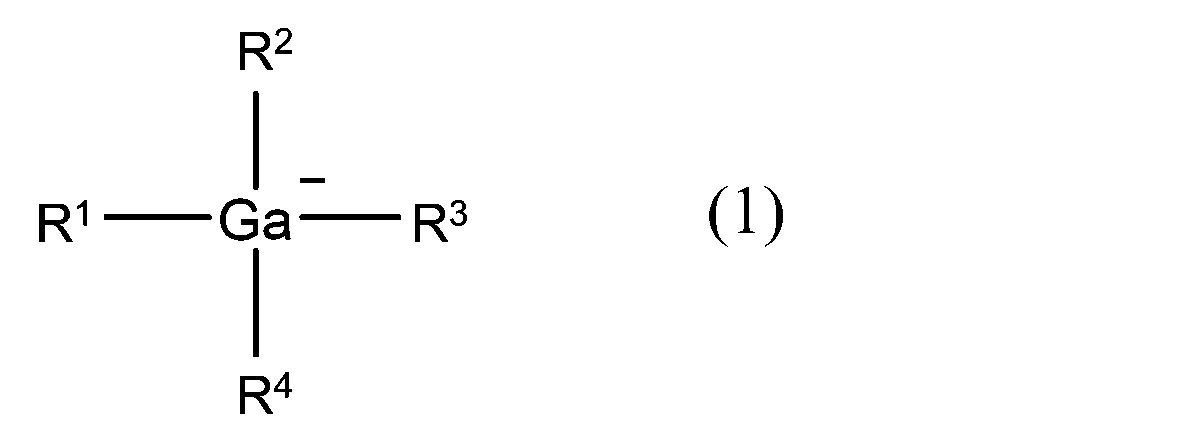
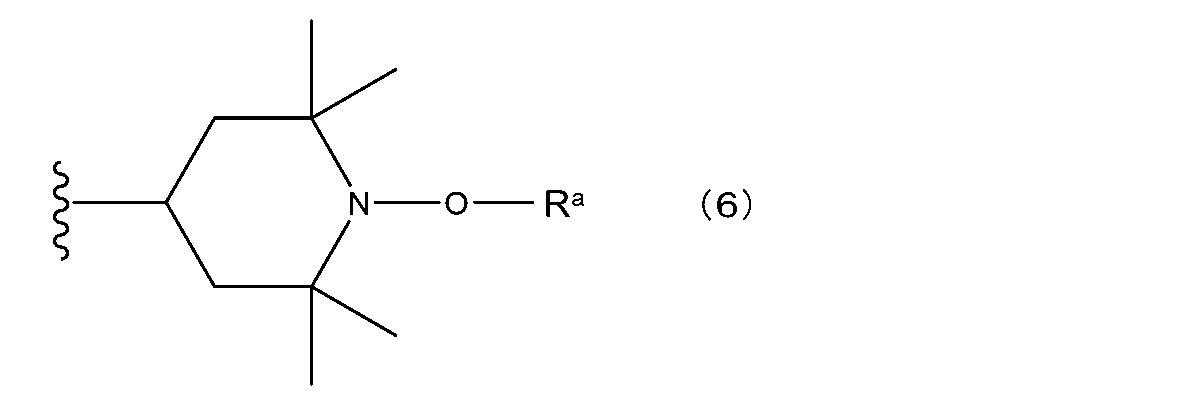
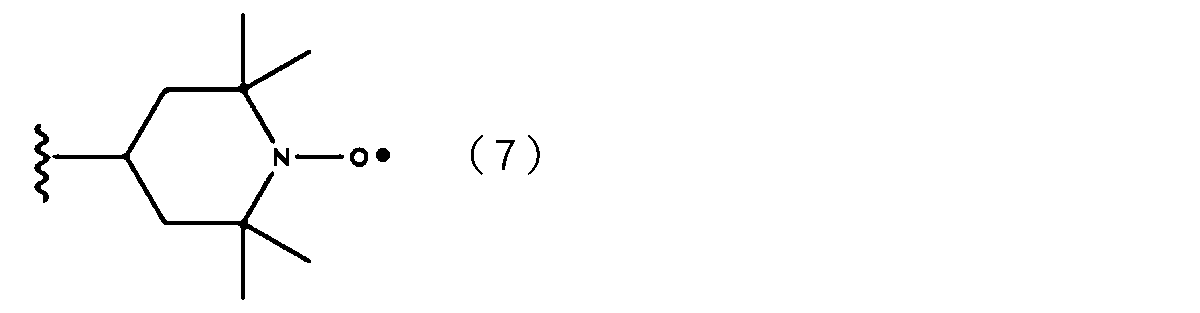
[3]
上記[1]または[2]に記載のレンズ用樹脂組成物であって、
上記安定化剤の上記塩基解離定数pKbが12.0以下である、レンズ用樹脂組成物。
[4]
下記一般式(1)で表されるアニオンと、カチオンと、から形成される塩を含む光カチオン重合開始剤(X)と、
分子内に2以上のエポキシ基を含むエポキシ化合物(Y)と、
下記一般式(6)で表される部分構造および下記一般式(7)で表される部分構造からなる群より選択される1種または2種以上の部分構造を含む安定化剤と、
を含むレンズ用樹脂組成物。


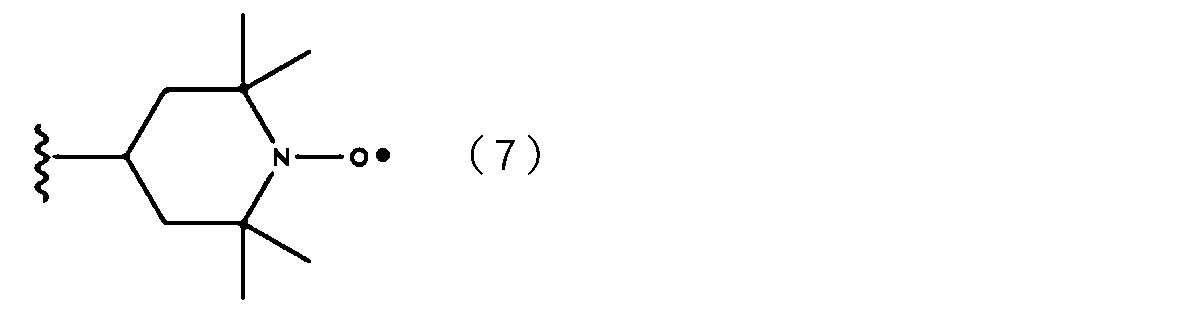
[5]
上記[1]~[4]のいずれかに記載のレンズ用樹脂組成物であって、
上記安定化剤の含有量が、上記エポキシ化合物(Y)100質量部に対して、0.01質量部以上5.0質量部以下である、レンズ用樹脂組成物。
[6]
上記[1]~[5]のいずれかに記載のレンズ用樹脂組成物であって、
上記エポキシ化合物(Y)が下記一般式(2)で表される、レンズ用樹脂組成物。

[7]
上記[1]~[6]のいずれかに記載のレンズ用樹脂組成物であって、
上記光カチオン重合開始剤(X)がアニオンとして下記式(3)で表されるアニオンおよび下記式(4)で表されるアニオンから選択される少なくとも一種を含む、レンズ用樹脂組成物。


上記[1]~[7]のいずれかに記載のレンズ用樹脂組成物であって、
上記光カチオン重合開始剤(X)がカチオンとしてスルホニウムイオンを含む、レンズ用樹脂組成物。
[9]
上記[1]~[8]のいずれかに記載のレンズ用樹脂組成物であって、
下記一般式(5)で表される単官能エポキシ化合物(Z)をさらに含む、レンズ用樹脂組成物。
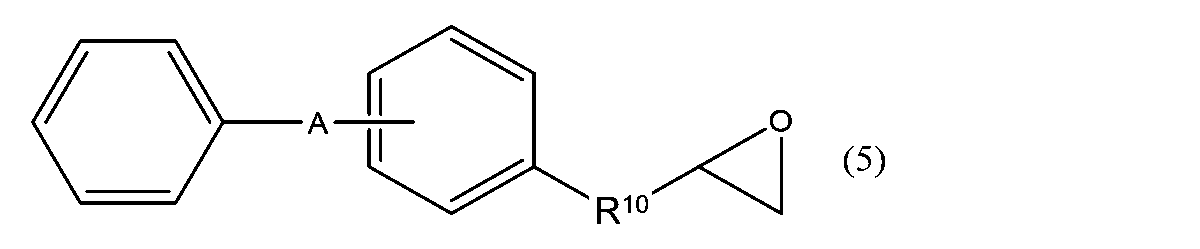
[10]
上記[9]に記載のレンズ用樹脂組成物であって、
上記単官能エポキシ化合物(Z)がo-フェニルフェノールグリシジルエーテルを含む、レンズ用樹脂組成物。
[11]
上記[1]~[10]のいずれかに記載のレンズ用樹脂組成物であって、
オキセタン化合物(W)をさらに含む、レンズ用樹脂組成物。
[12]
上記[11]に記載のレンズ用樹脂組成物であって、
上記オキセタン化合物(W)がビフェニル型オキセタン化合物を含む、レンズ用樹脂組成物。
[13]
上記[1]~[12]のいずれかに記載のレンズ用樹脂組成物であって、
上記レンズ用樹脂組成物をE型粘度計で温度25℃、回転数2.5rpmの条件で測定した際の粘度が100mPa・s以上5000mPa・s以下である、レンズ用樹脂組成物。
[14]
上記[1]~[13]のいずれかに記載のレンズ用樹脂組成物であって、
上記レンズ用樹脂組成物をガラス基板上に厚み250μmで塗布し、波長365nm、照射強度500mW/cm、積算照射量6000mJ/cm2の条件でUV露光し、窒素雰囲気下、120℃、30分間の条件で加熱して得られる硬化物の屈折率が1.55以上である、レンズ用樹脂組成物。
[15]
上記[1]~[14]のいずれかに記載のレンズ用樹脂組成物であって、
上記レンズ用樹脂組成物をガラス基板上に厚み250μmで塗布し、波長365nm、照射強度500mW/cm、積算照射量6000mJ/cm2の条件でUV露光し、窒素雰囲気下、120℃、30分間の条件で加熱して得られる硬化物について、紫外可視近赤外分光光度計を用いて下記(測定条件)で測定した厚み方向の光線透過率が70%以上である、レンズ用樹脂組成物。
(測定条件)
測定法:透過法
測定波長:400nm
リファレンス:大気
検出器:積分球/光電子増倍管(200nm~850nm)
積分球:PbS(850nm~2600nm)
[16]
上記[1]~[15]のいずれかに記載のレンズ用樹脂組成物であって、
上記レンズ用樹脂組成物をガラス基板上に厚み250μmで塗布し、波長365nm、照射強度500mW/cm、積算照射量6000mJ/cm2の条件でUV露光し、窒素雰囲気下、120℃、30分間の条件で加熱して得られる硬化物について、下記(耐熱試験)後の、紫外可視近赤外分光光度計を用いて下記(測定条件)で測定した厚み方向の光線透過率が70%以上である、レンズ用樹脂組成物。
(測定条件)
測定法:透過法
測定波長:400nm
リファレンス:大気
検出器:積分球/光電子増倍管(200nm~850nm)
積分球:PbS(850nm~2600nm)
(耐熱試験)
上記硬化物を空気雰囲気下、125℃に設定したオーブン中で168時間加熱する。
[17]
上記[1]~[16]のいずれかに記載のレンズ用樹脂組成物であって、ウエハレベルレンズに用いられる、レンズ用樹脂組成物。
[18]
上記[1]~[17]のいずれかに記載のレンズ用樹脂組成物を硬化することにより得られるレンズ用硬化物。
[19]
上記[18]に記載のレンズ用硬化物を備えるレンズ。
また、本発明のレンズ用硬化物は上記レンズ用樹脂組成物を硬化することにより得られるものであるため、高屈折率、高光線透過率、高耐熱性および耐ブリードアウト性の性能バランスが向上している。
さらに、本発明のレンズは上記レンズ用硬化物を備えるため、高屈折率、高光線透過率、高耐熱性および耐ブリードアウト性の性能バランスが向上している。
本実施形態では、数値範囲を示す「A~B」は特に断りがなければ、A以上B以下を表す。
本実施形態において、アルキル基等の基が「置換基を有する」ことは、特に断りがなければ、その構造中に存在する水素原子が置換基で置換されていることを意味する。置換基の位置及び置換基の数は特に限定されない。なお、置換基が炭素原子を有する場合、置換基を有する基の炭素数には置換基の炭素原子の数は含まれない。たとえば、フェニル基を置換基として有するエチル基の場合、炭素数2のアルキル基とみなす。
本実施形態における不揮発成分とは、溶剤などの揮発成分を除くレンズ用樹脂組成物の成分のことである。
本発明の第一の実施形態のレンズ用樹脂組成物は、下記一般式(1)で表されるアニオンと、カチオンと、から形成される塩を含む光カチオン重合開始剤(X)と、分子内に2以上のエポキシ基を含むエポキシ化合物(Y)と、下記<塩基解離指数pKbの測定方法>による塩基解離定数pKbが6.0以上の安定化剤と、を含む。
<塩基解離指数pKbの測定方法>
80質量%メタノール含有水溶液100gに、安定化剤0.1gを溶解させ、この溶液を3N-HCl水溶液で滴定しながら、pH測定器によって測定することでpH滴定曲線を得る。得られたpH滴定曲線を用いて、グラフ法によりpKb値を算出する。

すなわち、本発明の第一の実施形態のレンズ用樹脂組成物における安定化剤の上記塩基解離定数pKbは、高屈折率、高光線透過率、高耐熱性、耐着色性および耐ブリードアウト性の性能バランスをより向上できる観点から、6.0以上、好ましくは6.0以上15.0以下、より好ましくは7.0以上14.0以下、さらに好ましくは8.0以上13.0以下、さらに好ましくは9.0以上12.0以下、さらに好ましくは10.0以上11.5以下である。

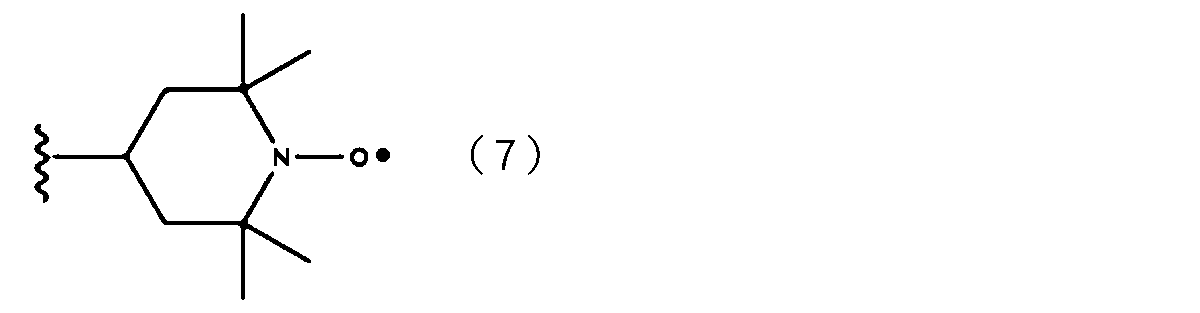
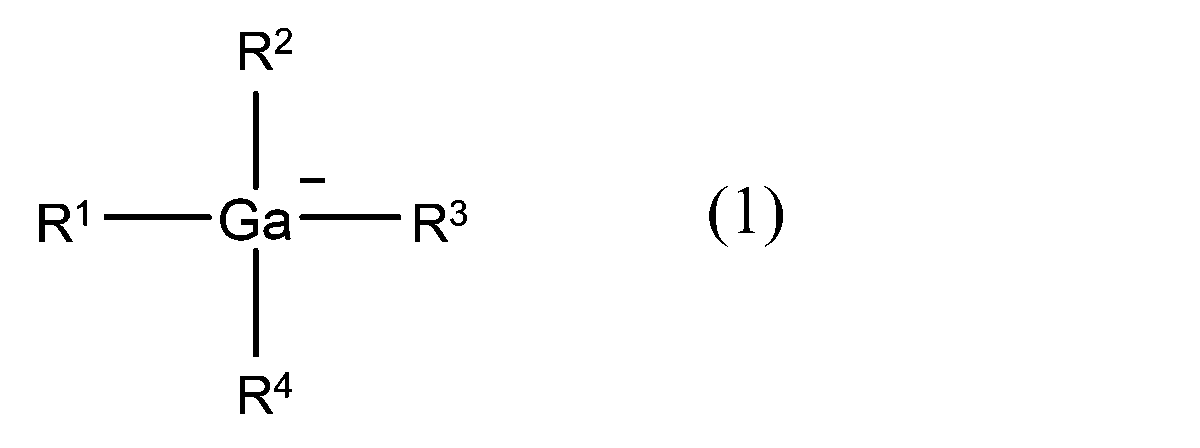
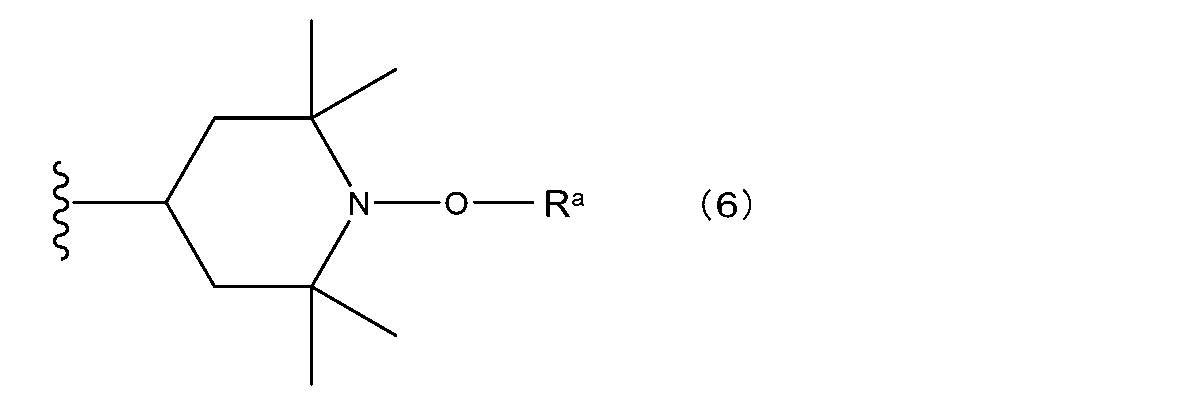
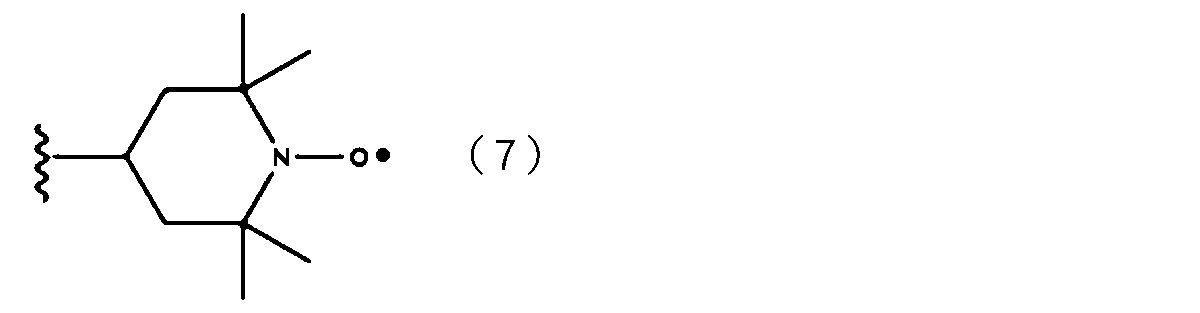
本実施形態のレンズ用樹脂組成物は、下記一般式(1)で表されるアニオンと、カチオンと、から形成される塩を含む光カチオン重合開始剤(X)を含む。

その具体例としては、メチル基、エチル基、プロピル基、イソプロピル基、n-ブチル基、t-ブチル基、ヘキシル基、オクチル基、2-エチルヘキシル基又はデシル基等のアルキル基;シクロペンチル基、シクロヘキシル基、シクロオクチル基、ノルボルニル基、ビシクロノニル基又はトリシクロデカン基等のシクロアルキル基;等を例示できる。




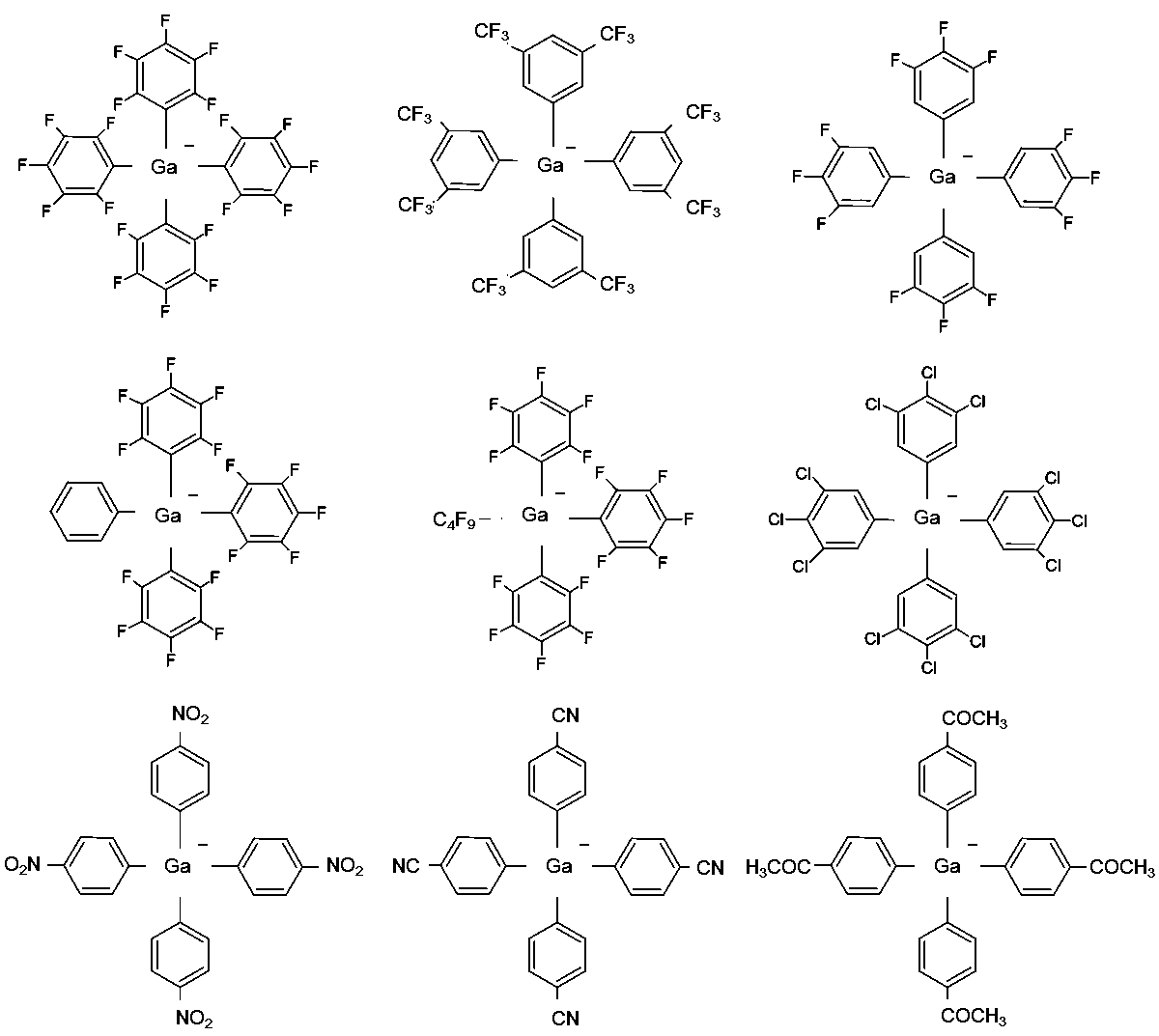
また、本実施形態のレンズ用樹脂組成物中の光カチオン重合開始剤(X)の含有量の上限値は、エポキシ化合物(Y)100質量部に対して、好ましくは15質量部以下、より好ましくは10質量部以下、さらに好ましくは8質量部以下、さらに好ましくは6質量部以下である。これにより、高光線透過率および耐ブリードアウト性の性能バランスを向上させることができる。
光カチオン重合開始剤(X)は一種のみを用いても複数種を混合して用いてもよい。複数種を混合して用いる場合、それぞれの光カチオン重合開始剤(X)の含有量の合計を光カチオン重合開始剤(X)の含有量とする。
本実施形態のレンズ用樹脂組成物は、分子内に2以上のエポキシ基を含むエポキシ化合物(Y)を含む。

本実施形態のレンズ用樹脂組成物の不揮発成分全体を100質量%としたとき、エポキシ化合物(Y)の含有量の上限値は、好ましくは99質量%以下、より好ましくは90質量%以下、さらに好ましくは80質量%以下、さらに好ましくは70質量%以下、さらに好ましくは60質量%以下である。これにより、高屈折率および高耐熱性の性能バランスを向上させることができる。
エポキシ化合物(Y)は一種のみを用いても複数種を混合して用いてもよい。複数種を混合して用いる場合、それぞれのエポキシ化合物(Y)の含有量の合計をエポキシ化合物(Y)の含有量とする。
本実施形態のレンズ用樹脂組成物は、下記一般式(6)で表される部分構造および下記一般式(7)で表される部分構造からなる群より選択される1種または2種以上の部分構造を含む安定化剤を含む。

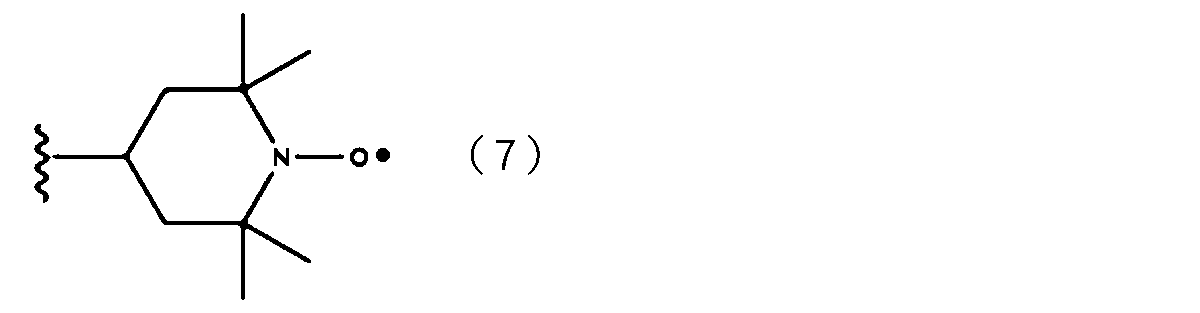
その具体例としては、メチル基、エチル基、プロピル基、イソプロピル基、n-ブチル基、t-ブチル基、ヘキシル基、オクチル基、2-エチルヘキシル基又はデシル基等のアルキル基;シクロペンチル基、シクロヘキシル基、シクロオクチル基、ノルボルニル基、ビシクロノニル基又はトリシクロデカン基等のシクロアルキル基;等を例示できる。
また、本実施形態の安定化剤の含有量の上限値、すなわち一般式(6)で表される部分構造および一般式(7)で表される部分構造からなる群より選択される1種または2種以上の部分構造を含む安定化剤の含有量の上限値は、エポキシ化合物(Y)100質量部に対して、好ましくは5.0質量部以下、より好ましくは3.0質量部以下、さらに好ましくは1.0質量部以下、さらに好ましくは0.5質量部以下、さらに好ましくは0.3質量部以下、さらに好ましくは0.2質量部以下である。これにより、本実施形態の樹脂組成物を用いたレンズ用硬化物の高屈折率および高耐熱性の性能バランスをより向上させることができる。
すなわち、本実施形態の安定化剤の含有量は、本実施形態の樹脂組成物を用いたレンズ用硬化物の高屈折率、高耐熱性、高光線透過率および耐ブリードアウト性の性能バランスをより向上させる観点から、エポキシ化合物(Y)100質量部に対して、好ましくは0.01質量部以上5.0質量部以下、より好ましくは0.01質量部以上3.0質量部以下、さらに好ましくは0.01質量部以上1.0質量部以下、さらに好ましくは0.05質量部以上0.5質量部以下、さらに好ましくは0.10質量部以上0.3質量部以下、さらに好ましくは0.15質量部以上0.2質量部以下である。
ヒンダードフェノール系酸化防止剤の市販品としては、ADEKA株式会社製のアデカスタブシリーズのAO-20、AO-30、AO-40、AO-50、AO-60及びAO-80等を例示できる。
リン系酸化防止剤の市販品としては、ADEKA株式会社製のアデカスタブシリーズのPEP-4C、PEP-8、PEP-24G、PEP-36、HP-10、260、522A、329K、1178、1500、135A及び3010等を例示できる。
ヒンダードアミン系酸化防止剤の市販品としては、BASF社製のTINUVINシリーズの111FDL、123、144、152、292及び5100等のヒンダードアミン系酸化防止剤等を例示できる。
本実施形態のレンズ用樹脂組成物は、必要に応じて、単官能エポキシ化合物(Z)、オキセタン化合物(W)、溶剤、接着性付与剤、ポリオール化合物、多価フェノール化合物、増感剤、イオンキャッチャー、光カチオン重合開始剤(X)以外の光カチオン重合開始剤(その他の光カチオン重合開始剤)等を含有していてもよい。
本実施形態のレンズ用樹脂組成物は、一般式(5)で表される単官能エポキシ化合物(Z)をさらに含むことが好ましい。
これにより、レンズ用樹脂組成物から形成されるレンズ用硬化体の耐熱性をより向上させることができる。またこれにより、レンズ用樹脂組成物のガラス接着性を向上させることができる。

R10は炭素数1~4のアルキレンであることが好ましく、炭素数1~2のアルキレンであることがより好ましい。
また、本実施形態のレンズ用樹脂組成物が単官能エポキシ化合物(Z)を含有する場合、その含有量の上限値は、本実施形態のレンズ用樹脂組成物の不揮発成分中、好ましくは70質量%以下、より好ましくは60質量%以下、さらに好ましくは50質量%以下、さらに好ましくは40質量%以下である。これにより、レンズ用樹脂組成物のガラス接着性をより向上させることができる。
また、本実施形態のレンズ用樹脂組成物が単官能エポキシ化合物(Z)を含有する場合、その含有量の上限値は、エポキシ化合物(Y)100質量部に対して、好ましくは200質量部以下、より好ましくは150質量部以下、さらに好ましくは100質量部以下、さらに好ましくは80質量部以下、さらに好ましくは75質量部以下である。これにより、レンズ用樹脂組成物のガラス接着性をより向上させることができる。
本実施形態のレンズ用樹脂組成物は、オキセタン化合物(W)をさらに含むことが好ましい。
これにより、レンズ用樹脂組成物から形成されるレンズ用硬化体の耐熱性をより向上させることができる。また、これによりレンズ用樹脂組成物のガラス接着性を向上させることができる。また、これにより樹脂組成物の硬化性を向上させることができる。
また、本実施形態のレンズ用樹脂組成物がオキセタン化合物(W)を含有する場合、本実施形態のレンズ用樹脂組成物中のオキセタン化合物(W)の含有量の上限値は、好ましくは50質量%以下、より好ましくは40質量%以下、さらに好ましくは30質量%以下、さらに好ましくは20質量%以下、さらに好ましくは10質量%以下、さらに好ましくは5質量%以下である。これにより、レンズ用樹脂組成物のガラス接着性をより向上させることができる。
また、本実施形態のレンズ用樹脂組成物がオキセタン化合物(W)を含有する場合、本実施形態のレンズ用樹脂組成物中のオキセタン化合物(W)の含有量の上限値は、好ましくは200質量部以下、より好ましくは150質量部以下、さらに好ましくは100質量部以下、さらに好ましくは80質量部以下、さらに好ましくは60質量部以下、さらに好ましくは40質量部以下、さらに好ましくは25質量部以下、さらに好ましくは15質量部以下、さらに好ましくは10質量部以下である。これにより、レンズ用樹脂組成物のガラス接着性をより向上させることができる。
本実施形態のレンズ用樹脂組成物が含有する溶剤は、特に限定されないが、レンズ用樹脂組成物の各成分を溶解可能なものが好ましく用いられる。このような有機溶剤としては、アセトン、エチルメチルケトン、メチルイソブチルケトン、シクロヘキサノン及びシクロペンタノン等のケトン類;トルエン、キシレン、メトキシベンゼン及びテトラメチルベンゼン等の芳香族炭化水素類;ジグライム、ジプロピレングリコールジメチルエーテル及びジプロピレングリコールジエチルエーテル等のグリコールエーテル類;乳酸エチル、乳酸ブチル、乳酸プロピル、酢酸エチル、アセト酢酸メチル、アセト酢酸エチル、プロピオン酸メチル、プロピオン酸エチル、プロピオン酸プロピル、プロピオン酸イソプロピル、2-ヒドロキシプロピオン酸メチル、2-ヒドロキシプロピオン酸エチル、メチル-3-メトキシプロピオネート、エチル-3-メトキシプロピオネート、エチル-3-エトキシプロピオネート、プロピル-3-メトキシプロピオネート、酢酸ブチル、ブチルセロソルブアセテート、カルビトールアセテート、及びプロピレングリコールモノメチルエーテルアセテート等のエステル類;α-アセトラクトン、β-プロピオラクトン、γ-ブチロラクトン及びδ-バレロラクトン等のラクトン類;メタノール、エタノール、セロソルブ及びメチルセロソルブ等のアルコール類;オクタン及びデカン等の脂肪族炭化水素;石油エーテル、石油ナフサ、水添石油ナフサ及びソルベントナフサ等の石油系溶剤;等を例示できる。
溶剤は一種のみを用いても複数種を混合して用いてもよく、複数種を混合して用いる場合、それぞれの溶剤の含有量の合計を溶剤の含有量とする。
本実施形態のレンズ用樹脂組成物が含有する接着性付与剤は、特に限定されず、公知のシランカップリング剤やチタンカップリング剤等を用いることができる。ガラス接着性向上の観点からシランカップリング剤を用いることが好ましい。
本実施形態のレンズ用樹脂組成物が接着性付与剤を含有する場合、本実施形態のレンズ用樹脂組成物中の接着性付与剤の含有量は、本発明の効果を損なわない範囲であれば特に限定されず、本実施形態のレンズ用樹脂組成物の不揮発成分中、好ましくは0.1質量%以上、より好ましくは0.5質量%以上、さらに好ましくは0.8質量%以上である。
接着性付与剤は一種のみを用いても複数種を混合して用いてもよく、複数種を混合して用いる場合、それぞれの接着性付与剤の含有量の合計を接着性付与剤の含有量とする。
本実施形態のレンズ用樹脂組成物がポリオール化合物を含有する場合、ポリオール化合物としては、特に限定されないが、典型的には、強酸触媒の影響の下でエポキシ基と反応するヒドロキシ基を含むポリエステルポリオール系化合物である。たとえば、特許公報5901070号に挙げられているポリオール化合物を用いることができる。
ポリオール化合物は一種のみを用いても複数種を混合して用いてもよく、複数種を混合して用いる場合、それぞれのポリオール化合物の含有量の合計をポリオール化合物の含有量とする。
本実施形態のレンズ用樹脂組成物が多価フェノール化合物を含有する場合、本実施形態のレンズ用樹脂組成物中の多価フェノール化合物の含有量は、本発明の効果を損なわない範囲であれば特に限定されず、エポキシ化合物(Y)100質量部に対して、例えば3~40質量部、好ましくは4~30質量部、より好ましくは5~25質量部である。
多価フェノール化合物は一種のみを用いても複数種を混合して用いてもよく、複数種を混合して用いる場合、それぞれの多価フェノール化合物の含有量の合計を多価フェノール化合物の含有量とする。
本実施形態のレンズ用樹脂組成物が含有する増感剤は、吸収した光エネルギーを光カチオン重合開始剤に供与する役割を果たすものである。たとえば、チオキサントン類、9位と10位にアルコキシ基を有するアントラセン化合物(9,10-ジアルコキシアントラセン誘導体)等を例示できる。
本実施形態のレンズ用樹脂組成物が増感剤を含有する場合、本実施形態のレンズ用樹脂組成物中の増感剤の含有量は、本発明の効果を損なわない範囲であれば特に限定されず、光カチオン重合開始剤(X)100質量部に対して、例えば0.1質量部以上である。
増感剤は一種のみを用いても複数種を混合して用いてもよく、複数種を混合して用いる場合、それぞれの増感剤の含有量の合計を増感剤の含有量とする。
本実施形態のレンズ用樹脂組成物が含有するイオンキャッチャーは、光カチオン重合開始剤(X)由来のイオンによる悪影響を低減し得るものである。たとえば、有機アルミニウム化合物類や、紫外線照射によって弱酸を発するオニウム弱酸塩化合物をイオンキャッチャーとして用いることができる。
イオンキャッチャーは一種のみを用いても複数種を混合して用いてもよく、複数種を混合して用いる場合、それぞれのイオンキャッチャーの含有量の合計をイオンキャッチャーの含有量とする。
本実施形態のレンズ用樹脂組成物は、光カチオン重合開始剤(X)以外の光カチオン重合開始剤(その他の光カチオン重合開始剤)を含有してもよい。
本実施形態のレンズ用樹脂組成物が含有するその他の光カチオン重合開始剤は特に限定されず、公知のものを用いることができる。
本実施形態のレンズ用樹脂組成物は、上記成分以外にも、必要に応じて、熱可塑性樹脂、着色剤、増粘剤、消泡剤、レベリング剤等の各種添加剤を含有してもよい。
本実施形態のレンズ用樹脂組成物は、上記した各成分を通常の方法で攪拌、混合することにより得ることができる。あるいは、必要に応じディゾルバー、ホモジナイザー、3本ロールミルなどの分散機を用いて分散、混合させてもよい。また、混合した後で、さらにメッシュ、メンブレンフィルターなどを用いてろ過してもよい。
本実施形態のレンズ用樹脂組成物の粘度は、たとえばE型粘度計により測定することができる。
本実施形態のレンズ用樹脂組成物を、E型粘度計を用いて、温度25℃、回転数2.5rpmの条件で測定した際の粘度の下限値は、好ましくは100mPa・s以上、より好ましくは200mPa・s以上、さらに好ましくは500mPa・s以上、さらに好ましくは700mPa・s以上である。これにより、レンズ用樹脂組成物の硬化性が向上する。
また、上記粘度の上限値は、好ましくは5000mPa・s以下、より好ましくは3000mPa・s以下、さらに好ましくは2000mPa・s以下、さらに好ましくは1500mPa・s以下である。これにより、レンズ用樹脂組成物の成形性が向上する。
レンズ用硬化物の屈折率が上記下限値以上であることにより、レンズの光学特性を向上させることができる。
また、レンズ用硬化物の屈折率の上限値は特に限定されないが、例えば1.90以下、1.80以下、1.75以下、1.70以下である。
また、上記光線透過率の上限値は特に限定されないが、例えば100%以下である。
測定法:透過法
測定波長:400nm
リファレンス:大気
検出器:積分球/光電子増倍管(200nm~850nm)
積分球:PbS(850nm~2600nm)
また、上記光線透過率(耐熱試験後)の上限値は特に限定されないが、例えば100%以下である。
測定法:透過法
測定波長:400nm
リファレンス:大気
検出器:積分球/光電子増倍管(200nm~850nm)
積分球:PbS(850nm~2600nm)
本実施形態のレンズ用樹脂組成物は、ウエハレベルレンズ用として好適に用いられる。
図1は、複数のウエハレベルレンズを有するウエハレベルレンズアレイの構成の一例を示す平面図である。図1に示されるように、ウエハレベルレンズアレイ1は、基板2と、該基板2に配列された複数のレンズ10とを備えている。複数のレンズ10は、基板2に対して1次元又は2次元に配列するように形成される。ウエハレベルレンズアレイ1上に形成されたレンズ10はその後一つ一つに切り分けられる。
本実施形態のレンズ用硬化物は、上記のレンズ用樹脂組成物を硬化することにより得ることができる。
また、本実施形態のレンズ用硬化物は、本実施形態のレンズ用硬化物を備えるウエハレベルレンズなどの部材を回路基板に実装するため、30℃以上300℃以下の温度環境下でリフロー処理をおこなわれていてもよい。
PDMS基板(120×80×1mmt)上にレンズ用樹脂組成物を滴下し、厚み250μmのシリコーン製スペーサーを介して上記と同様のPDMS基板で挟み込んでクリップで固定する。これに対し、メタルハライドランプを用いて、UVAにおける照射強度が500mW/cmで積算照射量が6000mJ/cm2になるようUV露光し、レンズ用樹脂組成物を硬化させる。
続いて、硬化させたレンズ用樹脂組成物をPDMS基板から離型し、窒素雰囲気下、120℃で30分間加熱することでリフロー処理前のレンズ用硬化物を得る。
次いで、上記リフロー処理前のレンズ用硬化物に対し、以下の表1に示す条件でリフロー加熱処理を行い、リフロー処理後のレンズ用硬化物を得る。
その後、上記リフロー処理後のレンズ用硬化物の固体粘弾性を、以下の条件で測定する。
装置 :RSA-G2(ティー・エイ・インスツルメント社製)
変形モード :引張
温度範囲 :-50℃~180℃
昇温温度 :3℃/min
周波数 :1Hz
環境 :N2雰囲気
そして、粘弾性の測定結果から、tanδの値が極大値を示す温度を、Tgとして測定する。

また、レンズ用硬化物の屈折率の上限値は特に限定されないが、例えば1.90以下、1.80以下、1.75以下、1.70以下である。
また、上記光線透過率の上限値は特に限定されないが、例えば100%以下である。
本実施形態のレンズは、上記のレンズ用硬化物を備える。
レンズ用硬化物と積層される他の材料の例としては、例えば、ガラスを挙げることができる。ガラスは種類が豊富であり、高屈折率を有するものを選択できるので、高い光学特性が要求されるレンズの素材に好適である。また、ガラスには耐熱性に優れるという利点も有する。
また、樹脂を用いてもよい。樹脂は加工性に優れており、レンズを簡易且つ安価に形成するのに適している。
また、本発明は前述の実施形態に限定されるものではなく、本発明の目的を達成できる範囲での変形、改良等は本発明に含まれるものである。
表3に記載された原料を50℃で加温しながら均一になるまで攪拌・混合することで、各実施例および各比較例のレンズ用樹脂組成物を得た。
表3に記載された原料は下記の通りである。
・光カチオン重合開始剤:チオフェニルジフェニルスルホニウムトリス(ペンタフルオロエチル)トリフルオロホスフェート、サンアプロ株式会社製、製品名:CPI-210S
・光安定化剤2:ヒンダードアミン系光安定化剤(ビス(1,2,2,6,6-ペンタメチル-4-ピペリジル)セバケート)、株式会社ADEKA製、製品名:アデカスタブLA-72、塩基解離定数pKb:5.8
・光安定化剤3:ヒンダードアミン系光安定化剤(セバシン酸ビス[1-(オクチルオキシ)-2,2,6,6-テトラメチル-4-ピペリジニル])、BASF株式会社製、製品名:Tinuvin 123、塩基解離定数pKb:11.5
・光安定化剤4:ヒンダードアミン系光安定化剤(2-[[4,6-ビス[ブチル[1-(シクロヘキシルオキシ)-2,2,6,6-テトラメチルピペリジン-4-イル]アミノ]-1,3,5-トリアジン-2-イル]アミノ]エタノール)、BASF株式会社製、製品名:Tinuvin 152、塩基解離定数pKb:10.6
・光安定化剤5:ヒンダードアミン系光安定化剤(セバシン酸ビス(2,2,6,6-テトラメチル-4-ピペリジル-1-オキシル))、東京化成工業株式会社製、塩基解離定数pKb:10.1
各光安定化剤の塩基解離定数pKbは、以下の方法により測定した。
80質量%メタノール含有水溶液100gに、各光安定化剤0.1gを溶解させ、この溶液を3N-HCl水溶液で滴定しながら、pH測定器(堀場製作所社製)によって測定することでpH滴定曲線を得る。得られたpH滴定曲線を用いて、グラフ法によりpKb値を算出する。
E型粘度計(TVE-25L、東機産業株式会社製)を用いて、温度25℃、回転数2.5rpmの条件で、各実施例および各比較例のレンズ用樹脂組成物の粘度を測定した。コーンプレートは、サンプルの粘度に応じて、1°34’×R24、3°×R14、3°×R9.7から適宜選択した。結果を表3に示す。
PDMS基板(120×80×1mmt、デュポン・東レ・スペシャルティ・マテリアル株式会社製)上にレンズ用樹脂組成物を滴下し、厚み250μmのシリコーン製スペーサーを介して上記と同様のPDMS基板で挟み込んでクリップで固定した。これに対し、メタルハライドランプを用いて、UVAにおける照射強度が500mW/cmで積算照射量が6000mJ/cm2になるようUV露光し、レンズ用樹脂組成物を硬化させた。
続いて、硬化させたレンズ用樹脂組成物をPDMS基板から離型し、窒素雰囲気下、120℃で30分間加熱することでリフロー処理前のレンズ用硬化物1を得た。
各実施例および各比較例におけるリフロー処理前のレンズ用硬化物1に対し、卓上型加熱炉装置(SVO-1、株式会社シンアペックス製)を用いて以下の表2に示す条件でリフロー加熱処理を行い、リフロー処理後のレンズ用硬化物1を得た。
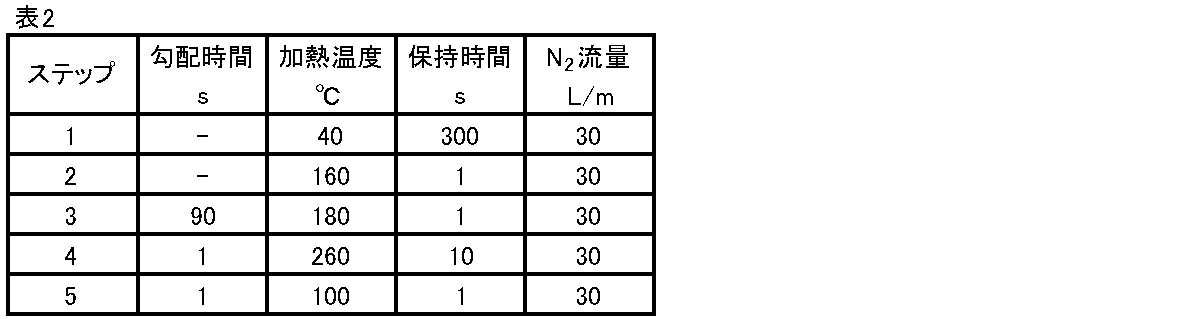
各実施例および各比較例におけるリフロー処理後のレンズ用硬化物1の屈折率を、アッベ屈折計(DR-M2、株式会社アタゴ製)を用いて測定した。干渉フィルターとしてRE-3520(589nm、D線、株式会社アタゴ製)、中間液としてRE-1196(モノブロモナフタレン、株式会社アタゴ製)を使用し、サンプル温度は25℃になるよう設定して測定を行なった。結果を表3に示す。
各実施例および比較例におけるリフロー処理後のレンズ用硬化物1の固体粘弾性を、以下の条件で測定した。
装置 :RSA-G2(ティー・エイ・インスツルメント社製)
変形モード :引張
温度範囲 :-50℃~180℃
昇温温度 :3℃/min
周波数 :1Hz
環境 :N2雰囲気
PDMS基板(120×80×1mmt、デュポン・東レ・スペシャルティ・マテリアル株式会社製)上にレンズ用樹脂組成物を滴下し、厚み250μmのシリコーン製スペーサーを介して硼珪酸ガラス基板(D263t eco、120×80×0.2mmt、SCHOTT社製)で挟み込んでクリップで固定した。これに対し、メタルハライドランプを用いて、UVAにおける照射強度が500mW/cmで積算照射量が6000mJ/cm2になるようUV露光し、レンズ用樹脂組成物を硬化させた。
続いて、硬化させたレンズ用樹脂組成物をPDMS基板から離型し、窒素雰囲気下、120℃で30分間加熱することでリフロー処理前のレンズ用硬化物2を得た。
各実施例および各比較例におけるリフロー処理前のレンズ用硬化物2に対し、卓上型加熱炉装置(SVO-1、株式会社シンアペックス製)を用いて上記表2に示す条件でリフロー加熱処理を行い、リフロー処理後のレンズ用硬化物2を得た。
各実施例および各比較例における、リフロー処理後のレンズ用硬化物2の厚み方向の光線透過率を下記(測定条件)で測定し、耐熱試験前の光線透過率を得た。なお、測定はレンズ用硬化物2を積分球に貼り付けて行い、入光面はガラス面とした。結果を表3に示す。
(測定条件)
測定装置:UH4150(日立ハイテクサイエンス社製 紫外可視近赤外分光光度計)
測定法:透過法
測定波長:400nm
リファレンス:大気
検出器:積分球/光電子増倍管(200nm~850nm)
積分球:PbS(850nm~2600nm)
まず、リフロー処理後のレンズ用硬化物2を空気雰囲気下、125℃に設定したオーブン中で168時間加熱することで耐熱試験を行った。耐熱試験後のレンズ用硬化物2について、上記条件で厚み方向の光線透過率を測定し、耐熱試験後の光線透過率を得た。結果を表3に示す。
各実施例および各比較例における、上記リフロー処理前後のレンズ用硬化物2および上記<耐熱試験後の光線透過率>にて得られた耐熱試験後のレンズ用硬化物2について、樹脂表面を3D測定レーザー顕微鏡(LEXT OLS5000、オリンパス株式会社製)を用いて、倍率50倍で異物有無について観察を行った。このとき、250μm四方の観察範囲内に、直径1.0μm以上/高さ50nm以上の凸状成分が10個以上確認された場合に異物が発生したと判定した。結果を表3に示す。

本発明は以下の態様も含む。
1. 下記一般式(1)で表されるアニオンと、カチオンと、から形成される塩を含む光カチオン重合開始剤(X)と、
分子内に2以上のエポキシ基を含むエポキシ化合物(Y)と、
下記一般式(6)で表される部分構造を含む安定化剤と、
を含むレンズ用樹脂組成物。

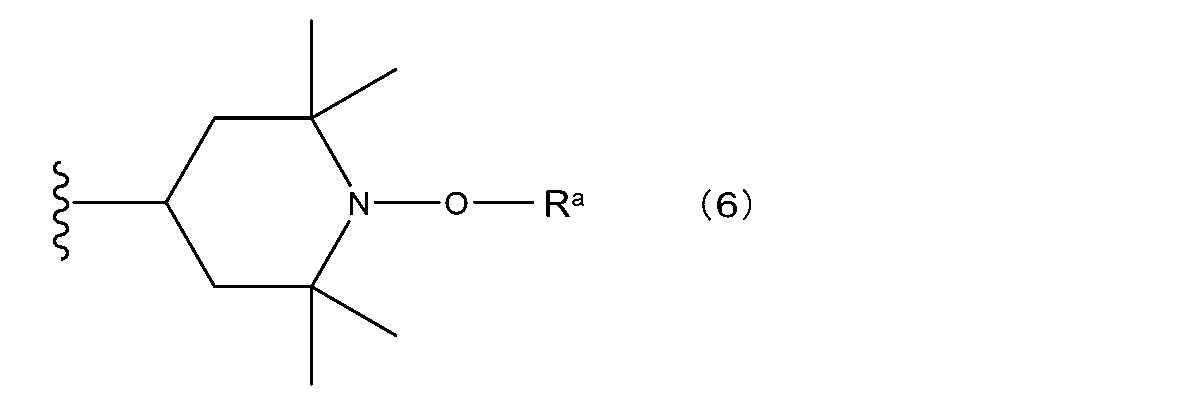
2. 1.に記載のレンズ用樹脂組成物であって、
前記エポキシ化合物(Y)が下記一般式(2)で表される、レンズ用樹脂組成物。

3. 1.または2.に記載のレンズ用樹脂組成物であって、
前記光カチオン重合開始剤(X)がアニオンとして下記式(3)で表されるアニオンおよび下記式(4)で表されるアニオンから選択される少なくとも一種を含む、レンズ用樹脂組成物。


前記光カチオン重合開始剤(X)がカチオンとしてスルホニウムイオンを含む、レンズ用樹脂組成物。
5. 1.~4.のいずれかに記載のレンズ用樹脂組成物であって、
下記一般式(5)で表される単官能エポキシ化合物(Z)をさらに含む、レンズ用樹脂組成物。
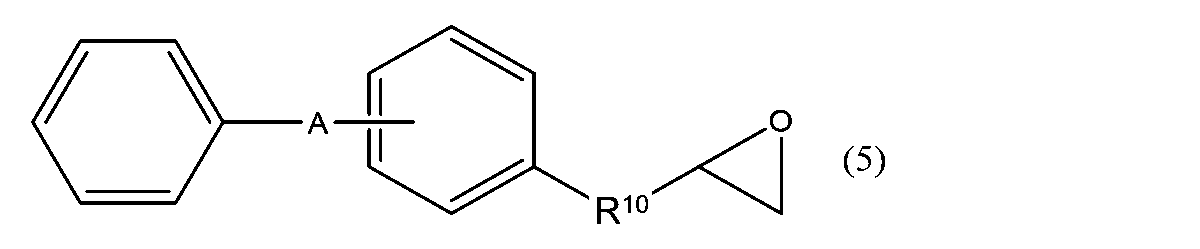
6. 5.に記載のレンズ用樹脂組成物であって、
前記単官能エポキシ化合物(Z)がo-フェニルフェノールグリシジルエーテルを含む、レンズ用樹脂組成物。
7. 1.~6.のいずれかに記載のレンズ用樹脂組成物であって、
オキセタン化合物(W)をさらに含む、レンズ用樹脂組成物。
8. 7.に記載のレンズ用樹脂組成物であって、
前記オキセタン化合物(W)がビフェニル型オキセタン化合物を含む、レンズ用樹脂組成物。
9. 1.~8.のいずれかに記載のレンズ用樹脂組成物であって、
前記レンズ用樹脂組成物をE型粘度計で温度25℃、回転数2.5rpmの条件で測定した際の粘度が100mPa・s以上5000mPa・s以下である、レンズ用樹脂組成物。
10. 1.~9.のいずれかに記載のレンズ用樹脂組成物であって、
前記レンズ用樹脂組成物をガラス基板上に厚み250μmで塗布し、波長365nm、照射強度500mW/cm、積算照射量6000mJ/cm2の条件でUV露光し、窒素雰囲気下、120℃、30分間の条件で加熱して得られる硬化物の屈折率が1.55以上である、レンズ用樹脂組成物。
11. 1.~10.のいずれかに記載のレンズ用樹脂組成物であって、
前記レンズ用樹脂組成物をガラス基板上に厚み250μmで塗布し、波長365nm、照射強度500mW/cm、積算照射量6000mJ/cm2の条件でUV露光し、窒素雰囲気下、120℃、30分間の条件で加熱して得られる硬化物について、紫外可視近赤外分光光度計を用いて下記(測定条件)で測定した厚み方向の光線透過率が70%以上である、レンズ用樹脂組成物。
(測定条件)
測定法:透過法
測定波長:400nm
リファレンス:大気
検出器:積分球/光電子増倍管(200nm~850nm)
積分球:PbS(850nm~2600nm)
12. 1.~11.のいずれかに記載のレンズ用樹脂組成物であって、
前記レンズ用樹脂組成物をガラス基板上に厚み250μmで塗布し、波長365nm、照射強度500mW/cm、積算照射量6000mJ/cm2の条件でUV露光し、窒素雰囲気下、120℃、30分間の条件で加熱して得られる硬化物について、下記(耐熱試験)後の、紫外可視近赤外分光光度計を用いて下記(測定条件)で測定した厚み方向の光線透過率が70%以上である、レンズ用樹脂組成物。
(測定条件)
測定法:透過法
測定波長:400nm
リファレンス:大気
検出器:積分球/光電子増倍管(200nm~850nm)
積分球:PbS(850nm~2600nm)
(耐熱試験)
前記硬化物を空気雰囲気下、125℃に設定したオーブン中で168時間加熱する。
13. 1.~12.のいずれかに記載のレンズ用樹脂組成物であって、ウエハレベルレンズに用いられる、レンズ用樹脂組成物。
14. 1.~13.のいずれかに記載のレンズ用樹脂組成物を硬化することにより得られるレンズ用硬化物。
15. 14.に記載のレンズ用硬化物を備えるレンズ。
2 基板
10 レンズ
Claims (19)
- 下記一般式(1)で表されるアニオンと、カチオンと、から形成される塩を含む光カチオン重合開始剤(X)と、
分子内に2以上のエポキシ基を含むエポキシ化合物(Y)と、
下記<塩基解離指数pKbの測定方法>による塩基解離定数pKbが6.0以上の安定化剤と、
を含むレンズ用樹脂組成物。
<塩基解離指数pKbの測定方法>
80質量%メタノール含有水溶液100gに、安定化剤0.1gを溶解させ、この溶液を3N-HCl水溶液で滴定しながら、pH測定機によって測定することでpH滴定曲線を得る。得られたpH滴定曲線を用いて、グラフ法によりpKb値を算出する。 - 請求項1に記載のレンズ用樹脂組成物であって、
前記安定化剤が、下記一般式(6)で表される部分構造および下記一般式(7)で表される部分構造からなる群より選択される1種または2種以上で表される部分構造を含む安定化剤を含むレンズ用樹脂組成物。


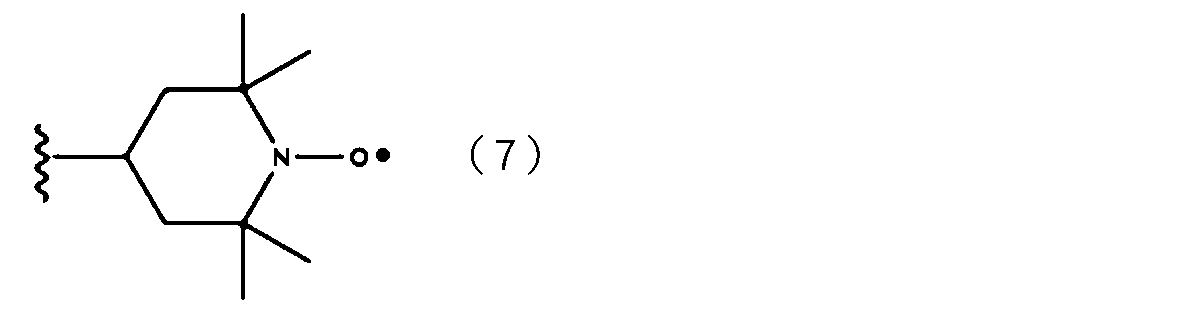
- 請求項1または2に記載のレンズ用樹脂組成物であって、
前記安定化剤の前記塩基解離定数pKbが12.0以下である、レンズ用樹脂組成物。 - 下記一般式(1)で表されるアニオンと、カチオンと、から形成される塩を含む光カチオン重合開始剤(X)と、
分子内に2以上のエポキシ基を含むエポキシ化合物(Y)と、
下記一般式(6)で表される部分構造および下記一般式(7)で表される部分構造からなる群より選択される1種または2種以上の部分構造を含む安定化剤と、
を含むレンズ用樹脂組成物。


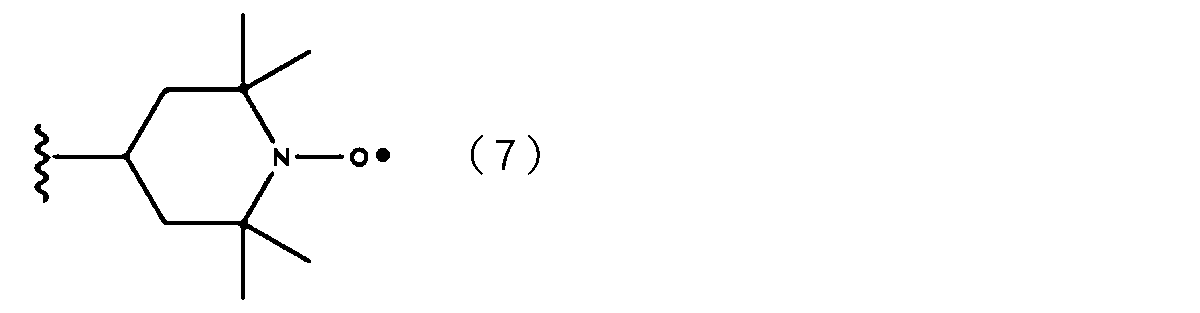
- 請求項1~4のいずれかに記載のレンズ用樹脂組成物であって、
前記安定化剤の含有量が、前記エポキシ化合物(Y)100質量部に対して、0.01質量部以上5.0質量部以下である、レンズ用樹脂組成物。 - 請求項1~5のいずれかに記載のレンズ用樹脂組成物であって、
前記エポキシ化合物(Y)が下記一般式(2)で表される、レンズ用樹脂組成物。

- 請求項1~6のいずれかに記載のレンズ用樹脂組成物であって、
前記光カチオン重合開始剤(X)がアニオンとして下記式(3)で表されるアニオンおよび下記式(4)で表されるアニオンから選択される少なくとも一種を含む、レンズ用樹脂組成物。


- 請求項1~7のいずれかに記載のレンズ用樹脂組成物であって、
前記光カチオン重合開始剤(X)がカチオンとしてスルホニウムイオンを含む、レンズ用樹脂組成物。 - 請求項1~8のいずれかに記載のレンズ用樹脂組成物であって、
下記一般式(5)で表される単官能エポキシ化合物(Z)をさらに含む、レンズ用樹脂組成物。
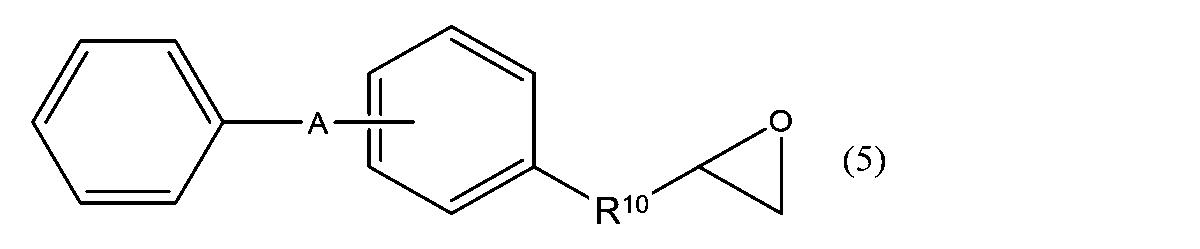
- 請求項9に記載のレンズ用樹脂組成物であって、
前記単官能エポキシ化合物(Z)がo-フェニルフェノールグリシジルエーテルを含む、レンズ用樹脂組成物。 - 請求項1~10のいずれかに記載のレンズ用樹脂組成物であって、
オキセタン化合物(W)をさらに含む、レンズ用樹脂組成物。 - 請求項11に記載のレンズ用樹脂組成物であって、
前記オキセタン化合物(W)がビフェニル型オキセタン化合物を含む、レンズ用樹脂組成物。 - 請求項1~12のいずれかに記載のレンズ用樹脂組成物であって、
前記レンズ用樹脂組成物をE型粘度計で温度25℃、回転数2.5rpmの条件で測定した際の粘度が100mPa・s以上5000mPa・s以下である、レンズ用樹脂組成物。 - 請求項1~13のいずれかに記載のレンズ用樹脂組成物であって、
前記レンズ用樹脂組成物をガラス基板上に厚み250μmで塗布し、波長365nm、照射強度500mW/cm、積算照射量6000mJ/cm2の条件でUV露光し、窒素雰囲気下、120℃、30分間の条件で加熱して得られる硬化物の屈折率が1.55以上である、レンズ用樹脂組成物。 - 請求項1~14のいずれかに記載のレンズ用樹脂組成物であって、
前記レンズ用樹脂組成物をガラス基板上に厚み250μmで塗布し、波長365nm、照射強度500mW/cm、積算照射量6000mJ/cm2の条件でUV露光し、窒素雰囲気下、120℃、30分間の条件で加熱して得られる硬化物について、紫外可視近赤外分光光度計を用いて下記(測定条件)で測定した厚み方向の光線透過率が70%以上である、レンズ用樹脂組成物。
(測定条件)
測定法:透過法
測定波長:400nm
リファレンス:大気
検出器:積分球/光電子増倍管(200nm~850nm)
積分球:PbS(850nm~2600nm) - 請求項1~15のいずれかに記載のレンズ用樹脂組成物であって、
前記レンズ用樹脂組成物をガラス基板上に厚み250μmで塗布し、波長365nm、照射強度500mW/cm、積算照射量6000mJ/cm2の条件でUV露光し、窒素雰囲気下、120℃、30分間の条件で加熱して得られる硬化物について、下記(耐熱試験)後の、紫外可視近赤外分光光度計を用いて下記(測定条件)で測定した厚み方向の光線透過率が70%以上である、レンズ用樹脂組成物。
(測定条件)
測定法:透過法
測定波長:400nm
リファレンス:大気
検出器:積分球/光電子増倍管(200nm~850nm)
積分球:PbS(850nm~2600nm)
(耐熱試験)
前記硬化物を空気雰囲気下、125℃に設定したオーブン中で168時間加熱する。 - 請求項1~16のいずれかに記載のレンズ用樹脂組成物であって、ウエハレベルレンズに用いられる、レンズ用樹脂組成物。
- 請求項1~17のいずれかに記載のレンズ用樹脂組成物を硬化することにより得られるレンズ用硬化物。
- 請求項18に記載のレンズ用硬化物を備えるレンズ。
Priority Applications (2)
| Application Number | Priority Date | Filing Date | Title |
|---|---|---|---|
| JP2025529620A JPWO2025004805A1 (ja) | 2023-06-30 | 2024-06-12 | |
| CN202480042436.9A CN121399503A (zh) | 2023-06-30 | 2024-06-12 | 透镜用树脂组合物、透镜用固化物及透镜 |
Applications Claiming Priority (2)
| Application Number | Priority Date | Filing Date | Title |
|---|---|---|---|
| JP2023107856 | 2023-06-30 | ||
| JP2023-107856 | 2023-06-30 |
Publications (1)
| Publication Number | Publication Date |
|---|---|
| WO2025004805A1 true WO2025004805A1 (ja) | 2025-01-02 |
Family
ID=93938808
Family Applications (1)
| Application Number | Title | Priority Date | Filing Date |
|---|---|---|---|
| PCT/JP2024/021323 Ceased WO2025004805A1 (ja) | 2023-06-30 | 2024-06-12 | レンズ用樹脂組成物、レンズ用硬化物及びレンズ |
Country Status (4)
| Country | Link |
|---|---|
| JP (1) | JPWO2025004805A1 (ja) |
| CN (1) | CN121399503A (ja) |
| TW (1) | TW202502882A (ja) |
| WO (1) | WO2025004805A1 (ja) |
Citations (9)
| Publication number | Priority date | Publication date | Assignee | Title |
|---|---|---|---|---|
| WO2005085317A1 (ja) * | 2004-03-04 | 2005-09-15 | Toagosei Co., Ltd. | 紫外線硬化型組成物 |
| WO2009133827A1 (ja) * | 2008-04-28 | 2009-11-05 | 旭化成ケミカルズ株式会社 | 太陽電池バックシート用積層体およびそれを有するバックシート |
| WO2016031602A1 (ja) * | 2014-08-29 | 2016-03-03 | 日東電工株式会社 | 光学用感光性樹脂組成物およびそれを用いた光学材料 |
| JP2017179330A (ja) * | 2016-03-25 | 2017-10-05 | 東京応化工業株式会社 | エネルギー感受性組成物、硬化物及び硬化物の製造方法 |
| WO2018020974A1 (ja) * | 2016-07-28 | 2018-02-01 | サンアプロ株式会社 | スルホニウム塩、熱又は光酸発生剤、熱又は光硬化性組成物及びその硬化体 |
| JP2019085533A (ja) * | 2017-11-10 | 2019-06-06 | サンアプロ株式会社 | 硬化性組成物及びそれを用いた光学素子 |
| WO2021006070A1 (ja) * | 2019-07-05 | 2021-01-14 | 三井化学株式会社 | 有機el表示素子用封止剤および有機el表示装置 |
| JP2021059681A (ja) * | 2019-10-08 | 2021-04-15 | 三井化学株式会社 | 硬化性組成物およびその用途 |
| JP2021162620A (ja) * | 2020-03-30 | 2021-10-11 | 三井化学株式会社 | フォトクロミックレンズ保護層形成用硬化性組成物、コーティング組成物、硬化体、フォトクロミックレンズ、及び、フォトクロミックレンズの製造方法 |
-
2024
- 2024-06-12 WO PCT/JP2024/021323 patent/WO2025004805A1/ja not_active Ceased
- 2024-06-12 CN CN202480042436.9A patent/CN121399503A/zh active Pending
- 2024-06-12 JP JP2025529620A patent/JPWO2025004805A1/ja active Pending
- 2024-06-18 TW TW113122511A patent/TW202502882A/zh unknown
Patent Citations (9)
| Publication number | Priority date | Publication date | Assignee | Title |
|---|---|---|---|---|
| WO2005085317A1 (ja) * | 2004-03-04 | 2005-09-15 | Toagosei Co., Ltd. | 紫外線硬化型組成物 |
| WO2009133827A1 (ja) * | 2008-04-28 | 2009-11-05 | 旭化成ケミカルズ株式会社 | 太陽電池バックシート用積層体およびそれを有するバックシート |
| WO2016031602A1 (ja) * | 2014-08-29 | 2016-03-03 | 日東電工株式会社 | 光学用感光性樹脂組成物およびそれを用いた光学材料 |
| JP2017179330A (ja) * | 2016-03-25 | 2017-10-05 | 東京応化工業株式会社 | エネルギー感受性組成物、硬化物及び硬化物の製造方法 |
| WO2018020974A1 (ja) * | 2016-07-28 | 2018-02-01 | サンアプロ株式会社 | スルホニウム塩、熱又は光酸発生剤、熱又は光硬化性組成物及びその硬化体 |
| JP2019085533A (ja) * | 2017-11-10 | 2019-06-06 | サンアプロ株式会社 | 硬化性組成物及びそれを用いた光学素子 |
| WO2021006070A1 (ja) * | 2019-07-05 | 2021-01-14 | 三井化学株式会社 | 有機el表示素子用封止剤および有機el表示装置 |
| JP2021059681A (ja) * | 2019-10-08 | 2021-04-15 | 三井化学株式会社 | 硬化性組成物およびその用途 |
| JP2021162620A (ja) * | 2020-03-30 | 2021-10-11 | 三井化学株式会社 | フォトクロミックレンズ保護層形成用硬化性組成物、コーティング組成物、硬化体、フォトクロミックレンズ、及び、フォトクロミックレンズの製造方法 |
Also Published As
| Publication number | Publication date |
|---|---|
| JPWO2025004805A1 (ja) | 2025-01-02 |
| TW202502882A (zh) | 2025-01-16 |
| CN121399503A (zh) | 2026-01-23 |
Similar Documents
| Publication | Publication Date | Title |
|---|---|---|
| JP6949821B2 (ja) | 硬化性組成物およびこれを硬化させた硬化物 | |
| JP2022051490A (ja) | 光硬化性組成物ならびにその硬化体 | |
| JP6823294B2 (ja) | エポキシ系反応性希釈剤及びそれを含むエポキシ樹脂組成物 | |
| JP7385722B2 (ja) | 封止剤、硬化体、有機エレクトロルミネッセンス表示装置、及び装置の製造方法 | |
| KR102629458B1 (ko) | 다관능에폭시 화합물 및 이것을 포함하는 경화성 조성물 | |
| EP3375804B1 (en) | Long-chain alkylene group-containing epoxy resin composition | |
| TWI871474B (zh) | 組合物、硬化物及硬化物之製造方法 | |
| JP7754950B2 (ja) | レンズ用樹脂組成物、レンズ用硬化物及びレンズ | |
| JPWO2019003991A1 (ja) | 有機el素子の封止用のカチオン重合硬化型インクジェット用樹脂組成物 | |
| TWI479002B (zh) | And an energy hardening type epoxy resin composition excellent in deep hardening property | |
| JP7115744B2 (ja) | 有機el素子の封止用のカチオン重合硬化型インクジェット用樹脂組成物 | |
| TW202502882A (zh) | 透鏡用樹脂組成物、透鏡用硬化物及透鏡 | |
| CN105934691A (zh) | 光学部件用树脂组合物及使用该光学部件用树脂组合物制成的光学部件 | |
| WO2023058605A1 (ja) | 硬化性樹脂組成物及びその硬化物 | |
| CN109843965B (zh) | 印刷配线板形成用环氧树脂组合物 | |
| JP2023039162A (ja) | 硬化性樹脂組成物および硬化物 | |
| WO2018096967A1 (ja) | 脂環式エポキシ化合物を含むインプリント成形用光重合性組成物 | |
| JP7663789B2 (ja) | 硬化性樹脂組成物 | |
| JP7662758B1 (ja) | 硬化性組成物、硬化膜、有機el素子及びその製造方法 | |
| JP7468064B2 (ja) | カチオン重合性組成物 | |
| JP5815463B2 (ja) | カチオン硬化触媒の製造方法 | |
| TW202031699A (zh) | 共聚物、含有該共聚物之硬化性樹脂組成物、及其硬化物 | |
| JP2024017054A (ja) | 硬化性組成物 | |
| TW202448970A (zh) | 組合物、接著劑、硬化物之製造方法及硬化物 | |
| WO2026023322A1 (ja) | 光硬化性樹脂組成物の硬化方法、それを使用する接着、封止及びコーティング方法、並びにその硬化物 |
Legal Events
| Date | Code | Title | Description |
|---|---|---|---|
| 121 | Ep: the epo has been informed by wipo that ep was designated in this application |
Ref document number: 24831671 Country of ref document: EP Kind code of ref document: A1 |
|
| ENP | Entry into the national phase |
Ref document number: 2025529620 Country of ref document: JP Kind code of ref document: A |
|
| WWE | Wipo information: entry into national phase |
Ref document number: 2025529620 Country of ref document: JP |
|
| WWE | Wipo information: entry into national phase |
Ref document number: 11202508519U Country of ref document: SG |
|
| WWP | Wipo information: published in national office |
Ref document number: 11202508519U Country of ref document: SG |
|
| NENP | Non-entry into the national phase |
Ref country code: DE |