WO2025004624A1 - 検出装置 - Google Patents
検出装置 Download PDFInfo
- Publication number
- WO2025004624A1 WO2025004624A1 PCT/JP2024/018802 JP2024018802W WO2025004624A1 WO 2025004624 A1 WO2025004624 A1 WO 2025004624A1 JP 2024018802 W JP2024018802 W JP 2024018802W WO 2025004624 A1 WO2025004624 A1 WO 2025004624A1
- Authority
- WO
- WIPO (PCT)
- Prior art keywords
- light
- light source
- optical sensor
- detection device
- sensor
- Prior art date
- Legal status (The legal status is an assumption and is not a legal conclusion. Google has not performed a legal analysis and makes no representation as to the accuracy of the status listed.)
- Ceased
Links
Images




Classifications
-
- G—PHYSICS
- G06—COMPUTING OR CALCULATING; COUNTING
- G06F—ELECTRIC DIGITAL DATA PROCESSING
- G06F1/00—Details not covered by groups G06F3/00 - G06F13/00 and G06F21/00
- G06F1/16—Constructional details or arrangements
- G06F1/1613—Constructional details or arrangements for portable computers
- G06F1/163—Wearable computers, e.g. on a belt
-
- A—HUMAN NECESSITIES
- A61—MEDICAL OR VETERINARY SCIENCE; HYGIENE
- A61B—DIAGNOSIS; SURGERY; IDENTIFICATION
- A61B5/00—Measuring for diagnostic purposes; Identification of persons
- A61B5/02—Detecting, measuring or recording for evaluating the cardiovascular system, e.g. pulse, heart rate, blood pressure or blood flow
-
- A—HUMAN NECESSITIES
- A61—MEDICAL OR VETERINARY SCIENCE; HYGIENE
- A61B—DIAGNOSIS; SURGERY; IDENTIFICATION
- A61B5/00—Measuring for diagnostic purposes; Identification of persons
- A61B5/02—Detecting, measuring or recording for evaluating the cardiovascular system, e.g. pulse, heart rate, blood pressure or blood flow
- A61B5/024—Measuring pulse rate or heart rate
- A61B5/0245—Measuring pulse rate or heart rate by using sensing means generating electric signals, i.e. ECG signals
-
- A—HUMAN NECESSITIES
- A61—MEDICAL OR VETERINARY SCIENCE; HYGIENE
- A61B—DIAGNOSIS; SURGERY; IDENTIFICATION
- A61B5/00—Measuring for diagnostic purposes; Identification of persons
- A61B5/103—Measuring devices for testing the shape, pattern, colour, size or movement of the body or parts thereof, for diagnostic purposes
- A61B5/11—Measuring movement of the entire body or parts thereof, e.g. head or hand tremor or mobility of a limb
-
- A—HUMAN NECESSITIES
- A61—MEDICAL OR VETERINARY SCIENCE; HYGIENE
- A61B—DIAGNOSIS; SURGERY; IDENTIFICATION
- A61B5/00—Measuring for diagnostic purposes; Identification of persons
- A61B5/145—Measuring characteristics of blood in vivo, e.g. gas concentration or pH-value ; Measuring characteristics of body fluids or tissues, e.g. interstitial fluid or cerebral tissue
- A61B5/1455—Measuring characteristics of blood in vivo, e.g. gas concentration or pH-value ; Measuring characteristics of body fluids or tissues, e.g. interstitial fluid or cerebral tissue using optical sensors, e.g. spectral photometrical oximeters
-
- A—HUMAN NECESSITIES
- A61—MEDICAL OR VETERINARY SCIENCE; HYGIENE
- A61B—DIAGNOSIS; SURGERY; IDENTIFICATION
- A61B5/00—Measuring for diagnostic purposes; Identification of persons
- A61B5/16—Devices for psychotechnics; Testing reaction times ; Devices for evaluating the psychological state
-
- G—PHYSICS
- G06—COMPUTING OR CALCULATING; COUNTING
- G06F—ELECTRIC DIGITAL DATA PROCESSING
- G06F1/00—Details not covered by groups G06F3/00 - G06F13/00 and G06F21/00
- G06F1/16—Constructional details or arrangements
- G06F1/1613—Constructional details or arrangements for portable computers
- G06F1/1633—Constructional details or arrangements of portable computers not specific to the type of enclosures covered by groups G06F1/1615 - G06F1/1626
- G06F1/1684—Constructional details or arrangements related to integrated I/O peripherals not covered by groups G06F1/1635 - G06F1/1675
- G06F1/1694—Constructional details or arrangements related to integrated I/O peripherals not covered by groups G06F1/1635 - G06F1/1675 the I/O peripheral being a single or a set of motion sensors for pointer control or gesture input obtained by sensing movements of the portable computer
-
- G—PHYSICS
- G06—COMPUTING OR CALCULATING; COUNTING
- G06F—ELECTRIC DIGITAL DATA PROCESSING
- G06F1/00—Details not covered by groups G06F3/00 - G06F13/00 and G06F21/00
- G06F1/16—Constructional details or arrangements
- G06F1/1613—Constructional details or arrangements for portable computers
- G06F1/1633—Constructional details or arrangements of portable computers not specific to the type of enclosures covered by groups G06F1/1615 - G06F1/1626
- G06F1/1684—Constructional details or arrangements related to integrated I/O peripherals not covered by groups G06F1/1635 - G06F1/1675
- G06F1/1698—Constructional details or arrangements related to integrated I/O peripherals not covered by groups G06F1/1635 - G06F1/1675 the I/O peripheral being a sending/receiving arrangement to establish a cordless communication link, e.g. radio or infrared link, integrated cellular phone
-
- G—PHYSICS
- G06—COMPUTING OR CALCULATING; COUNTING
- G06F—ELECTRIC DIGITAL DATA PROCESSING
- G06F3/00—Input arrangements for transferring data to be processed into a form capable of being handled by the computer; Output arrangements for transferring data from processing unit to output unit, e.g. interface arrangements
- G06F3/01—Input arrangements or combined input and output arrangements for interaction between user and computer
- G06F3/011—Arrangements for interaction with the human body, e.g. for user immersion in virtual reality
- G06F3/014—Hand-worn input/output arrangements, e.g. data gloves
Definitions
- the present invention relates to a detection device.
- Optical sensors capable of detecting fingerprint patterns and vein patterns are known (for example, see Patent Document 1).
- multiple pixels may be driven collectively by simultaneously selecting multiple signal lines.
- detection devices worn on the human body When a detection device is worn on the human body, appropriate detection results may not be obtained if the distance between the detection unit and the human body is great. Also, detection devices worn on the human body may have small battery capacities, making it necessary to reduce power consumption.
- the present invention has been made in consideration of the above, and its purpose is to provide a detection device that can obtain appropriate detection results and reduce power consumption.
- a detection device includes a light source capable of irradiating a single finger on which the device is worn with a plurality of colors of light having different wavelengths, an optical sensor that receives light from the finger as input and outputs a signal corresponding to the light, and a detection circuit that performs signal processing based on the signal output by the optical sensor, the optical sensor including a first optical sensor and a second optical sensor that is disposed at a greater distance from the light source than the first optical sensor, and the light source, the first optical sensor, and the second optical sensor are integrated with the light source, the first optical sensor, and the second optical sensor.
- the light source includes a first light source capable of emitting visible light, a second light source capable of emitting near-infrared light or infrared light, and a third light source capable of emitting visible light different from the visible light of the first light source.
- the first light sensor is connected to the detection circuit, and during a second light emission period in which the third light source is not emitting light and the first light source or the second light source is emitting light, at least one of the first light sensor and the second light sensor is connected to the detection circuit.
- the present invention makes it possible to realize a detection device that can obtain appropriate detection results and reduce power consumption.
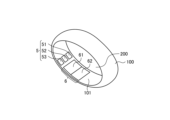
- FIG. 1 is an external view showing a detection device according to an embodiment.
- FIG. 2 is a diagram illustrating the distance between the light source and the optical sensor.
- FIG. 3 is a diagram showing a case where green light is irradiated onto a finger.
- FIG. 4 is a diagram showing a case where near-infrared light or red light is irradiated onto a finger.
- FIG. 5 is a diagram for explaining whether or not the reflected light of green light, near-infrared light, and red light reaches the optical sensor region.
- FIG. 6 is a block diagram showing an example of the internal configuration of the detection device.
- FIG. 7 is a diagram showing functions realized by each unit in the detection device.
- FIG. 8 is a diagram showing an example of a circuit configuration of the photosensor region.
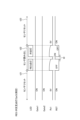
- FIG. 9 is a waveform diagram illustrating an example of the operation of measuring a pulse wave by the detection device.
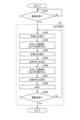
- FIG. 10 is a flowchart showing an example of a process for measuring a pulse wave by the detection device.
- FIG. 11 is a waveform diagram illustrating an example of operation when measuring SpO2 by the detection device.
- FIG. 12 is a flowchart showing an example of a process for measuring SpO2 by the detection device.
- FIG. 13 is a diagram showing an example of SpO2 values.
- FIG. 14 is a flow chart showing a method for measuring blood oxygen concentration by a detection device.
- FIG. 1 is an external view showing a detection device according to an embodiment.
- the detection device 100 has a shape of a finger ring.
- the detection device 100 has a hollow portion 200.
- a finger can be inserted into the hollow portion 200 of the detection device 100.
- the detection device 100 has a ring-shaped housing.
- a user of the detection device 100 can wear the detection device 100 on one finger.
- a light source 5 and an optical sensor 6 are provided on the inner surface 101 of the detection device 100.
- the light source 5 and the optical sensor 6 are stored in the ring-shaped housing of the detection device 100.
- the light source 5 can irradiate light toward the hollow portion 200.
- light can be irradiated from the light source 5 toward the finger.
- the light source 5 is a light source capable of emitting light of multiple colors having different wavelengths.
- the light source 5 includes a light source 51 capable of emitting red light, a light source 52 capable of emitting near-infrared light, and a light source 53 capable of emitting green light.
- the light source 51 is, for example, a red LED (Light Emitting Diode).
- the light source 52 is, for example, a near-infrared LED.
- the light source 53 is, for example, a green LED. Red light and green light are visible light. Near-infrared light is not visible light.
- An infrared light source may be used instead of the light source 52, which is a near-infrared light source.
- the light source 51 corresponds to the "first light source” of this disclosure.
- the light source 52 corresponds to the “second light source” of this disclosure.
- the light source 53 corresponds to the "third light source” of this disclosure.
- the optical sensor 6 is, for example, an organic photodiode (OPD), and outputs an electrical signal according to the irradiated light.
- the optical sensor 6 has an optical sensor region 61 and an optical sensor region 62. Focusing on the light source 5, the optical sensor region 61, and the optical sensor region 62, the light source 5, the optical sensor region 61, and the optical sensor region 62 are arranged in this order on the inner surface 101.
- the optical sensor region 61 corresponds to the "first optical sensor” in this disclosure.
- the optical sensor region 62 corresponds to the "second optical sensor” in this disclosure.
- FIG. 2 is a diagram explaining the distance between the light source 5 and the light sensor 6.
- the X direction is the rotational direction along the inner circumference of the ring shape.
- the Y direction is the direction perpendicular to the X direction.
- the optical sensor region 61 and the optical sensor region 62 are different in distance from the light source 5.
- the optical sensor region 61 is disposed closer to the light source 5 than the optical sensor region 62.
- the optical sensor region 62 is disposed farther from the light source 5 than the optical sensor region 61.
- the distance in the X direction from the center position of the light source 5 to the center position of the optical sensor region 61 is distance d1.
- the distance in the X direction from the center position of the light source 5 to the center position of the optical sensor region 62 is distance d2.
- Distance d1 is shorter than distance d2.
- Distance d2 is longer than distance d1.
- FIGS. 3 and 4 are cross-sectional views showing the state in which the detection device 100 is attached to the finger of a user of the detection device 100.
- FIG. 3 is a diagram showing the case where green light is irradiated onto a finger.
- Green light is irradiated onto a finger F from a green light source 53 provided on the inner surface of the detection device 100.
- the green light is reflected from the surface layer close to the surface of the finger F. Therefore, the reflected light LG from the finger F, which corresponds to the green light, reaches an area of the optical sensor 6 close to the light source 53, i.e., the optical sensor area 61 which is close to the light source 53. Therefore, the reflected light LG of green light is detected by the optical sensor area 61.
- the reflected green light LG does not reach areas far from the light source 53, i.e., areas that are far away from the light source 53. Therefore, the reflected green light LG is not detected by the optical sensor area 62.
- FIG. 4 is a diagram showing the case where near-infrared light or red light is irradiated onto a finger.
- Near-infrared light is irradiated onto a finger F from a near-infrared light source 52 provided on the inner surface of the detection device 100.
- the near-infrared light is reflected at a position deeper than the surface layer of the finger F. Therefore, the reflected light LI from the finger F, which corresponds to the near-infrared light, reaches an area of the optical sensor 6 close to the light source 52, i.e., the optical sensor area 61 which is close to the light source 52. Therefore, the reflected light LI of near-infrared light is detected by the optical sensor area 61.
- the reflected near-infrared light LI also reaches an area of the optical sensor 6 far from the light source 52, i.e., the optical sensor area 62 that is far from the light source 52. Therefore, the reflected near-infrared light LI is also detected by the optical sensor area 62.
- the red light source 51 is similar to the case in FIG. 4. That is, the reflected light from the finger F, which corresponds to the red light, is reflected at a position deeper than the surface of the finger F, so it reaches the optical sensor areas 61 and 62 and is detected by these.
- Figure 5 is a diagram explaining whether reflected light of green light, near-infrared light, and red light reaches the optical sensor area. As explained with reference to Figures 3 and 4, the depth of light penetration into the living body varies depending on the emitted color.
- Green light (GREEN) is reflected from the surface layer close to the surface of the finger F.
- the reflected green light reaches the optical sensor region 61. Therefore, the pulse wave can be obtained by using the detection signal from the optical sensor region 61.
- the reflected green light does not reach the optical sensor region 62. Therefore, the pulse wave cannot be obtained even if the detection signal from the optical sensor region 62 is used.
- the pulse wave can be obtained by using the detection signal from at least one of optical sensor region 61 and optical sensor region 62.
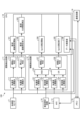
- FIG. 6 is a block diagram showing an example of the internal configuration of the detection device 100.
- the detection device 100 includes an acceleration sensor 3, a light source 5, an LED driver 50, a light sensor 6, a short-range wireless communication driver 7, a battery 8, a coil 9, a battery driver 81, and a control circuit 10.
- the acceleration sensor 3 detects the acceleration applied to the detection device 100.
- the detected value of the acceleration applied to the detection device 100 is used to determine the state of the person wearing the detection device 100, as described below.
- the acceleration sensor 3 is, for example, a three-axis acceleration sensor.
- Light source 5 includes light sources 51, 52, and 53.
- light source 51 is a red LED
- light source 52 is a near-infrared LED
- light source 53 is a green LED.
- light source 51 will be referred to as “red LED 51”, light source 52 as “near-infrared LED 52”, and light source 53 as “green LED 53”.
- LED driver 50 drives red LED 51, near-infrared LED 52, and green LED 53 to light them up.
- the optical sensor 6 includes optical sensor regions 61 and 62.
- the optical sensor regions 61 and 62 convert the input light into an electrical signal.
- the optical sensor regions 61 and 6 operate independently of each other.
- the short-distance wireless communication driver 7 has an antenna (not shown).
- the short-distance wireless communication driver 7 transmits and receives signals between the detection device 100 and other devices.
- the short-distance wireless communication driver 7 can transmit data measured in each part of the detection device 100 to other devices.
- the short-distance wireless communication driver 7 can also receive data transmitted by other devices.
- the battery 8 supplies power to each component of the detection device 100.
- the battery 8 is, for example, a lithium ion battery.
- the battery driver 81 controls the battery 8.
- the battery 8 is charged by the battery driver 81.
- the coil 9 is a charging coil for charging the battery 8.
- the coil 9 has a winding wound along the housing of the detection device 100. An induced current flows through the coil 9 based on the applied magnetic field. The battery 8 can be charged by the induced current flowing through the coil 9.
- the control circuit 10 controls each part of the detection device 100.
- the control circuit 10 is, for example, an IC (Integrated Circuit) such as a microcontroller.
- the control circuit 10 may also be, for example, a PLD (Programmable Logic Device) such as an FPGA (Field Programmable Gate Array).
- the control circuit 10 has a motion detection circuit 11, a sleep detection circuit 12, an AFE (Analog Front End) 13, a pulse wave measurement circuit 14, a memory 15, a communication circuit 16, a power supply circuit 17, and a CPU (Central Processing Unit) 18. These are connected by a bus, and can exchange data with each other via the bus.
- the motion detection circuit 11 detects the motion and rest states of the user of the detection device 100 based on the output of the acceleration sensor 3.
- the sleep detection circuit 12 detects the sleep and wakefulness states of the user of the detection device 100 based on the output of the acceleration sensor 3 and the measurement results by the pulse wave measurement circuit 14.
- the pulse wave measurement circuit 14 is connected to the LED driver 50, the AFE 13, and the optical sensor 6.
- the pulse wave measurement circuit 14 measures the pulse frequency, blood oxygen concentration, and the like based on the detection data of the optical sensor 6.
- the pulse wave measurement circuit 14 measures the change in the detection value of the optical sensor 6 over time as a pulse wave.
- Memory 15 is a storage unit that stores various types of data.
- Memory 15 may include, for example, RAM (Random Access Memory), ROM (Read Only Memory), EEPROM (Electrically Erasable Programmable Read Only Memory), etc.
- the communication circuit 16 is connected to the short-range wireless communication driver 7.
- the communication circuit 16 transmits measurement results and the like to an external device.
- the external device is, for example, a mobile terminal such as a smartphone or tablet held by the user of the detection device 100.
- Mobile terminals such as smartphones and tablets have a display screen. By displaying data from the detection device 100 on the screen, the user of the detection device 100 can check the data received from the detection device 100.
- the power supply circuit 17 is connected to the battery driver 81.
- the power supply circuit 17 controls the charging of the battery 8 and supplies power from the battery 8 to each component.
- the CPU 18 is a control unit that controls each part in the control circuit 10.
- the CPU 18 executes a predetermined program to measure or calculate biological information such as pulse wave velocity, blood pressure, and pulse frequency.
- Fig. 7 is a diagram showing functions realized by each unit in detection device 100. As shown in Fig. 7, determination units 111 to 114 are realized by motion detection circuit 11. Determination units 111 and 112 receive the acceleration acquired by acceleration sensor 3 as an input.
- the determination unit 111 determines whether the acceleration acquired by the acceleration sensor 3 is equal to or greater than a predetermined threshold A. When the determination unit 111 determines that the acceleration is equal to or greater than the predetermined threshold A, the determination unit 113 determines that the user of the detection device 100 is in an exercising state.
- the determination unit 112 determines that the acceleration acquired by the acceleration sensor 3 is less than a predetermined threshold A. When the determination unit 112 determines that the acceleration is less than the predetermined threshold A, the determination unit 114 determines that the user of the detection device 100 is stationary.
- the sleep detection circuit 12 also realizes the determination units 121 to 128.
- the determination units 121 and 123 input the acceleration acquired by the acceleration sensor 3.
- the determination units 122 and 124 input the pulse rate based on the pulse wave measured by the pulse wave measurement circuit 14.
- the determination unit 121 determines whether the acceleration acquired by the acceleration sensor 3 is less than a predetermined threshold value B.
- the determination unit 122 determines whether the pulse rate input from the pulse wave measurement circuit 14 is less than a predetermined threshold value C.
- the determination unit 125 performs a logical AND determination on the determination results of the determination unit 121 and the determination results of the determination unit 122.
- the determination unit 127 determines the sleeping state of the user of the detection device 100 based on the result of the determination by the determination unit 125.
- the result of the determination by the determination unit 125 is that the acceleration acquired by the acceleration sensor 3 is less than the threshold value B and the pulse rate input from the pulse wave measurement circuit 14 is less than the threshold value C
- the determination unit 127 determines that the user of the detection device 100 is sleeping.
- the determination unit 123 determines whether the acceleration acquired by the acceleration sensor 3 is equal to or greater than a predetermined threshold value B.
- the determination unit 124 determines whether the pulse rate input from the pulse wave measurement circuit 14 is equal to or greater than a predetermined threshold value C.
- the determination unit 126 performs a logical sum (OR) determination on the determination results of the determination units 123 and 124.
- the determination unit 128 determines the awake state of the user of the detection device 100 based on the result of the determination by the determination unit 126. If the result of the determination by the determination unit 126 is that the acceleration acquired by the acceleration sensor 3 is equal to or greater than the threshold value B, or if the pulse rate input from the pulse wave measurement circuit 14 is equal to or greater than the threshold value C, the determination unit 128 determines that the user of the detection device 100 is in an awake state.
- the CPU 18 also realizes the determination units 181 to 185 and the data calculation unit 186.
- the determination unit 181 determines whether or not to start continuous measurement of the pulse wave based on the detection result of the motion detection circuit 11.
- the determination unit 181 determines to start continuous measurement of the pulse wave when the motion detection circuit 11 determines that the user of the detection device 100 is in an exercising state. In other words, when the acceleration acquired by the speed sensor 3 is equal to or greater than the threshold value A, the determination unit 181 performs signal processing of the pulse wave.
- the determination unit 182 determines whether or not to end the continuous measurement of the pulse wave based on the detection result of the motion detection circuit 11.
- the determination unit 182 determines to end the continuous measurement of the pulse wave when the motion detection circuit 11 determines that the user of the detection device 100 is stationary.
- the determination unit 183 determines to measure the pulse wave at predetermined time intervals when the determination unit 182 determines to end the continuous measurement of the pulse wave. For example, the determination unit 183 determines to measure the pulse wave at five-minute intervals.
- the determination unit 184 determines whether or not to start measuring blood oxygen saturation SpO2 based on the detection result of the sleep detection circuit 12.
- the determination unit 184 determines to start measuring blood oxygen saturation SpO2 when the sleep detection circuit 12 determines that the user of the detection device 100 is asleep. In other words, when the acceleration acquired by the acceleration sensor 3 is less than threshold B and the pulse rate input from the pulse wave measurement circuit 14 is less than threshold C, measurement of blood oxygen saturation SpO2 is started.
- the determination unit 185 determines whether or not to end the measurement of the blood oxygen saturation level SpO2 based on the detection result of the sleep detection circuit 12. The determination unit 185 determines to end the measurement of the blood oxygen saturation level SpO2 when the sleep detection circuit 12 determines that the user of the detection device 100 is in an awake state.
- the data calculation unit 186 receives as input the acceleration acquired by the acceleration sensor 3 and the pulse rate from the pulse wave measurement circuit 14. The data calculation unit 186 calculates various types of data. The data resulting from the calculations by the data calculation unit 186 is stored in the memory 15. The memory 15 stores, for example, data on the measured pulse rate and data on the measured blood oxygen saturation.
- FIG. 8 is a diagram showing an example of a circuit configuration of the photosensor region.
- the photosensor region 61 includes a photodiode PD1 and a capacitance element C1.
- the photosensor region 62 includes a photodiode PD2 and a capacitance element C2.
- the output signals of the photosensor region 61 and the photosensor region 62 are input to a selection circuit SEL.
- the selection circuit SEL includes a switching element Tr1 and a switching element Tr2.
- Photodiode PD1 outputs a current corresponding to the input light, and charge is accumulated in capacitance element C1 based on this current.
- Photodiode PD2 outputs a current corresponding to the input light, and charge is accumulated in capacitance element C2 based on this current.
- a switching element Tr1 of the selection circuit SEL is provided corresponding to the photodiode PD1.
- a gate signal Gate1 is applied to the gate terminal of the switching element Tr1.
- the switching element Tr1 When the gate signal Gate1 is at a low level, the switching element Tr1 is turned off, and charge is accumulated in the capacitance element C1 as described above.
- the switching element Tr1 When the gate signal Gate1 is at a high level, the switching element Tr1 is turned on, and a current based on the charge accumulated in the capacitance element C1 is output.
- a switching element Tr2 of the selection circuit SEL is provided corresponding to the photodiode PD2.
- a gate signal Gate2 is applied to the gate terminal of the switching element Tr2.
- the switching element Tr2 is turned off, and charge is accumulated in the capacitance element C2 as described above.
- the gate signal Gate1 is at a high level, the switching element Tr1 is turned on, and a current based on the charge accumulated in the capacitance element C2 is output.
- the selection circuit SEL selects and outputs the output signals of the optical sensor region 61 and the optical sensor region 62 based on the levels of the gate signals Gate1 and Gate2.
- the signal passing through the switching element Tr1 from the optical sensor region 61 and the signal passing through the switching element Tr2 from the optical sensor region 62 are combined at the connection point N and input to the AFE 13 as the light receiving signal Rx1.
- the switching elements Tr1 and Tr2 are made up of thin film transistors, and in this example, are made up of n-channel MOS (Metal Oxide Semiconductor) type TFTs (Thin Film Transistors).
- MOS Metal Oxide Semiconductor
- TFTs Thin Film Transistors
- the AFE 13 is a detection circuit that performs signal processing based on the signal output by the optical sensor 6.
- the AFE 13 includes a switching element Tr0 and an A/D conversion circuit 130.
- a reset signal RST is applied to the gate terminal of the transistor that is the switching element Tr0. When the reset signal RST is at a low level, the switching element Tr0 is turned off and the light receiving signal Rx1 is input to the A/D conversion circuit 130.
- the A/D conversion circuit 130 outputs data corresponding to the light receiving signal Rx1.
- the data output by the A/D conversion circuit 130 is input to the pulse wave measurement circuit 14.
- the switching element Tr0 When the reset signal RST is at a high level, the switching element Tr0 is turned on, and the received light signal Rx1 is not input to the A/D conversion circuit 130.
- Pulse wave measurement 9 and 10 are diagrams for explaining the operation of measuring a pulse wave during exercise by the detection device 100.
- the pulse wave is measured by turning on the green LED 53.
- FIG. 9 is a waveform diagram illustrating an example of operation when measuring a pulse wave using the detection device 100.
- FIG. 9 shows the lighting state of the LED, gate signals Gate1 and Gate2, the light receiving signal Rx1, and the reset signal RST.
- a sensor reset that resets the optical sensor area and a sensor readout that reads data from the optical sensor area are performed alternately.
- the green LED 53 is not lit.
- the gate signal Gate1 is at a high level, and the gate signal Gate2 is at a low level. Therefore, the switching element Tr1 is in an on state, and the switching element Tr2 is in an off state. Because the reset signal RST is at a high level, the switching element Tr0 is in an on state.
- the light receiving signal Rx1 is at the ground level, i.e., 0 (V). Therefore, the charges stored in the photodiode PD1 and the capacitance element C1 are discharged.
- the input to the A/D conversion circuit 130 is 0 (V). Note that the period during which the gate signal Gate1 is at a high level may be a part of the sensor reset period t11, as long as it is long enough to sufficiently discharge the charges stored in the photodiode PD1 and the capacitance element C1.
- the green LED 53 is turned on. When the green LED 53 is emitting light, the red LED 51 and the near-infrared LED 52 are not emitting light.
- Period t12 is a first light emission period during which the red LED 51 and the near-infrared LED 52 are not emitting light and the green LED 53 is emitting light.
- the gate signal Gate1 is at a high level and the gate signal Gate2 is at a low level. Therefore, the switching element Tr1 is in an on state and the switching element Tr2 is in an off state. Therefore, the light receiving signal Rx1 obtained by the optical sensor region 61 is output.
- the switching element Tr1 of the selection circuit SEL sends the output signal of the optical sensor region 61 to the pulse wave measurement circuit 14 via the AFE 13.
- the pulse wave measurement circuit 14 performs measurement based on the signal output by the optical sensor region 61. In other words, during period t12, the selection circuit SEL connects the photosensor region 61 to the AFE 13.
- the reset signal RST is at a low level and the switching element Tr0 is in an off state. Therefore, the light receiving signal Rx1 is input to the A/D conversion circuit 130. Data (not shown) corresponding to the voltage value of the light receiving signal Rx1 is output from the A/D conversion circuit 130.
- gate signal Gate2 is at a low level and optical sensor region 62 is not used.
- the green light from green LED 53 does not reach optical sensor region 62, which is located far from green LED 53, and therefore optical sensor region 62 is not used.
- the green light from green LED 53 is received only by optical sensor region 61, which receives the green light. In other words, light is received only by optical sensor region 61, which is close to green LED 53.
- optical sensor region 62 is not used, thereby making it possible to reduce power consumption.
- the green LED 53 is not lit, and the operation is the same as that during period t11 described above.
- the reset signal RST is at a high level, and the switching element Tr0 is in the on state, so the input to the A/D conversion circuit 130 is 0 (V).
- FIG. 10 is a flow chart showing an example of a process for measuring a pulse wave by the detection device 100.
- FIG. 10 mainly shows the contents of the process by the motion detection circuit 11 and the CPU 18 (see FIG. 6).
- the CPU 18 performs the pulse wave measurement process S1.
- the motion detection circuit 11 determines whether or not the user of the detection device 100 is in an exercising state (step S101). If it is determined in step S101 that the user is not in an exercising state (No in step S101), the process waits until it is determined that the user is in an exercising state.
- step S101 If it is determined in step S101 that the motion state is occurring (Yes in step S101), the green LED 53 is turned on (step S102). With the green LED 53 turned on, the optical sensor area 61 is read out (step S103).
- step S104 After reading the optical sensor area 61, the green LED 53 is turned off (step S104). After that, a predetermined waiting time (WAIT) is passed (step S105), and it is determined whether the user of the detection device 100 is stationary (step S106).
- WAIT waiting time
- step S106 If it is determined in step S106 that the subject is in a stationary state (Yes in step S106), the process ends. On the other hand, if it is determined in step S106 that the subject is not in a stationary state (No in step S106), the process returns to step S102 and continues the pulse wave measurement process S1.
- FIGS. 11 and 12 are diagrams for explaining the operation of measuring SpO2 by the detection device 100.
- the red LED 51 and the near-infrared LED 52 are alternately illuminated to measure SpO2.
- FIG. 11 is a waveform diagram illustrating an example of operation when measuring SpO2 using the detection device 100.
- FIG. 11 shows the LED lighting state, gate signals Gate1 and Gate2, light receiving signal Rx1, and reset signal RST.
- the red LED 51 and the near-infrared LED 52 are not lit.
- the gate signals Gate1 and Gate2 are both at a high level, and the switching elements Tr1 and Tr2 are both turned on. Because the reset signal RST is at a high level, the switching element Tr0 is turned on.
- the light receiving signal Rx1 is at the ground level, i.e., 0 (V). Therefore, the charges stored in the photodiodes PD1 and PD2 and the capacitance elements C1 and C2 are discharged.
- the input to the A/D conversion circuit 130 is 0 (V).
- the period during which the gate signal Gate1 is at a high level may be a part of the sensor reset period t21, as long as it is long enough to sufficiently discharge the charges stored in the photodiodes PD1 and PD2 and the capacitance elements C1 and C2.
- the red LED 51 is turned on.
- the near-infrared LED 52 and the green LED 53 are not turned on.
- the red LED 51 is turned off, and after the off period t0, the near-infrared LED 52 is turned on.
- the off period t0 is a preparation period in which measurement with the red LED 51 turned on ends and measurement with the near-infrared LED 52 turned on begins. Therefore, during the off period t0, the reset signal RST is at a high level. After the off period t0 has elapsed, the reset signal RST returns to a low level.
- the period t22 is a second emission period in which the green LED 53 is not emitting light and the red LED 51 or the near-infrared LED 52 is emitting light.
- both gate signals Gate1 and Gate2 are at a high level. Therefore, both switching elements Tr1 and Tr2 are in an on state. Therefore, the light receiving signal Rx1 obtained by the optical sensor areas 61 and 62 is output.
- the voltage value due to the lighting of the red LED 51 is output as the light receiving signal Rx1.
- the voltage value due to the lighting of the near-infrared LED 52 is output as the light receiving signal Rx1.
- the switching elements Tr1 and Tr2 of the selection circuit SEL send the output signal of the optical sensor area 61 or 62 that is receiving light to the pulse wave measurement circuit 14 via the AFE 13.
- the pulse wave measurement circuit 14 performs measurement based on the signal output by at least one of the optical sensor areas 61 and 62.
- the selection circuit SEL connects at least one of the optical sensor region 61 and the optical sensor region 62 to the AFE 13.
- the reset signal RST changes from low level to high level to low level again.
- the reset signal RST is at high level, so the switching element Tr0 is in the on state.
- the light receiving signal Rx1 is at ground level, i.e., 0 (V). Therefore, the input to the A/D conversion circuit 130 is 0 (V).
- Data (not shown) corresponding to the voltage value of the light receiving signal Rx1 is output from the A/D conversion circuit 130.
- data corresponding to the voltage value due to the lighting of the red LED 51 is obtained.
- both gate signals Gate1 and Gate2 are at a high level, and both optical sensor region 61 and optical sensor region 62 are used. In other words, light is received by both optical sensor region 61 and optical sensor region 62.
- the red LED 51 and near-infrared LED 52 are not lit, and the operation is the same as in period t21 described above.
- the reset signal RST is at a high level, and the switching element Tr0 is in the on state, so the input to the A/D conversion circuit 130 is 0 (V).
- the output signals from both the optical sensor region 61 and the optical sensor region 62 are connected to the AFE 13, but the output signal from either the optical sensor region 61 or the optical sensor region 62 may be connected to the AFE 13.
- the red LED 51 or the near-infrared LED 52 is emitting light
- the green LED 53 is not emitting light
- the output signal from at least one of the optical sensor region 61 and the optical sensor region 62 is connected to the AFE 13.
- FIG. 12 is a flowchart showing an example of the process for measuring SpO2 by the detection device 100.
- FIG. 12 mainly shows the contents of the process by the sleep detection circuit 12 and the CPU 18 (see FIG. 6).
- the CPU 18 performs the SpO2 measurement process S2.
- the sleep detection circuit 12 determines whether or not the user of the detection device 100 is asleep (step S201). If it is determined in step S201 that the user is not asleep (No in step S201), the process waits until it is determined that the user is asleep.
- step S201 If it is determined in step S201 that the subject is in a sleeping state (Yes in step S201), the red LED 51 is turned on (step S202). With the red LED 51 turned on, the optical sensor areas 61 and 62 are read out (step S203). After the optical sensor areas 61 and 62 are read out, the red LED 51 is turned off (step S204).
- the near-infrared LED 52 is turned on (step S205). With the near-infrared LED 52 turned on, the optical sensor areas 61 and 62 are read out (step S206). After the optical sensor areas 61 and 62 are read out, the near-infrared LED 52 is turned off (step S207). After that, a predetermined waiting period (WAIT) is elapsed (step S208), and it is determined whether the user of the detection device 100 is awake or not (step S209).
- WAIT predetermined waiting period
- step S209 If it is determined in step S209 that the subject is in an awake state (Yes in step S209), the process ends. On the other hand, if it is determined in step S209 that the subject is not in an awake state (No in step S209), the process returns to step S202 and continues the SpO2 measurement process S2.
- both optical sensor area 61 and optical sensor area 62 are used, thereby increasing the sensitivity of received light and enabling more accurate measurement results to be obtained.
- the blood oxygen concentration (hereinafter, referred to as SpO2)
- SpO2 which is biological information
- SpO2 can be obtained by measuring light passing through a living body such as a finger.
- SpO2 can be measured by the following formula (1).
- SpO2 ba ⁇ R...(1)
- SpO2 is a linear function of the value R.
- "a" and "b" are predetermined coefficients.
- ACr is the AC component of the red light (Red) measurement value
- DCr is the DC component of the red light measurement value
- ACir is the AC component of the near-infrared light (IR) measurement value
- DCir is the DC component of the near-infrared light measurement value.
- the AC component is the component of the pulse wave that appears in the DC current.
- SpO2 which is a linear function of the value R, is calibrated using the oxygen concentration of blood collected in advance.
- the SpO2 value can be obtained as follows. That is, the SpO2 value corresponding to the above value R is measured in advance, and the SpO2 value is obtained based on the measurement value curve.
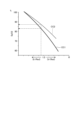
- Figure 13 is a diagram showing an example of SpO2 values.
- the measurement value curve in Figure 13 is, for example, the calculated value of the above value R, with the vertical axis representing the SpO2 value.
- the SpO2 value can be obtained using equation (1).
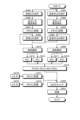
- FIG. 14 is a flow chart showing a method for measuring blood oxygen concentration using the detection device 100.
- the pulse wave measurement circuit 14 turns on the near-infrared LED 52 using the LED driver 50 (step S401).
- the pulse wave measurement circuit 14 measures the output current of the optical sensor 6 (step S402).
- the measurement result of the current value in step S402 is stored in the memory 15 (step S403).
- the pulse wave measurement circuit 14 turns off the near-infrared LED 52 using the LED driver 50 (step S404).
- the pulse wave measurement circuit 14 also uses the LED driver 50 to turn on the red LED 51 (step S405).
- the pulse wave measurement circuit 14 measures the output current of the optical sensor 6 (step S406).
- the measurement result of the current value in step S406 is stored in the memory 15 (step S407).
- the pulse wave measurement circuit 14 uses the LED driver 50 to turn off the red LED 51 (step S408).
- the pulse wave measurement circuit 14 returns to step S401 and repeats the above process. That is, the pulse wave measurement circuit 14 alternately turns on the red LED 51 and the near-infrared LED 52, repeatedly measures the optical sensor current using the optical sensor 6, and stores it in the memory 15. As described above, the corresponding photodiodes are reset before turning on the red LED 51 and the near-infrared LED 52.
- the control circuit 10 performs waveform analysis on the measurement results of the output current of the optical sensor 6 due to the illumination of the near-infrared LED 52, which are stored in the memory 15 (step S409).
- This waveform analysis calculates the average value (DCir) and amplitude (ACir) of the near-infrared signal waveform (steps S410, S411).
- the control circuit 10 also performs waveform analysis on the measurement results of the output current of the optical sensor 6 due to the illumination of the red LED 51, which are stored in the memory 15 (step S412). This waveform analysis calculates the average value (DCr) and amplitude (ACr) of the red signal waveform (steps S413, S414).
- the control circuit 10 calculates the value R for calculating the blood oxygen saturation SpO2 (step S415).
- the coefficient a for calculating the blood oxygen saturation SpO2 is input in advance (step S416) and stored in the memory 15 (step S417).
- the coefficient b for calculating the blood oxygen saturation SpO2 is also input in advance (step S418) and stored in the memory 15 (step S419).
- the control circuit 10 calculates the blood oxygen saturation SpO2 based on the above formula (1) (step S420).
- the SpO2 obtained by the above process is transmitted to another device by the communication circuit 16 and the short-range wireless communication driver 7 (step S421).
- the SpO2 is transmitted to, for example, a smartphone.
- transmission from the detection device 100 to another device is performed by short-range wireless communication.
Landscapes
- Engineering & Computer Science (AREA)
- Health & Medical Sciences (AREA)
- Life Sciences & Earth Sciences (AREA)
- Physics & Mathematics (AREA)
- Theoretical Computer Science (AREA)
- Computer Hardware Design (AREA)
- General Engineering & Computer Science (AREA)
- Human Computer Interaction (AREA)
- General Physics & Mathematics (AREA)
- General Health & Medical Sciences (AREA)
- Surgery (AREA)
- Veterinary Medicine (AREA)
- Public Health (AREA)
- Animal Behavior & Ethology (AREA)
- Molecular Biology (AREA)
- Medical Informatics (AREA)
- Biophysics (AREA)
- Pathology (AREA)
- Biomedical Technology (AREA)
- Heart & Thoracic Surgery (AREA)
- Cardiology (AREA)
- Physiology (AREA)
- Psychology (AREA)
- Developmental Disabilities (AREA)
- Child & Adolescent Psychology (AREA)
- Psychiatry (AREA)
- Hospice & Palliative Care (AREA)
- Signal Processing (AREA)
- Educational Technology (AREA)
- Social Psychology (AREA)
- Spectroscopy & Molecular Physics (AREA)
- Optics & Photonics (AREA)
- Dentistry (AREA)
- Oral & Maxillofacial Surgery (AREA)
- Measuring Pulse, Heart Rate, Blood Pressure Or Blood Flow (AREA)
Priority Applications (2)
| Application Number | Priority Date | Filing Date | Title |
|---|---|---|---|
| JP2025529527A JPWO2025004624A1 (https=) | 2023-06-26 | 2024-05-22 | |
| US19/429,144 US20260111058A1 (en) | 2023-06-26 | 2025-12-22 | Detection device |
Applications Claiming Priority (2)
| Application Number | Priority Date | Filing Date | Title |
|---|---|---|---|
| JP2023-104497 | 2023-06-26 | ||
| JP2023104497 | 2023-06-26 |
Related Child Applications (1)
| Application Number | Title | Priority Date | Filing Date |
|---|---|---|---|
| US19/429,144 Continuation US20260111058A1 (en) | 2023-06-26 | 2025-12-22 | Detection device |
Publications (1)
| Publication Number | Publication Date |
|---|---|
| WO2025004624A1 true WO2025004624A1 (ja) | 2025-01-02 |
Family
ID=93938136
Family Applications (1)
| Application Number | Title | Priority Date | Filing Date |
|---|---|---|---|
| PCT/JP2024/018802 Ceased WO2025004624A1 (ja) | 2023-06-26 | 2024-05-22 | 検出装置 |
Country Status (3)
| Country | Link |
|---|---|
| US (1) | US20260111058A1 (https=) |
| JP (1) | JPWO2025004624A1 (https=) |
| WO (1) | WO2025004624A1 (https=) |
Citations (3)
| Publication number | Priority date | Publication date | Assignee | Title |
|---|---|---|---|---|
| JP2006263356A (ja) * | 2005-03-25 | 2006-10-05 | Konica Minolta Sensing Inc | 生体情報測定装置 |
| JP2007330708A (ja) * | 2006-06-19 | 2007-12-27 | Sharp Corp | 酸素飽和度計測装置、酸素飽和度計測装置の制御プログラム、および酸素飽和度計測装置の制御プログラムが記録された記録媒体 |
| JP2022117113A (ja) * | 2021-01-29 | 2022-08-10 | セイコーエプソン株式会社 | 検出装置および測定装置 |
-
2024
- 2024-05-22 JP JP2025529527A patent/JPWO2025004624A1/ja active Pending
- 2024-05-22 WO PCT/JP2024/018802 patent/WO2025004624A1/ja not_active Ceased
-
2025
- 2025-12-22 US US19/429,144 patent/US20260111058A1/en active Pending
Patent Citations (3)
| Publication number | Priority date | Publication date | Assignee | Title |
|---|---|---|---|---|
| JP2006263356A (ja) * | 2005-03-25 | 2006-10-05 | Konica Minolta Sensing Inc | 生体情報測定装置 |
| JP2007330708A (ja) * | 2006-06-19 | 2007-12-27 | Sharp Corp | 酸素飽和度計測装置、酸素飽和度計測装置の制御プログラム、および酸素飽和度計測装置の制御プログラムが記録された記録媒体 |
| JP2022117113A (ja) * | 2021-01-29 | 2022-08-10 | セイコーエプソン株式会社 | 検出装置および測定装置 |
Also Published As
| Publication number | Publication date |
|---|---|
| US20260111058A1 (en) | 2026-04-23 |
| JPWO2025004624A1 (https=) | 2025-01-02 |
Similar Documents
| Publication | Publication Date | Title |
|---|---|---|
| CN104814748B (zh) | 生物体信息处理装置以及生物体信息处理方法 | |
| CN101099658B (zh) | 生物体内信息获取装置 | |
| US20150216458A1 (en) | Biological information processing method, biological information processing apparatus, computer system, and wearable apparatus | |
| CA3108295A1 (en) | Integrated photodetector with charge storage bin of varied detection time | |
| CN109643045A (zh) | 投影仪的非接触式控制 | |
| JP2015211727A5 (https=) | ||
| CN106576135A (zh) | 一种具有扩展的动态范围上限的图像传感器 | |
| Al-Rawhani et al. | Design and implementation of a wireless capsule suitable for autofluorescence intensity detection in biological tissues | |
| EP3248538A1 (en) | Control device, detection device, and control method | |
| JP2008177738A (ja) | 撮像装置及び撮像素子 | |
| US20200402451A1 (en) | Display device and data monitoring method | |
| US20230248584A1 (en) | Determining diaper loading using color detection or activity state | |
| KR20190094747A (ko) | 심박 센서 및 심박 센서가 임베디드된 근적외선 유기 이미지 센서 | |
| US20110194585A1 (en) | Multiple object non-contact thermometer | |
| CN103096792A (zh) | 生物体状态量测定装置 | |
| WO2025004624A1 (ja) | 検出装置 | |
| US12417653B2 (en) | Detection device | |
| US10512426B2 (en) | Biological information acquisition device and biological information acquisition method | |
| CN112105944B (zh) | 具有使用短脉冲和长脉冲的多模式操作的光学测距系统 | |
| CN115607117A (zh) | 检测装置 | |
| US11202607B2 (en) | Biological information acquisition device and biological information acquisition method | |
| US11464416B2 (en) | Measurement circuit, driving method, and electronic instrument | |
| US20230190154A1 (en) | Sensor system | |
| JP2024013099A (ja) | 検出装置 | |
| JP2020116358A (ja) | 血糖値測定ユニット及びこれを使用する装置 |
Legal Events
| Date | Code | Title | Description |
|---|---|---|---|
| 121 | Ep: the epo has been informed by wipo that ep was designated in this application |
Ref document number: 24831495 Country of ref document: EP Kind code of ref document: A1 |
|
| ENP | Entry into the national phase |
Ref document number: 2025529527 Country of ref document: JP Kind code of ref document: A |
|
| WWE | Wipo information: entry into national phase |
Ref document number: 2025529527 Country of ref document: JP |
|
| NENP | Non-entry into the national phase |
Ref country code: DE |