WO2025004241A1 - パラメータ調整装置およびパラメータ調整方法 - Google Patents
パラメータ調整装置およびパラメータ調整方法 Download PDFInfo
- Publication number
- WO2025004241A1 WO2025004241A1 PCT/JP2023/024058 JP2023024058W WO2025004241A1 WO 2025004241 A1 WO2025004241 A1 WO 2025004241A1 JP 2023024058 W JP2023024058 W JP 2023024058W WO 2025004241 A1 WO2025004241 A1 WO 2025004241A1
- Authority
- WO
- WIPO (PCT)
- Prior art keywords
- machining
- evaluation index
- command value
- parameter set
- value generation
- Prior art date
- Legal status (The legal status is an assumption and is not a legal conclusion. Google has not performed a legal analysis and makes no representation as to the accuracy of the status listed.)
- Ceased
Links
Images






Classifications
-
- G—PHYSICS
- G05—CONTROLLING; REGULATING
- G05B—CONTROL OR REGULATING SYSTEMS IN GENERAL; FUNCTIONAL ELEMENTS OF SUCH SYSTEMS; MONITORING OR TESTING ARRANGEMENTS FOR SUCH SYSTEMS OR ELEMENTS
- G05B19/00—Program-control systems
- G05B19/02—Program-control systems electric
- G05B19/18—Numerical control [NC], i.e. automatically operating machines, in particular machine tools, e.g. in a manufacturing environment, so as to execute positioning, movement or co-ordinated operations by means of program data in numerical form
- G05B19/4093—Numerical control [NC], i.e. automatically operating machines, in particular machine tools, e.g. in a manufacturing environment, so as to execute positioning, movement or co-ordinated operations by means of program data in numerical form characterised by part programming, e.g. entry of geometrical information as taken from a technical drawing, combining this with machining and material information to obtain control information, named part program, for the NC machine
- G05B19/40931—Numerical control [NC], i.e. automatically operating machines, in particular machine tools, e.g. in a manufacturing environment, so as to execute positioning, movement or co-ordinated operations by means of program data in numerical form characterised by part programming, e.g. entry of geometrical information as taken from a technical drawing, combining this with machining and material information to obtain control information, named part program, for the NC machine concerning programming of geometry
- G05B19/40932—Shape input
-
- G—PHYSICS
- G05—CONTROLLING; REGULATING
- G05B—CONTROL OR REGULATING SYSTEMS IN GENERAL; FUNCTIONAL ELEMENTS OF SUCH SYSTEMS; MONITORING OR TESTING ARRANGEMENTS FOR SUCH SYSTEMS OR ELEMENTS
- G05B19/00—Program-control systems
- G05B19/02—Program-control systems electric
- G05B19/18—Numerical control [NC], i.e. automatically operating machines, in particular machine tools, e.g. in a manufacturing environment, so as to execute positioning, movement or co-ordinated operations by means of program data in numerical form
- G05B19/4093—Numerical control [NC], i.e. automatically operating machines, in particular machine tools, e.g. in a manufacturing environment, so as to execute positioning, movement or co-ordinated operations by means of program data in numerical form characterised by part programming, e.g. entry of geometrical information as taken from a technical drawing, combining this with machining and material information to obtain control information, named part program, for the NC machine
-
- G—PHYSICS
- G05—CONTROLLING; REGULATING
- G05B—CONTROL OR REGULATING SYSTEMS IN GENERAL; FUNCTIONAL ELEMENTS OF SUCH SYSTEMS; MONITORING OR TESTING ARRANGEMENTS FOR SUCH SYSTEMS OR ELEMENTS
- G05B19/00—Program-control systems
- G05B19/02—Program-control systems electric
- G05B19/18—Numerical control [NC], i.e. automatically operating machines, in particular machine tools, e.g. in a manufacturing environment, so as to execute positioning, movement or co-ordinated operations by means of program data in numerical form
- G05B19/41—Numerical control [NC], i.e. automatically operating machines, in particular machine tools, e.g. in a manufacturing environment, so as to execute positioning, movement or co-ordinated operations by means of program data in numerical form characterised by interpolation, e.g. the computation of intermediate points between programmed end points to define the path to be followed and the rate of travel along that path
- G05B19/4103—Digital interpolation
-
- G—PHYSICS
- G05—CONTROLLING; REGULATING
- G05B—CONTROL OR REGULATING SYSTEMS IN GENERAL; FUNCTIONAL ELEMENTS OF SUCH SYSTEMS; MONITORING OR TESTING ARRANGEMENTS FOR SUCH SYSTEMS OR ELEMENTS
- G05B19/00—Program-control systems
- G05B19/02—Program-control systems electric
- G05B19/18—Numerical control [NC], i.e. automatically operating machines, in particular machine tools, e.g. in a manufacturing environment, so as to execute positioning, movement or co-ordinated operations by means of program data in numerical form
- G05B19/4155—Numerical control [NC], i.e. automatically operating machines, in particular machine tools, e.g. in a manufacturing environment, so as to execute positioning, movement or co-ordinated operations by means of program data in numerical form characterised by program execution, i.e. part program or machine function execution, e.g. selection of a program
Definitions
- the present disclosure relates to a parameter adjustment device and a parameter adjustment method for adjusting parameters related to command value generation in a command value generation device that generates tool movement commands for driving a driving device of a machine tool based on a machining program.
- machining a workpiece into a desired shape using a machine tool it is common to create a machining program using CAM (Computer Aided Manufacturing) or similar.
- the machining program contains information about the machining shape, the tool feed speed, the tool rotation speed, and so on.
- the command value generating device reads this machining program and calculates the tool path by performing coordinate conversion, tool length compensation, tool diameter compensation, machine error compensation, and so on.
- the command value generating device further performs processing such as acceleration and deceleration, and calculates interpolation points, which are command points on the tool path for each unit of time.
- a numerical control device (Numerical Control: NC) is used as the command value generating device.
- Command value generating devices are equipped with many functions to perform machining by machine tools at higher speeds and with higher accuracy.
- the operator must decide whether to prioritize cycle time, i.e., machining time, machining accuracy, which is the shape accuracy of the machined surface, or surface quality, which is the surface accuracy of the machined surface, and adjust the vast number of parameters related to these functions.
- cycle time i.e., machining time
- machining accuracy which is the shape accuracy of the machined surface
- surface quality which is the surface accuracy of the machined surface
- the present disclosure has been made in consideration of the above, and aims to provide a parameter adjustment device that can converge parameters related to command values that match the preferences of an operator more quickly than in the past.
- the parameter adjustment device disclosed herein is a parameter adjustment device that adjusts a command value generation parameter set, which is a plurality of parameters used to generate a tool movement command composed of a group of interpolation points per unit time on a tool path calculated based on a machining program for machining a workpiece, and includes a feature calculation unit, an evaluation index calculation unit, a first optimal solution search unit, and a display control unit.
- the feature calculation unit simulates the operation of the machine tool to be controlled from the tool movement command and calculates the feature value of machining.
- the evaluation index calculation unit calculates one or more evaluation index values for evaluating the machining result from the feature value of machining.
- the first optimal solution search unit infers an evaluation index value corresponding to the command value generation parameter set for the first search using a first learning result for inferring the evaluation index value from the command value generation parameter set learned using the command value generation parameter set and the evaluation index value, and searches for command value generation parameter set candidates, which are a plurality of command value generation parameter sets that simultaneously optimize each evaluation index value using the inferred result.
- the display control unit displays on the display unit the candidate command value generation parameter set, in association with the calculated machining feature values and the respective evaluation index values when the command value generation device is set in the command value generation device that generates the tool movement command and the command value generation device is operated.
- the parameter adjustment device disclosed herein has the effect of enabling parameters related to command values that match the preferences of the operator to converge more quickly than in the past.
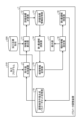
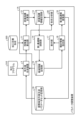
- FIG. 1 is a diagram showing an example of the configuration of a parameter adjustment device according to a first embodiment
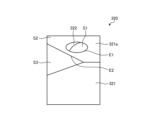
- FIG. 1 is a diagram showing an example of a processing target shape.
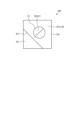
- FIG. 1 is a diagram showing an example of a processing target shape.
- FIG. 1 is a diagram showing an example of a processing target shape.
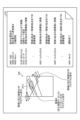
- FIG. 5 is a diagram showing an example of a machining program for machining the machining target shapes shown in FIGS. 2 to 4.
- FIG. 13 is a diagram showing an example of a change in acceleration/deceleration waveform when the allowable acceleration is changed.
- FIG. 13 is a diagram showing an example of a change in a movement path when an allowable path error is changed.
- FIG. 1 is a diagram showing an example of the configuration of a parameter adjustment device according to a first embodiment
- FIG. 1 is a diagram showing an example of a processing target shape.
- FIG. 1 is a diagram showing an example of a processing target shape.
- FIG. 5 is a diagram showing
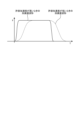
- FIG. 13 is a diagram showing an example of a change in acceleration/deceleration waveform when the allowable path error is changed.
- FIG. 13 is a diagram showing an example of a change in the tool movement path when the filter time constant is changed.
- FIG. 13 is a diagram showing an example of a change in acceleration/deceleration waveform when the filter time constant is changed.
- FIG. 13 is a diagram showing an example of a mapping diagram of the amount of machining error of a machining curved surface in a machining target shape when a machining operation generated based on the first to fourth command value generating parameter sets is performed, and a relationship with the machining time.
- FIG. 1 is a diagram showing an example of a neural network used in the learning process of the first embodiment;
- FIG. 1 is a diagram showing an example of a neural network used in the learning process of the first embodiment;
- FIG. 1 is a diagram showing an example of a command value generating parameter set for a machining surface searched for by a first optimum solution search unit in the first embodiment;
- FIG. 14 shows an example of preference information set by an operator for one command value generation parameter set candidate selected from the categories of a machining time priority mode, a machining accuracy priority mode, a surface quality priority mode, and a balance mode for the machining surface shown in FIG. 13 .
- FIG. 13 is a diagram showing an example of the configuration of a parameter adjustment device according to a second embodiment.
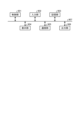
- FIG. 1 is a diagram showing an example of the configuration of a computer system that realizes a parameter adjustment device according to the first and second embodiments.
- Embodiment 1. 1 is a diagram showing an example of the configuration of a parameter adjustment device according to embodiment 1.
- the parameter adjustment device 1 is a device that adjusts a command value generation parameter set, which is a plurality of parameters used to generate a tool movement command constituted by a group of interpolation points for each unit time on a tool path calculated based on a machining program for machining a workpiece.
- the tool movement command is a command for driving a driving device such as a servo motor of a machine tool.
- the command value generating device 3 outputs tool movement commands for each unit time to the parameter adjusting device 1 according to an externally input machining program 310.
- the machining program 310 is a computer program in which tool path movement commands corresponding to the machining target shape 320 and movement speed commands at this time are written.
- the tool path movement commands are specified by G codes such as G0 and G1, which specify the coordinate values and the movement mode at this time, and the tool path movement speed commands are specified by F codes in which speed values are written.
- the machining target shape 320 is target shape data of the workpiece including the machining surface, which is the curved surface to be machined.
- the machining target shape 320 is externally input to the parameter adjustment device 1.
- the machining target shape 320 is input to the parameter adjustment device 1 by a method such as input by data conversion from CAD (Computer Aided Design) data, or graphic input by an operator operating a keyboard or the like.
- CAD Computer Aided Design
- FIG. 2 to 4 are diagrams showing an example of a machining target shape.
- FIG. 2 is a perspective view of the machining target shape 320
- FIG. 3 is a front view of the machining target shape 320
- FIG. 4 is a top view of the machining target shape 320.
- the machining target shape 320 has a hemispherical protrusion 322 on the upper surface 321a of a rectangular parallelepiped block 321, and has a shape in which one corner of the upper surface 321a is cut off by a plane.
- the machining target shape 320 When focusing on the upper surface 321a, the machining target shape 320 has a machining curved surface S1 that forms the hemispherical protrusion 322, a planar machining curved surface S2 that forms the area of the upper surface 321a other than the machining curved surface S1, and a machining curved surface S3 on the plane at the position where the corner is cut off.
- a circular machining edge E1 exists at the boundary between the machining curved surface S1 and the machining curved surface S2
- a linear machining edge E2 exists at the boundary between the machining curved surface S2 and the machining curved surface S3.
- FIG. 5 is a diagram showing an example of a machining program for machining the machining target shape shown in FIGS. 2 to 4.
- Machining program 310 describes a process for operating a machine tool so that upper surface 321a of rectangular parallelepiped block 321 becomes machining target shape 320 shown in FIGS. 2 to 4.
- the example shown in FIG. 5 uses a machining path for scanning line machining as an example, but contour machining may also be used. There are also no limitations on the machining direction.
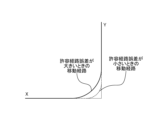
- FIG. 7 is a diagram showing an example of the change in the movement path when the allowable path error changes
- FIG. 8 is a diagram showing an example of the change in the acceleration/deceleration waveform when the allowable path error changes.
- the horizontal axis indicates time
- the vertical axis indicates speed.
- the movement path of the tool on the machining program 310 proceeds along the X-axis and then along the Y-axis, as shown by the dotted line.
- the movement path shown by the solid line is the movement path when the allowable path error is large, and the movement path shown by the dashed line is the movement path when the allowable path error is small.
- FIG. 8 the acceleration/deceleration waveform in the X-axis direction and the acceleration/deceleration waveform in the Y-axis direction when machining is performed along the movement path in FIG. 7 are shown.
- the acceleration/deceleration waveform in the Y-axis direction shown by the solid line shows the case where the allowable path error is large, and the dashed line shows the case where the allowable path error is small.
- Figures 7 and 8 show that increasing the allowable path error can shorten the machining time compared to when the allowable path error is small, but it also increases the tool path error.
- n indicates the number of interpolation points from the start point to the end point.
- m is the filter time constant of the moving average filter, and is set by a parameter.
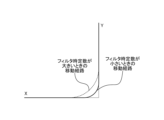
- FIG. 9 is a diagram showing an example of the change in the tool movement path when the filter time constant is changed
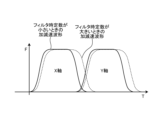
- FIG. 10 is a diagram showing an example of the change in the acceleration/deceleration waveform when the filter time constant is changed.
- the horizontal axis indicates time
- the vertical axis indicates speed.
- the tool movement path on the machining program 310 advances along the X-axis and then along the Y-axis, as shown by the dotted line.
- the movement path shown by the solid line is the movement path when the filter time constant is small
- the movement path shown by the dashed line is the movement path when the filter time constant is large.
- FIG. 10 the acceleration/deceleration waveform in the X-axis direction and the acceleration/deceleration waveform in the Y-axis direction when machining is performed along the movement path in FIG. 9 are shown.
- the dashed line indicates the case when the filter time constant is large, and the solid line indicates the case when the filter time constant is small.
- the parameter adjustment device 1 handles a total of three command value generation parameter sets: the allowable acceleration, the allowable path error, and the filter time constant. In other words, the parameter adjustment device 1 treats these three command value generation parameter sets as targets for parameter adjustment. However, it is possible to treat all parameters that affect the interpolation points generated by the command value generation device 3 as targets for parameter adjustment, not limited to the three parameters handled in the first embodiment.
- the command value generating device 3 operates with the setting values of the command value generation parameter set stored in advance in the setting value storage unit of the command value generating device 3.
- the setting values in the setting value storage unit can be rewritten by external input from the parameter adjustment device 1.
- the parameter adjustment device 1 includes a feature calculation unit 11, an evaluation index calculation unit 12, an evaluation index information storage unit 13, a first optimal solution search unit 14, a candidate information storage unit 15, a preference information setting unit 16, a display unit 17, a second optimal solution search unit 18, and an adjusted command value generation parameter set storage unit 19.
- the feature calculation unit 11 simulates the operation of the machine tool to be controlled from the tool movement command generated by the command value generation device 3, and calculates the feature values of machining.
- the feature values of machining are the machining error amount, which is the distance between the machining target shape 320 and the tool placed at the position of the tool tip point, the speed of the tool tip point, the acceleration of the tool tip point, the jerk of the tool tip point, the positions of each of the multiple drive axes of the machine tool, the speed of each of the multiple drive axes of the machine tool, the acceleration of each of the multiple drive axes of the machine tool, the jerk of each of the multiple drive axes of the machine tool, and the reversal positions of each of the multiple drive axes of the machine tool.
- the feature calculation unit 11 simulates the operation of the machine tool to be controlled from the tool movement command generated by the command value generation device 3 to determine the tool center point, and calculates the machining feature, which is information about the machining at the tool center point, for each of one or more machining surfaces or machining edges of the machining target shape 320.
- the one or more machining surfaces or machining edges of the machining target shape 320 correspond to shape components.
- the feature calculation unit 11 first performs a tool tip point estimation process to estimate the tool tip point, and then performs a feature amount calculation process to calculate the feature amount of the machining at the tool tip point.
- the tool tip point estimation process and the feature amount calculation process are described below in order.
- the feature amount calculation unit 11 estimates the tool tip point using result information obtained from the drive control unit of the machine tool, which is the control target that is actually driven or simulated, so as to follow the tool movement command generated by the command value generation device 3.
- the feature amount calculation unit 11 simulates the behavior of the machine tool on a computer and estimates the actual tool tip point from the interpolation point that is the output of the command value generation device 3.
- the parameters of the inertia, viscosity, and elasticity of the machine tool, the resonance frequency or anti-resonance frequency caused by the inertia, viscosity, and elasticity, the parameters of the backlash or lost motion at the time of axis reversal, the parameters of the thermal displacement, the parameters of the amount of displacement caused by the reaction force during machining, and the like are set in advance to simulate the operation of the machine tool.
- the estimation accuracy of the tool tip point calculated by the simulation can be changed.
- the position information of the drive axis may be used as the tool tip point
- the interpolation point may be used as the tool tip point.
- the feature amount calculation unit 11 operates an actual machine tool to obtain information corresponding to the tool tip point.
- the feature amount calculation unit 11 calculates, for each of the tool center points determined in the tool center point estimation process, a feature amount of machining at the tool center point in association with a machining curved surface or machining edge of the machining target shape 320.
- a method of calculating the machining error amount which is one example of the feature amount of machining, the speed of the tool center point, the acceleration of the tool center point, the jerk of the tool center point, each position of a plurality of drive shafts of the machine tool, each speed of a plurality of drive shafts of the machine tool, each acceleration of a plurality of drive shafts of the machine tool, each jerk of a plurality of drive shafts of the machine tool, and each reversal position of a plurality of drive shafts of the machine tool will be described.
- the amount of machining error can be calculated as the shortest distance between the position of the cutting point corresponding to the tool center point and the contour surface of the tool arranged according to the position of the tool center point and the tool direction.
- the position of the tool center point is calculated from information obtained by simulating the behavior of the machine tool to be controlled, or is obtained by operating the controlled object.
- the speed, acceleration, and jerk of the tool tip point can be calculated as follows. Among the tool tip points from the start point to the end point, if the position of the nth tool tip point is PT(n), and the position of the n+1th tool tip point advanced by a time ⁇ t of a predetermined control cycle is PT(n+1), then the speed VT(n) of the nth tool tip point can be calculated by dividing the distance between the two tool tip points PT(n+1), PT(n) by the time ⁇ t of the predetermined control cycle, as shown in the following equation (2).
- the acceleration AT(n) of the nth tool tip point is calculated by dividing the difference between the velocities VT(n+1) and VT(n) at the two tool tip points by the time ⁇ t of a given control period, as expressed in the following equation (3).
- the jerk JT(n) of the nth tool tip point is calculated by dividing the difference between the accelerations AT(n+1) and AT(n) of the two tool tip points by the time ⁇ t of a given control period, as expressed in the following equation (4).
- the position, speed, acceleration and jerk of each of the multiple drive axes of the machine tool can be calculated as follows.
- the position PM1(n) of the first drive axis corresponding to the nth tool tip point can be obtained from time series data of the operation information of the machine tool.
- the operation information is information that indicates the operating state when the machine tool is operated.
- the operation information includes information obtained from the machine tool, the numerical control device that controls the machine tool, i.e., the command value generating device 3, or sensors attached to the machine tool.
- the operation information includes position data of each of the multiple drive axes of the machine tool.
- the speed VM1(n) of the first drive axis corresponding to the tool tip point at the nth position at time t is calculated by the following equation (5).
- the acceleration AM1(n) of the first drive axis corresponding to the nth tool tip point is calculated by the following equation (6).
- the feature amount calculation unit 11 outputs the feature amount of machining calculated as described above to the evaluation index calculation unit 12. When the entire workpiece is machined under one condition, the feature amount calculation unit 11 outputs the feature amount of machining for the machining target shape 320 to the evaluation index calculation unit 12. When the entire workpiece is divided into multiple parts and each divided part is machined under different conditions, the feature amount calculation unit 11 outputs the feature amount of machining for each machining surface or each machining edge of the machining target shape 320 to the evaluation index calculation unit 12.
- the circle represents the machining curved surface or machining edge of the machining target shape 320.
- the circle represents the machining curved surfaces S1-S3 and the machining edges E1, E2.
- N represents the number of data points of the tool center point corresponding to each of the machining curved surfaces and machining edges
- Fc represents the command speed
- F represents the speed of the tool center point.
- the evaluation index value Qt may be anything that can evaluate the machining time, and is not limited to the one specified by formula (8).
- the evaluation index value Qt may be the number of data points N of the tool center point corresponding to each of the specific machining surface and machining edge, or the time calculated by multiplying the number of data points N by the execution unit may be used.
- the tool tip speed is used to calculate the evaluation index value Qt for the machining time, but it is also possible to use the average speed or maximum speed of the tool tip speed, or the average speed or maximum speed of each of the multiple drive axes of the machine tool.
- the average acceleration, maximum acceleration, average jerk, and maximum jerk tend to increase, so it is also possible to use the average acceleration, maximum acceleration, average jerk, and maximum jerk of the tool tip point, as well as the average acceleration, maximum acceleration, average jerk, and maximum jerk of each of the multiple drive axes of the machine tool as the evaluation index value Qt for the machining time.However, in this case, the larger the evaluation index value Qt, the better the command value generation parameter set in the parameter adjustment device 1 is determined to be in terms of machining time.
- the evaluation index value Qa for machining accuracy can be calculated by the following formula (9), using the average value of the machining error amount, which is the distance between the machining target shape 320 and the tool placed at the tool tip position.
- the circles represent the machining surfaces or edges of the machining target shape 320.
- the circles represent the machining surfaces S1-S3 and the machining edges E1 and E2.
- N represents the number of data points of the tool tip points corresponding to each of the machining surfaces and machining edges
- e represents the amount of machining error calculated as a feature of machining.
- the evaluation index value Qa for machining accuracy.
- the smaller the evaluation index value Qa the better the command value generation parameter set in the parameter adjustment device 1 is in terms of machining accuracy.
- the evaluation index value Qa need only be something that can evaluate machining accuracy, and is not limited to the one specified by formula (9). In one example, it may be a value indicating the degree of mechanical vibration or the tracking ability of the tool.
- the machining error amount corresponding to each of the machining curved surface and the machining edge is used to calculate the evaluation index value Qa of the machining accuracy, but it is also possible to use the maximum and minimum values of the machining error amount corresponding to each of a specific machining curved surface and machining edge.
- the average acceleration, maximum acceleration, average jerk, and maximum jerk tend to increase, so it is also possible to use the maximum and minimum acceleration at the tool tip point, the maximum and minimum jerk at the tool tip point, the maximum and minimum acceleration of each of the multiple drive axes of the machine tool, and the maximum and minimum jerk of each of the multiple drive axes of the machine tool as the evaluation index value Qa for machining accuracy.
- the larger the evaluation index value Qa the better the command value generation parameter set in the parameter adjustment device 1 is in terms of machining accuracy.
- the evaluation index value Qq for surface quality can use the variance of the machining error amount, which is the distance between the machining target shape 320 and the tool placed at the tool tip position, and is calculated by the following formula (10).
- ⁇ represents the machining curved surface or machining edge of the machining target shape 320.
- ⁇ represents the machining curved surfaces S1-S3 and the machining edges E1, E2.
- N represents the number of data points of the tool center point corresponding to each of the machining curved surfaces and the machining edges
- e represents the amount of machining error calculated as the feature amount of machining
- e a represents the average value of the amount of machining error.
- the evaluation index value Qq the smaller the variance of the machining error amount e, the smaller the evaluation index value Qq of the surface quality.
- the evaluation index value Qq need only be something that can evaluate the surface quality, and is not limited to the one specified by formula (10). In one example, it may be a value indicating the degree of mechanical vibration.
- the difference between the machining error amount corresponding to each of the machined curved surface and the machined edge and the average machining error is used to calculate the surface quality evaluation index value Qq, but it is also possible to use the difference between the maximum and minimum machining error amount corresponding to each of a specific machined curved surface and machined edge, the difference between the maximum and minimum acceleration of the tool tip point, the difference between the maximum and minimum jerk of the tool tip point, the difference between the maximum and minimum acceleration of each of multiple drive axes of the machine tool, the difference between the maximum and minimum jerk of each of multiple drive axes of the machine tool, etc.
- evaluation indices related to processing time, processing accuracy, and surface quality are calculated, but one or more of the evaluation indices of processing time, processing accuracy, and surface quality may be calculated according to the preferences of the worker.
- the evaluation index information storage unit 13 stores evaluation index information that associates the evaluation index values regarding the machining time, machining accuracy, and surface quality calculated by the evaluation index calculation unit 12 with the command value generation parameter set for each machining surface or machining edge of the machining target shape 320.
- the evaluation index information may have the corresponding machining feature values in addition to the evaluation index values regarding the machining time, machining accuracy, and surface quality and the command value generation parameter set.
- the first optimal solution search unit 14 uses the first learning result for inferring an evaluation index value from a command value generation parameter set learned using a command value generation parameter set and an evaluation index value to infer an evaluation index value corresponding to the command value generation parameter set for the first search, and searches for command value generation parameter set candidates that are multiple command value generation parameter sets that simultaneously optimize each evaluation index value using the inferred result.
- command value generation parameter set candidates that simultaneously optimize each evaluation index value are searched for so that the balance of the evaluation index values in a trade-off relationship is different.
- the balance is the ratio of each evaluation index value to the sum of the evaluation index values of the machining time, machining accuracy, and surface quality.
- the balance of the evaluation index values is said to be different when at least one evaluation index value of the three evaluation index values of the command value generation parameter set candidates is different from the corresponding evaluation index value of the other command value generation parameter set candidates by a predetermined ratio or more.
- the first optimal solution search unit 14 searches for one or more command value generation parameter set candidates that simultaneously minimize each evaluation index value.
- minimizing simultaneously means finding a solution in which, among the three evaluation index values that are in a trade-off relationship, trying to improve one evaluation index value will result in the deterioration of the other objective functions.
- the first optimum solution searching unit 14 receives as input evaluation index values and parameter ranges relating to machining time, machining accuracy, and surface quality, learns the relationship between the command value generating parameter set and the evaluation index value calculated by the evaluation index calculation unit 12, and outputs the learning result. That is, the first optimum solution searching unit 14 uses learning data including the command value generating parameter set and evaluation index values relating to machining time, machining accuracy, and surface quality to generate a first learning result for inferring the evaluation index value from the command value generating parameter set.
- a neural network is configured that receives the command value generation parameter set as input and outputs the evaluation index value, and the first optimal solution search unit 14 updates the weighting coefficients of the neural network to perform learning. When learning is performed with the weighting coefficients updated, the neural network outputs a good estimate of the evaluation index value corresponding to the command value generation parameter set.
- the first optimal solution search unit 14 uses the neural network to obtain a function that receives the command value generation parameter set as input and outputs the evaluation index value, thereby obtaining a first learning result, which is a relational equation between the command value generation parameter set and the evaluation index value, as the learning result.
- the first optimal solution search unit 14 selects and outputs a command value generation parameter set for executing the next machining operation from within a specified parameter range for the machining target shape 320.
- the first optimal solution search unit 14 may select a command value generation parameter set that exhibits a good evaluation index value based on the learning results, or may select each command value generation parameter set in order from the equally spaced grid points.
- the first optimal solution search unit 14 has a function of updating a function that calculates evaluation index values related to machining time, machining accuracy, and surface quality based on the command value generation parameter set.
- the first set of command value generation parameter sets will be denoted as Pr1
- the second set of command value generation parameter sets will be denoted as Pr2
- the third set of command value generation parameter sets will be denoted as Pr3
- the fourth set of command value generation parameter sets will be denoted as Pr4.
- Each of the four sets of command value generation parameter sets has three parameters: an allowable acceleration, an allowable path error, and a filter time constant.
- FIG. 11 is a diagram showing an example of a mapping diagram of the machining error amount of the machined curved surface in the machining target shape when a machining operation generated based on the first to fourth command value generating parameter sets is performed, and the relationship with the machining time.
- a mapping diagram of the machining error amount of the machined curved surface S1 is shown.
- the mapping diagram Ma shows the machining error amount and machining time of the machined curved surface S1 when the first command value generating parameter set is used.
- the mapping diagram Mb shows the machining error amount and machining time of the machined curved surface S1 when the second command value generating parameter set is used.
- the first learning result is a learning result for inferring an evaluation index value from command value generation parameters.
- ⁇ represents the machining time, machining accuracy, or surface quality to be evaluated.
- evaluation formula Q' represents the evaluation index values of the multiple machining surfaces and machining edges of the machining target shape 320, and in the examples of Figures 2 to 4, it represents the evaluation index values of any of the machining time, machining accuracy, and surface quality to be evaluated for the machining surfaces S1-S3 and the machining edges E1, E2. This makes it possible to perform learning processing even when machining a shape component consisting of multiple machining surfaces or machining edges with one command value generation parameter set.
- the first optimal solution search unit 14 infers an evaluation index value corresponding to a command value generation parameter set for search using a first learning result for inferring an evaluation index value from a command value generation parameter set.
- the first optimal solution search unit 14 also uses the inferred result to search for a command value generation parameter set candidate that is a command value generation parameter set that simultaneously optimizes each evaluation index value.
- the first optimal solution search unit 14 searches for a command value generation parameter set candidate for the machining target shape 320.
- the first optimal solution search unit 14 searches for a command value generation parameter set candidate for each machining curved surface or each machining edge of the machining target shape 320.
- the command value generation parameter set candidate may be one command value generation parameter set that simultaneously optimizes each evaluation index value, or may be a plurality of command value generation parameter sets.
- the command value generation parameter set for search used by the first optimal solution search unit 14 corresponds to the command value generation parameter set for the first search.
- the first optimal solution search unit 14 uses numerical calculations based on the first learning result, which is a relational expression between the command value generation parameters and the evaluation index values, to find one or more candidate command value generation parameter sets for the machining target shape 320 or for each machining surface or each machining edge in the machining target shape 320, which are command value generation parameter sets that have different balances between the evaluation index values for the machining time, machining accuracy, and surface quality and that simultaneously minimize the evaluation index values for the machining time, machining accuracy, and surface quality within the range of the specified command value generation parameters.
- the first optimal solution search unit 14 finds the command value generation parameter set using an optimization algorithm such as grid search, random search, Newton's method, Bayesian optimization, or evolutionary computation.
- NSGA-II Non-dominated Sorting Genetic Algorithms II
- AGE-MOEA Adaptive Geometry Estimation based on a MultiObjective Evolutional Algorithm
- AGE-MOEA2 Adaptive Geometry Estimation based on a MultiObjective Evolutional Algorithm
- R-NSGA-II Reference point based NSGA-II
- the command value generation parameter set corresponding to the best evaluation index value among those classified using the evaluation index values related to the machining time, machining accuracy, and surface quality is set as a command value generation parameter candidate.
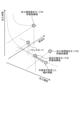
- FIG. 13 is a diagram showing an example of a command value generation parameter set for a machining surface searched for by the first optimal solution search unit in the first embodiment.
- a distribution diagram is shown in which a combination of evaluation index values for machining time, machining accuracy, and surface quality corresponding to the command value generation parameter set is plotted on an orthogonal coordinate system with the evaluation index values for machining time, machining accuracy, and surface quality as axes.
- an example of the result of searching for a command value generation parameter set for the machining surface S1 of the machining target shape 320 in FIG. 2 to FIG. 4 is shown.
- machining time priority mode which is a command value generation parameter set candidate that prioritizes shortening the machining time among the three evaluation index values of machining time, machining accuracy, and surface quality
- a machining accuracy priority mode which is a command value generation parameter set candidate that prioritizes improving the machining accuracy
- a surface quality priority mode which is a command value generation parameter set candidate that prioritizes improving the surface quality
- a balance mode which is a command value generation parameter set candidate that improves the three evaluation indexes in a balanced manner. Evaluation index values other than these four modes are based on other command value generation parameter sets.
- FIG. 13 an example is shown in which one command value generation parameter set candidate is extracted for each of the four categories of machining time priority mode, machining accuracy priority mode, surface quality priority mode, and balance mode, but it is not necessary to extract command value generation parameter sets that correspond to all categories, and it is sufficient to extract a command value generation parameter set that corresponds to at least one category. Also, multiple command value generation parameter sets that correspond to one category may be extracted.
- the first optimal solution search unit 14 has a function of searching for a command value generation parameter set that optimizes the evaluation index values of the machining time, machining accuracy, and surface quality under conditions that preferentially improve one of the evaluation index values of the machining time, machining accuracy, and surface quality within the range of the command value generation parameters, from a combination of the command value generation parameter set for search and the evaluation index value obtained when the command value generation parameter set for search is input to the first learning result, and a command value generation parameter set candidate including any one of the command value generation parameter sets that improves the evaluation index values of the machining time, machining accuracy, and surface quality in a balanced manner within the range of the command value generation parameters.
- the command value generation parameter set candidate is searched for the machining target shape 320.
- the command value generation parameter set candidate is searched for each machining surface or each machining edge.
- the first optimal solution search unit 14 can also perform learning processing and inference processing simultaneously.
- the candidate information storage unit 15 stores candidate information that associates the command value generation parameter set candidates extracted by the first optimal solution search unit 14 with the evaluation index value and the machining feature amount calculated by the feature amount calculation unit 11.
- the multiple command value generation parameter set candidates are associated with the respective evaluation index values and the machining feature amounts calculated by the feature amount calculation unit 11 and stored in the candidate information storage unit 15.
- the candidate information associates the command value generation parameter set candidates with the evaluation index value and the machining feature amount for each machining target shape 320.
- the candidate information associates the command value generation parameter set candidates with the evaluation index value and the machining feature amount for each machining surface or each machining edge.
- the evaluation index values for all command value generation parameter sets obtained by the learning process and search process in the first optimal solution search unit 14 and the processing features calculated by the feature calculation unit 11 may be stored in the candidate information storage unit 15.
- the preference information setting unit 16 controls the display unit 17 to display the corresponding machining feature values and the corresponding evaluation index values calculated when the command value generation parameter set candidates are set in the command value generation device 3 that generates tool movement commands and the command value generation device 3 operates.
- the preference information setting unit 16 displays the corresponding machining feature values and the corresponding evaluation index values of the command value generation parameter set candidates for the machining target shape 320 on the display unit 17.
- the preference information setting unit 16 displays the corresponding machining feature values and the corresponding evaluation index values of the command value generation parameter set candidates for each machining surface or each machining edge on the display unit 17.
- an actual machine tool may be operated according to the command value generation parameter set, and the actually machined workpiece having the machining target shape 320 may be presented to the operator in association with each evaluation index value, or image data of the machined workpiece having the machining target shape 320 may be displayed on the display unit 17 in association with each evaluation index value.
- the preference information setting unit 16 sets preference information for each evaluation index value of the candidate command value generation parameter set selected by the operator from among the feature values of the machining and their respective evaluation index values displayed on the display unit 17.
- the preference information setting unit 16 sets, as preference information, each evaluation index value of the candidate command value generation parameter set selected and adjusted by the operator from among the feature values of the machining and their respective evaluation index values displayed on the display unit 17.
- the preference information is set for the machining target shape 320.
- the preference information is set for each machining surface or each machining edge of the machining target shape 320.
- the display control unit corresponds to the preference information setting unit 16.
- preference information may be set in advance to the extent possible by the operator.
- the first optimal solution search unit 14 extracts candidate command value generation parameter sets that reflect the previously set preference information, so the preference information setting unit 16 may set preference information other than the previously set items, or the preference information setting unit 16 may reset the previously set items.
- the preference information setting unit 16 displays the command value generation parameter set candidates stored in the candidate information storage unit 15, and the evaluation index values and machining feature values associated with the command value generation parameter set candidates on the display unit 17.
- the command value generation parameter set candidates are a machining time priority mode, a machining accuracy priority mode, a surface quality priority mode, and a balance mode.
- the worker selects one command value generation parameter set candidate from the four categories of machining time priority mode, machining accuracy priority mode, surface quality priority mode, and balance mode based on the machining feature values calculated by the feature value calculation unit 11 via an input unit (not shown).
- the worker sets the worker's preference information via the input unit, referring to the machining feature values obtained from the selected command value generation parameter set candidate and the evaluation index values related to the machining time, machining accuracy, and surface quality.
- the preference information is the evaluation index value set by the worker, i.e., the evaluation index value related to the machining time, machining shape, and surface quality that the worker has.
- the preference information can be said to be information indicating which of the machining time, machining accuracy, and surface quality the worker places importance on when machining.
- the worker sets preference information for the machining time, machining accuracy, and surface quality for the machining target shape 320.
- the worker sets preference information for the machining time, machining accuracy, and surface quality for each machining surface or machining edge.
- the worker adjusts the evaluation index values for the machining time, machining accuracy, and surface quality for the selected command value generation parameter set candidate for the target machining surface or machining edge. This adjustment is based on the worker's preference.
- the preference information setting unit 16 sets the evaluation index values for the adjusted machining time, machining accuracy, and surface quality as preference information for the target machining surface or machining edge.
- the machining target shape 320 is composed of machining surfaces S1-S3 and machining edges E1, E2, and the operator selects a command value generation parameter set candidate that is closest to the operator's preference for each of the machining surfaces S1-S3 and the machining edges E1, E2.
- FIG. 14 is a diagram showing an example of preference information setting by the operator for one command value generation parameter set candidate selected from the categories of machining time priority mode, machining accuracy priority mode, surface quality priority mode, and balance mode for the machining surface shown in FIG. 13.
- FIG. 14 also shows an evaluation index value for the machining surface S1, as in FIG. 13. As shown in FIG.
- the current machining time, machining accuracy, and surface quality evaluation index values for the specified machining surface S1 are displayed on the display unit 17.
- the machining time, machining accuracy, and surface quality evaluation index values associated with the command value generation parameter set candidate selected by the operator are displayed.
- the worker modifies the displayed current machining time, machining accuracy, and surface quality evaluation index values via the input unit.
- the preference information setting unit 16 sets the machining time, machining accuracy, and surface quality evaluation index values modified by the worker as preference information for the machining surface S1.
- the surface quality priority mode is selected by the worker, and adjustments are made to shorten the machining time while maintaining the surface quality.
- the method of specifying the machining surface may involve, for example, having the operator select a position on the machining surface of the machining target shape 320 using a pointing device such as a mouse or a touch panel.
- the specified position may be a specific point, multiple points, or a continuous area.
- the method of correcting the evaluation index value may be, for example, a numerical input, or a GUI (Graphical User Interface) button such as a button or bar may be used to adjust the current setting value.
- the inputtable range or adjustable range may be set from the maximum and minimum values of the evaluation index value corresponding to the command value generation parameter set candidates stored in the candidate information storage unit 15 of the parameter adjustment device 1.
- the preference information setting unit 16 may predict the processing feature values obtained when the preference information is set based on the evaluation index values and processing feature values corresponding to the command value generation parameter set candidates stored in the candidate information storage unit 15 of the parameter adjustment device 1, and display them on the display unit 17 or the like in association with the processing target shape 320.
- a method can be considered in which the processing feature values for the evaluation index values closest to the preference information after setting among the evaluation index values corresponding to the command value generation parameter set candidates stored in the candidate information storage unit 15 of the parameter adjustment device 1 are linearly interpolated to predict the processing feature values for the preference information after setting.
- Preference information may be set for all of the processing time, processing accuracy, and surface quality, or for only some of them. If the worker does not set preference information, the preference information setting unit 16 interprets this as being equivalent to the current evaluation index value being set as the selection information, and sets the preference information.
- the display unit 17 displays the stored information stored in the candidate information storage unit 15 in accordance with an instruction from the preference information setting unit 16.
- the display unit 17 displays the machining feature values of the candidate command value generation parameter sets in association with their respective evaluation index values.
- the display unit 17 displays the machining feature values of the candidate command value generation parameter sets in association with their respective evaluation index values for the machining target shape 320.
- the display unit 17 displays the machining feature values of the candidate command value generation parameter sets in association with their respective evaluation index values for each machining surface or machining edge of the machining target shape 320.
- the second optimal solution search unit 18 searches for a command value generation parameter set corresponding to an evaluation index value that minimizes the difference with the preference information.
- the second optimal solution search unit 18 searches for one command value generation parameter set from among a plurality of command value generation parameter sets so that the evaluation index value approaches the preference information set in the preference information setting unit 16.
- the second optimal solution search unit 18 repeatedly performs an operation of acquiring the difference between the evaluation index value that evaluates the machining time, machining accuracy, and surface quality corresponding to the command value generation parameter set, and the preference information held by the operator regarding the machining time, machining accuracy, and surface quality, and obtains a command value generation parameter set that minimizes the difference between the evaluation index value and the preference information of the operator.
- the number of command value generation parameter sets to be obtained may be one or more.
- the second optimal solution search unit 18 obtains a command value generation parameter set that minimizes the difference between the evaluation index value and the preference information of the operator for the machining target shape 320.
- the second optimal solution search unit 18 finds a command value generation parameter set for each machining surface and each machining edge in the machining target shape 320 that minimizes the difference between the evaluation index value and the worker's preference information.
- the second optimal solution search unit 18 performs a learning process using a neural network with the command value generation parameter set, the evaluation index value corresponding to the command value generation parameter set, and the difference between the evaluation index value and the preference information of the worker as learning data. If the relationship between the command value generation parameter and the difference between the evaluation index value and the preference information can be obtained, the relationship between the command value generation parameter set and the difference between the evaluation index value and the preference information may be learned using a method other than the method using a neural network. In one example, a simple function such as a quadratic polynomial may be used to obtain the relationship between the command value generation parameter set and the difference between the evaluation index value and the preference information, or a probability model such as a Gaussian process model may be used.
- the second optimal solution search unit 18 generates a second learning result for inferring the difference between the evaluation index value and the preference information corresponding to the command value generation parameter set from the command value generation parameter set using the learning data including the command value generation parameter set and the difference between the evaluation index value and the preference information corresponding to the command value generation parameter set.
- the difference between the evaluation index value and the worker's preference information is three-dimensional data of processing time, processing accuracy, and surface quality, but it may be converted into one-dimensional data such as a norm and used as learning data.
- the second learning result in the second optimal solution search unit 18 may use the first learning result obtained based on the learning process of the first optimal solution search unit 14, or may use a learning result obtained by performing an additional learning process on the first learning result obtained based on the learning process of the first optimal solution search unit 14.
- the second optimal solution search unit 18 obtains a command value generation parameter set that minimizes the difference between the evaluation index value and the preference information of the operator with respect to the machining time, machining accuracy, and surface quality, by numerical calculation based on the relational expression between the command value generation parameter set, which is the learning result, and the difference between the evaluation index value and the preference information of the operator.
- the second optimal solution search unit 18 uses the second learning result, which is a relational expression for inferring the difference between the evaluation index value and the preference information corresponding to the command value generation parameter set for search, from the command value generation parameter set, to infer the difference between the evaluation index value and the preference information corresponding to the command value generation parameter set for search, and uses the inference result to search for one command value generation parameter set that minimizes the difference between the evaluation index value and the preference information.
- the second optimal solution search unit 18 obtains a command value generation parameter set for search using an optimization algorithm such as grid search, random search, Newton's method, Bayesian optimization, or evolutionary computation. Examples of evolutionary computation are NSGA-II, AGE-MOEA, AGE-MOEA2, and R-NSGA-II.
- the second optimal solution search unit 18 obtains the difference between the evaluation index value obtained by inputting the obtained command value generation parameter set for search into the relational expression and the preference information of the worker. Then, the command value generation parameter set that minimizes the difference between the evaluation index value and the preference information is obtained. At this time, it is desirable to obtain one command value generation parameter set that minimizes the difference between the value index value and the preference information. However, multiple command value generation parameter sets may be obtained in order of the smallest difference between the value index value and the preference information, or all command value generation parameter sets in which the difference between the evaluation index value and the preference information falls within a threshold value set by the worker may be obtained.
- the second optimal solution search unit 18 may search for a command value generation parameter set corresponding to an evaluation index value whose difference from the preference information falls within a certain value.
- the command value generation parameter set searched by the second optimal solution search unit 18 may be one or multiple.
- the command value generation parameter set obtained in this manner is called an adjusted command value generation parameter set.
- the second optimal solution search unit 18 stores the calculated adjusted command value generation parameter set in the adjusted command value generation parameter set storage unit 19.
- the command value generation parameter set for search used by the second optimal solution search unit 18 corresponds to the command value generation parameter set for the second search.
- the second optimal solution search unit 18 can also perform the learning process and the inference process simultaneously.
- the adjusted command value generation parameter set storage unit 19 stores the adjusted command value generation parameter set searched for by the second optimal solution search unit 18.
- the adjusted command value generation parameter set storage unit 19 stores the adjusted command value generation parameter set calculated for the machining target shape 320.
- the adjusted command value generation parameter set storage unit 19 stores the adjusted command value generation parameter set calculated for each machining surface and each machining edge in the machining target shape 320.
- the command value generating device 3 rewrites the setting value of the command value generation parameter set to the adjusted command value generation parameter set extracted by the second optimal solution search unit 18. Then, by operating the command value generating device 3 to perform machining using the set command value generation parameters, machining results that suit the operator's preferences can be obtained.
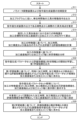
- FIG. 15 is a flowchart showing an example of the procedure of the parameter adjustment method according to the first embodiment. Note that, in this example, the entire workpiece is divided into a number of parts, and each divided part is machined under different conditions.
- the parameter adjustment device 1 and the command value generation device 3 are initialized (step S11). Specifically, a machining target shape 320, which is the target shape of the workpiece including the machining curved surface that is the curved surface to be machined, is externally input to the parameter adjustment device 1. In addition, a machining program 310, which describes a tool path movement command corresponding to the machining target shape 320 and a movement speed command at this time, is externally input to the command value generation device 3.
- the command value generating device 3 outputs a tool movement command for each unit time according to the externally input machining program 310 (step S12).
- the feature calculation unit 11 simulates the behavior of the machine tool to be controlled on a computer, and estimates the actual tool tip point from the interpolation point output by the command value generating device 3 (step S13).
- the feature amount calculation unit 11 calculates the feature amount of machining at the tool tip point in association with the machining surface or machining edge of the machining target shape 320 (step S14).
- the evaluation index calculation unit 12 calculates evaluation index values that evaluate each of the machining time, machining accuracy, and surface quality based on the machining feature amount calculated in step S14 (step S15).
- the first optimal solution search unit 14 inputs the evaluation index values and parameter ranges for the machining time, machining accuracy, and surface quality, learns the relationship between the command value generation parameter set and the evaluation index value calculated by the evaluation index calculation unit 12, and outputs the first learning result (step S16). After that, the first optimal solution search unit 14 obtains, by numerical calculation based on the relational expression between the command value generation parameter and the evaluation index value, which is the first learning result, a command value generation parameter set candidate that has a different balance of the evaluation index values for the machining time, machining accuracy, and surface quality and simultaneously optimizes the evaluation index values for the machining time, machining accuracy, and surface quality for each machining surface or machining edge in the machining target shape 320 (step S17).
- command value generation parameter set candidates namely, a machining time priority mode, a machining accuracy priority mode, a surface quality priority mode, and a balance mode, are obtained for each machining surface or machining edge.
- one or more command value generation parameter set candidates may be obtained for each machining surface or machining edge.
- the preference information setting unit 16 displays on the display unit 17 the machining feature values of the command value generation parameter set candidates, as well as the evaluation index values of the machining time, machining accuracy, and surface quality, for each machining surface and each machining edge, for the command value generation parameter set candidates from which the machining feature values have been acquired (step S18). That is, the preference information setting unit 16 displays on the display unit 17 the machining feature values and the evaluation index values calculated when the command value generation parameter set candidates are set in the command value generation device 3 and the command value generation device 3 operates, in association with each other. In this way, the machining feature values and the evaluation index values for the command value generation parameter set candidates are associated with each other and displayed to the operator.
- a machining feature value i.e., a command value generation parameter set
- a command value generation parameter set that corresponds to an evaluation index value that matches or is close to the operator's preference from among the displayed ones
- the operator selects one candidate command value generation parameter set for each machining surface and each machining edge based on the machining feature quantities, and adjusts the evaluation index values for the machining time, machining accuracy, and surface quality as necessary.
- the preference information setting unit 16 sets the evaluation index values for the machining time, machining accuracy, and surface quality adjusted by the operator as preference information for each machining surface or each machining edge (step S19).
- the second optimal solution search unit 18 repeatedly performs an operation of obtaining the difference between the evaluation index value for evaluating the machining time, machining accuracy, and surface quality corresponding to the command value generation parameter set and the preference information of the operator regarding the machining time, machining accuracy, and surface quality, and obtains an adjusted command value generation parameter set, which is a command value generation parameter set that minimizes the difference between the evaluation index value and the preference information of the operator, for each machining surface or machining edge in the machining target shape 320 (step S20).
- the command value generating device 3 rewrites the setting values of the command value generation parameter set to the adjusted command value parameter set extracted by the second optimal solution searching unit 18 and operates it to perform processing, thereby obtaining processing results that suit the preferences of the worker. If the preferences of the worker change, it is possible to calculate an adjusted command value generation parameter set that is optimal for the worker whose preferences have changed in a short period of time by restarting the processing from step S18 to step S20, in which the preferences of the worker are reflected. This completes the parameter adjustment method. Note that an overview of each step has been explained here, but the details of each step are as described above.
- step S14 the feature amount calculation unit 11 calculates the machining feature amount at the tool tip point in association with the machining target shape 320.
- step S17 the first optimal solution search unit 14 finds a command value generation parameter set candidate for the machining target shape 320.
- step S18 the preference information setting unit 16 displays the machining feature amount and the evaluation index values of the machining time, machining accuracy, and surface quality of the command value generation parameter set candidate for the machining target shape 320 on the display unit 17.
- step S19 the preference information setting unit 16 sets the evaluation index values of the machining time, machining accuracy, and surface quality adjusted by the operator to the machining target shape 320 as preference information.
- step S20 the second optimal solution search unit 18 finds an adjusted command value generation parameter set for the machining target shape 320.
- the first learning result for inferring one or more evaluation index values for evaluating the machining result from the command value generation parameter set is used to infer an evaluation index value corresponding to the command value generation parameter set for search, and the inferred result is used to search for multiple command value generation parameter set candidates that simultaneously optimize the respective evaluation index values.
- the searched command value generation parameter set candidates are set in the command value generating device 3 and operated, and the calculated machining feature values and the respective evaluation index values are associated and displayed on the display unit 17. This allows the operator to view the evaluation index values and machining feature values for the multiple command value generation parameter set candidates and select a command value generation parameter set that matches or is close to the operator's preference.
- the parameters for the machining target shape 320 can be automatically adjusted to suit the preferences of the operator, using the three evaluation indices of machining time, machining accuracy, and surface quality. This makes it possible to achieve machining in the shortest machining time while still achieving the desired machining accuracy. In other words, this has the effect of enabling a command value generation parameter set that matches the preferences of the operator to converge more quickly than ever before.
- step S18 the process from step S18 to step S20 in FIG. 15 can be executed. This allows the operator to make fine adjustments and corrections to the command value generation parameter set with little effort and time.
- FIG. 16 is a diagram showing an example of the state of machining a blade-shaped member. As shown in FIG. 16, in one example, when machining a blade-shaped member 400 using a tool 40, if it is desired to machine the rounded end portions 401 with high precision and the flat portion 402 between the end portions 401 at high speed, a parameter set of one condition cannot be used.
- an adjusted command value generation parameter set that reflects the operator's preferences is obtained for each machining surface and each machining edge of the machining target shape 320.
- different adjusted command value generation parameters that reflect the preferences of the worker are obtained for both end portions 401 and flat portion 402.
- the learning data used by the second optimal solution search unit 18 may be data obtained from the same control object as the learning data used by the first optimal solution search unit 14.
- the learning data used by the second optimal solution search unit 18 may be data obtained from a control object different from the learning data used by the first optimal solution search unit 14.
- the learning results of the first optimal solution search unit 14 and the second optimal solution search unit 18 in the first embodiment may be learning results obtained from different control objects.
- the second optimal solution search unit 18 may be a learning result obtained from an actual machine tool
- the first optimal solution search unit 14 may be a learning result obtained by a simulation that simulates the behavior of this machine tool on a computer.
- the parameters can be automatically adjusted to match the preferences of the operator by adjusting them to a certain extent in the simulation and then adjusting them highly accurately with a small number of adjustments in the actual machine tool.
- Embodiment 2. 17 is a diagram showing an example of the configuration of a parameter adjustment device according to embodiment 2.
- the same components as those in embodiment 1 are given the same reference numerals, and their description will be omitted, and only the parts different from embodiment 1 will be described.
- the parameter adjustment device 1A further includes, in addition to the configuration of embodiment 1, a shape analysis unit 20 that analyzes shape information, which is information indicating the shape of each machining surface or machining edge of the machining target shape 320, from the feature amount of machining.
- the shape analysis unit 20 analyzes shape information, which is information indicating the shape of each machining surface or each machining edge of the machining target shape 320, based on the machining feature amount calculated by the feature amount calculation unit 11.
- shape analysis unit 20 extracts adjacent paths, which are tool center point paths adjacent to the tool center point path representing each machining surface or each machining edge of the machining target shape 320, and derives shape information from the machining feature amount corresponding to the extracted adjacent path.
- the shape analysis unit 20 sets the cumulative value of the tangent vector change calculated from the machining feature amount corresponding to the adjacent path as the shape information.
- the shape analysis unit 20 may set the average value of the tangent vector change derived from the machining feature amount as the shape information.
- the machining feature amount at this time is the speed of the tool center point.
- the shape analysis unit 20 sets the shape information to a function obtained by fitting the distance from the center of gravity of the adjacent path to one dimension.
- the shape information may be a function fitted with a simple function such as a quadratic polynomial.
- the feature values of the machining are associated with each machining surface or each machining edge in the machining target shape 320, and adjacent paths are extracted by grouping consecutive machining feature values in a time series.
- the shape analysis unit 20 stores the shape information obtained based on the adjacent paths calculated as described above in the evaluation index information storage unit 13 in association with the command value generation parameter set and the evaluation index values related to the machining time, machining accuracy, and surface quality.
- the evaluation index information associates the evaluation index values related to the machining time, machining accuracy, and surface quality with the command value generation parameter set and shape information for each of the machining surfaces or machining edges of the machining target shape 320.
- the evaluation index information may include the corresponding machining feature values in addition to the evaluation index values related to the machining time, machining accuracy, and surface quality, the command value generation parameter set, and the shape information.
- the first optimal solution search unit 14 learns by adding shape information derived by the shape analysis unit 20 to the relationship between the command value generation parameter set, which is a parameter set in the command value generation device 3, and the evaluation index value calculated by the evaluation index calculation unit 12, and obtains a first learning result.
- the first optimal solution search unit 14 uses the first learning result to search for one or more command value generation parameter sets that simultaneously optimize the evaluation index values of the machining time, machining accuracy, and surface quality.
- the balance of the evaluation index values which are in a trade-off relationship, differs, and a command value generation parameter set that simultaneously optimizes the evaluation index values of the machining time, machining accuracy, and surface quality is searched for.
- the learning process of the first optimal solution search unit 14 will now be described.
- the first optimal solution search unit 14 receives as input evaluation index values relating to machining time, machining accuracy, and surface quality, a command value generation parameter set, and shape information, learns the relationship between the command value generation parameters, the evaluation index values calculated by the evaluation index calculation unit 12, and the shape information, and outputs the first learning result.
- a neural network is constructed that receives the command value generation parameter set and shape information as input and outputs the evaluation index value, and the first optimal solution search unit 14 updates the weight coefficients of this neural network to perform learning.
- the first optimal solution search unit 14 selects and outputs a command value generation parameter set for executing the next machining operation from within a specified parameter range for the machining target shape 320.
- the first optimal solution search unit 14 may select a command value generation parameter set that shows a good evaluation index value based on the first learning result, or may select each command value generation parameter set in order from among the points of a grid that is spaced at equal intervals.
- the first optimal solution search unit 14 has a function of updating a function that calculates evaluation index values related to machining time, machining accuracy, and surface quality based on the command value generation parameter set and shape information.
- the first optimal solution search unit 14 repeatedly performs an operation of acquiring an evaluation index value corresponding to the command value generation parameter set and the shape information.
- the first optimal solution search unit 14 performs a learning process using a neural network as described in the first embodiment, using the command value generation parameter set and the evaluation index value and shape information corresponding to the command value generation parameter set as learning data.
- the display unit 904 is composed of a display, a liquid crystal display panel, and the like, and displays various screens to the user of the computer system.
- the input unit 902 and the display unit 904 may be composed of a touch panel in which the input unit 902 and the display unit 904 are integrally formed.
- the communication unit 905 is a receiver and a transmitter that perform communication processing.
- the output unit 906 is a printer, a speaker, etc. Note that FIG. 19 is just an example, and the configuration of the computer system is not limited to the example in FIG. 19.
- 1, 1A Parameter adjustment device, 3: Command value generation device, 11: Feature calculation unit, 12: Evaluation index calculation unit, 13: Evaluation index information storage unit, 14: First optimal solution search unit, 15: Candidate information storage unit, 16: Preference information setting unit, 17: Display unit, 18: Second optimal solution search unit, 19: Adjusted command value generation parameter set storage unit, 20: Shape analysis unit, 310: Machining program, 320: Machining target shape, 321: Block, 321a: Top surface, 322: Protrusion, E1, E2: Machining edge, S1, S2, S3: Machining curved surface.
Landscapes
- Engineering & Computer Science (AREA)
- Physics & Mathematics (AREA)
- Human Computer Interaction (AREA)
- Manufacturing & Machinery (AREA)
- General Physics & Mathematics (AREA)
- Automation & Control Theory (AREA)
- Geometry (AREA)
- Computing Systems (AREA)
- Theoretical Computer Science (AREA)
- Numerical Control (AREA)
Priority Applications (5)
| Application Number | Priority Date | Filing Date | Title |
|---|---|---|---|
| CN202380089659.6A CN120435695A (zh) | 2023-06-28 | 2023-06-28 | 参数调整装置及参数调整方法 |
| DE112023004612.3T DE112023004612T5 (de) | 2023-06-28 | 2023-06-28 | Parameteranpassungsgerät und Parameteranpassungsverfahren |
| US19/138,122 US20260016807A1 (en) | 2023-06-28 | 2023-06-28 | Parameter adjustment device and parameter adjustment method |
| PCT/JP2023/024058 WO2025004241A1 (ja) | 2023-06-28 | 2023-06-28 | パラメータ調整装置およびパラメータ調整方法 |
| JP2023568589A JP7415100B1 (ja) | 2023-06-28 | 2023-06-28 | パラメータ調整装置およびパラメータ調整方法 |
Applications Claiming Priority (1)
| Application Number | Priority Date | Filing Date | Title |
|---|---|---|---|
| PCT/JP2023/024058 WO2025004241A1 (ja) | 2023-06-28 | 2023-06-28 | パラメータ調整装置およびパラメータ調整方法 |
Publications (1)
| Publication Number | Publication Date |
|---|---|
| WO2025004241A1 true WO2025004241A1 (ja) | 2025-01-02 |
Family
ID=89534352
Family Applications (1)
| Application Number | Title | Priority Date | Filing Date |
|---|---|---|---|
| PCT/JP2023/024058 Ceased WO2025004241A1 (ja) | 2023-06-28 | 2023-06-28 | パラメータ調整装置およびパラメータ調整方法 |
Country Status (5)
| Country | Link |
|---|---|
| US (1) | US20260016807A1 (https=) |
| JP (1) | JP7415100B1 (https=) |
| CN (1) | CN120435695A (https=) |
| DE (1) | DE112023004612T5 (https=) |
| WO (1) | WO2025004241A1 (https=) |
Families Citing this family (3)
| Publication number | Priority date | Publication date | Assignee | Title |
|---|---|---|---|---|
| WO2025225204A1 (ja) * | 2024-04-24 | 2025-10-30 | パナソニックIpマネジメント株式会社 | 軌道決定システム、軌道決定方法及びプログラム |
| WO2025253427A1 (ja) * | 2024-06-03 | 2025-12-11 | ファナック株式会社 | 加工プログラム補正装置 |
| CN118982222B (zh) * | 2024-08-05 | 2025-02-28 | 江苏虎豹集团有限公司 | 一种裤腰压烫参数自适应控制方法 |
Citations (4)
| Publication number | Priority date | Publication date | Assignee | Title |
|---|---|---|---|---|
| JPS5894004A (ja) * | 1981-11-30 | 1983-06-04 | Hitachi Ltd | プラント制御系調節器最適パラメ−タ探索装置 |
| WO2021095170A1 (ja) * | 2019-11-13 | 2021-05-20 | 三菱電機株式会社 | 加工プログラム変換装置、数値制御装置および加工プログラムの変換方法 |
| WO2023002627A1 (ja) * | 2021-07-21 | 2023-01-26 | ファナック株式会社 | 移動経路決定装置及びコンピュータプログラム |
| JP2023025723A (ja) * | 2021-08-11 | 2023-02-24 | セイコーエプソン株式会社 | 対象装置の動作パラメーターを調整する方法,及び、動作パラメーター調整システム |
Family Cites Families (6)
| Publication number | Priority date | Publication date | Assignee | Title |
|---|---|---|---|---|
| CN103760820B (zh) * | 2014-02-15 | 2015-11-18 | 华中科技大学 | 数控铣床加工过程状态信息评价装置 |
| CN106489105B (zh) * | 2015-06-18 | 2018-06-22 | 三菱电机株式会社 | 控制参数调整装置 |
| CN112805653B (zh) * | 2018-10-12 | 2024-02-02 | 三菱电机株式会社 | 定位控制装置以及定位方法 |
| CN110221580B (zh) * | 2019-05-29 | 2020-07-10 | 华中科技大学 | 一种基于主轴数据仿真的进给速度优化方法 |
| JP2022054043A (ja) * | 2020-09-25 | 2022-04-06 | セイコーエプソン株式会社 | ロボットの制御パラメーターに関する表示を行う方法、プログラム、および情報処理装置 |
| CN115129003B (zh) * | 2022-06-08 | 2024-09-20 | 华中科技大学 | 一种基于自学习时变数字孪生的自动化产线智能监测系统 |
-
2023
- 2023-06-28 DE DE112023004612.3T patent/DE112023004612T5/de active Pending
- 2023-06-28 WO PCT/JP2023/024058 patent/WO2025004241A1/ja not_active Ceased
- 2023-06-28 CN CN202380089659.6A patent/CN120435695A/zh active Pending
- 2023-06-28 US US19/138,122 patent/US20260016807A1/en active Pending
- 2023-06-28 JP JP2023568589A patent/JP7415100B1/ja active Active
Patent Citations (4)
| Publication number | Priority date | Publication date | Assignee | Title |
|---|---|---|---|---|
| JPS5894004A (ja) * | 1981-11-30 | 1983-06-04 | Hitachi Ltd | プラント制御系調節器最適パラメ−タ探索装置 |
| WO2021095170A1 (ja) * | 2019-11-13 | 2021-05-20 | 三菱電機株式会社 | 加工プログラム変換装置、数値制御装置および加工プログラムの変換方法 |
| WO2023002627A1 (ja) * | 2021-07-21 | 2023-01-26 | ファナック株式会社 | 移動経路決定装置及びコンピュータプログラム |
| JP2023025723A (ja) * | 2021-08-11 | 2023-02-24 | セイコーエプソン株式会社 | 対象装置の動作パラメーターを調整する方法,及び、動作パラメーター調整システム |
Also Published As
| Publication number | Publication date |
|---|---|
| CN120435695A (zh) | 2025-08-05 |
| DE112023004612T5 (de) | 2025-08-21 |
| JP7415100B1 (ja) | 2024-01-16 |
| US20260016807A1 (en) | 2026-01-15 |
| JPWO2025004241A1 (https=) | 2025-01-02 |
Similar Documents
| Publication | Publication Date | Title |
|---|---|---|
| JP7415100B1 (ja) | パラメータ調整装置およびパラメータ調整方法 | |
| US10261497B2 (en) | Machine tool for generating optimum acceleration/deceleration | |
| US10331104B2 (en) | Machine tool, simulation apparatus, and machine learning device | |
| CN111857052B (zh) | 机器学习装置、数值控制系统以及机器学习方法 | |
| US20040167721A1 (en) | Optimal fitting parameter determining method and device, and optimal fitting parameter determining program | |
| JP6077617B1 (ja) | 最適な速度分布を生成する工作機械 | |
| JP6664561B1 (ja) | 位置決め制御装置及び位置決め方法 | |
| Fountas et al. | An integrated framework for optimizing sculptured surface CNC tool paths based on direct software object evaluation and viral intelligence | |
| JP6981579B2 (ja) | 位置決め制御装置及び位置決め制御方法 | |
| CN112805653B (zh) | 定位控制装置以及定位方法 | |
| CN118238156B (zh) | 五轴加工机器人的刀具运动控制方法及相关装置 | |
| CN115488881B (zh) | 基于多运动技能先验的人机共享自治遥操作方法及系统 | |
| Chen et al. | Optimal trajectory planning for industrial robots using harmony search algorithm | |
| JP7166488B1 (ja) | 数値制御装置、加工システム、数値制御方法および加工方法 | |
| JPWO2025004241A5 (https=) | ||
| JP2019220028A (ja) | 最適化装置、最適化方法、およびプログラム | |
| JP7634458B2 (ja) | モータ制御装置及びモータ制御方法 | |
| JP7224541B1 (ja) | 数値制御装置、加工システム、数値制御方法および加工方法 | |
| KR20250126434A (ko) | 분류기 학습 장치 및 방법 | |
| CN118024256A (zh) | 一种机器人动力学参数的双重稀疏高效辨识方法及系统 | |
| JP6829271B2 (ja) | 測定動作パラメータ調整装置、機械学習装置及びシステム | |
| CN115380258A (zh) | 减少机床内的摩擦 | |
| CN115625701B (zh) | 调整机器人的动作参数的动作参数调整方法以及调整装置 | |
| CN119937462B (zh) | 一种基于Q-learning的数控加工刀轴矢量运动轨迹规划方法 | |
| JP2026066817A (ja) | 最適化方法、最適化装置、最適化プログラム、及び該最適化プログラムを記憶しているコンピュータ読取可能な記憶媒体 |
Legal Events
| Date | Code | Title | Description |
|---|---|---|---|
| WWE | Wipo information: entry into national phase |
Ref document number: 2023568589 Country of ref document: JP |
|
| 121 | Ep: the epo has been informed by wipo that ep was designated in this application |
Ref document number: 23943638 Country of ref document: EP Kind code of ref document: A1 |
|
| WWE | Wipo information: entry into national phase |
Ref document number: 202380089659.6 Country of ref document: CN |
|
| WWE | Wipo information: entry into national phase |
Ref document number: 112023004612 Country of ref document: DE |
|
| WWP | Wipo information: published in national office |
Ref document number: 202380089659.6 Country of ref document: CN |
|
| WWP | Wipo information: published in national office |
Ref document number: 112023004612 Country of ref document: DE |