WO2025004155A1 - 情報処理装置、情報処理方法、および情報処理プログラム - Google Patents
情報処理装置、情報処理方法、および情報処理プログラム Download PDFInfo
- Publication number
- WO2025004155A1 WO2025004155A1 PCT/JP2023/023657 JP2023023657W WO2025004155A1 WO 2025004155 A1 WO2025004155 A1 WO 2025004155A1 JP 2023023657 W JP2023023657 W JP 2023023657W WO 2025004155 A1 WO2025004155 A1 WO 2025004155A1
- Authority
- WO
- WIPO (PCT)
- Prior art keywords
- information
- user
- employee
- consultation
- evaluation value
- Prior art date
- Legal status (The legal status is an assumption and is not a legal conclusion. Google has not performed a legal analysis and makes no representation as to the accuracy of the status listed.)
- Ceased
Links
Images





Classifications
-
- G—PHYSICS
- G06—COMPUTING OR CALCULATING; COUNTING
- G06F—ELECTRIC DIGITAL DATA PROCESSING
- G06F16/00—Information retrieval; Database structures therefor; File system structures therefor
- G06F16/90—Details of database functions independent of the retrieved data types
- G06F16/903—Querying
-
- G—PHYSICS
- G06—COMPUTING OR CALCULATING; COUNTING
- G06Q—INFORMATION AND COMMUNICATION TECHNOLOGY [ICT] SPECIALLY ADAPTED FOR ADMINISTRATIVE, COMMERCIAL, FINANCIAL, MANAGERIAL OR SUPERVISORY PURPOSES; SYSTEMS OR METHODS SPECIALLY ADAPTED FOR ADMINISTRATIVE, COMMERCIAL, FINANCIAL, MANAGERIAL OR SUPERVISORY PURPOSES, NOT OTHERWISE PROVIDED FOR
- G06Q10/00—Administration; Management
- G06Q10/10—Office automation; Time management
-
- G—PHYSICS
- G06—COMPUTING OR CALCULATING; COUNTING
- G06Q—INFORMATION AND COMMUNICATION TECHNOLOGY [ICT] SPECIALLY ADAPTED FOR ADMINISTRATIVE, COMMERCIAL, FINANCIAL, MANAGERIAL OR SUPERVISORY PURPOSES; SYSTEMS OR METHODS SPECIALLY ADAPTED FOR ADMINISTRATIVE, COMMERCIAL, FINANCIAL, MANAGERIAL OR SUPERVISORY PURPOSES, NOT OTHERWISE PROVIDED FOR
- G06Q50/00—Information and communication technology [ICT] specially adapted for implementation of business processes of specific business sectors, e.g. utilities or tourism
- G06Q50/10—Services
Definitions
- This invention relates to an information processing device, an information processing method, and an information processing program.
- One pairing technique is to recommend a person to consult based on the frequency of occurrence of a character string (word) in the screen data on the terminal handled by the person in charge (see, for example, Patent Document 1).
- a candidate is selected using this technique, the person to consult and the candidate will attempt to resolve the problem by starting communication to exchange information about the problem or advice (for example, by phone, email, or chat tool).
- Patent Document 1 calculates the suitability evaluation for a candidate for consultation based only on the work experience of the employee, and does not take into account characteristics such as the relationships between employees.
- a "psychological barrier" based on whether or not the person knows the candidate occurs when the person seeking advice and the candidate for consultation contact and exchange of information.
- this psychological barrier takes time and effort before communication toward solving the problem can begin.
- the psychological barrier causes the person seeking advice to try to solve the problem on their own without using the technology disclosed in Patent Document 1, which takes time and effort.
- This invention was made with the above in mind, and its purpose is to make it possible to more reliably initiate communication between the person seeking advice and the potential person seeking advice, with the aim of resolving the problem.
- the object of this invention is to establish a business support technology that can quickly resolve problems even in a remote environment or an environment where it is difficult for staff members to understand each other's skill sets.
- an information processing device includes an acquisition unit that acquires a search request for searching for a consultation user who is a first user's consultation partner from among a plurality of users belonging to an organization; a storage unit that stores text information handled by a user terminal owned by the first user and communication information between the plurality of users; a pairing process execution unit that extracts a plurality of candidate users who are the first user's consultation partner based on the text information and calculates recommendation levels of the plurality of candidate users; a search unit that searches for a transmission path from the first user to the plurality of candidate users; a transmission index calculation unit that calculates an information transmission index indicating the ease of contact between users included in the transmission path based on the communication information; an evaluation value calculation unit that calculates an evaluation value of the transmission path based on the information transmission index; a recommendation level update unit that updates the recommendation level based on the evaluation value; and an output control unit that outputs the consultation user and the transmission path to the consultation user based on the updated
- the present invention it is possible to more reliably initiate communication between a person seeking advice and a potential consultant with the aim of resolving the problem. Furthermore, according to one aspect of the present invention, it is possible to establish a business support technology that can quickly resolve problems even in a remote environment or an environment where it is difficult to grasp the skill sets of the people in charge.
- FIG. 1 is a diagram showing an example of the overall configuration of a search system including an information processing device according to an embodiment of the present invention.
- FIG. 2 is a diagram showing an example of a case where a consultant and a candidate for consultation are paired using the conventional technology.
- FIG. 3 is a diagram showing an example in which a plurality of employees act as intermediaries between a consultant and a potential consultant.
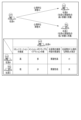
- FIG. 4 is a diagram showing a specific example of hypothesis 1.
- FIG. 5 is a diagram showing a specific example of hypotheses 2 and 3.
- FIG. 6 is a diagram illustrating an example of a hardware configuration of the search server.
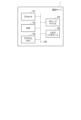
- FIG. 7 is a diagram showing an example of the software configuration of the search server.
- FIG. 1 is a diagram showing an example of the overall configuration of a search system including an information processing device according to an embodiment of the present invention.
- FIG. 2 is a diagram showing an example of a case where a consultant and a candidate for consultation are paired using the conventional technology.
- FIG. 8 is a flowchart showing an example of an information processing operation by the search server.
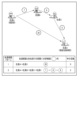
- FIG. 9 is a diagram showing an example of the information transfer index f( ⁇ ) between employees and the penalty evaluation value g( ⁇ ) for each employee.
- FIG. 10 is a diagram showing an example of a transfer path found by a full search.
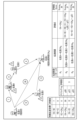
- FIG. 11 is a diagram showing an example of the calculated evaluation value Score for each route.
- FIG. 12 is a diagram showing an example of the determined representative transfer paths and representative evaluation values.
- FIG. 13 is a diagram showing an example of a recommendation level W' obtained by updating the recommendation level W. As shown in FIG.
- FIG. 1 is a diagram showing an example of the overall configuration of a search system 100 including an information processing device according to an embodiment of the present invention.
- the search system 100 includes a search server 1 and user terminals UT1, UT2, ... UTn (in the following description, when there is no need to distinguish between them, they will be simply referred to as "user terminals UT") that can communicate with each other via a network NW.
- NW Network NW
- the information processing device is implemented as a search server 1.
- the search server 1 is, for example, a server computer or a personal computer managed by an organization such as a company, a school, an association, or a membership-based community.
- the search server 1 receives requests from users who have encountered a problem (hereafter referred to as "consultant” or “consultation user”) by communicating with each user terminal UT, searches for candidates for users who will receive consultation (hereafter referred to as “consultee” or “consultation user”), and presents the search results to the consultation user.
- the search server 1 can also notify the consultation user that another user has encountered a problem, that the user has been selected as a candidate for consultation on a problem, or information about the consultation user. In this way, the search server 1 recommends candidate consultation users to the consultation user and makes the candidate consultation users aware that a problem has occurred, thereby supporting the connection between the consultation user and the consultation user (referred to here as "pairing").
- the network NW may be, for example, the Internet, an intranet, a LAN (Local Area Network), a WAN (Wide Area Network), etc., and may include a wired or wireless network.
- LAN Local Area Network
- WAN Wide Area Network
- the user terminal UT is an information processing terminal used by a user, and may be, for example, a personal computer, a smartphone, a tablet terminal, a mobile phone, a wearable terminal, or the like.
- a user belongs to an organization such as the one described above that manages the search server 1, and uses the user terminal UT to carry out work, etc., and can also communicate with other users via the user terminal UT.
- the user terminal UT may be a dedicated terminal for each user, or may be shared by multiple users. As described above, this is also applicable to the case where there is no search server 1 and only the user terminal UT is connected via the network NW.
- the search server 1 may be a device separate from the user terminals UT, or may be integrated with any of the user terminals UT.
- the search server 1 in this embodiment is intended to enable both the person seeking advice and the person seeking advice to find each other when such a problem occurs, someone who can share with them the "work situation when the problem occurred" and the "solution appropriate to that situation” with minimal effort (including explanation).
- the frequency of appearance of character strings in screen data used by an employee on a terminal is regarded as the employee's work experience, and the recommendation level as a person to consult is calculated, and multiple employees with high recommendation levels are paired with the person seeking advice as potential consultation candidates.
- the paired consultation candidate poses a large psychological barrier, making the person seeking advice hesitant.
- the person seeking advice (employee A) encounters a problem and is unsure of who to consult.
- the search server 1 then pairs the person seeking advice with a potential person to consult (employee X) using conventional technology such as that disclosed in Patent Document 1.
- FIG. 2 is a diagram showing an example of a case where a consultant and a candidate for consultation are paired using the conventional technology.
- the conventional technology does not take into consideration the characteristics of the relationships between employees, etc. Therefore, as shown in Figure 2, for employee A, who is the person seeking advice, employee X, who is the candidate for consultation, is not an employee who is easy to consult with or to contact, in other words, there are cases where the person selected as the candidate for consultation is someone who poses a large psychological barrier.
- employee A does not know employee X, and will find it difficult to suddenly contact them about a problem. And since employee X does not know employee A either, they will be on edge or confused when contacted suddenly.
- one method is to have multiple employees act as intermediaries and encourage the potential consultant to help the person seeking advice (employee A and employee X in the example in Figure 2) before the two people begin communicating to resolve the issue.
- FIG. 3 is a diagram showing an example in which a plurality of employees act as intermediaries between a consultant and a potential consultant.
- the first communication path is a path from employee A to employee X directly. This path is difficult to communicate because of the large psychological barrier, as explained in Figure 2.
- the second communication path is the path from employee A to employee B to employee C to employee X.
- employee A asks employee B to ask employee C to introduce employee X to employee X.
- Employee B has a low psychological barrier because he regularly interacts with employee C, and upon receiving the request, asks employee C to introduce employee A to employee X.
- Employee C has a low psychological barrier because he regularly interacts with employee X, and upon receiving the request, tells employee X that employee A is in trouble and asks if he can help.
- Employee X is willing to listen to employee C's advice if it is a request from employee C.
- employee A may be able to initiate direct communication with employee Y because the psychological barrier between them is small.
- a method is proposed that makes it possible to select "an employee who has the work experience to solve problems and who is easy to communicate with to start a consultation" by comprehensively evaluating the recommendation level based on the employee's work experience, calculated using conventional technology, and the evaluation value related to the "ease of communication" when transmitting information to each consultation candidate.
- Step (1) Calculating the evaluation value regarding psychological barriers between employees.
- Step (2) Based on the evaluation values in step (1), an evaluation value of each communication path from the client to each of the multiple consultation candidates selected using the conventional technology is calculated to determine the optimal communication path (hereinafter, this communication path is referred to as an intermediary path).
- Step (3) Using conventional technology, the recommendation level calculated based on the employee's work experience and the evaluation value of the communication path to the consultation candidate calculated in step (2) are combined to select the optimal consultation candidate and the communication path to the consultation candidate, and present them to the person seeking advice.
- Premise 1 Candidates for consultation selected using the conventional technology (for example, Patent Document 1) are selected regardless of whether they know the person seeking advice or whether their departments are related to the person seeking advice.
- Premise 2 The paired consultant and consultant candidate have a means of communicating with each other. For example, they can communicate with each other using telephone, email software, business chat tools, etc.
- Premise 3 In each transmission (including mediation) in the transmission path from the person seeking advice to the potential consultant, the source of the mediation request and the target of the mediation request have a means of information transmission to each other, similar to Premise 2. For example, in the second transmission path shown in Fig. 3, employees A and B can transmit information by telephone, employees B and C can transmit information by business chat tools, and employees C and X can transmit information by email software. Note that this explanation is merely one example, and it goes without saying that the means of information transmission used in each transmission from the person seeking advice to the potential consultant may be any means.
- Hypothesis 1 “Psychological barriers” between employees are reflected in the organizational affiliation between them, as well as in their everyday work interactions, the amount of communication, and the quality of communication.
- FIG. 4 is a diagram showing a specific example of hypothesis 1. As shown in FIG. 4, the magnitude of the psychological barrier between employee A and other employees (employees B and C in the example of FIG. 4) is influenced by the following factors.
- psychological barriers between employees are smaller when they belong to an organization where communication is frequent, there are many mentions or positive reactions, or the work content is highly relevant.
- psychological barriers between employees are larger when they belong to an organization where communication is infrequent, there are few mentions or positive reactions, or the work content is less relevant.
- employee B belongs to a department that is highly related to employee A
- employee C belongs to a department that is less related to employee A.
- the psychological barrier between employee A and employee B will be smaller, while the psychological barrier between employee A and employee C will be larger.
- the evaluation value of the psychological barriers between employees is quantified by analyzing the elements shown above.
- the search server 1 quantifies the organizational relevance between employees and the content of communication between employees in the course of work by analyzing them using communication tools, etc.
- the method of calculating the quantification of psychological barriers may be, for example, a method of multiplying the frequency of use of a means of communication or the number of mentions or positive reactions by a value indicating organizational relatedness between employees and using a value corrected using a general method, or a method of using a value quantified using a social graph between employees in an organization used in a general method. Note that since the method of calculating the value indicating organizational relatedness between employees can be found using a general method, detailed explanations of each method will be omitted.
- Hypothesis 2 The evaluation value used to solve the above problem 1 can be considered as a "probabilistic index" that contributes to the difficulty of initiating information transmission (mediation action or action of encouraging the potential consultant to help the consultant) between employees.
- the "psychological barrier” will be referred to as the "information transmission index.”
- Hypothesis 2 by regarding the psychological barriers between employees as a probabilistic indicator of the difficulty in initiating information transmission between those employees, it becomes possible to evaluate whether or not there is a transmission route through which communication is initiated (communication is successful) from the person seeking advice to the potential consultant.
- Hypothesis 3 An increase in the number of mediations acts as an impediment to initiating communication between the client and the potential client.
- Example 1 ⁇ From the perspective of the time required to start a consultation> Mediation involves the following steps and the time corresponding to each step.
- Step (1) The time from the intermediary source to the intermediary destination. For example, this is the time it takes for a request to be made to employee C to act as an intermediary between employee A and employee B.
- Step (2) The waiting time for the employee who has received the mediation request to contact the next intermediary destination. For example, this is the waiting time until employee B, who has accepted the mediation request, has finished his/her regular work and takes action to request employee C to act as an intermediary.
- Example 2 ⁇ Perspective on the possibility of cooperation with a request for intermediation based on the characteristics of the intermediary employee>
- the likelihood of an employee who is asked to mediate (will cooperate) or not (cooperation likelihood), independent of the "information transmission index" described in hypothesis 2 depends on the employee's own characteristics or cooperativeness.
- the possibility that there are employees with low cooperation likelihood in the communication channel increases. As a result, this becomes an obstacle to starting communication between the consultant and the potential consultant, such that the mediation is interrupted midway through the communication channel.
- FIG. 5 is a diagram showing a specific example of hypotheses 2 and 3.
- the information transmission index (magnitude of psychological barrier) of the first transmission path is 20, and the information transmission indexes of the second transmission path from employee A to employee B, from employee B to employee C, and from employee C to employee X are 7, 8, and 6, respectively.
- the second communication path requires two intermediations, which is more than the first communication path. Therefore, from the perspective of the time required to start the consultation described above, it takes more time to communicate to the potential consultation recipients than the first communication path. Furthermore, from the perspective of cooperation possibility, if either employee B or employee C is unlikely to cooperate with the intermediation request, communication to the potential consultation recipients will be cut off.
- a penalty is set for the evaluation value according to the number of times of mediation. This makes it easier for a transmission route with fewer mediation times to be selected as the mediation route.
- FIG. 6 is a diagram illustrating an example of a hardware configuration of the search server 1.
- the search server 1 includes a processor 101, a RAM 102, a program memory 103, a storage device 104, and an input/output interface 105.
- the processor 101, the RAM 102, the program memory 103, the storage device 104, and the input/output interface 105 are connected to one another via a bus 106.
- the processor 101 controls the RAM 102, the program memory 103, the storage device 104, and the input/output interface 105, and exchanges signals with them.
- Processor 101 includes a general-purpose circuit such as a CPU.
- RAM 102 is used by processor 101 as a working memory.
- RAM 102 includes a volatile memory such as an SDRAM.
- Program memory 103 stores programs executed by processor 101, including an information generation program.
- the programs include computer-executable instructions.
- a ROM is used as program memory 103.
- the processor 101 loads the program stored in the program memory 103 into the RAM 102, and interprets and executes the program.
- the storage device 104 may function as a memory area.
- the storage device 104 includes a non-volatile memory such as a hard disk drive (HDD) or a solid state drive (SSD). A portion of the storage device 104 may be used as the program memory 103.
- HDD hard disk drive
- SSD solid state drive
- the input/output interface 105 includes a communication module for communicating with an external device and a number of terminals for connecting peripheral devices.
- the external device is, for example, a user terminal UT.
- the communication module may include, for example, a wired module and/or a wireless module.
- peripheral devices include a display, a keyboard, and a mouse.
- the processor 101 may include multiple processors. At least a portion of the processing functions may be realized in a variety of other formats, including integrated circuits such as an ASIC (Application Specific Integrated Circuit) or an FPGA (Field Programmable Gate Array). At least a portion of the memory area of the storage device 104 may be provided in a device different from the search server 1.
- ASIC Application Specific Integrated Circuit
- FPGA Field Programmable Gate Array
- FIG. 7 is a diagram showing an example of the software configuration of the search server 1.
- the search server 1 includes a pairing process execution unit 11, an inter-employee information transmission index calculation unit 31, an intermediary employee penalty calculation unit 32, a consultant-consultation candidate transmission path search unit 33, a transmission path evaluation value calculation unit 34, a representative path determination unit 35, a recommendation level update unit 36, a consultation candidate/recommendation level/transmission path output unit 41, and a pairing result presentation unit 42.
- These functional units are controlled by the above-mentioned processor 101 and are capable of performing various operations.
- the search server 1 further comprises a terminal handling content accumulation unit 21, a screen information database 22 (referred to as screen information DB in FIG. 6), a problem word retention unit 23, a consultation candidate list storage unit 24, an employee communication information database 25 (referred to as employee communication information DB in FIG. 6), an inter-organizational relevance index database 26 (referred to as inter-organizational relevance index DB in FIG. 6), and an employee penalty evaluation source information database 27 (referred to as employee penalty evaluation source information DB in FIG. 6).
- These functional units may be part of the storage device 104. In other words, the storage device 104 functions as a storage area for these components.
- the terminal handling content storage unit 21, the screen information database 22, and the problem word storage unit 23 are functional units used when grasping the handling content of the business of the user terminal UT.
- the pairing process execution unit 11, the inter-employee information transmission index calculation unit 31, the intermediary employee penalty calculation unit 32, the consultant-consultation candidate transmission path search unit 33, the transmission path evaluation value calculation unit 34, the representative path determination unit 35, the recommendation degree update unit 36, the consultation candidate list storage unit 24, the inter-employee communication information database 25, the inter-organizational relevance index database 26, and the employee penalty evaluation source information database 27 are functional units used when executing the pairing process.
- consultation candidate/recommendation level/transmission path output unit 41 and the pairing result presentation unit 42 are functional units used to notify the consultant and the consultation user of information including the pairing results, etc.
- the terminal handling content storage unit 21 has the function of storing text information handled by the user terminal UT, acquired by the processor 101 operating as the terminal handling content acquisition unit, distinguishing between business operators.
- the terminal handling content storage unit 21 may store the acquired text information in its original form, or may store it in a processed form, such as the frequency distribution of the appearance of words contained in the text information.
- the terminal handling content storage unit 21 may also store screen images of the entire screen or window from which the text information was acquired, document paths, etc.
- the screen information database 22 has the function of storing information including staff information, text information in the screen data handled by the user terminal UT, staff identification information (information that corresponds to the staff who handled the screen data), etc.
- the problem word storage unit 23 has a function of storing words corresponding to problem information.
- the words corresponding to problem information are, for example, words extracted by the processor 101 as a result of comparing the text information stored in the terminal handling content storage unit 21 with the text information handled by the user terminal UT when the problem occurred. Note that the details of the method of extracting words corresponding to problem information may be the same as that described in Patent Document 1, for example, and therefore a detailed explanation of each method will be omitted.
- the functions of the pairing process execution unit 11, the consultation candidate list storage unit 24, the employee communication information database 25, the inter-organizational relevance index database 26, the employee penalty evaluation source information database 27, the employee information transmission index calculation unit 31, the intermediary employee penalty calculation unit 32, the consultant-consultation candidate transmission path search unit 33, the transmission path evaluation value calculation unit 34, the representative path determination unit 35, and the recommendation degree update unit 36 used in the pairing process will be described.
- the pairing process execution unit 11 extracts consultation candidates using the consultation partner pairing technology and calculates the recommendation level of the consultation candidates.
- the pairing process execution unit 11 acquires text information corresponding to the user terminal UT from the information stored in the terminal handling content storage unit 21.
- the pairing process execution unit 11 then extracts multiple candidate users who can become consultation candidates based on the acquired text information.
- the pairing process execution unit 11 calculates the recommendation level of each of the multiple candidate users based on the problem information and peripheral information stored in the screen information database 22 and the problem word storage unit 23. Note that these processes may use, for example, the technology disclosed in Patent Document 1. Therefore, detailed explanations will be omitted here.
- the pairing process execution unit 11 stores the extracted consultation candidates (candidate users) and the calculated recommendation levels as a consultation candidate list in the consultation candidate list storage unit 24.
- the consultation candidate list storage unit 24 is a storage unit used to store, as a consultation candidate list, candidate users who can become consultation candidates extracted by the pairing process execution unit 11 and the recommendation levels of the candidate users. Furthermore, the consultation candidate list storage unit 24 is also used to store recommendation levels updated by the recommendation level update unit 36 described below.
- the employee communication information database 25 is a database for storing communication information used by the employee communication index calculation unit 31 described below.
- the communication information is information related to the communication of information between employees, including which employees communicated with each other, what communication tools were used at the time, and what kind of response there was during the communication (for example, a mention was made, a positive reaction, etc.). This information is collected on a daily basis and stored in the employee communication information database 25.
- the inter-organizational relevance index database 26 is a database for storing relevance indices used by the inter-employee information transmission index calculation unit 31, which will be described later.
- the relevance index includes data indicating which departments each user (employee) belongs to is highly related to. This information is, for example, information that is stored in advance in the inter-organizational relevance index database 26 by the administrator who manages the search server 1.
- the employee penalty evaluation source information database 27 is a database for storing employee penalty evaluation source information including information related to the work performance status of each employee, employee characteristics, etc.
- employee penalty evaluation source information database 27 is stored in the employee penalty evaluation source information database 27 on a daily basis, and information related to the employee characteristics, etc. is stored in the employee penalty evaluation source information database 27 in advance by the administrator who manages the search server 1.
- the employee penalty evaluation source information database 27 may store the fixed value.
- the inter-employee information transmission index calculation unit 31 calculates the "information transmission index f."
- the inter-employee information transmission index calculation unit 31 calculates the information transmission index f by the above-mentioned method based on the inter-employee communication information stored in the inter-employee communication information database 25 (i.e., communication information between multiple users belonging to an organization) and at least one of the relevance indices stored in the inter-organization relevance index database 26.
- the intermediary employee penalty calculation unit 32 calculates the penalty evaluation value g of each employee based on the employee penalty evaluation source information stored in the employee penalty evaluation source information database 27. The method of calculating the penalty evaluation value g will be described in detail later.
- the consulter-candidate consultation path search unit 33 acquires the list of candidate consultations stored in the candidate consultation list storage unit 24. Then, from the list, it selects an arbitrary candidate consultation from among the candidates that have not yet been selected. Furthermore, the consulter-candidate consultation path search unit 33 performs a full search of the communication path from the consulter to the candidate consultation, including the intermediary employee (intermediary user).
- the transfer path evaluation value calculation unit 34 calculates an information transfer index value and a transfer path evaluation value for each transfer path.
- the transfer path evaluation value calculation unit 34 calculates the sum of the information transfer index f and the penalty evaluation value g for each path, and calculates the evaluation value of each path by adding them up. The method of calculating the evaluation value will be described in detail later.
- the representative route determination unit 35 determines the best transmission route among the candidate destinations as the representative transmission route, and further determines the evaluation value of the representative transmission route as the representative evaluation value.
- the recommendation degree update unit 36 updates the recommendation degree of each consultation candidate using the representative evaluation value. For example, the recommendation degree update unit 36 updates the recommendation degree by multiplying each recommendation degree by the ratio between the maximum representative evaluation value among the representative evaluation values and the other representative evaluation values. Details of the update method will be described later.
- the consultation candidate/recommendation level/transmission path output unit 41 acquires presentation information in which the recommendation level, consultation candidate, and transmission path updated by the recommendation level update unit 36 are sorted in descending order of recommendation level from the consultation candidate list storage unit 24.
- the consultation candidate/recommendation level/transmission path output unit 41 then outputs the acquired information to the pairing result presentation unit 42.
- the consultation candidate/recommendation level/transmission path output unit 41 generates notification information to notify the consultation candidate with the highest updated recommendation level that the person seeking advice has encountered a problem, and transmits the generated notification information via the network NW.
- the pairing result presentation unit 42 transmits the presentation information to the user terminal UT used by the client via the network NW.
- the client's user terminal UT which receives the presentation information, controls the display unit of the user terminal UT to display the presentation information.
- FIG. 8 is a flowchart showing an example of an information processing operation by the search server 1.
- the processor 101 of the search server 1 reads out and executes a program stored in the program memory 103, thereby implementing the operations of this flowchart.
- the pairing process execution unit 11 extracts consultation candidates using the consultant pairing technology and calculates the recommendation level of the consultation candidates.
- the pairing process execution unit 11 operating as an acquisition unit acquires a search request from the user terminal UT.
- the pairing process execution unit 11 performs a content understanding process handled by the user terminal UT.
- the content understanding process acquires text information corresponding to the user terminal UT from the information stored in the terminal handling content storage unit 21 in response to a search request input by an employee (consultant).
- the pairing process execution unit 11 extracts multiple candidate users who can become consultation candidates based on the acquired text information.
- the pairing process execution unit 11 operating as an acquisition unit acquires problem information and peripheral information from the screen information database 22 and the problem word storage unit 23.
- the pairing process execution unit 11 calculates the recommendation level of each of the multiple candidate users based on the peripheral information and problem information.
- the pairing process execution unit 11 stores the extracted consultation candidates (candidate users) and the calculated recommendation level in the consultation candidate list storage unit 24 as a consultation candidate list.
- the employee-to-employee information transmission index calculation unit 31 calculates the "information transmission index f".
- the employee-to-employee information transmission index calculation unit 31 obtains communication information between employees (i.e., communication information between multiple users belonging to the organization) from the employee-to-employee communication information database 25, and further obtains a relevance index indicating the organizational relevance between employees from the inter-organizational relevance index database 26. Then, based on at least one of the communication information or the relevance index, the employee-to-employee information transmission index calculation unit 31 calculates an information transmission index f ( ⁇ ) indicating the ease of contact between employees (users) by the above-mentioned method.
- ⁇ and ⁇ represent employees who have a means of information transmission with each other, and ⁇ ⁇ ⁇ .
- the employee-to-employee information transmission index calculation unit 31 calculates the information transmission index f between all employees.
- the employee-to-employee information transmission index calculation unit 31 outputs the calculated information transmission index f to the consultant-to-consultation candidate transmission path search unit 33.
- the intermediary employee penalty calculation unit 32 calculates the "penalty evaluation value g".
- the intermediary employee penalty calculation unit 32 acquires employee penalty evaluation source information from the employee penalty evaluation source information database 27.
- the intermediary employee penalty calculation unit 32 then calculates the penalty evaluation value g ( ⁇ ) for each employee based on the employee penalty evaluation source information.
- the intermediary employee penalty calculation unit 32 calculates the penalty evaluation value g based on an evaluation function that reflects the work performance status and employee characteristics of each employee included in the employee penalty evaluation source information.
- an arbitrary fixed value set for each employee may be used as the penalty evaluation value g ( ⁇ ).
- the intermediary employee penalty calculation unit 32 outputs the calculated penalty evaluation value g ( ⁇ ) to the consultant-consultation candidate communication path search unit 33.
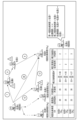
- FIG. 9 is a diagram showing an example of the information transfer index f( ⁇ ) between employees and the penalty evaluation value g( ⁇ ) for each employee.
- the information transfer index f( ⁇ ) between employees is shown as a value in a circle
- the penalty evaluation value g( ⁇ ) of each employee is shown as a value in a triangle.
- the penalty evaluation value g( ⁇ ) is set as a fixed value for each employee 3.
- step ST104 the consulter-candidate consultation path search unit 33 selects an arbitrary consultation candidate from the consultation candidate list.
- the consulter-candidate consultation path search unit 33 acquires the consultation candidate list stored in the consultation candidate list storage unit 24. Then, an arbitrary consultation candidate is selected from the consultation candidates not selected in the list. For example, in the example shown in FIG. 9, employee X is selected as consultation candidate CN A.
- the consulter-consultation candidate communication path search unit 33 performs a full search for communication paths from the consulter to the consultation candidate, including employees (intermediary users) who act as intermediaries.
- the consulter-consultation candidate communication path search unit 33 performs a full search for paths that can transmit information from the consulter to the consultation candidate, including intermediaries by employees other than the consulter (employee A) and the consultation candidate (CN A ) (i.e., employees different from the consulter and the candidate user).
- the consulter-consultation candidate communication path search unit 33 outputs search information to the communication path evaluation value calculation unit 34, including information on the searched path, an information transmission index f ( ⁇ ) between employees related to the path, and a penalty evaluation value g ( ⁇ ) of employees in the path.
- FIG. 10 is a diagram showing an example of a transfer path found by a full search.
- three routes are searched for as possible transmission routes for transmitting information from the person seeking advice (employee A) to the candidate CN A (employee X).
- the first transmission route pattern R1 is employee A ⁇ employee CN A
- the second transmission route pattern R2 is employee A ⁇ employee B ⁇ employee C ⁇ employee CN A
- the third transmission route pattern R3 is employee A ⁇ employee D ⁇ employee CN A.
- steps ST102 and ST103 may be performed after the processing of step ST105.
- the employee-to-employee information transmission index calculation unit 31 only needs to calculate the information transmission index f between employees included in the transmission path.
- the intermediary employee penalty calculation unit 32 only needs to calculate the penalty evaluation value g of the employee who acts as an intermediary in the transmission path.
- the transfer path evaluation value calculation unit 34 calculates an information transfer index value and a transfer path evaluation value for each transfer path.
- the transfer path evaluation value calculation unit 34 calculates the sum of the information transfer index f( ⁇ ) and the penalty evaluation value g( ⁇ ) for each path, and calculates the evaluation values Score R1 , Score R2 , ... of each path by adding them up.
- the transfer path evaluation value calculation unit 34 outputs information on each path including the evaluation value Score of each path to the representative path determination unit 35.
- FIG. 11 is a diagram showing an example of the calculated evaluation value Score for each route.
- the evaluation formula for the first transfer path pattern R1 is f(A ⁇ CN A ). Therefore, the evaluation value Score R1 of the first transfer path is 30.
- the evaluation formula for the second transfer path pattern R2 is f(A ⁇ B)+f(B ⁇ C)+f(C ⁇ CN A )+g(B)+g(C). Therefore, the evaluation value Score R2 of the second transfer path is 27.
- the evaluation formula for the third transfer path pattern R3 is f(A ⁇ D)+f(D ⁇ CN A )+g(D). Therefore, the evaluation value Score R3 of the third transfer path is 28.
- step ST107 the representative route determination unit 35 determines the representative communication route and the representative evaluation value of the consultation candidate.
- the representative route determination unit 35 determines the communication route pattern R with the smallest evaluation value Score as the intermediate route, and determines the evaluation value Score as the representative evaluation value.
- FIG. 12 is a diagram showing an example of the determined representative transfer paths and representative evaluation values.
- the evaluation value Score of the second transfer path pattern R 2 is 27, which is the smallest, so the second transfer path becomes the representative transfer path R CNA and the representative evaluation value Score CNA is 27.
- step ST108 the representative route determination unit 35 adds the determined representative transmission route and representative evaluation value to the information of the corresponding consultation candidate in the consultation candidate list.
- the representative route determination unit 35 stores information on the best transmission route and evaluation value among the corresponding candidates in the consultation candidate list storage unit 24 so that it is added to the information of the corresponding consultation candidate.
- step ST109 the processor 101 operating as a determination unit determines whether there are any unselected consultation candidates in the consultation candidate list. If there are any unselected consultation candidates, the process returns to step ST104. On the other hand, if there are no unselected consultation candidates, the processor 101 determines that it has calculated the representative communication path and representative evaluation value for all consultation candidates. Then, the process proceeds to step ST110.
- step ST110 the recommendation degree update unit 36 updates the recommendation degree of each consultation candidate by using the representative evaluation value.
- the recommendation degree update unit 36 acquires the list stored in the consultation candidate list storage unit 24. Then, the recommendation degree update unit 36 updates the recommendation degrees W CNA , W CNB , ... of the consultation candidates CN A , CN B , ... obtained in step ST101 by using the representative evaluation values ScoreCN A , ScoreCN B , ..., and calculates the updated recommendation degrees W' CNA , W' CNB , ....
- the recommendation level update unit 36 calculates new recommendation levels (i.e., updates the recommendation levels) by multiplying each of the recommendation levels W CNA , W CNB , ... by the ratio between the maximum representative evaluation value among the representative evaluation values ScoreCN A , ScoreCN B , ... determined in step ST107 and the other representative evaluation values, as shown in the following formula.
- W' CNA W CNA ⁇ Max (Score)/Score CNA
- W ' CNB W CNB ⁇ Max (Score)/Score CNB ,... (Formula 1)
- FIG. 13 is a diagram showing an example of a recommendation level W' obtained by updating the recommendation level W.
- the candidates for consultation are employee X (candidate for consultation CN A ), employee Y (candidate for consultation CN B ), and employee Z (candidate for consultation CN C ).
- the recommendation degrees W of the employees calculated in step ST101 are 30, 25, and 23, and the representative evaluation values determined in step ST107 are 35, 25, and 30, respectively.
- the updated recommendation levels W' are 30, 35, and 27, as shown in FIG. 13.
- employee X was ranked 1 in recommendation level W before the update
- employee Y will be ranked in recommendation level W' after the update.
- the consultation candidate/recommendation level/transmission path output unit 41 outputs the consultation candidate, the corrected recommendation level, and the representative transmission path.
- the consultation candidate/recommendation level/transmission path output unit 41 acquires presentation information in which the recommendation level W' updated by the recommendation level update unit 36, the consultation candidate, and the transmission path are rearranged in descending order of recommendation level W' from the consultation candidate list storage unit 24.
- the consultation candidate/recommendation level/transmission path output unit 41 then outputs the acquired information to the pairing result presentation unit 42.
- the pairing result presentation unit 42 transmits the presentation information to the user terminal UT used by the consultant via the network NW.
- the user terminal UT of the consultant controls the display unit of the user terminal UT to display the presentation information.
- the user terminal UT controls the display unit to display that the first candidate for consultation is employee Y, the communication path is XX, and the second candidate for consultation is employee X, the communication path is employee A ⁇ employee B ⁇ employee C ⁇ employee X.
- communication (telephone call, email, business chat, etc.) with the selected consultation candidate may be initiated from the user terminal UT of the person seeking advice.
- the communication between the person seeking advice and the consultation candidate may be via the search server 1 or may not be via the search server 1.
- the consultation candidate, recommendation level, and transmission path output unit 41 generates notification information to notify the consultation candidate with the highest updated recommendation level W' that the person seeking advice has encountered a problem, and transmits the generated notification information via the network NW.
- the user terminal UT of the consultation candidate controls the display unit to display that the person has been selected as a consultation candidate.
- the consultation candidate, recommendation level, and transmission path output unit 41 may also transmit notification information to the employee (user) who is the person seeking advice's superior. For example, if the superior knows that the person seeking advice has encountered a problem, it becomes possible to support the early resolution of the problem even in a remote environment or an environment where it is difficult to grasp the skill sets of the people in charge.
- communication (telephone, email, business chat, etc.) with the person seeking advice may be started from the user terminal UT of the consultation candidate.
- the communication between the consultation candidate and the person seeking advice may be via the search server 1 or may not be via the search server 1.
- step ST105 may be omitted.
- the processor 101 may update the recommendation level based on the direct information transmission index between the client and multiple consultation candidates.
- the recommendation level of a consultation candidate with a small information transmission index between the client and the consultation candidate, i.e., a low psychological barrier, will be high.
- the search server 1 determines a communication path between the person seeking advice and the candidate for consultation in consideration of a psychological barrier (information communication index) between the person seeking advice and the candidate for consultation. This enables the person seeking advice to more reliably start communication aimed at solving the problem.
- the search server 1 can present selectable evaluation indices for communication paths for resolving a problem. Therefore, based on the evaluation indices, users other than the person seeking advice (e.g., the person seeking advice's superior) can provide support for early resolution of the problem even in a remote environment or an environment where it is difficult to grasp the skill sets of the people in charge.
- the search server 1 is described as including the terminal handling content storage unit 21, the screen information database 22, the problem word storage unit 23, the consultation candidate list storage unit 24, the employee communication information database 25, the inter-organization relevance index database 26, and the employee penalty evaluation source information database 27, but is not limited thereto.
- at least one of the terminal handling content storage unit 21, the screen information database 22, the problem word storage unit 23, the consultation candidate list storage unit 24, the employee communication information database 25, the inter-organization relevance index database 26, and the employee penalty evaluation source information database 27 may be provided in each user terminal UT, or may be provided in an external device separate from the search server 1.
- the external device may be a database server separate from the search server 1, or may be a database provided by the cloud.
- the above devices may be provided in a distributed manner in the external device or the user terminal UT.
- the pairing process execution unit 11, employee-to-employee information transmission index calculation unit 31, intermediary employee penalty calculation unit 32, consultant-to-consultation candidate transmission path search unit 33, transmission path evaluation value calculation unit 34, representative path determination unit 35, and recommendation degree update unit 36 provided in the search server 1 may be distributed across multiple external devices, and processing may be performed by these external devices working together. Furthermore, each of these units may be realized using a circuit.
- the circuit may be a dedicated circuit that realizes a specific function, or a general-purpose circuit such as a processor.
- the method described in the above embodiment can be stored as a program (software means) that can be executed by a calculator (computer) on a storage medium such as a magnetic disk (floppy disk, hard disk, etc.), optical disk (CD-ROM, DVD, MO, etc.), semiconductor memory (ROM, RAM, flash memory, etc.), and can also be distributed by transmitting it via a communication medium.
- the program stored on the medium also includes a setting program that configures the software means (including not only execution programs but also tables and data structures) that the computer executes.
- the computer that realizes this device reads the program stored in the storage medium, and in some cases, configures the software means using the setting program, and executes the above-mentioned processing by controlling the operation of this software means.
- the storage medium referred to in this specification is not limited to one for distribution, but also includes storage media such as magnetic disks and semiconductor memories installed inside the computer or in devices connected via a network.
- this invention is not limited to the above-described embodiment, and various modifications can be made in the implementation stage without departing from the gist of the invention. Furthermore, the embodiments may be implemented in combination as appropriate as possible, in which case the combined effects can be obtained. Furthermore, the above-described embodiment includes inventions at various stages, and various inventions can be extracted by appropriate combinations of the multiple constituent elements disclosed.
- Search system 1 Search server 101: Processor 102: RAM 103... program memory 104... storage device 105... input/output interface 106... bus 11... pairing processing execution unit 21... terminal handling content storage unit 22... screen information database 23... problem word storage unit 24... consultation candidate list storage unit 25... employee communication information database 26... inter-organizational relevance index database 27... employee penalty evaluation source information database 31... employee information transmission index calculation unit 32... intermediary employee penalty calculation unit 33... consultant-consultation candidate transmission path search unit 34... transmission path evaluation value calculation unit 35... representative path determination unit 36... recommendation degree update unit 41... consultation candidate, recommendation degree, transmission path output unit 42... pairing result presentation unit UT... user terminal
Landscapes
- Engineering & Computer Science (AREA)
- Business, Economics & Management (AREA)
- Theoretical Computer Science (AREA)
- Tourism & Hospitality (AREA)
- Physics & Mathematics (AREA)
- General Physics & Mathematics (AREA)
- Strategic Management (AREA)
- Human Resources & Organizations (AREA)
- General Business, Economics & Management (AREA)
- Data Mining & Analysis (AREA)
- Databases & Information Systems (AREA)
- Marketing (AREA)
- Entrepreneurship & Innovation (AREA)
- Economics (AREA)
- Health & Medical Sciences (AREA)
- Primary Health Care (AREA)
- General Health & Medical Sciences (AREA)
- General Engineering & Computer Science (AREA)
- Computational Linguistics (AREA)
- Operations Research (AREA)
- Quality & Reliability (AREA)
- Management, Administration, Business Operations System, And Electronic Commerce (AREA)
Abstract
一実施形態に係る情報処理装置は、組織に属する複数のユーザの中から、第1のユーザの相談先となる相談先ユーザの検索を求める検索要求を取得する取得部と、第1のユーザが有するユーザ端末で取り扱われているテキスト情報、複数のユーザの間のコミュニケーション情報を記憶する記憶部と、テキスト情報に基づいて、相談先となる複数の候補ユーザを抽出し、複数の候補ユーザの推薦度を算出するペアリング処理実行部と、第1のユーザから複数の候補ユーザまでの伝達経路を探索する探索部と、コミュニケーション情報に基づいて、伝達経路に含まれるユーザ間の連絡の取り易さを示す情報伝達指標を算出する伝達指標計算部と、情報伝達指標に基づいて、伝達経路の評価値を算出する評価値計算部と、評価値に基づいて推薦度を更新する推薦度更新部と、更新された推薦度に基づいて相談先ユーザおよび相談先ユーザまでの伝達経路を出力する出力制御部と、を備える。
Description
この発明は、情報処理装置、情報処理方法、および情報処理プログラムに関する。
リモートワークでは、対面業務に比べ社員間の雑談等の自然な会話が行われにくく、また、他の社員の業務内容を見聞きする機会も失われる。このため、業務上の困りごとが発生しても、誰がどのような知識を有しているのかについての把握が困難となる。そのため、業務効率や品質の低下を引き起こすおそれがある。
これを解決するために、リモート環境下においても困りごと内容に関する知識を有する相談先と相談者をスムーズにペアリングする(結び付ける)ことで、困りごとを早期解決できるような業務支援技術の必要性が高まっている。
ペアリングを行う技術として、担当者が取り扱った端末上の画面データ内の文字列(ワード)の出現頻度をもとに相談者を推薦する技術がある(例えば、特許文献1参照)。当該技術により相談先候補者が選出された場合、相談者と相談先候補者は、困り事状況またはアドバイスなどを交換するためのコミュニケーションを開始する(例えば、電話、メール、またはチャットツール等を用いて開始する)ことで、困りごとの解決を試みることとなる。
しかしながら、特許文献1に開示される技術は、相談先候補者としての適性評価を、従業員の持つ業務経験のみに基づいて計算しているため、従業員同士の関係性等の特性を考慮していない。この結果、相談者と相談先候補者が連絡および情報伝達を行ううえで、面識の有無に基づく「心理的な障壁」が発生する。その結果、当該心理的な障壁により、困りごと解決に向けたコミュニケーションを開始するまでに時間と手間が掛かるという問題がある。或いは、心理的な障壁により、特許文献1に開示される技術を活用せずに、相談者自身が独力で困り事を解決しようと試みることになるために時間と手間をかけるという問題がある。
この発明は上記事情に着目してなされたもので、その目的とするところは、相談者と相談先候補者間の、困りごと解決に向けたコミュニケーションをより確実に開始することを可能にすることにある。
さらに、この発明の目的とするところは、リモート環境または担当者同士のスキルセットが把握困難な環境であってもトラブルを早期解決できる業務支援技術を確立することにある。
上記課題を解決するためにこの発明の一態様の情報処理装置は、組織に属する複数のユーザの中から、第1のユーザの相談先となる相談先ユーザの検索を求める検索要求を取得する取得部と、前記第1のユーザが有するユーザ端末で取り扱われているテキスト情報、前記複数のユーザの間のコミュニケーション情報を記憶する記憶部と、前記テキスト情報に基づいて、前記相談先となる複数の候補ユーザを抽出し、前記複数の候補ユーザの推薦度を算出するペアリング処理実行部と、前記第1のユーザから前記複数の候補ユーザまでの伝達経路を探索する探索部と、前記コミュニケーション情報に基づいて、前記伝達経路に含まれるユーザ間の連絡の取り易さを示す情報伝達指標を算出する伝達指標計算部と、前記情報伝達指標に基づいて、前記伝達経路の評価値を算出する評価値計算部と、前記評価値に基づいて前記推薦度を更新する推薦度更新部と、前記更新された推薦度に基づいて前記相談先ユーザおよび前記相談先ユーザまでの伝達経路を出力する出力制御部と、を備えるようにしたものである。
この発明の一態様によれば、相談者と相談先候補者間の、困りごと解決に向けたコミュニケーションをより確実に開始することを可能にすることが可能になる。さらに、この発明の一態様によれば、リモート環境または担当者同士のスキルセットが把握困難な環境であってもトラブルを早期解決できる業務支援技術を確立することが可能になる。
以下、図面を参照しながら情報処理方法、情報処理装置、および情報処理プログラムについて詳細に説明する。なお、以下の実施形態では、同一の番号を付した部分については同様の動作を行うものとして、重ねての説明を省略する。例えば、複数の同一または類似の要素が存在する場合に、各要素を区別せずに説明するために共通の符号を用いることがあるし、各要素を区別して説明するために当該共通の符号に加えて枝番号を用いることもある。
[実施形態]
(検索システム)
図1は、この発明の一実施形態に係る情報処理装置を備える検索システム100の全体構成の一例を示す図である。
検索システム100は、ネットワークNWを介して互いに通信可能な、検索サーバ1と、ユーザ端末UT1,UT2,・・・UTn(以下の説明において、これらを区別する必要がない場合、単に「ユーザ端末UT」と記載する)とを備える。なお、図1の例では、検索サーバ1およびユーザ端末UTを有する例を説明しているが、これに限られない。例えば、ユーザ端末UTのみがネットワークNWを介して接続されたものであっても良い。この場合、以下で説明する検索サーバ1の動作は、各ユーザ端末UTが実施して良い。
(検索システム)
図1は、この発明の一実施形態に係る情報処理装置を備える検索システム100の全体構成の一例を示す図である。
検索システム100は、ネットワークNWを介して互いに通信可能な、検索サーバ1と、ユーザ端末UT1,UT2,・・・UTn(以下の説明において、これらを区別する必要がない場合、単に「ユーザ端末UT」と記載する)とを備える。なお、図1の例では、検索サーバ1およびユーザ端末UTを有する例を説明しているが、これに限られない。例えば、ユーザ端末UTのみがネットワークNWを介して接続されたものであっても良い。この場合、以下で説明する検索サーバ1の動作は、各ユーザ端末UTが実施して良い。
本実施形態に係る情報処理装置は、検索サーバ1として実施される。検索サーバ1は、例えば、企業、学校、組合、会員制コミュニティなどの組織によって管理される、サーバコンピュータまたはパーソナルコンピュータである。
検索サーバ1は、各ユーザ端末UTと通信することによって、困りごとが発生したユーザ(以下、「相談者」または「相談元ユーザ」と言う。)からの要求を受け付けて、相談を受けるユーザ(以下、「相談先」または「相談先ユーザ」と言う。)の候補を検索し、検索結果を相談元ユーザに提示する処理を行う。検索サーバ1はまた、相談先ユーザに対して、他のユーザに困りごとが発生したこと、困りごとの相談先の候補として抽出されたこと、または相談元ユーザの情報等を通知することができる。このように、検索サーバ1は、相談元ユーザには相談先候補者のユーザを推薦し、相談先候補者のユーザには困りごとが発生したことを気付かせることによって、相談元ユーザと相談先ユーザを結び付ける(ここでは、「ペアリング」と称する。)支援を行う。
ネットワークNWは、例えば、インターネット、イントラネット、LAN(Local Area Network)、WAN(Wide Area Network)等であり得、有線または無線ネットワークを含み得る。
ユーザ端末UTは、ユーザによって使用される情報処理端末であり、例えば、パーソナルコンピュータ、スマートフォン、タブレット端末、携帯電話機、ウェアラブル端末等である。ユーザは、検索サーバ1を管理する上記のような組織に属し、ユーザ端末UTを使用して業務等を行うとともに、ユーザ端末UTを介して他のユーザとの間でコミュニケーションをとることも可能である。ユーザ端末UTは、各ユーザの専用端末であってもよいし、複数のユーザの共有に係るものであってもよい。なお、上述したように、検索サーバ1がなく、ユーザ端末UTのみがネットワークNWを介して接続される場合であっても適用可能である。
(環境)
以下の説明において、本実施形態を実施する際の環境について説明する。
以下では、一例として、企業に属する業務実施者としてのユーザが各々のユーザ端末UTを用いて検索システム100を利用する状況について説明する。なお、検索サーバ1は、ユーザ端末UTとは別体の装置であってもよいし、いずれかのユーザ端末UTと一体であってもよい。
以下の説明において、本実施形態を実施する際の環境について説明する。
以下では、一例として、企業に属する業務実施者としてのユーザが各々のユーザ端末UTを用いて検索システム100を利用する状況について説明する。なお、検索サーバ1は、ユーザ端末UTとは別体の装置であってもよいし、いずれかのユーザ端末UTと一体であってもよい。
上述したように、リモート環境では、あるユーザに業務の困りごとが発生しても誰がどのような知識を有しているのか把握が困難である。そのため、他者への相談が必要となる困りごとが発生したときに、相談したいユーザは、当該困りごとに対する経験を有している相談先を検索する必要がある。本実施形態における検索サーバ1は、そのような困りごとの発生時に、「困り事発生時の業務状況」と「その状況に即した解決策」の共有が最小限の労力(説明を含む)で可能となる人を、相談者および相談先の両方が互いに見つけられるようにしようとするものである。
例えば、特許文献1に開示されるような従来手法では、社員が取り扱った端末上の画面データ内の文字列の出現頻度を、社員の業務経験として捉えることで、相談先としての推薦度を計算し、高い推薦度を持つ複数の社員を、相談先候補者として相談者とペアリングする。この場合、ペアリングされた相談先候補者が相談者が相談するのをためらうような心理的な障壁の大きい相手である場合が発生する。
以下において、相談者(社員A)は、困りごとが発生し、誰に相談して良いか悩んでいる。そこで、検索サーバ1は、特許文献1に開示されるような従来技術を用いて、相談先と相談先候補者(社員X)をペアリングさせたとする。
図2は、従来技術を用いて相談者と相談先候補者がペアリングされた場合の一例を示す図である。
従来技術では、社員同士の関係性等の特性は考慮していない。そのため、図2に示すように相談者である社員Aにとって相談先候補者である社員Xが相談しやすい、または連絡が容易に取りやすい社員ではない、すなわち心理的な障壁が大きい相手を相談先候補者として選定することがある。
従来技術では、社員同士の関係性等の特性は考慮していない。そのため、図2に示すように相談者である社員Aにとって相談先候補者である社員Xが相談しやすい、または連絡が容易に取りやすい社員ではない、すなわち心理的な障壁が大きい相手を相談先候補者として選定することがある。
例えば、社員Aは、社員Xとは面識がなく、困りごとのために突然連絡を取りづらいと感じることになる。そして相談先Xも社員Aと面識がないため、突然連絡が来ても身構えてしまう、或いは戸惑ってしまうということになる。
上記のような問題を解決する手段として、相談者と相談先候補者(図2の例では、社員Aと社員X)が困りごと解決に向けたコミュニケーションを開始する前に、複数の社員を仲介させて相談者を手助けするように相談先候補者に働きかける方法等がある。
図3は、相談者と相談先候補者との間を複数の社員が仲介する一例を示した図である。
図3の例では2つの伝達経路が存在する。第1の伝達経路は、社員Aから社員Xに直接連絡する経路。この経路は、図2で説明したのと同様に、心理的な障壁が大きいため、連絡するのが困難である。第2の伝達経路は、社員A→社員B→社員C→社員Xという経路である。
図3の例では2つの伝達経路が存在する。第1の伝達経路は、社員Aから社員Xに直接連絡する経路。この経路は、図2で説明したのと同様に、心理的な障壁が大きいため、連絡するのが困難である。第2の伝達経路は、社員A→社員B→社員C→社員Xという経路である。
第2の経路において、社員Aと社員Bとの間、社員Bと社員Cとの間、および社員Cと社員Xとの間の心理的な障壁は小さい。すなわち、これらの社員はそれぞれ面識がある、或いは、連絡が取りやすい間柄である。
例えば、社員Aが社員Bに対して、社員Cに社員Xを紹介してくれように依頼してくれないかと頼む。社員Cと普段からやり取りをしているために心理的な障壁が小さく、且つ当該依頼を受けた社員Bは、社員Cに対して、社員Aを社員Xに紹介してくれないかと頼む。社員Xと普段からやり取りをしているために心理的な障壁が小さく、且つ当該依頼を受けた社員Cは、社員Xに社員Aが困っている旨を伝え、助けてあげられないか頼む。社員Xは、社員Cの頼みであれば相談を受けてみる気になる。
上記の様に、心理的な障壁が大きいために、第1の経路を用いて、すなわち社員Aが直接社員Xに連絡するのが困難な場合がある。一方で、第2の経路を用いる、すなわち、社員Bと社員Cが社員Aと社員Xとの間を仲介することにより、社員Aと社員Xとの間のコミュニケーションの開始が容易になる。
或いは、社員Aは、社員Yと間の心理的な障壁が小さいため、社員Yとであれば直接コミュニケーションを開始することが可能な場合もある。
本実施形態では、従来技術で計算された、社員の業務経験に基づく推薦度と、各相談先候補者へ情報伝達を行う際の、「伝達のしやすさ」に関する評価値を総合的に評価することで、「困り事を解決可能な業務経験を保有しており、かつ、相談開始のためのコミュニケーションがより容易に取ることが可能な社員」を選択することができる手法を提案する。
本実施形態で提案する手法は、以下の3つの段階に分けることができる。
段階(1):社員間の心理的な障壁に関する評価値を計算する段階。
段階(2):段階(1)の評価値に基づいて、従来技術で選出された複数の相談先候補者それぞれに対して、相談者から相談先候補者までの各伝達経路の評価値を計算し、最適な伝達経路(以下において、この伝達経路を仲介経路と称する)を求める段階。
段階(3):従来技術を用いて、社員の業務経験に基づいて算出された推薦度と、段階(2)で算出された、相談先候補者までの伝達経路の評価値をあわせて、最適な相談先候補者と、相談先候補者への伝達経路を選択し、相談者へ提示する段階。
段階(1):社員間の心理的な障壁に関する評価値を計算する段階。
段階(2):段階(1)の評価値に基づいて、従来技術で選出された複数の相談先候補者それぞれに対して、相談者から相談先候補者までの各伝達経路の評価値を計算し、最適な伝達経路(以下において、この伝達経路を仲介経路と称する)を求める段階。
段階(3):従来技術を用いて、社員の業務経験に基づいて算出された推薦度と、段階(2)で算出された、相談先候補者までの伝達経路の評価値をあわせて、最適な相談先候補者と、相談先候補者への伝達経路を選択し、相談者へ提示する段階。
そして、各段階を実現するための、新たな問題(1)、(2)が発生することが想定される。
問題(1):段階(1)において、社員間の心理的な障壁の大きさ(=仲介の依頼のしやすさ)に関する評価値が必要となる。
問題(2):段階(2)において、想定される伝達経路の中から、以下で示す観点に基づいて伝達経路を評価する必要がある。
問題(1):段階(1)において、社員間の心理的な障壁の大きさ(=仲介の依頼のしやすさ)に関する評価値が必要となる。
問題(2):段階(2)において、想定される伝達経路の中から、以下で示す観点に基づいて伝達経路を評価する必要がある。
なお、問題(1)において、本実施形態の背景である、リモートワークを前提とした業務状況を考慮すると、評価値としては、社員間の対面での業務活動で得られるデータではなく、ユーザ端末UT内の操作情報などから得られるデータに基づいて算出されることが望ましい。
<観点>相談者と相談先候補者間のコミュニケーションがスムーズに開始されること。伝達経路中の社員間の各仲介が途切れなく継続し、困りごとを解決するために相談者と相談先候補者との間でコミュニケーションが開始される必要がある。特に、図3で示したように社員を間に挟む、「仲介」の回数が増加することに伴う、相談者と相談先候補者との間のコミュニケーションの開始を阻害する要因を低減する必要がある。
以下では、上で説明した問題を解決しつつ、最適な相談先候補者とその相談先候補者への最適な伝達経路を提示する方法について説明する。
(問題(1)を解決するための手法)
以下において、本実施形態における問題(1)を解決するための手法について説明する。
以下において、本実施形態における問題(1)を解決するための手法について説明する。
本実施形態において、以下で説明する3つの前提があるとする。
前提1:従来技術(例えば、特許文献1)を用いて選出される相談先候補者は、相談者との面識や所属部署の関連性の有無に関わらず選出される。
前提2:ペアリングされた相談者と相談先候補者は、互いに情報伝達手段を持つ。例えば、電話、メールソフト、ビジネスチャットツール等を用いて互いに情報伝達可能であるとする。
前提3:相談者から相談先候補者までの伝達経路内の各伝達(仲介を含む)において、仲介依頼元と仲介依頼先には、前提2と同様に互いに情報伝達手段を持つ。例えば、図3で示した第2の伝達経路において、社員Aと社員Bは、電話によって情報伝達が可能であり、社員Bと社員Cは、ビジネスチャットツールによって情報伝達が可能であり、社員Cと社員Xは、メールソフトによって情報伝達が可能である。なお、この説明は単なる一例であり、相談者から相談先候補者までの各伝達で使用される情報伝達手段は、任意の手段であって良いのは勿論である。
前提2:ペアリングされた相談者と相談先候補者は、互いに情報伝達手段を持つ。例えば、電話、メールソフト、ビジネスチャットツール等を用いて互いに情報伝達可能であるとする。
前提3:相談者から相談先候補者までの伝達経路内の各伝達(仲介を含む)において、仲介依頼元と仲介依頼先には、前提2と同様に互いに情報伝達手段を持つ。例えば、図3で示した第2の伝達経路において、社員Aと社員Bは、電話によって情報伝達が可能であり、社員Bと社員Cは、ビジネスチャットツールによって情報伝達が可能であり、社員Cと社員Xは、メールソフトによって情報伝達が可能である。なお、この説明は単なる一例であり、相談者から相談先候補者までの各伝達で使用される情報伝達手段は、任意の手段であって良いのは勿論である。
次に、本実施形態における問題1を解決するために使用する仮説について説明する。
仮説1:社員間の「心理的な障壁」は、社員間の所属組織上の関連性、および普段の業務におけるインタラクション、コミュニケーションの量、コミュニケーションの質に反映される。
仮説1:社員間の「心理的な障壁」は、社員間の所属組織上の関連性、および普段の業務におけるインタラクション、コミュニケーションの量、コミュニケーションの質に反映される。
図4は、仮説1の具体的な一例を示した図である。
図4に示すように、社員Aと他の社員(図4の例では、社員Bと社員C)との間の心理的な障壁の大きさの大小は、以下の要素により影響を受ける。
図4に示すように、社員Aと他の社員(図4の例では、社員Bと社員C)との間の心理的な障壁の大きさの大小は、以下の要素により影響を受ける。
・ビジネスチャットツール、メールソフト等を含む情報伝達手段を用いたコミュニケーションまたは情報伝達の頻度
・ビジネスチャットツール等でのメンションまたはポジティブなリアクションの数
・社員が担当している業務内容と他の社員が担当している業務内容との関連性
ここで、業務内容の関連性は、社員同士が事務職、技術職等であり、同じ職種である、或いは、組織階層上、並列の組織に所属している場合に、高くなるとする。
・ビジネスチャットツール等でのメンションまたはポジティブなリアクションの数
・社員が担当している業務内容と他の社員が担当している業務内容との関連性
ここで、業務内容の関連性は、社員同士が事務職、技術職等であり、同じ職種である、或いは、組織階層上、並列の組織に所属している場合に、高くなるとする。
図4で示すように、コミュニケーションの頻度が高い、メンションまたはポジティブなリアクションの数が多い、或いは、業務内容の関連性が高い組織に属していると社員間の心理的な障壁は、小さくなる。一方、コミュニケーションの頻度が低い、メンションまたはポジティブなリアクションの数が少ない、或いは、業務内容の関連性が低い組織に属していると社員間の心理的な障壁は、大きくなる。
図4の例では、社員Bは、社員Aと関連性の高い部署に所属する一方、社員Cは、社員Aと関連性の低い部署に所属する。このような場合、社員Aと社員Bとの間の心理的な障壁は、小さくなる一方、社員Aと社員Cとの間の心理的な障壁は大きくなると考えられる。
本実施形態では、上で示した要素を分析にすることにより、社員間の心理的な障壁の評価値を定量化する。例えば、検索サーバ1は、社員間の組織上の関連性、業務における社員間のコミュニケーション内容を、コミュニケーションツール等を用いて分析することにより定量化する。
ここで、心理的な障壁の定量化の算出方法は、例えば、情報伝達手段の使用頻度、メンションまたはポジティブなリアクションの数に対して、社員間の組織上の関連性を示す値を乗算し、一般的な手法を用いて補正した値を用いる方法、或いは、一般的な手法で用いられる組織内の社員間のソーシャルグラフを用いて定量化した値を用いる方法等であって良い。なお、社員間の組織上の関連性を示す値の算出方法は、一般的な手法を用いて求めれば良いため、個々での詳細な説明を省略する。
(問題(2)を解決するための手法)
次に、本実施形態における問題(2)を解決するための手法について説明する。
次に、本実施形態における問題(2)を解決するための手法について説明する。
最初に、問題(2)を解決するために使用する2つの仮説について説明する。
仮説2:上記問題1を解決するために用いる評価値は、社員間で、情報伝達(仲介行為または、相談先候補者へ相談者の手助けを促す行為)を開始するにあたっての困難さに寄与する「確率論的な指標」と捉えることができる。(以下では、「心理的な障壁」を、「情報伝達指標」と称する。
仮説2により、各社員間の心理的な障壁を当該社員間での情報伝達を開始するにあたっての困難さを示す確率論的な指標とみなすことにより、相談者から相談先候補者までの伝達が開始される(伝達が成功する)伝達経路かどうかが評価可能となる。
仮説2:上記問題1を解決するために用いる評価値は、社員間で、情報伝達(仲介行為または、相談先候補者へ相談者の手助けを促す行為)を開始するにあたっての困難さに寄与する「確率論的な指標」と捉えることができる。(以下では、「心理的な障壁」を、「情報伝達指標」と称する。
仮説2により、各社員間の心理的な障壁を当該社員間での情報伝達を開始するにあたっての困難さを示す確率論的な指標とみなすことにより、相談者から相談先候補者までの伝達が開始される(伝達が成功する)伝達経路かどうかが評価可能となる。
また、仮説2で用いることになる情報伝達指標が高い社員間では、情報伝達を開始するための困難さがより大きいと解釈できる一方、情報伝達指標が低い社員間では、情報伝達を開始するための困難さがより小さい、と解釈できる。
仮説3:仲介の回数が増加することは、相談者と相談先候補者との間でコミュニケーションを開始するための阻害要因となる。
本実施形態において、各社員は、本来業務を行っている環境下で仲介を依頼する状況を想定している。そのため、仮定3により、下記のような阻害要因が相談者と相談先候補者との間でコミュニケーションを開始するために大きく影響する。
例1:<相談開始までの所要時間の観点>
仲介には、以下の工程と当該工程に対応する時間が伴う。工程(1):仲介元から仲介先へ、依頼を行う時間。例えば、社員Aと社員Bとの間で、社員Cへ仲介を行うように依頼を行っている時間である。工程(2):仲介依頼を受けた社員が、次の仲介先へ連絡するまでの待ち時間。例えば、仲介依頼を引き受けた社員Bの本来業務が落ち着き、社員Cへ仲介を依頼するための行動を起こすまでの待ち時間などである。
仲介には、以下の工程と当該工程に対応する時間が伴う。工程(1):仲介元から仲介先へ、依頼を行う時間。例えば、社員Aと社員Bとの間で、社員Cへ仲介を行うように依頼を行っている時間である。工程(2):仲介依頼を受けた社員が、次の仲介先へ連絡するまでの待ち時間。例えば、仲介依頼を引き受けた社員Bの本来業務が落ち着き、社員Cへ仲介を依頼するための行動を起こすまでの待ち時間などである。
すなわち、仲介の回数が増加することで、仲介ごとに上記の時間を必要とするために、相談者と相談先候補者間のコミュニケーションを開始するうえでの阻害要因となる。
例2:<仲介社員本人の特性に基づく、仲介依頼に対する協力可能性の観点>
仲介の際、仮説2で述べた「情報伝達指標」とは独立に、仲介を依頼された社員が仲介を行うことを了承するか(協力してくれるか)どうかを示す可能性(協力可能性)は、社員本人の特性または協調性に依存する。仲介の回数が増加することで、伝達経路内に協力可能性が低い社員が存在する可能性が高くなる。その結果、伝達経路の途中で仲介が途切れてしまうような、相談者と相談先候補者との間でコミュニケーションを開始するうえでの阻害要因となる。
仲介の際、仮説2で述べた「情報伝達指標」とは独立に、仲介を依頼された社員が仲介を行うことを了承するか(協力してくれるか)どうかを示す可能性(協力可能性)は、社員本人の特性または協調性に依存する。仲介の回数が増加することで、伝達経路内に協力可能性が低い社員が存在する可能性が高くなる。その結果、伝達経路の途中で仲介が途切れてしまうような、相談者と相談先候補者との間でコミュニケーションを開始するうえでの阻害要因となる。
図5は、仮説2および仮説3の具体的な一例を示した図である。
図5では、第1の伝達経路(社員Aから社員Xへの直接の経路)の情報伝達指標(心理的な障壁の大きさ)は、20であり、第2の伝達経路における社員Aから社員B、社員Bから社員C、および社員Cから社員Xの情報伝達指標はそれぞれ7、8、6であることを示す。
図5では、第1の伝達経路(社員Aから社員Xへの直接の経路)の情報伝達指標(心理的な障壁の大きさ)は、20であり、第2の伝達経路における社員Aから社員B、社員Bから社員C、および社員Cから社員Xの情報伝達指標はそれぞれ7、8、6であることを示す。
また、第2の伝達経路では、仲介回数が2回となり第1の伝達経路と比較して仲介回数が多くなる。そのため、上述した相談開始までの所要時間の観点から、相談先候補者への伝達までに第1の伝達経路と比較して多くの時間を必要とする。さらに、協力可能性の観点から、社員Bまたは社員Cのいずれかが仲介依頼に対する協力可能性が低い場合、相談先候補者への伝達が途切れてしまう。
そこで、本実施形態では、仲介回数の数に応じて評価値にペナルティを設定する。これにより、仲介回数の少ない伝達経路が仲介経路として選択されやすくなる。
(構成)
次に、一実施形態に係る検索サーバ1の構成について説明する。
図6は、検索サーバ1のハードウェア構成の一例を説明した図である。
図6に示すように、検索サーバ1は、プロセッサ101、RAM102、プログラムメモリ103、ストレージデバイス104、および入出力インタフェース105を備える。そして、プロセッサ101、RAM102、プログラムメモリ103、ストレージデバイス104、および入出力インタフェース105は、バス106を介して互いに接続される。プロセッサ101は、RAM102、プログラムメモリ103、ストレージデバイス104、および入出力インタフェース105を制御し、これらと信号をやり取りする。
次に、一実施形態に係る検索サーバ1の構成について説明する。
図6は、検索サーバ1のハードウェア構成の一例を説明した図である。
図6に示すように、検索サーバ1は、プロセッサ101、RAM102、プログラムメモリ103、ストレージデバイス104、および入出力インタフェース105を備える。そして、プロセッサ101、RAM102、プログラムメモリ103、ストレージデバイス104、および入出力インタフェース105は、バス106を介して互いに接続される。プロセッサ101は、RAM102、プログラムメモリ103、ストレージデバイス104、および入出力インタフェース105を制御し、これらと信号をやり取りする。
プロセッサ101は、CPUなどの汎用回路を含む。RAM102はワーキングメモリとしてプロセッサ101により使用される。RAM102はSDRAMなどの揮発性メモリを含む。プログラムメモリ103は、情報生成プログラムを含む、プロセッサ101により実行されるプログラムを記憶する。プログラムはコンピュータ実行可能命令を含む。プログラムメモリ103として、例えば、ROMが使用される。
プロセッサ101は、プログラムメモリ103に記憶されたプログラムをRAM102に展開し、プログラムを解釈および実行する。
ストレージデバイス104は、記憶領域として機能し得る。ストレージデバイス104は、HDD(Hard Disk Drive)またはSSD(Solid State Drive)などの不揮発性メモリを含む。ストレージデバイス104の一部領域がプログラムメモリ103として使用されてもよい。
入出力インタフェース105は、外部機器と通信するための通信モジュールおよび周辺機器を接続するための複数の端子を備える。外部機器は、例えばユーザ端末UTである。通信モジュールは、例えば、有線モジュールおよび/または無線モジュールを含んでよい。周辺機器の例は、ディスプレイ、キーボード、およびマウスを含む。
なお、プロセッサ101は複数のプロセッサを含んでもよい。また、上記処理機能の少なくとも一部が、ASIC(Application Specific Integrated Circuit)やFPGA(field-programmable gate array)などの集積回路を含む、他の多様な形式で実現されてもよい。ストレージデバイス104の記憶領域の少なくとも一部が、検索サーバ1とは異なる装置に設けられてもよい。
図7は、検索サーバ1のソフトウェア構成の一例を示した図である。
検索サーバ1は、ペアリング処理実行部11と、社員間情報伝達指標計算部31と、仲介社員ペナルティ計算部32と、相談者-相談先候補者間伝達経路探索部33と、伝達経路評価値計算部34と、代表経路決定部35と、推薦度更新部36と、相談先候補者・推薦度・伝達経路出力部41と、ペアリング結果提示部42と、を備える。これらの機能部は、上述したプロセッサ101により、制御され、各種動作を実施することが可能である。
検索サーバ1は、ペアリング処理実行部11と、社員間情報伝達指標計算部31と、仲介社員ペナルティ計算部32と、相談者-相談先候補者間伝達経路探索部33と、伝達経路評価値計算部34と、代表経路決定部35と、推薦度更新部36と、相談先候補者・推薦度・伝達経路出力部41と、ペアリング結果提示部42と、を備える。これらの機能部は、上述したプロセッサ101により、制御され、各種動作を実施することが可能である。
さらに検索サーバ1は、端末取扱内容蓄積部21と、画面情報データベース22(図6では、画面情報DBと記載)と、困りごとワード保持部23と、相談先候補者リスト記憶部24と、社員間コミュニケーション情報データベース25(図6では社員間コミュニケーション情報DBと記載)と、組織間関連性指標データベース26(図6では組織間関連性指標DBと記載)と、社員ペナルティ評価元情報データベース27(図6では社員ペナルティ評価元情報DBと記載)と、を備える。これらの機能部は、ストレージデバイス104の一部であって良い。すなわち、ストレージデバイス104は、これらの構成の記憶領域として機能する。
例えば、端末取扱内容蓄積部21、画面情報データベース22、および困りごとワード保持部23は、ユーザ端末UTの業務の取扱内容の把握の際に用いられる機能部である。
ペアリング処理実行部11、社員間の社員間情報伝達指標計算部31、仲介社員ペナルティ計算部32と、相談者-相談先候補者間伝達経路探索部33、伝達経路評価値計算部34、代表経路決定部35、推薦度更新部36、相談先候補者リスト記憶部24、社員間コミュニケーション情報データベース25、組織間関連性指標データベース26、および社員ペナルティ評価元情報データベース27は、ペアリング処理を実行する際に用いられる機能部である。
最後に、相談先候補者・推薦度・伝達経路出力部41およびペアリング結果提示部42は、相談者および相談先ユーザに対してペアリングの結果等を含む情報を通知するために用いられる機能部である。
最初に、ユーザ端末UTの業務取扱内容把握で用いられる端末取扱内容蓄積部21、画面情報データベース22、および困りごとワード保持部23の機能について説明する。
端末取扱内容蓄積部21は、端末取扱内容取得部として動作するプロセッサ101により取得した、ユーザ端末UTで取り扱われたテキスト情報を、業務実施者を区別して保持する機能を有する。端末取扱内容蓄積部21は、取得したテキスト情報をそのままの形で保持してもよいし、テキスト情報に含まれる語の出現頻度分布等、加工した形で保持してもよい。オプションとして、端末取扱内容蓄積部21は、テキスト情報の取得対象となった画面全体またはウィンドウの画面画像や、ドキュメントのパス等もあわせて保持し得る。
画面情報データベース22は、担当者情報、ユーザ端末UTの取り扱った画面データ内のテキスト情報、担当者識別情報(画面データを取り扱った担当者を対応させる情報)等を含む情報を記憶する機能を有する。
困りごとワード保持部23は、困りごと情報に相当するワードを記憶する機能を有する。困りごと情報に対応するワードは、例えば、プロセッサ101により、端末取扱内容蓄積部21に記憶されたテキスト情報と困りごと発生時にユーザ端末UTで取り扱われているテキスト情報とを比較した結果抽出されたワードである。なお、困りごと情報に対応するワードの抽出方法の詳細は、例えば、特許文献1と同様の方法であれば良いため、個々での詳細な説明は省略する。
次に、ペアリング処理で用いられるペアリング処理実行部11、相談先候補者リスト記憶部24、社員間コミュニケーション情報データベース25、組織間関連性指標データベース26、社員ペナルティ評価元情報データベース27、社員間情報伝達指標計算部31、仲介社員ペナルティ計算部32、相談者-相談先候補者間伝達経路探索部33、伝達経路評価値計算部34、代表経路決定部35、推薦度更新部36の機能について説明する。
ペアリング処理実行部11は、相談者ペアリング技術により、相談先候補者を抽出し、当該相談先候補者の推薦度を算出する。ペアリング処理実行部11は、端末取扱内容蓄積部21に記憶された情報からユーザ端末UTに対応するテキスト情報等を取得する。そして、ペアリング処理実行部11は、取得したテキスト情報に基づいて相談先となり得る複数の候補ユーザを抽出する。さらに、ペアリング処理実行部11は、画面情報データベース22および困りごとワード保持部23に記憶された困りごと情報および周辺情報に基づいて、当該複数の候補ユーザそれぞれの推薦度を算出する。なお、これらの処理は、例えば、特許文献1に開示された技術等を用いて良い。そのため、ここでの詳細な説明を省略する。ペアリング処理実行部11は、抽出した相談先候補者(候補ユーザ)および算出した推薦度を相談先候補者リストとして相談先候補者リスト記憶部24に記憶させる。
相談先候補者リスト記憶部24は、ペアリング処理実行部11により抽出された相談先となり得る候補ユーザおよび当該候補ユーザの推薦度を相談先候補者リストとして記憶するために用いる記憶部である。さらに、相談先候補者リスト記憶部24は、後述する推薦度更新部36により更新された推薦度を記憶するためにも用いられる。
社員間コミュニケーション情報データベース25は、後述する社員間情報伝達指標計算部31により用いられるコミュニケーション情報を記憶するためのデータベースである。例えば、コミュニケーション情報は、社員間の情報伝達に関する情報であり、例えば、どの社員間でコミュニケーションが行われたのか、その際に使用されたコミュニケーションツールが何か、コミュニケーションの際にどのような応答であったのか(例えば、メンションした、ポジティブな反応であった等)等を含む。これらの情報は、日常的に収集され、社員間コミュニケーション情報データベース25に記憶されるものである。
組織間関連性指標データベース26は、後述する社員間情報伝達指標計算部31により用いられる関連性指標を記憶するためのデータベースである。例えば、関連性指標は、各ユーザ(社員)が所属する部署がどのような部署と関連性が高いのかを示すデータ等を含む。これらの情報は、例えば、検索サーバ1を管理する管理者が組織間関連性指標データベース26に事前に記憶させておく情報である。
社員ペナルティ評価元情報データベース27は、社員ごとの業務実施状況、社員の特性等に関連する情報等を含む社員ペナルティ評価元情報を記憶するためのデータベースである。例えば、社員ごとの業務実施状況は、日常的に社員ペナルティ評価元情報データベース27に記憶され、社員の特性等に関連する情報は、事前に検索サーバ1を管理する管理者が社員ペナルティ評価元情報データベース27に記憶させておく。また、社員ペナルティ評価元情報データベース27は、後述するペナルティ評価値が固定値の場合、当該固定値を記憶しても良い。
社員間情報伝達指標計算部31は、「情報伝達指標f」を算出する。社員間情報伝達指標計算部31は、社員間コミュニケーション情報データベース25に記憶された社員間のコミュニケーション情報(すなわち、組織に属する複数のユーザの間のコミュニケーション情報)および組織間関連性指標データベース26に記憶された関連性指標の少なくとも1つに基づいて、上述した方法により、情報伝達指標fを算出する。
仲介社員ペナルティ計算部32は、社員ペナルティ評価元情報データベース27に記憶された社員ペナルティ評価元情報に基づいて各社員のペナルティ評価値gを算出する。ペナルティ評価値gの算出方法の詳細は後述する。
相談者-相談先候補者間伝達経路探索部33は、相談先候補者リスト記憶部24に記憶された相談先候補者リストを取得する。そして、当該リストのうち、まだ選択されていない相談先候補者から任意の相談先候補者を選択する。さらに、相談者-相談先候補者間伝達経路探索部33は、相談者から相談先候補者までの、仲介となる社員(仲介ユーザ)を含めた伝達経路を全探索する。
伝達経路評価値計算部34は、各伝達経路に対して、情報伝達指標値および伝達経路の評価値を算出する。伝達経路評価値計算部34は、経路ごとに経路中の情報伝達指標f、ペナルティ評価値gの和を算出し、それらを合計した各経路の評価値を算出する。なお、評価値の算出方法の詳細は、後述する。
代表経路決定部35は、候補先候補のうち最も良い伝達経路を代表伝達経路として決定し、さらに、当該代表伝達経路の評価値を代表評価値として決定する。
推薦度更新部36は、各相談先候補者の持つ推薦度を、代表評価値を用いて更新する。例えば、推薦度更新部36は、代表評価値のうちの最大の代表評価値と他の代表評価値との比を推薦度それぞれに乗算することにより推薦度を更新する。なお、更新方法の詳細は、後述する。
最後に、ペアリング結果の出力に用いられる相談先候補者・推薦度・伝達経路出力部41およびペアリング結果提示部42の機能について説明する。
相談先候補者・推薦度・伝達経路出力部41は、推薦度更新部36により更新された推薦度、相談先候補者、伝達経路を推薦度の高い順に並び替えた提示情報を相談先候補者リスト記憶部24から取得する。そして、相談先候補者・推薦度・伝達経路出力部41は、当該取得した情報をペアリング結果提示部42に出力する。
さらに、相談先候補者・推薦度・伝達経路出力部41は、更新された推薦度が最も高い相談先候補者に対し、相談者による困りごとの発生を通知するための通知情報を生成し、生成した通知情報を、ネットワークNWを通じて、送信する。
ペアリング結果提示部42は、ネットワークNWを介して、相談者が使用するユーザ端末UTに提示情報を送信する。提示情報を受信した相談者のユーザ端末UTは、ユーザ端末UTの表示部に、提示情報を表示するように制御することになる。
(動作)
次に、以上のように構成された実施形態に係る情報処理装置としての検索サーバ1が実施する情報処理動作の一例を説明する。
次に、以上のように構成された実施形態に係る情報処理装置としての検索サーバ1が実施する情報処理動作の一例を説明する。
図8は、検索サーバ1による情報処理動作の一例を示すフローチャートである。
検索サーバ1のプロセッサ101がプログラムメモリ103に記憶されたプログラムを読み出して実行することにより、このフローチャートの動作が実現される。
検索サーバ1のプロセッサ101がプログラムメモリ103に記憶されたプログラムを読み出して実行することにより、このフローチャートの動作が実現される。
最初に、ある組織(本実施形態では会社)に属する複数のユーザの中から、あるユーザ端末UTを利用してる社員(第1のユーザ)に困りごとが発生したとする。そして、当該社員は、困りごとを相談するための相談先(すなわち当該社員の相談先)となる社員(相談先ユーザ)の探索を求める検索要求をユーザ端末UTに入力することにより、このフローチャートは開始する。
ステップST101で、ペアリング処理実行部11は、相談者ペアリング技術により、相談先候補者を抽出し、当該相談先候補者の推薦度を算出する。最初に、取得部として動作するペアリング処理実行部11は、ユーザ端末UTから検索要求を取得する。そして、ペアリング処理実行部11は、ユーザ端末UTが取扱った内容把握処理を実施する。内容把握処理は、社員(相談者)により入力された検索要求に応じて、端末取扱内容蓄積部21に記憶された情報からユーザ端末UTに対応するテキスト情報等を取得する。そして、ペアリング処理実行部11は、取得したテキスト情報に基づいて相談先となり得る複数の候補ユーザを抽出する。さらに、取得部として動作するペアリング処理実行部11は、画面情報データベース22および困りごとワード保持部23から困りごと情報および周辺情報を取得する。そして、ペアリング処理実行部11は、当該周辺情報および困りごと情報に基づいて、当該複数の候補ユーザそれぞれの推薦度を算出する。ペアリング処理実行部11は、抽出した相談先候補者(候補ユーザ)および算出した推薦度を相談先候補者リストとして相談先候補者リスト記憶部24に記憶させる。
ステップST102で、社員間情報伝達指標計算部31は、「情報伝達指標f」を算出する。社員間情報伝達指標計算部31は、社員間コミュニケーション情報データベース25から社員間のコミュニケーション情報(すなわち、組織に属する複数のユーザの間のコミュニケーション情報)を取得し、さらに組織間関連性指標データベース26から社員間の組織上の関連性を示す関連性指標を取得する。そして、社員間情報伝達指標計算部31は、コミュニケーション情報または当該関連性指標のうちの少なくとも1つに基づいて、上述した方法により、社員間(ユーザ間)の連絡の取り易さを示す情報伝達指標f(α→β)を算出する。ここで、αおよびβは、互いに情報伝達手段を有する社員を表し、α≠βである。すなわち、社員間情報伝達指標計算部31は、全ての社員間の情報伝達指標fを算出する。社員間情報伝達指標計算部31は、算出した情報伝達指標fを相談者-相談先候補者間伝達経路探索部33に出力する。
ステップST103で、仲介社員ペナルティ計算部32は、「ペナルティ評価値g」を算出する。仲介社員ペナルティ計算部32は、社員ペナルティ評価元情報データベース27から社員ペナルティ評価元情報を取得する。そして、仲介社員ペナルティ計算部32は、社員ペナルティ評価元情報に基づいて各社員のペナルティ評価値g(α)を算出する。例えば、仲介社員ペナルティ計算部32は、社員ペナルティ評価元情報に含まれる社員ごとの業務実施状況、社員特性を反映した評価関数に基づいてペナルティ評価値gを算出する。或いは、社員ごとに設定された任意の固定値をペナルティ評価値g(α)としても良い。仲介社員ペナルティ計算部32は、算出したペナルティ評価値g(α)を相談者-相談先候補者間伝達経路探索部33に出力する。
図9は、各社員間における情報伝達指標f(α→β)および各社員におけるペナルティ評価値g(α)の一例を示した図である。
図9では、各社員間の情報伝達指標f(α→β)が〇の中の値として、そして、各社員のペナルティ評価値g(α)が△の中の値として示されている。図9では、ペナルティ評価値g(α)を各社員3で固定された値として設定している。
図9では、各社員間の情報伝達指標f(α→β)が〇の中の値として、そして、各社員のペナルティ評価値g(α)が△の中の値として示されている。図9では、ペナルティ評価値g(α)を各社員3で固定された値として設定している。
ステップST104で、相談者-相談先候補者間伝達経路探索部33は、相談先候補者リストから任意の相談先候補者を選択する。相談者-相談先候補者間伝達経路探索部33は、相談先候補者リスト記憶部24に記憶された相談先候補者リストを取得する。そして、当該リストのうち選択されていない相談先候補者から任意の相談先候補者を選択する。例えば、図9で示す例では、相談先候補者CNAとして社員Xが選択される。
ステップST105で、相談者-相談先候補者間伝達経路探索部33は、相談者から相談先候補者までの、仲介となる社員(仲介ユーザ)を含めた伝達経路を全探索する。相談者-相談先候補者間伝達経路探索部33は、相談者(社員A)と相談先候補者(CNA)以外の(すなわち、相談者と候補ユーザと異なる)社員による仲介を含めた相談者から相談先候補者まで情報伝達が可能な経路を全探索する。相談者-相談先候補者間伝達経路探索部33は、探索された経路についての情報、当該経路に関連する社員間の情報伝達指標f(α→β)、経路内の社員のペナルティ評価値g(α)を含む探索情報を伝達経路評価値計算部34に出力する。
図10は、全探索によって探索された伝達経路の一例を示した図である。
図10に示すように相談者(社員A)から相談先候補者CNA(社員X)まで情報伝達が可能な伝達経路として、3つの経路が探索される。第1の伝達経路パターンR1は、社員A→社員CNAであり、第2の伝達経路パターンR2は、社員A→社員B→社員C→社員CNAであり、第3の伝達経路パターンR3は、社員A→社員D→社員CNAである。
図10に示すように相談者(社員A)から相談先候補者CNA(社員X)まで情報伝達が可能な伝達経路として、3つの経路が探索される。第1の伝達経路パターンR1は、社員A→社員CNAであり、第2の伝達経路パターンR2は、社員A→社員B→社員C→社員CNAであり、第3の伝達経路パターンR3は、社員A→社員D→社員CNAである。
ここで、ステップST102およびステップST103の処理は、ステップST105の処理の後に実施しても良い。この場合、例えば、社員間情報伝達指標計算部31は、伝達経路に含まれる社員の間の情報伝達指標fを算出すれば良い。また、同様に、仲介社員ペナルティ計算部32は、伝達経路で仲介する社員のペナルティ評価値gのみを算出すれば良い。このように処理することで必要な社員間の情報伝達指標f(α→β)およびペナルティ評価値g(α)のみを算出することが可能となる。
ステップST106で、伝達経路評価値計算部34は、各伝達経路に対して、情報伝達指標値および伝達経路の評価値を算出する。伝達経路評価値計算部34は、経路ごとに経路中の情報伝達指標f(α→β)、ペナルティ評価値g(α)の和を算出し、それらを合計した各経路の評価値ScoreR1、ScoreR2、…を算出する。伝達経路評価値計算部34は、各経路の評価値Scoreを含む各経路の情報を代表経路決定部35に出力する。
図11は、各経路の算出された評価値Scoreの一例を示した図である。
図11に示すように、第1の伝達経路パターンR1における評価式は、f(A→CNA)となる。そのため、第1の伝達経路の評価値ScoreR1は、30となる。第2の伝達経路パターンR2における評価式は、f(A→B)+f(B→C)+f(C→CNA)+g(B)+g(C)となる。そのため、第2の伝達経路の評価値ScoreR2は、27となる。同様に、第3の伝達経路パターンR3における評価式は、f(A→D)+f(D→CNA)+g(D)となる。そのため、第3の伝達経路の評価値ScoreR3は、28となる。
図11に示すように、第1の伝達経路パターンR1における評価式は、f(A→CNA)となる。そのため、第1の伝達経路の評価値ScoreR1は、30となる。第2の伝達経路パターンR2における評価式は、f(A→B)+f(B→C)+f(C→CNA)+g(B)+g(C)となる。そのため、第2の伝達経路の評価値ScoreR2は、27となる。同様に、第3の伝達経路パターンR3における評価式は、f(A→D)+f(D→CNA)+g(D)となる。そのため、第3の伝達経路の評価値ScoreR3は、28となる。
ステップST107で、代表経路決定部35は、相談先候補者の代表伝達経路および代表評価値を決定する。代表経路決定部35は、評価値Scoreが最小の伝達経路パターンRを仲介経路とし、当該評価値Scoreを代表評価値と決定する。
図12は、決定された代表伝達経路および代表評価値の一例を示した図である。
図12の例では、第2の伝達経路パターンR2の評価値Scoreが27と最小となるため、第2の伝達経路が代表伝達経路RCNAとなり、代表評価値ScoreCNAは、27となる。
図12の例では、第2の伝達経路パターンR2の評価値Scoreが27と最小となるため、第2の伝達経路が代表伝達経路RCNAとなり、代表評価値ScoreCNAは、27となる。
ステップST108で、代表経路決定部35は、決定した代表伝達経路と代表評価値を、相談先候補者リストの該当する相談先候補者の情報に追加する。すなわち、代表経路決定部35は、該当する候補先候補のうち最も良い伝達経路および評価値の情報を該当する相談候補の情報に追加するように相談先候補者リスト記憶部24に記憶させる。
ステップST109で、判定部として動作するプロセッサ101は、相談先候補者リスト内に未選択の相談先候補者があるかどうかを判定する。未選択の相談候補がある場合、処理は、ステップST104に戻る。一方、未選択の相談候補がない場合、プロセッサ101は、全ての相談先候補者に対する代表伝達経路および代表評価値を算出したと判定することになる。そして、処理は、ステップST110に進む。
ステップST110で、推薦度更新部36は、各相談先候補者の持つ推薦度を、代表評価値を用いて更新する。推薦度更新部36は、相談先候補者リスト記憶部24に記憶されたリストを取得する。そして、推薦度更新部36は、例えば、ステップST101で求めた相談先候補者CNA,CNB,・・・の推薦度WCNA,WCNB,…を、代表評価値ScoreCNA,ScoreCNB,…を用いて更新し、更新された推薦度W´CNA,W´CNB,…を算出する。
更新の具体的方法として、例えば、推薦度更新部36は、以下の式で示すように、ステップST107で決定された代表評価値ScoreCNA,ScoreCNB,…のうちの最大の代表評価値と他の代表評価値との比を推薦度WCNA,WCNB,…それぞれに乗算することにより新たな推薦度を算出する(すなわち、推薦度を更新する)。
W´CNA=WCNA×Max(Score)/ScoreCNA,W´CNB=WCNB×Max(Score)/ScoreCNB,・・・ (式1)
W´CNA=WCNA×Max(Score)/ScoreCNA,W´CNB=WCNB×Max(Score)/ScoreCNB,・・・ (式1)
図13は、推薦度Wを更新した推薦度W´の一例を示す図である。
図13では、相談先候補者として、社員X(相談先候補者CNA)、社員Y(相談先候補者CNB)、社員Z(相談先候補者CNC)がいる例を示している。そして、図13では、ステップST101で算出した社員それぞれの推薦度Wは、30、25、23であり、ステップST107で決定した代表評価値はそれぞれ、35、25、30である例を示している。
図13では、相談先候補者として、社員X(相談先候補者CNA)、社員Y(相談先候補者CNB)、社員Z(相談先候補者CNC)がいる例を示している。そして、図13では、ステップST101で算出した社員それぞれの推薦度Wは、30、25、23であり、ステップST107で決定した代表評価値はそれぞれ、35、25、30である例を示している。
この場合、更新後の推薦度W´はそれぞれ、図13に示すように、30、35、27となる。この結果、更新前の推薦度Wの順位は、社員Xが1であったが、更新後の推薦度W´の順位は、社員Yとなる。
ステップST111で、相談先候補者・推薦度・伝達経路出力部41は、相談先候補者、補正された推薦度、代表伝達経路を出力する。相談先候補者・推薦度・伝達経路出力部41は、推薦度更新部36により更新された推薦度W´、相談先候補者、伝達経路を推薦度W´の高い順に並び替えた提示情報を相談先候補者リスト記憶部24から取得する。そして、相談先候補者・推薦度・伝達経路出力部41は、当該取得した情報をペアリング結果提示部42に出力する。ペアリング結果提示部42は、ネットワークNWを介して、相談者が使用するユーザ端末UTに提示情報を送信する。提示情報を受信した相談者のユーザ端末UTは、ユーザ端末UTの表示部に、提示情報を表示するように制御する。例えば、図12の例では、ユーザ端末UTは、第1の相談先候補者として、社員Yであり、伝達経路が××となり、第2の相談先候補者として、社員Xであり、伝達経路が社員A→社員B→社員C→社員Xであることが表示部に表示されるように制御する。
オプションとして、ユーザ端末UTの表示画面を介して相談者による相談先候補者の選択操作を受け付けると、相談者のユーザ端末UTから、選択された相談先候補者へのコミュニケーション(電話、メール、ビジネスチャット等)が開始されるようにしても良い。相談者と相談先候補者との間のコミュニケーションは、検索サーバ1を介するものであってもよいし、検索サーバ1を介さないものであってもよい。
相談先候補者・推薦度・伝達経路出力部41は、更新された推薦度W´が最も高い相談先候補者に対し、相談者による困りごとの発生を通知するための通知情報を生成し、生成した通知情報を、ネットワークNWを通じて、送信する。相談先候補者が有するユーザ端末UTは、この通知情報を受信すると、表示部に、相談先候補者として選択されたことを表示するように制御する。また、相談先候補者・推薦度伝達経路出力部41は、相談者の上司にあたる社員(ユーザ)に対しても通知情報を送信しても良い。例えば、上司が相談者に困りごとが発生していることを知ることにより、リモート環境または担当者同士のスキルセットが把握困難な環境であってもトラブルを早期解決できるように支援することが可能となる
オプションとして、ユーザ端末UTが相談先候補者による相談受付操作を受け付けると、相談先候補者のユーザ端末UTから、相談者とのコミュニケーション(電話、メール、ビジネスチャット等)が開始されるようにしてもよい。相談先候補者と相談者との間のコミュニケーションは、検索サーバ1を介するものであってもよいし、検索サーバ1を介さないものであってもよい。
なお、上記で説明したステップST105の処理は、省略しても良い。すなわち、本実施形態において、相談者と複数相談候補との間の仲介を行う他のユーザ(仲介ユーザ)を必ず必要とするわけではない。そのため、プロセッサ101は、相談者と複数の相談候補との直接の情報伝達指標に基づいて推薦度を更新しても良い。この場合、相談者と相談先候補者の情報伝達指標が小さい、すなわち心理的な障壁が低い相談候補の推薦度が高くなることになる。
(実施形態の作用効果)
本実施形態によれば、検索サーバ1は、相談者と相談先候補との間の心理的な障壁(情報伝達指標)を考慮して相談者と相談先候補者間の伝達経路を決定する。これにより、相談者は、困りごと解決に向けたコミュニケーションをより確実に開始することを可能にする。
本実施形態によれば、検索サーバ1は、相談者と相談先候補との間の心理的な障壁(情報伝達指標)を考慮して相談者と相談先候補者間の伝達経路を決定する。これにより、相談者は、困りごと解決に向けたコミュニケーションをより確実に開始することを可能にする。
さらに、本実施形態によれば、検索サーバ1は、困りごと解決のための伝達経路に対する選択可能な評価指標を提示することが可能である。そのため、当該評価指標に基づいて、相談者以外のユーザ(例えば相談者の上司)等は、リモート環境または担当者同士のスキルセットが把握困難な環境であってもトラブルを早期解決できるように支援することが可能となる。
[他の実施形態]
なお、この発明は上記実施形態に限定されるものではない。
例えば、上記実施形態では、検索サーバ1が、端末取扱内容蓄積部21、画面情報データベース22、困りごとワード保持部23、相談先候補者リスト記憶部24、社員間コミュニケーション情報データベース25、組織間関連性指標データベース26、および社員ペナルティ評価元情報データベース27を備えるものとして説明したが、これに限定されない。例えば、端末取扱内容蓄積部21、画面情報データベース22、困りごとワード保持部23、相談先候補者リスト記憶部24、社員間コミュニケーション情報データベース25、組織間関連性指標データベース26、および社員ペナルティ評価元情報データベース27のうちの少なくとも1つは、個々のユーザ端末UTに設けられても良いし、検索サーバ1とは別個の外部装置に設けられても良い。外部装置は、検索サーバ1とは別体のデータベースサーバであってもよいし、クラウドで提供されるデータベースであってもよい。また、上記機器は、外部装置またはユーザ端末UTに分散して設けられてもよい。
なお、この発明は上記実施形態に限定されるものではない。
例えば、上記実施形態では、検索サーバ1が、端末取扱内容蓄積部21、画面情報データベース22、困りごとワード保持部23、相談先候補者リスト記憶部24、社員間コミュニケーション情報データベース25、組織間関連性指標データベース26、および社員ペナルティ評価元情報データベース27を備えるものとして説明したが、これに限定されない。例えば、端末取扱内容蓄積部21、画面情報データベース22、困りごとワード保持部23、相談先候補者リスト記憶部24、社員間コミュニケーション情報データベース25、組織間関連性指標データベース26、および社員ペナルティ評価元情報データベース27のうちの少なくとも1つは、個々のユーザ端末UTに設けられても良いし、検索サーバ1とは別個の外部装置に設けられても良い。外部装置は、検索サーバ1とは別体のデータベースサーバであってもよいし、クラウドで提供されるデータベースであってもよい。また、上記機器は、外部装置またはユーザ端末UTに分散して設けられてもよい。
同様に、検索サーバ1が備えるペアリング処理実行部11、社員間情報伝達指標計算部31、仲介社員ペナルティ計算部32、相談者-相談先候補者間伝達経路探索部33、伝達経路評価値計算部34、代表経路決定部35、推薦度更新部36を、複数の外部装置に分散配置し、これらの外部装置が互いに連携することにより処理を行うようにしてもよい。またこれらの各部は、回路を用いることで実現されてもよい。回路は、特定の機能を実現する専用回路であってもよいし、プロセッサのような汎用回路であってもよい。
さらに、以上で説明した各処理の流れは、説明した手順に限定されるものではなく、いくつかのステップの順序が入れ替えられてもよいし、いくつかのステップが同時並行で実施されてもよい。また、以上で説明した一連の処理は、時間的に連続して実行される必要はなく、各ステップは任意のタイミングで実行されてもよい。
また、前記実施形態に記載した手法は、計算機(コンピュータ)に実行させることができるプログラム(ソフトウェア手段)として、例えば磁気ディスク(フロッピー(登録商標)ディスク、ハードディスク等)、光ディスク(CD-ROM、DVD、MO等)、半導体メモリ(ROM、RAM、フラッシュメモリ等)等の記憶媒体に格納し、また通信媒体により伝送して頒布することもできる。なお、媒体側に格納されるプログラムには、計算機に実行させるソフトウェア手段(実行プログラムのみならずテーブル、データ構造も含む)を計算機内に構成させる設定プログラムをも含む。本装置を実現する計算機は、記憶媒体に記憶されたプログラムを読み込み、また場合により設定プログラムによりソフトウェア手段を構築し、このソフトウェア手段によって動作が制御されることにより上述した処理を実行する。なお、本明細書で言う記憶媒体は、頒布用に限らず、計算機内部或いはネットワークを介して接続される機器に設けられた磁気ディスク、半導体メモリ等の記憶媒体を含むものである。
要するに、この発明は上記実施形態に限定されるものではなく、実施段階ではその要旨を逸脱しない範囲で種々に変形することが可能である。また、各実施形態は可能な限り適宜組み合わせて実施してもよく、その場合組み合わせた効果が得られる。さらに、上記実施形態には種々の段階の発明が含まれており、開示される複数の構成要件における適当な組み合わせにより種々の発明が抽出され得る。
100…検索システム
1…検索サーバ
101…プロセッサ
102…RAM
103…プログラムメモリ
104…ストレージデバイス
105…入出力インタフェース
106…バス
11…ペアリング処理実行部
21…端末取扱内容蓄積部
22…画面情報データベース
23…困りごとワード保持部
24…相談先候補者リスト記憶部
25…社員間コミュニケーション情報データベース
26…組織間関連性指標データベース
27…社員ペナルティ評価元情報データベース
31…社員間情報伝達指標計算部
32…仲介社員ペナルティ計算部
33…相談者-相談先候補者間伝達経路探索部
34…伝達経路評価値計算部
35…代表経路決定部
36…推薦度更新部
41…相談先候補者・推薦度・伝達経路出力部
42…ペアリング結果提示部
UT…ユーザ端末
1…検索サーバ
101…プロセッサ
102…RAM
103…プログラムメモリ
104…ストレージデバイス
105…入出力インタフェース
106…バス
11…ペアリング処理実行部
21…端末取扱内容蓄積部
22…画面情報データベース
23…困りごとワード保持部
24…相談先候補者リスト記憶部
25…社員間コミュニケーション情報データベース
26…組織間関連性指標データベース
27…社員ペナルティ評価元情報データベース
31…社員間情報伝達指標計算部
32…仲介社員ペナルティ計算部
33…相談者-相談先候補者間伝達経路探索部
34…伝達経路評価値計算部
35…代表経路決定部
36…推薦度更新部
41…相談先候補者・推薦度・伝達経路出力部
42…ペアリング結果提示部
UT…ユーザ端末
Claims (8)
- 組織に属する複数のユーザの中から、第1のユーザの相談先となる相談先ユーザの検索を求める検索要求を取得する取得部と、
前記第1のユーザが有するユーザ端末で取り扱われているテキスト情報、前記複数のユーザの間のコミュニケーション情報を記憶する記憶部と、
前記テキスト情報に基づいて、前記相談先となる複数の候補ユーザを抽出し、前記複数の候補ユーザの推薦度を算出するペアリング処理実行部と、
前記第1のユーザから前記複数の候補ユーザまでの伝達経路を探索する探索部と、
前記コミュニケーション情報に基づいて、前記伝達経路に含まれるユーザ間の連絡の取り易さを示す情報伝達指標を算出する伝達指標計算部と、
前記情報伝達指標に基づいて、前記伝達経路の評価値を算出する評価値計算部と、
前記評価値に基づいて前記推薦度を更新する推薦度更新部と、
前記更新された推薦度に基づいて前記相談先ユーザおよび前記相談先ユーザまでの伝達経路を出力する出力制御部と、
を備える情報処理装置。 - 前記記憶部は、前記複数のユーザの前記組織における関連性を示す関連性指標をさらに記憶し、
前記伝達指標計算部は、前記関連性指標にさらに基づいて前記情報伝達指標を算出する、
請求項1に記載の情報処理装置。 - 前記推薦度更新部は、前記評価値のうち最大の評価値と前記評価値との比を前記推薦度に乗算することにより前記推薦度を更新する、
請求項1に記載の情報処理装置。 - 前記第1のユーザから前記候補ユーザまでの前記伝達経路は、前記第1のユーザおよび前記候補ユーザと異なる仲介ユーザの仲介による経路を含む複数の伝達経路であり、
前記伝達指標計算部は、前記複数の伝達経路それぞれに含まれるユーザ間の前記情報伝達指標を算出する、
請求項1に記載の情報処理装置。 - 前記評価値計算部は、前記仲介ユーザの協力可能性の指標であるペナルティ評価値にさらに基づいて前記評価値を算出する、
請求項4に記載の情報処理装置。 - 前記記憶部は、前記複数のユーザの業務実施状況、ユーザ特性を反映した評価関数をさらに記憶し、
前記業務実施状況および前記評価関数に基づいて前記ペナルティ評価値を算出するペナルティ計算部をさらに備える、
請求項5に記載の情報処理装置。 - 情報処理装置のプロセッサが実行する情報処理方法であって、
組織に属する複数のユーザの中から、第1のユーザの相談先となる相談先ユーザの検索を求める検索要求を取得することと、
前記第1のユーザが有するユーザ端末で取り扱われているテキスト情報、前記複数のユーザの間のコミュニケーション情報を記憶することと、
前記テキスト情報に基づいて、前記相談先となる複数の候補ユーザを抽出し、前記複数の候補ユーザの推薦度を算出することと、
前記第1のユーザから前記複数の候補ユーザまでの伝達経路を探索することと、
前記コミュニケーション情報に基づいて、前記伝達経路に含まれるユーザ間の連絡の取り易さを示す情報伝達指標を算出することと、
前記情報伝達指標に基づいて、前記伝達経路の評価値を算出する評価値計算部と、
前記評価値に基づいて前記推薦度を更新することと、
前記更新された推薦度に基づいて前記相談先ユーザおよび前記相談先ユーザまでの伝達経路を出力することと、
を備える情報処理方法。 - 情報処理装置のプロセッサによって実行させるための命令を備える情報処理プログラムであって、前記命令は、
組織に属する複数のユーザの中から、第1のユーザの相談先となる相談先ユーザの検索を求める検索要求を取得することと、
前記第1のユーザが有するユーザ端末で取り扱われているテキスト情報、前記複数のユーザの間のコミュニケーション情報を記憶することと、
前記テキスト情報に基づいて、前記相談先となる複数の候補ユーザを抽出し、前記複数の候補ユーザの推薦度を算出することと、
前記第1のユーザから前記複数の候補ユーザまでの伝達経路を探索することと、
前記コミュニケーション情報に基づいて、前記伝達経路に含まれるユーザ間の連絡の取り易さを示す情報伝達指標を算出することと、
前記情報伝達指標に基づいて、前記伝達経路の評価値を算出する評価値計算部と、
前記評価値に基づいて前記推薦度を更新することと、
前記更新された推薦度に基づいて前記相談先ユーザおよび前記相談先ユーザまでの伝達経路を出力することと、
を備える、情報処理プログラム。
Priority Applications (2)
| Application Number | Priority Date | Filing Date | Title |
|---|---|---|---|
| JP2025529028A JPWO2025004155A1 (ja) | 2023-06-26 | 2023-06-26 | |
| PCT/JP2023/023657 WO2025004155A1 (ja) | 2023-06-26 | 2023-06-26 | 情報処理装置、情報処理方法、および情報処理プログラム |
Applications Claiming Priority (1)
| Application Number | Priority Date | Filing Date | Title |
|---|---|---|---|
| PCT/JP2023/023657 WO2025004155A1 (ja) | 2023-06-26 | 2023-06-26 | 情報処理装置、情報処理方法、および情報処理プログラム |
Publications (1)
| Publication Number | Publication Date |
|---|---|
| WO2025004155A1 true WO2025004155A1 (ja) | 2025-01-02 |
Family
ID=93937948
Family Applications (1)
| Application Number | Title | Priority Date | Filing Date |
|---|---|---|---|
| PCT/JP2023/023657 Ceased WO2025004155A1 (ja) | 2023-06-26 | 2023-06-26 | 情報処理装置、情報処理方法、および情報処理プログラム |
Country Status (2)
| Country | Link |
|---|---|
| JP (1) | JPWO2025004155A1 (ja) |
| WO (1) | WO2025004155A1 (ja) |
Citations (3)
| Publication number | Priority date | Publication date | Assignee | Title |
|---|---|---|---|---|
| WO2023026429A1 (ja) * | 2021-08-26 | 2023-03-02 | 日本電信電話株式会社 | 情報処理装置、情報処理方法およびプログラム |
| WO2023079647A1 (ja) * | 2021-11-04 | 2023-05-11 | 日本電信電話株式会社 | 相談支援制御装置、方法およびプログラム |
| JP2023083788A (ja) * | 2021-12-06 | 2023-06-16 | 沖電気工業株式会社 | 情報処理装置、情報処理方法および情報処理システム |
-
2023
- 2023-06-26 JP JP2025529028A patent/JPWO2025004155A1/ja active Pending
- 2023-06-26 WO PCT/JP2023/023657 patent/WO2025004155A1/ja not_active Ceased
Patent Citations (3)
| Publication number | Priority date | Publication date | Assignee | Title |
|---|---|---|---|---|
| WO2023026429A1 (ja) * | 2021-08-26 | 2023-03-02 | 日本電信電話株式会社 | 情報処理装置、情報処理方法およびプログラム |
| WO2023079647A1 (ja) * | 2021-11-04 | 2023-05-11 | 日本電信電話株式会社 | 相談支援制御装置、方法およびプログラム |
| JP2023083788A (ja) * | 2021-12-06 | 2023-06-16 | 沖電気工業株式会社 | 情報処理装置、情報処理方法および情報処理システム |
Also Published As
| Publication number | Publication date |
|---|---|
| JPWO2025004155A1 (ja) | 2025-01-02 |
Similar Documents
| Publication | Publication Date | Title |
|---|---|---|
| US20230289702A1 (en) | System and Method of Assigning Customer Service Tickets | |
| US8898157B2 (en) | Systems and methods for providing search relevancy in communication initiation searches | |
| US20170262529A1 (en) | Sponsor answers and user-approved, system-suggested links in a social search engine | |
| WO2013128555A1 (ja) | タスク管理方法及びタスク管理装置 | |
| JP7643560B2 (ja) | 情報処理装置、情報処理方法およびプログラム | |
| US11593741B2 (en) | Personal data fusion | |
| US8275768B2 (en) | Method and system for selecting a communication means | |
| JP2023019634A (ja) | 情報処理システム、有識者検索方法、プログラム | |
| JP7452693B2 (ja) | 情報処理装置、情報処理方法およびプログラム | |
| JP2019067092A (ja) | 情報処理プログラム、情報処理装置および情報処理方法 | |
| US20120095996A1 (en) | Search in a multi-relationship social network | |
| JP2020107131A (ja) | 就労マッチング装置、就労マッチングプログラム及び就労マッチング方法 | |
| JP2009230234A (ja) | 情報処理装置及び情報処理プログラム | |
| JP6870238B2 (ja) | 評価システム、評価方法、評価装置、評価プログラム、および記録媒体 | |
| US20260017705A1 (en) | Systems And Methods For Matching Entities | |
| WO2025004155A1 (ja) | 情報処理装置、情報処理方法、および情報処理プログラム | |
| Plessas et al. | Field evaluation of context aware adaptive interfaces for efficient mobile contact retrieval | |
| WO2016142531A1 (en) | Method and system for identifying relevant members of a social or business network | |
| JP7358666B1 (ja) | 評価支援システム、情報処理方法及びプログラム | |
| JP2012043284A (ja) | プレゼンス情報管理装置、プレゼンス情報管理方法及びプレゼンス情報管理プログラム | |
| US20170116333A1 (en) | Automatic association of content from sources | |
| US20150200903A1 (en) | Automatic email address input process | |
| JP2019040544A (ja) | 情報処理装置、情報処理方法及びプログラム | |
| WO2024185095A1 (ja) | 情報処理装置、方法およびプログラム | |
| WO2021044461A1 (ja) | 通訳サービス提供サーバ |
Legal Events
| Date | Code | Title | Description |
|---|---|---|---|
| 121 | Ep: the epo has been informed by wipo that ep was designated in this application |
Ref document number: 23943557 Country of ref document: EP Kind code of ref document: A1 |
|
| ENP | Entry into the national phase |
Ref document number: 2025529028 Country of ref document: JP Kind code of ref document: A |
|
| WWE | Wipo information: entry into national phase |
Ref document number: 2025529028 Country of ref document: JP |
|
| NENP | Non-entry into the national phase |
Ref country code: DE |