WO2024257828A1 - 金属分離方法 - Google Patents
金属分離方法 Download PDFInfo
- Publication number
- WO2024257828A1 WO2024257828A1 PCT/JP2024/021501 JP2024021501W WO2024257828A1 WO 2024257828 A1 WO2024257828 A1 WO 2024257828A1 JP 2024021501 W JP2024021501 W JP 2024021501W WO 2024257828 A1 WO2024257828 A1 WO 2024257828A1
- Authority
- WO
- WIPO (PCT)
- Prior art keywords
- metal
- separating
- component
- group
- aqueous solution
- Prior art date
- Legal status (The legal status is an assumption and is not a legal conclusion. Google has not performed a legal analysis and makes no representation as to the accuracy of the status listed.)
- Ceased
Links
Classifications
-
- B—PERFORMING OPERATIONS; TRANSPORTING
- B01—PHYSICAL OR CHEMICAL PROCESSES OR APPARATUS IN GENERAL
- B01D—SEPARATION
- B01D11/00—Solvent extraction
- B01D11/04—Solvent extraction of solutions which are liquid
-
- C—CHEMISTRY; METALLURGY
- C09—DYES; PAINTS; POLISHES; NATURAL RESINS; ADHESIVES; COMPOSITIONS NOT OTHERWISE PROVIDED FOR; APPLICATIONS OF MATERIALS NOT OTHERWISE PROVIDED FOR
- C09K—MATERIALS FOR MISCELLANEOUS APPLICATIONS, NOT PROVIDED FOR ELSEWHERE
- C09K3/00—Materials not provided for elsewhere
-
- C—CHEMISTRY; METALLURGY
- C22—METALLURGY; FERROUS OR NON-FERROUS ALLOYS; TREATMENT OF ALLOYS OR NON-FERROUS METALS
- C22B—PRODUCTION AND REFINING OF METALS; PRETREATMENT OF RAW MATERIALS
- C22B23/00—Obtaining nickel or cobalt
-
- C—CHEMISTRY; METALLURGY
- C22—METALLURGY; FERROUS OR NON-FERROUS ALLOYS; TREATMENT OF ALLOYS OR NON-FERROUS METALS
- C22B—PRODUCTION AND REFINING OF METALS; PRETREATMENT OF RAW MATERIALS
- C22B3/00—Extraction of metal compounds from ores or concentrates by wet processes
- C22B3/20—Treatment or purification of solutions, e.g. obtained by leaching
- C22B3/26—Treatment or purification of solutions, e.g. obtained by leaching by liquid-liquid extraction using organic compounds
-
- Y—GENERAL TAGGING OF NEW TECHNOLOGICAL DEVELOPMENTS; GENERAL TAGGING OF CROSS-SECTIONAL TECHNOLOGIES SPANNING OVER SEVERAL SECTIONS OF THE IPC; TECHNICAL SUBJECTS COVERED BY FORMER USPC CROSS-REFERENCE ART COLLECTIONS [XRACs] AND DIGESTS
- Y02—TECHNOLOGIES OR APPLICATIONS FOR MITIGATION OR ADAPTATION AGAINST CLIMATE CHANGE
- Y02P—CLIMATE CHANGE MITIGATION TECHNOLOGIES IN THE PRODUCTION OR PROCESSING OF GOODS
- Y02P10/00—Technologies related to metal processing
- Y02P10/20—Recycling
-
- Y—GENERAL TAGGING OF NEW TECHNOLOGICAL DEVELOPMENTS; GENERAL TAGGING OF CROSS-SECTIONAL TECHNOLOGIES SPANNING OVER SEVERAL SECTIONS OF THE IPC; TECHNICAL SUBJECTS COVERED BY FORMER USPC CROSS-REFERENCE ART COLLECTIONS [XRACs] AND DIGESTS
- Y02—TECHNOLOGIES OR APPLICATIONS FOR MITIGATION OR ADAPTATION AGAINST CLIMATE CHANGE
- Y02W—CLIMATE CHANGE MITIGATION TECHNOLOGIES RELATED TO WASTEWATER TREATMENT OR WASTE MANAGEMENT
- Y02W30/00—Technologies for solid waste management
- Y02W30/50—Reuse, recycling or recovery technologies
- Y02W30/84—Recycling of batteries or fuel cells
Definitions
- the present disclosure relates to a metal separation method for separating or separating and recovering a metal from an aqueous solution containing the metal, a metal separator kit, a metal recovery method, a method for manufacturing a lithium ion battery, and a metal separator.
- the solvent extraction method is widely used because it is efficient and common.
- a metal capture agent metal separation agent
- Nitrogen-containing compounds such as amine compounds are commonly used as one of the metal capture agents.
- Patent Document 1 discloses a technology for extracting cobalt using a tertiary amine as an extractant and an aromatic hydrocarbon solvent as a diluent in order to separate and recover cobalt from an aqueous nickel chloride solution containing cobalt in the production of metallic nickel and metallic cobalt by a wet refining method.
- tri-normal octylamine is used as the tertiary amine.
- Patent Document 2 JP 2015-168858 A discloses a technology for extracting ions from an aqueous solution containing cobalt ions by significantly reducing the solubility of a quaternary ammonium ionic liquid in water by mixing with a certain type of organic solvent, and using the quaternary ammonium ionic liquid as an extractant to extract ions from the aqueous solution containing cobalt.
- trioctylmethylammonium chloride is used.
- the present disclosure relates to a metal separation method for separating or separating and recovering a metal from an aqueous solution containing the metal, the metal separation method including a step of contacting an aqueous solution containing the metal with a metal separating agent containing a salt represented by the following formula (I) (component A), thiocyanic acid (component B) and a water-insoluble organic solvent (component C) to separate the metal from the aqueous phase to an organic phase.
- a metal separation agent containing a salt represented by the following formula (I) (component A), thiocyanic acid (component B) and a water-insoluble organic solvent (component C)
- R1 is a hydrocarbon group having 6 to 22 carbon atoms which may have an ester group, an amide group and/or an ether group
- R2 and R3 are each independently a hydrocarbon group having 6 to 22 carbon atoms which may have an ester group, an amide group and/or an ether group, or an alkyl group having 1 to 4 carbon atoms which may have a hydroxyl group
- R4 is an alkyl group having 1 to 6 carbon atoms or a hydrogen atom
- X- is an anion.
- the present disclosure relates to a metal separating agent kit for separating or separating and recovering a metal from an aqueous solution containing the metal, the metal separating agent kit comprising a first agent containing a salt represented by the following formula (I) (component A) and a second agent containing thiocyanic acid (component B).
- a first agent containing a salt represented by the following formula (I) component A
- a second agent containing thiocyanic acid component B
- R1 is a hydrocarbon group having 6 to 22 carbon atoms which may have an ester group, an amide group and/or an ether group
- R2 and R3 are each independently a hydrocarbon group having 6 to 22 carbon atoms which may have an ester group, an amide group and/or an ether group, or an alkyl group having 1 to 4 carbon atoms which may have a hydroxyl group
- R4 is an alkyl group having 1 to 6 carbon atoms or a hydrogen atom
- X- is an anion.
- the present disclosure relates to a metal recovery method for separating and recovering a metal from an aqueous solution containing the metal, the method including the steps of contacting the aqueous solution containing the metal with an agent containing the metal separating agent kit of the present disclosure, separating the metal from the aqueous phase into an organic phase, and recovering the metal from the organic phase.
- the present disclosure relates to a method for manufacturing a lithium ion battery, comprising the steps of contacting an aqueous solution containing a metal with an agent comprising the metal separating agent kit of the present disclosure to separate the metal from the aqueous phase into an organic phase, recovering the metal from the organic phase, and manufacturing a battery using the metal recovered in the above step.
- the present disclosure relates to a metal separating agent for separating or separating and recovering a metal from an aqueous solution containing the metal, the metal separating agent comprising a salt represented by the following formula (I) (component A) and thiocyanic acid (component B).
- the present disclosure relates to a metal separating agent for separating or separating and recovering a metal from an aqueous solution containing the metal, the metal separating agent comprising a salt represented by the following formula (I) (component A) and thiocyanic acid (component B).
- R1 is a hydrocarbon group having 6 to 22 carbon atoms which may have an ester group, an amide group and/or an ether group
- R2 and R3 are each independently a hydrocarbon group having 6 to 22 carbon atoms which may have an ester group, an amide group and/or an ether group, or an alkyl group having 1 to 4 carbon atoms which may have a hydroxyl group
- R4 is an alkyl group having 1 to 6 carbon atoms or a hydrogen atom
- X- is an anion.
- the present disclosure relates to a metal separation method for separating a metal from an aqueous solution containing the metal, the method including a step of contacting an aqueous solution containing the metal with the metal separating agent of the present disclosure and separating the metal from the aqueous phase into an organic phase.
- the present disclosure relates to a metal recovery method for separating and recovering a metal from an aqueous solution containing the metal, the method including the steps of contacting the aqueous solution containing the metal with the metal separating agent of the present disclosure to separate the metal from the aqueous phase into an organic phase, and recovering the metal from the organic phase.
- alkyl ammonium salts such as trioctylmethylammonium chloride tend to have poor cobalt separation and recovery performance when the hydrochloric acid concentration is low or in the presence of sulfate ions.
- High-concentration hydrochloric acid also places a heavy burden on the environment and is not easy to dispose of.
- separation and recovery performance changes depending on the type of mixed acid reduces the versatility of the extractant.
- the present disclosure provides a metal separation method that can efficiently separate and/or recover the metal to be separated and/or recovered from an aqueous solution containing the metal.
- the present disclosure provides a metal separation method that can efficiently separate and/or recover a metal to be separated and/or recovered from an aqueous solution containing the metal.
- Metal separation method The present disclosure is based on the finding that by using a metal separating agent containing a salt represented by the above formula (I) (component A), thiocyanic acid (component B) and a water-insoluble organic solvent (component C), or a metal separating agent containing a salt represented by the above formula (I) (component A) and thiocyanic acid (component B), it is possible to efficiently separate and/or recover a metal to be separated and/or recovered from an aqueous solution containing the metal.
- the present disclosure relates to a metal separation method for separating or separating and recovering a metal from an aqueous solution containing the metal, the metal separation method including a step (hereinafter also referred to as the "metal separation method of the present disclosure”) of contacting an aqueous solution containing the metal with a metal separating agent (hereinafter also referred to as the “metal separating agent of the present disclosure”) comprising a salt represented by the above formula (I) (component A), thiocyanic acid (component B) and a water-insoluble organic solvent (component C) to separate the metal from the aqueous phase into an organic phase (hereinafter also referred to as the "contacting step").
- a metal separation method of the present disclosure comprising a salt represented by the above formula (I) (component A), thiocyanic acid (component B) and a water-insoluble organic solvent (component C) to separate the metal from the aqueous phase into an organic phase (hereinafter also referred to as
- the metal separation method of the present disclosure in one or more embodiments, it is possible to provide a metal separation method capable of efficiently separating and/or recovering a metal to be separated and/or recovered from an aqueous solution containing the metal. According to the metal separation method of the present disclosure, in one or more embodiments, it is possible to provide a metal separation method excellent in the performance of separating and recovering a metal from an aqueous solution containing the metal.
- the present disclosure relates to a metal separation method for separating a metal from an aqueous solution containing the metal, the metal separation method including a step of contacting an aqueous solution containing the metal with a metal separating agent (hereinafter also referred to as the "metal separating agent of the present disclosure") containing a salt represented by the above formula (I) (component A) and thiocyanic acid (component B) to separate the metal from the aqueous phase into an organic phase (hereinafter also referred to as the "contacting step").
- a metal separating agent hereinafter also referred to as the "metal separating agent of the present disclosure
- a salt represented by the above formula (I) (component A) and thiocyanic acid (component B) to separate the metal from the aqueous phase into an organic phase
- the metal separation method of the present disclosure has excellent cobalt recovery efficiency. Furthermore, in one or more embodiments, the metal separation method of the present disclosure has excellent Co-Ni separation ability. That is, in one or more embodiments, the metal separation method of the present disclosure is a metal separation method for separating cobalt from an aqueous solution containing cobalt, or for separating and recovering cobalt. In one or more embodiments, the metal separation method of the present disclosure is a metal separation method for separating cobalt from an aqueous solution containing cobalt and nickel, or for separating and recovering cobalt.
- component A in this disclosure exerts a certain effect as a metal separating agent in the oil (organic phase).
- component B forms a complex with a unique structure for each metal compared to general ligands. For example, it is said to form a linear bidentate complex with nickel and a tetrahedral tetradentate complex with cobalt. The difference in the structure of this thiocyanate complex creates a difference in the reactivity of component A with each metal, which is thought to make it possible to separate metals with high accuracy.
- component B in the oil (organic phase) traps metal ions in the oil (organic phase), and further component A contributes to the stable presence in the oil (organic phase) of the metal ions and component B that have interacted in the oil (organic phase), and it is believed that specific metal ions can be extracted much more efficiently than when the salt represented by formula (I) (component A) or thiocyanic acid (component B) is used alone.
- the salt represented by formula (I) (component A) in the present disclosure may be an alkylammonium salt or amine salt having a polar group such as an ester group, and when the alkylammonium salt or amine salt has a polar group, it is believed that it is possible to form a more stable covalent bond by sharing electrons with the metal ion due to its electron-withdrawing property. Since the rate of formation of this covalent bond differs for each type of metal ion, it is believed that the selectivity is improved and it is possible to separate negatively charged metal ion clusters from each other.
- component A in the present disclosure has a polar group (specific alkylammonium salt or amine salt), it is believed that it can provide a better metal separation and recovery ability.
- polar group specifically alkylammonium salt or amine salt
- the "metal-containing aqueous solution" in the present disclosure may be one obtained by treating electronic waste.
- the electronic waste may be waste from electronic components such as lithium ion batteries.
- the metal-containing aqueous solution may be an aqueous solution (leachate) obtained by treating waste electronic components with an acid.
- the "metal-containing aqueous solution” obtained from electronic waste can be obtained, for example, by separating the positive electrode components of a lithium-ion battery into iron-based metals, plastics, electrode powder BM (black matrix), etc.
- the electrode powder BM contains, for example, lithium (Li), cobalt (Co), nickel (Ni), manganese (Mn), etc.
- the metal-containing aqueous solution can be an aqueous solution containing cobalt, or an aqueous solution containing cobalt and nickel.
- an aqueous solution containing a metal is a leachate obtained by leaching battery residue containing a positive electrode active material of a lithium ion battery with an acidic aqueous solution.
- the contacting step is a step of separating the metal from the aqueous phase by contacting an aqueous solution containing the metal, which is an aqueous phase, with the organic phase of the metal separating agent of the present disclosure and distributing (extracting) the metal to be separated into the organic phase.
- the organic phase in the above process may be that contained in an oil-continuous or bicontinuous type emulsion system.
- the metal separating agent of the present disclosure containing an organic phase is in a form containing a water-insoluble organic solvent (component C) described below.
- the operation procedure of the contact step is not particularly limited, and may be appropriately selected from known operation procedures used in liquid phase extraction.
- an aqueous solution containing a metal which is an aqueous phase
- a metal separating agent of the present disclosure which is an organic phase
- the aqueous phase and the organic phase may be thoroughly mixed using a shaker or the like, and then the phases may be separated by centrifugation to perform liquid separation.
- known extraction devices or extraction tools such as an extraction device such as a countercurrent extraction device or a separating funnel, may be used instead of the container.
- the pH of the metal-containing aqueous solution is not particularly limited and can be appropriately selected depending on the type and purpose of the metal to be separated and/or recovered.
- the pH of the metal-containing aqueous solution is usually 6.0 or less, preferably 5.5 or less, and more preferably 5.0 or less or 5 or less.
- the pH of the metal-containing aqueous solution is preferably 7.0 or less or 7 or less, and more preferably 4.0 or less or 4 or less.
- the pH of the aqueous solution is a value at 25°C and can be measured using a pH meter, specifically, can be measured by the method described in the examples.
- the time for contacting the aqueous phase with the organic phase is not particularly limited and can be appropriately selected depending on the purpose.
- the contact time can be, for example, 1 to 10 minutes.
- the temperature at which the aqueous phase and the organic phase are brought into contact is not particularly limited, but from the viewpoint of the solubility of the metal separating agent, it is preferably 0°C or higher, more preferably 10°C or higher, and even more preferably 20°C or higher, and from the viewpoint of handleability, it is preferably 100°C or lower, more preferably 75°C or lower, and even more preferably 50°C or lower. More specifically, the temperature in the contact step is preferably 0°C or higher and 100°C or lower, more preferably 10°C or higher and 75°C or lower, and even more preferably 20°C or higher and 50°C or lower.
- the metal separating agent of the present disclosure that is contacted with the aqueous phase in the contact step includes an organic phase.
- the organic phase is derived from the water-insoluble organic solvent (component C) of the metal separating agent of the present disclosure.
- the volume ratio of the aqueous phase to the organic phase to be contacted is not particularly limited and can be appropriately selected depending on the purpose, and is usually 1 or more, and preferably 1 to 10.
- the amount (mol%) of the salt represented by the above formula (I) (component A) in the metal separating agent of the present disclosure that is brought into contact with the aqueous phase in the contact step is, from the viewpoint of the separability of the metal to be separated, preferably 100 mol% or more, more preferably 500 mol% or more, even more preferably 1000 mol% or more, and preferably 10000 mol% or less, more preferably 5000 mol% or less, and even more preferably 2500 mol% or less, relative to the concentration of the metal in the aqueous solution containing the metal (100 mol%).
- the amount (mol%) of the salt represented by the above formula (I) (component A) in the metal separating agent of the present disclosure is preferably 100 mol% or more and 10000 mol% or less, more preferably 500 mol% or more and 5000 mol% or less, and even more preferably 1000 mol% or more and 2500 mol% or less, relative to the concentration of the metal in the aqueous solution containing the metal (100 mol%).
- the amount of thiocyanate (component B) in the metal separating agent of the present disclosure that is contacted with the aqueous phase in the contact step is, from the viewpoint of the separability of the metal to be separated, preferably 100 mol% or more, more preferably 500 mol% or more, even more preferably 1000 mol% or more, and preferably 20000 mol% or less, more preferably 10000 mol% or less, and even more preferably 5000 mol% or less, relative to the concentration of the metal in the aqueous solution containing the metal (100 mol%).
- the amount of thiocyanate (component B) in the metal separating agent of the present disclosure is preferably 100 mol% or more and 20000 mol% or less, more preferably 500 mol% or more and 10000 mol% or less, and even more preferably 1000 mol% or more and 5000 mol% or less, relative to the concentration of the metal in the aqueous solution containing the metal (100 mol%).
- the amount of the water-insoluble organic solvent (component C) in the metal separating agent of the present disclosure that is contacted with the aqueous phase in the contact step is, from the viewpoint of recovery efficiency of the metal to be recovered, preferably 1000 mol% or more, more preferably 5000 mol% or more, even more preferably 10000 mol% or more, and preferably 100000 mol% or less, more preferably 50000 mol% or less, and even more preferably 25000 mol% or less, relative to the concentration of the metal in the aqueous solution containing the metal (100 mol%).
- the amount of the water-insoluble organic solvent (component C) in the metal separating agent of the present disclosure is preferably 1000 mol% or more and 100000 mol% or less, more preferably 5000 mol% or more and 50000 mol% or less, and even more preferably 10000 mol% or more and 25000 mol% or less, relative to the concentration of the metal in the aqueous solution containing the metal (100 mol%).
- the present disclosure relates to a metal separating agent for separating or separating and recovering a metal from an aqueous solution containing the metal, the metal separating agent comprising a salt represented by formula (I) above (component A) and thiocyanic acid (component B) (hereinafter also referred to as the “metal separating agent of the present disclosure”).
- the present disclosure can provide a metal separating agent capable of efficiently separating and/or recovering a metal to be separated and/or recovered from an aqueous solution containing the metal.
- the present disclosure can provide a metal separating agent having excellent performance for separating and recovering metals from an aqueous solution containing the metal.
- the metal separating agent of the present disclosure is used to separate a metal from an aqueous solution containing the metal, or to separate and recover the metal.
- the metal to be separated and/or recovered is a metal for use as a catalyst in lithium ion batteries and the like.
- the metal for use as a catalyst include fourth period metals, and for example, at least one metal selected from cobalt, nickel, and manganese.
- the metal in the aqueous solution is preferably in an ionic state.
- the metal separating agent of the present disclosure is excellent in cobalt recovery efficiency.
- the metal separating agent of the present disclosure is excellent in Co-Ni separation ability. That is, in one or more embodiments, the metal separating agent of the present disclosure is a metal separating agent for separating or separating and recovering cobalt from an aqueous solution containing cobalt. In one or more embodiments, the metal separating agent of the present disclosure is a metal separating agent for separating or separating and recovering cobalt from an aqueous solution containing cobalt and nickel.
- Component A Salt represented by formula (I)>
- the metal separating agent of the present disclosure contains a salt represented by the following formula (I) (hereinafter also referred to as "component A").
- component A is a quaternary ammonium salt.
- R 4 in the following formula (I) is a hydrogen atom
- component A is a tertiary amine salt. That is, component A is a salt represented by formula (I) and contains a quaternary ammonium salt and a tertiary amine salt.
- Component A may be one type or a combination of two or more types.
- R1 is a hydrocarbon group having 6 to 22 carbon atoms which may have an ester group, an amide group and/or an ether group
- R2 and R3 are each independently a hydrocarbon group having 6 to 22 carbon atoms which may have an ester group, an amide group and/or an ether group, or an alkyl group having 1 to 4 carbon atoms which may have a hydroxyl group
- R4 is an alkyl group having 1 to 6 carbon atoms or a hydrogen atom
- X- is an anion.
- R 1 , R 2 and R 3 are each independently a hydrocarbon group having 6 to 22 carbon atoms, which may have an ester group, an amide group and/or an ether group, and the hydrocarbon groups of R 1 , R 2 and R 3 are, from the viewpoint of the separation property of the metal to be separated, a hydrocarbon group having 6 to 22 carbon atoms, preferably a hydrocarbon group having 8 to 18 carbon atoms, and more preferably a hydrocarbon group having 8 to 16 carbon atoms.
- the hydrocarbon group may be a straight chain or a branched chain, but preferably has a branched chain from the viewpoint of suppressing foaming when contacting with an aqueous solution.
- the hydrocarbon group may be a saturated chain or an unsaturated chain, but preferably has an unsaturated chain from the viewpoint of suppressing foaming when contacting with an aqueous solution.
- at least one of R 1 , R 2 and R 3 preferably has an ester group, an amide group and/or an ether group, more preferably has an ester group or an ether group, and even more preferably has an ester group.
- the hydrocarbon group having 6 to 22 carbon atoms in R 1 , R 2 and R 3 has an ester group, an amide group and/or an ether group
- it is represented by -R 5 -X-R 6
- R 5 is an alkylene group having 1 to 4 carbon atoms
- R 6 is a hydrocarbon group having 6 to 18 carbon atoms from the viewpoint of the separability of the metal to be separated.
- the carbon number of R 5 is preferably 1 or 2 from the viewpoint of the separability of the metal to be separated.
- the carbon number of R 6 is preferably 6 to 18 from the viewpoint of the separability of the metal to be separated.
- the alkyl group having 1 to 4 carbon atoms which may have a hydroxyl group in R2 and R3 is preferably an alkyl group having 1 to 3 carbon atoms which may have a hydroxyl group, more preferably an alkyl group having 1 or 2 carbon atoms which may have a hydroxyl group, and even more preferably a hydroxyethyl group.
- the alkyl group of R4 is an alkyl group having 1 to 6 carbon atoms or a hydrogen atom, preferably an alkyl group having 1 to 6 carbon atoms, more preferably an alkyl group having 1 to 4 carbon atoms, even more preferably an alkyl group having 1 to 2 carbon atoms, and still more preferably a methyl group.
- X ⁇ is a counter ion, and examples thereof include alkyl sulfate ions having 1 to 3 carbon atoms, sulfate ions, phosphate ions, carboxylate ions having 1 to 3 carbon atoms (formate ions, acetate ions, propionate ions), and halide ions.
- X ⁇ is preferably at least one selected from methyl sulfate ions, ethyl sulfate ions, chloride ions, and bromide ions, and more preferably methyl sulfate ions.
- X ⁇ may be one type alone or two or more types.
- Component A is a compound in which at least one of R 1 , R 2 , and R 3 in formula (I) has an ester group having 6 to 22 carbon atoms (hereinafter also referred to as "Component A1").
- Component A1 is a compound in which at least two of R 1 , R 2 , and R 3 in formula (I) have an ester group having 6 to 22 carbon atoms, or a compound in which R 1 , R 2 , and R 3 in formula (I) have an ester group having 6 to 22 carbon atoms.
- component A1 may include compounds in which R 1 , R 2 and R 3 in formula (I) are each a hydrocarbon group having 6 to 22 carbon atoms and an ester group, and compounds in which R 1 and R 2 in formula (I) are each a hydrocarbon group having 6 to 22 carbon atoms and an ester group, and R 3 is an alkyl group having 1 to 4 carbon atoms and optionally having a hydroxyl group, such as methyltris-[ethyl 2-ethylhexyl]-ammonium salt and (2-hydroxyethyl)-methylbis-[ethyl 2-oleate]-ammonium salt.
- counter ions of these salts include methyl sulfate ion, ethyl sulfate ion, chloride ion, bromide ion, and the like.
- component A1 include methyltris-[ethyl 2-ethylhexyl]-ammonium methyl sulfate and (2-hydroxyethyl)-methylbis-[ethyl 2-oleate]-ammonium methyl sulfate.
- the number of carbon atoms in the ester group and the hydrocarbon group interrupted by a nitrogen atom is not particularly limited, but may be, for example, 0 or more or 4 or less.
- component A is a compound in which at least one of R 1 , R 2 and R 3 in formula (I) has an ether group having 6 to 22 carbon atoms (hereinafter also referred to as "component A2").
- component A2 includes a compound in which R 1 , R 2 and R 3 in formula (I) are hydrocarbon groups having 6 to 22 carbon atoms and an ether group, and examples of the compound include tris[2-hexoxyethyl]-hexyl-ammonium salt. Examples of counter ions of these salts include methyl sulfate ion, ethyl sulfate ion, chloride ion, bromide ion, and the like.
- component A2 examples include tris[2-hexoxyethyl]-hexyl-ammonium hydrochloride.
- the number of carbon atoms in the ether group and the hydrocarbon group interrupted by a nitrogen atom is not particularly limited, but examples of the compound include 0 or more or 4 or less.
- component A is a compound in which at least one of R 1 , R 2 and R 3 in formula (I) has an amide group having 6 to 22 carbon atoms (hereinafter, also referred to as "component A3").
- component A3 includes a compound in which R 1 , R 2 and R 3 in formula (I) are each a hydrocarbon group having 6 to 22 carbon atoms and an amide group, and examples thereof include tris[2-(oleic acid amide)ethyl]-methyl-ammonium methyl salt and the like.
- examples of counter ions of these salts include methyl sulfate ion, ethyl sulfate ion, chloride ion, bromide ion and the like.
- component A3 include tris[2-(oleic acid amide)ethyl]-methyl-ammonium methyl sulfate and the like.
- the number of carbon atoms in the amide group and the hydrocarbon group interrupted by a nitrogen atom is not particularly limited, but may be 0 or more or 4 or less.
- component A is preferably at least one selected from component A1, component A2, and component A3, more preferably at least one selected from component A1 and component A2, and even more preferably component A1.
- component A is preferably at least one selected from methyltris-[ethyl 2-ethylhexyl]-ammonium salt, (2-hydroxyethyl)-methylbis-[ethyl 2-oleate]-ammonium salt, tris[2-hexoxyethyl]-hexyl-ammonium salt, and tris[2-(oleic acid amide)ethyl]-methyl-ammonium methyl salt, and more preferably methyltris-[ethyl 2-ethylhexyl]-ammonium salt, (2-hydroxyethyl)-methylbis-[ethyl 2-oleate]-ammonium salt, More preferred is at least one selected from methyltris-[ethyl 2-ethylhexyl]-ammonium salt, (2-
- the amount (mass%) of component A in the metal separating agent of the present disclosure is preferably 1.0 mass% or more or 1 mass% or more, more preferably 5.0 mass% or more or 5 mass% or more, even more preferably 10.0 mass% or more or 10 mass% or more, and preferably 50 mass% or less, more preferably 40 mass% or less, and even more preferably 30 mass% or less.
- the amount (mass%) of component A in the metal separating agent of the present disclosure is preferably 1.0 mass% or more and 50 mass% or less, or 1 mass% or more and 50 mass% or less, more preferably 5.0 mass% or more and 40 mass% or less, or 5 mass% or more and 40 mass% or less, and even more preferably 10.0 mass% or more and 30 mass% or less, or 10 mass% or more and 30 mass% or less.
- the amount of component A refers to the total amount of them.
- the metal separating agent of the present disclosure is a composition containing component A and component B.
- the metal separating agent of the present disclosure is composed of or contains a blend of component A and a thiocyanate salt (hereinafter also referred to as "component B") from the viewpoint of the separability of the metal to be separated. That is, in one or more embodiments, the metal separating agent of the present disclosure is composed of a blend of component A and a thiocyanate salt (component B). In the metal separator of the present disclosure, in one or more embodiments, component A and component B are present in a miscible state.
- the term "comprised of” means that not only component A and a thiocyanate salt (component B) but also any optional components can be further blended as necessary.
- the blending amount of each component in the metal separating agent can be interpreted as the content of each component in the metal separating agent.
- Component B may be ammonium thiocyanate, sodium thiocyanate, etc., from the viewpoint of the separation of the metal to be separated.
- Component B may be one type, or a combination of two or more types.
- the amount (mass %) of component B in the metal separating agent of the present disclosure is preferably 0.1 mass % or more, more preferably 0.5 mass % or more, even more preferably 1.0 mass % or more, and preferably 40 mass % or less, more preferably 20 mass % or less, and even more preferably 10 mass % or less. More specifically, the amount (mass %) of component B in the metal separating agent of the present disclosure is preferably 0.1 mass % or more and 40 mass % or less, more preferably 0.5 mass % or more and 20 mass % or less, and even more preferably 0.5 mass % or more and 10 mass % or less.
- the amount of component B refers to the total amount of the components.
- the mass ratio A/B (amount of component A/amount of component B) of component A to component B in the metal separating agent of the present disclosure is preferably 0.01 or more, more preferably 0.1 or more, and even more preferably 1.0 or more, from the viewpoint of the separability of the metal to be separated, and from the same viewpoint, is preferably 50 or less, 40 or less, or 20 or less, more preferably 10 or less, and even more preferably 5.0 or less.
- the mass ratio A/B (amount of component A/amount of component B) is preferably 0.01 or more and 50 or less, 0.01 or more and 30 or less, or 0.01 or more and 20 or less, more preferably 0.1 or more and 10 or less, and even more preferably 1.0 or more and 5.0 or less.
- the metal separating agent of the present disclosure comprises or contains a blend of component A, a thiocyanate (component B), and a water-insoluble organic solvent (component C).
- water-insoluble organic solvent refers to an organic solvent that dissolves in an amount of 0.01 g or less in 100 g of water at 25°C.
- the water-insoluble organic solvent (component C) include petroleum-based solvents such as kerosene; aliphatic hydrocarbon-based solvents such as hexane, isooctane, and dodecane; aromatic hydrocarbon-based solvents such as benzene, toluene, and xylene; halogen-based solvents such as chloroform and dichloromethane; higher alcohol-based solvents such as dodecyl alcohol and octanol; and higher fatty acid-based solvents such as oleic acid.
- petroleum-based solvents such as kerosene
- aliphatic hydrocarbon-based solvents such as hexane, isooctane, and dodecane
- aromatic hydrocarbon-based solvents such as benzene, toluene, and xy
- Component C may be one type or a combination of two or more types (mixed solvent).
- the phase derived from component C when the metal separating agent of the present disclosure is mixed with an aqueous solution may be referred to as the "organic phase.”
- the amount (mass %) of component C in the metal separating agent of the present disclosure is preferably 50 mass % or more, more preferably 60 mass % or more, even more preferably 70 mass % or more, and preferably 99.9 mass % or less, more preferably 99 mass % or less, and even more preferably 95 mass % or less, from the viewpoint of recovery efficiency of the metal to be recovered. More specifically, the amount (mass %) of component C in the metal separating agent of the present disclosure is preferably 50 mass % or more and 99.9 mass % or less, more preferably 60 mass % or more and 99 mass % or less, and even more preferably 70 mass % or more and 95 mass % or less.
- the amount of component C refers to the total amount of the components.
- the mass ratio A/C of components A and C in the metal separating agent of the present disclosure is preferably 0.01 or more, more preferably 0.05 or more, even more preferably 0.1 or more, from the viewpoint of recovery efficiency of the metal to be recovered, and from the same viewpoint, is preferably 10 or less, more preferably 5.0 or less or 5 or less, even more preferably 1.0 or less or 1 or less.
- the mass ratio A/C (amount of component A blended/amount of component C blended) is preferably 0.01 or more and 10 or less, more preferably 0.05 or more and 5.0 or less or 0.05 or more and 5 or less, even more preferably 0.1 or more and 1.0 or less or 0.1 or more and 1 or less.
- the mass ratio B/C of components B and C in the metal separating agent of the present disclosure is preferably 0.001 or more, more preferably 0.01 or more, even more preferably 0.05 or more, from the viewpoint of the recovery efficiency of the metal to be recovered, and from the same viewpoint, is preferably 10 or less, more preferably 5 or less, even more preferably 1 or less. More specifically, the mass ratio B/C (amount of component B mixed/amount of component C mixed) is preferably 0.001 or more and 10 or less, more preferably 0.01 or more and 5 or less, even more preferably 0.01 or more and 1 or less.
- the metal separating agent of the present disclosure may contain other components as necessary within a range that does not impair the effects of the present disclosure.
- examples of other components include an antifoaming agent and a demulsifier.
- the present disclosure relates to a metal separator kit for separating or separating and recovering a metal from an aqueous solution containing the metal, the metal separator kit including a first agent including component A and a second agent including component B (hereinafter also referred to as the “metal separator kit of the present disclosure”).
- the first and second parts are mixed at the time of use.
- the first and second agents may each contain the above-mentioned optional components (component C, other components) as necessary.
- an agent prepared by incorporating the metal separating agent kit of the present disclosure that is, an agent obtained by mixing the first agent and the second agent, is the metal separating agent of the present disclosure.
- the metal separator kit of the present disclosure is a kit for producing the metal separator of the present disclosure. In one or more embodiments, the metal separator kit of the present disclosure is a metal separator kit for separating or separating and recovering cobalt. In one or a plurality of embodiments, the metal separator kit of the present disclosure is a metal separator kit for separating or separating and recovering cobalt from an aqueous solution containing cobalt and nickel.
- the present disclosure relates to a metal recovery method for separating and recovering a metal from an aqueous solution containing the metal, the metal recovery method including a step of contacting an aqueous solution containing the metal with a metal separating agent of the present disclosure or an agent containing the metal separating agent kit of the present disclosure, and separating the metal from the aqueous phase into an organic phase (hereinafter also referred to as a "contact step"), and a step of recovering the metal from the organic phase (hereinafter also referred to as a "recovery step”) (hereinafter also referred to as the "metal recovery method of the present disclosure”).
- the metal to be separated and recovered from the aqueous solution (aqueous phase) containing the metal can be efficiently separated and recovered.
- the metal recovery method of the present disclosure is excellent in cobalt recovery efficiency.
- the metal recovery method of the present disclosure is excellent in Co-Ni separation ability. That is, in one or more embodiments, the metal recovery method of the present disclosure is a metal recovery method for separating and recovering cobalt from an aqueous solution containing cobalt. In one or more embodiments, the metal recovery method of the present disclosure is a metal recovery method for separating and recovering cobalt from an aqueous solution containing cobalt and nickel.
- the contacting method and contacting conditions in the contact step of the metal recovery method of the present disclosure may be the same as the contacting method and contacting conditions in the metal separation method of the present disclosure described above.
- ⁇ Recovery process> examples of a method for recovering the metal separated (distributed, extracted) in the organic phase include crystallization, electrolysis, and the like.
- the metal separation method and the metal recovery method of the present disclosure may further include the following liquid separation step (1) and back extraction step (2).
- the aqueous solution other than the aqueous solution separated in the liquid separation step (1) is not particularly limited as long as it can be used for stripping, but is preferably an acidic aqueous solution or an aqueous solution containing a complexing agent such as ethylenediaminetetraacetic acid (EDTA) or thiourea.
- EDTA ethylenediaminetetraacetic acid
- an acidic aqueous solution its pH is preferably adjusted to be lower than the pH of the aqueous solution used in the contact step.
- the acid used is not particularly limited, but examples thereof include inorganic acids such as hydrochloric acid, sulfuric acid, nitric acid, phosphoric acid, phosphorous acid, and hypophosphorous acid.
- the metal separation method and the metal recovery method of the present disclosure may further include a step of preparing an aqueous solution containing a metal (hereinafter, also referred to as a "preparation step").
- the preparation method is not particularly limited, and the aqueous solution containing a metal may be obtained, or the aqueous solution containing a metal may be prepared by oneself.
- the metal-containing aqueous solution is not particularly limited as long as it contains the metal to be separated and/or recovered, and the aqueous solution is usually prepared under conditions in which the metal to be separated and/or recovered can be separated (extracted) (when metals other than the metal to be separated and/or recovered are also contained, conditions in which there is a difference between the extraction rate of the metal to be separated and/or recovered and the extraction rate of metals other than the metal to be separated and/or recovered), and it is preferable that the aqueous solution is prepared as an acidic aqueous solution.
- An example of the metal-containing aqueous solution is one obtained by treating the above-mentioned electronic waste.
- the preparation method is not particularly limited, and an acid may be added to the aqueous solution containing the metal to be separated and/or recovered (to adjust the pH), or an acidic aqueous solution may be prepared to dissolve the metal to be separated and/or recovered.
- acids used to prepare the acidic aqueous solution include inorganic acids such as hydrochloric acid, sulfuric acid, nitric acid, phosphoric acid, phosphorous acid, and hypophosphorous acid.
- the present disclosure relates to a method for producing a lithium ion battery (hereinafter also referred to as the "lithium ion battery production method of the present disclosure”), which includes a step of contacting an aqueous solution containing a metal with an agent comprising the metal separating agent kit of the present disclosure to separate the metal from the aqueous phase to an organic phase (hereinafter also referred to as the "contact step"), a step of recovering the metal from the organic phase (hereinafter also referred to as the "recovery step”), and a step of producing a battery using the metal recovered in the above step.
- the contacting method and contacting conditions in the contacting step of the lithium ion battery production method of the present disclosure can be the same as the contacting method and contacting conditions of the metal separation method of the present disclosure described above.
- the recovery method in the recovery step of the lithium ion battery manufacturing method of the present disclosure can be the same as the recovery method of the metal recovery method of the present disclosure described above.
- the lithium ion battery production method of the present disclosure may further include the above-mentioned separation step (1) and back extraction step (2).
- the lithium ion battery manufacturing method of the present disclosure may further include the above-mentioned preparation step.
- the present disclosure further relates to the following metal separation method, metal separating agent kit, metal separating agent, and metal recovery method.
- a metal separation method for separating or separating and recovering a metal from an aqueous solution containing the metal comprising: A metal separation method comprising the steps of contacting an aqueous solution containing a metal with a metal separating agent containing a salt represented by the following formula (I) (component A), thiocyanic acid (component B) and a water-insoluble organic solvent (component C) to separate the metal from the aqueous phase into an organic phase.
- R1 is a hydrocarbon group having 6 to 22 carbon atoms which may have an ester group, an amide group and/or an ether group
- R2 and R3 are each independently a hydrocarbon group having 6 to 22 carbon atoms which may have an ester group, an amide group and/or an ether group, or an alkyl group having 1 to 4 carbon atoms which may have a hydroxyl group
- R4 is an alkyl group having 1 to 6 carbon atoms or a hydrogen atom
- X- is an anion.
- ⁇ 2> The method for separating metals according to ⁇ 1>, wherein component A is a compound in which at least one of R 1 , R 2 and R 3 in formula (I) has an ester group having 6 to 22 carbon atoms.
- component A is a compound in which at least two of R 1 , R 2 and R 3 in formula (I) have an ester group having 6 to 22 carbon atoms.
- component A is a compound in which R 1 , R 2 and R 3 in formula (I) each have an ester group having 6 to 22 carbon atoms.
- ⁇ 5> The method for separating metals according to any one of ⁇ 1> to ⁇ 4>, wherein in Component A, R 4 in formula (I) is a methyl group.
- ⁇ 6> The metal separation method according to any one of ⁇ 1> to ⁇ 5>, wherein a mass ratio A/B of component A to component B in the metal separating agent is 0.01 or more and 50 or less.
- ⁇ 7> The metal separation method according to any one of ⁇ 1> to ⁇ 5>, wherein the mass ratio A/B of component A to component B in the metal separating agent is 0.01 or more and 30 or less, or 0.01 or more and 20 or less, or 0.1 or more and 10 or less, or 1.0 or more and 5.0 or less.
- ⁇ 8> The metal separation method according to any one of ⁇ 1> to ⁇ 7>, wherein the content of component A in the metal separating agent is 1 mass% or more and 50 mass% or less.
- the content of component A in the metal separating agent is 5.0% by mass or more and 40% by mass or less, or 5% by mass or more and 40% by mass or less, or 10% by mass or more and 30% by mass or less.
- ⁇ 10> The metal separation method according to any one of ⁇ 1> to ⁇ 9>, wherein the content of component B in the metal separating agent is 0.5 mass% or more and 10 mass% or less.
- ⁇ 11> The metal separation method according to any one of ⁇ 1> to ⁇ 9>, wherein the content of component B in the metal separating agent is 0.1 mass% or more and 40 mass% or less, or 0.5 mass% or more and 20 mass% or less, or 0.5 mass% or more and 10 mass% or less, or 1.0 mass% or more and 10 mass% or less.
- ⁇ 12> The metal separation method according to any one of ⁇ 1> to ⁇ 11>, which is a metal separation method for separating cobalt or separating and recovering cobalt.
- the metal separation method according to any one of ⁇ 1> to ⁇ 12> which is a metal separation method for separating cobalt from an aqueous solution containing cobalt and nickel, or for separating and recovering cobalt.
- a metal separating agent kit for separating a metal from an aqueous solution containing the metal, or for separating and recovering a metal the metal separating agent kit comprising a first agent containing a salt represented by the following formula (I) (component A) and a second agent containing thiocyanic acid (component B).
- R1 is a hydrocarbon group having 6 to 22 carbon atoms which may have an ester group, an amide group and/or an ether group
- R2 and R3 are each independently a hydrocarbon group having 6 to 22 carbon atoms which may have an ester group, an amide group and/or an ether group, or an alkyl group having 1 to 4 carbon atoms which may have a hydroxyl group
- R4 is an alkyl group having 1 to 6 carbon atoms or a hydrogen atom
- X- is an anion.
- component A is a compound in which at least one of R 1 , R 2 and R 3 in formula (I) has an ester group having 6 to 22 carbon atoms.
- component A is a compound in which at least two of R 1 , R 2 and R 3 in formula (I) have an ester group having 6 to 22 carbon atoms.
- component A is a compound having an ester group in which R 1 , R 2 and R 3 in formula (I) each have 6 to 22 carbon atoms.
- the mass ratio A/B of component A to component B in the metal separating agent is 0.01 or more and 50 or less, or 0.01 or more and 30 or less, or 0.01 or more and 20 or less, or 0.1 or more and 10 or less, or 1.0 or more and 5.0 or less.
- the content of component A in the metal separating agent is 1.0% by mass or more and 50% by mass or less, or 1% by mass or more and 50% by mass or less, or 5.0% by mass or more and 40% by mass or less, or 5% by mass or more and 40% by mass or less, or 10% by mass or more and 30% by mass or less.
- the content of component B in the metal separating agent is 0.1% by mass or more and 40% by mass or less, or 0.5% by mass or more and 20% by mass or less, or 0.5% by mass or more and 10% by mass or less, or 1.0% by mass or more and 10% by mass or less.
- a metal recovery method for separating and recovering a metal from an aqueous solution containing the metal comprising the steps of: A metal recovery method comprising the steps of: contacting an aqueous solution containing a metal with an agent comprising the metal separating agent kit according to any one of ⁇ 14> to ⁇ 23> to separate the metal from the aqueous phase into an organic phase; and recovering the metal from the organic phase.
- a method for producing a lithium ion battery comprising: a step of contacting an aqueous solution containing a metal with an agent containing the metal separating agent kit according to any one of ⁇ 14> to ⁇ 23> to separate the metal from the aqueous phase into an organic phase; a step of recovering the metal from the organic phase; and a step of producing a battery using the metal recovered in the step.
- a metal separating agent for separating or separating and recovering a metal from an aqueous solution containing the metal comprising a salt represented by the following formula (I) (component A) and thiocyanic acid (component B):
- R1 is a hydrocarbon group having 6 to 22 carbon atoms which may have an ester group, an amide group and/or an ether group
- R2 and R3 are each independently a hydrocarbon group having 6 to 22 carbon atoms which may have an ester group, an amide group and/or an ether group, or an alkyl group having 1 to 4 carbon atoms which may have a hydroxyl group
- R4 is an alkyl group having 1 to 6 carbon atoms or a hydrogen atom
- X- is an anion.
- a metal separating agent for separating or separating and recovering a metal from an aqueous solution containing the metal comprising a salt represented by the following formula (I) (component A) and thiocyanic acid (component B):
- R1 is a hydrocarbon group having 6 to 22 carbon atoms which may have an ester group, an amide group and/or an ether group
- R2 and R3 are each independently a hydrocarbon group having 6 to 22 carbon atoms which may have an ester group, an amide group and/or an ether group, or an alkyl group having 1 to 4 carbon atoms which may have a hydroxyl group
- R4 is an alkyl group having 1 to 6 carbon atoms or a hydrogen atom
- X- is an anion.
- ⁇ 28> The metal separating agent according to ⁇ 26> or ⁇ 27>, wherein component A is a compound in which at least one of R 1 , R 2 and R 3 in formula (I) has an ester group having 6 to 22 carbon atoms.
- component A is a compound in which at least one of R 1 , R 2 and R 3 in formula (I) has an ester group having 6 to 22 carbon atoms.
- ⁇ 30> The metal separating agent according to any one of ⁇ 26> to ⁇ 28>, wherein component A is a compound in which at least two of R 1 , R 2 and R 3 in formula (I) have an ester group having 6 to 22 carbon atoms.
- component A is a compound having an ester group in formula (I), wherein R 1 , R 2 and R 3 each have 6 to 22 carbon atoms.
- component A is a methyl group .
- ⁇ 33> The metal separating agent according to any one of ⁇ 26> to ⁇ 32>, in which a mass ratio A/B of component A to component B is 0.01 or more and 50 or less.
- ⁇ 34> The metal separating agent according to any one of ⁇ 26> to ⁇ 33>, wherein the mass ratio A/B of component A to component B is 0.01 or more and 30 or less, or 0.01 or more and 20 or less, or 0.1 or more and 10 or less, or 1.0 or more and 5.0 or less.
- ⁇ 36> The metal separating agent according to any one of ⁇ 26> to ⁇ 35>, wherein the content of component A is 1% by mass or more and 50% by mass or less.
- ⁇ 37> The metal separating agent according to any one of ⁇ 26> to ⁇ 35>, wherein the content of component A in the metal separating agent is 5.0% by mass or more and 40% by mass or less, or 5% by mass or more and 40% by mass or less, or 10% by mass or more and 30% by mass or less.
- ⁇ 38> The metal separating agent according to any one of ⁇ 26> to ⁇ 37>, wherein the content of component B is 0.5% by mass or more and 10% by mass or less.
- ⁇ 39> The metal separating agent according to any one of ⁇ 26> to ⁇ 37>, wherein the content of component B in the metal separating agent is 0.1% by mass or more and 40% by mass or less, or 0.5% by mass or more and 20% by mass or less, or 0.5% by mass or more and 10% by mass or less, or 1.0% by mass or more and 10% by mass or less.
- the metal separating agent according to any one of ⁇ 26> to ⁇ 39> which is a metal separating agent for separating or separating and recovering cobalt.
- the metal separating agent according to any one of ⁇ 26> to ⁇ 39> which is a metal separating agent for separating cobalt from an aqueous solution containing cobalt and nickel, or for separating and recovering cobalt.
- a metal separation method for separating a metal from an aqueous solution containing the metal comprising the steps of: A metal separation method comprising the step of contacting an aqueous solution containing a metal with the metal separating agent according to any one of ⁇ 26> to ⁇ 41>, and separating the metal from the aqueous phase into an organic phase.
- a metal recovery method for separating and recovering metals from an aqueous solution containing the metals comprising the steps of: A step of contacting an aqueous solution containing a metal with the metal separating agent according to any one of ⁇ 26> to ⁇ 41>, and separating the metal from the aqueous phase into an organic phase; and recovering metals from the organic phase.
- metal separating agent I organic phase
- a quaternary ammonium salt component A shown in Table 1
- an organic solvent component C shown in Table 1
- ammonium thiocyanate component B shown in Table 1
- the blending amount (mass%) of each component in the metal separating agent of the present disclosure is shown in Table 1.
- Triester Methyl Ammonium Methyl Sulfate (component name: methyl tris-[ethyl 2-ethylhexyl]-ammonium methyl sulfate) [a compound of formula (I) in which R 1 , R 2 , and R 3 are ethyl 2-ethylhexyl, R 4 is methyl, and X is methyl sulfate] was obtained as follows.
- 2-Ethylhexyl acid, triethanolamine, hypophosphorous acid as a catalyst, and butylhydroxytoluene as an antioxidant were charged into a four-neck flask connected to a cooling tube, and the mixture was purged with nitrogen and then heated to 170°C over 1.5 hours, followed by stirring for 2 hours. The pressure was then reduced to 13.3 kPa over 1.5 hours, and the mixture was aged for 7 hours, after which it was cooled to obtain an esteramine. The obtained esteramine was charged into a 2L separable flask, and after nitrogen replacement, the mixture was heated to 65°C, while dimethyl sulfate was added dropwise over 1 hour, and the mixture was aged at 65°C for 4 hours.
- Diester Methyl Ammonium Methyl Sulfate Diester methylammonium methyl sulfate (compound name: (2-hydroxyethyl)-methylbis-[ethyl 2-oleate]-ammonium methyl sulfate) [a compound of formula (I) in which R 1 and R 2 are ethyl oleate, R 3 is hydroxyethyl, R 4 is methyl, and X is methyl sulfate] was obtained as follows.
- Trietherhexylammonium hydrochloride (compound name: tris[2-hexoxyethyl]-hexyl-ammonium hydrochloride) [a compound of formula (I) in which R 1 , R 2 , and R 3 are hexoxyethyl, R 4 is hexyl, and X is chloride] was obtained as follows. Triethanolamine, hexanol, and sodium hydroxide were charged into a four-neck flask, and the temperature was raised to 160°C after nitrogen replacement.
- aqueous solution II (aqueous phase, aqueous solution containing metal) Co sulfate and Ni sulfate were dissolved in 1 mol/L sulfuric acid to prepare aqueous solution II containing Co and Ni (Co concentration: 3.0 g/L, Ni concentration: 3.0 g/L).
- the pH of aqueous solution II is as shown in Table 1.
- the content of each metal in aqueous solution II is 0.3 mass% Co and 0.3 mass% Ni.
- the pH of the aqueous solution II was a pH value at 25° C., measured using a pH meter (HM-30G, manufactured by Toa Denpa Kogyo Co., Ltd.), and was the value one minute after the electrode was immersed in the polishing composition. The results are shown in Table 1.
- the metal separating agent I (organic phase) was contacted with the aqueous solution II (aqueous phase), and the Co extraction ability and the Co-Ni separation ability were evaluated.
- the specific procedure is as follows. [Metal extraction method] The metal separating agent I (organic phase) and the aqueous solution II (aqueous phase) were placed in a separatory funnel and shaken at 20° C. for 10 minutes to bring them into contact with each other, and the metal was transferred (distributed) to the metal separating agent I (organic phase) to extract (separate) the metal.
- the volume ratio (volume of aqueous phase/volume of organic phase) of the aqueous solution II (aqueous phase) to be contacted with the metal separating agent I (organic phase) was 1.0.
- the blending amounts of each component in the metal separating agent I to be contacted with the aqueous solution II were 1500 mol% for component A, 2500 mol% for component B, and 25000 mol% for component C, relative to the Co concentration in the aqueous solution II.
- the Co and Ni concentrations in the metal separating agent I (organic phase) and the aqueous solution II (aqueous phase) after extraction were quantitatively analyzed by ICP-OES, and the Co extraction rate and the Co-Ni separation ability were calculated. The results are shown in Table 1.
- Co extraction rate The Co extraction rate was calculated by dividing the Co concentration (g/L) in the metal separating agent I after extraction by the initial (before extraction) Co concentration (g/L) in the aqueous solution I.
- Co extraction rate (Co concentration in metal separating agent I after extraction) / (Co concentration in aqueous solution I before extraction)
- Co concentration in aqueous solution I before extraction when the value was below the detection limit by ICP-OES, it is indicated in Table 1 as "below the detection limit.”
- Co-Ni separation ability The Co-Ni separation ability is calculated by dividing the ratio Co/Ni of the Co concentration (g/L) to the Ni concentration (g/L) in the metal separating agent I after extraction by the ratio Co/Ni of the Co concentration (g/L) to the Ni concentration (g/L) in the aqueous solution II after extraction.
- Co-Ni separation ability (Co/Ni concentration ratio in metal separating agent I after extraction)/(Co/Ni concentration ratio in aqueous solution II after extraction)
- Co-Ni separation ability was not calculated for Examples 2 and 5, they are shown as "-" in Table 1.
- Example 1 which used a quaternary ammonium salt represented by formula (I) (component A) and ammonium thiocyanate (component B), the Co extraction rate was 94% or more. Furthermore, Examples 1, 3-4, and 6-9 had better Co-Ni separation ability than Comparative Examples 1 and 2, which did not use component B. Furthermore, the Co-Ni separation ability of Examples 1, 3, and 4 was better than that of Example 9. Thus, it was confirmed that the metal separating agents of Examples 1 to 9 have high separation and recovery performance. In particular, Example 1, which used triestermethylammonium methylsulfate as component A, had a Co extraction rate of 99% or more and a separation ability of 1,300 or more, and was found to have higher separation and recovery performance.
- the metal separation agent disclosed herein can be used as a recovery agent for rare metals and precious metals.
Landscapes
- Chemical & Material Sciences (AREA)
- Engineering & Computer Science (AREA)
- Materials Engineering (AREA)
- Organic Chemistry (AREA)
- Manufacturing & Machinery (AREA)
- Mechanical Engineering (AREA)
- Metallurgy (AREA)
- Environmental & Geological Engineering (AREA)
- General Life Sciences & Earth Sciences (AREA)
- Geochemistry & Mineralogy (AREA)
- Geology (AREA)
- Life Sciences & Earth Sciences (AREA)
- Chemical Kinetics & Catalysis (AREA)
- Manufacture And Refinement Of Metals (AREA)
Abstract
一態様において、金属を含む水溶液から分離及び/又は回収したい金属を効率よく分離及び/又は回収可能な金属分離方法を提供する。 本開示は、一態様において、金属を含む水溶液から金属を分離する、又は分離及び回収するための金属分離方法であって、金属を含む水溶液と、下記式(I)で表される塩(成分A)、チオシアン酸(成分B)及び水不溶性の有機溶媒(成分C)を含む金属分離剤とを接触させ、金属を水相から有機相に分離する工程を含む、金属分離方法に関する。式(I)中、R1は、エステル基、アミド基及び/又はエーテル基を有していてもよい炭素数6以上22以下の炭化水素基であり、R2及びR3はそれぞれ独立に、エステル基、アミド基及び/又はエーテル基を有していてもよい炭素数6以上22以下の炭化水素基、又は、水酸基を有していてもよい炭素数1以上4以下のアルキル基であり、R4は、炭素数1以上6以下のアルキル基又は水素原子であり、X-は陰イオンである。
Description
本開示は、金属を含む水溶液から金属を分離する又は分離及び回収するための金属分離方法、金属分離剤キット、金属回収方法、リチウムイオン電池の製造方法、及び金属分離剤に関する。
レアメタルや貴金属は、商業や産業で広く使用されているため、重要な金属である。一方、危険な残留物の排出を避けるために、産業用製品中のこれらの金属の効率的なリサイクルプロセスを開発する必要がある。電子廃棄物や天然資源からの金属類の回収は、通常、乾式冶金や湿式冶金のプロセスを適用することで達成される。しかし,乾式冶金法は大量のエネルギーを消費し、プロセス中に汚染ガスが発生するため、人体や環境に大きなダメージを与える可能性がある。湿式冶金法は、アルカリまたは酸による浸出で所望の金属を溶解するものである。浸出工程の後、生成された金属溶液はさらに、化学沈殿、溶媒抽出、電解析出といった分離工程にかけられる。その中でも効率がよく一般的な溶媒抽出法は広く用いられている。溶媒抽出法では、水溶液中に含まれる金属を捕捉する金属捕捉剤(金属分離剤)が用いられている。金属捕捉剤の一つとしてアミン化合物などの含窒素化合物が一般的に用いられている。
例えば、特開2015-183282号公報(特許文献1)には、湿式精錬法による金属ニッケルと金属コバルトの製造において、コバルトを含有する塩化ニッケル水溶液からコバルトを分離回収するために、3級アミンを抽出剤として用い、芳香族炭化水素溶媒を希釈剤として用いてコバルトを抽出する技術が開示されている。そして、実施例では3級アミンとして、トリノルマルオクチルアミンが使用されている。
特開2015-168858号公報(特許文献2)には、コバルトイオンを含有する水溶液からコバルトを抽出する溶媒抽出法として、ある種の有機溶媒を混和させることにより4級アンモニウム系イオン液体の水への溶解度を大幅に下げ、4級アンモニウム系イオン液体を抽出剤としてコバルトを含む水溶液からのイオンを抽出する技術が開示されている。そして、実施例ではトリオクチルメチルアンモニウムクロライドが使用されている。
本開示は、一態様において、金属を含む水溶液から金属を分離する、又は分離及び回収するための金属分離方法であって、金属を含む水溶液と、下記式(I)で表される塩(成分A)、チオシアン酸(成分B)及び水不溶性の有機溶媒(成分C)を含む金属分離剤とを接触させ、金属を水相から有機相に分離する工程を含む、金属分離方法に関する。
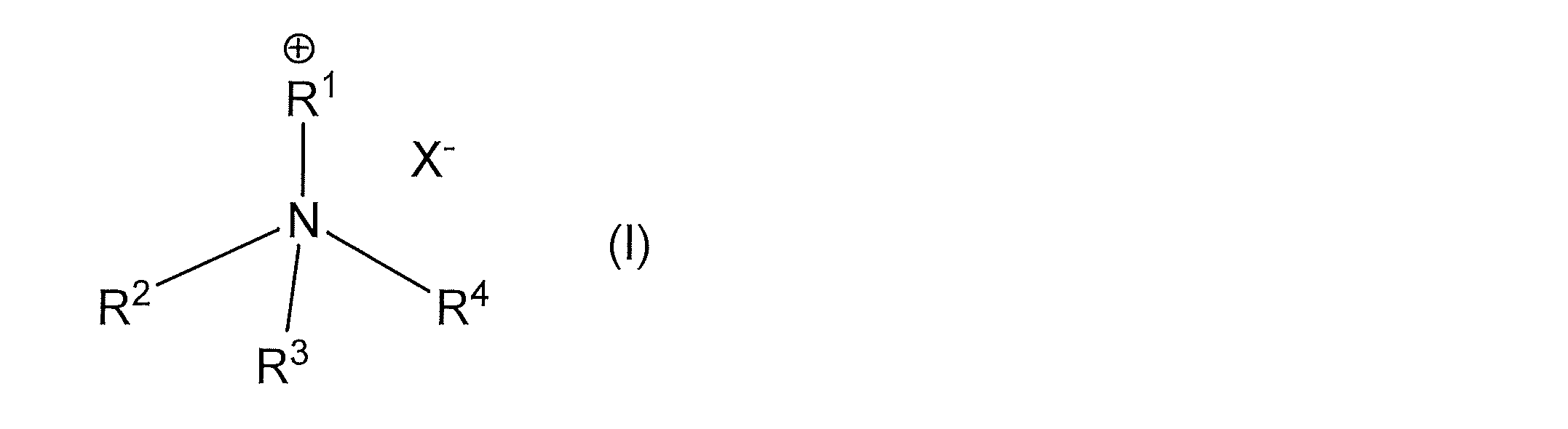
式(I)中、R1は、エステル基、アミド基及び/又はエーテル基を有していてもよい炭素数6以上22以下の炭化水素基であり、R2及びR3はそれぞれ独立に、エステル基、アミド基及び/又はエーテル基を有していてもよい炭素数6以上22以下の炭化水素基、又は、水酸基を有していてもよい炭素数1以上4以下のアルキル基であり、R4は、炭素数1以上6以下のアルキル基又は水素原子であり、X-は陰イオンである。
本開示は、一態様において、金属を含む水溶液から金属を分離する、又は分離及び回収するための金属分離剤キットであって、下記式(I)で表される塩(成分A)を含む第1剤と、チオシアン酸(成分B)を含む第2剤と、を含む金属分離剤キットに関する。

式(I)中、R1は、エステル基、アミド基及び/又はエーテル基を有していてもよい炭素数6以上22以下の炭化水素基であり、R2及びR3はそれぞれ独立に、エステル基、アミド基及び/又はエーテル基を有していてもよい炭素数6以上22以下の炭化水素基、又は、水酸基を有していてもよい炭素数1以上4以下のアルキル基であり、R4は、炭素数1以上6以下のアルキル基又は水素原子であり、X-は陰イオンである。
本開示は、一態様において、金属を含む水溶液から金属を分離及び回収する金属回収方法であって、金属を含む水溶液と本開示の金属分離剤キットを配合してなる剤とを接触させ、金属を水相から有機相に分離する工程と、前記有機相から金属を回収する工程と、を含む、金属回収方法に関する。
本開示は、一態様において、金属を含む水溶液と本開示の金属分離剤キットを配合してなる剤とを接触させ、金属を水相から有機相に分離する工程と、前記有機相から金属を回収する工程と、前記工程で回収した金属を用いて電池を製造する工程と、を含む、リチウムイオン電池の製造方法に関する。
本開示は、一態様において、金属を含む水溶液から金属を分離する、又は分離及び回収するための金属分離剤であって、下記式(I)で表される塩(成分A)及びチオシアン酸(成分B)を含む金属分離剤に関する。
本開示は、一態様において、金属を含む水溶液から金属を分離する、又は分離及び回収するための金属分離剤であって、下記式(I)で表される塩(成分A)及びチオシアン酸(成分B)を配合してなる金属分離剤に関する。

式(I)中、R1は、エステル基、アミド基及び/又はエーテル基を有していてもよい炭素数6以上22以下の炭化水素基であり、R2及びR3はそれぞれ独立に、エステル基、アミド基及び/又はエーテル基を有していてもよい炭素数6以上22以下の炭化水素基、又は、水酸基を有していてもよい炭素数1以上4以下のアルキル基であり、R4は、炭素数1以上6以下のアルキル基又は水素原子であり、X-は陰イオンである。
本開示は、一態様において、金属を含む水溶液から金属を分離する、又は分離及び回収するための金属分離剤であって、下記式(I)で表される塩(成分A)及びチオシアン酸(成分B)を配合してなる金属分離剤に関する。
本開示は、一態様において、金属を含む水溶液から金属を分離する金属分離方法であって、金属を含む水溶液と本開示の金属分離剤とを接触させ、金属を水相から有機相に分離する工程を含む金属分離方法に関する。
本開示は、一態様において、金属を含む水溶液から金属を分離及び回収する金属回収方法であって、金属を含む水溶液と本開示の金属分離剤とを接触させ、金属を水相から有機相に分離する工程と、前記有機相から金属を回収する工程と、を含む金属回収方法に関する。
しかしながら、トリオクチルメチルアンモニウムクロライドのようなアルキルアンモニウム塩は、塩酸濃度が低い場合や硫酸イオン存在下においてはコバルトの分離回収性能が低下する傾向にある。また、高濃度の塩酸は環境負荷が大きく、廃棄処理も容易ではない。さらに、混在する酸の種類に応じて分離回収性能が変化することは抽出剤の汎用性が低下する原因となる。
そこで、本開示は、金属を含む水溶液から分離及び/又は回収したい金属を効率よく分離及び/又は回収可能な金属分離方法を提供する。
本開示によれば、一態様において、金属を含む水溶液から分離及び/又は回収したい金属を効率よく分離及び/又は回収可能な金属分離方法を提供できる。
[金属分離方法]
本開示は、上記式(I)で表される塩(成分A)、チオシアン酸(成分B)及び水不溶性の有機溶媒(成分C)を含む金属分離剤、又は、上記式(I)で表される塩(成分A)及びチオシアン酸(成分B)を含む金属分離剤を用いることで、金属を含む水溶液から分離及び/又は回収したい金属を効率よく分離及び/又は回収できるという知見に基づく。
本開示は、上記式(I)で表される塩(成分A)、チオシアン酸(成分B)及び水不溶性の有機溶媒(成分C)を含む金属分離剤、又は、上記式(I)で表される塩(成分A)及びチオシアン酸(成分B)を含む金属分離剤を用いることで、金属を含む水溶液から分離及び/又は回収したい金属を効率よく分離及び/又は回収できるという知見に基づく。
すなわち、本開示は、一態様において、金属を含む水溶液から金属を分離する、又は分離及び回収するための金属分離方法であって、金属を含む水溶液と、上記式(I)で表される塩(成分A)、チオシアン酸(成分B)及び水不溶性の有機溶媒(成分C)を含む金属分離剤(以下、「本開示の金属分離剤」ともいう)とを接触させ、金属を水相から有機相に分離する工程(以下、「接触工程」ともいう)を含む金属分離方法(以下、「本開示の金属分離方法」ともいう)に関する。
本開示の金属分離方法によれば、一又は複数の実施形態において、金属を含む水溶液から分離及び/又は回収したい金属を効率よく分離及び/又は回収可能な金属分離方法を提供できる。本開示の金属分離方法によれば、一又は複数の実施形態において、金属を含む水溶液からの金属分離回収性能に優れた金属分離方法を提供できる。
本開示の金属分離方法によれば、一又は複数の実施形態において、金属を含む水溶液から分離及び/又は回収したい金属を効率よく分離及び/又は回収可能な金属分離方法を提供できる。本開示の金属分離方法によれば、一又は複数の実施形態において、金属を含む水溶液からの金属分離回収性能に優れた金属分離方法を提供できる。
本開示は、その他の態様において、金属を含む水溶液から金属を分離する金属分離方法であって、金属を含む水溶液と、上記式(I)で表される塩(成分A)及びチオシアン酸(成分B)を含む金属分離剤(以下、「本開示の金属分離剤」ともいう)とを接触させ、金属を水相から有機相に分離する工程(以下、「接触工程」ともいう)を含む金属分離方法(以下、「本開示の金属分離方法」ともいう)に関する。
本開示の金属分離方法によれば、金属を含む水溶液から分離したい金属を効率よく分離できる。
本開示の金属分離方法によれば、金属を含む水溶液から分離したい金属を効率よく分離できる。
また、本開示の金属分離方法は、一又は複数の実施形態において、コバルトの回収効率に優れる。さらにまた、本開示の金属分離方法は、一又は複数の実施形態において、Co-Ni分離能に優れる。すなわち、本開示の金属分離方法は、一又は複数の実施形態において、コバルトを含む水溶液からコバルトを分離する又は分離及び回収するための金属分離方法である。本開示の金属分離方法は、一又は複数の実施形態において、コバルト及びニッケルを含む水溶液からコバルトを分離する、又は分離及び回収するための金属分離方法である。
本開示の効果発現の作用メカニズムの詳細は不明な部分はあるが、以下のように推察される。
水溶液(水相)中で金属イオンは水分子または他の親水性の化合物と電子を主に受け取る形で安定化している。この安定化した構造体を金属イオンクラスターと呼ぶ。油(有機相)中へ金属イオンクラスターが移動するためには、より大きな安定化を享受する必要がある。本開示における式(I)で表される塩(成分A)は高い電荷密度で正に帯電しているため、水溶液(水相)中で負に帯電している金属イオンクラスターとの間に静電的相互作用が生じ、より安定化した構造体を形成することが可能である。そのため本開示における成分Aは油(有機相)中への金属分離剤として一定の効果を発現する。
更に、チオシアン酸塩(成分B)を併用することで、成分Bは、一般的な配位子と比較して、特異な構造の錯体を金属ごとに形成する。例えばニッケルとは直鎖型の二座配位の錯体を形成し、コバルトとは四面体型の四座配位の錯体を形成するといわれている。このチオシアン錯体の構造の違いによって成分Aと各金属の反応性に差が生まれ、精度の高い金属分離がより可能になると考えられる。
本開示は、油(有機相)中に成分Bが存在することで金属イオンを油(有機相)中に補足し、さらに成分Aが、油(有機相)中で相互作用した金属イオンと成分Bを油(有機相)中に安定的に存在することに寄与し、式(I)で表される塩(成分A)やチオシアン酸(成分B)を単独で用いる場合に比べて、はるかに効率よく特定の金属イオンを抽出できると考えられる。
本開示における式(I)で表される塩(成分A)は、エステル基等の極性基を有するアルキルアンモニウム塩又はアミン塩であってよく、アルキルアンモニウム塩又はアミン塩が極性基を有する場合はその電子吸引性に起因して、金属イオンと電子を共有することで、さらに安定な共有結合を形成することが可能であると考えられる。この共有結合の生成率は各種金属イオンごとで異なるため、選択性が向上し負に帯電する金属イオンクラスター同士を分離することが可能となると考えられる。そのため、本開示における成分Aが極性基を有する場合(特定のアルキルアンモニウム塩又はアミン塩)は、より優れた金属分離回収能を提供できると考えられる。
ただし、本開示は上記のメカニズムに限定して解釈されなくてもよい。
水溶液(水相)中で金属イオンは水分子または他の親水性の化合物と電子を主に受け取る形で安定化している。この安定化した構造体を金属イオンクラスターと呼ぶ。油(有機相)中へ金属イオンクラスターが移動するためには、より大きな安定化を享受する必要がある。本開示における式(I)で表される塩(成分A)は高い電荷密度で正に帯電しているため、水溶液(水相)中で負に帯電している金属イオンクラスターとの間に静電的相互作用が生じ、より安定化した構造体を形成することが可能である。そのため本開示における成分Aは油(有機相)中への金属分離剤として一定の効果を発現する。
更に、チオシアン酸塩(成分B)を併用することで、成分Bは、一般的な配位子と比較して、特異な構造の錯体を金属ごとに形成する。例えばニッケルとは直鎖型の二座配位の錯体を形成し、コバルトとは四面体型の四座配位の錯体を形成するといわれている。このチオシアン錯体の構造の違いによって成分Aと各金属の反応性に差が生まれ、精度の高い金属分離がより可能になると考えられる。
本開示は、油(有機相)中に成分Bが存在することで金属イオンを油(有機相)中に補足し、さらに成分Aが、油(有機相)中で相互作用した金属イオンと成分Bを油(有機相)中に安定的に存在することに寄与し、式(I)で表される塩(成分A)やチオシアン酸(成分B)を単独で用いる場合に比べて、はるかに効率よく特定の金属イオンを抽出できると考えられる。
本開示における式(I)で表される塩(成分A)は、エステル基等の極性基を有するアルキルアンモニウム塩又はアミン塩であってよく、アルキルアンモニウム塩又はアミン塩が極性基を有する場合はその電子吸引性に起因して、金属イオンと電子を共有することで、さらに安定な共有結合を形成することが可能であると考えられる。この共有結合の生成率は各種金属イオンごとで異なるため、選択性が向上し負に帯電する金属イオンクラスター同士を分離することが可能となると考えられる。そのため、本開示における成分Aが極性基を有する場合(特定のアルキルアンモニウム塩又はアミン塩)は、より優れた金属分離回収能を提供できると考えられる。
ただし、本開示は上記のメカニズムに限定して解釈されなくてもよい。
<金属を含む水溶液>
本開示における「金属を含む水溶液」としては、一又は複数の実施形態において、電子廃棄物を処理して得られたものが挙げられる。電子廃棄物とは、一又は複数の実施形態において、リチウムイオン電池の電子部品からの廃棄物が挙げられる。金属を含む水溶液としては、一又は複数の実施形態において、電子部品の廃棄物を酸で処理して得られる水溶液(浸出液)が挙げられる。
電子廃棄物から得られる「金属を含む水溶液」は、例えば、リチウムイオン電池の正極部品を粉砕や熱処理により鉄系金属、プラスチック、電極粉BM(ブラックマトリクス)等に分離した後、電極粉BMを硫酸又は塩酸溶液に溶解させた酸性水溶液として得ることができる。電極粉BMは、例えば、リチウム(Li)、コバルト(Co)、ニッケル(Ni)、マンガン(Mn)等を含む。金属を含む水溶液としては、一又は複数の実施形態において、コバルトを含む水溶液、コバルト及びニッケルを含む水溶液が挙げられる。
本開示において、金属を含む水溶液としては、例えば、リチウムイオン電池の正極活物質を含む電池滓を酸性水溶液で浸出することにより得られる浸出液が挙げられる。
本開示における「金属を含む水溶液」としては、一又は複数の実施形態において、電子廃棄物を処理して得られたものが挙げられる。電子廃棄物とは、一又は複数の実施形態において、リチウムイオン電池の電子部品からの廃棄物が挙げられる。金属を含む水溶液としては、一又は複数の実施形態において、電子部品の廃棄物を酸で処理して得られる水溶液(浸出液)が挙げられる。
電子廃棄物から得られる「金属を含む水溶液」は、例えば、リチウムイオン電池の正極部品を粉砕や熱処理により鉄系金属、プラスチック、電極粉BM(ブラックマトリクス)等に分離した後、電極粉BMを硫酸又は塩酸溶液に溶解させた酸性水溶液として得ることができる。電極粉BMは、例えば、リチウム(Li)、コバルト(Co)、ニッケル(Ni)、マンガン(Mn)等を含む。金属を含む水溶液としては、一又は複数の実施形態において、コバルトを含む水溶液、コバルト及びニッケルを含む水溶液が挙げられる。
本開示において、金属を含む水溶液としては、例えば、リチウムイオン電池の正極活物質を含む電池滓を酸性水溶液で浸出することにより得られる浸出液が挙げられる。
<接触工程>
前記接触工程は、一又は複数の実施形態において、水相である金属を含む水溶液と本開示の金属分離剤の有機相とを接触させて、分離したい金属を有機相に分配(抽出)することにより、水相から金属を分離する工程である。
上記の工程における有機相としては、油連続型やバイコンテニュアス型の乳化系に含まれているものを使用してもよい。
有機相を含む本開示の金属分離剤は、一又は複数の実施形態において、後述の水不溶性の有機溶媒(成分C)を含む形態である。
前記接触工程の操作手順は、特に限定されず、液相抽出法に利用される公知の操作手順を適宜選択することができる。例えば、任意の容器に水相である金属を含む水溶液と有機相を含む本開示の金属分離剤とを投入し、振とう機等を用いて、前記水相と前記有機相とを十分に混合した後、遠心分離によって相分離させて、分液を行うことが挙げられる。また、容器の代わりに向流抽出装置等の抽出装置や分液漏斗等の公知の抽出装置又は抽出器具を用いることもできる。
前記接触工程は、一又は複数の実施形態において、水相である金属を含む水溶液と本開示の金属分離剤の有機相とを接触させて、分離したい金属を有機相に分配(抽出)することにより、水相から金属を分離する工程である。
上記の工程における有機相としては、油連続型やバイコンテニュアス型の乳化系に含まれているものを使用してもよい。
有機相を含む本開示の金属分離剤は、一又は複数の実施形態において、後述の水不溶性の有機溶媒(成分C)を含む形態である。
前記接触工程の操作手順は、特に限定されず、液相抽出法に利用される公知の操作手順を適宜選択することができる。例えば、任意の容器に水相である金属を含む水溶液と有機相を含む本開示の金属分離剤とを投入し、振とう機等を用いて、前記水相と前記有機相とを十分に混合した後、遠心分離によって相分離させて、分液を行うことが挙げられる。また、容器の代わりに向流抽出装置等の抽出装置や分液漏斗等の公知の抽出装置又は抽出器具を用いることもできる。
金属を含む水溶液のpHは、特に限定されなくてもよく、分離及び/又は回収したい金属の種類や目的等に応じて適宜選択できる。金属を含む水溶液のpHは、一又は複数の実施形態において、通常6.0以下、好ましくは5.5以下、より好ましくは5.0以下又は5以下である。例えば、分離及び/又は回収したい金属が例えばコバルト元素(Co)である場合、金属を含む水溶液のpHは、好ましくは7.0以下又は7以下、より好ましくは4.0以下又は4以下である。本開示において、水溶液のpHは、25℃における値であって、pHメータを用いて測定でき、具体的には、実施例に記載の方法で測定できる。
前記接触工程において、水相と有機相とを接触させる時間は、特に制限されなくてもよく、目的に応じて適宜選択できる。前記接触の時間としては、例えば、1~10分が挙げられる。
前記接触工程において、水相と有機相とを接触させる温度は、特に限定されないが、金属分離剤の溶解性の観点から、0℃以上が好ましく、10℃以上がより好ましく、20℃以上が更に好ましく、そして、扱い性の観点から、100℃以下が好ましく、75℃以下がより好ましく、50℃以下が更に好ましい。より具体的には、前記接触工程における温度は、0℃以上100℃以下が好ましく、10℃以上75℃以下がより好ましく、20℃以上50℃以下が更に好ましい。
前記接触工程で水相と接触させる本開示の金属分離剤は、一又は複数の実施形態において、有機相を含むものである。前記有機相は、一又は複数の実施形態において、本開示の金属分離剤の水不溶性の有機溶媒(成分C)に由来する。
前記接触工程において、接触させる水相と有機相との体積比(水相の体積/有機相の体積)は、特に限定されず、目的に応じて適宜選択することができ、通常1以上であり、好ましくは1~10である。
前記接触工程で水相と接触させる本開示の金属分離剤中の上記式(I)で表される塩(成分A)の配合量(mol%)は、分離したい金属の分離性の観点から、金属を含む水溶液中の金属の濃度(100mol%)に対して、100mol%以上が好ましく、500mol%以上がより好ましく、1000mol%以上が更に好ましく、そして、10000mol%以下が好ましく、5000mol%以下がより好ましく、2500mol%以下が更に好ましい。より具体的には、本開示の金属分離剤中の上記式(I)で表される塩(成分A)の配合量は、金属を含む水溶液中の金属の濃度(100mol%)に対して、100mol%以上10000mol%以下が好ましく、500mol%以上5000mol%以下がより好ましく、1000mol%以上2500mol%以下が更に好ましい。
前記接触工程で水相と接触させる本開示の金属分離剤中のチオシアン酸塩(成分B)の配合量は、分離したい金属の分離性の観点から、金属を含む水溶液中の金属の濃度(100mol%)に対して、100mol%以上が好ましく、500mol%以上がより好ましく、1000mol%以上が更に好ましく、そして、20000mol%以下が好ましく、10000mol%以下がより好ましく、5000mol%以下が更に好ましい。より具体的には、本開示の金属分離剤中のチオシアン酸塩(成分B)の配合量は、金属を含む水溶液中の金属の濃度(100mol%)に対して、100mol%以上20000mol%以下が好ましく、500mol%以上10000mol%以下がより好ましく、1000mol%以上5000mol%以下が更に好ましい。
前記接触工程で水相と接触させる本開示の金属分離剤中の水不溶性の有機溶媒(成分C)の配合量は、回収したい金属の回収効率の観点から、金属を含む水溶液中の金属の濃度(100mol%)に対して、1000mol%以上が好ましく、5000mol%以上がより好ましく、10000mol%以上が更に好ましく、そして、100000mol%以下が好ましく、50000mol%以下がより好ましく、25000mol%以下が更に好ましい。より具体的には、本開示の金属分離剤中の水不溶性の有機溶媒(成分C)の配合量は、金属を含む水溶液中の金属の濃度(100mol%)に対して、1000mol%以上100000mol%以下が好ましく、5000mol%以上50000mol%以下がより好ましく、10000mol%以上25000mol%以下が更に好ましい。
[金属分離剤]
本開示は、一態様において、金属を含む水溶液から金属を分離する、又は分離及び回収するための金属分離剤であって、上記式(I)で表される塩(成分A)及びチオシアン酸(成分B)を含む金属分離剤(以下、「本開示の金属分離剤」ともいう)に関する。
本開示は、一態様において、金属を含む水溶液から金属を分離する、又は分離及び回収するための金属分離剤であって、上記式(I)で表される塩(成分A)及びチオシアン酸(成分B)を含む金属分離剤(以下、「本開示の金属分離剤」ともいう)に関する。
本開示によれば、一又は複数の実施形態において、金属を含む水溶液から分離及び/又は回収したい金属を効率よく分離及び/又は回収可能な金属分離剤を提供できる。本開示によれば、一又は複数の実施形態において、金属を含む水溶液からの金属分離回収性能に優れた金属分離剤を提供できる。
本開示の金属分離剤は、一又は複数の実施形態において、金属を含む水溶液から金属を分離する、又は分離及び回収するために使用される。分離及び/又は回収の対象となる金属としては、一又は複数の実施形態において、リチウムイオン電池等の触媒用金属が挙げられる。触媒用金属としては、第4周期金属等が挙げられ、例えば、コバルト、ニッケル、及びマンガンから選ばれる少なくとも1種の金属が挙げられる。水溶液中の金属はイオンの状態であることが好ましい。なかでも、本開示の金属分離剤は、一又は複数の実施形態において、コバルトの回収効率に優れる。また、本開示の金属分離剤は、その他の一又は複数の実施形態において、Co-Ni分離能に優れる。すなわち、本開示の金属分離剤は、一又は複数の実施形態において、コバルトを含む水溶液からコバルトを分離する又は分離及び回収するための金属分離剤である。本開示の金属分離剤は、一又は複数の実施形態において、コバルト及びニッケルを含む水溶液からコバルトを分離する、又は分離及び回収するための金属分離剤である。
<成分A:式(I)で表される塩>
本開示の金属分離剤は、下記式(I)で表される塩(以下、「成分A」ともいう)を含む。下記式(I)中のR4が炭素数1以上6以下のアルキル基の場合、成分Aは第4級アンモニウム塩である。下記式(I)中のR4が水素原子の場合、成分Aは第3級アミン塩である。すなわち、成分Aは、式(I)で表される塩であって、第4級アンモニウム塩及び第3級アミン塩を含む。成分Aは、1種でもよいし、2種以上の組合せもよい。
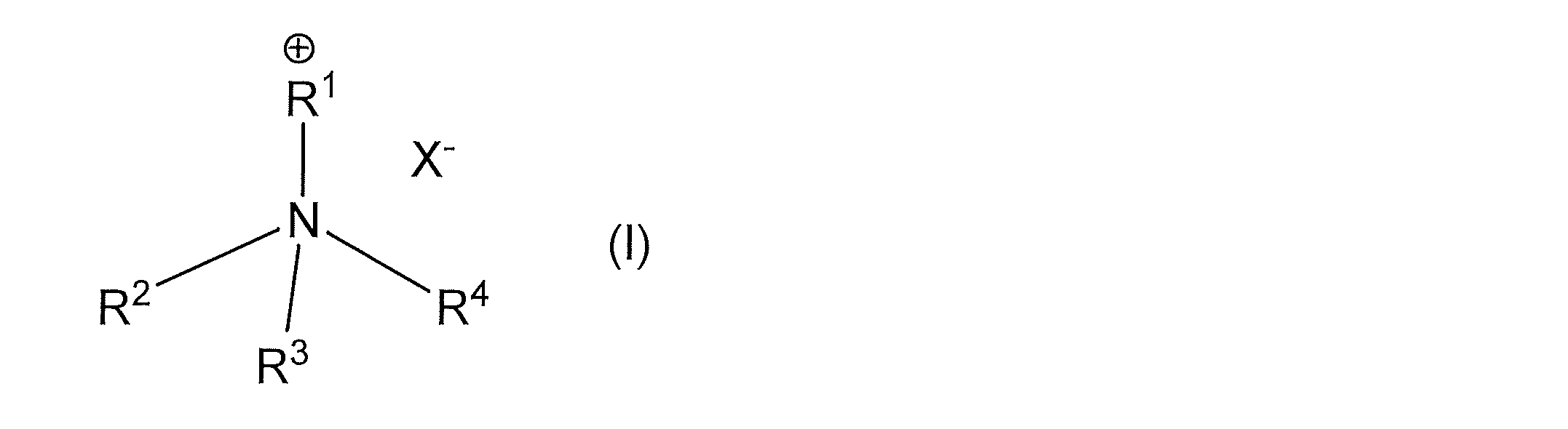
本開示の金属分離剤は、下記式(I)で表される塩(以下、「成分A」ともいう)を含む。下記式(I)中のR4が炭素数1以上6以下のアルキル基の場合、成分Aは第4級アンモニウム塩である。下記式(I)中のR4が水素原子の場合、成分Aは第3級アミン塩である。すなわち、成分Aは、式(I)で表される塩であって、第4級アンモニウム塩及び第3級アミン塩を含む。成分Aは、1種でもよいし、2種以上の組合せもよい。
式(I)中、R1は、エステル基、アミド基及び/又はエーテル基を有していてもよい炭素数6以上22以下の炭化水素基であり、R2及びR3はそれぞれ独立に、エステル基、アミド基及び/又はエーテル基を有していてもよい炭素数6以上22以下の炭化水素基、又は、水酸基を有していてもよい炭素数1以上4以下のアルキル基であり、R4は、炭素数1以上6以下のアルキル基又は水素原子であり、X-は陰イオンである。
上記式(I)において、R1、R2及びR3はそれぞれ独立に、エステル基、アミド基及び/又はエーテル基を有していてもよい炭素数6以上22以下の炭化水素基であって、R1、R2及びR3の炭化水素基は、分離したい金属の分離性の観点から、炭素数6以上22以下の炭化水素基であって、炭素数8以上18以下の炭化水素基が好ましく、炭素数8以上16以下の炭化水素基がより好ましい。炭化水素基は、直鎖でもよいし、分岐鎖でもよいが、水溶液との接触時の泡立ち抑制の観点から、分岐鎖を有することが好ましい。炭化水素基は、飽和鎖でも、不飽和鎖でもよいが、水溶液との接触時の泡立ち抑制の観点から不飽和鎖を有することが好ましい。
R1、R2及びR3のうちの少なくとも一つは、分離した金属の分離性の観点から、エステル基、アミド基及び/又はエーテル基を有するものであることが好ましく、エステル基又はエーテル基を有することがより好ましく、エステル基を有することが更に好ましい。
R1、R2及びR3における炭素数6以上22以下の炭化水素基が、エステル基、アミド基及び/又はエーテル基を有する場合は、一又は複数の実施形態において、-R5-X-R6で表され、R5が炭素数1以上4以下のアルキレン基であり、Xは、-O-C(=O)-、-NH-C(=O)-、又は酸素原子であり、分離したい金属の分離性の観点から、R6は、炭素数6以上18以下の炭化水素基であるものが挙げられる。R5の炭素数は、分離したい金属の分離性の観点から、1又は2が好ましい。R6の炭素数は、分離したい金属の分離性の観点から、6以上18以下が好ましい。R6の炭化水素基は、飽和でも、不飽和でもよいが、一又は複数の実施形態において、水溶液との接触時の泡立ち抑制の観点から、不飽和鎖を有することが好ましく、一又は複数の実施形態において、分離したい金属の分離性の観点から、Xは-O-C(=O)-が好ましい。
R2及びR3における、水酸基を有していてもよい炭素数1以上4以下のアルキル基は、分離したい金属の分離性の観点から、水酸基を有していてもよい炭素数1以上3以下のアルキル基が好ましく、水酸基を有していてもよい炭素数1又は2以下のアルキル基がより好ましく、ヒドロキシエチル基が更に好ましい。
R4のアルキル基は、分離したい金属の分離性の観点から、炭素数1以上6以下のアルキル基又は水素原子であって、炭素数1以上6以下のアルキル基が好ましく、炭素数1以上4以下のアルキル基がより好ましく、炭素数1以上2以下のアルキル基が更に好ましく、メチル基が更に好ましい。
X-は、対イオンであり、例えば、炭素数1以上3以下のアルキル硫酸イオン、硫酸イオン、リン酸イオン、炭素数1以上3以下のカルボン酸イオン(ギ酸イオン、酢酸イオン、プロピオン酸イオン)、ハロゲン化物イオン等が挙げられる。これらの中でも、製造の容易性及び原料入手容易性の観点から、X-は、好ましくはメチル硫酸イオン、エチル硫酸イオン、塩化物イオン、及び臭化物イオンから選ばれる少なくとも1種であり、より好ましくはメチル硫酸イオンである。X-は1種単独であってもよく、2種以上であってもよい。
R1、R2及びR3のうちの少なくとも一つは、分離した金属の分離性の観点から、エステル基、アミド基及び/又はエーテル基を有するものであることが好ましく、エステル基又はエーテル基を有することがより好ましく、エステル基を有することが更に好ましい。
R1、R2及びR3における炭素数6以上22以下の炭化水素基が、エステル基、アミド基及び/又はエーテル基を有する場合は、一又は複数の実施形態において、-R5-X-R6で表され、R5が炭素数1以上4以下のアルキレン基であり、Xは、-O-C(=O)-、-NH-C(=O)-、又は酸素原子であり、分離したい金属の分離性の観点から、R6は、炭素数6以上18以下の炭化水素基であるものが挙げられる。R5の炭素数は、分離したい金属の分離性の観点から、1又は2が好ましい。R6の炭素数は、分離したい金属の分離性の観点から、6以上18以下が好ましい。R6の炭化水素基は、飽和でも、不飽和でもよいが、一又は複数の実施形態において、水溶液との接触時の泡立ち抑制の観点から、不飽和鎖を有することが好ましく、一又は複数の実施形態において、分離したい金属の分離性の観点から、Xは-O-C(=O)-が好ましい。
R2及びR3における、水酸基を有していてもよい炭素数1以上4以下のアルキル基は、分離したい金属の分離性の観点から、水酸基を有していてもよい炭素数1以上3以下のアルキル基が好ましく、水酸基を有していてもよい炭素数1又は2以下のアルキル基がより好ましく、ヒドロキシエチル基が更に好ましい。
R4のアルキル基は、分離したい金属の分離性の観点から、炭素数1以上6以下のアルキル基又は水素原子であって、炭素数1以上6以下のアルキル基が好ましく、炭素数1以上4以下のアルキル基がより好ましく、炭素数1以上2以下のアルキル基が更に好ましく、メチル基が更に好ましい。
X-は、対イオンであり、例えば、炭素数1以上3以下のアルキル硫酸イオン、硫酸イオン、リン酸イオン、炭素数1以上3以下のカルボン酸イオン(ギ酸イオン、酢酸イオン、プロピオン酸イオン)、ハロゲン化物イオン等が挙げられる。これらの中でも、製造の容易性及び原料入手容易性の観点から、X-は、好ましくはメチル硫酸イオン、エチル硫酸イオン、塩化物イオン、及び臭化物イオンから選ばれる少なくとも1種であり、より好ましくはメチル硫酸イオンである。X-は1種単独であってもよく、2種以上であってもよい。
成分Aは、一又は複数の実施形態において、式(I)中のR1、R2及びR3のうちの少なくとも一つが炭素数6以上22以下のエステル基を有する化合物(以下、「成分A1」ともいう)である。成分A1は、一又は複数の実施形態において、式(I)中のR1、R2及びR3のうちの少なくとも二つが炭素数6以上22以下のエステル基を有する化合物、式(I)中のR1、R2及びR3が炭素数6以上22以下のエステル基を有する化合物である。
成分A1としては、一又は複数の実施形態において、式(I)中のR1、R2及びR3がそれぞれエステル基を有する炭素数6以上22以下の炭化水素基である化合物、式(I)中のR1及びR2がそれぞれエステル基を有する炭素数6以上22以下の炭化水素基であり、R3が水酸基を有していてもよい炭素数1以上4以下のアルキル基である化合物等が挙げられ、例えば、メチルトリス-[2-エチルへキシル酸エチル]-アンモニウム塩、(2-ヒドロキシエチル)-メチルビス-[2-オレイン酸エチル]-アンモニウム塩等が挙げられる。これらの塩の対イオンとしては、例えば、メチル硫酸イオン、エチル硫酸イオン、塩化物イオン、臭化物イオン等が挙げられる。成分A1としては、例えば、メチルトリス-[2-エチルへキシル酸エチル]-アンモニウムメチル硫酸塩、(2-ヒドロキシエチル)-メチルビス-[2-オレイン酸エチル]-アンモニウムメチル硫酸塩が挙げられる。なお、エステル基と窒素原子で中断された炭化水素基の炭素数は特にこだわらないが、例えば、0以上又は4以下が挙げられる。
成分Aは、一又は複数の実施形態において、式(I)中のR1、R2及びR3のうちの少なくとも一つが炭素数6以上22以下のエーテル基を有する化合物(以下、「成分A2」ともいう)である。成分A2としては、一又は複数の実施形態において、式(I)中のR1、R2及びR3がエーテル基を有する炭素数6以上22以下の炭化水素基である化合物が挙げられ、例えば、トリス[2-ヘキソキシエチル]-へキシル-アンモニウム塩等が挙げられる。これらの塩の対イオンとしては、例えば、メチル硫酸イオン、エチル硫酸イオン、塩化物イオン、臭化物イオン等が挙げられる。成分A2としては、例えば、トリス[2-ヘキソキシエチル]-へキシル-アンモニウム塩酸塩等が挙げられる。なお、エーテル基と窒素原子で中断された炭化水素基の炭素数は特にこだわらないが、例えば、0以上又は4以下が挙げられる。
成分Aは、一又は複数の実施形態において、式(I)中のR1、R2及びR3のうちの少なくとも一つが炭素数6以上22以下のアミド基を有する化合物(以下、「成分A3」ともいう)である。成分A3としては、一又は複数の実施形態において、式(I)中のR1、R2及びR3がそれぞれアミド基を有する炭素数6以上22以下の炭化水素基である化合物が挙げられ、例えば、トリス[2-(オレイン酸アミド)エチル]-メチル-アンモニウムメチル塩等が挙げられる。これらの塩の対イオンとしては、例えば、メチル硫酸イオン、エチル硫酸イオン、塩化物イオン、臭化物イオン等が挙げられる。成分A3としては、例えば、トリス[2-(オレイン酸アミド)エチル]-メチル-アンモニウムメチル硫酸塩等が挙げられる。なお、アミド基と窒素原子で中断された炭化水素基の炭素数は特にこだわらないが、0以上又は4以下が挙げられる。
成分A1としては、一又は複数の実施形態において、式(I)中のR1、R2及びR3がそれぞれエステル基を有する炭素数6以上22以下の炭化水素基である化合物、式(I)中のR1及びR2がそれぞれエステル基を有する炭素数6以上22以下の炭化水素基であり、R3が水酸基を有していてもよい炭素数1以上4以下のアルキル基である化合物等が挙げられ、例えば、メチルトリス-[2-エチルへキシル酸エチル]-アンモニウム塩、(2-ヒドロキシエチル)-メチルビス-[2-オレイン酸エチル]-アンモニウム塩等が挙げられる。これらの塩の対イオンとしては、例えば、メチル硫酸イオン、エチル硫酸イオン、塩化物イオン、臭化物イオン等が挙げられる。成分A1としては、例えば、メチルトリス-[2-エチルへキシル酸エチル]-アンモニウムメチル硫酸塩、(2-ヒドロキシエチル)-メチルビス-[2-オレイン酸エチル]-アンモニウムメチル硫酸塩が挙げられる。なお、エステル基と窒素原子で中断された炭化水素基の炭素数は特にこだわらないが、例えば、0以上又は4以下が挙げられる。
成分Aは、一又は複数の実施形態において、式(I)中のR1、R2及びR3のうちの少なくとも一つが炭素数6以上22以下のエーテル基を有する化合物(以下、「成分A2」ともいう)である。成分A2としては、一又は複数の実施形態において、式(I)中のR1、R2及びR3がエーテル基を有する炭素数6以上22以下の炭化水素基である化合物が挙げられ、例えば、トリス[2-ヘキソキシエチル]-へキシル-アンモニウム塩等が挙げられる。これらの塩の対イオンとしては、例えば、メチル硫酸イオン、エチル硫酸イオン、塩化物イオン、臭化物イオン等が挙げられる。成分A2としては、例えば、トリス[2-ヘキソキシエチル]-へキシル-アンモニウム塩酸塩等が挙げられる。なお、エーテル基と窒素原子で中断された炭化水素基の炭素数は特にこだわらないが、例えば、0以上又は4以下が挙げられる。
成分Aは、一又は複数の実施形態において、式(I)中のR1、R2及びR3のうちの少なくとも一つが炭素数6以上22以下のアミド基を有する化合物(以下、「成分A3」ともいう)である。成分A3としては、一又は複数の実施形態において、式(I)中のR1、R2及びR3がそれぞれアミド基を有する炭素数6以上22以下の炭化水素基である化合物が挙げられ、例えば、トリス[2-(オレイン酸アミド)エチル]-メチル-アンモニウムメチル塩等が挙げられる。これらの塩の対イオンとしては、例えば、メチル硫酸イオン、エチル硫酸イオン、塩化物イオン、臭化物イオン等が挙げられる。成分A3としては、例えば、トリス[2-(オレイン酸アミド)エチル]-メチル-アンモニウムメチル硫酸塩等が挙げられる。なお、アミド基と窒素原子で中断された炭化水素基の炭素数は特にこだわらないが、0以上又は4以下が挙げられる。
成分Aは、分離したい金属の分離性の観点から、成分A1、成分A2、及び成分A3から選ばれる少なくとも1種が好ましく、成分A1及び成分A2から選ばれる少なくとも一方がより好ましく、成分A1が更に好ましい。
同様の観点から、成分Aは、メチルトリス-[2-エチルへキシル酸エチル]-アンモニウム塩、(2-ヒドロキシエチル)-メチルビス-[2-オレイン酸エチル]-アンモニウム塩、トリス[2-ヘキソキシエチル]-へキシル-アンモニウム塩、及び、トリス[2-(オレイン酸アミド)エチル]-メチル-アンモニウムメチル塩から選ばれる少なくとも1種が好ましく、メチルトリス-[2-エチルへキシル酸エチル]-アンモニウム塩、(2-ヒドロキシエチル)-メチルビス-[2-オレイン酸エチル]-アンモニウム塩、及びトリス[2-ヘキソキシエチル]-へキシル-アンモニウム塩から選ばれる少なくとも1種がより好ましく、メチルトリス-[2-エチルへキシル酸エチル]-アンモニウム塩、及び(2-ヒドロキシエチル)-メチルビス-[2-オレイン酸エチル]-アンモニウム塩の少なくとも一方が更に好ましく、メチルトリス-[2-エチルへキシル酸エチル]-アンモニウム塩が更に好ましく、メチルトリス-[2-エチルへキシル酸エチル]-アンモニウムメチル硫酸塩が更に好ましい。
同様の観点から、成分Aは、メチルトリス-[2-エチルへキシル酸エチル]-アンモニウム塩、(2-ヒドロキシエチル)-メチルビス-[2-オレイン酸エチル]-アンモニウム塩、トリス[2-ヘキソキシエチル]-へキシル-アンモニウム塩、及び、トリス[2-(オレイン酸アミド)エチル]-メチル-アンモニウムメチル塩から選ばれる少なくとも1種が好ましく、メチルトリス-[2-エチルへキシル酸エチル]-アンモニウム塩、(2-ヒドロキシエチル)-メチルビス-[2-オレイン酸エチル]-アンモニウム塩、及びトリス[2-ヘキソキシエチル]-へキシル-アンモニウム塩から選ばれる少なくとも1種がより好ましく、メチルトリス-[2-エチルへキシル酸エチル]-アンモニウム塩、及び(2-ヒドロキシエチル)-メチルビス-[2-オレイン酸エチル]-アンモニウム塩の少なくとも一方が更に好ましく、メチルトリス-[2-エチルへキシル酸エチル]-アンモニウム塩が更に好ましく、メチルトリス-[2-エチルへキシル酸エチル]-アンモニウムメチル硫酸塩が更に好ましい。
本開示の金属分離剤中の成分Aの配合量(質量%)は、分離したい金属の分離性の観点から、1.0質量%以上又は1質量%以上が好ましく、5.0質量%以上又は5質量%以上がより好ましく、10.0質量%以上又は10質量%以上が更に好ましく、そして、50質量%以下が好ましく、40質量%以下がより好ましく、30質量%以下が更に好ましい。より具体的には、本開示の金属分離剤中の成分Aの配合量(質量%)は、1.0質量%以上50質量%以下又は1質量%以上50質量%以下が好ましく、5.0質量%以上40質量%以下又は5質量%以上40質量%以下がより好ましく、10.0質量%以上30質量%以下又は10質量%以上30質量%以下が更に好ましい。成分Aが2種類以上の組合せである場合、成分Aの配合量はそれらの合計配合量をいう。
本開示の金属分離剤は、一又は複数の実施形態において、成分A及び成分Bを含む組成物である。
<チオシアン酸塩(成分B)>
本開示の金属分離剤は、一又は複数の実施形態において、分離したい金属の分離性の観点から、成分Aとチオシアン酸塩(以下、「成分B」ともいう)とを配合してなる又は含有する。すなわち、本開示の金属分離剤は、一又は複数の実施形態において、成分Aとチオシアン酸塩(成分B)とを配合してなる。
本開示の金属分離剤中では、一又は複数の実施形態において、成分Aと成分Bとは、混和する状態で存在する。
本開示において、「配合してなる」とは、成分Aとチオシアン酸塩(成分B)だけでなく、必要に応じて任意成分をさらに配合できることを意味する。
本開示において、金属分離剤中の各成分の配合量は、金属分離剤中の各成分の含有量として読み替えることができる。
本開示の金属分離剤は、一又は複数の実施形態において、分離したい金属の分離性の観点から、成分Aとチオシアン酸塩(以下、「成分B」ともいう)とを配合してなる又は含有する。すなわち、本開示の金属分離剤は、一又は複数の実施形態において、成分Aとチオシアン酸塩(成分B)とを配合してなる。
本開示の金属分離剤中では、一又は複数の実施形態において、成分Aと成分Bとは、混和する状態で存在する。
本開示において、「配合してなる」とは、成分Aとチオシアン酸塩(成分B)だけでなく、必要に応じて任意成分をさらに配合できることを意味する。
本開示において、金属分離剤中の各成分の配合量は、金属分離剤中の各成分の含有量として読み替えることができる。
成分Bとしては、分離したい金属の分離性の観点から、チオシアン酸アンモニウム、チオシアン酸ナトリウム等が挙げられる。成分Bは、1種でもよいし、2種以上の組合せもよい。
本開示の金属分離剤中の成分Bの配合量(質量%)は、分離したい金属の分離性の観点から、0.1質量%以上が好ましく、0.5質量%以上がより好ましく、1.0質量%以上が更に好ましく、そして、40質量%以下が好ましく、20質量%以下がより好ましく、10質量%以下が更に好ましい。より具体的には、本開示の金属分離剤中の成分Bの配合量(質量%)は、0.1質量%以上40質量%以下が好ましく、0.5質量%以上20質量%以下がより好ましく、0.5質量%以上10質量%以下又は1.0質量%以上10質量%以下が更に好ましい。成分Bが2種類以上の組合せである場合、成分Bの配合量はそれらの合計配合量をいう。
本開示の金属分離剤における成分Aと成分Bとの質量比A/B(成分Aの配合量/成分Bの配合量)は、分離したい金属の分離性の観点から、0.01以上が好ましく、0.1以上がより好ましく、1.0以上が更に好ましく、そして、同様の観点から、50以下、40以下又は20以下が好ましく、10以下がより好ましく、5.0以下が更に好ましい。より具体的には、質量比A/B(成分Aの配合量/成分Bの配合量)は、0.01以上50以下、0.01以上30以下又は0.01以上20以下が好ましく、0.1以上10以下がより好ましく、1.0以上5.0以下が更に好ましい。
<水不溶性の有機溶媒(成分C)>
本開示の金属分離剤は、一又は複数の実施形態において、成分Aとチオシアン酸塩(成分B)と水不溶性の有機溶媒(成分C)とを配合してなる又は含有するものである。
本開示の金属分離剤は、一又は複数の実施形態において、成分Aとチオシアン酸塩(成分B)と水不溶性の有機溶媒(成分C)とを配合してなる又は含有するものである。
本開示において、「水不溶性の有機溶媒」とは、25℃の水100gに対する溶解量が0.01g以下であるものをいう。
水不溶性の有機溶媒(成分C)としては、ケロシン等の石油系溶媒; ヘキサン、イソオクタン、ドデカン等の脂肪族炭化水素系溶媒; ベンゼン、トルエン、キシレン等の芳香族炭化水素系溶媒; クロロホルム、ジクロロメタン等のハロゲン系溶媒; ドデシルアルコール、オクタノール等の高級アルコール系溶媒;オレイン酸等の高級脂肪酸系溶媒;等の有機溶媒を挙げることができる。これらの中でも、回収したい金属の回収効率の観点から、ケロシン等の石油系溶媒が好ましい。成分Cは、1種でもよいし、2種以上の組合せ(混合溶媒)でもよい。
本開示において、本開示の金属分離剤が水溶液と混合された場合の成分Cに由来する相を「有機相」と呼ぶことがある。
水不溶性の有機溶媒(成分C)としては、ケロシン等の石油系溶媒; ヘキサン、イソオクタン、ドデカン等の脂肪族炭化水素系溶媒; ベンゼン、トルエン、キシレン等の芳香族炭化水素系溶媒; クロロホルム、ジクロロメタン等のハロゲン系溶媒; ドデシルアルコール、オクタノール等の高級アルコール系溶媒;オレイン酸等の高級脂肪酸系溶媒;等の有機溶媒を挙げることができる。これらの中でも、回収したい金属の回収効率の観点から、ケロシン等の石油系溶媒が好ましい。成分Cは、1種でもよいし、2種以上の組合せ(混合溶媒)でもよい。
本開示において、本開示の金属分離剤が水溶液と混合された場合の成分Cに由来する相を「有機相」と呼ぶことがある。
本開示の金属分離剤が成分Cを含む場合、本開示の金属分離剤中の成分Cの配合量(質量%)は、回収したい金属の回収効率の観点から、50質量%以上が好ましく、60質量%以上がより好ましく、70質量%以上が更に好ましく、そして、99.9質量%以下が好ましく、99質量%以下がより好ましく、95質量%以下が更に好ましい。より具体的には、本開示の金属分離剤中の成分Cの配合量(質量%)は、50質量%以上99.9質量%以下が好ましく、60質量%以上99質量%以下がより好ましく、70質量%以上95質量%以下が更に好ましい。成分Cが2種類以上の組合せである場合、成分Cの配合量はそれらの合計配合量をいう。
本開示の金属分離剤が成分Cを含む場合、本開示の金属分離剤における成分Aと成分Cとの質量比A/C(成分Aの配合量/成分Cの配合量)は、回収したい金属の回収効率の観点から、0.01以上が好ましく、0.05以上がより好ましく、0.1以上が更に好ましく、そして、同様の観点から、10以下が好ましく、5.0以下又は5以下がより好ましく、1.0以下又は1以下が更に好ましい。より具体的には、質量比A/C(成分Aの配合量/成分Cの配合量)は、0.01以上10以下が好ましく、0.05以上5.0以下又は0.05以上5以下がより好ましく、0.1以上1.0以下又は0.1以上1以下が更に好ましい。
本開示の金属分離剤が成分Cを含む場合、本開示の金属分離剤における成分Bと成分Cとの質量比B/C(成分Bの配合量/成分Cの配合量)は、回収したい金属の回収効率の観点から、0.001以上が好ましく、0.01以上がより好ましく、0.05以上が更に好ましく、そして、同様の観点から、10以下が好ましく、5以下がより好ましく、1以下が更に好ましい。より具体的には、質量比B/C(成分Bの配合量/成分Cの配合量)は、0.001以上10以下が好ましく、0.01以上5以下がより好ましく、0.01以上1以下が更に好ましい。
<その他の成分>
本開示の金属分離剤は、本開示の効果を損なわない範囲で、必要に応じてその他の成分を含有してもよい。その他の成分としては、例えば、消泡剤、解乳化剤が挙げられる。
本開示の金属分離剤は、本開示の効果を損なわない範囲で、必要に応じてその他の成分を含有してもよい。その他の成分としては、例えば、消泡剤、解乳化剤が挙げられる。
[金属分離剤キット]
本開示は、一態様において、金属を含む水溶液から金属を分離する、又は分離及び回収するための金属分離剤キットであって、成分Aを含む第1剤と、成分Bを含む第2剤と、を含む金属分離剤キット(以下、「本開示の金属分離剤キット」ともいう)に関する。
第1剤と第2剤とは、一又は複数の実施形態において、使用時に混合される。
第1剤及び第2剤はそれぞれ必要に応じて上述した任意成分(成分C、その他の成分)を含有してもよい。
本開示の金属分離剤キットを配合してなる剤、すなわち、第1剤と第2剤とを混合して得られる剤は、一又は複数の実施形態において、本開示の金属分離剤である。
本開示の金属分離剤キットは、一又は複数の実施形態において、本開示の金属分離剤を製造するためのキットである。
本開示の金属分離剤キットは、一又は複数の実施形態において、コバルトを分離する又は分離及び回収するための金属分離剤キットである。
本開示の金属分離剤キットは、一又は複数の実施形態において、コバルト及びニッケルを含む水溶液からコバルトを分離する又は分離及び回収するための金属分離剤キットである。
本開示は、一態様において、金属を含む水溶液から金属を分離する、又は分離及び回収するための金属分離剤キットであって、成分Aを含む第1剤と、成分Bを含む第2剤と、を含む金属分離剤キット(以下、「本開示の金属分離剤キット」ともいう)に関する。
第1剤と第2剤とは、一又は複数の実施形態において、使用時に混合される。
第1剤及び第2剤はそれぞれ必要に応じて上述した任意成分(成分C、その他の成分)を含有してもよい。
本開示の金属分離剤キットを配合してなる剤、すなわち、第1剤と第2剤とを混合して得られる剤は、一又は複数の実施形態において、本開示の金属分離剤である。
本開示の金属分離剤キットは、一又は複数の実施形態において、本開示の金属分離剤を製造するためのキットである。
本開示の金属分離剤キットは、一又は複数の実施形態において、コバルトを分離する又は分離及び回収するための金属分離剤キットである。
本開示の金属分離剤キットは、一又は複数の実施形態において、コバルト及びニッケルを含む水溶液からコバルトを分離する又は分離及び回収するための金属分離剤キットである。
[金属回収方法]
本開示は、一態様において、金属を含む水溶液から金属を分離及び回収する金属回収方法であって、金属を含む水溶液と本開示の金属分離剤又は本開示の金属分離剤キットを配合してなる剤とを接触させ、金属を水相から有機相に分離する工程(以下、「接触工程」ともいう)と、有機相から金属を回収する工程(以下、「回収工程」ともいう)とを含む金属回収方法(以下、「本開示の金属回収方法」ともいう)に関する。本開示の金属回収方法によれば、金属を含む水溶液(水相)から分離及び回収したい金属を効率よく分離及び回収できる。
また、本開示の金属回収方法は、一又は複数の実施形態において、コバルトの回収効率に優れる。さらにまた、本開示の金属回収方法は、一又は複数の実施形態において、Co-Ni分離能に優れる。すなわち、本開示の金属回収方法は、一又は複数の実施形態において、コバルトを含む水溶液からコバルトを分離及び回収するための金属回収方法である。本開示の金属回収方法は、一又は複数の実施形態において、コバルト及びニッケルを含む水溶液からコバルトを分離及び回収するための金属回収方法である。
本開示は、一態様において、金属を含む水溶液から金属を分離及び回収する金属回収方法であって、金属を含む水溶液と本開示の金属分離剤又は本開示の金属分離剤キットを配合してなる剤とを接触させ、金属を水相から有機相に分離する工程(以下、「接触工程」ともいう)と、有機相から金属を回収する工程(以下、「回収工程」ともいう)とを含む金属回収方法(以下、「本開示の金属回収方法」ともいう)に関する。本開示の金属回収方法によれば、金属を含む水溶液(水相)から分離及び回収したい金属を効率よく分離及び回収できる。
また、本開示の金属回収方法は、一又は複数の実施形態において、コバルトの回収効率に優れる。さらにまた、本開示の金属回収方法は、一又は複数の実施形態において、Co-Ni分離能に優れる。すなわち、本開示の金属回収方法は、一又は複数の実施形態において、コバルトを含む水溶液からコバルトを分離及び回収するための金属回収方法である。本開示の金属回収方法は、一又は複数の実施形態において、コバルト及びニッケルを含む水溶液からコバルトを分離及び回収するための金属回収方法である。
<接触工程>
本開示の金属回収方法の接触工程における接触方法や接触条件は、上述した本開示の金属分離方法の接触方法や接触条件と同様とすることができる。
本開示の金属回収方法の接触工程における接触方法や接触条件は、上述した本開示の金属分離方法の接触方法や接触条件と同様とすることができる。
<回収工程>
前記回収工程において、有機相に分離(分配、抽出)された金属を回収する方法としては、例えば、晶析、電気分解等が挙げられる。
前記回収工程において、有機相に分離(分配、抽出)された金属を回収する方法としては、例えば、晶析、電気分解等が挙げられる。
<分液工程及び逆抽出工程>
本開示の金属分離方法及び本開示の金属回収方法は、一又は複数の実施形態において、に下記の分液工程(1)及び逆抽出工程(2)をさらに含んでもよい。
(1)接触工程で接触させた水相と有機相とを分液する分液工程
(2)分液工程で分液した有機相に、分液工程で分液した水相とは別の水相を接触させて逆抽出する逆抽出工程
前記分液工程(1)で分液した水溶液とは別の水溶液は、逆抽出に利用できるものであれば特に限定されないが、酸性水溶液、又はエチレンジアミン四酢酸(EDTA)若しくはチオ尿素等の錯化剤を含む水溶液が好ましい。なお、酸性水溶液の場合、そのpHは、接触工程で用いた水溶液のpHよりも低く調整されていることが好ましい。なお、使用する酸としては、特に限定されないが、塩酸、硫酸、硝酸、リン酸、亜リン酸、次亜リン酸等の無機酸が挙げられる。
本開示の金属分離方法及び本開示の金属回収方法は、一又は複数の実施形態において、に下記の分液工程(1)及び逆抽出工程(2)をさらに含んでもよい。
(1)接触工程で接触させた水相と有機相とを分液する分液工程
(2)分液工程で分液した有機相に、分液工程で分液した水相とは別の水相を接触させて逆抽出する逆抽出工程
前記分液工程(1)で分液した水溶液とは別の水溶液は、逆抽出に利用できるものであれば特に限定されないが、酸性水溶液、又はエチレンジアミン四酢酸(EDTA)若しくはチオ尿素等の錯化剤を含む水溶液が好ましい。なお、酸性水溶液の場合、そのpHは、接触工程で用いた水溶液のpHよりも低く調整されていることが好ましい。なお、使用する酸としては、特に限定されないが、塩酸、硫酸、硝酸、リン酸、亜リン酸、次亜リン酸等の無機酸が挙げられる。
<準備工程>
本開示の金属分離方法及び本開示の金属回収方法は、一又は複数の実施形態において、金属を含む水溶液を準備する工程(以下、「準備工程」ともいう)をさらに含んでもよい。準備方法は特に限定されず、金属を含む水溶液を入手してもよいし、金属を含む水溶液を自ら調製してもよい。
金属を含む水溶液は、分離及び/又は回収したい金属を含むものであれば特に限定されなくてもよく、通常、水溶液は分離及び/又は回収の対象となる金属が分離(抽出)できる条件(分離及び/又は回収の対象となる金属以外の金属も含む場合には、分離及び/又は回収の対象となる金属の抽出率と分離及び/又は回収の対象となる金属以外の金属の抽出率に差が生じる条件)に調製されるものであり、水溶液は酸性水溶液に調製されることが好ましい。
金属を含む水溶液としては、例えば、上述した電子廃棄物を処理して得られたものが挙げられる。
分離及び/又は回収の対象となる金属を含む酸性水溶液を自ら調製する場合、その調製方法は特に限定されなくてもよく、分離及び/又は回収の対象となる金属を含む水溶液に酸を添加して(pHを調製して)もよいし、分離及び/又は回収の対象となる金属を溶解させるために酸性水溶液としてもよい。なお、酸性水溶液の調製に使用する酸としては、例えば、塩酸、硫酸、硝酸、リン酸、亜リン酸、次亜リン酸等の無機酸が挙げられる。
本開示の金属分離方法及び本開示の金属回収方法は、一又は複数の実施形態において、金属を含む水溶液を準備する工程(以下、「準備工程」ともいう)をさらに含んでもよい。準備方法は特に限定されず、金属を含む水溶液を入手してもよいし、金属を含む水溶液を自ら調製してもよい。
金属を含む水溶液は、分離及び/又は回収したい金属を含むものであれば特に限定されなくてもよく、通常、水溶液は分離及び/又は回収の対象となる金属が分離(抽出)できる条件(分離及び/又は回収の対象となる金属以外の金属も含む場合には、分離及び/又は回収の対象となる金属の抽出率と分離及び/又は回収の対象となる金属以外の金属の抽出率に差が生じる条件)に調製されるものであり、水溶液は酸性水溶液に調製されることが好ましい。
金属を含む水溶液としては、例えば、上述した電子廃棄物を処理して得られたものが挙げられる。
分離及び/又は回収の対象となる金属を含む酸性水溶液を自ら調製する場合、その調製方法は特に限定されなくてもよく、分離及び/又は回収の対象となる金属を含む水溶液に酸を添加して(pHを調製して)もよいし、分離及び/又は回収の対象となる金属を溶解させるために酸性水溶液としてもよい。なお、酸性水溶液の調製に使用する酸としては、例えば、塩酸、硫酸、硝酸、リン酸、亜リン酸、次亜リン酸等の無機酸が挙げられる。
[リチウムイオン電池の製造方法]
本開示は、一態様において、金属を含む水溶液と、本開示の金属分離剤キットを配合してなる剤とを接触させ、金属を水相から有機相に分離する工程(以下、「接触工程」ともいう)と、前記有機相から金属を回収する工程(以下、「回収工程」ともいう)と、前記工程で回収した金属を用いて電池を製造する工程と、を含む、リチウムイオン電池の製造方法(以下、「本開示のリチウムイオン電池製造方法」ともいう)に関する。
本開示のリチウムイオン電池製造方法の接触工程における接触方法や接触条件は、上述した本開示の金属分離方法の接触方法や接触条件と同様とすることができる。
本開示のリチウムイオン電池製造方法の回収工程における回収方法は、上述した本開示の金属回収方法の回収方法と同様とすることができる。
本開示のリチウムイオン電池製造方法は、一又は複数の実施形態において、上述した分液工程(1)及び逆抽出工程(2)をさらに含んでもよい。
本開示のリチウムイオン電池製造方法は、一又は複数の実施形態において、上述した準備工程をさらに含んでもよい。
本開示は、一態様において、金属を含む水溶液と、本開示の金属分離剤キットを配合してなる剤とを接触させ、金属を水相から有機相に分離する工程(以下、「接触工程」ともいう)と、前記有機相から金属を回収する工程(以下、「回収工程」ともいう)と、前記工程で回収した金属を用いて電池を製造する工程と、を含む、リチウムイオン電池の製造方法(以下、「本開示のリチウムイオン電池製造方法」ともいう)に関する。
本開示のリチウムイオン電池製造方法の接触工程における接触方法や接触条件は、上述した本開示の金属分離方法の接触方法や接触条件と同様とすることができる。
本開示のリチウムイオン電池製造方法の回収工程における回収方法は、上述した本開示の金属回収方法の回収方法と同様とすることができる。
本開示のリチウムイオン電池製造方法は、一又は複数の実施形態において、上述した分液工程(1)及び逆抽出工程(2)をさらに含んでもよい。
本開示のリチウムイオン電池製造方法は、一又は複数の実施形態において、上述した準備工程をさらに含んでもよい。
本開示は、一又は複数の実施形態において、さらに下記の金属分離方法、金属分離剤キット、金属分離剤、及び金属回収方法に関する。
<1> 金属を含む水溶液から金属を分離する、又は分離及び回収するための金属分離方法であって、
金属を含む水溶液と、下記式(I)で表される塩(成分A)、チオシアン酸(成分B)及び水不溶性の有機溶媒(成分C)を含む金属分離剤とを接触させ、金属を水相から有機相に分離する工程を含む、金属分離方法。

式(I)中、R1は、エステル基、アミド基及び/又はエーテル基を有していてもよい炭素数6以上22以下の炭化水素基であり、R2及びR3はそれぞれ独立に、エステル基、アミド基及び/又はエーテル基を有していてもよい炭素数6以上22以下の炭化水素基、又は、水酸基を有していてもよい炭素数1以上4以下のアルキル基であり、R4は、炭素数1以上6以下のアルキル基又は水素原子であり、X-は陰イオンである。
<2> 成分Aは、式(I)中のR1、R2及びR3のうちの少なくとも一つが炭素数6以上22以下のエステル基を有する化合物である、<1>に記載の金属分離方法。
<3> 成分Aは、式(I)中のR1、R2及びR3のうちの少なくとも二つが炭素数6以上22以下のエステル基を有する化合物である、<1>に記載の金属分離方法。
<4> 成分Aは、式(I)中のR1、R2及びR3が炭素数6以上22以下のエステル基を有する化合物である、<1>に記載の金属分離方法。
<5> 成分Aは、式(I)中のR4がメチル基である、<1>から<4>のいずれかに記載の金属分離方法。
<6> 前記金属分離剤における成分Aと成分Bの質量比A/Bが0.01以上50以下である、<1>から<5>のいずれかに記載の金属分離方法。
<7> 前記金属分離剤における成分Aと成分Bの質量比A/Bが0.01以上30以下、又は、0.01以上20以下、又は、0.1以上10以下、又は、1.0以上5.0以下である、<1>から<5>のいずれかに記載の金属分離方法。
<8> 前記金属分離剤中の成分Aの含有量が1質量%以上50質量%以下である、<1>から<7>のいずれかに記載の金属分離方法。
<9> 前記金属分離剤中の成分Aの含有量が、5.0質量%以上40質量%以下、又は、5質量%以上40質量%以下、又は10質量%以上30質量%以下である、<1>から<7>のいずれかに記載の金属分離方法。
<10> 前記金属分離剤中の成分Bの含有量が0.5質量%以上10質量%以下である、<1>から<9>のいずれかに記載の金属分離方法。
<11> 前記金属分離剤中の成分Bの含有量が、0.1質量%以上40質量%以下、又は、0.5質量%以上20質量%以下、又は、0.5質量%以上10質量%以下、又は、1.0質量%以上10質量%以下である、<1>から<9>のいずれかに記載の金属分離方法。
<12> コバルトを分離する、又は分離及び回収するための金属分離方法である、<1>から<11>のいずれかに記載の金属分離方法。
<13> コバルト及びニッケルを含む水溶液からコバルトを分離する、又は分離及び回収するための金属分離方法である、<1>から<12>のいずれかに金属分離方法。
<14> 金属を含む水溶液から金属を分離する、又は分離及び回収するための金属分離剤キットであって、下記式(I)で表される塩(成分A)を含む第1剤と、チオシアン酸(成分B)を含む第2剤と、を含む金属分離剤キット。
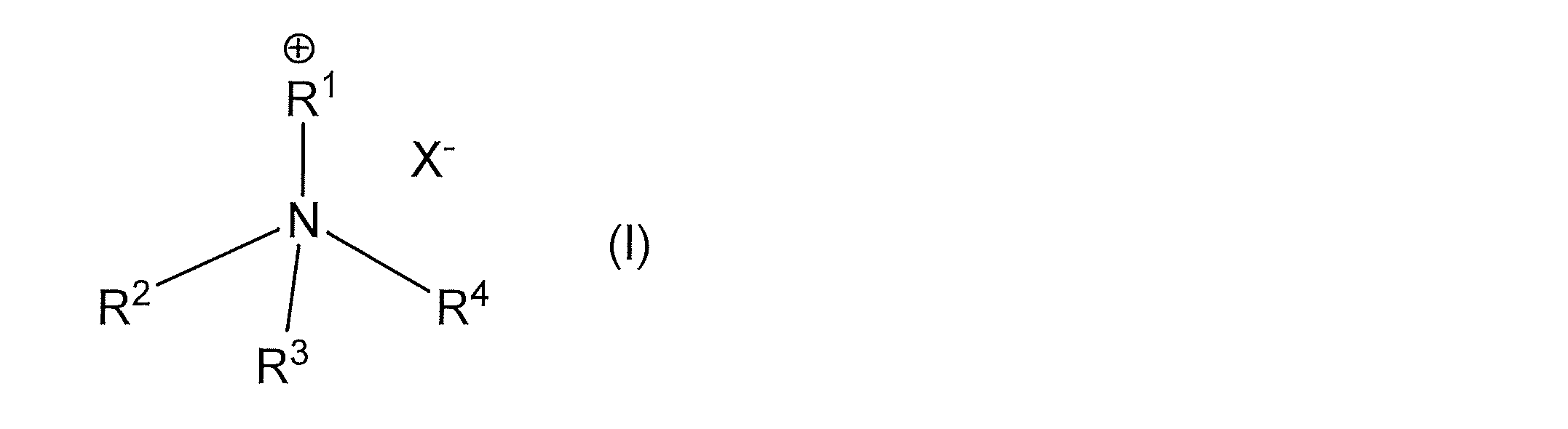
式(I)中、R1は、エステル基、アミド基及び/又はエーテル基を有していてもよい炭素数6以上22以下の炭化水素基であり、R2及びR3はそれぞれ独立に、エステル基、アミド基及び/又はエーテル基を有していてもよい炭素数6以上22以下の炭化水素基、又は、水酸基を有していてもよい炭素数1以上4以下のアルキル基であり、R4は、炭素数1以上6以下のアルキル基又は水素原子であり、X-は陰イオンである。
<15> 成分Aは、式(I)中のR1、R2及びR3のうちの少なくとも一つが炭素数6以上22以下のエステル基を有する化合物である、<14>に記載の金属分離剤キット。
<16> 成分Aは、式(I)中のR1、R2及びR3のうちの少なくとも二つが炭素数6以上22以下のエステル基を有する化合物である、<14>に記載の金属分離剤キット。
<17> 成分Aは、式(I)中のR1、R2及びR3が炭素数6以上22以下のエステル基を有する化合物である、<14>に記載の金属分離剤キット。
<18> 成分Aは、式(I)中のR4がメチル基である、<14>から<17>のいずれかに記載の金属分離剤キット。
<19> 前記金属分離剤における成分Aと成分Bの質量比A/Bが0.01以上50以下、又は、0.01以上30以下、又は、0.01以上20以下、又は、0.1以上10以下、又は、1.0以上5.0以下である、<14>から<18>のいずれかに記載の金属分離剤キット。
<20> 前記金属分離剤中の成分Aの含有量が1.0質量%以上50質量%以下、又は、1質量%以上50質量%以下、又は、5.0質量%以上40質量%以下、又は、5質量%以上40質量%以下、又は10質量%以上30質量%以下である、<14>から<19>のいずれかに記載の金属分離剤キット。
<21> 前記金属分離剤中の成分Bの含有量が、0.1質量%以上40質量%以下、又は、0.5質量%以上20質量%以下、又は、0.5質量%以上10質量%以下、又は、1.0質量%以上10質量%以下である、<14>から<20>のいずれかに記載の金属分離剤キット。
<22> コバルトを分離する又は分離及び回収するための金属分離剤キットである、<14>から<21>のいずれかに記載の金属分離剤キット。
<23> コバルト及びニッケルを含む水溶液からコバルトを分離する又は分離及び回収するための金属分離剤キットである、<14>から<22>のいずれかに記載の金属分離剤キット。
<24> 金属を含む水溶液から金属を分離及び回収する金属回収方法であって、
金属を含む水溶液と、<14>から<23>のいずれかに記載の金属分離剤キットを配合してなる剤とを接触させ、金属を水相から有機相に分離する工程と、前記有機相から金属を回収する工程と、を含む、金属回収方法。
<25> 金属を含む水溶液と、<14>から<23>のいずれかに記載の金属分離剤キットを配合してなる剤とを接触させ、金属を水相から有機相に分離する工程と、前記有機相から金属を回収する工程と、前記工程で回収した金属を用いて電池を製造する工程と、を含む、リチウムイオン電池の製造方法。
<26> 金属を含む水溶液から金属を分離する、又は分離及び回収するための金属分離剤であって、下記式(I)で表される塩(成分A)及びチオシアン酸(成分B)を含む金属分離剤。
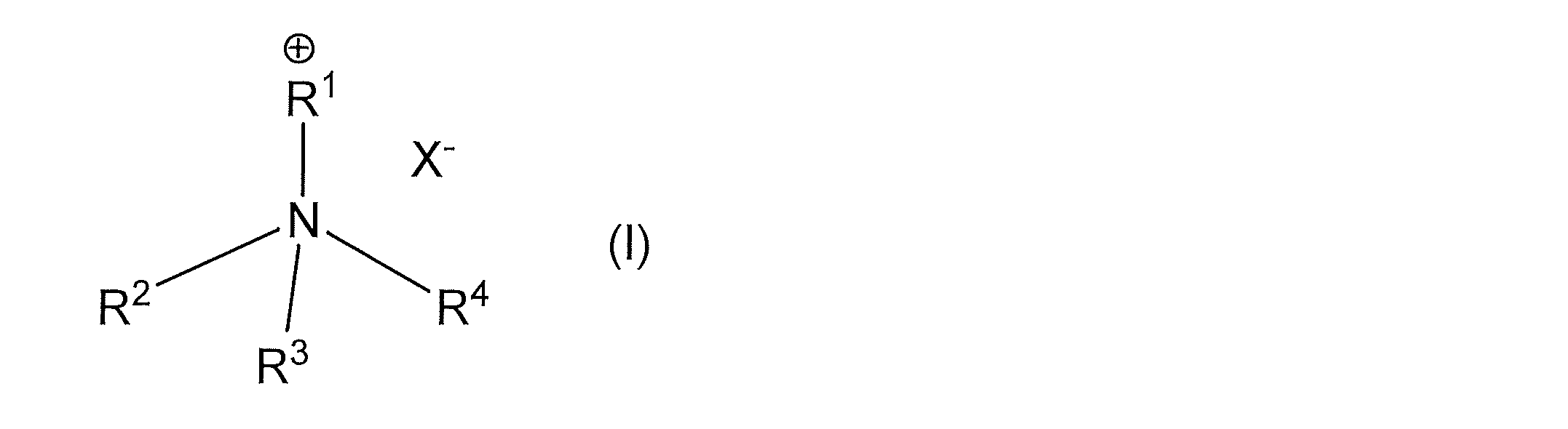
式(I)中、R1は、エステル基、アミド基及び/又はエーテル基を有するしていてもよい炭素数6以上22以下の炭化水素基であり、R2及びR3はそれぞれ独立に、エステル基、アミド基及び/又はエーテル基を有するしていてもよい炭素数6以上22以下の炭化水素基、又は、水酸基を有していてもよい炭素数1以上4以下のアルキル基であり、R4は、炭素数1以上6以下のアルキル基又は水素原子であり、X-は陰イオンである。
<27> 金属を含む水溶液から金属を分離する、又は分離及び回収するための金属分離剤であって、下記式(I)で表される塩(成分A)とチオシアン酸(成分B)とを配合してなる金属分離剤。
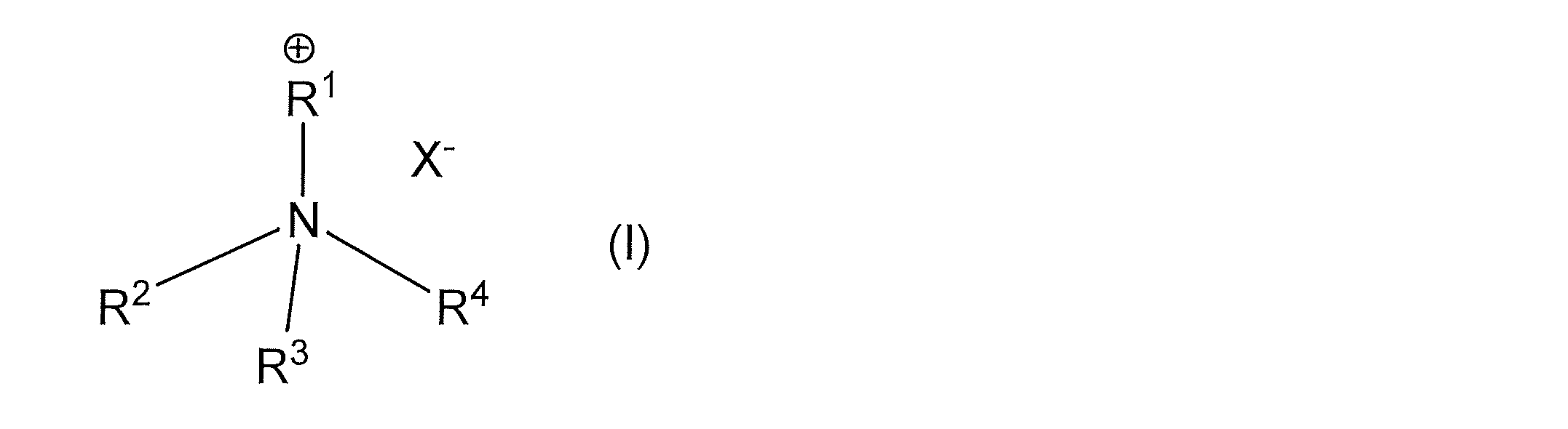
式(I)中、R1は、エステル基、アミド基及び/又はエーテル基を有していてもよい炭素数6以上22以下の炭化水素基であり、R2及びR3はそれぞれ独立に、エステル基、アミド基及び/又はエーテル基を有していてもよい炭素数6以上22以下の炭化水素基、又は、水酸基を有していてもよい炭素数1以上4以下のアルキル基であり、R4は、炭素数1以上6以下のアルキル基又は水素原子であり、X-は陰イオンである。
<28> 成分Aは、式(I)中のR1、R2及びR3のうちの少なくとも一つが炭素数6以上22以下のエステル基を有する化合物である、<26>又は<27>に記載の金属分離剤。
<29> 成分Aは、式(I)中のR1、R2及びR3のうちの少なくとも一つが炭素数6以上22以下のエステル基を有する化合物である、<26>から<28>のいずれかに記載の金属分離剤。
<30> 成分Aは、式(I)中のR1、R2及びR3のうちの少なくとも二つが炭素数6以上22以下のエステル基を有する化合物である、<26>から<28>のいずれかに記載の金属分離剤。
<31> 成分Aは、式(I)中のR1、R2及びR3が炭素数6以上22以下のエステル基を有する化合物である、<26>から<28>のいずれかに記載の金属分離剤。
<32> 成分Aは、式(I)中のR4がメチル基である、<26>から<31>のいずれかに記載の金属分離剤。
<33> 成分Aと成分Bとの質量比A/Bが0.01以上50以下である、<26>から<32>のいずれかに記載の金属分離剤。
<34> 成分Aと成分Bの質量比A/Bが0.01以上30以下、又は、0.01以上20以下、又は、0.1以上10以下、又は、1.0以上5.0以下である、<26>から<33>のいずれかに記載の金属分離剤。
<35> 成分Aとチオシアン酸塩(成分B)と水不溶性の有機溶媒(成分C)とを配合してなる、<26>から<34>のいずれかに金属分離剤。
<36> 成分Aの含有量が1質量%以上50質量%以下である、<26>から<35>のいずれかに記載の金属分離剤。
<37> 前記金属分離剤中の成分Aの含有量が、5.0質量%以上40質量%以下、又は、5質量%以上40質量%以下、又は10質量%以上30質量%以下である、<26>から<35>のいずれかに記載の金属分離剤。
<38> 成分Bの含有量が0.5質量%以上10質量%以下である、<26>から<37>のいずれかに記載の金属分離剤。
<39> 前記金属分離剤中の成分Bの含有量が、0.1質量%以上40質量%以下、又は、0.5質量%以上20質量%以下、又は、0.5質量%以上10質量%以下、又は、1.0質量%以上10質量%以下である、<26>から<37>のいずれかに記載の金属分離剤。
<40> コバルトを分離する又は分離及び回収するための金属分離剤である、<26>から<39>のいずれかに記載の金属分離剤。
<41> コバルト及びニッケルを含む水溶液からコバルトを分離する、又は分離及び回収するための金属分離剤である、<26>から<39>のいずれかに記載の金属分離剤。
<42> 金属を含む水溶液から金属を分離する金属分離方法であって、
金属を含む水溶液と、<26>から<41>のいずれかに記載の金属分離剤とを接触させ、金属を水相から有機相に分離する工程を含む、金属分離方法。
<43> 金属を含む水溶液から金属を分離及び回収する金属回収方法であって、
金属を含む水溶液と、<26>から<41>のいずれかに記載の金属分離剤とを接触させ、金属を水相から有機相に分離する工程と、
前記有機相から金属を回収する工程と、を含む、金属回収方法。
<1> 金属を含む水溶液から金属を分離する、又は分離及び回収するための金属分離方法であって、
金属を含む水溶液と、下記式(I)で表される塩(成分A)、チオシアン酸(成分B)及び水不溶性の有機溶媒(成分C)を含む金属分離剤とを接触させ、金属を水相から有機相に分離する工程を含む、金属分離方法。
<2> 成分Aは、式(I)中のR1、R2及びR3のうちの少なくとも一つが炭素数6以上22以下のエステル基を有する化合物である、<1>に記載の金属分離方法。
<3> 成分Aは、式(I)中のR1、R2及びR3のうちの少なくとも二つが炭素数6以上22以下のエステル基を有する化合物である、<1>に記載の金属分離方法。
<4> 成分Aは、式(I)中のR1、R2及びR3が炭素数6以上22以下のエステル基を有する化合物である、<1>に記載の金属分離方法。
<5> 成分Aは、式(I)中のR4がメチル基である、<1>から<4>のいずれかに記載の金属分離方法。
<6> 前記金属分離剤における成分Aと成分Bの質量比A/Bが0.01以上50以下である、<1>から<5>のいずれかに記載の金属分離方法。
<7> 前記金属分離剤における成分Aと成分Bの質量比A/Bが0.01以上30以下、又は、0.01以上20以下、又は、0.1以上10以下、又は、1.0以上5.0以下である、<1>から<5>のいずれかに記載の金属分離方法。
<8> 前記金属分離剤中の成分Aの含有量が1質量%以上50質量%以下である、<1>から<7>のいずれかに記載の金属分離方法。
<9> 前記金属分離剤中の成分Aの含有量が、5.0質量%以上40質量%以下、又は、5質量%以上40質量%以下、又は10質量%以上30質量%以下である、<1>から<7>のいずれかに記載の金属分離方法。
<10> 前記金属分離剤中の成分Bの含有量が0.5質量%以上10質量%以下である、<1>から<9>のいずれかに記載の金属分離方法。
<11> 前記金属分離剤中の成分Bの含有量が、0.1質量%以上40質量%以下、又は、0.5質量%以上20質量%以下、又は、0.5質量%以上10質量%以下、又は、1.0質量%以上10質量%以下である、<1>から<9>のいずれかに記載の金属分離方法。
<12> コバルトを分離する、又は分離及び回収するための金属分離方法である、<1>から<11>のいずれかに記載の金属分離方法。
<13> コバルト及びニッケルを含む水溶液からコバルトを分離する、又は分離及び回収するための金属分離方法である、<1>から<12>のいずれかに金属分離方法。
<14> 金属を含む水溶液から金属を分離する、又は分離及び回収するための金属分離剤キットであって、下記式(I)で表される塩(成分A)を含む第1剤と、チオシアン酸(成分B)を含む第2剤と、を含む金属分離剤キット。
<15> 成分Aは、式(I)中のR1、R2及びR3のうちの少なくとも一つが炭素数6以上22以下のエステル基を有する化合物である、<14>に記載の金属分離剤キット。
<16> 成分Aは、式(I)中のR1、R2及びR3のうちの少なくとも二つが炭素数6以上22以下のエステル基を有する化合物である、<14>に記載の金属分離剤キット。
<17> 成分Aは、式(I)中のR1、R2及びR3が炭素数6以上22以下のエステル基を有する化合物である、<14>に記載の金属分離剤キット。
<18> 成分Aは、式(I)中のR4がメチル基である、<14>から<17>のいずれかに記載の金属分離剤キット。
<19> 前記金属分離剤における成分Aと成分Bの質量比A/Bが0.01以上50以下、又は、0.01以上30以下、又は、0.01以上20以下、又は、0.1以上10以下、又は、1.0以上5.0以下である、<14>から<18>のいずれかに記載の金属分離剤キット。
<20> 前記金属分離剤中の成分Aの含有量が1.0質量%以上50質量%以下、又は、1質量%以上50質量%以下、又は、5.0質量%以上40質量%以下、又は、5質量%以上40質量%以下、又は10質量%以上30質量%以下である、<14>から<19>のいずれかに記載の金属分離剤キット。
<21> 前記金属分離剤中の成分Bの含有量が、0.1質量%以上40質量%以下、又は、0.5質量%以上20質量%以下、又は、0.5質量%以上10質量%以下、又は、1.0質量%以上10質量%以下である、<14>から<20>のいずれかに記載の金属分離剤キット。
<22> コバルトを分離する又は分離及び回収するための金属分離剤キットである、<14>から<21>のいずれかに記載の金属分離剤キット。
<23> コバルト及びニッケルを含む水溶液からコバルトを分離する又は分離及び回収するための金属分離剤キットである、<14>から<22>のいずれかに記載の金属分離剤キット。
<24> 金属を含む水溶液から金属を分離及び回収する金属回収方法であって、
金属を含む水溶液と、<14>から<23>のいずれかに記載の金属分離剤キットを配合してなる剤とを接触させ、金属を水相から有機相に分離する工程と、前記有機相から金属を回収する工程と、を含む、金属回収方法。
<25> 金属を含む水溶液と、<14>から<23>のいずれかに記載の金属分離剤キットを配合してなる剤とを接触させ、金属を水相から有機相に分離する工程と、前記有機相から金属を回収する工程と、前記工程で回収した金属を用いて電池を製造する工程と、を含む、リチウムイオン電池の製造方法。
<26> 金属を含む水溶液から金属を分離する、又は分離及び回収するための金属分離剤であって、下記式(I)で表される塩(成分A)及びチオシアン酸(成分B)を含む金属分離剤。
<27> 金属を含む水溶液から金属を分離する、又は分離及び回収するための金属分離剤であって、下記式(I)で表される塩(成分A)とチオシアン酸(成分B)とを配合してなる金属分離剤。
<28> 成分Aは、式(I)中のR1、R2及びR3のうちの少なくとも一つが炭素数6以上22以下のエステル基を有する化合物である、<26>又は<27>に記載の金属分離剤。
<29> 成分Aは、式(I)中のR1、R2及びR3のうちの少なくとも一つが炭素数6以上22以下のエステル基を有する化合物である、<26>から<28>のいずれかに記載の金属分離剤。
<30> 成分Aは、式(I)中のR1、R2及びR3のうちの少なくとも二つが炭素数6以上22以下のエステル基を有する化合物である、<26>から<28>のいずれかに記載の金属分離剤。
<31> 成分Aは、式(I)中のR1、R2及びR3が炭素数6以上22以下のエステル基を有する化合物である、<26>から<28>のいずれかに記載の金属分離剤。
<32> 成分Aは、式(I)中のR4がメチル基である、<26>から<31>のいずれかに記載の金属分離剤。
<33> 成分Aと成分Bとの質量比A/Bが0.01以上50以下である、<26>から<32>のいずれかに記載の金属分離剤。
<34> 成分Aと成分Bの質量比A/Bが0.01以上30以下、又は、0.01以上20以下、又は、0.1以上10以下、又は、1.0以上5.0以下である、<26>から<33>のいずれかに記載の金属分離剤。
<35> 成分Aとチオシアン酸塩(成分B)と水不溶性の有機溶媒(成分C)とを配合してなる、<26>から<34>のいずれかに金属分離剤。
<36> 成分Aの含有量が1質量%以上50質量%以下である、<26>から<35>のいずれかに記載の金属分離剤。
<37> 前記金属分離剤中の成分Aの含有量が、5.0質量%以上40質量%以下、又は、5質量%以上40質量%以下、又は10質量%以上30質量%以下である、<26>から<35>のいずれかに記載の金属分離剤。
<38> 成分Bの含有量が0.5質量%以上10質量%以下である、<26>から<37>のいずれかに記載の金属分離剤。
<39> 前記金属分離剤中の成分Bの含有量が、0.1質量%以上40質量%以下、又は、0.5質量%以上20質量%以下、又は、0.5質量%以上10質量%以下、又は、1.0質量%以上10質量%以下である、<26>から<37>のいずれかに記載の金属分離剤。
<40> コバルトを分離する又は分離及び回収するための金属分離剤である、<26>から<39>のいずれかに記載の金属分離剤。
<41> コバルト及びニッケルを含む水溶液からコバルトを分離する、又は分離及び回収するための金属分離剤である、<26>から<39>のいずれかに記載の金属分離剤。
<42> 金属を含む水溶液から金属を分離する金属分離方法であって、
金属を含む水溶液と、<26>から<41>のいずれかに記載の金属分離剤とを接触させ、金属を水相から有機相に分離する工程を含む、金属分離方法。
<43> 金属を含む水溶液から金属を分離及び回収する金属回収方法であって、
金属を含む水溶液と、<26>から<41>のいずれかに記載の金属分離剤とを接触させ、金属を水相から有機相に分離する工程と、
前記有機相から金属を回収する工程と、を含む、金属回収方法。
以下に、実施例により本開示を具体的に説明するが、本開示はこれらの実施例によって何ら限定されるものではない。
1.金属分離剤I(有機相)の調製
第4級アンモニウム塩(表1に示す成分A)と有機溶媒(表1に示す成分C)とを混和比0~30vol%で混和させた。さらに、チオシアン酸アンモニウム(表1に示す成分B)を前述の混和物に0.5mol/Lの割合で添加し、金属分離剤I(実施例1~9、比較例1~2)を調製した。本開示の金属分離剤中の各成分の配合量(質量%)を表1に示した。
第4級アンモニウム塩(表1に示す成分A)と有機溶媒(表1に示す成分C)とを混和比0~30vol%で混和させた。さらに、チオシアン酸アンモニウム(表1に示す成分B)を前述の混和物に0.5mol/Lの割合で添加し、金属分離剤I(実施例1~9、比較例1~2)を調製した。本開示の金属分離剤中の各成分の配合量(質量%)を表1に示した。
金属分離剤の成分として下記のものを使用した。
(成分A)
<トリエステルメチルアンモニウムメチル硫酸塩の製造例>
トリエステルメチルアンモニウムメチル硫酸塩(化合物名:メチルトリス-[2-エチルへキシル酸エチル]-アンモニウムメチル硫酸塩)[式(I)中、R1、R2、R3が2-エチルへキシル酸エチルであり、R4がメチルであり、Xがメチル硫酸である化合物]は下記のようにして得た。
冷却管を接続した4つ口フラスコに2-エチルへキシル酸、トリエタノールアミン、触媒として次亜リン酸、抗酸化剤としてブチルヒドロキシトルエンを仕込み、窒素置換後170℃まで1.5時間かけて昇温後、2時間攪拌した。その後、1.5時間かけて13.3kPaまで減圧し、7時間熟成を行った後、冷却してエステルアミンを得た。2Lのセパラブルフラスコに得られたエステルアミンを仕込み、窒素置換後、65℃まで昇温させながら、硫酸ジメチルを1時間かけて滴下し、65℃にて4時間熟成を行った。その後、室温まで冷却しトリエステルメチルアンモニウムメチル硫酸塩を得た。
<ジエステルメチルアンモニウムメチル硫酸塩の製造例>
ジエステルメチルアンモニウムメチル硫酸塩(化合物名:(2-ヒドロキシエチル)-メチルビス-[2-オレイン酸エチル]-アンモニウムメチル硫酸塩)[式(I)中のR1、R2がオレイン酸エチルであり、R3がヒドロキシエチルであり、R4がメチルであり、Xがメチル硫酸である化合物]は下記のようにして得た。
冷却管を接続した4つ口フラスコにオレイン酸、トリエタノールアミン、触媒として次亜リン酸、抗酸化剤としてブチルヒドロキシトルエンを仕込み、窒素置換後170℃まで1.5時間かけて昇温後、2時間攪拌した。その後、1.5時間かけて13.3kPaまで減圧し、7時間熟成を行った後、冷却してエステルアミンを得た。セパラブルフラスコに得られたエステルアミンを仕込み、窒素置換後、65℃まで昇温させながら、硫酸ジメチルを1時間かけて滴下し、65℃にて4時間熟成を行った。その後、室温まで冷却しジエステルメチルアンモニウムメチル硫酸塩を得た。
<トリエーテルへキシルアンモニウム塩酸塩の製造例>
トリエーテルへキシルアンモニウム塩酸塩(化合物名:トリス[2-ヘキソキシエチル]-へキシル-アンモニウム塩酸塩)[式(I)中のR1、R2、R3がヘキソキシエチルであり、R4がヘキシルであり、Xがクロリドである化合物]は下記のようにして得た。
4つ口フラスコにトリエタノールアミンとヘキサノールと水酸化ナトリウムを仕込み、窒素置換後に160℃まで昇温する。昇温後は1.3kPa以下に減圧し24時間攪拌を行う。その後室温まで冷却し、水を添加して反応を終了させてトリエーテルアミンを得た。セパラブルフラスコに得られたトリエーテルアミンを仕込み、窒素置換後、65℃まで昇温させながら、ヘキシルクロリドを1時間かけて滴下し、65℃にて4時間熟成を行った。その後、室温まで冷却しトリエーテルへキシルアンモニウム塩酸塩を得た。
上記成分Aの製造に用いた合成原料を下記に示す。
<合成原料>
トリエタノールアミン[東京化成工業株式会社製]
2―エチルへキシル酸[東京化成工業株式会社製]
オレイン酸[東京化成工業株式会社製]
次亜リン酸[シグマアルドリッチ製]
BHT[東京化成工業株式会社製]
硫酸ジメチル[東京化成工業株式会社製]
ヘキサノール[東京化成工業株式会社製]
水酸化ナトリウム[東京化成工業株式会社製]
ヘキシルクロリド[東京化成工業株式会社製]
<トリオクチルメチルアンモニウムメチル硫酸塩>
トリオクチルメチルアンモニウム塩酸塩をメチル硫酸水溶液で洗浄し、メチル硫酸塩に置換した化合物
(成分B)
チオシアン酸アンモニウム[東京化成工業株式会社製]
(成分C)
ケロシン[東京化成工業株式会社製]
(成分A)
<トリエステルメチルアンモニウムメチル硫酸塩の製造例>
トリエステルメチルアンモニウムメチル硫酸塩(化合物名:メチルトリス-[2-エチルへキシル酸エチル]-アンモニウムメチル硫酸塩)[式(I)中、R1、R2、R3が2-エチルへキシル酸エチルであり、R4がメチルであり、Xがメチル硫酸である化合物]は下記のようにして得た。
冷却管を接続した4つ口フラスコに2-エチルへキシル酸、トリエタノールアミン、触媒として次亜リン酸、抗酸化剤としてブチルヒドロキシトルエンを仕込み、窒素置換後170℃まで1.5時間かけて昇温後、2時間攪拌した。その後、1.5時間かけて13.3kPaまで減圧し、7時間熟成を行った後、冷却してエステルアミンを得た。2Lのセパラブルフラスコに得られたエステルアミンを仕込み、窒素置換後、65℃まで昇温させながら、硫酸ジメチルを1時間かけて滴下し、65℃にて4時間熟成を行った。その後、室温まで冷却しトリエステルメチルアンモニウムメチル硫酸塩を得た。
<ジエステルメチルアンモニウムメチル硫酸塩の製造例>
ジエステルメチルアンモニウムメチル硫酸塩(化合物名:(2-ヒドロキシエチル)-メチルビス-[2-オレイン酸エチル]-アンモニウムメチル硫酸塩)[式(I)中のR1、R2がオレイン酸エチルであり、R3がヒドロキシエチルであり、R4がメチルであり、Xがメチル硫酸である化合物]は下記のようにして得た。
冷却管を接続した4つ口フラスコにオレイン酸、トリエタノールアミン、触媒として次亜リン酸、抗酸化剤としてブチルヒドロキシトルエンを仕込み、窒素置換後170℃まで1.5時間かけて昇温後、2時間攪拌した。その後、1.5時間かけて13.3kPaまで減圧し、7時間熟成を行った後、冷却してエステルアミンを得た。セパラブルフラスコに得られたエステルアミンを仕込み、窒素置換後、65℃まで昇温させながら、硫酸ジメチルを1時間かけて滴下し、65℃にて4時間熟成を行った。その後、室温まで冷却しジエステルメチルアンモニウムメチル硫酸塩を得た。
<トリエーテルへキシルアンモニウム塩酸塩の製造例>
トリエーテルへキシルアンモニウム塩酸塩(化合物名:トリス[2-ヘキソキシエチル]-へキシル-アンモニウム塩酸塩)[式(I)中のR1、R2、R3がヘキソキシエチルであり、R4がヘキシルであり、Xがクロリドである化合物]は下記のようにして得た。
4つ口フラスコにトリエタノールアミンとヘキサノールと水酸化ナトリウムを仕込み、窒素置換後に160℃まで昇温する。昇温後は1.3kPa以下に減圧し24時間攪拌を行う。その後室温まで冷却し、水を添加して反応を終了させてトリエーテルアミンを得た。セパラブルフラスコに得られたトリエーテルアミンを仕込み、窒素置換後、65℃まで昇温させながら、ヘキシルクロリドを1時間かけて滴下し、65℃にて4時間熟成を行った。その後、室温まで冷却しトリエーテルへキシルアンモニウム塩酸塩を得た。
上記成分Aの製造に用いた合成原料を下記に示す。
<合成原料>
トリエタノールアミン[東京化成工業株式会社製]
2―エチルへキシル酸[東京化成工業株式会社製]
オレイン酸[東京化成工業株式会社製]
次亜リン酸[シグマアルドリッチ製]
BHT[東京化成工業株式会社製]
硫酸ジメチル[東京化成工業株式会社製]
ヘキサノール[東京化成工業株式会社製]
水酸化ナトリウム[東京化成工業株式会社製]
ヘキシルクロリド[東京化成工業株式会社製]
<トリオクチルメチルアンモニウムメチル硫酸塩>
トリオクチルメチルアンモニウム塩酸塩をメチル硫酸水溶液で洗浄し、メチル硫酸塩に置換した化合物
(成分B)
チオシアン酸アンモニウム[東京化成工業株式会社製]
(成分C)
ケロシン[東京化成工業株式会社製]
2.水溶液II(水相、金属を含む水溶液)の調製
1mol/Lの硫酸に硫酸Co及び硫酸Niを溶解し、Co及びNiを含む水溶液II(Co濃度:3.0g/L、Ni濃度:3.0g/L)を作製した。水溶液IIのpHは表1に示すとおりである。水溶液II中の各金属の含有量は、Coが0.3質量%、Niが0.3質量%である。
1mol/Lの硫酸に硫酸Co及び硫酸Niを溶解し、Co及びNiを含む水溶液II(Co濃度:3.0g/L、Ni濃度:3.0g/L)を作製した。水溶液IIのpHは表1に示すとおりである。水溶液II中の各金属の含有量は、Coが0.3質量%、Niが0.3質量%である。
[pH測定方法]
水溶液IIのpHは、25℃におけるpH値であり、pHメータ(東亜電波工業株式会社、HM-30G)を用いて測定した値であり、電極の研磨液組成物への浸漬後1分後の数値である。結果を表1に示した。
水溶液IIのpHは、25℃におけるpH値であり、pHメータ(東亜電波工業株式会社、HM-30G)を用いて測定した値であり、電極の研磨液組成物への浸漬後1分後の数値である。結果を表1に示した。
3.金属分離剤の評価(実施例1~9、比較例1~2)
金属分離剤I(有機相)と、水溶液II(水相)とを接触させ、Coの抽出能とCo-Ni分離能を評価した。具体的な手順は以下の通りである。
[金属抽出方法]
金属分離剤I(有機相)と水溶液II(水相)とを分液ロートに入れ、20℃で10分間振盪することにより接触させ、金属を金属分離剤I(有機相)に移行(分配)させて金属の抽出(分離)を行った。なお、接触させる水溶液II(水相)と金属分離剤I(有機相)との体積比(水相の体積/有機相の体積)は、1.0であった。水溶液IIと接触させる金属分離剤I中の各成分の配合量は、水溶液II中のCo濃度に対して、成分Aが1500mol%、成分Bが2500mol%、成分Cが25000mol%であった。
抽出後の金属分離剤I(有機相)及び水溶液II(水相)中のCo濃度とNi濃度をICP-OESにて定量分析を行い、Co抽出率とCo-Ni間の分離能を算出した。結果を表1に示した。Co抽出率とCo-Ni分離能を以下のように定義する。
[Co抽出率]
Co抽出率は、抽出後の金属分離剤I中のCo濃度(g/L)を初期(抽出前)の水溶液I中のCo濃度(g/L)で除したものである。
Co抽出率=(抽出後の金属分離剤I中のCo濃度)/(抽出前の水溶液I中のCo濃度)
なお、ICP-OESにて検出限界以下の場合は表1において「検出限界以下」と示す。
[Co-Ni分離能]
Co―Ni分離能は、抽出後の金属分離剤I中のCo濃度(g/L)とNi濃度(g/L)との比Co/Niを、抽出後の水溶液II中のCo濃度(g/L)とNi濃度(g/L)との比Co/Niで除したものである。
Co-Ni分離能=(抽出後の金属分離剤I中のCo/Ni濃度比)/(抽出後の水溶液II中のCo/Ni濃度比)
なお、実施例2、5についてはCo―Ni分離能を算出していないため、表1において「-」と示す。
金属分離剤I(有機相)と、水溶液II(水相)とを接触させ、Coの抽出能とCo-Ni分離能を評価した。具体的な手順は以下の通りである。
[金属抽出方法]
金属分離剤I(有機相)と水溶液II(水相)とを分液ロートに入れ、20℃で10分間振盪することにより接触させ、金属を金属分離剤I(有機相)に移行(分配)させて金属の抽出(分離)を行った。なお、接触させる水溶液II(水相)と金属分離剤I(有機相)との体積比(水相の体積/有機相の体積)は、1.0であった。水溶液IIと接触させる金属分離剤I中の各成分の配合量は、水溶液II中のCo濃度に対して、成分Aが1500mol%、成分Bが2500mol%、成分Cが25000mol%であった。
抽出後の金属分離剤I(有機相)及び水溶液II(水相)中のCo濃度とNi濃度をICP-OESにて定量分析を行い、Co抽出率とCo-Ni間の分離能を算出した。結果を表1に示した。Co抽出率とCo-Ni分離能を以下のように定義する。
[Co抽出率]
Co抽出率は、抽出後の金属分離剤I中のCo濃度(g/L)を初期(抽出前)の水溶液I中のCo濃度(g/L)で除したものである。
Co抽出率=(抽出後の金属分離剤I中のCo濃度)/(抽出前の水溶液I中のCo濃度)
なお、ICP-OESにて検出限界以下の場合は表1において「検出限界以下」と示す。
[Co-Ni分離能]
Co―Ni分離能は、抽出後の金属分離剤I中のCo濃度(g/L)とNi濃度(g/L)との比Co/Niを、抽出後の水溶液II中のCo濃度(g/L)とNi濃度(g/L)との比Co/Niで除したものである。
Co-Ni分離能=(抽出後の金属分離剤I中のCo/Ni濃度比)/(抽出後の水溶液II中のCo/Ni濃度比)
なお、実施例2、5についてはCo―Ni分離能を算出していないため、表1において「-」と示す。

表1に示す通り、式(I)で表される第4級アンモニウム塩(成分A)及びチオシアン酸アンモニウム(成分B)を用いた実施例1~9は、いずれもCo抽出率が94%以上であった。また、実施例1、3~4、6~9は、成分Bを用いない比較例1~2よりも、Co-Ni分離能に優れていた。また、実施例1、3、4のCo-Ni分離能は、実施例9よりも優れていた。このように、実施例1~9の金属分離剤は、高い分離回収性能を有することが確認された。特に、成分Aとしてトリエステルメチルアンモニウムメチル硫酸塩を用いた実施例1のCo抽出率は99%以上、分離能は1300以上であり、より高い分離回収性能を有することがわかった。
本開示の金属分離剤は、レアメタルや貴金属の回収剤として利用できる。
Claims (25)
- 金属を含む水溶液から金属を分離する、又は分離及び回収するための金属分離方法であって、
金属を含む水溶液と、下記式(I)で表される塩(成分A)、チオシアン酸(成分B)及び水不溶性の有機溶媒(成分C)を含む金属分離剤とを接触させ、金属を水相から有機相に分離する工程を含む、金属分離方法。

- 成分Aは、式(I)中のR1、R2及びR3のうちの少なくとも一つが炭素数6以上22以下のエステル基を有する化合物である、請求項1に記載の金属分離方法。
- 成分Aは、式(I)中のR1、R2及びR3のうちの少なくとも二つが炭素数6以上22以下のエステル基を有する化合物である、請求項1又は2に記載の金属分離方法。
- 成分Aは、式(I)中のR1、R2及びR3が炭素数6以上22以下のエステル基を有する化合物である、請求項1から3のいずれかに記載の金属分離方法。
- 前記金属分離剤における成分Aと成分Bの質量比A/Bが0.01以上50以下である、請求項1から4のいずれかに記載の金属分離方法。
- 前記金属分離剤中の成分Aの含有量が1質量%以上50質量%以下である、請求項1から5のいずれかに記載の金属分離方法。
- 前記金属分離剤中の成分Bの含有量が0.5質量%以上10質量%以下である、請求項1から6のいずれかに記載の金属分離方法。
- コバルトを分離する又は分離及び回収するための金属分離方法である、請求項1から7のいずれかに記載の金属分離方法。
- コバルト及びニッケルを含む水溶液からコバルトを分離する又は分離及び回収するための金属分離方法である、請求項1から8のいずれかに記載の金属分離方法。
- 金属を含む水溶液から金属を分離する、又は分離及び回収するための金属分離剤キットであって、下記式(I)で表される塩(成分A)を含む第1剤と、チオシアン酸(成分B)を含む第2剤と、を含む金属分離剤キット。
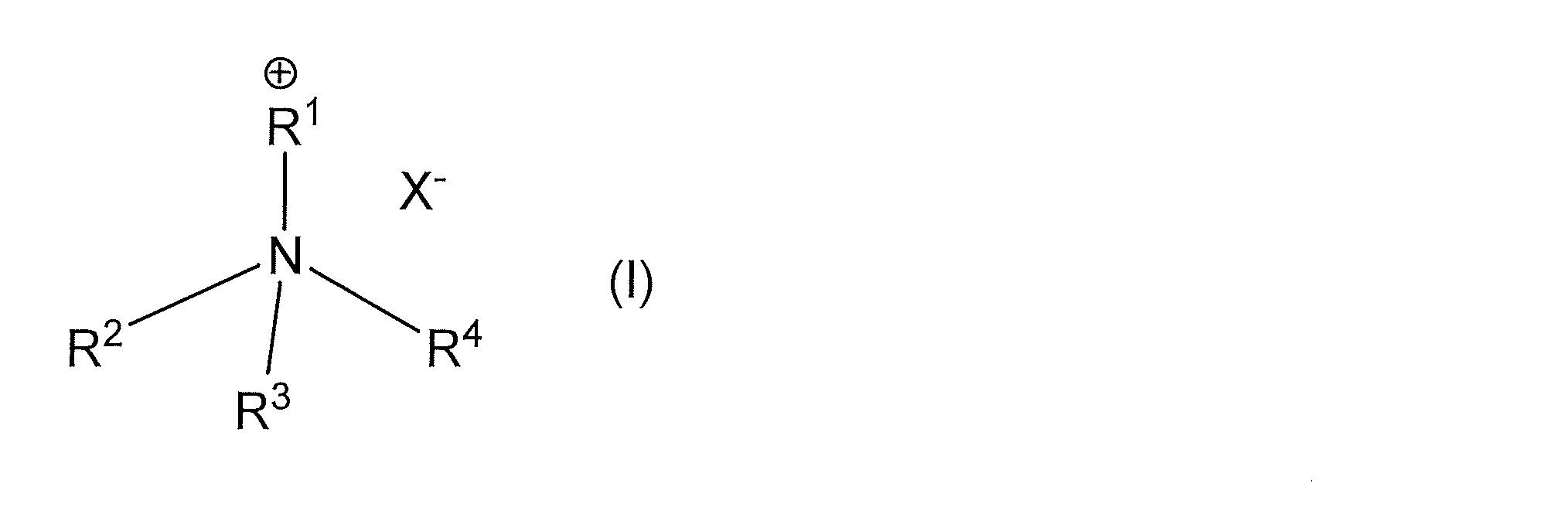
- コバルトを分離する又は分離及び回収するための金属分離剤キットである、請求項10記載の金属分離剤キット。
- コバルト及びニッケルを含む水溶液からコバルトを分離する又は分離及び回収するための金属分離剤キットである、請求項10又は11に記載の金属分離剤キット。
- 金属を含む水溶液から金属を分離及び回収する金属回収方法であって、
金属を含む水溶液と、請求項10から12のいずれかに記載の金属分離剤キットを配合してなる剤とを接触させ、金属を水相から有機相に分離する工程と、前記有機相から金属を回収する工程と、を含む、金属回収方法。 - 金属を含む水溶液と、請求項10から12のいずれかに記載の金属分離剤キットを配合してなる剤とを接触させ、金属を水相から有機相に分離する工程と、前記有機相から金属を回収する工程と、前記工程で回収した金属を用いて電池を製造する工程と、を含む、リチウムイオン電池の製造方法。
- 金属を含む水溶液から金属を分離する、又は分離及び回収するための金属分離剤であって、下記式(I)で表される塩(成分A)及びチオシアン酸(成分B)を含む金属分離剤。
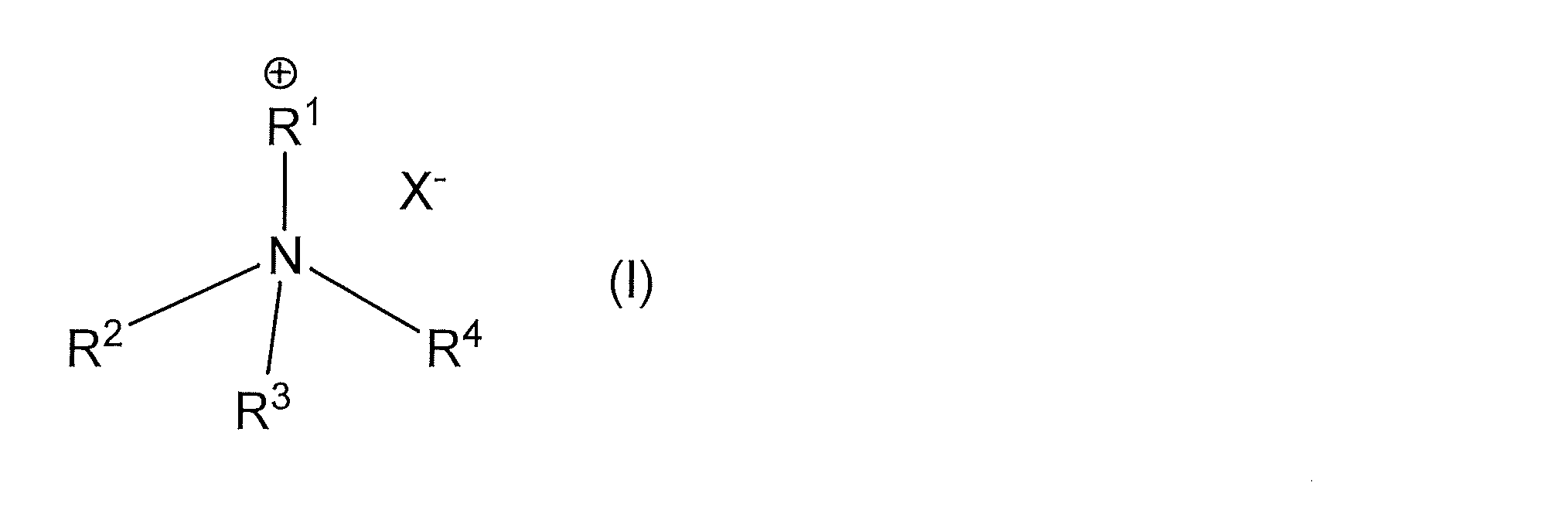
- 金属を含む水溶液から金属を分離する、又は分離及び回収するための金属分離剤であって、下記式(I)で表される塩(成分A)とチオシアン酸(成分B)とを配合してなる金属分離剤。
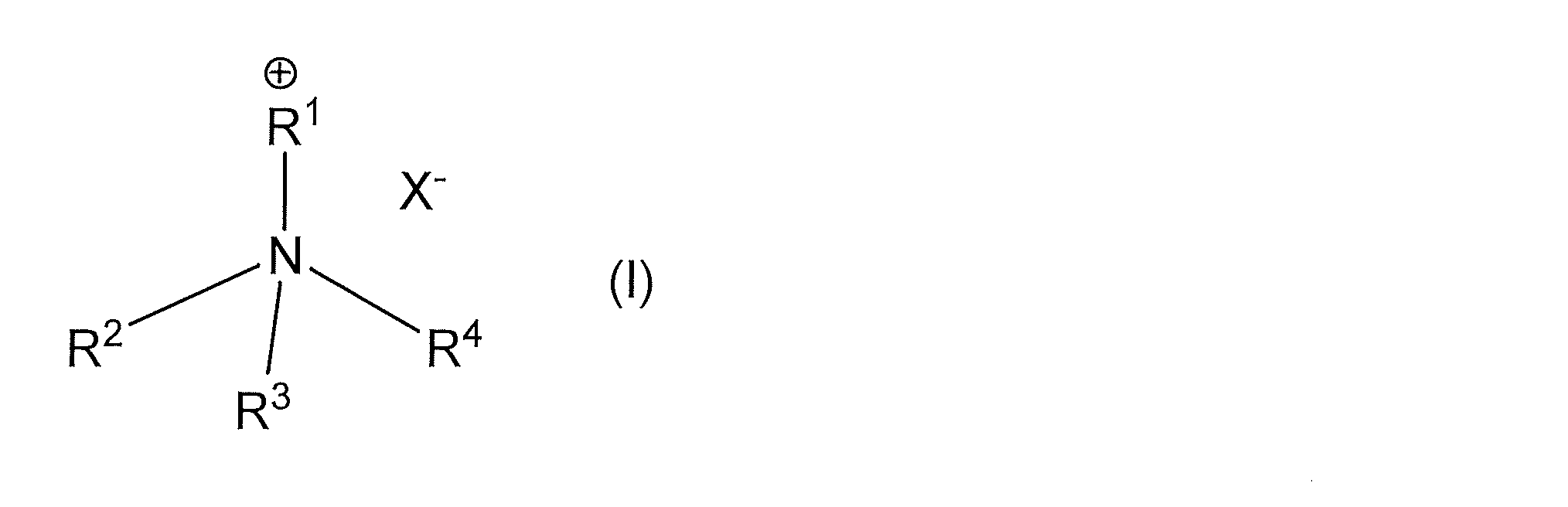
- 成分Aは、式(I)中のR1、R2及びR3のうちの少なくとも一つが炭素数6以上22以下のエステル基を有する化合物である、請求項15又は16に記載の金属分離剤。
- 成分Aと成分Bとの質量比A/Bが0.01以上50以下である、請求項15から17のいずれかに記載の金属分離剤。
- 成分Aとチオシアン酸塩(成分B)と水不溶性の有機溶媒(成分C)とを配合してなる、請求項15から18のいずれかに記載の金属分離剤。
- 成分Aの含有量が1質量%以上50質量%以下である、請求項15から19のいずれかに記載の金属分離剤。
- 成分Bの含有量が0.5質量%以上10質量%以下である、請求項15から20のいずれかに記載の金属分離剤。
- コバルトを分離する又は分離及び回収するための金属分離剤である、請求項15から21のいずれかに記載の金属分離剤。
- コバルト及びニッケルを含む水溶液からコバルトを分離する、又は分離及び回収するための金属分離剤である、請求項15から22のいずれかに記載の金属分離剤。
- 金属を含む水溶液から金属を分離する金属分離方法であって、
金属を含む水溶液と、請求項15から23のいずれかに記載の金属分離剤とを接触させ、金属を水相から有機相に分離する工程を含む、金属分離方法。 - 金属を含む水溶液から金属を分離及び回収する金属回収方法であって、
金属を含む水溶液と、請求項15から23のいずれかに記載の金属分離剤とを接触させ、金属を水相から有機相に分離する工程と、
前記有機相から金属を回収する工程と、を含む、金属回収方法。
Priority Applications (1)
| Application Number | Priority Date | Filing Date | Title |
|---|---|---|---|
| CN202480031224.0A CN121079441A (zh) | 2023-06-13 | 2024-06-13 | 金属分离方法 |
Applications Claiming Priority (4)
| Application Number | Priority Date | Filing Date | Title |
|---|---|---|---|
| JP2023-097074 | 2023-06-13 | ||
| JP2023097074 | 2023-06-13 | ||
| JP2024-095283 | 2024-06-12 | ||
| JP2024095283A JP7720957B2 (ja) | 2023-06-13 | 2024-06-12 | 金属分離方法 |
Publications (1)
| Publication Number | Publication Date |
|---|---|
| WO2024257828A1 true WO2024257828A1 (ja) | 2024-12-19 |
Family
ID=93852185
Family Applications (1)
| Application Number | Title | Priority Date | Filing Date |
|---|---|---|---|
| PCT/JP2024/021501 Ceased WO2024257828A1 (ja) | 2023-06-13 | 2024-06-13 | 金属分離方法 |
Country Status (2)
| Country | Link |
|---|---|
| CN (1) | CN121079441A (ja) |
| WO (1) | WO2024257828A1 (ja) |
Citations (4)
| Publication number | Priority date | Publication date | Assignee | Title |
|---|---|---|---|---|
| WO2015106324A1 (en) * | 2014-01-17 | 2015-07-23 | Katholieke Universiteit Leuven Ku Leuven Research & Development | Process for extraction and separation of rare earths by split-anion extraction with ionic liquids |
| CN109468472A (zh) * | 2018-12-18 | 2019-03-15 | 江苏理工学院 | 一种从含钴和镍的材料中分离钴的方法 |
| US20220212945A1 (en) * | 2019-05-17 | 2022-07-07 | The Curators Of The University Of Missouri | Task-specific ionic liquids for selective separation and recovery of rare earth elements |
| CN115449631A (zh) * | 2022-08-23 | 2022-12-09 | 成都先进金属材料产业技术研究院股份有限公司 | 一种基于微乳液从硫酸型浸出液分离钴、镍的方法 |
-
2024
- 2024-06-13 CN CN202480031224.0A patent/CN121079441A/zh active Pending
- 2024-06-13 WO PCT/JP2024/021501 patent/WO2024257828A1/ja not_active Ceased
Patent Citations (4)
| Publication number | Priority date | Publication date | Assignee | Title |
|---|---|---|---|---|
| WO2015106324A1 (en) * | 2014-01-17 | 2015-07-23 | Katholieke Universiteit Leuven Ku Leuven Research & Development | Process for extraction and separation of rare earths by split-anion extraction with ionic liquids |
| CN109468472A (zh) * | 2018-12-18 | 2019-03-15 | 江苏理工学院 | 一种从含钴和镍的材料中分离钴的方法 |
| US20220212945A1 (en) * | 2019-05-17 | 2022-07-07 | The Curators Of The University Of Missouri | Task-specific ionic liquids for selective separation and recovery of rare earth elements |
| CN115449631A (zh) * | 2022-08-23 | 2022-12-09 | 成都先进金属材料产业技术研究院股份有限公司 | 一种基于微乳液从硫酸型浸出液分离钴、镍的方法 |
Also Published As
| Publication number | Publication date |
|---|---|
| CN121079441A (zh) | 2025-12-05 |
Similar Documents
| Publication | Publication Date | Title |
|---|---|---|
| JP5499353B2 (ja) | 希土類元素の抽出・分離方法 | |
| JP5004106B2 (ja) | ニッケルとリチウムの分離回収方法 | |
| JP6556685B2 (ja) | 白金抽出剤、白金の抽出方法、及び白金の回収方法 | |
| Shuping et al. | Selective leaching and recovery of rare earth from NdFeB waste through a superior selective and stable deep eutectic solvent | |
| JP2011001586A (ja) | 希土類元素の抽出・分離方法 | |
| JP6528707B2 (ja) | スカンジウム精製方法 | |
| JP2016060926A (ja) | 金属の分離方法 | |
| Yoshida et al. | Extraction and stripping behavior of platinum group metals using an amic-acid-type extractant | |
| JP4130980B2 (ja) | ニッケル含有水溶液からのニッケル回収方法 | |
| JP5398885B1 (ja) | ガリウム抽出方法 | |
| JP7720957B2 (ja) | 金属分離方法 | |
| EP3156128B1 (en) | Ion exchange resin and method for adsorbing and separating metal | |
| Wejman-Gibas et al. | solvent extraction of zinc (II) from ammonia leaching solution by LIX 54-100, LIX 84 I and TOA | |
| Shi et al. | Efficient cobalt recovery and separation from spent batteries using a novel [TKN][Dca] ionic liquid | |
| JP5420033B1 (ja) | インジウム抽出剤およびこの抽出剤を用いたインジウム抽出方法 | |
| CN121079441A (zh) | 金属分离方法 | |
| EP2942409A1 (en) | Valuable-metal extraction method | |
| CN111961849B (zh) | 一种萃取分离钪的方法 | |
| Alguacil et al. | Rare Earths Recovery using Ionic Liquids and Deep Eutectic Solvents | |
| JP5442080B2 (ja) | 有価金属分離方法 | |
| JP7542289B1 (ja) | コバルトを選択的に抽出する溶媒抽出方法 | |
| CN119194119A (zh) | 一种基于三元低共熔溶剂回收钕铁硼废料中的稀土的方法 | |
| JP2025142758A (ja) | 金属元素の分離回収方法および分離回収剤 | |
| KR100703226B1 (ko) | 코발트와 칼슘의 분리를 위한 용매 추출 방법 | |
| JPH07292425A (ja) | モリブデンおよび/またはバナジウムの分離回収方法 |
Legal Events
| Date | Code | Title | Description |
|---|---|---|---|
| 121 | Ep: the epo has been informed by wipo that ep was designated in this application |
Ref document number: 24823443 Country of ref document: EP Kind code of ref document: A1 |
|
| NENP | Non-entry into the national phase |
Ref country code: DE |