WO2024257589A1 - Système de guidage de passagers et procédé de guidage de passagers - Google Patents
Système de guidage de passagers et procédé de guidage de passagers Download PDFInfo
- Publication number
- WO2024257589A1 WO2024257589A1 PCT/JP2024/019334 JP2024019334W WO2024257589A1 WO 2024257589 A1 WO2024257589 A1 WO 2024257589A1 JP 2024019334 W JP2024019334 W JP 2024019334W WO 2024257589 A1 WO2024257589 A1 WO 2024257589A1
- Authority
- WO
- WIPO (PCT)
- Prior art keywords
- control unit
- guidance
- control
- information
- station
- Prior art date
- Legal status (The legal status is an assumption and is not a legal conclusion. Google has not performed a legal analysis and makes no representation as to the accuracy of the status listed.)
- Pending
Links
Images


Classifications
-
- B—PERFORMING OPERATIONS; TRANSPORTING
- B61—RAILWAYS
- B61L—GUIDING RAILWAY TRAFFIC; ENSURING THE SAFETY OF RAILWAY TRAFFIC
- B61L25/00—Recording or indicating positions or identities of vehicles or trains or setting of track apparatus
- B61L25/02—Indicating or recording positions or identities of vehicles or trains
-
- B—PERFORMING OPERATIONS; TRANSPORTING
- B61—RAILWAYS
- B61L—GUIDING RAILWAY TRAFFIC; ENSURING THE SAFETY OF RAILWAY TRAFFIC
- B61L27/00—Central railway traffic control systems; Trackside control; Communication systems specially adapted therefor
- B61L27/30—Trackside multiple control systems, e.g. switch-over between different systems
- B61L27/33—Backup systems, e.g. switching when failures occur
Definitions
- the present invention generally relates to guidance control for providing train guidance.
- a passenger information system is a system that compiles information based on train operation information, on-line position information, and signal equipment information, and provides train information within stations.
- the control device a component of a passenger information system, has been constructed by storing an application on hardware connected to the on-site network of each station.
- Patent Document 1 states that "the traffic management system 100 includes a control device 1, multiple display devices 3, and multiple operation devices 4.
- the control device 1 is constructed in a cloud environment and individually manages the operation of trains 9 of multiple railway operators 21, 22, and 23.
- the multiple display devices 3 are provided for each of the multiple railway operators 21, 22, and 23.
- the multiple operation devices 4 are provided for each of the multiple railway operators 21, 22, and 23.
- the control device 1 causes information indicating the operation status of trains 9 of the corresponding railway operator of the multiple railway operators 21, 22, and 23 to be individually displayed on each of the multiple display devices 3, and individually controls railway facilities 5 of the multiple railway operators 21, 22, and 23 based on control requests transmitted from the multiple operation devices 4" (see Patent Document 1).
- operation information and guidance information are transmitted via the Internet, so there is a problem that communication can be interrupted or delayed if a failure occurs in the cloud service or network.
- the application of the control device is built on hardware connected to the on-site network of each station, so if the device is destroyed by lightning or a disaster, there is a problem that guidance control cannot be performed for a long period of time until the failure is restored.
- the present invention was made in consideration of the above points, and aims to propose a passenger guidance system that can continuously perform guidance control.
- the present invention provides a passenger guidance system that includes a first control unit and a second control unit capable of executing guidance control that generates guidance information for providing train guidance in a guidance unit installed within a station, the first control unit being installed on the station's in-house network and the second control unit being installed on the cloud, and the guidance control being provided redundantly by the first control unit and the second control unit.
- one of the control units capable of executing guidance control is provided on the station's in-house network, and the other control unit capable of executing guidance control is provided on the cloud.
- guidance control can be executed by the first control unit provided on the in-house network, and if an abnormality occurs in the first control unit due to a lightning strike, disaster, etc., guidance control can be executed by the second control unit provided on the cloud.
- the present invention makes it possible to realize a highly reliable passenger information system.
- Other issues, configurations, and advantages will become clear from the description of the embodiments below.
- FIG. 1 is a diagram showing an example of the configuration of a passenger guidance system according to a first embodiment
- FIG. 11 illustrates an example of a process executed by a secondary system according to the first embodiment
- FIG. 11 is a diagram showing an example of the configuration of a passenger guidance system according to a second embodiment
- FIG. 11 is a diagram illustrating an example of a process executed by a cloud control device according to the second embodiment.
- a passenger guidance system includes a control unit that compiles guidance information based on train operation information, track location information, and signal equipment information, and controls guidance for guidance units such as display devices and broadcasting devices within the station.
- a control unit that compiles guidance information based on train operation information, track location information, and signal equipment information, and controls guidance for guidance units such as display devices and broadcasting devices within the station.
- one system of the control unit is constructed on hardware connected to the station's in-house network, and the other system of the control unit is constructed in a cloud environment, resulting in a redundant configuration for guidance control (control unit).
- first,” “second,” “third,” and the like in this specification are used to identify components and do not necessarily limit the number or order. Furthermore, numbers for identifying components are used in different contexts, and a number used in one context does not necessarily indicate the same configuration in another context. Furthermore, there is no prohibition on a component identified by a certain number also serving the function of a component identified by another number.
- 100 indicates a passenger information system according to a first embodiment as a whole.
- FIG. 1 shows an example of the configuration of the passenger information system 100.
- the passenger information system 100 is a system that provides train information to railway passengers within a station by controlling various devices within the station based on train operation information, on-line position information, signal equipment information, and station setting information.
- the passenger information system 100 is mainly composed of a 1-system control device 110, a 2-system control device 120, a station setting device 130, and a guidance unit 140.
- a 1-system control device 110 an application that executes guidance control is constructed on hardware installed at each station.
- the 2-system control device 120 an application that executes guidance control is constructed in a cloud environment.
- the guidance unit 140 is composed of a guidance display 141 and a broadcasting device 142.
- the station setting device 130, the information display device 141, the broadcasting device 142, etc. are considered to be components of the passenger information system 100, but these devices do not necessarily have to be components, and devices not mentioned above may also be components. There is no limit to the number of devices that are components.
- the control device 110, station setting device 130, and guidance unit 140 of system 1 belong to the same network (in-house network), and the network to which these devices belong is called the passenger information network 101.
- the passenger information network 101 is connected to the operation management device 150, interlocking device 160, and external network via relay devices such as routers.
- the control device 120 of system 2 is constructed in a cloud environment on the external network.
- the control device 120 of system 2 is connected to the passenger information network 101, operation management device 150, interlocking device 160, and external device 170 via relay devices.
- the operation management device 150 is a higher-level device such as a central management device that manages train timetable information, etc., and transmits train operation information and on-line position information to the control device 110 of system 1 and the control device 120 of system 2.
- the interlocking device 160 is a higher-level device that manages signal equipment information such as the current signal status and track circuit drop-off status, and transmits signal equipment information to the control device 110 of system 1 and the control device 120 of system 2.
- the external device 170 may be a maintenance terminal owned by a system vendor, a terminal carried by a station staff member, etc.
- the control device 110 of the first system is constructed within the passenger information network 101.
- the control device 110 of the first system receives operation information and on-line position information from the operation management device 150 via the relay device, receives signal equipment information from the interlocking device 160, and receives station setting information from the station setting device 130, and transmits guidance information edited based on the received information to the guidance unit 140 in the passenger information network 101.
- guidance control the control of editing guidance information based on operation information, on-line position information, signal equipment information, and station setting information and outputting it to the guidance unit 140 is called guidance control.
- the control device 120 of the second system is constructed on a cloud environment.
- the control device 120 of the second system receives operation information and on-line position information from the operation management device 150 via a relay device, receives signal equipment information from the interlocking device 160, and receives station setting information from the station setting device 130, and transmits guidance information edited based on the received information to the guidance section 140 in the passenger guidance network 101.
- the control device 120 of the second system is also capable of receiving requests from an external device 170 via a relay device.
- the station setting information is received from the station setting device 130, but it may be received from an external device 170.
- the editing of the guidance information may be based on received information other than operation information, track location information, signal equipment information, and station setting information.
- the station setting device 130 is constructed within the passenger information network 101, and creates station setting information through operation by station staff, and transmits the station setting information to the control device 110 of system 1 and the control device 120 of system 2.
- the guidance unit 140 includes a guidance display 141 and a broadcast device 142.
- the guidance unit 140 receives guidance information transmitted from the control device 110 of the first system or the control device 120 of the second system.
- the guidance information includes at least one of the guidance display information received by the guidance display 141 and the guidance broadcast information received by the broadcast device 142.
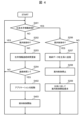
- FIG. 2 is a diagram showing an example of processing executed by the slave system.
- the master system is the control device 110 of system 1
- the slave system is the control device 120 of system 2
- the operation will be explained with the slave control device 120 of system 2 as the subject.
- a configuration in which the master system is the control device 120 of system 2 and the slave system is the control device 110 of system 1 is not excluded.
- the method of detecting a failure (abnormality) in the master system is to monitor the survival of the control devices, but a failure in the master system may be detected by other methods, such as notification by a higher-level device, station staff, etc.
- step S201 the control device 120 of the second system checks the survival information of the control device 110 of the first system.
- the survival information is information that is sent and received periodically between the control device 110 of the first system and the control device 120 of the second system for the purpose of monitoring each other's survival.
- Each control device determines that the status of the other control device is normal by receiving the survival information sent by the other control device.
- the control device 120 of the second system determines that it was unable to receive the survival information of the control device 110 of the first system, it proceeds to step S202, and if it determines that it was able to receive the survival information of the control device 110 of the first system, it proceeds to step S206.
- step S202 the control device 120 of the second system checks whether guidance control has already started. If the control device 120 of the second system determines that guidance control has started, it proceeds to step S201, and if it determines that guidance control has not started, it proceeds to step S203.
- step S203 the control device 120 of the second system updates the time when the survival information from the control device 110 of the first system was lost. When the update is complete, the control device 120 of the second system proceeds to step S204.
- step S204 the control device 120 of the second system checks whether the time during which the survival information was lost exceeds the failure determination time T, which is the threshold for failure determination. If the control device 120 of the second system determines that the failure determination time T has been exceeded, it determines that the control device 110 of the first system has failed and proceeds to step S205, and if it determines that the failure determination time T has not been exceeded, it proceeds to step S201.
- step S205 the control device 120 of the second system starts guidance control. After that, the control device 120 of the second system moves the process to step S201.
- step S201 the control device 120 of the second system checks the survival information from the control device 110 of the first system.
- the control device 120 of the second system moves to step S206 in order to receive the survival information from the control device 110 of the first system.
- step S206 the control device 120 of system 2 checks whether guidance control has started. If the control device 120 of system 2 determines that guidance control has started, it proceeds to step S207. If it determines that guidance control has not started, it proceeds to step S210. Note that when the control device 110 of system 1 recovers from a failure, the control device 120 of system 2 is performing guidance control, so it proceeds to step S207.
- step S207 the control device 120 of the second system transmits data that was updated during the failure of the control device 110 of the first system (for example, stored data that is data for guidance control received from a higher-level device and stored) to the control device 110 of the first system, and synchronizes the data.
- data that was updated during the failure of the control device 110 of the first system (for example, stored data that is data for guidance control received from a higher-level device and stored)
- the process proceeds to step S208.
- step S208 the control device 120 of system 2 stops guidance control and proceeds to step S209.
- step S209 the control device 120 of the second system requests the control device 110 of the first system to start guidance control. After that, the control device 120 of the second system moves the process to step S201.
- step S210 the control device 120 of the second system receives the information edited by the control device 110 of the first system. For example, if the control device 110 of the first system has recovered from a fault and the control device 120 of the second system is not performing guidance control, the process of step S210 is performed.
- the information edited by the control device 110 of the 1st system is, for example, train location information.
- the train location information is information indicating where on the line a train is located, and is edited based on the timetable information and the signal equipment information. More specifically, the control device 110 of the 1st system detects the entrance and exit of a train by inputting the ON/OFF of the start circuit, the departure bell, etc., and identifies which train is the detected train from the timetable information.
- the train location information is necessary when the control device 110 of the 1st system and/or the control device 120 of the 2nd system are not connected to the operation management device 150, when the operation management device 150 does not transmit information equivalent to the train location information, etc.
- step S210 One of the purposes of step S210 is to prevent the control device 120 of the 2nd system from being unable to identify trains that are located on the line if there is no train location information when the control device 110 of the 1st system breaks down and the control device 120 of the 2nd system starts guidance control.
- the control device 110 of the first system detects the entrance and exit of trains based on the timetable information and signal equipment information, edits train location information indicating the detected train's location (for example, the line section where the train is located), and transmits the edited train location information to the control device 120 of the second system.
- the control device 120 of the second system can identify the train based on the train location information and execute guidance control.
- the information received by the control device 120 of the second system is not limited to the information edited by the control device 110 of the first system.
- a higher-level device that transmits data used for guidance control to the control device 110 of the first system may also transmit the data to the control device 120 of the second system, and the control device 120 of the second system may receive the data, or the control device 110 of the first system may transmit data used for guidance control received from the higher-level device to the control device 120 of the second system, and the control device 120 of the second system may receive the data.
- the control device 120 of the second system stops guidance control.
- the control device 120 of the second system may continue guidance control without transferring guidance control (guidance system) to the control device 110 of the first system. Even in this case, data synchronization with the control device 110 of the first system may be performed.
- the passenger guidance system 100 is able to avoid various risks that may impede guidance control and provide continuous guidance control.
- Various risks include network failure, equipment damage, etc.
- the control device 110 of the first system is constructed within the passenger information network 101, and is therefore not affected by cloud service failures, network failures, etc. Therefore, there is no interruption or delay in communication due to these failures, and it is possible to continue real-time guidance control.
- Real-timeness is the property of completing data processing within a required time, and is an important property for the passenger information system 100, which requires responsive guidance control triggered by train positions and signal equipment status.
- the second system control device 120 is constructed in a cloud environment, and therefore the application entity is located away from the first system control device 110. Therefore, even if the first system control device 110 breaks down due to a lightning strike, disaster, etc., the second system control device 120 can operate normally.
- control device 110 of system 1 and the control device 120 of system 2 belong to different networks, have different information transmission paths, and are installed in different locations in the hardware in which the application entities are stored, making it possible to avoid various risks that could impede guidance control.
- the control device 120 of system 2 can receive requests from an external network, which is expected to improve the efficiency of maintenance work and the convenience of setting station guidance.
- Requests from an external network refer to requests for changing the guidance system, sending and receiving data with other devices, changing station guidance settings, etc.
- Changing the guidance system refers to switching the control device 110 that controls guidance between the primary system and the secondary system (for example, switching between the control device 110 of system 1 installed at a station and the control device 110 of system 2 installed in the cloud).
- Sending and receiving data with other devices refers to sending and receiving data such as software, station-specific data, log information, etc. to and from devices such as the control device 110 of system 1 and the station setting device 130.
- Changing station guidance settings refers to changing the settings for each station related to guidance displays and broadcasts, etc.
- a data transmission/reception request can be made from an external device 170 on the system vendor's network to the control device 120 of the second system, and the data to be updated can be sent to the control device 120 of the second system. It is also possible for the external device 170 to make a data transmission/reception request to the control device 120 of the second system, and to send update data to the control device 110 of the first system and the station setting device 130.
- station staff can change settings from any location, not limited to the location where station setting device 130 is installed, which improves the work efficiency of station staff.
- the control device constructed on the cloud environment is different from the first embodiment in that it is not a slave system of a specific station in the initial state, but is activated as a slave system of the station when a failure of a control device on the station's premises network is detected.
- components having the same functions as those in the first embodiment are given the same reference numerals and their explanations are omitted, and the explanation will be focused on the differences from the first embodiment.
- FIG. 3 is a diagram showing an example of the configuration of the passenger information system 300.
- two passenger information networks 101 are considered: passenger information network 101A of Station A and passenger information network 101B of Station B.
- Passenger information network 101A of Station A is composed of a 1-system control device 110A, a station setting device 130A, and a guidance section 140A.
- Passenger information network 101B of Station B is similarly composed of a 1-system control device 110B, a station setting device 130B, and a guidance section 140B.
- Passenger information networks 101 of each station are connected to the operation management device 150, the interlocking device 160, and a control device (cloud control device 320) constructed in a cloud environment via relay devices.
- cloud control device 320 constructed in a cloud environment via relay devices.
- the cloud control device 320 is connected to the passenger information network 101A, the passenger information network 101B, the operation management device 150, the interlocking device 160, and the external device 170 via relay devices.
- the cloud control device 320 pre-stores the execution files and station-specific data of the applications of the control devices 110 of the first system of the passenger information network 101 of each station to which it is connected.
- the cloud control device 320 is not a slave to the particular station. If the 1-system control device 110 does not have a failure, the cloud control device 320 monitors the survival of the 1-system control device 110 at each station and stores the original guide edit information that the 1-system control device 110 at each station receives from the higher-level device.
- the original guide edit information corresponds to information sent to the 1-system control device 110 at each station by the operation management device 150, the interlocking device 160, and the station setting device 130 at each station.
- the original guide edit information stored in the cloud control device 320 may be simultaneously sent to the cloud control device 320 by the higher-level device that sends data to the 1-system control device 110 at each station, or the 1-system control device 110 at each station may send data received from the higher-level device to the cloud control device 320.
- the survival monitoring of the 1-system control device 110 at each station can be performed by a method of sending and receiving survival information, a method of a failure occurrence notification by station staff, etc., as in the first embodiment.
- a fault occurrence notification refers to when a fault is detected in the control device 110 of system 1 at each station, and a station staff member or the like operates a terminal to notify the cloud control device 320 of the occurrence of the fault.
- the cloud control device 320 When the cloud control device 320 detects a failure in the control device 110 of system 1 at a specific station, it starts guidance control as a secondary system for the station where the failure occurred.
- Guidance control may be performed by an application that was monitoring the status, or by starting a guidance control application on a virtual machine. Before starting guidance control, the cloud control device 320 automatically determines the applications and data required for guidance control at the station and installs them in a specified storage location. The cloud control device 320 may also perform guidance control for multiple stations as a secondary system.
- Figure 4 shows an example of the processing executed by the cloud control device 320.
- the cloud control device 320 checks the survival information of the 1-system control devices 110 installed at each station.
- the 1-system control devices 110 installed at each station refer to all 1-system control devices 110 of the passenger information network 101 to which the cloud control device 320 is connected, such as the 1-system control device 110A at station A and the 1-system control device 110B at station B. In this case, a situation is considered in which a failure has occurred in the 1-system control device 110A at station A, making it impossible to receive survival information, and processing moves to step S202.
- Steps S202, S203, and S204 are the same as those in the first embodiment.
- the cloud control device 320 determines that a failure has occurred in the control device 110A of system 1 at station A, and proceeds to step S402.
- step S402 the cloud control device 320 automatically selects data necessary for guidance control of Station A, installs it in a specified storage location, and starts the application (secondary system).
- the data necessary for guidance control of Station A refers to the executable file of the same application as the control device 110A of System 1, station-specific data, and guidance editing source information received while the control device 110A of System 1 is operating.
- the cloud control device 320 refers to a table that specifies information (including version, storage location, etc.) about the applications and station-specific data running at each station, and identifies the necessary data.
- data selection is performed automatically, but a system administrator, system operator, station staff, etc. may issue instructions from an external network.
- step S402 when the installation is completed, the cloud control device 320 starts up as a secondary system for Station A, and proceeds to step S403.
- step S403 the cloud control device 320 starts guidance control for the guidance unit 140A of Station A.
- step S401 if the cloud control device 320 receives survival information from the control device 110A of system 1, the process proceeds to steps S206, S207, S208, and S209. These steps are the same as those in the first embodiment.
- the cloud control device 320 stops guidance control and requests the control device 110A of system 1 to start guidance control. When the above operations are completed, the process proceeds to step S401.
- the cloud control device 320 is on standby to operate as a secondary system for two stations, but the number of target stations may be three or more. Also, in preparation for failure of the control device 110 of system 1 at multiple stations, multiple cloud control devices 320 may be on standby for one station. In this case, the method for selecting the cloud control device 320 to be started as a secondary system is free. Also, the configuration is not limited to one in which the cloud control device 320 is started as a secondary system for a specific station, and the cloud control device 320 may be configured to individually start up secondary systems (virtual machines, containers, etc.) for specific stations.
- secondary systems virtual machines, containers, etc.
- the cloud control device 320 starts up as a secondary system for a specific station, it is free to continue or stop monitoring the liveness of the primary system for each station.
- passenger information system 300 can be made redundant at a lower cost than in the first embodiment.
- cloud control device 320 can be started as a secondary system for any station, so it is sufficient to prepare one virtual machine for multiple stations. This makes it possible to keep the memory and storage of the cloud service contracted to a minimum, resulting in a lower cloud service contract fee.
- the cloud control device 320 identifies the station where an abnormality has occurred in the main system by monitoring the survival of the main system at each station. Then, the cloud control device 320 automatically selects and installs the data corresponding to the station where the abnormality has occurred. Once the installation is complete, the cloud control device 320 starts up as a secondary system for the station where the abnormality has occurred and starts guidance control. Using the above method, the secondary system can be automatically started up even in a passenger guidance system 300 where different data is required at each station.
- the present invention has been described as being applied to a passenger information system, but the present invention is not limited to this and can be widely applied to a variety of other systems, devices, methods, and programs.
- the second system control device 120 may be a virtual machine running on a computer, a container running on an OS (Operating System), or software running on an OS.
- One function of the second system control device 120 may be divided into multiple functions, or multiple functions may be combined into one function. Some of the functions of the second system control device 120 may be provided as a separate function, or may be included in another function. Some of the functions of the second system control device 120 may be realized by another computer that can communicate with the second system control device 120. Additionally, the same applies to the cloud control device 320, and a description thereof will be omitted.
- the configuration of the communication medium in the passenger information system is not necessarily limited.
- the communication medium may be, for example, a communication medium conforming to various communication standards such as USB (Universal Serial Bus) and RS-232C, a LAN (Local Area Network), a WAN (Wide Area Network), the Internet, a dedicated line, etc.
- connection forms e.g., communication media
- the connection forms are different, but the connection forms may be the same.
- a configuration with different connection forms can avoid a situation in which the control device cannot receive data from the higher-level device.
- a part or all of the program may be installed from a program source into a device such as a computer that realizes the control device.
- the program source may be, for example, a program distribution server connected via a network or a computer-readable recording medium (e.g., a non-transitory recording medium).
- two or more programs may be realized as one program, and one program may be realized as two or more programs.
- information such as programs, tables, and files that realize each function can be stored in a storage device such as a memory, a hard disk, or an SSD (Solid State Drive), or in a recording medium such as an IC card, an SD card, or a DVD.
- a storage device such as a memory, a hard disk, or an SSD (Solid State Drive)
- a recording medium such as an IC card, an SD card, or a DVD.
- the above-described embodiment has the following characteristic configurations, for example:
- a passenger guidance system e.g., passenger guidance system 100, passenger guidance system 300 including a first control unit (e.g., a 1-system control device 110) and a second control unit (e.g., a 2-system control device 120) capable of executing guidance control for generating guidance information for providing train guidance in a guidance unit (e.g., a guidance unit 140, a guidance display 141, a broadcasting device 142) provided within a station, wherein the first control unit is provided on the station's in-house network (e.g., a passenger guidance network 101), and the second control unit is provided on the cloud, and guidance control is made redundant by the first control unit and the second control unit.
- a guidance unit e.g., a 1-system control device 110
- a second control unit e.g., a 2-system control device 120
- one of the control units capable of executing guidance control is provided on the station's in-house network, and the other control unit capable of executing guidance control is provided on the cloud.
- guidance control can be executed by the first control unit provided on the in-house network, and if an abnormality occurs in the first control unit due to a lightning strike, disaster, etc., guidance control can be executed by the second control unit provided on the cloud.
- the first control unit is a primary system and the second control unit is a secondary system. If an abnormality occurs in the first control unit, the second control unit starts guidance control for the station (see, for example, Figures 2 and 4).
- the first control unit provided on the on-site network is the primary system, so that, for example, continuous guidance control can be realized, and guidance control can be realized that is more responsive than when the second control unit is the primary system.
- the first control unit is provided on the in-house network of each of the multiple stations, and if an abnormality occurs in the first control unit of any of the multiple stations, the second control unit identifies data to be used for executing guidance control of the station, and starts guidance control of the station using the identified data (e.g., see Figures 3 and 4).
- the first control unit and the second control unit transmit survival information to each other, and if the second control unit does not receive survival information from the first control unit for a predetermined period of time, it detects an abnormality in the first control unit and starts guidance control when it detects an abnormality in the first control unit (e.g., see Figures 2 and 4).
- the second control unit automatically starts guidance control, so guidance control can be started more quickly than if a station staff member or the like operates the device to notify the user of the occurrence of the abnormality.
- the first control unit detects the entry and exit of trains based on timetable information and signal equipment information, edits train location information indicating the detected train's location on the line, and transmits the edited train location information to the second control unit, and if an abnormality occurs in the first control unit, the second control unit identifies the train based on the train location information and performs guidance control (e.g., see Figure 2).
- the second control unit can identify the train and perform guidance control.
- the second control unit receives requests from devices provided on the station's in-house network, such as external devices 170 provided on an external network (see, for example, Figures 1 and 3).
- maintenance work and station guidance settings can be performed from any location, improving the efficiency of maintenance work and the convenience of station guidance settings.
- the first control unit and the second control unit transmit survival information to each other, and of the first control unit and the second control unit, one is a primary system and the other is a secondary system. If the secondary system does not receive survival information from the primary system for a predetermined period of time, it detects an abnormality in the primary system and starts guidance control when it detects an abnormality in the primary system (see, for example, Figures 2 and 4).
- the secondary system automatically starts guidance control, so guidance control can be started more quickly than if a station attendant or other person operates the system to notify the user of the abnormality.
- one is the primary system and the other is the secondary system, and when the primary system receives data used for guidance control (e.g., train operation information, track position information, signal equipment information) from a higher-level device (e.g., the operation management device 150, the interlocking device 160), the primary system transmits the received data to the secondary system.
- data used for guidance control e.g., train operation information, track position information, signal equipment information
- the primary system transmits the received data to the secondary system.
- the slave system when the slave system detects an abnormality in the master system and starts guidance control, it is possible to avoid a situation in which a discrepancy occurs between the guidance control being performed by the master system and the guidance control being performed by the slave system.
- one is a primary system and the other is a secondary system, and if the primary system is restored while guidance control is being performed by the secondary system, the secondary system transmits to the primary system data used for guidance control (e.g., train operation information, track position information, signal equipment information, stored data) that was received from a higher-level device (e.g., operation management device 150, interlocking device 160) during the failure of the primary system.
- the primary system data used for guidance control e.g., train operation information, track position information, signal equipment information, stored data
- a higher-level device e.g., operation management device 150, interlocking device 160
- an item listed in the format "at least one of A, B, and C” can mean (A), (B), (C), (A and B), (A and C), (B and C), or (A, B, and C).
- an item listed in the format "at least one of A, B, or C” can mean (A), (B), (C), (A and B), (A and C), (B and C), or (A, B, and C).
- 100 Passenger information system
- 110 System 1 control device
- 120 System 2 control device.
Landscapes
- Engineering & Computer Science (AREA)
- Mechanical Engineering (AREA)
- Train Traffic Observation, Control, And Security (AREA)
Abstract
L'invention concerne un système de guidage de passagers capable d'exécuter en continu une commande de guidage. Ce système de guidage de passagers comprend une première unité de commande et une seconde unité de commande qui sont aptes à exécuter une commande de guidage pour générer, dans une unité de guidage disposée sur les locaux d'une station, des informations de guidage pour guider un train, la première unité de commande étant disposée sur un réseau local de la station, la seconde unité de commande étant disposée sur le nuage, et une commande de guidage étant rendue redondante par la première unité de commande et la seconde unité de commande.
Applications Claiming Priority (2)
| Application Number | Priority Date | Filing Date | Title |
|---|---|---|---|
| JP2023097758 | 2023-06-14 | ||
| JP2023-097758 | 2023-06-14 |
Publications (1)
| Publication Number | Publication Date |
|---|---|
| WO2024257589A1 true WO2024257589A1 (fr) | 2024-12-19 |
Family
ID=93851843
Family Applications (1)
| Application Number | Title | Priority Date | Filing Date |
|---|---|---|---|
| PCT/JP2024/019334 Pending WO2024257589A1 (fr) | 2023-06-14 | 2024-05-27 | Système de guidage de passagers et procédé de guidage de passagers |
Country Status (1)
| Country | Link |
|---|---|
| WO (1) | WO2024257589A1 (fr) |
Citations (3)
| Publication number | Priority date | Publication date | Assignee | Title |
|---|---|---|---|---|
| JP2020144575A (ja) * | 2019-03-06 | 2020-09-10 | 日本信号株式会社 | 鉄道制御システム |
| US20200290657A1 (en) * | 2017-10-16 | 2020-09-17 | Siemens Mobility GmbH | Railway automation network and method for transmitting messages in a railway automation network |
| JP2022070737A (ja) * | 2020-10-27 | 2022-05-13 | 三菱電機株式会社 | 運行管理システム、制御装置、制御方法、および制御プログラム |
-
2024
- 2024-05-27 WO PCT/JP2024/019334 patent/WO2024257589A1/fr active Pending
Patent Citations (3)
| Publication number | Priority date | Publication date | Assignee | Title |
|---|---|---|---|---|
| US20200290657A1 (en) * | 2017-10-16 | 2020-09-17 | Siemens Mobility GmbH | Railway automation network and method for transmitting messages in a railway automation network |
| JP2020144575A (ja) * | 2019-03-06 | 2020-09-10 | 日本信号株式会社 | 鉄道制御システム |
| JP2022070737A (ja) * | 2020-10-27 | 2022-05-13 | 三菱電機株式会社 | 運行管理システム、制御装置、制御方法、および制御プログラム |
Similar Documents
| Publication | Publication Date | Title |
|---|---|---|
| EP4023527A1 (fr) | Sous-système et procédé de commande de commutation entre un centre principal et d'un centre de veille dans le système de contrôle de surveillance intégré | |
| CN108032876B (zh) | 一种车站运输调度方法和系统 | |
| CN109726046A (zh) | 机房切换方法及切换装置 | |
| CN115892144B (zh) | 一种tacs系统主备定位转换方法、装置、设备及介质 | |
| KR102462414B1 (ko) | 전자식 자동폐색제어장치 및 이를 이용한 제어 방법 | |
| JP6451467B2 (ja) | 統合監視制御装置および統合監視制御システム | |
| CN115593472A (zh) | 一种列车重定位方法、装置、电子设备及介质 | |
| JP6631970B2 (ja) | Ctc駅装置およびctc装置ならびにctc復旧・更新方法 | |
| JP5496160B2 (ja) | 列車運行管理システム | |
| WO2024257589A1 (fr) | Système de guidage de passagers et procédé de guidage de passagers | |
| CN105644589A (zh) | 列车运行状态信息的显示方法、装置和系统 | |
| JP6675043B2 (ja) | 監視制御システム | |
| CN114374712A (zh) | 行车管理方法、电子设备和存储介质 | |
| JP6675044B2 (ja) | 監視制御システム | |
| JP2009040199A (ja) | 運行管理用フォルトトレラントシステム | |
| JPH1145101A (ja) | 監視制御システム | |
| JP5364642B2 (ja) | 列車運行管理システム | |
| CN214165019U (zh) | 用于轨道交通系统的运控集成系统及其操作终端 | |
| JP2004034821A (ja) | 集中監視装置の切替方法およびそれに用いる切替装置 | |
| CN115296983A (zh) | 一种设备管理方法、装置、电子设备和存储介质 | |
| CN114706885A (zh) | 一种信息同步方法、装置、电子设备及存储介质 | |
| JP2025112092A (ja) | 運行管理システム | |
| JP2014160333A (ja) | 多重系処理システム | |
| Kunifuji | Safety Technologies in Autonomous Decentralized Railway Control System | |
| JP2907198B1 (ja) | プライベートlanを利用した無停電電源装置における電源制御方式 |
Legal Events
| Date | Code | Title | Description |
|---|---|---|---|
| 121 | Ep: the epo has been informed by wipo that ep was designated in this application |
Ref document number: 24823209 Country of ref document: EP Kind code of ref document: A1 |
|
| NENP | Non-entry into the national phase |
Ref country code: DE |