WO2024253108A1 - 硬化性組成物 - Google Patents
硬化性組成物 Download PDFInfo
- Publication number
- WO2024253108A1 WO2024253108A1 PCT/JP2024/020441 JP2024020441W WO2024253108A1 WO 2024253108 A1 WO2024253108 A1 WO 2024253108A1 JP 2024020441 W JP2024020441 W JP 2024020441W WO 2024253108 A1 WO2024253108 A1 WO 2024253108A1
- Authority
- WO
- WIPO (PCT)
- Prior art keywords
- thermally expandable
- expandable microcapsules
- weight
- compound
- curable composition
- Prior art date
- Legal status (The legal status is an assumption and is not a legal conclusion. Google has not performed a legal analysis and makes no representation as to the accuracy of the status listed.)
- Ceased
Links
Images
Classifications
-
- B—PERFORMING OPERATIONS; TRANSPORTING
- B01—PHYSICAL OR CHEMICAL PROCESSES OR APPARATUS IN GENERAL
- B01J—CHEMICAL OR PHYSICAL PROCESSES, e.g. CATALYSIS OR COLLOID CHEMISTRY; THEIR RELEVANT APPARATUS
- B01J13/00—Colloid chemistry, e.g. the production of colloidal materials or their solutions, not otherwise provided for; Making microcapsules or microballoons
- B01J13/02—Making microcapsules or microballoons
- B01J13/06—Making microcapsules or microballoons by phase separation
- B01J13/14—Polymerisation; cross-linking
-
- B—PERFORMING OPERATIONS; TRANSPORTING
- B33—ADDITIVE MANUFACTURING TECHNOLOGY
- B33Y—ADDITIVE MANUFACTURING, i.e. MANUFACTURING OF THREE-DIMENSIONAL [3D] OBJECTS BY ADDITIVE DEPOSITION, ADDITIVE AGGLOMERATION OR ADDITIVE LAYERING, e.g. BY 3D PRINTING, STEREOLITHOGRAPHY OR SELECTIVE LASER SINTERING
- B33Y80/00—Products made by additive manufacturing
-
- C—CHEMISTRY; METALLURGY
- C08—ORGANIC MACROMOLECULAR COMPOUNDS; THEIR PREPARATION OR CHEMICAL WORKING-UP; COMPOSITIONS BASED THEREON
- C08F—MACROMOLECULAR COMPOUNDS OBTAINED BY REACTIONS ONLY INVOLVING CARBON-TO-CARBON UNSATURATED BONDS
- C08F2/00—Processes of polymerisation
- C08F2/44—Polymerisation in the presence of compounding ingredients, e.g. plasticisers, dyestuffs, fillers
-
- C—CHEMISTRY; METALLURGY
- C08—ORGANIC MACROMOLECULAR COMPOUNDS; THEIR PREPARATION OR CHEMICAL WORKING-UP; COMPOSITIONS BASED THEREON
- C08J—WORKING-UP; GENERAL PROCESSES OF COMPOUNDING; AFTER-TREATMENT NOT COVERED BY SUBCLASSES C08B, C08C, C08F, C08G or C08H
- C08J9/00—Working-up of macromolecular substances to porous or cellular articles or materials; After-treatment thereof
- C08J9/32—Working-up of macromolecular substances to porous or cellular articles or materials; After-treatment thereof from compositions containing microballoons, e.g. syntactic foams
-
- C—CHEMISTRY; METALLURGY
- C09—DYES; PAINTS; POLISHES; NATURAL RESINS; ADHESIVES; COMPOSITIONS NOT OTHERWISE PROVIDED FOR; APPLICATIONS OF MATERIALS NOT OTHERWISE PROVIDED FOR
- C09K—MATERIALS FOR MISCELLANEOUS APPLICATIONS, NOT PROVIDED FOR ELSEWHERE
- C09K3/00—Materials not provided for elsewhere
Definitions
- the present invention relates to a curable composition, a three-dimensional structure, and a foam that can produce a foam that has excellent shape stability before and after foaming.
- the SLA method is a method in which a liquid composition containing a photocurable compound and a photopolymerization initiator is irradiated with a UV laser in dots, and the liquid composition is solidified and stacked layer by layer to create a shape.
- Patent Document 1 discloses a transparent resin composition for molding that contains a photocurable compound, a photopolymerization initiator, and thermally expandable microcapsules.
- the present invention aims to provide a curable composition, a three-dimensional structure, and a foam that can produce a foam that has excellent shape stability before and after foaming.
- the present disclosure (1) is a curable composition comprising a curable compound and a thermally expandable microcapsule, the thermally expandable microcapsule having a shell containing a polymer compound and a volatile expansion agent encapsulated as a core agent in the shell, and the shell containing a specific gravity adjuster having a density of 1.0 g/cm3 or more and 22 g/cm3 or less .
- the present disclosure (2) is the curable composition according to the present disclosure (1), in which the content of the specific gravity adjuster is 0.01% by weight or more and 50% by weight or less with respect to the entire thermally expandable microcapsules.
- the present disclosure (3) is the curable composition according to the present disclosure (1) or (2), in which the specific gravity adjuster is present inside the shell or on the surface of the shell.
- the present disclosure (4) is the curable composition according to the present disclosure (1) or (2), in which the specific gravity adjuster is present inside the shell and on the surface of the shell.
- the present disclosure (5) is the curable composition according to any one of the present disclosures (1) to (4), wherein the specific gravity adjuster is silica, zirconium nitride, titanium black, or carbon black.
- the present disclosure (6) is the curable composition according to any one of the present disclosures (1) to (5), in which the curable compound is a photocurable compound or a thermosetting compound.
- the present disclosure (7) is a curable composition comprising a curable compound and a thermally expandable microcapsule, the thermally expandable microcapsule having a shell containing a polymer compound and a volatile expanding agent encapsulated as a core agent in the shell, and the true density of the thermally expandable microcapsule is 0.98 g/cm3 or more and 1.50 g/ cm3 or less.
- the present disclosure (8) is the curable composition according to the present disclosure (7), in which the content of the thermally expandable microcapsules is 0.1% by weight or more and 50% by weight or less with respect to the entire curable composition.
- the present disclosure (9) is the curable composition according to the present disclosure (7) or (8), in which the curable compound is a photocurable compound or a thermosetting compound.
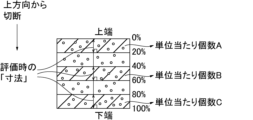
- the present disclosure (10) is a three-dimensional structure containing thermally expandable microcapsules, in which, in a cross section of the three-dimensional structure cut from above, when the distance from the top to the bottom is taken as 100%, the number of thermally expandable microcapsules present per any unit area in a region including the top and a perpendicular line passing through a position 20% from the top is taken as A, the number of thermally expandable microcapsules present per any unit area in a region including a perpendicular line passing through a position 40% from the top and a perpendicular line passing through a position 60% from the top is taken as B, and the number of thermally expandable microcapsules present per any unit area in a region including a perpendicular line passing through a position 80% from the top and the bottom is taken as C, the CV values of A
- the present disclosure (11) is the three-dimensional structure according to the present disclosure (10), in which the content of the thermally expandable microcapsules is 0.1% by weight or more and 50% by weight or less with respect to the entire three-dimensional structure.
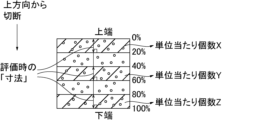
- the present disclosure (12) is a foam having air bubbles, in which, in a cross section obtained by cutting the foam from above, when the distance from the upper end to the lower end is taken as 100%, the number of air bubbles present per any unit area in a region including the upper end and a perpendicular line passing through a position 20% from the upper end is X, the number of air bubbles present per any unit area in a region including a perpendicular line passing through a position 40% from the upper end and a perpendicular line passing through a position 60% from the upper end is Y, and the number of air bubbles present per any unit area in a region including a perpendicular line passing through a position 80% from the upper end and the lower end is Z, the CV values of X, Y, and Z are
- the present inventors have found that the cause of distortion of the shape of the foam before and after foaming in a curable composition containing thermally expandable microcapsules is the floating of the thermally expandable microcapsules in the curable composition.
- the liquid composition is solidified and laminated one layer at a time, so that the time required for modeling is long and the floating of the thermally expandable microcapsules is likely to occur.
- the microcapsules are unevenly distributed in the three-dimensional structure, and variations occur when the three-dimensional structure is foamed, and the shape stability of the foam is impaired.
- the inventors discovered that by adding a specific gravity adjusting agent to the shell of a thermally expandable microcapsule, it is possible to adjust the true density of the thermally expandable microcapsule, suppress floating of the thermally expandable microcapsule, and obtain a foam with excellent shape stability before and after foaming, thereby completing the present invention.
- the curable composition of the present invention contains a curable compound.
- the curable compound in the present invention may be a thermosetting compound that is cured by heat, a photocurable compound that is cured by irradiation with light (e.g., visible light, ultraviolet light, near infrared light, far infrared light, electron beam, etc.), or a moisture-curable compound that is cured by moisture, and may require a curing aid as described below.
- the curable compound is preferably a thermosetting compound or a photocurable compound, and two or more of them may be used in combination.
- thermosetting compound examples include epoxy compounds, maleimide compounds, benzoxazine compounds, vinyl compounds, styrene compounds, phenoxy compounds, oxetane compounds, polyarylate compounds, diallyl phthalate compounds, acrylate compounds, episulfide compounds, (meth)acrylic compounds, amino compounds, unsaturated polyester compounds, urethane compounds, and silicone compounds.
- the photocurable compound examples include (meth)acrylic compounds containing one or more groups in the molecule that react and cure when exposed to light, such as an acryloyl group or a methacryloyl group.
- the photocurable compound include urethane compounds such as urethane acrylates and urethane methacrylates obtained by reacting an isocyanate group-containing urethane resin with a hydroxyl group-containing acrylate compound or a hydroxyl group-containing methacrylate compound; ester acrylates and ester methacrylates such as trimethylolpropane triacrylate and trimethylolpropane trimethacrylate; polyester acrylates and polyester methacrylates such as the acrylates and methacrylates of polyethylene adipate polyol; polyether acrylates and polyether methacrylates such as the acrylates and methacrylates of polyether polyol; polyvinyl cinnamates; and azido resins.
- urethane compounds such as urethane acrylates and urethane methacrylates obtained by reacting an isocyanate group-containing urethane resin with a hydroxyl group-containing acrylate compound or a hydroxyl group
- the moisture-curing compound examples include a moisture-curing urethane compound and a compound having an alkoxysil group, and the moisture-curing urethane compound is preferred.
- the moisture-curing urethane compound has a urethane bond and an isocyanate group, and the isocyanate group in the molecule reacts with moisture in the air or the adherend to cure.
- the curable compound it is preferable to use a photocurable compound or a thermosetting compound.
- Examples of the epoxy compound include bisphenol A type epoxy compounds, bisphenol F type epoxy compounds, bisphenol S type epoxy compounds, phenol novolac type epoxy compounds, biphenyl type epoxy compounds, biphenyl novolac type epoxy compounds, biphenol type epoxy compounds, naphthalene type epoxy compounds, fluorene type epoxy compounds, phenol aralkyl type epoxy compounds, naphthol aralkyl type epoxy compounds, dicyclopentadiene type epoxy compounds, anthracene type epoxy compounds, epoxy compounds having an adamantane skeleton, epoxy compounds having a tricyclodecane skeleton, naphthylene ether type epoxy compounds, and epoxy compounds having a triazine nucleus in the skeleton.
- Examples of the (meth)acrylic compound include a (meth)acrylic acid ester compound obtained by reacting a compound having a hydroxyl group with (meth)acrylic acid, an epoxy (meth)acrylate obtained by reacting (meth)acrylic acid with an epoxy resin, and a urethane (meth)acrylate obtained by reacting an isocyanate compound with a (meth)acrylic acid derivative having a hydroxyl group.
- Examples of the (meth)acrylic acid ester compound include methyl methacrylate, ethyl methacrylate, propyl (meth)acrylate, butyl (meth)acrylate, isobutyl methacrylate, heptyl (meth)acrylate, hexyl (meth)acrylate), 2-(acetoacetoxy)ethyl methacrylate (AAAEMA), 2-aminoethyl methacrylate (hydrochloride) (AEMA), allyl methacrylate (AMA), cholesteryl methacrylate (CMA), t-butyldimethylsilyl methacrylate (BDSMA), diethylene glycol monomethyl ether methacrylate (DEGMA), 2-(dimethylamino)ethyl methacrylate (DMAEMA), ethylene glycol monomethyl ether methacrylate (EGMA), 2-hydroxyethyl methacrylate (HEMA), dodecyl methacrylate (LMA), and
- the urethane compound is not particularly limited as long as it has at least one urethane bond (-NHCOO-) in the molecule.
- Examples of the urethane compound include those obtained by reacting an isocyanate compound with a polyol compound, and those obtained by reacting carbonyl chloride with an amine.
- the isocyanate compound may be an aromatic, aliphatic, or alicyclic isocyanate compound, or a mixture of two or more of these.
- polyol compound a wide variety of compounds generally used as polyols can be used, such as alcohols such as primary alcohols, secondary alcohols, and phenols, polyether polyols, polyester polyols, and polymer polyols having a main chain consisting of carbon-carbon bonds.
- examples of the urethane compound include ester-ether polyurethane, ether polyurethane, polyester polyurethane, carbonate polyurethane, and acrylic polyurethane.
- urethane compound it is preferable to use (meth)acrylate blocked polyurethane (ABPU).
- ABPU (meth)acrylate blocked polyurethane
- a urethane elastomer may be used.
- the above urethane compound may be copolymerized with the above (meth)acrylic resin.
- the preferred lower limit of the content of the curable compound in the curable composition of the present invention is 20% by weight, and the preferred upper limit is 99% by weight, based on the total weight of the curable composition. By keeping the content within the above range, a foam with excellent strength can be obtained.
- the more preferred lower limit is 80% by weight, and the more preferred upper limit is 97% by weight.
- the curable composition of the present invention may contain a curing aid as necessary.
- the curing aid include polymerization initiators such as curing agents and photoreaction initiators (photoradical generators, photoacid generators, photobase generators). These curing aids may be used alone or in combination of two or more types, regardless of the type.
- examples of the curing aid that can be used include amine-based curing agents, acid or acid anhydride-based curing agents, basic active hydrogen compounds, imidazoles, polymercaptan-based curing agents, phenol resins, urea resins, melamine resins, isocyanate-based curing agents, and Lewis acids.
- the curable composition of the present invention may contain a chain extender as required.
- the chain extender includes at least one diol, diamine or dithiol chain extender (e.g., ethylene glycol, 1,3-propanediol, 1,2-propanediol, 1,4-butanediol, 1,5-pentanediol, 1,6-hexanediol, 1,7-heptanediol, 1,8-octanediol, 1,9-nonanediol, 1,10-decanediol, 1,11-undecanediol, 1,12-dodecanediol, 1,2-cyclohexanedimethanol, 1,4-cyclohexanedimethanol, their corresponding diamine and dithiol analogs, lysine ethyl ester, arginine ethyl ester, p-alanine-based diamines
- the curable composition of the present invention contains a thermally expandable microcapsule, and the thermally expandable microcapsule has a shell containing a polymer compound and a volatile expanding agent as a core agent encapsulated therein.
- the shell constituting the thermally expandable microcapsules contains a specific gravity adjusting agent.
- the thermally expandable microcapsules can be prevented from floating in the curable composition, and therefore the uniformity of the thermally expandable microcapsules can be improved.
- the density of the specific gravity adjuster has a lower limit of 1.0 g/cm 3 and an upper limit of 22 g/cm 3. By setting the density within the above range, it is possible to prevent the thermally expandable microcapsules from floating and to increase the uniformity of the thermally expandable microcapsules.
- the density of the specific gravity adjuster is preferably 1.5 g/cm 3 in lower limit and 15.0 g/cm 3 in upper limit, more preferably 2.0 g/cm 3 in lower limit and more preferably 8.0 g/cm 3 in upper limit.
- the density of the specific gravity adjuster can be measured by a true density meter.
- the specific gravity adjusting agent may have, for example, a spherical, fibrous, tabular, or polygonal shape.
- the specific surface area of the specific gravity adjuster is preferably 5 m 2 /g or more and 300 m 2 /g or less.
- the specific surface area can be measured by measuring a nitrogen adsorption isotherm using a surface area/pore size analyzer (NOVA4200e, manufactured by Quantachrome Instruments) and calculating the specific surface area of the specific gravity adjuster from the measurement results in accordance with the BET method.
- the specific gravity adjuster may be an organic specific gravity adjuster or an inorganic specific gravity adjuster, which may be used alone or in combination.
- the organic specific gravity adjusting agent include carbon black, carbon nanotubes, carbon fibers, ammonium polyphosphate, and decabromodiphenyl ether.
- the inorganic specific gravity adjuster include metals alone, as well as metal nitrides, carbides, oxides, and oxynitrides. As the metal, it is preferable to use at least one selected from the group consisting of zirconium, iron, copper, cobalt, nickel, manganese, titanium, and tin.
- the inorganic specific gravity adjuster include zirconium nitride, boron nitride, boron carbide, boron carbonitride, alumina, magnesium hydroxide, magnesium oxide, zinc oxide, iron oxide, ferrite, mullite, cordierite, silicon nitride, silicon carbide, titanium black, titanium oxide, barium titanate, tin oxide, zirconium oxide, magnesium fluoride, aluminum nitride, magnesium carbonate, aluminum hydroxide, and iron-manganese-copper oxide (Cu[Fe,Mn]O 4 ).
- zirconium nitride, carbon black, and iron-manganese-copper oxide are more preferred because they have excellent dispersibility in resin, can impart a black color, and can increase the density of thermally foamable microcapsules with the addition of a small amount.
- the specific gravity adjuster preferably contains at least one inorganic compound selected from the group consisting of Si-based compounds and Mg-based compounds. By including the inorganic compound, it is possible to suppress fusion of the thermally expandable microcapsules to each other in the resin during molding.
- the inorganic compound is also referred to as a specific gravity adjuster (B) to distinguish it from the specific gravity adjuster (A) other than the inorganic compound.
- the content ratio of the specific gravity adjuster (A) to the specific gravity adjuster (B) is preferably 0.01 in lower limit and 10 in upper limit, more preferably 0.1 in lower limit and more preferably 5 in upper limit.
- Si-based compound and Mg-based compound preferably contain an oxide, hydroxide, carbonate or hydrogen carbonate of silicon or magnesium.
- These Si-based compounds and Mg-based compounds may be used alone or in combination of two or more kinds.
- Examples of the Si-based compound include silica such as colloidal silica, silicate sol, water glass No. 3, sodium orthosilicate, sodium metasilicate, etc. Among these, colloidal silica is preferred.
- Examples of the Mg-based compound include magnesium oxide, magnesium hydroxide, magnesium oxide hydroxide, hydrotalcite, dihydrotalcite, magnesium carbonate, basic magnesium carbonate, magnesium calcium carbonate, magnesium phosphate, magnesium hydrogen phosphate, magnesium pyrophosphate, magnesium borate, etc. Among these, magnesium hydroxide is preferred.
- the content of the inorganic compound is preferably 0.01% by weight, with a lower limit of 0.01% by weight, and 7% by weight, with respect to the entire thermally expandable microcapsule.
- a lower limit of 0.01% by weight By making it 0.01% by weight or more, it is possible to suppress fusion between the thermally expandable microcapsules in the resin during molding.
- a more preferable lower limit is 0.3% by weight, and a more preferable upper limit is 5% by weight.
- the specific gravity adjuster may be present inside or on the surface of the shell of the thermally expandable microcapsule, or may be present inside and on the surface of the shell.
- the specific gravity adjuster (A) is preferably present inside the shell, and the specific gravity adjuster (B) is preferably present on the surface of the shell.
- the location of the specific gravity adjusting agent can be confirmed by using a transmission electron microscope or the like after preparing a thin film so as to pass through the vicinity of the center of the thermally expandable microcapsules dispersed in the embedding resin.
- the primary average particle size of the specific gravity adjuster is preferably 1 nm in lower limit and 5000 nm in upper limit, more preferably 5 nm in lower limit and 1000 nm in upper limit. By setting the particle size within the above range, the specific gravity adjuster is easily dispersed.
- the above-mentioned primary average particle diameter can be calculated by preparing a thin film having a thickness of 100 nm from the cured product of the curable composition using a microtome, observing the cross section of the thermally expandable microcapsules in the thin film using a transmission electron microscope, measuring the primary particle diameters of any 100 specific gravity adjusters, and averaging the measured values.
- the preferred lower limit of the content of the specific gravity adjuster is 0.01% by weight, and the preferred upper limit is 50% by weight, based on the total weight of the thermally expandable microcapsule.
- the more preferred lower limit is 0.3% by weight, the more preferred upper limit is 30% by weight, the even more preferred upper limit is 25% by weight, and the even more preferred upper limit is 20% by weight.
- the weight ratio of the specific gravity adjusting agent to the shell of the thermally expandable microcapsule is preferably 0.01 at the lower limit and 0.4 at the upper limit, more preferably 0.02 at the lower limit and 0.3 at the upper limit.
- the content of the specific gravity adjusting agent can be calculated by heating the thermally expandable microcapsule in a nitrogen atmosphere to 600° C. at 10° C./min, holding the temperature for 10 minutes, lowering the temperature to 400° C. at 10° C./min and holding the temperature for 10 minutes, switching the atmosphere to air, heating the temperature in air to 1000° C., and holding the temperature for 10 minutes at 1000° C.
- the content of the specific gravity adjusting agent can be calculated from the weight loss from 400° C. to 1000° C.
- the thermally expandable microcapsule is heated in air to 1000° C. at 10° C./min and maintained at 1000° C. for 10 minutes.
- the specific gravity adjusting agent can be determined from the weight loss before and after heating.
- the shell constituting the thermally expandable microcapsules contains a polymer compound.
- the polymer compound is preferably a polymer of a monomer composition containing a nitrile monomer and a monomer having a carboxyl group.
- nitrile monomer is not particularly limited, and examples thereof include acrylonitrile, methacrylonitrile, ⁇ -chloroacrylonitrile, ⁇ -ethoxyacrylonitrile, fumaronitrile, and mixtures thereof. Among these, acrylonitrile and methacrylonitrile are particularly preferred. These may be used alone or in combination of two or more.
- the preferred lower limit of the content of the nitrile monomer in the monomer composition is 20% by weight, and the preferred upper limit is 90% by weight. By making it 20% by weight or more, the gas barrier properties of the shell can be improved and the expansion ratio can be improved. By making it 90% by weight or less, the heat resistance can be improved and yellowing can be prevented.
- the more preferred lower limit is 30% by weight, and the more preferred upper limit is 80% by weight.
- a radically polymerizable unsaturated carboxylic acid monomer having a carboxyl group and 3 to 8 carbon atoms can be used.
- Specific examples include unsaturated dicarboxylic acids and their anhydrides, and monoesters of unsaturated dicarboxylic acids and their derivatives. These may be used alone or in combination of two or more kinds.
- Examples of the unsaturated dicarboxylic acid include unsaturated monocarboxylic acids such as acrylic acid, methacrylic acid, ethacrylic acid, crotonic acid, and cinnamic acid, maleic acid, itaconic acid, fumaric acid, citraconic acid, and chloromaleic acid.
- Examples of the monoester of the unsaturated dicarboxylic acid include monomethyl maleate, monoethyl maleate, monobutyl maleate, monomethyl fumarate, monoethyl fumarate, monomethyl itaconate, monoethyl itaconate, and monobutyl itaconate.
- acrylic acid, methacrylic acid, maleic acid, maleic anhydride, and itaconic acid are particularly preferred.
- the preferred lower limit of the content of the monomer having a carboxyl group in the monomer composition is 5% by weight, and the preferred upper limit is 70% by weight. By making it 5% by weight or more, it is possible to increase the maximum foaming temperature, and by making it 70% by weight or less, it is possible to improve the foaming ratio. A more preferred lower limit is 10% by weight, and a more preferred upper limit is 60% by weight.
- the monomer composition preferably contains a crosslinkable monomer having two or more double bonds in the molecule.
- the crosslinkable monomer acts as a crosslinking agent.
- the strength of the shell can be strengthened, and the cell walls are less likely to break during thermal expansion.
- the crosslinkable monomer includes a monomer having two or more radically polymerizable double bonds, and specific examples thereof include divinylbenzene, di(meth)acrylate, tri- or higher functional (meth)acrylate, and the like.
- the di(meth)acrylate include ethylene glycol di(meth)acrylate, diethylene glycol di(meth)acrylate, triethylene glycol di(meth)acrylate, propylene glycol di(meth)acrylate, 1,4-butanediol di(meth)acrylate, etc.
- di(meth)acrylate of polyethylene glycol having a weight average molecular weight of 200 to 600 may be used.
- Examples of the trifunctional (meth)acrylate include trimethylolpropane tri(meth)acrylate, ethylene oxide modified trimethylolpropane tri(meth)acrylate, pentaerythritol tri(meth)acrylate, triallyl formal tri(meth)acrylate, etc.
- Examples of the tetrafunctional or higher (meth)acrylate include pentaerythritol tetra(meth)acrylate, dipentaerythritol hexa(meth)acrylate, etc.
- trifunctional (meth)acrylates such as trimethylolpropane tri(meth)acrylate and bifunctional (meth)acrylates such as polyethylene glycol are used to crosslink relatively uniformly in the shell mainly composed of acrylonitrile.
- the preferred lower limit of the content of the crosslinkable monomer in the monomer composition is 0.1% by weight, and the preferred upper limit is 1.0% by weight.
- the more preferred lower limit of the content of the crosslinkable monomer is 0.15% by weight, and the more preferred upper limit is 0.9% by weight.
- the monomer composition preferably contains other monomers other than the nitrile monomer, the monomer having a carboxyl group, and the crosslinkable monomer.
- the other monomers include (meth)acrylic acid esters, as well as vinyl monomers such as vinyl chloride, vinylidene chloride, vinyl acetate, and styrene. These may be used alone or in combination of two or more.
- (meth)acrylic acid esters are preferred, and in particular, methacrylic acid alkyl esters such as methyl methacrylate, ethyl methacrylate, and n-butyl methacrylate, or alicyclic, aromatic, or heterocyclic methacrylic acid esters such as cyclohexyl methacrylate, benzyl methacrylate, and isobornyl methacrylate are preferred.
- the preferred lower limit of the content of the other monomer in the monomer composition is 0.1% by weight, and the preferred upper limit is 60% by weight.
- the dispersibility of the composition using the thermally expandable microcapsules can be improved, and by making it 60% by weight or less, the gas barrier properties of the cell walls can be improved, and the thermal expansion properties can be improved.
- the more preferred lower limit of the content of the other monomer is 0.3% by weight, and the more preferred upper limit is 50% by weight.
- a polymerization initiator is added to the monomer composition in order to polymerize the monomers.
- the polymerization initiator for example, dialkyl peroxide, diacyl peroxide, peroxy ester, peroxy dicarbonate, azo compound, etc. are suitably used. Specific examples include dialkyl peroxides such as methyl ethyl peroxide, di-t-butyl peroxide, and dicumyl peroxide; and diacyl peroxides such as isobutyl peroxide, benzoyl peroxide, 2,4-dichlorobenzoyl peroxide, and 3,5,5-trimethylhexanoyl peroxide.
- Further examples include t-butyl peroxypivalate, t-hexyl peroxypivalate, t-butyl peroxyneodecanoate, t-hexyl peroxyneodecanoate, 1-cyclohexyl-1-methylethyl peroxyneodecanoate, and 1,1,3,3-tetramethylbutyl peroxyneodecanoate.
- peroxy esters such as cumyl peroxy neodecanoate and ( ⁇ , ⁇ -bis-neodecanoylperoxy)diisopropylbenzene; bis(4-t-butylcyclohexyl)peroxydicarbonate, di-n-propyl-oxydicarbonate, and diisopropyl peroxydicarbonate.
- peroxydicarbonates such as di(2-ethylethylperoxy)dicarbonate, dimethoxybutylperoxydicarbonate, and di(3-methyl-3-methoxybutylperoxy)dicarbonate.
- examples of the compound include azo compounds such as 2,2'-azobisisobutyronitrile, 2,2'-azobis(4-methoxy-2,4-dimethylvaleronitrile), 2,2'-azobis(2,4-dimethylvaleronitrile), and 1,1'-azobis(1-cyclohexanecarbonitrile).
- azo compounds such as 2,2'-azobisisobutyronitrile, 2,2'-azobis(4-methoxy-2,4-dimethylvaleronitrile), 2,2'-azobis(2,4-dimethylvaleronitrile), and 1,1'-azobis(1-cyclohexanecarbonitrile).
- the preferred lower limit of the weight average molecular weight of the polymer compound constituting the shell is 100,000, and the preferred upper limit is 2,000,000. If it is less than 100,000, the strength of the shell may decrease, and if it exceeds 2,000,000, the strength of the shell may become too high, resulting in a decrease in the expansion ratio.
- the shell may contain a metal cation.
- the metal cation reacts with the carboxyl group to ionically crosslink the copolymer, improving heat resistance, and making it possible to obtain a thermally expandable microcapsule that does not burst or shrink for a long time in a high temperature range.
- the elastic modulus of the shell is unlikely to decrease even in a high temperature range, even when a molding process such as kneading molding, calendar molding, extrusion molding, or injection molding is performed in which a strong shear force is applied, the thermally expandable microcapsule does not burst or shrink.
- the above-mentioned ionic crosslinking means that crosslinks are formed between free carboxyl groups present as side chains of the copolymer.
- the number of carboxyl groups arranged per one valence of metal cation varies depending on the type of metal.
- the metal cation is not particularly limited as long as it is a metal cation that reacts with the carboxyl group of the copolymer to ionically crosslink the copolymer, and examples thereof include ions such as Li, Na, K, Zn, Mg, Ca, Ba, Sr, Mn, Al, Ti, Ru, Fe, Ni, Cu, Cs, Sn, Cr, and Pb. These may be used alone or in combination of two or more. Among these, Ca, Zn, and Al ions are preferred, and Zn ions are particularly preferred.
- the combination is not particularly limited, but it is preferable to use an alkali metal ion in combination with a metal cation other than the above alkali metal.
- an alkali metal ion By having the above alkali metal ion, functional groups such as carboxyl groups can be activated, and the reaction between the metal cation other than the above alkali metal and the carboxyl group of the copolymer can be promoted.
- the alkali metal include Na, K, and Li.
- the shell may further contain stabilizers, UV absorbers, antioxidants, antistatic agents, flame retardants, silane coupling agents, colorants, etc., as necessary.
- the thermally expandable microcapsules have a volatile expansion agent encapsulated in the shell as a core agent.
- the volatile expanding agent is a substance that becomes gaseous at a temperature equal to or lower than the softening point of the polymer constituting the shell, and is preferably a low-boiling organic solvent.
- volatile expanding agent examples include low molecular weight hydrocarbons such as ethane, ethylene, propane, propene, n-butane, isobutane, butene, isobutene, n-pentane, isopentane, neopentane, n-hexane, heptane, petroleum ether, isooctane, octane, decane, isododecane, dodecane, and hexanedecane.
- low molecular weight hydrocarbons such as ethane, ethylene, propane, propene, n-butane, isobutane, butene, isobutene, n-pentane, isopentane, neopentane, n-hexane, heptane, petroleum ether, isooctane, octane, decane, isododecane, dodecan
- chlorofluorocarbons such as CCl 3 F, CCl 2 F 2 , CClF 3 , and CClF 2 -CClF 2 ; and tetraalkylsilanes such as tetramethylsilane, trimethylethylsilane, trimethylisopropylsilane, and trimethyl-n-propylsilane.
- chlorofluorocarbons such as CCl 3 F, CCl 2 F 2 , CClF 3 , and CClF 2 -CClF 2
- tetraalkylsilanes such as tetramethylsilane, trimethylethylsilane, trimethylisopropylsilane, and trimethyl-n-propylsilane.
- thermally expandable microcapsules among the above-mentioned volatile expanding agents, it is preferable to use a low-boiling point hydrocarbon having a carbon number of 5 or less. By using such a hydrocarbon, it is possible to obtain a thermally expandable microcapsule having a high expansion ratio and quickly starting to expand. Moreover, a pyrolytic compound that decomposes when heated to become gaseous may be used as the volatile expanding agent.
- the true density of the thermally expandable microcapsules is preferably 0.98 g/ cm3 or more at the lower limit and 1.50 g/ cm3 at the upper limit. By keeping the true density within the above range, the uniformity of the thermally expandable microcapsules can be improved.
- the more preferable lower limit is 1.03 g/ cm3
- the more preferable upper limit is 1.40 g/ cm3 .
- the true density can be measured by isolating the thermally expandable microcapsules from the curable composition and measuring the obtained thermally expandable microcapsules using Ultrapyc 5000 (manufactured by Anton Parr). Examples of the isolation method include a method in which the curable composition is diluted with a solvent such as acetone, filtered, and the thermally expandable microcapsules are taken out.
- the preferred lower limit of the maximum foaming temperature (Tmax) of the thermally expandable microcapsules is 170° C. By setting the temperature at 170° C. or higher, the heat resistance is increased, and when a composition containing the thermally expandable microcapsules is molded in a high temperature range, the thermally expandable microcapsules can be prevented from bursting or shrinking.
- a more preferred lower limit is 175° C.
- a preferred upper limit is 240° C.
- the maximum foaming temperature means the temperature at which the diameter of a thermally expandable microcapsule becomes maximum (maximum displacement) when the diameter of the thermally expandable microcapsule is measured while being heated from room temperature.
- the above thermally expandable microcapsules have a preferred lower limit of the maximum displacement (Dmax) measured by thermomechanical analysis of 10 ⁇ m. If it is less than 10 ⁇ m, the expansion ratio decreases and the desired expansion performance may not be obtained.
- Dmax the maximum displacement measured by thermomechanical analysis of 10 ⁇ m. If it is less than 10 ⁇ m, the expansion ratio decreases and the desired expansion performance may not be obtained.
- a more preferred lower limit is 20 ⁇ m, a more preferred lower limit is 100 ⁇ m, and a more preferred lower limit is 300 ⁇ m.
- a preferred upper limit of the above maximum displacement is 2000 ⁇ m, a more preferred upper limit is 1800 ⁇ m, and a more preferred upper limit is 1500 ⁇ m.
- the above-mentioned maximum displacement amount refers to the value at which the diameter of a predetermined amount of thermally expandable microcapsules as a whole becomes maximum when the diameter of the predetermined amount of thermally expandable microcapsules is measured while being heated from room temperature.
- the preferred upper limit of the foaming start temperature (Ts) is 185°C. By setting the temperature at 185°C or lower, foaming becomes easy and the desired foaming ratio can be achieved.
- the preferred lower limit is 130°C, and the more preferred upper limit is 180°C.
- the preferred lower limit of the volume average particle diameter of the thermally expandable microcapsules is 5 ⁇ m, and the preferred upper limit is 45 ⁇ m. If it is less than 5 ⁇ m, the bubbles in the obtained molded body are too small, so the expansion ratio may be insufficient, and if it exceeds 45 ⁇ m, the bubbles in the obtained molded body are too large, so there may be problems in terms of appearance.
- the more preferred lower limit is 7 ⁇ m, and the more preferred upper limit is 35 ⁇ m.
- the volume average particle diameter of the above-mentioned thermally expandable microcapsules can be calculated by preparing test pieces using a razor from a three-dimensional structure obtained by curing the curable composition, and observing the test pieces using a high-resolution 3D X-ray microscope nano3DX (manufactured by Rigaku Corporation).
- the volume average particle size of the thermally expandable microcapsules can be measured using a laser diffraction/scattering particle size distribution measuring device or the like.
- the preferred lower limit of the content of the thermally expandable microcapsules in the curable composition of the present invention is 0.1% by weight, and the preferred upper limit is 50% by weight, based on the total weight of the curable composition. By keeping the content within the above range, a foam that is lightweight and has excellent appearance can be obtained.
- the more preferred lower limit is 1% by weight, and the more preferred upper limit is 30% by weight.
- the method for producing the above-mentioned thermally expandable microcapsules is not particularly limited, but they can be produced, for example, by carrying out the steps of preparing an aqueous dispersion medium containing a specific gravity adjuster (A) and a specific gravity adjuster (B), dispersing an oily mixture containing a monomer composition and a volatile expansion agent in the aqueous dispersion medium, and polymerizing the above-mentioned monomers.
- a composition containing the above-mentioned nitrile monomer, a monomer having a carboxyl group, a crosslinkable monomer, and other monomers can be used.
- the first step is to prepare an aqueous dispersion medium.
- an aqueous dispersion medium for example, water, specific gravity adjuster (A), specific gravity adjuster (B), and, if necessary, an auxiliary stabilizer are added to a polymerization reaction vessel to prepare an aqueous dispersion medium containing specific gravity adjuster (A), specific gravity adjuster (B), and an inorganic compound.
- auxiliary stabilizer examples include condensation products of diethanolamine and aliphatic dicarboxylic acids, and condensation products of urea and formaldehyde.
- Other examples include polyvinylpyrrolidone, polyethylene oxide, polyethyleneimine, tetramethylammonium hydroxide, gelatin, methylcellulose, polyvinyl alcohol, dioctyl sulfosuccinate, sorbitan esters, various emulsifiers, etc.
- a condensation product or a water-soluble nitrogen compound may be added.
- a condensation product of diethanolamine and an aliphatic dicarboxylic acid is preferred, and a condensation product of diethanolamine and adipic acid or a condensation product of diethanolamine and itaconic acid is particularly preferred.
- water-soluble nitrogen compounds examples include polyvinylpyrrolidone, polyethyleneimine, polyoxyethylene alkylamines, polydialkylaminoalkyl (meth)acrylates such as polydimethylaminoethyl methacrylate and polydimethylaminoethyl acrylate.
- polydialkylaminoalkyl (meth)acrylamides such as polydimethylaminopropyl acrylamide and polydimethylaminopropyl methacrylamide
- polyvinylpyrrolidone is preferably used.
- the aqueous dispersion medium containing the above-mentioned specific gravity adjuster (A), specific gravity adjuster (B), auxiliary stabilizer, and optionally a dispersant is prepared by mixing with deionized water, and the pH of the aqueous phase is appropriately determined depending on the type of specific gravity adjuster, inorganic compound, and auxiliary stabilizer used.
- specific gravity adjuster specific gravity adjuster
- inorganic compound specific gravity adjuster
- auxiliary stabilizer optionally a dispersant
- a step of dispersing the oily mixture containing the monomer composition and the volatile expansion agent in an aqueous dispersion medium is carried out. Specifically, a step of dispersing an oily mixture containing a monomer composition and a volatile swelling agent in an aqueous dispersion medium is carried out.
- the monomer composition and the volatile swelling agent may be added separately to the aqueous dispersion medium to prepare an oily mixture in the aqueous dispersion medium, but usually, the two are mixed in advance to prepare an oily mixture, and then added to the aqueous dispersion medium.
- the oily mixture and the aqueous dispersion medium may be prepared in separate containers, and the oily mixture may be dispersed in the aqueous dispersion medium by mixing while stirring in another container, and then added to the polymerization reaction vessel.
- the specific gravity adjuster (B) is present at the interface between the oil droplets of the oily mixture and the aqueous dispersion medium, and as a result, the specific gravity adjuster (B) can be present on the surface of the obtained thermally expandable microcapsules.
- a polymerization initiator is used to polymerize the above monomers.
- the polymerization initiator may be added to the above oily mixed liquid in advance, or may be added after the aqueous dispersion medium and the oily mixed liquid are stirred and mixed in a polymerization reaction vessel.
- the above process may be carried out by adding the specific gravity adjuster (A) and, if necessary, the dispersant to the monomer composition instead of the aqueous dispersion medium.
- the specific gravity adjuster (A) used can be present inside the thermally expandable microcapsules.
- Examples of a method for emulsifying and dispersing the above-mentioned oily mixture in an aqueous dispersion medium to a predetermined particle size include a method of stirring the mixture using a homomixer (e.g., manufactured by Tokushu Kika Kogyo Co., Ltd.) or a method of passing the mixture through a static dispersion device such as a line mixer or an element-type static disperser.
- the aqueous dispersion medium and the polymerizable mixture may be supplied separately to the static dispersing device, or a dispersion liquid which has been previously mixed and stirred may be supplied.
- thermally expandable microcapsules can be manufactured by subjecting the dispersion obtained through the above-mentioned process to a process of polymerizing the monomers by heating, and a process of washing.
- Thermally expandable microcapsules manufactured by such a method have a high maximum foaming temperature, excellent heat resistance, and will not burst or shrink even when molded in a high temperature range.
- the method for producing the curable composition of the present invention is not particularly limited, but examples thereof include a method in which the thermally expandable microcapsules are added to a curable compound, various additives, etc., and then kneaded.
- the kneading machine is not particularly limited as long as it can knead the thermally expandable microcapsules without destroying them, and examples thereof include a propeller type agitator.
- Another aspect of the present invention is a curable composition
- a curable composition comprising a curable compound and a thermally expandable microcapsule, the thermally expandable microcapsule having a shell containing a polymer compound and a volatile expanding agent encapsulated as a core agent, and the true density of the thermally expandable microcapsule is 0.98 g/ cm3 or more and 1.50 g/cm3 or less.
- the true density of the thermally expandable microcapsules it is possible to suppress floating of the thermally expandable microcapsules and obtain a foam that has excellent shape stability before and after foaming.
- the true density of the thermally expandable microcapsules is 0.98 g/ cm3 or more at the lower limit and 1.50 g/ cm3 at the upper limit. By setting the true density within the above range, the uniformity of the thermally expandable microcapsules can be improved.
- the preferred lower limit is 1.03 g/ cm3
- the preferred upper limit is 1.40 g/ cm3 .
- the true density can be measured by isolating the thermally expandable microcapsules from the curable composition and measuring the obtained thermally expandable microcapsules using Ultrapyc 5000 (manufactured by Anton Parr).
- the isolation method examples include a method in which the curable composition is diluted with a solvent such as acetone, filtered, and the thermally expandable microcapsules are taken out.
- the preferred lower limit of the content of the thermally expandable microcapsules in the curable composition of the present invention in another embodiment is 0.1% by weight, and the preferred upper limit is 50% by weight, based on the total weight of the curable composition. By keeping the content within the above range, a foam that is lightweight and has excellent appearance can be obtained.
- the more preferred lower limit is 1% by weight, and the more preferred upper limit is 30% by weight.
- the same compounds as those in the curable composition of the present invention can be used, but a photocurable compound or a heat curable compound is preferred.
- the details of the other curable compounds and the thermally expandable microcapsules are similar to those of the curable composition of the present invention, and therefore detailed description thereof will be omitted.
- the present invention also provides a three-dimensional structure containing the above-mentioned thermally expandable microcapsules.
- the three-dimensional structure of the present invention preferably contains, for example, the above-mentioned curable compound and a curable resin obtained by curing the above-mentioned curable compound.
- the three-dimensional structure of the present invention is a three-dimensional structure containing thermally expandable microcapsules, and in a cross section of the three-dimensional structure cut from above, when the distance from the top to the bottom is taken as 100%, the number of thermally expandable microcapsules present per any unit area in a region including the top and a perpendicular line passing through a position 20% from the top is taken as A, the number of thermally expandable microcapsules present per any unit area in a region including a perpendicular line passing through a position 40% from the top and a perpendicular line passing through a position 60% from the top is taken as B, and the number of thermally expandable microcapsules present per any unit area in a region including a perpendicular line passing through a position 80% from the top and the bottom is taken as C, the variation in A, B, and C is within 20%.
- FIG. 1 is a schematic diagram showing a cross section of a three-dimensional structure of the present invention cut from above.
- A indicates the number of thermally expandable microcapsules per unit area near the top end
- B indicates the number of thermally expandable microcapsules per unit area near the center
- C indicates the number of thermally expandable microcapsules per unit area near the bottom end.
- the thermally expandable microcapsules can be uniformly dispersed in a three-dimensional structure by setting the CV values of A, B, and C to within 20%.
- the CV values of A, B, and C are preferably within 15%.
- the above A, B and C can be obtained by counting the number of thermally expandable microcapsules present in any 0.5 mm2 area in each of the above regions at five locations and calculating the average value of the three locations excluding the numbers at the top and bottom.
- the CV values of A, B, and C can be obtained by calculating the CV value (standard deviation/average value) from the average values and standard deviations of A, B, and C.
- the preferred lower limit of the content of the thermally expandable microcapsules in the three-dimensional structure of the present invention is 0.1% by weight, and the preferred upper limit is 50% by weight, based on the total curable composition. By keeping it within the above range, it is possible to achieve an excellent appearance.
- a more preferred lower limit is 1% by weight, and a more preferred upper limit is 30% by weight.
- the method for producing the three-dimensional structure of the present invention is not particularly limited, but examples include a method in which the curable composition of the present invention is molded using a 3D printer or the like.
- the curable compound may or may not be cured.
- a foam having air bubbles is also included in the present invention.
- the foam of the present invention can be obtained, for example, by foaming the thermally expandable microcapsules contained in the three-dimensional structure of the present invention.
- a structure obtained by curing a portion of the curable composition and leaving the thermally expandable microcapsules unfoamed is referred to as a three-dimensional structure
- a structure obtained by heating the three-dimensional structure and then curing the structure after the thermally expandable microcapsules have foamed is referred to as a foam.
- the foam of the present invention is a foam having air bubbles, and in a cross section obtained by cutting the foam from above, when the distance from the upper end to the lower end is taken as 100%, the number of air bubbles present per unit area in a region including the upper end and a perpendicular line passing through a position 20% from the upper end is taken as X, the number of air bubbles present per unit area in a region including a perpendicular line passing through a position 40% from the upper end and a perpendicular line passing through a position 60% from the upper end is taken as Y, and the number of air bubbles present per unit area in a region including a perpendicular line passing through a position 80% from the upper end and the lower end is taken as Z, the CV values of X, Y, and Z are within 20%.
- FIG. 2 is a schematic diagram showing a cross section of the foam of the present invention cut from above.
- X represents the number of bubbles per unit area near the top end
- Y represents the number of bubbles per unit area near the center
- Z represents the number of bubbles per unit area near the bottom end.
- the CV values of X, Y and Z are within 20%, a foam in which air bubbles are uniformly dispersed can be obtained.
- the CV values of X, Y and Z are preferably within 15%.
- the above X, Y, and Z can be obtained by counting the number of bubbles present in any 0.5 mm2 area in each of the above regions at five points and calculating the average value of the three points excluding the numbers at the top and bottom.
- the CV values of X, Y, and Z can be obtained by calculating the CV value (standard deviation/average value) from the average values and standard deviations of X, Y, and Z.
- the preferred lower limit of the content of the bubbles in the foam of the present invention is 10% by volume relative to the entire molded product, and the preferred upper limit is 99% by volume. By keeping the content within the above range, it is possible to achieve a lightweight product with an excellent appearance.
- the more preferred lower limit is 20% by volume, and the more preferred upper limit is 95% by volume.
- the present invention it is possible to provide a curable composition, a three-dimensional structure, and a foam that are capable of producing a foam that has excellent shape stability before and after foaming.
- the curable composition of the present invention can be cured over a long period of time because the thermally expandable microcapsules are less likely to float (are unevenly distributed near the upper end). As a result, the range of uses of the curable compound is expanded, and it can be applied to applications where the use of thermally expandable microcapsules has been difficult up until now.
- FIG. 1 is a schematic diagram showing a cross section of a three-dimensional structure of the present invention cut from above.
- FIG. FIG. 2 is a schematic diagram showing a cross section of the foam of the present invention cut from above.
- Example 1 (Preparation of Thermally Expandable Microcapsules) An aqueous dispersion medium was prepared by adding 30 parts by weight of colloidal silica (manufactured by ADEKA Corporation, primary average particle size: 20 nm, density: 2.2 g/ cm3 , solid content 20% by weight) as a specific gravity adjuster (B) and 0.8 parts by weight of polyvinylpyrrolidone (manufactured by BASF Corporation) to 250 parts by weight of ion-exchanged water and mixing them.
- colloidal silica manufactured by ADEKA Corporation, primary average particle size: 20 nm, density: 2.2 g/ cm3 , solid content 20% by weight
- B specific gravity adjuster
- polyvinylpyrrolidone manufactured by BASF Corporation
- the mixture was added to an aqueous dispersion medium and suspended to prepare a dispersion.
- the obtained dispersion was stirred and mixed with a homogenizer, charged into a nitrogen-substituted pressure polymerization vessel, and reacted at 60° C. for 20 hours under pressure (0.5 MPa) to obtain a reaction product.
- the obtained reaction product was repeatedly filtered and washed with water, and then dried to obtain thermally expandable microcapsules.
- the obtained thermally expandable microcapsules were added to an embedding resin (Technovit 4000, manufactured by Kulzer) so that the particle content was 3% by weight, and dispersed to prepare a resin embedding thermally expandable microcapsules.
- a thin film was prepared using a microtome (EM UC7, manufactured by LEICA) so as to pass through the vicinity of the center of the thermally expandable microcapsules dispersed in the embedding resin, and the location of the specific gravity adjuster (B) was confirmed using a transmission electron microscope (JEM-2100, manufactured by JEOL Ltd.), confirming that the specific gravity adjuster (B) was present on the surface of the shell.
- EM UC7 microtome
- LEICA transmission electron microscope
- Example 2 An aqueous dispersion medium was prepared by adding 30 parts by weight of colloidal silica (manufactured by ADEKA Corporation, primary average particle size: 20 nm, density: 2.2 g/ cm3 , solid content 20% by weight) as a specific gravity adjuster (B) and 0.8 parts by weight of polyvinylpyrrolidone (manufactured by BASF Corporation) to 250 parts by weight of ion-exchanged water and mixing them. 20% by weight of acrylonitrile, 30% by weight of methacrylonitrile, 20% by weight of methacrylic acid, and 30% by weight of methyl methacrylate were mixed to obtain a monomer composition of a homogeneous solution.
- colloidal silica manufactured by ADEKA Corporation, primary average particle size: 20 nm, density: 2.2 g/ cm3 , solid content 20% by weight
- B specific gravity adjuster
- polyvinylpyrrolidone manufactured by BASF Corporation
- the obtained reaction product was repeatedly filtered and washed with water, and then dried to obtain thermally expandable microcapsules.
- the obtained thermally expandable microcapsules were added to an embedding resin (Technovit 4000, manufactured by Kulzer) so that the particle content was 3% by weight, and dispersed to prepare a resin embedding thermally expandable microcapsules.
- a thin film was prepared using a microtome (EM UC7, manufactured by LEICA) so as to pass through the vicinity of the center of the thermally expandable microcapsules dispersed in the embedding resin, and the locations of the specific gravity adjusters (A) and (B) were confirmed using a transmission electron microscope (JEM-2100, manufactured by JEOL Ltd.). It was confirmed that the specific gravity adjuster (A) was present inside the shell, and the specific gravity adjuster (B) was present on the surface of the shell.
- Example 3 Thermally expandable microcapsules, curable compositions, three-dimensional structures, and foams were prepared in the same manner as in Example 2, except that 0.8 parts by weight of an amine salt of polyether ester acid (Disparlon-234, manufactured by Kusumoto Chemical Industries, Ltd.) and 4.2 parts by weight of carbon black (average primary particle size: 40 nm, density: 1.9 g/ cm3 ) were added as a specific gravity adjuster (A).
- Example 4 Thermally expandable microcapsules, curable compositions, three-dimensional structures, and foams were prepared in the same manner as in Example 2, except that 0.3 parts by weight of an amine salt of polyether ester acid (Disparlon-234, manufactured by Kusumoto Chemical Industries, Ltd.) and 1.4 parts by weight of carbon black (average primary particle size: 40 nm, density: 1.9 g/ cm3 ) were added as a specific gravity adjuster (A).
- Example 5 Thermally expandable microcapsules, a curable composition, a three-dimensional structure, and a foam were prepared in the same manner as in Example 2, except that 5.6 parts by weight of an amine salt of polyether ester acid (Disparlon-234, manufactured by Kusumoto Chemical Industries, Ltd.) and 28 parts by weight of carbon black (average primary particle size: 40 nm, density: 1.9 g/cm3) were added as a specific gravity adjuster (A).
- Example 6 Thermally expandable microcapsules, curable compositions, three -dimensional structures, and foams were prepared in the same manner as in Example 2, except that zirconium nitride (UB-2, manufactured by Mitsubishi Materials Corporation, primary average particle size: 35 nm, specific surface area: 35 m2 /g, density: 6.4 g/ cm3 ) was used instead of carbon black (primary average particle size: 40 nm, density: 1.9 g/cm3) as the specific gravity adjuster (A).
- U-2 zirconium nitride
- carbon black primary average particle size: 40 nm, density: 1.9 g/cm3
- Example 7 Thermally expandable microcapsules, curable compositions, three-dimensional structures and foams were prepared in the same manner as in Example 2 , except that iron-manganese-copper oxide (Cu[Fe,Mn]O 4 ) (TM Black 3550, Dainichiseika Color & Chemicals Mfg. Co., Ltd., primary average particle size: 60 nm, specific surface area: 45 m 2 /g, density: 4.8 g/cm 3 ) was used as the specific gravity adjuster (A) instead of carbon black (primary average particle size: 40 nm, density: 1.9 g/cm 3 ).
- iron-manganese-copper oxide Cu[Fe,Mn]O 4
- TM Black 3550 Dainichiseika Color & Chemicals Mfg. Co., Ltd., primary average particle size: 60 nm, specific surface area: 45 m 2 /g, density: 4.8 g/cm 3
- carbon black primary average particle size: 40
- Example 8 Thermally expandable microcapsules, curable compositions, three-dimensional structures and foams were prepared in the same manner as in Example 2, except that ferrite ( Fe3O4 ) ( EMG1400 , Ferrotec Corporation, primary average particle size: 10 nm, density: 5.0 g/ cm3 ) was used instead of carbon black (primary average particle size: 40 nm, density: 1.9 g/ cm3 ) as the specific gravity adjuster (A).
- ferrite Fe3O4
- EMG1400 Ferrotec Corporation, primary average particle size: 10 nm, density: 5.0 g/ cm3
- carbon black primary average particle size: 40 nm, density: 1.9 g/ cm3
- Example 9 Thermally expandable microcapsules, curable compositions, three-dimensional structures and foams were prepared in the same manner as in Example 2, except that the monomer compositions and core agents shown in Table 1 were used.
- thermoly expandable microcapsules After obtaining thermally expandable microcapsules in the same manner as in Example 1, the obtained thermally expandable microcapsules were immersed in a 20% by weight aqueous sodium hydroxide solution for 48 hours to dissolve the colloidal silica present on the surface of the shell, thereby obtaining dissolved-treated thermally expandable microcapsules.
- a curable composition, a three-dimensional structure and a foam were obtained in the same manner as in Example 1, except that the obtained thermally expandable microcapsules were used.
- Ts foaming start temperature
- Dmax maximum displacement
- Tmax maximum foaming temperature
- Ts thermomechanical analyzer
- 25 ⁇ g of a sample was placed in an aluminum container with a diameter of 7 mm and a depth of 1 mm, and heated from 80° C. to 250° C. at a temperature increase rate of 5° C./min with a force of 0.1 N applied from above, and the displacement in the vertical direction of the measuring probe was measured.
- the temperature at which the displacement started to increase was taken as the foaming start temperature
- the maximum value of the displacement was taken as the maximum displacement
- the temperature at the maximum displacement was taken as the maximum foaming temperature.
- the number per unit area was calculated for three regions (A, B, and C): a region including the top end and a perpendicular line passing through a position 20% from the top end, a region including a perpendicular line passing through a position 40% from the top end and a perpendicular line passing through a position 60% from the top end, and a region including a perpendicular line passing through a position 80% from the top end and the bottom end.
- the above A, B and C were obtained by counting the number of thermally expandable microcapsule particles present within any 0.5 mm2 area in each of the above regions at five points and calculating the average value of the three points excluding the numbers at the top and bottom.
- the CV value standard deviation/average value
- the above X, Y, and Z were obtained by counting the number of bubbles present in any 0.5 mm2 area in each of the above regions at five points and calculating the average value of the three points excluding the numbers at the top and bottom.
- the CV value standard deviation/average value was calculated for the number of particles per unit area in the three regions obtained, and evaluated according to the following criteria. ⁇ : Within 20% ⁇ : Over 20%
- a curable composition a three-dimensional structure, and a foam that are capable of producing a foam that has excellent shape stability before and after foaming.
Landscapes
- Chemical & Material Sciences (AREA)
- Organic Chemistry (AREA)
- Engineering & Computer Science (AREA)
- Materials Engineering (AREA)
- Chemical Kinetics & Catalysis (AREA)
- Health & Medical Sciences (AREA)
- Medicinal Chemistry (AREA)
- Polymers & Plastics (AREA)
- Dispersion Chemistry (AREA)
- Manufacturing & Machinery (AREA)
- Manufacture Of Porous Articles, And Recovery And Treatment Of Waste Products (AREA)
- Compositions Of Macromolecular Compounds (AREA)
Priority Applications (1)
| Application Number | Priority Date | Filing Date | Title |
|---|---|---|---|
| JP2024565311A JPWO2024253108A1 (https=) | 2023-06-05 | 2024-06-05 |
Applications Claiming Priority (2)
| Application Number | Priority Date | Filing Date | Title |
|---|---|---|---|
| JP2023-092769 | 2023-06-05 | ||
| JP2023092769 | 2023-06-05 |
Publications (1)
| Publication Number | Publication Date |
|---|---|
| WO2024253108A1 true WO2024253108A1 (ja) | 2024-12-12 |
Family
ID=93796059
Family Applications (1)
| Application Number | Title | Priority Date | Filing Date |
|---|---|---|---|
| PCT/JP2024/020441 Ceased WO2024253108A1 (ja) | 2023-06-05 | 2024-06-05 | 硬化性組成物 |
Country Status (3)
| Country | Link |
|---|---|
| JP (1) | JPWO2024253108A1 (https=) |
| TW (1) | TW202504959A (https=) |
| WO (1) | WO2024253108A1 (https=) |
Citations (5)
| Publication number | Priority date | Publication date | Assignee | Title |
|---|---|---|---|---|
| WO2012091098A1 (ja) * | 2010-12-28 | 2012-07-05 | 積水化学工業株式会社 | 発泡成形用樹脂組成物 |
| JP2021059044A (ja) * | 2019-10-04 | 2021-04-15 | ナブテスコ株式会社 | 造形用透明樹脂組成物および立体造形物 |
| WO2021221160A1 (ja) * | 2020-05-01 | 2021-11-04 | 積水化学工業株式会社 | 熱膨張性マイクロカプセル |
| CN115591491A (zh) * | 2021-07-07 | 2023-01-13 | 香港科技大学(Hk) | 一种制备剪切增稠液体微胶囊的方法和由此获得的剪切增稠液体微胶囊及其应用 |
| WO2023085239A1 (ja) * | 2021-11-09 | 2023-05-19 | 東レエンジニアリング株式会社 | 立体造形物の製造方法 |
-
2024
- 2024-06-05 TW TW113120817A patent/TW202504959A/zh unknown
- 2024-06-05 WO PCT/JP2024/020441 patent/WO2024253108A1/ja not_active Ceased
- 2024-06-05 JP JP2024565311A patent/JPWO2024253108A1/ja active Pending
Patent Citations (5)
| Publication number | Priority date | Publication date | Assignee | Title |
|---|---|---|---|---|
| WO2012091098A1 (ja) * | 2010-12-28 | 2012-07-05 | 積水化学工業株式会社 | 発泡成形用樹脂組成物 |
| JP2021059044A (ja) * | 2019-10-04 | 2021-04-15 | ナブテスコ株式会社 | 造形用透明樹脂組成物および立体造形物 |
| WO2021221160A1 (ja) * | 2020-05-01 | 2021-11-04 | 積水化学工業株式会社 | 熱膨張性マイクロカプセル |
| CN115591491A (zh) * | 2021-07-07 | 2023-01-13 | 香港科技大学(Hk) | 一种制备剪切增稠液体微胶囊的方法和由此获得的剪切增稠液体微胶囊及其应用 |
| WO2023085239A1 (ja) * | 2021-11-09 | 2023-05-19 | 東レエンジニアリング株式会社 | 立体造形物の製造方法 |
Also Published As
| Publication number | Publication date |
|---|---|
| JPWO2024253108A1 (https=) | 2024-12-12 |
| TW202504959A (zh) | 2025-02-01 |
Similar Documents
| Publication | Publication Date | Title |
|---|---|---|
| JP5898954B2 (ja) | 熱膨張性マイクロカプセル、熱膨張性マイクロカプセルの製造方法、発泡性マスターバッチ及び発泡成形体 | |
| JP4846068B2 (ja) | 熱膨張性マイクロカプセル | |
| JP5898953B2 (ja) | 熱膨張性マイクロカプセル及び熱膨張性マイクロカプセルの製造方法 | |
| TWI876035B (zh) | 熱膨脹性微膠囊 | |
| JP5227479B2 (ja) | 発泡成形用樹脂組成物 | |
| JP5427529B2 (ja) | 発泡粒子及び発泡成形体の製造方法 | |
| JP2013234255A (ja) | 被覆熱膨張性マイクロカプセル | |
| JP2006002133A (ja) | 熱膨張性マイクロカプセル及び熱膨張性マイクロカプセルの製造方法 | |
| JP5588141B2 (ja) | 熱膨張性マイクロカプセルの製造方法 | |
| JP2013076032A (ja) | 熱膨張性マイクロカプセルの製造方法 | |
| WO2024253108A1 (ja) | 硬化性組成物 | |
| JP2006002134A (ja) | 熱膨張性マイクロカプセル及び熱膨張性マイクロカプセルの製造方法 | |
| JP2010229341A (ja) | 熱膨張性マイクロカプセル及び熱膨張性マイクロカプセルの製造方法 | |
| JP2013212433A (ja) | 熱膨張性マイクロカプセルの製造方法 | |
| WO2024253110A1 (ja) | 成形体 | |
| JP5766418B2 (ja) | 熱膨張性マイクロカプセルの製造方法 | |
| JP5438528B2 (ja) | 発泡粒子の製造方法 | |
| JP5543721B2 (ja) | 熱膨張性マイクロカプセル及び熱膨張性マイクロカプセルの製造方法 | |
| JP5845036B2 (ja) | 熱膨張性マイクロカプセルの製造方法 | |
| WO2024253111A1 (ja) | 熱膨張性マイクロカプセル | |
| JP2013212432A (ja) | 熱膨張性マイクロカプセルの製造方法 | |
| JP2013053275A (ja) | 熱膨張性マイクロカプセルの製造方法 | |
| JP5839789B2 (ja) | 熱膨張性マイクロカプセルの製造方法 | |
| WO2025225617A1 (ja) | 熱膨張性マイクロカプセル | |
| JP2013075278A (ja) | 熱膨張性マイクロカプセルの製造方法 |
Legal Events
| Date | Code | Title | Description |
|---|---|---|---|
| WWE | Wipo information: entry into national phase |
Ref document number: 2024565311 Country of ref document: JP |
|
| 121 | Ep: the epo has been informed by wipo that ep was designated in this application |
Ref document number: 24819336 Country of ref document: EP Kind code of ref document: A1 |
|
| NENP | Non-entry into the national phase |
Ref country code: DE |