WO2024253094A1 - 水系液体化粧料 - Google Patents
水系液体化粧料 Download PDFInfo
- Publication number
- WO2024253094A1 WO2024253094A1 PCT/JP2024/020386 JP2024020386W WO2024253094A1 WO 2024253094 A1 WO2024253094 A1 WO 2024253094A1 JP 2024020386 W JP2024020386 W JP 2024020386W WO 2024253094 A1 WO2024253094 A1 WO 2024253094A1
- Authority
- WO
- WIPO (PCT)
- Prior art keywords
- liquid cosmetic
- plant
- aqueous liquid
- extract
- pigment
- Prior art date
- Legal status (The legal status is an assumption and is not a legal conclusion. Google has not performed a legal analysis and makes no representation as to the accuracy of the status listed.)
- Ceased
Links
Images
Classifications
-
- A—HUMAN NECESSITIES
- A45—HAND OR TRAVELLING ARTICLES
- A45D—HAIRDRESSING OR SHAVING EQUIPMENT; EQUIPMENT FOR COSMETICS OR COSMETIC TREATMENTS, e.g. FOR MANICURING OR PEDICURING
- A45D34/00—Containers or accessories specially adapted for handling liquid toiletry or cosmetic substances, e.g. perfumes
- A45D34/04—Appliances specially adapted for applying liquid, e.g. using roller or ball
- A45D34/042—Appliances specially adapted for applying liquid, e.g. using roller or ball using a brush or the like
-
- A—HUMAN NECESSITIES
- A61—MEDICAL OR VETERINARY SCIENCE; HYGIENE
- A61K—PREPARATIONS FOR MEDICAL, DENTAL OR TOILETRY PURPOSES
- A61K8/00—Cosmetics or similar toiletry preparations
- A61K8/02—Cosmetics or similar toiletry preparations characterised by special physical form
- A61K8/04—Dispersions; Emulsions
-
- A—HUMAN NECESSITIES
- A61—MEDICAL OR VETERINARY SCIENCE; HYGIENE
- A61K—PREPARATIONS FOR MEDICAL, DENTAL OR TOILETRY PURPOSES
- A61K8/00—Cosmetics or similar toiletry preparations
- A61K8/18—Cosmetics or similar toiletry preparations characterised by the composition
- A61K8/19—Cosmetics or similar toiletry preparations characterised by the composition containing inorganic ingredients
-
- A—HUMAN NECESSITIES
- A61—MEDICAL OR VETERINARY SCIENCE; HYGIENE
- A61K—PREPARATIONS FOR MEDICAL, DENTAL OR TOILETRY PURPOSES
- A61K8/00—Cosmetics or similar toiletry preparations
- A61K8/18—Cosmetics or similar toiletry preparations characterised by the composition
- A61K8/19—Cosmetics or similar toiletry preparations characterised by the composition containing inorganic ingredients
- A61K8/29—Titanium; Compounds thereof
-
- A—HUMAN NECESSITIES
- A61—MEDICAL OR VETERINARY SCIENCE; HYGIENE
- A61K—PREPARATIONS FOR MEDICAL, DENTAL OR TOILETRY PURPOSES
- A61K8/00—Cosmetics or similar toiletry preparations
- A61K8/18—Cosmetics or similar toiletry preparations characterised by the composition
- A61K8/30—Cosmetics or similar toiletry preparations characterised by the composition containing organic compounds
- A61K8/33—Cosmetics or similar toiletry preparations characterised by the composition containing organic compounds containing oxygen
- A61K8/37—Esters of carboxylic acids
- A61K8/375—Esters of carboxylic acids the alcohol moiety containing more than one hydroxy group
-
- A—HUMAN NECESSITIES
- A61—MEDICAL OR VETERINARY SCIENCE; HYGIENE
- A61K—PREPARATIONS FOR MEDICAL, DENTAL OR TOILETRY PURPOSES
- A61K8/00—Cosmetics or similar toiletry preparations
- A61K8/18—Cosmetics or similar toiletry preparations characterised by the composition
- A61K8/30—Cosmetics or similar toiletry preparations characterised by the composition containing organic compounds
- A61K8/33—Cosmetics or similar toiletry preparations characterised by the composition containing organic compounds containing oxygen
- A61K8/39—Derivatives containing from 2 to 10 oxyalkylene groups
-
- A—HUMAN NECESSITIES
- A61—MEDICAL OR VETERINARY SCIENCE; HYGIENE
- A61K—PREPARATIONS FOR MEDICAL, DENTAL OR TOILETRY PURPOSES
- A61K8/00—Cosmetics or similar toiletry preparations
- A61K8/18—Cosmetics or similar toiletry preparations characterised by the composition
- A61K8/30—Cosmetics or similar toiletry preparations characterised by the composition containing organic compounds
- A61K8/49—Cosmetics or similar toiletry preparations characterised by the composition containing organic compounds containing heterocyclic compounds
- A61K8/4993—Derivatives containing from 2 to 10 oxyalkylene groups
-
- A—HUMAN NECESSITIES
- A61—MEDICAL OR VETERINARY SCIENCE; HYGIENE
- A61K—PREPARATIONS FOR MEDICAL, DENTAL OR TOILETRY PURPOSES
- A61K8/00—Cosmetics or similar toiletry preparations
- A61K8/18—Cosmetics or similar toiletry preparations characterised by the composition
- A61K8/72—Cosmetics or similar toiletry preparations characterised by the composition containing organic macromolecular compounds
- A61K8/81—Cosmetics or similar toiletry preparations characterised by the composition containing organic macromolecular compounds obtained by reactions involving only carbon-to-carbon unsaturated bonds
- A61K8/8141—Compositions of homopolymers or copolymers of compounds having one or more unsaturated aliphatic radicals, each having only one carbon-to-carbon double bond, and at least one being terminated by only one carboxyl radical, or of salts, anhydrides, esters, amides, imides or nitriles thereof; Compositions of derivatives of such polymers
- A61K8/8152—Homopolymers or copolymers of esters, e.g. (meth)acrylic acid esters; Compositions of derivatives of such polymers
-
- A—HUMAN NECESSITIES
- A61—MEDICAL OR VETERINARY SCIENCE; HYGIENE
- A61K—PREPARATIONS FOR MEDICAL, DENTAL OR TOILETRY PURPOSES
- A61K8/00—Cosmetics or similar toiletry preparations
- A61K8/18—Cosmetics or similar toiletry preparations characterised by the composition
- A61K8/72—Cosmetics or similar toiletry preparations characterised by the composition containing organic macromolecular compounds
- A61K8/84—Cosmetics or similar toiletry preparations characterised by the composition containing organic macromolecular compounds obtained by reactions otherwise than those involving only carbon-carbon unsaturated bonds
- A61K8/86—Polyethers
-
- A—HUMAN NECESSITIES
- A61—MEDICAL OR VETERINARY SCIENCE; HYGIENE
- A61K—PREPARATIONS FOR MEDICAL, DENTAL OR TOILETRY PURPOSES
- A61K8/00—Cosmetics or similar toiletry preparations
- A61K8/18—Cosmetics or similar toiletry preparations characterised by the composition
- A61K8/96—Cosmetics or similar toiletry preparations characterised by the composition containing materials, or derivatives thereof of undetermined constitution
- A61K8/97—Cosmetics or similar toiletry preparations characterised by the composition containing materials, or derivatives thereof of undetermined constitution from algae, fungi, lichens or plants; from derivatives thereof
-
- A—HUMAN NECESSITIES
- A61—MEDICAL OR VETERINARY SCIENCE; HYGIENE
- A61K—PREPARATIONS FOR MEDICAL, DENTAL OR TOILETRY PURPOSES
- A61K8/00—Cosmetics or similar toiletry preparations
- A61K8/18—Cosmetics or similar toiletry preparations characterised by the composition
- A61K8/96—Cosmetics or similar toiletry preparations characterised by the composition containing materials, or derivatives thereof of undetermined constitution
- A61K8/97—Cosmetics or similar toiletry preparations characterised by the composition containing materials, or derivatives thereof of undetermined constitution from algae, fungi, lichens or plants; from derivatives thereof
- A61K8/9783—Angiosperms [Magnoliophyta]
- A61K8/9794—Liliopsida [monocotyledons]
-
- A—HUMAN NECESSITIES
- A61—MEDICAL OR VETERINARY SCIENCE; HYGIENE
- A61Q—SPECIFIC USE OF COSMETICS OR SIMILAR TOILETRY PREPARATIONS
- A61Q1/00—Make-up preparations; Body powders; Preparations for removing make-up
-
- A—HUMAN NECESSITIES
- A61—MEDICAL OR VETERINARY SCIENCE; HYGIENE
- A61Q—SPECIFIC USE OF COSMETICS OR SIMILAR TOILETRY PREPARATIONS
- A61Q1/00—Make-up preparations; Body powders; Preparations for removing make-up
- A61Q1/02—Preparations containing skin colorants, e.g. pigments
- A61Q1/10—Preparations containing skin colorants, e.g. pigments for eyes, e.g. eyeliner, mascara
-
- A—HUMAN NECESSITIES
- A45—HAND OR TRAVELLING ARTICLES
- A45D—HAIRDRESSING OR SHAVING EQUIPMENT; EQUIPMENT FOR COSMETICS OR COSMETIC TREATMENTS, e.g. FOR MANICURING OR PEDICURING
- A45D2200/00—Details not otherwise provided for in A45D
- A45D2200/10—Details of applicators
- A45D2200/1072—Eyeliners
-
- A—HUMAN NECESSITIES
- A61—MEDICAL OR VETERINARY SCIENCE; HYGIENE
- A61K—PREPARATIONS FOR MEDICAL, DENTAL OR TOILETRY PURPOSES
- A61K2800/00—Properties of cosmetic compositions or active ingredients thereof or formulation aids used therein and process related aspects
- A61K2800/40—Chemical, physico-chemical or functional or structural properties of particular ingredients
- A61K2800/42—Colour properties
- A61K2800/43—Pigments; Dyes
-
- A—HUMAN NECESSITIES
- A61—MEDICAL OR VETERINARY SCIENCE; HYGIENE
- A61K—PREPARATIONS FOR MEDICAL, DENTAL OR TOILETRY PURPOSES
- A61K2800/00—Properties of cosmetic compositions or active ingredients thereof or formulation aids used therein and process related aspects
- A61K2800/80—Process related aspects concerning the preparation of the cosmetic composition or the storage or application thereof
- A61K2800/87—Application Devices; Containers; Packaging
-
- A—HUMAN NECESSITIES
- A61—MEDICAL OR VETERINARY SCIENCE; HYGIENE
- A61K—PREPARATIONS FOR MEDICAL, DENTAL OR TOILETRY PURPOSES
- A61K2800/00—Properties of cosmetic compositions or active ingredients thereof or formulation aids used therein and process related aspects
- A61K2800/80—Process related aspects concerning the preparation of the cosmetic composition or the storage or application thereof
- A61K2800/87—Application Devices; Containers; Packaging
- A61K2800/872—Pencils; Crayons; Felt-tip pens
Definitions
- This specification relates to a water-based liquid cosmetic that is suitable for makeup cosmetics such as eyeliner, eyeshadow, eyebrow lining, and mascara.
- Black pigments have traditionally been used in makeup cosmetics such as eyeliner, eyeshadow, eyebrow lining, and mascara, and the black pigment used is black iron oxide (see, for example, Patent Document 1).
- the formulation of this black iron oxide has a high specific gravity and has issues such as a decrease in the color strength of the drawn lines and poor coloring due to settling.
- known compositions include (1) a liquid cosmetic composition containing 50 to 90% by mass of water and 1 to 10% by mass of charcoal having an average particle size of 0.05 to 1 ⁇ m (see, for example, Patent Document 2); (2) a vegetable charcoal fine powder having an average particle size of 0.15 to 0.7 ⁇ m and a minimum particle size of 0.1 ⁇ m or more that is controlled by grinding and has a carbon content of 96% by mass or more, and a cosmetic containing this vegetable charcoal fine powder (see, for example, Patent Document 3); and (3) an aqueous dispersion containing water, at least 22 to 40% by mass of a black pigment, a dispersant that is a polymer having a mass percentage ratio of 30:1 to 3:1 relative to the black pigment or a surfactant having an HLB of 10 or more, and a polyhydric alcohol having a mass percentage ratio of 3:1 to 5
- JP 2014-101298 A (Claims, Examples, etc.)
- JP 2006-22008 A (Claims, Examples, etc.)
- JP 2022-27367 A (claims, examples, etc.)
- JP 2023-13339 A (claims, examples, etc.)
- the present disclosure is made in consideration of the above-mentioned conventional problems and current situation, and is intended to solve these problems, and aims to provide a water-based liquid cosmetic that has excellent color development and dispersion stability even when using pigments that are well-known in cosmetics, such as plant-derived raw materials, and that can be discharged satisfactorily even when mounted on a padded liquid cosmetic applicator, as well as a liquid cosmetic applicator for makeup cosmetics such as a direct-dispensing type eyeliner, eyeshadow, eyebrow liner, and mascara, and that also has good writing (applicability) and water-resistant adhesion after application.
- aqueous liquid cosmetics can be obtained by including at least a specified amount of a plant-derived pigment, a film-forming agent, a dispersant, etc., and by including plant-derived pigments with physical properties within specified ranges, and have thus completed the present disclosure.
- the aqueous liquid cosmetic preparation of the present disclosure is an aqueous liquid cosmetic preparation comprising at least a plant-derived pigment, a film-forming agent, a dispersant, and water, and is characterized in that the plant-derived pigment is contained in an amount of 1 to 30 mass% relative to the total amount of the aqueous liquid cosmetic preparation, and the intensity ratio G/D of the D band (1,350 cm -1 ) to the G band (1,582 cm -1 ) in the Raman spectrum of the plant-derived pigment is 0.5 to 10.
- the plant-derived pigment preferably has a BET specific surface area of 20 to 800 m 2 /g. It is further preferred that the ink contains a pigment selected from the following Group A.
- the film-forming agent is preferably a resin emulsion.
- the liquid cosmetic applicator of the present disclosure is characterized in that it is loaded with the water-based liquid cosmetic having the above-described configuration.
- an aqueous liquid cosmetic which has excellent color development and dispersion stability even when using plant-derived pigments such as vegetable charcoal, and which can be discharged satisfactorily even when mounted on a padded liquid cosmetic applicator, as well as on a direct-dispensing applicator for makeup cosmetics such as eyeliner, eyeshadow, eyebrow pencil for drawing lines on eyebrows, and mascara, and which can draw lines with high color development, and which has good writeability (applicability) and water-resistant adhesion after application.
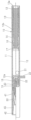
- FIG. 1 is a partial cross-sectional view showing an example of a liquid cosmetic applicator that contains the aqueous liquid cosmetic of the present disclosure.
- the mechanism shown in Fig. 1 is an example of a rotary dispenser type.
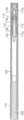
- 2 is a partial cross-sectional view showing another example of a liquid cosmetic applicator that contains the aqueous liquid cosmetic of the present disclosure.
- the mechanism of Fig. 2 is an example of a built-in cosmetic applicator type.
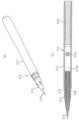
- Fig. 3(a) is a perspective view showing yet another example of a liquid cosmetic applicator that contains the aqueous liquid cosmetic of the present disclosure
- Fig. 3(b) is a partial cross-sectional view of the same liquid cosmetic applicator as Fig. 3(a).
- the mechanism of the liquid cosmetic applicator in Fig. 3(a) and (b) is an example of a collector-type applicator.
- the aqueous liquid cosmetic preparation of the present disclosure is an aqueous liquid cosmetic preparation comprising at least a plant-derived pigment, a film-forming agent, a dispersant, and water, wherein the plant-derived pigment is contained in an amount of 1 to 30 mass% relative to the total amount of the aqueous liquid cosmetic preparation, and the plant-derived pigment has an intensity ratio G/D of 0.5 to 10 between the D band (1,350 cm -1 ) and the G band (1,582 cm -1 ) in a Raman spectrum.
- the plant-derived pigments used in the present disclosure are excellent in terms of reducing the environmental load, safety, etc., and can be black pigments obtained by firing or processing a plant body such as wood or grass, or a processed product thereof, as a raw material.
- a plant body such as wood or grass
- a processed product thereof as a raw material.
- plant-derived charcoal such as bamboo charcoal, hemp charcoal, oak charcoal, Japanese oak charcoal, Japanese oak charcoal, Japanese oak charcoal, chestnut charcoal, Ubamegashi charcoal (binchotan), larch charcoal, pine charcoal, cedar charcoal, cypress charcoal, eucalyptus charcoal, mangrove charcoal, camellia charcoal, olive charcoal, acacia charcoal, peach black, vine black, activated charcoal, and vegetable carbon (plant-based carbon black) (each alone or a mixture of two or more types, the same applies below) can be mentioned.
- the particle shape of these plant-derived pigments is not particularly limited and may be spherical, granular, rod-like, needle-like, plate-like, or amorphous, and any shape may be used.
- the plant-derived pigment (particle) that can be used has an average particle size before dispersion (at the time of blending) of 1 ⁇ m or more, preferably 1 to 50 ⁇ m, because of concerns about hazards to human health from the viewpoint of nanomaterials.
- the shape of the plant-derived pigment is not particularly limited, and can be any shape, such as amorphous, spherical, needle-like, plate-like, or rectangular, and may be solid or hollow, and may further be treated with a surface treatment agent.
- the "average particle size” refers to the volume average particle size (D50) value measured and calculated by a dynamic light scattering method (Particle Size Analyzer FPAR-1000, manufactured by Otsuka Electronics Co., Ltd.) or a laser diffraction method (Microtrac MT3000II, manufactured by Microtrac Bell).
- the plant-derived pigments used in the present disclosure have a G/D ratio, which is the ratio of the peak intensity of the D band to the peak intensity of the G band in a Raman spectrum (Raman spectroscopic analysis), of 0.5 to 10.
- This G/D ratio will be explained using a Raman spectrum obtained by Raman spectroscopic analysis of a plant-derived pigment (for example, bamboo charcoal or vegetable carbon).
- the G band is a peak derived from a plant-derived pigment, which is observed at a Raman shift of about 1582 cm in a Raman spectrum obtained by Raman spectroscopy at a wavelength of 532 nm.
- the D band is a peak derived from amorphous carbon, graphite, or defects in the plant-derived pigment, which is observed at a Raman shift of about 1350 cm in a Raman spectrum obtained by Raman spectroscopy at a wavelength of 532 nm .
- a larger G/D ratio indicates higher crystallinity of the plant-derived pigment and a smaller amount of amorphous carbon or graphite with defects contained in the plant-derived pigment.
- the plant-derived pigment according to this embodiment has a G/D ratio of 0.5 to 10, has few defects in amorphous carbon or graphite, and has high crystallinity. Therefore, the plant-derived pigment having a G/D ratio of 0.5 to 10 can have high tensile strength and high color development.
- the G/D ratio of this plant-derived pigment is preferably 0.5 to 9, more preferably 0.5 to 8, even more preferably 0.5 to 7, even more preferably 0.5 to 6, and especially preferably 0.5 to 5. If the G/D ratio of this plant-derived pigment is less than 0.5, the plant-derived pigment may not have sufficient tensile strength and high color development. Furthermore, if the D/G ratio of the plant-derived pigment exceeds 10, the plant-derived pigment itself may deteriorate, which is not preferable.
- the G/D ratio of the plant-derived pigment is a value measured by the following method.
- the plant-derived pigment used is subjected to Raman spectroscopic analysis under the following conditions to obtain a Raman spectrum.
- the G/D ratio is calculated from the peak intensity of the D band and the peak intensity of the G band.
- Measurement conditions for Raman spectroscopic analysis Dispersive Raman spectroscopic analyzer manufactured by Horiba, Ltd.: Excitation laser wavelength: 532 nm Objective magnification x10, neutral density filter 5%, exposure time 10 seconds x 3 times, slit 200 ⁇ m, hole 400 ⁇ m, 300 gr/mm grating
- the plant-derived pigment used preferably has a BET specific surface area of 20 to 800 m 2 /g, and more preferably 30 to 400 m 2 /g.
- the BET specific surface area in this disclosure is a value measured using a Macsorb model HM-1208 manufactured by Mountech Co., Ltd., by a BET single point method, pretreatment conditions of 110° C. for 30 minutes, and nitrogen as the adsorption gas.
- the plant-derived pigments that can be used have a G/D ratio in the range of 0.5 to 10, and more preferably have a BET specific surface area in the range of 20 to 800 m2 /g.
- Commercially available plant-derived pigments that fall within these ranges include Bamboo Charcoal Powder 5P (Glico Nutrition Foods), CHARCOAL POWDER (made from Kishu Binchotan charcoal, Daito Kasei Kogyo Co., Ltd.), Micro Binchotan Powder, Binchotan Powder, and bamboo Charcoal Powder (all manufactured by Kiriya Chemical Industries), Food Additive/Umebee A Brand Activated Carbon (manufactured by Taihei Chemical Industries Co., Ltd.), KOELIN-663H (vegetable carbon) (manufactured by KOEL), SpecKarre BCP3, SpecKarre BCP5, SpecKarre SuperBlnchotan, SpecKarre BCP super (all manufactured by Spec-Chem), Binchotan Powder Pu
- the content of these plant-derived pigments is from 1 to 30% by mass, preferably from 5 to 20% by mass, and more preferably from 5 to 15% by mass, based on the total amount of the aqueous cosmetic composition. If the content of this plant-derived pigment is less than 1% by mass, the color development will be insufficient and the hiding power will be insufficient, while if it is contained in excess of 30% by mass, the viscosity will increase and application will be hindered, which is not preferable.
- coloring materials other than the above-mentioned plant-derived pigments can be used in combination to the extent that the effects of the present disclosure are not impaired.
- Pigments and dyes used in aqueous liquid cosmetics can be used, but in terms of color development, combination with pigments is particularly preferable.
- Specific examples of pigments that can be used include inorganic pigments such as carbon black, iron oxide (red, yellow, black), titanium dioxide, titanium black (titanium oxynitride), zinc oxide, talc, chromium oxide, cobalt oxide, zinc oxide, titanium mica, bismuth oxychloride, ultramarine, and konjou, and organic pigments such as carmine, Red No. 202, Red No. 220, Red No. 226, Red No.
- At least one of the following may be used in combination: white body powder such as tungsten, aluminum oxide, magnesium oxide, zirconium oxide, antimony oxide, diatomaceous earth, aluminum silicate, aluminum magnesium metasilicate, calcium silicate, barium silicate, magnesium silicate, calcium carbonate, magnesium carbonate, hydroxyapatite, boron nitride, silicon dioxide, etc.; and lustrous powder such as titanium dioxide-coated mica, titanium dioxide-coated synthetic phlogopite, titanium dioxide-coated bismuth oxychloride, iron oxide-coated mica, iron oxide-coated mica titanium, iron blue-treated mica titanium, carmine-treated mica titanium, bismuth oxychloride, fish scale foil, titanium dioxide-coated glass powder, aluminum powder, etc.
- the above pigments, including the plant-derived black pigments, that can be used are not particularly limited as long as they are used in liquid cosmetics.
- Group A yellow iron oxide, red iron oxide, black iron oxide, titanium dioxide, Red No. 226 (CI 73360, also known as Herringdon Pink CN), carmine, ferric iron oxide, gunjou, manganese violet, chromium oxide, lake pigment.
- Pigments other than the above-mentioned plant-derived pigments are used as colorants, and in particular, when at least one of the pigments in Group A is selected, it can be used in combination with the above-mentioned plant-derived black pigment to produce gray, brown, or burgundy colors.
- the content of the pigments in Group A, etc. other than these plant-derived black pigments is preferably 0 to 20% by mass, and more preferably 0 to 15% by mass, based on the total amount of the cosmetic composition.
- the film-forming agent used in the present disclosure may be one composed of a film-forming polymer, for example, a film-forming polymer emulsion particle or the like may be used. Specifically, an aqueous dispersion of a water-insoluble polymer or the like may be used.
- the film-forming agent that can be used include styrene-alkyl acrylate copolymer emulsions, styrene-alkyl methacrylate copolymer emulsions, copolymer emulsions consisting of acrylic acid, methacrylic acid, or their (C1-C4 and C8) alkyl esters, etc.
- the emulsion may be a composite polymer emulsion such as a core-shell type polymer emulsion consisting of a copolymer of an ethylenically unsaturated carboxylic acid monomer and a styrene monomer, and another polymer and/or copolymer.
- a composite polymer emulsion such as a core-shell type polymer emulsion consisting of a copolymer of an ethylenically unsaturated carboxylic acid monomer and a styrene monomer, and another polymer and/or copolymer.
- styrene-alkyl acrylate copolymer emulsion is a (styrene/acrylates) copolymer, and examples of commercially available products of this polymer include Yodosol GH41F (manufactured by Nouryon Co., Ltd.) and Daitosol 5000STY (manufactured by Daito Kasei Kogyo Co., Ltd.).
- Emapoly CE-119N manufactured by Gifu Ceramics Co., Ltd.
- Emapoly CE-119N manufactured by Gifu Ceramics Co., Ltd.
- the average particle size of the resin emulsion (emulsion particles) that serves as the film-forming agent is preferably 50 to 300 nm, and more preferably 100 to 200 nm.
- These film-forming agents such as emulsion particles usually have a resin component finely dispersed in an aqueous component at a concentration of 20 to 60% by weight as solids.
- the content of the film-forming agent used is 1 to 20% by mass, and preferably 5 to 20% by mass, relative to the total amount of the liquid cosmetic, in terms of solid content concentration (active ingredient concentration). Within this range, the drawn lines applied to the skin can be provided with good durability against water, sweat, and sebum. If the content of this film-forming agent is less than 1% by mass, adhesion and water-resistant adhesion will decrease, whereas if it exceeds 20% by mass, the viscosity of the liquid cosmetic will increase, making it difficult to apply.
- a water-soluble dispersant which improves the dispersibility of pigments such as plant-derived black pigments that serve as colorants
- examples of such dispersants include acrylates copolymer, ammonium acrylates copolymer, (styrene/acrylates) copolymer, ammonium (styrene/acrylates) copolymer, (styrene/methylstyrene) copolymer, (acrylates/acrylamide) copolymer, (acrylates/VA) copolymer, (acrylates/VP) copolymer, (acrylates/ethylhexyl acrylate) copolymer, (acrylates/ethylhexyl acrylate/styrene) copolymer
- the dispersant include at least one selected from resin-type dispersants such as (acrylates/octylacrylamide) copolymer, (acrylates/methylst
- polyglycerol fatty acid esters examples include glyceryl stearate, polyglyceryl-10 isostearate, polyglyceryl-10 laurate, polyglyceryl-10 myristate, polyglyceryl-10 oleate, polyglyceryl-10 stearate, polyglyceryl-10 diisostearate, polyglyceryl-6 laurate, polyglyceryl-6 myristate, and polyglyceryl-10 palmitate.
- polyoxyethylene glycerin fatty acid esters examples include PEG-7 glyceryl coconut oil fatty acid and PEG-15 glyceryl stearate.
- polyoxyethylene sorbitan fatty acid esters examples include PEG-20 sorbitan isostearate, polysorbate 20, polysorbate 80, PEG-5 sorbitan oleate, polysorbate 85, polysorbate 60, and polysorbate 65.
- polyoxyethylene sorbitol fatty acid esters examples include sorbeth-6 laurate, sorbeth-40 tetraoleate, and sorbeth-60 tetraoleate.
- polyoxyethylene hydrogenated castor oils examples include PEG-20 hydrogenated castor oil, PEG-30 hydrogenated castor oil, PEG-40 hydrogenated castor oil, PEG-50 hydrogenated castor oil, PEG-60 hydrogenated castor oil, PEG-80 hydrogenated castor oil, and PEG-100 hydrogenated castor oil.
- polyoxyalkylene sterols include PEG-10 phytosterol, PEG-20 phytosterol, PEG-30 phytosterol, and PEG-25 phytostanol.
- polyoxyethylene alkyl ethers examples include beheneth-10, beheneth-20, beheneth-30, ceteth-6, ceteth-7, ceteth-10, ceteth-15, ceteth-20, ceteth-23, ceteth-25, ceteth-30, ceteth-40, laureth-4, laureth-9, laureth-21, laureth-25, oleth-7, oleth-10, oleth-15, oleth-20, oleth-50, steareth-20, (C12-C14) pareth-5, (C12-C14) pareth-7, (C12-C14) pareth-9, and (C12-C14) pareth-12.
- polyoxyethylene polyoxypropylene alkyl ethers examples include PEG-4 ceteth-10, PEG-4 ceteth-20, PEG-8 ceteth-20, PEG-4 ceteth-20, PEG-6 decyltetradeceth-20, and PEG-6 decyltetradeceth-30.
- polyethylene glycol fatty acid esters include PEG-10 stearate, PEG-25 stearate, PEG-40 stearate, PEG-45 stearate, and PEG-55 stearate.
- resin-type dispersants such as acrylates copolymer, ammonium acrylates copolymer, and (styrene/acrylates) copolymer, which, when dispersed with a resin, provide a formulation that exhibits even better durability, such as water-resistant adhesion and sebum-resistant adhesion, after application.
- dispersants examples include commercially available products such as SYNTRAN EX149PE and SYNRAN 5402 (both manufactured by Interpolymer Corporation), LUVIMER 100P (manufactured by BASF), AMPHOMER HC (manufactured by Nouryon), BC-5.5, BC-7, BC-10, BC-15, BC-20, BC-23, BC-25, BC-30, BC-40, BB-10, BB-20, BB-30, DDP-8, DDP-10, HCO-20, HCO-30, HCO-40, HCO-50, HCO-60, HCO-80, HCO-100, Decaglyn 1-50SV, Decaglyn 1-ISV, Decaglyn 1-L, Decaglyn 1-M, Decaglyn 1-OV, Decaglyn 1-SV, Decaglyn 2-ISV, Decaglyn 1-LVEX, Decaglyn 1-MVEX PN, Decaglyn 1-OVEX, Decaglyn 1-PVEX, Deca
- the content of these dispersants is preferably 5.0 to 40.0% by mass, more preferably 7 to 30% by mass, based on the total amount of pigments including plant-derived pigments.
- the content is expressed as a solid content concentration (active ingredient concentration).
- the content ratio of the film-forming agent (X) to the dispersing agent (Y), X/Y is from 3 to 20, and even more preferably from 5 to 15, on a mass basis, from the standpoints of line drawing durability and stability.
- aqueous solvent in addition to the above-mentioned plant-derived pigment, film-forming agent, and dispersant, it is preferable to use an aqueous solvent from the viewpoint of further improving dispersion stability, low-temperature stability, coatability, and the like.
- the aqueous solvent used is one used as a solvent for liquid cosmetics, and includes at least one of water, a lower alcohol having 5 or less carbon atoms, and a polyhydric alcohol.
- lower alcohols having 5 or less carbon atoms include at least one of methyl alcohol (methanol), ethyl alcohol (ethanol), n-propyl alcohol, isopropyl alcohol, n-butyl alcohol, sec-butyl alcohol, tert-butyl alcohol, isobutyl alcohol, pentyl alcohol, ethylene glycol, and propylene glycol.
- polyhydric alcohols examples include glycerin, erythritol, threitol, arabinitol, xylitol, ribitol, propylene glycol, 1,3-butylene glycol, dipropylene glycol, pentylene glycol, dipentylene glycol, ethylene glycol, diethylene glycol, and pentaerythritol.
- ethyl alcohol ethanol
- the total content of the aqueous solvents used is 45 to 85% by mass, and more preferably 50 to 80% by mass, based on the total amount of the liquid cosmetic.
- the content of this aqueous solvent 45% by mass or more a smooth writing feel and moisturizing properties can be achieved, and a small preservative effect can also be exerted, while by making it 85% by mass or less, the dispersion stability can be further improved.
- the water solvent used in the present disclosure distilled water, ion-exchanged water, purified water, pure water, ultrapure water, etc. can be used.
- the ratio of water to the aqueous solvent is preferably 70 to 100% by mass (50 to 80% by mass), and particularly preferably 80 to 90% by mass.
- the aqueous liquid cosmetic composition of the present disclosure may contain any optional components used in ordinary liquid cosmetic compositions, provided that the effects of the present disclosure are not impaired.
- thickeners viscosity/viscosity regulators
- preservatives fragrances
- moisturizers moisturizers
- beauty ingredients and plant extracts
- antioxidants neutralizing agents
- UV absorbers UV absorbers
- chelating agents pH adjusters
- other dispersants such as polyethylene glycol alkyl ethers
- the thickener that can be used includes, for example, polysaccharide, polymer, and/or silica thickener.
- polysaccharide include starch, glycerite of starch; gum, for example, karaya gum (sterculia gum), tragacanth gum, gum arabic, gum ghatti, xanthan gum, guar gum, acacia gum, cellulose gum, magnesium aluminum silicate (Veegum), carrageenan, sodium alginate, agar, pectin, gelatin, cellulose derivatives, for example, cellulose, carboxymethylcellulose, hydroxyethylcellulose, hydroxypropylcellulose, hydroxymethylcellulose, hydroxymethylcarboxypropylcellulose, methylcellulose, ethylcellulose, and cellulose sulfate, oxidized cellulose, crystalline cellulose, and further include natural and synthetic clays, for example, bentonite, hectorite clay, and mixtures thereof.
- preservatives examples include iodopropargyl compounds, sodium pentachlorophenol, 1,2-benzisothiazolin-3-one, 2,3,5,6-tetrachloro-4(methylsulfonyl)pyridine, paraoxybenzoic acid esters, phenol, sodium benzoate, sodium dehydroacetate, potassium sorbate, morpholine, cresol, methylisothiazolinone, chloromethylisothiazolinone, octylisothiazolinone, dichlorooctylisothiazolinone, hexahydro-1,3,5-tris(2-hydroxyethyl)-1,3,5-triazine, 2-bromo-2-nitropropane-1,3-diol, sodium 2-pyridinethiol-1-oxide, sodium pyrithione, 2-(4-thiozolyl)benzimidazole, 4-terpinenol, 1,8-cineole, thyl-oxid
- glyceryl stearate eucalyptus oil, longifolene, isopropylmethylphenol, 2-methyl-4-isothiazolin-3-one, citral, eugenol, allyl isothiocyanate, d-limonene, tannic acid, benzalkonium chloride, glyceryl caprylate, glycerin fatty acid esters, chlorphenesin, salicylic acid, ethyl parahydroxybenzoate, butyl parahydroxybenzoate, propyl parahydroxybenzoate, methyl parahydroxybenzoate, bisabolol, hinokitiol, phenylethyl alcohol, phenethyl alcohol, phenoxyethanol, butylparaben, propylparaben, benzalkonium chloride, methylparaben, 2-(4-thiazolyl)benzimidazole, 1,2-propanediol, 1,2-pentanediol,
- a plant-derived pigment such as charcoal which has a weaker preservative effect than pigments such as carbon black, is used, and therefore by adjusting the preservative design, etc., so that each of the above preservatives, particularly preferably 1,2-pentanediol, 1,2-hexanediol, 1,2-octanediol, etc., is contained in an amount of preferably 0.5 to 10 mass%, and more preferably 1 to 5 mass%, relative to the total amount of the liquid cosmetic, it is possible to obtain an aqueous liquid cosmetic that satisfies the preservative standards while simultaneously achieving a high degree of the effects of the present disclosure.
- fragrances examples include anethole, cineole, basil, clary sage, citral, ⁇ -pinene, ⁇ -pinene, ⁇ -terpinene, nonanol, octanol, citronellal, ionone, methylionone, lavender, marjoram, oregano, patchouli, rosemary, sage, rosewood, clove, cinnamon, thyme, eugenol, linalool, tea tree, ⁇ -terpineol, citronellol, limonene, ⁇ -terpinene, acetyl cedrene, ⁇ -terpenyl acetate, and the like.
- moisturizing agents and beauty ingredients examples include sodium hyaluronate, panthenol, oligopeptides, sage leaf extract, aloe ferox leaf extract, succinoyl atelocollagen, deep sea water, Mimasaka hot spring water, marine cholesterol, and hydrolyzed silk.
- plant extracts examples include shikonin extract, grape leaf extract, acacia extract, althea extract, aloe extract, ginkgo extract, nettle extract, artemisia extract, fennel extract, mallow extract, angelica tree extract, scutellaria extract, phellodendron bark extract, coptis japonica extract, hypericum extract, seaweed extract, mugwort extract, chamomilla extract, cinchona extract, cucumber extract, honeysuckle extract, sophora flavescens extract, kumazasa extract, gentiana extract, geranium extract, burdock extract, comfrey extract, hawthorn extract, shiitake mushroom extract, rehmannia extract, perilla extract, linden extract, houttuynia cordata extract, sanguisorba extract, white birch extract, horsetail extract, ivy extract, yarrow extract, mulberry extract, and taiso extract.
- plant extracts include thyme extract, tea extract, clove extract, calendula extract, angelica extract, spruce extract, tomato extract, elder extract, witch hazel extract, loquat leaf extract, coltsfoot extract, horse chestnut extract, melitsa extract, peach leaf extract, saxifrage extract, lavender extract, lemon extract, royal jelly extract, chestnut extract, rose extract (rose centifolia flower extract), apple extract (apple fruit culture cell extract), Swertia japonica extract, Pinus sylvestris cone extract, chamomile flower extract, tea leaf extract, Satozakura flower extract, Panax ginseng root extract, brown algae extract, Rosa canina fruit extract, peach leaf extract, olive leaf extract, and rosemary extract. These plant extracts may be used alone or in combination of two or more.
- the viscosity range of the aqueous liquid cosmetic composition at a temperature of 25° C., a shear rate of 192 (s -1 ) (50 rpm), and a shear rate of 38.3 [s -1 ] (10 rpm) depending on the mounting type and application type of the liquid cosmetic composition applicator.
- the viscosity value exceeds the upper limit (15 mPa ⁇ s, 100 mPa ⁇ s), the outflow property of the aqueous liquid cosmetic composition will be significantly reduced, which is undesirable. According to the present disclosure, even with the above-mentioned low viscosity formulation, it is possible to obtain an aqueous liquid cosmetic with a favorable formulation design without any difference in concentration between the upper and lower parts of the liquid cosmetic.
- the above viscosity ranges can be adjusted by appropriately combining the raw materials, such as the plant-derived pigment, film-forming agent, dispersant, and aqueous solvent, and by combining the contents of each ingredient in a suitable range, or by using a suitable dispersion method.
- the viscosity measurement conditions are as follows: the obtained cosmetic composition was measured using an ELD type viscometer manufactured by Toki Sangyo Co., Ltd., with a standard rotor at a shear rate of 192 [ -1 ] (50 rpm) or 38.3 [s -1 ] (10 rpm) and a temperature of 25°C.
- the aqueous liquid cosmetic preparation of the present disclosure preferably has a pH, measured at 25° C. using a glass electrode, in the range of 6 to 9.
- the pH is adjusted by adjusting the type and amount of each component, or by using the above-mentioned pH adjusters, etc.
- the aqueous liquid cosmetic preparation of the present disclosure can be prepared by dispersing the above-mentioned plant-derived pigment, film-forming agent, dispersant, aqueous solvent, and other components under suitable dispersion conditions using a dispersing machine such as a homomixer, a sand mill, an ultrasonic homogenizer, or a high-pressure homogenizer.
- a dispersing machine such as a homomixer, a sand mill, an ultrasonic homogenizer, or a high-pressure homogenizer.
- a (multiple-type) ultrasonic homogenizer or high-pressure homogenizer is used as the dispersing machine
- optimal dispersion can be achieved by suitably adjusting the dispersion conditions, for example, the frequency in the case of an ultrasonic homogenizer, and the pressure range in the case of a high-pressure homogenizer.
- the obtained aqueous liquid cosmetic containing a plant-derived pigment can be loaded into a collector-type or padded-type liquid cosmetic applicator or a direct liquid storage type (piston extrusion type, valve type) liquid cosmetic applicator, and can be stored (filled) in, for example, a pen-type liquid cosmetic applicator (container) having a brush tip or pen core as the application part, for use.
- a pen-type liquid cosmetic applicator container having a brush tip or pen core as the application part, for use.
- the liquid cosmetic applicator that can be used is not particularly limited, so long as it is a liquid cosmetic applicator of the various mounting types equipped with a brush tip or pen core for eyeliner or eyebrows, for example.
- Preferred examples of the application means include a brush tip (brush pen) for eyeliner or eyebrows, a pen core, and an applicator having an applicator body serving as the application means composed of rubber, elastomer, or a closed cell having resilience, and having a container for filling with a liquid cosmetic.
- liquid cosmetic applicators that have mechanisms of a rotary feed type, a built-in cosmetic applicator type and a collector-type applicator type, respectively, which are excellent in usability, simplicity and applicability.
- the rotary-type dispensing liquid cosmetic applicator has an applicator section 30 formed with a brush tip (brush pen) provided in front of a cosmetic-containing container 11 that serves as a reservoir from which an aqueous liquid cosmetic containing the plant-derived pigment of the present disclosure (hereinafter simply referred to as "liquid cosmetic”) is dispensed by a liquid pressing mechanism 10.
- the cosmetic-containing container 11 serves as a reservoir from which an aqueous liquid cosmetic containing the plant-derived pigment of the present disclosure (hereinafter simply referred to as "liquid cosmetic") is dispensed by a liquid pressing mechanism 10.
- Liquid pressing mechanism 10 is configured to supply the liquid cosmetic in container (storage section) 11 to application section 30 by rotating advancing member 13 arranged at the rear end of barrel body 12 in the circumferential direction relative to barrel body 12.
- the liquid pressing mechanism 10 of this applicator comprises a dispensing member 13 rotatably fitted to the rear end of the barrel body 12, a drive tube 15 that transmits the force of the rotation of the dispensing member 13 by the user to the threaded rod 14, a threaded body 16 fixed to the barrel body 12 and into which the threaded rod 14 screws, the threaded rod 14 with a piston body 17 rotatably engaged at its tip, and a piston body 17 that slides within the storage section 11 of the barrel body 12.
- the rotation of the dispensing member 13 is transmitted to the threaded rod 14 via the drive tube 15, and the rotation of the threaded rod 14 causes the threaded rod 14 and piston body 17 to advance via the female thread of the nut-shaped threaded body 16, dispensing the liquid cosmetic from the storage section 11 to the applicator section 30.
- the feeding member 13 has a cylindrical operating portion that is closed by fitting a crown 13a at its rear end and is rotatably fitted into and exposed at the rear end of the barrel body 12.
- a drive cylinder 15 is fitted into the feeding member 13 and fixed in the rotational direction, and a screw body 16 is attached inside the drive cylinder 15 so as to be fixed in the rotational direction and relatively movable in the axial direction.
- Reference numeral 13b denotes a spring member that biases the feeding member 13, which serves as a rotating body, rearward.
- seal portion 18, joint member 19, front barrel 20, and applicator portion 30 are attached by fitting to front end portion 12a of barrel body 12.
- Liquid cosmetic material is stored in reservoir 11 of barrel body 12, and the liquid cosmetic material dispensed from reservoir 11 passes through a flow path within joint member 19 and is ejected into applicator portion 30 so as to be applicable.
- cap 40 is formed so as to be able to be attached to front barrel 20 so as to cover applicator portion 30 and front barrel 20 after use.
- reference numeral 21 denotes a stirring ball that stirs the liquid cosmetic in the storage portion 11 by reciprocating motion
- 22 denotes a sealing ball
- Reference numeral 41 denotes an inner cap in the cap 40
- 42 denotes a spring for biasing the inner cap rearward. Note that the stirring ball 21 may be omitted.
- reference numeral 23 denotes a stopper having a ring-shaped portion attached between the rear end of front barrel 20 and the front surface of the stepped portion of front end 12a of barrel body 12, in order to position seal portion 18, joint member 19, front barrel 20, and applicator portion 30 in a position that closes the flow path of liquid cosmetic material heading toward applicator portion 30 when not in use.
- This stopper 23 has a part of the ring-shaped portion cut off and a knob formed integrally with the opposite side to the cut-off portion, and by pulling the knob, the ring-shaped portion expands in diameter from the cut-off portion so that it can be removed from between the rear end of front barrel 20 and front end 12a of barrel body 12.
- the seal ball 22 fits into the inner diameter of the seal part 18, which serves as the seal ball receiver, to seal it and prevent the liquid cosmetic from flowing into the application part 30.
- the user pulls the stopper 23 out of the barrel body 12 and pushes the front barrel 20 towards the rear end, causing the rear end narrow part of the joint member 19 to abut against the seal ball 22, which is removed from the inner diameter of the seal part 18 and enters the storage part 11, and the liquid cosmetic in the storage part 11 flows from the inner diameter of the joint member 19 into the liquid flow path of the application part 30 and is supplied to the application part 30 from its inside, making it possible to apply the cosmetic to the target part.
- the cosmetic-incorporated applicator type liquid cosmetic applicator has a barrel 110 with the cosmetic impregnated in the padding 126 and built in, an applicator section 114 provided at the barrel tip 110a for applying the cosmetic to an object, and a retaining member 116 covering the outer periphery of the applicator section 114 on the barrel 110 side (base side) except for the tip 114a of the applicator section 114, and is a cosmetic-incorporated applicator structured to supply the cosmetic inside the barrel 110 to the applicator section 114, and has a cap 112 configured to be detachable from the barrel tip 110a to cover the applicator section 114 and the retaining member 116.
- the tip 114a of the application part 114 is sharpened.
- the application part 114 is in the shape of a brush made of bundled fibers.
- the application part 114 is made by aligning (sharpening) a plurality of resin fiber bundles (specific example: fiber material is polybutylene terephthalate (PBT), fiber thickness is 0.1 to 0.15 mm) so that the tip 114a tapers to form a brush shape, and the rear end is integrated by heat welding and expanded in diameter into a flange shape.
- the application part 114 may also be made of solidified fibers.
- an ink absorbing material filling 126 is contained within the barrel 110 from the center to the tip 110a, and the filling 126 is sealed and supported by a tail plug 128 fitted into the rear end of the barrel 110.
- An ink relay core 130 made of open-cell foam is disposed in the opening of the barrel tip 110a.
- the tail end of this relay core 130 fits into the tip of the inner cotton 126, while the tip fits into the tail end of the application section 114, guiding the ink absorbed in the inner cotton 126 to the application section 114.
- the relay core 130 is mounted in the barrel tip 110a, which is stepped and slightly smaller in diameter than the main body (the diameter is smaller by the thickness of the cap 112), via a roughly cylindrical support 132, and the cylindrical rear end of the holding member 116 fits between the outer periphery of the support 132 and the inner periphery of the barrel tip 110a.
- the tip of the holding member 116 is located further forward than the barrel tip 110a and covers the outer peripheral surface 114b of the application part 114, and the holding member outer peripheral surface 116a tapers into a conical side shape or a tapered shape.
- the collector-type liquid cosmetic applicator has a front barrel 210 and a barrel body 214 into which a barrel main body 212 at the rear of the front barrel 210 fits, and as shown in FIG. 3(b), a comb-shaped collector 216 with multiple leaf portions arranged in the axial direction is disposed at the front of the barrel 214, and the application liquid is stored in a storage space 214a at the rear of the barrel 214.
- Shaft body 212 at the rear of shaft body 214 is formed like a pipe whose interior is connected and which is open to the front and rear.
- a tail plug 214b is fitted into the rear of shaft body 212, which is also the rear of the shaft body, to close the rear of shaft body 212, and the space within shaft body 214 (which is also the space within shaft body 212) sandwiched between the front end of tail plug 214b and the rear end of collector 216 forms accommodation space 214a.
- the containing space 214a contains the coating liquid directly without disposing an impregnated body such as a filling material, and further contains an agitating body (such as a ball) 214c for agitating the coating liquid.
- Lead barrel 210, barrel body 212, collector 216, cap, etc. may be resin molded products.
- Stirrer 214c may be a ball material made of metal, resin, or the like.
- Collector 216 is a structure that is covered and held by front barrel 210 and barrel body 212 .
- writing part 218 consisting of a tapered brush body protrudes from the opening at the front end of tip barrel 210, and a cap covering writing part 218 is removably fitted onto tip barrel 210.
- Tip barrel 210 is tapered with an approximately conical side shape, and it is desirable to form the tip angle of tip barrel 210 at approximately the same angle as the tip angle of writing part 218.
- the writing part 218 is a tapered brush body made of resin fibers, natural fiber bundles, and a resin porous body.
- the rear end of the writing part 218 is expanded in diameter like a flange, and this expanded part engages with the inside of the front barrel 210 to prevent it from coming off.
- a brush body is preferable for the writing part 218, various applicator bodies for applying an application liquid can also be used.
- a cup-shaped inner cap that covers the writing part 218 to increase its airtightness is disposed within the cap so as to be movable back and forth, and a spring is disposed to bias the inner cap rearward.
- a bellows-shaped collector 216 is disposed behind the writing portion 218, and a core 222 is disposed penetrating through the hollow portion of this collector 216.
- Core 222 which serves as a relay core, can be made of a capillary material such as a resin fiber bundle, a natural fiber bundle, or a resin porous body.
- the central core 222 does not protrude from the rear end of the collector 216 into the accommodation space 214a of the shaft body 214 (see FIG. 3B).
- the rear end face of the central core 222 is almost aligned with the rear end face of the collector 216.
- the rear end of the central core 222 does not protrude into the accommodation space 214a, and the volume of the accommodation space 214a can be secured.
- the rear end of the central core 222 does not protrude into the accommodation space 214a, when the stirring body 214c is provided in the accommodation space 214a, even if the stirring body 214c moves in the accommodation space 214a, it does not collide with the central core 222 and does not deform the central core 222, so that the coating liquid can be sufficiently penetrated.
- a direct-flow type liquid cosmetic applicator is preferred, and a collector type is more preferred.
- a padded type a direct-flow storage type (piston extrusion, with stirring ball), and a direct-flow storage type (valve type) can be used, and a "tip brush”, "fiber bundle core”, or “spatula” can be used in the application part.
- the liquid cosmetic applicator of the above form has been described as being a liquid cosmetic applicator for liquid eyeliner or liquid eyeshadow, which is a cosmetic composition that is an aqueous liquid cosmetic containing the plant-derived pigment of the present disclosure, but is not limited to this and can also be used as an eyebrow applicator for drawing lines on eyebrows, a mascara applicator, or for drawing lines on the skin.
- a liquid pressing mechanism of the liquid cosmetic applicator of the above-described embodiment a rotary-type dispensing type applicator as shown in FIG. 1 is used, but a knock-type dispensing type liquid cosmetic applicator may also be used.
- aqueous liquid cosmetic composition of the present disclosure thus constituted, by suitably combining at least 1 to 30% by mass of a plant-derived pigment having a G/D ratio of 0.5 to 10, a film-forming agent, a dispersant, and preferably, various raw materials such as an aqueous solvent, it is possible to obtain an aqueous liquid cosmetic composition that has excellent color development and dispersion stability even when a plant-derived pigment is used, and that can be discharged satisfactorily even when mounted on a padded liquid cosmetic applicator, as well as a direct-dispensing type applicator for makeup cosmetics such as eyeliner, eyeshadow, eyebrow liner for drawing eyebrows, and mascara, and that can draw highly colored lines and has excellent durability such as water-resistant adhesion.
- an aqueous liquid cosmetic containing the plant-derived pigment of the present disclosure is stored for a long period of time in a container such as a liquid cosmetic applicator to be used, unlike iron oxide pigments and the like which undergo aggregation and sedimentation, the dispersibility and stability over time within the container are maintained over a long period of time because a plant-derived pigment such as charcoal is used. Therefore, even in an eyeliner applicator container that uses a brush tip (brush pen) for the application part 30 as shown in FIG.
- an aqueous liquid cosmetic that is suitable for liquid cosmetics such as eyeliner liquid, which is less likely to separate colors at the tip of the brush tip, and has vivid coloring, hiding power, and excellent visibility such as a matte finish.
- a stirring body since a plant-derived pigment is used, there is no need for the user to stir, and there is no color change when applied.
- Examples 1 to 15 and Comparative Examples 1 to 3 Cosmetic compositions (formulation unit: mass %, total amount 100 mass %) serving as aqueous liquid cosmetics having the formulation shown in Table 1 below were prepared by the method described below, and the viscosity value of each liquid cosmetic was evaluated by the measurement method described above, and the pH, color development, drawn line durability A (water-resistant adhesion), drawn line durability B (sebum resistance), product stability over time, and dischargeability of the liquid cosmetic were evaluated by the evaluation methods described below.
- the aqueous liquid cosmetics of Examples 1 to 13 were evaluated for color development, drawn line durability A (water-resistant adhesion), drawn line durability B (sebum resistance), product stability over time, and liquid cosmetic ejection properties using the collector-type liquid cosmetic applicator (eyeliner) of Figure 3, and the aqueous liquid cosmetics of Examples 14 and 15 were evaluated for color development, drawn line durability A (water-resistant adhesion), drawn line durability B (sebum resistance), product stability over time, and liquid cosmetic ejection properties in the same manner as in Examples 1 to 13 using the propelling-type liquid cosmetic applicator (eyeliner) of Figure 1. The results are shown in Table 1 below.
- a cosmetic composition serving as an aqueous liquid cosmetic having the formulation shown in Table 1 below was prepared according to a conventional procedure, that is, by adding a plant-derived pigment as a coloring material and a dispersant to ion-exchanged water as a vehicle, dispersing the mixture using a Labostar (manufactured by Ashizawa Finetech Co., Ltd.) as a disperser, and then adding and mixing the other ingredients.
- a Labostar manufactured by Ashizawa Finetech Co., Ltd.
- the obtained water-based liquid cosmetic was filled into a collector-type eyeliner as shown in FIG. 3, and the appearance after one month at 50° C. was evaluated sensorily according to the following evaluation criteria. Evaluation criteria: A: No pigment sedimentation was observed. B: Sedimentation of the pigment was observed, but the sediment was quickly loosened. C: Sedimentation of the pigment was observed, and the sediment was difficult to loosen. D: Sedimentation of the pigment was observed, and the sediment was hard and could not be loosened.
- *1 to *9 in Table 1 above are as follows.
- the aqueous liquid cosmetics prepared using the collector-type liquid cosmetic applicators of Examples 1 to 13, which fall within the scope of the present disclosure, and the aqueous liquid cosmetics prepared using the propelling-type liquid cosmetic applicators of Examples 14 and 15, were found to be aqueous liquid cosmetics that were superior in color development, line durability (water-resistant adhesion, sebum resistance), product stability over time, and liquid cosmetic ejection ability, compared to Comparative Examples 1 to 3, which fall outside the scope of the present disclosure.
- the viscosity was adjusted instead of the dispensing type, and the color development, line durability (water-resistant adhesion, sebum resistance), product stability over time, and liquid cosmetic ejection properties were evaluated using the collector-type liquid cosmetic applicator shown in Figure 3. It was confirmed that the same evaluation results were obtained as when the dispensing type was used. Furthermore, for the above-mentioned Examples 1 to 13, the viscosity was adjusted and a propelling-type liquid cosmetic applicator as shown in FIG. 1 was used instead of the collector-type applicator to evaluate color development, line durability (water-resistant adhesion, sebum-resistant resistance), product stability over time, and liquid cosmetic ejection properties. It was confirmed that the same evaluation results as those obtained when the collector-type applicator was used were obtained.
- the pigments Even though it uses plant-derived pigments that are safe and have a reduced environmental impact, the pigments have excellent color development and dispersion stability, and can be discharged well even when mounted on cotton-filled liquid cosmetic applicators, as well as direct-flow types for eyeliner, eyeshadow, eyebrow liners, mascara, and other makeup cosmetic applicators. Moreover, it is possible to obtain water-based liquid cosmetics that can draw highly colored lines and have excellent line durability.
Landscapes
- Life Sciences & Earth Sciences (AREA)
- Health & Medical Sciences (AREA)
- General Health & Medical Sciences (AREA)
- Veterinary Medicine (AREA)
- Public Health (AREA)
- Animal Behavior & Ethology (AREA)
- Epidemiology (AREA)
- Birds (AREA)
- Chemical & Material Sciences (AREA)
- Inorganic Chemistry (AREA)
- Engineering & Computer Science (AREA)
- Biotechnology (AREA)
- Botany (AREA)
- Microbiology (AREA)
- Mycology (AREA)
- Emergency Medicine (AREA)
- Dispersion Chemistry (AREA)
- Cosmetics (AREA)
Abstract
Description
例えば、(1)水50~90質量%と、平均粒径が0.05~1μmの炭1~10質量%を含有することを特徴とする液状化粧料組成物(例えば、特許文献2参照)、(2)粉砕により平均粒子径が0.15~0.7μmで、かつ最小粒子径が0.1μm以上にコントロールされるとともに、含有炭素量が96質量%以上の植物炭微粉末、この植物炭微粉末を含有する化粧料(例えば、特許文献3参照)、(3)水と、少なくとも、22~40質量%の黒色顔料と、前記黒色顔料との質量%比で30:1~3:1の高分子又はHLBが10以上の界面活性剤である分散剤と、前記黒色顔料との質量%比で3:1~5:3の多価アルコールと、を含有し、平均粒子径(累積平均径/中心径)が340~392nm、明度L値が24未満であることを特徴とする水性分散体、この水性分散体を含有する化粧料(例えば、特許文献4参照)などが知られている。
前記植物由来顔料は、BET比表面積が20~800m2/gであることが好ましい。
更に、下記A群から選ばれる顔料を含有することが好ましい。
A群:黄酸化鉄、赤酸化鉄、黒酸化鉄、二酸化チタン、赤226、カルミン、コンジョウ、グンジョウ、マンガンバイオレット、酸化クロム、レーキ顔料
前記被膜形成剤は、樹脂エマルションであることが好ましい。
本開示の液体化粧料塗布具は、上記構成の水系液体化粧料を搭載したことを特徴とする。
本開示の目的及び効果は、特に請求項において指摘される構成要素及び組み合わせを用いることによって認識され且つ得られるものである。上述の一般的な説明及び後述の詳細な説明の両方は、例示的及び説明的なものであり、特許請求の範囲に記載されている本開示を制限するものではない。
これらの植物由来顔料の粒子形状は、球状、粒状、棒状、針状、板状、不定形など特に制限されず、いずれの形状も用いることができる。
また、用いることができる植物由来顔料(粒子)の分散前(配合時)の平均粒子径は、ナノマテリアルの観点から人への健康被害が懸念される点から、1μm以上のもの、好ましくは、1~50μmのものを用いることができ、植物由来顔料の形状は、特に限定されず、不定形、球状、針状、板状、方形など任意の形状をとることができ、中実であっても良く、また中空であっても良く、さらには表面処理剤で処理されていても良い。
本開示(実施例を含む)において、「平均粒子径」は、動的光散乱法〔粒径アナライザー FPAR-1000、大塚電子社製〕もしくは、レーザー回折法〔マイクロトラック MT3000II、マイクロトラックベル製〕により測定し算出した体積平均粒径(D50)の値をいう。
Gバンドとは、波長532nmのラマン分光分析法により得られるラマンスペクトルにおいて、ラマンシフト1582cm-1付近に見られる植物由来顔料に由来するピークである。Dバンドとは、波長532nmのラマン分光分析法により得られるラマンスペクトルにおいて、ラマンシフト1350cm-1付近に見られるアモルファスカーボン、グラファイト、又は当該植物由来顔料の欠陥に由来するピークである。従って、G/D比の値が大きいほど、植物由来顔料の結晶性が高く、植物由来顔料に含まれるアモルファスカーボンや欠陥を有するグラファイトの量が少ないことを示す。
この植物由来顔料のG/D比が0.5~9であるのが好ましく、0.5~8がより好ましく、0.5~7がさらに好ましく、0.5~6がよりさらに好ましく、0.5~5がことさら好ましい。この植物由来顔料のG/D比が0.5未満であると、植物由来顔料が十分な引張強度と高い発色性を有することができない場合がある。更に、植物由来顔料のD/G比が10を超えると、植物由来顔料自体が劣化するおそれがあり、好ましくない。
用いる植物由来顔料について、下記の条件でラマン分光分析を行い、ラマンスペクトルを得る。該ラマンスペクトルにおいて、Dバンドのピーク強度とGバンドのピーク強度とからG/D比を算出する。
(ラマン分光分析の測定条件)
堀場製作所社製、分散型ラマン分光分析装置:
励起レーザー波長:532nm
対物鏡倍率x10、減光フィルタ5%、露光時間10秒x3回
スリット200μm、ホール400μm、300gr/mmグレーティング
本開示におけるBET比表面積は、マウンテック社製Macsorb model HM-1208にて、BET一点法、前処理条件110℃30分、吸着ガスに窒素を使用することにより測定した値である。
この植物由来顔料の含有量が1質量%未満では、発色が不十分であり、また、隠ぺい力も不足し、一方、30質量%を超えて含有すると、粘度が高くなり、また、塗布に支障を来すこととなり、好ましくない。
用いることができる顔料としては、具体的には、カーボンブラックや、酸化鉄(赤、黄、黒)、二酸化チタン、チタンブラック(酸窒化チタン)、酸化亜鉛、タルク、酸化クロム、酸化コバルト、酸化亜鉛、雲母チタン、オキシ塩化ビスマス、群青、コンジョウなどといった無機顔料や、カルミン、赤色202号、赤色220号、赤色226号、赤色228号、黄色401号、黄色205号、黄色4号Alレーキ、黄色203号Alレーキ、赤色40号Alレーキ、赤色104号Alレーキなどといった有機顔料、さらにタルク、白雲母、金雲母、紅雲母、黒雲母、合成雲母、絹雲母(セリサイト)、合成セリサイト、カオリン、炭化珪素、スメクタイト、酸化アルミニウム、酸化マグネシウム、酸化ジルコニウム、酸化アンチモン、珪ソウ土、ケイ酸アルミニウム、メタケイ酸アルミニウムマグネシウム、ケイ酸カルシウム、ケイ酸バリウム、ケイ酸マグネシウム、炭酸カルシウム、炭酸マグネシウム、ヒドロキシアパタイト、窒化ホウ素、二酸化珪素等の白色体質粉体、二酸化チタン被覆雲母、二酸化チタン被覆合成金雲母、二酸化チタン被覆オキシ塩化ビスマス、酸化鉄被覆雲母、酸化鉄被覆雲母チタン、紺青処理雲母チタン、カルミン処理雲母チタン、オキシ塩化ビスマス、魚鱗箔、二酸化チタン被覆ガラス末、アルミニウムパウダー等の光輝性粉体の少なくとも1種を併用することができる。また、用いることができる植物由来の黒顔料を含む上記顔料は、液体化粧料に用いられているものであれば、特に限定されずに用いることができる。
A群:黄酸化鉄、赤酸化鉄、黒酸化鉄、二酸化チタン、赤色226号(CI73360,別名:ヘリンドンピンクCN)、カルミン、コンジョウ、グンジョウ、マンガンバイオレット、酸化クロム、レーキ顔料
これらの上記植物由来顔料以外の顔料は、色材として用いるものであり、特に、上記A群の顔料の少なくとも1つを選択した場合は、上記植物由来の黒顔料との併用により、グレー色系、ブラウン色系、ボルドー色系に調色することができる。
これらの植物由来の黒色顔料以外の上記A群などの顔料の含有量は、化粧料組成物全量に対して、0~20質量%が好ましく、更に好ましくは、0~15質量%が望ましい。
用いることができる被膜形成剤としては、例えば、スチレン・アクリル酸アルキル共重合体エマルション、スチレン・メタクリル酸アルキル共重合体エマルション、アクリル酸、メタクリル酸、又はそれらの(C1~C4及びC8)アルキルエステルの成分からなる共重合体エマルション等が挙げられる。また、エチレン性不飽和カルボン酸系モノマーとスチレン系モノマーのコポリマーと他の重合体および/または共重合体からなるコア-シェル型ポリマーエマルションのような複合型ポリマーのエマルションであってもよい。
これらの被膜形成剤となる樹脂エマルション(エマルション粒子)において、吐出性の点から、その平均粒子径は、50~300nmであることが好ましく、更に好ましくは、100~200nmであるものが望ましい。
本開示では、被膜形成剤に上記樹脂エマルションを用いることで、比較的粒径の大きな植物由来顔料であっても、ハードケークを形成しにくく、保存安定性に優れ、塗布先(ペン先)での色材分離がしにくく、書き出し時から発色性のよい描線を塗布(筆記)することができる。
用いる被膜形成剤の含有量は、固形分換算濃度(有効成分濃度)で液体化粧料全量に対して、1~20質量%であり、好ましくは、5~20質量%であり、この範囲で皮膚に塗膜した描線に、水や汗、皮脂に対して良好な耐久性を付与することができる。
この被膜形成剤の含有量が1質量%未満であると、固着性、耐水固着性が低下し、逆に、20質量%を超えると、液体化粧料の粘度が上昇し、塗布することが難しくなる。
ポリオキシエチレングリセリン脂肪酸エステルとしては、例えば、ヤシ油脂肪酸PEG-7グリセリル、ステアリン酸PEG-15グリセリルが挙げられる。
ポリオキシエチレンソルビタン脂肪酸エステルとしては、例えば、イソステアリン酸PEG-20ソルビタン、ポリソルベート20、ポリソルベート80、オレイン酸PEG-5ソルビタン、ポリソルベート85、ポリソルベート60、ポリソルベート65が挙げられる。
ポリオキシエチレンソルビット脂肪酸エステルとしては、例えば、ラウリン酸ソルベス-6、テトラオレイン酸ソルベス-40、テトラオレイン酸ソルベス-60が挙げられる。
ポリオキシエチレン硬化ヒマシ油としては、例えば、PEG-20水添ヒマシ油、PEG-30水添ヒマシ油、PEG-40水添ヒマシ油、PEG-50水添ヒマシ油、PEG-60水添ヒマシ油、PEG-80水添ヒマシ油、PEG-100水添ヒマシ油が挙げられる。
ポリオキシアルキレンステロールとしては、例えば、PEG-10フィトステロール、PEG-20フィトステロール、PEG-30フィトステロール、PEG-25フィトスタノールなどが挙げられる。
ポリオキシエチレンポリオキシプロピレンアルキルエーテルとしては、例えば、PEG-4セテス-10、PEG-4セテス-20、PEG-8セテス-20、PEG-4セテス-20、PEG-6デシルテトラデセス-20、PEG-6デシルテトラデセス-30が挙げられる。
ポリエチレングリコール脂肪酸エステルとしては、例えば、ステアリン酸PEG-10、ステアリン酸PEG-25、ステアリン酸PEG-40、ステアリン酸PEG-45、ステアリン酸PEG-55が挙げられる。
用いることができる分散剤としては、市販品では、例えば、SYNTRAN EX149PE、SYNRAN 5402(以上、インターポリマー社製)、LUVIMER 100P(BASF社製)、AMPHOMER HC(ヌーリオン社製)、BC-5.5、BC-7、BC-10、BC-15、BC-20、BC-23、BC-25、BC-30、BC-40、BB-10、BB-20、BB-30、DDP-8、DDP-10、HCO-20、HCO-30、HCO-40、HCO-50、HCO-60、HCO-80、HCO-100、Decaglyn 1-50SV、Decaglyn 1-ISV、Decaglyn 1-L、Decaglyn 1-M、Decaglyn 1-OV、Decaglyn 1-SV、Decaglyn 2-ISV、Decaglyn 1-LVEX、Decaglyn 1-MVEX PN、Decaglyn 1-OVEX、Decaglyn 1-PVEX、Decaglyn 1-ISVEX、Decaglyn 1-SVEX、Hexaglyn 1-L、Hexaglyn 1-M、TI-10V、TL-10、TO-10MV、TO-10V、TO-106V、TO-30V、TS-10MV、TS-10V、TS-30V(以上、日光ケミカルズ社製)などが挙げられる。
これらの分散剤の含有量が顔料全量に対し5.0質量%以上とすることにより、色材である植物由来の黒顔料等の分散安定性が良好となり、一方、30質量%以下とすることにより、良好な粘度域となり、塗布部に穂筆およびペン芯を有するペンタイプの塗布具に収容された場合に顔料沈降の向上が図られる。
更に好ましくは、上記被膜形成剤(X)と分散剤(Y)の含有比は、描線耐久性の点、安定性の点から、質量基準で、X/Yは、3~20、更に好ましくは、5~15とすることが望ましい。
用いる水系溶剤は、液体化粧料の溶媒として用いるものであり、水、炭素数5以下の低級アルコール、多価アルコールの少なくとも1種が挙げられる。
また、多価アルコールとしては、例えば、グリセリン、エリトリトール、トレイトール、アラビニトール、キシリトール、リビトール、プロピレングリコール、1,3-ブチレングリコール、ジプロピレングリコール、ペンチレングリコール、ジペンチレングリコール、エチレングリコール、ジエチレングリコール、ペンタエリスリトール等が挙げられる。
特に、安全性、取り扱い性などの点から、エチルアルコール(エタノール)の使用が望ましい。
この水系溶剤の含有量を45質量%以上とすることにより、滑かな書き味と保湿性とを発揮でき、また、僅かではあるが防腐効果が発揮されることとなり、一方、85質量%以下とすることにより、分散安定性が更に良好となる。
本開示に用いる溶媒となる水としては、蒸溜水、イオン交換水、精製水、純水、超純水などを用いることができ、経時安定性、酸化鉄顔料の分散性を更に良好とする点から、水系溶剤(水+水以外の溶剤)に対する比率は、70~100質量%(50~80質量%)とすることが好ましく、特に好ましくは、80~90質量%とすることが望ましい。
用いることができる増粘剤としては、例えば、多糖類、ポリマー、及び/又はシリカ増粘剤が挙げられる。多糖類の例としては、デンプン、デンプンのグリセライト;ガム、例えば、カラヤガム(ステルクリアガム)、トラガカントガム、アラビアガム、ガティガム、キサンタンガム、グアーガム、アカシアガム、セルロースガム、ケイ酸アルミニウムマグネシウム(Veegum)、カラギーナン、アルギン酸ナトリウム、寒天、ペクチン、ゼラチン、セルロース誘導体が挙げられ、セルロース誘導体であれば、例えばセルロース、カルボキシメチルセルロース、ヒドロキシエチルセルロース、ヒドロキシプロピルセルロース、ヒドロキシメチルセルロース、ヒドロキシメチルカルボキシプロピルセルロース、メチルセルロース、エチルセルロース、及び硫酸化セルロース、酸化セルロース、結晶セルロースが使用でき、更に天然及び合成粘土、例えば、ベントナイト、ヘクトライト粘土及びこれらの混合物が使用例として挙げられる。
本開示では、カーボンブラックなどの顔料よりも防腐効果の弱い炭などの植物由来顔料を用いるので、上記各防腐剤、特に好ましくは、1,2-ペンタンジオール、1,2-ヘキサンジオール、1,2-オクタンジオールなどを液体化粧料全量に対して、好ましくは、0.5~10質量%、更に好ましくは、1~5質量%とする防腐設計などを調整することで、防腐基準を満たすと共に、本開示の効果を高度に両立することができる水系液体化粧料を得ることができる。
これらの中では、アネトール、シネラール、シトラール、ラベンダー、リナロール、ティートリー、シトロネラールおよびゼラニウムからなる群より選ばれた少なくとも1種が好ましい。
コレクター式または中綿式の液体化粧料塗布具では、ずり速度:192[s-1](50rpm)での粘度値が15mPa・s以下、更に好ましくは、2~8mPa・sとすることで、吐出性に優れ、発色性がよく、みずみずしい描線を筆記することが可能になる。
また、直液収納式(ピストン押し出し式、バルブ式)においては、ずり速度:38.3[s-1](10rpm)での粘度値が10mPa・s以上100mPa・s以下にすることで、安定的な吐出性を保ち、発色がよく、滲むことなく描線を筆記することができる。
上記粘度値が上限(15mPa・s、100mPa・s)を超えると、水系液体化粧料の流出性が著しく低下するため、好ましくない。
本開示では、上記の低粘度処方でも、液体化粧料の上下濃度差もなく良好な処方設計となる水系液体化粧料とすることができる。
なお、本開示において粘度測定条件(後述する実施例等も含む)は、具体的には、得られた化粧料組成物を東機産業社製、ELD型粘度計、標準ローター:ずり速度:192〔-1](50rpm)又は38.3[s-1](10rpm)、温度25℃で測定した。
また、本開示の水系液体化粧料は、溶解性の向上、皮膚刺激性を抑える点などから、ガラス電極を用いてpH(25℃)を測定した際のpHが6~9の範囲であることが好ましい。pHの調整は、各成分種、各量の調整や、上述のpH調整剤などを用いて調整される。
好ましくは、分散機として(多連式)超音波ホモジナイザー、高圧ホモジナイザーを用いる場合、分散条件として、例えば、超音波ホモジナイザーの場合は、周波数を、高圧ホモジナイザーの場合は、圧力範囲を好適に調整することにより最適な分散をおこなうことができる。
用いることができる液体化粧料塗布具としては、例えば、アイライナー用又はアイブロウ用である筆穂又はペン芯を備えた各搭載形式の液体化粧料塗布具であれば、特に限定されない。
好ましくは、塗布手段としてアイライナー用又はアイブロウ用である筆穂(筆ペン)や、ペン芯や、並びに、ゴム、エラストマー、または復元性を有する独立気泡体から構成される塗布手段となる塗布体を具備し、液体化粧料を充填する容器を有する塗布具が挙げられる。
回転式繰出タイプの液体化粧料塗布具は、図1に示すように、液押圧機構10により、液押圧機構10の前方に内蔵された本開示の植物由来顔料を含有する水系液体化粧料(以下、単に「液体化粧料」という」)を吐出させる貯留部となる化粧料内蔵容器11の前方に具備された、筆穂(筆ペン)で形成した塗布部30を有するものである。
液押圧機構10は、軸本体12後端部に配設された繰り出し部材13を軸本体12に対して周方向に相対回転させることにより容器(貯留部)11内の液体化粧料を繰り出すことにより塗布部30に供給される構成となっている。
この塗布具において、軸本体12の前端部12aには、シール部18、継手部材19、先軸20、塗布部30が嵌入により取り付けられる。軸本体12の貯留部11には、液体化粧料が収容され、その貯留部11から繰出された液体化粧料は継手部材19内の流路を通り塗布部30に吐出されて塗布可能になる。また、使用後にキャップ40を塗布部30及び先軸20を覆うように先軸20に装着できるよう形成されている。
更に、図示符号23は、未使用時における塗布部30に向かう液体化粧料の流通路を閉鎖する位置にシール部18、継手部材19、先軸20、塗布部30を位置させるため、前記先軸20後端と軸本体12前端部12aの段状箇所前面との間にリング状部が装着されたストッパーである。このストッパー23は、リング状部の一部が切り離され、その切り離された箇所の反対側に摘み片が一体形成され、摘み片を引くことによって、リング状部が切り離し箇所から拡径して前記先軸20後端と軸本体12の前端部12aとの間から取り外せるものになっている。
なお、この実施形態の化粧料内蔵型塗布具では、図2に示すように、軸筒110内の中央部から先端部110aにかけてインク吸蔵体の中綿126を収容しており、中綿126は軸筒110の後端から嵌入された尾栓128によって封止かつ支持されている。
保持部材116の先端部は軸筒先端部110aよりも先方に位置して塗布部114の外周面114bを覆い、保持部材外周面116aが円錐側面形状またはテーパ状に先細になっている。
この収容空間214a内には、中綿等の含浸体を配置せず、直接塗布液が収容されており、また、該塗布液の攪拌をするための攪拌体(ボール等)214cが配置されている。
前記コレクター216は、先軸210及び軸本体212によって覆われて保持される構造である。
そして、先軸210の前端部の開口から、先細のテーパ状を呈した筆体からなる筆記部218が突出しており、その筆記部218を覆うキャップが前記先軸210に着脱自在に嵌合する構造である。前記先軸210はほぼ円錐側面形状を呈して先細く形成されており、該先軸210の先端角度は、筆記部218の先端角度と略同角度に形成することが望ましい。
キャップ内には、筆記部218の気密性を高めるため覆うカップ状のインナーキャップが前後動可能に配置され、このインナーキャップを後方に付勢するスプリングが配置されている。
中芯222においては、コレクター216の後端部から軸体214の収容空間214a内に中芯222が突出していない(図3(b)参照)。コレクター216の後端面に中芯222の後端面がほぼ一致している。中芯222を一致させることで、収容空間214a内に中芯222の後端が突出することがなく、収容空間214a内の容積を確保することができる。また、収容空間214a内に中芯222の後端が突出することがないので、攪拌体214cを収容空間214a内に設けた場合、攪拌体214cが収容空間214a内で動いても中芯222に衝突せず中芯222を変形させることないので、十分に塗布液を浸透することができる。
本開示の水系液体化粧料を搭載する液体化粧料塗布具としては、直液式の液体化粧料塗布具が好ましく、さらにコレクター式であることが好ましい。用いる中継芯の気孔率は30%以上であれば、色材の目詰まり等も起こりにくく、吐出性に優れるものとなる。また、直液式の液体化粧料塗布具の他にも中綿式、直液収納式(ピストン押し出し、攪拌ボール入り)、直液収納式(バルブ式)を用いることができ、塗布部では「穂筆」「繊維束芯」「へら」を使用することができる。
また、上記形態の液体化粧料塗布具の液押圧機構として、図1に示す、回転式繰出タイプとなる塗布具を用いたが、ノック式繰出タイプとなる液体化粧料塗布具を用いても良いものである。
また、図1又は図3に示すような塗布具容器の場合、夫々撹拌体が備わっているものの、植物由来顔料を用いているのでユーザーが撹拌する必要もなく、また、塗布したときの色変化もない。
下記表1に示す配合処方の水系液体化粧料となる化粧料組成物(配合単位:質量%、全量100質量%)を下記方法により調製し、上述の測定方法により、各液体化粧料の粘度値、下記評価方法により、pHの測定、発色性、描線耐久性A(耐水固着性)、描線耐久性B(耐皮脂性)、製品経時安定性、液体化粧料吐出性について評価した。
実施例1~13の水系液体化粧料については、図3の直液(コレクター)式液体化粧料塗布具(アイライナー)を用いて発色性、描線耐久性A(耐水固着性)、描線耐久性B(耐皮脂性)、製品経時安定性、液体化粧料吐出性について評価し、実施例14,15の水系液体化粧料については、図1の繰り出し式液体化粧料塗布具(アイライナー)を用いて、実施例1~13と同様にして発色性、描線耐久性A(耐水固着性)、描線耐久性B(耐皮脂性)、製品経時安定性、液体化粧料吐出性について評価した。
これらの結果を下記表1に示す。
下記表1に示す配合処方の水性の液体化粧料となる化粧料組成物を従来用いられてきた手順、即ち、ベヒクルであるイオン交換水に、色材である植物由来顔料と、分散剤とを加え、分散機としてラボスター(アシザワ・ファインテック社製)を用いて分散させた後にその他の成分を添加して、混合することにより調製した。
上記方法で得られた各水系液体化粧料について、25℃での東機産業社製、ELD型粘度計、標準ローター:ずり速度:192〔s-1](50rpm)または標準ローター:ずり速度:38.3〔s-1](10rpm)により粘度を測定した。
(pHの測定方法)
上記方法で得られた各水系液液体化粧料をガラス電極pH計にて、25℃におけるpHを測定した。
図3のコレクター式アイライナーなどに、得られた水系液体化粧料を充填し、肌に塗布して、下記評価基準で発色性の評価を行った。
評価基準:
A:とても発色が良い。
B:わずかに肌が透けてみえるが、発色が良い。
C:あまり発色が良くなく、肌が透けて見える。
D:発色が悪く、肌が透けて見える。
図3のコレクター式アイライナーなどに、得られた水系液体化粧料を充填し、前腕部に塗布後流水をかけ、塗布面を指の腹で擦過して、下記評価基準で耐水固着性の評価を行った。
A:指の腹での擦過による描線変化なし。
B:指の腹での擦過により、描線にわずかな変化がみられる。
C:指の腹での擦過により、描線に変化がみられる。
D:指の腹での擦過により、描線が消去される。
図3のコレクター式アイライナーなどに、得られた水系液体化粧料を充填し、前腕部に塗布後、人工皮脂をつけ、指の腹で擦過して、下記評価基準で耐皮脂固着性の評価を行った。
A:指の腹での擦過による描線変化なし。
B:指の腹での擦過により、描線にわずかな変化がみられる。
C:指の腹での擦過により、描線に変化がみられる。
D:指の腹での擦過により、描線が消去される。
図3のコレクター式アイライナーなどに、得られた水系液体化粧料を充填し、50℃、1か月経過後の様子を下記評価基準で官能評価した。
評価基準:
A:顔料の沈降が見られなかった。
B:顔料の沈降性がみられるが、沈降物はすぐにほぐれた。
C:顔料の沈降性がみられ、沈降物はほぐれにくかった。
D:顔料の沈降性がみられ、沈降物は硬くほぐれなかった。
図3のコレクター式アイライナーなどに、得られた水系液体化粧料を充填し、肌に塗布して、下記評価基準で液体化粧料吐出性の評価を行った。
評価基準:
A:流量に問題がなく、みずみずしい、塗布部も良好
B:流量の低下がみられるものの、塗布に問題なく、塗布部も欠けがない
C:流量の低下があり、塗布部にわずかに欠けがみられる
D:流量に顕著な低下がみられ、パサつく、塗布部が視認できない

*1:G/D:0.9、BET比表面積:75m2/g、平均粒子径:5.0μm
*2:G/D:1.0、BET比表面積:79m2/g、平均粒子径:6.5μm
*3:G/D:1.0、BET比表面積:141m2/g、平均粒子径:4.0μm
*4:平均粒子径:0.1μm
*5:平均粒子径:0.3μm
*6:平均粒子径:0.3μm
*7:平均粒子径:0.2μm
*8:平均粒子径:0.2μm
*9:平均粒子径:0.1μm
また、上記実施例14,15について、繰り出し式に代え、粘度を調整して、図3のコレクター式液体化粧料塗布具を用いて、発色性、描線耐久性(耐水固着性、耐皮脂性)、製品経時安定性、液体化粧料吐出性について評価したところ、繰り出し式を用いた場合と同様の各評価結果が得られることが確認された。
更に、上記実施例1~13について、コレクター式に代え、粘度を調整して、図1の繰り出し式液体化粧料塗布具を用いて、発色性、描線耐久性(耐水固着性、耐皮脂性)、製品経時安定性、液体化粧料吐出性について評価したところ、コレクター式を用いた場合と同様の各評価結果が得られることが確認された。
12 軸本体
13 繰り出し部材
17 ピストン体
18 シール部
19 継手部材
20 先軸
30 塗布部(穂筆)
Claims (5)
- 少なくとも、植物由来顔料と、被膜形成剤と、分散剤、水とを含む水系液体化粧料であって、前記植物由来顔料が水系液体化粧料全量に対して、1~30質量%含まれると共に、該植物由来顔料のラマンスペクトルにおけるDバンド(1350cm-1)とGバンド(1582cm-1)の強度比G/Dが0.5~10であることを特徴とする水系液体化粧料。
- 前記植物由来顔料は、BET比表面積が20~800m2/gであることを特徴とする請求項1記載の水系液体化粧料。
- 更に、下記A群から選ばれる顔料を含有することを特徴とする請求項1又は2記載の水系液体化粧料。
A群:黄酸化鉄、赤酸化鉄、黒酸化鉄、二酸化チタン、赤色226号、カルミン、コンジョウ、グンジョウ、マンガンバイオレット、酸化クロム、レーキ顔料 - 前記被膜形成剤は、樹脂エマルションであることを特徴とする請求項1又は2記載の水系液体化粧料。
- 請求項1又は2に記載の水系液体化粧料を搭載したことを特徴とする液体化粧料塗布具。
Priority Applications (2)
| Application Number | Priority Date | Filing Date | Title |
|---|---|---|---|
| EP24819323.7A EP4725473A1 (en) | 2023-06-08 | 2024-06-04 | Aqueous liquid cosmetic |
| KR1020267000366A KR20260020471A (ko) | 2023-06-08 | 2024-06-04 | 수계 액체 화장료 |
Applications Claiming Priority (4)
| Application Number | Priority Date | Filing Date | Title |
|---|---|---|---|
| JP2023-095047 | 2023-06-08 | ||
| JP2023095047 | 2023-06-08 | ||
| JP2024-022036 | 2024-02-16 | ||
| JP2024022036A JP2024177056A (ja) | 2023-06-08 | 2024-02-16 | 水系液体化粧料 |
Publications (1)
| Publication Number | Publication Date |
|---|---|
| WO2024253094A1 true WO2024253094A1 (ja) | 2024-12-12 |
Family
ID=93796036
Family Applications (1)
| Application Number | Title | Priority Date | Filing Date |
|---|---|---|---|
| PCT/JP2024/020386 Ceased WO2024253094A1 (ja) | 2023-06-08 | 2024-06-04 | 水系液体化粧料 |
Country Status (3)
| Country | Link |
|---|---|
| EP (1) | EP4725473A1 (ja) |
| KR (1) | KR20260020471A (ja) |
| WO (1) | WO2024253094A1 (ja) |
Citations (6)
| Publication number | Priority date | Publication date | Assignee | Title |
|---|---|---|---|---|
| JP2006008577A (ja) * | 2004-06-25 | 2006-01-12 | Pola Chem Ind Inc | 炭分散液状組成物の製造法 |
| JP2006022008A (ja) | 2004-07-06 | 2006-01-26 | Pola Chem Ind Inc | 液状化粧料組成物及び化粧料 |
| JP2013180973A (ja) * | 2012-03-01 | 2013-09-12 | Mitsubishi Pencil Co Ltd | 液体化粧料 |
| JP2014101298A (ja) | 2012-11-19 | 2014-06-05 | Daito Kasei Kogyo Kk | 水性分散体及びそれを含有する化粧料 |
| JP2022027367A (ja) | 2020-07-30 | 2022-02-10 | 大東化成工業株式会社 | 植物炭微粉末およびそれを含有する化粧料 |
| JP2023013339A (ja) | 2021-07-15 | 2023-01-26 | 日弘ビックス株式会社 | 炭を使用した水性分散体、それを含有する化粧料、及びその水性分散体の製造方法。 |
-
2024
- 2024-06-04 KR KR1020267000366A patent/KR20260020471A/ko active Pending
- 2024-06-04 EP EP24819323.7A patent/EP4725473A1/en active Pending
- 2024-06-04 WO PCT/JP2024/020386 patent/WO2024253094A1/ja not_active Ceased
Patent Citations (6)
| Publication number | Priority date | Publication date | Assignee | Title |
|---|---|---|---|---|
| JP2006008577A (ja) * | 2004-06-25 | 2006-01-12 | Pola Chem Ind Inc | 炭分散液状組成物の製造法 |
| JP2006022008A (ja) | 2004-07-06 | 2006-01-26 | Pola Chem Ind Inc | 液状化粧料組成物及び化粧料 |
| JP2013180973A (ja) * | 2012-03-01 | 2013-09-12 | Mitsubishi Pencil Co Ltd | 液体化粧料 |
| JP2014101298A (ja) | 2012-11-19 | 2014-06-05 | Daito Kasei Kogyo Kk | 水性分散体及びそれを含有する化粧料 |
| JP2022027367A (ja) | 2020-07-30 | 2022-02-10 | 大東化成工業株式会社 | 植物炭微粉末およびそれを含有する化粧料 |
| JP2023013339A (ja) | 2021-07-15 | 2023-01-26 | 日弘ビックス株式会社 | 炭を使用した水性分散体、それを含有する化粧料、及びその水性分散体の製造方法。 |
Also Published As
| Publication number | Publication date |
|---|---|
| EP4725473A1 (en) | 2026-04-15 |
| KR20260020471A (ko) | 2026-02-11 |
Similar Documents
| Publication | Publication Date | Title |
|---|---|---|
| DE60005994T2 (de) | Verflüssigbare pulverzusammensetzungen | |
| KR102873667B1 (ko) | 액체 화장료 조성물 | |
| US20110250151A1 (en) | Cold process water soluble wax containing powders | |
| US10413489B2 (en) | Cosmetic composition | |
| JP2018104401A (ja) | 油性分散体及び当該油性分散体を含有する化粧料 | |
| JP2021187943A (ja) | 化粧料からなる絵の具材料、絵の具材料用希釈剤、絵の具及び絵の具セット | |
| EP4431158A1 (en) | Aqueous liquid cosmetic | |
| EP4514308B1 (en) | Inverse emulsion comprising a polyphenol, a non-ionic polysaccharide, a polyglycerolated non-ionic surfactant with an hlb < 8, a polyol, a non-volatile plant oil, and a volatile alkane | |
| JP6543575B2 (ja) | 化粧用組成物 | |
| US20110250148A1 (en) | Cold process water soluble wax containing powders | |
| JP2016079147A (ja) | 水性分散体組成物及びそれを含有する化粧料、塗料、インク | |
| JP6474744B2 (ja) | 油中水型乳化化粧料 | |
| JP2008101001A (ja) | 瞼及び眉の着色のための化粧用製剤 | |
| WO2024253094A1 (ja) | 水系液体化粧料 | |
| JP2024177056A (ja) | 水系液体化粧料 | |
| EP4445961A1 (en) | Aqueous liquid cosmetic | |
| JP7186416B2 (ja) | 水系メイクアップ化粧料 | |
| JP6164909B2 (ja) | 液体化粧料 | |
| EP4551184A1 (en) | Liquid emulsion comprising ethylcellulose, a natural resin, a liquid fatty alcohol, a solid ester and/or a polar hydrocarbon-based oil and process using same | |
| US20030100629A1 (en) | Powdered pencil II | |
| JP2024159102A (ja) | 水系液体化粧料 | |
| WO2020166576A1 (ja) | 黒酸化鉄の水分散体およびそれを使用した液状化粧料 | |
| JP7801450B2 (ja) | C3又はc4アルカンジオール、グリセロール、不揮発性植物油、ポリリシノレイン酸ポリグリセリル界面活性剤及び揮発性アルカンを含むシリコーンフリー逆エマルジョン | |
| CN110691629A (zh) | 包含四羟丙基乙二胺酯的睫毛膏组合物 | |
| JP2025133044A (ja) | 水系化粧料組成物用顔料分散液、それを用いた水系化粧料組成物 |
Legal Events
| Date | Code | Title | Description |
|---|---|---|---|
| 121 | Ep: the epo has been informed by wipo that ep was designated in this application |
Ref document number: 24819323 Country of ref document: EP Kind code of ref document: A1 |
|
| ENP | Entry into the national phase |
Ref document number: 1020267000366 Country of ref document: KR Free format text: ST27 STATUS EVENT CODE: A-0-1-A10-A15-NAP-PA0105 (AS PROVIDED BY THE NATIONAL OFFICE) |
|
| WWE | Wipo information: entry into national phase |
Ref document number: 1020267000366 Country of ref document: KR |
|
| WWE | Wipo information: entry into national phase |
Ref document number: 2024819323 Country of ref document: EP |
|
| NENP | Non-entry into the national phase |
Ref country code: DE |
|
| ENP | Entry into the national phase |
Ref document number: 2024819323 Country of ref document: EP Effective date: 20260108 |
|
| ENP | Entry into the national phase |
Ref document number: 2024819323 Country of ref document: EP Effective date: 20260108 |
|
| ENP | Entry into the national phase |
Ref document number: 2024819323 Country of ref document: EP Effective date: 20260108 |
|
| ENP | Entry into the national phase |
Ref document number: 2024819323 Country of ref document: EP Effective date: 20260108 |
|
| ENP | Entry into the national phase |
Ref document number: 2024819323 Country of ref document: EP Effective date: 20260108 |
|
| WWP | Wipo information: published in national office |
Ref document number: 1020267000366 Country of ref document: KR |
|
| WWP | Wipo information: published in national office |
Ref document number: 2024819323 Country of ref document: EP |