WO2024247334A1 - 情報処理装置、情報処理方法及びプログラム - Google Patents
情報処理装置、情報処理方法及びプログラム Download PDFInfo
- Publication number
- WO2024247334A1 WO2024247334A1 PCT/JP2023/046673 JP2023046673W WO2024247334A1 WO 2024247334 A1 WO2024247334 A1 WO 2024247334A1 JP 2023046673 W JP2023046673 W JP 2023046673W WO 2024247334 A1 WO2024247334 A1 WO 2024247334A1
- Authority
- WO
- WIPO (PCT)
- Prior art keywords
- avatar
- customer
- facility
- employee
- virtual
- Prior art date
- Legal status (The legal status is an assumption and is not a legal conclusion. Google has not performed a legal analysis and makes no representation as to the accuracy of the status listed.)
- Ceased
Links
Images






Classifications
-
- G—PHYSICS
- G06—COMPUTING OR CALCULATING; COUNTING
- G06Q—INFORMATION AND COMMUNICATION TECHNOLOGY [ICT] SPECIALLY ADAPTED FOR ADMINISTRATIVE, COMMERCIAL, FINANCIAL, MANAGERIAL OR SUPERVISORY PURPOSES; SYSTEMS OR METHODS SPECIALLY ADAPTED FOR ADMINISTRATIVE, COMMERCIAL, FINANCIAL, MANAGERIAL OR SUPERVISORY PURPOSES, NOT OTHERWISE PROVIDED FOR
- G06Q30/00—Commerce
- G06Q30/06—Buying, selling or leasing transactions
- G06Q30/0601—Electronic shopping [e-shopping]
Definitions
- the present disclosure relates to an information processing device, an information processing method, and a program for processing information related to a virtual space.
- Patent Document 1 describes a system that displays information about products arranged in a virtual store on a customer terminal, and calls a store clerk via a store clerk terminal when the customer presses a specific button on the screen displayed on the customer terminal.
- the present disclosure has been made in light of these points, and one example of the purpose is to enable employees working at facilities in virtual space to proactively respond to customers who visit the facility.
- the information processing device of the first aspect of the present disclosure has an acquisition unit that acquires behavioral information indicating the behavior of a customer avatar used by a customer to use a virtual facility, the virtual facility being a facility in which an employee works using an employee avatar in a virtual space; a determination unit that determines whether or not a notification condition indicating that a predetermined positional relationship has been established between the customer avatar and the virtual facility or the employee avatar is satisfied based on the behavioral information; and a notification unit that notifies an information terminal associated with a real facility, the facility corresponding to the virtual facility in real space, on condition that the determination unit determines that the notification condition has been satisfied.
- the information processing device of the second aspect of the present disclosure has an acquisition unit that acquires behavioral information indicating the behavior of a customer avatar used by a customer to use a virtual facility, which is a facility in a virtual space where an employee works using an employee avatar, a determination unit that determines whether or not a notification condition indicating that the customer avatar has taken a predetermined action with respect to a product sold in the virtual facility is satisfied based on the behavioral information, and a notification unit that notifies an information terminal associated with a real facility, which is a facility corresponding to the virtual facility in real space, on condition that the determination unit determines that the notification condition is satisfied.
- the positional relationship may include at least one of the following: the customer avatar has entered the virtual facility; and the distance between the customer avatar and the staff avatar has become equal to or less than a reference value.
- the action may include at least one of the following: the distance between the customer avatar and the product becoming equal to or less than a reference value; the customer avatar taking an action to display information about the product; and the customer avatar taking an action to purchase the product.
- the information processing device may further include a reception unit in the information terminal that receives the designation of the notification conditions.
- the notification unit may notify the information terminal when the determination unit determines that the notification condition is satisfied and the employee avatar is in the virtual space.
- the notification unit may notify the information terminal when the determination unit determines that the notification condition is met and the employee avatar is within the virtual facility in the virtual space.
- the information processing device may further have a movement control unit that moves the staff avatar into the virtual facility on condition that the determination unit determines that the notification condition is met and the staff avatar is outside the virtual facility in the virtual space.
- the information processing device may further have a selection unit that selects one of the multiple employees working at the virtual facility that corresponds to the employee avatar that is closest to the location of the customer avatar, and the notification unit may notify the information terminal used by the employee selected by the selection unit.
- the information processing device may further have a selection unit that selects one of the multiple employees working in the virtual facility based on attributes of the customer corresponding to the customer avatar or the area in the virtual facility in which the customer avatar is located, and the notification unit may notify the information terminal used by the employee selected by the selection unit.
- the information processing device may further have a selection unit that selects one of the multiple employees working in the virtual facility based on the type of product that the customer avatar has acted on, and the notification unit may notify the information terminal used by the employee selected by the selection unit.
- the information processing device may further have a reception unit that receives an operation indicating whether or not to respond to the customer avatar on the information terminal used by the first employee notified by the notification unit, and the notification unit may notify the information terminal used by a second employee different from the first employee on condition that the reception unit receives an operation indicating that the first employee will not respond to the customer avatar.
- the information processing method of the third aspect of the present disclosure includes the steps of: acquiring, executed by a processor, behavioral information indicating the behavior of a customer avatar used by a customer to utilize a virtual facility, the virtual facility being a facility in which an employee works using an employee avatar in a virtual space; judging, based on the behavioral information, whether or not a notification condition indicating that a predetermined positional relationship has been established between the customer avatar and the virtual facility or the employee avatar has been satisfied; and, on condition that it has been determined in the determining step that the notification condition has been satisfied, notifying an information terminal associated with a real facility in real space that is a facility corresponding to the virtual facility.
- the program of the fourth aspect of the present disclosure causes a computer to execute the steps of acquiring behavioral information indicating the behavior of a customer avatar used by a customer to utilize a virtual facility, the virtual facility being a facility in which an employee works using an employee avatar in a virtual space; determining, based on the behavioral information, whether a notification condition indicating that a predetermined positional relationship has been established between the customer avatar and the virtual facility or the employee avatar is satisfied; and, on condition that it has been determined in the determining step that the notification condition has been satisfied, notifying an information terminal associated with a real facility in real space that is a facility corresponding to the virtual facility.
- the present disclosure has the effect of allowing employees working at a facility in a virtual space to proactively respond to customers who visit the facility.
- FIG. 1 is a schematic diagram of an information processing system according to an embodiment.
- 1 is a block diagram of an information processing system according to an embodiment.
- FIG. 13 is a schematic diagram of an employee terminal displaying an exemplary setting screen.
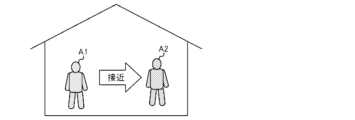
- 11 is a first schematic diagram for explaining a method in which a determination unit determines whether a notification condition is satisfied.
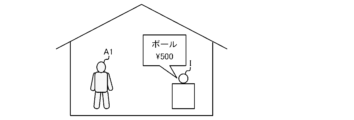
- FIG. 13 is a second schematic diagram for explaining a method in which the determination unit determines whether or not a notification condition is satisfied.
- FIG. 11 is a first schematic diagram for explaining a method in which a determination unit determines whether a notification condition is satisfied.
- FIG. 13 is a second schematic diagram for explaining a method in which the determination unit determines whether or not a notification condition is satisfied.
- FIG. 13 is a schematic diagram of an employee terminal displaying an exemplary notification screen.
- 11 is a schematic diagram for explaining a method in which a movement control unit automatically moves an employee avatar.
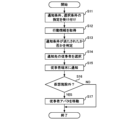
- FIG. FIG. 1 is a flowchart illustrating an exemplary information processing method executed by an information processing device according to an embodiment.
- FIG. 1 is a schematic diagram of an information processing system S according to this embodiment.
- the information processing system S includes an information processing device 1, a customer terminal 2, and an employee terminal 3.
- the information processing system S may include a plurality of customer terminals 2 and employee terminals 3.
- the information processing system S may also include other devices such as servers and terminals.
- the information processing device 1 is a computer that processes information about the virtual space displayed on the customer terminal 2 and the employee terminal 3.
- the virtual space is an imaginary space (e.g., the metaverse) created on a computer.
- the virtual space is displayed as an area having an area or volume on each of the customer terminal 2 and the employee terminal 3.
- the actual space in which the user lives e.g., the space on Earth
- real space the actual space in which the user lives
- the information processing device 1 places a virtual facility, which is a virtual facility, in a virtual space.
- the virtual facility is, for example, a store that sells one or more types of product I.
- the virtual facility corresponds to a real facility, which is a facility in real space, and has, for example, a structure in the virtual space that imitates the real facility.
- a customer can have the experience of visiting a real store that corresponds to the virtual facility.
- Product I is a virtual item in a virtual space.
- a physical store corresponding to the virtual facility will, for example, send a real-space item corresponding to Product I to a customer in response to the customer's purchase of Product I in the virtual facility.
- the customer terminal 2 is an information terminal used by users who are customers using the virtual facility.
- the staff terminal 3 is an information terminal used by users who are staff working at the virtual facility (employees of the virtual facility, owners of the virtual facility, managers of the virtual facility, etc.), and is pre-associated with the real facility corresponding to the virtual facility.
- Customers use the virtual facility by operating customer avatar A1 in the virtual space.
- Staff perform duties such as customer service and sales in the virtual facility by operating staff avatar A2 in the virtual space.
- the position of the employee in the real space may be linked to the position of the employee avatar A2 corresponding to the employee in the virtual space.
- the information processing device 1 automatically moves the employee avatar A2 in the virtual space according to the position information of the employee terminal 3 held by the employee. This allows the employee to respond to the customer avatar A1 in the virtual store corresponding to the real store while actually moving around the real store.
- the customer terminal 2 and the employee terminal 3 are, for example, smartphones, tablet terminals, or personal computers.
- the customer terminal 2 and the employee terminal 3 have an operation unit such as a touch panel or keyboard for accepting operations, and a display unit such as a liquid crystal display for displaying information.
- the customer terminal 2 and the employee terminal 3 can communicate with the information processing device 1 via a network.
- the information processing device 1 acquires behavioral information indicating the behavior of the customer avatar A1 in the virtual facility.
- the behavioral information is, for example, information indicating the position, behavior, etc. of the customer avatar A1.
- the information processing device 1 determines, based on the acquired behavioral information, whether or not a notification condition indicating that the customer avatar A1 and the virtual facility or staff avatar A2 have entered a predetermined positional relationship has been met.
- Notification conditions related to the virtual facility or staff avatar A2 include, for example, that the customer avatar A1 has entered the virtual facility, or that the distance between the customer avatar A1 and the staff avatar A2 has fallen below a reference value.
- the information processing device 1 may also determine, based on the acquired behavioral information, whether or not a notification condition indicating that the customer avatar A1 has taken a predetermined behavior toward a product I being sold in the virtual facility has been satisfied.
- the notification condition regarding the product I includes, for example, that the distance between the customer avatar A1 and the product I has become equal to or less than a reference value, that the customer avatar A1 has taken an action to display information about the product I, or that the customer avatar A1 has taken an action to purchase the product I.
- the information processing device 1 determines that the notification condition is met, it notifies the staff terminal 3 associated with the real facility corresponding to the virtual facility.
- the staff uses staff avatar A2 on the staff terminal 3 to interact with customer avatar A1 in the virtual store.
- the information processing device 1 notifies the employee terminal 3 in response to the customer avatar A1 satisfying a predetermined notification condition related to the virtual facility, the employee avatar A2, or the product I. This allows the information processing device 1 to make the employee aware of the customer's visit to the virtual facility without the customer having to call the employee, allowing the employee to proactively respond to the customer.
- FIG. 2 is a block diagram of an information processing system S according to this embodiment.
- the arrows indicate the main data flows, and there may be data flows other than those shown in FIG. 2.
- each block indicates a functional configuration, not a hardware (device) configuration. Therefore, the blocks shown in FIG. 2 may be implemented in a single device, or may be implemented separately in multiple devices. Data may be exchanged between blocks via any means, such as a data bus, a network, or a portable storage medium.
- the information processing device 1 has a communication unit 11, a storage unit 12, and a control unit 13.
- the information processing device 1 may be configured by connecting two or more physically separate devices via a wired or wireless connection.
- the information processing device 1 may also be configured by a cloud, which is a collection of computer resources.
- the communication unit 11 has a communication controller for transmitting and receiving data between the customer terminal 2 and the employee terminal 3 via the network.
- the communication unit 11 notifies the control unit 13 of data received via the network from the customer terminal 2, the employee terminal 3, or other devices.
- the communication unit 11 also transmits data output from the control unit 13 via the network to the customer terminal 2, the employee terminal 3, or other devices.
- the storage unit 12 is a storage medium including a ROM (Read Only Memory), a RAM (Random Access Memory), a hard disk drive, etc.
- the storage unit 12 pre-stores programs to be executed by the control unit 13.
- the storage unit 12 may be provided outside the information processing device 1, in which case data may be exchanged between the storage unit 12 and the control unit 13 via a network.
- the control unit 13 has a reception unit 131, an acquisition unit 132, a determination unit 133, a selection unit 134, a notification unit 135, and a movement control unit 136.
- the control unit 13 is a processor such as a CPU (Central Processing Unit), and functions as the reception unit 131, the acquisition unit 132, the determination unit 133, the selection unit 134, the notification unit 135, and the movement control unit 136 by executing a program stored in the memory unit 12.
- CPU Central Processing Unit
- the reception unit 131 receives, at the employee terminal 3, the specification of notification conditions for notifying the virtual facility of a customer's visit, and the specification of selection conditions for selecting employees to be notified.
- the employee terminal 3 displays on the display unit a setting screen for receiving the notification conditions and selection conditions specified by the employee.
- FIG. 3 is a schematic diagram of an employee terminal 3 displaying an exemplary setting screen.
- the setting screen includes, for example, an area for accepting the specification of notification conditions and an area for accepting the specification of selection conditions.
- the notification condition is, for example, a condition indicating that the customer avatar A1 and the virtual facility or staff avatar A2 have a predetermined positional relationship.
- the positional relationship that is the notification condition includes, for example, at least one of the following: the customer avatar A1 has entered the virtual facility, and the distance between the customer avatar A1 and the staff avatar A2 has become equal to or less than a reference value.
- the reference value for the distance may be a value specified by the staff on the setting screen, or may be a predetermined value.
- the notification condition may also be, for example, a condition indicating that the customer avatar A1 has taken a predetermined action toward a product I being sold in the virtual facility.
- the action that is the notification condition includes at least one of the following: the distance between the customer avatar A1 and the product I has fallen below a reference value; the customer avatar A1 has taken an action to display information about the product I; and the customer avatar A1 has taken an action to purchase the product I.
- the reference value for the distance may be a value specified by an employee on the settings screen, or may be a predetermined value.
- the selection condition is, for example, a condition related to any one of the following: the distance between the customer avatar A1 and the employee avatar A2; the relationship between the attributes of the customer corresponding to the customer avatar A1 and the employee; the relationship between the area in the virtual facility in which the customer avatar A1 is located and the employee; and the relationship between the type of product I that the customer avatar A1 is taking action on and the employee.
- the employee terminal 3 transmits condition information, including the notification conditions and selection conditions specified by the employee on the setting screen, to the information processing device 1.
- the reception unit 131 receives the condition information from the employee terminal 3 and stores the received condition information in the storage unit 12.
- the acquisition unit 132 acquires behavioral information indicating the behavior of the customer avatar A1 in the virtual facility.
- the acquisition unit 132 acquires behavioral information of the customer avatar A1 at a predetermined time interval (1 second, 5 seconds, etc.), for example, and notifies the judgment unit 133 of the acquired behavioral information.
- the behavior information is, for example, information indicating at least one of the position of the customer avatar A1 and the behavior of the customer avatar A1.
- the position of the customer avatar A1 includes, for example, coordinates in a virtual space.
- the behavior of the customer avatar A1 includes, for example, the customer avatar A1 taking an action to enter a virtual facility, the customer avatar A1 taking an action to display information about product I in the virtual facility, the customer avatar A1 taking an action to purchase product I in the virtual facility, and the like.
- the acquisition unit 132 may acquire attribute information indicating the attributes of the customer corresponding to the customer avatar A1.
- the customer attributes are information indicating the characteristics of the customer, and include, for example, the customer's age, gender, place of residence, product purchase history in virtual facilities or real facilities, etc.
- the determination unit 133 determines whether or not the notification condition accepted by the acceptance unit 131 is satisfied based on the behavioral information acquired by the acquisition unit 132.
- Figures 4A, 4B, 5A, and 5B are schematic diagrams for explaining a method in which the determination unit 133 determines whether or not the notification condition is satisfied.
- the example in FIG. 4A shows a case where the notification condition indicates that the customer avatar A1 and the virtual facility have a specified positional relationship.
- the determination unit 133 determines that the notification condition is satisfied when, for example, the behavioral information indicates that the customer avatar A1 has entered the virtual facility, and determines that the notification condition is not satisfied when the behavioral information does not indicate that the customer avatar A1 has entered the virtual facility. This allows the information processing device 1 to notify the staff that the customer avatar A1 has entered the virtual facility, without the customer needing to call the staff.
- FIG. 4B shows a case where the notification condition indicates that the customer avatar A1 and the staff avatar A2 have reached a predetermined positional relationship.
- the determination unit 133 determines that the notification condition is satisfied when, for example, the behavioral information indicates that the distance between the customer avatar A1 and the staff avatar A2 is below a reference value, and determines that the notification condition is not satisfied when the behavioral information does not indicate that the distance between the customer avatar A1 and the staff avatar A2 is below the reference value.
- the reference value of the distance may be a value specified by the staff on the staff terminal 3, or may be a predetermined value (such as 1 meter or 2 meters in virtual space). This allows the information processing device 1 to notify the staff that the customer avatar A1 has approached the staff without the customer having to call the staff.
- the determination unit 133 may also determine that the notification condition is satisfied if the state in which the behavioral information indicates that the distance between the customer avatar A1 and the employee avatar A2 is equal to or less than a reference value continues for a predetermined period of time or more. This allows the information processing device 1 to suppress frequent notifications when, for example, the customer avatar A1 passes near the employee avatar A2.
- the determination unit 133 determines that the notification condition is satisfied when the behavioral information indicates that the distance between the customer avatar A1 and the product I has fallen below a reference value, for example, and determines that the notification condition is not satisfied when the behavioral information does not indicate that the distance between the customer avatar A1 and the product I has fallen below the reference value.
- the reference value of the distance may be a value specified by the staff member on the staff member terminal 3, or may be a predetermined value (such as 1 meter or 2 meters in the virtual space). This allows the information processing device 1 to notify the staff member that the customer avatar A1 has approached the product I without the customer needing to call the staff member.
- the determination unit 133 may also determine that the notification condition is satisfied if the state in which the behavioral information indicates that the distance between the customer avatar A1 and the product I is equal to or less than a reference value continues for a predetermined period of time or more. This allows the information processing device 1 to suppress frequent notifications when, for example, the customer avatar A1 passes near the product I.
- the determination unit 133 determines that the notification condition is satisfied when the behavioral information indicates that the customer avatar A1 has taken an action to display information about the product I, and determines that the notification condition is not satisfied when the behavioral information does not indicate that the customer avatar A1 has taken an action to display information about the product I.
- the information about the product I is, for example, detailed information about the product I, such as the contents, price, and description of the product I.
- An action to display information about the product I is, for example, the customer using the customer avatar A1 to select the product I. When this action is performed, the information about the product I is switched from a not-displayed state to a displayed state on the customer's staff terminal 3. This allows the information processing device 1 to notify the staff that the customer avatar A1 is interested in the product I, without the customer needing to call the staff.
- the determination unit 133 determines that the notification condition is satisfied, for example, when the behavioral information indicates that the customer avatar A1 has taken an action to purchase product I, and determines that the notification condition is not satisfied, when the behavioral information does not indicate that the customer avatar A1 has taken an action to purchase product I.
- An action to purchase product I is, for example, an operation by the customer using the customer avatar A1 to add any product I to a purchase list (such as a shopping cart). The customer can then purchase product I by performing an operation on the staff terminal 3 to pay for the product I in the purchase list. This allows the information processing device 1 to notify the staff that the customer avatar A1 intends to purchase product I, without the customer having to call the staff.
- the determination unit 133 is not limited to the specific notification conditions shown here, and may determine whether other notification conditions for notifying a customer of a visit to the virtual facility are met.
- the selection unit 134 selects one of the multiple workers working in the virtual facility to be the notification recipient, in accordance with the selection conditions received by the reception unit 131. If only one worker is working in the virtual facility, the selection unit 134 may select that one worker regardless of the selection conditions.
- the selection unit 134 selects, for example, from among multiple employees, one of the employees corresponding to the employee avatar A2 that is closest to the position of the customer avatar A1 indicated by the behavioral information acquired by the acquisition unit 132. This allows the information processing device 1 to notify the employee corresponding to the employee avatar A2 that can get closer to the customer avatar A1 the fastest.
- the selection unit 134 selects, for example, from among a plurality of staff members, a staff member associated with the attributes of the customer indicated by the attribute information acquired by the acquisition unit 132.
- the customer attributes are, for example, the customer's age, gender, place of residence, and product purchase history in virtual or real facilities.
- Information (such as a table) associating the customer attributes with staff members is stored in advance in the storage unit 12. This enables the information processing device 1 to notify staff members (such as a person in charge according to the customer attributes) associated with the attributes of the customer corresponding to the customer avatar A1.
- the selection unit 134 selects, for example, from among multiple staff members, a staff member associated with the area in the virtual facility that contains the location of the customer avatar A1 indicated by the behavioral information acquired by the acquisition unit 132.
- the area in the virtual facility is an area according to the characteristics of the placed product I, such as an area that handles men's products and an area that handles women's products.
- Information (such as a table) that associates the areas in the virtual facility with the staff members is stored in advance in the storage unit 12. This enables the information processing device 1 to notify staff members (such as the person in charge of each area) associated with the area in the virtual facility where the customer avatar A1 is located.
- the selection unit 134 selects, for example, from among multiple employees, an employee associated with the type of product I that the customer avatar A1 has taken an action on, as indicated by the action information acquired by the acquisition unit 132.
- the product I that the customer avatar A1 has taken an action on is the product I for which the customer avatar A1 has taken an action to display information, or the product I for which the customer avatar A1 has taken an action to purchase.
- Information (such as a table) that associates the type of product I with the employee is stored in advance in the storage unit 12. This allows the information processing device 1 to notify the employee (such as the person in charge of each type of product I) associated with the type of product I that the customer avatar A1 is interested in.
- the selection unit 134 may select an employee with a specific job title (such as a store manager) from among the multiple employees.
- the selection unit 134 may also select an employee who is suitable for serving the customer avatar A1 from among the multiple employees. Whether an employee is suitable for serving the customer avatar A1 is determined based on, for example, evaluations given to the employee in the past by a superior or a customer. This allows the information processing device 1 to notify an employee who is suitable for serving the customer.
- the selection unit 134 may select, from among the multiple employees, an employee corresponding to an employee avatar A2 who has previously served the customer avatar A1.
- Information indicating an employee avatar A2 who has previously served the customer avatar A1 is stored in the storage unit 12. This allows the information processing device 1 to notify an employee who has previously served the customer avatar A1.
- the selection unit 134 may select, from among the multiple workers, a worker who is viewing the virtual space on the worker terminal 3. For example, the selection unit 134 selects a worker who has operated the worker avatar A2 within a predetermined time (e.g., within one minute) going back from the current time as a worker who is viewing the virtual space. This allows the information processing device 1 to notify a worker who is available to respond quickly using the worker avatar A2.
- a predetermined time e.g., within one minute
- the selection unit 134 is not limited to the specific selection conditions shown here, and may select the employee to be notified according to the customer avatar A1, the employee avatar A2, or other selection conditions related to the product I.
- the notification unit 135 notifies the employee terminal 3 associated with the real facility corresponding to the virtual facility and used by the employee selected by the selection unit 134, on the condition that the determination unit 133 has determined that the notification condition is satisfied.
- the notification unit 135 may notify the employee terminal 3 on the condition that the determination unit 133 determines that the notification condition is met and the employee avatar A2 is in the virtual space (for example, the employee is logged in to the virtual space). On the other hand, the notification unit 135 does not notify the employee terminal 3 when the employee avatar A2 is not in the virtual space. This allows the information processing device 1 to notify employees who are already logged in to the virtual space.
- the notification unit 135 may notify the employee terminal 3 on the condition that the determination unit 133 determines that the notification condition is met and the employee avatar A2 is within the virtual facility in the virtual space. On the other hand, the notification unit 135 does not notify the employee terminal 3 when the employee avatar A2 is not within the virtual store. This allows the information processing device 1 to notify employees who have already positioned their employee avatar A2 within the virtual facility.
- the notification unit 135 notifies the staff terminal 3, for example, by sending to the staff terminal 3 display information for displaying a message (character string or image) indicating that the customer avatar A1 has visited the virtual facility.
- the notification unit 135 may also notify the staff terminal 3, for example, by sending to the staff terminal 3 information for outputting a predetermined sound or information for vibrating the staff terminal 3.
- the staff terminal 3 displays a notification screen on the display unit, including a message indicating that the customer avatar A1 has visited the virtual facility, in accordance with the display information received from the information processing device 1.
- FIG. 6 is a schematic diagram of the staff terminal 3 displaying an exemplary notification screen.
- the notification screen includes a message indicating that the customer avatar A1 has visited the virtual facility.
- the reception unit 131 may receive an operation indicating whether or not the first employee will attend to the customer avatar A1 who has visited the virtual store, on the employee terminal 3 used by a first employee selected by the selection unit 134 from among the multiple employees.
- the employee performs an operation indicating whether or not the first employee will attend to the customer avatar A1 who has visited the virtual store, on a notification screen displayed on the employee terminal 3.
- the employee terminal 3 transmits information indicating the content of the operation performed by the employee to the information processing device 1.
- the reception unit 131 determines whether or not the first employee will attend to the customer avatar A1, based on the information received from the employee terminal 3.
- the information processing device 1 displays the virtual space on the employee terminal 3 used by the first employee.
- the first employee interacts with the customer avatar A1 in the virtual store using the employee avatar A2 on the employee terminal 3.
- the notification unit 135 notifies the worker terminal 3 used by a second worker who is different from the first worker among the multiple workers.
- the second worker is, for example, a worker selected by the selection unit 134 from among the multiple workers excluding the first worker using the above-mentioned method. This allows the information processing device 1 to notify another worker when, for example, a worker is busy in the real space.
- the employee avatar A2 corresponding to the employee using the employee terminal 3 may be located away from the virtual facility in the virtual space.
- the movement control unit 136 may automatically move the employee avatar A2.
- FIG. 7 is a schematic diagram for explaining a method in which the movement control unit 136 automatically moves the staff avatar A2.
- the movement control unit 136 automatically moves the staff avatar A2 into the virtual facility on the condition that, for example, the determination unit 133 determines that the notification condition is satisfied and the staff avatar A2 corresponding to the staff member selected by the selection unit 134 is outside the virtual facility in the virtual space.
- the movement control unit 136 may instantly change the position of the employee avatar A2 from its pre-movement position to a position within the virtual facility.
- the movement control unit 136 may also move the employee avatar A2 from its pre-movement position to a position within the virtual facility at a predetermined speed. This allows the information processing device 1 to move the employee avatar A2 into the virtual facility without requiring any operation by the employee, even if the employee avatar A2 is outside the virtual facility when the customer avatar A1 visits the virtual facility.
- the movement control unit 136 may temporarily set the position of the employee so that the position of the employee and the position of the employee avatar A2 are not linked.
- the notification unit 135, for example, notifies the customer terminal 2 of information indicating that a discrepancy has occurred between the position of the employee and the position of the employee avatar A2, and notifies the employee terminal 3 of the position of the customer avatar A1 that satisfies the notification condition.
- the movement control unit 136 may set the position of the employee and the position of the employee avatar A2 to be linked again in response to the employee's position in the real space coinciding with the position of the employee avatar A2 in the virtual space, or in response to an operation being performed on the employee terminal 3 to link the employee's position with the position of the employee avatar A2.
- This allows the information processing device 1 to automatically move the employee avatar A2 in response to the customer avatar A1 visiting the virtual facility, even when the employee's position in the real space and the position of the employee avatar A2 in the virtual space are linked.
- [Flow of information processing method] 8 is a diagram showing a flowchart of an exemplary information processing method executed by the information processing device 1 according to the present embodiment.
- the reception unit 131 receives, at the employee terminal 3, a designation of a notification condition for notifying a customer of a visit to the virtual facility and a designation of a selection condition for selecting an employee to be notified (S11).
- the acquisition unit 132 acquires behavioral information indicating the behavior of the customer avatar A1 in the virtual facility (S12).
- the behavioral information is, for example, information indicating at least one of the position of the customer avatar A1 and the behavior of the customer avatar A1.
- the determination unit 133 determines whether the notification condition accepted by the acceptance unit 131 is satisfied based on the behavioral information acquired by the acquisition unit 132 (S13).
- the notification condition is, for example, a condition indicating that the customer avatar A1 and the virtual facility or staff avatar A2 have reached a predetermined positional relationship.
- the notification condition may be, for example, a condition indicating that the customer avatar A1 has taken a predetermined behavior toward the product I being sold in the virtual facility.
- the selection unit 134 selects one of the workers working in the virtual facility to be the notification recipient, in accordance with the selection conditions received by the reception unit 131 (S14).
- the selection conditions are, for example, conditions related to any one of the following: the distance between the customer avatar A1 and the worker avatar A2, the relationship between the attributes of the customer corresponding to the customer avatar A1 and the worker, the relationship between the area in the virtual facility where the customer avatar A1 is located and the worker, and the relationship between the type of product I that the customer avatar A1 acted on and the worker.
- the notification unit 135 notifies the employee terminal 3 associated with the real facility corresponding to the virtual facility and used by the employee selected by the selection unit 134 (S15).
- the movement control unit 136 automatically moves the employee avatar A2 into the virtual facility (S17). If the employee avatar A2 corresponding to the employee selected by the selection unit 134 is inside the virtual facility in the virtual space (NO in S16), the information processing device 1 ends the process.
- the information processing device 1 notifies the staff terminal 3 in response to the customer avatar A1 satisfying a predetermined notification condition related to the virtual facility, the staff avatar A2, or the product I. In this way, the information processing device 1 makes the staff aware of the customer's visit to the virtual facility without the customer having to call the staff, and the staff can proactively respond to the customer.
- the present disclosure has the effect of allowing employees working at facilities in a virtual space to proactively respond to customers who visit the facility.
Landscapes
- Business, Economics & Management (AREA)
- Accounting & Taxation (AREA)
- Finance (AREA)
- Development Economics (AREA)
- Economics (AREA)
- Marketing (AREA)
- Strategic Management (AREA)
- Physics & Mathematics (AREA)
- General Business, Economics & Management (AREA)
- General Physics & Mathematics (AREA)
- Engineering & Computer Science (AREA)
- Theoretical Computer Science (AREA)
- Management, Administration, Business Operations System, And Electronic Commerce (AREA)
Abstract
情報処理装置は、仮想空間において従事者が従事者アバタを用いて従事する施設である仮想施設における、顧客が仮想施設を利用するために用いる顧客アバタの行動を示す行動情報を取得する取得部と、行動情報に基づいて、顧客アバタと、仮想施設又は従事者アバタと、が所定の位置関係になったことを示す通知条件が満たされたか否かを判定する判定部と、通知条件が満たされたと判定部が判定したことを条件として、現実空間における仮想施設に対応する施設である実施設に関連付けられた情報端末に通知する通知部と、を有する。
Description
本開示は、仮想空間に関する情報を処理するための情報処理装置、情報処理方法及びプログラムに関する。
本願は、2023年5月31日に、日本に出願された特願2023-089547号に基づき優先権を主張し、その内容をここに援用する。
本願は、2023年5月31日に、日本に出願された特願2023-089547号に基づき優先権を主張し、その内容をここに援用する。
特許文献1には、顧客用端末において仮想空間上の店舗に配置された商品の情報を表示させ、顧客が顧客用端末に表示された画面上で所定のボタンを押下したことに応じて、店員用端末を介して店員を呼び出すシステムが記載されている。
現実空間上の店舗等の施設では、施設に従事する従事者が顧客に応対することにより、商品の売上を向上できる場合がある。それに対して、特許文献1に記載のシステムでは、顧客が従事者を呼び出す必要があるため、従事者が顧客の来訪に気付かず、主体的に顧客に応対することができない場合がある。
そこで、本開示はこれらの点に鑑みてなされたものであり、仮想空間上の施設に従事する従事者が、施設へ来訪した顧客に主体的に応対できるようにすることを目的の一例とする。
本開示の第1の態様の情報処理装置は、仮想空間において従事者が従事者アバタを用いて従事する施設である仮想施設における、顧客が前記仮想施設を利用するために用いる顧客アバタの行動を示す行動情報を取得する取得部と、前記行動情報に基づいて、前記顧客アバタと、前記仮想施設又は前記従事者アバタと、が所定の位置関係になったことを示す通知条件が満たされたか否かを判定する判定部と、前記通知条件が満たされたと前記判定部が判定したことを条件として、現実空間における前記仮想施設に対応する施設である実施設に関連付けられた情報端末に通知する通知部と、を有する。
本開示の第2態様の情報処理装置は、仮想空間において従事者が従事者アバタを用いて従事する施設である仮想施設における、顧客が前記仮想施設を利用するために用いる顧客アバタの行動を示す行動情報を取得する取得部と、前記行動情報に基づいて、前記顧客アバタが前記仮想施設で販売されている商品に対して所定の行動をとったことを示す通知条件が満たされたか否かを判定する判定部と、前記通知条件が満たされたと前記判定部が判定したことを条件として、現実空間における前記仮想施設に対応する施設である実施設に関連付けられた情報端末に通知する通知部と、を有する。
前記位置関係は、前記顧客アバタが前記仮想施設内に入ったことと、前記顧客アバタと前記従事者アバタとの間の距離が基準値以下になったことと、のうち少なくとも一方を含んでもよい。
前記行動は、前記顧客アバタと前記商品との間の距離が基準値以下になったことと、前記顧客アバタが前記商品の情報を表示するための行動をしたことと、前記顧客アバタが前記商品を購入するための行動をしたことと、のうち少なくとも1つを含んでもよい。
前記情報処理装置は、前記情報端末において、前記通知条件の指定を受け付ける受付部をさらに有してもよい。
前記通知部は、前記通知条件が満たされたと前記判定部が判定し、かつ前記従事者アバタが前記仮想空間上にいることを条件として、前記情報端末に通知してもよい。
前記通知部は、前記通知条件が満たされたと前記判定部が判定し、かつ前記従事者アバタが前記仮想空間上の前記仮想施設内にいることを条件として、前記情報端末に通知してもよい。
前記情報処理装置は、前記通知条件が満たされたと前記判定部が判定し、かつ前記従事者アバタが前記仮想空間上の前記仮想施設外にいることを条件として、前記従事者アバタを前記仮想施設内に移動させる移動制御部をさらに有してもよい。
前記情報処理装置は、前記仮想施設に従事する複数の前記従事者のうち、前記顧客アバタの位置に最も近い前記従事者アバタに対応するいずれかの前記従事者を選択する選択部をさらに有し、前記通知部は、前記選択部が選択した前記従事者が利用する前記情報端末に通知してもよい。
前記情報処理装置は、前記仮想施設に従事する複数の前記従事者のうち、前記顧客アバタに対応する前記顧客の属性又は前記顧客アバタが位置する前記仮想施設内のエリアに基づいて、いずれかの前記従事者を選択する選択部をさらに有し、前記通知部は、前記選択部が選択した前記従事者が利用する前記情報端末に通知してもよい。
前記情報処理装置は、前記仮想施設に従事する複数の前記従事者のうち、前記顧客アバタが前記行動の対象とした前記商品の種類に基づいて、いずれかの前記従事者を選択する選択部をさらに有し、前記通知部は、前記選択部が選択した前記従事者が利用する前記情報端末に通知してもよい。
前記情報処理装置は、前記通知部が通知した第1従事者が利用する前記情報端末において、前記顧客アバタに応対するか否かを示す操作を受け付ける受付部をさらに有し、前記通知部は、前記第1従事者が前記顧客アバタに応対しないことを示す操作を前記受付部が受け付けたことを条件として、前記第1従事者とは異なる第2従事者が利用する前記情報端末に通知してもよい。
本開示の第3の態様の情報処理方法は、プロセッサが実行する、仮想空間において従事者が従事者アバタを用いて従事する施設である仮想施設における、顧客が前記仮想施設を利用するために用いる顧客アバタの行動を示す行動情報を取得するステップと、前記行動情報に基づいて、前記顧客アバタと、前記仮想施設又は前記従事者アバタと、が所定の位置関係になったことを示す通知条件が満たされたか否かを判定するステップと、前記判定するステップにおいて前記通知条件が満たされたと判定したことを条件として、現実空間における前記仮想施設に対応する施設である実施設に関連付けられた情報端末に通知するステップと、を有する。
本開示の第4の態様のプログラムは、コンピュータに、仮想空間において従事者が従事者アバタを用いて従事する施設である仮想施設における、顧客が前記仮想施設を利用するために用いる顧客アバタの行動を示す行動情報を取得するステップと、前記行動情報に基づいて、前記顧客アバタと、前記仮想施設又は前記従事者アバタと、が所定の位置関係になったことを示す通知条件が満たされたか否かを判定するステップと、前記判定するステップにおいて前記通知条件が満たされたと判定したことを条件として、現実空間における前記仮想施設に対応する施設である実施設に関連付けられた情報端末に通知するステップと、を実行させる。
本開示によれば、一例として、仮想空間上の施設に従事する従事者が、施設へ来訪した顧客に主体的に応対できるという効果を奏する。
[情報処理システムSの概要]
図1は、本実施形態に係る情報処理システムSの模式図である。情報処理システムSは、情報処理装置1と、顧客端末2と、従事者端末3と、を含む。情報処理システムSは、複数の顧客端末2及び従事者端末3を含んでもよい。情報処理システムSは、その他のサーバ、端末等の機器を含んでもよい。
図1は、本実施形態に係る情報処理システムSの模式図である。情報処理システムSは、情報処理装置1と、顧客端末2と、従事者端末3と、を含む。情報処理システムSは、複数の顧客端末2及び従事者端末3を含んでもよい。情報処理システムSは、その他のサーバ、端末等の機器を含んでもよい。
情報処理装置1は、顧客端末2及び従事者端末3に表示される仮想空間に関する情報を処理するコンピュータである。仮想空間は、コンピュータ上に形成された仮想的な空間(例えば、メタバース)である。仮想空間は、顧客端末2及び従事者端末3それぞれにおいて面積又は体積を有する領域として表示される。一方、ユーザが生活する実際の空間(例えば、地球上の空間)を現実空間という。
情報処理装置1は、仮想空間上に仮想的な施設である仮想施設を配置する。仮想施設は、例えば、一又は複数の種類の商品Iを販売する店舗である。仮想施設は、現実空間上の施設である実施設に対応しており、例えば仮想空間上で実施設を模した構造を有する。顧客は、顧客アバタA1を用いて仮想施設を訪れることにより、仮想施設に対応する実店舗を訪れるような体験をすることができる。
商品Iは、仮想空間上の仮想的な物品である。商品Iが現実空間上の物品に対応している場合に、仮想施設に対応する実店舗は、例えば、顧客が仮想施設において商品Iを購入したことに応じて、顧客に対して商品Iに対応する現実空間上の物品を送付する。
顧客端末2は、仮想施設を利用する顧客であるユーザが利用する情報端末である。従事者端末3は、仮想施設に従事する従事者(仮想施設の従業員、仮想施設の所有者、仮想施設の管理者等)であるユーザが利用する情報端末であり、仮想施設に対応する実施設に予め関連付けられている。顧客は、仮想空間上で顧客アバタA1を操作することにより仮想施設を利用する。従事者は、仮想空間上で従事者アバタA2を操作することにより仮想施設において接客、販売等の業務を行う。
実空間における従事者の位置と、仮想空間における当該従事者に対応する従事者アバタA2の位置と、は連動していてもよい。この場合に、情報処理装置1は、従事者が保持する従事者端末3の位置情報に応じて、仮想空間上の従事者アバタA2を自動的に移動させる。これにより、従事者は、実店舗において実際に移動しながら、実店舗に対応する仮想店舗内の顧客アバタA1を応対することができる。
顧客端末2及び従事者端末3は、例えば、スマートフォン、タブレット端末又はパーソナルコンピュータである。顧客端末2及び従事者端末3は、操作を受け付けるためのタッチパネルやキーボード等の操作部と、情報を表示するための液晶ディスプレイ等の表示部と、を有する。顧客端末2及び従事者端末3は、ネットワークを介して情報処理装置1と通信可能である。
本実施形態に係る情報処理装置1が実行する処理の概要を以下に説明する。情報処理装置1は、仮想施設における顧客アバタA1の行動を示す行動情報を取得する。行動情報は、例えば、顧客アバタA1の位置や行動等を示す情報である。
情報処理装置1は、取得した行動情報に基づいて、顧客アバタA1と、仮想施設又は従事者アバタA2と、が所定の位置関係になったことを示す通知条件が満たされたか否かを判定する。仮想施設又は従事者アバタA2に関する通知条件は、例えば、顧客アバタA1が仮想施設に入ったこと、又は顧客アバタA1と従事者アバタA2との間の距離が基準値以下になったことを含む。
また、情報処理装置1は、取得した行動情報に基づいて、顧客アバタA1が仮想施設で販売されている商品Iに対して所定の行動をとったことを示す通知条件が満たされたか否かを判定してもよい。商品Iに関する通知条件は、例えば、顧客アバタA1と商品Iとの間の距離が基準値以下になったことと、顧客アバタA1が商品Iの情報を表示するための行動をしたこと、又は顧客アバタA1が商品Iを購入するための行動をしたことを含む。
情報処理装置1は、通知条件が満たされたと判定したことを条件として、仮想施設に対応する実施設に関連付けられた従事者端末3に通知する。従事者は、従事者端末3において従事者アバタA2を用いて仮想店舗内の顧客アバタA1に接する。
このように、情報処理装置1は、顧客アバタA1が仮想施設、従事者アバタA2又は商品Iに関する所定の通知条件を満たしたことに応じて、従事者端末3に通知する。これにより、情報処理装置1は、顧客が従事者を呼び出すことを必要とせずに、仮想施設への顧客の来訪を従事者に気付かせ、従事者が主体的に顧客に応対することができる。
[情報処理システムSの構成]
図2は、本実施形態に係る情報処理システムSのブロック図である。図2において、矢印は主なデータの流れを示しており、図2に示したもの以外のデータの流れがあってもよい。図2において、各ブロックはハードウェア(装置)単位の構成ではなく、機能単位の構成を示している。そのため、図2に示すブロックは単一の装置内に実装されてもよく、あるいは複数の装置内に分かれて実装されてもよい。ブロック間のデータの授受は、データバス、ネットワーク、可搬記憶媒体等、任意の手段を介して行われてもよい。
図2は、本実施形態に係る情報処理システムSのブロック図である。図2において、矢印は主なデータの流れを示しており、図2に示したもの以外のデータの流れがあってもよい。図2において、各ブロックはハードウェア(装置)単位の構成ではなく、機能単位の構成を示している。そのため、図2に示すブロックは単一の装置内に実装されてもよく、あるいは複数の装置内に分かれて実装されてもよい。ブロック間のデータの授受は、データバス、ネットワーク、可搬記憶媒体等、任意の手段を介して行われてもよい。
情報処理装置1は、通信部11と、記憶部12と、制御部13と、を有する。情報処理装置1は、2つ以上の物理的に分離した装置が有線又は無線で接続されることにより構成されてもよい。また、情報処理装置1は、コンピュータ資源の集合であるクラウドによって構成されてもよい。
通信部11は、ネットワークを介して顧客端末2及び従事者端末3との間でデータを送受信するための通信コントローラを有する。通信部11は、顧客端末2、従事者端末3又はその他の装置からネットワークを介して受信したデータを制御部13に通知する。また、通信部11は、ネットワークを介して、制御部13から出力されたデータを顧客端末2、従事者端末3又はその他の装置に送信する。
記憶部12は、ROM(Read Only Memory)、RAM(Random Access Memory)、ハードディスクドライブ等を含む記憶媒体である。記憶部12は、制御部13が実行するプログラムを予め記憶している。記憶部12は、情報処理装置1の外部に設けられてもよく、その場合にネットワークを介して制御部13との間でデータの授受を行ってもよい。
制御部13は、受付部131と、取得部132と、判定部133と、選択部134と、通知部135と、移動制御部136と、を有する。制御部13は、例えばCPU(Central Processing Unit)等のプロセッサであり、記憶部12に記憶されたプログラムを実行することにより、受付部131、取得部132、判定部133、選択部134、通知部135及び移動制御部136として機能する。
以下、情報処理装置1が実行する処理について詳細に説明する。情報処理装置1において、受付部131は、従事者端末3において、仮想施設への顧客の来訪を通知するための通知条件の指定と、通知先の従事者を選択するための選択条件の指定と、を受け付ける。従事者端末3は、従事者による通知条件及び選択条件の指定を受け付けるための設定画面を表示部上に表示する。
図3は、例示的な設定画面を表示している従事者端末3の模式図である。設定画面は、例えば、通知条件の指定を受け付けるための領域と、選択条件の指定を受け付けるための領域と、を含む。
通知条件は、例えば、顧客アバタA1と、仮想施設又は従事者アバタA2と、が所定の位置関係になったことを示す条件である。通知条件である位置関係は、例えば、顧客アバタA1が仮想施設内に入ったことと、顧客アバタA1と従事者アバタA2との間の距離が基準値以下になったことと、のうち少なくとも一方を含む。距離の基準値は、設定画面において従事者により指定された値であってもよく、所定の値であってもよい。
また、通知条件は、例えば、顧客アバタA1が仮想施設で販売されている商品Iに対して所定の行動をとったことを示す条件であってもよい。通知条件である行動は、顧客アバタA1と商品Iとの間の距離が基準値以下になったことと、顧客アバタA1が商品Iの情報を表示するための行動をしたことと、顧客アバタA1が商品Iを購入するための行動をしたことと、のうち少なくとも1つを含む。距離の基準値は、設定画面において従事者により指定された値であってもよく、所定の値であってもよい。
選択条件は、例えば、顧客アバタA1と従事者アバタA2との間の距離と、顧客アバタA1に対応する顧客の属性と従事者との関係と、顧客アバタA1が位置する仮想施設内のエリアと従事者との関係と、顧客アバタA1が行動の対象とした商品Iの種類と従事者との関係と、のうちいずれかに関する条件である。
従事者端末3は、設定画面において従事者が指定した通知条件及び選択条件を含む条件情報を、情報処理装置1に送信する。情報処理装置1において、受付部131は、従事者端末3から条件情報を受信し、受信した条件情報を記憶部12に記憶させる。
取得部132は、仮想施設における顧客アバタA1の行動を示す行動情報を取得する。取得部132は、例えば、所定の時間間隔(1秒、5秒等)で顧客アバタA1の行動情報を取得し、取得した行動情報を判定部133に通知する。
行動情報は、例えば、顧客アバタA1の位置と、顧客アバタA1の行動と、のうち少なくとも一方を示す情報である。顧客アバタA1の位置は、例えば、仮想空間上の座標を含む。顧客アバタA1の行動は、例えば、顧客アバタA1が仮想施設に入る行動をしたこと、顧客アバタA1が仮想施設内の商品Iの情報を表示するための行動をしたこと、顧客アバタA1が仮想施設内の商品Iを購入するための行動をしたこと等を含む。顧客は、顧客端末2において所定の操作を行うことにより、顧客アバタA1を移動させ、顧客アバタA1を仮想施設に入らせ、顧客アバタA1を用いて商品Iの情報を表示し、又は顧客アバタA1を用いて商品Iを購入することができる。
取得部132は、行動情報に加えて、顧客アバタA1に対応する顧客の属性を示す属性情報を取得してもよい。顧客の属性は、顧客の特性を示す情報であり、例えば、顧客の年齢、性別、居住地、仮想施設又は実施設における商品の購入履歴等を含む。
判定部133は、取得部132が取得した行動情報に基づいて、受付部131が受け付けた通知条件が満たされたか否かを判定する。図4A、図4B、図5A及び図5Bは、判定部133が、通知条件が満たされたか否かを判定する方法を説明するための模式図である。
図4Aの例は、通知条件が、顧客アバタA1と仮想施設とが所定の位置関係になったことを示す場合を表している。この場合に、判定部133は、例えば、顧客アバタA1が仮想施設内に入ったことを行動情報が示す場合に、通知条件が満たされたと判定し、顧客アバタA1が仮想施設内に入ったことを行動情報が示さない場合に、通知条件が満たされていないと判定する。これにより、情報処理装置1は、顧客が従事者を呼び出すことを必要とせずに、顧客アバタA1が仮想施設に入ったことを従事者に通知できる。
図4Bの例は、通知条件が、顧客アバタA1と従事者アバタA2とが所定の位置関係になったことを示す場合を表している。この場合に、判定部133は、例えば、顧客アバタA1と従事者アバタA2との間の距離が基準値以下になったことを行動情報が示す場合に、通知条件が満たされたと判定し、顧客アバタA1と従事者アバタA2との間の距離が基準値以下になったことを行動情報が示さない場合に、通知条件が満たされていないと判定する。距離の基準値は、従事者端末3において従事者により指定された値であってもよく、所定の値(仮想空間における1メートル、2メートル等)であってもよい。これにより、情報処理装置1は、顧客が従事者を呼び出すことを必要とせずに、顧客アバタA1が従事者に接近したことを従事者に通知できる。
また、判定部133は、顧客アバタA1と従事者アバタA2との間の距離が基準値以下になったことを行動情報が示している状態が所定時間以上継続したことを条件として、通知条件が満たされたと判定してもよい。これにより、情報処理装置1は、顧客アバタA1が従事者アバタA2付近を通り過ぎた場合等に頻繁に通知することを抑制できる。
図5A、図5Bの例は、通知条件が、顧客アバタA1が仮想施設で販売されている商品Iに対して所定の行動をとったことを示す場合を表している。図5Aの例では、判定部133は、例えば、顧客アバタA1と商品Iとの間の距離が基準値以下になったことを行動情報が示す場合に、通知条件が満たされたと判定し、顧客アバタA1と商品Iとの間の距離が基準値以下になったことを行動情報が示さない場合に、通知条件が満たされていないと判定する。距離の基準値は、従事者端末3において従事者により指定された値であってもよく、所定の値(仮想空間における1メートル、2メートル等)であってもよい。これにより、情報処理装置1は、顧客が従事者を呼び出すことを必要とせずに、顧客アバタA1が商品Iに接近したことを従事者に通知できる。
また、判定部133は、顧客アバタA1と商品Iとの間の距離が基準値以下になったことを行動情報が示している状態が所定時間以上継続したことを条件として、通知条件が満たされたと判定してもよい。これにより、情報処理装置1は、顧客アバタA1が商品I付近を通り過ぎた場合等に頻繁に通知することを抑制できる。
図5Bの例では、判定部133は、例えば、顧客アバタA1が商品Iの情報を表示するための行動をしたことを行動情報が示す場合に、通知条件が満たされたと判定し、顧客アバタA1が商品Iの情報を表示するための行動をしたことを行動情報が示さない場合に、通知条件が満たされていないと判定する。商品Iの情報は、例えば、商品Iの内容、価格、説明文等の商品Iの詳細情報である。商品Iの情報を表示するための行動は、例えば、顧客が顧客アバタA1を用いて商品Iを選択する操作を行ったことである。商品Iの情報は、当該行動が行われることによって、顧客の従事者端末3において表示されていない状態から表示されている状態に切り替えられる。これにより、情報処理装置1は、顧客が従事者を呼び出すことを必要とせずに、顧客アバタA1が商品Iに興味を持っていることを従事者に通知できる。
また、判定部133は、例えば、顧客アバタA1が商品Iを購入するための行動をしたことを行動情報が示す場合に、通知条件が満たされたと判定し、顧客アバタA1が商品Iを購入するための行動をしたことを行動情報が示さない場合に、通知条件が満たされていないと判定する。商品Iを購入するための行動は、例えば、顧客が顧客アバタA1を用いていずれかの商品Iを購入リスト(ショッピングカート等)に追加する操作を行ったことである。その後、顧客は従事者端末3において購入リスト内の商品Iの代金を支払う操作を行うことにより、商品Iを購入することができる。これにより、情報処理装置1は、顧客が従事者を呼び出すことを必要とせずに、顧客アバタA1が商品Iを購入する意思を持っていることを従事者に通知できる。
判定部133は、ここに示した具体的な通知条件に限られず、仮想施設への顧客の来訪を通知するためのその他の通知条件が満たされたか否かを判定してもよい。
選択部134は、受付部131が受け付けた選択条件に従って、仮想施設に従事する複数の従事者のうち、通知先とするいずれかの従事者を選択する。仮想施設に1人の従事者のみ従事している場合に、選択部134は、選択条件によらず当該1人の従事者を選択してもよい。
選択条件が顧客アバタA1と従事者アバタA2との間の距離に関する条件である場合に、選択部134は、例えば、複数の従事者のうち、取得部132が取得した行動情報が示す顧客アバタA1の位置に最も近い従事者アバタA2に対応するいずれかの従事者を選択する。これにより、情報処理装置1は、顧客アバタA1に早く近付くことができる従事者アバタA2に対応する従事者に通知できる。
選択条件が顧客アバタA1に対応する顧客の属性と従事者との関係に関する条件である場合に、選択部134は、例えば、複数の従事者のうち、取得部132が取得した属性情報が示す顧客の属性に関連付けられた従事者を選択する。顧客の属性は、例えば、顧客の年齢、性別、居住地、仮想施設又は実施設における商品の購入履歴である。顧客の属性と従事者とを関連付けた情報(テーブル等)は、予め記憶部12に記憶されている。これにより、情報処理装置1は、顧客アバタA1に対応する顧客の属性と関連する従事者(顧客の属性に応じた担当者等)に通知できる。
選択条件が顧客アバタA1が位置する仮想施設内のエリアと従事者との関係に関する条件である場合に、選択部134は、例えば、複数の従事者のうち、取得部132が取得した行動情報が示す顧客アバタA1の位置が含まれている仮想施設内のエリアに関連付けられた従事者を選択する。仮想施設内のエリアは、例えば、男性用品を取り扱うエリア、女性用品を取り扱うエリア等、配置された商品Iの特性に応じたエリアである。仮想施設内のエリアと従事者とを関連付けた情報(テーブル等)は、予め記憶部12に記憶されている。これにより、情報処理装置1は、顧客アバタA1が位置する仮想施設内のエリアと関連する従事者(エリアごとの担当者等)に通知できる。
選択条件が顧客アバタA1が行動の対象とした商品Iの種類と従事者との関係に関する条件である場合に、選択部134は、例えば、複数の従事者のうち、取得部132が取得した行動情報が示す顧客アバタA1が行動の対象とした商品Iの種類に関連付けられた従事者を選択する。顧客アバタA1が行動の対象とした商品Iは、顧客アバタA1が情報を表示するための行動をした商品I、又は顧客アバタA1が購入するための行動をした商品Iである。商品Iの種類と従事者とを関連付けた情報(テーブル等)は、予め記憶部12に記憶されている。これにより、情報処理装置1は、顧客アバタA1が興味を持っている商品Iの種類と関連する従事者(商品Iの種類ごとの担当者等)に通知できる。
選択部134は、複数の従事者のうち、所定の役職の従事者(店長等)を選択してもよい。また、選択部134は、複数の従事者のうち、顧客アバタA1の応対に適している従事者を選択してもよい。従事者が顧客アバタA1の応対に適しているか否かは、例えば、過去に従事者に対して上司又は顧客から付与された評価に基づいて決定される。これにより、情報処理装置1は、顧客への応対に適した従事者に通知できる。
選択部134は、複数の従事者のうち、過去に顧客アバタA1に対して応対した従事者アバタA2に対応する従事者を選択してもよい。過去に顧客アバタA1に対して応対した従事者アバタA2を示す情報は、記憶部12に記憶されている。これにより、情報処理装置1は、顧客アバタA1に対して過去に応対した従事者に通知できる。
選択部134は、複数の従事者のうち、従事者端末3において仮想空間を見ている従事者を選択してもよい。選択部134は、例えば、現在時刻から遡って所定の時間内(1分以内等)に従事者アバタA2を操作した従事者を、仮想空間を見ている従事者として選択する。これにより、情報処理装置1は、従事者アバタA2を用いて早く応対可能な従事者に通知できる。
選択部134は、ここに示した具体的な選択条件に限られず、顧客アバタA1、従事者アバタA2又は商品Iに関するその他の選択条件に従って通知先の従事者を選択してもよい。
通知部135は、通知条件が満たされたと判定部133が判定したことを条件として、仮想施設に対応する実施設に関連付けられた従事者端末3であって、選択部134が選択した従事者が利用する従事者端末3に通知する。
通知部135は、通知条件が満たされたと判定部133が判定し、かつ従事者アバタA2が仮想空間上にいること(例えば、従事者が仮想空間にログインしていること)を条件として、従事者端末3に通知してもよい。一方、通知部135は、従事者アバタA2が仮想空間上にいない場合に、従事者端末3に通知しない。これにより、情報処理装置1は、仮想空間に既にログインしている従事者に通知できる。
通知部135は、通知条件が満たされたと判定部133が判定し、かつ従事者アバタA2が仮想空間上の仮想施設内にいることを条件として、従事者端末3に通知してもよい。一方、通知部135は、従事者アバタA2が仮想店舗内上にいない場合に、従事者端末3に通知しない。これにより、情報処理装置1は、仮想施設内に既に従事者アバタA2を位置させている従事者に通知できる。
通知部135は、例えば、仮想施設に顧客アバタA1が来訪したことを示すメッセージ(文字列又は画像)を表示するための表示情報を従事者端末3に送信することにより、従事者端末3に通知する。また、通知部135は、例えば、所定の音を出力するための情報又は従事者端末3を振動させるための情報を従事者端末3に送信することにより、従事者端末3に通知してもよい。
従事者端末3は、情報処理装置1から受信した表示情報に従って、仮想施設に顧客アバタA1が来訪したことを示すメッセージを含む通知画面を表示部上に表示する。図6は、例示的な通知画面を表示している従事者端末3の模式図である。通知画面は、仮想施設に顧客アバタA1が来訪したことを示すメッセージを含む。
情報処理装置1において、受付部131は、複数の従事者のうち選択部134が選択した第1従事者が利用する従事者端末3において、仮想店舗に来訪した顧客アバタA1に応対するか否かを示す操作を受け付けてもよい。従事者は、従事者端末3に表示された通知画面において、仮想店舗に来訪した顧客アバタA1に対して応対するか否かを示す操作を行う。従事者端末3は、従事者による操作内容を示す情報を、情報処理装置1に送信する。受付部131は、従事者端末3から受信した情報に基づいて、第1従事者が顧客アバタA1に応対するか否かを特定する。
第1従事者が顧客アバタA1に応対することを示す操作を受付部131が受け付けたことを条件として、情報処理装置1は仮想空間を第1従事者が利用する従事者端末3に表示させる。第1従事者は、従事者端末3において従事者アバタA2を用いて仮想店舗内の顧客アバタA1に接する。
一方、第1従事者が顧客アバタA1に応対しないことを示す操作を受付部131が受け付けたことを条件として、通知部135は、複数の従事者のうち第1従事者とは異なる第2従事者が利用する従事者端末3に通知する。第2従事者は、例えば、第1従事者を除く複数の従事者のうち、選択部134が上述の方法で選択した従事者である。これにより、情報処理装置1は、実空間上で従事者が忙しい場合等に、別の従事者に通知することができる。
例えば顧客アバタA1が仮想施設に入ったことに応じて通知部135が従事者端末3に通知した時点で、当該従事者端末3を利用する従事者に対応する従事者アバタA2が仮想空間において仮想施設から離れた位置にいる場合がある。このような場合に、移動制御部136は、従事者アバタA2を自動的に移動させてもよい。
図7は、移動制御部136が従事者アバタA2を自動的に移動させる方法を説明するための模式図である。移動制御部136は、例えば、通知条件が満たされたと判定部133が判定し、かつ選択部134が選択した従事者に対応する従事者アバタA2が仮想空間上の仮想施設外にいることを条件として、当該従事者アバタA2を仮想施設内に自動的に移動させる。
移動制御部136は、従事者アバタA2の位置を、移動前の位置から仮想施設内の位置に即座に変更してもよい。また、移動制御部136は、従事者アバタA2を、移動前の位置から仮想施設内の位置に所定の速度で移動させてもよい。これにより、情報処理装置1は、顧客アバタA1が仮想施設へ来訪した際に従事者アバタA2が仮想施設外にいる場合であっても、従事者による操作を必要とせずに従事者アバタA2を仮想施設内に移動させることができる。
実空間における従事者の位置と仮想空間における従事者アバタA2の位置とが連動している場合に、移動制御部136が従事者アバタA2を自動的に移動させると、従事者の位置と従事者アバタA2の位置との間に乖離が生じ得る。このような場合に、移動制御部136は、従事者の位置と従事者アバタA2の位置とが連動しないように一時的に設定してもよい。このとき、通知部135は、例えば、従事者の位置と従事者アバタA2の位置との間に乖離が生じていることを示す情報を顧客端末2に通知するとともに、通知条件を満たした顧客アバタA1の位置を従事者端末3に通知する。
その後、移動制御部136は、実空間における従事者の位置と仮想空間における従事者アバタA2の位置とが一致したことに応じて、又は従事者端末3において従事者の位置と従事者アバタA2の位置とを連動させるための操作が行われたことに応じて、従事者の位置と従事者アバタA2の位置とが再び連動するように設定してもよい。これにより、情報処理装置1は、実空間における従事者の位置と仮想空間における従事者アバタA2の位置とが連動する場合であっても、顧客アバタA1が仮想施設へ来訪したことに応じて従事者アバタA2を自動的に移動させることができる。
[情報処理方法のフロー]
図8は、本実施形態に係る情報処理装置1が実行する例示的な情報処理方法のフローチャートを示す図である。受付部131は、従事者端末3において、仮想施設への顧客の来訪を通知するための通知条件の指定と、通知先の従事者を選択するための選択条件の指定と、を受け付ける(S11)。
図8は、本実施形態に係る情報処理装置1が実行する例示的な情報処理方法のフローチャートを示す図である。受付部131は、従事者端末3において、仮想施設への顧客の来訪を通知するための通知条件の指定と、通知先の従事者を選択するための選択条件の指定と、を受け付ける(S11)。
取得部132は、仮想施設における顧客アバタA1の行動を示す行動情報を取得する(S12)。行動情報は、例えば、顧客アバタA1の位置と、顧客アバタA1の行動と、のうち少なくとも一方を示す情報である。
判定部133は、取得部132が取得した行動情報に基づいて、受付部131が受け付けた通知条件が満たされたか否かを判定する(S13)。通知条件は、例えば、顧客アバタA1と、仮想施設又は従事者アバタA2と、が所定の位置関係になったことを示す条件である。通知条件は、例えば、顧客アバタA1が仮想施設で販売されている商品Iに対して所定の行動をとったことを示す条件であってもよい。
選択部134は、受付部131が受け付けた選択条件に従って、仮想施設に従事する複数の従事者のうち、通知先とするいずれかの従事者を選択する(S14)。選択条件は、例えば、顧客アバタA1と従事者アバタA2との間の距離と、顧客アバタA1に対応する顧客の属性と従事者との関係と、顧客アバタA1が位置する仮想施設内のエリアと従事者との関係と、顧客アバタA1が行動の対象とした商品Iの種類と従事者との関係と、のうちいずれかに関する条件である。
通知部135は、通知条件が満たされたと判定部133が判定したことを条件として、仮想施設に対応する実施設に関連付けられた従事者端末3であって、選択部134が選択した従事者が利用する従事者端末3に通知する(S15)。
選択部134が選択した従事者に対応する従事者アバタA2が仮想空間上の仮想施設外にいる場合に(S16のYES)、移動制御部136は、当該従事者アバタA2を仮想施設内に自動的に移動させる(S17)。選択部134が選択した従事者に対応する従事者アバタA2が仮想空間上の仮想施設内にいる場合に(S16のNO)、情報処理装置1は処理を終了する。
[実施形態の効果]
本実施形態に係る情報処理システムSによれば、情報処理装置1は、顧客アバタA1が仮想施設、従事者アバタA2又は商品Iに関する所定の通知条件を満たしたことに応じて、従事者端末3に通知する。これにより、情報処理装置1は、顧客が従事者を呼び出すことを必要とせずに、仮想施設への顧客の来訪を従事者に気付かせ、従事者が主体的に顧客に応対することができる。
本実施形態に係る情報処理システムSによれば、情報処理装置1は、顧客アバタA1が仮想施設、従事者アバタA2又は商品Iに関する所定の通知条件を満たしたことに応じて、従事者端末3に通知する。これにより、情報処理装置1は、顧客が従事者を呼び出すことを必要とせずに、仮想施設への顧客の来訪を従事者に気付かせ、従事者が主体的に顧客に応対することができる。
なお、本開示により、国連が主導する持続可能な開発目標(SDGs)の目標9「産業と技術革新の基盤をつくろう」に貢献することが可能となる。
以上、本開示を実施の形態を用いて説明したが、本開示の技術的範囲は上記実施の形態に記載の範囲には限定されず、その要旨の範囲内で種々の変形及び変更が可能である。例えば、装置の全部又は一部は、任意の単位で機能的又は物理的に分散・統合して構成することができる。また、複数の実施の形態の任意の組み合わせによって生じる新たな実施の形態も、本開示の実施の形態に含まれる。組み合わせによって生じる新たな実施の形態の効果は、もとの実施の形態の効果を併せ持つ。
本開示によれば、仮想空間上の施設に従事する従事者が、施設へ来訪した顧客に主体的に応対できるという効果を奏する。
S 情報処理システム
1 情報処理装置
11 通信部
12 記憶部
13 制御部
131 受付部
132 取得部
133 判定部
134 選択部
135 通知部
136 移動制御部
2 顧客端末
3 従事者端末
1 情報処理装置
11 通信部
12 記憶部
13 制御部
131 受付部
132 取得部
133 判定部
134 選択部
135 通知部
136 移動制御部
2 顧客端末
3 従事者端末
Claims (14)
- 仮想空間において従事者が従事者アバタを用いて従事する施設である仮想施設における、顧客が前記仮想施設を利用するために用いる顧客アバタの行動を示す行動情報を取得する取得部と、
前記行動情報に基づいて、前記顧客アバタと、前記仮想施設又は前記従事者アバタと、が所定の位置関係になったことを示す通知条件が満たされたか否かを判定する判定部と、
前記通知条件が満たされたと前記判定部が判定したことを条件として、現実空間における前記仮想施設に対応する施設である実施設に関連付けられた情報端末に通知する通知部と、
を有する、情報処理装置。 - 仮想空間において従事者が従事者アバタを用いて従事する施設である仮想施設における、顧客が前記仮想施設を利用するために用いる顧客アバタの行動を示す行動情報を取得する取得部と、
前記行動情報に基づいて、前記顧客アバタが前記仮想施設で販売されている商品に対して所定の行動をとったことを示す通知条件が満たされたか否かを判定する判定部と、
前記通知条件が満たされたと前記判定部が判定したことを条件として、現実空間における前記仮想施設に対応する施設である実施設に関連付けられた情報端末に通知する通知部と、
を有する、情報処理装置。 - 前記位置関係は、前記顧客アバタが前記仮想施設内に入ったことと、前記顧客アバタと前記従事者アバタとの間の距離が基準値以下になったことと、のうち少なくとも一方を含む、
請求項1に記載の情報処理装置。 - 前記行動は、前記顧客アバタと前記商品との間の距離が基準値以下になったことと、前記顧客アバタが前記商品の情報を表示するための行動をしたことと、前記顧客アバタが前記商品を購入するための行動をしたことと、のうち少なくとも1つを含む、
請求項2に記載の情報処理装置。 - 前記情報端末において、前記通知条件の指定を受け付ける受付部をさらに有する、
請求項1から4のいずれか一項に記載の情報処理装置。 - 前記通知部は、前記通知条件が満たされたと前記判定部が判定し、かつ前記従事者アバタが前記仮想空間上にいることを条件として、前記情報端末に通知する、
請求項1から4のいずれか一項に記載の情報処理装置。 - 前記通知部は、前記通知条件が満たされたと前記判定部が判定し、かつ前記従事者アバタが前記仮想空間上の前記仮想施設内にいることを条件として、前記情報端末に通知する、
請求項6に記載の情報処理装置。 - 前記通知条件が満たされたと前記判定部が判定し、かつ前記従事者アバタが前記仮想空間上の前記仮想施設外にいることを条件として、前記従事者アバタを前記仮想施設内に移動させる移動制御部をさらに有する、
請求項6に記載の情報処理装置。 - 前記仮想施設に従事する複数の前記従事者のうち、前記顧客アバタの位置に最も近い前記従事者アバタに対応するいずれかの前記従事者を選択する選択部をさらに有し、
前記通知部は、前記選択部が選択した前記従事者が利用する前記情報端末に通知する、
請求項1から4のいずれか一項に記載の情報処理装置。 - 前記仮想施設に従事する複数の前記従事者のうち、前記顧客アバタに対応する前記顧客の属性又は前記顧客アバタが位置する前記仮想施設内のエリアに基づいて、いずれかの前記従事者を選択する選択部をさらに有し、
前記通知部は、前記選択部が選択した前記従事者が利用する前記情報端末に通知する、
請求項1から4のいずれか一項に記載の情報処理装置。 - 前記仮想施設に従事する複数の前記従事者のうち、前記顧客アバタが前記行動の対象とした前記商品の種類に基づいて、いずれかの前記従事者を選択する選択部をさらに有し、
前記通知部は、前記選択部が選択した前記従事者が利用する前記情報端末に通知する、
請求項2に記載の情報処理装置。 - 前記通知部が通知した第1従事者が利用する前記情報端末において、前記顧客アバタに応対するか否かを示す操作を受け付ける受付部をさらに有し、
前記通知部は、前記第1従事者が前記顧客アバタに応対しないことを示す操作を前記受付部が受け付けたことを条件として、前記第1従事者とは異なる第2従事者が利用する前記情報端末に通知する、
請求項1から4のいずれか一項に記載の情報処理装置。 - プロセッサが実行する、
仮想空間において従事者が従事者アバタを用いて従事する施設である仮想施設における、顧客が前記仮想施設を利用するために用いる顧客アバタの行動を示す行動情報を取得するステップと、
前記行動情報に基づいて、前記顧客アバタと、前記仮想施設又は前記従事者アバタと、が所定の位置関係になったことを示す通知条件が満たされたか否かを判定するステップと、
前記判定するステップにおいて前記通知条件が満たされたと判定したことを条件として、現実空間における前記仮想施設に対応する施設である実施設に関連付けられた情報端末に通知するステップと、
を有する、情報処理方法。 - コンピュータに、
仮想空間において従事者が従事者アバタを用いて従事する施設である仮想施設における、顧客が前記仮想施設を利用するために用いる顧客アバタの行動を示す行動情報を取得するステップと、
前記行動情報に基づいて、前記顧客アバタと、前記仮想施設又は前記従事者アバタと、が所定の位置関係になったことを示す通知条件が満たされたか否かを判定するステップと、
前記判定するステップにおいて前記通知条件が満たされたと判定したことを条件として、現実空間における前記仮想施設に対応する施設である実施設に関連付けられた情報端末に通知するステップと、
を実行させる、プログラム。
Applications Claiming Priority (2)
| Application Number | Priority Date | Filing Date | Title |
|---|---|---|---|
| JP2023-089547 | 2023-05-31 | ||
| JP2023089547A JP7503176B1 (ja) | 2023-05-31 | 2023-05-31 | 情報処理装置、情報処理方法及びプログラム |
Publications (1)
| Publication Number | Publication Date |
|---|---|
| WO2024247334A1 true WO2024247334A1 (ja) | 2024-12-05 |
Family
ID=91483547
Family Applications (1)
| Application Number | Title | Priority Date | Filing Date |
|---|---|---|---|
| PCT/JP2023/046673 Ceased WO2024247334A1 (ja) | 2023-05-31 | 2023-12-26 | 情報処理装置、情報処理方法及びプログラム |
Country Status (2)
| Country | Link |
|---|---|
| JP (2) | JP7503176B1 (ja) |
| WO (1) | WO2024247334A1 (ja) |
Families Citing this family (1)
| Publication number | Priority date | Publication date | Assignee | Title |
|---|---|---|---|---|
| JP7761736B1 (ja) * | 2024-11-08 | 2025-10-28 | ミサワホーム株式会社 | 仮想住宅共有システム、仮想住宅共有装置及びプログラム |
Citations (3)
| Publication number | Priority date | Publication date | Assignee | Title |
|---|---|---|---|---|
| JP2010520537A (ja) * | 2007-03-01 | 2010-06-10 | ソニー コンピュータ エンタテインメント ヨーロッパ リミテッド | エンタテインメント装置および方法 |
| JP2012008638A (ja) * | 2010-06-22 | 2012-01-12 | Toyota Home Kk | 販売システム及びそのコンピュータプログラム |
| JP2022183883A (ja) * | 2021-05-31 | 2022-12-13 | 凸版印刷株式会社 | 情報処理サーバ、および、仮想空間提供システム |
Family Cites Families (4)
| Publication number | Priority date | Publication date | Assignee | Title |
|---|---|---|---|---|
| JP5781482B2 (ja) | 2012-09-12 | 2015-09-24 | 株式会社コナミデジタルエンタテインメント | ゲーム装置及びプログラム |
| JP2022036689A (ja) | 2020-08-24 | 2022-03-08 | 大日本印刷株式会社 | 仮想空間配信装置、コンピュータプログラム及び仮想空間配信方法 |
| JP7023341B1 (ja) | 2020-12-16 | 2022-02-21 | ヤフー株式会社 | ショッピングシステム、情報提供方法、およびプログラム |
| JP7524104B2 (ja) | 2021-02-24 | 2024-07-29 | Kddi株式会社 | 店員評価装置、店員評価システム、店員評価方法及びコンピュータプログラム |
-
2023
- 2023-05-31 JP JP2023089547A patent/JP7503176B1/ja active Active
- 2023-12-26 WO PCT/JP2023/046673 patent/WO2024247334A1/ja not_active Ceased
-
2024
- 2024-06-07 JP JP2024093243A patent/JP7686849B2/ja active Active
Patent Citations (3)
| Publication number | Priority date | Publication date | Assignee | Title |
|---|---|---|---|---|
| JP2010520537A (ja) * | 2007-03-01 | 2010-06-10 | ソニー コンピュータ エンタテインメント ヨーロッパ リミテッド | エンタテインメント装置および方法 |
| JP2012008638A (ja) * | 2010-06-22 | 2012-01-12 | Toyota Home Kk | 販売システム及びそのコンピュータプログラム |
| JP2022183883A (ja) * | 2021-05-31 | 2022-12-13 | 凸版印刷株式会社 | 情報処理サーバ、および、仮想空間提供システム |
Also Published As
| Publication number | Publication date |
|---|---|
| JP2024173841A (ja) | 2024-12-12 |
| JP7686849B2 (ja) | 2025-06-02 |
| JP7503176B1 (ja) | 2024-06-19 |
| JP2024172065A (ja) | 2024-12-12 |
Similar Documents
| Publication | Publication Date | Title |
|---|---|---|
| US20250299243A1 (en) | System and method for coupling a user computing device and a point of sale device | |
| US11132727B2 (en) | Methods and systems for grouping and prioritization of leads, potential customers and customers | |
| JP5875167B1 (ja) | 情報管理装置及び情報管理方法 | |
| JP6817572B2 (ja) | サーバ及び注文システム | |
| EP2689385A1 (en) | Advertisement service | |
| EP3343492A1 (en) | Order management server, ordering system, and recording medium | |
| JP2019003634A5 (ja) | ||
| JP7686849B2 (ja) | 情報処理装置、情報処理方法及びプログラム | |
| EP3438908A1 (en) | Sales analysis device, sales analysis method and sales analysis program | |
| JP6695924B2 (ja) | ポイント管理システム及びポイント管理方法 | |
| JP2019192281A (ja) | 商品登録装置、プログラム、及び制御方法 | |
| JP7326576B1 (ja) | 情報処理装置及び情報処理方法 | |
| KR20140114959A (ko) | 전통시장의 판매정보 통합 관리시스템 | |
| KR20180049398A (ko) | 양방향 통신이 가능한 호출기 | |
| JP7610057B1 (ja) | 情報処理装置、情報処理方法及びプログラム | |
| TWI919105B (zh) | 處理優惠券資料之方法、裝置及記錄媒體 | |
| JP7496170B1 (ja) | 管理装置及びプログラム | |
| WO2020179738A1 (ja) | 画面表示方法、プログラム及び画面表示システム | |
| JP7588685B1 (ja) | 情報処理装置、情報処理方法及びプログラム | |
| JP7703224B2 (ja) | 店内呼び出しシステム、店内呼び出し方法、及び店内呼び出し用のコンピュータプログラム | |
| JP7838151B2 (ja) | 情報処理装置、情報処理方法及びプログラム | |
| JP7223077B1 (ja) | 情報処理システムおよび情報処理方法 | |
| JP2015191459A (ja) | 通信システム、サーバ装置、端末装置、情報処理方法、およびプログラム | |
| US20230046719A1 (en) | Server device and congestion information notification system | |
| JP2019036099A (ja) | 順番管理システム、順番管理装置、およびプログラム |
Legal Events
| Date | Code | Title | Description |
|---|---|---|---|
| 121 | Ep: the epo has been informed by wipo that ep was designated in this application |
Ref document number: 23939800 Country of ref document: EP Kind code of ref document: A1 |
|
| NENP | Non-entry into the national phase |
Ref country code: DE |