WO2024241994A1 - 制御装置、制御方法、及びプログラム - Google Patents
制御装置、制御方法、及びプログラム Download PDFInfo
- Publication number
- WO2024241994A1 WO2024241994A1 PCT/JP2024/018010 JP2024018010W WO2024241994A1 WO 2024241994 A1 WO2024241994 A1 WO 2024241994A1 JP 2024018010 W JP2024018010 W JP 2024018010W WO 2024241994 A1 WO2024241994 A1 WO 2024241994A1
- Authority
- WO
- WIPO (PCT)
- Prior art keywords
- vehicle
- output
- information
- setting unit
- warning
- Prior art date
- Legal status (The legal status is an assumption and is not a legal conclusion. Google has not performed a legal analysis and makes no representation as to the accuracy of the status listed.)
- Ceased
Links
Images



Classifications
-
- G—PHYSICS
- G01—MEASURING; TESTING
- G01C—MEASURING DISTANCES, LEVELS OR BEARINGS; SURVEYING; NAVIGATION; GYROSCOPIC INSTRUMENTS; PHOTOGRAMMETRY OR VIDEOGRAMMETRY
- G01C21/00—Navigation; Navigational instruments not provided for in groups G01C1/00 - G01C19/00
- G01C21/26—Navigation; Navigational instruments not provided for in groups G01C1/00 - G01C19/00 specially adapted for navigation in a road network
-
- G—PHYSICS
- G08—SIGNALLING
- G08G—TRAFFIC CONTROL SYSTEMS
- G08G1/00—Traffic control systems for road vehicles
- G08G1/09—Arrangements for giving variable traffic instructions
- G08G1/0962—Arrangements for giving variable traffic instructions having an indicator mounted inside the vehicle, e.g. giving voice messages
Definitions
- the present invention relates to a control device, a control method, and a program.
- cited reference 1 discloses a technology for controlling in-vehicle notifications such as signal sounds and messages based on an index (mental workload) that indicates the mental state of the driver.
- cited reference 2 discloses a technology for controlling the provision of information to a user while driving according to workload values estimated for multiple workloads resulting from the user's actions while driving (driving operations, device operations while driving, auditory operations, visual operations) and psychological state.
- Notifications sent to the driver while in the vehicle may be annoying to the driver. In such cases, the comfort of the in-vehicle environment for the driver may decrease.
- One example of the problem that this invention aims to solve is to provide technology that does not cause discomfort to the driver when notifications are output inside the vehicle.
- the first invention in the present disclosure is a setting unit that acquires detailed information corresponding to vehicle position information from map information, and sets a rule for outputting notification information according to a situation around the vehicle based on the detailed information; a notification output unit that executes an output process of the notification information based on an output of an external sensor that detects a situation around the vehicle and the rule;
- the control device is provided with:
- the second invention in the present disclosure is The computer acquiring detailed information corresponding to the vehicle's position information from the map information, and setting a provision for outputting notification information according to the situation around the vehicle based on the detailed information; and executing an output process of the notification information based on an output of an external sensor that detects a situation around the vehicle and the rule.
- the control method includes:
- the third invention in the present disclosure is On the computer, A setting procedure for setting a provision for acquiring detailed information corresponding to vehicle position information from map information and outputting notification information according to a situation around the vehicle based on the detailed information; a notification output step of executing an output process of the notification information based on an output of an external sensor that detects a situation around the vehicle and the rule; This is a program for executing the above.
- FIG. 2 is a block diagram illustrating a first functional configuration of a control device according to the present disclosure.
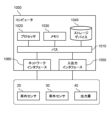
- FIG. 2 is a diagram illustrating a first hardware configuration of a computer that realizes a control device according to the present disclosure.
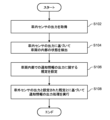
- 4 is a flowchart illustrating a first operation of a control device in the present disclosure.
- FIG. 11 is a block diagram illustrating a second functional configuration of the control device according to the present disclosure.
- FIG. 11 is a diagram illustrating a second hardware configuration of a computer that realizes a control device according to the present disclosure.
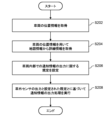
- 10 is a flowchart illustrating a second operation of the control device in the present disclosure.
- each component of each device is shown as a functional block, not a hardware-based configuration.
- Each component of each device is realized by any combination of hardware and software, centered on the CPU of any computer, memory, a program loaded into the memory, a storage medium such as a hard disk that stores the program, and an interface for network connection. There are many variations in the methods and devices for realizing this.
- the direction of the arrows is merely intended to make the flow of information easier to understand.
- the direction of the arrows does not limit the direction of communication (one-way communication/two-way communication) unless otherwise specified.
- FIG. 1 is a block diagram illustrating a first functional configuration of a control device 10 according to the present disclosure.
- the control device 10 is mounted on a vehicle 1 (an automobile in the example of Fig. 1).
- the control device 10 may be a device built into the vehicle 1, or may be a type of device that is later attached to the vehicle 1.
- the control device 10 illustrated in Fig. 1 has a setting unit 110 and a notification output unit 120.
- the setting unit 110 sets the rules for outputting notification information according to the situation around the vehicle 1 based on the output of the in-vehicle sensor 20.
- the "in-vehicle sensor 20" includes any sensor capable of detecting the state inside the vehicle 1.
- the in-vehicle sensor 20 may be an image sensor (camera) installed so as to be able to capture images of the inside of the vehicle 1.
- the in-vehicle sensor 20 may be a weight sensor or a seat belt fastening sensor provided on each seat of the vehicle 1.
- the in-vehicle sensor 20 may be a combination of two or more of the image sensor, weight sensor, and seat belt fastening sensor described above.
- the “regulations” refer to at least one of the manner in which notification information is output and the conditions under which notification information is output. Specific examples of the operation of setting regulations by the setting unit 110 will be described later.
- the notification output unit 120 executes the process of outputting notification information within the vehicle 1 based on the output of the external sensor 30 provided in the vehicle 1 and the regulations set by the setting unit 110.
- external sensor 30 includes any sensor capable of detecting the conditions around vehicle 1.
- external sensor 30 may be an image sensor (camera) installed so as to be able to capture images of at least one of the front and rear of vehicle 1, or in all directions around vehicle 1.
- external sensor 30 may be, for example, various sensors (millimeter wave radar, ultrasonic sensor, Light Detection and Ranging (LiDAR), etc.) that detect objects located around vehicle 1.
- internal sensor 20 may be a combination of the image sensor and various sensors described above.
- the notification output unit 120 executes the output process of the notification information, it generates a control signal for the output source 40 based on the output of the outside sensor 30 and transmits the control signal to the output source 40. Then, the output source 40 executes an operation according to the control signal from the notification output unit 120.
- notification information according to the situation around the vehicle 1 is output to people in the vehicle 1, including the driver of the vehicle 1.
- the "output source 40" includes any device that can notify at least the driver of the vehicle 1 of the situation around the vehicle 1.
- the output source 40 may be a speaker device that notifies the driver of the situation around the vehicle 1 by using sound as the notification information.
- the output source 40 may be a lighting device that notifies the driver of the situation around the vehicle 1 by using light as the notification information.
- the output source 40 may be a seat vibration device that notifies the driver of the situation around the vehicle 1 by using vibration of the seat (driver's seat) as the notification information.
- the notification output unit 120 uses such an output source 40 to perform output processing using at least one of sound, light, and seat vibration as notification information. Specific examples of the output processing of notification information performed by the notification output unit 120 will be described later.
- FIG. 2 illustrates a first hardware configuration of a computer 1000 that realizes the control device 10 according to the present disclosure.
- the computer 1000 has a bus 1010, a processor 1020, a memory 1030, a storage device 1040, an input/output interface 1050, and a network interface 1060.
- the bus 1010 is a data transmission path for the processor 1020, memory 1030, storage device 1040, input/output interface 1050, and network interface 1060 to transmit and receive data to and from each other.
- the method of connecting the processor 1020 and other components to each other is not limited to a bus connection.
- the processor 1020 is a processor realized by a Central Processing Unit (CPU) or a Graphics Processing Unit (GPU), etc.
- CPU Central Processing Unit
- GPU Graphics Processing Unit
- Memory 1030 is a main storage device realized by a Random Access Memory (RAM) or the like.
- the storage device 1040 is an auxiliary storage device realized by a hard disk drive (HDD), a solid state drive (SSD), a removable medium such as a memory card, or a read only memory (ROM).
- the storage device 1040 stores at least program modules that realize each function (setting unit 110 and notification output unit 120) of the control device 10 described above.
- the processor 1020 loads a program module read from the storage device 1040 onto the memory 1030 and executes the program module, thereby realizing a function corresponding to the program module.
- the processor 1020 reads a program module corresponding to the setting unit 110 onto the memory 1030 and executes the program module, thereby realizing the function of the setting unit 110 described in this disclosure.
- the processor 1020 reads a program module corresponding to the notification output unit 120 onto the memory 1030 and executes the program module, thereby realizing the function of the notification output unit 120 described in this disclosure. This operation of the processor 1020 is common to each embodiment included in this disclosure.
- the above-mentioned program modules may be recorded on a recording medium other than the storage device 1040.
- the recording medium on which the program modules are recorded includes any non-transitory, tangible medium usable by the computer 1000.
- the recording medium on which the program modules are recorded may have embedded therein program code that is readable by the computer 1000 (processor 1020).
- the input/output interface 1050 is an interface for connecting the computer 1000 (control device 10) to various input/output devices.
- the network interface 1060 is an interface for connecting the computer 1000 (control device 10) to a network.
- This network is, for example, the Controller Area Network (CAN) of the vehicle 1.
- the network may also be, for example, a Local Area Network (LAN) or a Wide Area Network (WAN).
- the method by which the network interface 1060 connects to the network may be a wireless connection or a wired connection.
- the computer 1000 (control device 10) is connected to various devices (not shown) via the input/output interface 1050 or the network interface 1060.
- the "various devices” here include at least the above-mentioned in-vehicle sensor 20, the outside-vehicle sensor 30, and the output source 40 (at least one of the speaker device, the lighting device, and the seat vibration device).
- the “various devices” include, for example, input devices such as operation buttons, a keyboard, a touch panel, and a microphone, and output devices such as a display.
- FIG. 3 is a flowchart illustrating a first operation of the control device 10 in this disclosure.
- the setting unit 110 acquires the output of the in-vehicle sensor 20 mounted on the vehicle 1 (step S102). Then, the setting unit 110 detects the internal state of the vehicle 1 based on the acquired output of the in-vehicle sensor 20 (step S104). Then, the setting unit 110 sets regulations regarding the output of notification information inside the vehicle 1 based on the detection result of the internal state of the vehicle 1 (step S106).
- the notification output unit 120 sequentially acquires the output of the external sensor 30, and executes the output process of notification information regarding the situation around the vehicle 1 based on the output of the external sensor 30 and the rules set in the processing of step S106 (step S108).
- the setting unit 110 sets a rule for outputting notification information (information according to the situation around the vehicle) based on the output of the in-vehicle sensor 20 that detects the internal state of the vehicle 1.
- the "rule" in this disclosure relates to at least one of the manner in which the notification information is output and the output conditions of the notification information. That is, the setting unit 110 sets the manner in which the notification information is output and the output conditions in the vehicle 1 according to the internal state of the vehicle 1. Then, the notification output unit 120 executes the output process of the notification information in the vehicle 1 based on the output of the external sensor 30 and the rule set by the setting unit 110.
- the output of the notification information in the vehicle 1 is controlled according to the internal state of the vehicle 1. This is expected to have the effect of suppressing a decrease in the comfort of the in-vehicle environment when providing notification information to a person in the vehicle 1.
- control device 10 The operation of the control device 10 according to the first embodiment will be explained in more detail using some specific examples below.
- the operation of the control device 10 will be described when, when an object (such as a person or another vehicle) is detected around the vehicle 1 based on the output of the external sensor 30, a warning sound (including a warning voice) according to the distance between the object and the vehicle 1 is output as notification information.
- an object such as a person or another vehicle
- a warning sound including a warning voice
- the setting unit 110 acquires the output of the in-vehicle sensor 20 via the input/output interface 1050 or the network interface 1060.
- the in-vehicle sensor 20 is an image sensor
- the setting unit 110 acquires image data from the image sensor.
- the in-vehicle sensor 20 is a weight sensor provided on each seat
- the setting unit 110 acquires output data of the weight sensor that changes according to the force applied to each seat.
- the in-vehicle sensor 20 is a seat belt fastening sensor
- the setting unit 110 outputs output data from the seat belt fastening sensor indicating whether the seat belt of each seat is inserted/not inserted into the buckle.
- the setting unit 110 detects the internal situation of the vehicle 1, specifically, the presence or absence of a passenger, based on the output of the in-vehicle sensor 20.
- the in-vehicle sensor 20 includes an image sensor.
- the setting unit 110 can determine whether or not a person is present in each seat of the vehicle 1 except the driver's seat, i.e., whether or not a passenger is present, based on the output (image data) from the image sensor.
- the setting unit 110 can use a known image processing algorithm as a technique for detecting a person from image data.
- the in-vehicle sensor 20 includes a weight sensor provided on each seat.
- the setting unit 110 determines whether or not a person is present in each seat of the vehicle 1 except the driver's seat, i.e., whether or not a passenger is present, based on the output value of the weight sensor that changes depending on the force applied to each seat. Also, for example, it is assumed that the in-vehicle sensor 20 includes a seat belt fastening sensor. In this case, the setting unit 110 determines whether or not a person is present in each seat of the vehicle 1 except the driver's seat, i.e., whether or not a passenger is present, based on the output data of the seat belt fastening sensor corresponding to each seat of the vehicle 1 except the driver's seat.
- the setting unit 110 can detect the presence or absence of a passenger using the output of multiple types of in-vehicle sensors 20 (at least two of an image sensor, a weight sensor, and a seat belt fastening sensor).
- the setting unit 110 may be configured to identify the position of the passenger's seat in addition to the presence or absence of a passenger.
- the setting unit 110 can identify the position of the passenger's seat based on the detected position of the person on the image data output from the image sensor, or the position (seat position) of the weight sensor or the seat belt fastening sensor indicating that a person has been detected.
- the setting unit 110 reads out the default rules for outputting the warning sound (notification information) in step S106.
- data indicating the default rules is stored in advance in a storage area accessible to the setting unit 110, such as the memory 1030 or the storage device 1040.
- the "default rules" are arbitrary. In this specific example, for example, data indicating the default intensity of the warning sound output from the speaker device, the default output state of the warning sound corresponding to the distance to the detected object (default output time and default output interval), and the default standard for outputting the warning sound are stored in advance in the above-mentioned storage area.
- the "default standard” here can also be called the “default warning sensitivity (notification output sensitivity)" for the output of the outside sensor 30. If no passenger is detected, the notification output unit 120 compares the output of the outside sensor 30 with the default rules and outputs a warning in accordance with the default rules.
- step S106 the setting unit 110 sets rules for outputting a warning sound (notification information) that are at least partially different from the default rules.
- step S108 the notification output unit 120 compares the output of the outside sensor 30 with the rules set by the setting unit 110 and outputs a warning in accordance with those rules.
- the setting unit 110 may be configured to change the output intensity (volume) of the warning sound. Specifically, the setting unit 110 sets a regulation that sets the output intensity (volume) of the warning sound lower than the default output intensity.
- the warning sound (notification information) according to the situation around the vehicle 1 is basically information intended for the driver and is not very relevant to passengers. By lowering the intensity (volume) of the warning sound output from the speaker device, it is possible to reduce the possibility that passengers will feel uncomfortable due to unnecessary information.
- the setting unit 110 may be configured to change the criterion for determining whether or not to output a warning sound (warning sensitivity for the external sensor 30). Specifically, when the default criterion for outputting a warning sound is "a distance to an object is 1 m", the setting unit 110 sets, for example, a criterion of "a distance to an object is 70 cm" as the regulation. That is, the setting unit 110 sets, as the regulation, a criterion that a warning sound is not output if an object is not present within 70 cm from the vehicle 1, instead of the default regulation of outputting a warning sound when an object is present within 1 m from the vehicle 1.
- a warning sound (notification information) according to the situation around the vehicle 1 is basically information intended for the driver and is not very relevant to passengers.
- the setting unit 110 may be configured to set a rule based on the passenger's seat position if the passenger's seat position can be identified. For example, if a passenger is detected in the rear seat, the setting unit 110 sets a rule that is at least partially different from the default rule as described above. Basically, children often sit in the rear seats. It is also possible that children may fall asleep inside the vehicle. In such a case, if the notification output unit 120 outputs a warning (notification information) according to the default rule, the sleeping child may be startled. Therefore, by executing the processing by the setting unit 110 as described above when a passenger is detected in the rear seat, the possibility of making the passenger (especially a child) uncomfortable can be reduced.
- the setting unit 110 may switch the output source 40 that performs the output process based on the output of the in-vehicle sensor 20. For example, in this specific example, when a passenger is detected, the setting unit 110 may switch the output source 40 of the notification information to an output device other than a speaker device (e.g., a lighting device and/or a seat vibration device provided for the driver of the vehicle 1). In this way, unnecessary notification information is less likely to be perceived by the passenger, thereby reducing the possibility that the passenger will feel uncomfortable.
- a speaker device e.g., a lighting device and/or a seat vibration device provided for the driver of the vehicle 1).
- ⁇ Second specific example of the first embodiment> the operation of the control device 10 will be described when, when an object (such as a person or another vehicle) is detected around the vehicle 1 based on the output of the external sensor 30, a warning sound (including a warning voice) and a warning vibration of the seat are output as notification information according to the distance between the object and the vehicle 1.
- a warning sound including a warning voice
- a warning vibration of the seat are output as notification information according to the distance between the object and the vehicle 1.
- the operation of the setting unit 110 in step S102 and the operation of the setting unit 110 in step S104 are the same as in the specific example 1 described above.
- the setting unit 110 reads out the default rules for outputting the warning sound and warning vibration (notification information) in step S106.
- data indicating the default rules is stored in advance in a storage area accessible to the setting unit 110, such as the memory 1030 or the storage device 1040.
- the "default rules" are arbitrary. In this specific example, for example, data indicating the default intensity of the warning sound output from the speaker device and the warning vibration output from the seat vibration device, the default output state of the warning sound and warning vibration corresponding to the distance to the detected object (default output time and default output interval), and the default standard for outputting the warning sound and warning vibration are stored in advance in the above-mentioned storage area.
- the "default standard” here can also be called the “default warning sensitivity (notification output sensitivity)" for the output of the outside sensor 30. If no passenger is detected, the notification output unit 120 compares the output of the outside sensor 30 with the default rules and outputs a warning in accordance with the default rules.
- step S106 the setting unit 110 sets rules for outputting warning sounds and warning vibrations (notification information) that are at least partially different from the default rules.
- step S108 the notification output unit 120 compares the output of the outside sensor 30 with the rules set by the setting unit 110 and outputs a warning in accordance with those rules.
- the setting unit 110 may be configured to change the output intensity (volume) of the warning sound. Specifically, the setting unit 110 sets a regulation that sets the output intensity (volume) of the warning sound lower than the default output intensity.
- the warning sound and warning vibration (notification information) according to the situation around the vehicle 1 are basically information intended for the driver and are not very relevant to passengers. By lowering the intensity (volume) of the warning sound output from the speaker device, it is possible to reduce the possibility that passengers will feel uncomfortable due to unnecessary information.
- the setting unit 110 may be configured to change the output intensity (volume and vibration magnitude) of each of the warning sound and the warning vibration. Specifically, the setting unit 110 sets a regulation in which the output intensity (volume) of the warning sound is smaller than the default output intensity, and the output intensity (vibration magnitude) of the warning vibration is larger than the default output intensity.
- the warning sound and warning vibration (notification information) according to the situation around the vehicle 1 are basically information intended for the driver and are not very relevant to the passengers. By lowering the intensity (volume) of the warning sound output from the speaker device, it is possible to reduce the possibility that the passengers will feel uncomfortable due to unnecessary information for the passengers.
- the warning vibration is generated by a seat vibration device provided in the driver's seat, it is difficult for the passengers to perceive it. Therefore, even if the intensity of the warning vibration is increased, it is unlikely that the passengers will feel uncomfortable. In addition, by increasing the intensity of the warning vibration, the driver can easily perceive the vibration of the seat, so it is possible to reduce the possibility that the driver will overlook the warning when the warning sound is reduced.
- the setting unit 110 may be configured to change the criterion (alarm sensitivity for the vehicle exterior sensor 30) for determining whether or not to output the warning sound and warning vibration. For example, the setting unit 110 lowers the criterion (alarm sensitivity) for the warning sound and maintains the criterion (alarm sensitivity) for the warning vibration. Specifically, when the default criterion for outputting the warning sound is "the distance to the object is 1 m", the setting unit 110 sets, for example, a criterion of "the distance to the object is 70 cm" as the regulation.
- the setting unit 110 sets, from the default regulation of outputting the warning sound when an object is present within 1 m from the vehicle 1, a criterion of not outputting the warning sound if no object is present within 70 cm from the vehicle 1 as the regulation.
- the setting unit 110 may set, as the regulation, a criterion of not outputting any warning sound regardless of the distance from the vehicle 1 to the object.
- the default criterion for outputting the warning vibration is "the distance to the object is 1 m"
- the setting unit 110 maintains the criterion as it is. As a result, the warning sound based on the output of the external sensor 30 is less likely to be generated, but the warning vibration based on the output of the external sensor 30 is generated as usual.
- the warning sound and warning vibration (notification information) according to the situation around the vehicle 1 are basically information intended for the driver and are not very relevant to the passengers.
- the criterion for determining whether or not to output the warning sound (warning sensitivity to the external sensor 30) as shown in the example, the frequency of notification of unnecessary information for the passengers is reduced, and the possibility that the passengers will feel uncomfortable can be reduced.
- the setting unit 110 may set a provision that makes the output strength of the warning vibration greater than the default strength.
- the setting unit 110 may be configured to set a rule based on the passenger's seat position if the passenger's seat position can be identified. For example, if a passenger is detected in the rear seat, the setting unit 110 sets a rule that is at least partially different from the default rule as described above. Basically, children often sit in the rear seats. Also, it is often the case that children fall asleep in the vehicle. In such a case, if the notification output unit 120 outputs a warning (notification information) according to the default rule, there is a possibility that the sleeping child will be startled. Therefore, by executing the processing by the setting unit 110 as described above when a passenger is detected in the rear seat, it is possible to reduce the possibility of making the passenger (especially a child) uncomfortable.
- the setting unit 110 may switch the output source 40 that performs the output process based on the output of the in-vehicle sensor 20. For example, in this specific example, when a passenger is detected, the setting unit 110 may switch the output source 40 of the notification information to an output device other than a speaker device (e.g., a lighting device and a seat vibration device provided for the driver of the vehicle 1). In this way, unnecessary notification information is less likely to be perceived by the passenger, thereby reducing the possibility that the passenger will feel uncomfortable.
- a speaker device e.g., a lighting device and a seat vibration device provided for the driver of the vehicle 1).
- ⁇ Third specific example of the first embodiment> the operation of the control device 10 will be described when, when an object (such as a person or another vehicle) is detected around the vehicle 1 based on the output of the external sensor 30, a warning sound (including a warning voice) and a warning light are output as notification information according to the distance between the object and the vehicle 1.
- an object such as a person or another vehicle
- a warning sound including a warning voice
- a warning light are output as notification information according to the distance between the object and the vehicle 1.
- the operation of the setting unit 110 in step S102 and the operation of the setting unit 110 in step S104 are the same as in the specific example 1 described above.
- the setting unit 110 reads out default rules for output of the warning sound and warning light (notification information) in step S106.
- data indicating the default rules is stored in advance in a storage area accessible to the setting unit 110, such as the memory 1030 or the storage device 1040.
- the "default rules" are arbitrary. In this specific example, for example, data indicating the default intensity of the warning sound output from the speaker device and the warning light output from the lighting device, the default output state of the warning sound and warning light corresponding to the distance to the detected object (default output time and default output interval), and the default standard for output of the warning sound and warning light are stored in advance in the above-mentioned storage area.
- the notification output unit 120 compares the output of the outside sensor 30 with the default rules in step S108 and outputs a warning in accordance with the default rules.
- step S106 the setting unit 110 sets rules for outputting the warning sound and warning light (notification information) that are at least partially different from the default rules.
- step S108 the notification output unit 120 compares the output of the outside sensor 30 with the rules set by the setting unit 110 and outputs a warning in accordance with the rules.
- the setting unit 110 may be configured to change the output intensity (volume) of the warning sound. Specifically, the setting unit 110 sets a regulation that sets the output intensity (volume) of the warning sound lower than the default output intensity.
- the warning sound and warning vibration (notification information) according to the situation around the vehicle 1 are basically information intended for the driver and are not very relevant to passengers. By lowering the intensity (volume) of the warning sound output from the speaker device, it is possible to reduce the possibility that passengers will feel uncomfortable due to unnecessary information.
- the setting unit 110 may be configured to change the output intensity (brightness) of the warning light. Specifically, the setting unit 110 sets a regulation that sets the output intensity (brightness) of the warning light to be smaller than the default output intensity.
- the warning sound and warning vibration (notification information) according to the situation around the vehicle 1 are basically information intended for the driver and are not very relevant to the passengers. By lowering the intensity (brightness) of the warning light output from the warning light, the passengers are less likely to perceive the warning light, and the possibility that the passengers will feel uncomfortable can be reduced.
- the setting unit 110 may set a regulation that sets the output intensity (brightness) of the warning light to be larger than the default output intensity.
- the lighting device is set for the driver, so even if the intensity of the warning light is increased, it is difficult for the passengers to perceive it. Therefore, even if the intensity of the warning light is increased, the passengers are less likely to feel uncomfortable. In addition, by increasing the intensity of the warning light, the driver can easily perceive the warning light.
- the setting unit 110 may be configured to change the output state of the warning lighting.
- the "output state of the warning lighting” includes, for example, the contrast of the lighting and the change frequency of the lighting color.
- the setting unit 110 sets a regulation that sets the contrast value of the warning lighting lower than the default contrast value.
- the setting unit 110 may also set a regulation that sets the change frequency of the color of the warning lighting lower (i.e., a regulation that changes the color of the warning lighting gradually). In this way, it is possible to reduce the possibility that the passenger feels uncomfortable with the warning lighting.
- the setting unit 110 may also set a regulation that sets the contrast and color change frequency of the warning lighting higher than the default contrast and change frequency.
- the lighting device is set for the driver as a premise, even if the contrast and color change frequency of the warning lighting are increased, the impact on the passenger's vision is small. Therefore, even if the contrast and color change frequency of the warning lighting are increased, the passenger is unlikely to feel uncomfortable. Furthermore, by increasing the contrast and color change frequency of the warning lighting, the driver can easily perceive the warning lighting.
- the setting unit 110 may change the criterion (warning sensitivity for the vehicle exterior sensor 30) for determining whether or not to output a warning sound and a warning vibration. For example, the setting unit 110 lowers the criterion (warning sensitivity) for a warning sound and maintains the criterion (warning sensitivity) for a warning light as is. Specifically, when the default criterion for outputting a warning sound is "a distance to an object of 1 m", the setting unit 110 sets, for example, a criterion of "a distance to an object of 70 cm" as the regulation.
- the setting unit 110 sets, from the default regulation of outputting a warning sound when an object is present within 1 m from the vehicle 1, a criterion of not outputting a warning sound if no object is present within 70 cm from the vehicle 1 as the regulation.
- the setting unit 110 may set, as the regulation, a criterion of not outputting a warning sound at all regardless of the distance from the vehicle 1 to the object.
- the default criterion for outputting a warning light is "a distance to an object of 1 m"
- the setting unit 110 maintains the criterion as is.
- the warning sound based on the output of the external sensor 30 is less likely to be generated, but the warning light based on the output of the external sensor 30 is generated as usual.
- the warning sound and warning light (notification information) according to the situation around the vehicle 1 are basically information intended for the driver and are not very relevant to the passengers.
- the setting unit 110 may set a provision that sets the output intensity of the warning light to be greater than the default intensity.
- the setting unit 110 may be configured to set a rule based on the passenger's seat position if the passenger's seat position can be identified. For example, if a passenger is detected in the rear seat, the setting unit 110 sets a rule that is at least partially different from the default rule as described above. Basically, children often sit in the rear seats. It is also possible that children may fall asleep inside the vehicle. In such a case, if the notification output unit 120 outputs a warning (notification information) according to the default rule, the sleeping child may be startled. Therefore, by executing the processing by the setting unit 110 as described above when a passenger is detected in the rear seat, the possibility of making the passenger (especially a child) uncomfortable can be reduced.
- the setting unit 110 may switch the output source 40 that performs the output process based on the output of the in-vehicle sensor 20. For example, in this specific example, when a passenger is detected, the setting unit 110 may switch the output source 40 of the notification information to an output device other than a speaker device (e.g., a lighting device and a seat vibration device provided for the driver of the vehicle 1). In this way, unnecessary notification information is less likely to be perceived by the passenger, thereby reducing the possibility that the passenger will feel uncomfortable.
- a speaker device e.g., a lighting device and a seat vibration device provided for the driver of the vehicle 1).
- control device 10 is not limited to the three specific examples described above.
- control device 10 can execute operations similar to those seen in the three specific examples described above for each of the multiple output sources 40 (speaker devices, lighting devices, seat vibration devices, etc.) in the vehicle 1 or various combinations of them.
- Second embodiment Fig. 4 is a block diagram illustrating a second functional configuration of the control device 10 according to the present disclosure.
- the control device 10 is mounted on a vehicle 1 (an automobile in the example of Fig. 4).
- the control device 10 may be a device built into the vehicle 1, or may be a type of device that is later attached to the vehicle 1.
- the control device 10 illustrated in Fig. 4 has a setting unit 110 and a notification output unit 120.
- the setting unit 110 acquires detailed information corresponding to the position information of the vehicle 1 from the map information.
- the setting unit 110 can acquire the position information of the vehicle 1 using, for example, a known self-position estimation algorithm based on the sensing results of the Global Positioning System (GPS) module 60 or the external sensor 30.
- GPS Global Positioning System
- the "external sensor 30" includes any sensor capable of detecting the state around the vehicle 1, as in the first embodiment described above.
- the setting unit 110 can acquire detailed information about the position corresponding to the position information of the vehicle 1 by referring to the map information stored in the map information storage unit 50.
- the setting unit 110 then sets a provision for outputting notification information according to the situation around the vehicle 1, based on the acquired detailed information.
- “Regulations” refers to at least one of the manner in which notification information is output and the conditions under which notification information is output. This is the same as in the first embodiment described above. Specific examples of the operation of setting regulations by the setting unit 110 will be described later.
- the notification output unit 120 executes the output process of notification information within the vehicle 1 based on the output of the external sensor 30 provided in the vehicle 1 and the rules set by the setting unit 110.
- the notification output unit 120 When executing the output process of notification information, the notification output unit 120 generates a control signal for the output source 40 based on the output of the external sensor 30 and transmits the control signal to the output source 40. Then, the output source 40 executes an operation according to the control signal from the notification output unit 120.
- FIG. 5 illustrates a second hardware configuration of a computer 1000 that realizes the control device 10 according to the present disclosure.
- the computer 1000 has a bus 1010, a processor 1020, a memory 1030, a storage device 1040, an input/output interface 1050, and a network interface 1060, similar to the first embodiment described above.
- the bus 1010 is a data transmission path for the processor 1020, memory 1030, storage device 1040, input/output interface 1050, and network interface 1060 to transmit and receive data to and from each other.
- the method of connecting the processor 1020 and other components to each other is not limited to a bus connection.
- the processor 1020 is a processor realized by a Central Processing Unit (CPU) or a Graphics Processing Unit (GPU), etc.
- CPU Central Processing Unit
- GPU Graphics Processing Unit
- Memory 1030 is a main storage device realized by a Random Access Memory (RAM) or the like.
- the storage device 1040 is an auxiliary storage device realized by a hard disk drive (HDD), a solid state drive (SSD), a removable medium such as a memory card, or a read only memory (ROM).
- the storage device 1040 stores at least program modules that realize each function of the control device 10 described above (the setting unit 110 and the notification output unit 120).
- the storage device 1040 may also function as a map information storage unit 50 that stores map information.
- the processor 1020 loads a program module read from the storage device 1040 onto the memory 1030 and executes the program module, thereby realizing a function corresponding to the program module.
- the processor 1020 reads a program module corresponding to the setting unit 110 onto the memory 1030 and executes the program module, thereby realizing the function of the setting unit 110 described in this disclosure.
- the processor 1020 reads a program module corresponding to the notification output unit 120 onto the memory 1030 and executes the program module, thereby realizing the function of the notification output unit 120 described in this disclosure. This operation of the processor 1020 is common to each embodiment included in this disclosure.
- the above-mentioned program modules may be recorded on a recording medium other than the storage device 1040.
- the recording medium on which the program modules are recorded includes any non-transitory, tangible medium usable by the computer 1000.
- the recording medium on which the program modules are recorded may have embedded therein program code that is readable by the computer 1000 (processor 1020).
- the input/output interface 1050 is an interface for connecting the computer 1000 (control device 10) to various input/output devices.
- the network interface 1060 is an interface for connecting the computer 1000 (control device 10) to a network.
- This network is, for example, the Controller Area Network (CAN) of the vehicle 1.
- the network may also be, for example, a Local Area Network (LAN) or a Wide Area Network (WAN).
- the method by which the network interface 1060 connects to the network may be a wireless connection or a wired connection.
- the computer 1000 (control device 10) is connected to various devices (not shown) via the input/output interface 1050 or the network interface 1060.
- the "various devices” here include at least the above-mentioned outside-vehicle sensor 30, output source 40 (at least one of a speaker device, a lighting device, and a seat vibration device), and GPS module 60.
- the "various devices” include, for example, input devices such as operation buttons, a keyboard, a touch panel, and a microphone, and output devices such as a display.
- the computer 1000 (control device 10) may also be connected to another computer 2000 having the function of the map information storage unit 50 via the network interface 1060.
- FIG. 6 is a flowchart illustrating a second operation of the control device 10 in this disclosure.
- the setting unit 110 acquires the location information of the vehicle 1 (step S202). Then, the setting unit 110 acquires detailed information from the map information stored in the map information storage unit 50 using the acquired location information of the vehicle 1 (step S204). This detailed information is information related to the location corresponding to the location information of the vehicle 1 acquired in the processing of step S202. Then, the setting unit 110 sets regulations regarding the output of notification information within the vehicle 1 based on the detailed information acquired based on the location information of the vehicle 1 (step S206).
- the notification output unit 120 sequentially acquires the output of the external sensor 30, and executes the output process of notification information regarding the situation around the vehicle 1 based on the output of the external sensor 30 and the rules set in the processing of step S206 (step S208).
- the setting unit 110 sets a rule for outputting notification information (information according to the situation around the vehicle) based on detailed information obtained from map information based on the position information of the vehicle 1.
- the "rule" in this disclosure relates to at least one of the manner of outputting notification information and the output conditions of the notification information.
- the detailed information derived from the position information of the vehicle 1 and the map information can be used as an index for determining whether or not the output process of the notification information to the driver is appropriate, for example, as shown in a specific example described later.
- the notification output unit 120 executes the output process of the notification information in the vehicle 1 based on the output of the outside sensor 30 and the rule set by the setting unit 110.
- the output of the notification information in the vehicle 1 is controlled to suit the driver based on the detailed information derived from the position information of the vehicle 1 and the map information. This is expected to have the effect of suppressing discomfort to the driver when providing notification information to the driver of the vehicle 1.
- control device 10 The operation of the control device 10 according to the second embodiment will be explained in more detail using some specific examples below.
- step S202 the setting unit 110 acquires the position information of the vehicle 1 from the GPS module 60 connected via the input/output interface 1050 or the network interface 1060.
- the setting unit 110 may also execute a self-position estimation process for the vehicle 1 based on the output of the external sensor 30, and estimate (acquire) the position information of the vehicle 1.
- step S204 the setting unit 110 uses the position information of the vehicle 1 to refer to the map information stored in the map information storage unit 50.
- the setting unit 110 acquires information indicating the characteristics of the road at the position corresponding to the position information of the vehicle 1 from the map information as detailed information.
- “road characteristics” include, for example, "school route” and "road width”.
- step S206 the setting unit 110 sets regulations regarding the output of notification information according to the situation around the vehicle 1 based on the road characteristics acquired as detailed information.
- step S208 the notification output unit 120 compares the output of the external sensor 30 with the regulations set by the setting unit 110 and outputs a warning in accordance with the regulations.
- the setting unit 110 may be configured to set a regulation that determines whether or not to output a warning sound (warning sensitivity for the vehicle exterior sensor 30) that is higher than the normal regulation (the "default" described in the first embodiment). Specifically, when the default regulation for outputting a warning sound is "the distance to the object is 1.0 m", the setting unit 110 sets the regulation to, for example, "the distance to the object is 1.5 m”.
- the setting unit 110 may be configured to set a regulation regarding the criterion for determining whether or not to output a warning sound (warning sensitivity to the vehicle-external sensor 30) based on the numerical value of the "road width" when the road characteristic indicating the "road width” is acquired as detailed information.
- the first idea is that the driver is required to operate the vehicle more delicately when passing an oncoming vehicle. In other words, it can be said that it is preferable for the driver to output a warning sound when he or she has enough space.
- the setting unit 110 is preferably configured to set the criterion for determining whether or not to output a warning sound (warning sensitivity to the vehicle-external sensor 30) higher than normal based on the "road width".
- the setting unit 110 operates as described in the previous example.
- the setting unit 110 is preferably configured to set the standard for determining whether or not to output a warning sound (warning sensitivity for the external sensor 30) lower than normal.
- the setting unit 110 sets the standard to, for example, "distance to an object is 60 cm.”
- the setting unit 110 may further acquire information indicating the characteristics of the vehicle 1.
- the information indicating the characteristics of the vehicle 1 includes information such as the length and width of the vehicle 1.
- the setting unit 110 sets the regulations regarding the output of the notification information based on the information indicating the characteristics of the vehicle 1 and the information indicating the characteristics of the road.
- the setting unit 110 may be configured to set the criterion for determining whether or not to output a warning sound (the warning sensitivity to the outside sensor 30) higher as the numerical value of the width of the vehicle 1 increases.
- the setting unit 110 may be configured to set the criterion for determining whether or not to output a warning sound (the warning sensitivity to the outside sensor 30) lower as the numerical value of the width of the vehicle 1 increases.
- the setting unit 110 may further acquire information regarding the characteristics of the oncoming vehicle when setting the regulations regarding the output of the notification information.
- the setting unit 110 can acquire information such as the width and overall length of the oncoming vehicle by, for example, analyzing an image of the oncoming vehicle captured by a camera (not shown) or by vehicle-to-vehicle communication with the oncoming vehicle.
- the setting unit 110 then further uses the acquired characteristics of the oncoming vehicle to set the regulations regarding the output of the notification information.
- the setting unit 110 may be configured to set the criterion for determining whether or not to output a warning sound (the warning sensitivity for the vehicle-external sensor 30) higher as the numerical value of the width of the oncoming vehicle increases.
- the setting unit 110 may be configured to set the criterion for determining whether or not to output a warning sound (the warning sensitivity for the vehicle-external sensor 30) lower as the numerical value of the width of the oncoming vehicle increases.
- the setting unit 110 may further acquire data indicating the driving skill of the driver when setting the regulations regarding the output of notification information.
- the data indicating the driving skill of the driver is stored in a database (not shown) connected via the network interface 1060.
- the setting unit 110 can acquire data indicating the driving skill of the driver of the vehicle 1 by, for example, analyzing an image generated by a camera capable of photographing the inside of the vehicle 1 to identify the driver, and accessing the database based on the identification result.
- driving skill the higher the driving skill of the driver, the more relaxed the driver can pass an oncoming vehicle. In this case, the output of a warning notification when passing may cause discomfort to the driver.
- the setting unit 110 is preferably configured to set the criterion for determining whether or not to output a warning sound (warning sensitivity to the vehicle exterior sensor 30) lower as the driving skill of the driver is higher.
- driving skill it can be said that the higher the driving skill of the driver, the more likely the driver is to become complacent during driving operations. In this case, it is preferable for the driver to make it easier to output a warning when passing.
- the setting unit 110 is preferably configured to set the criterion for determining whether or not to output a warning sound (warning sensitivity to the outside sensor 30) higher as the driver's driving skill increases.
- the setting unit 110 may be configured to further acquire data on the driver of the oncoming vehicle and set regulations regarding the output of notification information.
- the setting unit 110 can acquire data indicating the driving skill of the driver of the vehicle 1 by, for example, analyzing an image captured by a camera capable of capturing the outside of the vehicle 1 to identify the driver of the oncoming vehicle and accessing the above-mentioned database based on the identification result.
- the setting unit 110 may acquire information indicating the driver of the oncoming vehicle held on the oncoming vehicle side through vehicle-to-vehicle communication with the oncoming vehicle.
- the setting unit 110 may acquire data indicating the driving skill of the driver of the oncoming vehicle by accessing the above-mentioned database based on information acquired from the oncoming vehicle through vehicle-to-vehicle communication.
- the setting unit 110 may be configured to set the criterion for determining whether or not to output a warning sound (warning sensitivity for the external sensor 30) lower as the driving skill of the driver of the oncoming vehicle is higher.
- the setting unit 110 may be configured to set the criterion for determining whether or not to output a warning sound (the warning sensitivity for the external sensor 30) higher as the driving skill of the driver of the oncoming vehicle increases.
- the setting unit 110 may be configured to set a regulation regarding the content of the warning (notification information) based on the road characteristics acquired from the vehicle 1 position information and map information. For example, when the road characteristics acquired based on the vehicle 1 position information indicate a "school route," the setting unit 110 sets a regulation to use stricter wording than the audio content regarding the warning (for example, "You will be in contact with the vehicle at the rear to the right, 30 cm behind.”). In this way, a more thorough warning is output in an environment where the driver needs to pay more attention. Such a warning is beneficial to the driver and is unlikely to cause discomfort to the driver.
- the setting unit 110 may also be configured to set rules for the output source 40 of the warning (notification information) based on the information on facilities acquired from the position information of the vehicle 1 and the map information. For example, when the road characteristics acquired based on the position information of the vehicle 1 indicate a "school route," the setting unit 110 may be configured to set rules to use a lighting device (output source of warning lighting) and/or a seat vibration device (output source of warning vibration) in addition to a speaker device (output source of warning sound). In this way, a more thorough warning is output in an environment where the driver needs to pay more attention. Such a warning is beneficial to the driver and is unlikely to cause discomfort to the driver.
- ⁇ Second specific example of the second embodiment> the operation of the control device 10 will be described when "information regarding equipment corresponding to the location information of vehicle 1" is obtained as detailed information from map information, and a warning sound (including warning voice) corresponding to the distance between vehicle 1 and an object (person or other vehicle) located on vehicle 1 is output as notification information based on the information regarding the equipment.
- a warning sound including warning voice
- step S202 The operation of the setting unit 110 in step S202 is the same as in the first specific example described above.
- step S204 the setting unit 110 uses the position information of the vehicle 1 to refer to the map information stored in the map information storage unit 50.
- the setting unit 110 acquires information about the facility present at the position corresponding to the position information of the vehicle 1 from the map information as detailed information.
- information about the facility includes, for example, information indicating the characteristics of the facility, such as "home” or "store parking lot”.
- step S206 the setting unit 110 sets rules for the output of notification information according to the situation around the vehicle 1, based on the information about the facility acquired as detailed information.
- the notification output unit 120 compares the output of the external sensor 30 with the rules set by the setting unit 110, and outputs a warning in accordance with the rules.
- the criterion for determining whether or not to output a warning sound may be configured to be set to a lower standard than normal (the "default" described in the first embodiment).
- a lower standard than normal the "default” described in the first embodiment.
- the criterion for determining whether or not to output a warning sound may be configured to be set to a higher standard than normal (the "default" described in the first embodiment). In this way, a warning appropriate for the driver can be output.
- the setting unit 110 may be configured to set a rule regarding the contents of the warning (notification information) based on the information regarding the facility acquired from the position information and map information of the vehicle 1. For example, when the information regarding the facility acquired based on the position information of the vehicle 1 indicates "home”, the setting unit 110 sets a rule to make the voice content regarding the warning an ambiguous expression (e.g., "Right rear, you will be in contact in a little while.”). Also, when the information regarding the facility acquired based on the position information of the vehicle 1 indicates "store parking lot”, the setting unit 110 sets a rule to make the voice content regarding the warning a more strict expression (e.g., "Right rear, you will be in contact 30 cm behind.”). In this way, a more thorough warning is output in places where the driver has not driven much and is likely to feel uneasy. This makes it possible to prevent the driver from being uncomfortable by the output of the warning (notification information) inside the vehicle 1.
- the setting unit 110 may also be configured to set rules for the output source 40 of the warning (notification information) based on the facility-related information acquired from the position information of the vehicle 1 and the map information. For example, the setting unit 110 may set a rule not to select the output source 40 (not to output a warning sound) when the facility-related information acquired based on the position information of the vehicle 1 indicates "home.” In this way, a warning will not be generated in places where the driver frequently drives and would not feel uneasy even without a warning. This makes it possible to prevent the driver from being uncomfortable by the output of a warning (notification information) inside the vehicle 1.
- ⁇ Third specific example of the second embodiment> the operation of the control device 10 will be described when "accident occurrence history corresponding to the location information of vehicle 1" is obtained as detailed information from map information, and a warning sound (including warning voice) according to the distance between vehicle 1 and an object (person or other vehicle) located on vehicle 1 based on the accident occurrence history is output as notification information.
- step S202 The operation of the setting unit 110 in step S202 is the same as in the first specific example described above.
- the setting unit 110 refers to the map information stored in the map information storage unit 50 using the position information of the vehicle 1. The setting unit 110 then acquires information indicating the accident occurrence history at the position corresponding to the position information of the vehicle 1 from the map information as detailed information.
- the map information includes information regarding the accident occurrence history at each position.
- the setting unit 110 sets regulations regarding the output of notification information according to the situation around the vehicle 1 based on the information indicating the accident occurrence history acquired as detailed information. For example, the setting unit 110 compiles the accident occurrence history over a certain period (for example, the most recent six months) and calculates an index regarding the frequency of accident occurrence.
- the setting unit 110 sets regulations regarding the output of notification information according to the situation around the vehicle 1 based on the calculated index. For example, the setting unit 110 sets a higher standard (alarm sensitivity for the outside vehicle sensor 30) for determining whether or not to output a warning sound as the accident occurrence frequency indicated by the calculated index increases. Then, in step S208, the notification output unit 120 compares the output of the outside-vehicle sensor 30 with the regulations set by the setting unit 110 and outputs a warning in accordance with the regulations. This makes it possible to issue appropriate warnings in places where accidents are likely to occur.
- a higher standard alarm sensitivity for the outside vehicle sensor 30
- the setting unit 110 may be configured to set regulations regarding the output contents of the warning (notification information). For example, when the frequency of accidents indicated by the indicator is high, the setting unit 110 sets regulations to make the audio contents regarding the warning more precise (for example, "You will be in contact with the vehicle at the rear to the right, 30 cm behind.”). In this way, a more thorough warning is output in locations where accidents are likely to occur. Such notifications are also beneficial to the driver and are unlikely to cause discomfort to the driver.
- the setting unit 110 may be configured to set regulations regarding the output source 40 of the warning (notification information). For example, when the frequency of accidents indicated by the indicator is high, the setting unit 110 may be configured to set regulations to use a lighting device (output source of warning lighting) and/or a seat vibration device (output source of warning vibration) in addition to a speaker device (output source of warning sound). In this way, a more thorough warning is output in high-risk locations. Such notifications are also beneficial to the driver and are unlikely to cause discomfort to the driver.
- step S202 The operation of the setting unit 110 in step S202 is the same as in the first specific example described above.
- the setting unit 110 refers to the map information stored in the map information storage unit 50 using the position information of the vehicle 1. The setting unit 110 then acquires information indicating the traffic volume at the position corresponding to the position information of the vehicle 1 from the map information as detailed information.
- the map information includes information regarding the traffic volume at each position.
- the setting unit 110 sets regulations regarding the output of notification information according to the situation around the vehicle 1 based on the information indicating the traffic volume acquired as detailed information. For example, the setting unit 110 calculates the average traffic volume for a certain period (for example, the most recent six months) as an index. The setting unit 110 then sets regulations regarding the output of notification information according to the situation around the vehicle 1 based on the calculated index.
- the setting unit 110 sets a higher standard (alert sensitivity for the external sensor 30) for determining whether or not to output a warning sound as the average traffic volume indicated by the calculated index increases. Then, in step S208, the notification output unit 120 compares the output of the external sensor 30 with the regulations set by the setting unit 110 and outputs a warning in accordance with the regulations. This makes it possible to issue an appropriate warning in places where there is heavy traffic, i.e., where the driver needs to pay more attention.
- the setting unit 110 may be configured to set regulations regarding the output contents of the warning (notification information). For example, when the average traffic volume indicated by the indicator is high, the setting unit 110 sets a regulation to make the audio contents regarding the warning more precise (for example, "You will be in contact with the vehicle in front to the right, 30 cm behind.”). In this way, a more thorough warning is output in a place where the driver needs to be more careful. Such notifications are also beneficial to the driver and are unlikely to cause discomfort to the driver.
- the setting unit 110 may be configured to set regulations regarding the output source 40 of the warning (notification information). For example, when the average traffic volume indicated by the index is high, the setting unit 110 may be configured to set regulations to use a lighting device (output source of warning light) and/or a seat vibration device (output source of warning vibration) in addition to a speaker device (output source of warning sound). In this way, a more thorough warning is output in places where the driver needs to be more careful. Such notifications are also beneficial to the driver and are unlikely to cause discomfort to the driver.
- the operation of the control device 10 is not limited to this.
- the control device 10 may perform the operation as described above in the first embodiment.
- the control device 10 identifies the type and name of the store located around the vehicle 1 (e.g., in the direction of travel) based on the output of the outside-vehicle sensor 30 (e.g., an image sensor).
- the control device 10 acquires advertising information linked to the identification result of the type and name of the store via an advertising server (not shown).
- the control device 10 can communicate with an advertising server on the Internet by connecting to the Internet via, for example, the network interface 1060. Then, when outputting the advertising information acquired from the advertising server, the control device 10 performs the operation as shown in the specific example above. As a result, even in the case where advertising information is output inside the vehicle 1, the comfort of the in-vehicle environment can be suppressed from decreasing.
- the setting unit 110 may further use the detection result of the driver's line of sight to set the regulation.
- the setting unit 110 sets a regulation based on detailed information acquired from the position information and map information of the vehicle 1.
- the setting unit 110 corrects the set regulation using the detection result of the driver's line of sight.
- the setting unit 110 uses the detection result of the driver's line of sight to identify a direction that is not visible to the driver. Then, the setting unit 110 corrects the regulation to increase the warning sensitivity for the identified direction. In this way, it becomes possible to output a warning that is tailored to the driver's situation.
- the setting unit 110 may set a rule by further using a sensor (external sensor 30) that detects the situation outside the vehicle.
- the setting unit 110 sets a rule based on detailed information acquired from the position information of the vehicle 1 and map information.
- the setting unit 110 further specifies the number of people in the vicinity based on the output of the external sensor 30.
- the setting unit 110 may further specify attributes of the people (e.g., children) from the results of sensing.
- the setting unit 110 corrects the set rule based on the result of specifying the number of people and the attributes of the people. Specifically, when a predetermined number or more of children are detected in a parking lot, etc., the rule is corrected to increase the warning sensitivity. In this way, it is possible to output a warning (notification information) according to the surrounding situation.
- the control device 10 may further have a function of acquiring the driver's feedback information regarding the notification information output regulation and learning the setting value of the regulation suitable for the driver based on the feedback information. For example, the driver inputs positive information indicating that the notification information output regulation is appropriate, or negative information indicating that the notification information output is inappropriate (such as the notification being noisy), using an input device connected via the input/output interface 1050 or the network interface 1060.
- the setting unit 110 acquires the input information as feedback information and constructs a setting method (algorithm) of the regulation suitable for the driver.
- the setting unit 110 sets a regulation for outputting voice notification information in a strict expression (e.g., an expression such as "the vehicle will make contact 30 cm behind the vehicle on the right rear"), and the notification output unit 120 performs notification processing in accordance with the regulation. Then, it is assumed that the driver inputs negative feedback information in response to the notification processing in accordance with the regulation. In this case, the setting unit 110 adjusts the algorithm to more actively adopt the regulation for outputting voice notification information in an ambiguous expression (e.g., an expression such as "the vehicle will make contact a little behind the vehicle on the right rear”). This makes it possible to output notification information tailored to the driver.
- a strict expression e.g., an expression such as "the vehicle will make contact 30 cm behind the vehicle on the right rear”
- the notification output unit 120 performs notification processing in accordance with the regulation.
- the driver inputs negative feedback information in response to the notification processing in accordance with the regulation.
- the setting unit 110 adjusts the algorithm to more actively adopt the regulation for outputting voice notification
- a setting unit that acquires detailed information corresponding to vehicle position information from map information, and sets a rule for outputting notification information according to a situation around the vehicle based on the detailed information; a notification output unit that executes an output process of the notification information based on an output of an external sensor that detects a situation around the vehicle and the rule;
- a control device comprising: 2.
- the setting unit is acquiring, as the detailed information, characteristics of a road corresponding to the vehicle position information; 1.
- the setting unit is further acquiring information indicative of a characteristic of the vehicle; setting the rule based on characteristics of the vehicle and characteristics of the road; 2.
- the setting unit is acquiring information about a facility corresponding to the vehicle position information as the detailed information; 1.
- the control device according to claim 1. 5.
- the setting unit is acquiring, as the detailed information, history information indicating a history of accidents occurring at a position corresponding to the vehicle position information; 1.
- the control device according to claim 1. 6.
- the setting unit is acquiring information about traffic volume at a position corresponding to the vehicle position information as the detailed information; 1.
- the provision is a provision regarding at least one of an output standard of the notification information, a content of the notification information, and an output source of the notification information. 7.
- the computer acquiring detailed information corresponding to the vehicle's position information from the map information, and setting a provision for outputting notification information according to the situation around the vehicle based on the detailed information; executes an output process of the notification information based on an output of an external sensor that detects a situation around the vehicle and the rule;
- the control method includes: 9. The computer, acquiring, as the detailed information, characteristics of a road corresponding to the vehicle position information; 8. The control method according to Item 8, further comprising: 10. The computer, further acquiring information indicative of a characteristic of the vehicle; setting the rule based on characteristics of the vehicle and characteristics of the road; 9. The control method according to claim 9, further comprising: 11. The computer, acquiring information about a facility corresponding to the vehicle position information as the detailed information; 8.
- the control method according to Item 8 further comprising: 12.
- the computer acquiring, as the detailed information, history information indicating a history of accidents occurring at a position corresponding to the vehicle position information; 8.
- the computer acquiring information about traffic volume at a position corresponding to the vehicle position information as the detailed information; 8.
- the provision is a provision regarding at least one of an output standard of the notification information, a content of the notification information, and an output source of the notification information.
- the control method according to any one of 8. to 13. 15.
- the setting procedure includes: acquiring, as the detailed information, characteristics of a road corresponding to the vehicle position information; 15.
- the setting procedure includes: further acquiring information indicative of a characteristic of the vehicle; setting the rule based on characteristics of the vehicle and characteristics of the road; 16.
- the setting procedure includes: acquiring information about a facility corresponding to the vehicle position information as the detailed information; 15.
- the setting procedure includes: acquiring, as the detailed information, history information indicating a history of accidents occurring at a position corresponding to the vehicle position information; 15.
- the setting procedure includes: acquiring information on traffic volume at a position corresponding to the vehicle position information as the detailed information; 15.
- the provision is a provision regarding at least one of an output standard of the notification information, a content of the notification information, and an output source of the notification information. 20.
Landscapes
- Engineering & Computer Science (AREA)
- Radar, Positioning & Navigation (AREA)
- Remote Sensing (AREA)
- Physics & Mathematics (AREA)
- General Physics & Mathematics (AREA)
- Automation & Control Theory (AREA)
- Traffic Control Systems (AREA)
Priority Applications (1)
| Application Number | Priority Date | Filing Date | Title |
|---|---|---|---|
| JP2025522350A JPWO2024241994A1 (https=) | 2023-05-24 | 2024-05-15 |
Applications Claiming Priority (2)
| Application Number | Priority Date | Filing Date | Title |
|---|---|---|---|
| JP2023085771 | 2023-05-24 | ||
| JP2023-085771 | 2023-05-24 |
Publications (1)
| Publication Number | Publication Date |
|---|---|
| WO2024241994A1 true WO2024241994A1 (ja) | 2024-11-28 |
Family
ID=93589851
Family Applications (1)
| Application Number | Title | Priority Date | Filing Date |
|---|---|---|---|
| PCT/JP2024/018010 Ceased WO2024241994A1 (ja) | 2023-05-24 | 2024-05-15 | 制御装置、制御方法、及びプログラム |
Country Status (2)
| Country | Link |
|---|---|
| JP (1) | JPWO2024241994A1 (https=) |
| WO (1) | WO2024241994A1 (https=) |
Citations (4)
| Publication number | Priority date | Publication date | Assignee | Title |
|---|---|---|---|---|
| JPH09293199A (ja) * | 1996-04-25 | 1997-11-11 | Matsushita Electric Ind Co Ltd | 安全走行支援装置 |
| JP2011201406A (ja) * | 2010-03-25 | 2011-10-13 | Denso It Laboratory Inc | 車外音提供装置、車外音提供方法およびプログラム |
| JP2014044491A (ja) * | 2012-08-24 | 2014-03-13 | Panasonic Corp | 警報装置、端末装置、警報システム、警報出力方法、通知方法 |
| JP2016166767A (ja) * | 2015-03-09 | 2016-09-15 | 三菱電機株式会社 | ソナーセンサシステム用感度変更装置 |
-
2024
- 2024-05-15 JP JP2025522350A patent/JPWO2024241994A1/ja active Pending
- 2024-05-15 WO PCT/JP2024/018010 patent/WO2024241994A1/ja not_active Ceased
Patent Citations (4)
| Publication number | Priority date | Publication date | Assignee | Title |
|---|---|---|---|---|
| JPH09293199A (ja) * | 1996-04-25 | 1997-11-11 | Matsushita Electric Ind Co Ltd | 安全走行支援装置 |
| JP2011201406A (ja) * | 2010-03-25 | 2011-10-13 | Denso It Laboratory Inc | 車外音提供装置、車外音提供方法およびプログラム |
| JP2014044491A (ja) * | 2012-08-24 | 2014-03-13 | Panasonic Corp | 警報装置、端末装置、警報システム、警報出力方法、通知方法 |
| JP2016166767A (ja) * | 2015-03-09 | 2016-09-15 | 三菱電機株式会社 | ソナーセンサシステム用感度変更装置 |
Also Published As
| Publication number | Publication date |
|---|---|
| JPWO2024241994A1 (https=) | 2024-11-28 |
Similar Documents
| Publication | Publication Date | Title |
|---|---|---|
| EP3060434B1 (en) | Responding to in-vehicle environmental conditions | |
| US9007198B2 (en) | Adaptive Actuator interface for active driver warning | |
| CN115335269B (zh) | 信息提示控制装置以及功能控制装置 | |
| JP5082834B2 (ja) | 脇見検出装置および方法、並びに、プログラム | |
| US20180290590A1 (en) | Systems for outputting an alert from a vehicle to warn nearby entities | |
| EP2487085A2 (en) | Lane departure warning system and a method for a lane departure warning system | |
| US20130194099A1 (en) | Driving assistance apparatus | |
| US10752172B2 (en) | System and method to control a vehicle interface for human perception optimization | |
| US12181872B1 (en) | Systems and methods for controlling operation of autonomous vehicle systems | |
| KR20180059052A (ko) | 자동차 뒷좌석 모니터링 시스템 | |
| JPWO2019176391A1 (ja) | ドライブレコーダ、表示制御方法およびプログラム | |
| JP2017220097A (ja) | 運転支援装置 | |
| JP7750822B2 (ja) | 注意喚起システム及び注意喚起方法 | |
| US20180022357A1 (en) | Driving recorder system | |
| JP7062083B2 (ja) | 通知制御装置、通知装置、通知システム、及び通知制御方法 | |
| WO2024241994A1 (ja) | 制御装置、制御方法、及びプログラム | |
| WO2024241993A1 (ja) | 制御装置、制御方法、及びプログラム | |
| JPWO2024241994A5 (https=) | ||
| JPWO2024241993A5 (https=) | ||
| JP2019012046A (ja) | 通知装置、通知システムおよび通知方法 | |
| JP5040634B2 (ja) | 警告装置、警告方法および警告プログラム | |
| JP2020095421A (ja) | 情報提示システム、情報提示処理装置及びそのプログラム | |
| JP2025079449A (ja) | 通知制御装置、通知制御方法、通知制御プログラム、車両通知システム、および、車両システム | |
| JP2023092261A (ja) | 車両制御装置、車両制御方法及びプログラム | |
| JP2024013521A (ja) | 乗員覚醒装置、乗員覚醒方法、及びプログラム |
Legal Events
| Date | Code | Title | Description |
|---|---|---|---|
| 121 | Ep: the epo has been informed by wipo that ep was designated in this application |
Ref document number: 24811001 Country of ref document: EP Kind code of ref document: A1 |
|
| ENP | Entry into the national phase |
Ref document number: 2025522350 Country of ref document: JP Kind code of ref document: A |
|
| WWE | Wipo information: entry into national phase |
Ref document number: 2025522350 Country of ref document: JP |
|
| NENP | Non-entry into the national phase |
Ref country code: DE |