WO2024237213A1 - 樹脂組成物、光ファイバ、光ファイバの製造方法、光ファイバリボン、および光ファイバケーブル - Google Patents
樹脂組成物、光ファイバ、光ファイバの製造方法、光ファイバリボン、および光ファイバケーブル Download PDFInfo
- Publication number
- WO2024237213A1 WO2024237213A1 PCT/JP2024/017506 JP2024017506W WO2024237213A1 WO 2024237213 A1 WO2024237213 A1 WO 2024237213A1 JP 2024017506 W JP2024017506 W JP 2024017506W WO 2024237213 A1 WO2024237213 A1 WO 2024237213A1
- Authority
- WO
- WIPO (PCT)
- Prior art keywords
- acrylate
- meth
- optical fiber
- resin composition
- urethane
- Prior art date
- Legal status (The legal status is an assumption and is not a legal conclusion. Google has not performed a legal analysis and makes no representation as to the accuracy of the status listed.)
- Ceased
Links
Images



Classifications
-
- C—CHEMISTRY; METALLURGY
- C03—GLASS; MINERAL OR SLAG WOOL
- C03C—CHEMICAL COMPOSITION OF GLASSES, GLAZES OR VITREOUS ENAMELS; SURFACE TREATMENT OF GLASS; SURFACE TREATMENT OF FIBRES OR FILAMENTS MADE FROM GLASS, MINERALS OR SLAGS; JOINING GLASS TO GLASS OR OTHER MATERIALS
- C03C25/00—Surface treatment of fibres or filaments made from glass, minerals or slags
- C03C25/10—Coating
- C03C25/104—Coating to obtain optical fibres
- C03C25/1065—Multiple coatings
-
- C—CHEMISTRY; METALLURGY
- C08—ORGANIC MACROMOLECULAR COMPOUNDS; THEIR PREPARATION OR CHEMICAL WORKING-UP; COMPOSITIONS BASED THEREON
- C08F—MACROMOLECULAR COMPOUNDS OBTAINED BY REACTIONS ONLY INVOLVING CARBON-TO-CARBON UNSATURATED BONDS
- C08F290/00—Macromolecular compounds obtained by polymerising monomers on to polymers modified by introduction of aliphatic unsaturated end or side groups
- C08F290/02—Macromolecular compounds obtained by polymerising monomers on to polymers modified by introduction of aliphatic unsaturated end or side groups on to polymers modified by introduction of unsaturated end groups
- C08F290/06—Polymers provided for in subclass C08G
- C08F290/067—Polyurethanes; Polyureas
-
- C—CHEMISTRY; METALLURGY
- C09—DYES; PAINTS; POLISHES; NATURAL RESINS; ADHESIVES; COMPOSITIONS NOT OTHERWISE PROVIDED FOR; APPLICATIONS OF MATERIALS NOT OTHERWISE PROVIDED FOR
- C09D—COATING COMPOSITIONS, e.g. PAINTS, VARNISHES OR LACQUERS; FILLING PASTES; CHEMICAL PAINT OR INK REMOVERS; INKS; CORRECTING FLUIDS; WOODSTAINS; PASTES OR SOLIDS FOR COLOURING OR PRINTING; USE OF MATERIALS THEREFOR
- C09D151/00—Coating compositions based on graft polymers in which the grafted component is obtained by reactions only involving carbon-to-carbon unsaturated bonds; Coating compositions based on derivatives of such polymers
- C09D151/08—Coating compositions based on graft polymers in which the grafted component is obtained by reactions only involving carbon-to-carbon unsaturated bonds; Coating compositions based on derivatives of such polymers grafted on to macromolecular compounds obtained otherwise than by reactions only involving carbon-to-carbon unsaturated bonds
-
- G—PHYSICS
- G02—OPTICS
- G02B—OPTICAL ELEMENTS, SYSTEMS OR APPARATUS
- G02B6/00—Light guides; Structural details of arrangements comprising light guides and other optical elements, e.g. couplings
- G02B6/02—Optical fibres with cladding with or without a coating
- G02B6/02395—Glass optical fibre with a protective coating, e.g. two layer polymer coating deposited directly on a silica cladding surface during fibre manufacture
-
- G—PHYSICS
- G02—OPTICS
- G02B—OPTICAL ELEMENTS, SYSTEMS OR APPARATUS
- G02B6/00—Light guides; Structural details of arrangements comprising light guides and other optical elements, e.g. couplings
- G02B6/44—Mechanical structures for providing tensile strength and external protection for fibres, e.g. optical transmission cables
- G02B6/4401—Optical cables
- G02B6/4403—Optical cables with ribbon structure
Definitions
- the present disclosure relates to a resin composition for a primary coating of an optical fiber, an optical fiber, a method for manufacturing an optical fiber, an optical fiber ribbon, and an optical fiber cable.
- optical fibers are provided with a coating resin layer to protect the glass fiber, which is an optical transmission medium.
- the coating resin layer is composed of two layers, for example, a primary resin layer that contacts the glass fiber and a secondary resin layer formed on the outer layer of the primary resin layer.
- a primary resin layer that contacts the glass fiber
- a secondary resin layer formed on the outer layer of the primary resin layer.
- an external force lateral pressure
- Young's modulus of the primary resin layer is reduced and the Young's modulus of the secondary resin layer is increased in order to improve the microbending resistance of the optical fiber.
- Patent Documents 1 to 5 describe a resin composition for primary coating that contains urethane (meth)acrylate, which is a reaction product of polyol, diisocyanate, and hydroxyl group-containing (meth)acrylate.
- the resin composition for primary coating of optical fiber contains a photopolymerizable compound including a bifunctional urethane (meth)acrylate (A) and a monofunctional urethane (meth)acrylate (B), a photopolymerization initiator, and a silane coupling agent, the urethane (meth)acrylate (A) being a reaction product of a diol having a number average molecular weight of 8,000 to 20,000, a diisocyanate, and a hydroxyl group-containing (meth)acrylate, the total amount of vinyl groups in 100 parts by mass of the resin composition being 70 mmol to 200 mmol, and the ratio of the amount of vinyl groups in the urethane (meth)acrylate (B) to the amount of vinyl groups in the urethane (meth)acrylate (A) being 3.7 to 15.0.
- a photopolymerizable compound including a bifunctional urethane (meth)acrylate (A) and a monofunctional urethan
- FIG. 1 is a schematic cross-sectional view showing an example of an optical fiber according to the present embodiment.
- FIG. 2 is a schematic cross-sectional view showing an optical fiber ribbon according to an embodiment.
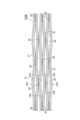
- FIG. 3 is a schematic cross-sectional view showing an optical fiber ribbon according to an embodiment.
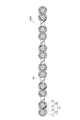
- FIG. 4 is a plan view showing the appearance of an optical fiber ribbon according to an embodiment.
- FIG. 5 is a schematic cross-sectional view showing an optical fiber cable according to one embodiment.
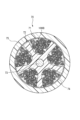
- FIG. 6 is a schematic cross-sectional view showing an optical fiber cable according to one embodiment.
- the Young's modulus of the primary resin layer is reduced in order to improve the microbending resistance of the optical fiber, the transmission loss is likely to increase at low temperatures. If the manufacturing speed of the optical fiber is increased, the Young's modulus of the primary resin layer is further reduced, and the transmission loss is likely to increase at low temperatures.
- the present disclosure aims to provide a resin composition capable of forming a primary resin layer of an optical fiber having excellent microbending resistance and low-temperature properties, and an optical fiber having excellent microbending resistance and low-temperature properties.
- a resin composition for primary coating of optical fiber contains a photopolymerizable compound including a bifunctional urethane (meth)acrylate (A) and a monofunctional urethane (meth)acrylate (B), a photopolymerization initiator, and a silane coupling agent, the urethane (meth)acrylate (A) being a reaction product of a diol having a number average molecular weight of 8,000 to 20,000, a diisocyanate, and a hydroxyl group-containing (meth)acrylate, the total amount of vinyl groups in 100 parts by mass of the resin composition being 70 mmol to 200 mmol, and the ratio of the amount of vinyl groups in the urethane (meth)acrylate (B) to the amount of vinyl groups in the urethane (meth)acrylate (A) being 3.7 to 15.0.
- a photopolymerizable compound including a bifunctional urethane (meth)acrylate (A) and a monofunctional urethan
- Such a resin composition can form a resin layer suitable for the primary coating of an optical fiber, and can improve the microbending resistance and low-temperature properties of the optical fiber.
- the total amount of vinyl groups in 100 parts by mass of the resin composition may be 80 mmol or more and 180 mmol or less.
- the ratio of the amount of vinyl groups in the urethane (meth)acrylate (B) to the amount of vinyl groups in the urethane (meth)acrylate (A) may be 4.0 or more and 10.0 or less.
- the content of the urethane (meth)acrylate (A) may be 10 parts by mass or more and 40 parts by mass or less, and the content of the urethane (meth)acrylate (B) may be 30 parts by mass or more and 80 parts by mass or less, based on 100 parts by mass of the total amount of the resin composition.
- the urethane (meth)acrylate (B) may be a reaction product of a monol having a number average molecular weight of 2000 to 6000, a diisocyanate, and a hydroxyl group-containing (meth)acrylate.
- the photopolymerizable compound may further contain an N-vinyl compound in order to improve the curing speed of the resin composition, and the content of the N-vinyl compound may be 1 part by mass or more and 15 parts by mass or less based on 100 parts by mass of the total amount of the resin composition.
- the Young's modulus of the resin film obtained by curing the resin composition according to this embodiment with ultraviolet light at an integrated light amount of 10 mJ/ cm2 and an illuminance of 100 mW/cm2 at 23°C may be 0.20 MPa or more and 0.80 MPa or less.
- the Young's modulus of the resin film may be 0.25 MPa or more and 0.80 MPa or less at 23°C.
- An optical fiber according to one embodiment of the present disclosure comprises a glass fiber including a core and a cladding, a primary resin layer that contacts the glass fiber and covers the glass fiber, and a secondary resin layer that covers the primary resin layer, the primary resin layer containing a cured product of the resin composition described in any one of (1) to (8) above.
- Such an optical fiber has excellent microbending resistance and low-temperature properties.
- a method for producing an optical fiber according to one embodiment of the present disclosure includes a coating step of coating the outer periphery of a glass fiber including a core and a cladding with the resin composition described in any one of (1) to (8) above, and a curing step of curing the resin composition by irradiating it with ultraviolet light after the coating step. This makes it possible to produce an optical fiber with excellent microbending resistance and low-temperature properties.
- An optical fiber ribbon according to one aspect of the present disclosure comprises a plurality of optical fibers as described in (9) above arranged in parallel and coated with a ribbon resin.
- Such an optical fiber ribbon has excellent microbending resistance and low-temperature properties, and can be packed densely into an optical fiber cable.
- the optical fiber ribbon described in (11) above is housed within the cable.
- An optical fiber cable including such an optical fiber ribbon has excellent microbending resistance and low-temperature properties.
- An optical fiber cable according to one embodiment of the present disclosure has a plurality of optical fibers as described in (9) stored within the cable.
- Such an optical fiber cable has excellent microbending resistance and low-temperature properties.
- the resin composition according to the present embodiment is a resin composition for primary coating of optical fiber, which contains a photopolymerizable compound including a bifunctional urethane (meth)acrylate (A) and a monofunctional urethane (meth)acrylate (B), a photopolymerization initiator, and a silane coupling agent.
- the resin composition according to the present embodiment is an ultraviolet-curable resin composition.
- the total amount of vinyl groups in 100 parts by mass of the resin composition according to this embodiment is 70 mmol or more and 200 mmol or less, and may be 75 mmol or more and 190 mmol or less, 80 mmol or more and 180 mmol or less, or 84 mmol or more and 170 mmol or less. If the total amount of vinyl groups is less than 70 mmol, the Young's modulus of the primary layer decreases and the low-temperature properties of the optical fiber tend to deteriorate, and if it exceeds 200 mmol, the urethane (meth)acrylate is less likely to be incorporated into crosslinks when the resin composition hardens, and the low-temperature properties tend to deteriorate when the manufacturing speed of the optical fiber is increased.
- the vinyl group is a group derived from a compound having a photopolymerizable ethylenically unsaturated group contained in the resin composition.
- compounds having a photopolymerizable ethylenically unsaturated group include photopolymerizable compounds having a urethane bond such as urethane (meth)acrylate (A) and urethane (meth)acrylate (B), photopolymerizable compounds without a urethane bond, and silane compounds having a photopolymerizable ethylenically unsaturated group.
- the amount of vinyl groups (mmol/g) in each compound can be calculated by multiplying the number of vinyl groups by the molecular weight x 1000.
- the total amount of vinyl groups in 100 parts by mass of the resin composition can be calculated by multiplying the amount of vinyl groups (mmol/g) in each compound by the sum of the mass percentages of each compound.
- the ratio of the amount of vinyl groups in the urethane (meth)acrylate (B) to the amount of vinyl groups in the urethane (meth)acrylate (A) in the resin composition is 3.7 or more and 15.0 or less.
- the thickness deviation rate of the primary resin layer relative to the glass fiber is less likely to decrease, and when it is 15.0 or less, the crosslink density of the primary resin layer is less likely to decrease, making it easier to improve the low-temperature characteristics of the optical fiber.
- the above ratio may be 3.8 or more and 14.0 or less, 3.9 or more and 12.0 or less, or 4.0 or more and 10.0 or less.
- the proportion of the vinyl group amount of the urethane (meth)acrylate (A) in the total amount of vinyl groups in the resin composition may be 1.0% or more and 5.0% or less, 1.5% or more and 4.5% or less, or 2.0% or more and 4.0% or less.
- the proportion of the vinyl group amount of the urethane (meth)acrylate (B) in the total amount of vinyl groups in the resin composition may be 5.0% or more and 35% or less, 7.0% or more and 30% or less, 8.0% or more and 28% or less, or 9.5% or more and 27% or less.
- the proportion of the total vinyl group amount of the urethane (meth)acrylate (A) and the urethane (meth)acrylate (B) in the total amount of vinyl groups in the resin composition may be 6.0% or more and 40%, 8.0% or more and 35% or less, or 10% or more and 30% or less.
- the urethane (meth)acrylate (A) has two (meth)acryloyl groups and is a reaction product of a diol having a number average molecular weight of 8,000 to 20,000, a diisocyanate, and a hydroxyl group-containing (meth)acrylate.
- diols examples include polyether diols, polyester diols, polycaprolactone diols, polycarbonate diols, polybutadiene diols, and bisphenol A-ethylene oxide addition diols.
- polyether diols include polytetramethylene glycol (PTMG), polyethylene glycol (PEG), polypropylene glycol (PPG), PTMG-PPG-PTMG block copolymers, PEG-PPG-PEG block copolymers, PTMG-PEG random copolymers, and PTMG-PPG random copolymers.
- Polypropylene glycol may be used as the diol because it is easy to adjust the Young's modulus of the resin layer.
- the number average molecular weight (Mn) of the diol may be 8,000 or more and 20,000 or less, 10,000 or more and 20,000 or less, 11,000 or more and 20,000 or less, 12,000 or more and 20,000 or less, or 15,000 or more and 19,000 or less.
- Diisocyanates include, for example, 2,4-tolylene diisocyanate, 2,6-tolylene diisocyanate, isophorone diisocyanate, dicyclohexylmethane diisocyanate, diphenylmethane diisocyanate, hexamethylene diisocyanate, xylylene diisocyanate, hydrogenated xylylene diisocyanate, 1,5-naphthalene diisocyanate, norbornene diisocyanate, 1,5-pentamethylene diisocyanate, tetramethylxylylene diisocyanate, and trimethylhexamethylene diisocyanate.
- hydroxyl group-containing (meth)acrylates examples include 2-hydroxyethyl (meth)acrylate, 2-hydroxypropyl (meth)acrylate, 2-hydroxybutyl (meth)acrylate, caprolactone (meth)acrylate, 2-hydroxy-3-phenoxypropyl (meth)acrylate, 2-(meth)acryloyloxyethyl-2-hydroxyethylphthalate, 2-hydroxy-o-phenylphenolpropyl (meth)acrylate, 2-hydroxy-3-methacrylpropyl acrylate, trimethylolpropane di(meth)acrylate, and pentaerythritol tri(meth)acrylate.
- 2-hydroxyethyl acrylate may be used as the hydroxyl group-containing (meth)acrylate.
- Methods for preparing the urethane (meth)acrylate (A) include, for example, a method of reacting a diol with a diisocyanate to synthesize an isocyanate group (NCO)-terminated prepolymer, followed by reaction with a hydroxyl group-containing (meth)acrylate; a method of reacting a diisocyanate with a hydroxyl group-containing (meth)acrylate, followed by reaction with a diol; and a method of simultaneously reacting a diol, a diisocyanate, and a hydroxyl group-containing (meth)acrylate.
- NCO isocyanate group
- the molar ratio of NCO to OH (NCO/OH) when reacting the diol with the diisocyanate may be 1.1 to 4.0, 1.2 to 3.5, or 1.4 to 3.0.
- the molar ratio of the hydroxyl-containing (meth)acrylate to the NCO of the NCO-terminated prepolymer may be 1.00 to 1.15, 1.01 to 1.12, or 1.03 to 1.10.
- the urethane (meth)acrylate (B) has one (meth)acryloyl group from the viewpoint of reducing the Young's modulus of the primary resin layer.
- the urethane (meth)acrylate (B) may be a reaction product of a monool having a number average molecular weight of 2000 to 10000, a diisocyanate, and a hydroxyl group-containing (meth)acrylate.
- polyoxyalkylene monoalkyl ether is a compound that has an oxyalkylene group, an alkoxy group, and a hydroxyl group.
- polyoxyalkylene monoalkyl ethers examples include polyoxyethylene oleyl ether, polyoxyethylene lauryl ether, polyoxyethylene cetyl ether, polyoxyethylene stearyl ether, polyoxyethylene alkyl (C 12 -C 14 ) ethers, polyoxyethylene tridecyl ether, polyoxyethylene myristyl ether, polyoxyethylene isostearyl ether, polyoxyethylene octyldodecyl ether, polyoxyethylene cholesteryl ether, polyoxypropylene butyl ether, polyoxypropylene myristyl ether, polyoxypropylene cetyl ether, polyoxypropylene stearyl ether, polyoxypropylene lanolin alcohol ether, polyoxyethylene polyoxypropylene butyl ether, polyoxyethylene polyoxypropylene lauryl ether, polyoxyethylene polyoxypropylene cetyl ether, polyoxyethylene polyoxypropylene stearyl ether, and polyoxyethylene polyoxy
- the polyoxyalkylene monoalkyl ether may be polyoxypropylene monobutyl ether.
- the Mn of the polyoxyalkylene monoalkyl ether may be 2000 or more, 2100 or more, 2200 or more, or 2500 or more, and may be 10000 or less, 8000 or less, 7000 or less, or 6000 or less.
- the Mn of the diol and monol can be calculated from the following formula by measuring the hydroxyl value in accordance with JIS K 0070.
- the diol has two functional groups, and the monol has one functional group.
- Mn 56.1 x number of functional groups x 1000 / hydroxyl value
- the Mn of the urethane (meth)acrylate (A) may be 10,000 or more and 50,000 or less, 12,000 or more and 48,000 or less, 14,000 or more and 46,000 or less, 16,000 or more and 44,000 or less, or 20,000 or more and 40,000 or less.
- the weight average molecular weight (Mw) of the urethane (meth)acrylate (A) may be 10,000 or more and 80,000 or less, 12,000 or more and 78,000 or less, 15,000 or more and 75,000 or less, 20,000 or more and 70,000 or less, or 25,000 or more and 60,000 or less.
- the Mn of the urethane (meth)acrylate (B) may be 4,000 or more and 20,000 or less, 5,000 or more and 18,000 or less, 6,000 or more and 15,000 or less, or 6,200 or more and 12,000 or less.
- the Mw of the urethane (meth)acrylate (B) may be 4,000 or more and 30,000 or less, 4,500 or more and 25,000 or less, 5,000 or more and 20,000 or less, or 6,000 or more and 18,000 or less.
- the Mn and Mw of the urethane (meth)acrylate (A) and the urethane (meth)acrylate (B) can be measured by gel permeation chromatography (GPC).
- the content of the urethane (meth)acrylate (A) may be 10 parts by mass or more and 40 parts by mass or less, 15 parts by mass or more and 35 parts by mass or less, or 15 parts by mass or more and 30 parts by mass or less, based on 100 parts by mass of the total amount of the resin composition.
- the content of the urethane (meth)acrylate (B) may be 30 parts by mass or more and 80 parts by mass or less, 35 parts by mass or more and 75 parts by mass or less, or 40 parts by mass or more and 70 parts by mass or less, based on 100 parts by mass of the total amount of the resin composition, from the viewpoint of adjusting the Young's modulus of the primary resin layer.
- the total amount of the urethane (meth)acrylate (A) and the urethane (meth)acrylate (B) may be 50 parts by mass or more and 95 parts by mass or less, 60 parts by mass or more and 90 parts by mass or less, or 65 parts by mass or more and 85 parts by mass or less, based on 100 parts by mass of the total amount of the resin composition.
- the photopolymerizable compound according to this embodiment may further include a photopolymerizable compound (hereinafter referred to as a "monomer") that does not have a urethane bond.
- a photopolymerizable compound hereinafter referred to as a "monomer”
- examples of the monomer include (meth)acrylic acid esters, N-vinyl compounds, and (meth)acrylamide compounds.
- the monomer may be a monofunctional monomer having one photopolymerizable ethylenically unsaturated group, or a polyfunctional monomer having two or more ethylenically unsaturated groups.
- Examples of monofunctional (meth)acrylic acid esters include methyl (meth)acrylate, ethyl (meth)acrylate, propyl (meth)acrylate, n-butyl (meth)acrylate, s-butyl (meth)acrylate, t-butyl (meth)acrylate, isobutyl (meth)acrylate, n-pentyl (meth)acrylate, isopentyl (meth)acrylate, hexyl (meth)acrylate, heptyl (meth)acrylate, and isoamyl (meth)acrylate.
- acrylate 2-ethylhexyl (meth)acrylate, n-octyl (meth)acrylate, isooctyl (meth)acrylate, isodecyl (meth)acrylate, lauryl (meth)acrylate, phenoxyethyl (meth)acrylate, tetrahydrofurfuryl (meth)acrylate, benzyl (meth)acrylate, cyclic trimethylolpropane formal acrylate, dicyclopentenyl (meth)acrylate, dicyclopentenyloxy Ethyl (meth)acrylate, dicyclopentanyl (meth)acrylate, methoxypolyethylene glycol (meth)acrylate, butoxypolyethylene glycol (meth)acrylate, nonylphenolpolyethylene glycol (meth)acrylate, nonylphenoxypolyethylene glycol (meth)acrylate, isobornyl (meth)acrylate, 3-phenoxybenzy
- polyfunctional (meth)acrylic acid esters include ethylene glycol di(meth)acrylate, polyethylene glycol di(meth)acrylate, polypropylene glycol di(meth)acrylate, neopentyl glycol di(meth)acrylate, tripropylene glycol di(meth)acrylate, triethylene glycol di(meth)acrylate, cyclohexanedimethanol di(meth)acrylate, dipropylene glycol di(meth)acrylate, tetraethylene glycol di(meth)acrylate, hydroxypivalic acid neopentyl glycol di(meth)acrylate, 1,3-butylene glycol di(meth)acrylate, 1,4-butane Diol di(meth)acrylate, diethylene glycol di(meth)acrylate, 1,6-hexanediol di(meth)acrylate, 1,9-nonanediol di(meth)acrylate, 1,12-dodecan
- Examples of (meth)acrylamide compounds include dimethyl(meth)acrylamide, diethyl(meth)acrylamide, (meth)acryloylmorpholine, hydroxymethyl(meth)acrylamide, hydroxyethyl(meth)acrylamide, isopropyl(meth)acrylamide, dimethylaminopropyl(meth)acrylamide, dimethylaminopropylacrylamide-methyl chloride salt, diacetone acrylamide, (meth)acryloylpiperidine, (meth)acryloylpyrrolidine, (meth)acrylamide, N-hexyl(meth)acrylamide, N-methyl(meth)acrylamide, N-butyl(meth)acrylamide, N-methylol(meth)acrylamide, and N-methylolpropane(meth)acrylamide.
- N-vinyl compounds include N-vinylpyrrolidone, N-vinylcaprolactam, N-vinylmethyloxazolidinone, N-vinylimidazole, and N-vinyl-N-methylacetamide.
- N-vinylcaprolactam or N-vinylmethyloxazolidinone may also be used as the N-vinyl compound.
- the photopolymerizable compound contains an N-vinyl compound, which can improve the curing speed of the resin composition.
- the content of the N-vinyl compound may be 1 part by mass or more and 15 parts by mass or less, 2 parts by mass or more and 14 parts by mass or less, or 2.5 parts by mass or more and 13 parts by mass or less, based on 100 parts by mass of the total amount of the resin composition.
- the content of the monomer may be 5 parts by mass or more and 40 parts by mass or less, 7 parts by mass or more and 37 parts by mass or less, or 10 parts by mass or more and 35 parts by mass or less, based on 100 parts by mass of the total amount of the resin composition.
- the photopolymerization initiator can be appropriately selected from known radical photopolymerization initiators.
- photopolymerization initiators include 1-hydroxycyclohexyl phenyl ketone (Omnirad 184, manufactured by IGM Resins), 2,2-dimethoxy-2-phenylacetophenone (Omnirad 651, manufactured by IGM Resins), 2,4,6-trimethylbenzoyldiphenylphosphine oxide (Omnirad TPO, manufactured by IGM Resins), ethyl (2,4,6-trimethylbenzoyl)-phenylphosphinate (Omnirad TPO-L, manufactured by IGM Resins), 2-benzyl-2-dimethylamino-4'-morpholino-4'-amine, and 2-benzyl-2-dimethylamino-4'-morpholino-4'-amine.
- the photopolymerization initiator may be used in a mixture of two or more kinds.
- the photopolymerization initiator may contain 2,4,6-trimethylbenzoyldiphenylphosphine oxide or ethyl (2,4,6-trimethylbenzoyl)-phenylphosphineate, since these have excellent rapid curing properties for the resin composition.
- the content of the photopolymerization initiator may be 0.1 parts by mass or more and 5 parts by mass or less, 0.3 parts by mass or more and 4 parts by mass or less, or 0.4 parts by mass or more and 3 parts by mass or less, based on 100 parts by mass of the total amount of the resin composition.
- the resin composition according to this embodiment may further contain a sensitizer, a photoacid generator, a surfactant, a silane coupling agent, a leveling agent, an antifoaming agent, an antioxidant, an ultraviolet absorber, etc.
- Sensitizers include, for example, anthracene compounds such as 9,10-dibutoxyanthracene, 9,10-diethoxyanthracene, 9,10-dipropoxyanthracene, and 9,10-bis(2-ethylhexyloxy)anthracene; thioxanthone compounds such as 2,4-diethylthioxanthone, 2,4-diethylthioxanthen-9-one, 2-isopropylthioxanthone, and 4-isopropylthioxanthone; amine compounds such as triethanolamine, methyldiethanolamine, and triisopropanolamine; benzoin compounds, anthraquinone compounds, ketal compounds, and benzophenone compounds.
- anthracene compounds such as 9,10-dibutoxyanthracene, 9,10-diethoxyanthracene, 9,10-dipropoxyanthracene, and 9,10-bis(2-e
- an onium salt having an A + B - structure may be used.
- the photoacid generator include sulfonium salts such as CPI-100P, 101A, 110P, 200K, 210S, 310B, and 410S (manufactured by San-Apro Ltd.) and Omnicat 270 and 290 (manufactured by IGM Resins), and iodonium salts such as CPI-IK-1 (manufactured by San-Apro Ltd.), Omnicat 250 (manufactured by IGM Resins), and WPI-113, 116, 124, 169, and 170 (manufactured by FUJIFILM Wako Pure Chemical Industries, Ltd.).
- Surfactants include, for example, polyoxyethylene alkyl ethers, polyoxyethylene sorbitan fatty acid esters, polyoxyethylene sorbitol fatty acid esters, polyoxyethylene monoesters, polyoxyethylene diesters, polyoxyethylene glyceryl isostearate, polyoxyethylene glyceryl triisostearate, sorbitan fatty acid esters, compounds represented by the following formula (1), and compounds represented by the following formula (2).
- R represents an alkylene group having 2 to 4 carbon atoms
- R1 represents a hydrocarbon group having 1 to 20 carbon atoms
- R2 represents a hydrogen atom or a methyl group
- X represents a hydrogen atom or SO 3 NH 4
- m represents an integer of 0 to 100
- n represents an integer of 0 to 12.
- m is 2 or more, multiple R may be the same or different.
- Examples of the alkylene group having 2 to 4 carbon atoms represented by R include an ethylene group, a propylene group, and a butylene group. From the viewpoint of more excellent water resistance and oil resistance, R may be an ethylene group. From the viewpoint of more excellent water resistance and oil resistance, the number of carbon atoms of the hydrocarbon group represented by R 1 may be 5 to 20, 8 to 18, or 10 to 15.
- the hydrocarbon group represented by R 1 may be linear, branched, or cyclic.
- the hydrocarbon group represented by R 1 may be an aliphatic hydrocarbon group or an aromatic hydrocarbon group. Examples of the aliphatic hydrocarbon group include an alkyl group having 1 to 20 carbon atoms.
- Examples of the aromatic hydrocarbon group include a phenyl group substituted with an alkyl group.
- the number of carbon atoms of the alkyl group in the phenyl group substituted with an alkyl group may be 1 to 14 or 1 to 10.
- Examples of the phenyl group substituted with an alkyl group include an octylphenyl group and a nonylphenyl group.
- R 2 may be a hydrogen atom.
- m may be an integer from 1 to 50, 2 to 40, 3 to 30, 4 to 25, or 5 to 20.
- n may be an integer from 0 to 10, 0 to 8, 0 to 6, 0 to 3, or 1 to 3.
- Examples of compounds represented by formula (1) include ADEKA REASOAP SR-10, SR-20, SR-1025, SR-2025, SR-3025, SE-10N, SE-1025A, ER-10, ER-20, ER-30, ER-40, NE-10, NE-20, and NE-30, all manufactured by ADEKA CORPORATION.
- Examples of compounds represented by formula (2) include Aqualon KH-05, KH-10, and KH-20, all manufactured by Daiichi Kogyo Seiyaku Co., Ltd.
- Silane coupling agents include, for example, tetramethyl silicate, tetraethyl silicate, mercaptopropyltrimethoxysilane, vinyltrichlorosilane, vinyltriethoxysilane, vinyltris( ⁇ -methoxyethoxy)silane, 3-(meth)acryloxypropyltrimethoxysilane, ⁇ -(3,4-epoxycyclohexyl)-ethyltrimethoxysilane, dimethoxydimethylsilane, diethoxydimethylsilane, ⁇ -glycidoxypropyltrimethoxysilane, ⁇ -glycidoxypropylmethyldiethoxysilane, N-( ⁇ -aminoethyl)- ⁇ -aminopropyltrimethoxysilane, Examples of the silane coupling agent include trimethoxysilane, N-( ⁇ -aminoethyl)- ⁇ -aminopropyltri
- silane coupling agent from the viewpoint of adjusting the amount of vinyl groups in the resin composition, a silane compound having a photopolymerizable ethylenically unsaturated group such as vinyltrichlorosilane, vinyltriethoxysilane, vinyltris( ⁇ -methoxyethoxy)silane, or 3-(meth)acryloxypropyltrimethoxysilane may be used.
- the viscosity of the resin composition according to the present embodiment at 25° C. may be 0.5 Pa ⁇ s or more and 20 Pa ⁇ s or less, 0.8 Pa ⁇ s or more and 18 Pa ⁇ s or less, or 1 Pa ⁇ s or more and 15 Pa ⁇ s or less.
- the viscosity of the resin composition at 25° C. can be measured using a rheometer ("MCR-102" manufactured by Anton Paar) under the conditions of a cone plate CP25-2 and a shear rate of 10 s ⁇ 1 .
- the Young's modulus of the resin film when the resin composition is cured with ultraviolet light under conditions of an integrated light amount of 10 mJ/ cm2 and an illuminance of 100 mW/ cm2 may be 0.20 MPa or more and 0.80 MPa or less at 23 ° C.
- the Young's modulus of the resin film is 0.20 MPa or more, it is easy to improve the low-temperature characteristics of the optical fiber, and when the Young's modulus of the resin film is 0.80 MPa or less, it is easy to improve the microbending resistance characteristics of the optical fiber.
- the Young's modulus of the resin film may be 0.22 MPa or more, 0.24 MPa or more, or 0.25 MPa or more, and may be 0.75 MPa or less, 0.70 MPa or less, 0.65 MPa or less, or 0.60 MPa or less. From the viewpoint of achieving both microbending resistance characteristics and low-temperature characteristics, the Young's modulus of the resin film may be 0.25 MPa or more and 0.60 MPa or less.
- optical fiber 1 is a schematic cross-sectional view showing an example of an optical fiber according to the present embodiment.
- the optical fiber 10 includes a glass fiber 13 including a core 11 and a cladding 12, and a coating resin layer 16 including a primary resin layer 14 and a secondary resin layer 15 provided on the outer periphery of the glass fiber 13.
- the cladding 12 surrounds the core 11.
- the core 11 and the cladding 12 mainly contain glass such as quartz glass.
- the core 11 can be made of quartz glass doped with germanium or pure quartz glass
- the cladding 12 can be made of pure quartz glass or quartz glass doped with fluorine.
- the outer diameter (D2) of the glass fiber 13 is about 100 ⁇ m to 125 ⁇ m, and the diameter (D1) of the core 11 constituting the glass fiber 13 is about 7 ⁇ m to 15 ⁇ m.
- the thickness of the coating resin layer 16 is usually about 22 ⁇ m to 70 ⁇ m.
- the thickness of each of the primary resin layer 14 and the secondary resin layer 15 may be about 5 ⁇ m to 50 ⁇ m.
- the thickness of each of the primary resin layer 14 and the secondary resin layer 15 may be about 10 ⁇ m to 50 ⁇ m, for example, the thickness of the primary resin layer 14 may be 35 ⁇ m and the thickness of the secondary resin layer 15 may be 25 ⁇ m.
- the outer diameter of the optical fiber 10 may be about 245 ⁇ m to 265 ⁇ m.
- the thickness of each of the primary resin layer 14 and the secondary resin layer 15 may be about 8 ⁇ m to 38 ⁇ m, for example, the thickness of the primary resin layer 14 may be 25 ⁇ m and the thickness of the secondary resin layer 15 may be 10 ⁇ m.
- the outer diameter of the optical fiber 10 may be about 165 ⁇ m to 221 ⁇ m.
- the thickness of each of the primary resin layer 14 and the secondary resin layer 15 may be about 5 ⁇ m to 32 ⁇ m, for example, the thickness of the primary resin layer 14 may be 25 ⁇ m and the thickness of the secondary resin layer 15 may be 10 ⁇ m.
- the outer diameter of the optical fiber 10 may be about 144 ⁇ m to 174 ⁇ m.
- the method for manufacturing an optical fiber according to this embodiment includes a coating step of coating the resin composition on the outer circumference of a glass fiber including a core and a cladding, and a curing step of curing the resin composition by irradiating it with ultraviolet light after the coating step.
- the Young's modulus of the primary resin layer may be 0.80 MPa or less, 0.75 MPa or less, 0.70 MPa or less, 0.65 MPa or less, or 0.60 MPa or less at 23°C ⁇ 2°C from the viewpoint of improving the microbending resistance characteristics of the optical fiber. If the Young's modulus of the primary resin layer exceeds 0.80 MPa, external forces may be easily transmitted to the glass fiber, and the increase in transmission loss due to microbending may become significant.
- the Young's modulus of the primary resin layer may be 0.05 MPa or more, 0.07 MPa or more, 0.10 MPa or more, 0.20 MPa or more, or 0.25 MPa or more at 23°C ⁇ 2°C from the viewpoint of improving the low-temperature characteristics of the optical fiber.
- the Young's modulus of the primary resin layer can be measured by the Pullout Modulus (POM) method at 23° C. Two points of the optical fiber are fixed by two chuck devices, the coating resin layer (primary resin layer and secondary resin layer) between the two chuck devices is removed, and then one chuck device is fixed and the other chuck device is moved gently in the opposite direction to the fixed chuck device.
- POM Pullout Modulus
- the secondary resin layer 15 can be formed, for example, by curing a resin composition containing a photopolymerizable compound including urethane (meth)acrylate, a photopolymerization initiator, etc.
- the resin composition forming the secondary resin layer has a different composition from the resin composition for the primary coating.
- the resin composition for the secondary coating can be prepared using a conventionally known technique.
- the Young's modulus of the secondary resin layer may be 600 MPa or more, 700 MPa or more, or 800 MPa or more at 23°C ⁇ 2°C.
- the upper limit of the Young's modulus of the secondary resin layer is not particularly limited, but from the viewpoint of imparting appropriate toughness to the secondary resin layer, it may be 3000 MPa or less, 2500 MPa or less, or 2000 MPa or less at 23°C ⁇ 2°C.
- the Young's modulus of the secondary resin layer can be measured by the following method. First, the optical fiber is immersed in a mixed solvent of acetone and ethanol, and only the coating resin layer is extracted into a cylindrical shape. At this time, the primary resin layer and the secondary resin layer are integrated, but since the Young's modulus of the primary resin layer is 1/50,000 to 1/1,000 of that of the secondary resin layer, the Young's modulus of the primary resin layer can be ignored. Next, the solvent is removed from the coating resin layer by vacuum drying, and then a tensile test (tensile speed 1 mm/min) is performed at 23°C, and the Young's modulus can be obtained using the secant equation with a strain of 2.5%.
- a tensile test tensile speed 1 mm/min
- the method for manufacturing an optical fiber according to this embodiment uses the resin composition according to this embodiment as the resin composition for the primary coating, making it possible to manufacture an optical fiber with excellent microbending resistance and low-temperature properties.
- optical fiber ribbon The optical fiber according to this embodiment can be used to fabricate an optical fiber ribbon, which is made up of a plurality of the optical fibers arranged in parallel and coated with a ribbon resin.
- FIG. 2 is a schematic cross-sectional view showing an optical fiber ribbon according to one embodiment.
- the optical fiber ribbon 100 has a plurality of optical fibers 10 and a connecting resin layer 40 in which the optical fibers 10 are (integrally) coated with a ribbon resin and connected.
- four optical fibers 10 are shown as an example, but the number is not particularly limited.
- the optical fibers 10 may be integrated in a state where they are in contact with each other and arranged in parallel, or some or all of the optical fibers 10 may be integrated in a state where they are arranged in parallel with a fixed interval between them.
- the center-to-center distance F between adjacent optical fibers 10 may be 220 ⁇ m or more and 280 ⁇ m or less. When the center-to-center distance is 220 ⁇ m or more and 280 ⁇ m or less, it is easy to place the optical fibers in an existing V-groove, and an optical fiber ribbon with excellent bulk fusion properties can be obtained.
- the thickness T of the optical fiber ribbon 100 may be 164 ⁇ m or more and 285 ⁇ m or less, depending on the outer diameter of the optical fibers 10.
- FIG. 3 is a schematic cross-sectional view showing an example of an optical fiber ribbon in which optical fibers are integrated in a state in which they are arranged in parallel with a fixed interval.
- the optical fiber ribbon 100A shown in FIG. 3 is made up of 12 optical fibers 10 connected in pairs with a ribbon resin at a fixed interval.
- the ribbon resin forms a connecting resin layer 40.
- the ribbon resin resin materials generally known as ribbon materials can be used.
- the ribbon resin may contain a thermosetting resin such as silicone resin, epoxy resin, or urethane resin, or an ultraviolet-curing resin such as epoxy acrylate, urethane acrylate, or polyester acrylate.
- the thickness of the connection part at the center of the optical fibers 10 may be 150 ⁇ m or more and 220 ⁇ m or less. Since the optical fiber ribbon is easily deformed when stored in the cable, the optical fiber ribbon may have a recess at the connection part of the optical fibers. The recess may be formed in a triangular shape with a narrowing angle on one side of the connection part.
- the optical fiber ribbon according to this embodiment may have intermittent connecting portions and non-connecting portions in the longitudinal and width directions.
- FIG. 4 is a plan view showing the appearance of an optical fiber ribbon according to one embodiment.
- the optical fiber ribbon 100B has a plurality of optical fibers, a plurality of connecting portions 20, and non-connecting portions (severed portions) 21.
- the non-connecting portions 21 are formed intermittently in the longitudinal direction of the optical fiber ribbon.
- the optical fiber ribbon 100B is an intermittently connected type optical fiber ribbon in which the connecting portions 20 and non-connecting portions 21 are provided intermittently in the longitudinal direction for every two optical fibers 10A.
- the "connecting portion” refers to a portion where adjacent optical fibers are integrated via a connecting resin layer
- the “non-connecting portion” refers to a portion where adjacent optical fibers are not integrated via a connecting resin layer and there is a gap between the optical fibers.
- the non-connecting portions 21 are intermittently provided at the connecting portions 20 provided every two cores, so the optical fiber ribbon is easily deformed. Therefore, when mounting the optical fiber ribbon on an optical fiber cable, it can be easily rolled up and mounted, making it an optical fiber ribbon suitable for high-density mounting.
- the connecting portions 20 can be easily torn starting from the non-connecting portions 21, making it easy to separate the optical fibers 10 from the optical fiber ribbon into individual cores.
- the optical fiber ribbon of this embodiment uses the above optical fiber, which provides excellent microbending resistance and low-temperature properties and allows for high-density packing within an optical fiber cable.
- the optical fiber ribbon is housed in the cable.
- An example of the optical fiber cable is a slot-type optical fiber cable having a plurality of slots (grooves).
- the optical fiber ribbon can be mounted in the slot so that the mounting density in each slot is about 25% to 65%.
- the mounting density means the ratio of the cross-sectional area of the optical fiber ribbon mounted in the slot to the cross-sectional area of the slot.
- the optical fiber cable according to the present embodiment may be configured such that the plurality of optical fibers are housed in the cable without being covered with a ribbon resin.
- FIG. 5 and 6 An example of an optical fiber cable according to this embodiment will be described with reference to Figs. 5 and 6.
- an intermittently connected optical fiber ribbon is stored, but multiple optical fibers that are not coated with ribbon resin may also be stored in a bundled state.
- FIG. 5 is a schematic cross-sectional view of a slotless type optical fiber cable 60 using the intermittently connected optical fiber ribbon 100B described above.
- the optical fiber cable 60 has a cylindrical tube 61 and a plurality of optical fiber ribbons 100B.
- the plurality of optical fiber ribbons 100B may be bundled with an intervening fiber 62 such as aramid fiber.
- the plurality of optical fiber ribbons 100B may have different markings.
- the optical fiber cable 60 is structured by twisting the bundled optical fiber ribbons 100B together, extruding a resin that becomes the tube 61 around it, and covering it with a tension member 63 and an outer jacket 64. If waterproofing is required, a water-absorbing yarn may be inserted inside the tube 61.
- the tube 61 may be formed using a resin such as polybutylene terephthalate or high-density polyethylene.
- a tear string 65 may be provided on the outside of the tube 61.
- FIG. 6 is a schematic cross-sectional view of a slot-type optical fiber cable 70 using the intermittently connected optical fiber ribbon 100B described above.
- the optical fiber cable 70 has a slot rod 72 having a plurality of slots 71 and a plurality of optical fiber ribbons 100B.
- the optical fiber cable 70 has a structure in which a plurality of slots 71 are provided radially in a slot rod 72 having a tension member 73 in the center.
- the plurality of slots 71 may be provided in a spiral or SZ twisted shape in the longitudinal direction of the optical fiber cable 70.
- Each slot 71 contains a plurality of optical fiber ribbons 100B that have been separated from a parallel state and are densely packed.
- Each optical fiber ribbon 100B may be bundled with a bundling material for identification.
- a pressure winding tape 74 is wound around the slot rod 72, and an outer jacket 75 is formed around the pressure winding tape 74.
- the outer jackets 64 and 75 are made of, for example, polyvinyl
- Optical fiber cables equipped with the optical fiber or optical fiber ribbon according to this embodiment have excellent microbending resistance and low-temperature properties.
- urethane acrylate (A-1) had an Mn of 24,500, an Mw of 29,700, and a vinyl group amount of 0.159 mmol/g.
- Urethane acrylate (A-2) was obtained in the same manner as in the synthesis of urethane acrylate (A-1), except that polypropylene glycol having Mn 12000 was changed to polypropylene glycol having Mn 18000 (manufactured by AGC Corporation under the trade name "PREMINOL S4318F”). Urethane acrylate (A-2) had an Mn of 36700, an Mw of 49000, and a vinyl group amount of 0.108 mmol/g.
- Urethane acrylate (B-2) was obtained in the same manner as in the synthesis of urethane acrylate (A-1), except that polypropylene glycol having Mn 12000 was changed to polyoxypropylene monobutyl ether having Mn 5000 (trade name "ACROVUTE MB-90" manufactured by NOF Corporation). Urethane acrylate (B-2) had an Mn of 10000, an Mw of 16700, and a vinyl group amount of 0.189 mmol/g.
- urethane acrylate (B-3) Acrobute MB-90 and 2-acryloyloxyethyl isocyanate (product name "Karenzu AOI” manufactured by Resonac Corporation) were reacted at 60°C for 1 hour at an NCO/OH ratio of 1.0 to obtain urethane acrylate (B-3).
- 200 ppm of dibutyltin dilaurate was added as a catalyst relative to the final total amount of charge
- 500 ppm of BHT was added as a polymerization inhibitor relative to the final total amount of charge.
- the urethane acrylate (B-3) had an Mn of 8500, an Mw of 15700, and a vinyl group amount of 0.195 mmol/g.
- nonylphenol polyethylene glycol acrylate (Miwon's product name "Miramer M164", vinyl group amount: 2.222 mmol/g), acryloylmorpholine (ACMO, vinyl group amount: 7.084 mmol/g), N-vinylcaprolactam (NVCL, vinyl group amount: 7.184 mmol/g), and neopentyl glycol diacrylate (NPG, vinyl group amount: 9.423 mmol/g) were prepared.
- NVCL N-vinylcaprolactam
- NPG neopentyl glycol diacrylate
- UVP 2,4,6-trimethylbenzoyldiphenylphosphine oxide
- silane coupling agent 3-acryloxypropyltrimethoxysilane (APTMS, vinyl group amount: 4.268 mmol/g) was prepared.
- the Mn of polypropylene glycol and polyoxypropylene butyl monoether is a value calculated from the hydroxyl value and is the value listed in the catalogue of each product.
- the Mn and Mw of urethane acrylate were measured using a Waters ACQUITY APC RI system under the following conditions: sample concentration: 0.2 mass% THF solution, injection amount: 20 ⁇ L, sample temperature: 15°C, mobile phase: THF, XT column for organic solvents: particle diameter 2.5 ⁇ m, pore size 450 ⁇ , column inner diameter 4.6 ⁇ column length 150 mm + particle diameter 2.5 ⁇ m, pore size 125 ⁇ , column inner diameter 4.6 ⁇ column length 150 mm + particle diameter 1.7 ⁇ m, pore size 45 ⁇ , column inner diameter 4.6 ⁇ column length 150 mm, column temperature: 40°C, flow rate: 0.8 mL/min.
- Resin composition for the primary coating of each test example were prepared by mixing urethane acrylate, monomer, photopolymerization initiator, and silane coupling agent in the amounts (parts by mass) shown in Table 1 or Table 2.
- Test Examples 1 to 11 correspond to working examples, and Test Examples 12 to 14 correspond to comparative examples.
- the resin composition was applied onto a polyethylene terephthalate (PET) film using a spin coater, and then cured using an electrodeless UV lamp system (D bulb, manufactured by Heraeus) under conditions of 10 mJ/ cm2 and 100 mW/ cm2 to form a resin film with a thickness of 200 ⁇ m on the PET film. The resin film was then peeled off from the PET film to obtain a resin film.
- PET polyethylene terephthalate
- D bulb manufactured by Heraeus
- the resin film was punched out into a dumbbell shape according to JIS K 7127 Type 5, and pulled using a tensile tester at 23 ⁇ 2°C, 50 ⁇ 10% RH, at a pulling speed of 1 mm/min, and with a gauge length of 25 mm, to obtain a stress-strain curve.
- the Young's modulus of the resin film was calculated by dividing the stress calculated by the secant equation for 2.5% strain by the cross-sectional area of the resin film.
- Urethane acrylate (Z-1) was obtained in the same manner as in the synthesis of urethane acrylate (A-1), except that polypropylene glycol having Mn 12,000 was changed to polypropylene glycol having Mn 600 (trade name "PP-600” manufactured by Sanyo Chemical Industries, Ltd.). Urethane acrylate (Z-1) had an Mn of 2,300 and an Mw of 2,700.
- a resin composition for secondary coating was obtained by mixing 25 parts by weight of urethane acrylate (Z-1), 36 parts by weight of tripropylene glycol diacrylate, 37 parts by weight of Viscoat #540 (Osaka Organic Chemical Industry Co., Ltd.), 1 part by weight of Omnirad TPO, and 1 part by weight of 1-hydroxycyclohexyl phenyl ketone (Omnirad 184).
- a resin composition for primary coating and a resin composition for secondary coating were applied to the outer peripheral surface of a glass fiber 13 having a diameter of 125 ⁇ m. Then, each resin composition was cured by irradiating with ultraviolet light to form a coating resin layer 16 including a primary resin layer 14 and a secondary resin layer 15, thereby producing an optical fiber 10.
- the thickness of the primary resin layer 14 was 20 ⁇ m
- the thickness of the secondary resin layer 15 was 15 ⁇ m, thereby obtaining an optical fiber having an outer diameter of 195 ⁇ m.
- the optical fiber was produced at production speeds of 2000 m/min and 3000 m/min.
- the optical fiber was wound in one layer around a glass bobbin with a tension of 50 g, and the transmission characteristics of signal light with a wavelength of 1550 nm were measured to determine the transmission loss under each of the temperature conditions of 23° C., -40° C., and -60° C. If the difference in transmission loss, obtained by subtracting the transmission loss at 23° C. from the transmission loss at -40° C., was less than 0 dB, it was evaluated as "A,” if it was 0 dB or more and 0.01 dB/km or less, it was evaluated as "B,” and if it exceeded 0.01 dB/km, it was evaluated as "C.”
- the transmission loss of light with a wavelength of 1550 nm when the optical fiber 10 was wound in a single layer around a 280 mm diameter bobbin covered with sandpaper was measured by an OTDR (Optical Time Domain Reflectometer) method.
- OTDR Optical Time Domain Reflectometer
- the thickness deviation rate of the primary resin layer was calculated by dividing the minimum thickness of the primary resin layer by the maximum thickness of the primary resin layer (minimum thickness of the primary resin layer/maximum thickness of the primary resin layer ⁇ 100). The thickness deviation rate was evaluated as "A” when it was 80% or more, "B” when it was 70% or more and less than 80%, and "C” when it was less than 70%.
Landscapes
- Chemical & Material Sciences (AREA)
- Chemical Kinetics & Catalysis (AREA)
- Organic Chemistry (AREA)
- Life Sciences & Earth Sciences (AREA)
- Engineering & Computer Science (AREA)
- Physics & Mathematics (AREA)
- Materials Engineering (AREA)
- Polymers & Plastics (AREA)
- Health & Medical Sciences (AREA)
- Wood Science & Technology (AREA)
- Medicinal Chemistry (AREA)
- General Physics & Mathematics (AREA)
- Optics & Photonics (AREA)
- General Life Sciences & Earth Sciences (AREA)
- General Chemical & Material Sciences (AREA)
- Geochemistry & Mineralogy (AREA)
- Macromonomer-Based Addition Polymer (AREA)
Priority Applications (2)
| Application Number | Priority Date | Filing Date | Title |
|---|---|---|---|
| JP2025520568A JPWO2024237213A1 (https=) | 2023-05-16 | 2024-05-10 | |
| CN202480025439.1A CN120936583A (zh) | 2023-05-16 | 2024-05-10 | 树脂组合物、光纤、光纤的制造方法、光纤带、及光纤线缆 |
Applications Claiming Priority (2)
| Application Number | Priority Date | Filing Date | Title |
|---|---|---|---|
| JP2023080640 | 2023-05-16 | ||
| JP2023-080640 | 2023-05-16 |
Publications (1)
| Publication Number | Publication Date |
|---|---|
| WO2024237213A1 true WO2024237213A1 (ja) | 2024-11-21 |
Family
ID=93519722
Family Applications (1)
| Application Number | Title | Priority Date | Filing Date |
|---|---|---|---|
| PCT/JP2024/017506 Ceased WO2024237213A1 (ja) | 2023-05-16 | 2024-05-10 | 樹脂組成物、光ファイバ、光ファイバの製造方法、光ファイバリボン、および光ファイバケーブル |
Country Status (5)
| Country | Link |
|---|---|
| JP (1) | JPWO2024237213A1 (https=) |
| CN (1) | CN120936583A (https=) |
| NL (1) | NL2037698A (https=) |
| TW (1) | TW202500607A (https=) |
| WO (1) | WO2024237213A1 (https=) |
Citations (5)
| Publication number | Priority date | Publication date | Assignee | Title |
|---|---|---|---|---|
| JP2001226150A (ja) * | 1999-12-09 | 2001-08-21 | Dainippon Ink & Chem Inc | 光ファイバー被覆用樹脂組成物及び光ファイバー若しくはユニット |
| JP2007297467A (ja) * | 2006-04-28 | 2007-11-15 | Jsr Corp | 液状硬化性樹脂組成物 |
| WO2022138119A1 (ja) * | 2020-12-21 | 2022-06-30 | 住友電気工業株式会社 | 樹脂組成物、樹脂組成物の製造方法、光ファイバ、光ファイバの製造方法、光ファイバリボン、及び光ファイバケーブル |
| WO2022168476A1 (ja) * | 2021-02-04 | 2022-08-11 | 住友電気工業株式会社 | 樹脂組成物、光ファイバ、光ファイバの製造方法、光ファイバリボン、及び光ファイバケーブル |
| WO2023139898A1 (ja) * | 2022-01-20 | 2023-07-27 | 住友電気工業株式会社 | 樹脂組成物、光ファイバ、光ファイバの製造方法、光ファイバリボン、及び光ファイバケーブル |
-
2024
- 2024-05-10 CN CN202480025439.1A patent/CN120936583A/zh active Pending
- 2024-05-10 WO PCT/JP2024/017506 patent/WO2024237213A1/ja not_active Ceased
- 2024-05-10 JP JP2025520568A patent/JPWO2024237213A1/ja active Pending
- 2024-05-15 NL NL2037698A patent/NL2037698A/en unknown
- 2024-05-15 TW TW113117925A patent/TW202500607A/zh unknown
Patent Citations (5)
| Publication number | Priority date | Publication date | Assignee | Title |
|---|---|---|---|---|
| JP2001226150A (ja) * | 1999-12-09 | 2001-08-21 | Dainippon Ink & Chem Inc | 光ファイバー被覆用樹脂組成物及び光ファイバー若しくはユニット |
| JP2007297467A (ja) * | 2006-04-28 | 2007-11-15 | Jsr Corp | 液状硬化性樹脂組成物 |
| WO2022138119A1 (ja) * | 2020-12-21 | 2022-06-30 | 住友電気工業株式会社 | 樹脂組成物、樹脂組成物の製造方法、光ファイバ、光ファイバの製造方法、光ファイバリボン、及び光ファイバケーブル |
| WO2022168476A1 (ja) * | 2021-02-04 | 2022-08-11 | 住友電気工業株式会社 | 樹脂組成物、光ファイバ、光ファイバの製造方法、光ファイバリボン、及び光ファイバケーブル |
| WO2023139898A1 (ja) * | 2022-01-20 | 2023-07-27 | 住友電気工業株式会社 | 樹脂組成物、光ファイバ、光ファイバの製造方法、光ファイバリボン、及び光ファイバケーブル |
Also Published As
| Publication number | Publication date |
|---|---|
| TW202500607A (zh) | 2025-01-01 |
| NL2037698A (en) | 2024-12-03 |
| CN120936583A (zh) | 2025-11-11 |
| JPWO2024237213A1 (https=) | 2024-11-21 |
Similar Documents
| Publication | Publication Date | Title |
|---|---|---|
| JP7835166B2 (ja) | 樹脂組成物、光ファイバ、光ファイバの製造方法、光ファイバリボン、及び光ファイバケーブル | |
| JP7582209B2 (ja) | 樹脂組成物、光ファイバ及び光ファイバの製造方法 | |
| JP7786397B2 (ja) | 樹脂組成物、樹脂組成物の製造方法、光ファイバ、光ファイバの製造方法、光ファイバリボン、及び光ファイバケーブル | |
| US20250011615A1 (en) | Resin composition, optical fiber, optical fiber manufacturing method, optical fiber ribbon, and optical fiber cable | |
| JP7582208B2 (ja) | 樹脂組成物、光ファイバ及び光ファイバの製造方法 | |
| US20250189718A1 (en) | Resin composition, optical fiber, optical fiber manufacturing method, optical fiber ribbon, and optical fiber cable | |
| WO2024237213A1 (ja) | 樹脂組成物、光ファイバ、光ファイバの製造方法、光ファイバリボン、および光ファイバケーブル | |
| WO2024237212A1 (ja) | 樹脂組成物、光ファイバ、光ファイバの製造方法、光ファイバリボン、および光ファイバケーブル | |
| JP7582210B2 (ja) | 樹脂組成物、光ファイバ及び光ファイバの製造方法 | |
| WO2024247602A1 (ja) | 樹脂組成物、光ファイバ、光ファイバの製造方法、光ファイバリボンおよび光ファイバケーブル | |
| US20250188307A1 (en) | Resin composition, optical fiber, optical fiber manufacturing method, optical fiber ribbon, and optical fiber cable | |
| WO2024247601A1 (ja) | 樹脂組成物、光ファイバ、光ファイバの製造方法、光ファイバリボン、および光ファイバケーブル | |
| US20240393528A1 (en) | Optical fiber, optical fiber ribbon, and optical fiber cable |
Legal Events
| Date | Code | Title | Description |
|---|---|---|---|
| 121 | Ep: the epo has been informed by wipo that ep was designated in this application |
Ref document number: 24807165 Country of ref document: EP Kind code of ref document: A1 |
|
| ENP | Entry into the national phase |
Ref document number: 2025520568 Country of ref document: JP Kind code of ref document: A |
|
| WWE | Wipo information: entry into national phase |
Ref document number: 2025520568 Country of ref document: JP |
|
| WWE | Wipo information: entry into national phase |
Ref document number: CN2024800254391 Country of ref document: CN |
|
| NENP | Non-entry into the national phase |
Ref country code: DE |