WO2024232070A1 - データ収集システム - Google Patents
データ収集システム Download PDFInfo
- Publication number
- WO2024232070A1 WO2024232070A1 PCT/JP2023/017687 JP2023017687W WO2024232070A1 WO 2024232070 A1 WO2024232070 A1 WO 2024232070A1 JP 2023017687 W JP2023017687 W JP 2023017687W WO 2024232070 A1 WO2024232070 A1 WO 2024232070A1
- Authority
- WO
- WIPO (PCT)
- Prior art keywords
- metadata
- terminal
- control
- information
- management server
- Prior art date
- Legal status (The legal status is an assumption and is not a legal conclusion. Google has not performed a legal analysis and makes no representation as to the accuracy of the status listed.)
- Ceased
Links
Images



Classifications
-
- H—ELECTRICITY
- H04—ELECTRIC COMMUNICATION TECHNIQUE
- H04L—TRANSMISSION OF DIGITAL INFORMATION, e.g. TELEGRAPHIC COMMUNICATION
- H04L43/00—Arrangements for monitoring or testing data switching networks
Definitions
- This disclosure relates to control technology for IoT terminals.
- Non-Patent Document 1 reports a method that uses LLDP (Link Layer Discovery Protocol, see Non-Patent Document 3 for example).
- Non-Patent Document 2 data related to the sensing data
- the present disclosure aims to make it possible to control data transmission from a terminal in a data collection system that collects metadata obtained from the terminal in a management server.
- the data information system is a data collection system that collects metadata obtained by a terminal in a management server, and includes a control device.
- the control device includes a signal transmission unit that transmits control content to the terminal using a control signal that can be detected by a metadata detection unit included in the terminal.
- the terminal of the present disclosure includes a metadata detection unit that detects metadata, and a control unit that controls the terminal based on the metadata detected by the metadata detection unit. This allows the terminal to control the terminal in accordance with the control content obtained from the metadata detected by the metadata detection unit.
- the control signal may be any signal that can be detected by a metadata detection unit provided in the terminal.
- the control signal may be a short-range wireless communication signal, an optical wireless signal, or an acoustic signal.
- the control device may also be provided in a network device connected between the terminal and the management server.
- the management server may generate control information for controlling at least one of the plurality of terminals based on metadata from the plurality of terminals.
- the control device may transmit the control signal using the control information generated by the management server.
- the control device and terminal of the present disclosure each execute the method of the present disclosure.
- the control device executes a signal transmission procedure that transmits control content to the terminal using a control signal that can be detected by a metadata detection unit provided in the terminal.
- the terminal of the present disclosure executes a metadata detection procedure that detects metadata, and a control procedure that controls the terminal itself based on the metadata detected in the metadata detection procedure.
- the device of the present invention can also be realized by a computer and a program, and the program can be recorded on a recording medium or provided over a network.
- the program of the present disclosure is a program for causing a computer to realize each function of the device of the present disclosure, and is a program for causing a computer to execute each procedure of the method executed by the device of the present disclosure.
- a data collection system that collects metadata obtained by a terminal in a management server, it is possible to control data transmission from the terminal.
- 1 is an example of a system configuration of the present disclosure.
- 2 is an example of a configuration of a terminal.
- 2 is an example of a configuration of a management server.
- 11 is a diagram illustrating a frame transmitted from a terminal to a management server.
- FIG. 13 shows an example of a metadata collection sequence when n BLE beacons are placed around a terminal.
- 1 is an example of a system configuration of the present disclosure.
- 2 is an example of a configuration of a control device.
- 13 is an example of a control sequence to a terminal.
- 4 is an example of a control signal.
- 13 is an example of a control sequence to a terminal.
- the data collection system 301 is a data collection system that performs communication from a terminal 11 to a network device 12 by utilizing an extension area of a standardized communication protocol (such as LLDP, HTIP, IEEE802.11, etc.),
- the terminal 11 stores the sensing data detected by the sensor device in an area of the frame defined by the communication protocol, which is different from the area for storing the metadata, and transmits the data to the network device 12.
- the network device 12 transfers the frame to the management server 13,
- the management server 13 is characterized in that it associates the sensing data with the metadata and stores them based on information for identifying the terminal 11 that is written in the frame.
- the data collection network 15 is a network that connects the terminals 11 that exist within a specific range to the management server 13.
- the data collection network 15 is, for example, a local area network (LAN), a field area network (FAN), an IoT area network, etc.
- LAN local area network
- FAN field area network
- IoT area network IoT area network
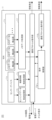
- FIG. 2 is a diagram for explaining the terminal 11.
- the terminal 11 is, for example, an IoT sensor terminal that senses an observation target and generates sensing data.
- the terminal 11 includes a sensor device 11a, a sensing data storage processing unit 11b, a device information storage processing unit 11c, a communication protocol operation unit 11d1 , metadata detection units ( 11e1 , 11e2 , 11e3 , ...), and a metadata processing unit 11f.
- the sensor device 11a senses an observation target and acquires sensing data (main data).
- the sensing data may be, for example, temperature, images, acceleration, sound, light, CO2, etc.
- the device information storage processing unit 11c collects device information of the observed target (e.g., the device manufacturer name, model name, model number, etc.) and stores the information in a specified position of the frame (an area that can be used for unique purposes, such as an "extension area” or "optional area” specified by the communication protocol).
- the sensing data storage processing unit 11b stores the sensing data from the sensor device 11a in a specified position of the frame (such as the payload portion defined by the communication protocol).
- the sensing data storage processing unit 11b may process the sensing data before storing it in the frame, for example by converting it into a certain shortened code and storing it, or by splitting it and storing it in multiple frames (fragmentation), so that it conforms to the format/restrictions of the unique extension area of the frame.
- the sensing data storage processing unit 11b can arbitrarily set the timing for storing the sensing data in the frame.
- the storage timing can be each time the sensing data is updated, or the sensing data can be stored not sequentially but after it has been accumulated for a certain period of time.
- the sensing data storage processing unit 11b can store a record (log) of the sensing data or the results of specific calculations/statistical processing in the frame.
- the type of sensing data stored in the frame and the storage timing may be fixed or variable.
- the type of sensing data and the storage timing may be dynamically changed at the discretion of the terminal 11 itself or in response to an instruction from the management server 13.
- the frame transmission period may also be fixed or variable.
- the frame transmission period may be dynamically changed at the discretion of the terminal 11 itself or in response to an instruction from the management server 13.
- the metadata detection unit 11e acquires information (metadata) other than device information.
- Information other than device information is, for example, location information of the detection target, time information, person, object, or event information, and other information.
- the present invention does not limit the information other than device information to these.
- the metadata detection unit 11e has a location information detection unit 11e 1 , a time detection unit 11e 2 , a person, object, or event detection unit 11e 3 , and other detection units.
- the location information detection unit 11e 1 is, for example, a GPS, an acceleration sensor, a gyro sensor, or an RSSI receiver for Wi-Fi signals, BLE (Bluetooth Low Energy) beacon signals, etc.
- the location metadata detected by the location information detection unit 11e 1 is information about a location acquired from a GPS signal, a BLE beacon signal, radio wave information of wireless communication, radio wave information of non-communication (television, radio, radio clock, other noise, etc.), power information, visible light information, sound wave information, vibration information, acceleration information, or other location metadata source.
- the time detection unit 11e2 is, for example, an information receiver from GPS or NTP (Network Time Protocol).
- the time metadata detected by the time detection unit 11e2 is information about time acquired from a GPS signal, information from the NTP, or other time metadata sources.
- the person, object, and event detection unit 11e 3 is a receiver that receives, for example, information from a BLE beacon (carried by a person), a smartphone carried by a person, or information from image analysis results.
- the person, object, or event metadata detected by the person, object, and event detection unit 11e 3 is information about a person, object, or event obtained from a BLE beacon carried by a person, information from a smartphone carried by a person, information from image analysis results, or other current event metadata sources.
- Other metadata detected by the detection unit includes information regarding the network configuration of the data collection network 15.
- the metadata detection unit 11e may detect all of the multiple detection targets, or may detect any one of them.
- the metadata processing unit 11f stores the data detected by the metadata detection unit 11e as metadata in an extension area or an option area in the frame set by the communication protocol.
- the metadata processing unit 11f can store metadata in the control frame of an IEEE 804.11 wireless LAN.
- various metadata are stored in the "Vendor Specific” area, which is an extension area of a Probe Request frame.
- various metadata are stored in the "Vendor Specific” area, which is an extension area of a Probe Response frame.
- the metadata processing unit 11f may process the metadata before storing it in the frame, for example by converting it into an abbreviated code and storing it, or by splitting it and storing it in multiple frames (fragmentation), so that it conforms to the format/restrictions of the frame's unique extension area.
- the metadata processing unit 11f can arbitrarily set the timing for storing metadata in a frame.
- the storage timing can be each time the metadata is updated, or the metadata can be stored not sequentially but after it has been accumulated for a certain period of time.
- the metadata processing unit 11f can store a record (log) of the metadata or the results of specific calculations/statistical processing in the frame.
- the type of metadata stored in the frame and the timing of storage may be fixed or variable.
- the type of metadata and the timing of storage may be dynamically changed at the discretion of the terminal 11 itself or in response to an instruction from the management server 13.
- the communication protocol operation unit 11d 1 transmits a frame in which sensing data and device information are stored in a predetermined area and metadata is stored in an extension area or an option area to the network device 12 using a lightweight and standardized communication protocol such as LLDP or HTIP (Home network Topology Identifying Protocol).
- the communication protocol of the frame in which the sensing data is stored and the communication protocol of the frame in which the device information is stored may be the same or different.
- the metadata processing unit 11f may store the metadata in a frame of one of the communication protocols (a frame in which the sensing data is stored or a frame in which the device information is stored) or in a frame of both communication protocols (a frame in which the sensing data is stored and a frame in which the device information is stored).
- the terminal 11 also has a function of operating according to instructions from the management server 13, etc. Specifically, the terminal 11 has an instruction interpretation unit 11g, and when the terminal itself changes the BLE beacon signal or metadata information (information to be transmitted, radio wave intensity, transmission frequency, etc.) according to instructions from the management server 13, the terminal transmits the information to the outside.
- the terminal 11 operates the communication protocol operation unit 11d1 .
- the terminal 11 has a communication protocol operation unit 11d2 in addition to the communication protocol operation unit 11d1 , and operates the communication protocol operation unit 11d2 .
- the terminal 11 itself is a beacon signal source for other terminals to grasp metadata.
- the terminal 11 may be a beacon signal source for identifying location metadata, or a beacon terminal carried by a worker to identify nearby people.
- the network device 12 is, for example, a network switch, a wireless access point, a wireless repeater, etc.
- the network device 12 sends the frames uploaded from the lower data collection network 15 to the management server 13 as is.
- the network device 12 may have a metadata processing unit (metadata detection unit 11e and metadata processing unit 11f) that the terminal 11 has. Even if the network device 12 does not have the sensor device 11a, it can add metadata such as its own unique information such as its own MAC address and a connection port to a frame sent from the terminal 11 and transfer the frame to the management server 13. If the network device 12 has a metadata processing section, it becomes possible to grasp the logical connection from the management server 13 to the terminal 11, and a more accurate logical/physical network management map can be created. In other words, even if the network device 12 is a network switch (switching hub) or a wireless repeater that does not have layer 3 or higher functions, this technology operates at layer 2, making it possible to manage and understand the connections between network devices, including the network device 12.
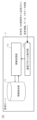
- FIG. 3 is a diagram explaining the management server 13.
- the management server 13 has a communication protocol operation unit 13a, an information processing unit 13b, and an information storage unit 13c.
- the management server 13 extracts information from frames passed from the network device 12, stores it, and provides it for analysis.
- the management server 13 is characterized by having a function to store combinations of two or more pieces of collected information in the information storage unit 13c.
- the communication protocol operation unit 13a receives frames in which sensing data and metadata are stored from the terminal 11 and the network device 12.
- the information processing unit 12b extracts the following sensing data, device information, and metadata from the received frames, and organizes them in the information storage unit 13c based on information that identifies the individual terminal 11 (e.g., MAC address).
- the management server 13 refers to metadata related to a location and stores the main data acquired at the same location or within a certain area in the format of [location metadata, main data].
- location metadata In some cases, such as GPS information, it is directly location metadata at the time it is sensed by the terminal 11. On the other hand, in cases such as signals from BLE beacons, visible light, or sound information, it is not yet determined whether it is location information at the time it is sensed by the terminal 11 and sent out as metadata, and the management server 13 may recognize/understand the metadata as location metadata.
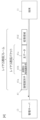
- FIG. 4 is a diagram explaining a frame 41 transmitted from the terminal 11 to the management server 13.
- the network device 12 is not shown in FIG. 4.
- the frame 41 is a layer 2 communication frame such as an Ethernet (registered trademark) frame or a Wi-Fi communication frame.
- the frame 41 is composed of a logical identifier 41a of the communication device such as a MAC address, a source and destination identifier 41b such as an IP address, an area 41c in which sensing data such as temperature and images are stored, and an extension area 41d in which metadata is stored.
- the identifier 41b and area 41c form a layer 3 communication packet.
- the management server 13 for example, combines the MAC address of the logical identifier 41a with the location metadata of the extension area 41d to form [MAC address, location metadata], and combines the MAC address of the logical identifier 41a with the installer metadata of the extension area 41d to form [MAC address, installer metadata], and organizes them in the information storage unit 13c.
- the data collection system 301 can acquire network configuration information, device information, sensing data, and metadata of terminals and devices using a communication protocol that does not require high performance.
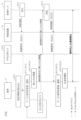
- FIG. 5 shows an example of a metadata collection sequence when n BLE beacons 16 are arranged around the terminal 11.
- the metadata detection unit 11e which functions as a Bluetooth device, receives n BLE advertisement signals by scanning BLE beacon signals (S111).
- the metadata processing unit 11f stores the metadata obtained from the BLE advertisement signals in an extension area of a Probe Request frame (S112).
- the communication protocol operation unit 11d 1 sends out a Probe Request frame (S113).
- the access point 12A receives the Probe Request frame (S121) and updates a database in which identification information of the BLE beacons 16 detectable by the terminal 11 is listed (S122).
- the access point 12A transmits the metadata information received from the terminal 11 to the management server 13 (S123). At this time, the access point 12A may transmit the metadata information received from the terminal 11 using an extension area in the layer 2 communication frame.
- the terminal 11 may transmit metadata from the n BLE beacons 16.
- the BLE beacons 16 are not the only metadata source around the terminal 11. For this reason, unless metadata transmission is controlled for each terminal 11, the terminal 11 may transmit an excessive amount of metadata to the management server 13 at an excessive frequency.
- the data collection system of this embodiment therefore enables control over the terminal 11. This makes it possible for the data collection system of this embodiment to appropriately adjust the amount of metadata data and the frequency of transmission, thereby reducing the load and power consumption of the terminal 11.
- FIG. 6 shows an example of the system configuration of this embodiment.
- the data collection system includes a network device 12 that is an access point 12A and a control device 14 that controls the terminal 11.
- the control device 14 may be integrated with the management server 13 and the access point 12A, or may be an independent device.
- the access point 12A, the control device 14, and the management server 13 may be physically located in the same device.
- the instruction interpretation unit 11g provided in the terminal 11 functions as the "control unit" of this disclosure.
- FIG. 7 shows an example configuration of the control device of the present disclosure.
- the control device 14 includes an information processing unit 42, a communication protocol operation unit 43, an information storage unit 44, and a signal transmission unit 45.
- the communication protocol operation unit 43 receives control information from the management server 13 and stores it in the information storage unit 44.
- the information processing unit 42 generates control content for each terminal 11 based on the control information stored in the information storage unit 44, and stores it in the information storage unit 44. Any communication protocol can be used when transmitting control information from the management server 13 to the control device 14.
- the signal transmission unit 45 reads out the control contents stored in the information storage unit 44, and transmits the control contents to the terminal 11 using a control signal detectable by the metadata detection unit 11e provided in the terminal 11.
- the control signal can be any signal according to the metadata detection unit 11e.
- a BLE advertisement signal detectable by a Bluetooth (registered trademark) device an optical wireless signal detectable by an optical sensor, or a sound wave signal detectable by a microphone can be exemplified.
- the BLE advertisement signal can be any signal detectable by a Bluetooth device.
- the control signal is not limited to Bluetooth, and any short-range wireless communication signal used in short-range communication such as a wireless PAN (Personal Area Network) can be adopted.
- control device 14 may store information indicating the destination of the control signal in a predetermined area of the control signal so that the destination of the control signal can be determined in the terminal 11.
- the control signal is a BLE advertisement signal
- a logical identifier such as the MAC address of the terminal 11 may be stored in the first 6 bytes of the data area of the BLE advertisement signal, as shown in FIG. 8.
- Figure 9 shows an example of a control sequence for the terminal 11.
- the terminal 11 notifies the management server 13 of metadata information that can be acquired by the terminal 11.
- the terminal 11 transmits a Probe Request frame to the access point 12A
- the terminal 11 stores information on n BLE beacons 16 in an extension area of the Probe Request frame (S211).
- the access point 12A transmits the information on the BLE beacons 16 stored in the extension area of the Probe Request frame to the management server 13 as metadata for the terminal 11 (S221).
- the management server 13 acquires information that the terminal 11 can acquire metadata from n BLE beacons 16.
- the terminal 11 may acquire the identification information of the BLE beacon 16 in step S211 and include the identification information of the BLE beacon 16 in the metadata. This allows the management server 13 to collect the identification information of the BLE beacon 16 together with the metadata.
- the management server 13 generates control information for controlling at least one of the multiple terminals 11 based on the metadata obtained from the multiple terminals 11, and transmits the control information to the control device 14 (S231). For example, when the number of pieces of metadata of a BLE beacon transmitted from the terminal 11 exceeds a certain value, the management server 13 generates, as control information, a transmission stop instruction for a part of the metadata of the BLE beacon so that the number of pieces of metadata of the BLE beacon transmitted from the terminal 11 becomes equal to or less than the certain value. Instead of a transmission stop instruction, the management server 13 may generate, as control information, a transmission frequency change instruction so that the metadata transmission frequency per hour becomes equal to or less than a certain value.
- the control device 14 transmits a control signal describing the control content for the terminal 11 to the terminal 11 according to the control information from the management server 13 (S241).
- the signal transmission unit 45 transmits a BLE advertisement signal as the control signal.
- the metadata detection unit 11e which is a Bluetooth device, receives the control signal.
- the metadata detection unit 11e of the terminal 11 detects metadata (S111). At this time, the metadata detection unit 11e, which scans the BLE beacon signal, detects a control signal transmitted from the control device 14.
- the metadata processing unit 11f reads out the control contents from the metadata detected by the metadata detection unit 11e. For example, the control signal is selected by reading out the data area of the BLE beacon signal acquired by each metadata detection unit 11e (S212), and the control contents described in the data area are output to the instruction interpretation unit 11g. This selection can be performed, for example, by describing the identifier of the terminal 11 at the beginning of the data area of the BLE advertisement signal. Normal metadata other than the control signal is transmitted from the communication protocol operation unit 11d 1 (S112, S113).
- the metadata processing unit 11f controls its own device in accordance with the control content obtained by the metadata processing unit 11f. For example, the metadata processing unit 11f reads the identifier of the terminal 11 written in the control content, determines whether its own device is included among the recipients of the control signal, and outputs the control content to the instruction interpretation unit 11g if its own device is included among the recipients of the control signal (S213). The instruction interpretation unit 11g updates the settings of its own device in accordance with the control content obtained from the metadata processing unit 11f (S214).
- the information indicating the destination of the control signal is not limited to the identifier of the terminal 11, but may be identification information of the controlled object such as a sensor and metadata. This makes it possible to simultaneously control all terminals 11 equipped with a controlled object.
- the control content is control for adjusting the data amount or transmission frequency of metadata, and examples of the control include the following.
- An instruction to start or stop transmitting specific metadata - Setting the transmission cycle or transmission time of the specific metadata - An instruction to start or put to sleep the specific metadata detection unit 11e
- the specific metadata and the metadata detection unit 11e can be one or more arbitrary metadata selected from the metadata acquired by the management server 13.
- the control contents may include control of sensing data, and examples thereof include the following.
- Parameters used in the sensor device 11a Start-up instruction or sleep instruction for the sensor device 11a Instruction to start or stop transmission of sensing data Setting of transmission period or transmission time of sensing data
- the control contents may include settings of the communication protocol operation unit 11d1 , and examples thereof include the following.
- Settings for the destination of metadata or sensing data such as the identifier (MAC address, IP address), port number, etc.
- the management server 13 ⁇ Settings used in communication protocols (such as SSID and passphrase for Wi-Fi) ⁇ Setting encryption keys (public key, private key)
- Methodadata transmission cycle Specifically, when the transmission cycle of the metadata is described in the control content, the instruction interpretation unit 11g instructs the communication protocol operation unit 11d 1 to transmit the metadata at the transmission cycle defined in the control content.
- the communication protocol operation unit 11d 1 transmits the metadata at the transmission cycle defined in the control content in accordance with the instruction.
- the instruction interpretation unit 11g sets the specified authentication information to be used by the communication protocol operation unit 11d 1. This can be applied not only to authentication information in network connection settings, but also to any network connection settings such as connection request destination, communication protocol specification, etc.
- the terminal 11 reads out the network connection setting information in the memory at the time of starting up or the like (S311). If the first public key is described in the control contents, in steps S213 and S214 after steps S111 and S112 are executed, the instruction interpretation unit 11g updates the first public key in the network connection setting information.
- the first public key is periodically issued by the management server 13, and the management server 13 may broadcast it using the extension area 41d of the layer 2 communication frame.
- the communication protocol operation unit 11d 1 reads the first public key from the network connection setting information in the memory, calculates a new second public key associated with the identifier of the terminal 11, and encrypts the connection request and the second public key with the first public key. Then, when transmitting the Probe Request frame in step S113, the communication protocol operation unit 11d 1 stores the encrypted connection request and the second public key in an extension area of the Probe Request frame. The communication protocol operation unit 11d 1 also outputs the second public key to the instruction interpretation unit 11g.
- the encrypted connection request and second public key stored in this Probe Request frame are sent as a piece of metadata from the access point 12A to the management server 13.
- the management server 13 Upon receiving the encrypted connection request and second public key, the management server 13 decrypts the metadata using the first public key and confirms its validity (S331). If the authentication is successful, the management server 13 encrypts a unique new third private key with the second public key for communication between the two parties and sends it to the terminal 11 as control information (S332).
- the control device 14 sends this control information to the terminal 11 using a control signal (S341).
- steps S213 and S214 after steps S111 and S112 are executed the control contents are encrypted.
- the instruction interpretation unit 11g of the terminal 11 decrypts the third private key using the second public key and outputs it to the communication protocol operation unit 11d1 .
- the communication protocol operation unit 11d1 checks the validity of the third private key acquired from the instruction interpretation unit 11g. If the third private key is valid, the communication protocol operation unit 11d1 establishes communication encrypted with the third private key with the management server 13.
- the management server 13 of this embodiment can control the terminal 11.
- the management server 13 collects a wide variety of metadata, it can be set to an optimal state according to the location and situation of the terminal 11.
- the data collection system of this embodiment makes it possible to appropriately adjust the amount of metadata data and transmission frequency, thereby reducing the load and power consumption of the terminal 11.
- downstream communication from the management server 13 to the terminal 11 can be performed by exchanging data using a common method such as JSON over HTTP.
- JSON a common method
- this requires a mechanism for constantly running a web server on the terminal 11 side, which is not suitable for application to terminals with low resources.
- connection permission to the terminal 11 or to set connection settings such as destination information, ID/password, etc. before the IP connection is established.
- the present disclosure can control the terminal 11 using a metadata detection unit provided in the terminal 11, and therefore can be applied to low-resource terminals, and does not require special settings on the terminal 11 side. Therefore, the present disclosure makes it possible to realize control of the terminal 11 in a data collection system that collects metadata of the terminal 11 in the management server 13.
- control device 14, and terminal 11 can also be realized by a computer and a program, and the program can be recorded on a recording medium or provided via a network.
- 11 terminal 11a: sensor device 11b: sensing data storage processing unit 11c: device information storage processing unit 11d 1 , 11d 2 : communication protocol operation unit 11e, 11e1, 11e2, 11e3, ...: metadata detection unit 11f: metadata storage processing unit 11g: instruction interpretation unit 12: network device 12A: access point 13: management server 13a, 43: communication protocol operation unit 13b, 42: information processing unit 13c, 44: information storage unit 14: control device 45: signal transmission unit 15: data collection network 21: data processing unit 41: frame 41a: logical identifier 41b: source/destination identifier 41c: main data area 41d: extension area 301: data collection system
Landscapes
- Engineering & Computer Science (AREA)
- Computer Networks & Wireless Communication (AREA)
- Signal Processing (AREA)
- Selective Calling Equipment (AREA)
Priority Applications (2)
| Application Number | Priority Date | Filing Date | Title |
|---|---|---|---|
| PCT/JP2023/017687 WO2024232070A1 (ja) | 2023-05-11 | 2023-05-11 | データ収集システム |
| JP2025519272A JPWO2024232070A1 (https=) | 2023-05-11 | 2023-05-11 |
Applications Claiming Priority (1)
| Application Number | Priority Date | Filing Date | Title |
|---|---|---|---|
| PCT/JP2023/017687 WO2024232070A1 (ja) | 2023-05-11 | 2023-05-11 | データ収集システム |
Publications (1)
| Publication Number | Publication Date |
|---|---|
| WO2024232070A1 true WO2024232070A1 (ja) | 2024-11-14 |
Family
ID=93431522
Family Applications (1)
| Application Number | Title | Priority Date | Filing Date |
|---|---|---|---|
| PCT/JP2023/017687 Ceased WO2024232070A1 (ja) | 2023-05-11 | 2023-05-11 | データ収集システム |
Country Status (2)
| Country | Link |
|---|---|
| JP (1) | JPWO2024232070A1 (https=) |
| WO (1) | WO2024232070A1 (https=) |
Citations (4)
| Publication number | Priority date | Publication date | Assignee | Title |
|---|---|---|---|---|
| WO2019240034A1 (ja) * | 2018-06-15 | 2019-12-19 | 日本電信電話株式会社 | ネットワーク管理システム、管理装置、中継装置、方法およびプログラム |
| WO2022003964A1 (ja) * | 2020-07-03 | 2022-01-06 | 日本電信電話株式会社 | データ収集システム、端末、データ収集方法、及びプログラム |
| WO2022149250A1 (ja) * | 2021-01-08 | 2022-07-14 | 日本電信電話株式会社 | データ収集装置、センサ端末、メタデータ収集システム、メタデータ収集方法、及びプログラム |
| WO2022269906A1 (ja) * | 2021-06-25 | 2022-12-29 | 日本電信電話株式会社 | データを収集するシステム、方法、装置及びプログラム |
-
2023
- 2023-05-11 JP JP2025519272A patent/JPWO2024232070A1/ja active Pending
- 2023-05-11 WO PCT/JP2023/017687 patent/WO2024232070A1/ja not_active Ceased
Patent Citations (4)
| Publication number | Priority date | Publication date | Assignee | Title |
|---|---|---|---|---|
| WO2019240034A1 (ja) * | 2018-06-15 | 2019-12-19 | 日本電信電話株式会社 | ネットワーク管理システム、管理装置、中継装置、方法およびプログラム |
| WO2022003964A1 (ja) * | 2020-07-03 | 2022-01-06 | 日本電信電話株式会社 | データ収集システム、端末、データ収集方法、及びプログラム |
| WO2022149250A1 (ja) * | 2021-01-08 | 2022-07-14 | 日本電信電話株式会社 | データ収集装置、センサ端末、メタデータ収集システム、メタデータ収集方法、及びプログラム |
| WO2022269906A1 (ja) * | 2021-06-25 | 2022-12-29 | 日本電信電話株式会社 | データを収集するシステム、方法、装置及びプログラム |
Also Published As
| Publication number | Publication date |
|---|---|
| JPWO2024232070A1 (https=) | 2024-11-14 |
Similar Documents
| Publication | Publication Date | Title |
|---|---|---|
| RU2443056C2 (ru) | Механизм передачи информации об обнаружении услуг в беспроводной сети | |
| US8134942B2 (en) | Communication protocol for low-power network applications and a network of sensors using the same | |
| JP6794191B2 (ja) | 通信装置、通信方法、及びプログラム | |
| JP6759011B2 (ja) | 通信装置、通信方法、及びプログラム | |
| US9590950B2 (en) | Source based anonymity and segmentation for visitors | |
| JP3636695B2 (ja) | 無線通信システムにおける中継端末装置及び中継端末プログラム | |
| JP2020535760A (ja) | ワイヤレス電子デバイスの位置を特定するための方法及びシステム | |
| WO2007072814A1 (ja) | 端末識別方法、認証方法、認証システム、サーバ、端末、無線基地局、プログラムおよび記録媒体 | |
| WO2009069018A1 (en) | Optimized ad hoc networking | |
| TW201635816A (zh) | 鄰域感知網路中的私密服務識別符 | |
| NO338392B1 (no) | Grunnleggende Wi-Fi-arkitektur for 802.11-nettverk | |
| WO2011116617A1 (zh) | 结合网络及无线传感器网络终端加入网络的方法 | |
| CN114697929A (zh) | 连接建立方法及电子设备 | |
| JP2010136118A (ja) | 無線通信装置及びプログラム | |
| JP2004193775A (ja) | 通信処理装置、および通信処理方法、並びにコンピュータ・プログラム | |
| CN115150797B (zh) | 智能设备及其网络连接方法、路由设备、存储介质 | |
| JP2013187703A (ja) | 通信装置、通信装置の制御方法、プログラム | |
| CN115118764A (zh) | 无线网状网络中的动态代理操作 | |
| WO2024232070A1 (ja) | データ収集システム | |
| WO2022003964A1 (ja) | データ収集システム、端末、データ収集方法、及びプログラム | |
| JP2004166090A (ja) | 近接通信装置、携帯端末、近接通信装置の制御プログラム、携帯端末の制御プログラム及び通信システム | |
| WO2024232072A1 (ja) | データ収集システム | |
| JP3814563B2 (ja) | 無線通信装置及びその制御方法 | |
| KR100864479B1 (ko) | 이동통신 단말기와 블루투스 장치 간 페어링 방법과 이를위한 이동통신 단말기 및 시스템 | |
| WO2011160413A1 (zh) | 无线传感器网络终端的寻址方法及结合网络 |
Legal Events
| Date | Code | Title | Description |
|---|---|---|---|
| 121 | Ep: the epo has been informed by wipo that ep was designated in this application |
Ref document number: 23936620 Country of ref document: EP Kind code of ref document: A1 |
|
| ENP | Entry into the national phase |
Ref document number: 2025519272 Country of ref document: JP Kind code of ref document: A |
|
| WWE | Wipo information: entry into national phase |
Ref document number: 2025519272 Country of ref document: JP |
|
| NENP | Non-entry into the national phase |
Ref country code: DE |