WO2024228399A1 - 複素環化合物及びその用途 - Google Patents
複素環化合物及びその用途 Download PDFInfo
- Publication number
- WO2024228399A1 WO2024228399A1 PCT/JP2024/016879 JP2024016879W WO2024228399A1 WO 2024228399 A1 WO2024228399 A1 WO 2024228399A1 JP 2024016879 W JP2024016879 W JP 2024016879W WO 2024228399 A1 WO2024228399 A1 WO 2024228399A1
- Authority
- WO
- WIPO (PCT)
- Prior art keywords
- compound
- alkyl
- disorder
- alkoxy
- pharmaceutical composition
- Prior art date
- Legal status (The legal status is an assumption and is not a legal conclusion. Google has not performed a legal analysis and makes no representation as to the accuracy of the status listed.)
- Ceased
Links
Images





Classifications
-
- C—CHEMISTRY; METALLURGY
- C07—ORGANIC CHEMISTRY
- C07F—ACYCLIC, CARBOCYCLIC OR HETEROCYCLIC COMPOUNDS CONTAINING ELEMENTS OTHER THAN CARBON, HYDROGEN, HALOGEN, OXYGEN, NITROGEN, SULFUR, SELENIUM OR TELLURIUM
- C07F9/00—Compounds containing elements of Groups 5 or 15 of the Periodic Table
- C07F9/02—Phosphorus compounds
- C07F9/547—Heterocyclic compounds, e.g. containing phosphorus as a ring hetero atom
- C07F9/6558—Heterocyclic compounds, e.g. containing phosphorus as a ring hetero atom containing at least two different or differently substituted hetero rings neither condensed among themselves nor condensed with a common carbocyclic ring or ring system
- C07F9/65586—Heterocyclic compounds, e.g. containing phosphorus as a ring hetero atom containing at least two different or differently substituted hetero rings neither condensed among themselves nor condensed with a common carbocyclic ring or ring system at least one of the hetero rings does not contain nitrogen as ring hetero atom
-
- A—HUMAN NECESSITIES
- A61—MEDICAL OR VETERINARY SCIENCE; HYGIENE
- A61K—PREPARATIONS FOR MEDICAL, DENTAL OR TOILETRY PURPOSES
- A61K31/00—Medicinal preparations containing organic active ingredients
- A61K31/66—Phosphorus compounds
- A61K31/675—Phosphorus compounds having nitrogen as a ring hetero atom, e.g. pyridoxal phosphate
-
- A—HUMAN NECESSITIES
- A61—MEDICAL OR VETERINARY SCIENCE; HYGIENE
- A61K—PREPARATIONS FOR MEDICAL, DENTAL OR TOILETRY PURPOSES
- A61K47/00—Medicinal preparations characterised by the non-active ingredients used, e.g. carriers or inert additives; Targeting or modifying agents chemically bound to the active ingredient
- A61K47/06—Organic compounds, e.g. natural or synthetic hydrocarbons, polyolefins, mineral oil, petrolatum or ozokerite
- A61K47/08—Organic compounds, e.g. natural or synthetic hydrocarbons, polyolefins, mineral oil, petrolatum or ozokerite containing oxygen, e.g. ethers, acetals, ketones, quinones, aldehydes, peroxides
- A61K47/14—Esters of carboxylic acids, e.g. fatty acid monoglycerides, medium-chain triglycerides, parabens or PEG fatty acid esters
-
- A—HUMAN NECESSITIES
- A61—MEDICAL OR VETERINARY SCIENCE; HYGIENE
- A61K—PREPARATIONS FOR MEDICAL, DENTAL OR TOILETRY PURPOSES
- A61K47/00—Medicinal preparations characterised by the non-active ingredients used, e.g. carriers or inert additives; Targeting or modifying agents chemically bound to the active ingredient
- A61K47/06—Organic compounds, e.g. natural or synthetic hydrocarbons, polyolefins, mineral oil, petrolatum or ozokerite
- A61K47/24—Organic compounds, e.g. natural or synthetic hydrocarbons, polyolefins, mineral oil, petrolatum or ozokerite containing atoms other than carbon, hydrogen, oxygen, halogen, nitrogen or sulfur, e.g. cyclomethicone or phospholipids
-
- A—HUMAN NECESSITIES
- A61—MEDICAL OR VETERINARY SCIENCE; HYGIENE
- A61K—PREPARATIONS FOR MEDICAL, DENTAL OR TOILETRY PURPOSES
- A61K47/00—Medicinal preparations characterised by the non-active ingredients used, e.g. carriers or inert additives; Targeting or modifying agents chemically bound to the active ingredient
- A61K47/30—Macromolecular organic or inorganic compounds, e.g. inorganic polyphosphates
- A61K47/36—Polysaccharides; Derivatives thereof, e.g. gums, starch, alginate, dextrin, hyaluronic acid, chitosan, inulin, agar or pectin
- A61K47/38—Cellulose; Derivatives thereof
-
- A—HUMAN NECESSITIES
- A61—MEDICAL OR VETERINARY SCIENCE; HYGIENE
- A61K—PREPARATIONS FOR MEDICAL, DENTAL OR TOILETRY PURPOSES
- A61K9/00—Medicinal preparations characterised by special physical form
- A61K9/0012—Galenical forms characterised by the site of application
- A61K9/0019—Injectable compositions; Intramuscular, intravenous, arterial, subcutaneous administration; Compositions to be administered through the skin in an invasive manner
- A61K9/0024—Solid, semi-solid or solidifying implants, which are implanted or injected in body tissue
-
- A—HUMAN NECESSITIES
- A61—MEDICAL OR VETERINARY SCIENCE; HYGIENE
- A61K—PREPARATIONS FOR MEDICAL, DENTAL OR TOILETRY PURPOSES
- A61K9/00—Medicinal preparations characterised by special physical form
- A61K9/10—Dispersions; Emulsions
-
- A—HUMAN NECESSITIES
- A61—MEDICAL OR VETERINARY SCIENCE; HYGIENE
- A61K—PREPARATIONS FOR MEDICAL, DENTAL OR TOILETRY PURPOSES
- A61K9/00—Medicinal preparations characterised by special physical form
- A61K9/14—Particulate form, e.g. powders, Processes for size reducing of pure drugs or the resulting products, Pure drug nanoparticles
- A61K9/16—Agglomerates; Granulates; Microbeadlets ; Microspheres; Pellets; Solid products obtained by spray drying, spray freeze drying, spray congealing,(multiple) emulsion solvent evaporation or extraction
- A61K9/1605—Excipients; Inactive ingredients
- A61K9/1629—Organic macromolecular compounds
- A61K9/1641—Organic macromolecular compounds obtained otherwise than by reactions only involving carbon-to-carbon unsaturated bonds, e.g. polyethylene glycol, poloxamers
- A61K9/1647—Polyesters, e.g. poly(lactide-co-glycolide)
-
- A—HUMAN NECESSITIES
- A61—MEDICAL OR VETERINARY SCIENCE; HYGIENE
- A61P—SPECIFIC THERAPEUTIC ACTIVITY OF CHEMICAL COMPOUNDS OR MEDICINAL PREPARATIONS
- A61P25/00—Drugs for disorders of the nervous system
-
- A—HUMAN NECESSITIES
- A61—MEDICAL OR VETERINARY SCIENCE; HYGIENE
- A61P—SPECIFIC THERAPEUTIC ACTIVITY OF CHEMICAL COMPOUNDS OR MEDICINAL PREPARATIONS
- A61P25/00—Drugs for disorders of the nervous system
- A61P25/14—Drugs for disorders of the nervous system for treating abnormal movements, e.g. chorea, dyskinesia
- A61P25/16—Anti-Parkinson drugs
-
- A—HUMAN NECESSITIES
- A61—MEDICAL OR VETERINARY SCIENCE; HYGIENE
- A61P—SPECIFIC THERAPEUTIC ACTIVITY OF CHEMICAL COMPOUNDS OR MEDICINAL PREPARATIONS
- A61P25/00—Drugs for disorders of the nervous system
- A61P25/18—Antipsychotics, i.e. neuroleptics; Drugs for mania or schizophrenia
-
- A—HUMAN NECESSITIES
- A61—MEDICAL OR VETERINARY SCIENCE; HYGIENE
- A61P—SPECIFIC THERAPEUTIC ACTIVITY OF CHEMICAL COMPOUNDS OR MEDICINAL PREPARATIONS
- A61P25/00—Drugs for disorders of the nervous system
- A61P25/20—Hypnotics; Sedatives
-
- A—HUMAN NECESSITIES
- A61—MEDICAL OR VETERINARY SCIENCE; HYGIENE
- A61P—SPECIFIC THERAPEUTIC ACTIVITY OF CHEMICAL COMPOUNDS OR MEDICINAL PREPARATIONS
- A61P25/00—Drugs for disorders of the nervous system
- A61P25/22—Anxiolytics
-
- A—HUMAN NECESSITIES
- A61—MEDICAL OR VETERINARY SCIENCE; HYGIENE
- A61P—SPECIFIC THERAPEUTIC ACTIVITY OF CHEMICAL COMPOUNDS OR MEDICINAL PREPARATIONS
- A61P25/00—Drugs for disorders of the nervous system
- A61P25/24—Antidepressants
-
- A—HUMAN NECESSITIES
- A61—MEDICAL OR VETERINARY SCIENCE; HYGIENE
- A61P—SPECIFIC THERAPEUTIC ACTIVITY OF CHEMICAL COMPOUNDS OR MEDICINAL PREPARATIONS
- A61P25/00—Drugs for disorders of the nervous system
- A61P25/28—Drugs for disorders of the nervous system for treating neurodegenerative disorders of the central nervous system, e.g. nootropic agents, cognition enhancers, drugs for treating Alzheimer's disease or other forms of dementia
-
- A—HUMAN NECESSITIES
- A61—MEDICAL OR VETERINARY SCIENCE; HYGIENE
- A61P—SPECIFIC THERAPEUTIC ACTIVITY OF CHEMICAL COMPOUNDS OR MEDICINAL PREPARATIONS
- A61P43/00—Drugs for specific purposes, not provided for in groups A61P1/00-A61P41/00
-
- C—CHEMISTRY; METALLURGY
- C07—ORGANIC CHEMISTRY
- C07F—ACYCLIC, CARBOCYCLIC OR HETEROCYCLIC COMPOUNDS CONTAINING ELEMENTS OTHER THAN CARBON, HYDROGEN, HALOGEN, OXYGEN, NITROGEN, SULFUR, SELENIUM OR TELLURIUM
- C07F9/00—Compounds containing elements of Groups 5 or 15 of the Periodic Table
- C07F9/02—Phosphorus compounds
- C07F9/547—Heterocyclic compounds, e.g. containing phosphorus as a ring hetero atom
- C07F9/6561—Heterocyclic compounds, e.g. containing phosphorus as a ring hetero atom containing systems of two or more relevant hetero rings condensed among themselves or condensed with a common carbocyclic ring or ring system, with or without other non-condensed hetero rings
-
- A—HUMAN NECESSITIES
- A61—MEDICAL OR VETERINARY SCIENCE; HYGIENE
- A61K—PREPARATIONS FOR MEDICAL, DENTAL OR TOILETRY PURPOSES
- A61K9/00—Medicinal preparations characterised by special physical form
- A61K9/08—Solutions
Definitions
- This disclosure relates to specific heterocyclic compounds and their uses, etc.
- brexpiprazole 7-[4-(4-benzo[b]thiophen-4-yl-piperazin-1-yl)butoxy]-1H-quinolin-2-one (hereinafter also referred to as brexpiprazole) or a salt thereof has a dopamine D2 receptor partial agonist effect, a serotonin 5- HT2A receptor antagonist effect, and an adrenergic ⁇ 1 receptor antagonist effect.
- brexpiprazole or a salt thereof also has a serotonin uptake inhibitory effect (or a serotonin reuptake inhibitory effect), and is known to have a wide therapeutic spectrum for central nervous system disorders (particularly schizophrenia) (e.g., Patent Document 1 and Patent Document 2).
- one approach to drug design is to develop drugs that improve the properties of known drug molecules (for example, by improving their efficacy or slowing their metabolism in the body) by chemically converting or modifying some of the functional groups of the drug molecules.
- One of the problems that this disclosure aims to solve is to provide a new therapeutic drug for central nervous system diseases.
- R 1 and R 2 each independently represent -O - , -OR 4 , or -NR 4Na R 4Nb ;
- R3 represents hydrogen or alkyl;
- R 4 , R 4Na and R 4Nb each independently represent hydrogen or an alkyl, alkenyl, alkadienyl or alkynyl optionally having 1 to 3 substituents, and the alkyl represented by R 4 , R 4Na and R 4Nb may have a structure in which some methylene groups (-CH 2 -) are replaced by -O-, -S-, -CO-, -NH-, -SiR sia R sib - or -(CO)O-;
- R 1 and R 2 both represent -OR 4 , R 1 and R 2 may be the same or different;
- R 1 and R 2 both represent -NR 4Na R 4Nb , R 1 and R 2 may be the same or different.
- R 1 represents -O-
- R 2 represents -OR 4 or -NR 4Na R 4Nb (R 4 , R 4Na and R 4Nb are the same as above);
- Item 2. The compound according to item 1 or a salt thereof.
- Item 3. Formula (I): (In the formula, R 1 represents —O— , R 2 represents —OR 4 or —NR 4Na R 4Nb , R 3 represents hydrogen or C 1-6 alkyl; R 4 represents hydrogen or any one of the following (0-1) to (5): -NR 4Na R 4Nb represents the following (i) or (ii).
- n represents 1 to 24. However, in -C n H 2n-1 , n is 2 or more, in -C n H 2n-3 , n is 2 or more, in -C n H 2n-2 -, n is 2 or more, and in -C n H 2n-4 -, n is 2 or more.
- R 4a2 is -CHX1X2 -C n-1 H 2n-2 -CHX 1 X 2 -C n-1 H 2n-4 -CHX 1 X 2 or -C n-1 H 2n-6 -CHX 1 X 2 .
- n represents 2 to 24, except that in -C n-1 H 2n-4 -, n is 3 or more, and in -C n-1 H 2n-5 -, n is 3 or more.
- X 1 and X 2 may be the same or different and represent a hydrogen atom or a halogen (F, Cl, Br, or I), with the proviso that at least one of X 1 and X 2 represents a halogen.) (1-3): R 4a3 ; R 4a3 is -C n H 2n -R 4-1 , -C n-1 H 2n-2 -CHR 4-1a R 4-1b , -C n H 2n-2 -R 4-1 or -C n H 2n-4 -R 4-1 .
- n represents 1 to 24, with the proviso that in -C n H 2n-2 -, n is 2 or more, and in -C n H 2n-4 -, n is 2 or more.
- R 4-1 represents C 1-6 alkoxy, -O-phenyl, or a heterocyclic group which may be substituted by C 1-6 alkyl or halogen.
- R 4-1a and R 4-1b are the same or different and represent -C 1-3 alkylene-C 1-3 alkoxy, or the same or different and represent -CO-O-C 1-3 alkyl, or -CH 2 -CO-O-C 1-3 alkyl.) (2): R 4b ; R 4b is -(C p H 2p -O) q -C r H 2r -R 4-2 , -(C p H 2p -O) q -C r H 2r-2 -R 4-2 , -( CpH2p -2 -O) q - CrH2r - R4-2 , or -( CpH2p -2- O) q - CrH2r -2 - R4-2 .
- R 4-2 represents a hydrogen atom, hydroxy, or a cycloalkyl group, phenyl, benzyl, or heterocyclic group optionally substituted by 1 to 3 substituents selected from C 1-6 alkyl, C 1-6 alkoxy, -C 1-3 alkylene-C 1-3 alkoxy, and nitro.) (3): -C ⁇ H 2 ⁇ -CO-O-R COO or -C ⁇ H 2 ⁇ -CO-O-CH 2 -R COO ( ⁇ represents 1 to 10), -R COO represents a hydrogen atom, a C 1-6 alkyl or C 1-6 alkoxy optionally substituted by 1 to 3 C 1-6 alkoxy, or a cycloalkyl group optionally substituted by 1 to 3 substituents selected from C 1-6 alkyl, C 1-6 alkoxy, -C 1-3 alkylene-C 1-3 alkoxy, and nitro, a phenyl, benzyl, or a heterocyclic group.
- -C ⁇ H2 ⁇ - O -CO- R0CO ( ⁇ is 1 to 10);
- -R OCO represents R 4a1 , R 4b , or -C ⁇ H 2 ⁇ -CO-O-R COO , or -C ⁇ H 2 ⁇ -CO-NH-R COO , -C ⁇ H 2 ⁇ -NH-CO-R COO , or -C ⁇ H 2 ⁇ -NH-CO-O-R COO (-R COO is the same as above);
- it represents a cycloalkyl group, phenyl, benzyl, or heterocyclic group optionally substituted by 1 to 3 substituents selected from C 1-6 alkyl, C 1-6 alkoxy, —C 1-3 alkylene-C 1-3 alkoxy, and nitro.
- -C ⁇ H 2 ⁇ -O-CO-O-R OCOO ( ⁇ represents 1 to 10); -R OCOO represents a hydrogen atom, R 4a1 , R 4b , or -C ⁇ H 2 ⁇ -CO-O-R COO (-R COO is the same as above); Alternatively, it represents a cycloalkyl group, phenyl, benzyl, or heterocyclic group optionally substituted by 1 to 3 substituents selected from C 1-6 alkyl, C 1-6 alkoxy, —C 1-3 alkylene-C 1-3 alkoxy, and nitro.
- R 4Na and R 4Nb are the same or different and each represents a C 1-6 alkyl optionally substituted with 1 to 3 C 1-6 alkoxy.
- R 4Na is a hydrogen atom;
- R 4Nb represents C 1-6 alkyl optionally substituted with 1 to 3 C 1-6 alkoxy, -C ⁇ H 2 ⁇ -CO-O-R COO , or -C ⁇ H 2 ⁇ -CO-NH-R COO (-R COO is the same as above).
- heterocyclic group is a group having a structure in which one hydrogen atom bonded to an atom constituting a heterocyclic ring selected from furan, tetrahydropyran, tetrahydrofuran, 1,3-dioxane, 1,4-dioxane, pyrrole, imidazole, pyrazole, pyridine, pyrimidine, pyrazine, pyridazine, pyrrolidine, imidazolidine, thiophene, piperidine, piperazine, oxazole, isoxazole, oxadiazole, morpholine, indole, indazole, benzimidazole, and quinoline has been removed.
- Item 5 When —OR 4 is represented by an * on the side of the oxygen atom opposite to R 4 (*—OR 4 ), it is any of the groups shown in the following table: When -NR 4Na R 4Nb is represented by an asterisk on the side opposite to the nitrogen atom R 4Na R 4Nb (*-NR 4Na R 4Nb ), it is any one of the groups shown in the following table: Item 5. The compound or a salt thereof according to any one of Items 1 to 4. Section 6. Item 6. A pharmaceutical composition comprising the compound according to any one of Items 1 to 5 or a salt thereof, and a pharma- ceutically acceptable carrier. Item 7. Item 7.
- the pharmaceutical composition according to Item 6 which is in the form of a suspension, comprising the compound or salt thereof according to any one of Items 1 to 5, a suspending agent, and a dispersion medium.
- Section 8. Item 8. The pharmaceutical composition according to Item 7, wherein the suspension particles have an average particle size of 0.5 to 30 ⁇ m.
- Item 9. Item 8. The pharmaceutical composition according to item 7, wherein the suspension particles have an average particle size of 50 to 500 nm.
- the suspending agent is carboxymethylcellulose or a salt thereof;
- the dispersion medium is a liquid containing water for injection.
- a pharmaceutical composition which is a precursor formulation used to form liquid crystalline phase structures or lipid gels upon contact with aqueous fluids in vivo.
- Item 12. The pharmaceutical composition according to Item 11, wherein the liquid crystal-forming lipids or gel-forming lipids comprise: b-1) at least one diacylglycerol; and b-2) at least one phosphatidylcholine.
- Item 14. Item 6. Microspheres containing the compound or salt thereof according to any one of Items 1 to 5 as an active ingredient.
- Item 15. Item 15.
- Item 16 The microsphere according to Item 15, wherein the biodegradable polymer is at least one selected from the group consisting of polylactic acid and lactic acid-glycol copolymers.
- Item 17. The microsphere according to any one of Items 14 to 16, having an average particle size of 5 to 150 ⁇ m (preferably 30 to 100 ⁇ m).
- Item 18. A pharmaceutical composition comprising the microsphere according to any one of items 14 to 17 in a suspended state.
- Item 18. A pharmaceutical composition comprising the microsphere according to any one of Items 14 to 17 in a suspended state in oil.
- Item 20. The pharmaceutical composition according to Item 19, wherein the oil is a medium-chain triglyceride.
- Item 21. The pharmaceutical composition according to any one of Items 6 to 13 and Items 18 to 20, which is for intramuscular or subcutaneous administration.
- Central nervous system diseases include schizophrenia, treatment-resistant, refractory or chronic schizophrenia, ataxic affective disorder, psychotic disorder, mood disorder, bipolar disorder, mania, depression, endogenous depression, major depression, melancholic and treatment-resistant depression, dysthymic disorder, cyclothymic disorder, anxiety disorder, somatoform disorder, factitious disorder, dissociative disorder, sexual disorder, eating disorder, sleep disorder, adjustment disorder, substance-related disorder, anhedonia, delirium, Alzheimer's disease, Parkinson's disease, cognitive impairment, Item 23.
- Item 24 The pharmaceutical composition according to any one of Items 6 to 13 and Items 18 to 23, which is administered at intervals of 1 day or 2 to 3 days.
- Section 25 The pharmaceutical composition according to any one of Items 6 to 13 and 18 to 23, which is administered at intervals of 2 weeks or more.
- Section 26 The pharmaceutical composition according to any one of Items 6 to 13 and 18 to 23, which is administered at intervals of 4 weeks or more.
- Section 27. Item 6.
- Central nervous system diseases include schizophrenia, treatment-resistant, refractory or chronic schizophrenia, ataxic affective disorder, psychotic disorder, mood disorder, bipolar disorder, mania, depression, endogenous depression, major depression, melancholic and treatment-resistant depression, dysthymic disorder, cyclothymic disorder, anxiety disorder, somatoform disorder, factitious disorder, dissociative disorder, sexual disorder, eating disorder, sleep disorder, adjustment disorder, substance-related disorder, anhedonia, delirium, Alzheimer's disease, Parkinson's disease, cognitive disorder, Item 28.
- Item 6. Use of the compound or a salt thereof according to any one of Items 1 to 5 as a medicine. Section 30. Item 6.
- a method for preventing and/or treating a central nervous system disease which comprises administering the compound or a salt thereof according to any one of Items 1 to 5 to a human or animal.
- the central nervous system disease is schizophrenia, treatment-resistant, refractory or chronic schizophrenia, ataxic affective disorder, psychotic disorder, mood disorder, bipolar disorder, mania, depression, endogenous depression, major depression, melancholic and treatment-resistant depression, dysthymic disorder, cyclothymic disorder, anxiety disorder, somatoform disorder, Item 31.
- R 1 and R 2 each independently represent -O- or -OR 4 , R3 represents hydrogen or alkyl; R 4 represents hydrogen or an alkyl group which may have 1 to 3 substituents, and some of the carbon atoms of the alkyl group represented by R 4 may be replaced by -O- and/or -(CO)O-; When both R 1 and R 2 represent -OR 4 , the R 4 may be the same or different.
- the alkyl represented by R 4 has a terminal methyl group carbon atom replaced by -O- or -(CO)O-, and a substituent R C1 is bonded to one side of the -O- or -(CO)O-;
- R C1 represents hydrogen, a lower alkyl, an optionally substituted cycloalkyl, or an optionally substituted heterocyclic group;
- the substituent in the alkyl group which may have 1 to 3 substituents is (i) a substituent bonded to a carbon atom of an alkyl, or (ii) a substituent (R C1 ) bonded to one side of the -O- or -(CO)O-; the substituent in (i) is halogen, hydroxy, lower alkyl, lower alkoxy, cycloalkyl, carboxy, lower alkylaminocarbonyl, or a heterocyclic group which may be substituted;
- the substituent (R C1 ) in (ii) is hydrogen, a lower alkyl, an optionally substituted cycloalkyl, or an optionally substituted heterocyclic group;
- the compound or a salt thereof according to Item A-1 or A-2.
- Section A-4 The compound of formula (I) Formula (II): (wherein R3 and R4 are the same as above), The compound or a salt thereof according to any one of Items A-1 to A-3.
- Section A-5 R 3 represents hydrogen or C 1-6 alkyl; R 4 represents hydrogen or C 1-18 alkyl optionally having 1 to 3 substituents, in which 1 to 5 carbon atoms of the alkyl represented by R 4 may be replaced by -O- and/or -(CO)O-; When R 1 and R 2 both represent -OR 4 , R 4 may be the same or different.
- Section A-6 The compound or a salt thereof according to any one of A-1 to A-4.
- R 4 represents hydrogen or a C 1-18 alkyl group which may have 1 to 3 substituents, each of which independently represents hydrogen, halogen, hydroxy, lower alkoxy, -O-(CH 2 ) n -OR 5 , -O(CO)-(CH 2 ) n -OR 5a , -(CO)OR 6 , -(CO)NR 7 R 8 , -O(CO)R 9 , -O(CO)OR 10 , -O(CO)(CR 11 R 12 ) n (CO)OR 13 , a C 3-7 cycloalkyl group, or a heterocyclic group which may have a substituent; R 5 , R 5a , R 6 , R 9 , R 10 and R 13 independently represent a hydrogen atom, a C 1-16 alkyl or a C 3-7 cycloalkyl; R 7 and R 8 are independently a hydrogen atom or a lower alkyl group in which 1 or 2 carbon atoms may be replaced
- R 4 represents hydrogen or -(AY) m -R 14 ;
- A represents C 1-18 alkylene;
- Y represents a bond, -O-, -(CO)O-, -O(CO)O-, or -(CO)NH-;
- R 14 represents hydrogen, C 1-18 alkyl, hydroxy, cycloalkyl, or heterocyclic group;
- m represents an integer from 0 to 5 (0, 1, 2, 3, 4 or 5);
- Section A-8 represents hydrogen or -(AY) m -R 14 ;
- A represents C 1-18 alkylene;
- Y represents a bond, -O-, -(CO)O-, -O(CO)O-, or -(CO)NH-;
- R 14 represents hydrogen, C 1-18 alkyl, hydroxy, cycloalkyl, or heterocyclic group;
- m represents an integer from 0 to 5
- R 4 is hydrogen or C 1-8 alkyl which may have one substituent; the substituents each independently represent hydroxy, lower alkoxy, -O-(CH 2 ) n -OR 5 , -O(CO)-(CH 2 ) n -OR 5a , -(CO)OR 6 , -O(CO)R 9 , -O(CO)OR 10 , -O(CO)-A-(CO)OR 13 , or morpholinyl optionally having two C 1-6 alkyl groups, where n represents an integer of 1 to 10; wherein R 5 , R 5a , R 6 , R 9 , R 10 and R 13 each independently represent a hydrogen atom, a C 1-16 alkyl, a heterocyclic group which may have a substituent, or a C 3-7 cycloalkyl; and A represents a C 1-6 alkylene.
- R 4 is hydrogen or C 1-8 alkyl which may have one substituent; the substituents each independently represent hydroxy, C 1-6 alkoxy, -O-(CH 2 ) n -OR 5 , -O(CO)-(CH 2 ) n -OR 5a , -(CO)OR 6 , -O(CO)R 9 , -O(CO)-A-(CO)OR 13 , or a heterocyclic group optionally having two C 1-6 alkyl groups, where n represents an integer of 1 to 10; wherein R 5 is a C 1-6 alkyl group, R 5a is a C 1-6 alkyl group, R 6 is a C 1-6 alkyl group, R 9 is a C 1-16 alkyl group, R 13 is a C 1-6 alkyl group or a pyridyl which may have a C 1-6 alkyl group, and A is a C 1-6 alkyl group
- Section A-10. The compound or a salt thereof according to any one of Items A-4 to A-9, wherein the heterocyclic group is a group having a structure in which one hydrogen atom bonded to an atom constituting a heterocycle selected from furan, tetrahydropyran, tetrahydrofuran, 1,3-dioxane, 1,4-dioxane, pyrrole, imidazole, pyrazole, pyridine, pyrimidine, pyrazine, pyridazine, pyrrolidine, imidazolidine, thiophene, piperidine, piperazine, oxazole, isoxazole, oxadiazole, morpholine, indole, indazole, benzimidazole, and quinoline has been removed.
- the heterocyclic group is a group having a structure in which one hydrogen atom bonded to
- Section A-11 A pharmaceutical composition comprising a compound or a salt thereof according to any one of Items A-1 to A-10, and a pharma- ceutically acceptable carrier.
- Section A-12. Item A-11.
- the pharmaceutical composition according to Item A-11 which is in the form of a suspension, comprises the compound or a salt thereof according to any one of Items A-1 to A-10, a suspending agent, and a dispersion medium.
- Section A-13. The pharmaceutical composition according to Item A-12, wherein the average particle size of the suspension particles is 0.5 to 30 ⁇ m.
- Section A-14 The pharmaceutical composition according to Item A-12, wherein the suspension has an average particle size of 50 to 500 nm. Section A-15.
- the suspending agent is carboxymethylcellulose or a salt thereof;
- the pharmaceutical composition according to any one of Items A-12 to A-14, wherein the dispersion medium is a liquid containing water for injection.
- Section A-16. a) a compound or a salt thereof according to any one of items A-1 to A-10, b) a plurality of liquid crystal forming or gel forming lipids; c) a pharmaceutical composition comprising a viscous mixture with a biocompatible organic solvent, A pharmaceutical composition which is a precursor formulation used to form liquid crystalline phase structures or lipid gels upon contact with aqueous fluids in vivo. Section A-17.
- liquid crystal-forming lipids or gel-forming lipids include b-1) at least one diacylglycerol and b-2) at least one phosphatidylcholine.
- Section A-18. a) a compound or a salt thereof according to any one of items A-1 to A-10, b-1) at least one diacylglycerol; and b-2) at least one phosphatidylcholine; c) A pharmaceutical composition comprising a viscous mixture with a biocompatible organic solvent.
- Section A-19. A microsphere containing the compound or a salt thereof according to any one of Items A-1 to A-10 as an active ingredient. Section A-20.
- the microsphere according to Item A-19 comprising the compound according to any one of Items A-1 to A-10 and a biodegradable polymer.
- Section A-21. The microsphere according to Item A-20, wherein the biodegradable polymer is at least one selected from the group consisting of polylactic acid and lactic acid-glycol copolymers.
- Section A-22. The microsphere according to any one of Items A-19 to A-21, having an average particle size of 5 to 150 ⁇ m (preferably 30 to 100 ⁇ m).
- Section A-23 A pharmaceutical composition comprising the microsphere according to any one of items A-19 to A-22 in a suspended state.
- Section A-24. A pharmaceutical composition comprising the microsphere according to any one of A-19 to A-22 suspended in oil. Section A-25.
- Section A-26. The pharmaceutical composition according to any one of Items A-11 to A-18 and A-23 to A-25, which is used for intramuscular or subcutaneous administration.
- Section A-27. The pharmaceutical composition according to any one of Items A-11 to A-18 and A-23 to A-26, which is for the prevention and/or treatment of a central nervous system disease.
- Section A-28. A prophylactic and/or therapeutic agent for central nervous system diseases, comprising a compound or a salt thereof according to any one of items A-1 to A-10 as an active ingredient.
- Central nervous system diseases include schizophrenia, treatment-resistant, refractory or chronic schizophrenia, ataxic affective disorder, psychotic disorder, mood disorder, bipolar disorder, mania, depression, endogenous depression, major depression, melancholic and treatment-resistant depression, dysthymic disorder, cyclothymic disorder, anxiety disorder, somatoform disorder, factitious disorder, dissociative disorder, sexual disorder, eating disorder, sleep disorder, adjustment disorder, substance-related disorder, anhedonia, delirium, Alzheimer's disease, Parkinson's disease, cognitive disorder,
- the prophylactic and/or therapeutic agent according to Item A-28 which is for a central nervous system disease selected from the group consisting of cognitive impairment associated with a degenerative disease, cognitive impairment caused by a neurodegenerative disease, cognitive impairment due to schizophrenia, cognitive impairment caused by treatment-resistant, intractable or chronic schizophrenia, vomiting, motion sickness, obesity, migraine, pain, mental retardation, autistic disorder, Tourette's syndrome, tic disorder, attention deficit hyperactivity disorder, conduct disorder, Down's syndrome, impuls
- Section A-30 Use of the compound or a salt thereof according to any one of Items A-1 to A-10 as a medicine.
- Section A-31. A method for preventing and/or treating a central nervous system disease, which comprises administering a compound or a salt thereof according to any one of items A-1 to A-10 to a human or animal.
- the central nervous system disease is schizophrenia, treatment-resistant, refractory or chronic schizophrenia, ataxic affective disorder, psychotic disorder, mood disorder, bipolar disorder, mania, depression, endogenous depression, major depression, melancholic and treatment-resistant depression, dysthymic disorder, cyclothymic disorder, anxiety disorder, somatic disorder,
- the prophylactic and/or therapeutic method according to Item A-31 wherein the central nervous system disorder is selected from the group consisting of current anxiety disorder, factitious disorder, dissociative disorder, sexual disorder, eating disorder, sleep disorder, adjustment disorder, substance-related disorder, anhedonia, delirium, Alzheimer's disease, Parkinson's disease, cognitive impairment, cognitive impairment associated with a neurodegenerative disease, cognitive impairment caused by a neurodegenerative disease, cognitive impairment in schizophrenia, cognitive impairment caused by treatment-resistant, intractable or chronic schizophrenia, vomiting, motion sickness, obesity, migraine, pain, mental retardation, autistic disorder, Tourette's syndrome, tic disorder, attention deficit hyperactivity disorder, conduct disorder, Down's syndrome,
- examples of the heterocyclic ring of the heterocyclic group which may have a substituent include saturated or unsaturated monocyclic or polycyclic heterocyclic rings containing 1 to 5 heteroatoms independently selected from the group consisting of nitrogen, oxygen, and sulfur as ring-constituting atoms, such as saturated or unsaturated 3- to 15-membered, preferably 5- to 10-membered monocyclic, bicyclic, or tricyclic heterocyclic rings.
- the heterocyclic group is a group having a structure in which one hydrogen atom bonded to an atom constituting the heterocyclic ring is removed from the heterocyclic ring.
- substituent in the heterocyclic group which may have a substituent include halogen, hydroxy, C 1-6 alkyl which may be substituted with halogen, hydroxy, oxo, or C 1-6 alkoxy, and C 1-6 alkoxy which may be substituted with halogen, hydroxy, oxo, etc.
- the number of the substituents may be, for example, 1, 2, or 3.
- the compound represented by formula (I) has a structure in which a specific nitrogen atom of brexpiprazole is chemically modified. After being administered to a living body, the compound represented by formula (I) can be converted to brexpiprazole under physiological conditions.
- the compounds represented by formula (I) include (1) compounds with relatively low cytotoxicity.
- the compounds represented by formula (I) include (2) compounds with high stability and easy handling.
- the compounds represented by formula (I) include (3) compounds with relatively fast subcutaneous absorption.
- the compounds represented by formula (I) include (4) compounds that are quickly converted to brexpiprazole in the body.
- the compounds represented by formula (I) include (5) compounds suitable for injections, particularly injections for subcutaneous administration.
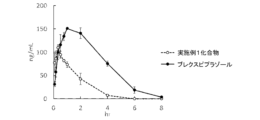
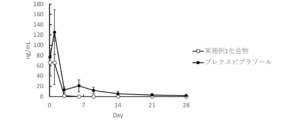
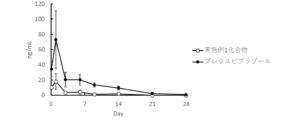
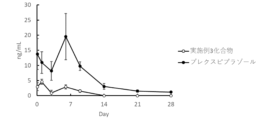
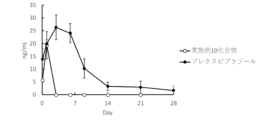
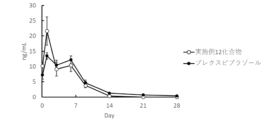
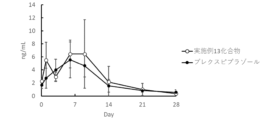
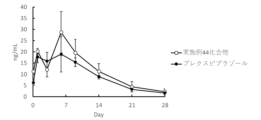
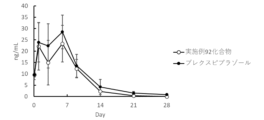
- the compounds represented by formula (I) include (6) compounds suitable for sustained injectables, particularly sustained injectables for subcutaneous administration, in which the blood brexpiprazole concentration is maintained for at least one week to at least four weeks.
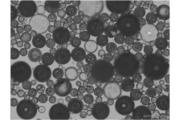
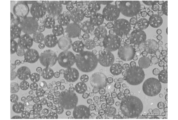
- 1 shows the results of polarizing microscope observation of the microspheres of Production Example I.
- 1 shows the results of polarizing microscope observation of the microspheres of Production Example J.
- 1 shows the results of polarizing microscope observation of the microspheres of Production Example K.
- the present disclosure preferably includes, but is not limited to, specific novel heterocyclic compounds and salts thereof (particularly pharma- ceutically acceptable salts), as well as pharmaceutical compositions containing them as active ingredients, and uses thereof, and the like.
- the present disclosure includes everything disclosed in the present specification and recognizable by a person skilled in the art.
- alkenyl examples include straight-chain or branched-chain alkenyl having 1 to 18 (1, 2, 3, 4, 5, 6, 7, 8, 9, 10, 11, 12, 13, 14, 15, 16, 17, or 18) carbon atoms (C 1-18 alkenyl), more preferably C 1-12 alkenyl, and even more preferably C 1-8 alkenyl or C 1-6 alkenyl.
- alkenyl includes both cis- and trans-isomers.
- alkadienyl examples include straight-chain or branched-chain alkadienyl having 1 to 18 (1, 2, 3, 4, 5, 6, 7, 8, 9, 10, 11, 12, 13, 14, 15, 16, 17, or 18) carbon atoms (C 1-18 alkadienyl), with C 1-12 alkadienyl being more preferred, and C 1-8 alkadienyl or C 1-6 alkadienyl being even more preferred. Furthermore, alkadienyl includes both cis and trans isomers based on carbon-carbon double bonds.
- alkynyl examples include straight or branched alkynyl having 1 to 18 (1, 2, 3, 4, 5, 6, 7, 8, 9, 10, 11, 12, 13, 14, 15, 16, 17, or 18) carbon atoms (C 1-18 alkynyl), more preferably C 1-12 alkynyl, and even more preferably C 1-8 alkynyl or C 1-6 alkynyl.
- R 4 , R 4Na , or R 4Nb represents an alkenyl, an alkadienyl, or an alkynyl
- the alkenyl may have one or more (e.g., 1 to 3, preferably 1) substituent groups
- the alkadienyl may have one or more (e.g., 1 to 3, preferably 1) substituent groups
- the alkynyl may have one or more (e.g., 1 to 3, preferably 1) substituent groups.
- substituents include halogen, hydroxy, lower alkyl, and lower alkoxy.
- alkyl examples include straight or branched chain alkyl having 1 to 24 (1, 2, 3, 4, 5, 6, 7, 8, 9, 10, 11, 12, 13, 14, 15, 16, 17, 18, 19, 20, 21, 22, 23, or 24) carbon atoms (C 1-24 alkyl), more preferably C 1-18 alkyl, further preferably C 1-16 alkyl, C 1-12 alkyl, C 1-8 alkyl, or C 1-6 alkyl.
- More specific examples include methyl, ethyl, propyl, isopropyl, butyl, isobutyl, sec-butyl, tert-butyl, pentyl, isopentyl, neopentyl, hexyl, isohexyl, 3-methylpentyl, heptyl, octyl, nonyl, decyl, tetradecyl, and the like.
- the alkyl represented by R 4 , R 4Na and R 4Nb includes those having a structure in which some methylene groups (-CH 2 -) are replaced by -O-, -S-, -CO-, -NH-, -SiR sia R sib - or -(CO)O-.
- R sia and R sib may be the same or different and represent a hydrogen atom or a C 1-6 alkyl.
- the alkyl represented by R 4 , R 4Na , and R 4Nb includes alkyl having the above-mentioned alternative structure and alkyl not having the above-mentioned alternative structure.
- alkyl other than the alkyl represented by R 4 , R 4Na , and R 4Nb is alkyl not having the above-mentioned alternative structure.
- the number of substituted methylene groups varies depending on the number of carbon atoms in the alkyl before substitution, but is preferably 1 to 8 (1, 2, 3, 4, 5, 6, 7, or 8), more preferably 1 to 6, and even more preferably 1 to 5 or 1 to 4.
- R 1 and R 2 are both -OR 4 , or that R 1 is -O- and R 2 is -OR 4 or NR 4Na R 4Nb .
- R3 represents alkyl, it is particularly preferably lower alkyl, more particularly C1-4 alkyl, and more preferably methyl or ethyl.
- R 4 , R 4Na or R 4Nb represents alkyl, specifically, C 1-24 alkyl is preferred, and C 1-18 alkyl is more preferred.
- the alkyl may have the aforementioned alternative structure (a structure in which some methylene groups (-CH 2 -) are replaced with -O-, -S-, -CO-, -NH-, -SiR sia R sib - or -(CO)O-).
- the number of replaced methylene groups depends on the number of carbon atoms in the alkyl before replacement, but is preferably 1 to 8 (1, 2, 3, 4, 5, 6, 7 or 8), more preferably 1 to 6, and even more preferably 1 to 5 or 1 to 4.
- the -(CO) O- may be either *-(CO)O- or *-O(CO)-.
- the structures after each replacement i.e. -O-, -S-, -CO-, -NH-, -SiRsiaRsib- , or -(CO)O-
- the structures after each replacement i.e. -O-, -S-, -CO-, -NH-, -SiRsiaRsib- , or -(CO)O-
- the structures after each replacement i.e. -O-, -S-, -CO-, -NH-, -SiRsiaRsib- , or -(CO)O-
- -(CH 2 ) 2 -O-(CH 2 ) 2 -O-CH 3 is an example of a group in which two methylene groups in -(CH 2 ) 6 -CH 3 are replaced by -O-.
- -CH 2 -(CO)O-CH 2 -CH 3 is an example of a group in -(CH 2 ) 3 -CH 3 where one methylene group is replaced by *-(CO)O-.
- -(CH 2 ) 3 -O(CO)-CH 3 is an example of a group in -(CH 2 ) 4 -CH 3 where one methylene group is replaced by *-O(CO)-.
- R 4 , R 4Na , or R 4Nb represents an alkyl group
- the alkyl group may have one or more (for example, 1 to 3) substituent groups.
- the substituent groups are present by bonding to a carbon atom of the alkyl group or to a nitrogen atom of -NH- that has been substituted for a methylene group, or, when a methylene group (the underlined part of -CH 2 -H ) in a methyl group at the terminal of the alkyl group is replaced, they are present by bonding to one side of the replaced structure instead of a hydrogen atom (that is, when the substituent is particularly represented as R C1 , the structure is -O-R C1 , -S-R C1 , -CO-R C1 , -NH-R C1 , -SiR sia R sib -R C1 , or -(CO)O-R C1 , or -O(CO)-R C1
- substituent bonded to the carbon atom of the alkyl examples include halogen, hydroxy, alkyl (preferably lower alkyl), alkoxy (preferably lower alkoxy), cycloalkyl group, carboxy, alkylaminocarbonyl (preferably lower alkylaminocarbonyl), phenyl or benzyl which may have a substituent, and heterocyclic group which may have a substituent (a group having a structure in which one hydrogen atom bonded to an atom constituting the heterocyclic ring is removed from a heterocyclic ring which may have a substituent), etc.
- halogen examples include fluorine, chlorine, bromine, and iodine (F, Cl, Br, I), and preferably fluorine, chlorine, or bromine.
- alkylene examples include linear or branched alkylene groups having 1 to 20 carbon atoms. More specific examples include methylene, ethylene, trimethylene, tetramethylene, hexamethylene, heptamethylene, octamethylene, decamethylene, undecamethylene, dodecamethylene, 1-methylethylene, 2-ethyltrimethylene, 1-methylheptamethylene, 2-methylheptamethylene, 1-butylhexamethylene, 2-methyl-5-ethylheptamethylene, 2,3,6-trimethylheptamethylene, and 6-ethyldecamethylene.
- alkoxy examples include straight or branched alkoxy having 1 to 6 carbon atoms (C 1-6 alkoxy), specifically, methoxy, ethoxy, propoxy, isopropoxy, butoxy, isobutoxy, sec-butoxy, tert-butoxy, pentyloxy, isopentyloxy, neopentyloxy, hexyloxy, isohexyloxy, and 3-methylpentyloxy.
- cycloalkyl examples include cyclic alkyl having 3 to 7 (3, 4, 5, 6, or 7) carbon atoms (C 3-7 cycloalkyl), and specific examples include cyclopropyl, cyclobutyl, cyclopentyl, cyclohexyl, cycloheptyl, etc.
- a cycloalkyl group is a group having a structure in which one hydrogen atom bonded to a carbon atom constituting the cycloalkyl has been removed.
- heterocycle examples include saturated or unsaturated monocyclic or polycyclic heterocycles containing 1 to 5 heteroatoms independently selected from the group consisting of nitrogen, oxygen, and sulfur as ring-constituting atoms, such as saturated or unsaturated 3- to 15-membered, preferably 5- to 10-membered monocyclic, bicyclic, or tricyclic heterocycles.
- a heterocyclic group is a group having a structure in which one hydrogen atom bonded to an atom constituting the heterocycle is removed from the heterocycle.
- lower alkylaminocarbonyl groups include methylaminocarbonyl groups, dimethylaminocarbonyl groups, ethylaminocarbonyl groups, propylaminocarbonyl groups, isopropylaminocarbonyl groups, etc.
- substituents in the optionally substituted hephenyl or benzyl, or the optionally substituted heterocyclic group include the same as the substituents that may be present when R 4 represents an alkyl group. Preferred examples also include halogen, hydroxy, C 1-6 alkyl which may be substituted with halogen, hydroxy, oxo, or C 1-6 alkoxy, or C 1-6 alkoxy which may be substituted with halogen, hydroxy, or oxo. Examples of the number of substituents in the optionally substituted hephenyl or benzyl, or the optionally substituted heterocyclic group include 1, 2, or 3.
- R 1 represents --O--
- R 2 represents --OR 4 or --NR 4Na R 4Nb
- R 3 represents hydrogen or methyl
- R 4 or —NR 4Na R 4Nb is more preferably, for example, a group described below.
- R4 represents R4a1 , R4a2 or R4a3 .
- R 4a1 is -C n H 2n+1 , -C n H 2n-1 , -C n H 2n-3 , -C n H 2n -OH, -C n H 2n-2 -OH (more preferably having one carbon-carbon double bond in the -C n H 2n-2 -), or -C n H 2n-4 -OH (more preferably having two carbon-carbon double bonds or one carbon-carbon triple bond in the -C n H 2n-4 -).
- n represents 1 to 24. n is not limited, and may be, for example, 1 to 18, 1 to 12, 1 to 10, or 1 to 6.
- n is 2 or more
- n is 2 or more
- n is 2 or more
- n is 2 or more
- n is 2 or more
- n is 2 or more
- n is 2 or more
- n is 2 or more
- n is 2 or more
- n is 2 or more
- n is 2 or more
- n is 2 or more
- n is 2 or more
- n is 2 or more
- R 4a2 is -CHX1X2 -C n-1 H 2n-2 -CHX 1 X 2 -C n-1 H 2n-4 -CHX 1 X 2 (more preferably having one carbon-carbon double bond in the -C n-1 H 2n-4 -), or -C n-1 H 2n-6 -CHX 1 X 2 (more preferably having two carbon-carbon double bonds or one carbon-carbon triple bond in the -C n-1 H 2n-6 -).
- n is 2 to 24.
- n is not limited, but may be, for example, 2 to 18, 2 to 12, 2 to 10, or 2 to 6. However, in -C n-1 H 2n-6 -, n is 3 or more.
- X1 and X2 are the same or different and each represents a hydrogen atom or a halogen (F, Cl, Br, or I). However, it is preferable that at least one of them represents a halogen.
- R 4a3 is -C n H 2n -R 4-1 , -C n-1 H 2n-2 -CHR 4-1a R 4-1b , -C n H 2n-2 -R 4-1 , or -C n H 2n-4 -R 4-1 , (In the above formula, n represents 1 to 24. n is not limited, but may be, for example, 1 to 18, 1 to 12, 1 to 10, or 1 to 6.
- R 4-1 represents C 1-6 alkoxy, -O-phenyl, or a heterocyclic group optionally substituted with C 1-6 alkyl or halogen.
- R 4-1a and R 4-1b are the same or different and represent -C 1-3 alkylene-C 1-3 alkoxy, or the same or different and represent -CO- O -C 1-3 alkyl, or -CH 2 -CO-O-C 1-3 alkyl. The same applies below.
- R 4-1 is the heterocyclic group, it is not particularly limited, but suitable examples include the following groups.
- R4 represents R4b ;
- R 4b is -(C p H 2p -O) q -C r H 2r -R 4-2 , -(C p H 2p -O) q -C r H 2r-2 -R 4-2 , -(C p H 2p-2 -O) q -C r H 2r -R 4-2 , or -(C p H 2p-2 -O) q -C r H 2r-2 -R 4-2 , (In the above formulae, p represents 1 to 4, q represents 1 to 4, and r represents 1 to 4, respectively.
- R 4-2 represents a hydrogen atom, a hydroxy group, or a "cycloalkyl group, phenyl, benzyl, or heterocyclic group optionally substituted by 1 to 3 substituents selected from C 1-6 alkyl, C 1-6 alkoxy, -C 1-3 alkylene-C 1-3 alkoxy, and nitro".
- R 4 represents —C ⁇ H 2 ⁇ —CO—O—R COO or —C ⁇ H 2 ⁇ —CO—O—CH 2 —R COO ( ⁇ represents 1 to 10).
- -R COO represents a hydrogen atom, a C 1-6 alkyl or C 1-6 alkoxy optionally substituted by 1 to 3 C 1-6 alkoxy, or a cycloalkyl group optionally substituted by 1 to 3 substituents selected from C 1-6 alkyl, C 1-6 alkoxy, -C 1-3 alkylene-C 1-3 alkoxy, and nitro, a phenyl, a benzyl, or a heterocyclic group, the same applies below.
- R 4 preferably represents —C ⁇ H 2 ⁇ —CO—O—R COO .
- -R 2 COO preferably represents a hydrogen atom or a C 1-6 alkyl group optionally substituted with 1 to 3 C 1-6 alkoxy groups.
- R4 represents —C ⁇ H 2 ⁇ —O—CO—R OCO ( ⁇ represents 1 to 10).
- -R OCO represents R 4a1 , R 4b , or -C ⁇ H 2 ⁇ -CO-O-R COO , -C ⁇ H 2 ⁇ -CO-NH-R COO , -C ⁇ H 2 ⁇ -NH-CO-R COO , or -C ⁇ H 2 ⁇ -NH-CO-O-R COO , Alternatively, it represents a cycloalkyl group, phenyl, benzyl, or heterocyclic group optionally substituted by 1 to 3 substituents selected from C 1-6 alkyl, C 1-6 alkoxy, —C 1-3 alkylene-C 1-3 alkoxy, and nitro. The same applies below.
- R 4 represents —C ⁇ H 2 ⁇ —O—CO—O—R OCOO ( ⁇ represents 1 to 10).
- -R OCOO represents a hydrogen atom, R 4a1 , R 4b , or -C ⁇ H 2 ⁇ -CO-O-R COO ;
- it represents a cycloalkyl group, phenyl, benzyl, or heterocyclic group optionally substituted by 1 to 3 substituents selected from C 1-6 alkyl, C 1-6 alkoxy, —C 1-3 alkylene-C 1-3 alkoxy, and nitro.
- substituents selected from C 1-6 alkyl, C 1-6 alkoxy, —C 1-3 alkylene-C 1-3 alkoxy, and nitro.
- R 4Na and R 4Nb are the same or different and each represents a C 1-6 alkyl optionally substituted with 1 to 3 C 1-6 alkoxy.
- R 4Na R 4Nb preferred example ii
- R 4Na is a hydrogen atom
- R 4Nb represents C 1-6 alkyl optionally substituted by 1 to 3 C 1-6 alkoxy, or represents —C ⁇ H 2 ⁇ —CO—O—R COO , or —C ⁇ H 2 ⁇ —CO—NH—R COO .
- each symbol used in the description of each of the above preferred examples may be the same or different.
- -R COO is described in the above preferred example 3 and also in preferred examples 4 and 5, and -R COO in preferred examples 3 to 5 may be the same or different within the scope of the above description.
- R1 and R2 are -O- and R2 are -OR4 or NR4NaR4Nb
- preferred examples of R2 are shown in the following table. In this table, the phosphorus atom bonding side of R2 is indicated with * (asterisk).
- optical isomers exist in the structural formula in this table, all isomers are included.
- compound (I) has the following formula (II):
- Compound (II) is a compound having a structure in which R1 is -O- and R2 is -OR4 in the above formula (I).
- R 4 include hydrogen or C 1-18 alkyl optionally having 1 to 3 substituents.
- the substituents are each independently halogen, hydroxy, lower alkoxy, -O-(CH 2 ) n -OR 5 , -O(CO)-(CH 2 ) n -OR 5a , -(CO)OR 6 , -(CO)NR 7 R 8 , -O(CO)R 9 , -O(CO)OR 10 , -O(CO)-(CR 11 R 12 ) n -(CO)OR 13 , C 3-7 cycloalkyl, or a heterocyclic group which may have a substituent, where R 5 , R 5a , R 6 , R 9 , R 10 , and R 13 are independently a hydrogen atom, a C 1-16 alkyl, a heterocyclic group which may have a substituent, or a C 3-7 cycloalkyl.
- R 7 and R 8 are each independently a hydrogen atom or a lower alkyl group in which one or two carbon atoms may be replaced by an oxygen atom or a nitrogen atom, and R 7 and R 8 may be bonded to form a ring.
- R 11 and R 12 are each independently, and when there are a plurality of R 11, each is independent, and when there are a plurality of R 12 , each is independently, represent a hydrogen atom, a C 1-16 alkyl, or a C 3-7 cycloalkyl.
- n represents an integer of 1 to 10 (1, 2, 3, 4, 5, 6, 7, 8, 9, or 10).
- a carbon atom may be replaced by an oxygen atom or a nitrogen atom
- a methylene group (-CH 2 -) may be replaced by -O- or -NH-" in the case of alkyl.
- examples of the heterocyclic group which may have a substituent include the groups described above when R 4-1 is a heterocyclic group which may be substituted with C 1-6 alkyl or halogen.
- examples of -NR 7 R 8 include groups having a structure in which one hydrogen atom bonded to the nitrogen atom has been removed from among the groups described above when R 4-1 is a heterocyclic group which may be substituted with C 1-6 alkyl or halogen. More preferably, R 4 is hydrogen or a C 1-8 alkyl group which may have one substituent.
- the substituents are each independently hydroxy, lower alkoxy, -O-(CH 2 ) n -OR 5 , -O(CO)-(CH 2 ) n -OR 5a , -(CO)OR 6 , -O(CO)R 9 , -O(CO)OR 10 , -O(CO)-A-(CO)OR 13 , or morpholinyl which may have two C 1-6 alkyl groups.
- R 5 , R 5a , R 6 , R 9 , R 10 , and R 13 are each independently a hydrogen atom, a C 1-16 alkyl group, a heterocyclic group which may have a substituent, or a C 3-7 cycloalkyl group.
- A is a C 1-6 alkylene group.
- n is the same as above.
- R 4 include hydrogen or C 1-8 alkyl optionally having one substituent.
- the substituents each independently represent hydroxy, C 1-6 alkoxy, -O-(CH 2 ) n -OR 5 , -O(CO)-(CH 2 ) n -OR 5a , -(CO)OR 6 , -O(CO)R 9 , -O(CO)-A-(CO)OR 13 , or a heterocyclic group which may have two C 1-6 alkyl groups.
- R 5 is a C 1-6 alkyl
- R 5a is a C 1-6 alkyl
- R 6 is a C 1-6 alkyl
- R 9 is a C 1-16 alkyl
- R 13 is a C 1-6 alkyl, or a pyridyl which may have a C 1-6 alkyl.
- A represents a C 1-6 alkylene.
- R 4 examples include hydrogen and -(A-Y) m -R 14.
- A represents C 1-18 alkylene.
- Y represents a bond, -O-, -(CO)O-, or -(CO)NH-.
- R 14 represents hydrogen, halogen, C 1-18 alkyl, hydroxy, cycloalkyl, or a heterocyclic group.
- m represents an integer of 0 to 5 (0, 1, 2, 3, 4, or 5).
- -OR 4 represented by each of R 1 and R 2 independently, when the oxygen atom side (in other words, the phosphorus atom side to which -OR 4 is bonded) is represented by *, the -(CO)O- may be either *-(CO)O- or *-O(CO)-, and the -(CO)NH- may be either *-(CO)NH- or *-NH(CO)-. More specific preferred examples of compound (I) are shown in the table below.
- diseases that can be prevented and/or treated by compound (I) or a salt thereof include, for example, the following central nervous system diseases: schizophrenia, treatment-resistant, refractory or chronic schizophrenia, ataxic affective disorder, psychotic disorder, mood disorder, bipolar disorder, mania, depression, endogenous depression, major depression, melancholic and treatment-resistant depression, dysthymic disorder, cyclothymic disorder, anxiety disorder, somatoform disorder, factitious disorder, dissociative disorder, sexual disorder, eating disorder.
- sleep disorders adjustment disorders, substance-related disorders, anhedonia, delirium, Alzheimer's disease, Parkinson's disease, cognitive impairment, cognitive impairment associated with neurodegenerative diseases, cognitive impairment due to neurodegenerative diseases, cognitive impairment in schizophrenia, cognitive impairment due to treatment-resistant, intractable or chronic schizophrenia, vomiting, motion sickness, obesity, migraine, pain, mental retardation, autistic disorder, Tourette's syndrome, tic disorder, attention deficit hyperactivity disorder, conduct disorder, Down's syndrome, impulsive symptoms associated with dementia and borderline personality disorder.
- Compound (I) can be produced, for example, according to the general process shown below, but is not limited thereto.
- the raw material compounds may be commercially available or may be synthesized according to known methods or methods equivalent thereto.
- the solvents, acids, bases, protecting groups, and leaving groups that are appropriately used in the production of compound (I) are not particularly limited, so long as they are commonly used in the field of organic synthetic chemistry.
- the product in the production of compound (I), can be used in the next reaction as the reaction solution or as a crude product, but it can also be isolated from the reaction mixture in a conventional manner and easily purified by conventional separation means.
- Conventional separation means include, for example, filtration, extraction, concentration, evaporation, crystallization, recrystallization, reprecipitation, distillation, chromatography, and optical resolution.
- the raw material compounds, intermediate compounds, and compound (I) may be in the form of salts, and the target compounds obtained in each reaction may also form salts.
- each compound is a free compound, it can be converted into the target salt by a known method, and when the compound is a salt, it can be converted into the free form or another target salt by a known method.
- the method for producing compound (II) is a specific example of a method for producing compound (I).
- compound (I) can be produced by carrying out similar operations based on this specific example.
- compound (I) can be produced based on the production methods described in the examples and methods known in the art or methods that can be easily conceived from known methods.
- Compound (II) can be produced, for example, according to the production method shown below.
- the production methods shown below are illustrative and are not limited to these.
- each raw material compound may form a salt as long as it does not inhibit the reaction, and as such a salt, the salts exemplified as salts of compound (II) are used.
- the product in the production of compound (II), can be used in the next reaction as the reaction solution or as a crude product, but it can also be isolated from the reaction mixture in a conventional manner and easily purified by conventional separation means.
- Conventional separation means include, for example, filtration, extraction, concentration, evaporation, crystallization, recrystallization, reprecipitation, distillation, chromatography, and optical resolution.
- compound (II) can be synthesized, for example, using the methods classified into the following steps A and B.
- Step A Phosphoric acid coupling reaction
- LG represents a leaving group
- R 15 represents an alkyl group which may have 1 to 3 substituents, and some carbon atoms of the alkyl group may be replaced by -O- and/or -(CO)O-.
- the other symbols are the same as above.
- R 4 applies to the alkyl group represented by R 15.
- R 4 and R 15 may be the same or different, and are preferably different.
- R 15 more preferably represents an optionally substituted linear or branched alkyl group.
- Compound (II-1) can be obtained by reacting compound (1) with compound (2) in an inert solvent in the presence or absence of a base depending on the reaction conditions (Step A-1).
- Compound (1) is brexpiprazole.
- Compound (1) can be produced according to the method described in Patent Document 1 (JP Patent Publication 2006-316052 A), and can be used in the free form or in the salt form.
- salt forms of compound (1) include inorganic acid salts such as hydrochloride, sulfate, phosphate, hydrobromide, hydroiodide, and nitrate; organic acid salts such as formate, propionate, oxalate, carbonate, picrate, methanesulfonate, ethanesulfonate, p-toluenesulfonate, acetate, citrate, tartrate, malonate, succinate, maleate, fumarate, malate, and lactate; and amino acid salts such as aspartate and glutamate.
- inorganic acid salts such as hydrochloride, sulfate, phosphate, hydrobromide, hydroiodide, and nitrate
- organic acid salts such as formate, propionate, oxalate
- Examples of the leaving group include halogen atoms (e.g., chlorine, bromine, iodine), alkylsulfonyloxy groups (e.g., methylsulfonyloxy, ethylsulfonyloxy, trifluoromethylsulfonyloxy), arylsulfonyloxy groups (e.g., benzenesulfonyloxy, p-toluenesulfonyloxy, 2,4,6-trimethylbenzenesulfonyloxy, 2-nitrobenzenesulfonyloxy, 4-nitrobenzenesulfonyloxy) and the like.
- halogen atoms e.g., chlorine, bromine, iodine
- alkylsulfonyloxy groups e.g., methylsulfonyloxy, ethylsulfonyloxy, trifluoromethylsulfonyloxy
- the inert solvent examples include water; alcohol solvents such as MeOH, EtOH, isopropanol, n-butanol, trifluoroethanol, and ethylene glycol; ketone solvents such as acetone and methyl ethyl ketone; ether solvents such as THF, dioxane, Et 2 O, diisopropyl ether, cyclopentyl methyl ether, and diglyme; ester solvents such as AcOMe and AcOEt; aprotic polar solvents such as MeCN, DMF, and DMSO; hydrocarbon solvents such as n-pentane, n-hexane, n-heptane, and cyclohexane; halogenated hydrocarbon solvents such as chloroform, DCE, and DCM; or other organic solvents; or mixed solvents thereof, and preferably halogenated hydrocarbon solvents such as DCM, or aprotic polar solvents such as MeCN.
- inorganic bases As the base, for example, known inorganic bases and organic bases can be widely used.
- inorganic bases include alkali metals (e.g., sodium, potassium, etc.), alkali metal hydrogen carbonates (e.g., lithium hydrogen carbonate, sodium hydrogen carbonate, potassium hydrogen carbonate, etc.), alkali metal hydroxides (e.g., LiOH, NaOH, KOH, etc.), alkali metal carbonates (e.g., Li 2 CO 3 , Na 2 CO 3 , K 2 CO 3 , Cs 2 CO 3, etc.), alkali metal lower alkoxides (e.g., sodium methoxide, sodium ethoxide, etc.), and alkali metal hydrides (e.g., NaH, KH, etc.).
- alkali metals e.g., sodium, potassium, etc.
- alkali metal hydrogen carbonates e.g., lithium hydrogen carbonate, sodium hydrogen carbonate, potassium hydrogen carbonate, etc.
- organic bases examples include trialkylamines (e.g., trimethylamine, TEA, DIPEA, etc.), pyridine, quinoline, piperidine, imidazole, picoline, dimethylaminopyridine, dimethylaniline, N-methylmorpholine, DBN, DABCO, DBU, etc.
- these bases when these bases are liquid, they can also be used as solvents.
- These bases may be used alone or in combination of two or more.
- the amount of the base used is usually 0.1 to 10 mol, preferably 0.1 to 5 mol, per 1 mol of compound (1).
- the reaction conditions are not particularly limited, and the reaction can usually proceed under cooling, room temperature, or heating.
- the reaction is preferably carried out at a temperature of room temperature to 100° C. for 30 minutes to 350 hours, more preferably 1 hour to 200 hours, and particularly preferably 1 hour to 48 hours.
- Compound (II) can be obtained by reacting compound (II-1) in an inert solvent under acidic or basic conditions, or with an alkali metal halide, without any particular limitations on the reaction conditions (Step A-2).
- the inert solvent examples include water; alcohol solvents such as MeOH, EtOH, isopropanol, n-butanol, trifluoroethanol, and ethylene glycol; ketone solvents such as acetone and methyl ethyl ketone; ether solvents such as THF, dioxane, Et 2 O, diisopropyl ether, cyclopentyl methyl ether, and diglyme; ester solvents such as AcOMe and AcOEt; aprotic polar solvents such as MeCN, DMF, and DMSO; hydrocarbon solvents such as n-pentane, n-hexane, n-heptane, and cyclohexane; halogenated hydrocarbon solvents such as chloroform, DCE, and DCM; or other organic solvents; or mixed solvents thereof.
- halogenated hydrocarbon solvents such as DCM
- aprotic polar solvents such as MeCN
- ketone such
- inorganic bases As the base, for example, known inorganic bases and organic bases can be widely used.
- inorganic bases include alkali metals (e.g., sodium, potassium, etc.), alkali metal hydrogen carbonates (e.g., lithium hydrogen carbonate, sodium hydrogen carbonate, potassium hydrogen carbonate, etc.), alkali metal hydroxides (e.g., LiOH, NaOH, KOH, etc.), alkali metal carbonates (e.g., Li 2 CO 3 , Na 2 CO 3 , K 2 CO 3 , Cs 2 CO 3, etc.), alkali metal lower alkoxides (e.g., sodium methoxide, sodium ethoxide, etc.), and alkali metal hydrides (e.g., NaH, KH, etc.).
- alkali metals e.g., sodium, potassium, etc.
- alkali metal hydrogen carbonates e.g., lithium hydrogen carbonate, sodium hydrogen carbonate, potassium hydrogen carbonate, etc.
- organic bases examples include trialkylamines (e.g., trimethylamine, TEA, DIPEA, etc.), pyridine, quinoline, piperidine, imidazole, picoline, dimethylaminopyridine, dimethylaniline, N-methylmorpholine, DBN, DABCO, DBU, etc.
- these bases when these bases are liquid, they can also be used as solvents.
- These bases may be used alone or in combination of two or more.
- the amount of the base used is usually 0.1 to 10 mol, preferably 0.1 to 5 mol, per mol of compound (II-1).
- Examples of the acid include inorganic acids such as hydrochloric acid, sulfuric acid, nitric acid, hydrobromic acid, phosphoric acid, etc., and organic acids such as acetic acid, trifluoroacetic acid, oxalic acid, phthalic acid, fumaric acid, tartaric acid, maleic acid, citric acid, succinic acid, methanesulfonic acid, p-toluenesulfonic acid, 10-camphorsulfonic acid, etc., and two or more of these may be mixed in an appropriate ratio for use.
- the amount of the acid used is usually 1 molar equivalent to an excess amount relative to compound (II-1).
- Examples of the alkali metal halide include LiI, NaI, KI, etc.
- the amount of the alkali metal halide used is usually 1 molar equivalent to an excess amount relative to compound (II-1).
- the reaction conditions are not particularly limited, and the reaction can usually proceed under cooling, room temperature, or heating. It is preferable to carry out the reaction at a temperature of room temperature to 100°C for 0.5 to 350 hours.
- Step B-1 represents a protecting group for a hydroxy group
- -OR 16 represents an alkoxy group or -O- , and the other symbols are the same as above.
- Compound (1) may be converted into compound (3) protected with an appropriate protecting group (Step B-1), and the phosphoric acid coupling reaction may be carried out (Step A), followed by deprotecting the protecting group (Step B-2) to synthesize compound (II) as the final product (Step B).
- Step A the process may be stopped at Step A-1 (i.e., compound (3) may be reacted with compound (2) to obtain a compound corresponding to (II-1) (compound (4) in which -OR 16 represents an alkoxy group), or Step A-2 may be carried out to obtain a compound corresponding to (II) (compound (4) in which -OR 16 represents -O- ) .
- Step B-1 Protection reaction Examples of the protecting group for the hydroxy group (-OPG) are not particularly limited as long as they are protecting groups used in the field of organic synthetic chemistry, and include, for example, ethers (e.g., methyl, methoxymethyl, benzyloxymethyl, methoxyethoxymethyl, 2-(trimethylsilyl)ethoxymethyl, methylthiomethyl, tetrahydropyranyl, phenacyl, cyclopropylmethyl, allyl, prenyl, propargyl, t-butyl, benzyl, 4-(dimethylamino)carbonylbenzyl, 4-methylsulfinylbenzyl, 9-anthrylmethyl, 4-picolyl); silyl ethers (e.g., trimethylsilyl, t-butyldimethylsilyl, t-butyldiphenylsilyl); Examples of suitable protecting groups include aryl groups (e.g., formate, a
- the protection reaction can be carried out by subjecting compound (1) to an inert solvent in the presence of a base to give compound (3).
- the base for example, a known inorganic base can be used.
- the inorganic base include alkali metals (e.g., sodium, potassium, etc.), alkali metal hydrogen carbonates (e.g., lithium hydrogen carbonate, sodium hydrogen carbonate, potassium hydrogen carbonate, etc.), alkali metal hydroxides (e.g., LiOH, NaOH, KOH, etc.) , alkali metal carbonates (e.g., Li2CO3 , Na2CO3 , K2CO3 , Cs2CO3 , etc.), alkali metal lower alkoxides (e.g., sodium methoxide, sodium ethoxide, etc.) , alkali metal hydrides (e.g., NaH, KH, etc.), and silver carbonate.
- alkali metals e.g., sodium, potassium, etc.
- alkali metal hydrogen carbonates e.g., lithium hydrogen carbonate, sodium hydrogen carbonate, potassium hydrogen carbonate, etc.
- the amount of the base used is usually 1 molar equivalent to an excess amount relative to compound (1).
- the inert solvent include water; alcohol solvents such as MeOH, EtOH, isopropanol, n-butanol, trifluoroethanol, and ethylene glycol; ketone solvents such as acetone and methyl ethyl ketone; ether solvents such as THF, dioxane, Et 2 O, diisopropyl ether, cyclopentyl methyl ether, and diglyme; ester solvents such as AcOMe and AcOEt; aprotic polar solvents such as MeCN, DMF, and DMSO; hydrocarbon solvents such as n-pentane, n-hexane, n-heptane, and cyclohexane; halogenated hydrocarbon solvents such as chloroform, DCE, and DCM; or other organic solvents; or mixed solvents of these, and two or more of these may be mixed and
- the reaction temperature is usually -80 to 150°C.
- the reaction time is usually 0.1 to 200 hours.
- Step B-2 Deprotection Reaction
- the deprotection reaction of compound (4) may be carried out using a known reaction depending on the type of protecting group.
- compound (4) in the deprotection reaction, compound (4) can be deprotected in an inert solvent or without a solvent, in the presence or absence of an acid, to give compound (II).
- the acid examples include inorganic acids such as hydrochloric acid, sulfuric acid, nitric acid, hydrobromic acid, phosphoric acid, etc., and organic acids such as acetic acid, trifluoroacetic acid, oxalic acid, phthalic acid, fumaric acid, tartaric acid, maleic acid, citric acid, succinic acid, methanesulfonic acid, p-toluenesulfonic acid, 10-camphorsulfonic acid, etc., and two or more of these may be mixed in an appropriate ratio for use.
- the amount of the acid used is usually 1 molar equivalent to an excess amount relative to the intermediate (4).
- the inert solvent examples include water; alcohol solvents such as MeOH, EtOH, isopropanol, n-butanol, trifluoroethanol, and ethylene glycol; ketone solvents such as acetone and methyl ethyl ketone; ether solvents such as THF, dioxane, Et 2 O, diisopropyl ether, cyclopentyl methyl ether, and diglyme; ester solvents such as AcOMe and AcOEt; aprotic polar solvents such as MeCN, DMF, and DMSO; hydrocarbon solvents such as n-pentane, n-hexane, n-heptane, and cyclohexane; halogenated hydrocarbon solvents such as chloroform, DCE, and DCM; or other organic solvents; or a mixture of these solvents. Two or more of these may be mixed in an appropriate ratio for use. Two or more of these may be mixed in an appropriate ratio for use.
- each compound (II) can be synthesized by a substitution reaction or a condensation reaction using a compound (II) in which R4 is a hydrogen atom (represented as compound (5) in the following formula). Examples are shown below.
- Step C-1 Substitution reaction
- LG represents a leaving group
- R4 is the same as above (except for a hydrogen atom).
- Compound (II) may be obtained by reacting compound (5) with R 4 -LG in an inert solvent or without a solvent in the presence or absence of a base depending on the reaction conditions (Step C-1: substitution reaction).
- leaving groups include halogen atoms (e.g., chlorine, bromine, iodine), alkylsulfonyloxy groups (e.g., methylsulfonyloxy, ethylsulfonyloxy, trifluoromethylsulfonyloxy), arylsulfonyloxy groups (e.g., benzenesulfonyloxy, p-toluenesulfonyloxy, 2,4,6-trimethylbenzenesulfonyloxy, 2-nitrobenzenesulfonyloxy, 4-nitrobenzenesulfonyloxy), etc.
- halogen atoms e.g., chlorine, bromine, iodine
- alkylsulfonyloxy groups e.g., methylsulfonyloxy, ethylsulfonyloxy, trifluoromethylsulfonyloxy
- the inert solvent examples include water; alcohol solvents such as MeOH, EtOH, isopropanol, n-butanol, trifluoroethanol, and ethylene glycol; ketone solvents such as acetone and methyl ethyl ketone; ether solvents such as THF, dioxane, Et 2 O, diisopropyl ether, cyclopentyl methyl ether, and diglyme; ester solvents such as AcOMe and AcOEt; aprotic polar solvents such as MeCN, DMF, and DMSO; hydrocarbon solvents such as n-pentane, n-hexane, n-heptane, and cyclohexane; halogenated hydrocarbon solvents such as chloroform, DCE, and DCM; other organic solvents; and mixed solvents thereof.
- aprotic polar solvents such as MeCN; or ketone solvents such as acetone; or mixed solvents thereof with
- inorganic bases As the base, for example, known inorganic bases and organic bases can be widely used.
- inorganic bases include alkali metals (e.g., sodium, potassium, etc.), alkali metal hydrogen carbonates (e.g., lithium hydrogen carbonate, sodium hydrogen carbonate, potassium hydrogen carbonate, etc.), alkali metal hydroxides (e.g., LiOH, NaOH, KOH, etc.), alkali metal carbonates (e.g., Li 2 CO 3 , Na 2 CO 3 , K 2 CO 3 , Cs 2 CO 3, etc.), alkali metal lower alkoxides (e.g., sodium methoxide, sodium ethoxide, etc.), and alkali metal hydrides (e.g., NaH, KH, etc.).
- alkali metals e.g., sodium, potassium, etc.
- alkali metal hydrogen carbonates e.g., lithium hydrogen carbonate, sodium hydrogen carbonate, potassium hydrogen carbonate, etc.
- organic bases examples include trialkylamines (e.g., trimethylamine, TEA, DIPEA, etc.), pyridine, quinoline, piperidine, imidazole, picoline, dimethylaminopyridine, dimethylaniline, N-methylmorpholine, DBN, DABCO, DBU, etc.
- these bases when these bases are liquid, they can also be used as solvents.
- These bases may be used alone or in combination of two or more.
- the amount of base used is usually 1 molar equivalent to an excess amount per mole of compound (5) to be reacted.
- the reaction conditions are not particularly limited, and the reaction temperature is usually -80°C to 150°C.
- the reaction time is usually 0.1 hours to 200 hours.
- Steps C-2 and C-2' Condensation reaction
- R 4 is the same as defined above (except for a hydrogen atom).
- compound (II) can be obtained by reacting compound (5) with alcohol (R 4 OH) in the presence of a condensing agent in an inert solvent or without a solvent in the presence or absence of a base depending on the reaction conditions (Step C-2: Condensation reaction).
- compound (II') in which R 1 is -O- and R 2 is NR 4Na R 4Nb can be obtained by using an amine (HNR 4Na R 4Nb ) instead of the alcohol (Step C-2': Condensation reaction).
- the inert solvent examples include water; alcohol solvents such as MeOH, EtOH, isopropanol, n-butanol, trifluoroethanol, and ethylene glycol; ketone solvents such as acetone and methyl ethyl ketone; ether solvents such as THF, dioxane, Et 2 O, diisopropyl ether, cyclopentyl methyl ether, and diglyme; ester solvents such as AcOMe and AcOEt; aprotic polar solvents such as MeCN, DMF, and DMSO; hydrocarbon solvents such as n-pentane, n-hexane, n-heptane, and cyclohexane; halogenated hydrocarbon solvents such as chloroform, DCE, and DCM; or other organic solvents; or mixed solvents thereof, and preferably halogenated hydrocarbon solvents such as DCM; aprotic polar solvents such as MeCN and DMF; or
- inorganic bases As the base, for example, known inorganic bases and organic bases can be widely used.
- inorganic bases include alkali metals (e.g., sodium, potassium, etc.), alkali metal hydrogen carbonates (e.g., lithium hydrogen carbonate, sodium hydrogen carbonate, potassium hydrogen carbonate, etc.), alkali metal hydroxides (e.g., LiOH, NaOH, KOH, etc.), alkali metal carbonates (e.g., Li 2 CO 3 , Na 2 CO 3 , K 2 CO 3 , Cs 2 CO 3, etc.), alkali metal lower alkoxides (e.g., sodium methoxide, sodium ethoxide, etc.), and alkali metal hydrides (e.g., NaH, KH, etc.).
- alkali metals e.g., sodium, potassium, etc.
- alkali metal hydrogen carbonates e.g., lithium hydrogen carbonate, sodium hydrogen carbonate, potassium hydrogen carbonate, etc.
- organic bases examples include trialkylamines (e.g., trimethylamine, TEA, DIPEA, etc.), pyridine, quinoline, piperidine, imidazole, picoline, dimethylaminopyridine, dimethylaniline, N-methylmorpholine, DBN, DABCO, DBU, etc.
- these bases when these bases are liquid, they can also be used as solvents.
- These bases may be used alone or in combination of two or more.
- the amount of base used is usually 1 molar equivalent to an excess amount per mole of compound (5) to be reacted.
- condensation agent for example, a wide range of known condensation agents can be used.
- WSC 3-ethyl-1-(3-dimethylaminopropyl)carbodiimide
- HCl salt 1-[bis(dimethylamino)methylene]-1H-1,2,3-triazolo[4,5-b]pyridinium 3-oxide hexafluorophosphate (HATU); 1-(chloro-1-pyrrolidinylmethylene)pyrrolidinium hexafluorophosphate; N-cyclohexyl-N'-morpholinoethylcarbodiimide; N-cyclohexyl-N'-(4-diethylaminocyclohexyl)carbodiimide; N,N'-diethylcarbodiimide; N,N'-diisopropylcarbodiimide; N,N'-carbonylbis(2-methylimidazole); pentamethyleneketen
- reaction conditions are not particularly limited, and the reaction temperature is usually ⁇ 80° C. to 150° C.
- the reaction time is usually 0.1 hours to 200 hours.
- each compound (II) can be synthesized by acylation reaction using compound (5). This acylation reaction can be said to be one form of the above C-1 (substitution reaction). An example is shown below.
- Step C-3 Acylation reaction
- R 17 and R 18 are preferably, for example, an alkyl group (for example, a C 1-18 alkyl group) which may have 1 to 3 substituents.
- R 17 and R 18 may be the same or different.
- compound (5) can be reacted with an acylating agent such as a carboxylic anhydride in an inert solvent or without a solvent in the presence of a base depending on the reaction conditions to obtain compound (II) (Step C-3: Acylation reaction).
- an acylating agent such as a carboxylic anhydride in an inert solvent or without a solvent in the presence of a base depending on the reaction conditions to obtain compound (II) (Step C-3: Acylation reaction).
- the inert solvent examples include water; alcohol solvents such as MeOH, EtOH, isopropanol, n-butanol, trifluoroethanol, and ethylene glycol; ketone solvents such as acetone and methyl ethyl ketone; ether solvents such as THF, dioxane, Et 2 O, diisopropyl ether, cyclopentyl methyl ether, and diglyme; ester solvents such as AcOMe and AcOEt; aprotic polar solvents such as MeCN, DMF, and DMSO; hydrocarbon solvents such as n-pentane, n-hexane, n-heptane, and cyclohexane; halogenated hydrocarbon solvents such as chloroform, DCE, and DCM; or other organic solvents; or mixed solvents thereof.
- halogenated hydrocarbon solvents such as DCM
- aprotic polar solvents such as MeCN and DMF
- inorganic bases As the base, for example, known inorganic bases and organic bases can be widely used.
- inorganic bases include alkali metals (e.g., sodium, potassium, etc.), alkali metal hydrogen carbonates (e.g., lithium hydrogen carbonate, sodium hydrogen carbonate, potassium hydrogen carbonate, etc.), alkali metal hydroxides (e.g., LiOH, NaOH, KOH, etc.), alkali metal carbonates (e.g., Li 2 CO 3 , Na 2 CO 3 , K 2 CO 3 , Cs 2 CO 3, etc.), alkali metal lower alkoxides (e.g., sodium methoxide, sodium ethoxide, etc.), and alkali metal hydrides (e.g., NaH, KH, etc.).
- alkali metals e.g., sodium, potassium, etc.
- alkali metal hydrogen carbonates e.g., lithium hydrogen carbonate, sodium hydrogen carbonate, potassium hydrogen carbonate, etc.
- organic bases examples include trialkylamines (e.g., trimethylamine, TEA, DIPEA, etc.), pyridine, quinoline, piperidine, imidazole, picoline, dimethylaminopyridine, dimethylaniline, N-methylmorpholine, DBN, DABCO, DBU, etc.
- these bases when these bases are liquid, they can also be used as solvents.
- These bases may be used alone or in combination of two or more.
- the amount of base used is usually 1 molar equivalent to an excess amount per mole of compound (5) to be reacted.
- the reaction conditions are not particularly limited, and the reaction temperature is usually -80°C to 150°C.
- the reaction time is usually 0.1 hours to 200 hours.
- compound (I) the starting compounds and intermediate compounds may be used in the form of chemically acceptable geometric isomers, stereoisomers, optical isomers and tautomers.
- Various isomers can be separated by general optical resolution methods or can be produced from the corresponding optically active starting compounds.
- compound (I), raw material compounds and intermediate compounds may be in the form of salts, and the target compounds obtained in each reaction may also form salts.
- the compounds obtained in each reaction are free compounds, they can be converted to the target salts by known methods, and when the compounds are salts, they can be converted to the free form or other target salts by known methods.
- Examples of such salts include the salts exemplified below.
- the salt is preferably a medicamentously acceptable salt, and examples of the salt include metal salts (e.g., alkali metal salts, alkaline earth metal salts, zinc salts, etc.). Also, examples of the salt include acid addition salts and base addition salts.
- Examples of the acid in the acid addition salt include inorganic acids such as hydrochloric acid, hydrobromic acid, hydroiodic acid, nitric acid, sulfuric acid, phosphoric acid, etc.; organic acids such as formic acid, propionic acid, oxalic acid, carbonic acid, picric acid, methanesulfonic acid, ethanesulfonic acid, p-toluenesulfonic acid, acetic acid, citric acid, tartaric acid, malonic acid, succinic acid, maleic acid, fumaric acid, malic acid, lactic acid, etc.; and amino acids such as aspartic acid, glutamic acid, etc.
- inorganic acids such as hydrochloric acid, hydrobromic acid, hydroiodic acid, nitric acid, sulfuric acid, phosphoric acid, etc.
- organic acids such as formic acid, propionic acid, oxalic acid, carbonic acid, picric acid, methanesulfonic acid,
- the base in the base addition salt examples include metals such as alkali metals (e.g., sodium, potassium, etc.) and alkaline earth metals (e.g., calcium, magnesium, etc.); inorganic bases such as alkali metal carbonates (e.g., lithium carbonate, potassium carbonate, sodium carbonate, cesium carbonate, etc.), alkali metal hydrogencarbonates (e.g., lithium hydrogencarbonate, sodium hydrogencarbonate, potassium hydrogencarbonate, etc.), and alkali metal hydroxides (e.g., lithium hydroxide, sodium hydroxide, potassium hydroxide, calcium hydroxide, cesium hydroxide, etc.); and organic bases such as methylamine, diethylamine, trimethylamine, triethylamine, N-ethyldiisopropylamine, ethanolamine, diethanolamine, triethanolamine, ethylenediamine, tris(hydroxymethyl)methylamine, dicyclohexylamine, N,N'-dibenzylethylenediamine
- Compound (I) or a salt thereof may be used in the form of various solvates (particularly hydrates). Compound (I) or a salt thereof may also be used in the form of a crystalline polymorph. Compound (I) or a salt thereof may also be used in the form of a pharma- ceutically acceptable co-crystal or co-crystal salt.
- a co-crystal or co-crystal salt refers to a crystalline substance composed of two or more unique solids at room temperature, each of which has different physical properties (e.g., structure, melting point, heat of fusion, etc.). Co-crystals and co-crystal salts may be produced by applying known co-crystallization methods.
- Compound (I) includes compounds in which any one or more atoms of formula (I) are replaced with one or more isotope atoms. Examples of isotope atoms include deuterium ( 2H ), tritium ( 3H ), 13C , 15N , 18O , etc. Compound (I) also includes compounds labeled with various radioactive or non-radioactive isotopes.
- Compound (I) can be used in combination with various therapeutic or prophylactic agents for diseases that can be treated by compound (I).
- the combination may be simultaneous administration, or may be administered separately, consecutively, or at a desired time interval.
- the simultaneous administration preparation may be a combination drug or may be formulated separately.
- composition that contains compound (I) as an active ingredient.
- the above pharmaceutical preparation is a formulation of compound (I) in the form of a conventional pharmaceutical preparation, and is prepared using compound (I) or a salt thereof and a pharma- ceutically acceptable carrier.
- Such carriers include commonly used diluents or excipients such as fillers, bulking agents, binders, wetting agents, disintegrants, surfactants, lubricants, suspending agents, solubilizing agents, isotonicity agents, and solvents.
- Such pharmaceutical preparations can be selected from a variety of forms depending on the purpose of treatment, and examples include tablets, pills, powders, liquids, suspensions, emulsions, granules, capsules, suppositories, injections, nasal drops, inhalants, etc., with injections being particularly preferred.
- examples of injections include injections for intramuscular administration and injections for subcutaneous administration, with subcutaneous injections being particularly preferred.
- a wide variety of known carriers can be used when forming tablets, including excipients such as lactose, sucrose, sodium chloride, glucose, urea, starch, calcium carbonate, kaolin, and crystalline cellulose; binders such as water, ethanol, propanol, simple syrup, glucose solution, starch solution, gelatin solution, carboxymethylcellulose, shellac, methylcellulose, potassium phosphate, and polyvinylpyrrolidone; dry starch, sodium alginate, powdered agar, powdered laminaran, and sodium bicarbonate.
- excipients such as lactose, sucrose, sodium chloride, glucose, urea, starch, calcium carbonate, kaolin, and crystalline cellulose
- binders such as water, ethanol, propanol, simple syrup, glucose solution, starch solution, gelatin solution, carboxymethylcellulose, shellac, methylcellulose, potassium phosphate, and polyvinylpyrrolidone
- dry starch sodium alginate
- disintegrants such as sucrose, stearin, cocoa butter, hydrogenated oils, etc.; absorption promoters such as quaternary ammonium bases, sodium lauryl sulfate, etc.; moisturizers such as glycerin, starch, etc.; adsorbents such as starch, lactose, kaolin, bentonite, colloidal silicic acid, etc.; lubricants such as refined talc, stearates, powdered boric acid, polyethylene glycol, etc.
- the tablets may be coated with a conventional tablet coating, such as sugar-coated tablets, gelatin-coated tablets, enteric-coated tablets, film-coated tablets, or double-layered or multi-layered tablets, if necessary.
- a conventional tablet coating such as sugar-coated tablets, gelatin-coated tablets, enteric-coated tablets, film-coated tablets, or double-layered or multi-layered tablets, if necessary.
- a wide variety of known carriers can be used when forming the tablets into pills, including excipients such as glucose, lactose, starch, cacao butter, hardened vegetable oil, kaolin, and talc; binders such as powdered gum arabic, powdered tragacanth, gelatin, and ethanol; and disintegrants such as laminaran and agar.
- excipients such as glucose, lactose, starch, cacao butter, hardened vegetable oil, kaolin, and talc
- binders such as powdered gum arabic, powdered tragacanth, gelatin, and ethanol
- disintegrants such as laminaran and agar.
- a wide variety of known carriers can be used when forming suppositories, including, for example, polyethylene glycol, cacao butter, higher alcohols, esters of higher alcohols, gelatin, and semi-synthetic glycerides.
- the liquid, emulsion, and suspension are preferably sterilized and isotonic with blood.
- Diluents used in forming these liquids, emulsions, and suspensions can be any well-known and widely used diluent, such as water, ethanol, propylene glycol, ethoxylated isostearyl alcohol, polyoxylated isostearyl alcohol, polyoxyethylene sorbitan fatty acid esters, and the like.
- the pharmaceutical preparation may contain sufficient amounts of salt, glucose, amino acids, or glycerin to prepare an isotonic solution, and may also contain conventional dissolution aids, buffers, soothing agents, and the like, as well as preservatives, stabilizers, antioxidants, solubilizers, pH adjusters, and other pharmaceuticals as necessary.
- Brexpiprazole is known to be useful for alleviating symptoms associated with severe agitation, disruptive, and violent behavior in Alzheimer's dementia. Rapid-release injections of antipsychotics are known to be useful as treatments for alleviating symptoms in patients with acute phase agitation in schizophrenia and other conditions, and therefore injections that rapidly release brexpiprazole into the blood are expected to be useful as treatments for alleviating symptoms in patients with acute phase agitation in schizophrenia and Alzheimer's dementia.
- Examples of the form of injections preferred for such acute phase injections include injections in which compound (1) is dissolved in water for injection, a biocompatible organic solvent, or a mixture of water for injection and a biocompatible organic solvent, to which an appropriate isotonicity agent, buffer, pH adjuster, solubilizer, etc., have been added as necessary.
- solubilizing agent examples include polysorbate 80, polysorbate 60, polyoxyethylene hydrogenated castor oil 60, poloxamer, ⁇ -cyclodextrin, and sulfobutyl ether- ⁇ -cyclodextrin.
- isotonicity agents include alkali metal chlorides such as sodium chloride and potassium chloride; sugar alcohols such as mannitol, sorbitol, xylitol, and maltitol; sugars such as glucose, trehalose, and maltose; and glycerin.
- the composition may not contain an isotonicity agent, but when it contains an isotonicity agent, the concentration of the isotonicity agent in the composition is preferably a concentration that makes the osmotic pressure of the solution of the composition isotonic.
- the concentration is preferably 0.5 to 20 mg/mL, more preferably 2 to 10 mg/mL, and in the case of sugar alcohols and sugars, the concentration is preferably 10 mg/mL to 200 mg/mL, more preferably 20 to 100 mg/mL.
- the buffer examples include phosphates such as sodium phosphate, sodium dihydrogen phosphate, monosodium hydrogen phosphate, disodium hydrogen phosphate, potassium phosphate, potassium dihydrogen phosphate, dipotassium hydrogen phosphate, etc.; borates such as sodium borate, potassium borate, etc.; citrates such as sodium citrate, disodium citrate, etc.; acetates such as sodium acetate, potassium acetate, etc.; carbonates such as sodium carbonate, sodium hydrogen carbonate, trishydroxymethylaminomethane (Tris), etc.
- concentration of the buffer in the composition is, for example, 0.01 to 5.0 mg/mL, preferably 0.1 to 2 mg/mL.
- the pH adjuster may be an acidic pH adjuster or a basic pH adjuster.
- the acidic pH adjuster include hydrochloric acid, phosphoric acid, acetic acid, and citric acid.
- Examples of the basic pH adjuster include sodium hydroxide, potassium hydroxide, calcium carbonate, magnesium oxide, and magnesium hydroxide.
- the pH adjuster is usually added in an appropriate amount according to the desired pH of the composition.
- biocompatible organic solvents include those that are miscible with water, such as alcohols such as ethanol, propanol, isopropanol, propylene glycol, glycerin, and dimethyl sulfoxide, N-methyl-2-pyrrolidone, polyethylene glycol 300, or polyethylene glycol 400.
- tablets are often administered once a day, but in cases of medication refusal or agitation, it may be difficult to take the tablets.
- a long-acting injection administered every one to several days is considered to be a useful formulation because it ensures reliable administration of the drug and is convenient.
- a pharmaceutical composition designed in a preferred form of injection according to medical needs, which contains compound (1), is administered subcutaneously or intramuscularly to continuously deliver a therapeutically effective amount of brexpiprazole into the bloodstream of a patient for a relatively short period (one to several days), and is expected to exert its efficacy for one to several days, even in patients who have difficulty taking tablets.
- long-acting injectables are a useful dosage form for improving the therapeutic and preventive effects in patients with poor medication adherence.
- a drug to exert a therapeutic effect it is desirable for the blood drug concentration to reach the therapeutic range quickly and then maintain a certain level.
- Representative long-acting injectables for the indication of schizophrenia include preparations of aripiprazole and paliperidone palmitate (trade names: Abilify long-acting aqueous suspension for intramuscular injection and Xeprion aqueous suspension for intramuscular injection).
- aripiprazole and paliperidone palmitate trade names: Abilify long-acting aqueous suspension for intramuscular injection and Xeprion aqueous suspension for intramuscular injection.
- oral agents are used in combination or the injection interval is shortened to compensate for the blood drug concentration at the start of treatment.
- a pharmaceutical composition containing compound (1) designed in a preferred injectable form according to medical needs can be administered subcutaneously or intramuscularly to rapidly and continuously deliver a therapeutically effective amount of brexpiprazole into the bloodstream of a patient over a relatively short period (1 to 4 weeks or more), even in patients in whom sufficient therapeutic or preventive effects are not expected due to poor medication adherence, and is therefore expected to improve the therapeutic or preventive effects in such patients.
- An example of a preferred form of injection for a sustained injection that continuously delivers brexpiprazole for one to several days or one to four weeks or more is a pharmaceutical composition in the form of a suspension, which contains compound (1), a suspending agent, and a dispersion medium.
- concentration of compound (1) in the composition is not particularly limited as long as it is an effective concentration according to the use of the composition.
- the concentration of compound (1) in the composition is, for example, 50 mg/mL or more, preferably 100 mg/mL or more, more preferably 150 mg/mL or more, and even more preferably 200 mg/mL or 250 mg/mL or more, calculated as brexpiprazole.
- the upper limit is not particularly limited, and examples include 1000 mg/mL or less, 750 mg/mL or less, or 500 mg/mL or less. For example, it can be used in the range of 50 to 1000 mg/mL.
- the suspending agent contained in the composition is not particularly limited as long as it is pharma- ceutically acceptable and can achieve a predetermined viscosity.
- examples of the suspending agent include carboxymethylcellulose and its salts, polyoxyethylene-polyoxypropylene block copolymers such as poloxamer, and polyethylene glycol (also called "macrogol").
- the salt of carboxymethylcellulose include metal salts such as alkali metal salts, ammonium salts, and the like.
- the suspending agent preferably contains carboxymethylcellulose and/or its sodium salt, and particularly preferably contains sodium carboxymethylcellulose.
- the suspending agent may be one type alone or two or more types in combination.
- the content concentration of the suspending agent in the composition is, for example, 0.1 mg/mL or more, preferably 0.2 mg/mL or more, and more preferably 0.5 mg/mL or more.
- the content concentration of the suspending agent in the composition is, for example, 100 mg/mL or less, preferably 50 mg/mL or less, and more preferably 25 mg/mL or less.
- the content concentration of the suspending agent in the composition is, for example, 0.1 to 50 mg/mL.
- the dispersion medium contained in the composition is not particularly limited as long as it is pharma- ceutically acceptable and can disperse the active ingredient.
- the dispersion medium may be one type alone or a combination of two or more types.
- the dispersion medium preferably contains at least water. Examples of such dispersion medium include water, physiological saline, and a solvent containing water and the biocompatible organic solvent.
- the dispersion medium is water, and it is particularly preferred to use purified water, sterilized purified water, water for injection, etc.
- the composition may further contain any additive. Such additives are not particularly limited as long as they are pharma- ceutically acceptable, and include, for example, the above-mentioned tonicity agents, buffers, pH adjusters, etc.
- the above-mentioned additives may be used alone or in combination of two or more.
- the average particle size of the suspended compound (1) is, for example, 0.1 to 30 ⁇ m, preferably 0.5 to 20 ⁇ m. Such a range is preferable in terms of sustaining the action for a long time.
- the average particle size of the suspended compound (1) is, for example, 500 nm or less, preferably 50 to 500 nm.
- the average particle size is measured by a laser diffraction scattering method.
- SALD-3100 or SALD-2300 manufactured to measure the average particle size by the laser diffraction scattering method.
- the composition is preferably prepared by a wet milling method.
- the wet milling method is preferably wet ball milling, high pressure homogenization, high shear homogenization, bead mill (e.g., Dyno Mill), etc.
- bead mill e.g., Dyno Mill
- other low and high energy mills e.g., roller mills
- Other preparation methods include controlled crystallization, etc.
- the composition can be produced by a method including, for example, step 1 of mixing compound (1), a suspending agent, and a dispersion medium, step 2 of bead milling the suspension obtained by the mixing, and step 3 of removing beads from the suspension obtained by the bead mill.
- step 1 the order of mixing the components is not particularly limited.
- step 1 is composed of a step of mixing components other than the active ingredient to obtain a vehicle solution, and a step of mixing the vehicle solution with the active ingredient.
- the method of bead milling is not particularly limited.
- step 2 is a step of adding beads to the suspension and stirring. Examples of the material of the beads include zirconia, alumina, and glass.
- the diameter of the beads is, for example, 0.1 to 5 mm, preferably 0.2 to 3 mm.
- the average particle size of the compound (1) particles obtained by the bead mill can be appropriately adjusted by the size of the beads, the rotation speed (circumferential speed) during grinding, the grinding time, and the like.
- the method of removing the beads is not particularly limited.
- step 3 is a step of recovering the composition using a needle (eg, 22 G or smaller) or pipette with a pore size smaller than the beads, or a mesh filter (eg, 80 ⁇ m mesh).
- a pharmaceutical composition that is a low-viscosity precursor formulation comprising a mixture of compound (1), multiple liquid crystal-forming or gel-forming lipids, and at least one biocompatible organic solvent, and that forms or can form at least one liquid crystal phase structure or lipid gel upon contact with aqueous fluids in a living body.
- the precursor formulation is usually a low-viscosity liquid or suspension that does not contain a significant amount of water before administration and is prepared by dissolving multiple liquid crystal-forming or gel-forming lipids in a biocompatible organic solvent.
- the pre-liquid crystal-forming or gel-forming lipid is a type of amphiphilic component, and is preferably a combination of at least one diacylglycerol and at least one phosphatidylcholine.
- a low-viscosity solution can be prepared by dissolving the pre-liquid crystal-forming or gel-forming lipid in at least one biocompatible organic solvent, and a precursor formulation that is a preferred low-viscosity liquid or suspension can be prepared by including compound (1) in a dissolved or suspended state in these solutions.
- Such precursor formulations form liquid crystalline phase structures or form highly viscous lipid gels upon contact with aqueous fluids in vivo after administration.
- the aqueous fluid is a body fluid, particularly an extravascular fluid, an extracellular/interstitial fluid, or plasma, and the precursor formulations form liquid crystalline phase structures or form highly viscous lipid gels upon contact with such fluids (e.g., in vivo fluids).
- a precursor formulation that is a low viscosity liquid or suspension refers to a liquid or suspension that can be easily administered to a subject, in particular a mixture that can be easily administered by a device consisting of a standard syringe and needle.
- the precursor formulation in which compound (1) is dissolved or the medium in which compound (1) is suspended should be a mixture that can pass through a standard sterile filtration membrane, such as a 0.22 ⁇ m syringe filter.
- a typical range of suitable viscosities is, for example, 0.1 to 5000 mPa ⁇ s, preferably 1 to 1000 mPa ⁇ s, more preferably 1 to 500 mPa ⁇ s at 20° C.
- the above viscosity is measured by a rotational rheometer at a shear rate in the range of 9000 to 10000 (1/s) at 20° C.
- the rotational rheometer include Discovery Hybrid Rheometer-2 (DHR-2) and Discovery Hybrid Rheometer-3 (DHR-3) (manufacturer: TA Instruments).
- the precursor formulation may form a liquid crystal structure called lyotropic liquid crystal when the amphiphilic compound (multiple kinds of liquid crystal-forming lipids or gel-forming lipids) is exposed to an aqueous fluid after administration to a living body.
- liquid crystal structures examples include hexagonal, in which cylindrical associations form a hexagonal crystal system, lamellar, inverted hexagonal, in which water is taken into the cylinder and the lipophilic part faces outward, cubic, in which spherical micelles form cubic crystals in a water (or oil) continuous phase, and bicontinuous cubic, in which lipid bilayers form a three-dimensional curved surface.
- the present inventors have found that the release of compound (1) after administration is controlled by forming the liquid crystal or lipid gel after administration of the precursor formulation to a living body, and that the released compound (1) is converted to brexpiprazole in the living body, thereby enabling sustained delivery of brexpiprazole.
- the formation of gel or liquid crystal can be confirmed by injecting the precursor formulation into water and confirming the formation of a mass.
- the formation of liquid crystal can be confirmed by analyzing the obtained mass by small angle X-ray scattering (SAXS).
- SAXS small angle X-ray scattering
- Diacylglycerols have two non-polar "tail" groups, which may be the same or different, may have the same or different number of carbon atoms, and may each be independently saturated or unsaturated.
- both 1,3-diacylglycerols and 1,2-diacylglycerols may be used.
- non-polar groups examples include C6-C32 alkyl groups and C6-C32 alkenyl groups, which are usually present as esters of long chain carboxylic acids. They are often described in terms of the number of carbon atoms and unsaturation in the carbon chain.
- CX:Z denotes a hydrocarbon chain with X carbon atoms and Z unsaturation.
- Examples include, inter alia, caproyl (C6:0), capryloyl (C8:0), capryl (C10:0), lauroyl (C12:0), myristoyl (C14:0), palmitoyl (C16:0), phytanoyl (C16:0), palmitoleoyl (C16:1), stearoyl (C18:0), oleoyl (C18:1), elaidoyl (C18:1), linoleoyl (C18:2), linolenoyl (C18:3), arachidonoyl (C20:4), behenoyl (C22:0), and lignoceroyl (C24:9).
- typical non-polar chains are based on fatty acids of natural ester lipids, including caproic, caprylic, capric, lauric, myristic, palmitic, phytanic, palmitoleic, stearic, oleic, elaidic, linoleic, linolenic, arachidonic, behenic, or lignoceric acids, or their corresponding alcohols.
- Preferred non-polar chains are palmitic, stearic, oleic, and linoleic acids, especially oleic acid.
- the diacylglycerol is not particularly limited, but for example, diacylglycerols having the above-mentioned non-polar chains, either the same or different, are preferred, and among these, glycerol dioleate (GDO) is particularly preferred.
- Diacylglycerol can be used alone or in combination of two or more.
- Phosphatidylcholine (PC) is a general term for phospholipids in which choline is bound by phosphate ester as the hydrophilic part of the glycerophospholipid and two fatty acids are bound by ester bond to the glycerol backbone as the hydrophobic part.
- Suitable phospholipid sources include egg, heart (e.g., bovine heart), brain, liver (e.g., bovine liver), and plant sources including soybean.
- a single PC or a mixture of PCs from such sources may be used, but soybean PC (SPC) or egg-derived PC or a mixture thereof is preferred, and essentially pure SPC (high purity SPC) is most preferred.
- SPC soybean PC
- liquid crystal forming or gel forming lipids is GDO and PC, especially GDO and soy PC and/or egg PC.
- biocompatible organic solvents are preferably those miscible with water, and representative solvents include at least one solvent selected from alcohols, ketones, esters (including lactones), ethers, amides, and sulfoxides.
- Alcohols are particularly preferred and form a preferred group of solvents.
- suitable alcohols include ethanol, isopropanol, propylene glycol, glycerin, and glycerol formal, with ethanol being most preferred.
- ketones include acetone, n-methylpyrrolidone (NMP), 2-pyrrolidone, and propylene carbonate.
- Suitable ethers include diethyl ether, glycofurol, diethylene glycol monoethyl ether, dimethylisobarbide, and polyethylene glycol.
- Suitable esters include ethyl acetate and isopropyl acetate, and dimethyl sulfide is a preferred sulfide solvent.
- Suitable amides and sulfoxides include dimethylacetamide (DMA) and dimethylsulfoxide (DMSO), respectively.
- the biocompatible organic solvents may be used alone or in combination of two or more kinds.
- a preferred combination of a low-viscosity precursor formulation containing a mixture of multiple liquid crystal-forming or gel-forming lipids and at least one biocompatible organic solvent is SPC, GDO, and ethanol, and a combination of SPC, GDO, ethanol, and DMSO is also preferred.
- a preferred low-viscosity precursor formulation is prepared by including compound (1) in a dissolved or suspended state in a solution containing multiple liquid crystal-forming or gel-forming lipids and at least one biocompatible organic solvent.
- Yet another example of a preferred form of injection for sustained delivery of brexpiprazole for one to several days or one to four weeks or more is a microsphere containing compound (1) as an active ingredient.
- the microsphere generally refers to a spherical preparation having a particle diameter of about several ⁇ m to several tens of ⁇ m, and may have an uneven surface.
- the microsphere of the present disclosure usually contains a carrier such as a base polymer (e.g., a biodegradable polymer).
- the average particle size of the microspheres of the present disclosure is preferably 5 to 150 ⁇ m, more preferably 10 to 120 ⁇ m, even more preferably 20 to 100 ⁇ m, and even more preferably 30 to 85 ⁇ m in order to obtain the desired controlled release characteristics of compound (I).
- the average particle size can be made smaller, and if it is necessary to decrease the absorption rate, the average particle size can be made larger.
- the encapsulation rate of compound (1) in the microspheres of the present disclosure is preferably 80% or more. In order to improve the encapsulation rate, the amount of the active ingredient added to the batch formulation can be increased.
- the content of compound (I) is preferably 10 to 50% by weight, more preferably 20 to 45% by weight, and even more preferably 30 to 40% by weight.
- the microspheres of the present disclosure preferably contain a biodegradable polymer as the base polymer.
- the biodegradable polymer used in the present disclosure may be any polymer that is gradually degraded in vivo to provide the desired sustained release performance, and examples thereof include homopolymers such as polylactic acid, polyglycolic acid, lactic acid-glycolic acid copolymer (poly(lactic-co-glycolic acid):PLGA), polycitric acid, polymalic acid, lactic acid-aspartic acid copolymer, lactic acid-hydroxycaproic acid copolymer, glycolic acid-hydroxycaproic acid copolymer, polypropiolactone, polybutyrolactone, polyvalerolactone, polycaprolactone, polytrimethylene carbonate, poly-p-dioxanone, poly- ⁇ -cyanoacrylic acid ester, poly- ⁇ -hydroxybutyric acid, polytrimethylene oxalate, polyorthoester, polyorthocarbonate, polyethylene carbonate, poly- ⁇ -benzyl-L-glutamic acid, poly-L-
- polylactic acid and lactic acid-glycolic acid copolymers are preferred. These biodegradable polymers may be used alone or in combination of two or more.
- polylactic acid or a lactic acid-glycolic acid copolymer is used, its molecular weight may be appropriately selected from a wide range, but is usually about 2,000 to 200,000, preferably about 4,000 to 100,000, and more preferably about 10,000 to 70,000.
- the molecular weight referred to here is a weight average molecular weight calculated based on the weight of polystyrene measured by gel permeation chromatography (GPC) using polystyrene as the standard substance.
- GPC gel permeation chromatography
- the ratio of lactic acid:glycolic acid (lactide:glycolide) in the lactic acid-glycolic acid copolymer is not particularly limited and may be appropriately selected from a wide range, but is usually about 99:1 to 1::99 in molecular ratio, and preferably about 85:15 to 50:50 in molecular ratio.
- the polylactic acid may be any one of poly-D-lactic acid, poly-L-lactic acid, and poly-DL-lactic acid, and is preferably poly-DL-lactic acid.
- the lactic acid-glycolic acid copolymer may be any one of D-lactic acid-glycolic acid copolymer, L-lactic acid-glycolic acid copolymer, and DL-lactic acid-glycolic acid copolymer, and is preferably DL-lactic acid-glycolic acid copolymer.
- Polylactic acid or lactic acid-glycolic acid copolymer can be produced by known methods, or a commercially available product (e.g., Resomer, Lactel (manufactured by Evonik)) can be used.
- the microspheres of the present disclosure may contain a non-degradable biocompatible polymer in addition to the biodegradable polymer.
- the microspheres of the present disclosure may also contain optional additives such as an emulsifier.
- the microspheres of the present disclosure can be manufactured by a method known in the field of formulations using the above-mentioned components. From the viewpoint of obtaining microspheres with excellent sustained release performance, fluidity during filling, and syringe permeability during administration, the microspheres of the present disclosure are preferably manufactured by dissolving or suspending compound (I) or its salt and a biodegradable polymer in an organic solvent, emulsifying in the presence or absence of an emulsifier, and then removing the organic solvent. It may further include a process known in the field of formulations (e.g., a filtration process, a sizing process). The method for producing the microspheres of the present disclosure is described in more detail below.
- the method for producing microspheres of the present disclosure includes the steps of obtaining a solution or suspension containing compound (I) and a biodegradable polymer in an organic solvent; mixing the obtained solution or suspension with water and emulsifying in the presence or absence of an emulsifier to obtain an emulsion; and removing the organic solvent from the obtained emulsion.
- compound (I) and a biodegradable polymer are dissolved or suspended in an organic solvent to obtain a uniform solution or suspension.
- Compound (I) may be dissolved or suspended in the organic solvent.
- the biodegradable polymer is preferably dissolved in the organic solvent.
- the organic solvent used in the microsphere production of the present disclosure is not particularly limited as long as it can dissolve the biodegradable polymer, and examples thereof include halogenated hydrocarbons such as chloroform, dichloroethane, trichloroethane, dichloromethane, and carbon tetrachloride; ethers such as ethyl ether and isopropyl ether; fatty acid esters such as ethyl acetate and butyl acetate; aromatic hydrocarbons such as benzene, toluene, and xylene; alcohols such as ethanol, methanol, isopropanol, and benzyl alcohol; nitriles such as acetonitrile; amides such as dimethylformamide, and water-miscible or water-immiscible organic solvents such as acetone.
- halogenated hydrocarbons such as chloroform, dichloroethane, trichloroethane, dichlorome
- organic solvents may be used alone or in combination of two or more.
- water-immiscible organic solvents particularly dichloromethane
- An acid or base can be added to these organic solvents.
- acids hydrochloric acid, phosphoric acid, acetic acid, citric acid, formic acid, gluconic acid, lactic acid, oxalic acid, tartaric acid, and oleic acid
- acetic acid being particularly preferred.
- the ratio of compound (I) or a salt thereof to the organic solvent is usually about 0.01 to 30 parts by weight, preferably about 0.1 to 20 parts by weight, and more preferably about 1 to 10 parts by weight, of compound (I) or a salt thereof per 100 parts by weight of the organic solvent.
- the ratio of the biodegradable polymer to the organic solvent is usually about 0.01 to 30 parts by weight, preferably about 0.1 to 20 parts by weight, and more preferably about 1 to 10 parts by weight, of the biodegradable polymer per 100 parts by weight of the organic solvent.
- the obtained organic solvent solution is mixed with water (the so-called external phase) to obtain an O/W type emulsion in which the organic solvent solution is uniformly dispersed in water, or the obtained organic solvent suspension is mixed with water (the so-called external phase) to obtain an S (solid)/O/W type emulsion in which the suspension is uniformly dispersed in water.
- the water used is not particularly limited, but is preferably acceptable in the field of pharmaceutical preparations, such as purified water and water for injection.
- the ratio of the organic solvent solution or suspension to water is not particularly limited as long as an O/W type or S/O/W type emulsion having the desired particle size is obtained, but the organic solvent solution or suspension is usually about 0.001 to 0.2 parts by volume, preferably about 0.005 to 0.1 parts by volume, and more preferably about 0.01 to 0.05 parts by volume per part by volume of water.
- an emulsifier may be used whether a water-miscible or water-immiscible organic solvent is used. When a water-miscible organic solvent is used, it is preferable to use an emulsifier.
- the emulsifier used in the present disclosure may be any one that can form an O/W type or S/O/W type emulsion, preferably a stable O/W type or S/O/W type emulsion, and examples thereof include anionic surfactants such as sodium oleate, sodium stearate, and sodium lauryl sulfate; nonionic surfactants such as polyoxyethylene sorbitan fatty acid esters and polyoxyethylene castor oil derivatives; polyvinylpyrrolidone, polyvinyl alcohol, carboxymethylcellulose, lecithin, gelatin, and hyaluronic acid. These emulsifiers may be used alone or in combination of two or more.
- the emulsifier may be added to the aqueous phase prior to emulsification.
- the amount of the emulsifier used is not particularly limited and can be selected from a wide range.
- the concentration of the emulsifier in an aqueous solution is, for example, about 0.0001 to 20% by weight, preferably about 0.001 to 10% by weight, and more preferably about 0.001 to 5% by weight.
- the method for preparing the O/W type or S/O/W type emulsion is not particularly limited, and any method may be used in which the organic solvent solution or suspension (including compound (I) or a salt thereof, a biodegradable polymer, and an organic solvent) is dispersed in water as droplets or micelles of an appropriate size.
- Examples of the preparation method include a method in which a mixture of the above solution or suspension and water is stirred at an appropriate rotation speed using a homogenizer or the like to finely disperse the above solution or suspension in water to form an O/W type or S/O/W type emulsion, a method in which a mixture of the above solution or suspension and water is passed through a filter having fine through-holes such as a ceramic filter at a constant speed to finely disperse the above solution or suspension to form an O/W type or S/O/W type emulsion, and a method in which the above solution or suspension is passed through a filter having fine through-holes such as a ceramic filter at a constant speed to finely disperse the above solution or suspension, and then mixed with water.
- the emulsion formation may be carried out in multiple stages.
- the desired particle size can be obtained by adjusting the stirring power during emulsion formation. That is, the particle size can be reduced by increasing the stirring power during emulsion formation.
- By removing the organic solvent from the resulting O/W or S/O/W emulsion an aqueous suspension of microspheres is obtained.
- the organic solvent can be removed by a commonly used method, such as heating while stirring with a propeller stirrer or a magnetic stirrer, gradually reducing the pressure, or removing the organic solvent while adjusting the degree of vacuum using a rotary evaporator.
- the thus obtained microsphere suspension may be added with an appropriate solution or solvent as necessary to wash the free compound (I) adhering to the surface of the microspheres.
- the washing solution or solvent include alkaline solutions such as ethanol and 1N sodium hydroxide solution.
- the free compound (I) and emulsifier adhering to the surface of the microspheres are washed repeatedly with distilled water several times, and if necessary, washed with an appropriate solution or solvent.
- the washing solution or solvent include alkaline solutions such as ethanol and 1N sodium hydroxide solution. If necessary, the separated microspheres are heated and desorbed more completely under reduced pressure to remove water and solvent from the microspheres.
- the washed microspheres can also be resuspended in water in the presence or absence of sugar, sugar alcohol, and other additives, and then freeze-dried to obtain microsphere powder. There is no particular restriction on the freeze-drying conditions as long as the microspheres can be dried.
- the dried microspheres may be sieved, if necessary, to obtain microspheres having the desired average particle size.
- the microspheres of the present disclosure particularly the microspheres obtained by the above-mentioned manufacturing method, have excellent sustained release performance.
- the microspheres of the present disclosure can release compound (I) or a salt thereof in therapeutic amounts for at least one week, more preferably for 2, 3 or 4 weeks, and even more preferably for 6 weeks or more.
- the microspheres of the present disclosure can particularly exhibit the above-mentioned effects when suspended in water for injection to prepare an aqueous suspension injection.
- the microspheres of the present disclosure obtained by the above-mentioned production method usually have a spherical shape, which provides good fluidity during filling in the production process and good syringe passability (needle passability) during administration, and also causes less irritation at the administration site when administered as an injection for intramuscular or subcutaneous administration.
- the microspheres of the present disclosure can be administered to a patient, for example, as an aqueous suspension injection containing a microsphere containing compound (I), a vehicle therefor, and water for injection.
- the microspheres of the present disclosure can be administered to a patient, for example, as an oily suspension injection containing a microsphere containing compound (I), a vehicle therefor as necessary, and an oil.
- triglyceride particularly medium-chain fatty acid triglyceride
- the content of the microspheres in the injectable suspension of the present disclosure is not particularly limited as long as the microspheres are dispersed in the injectable suspension, but is usually about 5 to 50% by weight, preferably about 10 to 40% by weight, and more preferably about 10 to 30% by weight.
- Vehicles used in the present disclosure include, for example, the above-mentioned suspending agents, isotonicity agents, buffers, pH adjusters, and the like.
- terapéuticaally effective amount refers to an amount effective to provide a therapeutic benefit, such as alleviating symptoms, when administered to a human or non-human.
- the specific dose of a substance administered to provide a therapeutic benefit will, of course, be determined by the specific circumstances, such as the specific substance being administered, the route of administration, the condition being treated, and the individual being treated.
- a pharmaceutical formulation may contain 1 to 70% by weight of compound (I) or a salt thereof, calculated as compound (I).
- a daily dose that can provide satisfactory results for subcutaneous or intramuscular administration is on the order of about 0.001 to 1.5 mg/kg.
- the daily dose indicated for subcutaneous or intramuscular administration is in the range of about 0.1 mg to 500 mg, more preferably 0.1 to 100 mg, and may be administered suitably once or in 2 to 4 divided doses per day.
- a unit dosage form for subcutaneous or intramuscular administration may contain, for example, about 0.1 mg to 500 mg of compound (I) or a salt thereof, in terms of compound (I), together with a pharma- ceutically acceptable diluent or carrier.
- the upper or lower limit of the range may be, for example, 0.2, 0.5, 1, 2, 3, 5, 10, 20, 50, 100, 200, 300, or 400 mg.
- the range is preferably 0.2 to 100 mg or 0.5 to 50 mg, and more preferably 0.5 to 10 mg.
- pharmaceutical acceptable refers to a compound, or a composition containing said compound, or its administration form, within a range that does not cause excessive toxicity, irritation, allergic response, etc., and has a reasonable benefit/risk ratio appropriate for application to humans or animals.
- a pharmaceutical preparation containing compound (I) or a salt thereof is preferably, for example, an injection.
- the injection include an injection for intramuscular administration and an injection for subcutaneous administration, and an injection for subcutaneous administration is particularly preferred.
- room temperature generally refers to about 10°C to about 35°C. Ratios shown in mixed solvents are by volume unless otherwise specified. % refers to weight % unless otherwise specified.
- Example 1 To a mixture of 7-(4-(benzo[b]thiophen-4-yl-piperazin-1-yl)butoxy)-1H-quinolin-2-one (3.0g), MeCN (30 mL), and DCM (90 mL), NaI (2.074 g), K2CO3 (1.913 g), and di-tert-butyl (chloromethyl) phosphate (3.58 g) were added and stirred at room temperature. After 3 days, di-tert-butyl (chloromethyl) phosphate (1.790 g) and NaI (1.037 g) were added and stirred. After another 4 days, water was added to the reaction solution and stirred, and the organic layer was extracted and concentrated under reduced pressure.
- Example 3 Di-tert-butyl (chloromethyl) phosphate (1.82 g) was dissolved in MeCN/DCM (1/1) (60 mL), 7-((4-(4-(benzo[b]thiophen-4-yl)piperazin-1-yl)butoxy)-2-(tert-butoxy)quinoline (2.2 g) was added, and the mixture was stirred overnight at 40° C. under nitrogen and protected from light with aluminum foil. The reaction mixture was concentrated under reduced pressure to remove most of the DCM, and then AcOEt/MeOH (9/1) and 10% Na2S2O3 aqueous solution were added for extraction. The organic layer was separated and concentrated under reduced pressure.
- Example 4 (4-(benzo[b]thiophen-4-yl)-1-(4-((2-(tert-butoxy)quinolin-7-yl)oxy)butyl)piperazin-1-ium-1-yl)methyl tert-butyl phosphate (11.1 g) was added to MeCN (44 mL) and water (44 mL), and the mixture was stirred at 45°C, followed by addition of water (22 mL). After confirming the disappearance of the raw materials, NaHCO3 (1.1 g) was added, concentrated under reduced pressure, and extracted with 10% MeOH/DCM (100 mL).
- Example 5 Isopropyl alcohol (10 mL), water (2 mL), and WSC.HCl (317 mg) were added to (4-(benzo[b]thiophen-4-yl)-1-(4-((2-oxo-1,2-dihydroquinolin-7-yl)oxy)butyl)piperazin-1-ium-1-yl)methyl hydrogen phosphate (300 mg) at room temperature, and the mixture was stirred at 70° C. for 10 hours. The reaction mixture was concentrated, water was added, and the mixture was extracted with DCM/MeOH (9/1). The organic layer was concentrated, and the residue was purified by silica gel column chromatography (DCM/MeOH).
- DCM/MeOH silica gel column chromatography
- Example 6 1,3-propanediol (10 mL), water (2 mL), and WSC.HCl (212 mg) were added to (4-(benzo[b]thiophen-4-yl)-1-(4-((2-oxo-1,2-dihydroquinolin-7-yl)oxy)butyl)piperazin-1-ium-1-yl)methyl hydrogen phosphate (300 mg) at room temperature, and the mixture was stirred at 40°C. After 30 minutes, the mixture was heated to 50°C, and after another 30 minutes, the mixture was heated to 60°C. After another 2 hours, the mixture was returned to room temperature, azeotroped with AcOEt, and the residue was purified by silica gel column chromatography.
- Example 7 Diethylene glycol monomethyl ether (10.00 mL), water (2 mL), and WSC ⁇ HCl (353 mg) were added to (4-(benzo[b]thiophen-4-yl)-1-(4-((2-oxo-1,2-dihydroquinolin-7-yl)oxy)butyl)piperazin-1-ium-1-yl)methyl hydrogen phosphate (500 mg) at room temperature and stirred at 40° C. After 3 hours, WSC ⁇ HCl (176 mg) was added. The mixture was stirred at 40° C. for 3 hours. Water was added to the reaction solution, and the mixture was extracted with DCM/MeOH (9/1).
- Example 8 Acetone/water (9/1) (10 mL), ethyl glycolate (3 mL), and WSC.HCl (529 mg) were added to (4-(benzo[b]thiophen-4-yl)-1-(4-((2-oxo-1,2-dihydroquinolin-7-yl)oxy)butyl)piperazin-1-ium-1-yl)methyl hydrogen phosphate (500 mg) at room temperature, and the mixture was stirred at 40° C. for 5 hours and at room temperature overnight. DCM/MeOH (9/1) and water were added to the reaction solution, and the precipitate was collected by filtration.
- Example 9 (4-(benzo[b]thiophen-4-yl)-1-(4-((2-oxo-1,2-dihydroquinolin-7-yl)oxy)butyl)piperazin-1-ium-1-yl)methyl hydrogen phosphate (1.0 g) was suspended in a mixture of ethylene glycol (10 mL) and water (1 mL), and WSC ⁇ HCl (1.06 g) was added and stirred at 45°C for 5 hours. Acetone and AcOEt were added to the reaction solution, which was then concentrated under reduced pressure three times to remove water azeotropically. The concentrated solution was directly purified by medium pressure liquid chromatography (DCM/MeOH).
- DCM/MeOH medium pressure liquid chromatography
- Example 10 (4-(benzo[b]thiophen-4-yl)-1-(4-((2-oxo-1,2-dihydroquinolin-7-yl)oxy)butyl)piperazin-1-ium-1-yl)methyl hydrogen phosphate (1.0 g) was suspended in a mixture of 1,4-butanediol (20 mL) and water (4 mL), and WSC ⁇ HCl (1.06 g) was added and stirred at 60°C for 5 hours. Acetone and AcOEt were added to the reaction solution, which was then concentrated under reduced pressure three times to remove water azeotropically.
- the concentrated solution was purified twice by medium pressure liquid chromatography (1st time: silica gel, 2nd time: amino silica gel, eluent: DCM/MeOH).
- the obtained amorphous substance was suspended in water (5 mL) and dissolved by adding acetone. After leaving it at room temperature overnight, the precipitated crystals were filtered and dried overnight at 25°C under air.
- (4-(benzo[b]thiophen-4-yl)-1-(4-((2-oxo-1,2-dihydroquinolin-7-yl)oxy)butyl)piperazin-1-ium-1-yl)methyl (4-hydroxybutyl) phosphate (438 mg) was obtained.
- Example 11 (4-(benzo[b]thiophen-4-yl)-1-(4-((2-oxo-1,2-dihydroquinolin-7-yl)oxy)butyl)piperazin-1-ium-1-yl)methyl hydrogen phosphate (1.0 g) and 1,8-octanediol (3 g) were suspended in a mixed solvent of acetone (8 mL) and water (2 mL), and WSC ⁇ HCl (0.71 g) was added and stirred at 50°C for 3 hours. Acetone and AcOEt were added to the reaction solution, and the mixture was concentrated under reduced pressure three times to remove water azeotropically.
- the concentrated solution was purified twice by medium pressure liquid chromatography (1st time: silica gel, 2nd time: amino silica gel, eluent: DCM/MeOH).
- the obtained amorphous was suspended in water (5 mL) and dissolved by adding acetone. After standing overnight at room temperature, the precipitated crystals were collected by filtration and dried overnight at 25°C with a blower to give (4-(benzo[b]thiophen-4-yl)-1-(4-((2-oxo-1,2-dihydroquinolin-7-yl)oxy)butyl)piperazin-1-ium-1-yl)methyl (8-hydroxyoctyl) phosphate (176 mg).
- Example 12 (4-(benzo[b]thiophen-4-yl)-1-(4-((2-oxo-1,2-dihydroquinolin-7-yl)oxy)butyl)piperazin-1-ium-1-yl)methyl hydrogen phosphate (1.0 g) was suspended in a mixture of 2-methoxyethanol (20 mL) and water (2 mL), and WSC ⁇ HCl (1.06 g) was added and stirred at 60°C for 3 hours. Acetone and AcOEt were added to the reaction solution, which was then concentrated under reduced pressure three times to remove water azeotropically.
- the concentrated solution was purified twice by medium pressure liquid chromatography (1st time: silica gel, 2nd time: amino silica gel, eluent: DCM/MeOH).
- the obtained amorphous was suspended in water (5 mL) and dissolved by adding acetone. After standing at room temperature overnight, the precipitated crystals were collected by filtration and dried overnight at 25°C with a blower to obtain (4-(benzo[b]thiophen-4-yl)-1-(4-((2-oxo-1,2-dihydroquinolin-7-yl)oxy)butyl)piperazin-1-ium-1-yl)methyl (2-methoxyethyl) phosphate (320 mg).
- Example 13 (4-(benzo[b]thiophen-4-yl)-1-(4-((2-oxo-1,2-dihydroquinolin-7-yl)oxy)butyl)piperazin-1-ium-1-yl)methyl hydrogen phosphate (1.0 g) was suspended in a mixture of ethylene glycol monoisopropyl ether (20 mL) and water (2 mL), and WSC ⁇ HCl (0.71 g) was added and stirred at 50°C for 7 hours. Acetone and AcOEt were added to the reaction solution, which was then concentrated under reduced pressure three times to remove water azeotropically.
- the concentrated solution was purified twice by medium pressure liquid chromatography (1st time: silica gel, 2nd time: amino silica gel, eluent: DCM/MeOH).
- the obtained amorphous was suspended in water (5 mL) and dissolved by adding acetone (15 mL). After standing at room temperature for 5 days, the precipitated crystals were collected by filtration and dried overnight at 25°C with a blower to obtain (4-(benzo[b]thiophen-4-yl)-1-(4-((2-oxo-1,2-dihydroquinolin-7-yl)oxy)butyl)piperazin-1-ium-1-yl)methyl (2-isopropoxyethyl) phosphate (290 mg).
- Example 14 To a solution of (4-(benzo[b]thiophen-4-yl)-1-(4-((2-oxo-1,2-dihydroquinolin-7-yl)oxy)butyl)piperazin-1-ium-1-yl)methyl (2-bromoethyl) phosphate (300 mg) in THF (12 mL) was added morpholine (1.2 mL) at room temperature and stirred at 40°C for 5 hours. The reaction solution was concentrated, and the residue was purified by silica gel column chromatography (DCM/MeOH). After dissolving in MeCN/H2O (1/1), MeCN was added. The precipitate was collected by filtration and washed with MeCN.
- DCM/MeOH silica gel column chromatography
- Example 15 Pyridine (4 mL) and acetic anhydride (2 mL) were added to (4-(benzo[b]thiophen-4-yl)-1-(4-((2-oxo-1,2-dihydroquinolin-7-yl)oxy)butyl)piperazin-1-ium-1-yl)methyl (3-hydroxypropyl) phosphate (200 mg) at room temperature and stirred overnight.
- the reaction solution was concentrated and azeotroped with toluene.
- the residue was purified by silica gel column chromatography. The mixture was purified with (DCM/MeOH).
- Example 16 To a mixture of (4-(benzo[b]thiophen-4-yl)-1-(4-((2-oxo-1,2-dihydroquinolin-7-yl)oxy)butyl)piperazin-1-ium-1-yl)methyl hydrogen phosphate (632 mg), acetone (6 mL), water (2 mL), and DIPEA (0.524 mL) was added chloromethyl hexanoate (494 mg) under stirring, and the mixture was stirred under reflux. After 8 hours, the mixture was cooled to room temperature, and then acetone (2 mL) was added and stirred. The precipitated solid was collected by filtration.
- Example 17 (EX17) To a mixture of (4-(benzo[b]thiophen-4-yl)-1-(4-((2-oxo-1,2-dihydroquinolin-7-yl)oxy)butyl)piperazin-1-ium-1-yl)methyl hydrogen phosphate (630 mg), acetone (6 mL), water (3 mL), and DIPEA (0.522 mL) was added chloromethyl decanoate (220 mg) under stirring, and the mixture was stirred under reflux. After 1 hour, chloromethyl decanoate (220 mg) was added. After another 1 hour, chloromethyl decanoate (220 mg) was added. After another 2 hours of stirring, acetone (3 mL) was added.
- Example 18 To a mixture of (4-(benzo[b]thiophen-4-yl)-1-(4-((2-oxo-1,2-dihydroquinolin-7-yl)oxy)butyl)piperazin-1-ium-1-yl)methyl hydrogen phosphate (632 mg), acetone (6 mL), water (2 mL), and DIPEA (0.524 mL) was added chloromethyl cyclohexanecarboxylate (530 mg) under stirring, and the mixture was stirred under reflux. After 8 hours, the mixture was cooled to room temperature, and then acetone (2 mL) was added and the mixture was stirred.
- Example 19 (EX19) To a mixture of (4-(benzo[b]thiophen-4-yl)-1-(4-((2-oxo-1,2-dihydroquinolin-7-yl)oxy)butyl)piperazin-1-ium-1-yl)methyl hydrogen phosphate (632 mg), acetone (6 mL), water (2 mL), and DIPEA (0.524 mL) was added chloromethylcyclohexyl carbonate (578 mg) under stirring, and the mixture was stirred under reflux. After 8 hours, the mixture was cooled to room temperature, and then acetone (2 mL) was added and the mixture was stirred.
- Example 20 To a solution of 7-(4-(4-(benzo[b]thiophen-4-yl)piperazin-1-yl)butoxy)-2-(tert-butoxy)quinoline (500 mg) in MeCN/DCM (30 mL) (2/1) was added NaI (306 mg), K2CO3 (282 mg), and dibutyl (chloromethyl) phosphate (528 mg), and the mixture was replaced with nitrogen, shielded from light with aluminum foil, and stirred overnight at 40°C. Dibutyl (chloromethyl) phosphate (132 mg) and NaI (77 mg) were added, and the mixture was stirred at 40° C. for 8 hours. DCM and sat. aq.
- the obtained crystals were cooled to 0°C, separated into solid and liquid, washed with MeCN/water (1:4, 80 mL), and dried in vacuum at 40°C for 16 hours.
- the obtained crystals (19 g) were placed in a 1 L flask, AcOEt (300 mL) and TEA (1 mL) were added, and the mixture was stirred for 30 minutes.
- Reference Example 3 NaH (55% oil) (151 mg) was suspended in THF (10 mL), 7-(4-(4-benzo[b]thiophen-4-yl-piperazin-1-yl)butoxy)-1H-quinolin-2-one (500 mg) was added, chloromethyl hexanoate (570 mg) was added dropwise, and the mixture was stirred at 50°C for 2 hours. After cooling to 0°C, the mixture was quenched with an aqueous ammonium chloride solution. The mixture was extracted with AcOEt and dried over Na2SO4.
- the obtained compounds were used in the following test examples.
- the compounds in Reference Examples 3 and 4 are the compounds described in Examples 58 and 706 of the above-mentioned Patent Document 2 (WO 2013/035892), respectively.
- Cytotoxicity test using HL-60 cells (1) Cell culture HL-60 cell line (human acute promyelocytic leukemia) was maintained and cultured in RPMI1640 containing 20% Fetal Bovine Serum (FBS) at 37°C in the presence of 95% air/5% CO2 . Prior to evaluation, the cells were precultured in the presence of 10 nM phorbol 12-myristate 13-acetate (PMA) for approximately 72 hours to induce differentiation into macrophages.
- PMA phorbol 12-myristate 13-acetate
- test results (discussion) The test results for cytotoxicity (%) are shown in the table below.
- Test for confirmation of conversion to brexpiprazole The conversion of the evaluation compound to brexpiprazole in the buffer (i.e., the stability of the evaluation compound) was evaluated.
- Example 1 The compound in Example 1 was dissolved in acetonitrile/water (1:1, v/v) to a concentration of 10 mmol/L, and then further diluted with acetonitrile/water (1:1, v/v) to a concentration of 100 ⁇ mol/L before use.
- the reaction was carried out by preparing a reaction solution so that the final concentrations of each component were as follows. The test was also carried out in duplicate.
- reaction was terminated by adding and stirring a reaction stop solution (1000 ⁇ l) consisting of acetonitrile/isopropanol (4:1, v/v) containing an internal standard substance.
- a reaction stop solution 1000 ⁇ l
- the 0-minute reaction sample (198 ⁇ l) was prepared by adding the reaction stop solution (1000 ⁇ l) followed by the addition of the evaluation compound (2 ⁇ l).
- the sample after the reaction was stopped was used as the measurement sample.
- a calibration curve sample of the same composition was prepared (final concentrations of the evaluation compound and brexpiprazole: 0.01, 0.1, 1 ⁇ mol/L, except that the 0-minute reaction sample of the evaluation compound was also used as the calibration curve sample of 1 ⁇ mol/L).
- reaction was stopped by adding and stirring a reaction stop solution (600 ⁇ L) consisting of acetonitrile/isopropanol (4:1, v/v) containing an internal standard substance 0 minutes or 60 minutes after the start of the reaction.
- a reaction stop solution 600 ⁇ L
- the 0-minute reaction sample 148.5 ⁇ L
- the sample after the reaction was stopped was used as the measurement sample.
- Samples for the calibration curve of the same composition were prepared (final concentrations of the evaluation compound and brexpiprazole: 0.01, 0.1, 1 ⁇ mol/L, except that the 0-minute reaction sample of the evaluation compound alone was also used as the 1 ⁇ mol/L calibration curve sample).
- the measurement samples were then injected into a liquid chromatograph-tandem mass spectrometer (HPLC: Shimadzu Corporation Prominence UFLC system, MS: SCIEX Triple Quad 4500) to measure the evaluation compound, brexpiprazole, and internal standard. Ionization was performed by electrospray ionization using positive ionization detection, and selective reaction detection was performed using the precursor ions and product ions that were set. The internal standard used was the deuterated form of brexpiprazole (Brexpiprazole-d8). The remaining amount of the evaluation compound and the amount of brexpiprazole produced in the 0-minute and 60-minute reaction samples were calculated.
- the difference in the remaining amount of the evaluation compound in the 0-minute reaction sample and the 60-minute reaction sample was taken, and the amount reduced in the 60-minute reaction sample was calculated.
- the stability of the evaluation compound in the buffer was evaluated based on this change in the evaluation compound.
- the conversion to brexpiprazole in the 60-minute reaction sample was evaluated from the amount of brexpiprazole produced in the 60-minute reaction sample.
- brexpiprazole was detected in the 0-minute reaction sample, the difference in the amount of brexpiprazole produced in the 0-minute reaction sample and the 60-minute reaction sample was taken, and the increase in the 60-minute reaction sample was calculated.
- the stability of the evaluation compound in the buffer was evaluated based on this change in the amount of brexpiprazole.
- test results are shown in the table below.
- the reduced concentration of the evaluated compound ( ⁇ mol/L) and the brexpiprazole production concentration ( ⁇ mol/L) were tested in duplicate, and the average values were used.
- Example compounds are the same quaternary ammonium compounds as the Reference compounds (Reference Examples 5, 6, and 7), but are stable in buffer and do not convert to brexpiprazole. On the other hand, the Reference compounds are clearly decomposed to brexpiprazole. This shows that the Example compounds of the present application are stable in formulation and can be stably handled as a prodrug of brexpiprazole.
- Example A (1.25 mg/mL solution formulation of Example 1 compound)
- Example B 0.5 mg/mL solution formulation of Example 1 compound
- Example 1 compound was added thereto and stirred to disperse.
- 1 M sodium hydroxide solution was added little by little to dissolve Example 1 compound, and the pH was adjusted to 8.0.
- Example C (5.0 mg/mL solution formulation of Example 1 compound) Approximately 80% of the final preparation amount of water for injection was weighed out, and D-mannitol and monosodium phosphate monohydrate were added and stirred to dissolve. Example 1 compound was added thereto and stirred to disperse. 1M sodium hydroxide solution was added little by little to dissolve Example 1 compound, and the pH was adjusted to 8.9. The remaining amount of water for injection was added to the final preparation amount, and then sterile filtered with a filtration filter (0.2 ⁇ m, PVDF membrane). The composition per 1 mL is shown in the table below.
- Example A The pharmaceutical composition of Example A (1.25 mg/mL solution formulation of the compound of Example 1) was subcutaneously administered to male rats, and the plasma concentrations of the compound of Example 1 and brexpiprazole were measured.
- Male rats were purchased from Japan SLC Co., Ltd. at 7 weeks of age and used in the experiment after preliminary breeding.
- the breeding environment was as follows. Food and water intake: no restrictions, number of rats per cage: 3, temperature: 23 ⁇ 2°C, humidity: 60 ⁇ 10%, lighting time: 7:00-19:00. Rats were anesthetized with isoflurane and subcutaneously administered to the back using a plastic syringe. The dose was 1.25 mg/kg.
- Example 1 Approximately 0.3 mL of blood was collected from the jugular vein 5, 10, 20, 30, 45 minutes, 1 hour, 2 hours, 4 hours, 6 hours, and 8 hours after administration. The blood was promptly heparinized and cooled on ice, and the plasma was separated by centrifugation, and the compound concentration was quantified by LC-MS. The change in plasma drug concentration after subcutaneous administration of the pharmaceutical composition of Example A (1.25 mg/mL solution formulation of the compound of Example 1) is shown in Figure 1. Since the compound of Example 1 and brexpiprazole were detected in the plasma 5 minutes after administration, it is considered that the compound of Example 1 quickly reaches the blood and the whole body from the subcutaneous layer, and brexpiprazole is quickly produced in the blood.
- the solution pharmaceutical composition containing the compound of Example 1 is expected to be a useful pharmaceutical composition as a symptom-relieving treatment drug for patients with agitation in the acute phase of schizophrenia or Alzheimer's dementia, for example, by quickly producing brexpiprazole in the body after subcutaneous administration and the produced brexpiprazole exerts a pharmacological effect.
- Example D Preparation of pharmaceutical composition of Example 1 compound-2 (Example D) (150 mg/g aqueous suspension formulation of Example 1 compound) Sodium carboxymethylcellulose (CMC-Na) (1.0% (w/w)), sodium chloride (0.9% (w/w)), and sodium dihydrogen phosphate monohydrate (0.074% (w/w)) were dissolved in water for injection to give a concentration of these components, and the pH of the solution was adjusted to 6.8 with sodium hydroxide. The solution was then sterile filtered using a filter (0.2 ⁇ m, PES membrane) in a clean bench. The compound of Example 1 was added to the solution to give the indicated concentration (150 mg/g) to prepare a primary aqueous suspension.
- CMC-Na carboxymethylcellulose
- sodium chloride (0.9% (w/w)
- sodium dihydrogen phosphate monohydrate 0.074% (w/w)
- Example D The pharmaceutical composition of Example D (aqueous suspension formulation of the compound of Example 1 at 150 mg/g) was subcutaneously administered to male rats, and the plasma concentrations of the compound of Example 1 and brexpiprazole were measured.
- Male rats were purchased from Japan SLC Co., Ltd. at 7 weeks of age and used in the experiment after preliminary breeding.
- the breeding environment was as follows: food and water intake: no restrictions, 3 rats per cage, temperature: 23 ⁇ 2°C, humidity: 60 ⁇ 10%, lighting time: 7:00-19:00.
- the rats were subcutaneously administered to the back using a plastic syringe under isoflurane anesthesia. The dose was adjusted to 25 mg/kg in terms of brexpiprazole.
- FIG. 1 shows the change in plasma drug concentration after the pharmaceutical composition of Example D (150 mg/g aqueous suspension formulation of the compound of Example 1) was subcutaneously administered to male rats.
- the pharmaceutical composition of Example D 150 mg/g aqueous suspension formulation of the compound of Example 1
- the compound of Example 1 and brexpiprazole were detected 2 hours after administration.
- the plasma concentration of brexpiprazole remained almost constant from 2 to 24 hours after administration, but rapidly decreased from the third day onwards.
- the aqueous suspension injection of the compound of Example 1 is expected to exert its pharmacological effect by maintaining brexpiprazole in plasma for about one day after subcutaneous administration. From the above, it is expected that the pharmaceutical composition in which the compound of Example 1 is suspended in injection water will produce brexpiprazole in the body quickly after subcutaneous administration, maintain the plasma concentration of brexpiprazole almost constant for one day after administration, and exert the pharmacological action of brexpiprazole. Therefore, it is expected to be a useful pharmaceutical composition as a convenient daily use subcutaneous injection for patients with schizophrenia, depression, and agitation due to Alzheimer's dementia who show a tendency to refuse medication.
- Example E 159 mg/g aqueous suspension of zinc salt of Example 1 compound
- Carboxymethylcellulose sodium (CMC-Na) (1.0% (w/w)), D-mannitol (4.5% (w/w)), and sodium dihydrogen phosphate monohydrate (0.074% (w/w)) were dissolved in water for injection to give a concentration of these components, and the pH of the solution was adjusted to 6.0 with sodium hydroxide.
- the solution was then sterile-filtered in a clean bench using a filter (0.2 ⁇ m, PES membrane) to prepare a suspension medium. 757 mg of the zinc salt of Example 1 compound and 3873 mg of the suspension medium were weighed and mixed.
- the average particle size of the suspension particles thus obtained was 3.9 ⁇ m.
- the average particle size was measured using a laser diffraction particle size distribution analyzer SALD-3100 (Shimadzu Corporation) with a refractive index setting of 2.00-0.20i after 1 minute of ultrasonic irradiation using the built-in device.
- Example E The pharmaceutical composition of Example E (159 mg/g zinc salt aqueous suspension formulation of the compound of Example 1) was subcutaneously administered to male rats, and the plasma concentrations of the compound of Example 1 and brexpiprazole were measured.
- Male rats were purchased from Japan SLC Co., Ltd. at 7 weeks of age and used in the experiment after preliminary breeding.
- the breeding environment was as follows: food and water intake: no restrictions, 3 rats per cage, temperature: 23 ⁇ 2°C, humidity: 60 ⁇ 10%, lighting time: 7:00-19:00.
- the rats were subcutaneously administered to the back using a glass syringe under isoflurane anesthesia. The dose was adjusted to 25 mg/kg in terms of brexpiprazole.
- FIG. 3 shows the change in plasma drug concentration after the pharmaceutical composition of Example E (159 mg/g zinc salt aqueous suspension formulation of the compound of Example 1) was subcutaneously administered to male rats.
- the pharmaceutical composition of Example E 159 mg/g zinc salt aqueous suspension formulation of the compound of Example 1 was subcutaneously administered to male rats.
- Example D Compared with Example D, the plasma drug concentrations at 2 and 24 hours were suppressed, confirming the sustained release effect of the zinc salt. A constant plasma drug concentration was maintained from the third day onwards until the 14th day. Therefore, the aqueous suspension injection of the zinc salt of the compound of Example 1 is expected to exert a pharmacological effect by maintaining brexpiprazole in plasma for 1 to 14 days after subcutaneous administration.
- the pharmaceutical composition in which the zinc salt of the compound of Example 1 is suspended in injection water will produce brexpiprazole in the body quickly after subcutaneous administration, maintain brexpiprazole in plasma for several days or more after administration, and exert the pharmacological action of brexpiprazole, and is expected to be a useful pharmaceutical composition as a daily to weekly subcutaneous injection with high convenience for patients with schizophrenia, depression, and agitation due to Alzheimer's dementia who show a tendency to refuse medication.
- Example F Liquid Crystal/Lipid Gel Formulation of 150 mg/g of Example 1 Compound
- Soybean phosphatidylcholine (SPC, Lipoid, LIPOID S 100) and glycerol dioleate (GDO, Merck, Isomeric Mix 1,2/1,3-GDO) were added to ethanol, and the mixture was heated to 40-50°C to dissolve.
- the solution was filtered through a 0.2 ⁇ m disk filter, and the compound of Example 1 was added to the filtrate, which was then mixed with a vortex to homogenize.
- the composition of the resulting formulation is shown in the table below.
- Example G Liquid Crystal/Lipid Gel Formulation of 159 mg/g Zinc Salt of Example 1 Compound
- Soybean phosphatidylcholine (SPC, Lipoid, LIPOID S 100) and glycerol dioleate (GDO, Merck, Isomeric Mix 1,2/1,3-GDO) were added to a mixture of DMSO and ethanol, and dissolved by heating at 40-50°C.
- This solution was filtered through a 0.2 ⁇ m disk filter, and the zinc salt of Example 1 compound was added to the filtrate, which was then mixed with a vortex to homogenize.
- the composition of the resulting preparation is shown in the table below.
- Viscosity Measurement ⁇ br/>
- the viscosity of Formulation F was measured using a rheometer Discovery Hybrid Rheometer (DHR)-2 (manufacturer: TA Instruments) at a shear rate of 9000-10000 (1/s) and was found to be 402 mPa ⁇ s.
- the viscosity measurement conditions are as follows: ⁇ Shear rate in the measurement range: 0.1 ⁇ 10000 (1/s) ⁇ Measurement temperature: 20°C -Uses a 20 mm flat plate. ⁇ Gap: 50 ⁇ m (40 mm Flat Plate)
- the pharmaceutical compositions (formulations) of Examples F and G were subcutaneously administered to male rats, and the plasma concentrations of the compound of Example 1 and brexpiprazole were measured.
- Male rats were purchased from Japan SLC Co., Ltd. at 7 weeks of age and used in the experiment after preliminary breeding.
- the breeding environment was as follows: food and water intake: no restrictions, 3 rats per cage, temperature: 23 ⁇ 2°C, humidity: 60 ⁇ 10%, lighting time: 7:00-19:00.
- the rats were anesthetized with isoflurane and subcutaneously administered to the back using a glass syringe. The dose was adjusted to 25 mg/kg in terms of brexpiprazole.
- Example F Approximately 0.5 mL of blood was collected 2 hours after administration, and on the 1st, 3rd, 6th, 9th, 14th, 21st, and 28th days. The blood was promptly heparinized and cooled on ice, and the plasma was separated by centrifugation, and the compound concentration was quantified by LC-MS. The changes in plasma drug concentration after subcutaneous administration of the pharmaceutical compositions of Examples F and G to male rats are shown in Figures 4 and 5, respectively.
- Example F a relatively high plasma brexpiprazole concentration was maintained early after administration, and a relatively high concentration of brexpiprazole was detected in the plasma even 14 days after administration, and the plasma brexpiprazole concentration was maintained for 14 days or more.
- the plasma drug concentration was further suppressed, confirming the sustained release effect of the liquid crystal/lipid gel formulation.
- Example G a relatively high plasma brexpiprazole concentration was maintained early after administration, and even 21 days after administration, a relatively high concentration of brexpiprazole was detected in the plasma, and the plasma brexpiprazole concentration was maintained for more than 21 days. Compared with the aqueous suspension of zinc salt in Example E, the plasma drug concentration was further suppressed, confirming the sustained release effect of the liquid crystal/lipid gel formulation.
- Example 1 compound from the formulation can be controlled by combining an appropriate sustained-release base with a metal salt, and that the Example 1 compound is converted to brexpiprazole in the living body, thereby making it possible to maintain brexpiprazole exposure in the blood at a level at which a therapeutic effect is exerted for 14 to 21 days or more.
- Example 1 compound or a salt thereof that forms a liquid crystal/lipid gel maintains a relatively high blood brexpiprazole concentration in the early stage after administration, it is possible to maintain the blood drug concentration without the need for concomitant use of an oral agent or shortening the injection interval to supplement the blood drug concentration at the start of treatment with a long-acting injectable agent, and is therefore expected to be a useful pharmaceutical composition for preventing relapse of, for example, schizophrenia, etc.
- Example 1 compound-5 Examples H, I, J, K, L, M, N, O
- the composition of each compound in the table below was prepared by dissolving the compound of Example 1, the biodegradable polymer poly(lactide-co-glycolide) copolymer (lactic acid-glycolic acid copolymer: PLGA) Resomer RG505, Resomer RG504, Resomer RG503, Resomer RG502, Resomer RG752H, or Lactel 85:15 Poly (DL-lactide-co-glycolide), Ester Terminated (PLGE) Inherent Viscosity Range (IV): 0.76-0.85dL/g (Resomer and Lactel are all Evonik) in dichloromethane (Fujifilm Wako Pure Chemical Industries) and acetic acid (Fujifilm Wako Pure Chemical Industries).
- Polyvinyl alcohol 40-88 (Merck) was dissolved in purified water to a concentration of 0.5% to prepare an aqueous phase (continuous phase).
- the oil phase was added dropwise while homogenizing the aqueous phase at 2000-3000 rpm using a TK Robomix (Primix) equipped with a homogenizer. After that, the aqueous phase was stirred at 200-500 rpm with a stirrer for 5 hours to prepare microspheres, and the microspheres after drying in liquid were observed under a polarizing microscope. If necessary, a washing method was added after drying in liquid by adding an alkali such as 99.5% ethanol or 1N sodium hydroxide solution.
- an alkali such as 99.5% ethanol or 1N sodium hydroxide solution.
- the microspheres were filtered by aspiration using a filter sandwiched between 20 ⁇ m nylon mesh filters, and the aqueous phase was removed. Purified water, about 1/5 of the amount of the aqueous phase used, was poured into the microspheres filtered on the filter to thoroughly wash away the PVA, and the microspheres were collected. The collected microspheres were put into Falcon tubes and frozen in a freezer at -20°C or below. They were then freeze-dried using a freeze dryer Lyostar-3 (SP Scientific) to collect powdered microspheres.
- SP Scientific freeze dryer Lyostar-3
- the molar ratio of lactic acid and glycolic acid, characteristics, weight average molecular weight, and inherent viscosity range (dL/g) of each PLGA used are as follows: Resomer RG505 lactide:glycolide 50:50, ester terminated, Mw 54,000-69,000, Resomer RG504 lactide:glycolide 50:50, ester terminated, Mw 38,000-54,000, 0.45-0.60 Resomer RG503 lactide:glycolide 50:50, ester terminated, Mw 24,000-38,000, 0.32-0.44 Resomer RG502 lactide:glycolide 50:50, ester terminated, Mw 7,000-17,000, 0.16-0.24 Resomer RG752H lactide:glycolide 75:25, acid terminated, Mw 4,000-15,000, 0.14-0.22 Lactel 85:15 PLGE IV 0.76-0.85 lactide:glycolide 85:15, ester terminated, unknown,
- the obtained microspheres were suspended in 0.5% carmellose sodium solution, and the particle size was measured by the laser diffraction/scattering method using a laser diffraction particle size distribution analyzer SALD-3100 (Shimadzu Corporation). Purified water was used as the solvent during measurement, and a batch cell or a circulation cell was used as the cell. The stirring speed was set to maximum in the case of a batch cell, and the circulation speed was set to 5 in the case of a circulation cell. The formulation was dropped into purified water until the optimal concentration was reached, and the average particle size was measured with a refractive index setting of 2.00 - 0.20i. The results are shown in the table below.
- the average particle size was 50-85 ⁇ m, and the average particle size of the manufacturing example was suitable for maintaining the blood concentration for more than one month.
- Drug encapsulation rate 20 mg of the obtained microspheres were dissolved in 10 mL of dimethyl sulfoxide/acetic acid (4/1) solution, and 1 mL of the solution was diluted 10-fold with acetonitrile to obtain a test solution, and the drug encapsulation rate in the microspheres was measured by HPLC.
- the encapsulation rate of each of the prepared manufacturing examples was measured by HPLC. The results are shown in the table below. As shown in the table below, the encapsulation rate of Examples H to O was 80% or more.
- the denominator in the above encapsulation rate (%) calculation formula (theoretical concentration of the compound of Example 1 in the microspheres) essentially represents the concentration of the compound of Example 1 relative to the total amount of the compound of Example 1 and PLGA charged.
- MCT medium-chain triglyceride
- the breeding environment was as follows: food and water intake: no restrictions, 2-3 rats per cage, temperature: 23 ⁇ 2°C, humidity: 60 ⁇ 10%, lighting time: 7:00-19:00.
- the rats were subcutaneously administered on the back using a glass syringe under isoflurane anesthesia.
- the dose of each formulation was adjusted to 25 mg/kg in terms of brexpiprazole.
- 0.5 mL of blood was collected from the jugular vein at regular intervals.
- the timing of blood collection was 2 hours, 1 day, 3 days, 6 days, 9 days, 14 days, 21 days, and 28 days after administration for Example H, and 2 hours, 1 day, 3 days, 7 days, 10 days, 14 days, 21 days, 28 days, 35 days, 42 days, and 56 days after administration for Examples J, K, and L.
- the blood was heparinized immediately after collection and cooled on ice. Plasma was separated by centrifugation, and the concentrations of the example compounds and brexpiprazole were measured by LC-MS. The changes in plasma drug concentration after subcutaneous administration of the pharmaceutical compositions of Examples H, J, K, and L to male rats are shown in Figures 9, 10, 11, and 12.
- the blood brexpiprazole concentration was confirmed to be sustained for more than one month. From these results, it was considered that by preparing microspheres containing the compound of Example 1 using an appropriate biodegradable polymer, the release of the compound of Example 1 from the formulation can be controlled, and the compound of Example 1 is converted to brexpiprazole in the body, thereby making it possible to maintain the exposure of brexpiprazole in the blood at a level at which a therapeutic effect is exerted for more than one month.
- the pharmaceutical composition of the microspheres of the compound of Example 1 maintains a relatively high blood brexpiprazole concentration in the early stages after administration, and therefore the blood drug concentration can be maintained without the need for concomitant use of an oral agent or shortening of the injection interval to supplement the blood drug concentration at the start of treatment with a sustained injectable agent, and is therefore expected to be a useful pharmaceutical composition for preventing relapse of, for example, schizophrenia.
- Example 3 Carboxymethylcellulose sodium (CMC-Na) (1.23% (w/v)), sucrose (5.75% (w/v)), sodium dihydrogen phosphate monohydrate (0.12% (w/v)), and citric acid anhydrous (0.16% (w/v)) were dissolved in water for injection to obtain the following concentrations, and an appropriate amount of sodium hydroxide was added to adjust the pH to 5.0 to prepare a suspension medium. 712 mg of the compound of Example 3 was added to 3288 mg of the suspension medium and mixed to prepare a primary suspension.
- CMC-Na Carboxymethylcellulose sodium
- sucrose 5.5%
- sodium dihydrogen phosphate monohydrate 0.12% (w/v)
- citric acid anhydrous 0.16% (w/v)
- Example Q Preparation of a pharmaceutical composition of the compound of Example 10 (Example Q) Carboxymethylcellulose sodium (CMC-Na) (0.796% (w/v)), sodium chloride (0.716% (w/v)), and sodium dihydrogen phosphate monohydrate (0.055% (w/v)) were dissolved in water for injection to obtain the following concentrations, and an appropriate amount of sodium hydroxide was added to adjust the pH to 6.0 to prepare a suspension medium. 816 mg of the compound of Example 10 was added to 3184 mg of the suspension medium, and mixed and stirred to prepare a primary suspension.
- CMC-Na Carboxymethylcellulose sodium
- sodium chloride 0.716% (w/v)
- sodium dihydrogen phosphate monohydrate 0.055% (w/v)
- Example 12 Preparation of a pharmaceutical composition of Example 12 compound (Example R) Carboxymethylcellulose sodium (CMC-Na) (0.813% (w/v)), sodium chloride (0.732% (w/v)), and sodium dihydrogen phosphate monohydrate (0.056% (w/v)) were dissolved in water for injection to achieve the following concentrations, and an appropriate amount of sodium hydroxide was added to adjust the pH to 6.0 to prepare a suspension medium. 748 mg of the compound of Example 12 was added to 3252 mg of the suspension medium, and mixed and stirred to prepare a primary suspension.
- CMC-Na Carboxymethylcellulose sodium
- sodium chloride 0.732% (w/v)
- sodium dihydrogen phosphate monohydrate 0.056% (w/v)
- Example 13 Preparation of a pharmaceutical composition of Example 13 compound (Example S) Carboxymethylcellulose sodium (CMC-Na) (0.805% (w/v)), sodium chloride (0.725% (w/v)), and sodium dihydrogen phosphate monohydrate (0.056% (w/v)) were dissolved in water for injection to obtain the following concentrations, and an appropriate amount of sodium hydroxide was added to adjust the pH to 6.0 to prepare a suspension medium. 780 mg of the compound of Example 13 was added to 3220 mg of the suspension medium, and mixed and stirred to prepare a primary suspension.
- CMC-Na Carboxymethylcellulose sodium
- sodium chloride 0.725% (w/v)
- sodium dihydrogen phosphate monohydrate 0.056% (w/v)
- Example 44 Preparation of a pharmaceutical composition of Example 44 compound (Example T) Carboxymethylcellulose sodium (CMC-Na) (0.791% (w/v)), sodium chloride (0.712% (w/v)), and sodium dihydrogen phosphate monohydrate (0.055% (w/v)) were dissolved in water for injection to achieve the following concentrations, and an appropriate amount of sodium hydroxide was added to adjust the pH to 6.0 to prepare a suspension medium. 836 mg of the compound of Example 44 was added to 3164 mg of the suspension medium, and mixed and stirred to prepare a primary suspension.
- CMC-Na Carboxymethylcellulose sodium
- sodium chloride 0.712% (w/v)
- sodium dihydrogen phosphate monohydrate 0.055% (w/v)
- Example 92 compound (Example U) Carboxymethylcellulose sodium (CMC-Na) (0.803% (w/v)), sodium chloride (0.723% (w/v)), and sodium dihydrogen phosphate monohydrate (0.055% (w/v)) were dissolved in water for injection to give concentrations of these components, and an appropriate amount of sodium hydroxide was added to adjust the pH to 6.0 to prepare a suspension medium. 788 mg of the compound of Example 92 was added to 3152 mg of the suspension medium, and mixed and stirred to prepare a primary suspension.
- CMC-Na Carboxymethylcellulose sodium
- sodium chloride (0.723% (w/v)
- sodium dihydrogen phosphate monohydrate 0.055% (w/v)
- Example 12 Preparation of a pharmaceutical composition of the compound (Example V) Hydroxypropylcellulose (HPC) (4.02% (w/v)), glycerin (2.01% (w/v)), and histidine (0.06% (w/v)) were dissolved in water for injection to give a concentration of these components, and an appropriate amount of hydrochloric acid was added to adjust the pH to 7.0 to prepare a suspension medium. 784 mg of the compound of Example 121 was added to 3216 mg of the suspension medium, and mixed and stirred to prepare a primary suspension.
- HPC Hydroxypropylcellulose
- glycerin 2.01% (w/v)
- histidine 0.06% (w/v)
- a phosphatase inhibitor cocktail (Nacalai Tesque) was added to the blood samples of individuals administered with Example P-U to a final concentration of 1%, and 2-thenoyltrifluoroacetone (TTFA) was added to the blood samples of individuals administered with Example V to a final concentration of 10 mM.
- TTFA 2-thenoyltrifluoroacetone
- the release of the compound of Example 1 from the formulation can be controlled by appropriately converting the structure of the compound of Example 1, and the compound of Example 1 is converted to brexpiprazole in the living body, so that the exposure of brexpiprazole in the blood can be maintained at a level at which a therapeutic effect is exerted for 2 to 4 weeks or more.
- this pharmaceutical composition is useful for preventing relapse of schizophrenia, etc.
- Dog irritation test Methods Male beagle dogs were purchased from Kitayama Labes Co., Ltd. at 5-7 months of age and used in the experiment after preliminary breeding. The breeding environment was as follows: feeding: 250 g of solid feed once a day, water supply: unlimited, number of dogs per cage: 1, temperature: 21-25°C, humidity: 50-70%, lighting hours: 7:00-19:00.
- the test preparations were subcutaneously administered at a dose of 10 mg/kg per preparation to the dog anesthetized with 25 mg/kg thiopental sodium intravenously using a plastic syringe. After administration, the dog was observed for 14 days, and then bled to death under anesthesia with 25 mg/kg thiamylal sodium intravenously, and the skin at the administration site was sampled. The sampled tissues were fixed in 10% neutral buffered formalin solution, and hematoxylin-eosin stained specimens were prepared for histopathological examination.
Landscapes
- Health & Medical Sciences (AREA)
- Chemical & Material Sciences (AREA)
- Life Sciences & Earth Sciences (AREA)
- General Health & Medical Sciences (AREA)
- Engineering & Computer Science (AREA)
- Public Health (AREA)
- Medicinal Chemistry (AREA)
- Pharmacology & Pharmacy (AREA)
- Veterinary Medicine (AREA)
- Animal Behavior & Ethology (AREA)
- Bioinformatics & Cheminformatics (AREA)
- Organic Chemistry (AREA)
- Neurosurgery (AREA)
- Biomedical Technology (AREA)
- Neurology (AREA)
- Chemical Kinetics & Catalysis (AREA)
- General Chemical & Material Sciences (AREA)
- Nuclear Medicine, Radiotherapy & Molecular Imaging (AREA)
- Epidemiology (AREA)
- Psychiatry (AREA)
- Molecular Biology (AREA)
- Biochemistry (AREA)
- Oil, Petroleum & Natural Gas (AREA)
- Anesthesiology (AREA)
- Dispersion Chemistry (AREA)
- Inorganic Chemistry (AREA)
- Psychology (AREA)
- Hospice & Palliative Care (AREA)
- Pain & Pain Management (AREA)
- Biophysics (AREA)
- Dermatology (AREA)
- Pharmaceuticals Containing Other Organic And Inorganic Compounds (AREA)
- Hydrogenated Pyridines (AREA)
Priority Applications (7)
| Application Number | Priority Date | Filing Date | Title |
|---|---|---|---|
| KR1020257037580A KR20260007582A (ko) | 2023-05-02 | 2024-05-02 | 복소환 화합물 및 그의 용도 |
| CN202480025552.XA CN120958004A (zh) | 2023-05-02 | 2024-05-02 | 杂环化合物及其用途 |
| AU2024266462A AU2024266462A1 (en) | 2023-05-02 | 2024-05-02 | Heterocyclic compound and use thereof |
| JP2025518164A JPWO2024228399A1 (https=) | 2023-05-02 | 2024-05-02 | |
| EP24800130.7A EP4707284A1 (en) | 2023-05-02 | 2024-05-02 | Heterocyclic compound and use thereof |
| IL324264A IL324264A (en) | 2023-05-02 | 2025-10-27 | Heterocyclic compound and use thereof |
| MX2025013088A MX2025013088A (es) | 2023-05-02 | 2025-10-31 | Compuesto heterociclico y su uso |
Applications Claiming Priority (4)
| Application Number | Priority Date | Filing Date | Title |
|---|---|---|---|
| JP2023-076322 | 2023-05-02 | ||
| JP2023076322 | 2023-05-02 | ||
| JP2024-058286 | 2024-03-29 | ||
| JP2024058286 | 2024-03-29 |
Publications (1)
| Publication Number | Publication Date |
|---|---|
| WO2024228399A1 true WO2024228399A1 (ja) | 2024-11-07 |
Family
ID=93333055
Family Applications (1)
| Application Number | Title | Priority Date | Filing Date |
|---|---|---|---|
| PCT/JP2024/016879 Ceased WO2024228399A1 (ja) | 2023-05-02 | 2024-05-02 | 複素環化合物及びその用途 |
Country Status (9)
| Country | Link |
|---|---|
| EP (1) | EP4707284A1 (https=) |
| JP (1) | JPWO2024228399A1 (https=) |
| KR (1) | KR20260007582A (https=) |
| CN (1) | CN120958004A (https=) |
| AU (1) | AU2024266462A1 (https=) |
| IL (1) | IL324264A (https=) |
| MX (1) | MX2025013088A (https=) |
| TW (1) | TW202448427A (https=) |
| WO (1) | WO2024228399A1 (https=) |
Citations (3)
| Publication number | Priority date | Publication date | Assignee | Title |
|---|---|---|---|---|
| JP2006316052A (ja) | 2005-04-14 | 2006-11-24 | Otsuka Pharmaceut Co Ltd | 複素環化合物 |
| JP2012531429A (ja) * | 2009-06-25 | 2012-12-10 | アルカーメス,インコーポレイテッド | 神経学的および精神的障害の治療のための複素環式化合物 |
| WO2013035892A1 (en) | 2011-09-08 | 2013-03-14 | Otsuka Pharmaceutical Co., Ltd. | Piperazine- substituted benzothiophene derivatives as antipsychotic agents |
-
2024
- 2024-05-02 JP JP2025518164A patent/JPWO2024228399A1/ja active Pending
- 2024-05-02 AU AU2024266462A patent/AU2024266462A1/en active Pending
- 2024-05-02 TW TW113116402A patent/TW202448427A/zh unknown
- 2024-05-02 CN CN202480025552.XA patent/CN120958004A/zh active Pending
- 2024-05-02 KR KR1020257037580A patent/KR20260007582A/ko active Pending
- 2024-05-02 EP EP24800130.7A patent/EP4707284A1/en active Pending
- 2024-05-02 WO PCT/JP2024/016879 patent/WO2024228399A1/ja not_active Ceased
-
2025
- 2025-10-27 IL IL324264A patent/IL324264A/en unknown
- 2025-10-31 MX MX2025013088A patent/MX2025013088A/es unknown
Patent Citations (4)
| Publication number | Priority date | Publication date | Assignee | Title |
|---|---|---|---|---|
| JP2006316052A (ja) | 2005-04-14 | 2006-11-24 | Otsuka Pharmaceut Co Ltd | 複素環化合物 |
| JP2012531429A (ja) * | 2009-06-25 | 2012-12-10 | アルカーメス,インコーポレイテッド | 神経学的および精神的障害の治療のための複素環式化合物 |
| WO2013035892A1 (en) | 2011-09-08 | 2013-03-14 | Otsuka Pharmaceutical Co., Ltd. | Piperazine- substituted benzothiophene derivatives as antipsychotic agents |
| JP2014526435A (ja) * | 2011-09-08 | 2014-10-06 | 大塚製薬株式会社 | 複素環化合物及びその用途 |
Non-Patent Citations (4)
| Title |
|---|
| FULMALI AMEYA, BHARATE SONALI S.: "Phosphate moiety in FDA‐approved pharmaceutical salts and prodrugs", DRUG DEVELOPMENT RESEARCH., NEW YORK, NY, US, vol. 83, no. 5, 1 August 2022 (2022-08-01), US , pages 1059 - 1074, XP093137976, ISSN: 0272-4391, DOI: 10.1002/ddr.21953 * |
| P. G. M. WUTS: "Comprehensive Organic Transformations", 1989, VCH PUBLISHERS, INC. |
| See also references of EP4707284A1 |
| T. W. GREENE: "Greene's Protective Groups in Organic Synthesis", 1991, JOHN WILEY & SONS |
Also Published As
| Publication number | Publication date |
|---|---|
| TW202448427A (zh) | 2024-12-16 |
| EP4707284A1 (en) | 2026-03-11 |
| KR20260007582A (ko) | 2026-01-14 |
| JPWO2024228399A1 (https=) | 2024-11-07 |
| CN120958004A (zh) | 2025-11-14 |
| IL324264A (en) | 2025-12-01 |
| MX2025013088A (es) | 2025-12-01 |
| AU2024266462A1 (en) | 2025-08-28 |
Similar Documents
| Publication | Publication Date | Title |
|---|---|---|
| AU2019213211B2 (en) | Compounds | |
| CN114599657B (zh) | Cftr调节剂的结晶形式 | |
| JP6946194B2 (ja) | キナーゼを調節する化合物の固体形態 | |
| AU2018202312B2 (en) | Therapeutic compounds and uses thereof | |
| RU2585177C2 (ru) | Новые конденсированные пиримидиновые производные для ингибирования тирозинкиназной активности | |
| DK2409975T3 (en) | Solid dispersions comprising an amorphous body composed of a heterocyclic anti-tumor compound | |
| CN111818918A (zh) | 用于治疗囊性纤维化的药物组合物 | |
| AU2014216178B2 (en) | Therapeutic compounds and uses thereof | |
| EA019546B1 (ru) | Диамидные производные адамантана, содержащая их фармацевтическая композиция и их применение | |
| TW201927733A (zh) | 大麻二酚之新固體形式及其使用 | |
| TWI696621B (zh) | 原肌球蛋白相關激酶(trk)抑制劑之醫藥調配物 | |
| JP2022532431A (ja) | イマチニブ製剤、その製造および使用 | |
| WO2024228399A1 (ja) | 複素環化合物及びその用途 | |
| US7417044B2 (en) | Tadalafil having a large particle size and a process for preparation thereof | |
| US12357623B2 (en) | Method for treating a disease or condition using a pyrazole compound or formulation thereof | |
| JP2014521710A (ja) | 新規ソフトpde4阻害剤 | |
| HK40129217A (zh) | 杂环化合物及其用途 | |
| TWI674095B (zh) | 含代謝性麩胺酸性受體第2亞型之正向異構調節劑或正構位激動劑之組合物及其用途 | |
| EP3225240A1 (en) | Medicine | |
| TW202138371A (zh) | 2-[3-[4-胺基-3-(2-氟-4-苯氧基-苯基)吡唑并[3,4-d]嘧啶-1-基]哌啶-1-羰基]-4-甲基-4-[4-(氧呾-3-基)哌𠯤-1-基]戊-2-烯腈之固體形式 | |
| JP2013534905A (ja) | 脂肪酸アミド加水分解酵素の調節因子 | |
| EP4719414A2 (en) | Compounds, nanoparticles, and pharmaceutical compositions for the treatment of drug addiction | |
| CN1187122A (zh) | 促进骨生成的药物组合物 | |
| WO2023102489A1 (en) | Compounds, nanoparticles, and pharmaceutical compositions for the treatment of drug addiction | |
| TW202237590A (zh) | (5s)-環丙基-5-[3-[(3s)-4-(3,5-二氟苯基)-3-甲基-哌嗪-1-基]-3-側氧基-丙基]咪唑啶-2,4-二酮之固體形式 |
Legal Events
| Date | Code | Title | Description |
|---|---|---|---|
| 121 | Ep: the epo has been informed by wipo that ep was designated in this application |
Ref document number: 24800130 Country of ref document: EP Kind code of ref document: A1 |
|
| WWE | Wipo information: entry into national phase |
Ref document number: 2025518164 Country of ref document: JP |
|
| WWE | Wipo information: entry into national phase |
Ref document number: AU2024266462 Country of ref document: AU |
|
| WWE | Wipo information: entry into national phase |
Ref document number: 824308 Country of ref document: NZ |
|
| ENP | Entry into the national phase |
Ref document number: 2024266462 Country of ref document: AU Date of ref document: 20240502 Kind code of ref document: A |
|
| WWP | Wipo information: published in national office |
Ref document number: 824308 Country of ref document: NZ |
|
| WWE | Wipo information: entry into national phase |
Ref document number: 202517083781 Country of ref document: IN |
|
| REG | Reference to national code |
Ref country code: BR Ref legal event code: B01A Ref document number: 112025017804 Country of ref document: BR |
|
| WWE | Wipo information: entry into national phase |
Ref document number: 324264 Country of ref document: IL |
|
| WWE | Wipo information: entry into national phase |
Ref document number: 2501007388 Country of ref document: TH |
|
| WWE | Wipo information: entry into national phase |
Ref document number: 11202505834R Country of ref document: SG Ref document number: MX/A/2025/013088 Country of ref document: MX |
|
| WWP | Wipo information: published in national office |
Ref document number: 11202505834R Country of ref document: SG |
|
| WWP | Wipo information: published in national office |
Ref document number: 324264 Country of ref document: IL |
|
| WWP | Wipo information: published in national office |
Ref document number: 202517083781 Country of ref document: IN |
|
| WWE | Wipo information: entry into national phase |
Ref document number: 202593172 Country of ref document: EA |
|
| WWP | Wipo information: published in national office |
Ref document number: MX/A/2025/013088 Country of ref document: MX |
|
| WWE | Wipo information: entry into national phase |
Ref document number: 2024800130 Country of ref document: EP |
|
| NENP | Non-entry into the national phase |
Ref country code: DE |
|
| ENP | Entry into the national phase |
Ref document number: 2024800130 Country of ref document: EP Effective date: 20251202 |
|
| ENP | Entry into the national phase |
Ref document number: 2024800130 Country of ref document: EP Effective date: 20251202 |
|
| ENP | Entry into the national phase |
Ref document number: 2024800130 Country of ref document: EP Effective date: 20251202 |
|
| ENP | Entry into the national phase |
Ref document number: 2024800130 Country of ref document: EP Effective date: 20251202 |
|
| ENP | Entry into the national phase |
Ref document number: 2024800130 Country of ref document: EP Effective date: 20251202 |
|
| ENP | Entry into the national phase |
Ref document number: 2024800130 Country of ref document: EP Effective date: 20251202 |
|
| ENP | Entry into the national phase |
Ref document number: 2024800130 Country of ref document: EP Effective date: 20251202 |
|
| ENP | Entry into the national phase |
Ref document number: 2024800130 Country of ref document: EP Effective date: 20251202 |
|
| ENP | Entry into the national phase |
Ref document number: 2024800130 Country of ref document: EP Effective date: 20251202 |
|
| WWP | Wipo information: published in national office |
Ref document number: 2024800130 Country of ref document: EP |