WO2024224467A1 - 学習モデル適合領域検知装置、学習モデル適合領域検知方法、並びに学習モデル運用方法 - Google Patents
学習モデル適合領域検知装置、学習モデル適合領域検知方法、並びに学習モデル運用方法 Download PDFInfo
- Publication number
- WO2024224467A1 WO2024224467A1 PCT/JP2023/016216 JP2023016216W WO2024224467A1 WO 2024224467 A1 WO2024224467 A1 WO 2024224467A1 JP 2023016216 W JP2023016216 W JP 2023016216W WO 2024224467 A1 WO2024224467 A1 WO 2024224467A1
- Authority
- WO
- WIPO (PCT)
- Prior art keywords
- model
- image
- area
- learning model
- information
- Prior art date
- Legal status (The legal status is an assumption and is not a legal conclusion. Google has not performed a legal analysis and makes no representation as to the accuracy of the status listed.)
- Ceased
Links
Images



Classifications
-
- G—PHYSICS
- G06—COMPUTING OR CALCULATING; COUNTING
- G06T—IMAGE DATA PROCESSING OR GENERATION, IN GENERAL
- G06T7/00—Image analysis
- G06T7/0002—Inspection of images, e.g. flaw detection
- G06T7/0004—Industrial image inspection
-
- G—PHYSICS
- G05—CONTROLLING; REGULATING
- G05B—CONTROL OR REGULATING SYSTEMS IN GENERAL; FUNCTIONAL ELEMENTS OF SUCH SYSTEMS; MONITORING OR TESTING ARRANGEMENTS FOR SUCH SYSTEMS OR ELEMENTS
- G05B23/00—Testing or monitoring of control systems or parts thereof
- G05B23/02—Electric testing or monitoring
- G05B23/0205—Electric testing or monitoring by means of a monitoring system capable of detecting and responding to faults
- G05B23/0259—Electric testing or monitoring by means of a monitoring system capable of detecting and responding to faults characterized by the response to fault detection
- G05B23/0267—Fault communication, e.g. human machine interface [HMI]
- G05B23/027—Alarm generation, e.g. communication protocol; Forms of alarm
-
- G—PHYSICS
- G06—COMPUTING OR CALCULATING; COUNTING
- G06N—COMPUTING ARRANGEMENTS BASED ON SPECIFIC COMPUTATIONAL MODELS
- G06N20/00—Machine learning
-
- G—PHYSICS
- G06—COMPUTING OR CALCULATING; COUNTING
- G06T—IMAGE DATA PROCESSING OR GENERATION, IN GENERAL
- G06T3/00—Geometric image transformations in the plane of the image
- G06T3/40—Scaling of whole images or parts thereof, e.g. expanding or contracting
- G06T3/4053—Scaling of whole images or parts thereof, e.g. expanding or contracting based on super-resolution, i.e. the output image resolution being higher than the sensor resolution
- G06T3/4076—Scaling of whole images or parts thereof, e.g. expanding or contracting based on super-resolution, i.e. the output image resolution being higher than the sensor resolution using the original low-resolution images to iteratively correct the high-resolution images
-
- G—PHYSICS
- G06—COMPUTING OR CALCULATING; COUNTING
- G06T—IMAGE DATA PROCESSING OR GENERATION, IN GENERAL
- G06T5/00—Image enhancement or restoration
- G06T5/60—Image enhancement or restoration using machine learning, e.g. neural networks
-
- G—PHYSICS
- G06—COMPUTING OR CALCULATING; COUNTING
- G06T—IMAGE DATA PROCESSING OR GENERATION, IN GENERAL
- G06T7/00—Image analysis
-
- G—PHYSICS
- G06—COMPUTING OR CALCULATING; COUNTING
- G06T—IMAGE DATA PROCESSING OR GENERATION, IN GENERAL
- G06T7/00—Image analysis
- G06T7/10—Segmentation; Edge detection
- G06T7/11—Region-based segmentation
-
- H—ELECTRICITY
- H10—SEMICONDUCTOR DEVICES; ELECTRIC SOLID-STATE DEVICES NOT OTHERWISE PROVIDED FOR
- H10P—GENERIC PROCESSES OR APPARATUS FOR THE MANUFACTURE OR TREATMENT OF DEVICES COVERED BY CLASS H10
- H10P74/00—Testing or measuring during manufacture or treatment of wafers, substrates or devices
-
- H—ELECTRICITY
- H10—SEMICONDUCTOR DEVICES; ELECTRIC SOLID-STATE DEVICES NOT OTHERWISE PROVIDED FOR
- H10P—GENERIC PROCESSES OR APPARATUS FOR THE MANUFACTURE OR TREATMENT OF DEVICES COVERED BY CLASS H10
- H10P74/00—Testing or measuring during manufacture or treatment of wafers, substrates or devices
- H10P74/20—Testing or measuring during manufacture or treatment of wafers, substrates or devices characterised by the properties tested or measured, e.g. structural or electrical properties
-
- G—PHYSICS
- G06—COMPUTING OR CALCULATING; COUNTING
- G06T—IMAGE DATA PROCESSING OR GENERATION, IN GENERAL
- G06T2207/00—Indexing scheme for image analysis or image enhancement
- G06T2207/20—Special algorithmic details
- G06T2207/20081—Training; Learning
-
- G—PHYSICS
- G06—COMPUTING OR CALCULATING; COUNTING
- G06T—IMAGE DATA PROCESSING OR GENERATION, IN GENERAL
- G06T2207/00—Indexing scheme for image analysis or image enhancement
- G06T2207/30—Subject of image; Context of image processing
- G06T2207/30108—Industrial image inspection
- G06T2207/30148—Semiconductor; IC; Wafer
Definitions
- the present invention relates to a learning model conformance area detection device, a learning model conformance area detection method, and a learning model operation method that detect the conformance area of a learning model and are suitable for verification and correction.
- Such demands include devices that use electron microscopes or the like to measure the shape of circuit patterns formed on wafers, where examples include image quality improvement systems that convert low-quality images into high-quality images, and even length measurement systems that use quality-improved images.
- the wafer When imaging a circuit pattern formed on a wafer using an electron microscope, the wafer is irradiated with an electron beam and the electrons that bounce back are detected by a detector to obtain an image.
- the electron beam can damage the circuit pattern formed on the wafer by scraping it off. Therefore, it is desirable to obtain an image with a small amount of electron beam irradiation.
- images obtained with a small amount of electron beam irradiation contain a lot of particulate noise and are not suitable for shape measurement (hereafter referred to as low-quality images).
- Shape measurement using images involves detecting the edge of the circuit pattern using image processing, and measuring the distance to the desired measurement location using the number of pixels in the image. If particulate noise is present, the edge becomes unclear and the particulate noise may be mistaken for the edge of the circuit pattern.
- this image is referred to as a high-quality image.
- This high-quality image is equivalent to a photograph of the true circuit pattern (a high-quality image without noise). By using this image, accurate image measurements can be made. Hereafter, the measurement values measured with this image will be considered true values.
- one example of a method for obtaining (predicting) a high-quality image from a low-quality image is a method for improving image quality using AI (machine learning).
- AI machine learning
- Patent Document 1 As an example of a system that uses machine learning to convert low-quality images into high-quality images, the system described in Patent Document 1 generates a machine learning learning model using low-quality images and high-quality images, and uses this learning model to convert low-quality input images into high-quality images through machine learning.
- the system described in Patent Document 1 is a system that uses AI to improve image quality, and prepares a learning model in advance for each purpose of image quality improvement. For example, if the purpose is noise removal, a learning model for noise removal corresponding to the magnitude of the noise is prepared, and if the purpose is aberration improvement, a learning model corresponding to the magnitude of the aberration is prepared. The user then selects a learning model based on the purpose of image quality improvement and the image quality state of the low-quality image (noise and aberration conditions) and performs image quality improvement processing.
- the user visually judges and selects the learning model, and there are cases where the selected learning model is not effective in improving the image quality of the image being processed (hereinafter, such a situation will be referred to as an inappropriate learning model), and there is no mention of how to deal with this.
- the learning models are for individual purposes, namely noise removal and aberration correction, and there is no mention of how to deal with cases where these are combined (for example, improving both noise removal and aberration).
- Patent Document 1 is a system whose purpose is to improve image quality
- image quality improvement is performed using AI
- side effects such as movement of shape patterns within the image may occur even if image noise removal appears to have been performed well from a visual perspective.
- image measurement using an image after image quality improvement such inappropriate movement of shape patterns leads to a decrease in measurement accuracy, and is a process that must be avoided.
- side effects that occur during image quality improvement processing using AI, or how to deal with them.
- the present invention aims to provide a learning model adaptable area detection device, a learning model adaptable area detection method, and a learning model operation method that are suitable for verifying and correcting the adaptable area of a learning model in machine learning.
- the present invention provides a learning model matching area detection device that includes an image quality improvement processing unit that converts a low image quality image into an image quality improved image that is a high image quality image using a learning model, a model matching area storage unit that stores the area of information where learning was performed as a model matching area during the learning stage of the learning model, a model matching area accuracy verification unit that verifies the accuracy of the measurement value obtained from the image quality improved image using the measurement value of the high image quality image as a reference, and a model matching area correction processing unit that corrects the model matching area in the model matching area storage unit using the accuracy of the accuracy improvement information detected by the model matching area accuracy verification unit.
- the present invention also provides a method for detecting a learning model suitable area, which is characterized by: "using a learning model to convert a low-quality image into a quality-improved image, which is a high-quality image; storing the area of information where learning was performed in the learning stage of the learning model as a model suitable area; verifying the accuracy of the measurement value obtained from the quality-improved image using the true measurement value as a reference; and correcting the model suitable area using the accuracy of the accuracy improvement information.”
- the present invention is also a learning model operation method characterized by including a learning stage in which a learning model for estimating an improved image from a low-image-quality image using AI is obtained, and the area of information in which learning has been performed is stored as a model fitting area, and an operation stage in which an improved image is estimated from a low-image-quality image using the learning model, and the accuracy improvement status when the improved image is used to perform image measurement is determined based on the information in the model fitting area as to whether it is information in the model fitting area of the learning model, and the accuracy improvement status is verified using high-precision information as a standard, and the model fitting area is corrected using the accuracy of the accuracy improvement status.
- the present invention also provides a "learning model adaptation area detection device, characterized by comprising an improvement processing unit that converts low-precision information into improved information, which is high-precision information, using a learning model; a model adaptation area storage unit that stores the area of information learned during the learning stage of the learning model as a model adaptation area; a model adaptation area accuracy verification unit that verifies the accuracy of the measurement value obtained from the improvement information using the measurement value of the high-precision information as a reference; and a model adaptation area correction processing unit that corrects the model adaptation area in the model adaptation area storage unit using the accuracy of the accuracy improvement information detected by the model adaptation area accuracy verification unit.”
- the present invention provides a machine learning model matching area detection device and method suitable for verifying and correcting the matching area of a learning model in machine learning.
- the present invention it becomes possible to grasp that the measurement accuracy of image measurement has decreased by receiving a notification of incompatibility of the learning model. This makes it possible to prevent a decrease in measurement accuracy caused by using an inappropriately converted image.
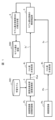
- FIG. 1 is a diagram showing an example of the configuration for determining the adaptation region of a machine learning model in a fitness region detection device and method according to a first embodiment of the present invention, in particular for determining the fitness region of the model.
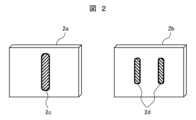
- 1A to 1C are diagrams showing examples of upper and lower layers of a multi-layered semiconductor pattern. 4 is a diagram showing the relationship between a low-quality image, an image with improved quality, and a high-quality image.
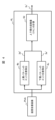
- FIG. 2 is a diagram showing an example of the configuration of a processing block for OVL measurement.
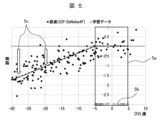
- FIG. 13 is a diagram showing the occurrence of measurement errors inside and outside the learning area.
- FIG. 13 is a diagram showing the occurrence of errors in a learning area.
- FIG. 1 is a diagram showing an example of the configuration for determining the adaptation region of a machine learning model in a fitness region detection device and method according to a first embodiment of the present invention, in particular for determining the fitness region
- FIG. 2 is a diagram showing processing blocks during actual operation.
- FIG. 13 is a diagram showing an example of a case where measurement accuracy is improved even outside the learning region.
- FIG. 11 is a diagram showing an example of measuring the shape of a point.
- the learning model matching area detection device and method according to the first embodiment of the present invention will be described in terms of its application to an image quality improvement system and a length measurement system using an image with improved image quality.
- the first embodiment will describe verifying the accuracy of the model matching area and reducing the area.
- FIG. 1 shows an example of a configuration for determining the matching region of a learning model, in particular, for a matching region detection device and method for a learning model according to a first embodiment of the present invention.
- PL is a low-quality image that is the target of image quality improvement
- Ph is a high-quality image that can be used for highly accurate image measurement
- PhA is a high-quality image (hereinafter referred to as an image with improved image quality) estimated from the low-quality image PL by AI processing.
- DB1 is a learning model
- 3 is an image quality improvement processing unit.
- 5 is a model fitting area accuracy verification unit
- 6 is a model fitting area correction processing unit
- DB2 is a model fitting area storage unit
- 8 is an output unit for measurement and judgment results
- 4L and 4h are OVL value measurement processing units.
- a low-quality image PL is an electron microscope image taken with a small amount of electron beam irradiation, and is called a low-quality image PL because there is a lot of noise in the image, which makes measurement impossible or reduces the measurement accuracy when image measurement processing is performed.
- a high-quality image Ph reflects the actual appearance of the part being observed and can be considered the correct value.
- a high-quality image Ph is an image obtained by taking multiple low-accumulation images PL of the same part and averaging the images to remove noise.
- the learning model compatible area detection device and method of the present invention attempts to detect the degree to which the appearance, shape, and position of the part of the object being observed shown in the high-quality image Ph deviates from the actual appearance, shape, and position shown in the image-improved image estimated by image quality improvement processing using AI in an image captured in the low-quality image PL.
- 2a is an example of an upper layer circuit pattern
- 2c is an upper layer circuit wiring
- 2b is a lower layer circuit pattern
- 2d is a lower layer circuit wiring.
- circuit pattern 2a is formed on top of circuit pattern 2b.
- Figure 3 shows the relationship between a low-quality image, an improved image, and a high-quality image. It shows that the measured low-quality image PL shown on the left of Figure 3 has been transformed into an improved-quality image PhA shown in the upper right-hand corner after being improved in quality through machine learning. It also shows that the improved-quality image PhA is compared with the high-quality image Ph shown in the lower part of Figure 3.
- the low-quality image PL by changing the electron beam acceleration voltage and the position of the electron beam detector, it becomes possible to image not only the upper layer circuit pattern 2c, but also the lower layer circuit pattern 2d hidden by the upper layer.
- the low-quality image PL in the upper left of Figure 3 is a schematic depiction of a state in which the imaging time was short and there was a lot of particulate noise.
- This low-quality image PL is converted into an image of high quality equivalent by the image quality improvement processing unit 3, and the image quality improvement processing unit 3 produces the image quality improvement image PhA shown in the upper right of Figure 3.
- the image quality improvement processing unit 3 can be realized using machine learning such as CNN (Convolutional Neural Network). CNN learns the low-quality image PL captured at the same position and the high-quality image Ph enhanced in quality by accumulating and averaging, and learns a means of converting a low-quality image into a high-quality image.
- the low-quality image and the high-quality image captured at the same part are referred to as a pair of images.
- the learning model learned here is learning model DB1.
- the learning model DB1 is used to convert the low-quality image PL into an image of a quality equivalent to a high-quality image obtained by accumulating and averaging multiple low-quality images.
- This image quality improvement processing unit 3 converts the low-quality image PL, which has a lot of particulate noise, into an image quality improved image PhA, which has noise removed and is of good quality for image measurement.
- the converted image quality improved image PhA makes it possible to clearly grasp not only the upper circuit wiring 2c, but also the lower circuit wiring 2d, and the edge positions 3d', 3e' of each wiring, and even the distance 3c' between the upper and lower wirings.
- the OVL value measurement processing units 4L and 4h in FIG. 1 perform a process of measuring the deviation amount (OVL value) between the upper and lower layers of the multilayer circuit structure (overlay measurement).
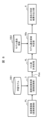
- Figure 4 shows an example of the configuration of the processing block 4L for measuring the OVL value.
- the converted image quality improved image PhA is input to the upper layer pattern edge position detection processing block 4b and the lower layer pattern edge position detection block 4c, which detect the edge positions 3d' and 3e', respectively.
- the upper layer pattern edge position detection processing block 4b detects the edge position 3d' of the upper layer circuit pattern 2c in Figure 3
- the lower layer pattern edge position detection block 4c detects the edge position 3e' of the lower layer circuit pattern 2d.
- the upper and lower layer distance amount calculation block 4d calculates the upper and lower layer distance amount 3c' from the difference between the detected positions of the edges of the upper and lower layers, and outputs it as an OVL value.
- OVL value measurement process block 4h which measures the edge position 3d of the upper layer pattern, the edge position 3e of the upper layer pattern, and the distance amount 3c between the upper and lower layers.
- the accuracy verification process of the model fitting area is performed using the distances 3c and 3c' of the upper and lower layers from the OVL value measurement processing blocks 4L and 4h.
- the model fitting area can be defined in various ways, such as "image brightness information,” “noise amount information,” “edge feature amount,” and “objective evaluation scale of the image,” such as SNR (Signal to Noise Ratio), PSNR (Peak Signal to Noise Ratio), and SSIM (Structural SIMilarity), in addition to "measurement accuracy information.”
- SNR Signal to Noise Ratio
- PSNR Peak Signal to Noise Ratio
- SSIM Structural SIMilarity
- the measurement accuracy information can be used together with information on the reliability of the information. In other words, it is good to also manage the degree of reliability of the accuracy process.
- Figure 5 shows an example of the relationship between the error in the learning area and other areas.
- the horizontal axis is the OVL value. It is corrected to a certain reference value (design value, etc.) to be 0.
- the OVL of the learning data is represented by a triangular marker (5b).
- the OVL value measurement is recorded using the high-quality image Ph as the reference.
- the OVL value will not be 0, but will vary due to variations in the manufacturing equipment.
- the OVL value is between -5 and +5.
- the vertical axis represents the difference (error) between the OVL value 3c calculated from the high-quality image Ph and the OVL value 3c' calculated based on the image quality improved image PhA.
- Area (OVL value: -5 to +5) 5a is the range of OVL values of the learning data (hereafter this range will be referred to as the learning area).
- the error varies with an error of 0 as the center, but as the OVL value becomes more negative, as shown in 5c, the center of the error variation becomes proportionally more negative. This shows that as the OVL value becomes more negative, the OVL value found from the image-improved image PhA becomes smaller than the OVL value found from the high-image-quality image Ph.
- the learning model in addition to removing granular noise, the learning model also learns the amount of misalignment between the upper and lower layers that it learned during learning, and when a low-quality image PL with a large negative OVL value is input, the upper and lower layers are moved so that the distance between the upper and lower layers that it learned during learning is returned to a small value, which is thought to be why such results were obtained.
- the initial state of the model adaptation area stored in the model adaptation area storage unit DB2 is registered by linking it to the learning model as the model adaptation area, which is the range of OVL values learned when the learning model was created.
- the initial state of the model adaptation area is the area with OVL values of -5 to +5.
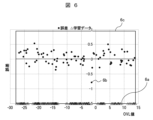
- Figure 6 shows the occurrence of errors within the learning region.
- the OVL value of the learning data is the value indicated by the triangular marker in 6a, and is in the region indicated in 6c (-28 to 14).
- the variation in error within this region is not uniform, and as shown in 6b, there are areas where large errors have occurred. Therefore, the model fitting region accuracy verification unit 5 performs accuracy verification processing to discover such regions where the error is locally large.
- the model fitting area accuracy verification unit 5 performs this accuracy verification as follows. First, the OVL value to be judged is set to x, and within a window centered on this x and having a window width of ⁇ d, a tolerance is set for the difference between the OVL value 3c obtained from the high-quality image Ph and the OVL value 3c' obtained from the image quality improved image PhA, and this is set to ⁇ p (tolerance).
- the allowable error achievement rate Ae(x) represents the occurrence of errors within the window. Therefore, an allowable allowable error achievement rate Aeth is determined, and if Ae(x) exceeds Aeth, it is determined to be in the model-suitable region. Then, the model-suitable region determination function Mf(x) becomes formula (2).
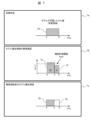
- FIG. 7 is a schematic diagram showing the transition of the model fitting region performed by the model fitting region accuracy verification unit 5.
- 7a is the initial state.
- the OVL value range of the learning image (learning area) a to b is set as the model fitting area (7d).
- FIG 7b shows the result of verifying the accuracy of the model fitting region in the initial state, calculated using the calculation method shown in equation (1).
- the allowable error achievement rate Ae(x) of region a to e (7e) is greater than the allowable error achievement rate Aeth, and region e to b (7f) is smaller than the allowable error achievement rate Aeth. Therefore, according to equation (2), region 7e is determined to be the model fitting region, and region 7f is determined to be outside the model fitting region.
- the model suitability region after accuracy verification is the initial model suitability region (7d), excluding region 7h, which was determined to be outside the model suitability region, resulting in region a-e (7g), as shown in 7c.
- the allowable error achievement rate Ae(x) for each value x in the model region may be registered, or the function of formula (1) may be stored in the model suitability region storage unit DB2. This makes it possible to display (present) the reliability of the model Ae(x) in conjunction with the determination of whether it is inside or outside the model suitability region.
- the model-fitting area correction processing unit 6 corrects the model-fitting area in the model-fitting area storage unit DB2, which is linked to the learning model used in the image quality improvement process, to area 7g.
- verification of the matching area of the learning model and correction of the matching area of the learning model require paired images of a low-quality image PL and its paired high-quality image Ph.
- This process may be performed when creating the learning model DB1, or the low-quality image PL and its paired high-quality image Ph may be collected during test operations when upgrading the production line, and the model matching area storage unit DB2 may be upgraded.
- the learning model adaptation area detection device and method are described as being applied to an image quality improvement system and further to a length measurement system using an image quality improved image, but application examples are not limited to image quality improvement systems.
- an accuracy conversion unit that uses a learning model to convert low-accuracy information into high-accuracy improved information
- a model adaptation area storage unit that stores the area of information learned during the learning stage of the learning model as a model adaptation area
- a model adaptation area accuracy verification unit that verifies the accuracy of the improved information using high-accuracy information as a standard
- a model adaptation area correction processing unit that corrects the model adaptation area in the model adaptation area storage unit using the accuracy of the improved information detected by the model adaptation area accuracy verification unit.
- the accuracy verification within the model fitting region is performed to correct the information in the model fitting region storage unit DB2.
- the measurement and judgment of a measured low-quality image is performed using the corrected model fitting region.
- image measurement processing is performed using only the low-image-quality image PL.
- the low-image-quality image PL is converted into an image quality-improved image PhA equivalent to high image quality.
- the OVL value of the converted image quality-improved image PhA is calculated using the OVL value measurement processing unit 4L.
- a judgment process is performed in the model suitability region judgment unit 80a.
- the judgment is performed using information from the model suitability region storage unit DB2. If the OVL value is outside the model suitability region, warning information such as "Measurement is not possible as it is not suitable for the learning model" may be displayed using the measurement and judgment result output unit 8, or, based on the recorded information on the allowable error achievement rate Ae(x), a message such as "The OVL value is xx.x [nm].
- the allowable error achievement rate is xx [%] and the accuracy reliability is low" (xx is a numerical value such as the measurement value or reliability) may be displayed using 8.
- Example 1 we explained examples of accuracy verification within the learning domain, and described ways to deal with cases where accuracy is poor even within the learning domain.
- Example 3 we discuss accuracy verification outside the learning domain, and explain how to modify the model adaptation domain. Modification here refers to expanding or changing the model adaptation domain.
- Figure 9 shows the variation in error outside the learning region when a learning model is used.
- 9a is the OVL value of the learning data
- 9b is the learning region showing the range of the OVL values of the learning data.
- the region to the right of 9b is outside the learning region, so the error is large.
- region 9c the range to the left of 9b, the error is not large.
- Figure 5 shows that depending on the learning model used, the error may not be large even outside the learning region. Therefore, if accuracy verification outside the learning region can be performed and the accuracy can be confirmed, it is possible to expand the model compatibility range linked to the learning model used.
- the expansion of the model suitability range outside the learning area can be processed with the same processing configuration as the processing block shown in Figure 1 described in Example 1.
- accuracy verification was performed using a low-quality image PL and a high-quality image Ph within the learning area
- data may be collected during test operations when changing the manufacturing process.
- the model suitability area accuracy verification unit 5 requires image data for a predetermined window width as shown in formula (1), so multiple image data are required to satisfy the window width.
- this will be referred to as an image group.
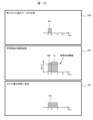
- Figure 10 shows a schematic diagram of the transition of the model fitting region outside the learning region.
- Figure 10 shows a scenario in which accuracy verification outside the learning region is performed after accuracy verification of the model fitting region within the learning region described in Figure 7.
- 10d is an example of a case where a group of images with new OVL values appears outside the learning area.
- a-b is the learning area, and to the left of that is an example where a group of images with new OVL values has been captured.
- the obtained result is 10e.
- the allowable error achievement rate of the newly emerged section 9a is 10b, which is a value that exceeds the accuracy tolerance threshold, indicating that it is within the model suitability region.
- 10f shows how this result is added to the model suitability region described in Figure 7. As shown in Figure 7, the model suitability region of the allowable error achievement rate Ae(x) (7e) of the data in the learning region is combined, and the added model suitability region is c to e (10c). These results are registered in the model suitability region storage unit of DB2, linked to the learning model used.
- processing is performed in the processing block shown in Figure 8, as in Example 2, and the measurement results and accuracy judgment results are output.
- FIG. 3 shows an example of application to measuring the amount of misalignment between upper and lower layers (OVL measurement), but as an example of a side effect of image quality improvement using AI, unnecessary line width correction may be performed to make the line width of a circuit pattern closer to the line width of the learned image, or when a circular pattern shape as shown in FIG. 11 is learned, unnecessary correction may be performed to make it closer to the size of the learned circular shape. Even in such cases, the method described in this invention can be applied.
- the model application area may be set to the line width or the size of the inner or outer diameter of the circular shape.
- the reliability of the measurement value obtained from the image quality improvement image can be guaranteed, but if not, as described in Examples 1-3 of the present invention, warning information such as "Accuracy cannot be guaranteed" may be displayed, or the model application area may be reduced or expanded.
- the present invention provides a machine learning model matching area detection device and method suitable for verifying and correcting the matching area of a learning model in machine learning.
- the present invention it becomes possible to grasp that the measurement accuracy of image measurement has decreased by receiving a notification of incompatibility of the learning model. This makes it possible to prevent a decrease in measurement accuracy caused by using an inappropriately converted image.
- Example 4 a learning model conformance area detection device and method were described. In contrast, in Example 4, a learning model operation method using these will be described.
- this method of operating a learning model is an operation that is explained in two stages: the learning stage of the learning model, and the operation stage of the learning model.
- a method of re-learning is usually adopted as a measure to deal with cases where the suitability of a learning model generated in initial learning decreases in subsequent operation, but here, rather than re-learning, which is a heavy burden, the adaptation range of the initial learning model is changed according to the detection accuracy during normal operation.
- the learning model operation method of Example 4 includes a learning stage in which a learning model for estimating an improved image from a low-image-quality image using AI is obtained, and the area of information in which learning has been performed is stored as a model fitting area, and an operation stage in which the learning model is used to estimate an improved image from a low-image-quality image, and the accuracy improvement status when the improved image is used to perform image measurement is determined based on the information of the model fitting area as to whether it is information of the model fitting area of the learning model, and the accuracy improvement status is verified based on high-precision information, and the model fitting area is corrected using the accuracy of the accuracy improvement status.
- the present invention can be applied to anything that uses a learning model to improve the accuracy of low-precision information. This is because the present invention addresses the side effect of using a learning model to improve accuracy, which is the occurrence of unnecessary deviations caused by the learning model, and this is an issue that always accompanies situations where a learning model is used to improve accuracy.
- the present invention can be applied to voice measured as low-precision information in place of low-quality images, or pressure, temperature, vibration, and the like in various plants.
- the present invention is preferably configured as "a learning model adaptation area detection device characterized by comprising an improvement processing unit that converts low-precision information into improved information, which is high-precision information, using a learning model, a model adaptation area storage unit that stores the area of information learned in the learning stage of the learning model as a model adaptation area, a model adaptation area accuracy verification unit that verifies the accuracy of the measurement value obtained from the improvement information using the measurement value of the high-precision information as a reference, and a model adaptation area correction processing unit that corrects the model adaptation area in the model adaptation area storage unit using the accuracy of the accuracy improvement information detected by the model adaptation area accuracy verification unit.”
- Example 6 summarizes the points mentioned in Examples 1 to 4.
- the matching area detection device of the learning model of the present invention shown in Figure 1 handles three types of images, so the method for obtaining each of these images and the characteristics of these images can be summarized as follows.
- the low-quality image PL is an SEM image obtained by irradiating an electron beam with a small area of the observed subject, and the image contains particulate noise. Therefore, if this image is used for image measurement, measurement errors will occur.
- the high-quality image Ph reflects the correct appearance of the part being observed, and can be called the correct value.
- the high-quality image Ph is an image obtained by taking multiple low-quality images PL and calculating the cumulative average.
- the particulate noise contained in the low-quality images PL is noise that occurs randomly, and can be removed by this cumulative averaging process.
- high-quality images Ph obtained by multiple irradiations cannot be obtained frequently, and are therefore obtained only when creating a learning model, at the risk of damage.
- the image quality improved image PhA is a high quality image estimated from the low quality image PL by AI processing using a learning model. To clearly distinguish the name from the high quality image Ph obtained from the accumulated average of the low quality images PL described above, it is referred to as the image quality improved image PhA here.
- the image quality improved image PhA is obtained by the AI estimating a noise-free image from a single low quality image based on a learning model. If an undesirable learning model is used in this case, side effects such as the amount of misalignment between the upper and lower layers being arbitrarily corrected will occur, but such side effects do not occur in a high quality image obtained from the accumulated average of low quality images.
- the learning model compatible area detection device and method of the present invention attempt to detect the degree to which the actual appearance, shape, and position of the part being observed, as shown in the low-resolution image PL, which represents the observed part of the actually manufactured product, deviates from the correct appearance, shape, and position that the part being observed, as shown in the high-resolution image Ph.
- the low-quality image PL is converted into a high-quality, quality-improved image PhA using machine learning, and then compared with the high-quality image Ph.
- the measurement values obtained by image measurement cannot be measured because the edges of the circuit pattern are unclear due to noise.
- the measurement values obtained from the high-quality image Ph include "errors due to manufacturing process factors” in the "design value for the amount of misalignment between the upper and lower layers.”
- the measurement values obtained from the image quality improved image PhA include "unnecessary deviations (side effects) due to image quality improvement by AI” in addition to the "design value for the amount of misalignment between the upper and lower layers” and "errors due to manufacturing process factors.”
- PL low-quality image
- Ph high-quality image
- DB1 learning model
- 3 image quality improvement processing unit
- 4 (4L, 4h) OVL value measurement processing unit
- 5 model fitting area accuracy verification unit
- 6 model fitting area correction processing unit
- DB2 model fitting area storage unit
Landscapes
- Engineering & Computer Science (AREA)
- Theoretical Computer Science (AREA)
- Physics & Mathematics (AREA)
- General Physics & Mathematics (AREA)
- Computer Vision & Pattern Recognition (AREA)
- Software Systems (AREA)
- Artificial Intelligence (AREA)
- Mathematical Physics (AREA)
- Evolutionary Computation (AREA)
- Medical Informatics (AREA)
- Data Mining & Analysis (AREA)
- Computing Systems (AREA)
- General Engineering & Computer Science (AREA)
- Automation & Control Theory (AREA)
- Human Computer Interaction (AREA)
- Quality & Reliability (AREA)
- Image Analysis (AREA)
- Image Processing (AREA)
- Facsimile Image Signal Circuits (AREA)
- Manufacturing & Machinery (AREA)
Priority Applications (5)
| Application Number | Priority Date | Filing Date | Title |
|---|---|---|---|
| CN202380094427.XA CN120752649A (zh) | 2023-04-25 | 2023-04-25 | 学习模型适合区域检测装置、学习模型适合区域检测方法以及学习模型运用方法 |
| JP2025516340A JPWO2024224467A1 (https=) | 2023-04-25 | 2023-04-25 | |
| KR1020257027850A KR20250140559A (ko) | 2023-04-25 | 2023-04-25 | 학습 모델 적합 영역 검지 장치, 학습 모델 적합 영역 검지 방법, 그리고 학습 모델 운용 방법 |
| PCT/JP2023/016216 WO2024224467A1 (ja) | 2023-04-25 | 2023-04-25 | 学習モデル適合領域検知装置、学習モデル適合領域検知方法、並びに学習モデル運用方法 |
| TW113114694A TWI913721B (zh) | 2023-04-25 | 2024-04-19 | 學習模型適合領域測知裝置、學習模型適合領域測知方法、以及學習模型運用方法 |
Applications Claiming Priority (1)
| Application Number | Priority Date | Filing Date | Title |
|---|---|---|---|
| PCT/JP2023/016216 WO2024224467A1 (ja) | 2023-04-25 | 2023-04-25 | 学習モデル適合領域検知装置、学習モデル適合領域検知方法、並びに学習モデル運用方法 |
Publications (1)
| Publication Number | Publication Date |
|---|---|
| WO2024224467A1 true WO2024224467A1 (ja) | 2024-10-31 |
Family
ID=93256054
Family Applications (1)
| Application Number | Title | Priority Date | Filing Date |
|---|---|---|---|
| PCT/JP2023/016216 Ceased WO2024224467A1 (ja) | 2023-04-25 | 2023-04-25 | 学習モデル適合領域検知装置、学習モデル適合領域検知方法、並びに学習モデル運用方法 |
Country Status (4)
| Country | Link |
|---|---|
| JP (1) | JPWO2024224467A1 (https=) |
| KR (1) | KR20250140559A (https=) |
| CN (1) | CN120752649A (https=) |
| WO (1) | WO2024224467A1 (https=) |
Citations (2)
| Publication number | Priority date | Publication date | Assignee | Title |
|---|---|---|---|---|
| WO2022070236A1 (ja) * | 2020-09-29 | 2022-04-07 | 株式会社日立ハイテク | 画質改善システム及び画質改善方法 |
| JP2023038132A (ja) * | 2021-09-06 | 2023-03-16 | 川崎重工業株式会社 | 学習済モデルの構築方法 |
Family Cites Families (1)
| Publication number | Priority date | Publication date | Assignee | Title |
|---|---|---|---|---|
| JPWO2021095256A1 (https=) | 2019-11-15 | 2021-05-20 |
-
2023
- 2023-04-25 JP JP2025516340A patent/JPWO2024224467A1/ja active Pending
- 2023-04-25 WO PCT/JP2023/016216 patent/WO2024224467A1/ja not_active Ceased
- 2023-04-25 CN CN202380094427.XA patent/CN120752649A/zh active Pending
- 2023-04-25 KR KR1020257027850A patent/KR20250140559A/ko active Pending
Patent Citations (2)
| Publication number | Priority date | Publication date | Assignee | Title |
|---|---|---|---|---|
| WO2022070236A1 (ja) * | 2020-09-29 | 2022-04-07 | 株式会社日立ハイテク | 画質改善システム及び画質改善方法 |
| JP2023038132A (ja) * | 2021-09-06 | 2023-03-16 | 川崎重工業株式会社 | 学習済モデルの構築方法 |
Also Published As
| Publication number | Publication date |
|---|---|
| KR20250140559A (ko) | 2025-09-25 |
| CN120752649A (zh) | 2025-10-03 |
| TW202443446A (zh) | 2024-11-01 |
| JPWO2024224467A1 (https=) | 2024-10-31 |
Similar Documents
| Publication | Publication Date | Title |
|---|---|---|
| CN114627117B (zh) | 一种基于投影法的针织物缺陷检测方法和系统 | |
| US20040040003A1 (en) | Use of overlay diagnostics for enhanced automatic process control | |
| US20050220334A1 (en) | Position detection apparatus and exposure apparatus | |
| EP3534334B1 (en) | Method for identification of characteristic points of a calibration pattern within a set of candidate points derived from an image of the calibration pattern | |
| CN107730491B (zh) | 一种基于质量图的相位解包裹方法 | |
| KR101235963B1 (ko) | 하전 입자선 장치 | |
| KR100563171B1 (ko) | 치수 측정 방법, 치수 측정 시스템, 포토마스크 패턴의형상 측정 방법 및 포토마스크의 제조 방법 | |
| US9190240B2 (en) | Charged particle microscope apparatus and image acquisition method of charged particle microscope apparatus utilizing image correction based on estimated diffusion of charged particles | |
| CN117115194B (zh) | 基于电子显微镜图像的轮廓提取方法、装置、设备及介质 | |
| CN120868913B (zh) | 一种用于精密尺寸测量的影像测量方法 | |
| CN115812138A (zh) | 用于数字全息图的重建的系统及方法 | |
| TW201104243A (en) | Method for misalignment of photolithographic masks from a charged particle microscopic image and system thereof | |
| US20110142326A1 (en) | Pattern inspection method, pattern inspection apparatus and pattern processing apparatus | |
| WO2024224467A1 (ja) | 学習モデル適合領域検知装置、学習モデル適合領域検知方法、並びに学習モデル運用方法 | |
| JP3961438B2 (ja) | パターン計測装置、パターン計測方法および半導体装置の製造方法 | |
| WO2003104929A2 (en) | Use of overlay diagnostics for enhanced automatic process control | |
| JP2005285898A (ja) | パターン画像判定方法及びその方法を用いたパターン画像判定装置 | |
| JP4240066B2 (ja) | エッチングプロセス監視方法及びエッチングプロセス制御方法 | |
| TWI913721B (zh) | 學習模型適合領域測知裝置、學習模型適合領域測知方法、以及學習模型運用方法 | |
| CN117579814B (zh) | 基于对焦检测的镜头快速检测方法 | |
| Toyoda et al. | SEM-contour shape analysis method for advanced semiconductor devices | |
| CN115453827B (zh) | 机台overlay监测方法、存储介质及系统 | |
| JP4361661B2 (ja) | 線幅測定方法 | |
| Chen et al. | Reduction of image-based ADI-to-AEI overlay inconsistency with improved algorithm | |
| Zhou et al. | Fast and robust DCNN based lithography SEM image contour extraction models |
Legal Events
| Date | Code | Title | Description |
|---|---|---|---|
| 121 | Ep: the epo has been informed by wipo that ep was designated in this application |
Ref document number: 23935248 Country of ref document: EP Kind code of ref document: A1 |
|
| ENP | Entry into the national phase |
Ref document number: 2025516340 Country of ref document: JP Kind code of ref document: A |
|
| WWE | Wipo information: entry into national phase |
Ref document number: 2025516340 Country of ref document: JP |
|
| WWE | Wipo information: entry into national phase |
Ref document number: 202380094427.X Country of ref document: CN |
|
| ENP | Entry into the national phase |
Ref document number: 1020257027850 Country of ref document: KR Free format text: ST27 STATUS EVENT CODE: A-0-1-A10-A15-NAP-PA0105 (AS PROVIDED BY THE NATIONAL OFFICE) |
|
| WWE | Wipo information: entry into national phase |
Ref document number: 1020257027850 Country of ref document: KR |
|
| WWP | Wipo information: published in national office |
Ref document number: 202380094427.X Country of ref document: CN |
|
| NENP | Non-entry into the national phase |
Ref country code: DE |
|
| 122 | Ep: pct application non-entry in european phase |
Ref document number: 23935248 Country of ref document: EP Kind code of ref document: A1 |