WO2024204591A1 - 樹脂被覆金属板および樹脂被覆金属板の製造方法 - Google Patents
樹脂被覆金属板および樹脂被覆金属板の製造方法 Download PDFInfo
- Publication number
- WO2024204591A1 WO2024204591A1 PCT/JP2024/012750 JP2024012750W WO2024204591A1 WO 2024204591 A1 WO2024204591 A1 WO 2024204591A1 JP 2024012750 W JP2024012750 W JP 2024012750W WO 2024204591 A1 WO2024204591 A1 WO 2024204591A1
- Authority
- WO
- WIPO (PCT)
- Prior art keywords
- resin
- metal sheet
- coated metal
- resin layer
- layer
- Prior art date
- Legal status (The legal status is an assumption and is not a legal conclusion. Google has not performed a legal analysis and makes no representation as to the accuracy of the status listed.)
- Ceased
Links
Images

Classifications
-
- B—PERFORMING OPERATIONS; TRANSPORTING
- B05—SPRAYING OR ATOMISING IN GENERAL; APPLYING FLUENT MATERIALS TO SURFACES, IN GENERAL
- B05D—PROCESSES FOR APPLYING FLUENT MATERIALS TO SURFACES, IN GENERAL
- B05D7/00—Processes, other than flocking, specially adapted for applying liquids or other fluent materials to particular surfaces or for applying particular liquids or other fluent materials
- B05D7/14—Processes, other than flocking, specially adapted for applying liquids or other fluent materials to particular surfaces or for applying particular liquids or other fluent materials to metal, e.g. car bodies
-
- B—PERFORMING OPERATIONS; TRANSPORTING
- B32—LAYERED PRODUCTS
- B32B—LAYERED PRODUCTS, i.e. PRODUCTS BUILT-UP OF STRATA OF FLAT OR NON-FLAT, e.g. CELLULAR OR HONEYCOMB, FORM
- B32B15/00—Layered products comprising a layer of metal
- B32B15/04—Layered products comprising a layer of metal comprising metal as the main or only constituent of a layer, which is next to another layer of the same or of a different material
- B32B15/08—Layered products comprising a layer of metal comprising metal as the main or only constituent of a layer, which is next to another layer of the same or of a different material of synthetic resin
-
- C—CHEMISTRY; METALLURGY
- C23—COATING METALLIC MATERIAL; COATING MATERIAL WITH METALLIC MATERIAL; CHEMICAL SURFACE TREATMENT; DIFFUSION TREATMENT OF METALLIC MATERIAL; COATING BY VACUUM EVAPORATION, BY SPUTTERING, BY ION IMPLANTATION OR BY CHEMICAL VAPOUR DEPOSITION, IN GENERAL; INHIBITING CORROSION OF METALLIC MATERIAL OR INCRUSTATION IN GENERAL
- C23C—COATING METALLIC MATERIAL; COATING MATERIAL WITH METALLIC MATERIAL; SURFACE TREATMENT OF METALLIC MATERIAL BY DIFFUSION INTO THE SURFACE, BY CHEMICAL CONVERSION OR SUBSTITUTION; COATING BY VACUUM EVAPORATION, BY SPUTTERING, BY ION IMPLANTATION OR BY CHEMICAL VAPOUR DEPOSITION, IN GENERAL
- C23C28/00—Coating for obtaining at least two superposed coatings either by methods not provided for in a single one of groups C23C2/00 - C23C26/00 or by combinations of methods provided for in subclasses C23C and C25C or C25D
-
- C—CHEMISTRY; METALLURGY
- C23—COATING METALLIC MATERIAL; COATING MATERIAL WITH METALLIC MATERIAL; CHEMICAL SURFACE TREATMENT; DIFFUSION TREATMENT OF METALLIC MATERIAL; COATING BY VACUUM EVAPORATION, BY SPUTTERING, BY ION IMPLANTATION OR BY CHEMICAL VAPOUR DEPOSITION, IN GENERAL; INHIBITING CORROSION OF METALLIC MATERIAL OR INCRUSTATION IN GENERAL
- C23C—COATING METALLIC MATERIAL; COATING MATERIAL WITH METALLIC MATERIAL; SURFACE TREATMENT OF METALLIC MATERIAL BY DIFFUSION INTO THE SURFACE, BY CHEMICAL CONVERSION OR SUBSTITUTION; COATING BY VACUUM EVAPORATION, BY SPUTTERING, BY ION IMPLANTATION OR BY CHEMICAL VAPOUR DEPOSITION, IN GENERAL
- C23C28/00—Coating for obtaining at least two superposed coatings either by methods not provided for in a single one of groups C23C2/00 - C23C26/00 or by combinations of methods provided for in subclasses C23C and C25C or C25D
- C23C28/30—Coatings combining at least one metallic layer and at least one inorganic non-metallic layer
- C23C28/32—Coatings combining at least one metallic layer and at least one inorganic non-metallic layer including at least one pure metallic layer
- C23C28/322—Coatings combining at least one metallic layer and at least one inorganic non-metallic layer including at least one pure metallic layer only coatings of metal elements only
- C23C28/3225—Coatings combining at least one metallic layer and at least one inorganic non-metallic layer including at least one pure metallic layer only coatings of metal elements only with at least one zinc-based layer
-
- B—PERFORMING OPERATIONS; TRANSPORTING
- B05—SPRAYING OR ATOMISING IN GENERAL; APPLYING FLUENT MATERIALS TO SURFACES, IN GENERAL
- B05D—PROCESSES FOR APPLYING FLUENT MATERIALS TO SURFACES, IN GENERAL
- B05D1/00—Processes for applying liquids or other fluent materials
- B05D1/28—Processes for applying liquids or other fluent materials performed by transfer from the surfaces of elements carrying the liquid or other fluent material, e.g. brushes, pads, rollers
-
- B—PERFORMING OPERATIONS; TRANSPORTING
- B05—SPRAYING OR ATOMISING IN GENERAL; APPLYING FLUENT MATERIALS TO SURFACES, IN GENERAL
- B05D—PROCESSES FOR APPLYING FLUENT MATERIALS TO SURFACES, IN GENERAL
- B05D2202/00—Metallic substrate
- B05D2202/10—Metallic substrate based on Fe
-
- B—PERFORMING OPERATIONS; TRANSPORTING
- B05—SPRAYING OR ATOMISING IN GENERAL; APPLYING FLUENT MATERIALS TO SURFACES, IN GENERAL
- B05D—PROCESSES FOR APPLYING FLUENT MATERIALS TO SURFACES, IN GENERAL
- B05D5/00—Processes for applying liquids or other fluent materials to surfaces to obtain special surface effects, finishes or structures
- B05D5/06—Processes for applying liquids or other fluent materials to surfaces to obtain special surface effects, finishes or structures to obtain multicolour or other optical effects
- B05D5/061—Special surface effect
Definitions
- the present invention relates to a resin-coated metal sheet and a method for manufacturing a resin-coated metal sheet.
- Coated metal sheets which are metal sheets coated with a resinous coating layer, are widely used in building exterior components and automobile components, and are known, for example, as a joint material used in joints (for example, Patent Document 1).
- the coated metal plate disclosed in Patent Document 1 has a problem in that air bubbles may get between the metal plate and the coating layer, causing a poor appearance.
- the coated metal plate disclosed in Patent Document 1 is designed to have a coating layer on top of a chromate treatment.
- the object of the present invention is to provide a resin-coated metal sheet that has excellent adhesion to the adhesive resin used to bond the coating layer and has a good appearance.
- the above object can be achieved by a resin-coated metal sheet having a metal substrate and a resin layer provided on the metal substrate, in which the protruding peak height Rpk of the surface of the resin layer is 0.46 ⁇ m or more, and thus completed the present invention.
- a resin-coated metal sheet having a steel sheet, a metal substrate, and a resin layer provided on the metal substrate, in which the height Rpk of the protruding peaks on the surface of the resin layer is 0.46 ⁇ m or more.
- a resin-coated metal sheet according to aspect 1 in which the height Spk of the protruding peaks on the surface of the resin layer is 0.6 ⁇ m or more.
- a resin-coated metal sheet according to aspect 1 or 2 in which the resin layer is made of a resin material containing an olefin-based and/or urethane-based resin.
- the resin-coated metal sheet according to any one of the first to third aspects, in which the resin layer has an arithmetic mean height Sa1 of 0.5 ⁇ m or more.
- a resin-coated metal sheet according to any one of aspects 1 to 5, in which the metal substrate comprises a metal base plate and a metal plating layer containing zinc, and the resin layer is formed on the metal plating layer.
- the resin-coated metal sheet according to any one of the first to sixth aspects, wherein the arithmetic mean height Sa2 of the surface on which the metal plating layer is formed in the metal base sheet is 0.5 ⁇ m or more.
- a method for producing a resin-coated metal sheet comprising the steps of applying an aqueous dispersion containing a resin material at a solid content concentration of 15% by weight or more onto the metal substrate by a direct roll coating method, and drying the layer made of the aqueous dispersion to form the resin layer.
- the method for producing a resin-coated metal sheet according to the eighth aspect wherein the solids concentration of the aqueous dispersion is 15% by weight or more and less than 70% by weight, the metal substrate comprises a metal original sheet and a zinc-containing metal plating layer, and the arithmetic mean height Sa2 of the surface of the metal original sheet on which the metal plating layer is formed is 0.75 ⁇ m or more.
- aspect 10 of the present invention there is provided a method for producing a resin-coated metal sheet according to aspect 8 or 9, in which the resin material contains an olefin-based and/or urethane-based resin.
- the present invention makes it possible to provide a resin-coated metal sheet that has excellent adhesion to adhesive resins and a good appearance.
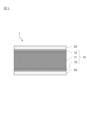
- FIG. 1 is a cross-sectional view showing the configuration of a resin-coated metal sheet according to an embodiment of the present invention.
- FIG. 2(a) is a diagram illustrating a method for applying an aqueous dispersion by a direct roll coating method in an embodiment of the present invention
- FIG. 2(b) is a cross-sectional view showing the surface shape of a resin layer 20 formed by applying an aqueous dispersion having a solid content concentration of 15% by weight or more by the direct roll coating method.
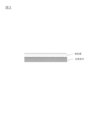
- FIG. 3 is a reference diagram showing a resin layer formed by applying an aqueous dispersion having a solid content concentration of less than 15% by weight by a direct roll coating method.
- FIG. 1 is a cross-sectional view showing the configuration of a resin-coated metal sheet 1 in this embodiment.
- the resin-coated metal sheet 1 in this embodiment includes a metal substrate 10 and a resin layer 20 provided on the metal substrate 10.
- the resin-coated metal sheet 1 in this embodiment is used as a joint material, an automotive interior material, etc. by forming a coating layer made of a resin material on the resin layer 20 using an adhesive resin.
- the metal substrate 10 in this embodiment is a plated plate including an original metal sheet 11 and a zinc-containing metal plating layer 12 formed on the original metal sheet 11 .
- the metal base plate 11 is not particularly limited, but may be an iron or aluminum-based metal base plate.
- the iron-based metal base plate include carbon steel plate and stainless steel plate.
- Carbon steel plates may be low carbon steel (carbon content 0.01 to 0.15% by weight) such as low carbon aluminum killed steel, ultra-low carbon steel with a carbon content of less than 0.01% by weight, or non-aging carbon steel obtained by adding Ti or Nb to ultra-low carbon steel.
- a steel plate it is preferable to use a hot rolled plate of such steel that is pickled to remove surface scale (oxide film), cold rolled, electrolytically cleaned, annealed, and temper rolled.
- the annealing method may be either continuous annealing or box annealing, and is not particularly limited.
- the arithmetic mean height Sa2 of the surface on which the metal plating layer 12 is formed in the original metal sheet 11 is preferably 0.5 ⁇ m or more, more preferably 0.75 ⁇ m or more.
- a method for setting the arithmetic mean height Sa2 of the original metal sheet 11 within the above range a method of rolling the above steel into the original metal sheet 11 using a rolling roll having a predetermined surface roughness can be mentioned.
- the arithmetic mean roughness Ra of the rolling roll measured along the central axis of the rolling roll (the direction perpendicular to the rolling direction of the original metal sheet 11) is preferably 0.8 ⁇ m or more, more preferably 2.5 ⁇ m or more, and even more preferably 3.2 ⁇ m or more.
- the upper limit of the arithmetic mean roughness Ra of the rolling roll is not particularly limited, but if the arithmetic mean height Sa2 of the metal original sheet 11 is too large, the thickness may become non-uniform when the metal plating layer 12 or the resin layer 20 is formed on the metal original sheet 11.
- the arithmetic mean roughness Ra of the rolling roll is preferably 8.0 ⁇ m or less, more preferably 6.0 ⁇ m or less.
- the upper limit of the arithmetic mean height Sa2 of the metal original sheet 11 is preferably 2.0 ⁇ m or less.
- the arithmetic mean height Sa2 can be measured based on ISO 25178, and the arithmetic mean roughness Ra can be measured based on JIS B 0671:2002.
- the thickness of the metal plate 11 in this embodiment is not particularly limited, but is preferably 0.04 to 2.0 mm, and more preferably 0.04 to 1.5 mm.
- the metal plating layer 12 is a layer containing zinc provided on the original metal sheet 11.
- the metal plating constituting the metal plating layer 12 include zinc-based plating such as zinc plating, zinc-cobalt-molybdenum alloy plating, zinc-nickel alloy plating, zinc-iron alloy plating, alloyed hot-dip galvanizing, and zinc-aluminum-magnesium alloy plating.
- zinc-based platings from the viewpoint of improving the corrosion resistance of the resin-coated metal sheet 1, zinc-cobalt-molybdenum alloy plating or pure zinc plating (hereinafter also referred to as pure zinc plating) in which the weight percentage of zinc is 99.9% or more by weight is more preferable.
- the metal plating layer can be formed by electroplating the surface of the original metal sheet 11 using a plating bath of a predetermined composition.
- the metal plating layer 12 when the metal plating layer 12 is made of zinc-cobalt-molybdenum alloy plating, it can be formed by electroplating using a plating bath having a composition of 150 to 300 g/L zinc sulfate, 5 to 60 g/L cobalt sulfate, 0.01 to 0.5 g/L ammonium molybdate, 5 to 60 g/L ammonium sulfate, and 50 g/L or less.
- the electroplating conditions are preferably pH 2.5 to 4.0, bath temperature 30 to 60° C., and current density 5 to 50 A/dm 2.
- the metal plating layer 12 When the metal plating layer 12 is made of pure zinc plating, it can be formed by electroplating using a plating bath having a composition of 150 to 300 g/L zinc sulfate and 10 to 100 g/L sodium sulfate.
- the electroplating conditions are preferably pH 0.5 to 2.5, bath temperature 30 to 60° C., and current density 5 to 80 A/dm 2 .
- the content of zinc, cobalt, and molybdenum in the metal plating layer 12 is preferably 0.1 to 5 wt % cobalt, 0.001 to 1 wt % molybdenum, and the remainder zinc.
- the content of the metals in the metal plating layer 12 can be adjusted by setting the composition of the plating bath and the electroplating conditions to suitable ranges.
- the thickness of the metal plating layer 12 is not particularly limited, but is preferably 0.3 to 8.0 ⁇ m.
- the thickness of the metal plating layer 12 is more preferably 0.3 to 5.0 ⁇ m from the viewpoint of controlling the surface roughness of the metal plating layer 12 and the height of the protruding peaks of the resin layer 20.
- the thickness of the metal plating layer 12 is even more preferably 0.6 to 5.0 ⁇ m from the viewpoint of corrosion resistance.
- the thickness of the metal plating layer 12 is particularly preferably 0.7 ⁇ m to 4.5 ⁇ m from the viewpoint of achieving both corrosion resistance and suppressing the reduction in surface roughness due to metal plating.
- the metal substrate 10 has the metal plating layer 12 formed on both sides of the metal original plate 11, but the form of the metal substrate 10 is not particularly limited to this, and the metal plating layer 12 may be formed on only one side of the metal original plate 11. Alternatively, the metal substrate 10 may not have the metal plating layer 12 and may be composed of only the metal original plate 11.
- the resin layer 20 is a layer formed on the metal plating layer 12.
- the resin layer 20 is provided to improve adhesion between the metal substrate 10 and an adhesive resin used in combination with the resin-coated metal sheet 1 of this embodiment.
- the resin layer 20 is formed on both sides of the metal substrate 10, but is not particularly limited thereto, and the resin layer 20 may be formed on only one side of the metal substrate 10.
- the resin contained in the resin layer 20 is not particularly limited, but includes olefin-based resins and urethane-based resins.
- olefin-based resins include polyethylene, polypropylene, ethylene-propylene copolymers, ethylene-vinyl acetate copolymers, ethylene-acrylic ester copolymers, ethylene-acrylic acid copolymers, ethylene-methacrylic acid copolymers, etc., with ethylene-acrylic acid copolymers and ethylene-methacrylic acid copolymers being more preferred.
- urethane-based resins include reaction products of polyols such as polyacrylic polyols, polyester polyols, and polyether polyols with polyisocyanates such as aliphatic diisocyanates, aromatic diisocyanates, and aromatic aliphatic diisocyanates.
- the olefin-based resins and urethane-based resins may be used alone or two types may be used simultaneously.
- the resin layer 20 is formed by applying an aqueous dispersion containing a resin material, but it is preferable that the resin layer 20 does not substantially contain any other components than the resin material, except for unavoidable components derived from additives contained in the aqueous dispersion.
- the content of the resin in the resin layer 20 is preferably 90% by weight or more, and more preferably 99% by weight or more. In other words, it is preferable that the resin layer 20 is substantially composed of only the above-mentioned resin.
- the weight average molecular weight is preferably 20,000 to 150,000, more preferably 30,000 to 100,000, and even more preferably 40,000 to 80,000.
- the ratio of polar components in the surface free energy of the resin layer 20 is preferably 3% to 35%, more preferably 10% to 35%, and even more preferably 20% to 35%.
- the ratio of polar components in the surface free energy can be calculated from the surface free energy obtained by applying the contact angles of ion-exchanged water, ethylene glycol, and diiodomethane measured using a fully automatic contact angle meter (DM-701 manufactured by Kyowa Interface Science) to the Kitazaki-Hata theoretical formula.
- the ratio of the sum of the surface free energy of the dipole component and the surface free energy of the hydrogen bond component to the total value of these can be determined as the ratio of polar components.
- the method for setting the ratio of polar components in the surface free energy of the resin layer 20 surface in the above range is not particularly limited, but includes a method of selecting a resin material constituting the resin layer 20.
- the proportion of polar components in the surface free energy of the resin layer 20 surface can be controlled by adjusting the content ratio of acrylic acid units in the ethylene-acrylic acid copolymer.
- the proportion of polar components in the surface free energy of the resin layer 20 surface can be controlled by adjusting the content ratio of methacrylic acid units in the ethylene-methacrylic acid copolymer.
- the thickness of the resin layer 20 is not particularly limited, but is preferably 0.3 to 3.0 ⁇ m. From the viewpoint of facilitating the formation of a convex shape over the entire surface so that the protruding peak height Rpk (described below) on the surface of the resin layer 20 falls within a specific range, the thickness of the resin layer 20 is preferably 0.5 ⁇ m or more, and more preferably 0.6 ⁇ m or more.
- the upper limit of the thickness of the resin layer 20 is not particularly limited, but if it is too thick, the adhesive strength of the resin layer 20 to the adhesive resin may be weakened, so it is preferably 2.0 ⁇ m or less.
- the resin layer 20 of the resin-coated metal sheet 1 has a surface protruding peak height Rpk of 0.46 ⁇ m or more, preferably 0.60 ⁇ m or more, measured based on JIS B 0671:2002.
- the upper limit of the protruding peak height Rpk is not particularly limited, but is preferably 2.0 ⁇ m or less, and from the viewpoint of stable ease of manufacture, 1.5 ⁇ m or less is more preferable.
- the protruding peak height Rpk is one of the parameters for evaluating the roughness curve specified in JIS B 0671-1, and represents the height of the protruding peaks in the roughness curve.
- Rpk is the average height of the protruding peaks above the core, calculated after dividing the surface shape into three stages, peaks, cores, and valleys, based on the roughness curve.
- Rpk 0.46 ⁇ m or more, the protruding convex portions corresponding to the protruding peaks can be sufficiently formed. It is presumed that by setting the protruding peak height Rpk in this range, when the resin layer 20 is coated with a coating layer using an adhesive resin, the adhesive resin flows along the protruding portions and spreads out, improving adhesion.
- the protruding peak height Rpk of the resin layer 20 within the above range, the resin-coated metal sheet 1 can have excellent adhesion to the adhesive resin.
- the resin-coated metal sheet 1 of this embodiment by controlling the protruding peak height Rpk on the surface of the resin layer 20, it is possible to improve adhesion of the resin layer 20 to the adhesive resin even when using a metal substrate 10 on which a zinc-containing metal plating layer 12 was formed.
- the height Rpk of the protruding peaks on the surface of the resin layer 20 can be measured at any point on the surface of the resin layer 20.
- it is more preferable that the height Rpk of the protruding peaks on a line along the width direction of the resin-coated metal plate 1 (the direction perpendicular to the direction in which the metal original plate 11 was rolled on the surface of the resin layer) is within the above range.
- the resin layer 20 of the resin-coated metal sheet 1 has a surface protruding peak height Spk of 0.60 ⁇ m or more, more preferably 0.70 ⁇ m or more, and even more preferably 0.80 ⁇ m or more, measured based on ISO 25178.
- the protruding peak height Spk is a value calculated from the load curve of the surface roughness
- the protruding peak height Rpk is a value calculated from the load curve of the line roughness, and is a value that captures the average height of the protruding peaks on the resin layer surface from a more holistic perspective.
- the protruding peak height Spk within the above range, when the resin layer 20 is coated with a coating resin using an adhesive resin, air bubbles generated between the resin layer 20 and the adhesive resin can escape from the gaps in the protruding portions. More specifically, when the adhesive resin and the coating layer are simultaneously and continuously poured onto the resin layer 20 and bonded together, air bubbles can escape through the gaps in the protrusions that exist on the entire surface. This allows the appearance of the coated metal sheet manufactured using the resin-coated metal sheet 1 to be improved.
- the adhesion can be further improved by setting the protruding peak height Rpk of the resin layer 20 to 0.6 ⁇ m or more and the protruding peak height Spk to 0.6 ⁇ m or more.
- the reason for this is unclear, but it is thought that by setting the protruding peak height Rpk and the protruding peak height Spk in the above ranges, the adhesive resin can be made to wet and spread more evenly and air bubbles can be made to escape more easily, thereby reducing unevenness in the thickness of the adhesive resin and suppressing the formation of air bubbles.
- the arithmetic mean height Sa1 of the surface of the resin layer 20 measured based on ISO 25178 is preferably 0.5 ⁇ m or more, more preferably 0.6 ⁇ m or more, from the viewpoint of improving adhesion with the adhesive resin in a state in which a convex shape for setting the protruding peak height Rpk in a specific range is formed on the entire surface of the resin layer 20.
- the upper limit of the arithmetic mean height Sa1 of the resin layer 20 is not particularly limited, but if it is too large, the thickness of the resin layer 20 may easily become non-uniform, so it is preferably 2.0 ⁇ m or less.
- the resin-coated metal sheet 1 in this embodiment has excellent adhesion to the adhesive resin because the height Rpk of the protruding peaks on the surface of the resin layer 20 is within the above range.
- adhesive resins include olefin-based resins such as polyethylene, polypropylene, ethylene-propylene copolymer, ethylene-vinyl acetate copolymer, ethylene-acrylic ester copolymer, ethylene-acrylic acid copolymer, and ethylene-methacrylic acid copolymer, as well as urethane-based resins.
- the resin-coated metal sheet 1 in this embodiment can be manufactured by the following method. That is, the resin-coated metal sheet 1 can be manufactured by a process of applying an aqueous dispersion containing a resin material with a solid content concentration of 15% by weight or more onto a metal substrate 10 by a direct roll coating method, and a process of drying the layer made of the aqueous dispersion to form a resin layer 20.
- the aqueous dispersion used in the manufacture of the resin-coated metal sheet 1 is an aqueous dispersion in which the above-mentioned olefin-based resin and/or urethane-based resin is dispersed in a medium such as water.
- the solid content concentration of the aqueous dispersion is 15% by weight or more. By making the solid content concentration 15% or more, when the aqueous dispersion that has come into contact with the surface of the metal substrate 11 is extruded from the roll together with the metal substrate 11 by the direct roll coating method, the aqueous dispersion can be pulled by the roll and lifted up against the metal substrate 10.
- the resin layer 20 is formed by direct roll coating using an aqueous dispersion containing a resin with a solid content concentration of 15% by weight or more, and the heights of the protruding peaks Rpk and Spk on the surface of the resin layer 20 can be controlled within the above range.
- the solid content concentration of the aqueous dispersion is preferably adjusted according to the arithmetic mean height Sa 2 of the surface of the metal plated layer 12 formed on the metal original sheet 11.
- the solid content concentration of the aqueous dispersion is preferably 15% by weight or more, more preferably 20% by weight or more.
- the upper limit of the solid content concentration of the aqueous dispersion is not particularly limited, but from the viewpoint of easily suppressing the deterioration or solidification of the aqueous dispersion in continuous production and stably forming the surface shape of the resin layer 20, it is preferably less than 70% by weight, more preferably 65% by weight or less, and even more preferably 55% by weight or less.
- the arithmetic mean height Sa2 of the metal original plate 11 is 0.65 ⁇ m or more and less than 0.75 ⁇ m, that is, when the arithmetic mean height Sa2 of the metal original plate 11 is relatively small, in order to easily form the convex portion unique to the resin layer 20, or to easily make the convex portion high, it is preferable to set the solid content concentration of the aqueous dispersion to 20% by weight or more and less than 70% by weight.
- the lower limit of the solid content concentration of the aqueous dispersion is more preferably 25% by weight or more, and even more preferably 30% by weight or more.
- the method for producing such an aqueous dispersion is not particularly limited, but examples include a method in which the above-mentioned olefin-based resin and/or urethane-based resin is produced by a known emulsion polymerization method or solution polymerization method, and the polymer solution is vigorously stirred to prepare the dispersion.
- the minimum film forming temperature (MFT) of the aqueous dispersion is preferably 0 to 200°C, and more preferably 5 to 150°C.
- the minimum film forming temperature of the aqueous dispersion can be adjusted by selecting the type of resin material contained in the aqueous dispersion.
- the pH of the aqueous dispersion is preferably 3 to 11, and more preferably 4 to 10.
- the viscosity at 25°C of the aqueous dispersion used to form the resin layer 20 is not particularly limited as long as the solids concentration of the aqueous dispersion is within the above range, but is preferably 10 to 150 mPa ⁇ s, and more preferably 20 to 100 mPa ⁇ s. Note that the viscosity of most aqueous dispersions changes significantly depending on the external force applied, and the viscosity and solids concentration of the aqueous dispersion are not necessarily proportional.
- the aqueous dispersion used to form the resin layer 20 may contain, in addition to the above-mentioned resin, surfactants, emulsifying aids, colloidal silica, etc., as necessary.
- the aqueous dispersion does not contain metal oxides, and it is also preferable that the resin layer 20 does not contain metal oxides.
- the layer made of the aqueous dispersion is preferably dried at a temperature of 50°C to 200°C for a drying time of 1 to 60 seconds.
- the resin-coated metal sheet 1 in this embodiment can be manufactured by a process of applying an aqueous dispersion containing a resin material at a solid content concentration of 15% by weight or more onto a metal substrate 10 by a direct roll coating method, and a process of drying the layer made of the aqueous dispersion to form a resin layer 20.
- the aqueous dispersion the above-mentioned ones can be used.
- FIG. 2(a) is a diagram explaining the method of applying an aqueous dispersion by the direct roll coating method in this embodiment
- FIG. 2(b) is a cross-sectional view showing the surface shape of a resin layer 20 formed by applying an aqueous dispersion having a solid content concentration of 15% by weight or more by the direct roll coating method
- FIG. 3 is a reference diagram showing a resin layer formed by applying an aqueous dispersion having a solid content concentration of less than 15% by weight by the direct roll coating method.
- the roll is rotated so that the rotation direction of the roll and the traveling direction of the metal substrate 10 are the same (so that the traveling direction of the part of the roll that contacts the metal substrate 10 is the same as the traveling direction of the metal substrate 10) to apply the aqueous dispersion.
- the solid content concentration of the aqueous dispersion containing the resin material is set to 15% by weight or more, so that a part of the aqueous dispersion extruded onto the metal substrate 10 is lifted from the metal substrate 10 to the roll side as the roll rotates.
- protrusions can be formed on the surface of the resin layer 20 formed from the aqueous dispersion, so that the protrusion peak heights Rpk and Spk on the surface of the resin layer 20 can be controlled within a predetermined range.
- reverse roll coating in which the rotation direction of the roll is reverse to the traveling direction of the metal substrate 10, the aqueous dispersion is applied to the metal substrate 10 by the roll, making it difficult to form protrusions.
- the solids concentration of the aqueous dispersion is less than 15% by weight, even when the direct roll coating method is used, the aqueous dispersion is not lifted by the roll, and a resin layer with a smooth surface is formed, as shown in Figure 3.
- a metal plated layer 12 formed by rolling the metal original plate 11 using reduction rolls having an arithmetic mean roughness Ra of 0.8 ⁇ m or more and having an arithmetic mean height Sa2 of 0.5 m or more, and plating the metal original plate 11 with a zinc-based metal.
- the resin-coated metal sheet 1 obtained in this manner has appropriately controlled protruding peak heights Rpk and Spk of the resin layer 20, has excellent adhesion to the adhesive resin, and can provide a good appearance to joint materials, automotive interior materials, and other products made from coated metal sheets manufactured using the resin-coated metal sheet 1.
- the weight average molecular weight of the resin was measured by high-temperature GPC-IR using an aqueous dispersion containing the resin material used in the examples.
- ⁇ Height and arithmetic mean height of protruding peaks of resin layer, and arithmetic mean height of metal base plate> A laser microscope (Olympus Corporation, 3D measuring laser microscope LEXT OLS5000) was used to obtain an analysis image with a field of view of 645 ⁇ m ⁇ 645 ⁇ m under the condition of a 20x objective lens (lens name: MPLAPON20XLEXT). Next, an analysis application was used to perform automatic correction processing, such as noise removal and tilt correction, on the obtained analysis image.
- the line roughness measurement and surface roughness measurement icons were clicked to perform analysis, and the protruding peak heights Rpk, Spk, and arithmetic mean height Sa 1 of the resin layer 20 of the resin-coated metal plate 1 were obtained.
- the protruding peak height Rpk was obtained for the cross section along the width direction of the resin-coated metal plate 1, i.e., the direction (TD) perpendicular to the rolling direction (RD) of the metal original plate 11 on the surface of the resin-coated metal plate 1.
- the arithmetic mean height Sa 2 of the metal original plate 11 was also measured in the same manner.
- a T-peel peel test (hereinafter also referred to as a peel test) was performed in accordance with JIS K 6854-3 to measure the peel strength of the resin layer-coated metal sheet 1. Specifically, two resin-coated metal sheets 1 with a width of 25 mm and a length of 80 mm were arranged facing each other, and nine grains of an olefin-based adhesive resin (product name: Mersen, manufactured by Tosoh Corporation) were sandwiched between the two resin-coated metal sheets 1.
- an olefin-based adhesive resin product name: Mersen, manufactured by Tosoh Corporation
- the resin-coated metal sheet 1 and the olefin-based adhesive resin were thermocompressed at a temperature of 150° C., a pressure of 0.5 MPa, and a time of 2 minutes to obtain a laminate.
- a peel test was performed on the prepared laminate using a tensile tester (product name: “AGX-V”, manufactured by Shimadzu Corporation) at a peel speed of 200 mm/min to measure the maximum peel strength [unit: N/25 mm].
- the resin-coated metal sheet 1 thus prepared was heated on a hot plate set at 130°C, a grain of olefin-based adhesive resin (trade name: Mersen, manufactured by Tosoh Corporation) was placed on the resin layer 20 of the resin-coated metal sheet 1, a Teflon plate (Teflon is a registered trademark) weighing 3.5 g and measuring 9 cm2 was placed on the olefin-based adhesive resin, and a weight of 150 g was placed on the Teflon plate and maintained for 2 minutes.
- olefin-based adhesive resin trade name: Mersen, manufactured by Tosoh Corporation
- the Teflon plate and the weight were removed, and the adhesive resin was cooled in air, and then visually checked for the presence of air bubbles between the adhesive resin and the resin layer 20. If no air bubbles were present, this indicates that the coated metal sheet manufactured using the resin-coated metal sheet 1 and the joint material and automotive interior material made of the coated metal sheet can be made to have excellent appearance.
- Example 1 A cold-rolled sheet (thickness 0.16 mm) of low-carbon aluminum-killed steel was prepared as the original metal sheet 11.
- This original metal sheet 11 was prepared by rolling a low-carbon aluminum-killed steel sheet using a rolling roll having an arithmetic mean roughness Ra of 2.5 to 5.5 ⁇ m, and the arithmetic mean height Sa 2 of the original metal sheet 11 was set to 0.95 ⁇ m.
- this original metal sheet 11 was subjected to alkaline electrolytic degreasing and pickling by immersion in sulfuric acid, and then plated under conditions of a bath temperature of 40° C.
- a metal substrate 10 in which a metal plating layer 12 having a thickness of 1.5 ⁇ m and made of zinc-cobalt-molybdenum alloy plating was formed on both sides of the original metal sheet 11.
- the composition ratio of the metal plating layer was measured by fluorescent X-rays, and was found to be Co: 0.16 wt %, Mo: 0.02 wt %, and the balance Zn.
- an aqueous dispersion (solid content concentration 20% by weight, viscosity 70 mPa ⁇ s, pH 9.3, MFT 12°C) containing an olefin-based resin (ethylene-acrylic acid copolymer) was applied onto the metal plating layer 12 of the metal substrate 10 by a direct roll coating method to form a layer made of the aqueous dispersion. Then, the layer was dried at a temperature of 150°C for 10 seconds to form a resin layer 20 containing an olefin-based resin. The thickness of the resin layer 20 was 0.6 ⁇ m. The resin layer 20 was formed on both sides of the metal substrate 10.
- a resin-coated metal sheet 1 was obtained in which the resin layer 20 was formed on both sides of the metal substrate 10.
- the height of the protruding peaks and the arithmetic mean height of the resin layer were measured, the proportion of polar components in the surface free energy of the resin layer surface was measured, and the peel strength against the adhesive resin, the appearance (presence or absence of bubbles), and the wettability and spreadability of the adhesive resin were evaluated.
- the results are shown in Tables 1 to 3.
- the weight average molecular weight of the ethylene-acrylic acid copolymer measured by high-temperature GPC-IR was 49,900.
- Example 2 Resin-coated metal sheet 1 was obtained in the same manner as in Example 1, except that an aqueous dispersion containing an olefin-based resin (ethylene-methacrylic acid copolymer) (solid content concentration 44.5% by weight, viscosity 40 mPa ⁇ s, pH 4.8, MFT 100°C) was used instead of the aqueous dispersion containing an olefin-based resin (ethylene-acrylic acid copolymer). The height of the protruding peaks and the arithmetic mean height of the resin layer were measured, and the peel strength against the adhesive resin, the appearance (presence or absence of bubbles), and the wettability and spreadability of the adhesive resin were evaluated. The results are shown in Tables 1 to 3. The weight average molecular weight of the ethylene-methacrylic acid copolymer measured by the high-temperature GPC-IR method was 69,300. The thickness of resin layer 20 was 0.6 ⁇ m.
- a resin-coated metal sheet 1 was obtained in the same manner as in Example 1, except that the original metal sheet 11 was rolled using a rolling roll having an arithmetic mean roughness Ra of 0.01 to 0.5 ⁇ m and an arithmetic mean height Sa2 of 0.3 ⁇ m. The height of the protruding peaks and the arithmetic mean height of the resin layer were measured, and the appearance (presence or absence of bubbles) was evaluated. The results are shown in Table 1. The thickness of the resin layer 20 was 0.6 ⁇ m.
- a resin-coated metal sheet 1 was obtained in the same manner as in Example 1, except that the original metal sheet 11 was rolled using a rolling roll having an arithmetic mean roughness Ra of 0.8 to 2.3 ⁇ m and had an arithmetic mean height Sa 2 of 0.73 ⁇ m.
- the height of the protruding peaks and the arithmetic mean height of the resin layer were measured, and the peel strength against the adhesive resin and the appearance (presence or absence of bubbles) were evaluated.
- the results are shown in Table 1.
- the thickness of the resin layer 20 was 0.6 ⁇ m.
- the resin-coated metal sheets 1 of Examples 1 and 2 had a protruding peak height Rpk of 0.46 ⁇ m or more, high peel strength against the adhesive resin, and excellent adhesion to the adhesive resin.
- the adhesive resin that spreads wet on the resin layer 20 was free of air bubbles, demonstrating that it is possible to provide a joint material with excellent appearance.
- the resin-coated metal sheets of Comparative Examples 1 and 2 had a protruding peak height Rpk of less than 0.46 ⁇ m, low peel strength against the adhesive resin, and poor adhesion to the adhesive resin.
- the resin-coated metal sheet of Comparative Example 1 had air bubbles mixed in with the adhesive resin that had spread wet on the resin layer, resulting in a poor appearance when used as a joint material.
- Example 2 had superior peel strength compared to Example 1. This is thought to be because, as shown in Table 2, Example 2 had a higher roundness rate compared to Example 1, and the adhesive was more likely to wet and spread more uniformly.
- Example 1 A cold-rolled sheet (thickness 0.16 mm) of low-carbon aluminum-killed steel that had been cold-rolled, annealed, and then temper-rolled with rolls having an arithmetic mean roughness Ra of 2.5 to 5.5 ⁇ m was prepared as the original metal sheet 11, and zinc plating was performed using a pure zinc plating bath at a bath temperature of 50° C. and a current density of 30 A/ dm2 to form a zinc plating layer made of pure zinc as the metal plating layer 12.
- a resin-coated metal sheet 1 was obtained by a direct roll coating method in the same manner as in Example 1, except that the protruding peak height Rpk of the obtained resin-coated metal sheet 1 was measured in the same manner as in Example 1.
- a resin-coated metal plate 1 was obtained in the same manner as in Reference Experimental Example 2, except that an aqueous dispersion containing an olefin-based resin (ethylene-methacrylic acid copolymer) (solid content concentration 44.5% by weight, viscosity 40 mPa ⁇ s, pH 4.8, MFT 100°C) was used instead of the aqueous dispersion containing an olefin-based resin (ethylene-acrylic acid copolymer), and the protruding peak height Rpk was measured.
- an aqueous dispersion containing an olefin-based resin ethylene-methacrylic acid copolymer
- solid content concentration 44.5% by weight, viscosity 40 mPa ⁇ s, pH 4.8, MFT 100°C solid content concentration 44.5% by weight, viscosity 40 mPa ⁇ s, pH 4.8, MFT 100°C
- a resin-coated metal sheet was obtained in the same manner as in Reference Experimental Example 1, except that the aqueous dispersion was applied using a bar coater instead of the direct roll coating method, and the protruding peak height Rpk was measured.
- the coating conditions using the bar coater were a wireless bar coater (Select-Roller/A-Bar, manufactured by OSG System Products Co., Ltd.) and a wireless bar number 0 (OSP-00) with a target film thickness of 1 ⁇ m.
- Comparative Examples 1 and 2 in which the aqueous dispersion was applied using a bar coater, were found to have significantly higher Rpk than did Reference Experimental Examples 1 and 2, in which the aqueous dispersion was applied using the direct roll coating method.
- the aqueous dispersion is lifted as shown in Figure 2(a) when the metal substrate 11 is sent out from the roll with the direct roll coating method, which is thought to have made it possible to increase the protruding peak height Rpk.
Landscapes
- Chemical & Material Sciences (AREA)
- Engineering & Computer Science (AREA)
- Chemical Kinetics & Catalysis (AREA)
- Materials Engineering (AREA)
- Mechanical Engineering (AREA)
- Metallurgy (AREA)
- Organic Chemistry (AREA)
- Inorganic Chemistry (AREA)
- Life Sciences & Earth Sciences (AREA)
- Wood Science & Technology (AREA)
- Laminated Bodies (AREA)
Priority Applications (4)
| Application Number | Priority Date | Filing Date | Title |
|---|---|---|---|
| CN202480022813.2A CN120957866A (zh) | 2023-03-31 | 2024-03-28 | 树脂被覆金属板及树脂被覆金属板的制造方法 |
| EP24780690.4A EP4691760A1 (en) | 2023-03-31 | 2024-03-28 | Resin-coated metal sheet and resin-coated metal sheet production method |
| JP2025511188A JP7836464B2 (ja) | 2023-03-31 | 2024-03-28 | 樹脂被覆金属板および樹脂被覆金属板の製造方法 |
| JP2025282020A JP2026040691A (ja) | 2023-03-31 | 2025-12-25 | 樹脂被覆金属板および樹脂被覆金属板の製造方法 |
Applications Claiming Priority (2)
| Application Number | Priority Date | Filing Date | Title |
|---|---|---|---|
| JP2023059283 | 2023-03-31 | ||
| JP2023-059283 | 2023-03-31 |
Publications (1)
| Publication Number | Publication Date |
|---|---|
| WO2024204591A1 true WO2024204591A1 (ja) | 2024-10-03 |
Family
ID=92906811
Family Applications (1)
| Application Number | Title | Priority Date | Filing Date |
|---|---|---|---|
| PCT/JP2024/012750 Ceased WO2024204591A1 (ja) | 2023-03-31 | 2024-03-28 | 樹脂被覆金属板および樹脂被覆金属板の製造方法 |
Country Status (4)
| Country | Link |
|---|---|
| EP (1) | EP4691760A1 (https=) |
| JP (2) | JP7836464B2 (https=) |
| CN (1) | CN120957866A (https=) |
| WO (1) | WO2024204591A1 (https=) |
Citations (5)
| Publication number | Priority date | Publication date | Assignee | Title |
|---|---|---|---|---|
| JP2007033667A (ja) * | 2005-07-25 | 2007-02-08 | Canon Inc | 現像方法及び現像剤担持体 |
| JP2008273190A (ja) * | 2007-03-30 | 2008-11-13 | Kobe Steel Ltd | 導電性に優れた樹脂塗装金属板およびその製造方法 |
| JP2019173544A (ja) | 2018-03-29 | 2019-10-10 | 日鉄日新製鋼株式会社 | 被覆金属板、それを有するジョイナーおよびボンドブレーカーテープ |
| JP2020097948A (ja) * | 2018-12-17 | 2020-06-25 | 大豊工業株式会社 | 摺動部材 |
| JP2021095595A (ja) * | 2019-12-13 | 2021-06-24 | Jx金属株式会社 | 表面処理銅箔、銅張積層板及びプリント配線板 |
-
2024
- 2024-03-28 WO PCT/JP2024/012750 patent/WO2024204591A1/ja not_active Ceased
- 2024-03-28 JP JP2025511188A patent/JP7836464B2/ja active Active
- 2024-03-28 EP EP24780690.4A patent/EP4691760A1/en active Pending
- 2024-03-28 CN CN202480022813.2A patent/CN120957866A/zh active Pending
-
2025
- 2025-12-25 JP JP2025282020A patent/JP2026040691A/ja active Pending
Patent Citations (5)
| Publication number | Priority date | Publication date | Assignee | Title |
|---|---|---|---|---|
| JP2007033667A (ja) * | 2005-07-25 | 2007-02-08 | Canon Inc | 現像方法及び現像剤担持体 |
| JP2008273190A (ja) * | 2007-03-30 | 2008-11-13 | Kobe Steel Ltd | 導電性に優れた樹脂塗装金属板およびその製造方法 |
| JP2019173544A (ja) | 2018-03-29 | 2019-10-10 | 日鉄日新製鋼株式会社 | 被覆金属板、それを有するジョイナーおよびボンドブレーカーテープ |
| JP2020097948A (ja) * | 2018-12-17 | 2020-06-25 | 大豊工業株式会社 | 摺動部材 |
| JP2021095595A (ja) * | 2019-12-13 | 2021-06-24 | Jx金属株式会社 | 表面処理銅箔、銅張積層板及びプリント配線板 |
Non-Patent Citations (1)
| Title |
|---|
| See also references of EP4691760A1 |
Also Published As
| Publication number | Publication date |
|---|---|
| CN120957866A (zh) | 2025-11-14 |
| JPWO2024204591A1 (https=) | 2024-10-03 |
| JP2026040691A (ja) | 2026-03-09 |
| JP7836464B2 (ja) | 2026-03-26 |
| EP4691760A1 (en) | 2026-02-11 |
Similar Documents
| Publication | Publication Date | Title |
|---|---|---|
| US8679643B2 (en) | Plated steel sheet for cans and production method thereof | |
| CN100434564C (zh) | 热压成型方法,其电镀钢材及其制备方法 | |
| CN101144162B (zh) | 热压成型方法,其电镀钢材及其制备方法 | |
| RU2627076C2 (ru) | Подложка с покрытием для упаковочных применений и способ получения упомянутой подложки | |
| MX2013003707A (es) | Proceso para producir una capa de hierro y estaño sobre un sustrato de acero de embalaje. | |
| JP2024500435A (ja) | シーラー接着性に優れためっき鋼板及びその製造方法 | |
| TW200843949A (en) | Highly conducting resin-coated metal sheet | |
| JP2009249691A (ja) | 溶接性、外観、製缶加工密着性に優れた容器用鋼板 | |
| JP4987510B2 (ja) | 塗装鮮映性とプレス成形性に優れた合金化溶融亜鉛メッキ鋼板およびその製造方法 | |
| JPH04197473A (ja) | 電着塗装性及び溶接性にすぐれる樹脂塗装鋼板 | |
| US6872469B2 (en) | Alloyed zinc dip galvanized steel sheet | |
| CN104540673A (zh) | 用于包装应用的涂覆聚合物的基材和制造所述涂覆基材的方法 | |
| EP1518944A1 (en) | Tin-plated steel plate and method for production thereof | |
| JP7063430B1 (ja) | 熱間プレス部材、塗装部材、熱間プレス用鋼板、および熱間プレス部材の製造方法ならびに塗装部材の製造方法 | |
| WO2024204591A1 (ja) | 樹脂被覆金属板および樹脂被覆金属板の製造方法 | |
| JP3599716B2 (ja) | 表面外観および曲げ加工性に優れた溶融Al−Zn系合金めっき鋼板およびその製造方法 | |
| JPH09122579A (ja) | 耐スクラッチ性に優れた樹脂被覆ステンレス鋼板 | |
| JPS6086257A (ja) | 塗装性能の優れたガルバニ−ルド鋼板 | |
| JP4269758B2 (ja) | 亜鉛めっき鋼板およびその製造方法 | |
| JPH08120461A (ja) | 耐食性および電着塗装性に優れた有機複合被覆鋼板 | |
| CN111455299A (zh) | 一种提高合金化镀锌钢板电泳针孔电压的方法 | |
| JP2629506B2 (ja) | 表面光沢に優れた電気薄錫メッキ鋼板の製造方法 | |
| JP3366321B2 (ja) | 電気亜鉛系めっき鋼板およびその製法 | |
| TWI867529B (zh) | 用於鐵鋅合金鍍層表面塗覆的無機水溶液、鋼板及其製造方法 | |
| JP7401039B1 (ja) | 表面処理鋼板およびその製造方法 |
Legal Events
| Date | Code | Title | Description |
|---|---|---|---|
| 121 | Ep: the epo has been informed by wipo that ep was designated in this application |
Ref document number: 24780690 Country of ref document: EP Kind code of ref document: A1 |
|
| ENP | Entry into the national phase |
Ref document number: 2025511188 Country of ref document: JP Kind code of ref document: A |
|
| WWE | Wipo information: entry into national phase |
Ref document number: 2025511188 Country of ref document: JP |
|
| WWE | Wipo information: entry into national phase |
Ref document number: 2501006649 Country of ref document: TH |
|
| WWE | Wipo information: entry into national phase |
Ref document number: 202517101719 Country of ref document: IN |
|
| WWE | Wipo information: entry into national phase |
Ref document number: 2024780690 Country of ref document: EP |
|
| NENP | Non-entry into the national phase |
Ref country code: DE |
|
| ENP | Entry into the national phase |
Ref document number: 2024780690 Country of ref document: EP Effective date: 20251031 |
|
| ENP | Entry into the national phase |
Ref document number: 2024780690 Country of ref document: EP Effective date: 20251031 |
|
| ENP | Entry into the national phase |
Ref document number: 2024780690 Country of ref document: EP Effective date: 20251031 |
|
| ENP | Entry into the national phase |
Ref document number: 2024780690 Country of ref document: EP Effective date: 20251031 |
|
| WWP | Wipo information: published in national office |
Ref document number: 202517101719 Country of ref document: IN |
|
| ENP | Entry into the national phase |
Ref document number: 2024780690 Country of ref document: EP Effective date: 20251031 |
|
| ENP | Entry into the national phase |
Ref document number: 2024780690 Country of ref document: EP Effective date: 20251031 |
|
| ENP | Entry into the national phase |
Ref document number: 2024780690 Country of ref document: EP Effective date: 20251031 |
|
| ENP | Entry into the national phase |
Ref document number: 2024780690 Country of ref document: EP Effective date: 20251031 |
|
| WWP | Wipo information: published in national office |
Ref document number: 2024780690 Country of ref document: EP |